

I wanted to like the Hyundai Ioniq 5. But an alleged public electric vehicle charger or car thwarted my week.
As part of a review for zecar, Hyundai Australia loaned me their first bespoke EV, the pre-update 2022 Ioniq 5 all-wheel drive (AWD), for a week.
Unfortunately, after charging it on a public ultra rapid station, my week became an unnerving, anxious and embarrassing disappointment.
This is the full story.
Charging troubles
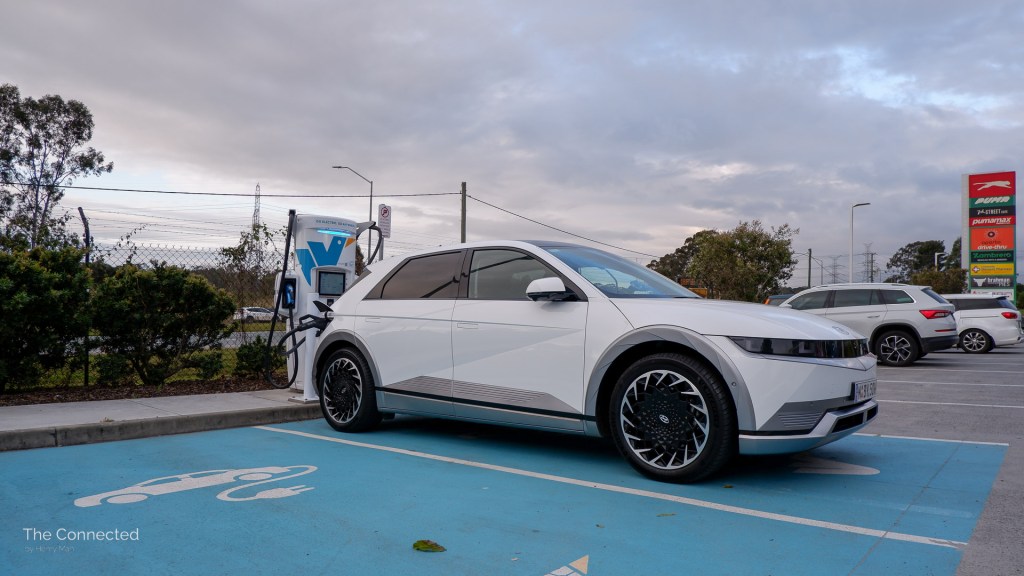
Friday, August 5, 4:20pm. After driving for two days, I managed to run down the Ioniq 5 AWD to 13 per cent on arrival at Evie Networks’ Bundamba Travel Centre ultra rapid station, just east of Ipswich (sadly Brisbane no longer has ultra rapids after the closure of Toombul Shopping Centre hub).
The site contains two 350kW Brisbane-made Tritium chargers, but not surprisingly, one was out-of-action. Thankfully, the site isn’t a busy stop for EV owners, but is a prime location for glaring eyes as the only path to exit the Puma fuel station.
It’s easy to plug in, wrangling the ungainly thick cable, and start after tapping the RFID card. Charging starts off at 222kW speeds. I start recording the charging curve for the zecar review.
However, it quickly throttles the charging speeds unlike my experience with the 2022 Kia EV6 GT-Line AWD. Anxiety grows.
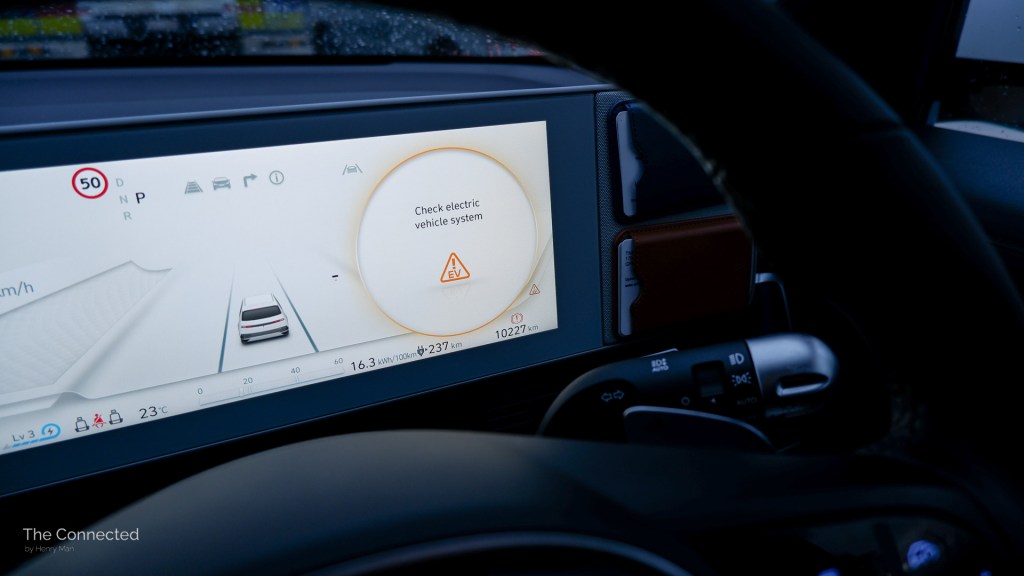
After charging for 32 minutes to 60 per cent, it suddenly stops. A ‘Check EV system’ warning message pops up on the Ioniq 5’s instruments. Not good.
Numerous other attempts to restart the charging session fails. It pauses and tries to ‘resume session’ in an endless loop. I give up. Thankfully, there’s plenty enough charge to get back home.
Rest time
Saturday, August 6. I let the Ioniq 5 rest for a while. As the saying goes, issues can be solved by turning it off and on again.
In reflection, I didn’t notice any active thermal cooling noises while charging inside the cabin and the DC charging speeds throttled relatively quickly, which seemed abnormal for the Ioniq 5s ultra rapid capabilities.
Linking the two together, I assumed there’s a software issue of the battery management system (BMS) not activating active thermal management while charging, resulting in an overheated battery pack preventing further charge.
This press vehicle is also an early production unit from when the Ioniq 5 first launched in late 2021, further supporting my faulty BMS theory.
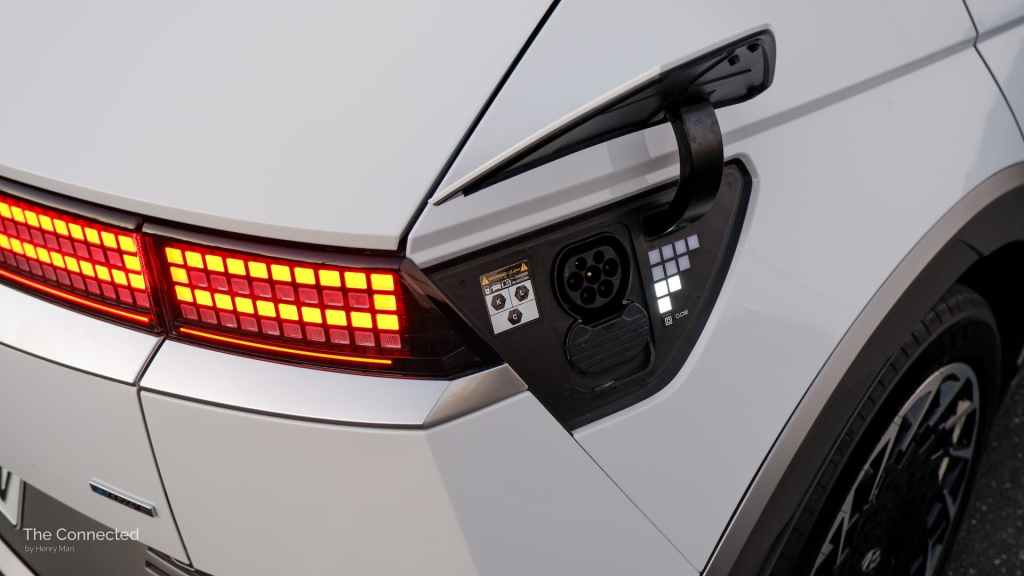
I unlock the large, wide electric crossover in the evening to check in. It elegantly illuminates its cute, blocky eyes and full width tailights bringing my neighbourhood to life.
After a full day of cooling down, the warning symbol is still displaying.
Anxious attempts
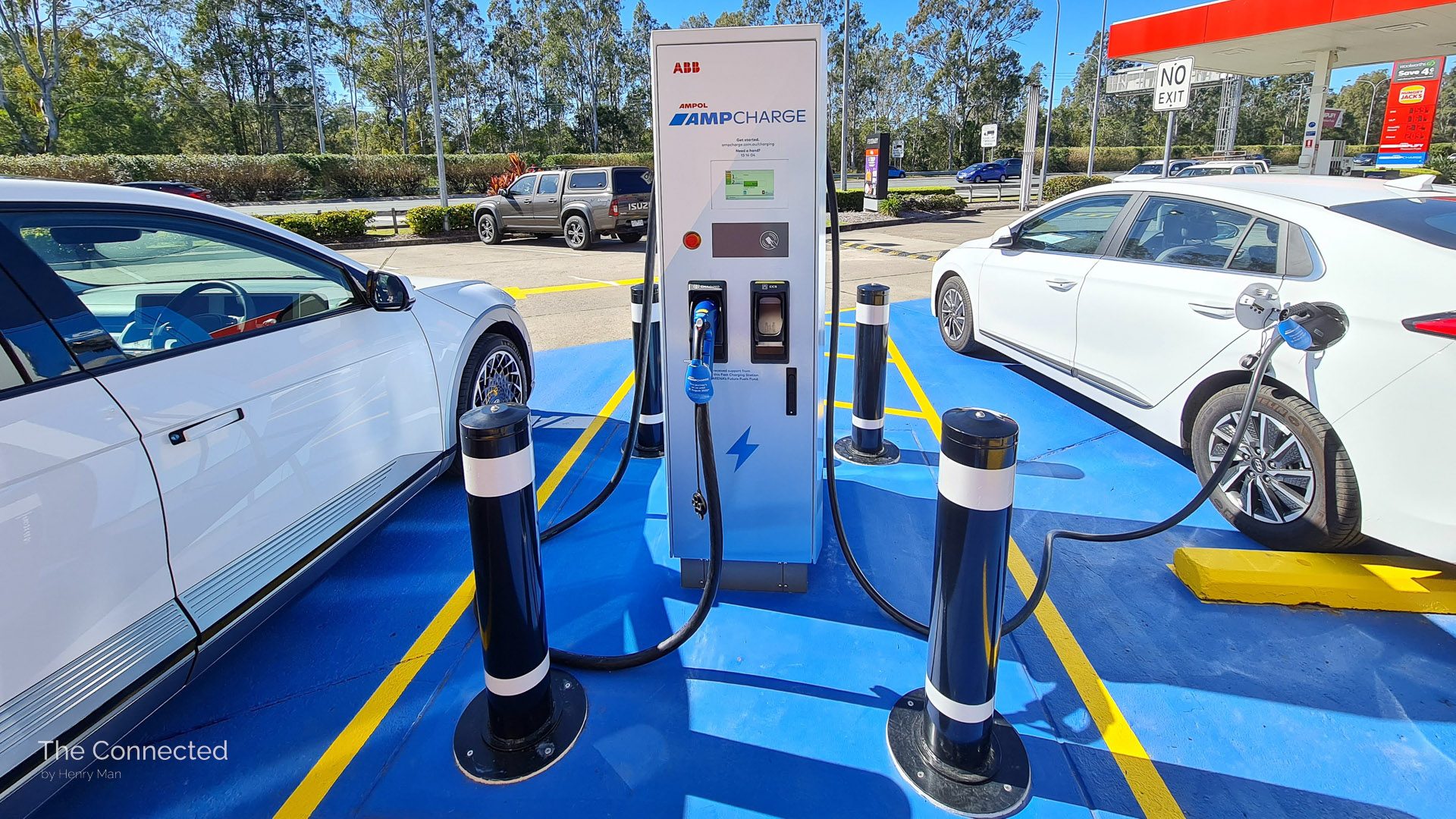
Sunday, August 7, 10:20am. With the warning message still on, I arrive at Ampol’s newest 150kW AmpCharge fast charger in Carseldine with just above 40 per cent remaining.
After waiting for a Tesla Model 3 to finish, I plug-in (to use the free ‘fuel’ offer) in the hopes that it’ll somehow reset itself and accept charge. It starts.
Sadly, after I pop in the nearby Hungry Jacks to collect my breakfast app order and come back to the Ioniq 5, charging stopped and the screen on the ABB charger says ‘charging failed’.
As I try to restart the session again, a new (and one of the last) Hyundai Ioniq Electric liftback’s roll in and queues up. I reluctantly give up, let the other owner charge and embarrassingly telling her the Ioniq 5 – which is a bespoke EV that costs around $20K more – just “can’t charge”.
Then, I head home and try AC charging from a standard domestic socket. It successfully charges six per cent before stopping itself again.
At Hyundai’s request, I return the Ioniq 5 early back to the warehouse with 34 per cent remaining.
Checkup result
Wednesday, 11 August. Hyundai tells me what really happened after taking it into service.
A safety switch was flicked on to prevent damaging the battery pack. The Hyundai technician alleges it’s due to a possibly faulty charger it was used on.
Interesting…

The plot thickens
Tuesday, 23 August. Evie Networks replies to my follow-up customer support enquiry a few weeks after first contact.
The charging provider confirms the Tritium ultra rapid charger logged that the Ioniq 5 “couldn’t accept power delivery” while trying to restart charging.
Curiously, a Tritium technician (finally) restored the other charger and inspected the station as well – but couldn’t identify anything faulty nor have Evie had a similar issue reported by other EVs.
Interesting…

Final thoughts.
It was an interesting, anxious and disappointing week with the 2022 Hyundai Ioniq 5 AWD.
Regardless of what is responsible for triggering the safety switch – vehicle or charger – it is understandably frustrating for an EV to not be able to charge and require a servicing visit, even though it’s good design to cautiously protect the battery health.
Luckily, it charged enough juice to last a few days. Otherwise, it would’ve needed a tow.
It’s also disappointing that the error message was vague and, in today’s era of “computers on wheels”, the safety switch couldn’t just be turned off remotely (Australian bound Ioniq 5s also don’t have Bluelink Internet connected telematics yet).
Hyundai has kindly let me loan the same Ioniq 5 AWD in October to finalise the review for zecar. Hopefully, it’ll be a fuss-free week – but I’ll try another charger this time.

 The Connected by Henry Man