
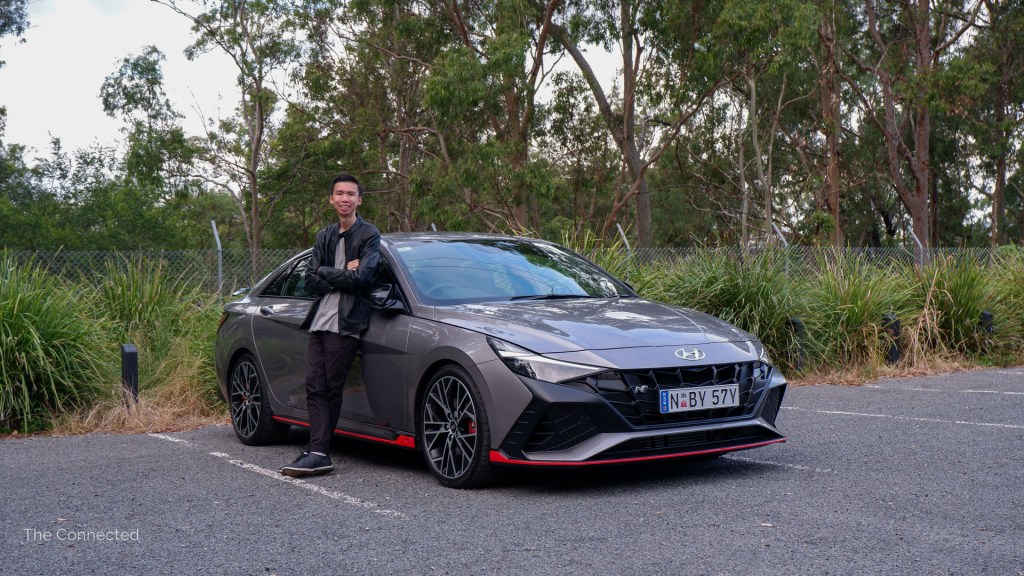
Looking for a new attainable sports sedan? The Hyundai i30 Sedan N might be the only choice…
The rise in electric vehicles means enthusiast mainstream sports cars are becoming an even tighter niche, with new orders closed for models such as the Hyundai i20 N and i30 Hatch N due to low supply, and a limited purchasing criteria for the Toyota GR Corolla in a bid to stop scalpers.
But, a hot sedan is even more of a rarity, with an uncertain future for petrol-engined Hyundai N performance models amid tightening exhaust emissions regulations overseas, and the inevitable industry-wide shift to electrification.
Other than the Subaru WRX, is the i30 Sedan N (aka Elantra N or Avantae N overseas) worth a look while it still lasts (and is actually in stock)? And, importantly, can it be a viable daily driver?
EDITOR’S NOTE: The test vehicle was provided by Hyundai Australia for a seven-day independent evaluation. No copy approval was given before publication and we have no commercial arrangements with the company.

Pros.
+ A real exhaust note
+ Good daily – with conditions…
+ Arguably sharpest-looking N
+ It’s still on sale, well-priced
+ Warranty covers track use
Cons.
– It’s always loud
– Missing adaptive cruise
– Irritating sun visor
– Fuel tank could be larger
– Some DCT hesitancy
Car as tested:
| Model | Hyundai i30 Sedan N |
| Variant | Premium (DCT) |
| Starting price | $50,200 |
| Exterior colour | Fluid Metal |
| Country made | South Korea |
Design.
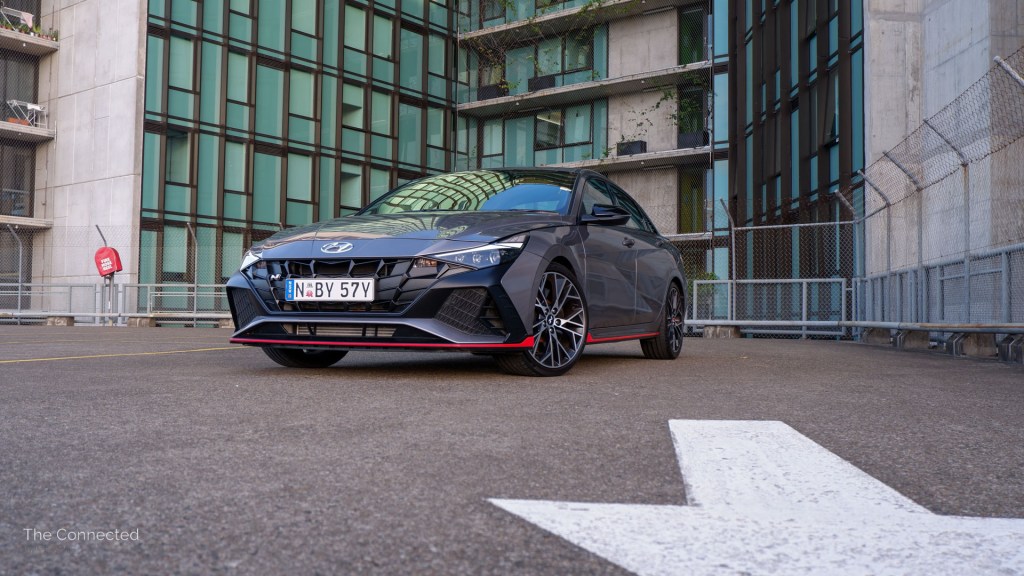
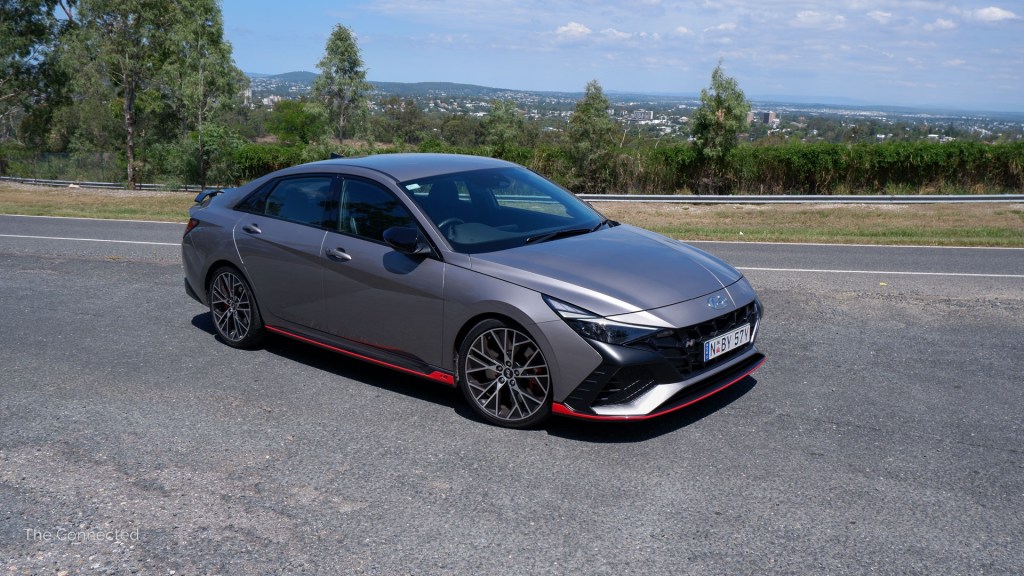
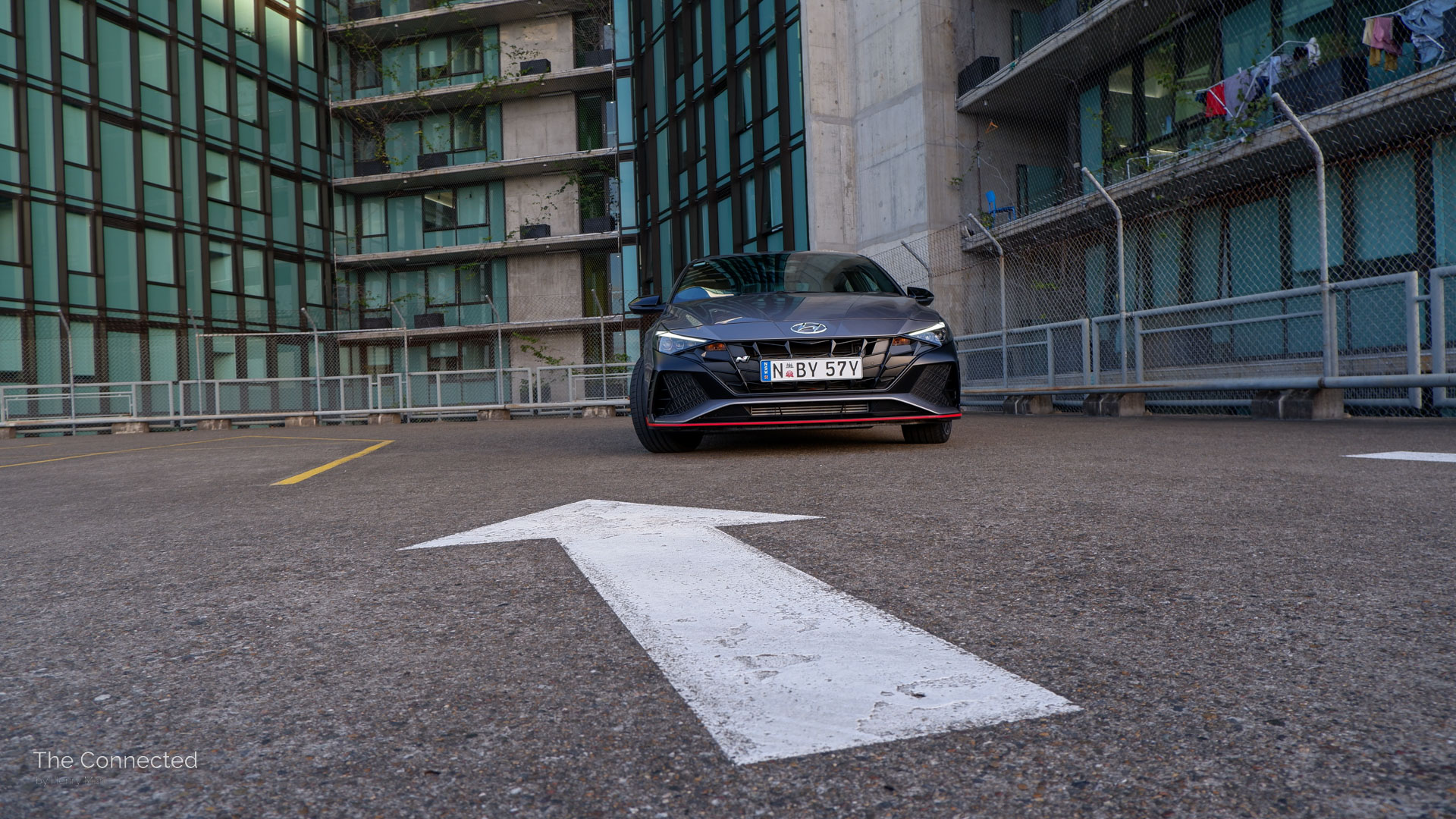
The i30 Sedan N’s design arguably best fits the Namyang badge in comparison to the conservative-looking unrelated i30 Hatch N.
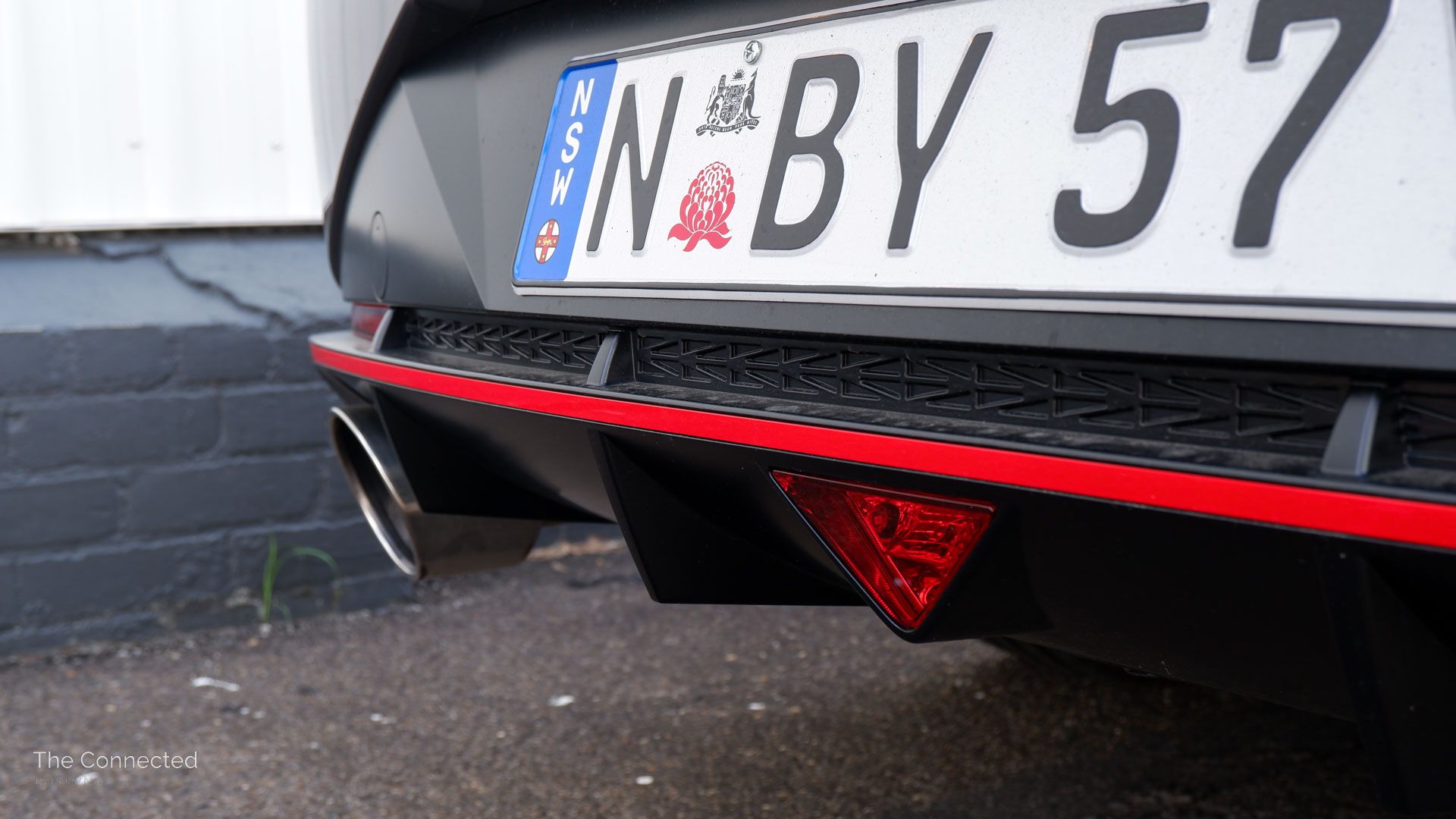
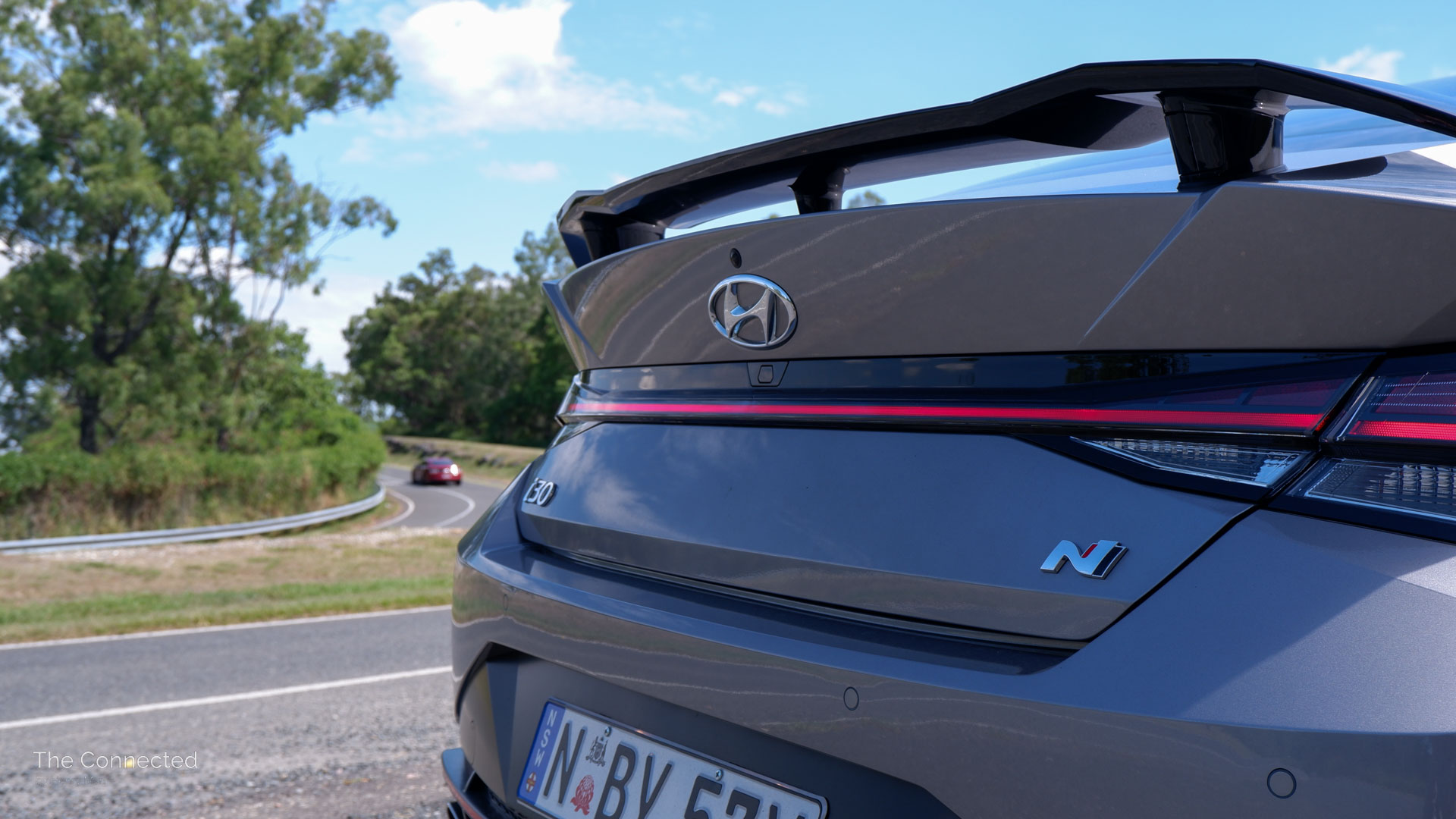
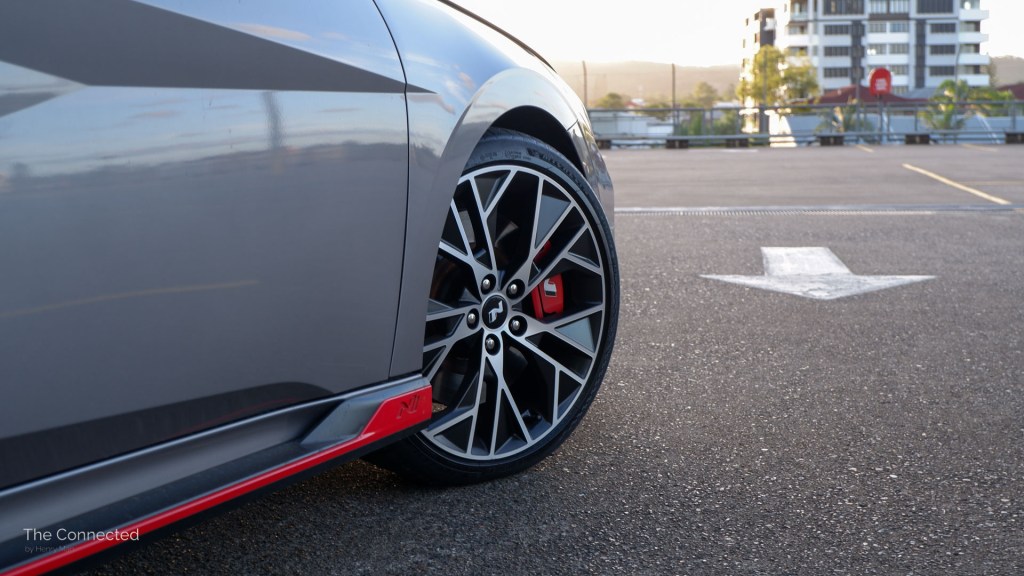
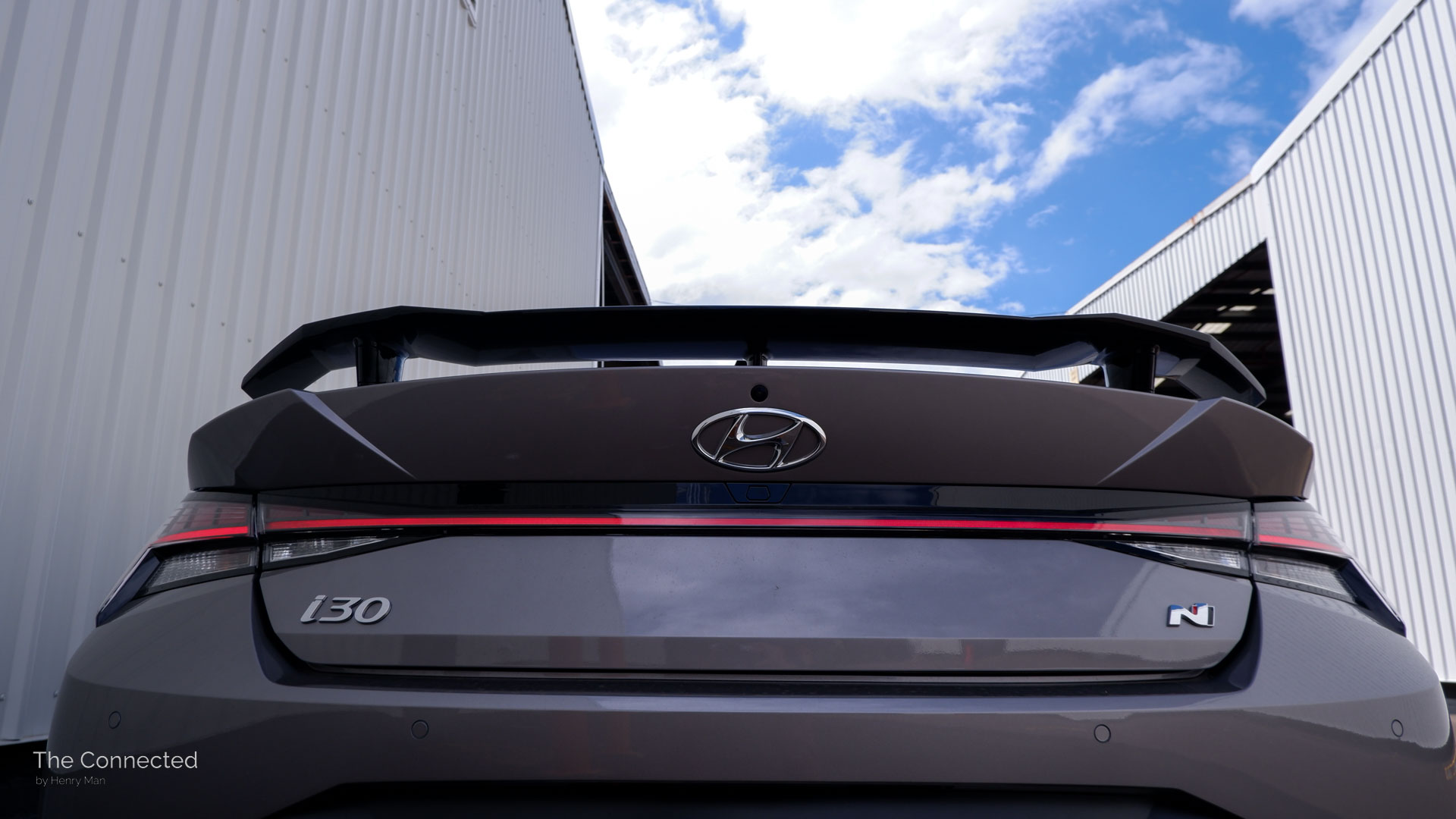
Based on the regular i30 Sedan N-Line, it gains more distinct 19-inch alloy wheels with red-painted brake callipers, a sports body kit, rear spoiler, and revised front and rear bumpers.
While it looked awkward in pictures, I became fond of the front grille’s grey plastic cladding (in lieu of body colour) around the headlights, which just makes it more unique than the regular model and feel even more special than other N models that get subtler grille design tweaks.
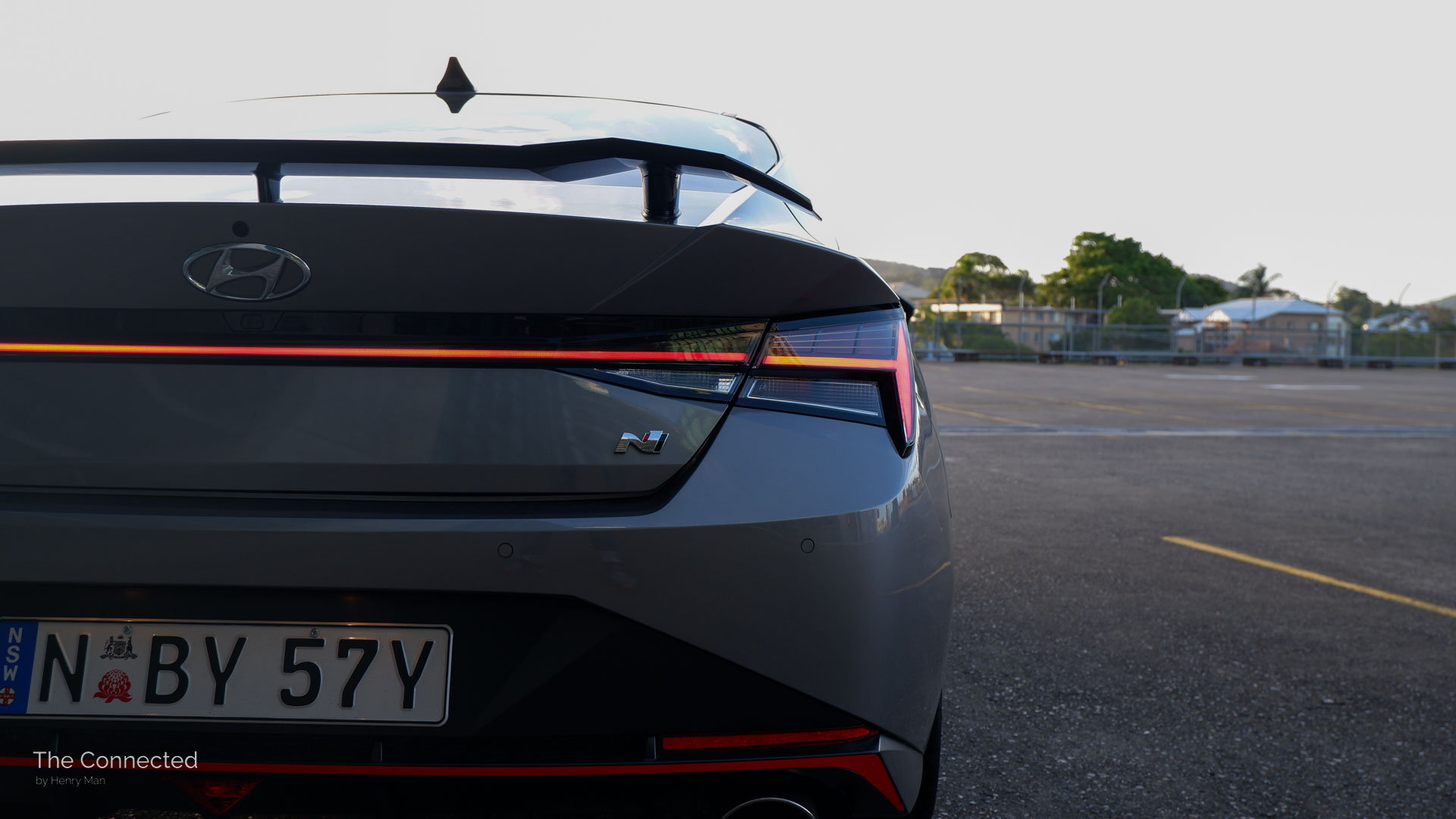
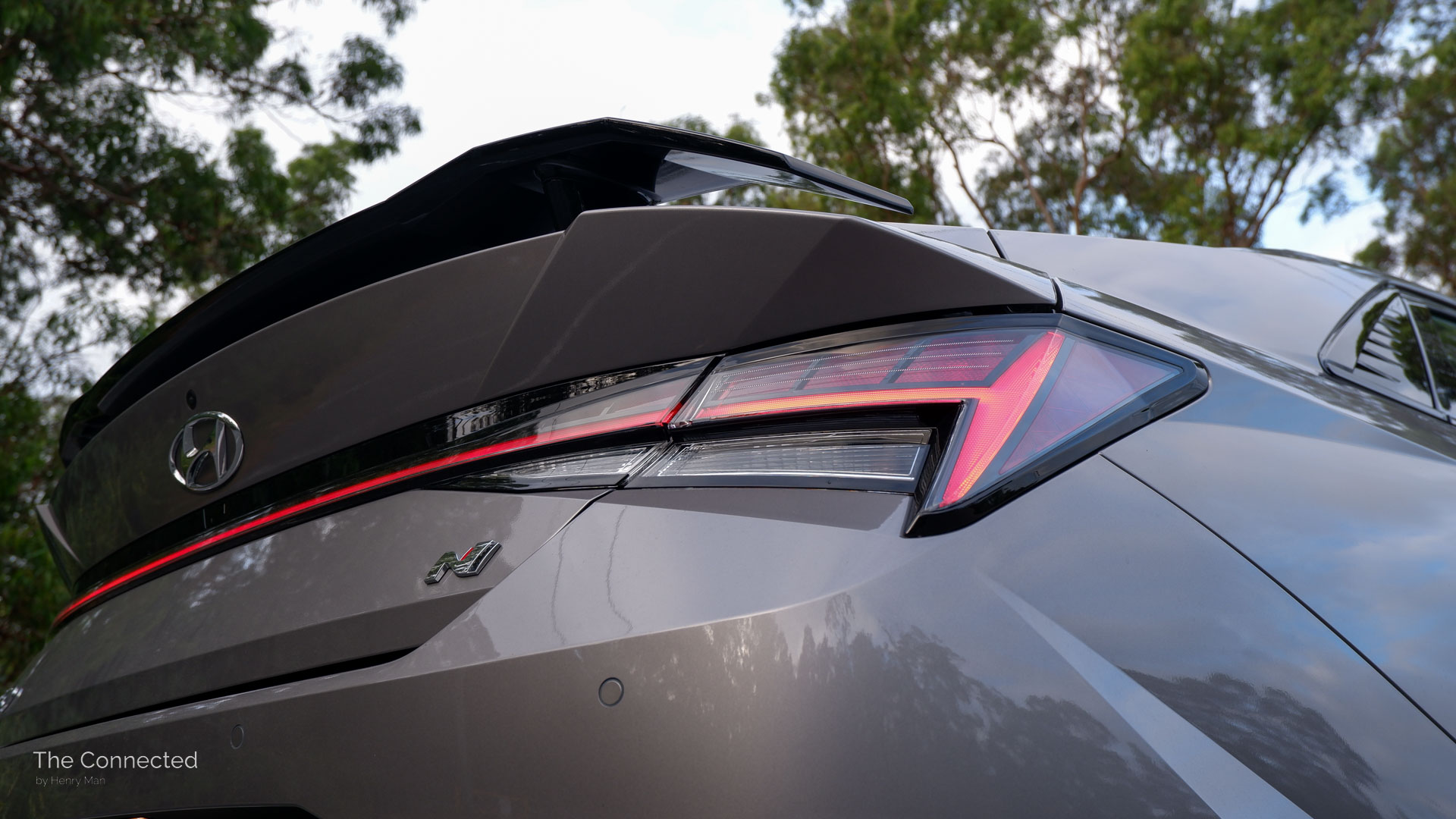
The sedan’s angular LED headlights and thin full-width tail-light, 45-degree creases along the side, and red accents all give an impressive and sharp ‘boy racer’ impression that habitually turns heads.
It’s worth noting that a facelift is coming for the i30 Sedan later in 2023, but the current design in N guise looks good as it is in my opinion.




The best-looking N.
The i30 Sedan N arguably wears the Namyang badge best in Hyundai’s performance car line-up.
The angular exterior and enclosed interior screams that it’s a true hot sedan – and makes the i30 Hatch N and Subaru WRX look too tame.
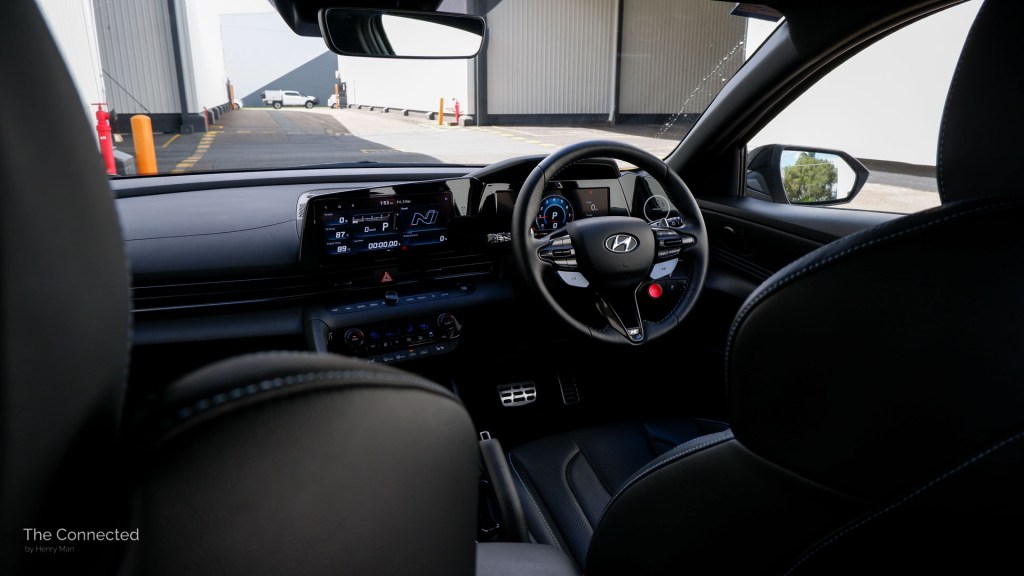
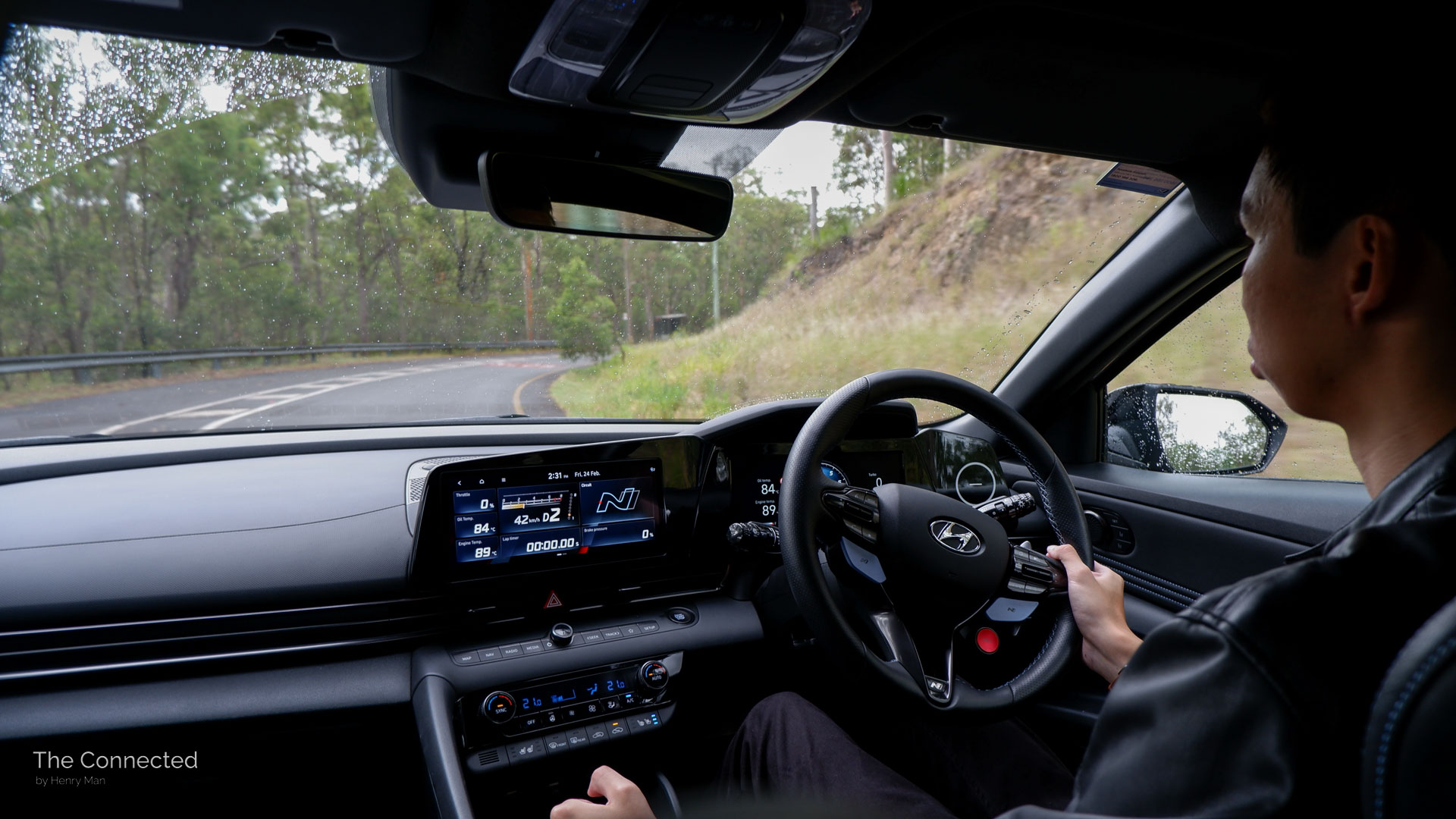
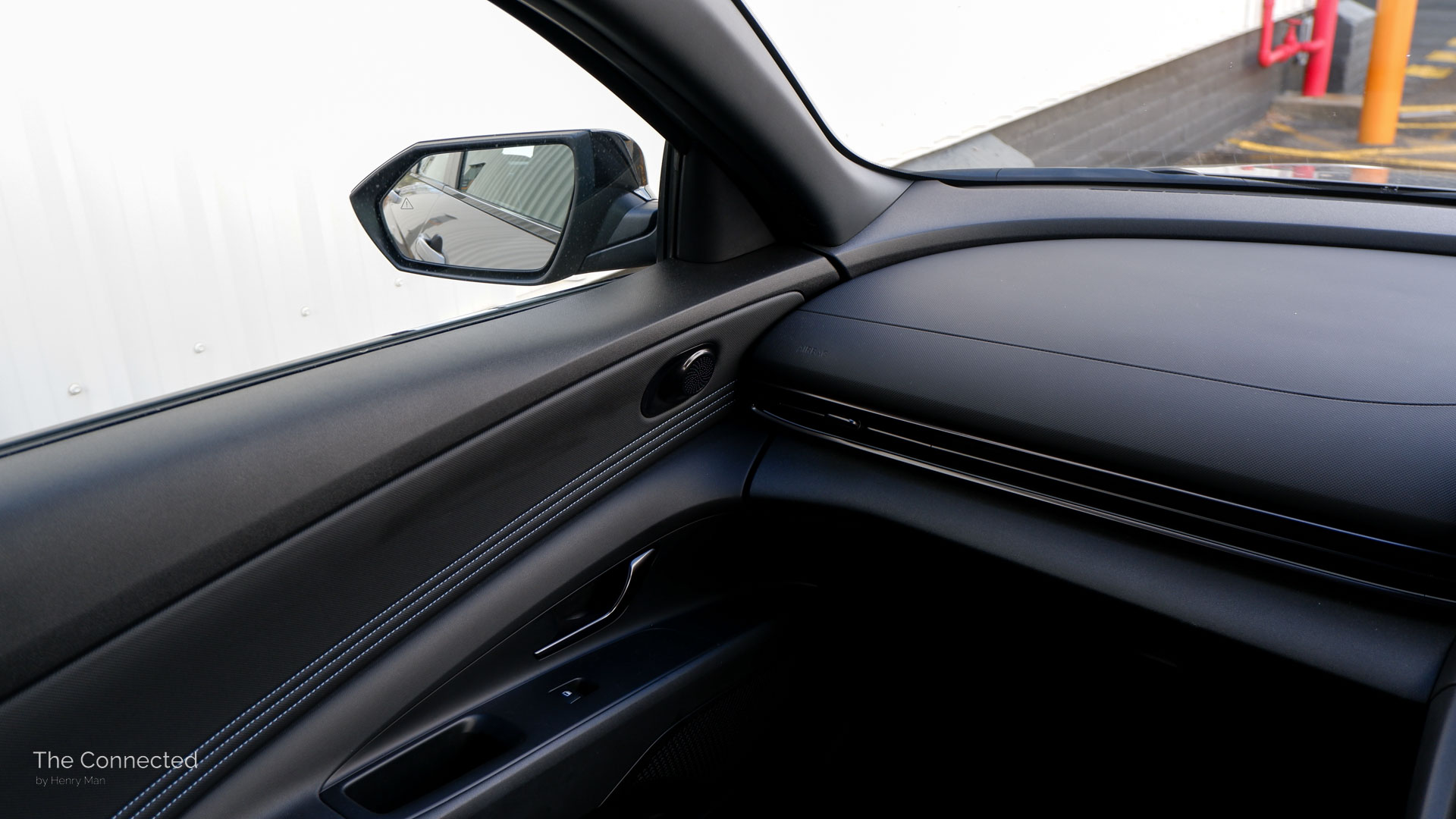
It’s a similar story in the interior with a low seating position, divider that envelops the driver, low-set grey-finished door handle, and triple-lined door stitching which flows into the thin coloured ambient lighting strip running across the dashboard.
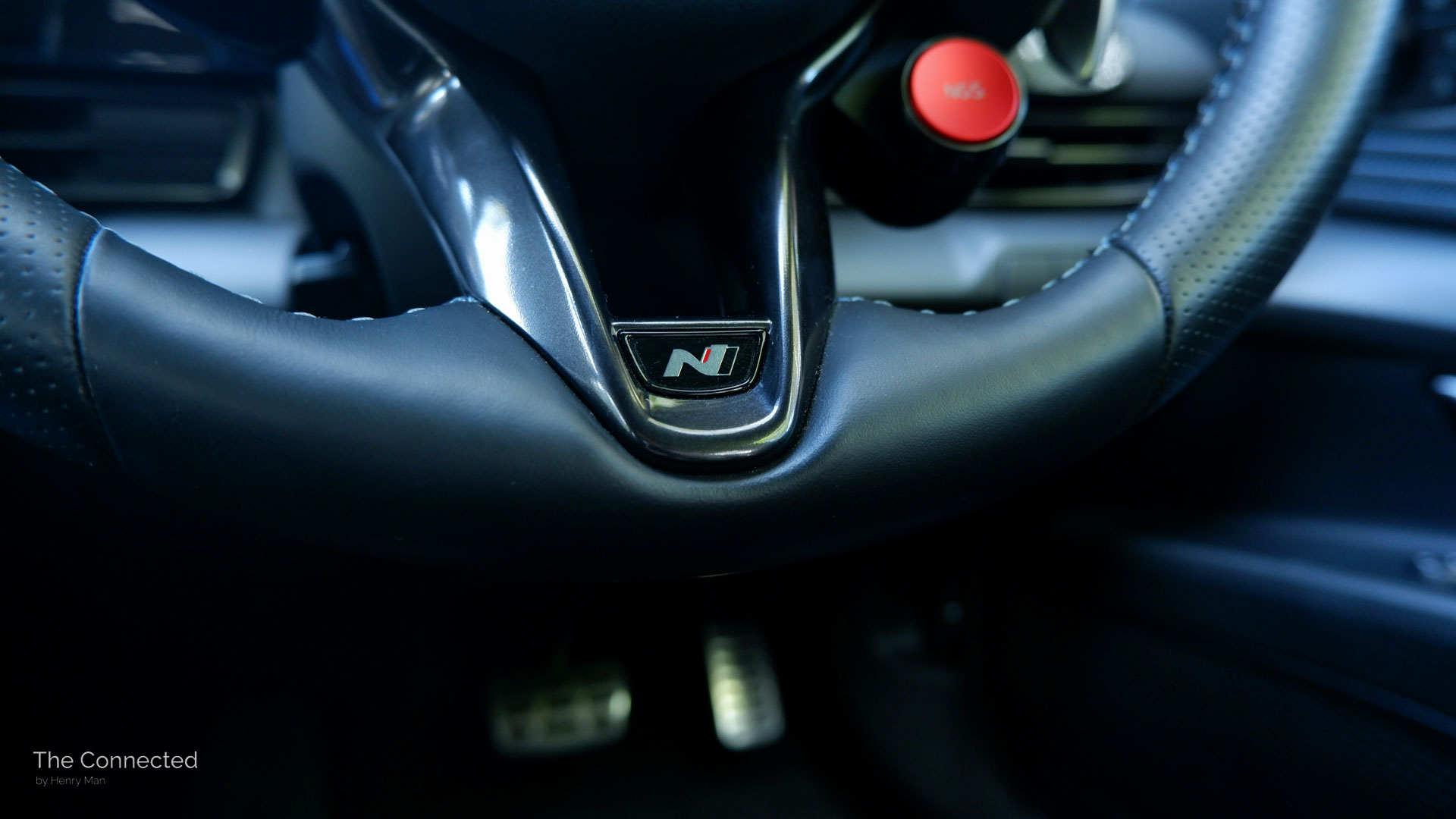
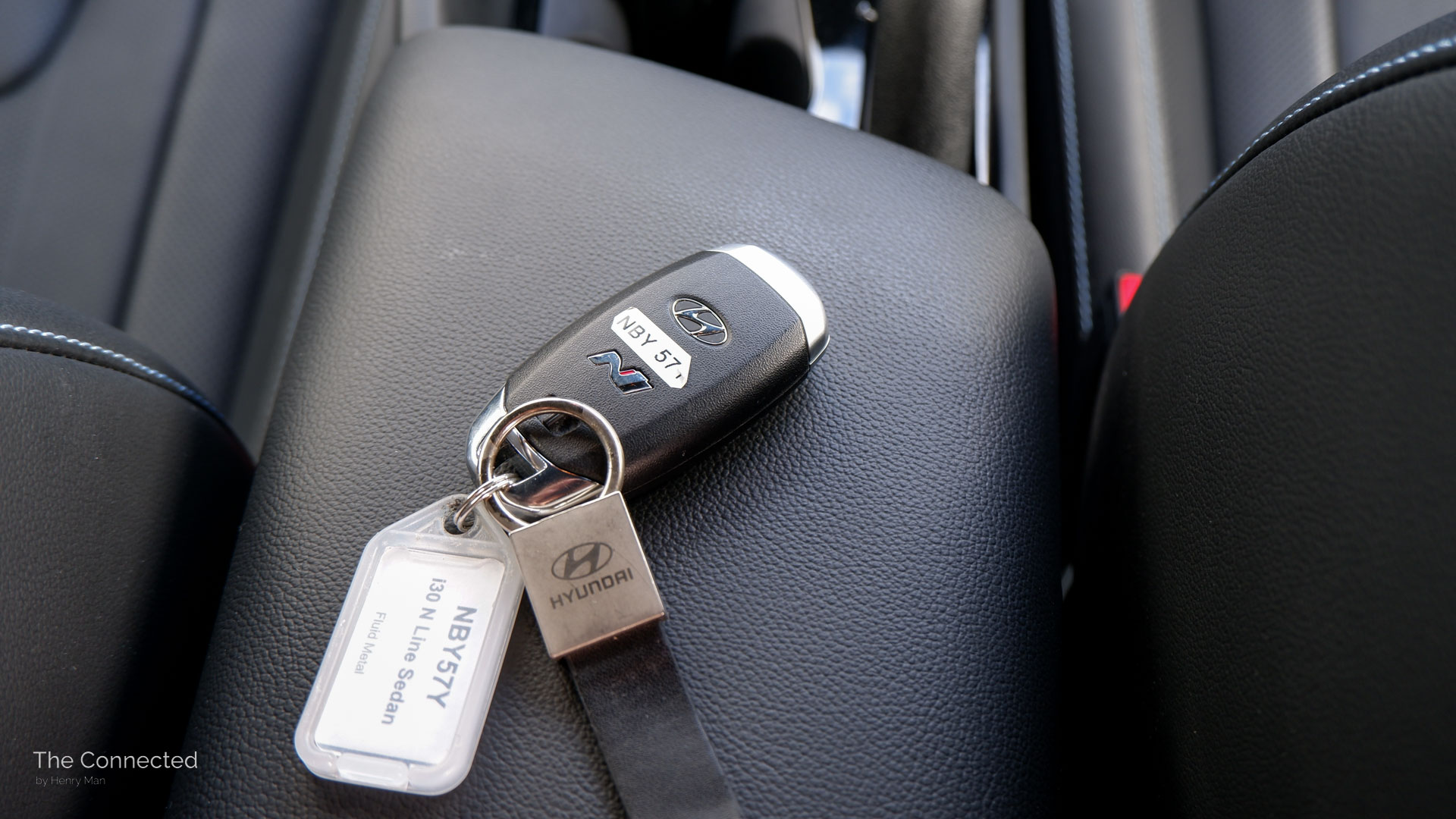
The hot N model boasts thicker leather bucket seats with a printed suede N logo, perforated steering wheel with two distinct N buttons and a bright red ‘NGS’ toggle, and the sub-brand’s signature Performance Blue stitching across the gear shifter, wheel, seats and doors.
However, there are hints of its sub-$30,000 origins, with still some harder (but inoffensive) plastics on the top of the doors and lower down areas. The dual 10.25-inch screens joined on a single gloss black panel has a noticeable seam in the middle and the border surrounding the instruments protrudes out from display.


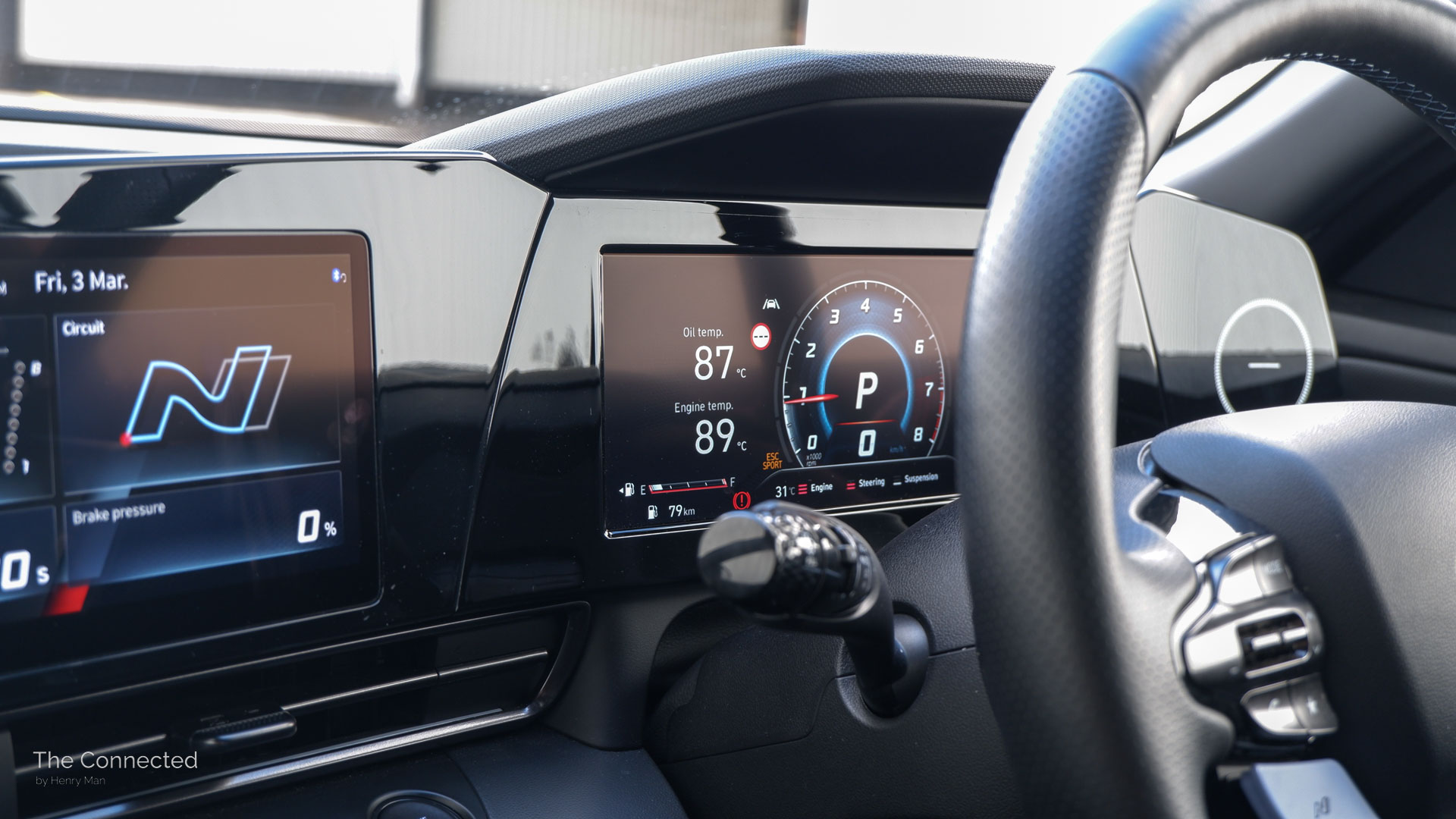
Another questionable design element is the driver’s side circle that’s printed on the gloss black panel. It ostensibly seems to be a magnet like the Hyundai Ioniq 5, but it isn’t and has no use (if it is an easter egg, it isn’t obvious).
The N-Line model uses the space for the drive mode button, so it’s confusing that it isn’t replicated on the pure N – especially given the switch is down at the centre console (unless you program one of the the N steering wheel buttons) for a driver’s-focussed car.

Practicality.
2023 Hyundai i30 Sedan N Premium dimensions:
| Length | 4675mm |
| Width | 1825mm |
| Height | 1415mm |
| Wheelbase | 2720mm |
| Ground clearance | 135mm |
| Cargo capacity (minimum) | 464-litres |
| Cargo capacity (rear seats folded) | N/A |
| Rear seat split fold | N/A – single bench fold |
| Child seat anchors | 2x ISOFIX outboard rear seats + 3x top tethers |
The Hyundai i30 Sedan N’s boot is slightly less practical than its regular donor model, with 10-litres less cargo space and the rear row seats fold down all in one bench piece.
Additionally, the fixed shiny red steel stiffness brace (which you need to negotiate around and not scratch) and high load lip means it shouldn’t be used for hauling long items or moving homes regularly.
Still, the boot is deep enough to carry a shopping haul and there are release toggles to fold down the rear seats. It just misses out on illumination lights.
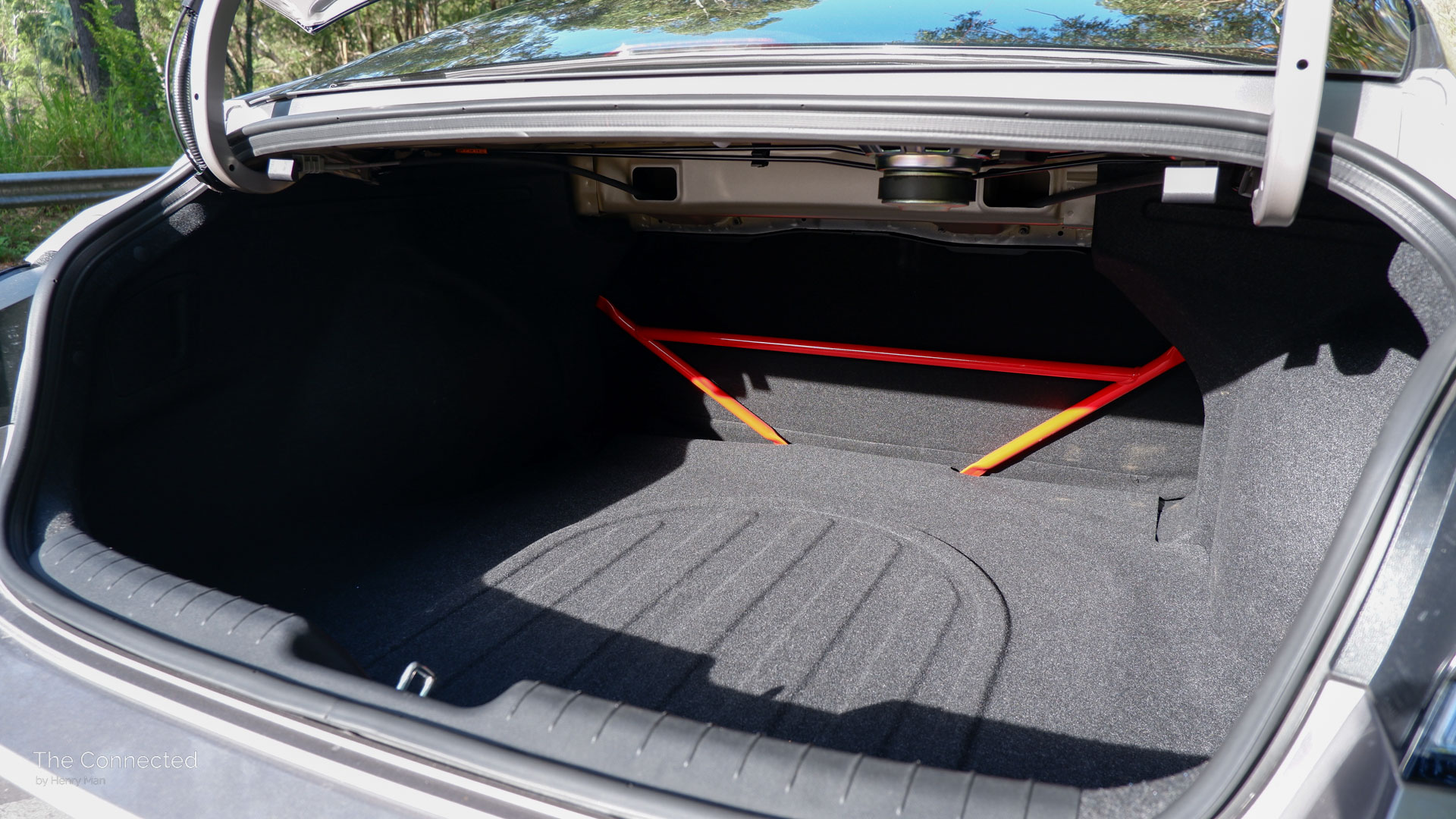


The flimsy and thin cargo floor is another sign of its cheaper origins, which hides a space saver spare tyre underneath.
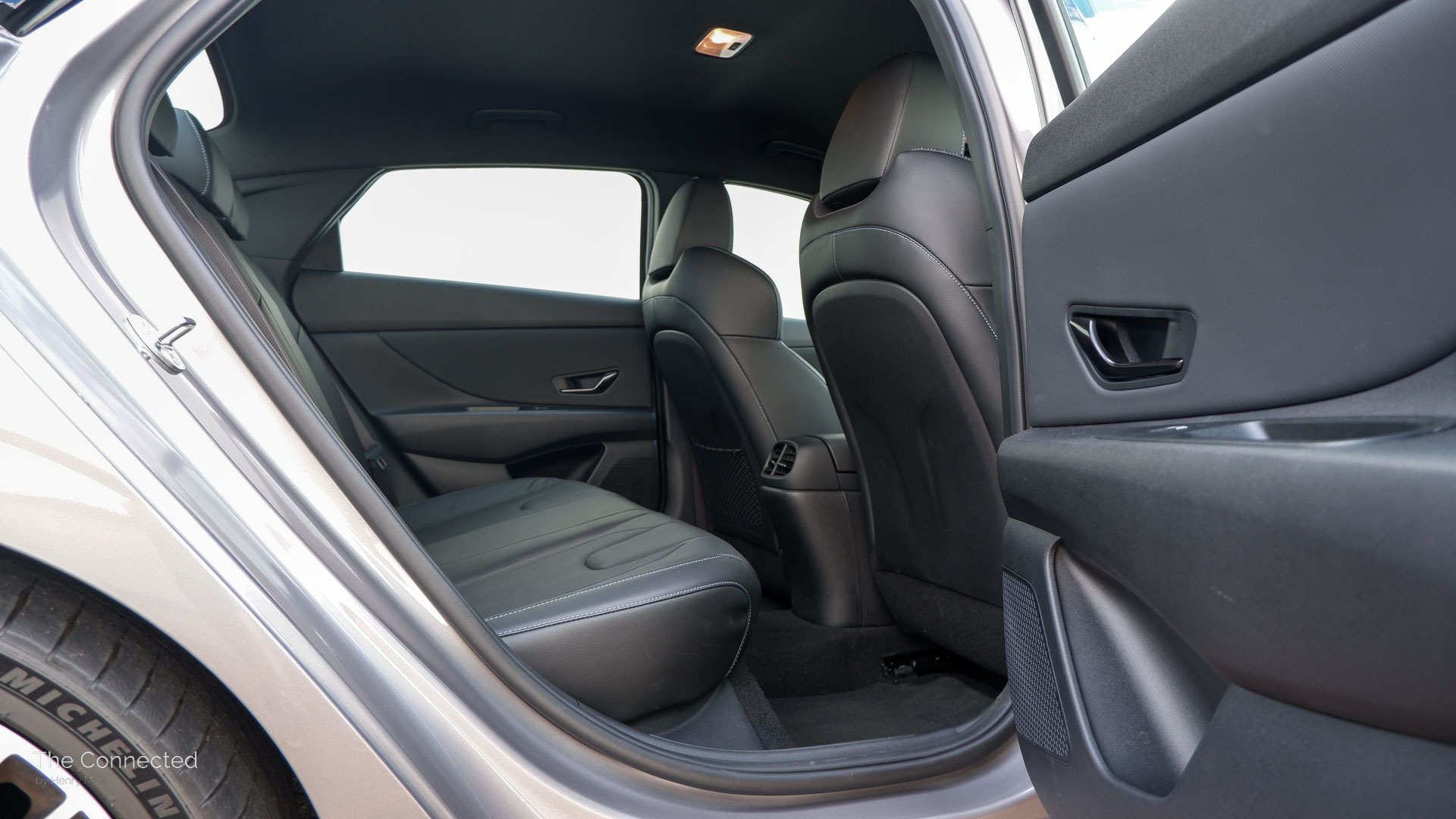
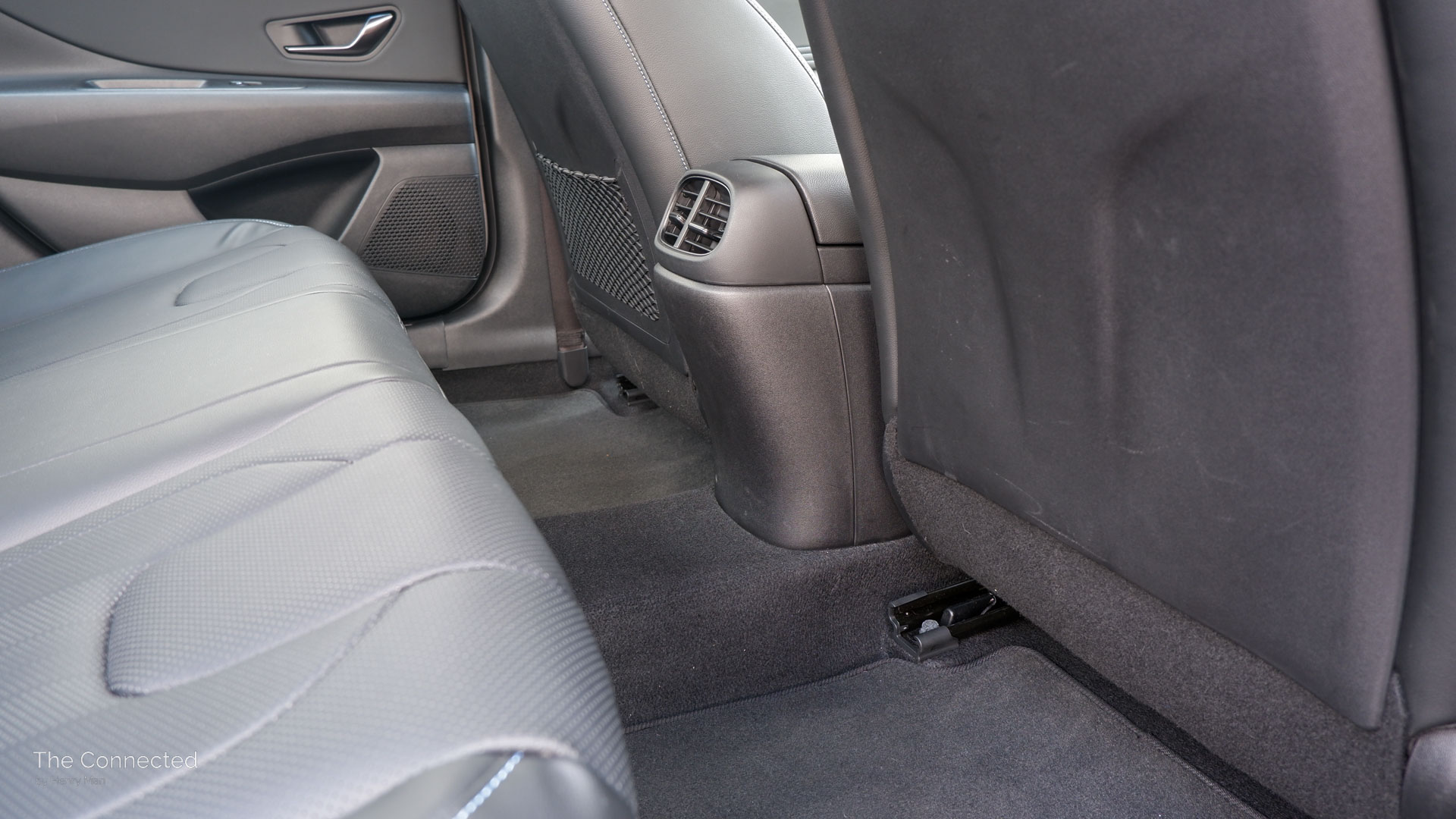
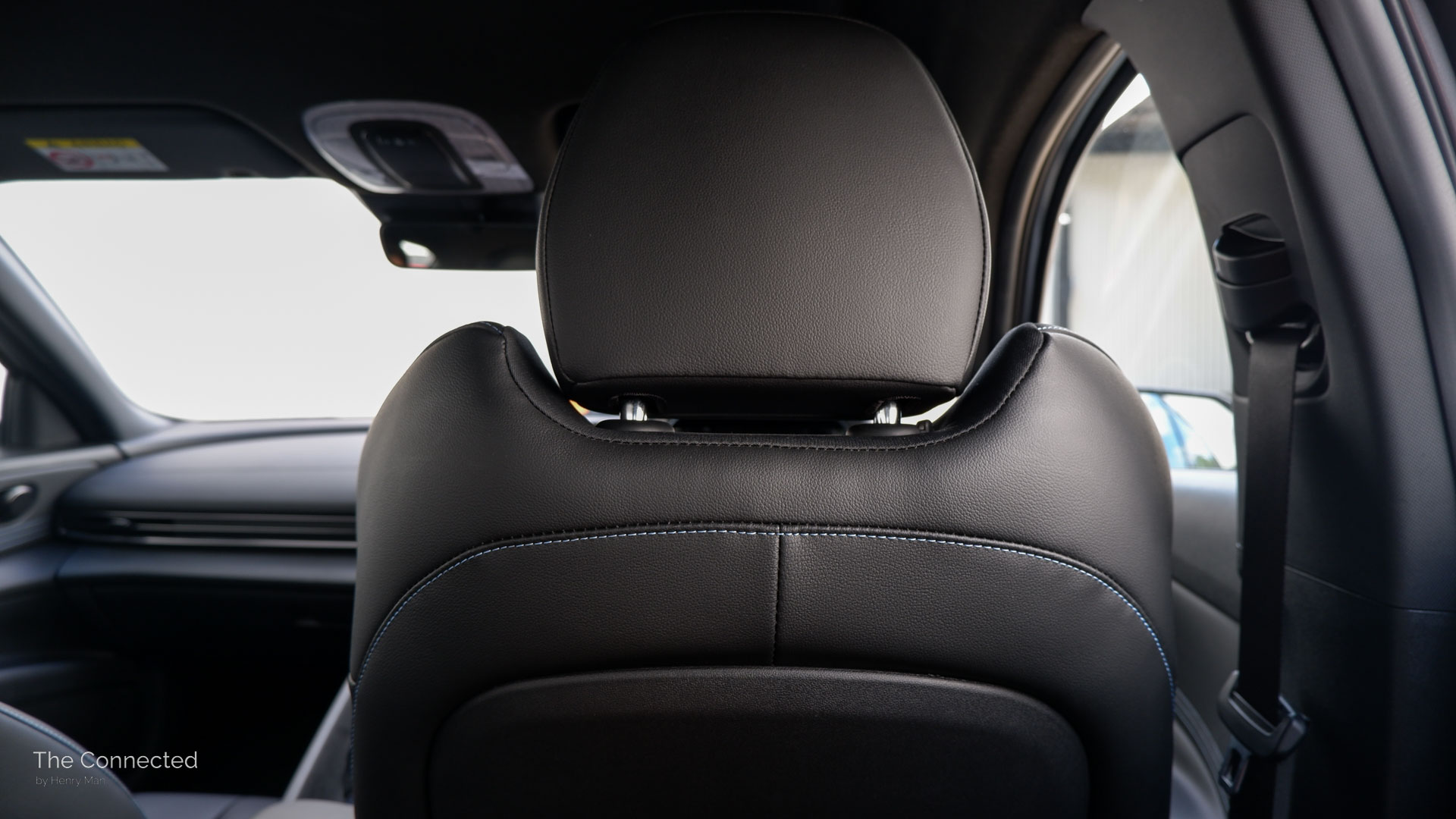
At the back seats, the i30 Sedan N gives good legroom, but the sedan body style results in tight headroom, especially troubling for taller passengers. Sitting three people abreast will also be a squeeze due to the higher centre floor hump.
The N model’s lowered ride height, dark headliner and bolstered seats also doesn’t bode well for ingress/egress and can feel constricted. Also be aware that the sporty body kit also protrudes and the side sills tend to collect dust and dirt.
Unfortunately, it doesn’t feature USB charging ports, nor a fold-down armrest, but does have two outboard ISOFIX child seat anchors.

Irritating sun visor.
Both front sun visors (at least on this press car example) have an annoying mechanism that either springs furthest toward the windscreen or too far forward, blocking the driver’s vision.
It’s unclear whether this is limited to this build, as it hasn’t been an issue on other Hyundai’s I’ve tested.

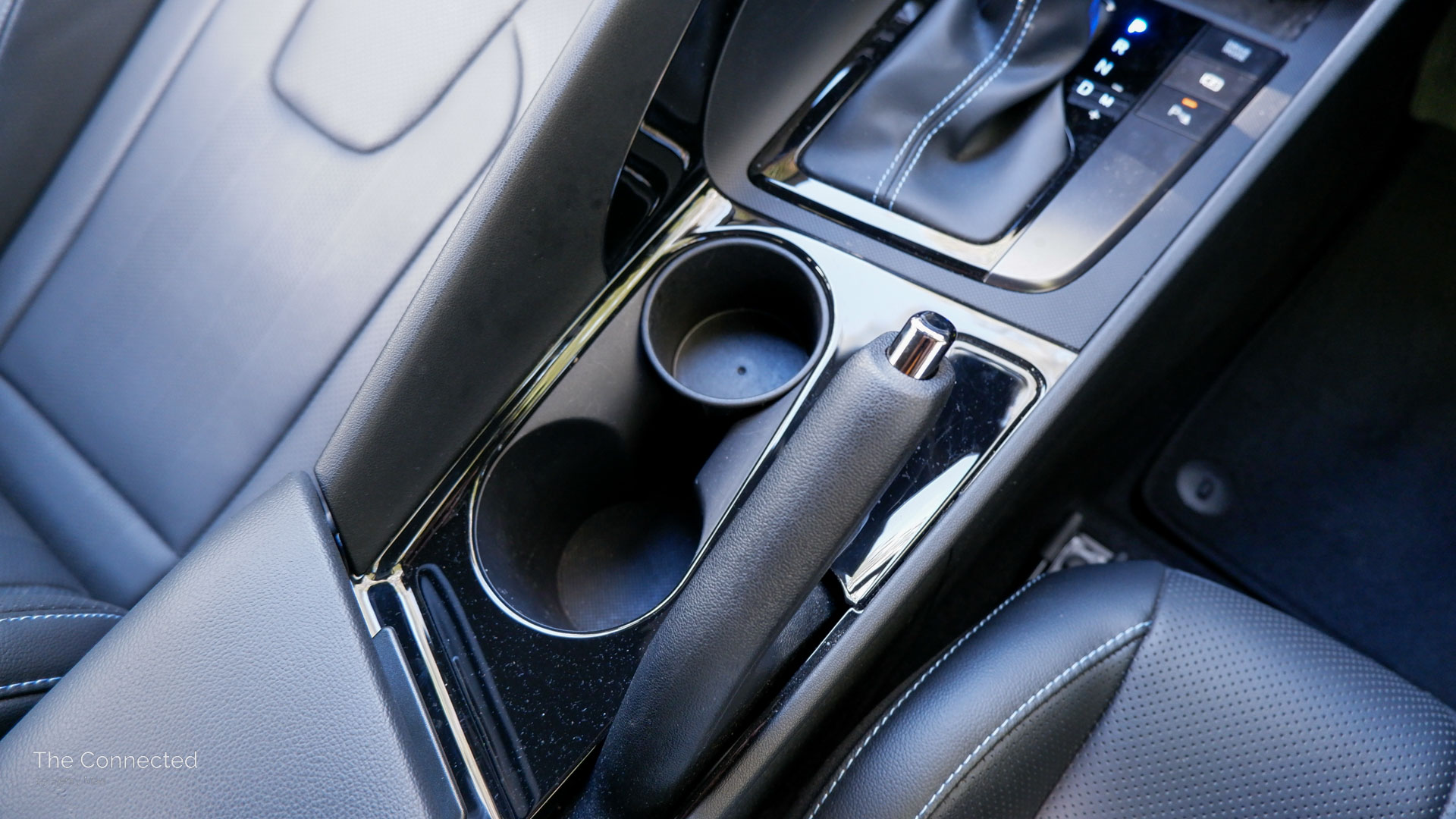
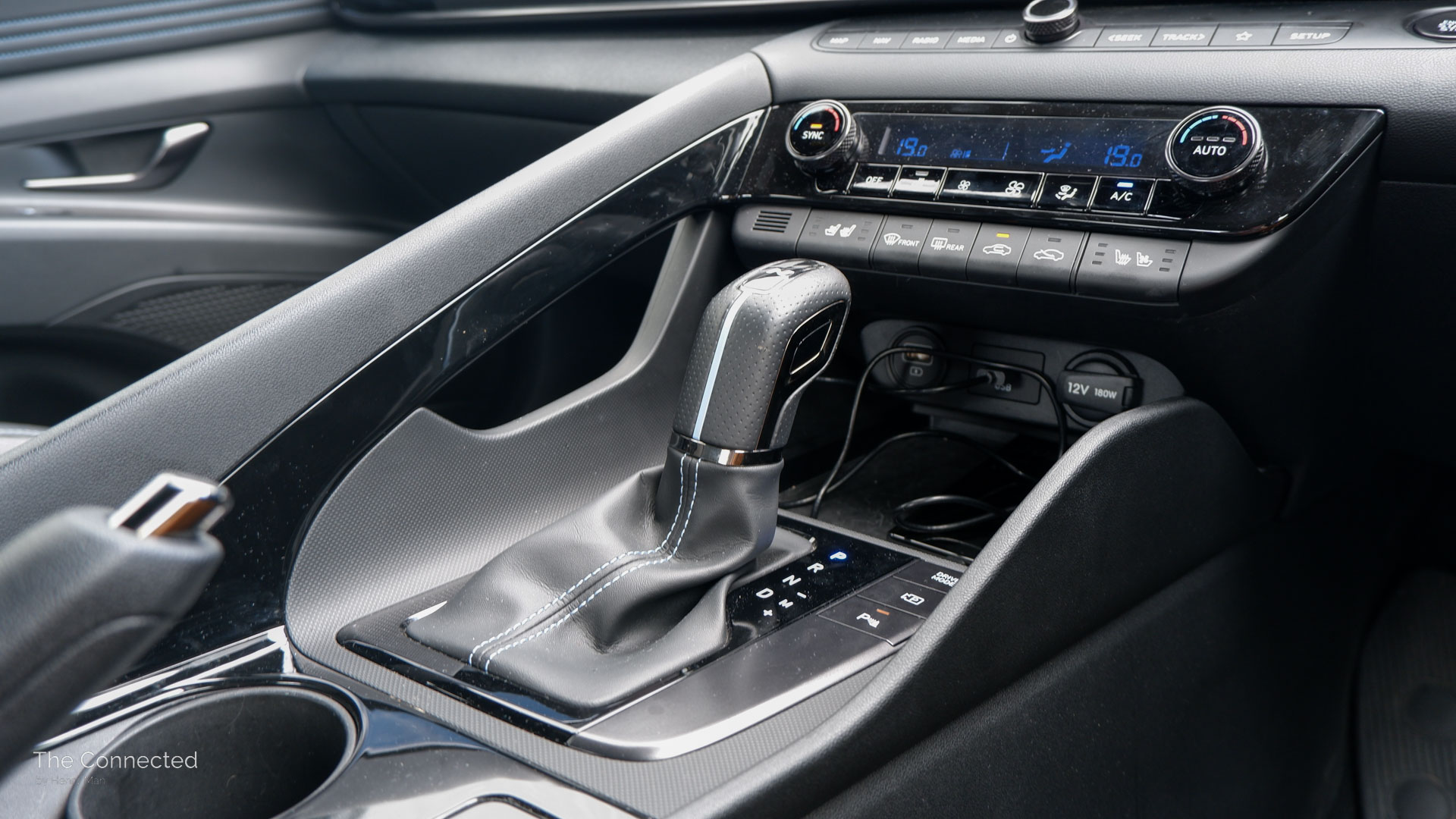
Meanwhile, the South Korean hot sedan has a large rubberised tray at the front row with an air-cooled Qi wireless charging pad, two USB-A ports and a 12-volt socket, even though it’s quite deep.
I particularly like the included cup holder attachment, which lifts up those tiny espressos and small cups for easier reach.
Yet, besides the annoying sun visor design (at least on my press car example), the sporty design of the door cards compromises on the bottle holders.
Interestingly, the front passenger can use the centre console divider as a grab handle (eerily like an SUV) and there’s a small slot pocket on the side.
The sporty N bucket seats are well-bolstered, without being too firm and outlandish, and have heating and ventilation. Though, the latter didn’t seem to feel as effective compared to other Hyundai models.
Technology.
2023 Hyundai i30 Sedan N Premium tech features:
| 10.25-inch touchscreen with built-in navigation and N app | 10.25-inch instrument cluster display |
| Wired Apple CarPlay and wired Android Auto | Qi wireless charging pad |
| Eight-speaker Bose Premium audio | Keyless entry and push button start |
| Auto power folding wing mirrors | Interior LED ambient lighting |
A driver’s car doesn’t mean it skimps out on technology and convenience features.
The 10.25-inch infotainment display is slightly angled toward the driver and runs the brand’s own operating system. The processor performs well to power a modern and reasonably intuitive interface.
Unique to the i30 N is a dedicated N app to display a plethora of drivetrain variables in real-time, adjust custom N mode settings, and enable its track maps feature that automatically starts a lap timer at select racing tracks in Australia.



Wired Apple CarPlay and wired Android Auto is also here via a USB-A port. The latter wasn’t filling the full widescreen as the press car was on an older build, but newer Hyundai’s do.
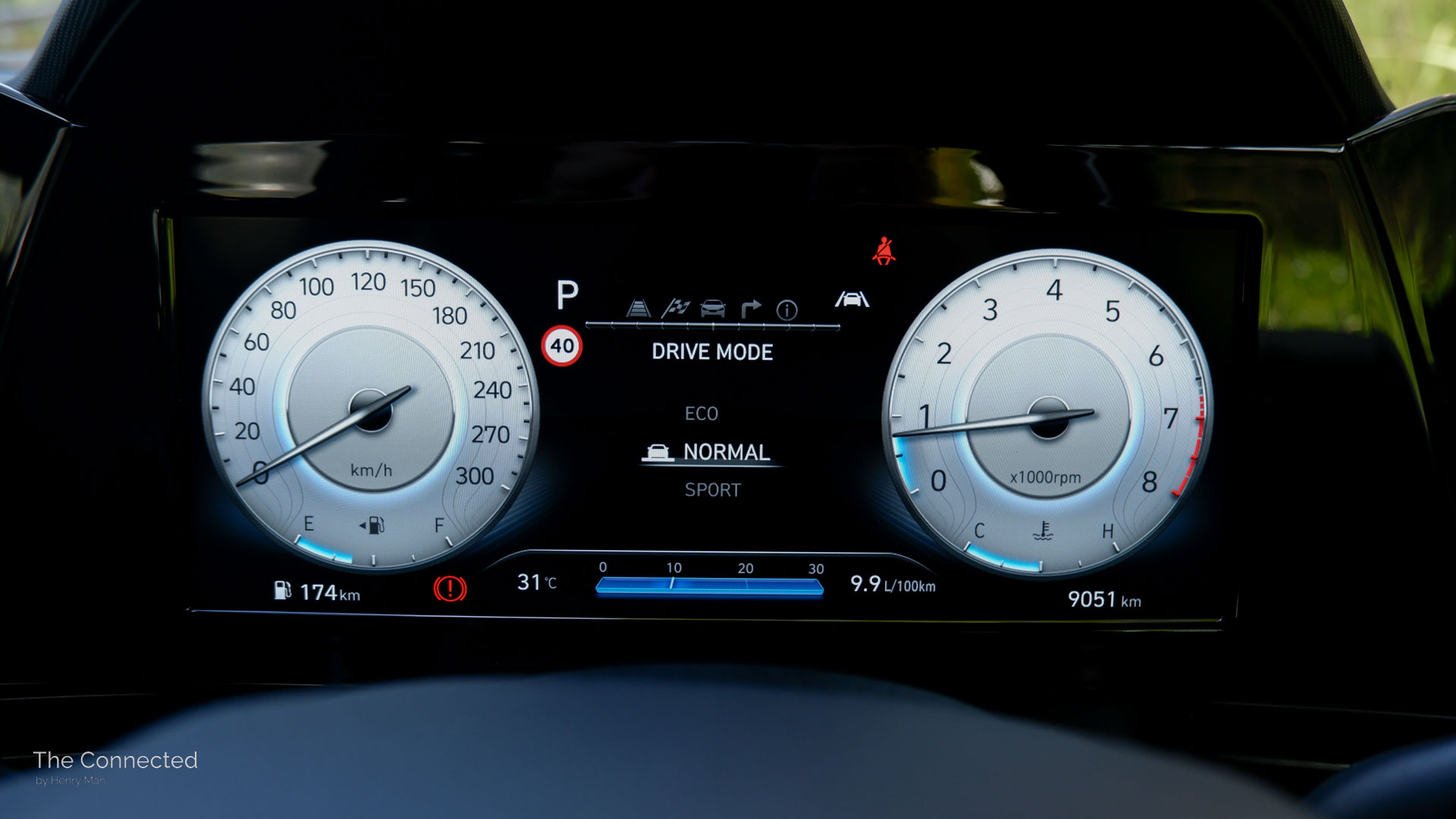
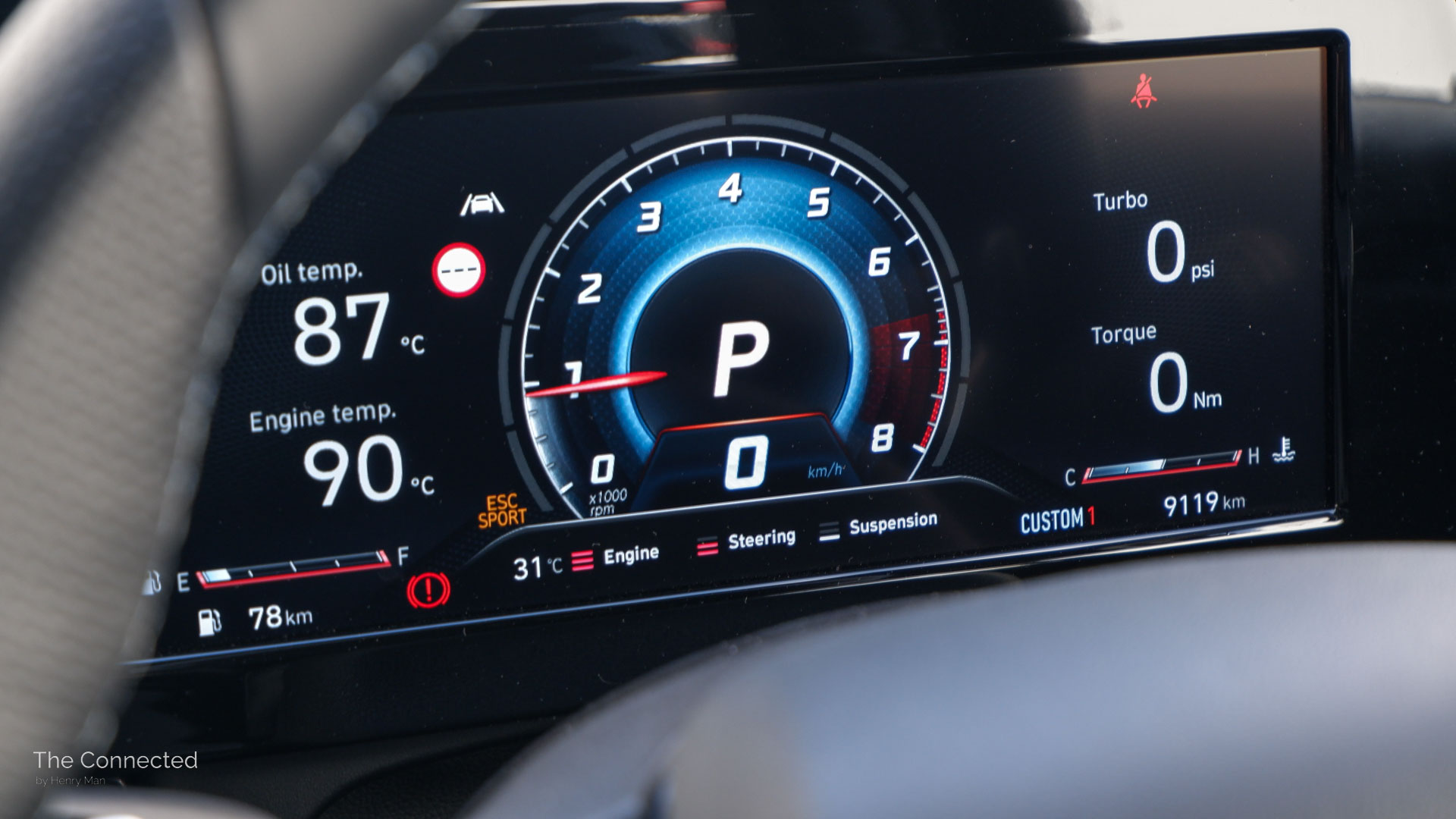
Meanwhile, the driver instrument display has the regular analogue dials while in normal, eco and sport modes – but flicking into an N mode shows a fiery animation and centres the speedometer, gear and rev counter in the middle.
Underneath the infotainment system, there’s a row of tactile physical shortcut buttons, physical centred volume dial, and easy to use tactile controls for the dual-zone climate control – complemented by a dedicated LED screen clearly showing the set temperature, fan speed and activated fans.
The eight-speaker Bose branded system sounded good, though it isn’t particularly special.
Safety.
2023 Hyundai i30 Sedan N Premium safety features:
| Front auto emergency braking with camera-only city/urban/pedestrian detection | Cruise control and speed limiter |
| Blind-spot assist | Front and rear parking sensors |
| Rear cross-traffic assist | Rear view camera |
| Lane-keep and lane-centring assist | Tyre pressure monitoring |
| LED combination headlights with LED daytime running lights | Electrochromatic dimming rear view mirror |
| LED combination tail-lights with full-width light bar and triangular rear fog lamp | Driver attention warning |
The entire Hyundai i30 Sedan range hasn’t been tested by the ANCAP car safety assessment authority, despite launching in late 2020. While it’s likely to be a good performer if it were to be tested (based on Hyundai’s record), it misses out on a centre interior airbag – a requirement to obtain the full five-star rating.
Critically, the i30 Sedan N strangely misses out on the radar sensor located at the lower front bumper, which is standard on cheaper regular and N-Line models.
This means it sadly misses out on high-speed and cyclist detection auto emergency braking (AEB) and adaptive cruise control.
But, the 2024 i30 Sedan N update on the horizon will reportedly gain a radar and address current omissions.
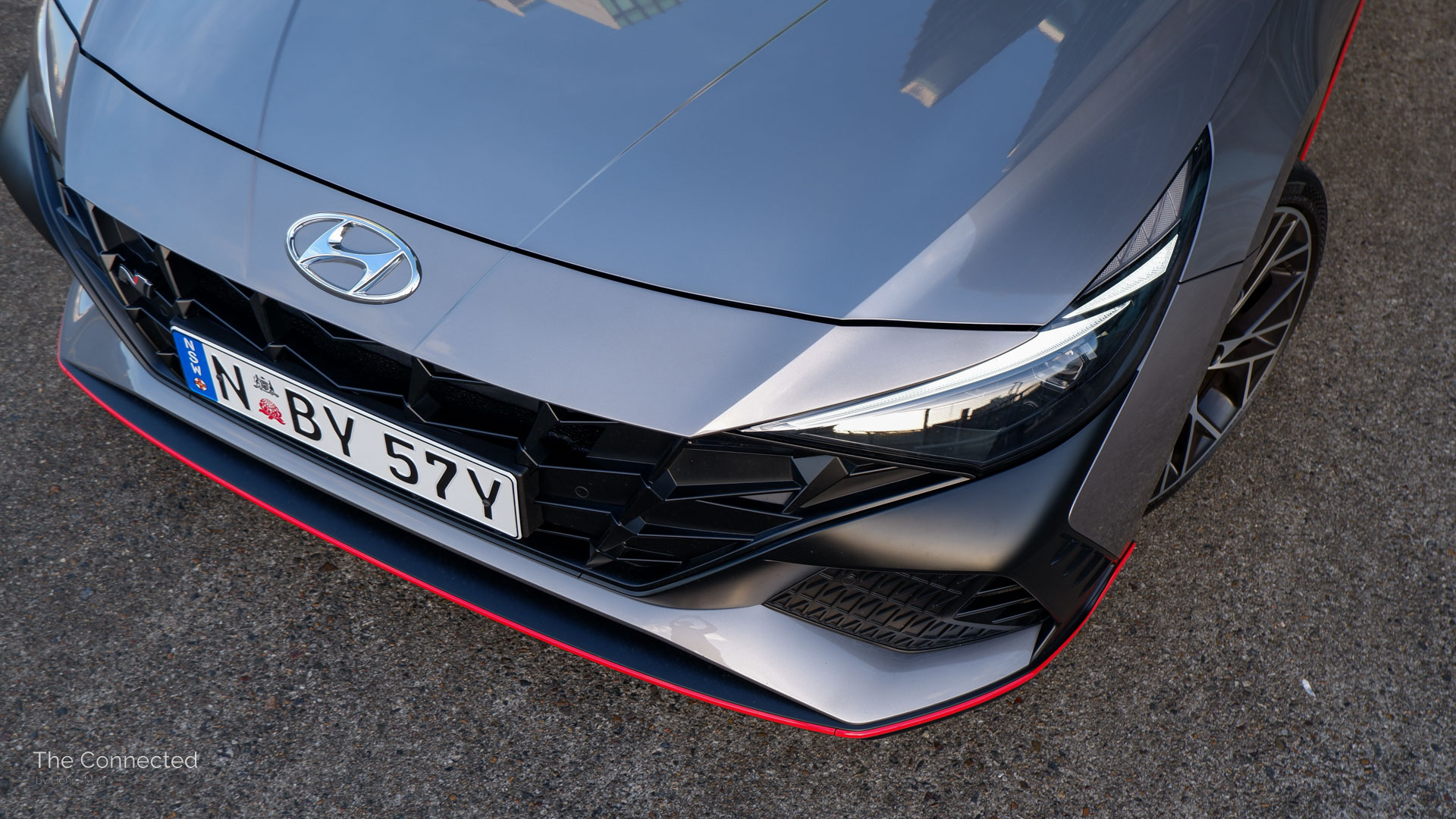
Camera-only.
Unlike regular models, the i30 Sedan N strangely misses out on a front radar sensor.
It’s not a deal breaker, but it’s disappointing that Hyundai’s high performance flagship omits a few potentially life-saving safety assistance systems (presumably due to the restyled front bumper).
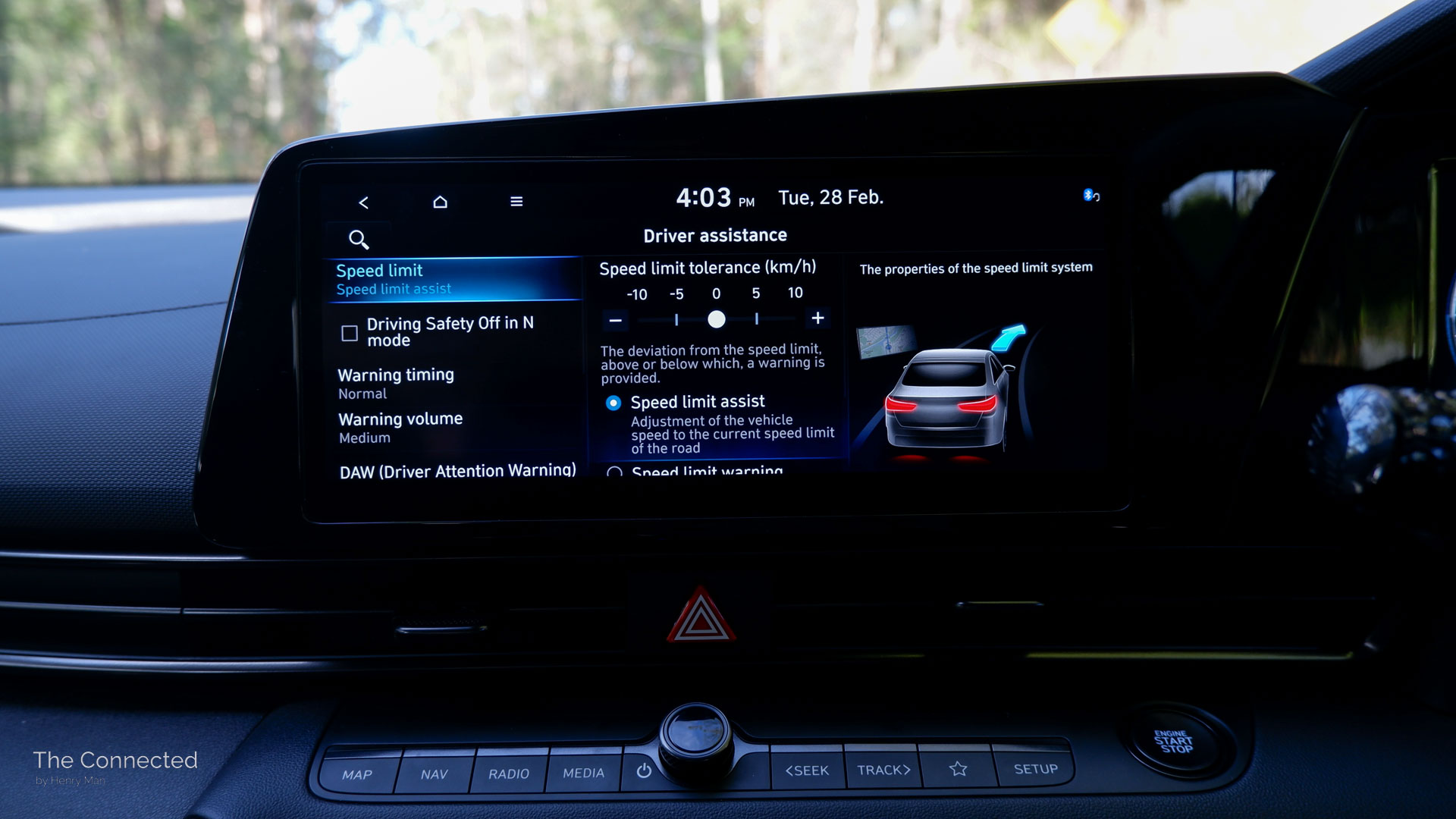


In lieu of adaptive cruise, it still features regular speed-based cruise control and speed limit assist – which limits acceleration past a set speed and can prompt drivers to adjust it based on navigation data.
Thankfully, the camera-only system performs well for lane-centring assist, which makes commuting easier.
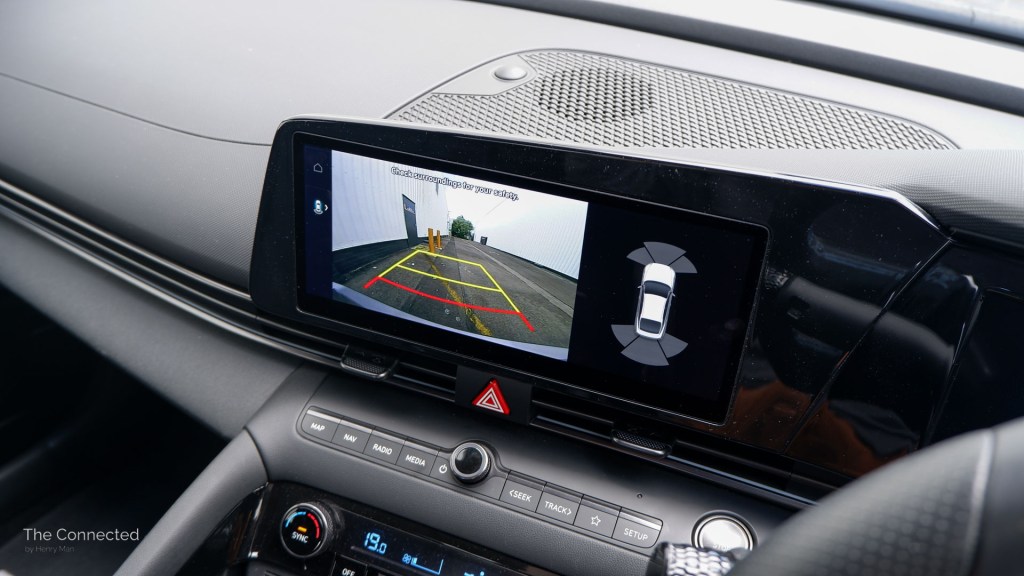
It also still includes a radar at the back for blind-spot and rear-cross traffic assist, plus front and rear sonar parking sensors to complement the reversing camera.
It’s worth pointing out that the no-cost manual transmission option has the same safety tech equipment as the DCT.
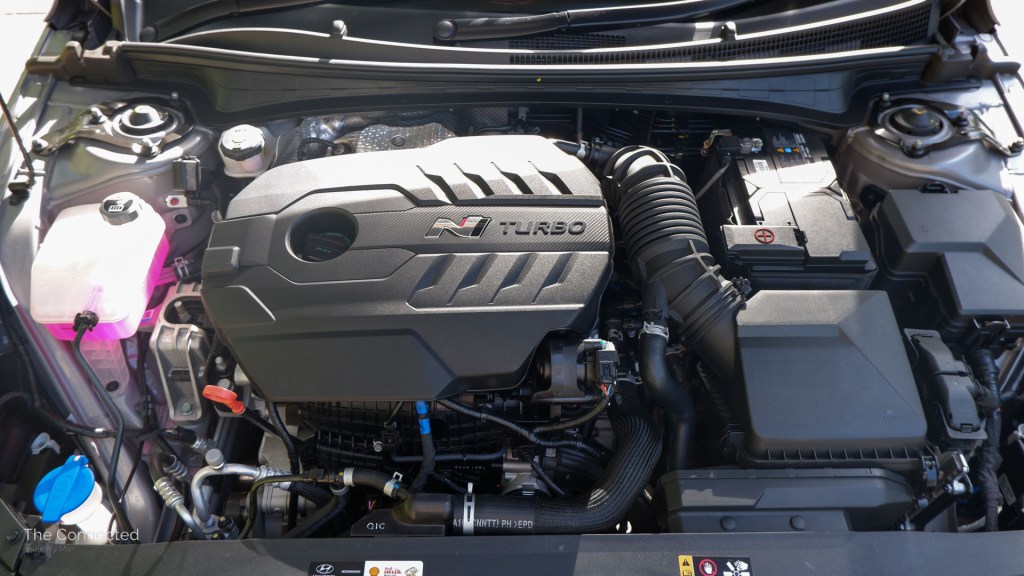
The standard LED headlights have good reach and spread, given it’s a slimmer unit compared to SUVs. Unfortunately, it’s a combination type, so the front and rear indicators, reverse light, and rear N-exclusive triangular fog light are incandescent bulbs – even on this $50,000 top-spec.
Fuel consumption.
2023 Hyundai i30 Sedan N fuel and efficiency specs:
| Claimed driving range | 566km |
| Claimed fuel efficiency (combined) | 8.3L/100km |
| Fuel tank | 47-litres |
| Minimum fuel quality requirement | 95RON premium unleaded |
| European emissions compliance | Euro 5 |
Unsurprisingly for a hotted-up performance car, the i30 Sedan N isn’t fuel efficient – but it’s not too outlandish.
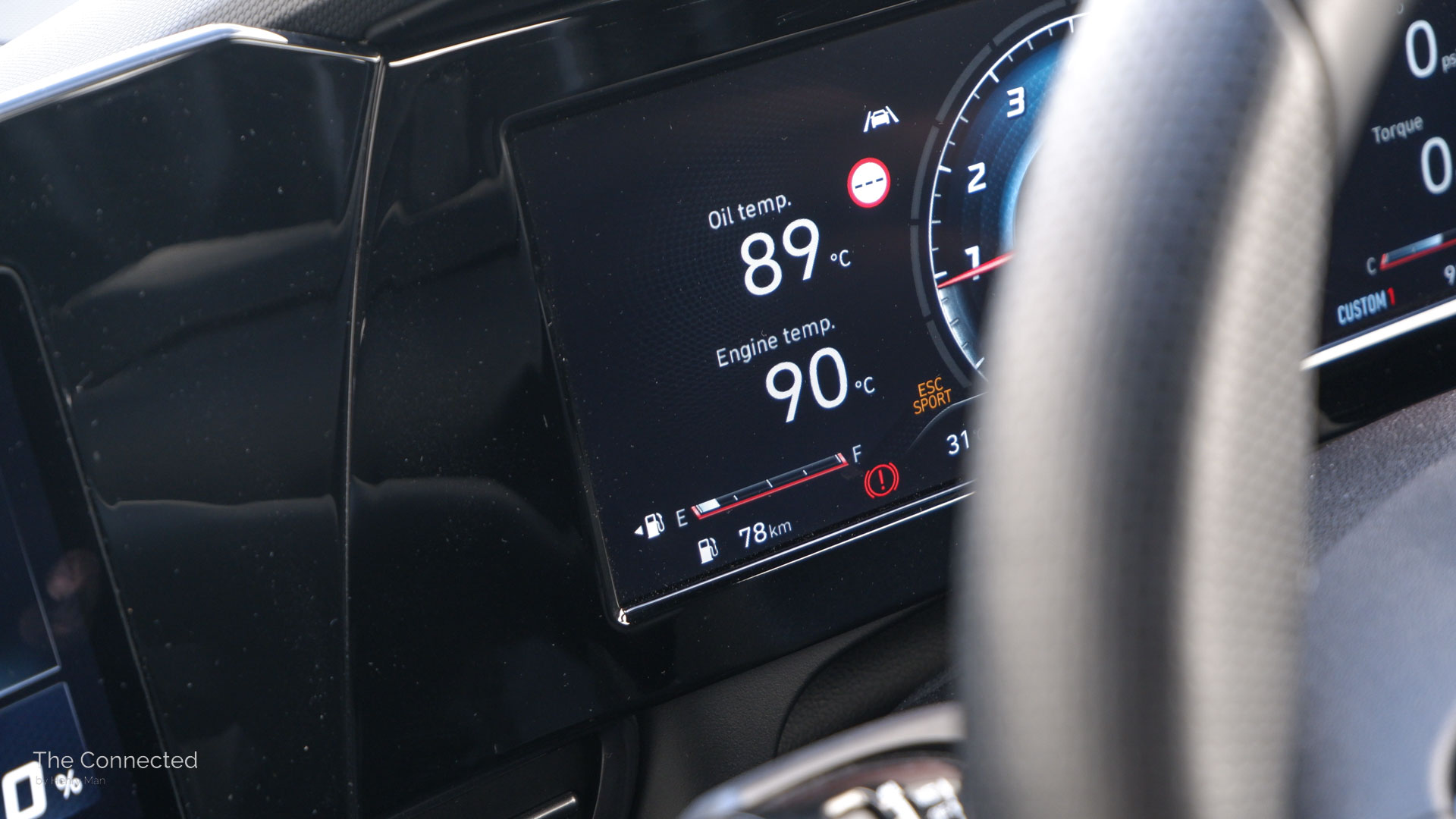
With a mix of urban and highway driving, I achieved 10.2L/100km on the trip computer, equating to 461km of driving range on a full tank.
That’s based on using eco and N models, with some acceleration punches and gratuitous downshifting gears (of course).


Unfortunately, the 47-litre fuel tank (identical to the standard i30 Sedan) is on the smaller side for its class. For context, the Subaru WRX sedan rival is 63-litres and the Toyota GR Corolla hatch is 50-litres.
Naturally, it also requires higher-quality and pricier 95RON premium unleaded petrol as a minimum.
On a side note, its real-world driving range is on par with the large 74kWh usable battery pack on the Hyundai Ioniq 5 electric car. Food for thought…
Driving.
2023 Hyundai i30 Sedan N Premium powertrain specs:
| Engine | 2.0-litre turbocharged four-cylinder petrol engine |
| Power | 206kW |
| Torque | 392Nm |
| Transmission | Eight-speed dual-clutch transmission (DCT) |
| Drive Type | Front-wheel drive (FWD) |
| Claimed 0-100km/h time | 5.3 seconds |
| Towing (braked/unbraked) | N/A |
The Hyundai i30 Sedan N makes a lot of noise, without needing to go fast.
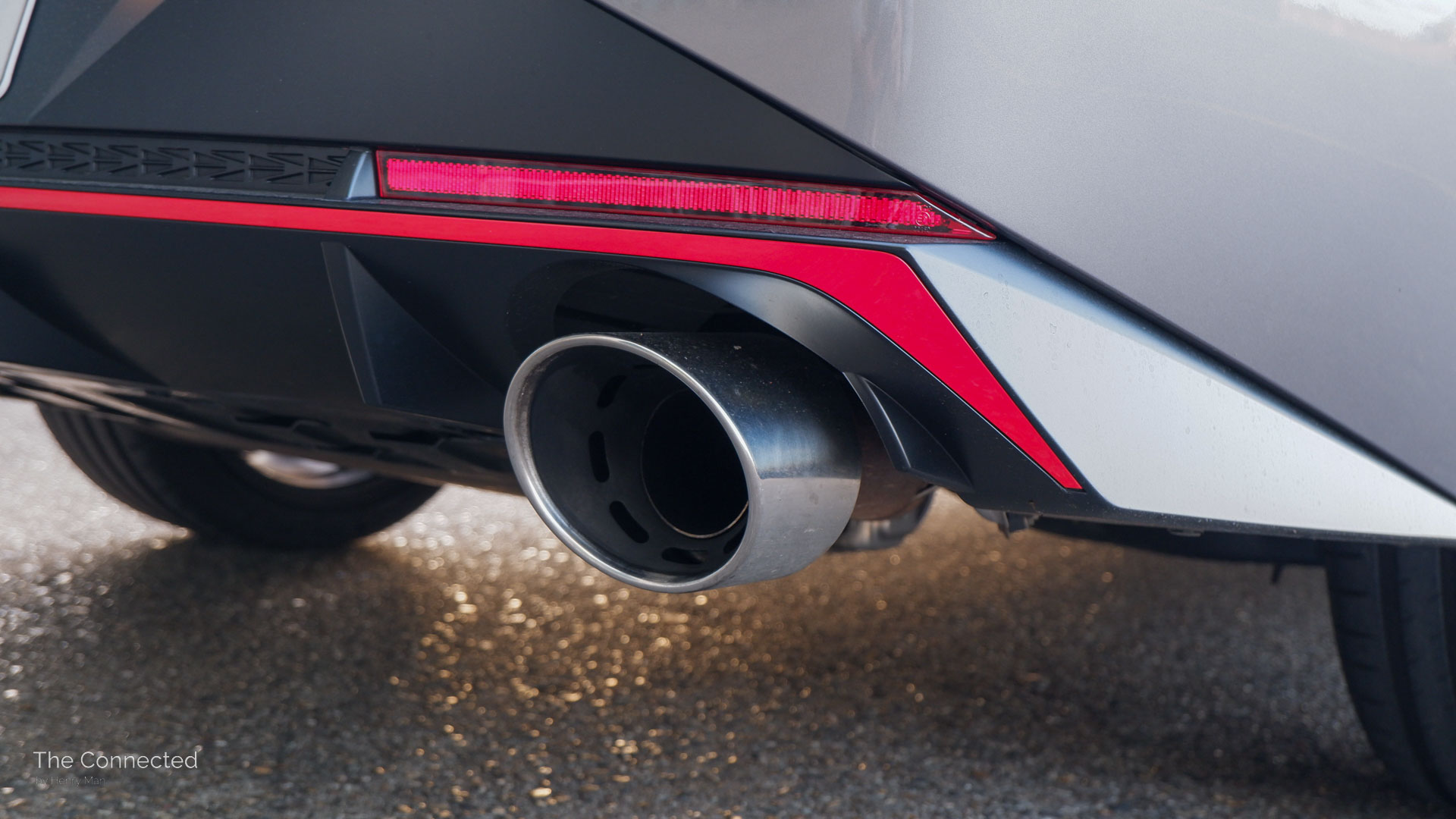
Amid overseas noise regulations, the N division manages to tune a cinematic exhaust full of pops and crackles while in the N driving mode, especially when revving down from the limiter, and turbo spooling up.
It’s satisfying and ‘outrageous’ at the same time. Hear the exhaust here.
There’s artificial driving sounds available, but I didn’t notice a difference as the natural exhaust is so inherent anyway. And, there’s no soft limiter.
Admittedly I’m no driving enthusiast (I’ll leave it up to the professionals), but I found it has good driving dynamics with a well-weighted steering wheel wrapped in a thick perforated leather rim, sharp steering and nimble body – despite being front-wheel-driven.
The eight-speed dual-clutch transmission (DCT) – which is, simply put, an automated-shifting manual – shifts gears quickly, with paddle shifters that let you take control at any time.


The car does, though, eventually take control of the gears again (which is good for spontaneous downshifts for example) – but drivers can force manual shifting by putting the gear stick in manual mode and use the paddle shifters (or shifter awkwardly).
However, while the DCT is smooth in most situations, there is some hesitation at low speeds, especially while parking (a natural consequence of a computer modulating the clutch).
The plastic paddles also don’t feel as satisfying and clicky that’s expected for a hotted-up sedan.
The DCT also exclusively gains a bright red N Grin Shift (NGS) button, which is essentially a real ‘dickhead mode’ by downshifting to the lowest possible gear and engaging N mode for 20 seconds (then available to reactivate every 40 seconds once used).
It’s good for spontaneous acceleration bursts, but if the i30 N is already in N and manual mode, then it doesn’t make a difference. I rarely used it since it really dials it up to the extreme and isn’t good ‘etiquette’ on public roads.
Can it be a daily?
Yes, but with conditions… The i30 Sedan N packs most modern-day tech and convenience features with an interior that isn’t low-rent and a liveable DCT.
As long as you don’t need a practical boot and can contend with a louder exhaust plus a firmer and noisier ride, this rare hot sedan is a good daily car.
Riding on 19-inch wheels and Michelin Pilot Sport 4S (245/35) tyres, the i30 Sedan N’s suspension is, naturally, on the firm side that makes rougher roads and imperfections noticeable in the cabin. Though, it’s not overly hard and uncomfortable.
Consequently, this also means the interior noise, vibration and harshness (NVH) isolation is sub-par with more road roar noise coming from the tyres, wind noise and other vehicles.
There’s also no auto hold function and the centre armrest can’t be slid forward; I found it too set back for my driving position. Though, Hyundai appeases enthusiasts with a manual handbrake that has a short travel, but drifting theoretically isn’t exactly conducive for a front-wheel drive car.


Critically, even in the standard eco or normal modes, the groaning exhaust is still noticeable – especially at first startup and when idling. I just wish there was an ultra-quiet start-up mode as found on cars, such as the Ford Mustang, to not annoy neighbours or passers-by.
On the other hand, you’ll only hear the crackles and pops in N mode and there are a variety of parameter settings within the touchscreen to endlessly fiddle and program, with two custom N modes available and two custom N buttons on the steering wheel. A launch mode and lap timer are also available, but many settings should be used on a closed-circuit track.
All-round visibility is good, including the rear window despite the sloping back, and the lower ride height actually gives a confident nimble feeling around tight car parks (an ironic reason for not opting into a SUV). Though, the wing mirrors could be a tad larger.
Ownership.
The Hyundai i30 Sedan N is backed by a five-year, unlimited kilometre vehicle warranty – which conveniently covers track use, unlike other car brands.
As long as you service it with Hyundai on schedule, it benefits from unlimited roadside assistance (renewed every 12 months) and an unlimited capped-price servicing program.
Unfortunately, it demands servicing every 12 months/10,000km, which is a bit short on the latter. A free 1.8 month/1500km initial service is also required.
Thankfully, maintenance costs are well-priced for a high performance sedan, totalling $1675 for the first five visits.
The i30 Sedan N includes a space saver spare tyre underneath the boot floor.
2023 Hyundai i30 Sedan N Premium capped-price servicing prices:
| 12 months/10,000km | 24 months/20,000km | 36 months/30,000km | 48 months/40,000km | 60 months/50,000km |
| $335 | $335 | $335 | $335 | $335 |

Rivals.
While the segment is limited, the i30 Sedan N directly competes with the all-wheel drive Subaru WRX sedan (from $45,990 before on-road costs with a manual transmission or from $49,990 with an eight-speed continuously variable transmission (CVT)).
That just undercuts the Hyundai, but it’s only a base model, so you’ll need to step up to the WRX RS variant (from $51,490 manual/$55,490 CVT) to get a more comparable equipment list. However, the Subaru benefits from a tamer WRX Sportswagon body style option.
Meanwhile, the rear-wheel drive Ford Mustang coupe is also a contender – but orders have closed for it to make way for the new seventh-generation model due in late 2023.


The popular Tesla Model 3 RWD (from $60,990 before on-roads) is a pricier all-electric alternative.
The i30 Sedan N also vies against its own counterparts – the i30 Hatch N Premium (from $49,200 manual/$53,700 DCT) and Kona N Premium small SUV (from $52,200 DCT), with the order books still closed for the former at the time of writing.
But, compared with the DCT sedan, it’s cheaper and benefits from a more modern interior, sharper design and newer underpinnings.
Then, the new Toyota GR Corolla, Honda Civic Type R, and Volkswagen Golf R hot hatches are hard-to-reach at upwards of $60,000 (if you can get your hands on one).

Would I pick the 2023 Hyundai i30 Sedan N?
The Hyundai i30 Sedan N is impressive.
It’s got a loud cinematic exhaust note, striking design, and is well-priced (that’s also still on sale and in stock).
After all, if you’re looking for a high performance, combustion engine-powered sedan that isn’t all-wheel-driven, then this is the only choice. The DCT will be my pick as a daily car, but the no-cost manual is available for those who want the ‘full’ driving experience.


But, if the forthcoming facelift can address some shortcomings, including the lack of a radar sensor, add a quiet startup mode and have full LED lights, then it will be a more polished product.
The fuel tank could also be larger and don’t get me started again on the irritating sun visor.
Times are changing, though. As carmakers focus on high-profit SUVs and utes, while investing in electric vehicles, the days of the attainable petrol-engined hot sedan – not to mention hot hatch – are outnumbered.
So, enjoy it while it lasts…
Photographs by Henry Man
About the Author.
Henry Man is an independent content producer passionate about the intersection of technology and transportation.
The former automotive journalist is focused on producing critically-detailed vehicle reviews, and unique short-form content. Learn more.


 The Connected by Henry Man