

The Hyundai Ioniq 5 has received a second update in a little more than a year since its Australian launch. It’s now caught up to its electric vehicle siblings, but not everything has improved.
Well, time flies. The Hyundai Ioniq 5 electric crossover has gained another update for the 2023 model-year, making it the third iteration since its local release in late 2021.
Its features and specifications now match its sportier-looking Kia EV6 and luxury-badged Genesis GV60 South Korean group counterparts, with a larger 74kWh usable battery (up 4kWh net), slightly more power (up 14kW), and a “revised ride and handling package” in addition to features that were introduced in the first mid-2022 update.
With supply finally picking up slowly, the 2023 Ioniq 5 is a welcome update amid the fiercely popular Tesla Model Y. But, there’s some aspects that still need addressing and a notable setback compared to the original version.
EDITOR’S NOTE: The test vehicle was provided by Hyundai Australia for a seven-day independent evaluation. No copy approval was given before publication and we have no commercial arrangements with the company.

Pros.
+ Unique design
+ Improved software tech
+ Spacious interior
+ Effortless power
+ Supply has improved…
Cons.
– Not as efficient than before, pricier servicing
– Ride is still wallowy
– Driving position can be awkward
– Still missing Bluelink
– … supply is still limited
Vehicle tested:
| Model | 2023 Hyundai Ioniq 5 |
| Variant | Techniq AWD |
| Starting price | $79,500 before on-road costs |
| Exterior colour | Lucid Blue (no cost) |
| Interior colour | Dove Grey/Dark Pebble Grey leather |
| Country made | South Korea |
Design.
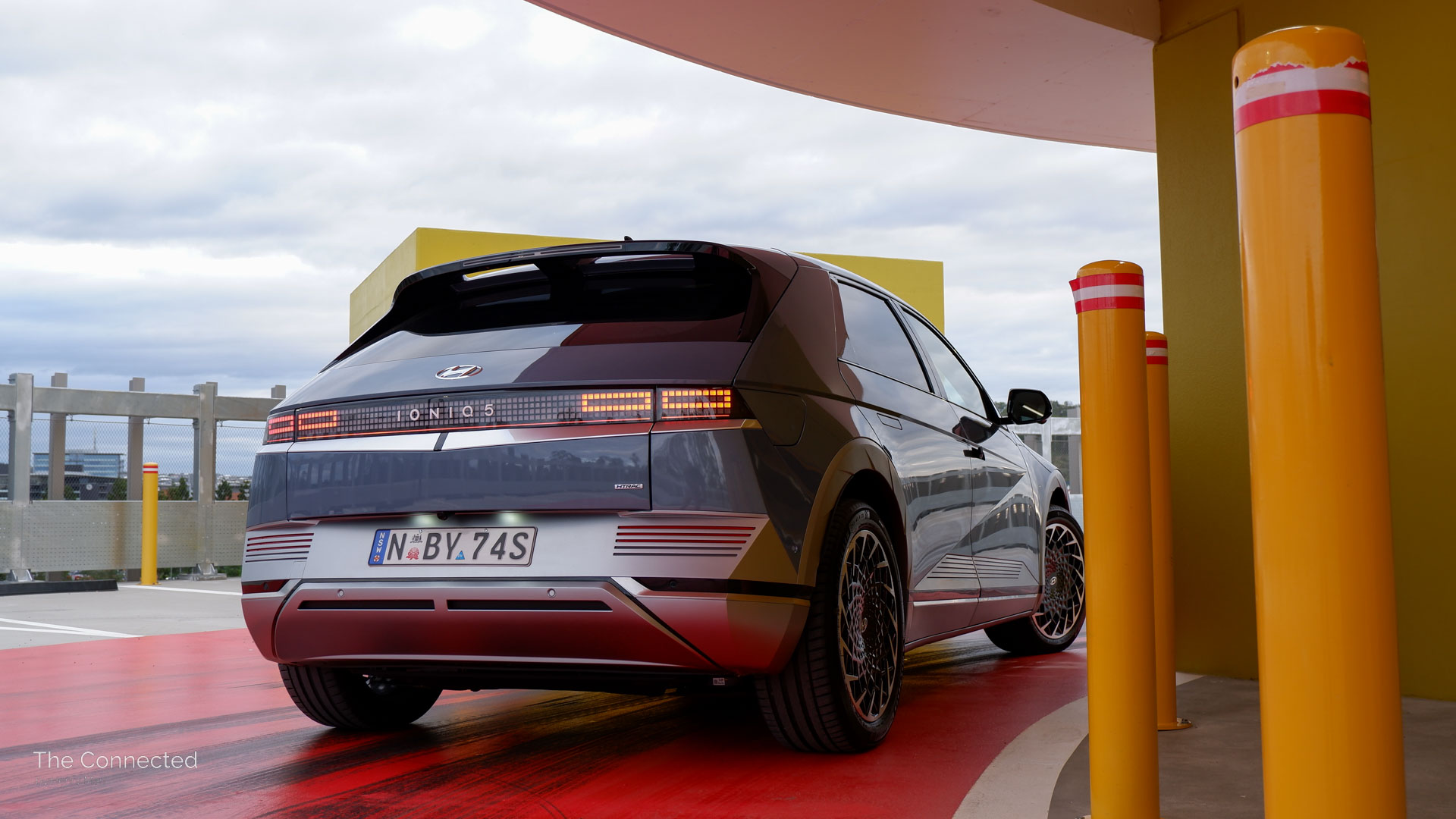
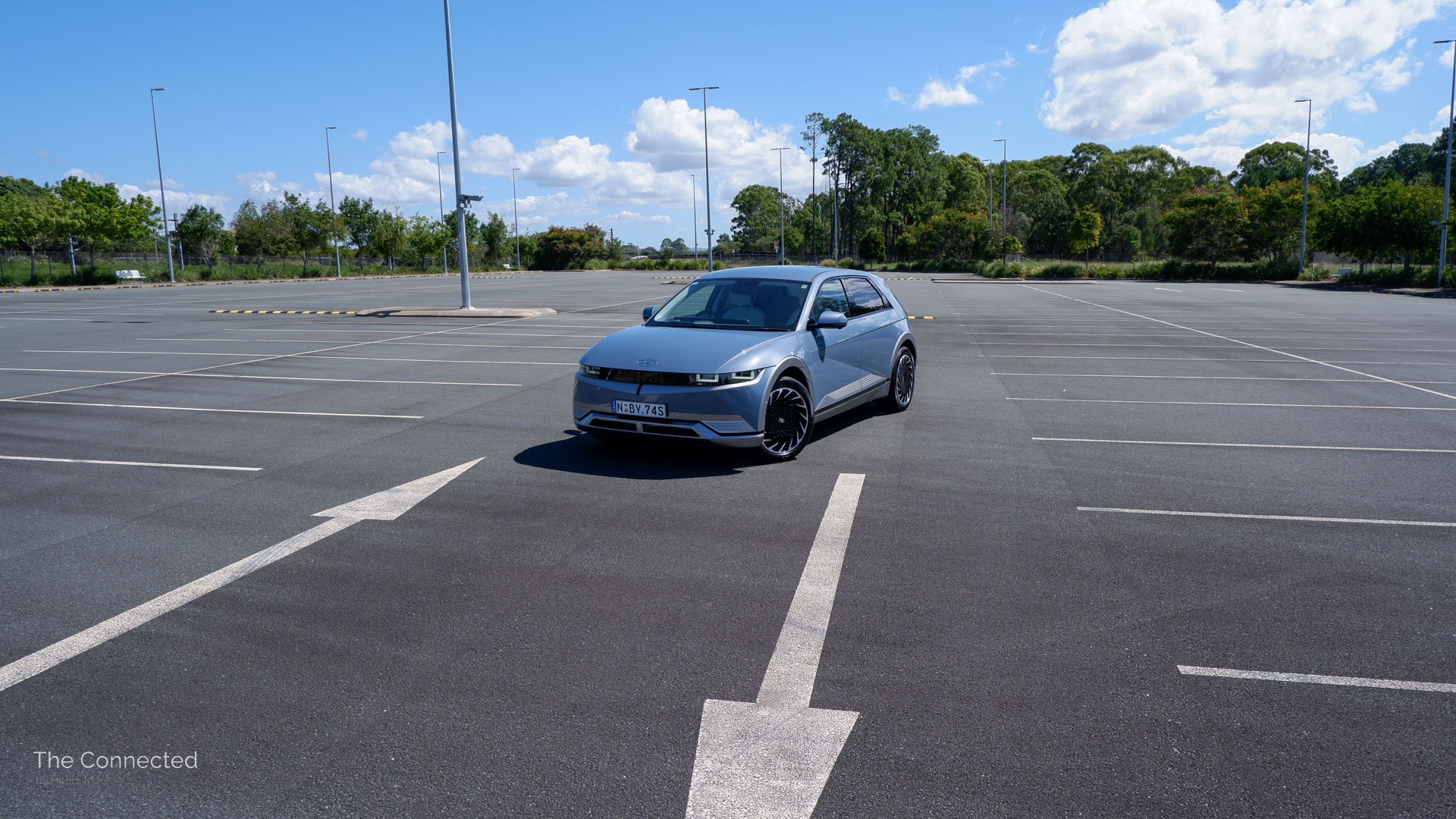
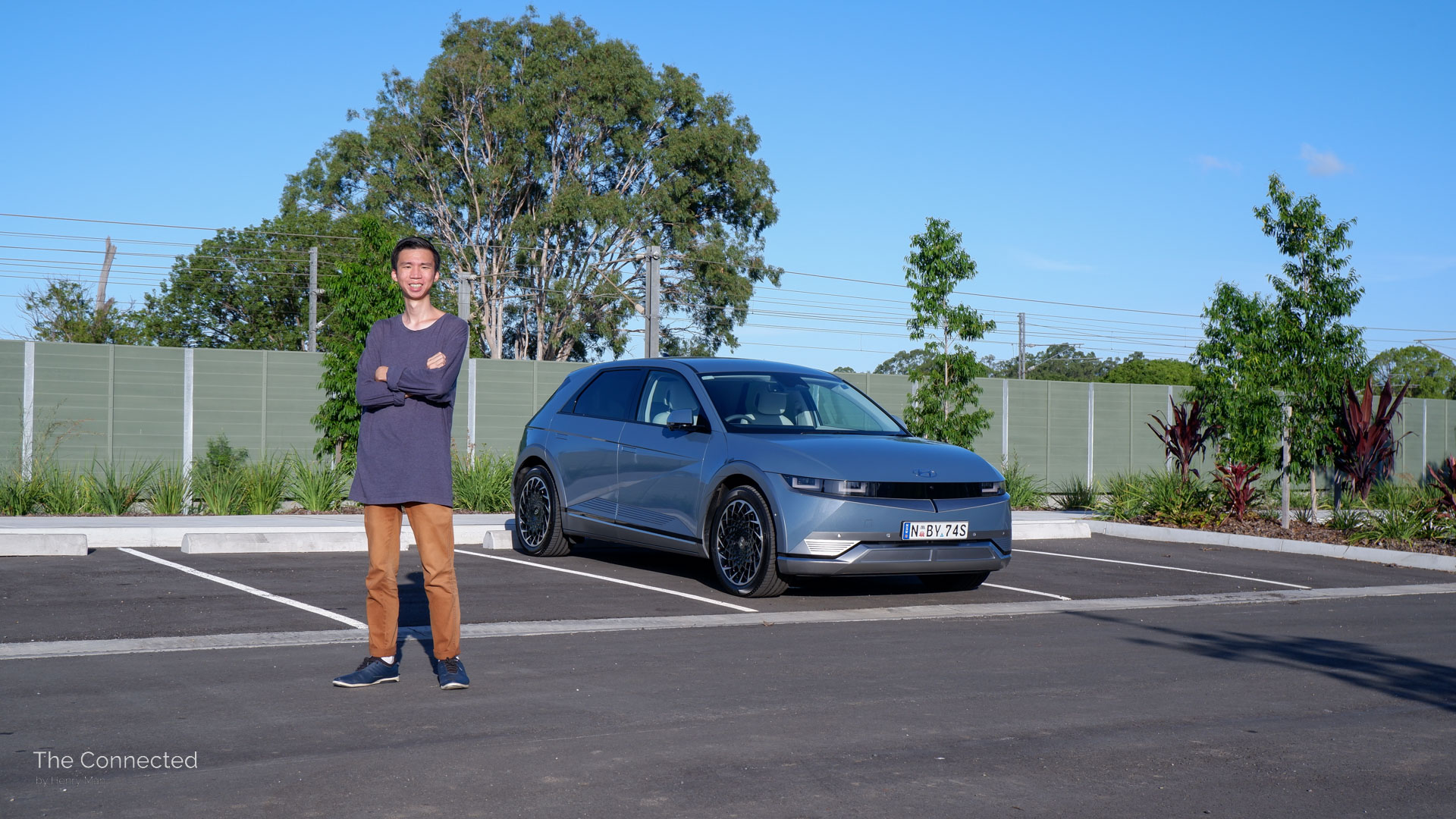
I said it before and it still holds true: the Hyundai Ioniq 5 remains one of the best-looking, avant-garde vehicles on sale today.
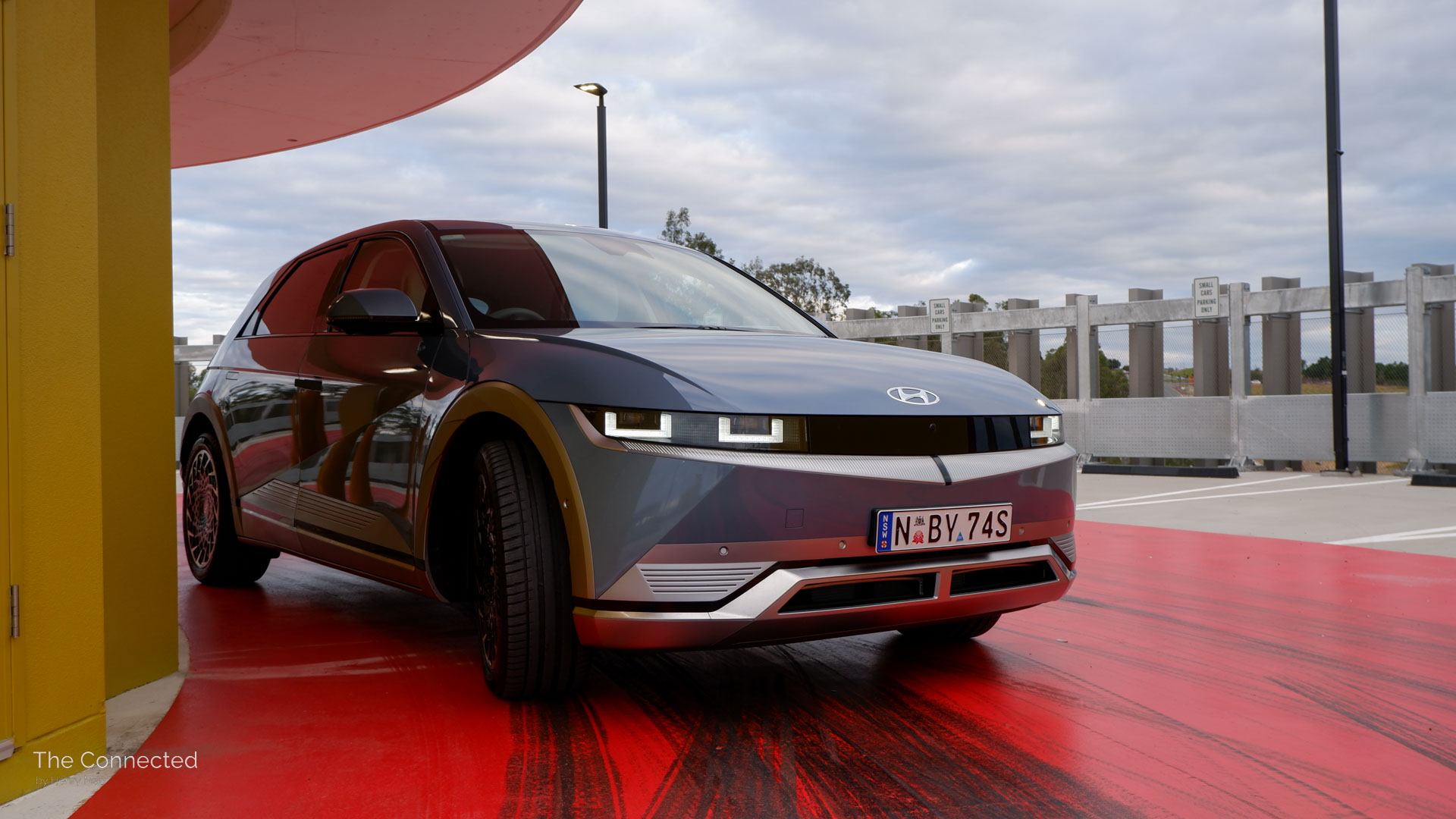
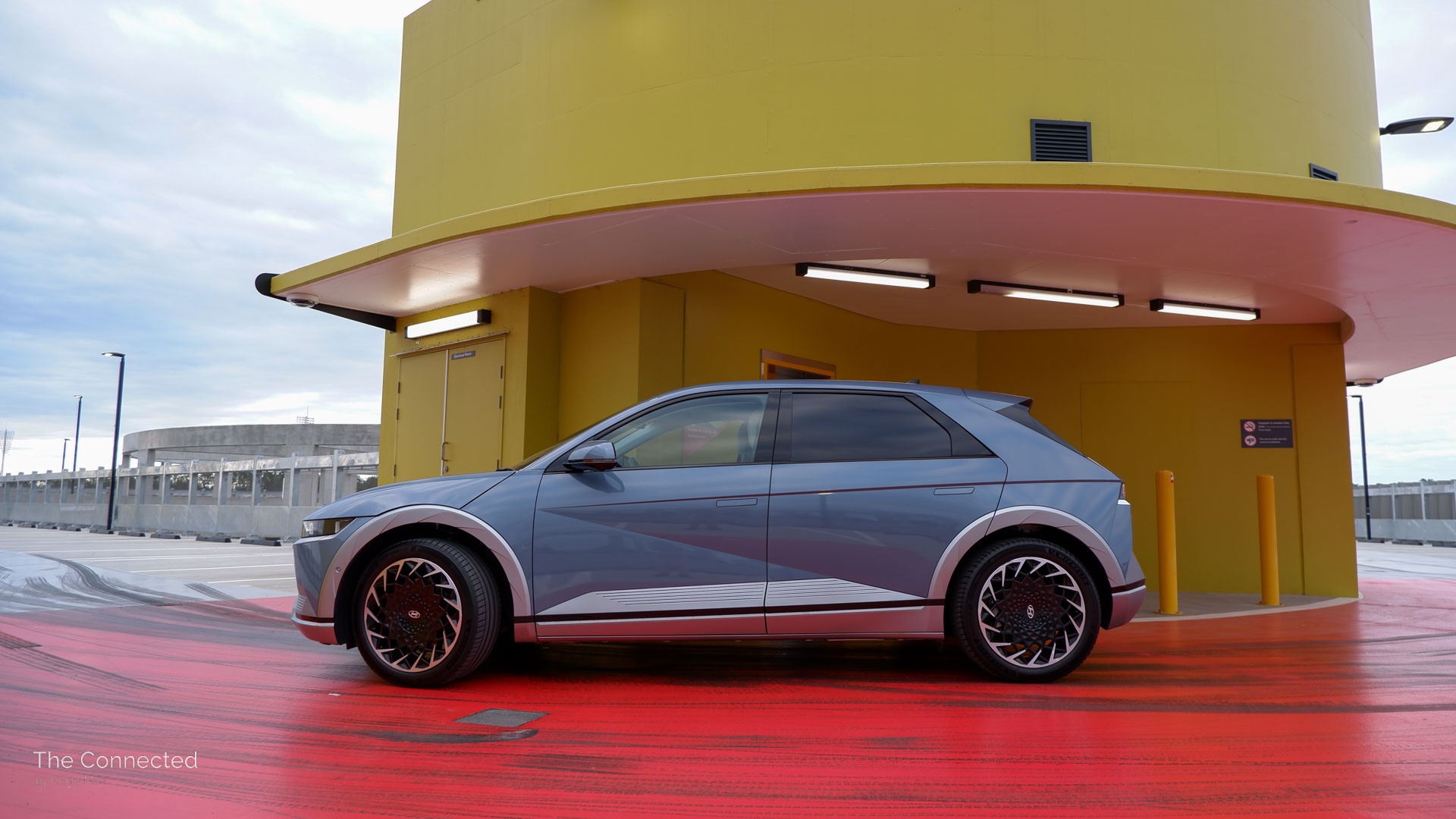
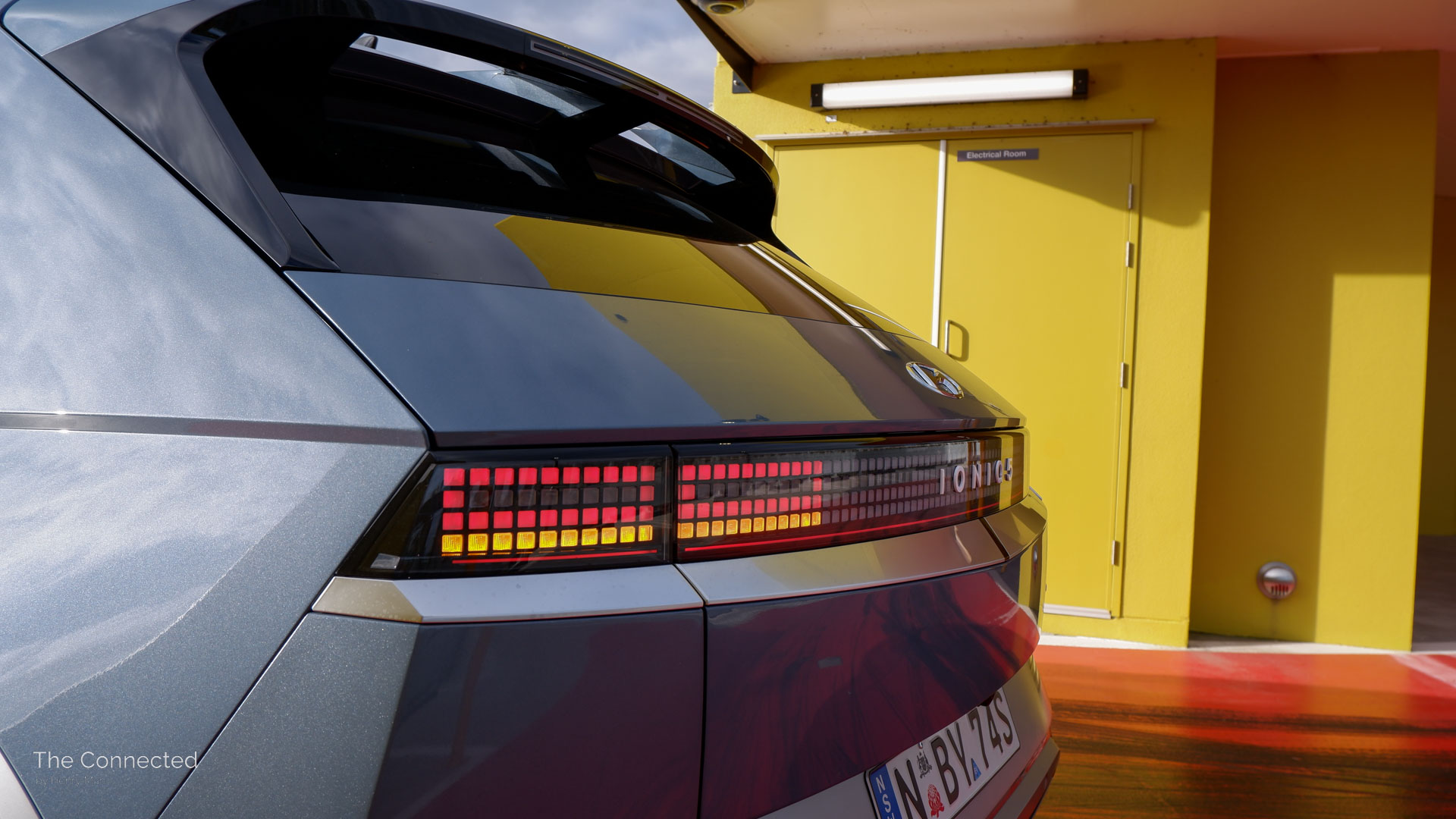
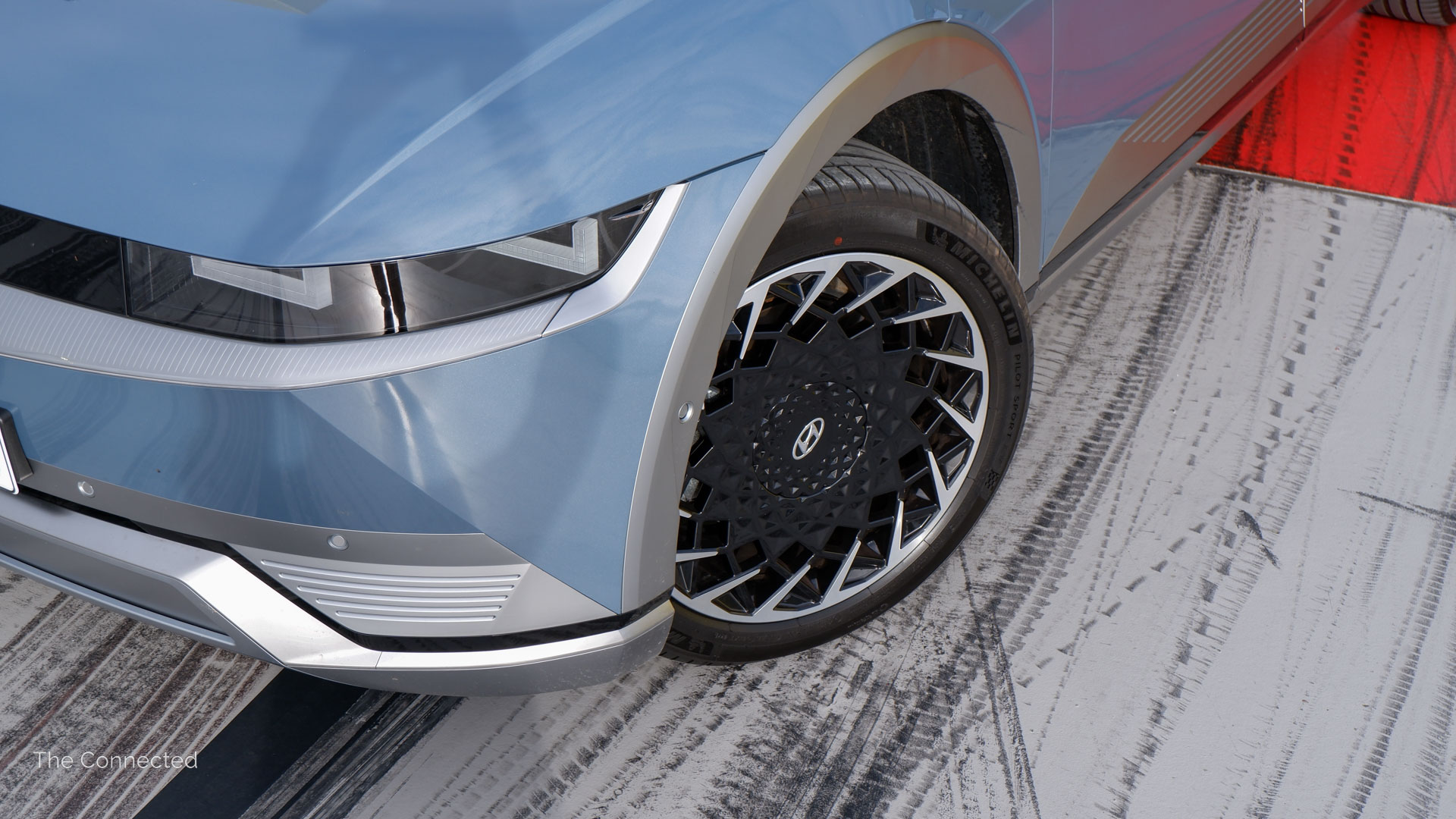
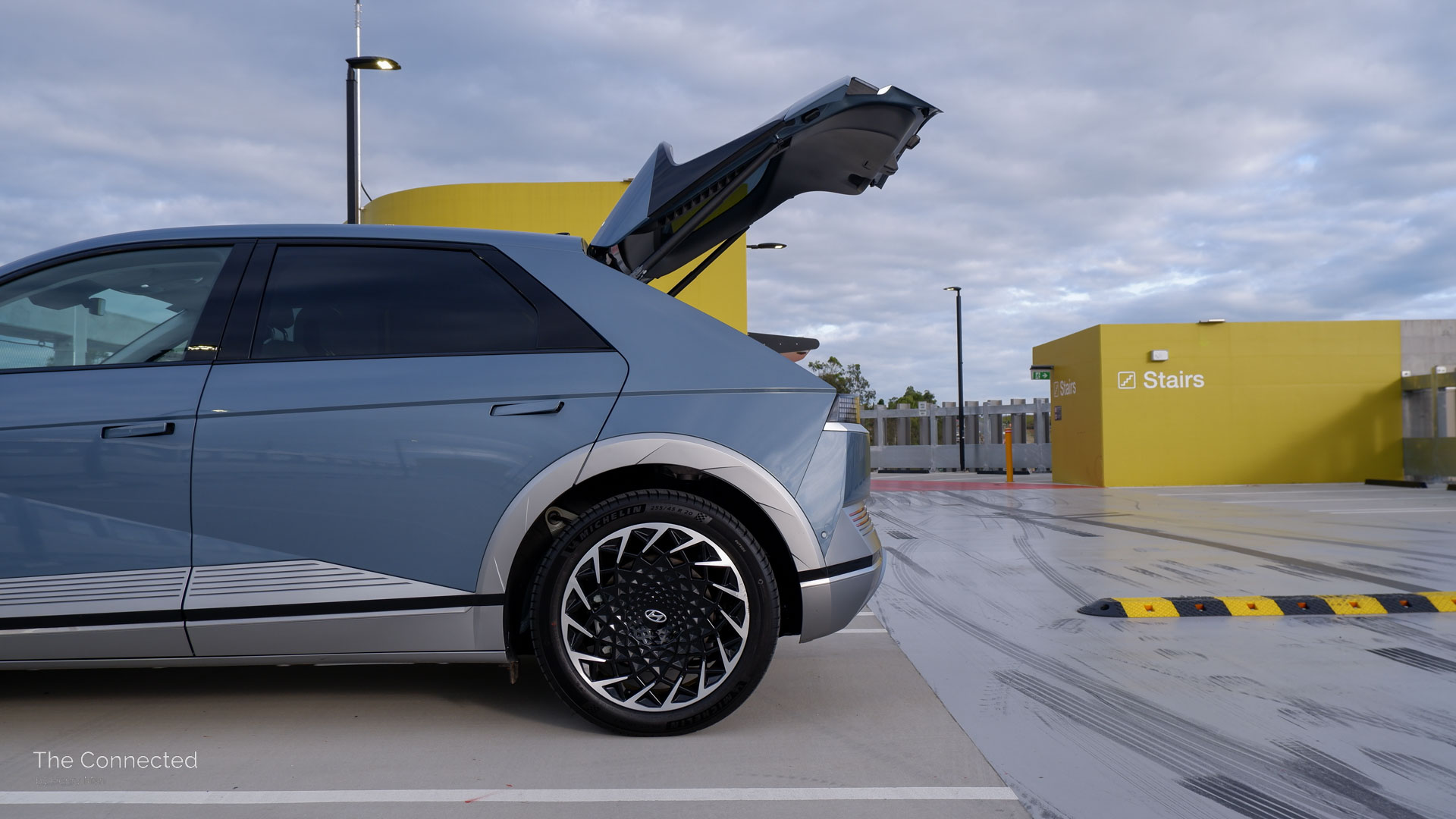
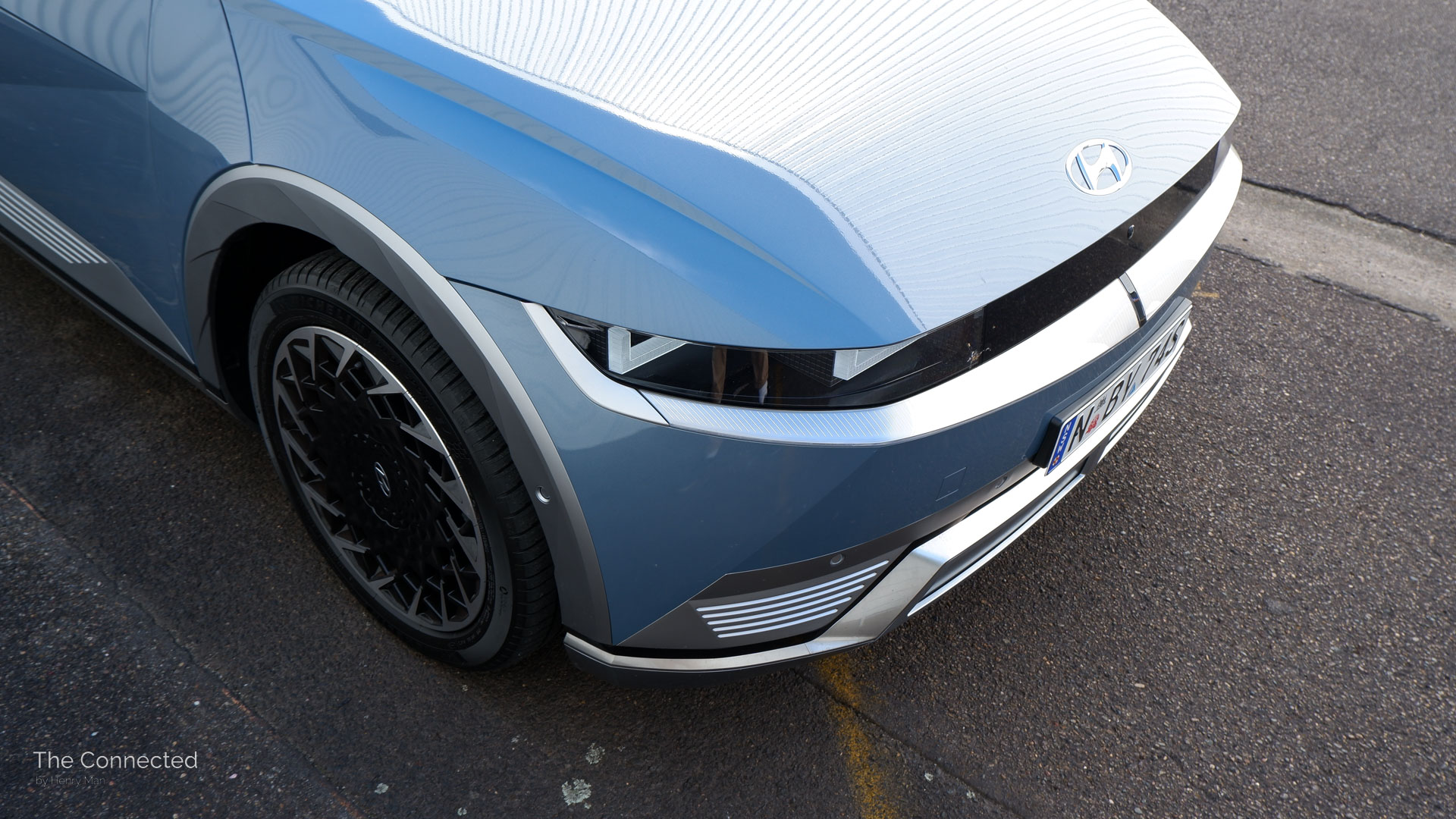
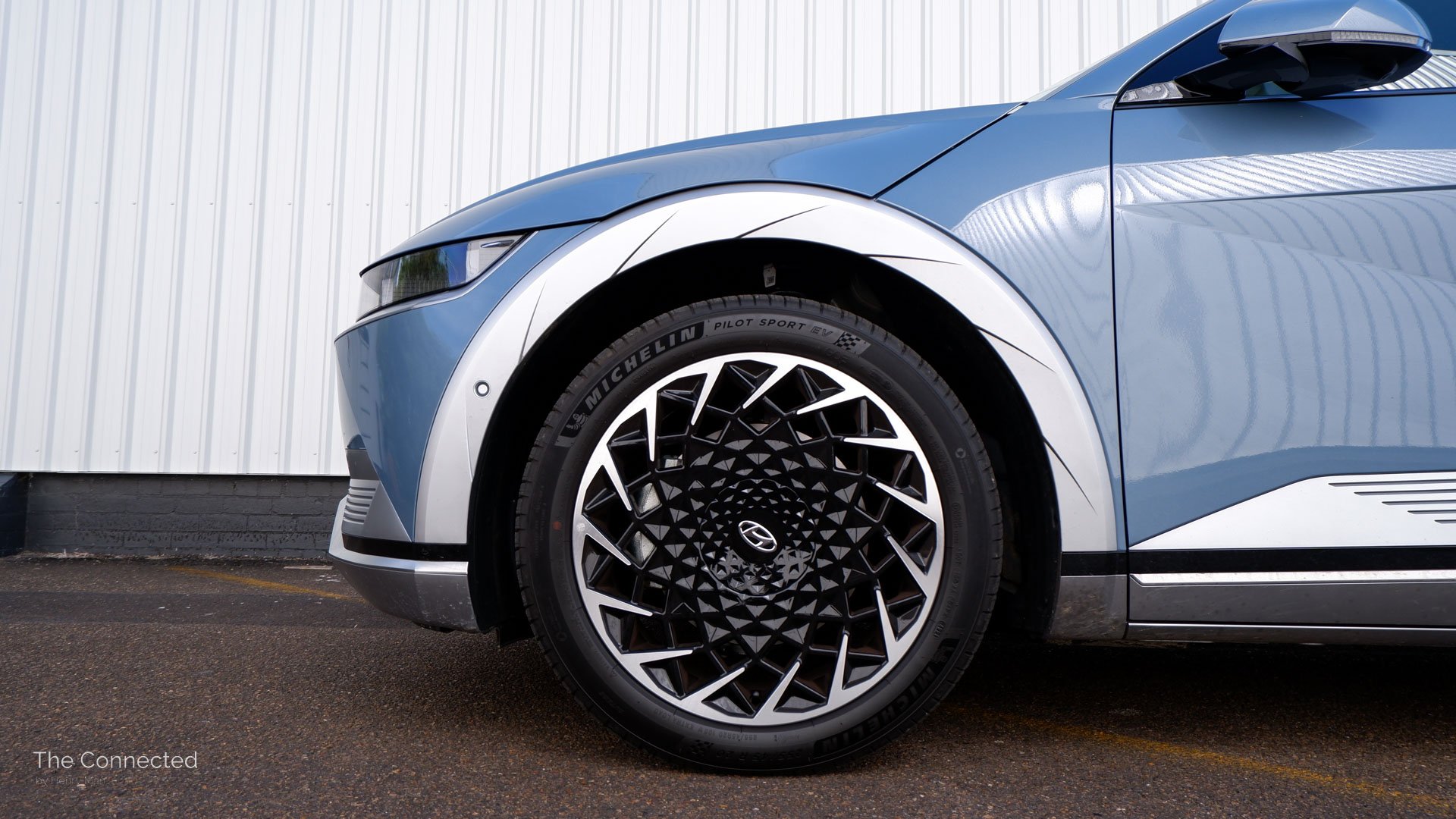
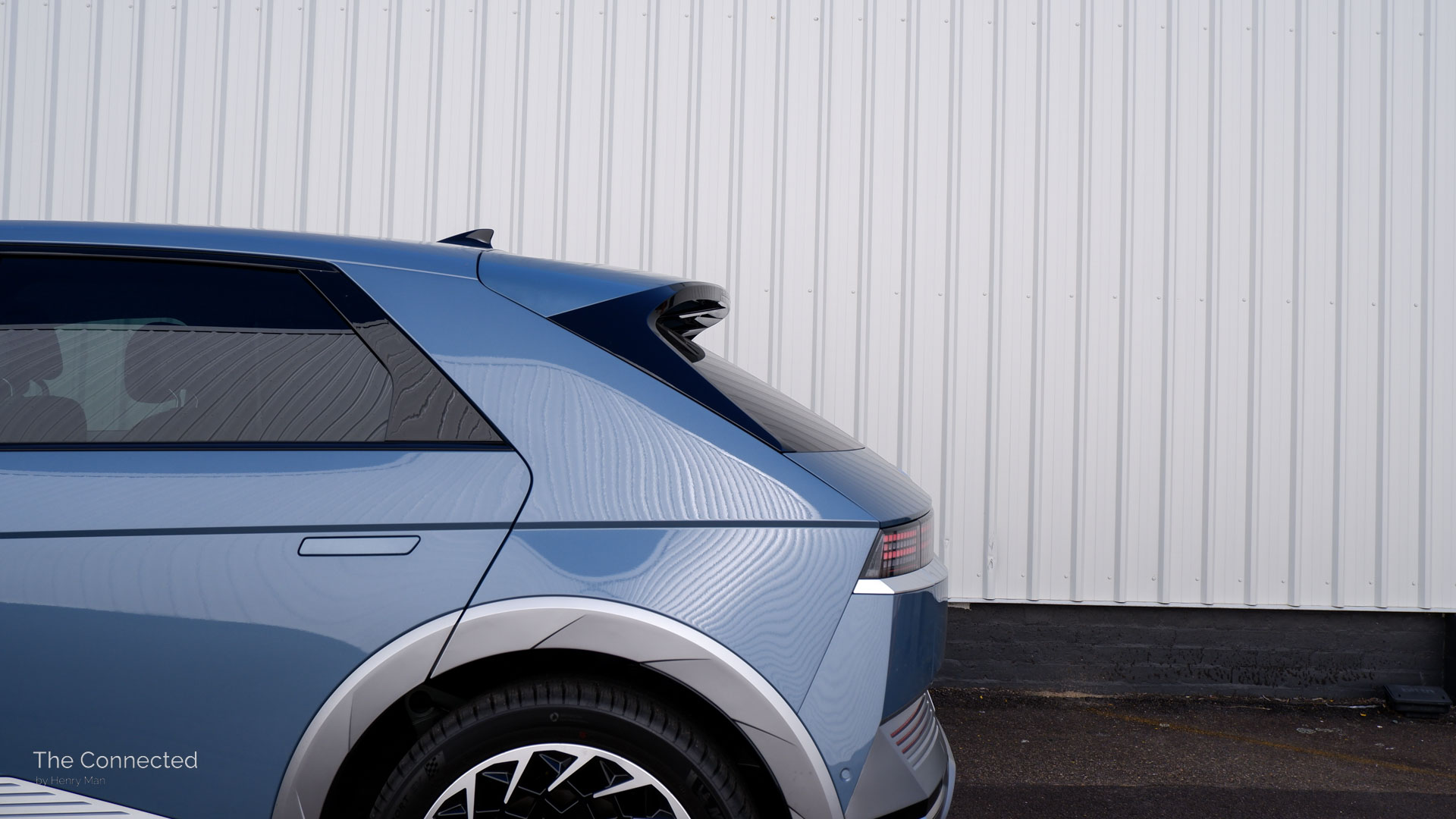
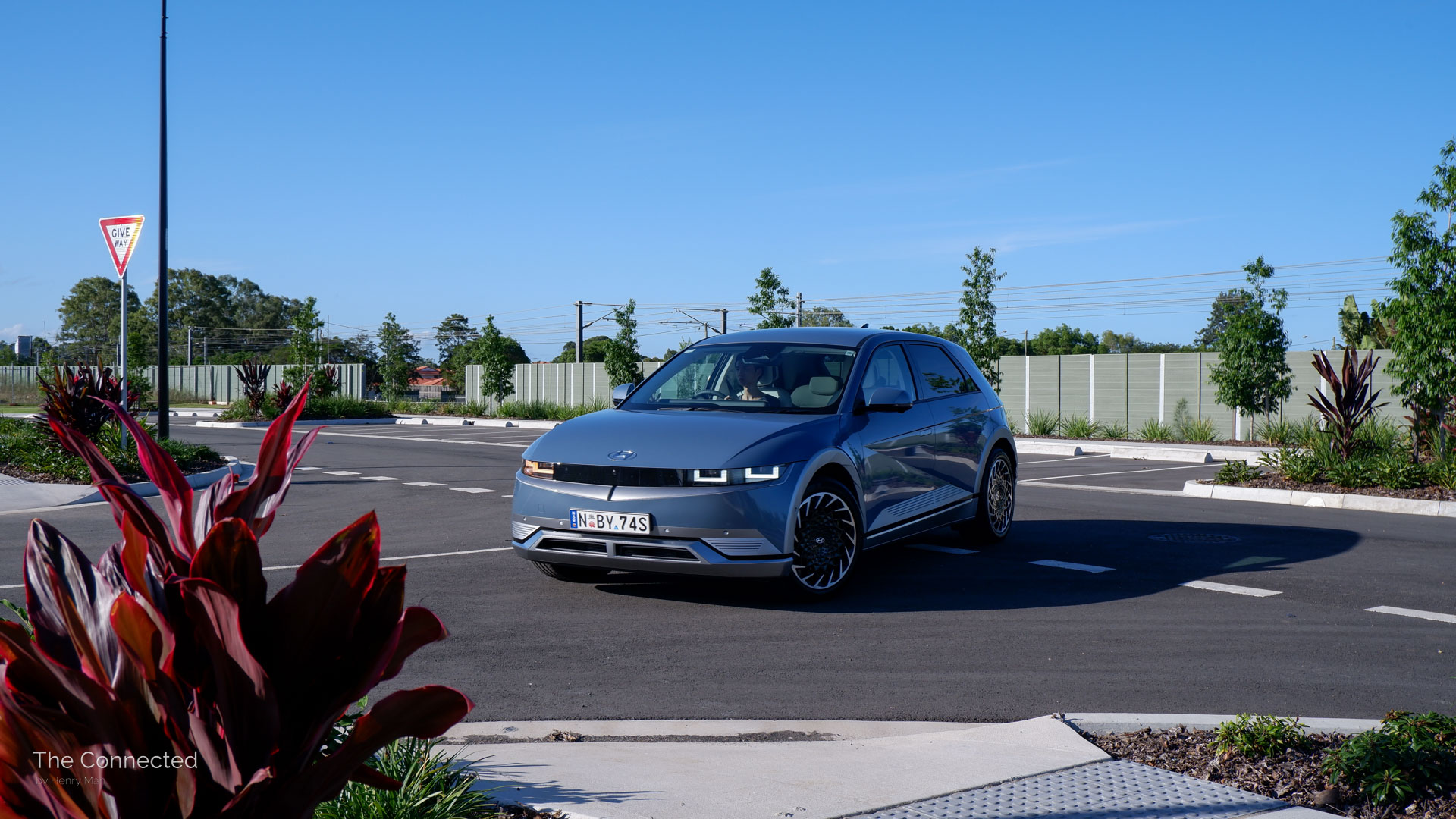
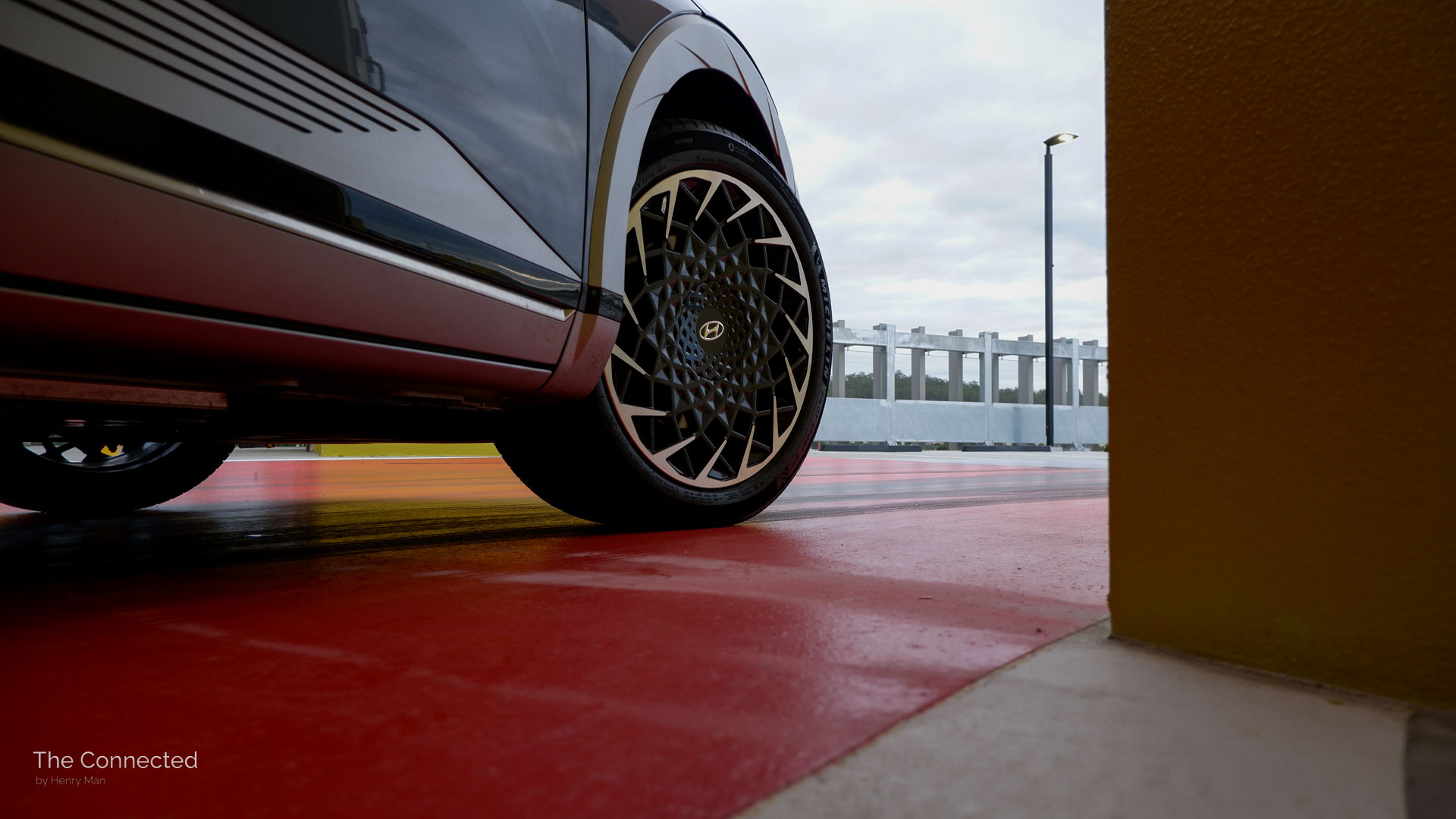
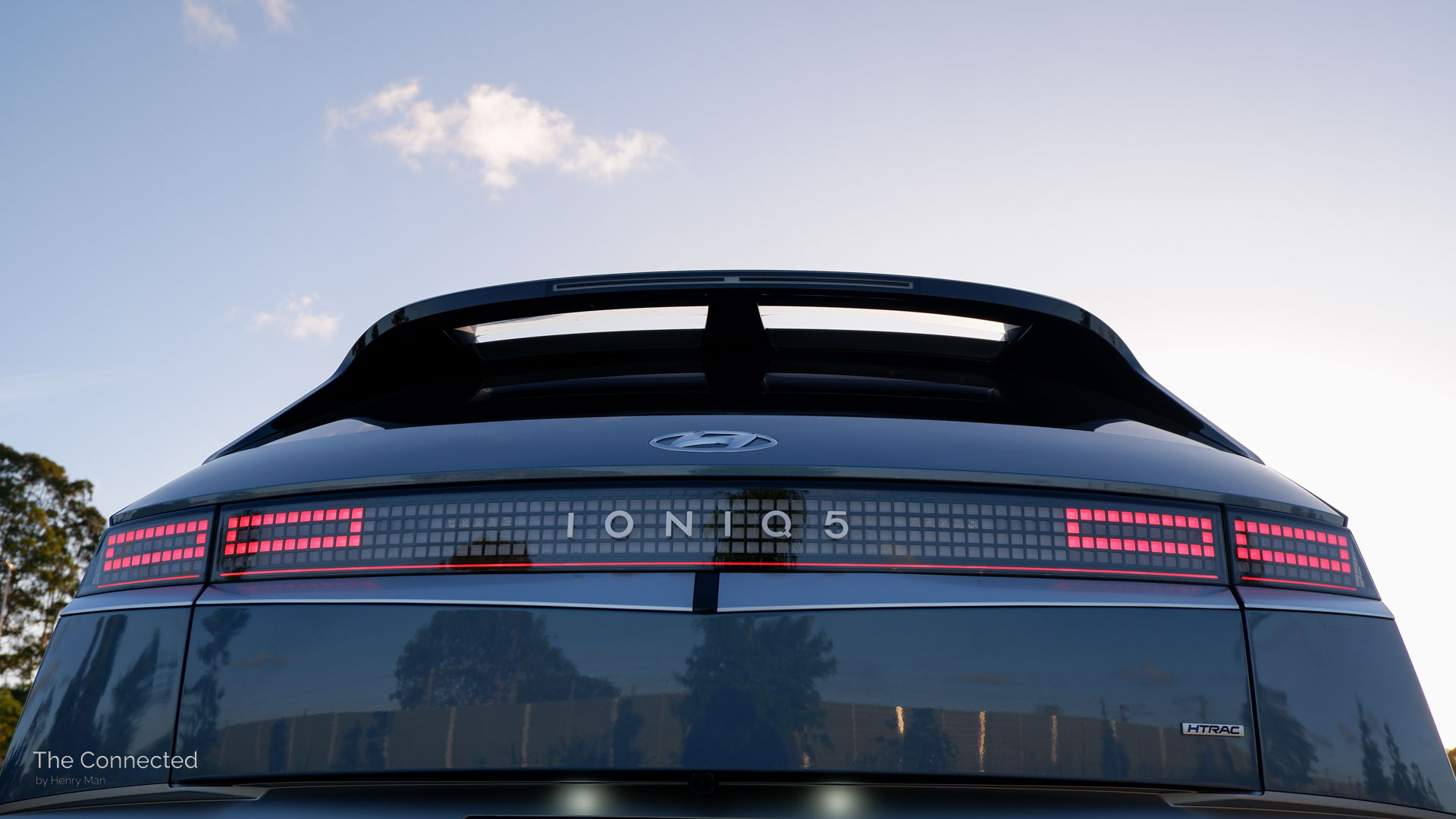
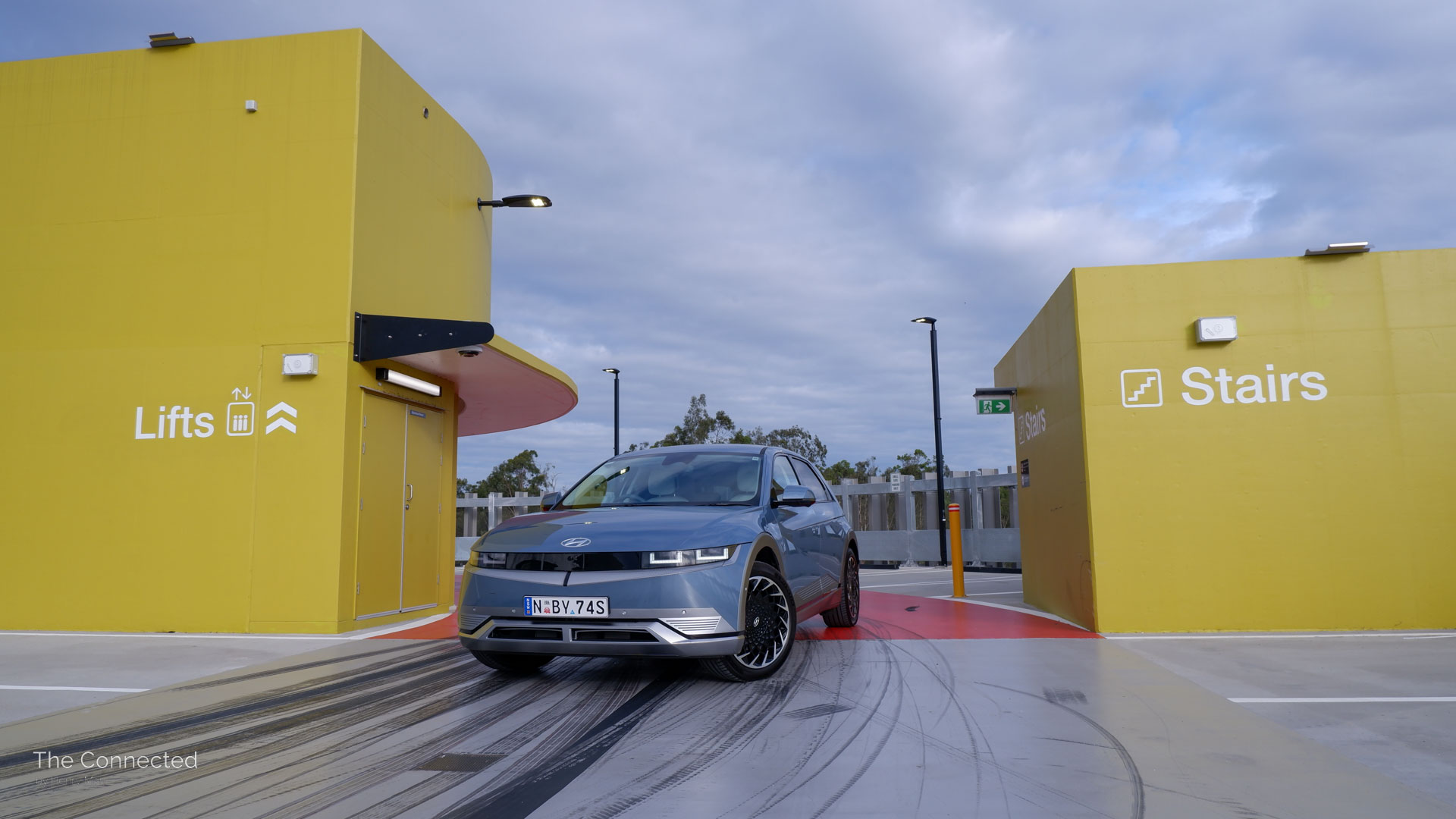
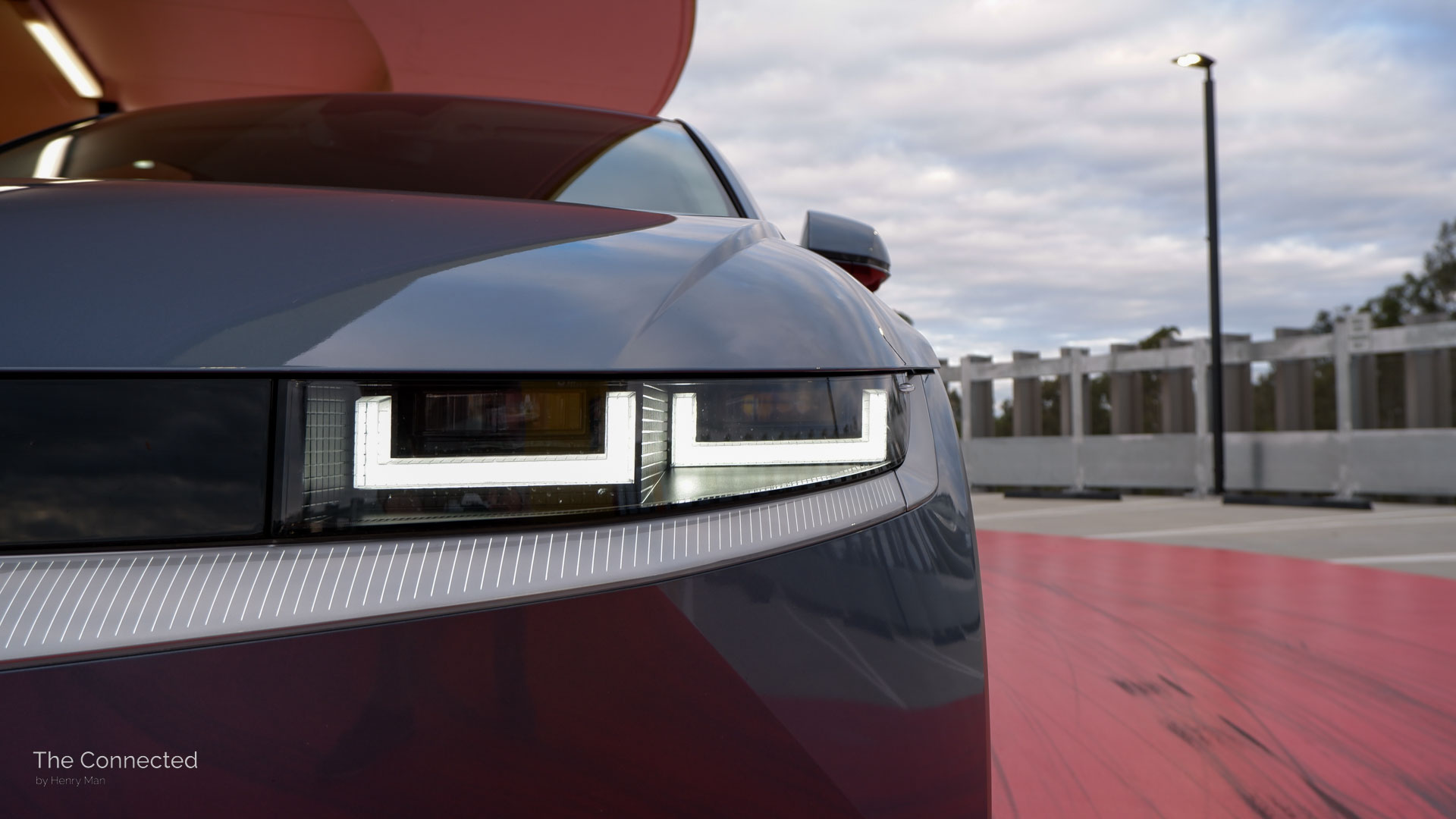
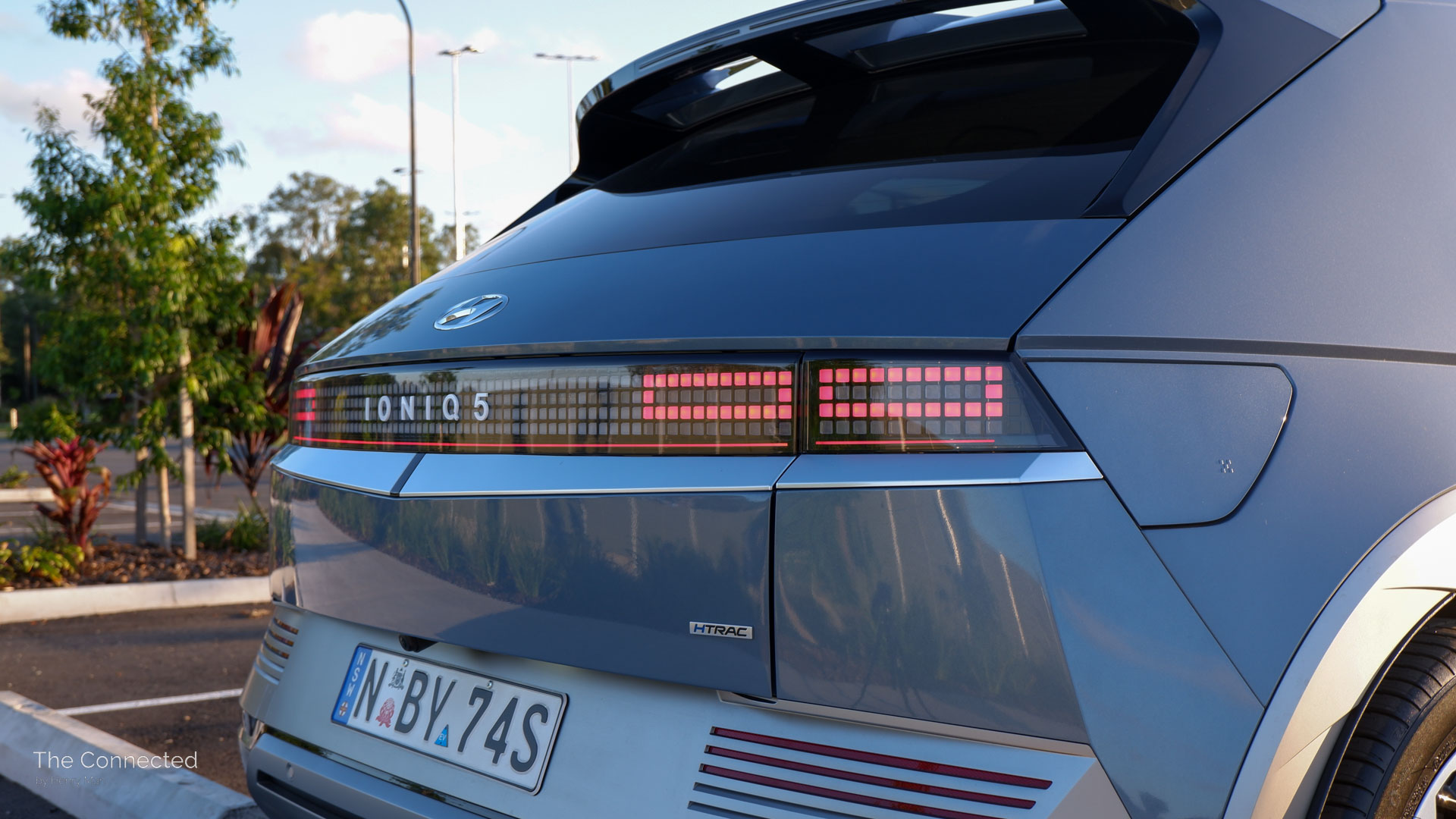
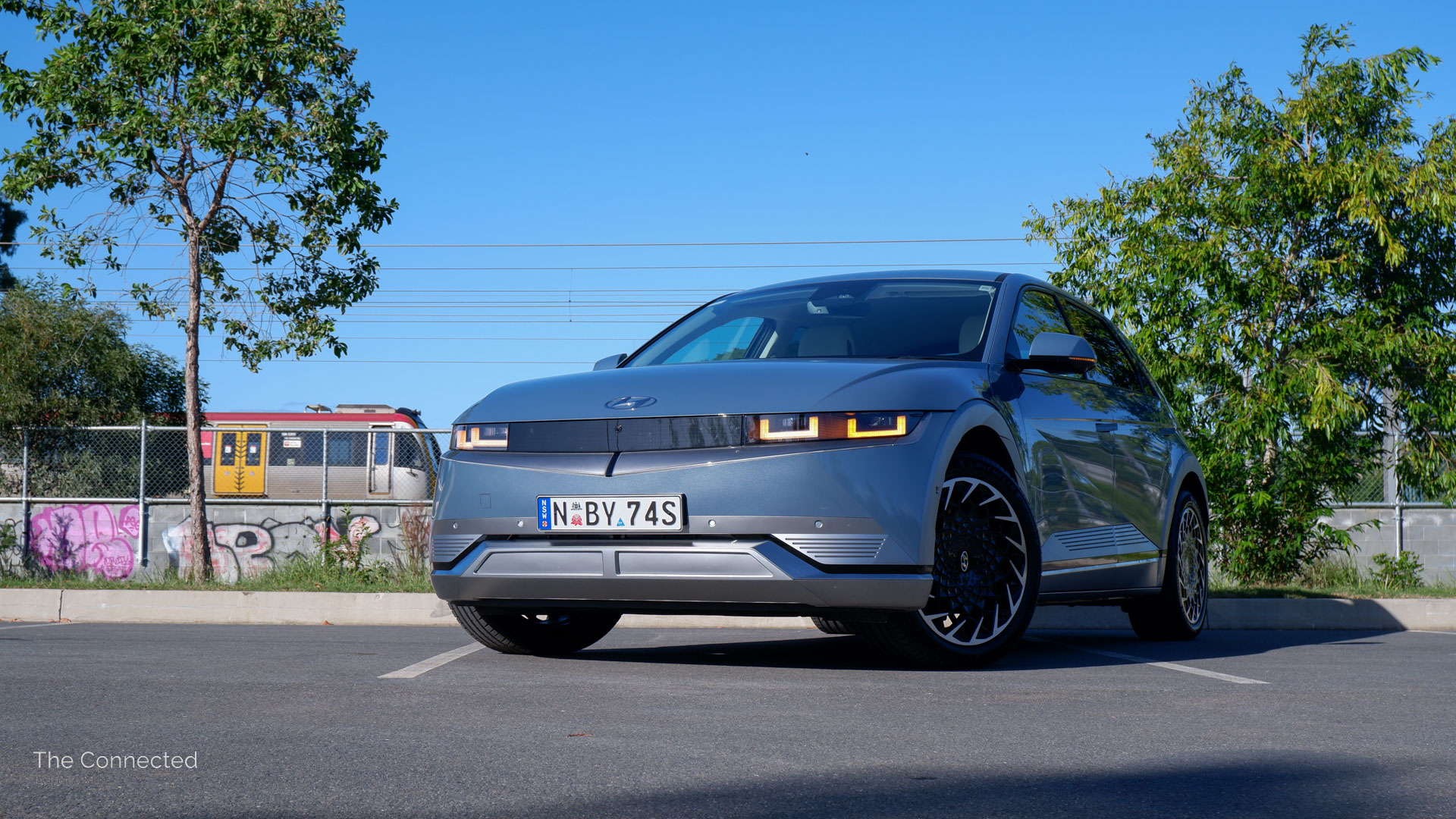
Even with the slicker-shaped Ioniq 6 sedan now on sale, the Ioniq 5 looks like nothing else with a futuristic concept car exterior design (a close mirror of the 2020 Hyundai 45 EV concept) featuring a 45-degree side crease line, retro-inspired satin silver cladding, unique blade-like 20-inch aerodynamic alloy wheels, and cute pixel LED headlights with hidden whiskers underneath and pixel tail-lights with a thin light bar.
Let’s call it out: this is not a SUV. Instead, it’s more of a bloated hatchback crossover with the proportions of a medium SUV, long wheelbase of a large SUV, and only 160mm of ground clearance (for reference the combustion engine-powered Hyundai Tucson is 181mm).
Therefore, it gives it quite a fat appearance, but due to the less sloping rear, it hides its width and length better than the sleek Kia EV6.
My tester’s Lucid Blue no-cost exterior colour option is matched with a bright white interior (strangely officially called Dove Grey/Dark Pebble Grey). Unfortunately, the body colour is currently tied to the interior combination – but that’s set to change in the future.
Undeniably cool.
Who said electric cars need to look boring? Hyundai has achieved its own design niche with a futuristic-cute exterior and contemporary-functional interior.
No, it doesn’t look as sporty, nor aerodynamic, and arguably has slightly odd fat proportions. But, it’s a head turner and refreshing for the EV era.
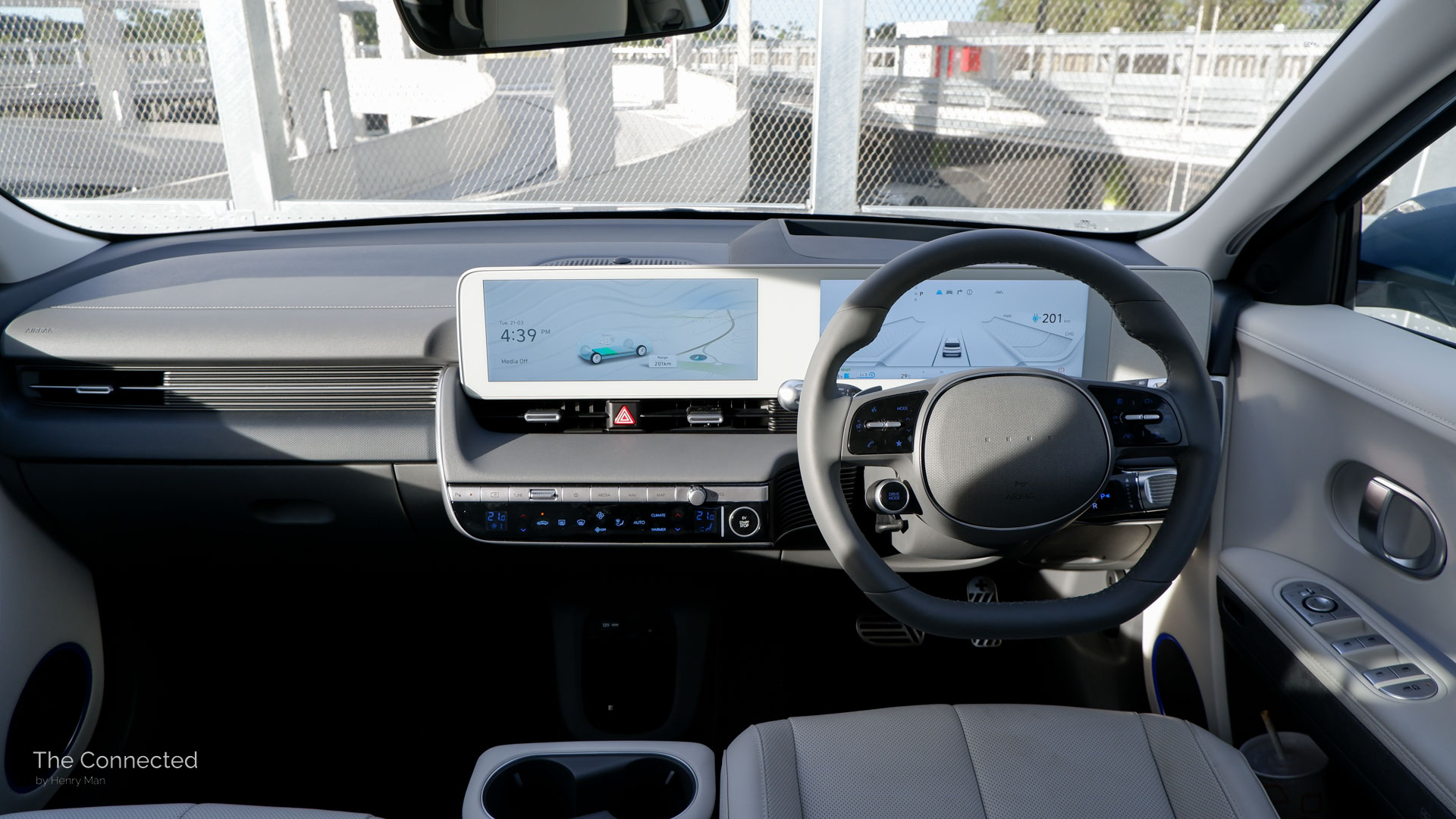
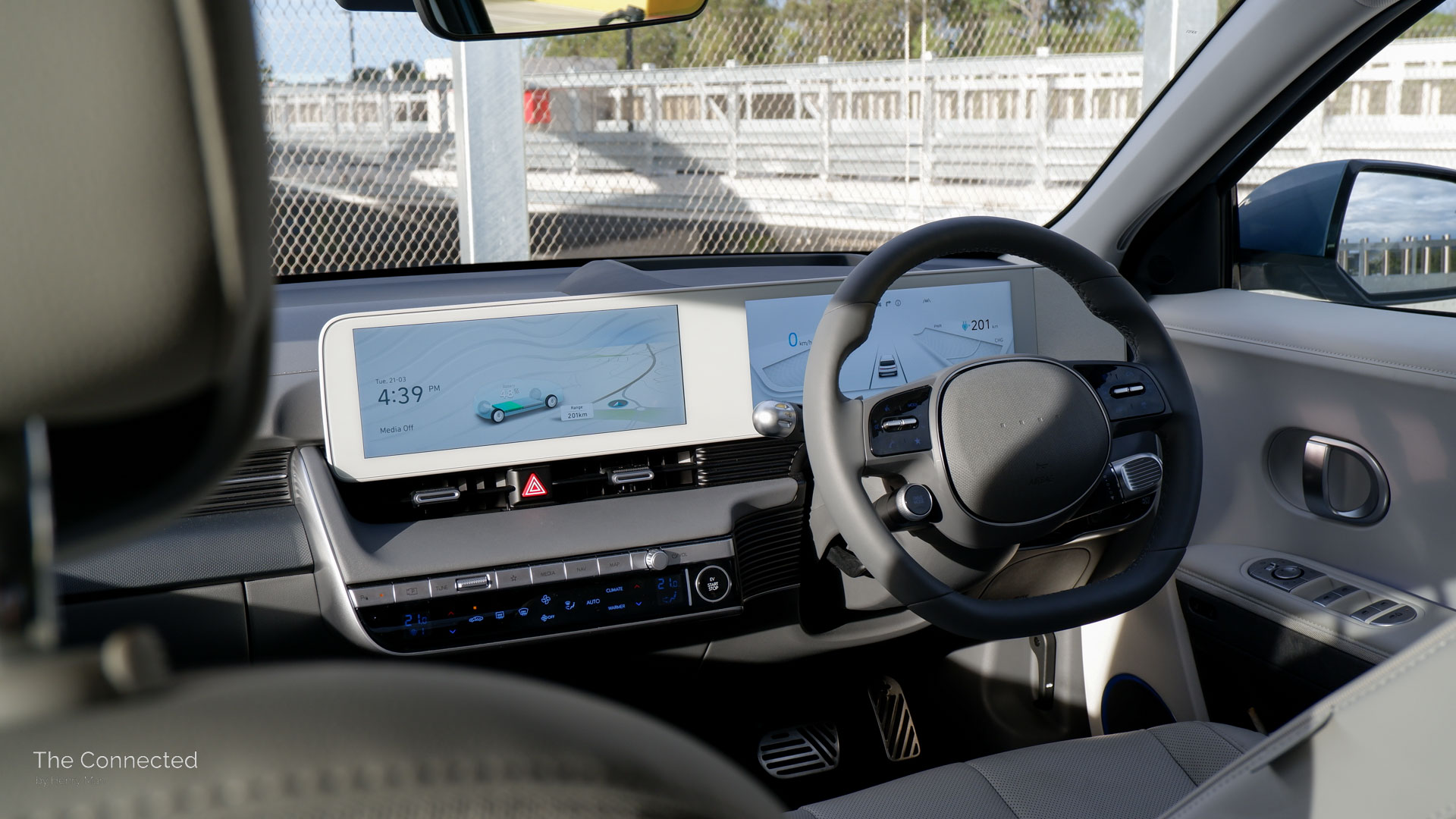
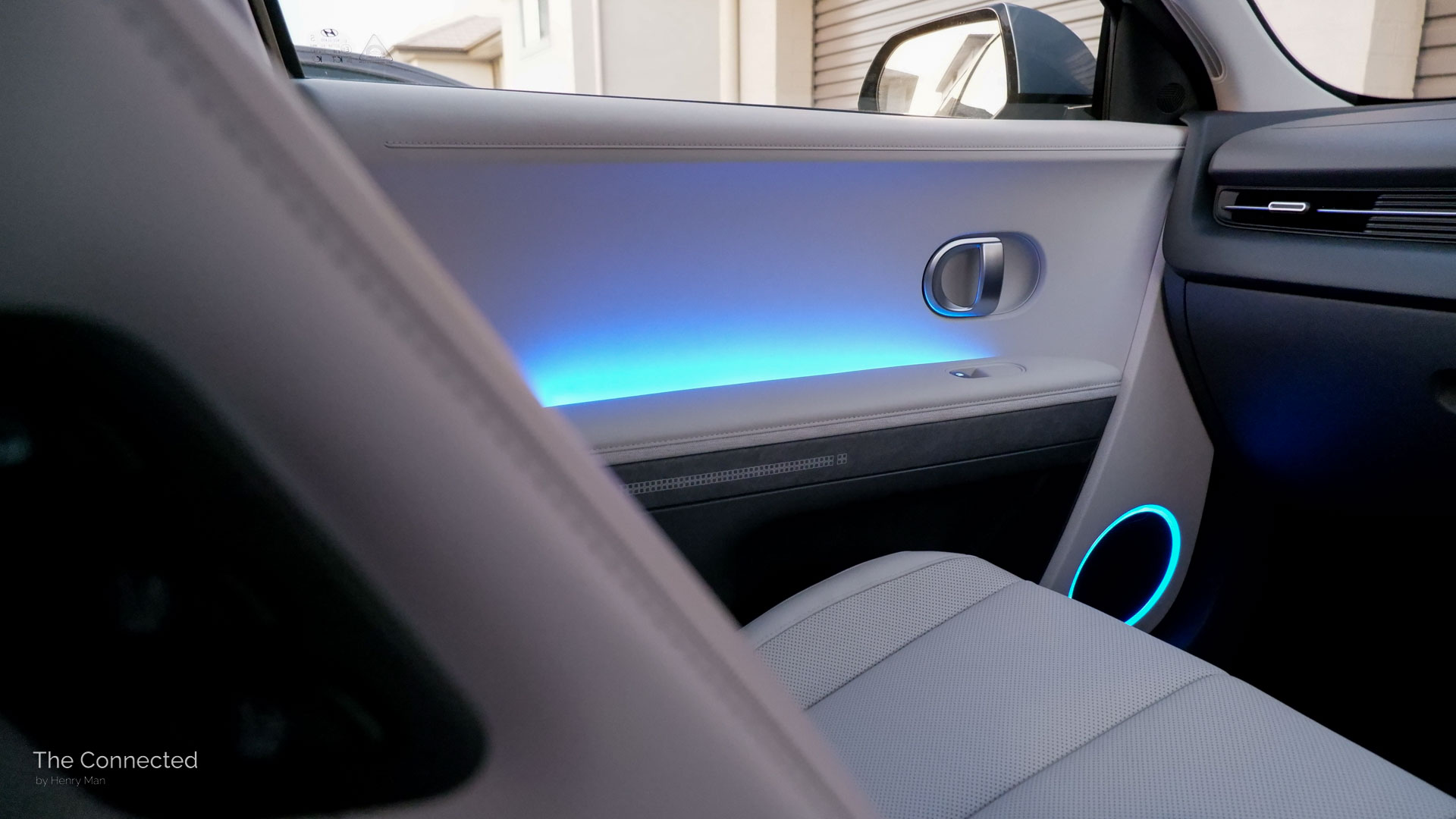
While the Ioniq 5’s interior isn’t as daring as the outside, it still feels modern and simplistic – without going too extreme like a Tesla EV.
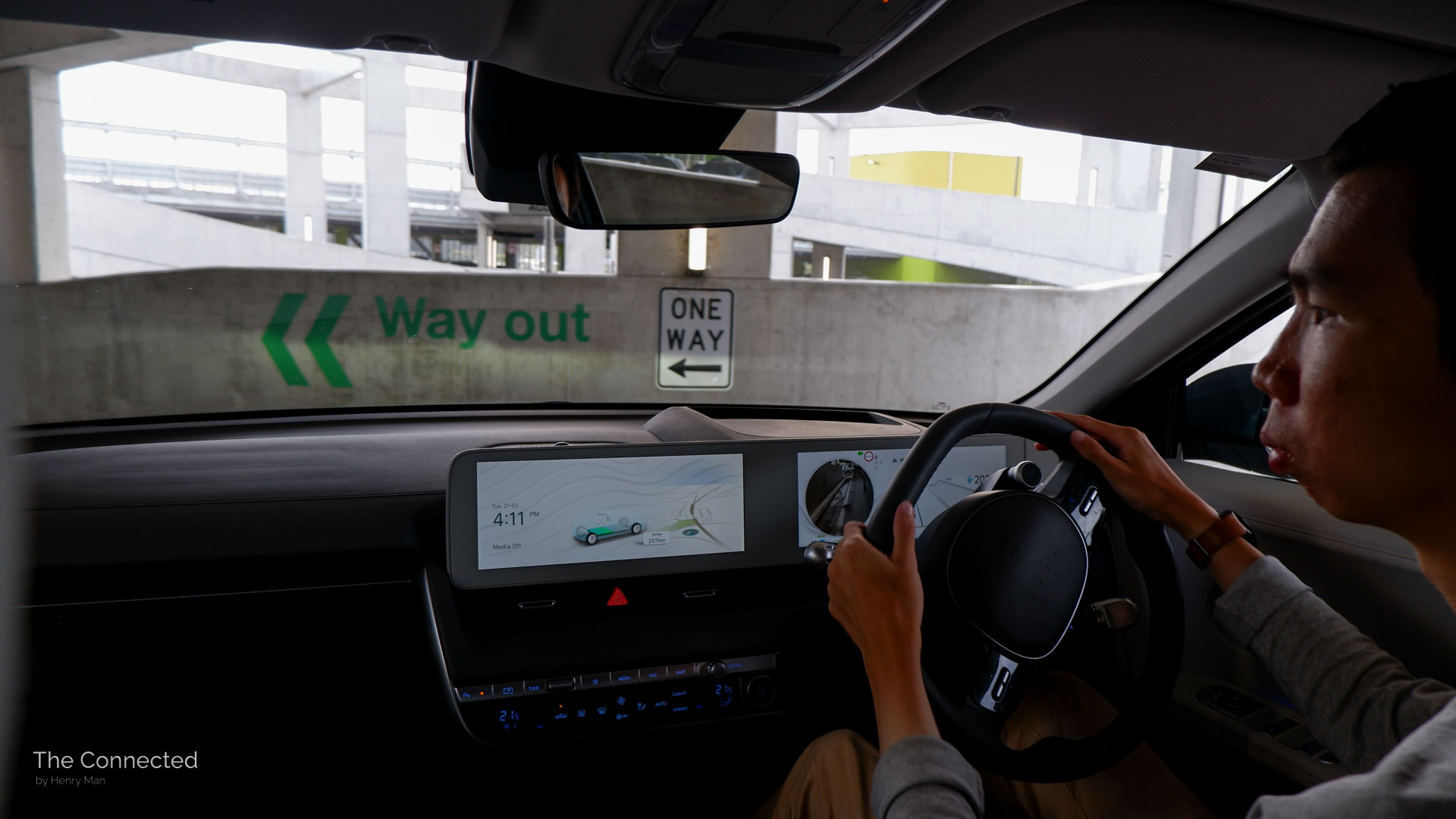
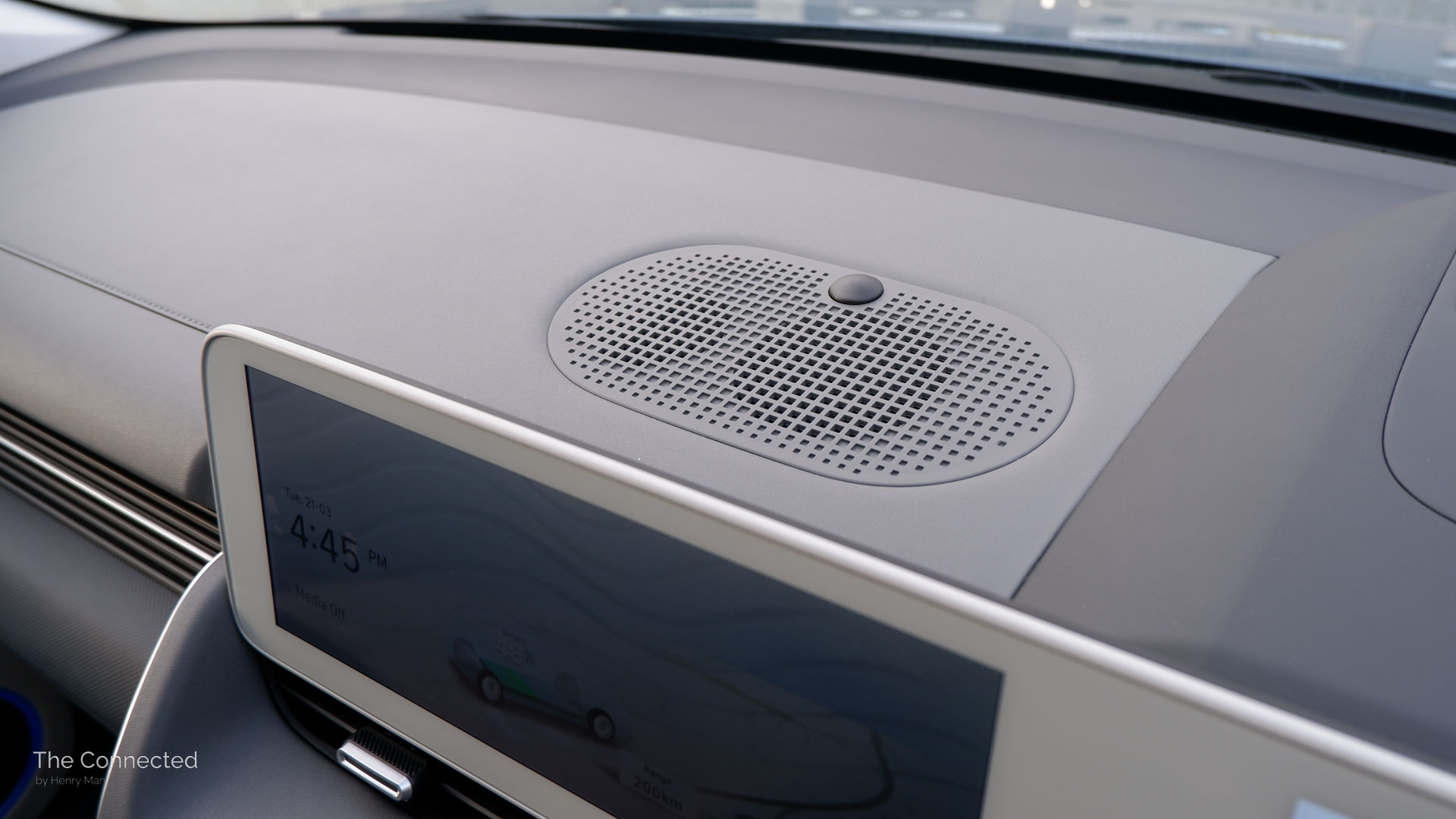
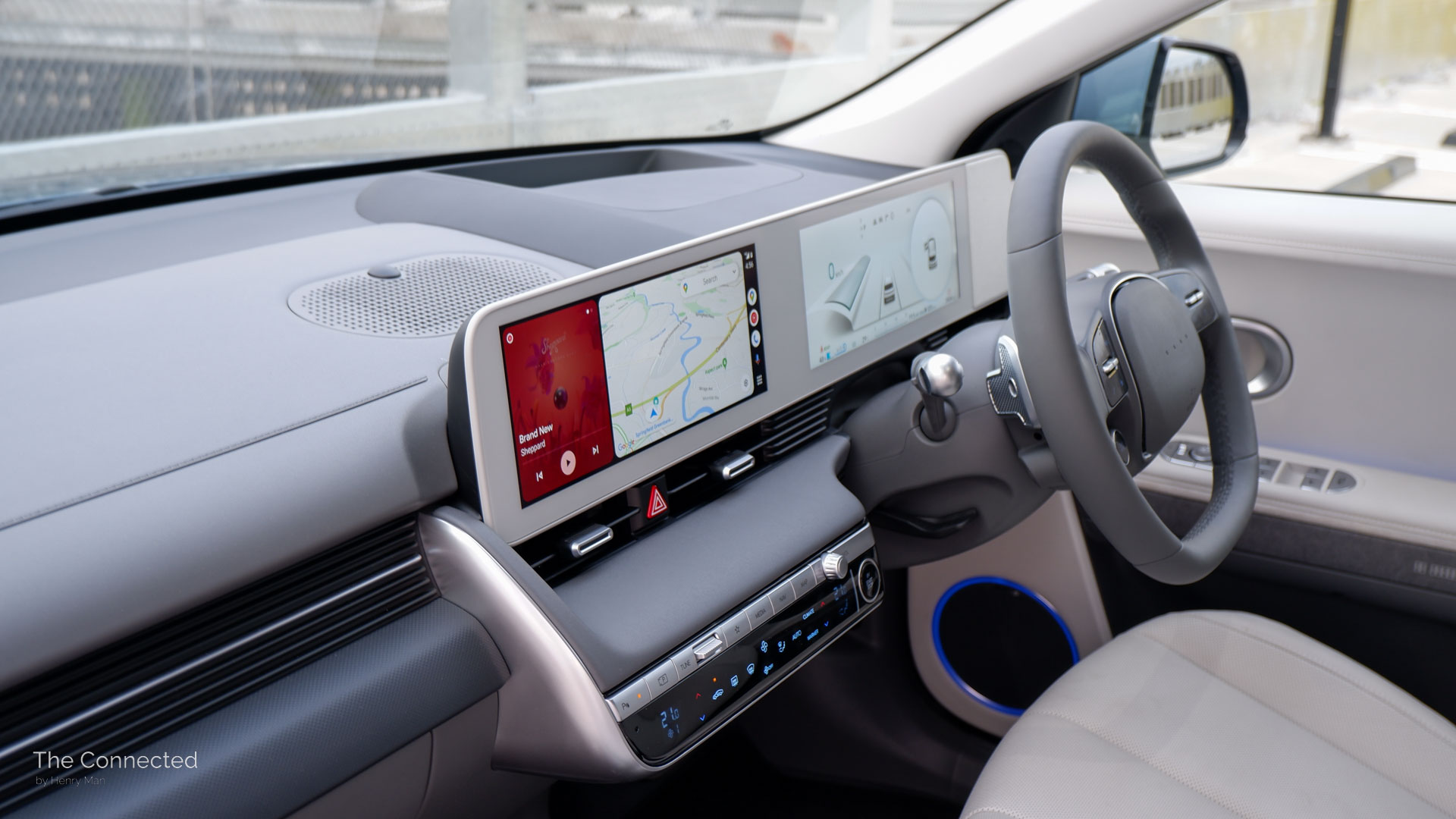
The dual 12-inch displays are quite set forward, on a thin panel, and boast white bezels which give a clean feeling.
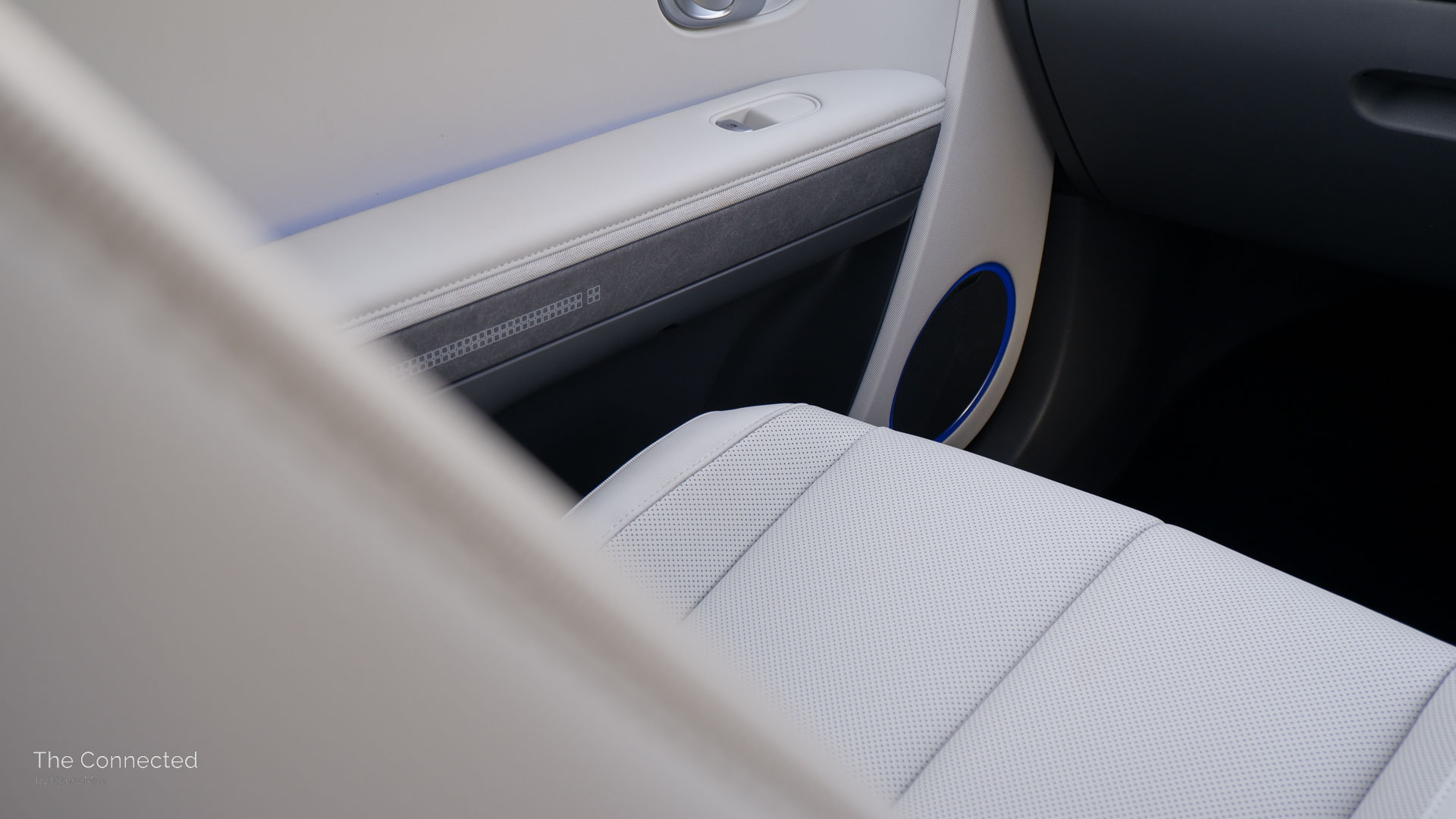
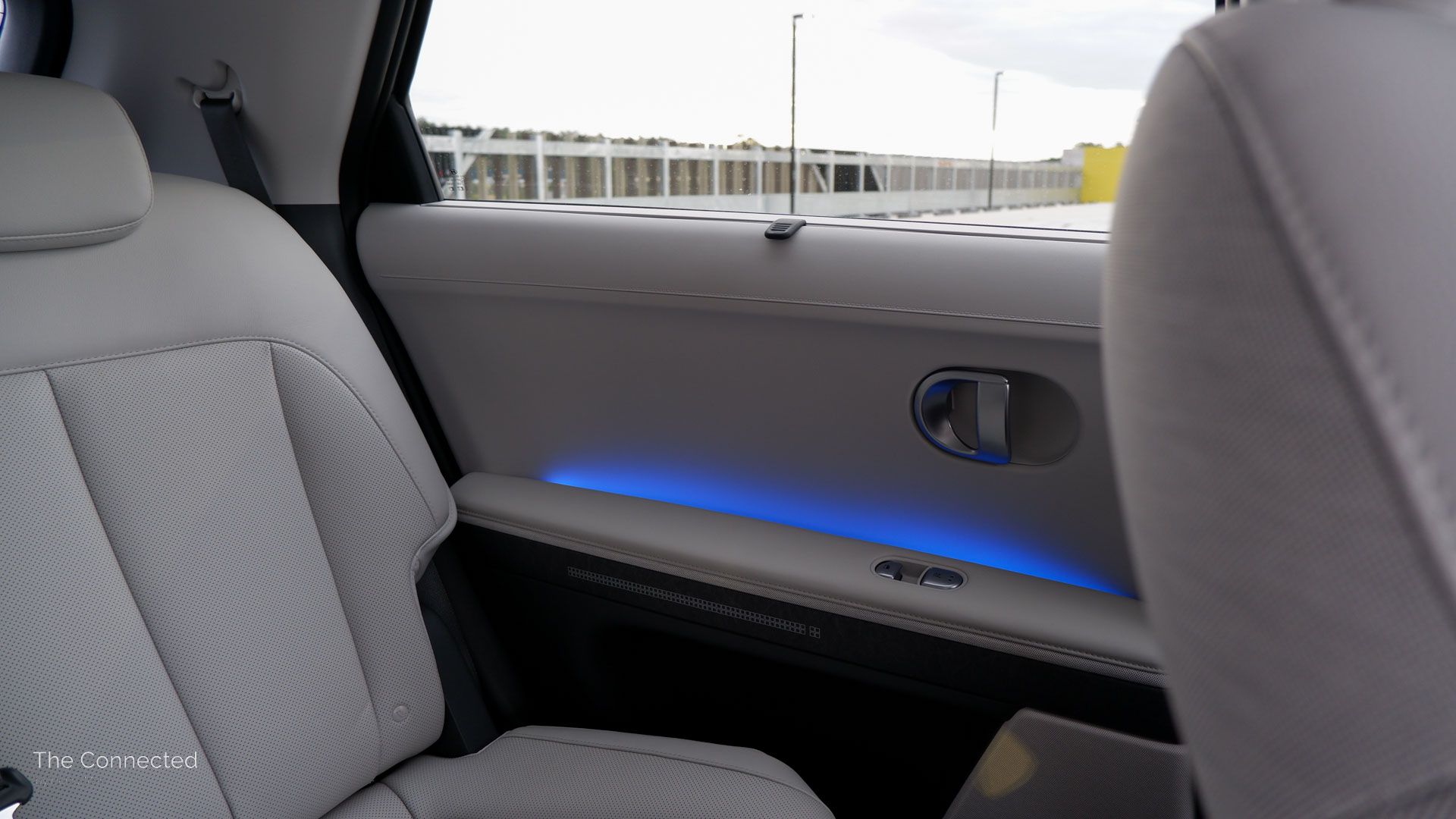
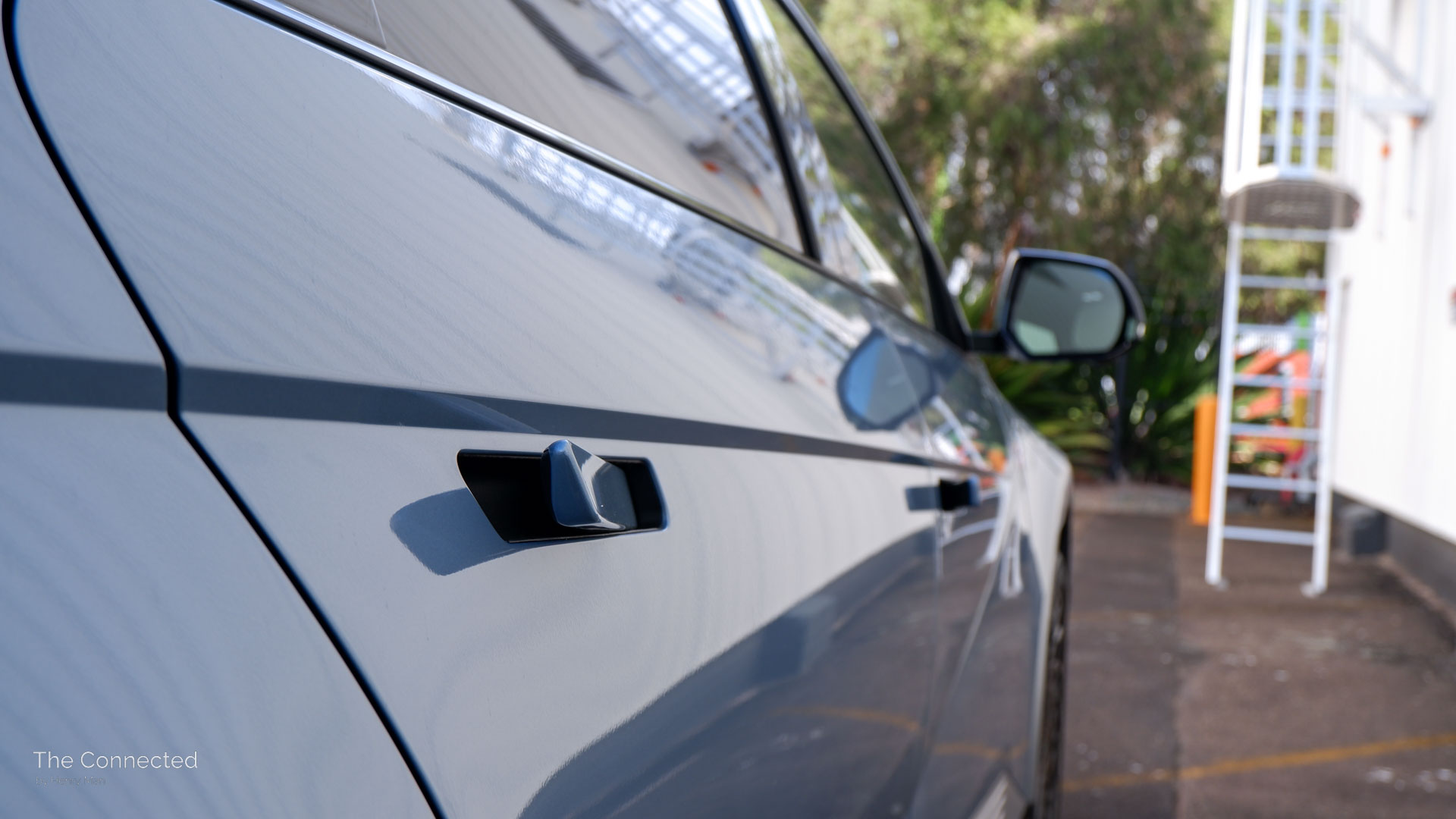
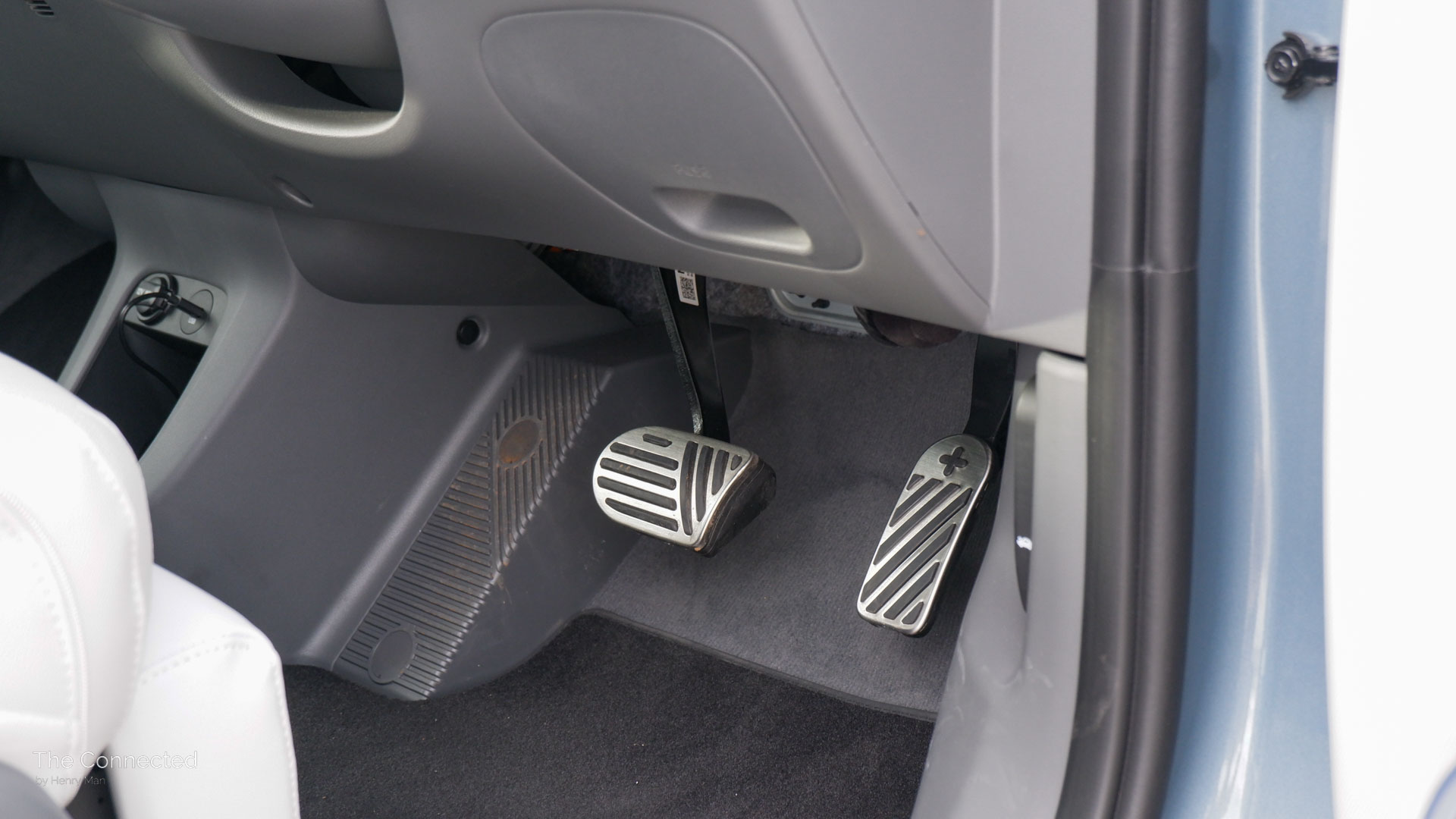
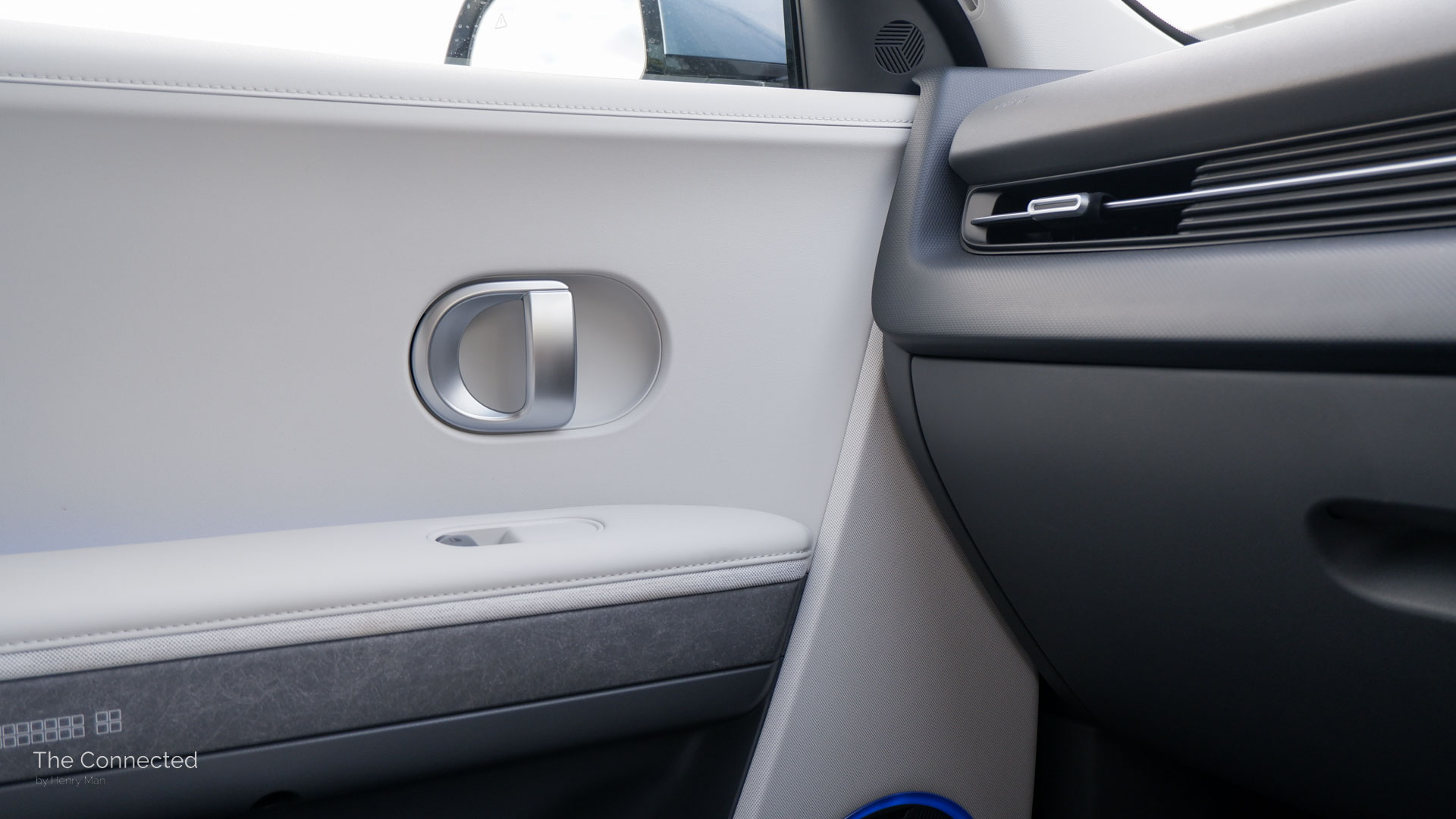
Likewise, the open front row floor, slidable centre console, two-spoke steering wheel and interesting design elements provides a more unique cabin impression. There’s signature square pixel motifs, line patterns, paperette beside the doors, fabric textures, satin silver buttons, luggage-like door handles, and play/pause symbols on the driving pedals.
It’s a higher-quality interior than the Kia EV6 with soft padded materials on the door cards and dashboard, non-scratchy plastics lower down, and minimal use of gloss black on the climate control and steering wheel buttons.
Though, unlike the Kia electric car, it isn’t a completely animal-free material cabin – it uses eco-processed leather seats, a proper mixed leather steering wheel, and other recycled materials deployed throughout.
Practicality.
2023 Hyundai Ioniq 5 Techniq dimensions:
| Length x Width x Height | 4635 x 1890 x 1605mm |
| Wheelbase | 3000mm |
| Ground clearance | 160mm |
| Boot capacity (min / rear seats folded) | 560 / 1620-litres |
| Rear seat split fold | 60:40 |
| Child seat anchors | 2x ISOFIX (outboard rear seats) + 3x top-tethers (all rear seats) |
| Frunk capacity | 24-litres |
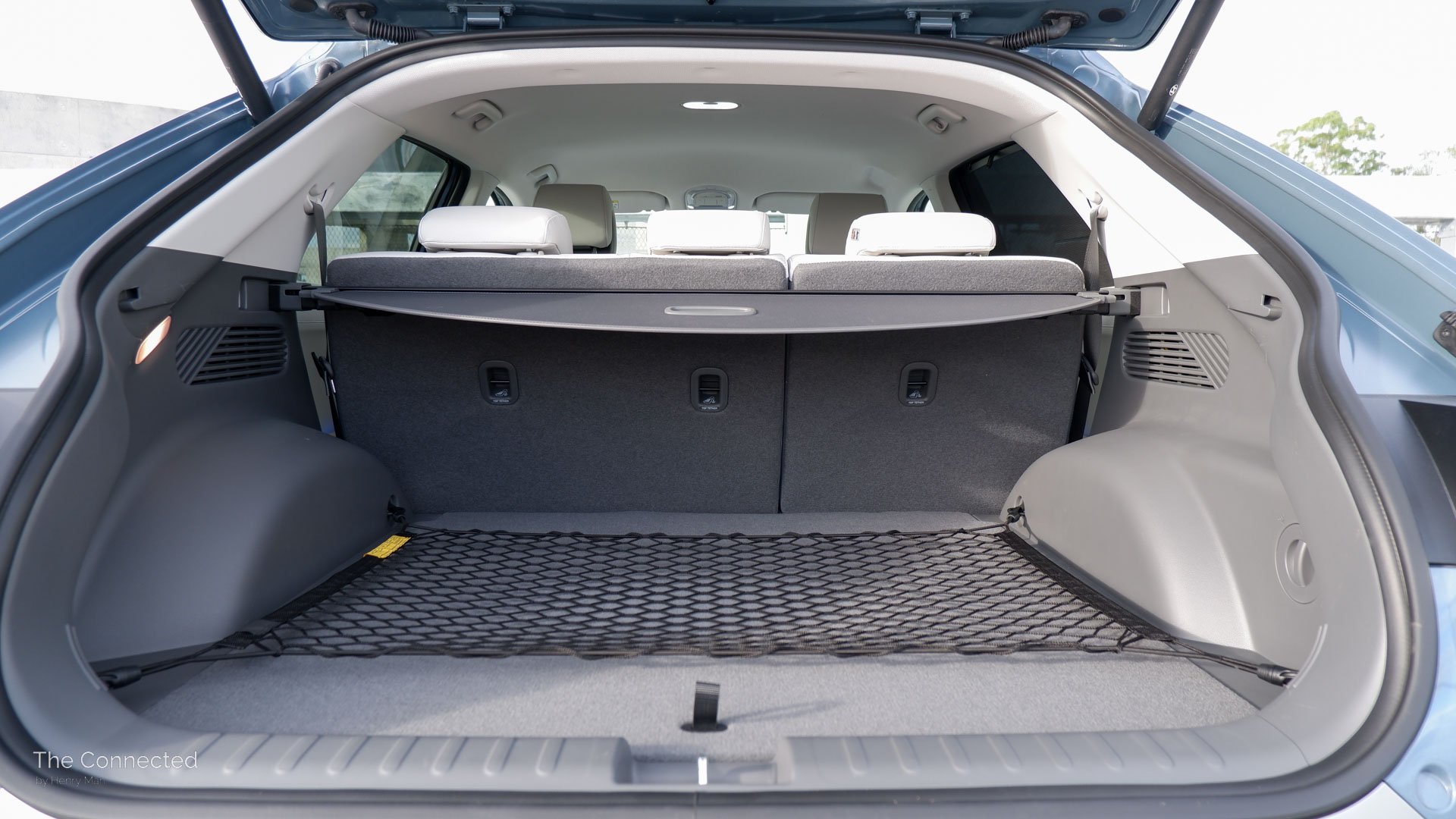
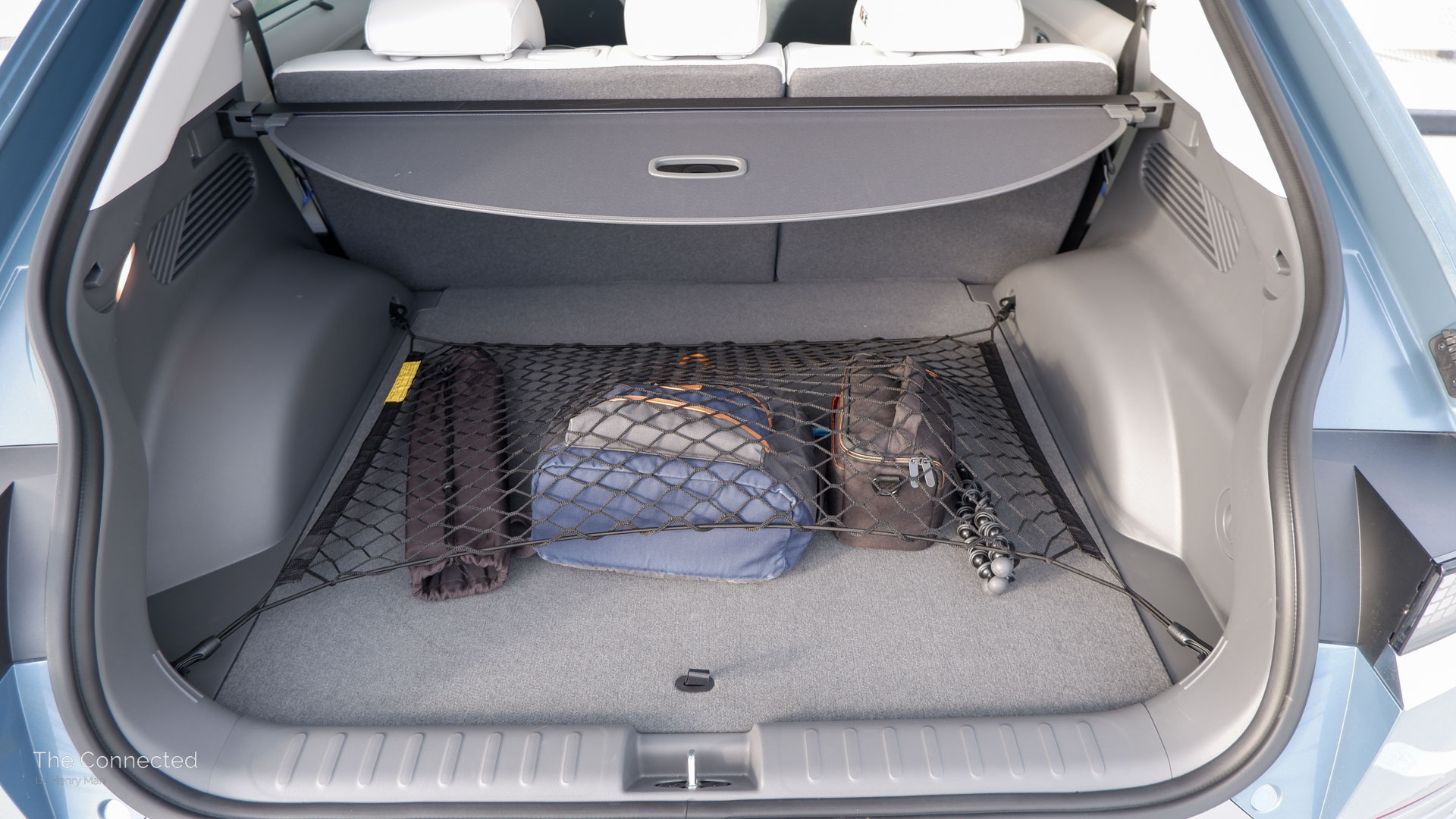
The Hyundai Ioniq 5 has a spacious 560-litre boot that opens via the electric tailgate with flat loading lip, soft grey-coloured carpet (on white coloured interiors), and limited underfloor storage for packing in a charge cable, the vehicle-to-load (V2L) adapter and tyre repair kit.
The sliding boot cover is set a bit lower and any bag hooks, but there is a luggage net included. Strangely, the area is illuminated by an incandescent bulb, which is at odds with the bright LED interior lighting and modern EV design.
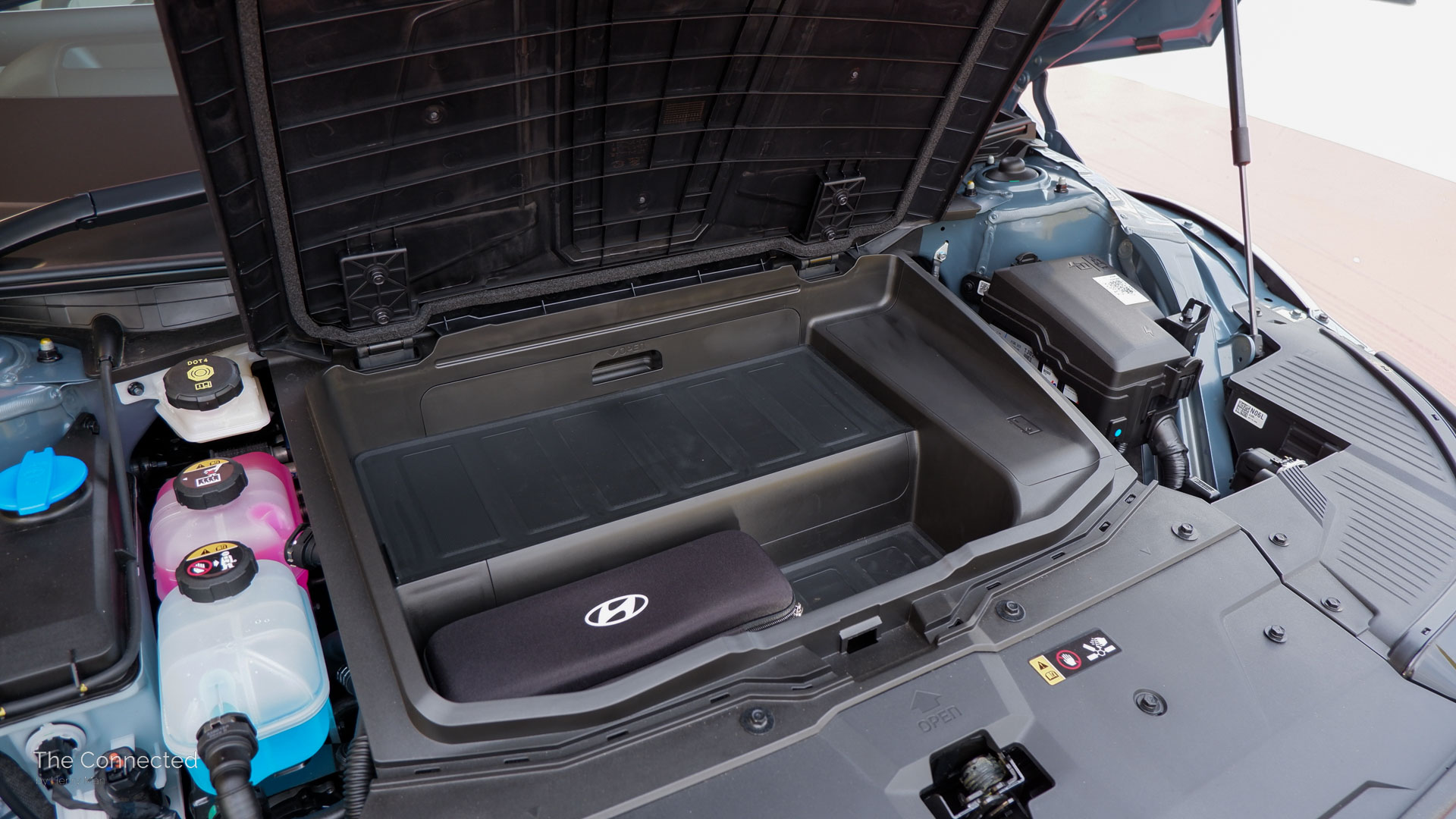
All-wheel drive Ioniq 5s feature a small 24-litre frunk, which is only useful for storing a charging cable as you’ll need to pull the release latch in order to open the gas strut bonnet, then lift up the frunk lid.
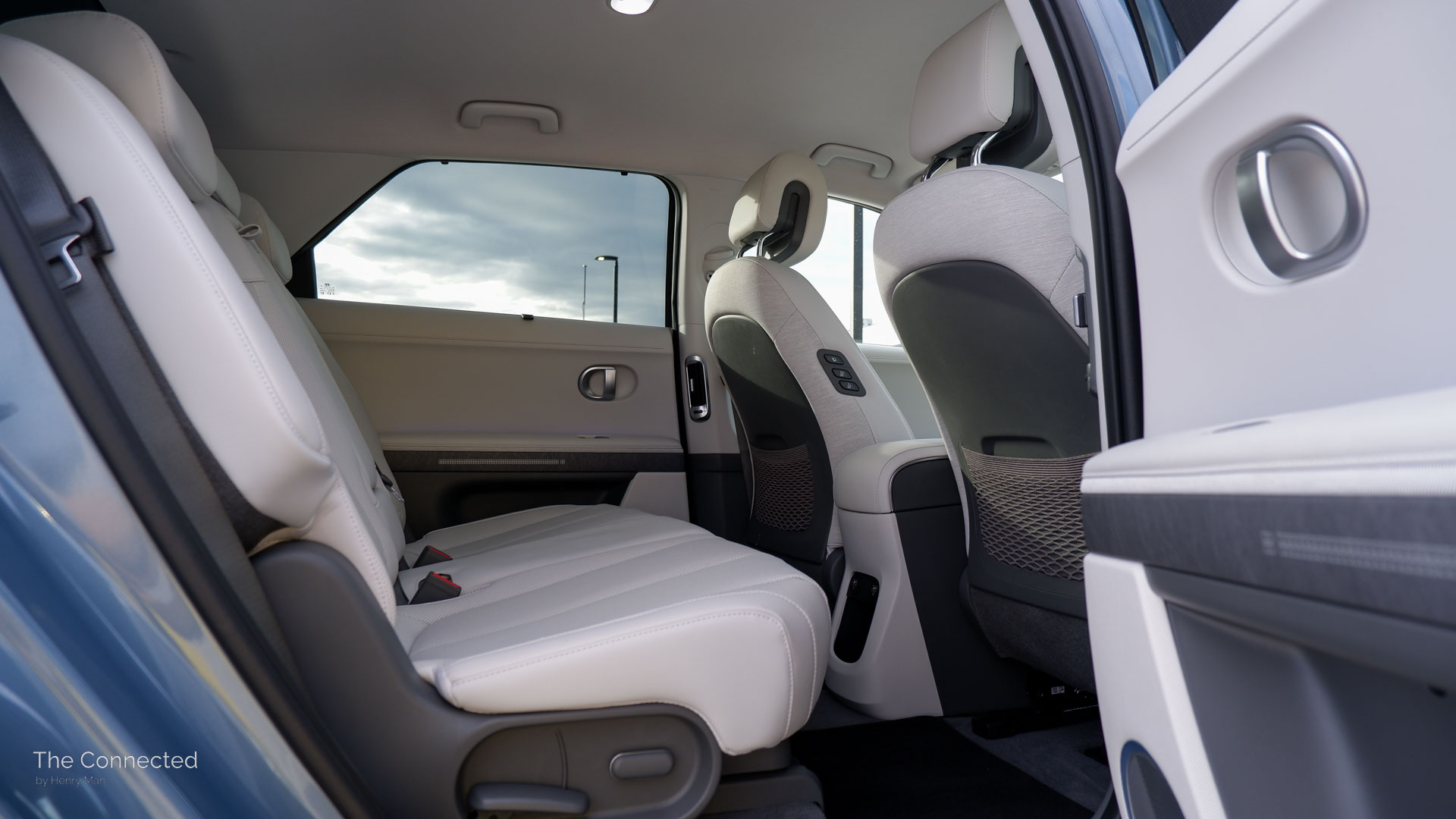
Inside, rear seat space is palatial with the South Korean carmaker’s dedicated Electric Global Modular Platform (E-GMP) platform allowing the medium electric SUV to have a long 3000mm wheelbase – more than the Hyundai Palisade large family SUV.
Both leg, foot and headroom is sizable, with the rear 60:40 bench able to electrically move forwards/backwards and recline manually with the toggles on each side. Uniquely, it has a three-memory configuration function for all seats set via the front touchscreen and heated rear outboard seats is a welcome addition on this Techniq model.
Sitting three abreast is doable thanks to the flat floor and wider body than the comparable Tucson. Other family-friendly Ioniq 5 features include the two ISOFIX child seat anchorage points on the outer seats, three top tethers, higher B-pillar mounted air vents, powered rear door and window child locks, and built-in manually retracting rear window sunshades standard from the Techniq.
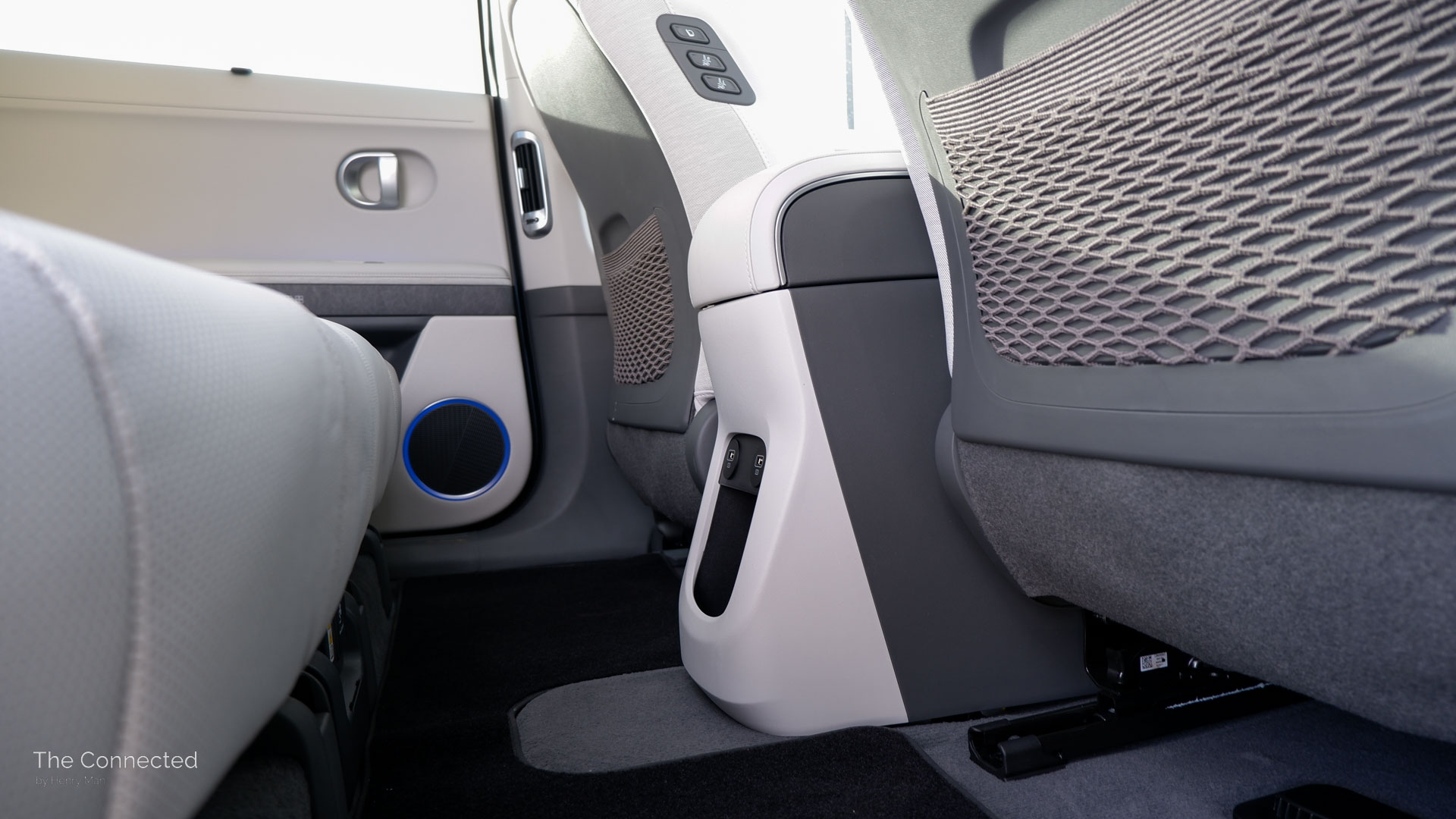
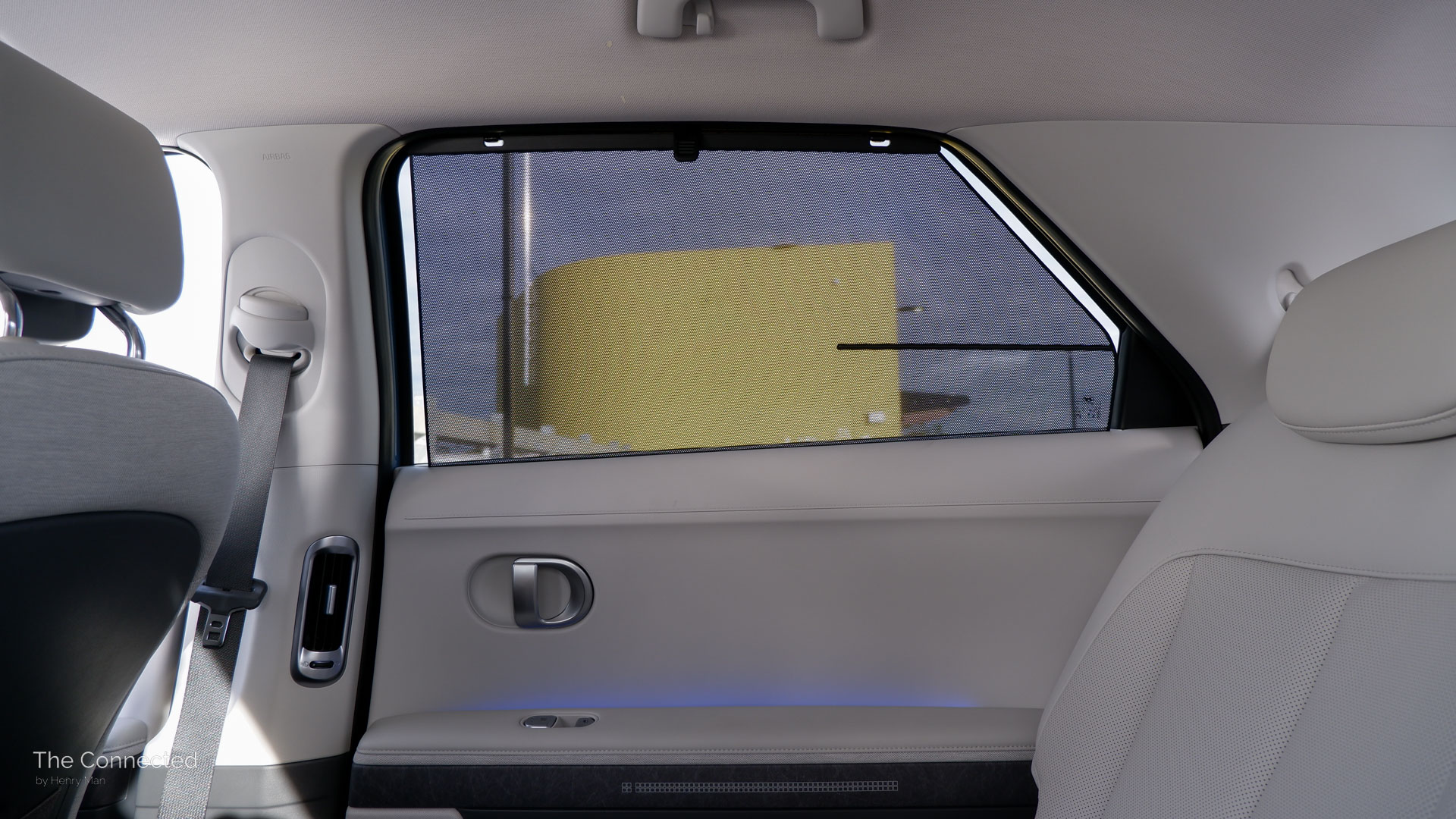
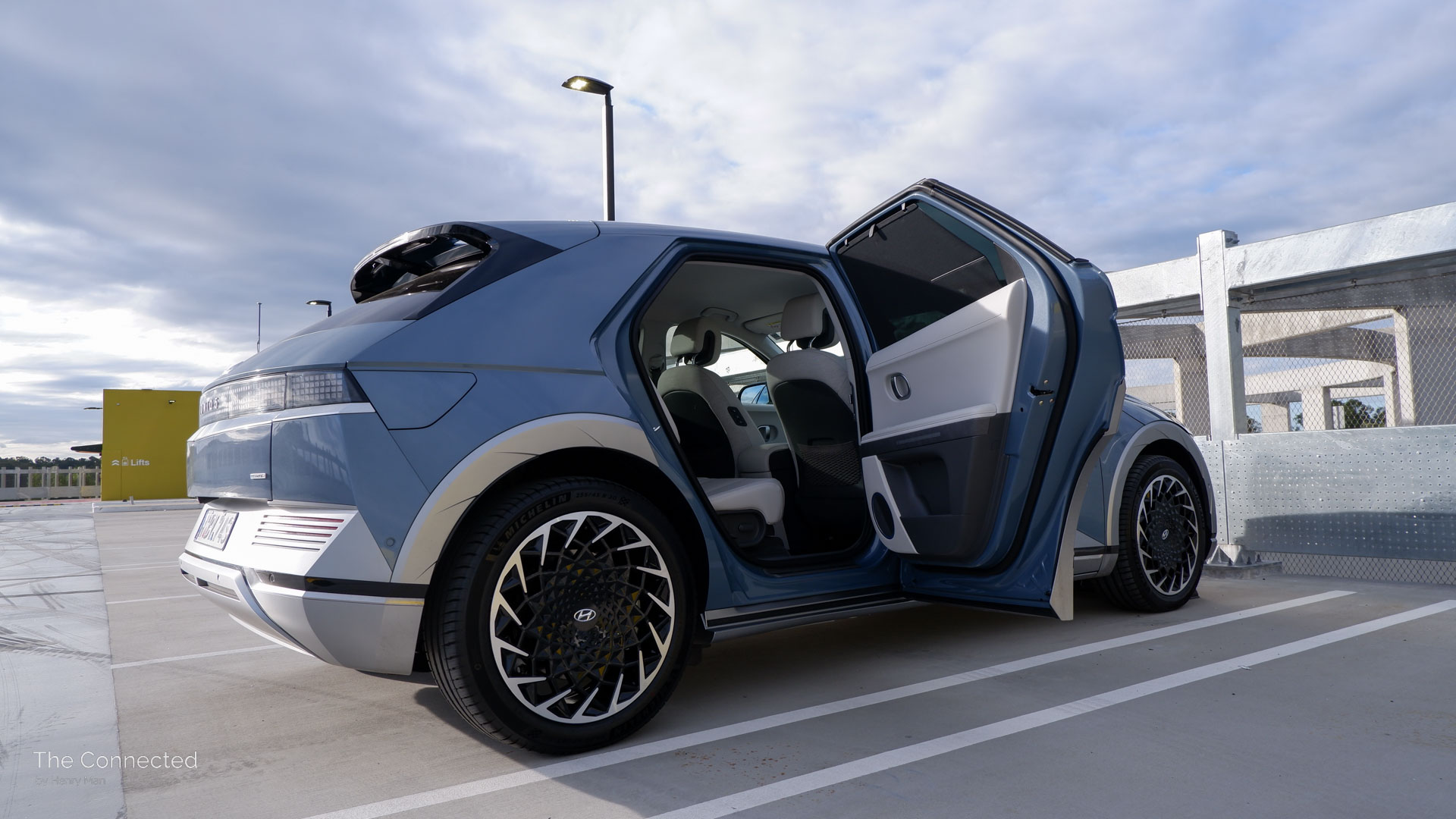
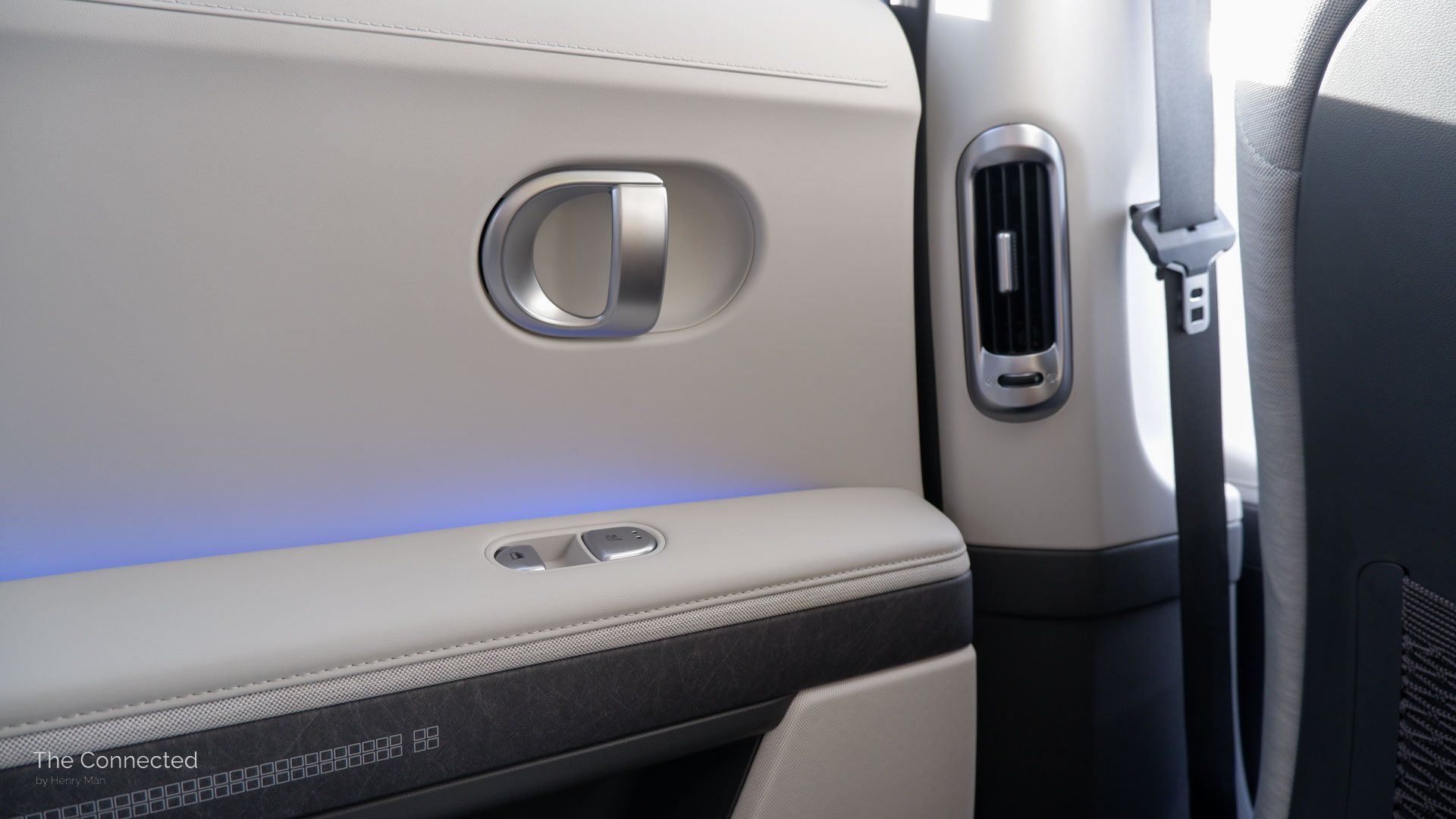
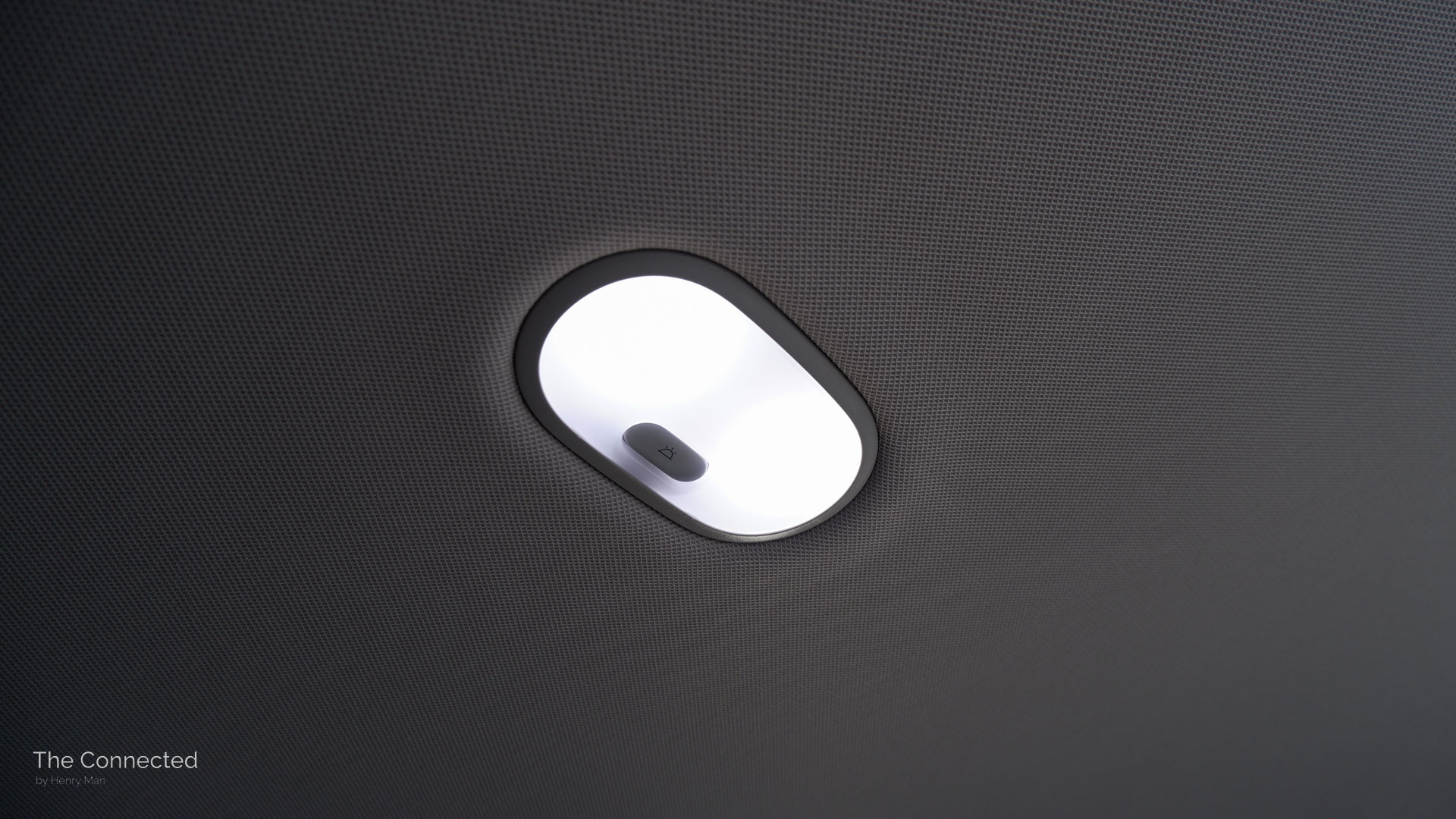
Unfortunately, the otherwise modern electric SUV still only uses USB-A charging ports (whereas the Genesis GV60 has gone all-in on the newer USB-C standard) and with the 2023 model-year update, you’ll now need to stump up to the top-spec Ioniq 5 Epiq trim in order to get the impressive fixed panoramic glass roof (rather than being an option or standard previously).
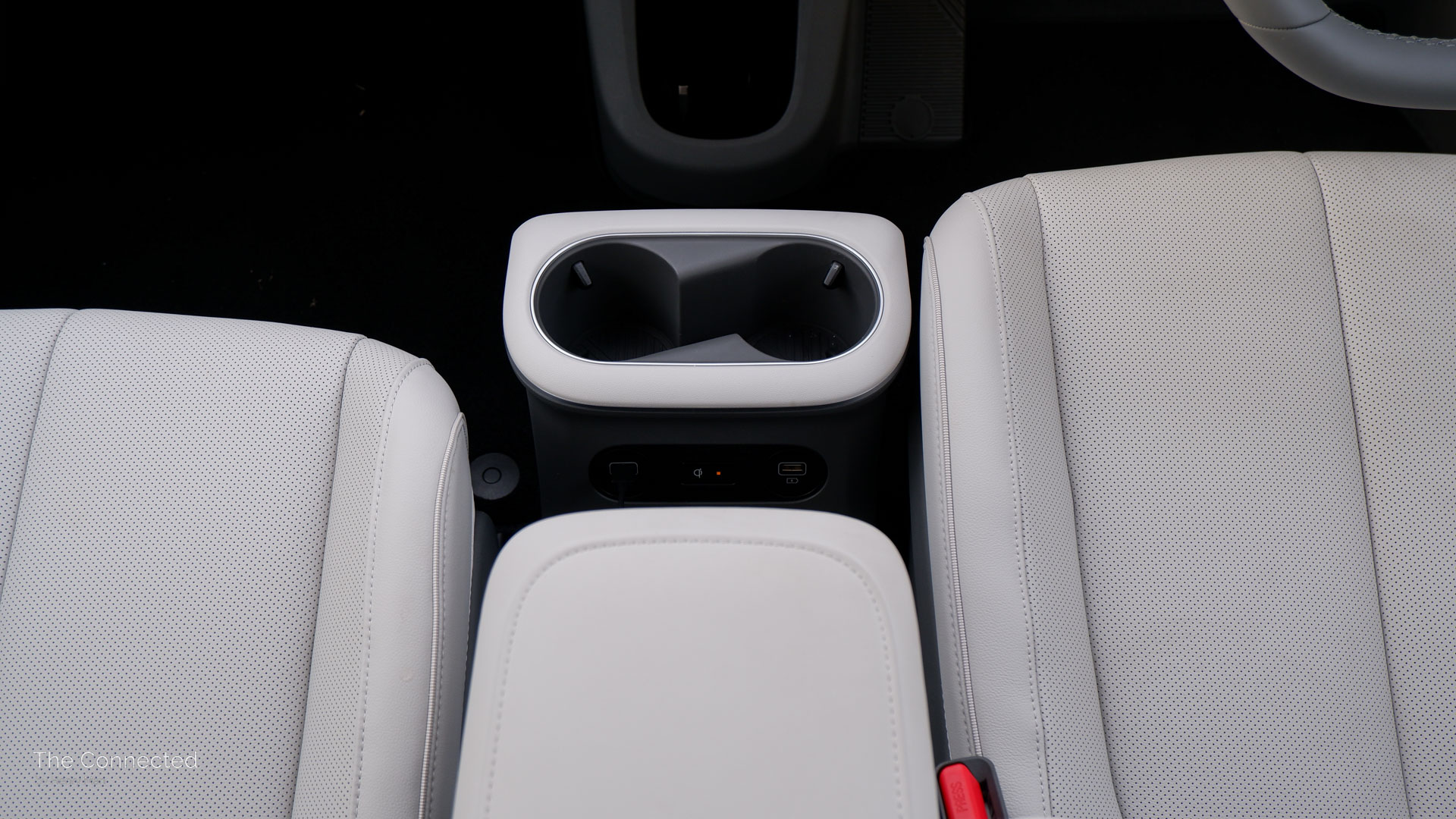
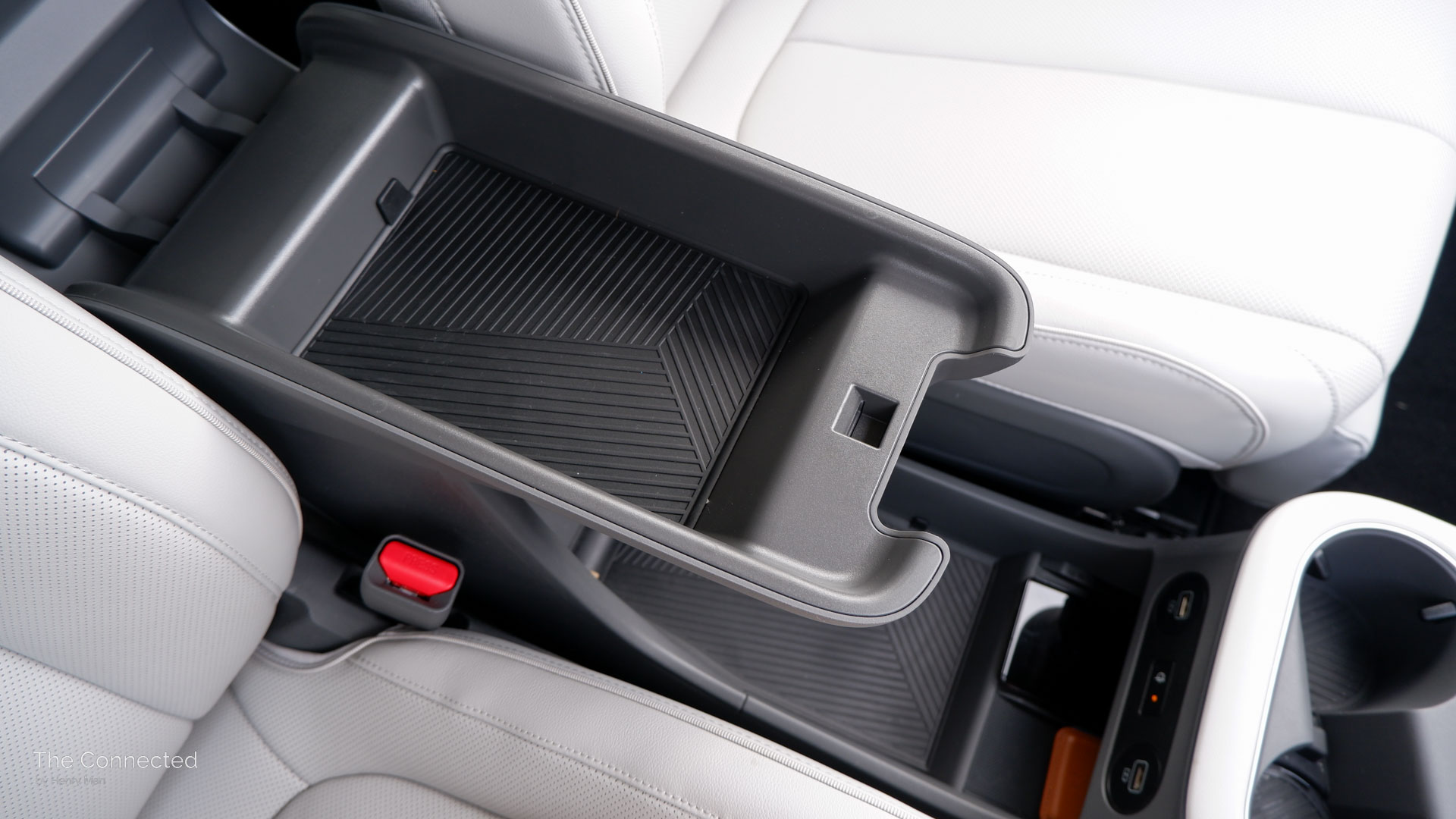
The front row has a spacious feeling thanks to the open flat floor design and centre console that doesn’t completely divide the driver and front passenger. It can slide manually forwards and backwards, though it isn’t really useful for most situations and I mostly left it in the former position.
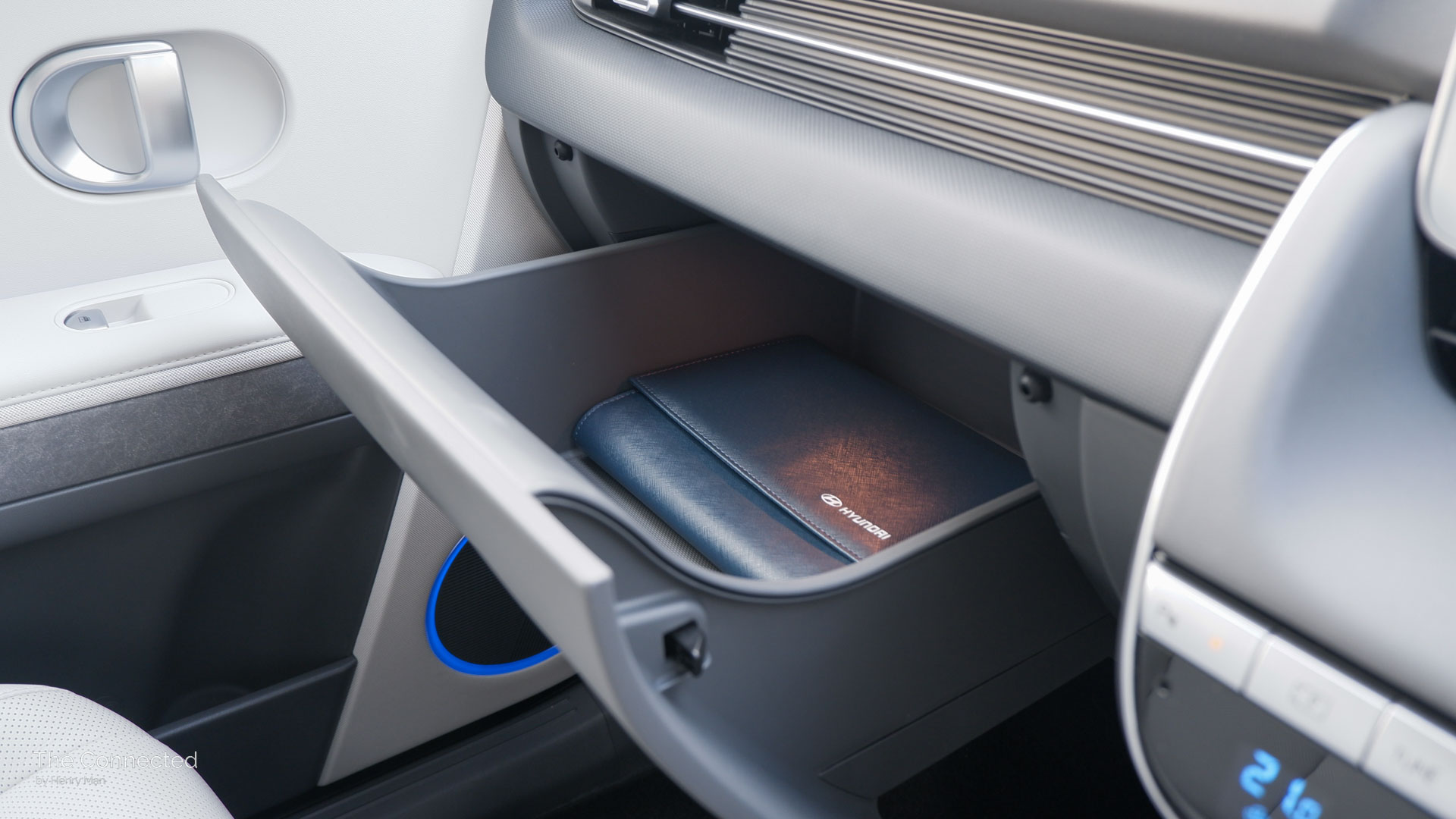
It’s home to an open tray large enough to store takeaway, a handbag or even a small backpack, with a Qi wireless phone charging pad, adjacent storage area, two USB-A charging ports, and easy-to-reach two cup holders. Above is the foldable armrest with a smaller lidded storage compartment, while the practical nine-litre glove drawer uniquely slides out (instead of popping down).
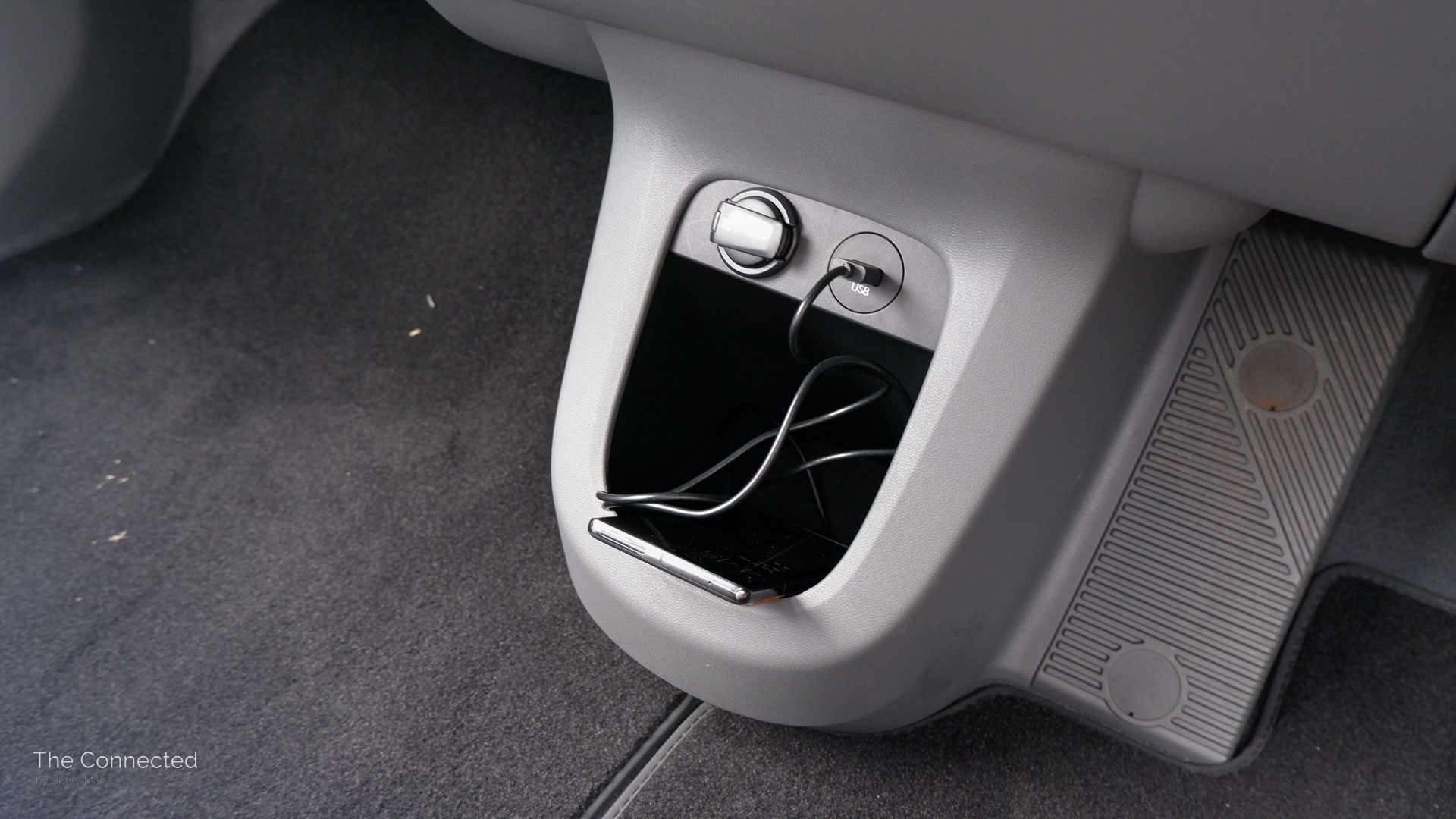
Critically, the Hyundai Ioniq 5 (like its Kia EV6 and Genesis GV60 siblings) has a small centre cubby with the sole USB-A data port for using smartphone projection. It’s a far reach down near the floor, requiring me to habitually lean and hunch to grab my phone and plug in.
It’s an ergonomic flaw to an otherwise well thought of interior.
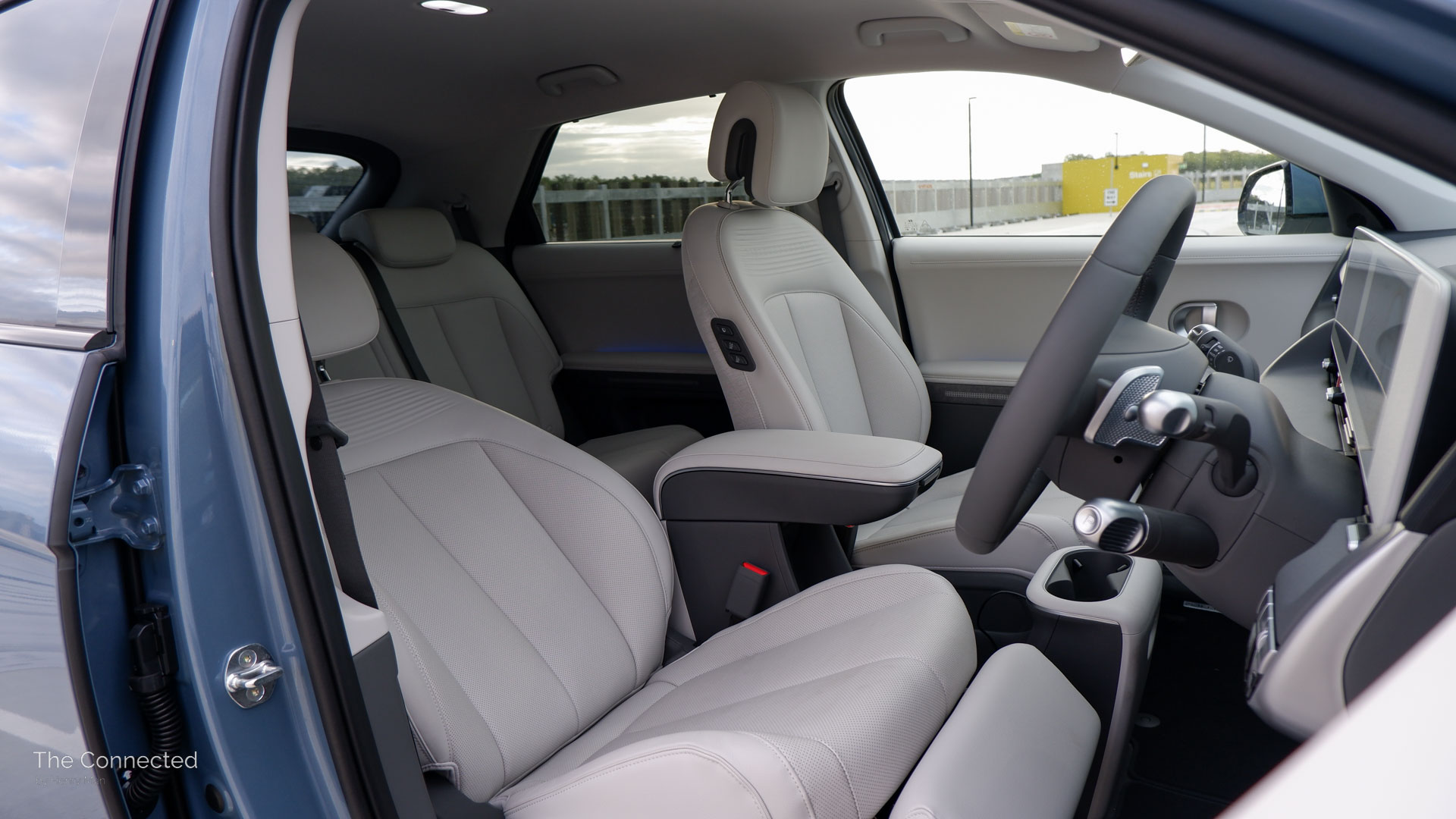
The seats are also comfortable and supportive, with both front pews featuring heating and ventilation, an extendable leg rest and a relaxation mode function. The latter is essentially a reclined position preset.
Sadly, the front passenger seat doesn’t go back to its previous position, despite having a memory function for all seats.
Even though the white interior suits the Hyundai Ioniq 5’s modern aesthetic the best, it doesn’t fare well with marks already showing in my relatively new press car example.
Technology.
2023 Hyundai Ioniq 5 Techniq tech features:
| 12.3-inch touchscreen with built-in maps | 64-colour ambient lighting |
| Wired Apple CarPlay and wired Android Auto | Qi wireless charging pad |
| 12.3-inch driver instrument cluster | Proximity entry with remote start and push button start |
| Augmented reality head-up display (AR HUD) | Automatic parking assist |
| Eight-speaker Bose audio | Remote smart parking assist |
The Hyundai Ioniq 5’s technology setup is decent, but it’s starting to age.
The 12.3-inch widescreen is clear with a matte coating, the operating system looks relatively modern and is responsive.
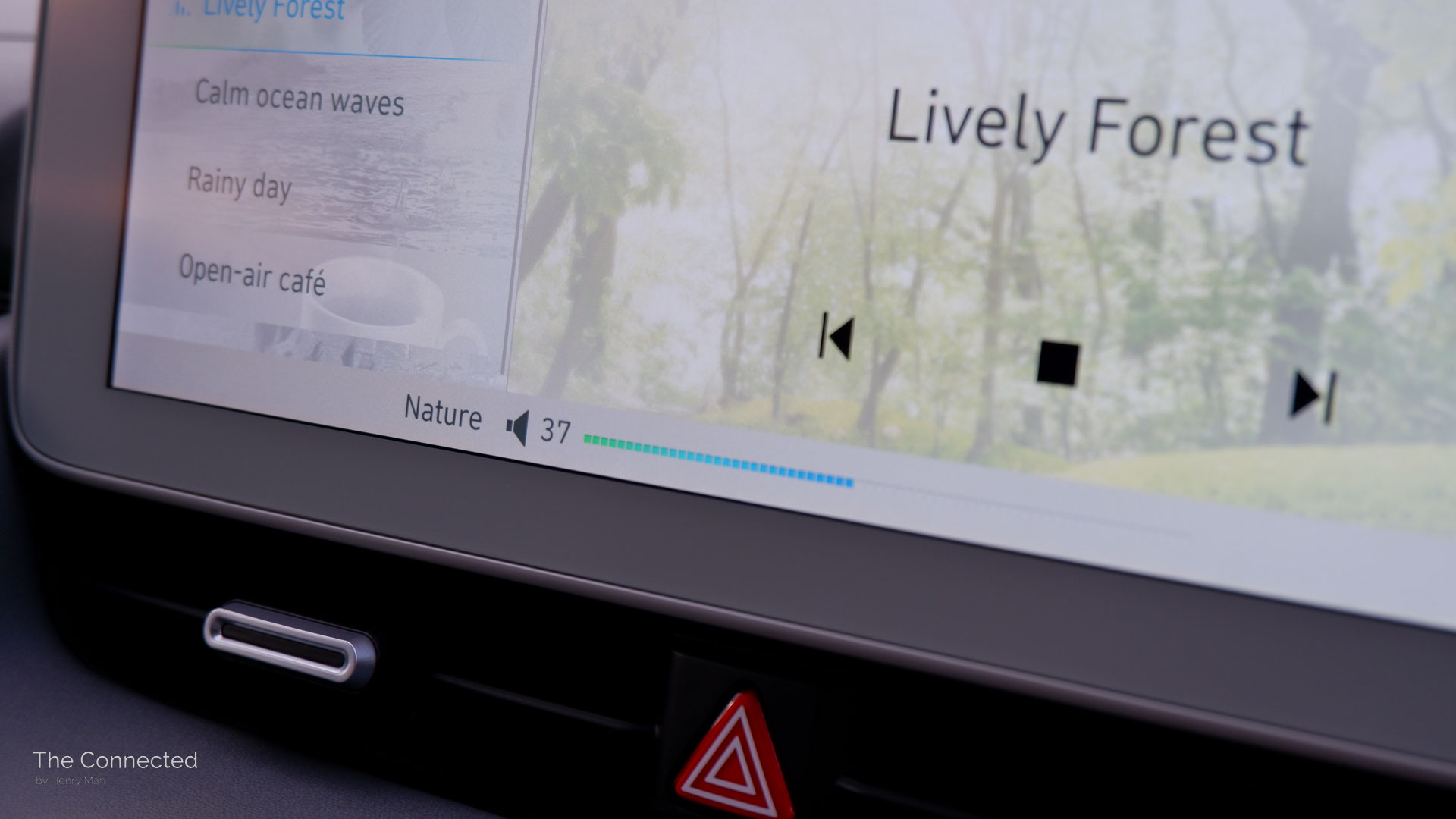
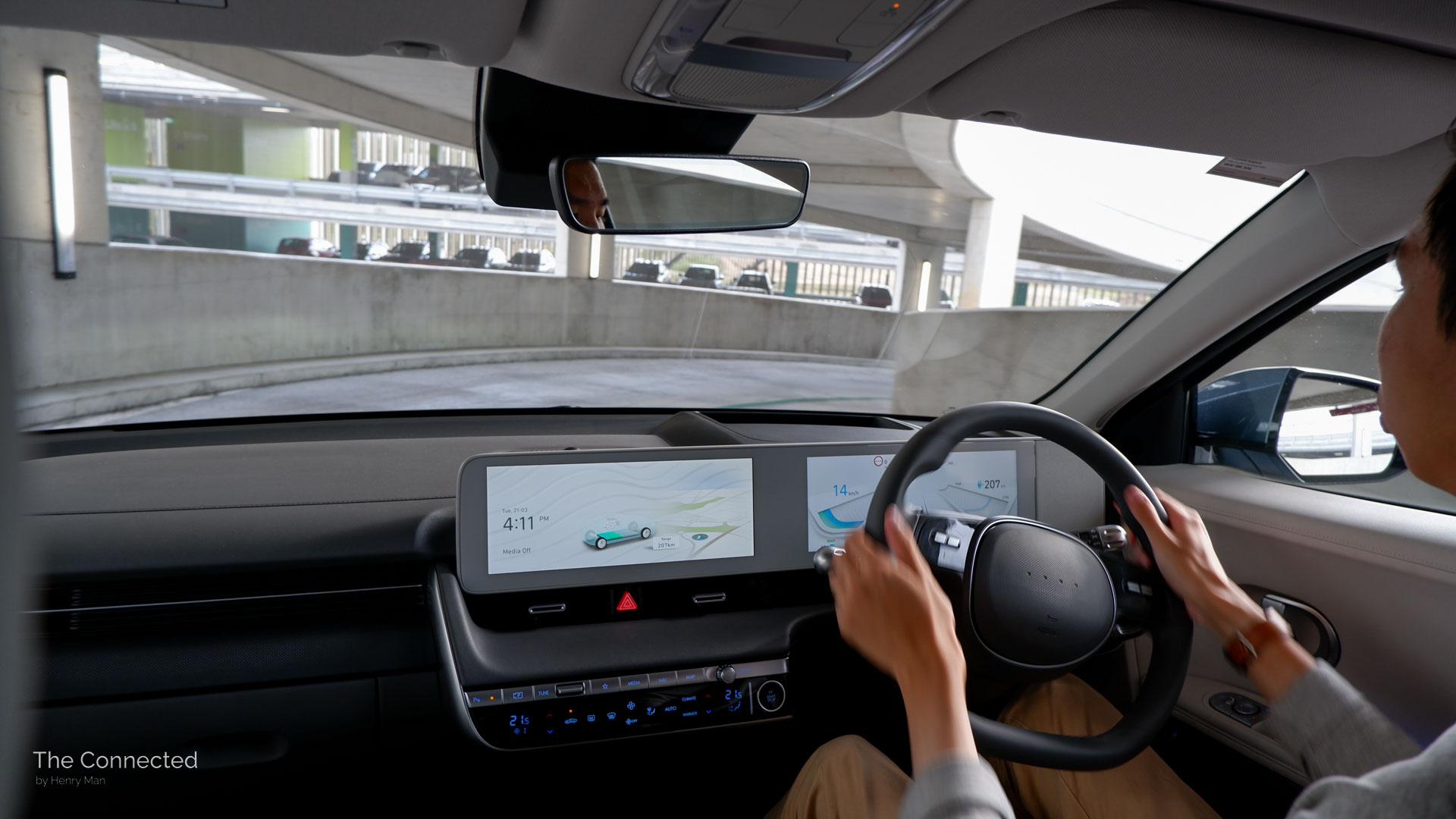
I commend Hyundai for adding more detailed bespoke touches to the user interface (not seen on the launch model, but presumably available via a dealer-installed update). The signature square pixel motifs are now appear across the clock, volume bar, battery percentage icon, and other bar elements across the system.
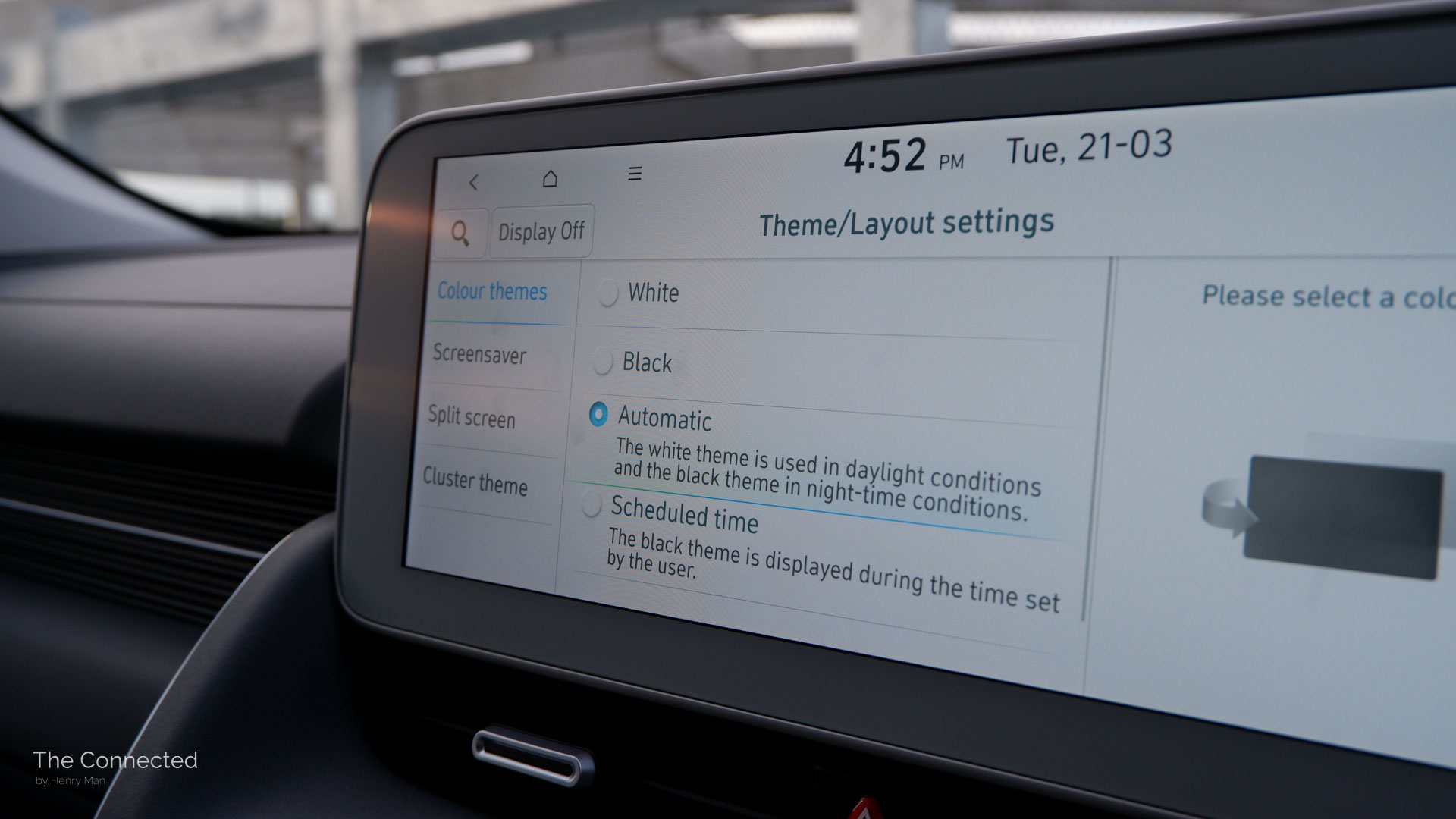
Importantly, a key annoyance has now been addressed – automatic switching light and dark modes depending on the time of day. The light mode suits the interior and white bezels best, but is too bright at night, so you previously needed to go into the settings to toggle the dark mode interface.
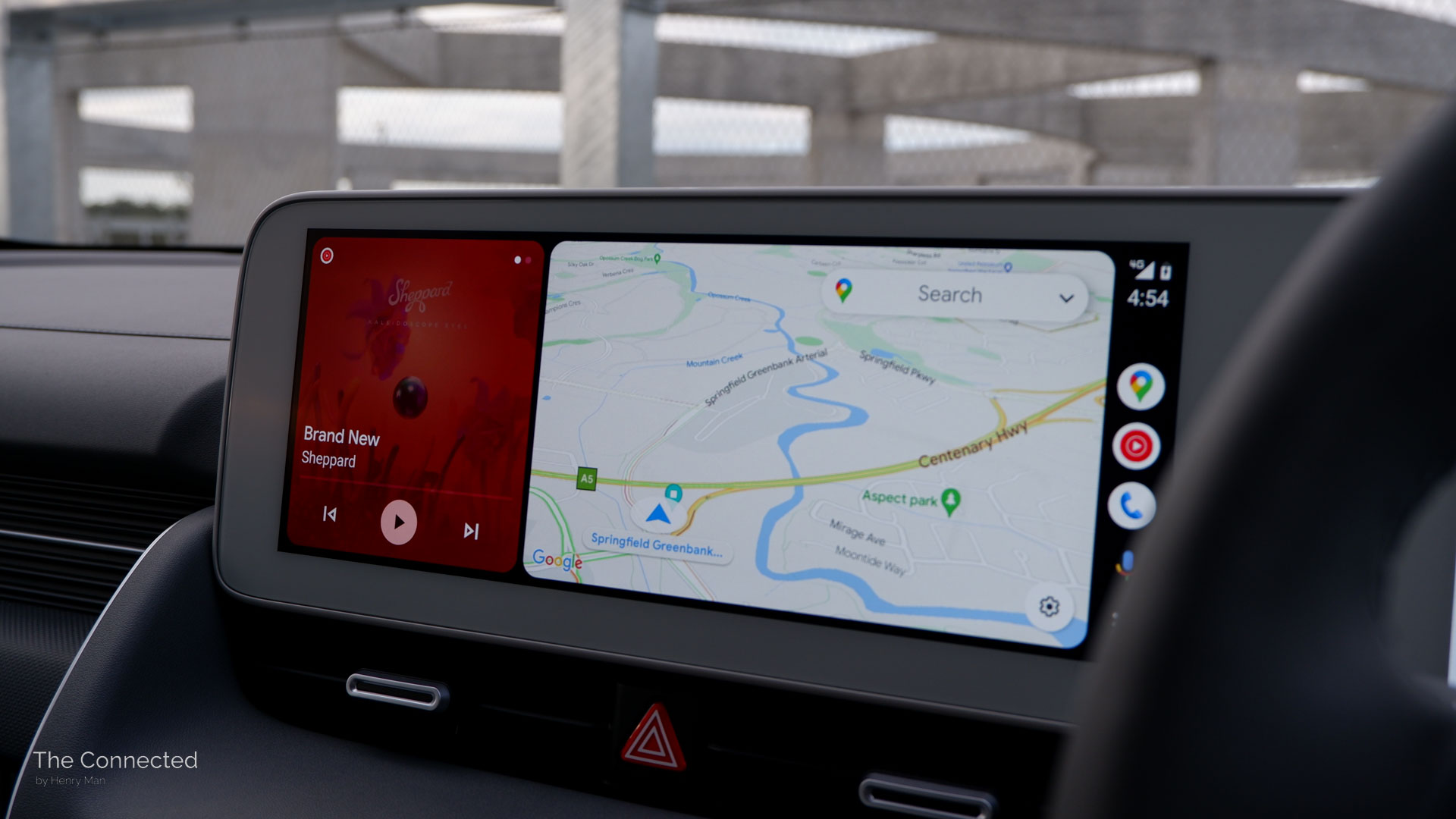
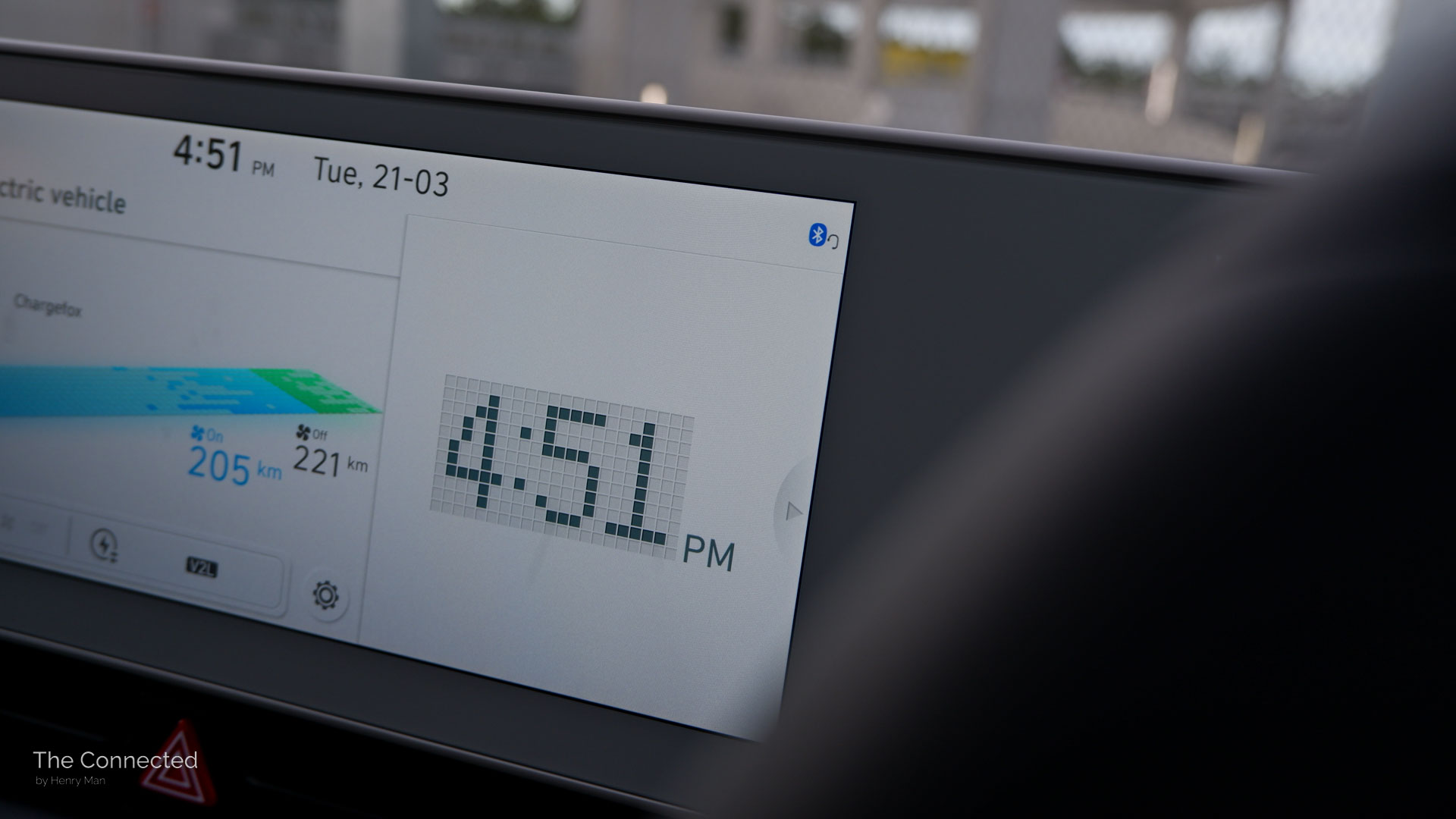
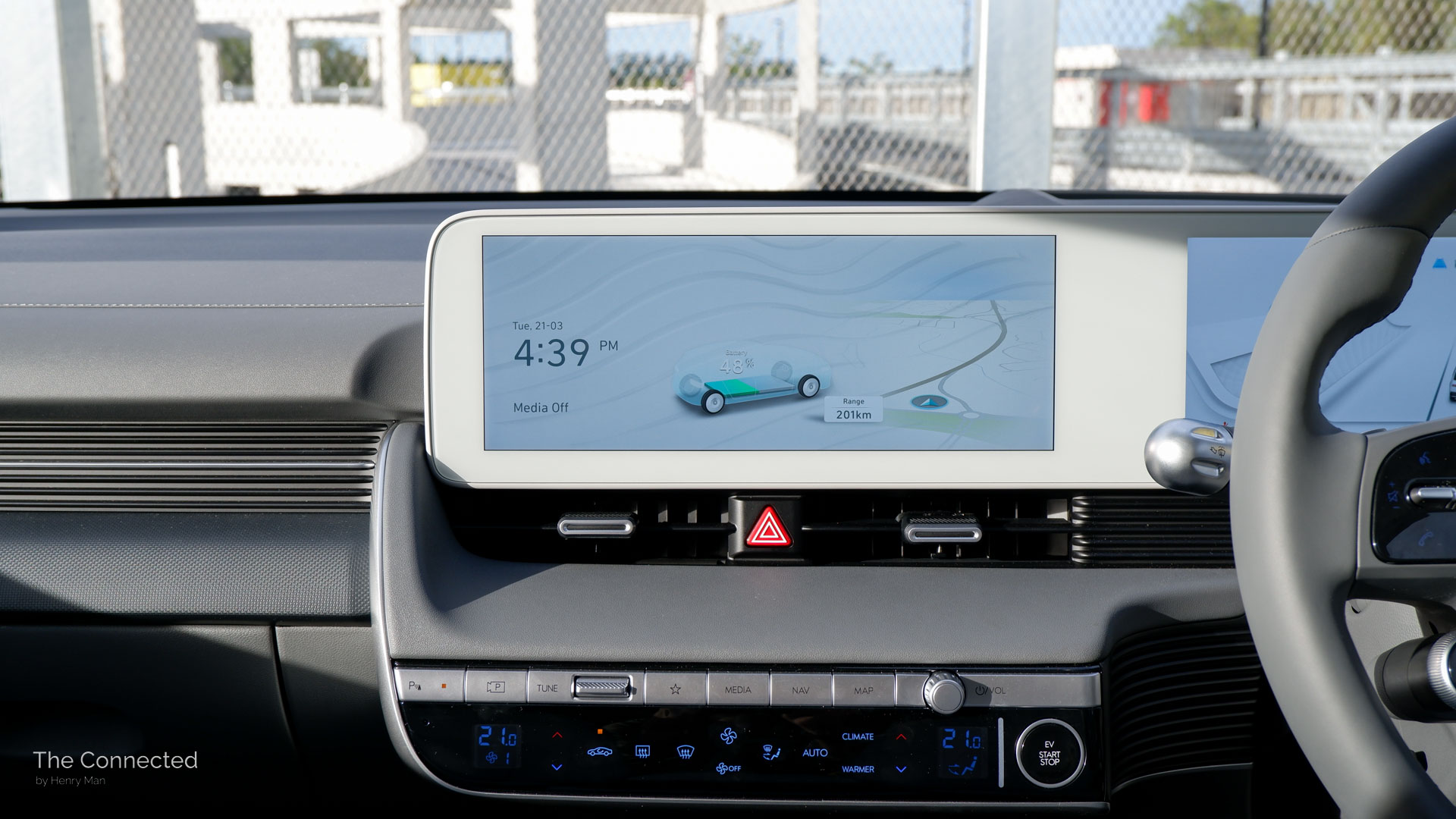
However, there are parts of the software that aren’t as intuitive to use, including the built-in maps – which is a hassle to start a route and doesn’t automatically plan charging stops when needed.
I also noticed that newer public EV charging stations (albeit nearly a year old) in my area weren’t showing up in the system, so it basically defeats the battery preconditioning function on the top-spec Epiq model (a prerequisite for it to work).
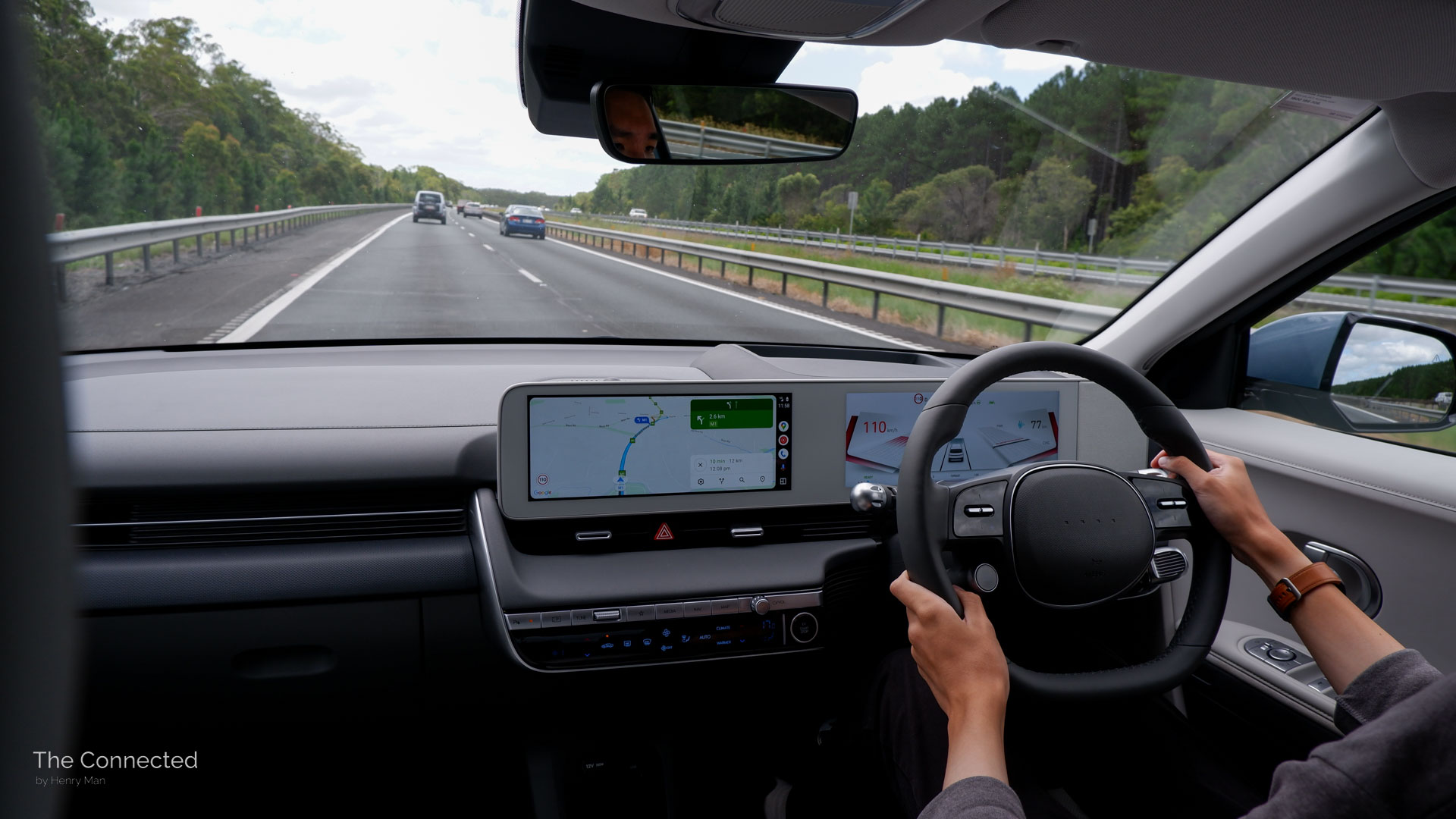
Thankfully, there’s wired Apple CarPlay and wired Android Auto – the latter now stretches the full screen following all other Hyundai Motor Group vehicles. It’s still a faff to plug in a cable, especially when the port is so low near the floor, and I wish the company would resolve that alleged dispute with one of the tech giants to implement wireless connectivity.
The missing (Blue)link.
Unfortunately, despite the Hyundai Palisade, Tucson and Venue SUVs all updated to include the company’s Bluelink internet-connected services, the Ioniq 5 EV still misses out.
The related Ioniq 6 electric sedan – not to mention the updated Genesis GV60 and Kia Niro EV – also feature Bluelink, so it’s disappointing to not have the handy smartphone app for this ostensibly futuristic and high-tech EV.
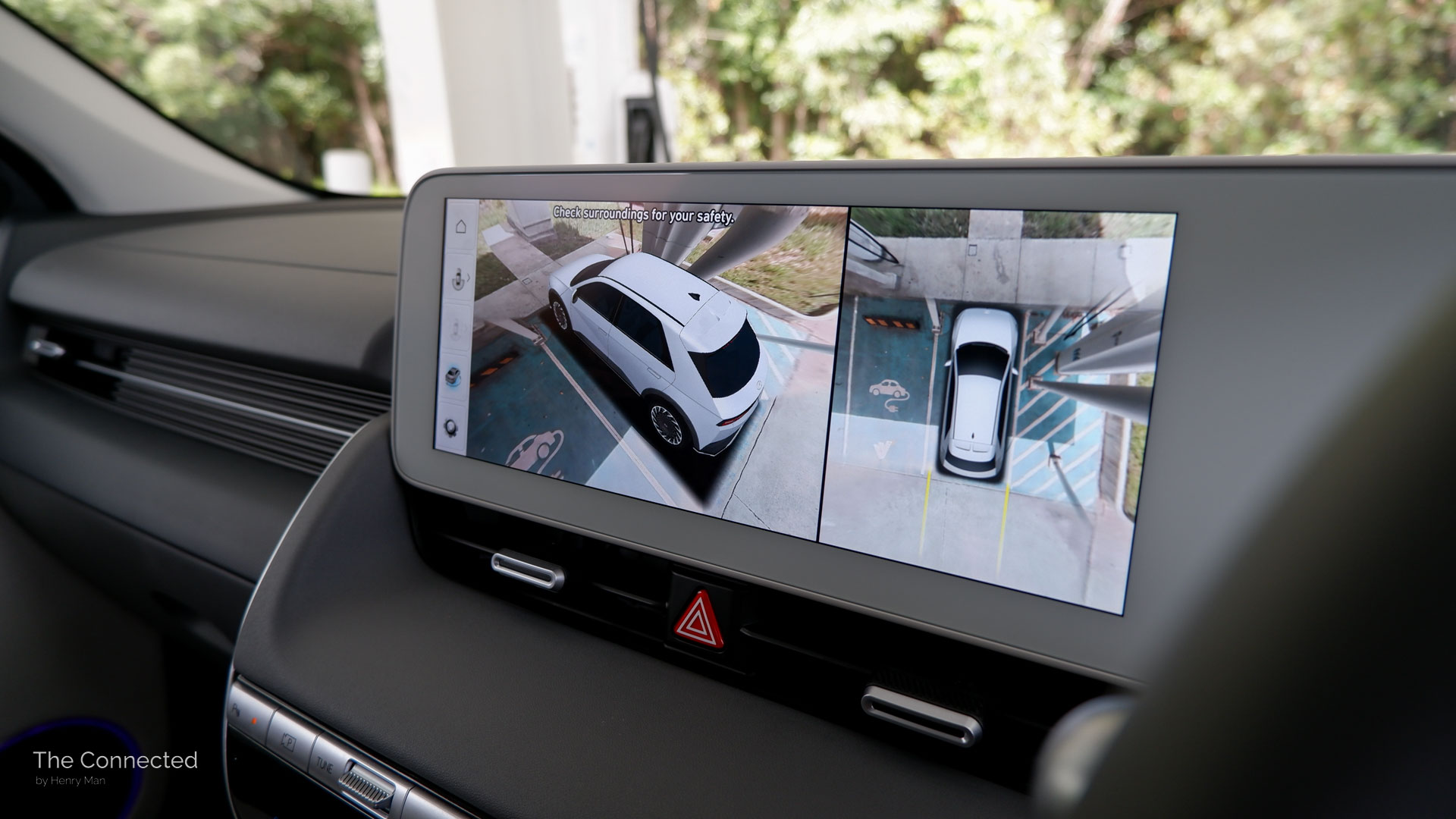
Sadly, Hyundai Bluelink internet-connected services are still missing on the Ioniq 5 EV. Having it would help bolster its appeal against the tech-focussed Tesla Model Y, bringing features such as automatic emergency calling and a mobile app to monitor the charging status, battery percentage, pre-start the air-conditioning, and monitor the vehicle’s surroundings (which worked well the Palisade large SUV).
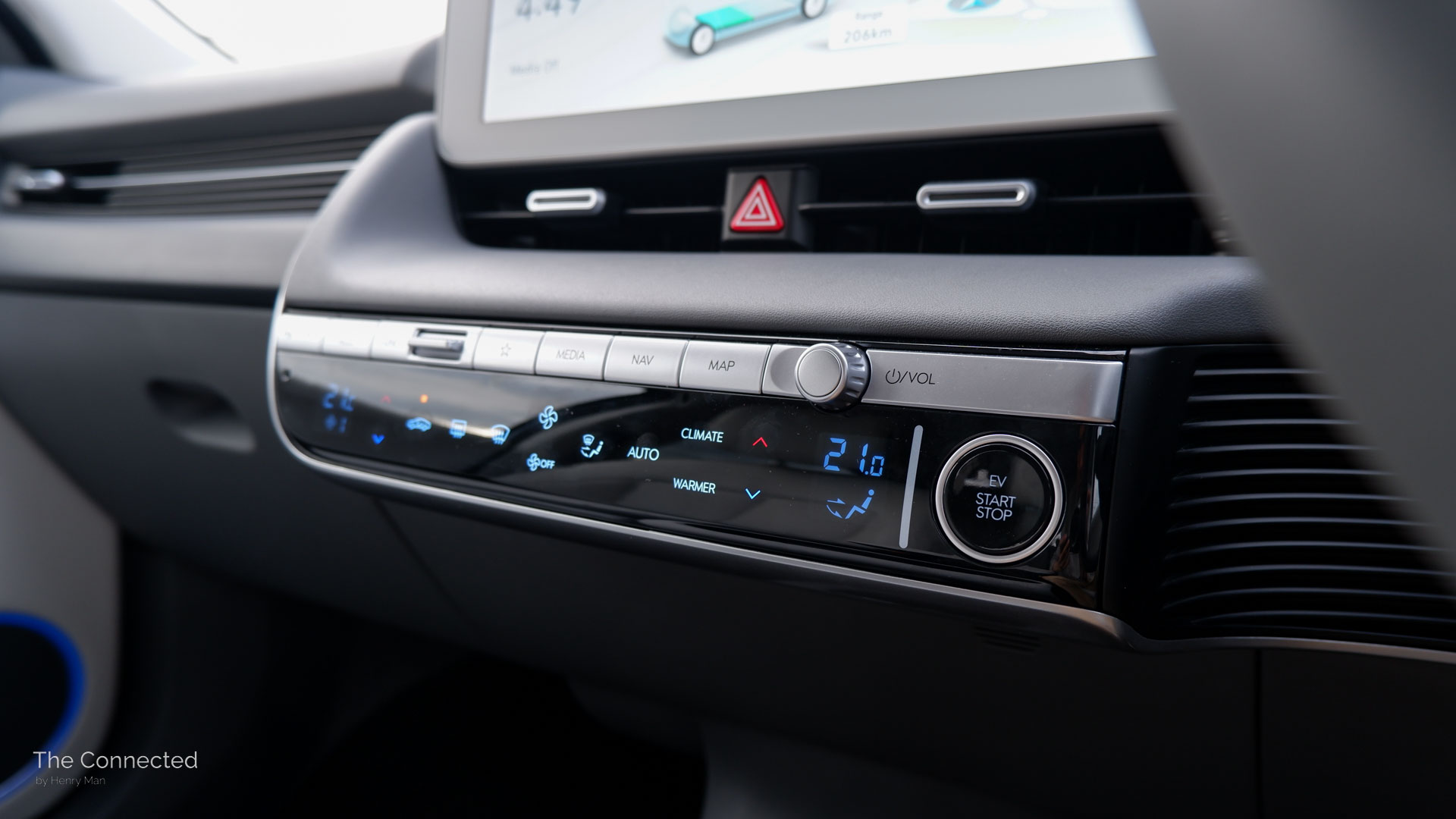
Additionally, the touchscreen is complemented by a row of physical shortcut buttons, a small volume dial, and media rocker switch. The climate control is a touch-sensitive gloss black panel, but is still fairly easy to use with dedicated LCD displays showing the temperature, fan speed and direction.
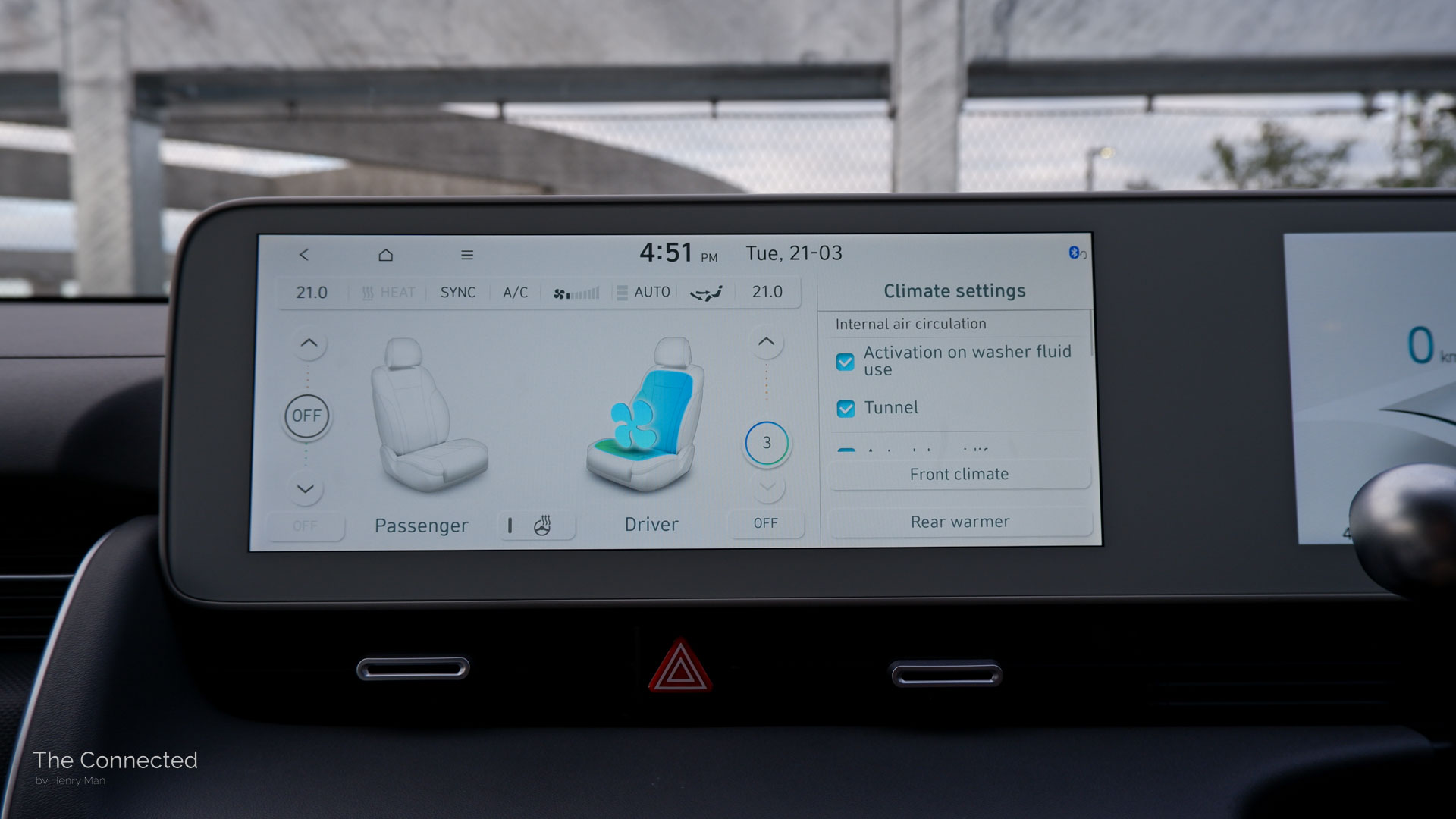
Though, you’ll need to contend with smaller touch targets, a lack of physical feedback (unlike the plusher Genesis GV60), and activating the heated/ventilation seats and heated steering wheel needs to be via the touchscreen (strangely by pressing ‘warmer’).
Similarly, the steering wheel controls are spread on a single button panel at each side, which aren’t as tactile and easy to ‘feel’ that you’ve pressed it (especially when you’ve got cold thumbs). There are clicky rocker switches complementing it, though.
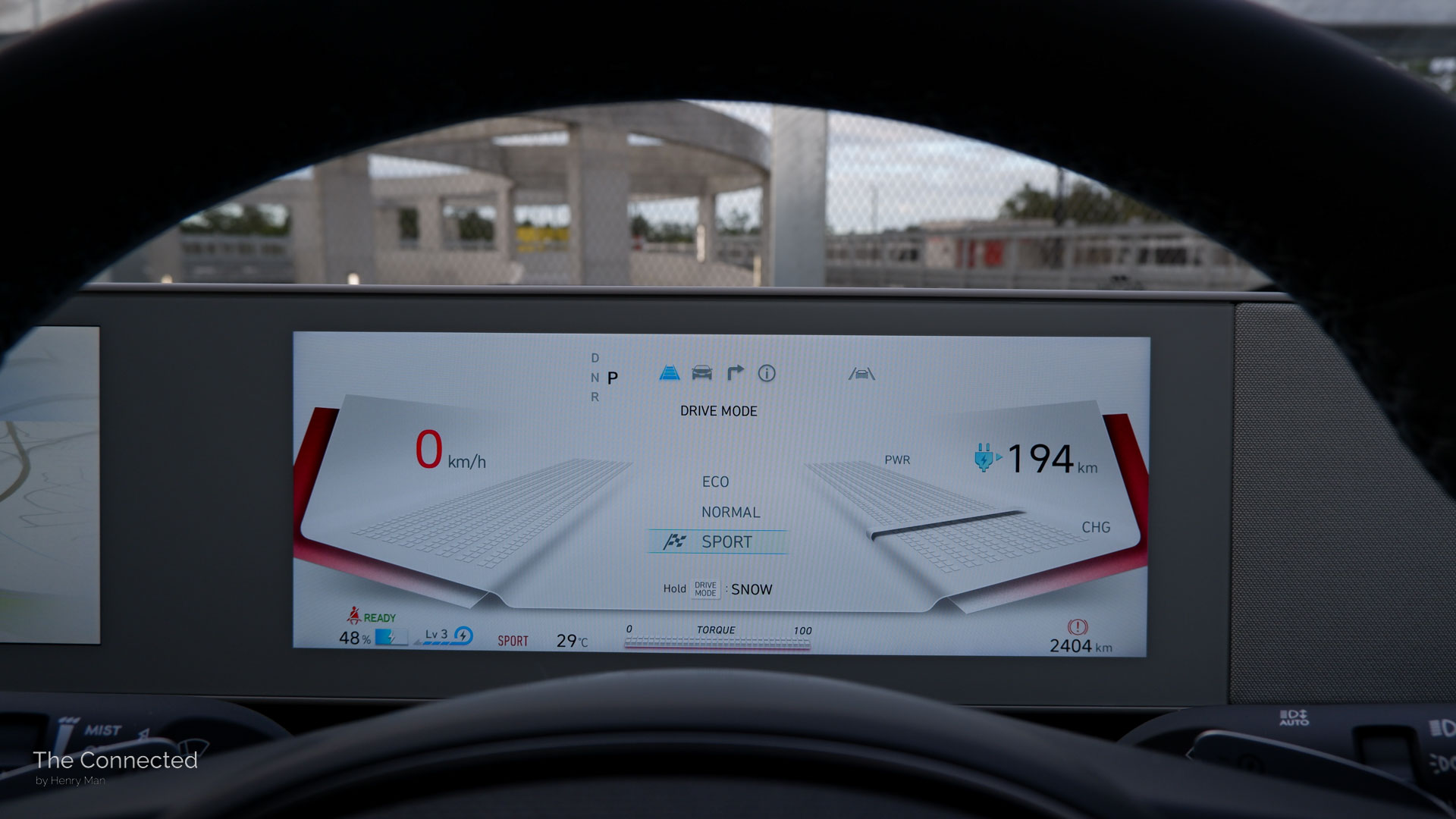
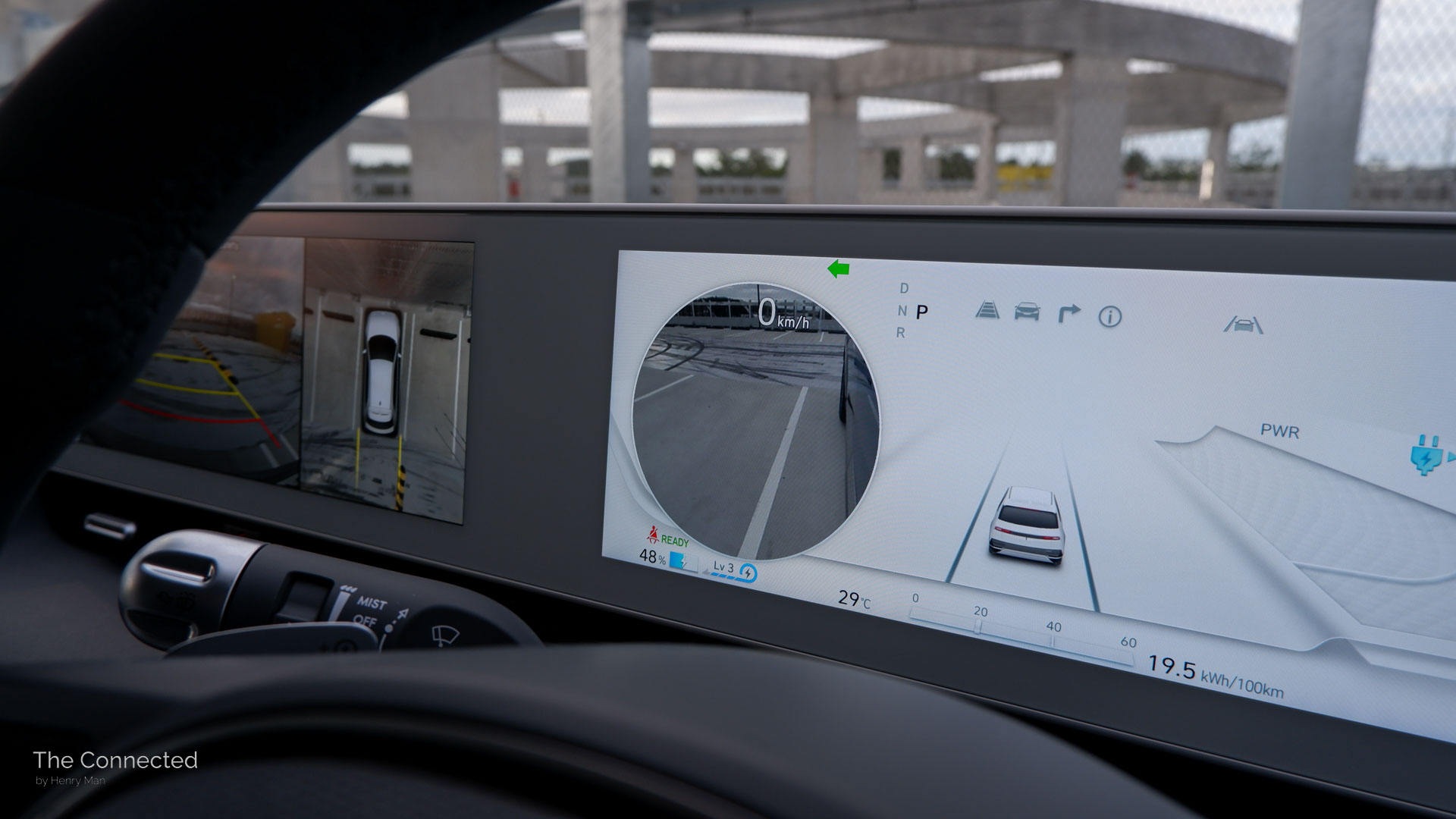
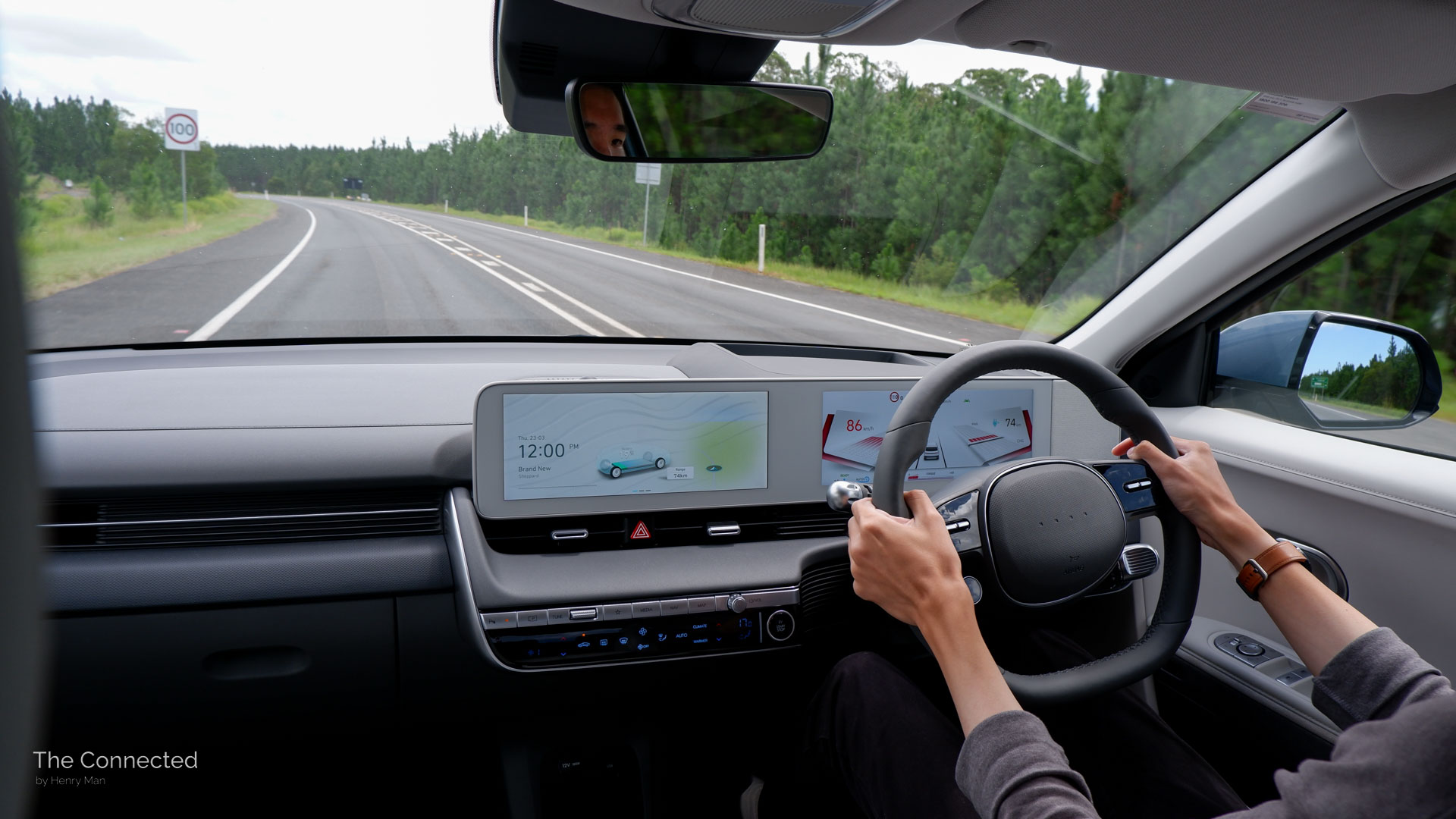
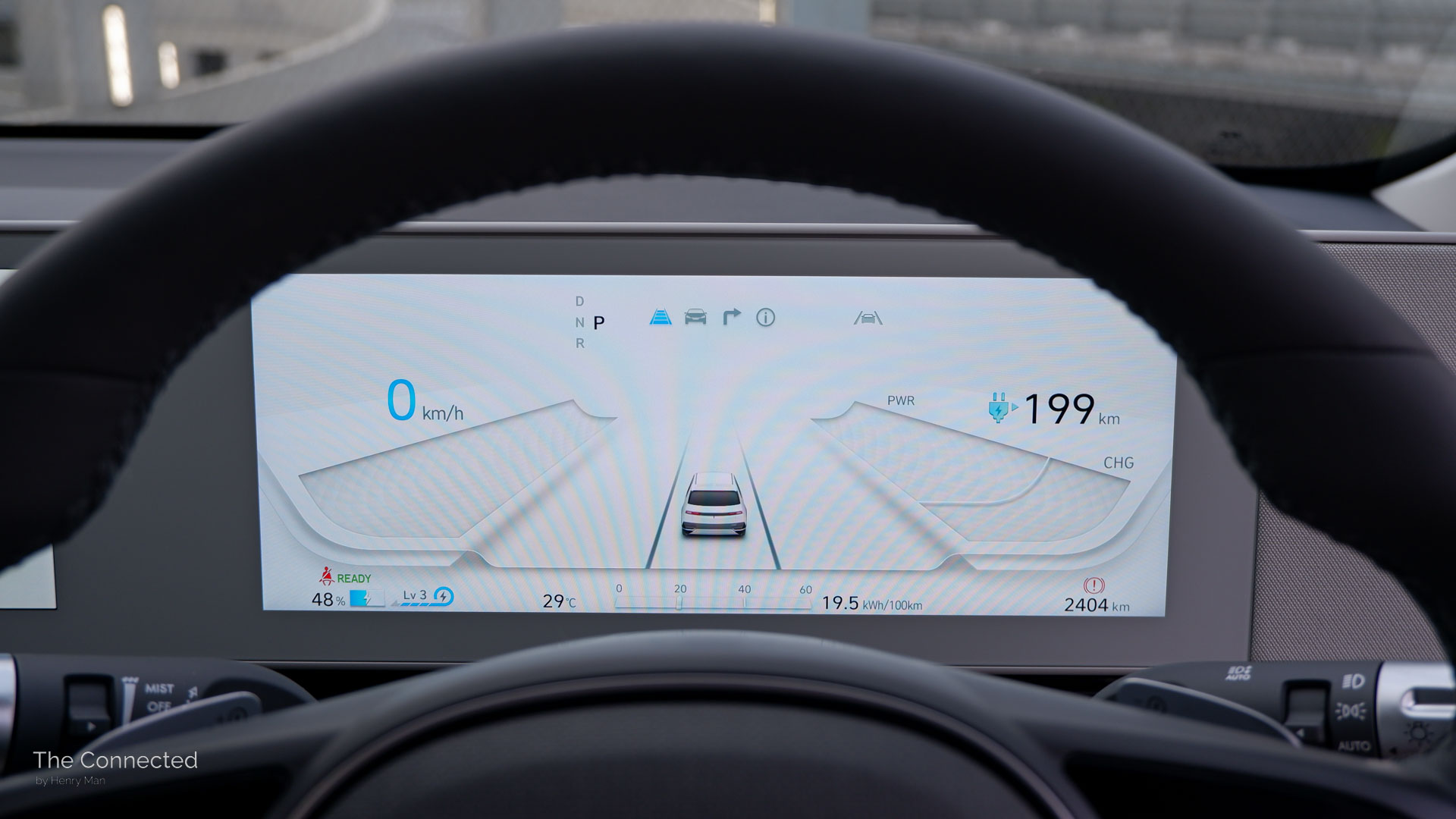
Ahead of the driver is a clear and legible instrument display, albiet without much customisability besides changing colours when switching drive modes. Depending on your driving position, you’ll need to adjust the wheel so it doesn’t block the speed readout (further rant in the driving section).
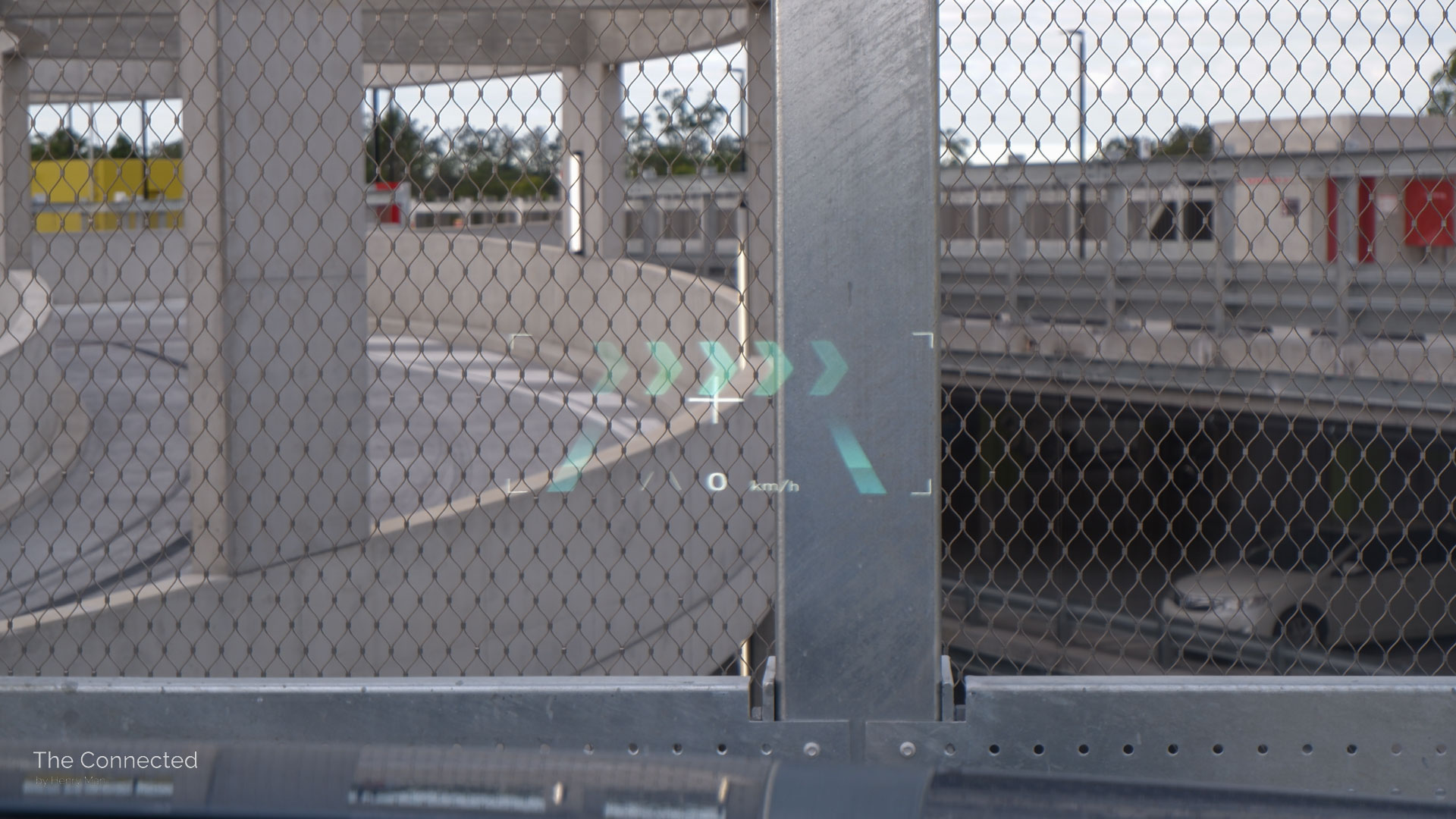
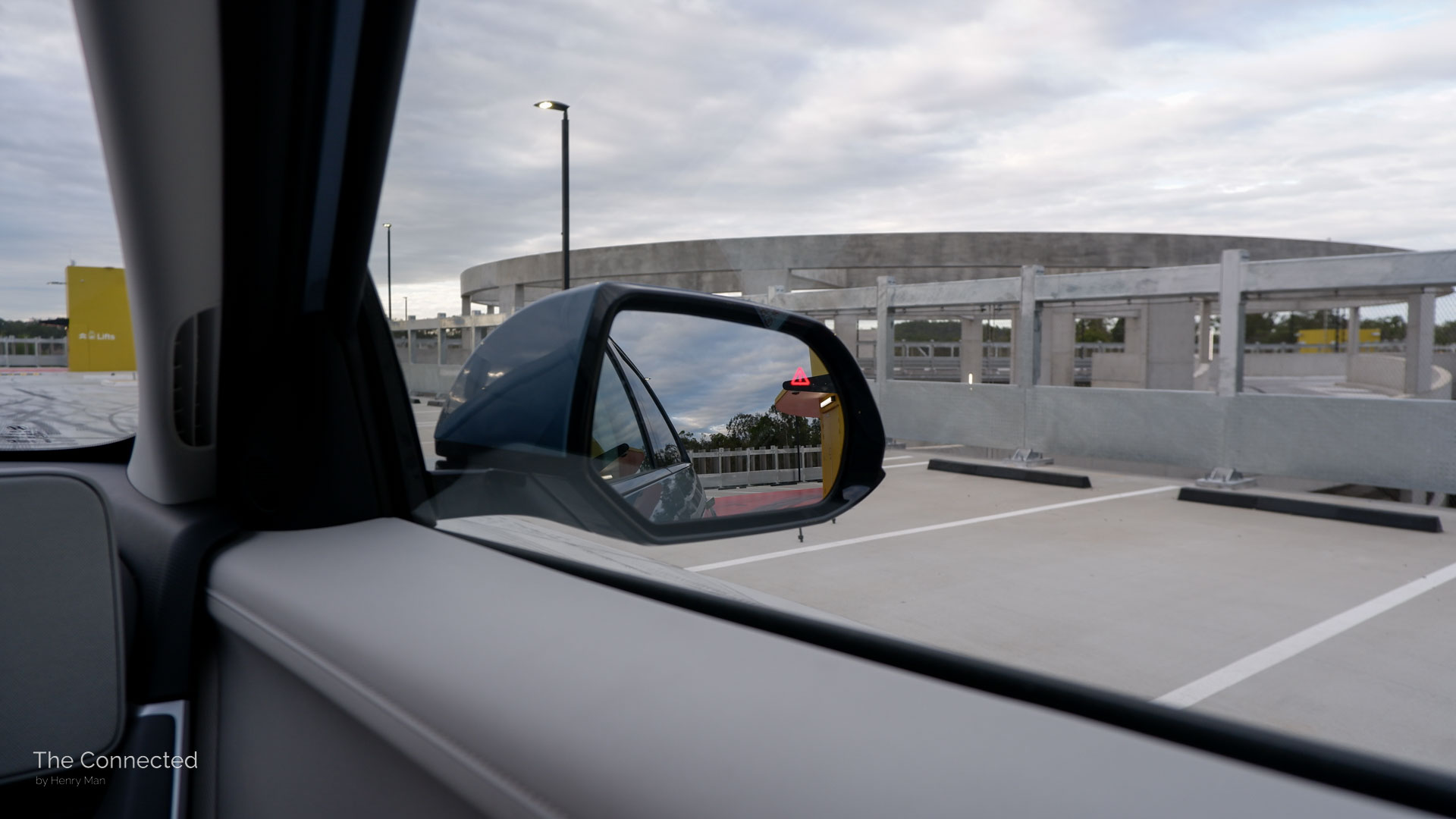
Fortunately, there’s a large head-up display (HUD) that projects pertinent information, including speed, blind-spot monitoring, and the adaptive cruise status onto the windscreen. It also has an augmented reality (AR) function by displaying three-dimensional arrows when lane departure warning is triggered and while using the built-in maps.
Keep in mind that the HUD does have a narrow field-of-view on the windscreen, so I found that I needed to adjust it higher in order for it to be visible – compared to other vehicles like the Hyundai Palisade – and it was hidden when I wasn’t directly in its line-of-sight.
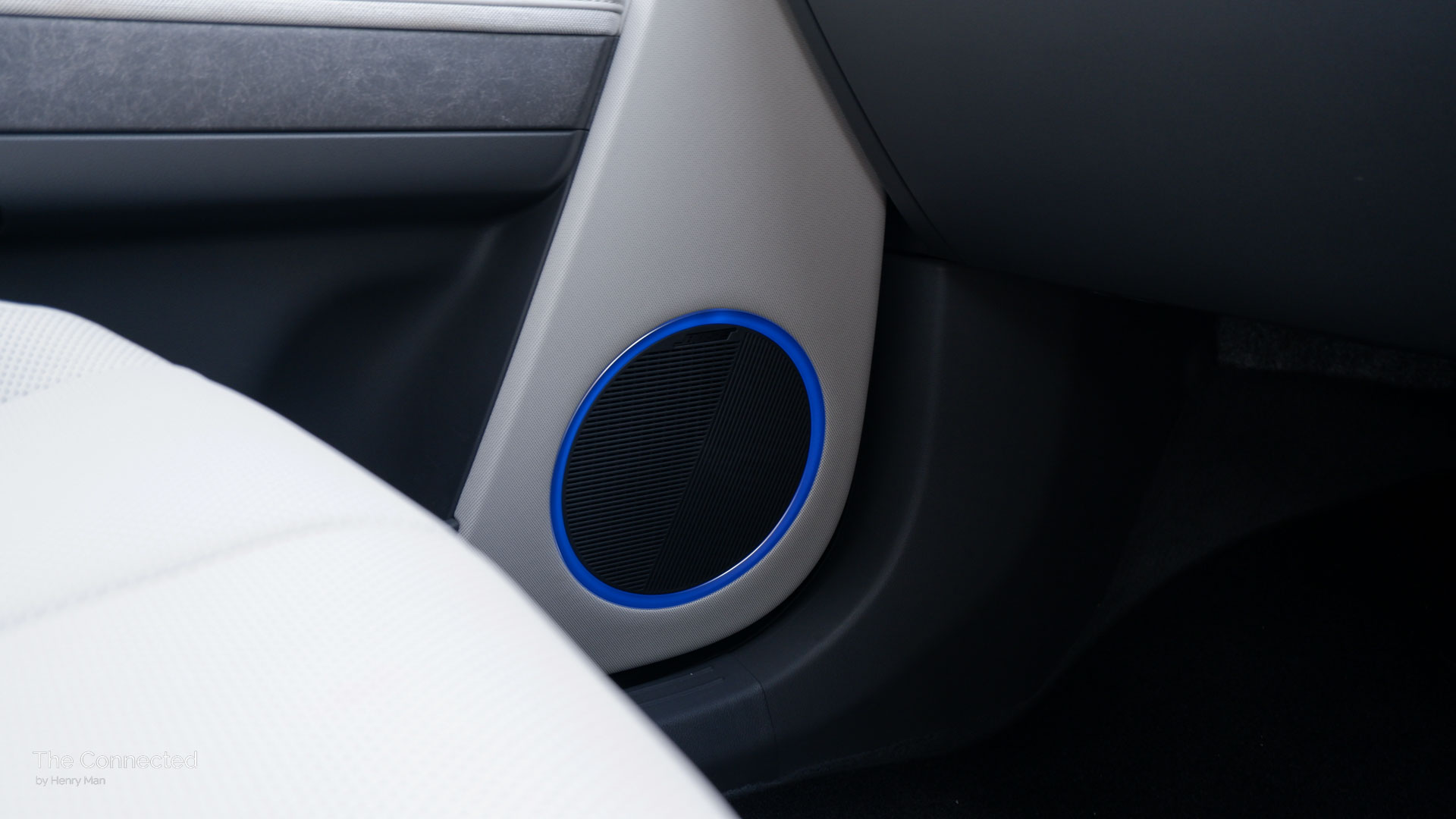
Meanwhile, the eight-speaker Bose audio sounded good, but wasn’t remarkable to my non-audiophile ears.
Safety.
2023 Hyundai Ioniq 5 Techniq safety features:
| Front auto emergency braking (AEB) with car/pedestrian/cyclist/intersection detection | Lane keep and centring assist |
| Lane change oncoming and side avoidance assist | 360-degree camera |
| Evasive steering assist | Front and rear parking sensors |
| Blind-spot assist | Driver attention monitoring with lead vehicle departure alert |
| Blind-spot view camera | Safe exit assist |
| Rear cross-traffic assist | Rear occupant alert |
| Rear AEB | Full LED head- and tail-lights |
| Adaptive cruise control (with machine learning function) | Auto high beam headlights |
The Hyundai Ioniq 5 EV has scored the maximum five-star ANCAP safety rating under the 2021 testing criteria, with all variants including the full suite of active safety assistance technologies as standard.
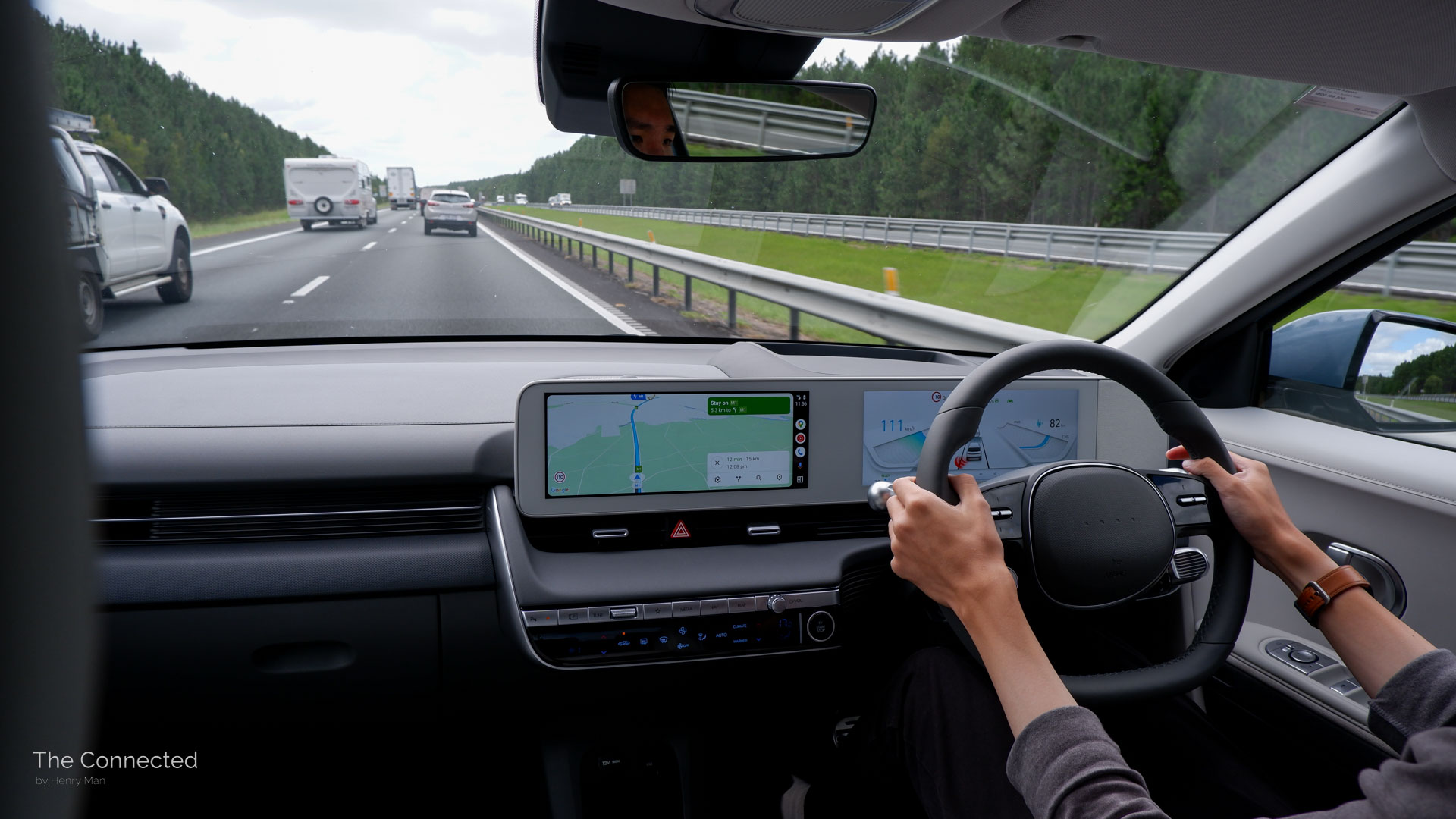
Notably, the South Korean carmaker is one of the only brands allowing lane centring assist enabled anytime – without the need to activate adaptive cruise control. It makes driving much more relaxing and it works well most of the time at keeping in the lane, with some driver intervention required at times especially during slight turns.
The adaptive cruise also performs well at keeping a safe distance with the vehicle in front and utilises regenerative braking when slowing down. Due to the electric drivetrain, I also noticed it keeps to the set speed limit better while driving on inclines or hills than Hyundai’s combustion-engined vehicles.
Thankfully, the 2023 Ioniq 5 update didn’t bring the company’s new irritating speed limit assist warning function – unlike the Palisade SUV and Ioniq 6 EV.
But, the electric SUV’s slim visor-shaped LED headlight clusters still limit its reach and spread performance. If you regularly drive at night, the Kia EV6 and even the outgoing Hyundai Kona Electric have larger and better lights.
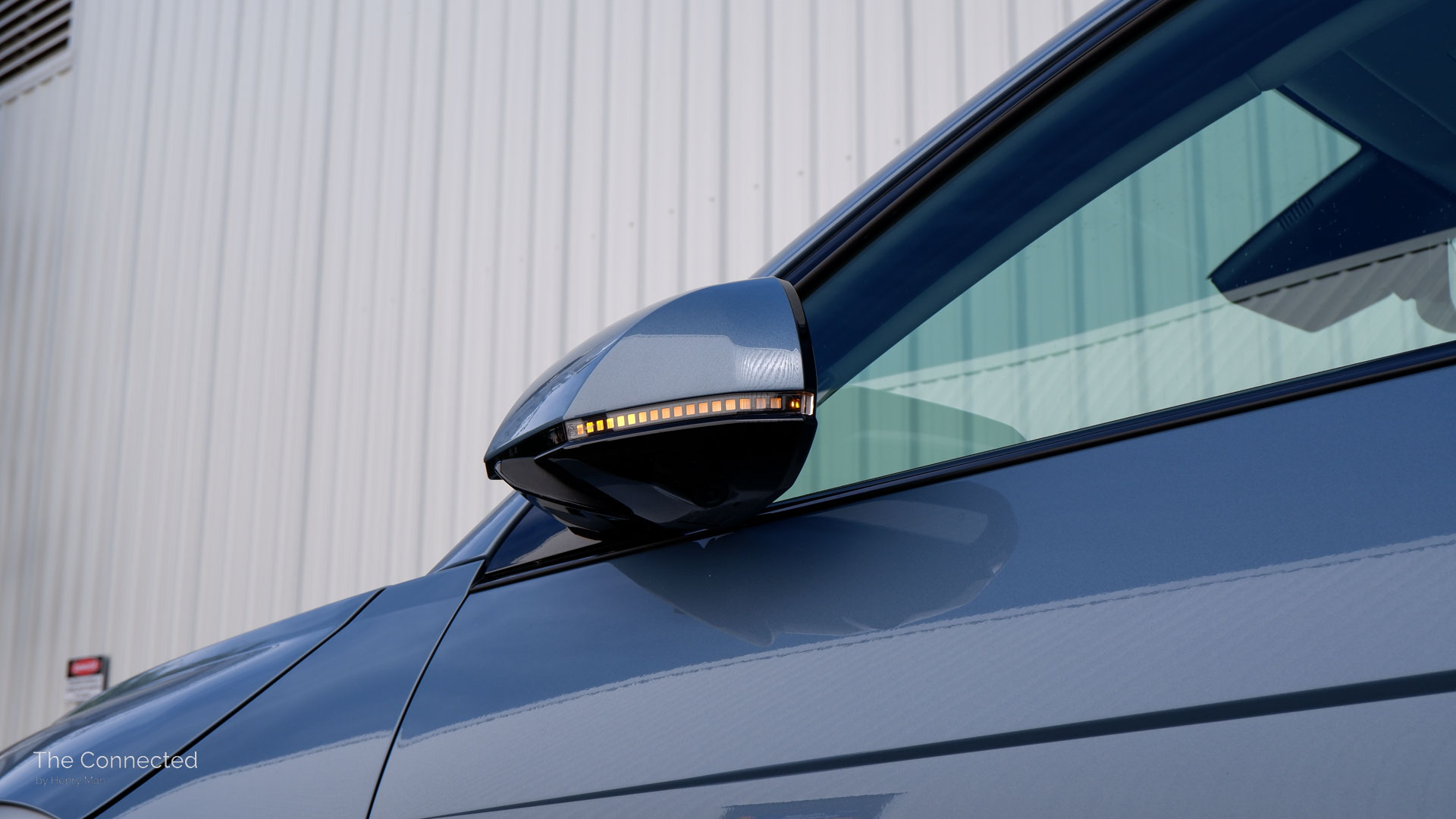
The LED front indicators – which replace the eye-shaped daytime running lights – and full LED tail-lights are bright and clearly visible, though.
Range and charging.
2023 Hyundai Ioniq 5 Techniq battery and charging specs:
| Claimed driving range (WLTP combined) | 454km |
| Claimed efficiency (WLTP combined) | 191Wh/km |
| Battery size (usable) | 74kWh |
| Battery type | Lithium-ion (cathode materials unknown) |
| Battery voltage | 697-volts (800-volt class) |
| Max AC / DC charging speed | 10.5kW / 350kW |
| Bidirectional charging | V2L (interior and exterior) |
| Connector type | Type 2 / CCS2 |
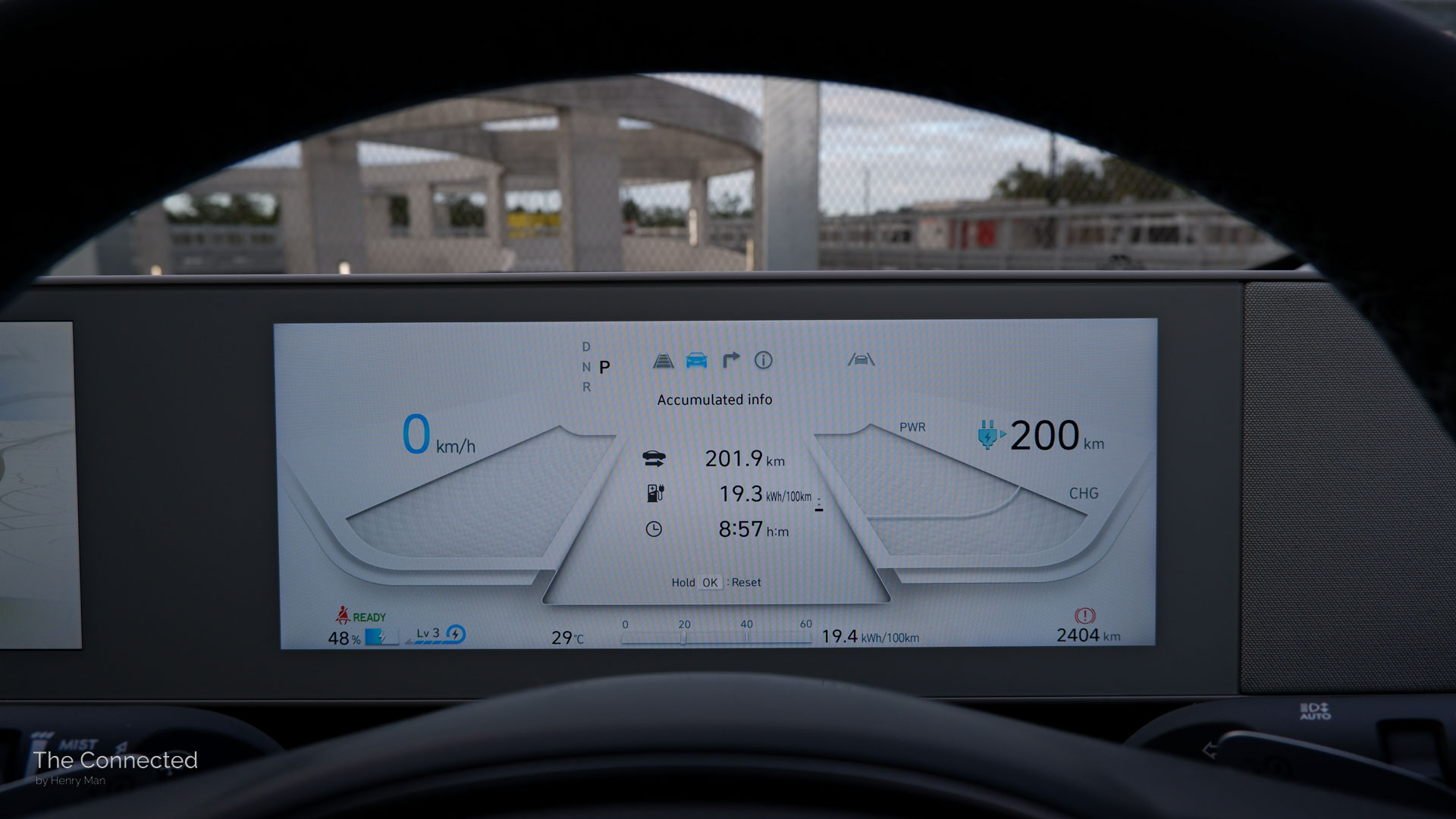
During my week of mixed urban and highway driving, the Ioniq 5 trip computer indicated 191Wh/km energy consumption (or 19.1kWh/100km in traditional metrics) – which means a real-world range of only 387km from a full charge.
In contrast, I’ve driven two 2022 Ioniq 5 launch examples previously and achieved around 161Wh/km for 451km real-world range.
The newer more powerful motor brings the electric SUV’s energy efficiency in line with the Kia EV6 and Genesis GV60, where I got it in the 180Wh/km range in the real-world.
Sadly, it’s clear that the updated electric drive unit isn’t as efficient – and eliminates the supposed range benefits from the 4kWh net additional battery cells.
Note: Variables including weather temperature, driving conditions and climate control use could have impacted my tester’s higher consumption.
A step back.
The newer electric drive unit is, unfortunately, less energy efficient than the Ioniq 5’s predecessors – at least in my experience.
This has negated the benefits of the upsized battery, with less real-world driving range than pre-update models.
The Hyundai Ioniq 5 design only manages a 0.29 drag coefficient thanks in part its auto pop-out flush door handles, double cut-through spoiler and aerodynamic wheels. Though, it isn’t as impressive for an EV nowadays.
The range-topping Epiq variant theoretically softens the blow with a heat pump included to improve climate control efficiency, though it’s relegated to the most expensive model when it’s standard on cheaper EVs such as the Tesla Model Y and BYD Atto 3.
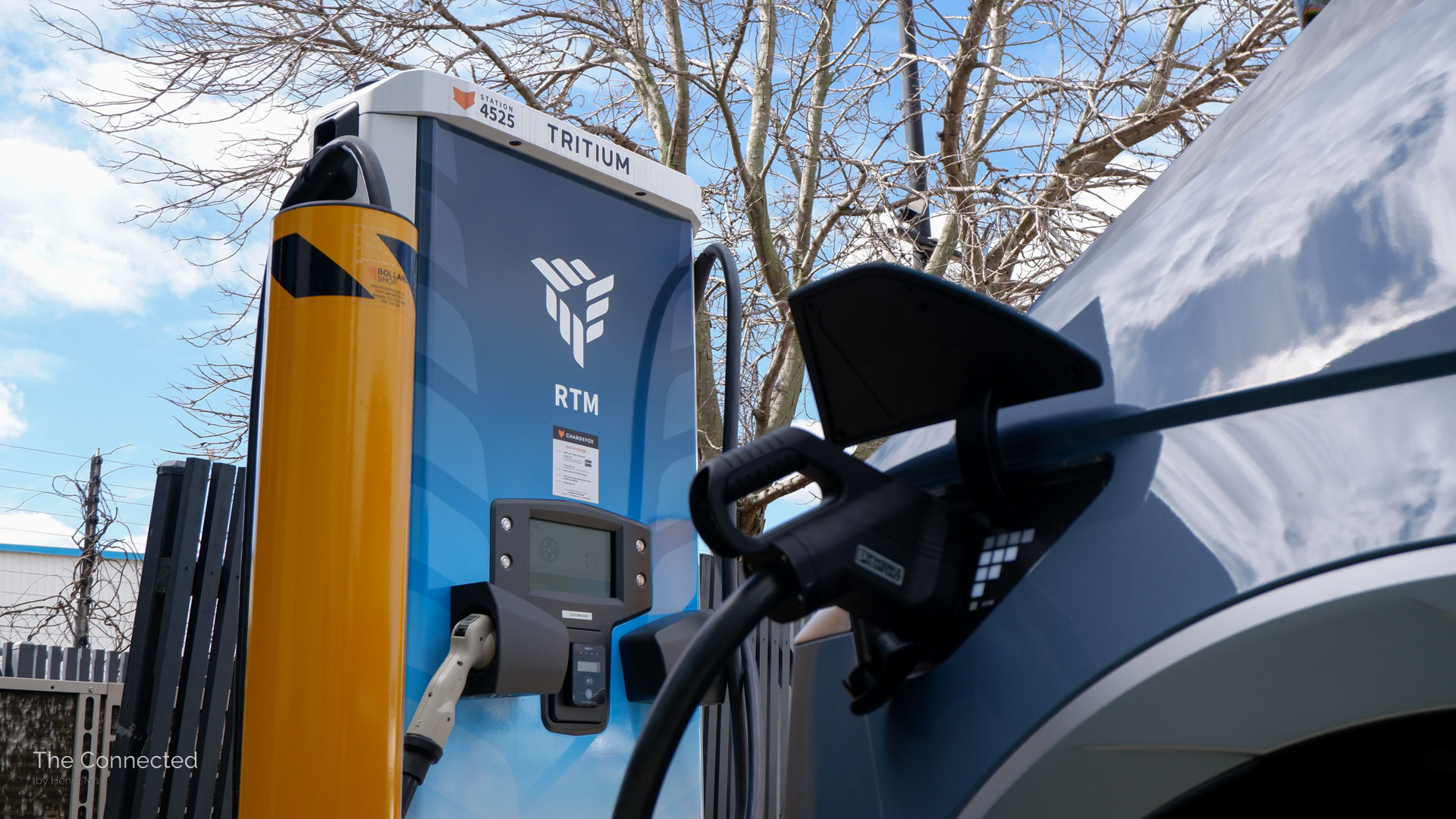
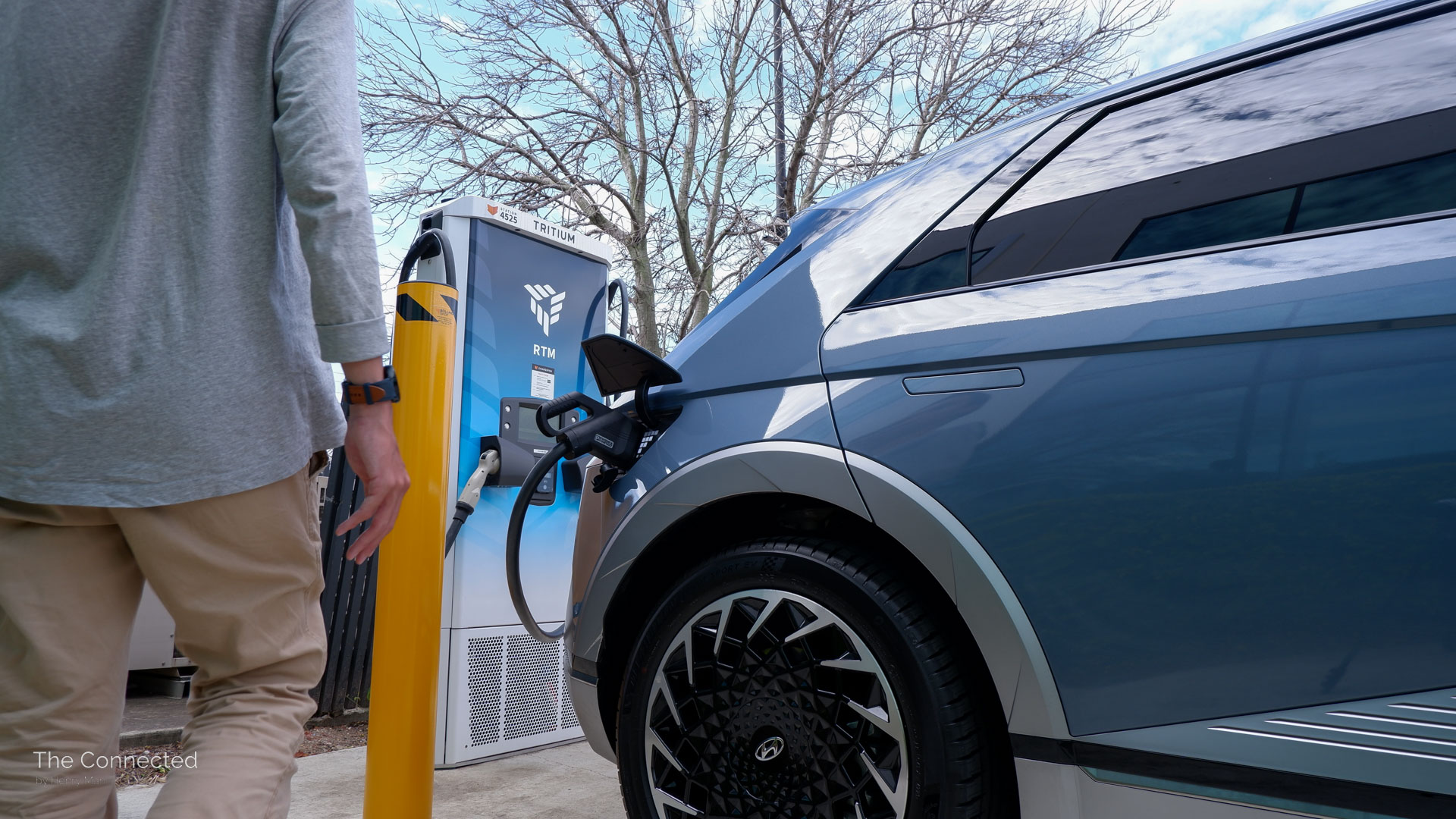
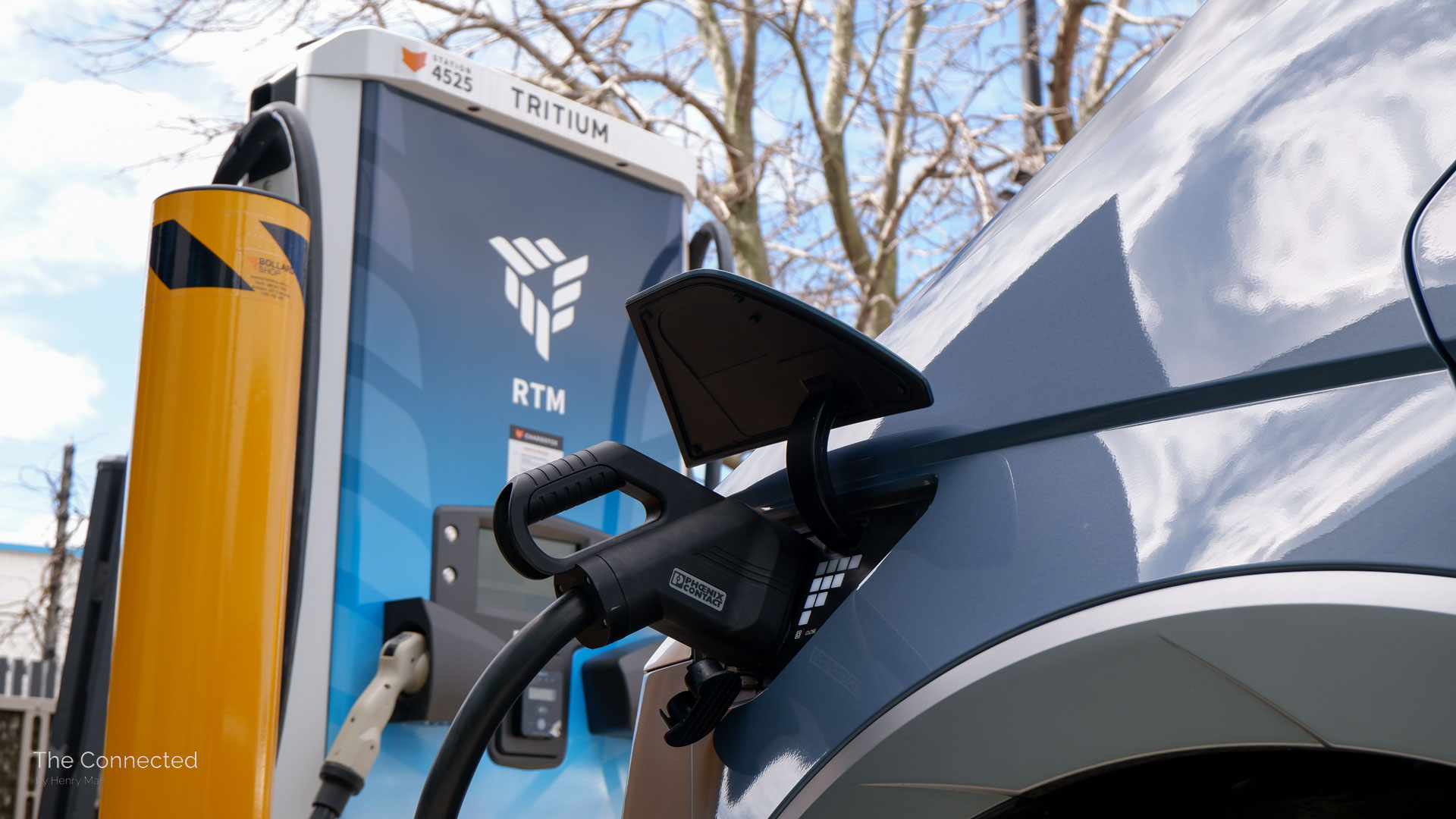
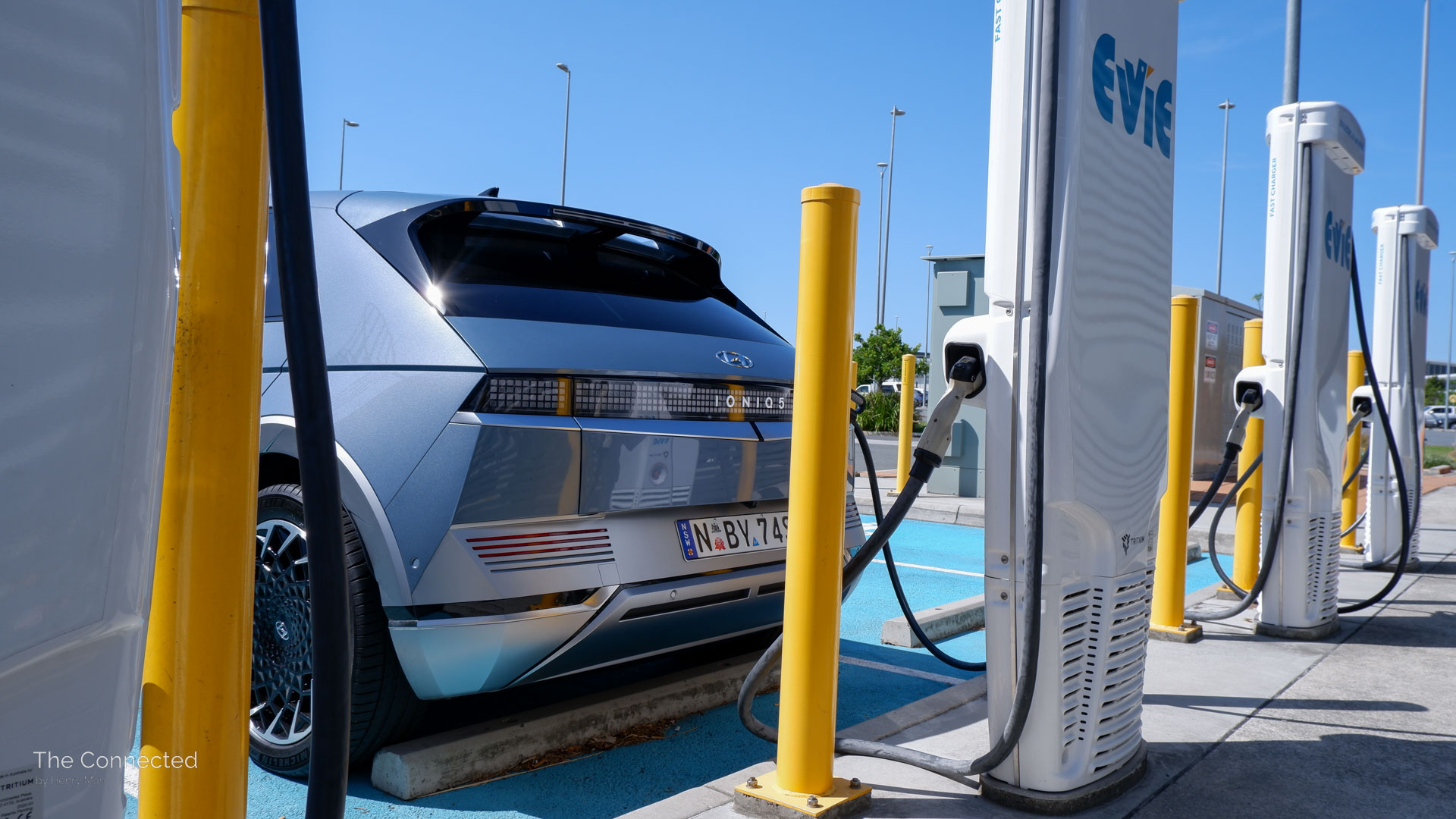
As for charging the Ioniq 5, the Type 2/CCS2 port is accessed and well-positioned at the rear-right quarter of the vehicle.
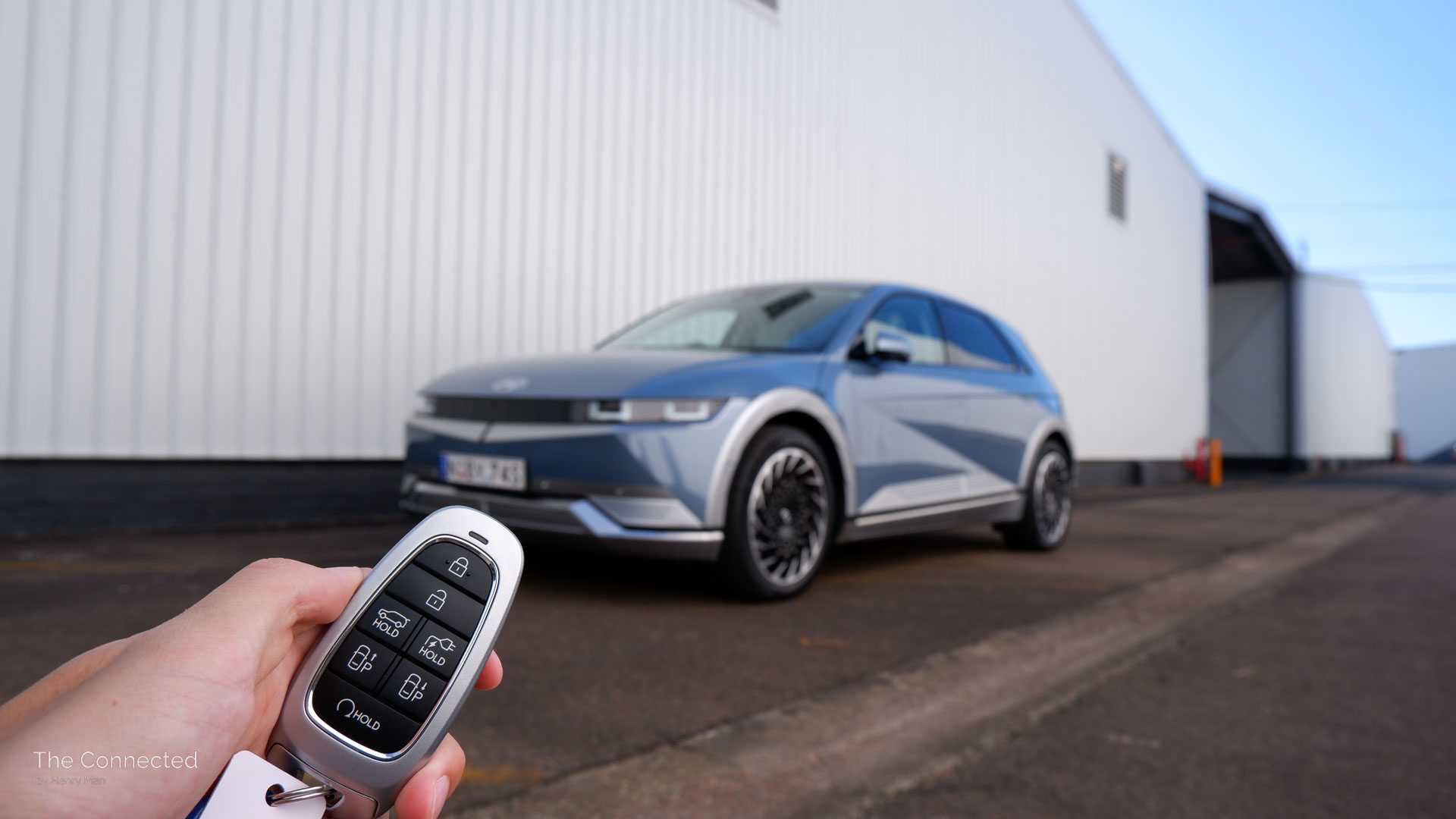
The charging port flap is electrically operated and opens via holding the button on the key fob or pressing the tactile pixels on the lid (when the car is unlocked). There are also four levels of square pixel LEDs to indicate the battery percentage.
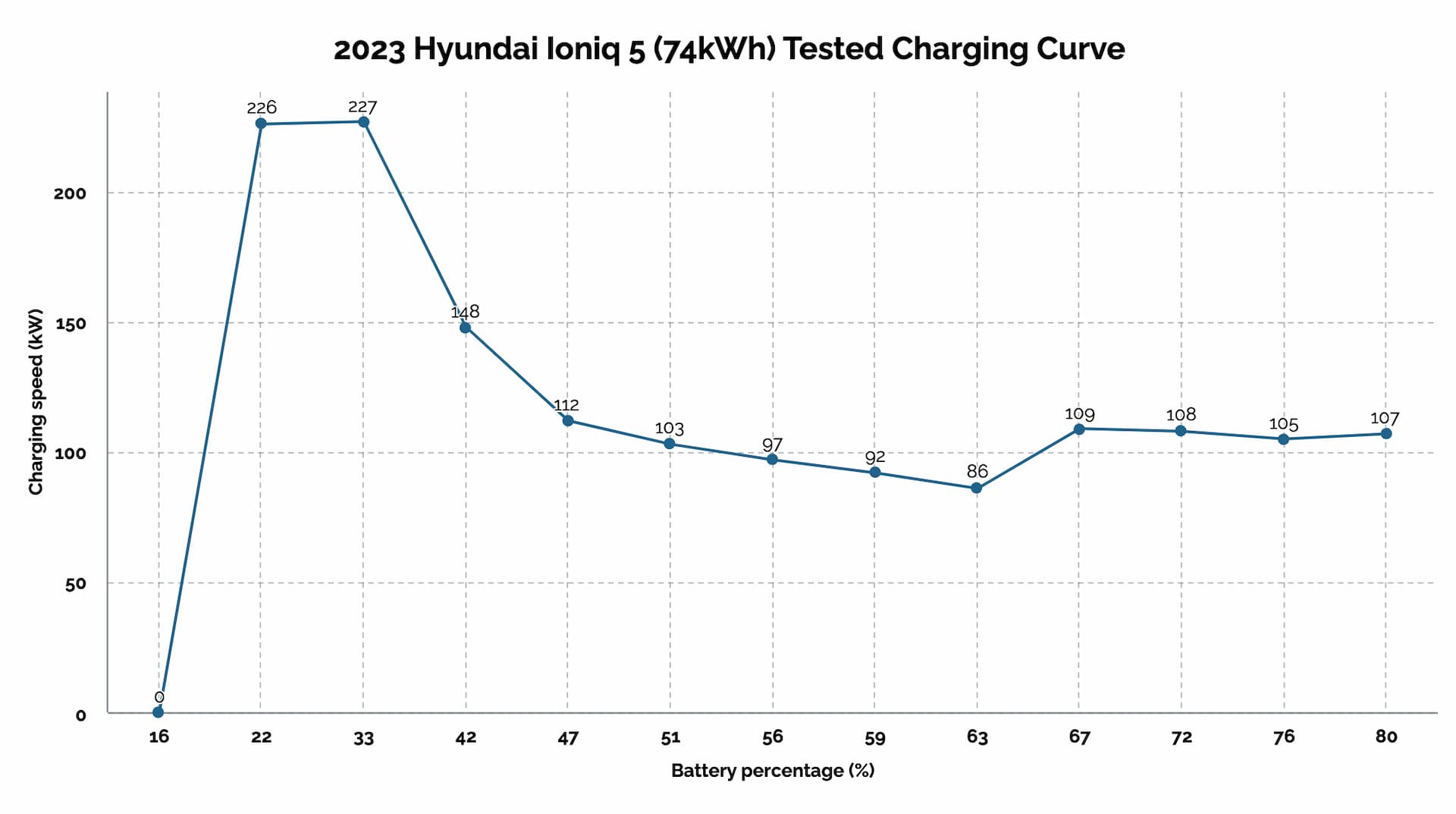
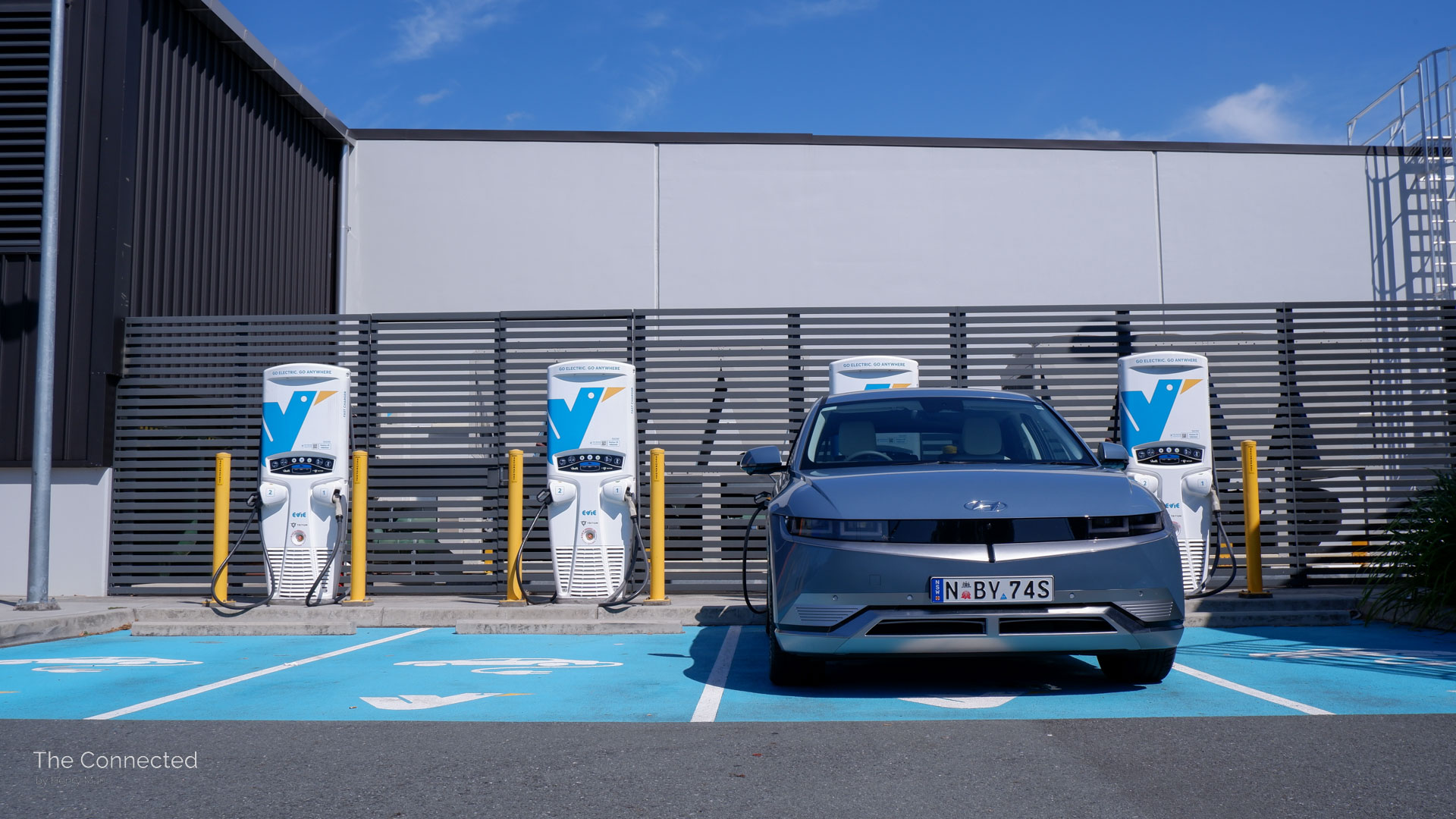
In my charging test, the 2023 Ioniq 5 went from 16 to 80 per cent in just 24 minutes on an ultra-rapid 350kW DC charging station.
The charging session quickly peaked at 227kW, before slowly throttling down to (a still impressive) 107kW at 80 per cent full. It’s due to the E-GMP’s 800-volt class battery system that enables sustained high charging speeds and requires less amps for cooler thermals.
It took longer to charge than the pre-update 2022 Ioniq 5 I’ve tested, but par for the course given the 4kWh cell bump.
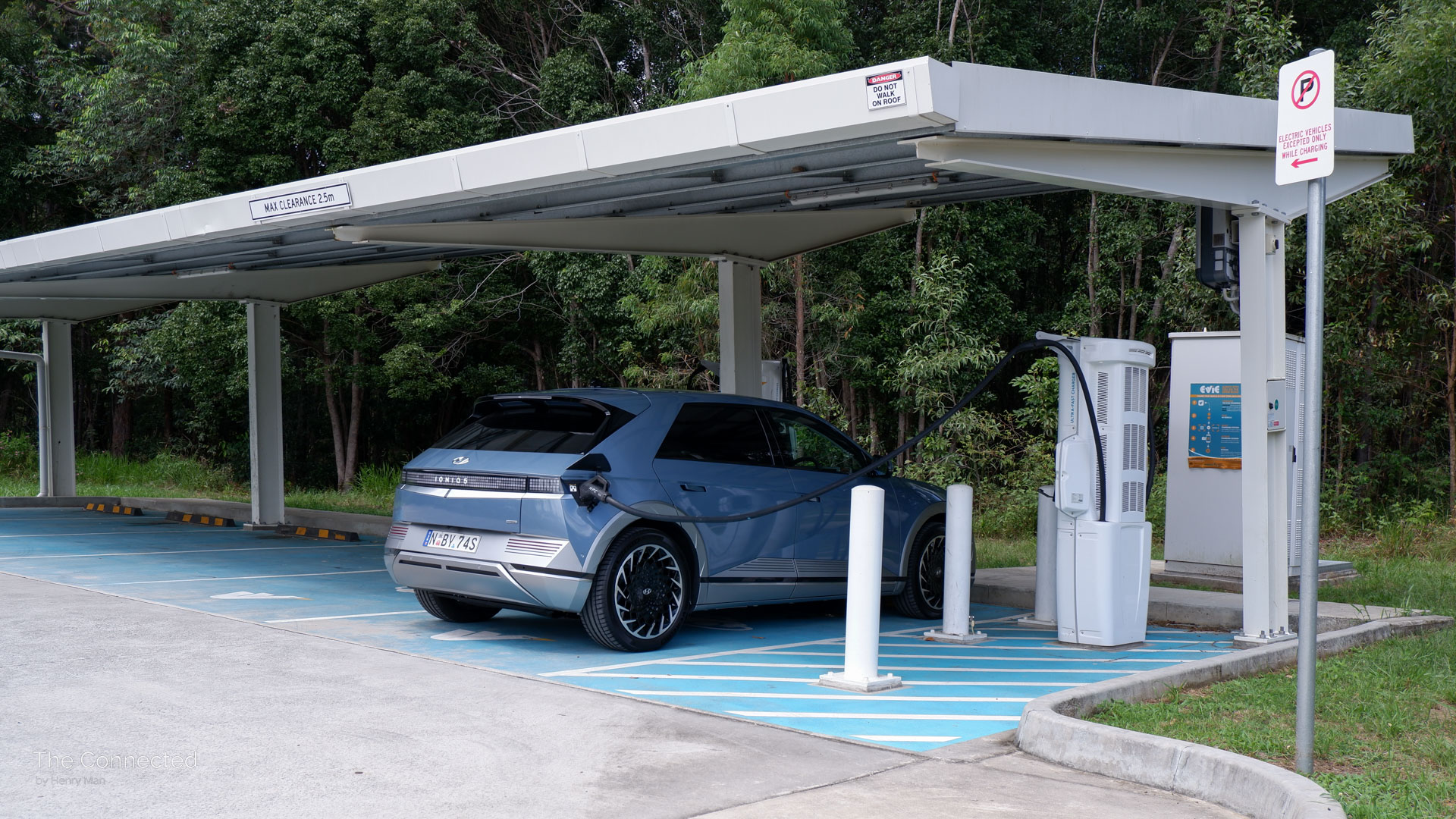
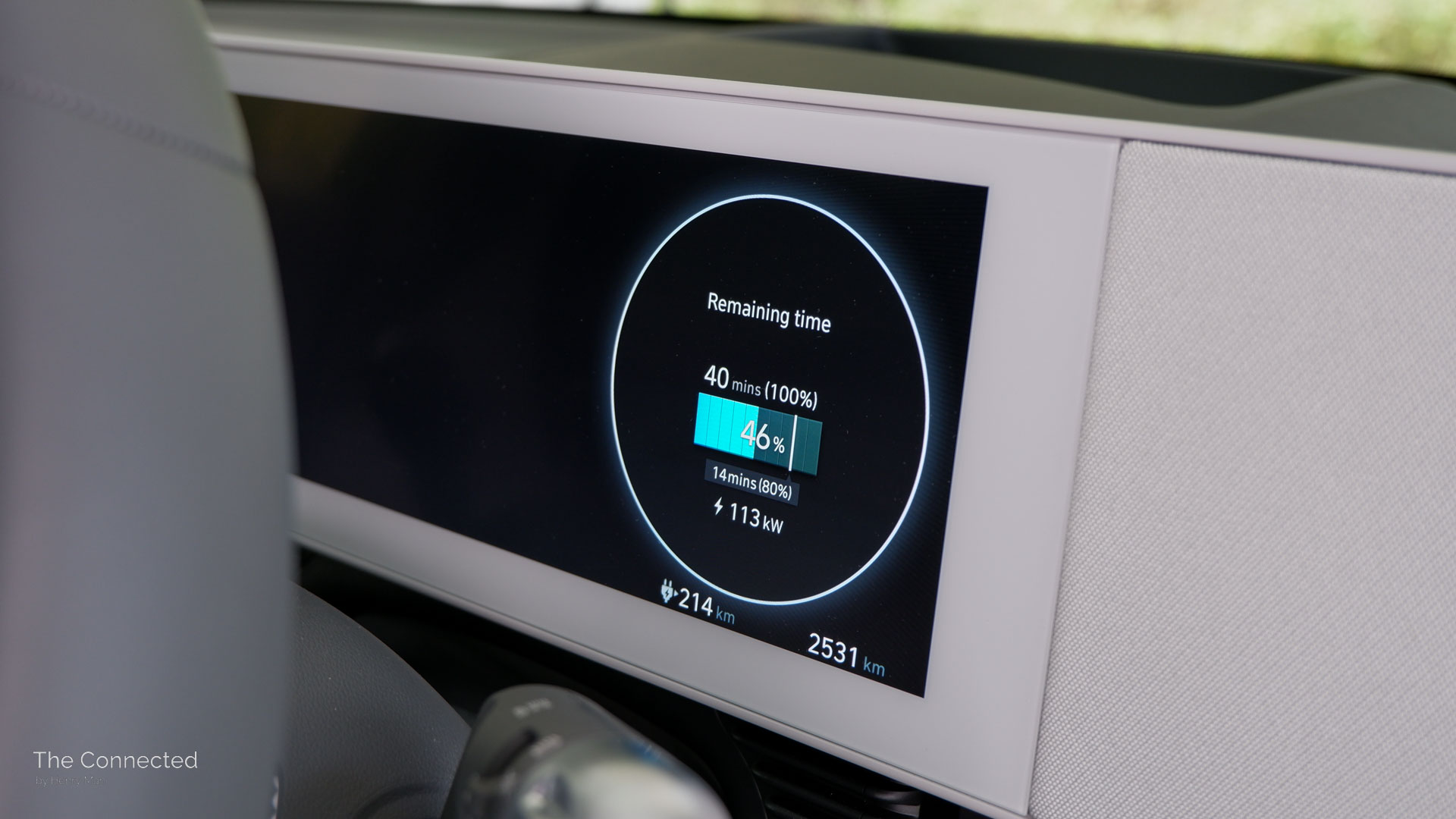
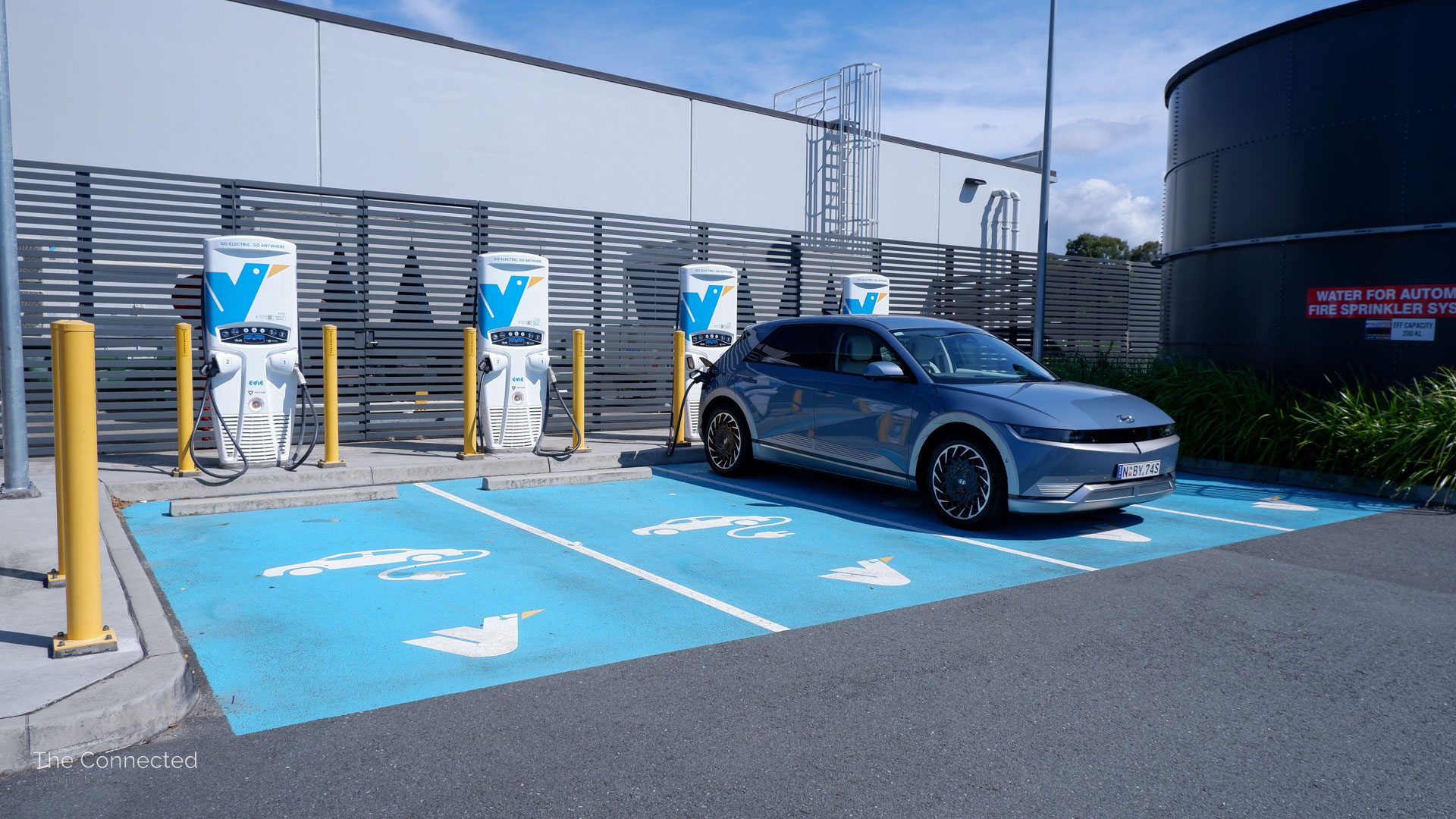
The flagship Epiq model exclusively boasts battery preconditioning to achieve optimal DC charging speeds, but the outdated and clunky built-in mapping system means it might not be useful nor easy to use (as discussed in technology above).
As per lithium-ion batteries, it should be charged up to 80 per cent only to maintain good battery health. Regular DC fast charging should also be limited in favour of an AC slow charging source.
The vehicle-to-load (V2L) function is now available in the second-row, albeit somewhat difficult to access underneath the seats (but great to use as a mobile office), and the exterior V2L adapter remains included to discharge up to 3.6kW AC power.
Interior V2L can’t be used while charging the EV, though – so forget about making a coffee while you wait.
Driving.
2023 Hyundai Ioniq 5 Techniq powertrain specs:
| Electric motor | Dual permanent magnet synchronous motors |
| Power | 239kW |
| Torque | 605Nm |
| Transmission | Single-speed |
| Drive Type | AWD |
| Claimed 0-100km/h time | 5.1 seconds |
| Towing (unbraked / braked) | 750 / 1600kg |
All-wheel drive (AWD) variants of the 2023 Ioniq 5 have received a 14kW bump in power, while retaining identical torque outputs combined from its two electric motors.
Driving is simply effortless with spritely acceleration that can make your heart sink, before catching up with gravity. It provides a good balance between powerful performance and still being manageable.
Keep it in eco or normal mode and the accelerator pedal provides a good amount of sensitivity, without the jerky jolt sensation off-the-line, and the steering has a balanced weight that settles between comfort and sporty well.
Hyundai Australia’s media release states: “The 2023 Ioniq 5 is equipped with a new ride and handling package… Key focuses were wheel control, bump absorption and body control, and the result is a vehicle that perfectly blends ride comfort with engaging dynamics, no matter the road or road surface.”
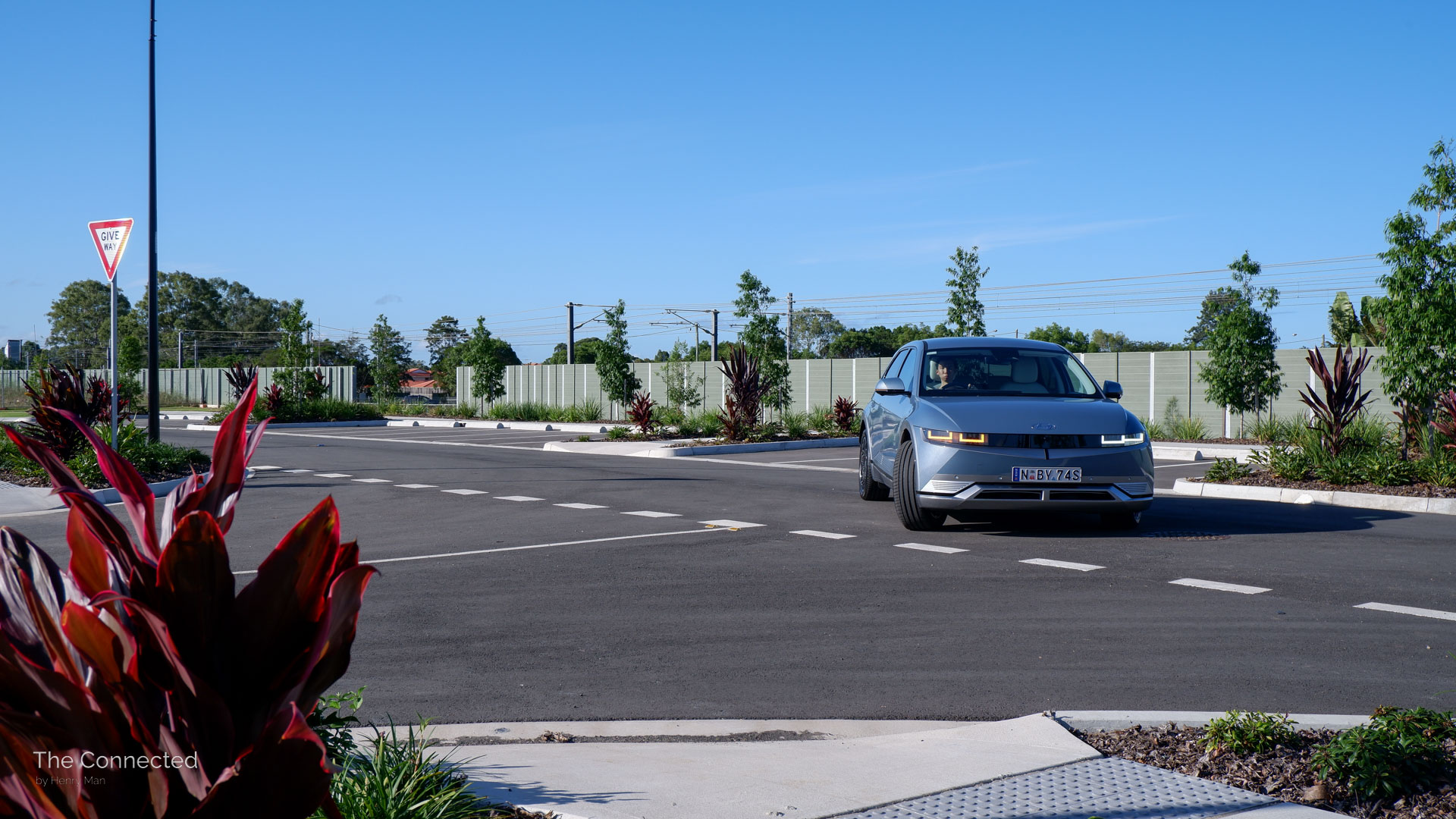
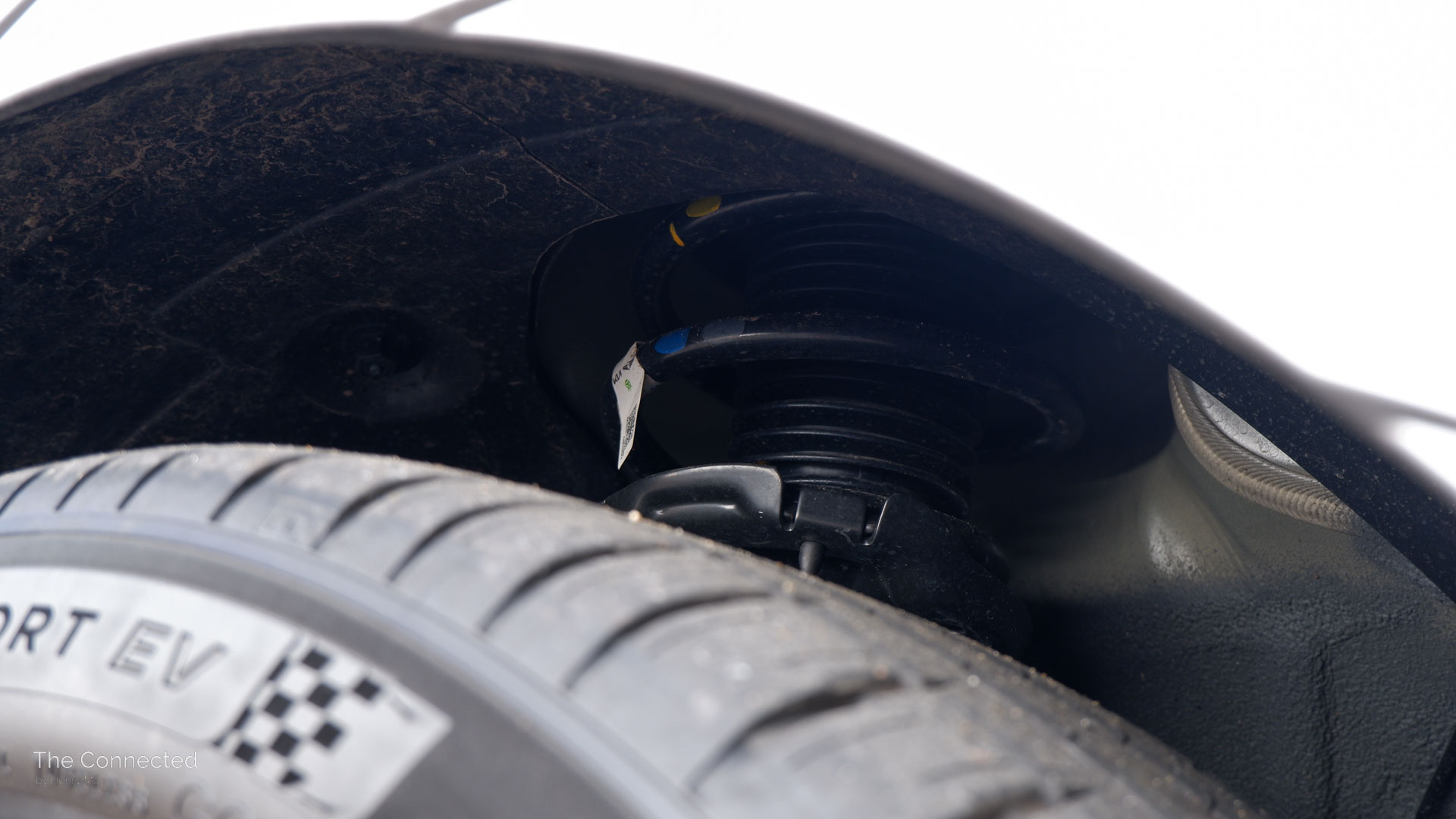
Unfortunately, the same wallowy suspension is still apparent in this 2023 update – a key issue in the old model. While tests have demonstrated that it has slightly improved, for everyday driving, the ride feels almost identical.
It’s still a little too soft when going over speed humps, road undulations and imperfections, with the Kia EV6 and Genesis GV60 siblings feeling more settled. While the interior has good noise isolation, if you regularly venture on poorly paved roads and continuous sine waves, the Ioniq 5 – at least with these large 20-inch wheels – could be too uncomfortable (so always test drive first if you can).
Additionally, the Hyundai group still offers one of the most customisable regenerative braking settings in EVs today, with three intensity levels and automatic modes.
Drivers need to remember toggling the strongest ‘i-Pedal’ via the steering wheel paddle shifters every time you start the vehicle or when the drive selector is switched, but it does bring the vehicle to a full stop. Sadly, I still wouldn’t call it bona fide ‘one-pedal driving’.
I-Pedal issue.
Unlike brands such as Tesla and Polestar, Hyundai’s i-Pedal regenerative braking system doesn’t keep the rear brake lights on once at a complete stop; driver’s need to press and hold the brake pedal (or press once if auto hold is enabled).
The brake lights could also come on earlier during recuperation, as it requires a more forceful brake than systems from other manufacturers.
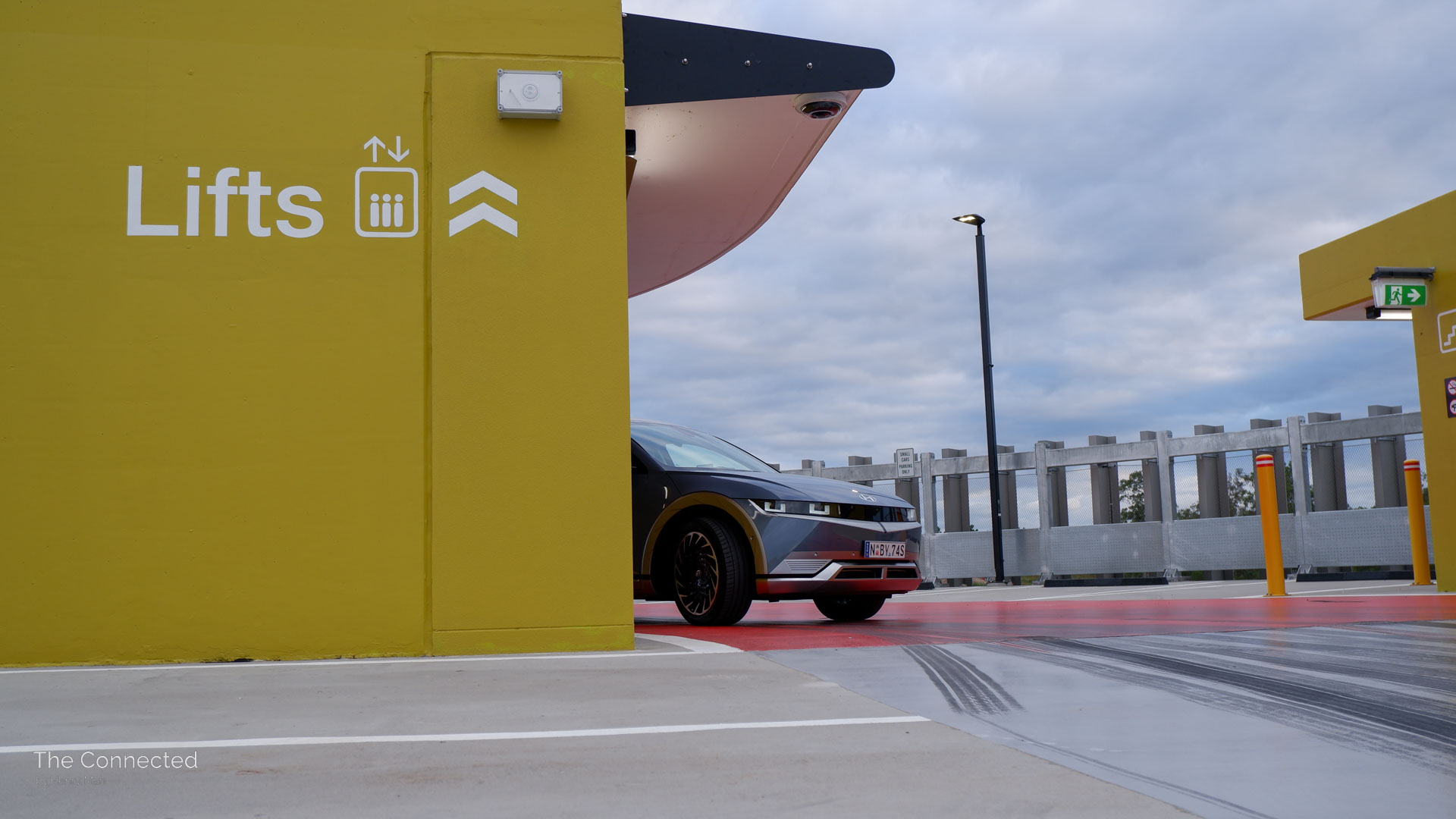
The Ioniq 5’s overall visibility is good and it’s relatively easy to manoeuvre this lower-riding medium SUV.
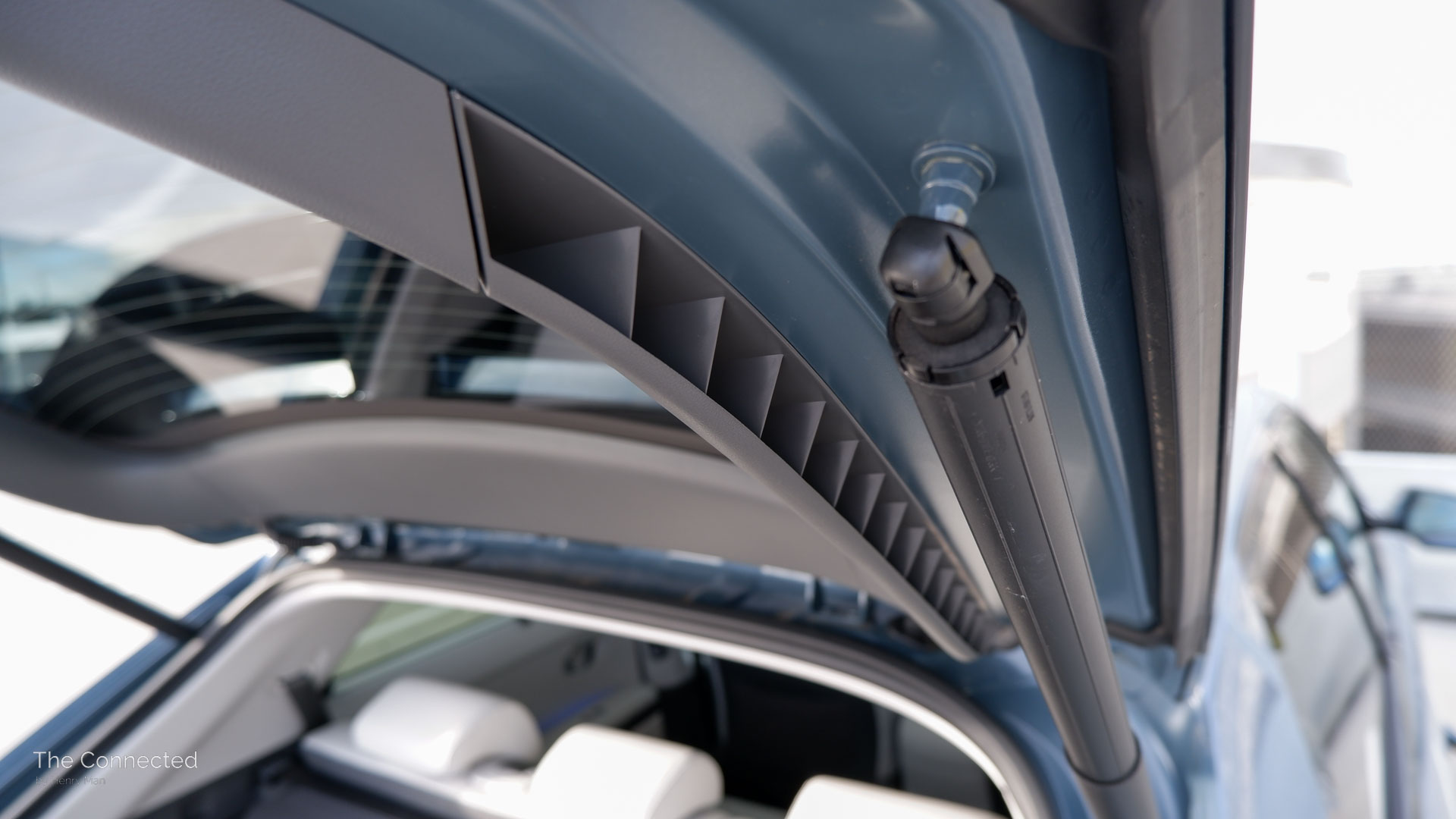
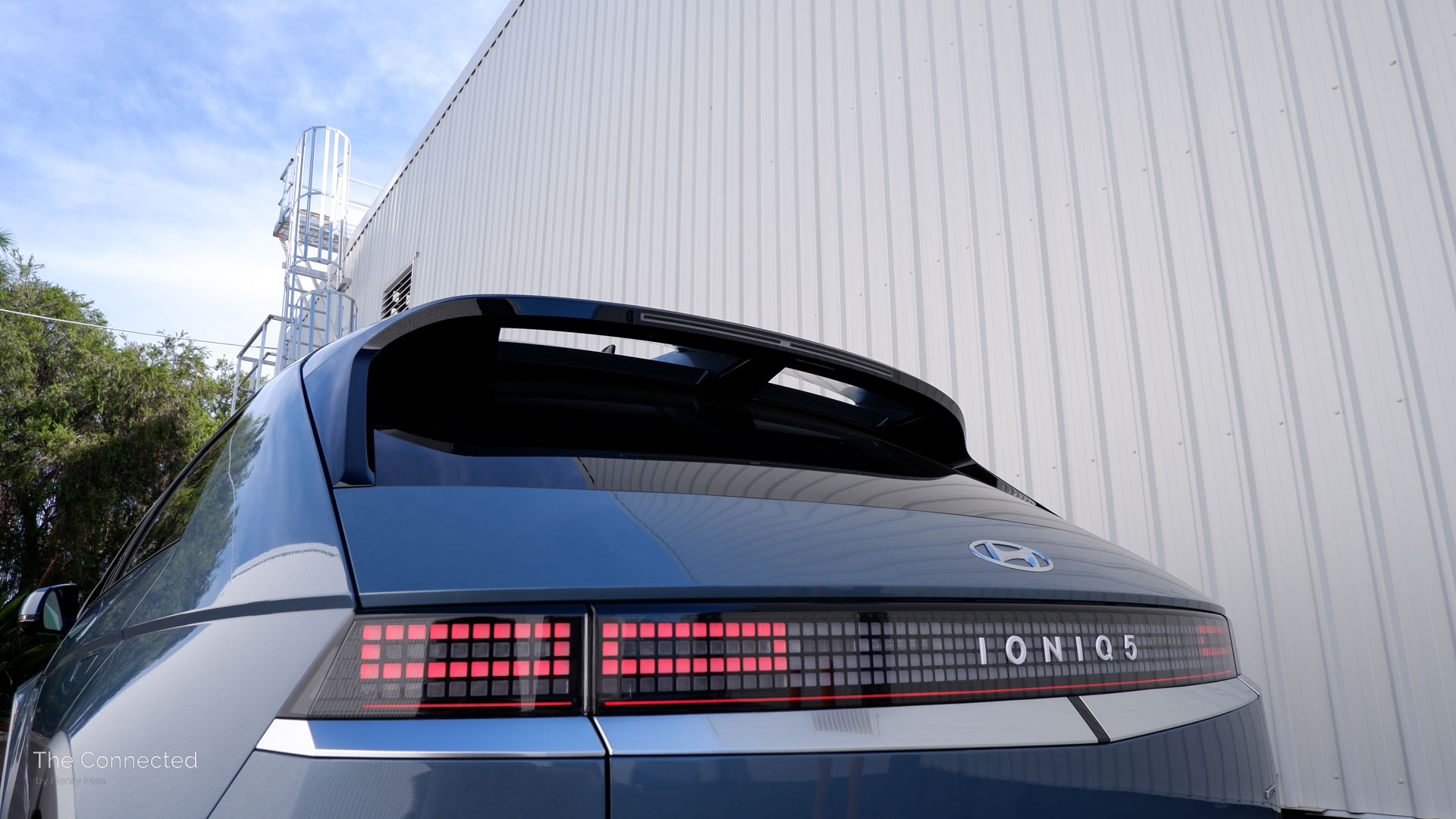
There’s no rear windscreen wiper, but the two cut-outs at the spoiler allow rain drops to slowly slide off while driving. Though, since the Ioniq 5’s rear isn’t as sloping as the Kia EV6, dust tends to stay and collect on the glass near the roof spoiler.
Critically, since the instrument display is set more forward (instead of being inset into a binnacle), the steering wheel rim can block some important elements depending on your driving position, such as the speed readout. Thankfully, there is a clear HUD as a backup.
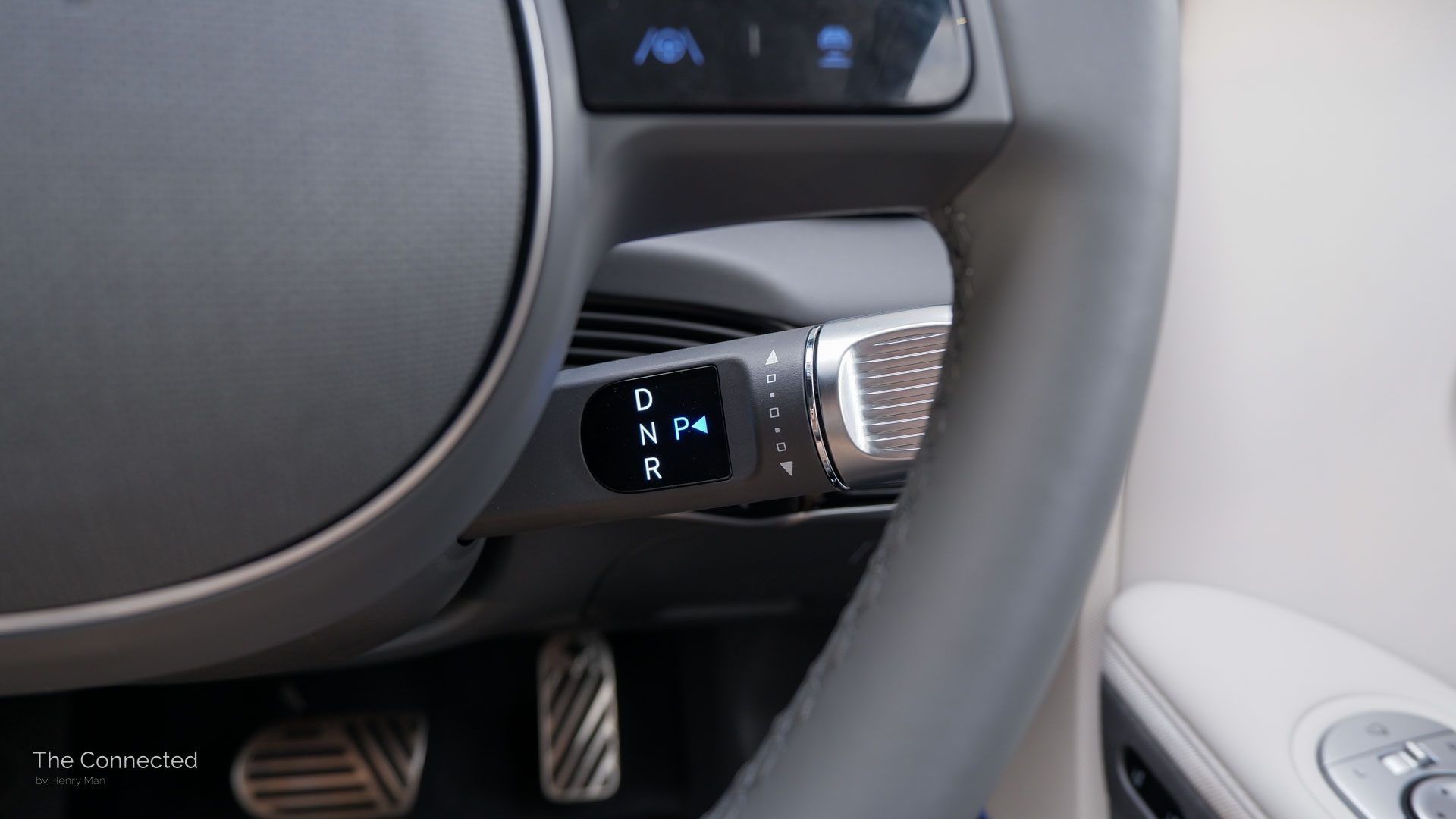
I also found the drive selector stalk – which is attached on the steering wheel column – protrudes and has made the column dip down lower, which can be obtrusive to the driver’s leg space.
Of course, this all depends on your individual driving position, so I’d suggest test driving the Ioniq 5 first before putting down any money.
An learning adjustment is also needed, as twisting it forwards puts it into drive – instead of reverse which is more nautral (at least to my brain).
Ownership.
The Hyundai Ioniq 5 is covered by a five-year, unlimited kilometre vehicle warranty and an eight-year/160,000km battery warranty for defects only (determined under normal use).
The South Korean car company also includes unlimited roadside assistance (renewed with every scheduled logbook service) and an unlimited capped-price servicing outline.
Servicing for the new 2023 Ioniq 5 is only required every 24 months/30,000km. While the longer intervals are more fitting for an EV, it costs $2230 in total for the first three checkups.
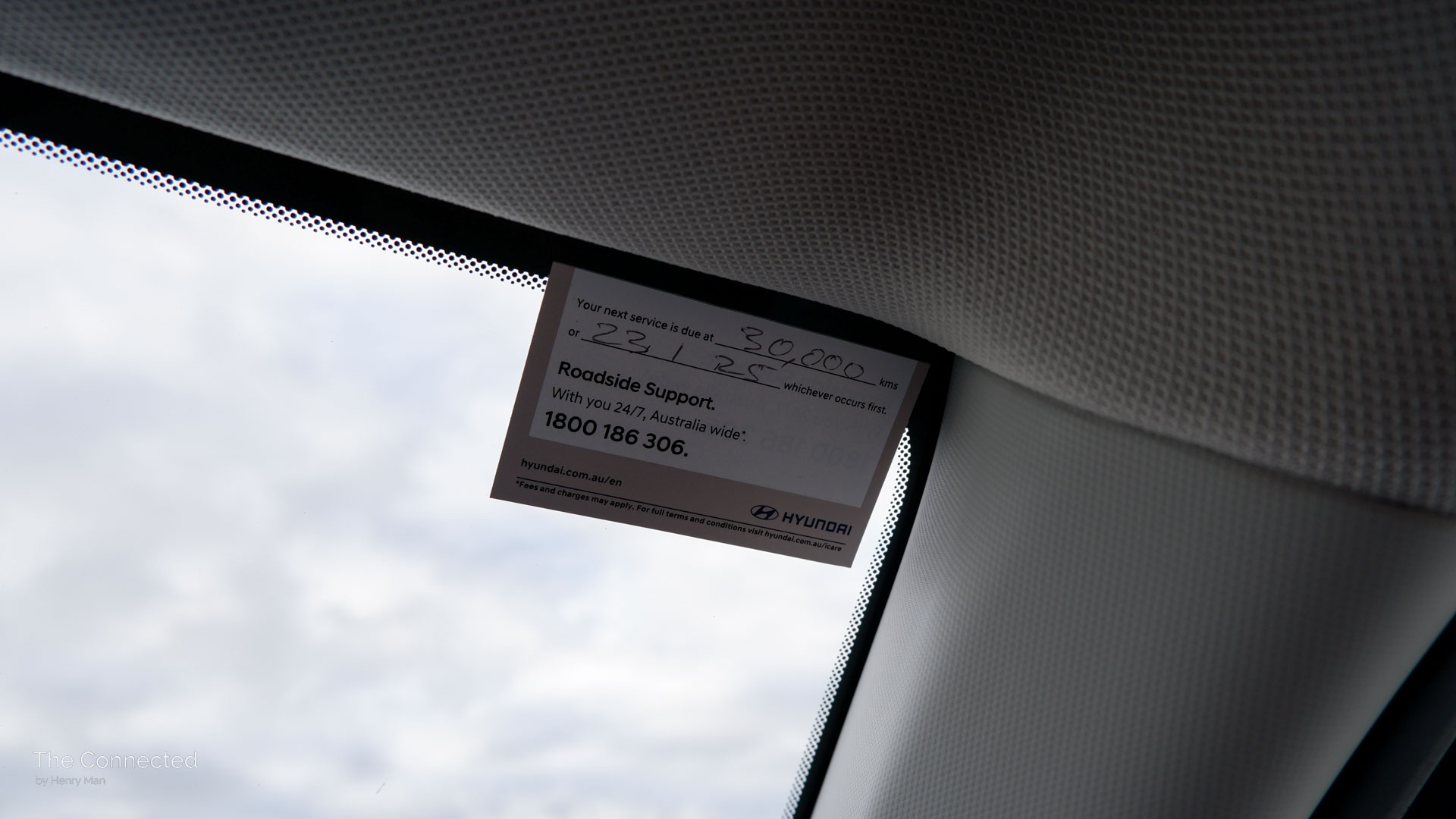
In contrast, it’s startlingly now more expensive than the launch model, which needed more frequent checkups. After the same 72 month/90,000km period, it would only cost $1904 to service a 2022 model-year Ioniq 5 overall.
As per all other EVs, Hyundai only provides a tyre inflation kit underneath the boot floor, instead of any form of spare tyre.
2023 Hyundai Ioniq 5 Techniq capped-price servicing prices:
| 24 months/30,000km | 48 months/60,000km | 72 months/90,000km |
| $570 | $1090 | $570 |
Rivals.
2023 Hyundai Ioniq 5 model range pricing (excluding on-road costs):
| Dynamiq RWD | Techniq AWD | Epiq AWD |
| $72,000 | $79,500 | $85,000 |
The Hyundai Ioniq 5 competes directly with the related sportier-looking Kia EV6 (priced from $72,590 before on-road costs). Keep in mind, Kia forgoes the online-only, fixed-price purchasing model in favour of traditional franchise dealers – each with a waitlist.
There’s also no denying the high-tech, efficient and popular Tesla Model Y (from $69,300 before on-roads at the time of publication).
The updated Volvo XC40 Recharge (from $76,990 before on-roads) provides the luxury badge cachet, while the the Toyota bZ4X and Subaru Solterra will join the Ford Mustang Mach-E (from $79,990 before on-roads) launching at the end of this year.
Meanwhile, for those looking for a liftback with some of that SUV ground clearance, the 2024 Polestar 2 will be updated soon.
The all-new upsized and bolder-looking Hyundai Kona Electric small SUV will likely undercut the Ioniq 5 on price when it launches at the end of this year, whereas buyers who prioritise driving range should look at the more aerodynamic and similarly-priced Hyundai Ioniq 6 sedan (from $74,000 before on-roads.
Would I pick the 2023 Hyundai Ioniq 5 Techniq?
The 2023 Hyundai Ioniq 5 is a welcome update, even if it is just playing catch-up with its Kia EV6 and Genesis GV60 siblings.
It still looks like nothing else on the road, the touchscreen software has addressed a key bugbear while feeling more unique, and supply has slowly improved in Australia with none of those deterrent ‘sales drops’ anymore – even though it’s still constricted.
Unfortunately, in my experience, the updated electric drive unit is less energy efficient than before – and has negated the larger battery. The ride is still too soft, Bluelink connectivity is still missing locally, and servicing is now pricier overall.
But, I’d still recommend the Hyundai Ioniq 5, as a solid EV option against the top-selling Tesla Model Y.
This mid-range Techniq would be my pick just to get the futuristic-looking 20-inch alloys alone, plus the more powerful dual motors, ventilated front seats, and relaxation mode are nice-to-haves. Although you’ll now need to step up to the Epiq for the cool panoramic glass roof, it’s sadly mated with the difficult camera wing mirrors – a feature I’d avoid.
The reality is we mainly buy a car with our heart and it still just looks too unique to ignore, almost two years after its launch.
Photographs by Henry Man
About the Author.
Henry Man is an independent content producer passionate about the intersection of technology and transportation.
The former automotive journalist is focused on producing critically-detailed vehicle reviews, and unique short-form content. Learn more.


 The Connected by Henry Man