
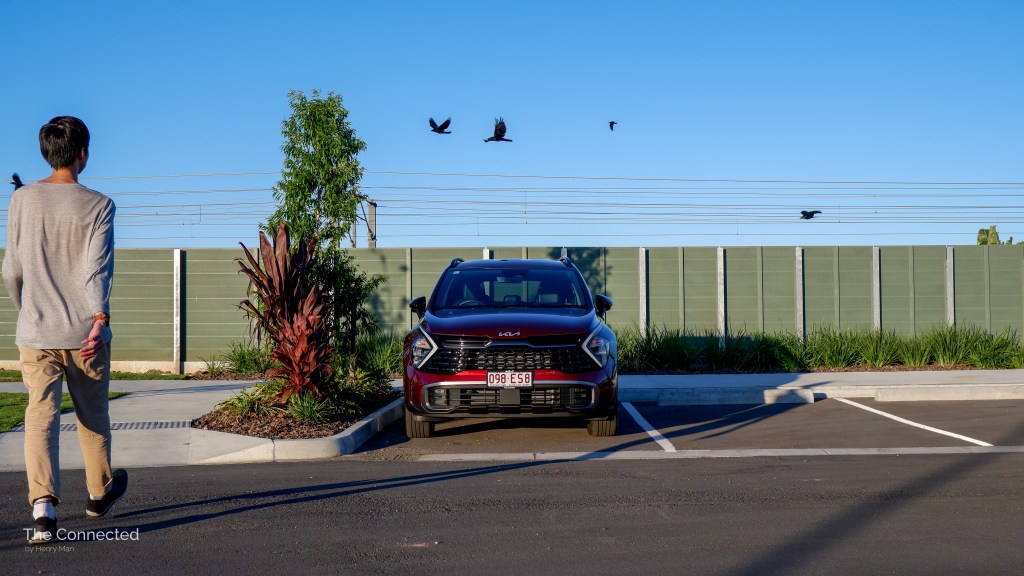
With new orders paused for the popular top-spec Kia Sportage GT-Line SUV, the SX+ is the next closest variant. But, what would you really miss out on and is it a viable alternative?
Despite being nearly two years old Australia, the Kia Sportage medium SUV continues to struggle to keep up with demand.
Kia Australia was forced to pause sales of the in-demand Sportage GT-Line flagship model in early May due to ongoing component shortages and a large backorder queue.
This has left the SX+ variant the next best alternative for a higher-specced Sportage family SUV – even though there’s still an estimated four- to six-month wait time.
So, what does the Sportage SX+ offer (and not) and is it the right SUV in the concentrated segment?
EDITOR’S NOTE: The test vehicle was provided by Kia Australia for a seven-day independent evaluation. No copy approval was given before publication and we have no commercial arrangements with the company.

Pros.
+ Striking looks
+ Roomy, practical interior
+ Large air vents
+ Full-size spare tyre
+ Do you really need the GT-Line?
Cons.
– Breathless engine and transmission
– Unrefined adaptive cruise on test
– Gloss black interior materials
– Pricier servicing
– Hybrid is on the horizon
Vehicle tested:
| Model | 2023 Kia Sportage |
| Variant | SX+ 2.0L FWD |
| Starting price | $41,850 (before on-road costs) |
| Exterior colour | Dawning Red ($520) |
| Interior colour | Black quilted artificial leather |
| Country made | South Korea |
Design.
Kia’s design tends to be more sporty and ‘youthful’ than its Hyundai corporate counterpart – which is reinforced with this latest fifth-generation Sportage.
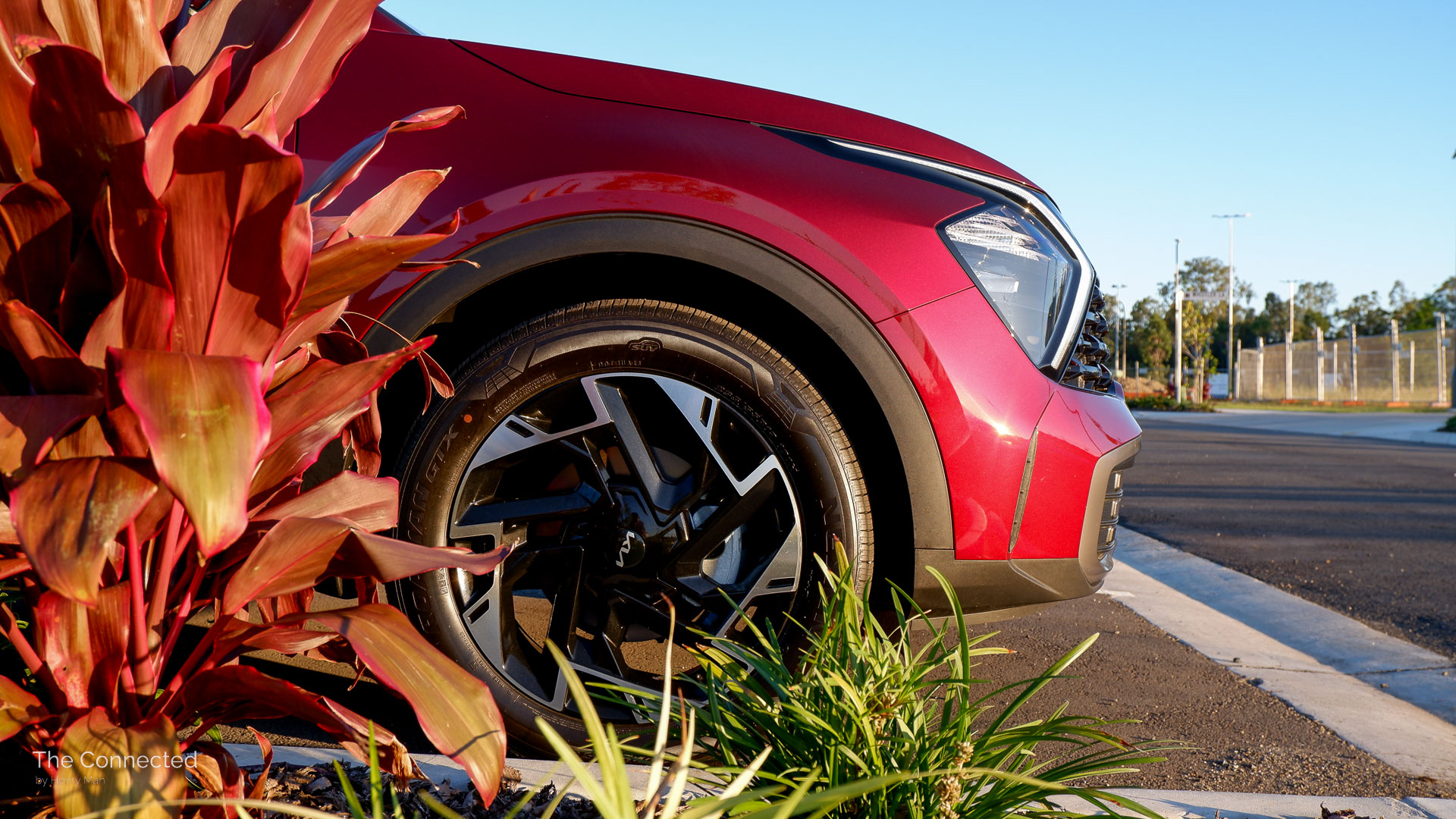
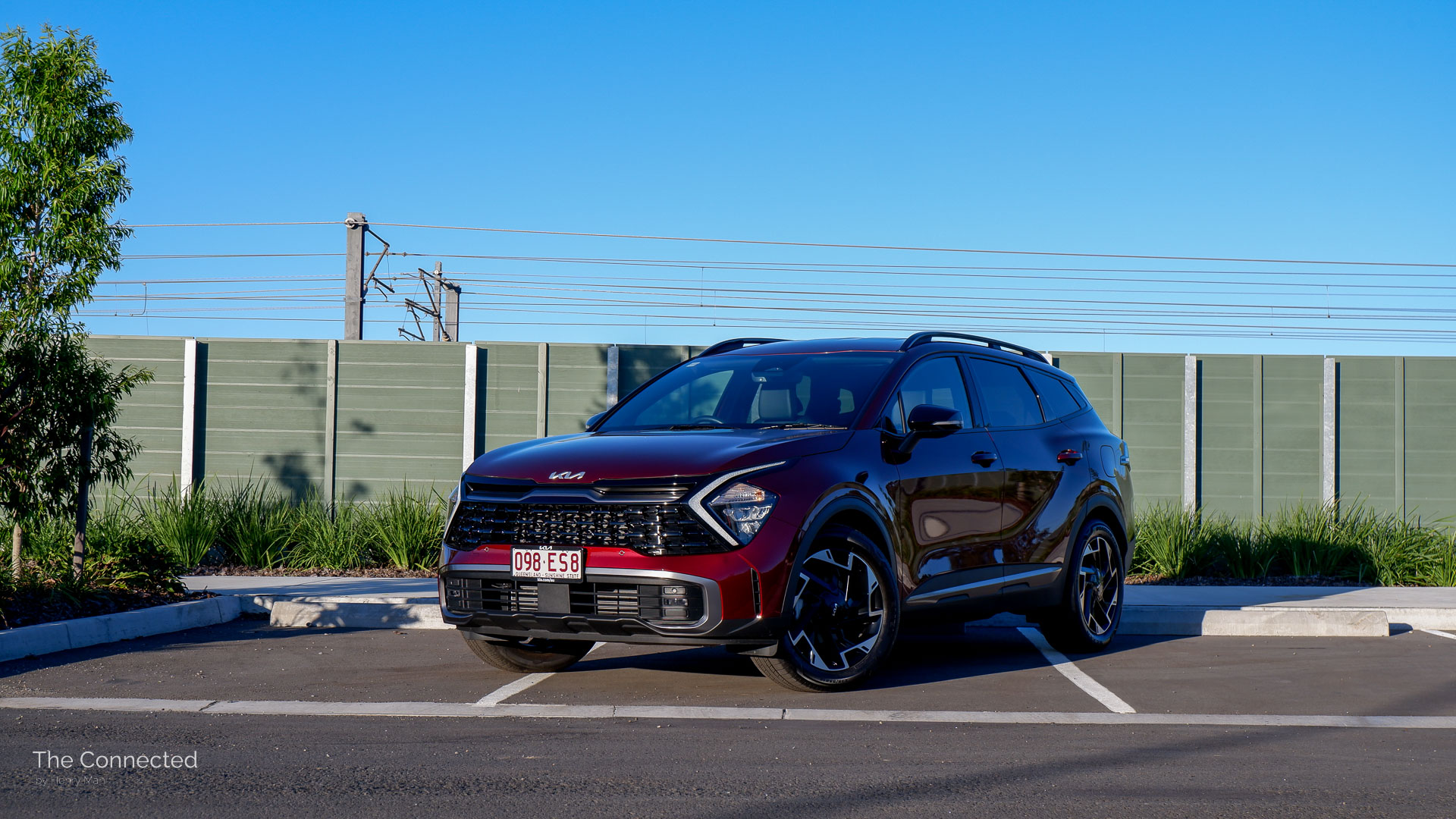
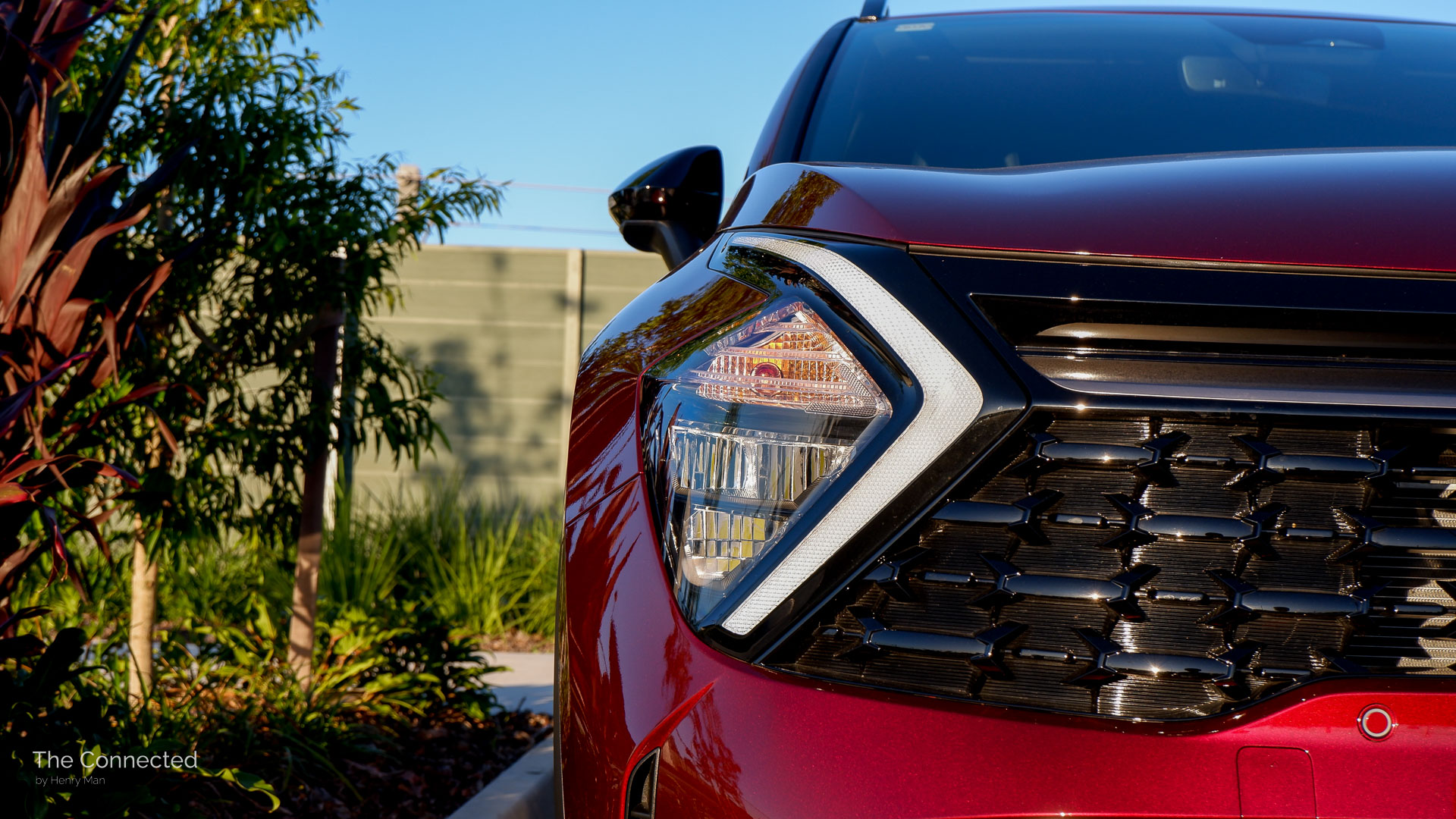
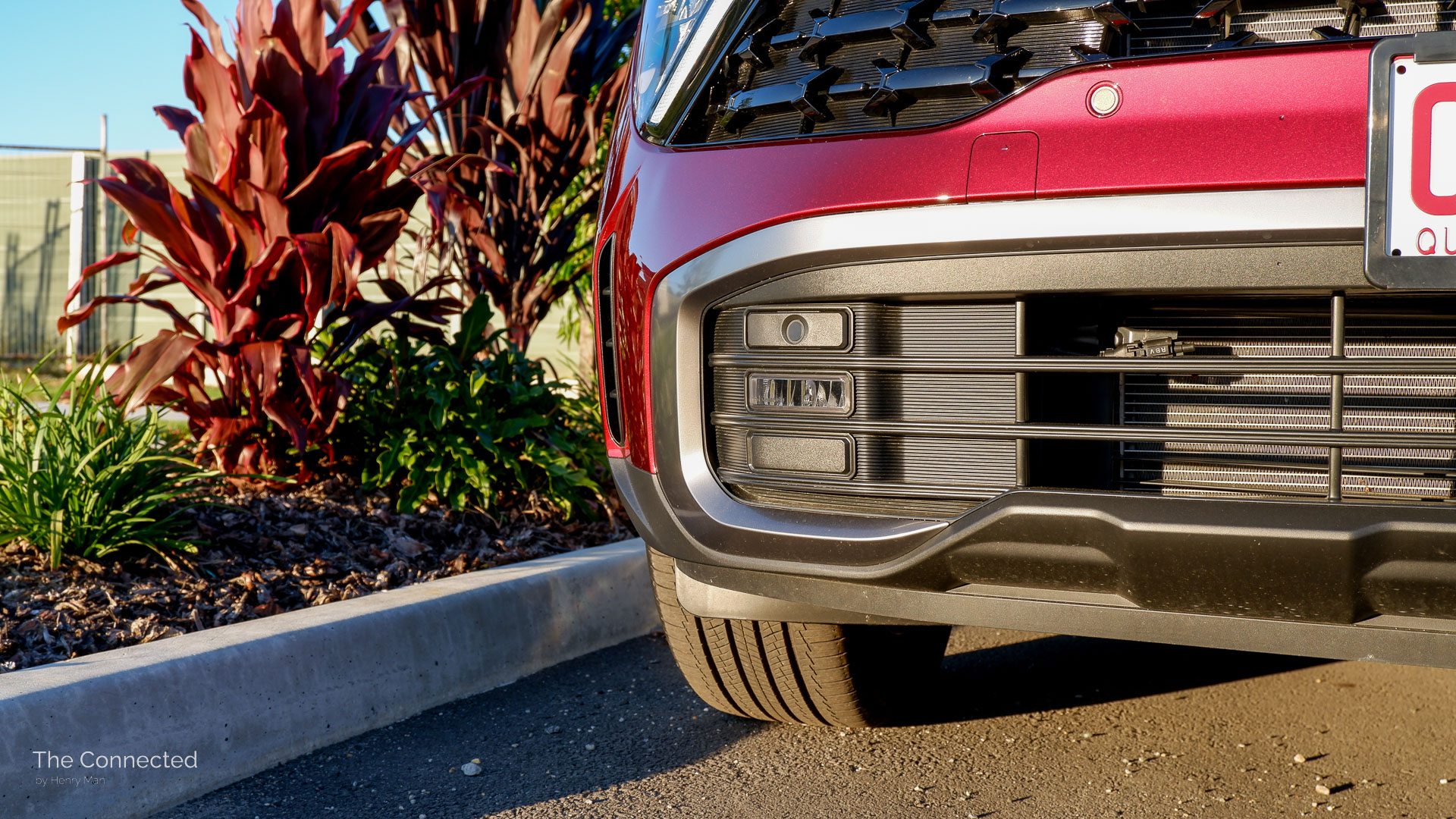
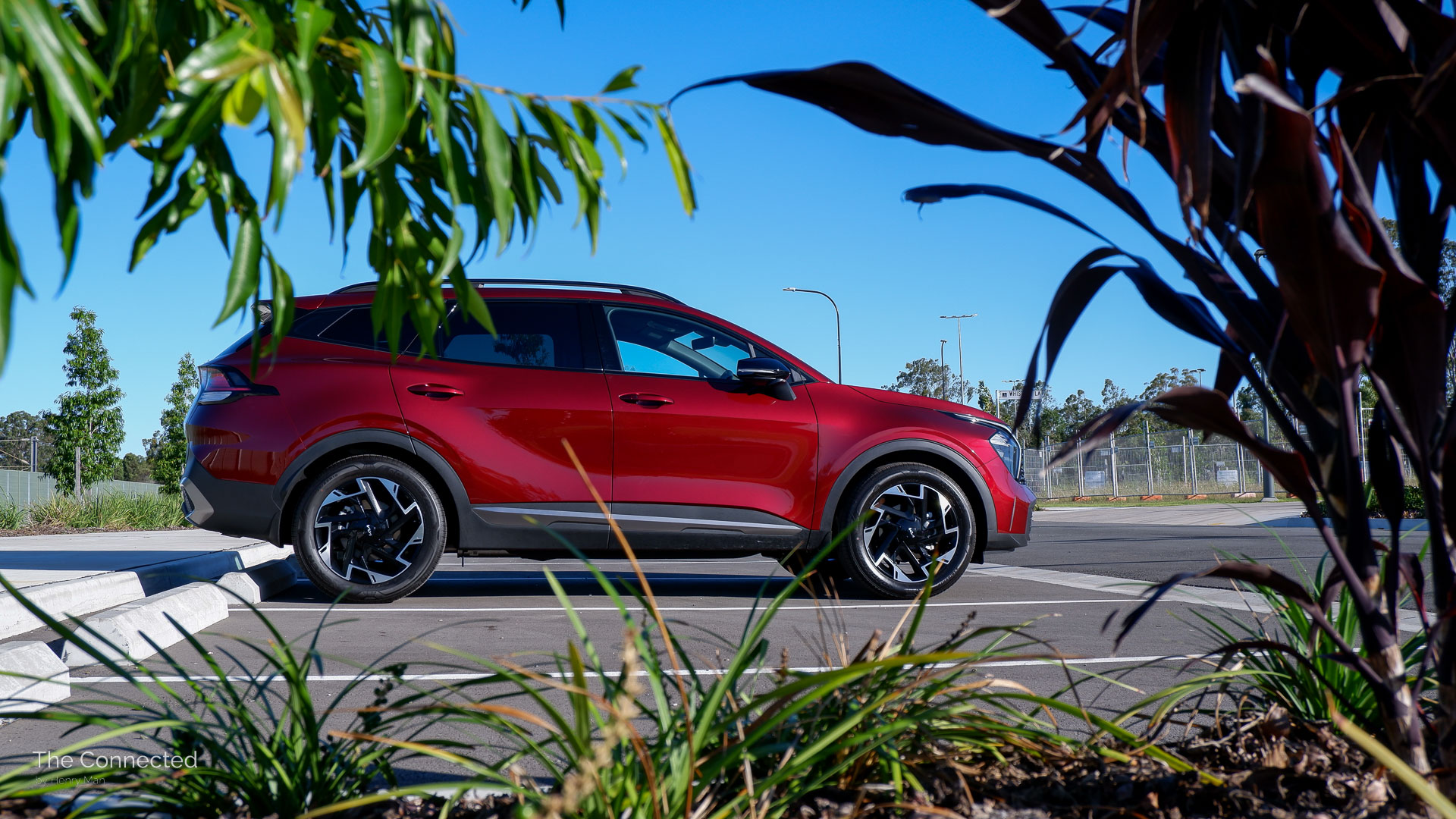
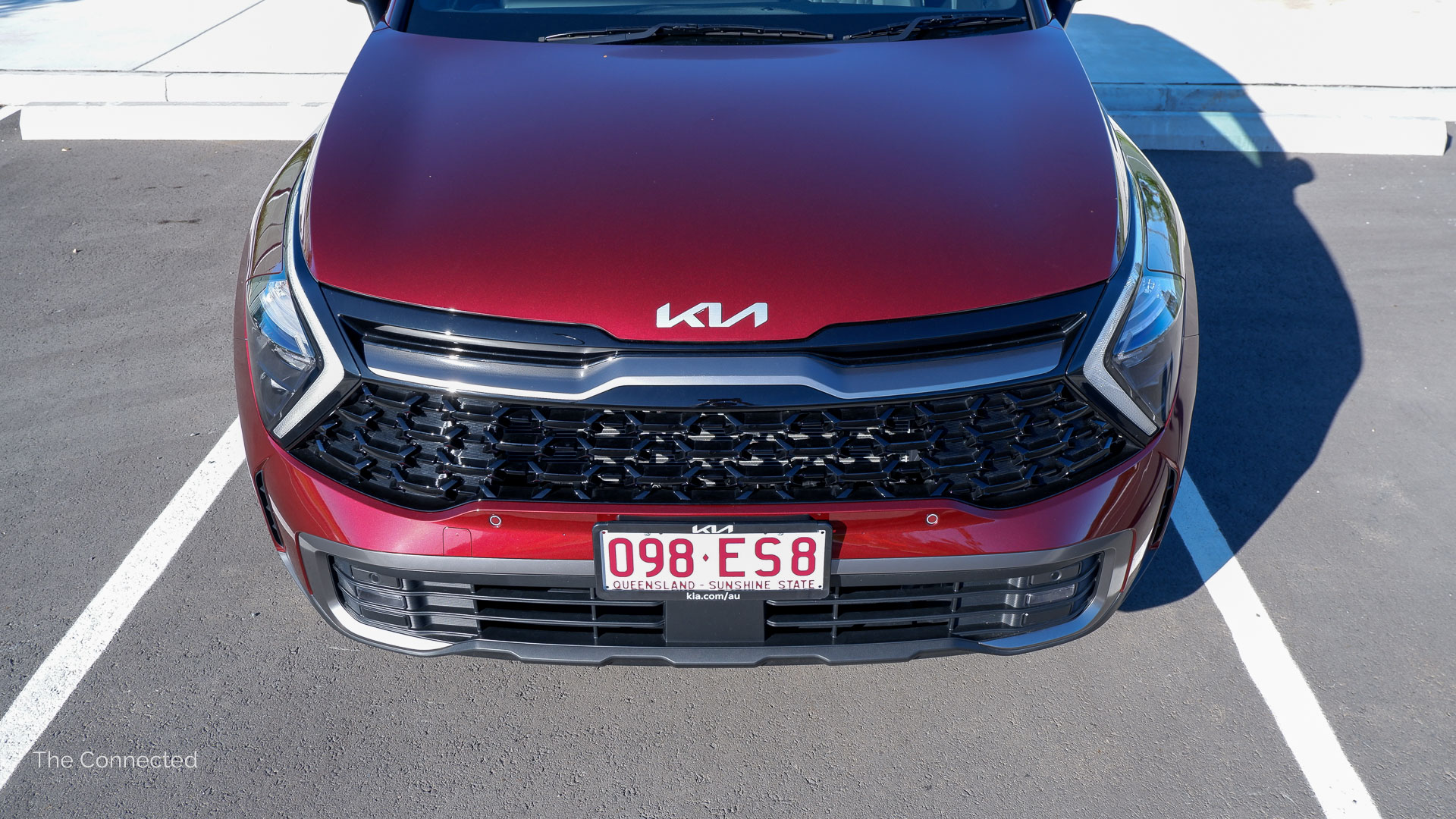
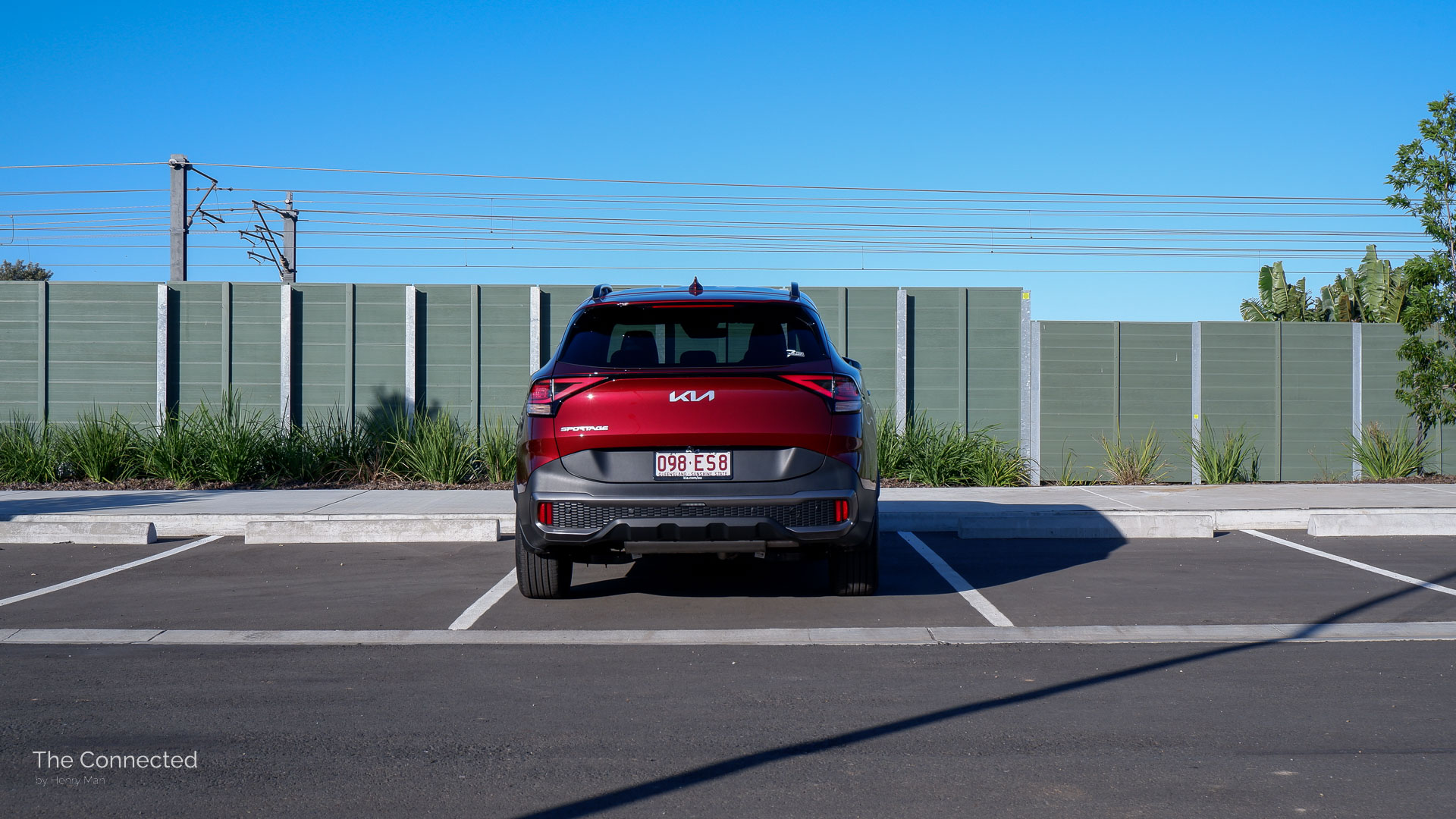
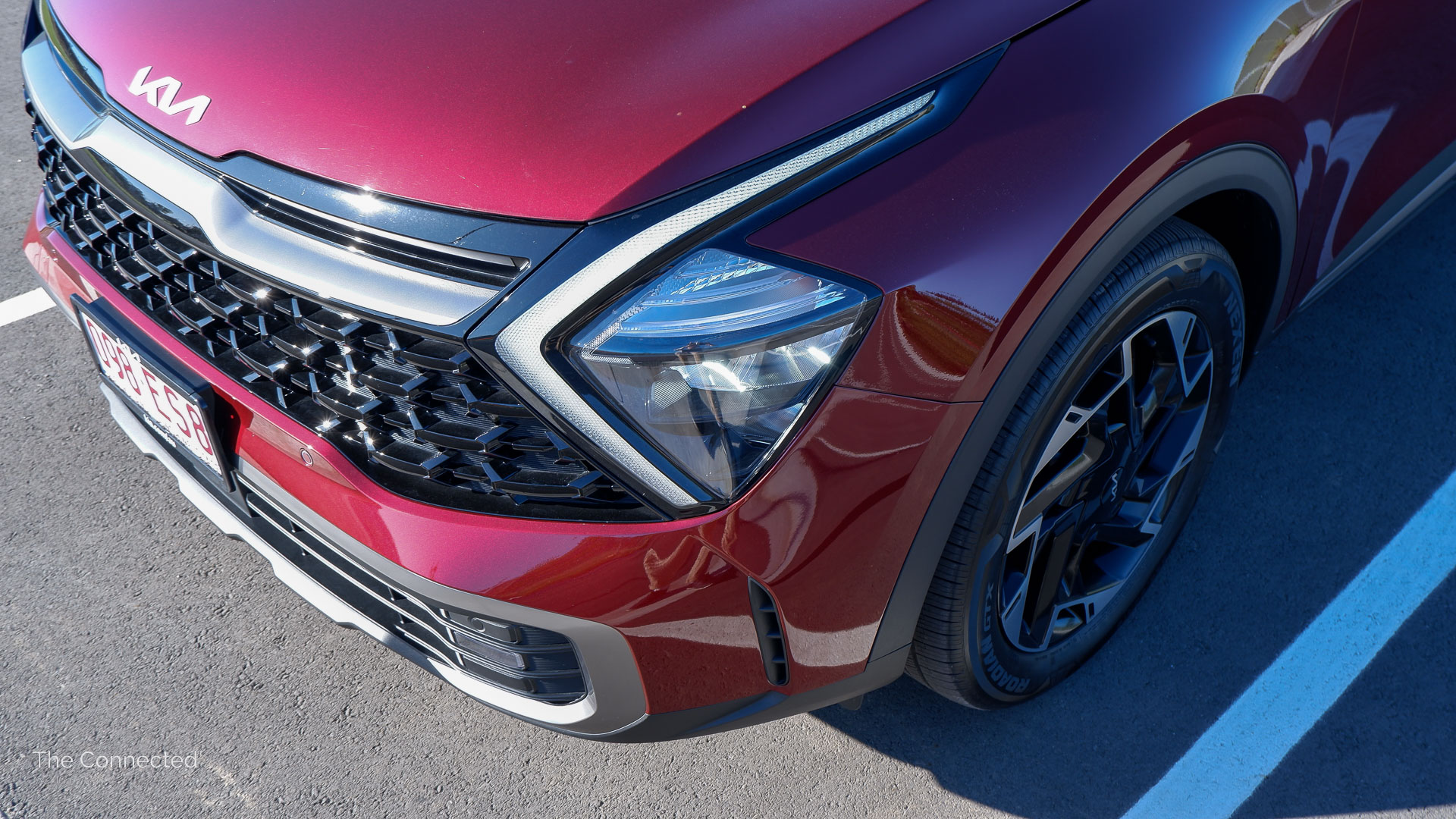
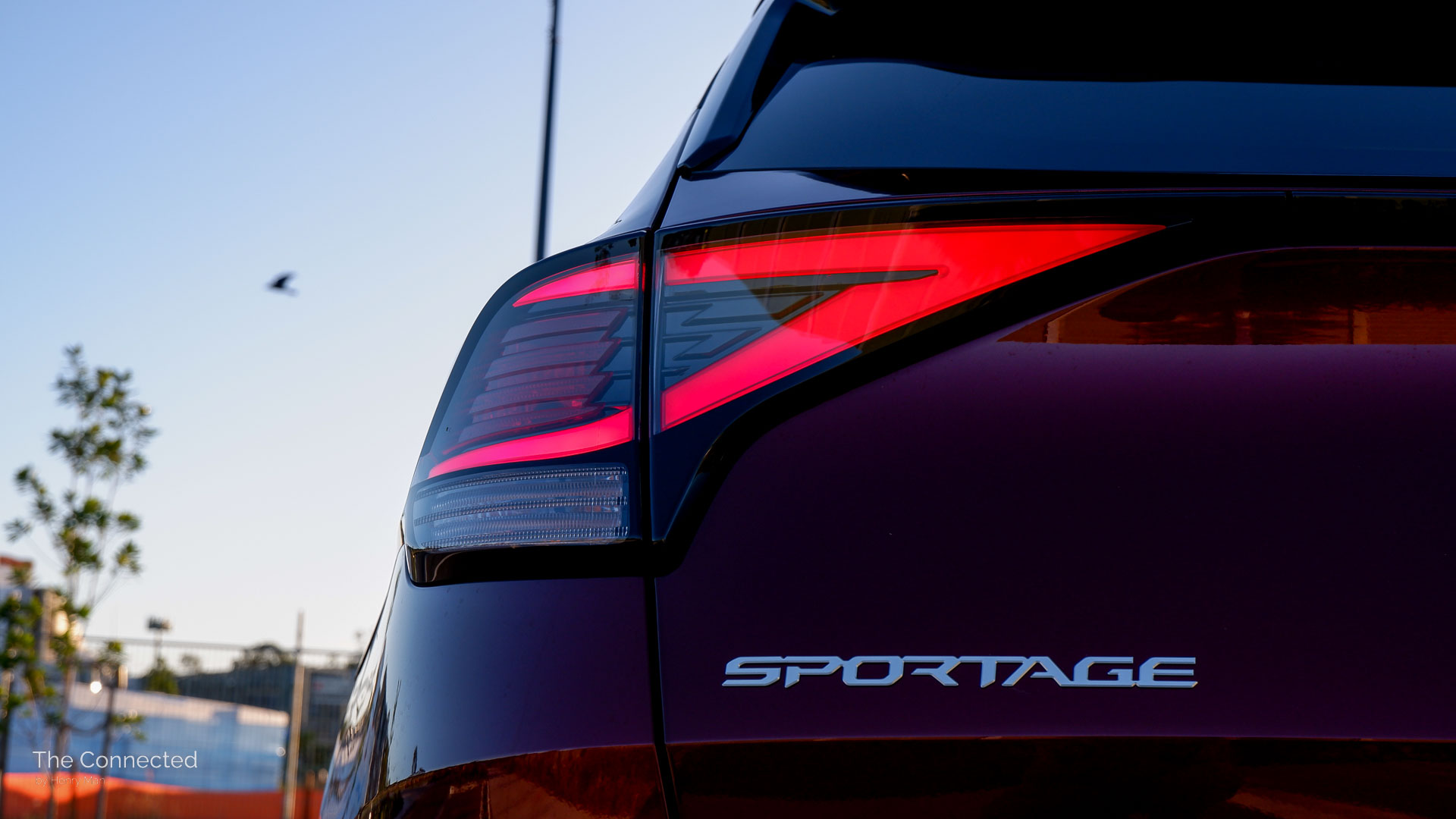
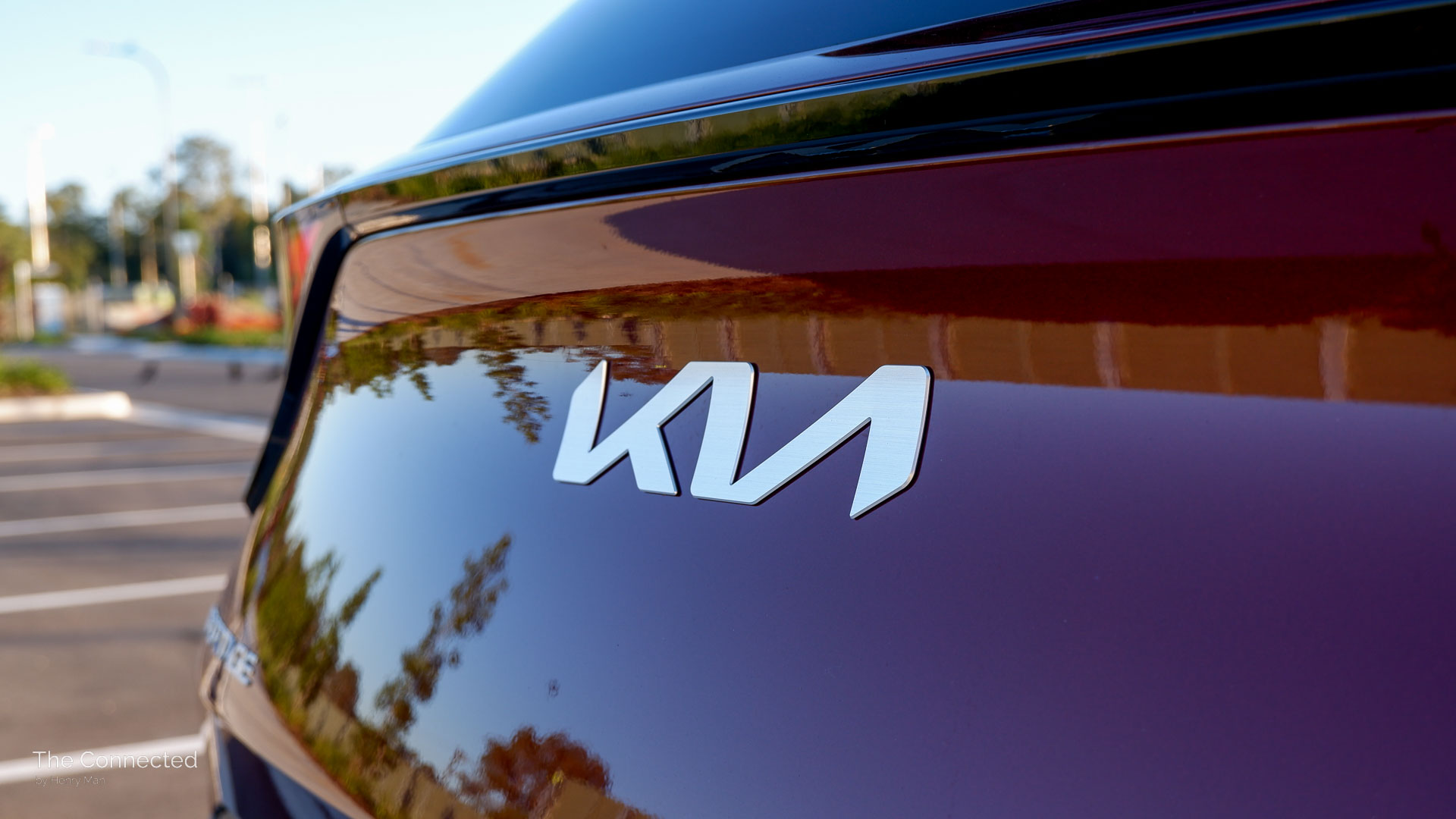
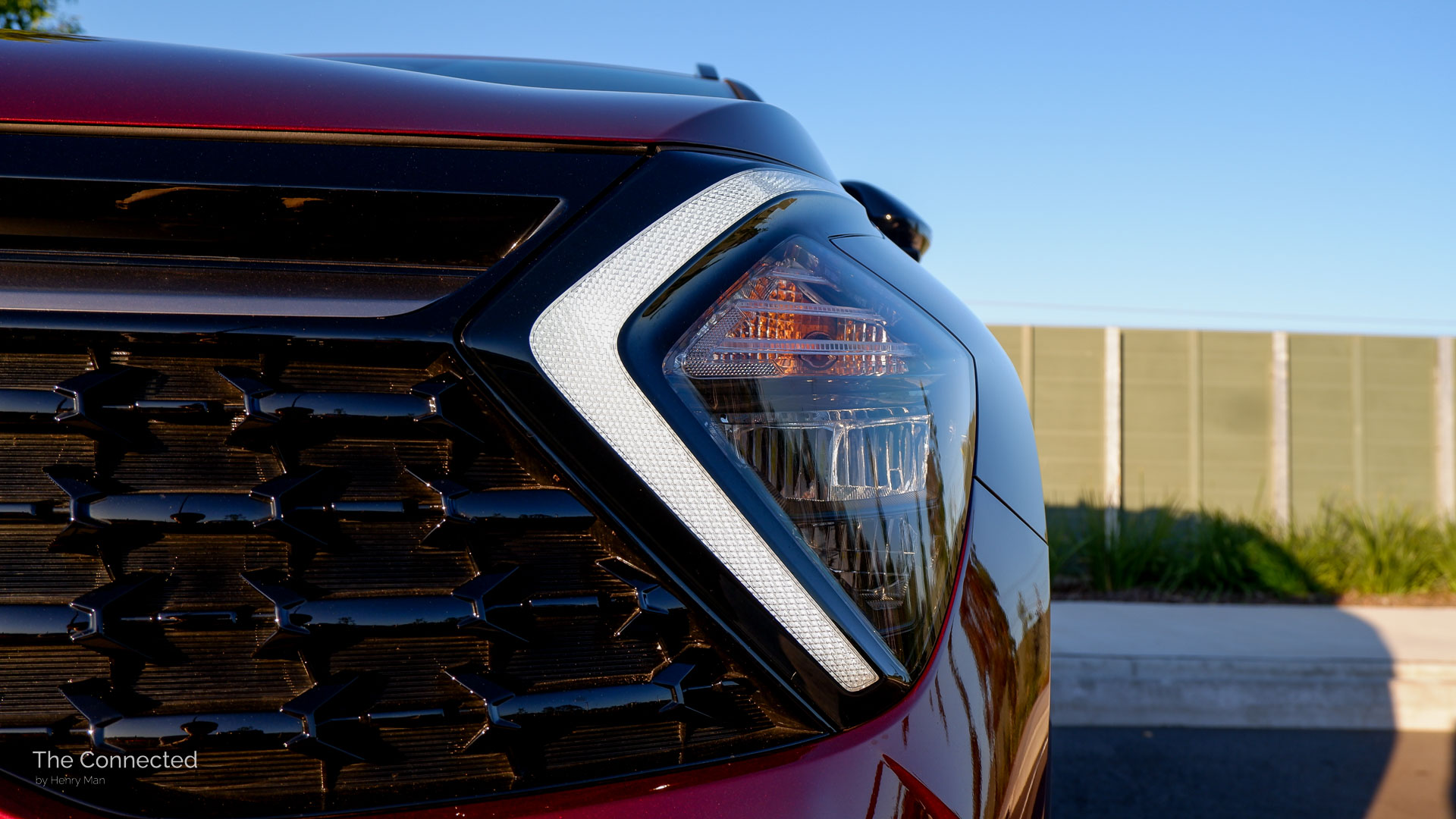
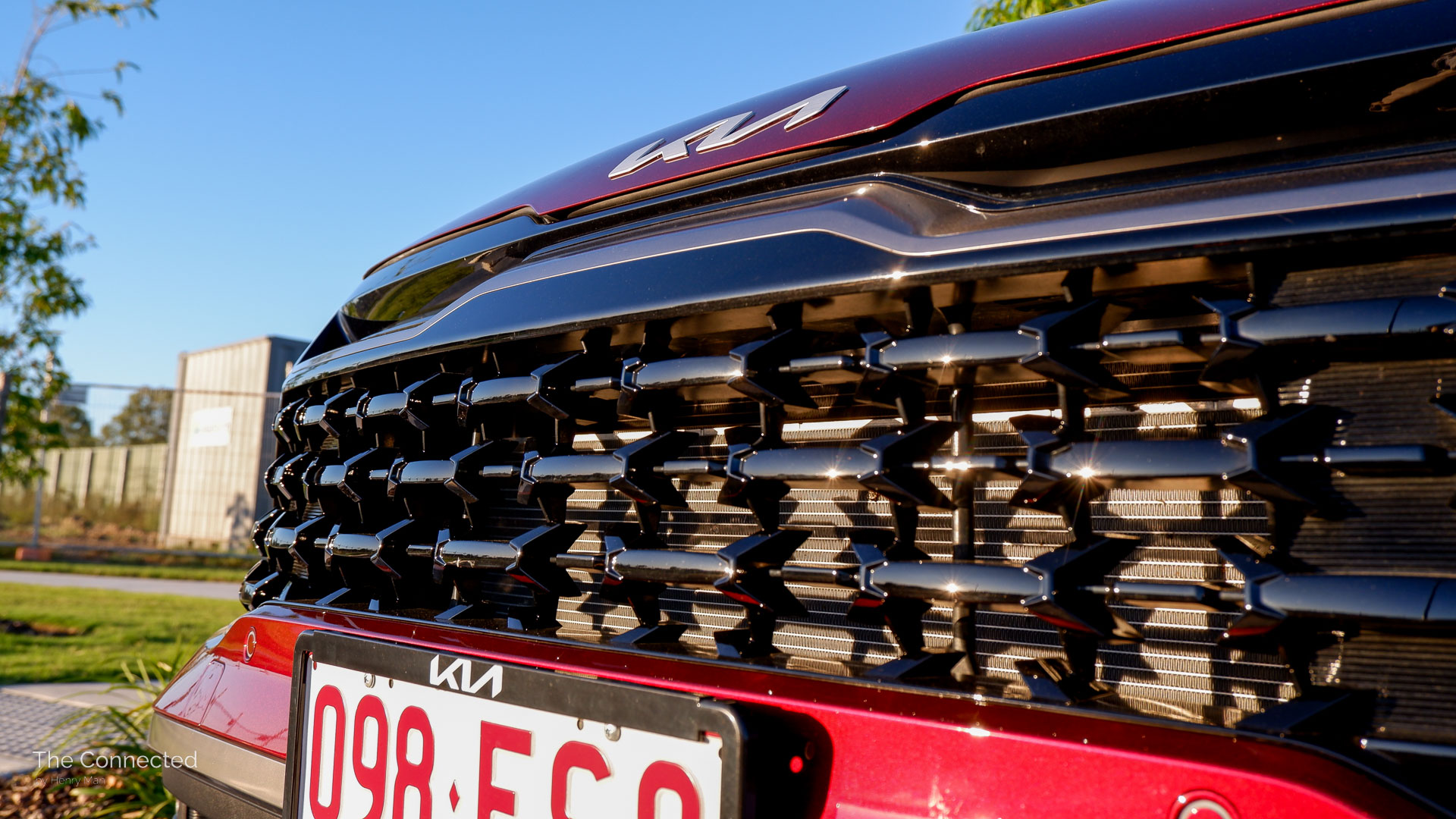
Now larger than its predecessor to separate it against the Seltos small SUV, the Sportage has a striking exterior design with distinctive boomerang-shaped LED daytime running lights, intriguing three-dimensional patterns in places, and just enough black plastic cladding that cleverly hides the front and rear parking sensors, plus fog lights.
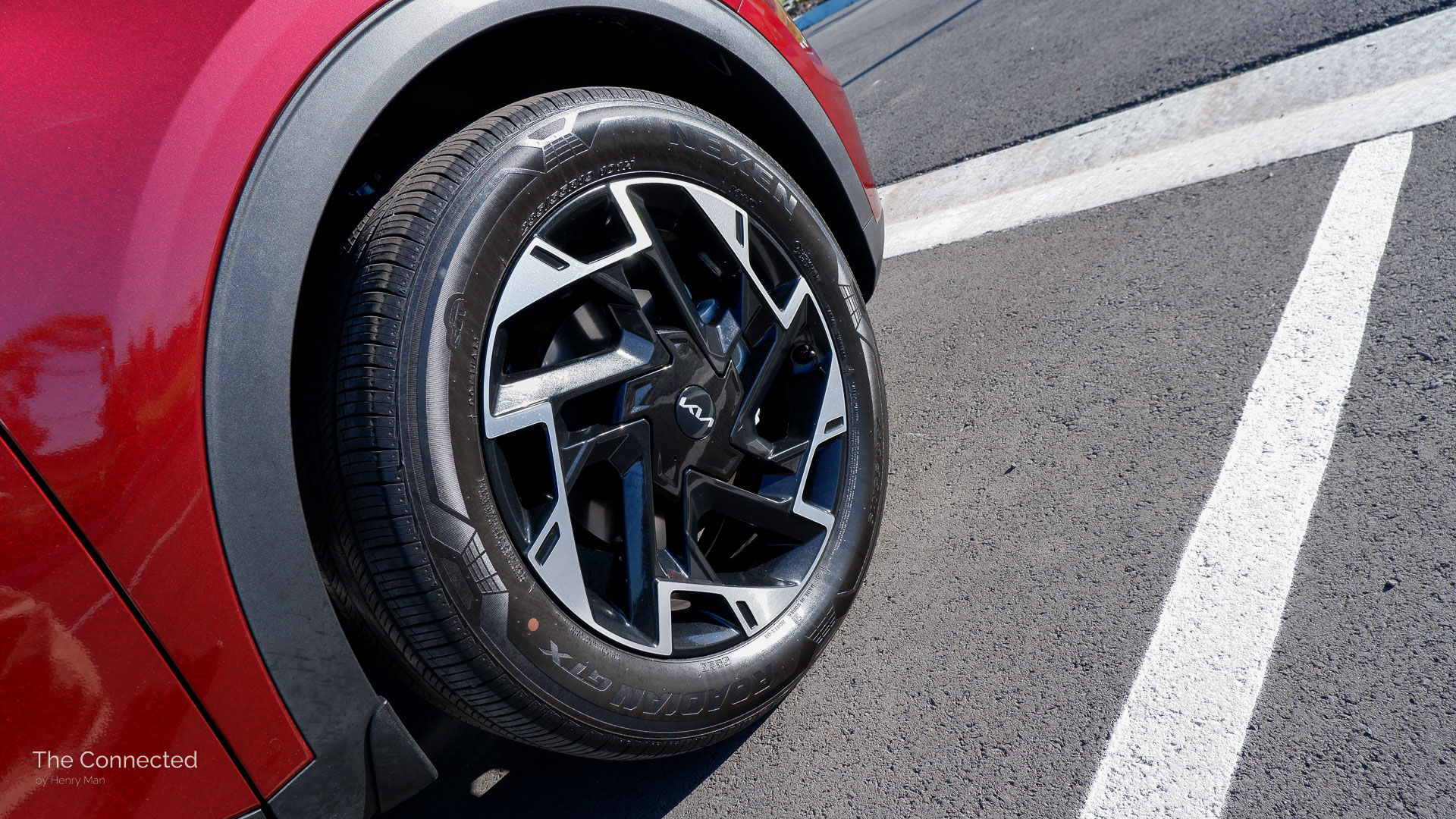
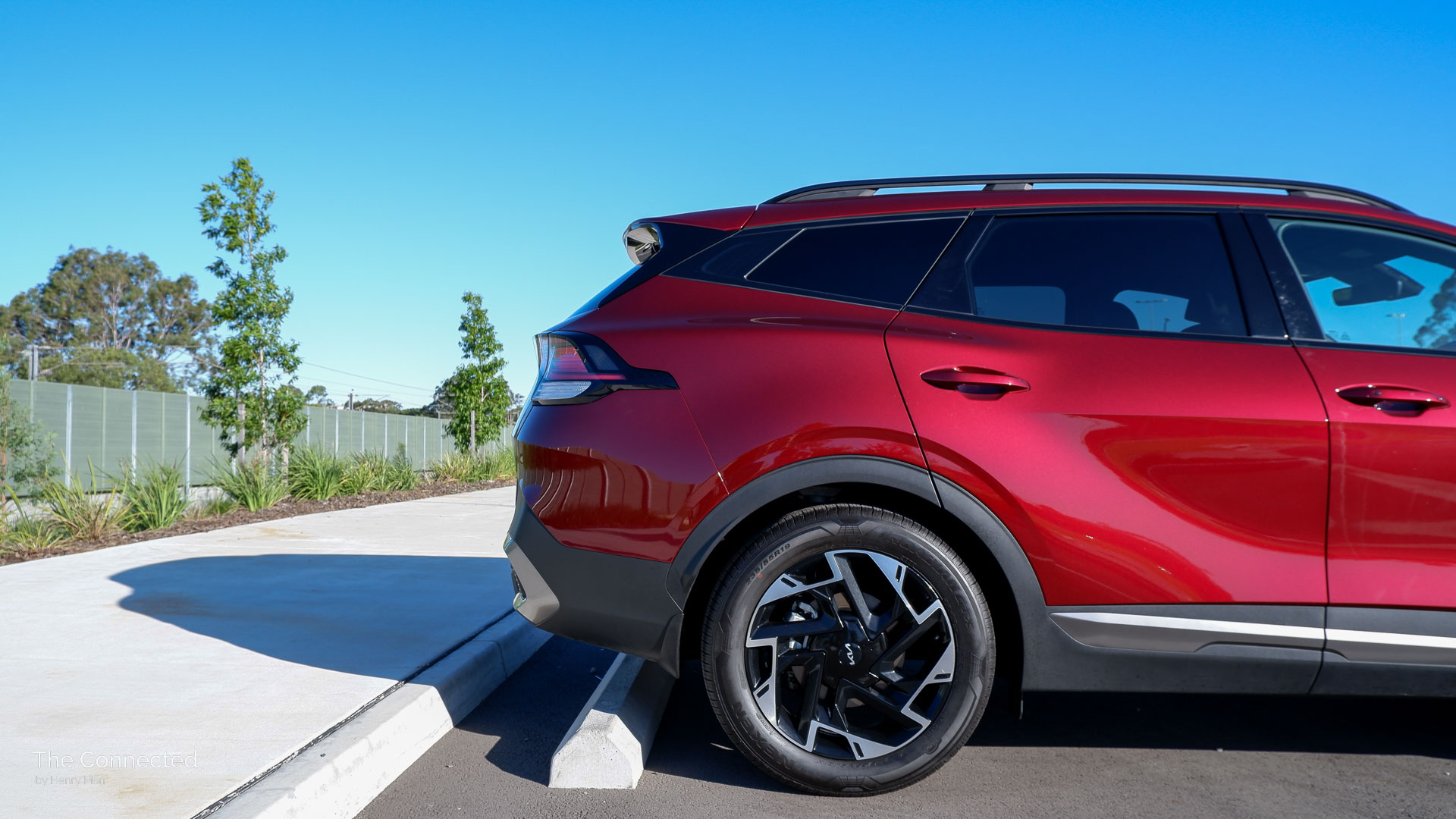
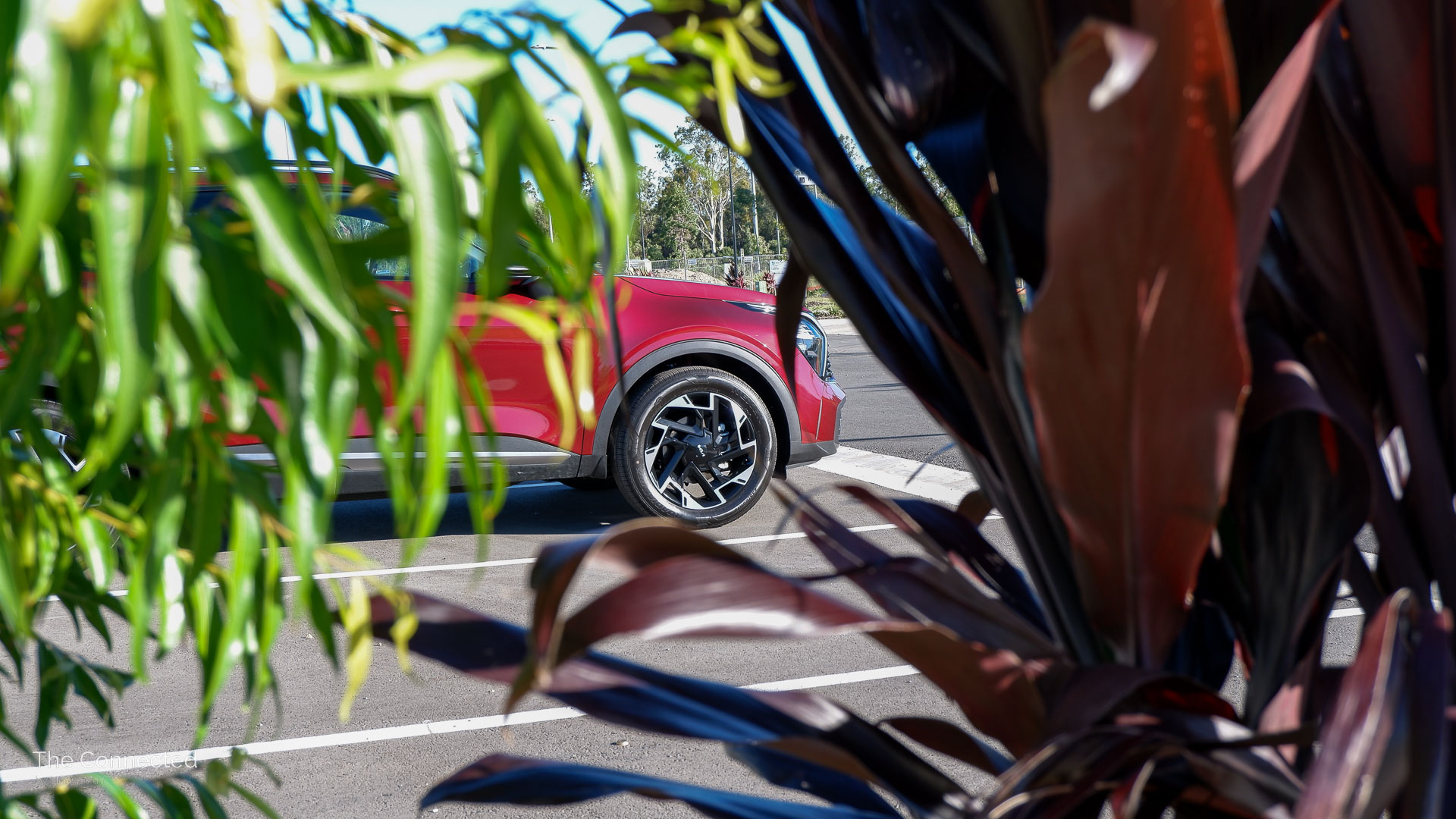
This SX+ exclusively features unique blade-like 19-inch alloy wheels, which I’d posit looks more striking than the flat-ish aerodynamic design on the GT-Line.
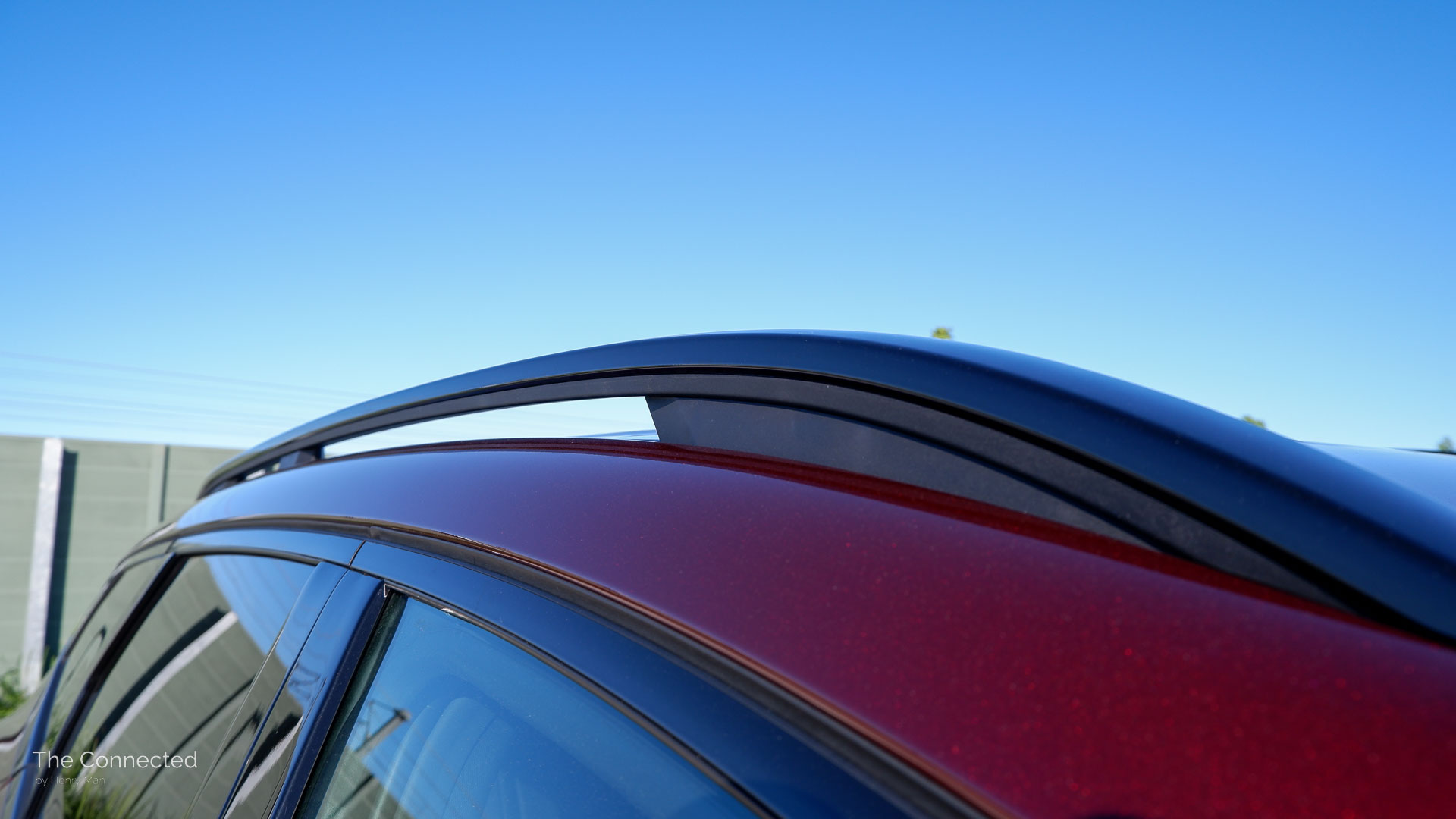
While this model does miss out on the GT-Line’s blacked-out panoramic glass roof, there are still lashings of gloss black across the front ‘tiger nose’ grille, wing mirror caps, window surrounds, roof rails, and C-pillar that give it an upmarket look.
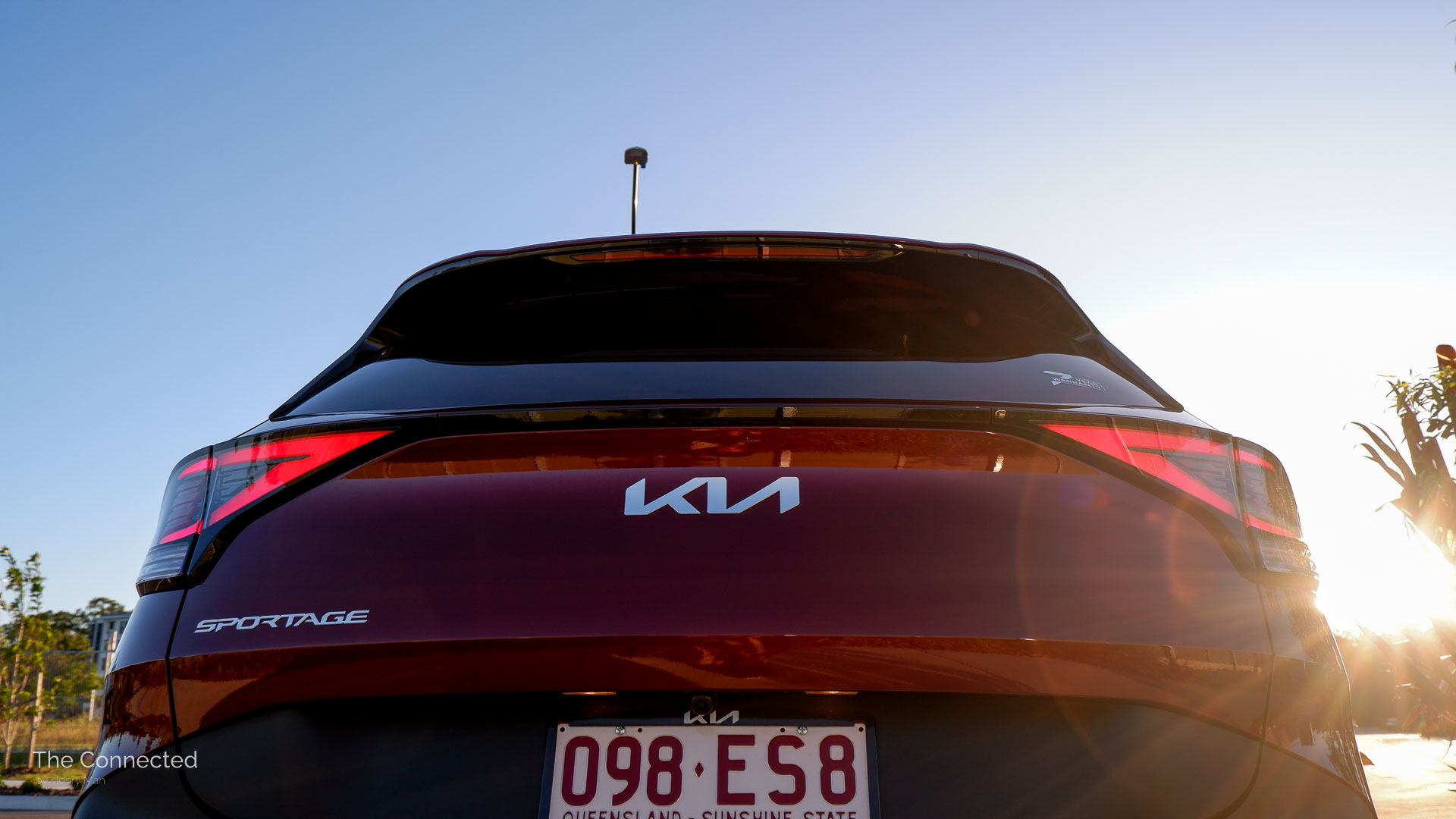
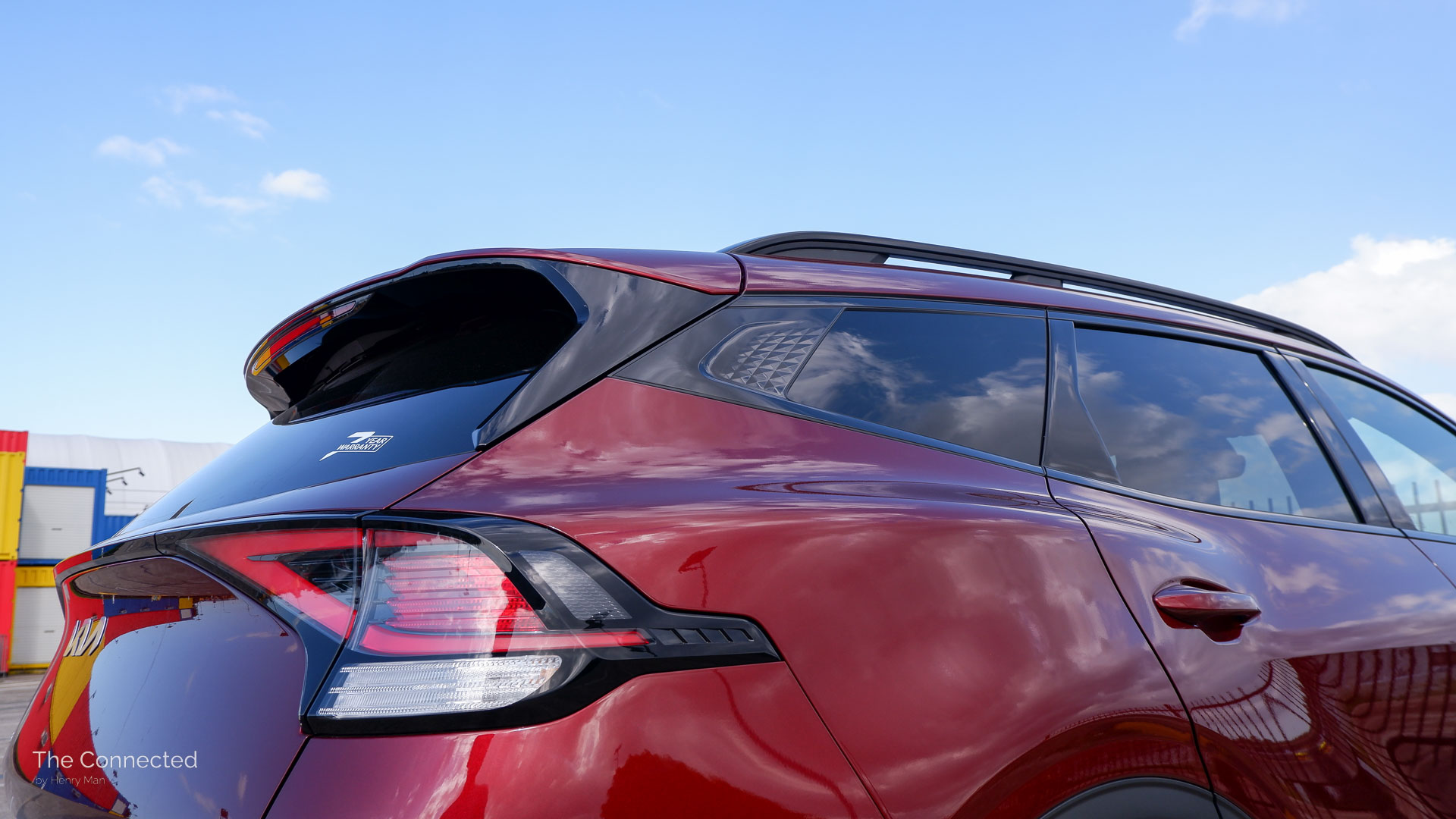
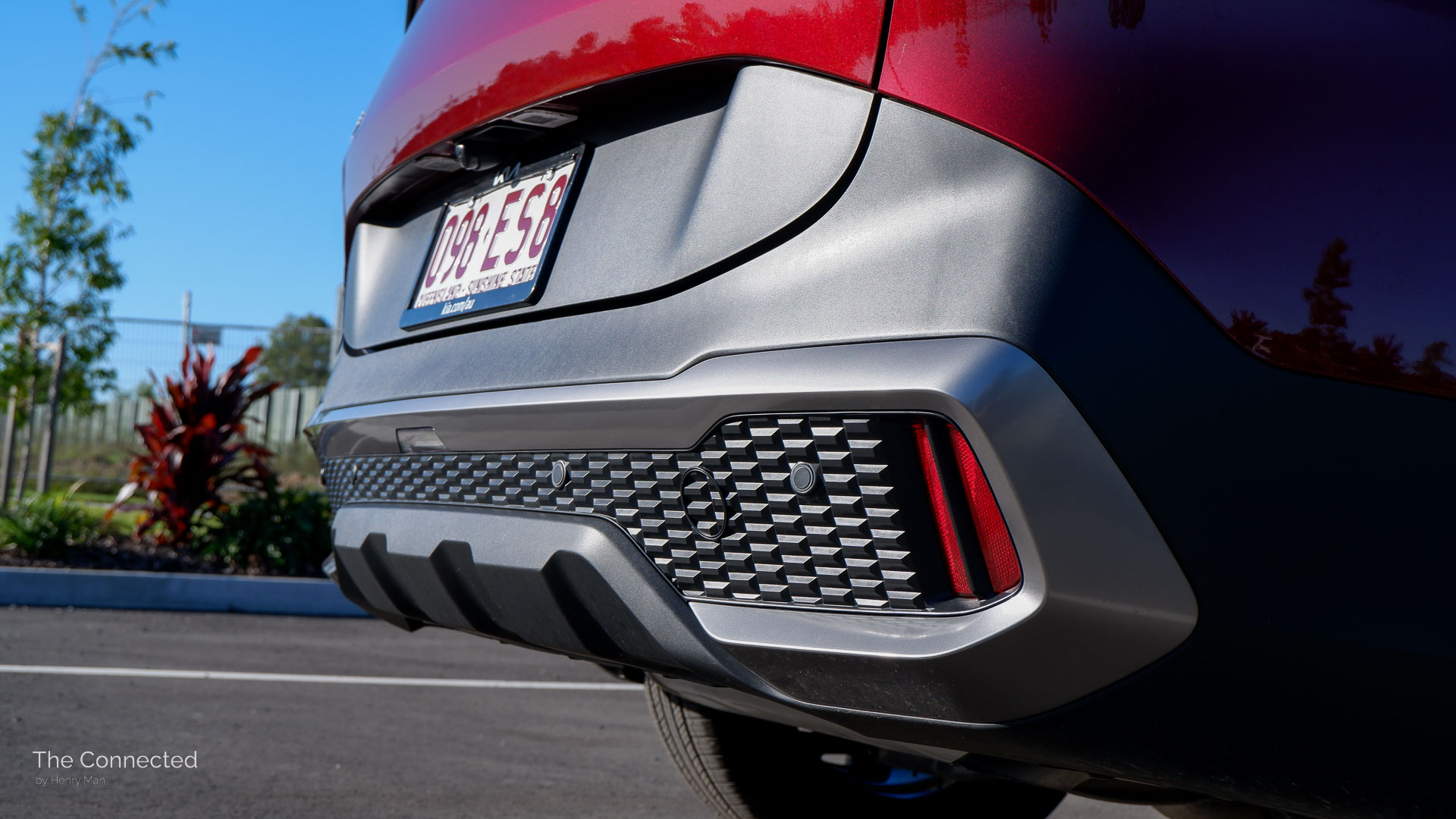
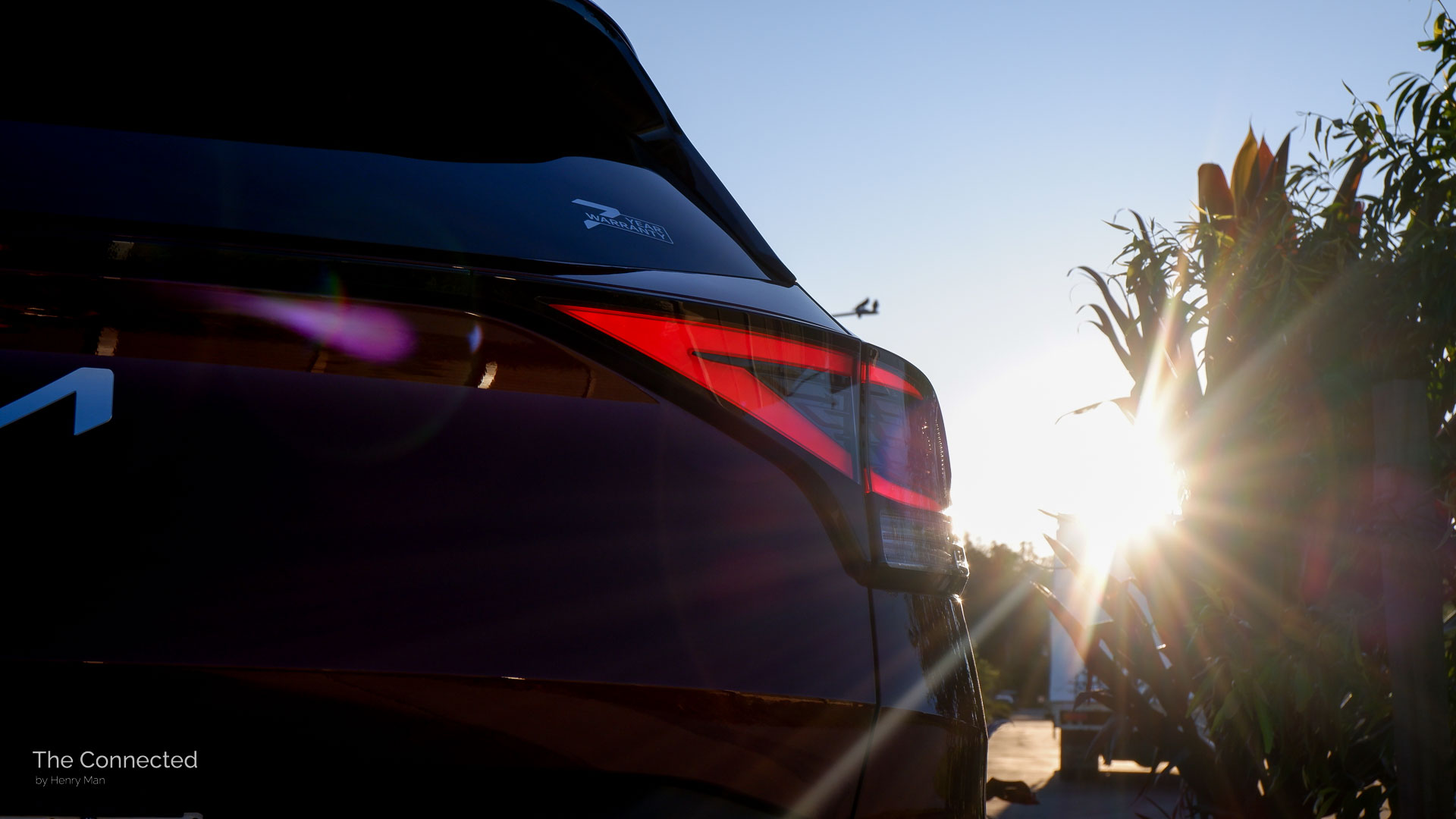
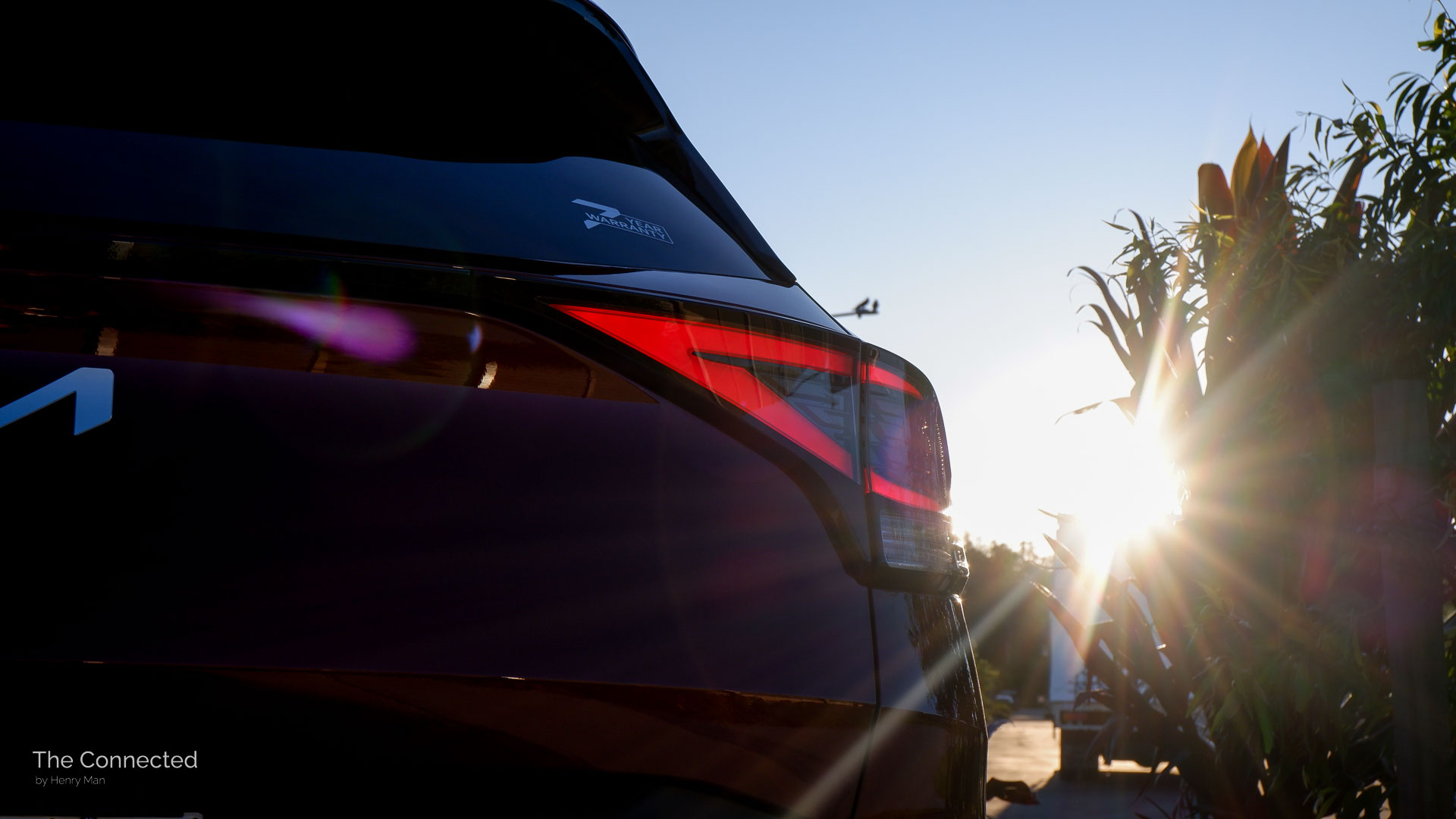
Additionally, there’s a clever hidden wiper under the spoiler and the LED tail-lights are connected, but don’t light up on any model (like the previous gen).
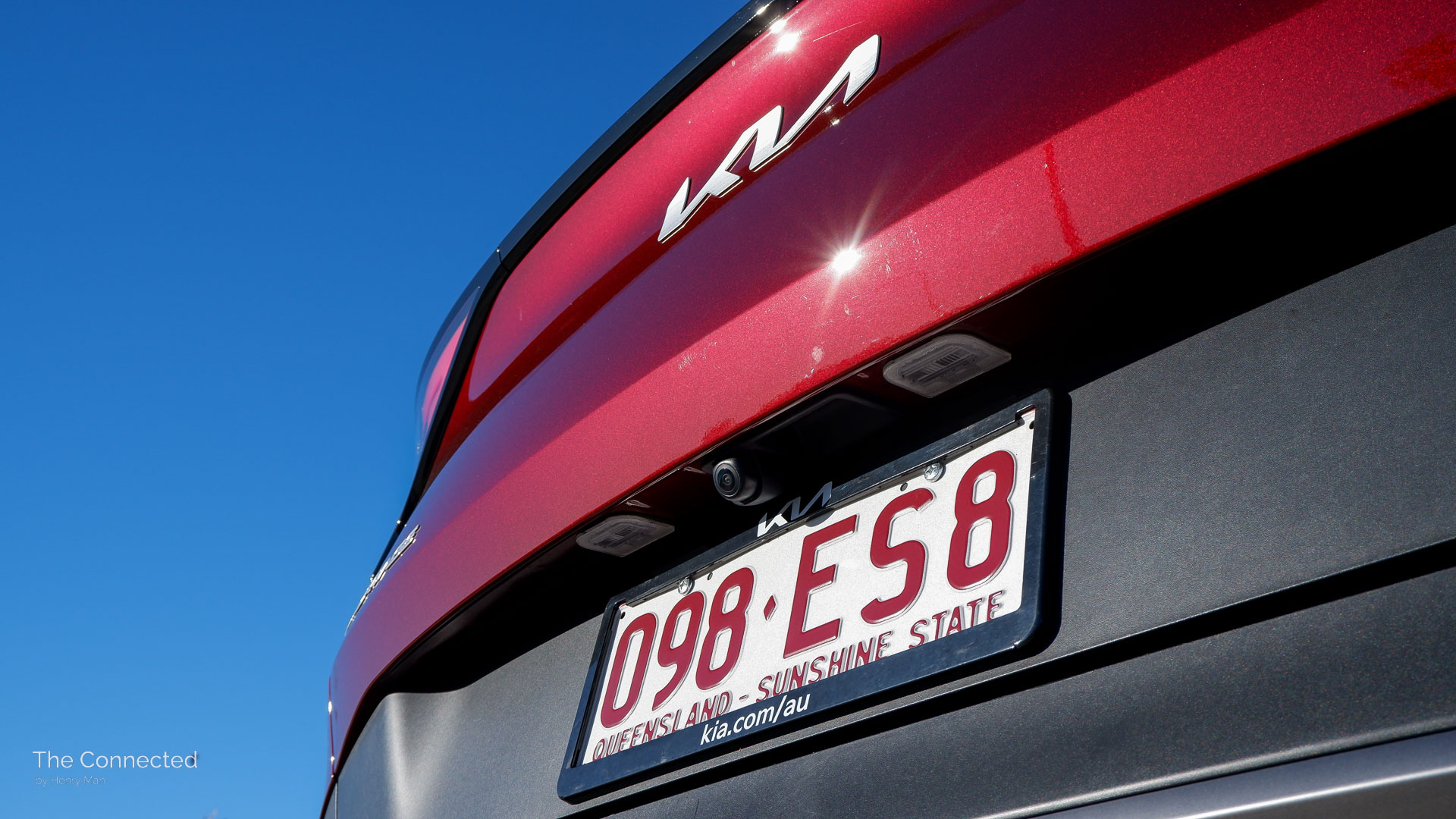
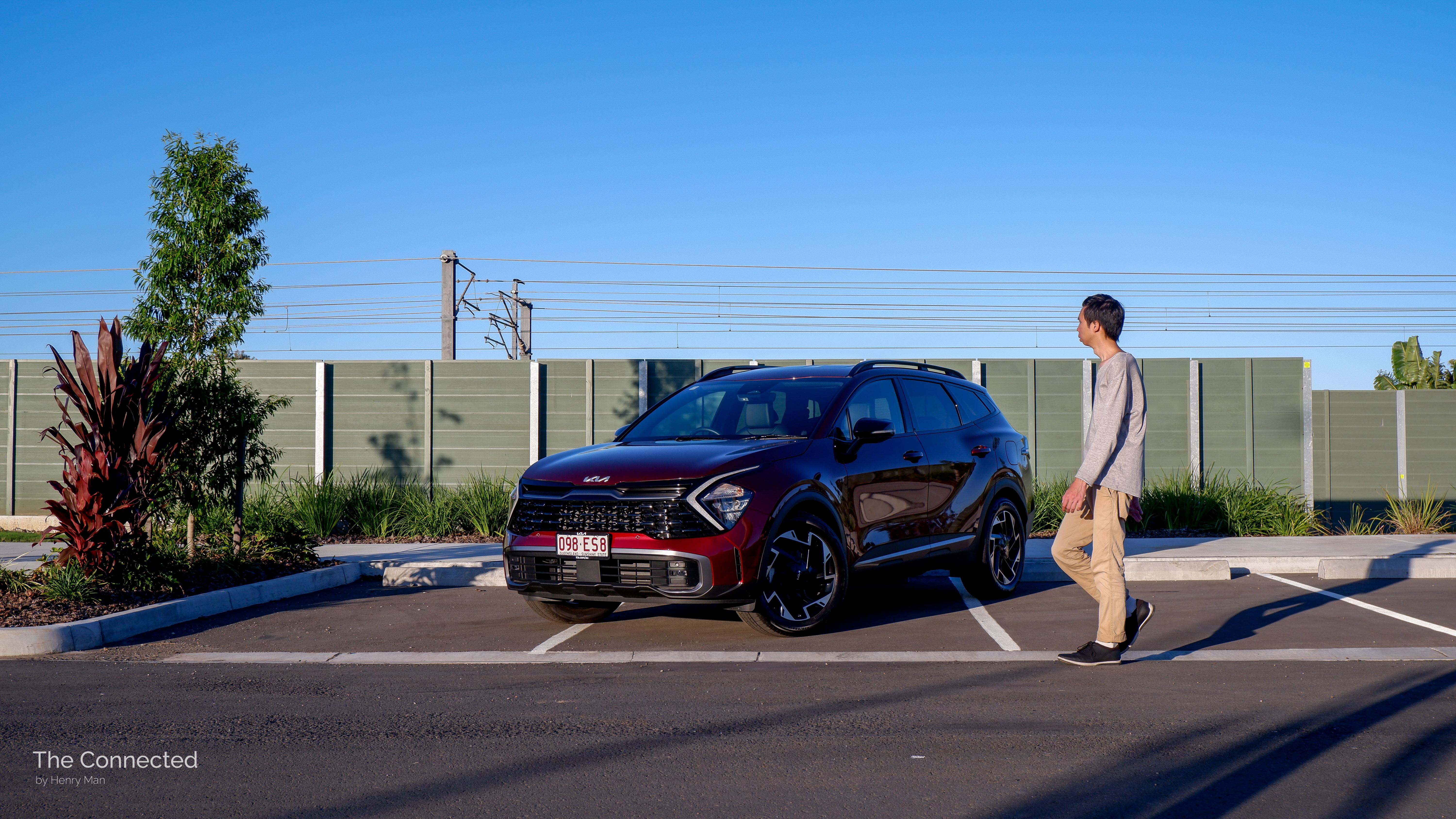
My tester’s Dawning Red exterior colour option ($520) is akin to a deep cherry and changes its appearance depending on the light – shimmering under the sun and shadowy when not. On a side note, if you stick with Queensland’s standard licence plate, then it matches the maroon font eerily well.
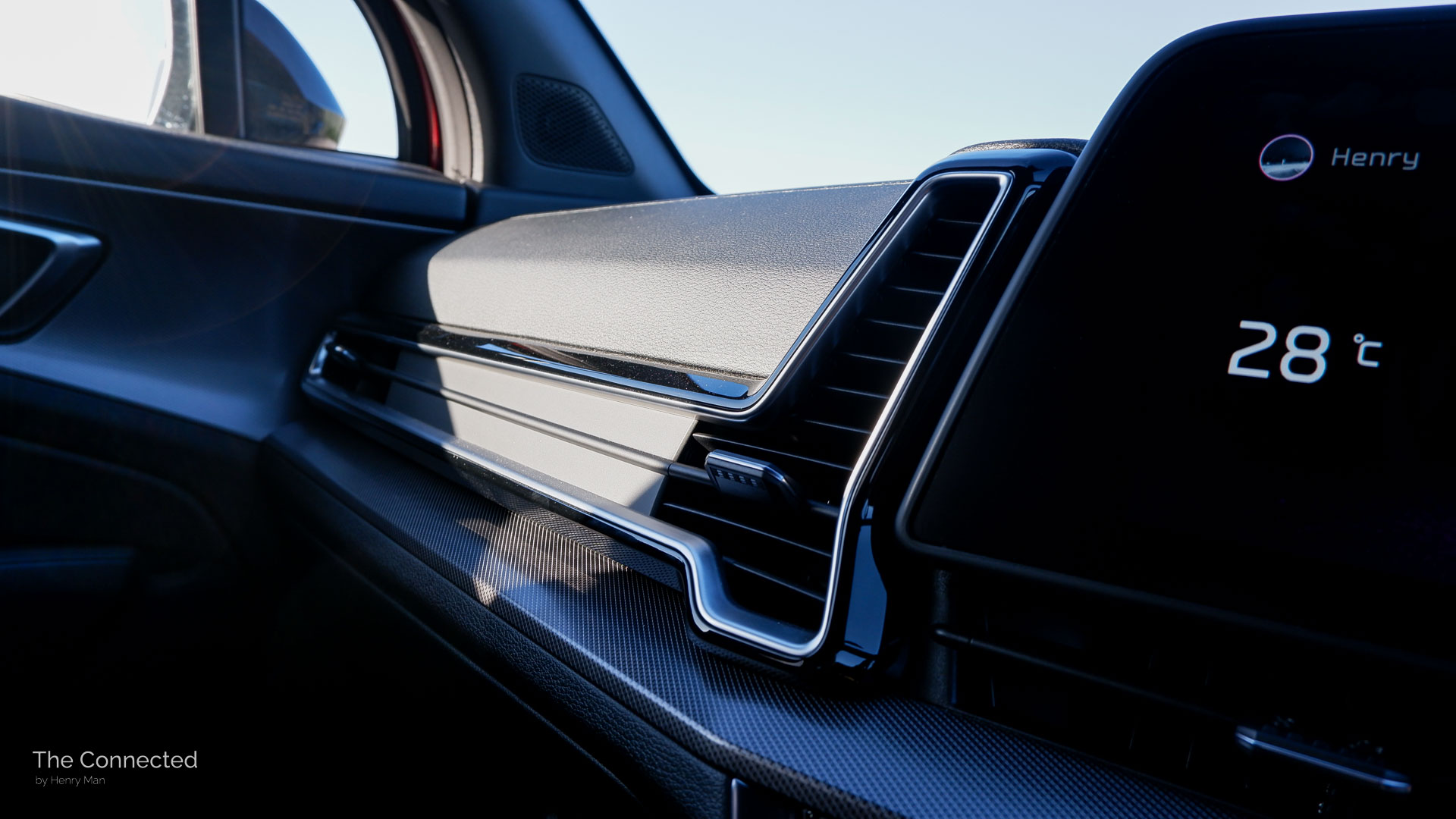
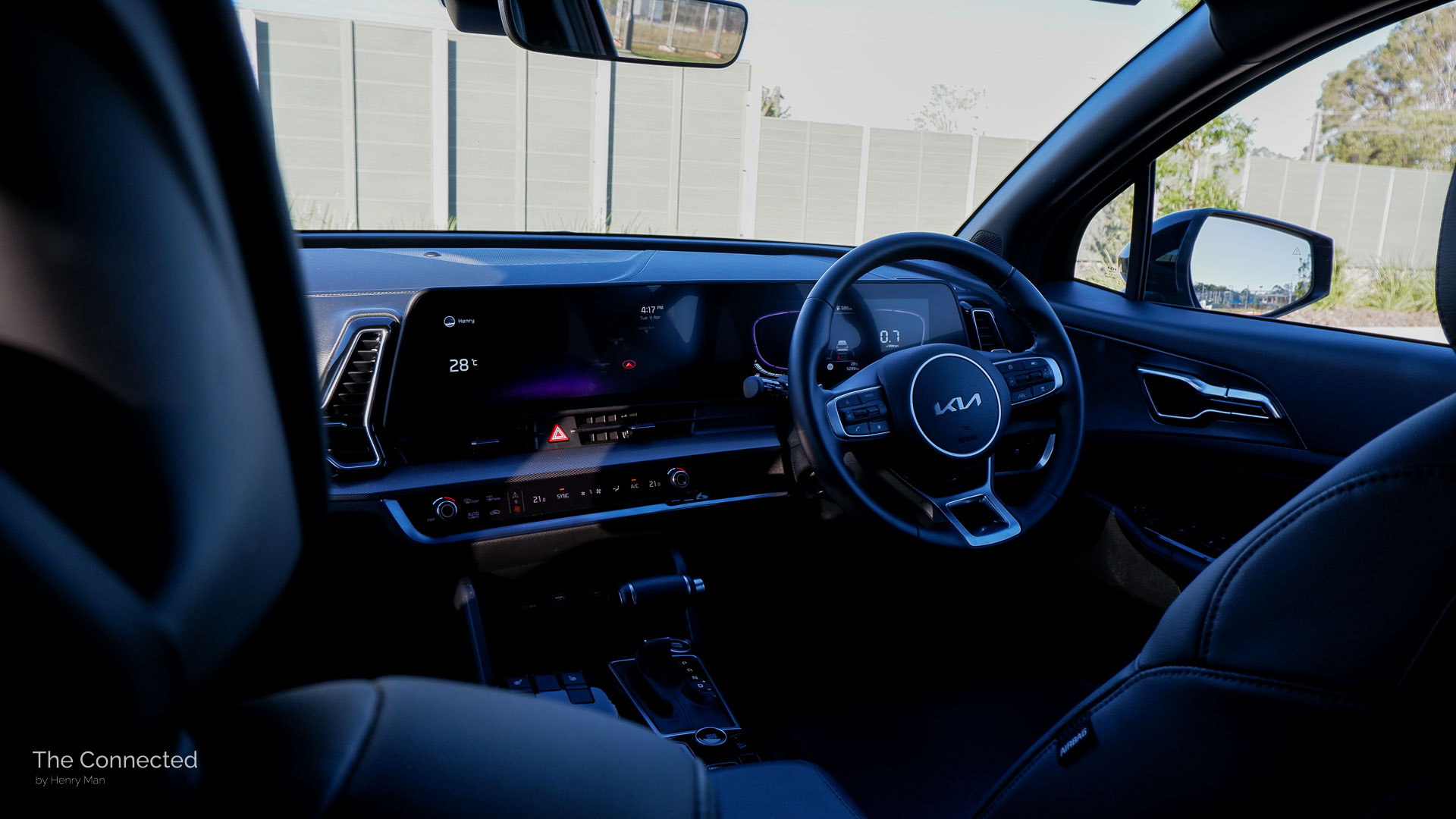
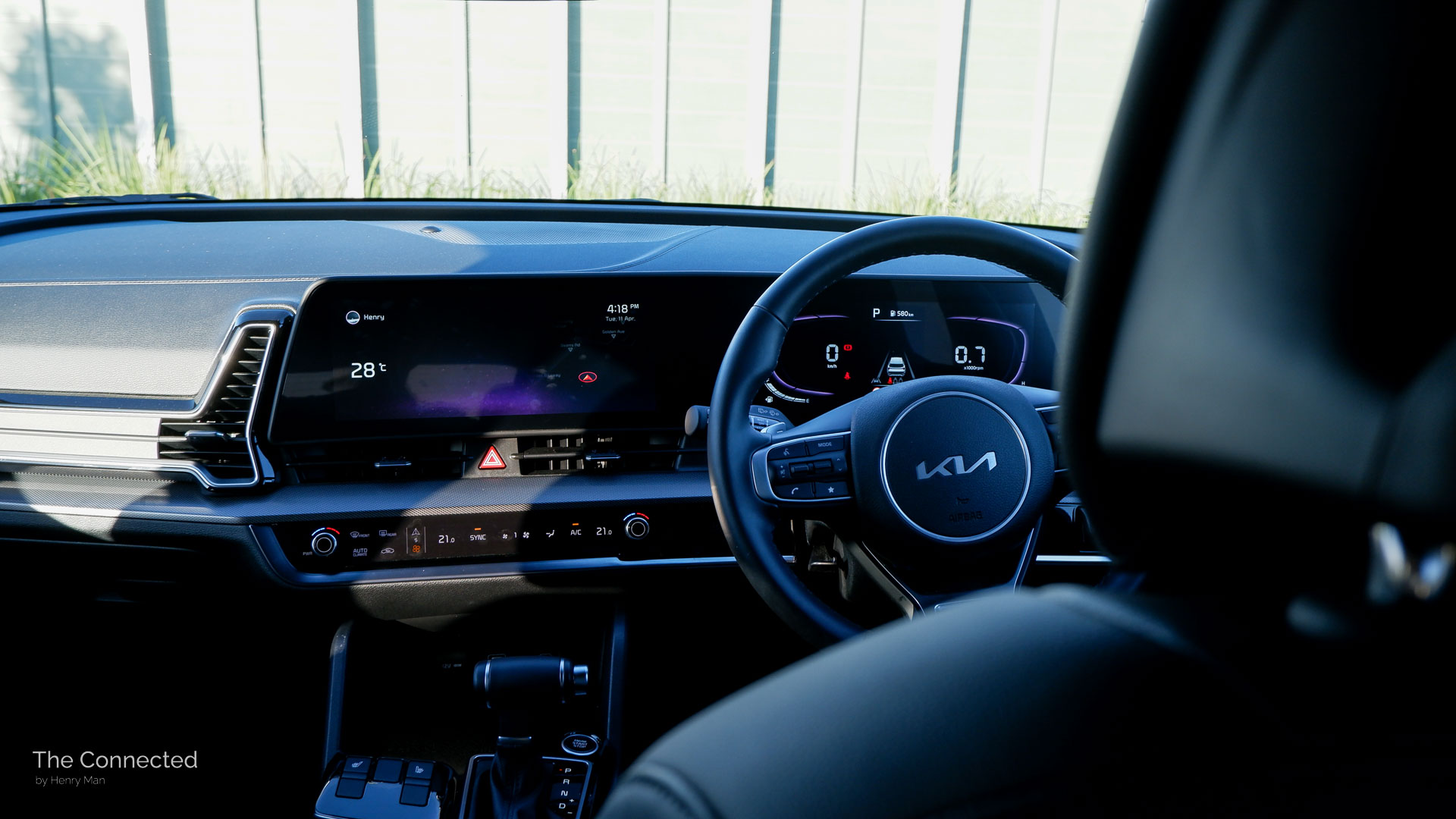
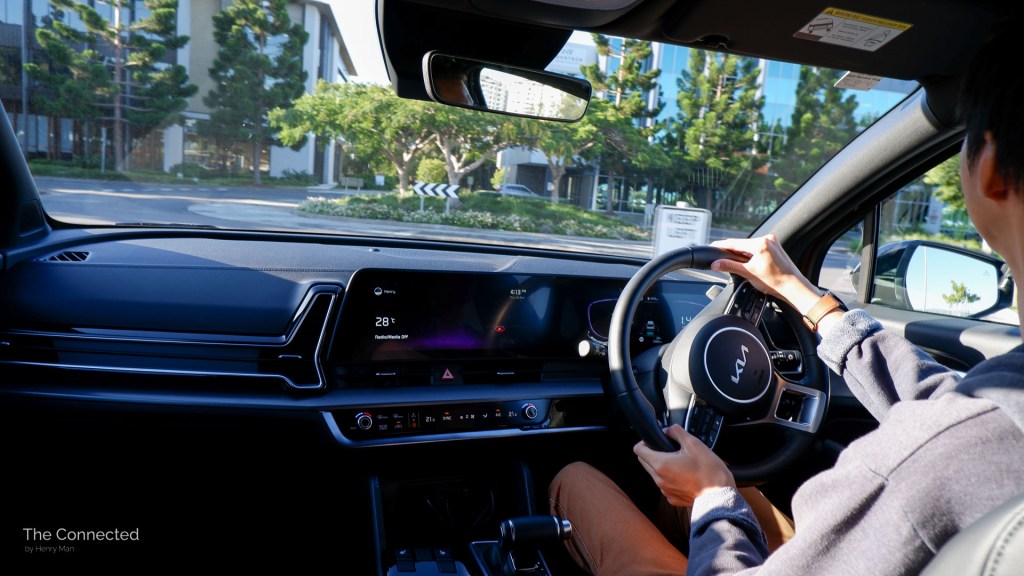
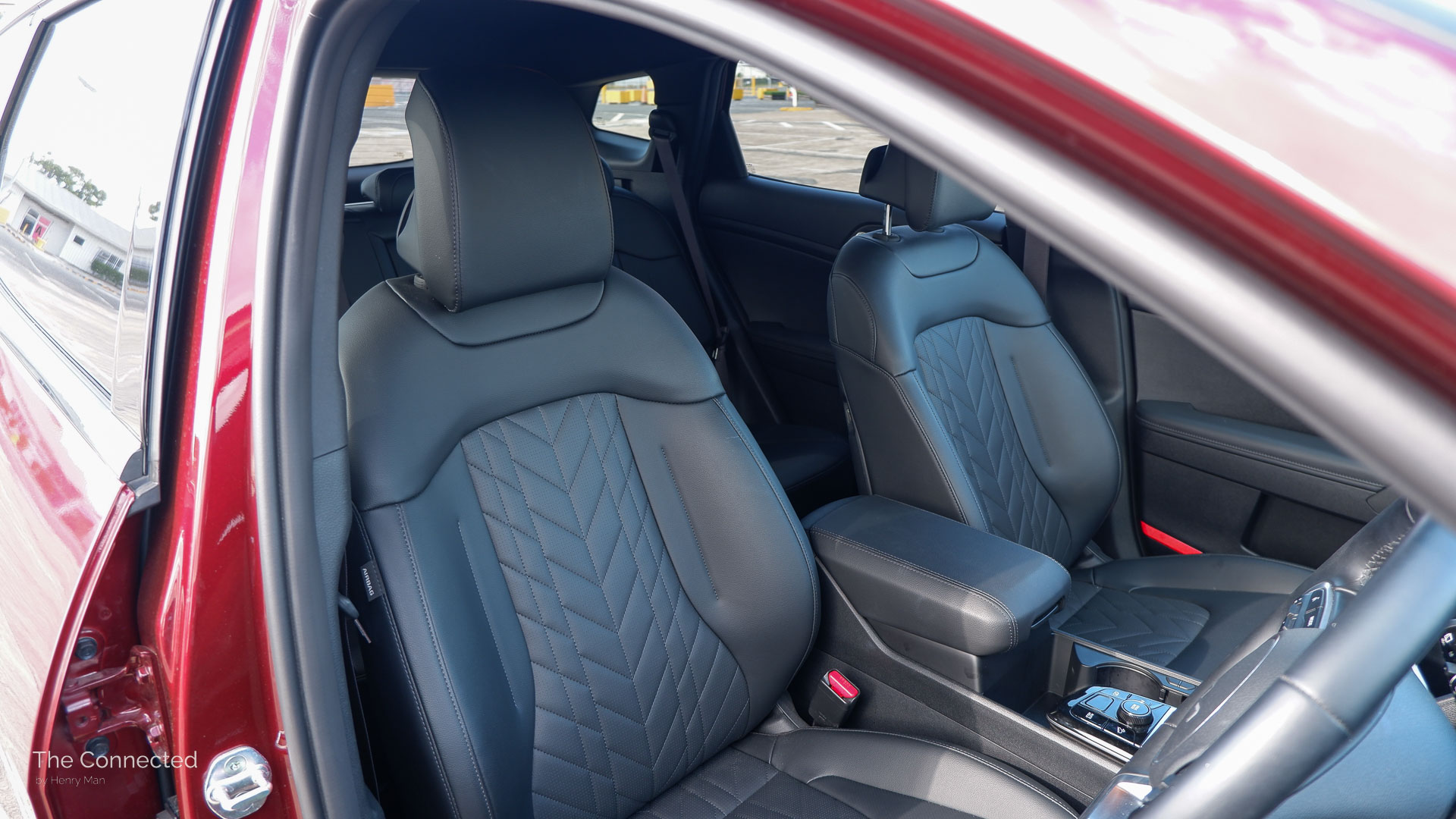
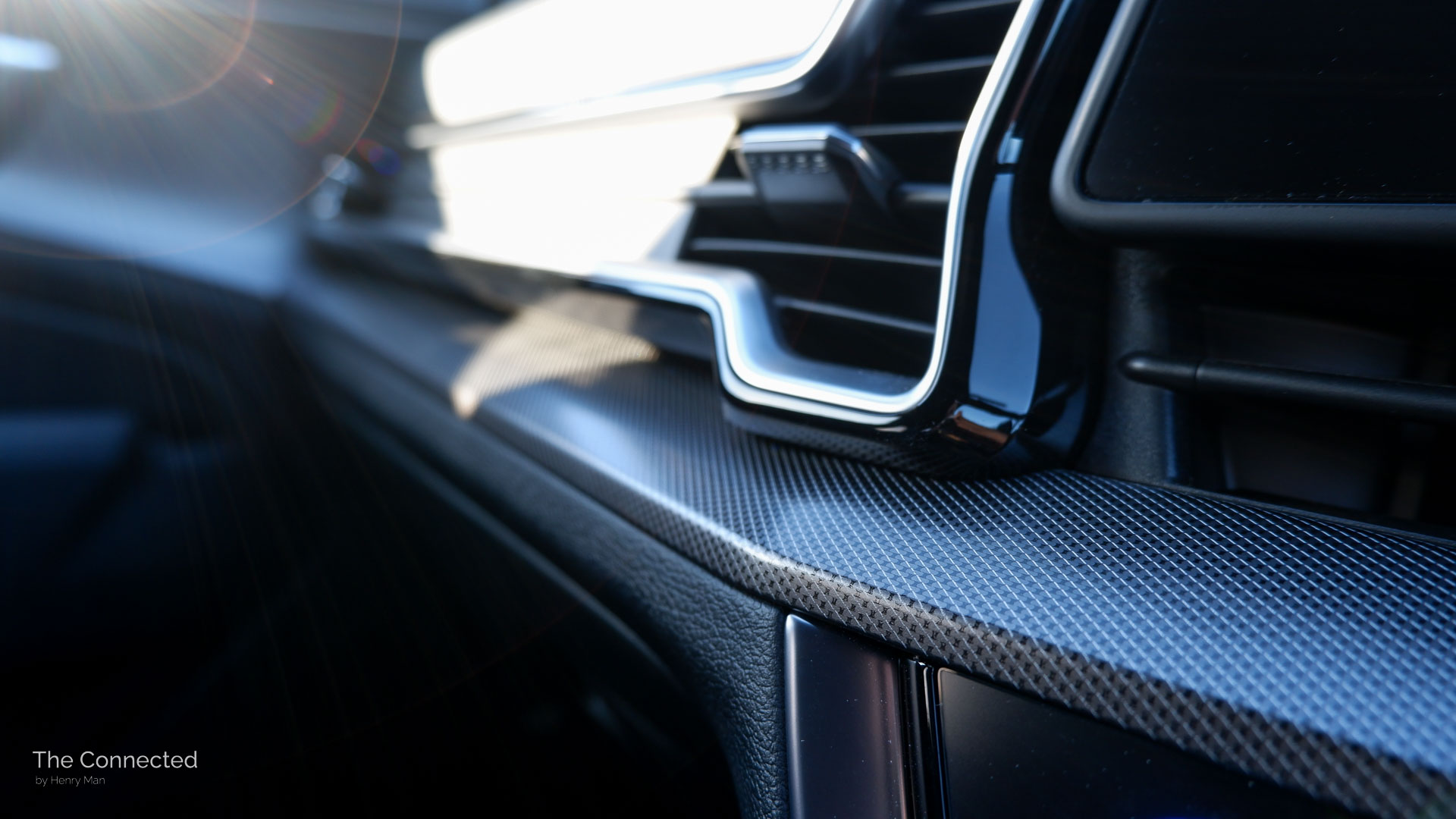
Inside, the Sportage SUV carries on the sporty theme boasting a black headliner, prominently-shaped front air vents, gloss black materials, and ‘premium weave pattern’ trim exclusive on this SX+ variant.
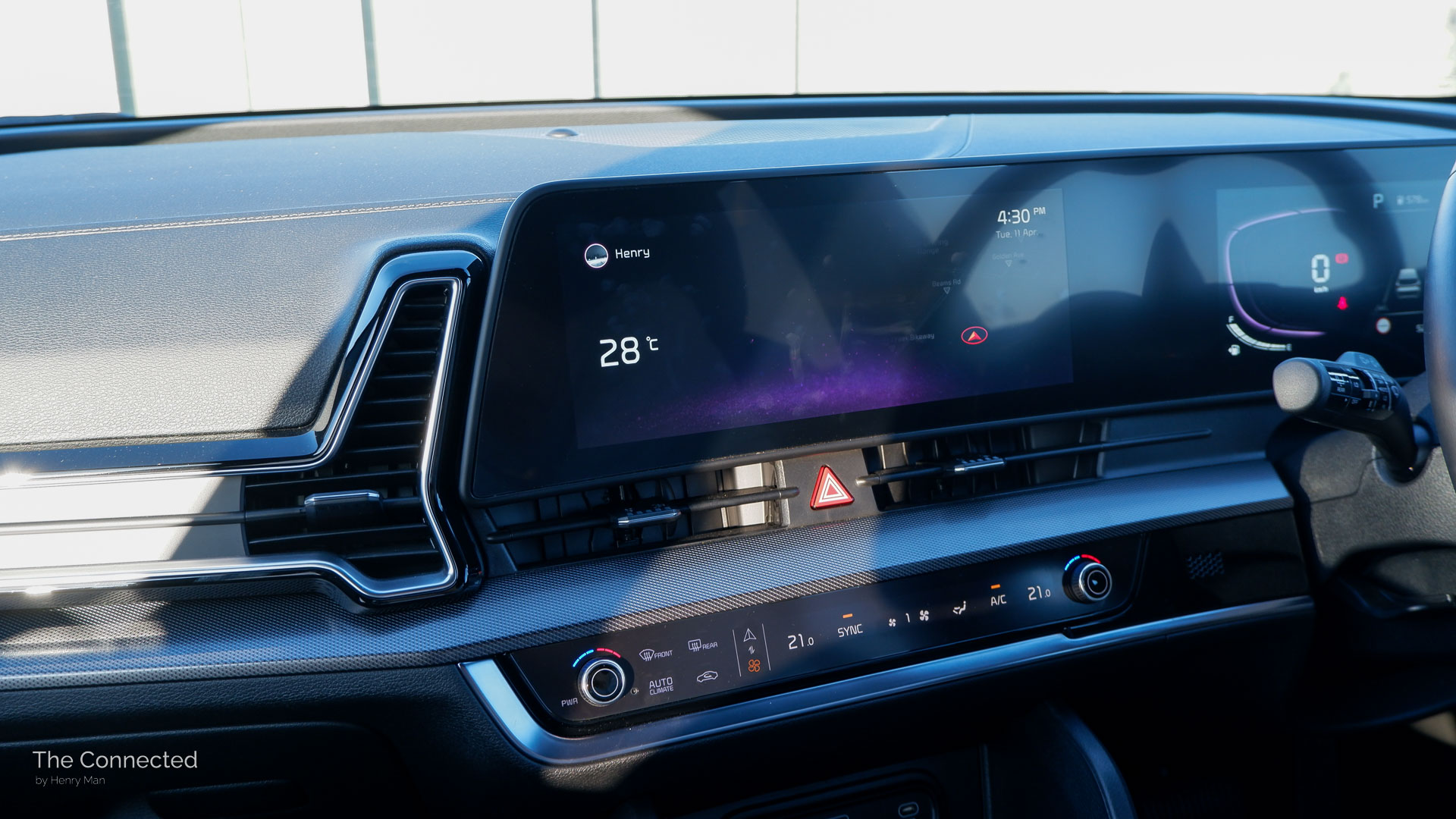
While the SX+ misses out on the full driver instrument display, it doesn’t look inferior. The unit still joins with the 12.3-inch touchscreen and is slightly angled toward the driver for a modern curved appearance.
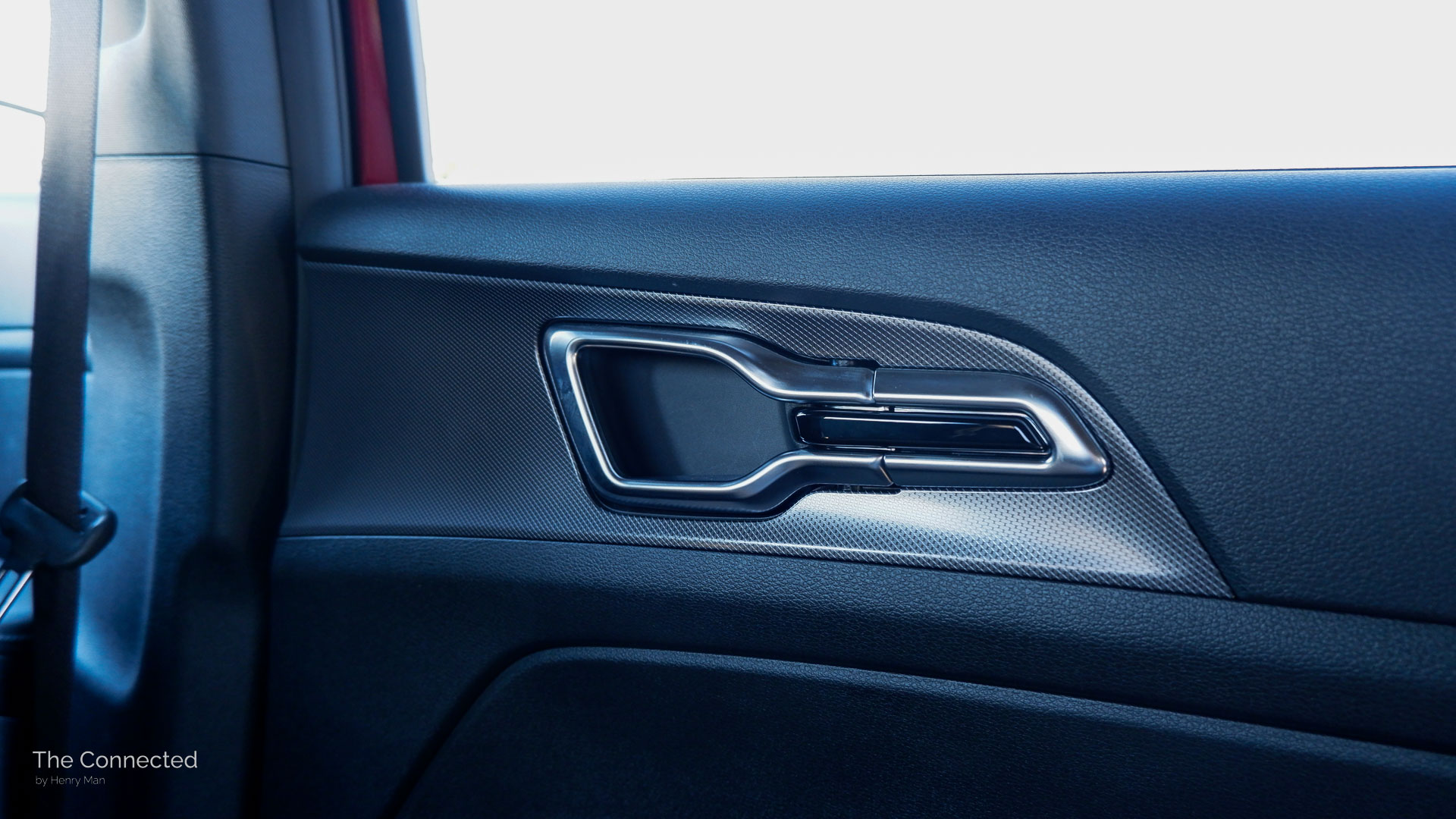
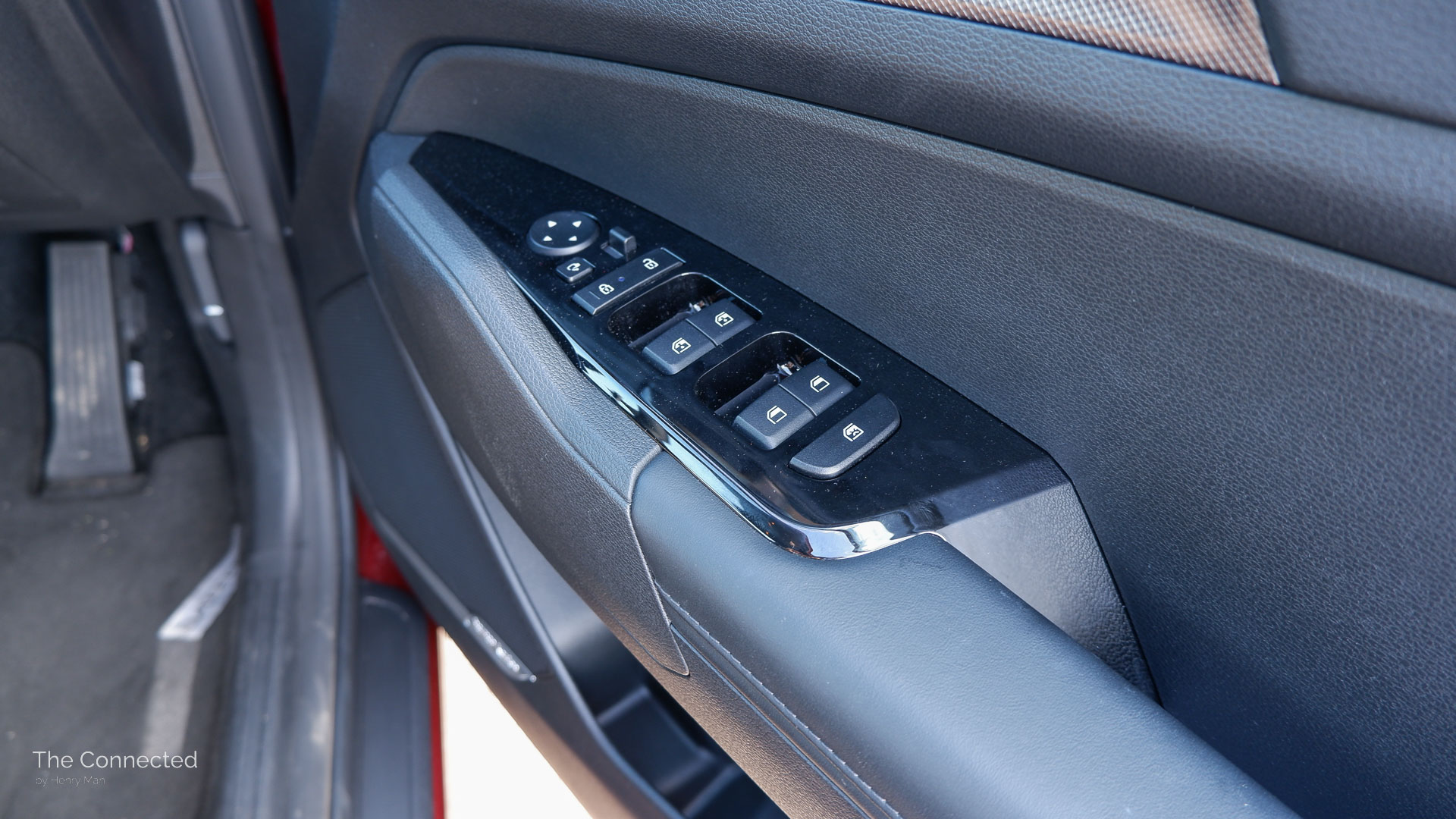
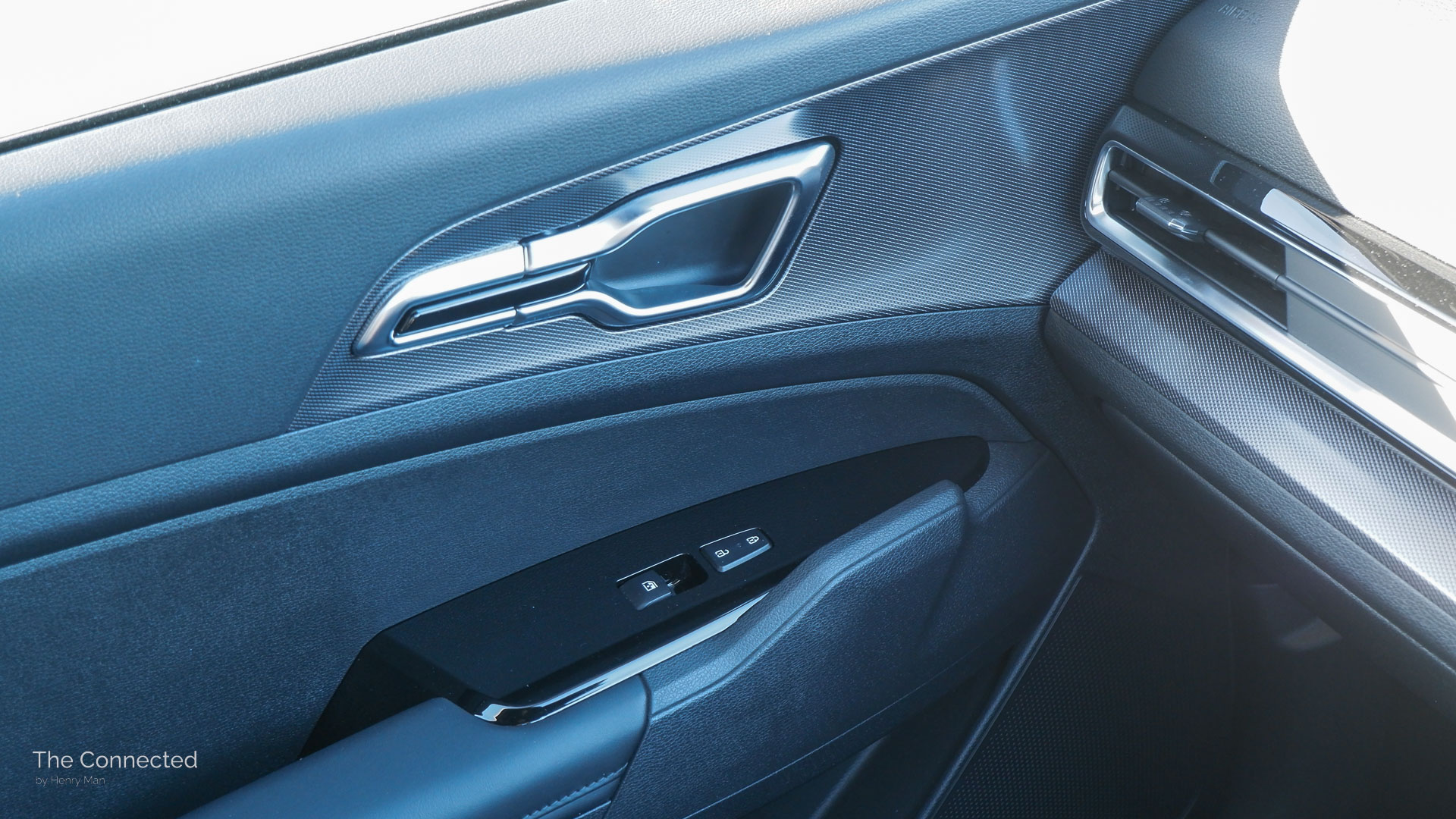
Overall material quality is good, except for the fingerprint- and dust-prone gloss black trim around the window switches, air vents, and centre console areas. As expected, the upper front door cards are soft in a padded leather-like material, whereas the rear passenger doors adopt harder plastics.
Practicality.
2023 Kia Sportage SX+ dimensions:
| Length x width x height | 4660 x 1865 x 1660mm |
| Wheelbase | 2755mm |
| Ground clearance | 181mm |
| Boot capacity (min / rear seats folded) | 543 / 1829-litres |
| Rear seat split fold | 60:40 |
| Child seat anchors | 2x ISOFIX rear outboard seats + 3x top-tether rear seats |
The five-seat medium SUV is noticeably bigger than the old model – growing by 175mm in length, with an 85mm stretched wheelbase, 9mm higher ground clearance, and between 77- to 374-litres more boot volume. But, it doesn’t apply to every dimension with this latest fifth-gen Sportage being 20mm narrower in width and 5mm lower in overall height than before.
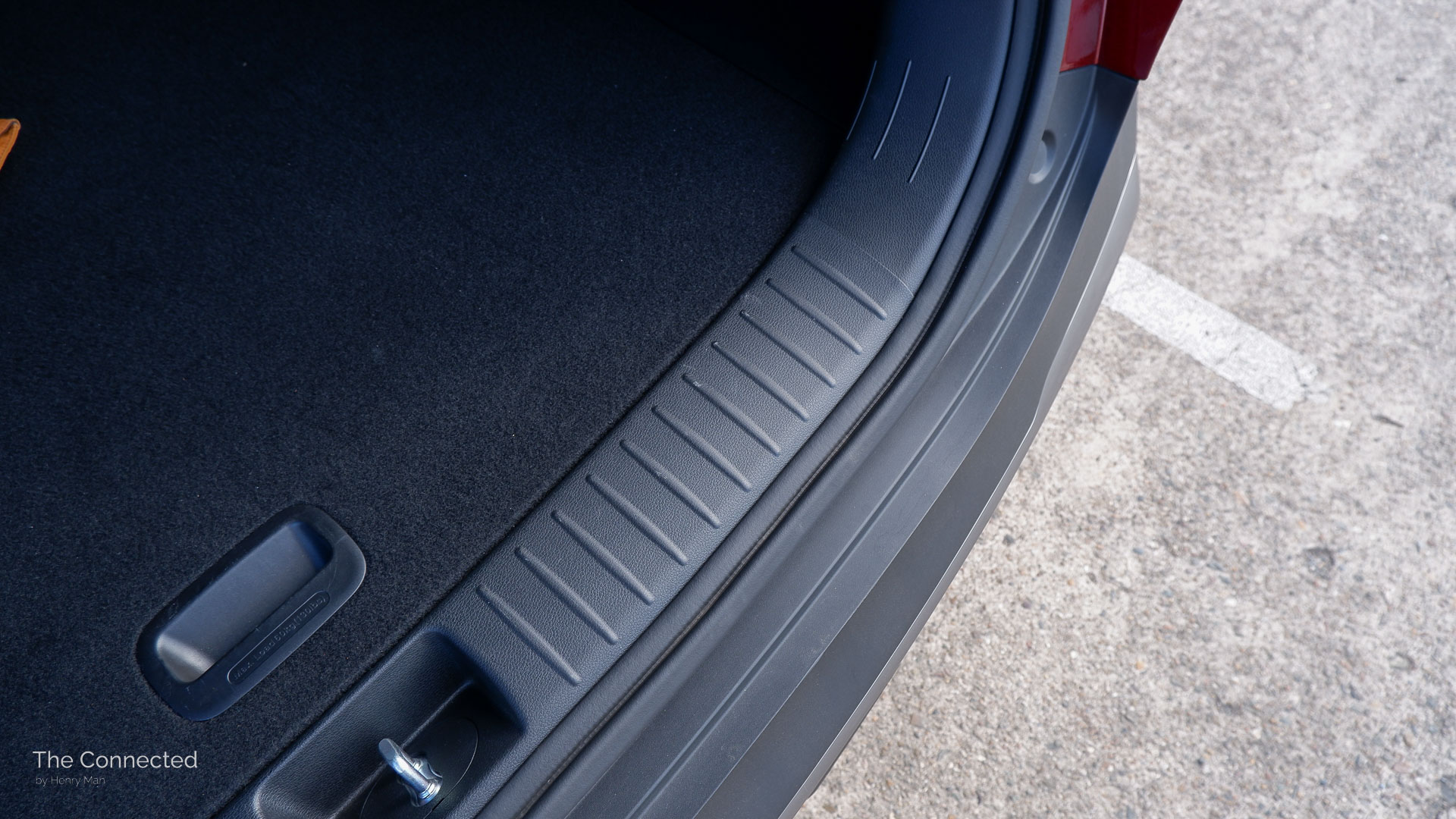
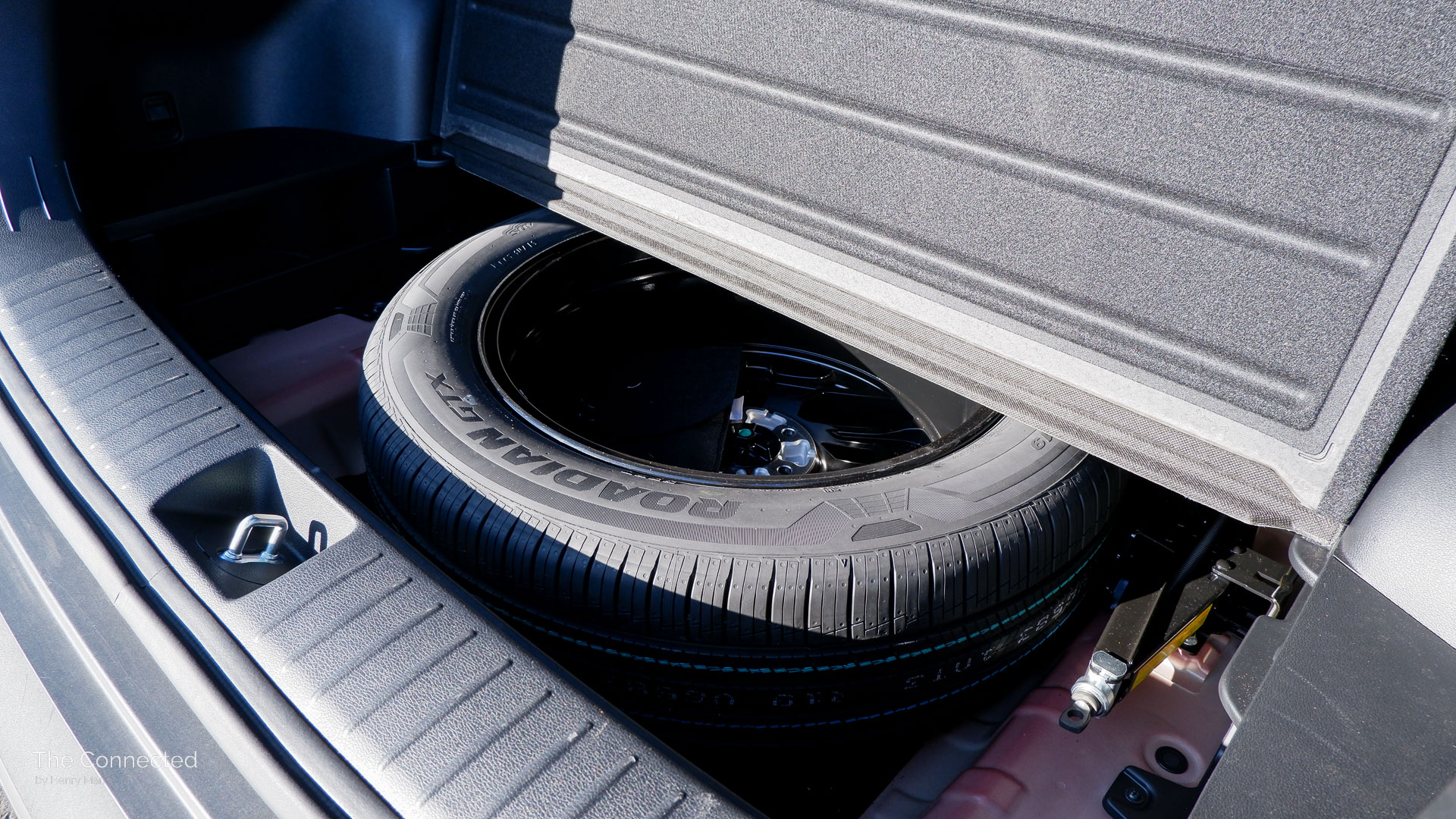
The boot is a large and usable size with a flat loading lip, a retractable cargo cover, 12-volt power socket, and handy release levers to remotely fold down the rear seats in a 60:40 split. There’s no underfloor storage due to the presence of the standard full-size spare tyre.
This SX+ variant features an electric tailgate, which can open hands-free via the proximity key being behind the vehicle for a few seconds. You can also open it via the key fob, driver’s side interior button or directly at the tailgate button, though it’s quite close to the reverse camera lens. As for closing, there isn’t a dedicated lock-and-close function unlike some rivals.
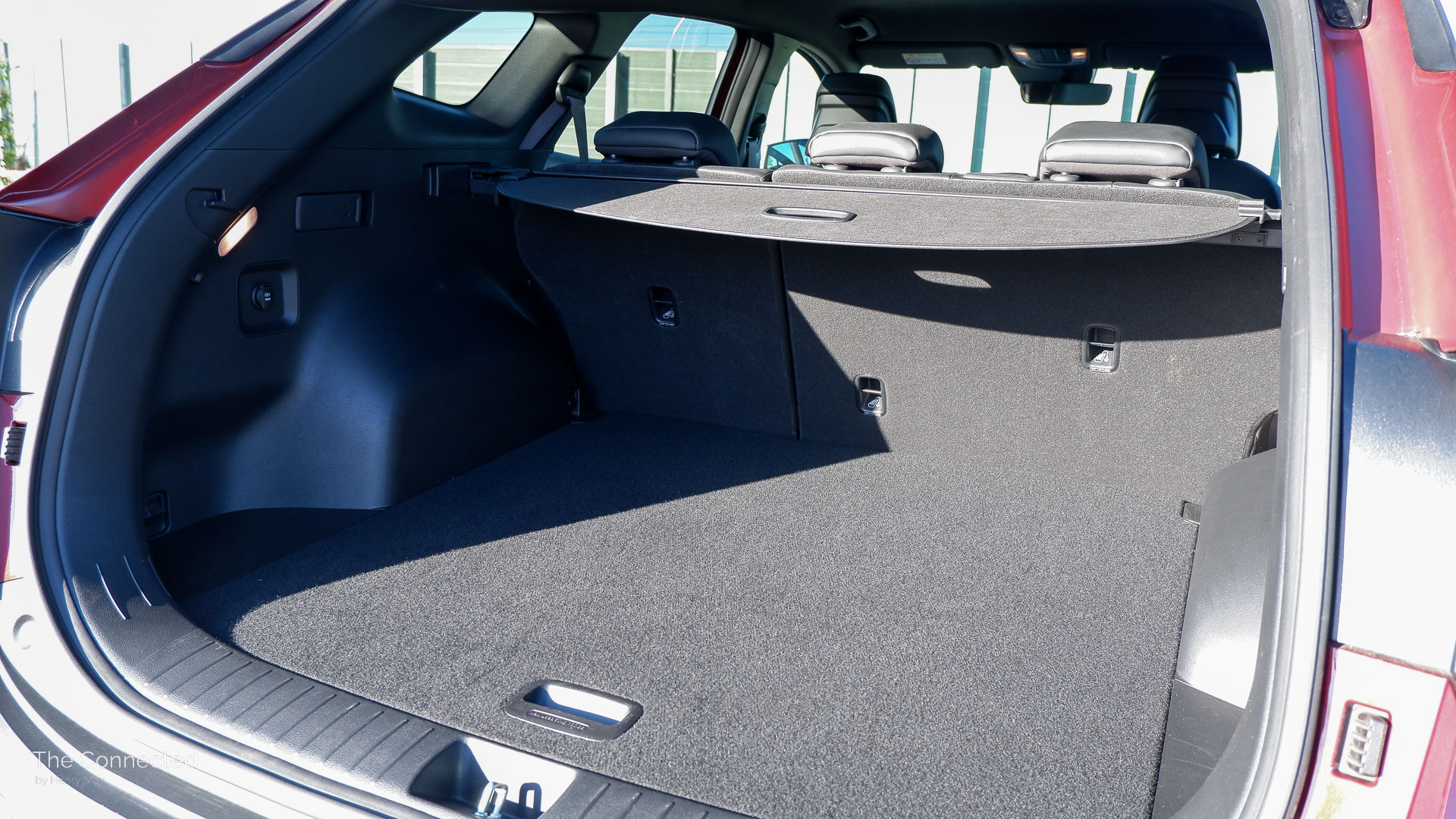
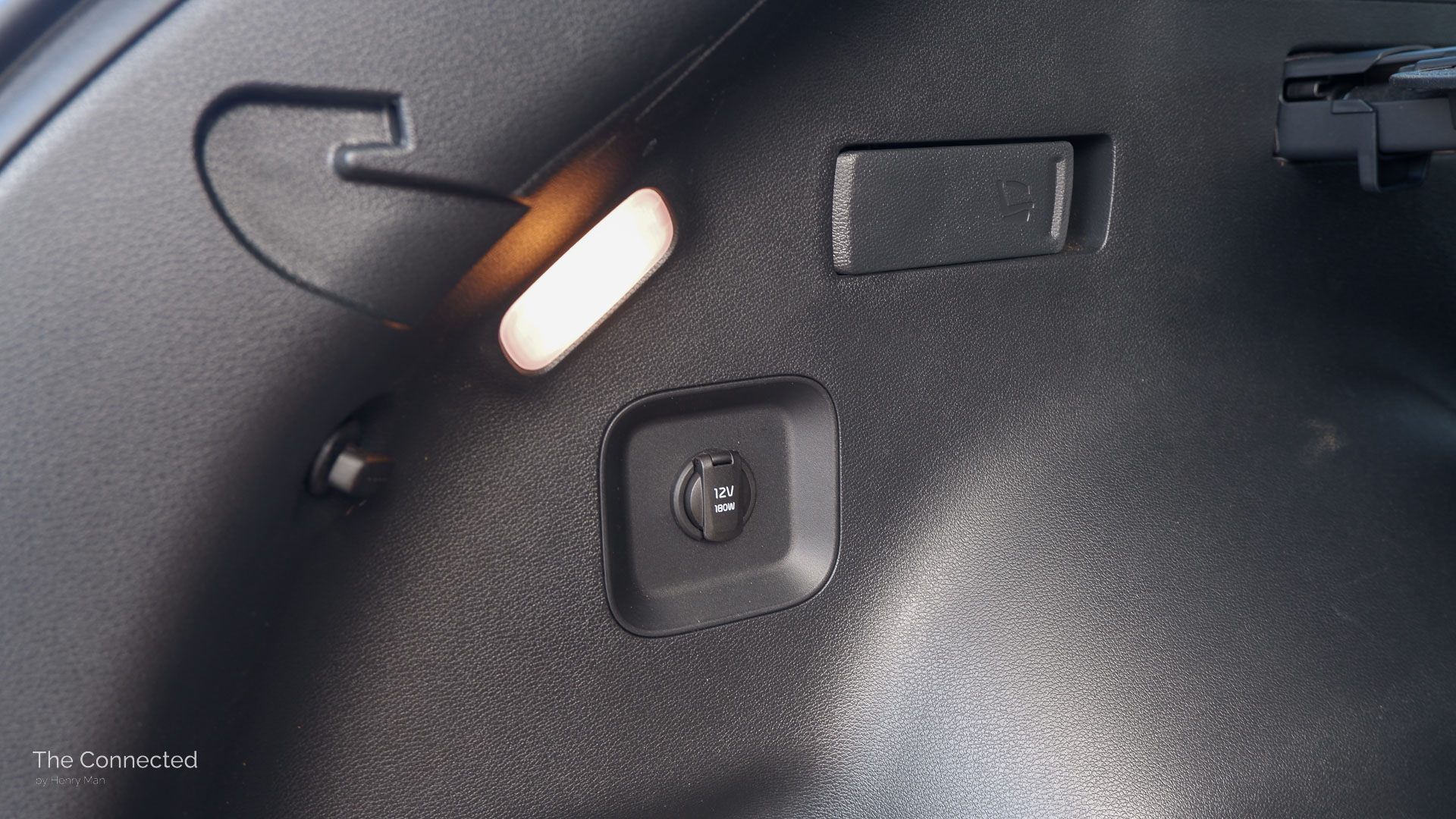
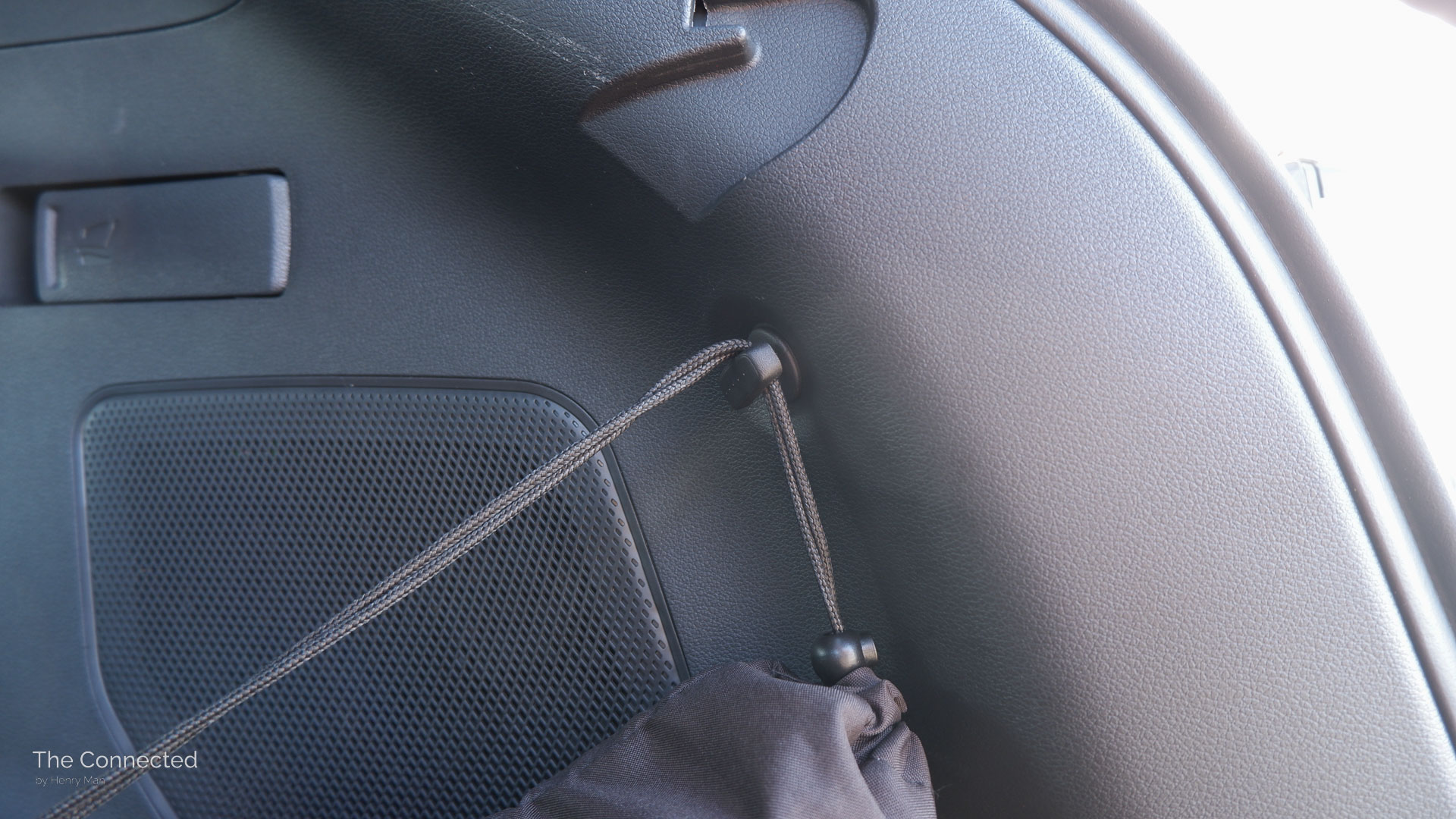
Unfortunately, the Sportage’s boot lacks sturdy bag hooks, unlike the smaller Seltos SUV. There are two hook points, but they can’t hold anything thicker than string. The luggage net to secure items is also reserved for the top-spec GT-Line.
Despite this, the Kia family SUV oddly has bag hooks fixed to the back of the front seats. It’s quirky and perplexing how useful it really is, given any bag would impede on rear passenger space. It would be more convenient if they were in the boot instead.
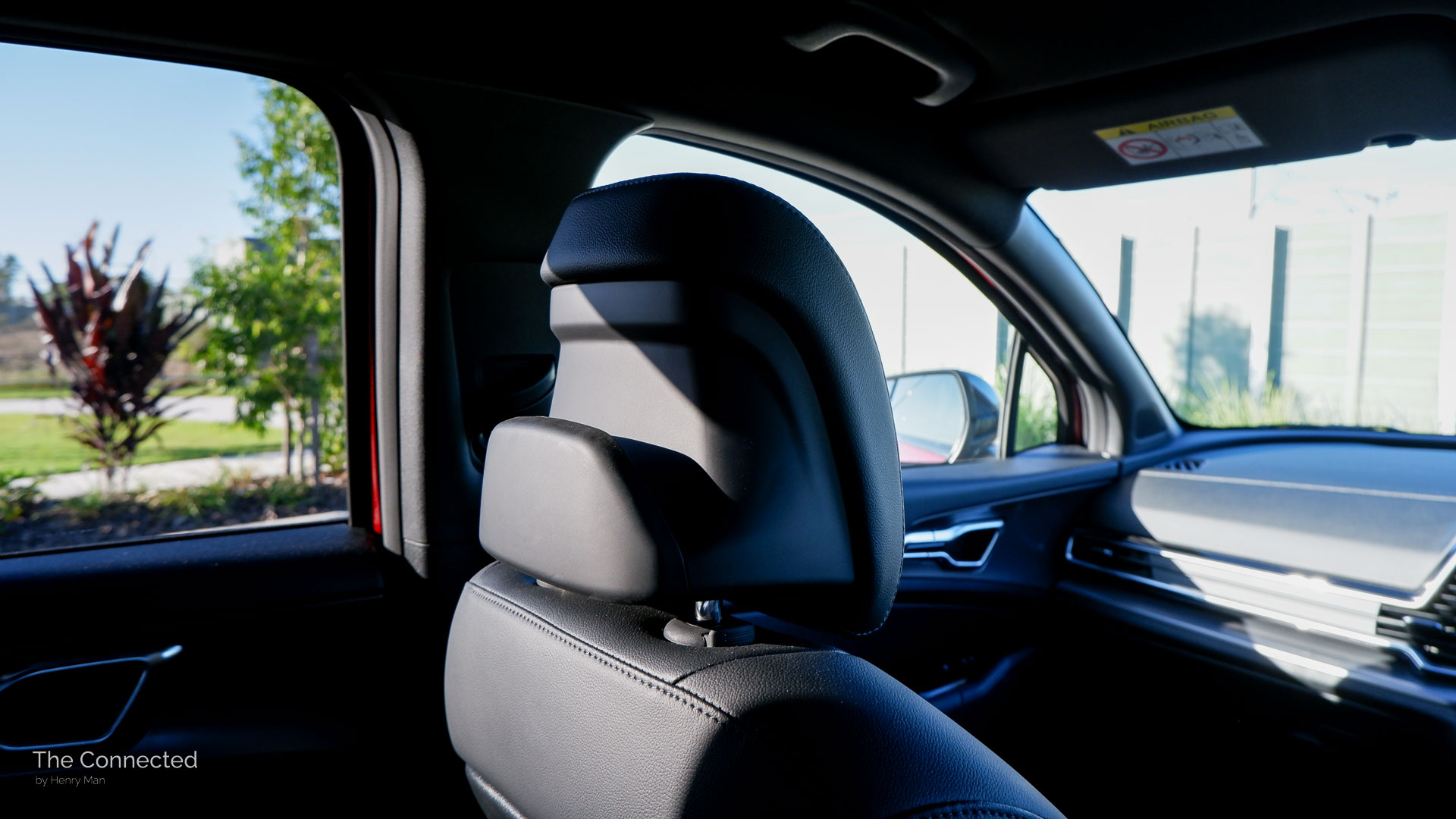
Similar to the EV6 electric crossover, it does boast the cleverly-shaped front headrests to hang coats and jackets with a rubberised lining to keep it in place – a good practical touch.
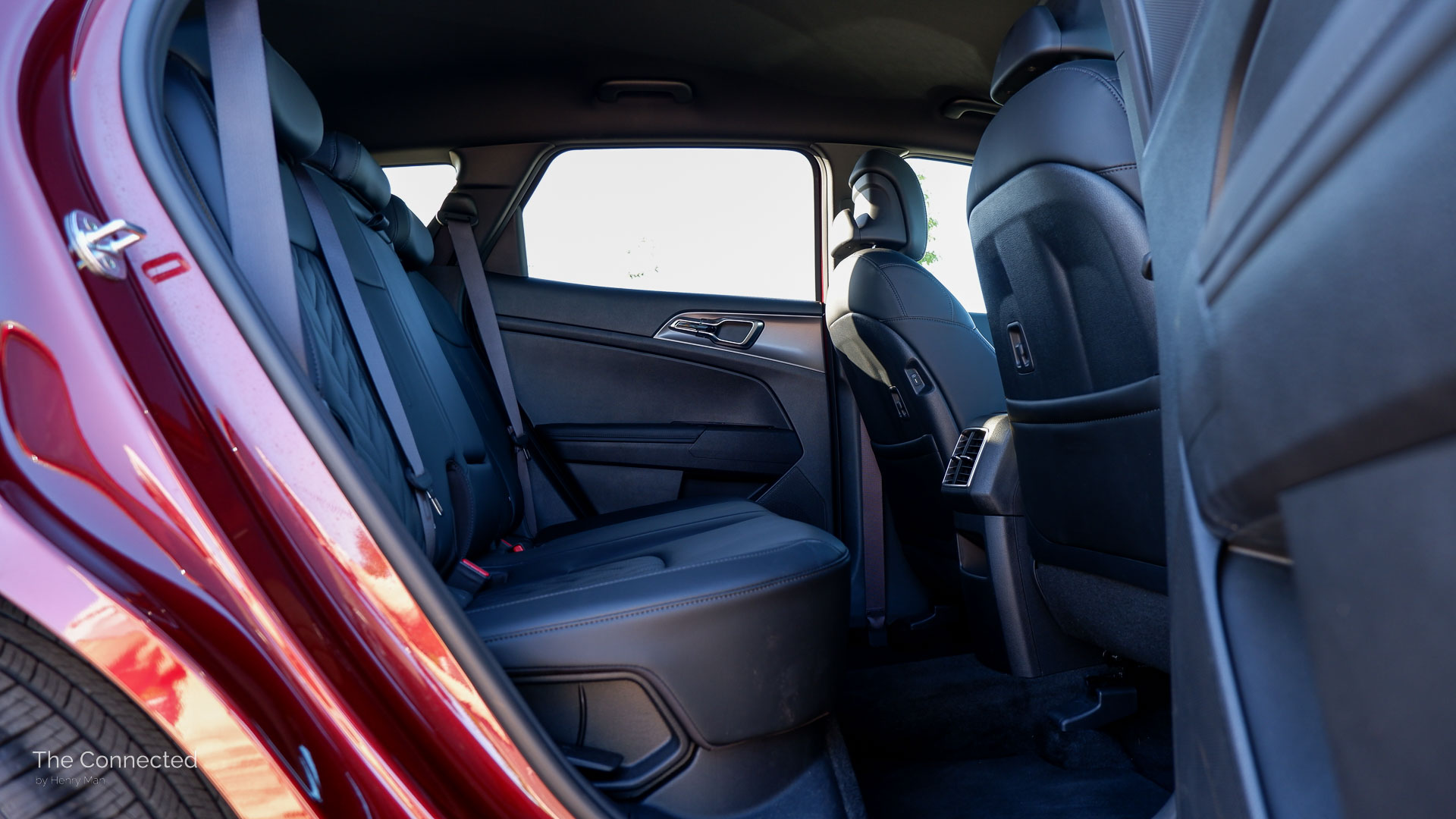
The Sportage’s rear row is spacious with lots of headroom and legroom, and feet can easily slide underneath the front seats. However, passengers do need to contend with a protruding centre floor hump, which can make sitting three people abreast difficult.
The boot cover can also be set forwards to enable the 60:40 split rear seats to recline via the manual levers on the side; you can’t adjust the seats laterally (forwards and backwards), though. The rear doors open wide and they cover the sills to prevent collecting dust.
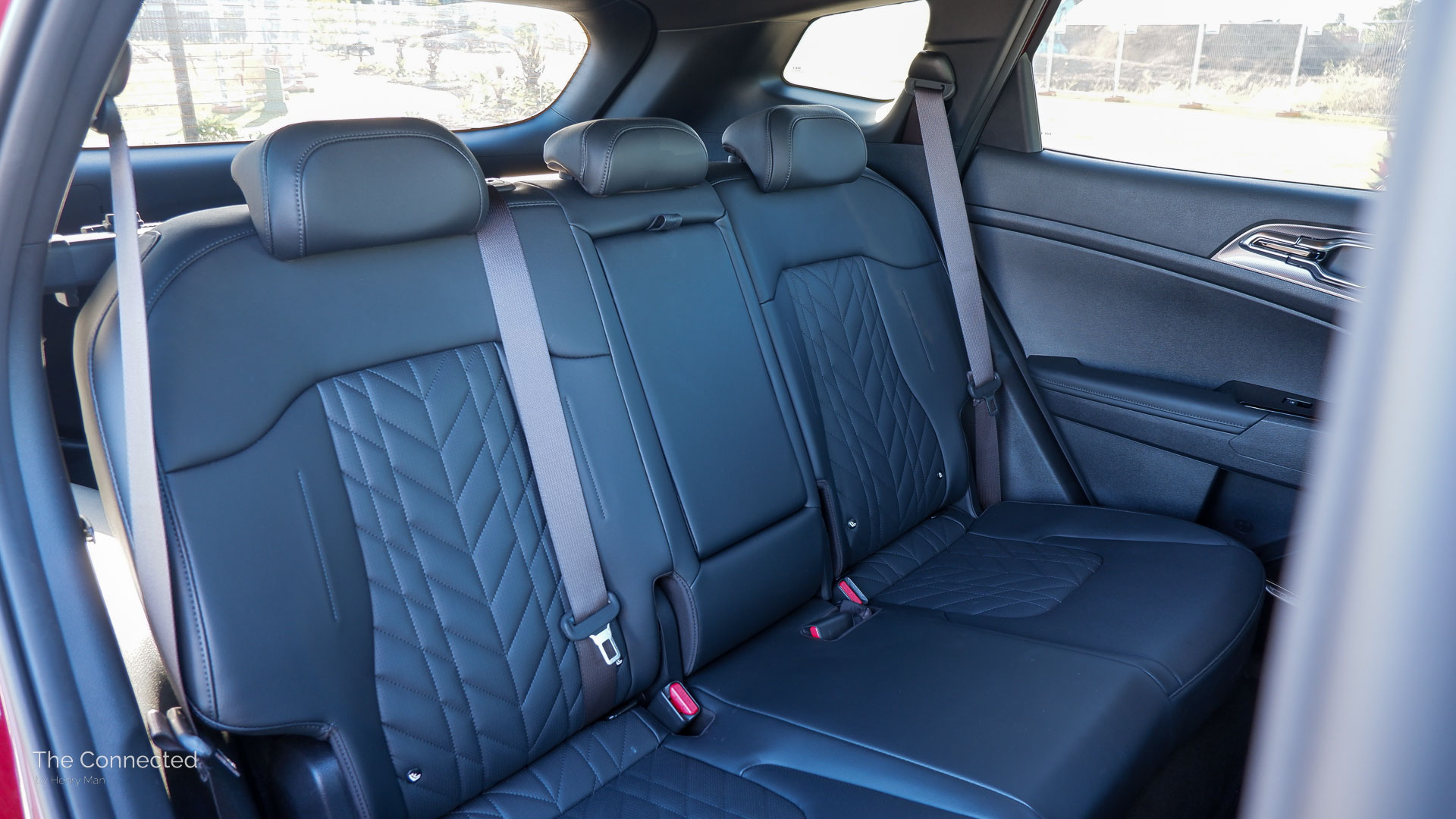
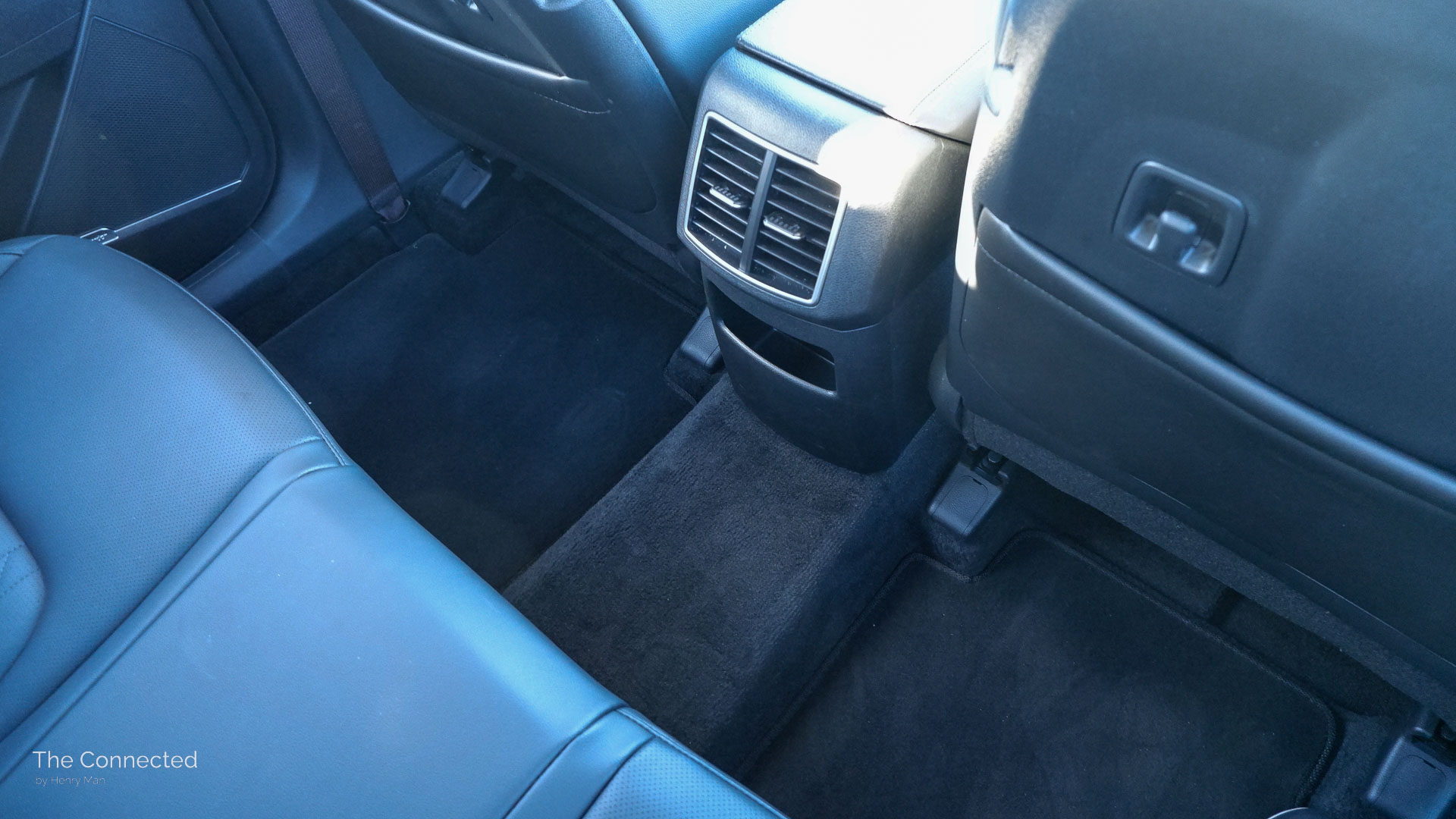
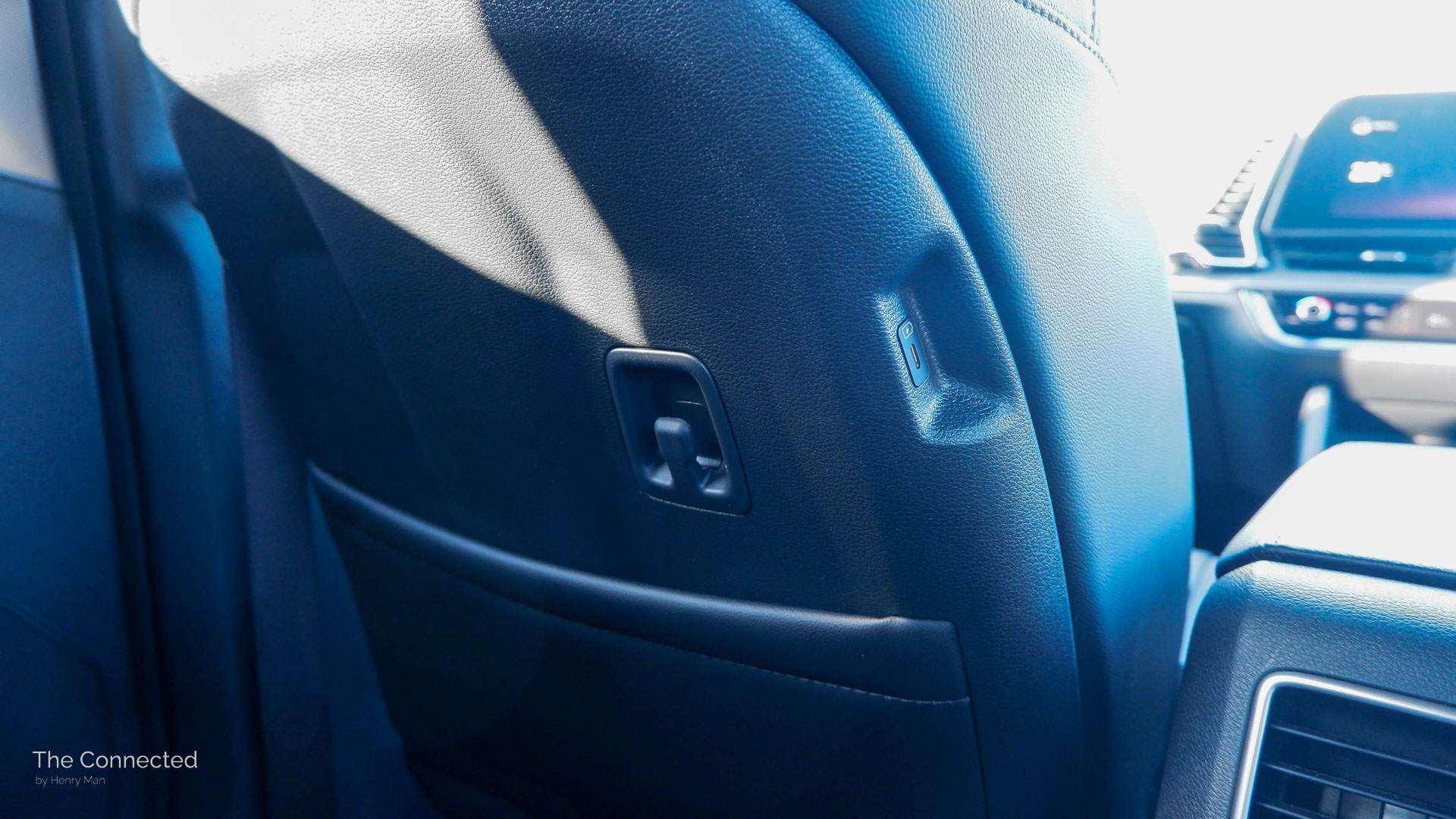
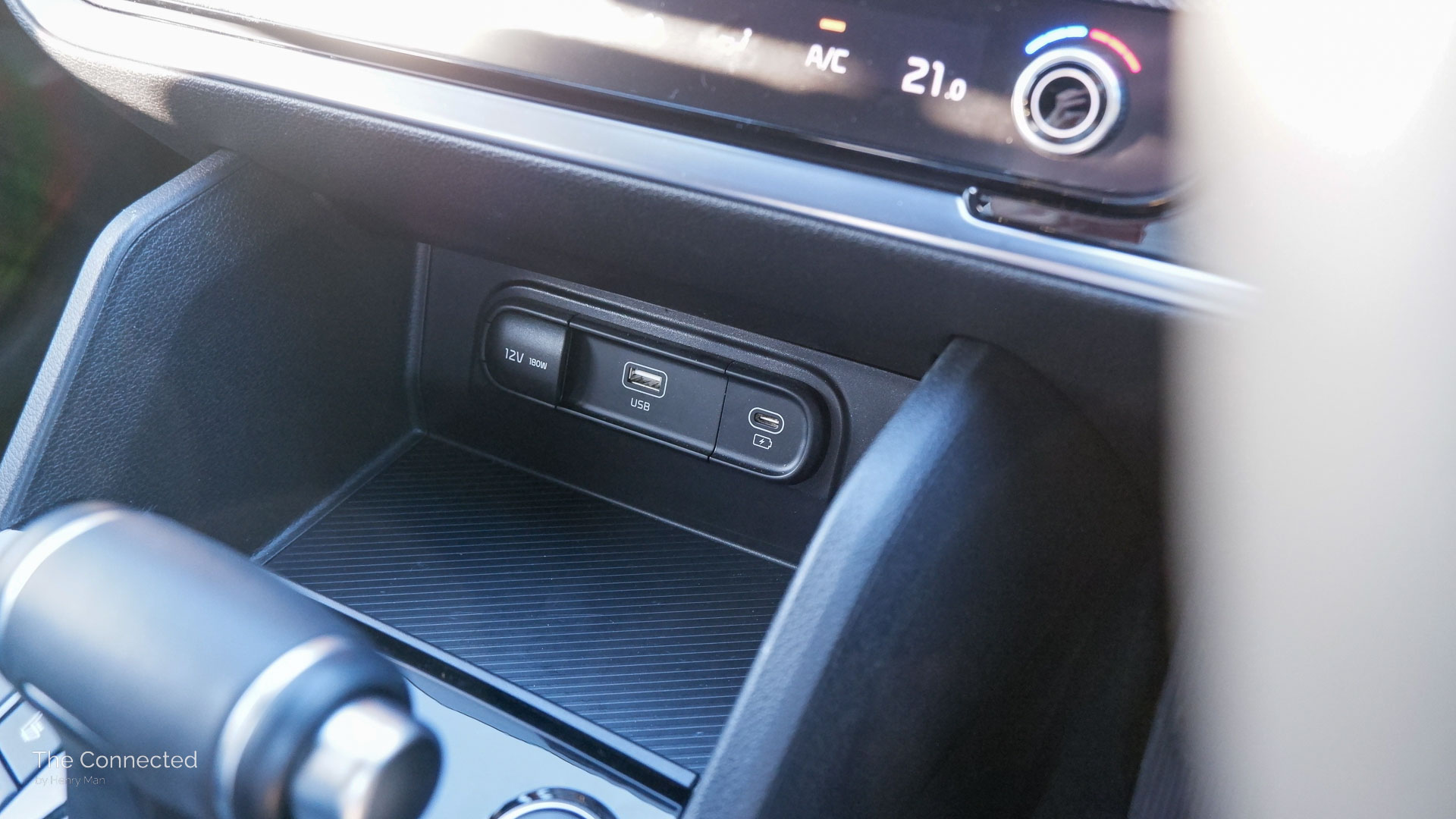
Other practical Sportage features include two tucked away ISOFIX child seat anchor points at the outer pews and three top-tethers, a fold-down centre armrest with two cup holders, a storage hole underneath the large rear air vents, seatback pockets, and two accessible USB-C charging ports at the side of the front seats (there’s only one old USB-A standard port at the front).
However, Kia’s sporty design emphasis with the black headliner and dark trims does make the interior feel less airy and spacious than it could be. The full panoramic glass roof is sadly exclusive to the GT-Line.
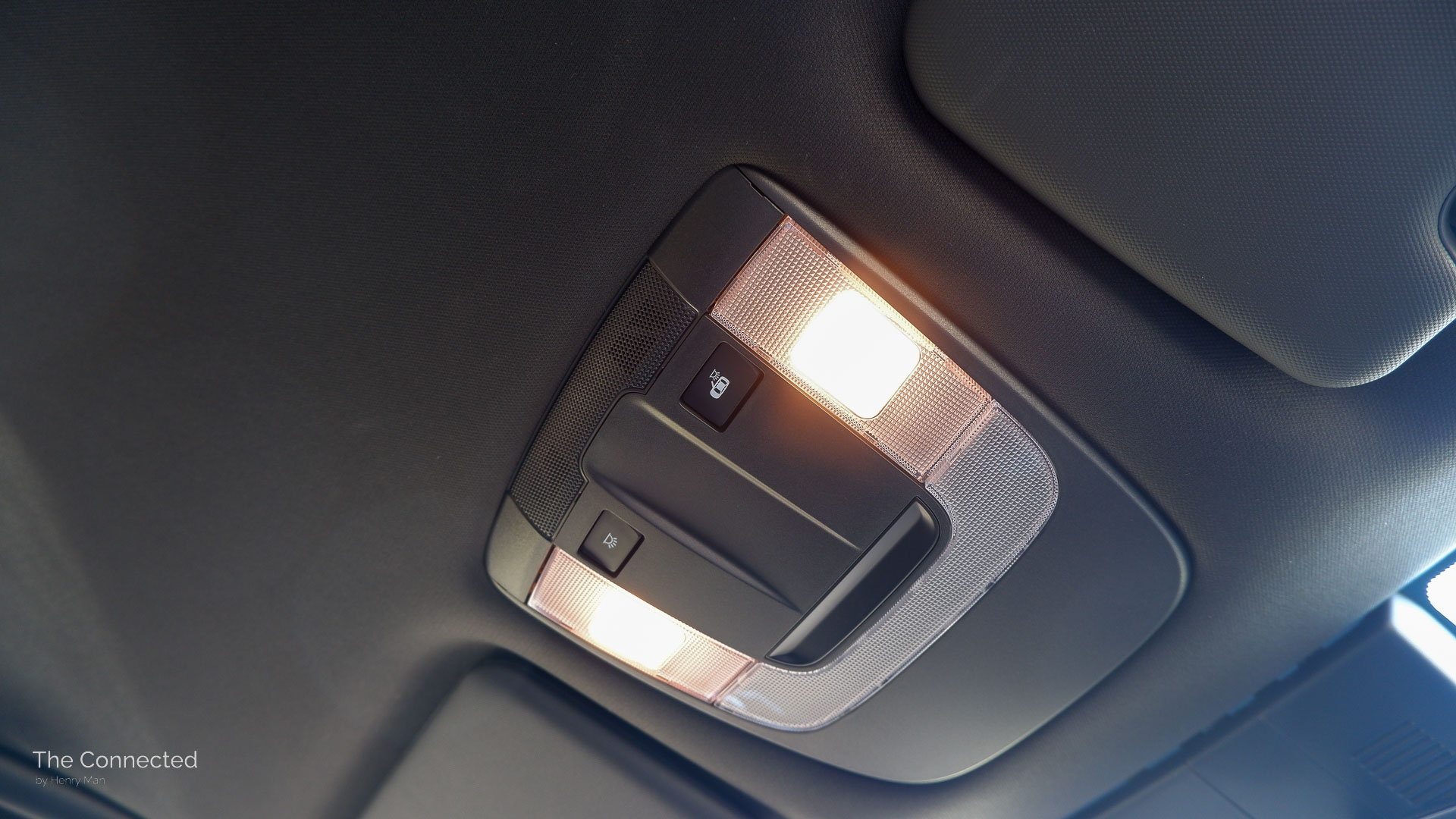
Adding to this, the incandescent interior lights are quite dim. It would make fumbling with child seats at night or in an undercover carpark tricky, for example. So, it’s a shame that this circa-$45K SX+ still misses out on the GT-Line’s LED illumination.
All Sportage models lack a built-in rear window sunshade as found in pricier and larger Hyundai Motor Group SUVs, but the SX+ does gain a rather average tinting intensity for the rear glass.
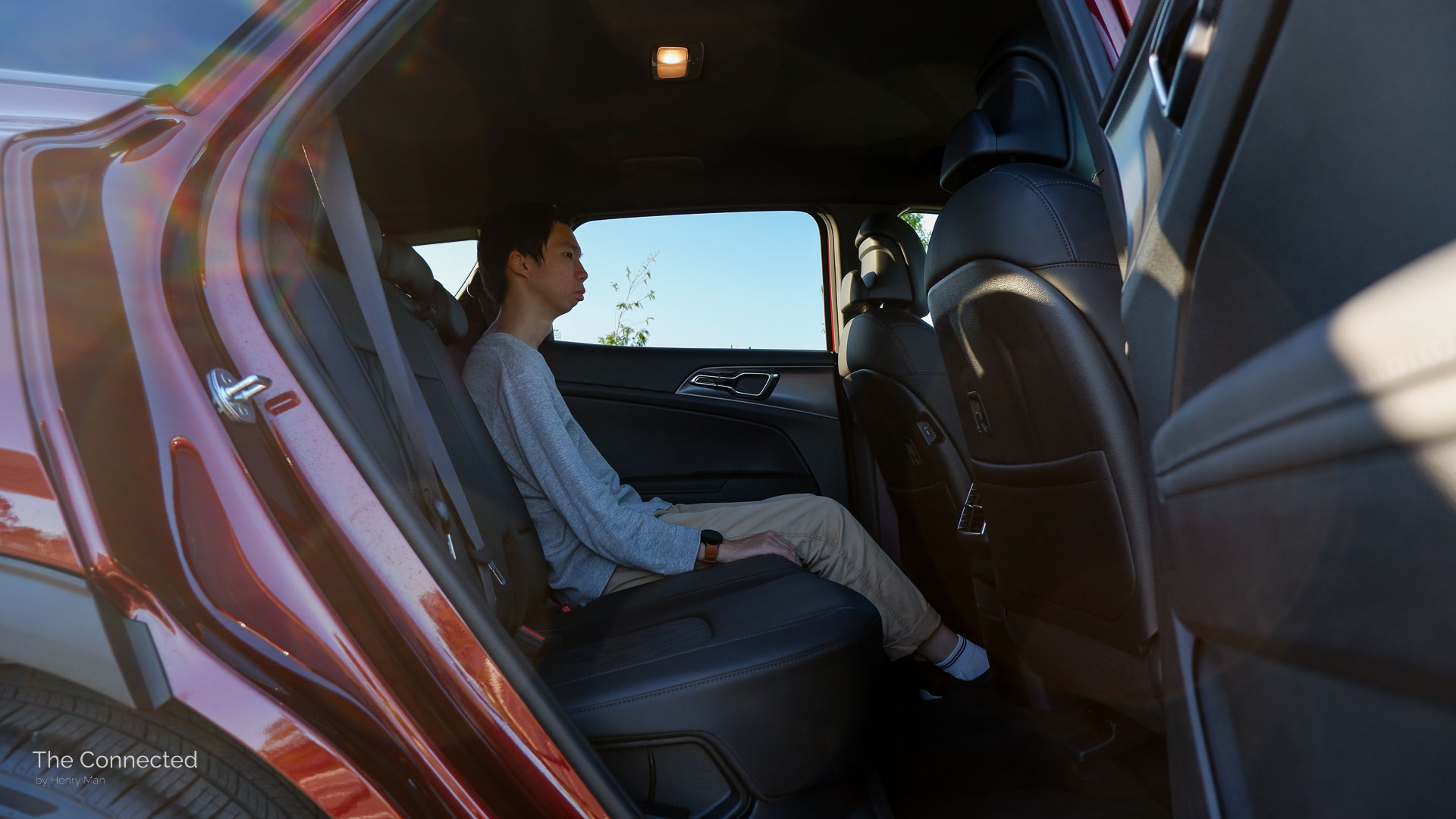
Practical and sporty?
The Sportage straddles between practical and sporty, with a spacious boot and interior space.
But, the dark headliner, interior trims, and gloss black materials can make the interior feel less open, albeit sporty.
Additionally, I found that all door pockets were constricted and could only fit soft plastic bottles. The centre console isn’t as large as bigger models, such as the Hyundai Santa Fe, but there’s a nifty pop-out mechanism for the two cup holders to liberate more tray room when needed. The armrest cubby and glovebox are a decent size.
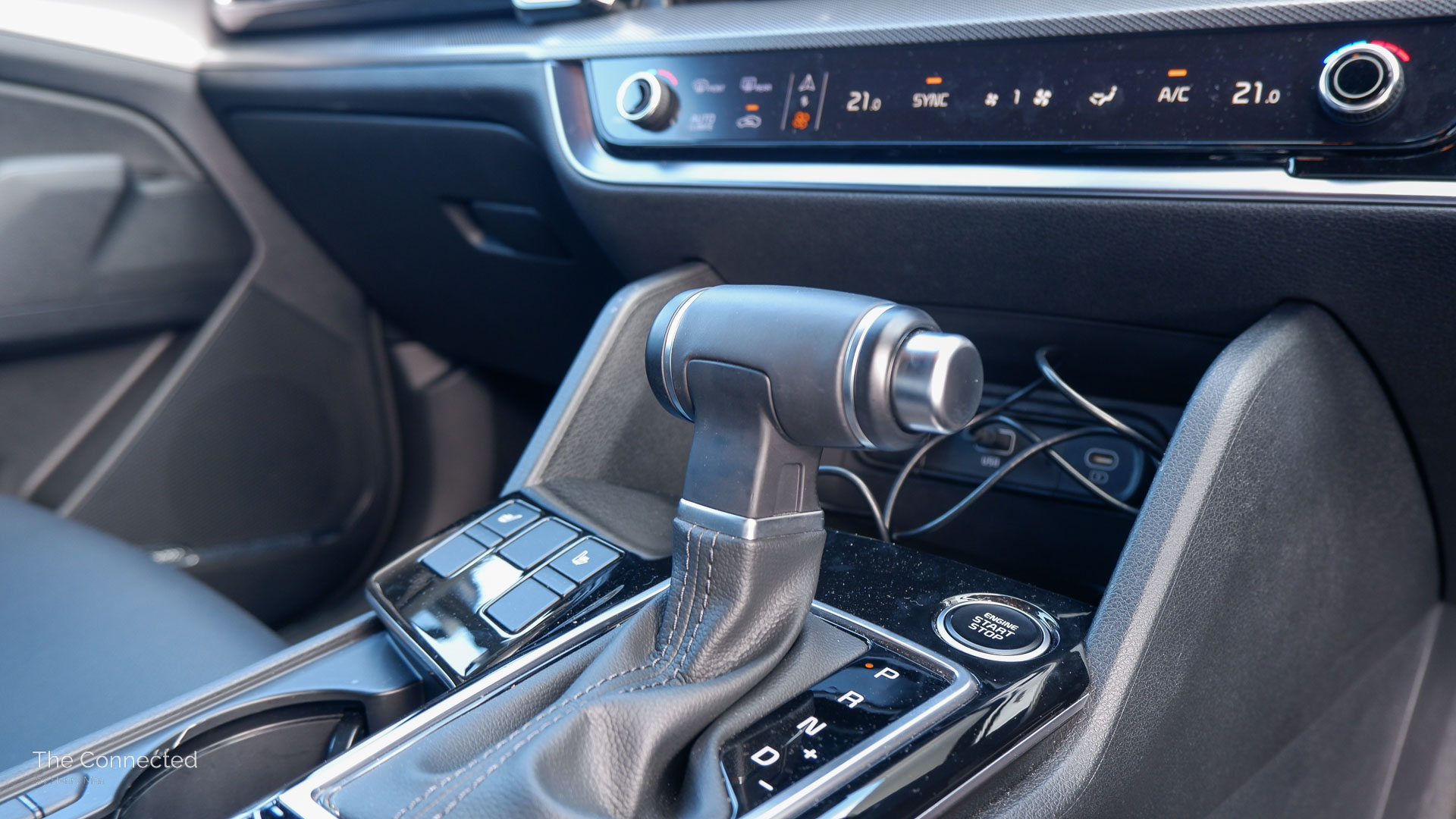
There’s a deep storage tray in front of the gear shifter home to USB-A, USB-C, and 12-volt power ports.
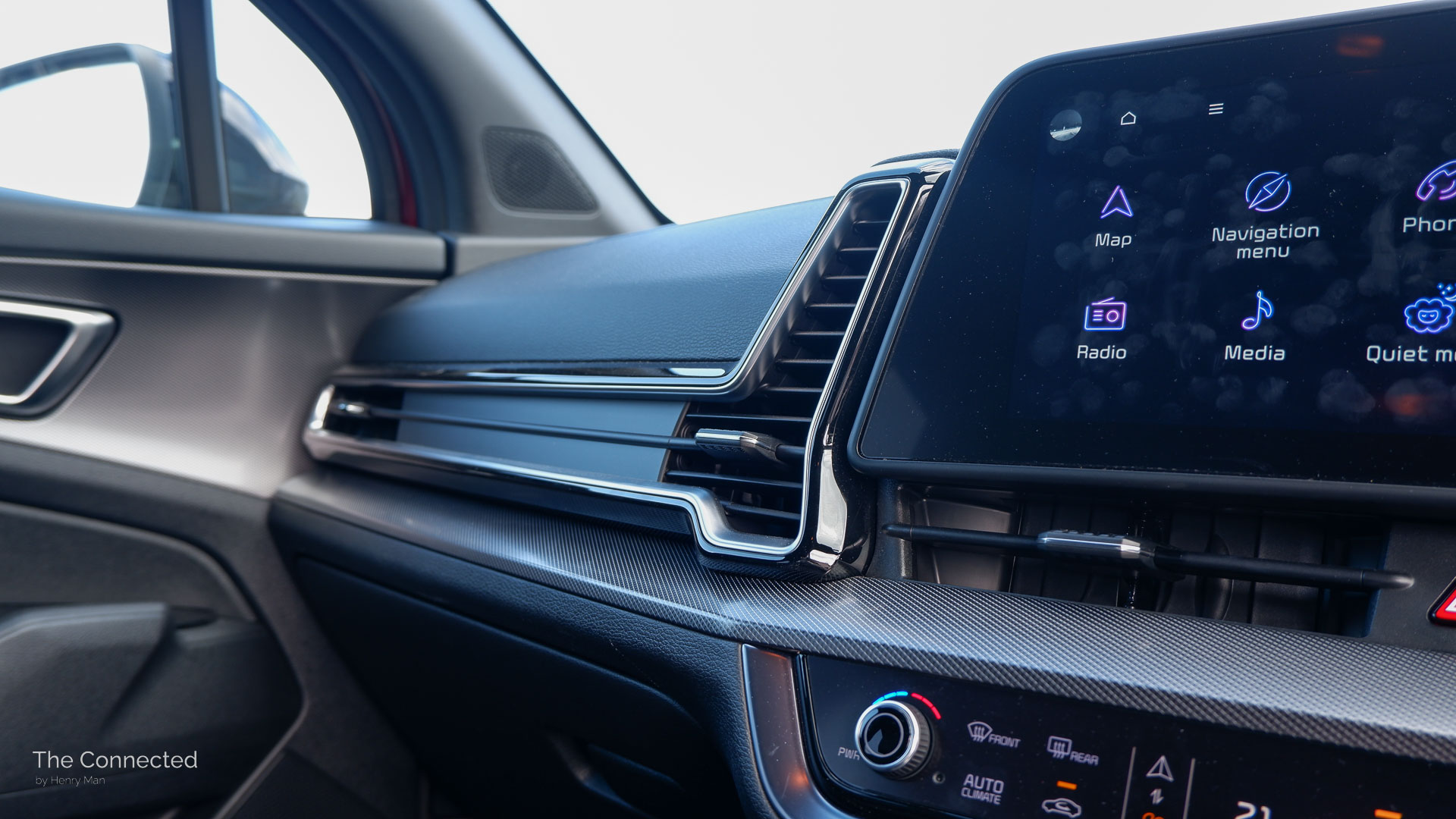
I was surprised at the Sportage’s large air vents. While they don’t stretch as tall as the vent frame suggests, it’s still sizable with the front passenger side faced with three separate vents – and even has its own door lock/unlock switch.
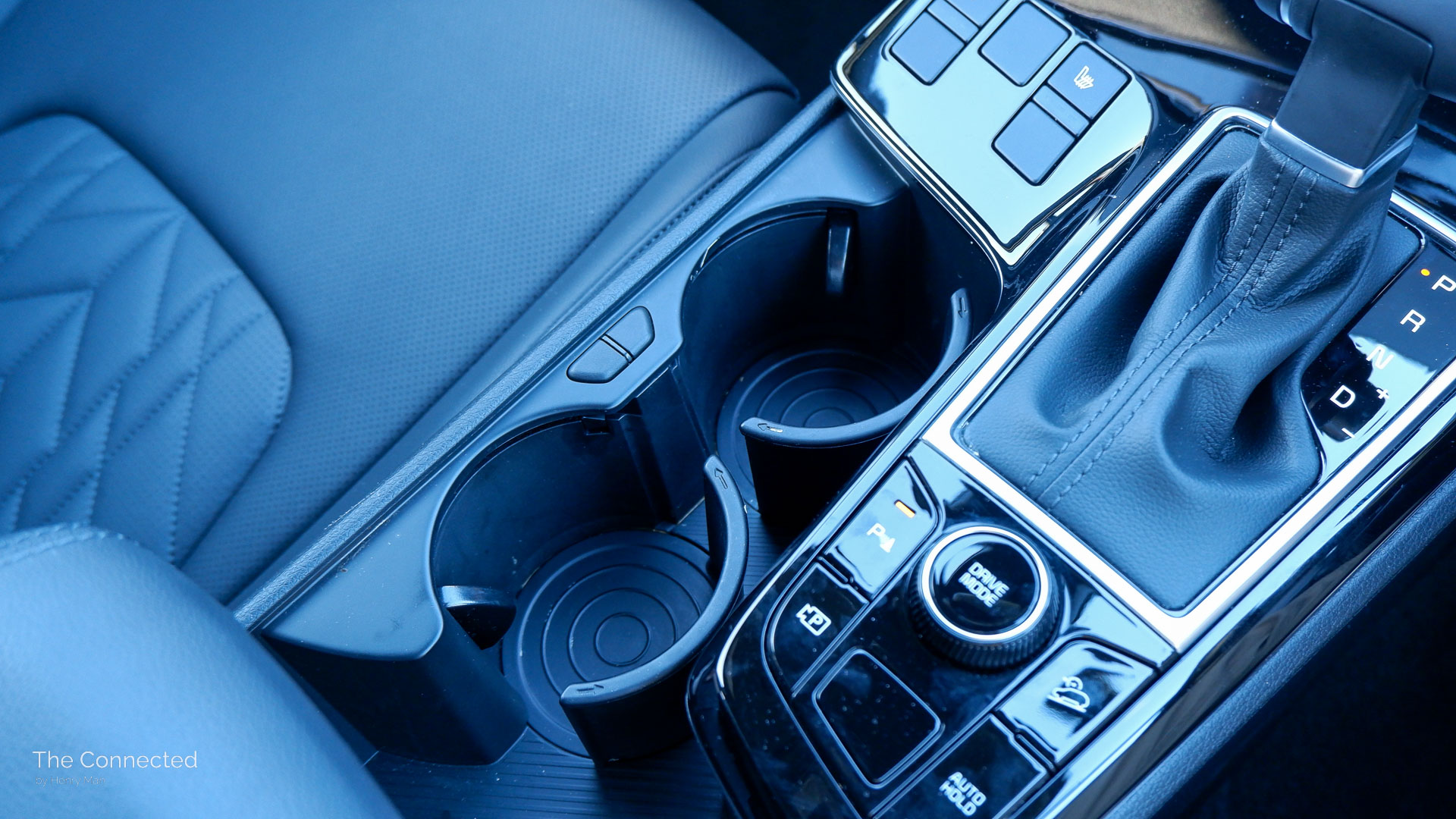
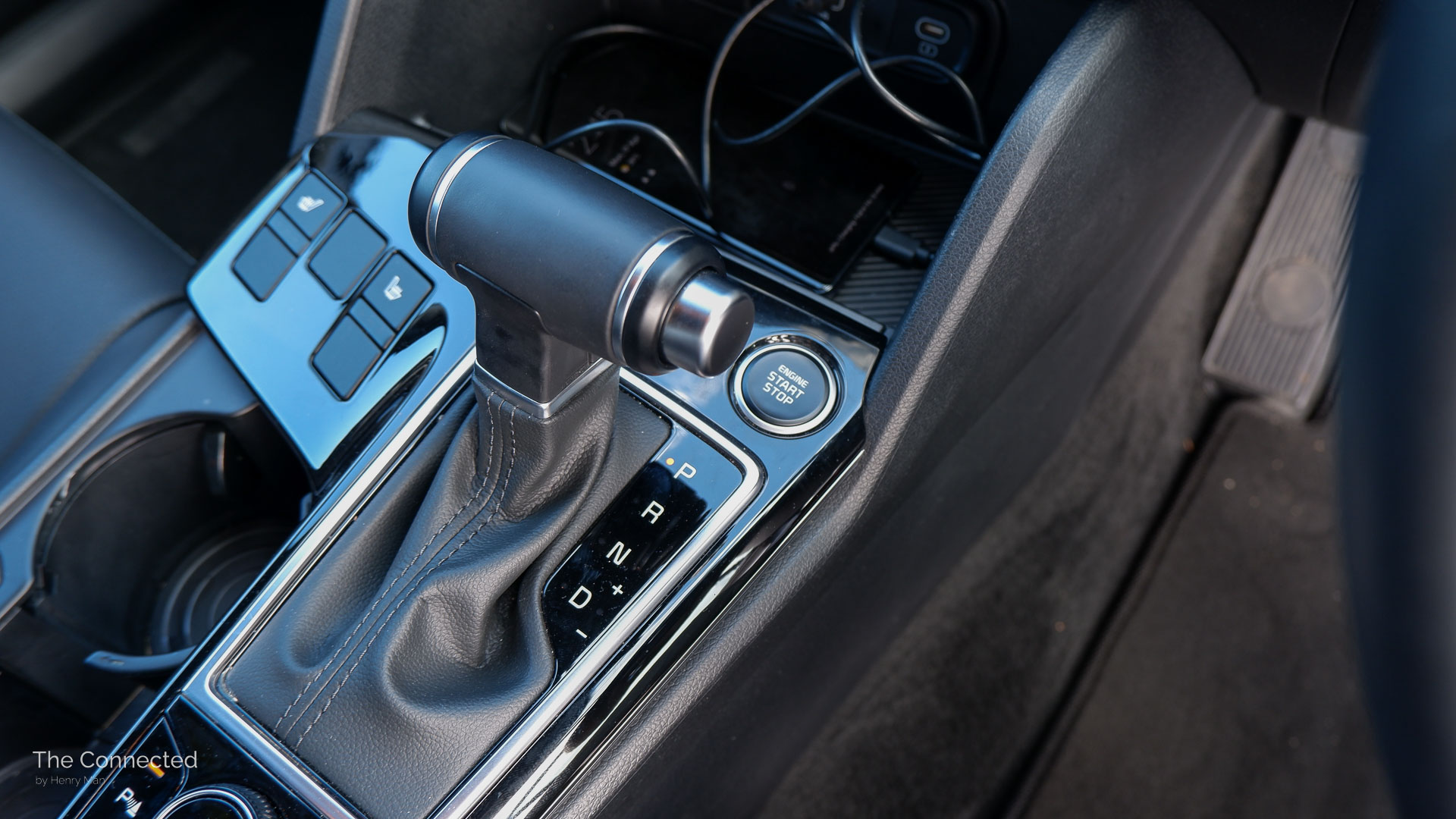
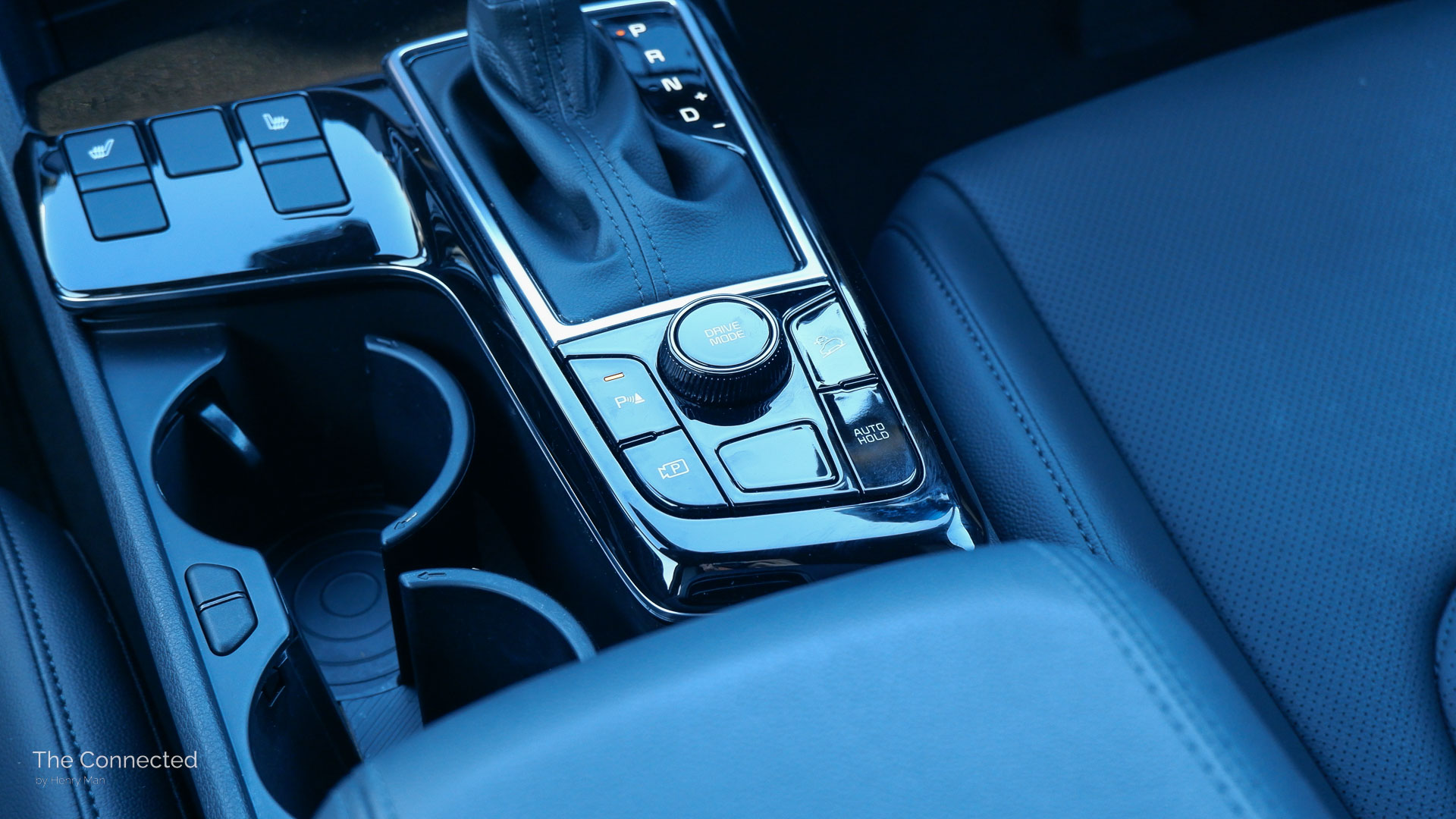
I also liked the aeroplane-like physical gear shifter, which doesn’t protrude too much and was satisfying to hold. The GT-Line has an electronic dial shifter, which isn’t necessary given it doesn’t result in any more space for the centre console.
Critically, the gloss black surfaces across the centre console, air vent surrounds, and window switches (which drops down into the interior door grab) are easy to smudge with fingerprints, attract dust and micro scratches over time. It’s another consequence of Kia’s sporty design approach.
This SX+ model exclusively features black quilted artificial leather seats, which felt supportive and comfortable, with three-stage heating for the front, driver’s seat electric adjustment and two-way lumbar support.
But, the GT-Line is more appropriate for Australian summers due to the use of partial artificial suede materials and a ventilation cooling function. The flagship model also addresses the lack of driver’s seat memory function and auto dip-down wing mirrors when reversing.
Technology.
2023 Kia Sportage SX+ tech features:
| 12.3-inch touchscreen with built-in maps, AM/FM/DAB radio | Eight-speaker Harman Kardon Premium audio system |
| Wired Apple CarPlay and wired Android Auto | Proximity key with push button start |
| 4.2-inch LCD driver display with basic digital instruments | Remote engine start |
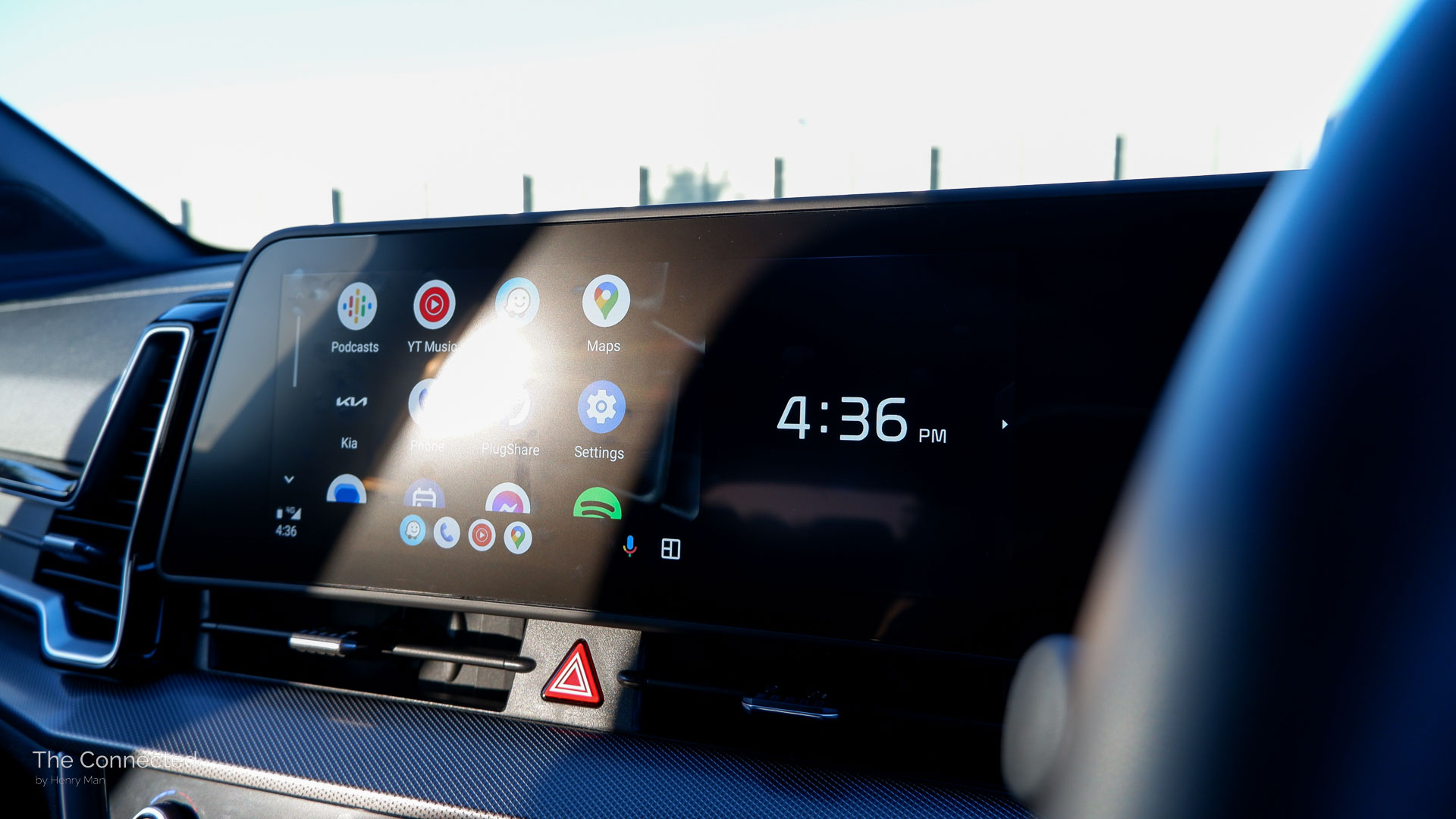
The Kia Sportage SX+ features a clear and responsive 12.3-inch touchscreen running the Hyundai group’s own operating system. Besides the fairly clunky-to-use built-in maps, it’s intuitive to use with Apple CarPlay and Android Auto smartphone projection via the single USB-A port in the cabin.
That’s in contrast to cheaper S and SX variants, which have a smaller 8.0-inch unit without built-in maps – and therefore benefit from wireless smartphone projection. Only the GT-Line variant has a Qi wireless charging pad, though, so you’ll need to plug in your phone eventually on those models to avoid a flat phone battery.
The lack of a wireless charging pad is not an annoying omission on the SX+ since a cable is required for connecting Apple CarPlay or Android Auto, which is more reliable anyway. Of course, it would be ideal to have cable-free connectivity on the larger touchscreen, but alas due to an ongoing dispute with one technology company, it still isn’t possible.
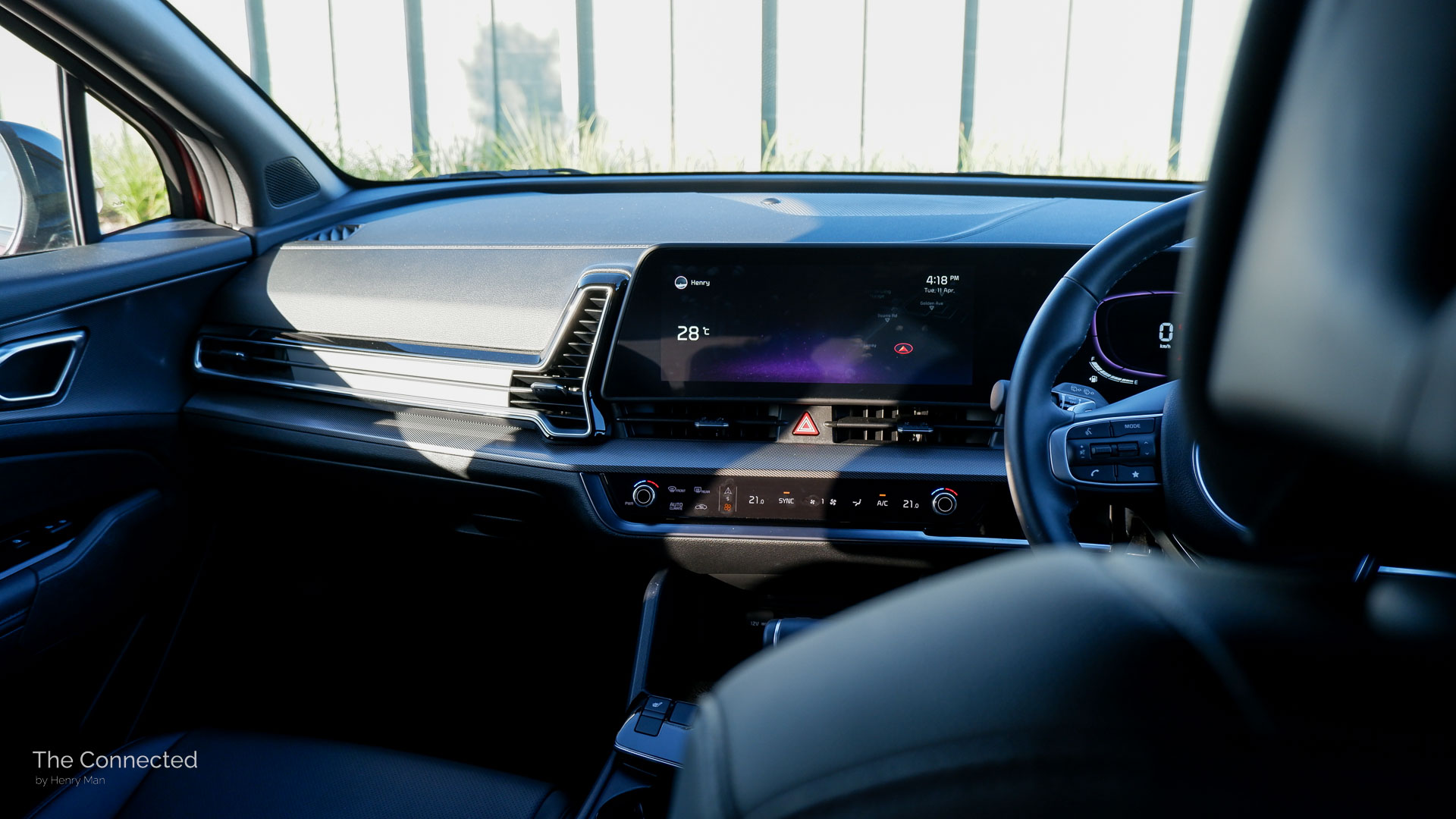
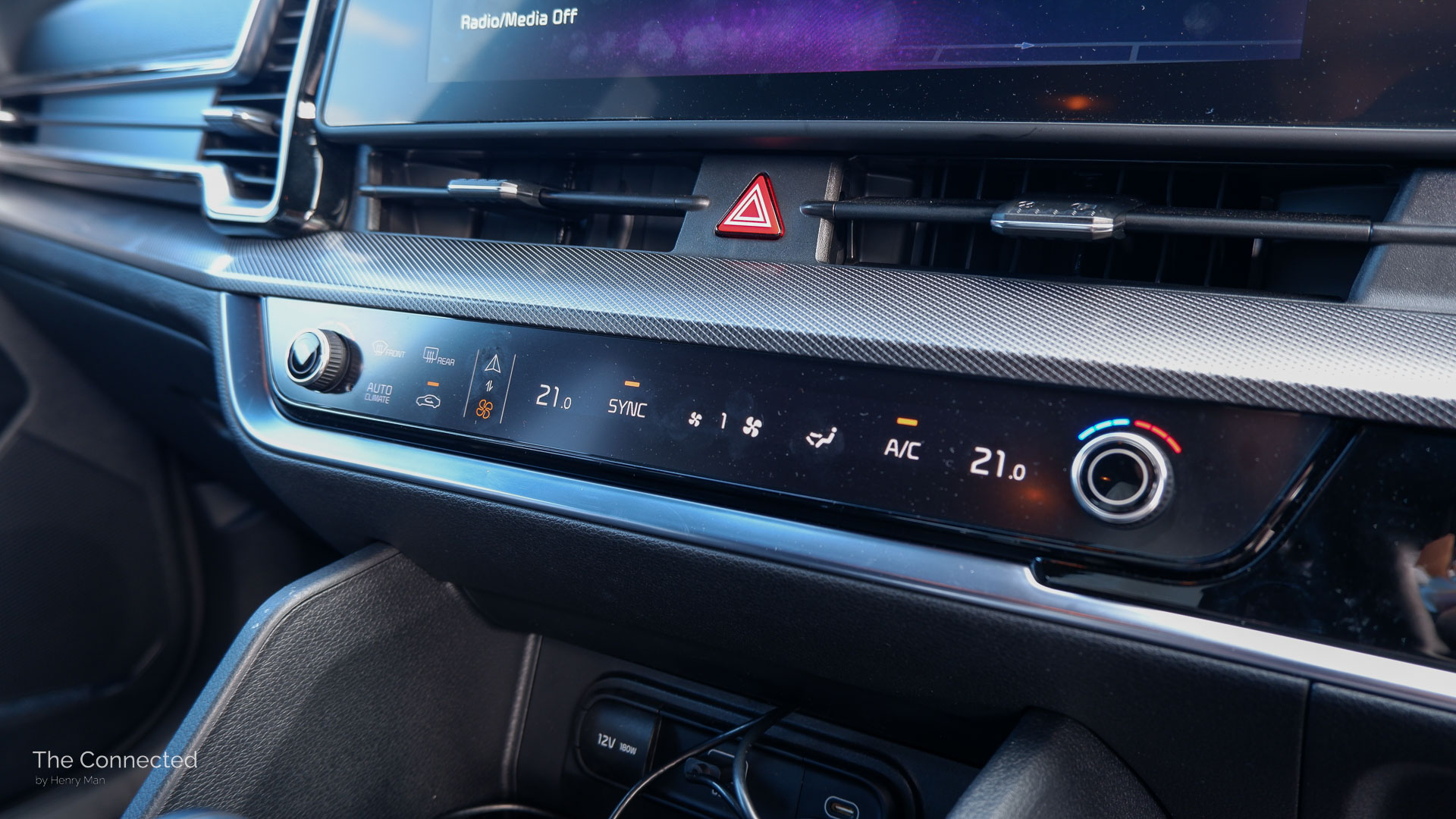
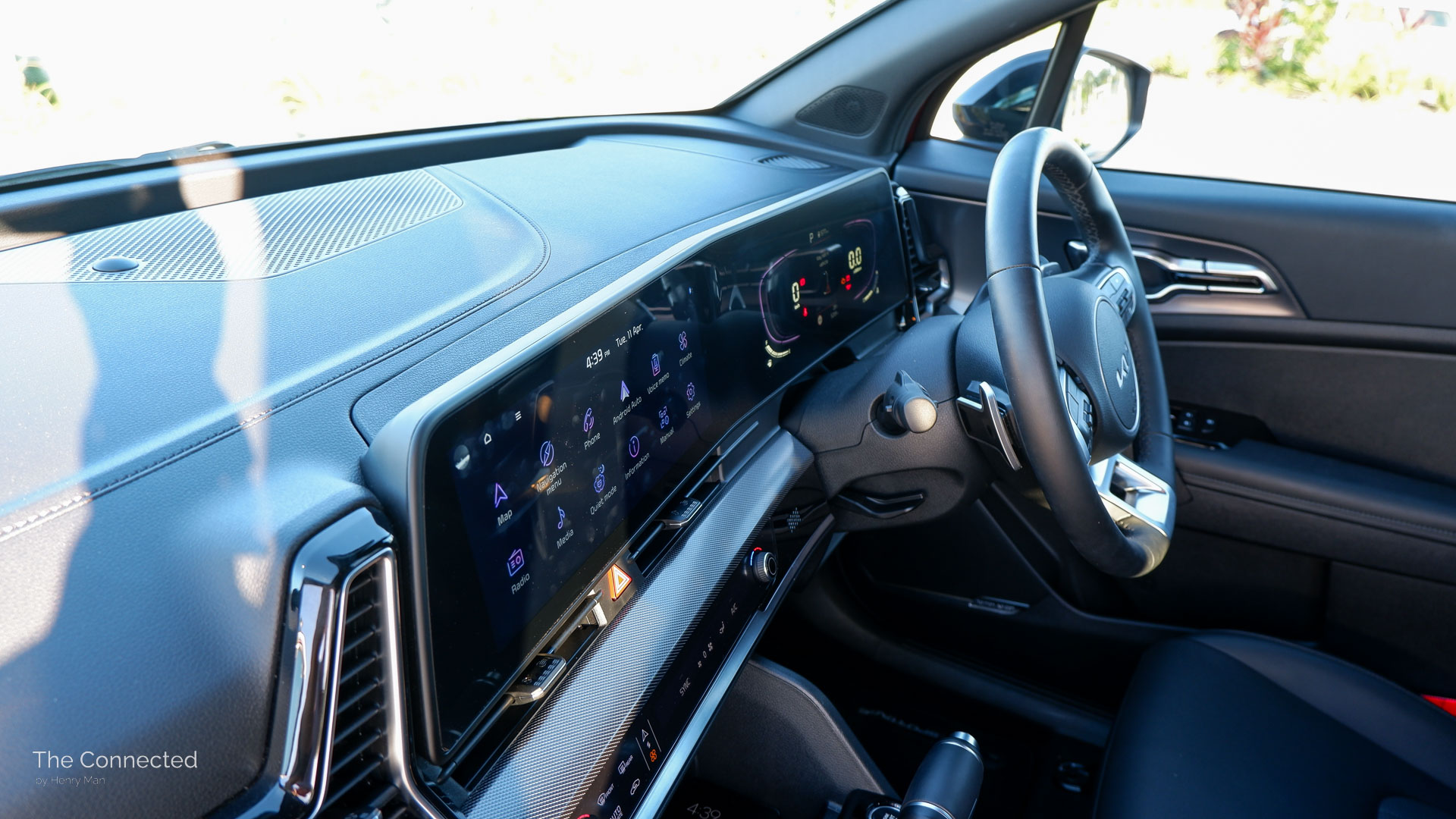
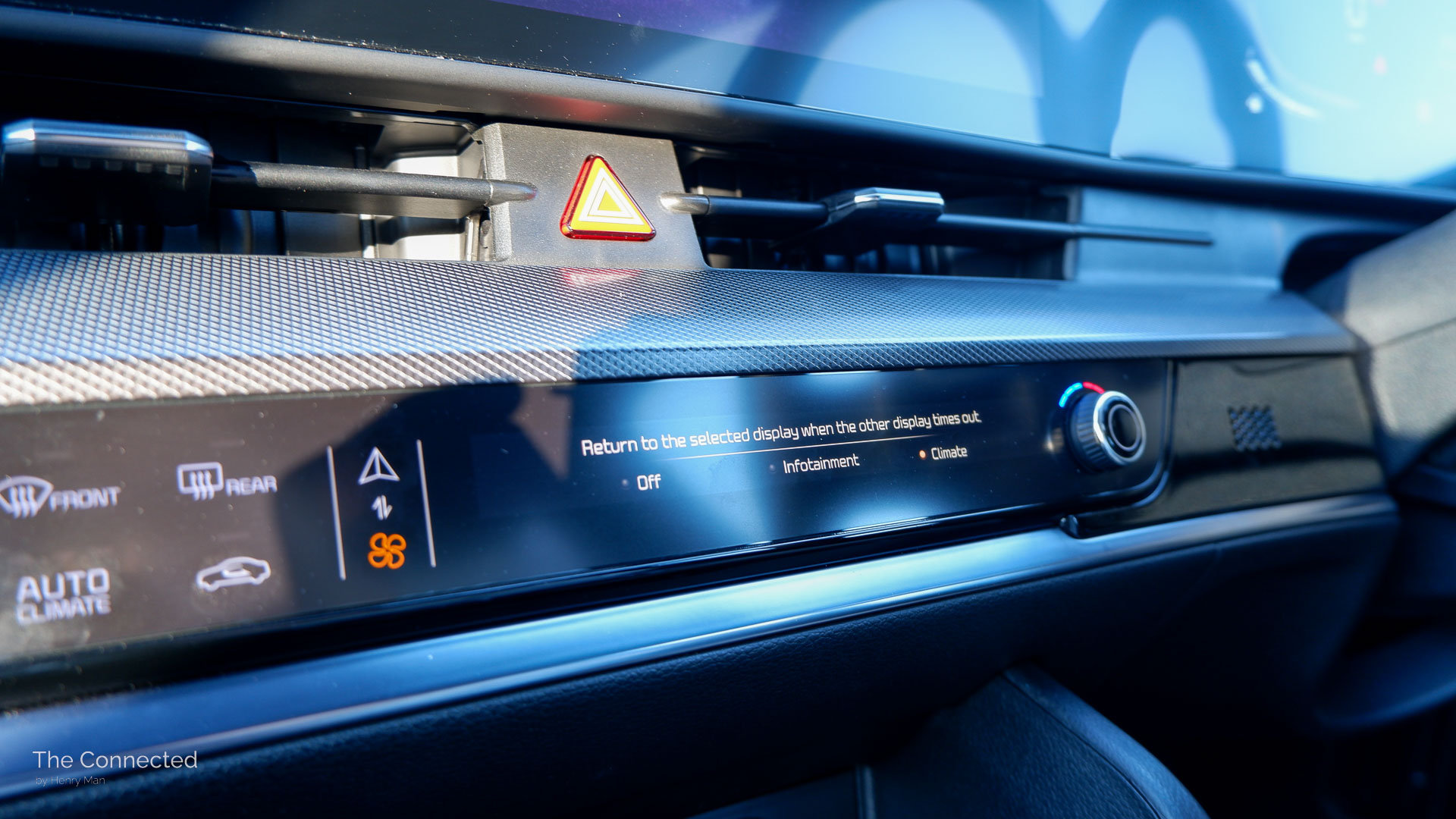
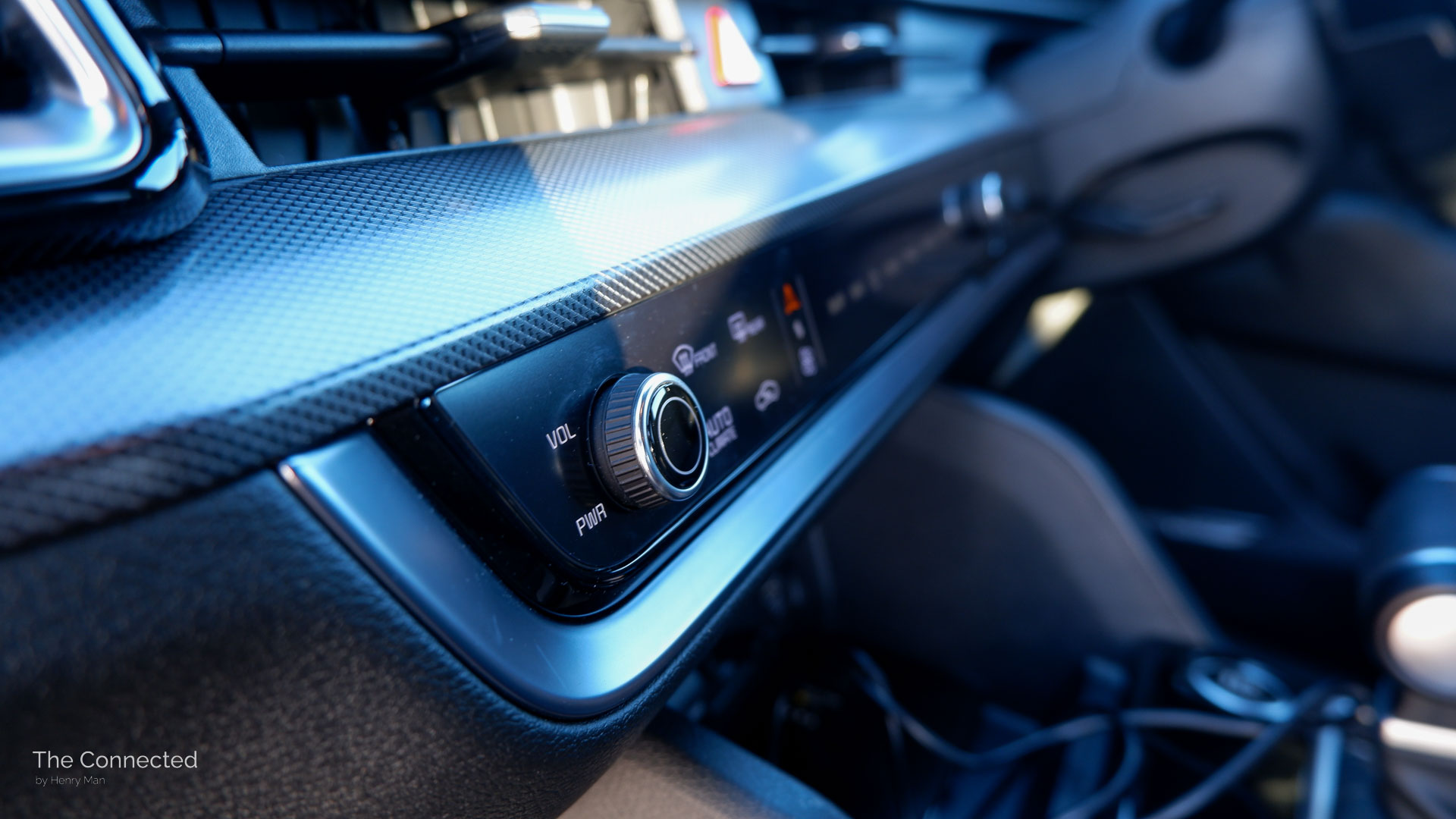
Underneath the central screen is a multi-function touch panel that switches between climate and media/infotainment controls as per the Kia EV6 electric car. While it looks good in images, it isn’t as practical to use everyday with small touch targets and tiny, sensitive turning knobs that can easily change the air-conditioning from 17- to 27-degrees in a quick flick.
Switching between the panels can also be a hassle, requiring two taps instead of one, but thankfully Kia does offer a default setting to automatically switch back to a screen after timing out. I mostly left it on the climate screen, as volume and skipping media can be done via the physical switches on the steering wheel.
Strangely, you can’t turn off the air vents by pressing the fan decrease button on the climate control strip (the intuitive way); instead you need to press the left power knob. I also found that, while the screen is matte-coated to reduce fingerprint marks, text and buttons can be obscured by golden hour sunlight depending on the angle.
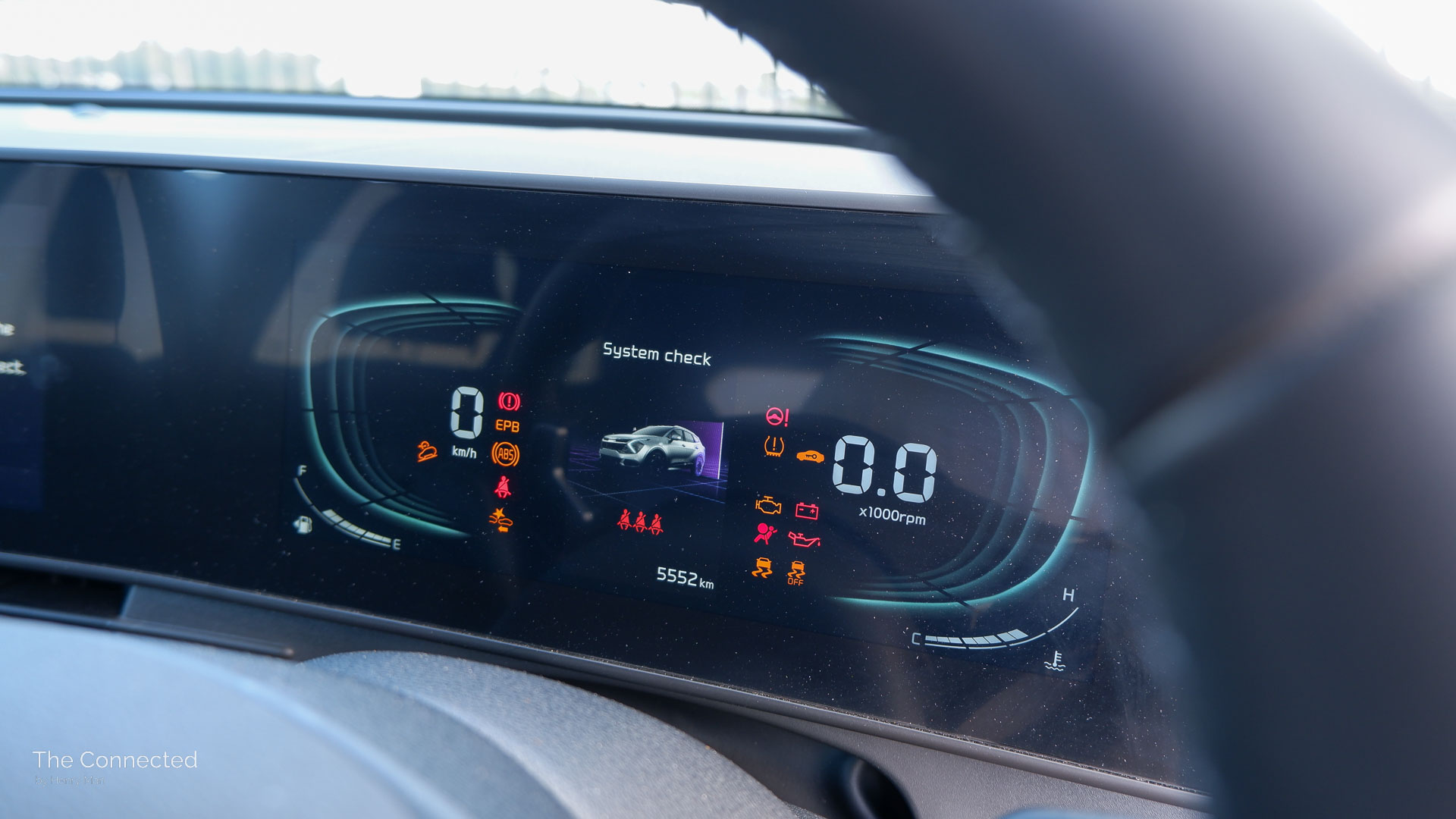
Furthermore, this SX+ still misses out on the full digital 12.3-inch driver instruments as per the flagship GT-Line, but it isn’t a necessary nor useful addition.
Better basic.
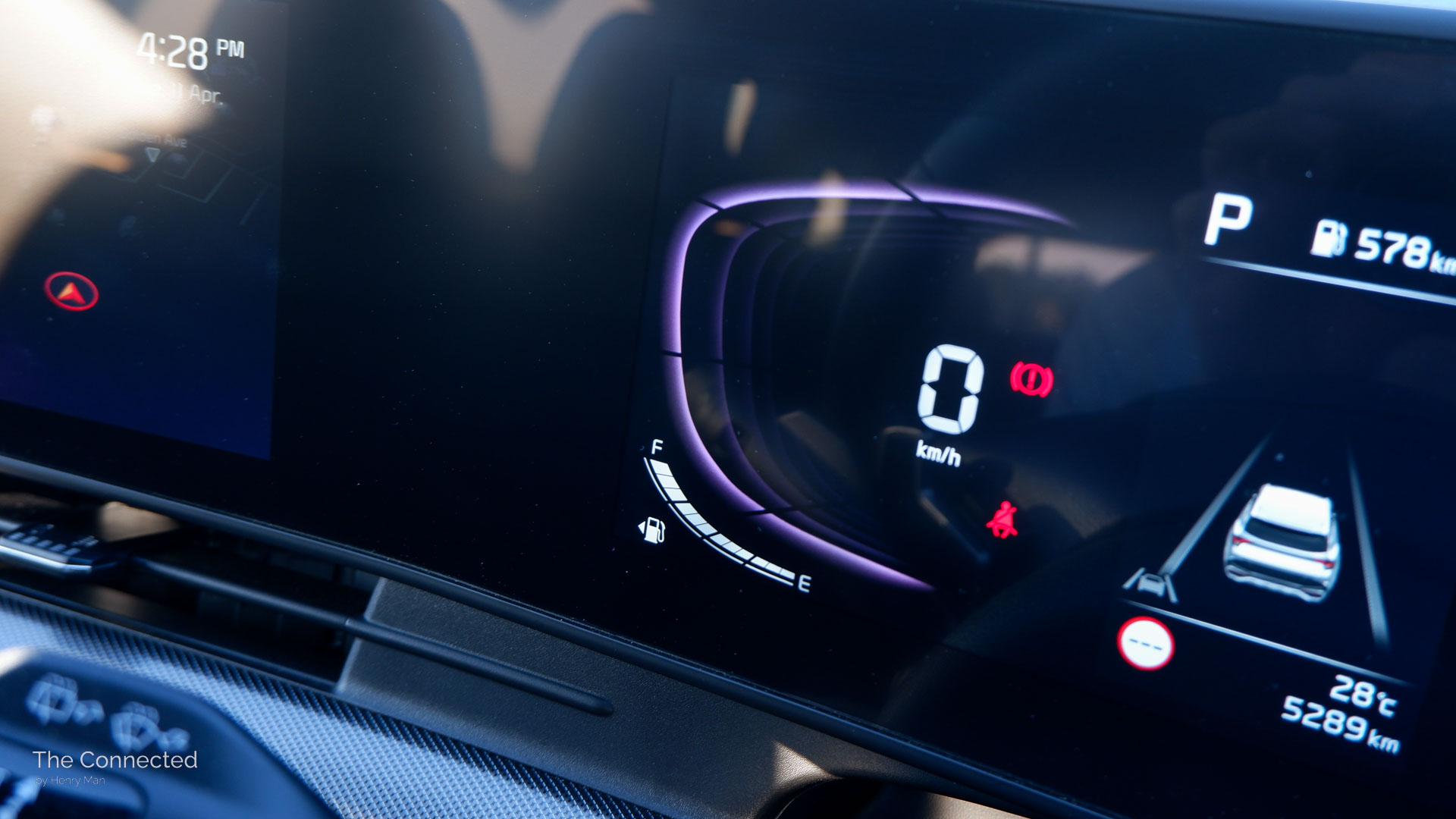
I was surprisingly impressed by the ‘basic’ driver instrument cluster. It offers the same functionality as the large full screen on the GT-Line, and with a clever design implementation.
The 4.2-inch display integrates well and certainly doesn’t look sub-par or ‘cheap’, so you’re not missing much by choosing a more affordable Sportage variant.
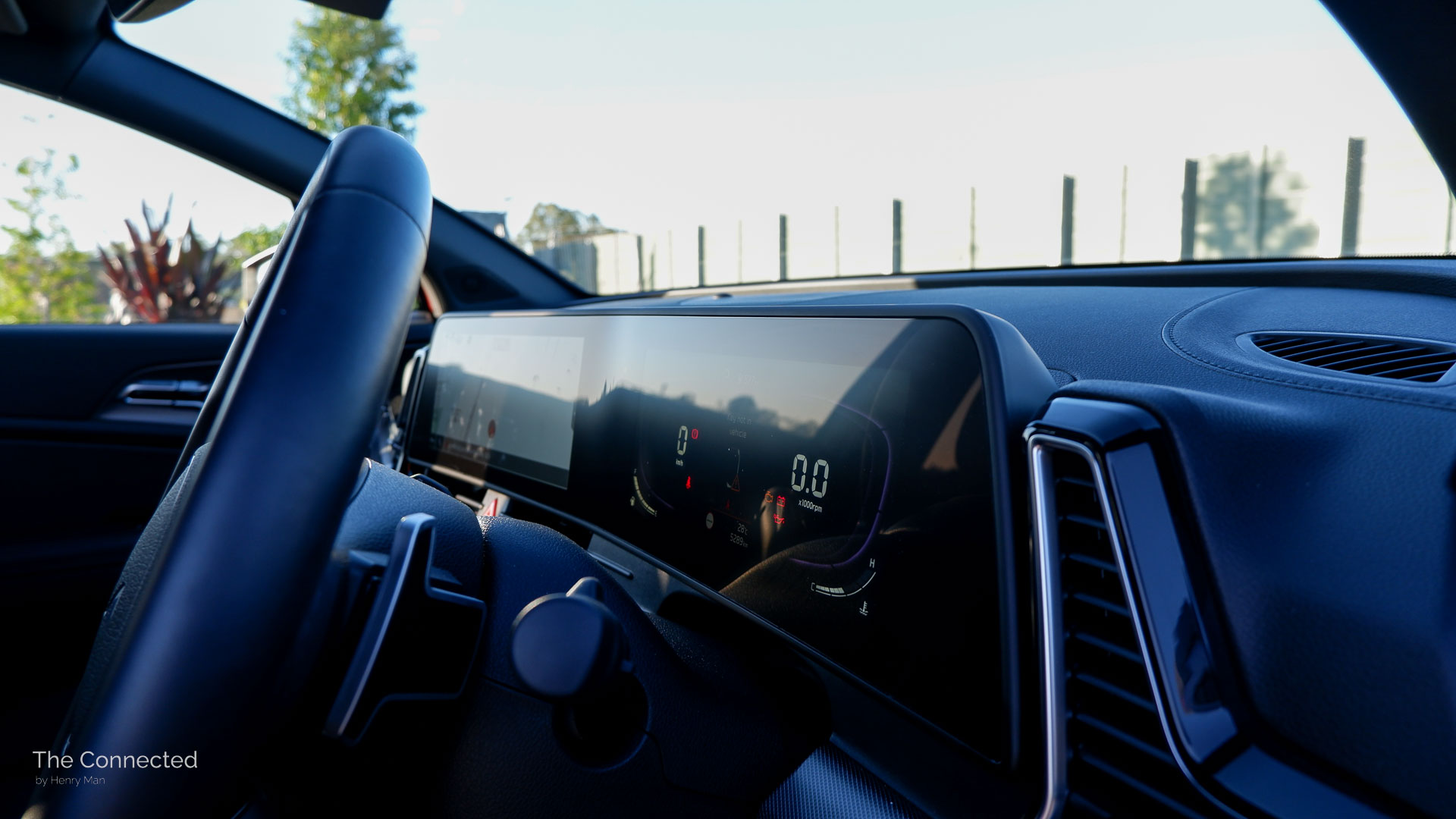
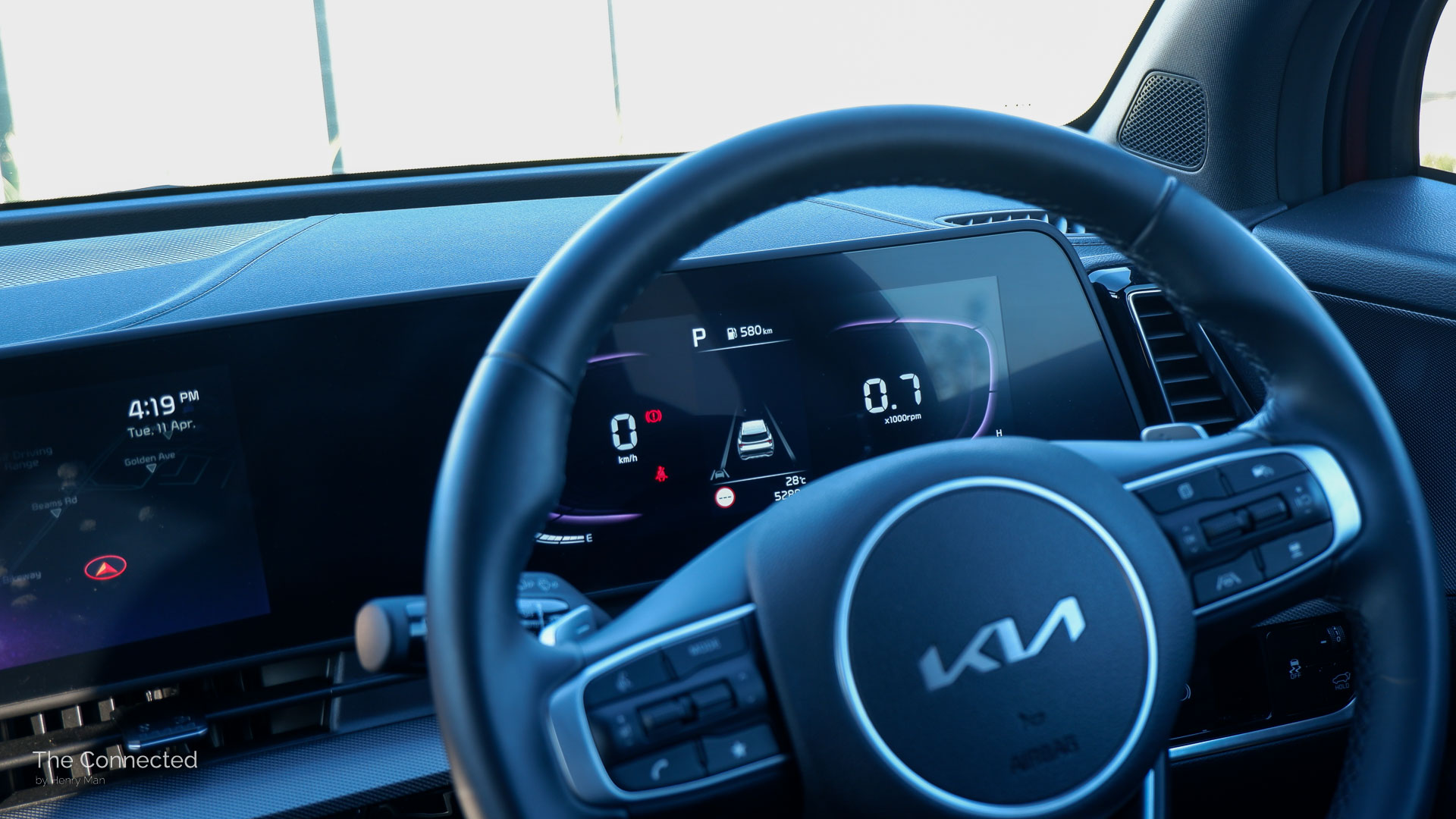
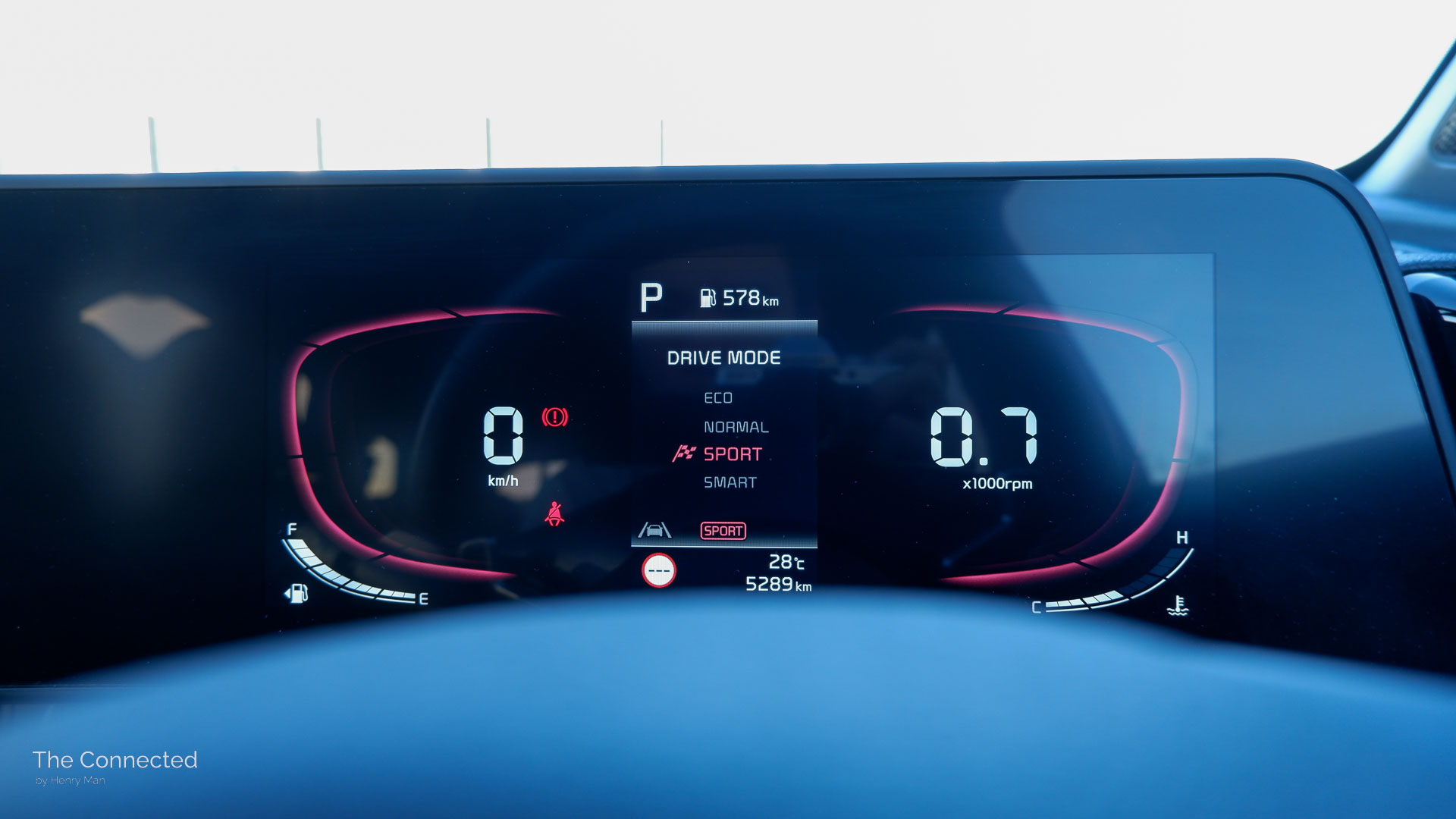
The ‘basic’ cluster still has a 4.2-inch display in the middle, while it’s flanked by dot-matrix LEDs on each side. It offers the same functionality as the larger screen, including the all-important digital speed readout, and integrates very well – it’s difficult to discern that it has a small screen unless you look very closely.
A spectrum changes colour depending on the drive mode and illuminates more of the wave-like pattern when you rev the engine more. It even flashes red for rear cross-traffic and safe exit warnings on the respective side.
If you drive regularly at night, then this would suit better given that the full-screen driver instruments on the GT-Line can be too glaring even when on the lowest brightness setting.
Unfortunately, while the Kia Connect services and smartphone app is rolling out to the South Korean carmaker’s models, such as the Niro and Seltos small SUVs, it will be some time until the Sportage gets it.
The eight-speaker Harman Kardon system was acceptable, but didn’t sound outstanding compared to the identically-branded setup in the Polestar 2 electric car.
Safety.
2023 Kia Sportage SX+ safety features:
| Front auto emergency braking (AEB) with car/pedestrian/cyclist/junction detection | Rear view camera |
| Blind-spot assist | Front and rear parking sensors |
| Rear cross-traffic assist | Auto dimming rear view mirror |
| Lane keep and lane centring assist | LED combination head- and tail-lights |
| Adaptive cruise control | Multifaceted reflector (MFR) headlights |
| Safe exit warning | Auto high beam assist |
| Rear occupant alert (basic type) | LED front fog lights |
The Kia Sportage SUV has achieved the maximum five-star ANCAP safety rating under the 2022 testing criteria.
All models feature most active safety assistance technologies as standard, with the exception of base manual transmission S and SX variants.
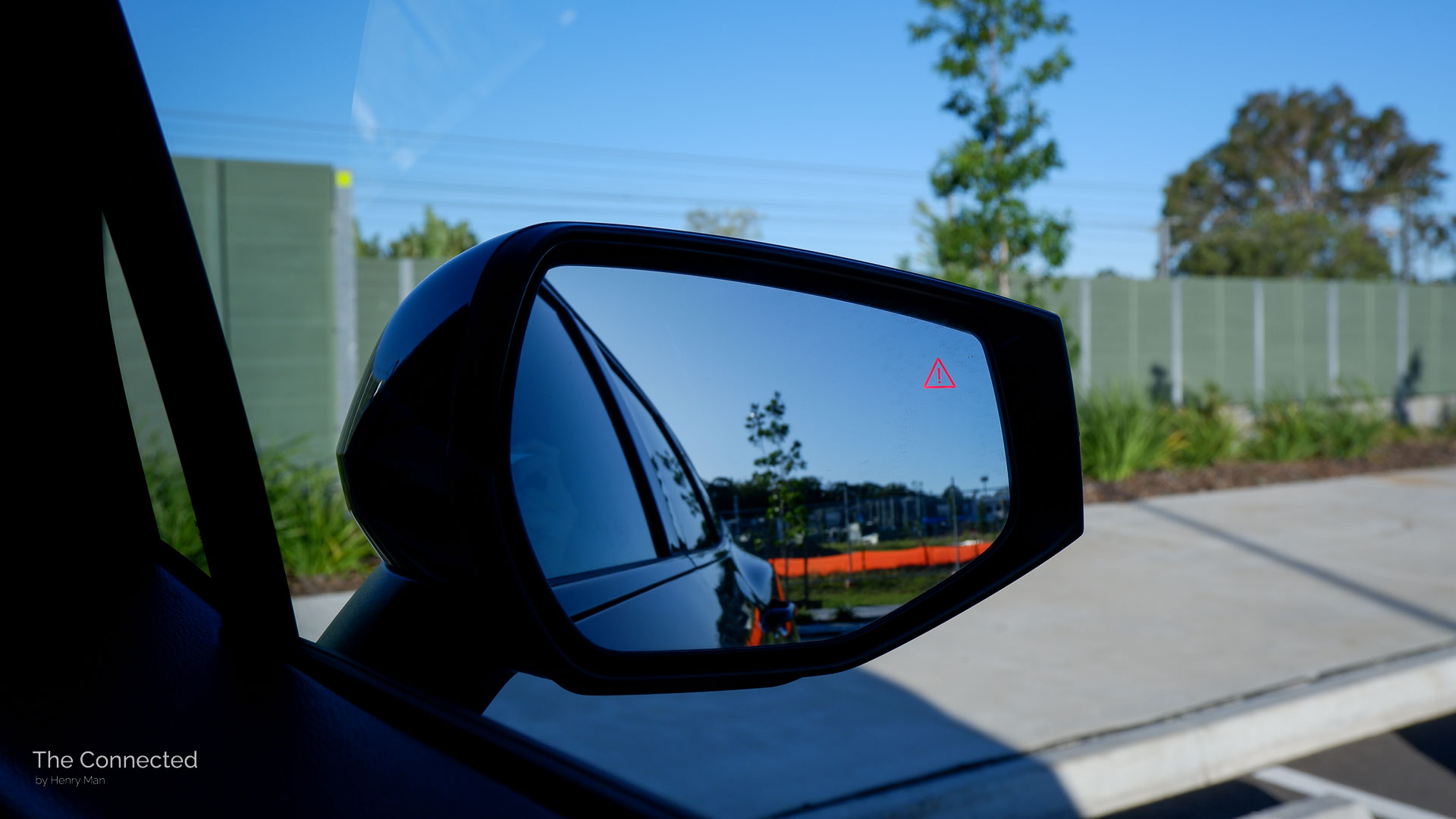
Unfortunately, the 360-degree camera system, rear AEB, and blind-spot cameras are exclusive to the GT-Line – important safety features that should be standard at least in the almost top-spec SX+.
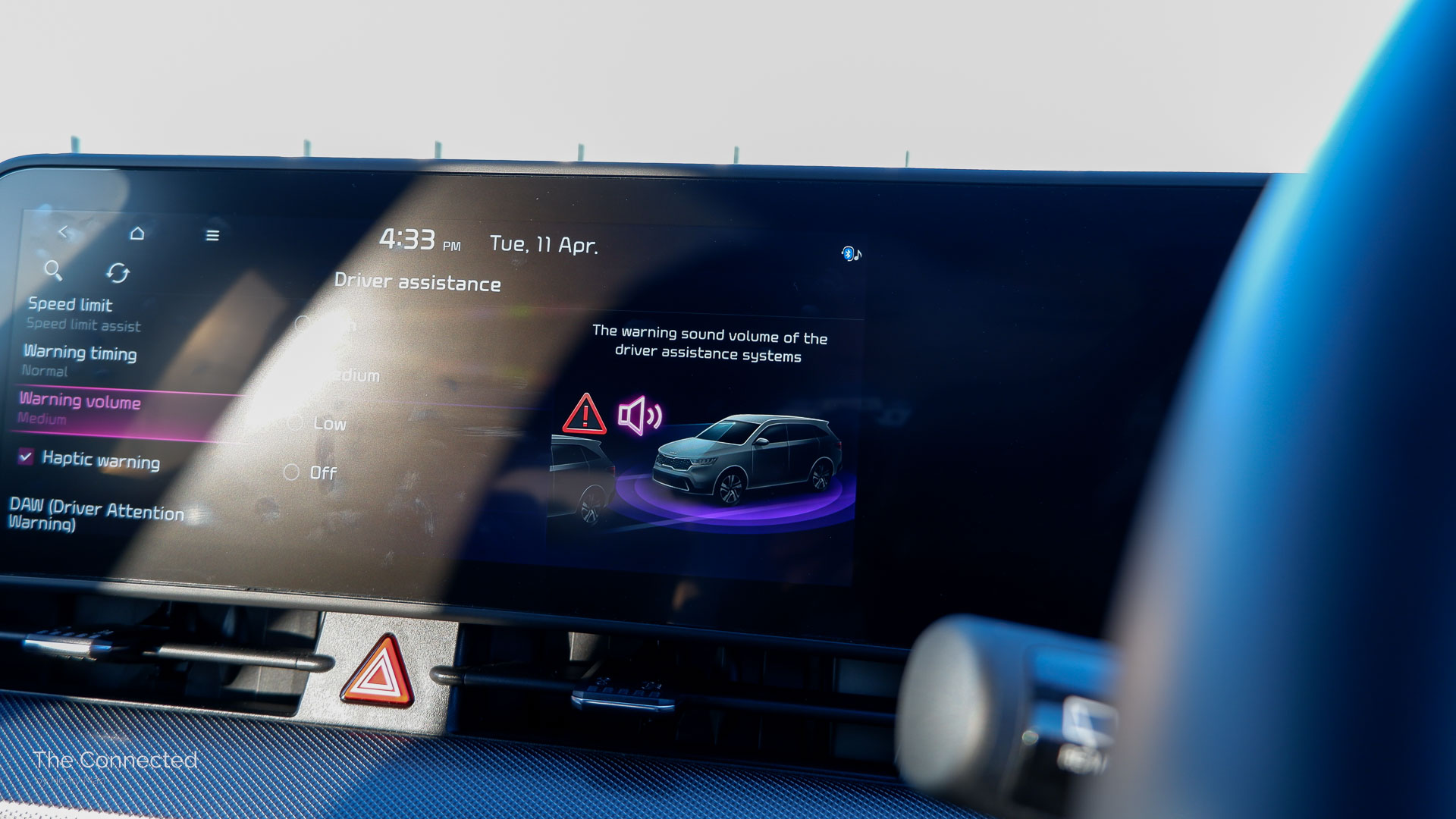
In my experience with this particular vehicle, the adaptive cruise control was jerky at times when accelerating and braking in stop-start traffic – which I haven’t experienced in any Hyundai group vehicle before (and yes, the settings page depicts the larger Kia Sorento SUV).
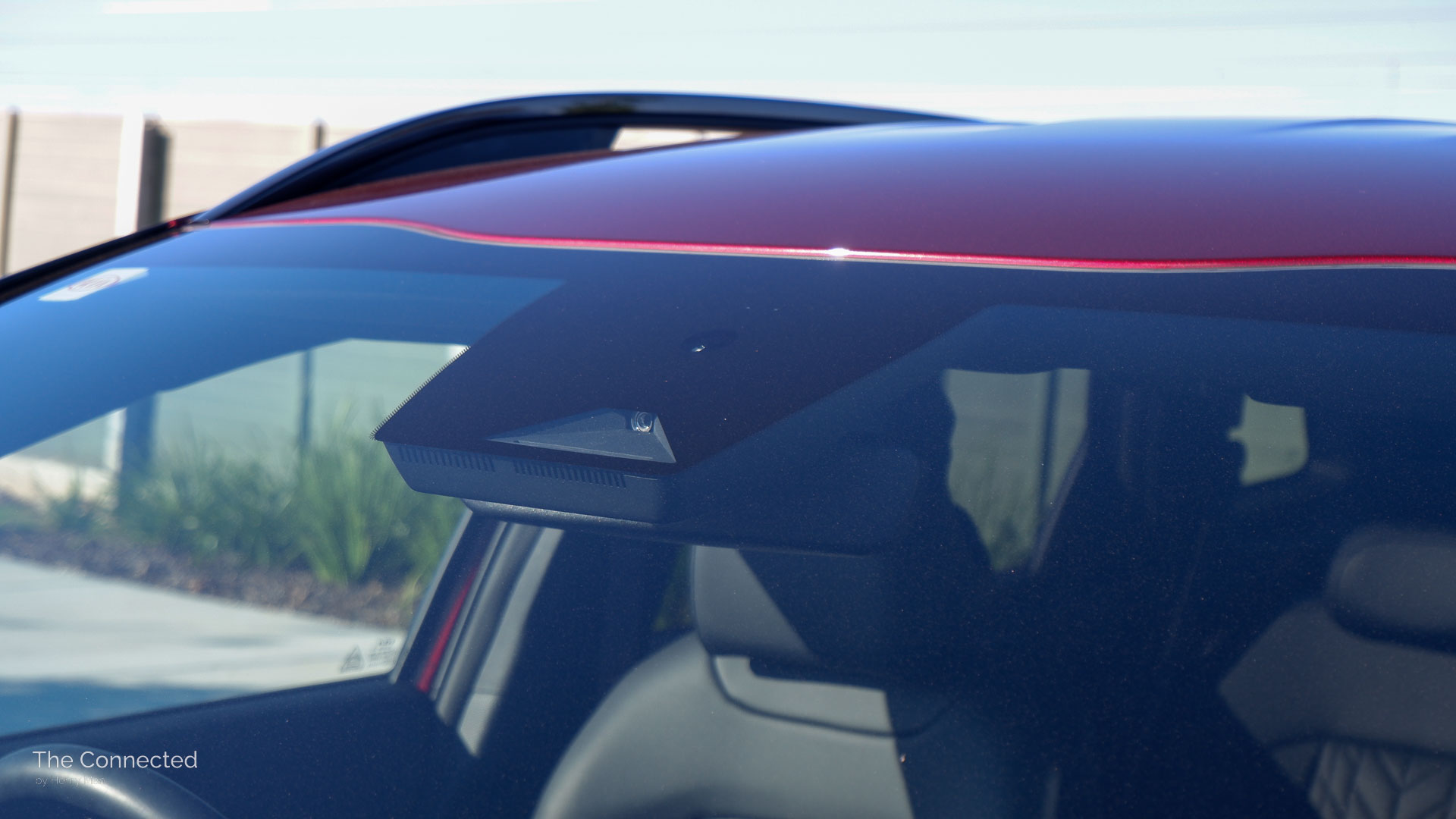
However, the lane centring assist works well at semi-automatic steering with some driver intervention required. I also like that Hyundai group cars can enable this function at any speed, without the need to activate adaptive cruise at the same time; it effectively takes some stress out of driving.
While the Sportage SX+ still doesn’t include the projector-type full LED setup as on the GT-Line, the reflector LED headlights still perform well at night thanks to the sizable unit. But, it’s a shame that the SX+ still uses incandescent turn indicators (only the GT-Line goes all-in on LED).
Also, while the reverse light is a bright LED, it’s placed lower down in the centre of the bumper – which raises some concerns around visibility for other road users during the day.
Range and fuel consumption.
2023 Kia Sportage SX+ 2.0L FWD fuel and efficiency specs:
| Claimed driving range (combined) | 667km |
| Claimed fuel efficiency (combined) | 8.1L/100km |
| Fuel tank | 54-litres |
| Minimum fuel quality requirement | 91RON |
| Claimed CO2 exhaust emissions (combined) | 184g/km |
| European emissions compliance | N/A |
Tested here is the Sportage’s standard 2.0-litre naturally-aspirated petrol engine matched with a six-speed automatic transmission.
In my week of driving mixed urban and highway environments, I achieved 10.2L/100km fuel consumption for 529km real-world range from its 54-litre fuel tank.
That’s quite off from the claim, even though I mostly left it on smart or normal driving mode with an occasional harder right foot when needed to encourage the powerless engine to get going.
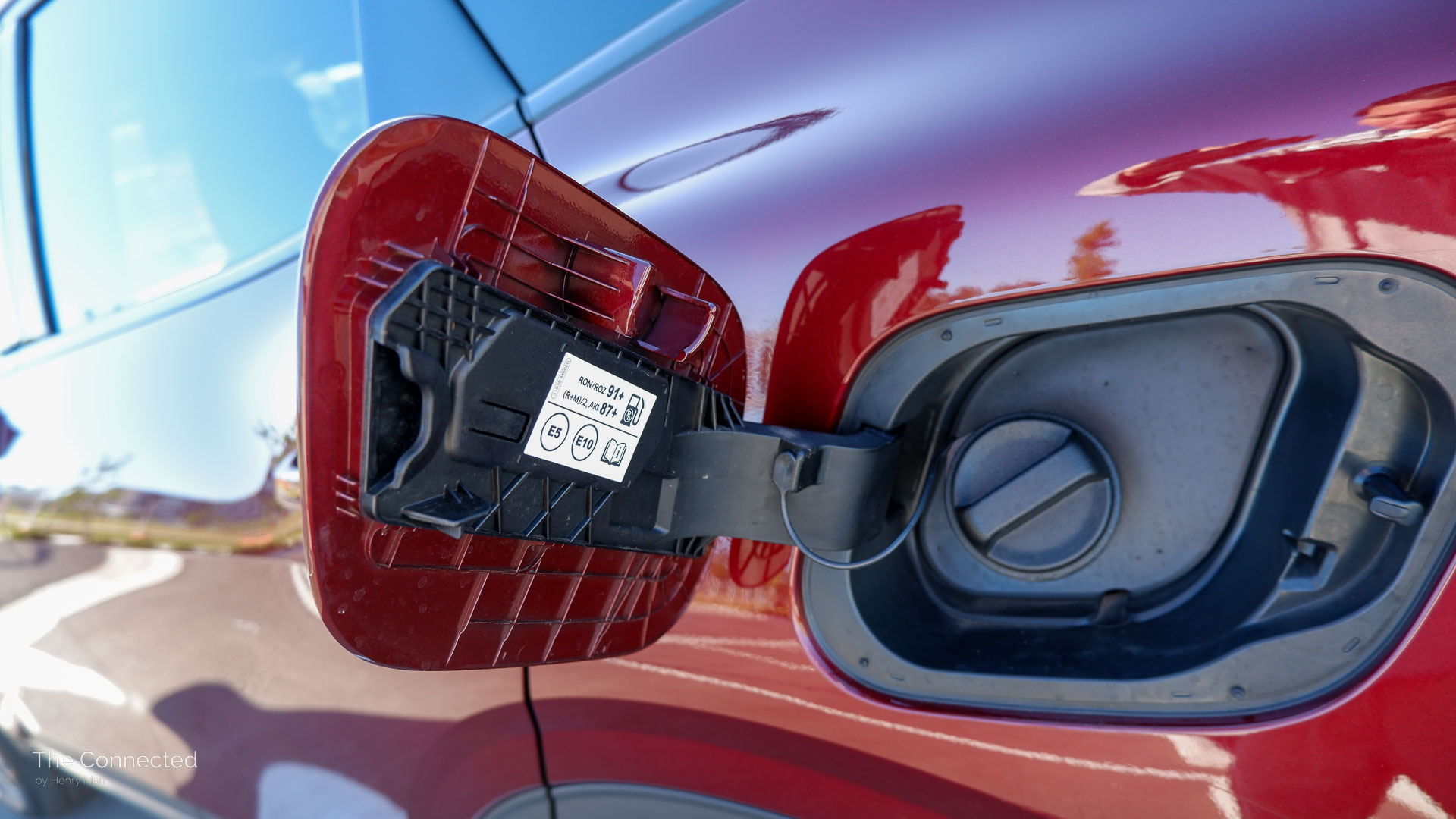
Its fuel efficiency is typical for the medium SUV segment, but the more frugal Sportage Hybrid has been confirmed for Australia in 2024 to rival the Toyota RAV4 Hybrid, Haval H6 Hybrid, and Nissan X-Trail e-Power.
Given my experience with the impressive series-parellel hybrid system in the Hyundai Santa Fe large SUV, it could be a better choice to reduce fuel costs and local exhaust emissions – albeit at a price premium.
Driving.
2023 Kia Sportage SX+ 2.0L FWD powertrain specs:
| Engine | 2.0-litre naturally-aspirated four-cylinder petrol engine |
| Power | 115kW @6200rpm |
| Torque | 192Nm @4500rpm |
| Transmission | Six-speed torque convertor automatic |
| Drive Type | FWD |
| Claimed 0-100km/h time | N/A |
| Towing (unbraked / braked) | 750 / 1650kg |
The Sportage SUV is available in three different engines, with a front-wheel drive (FWD) naturally-aspirated petrol, all-wheel drive (AWD) turbo-petrol, and AWD turbo-diesel options across most of the range. The turbo-petrol is standard on the GT-Line, while a manual transmission is only offered on the entry-level S and SX models.
But, is the base powerplant enough for everyday family duties?
At idle, I was impressed by the engine’s refinement – it’s quiet even from the outside and sends minimal vibrations into the cabin. There’s enough power for driving in the city and congested traffic situations, with a smooth shifting torque convertor automatic transmission.
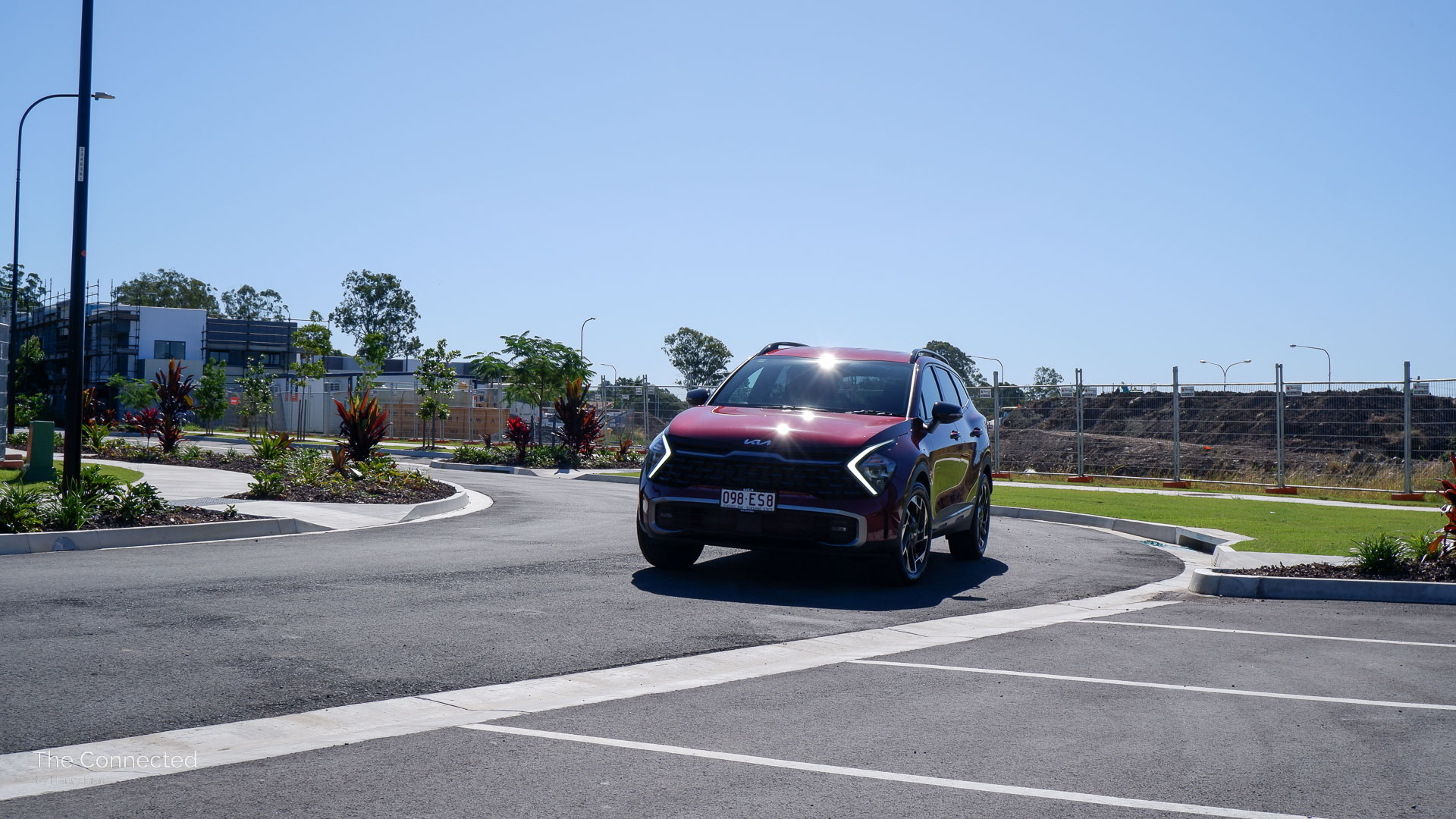
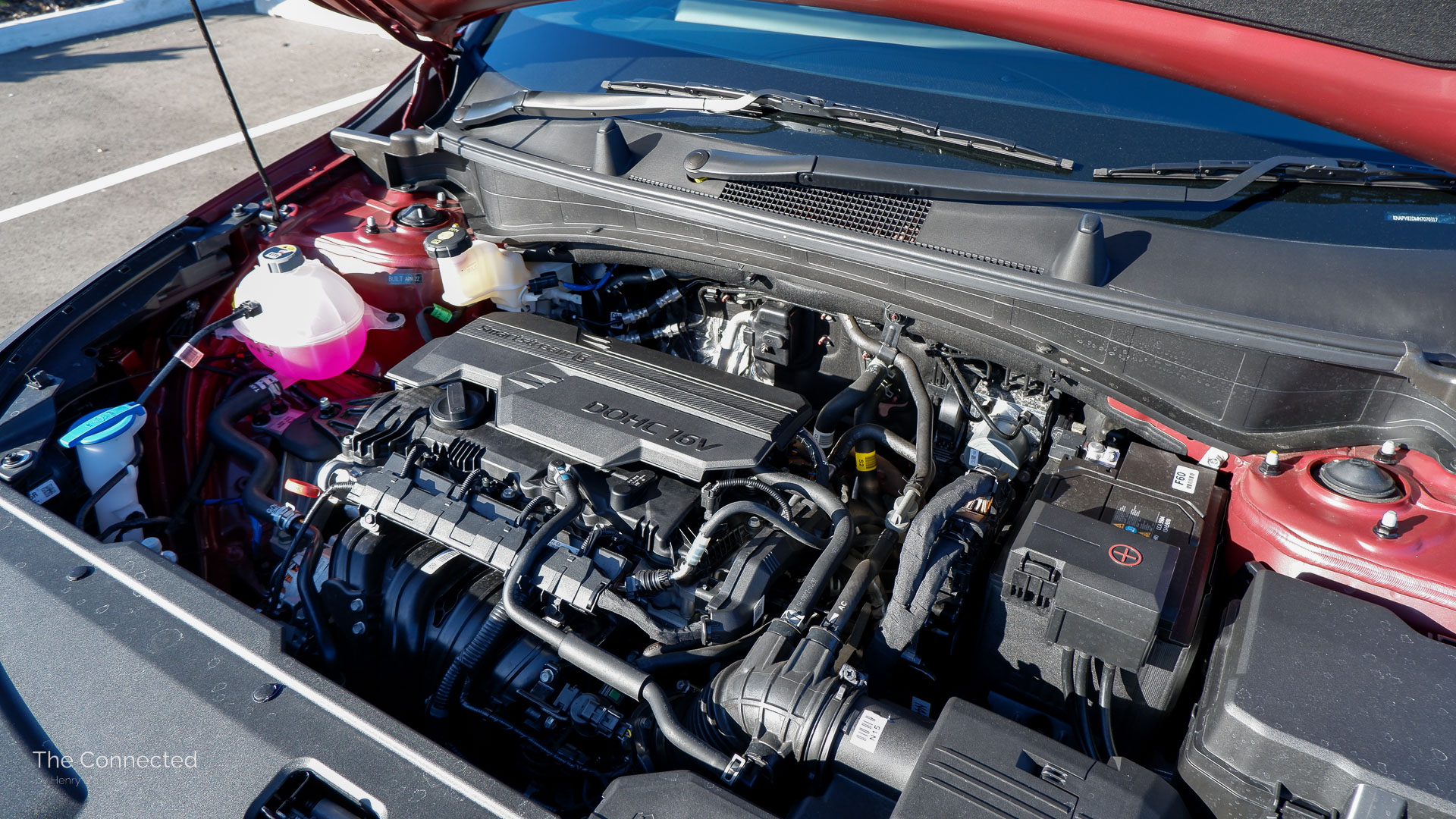
However, the engine is noticeably underpowered and breathless when it’s pushed harder. Getting up to speed for the on-ramp, overtaking and seizing an opportunity gap makes the engine unpleasantly groan to achieve the high rev point for the maximum 115kW of power. It’s a stark contrast to the refined nature at idle.
The transmission also takes a while to respond to prompt acceleration inputs, which can cause some unnerving situations. For example, I entered a gap in the roundabout, but was left ‘hanging’ in the middle for a few awkward seconds before it shifted down a gear and abruptly lurched forward.
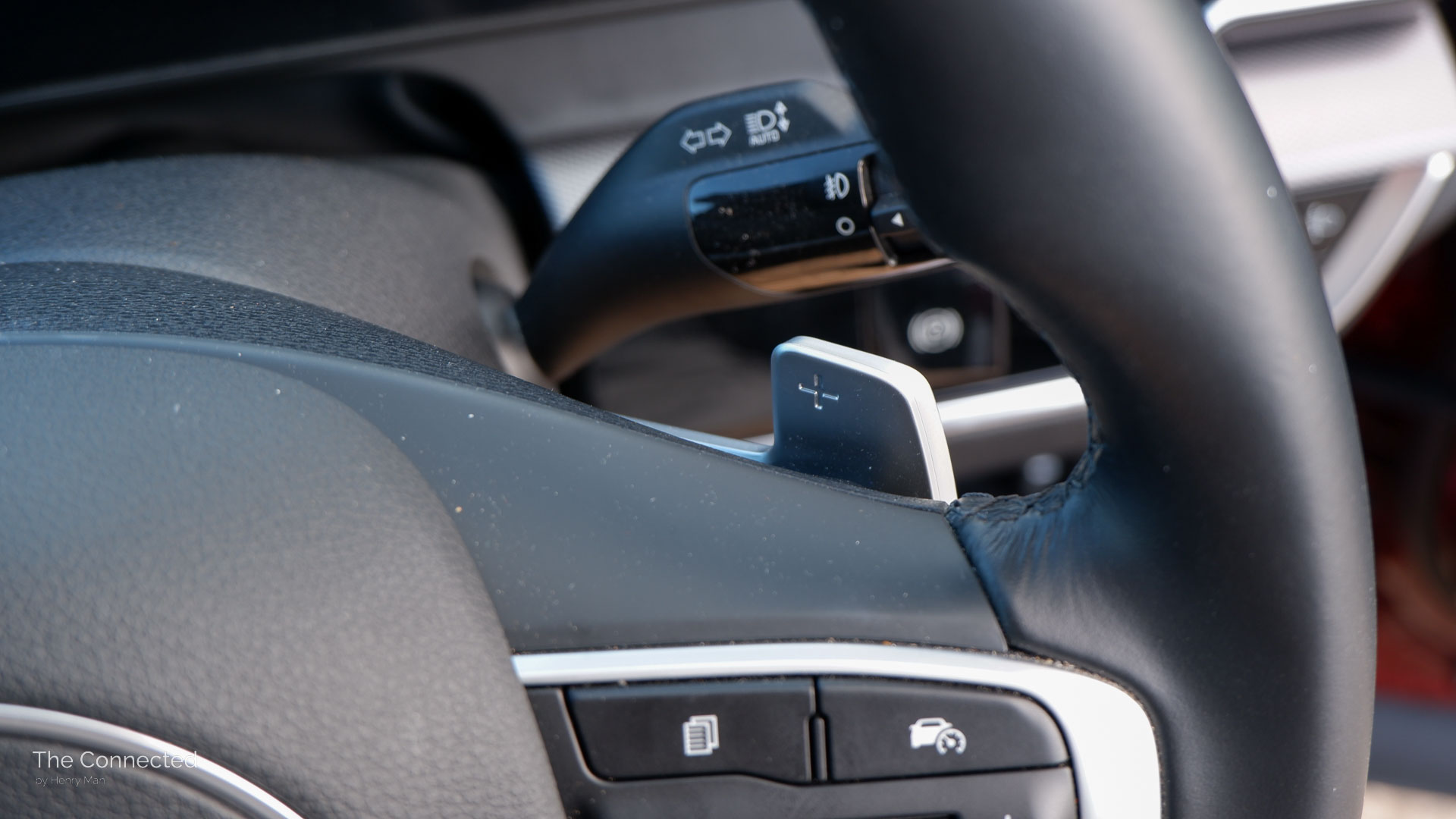
There are steering wheel paddle shifters and a manual mode to offset this, but I naturally left it on automatic. Similarly, toggling the sport driving mode just stays on a lower gear and keeps the groaning revs high, which it doesn’t suit the vehicle.
I’d suggest looking at the 1.6-litre turbocharged petrol engine instead or the petrol-electric hybrid option due next year for a more pleasant-to-use powertrain.
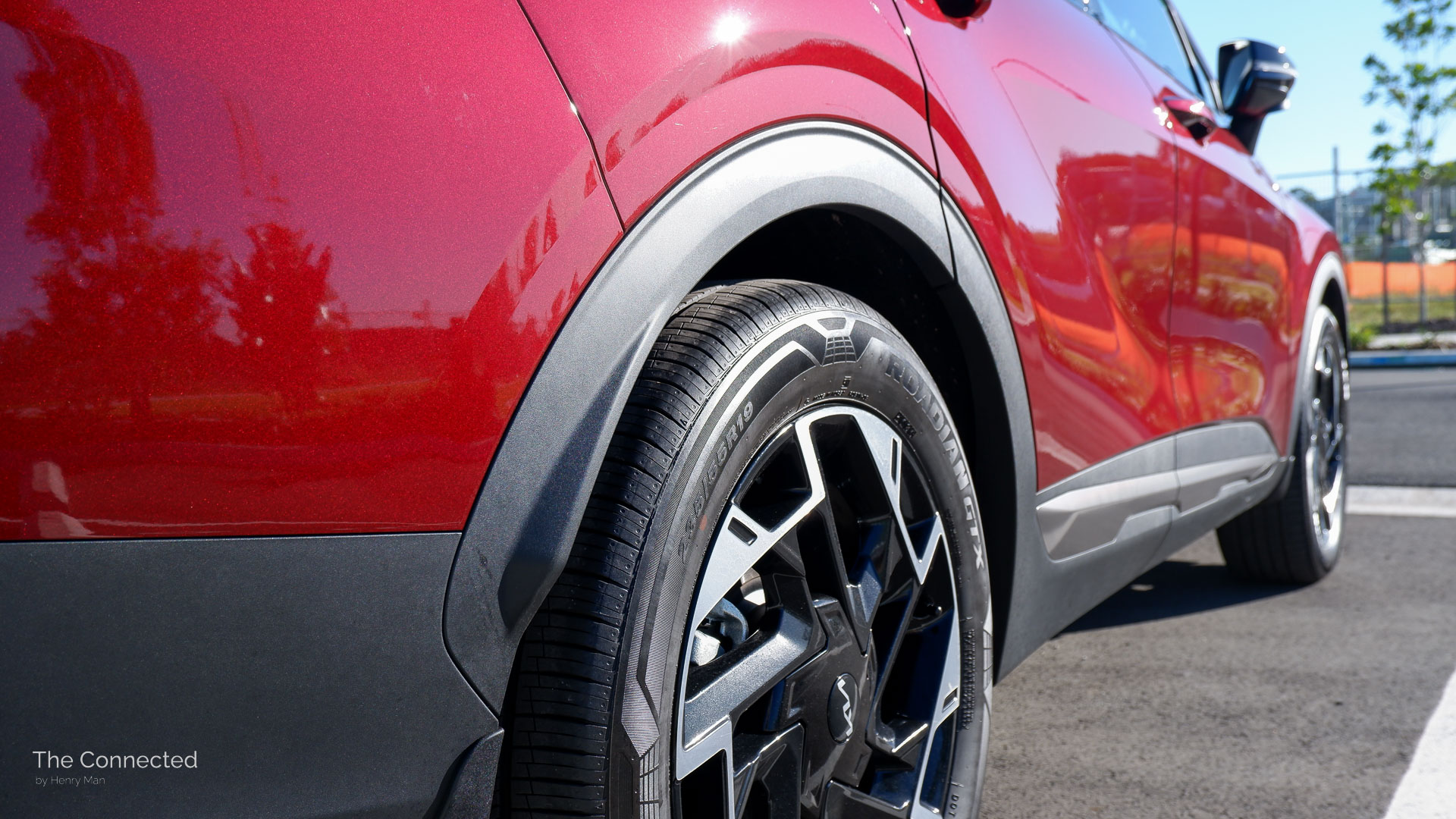
The steering also felt balanced and responsive, even though not sporty given the top-heavy nature of SUVs. Being FWD, there was some wheel slip when accelerating harder out of a turn.
Look (or hear) past the breathless engine note and the interior is otherwise well insulated from outside noises with a comfortable ride when going over bumps and undulations.
The Sportage’s all-round visibility is good, with a clever rear wiper hidden up at the spoiler and wing mirrors mounted to the body to liberate a small glass opening at the A-pillar. It also gives the requisite confidence-inspiring higher seating position, without being too high as per larger SUVs and utes.
Despite the bigger dimensions, the Kia SUV is still relatively easy to manoeuvre with the aid of front and rear parking sensors (the base S only has the latter). Again, it’s a shame that only the GT-Line has the 360-degree camera system.
Ownership.
The Kia Sportage is covered by a seven-year, unlimited kilometre vehicle warranty with eight years of roadside assistance renewed for 12 months after every logbook service.
Capped-price servicing lasts for seven years and maintenance visits are required every 12 months/15,000km for the standard 2.0-litre petrol engine.
It will cost $2282 to service after the first five visits – which is pricey compared to other rivals.
For context, the base Mitsubishi Outlander comes down to $1595 and the standard Toyota RAV4 continues to lead the segment at $1300 after the first five services.
If you opt for the turbocharged 1.6-litre turbo-petrol drivetrain, intervals are cut to every 12 months/10,000km – which isn’t ideal for long-distance drivers.
Fortunately, all Sportage models come with a full-size spare wheel under the boot floor, which isn’t common in new cars nowadays and can be a saviour if you’re stuck in remote areas.
2023 Kia Sportage SX+ 2.0L FWD capped-price servicing prices:
| 12 months/15,000km | 24 months/30,000km | 36 months/45,000km | 48 months/60,000km | 60 months/75,000km |
| $321 | $512 | $389 | $703 | $361 |
Rivals.
2023 Kia Sportage model range pricing (excluding on-road costs):
| S | SX | SX+ | GT-Line | ||||
| Manual 2.0L petrol FWD | $32,795 | Manual 2.0L petrol FWD | $35,350 | Auto 2.0L petrol FWD | $41,850 | Auto 1.6L turbo-petrol AWD | $49,720 |
| Auto 2.0L petrol FWD | $34,795 | Auto 2.0L petrol FWD | $37,350 | Auto 1.6L turbo-petrol AWD | $43,850 | Auto 2.0L turbo-diesel AWD | $52,720 |
| Auto 2.0L turbo-diesel AWD | $40,195 | Auto 2.0L turbo-diesel AWD | $42,750 | Auto 2.0L turbo-diesel AWD | $47,250 |
The Kia Sportage competes in one of Australia’s most popular new car segments, so it’s no surprise that the choice of medium SUV models is almost endless.
Notably, the related Hyundai Tucson (from $35,150 before on-road costs) boasts an even edgier exterior design, almost identical features, and cheaper servicing.
The Toyota RAV4 (from $38,050 before on-roads) is the popular choice with a frugal hybrid-electric option, but consequently has a long wait list.
Meanwhile, the Mitsubishi Outlander (from $37,240 before on-roads) can be had with a five-plus-two seat arrangement and low-emission plug-in hybrid for extra money.
More budget-friendly Chinese-made offerings include the GWM Haval H6 (from $33,990 drive-away) and MG HS (from $32,990 before on-roads). There’s also the Mazda CX-5, Nissan X-Trail, Volkswagen Tiguan, Cupra Ateca, Skoda Karoq, Renault Koleos, Honda CR-V, Subaru Forester, Peugeot 3008, Citroen C5 Aircross, and so on…
Then, there’s alternatives from the similarly-priced small SUV segment (which have grown to what was once considered medium) and full-electric options, including the MG ZS EV (from $43,990 before on-roads) and BYD Atto 3 (from $48,011 before on-roads).
Would I pick the 2023 Kia Sportage SX+ 2.0L FWD?
The new Kia Sportage is a sharp-looking, well-priced and practical family SUV.
While new sales have paused for the popular flagship GT-Line variant, the SX+ is still a solid alternative if you’re looking to get on the waitlist now.
However, there are compromises. Some features are unfortunately omitted in the SX+, including rear AEB, a 360-degree camera system, and LED interior lights. These aren’t essential, but should be standard at around $45K drive-away – a similar packaging quibble echoed on other family SUVs.
Kia’s sporty design theme also doesn’t always bode well for interior practicality, it’s pricier to service overall, the adaptive cruise was somewhat jerky in my tester, and the standard 2.0-litre petrol engine is underpowered with a laggy transmission.
My pick would be the Sportage SX+ with the optional 1.6-litre turbo-petrol engine, which provides a much-needed boost in power, AWD confidence, and a theoretically quicker-shifting dual-clutch transmission.
Only the SX+ has family-friendly niceties, such as an electric tailgate, proximity key, and heated front seats – but the base S is arguably the best value model on paper at less than $40K. There’s also the fuel-efficient Sportage Hybrid coming next year, which will hopefully address the middling fuel consumption.
Should you hold out until orders reopen for the GT-Line? Not necessarily. The Sportage SX+ provides enough features – arguably better in some cases – but there’s plenty of other medium SUVs to consider as well…
Photographs by Henry Man
About the Author.
Henry Man is an independent content producer passionate about the intersection of technology and transportation.
The former automotive journalist is focused on producing critically-detailed vehicle reviews, and unique short-form content. Learn more.


 The Connected by Henry Man