

OPINION: CarExpert’s latest test highlights the reality of electric vehicle road trips – and an uncomfortably polarised society.
If you haven’t seen CarExpert’s latest electric versus petrol car challenge across its platforms, 7News coverage and syndications, it has received a controversial response.
The Australian automotive publication and new car buying site travelled between Melbourne to Sydney on November 8, 2023 with founder Paul Maric driving the pure EV (BMW i7 M70) and British content creator Joe Achilles in the mild-hybrid petrol vehicle (BMW 740i).
The aim was to highlight the difference between energy and fuel costs on a long-distance interstate road trip, while experiencing the Australian public EV charging network.
However, the response has also foregrounded a deeply divided society – EV evangelists who argue the test was ‘rigged’ and traditional internal combustion engine (ICE) petrol, diesel, liquefied petroleum gas (LPG), and hydrogen vehicle fanatics who have reinforced their confirmation bias.
Let’s talk about this…
NOTE: The author of this editorial was a contributing intern for CarExpert.com.au in 2020.
“EV road trips take too long”
The time difference between EV and ICE vehicles in long-distance trips should be negligible, because rest stops are essential.
After all, while you’ll certainly want to commute to and from home and work as fast as possible, in road trips it’s often about enjoying the journey rather than the destination. Of course, some may be in a hurry if you need to make it to hotel check-in or that important meeting.
CarExpert’s comparison test demonstrated that the electric BMW i7 sedan needed about two hours of charging time from three stops (including at the destination), while the petrol-engined 7 Series didn’t require any interim fuel station stop due to its long driving range and only filled up in minutes at the destination.
However, Achilles followed Maric at each charging stop anyway as rest, bathroom and food breaks were required.
The Australian Government and some states recommend drivers take a break every two hours for at least 15 minutes. Therefore, this provides a perfect opportunity for charging – instead of an ICE vehicle sitting parked and unused, as per the 7 Series on test.
In my conversations with real-life EV owners who have regularly undertaken long-distance trips, most drivers will need to take a bathroom or food stop every 300 kilometres of driving. Crucially, if you have children, they’ll likely need a rest stop more frequently – regardless of what’s powering the vehicle – representing the perfect opportunity for EV charging.
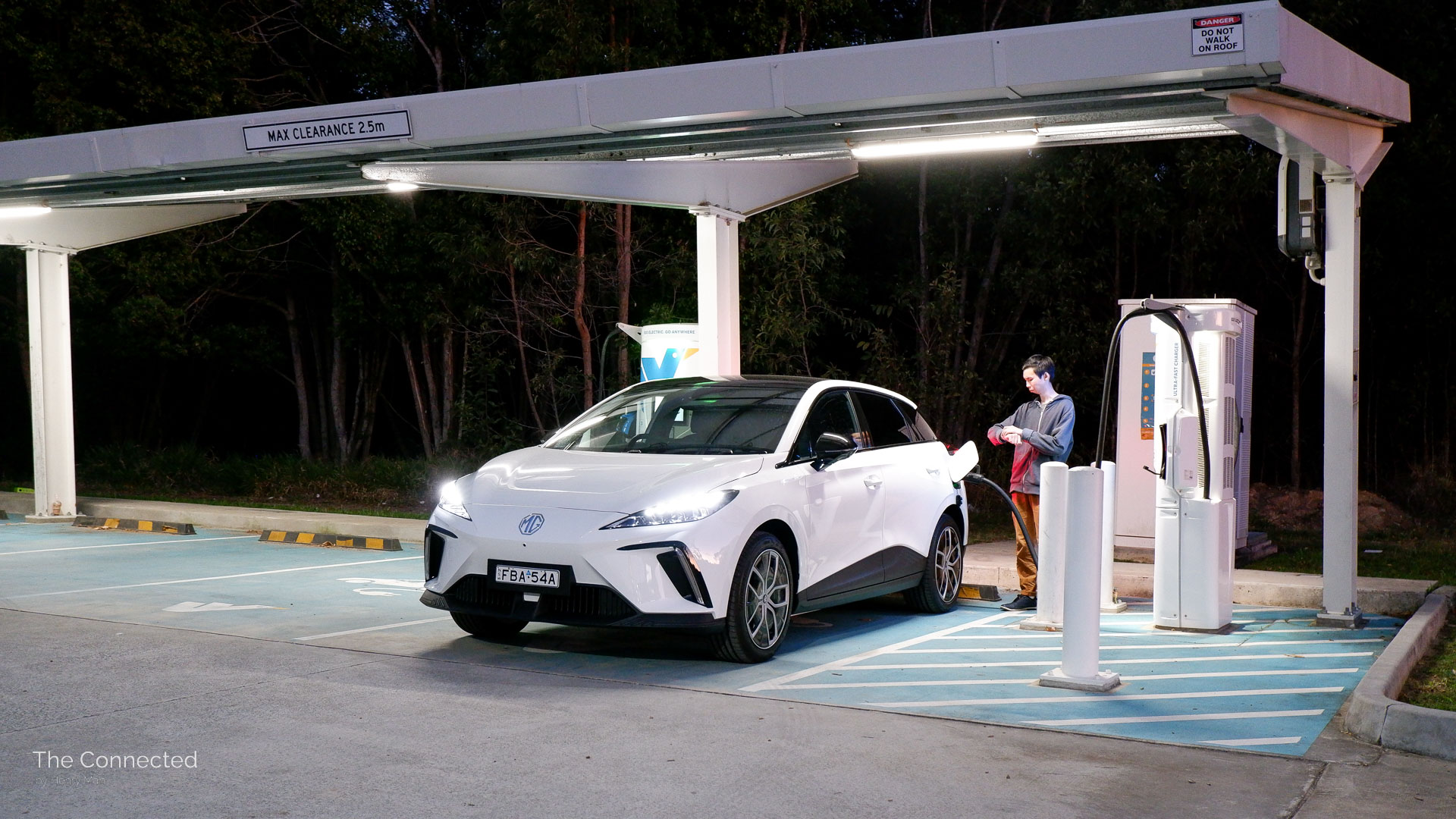
It’s important to note that CarExpert’s test wasn’t scientific, nor focused on which vehicle would make it to Sydney first.
Maric also chose to charge the i7 to 99 per cent at the first stop (Tarcutta). This was controversial as charging from 80 to 100 per cent can take the same time as going from 10 to 80 per cent due to the speed significantly throttling to protect the battery health – effectively doubling the wait time.
However, this was because there was ‘range anxiety’ as Maric arrived at Tarcutta with only two per cent left, given there were unexpected uphill slopes that increased energy consumption. The electric car only made it since it was fully charged at the origin (Hawthorne) in order to be equal with the petrol car which had its fuel tank fully filled before driving.
In a long-distance road trip where public charging stations are still scarce in Australia, a full charge, understandably, provided the confidence of making it to the destination.
Additionally, there was a 19-minute top-up charge while buying coffee (Sutton Forest), which wasn’t necessary to get to Sydney, but again, this wasn’t a scientific test and rest stops are needed.
A downhill highway run after Sutton Forest added nearly 20 per cent of free battery charge thanks to regenerative braking, then Maric fully charged the BMW i7 at the destination (Alexandria) in order to be comparable to Achilles’ petrol BMW 7 Series who filled the fuel tank to full.
It’s unclear whether CarExpert used the i7’s battery pre-conditioning function to help achieve the maximum 195kW peak charging speed. However, given it was a warm summer-like day, it likely would’ve made much difference to the charging times (it’s designed for cold climates).
In Chasing Cars’ Sydney to Melbourne test between the Hyundai Ioniq 5 electric SUV and Hyundai Tucson petrol-powered SUV with more strict charging and rest stop rules, the time difference to reach the destination was less than an hour.
“Public EV chargers are expensive”
CarExpert’s comparison has foregrounded that public EV charging stations are expensive and shouldn’t be relied on everyday.
The electric BMW i7 cost about $14 more in charging costs than the petrol 740i on 98 RON premium unleaded fuel.
At the time of the testing, Maric used Ampol AmpCharge (Hawthorn), Evie Networks (Tarcutta and Sutton Forest), and Chargefox-owned (Alexandria) public ultra-rapid charging stations – costing between $0.65 to $0.69 per kilowatt-hour (kWh).
The inclusion of an unnecessary opportunistic charging stop at Sutton Forest meant Maric recharged less at the destination – and saved more money since the Chargefox-owned Alexandria site cost $0.04 per kWh more.
Ultra-rapid stations are typically more expensive than standard 50kw and 75kW fast charging stalls, but they’re most common alongside key connecting highways and necessary for long road trips. It would be inconvenient to selectively choose cheaper stations or the rare free-of-charge ones still remaining, likely requiring long detours and longer charging wait times.
Meanwhile, the BMW 7 Series filled on the most expensive 98 RON premium unleaded petrol at a high fuel cycle, costing $2.099 per litre at a BP (Mascot).
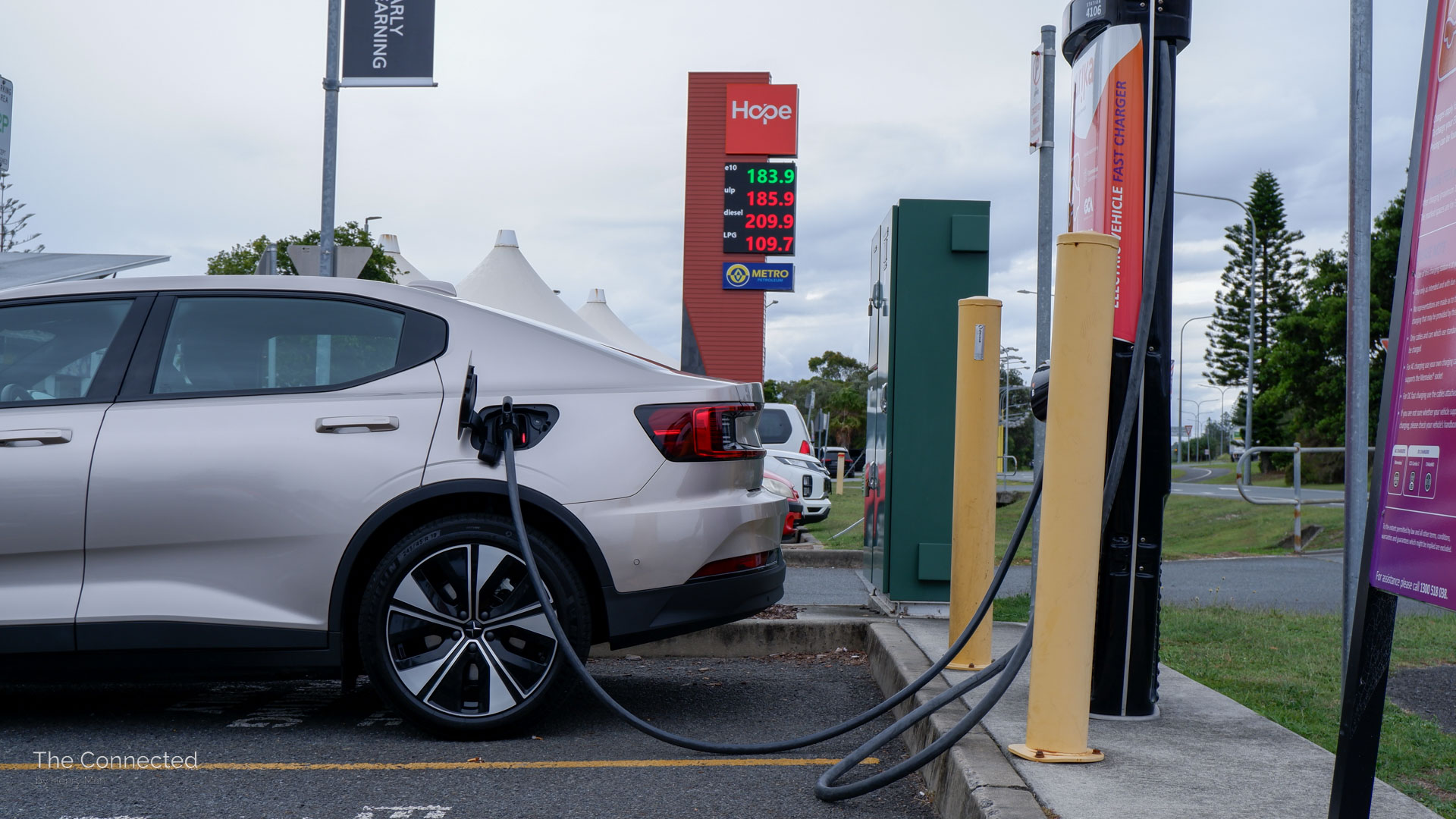
As per to Drive’s road trip test of the budget-friendly BYD Dolphin EV and the Toyota Corolla Hybrid, public charging often costs on par or more than petrol, depending on the charging station and fuel cycle phase at the time.
Public charging networks will only continue to increase fees as they expand further and contend with rising wholesale electricity rates.
They are businesses after all and, according to Chargefox chief executive John Sullivan, it can cost about $50,000 to buy a fast charging unit from a manufacturer. Then, there’s the expense of installing the equipment, potential electricity grid upgrades (if required), and the important task of maintaining and repairing offline stations.
Since the test, Evie Networks has increased its charging costs by about 11 per cent for the 350kW DC stations used – adding about $12 to CarExpert’s total journey.
It’s clear that consumers should only buy an EV if you can plug in at home (a normal three-pin socket will do for most) – which can cost about a half or even a quarter of public charging infrastructure, without the inconvenience of deliberately stopping beside the road.
If you’re in a position to take advantage of free solar energy generation, those running costs will reduce even further.
However, when you do need public charging stations such as on long road trips, it’ll be expensive – especially if you’re a non-Tesla EV model using select Tesla Superchargers. That’s just reality.
“There aren’t enough reliable EV chargers”
There’s no denying that public EV charging stations still need to dramatically expand and improve their reliability.
In CarExpert’s Melbourne to Sydney trip, Maric didn’t encounter any faulty EV charging sites – thanks to good planning using A Better Route Planner (ABRP) and charging network apps – and reportedly didn’t need to wait in a queue.
But, it did unluckily face the nationwide Optus telecommunications network outage, which disabled most Evie Networks charging stations except the one used in Tarcutta.
Often people question new and unfamiliar EVs, yet don’t level the same question to traditional ICE vehicles.
If the 13-hour Optus outage impacted the point-of-sale (POS) card payment terminals at a fuel station, you likely won’t be able to fuel your petrol or diesel car unless you had cash (or a very generous servo).
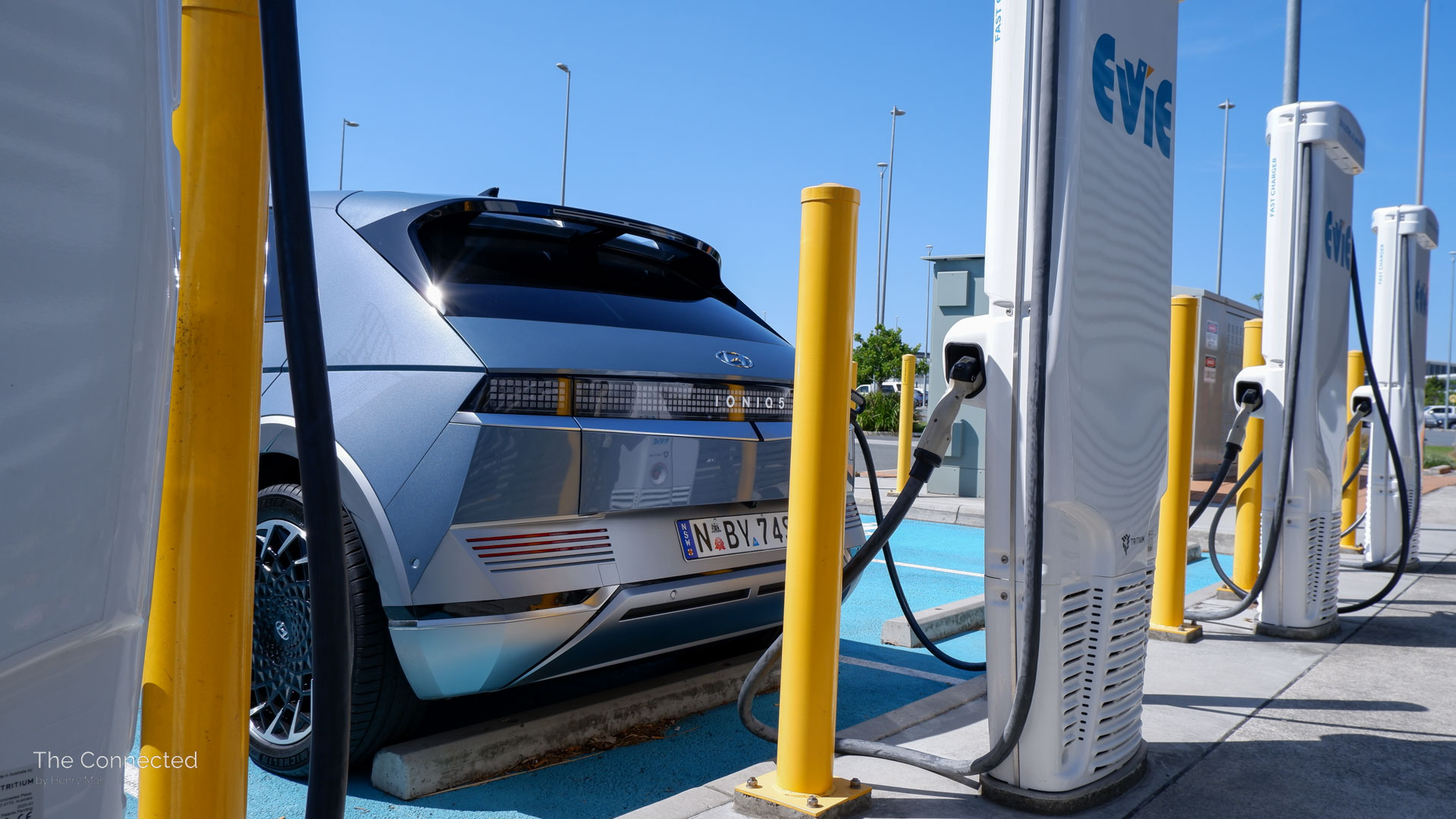
However, it was a different story in the return leg, where CarExpert’s production duo used different charging locations, and contended with offline charging stations and waited for other EV owners to finish charging.
According to Chargefox, outdated charging station models, unforeseen increased load, and extreme climate conditions impact the reliability of the high-voltage units.
Despite these charging sites being situated to connect EV drivers along Australia’s most populated east coast, there are generally two to four charging stations at each location – which can be problematic during busy school and public holidays.
The Tesla Supercharging network offers around four to 16 stalls at each site in Australia, but Tesla EVs still dominate our roads far more than any other brand including Build Your Dreams (BYD).
“The cars were wrong”
Two ultra-luxury limousines costing in excess of $270K isn’t exactly relatable to most, but the test was focused on comparing powertrain types rather than the car.
As Maric constantly emphasised, the BMW i7 and 740i were used since audiences wanted more identical vehicles than CarExpert’s previous Kia EV6 versus Audi Q5 diesel Adelaide to Sydney challenge.
These two vehicles happened to be available at the time using the same underpinnings and bodywork. There are other alternatives including the:
- MG ZST vs ZS EV – arguably the most mainstream option, but the publication said the EV doesn’t offer enough driving range for their challenge;
- Hyundai Kona vs Kona Electric – available with petrol-only and hybrid powertrains, but the hybrid and full EV version didn’t launch in Australia at the time of testing;
- Kia Niro Hybrid vs Niro EV – no petrol-only option;
- Mini Hatch 3-door v Electric – niche city cars with short electric range, and a new-generation model to soon launch;
- Volvo XC40 vs XC40 Recharge – both luxury small SUVs priced less than $100K, but may have been unavailable at the time;
- Mercedes-Benz GLA vs EQA – may have been unavailable at the time; or
- Mercedes-Benz GLB vs EQB – may have been unavailable at the time.
However, since the BMW 7 Series and i7 are designed for privately chauffeuring passengers, a long-distance interstate trip wouldn’t be too uncommon.
As Maric notes from the outset, the i7 M70’s 101.7kWh usable lithium-ion battery pack is larger than the typical EV. But, a growing number of larger models are featuring a similar size – such as the Kia EV9 Earth and GT-Line (96kWh usable), Polestar 3 (107kWh usable), and Mercedes-Benz EQS liftback (107.8kWh usable).
The BYD Seal Premium and Performance (82.56kWh usable), Ford Mustang Mach-E Premium and GT (91kWh usable), and LDV eDeliver 9 cargo van (88.55kWh usable) aren’t too far off either.
While a larger battery means longer charging times, the BMW i7’s maximum 195kW DC charging speed is above average and the tested 20kWh/100km-plus highway energy consumption is possible on some smaller medium-sized EVs.
“Hydrogen cars are the future”
CarExpert’s comparison may have reinforced your thinking that hydrogen cars would solve battery EVs’ woes, but it remains a less efficient technology.
Modelling by the University of Technology Sydney emphasises that, while hydrogen fuel-cell powertrains can significantly cut the emissions footprint of heavy trucks than a diesel engine, battery-electric tech is still better for the environment in its lifetime.
Hydrogen requires much more energy to produce with more energy losses, pumped rapidly into the vehicle, but ultimately needs to be converted to electricity to drive the wheels anyway – an indirect, arduous and inefficient process. Meanwhile, battery EVs are directly charged using electricity and driven by electricity.
Additionally, battery tech and EV designs are improving to the point where a number of models are closely matching the hydrogen Toyota Mirai’s 650km and Hyundai Nexo’s 666km driving range claims.
This includes the Tesla Model 3 Long Range (629km), Polestar 2 Long Range Single Motor (654km), and BMW iX xDrive50 large SUV (620km) – with the former two costing less to lease than both hydrogen cars (they are only available for commercial fleets on a limited-time trial in Australia).

Then, while battery EVs can charge at any electricity socket, hydrogen EVs need to rely on public refuelling infrastructure that’s expensive, too.
As at the time of publication, there are only four publicly-available hydrogen refuelling stations in Australia.
Overseas, where there’s more public uptake of hydrogen cars, some hydrogen stations have shut down across Europe and the United Kingdom – leaving owners potentially stranded.
Furthermore, hydrogen tech has long been used as a delaying mechanism to carbon emissions reduction targets.
There still may be a future for hydrogen cars with major carmakers having invested in developing the tech. But, looking at the objective evidence and industry investment, it’s clear that hydrogen will likely be a niche proposition for select drivers similar to synthetic fuels.
The private vehicle market has already spoken.
The dose of reality
CarExpert’s latest electric and petrol comparison has reinforced an uncomfortably polarised society, where it’s a constant struggle between ‘us versus them’.
New and unfamiliar tech and government policies have always faced a binary uphill battle against fear and hesitation – often exacerbated by misinformation, disinformation and sensationalism.
Today, you either think EVs are perfect, will magically save the planet on its own, and the media are on a crusade opposing it. Or, you might think traditional ICE vehicles and hybrids are still superior (when you may not have even driven an EV) until hydrogen comes along into the mainstream one day…
Unfortunately, the middle and impartiality is rarely seen.
Don’t get me wrong, I would always recommend an electric car to anyone who is in the position to afford one. Despite its weaknesses and valid concerns around current battery tech, EVs are simply easier to drive, cheaper to own, and more convenient when plugging-in at home.
But, it doesn’t work for everyone. You should be able to charge at home, not frequently venture on long distances everyday beyond the typical 300- to 600km EV range outside metro areas, and not regularly tow heavy loads. If your lifestyle forgoes these points, a conventional hybrid or plug-in hybrid electric vehicle (PHEV) can be a viable alternative.
Few electric cars have only entered the mainstream – the Tesla Model Y, Model 3, and BYD Atto 3 – however, there is still a long way to go until consumers are properly educated and understand the impartial facts on the simple (and complex) reality of EVs.
About the Author.
Henry Man is an independent content producer passionate about the intersection of technology and transportation.
The former automotive journalist is focused on producing critically-detailed vehicle reviews, and unique short-form content. Learn more.


 The Connected by Henry Man