

Finally. The Kia EV9 marks the return of a proper seven-seat electric SUV. With a bold design and for Toyota LandCruiser 300 money, is the EV9 the do-it-all electric vehicle Australians have been waiting for?
Australians love big SUVs and utes. At least that’s the stereotype…
Despite the controversy, they’re all-rounder vehicles that can do the school commute, drive to work in the city, take on those occasional long trips while towing a trailer and go off-road, too.
However, there’s been a glaring void in the electric vehicle segment since the Tesla Model X was discontinued locally in 2020: a proper seven-seat electric SUV.
Enter the Kia EV9 – the South Korean carmaker’s latest flagship electric car with a bold design, one of a kind large three-row interior, and a high price tag targeting luxury brands such as Range Rover.
Is the EV9 finally the answer for Australians to make the electric switch? I tested the top-spec GT-Line to find out.
NOTE: The press vehicle was provided by Kia Australia for a seven-day independent evaluation. No copy approval was given before publication and we have no commercial arrangements with the company.

Pros.
+ It’s a seven-seat electric SUV
+ Much improved speed limit assist and tech
+ Excellent localised ride and comfort
+ Impressive energy efficiency
+ I-Pedal (finally) fixed
Cons.
– GT-Line is too expensive after luxury car tax
– Interior quality could be better
– Annoying front headrests
– Disconcerting camera side mirrors
– No 22kW AC charging, spare tyre
Vehicle tested:
| Model | 2024 Kia EV9 |
| Variant | GT-Line AWD |
| Starting price | $121,000 (before on-road costs) |
| Exterior colour | Ocean Blue Matte ($3495) |
| Interior colour | Dark grey and black with black suede headliner |
| Country made | South Korea |
Design.
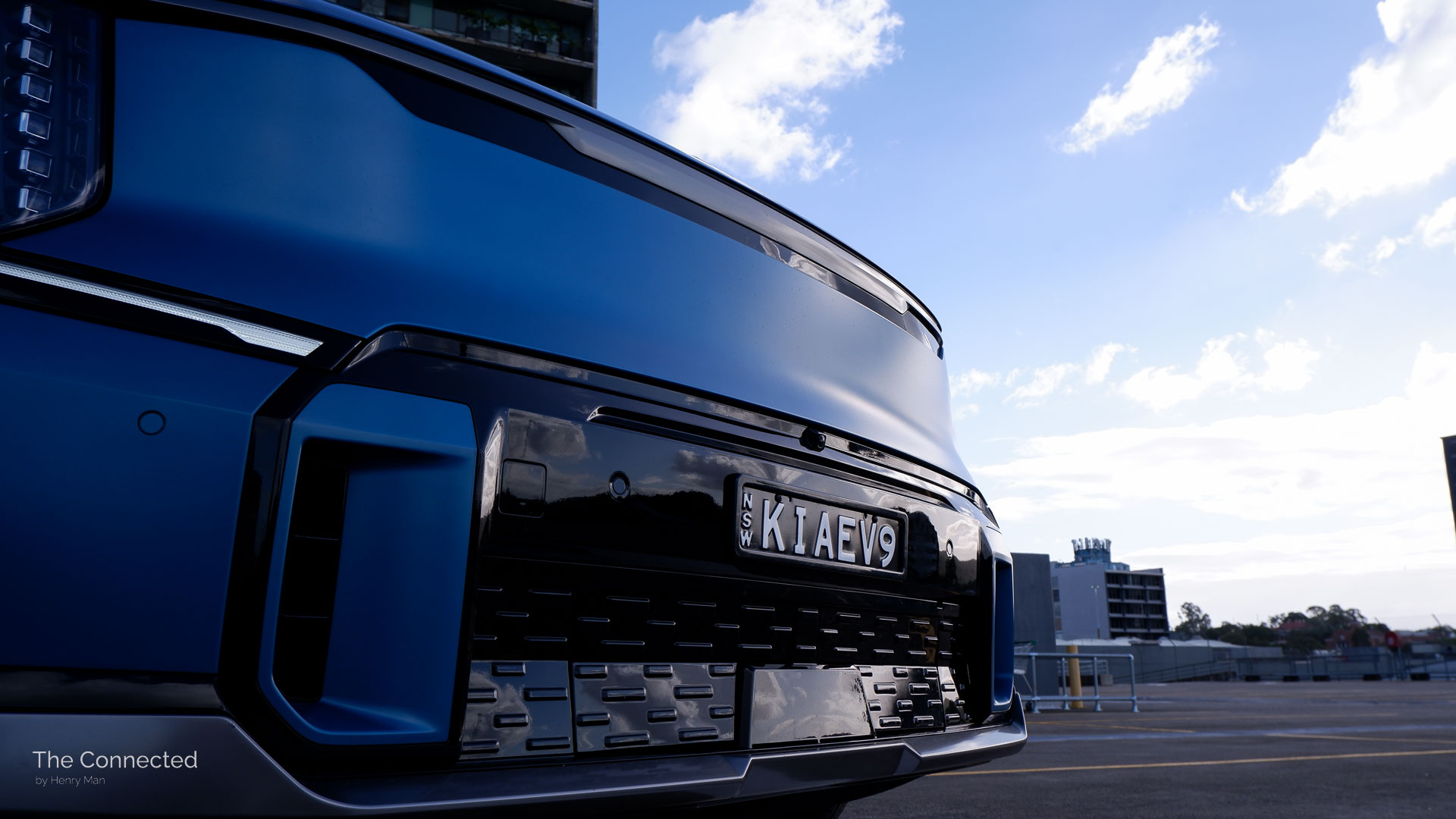
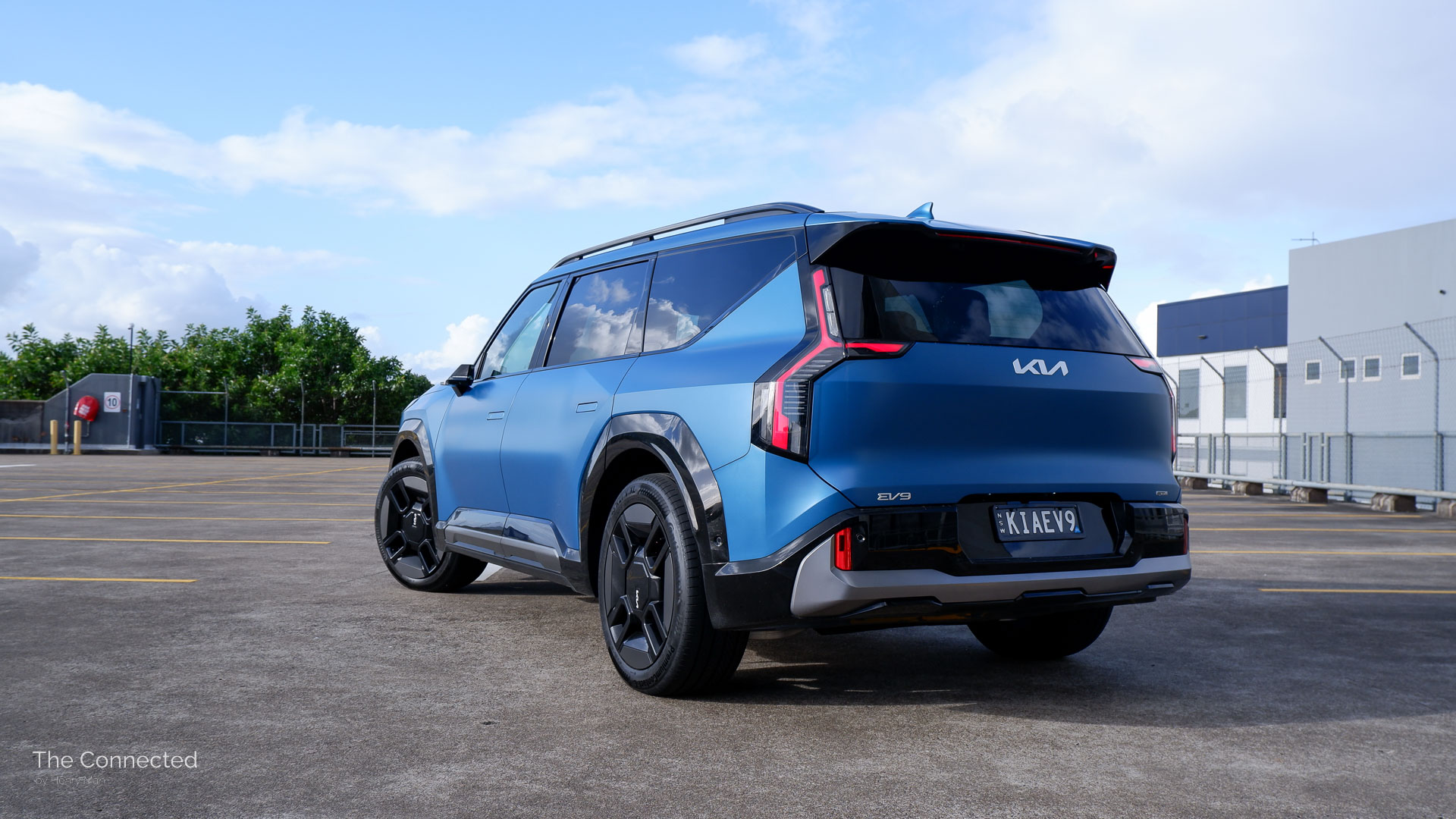
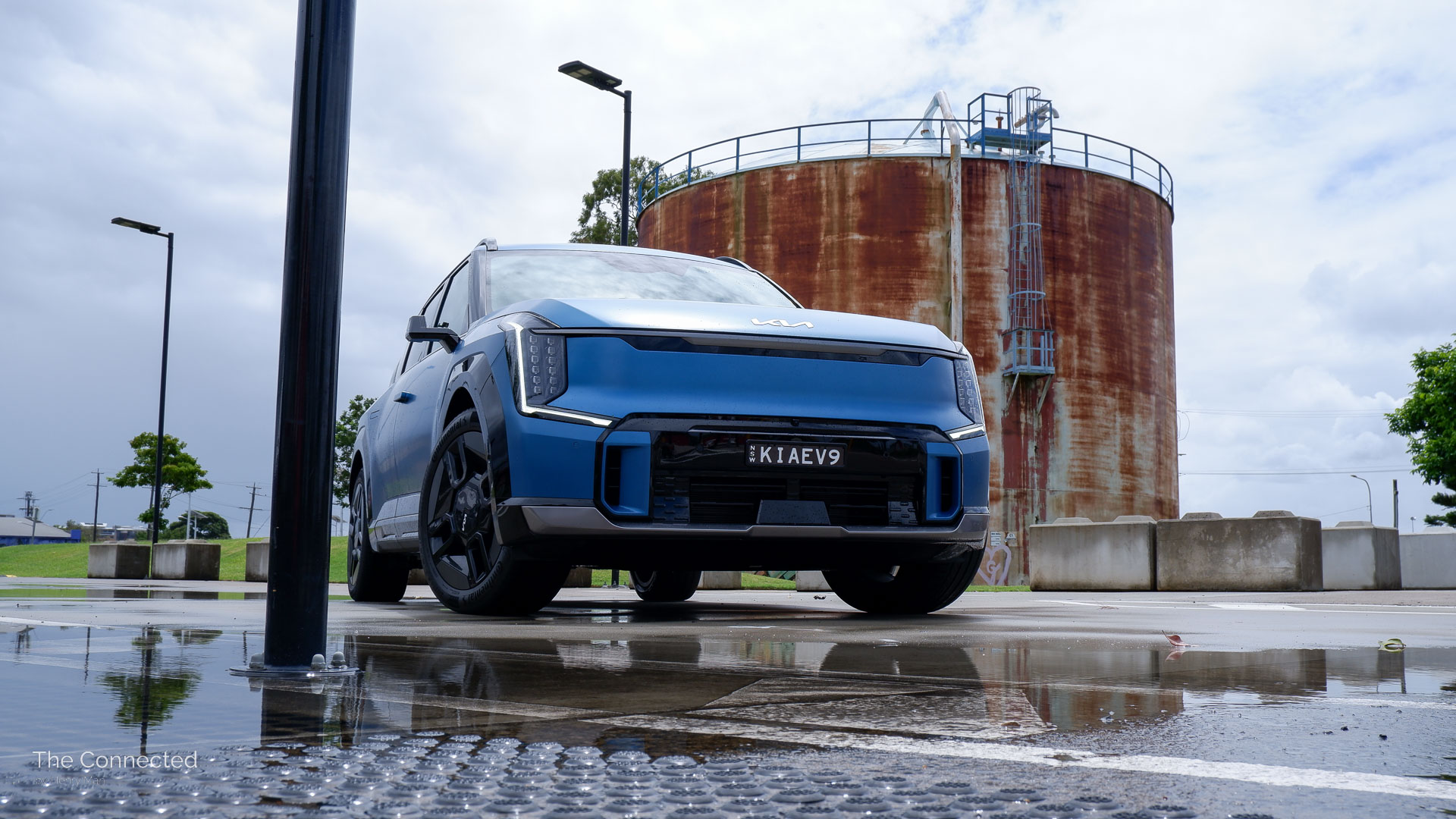
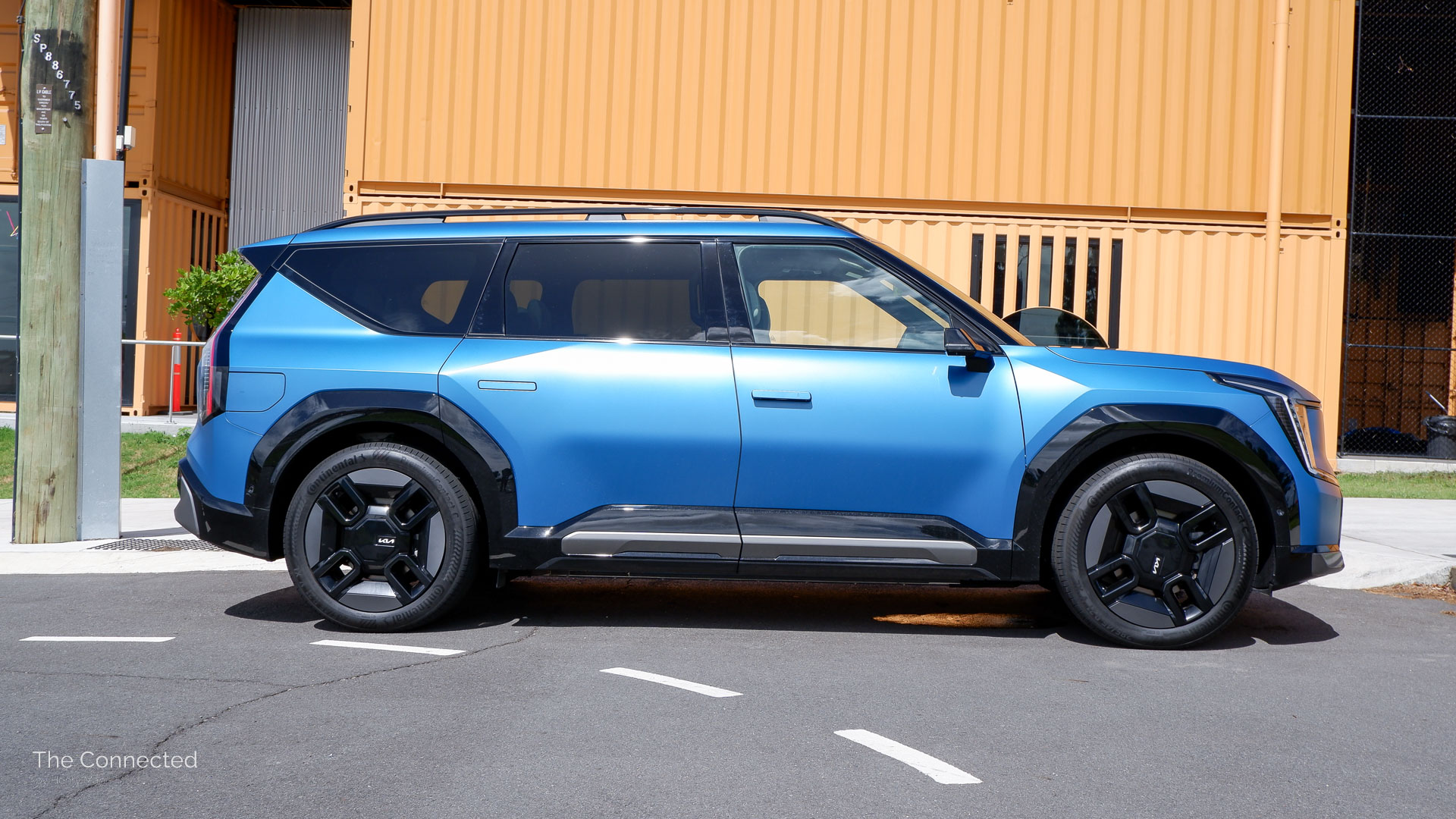
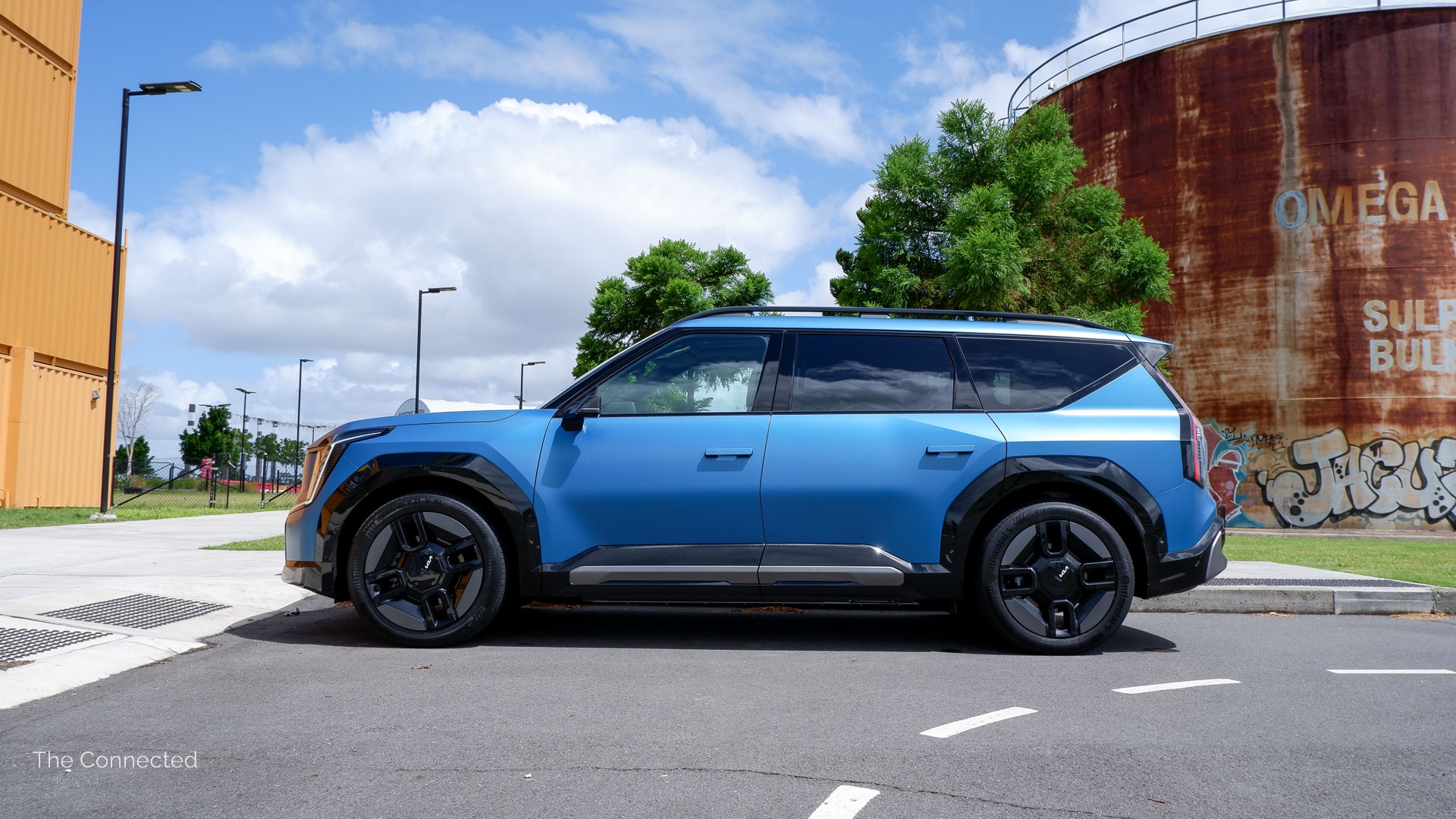
The Kia EV9 upper large SUV emphasises its size with an unconventional bold, yet futuristic spaceship-like design.
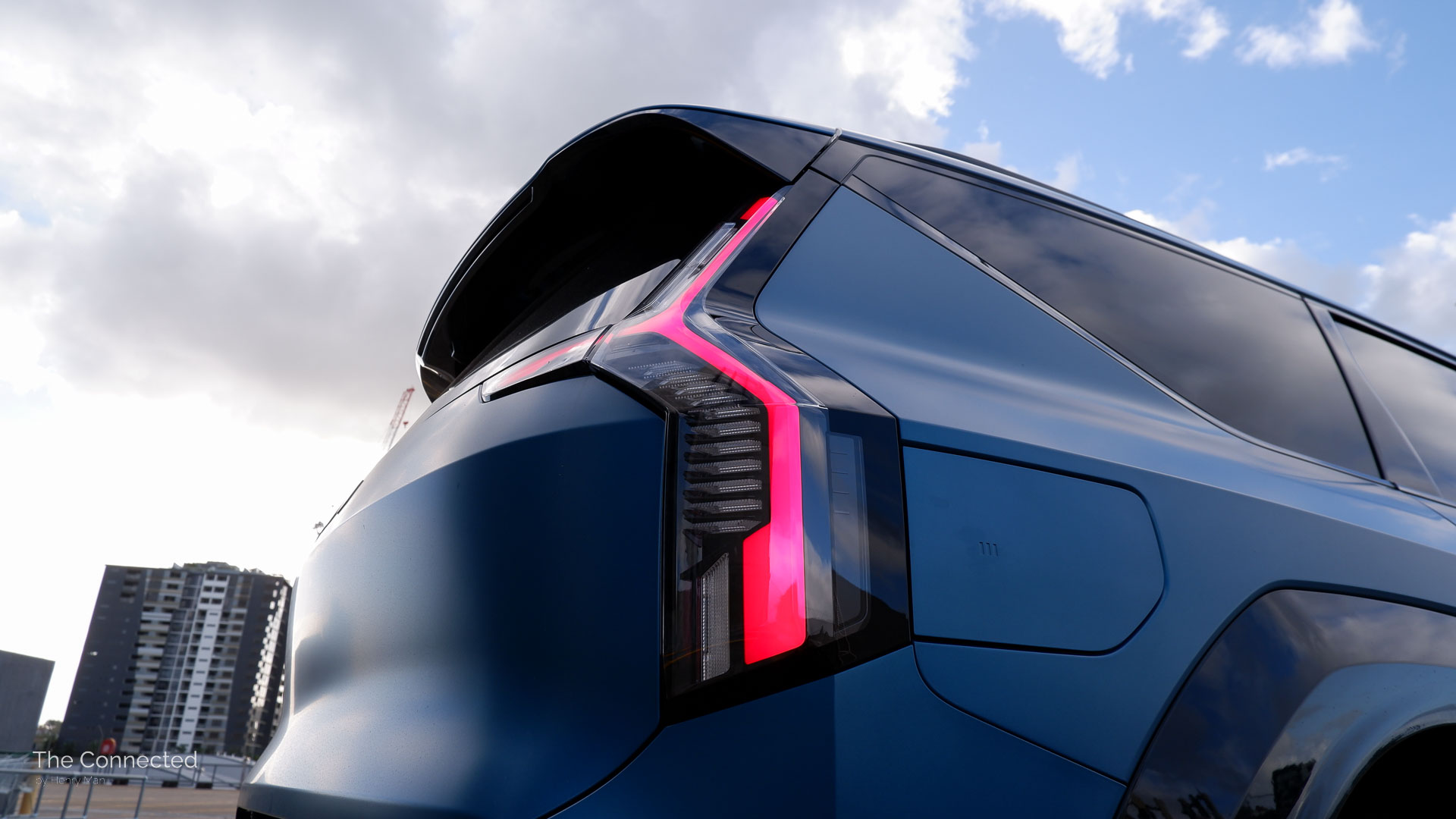
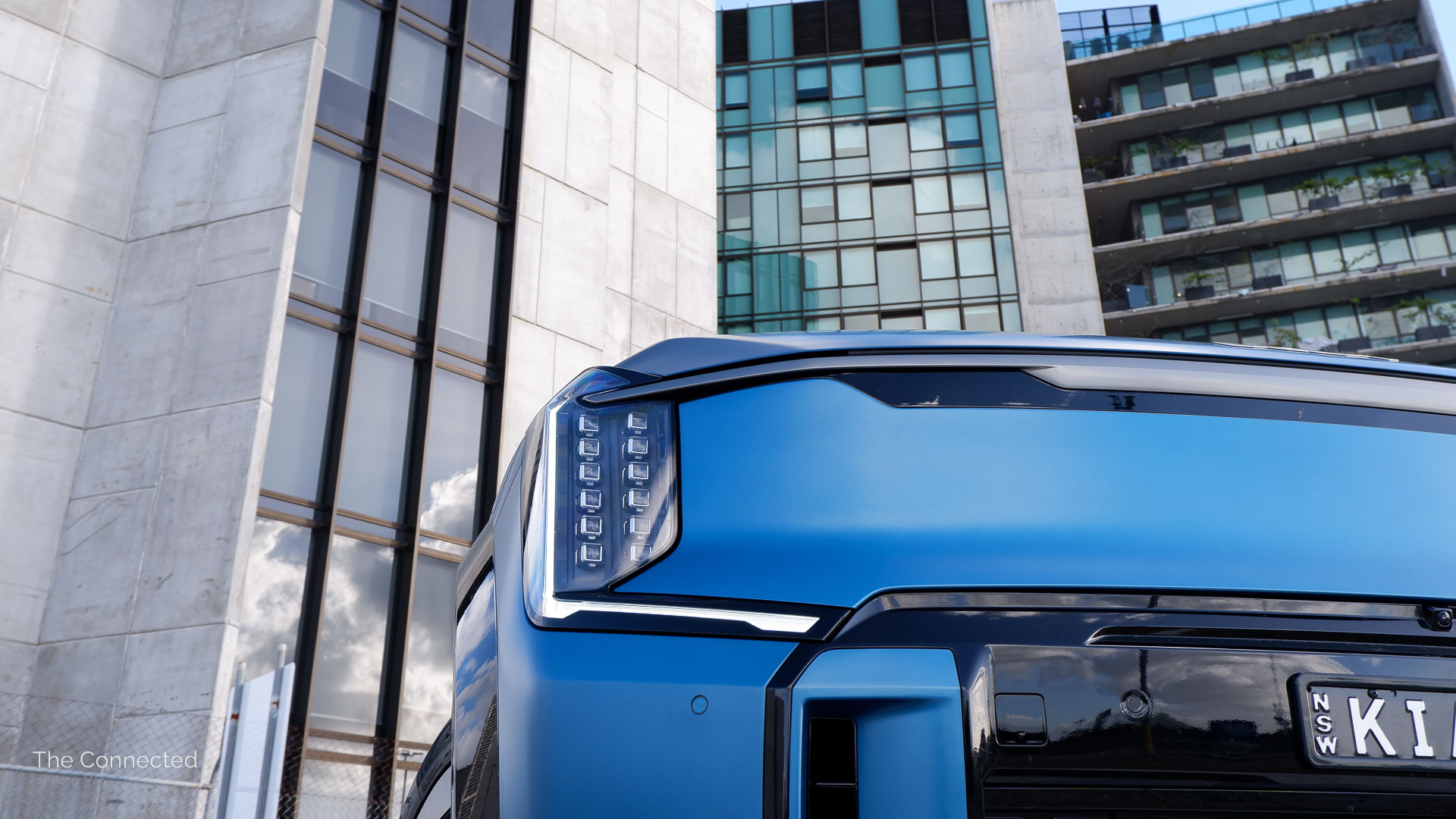
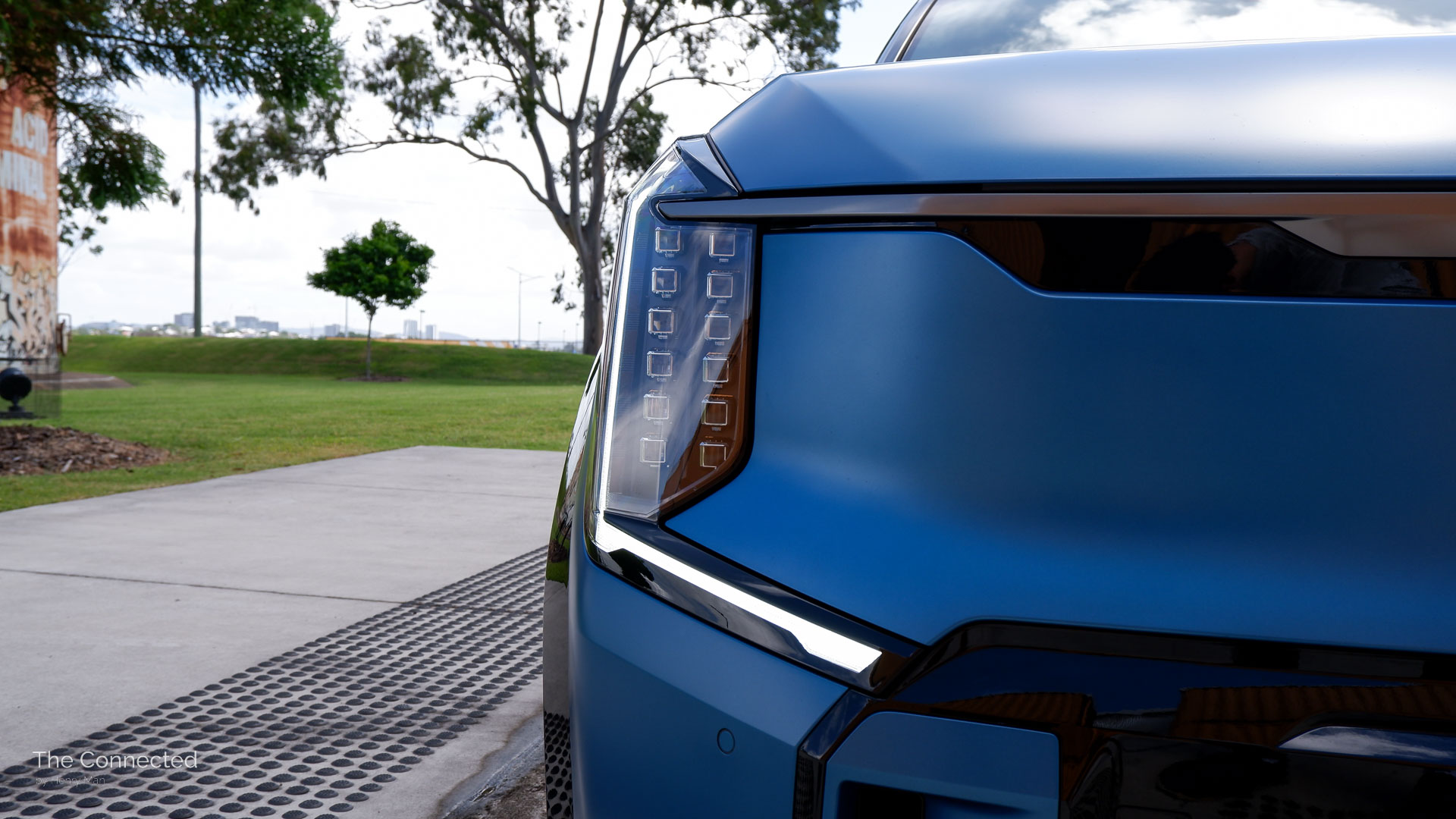
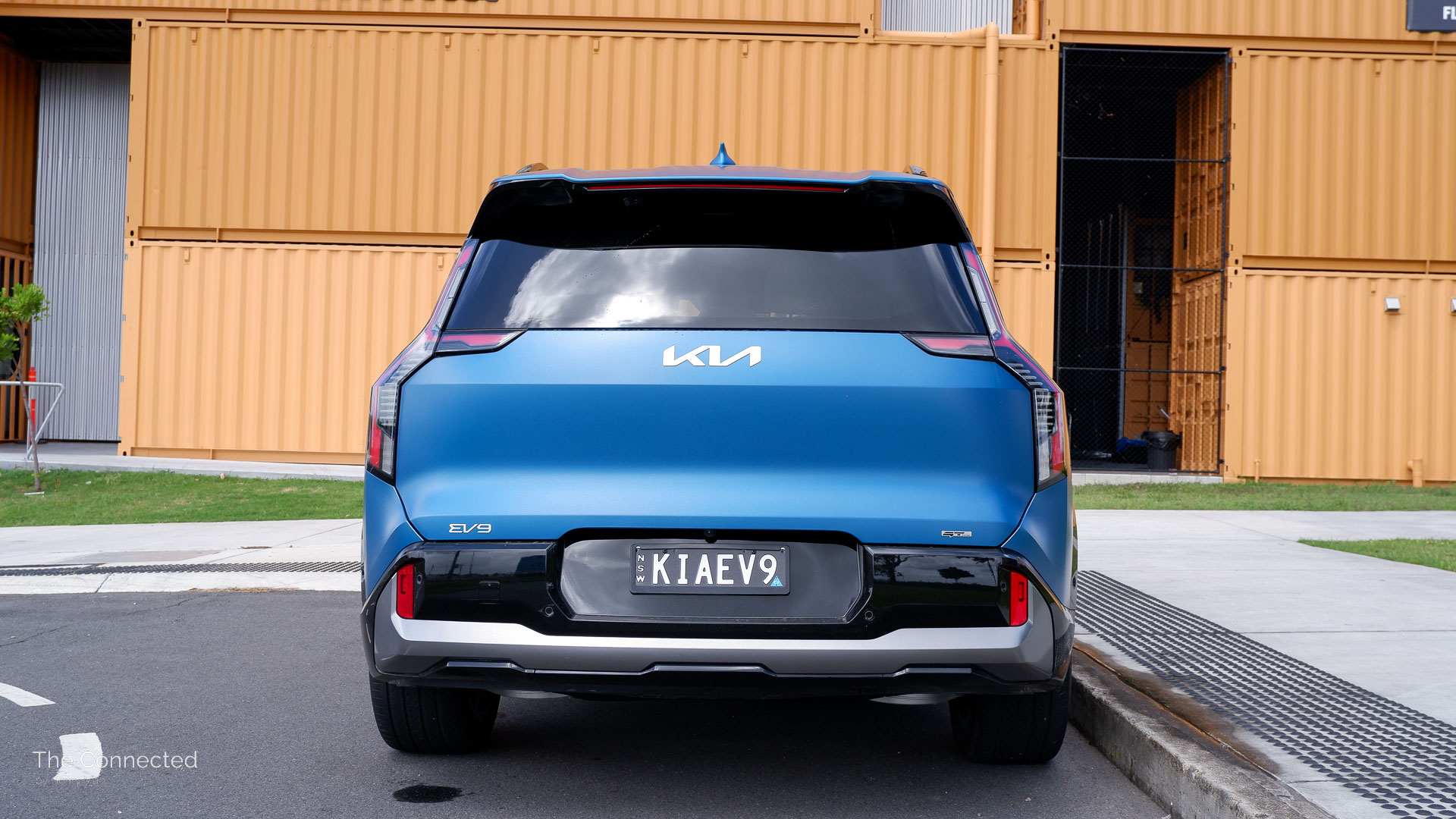
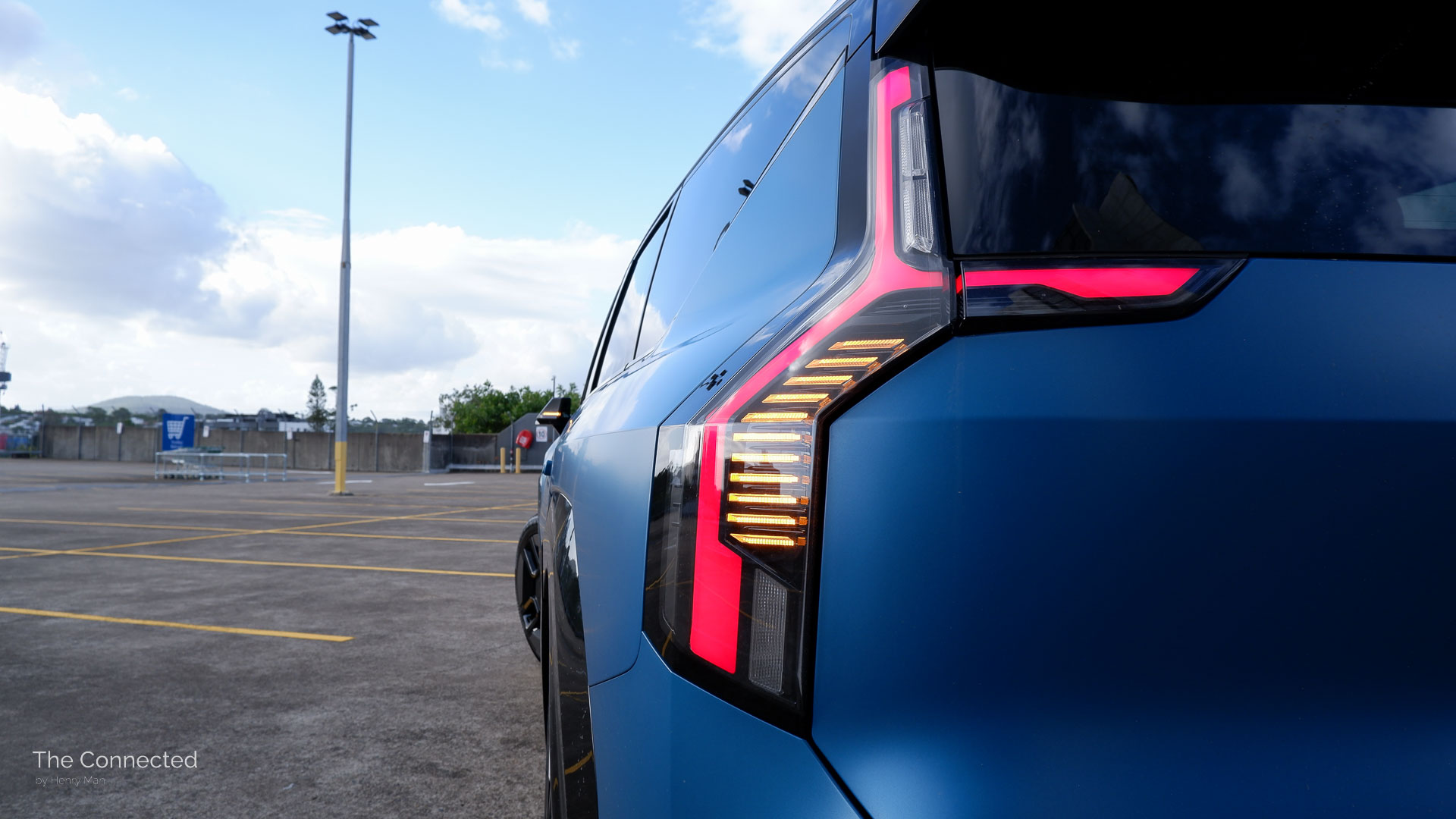
Rather than abiding by the full-length horizontal light bar trend, the EV9 adopts sharp and long vertical front and rear LED light strips to reinforce its height. The signature daytime running lights and indicators softly transitions similar to a Genesis, too.
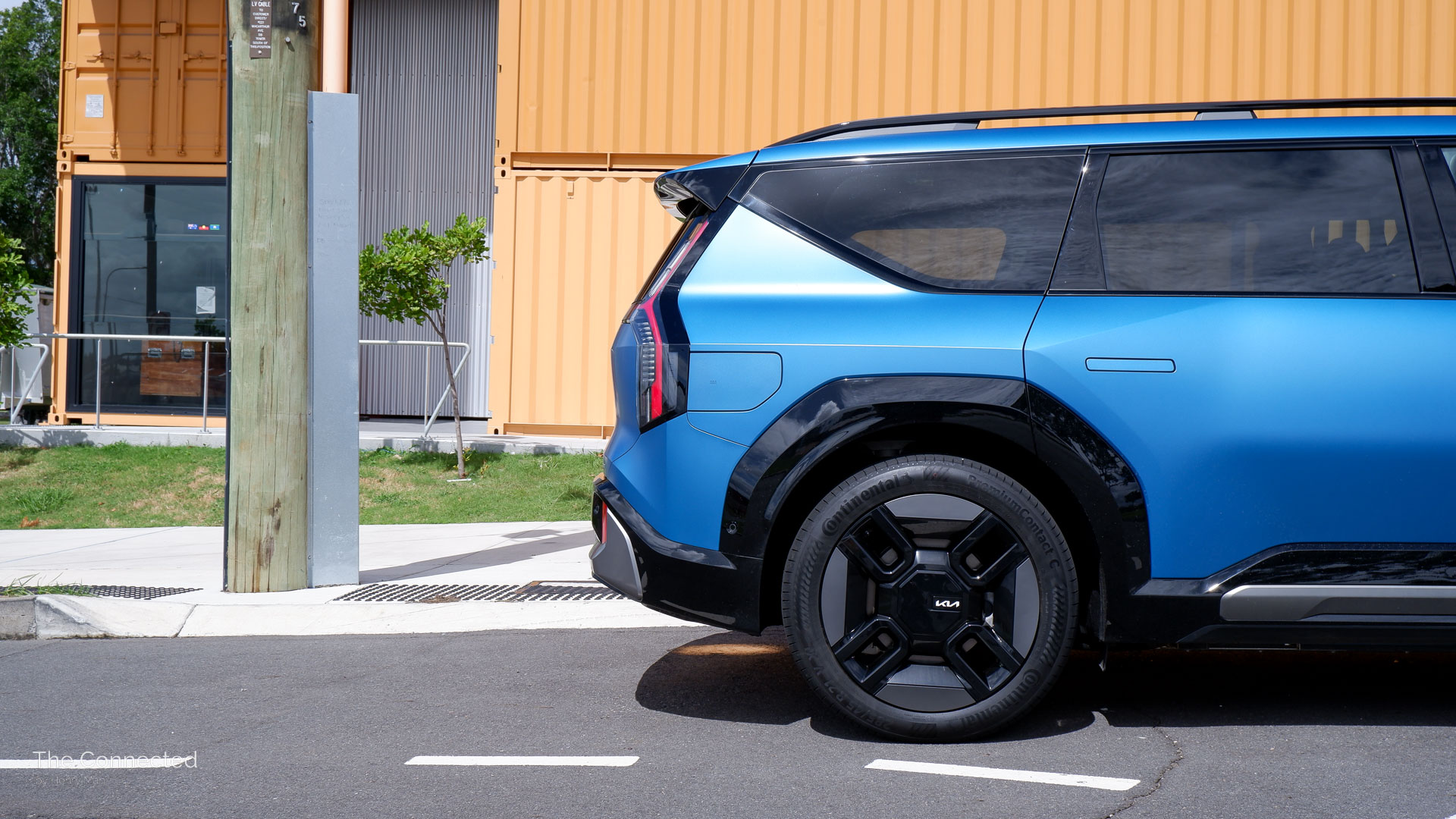
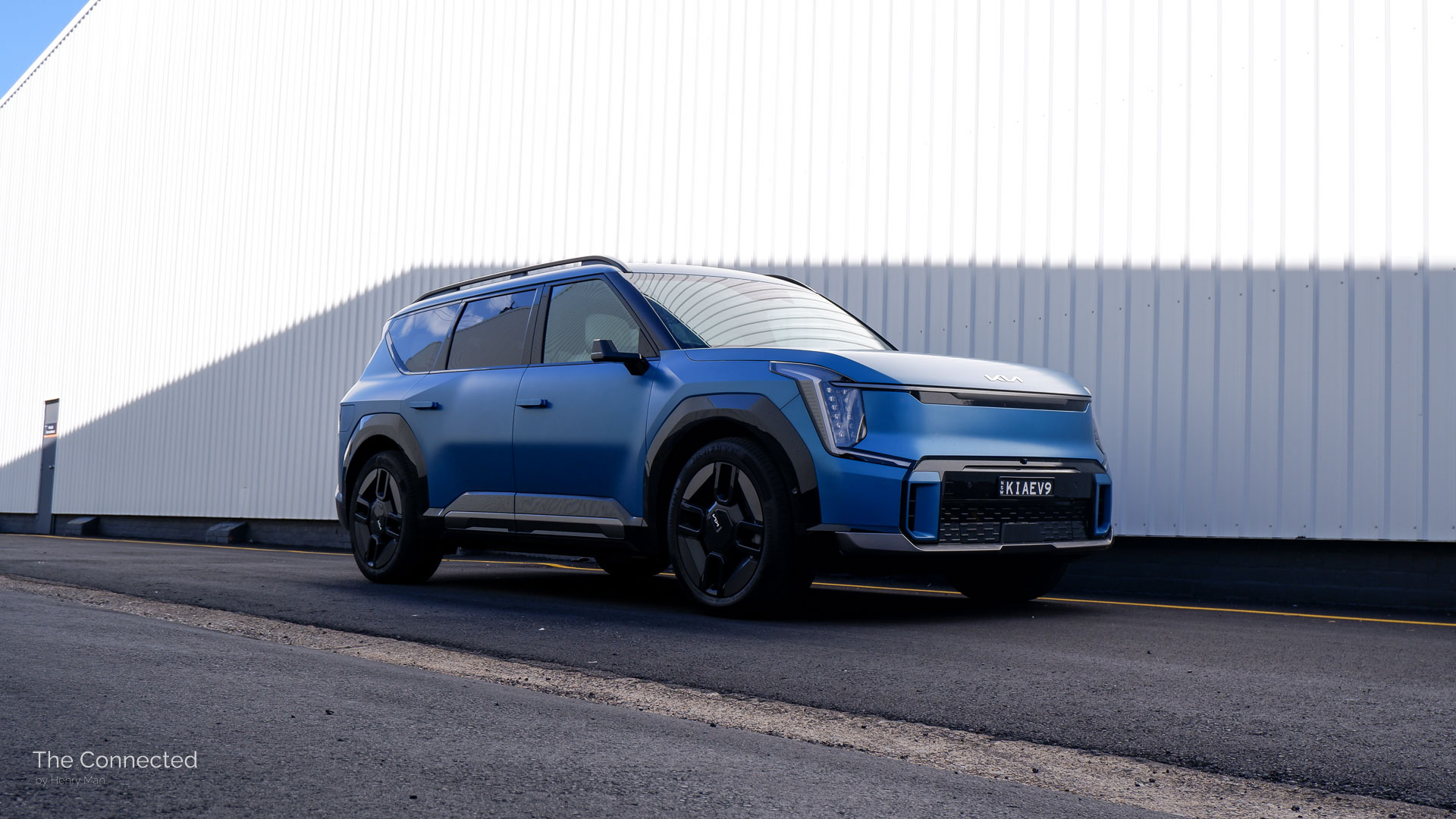
Additionally, the tall and boxy shape, GT-Line exclusive dark grey 21-inch alloy wheel covers with off-centre Kia logos, minimal body creases, and a smooth grille-free face gives off an unique tank-like – but minimalist – SUV design.
The rear wiper is cleverly hidden behind the rear spoiler, hailing from the Kia Sportage medium SUV.
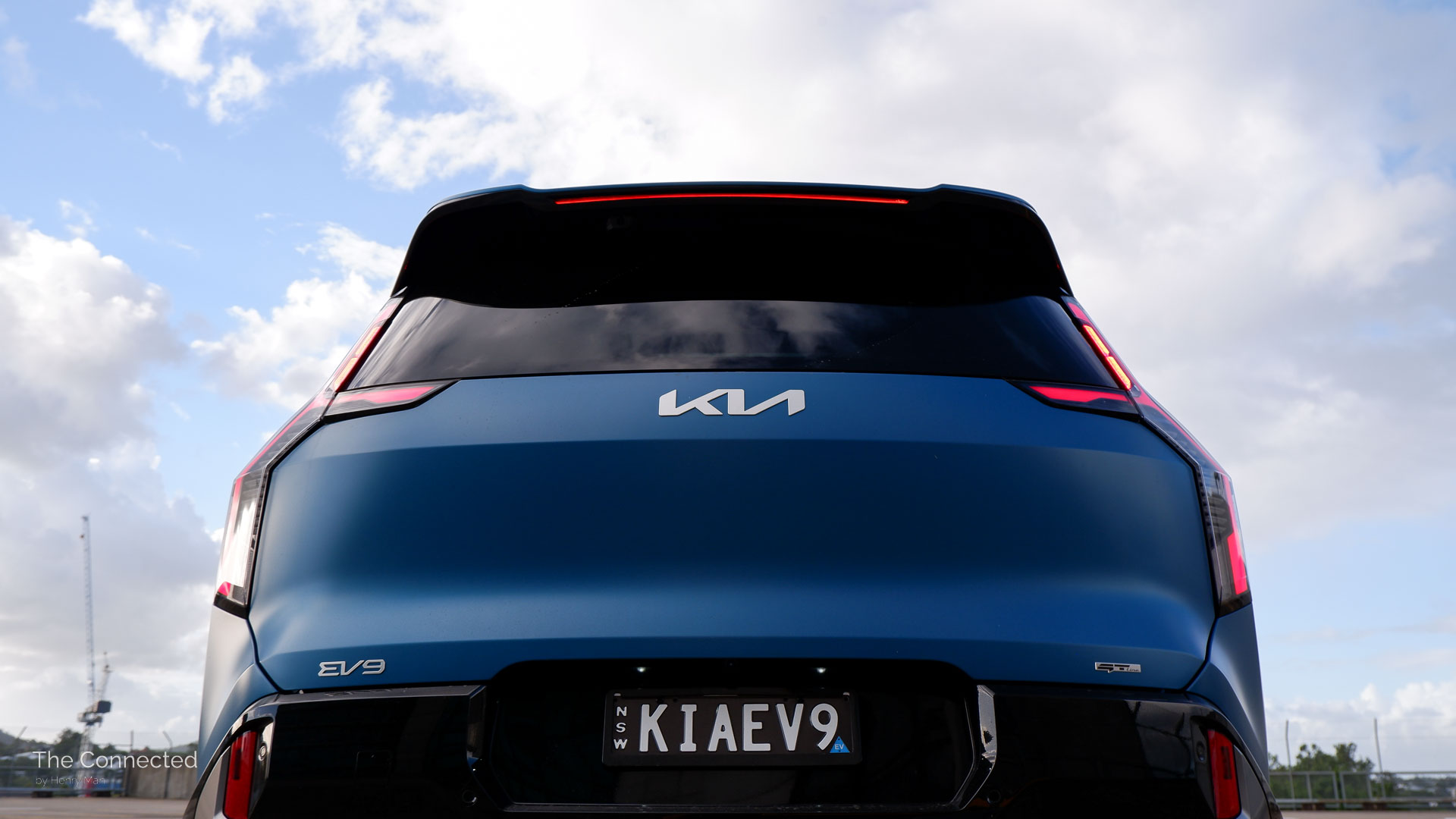
The EV9 even made an Audi Q5 driver behind take a photo while at the lights – with my tester’s optional Ocean Blue Matte exterior colour showcasing its unconventional electric SUV design best.
The matte paint shimmers under the sun and any water droplets simply slide off the roof and bonnet like a breeze. However, it’s an expensive option at $3495 and is only available on the top-spec GT-Line. For context, the Kia EV6’s Moonscape Matte Grey costs $3295 – which is already a hefty premium compared to the Hyundai Ioniq 5’s $1000 matte paint options.
Despite the cool looks, it’s more sensible to go with standard glossy paint (a $900 extra for all except dark red) – which is why it’s a shame the gloss Ocean Blue finish available overseas isn’t an option in Australia.
While the hero Kia EV9 GT-Line offers a premium-feeling interior, it arguably doesn’t feel luxurious and worth the almost $140K drive-away asking price.
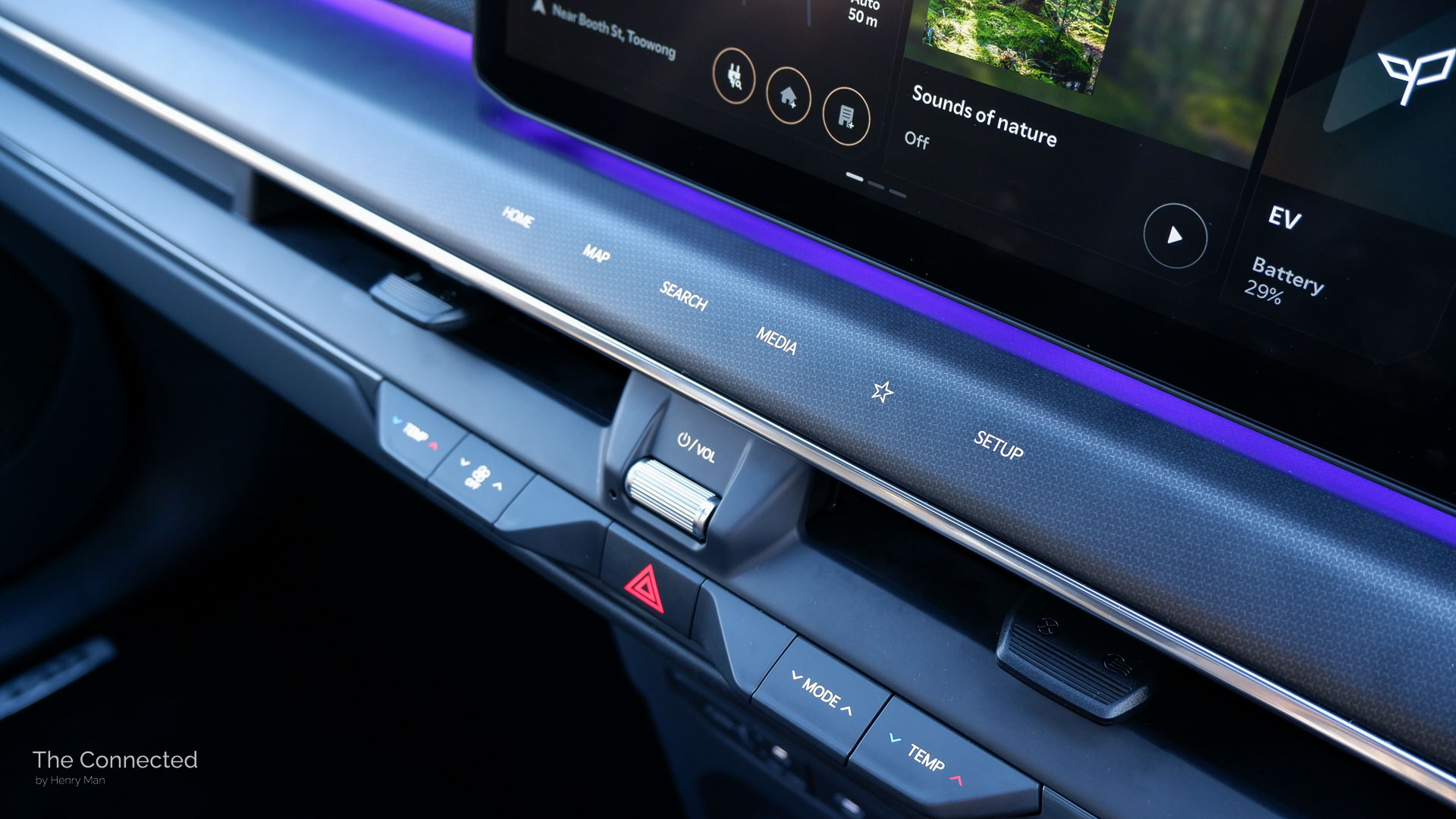
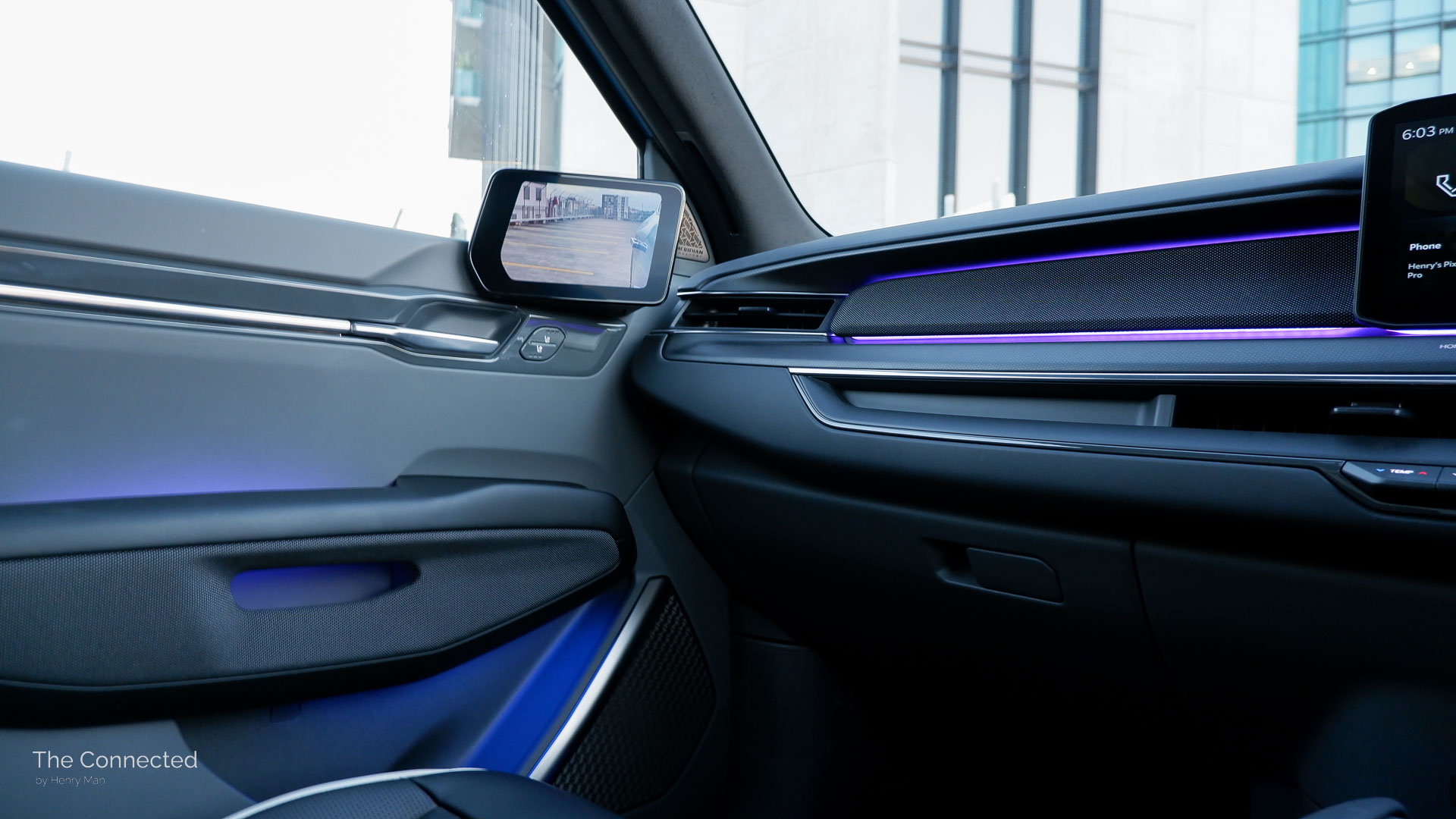
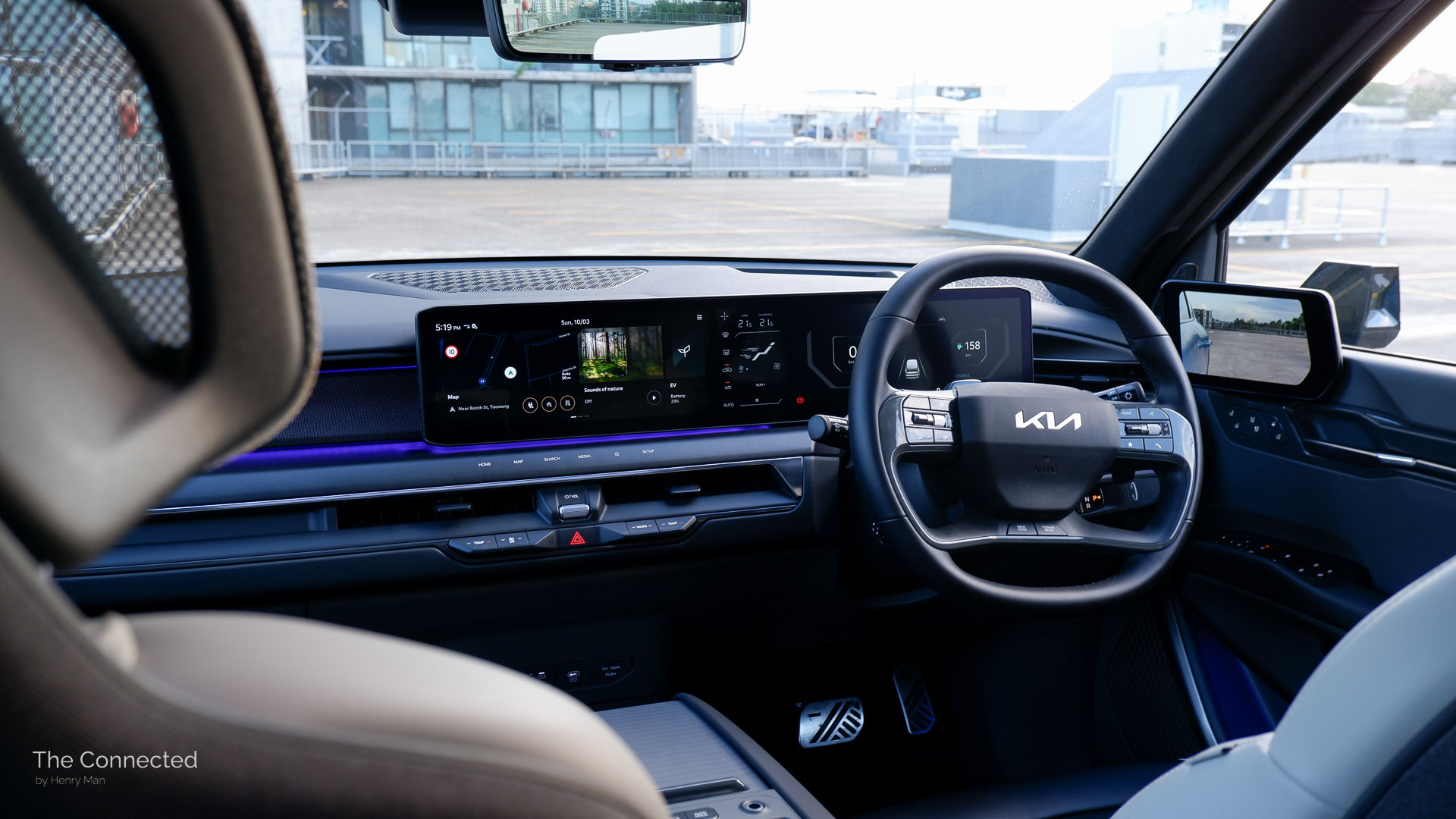
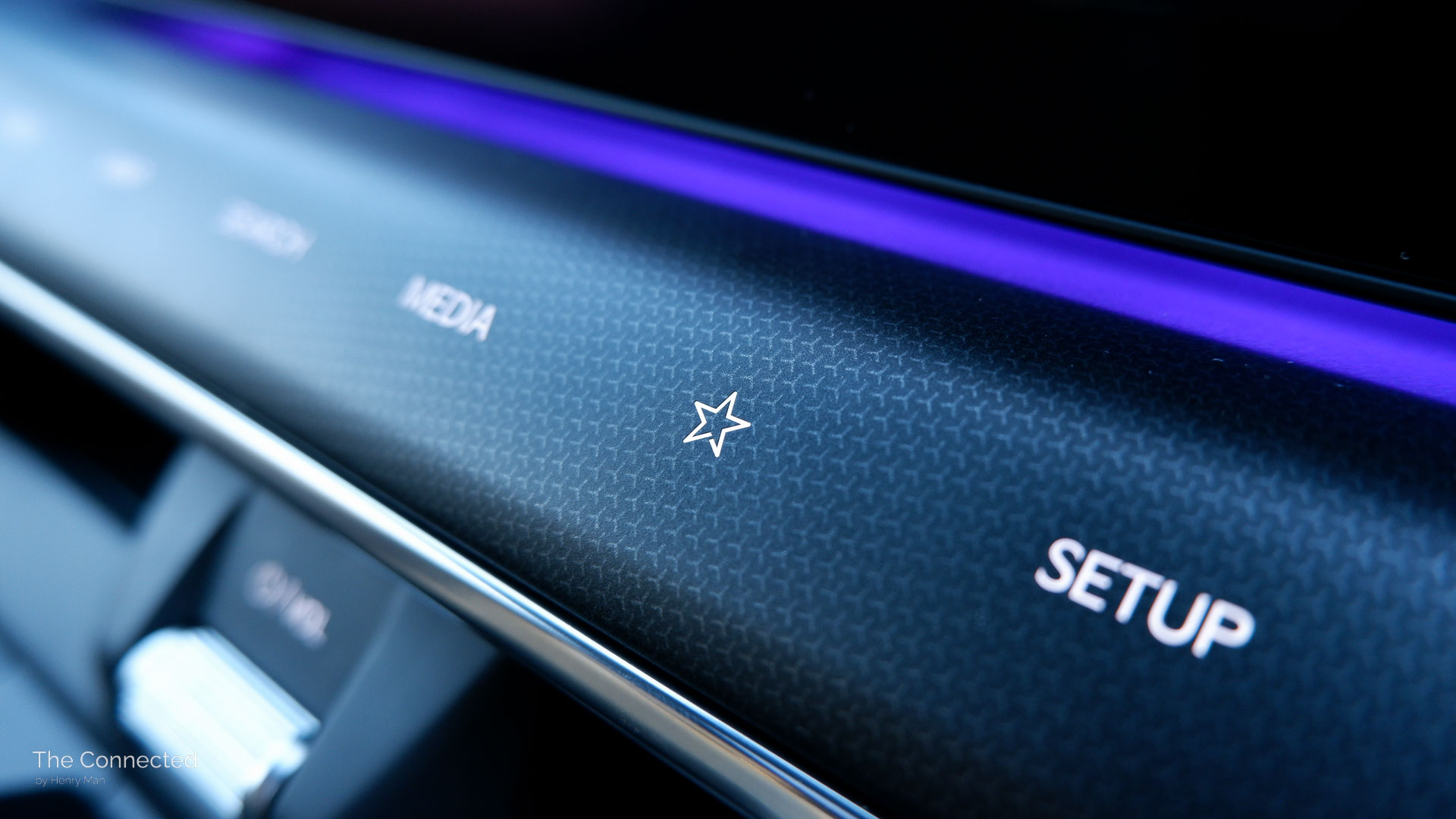
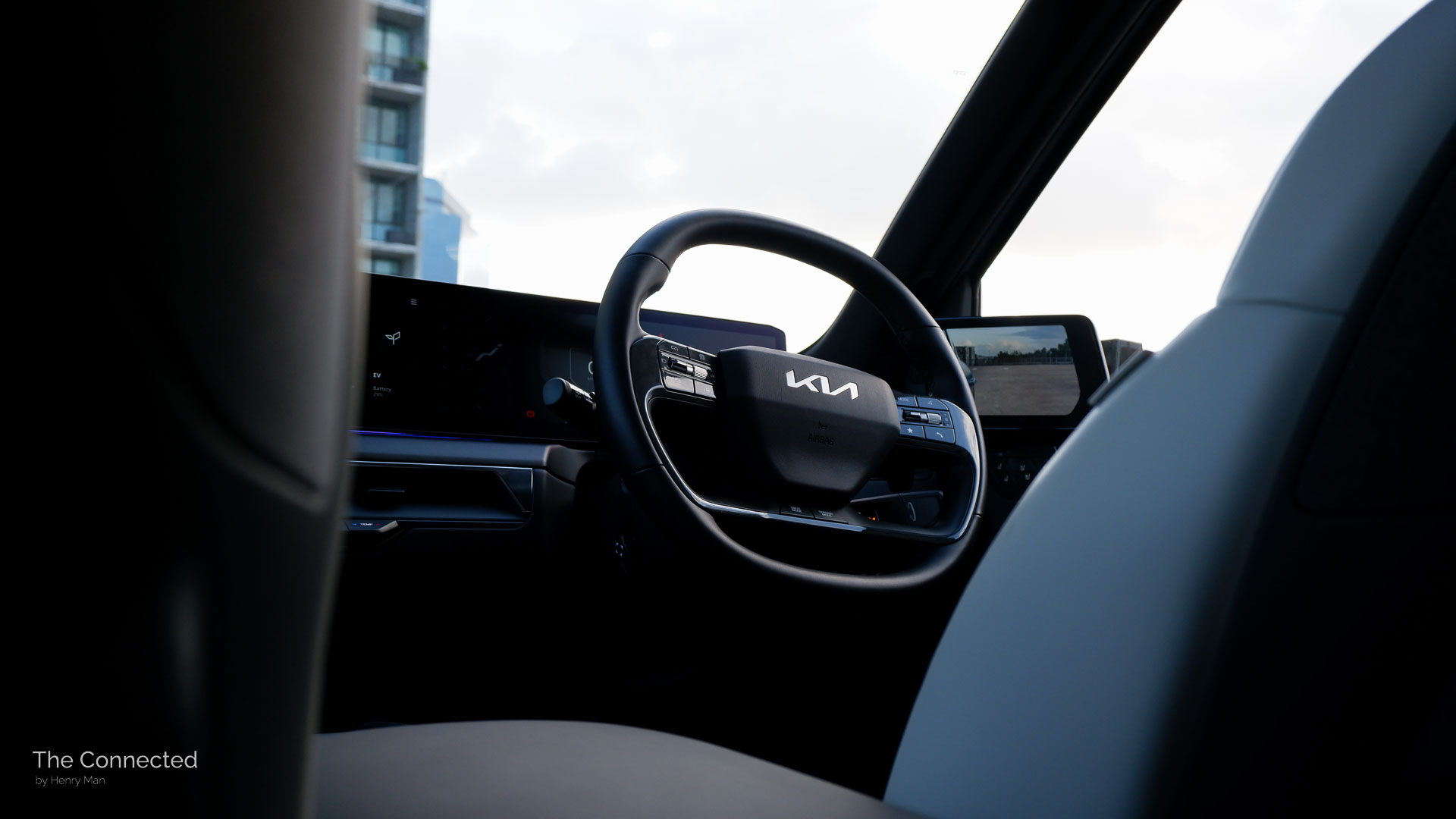
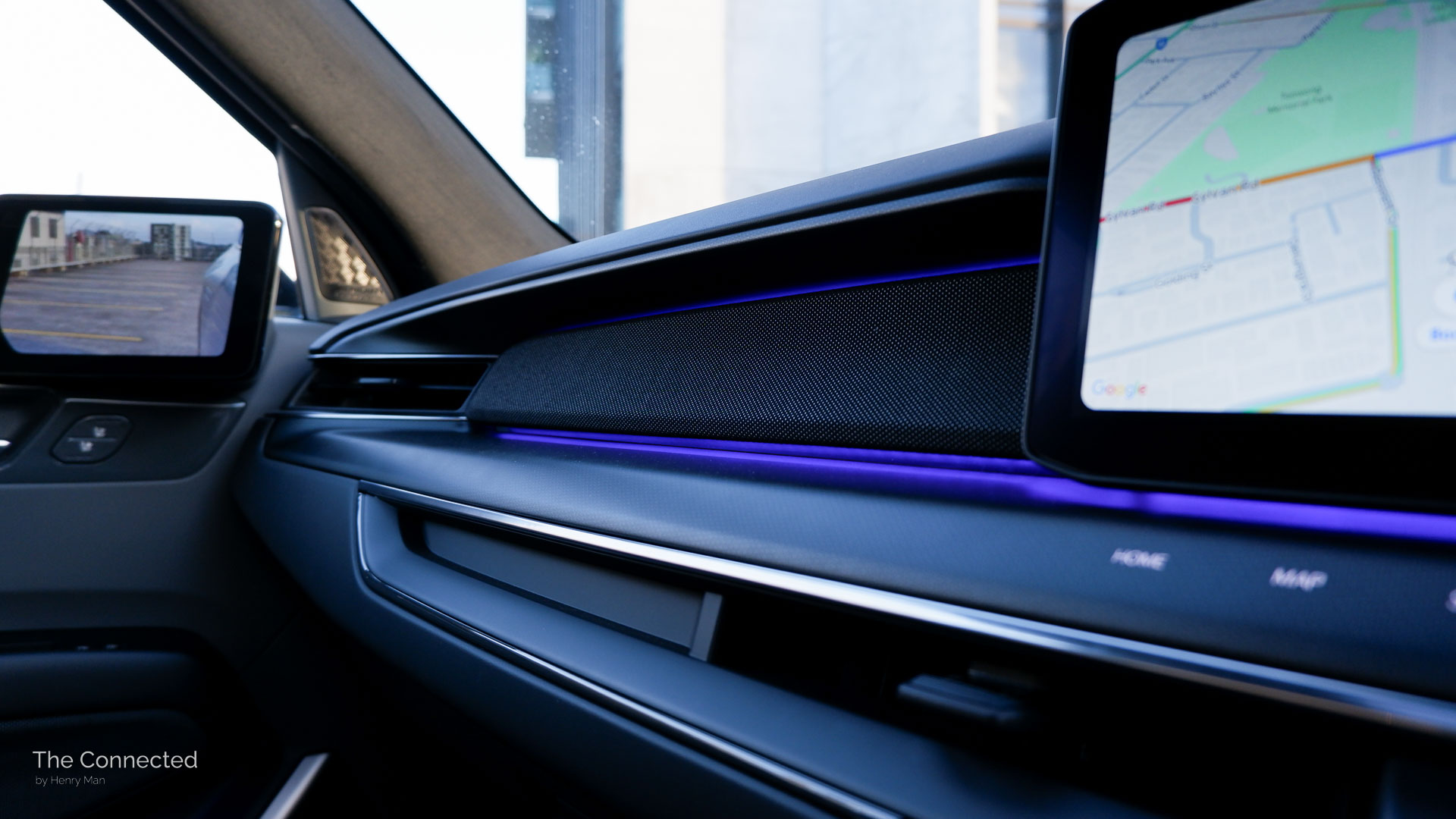
The interior continues the futuristic and minimalist design with a textured dashboard, integrated touch-sensitive buttons, grey fabrics and artificial leather materials centring around the single-piece widescreen tri-displays.
Unlike the sportier EV6 crossover, the EV9 forgoes impractical gloss black surfaces in favour of gloss grey instead – which better hides fingerprints and dust.
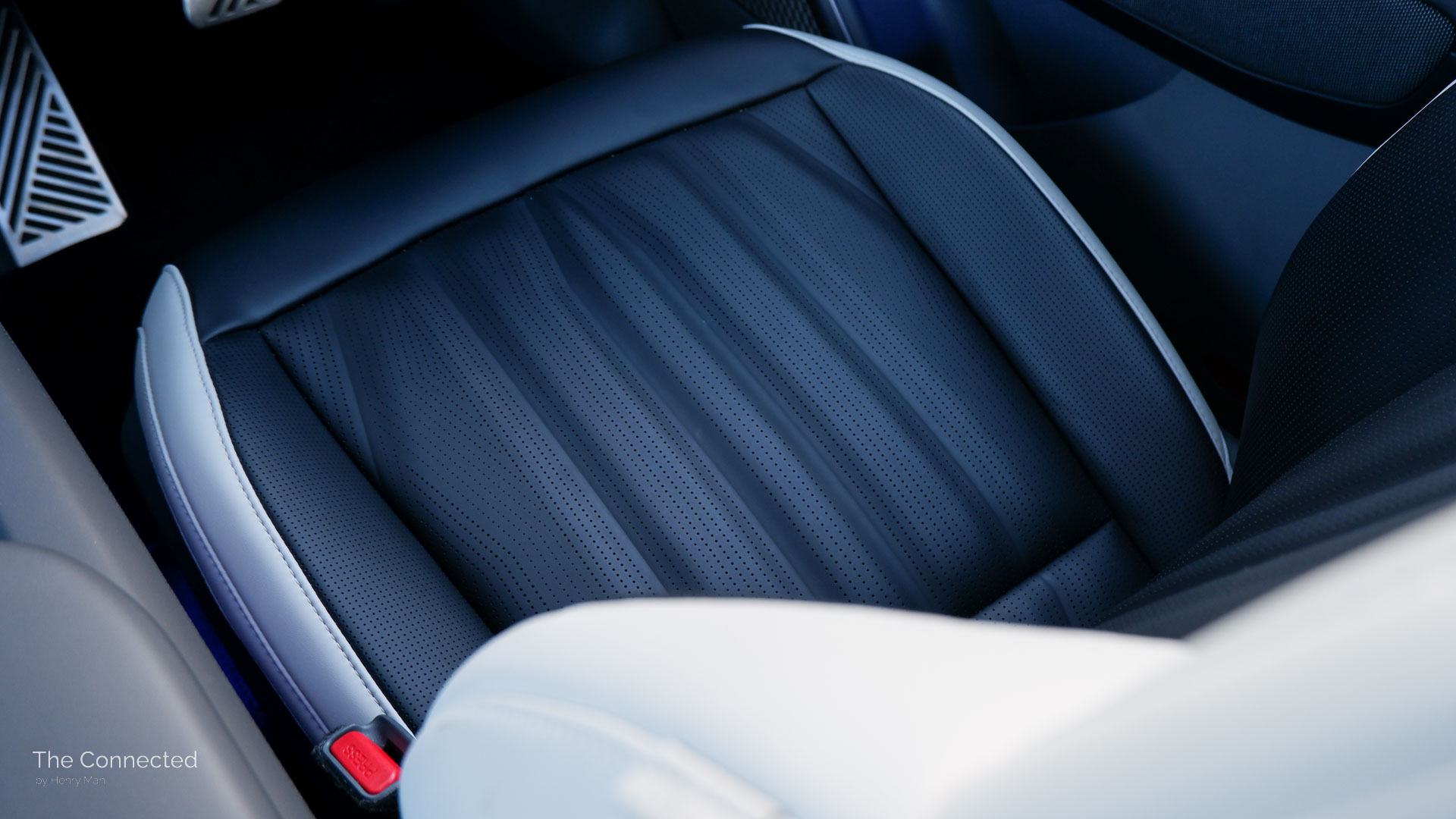
The GT-Line offers a mix of two-tone white and black artificial leather seats, along with plush black suede headliner and pillars, which better hides hand marks than a conventional light colour.
However, I often needed to press against the hard dashboard in order for the touch-based shortcut buttons to register, the centre climate control switches feel soft and aren’t tactile, and the seat control buttons on the doors click in a way that isn’t befitting of the high price tag.
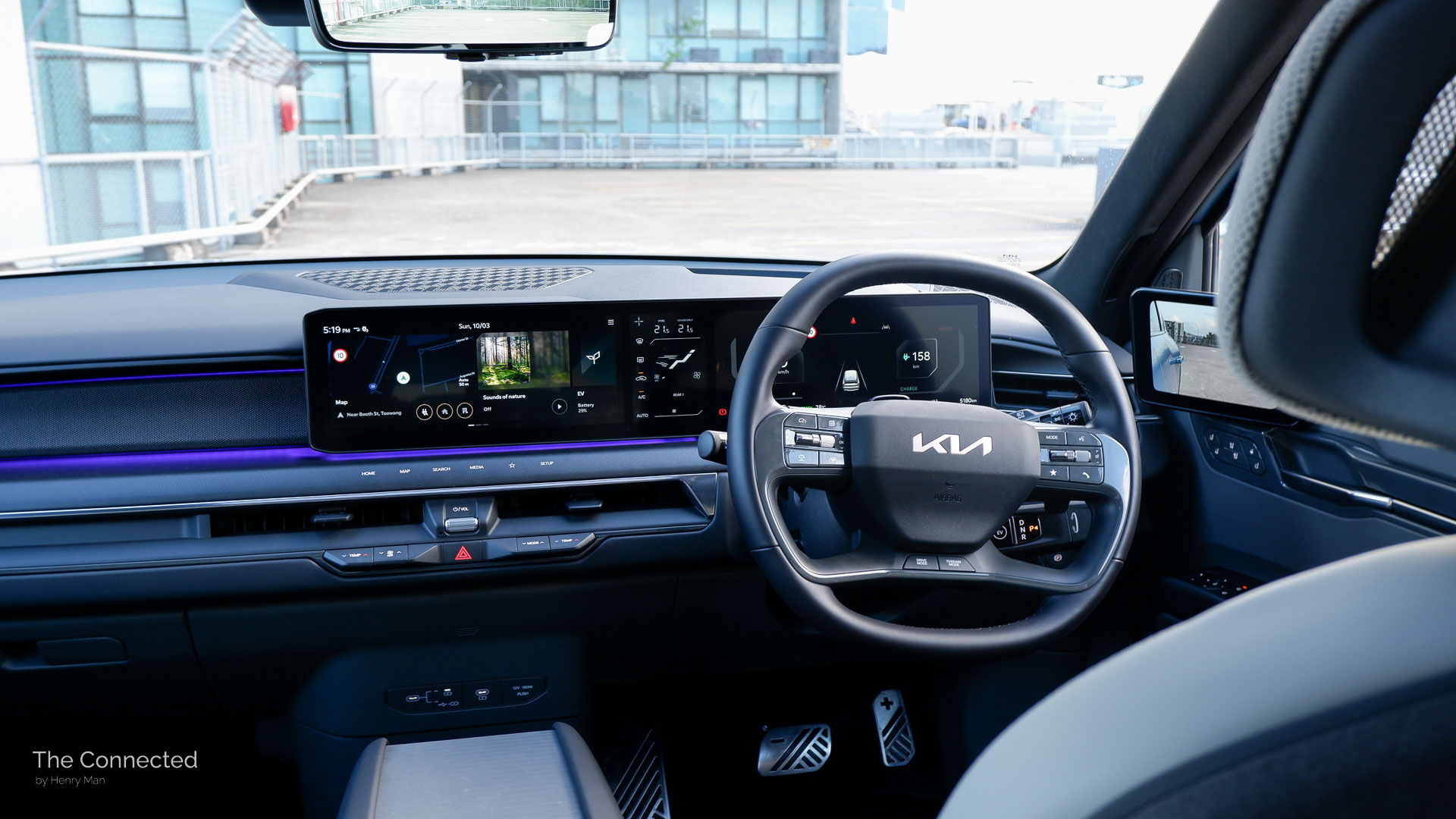
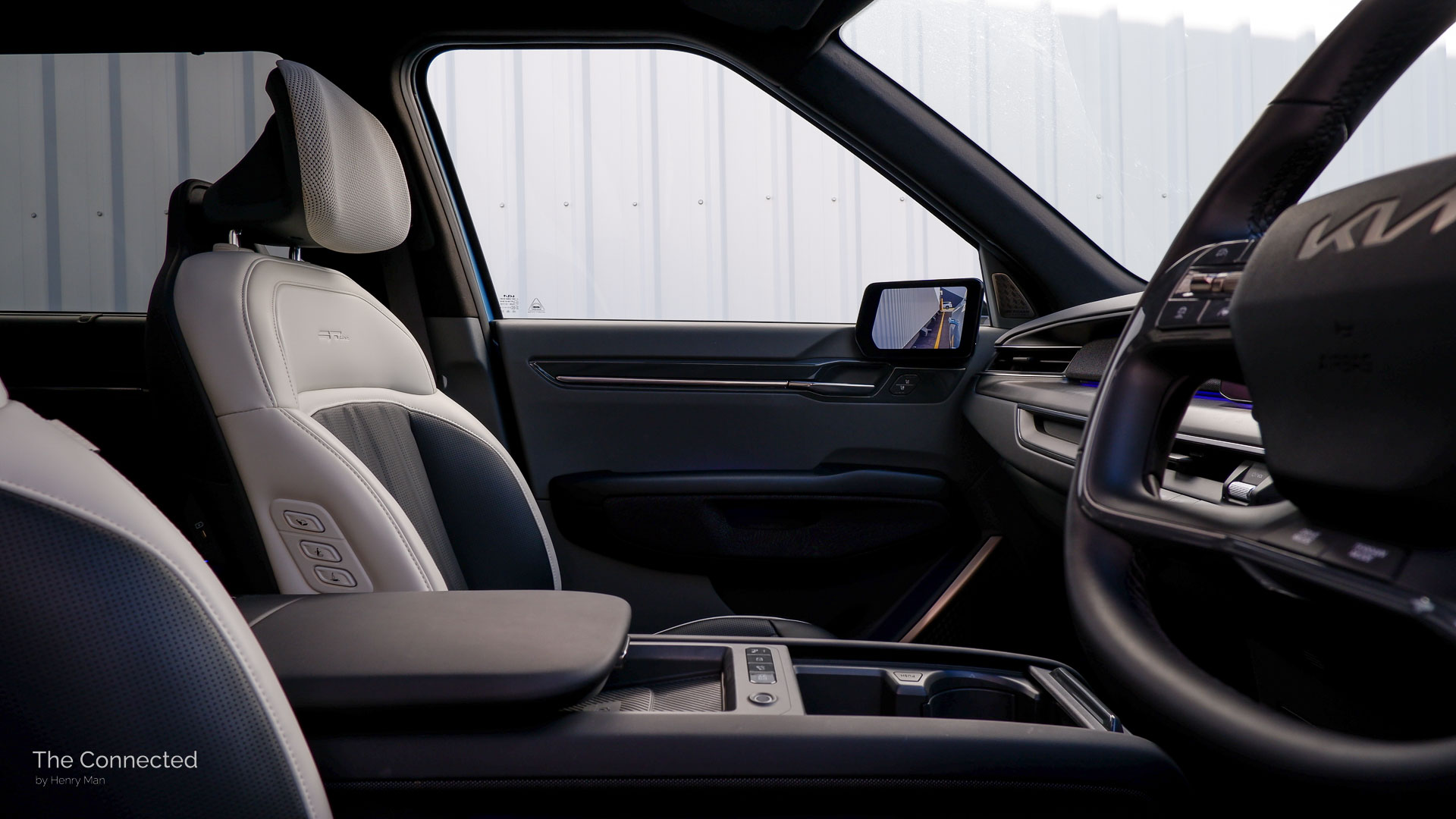
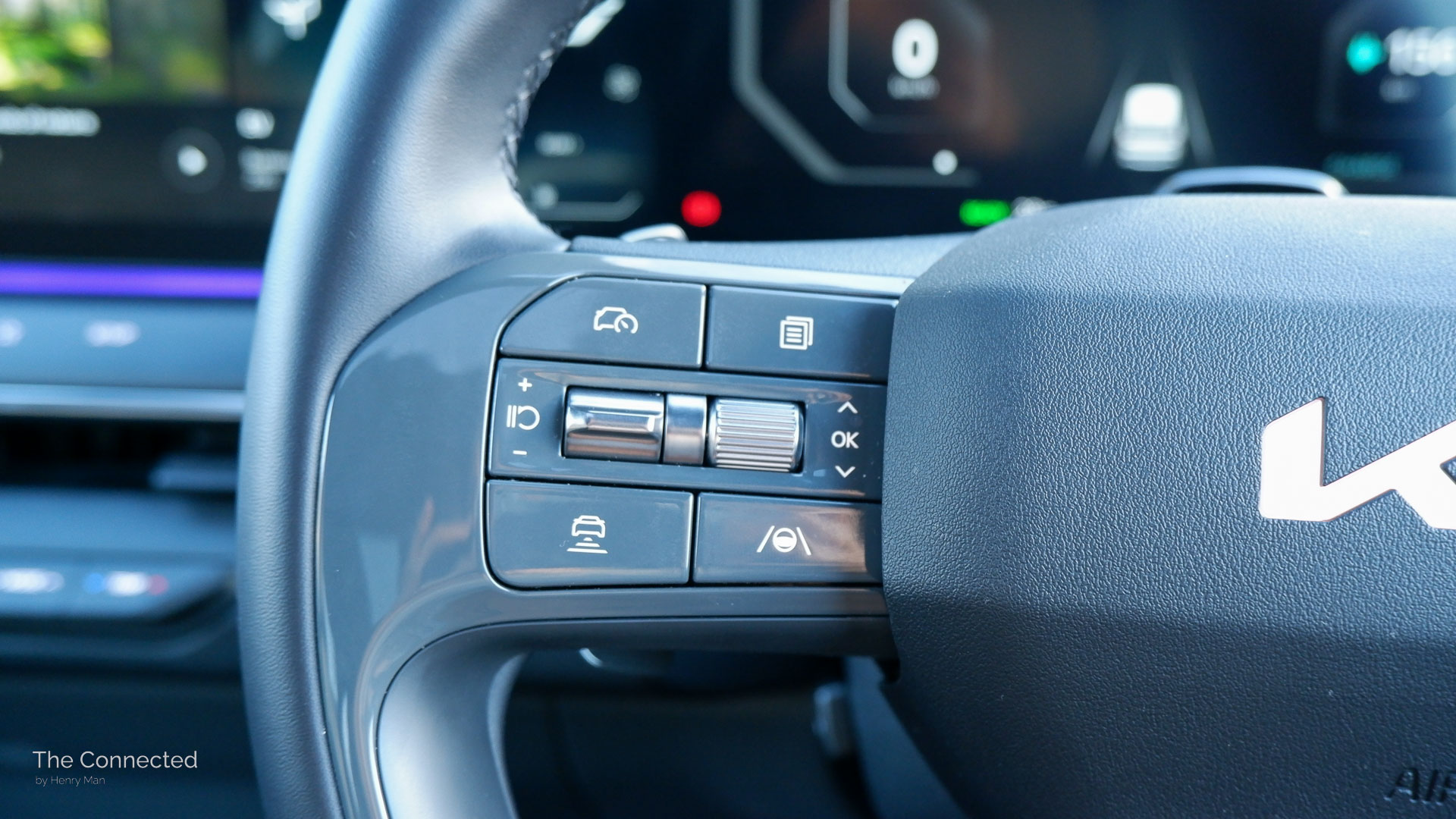
The bottom two spokes on the steering wheel in particular are clad in matte grey plastic – which feels cheap when holding it with lane-centring assist on, for example.
The similarly-sized internal combustion engine powered Hyundai Palisade also has a four-spoke wheel design, but has better feeling metal imitation bottom spokes.
The EV9’s 64 colour-adjustable ambient lighting isn’t as striking as the related EV6 by glowing soft hues instead, but can split in two different colours as per the Hyundai Ioniq 6 electric sedan.
Meanwhile, the illuminated Kia badge on the four-spoke, chunky leatherette clad steering wheel is more of a marketing ploy as I rarely noticed it while driving.
Practicality.
2024 Kia EV9 GT-Line dimensions:
| Length x width x height | 5015 x 1980 x 1780mm |
| Wheelbase | 3100mm |
| Ground clearance | 177mm |
| Boot space (all seats up / 3rd row folded / 3rd and 2nd row folded) | 333 / 828 / 2318 litres |
| Frunk space | 52 litres |
| Rear seat split fold | 50:50 3rd row / 60:40 2nd row |
| Child seat anchors | 4x ISOFIX (outer 2nd row and 3rd row) + 5x top tethers (2nd and 3rd row) |
The Kia EV9 offers a practical, spacious and family-friendly interior in a still rare seven-seat, all-electric large SUV package.
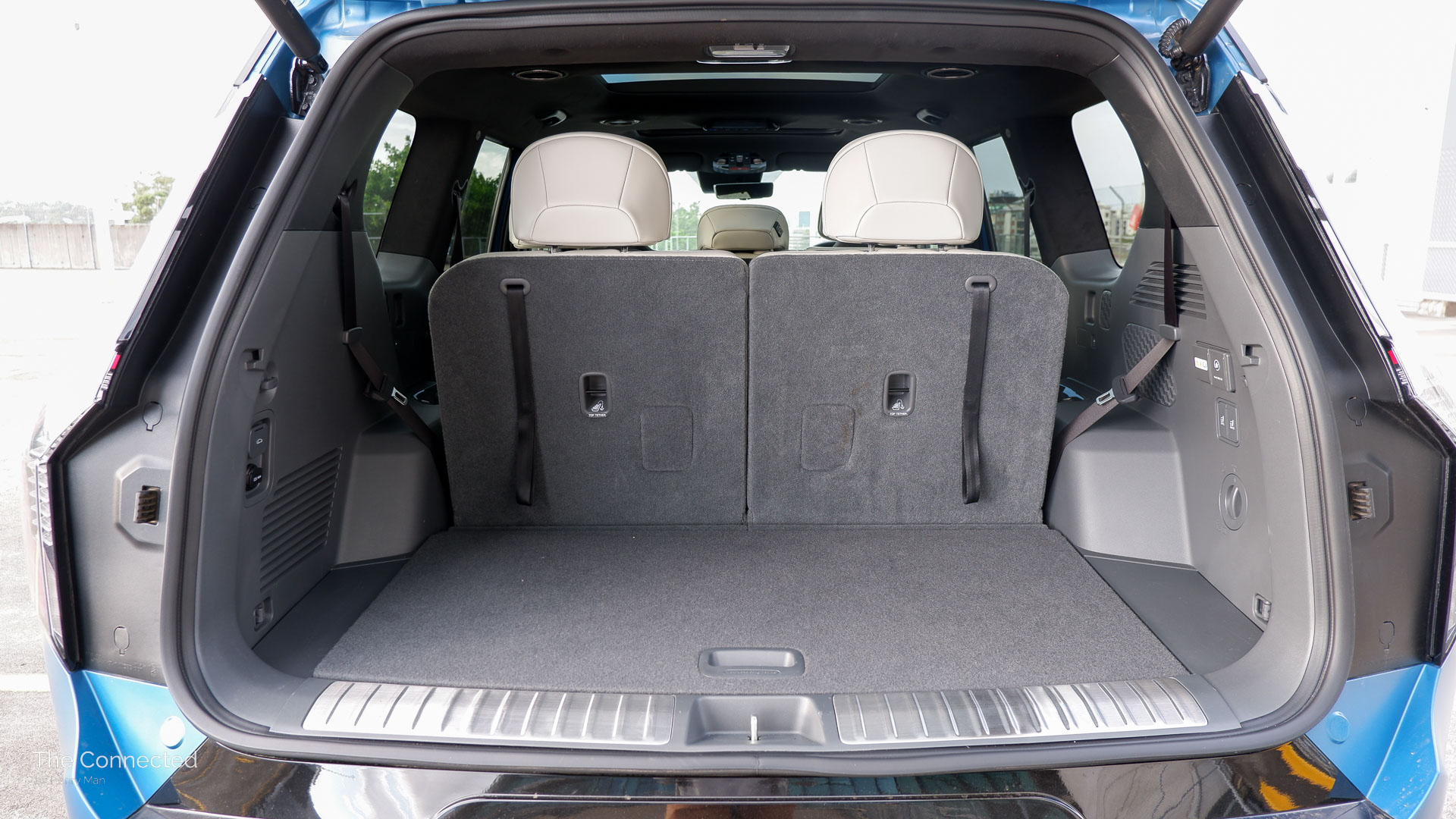
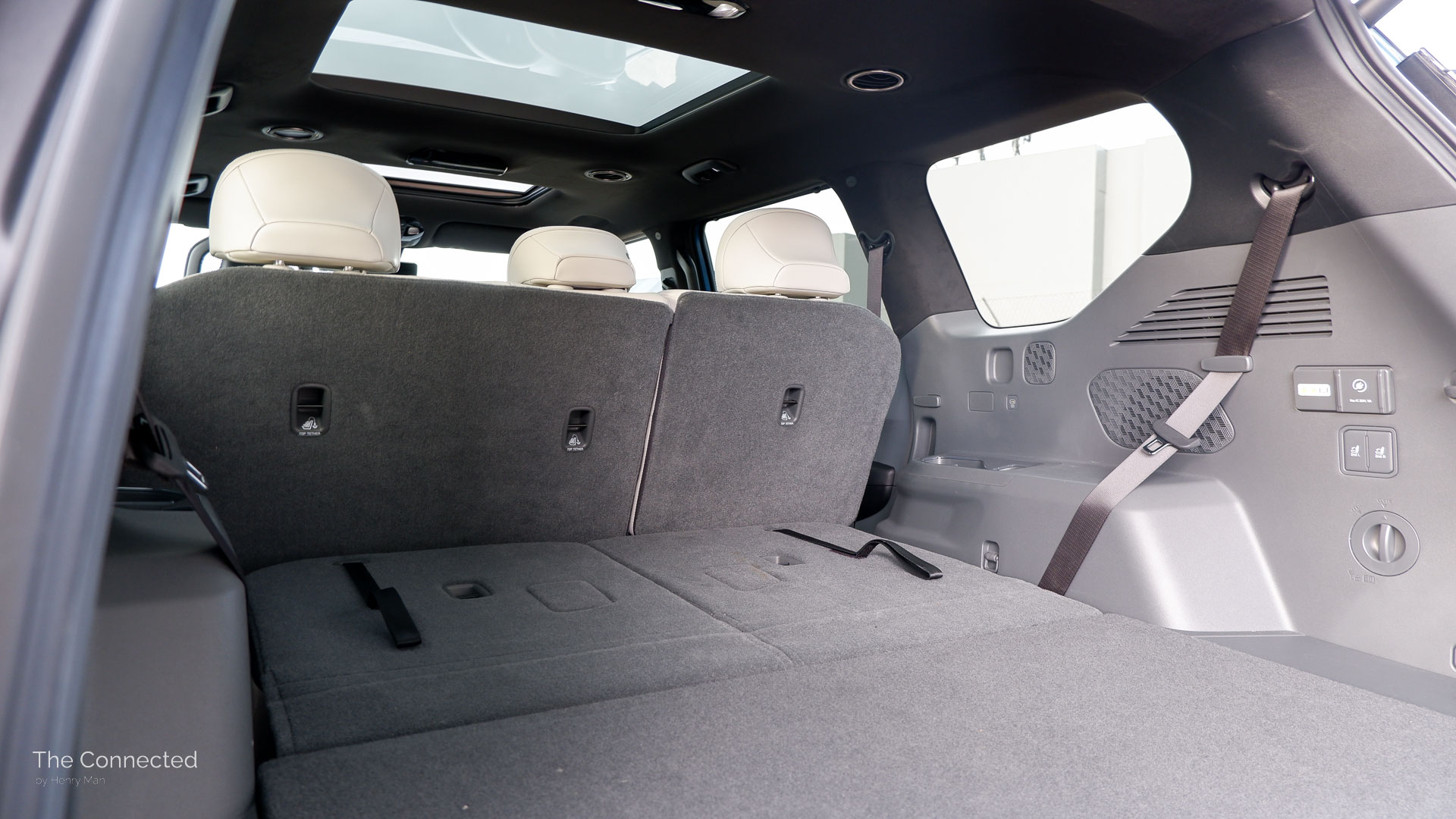
With all three row seats in place, the South Korean made EV boasts an impressive 333 litres of boot space with a flat loading lip. For context, that’s identical to the Toyota Corolla ZR Hybrid small hatchback and just shy of the MG 4 Essence small electric car’s 350-litre volume on paper.
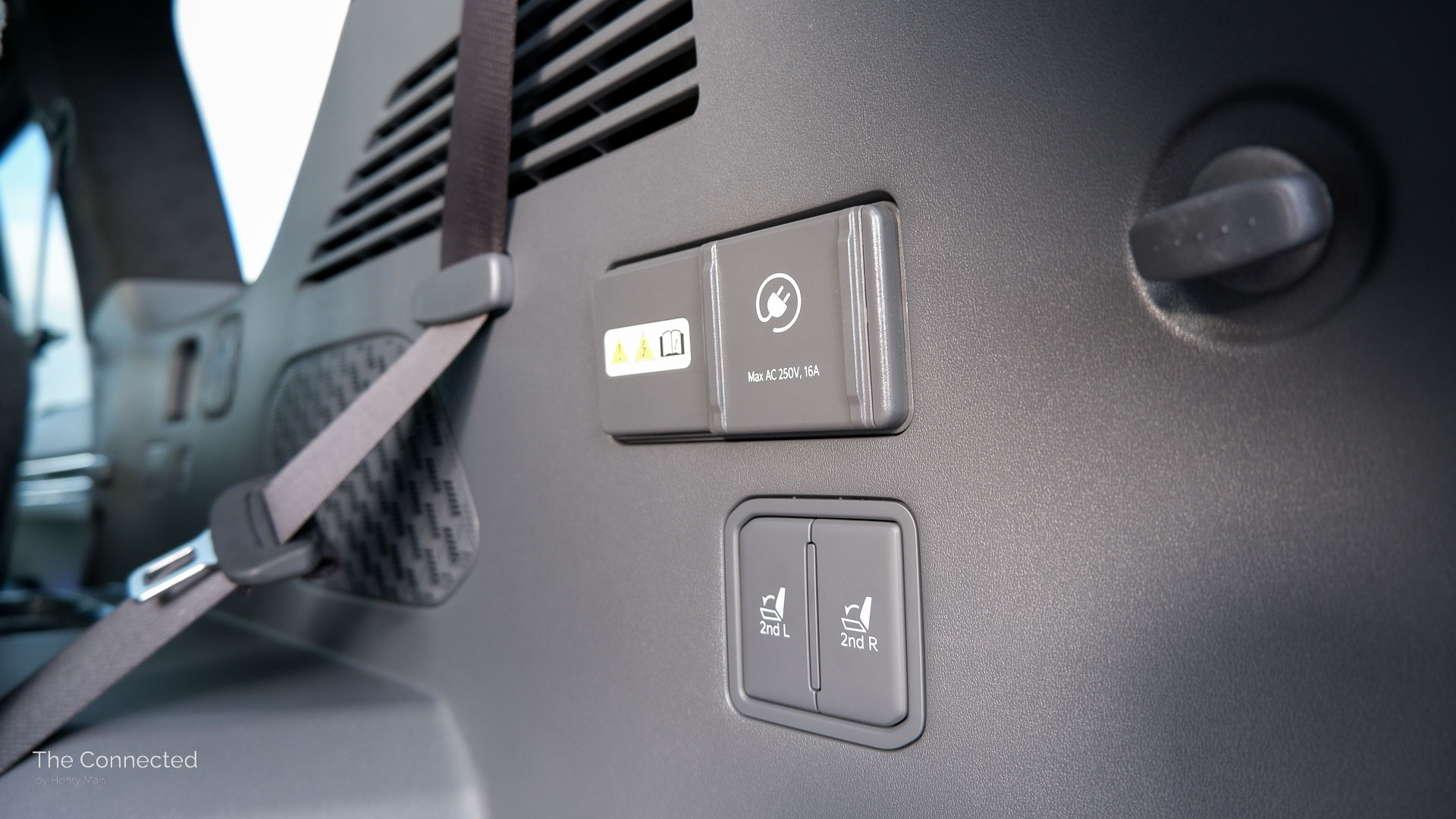
Folding the third row seats via pulling the straps yields 828-litres, while folding the second row via the release buttons on the side results in a vast van-like 2318-litre cargo space.
Unfortunately, there aren’t any sturdy bag hooks – yet are ironically found on the Kia Picanto city car – so items often slide around while driving.
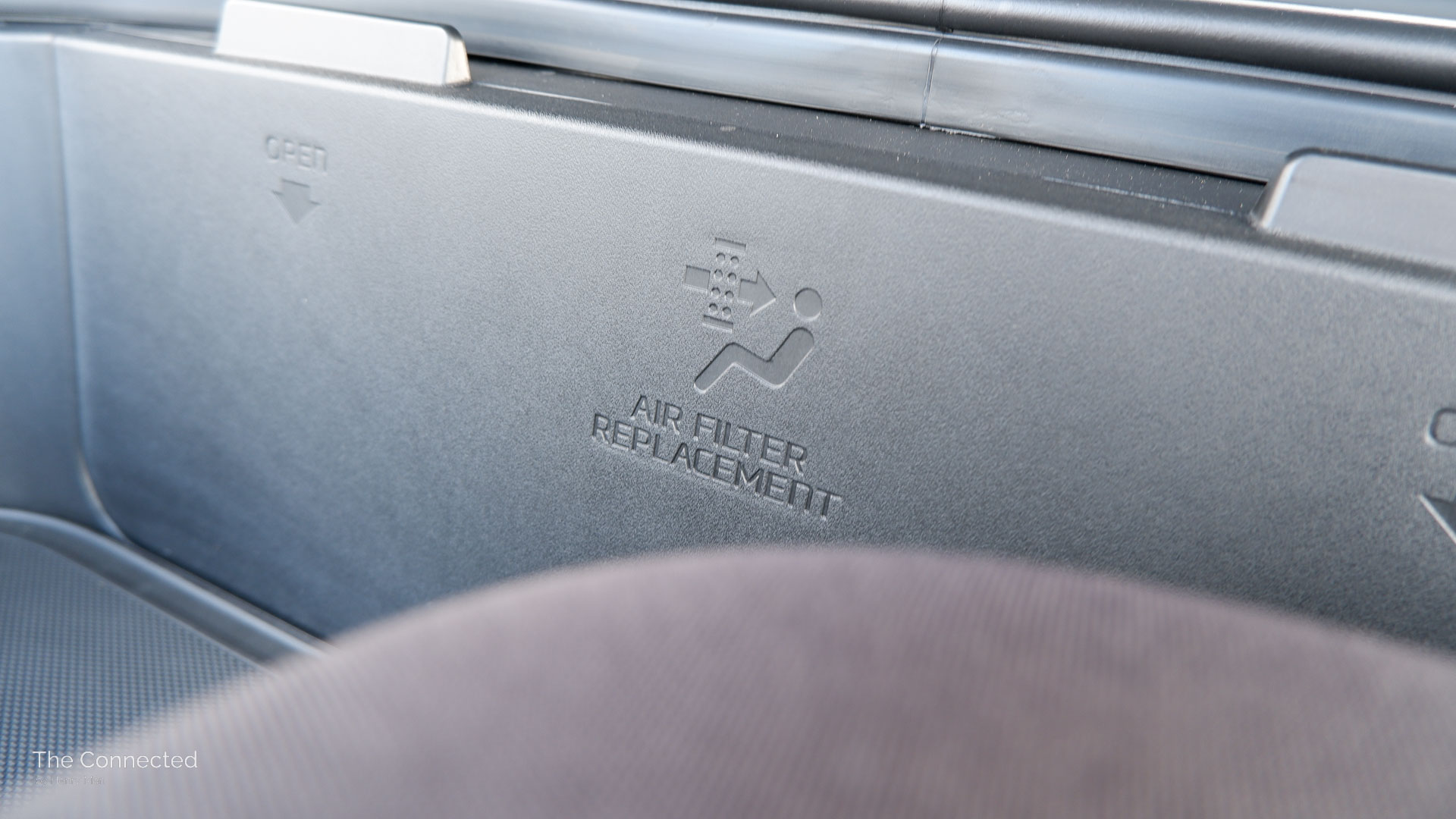
Underfloor storage is limited as well, with the dedicated slot for the parcel blind and tyre patch-up kit taking up most of the space.
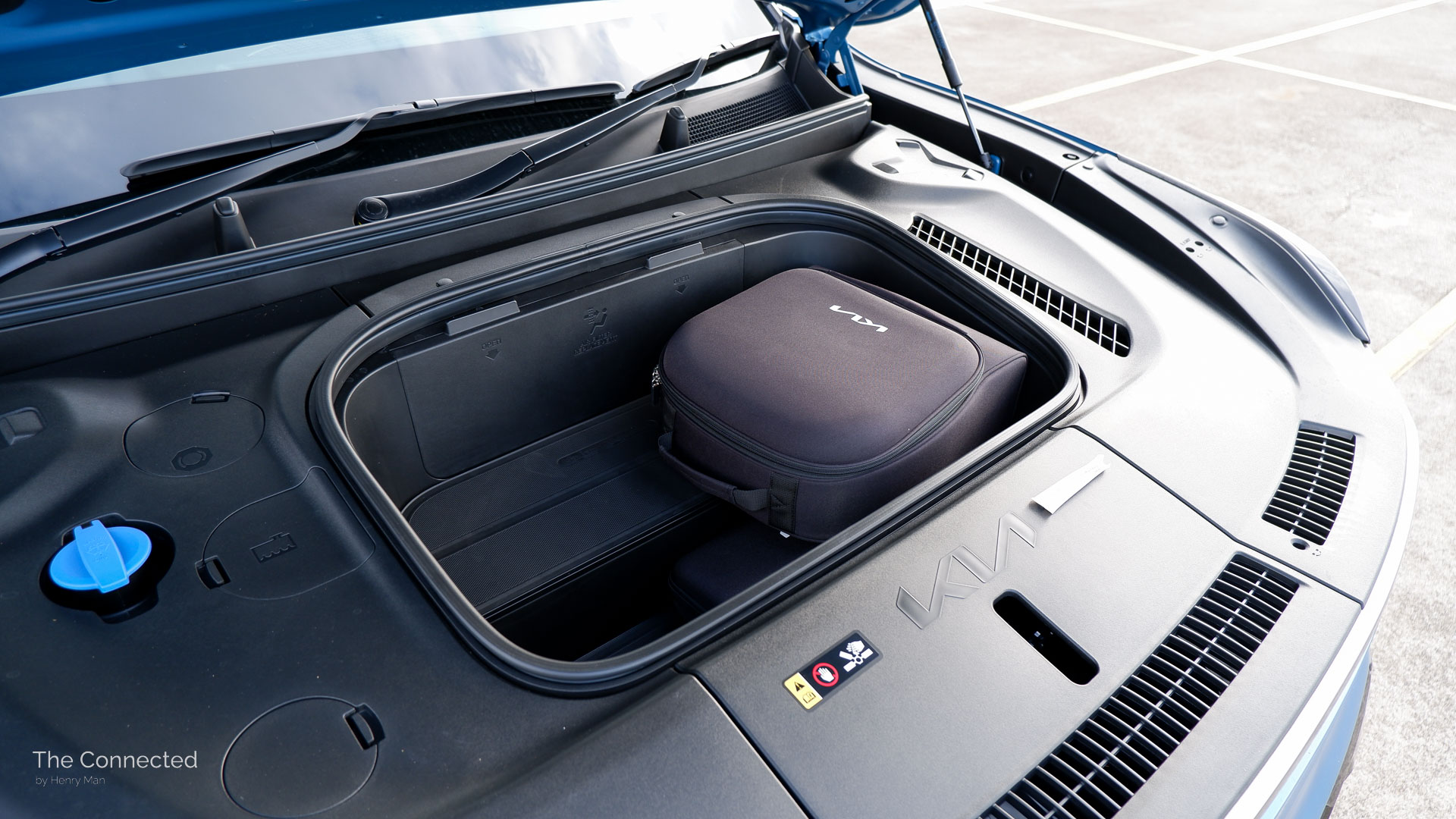
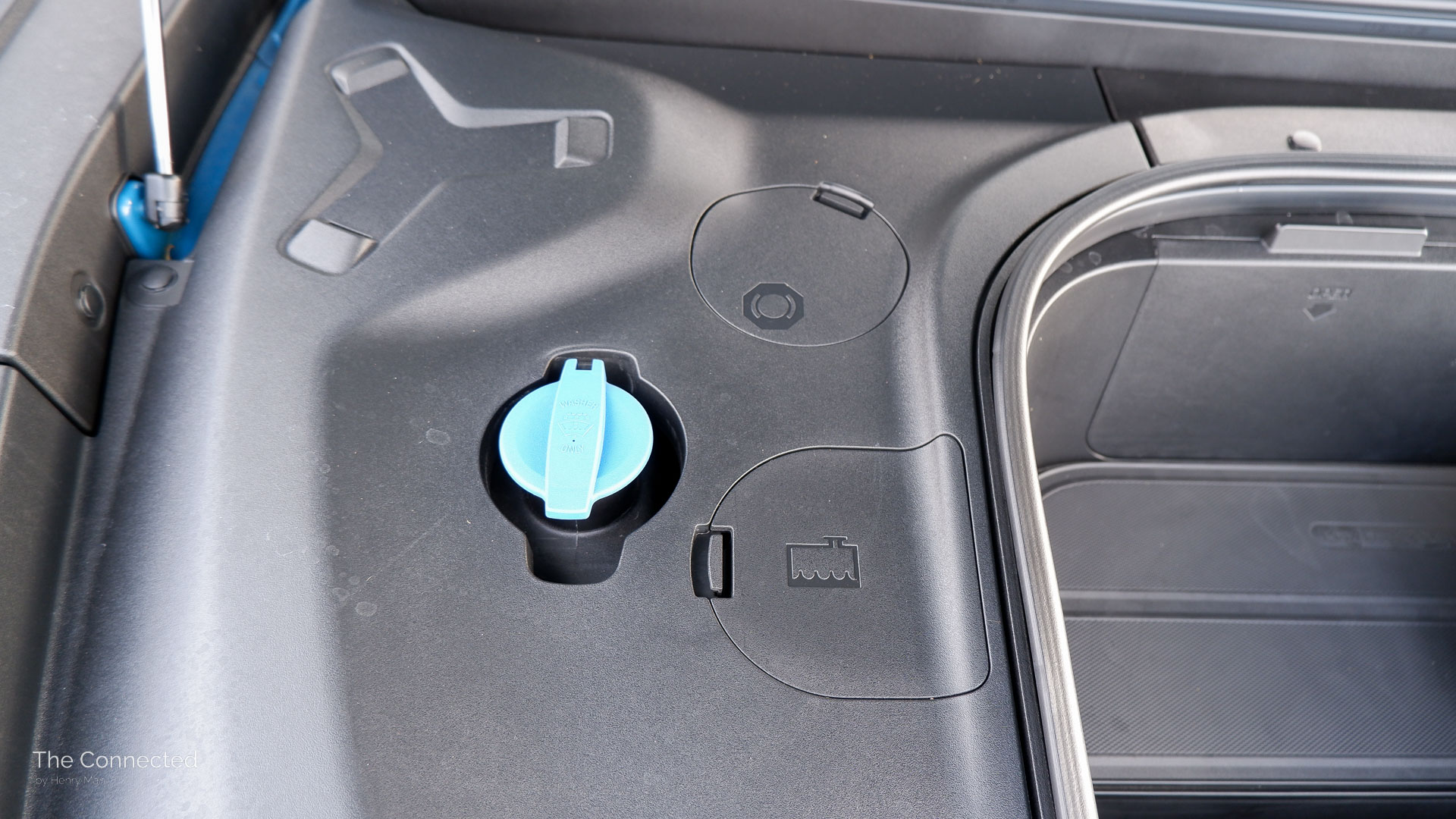
The EV9 GT-Line features a 52-litre frunk storage space under the latch-free bonnet, which can be popped open via the key fob, Kia Connect mobile app or driver’s side button, but doesn’t electrically open and close.
This is 38 litres smaller than the base Air variant’s frunk due to the additional electric motor up front – and isn’t as impressive given the upper large SUV size. For context, the Tesla Model Y medium electric SUV offers a bigger 117-litre frunk.
The Kia EV9’s electric tailgate is large and can be a hassle when backed up close to a wall or public charging station, for example.
It also lacks a hands-free kick sensor with the automaker persisting with it auto-opening – but not closing – when the proximity key is behind the tailgate for a couple of seconds. Annoyingly, when the auto door unlocking function is on, walking past the side of the vehicle will trigger it and disable the hands-free boot function.
This is big.
The Kia EV9 is a practical family car with a spacious interior and boot/frunk – while marking the return of a proper seven-seat large electric SUV other than the exxy Mercedes-Benz EQS.
However, it’s a shame that there aren’t any sturdy bag hooks, the rear seats are only manually adjustable, and the six-seater option isn’t available in Australia.
Thanks to the dedicated Electric Global Modular Platform (E-GMP), the EV9 features a long 3100mm wheelbase and a large, family-friendly interior.
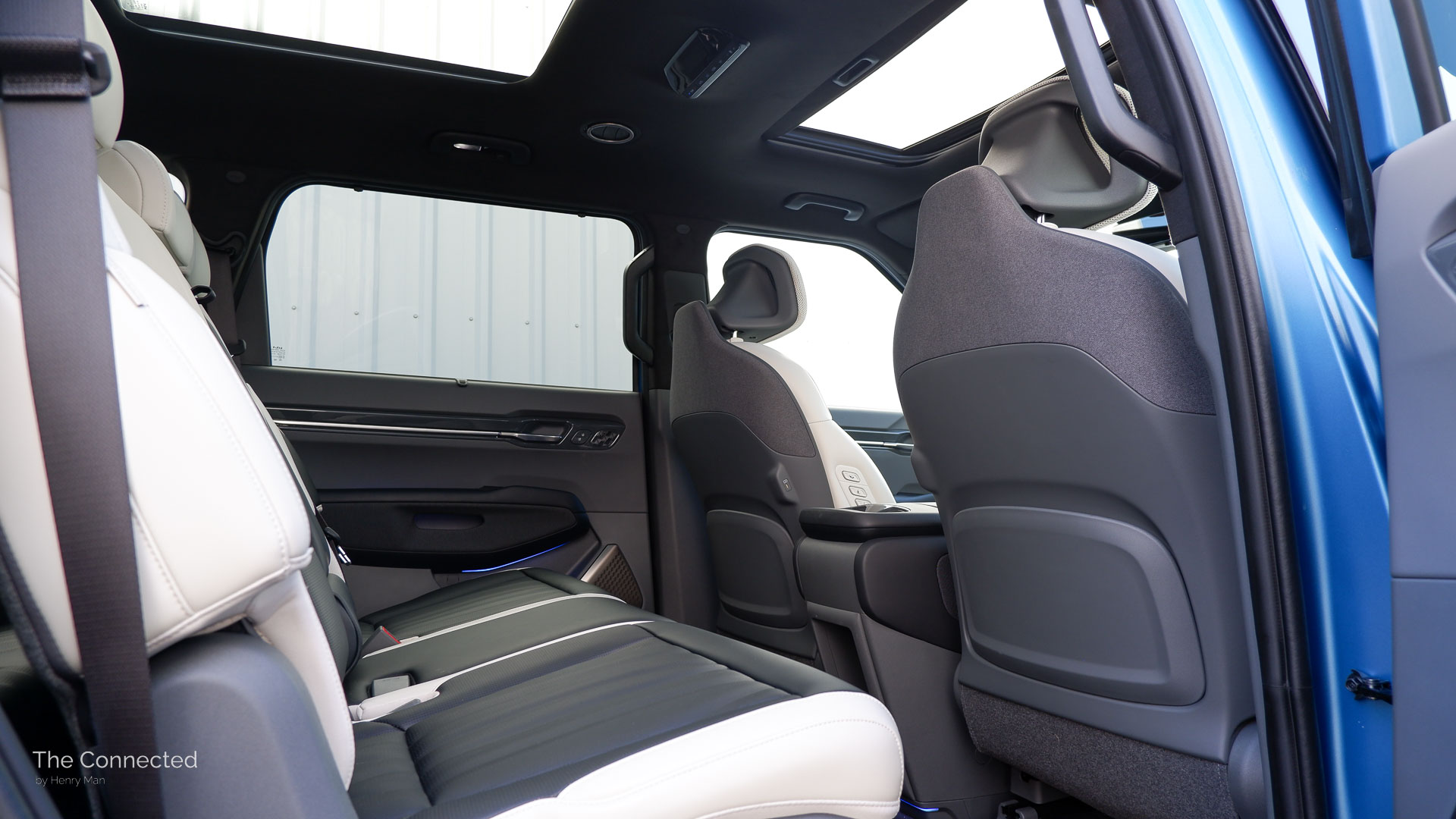
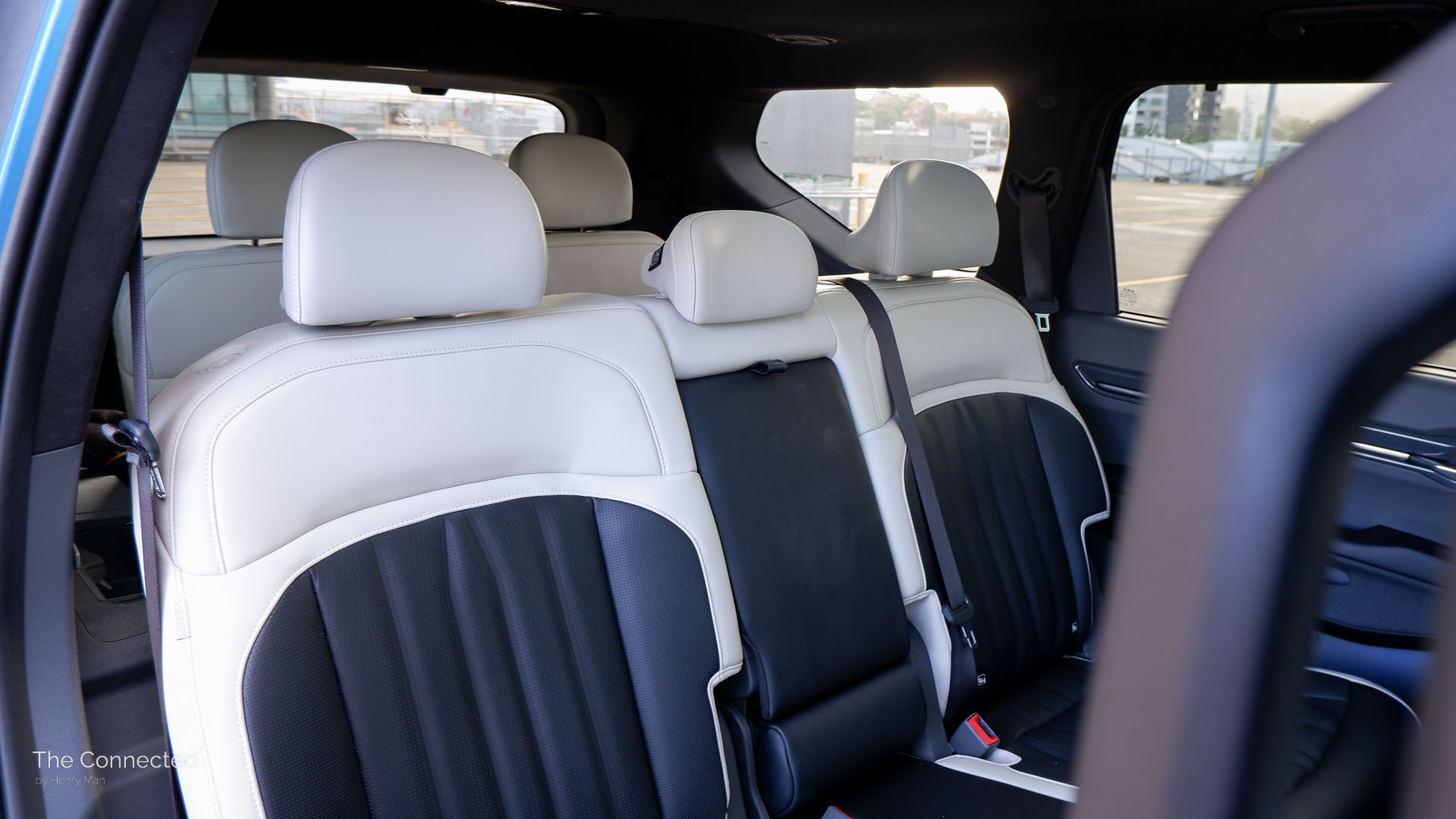
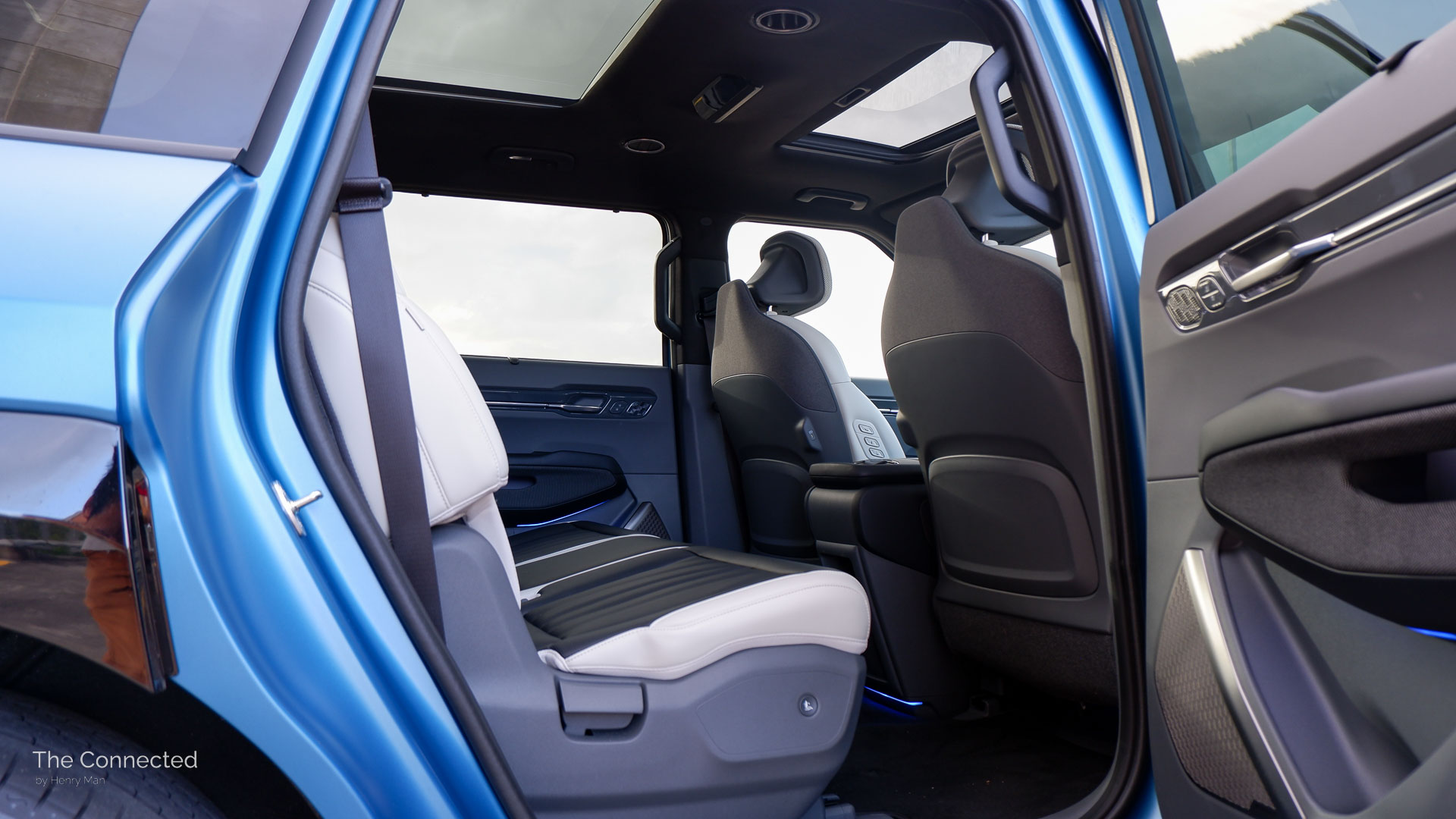
The third row can accommodate adults with good headroom thanks to the boxy shape and adequate legroom when the second row seats are slid forward (which still provides more than enough legroom for second-row passengers).
With the higher-than-typical floor due to the EV battery pack, the rear-most seats floor are almost on the same level as the passengers in front.
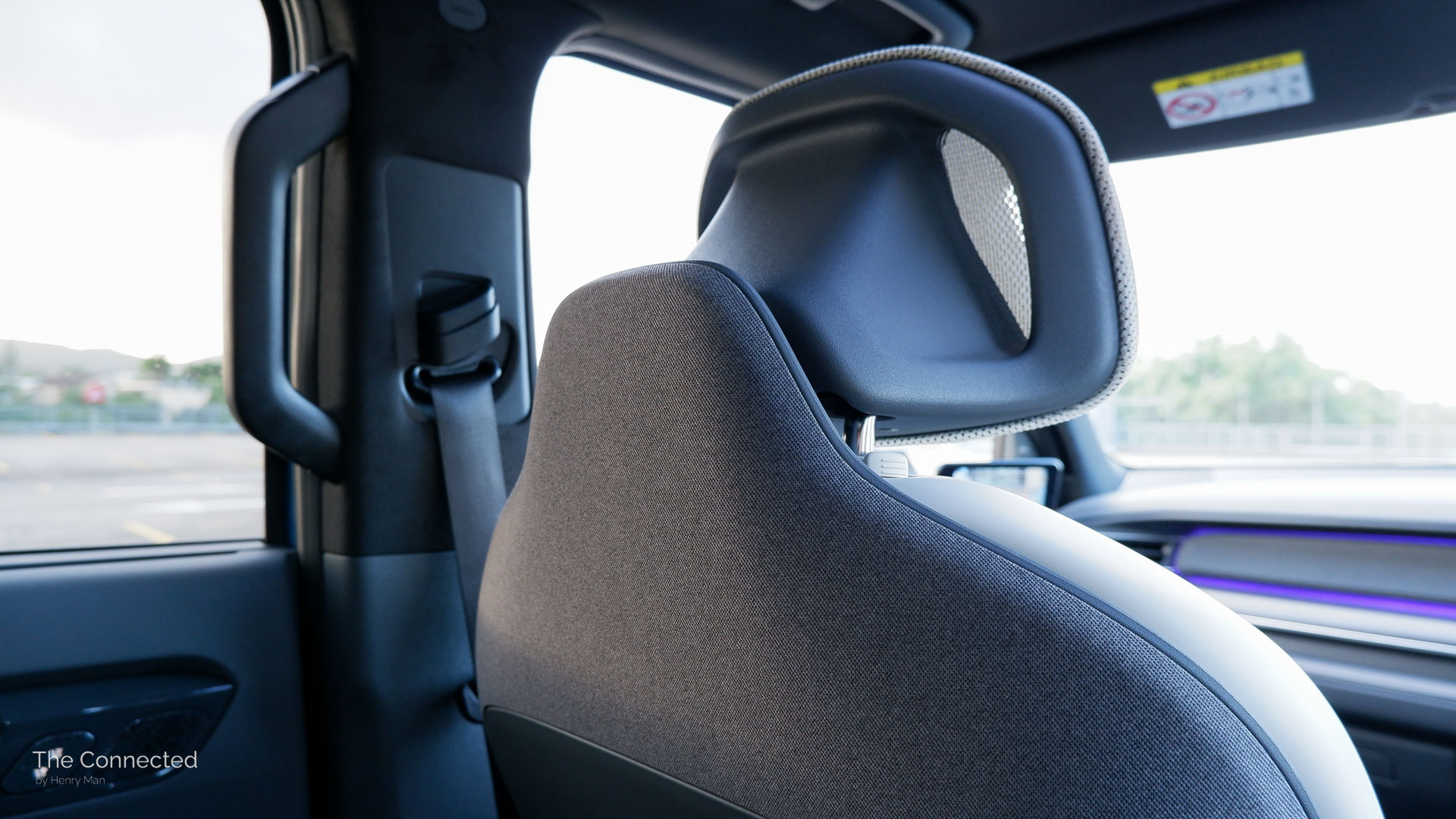
Large D-pillar windows, two USB-C charging ports, four cup holders, aeroplane-style ceiling air vents, and a view to the large rear glass roof are available for third-row occupants – although the armrests aren’t padded and there isn’t a grab handle to get into the third row, despite being available for the middle row.
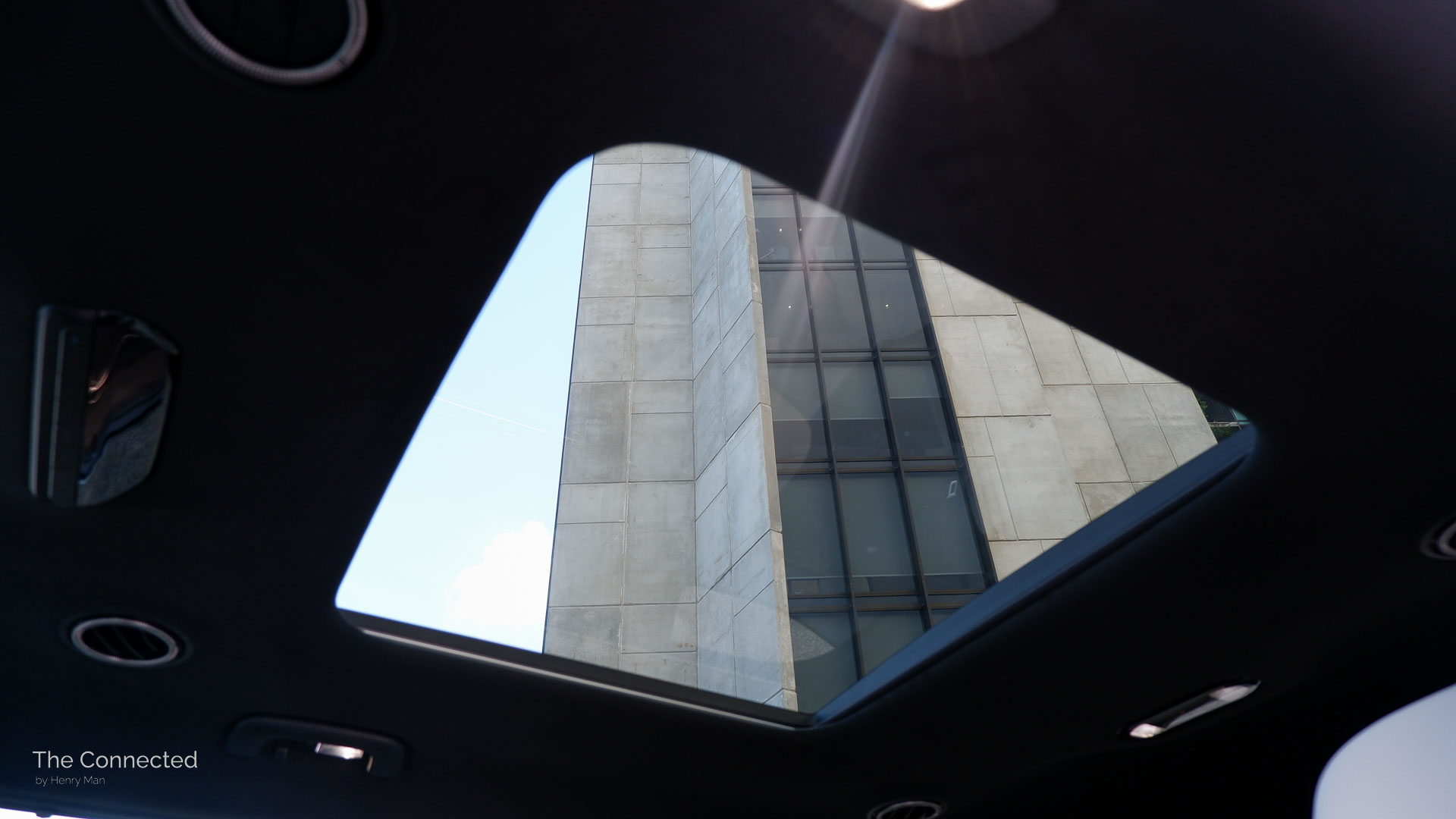
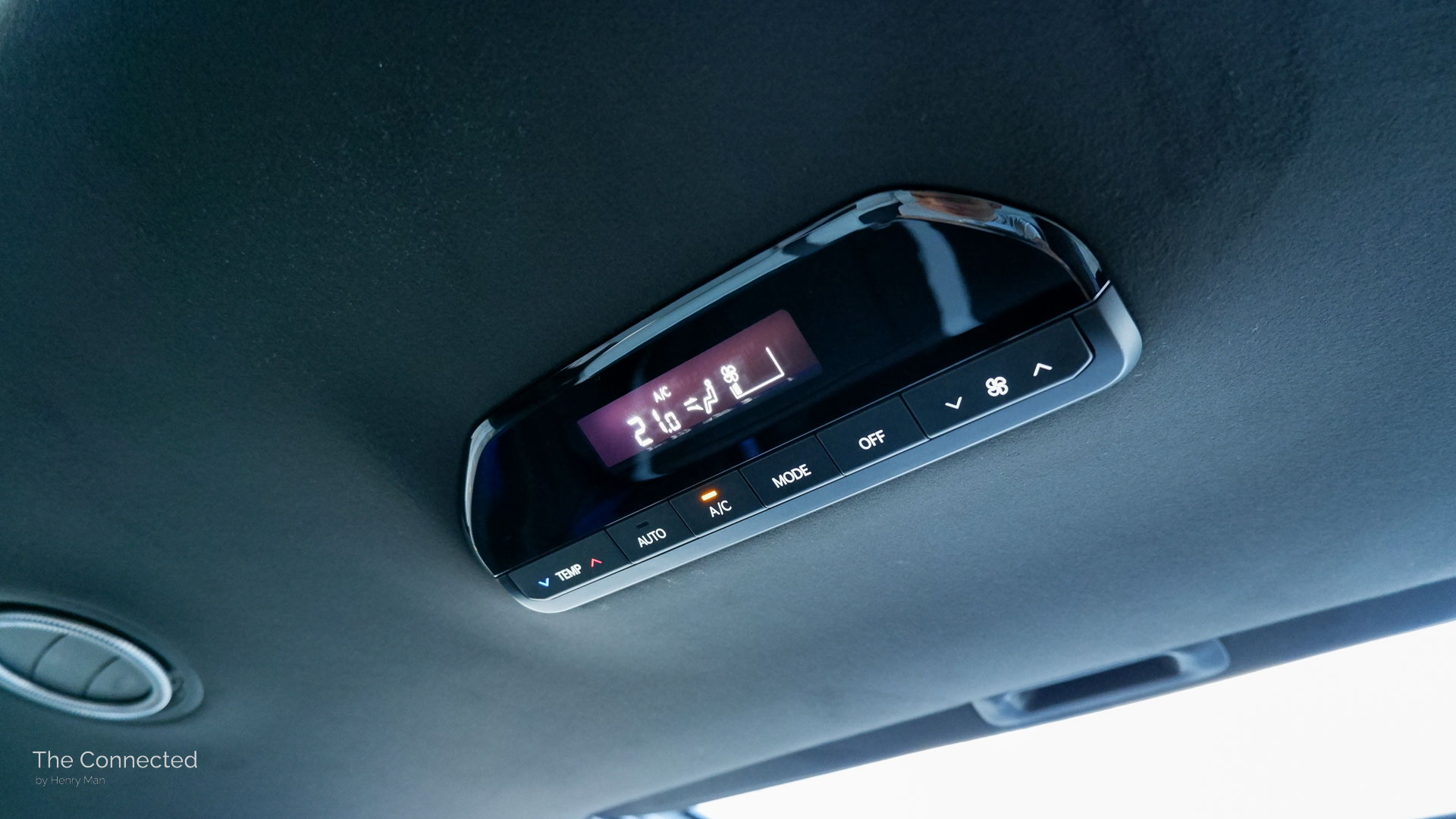
The second row provides ample space in every direction with manually slidable and reclining seats with heated and ventilated functionality for the outer pews. There’s plenty of room to stretch out with large manually-retracting built-in window sunblinds, tinted rear windows, a long fixed glass roof, and ceiling-mounted air vents with controls to manage the third-zone air-con.
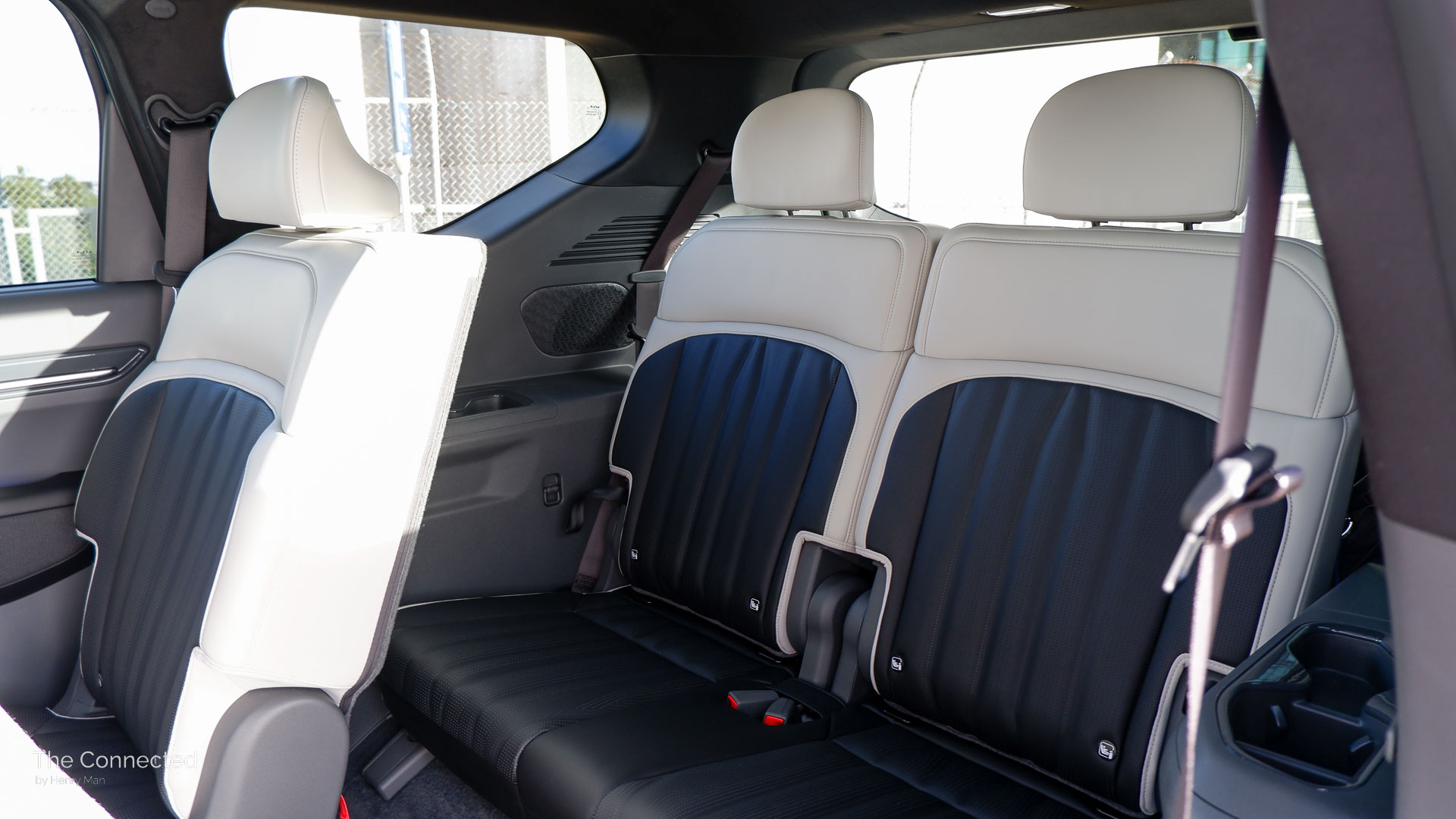
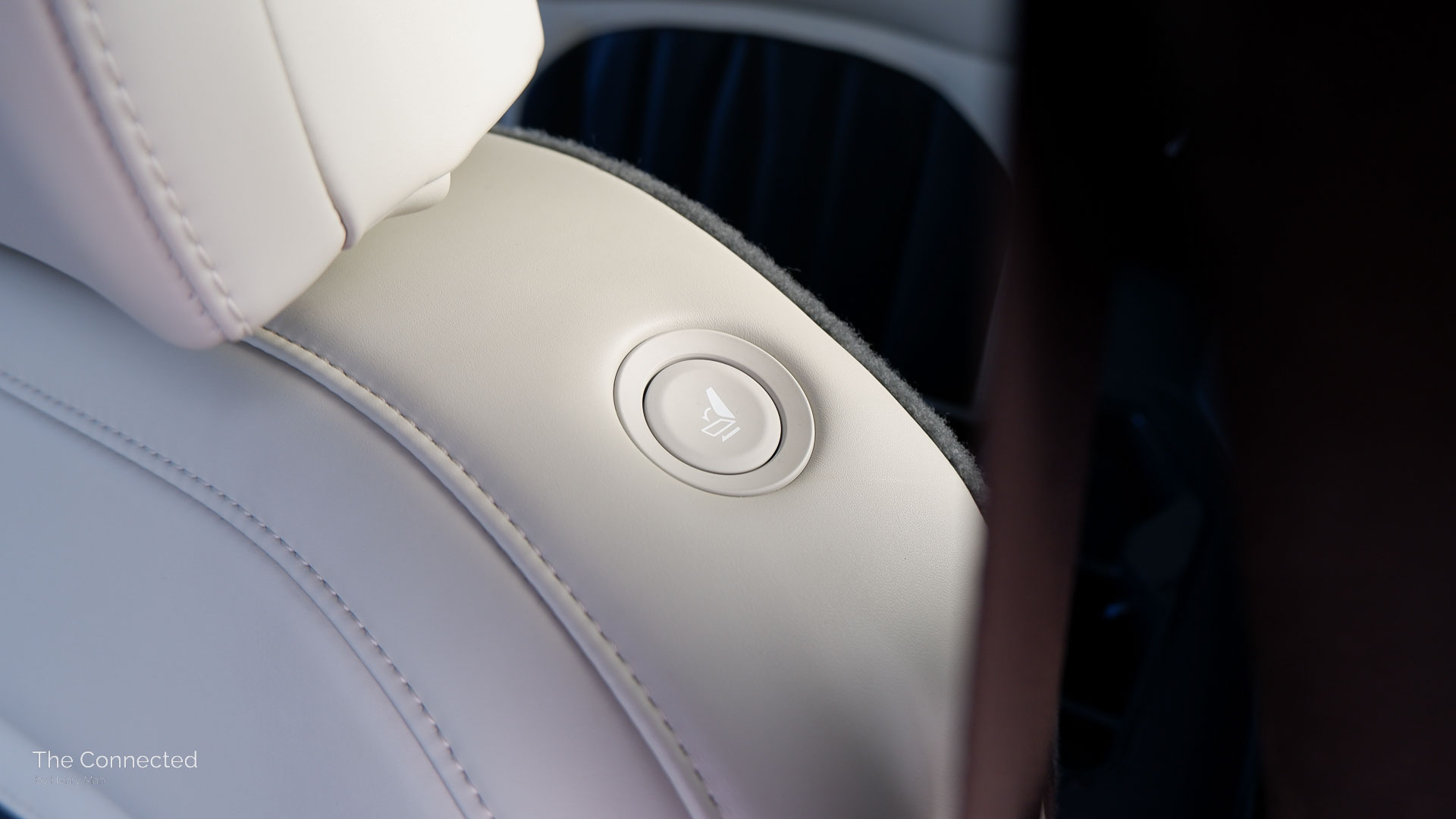
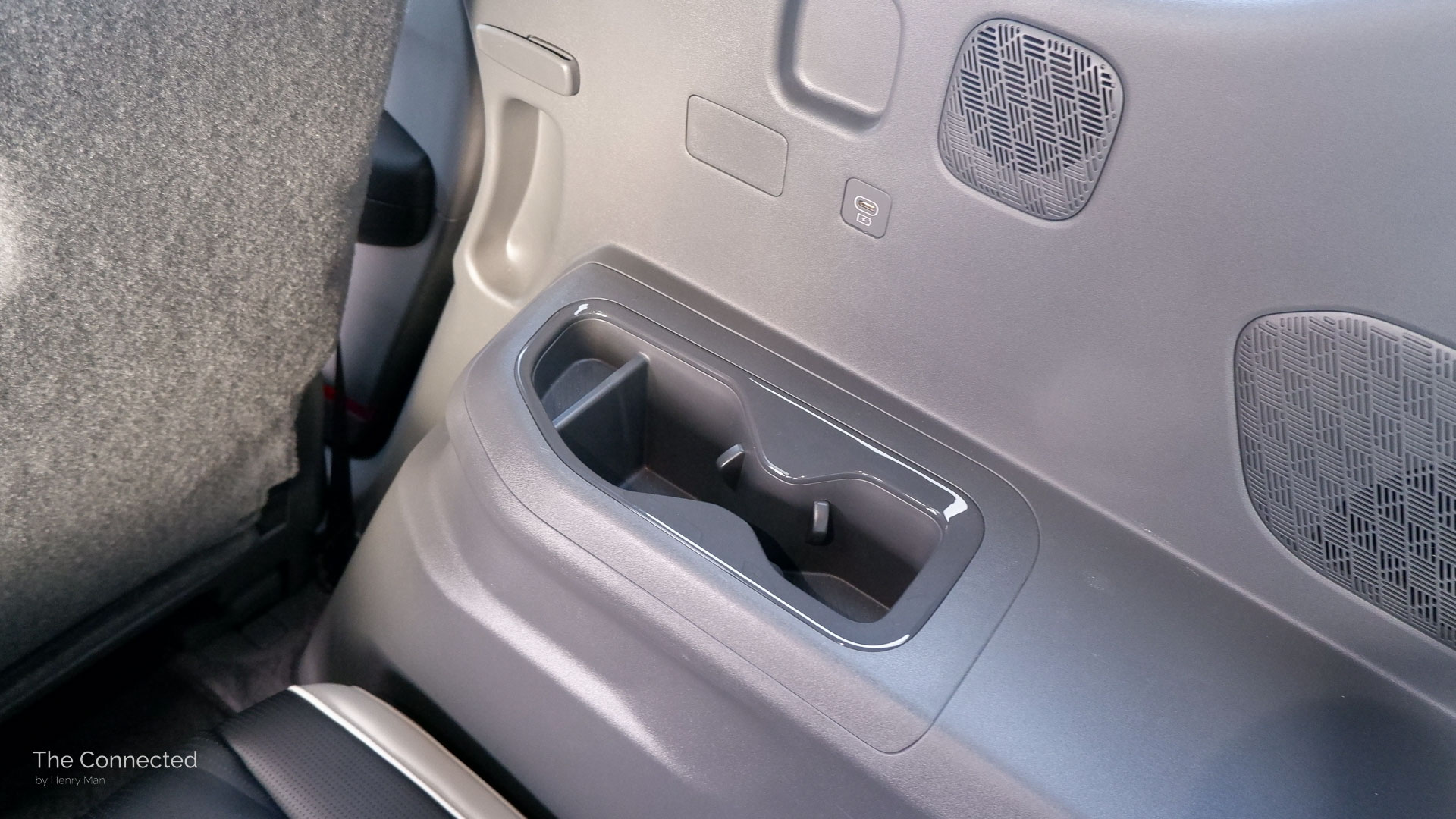
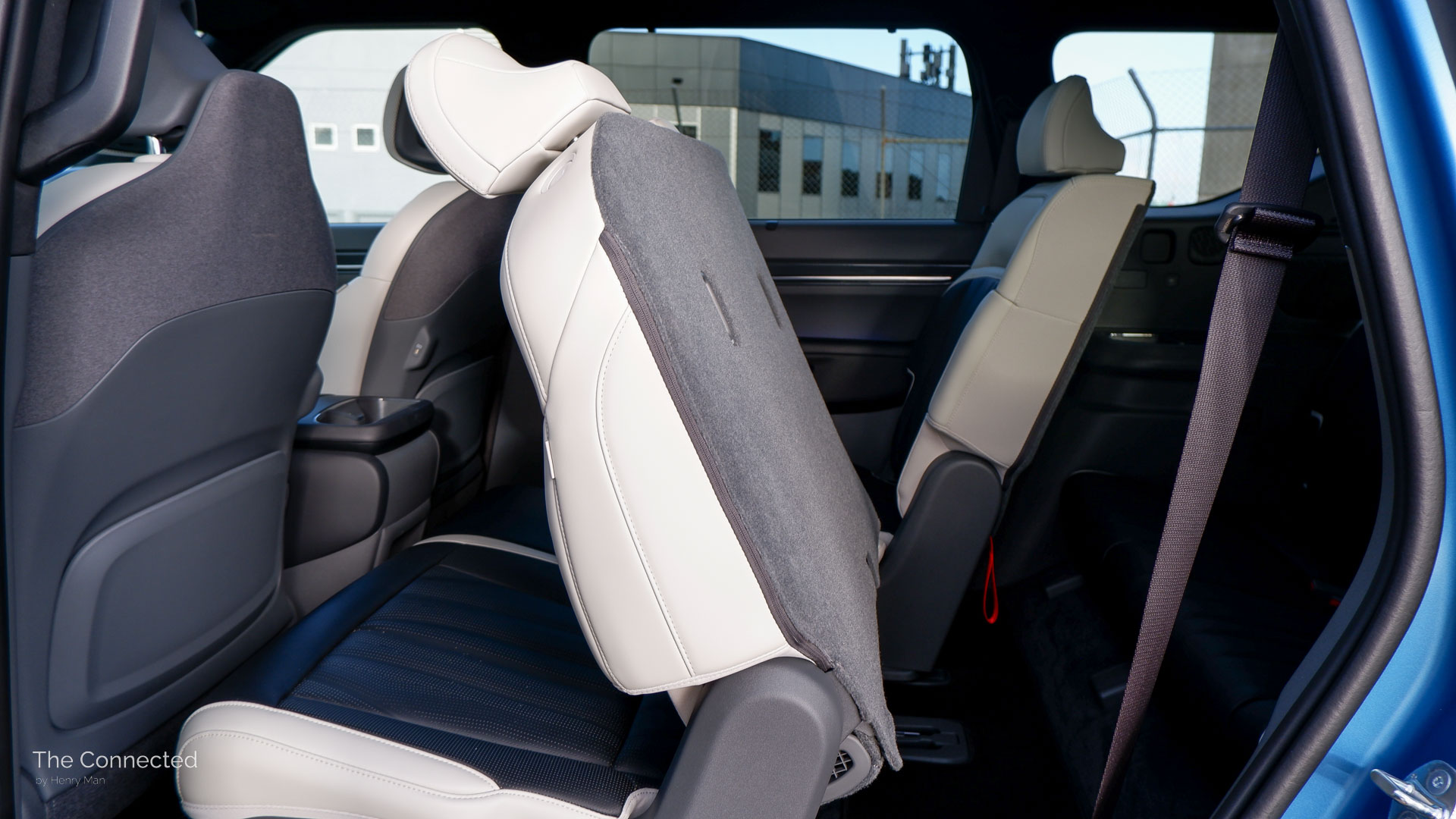
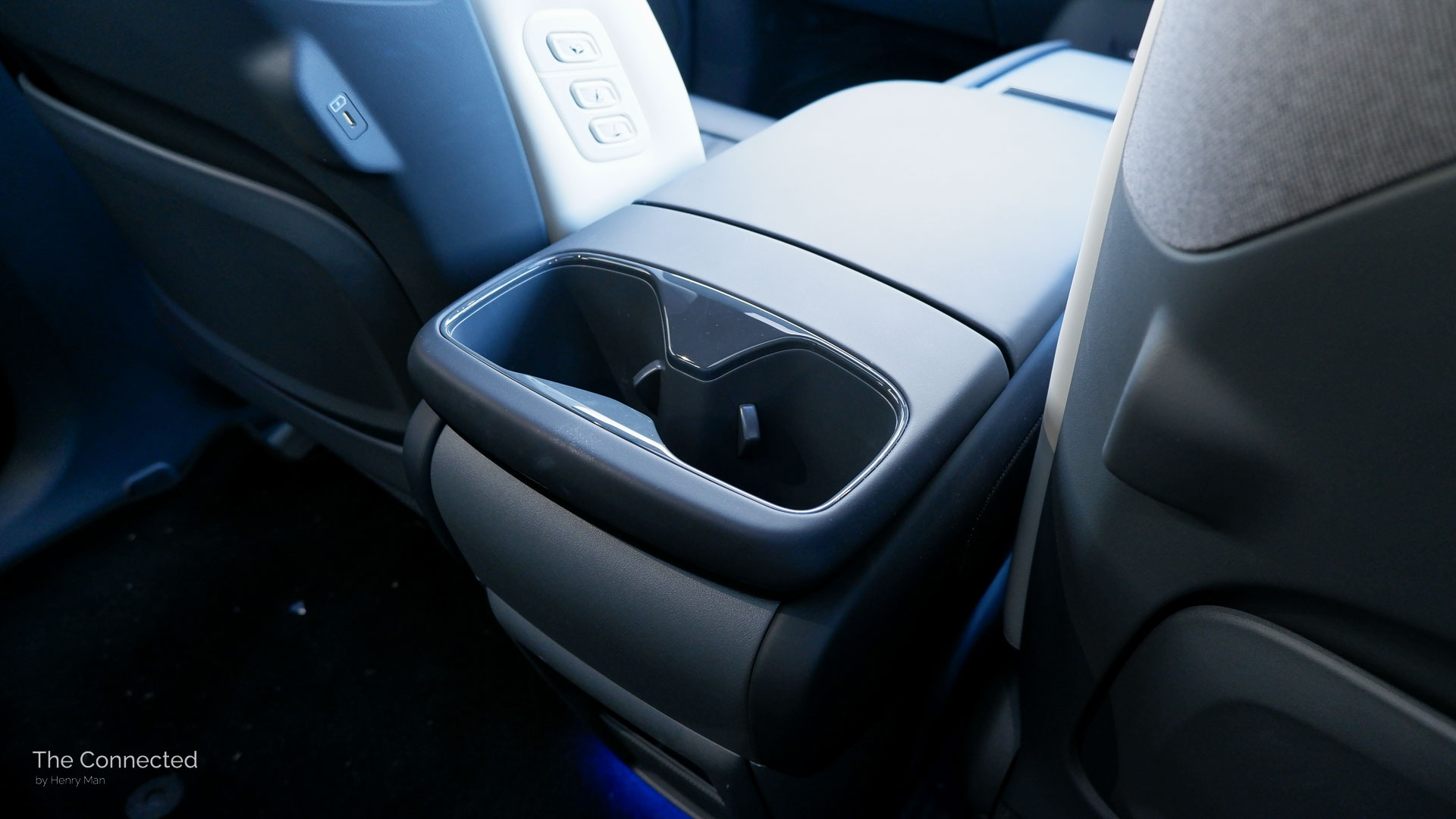
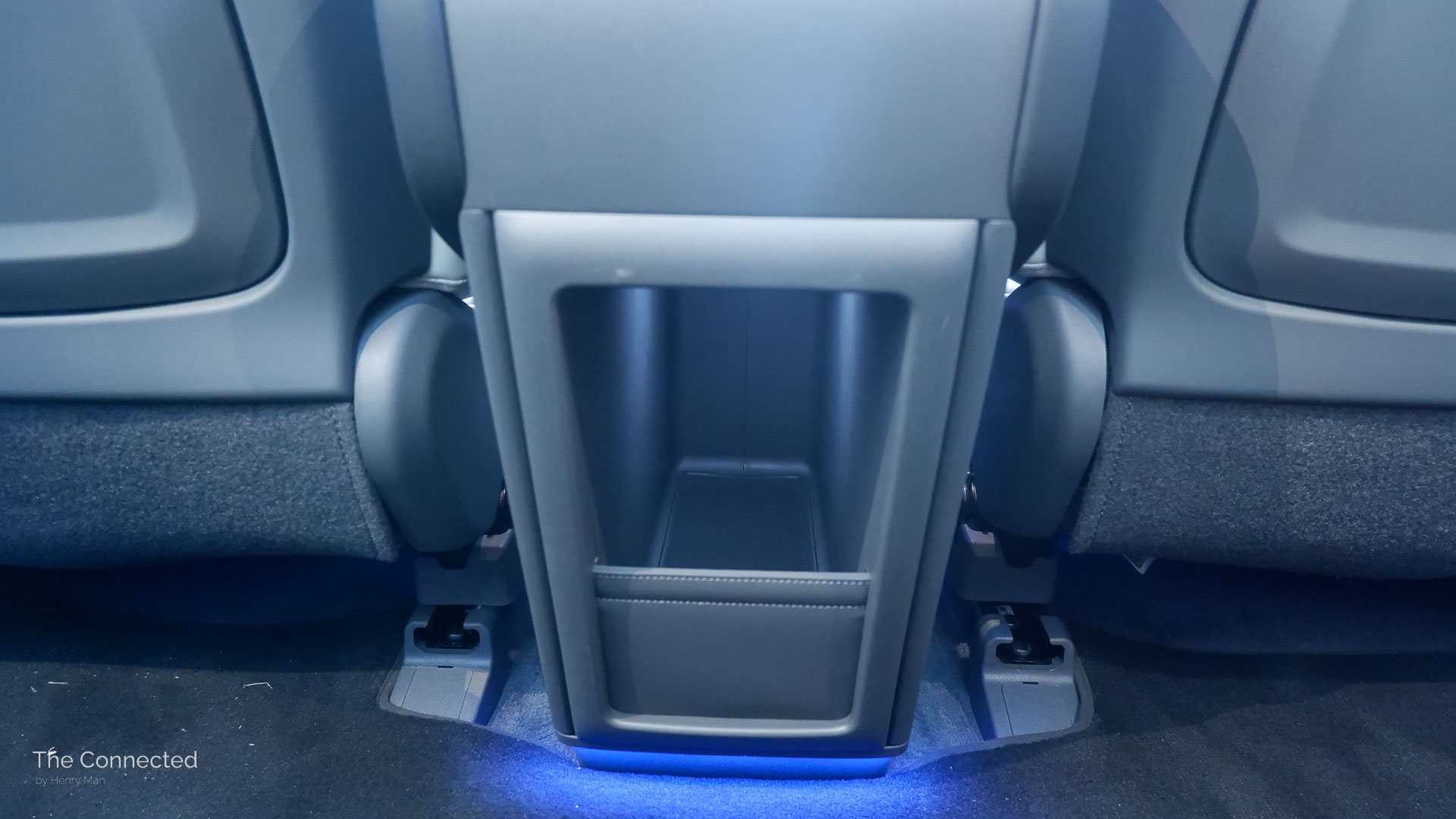
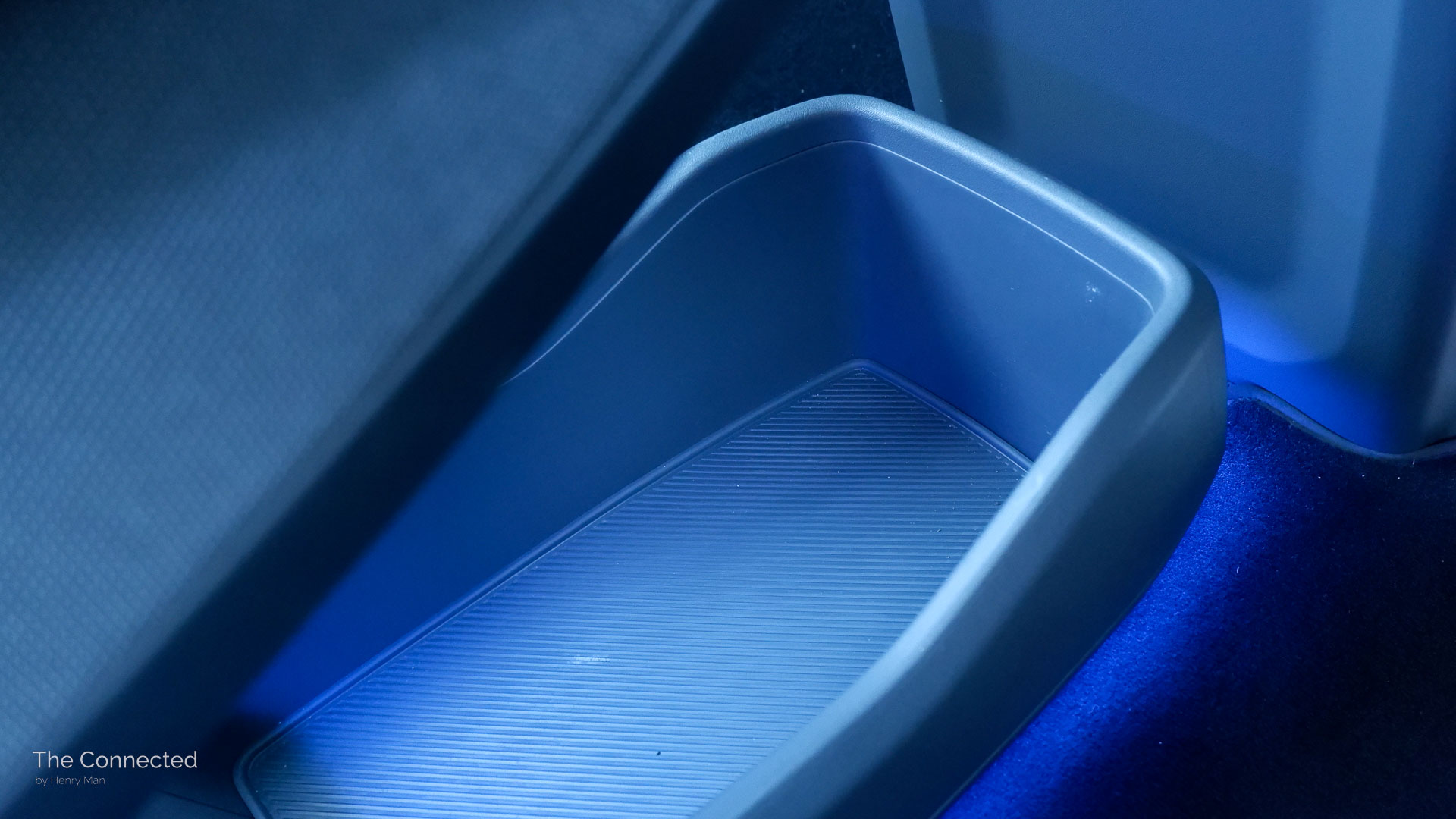
Middle row passengers also benefit from a large fold-down centre armrest with two cup holders, well-sized door pockets, a hook to hang jackets behind the front headrests, two USB-C charging ports, two additional cup holders at the back of the centre console, and a deep storage tray underneath. Since this is the seven-seat configuration, the latter doesn’t slide out.
However, the door pockets aren’t carpet-lined as per the lower-priced Kia EV6 electric SUV and the rear glass roof’s sunblind cannot be opened/closed by rear passengers (the switch is only at the front), as per the Hyundai Palisade.
The Kia EV9 offers ISOFIX child seat anchor points across the two third-row and outer two second-row seats, with both rows including five top-tethers in total, and electrically-operated rear child door locks.
Unfortunately, the third- and second row seats manually flip down via a button release, and the latter continues to split the larger 60 per cent portion on the left kerb side for right-hand drive markets such as Australia.
Manually pushing and adjusting the seats back into place also feels heavy and cumbersome – and doesn’t go back to the previously set position – unbefitting for the almost $140K drive-away asking price.
A six-seat layout is available overseas with electric adjustment for the third row and second row individual ‘captain’s chairs’, which could’ve made the EV9 GT-Line feel more premium.
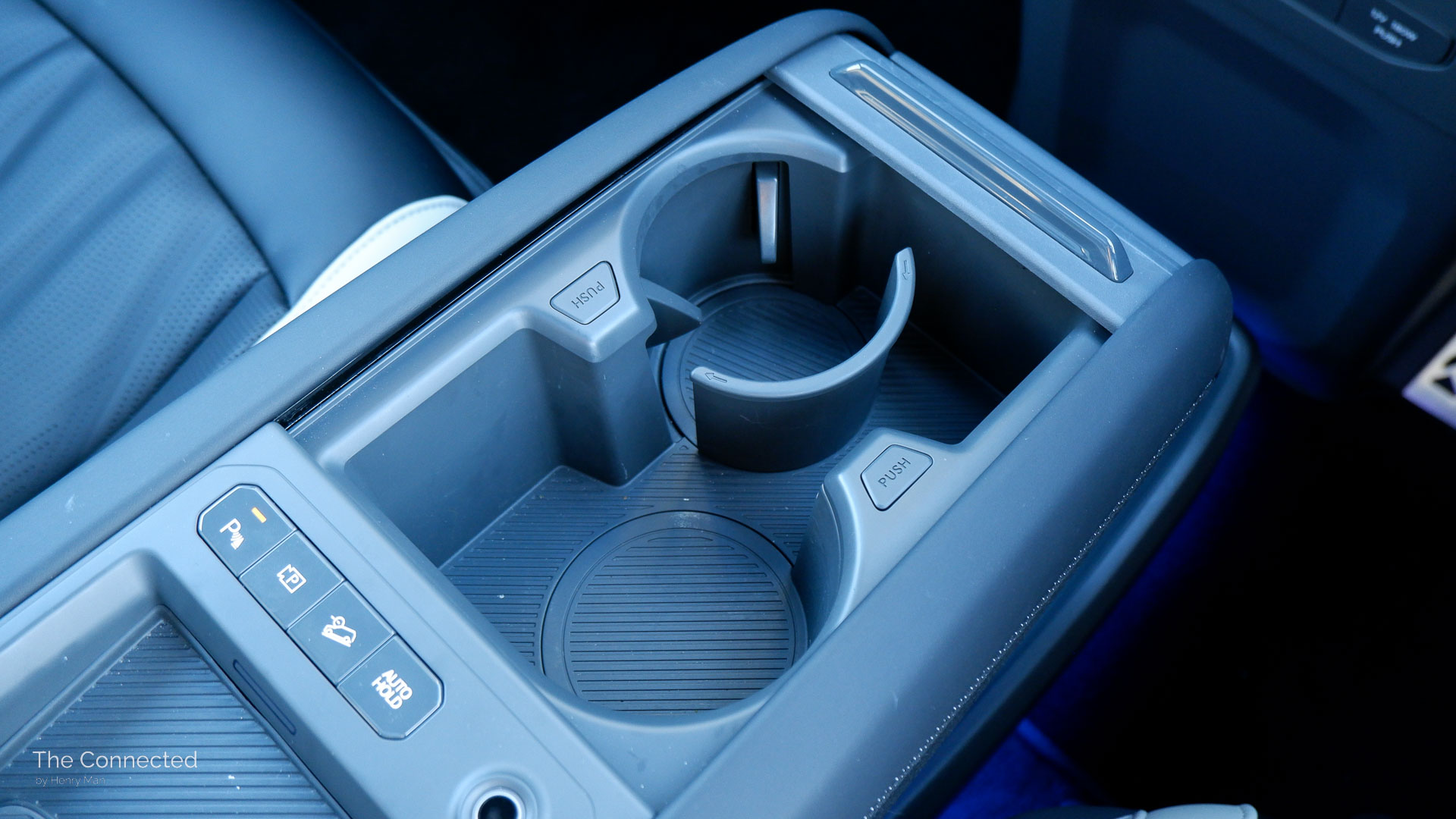
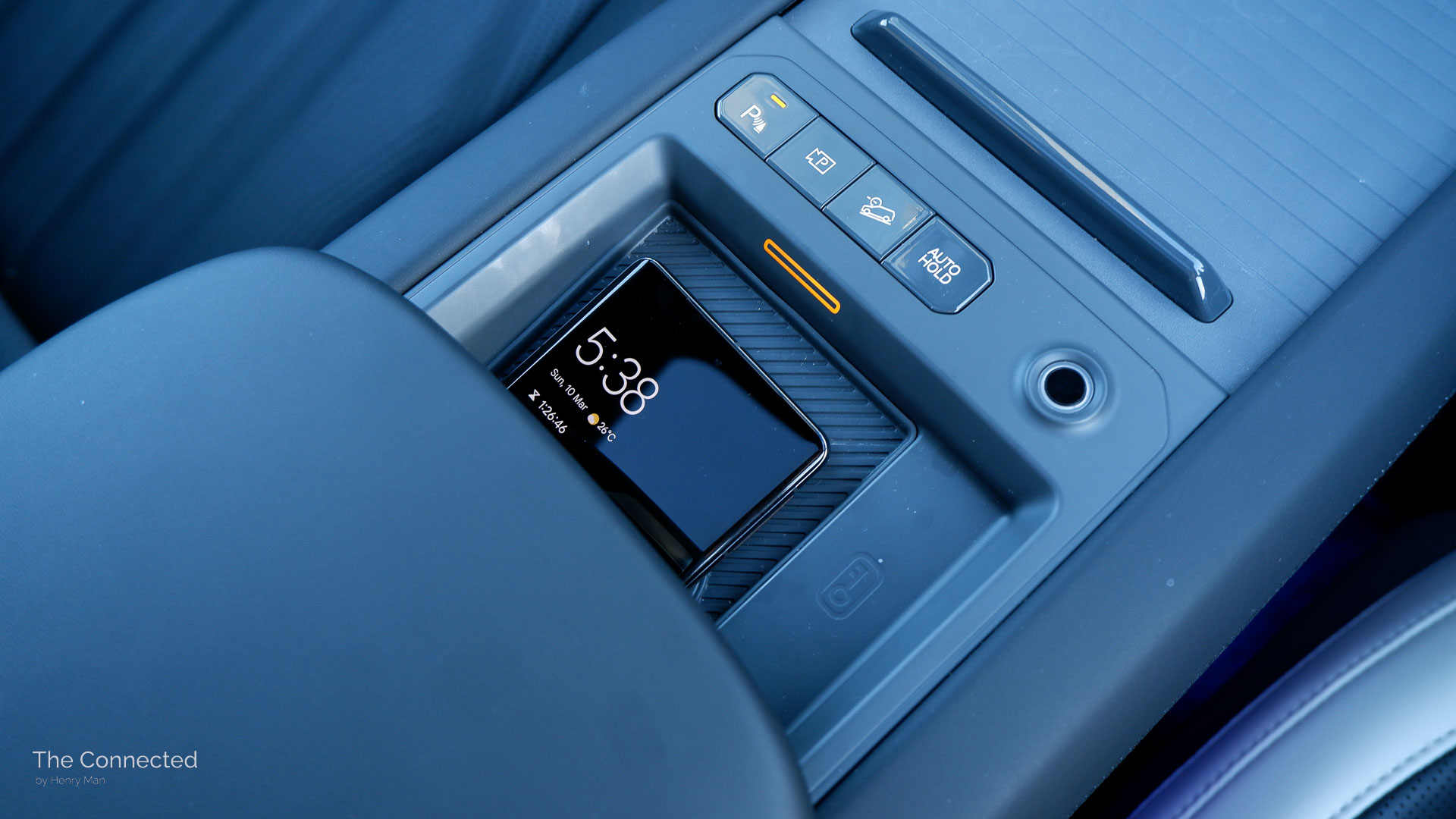
Up front, the family electric SUV has a large centre console storage area with a rolling shutter blind, pop-out cup holders, ergonomic Qi wireless charging pad that partially hides smartphones underneath the armrest, and a tray underneath. While the centre armrest is large, the cubby is shallow due to the storage space below for the middle row.
Also keep in mind that the door slots are open on the side as an interior design element, but the door bottle pockets and glovebox are well sized. The latter has a ‘Parabolic Motion’ mechanism, which opens forwards and down, with a felt-lined surface inside.
There are two USB-C charging ports (one capable of transferring data) and a 12-volt power socket, but similar to the EV6, they’re low-set and you’ll need to hunch to reach.
A Passenger Talk function handily pumps the front microphones to the back row speakers to make conversations clearer, given how far the back seats are.
Meanwhile, the EV9 GT-Line’s artificial leather seats are comfortable and supportive with plenty of electric adjustment for the front two seats, heated and ventilation, a reclined relaxation mode with a fold-out leg rest, and a massage and auto posture stabilisation function for the driver.
There’s a two-position driver’s seat memory, electrically-adjustable steering wheel with two-stage heating, and easy entry/exit for the driver and front passenger, too.
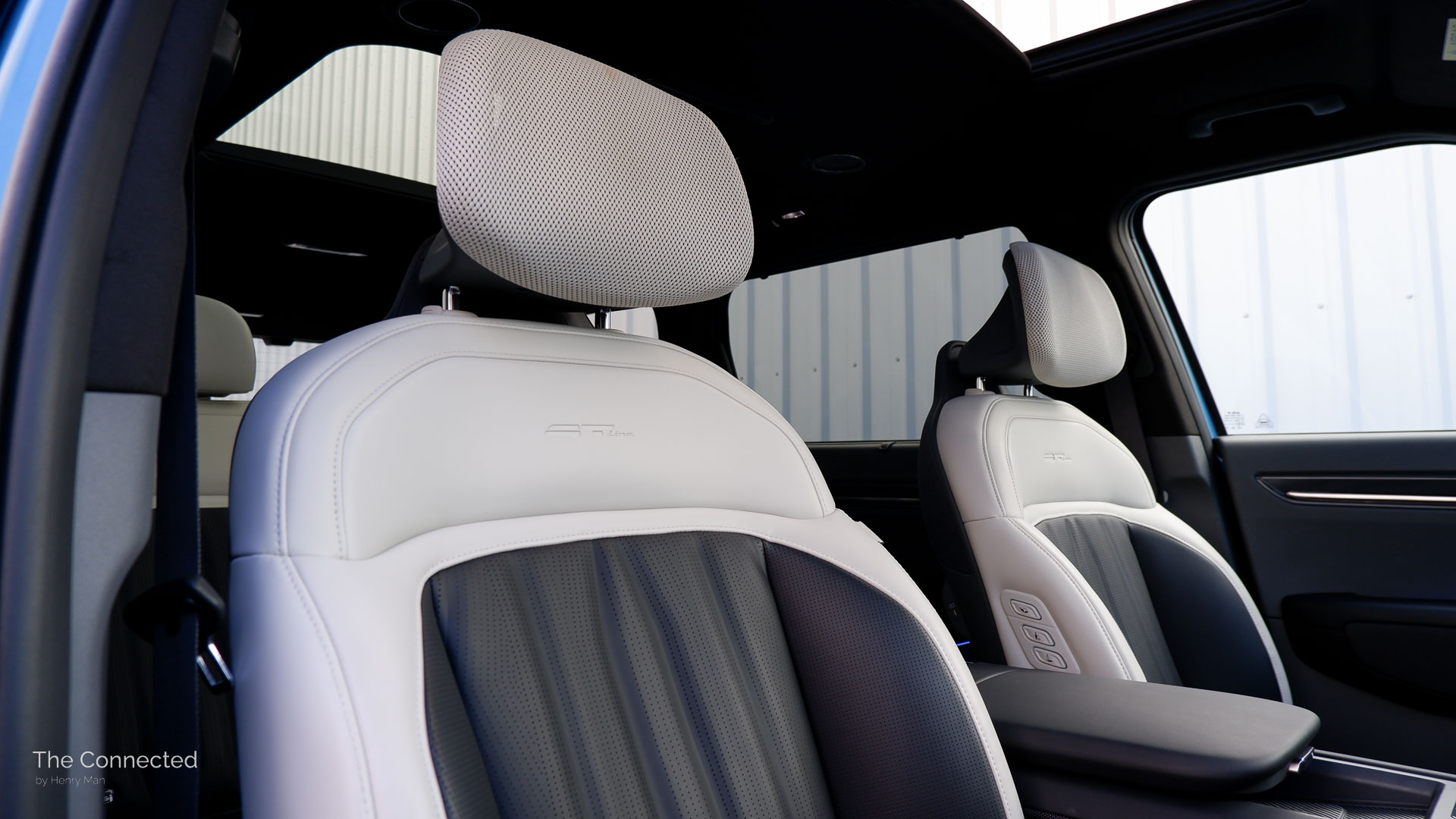
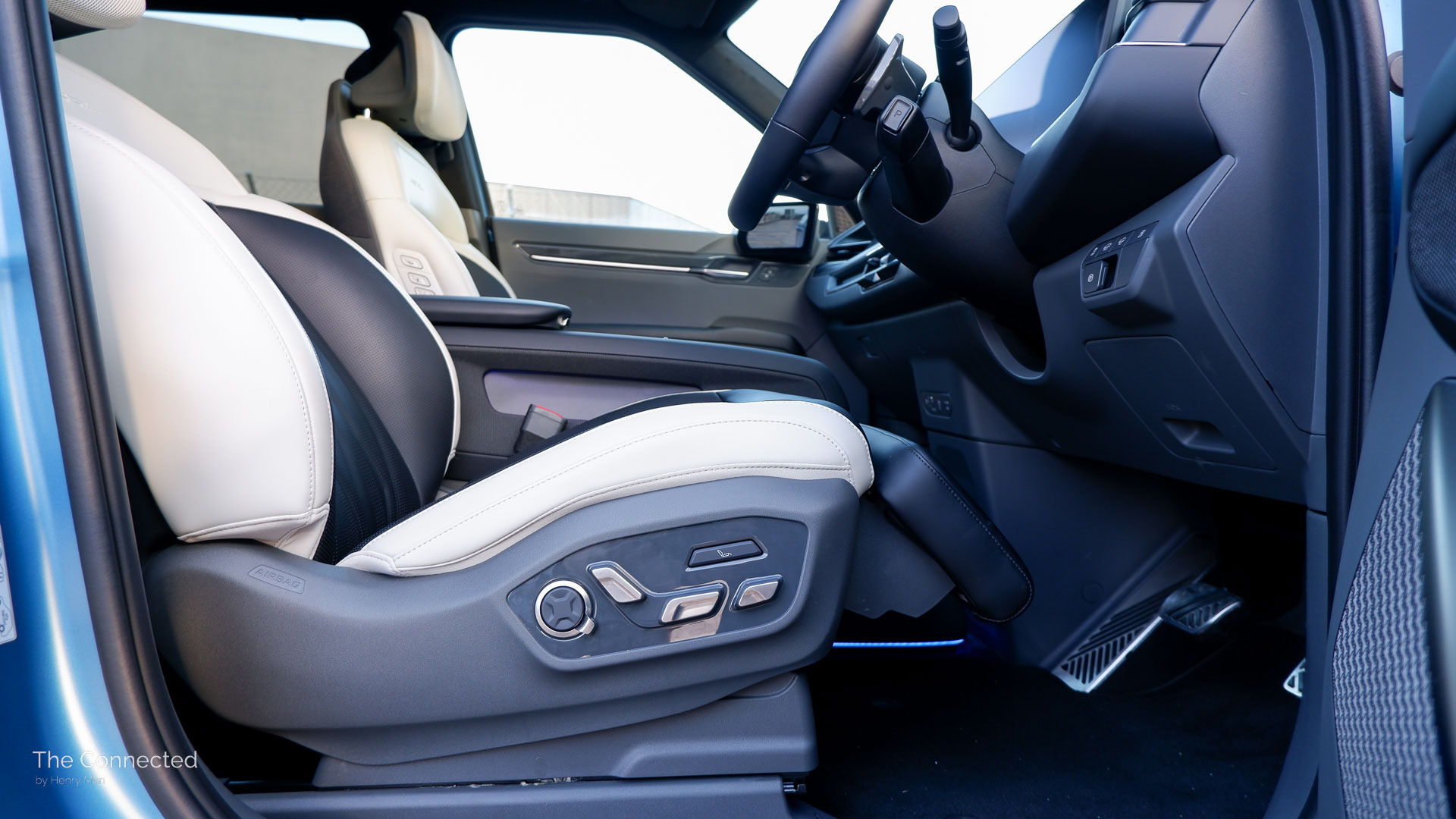
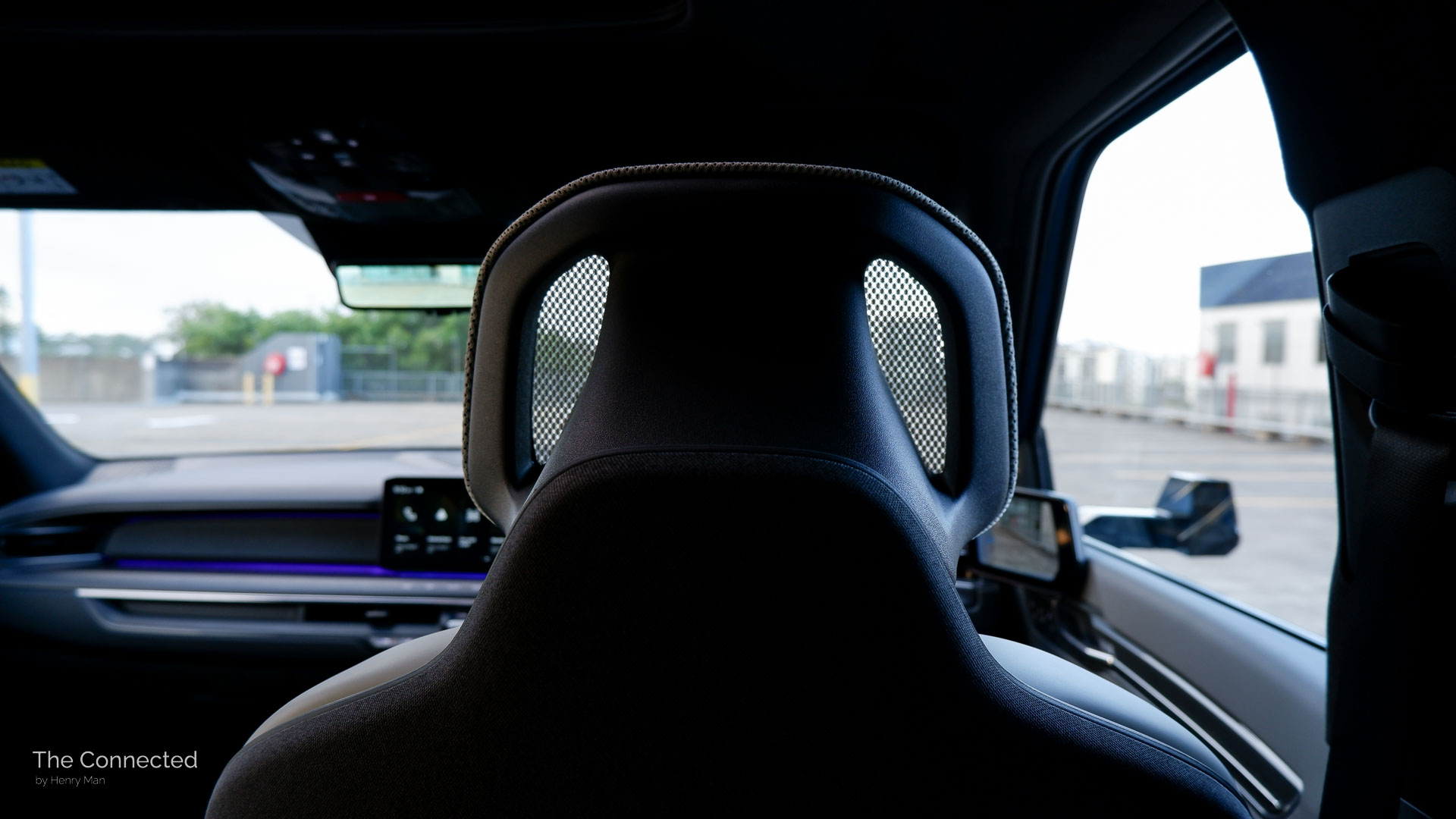
Annoyingly, the mesh front headrests (standard on the Earth and GT-Line) are set quite forward and my hair kept brushing against the fabric while driving; I needed to rest my head completely back on it or stick my neck forward to avoid it.
The LED lights across all three rows illuminate the large electric SUV’s interior well with the ability to adjust the brightness by a press and hold of the touch-sensitive panels. The front has an additional smaller openable sunroof – but the thick suede blind is manually-operated (unbefitting for its high price tag).
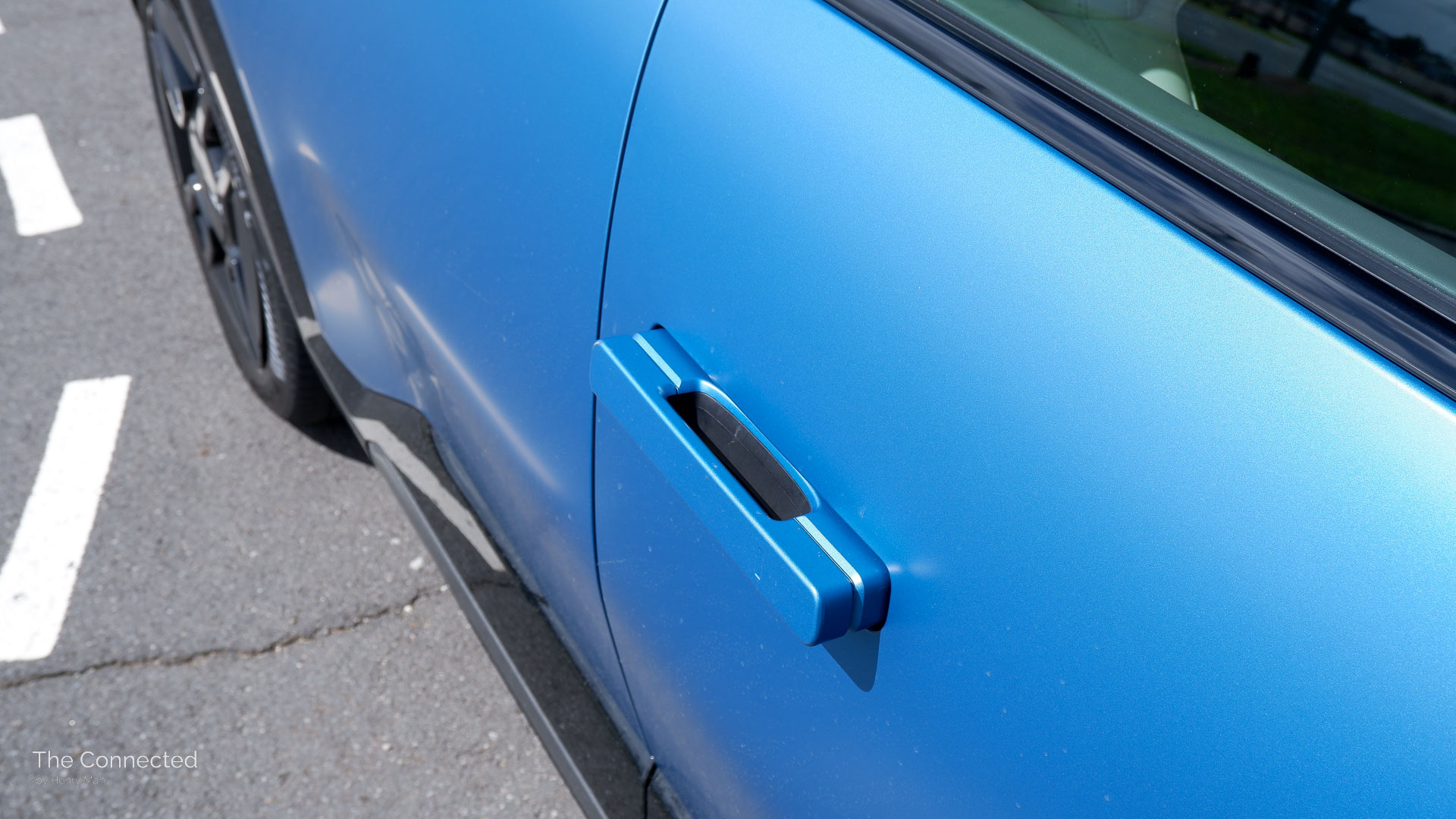
The EV9’s auto-retracting flush door handles provide the familiar experience of a conventional handle – and feels much more solid and premium than the Kia EV6’s handles which only pop out on one end Tesla-style.
But, the LED puddle light underneath the front handles are too tiny and dim at night, and only illuminates the EV9’s large door metal sheet. There aren’t lamps underneath the wing mirrors either – which is disappointing given the Kia electric SUV’s luxury car rivalling positioning.
Technology.
2024 Kia EV9 GT-Line tech features:
| 12.3-inch touchscreen | 12.3-inch driver instruments display |
| ccNC with over-the-air (OTA) software update capability | Head-up display (HUD) |
| Wireless Apple CarPlay and wireless/wired Android Auto | 5.0-inch climate control panel |
| Built-in maps with 10-year traffic and map update support | 14 speaker Meridian Premium sound system |
| Kia Connect cellular connectivity with mobile app | Proximity key with remote start and Remote Smart Park Assist 2 functionality |
| Qi wireless charging pad | Driver profile fingerprint scanner |
| 6x USB-C charging ports + 2x 12V sockets + V2L plug interior and exterior | Digital camera interior rear-view mirror and camera wing mirrors |
| Auto-folding wing mirrors and auto-retracting door handles |
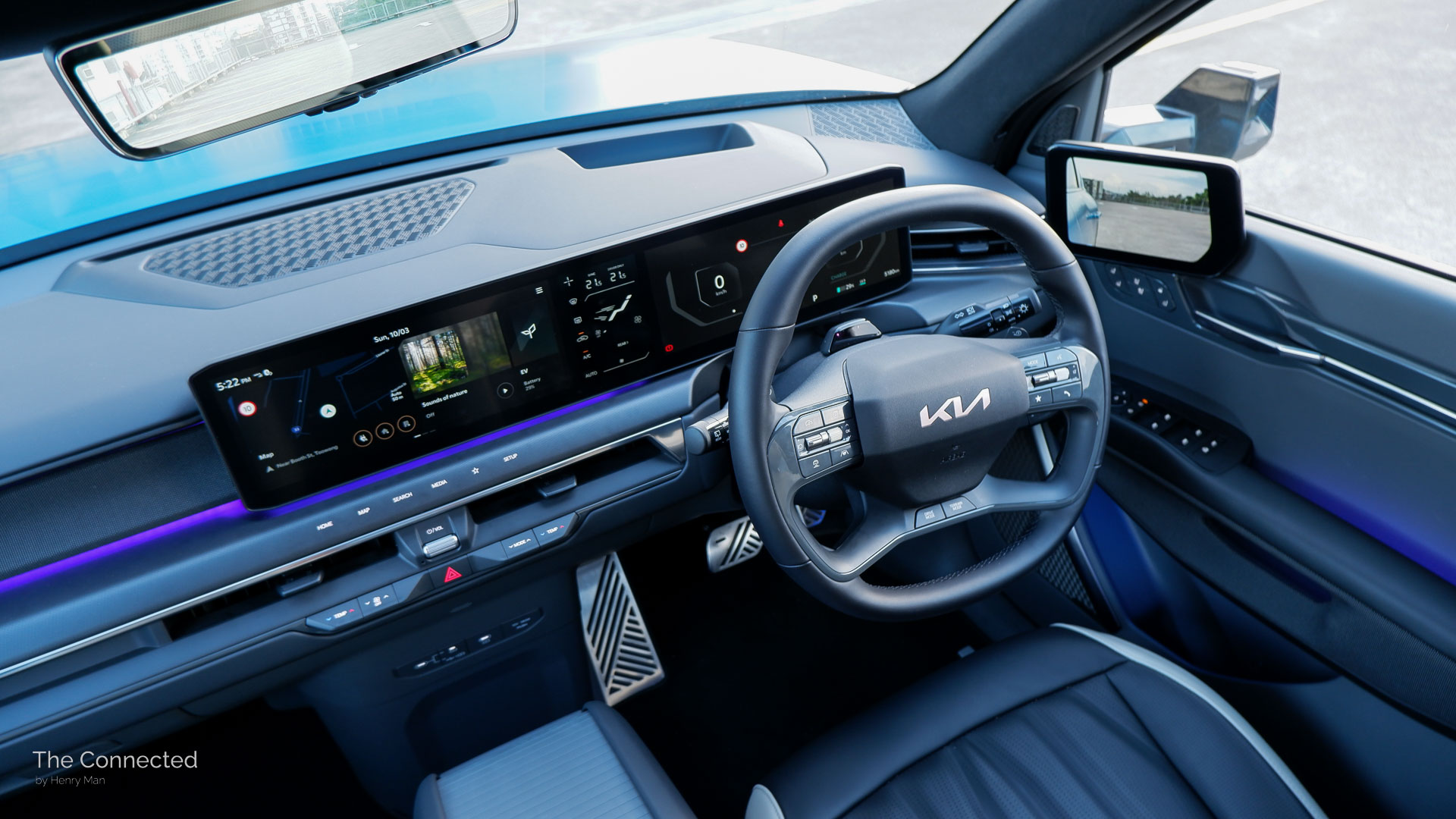
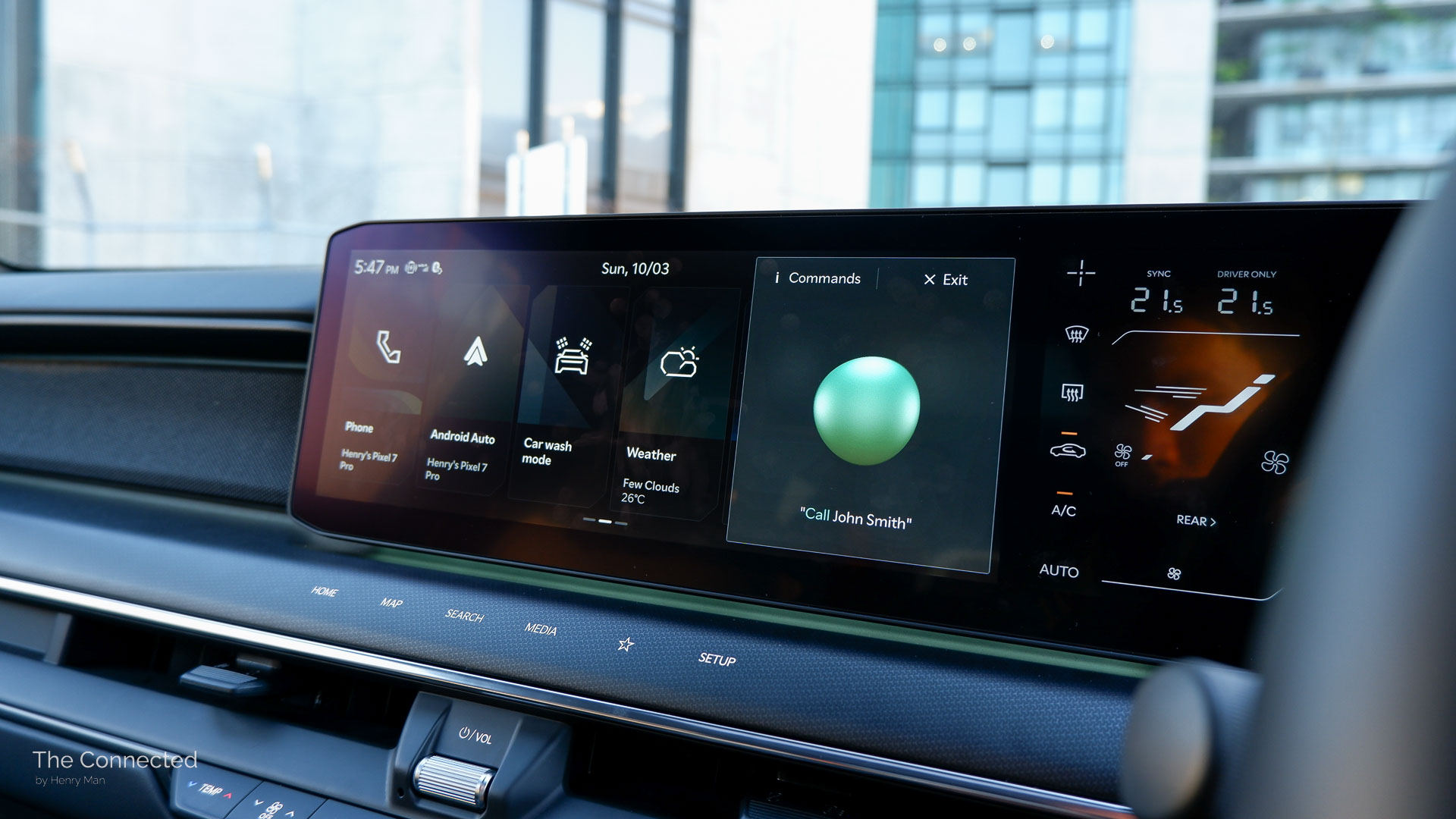
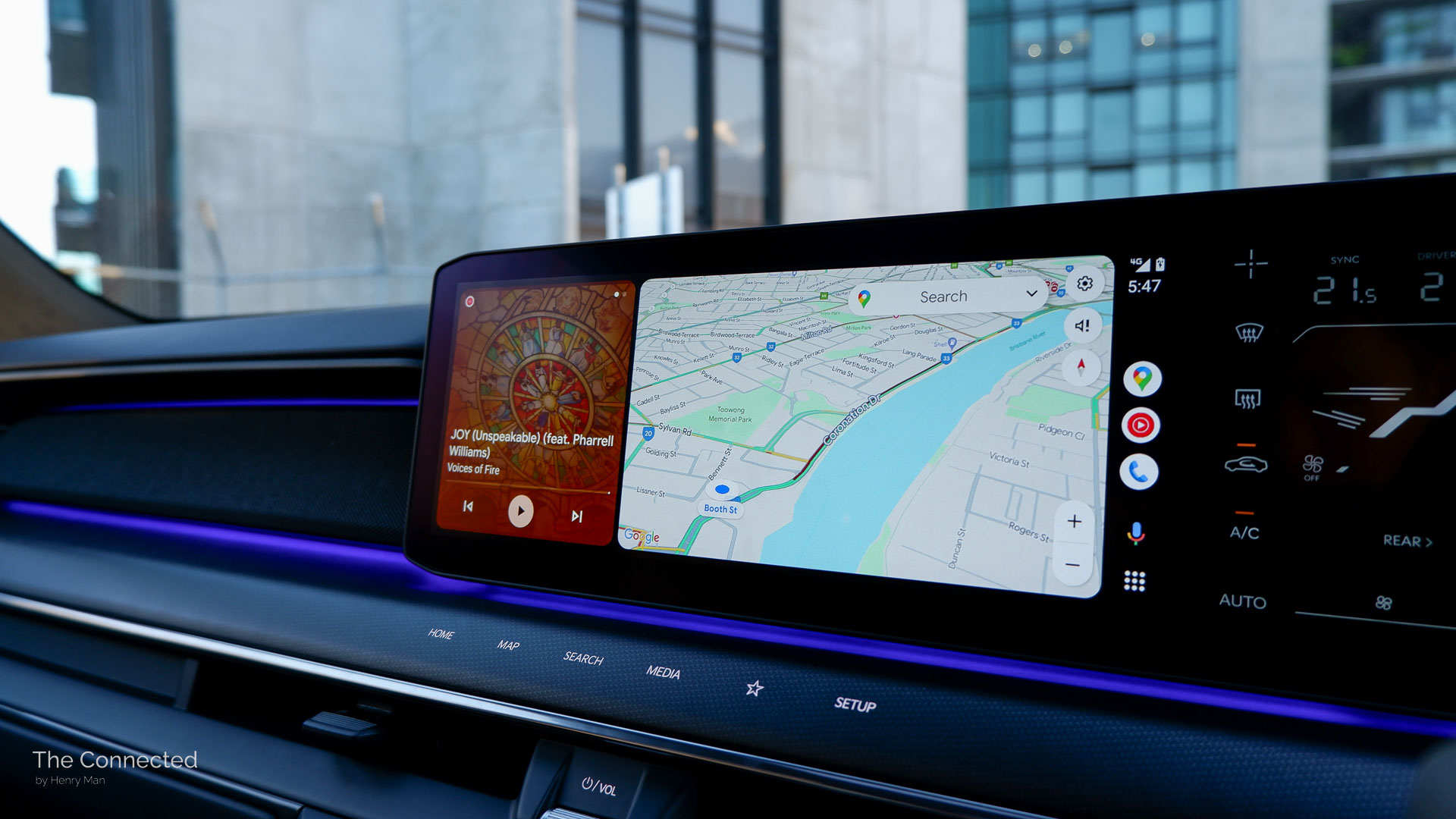
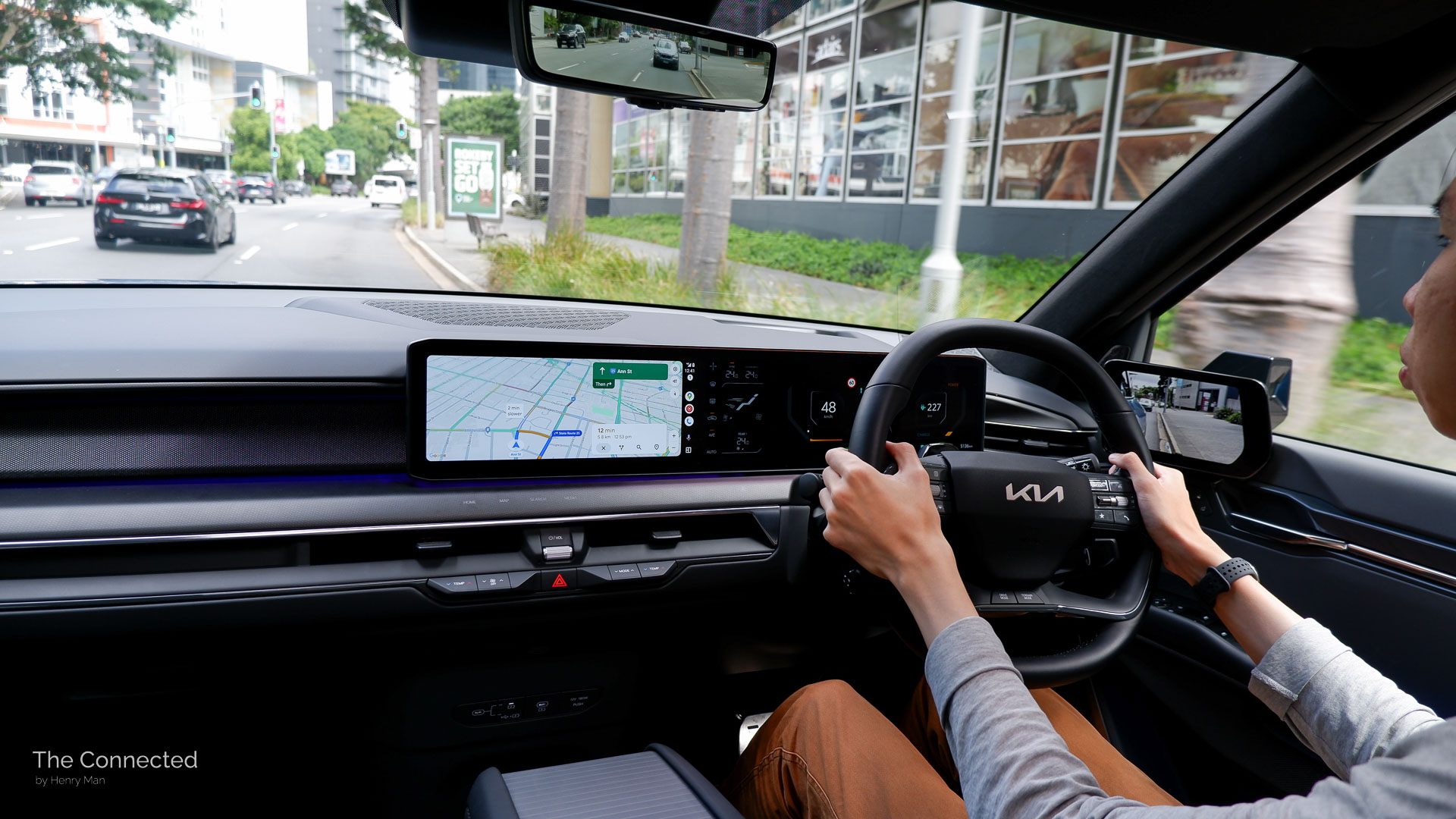
The Kia EV9 features the company’s latest Connected Car Navigation Cockpit (ccNC) operating system, running across three large displays on a single wide panel.
The central 12.3-inch touchscreen has a modern and logical user interface with large buttons, clear text and good processor performance, though there’s a learning curve to navigate the feature-rich settings menus.
While the display is large and clear, it isn’t curved – unlike the facelifted Kia Sorento SUV – with elements on the far left harder to reach by the driver.
Another ergonomic gripe is the touch-sensitive shortcut buttons integrated into the dash, which require a hard press against the dashboard in order for it to register – which can be a distraction while driving.
The matte coating isn’t as fingerprint-resistant and ccOS lacks a light mode which would help with improving legibility during the day.
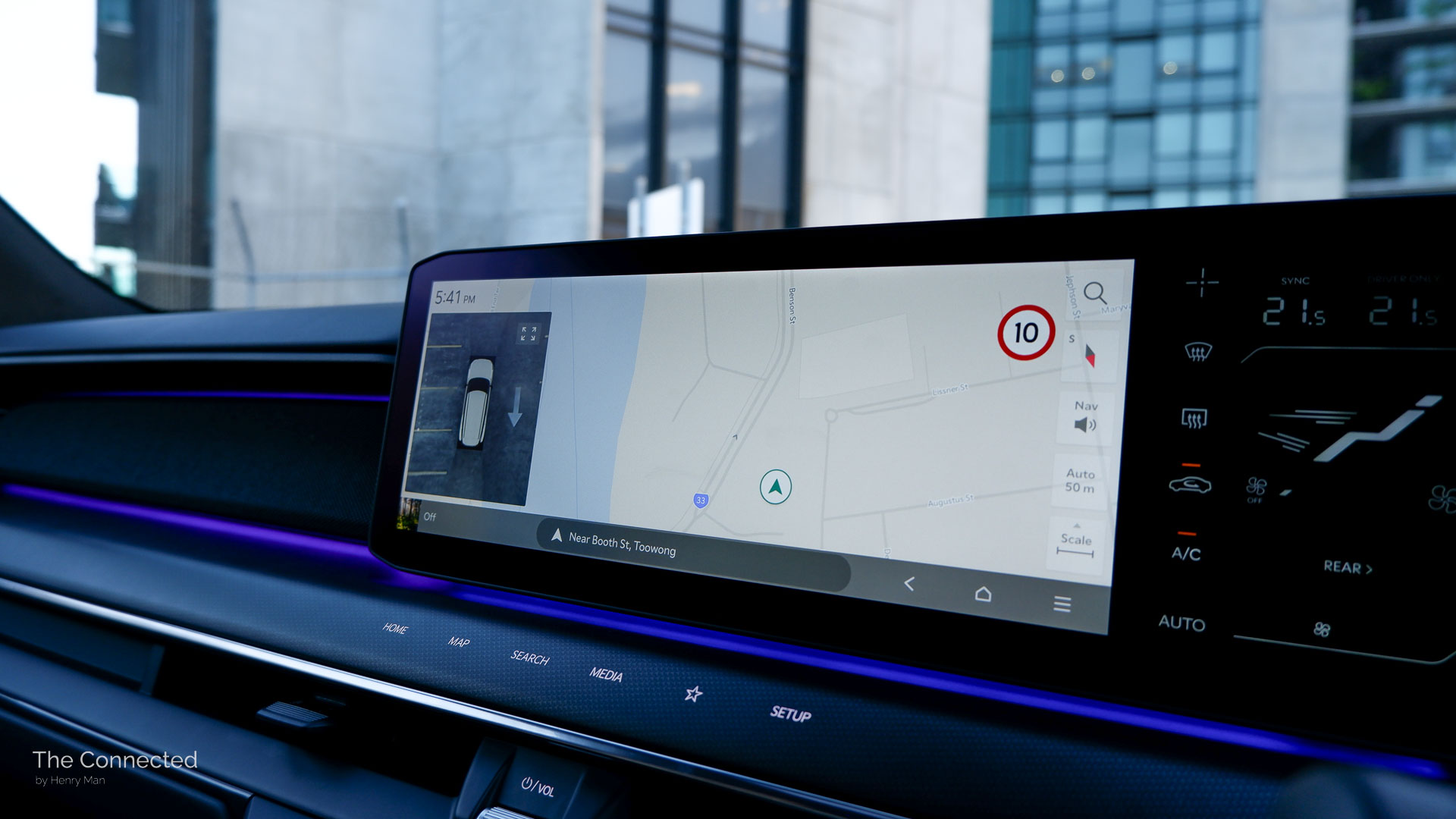
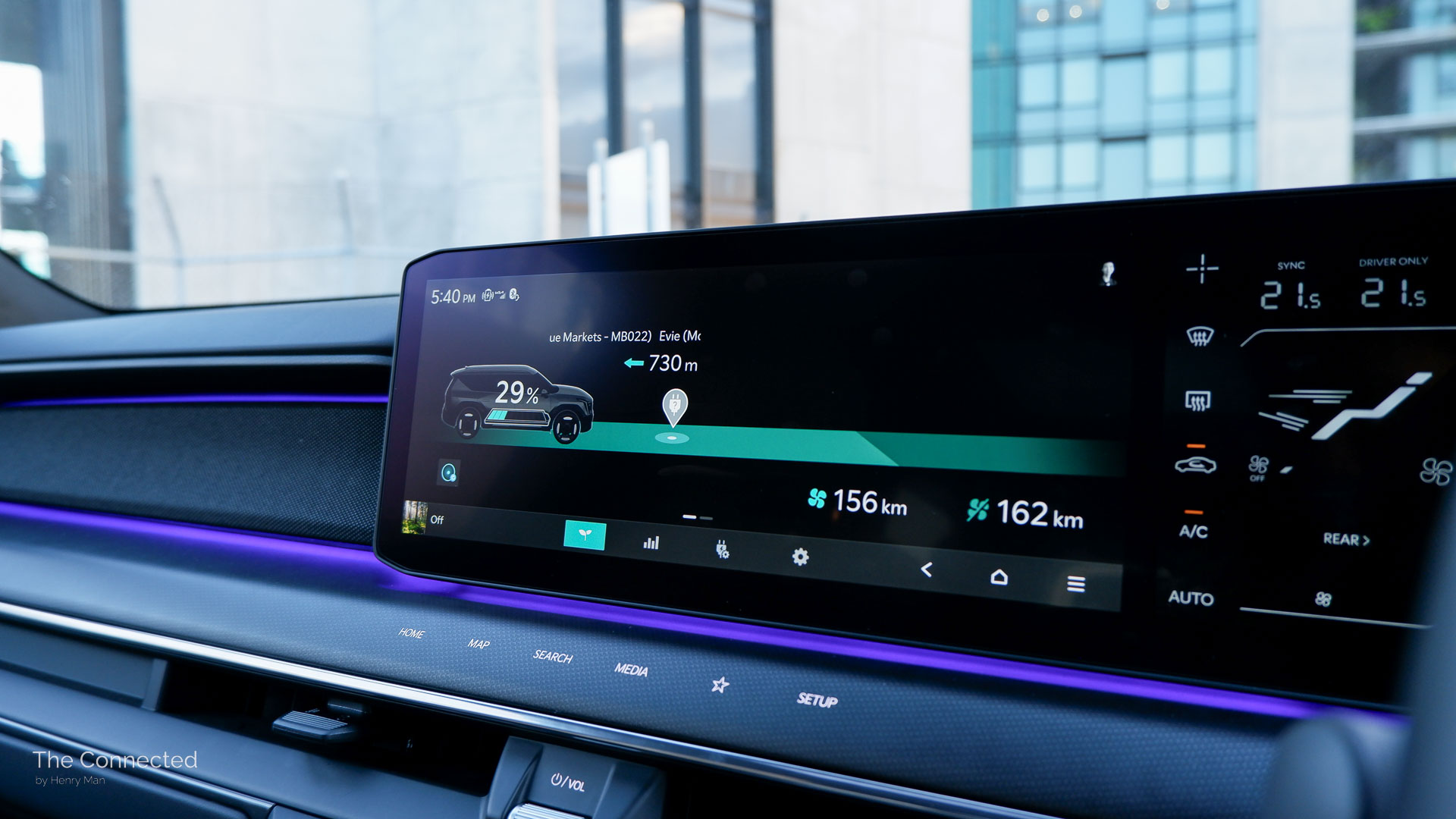
The built-in maps are now powered by Here Technologies – yet still doesn’t automatically suggest public charging stops to get to a destination (when needed), which is available overseas and is key to eliminating the driving range concern barrier.
Kia’s voice control has also markedly improved compared to the past with the ability to now recognise natural language for toggling the ventilated seats or opening the charging port, for instance. The dashboard ambient lighting also pulses in teal accordingly.
Importantly, ccOS finally enables wireless Apple CarPlay and Android Auto smartphone connectivity. It connects quickly on startup and performs the same as a normal wired connection.
Unfortunately, the Qi wireless charging pad doesn’t have fan cooling – which is expected at this price point – resulting in phones eventually overheating and stopping charging over time. In a cooler climate, my Google Pixel 7 Pro either kept its battery percentage or charged slightly more, but sometimes drained more at the end of each trip in warmer weather.
Additionally, Kia has cleverly managed to fill the middle adjoining panel (usually a blank slate) with a monochrome 5.0-inch climate control display. It’s good to operate – after some learning which icons are pressable – in concert with a row of temperature and fan speed buttons on the dashboard.
However, it can be easily blocked by the steering wheel from the driver’s side and the e-ink-esque display isn’t as legible. A shortcut button expands the climate controls to the main touchscreen, if needed.
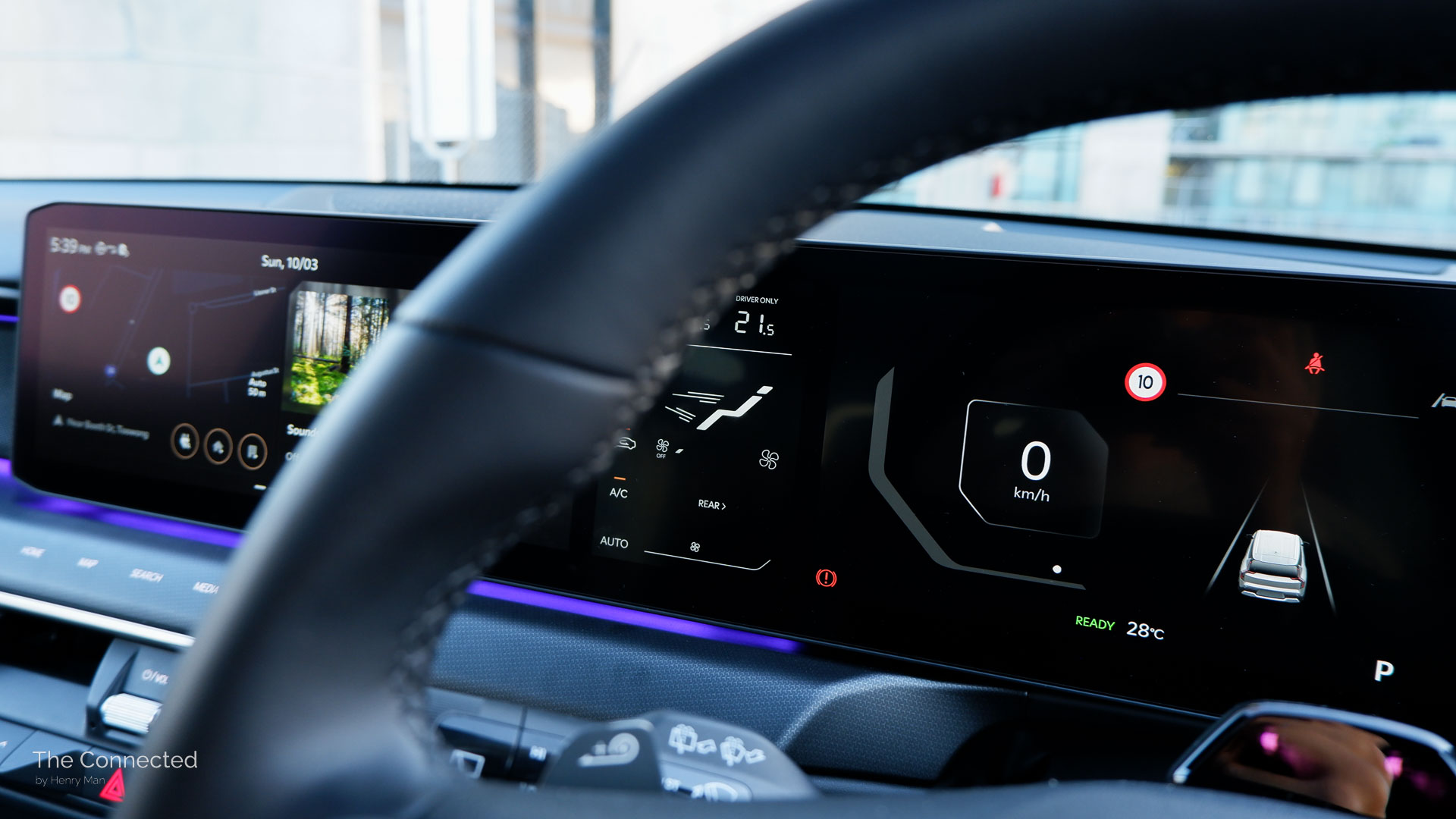
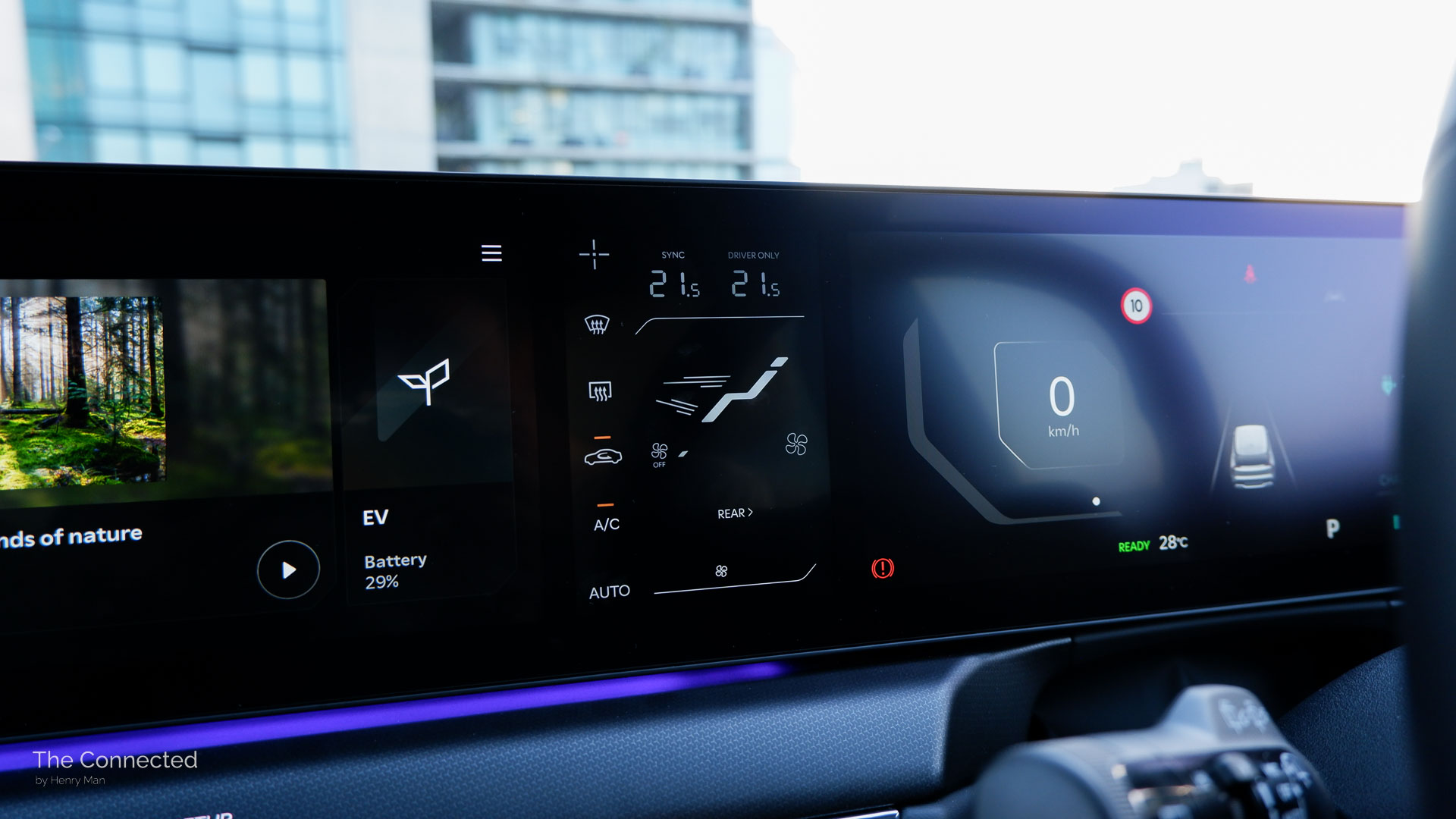
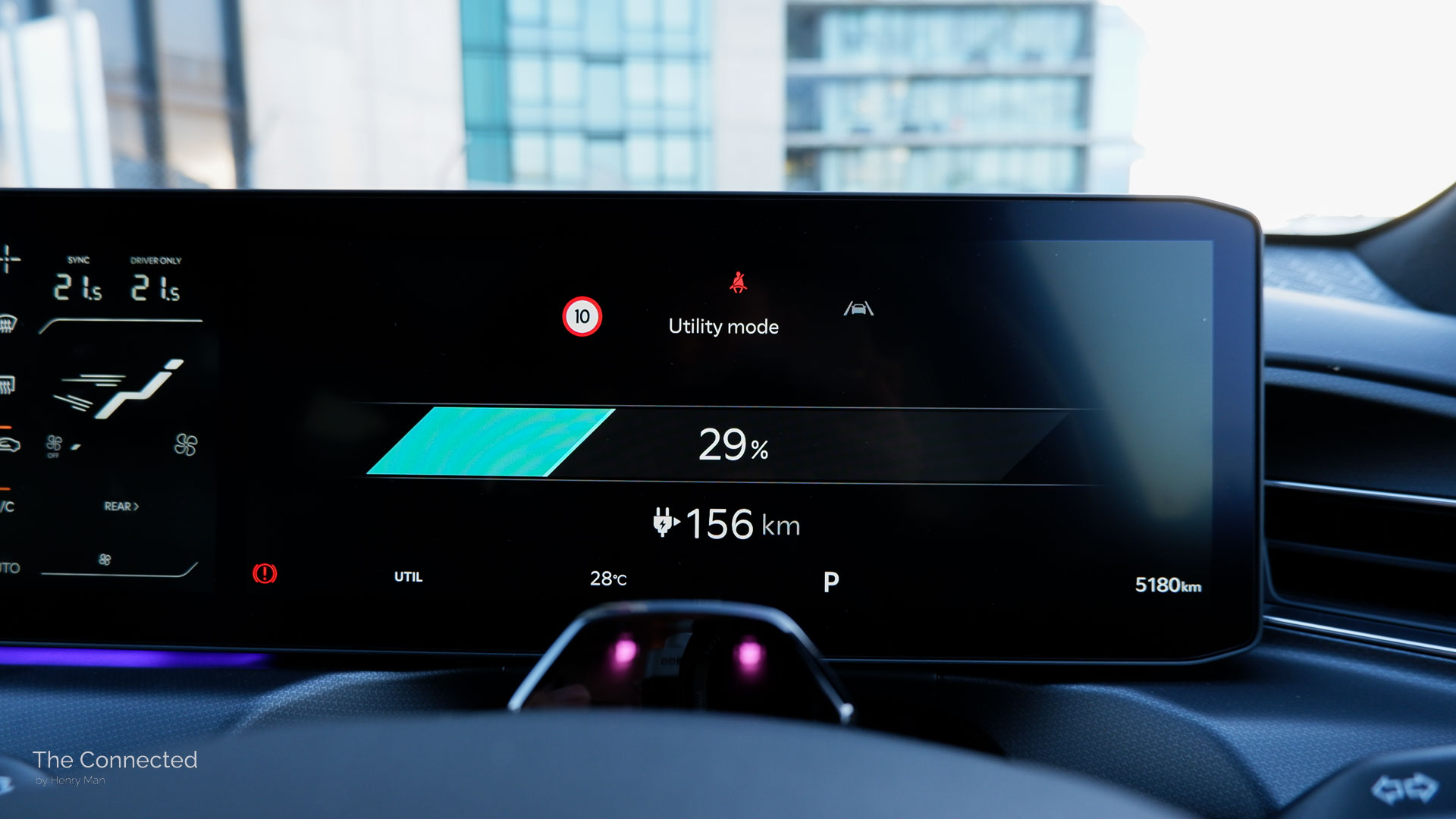
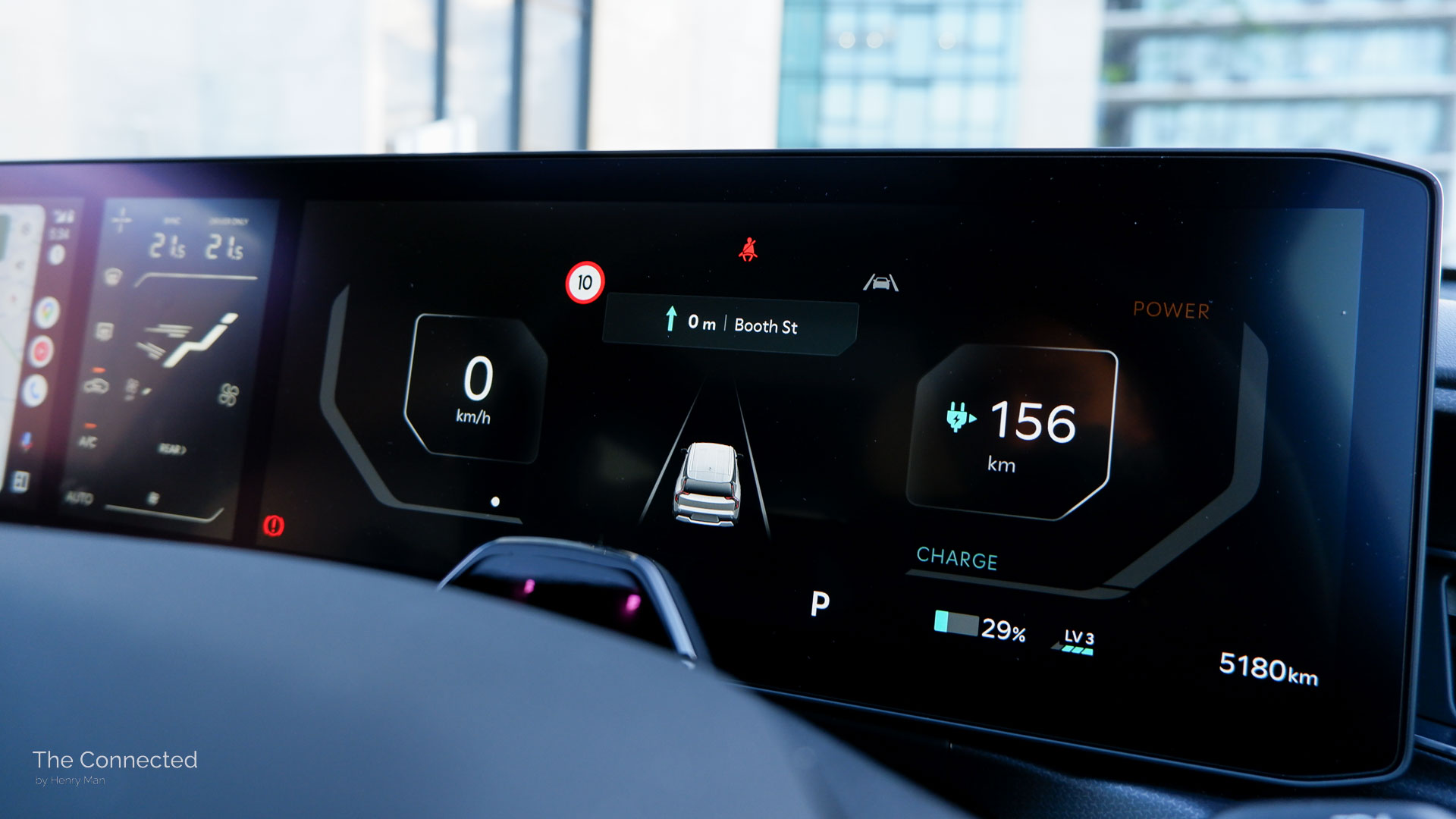
The 12.3-inch instrument display is functional with several pages and layout designs, but isn’t as customisable with minor differences to the three layout designs and can’t show the built-in maps nor permanently display the audio – unlike some other car brands.
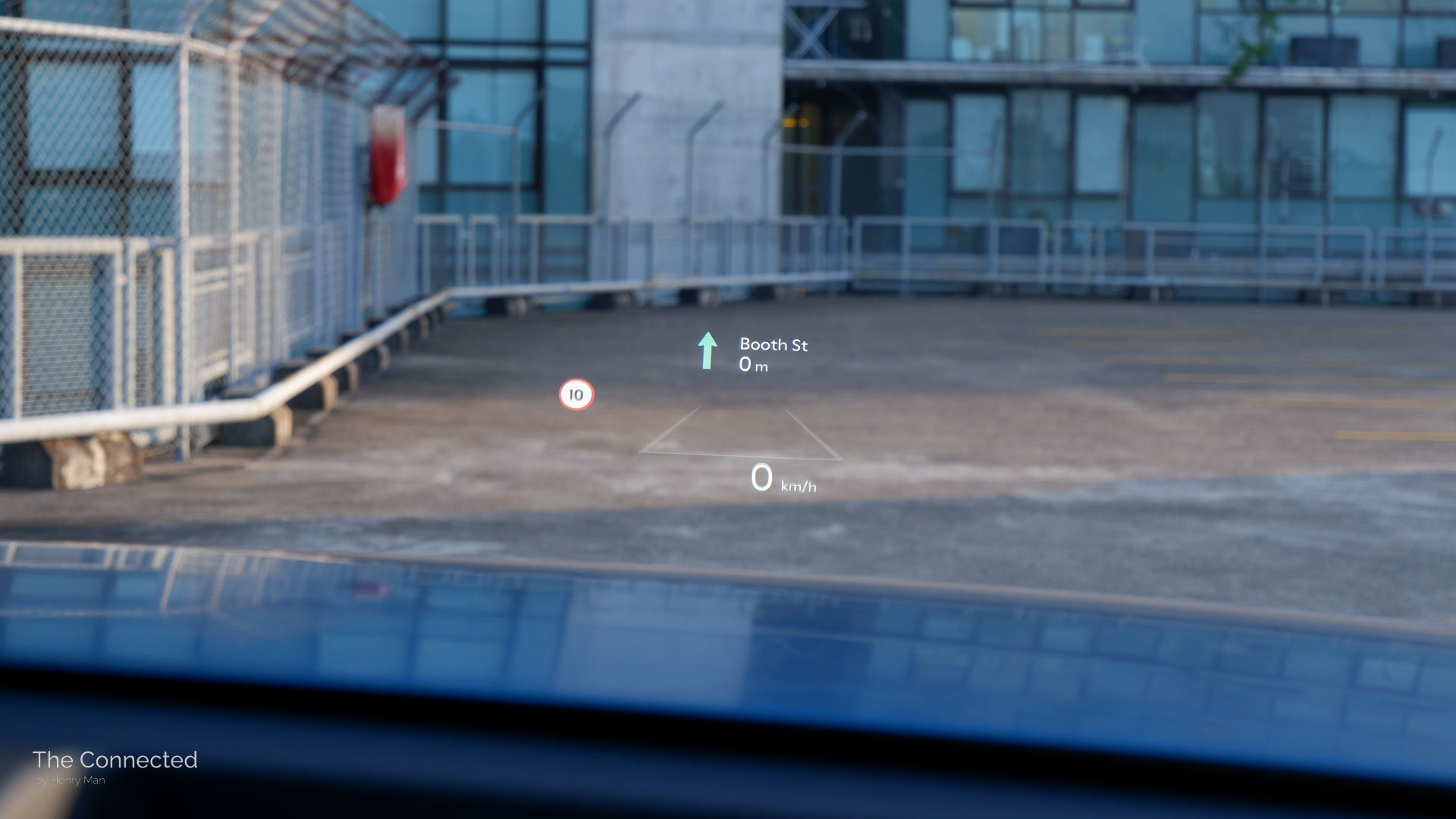
However, a welcome touch is a large display showing the battery percentage and trip information upon turning off the EV, while charging and Utility Mode. Android Auto also now integrates the map directions on the driver instruments and head-up display (HUD).
The HUD projects onto the windscreen and clearly shows the speedometer, along with map directions, blind spot monitoring indicators, and even other vehicles as blobs and lane markings while on Highway Driving Assist 2 mode.
The fingerprint scanner may sound sophisticated in marketing materials, but it merely unlocks driver profile settings – unlike the Genesis GV60 which can drive the vehicle.
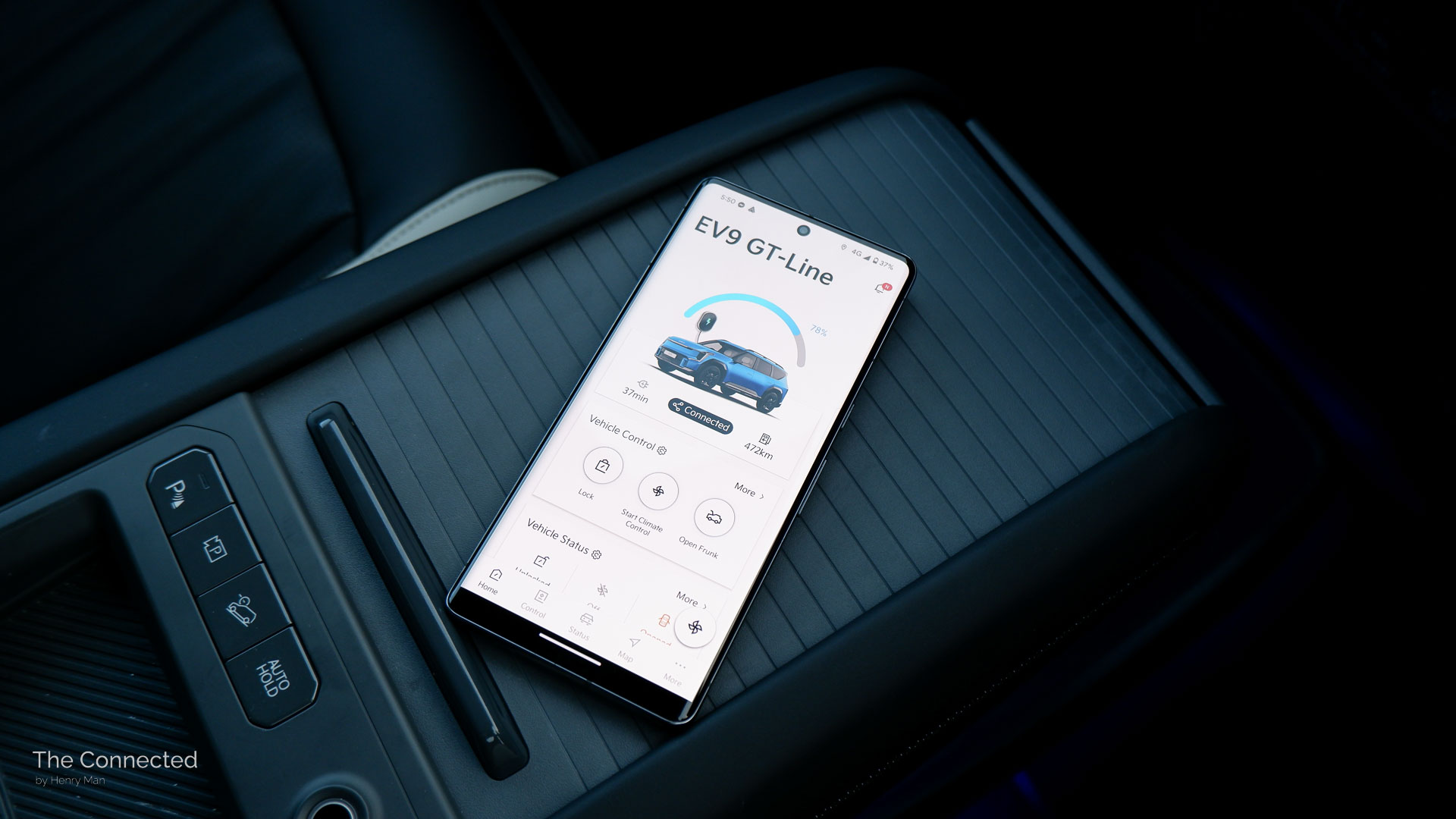
Furthermore, the EV9 includes Kia Connect as standard which brings a built-in SIM card for internet-connected touchscreen functions, emergency calling and location tracking, and a remote smartphone app.
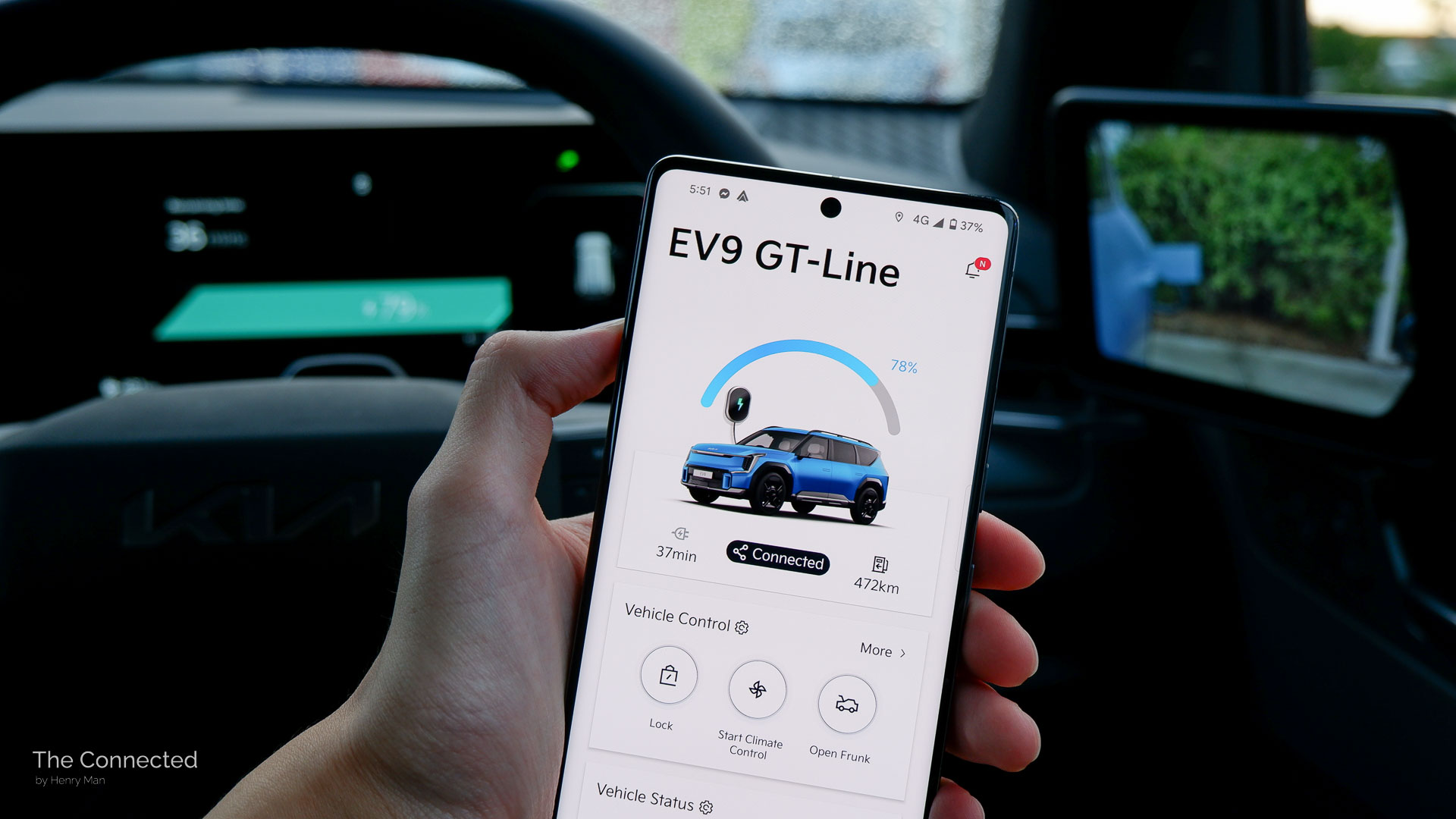
The Kia Connect app works well, but can be sluggish at times connecting to the car. The laundry list of features also means there are a litany of buttons on the controls page, which are often duplicates of the same function (eg: turn on and off the climate control are two buttons), and can look confusing.
The connected app conveniently allows owners to monitor the charging status to help avoid overstaying at public charging stations, check the remaining range, receive push notification warnings, take a picture of the 360-degree cameras, and turn on the climate control at the set temperature, heating/ventilation for all four seats, heated steering wheel, and windscreen demisters.
Fortunately, Kia Australia hasn’t elected to lock certain features – such as additional power, auto park assist and display themes – behind paid subscriptions yet via the Kia Connect Store, unlike overseas markets.
The 14-speaker Meridian Premium system sound is rich, immersive and rumbles like being in a cinema and provides a good balance of vocals and bass, with the advantage of the EV9’s large interior to play with.
Safety.
2024 Kia EV9 GT-Line safety features:
| Front auto emergency braking (AEB) with vehicle/pedestrian/cyclist/junction turning/oncoming lane change detection | Side and rear low-speed AEB |
| Highway Drive Assist 2 (HDA2) with auto lane change assist | Driver attention alert with camera monitoring |
| Lane-centring and lane-keep assist | Lead vehicle departure alert |
| Blind-spot assist with blind-spot camera view | Rear occupant alert (sensor type) |
| Rear cross-traffic assist | Full LED headlights with adaptive matrix high beam function |
| Map-based adaptive cruise control | Full LED tail-lights |
| Speed limit assist | 360-degree camera system |
| Door open warning and assist | Front, side, rear parking sensors |
The Kia EV9 comes with a range of well-tuned active safety assistance technologies as standard, but only the mid-spec Earth and flagship GT-Line feature a 360-degree camera system and blind-spot cameras.
It’s unfortunate that the post-$100K drive-away Air doesn’t have these important features to help drivers manoeuvre this upper large SUV.
The EV9 is also the first Kia in Australia to debut its Highway Driving Assist 2 (HDA2) system, which is a more confident version of adaptive cruise control and lane-centring assist. The latter is more aggressive with its steering, keeps it on for sharp bends and utilises the maps to slightly slow down around curves – but isn’t as assertive as some other brands.
HDA2 only turns when on highways with the ability for auto lane change, which actively steers the wheel when the indicators are on, there isn’t a vehicle in the blind spot, and in ideal conditions.
However, I found that it changes lanes very slowly, and there were a number of common scenarios that disables the feature – including road bends and when there’s simply not enough surrounding space in heavy traffic.
The steering wheel also detects whether hands are touching it, rather than the previous pressure-based system to prevent unnecessary ‘keep hands on wheel’ warnings.
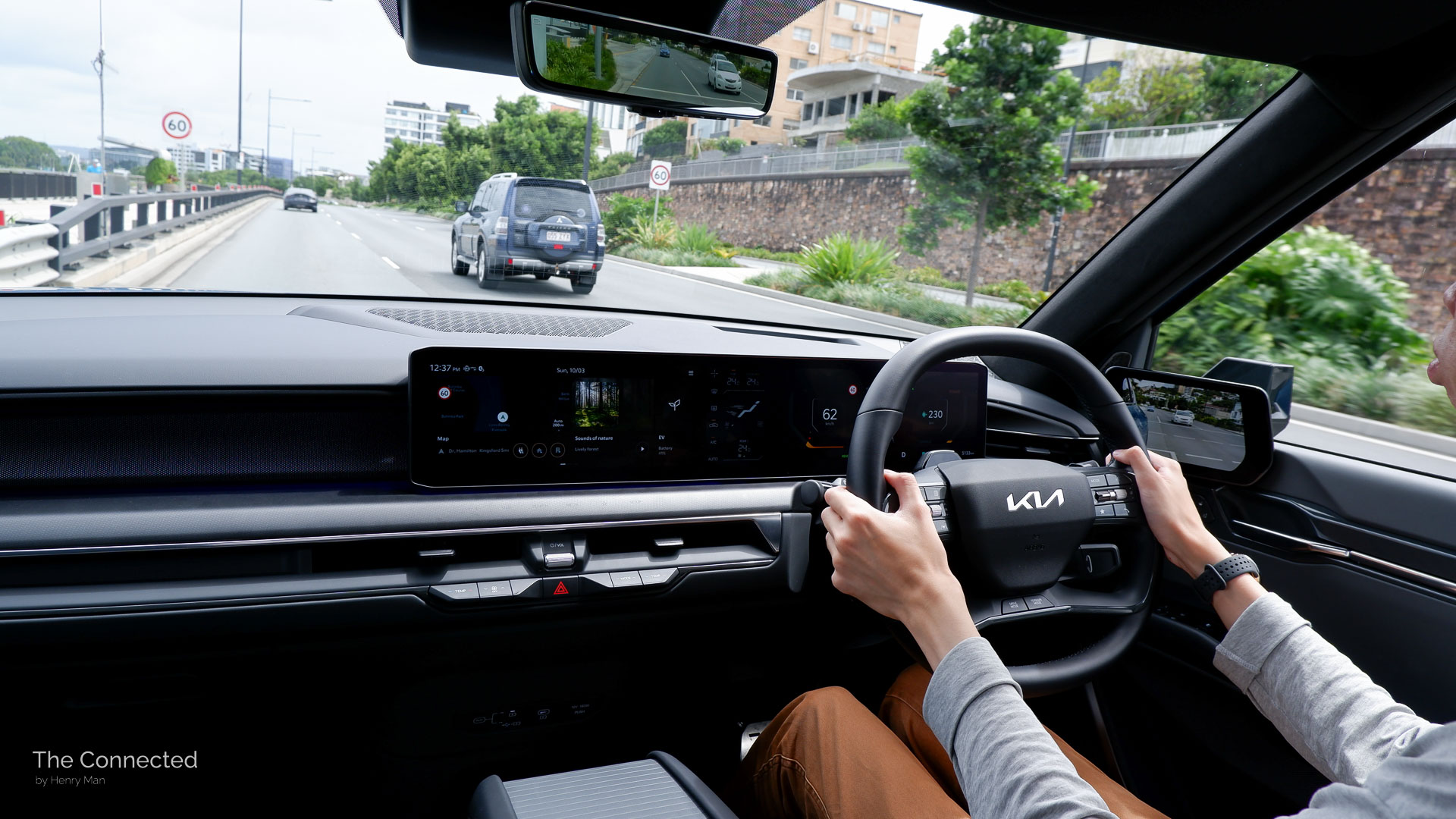
Importantly, the infamous European-mandated speed limit assist system has been markedly improved – to the point where I rarely wanted to turn it off during my week with the EV9.
The chimes are much quieter and now recognises school zone times to not erroneously change to 40km/h and warn outside of the set morning and afternoon time periods.
Drivers still need to disable it every time you start the car, but there’s a new ‘speed limit information’ setting to keep displaying the road sign on the instrument and head-up displays – as it can detect the wrong signs at times and be an annoyance when in car parks that have irrelevant 5km/h signs.
Similarly, the driver attention monitoring camera is arguably a genuinely useful safety feature by chiming when it senses when the driver’s eyes aren’t looking directly in front at the road. Kia’s system is calibrated well and never erroneously triggered during my testing.
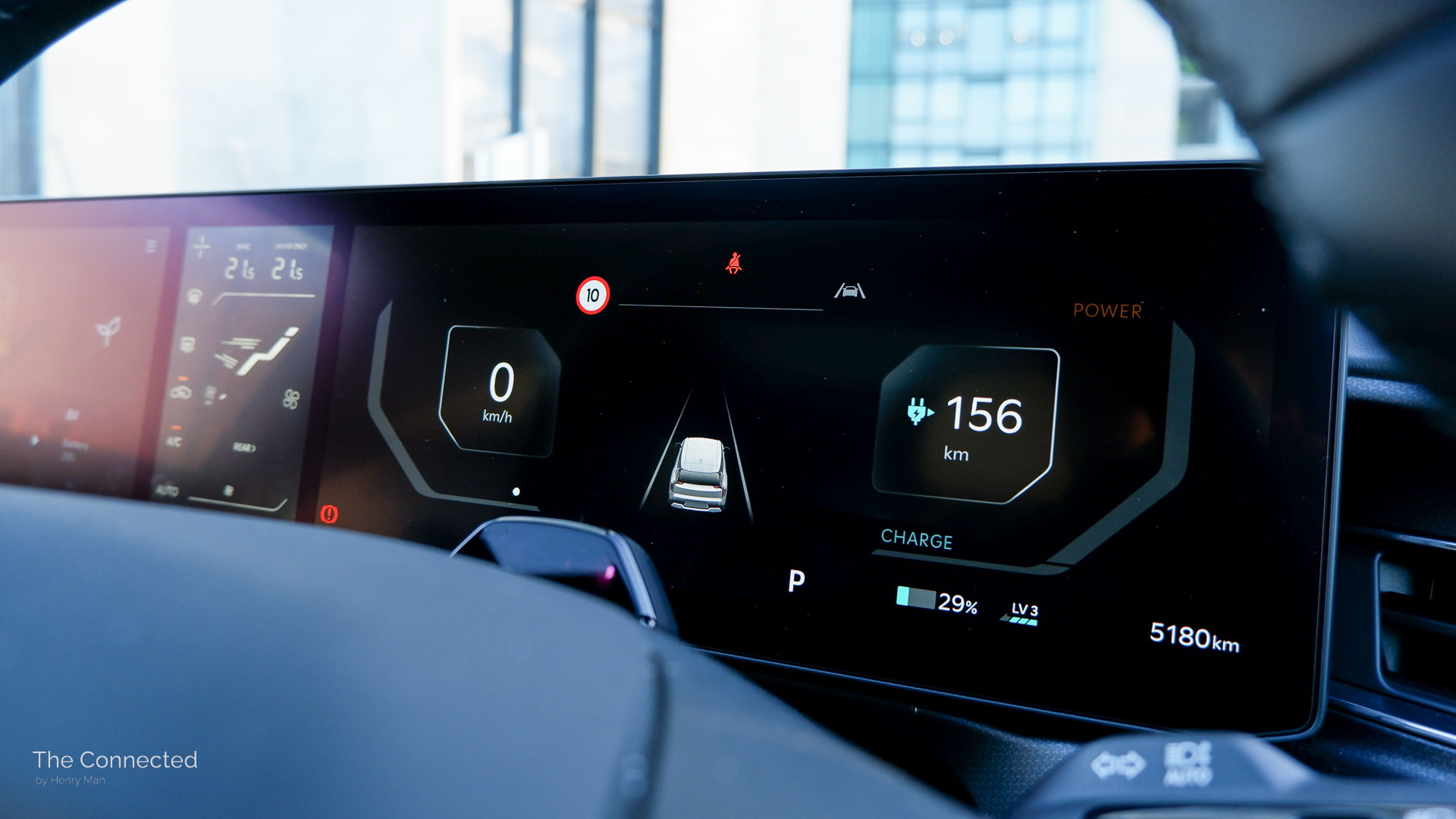
Speed limit assist improved.
The infamously irritating Hyundai Motor Group speed limit assist system has been refined with less chimes and knows school zone times. It’s arguably now far less annoying and I rarely wanted to turn it off with every drive.
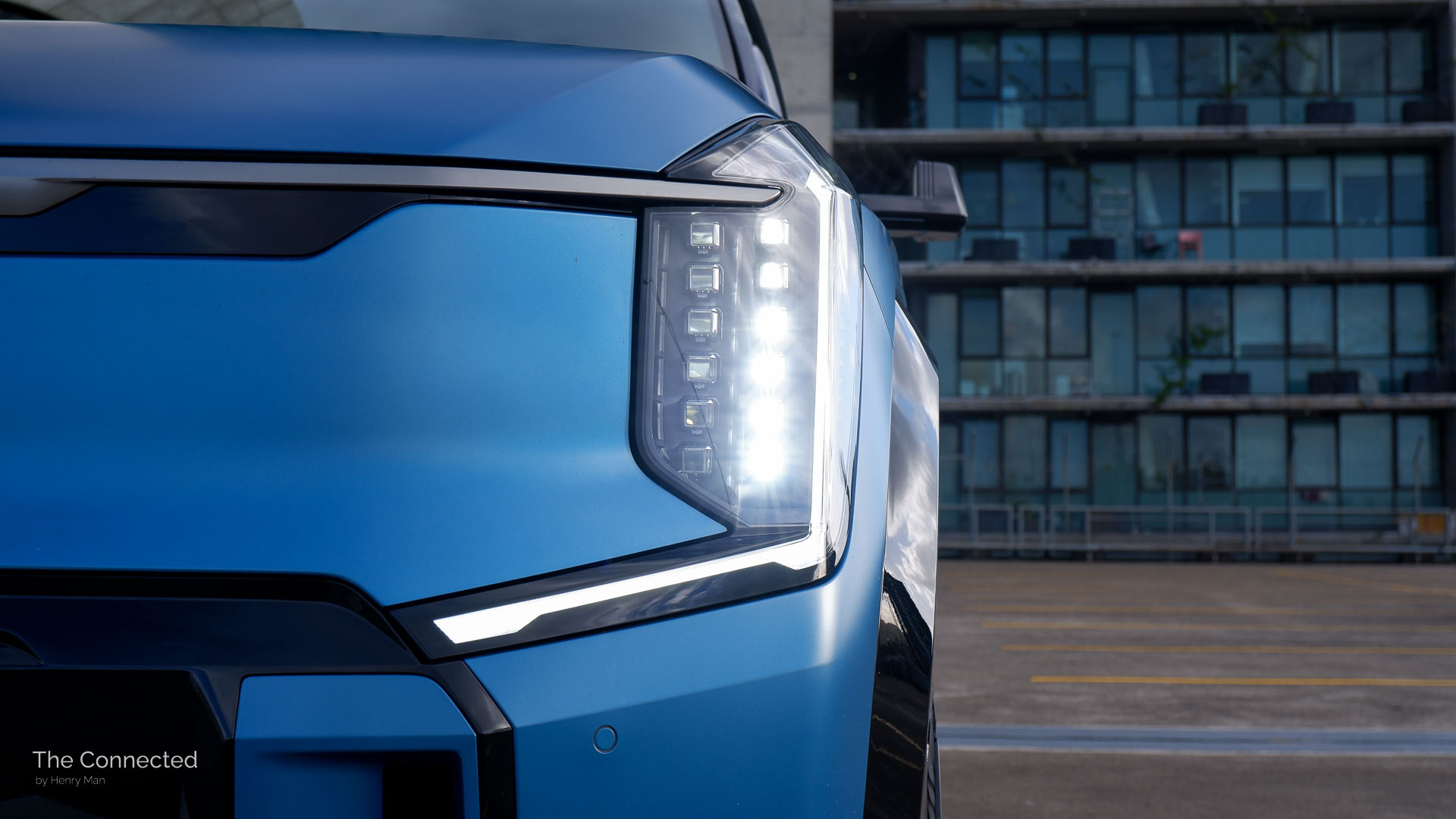
Additionally, the hero EV9 GT-Line exclusively comes with adaptive matrix LED headlights which automatically turns on the high beams depending on the lighting condition and blocks individual bulbs to avoid glaring at other road users.
The system works well, though the headlights don’t particularly standout for reach and spread.
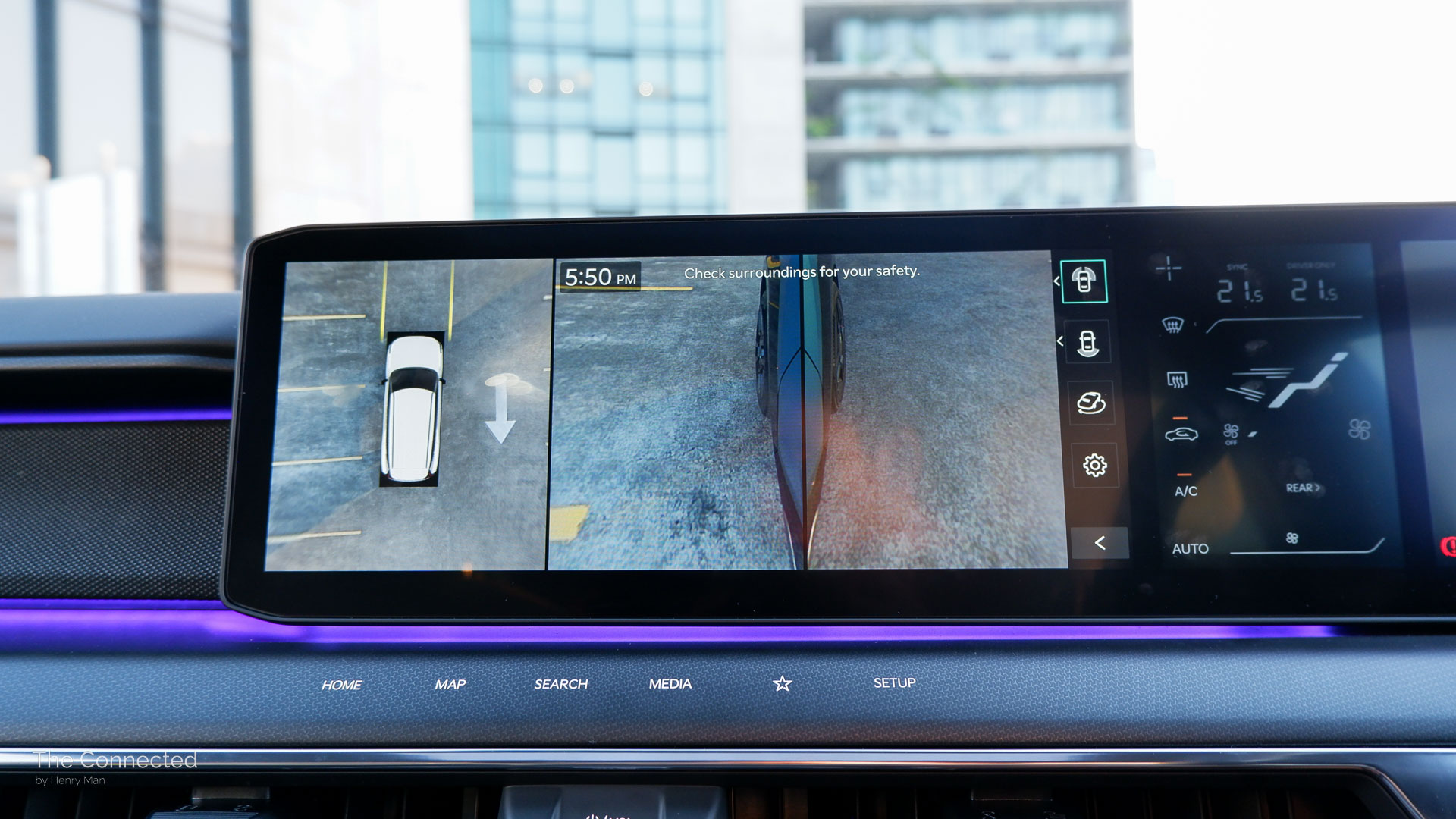
Thanks to the boxy shape and tall windows, the EV9 provides good all-round visibility for drivers, but the fact that the rear is so far back means I mainly relied on the clear 360-degree camera system, all-round parking sensors, blind-spot cameras, and digital rear-view mirror – but not the disconcerting digital camera side mirrors (more below).
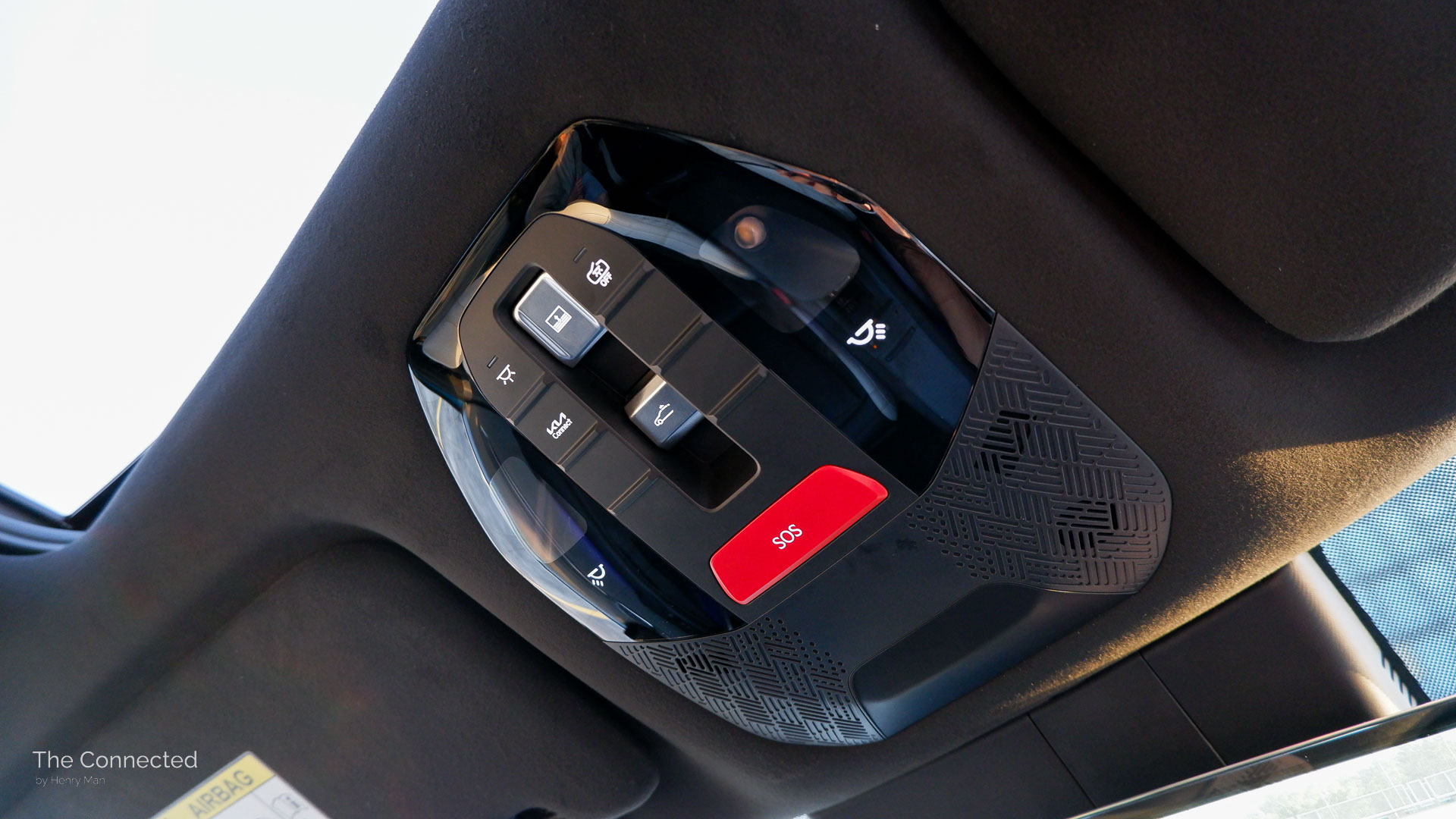
Kia Connect brings potentially-life saving safety features, including automatic emergency calling to its 24/7 call centre when the airbags are deployed (or via the SOS overhead button), remote vehicle location tracking, and a valet parking mode.
The EV9 is also one of the first models from the South Korean brand to debut a quieter exterior pedestrian warning tone, which is a more Tesla-style spaceship-like hum in drive and reverse. Previously, the latter emitted more audible chimes on Hyundai Motor Group hybrid and electric cars.
The Kia EV9 electric SUV achieved the full five-star Australasian New Car Assessment Program (ANCAP) safety rating under the latest 2023 testing criteria – which will expire at the end of 2029.
Range and charging.
2024 Kia EV9 GT-Line battery and charging specs:
| Claimed driving range (WLTP combined) | 505km |
| Claimed energy efficiency (WLTP combined) | 22.8kWh/100km |
| Battery size and type | 96kWh usable estimated (99.8kWh gross) lithium-ion |
| Battery voltage | 552 volts (800V class) |
| Max AC / DC charging speed | 10.5kW AC / 240kW DC |
| Bidirectional charging | V2L interior and exterior |
| Connector type | Type 2 / CCS2 |
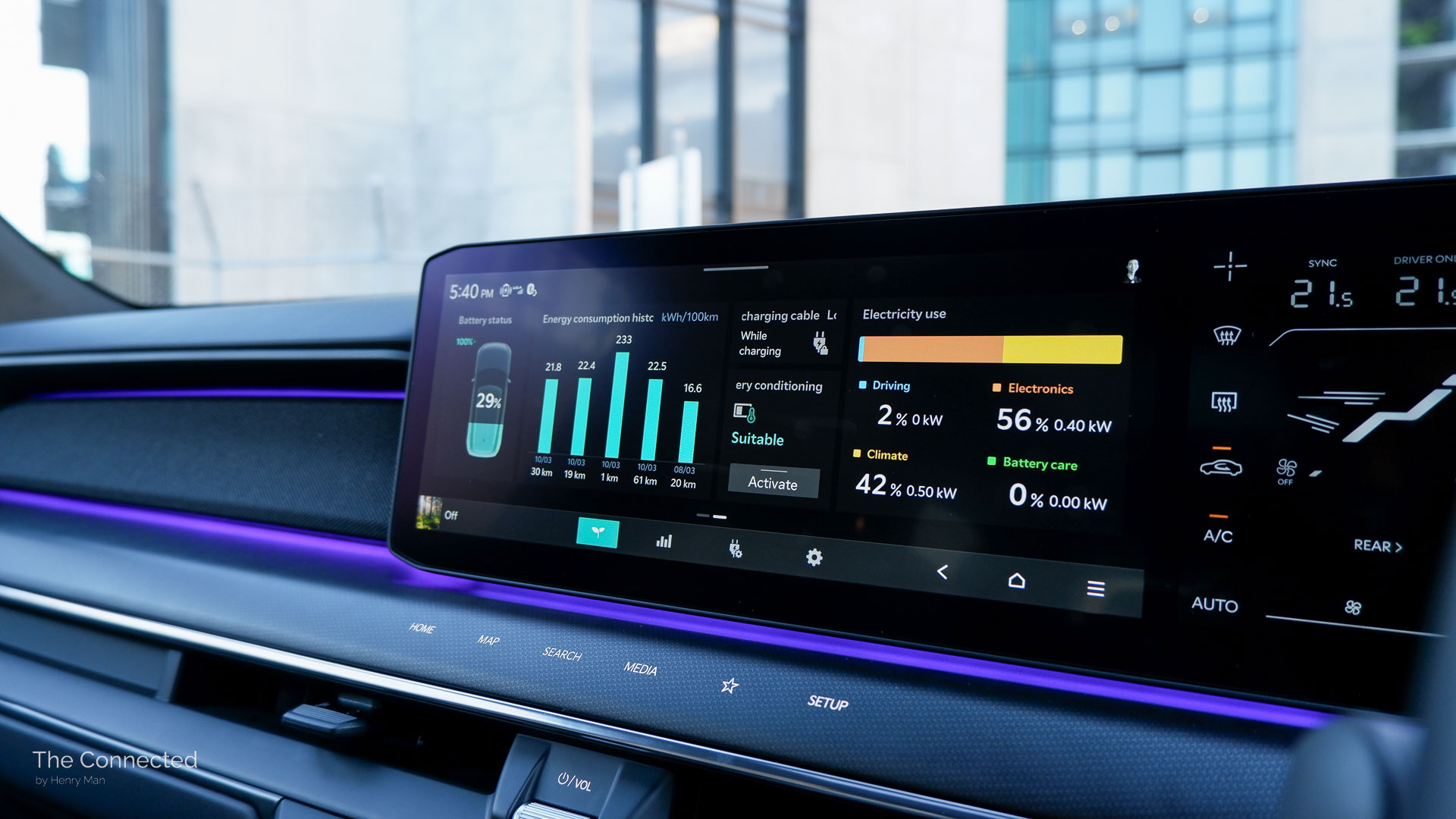
The Kia EV9 GT-Line indicated an impressive for-the-size 21.2kWh/100km energy consumption in my week driving a mix of heavy traffic, urban and highway conditions.
This beats the carmaker’s efficiency claim and results in 453km real-world range on a full charge – based on an estimated 96kWh usable battery capacity (Kia only details the unusable gross figure).
All EV9’s use the common lithium-ion battery type, which should be limited to charging up to 80 per cent everyday to avoid excessive degradation. Therefore, daily real-world range is about 362km.
Keep in mind that the tested consumption was mainly with one or two occupants in the vehicle; expect it to rise if you fill all those seven seats plus luggage. In my week, a highway stint saw it return about 24.0kWh/100km.
A heat pump is standard to save on energy while heating the interior, but is most suited to extreme cold climates.
Unfortunately, despite the good energy efficiency for a large and boxy SUV, current battery tech still cannot be compared with the ~1000km extended range of diesel engines. If you tow up to the 2500kg braked trailer limit, expect to double the energy consumption – unlike petrol and diesel cars.
However, long road trips in the Kia EV9 isn’t impossible, as demonstrated by real-life electric car owners.
The mid-spec EV9 Earth shares the same battery – but provides the longest 512km claimed range – while the base Air has a smaller 76.1kWh gross lithium-ion battery with 443km claimed range and the best energy efficiency.
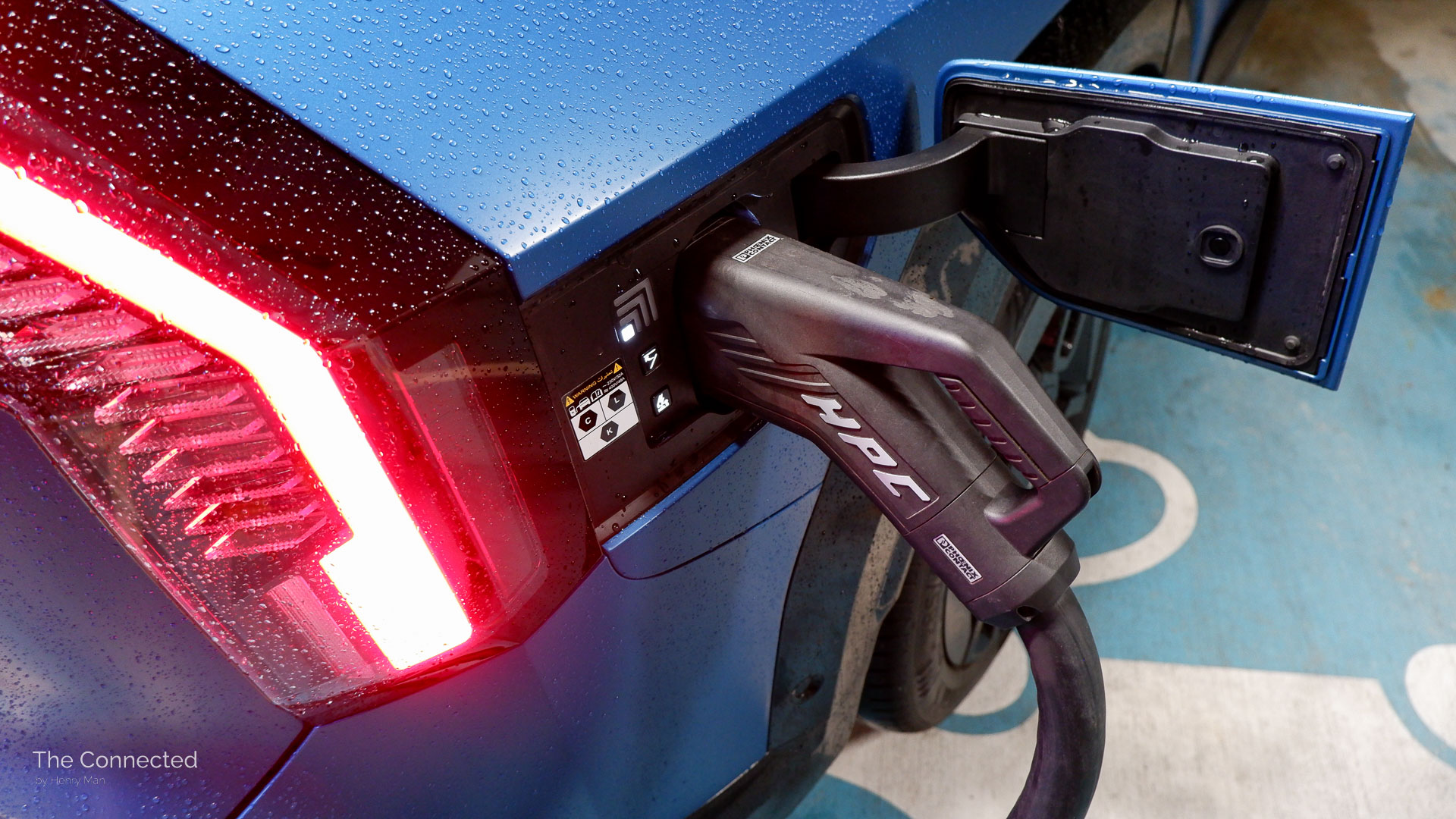
The EV9’s standard Type 2 CCS charging port is located on the rear-right quarter side. It’s an accessible location, but can be a challenge to wrangle short and heavy public fast DC charging cables around the wide SUV body.
The charge port opens electrically and the bottom cap for the DC pins thankfully open and close on a hinge, rather than dangling on the side as per the Kia EV6.
Note that the EV9’s charging port position can be an issue on select publicly-open Tesla Superchargers, with the more advanced 800-volt class system reportedly experiencing speed issues on the network.
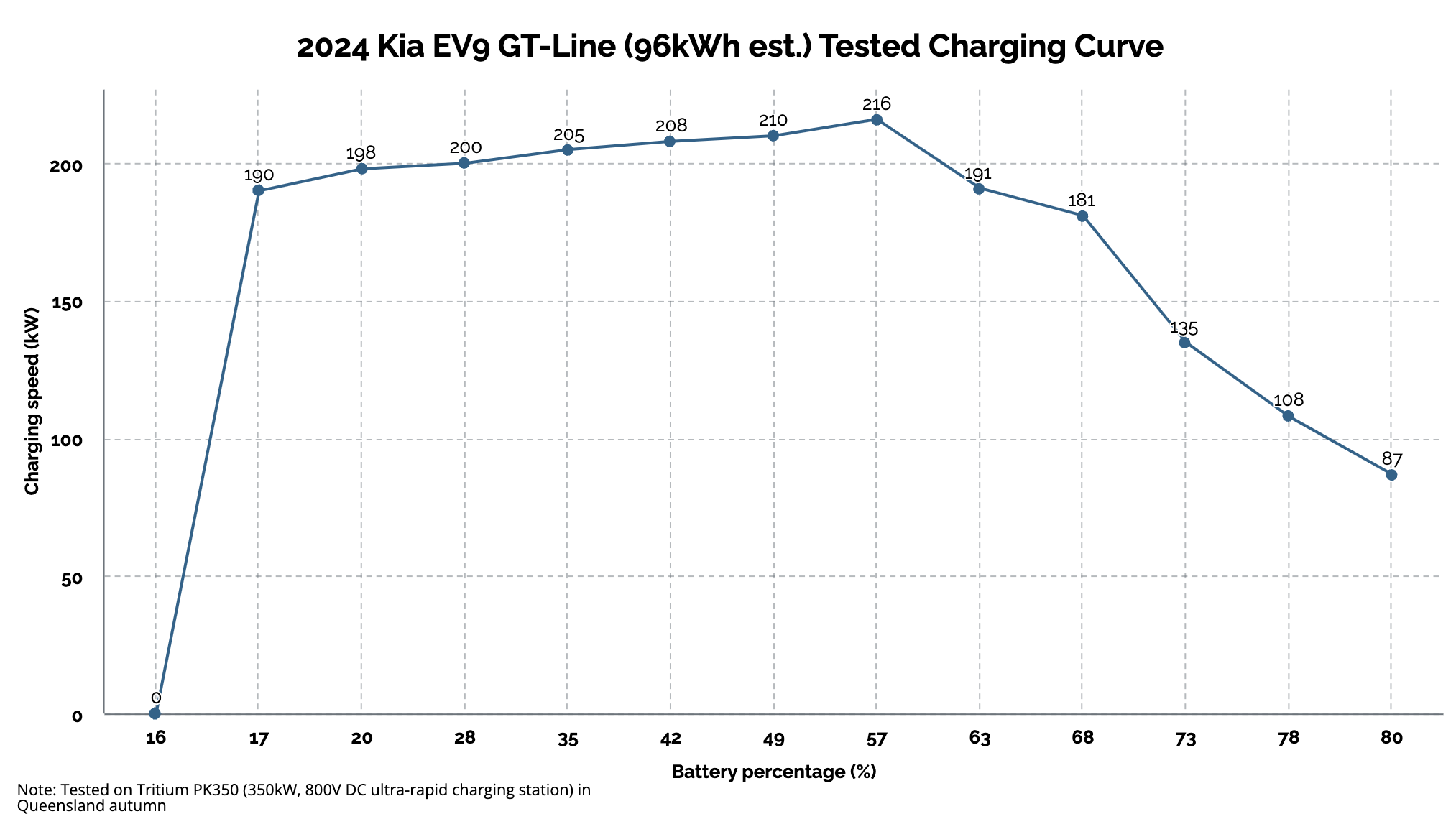
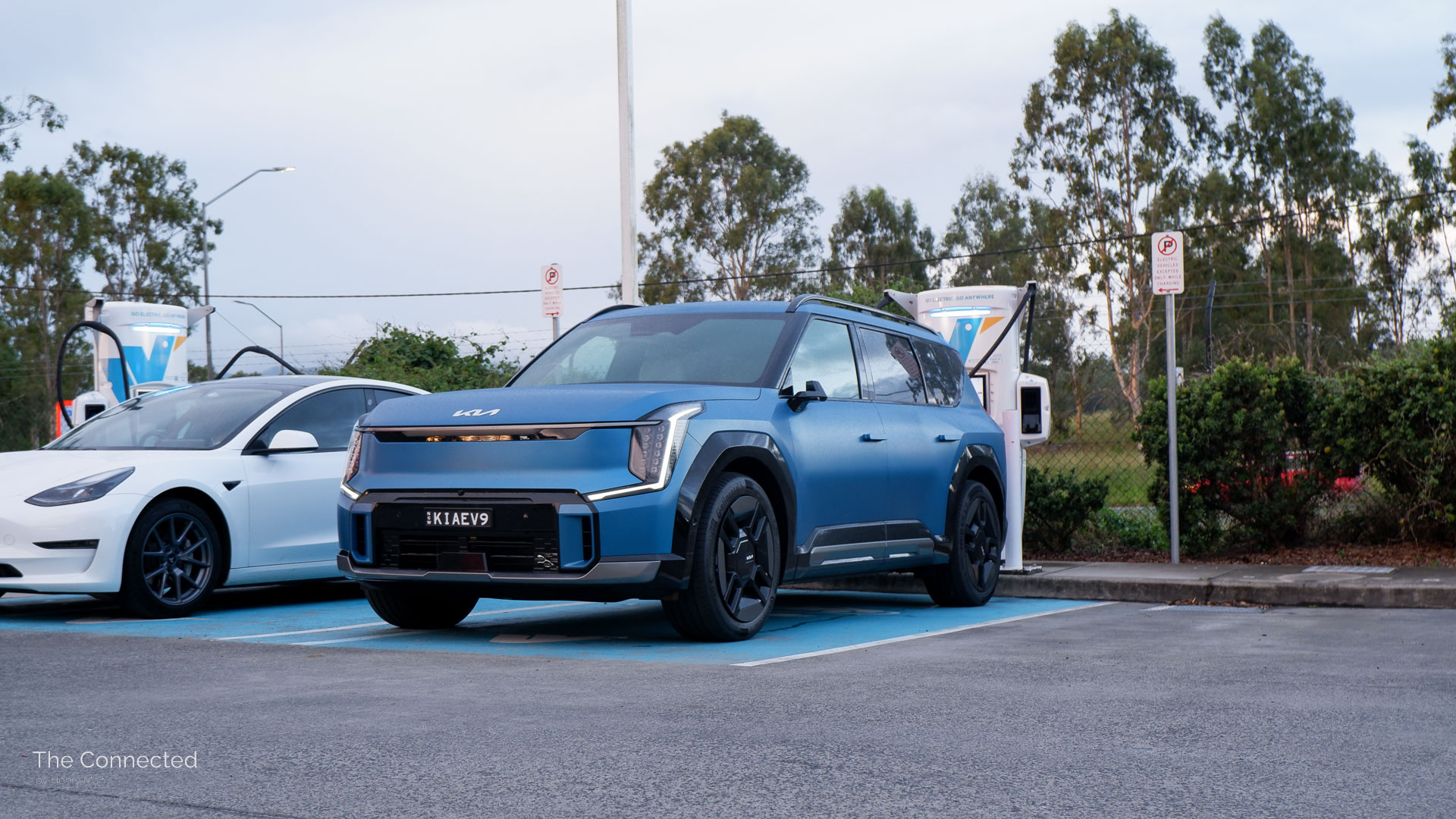
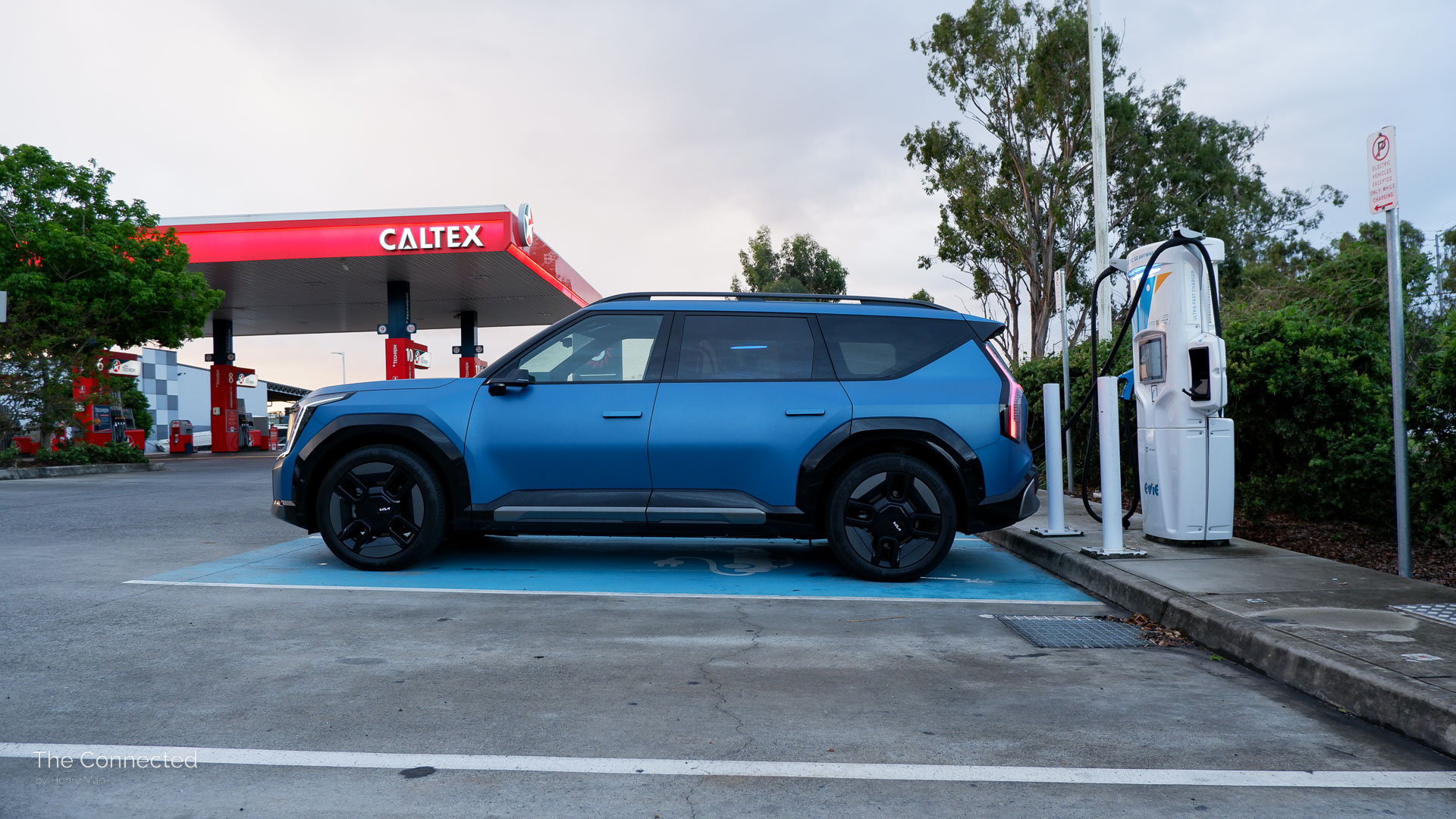
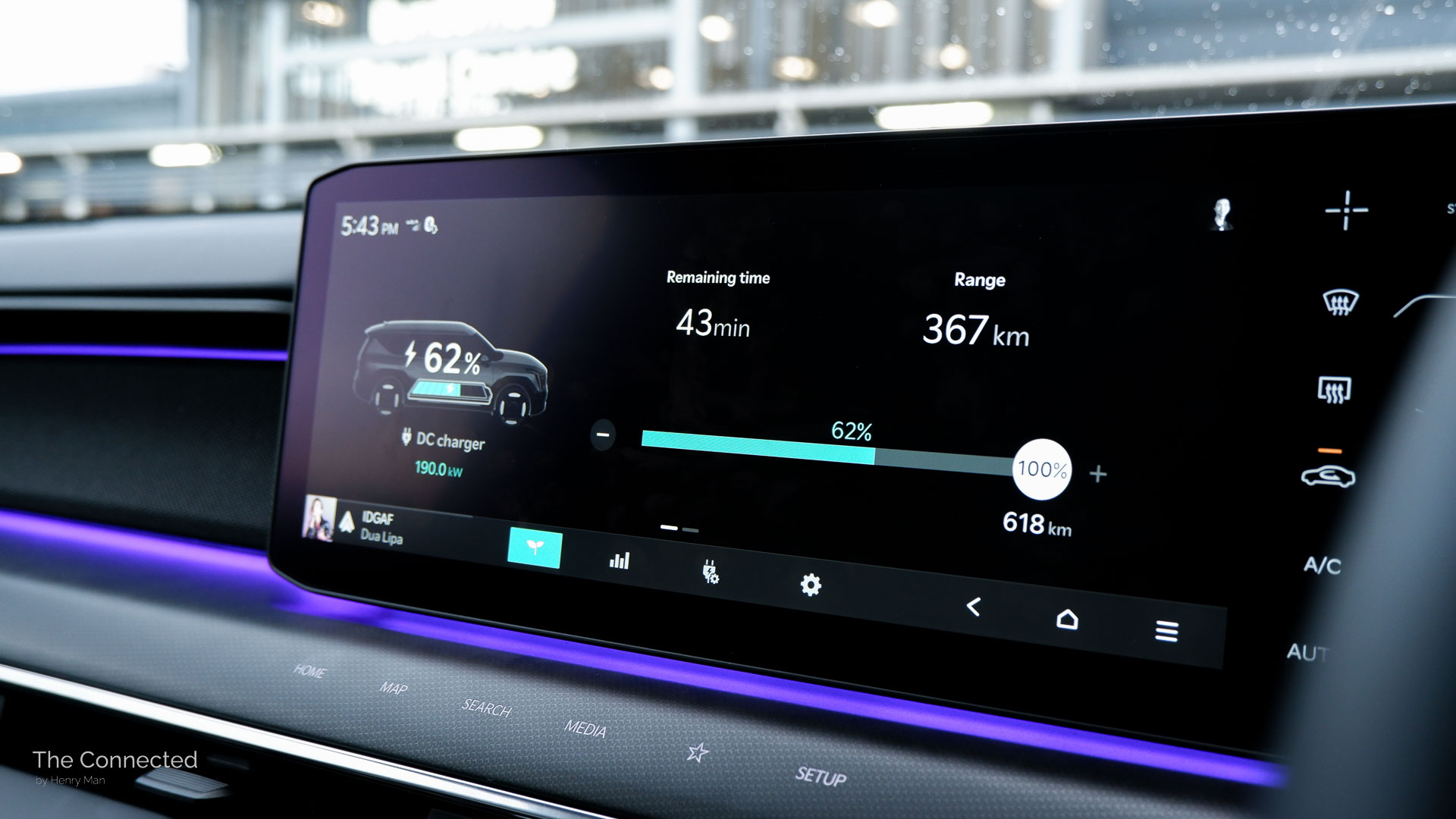
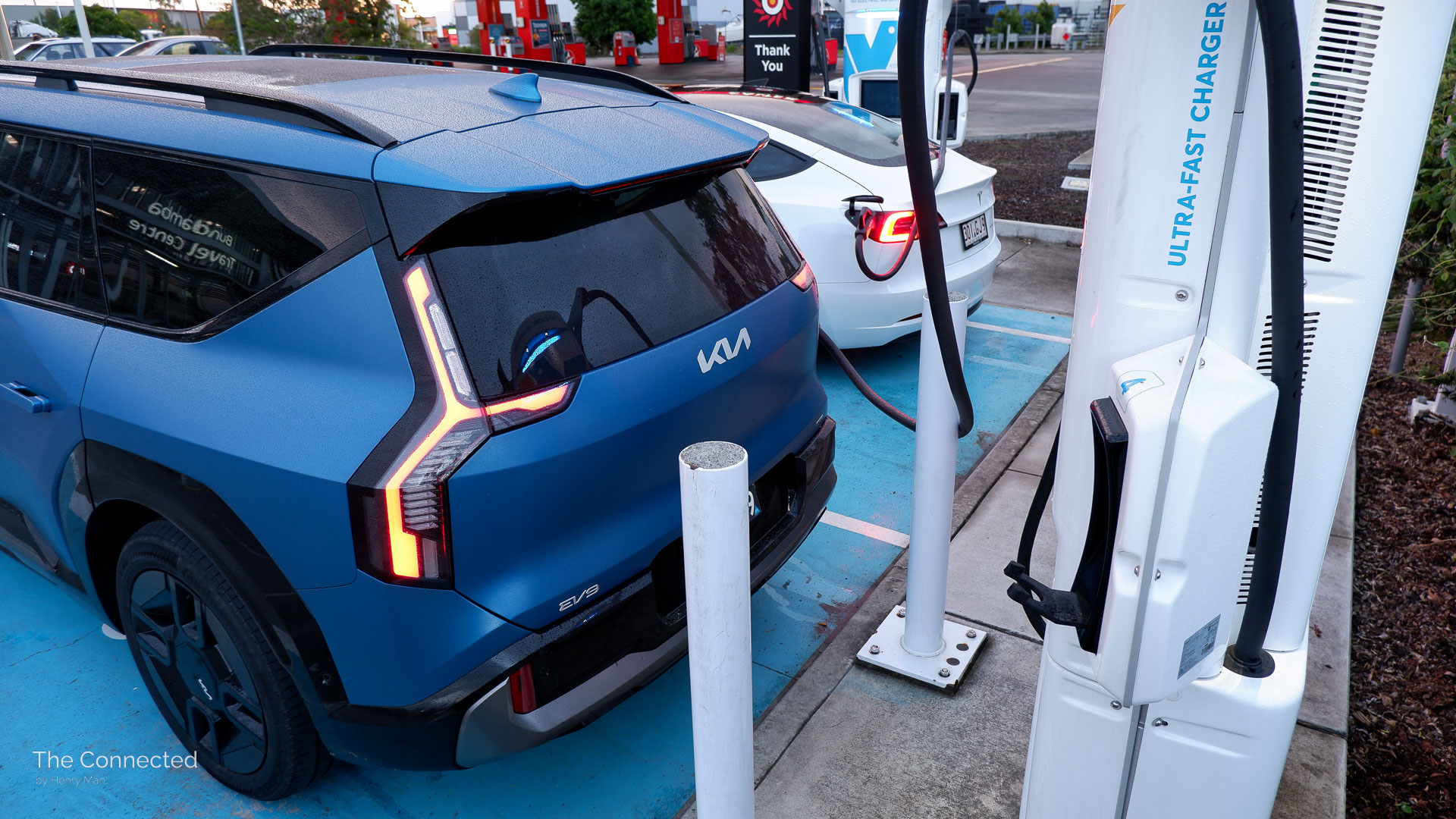
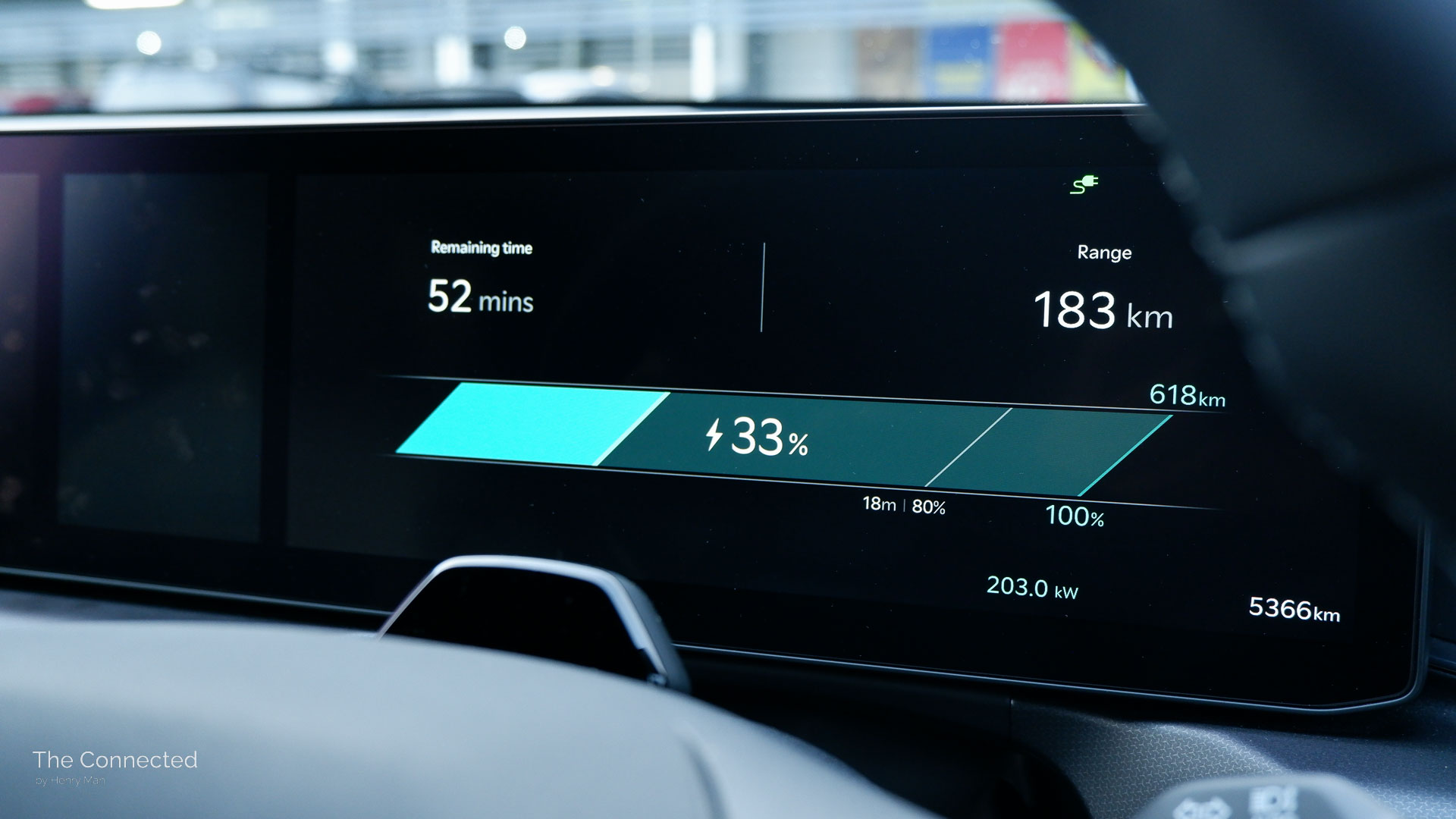
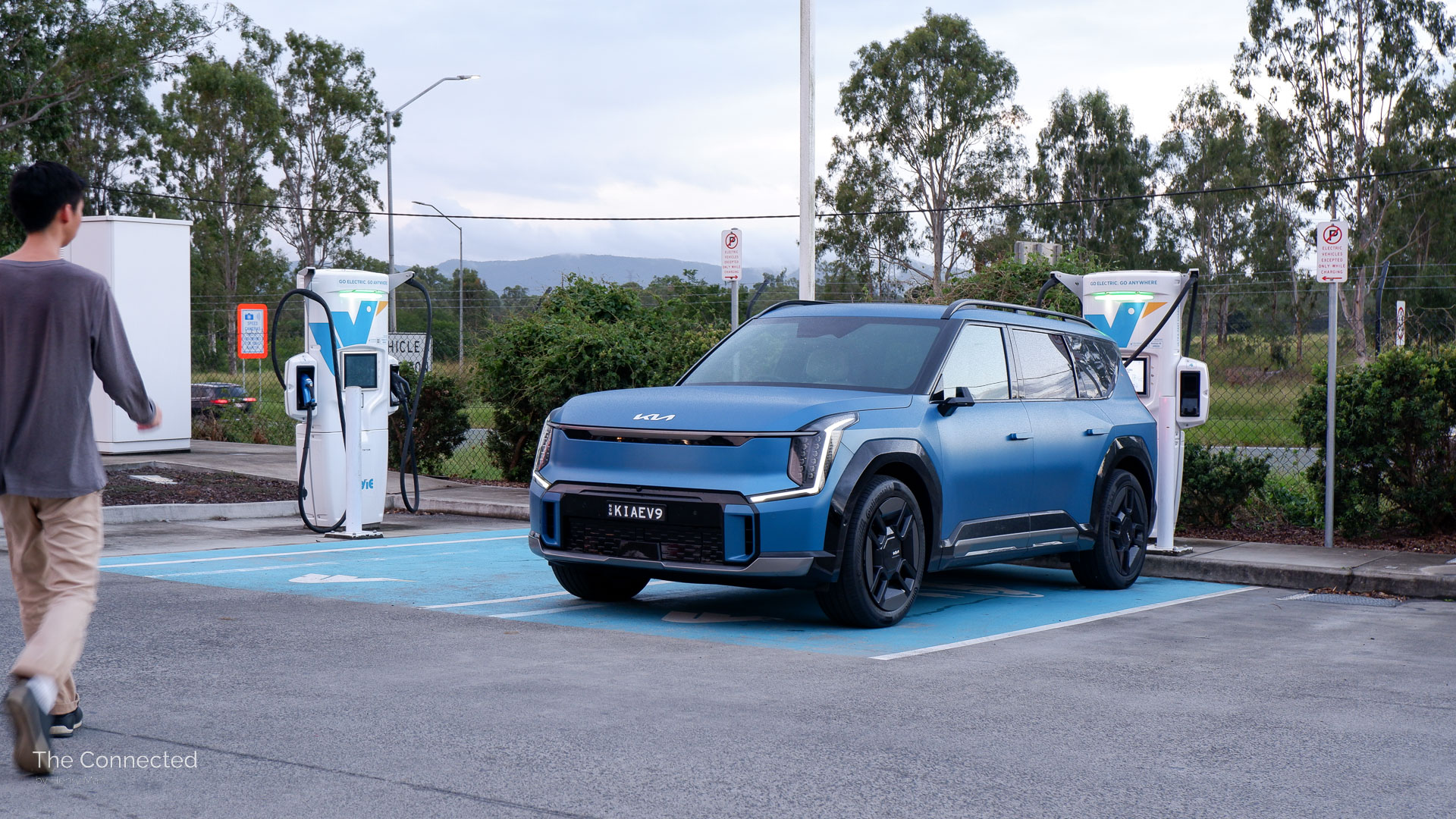
In my real-world charging test on a 350kW, 800-volt ultra-rapid DC charging station, the Kia EV9 recharged from 16 to 80 per cent in about 21 minutes.
The session averaged 177kW with an observed 216kW peak at the 57 per cent mark.
The ultra-fast sustained charging speeds mean that – if you can find a compatible 240kW or higher 800-volt class charging station – road trip stops will be kept short. It may likely even be too quick if your family is taking a food and restroom break.
The revamped ccOS EV settings app allows owners to manually force battery preconditioning via a button press – instead of using the built-in map – but wasn’t enabled in my test since it was already in its optimum temperature range, according to the system.
With every charging station, I also needed to hold the plug in in order for it to properly ‘handshake’ and start a session.
However, ultra-fast charging stalls are mainly found beside highways and are the most expensive. Kia claims plugging in the more common 50kW DC fast chargers will refill the EV9 GT-Line from 10 to 80 per cent in about 83 minutes.
It’s most ideal to charge at home every day, where it will take about one night to go up to 80 per cent on an installed three-phase 11kW AC wall box or around five nights using the included trickle charging cable at ∼2kW AC.
Unfortunately, the EV9 only caps out at 10.5kW AC – with no 22kW AC slow charging capability, which is expected given the EV9’s high luxury brand-rivalling price tag and the fact that it’s standard on some BMW and Mercedes-Benz electric cars.
An interior vehicle-to-load (V2L) Australian power socket is standard on all EV9 variants – albeit relegated at the boot – and this flagship GT-Line includes an exterior V2L adapter for plugging in the charging port. Only one can discharge the battery at one time and cannot be used while charging.
The improved Utility Mode (basically equivalent to Tesla’s camp mode) keeps the air-con and screens on for extended periods, without discharging the 12-volt electronics battery, and offers the option to turn off the centre display, ambient lighting and fold the mirrors at one touch.
Vehicle-to-home (V2H) bidirectional charging is available overseas, but not enabled in Australia with no compatible wall box on sale and no support by energy companies yet.
Driving.
2024 Kia EV9 GT-Line powertrain specs:
| Electric motors | Dual permanent magnet synchronous motors |
| Power | 282.6kW |
| Torque | 700Nm |
| Transmission | Single-speed |
| Drive Type | AWD |
| Claimed 0-100km/h time | 5.3 seconds |
| Tare weight | 2636kg |
| Payload | ∼604kg |
| Towing (unbraked / braked) | 750 / 2500kg (excluding towball download) |
The Kia EV9 is a comfortable and quiet family-friendly cruiser, thanks in part to a localised Australian ride and handling tune.
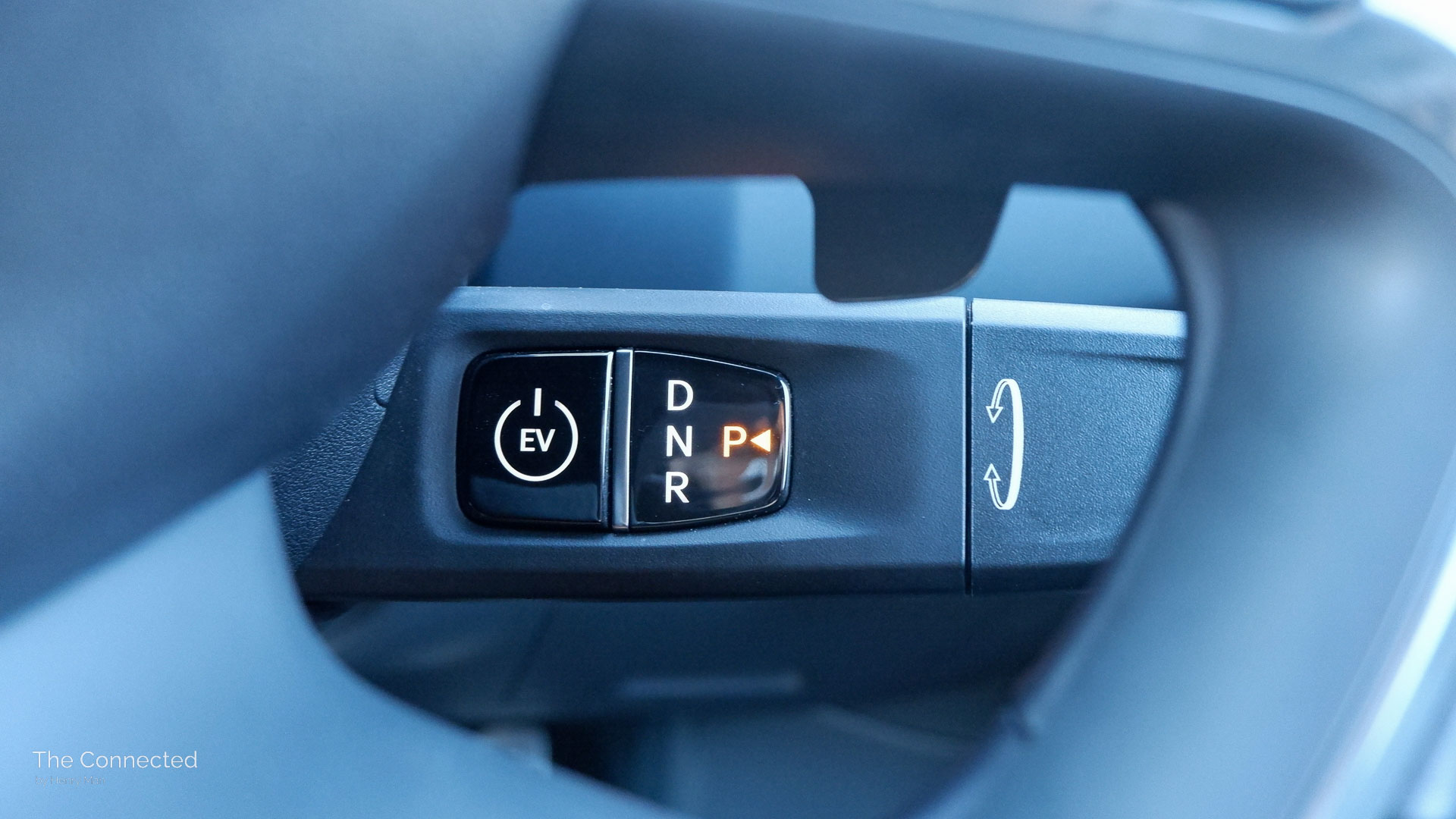
A push of the EV start button and twist of the drive selector stalk gets the almost 2.7-tonne electric SUV moving with an eerily ironic quiet and smooth sensation – the key benefit of driving a pure EV.
With a healthy 282kW of power and 700Nm of torque on tap instantly, the dual-motor EV9 GT-Line is rapid especially in sport mode – an oxymoron for such a large and heavy SUV.
Even in normal mode, it’s more than enough power for a family commuter and begs the question why you’d consider the forthcoming EV9 GT.
The part-time all-wheel drive system provides plenty of grip with only the GT-Line featuring 285/45 Continental PremiumContact C tyres – but don’t expect to do any heavy off-roading to compete with the large body-on-frame SUVs due to its low 177mm ground clearance, which is lower than the Sportage medium SUV.
On the flip side of speed, I certainly felt the EV9’s hefty weight when tackling corners more zealously. The electric steering rack isn’t as engaging and feels unnaturally weighted, which tends to quickly centre back on release.
Of course, this is no sports car; the related EV6 crossover better suits that requirement.
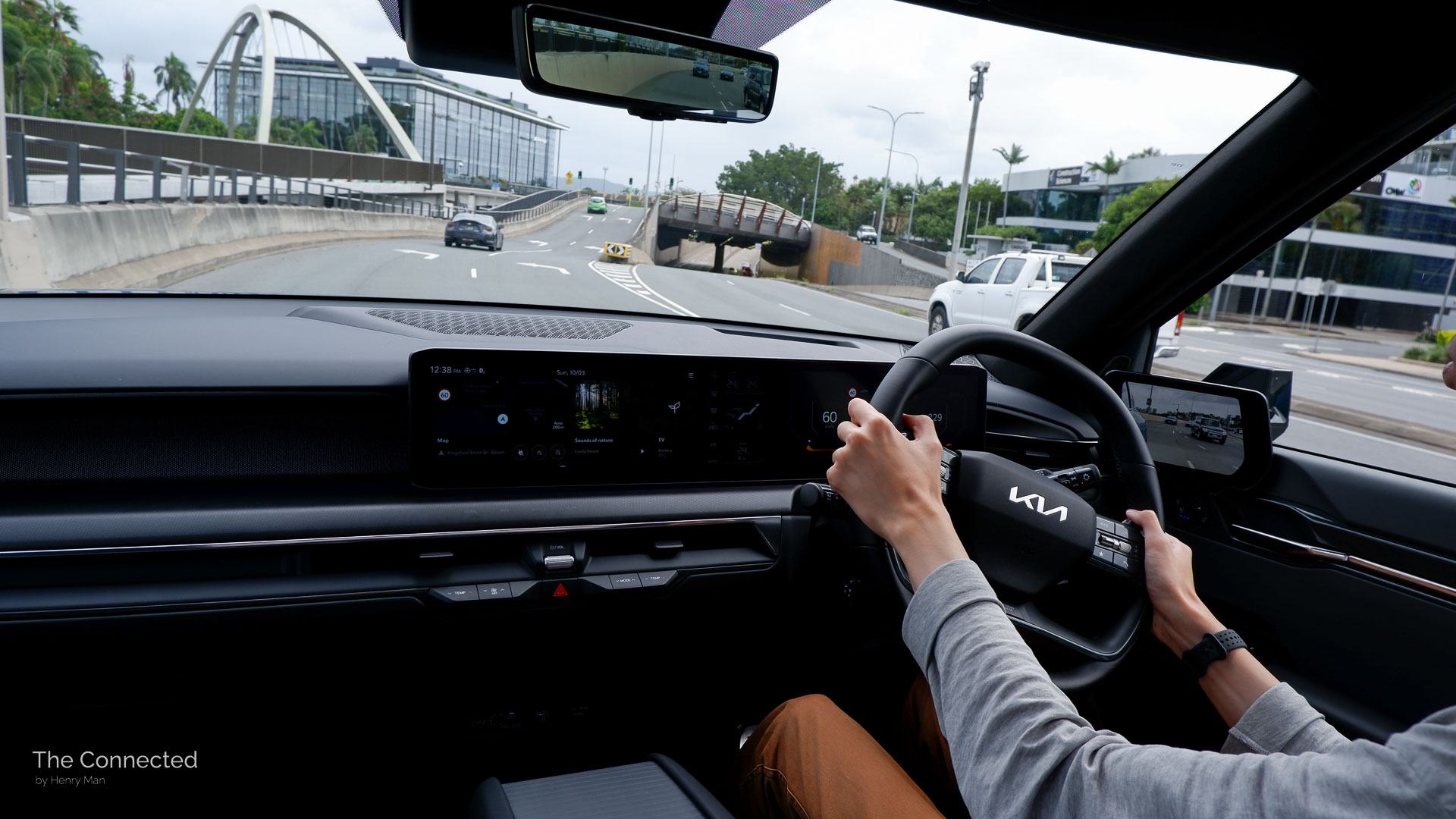
Instead, the EV9 excels at driving comfort. Adaptive dampers and a unique Australian ride and handling tune help the big electric SUV almost feel like it’s gliding through the road – despite the lack of a costly air suspension setup.
Only poorly patched-up sections and coarse-chip bitumen sending minimal vibrations into the interior via the large 21-inch wheels.
Noise insulation is likewise excellent with minimal road, wind and exterior noises entering the cabin, despite the lack of any active noise cancellation technology.
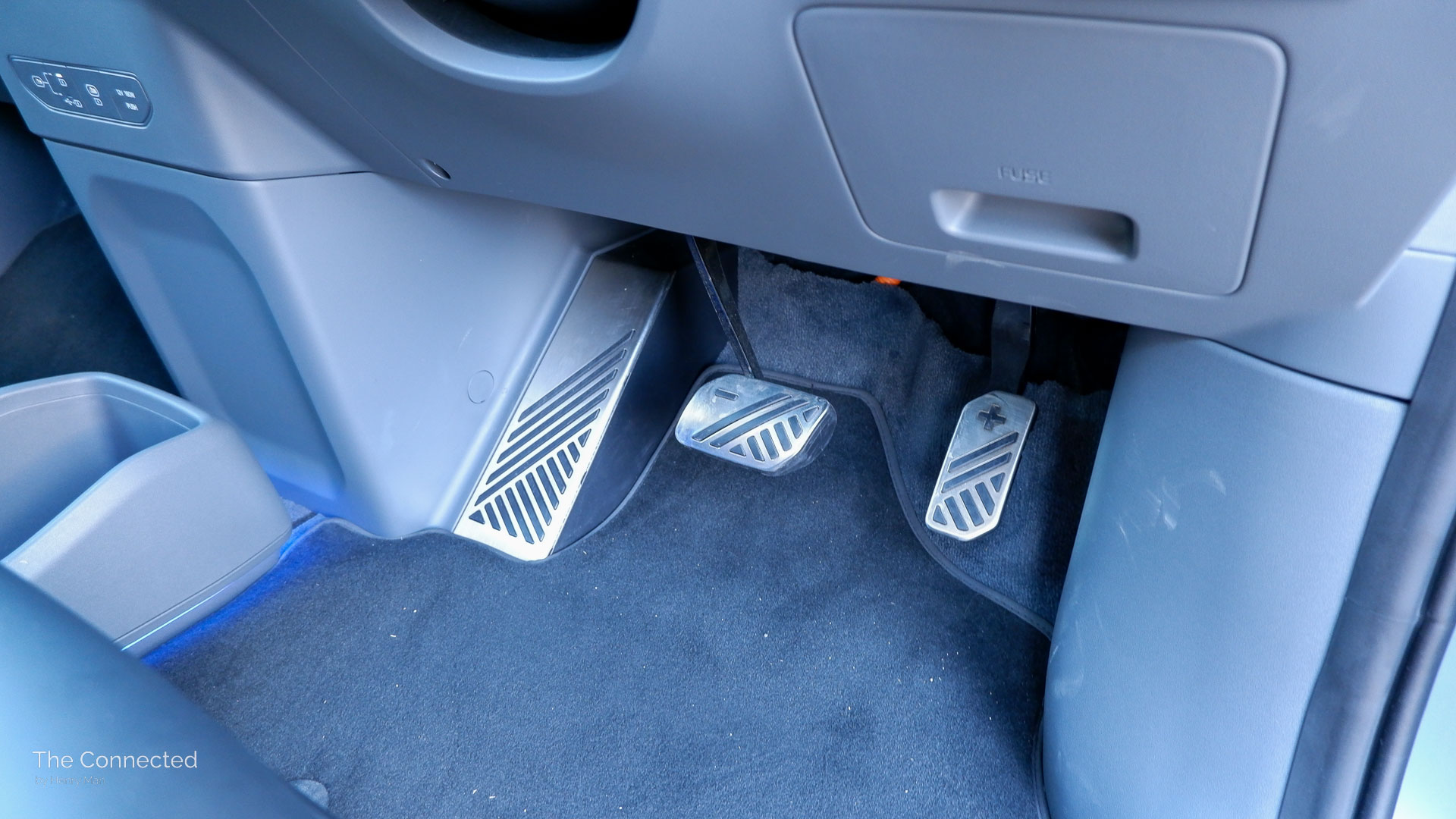
Critically, the South Korean carmaker has finally recalibrated its ‘i-Pedal’ regenerative braking system to truly be one-pedal driving – which has been a key bugbear since it debuted on the Kia EV6 and Hyundai Ioniq 5 nearly three years ago.
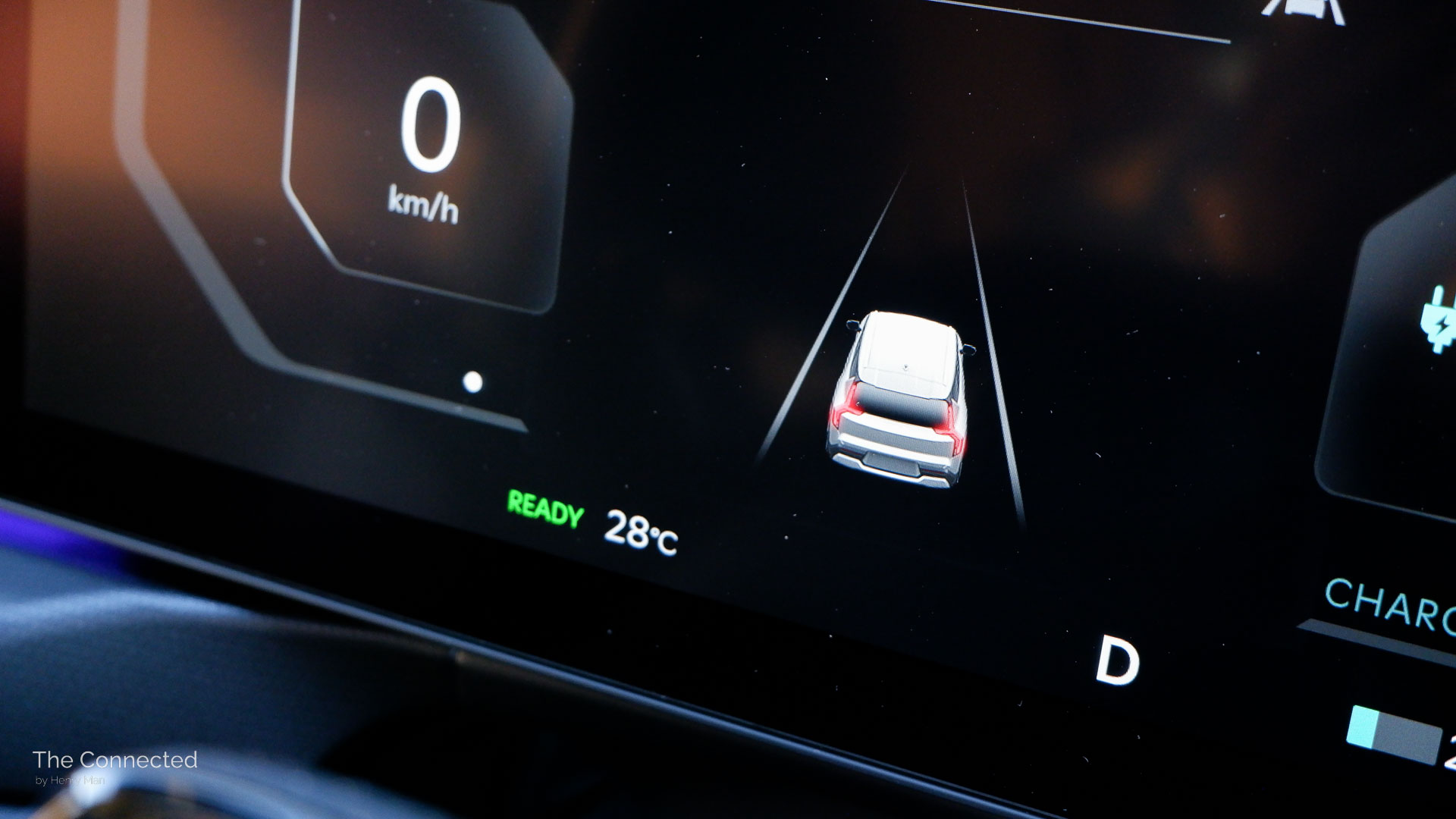
It now keeps the brake lights on when at a complete stop permanently without touching the brake pedal and indicates whether they’re illuminated via the new ccNC powered driver instrument display.
I-Pedal still defaults to off and regen level three every time you start the car and change the drive selector, requiring drivers to use the steering wheel mounted paddle shifters more often.
For the unaccustomed, Kia offers the ability to completely turn off regen braking, along with three recuperation intensities, i-Pedal one-pedal driving, and automatic regen modes based on the road conditions. I always find the most intense one-pedal mode is the easiest way to drive an EV, after some initial learning.
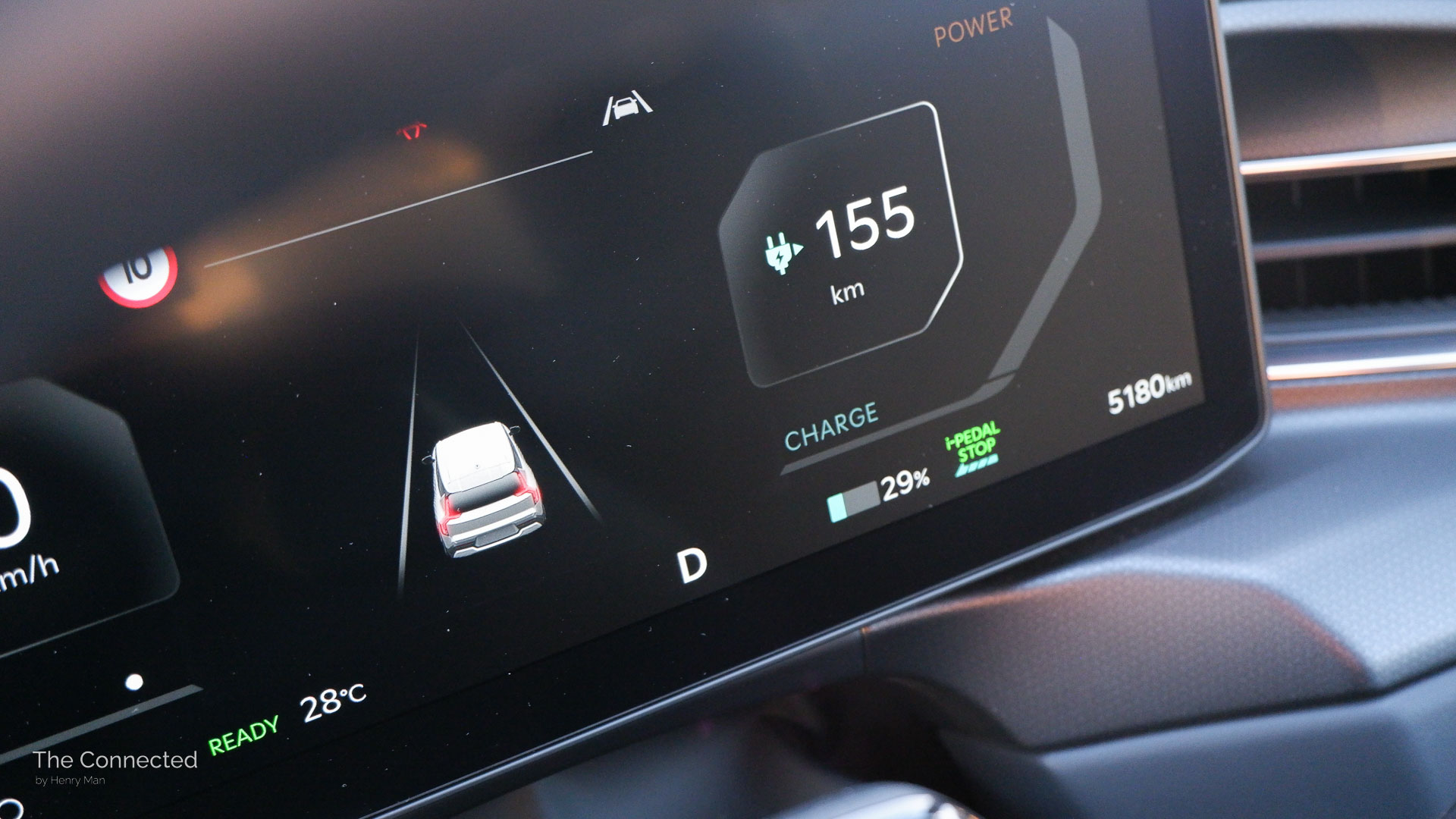
i-Pedal fixed.
Kia’s i-Pedal is finally a proper one-pedal driving system by keeping the brake lights on while stopped, without touching the brake pedal.

Moreover, the Kia EV9 Earth and GT-Line are capable of one of the highest towing capacities for an EV at 750kg unbraked or 2500kg braked (unlike the base Air at 450/900kg respectively).
Keep in mind that the vehicle load – including passengers, cargo and towball download (generally 10 per cent of the trailer mass) – limits the towing capacity.
For example, towing a maximum 2500kg braked trailer using the EV9 GT-Line would only result in merely ∼350kg payload for all people and cargo – which is barely enough if you’re filling all those seven seats. Expect consumption to double as well, but EV towing isn’t impossible.
Kia Australia doesn’t sell a tow bar accessory as at the time of publication.
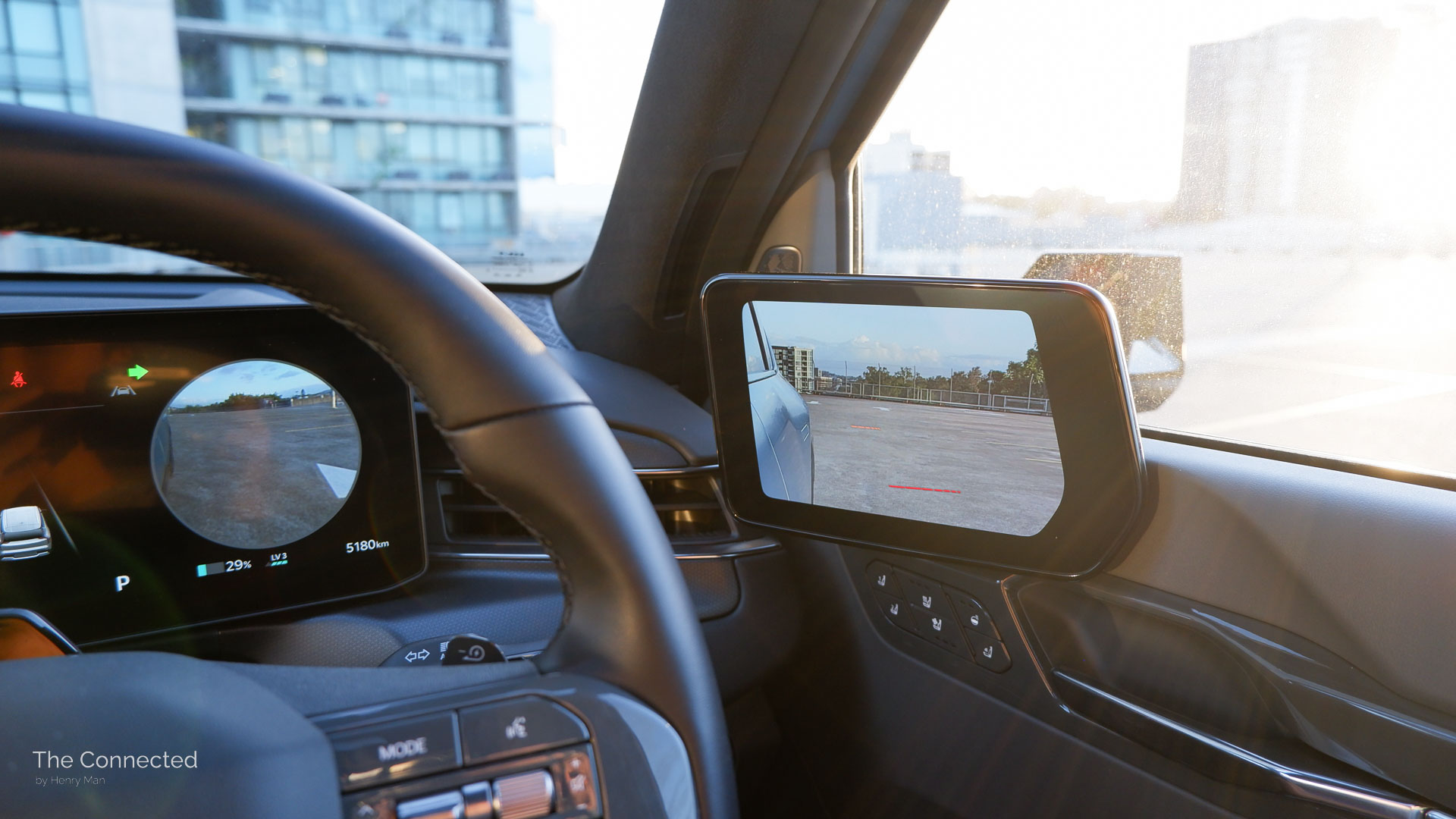
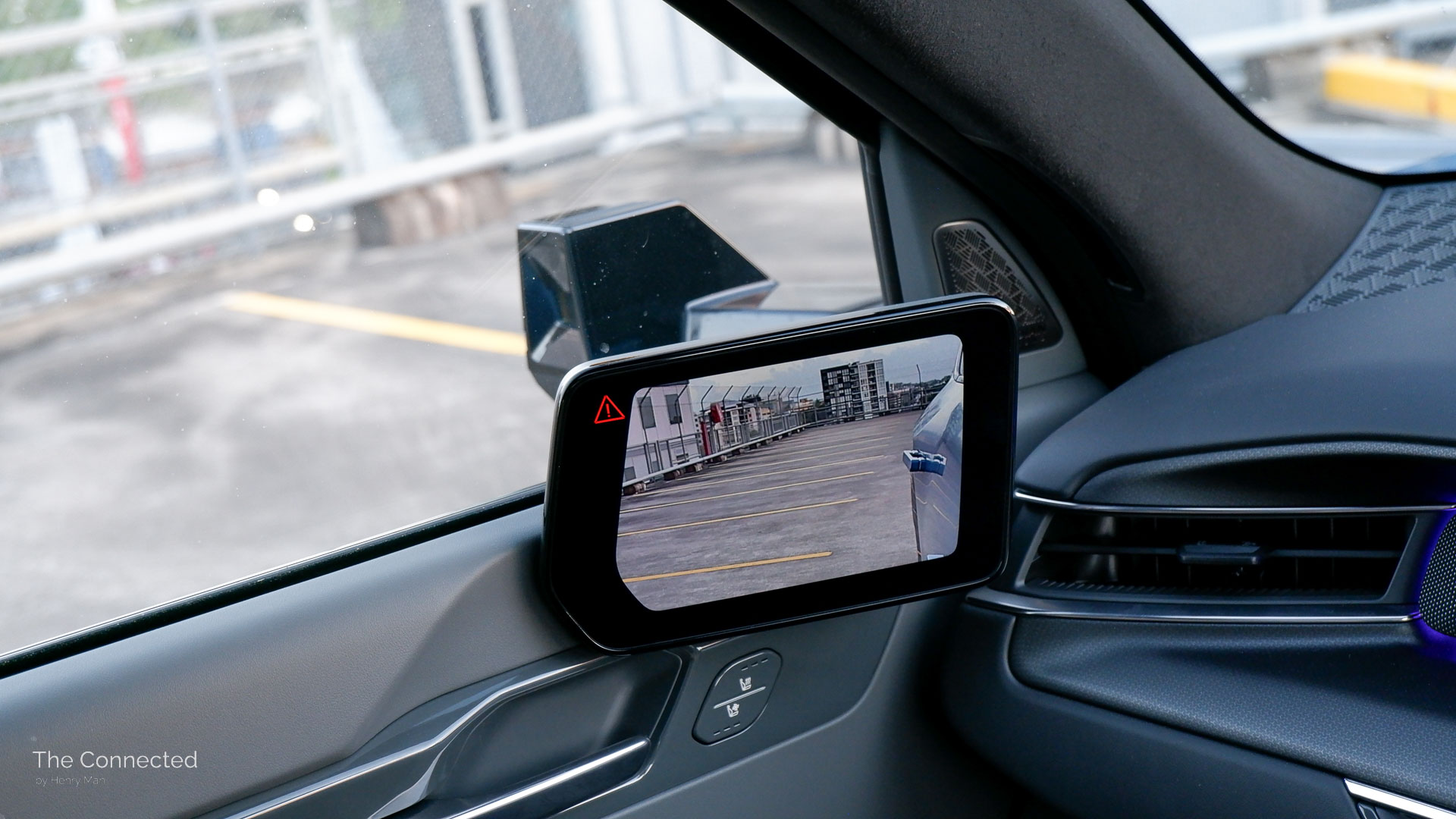
Irritatingly, the top-spec EV9 GT-Line includes digital camera side mirrors – which is difficult and disconcerting to use when changing lanes. Unlike a conventional glass mirror, the OLED screens lack depth and it’s hard to judge where the back of the vehicle is relative to the car in the adjacent lane.
When indicating, there are two guidelines to help – but it’s still tricky to use. I found that the blind-spot cameras, displayed on the driver instruments, better show the perception of depth and distance due to a wider-angle view.
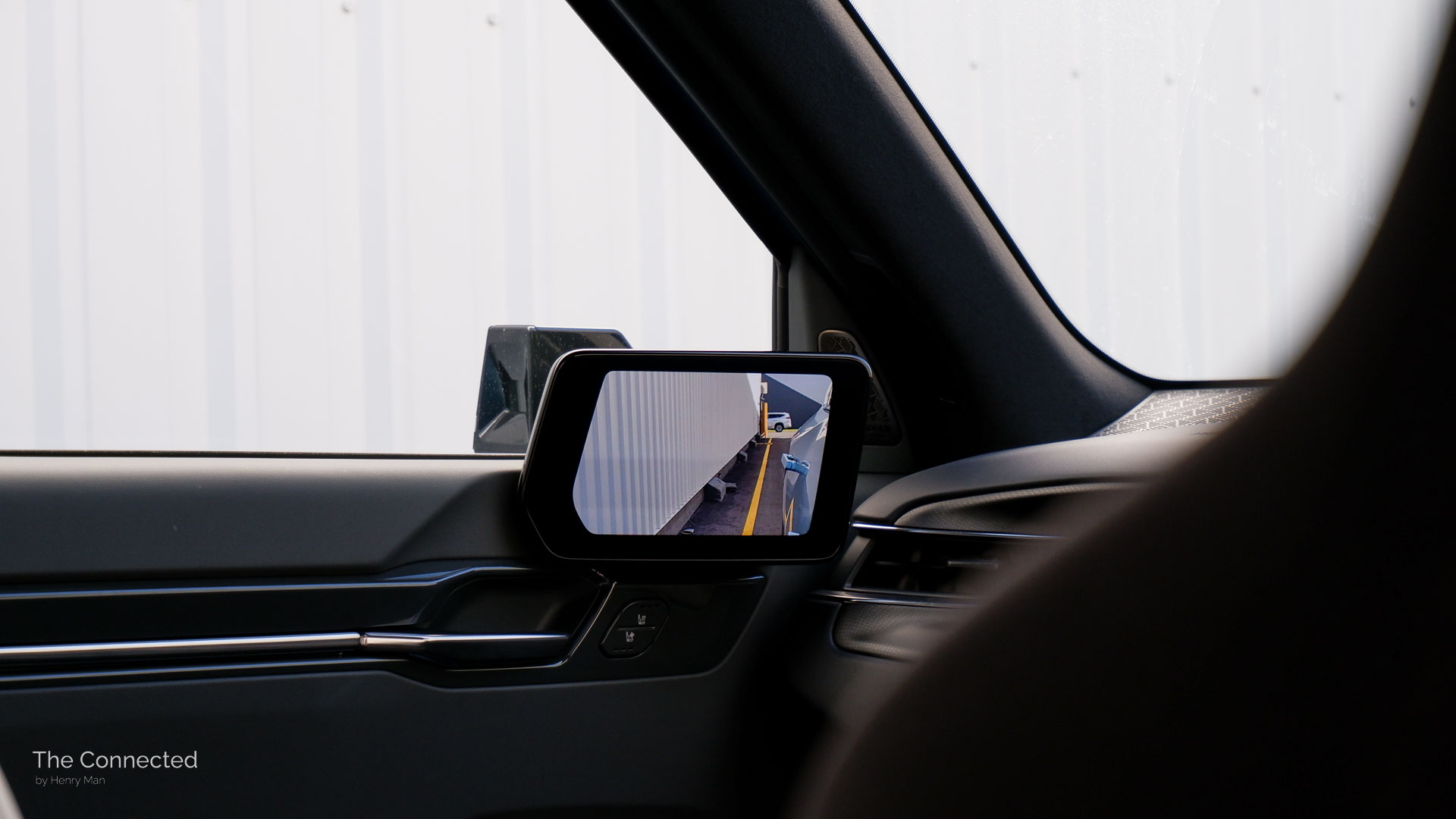
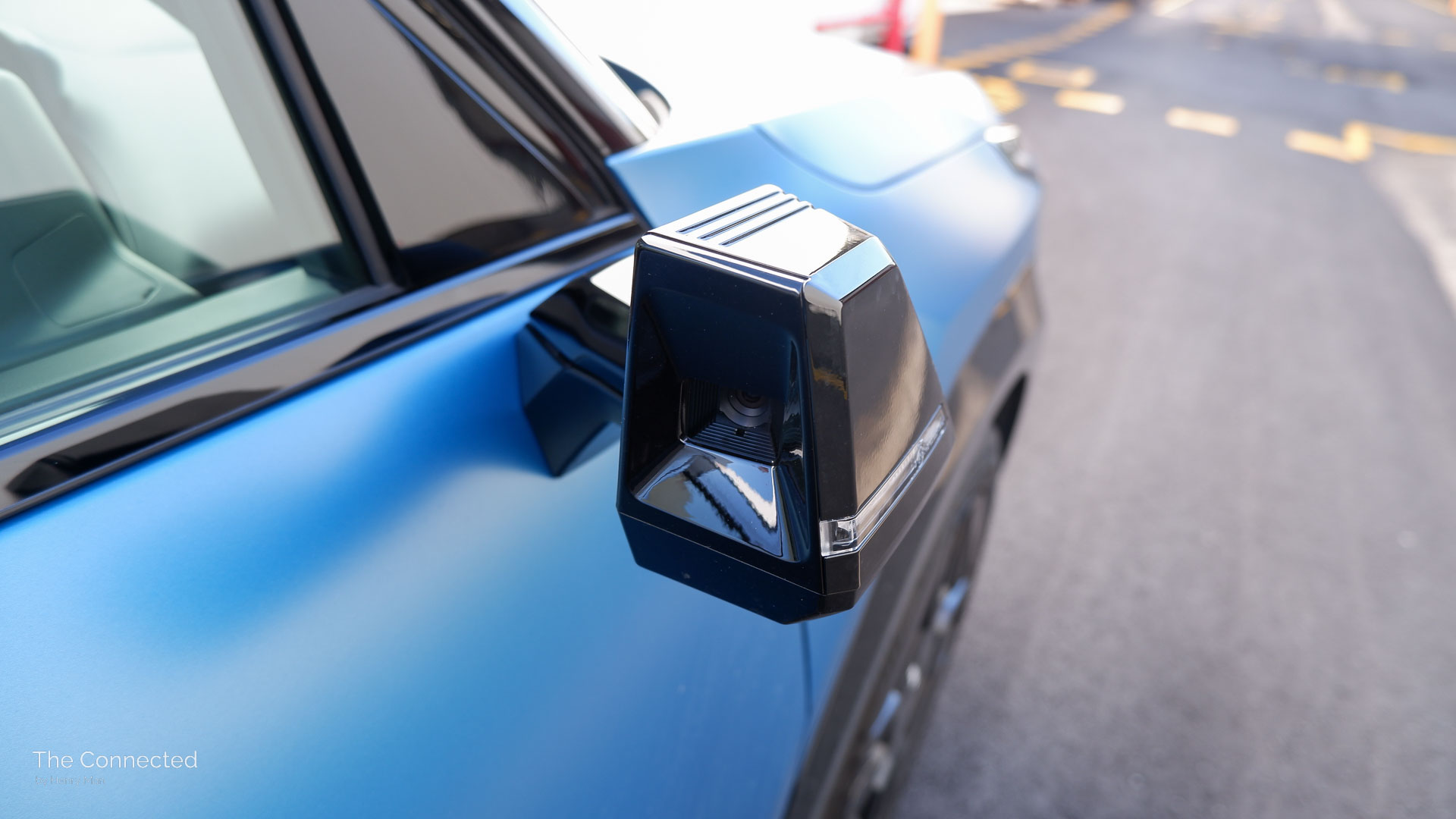
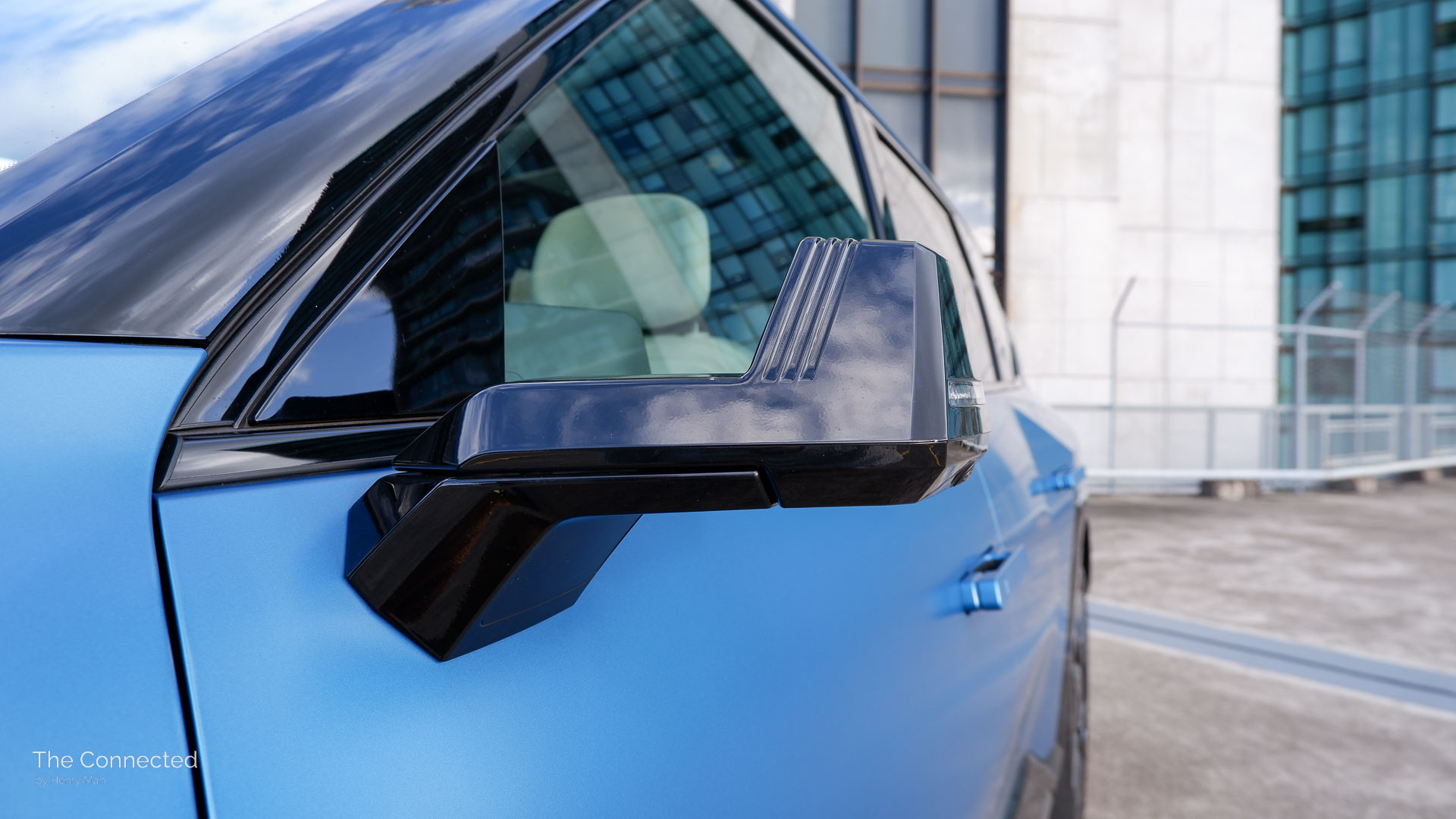
I wish the camera wing mirror had the same wider angle display, as it essentially crops in from an ultra-wide lens (which only turns on when reversing). The camera side mirror is clear and water-repellent, but differences in outside lighting and headlights at night can skew the colour temperature.
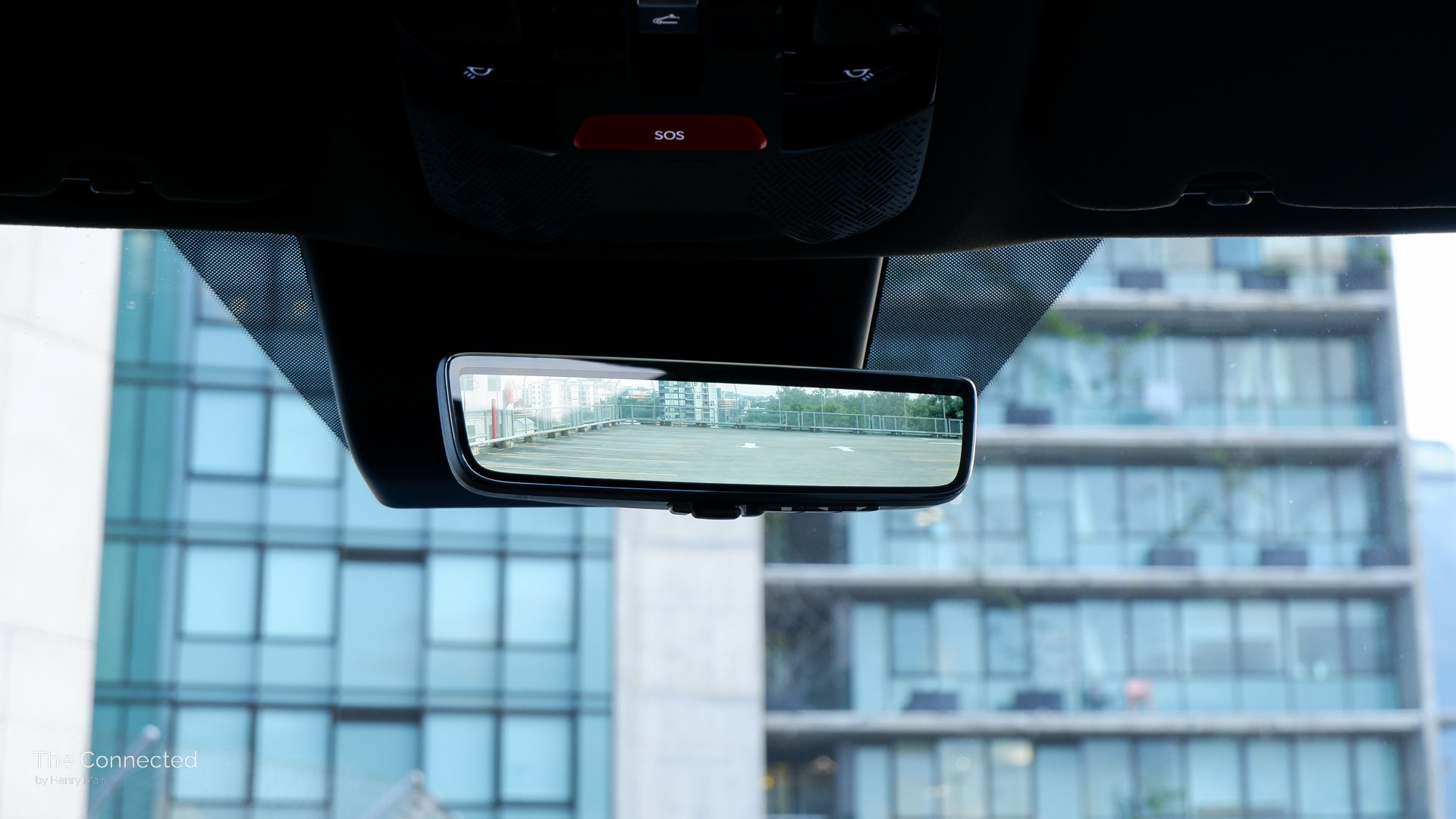
On the other hand, the GT-Line’s digital interior rear-view mirror camera was genuinely helpful.
Flick the centre mirror and it transforms the conventional glass to a camera view that gives a wider view of what’s behind – up to four lanes across – without the obstruction of the rear seat headrests and passengers’ heads. Given that the EV9’s rear is so far back from the driver’s seat, the camera centre mirror gave a clearer and closer rear view and was enabled across my entire week of testing.
Really green?
There’s the valid argument that large-battery, heavy EVs aren’t better for the environment.
However, the evidence highlights that the carbon footprint is still lower than a combustion engine vehicle over time – even when charged off coal-fired electricity.
It just takes longer to offset the higher emissions from the factory for models such as the EV9.
And don’t forget the personal benefits: no carcinogenic fumes entering your home, no need to stop and fuel up with high running costs, and no waiting for an inefficient engine and gears with truck-like rattling diesel noises.
With a 12.4-metre turning circle, at more than five metres long and with a long bonnet, the EV9 requires some more diligence when navigating tight urban streets and dreaded shopping centre car parks – which is where the clear 360-degree cameras and all-round parking sensors come into play.
Alas, rear-wheel steering would help with manoeuvring this tank-like electric SUV (and it’s not out-of-the question for a mainstream car brand), but this’ll inevitably add to the already high price.
For traditionalists, Active Sound Design offers futuristic artificial driving noises with four volume levels. It’s a good party trick, but I mainly left it off to keep the interior silent.
Warranty and servicing.
2024 Kia EV9 GT-Line capped-price servicing prices:
| 1 year/15,000km | 2 years/30,000km | 3 years/45,000km | 4 years/60,000km | 5 years/75,000km | 6 years/90,000km | 7 years/105,000km |
|---|---|---|---|---|---|---|
| $97 | $509 | $100 | $542 | $103 | $541 | $106 |
The Kia EV9 is covered by a seven year, unlimited kilometre vehicle warranty and a seven-year/150,000km battery warranty.
The latter is lower than the industry-average, but Kia guarantees the lithium-ion battery won’t degrade by more than 30 per cent in the warranty period. Otherwise, a repair or replacement is available to restore back up to at least 70 per cent capacity.
Servicing is required every one year/15,000km (whichever occurs first) – unlike sibling company Hyundai which only needs maintenance every two years/30,000km for its EVs.
Servicing prices are capped up to seven years/105,000km.
It costs $1351 to maintain the EV9 after the first five visits, which averages to about $270 per service.
While every second major service may seem expensive, it is still substantially cheaper than a conventional combustion engine-powered family SUV. For context, the similarly-sized diesel Hyundai Palisade is $1049 more expensive to maintain after the first five visits with the same intervals.
Kia Australia also offers pre-paid servicing plans. However, paying in advance doesn’t save owners any money compared to pay-as-you-go:
- Three years: $706 (= no saving)
- Five years: $1351 (= no saving)
- Seven years: $1997 (= no saving)
Roadside assistance is included for up to eight years, which is renewed every year after each logbook service.
Kia Connect services are included for the first seven years – which will become paid thereafter with no cost announced yet in Australia.
Critically, the EV9 lacks any spare tyre – which can be an annoying omission for those long-distance road trips (in the rare event it’s needed). That’s despite the cheaper new Hyundai Kona Electric small SUV including a temporary space-saver.
A tyre puncture patch-up repair kit is included and stored underneath the boot floor.
READ MORE: How much does Kia EV9 servicing cost?
Price & rivals.
2024 Kia EV9 GT-Line model range pricing (excluding on-road costs):
| Air RWD | Earth AWD | GT-Line AWD |
|---|---|---|
| $97,000 | $106,500 | $121,000 |
Starting prices are accurate as at the time of publication and excludes mandatory on-road costs.
The Kia EV9 is priced from $97,000 to $121,000 before on-road costs in Australia. The large electric SUV isn’t eligible for most EV incentives – and the Luxury Car Tax (LCT) applies.
The LCT increases the EV9’s drive-away price tag by as much as $9500 (as at the 2023-24 financial year) for the top-spec GT-Line as tested, in addition to the state’s mandatory on-roads charges. This results in a hefty price premium compared to the base Air which incurs about $2300 in LCT.
For context, the similarly sized and equipped Hyundai Palisade in top-spec Calligraphy diesel guise is about ∼$60K drive-away cheaper than the EV9 GT-Line.
The Kia EV9 occupies a segment with a limited number of all-electric rivals with three rows of seats, except for:
- LDV Mifa 9 – from $115,000
- Mercedes-Benz EQS SUV – from $194,900
- Volkswagen ID. Buzz long wheelbase – coming soon
- Volvo EX90 – coming soon
Meanwhile, the Mercedes-Benz EQB 250+ (from $89,100) is a five-plus-two seater medium electric SUV and the Mitsubishi Outlander PHEV (from $69,290) provides the backup of a petrol engine for those long distance trips, without spending six-figures.
Kia Australia insists it isn’t targeting the off-road capable Toyota LandCruiser 300 Series, but there’s no denying the similarities.
The better-equipped seven-seater VX (from $122,076) already costs more than the flagship EV9 GT-Line, while the city-focused five-seat Sahara ZX (from $146,876) is almost $26K more expensive – making Kia’s big electric SUV seem relatively attainable.
Other petrol- and diesel-powered alternatives to the Kia EV9 include:
- Kia Carnival – from $50,150
- GWM Tank 500 – from $66,490 drive-away
- Hyundai Palisade – from $66,800 (full review)
- Nissan Pathfinder – from $71,490
- Mazda CX-90 – from $74,550
- Jeep Grand Cherokee L – from $82,750
- Volkswagen Touareg – from $89,240
- Volvo XC90 – from $100,990
- Genesis GV80 – from $105,700
- Land Rover Discovery – from $108,670
- Audi Q7 – from $116,400
Would I pick the 2024 Kia EV9 GT-Line?
The Kia EV9 finally brings an option in the underserved seven-seat upper large electric SUV segment. But, there’s a high price for the privilege.
There’s essentially no other proper three-row EV rival besides the Chinese-made LDV Mifa 9 people-mover, exxy Mercedes-Benz EQS SUV and a used Tesla Model X – positioning the EV9 as a one of a kind, relatively well-priced option for families looking to go electric without compromising on the seat count.
The EV9 features a practical interior, excellent driving comfort, improved tech and safety, and impressive energy efficiency for its size combined with ultra-fast charging capability that likely refills quicker than a rest stop.
However, the hero GT-Line becomes quite expensive after the mandatory LCT is added, the interior feels premium but not luxurious for the almost $140K drive-away price point, the front headrests and camera side mirrors are annoying, and there’s no 22kW AC charging capability and a spare tyre.
I’d pick the mid-spec EV9 Earth. While the base Air is arguably the most reasonably priced model, the Earth provides the longest claimed driving range, all-wheel drive, and all-important 360-degree cameras and conventional mirrors for about $120K drive-away.
Alternatively, at the GT-Line’s price, you may consider two cars – a Hyundai Palisade Calligraphy SUV to satisfy the family, towing and long-distance driving duties and a MG 4 Essence 64 hatchback that’s best suited for the work commutes – and still have about $10K change left.
Is the EV9 the do-it-all electric SUV? Almost…
Long-distance EV road trips aren’t impossible, but the simple reality of current battery technology means electric cars can’t deliver the same ∼1000km ultra-long range as diesel engines, nor tow as much – even though both are rarely necessary – and public charging infrastructure still has a long way to improve its availability, reliability and accessibility.
But, if you are looking for the all-rounder electric SUV with seven seats, the EV9 is the one for now…
Photographs by Henry Man
READ MORE: 2023 Kia EV6 GT review: True electric GT?
READ MORE: Can’t start charging an electric car? Here’s your guide.
READ MORE: 2023 Hyundai Palisade Highlander 2.2D review: Bold, now beautiful.
About the Author.
Henry Man is an independent content producer passionate about the intersection of technology and transportation.
The former automotive journalist is focused on producing critically-detailed vehicle reviews, and unique short-form content. Learn more.


 The Connected by Henry Man