

How far can electric vehicles drive? These are the best long-range EV models on sale in Australia – and why you rarely need so much battery life.
Worried about so-called ‘range anxiety’?
EVs generally provide less driving range (the distance you can travel on one charge) than a traditional internal combustion engine (ICE) petrol, diesel or hybrid vehicle – and that’s a key perceived barrier for some to overlook full electric cars.
However, EVs already provide more than enough range for most – with the typical Australian only travelling 30 to 40 kilometres per day – and EV battery technology and vehicle designs have improved to the point where their ranges are on par with some petrol cars.
Data in this story is accurate as at the time of publication, but subject to change.
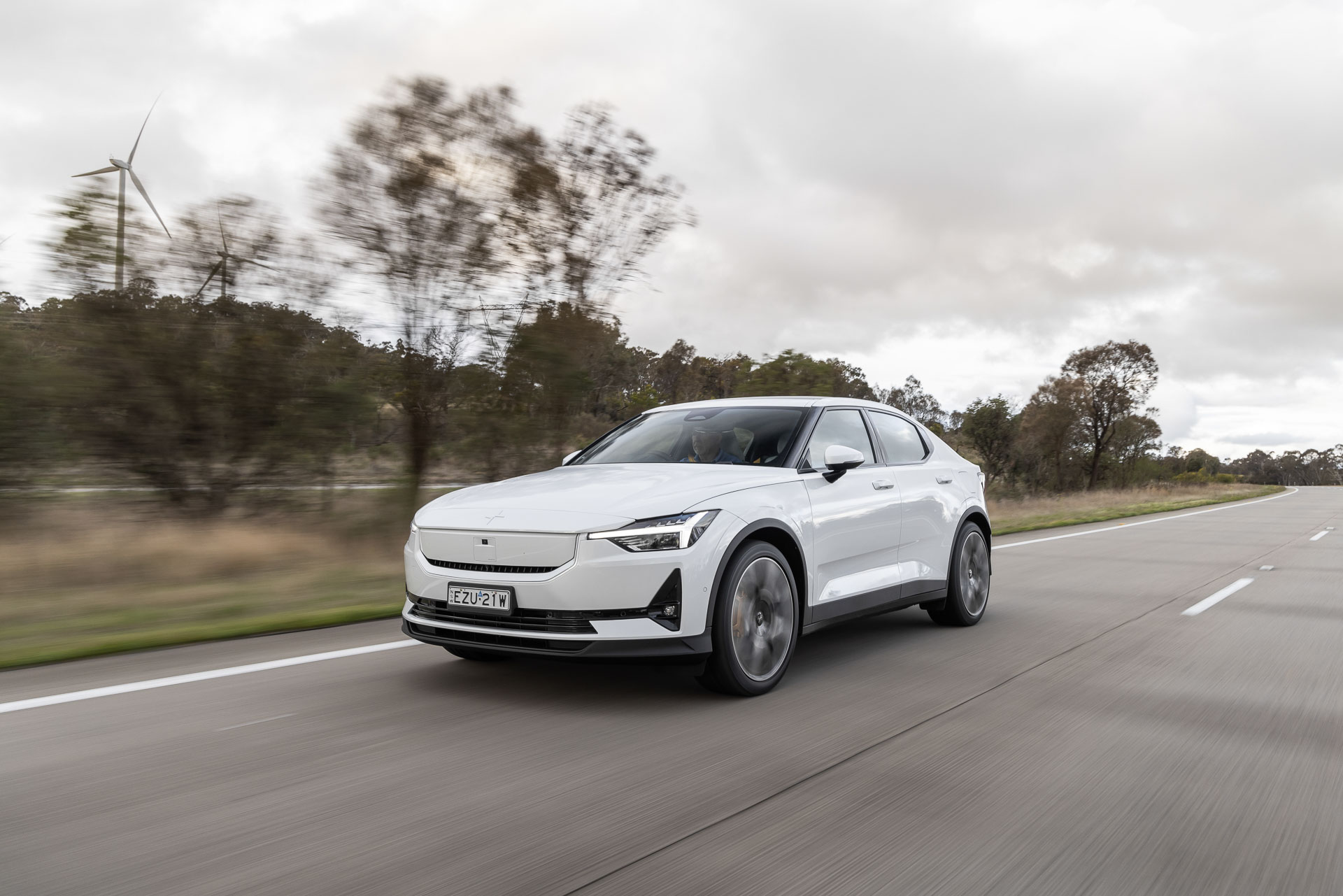
The 10 longest range electric cars in Australia
Here are the longest range new EVs currently available in Australia, based on a full charge and each manufacturer’s combined cycle WLTP claims:
- Polestar 2 Long Range Single Motor – 654km
- Mercedes-Maybach EQS 680 4Matic SUV – 635km
- Porsche Taycan 4S – 635km
- Mercedes-Benz EQS 450 4Matic liftback – 631km
- Tesla Model 3 Long Range – 629km
- Porsche Taycan Turbo – 626km
- Porsche Taycan Turbo S – 626km
- BMW i7 xDrive60 M Sport – 625km
- BMW iX xDrive50 Sport – 620km
- Hyundai Ioniq 6 Extended Range RWD – 614km
Scroll down below to see a breakdown of the longest-range EVs, depending on the price bracket.

How much range do EVs have?
EVs typically offer between 200 to 600 kilometres of driving range, depending on the model’s battery size and energy efficiency.
For reference, that’s likely more than enough to make a trip between Brisbane and the Gold Coast (∼160km return), Sydney to Wollongong (∼170km return), and Melbourne to Queenscliff (∼210km return) without needing to stop to recharge.
And if you need to take the occasional longer road trip, there are a growing number public charging stations that have significantly expanded across metro, rural and regional Australia in recent years – even though more are still needed.
Therefore, a large battery, long range EV isn’t necessary for many drivers – which typically carries a ∼$2000 to ∼$10,000 premium – but does provide the confidence for longer trips and knowing that any battery degradation won’t be a major impediment down the line.
When it comes to EV driving range, car brands quote a claimed figure which are based on the following laboratory-based testing types:
- Worldwide Harmonised Light Vehicle Test Procedure (WLTP) – this is the preferred reference point as it’s currently the strictest method available for a more realistic range figure. However, you’ll likely still see about 10 to 20 per cent less than the quoted WLTP number in the real world.
- New European Driving Cycle (NEDC) – this is an outdated and more lenient testing method, which tends to provide more ambitious EV range figures. Australian Design Rule 81/02 (ADR 81/02) uses NEDC testing.
The actual real-world range depends on a variety of factors, including driving behaviour, the amount of traffic (more low-speed start-stop driving is better), speed, weather conditions (eg: wind direction, rain and temperature), and the intensity of the climate control.
EV design is a major factor, too. Sedans are generally more aerodynamic (i.e. cutting through wind) than a blocky SUV body style. And, how efficient the electric drive unit is at delivering and recuperating power impacts range as well.
READ MORE: How much fuel do electric cars use?
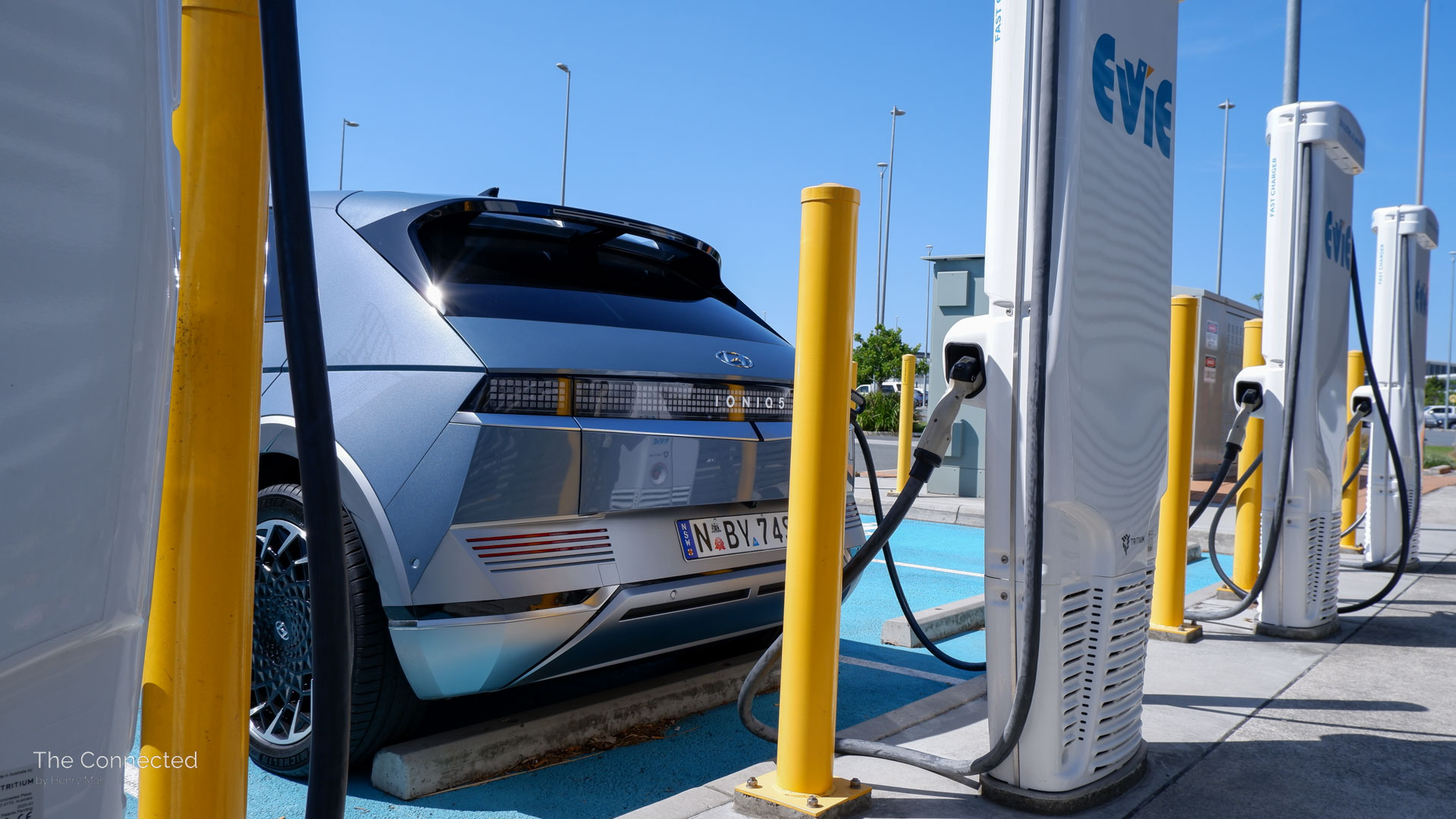
Should you fully charge an EV?
EV range claims are all based on a 100 per cent full charge – but this generally isn’t recommended everyday.
To protect the health of lithium-ion type electric car batteries, capping daily charging at 80 per cent is generally recommended by most manufacturers, including EVs that don’t provide a guide in the touchscreen or owners manual.
This includes models such as the Tesla Model 3 Long Range and Performance variants, MG 4 Excite 64 and higher variants, and Cupra Born. However, Volvo and Polestar suggest a 90 per cent daily driving limit.
It doesn’t mean you can’t fully charge an EV, though. Owners have full control and can go all the way to 100 per cent when the extra range is needed, such as before heading for a long driving trip.
Meanwhile, some electric cars use lithium-iron-phosphate (LFP) batteries – which are longer lasting and can be regularly charged to 100 per cent without worry.
This includes models such as the entry-level Tesla Model Y RWD, GWM Ora Standard Range, and all BYD cars across the Dolphin, Atto 3, and Seal.
But be aware that full charging takes a long time. Charging from 80 to 100 per cent typically takes the same time as going from 10 to 80 per cent – due to the vehicle throttling down charging speeds to help protect the battery.
Therefore, it isn’t time efficient and usually isn’t worth the wait, unless you’re slow charging at home or work.
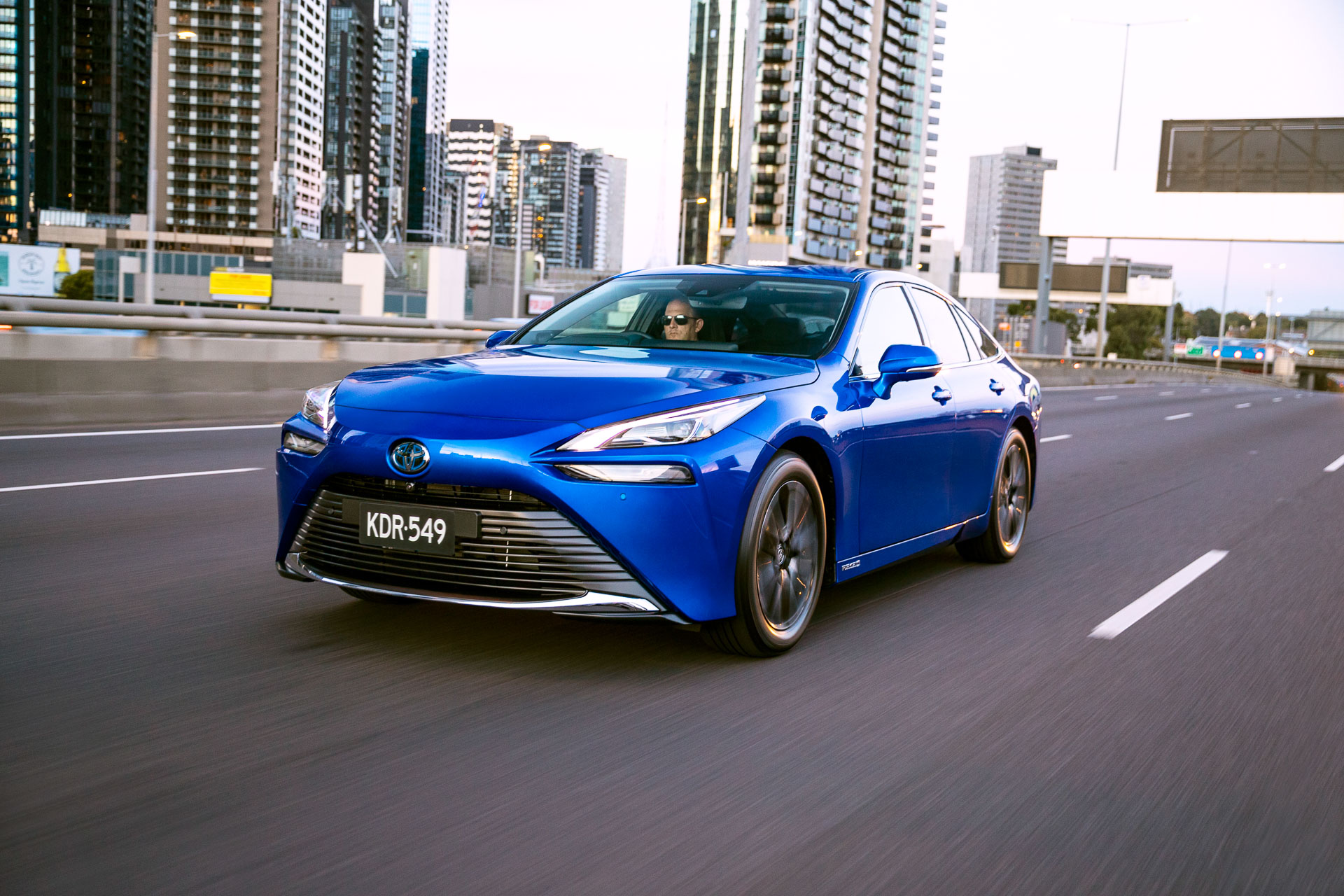
Do hydrogen cars provide more range?
Hydrogen EVs have been touted as a better long-distance powertrain – but battery-electric cars already provide similar driving range today.
The hydrogen fuel-cell powered Toyota Mirai (650km), Hyundai Nexo (666km), and BMW iX5 Hydrogen (504km) all offer similar claimed range compared to the 10 abovementioned battery-powered EVs.
Then, there’s the question of very limited hydrogen refuelling infrastructure globally – with some that have even shut down overseas due to the high cost to transport, store and deliver expensive high-pressure hydrogen gas.
Meanwhile, battery-electric vehicle public charging infrastructure is quickly expanding – meaning EV drivers are essentially gaining more confidence in taking longer driving trips every month.
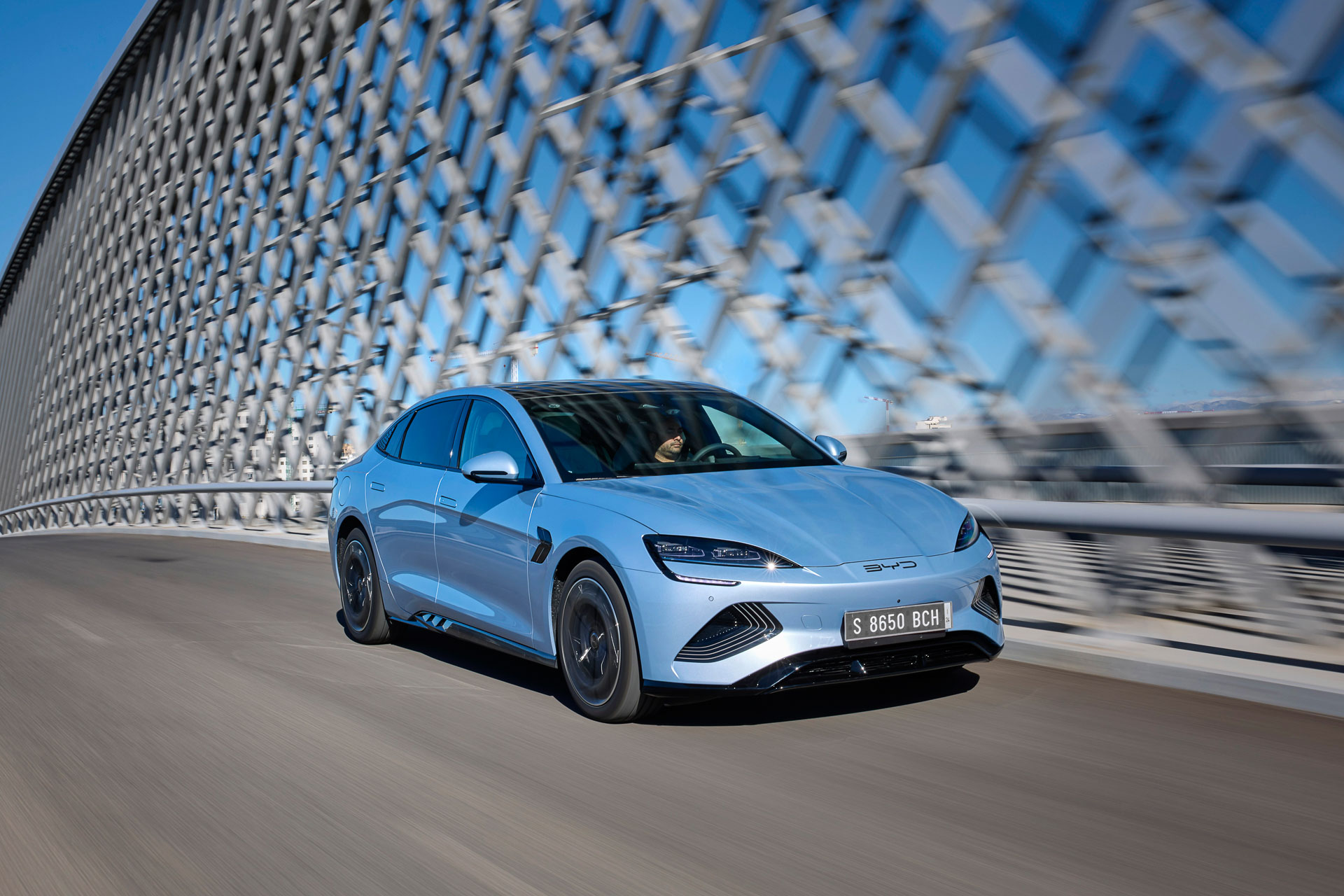
Longest range electric cars by price in Australia
Longest range EVs under $50K:
- BYD Seal Dynamic – 460km
- MG 4 Excite 64 – 450km
- MG ZS EV Long Range – 440km
- MG 4 Essence 64 – 435km
- BYD Dolphin Premium – 427km
- BYD Atto 3 Extended Range – 420km
- GWM Ora Extended Range – 420km
- GWM Ora GT – 420km
- MG 4 Excite 51 – 350km
- BYD Atto 3 Standard Range – 345km
Longest range EVs between $50-70K:
- Tesla Model 3 Long Range – 629km
- BYD Seal Premium – 570km
- Tesla Model Y Long Range – 533km
- Polestar 2 Standard Range Single Motor – 532km
- MG 4 Long Range 77 – 530km
- BYD Seal Performance – 520km
- Tesla Model 3 RWD – 513km
- Cupra Born – 511km
- Hyundai Kona Electric Extended Range – 505km
- Volvo EX30 Single Motor Extended Plus – 480km
- Volvo EX30 Single Motor Extended Ultra – 480km
Longest range EVs between $70-100K:
- Polestar 2 Long Range Single Motor – 654km
- Hyundai Ioniq 6 Extended Range RWD – 614km
- Ford Mustang Mach-E Premium – 600km
- Polestar 2 Long Range Dual Motor – 591km
- Hyundai Ioniq 5 Extended Range RWD – 570km
- Mercedes-Benz EQA 250+ – 560km
- Hyundai Ioniq 6 Dyanmiq RWD – 545km
- Hyundai Ioniq 6 Epiq RWD – 545km
- Mercedes-Benz EQB 250+ – 536km
- Hyundai Ioniq 5 Dynamiq RWD – 530km
- Hyundai Ioniq 5 Epiq RWD – 530km
Longest range EVs above $100K:
- Mercedes-Maybach EQS 680 4Matic – 635km
- Porsche Taycan 4S – 635km
- Mercedes-Benz EQS 450 4Matic liftback – 631km
- Porsche Taycan Turbo – 626km
- Porsche Taycan Turbo S – 626km
- BMW i7 xDrive60 M Sport – 625km
- BMW iX xDrive50 Sport – 620km
- Porsche Taycan 4 Cross Turismo – 601km
- Lotus Eletre – 600km
- Lotus Eletre S – 600km
READ MORE: 2024 MG4 review one year later: What’s changed?
READ MORE: Can’t start charging an electric car? Here’s your guide.
READ MORE: What is the point of the blue EV label?
About the Author.
Henry Man is an independent content producer passionate about the intersection of technology and transportation.
The former automotive journalist is focused on producing critically-detailed vehicle reviews, and unique short-form content. Learn more.


 The Connected by Henry Man