
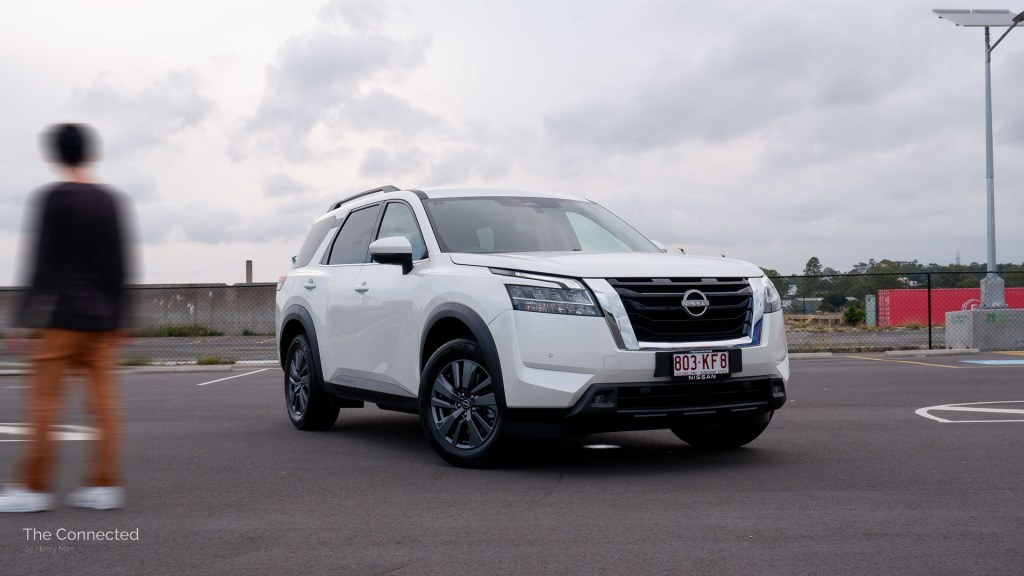
The Nissan Pathfinder uniquely offers eight seats and a bold design that harps back to its off-roading roots. Is this large SUV worth considering?
Introduced in Australia in 2022, the fifth-generation Nissan Pathfinder is a three-row large SUV made in Tennessee in the United States.
After a short sales stop in 2023, the Japanese carmaker has now reintroduced the entry-level Pathfinder ST-L with a starting price of $59,670 before on-road costs.
I tested the ST-L with the optional $4500 all-wheel drive (AWD) powertrain for a week to see how it stacks up against rivals such as the Hyundai Palisade, Kia Carnival and Mazda CX-80.
NOTE: The press vehicle was provided by Nissan Motor Corporation Australia for a seven-day independent evaluation. We have no commercial arrangements with the company and it had no editorial control.
UPDATE 2/1/25: Nissan Australia has announced a new 10-year/300,000km warranty and revised ownership inclusions for vehicles since 2021. We’ve updated the warranty and servicing section below accordingly.

Pros.
+ Practical family-friendly interior
+ Bold, rugged design
+ Good quality interior for a base model
+ Punchy powertrain
+ Light steering
Cons.
– Bland interior, dated tech
– Eight-seater is ambitious
– Lower than ideal driving position
– High fuel consumption
– Always-on headlights on tester
Vehicle tested:
| Model | 2025 Nissan Pathfinder |
| Variant | ST-L AWD |
| Starting price | $64,170 before on-road costs |
| Exterior colour | Glacier White (no extra cost) |
| Interior colour | Black cloth seats |
| Options | Towbar (+$1521) |
| Country made | United States |
Design and quality.
The 2025 Nissan Pathfinder features a rugged, chunky and utilitarian exterior design with a rather bland, but good quality interior.
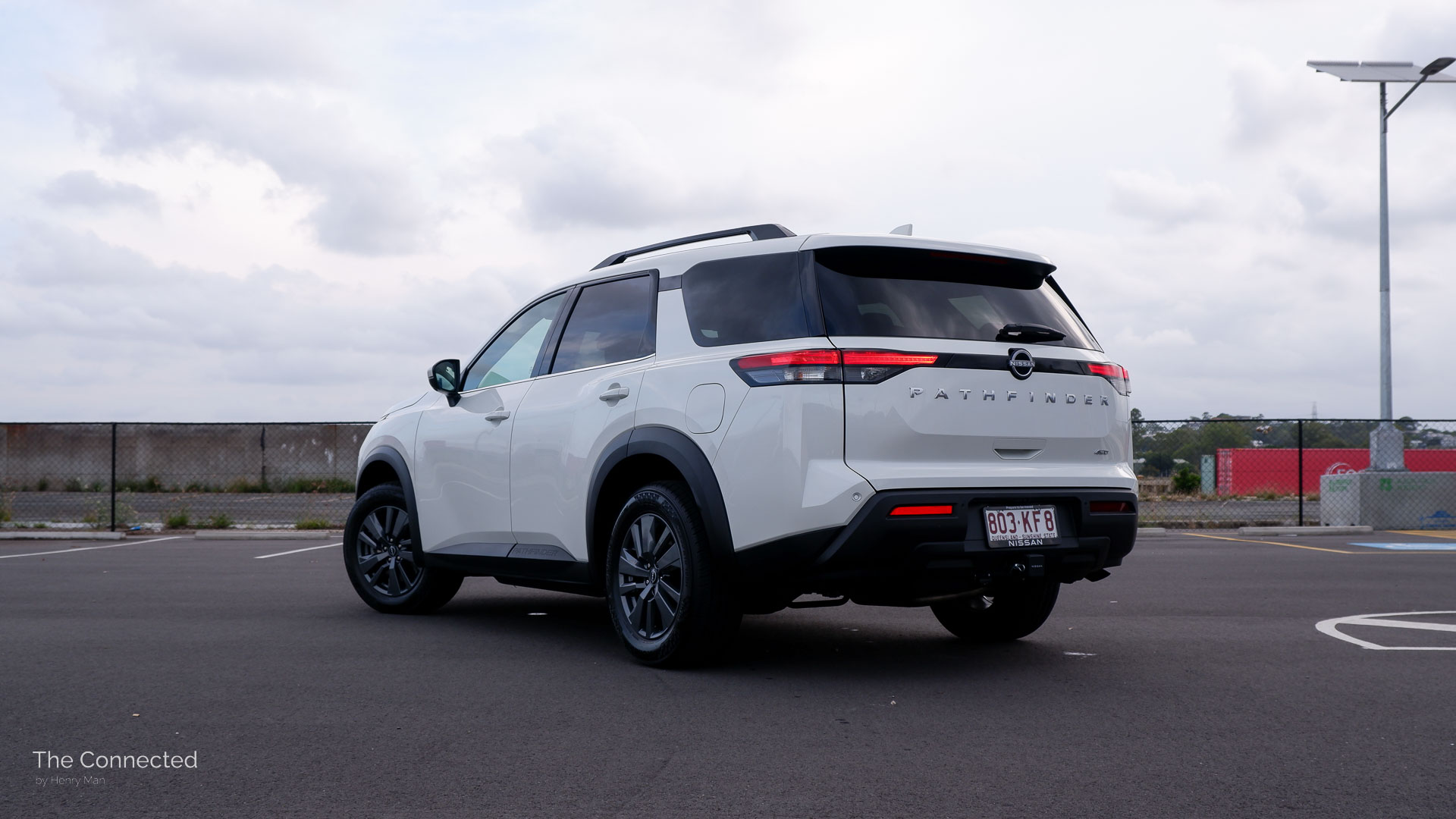
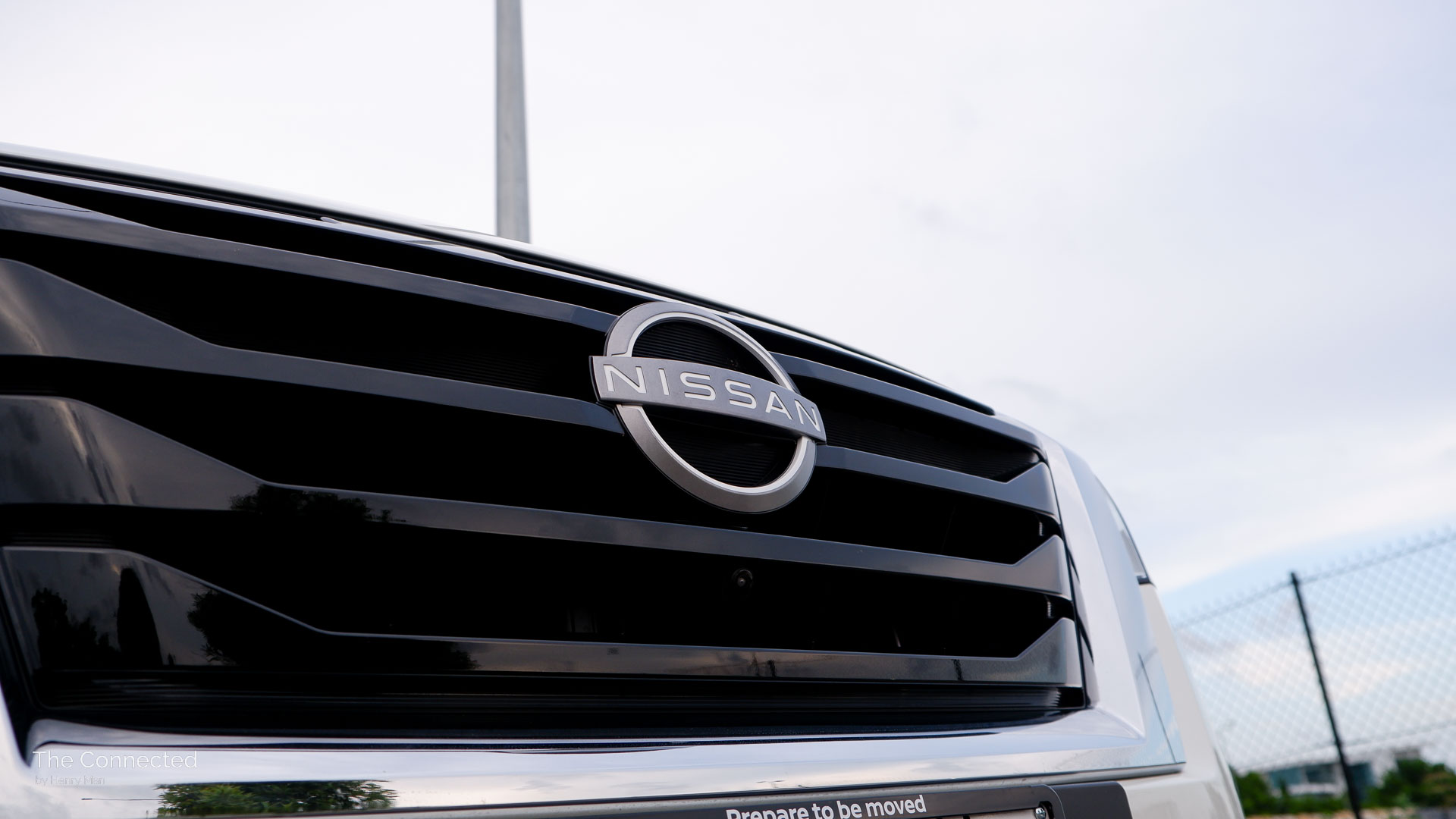
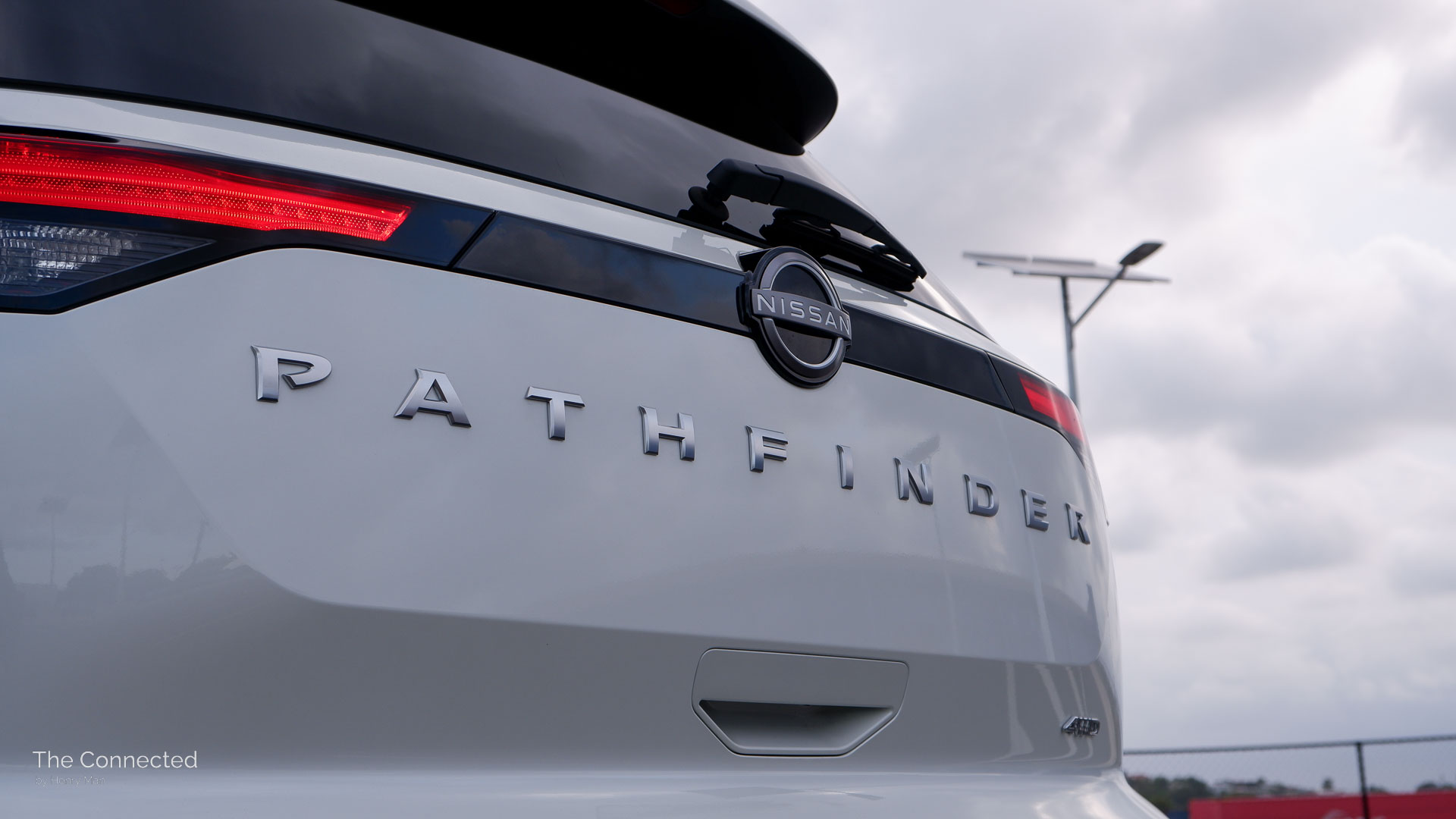
The Pathfinder’s American origins are clear, with a butch V-shaped grille, C-pillar that effectively breaks up the side profile, and big Pathfinder lettering at the tailgate.
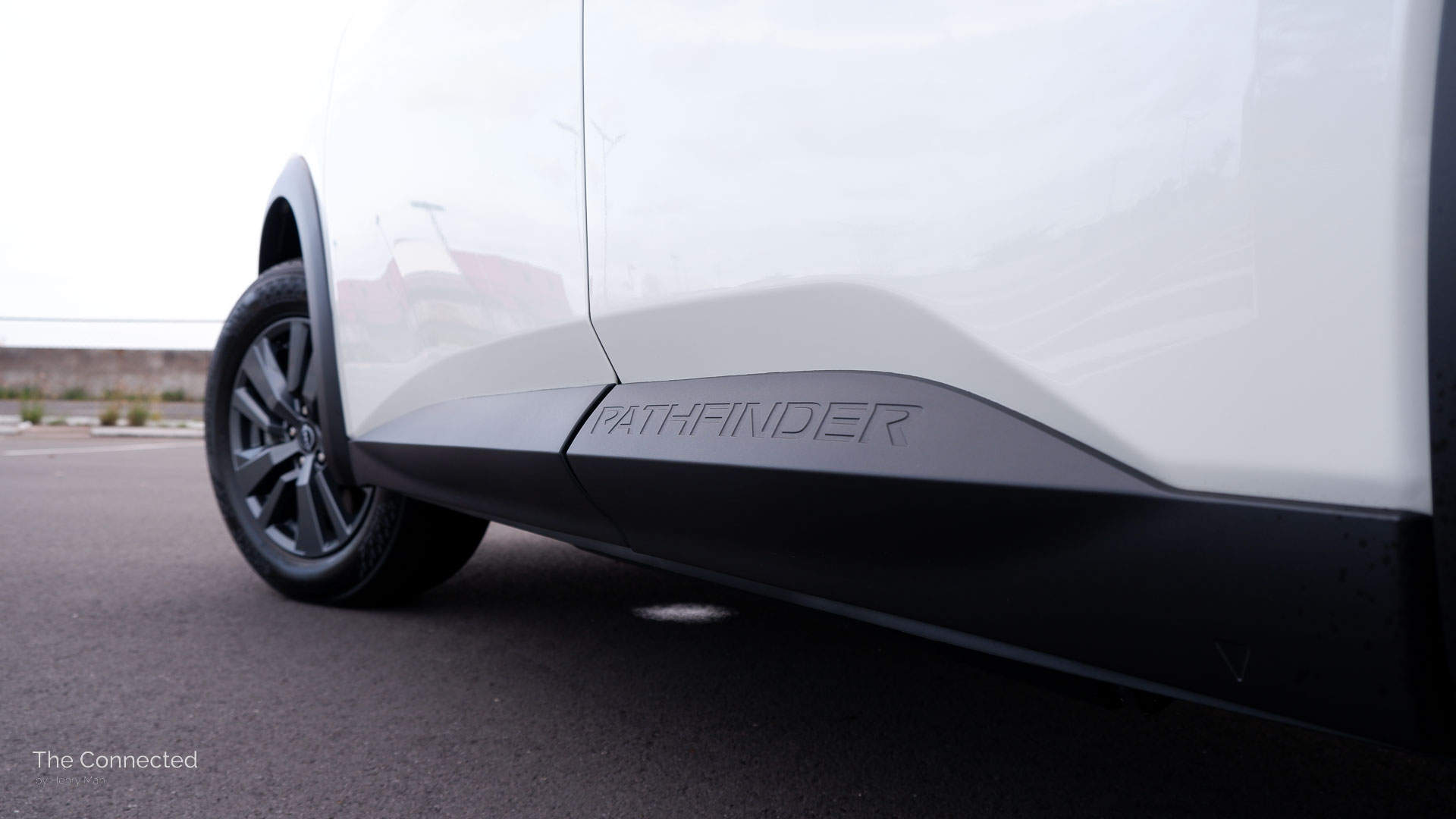
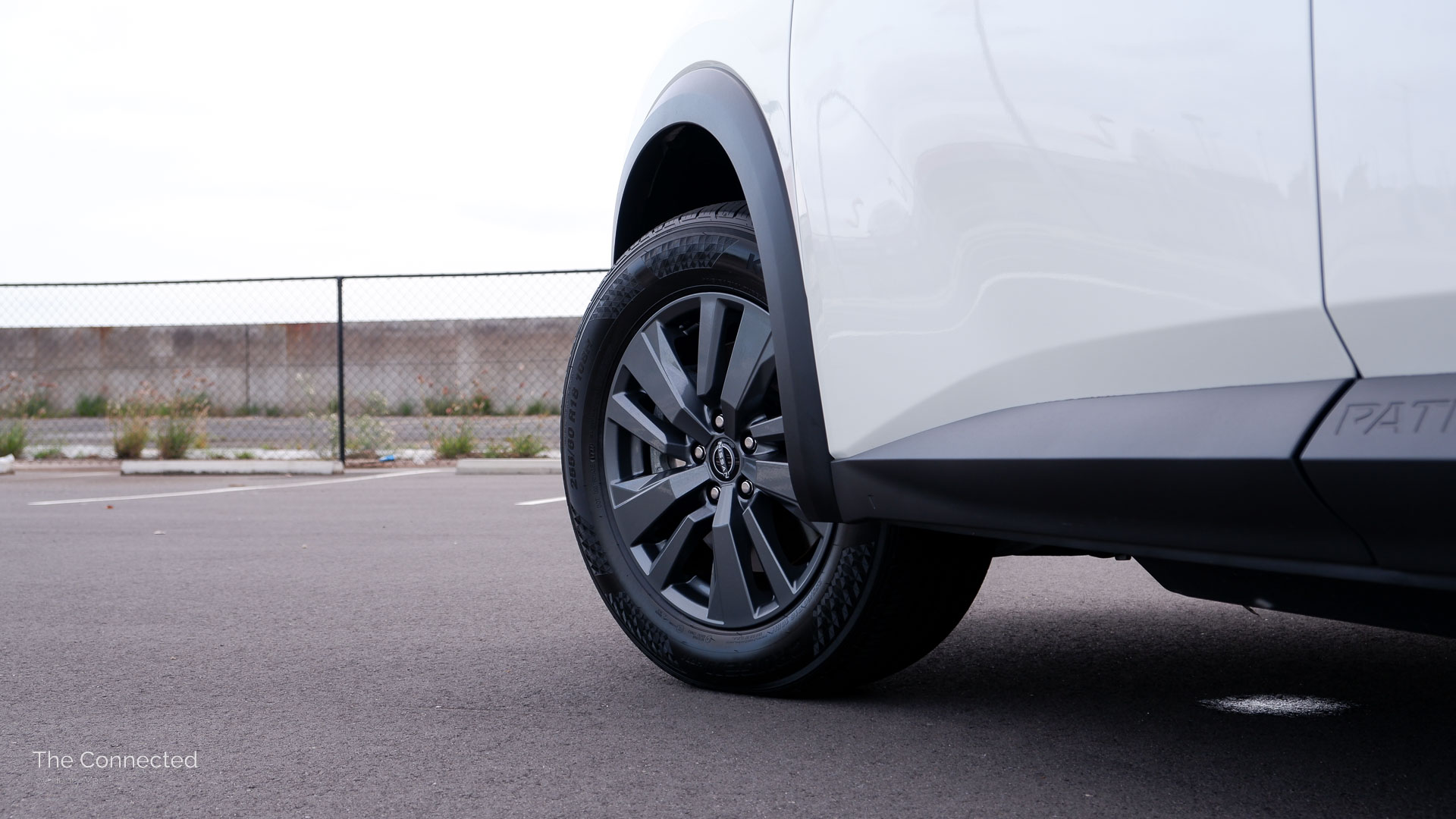
The base ST-L’s grey 18-inch alloy wheels don’t look cheap and matches the standard Glacier White paint alongside the black roof rails and plastic cladding.



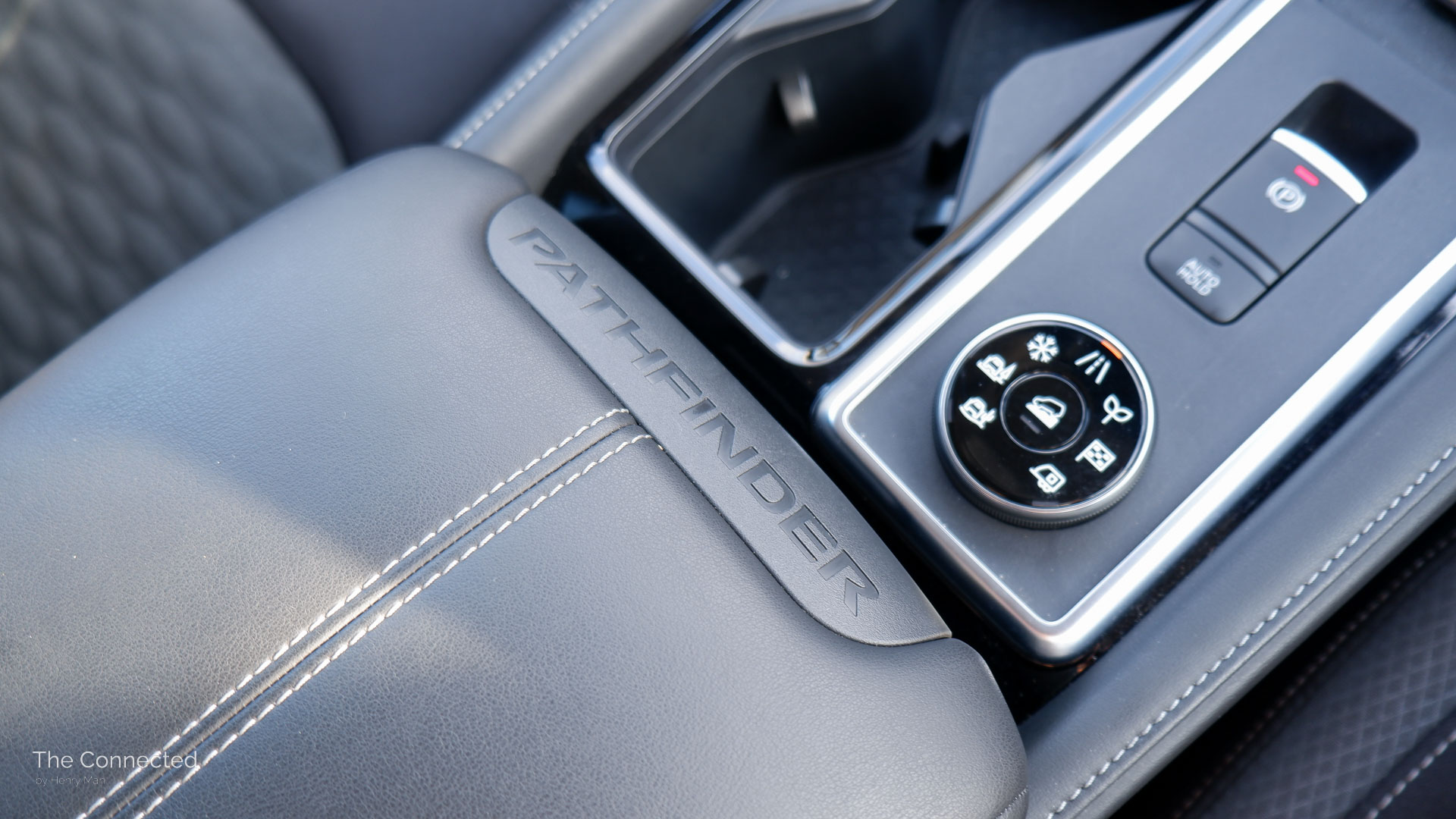
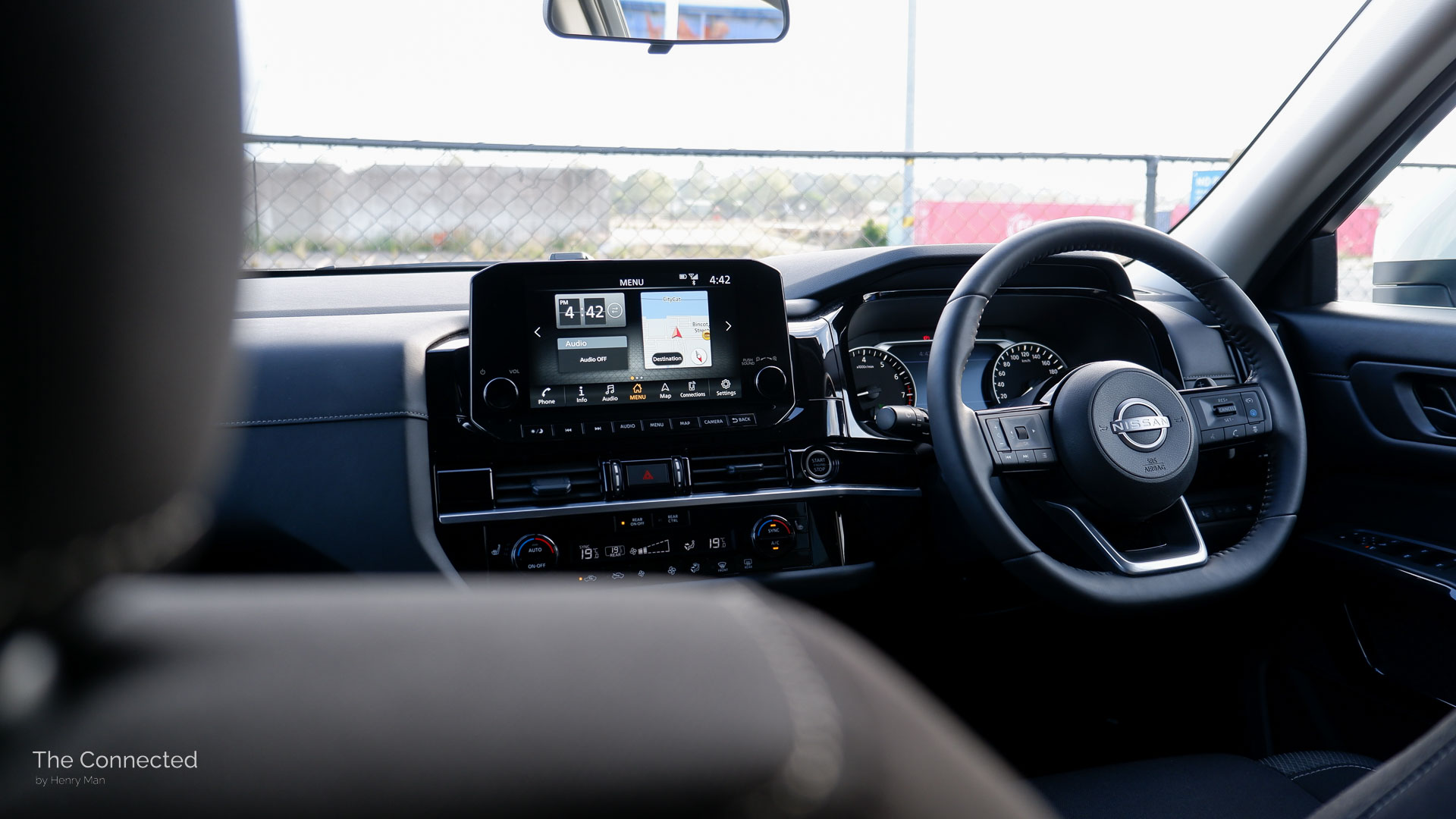
The Nissan Pathfinder’s interior is similarly conservative and no thrills with a fairly bland monotone design. It looks uninspiring and feels dated in 2025.
However, look closer and material quality is pretty good for a base model with a soft-touch dashboard, upper door cards and armrests, blossom-like textured surfaces, and a slightly flat-bottom leatherette steering wheel.
Practicality.
2025 Nissan Pathfinder ST-L dimensions:
| Length x width x height | 5004 x 1978 x 1802mm |
| Wheelbase | 2900mm |
| Ground clearance | 178mm |
| Boot space (all seats up / 3rd row / 2nd row folded) | 205 / 554 / 782 litres |
| Rear seat split fold (3rd row / 2nd row) | 50:50 / 60:40 |
| Child seat anchors | 3x ISOFIX (left third row and second row) and 4x top-tether points (third- and second row seats) |
The Pathfinder is a practical and family-friendly large SUV, though sitting eight people inside isn’t ideal.
All models come standard with an electric tailgate, but strangely no variant has a hands-free kick sensor function – unlike the Nissan Qashqai small SUV.
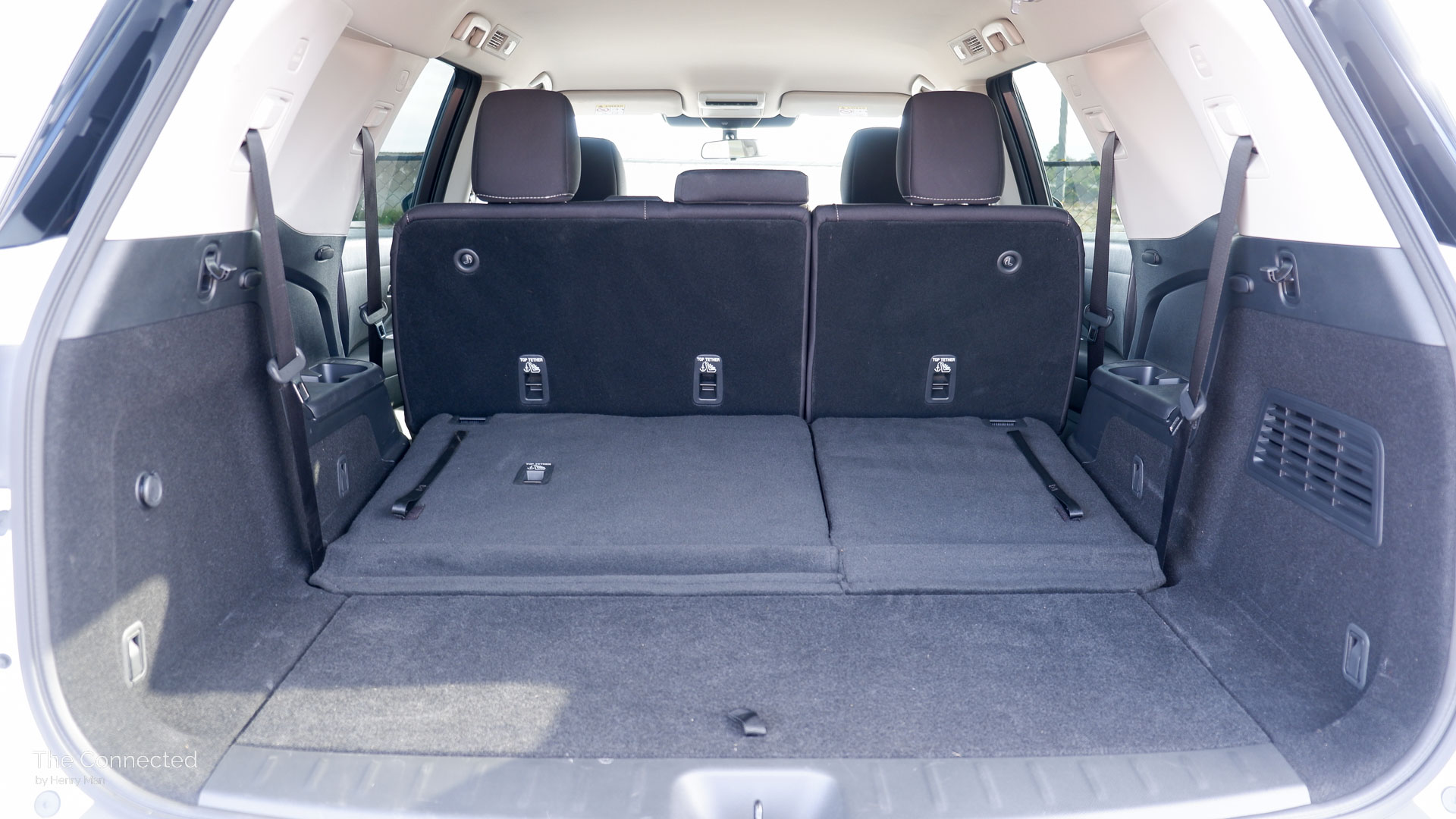
There’s a respectable 205-litre boot space with all three rows in use, an impressively deep plastic well underneath the boot floor enough to fit a small suitcase, and two retractable bag hooks.
Folding the third row requires pulling two tabs – at the headrest and backrest – and opens up the cargo capacity to 554 litres.


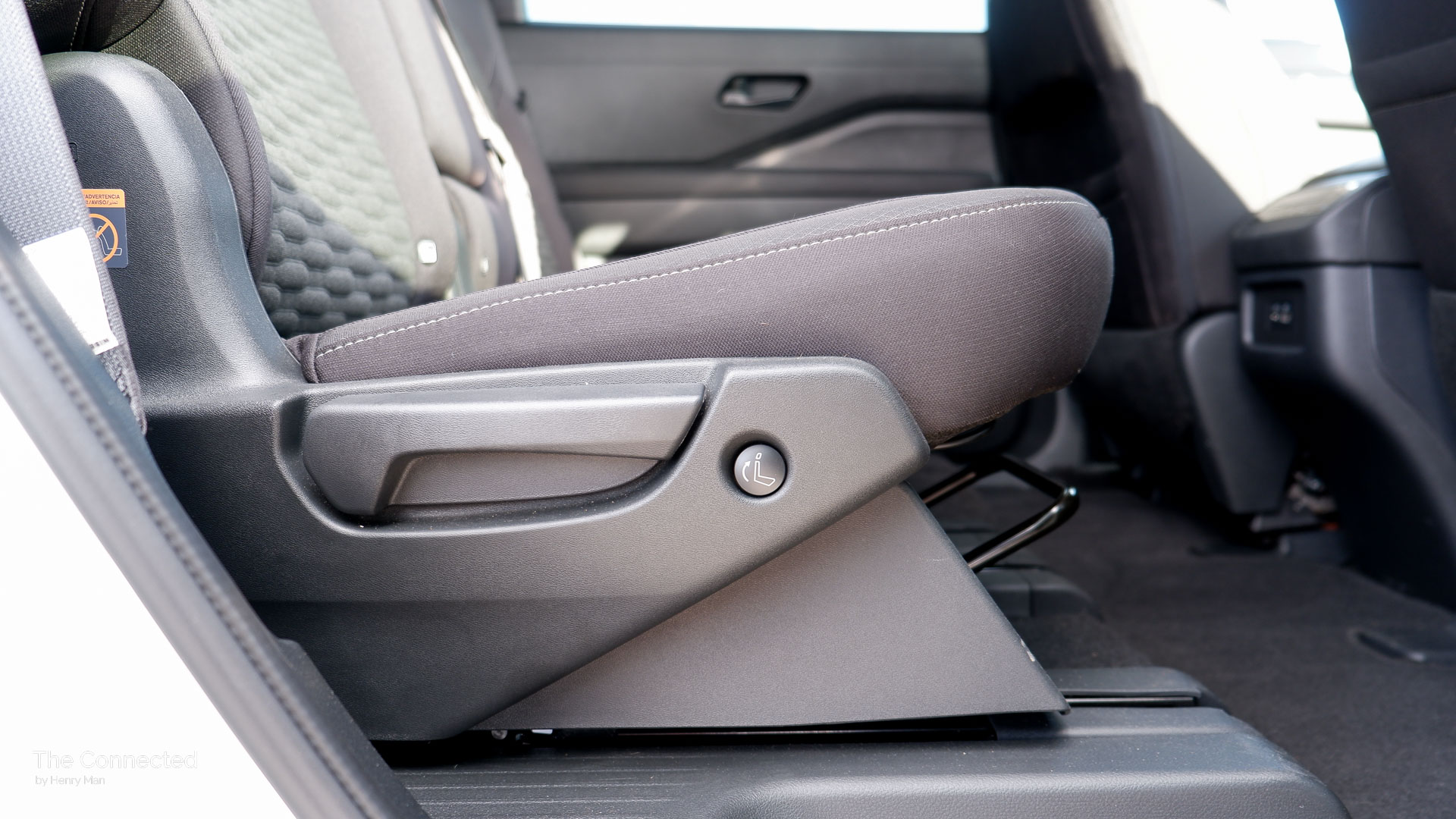
Getting in the third row is relatively easy with a one-touch button that springs forward the second row and a plastic step, although there aren’t any grab handles.
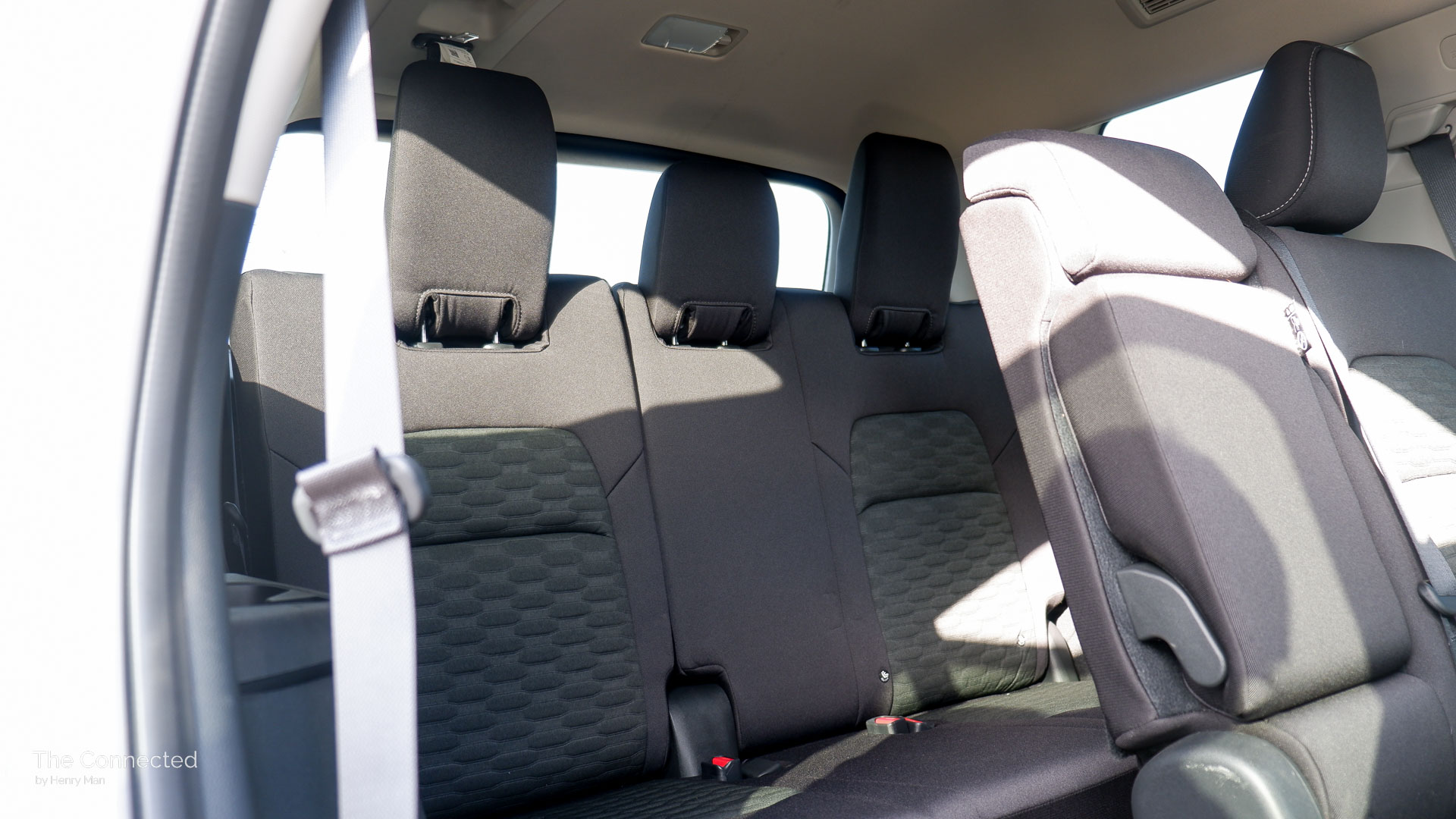
While the Nissan Pathfinder is able to seat eight people, it is a very tight fit for three people across the narrow third row bench and the middle seat requires using the seatbelt that’s awkwardly mounted at the right side of the ceiling.
With the second row in its furthest back position, there is essentially no legroom and footroom with tight headroom for adults. Thankfully, sliding the middle bench forward yields a bit more space to be comfier for short trips and there well-placed ceiling-mounted air vents – but the third row, as is always the case, is best suited for children only.
Fortunately, the third row has one ISOFIX child seat anchor point on the left side and two top-tether points, while the second row has two ISOFIX and three top-tethers.
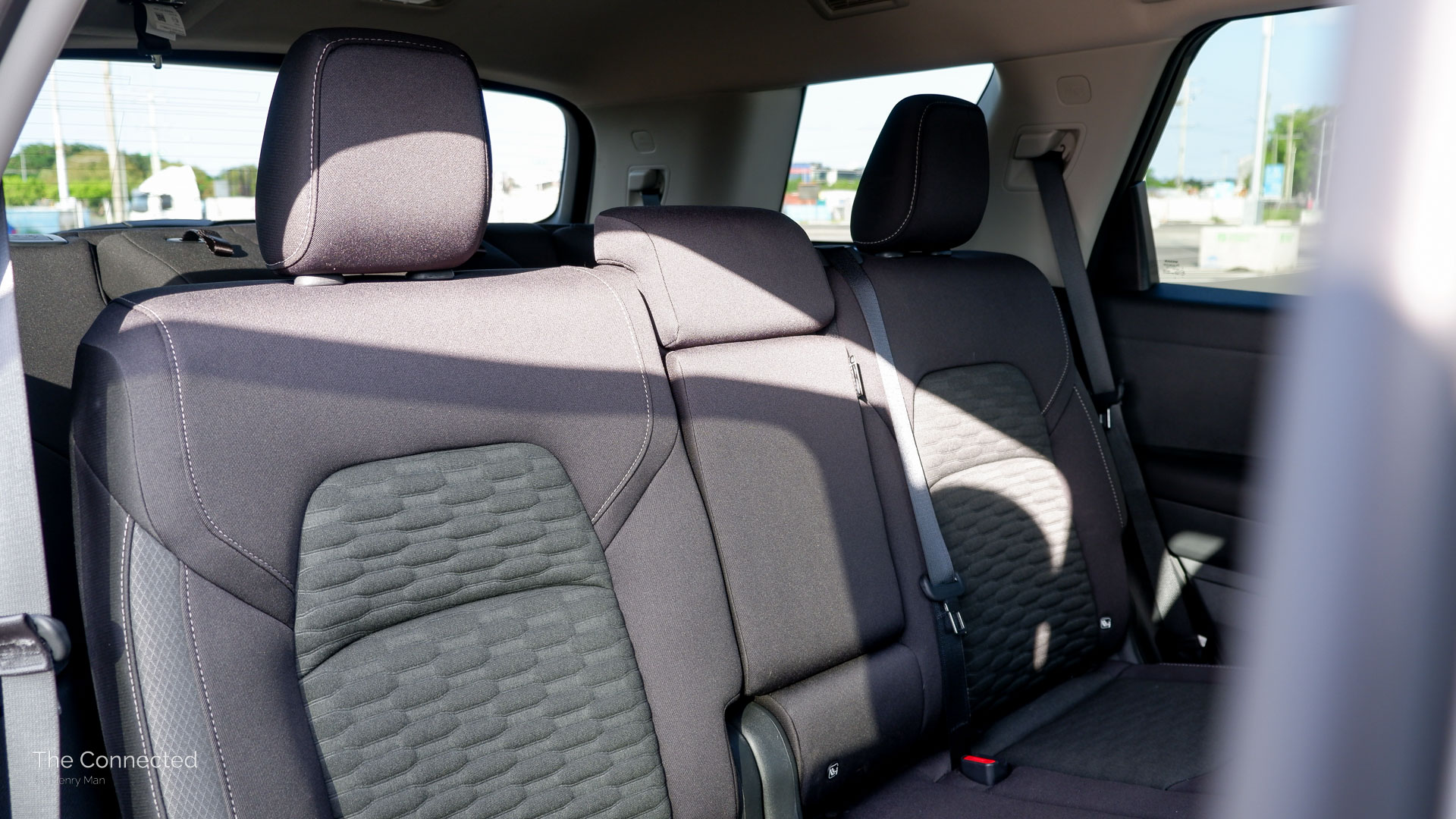

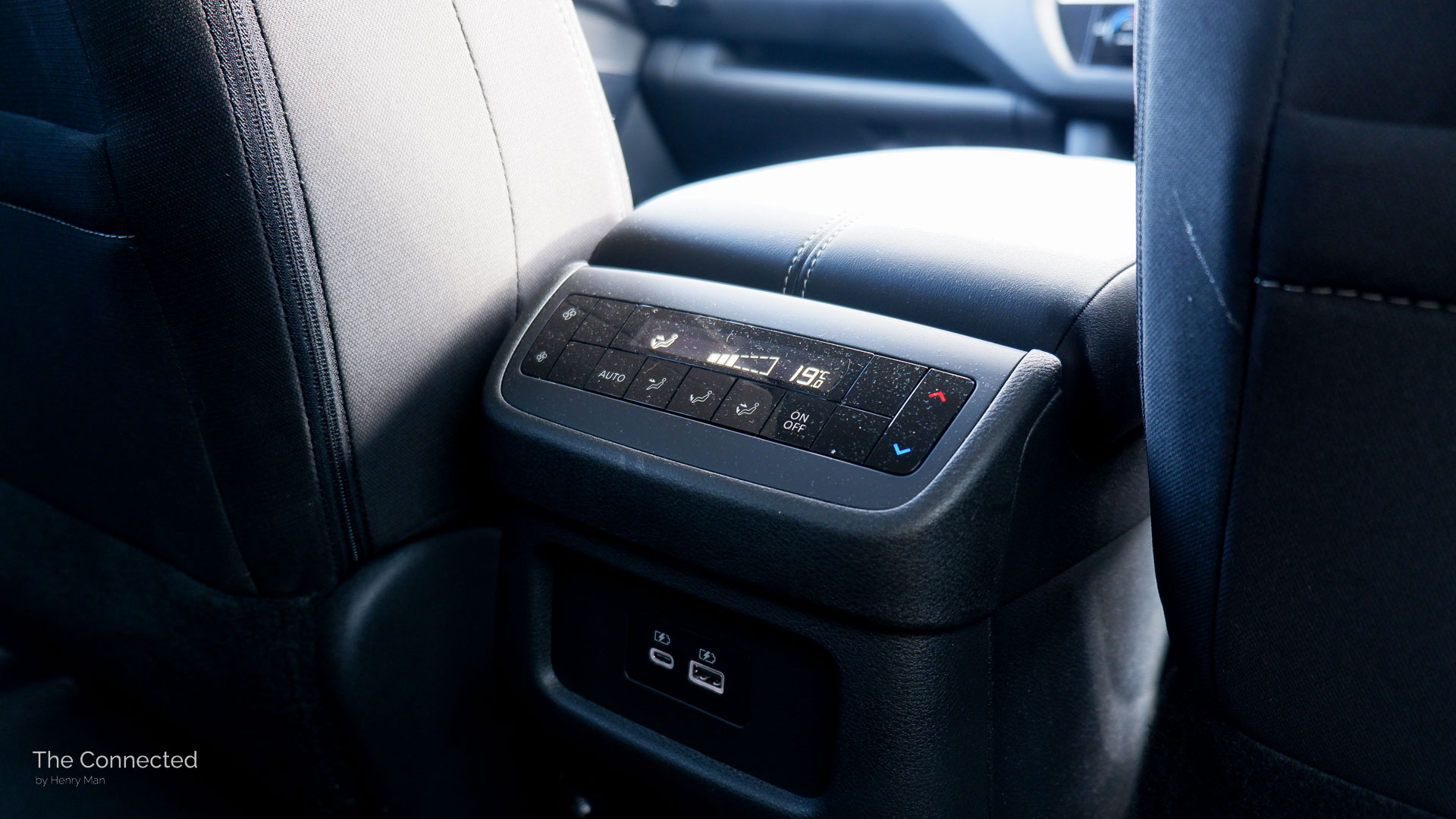
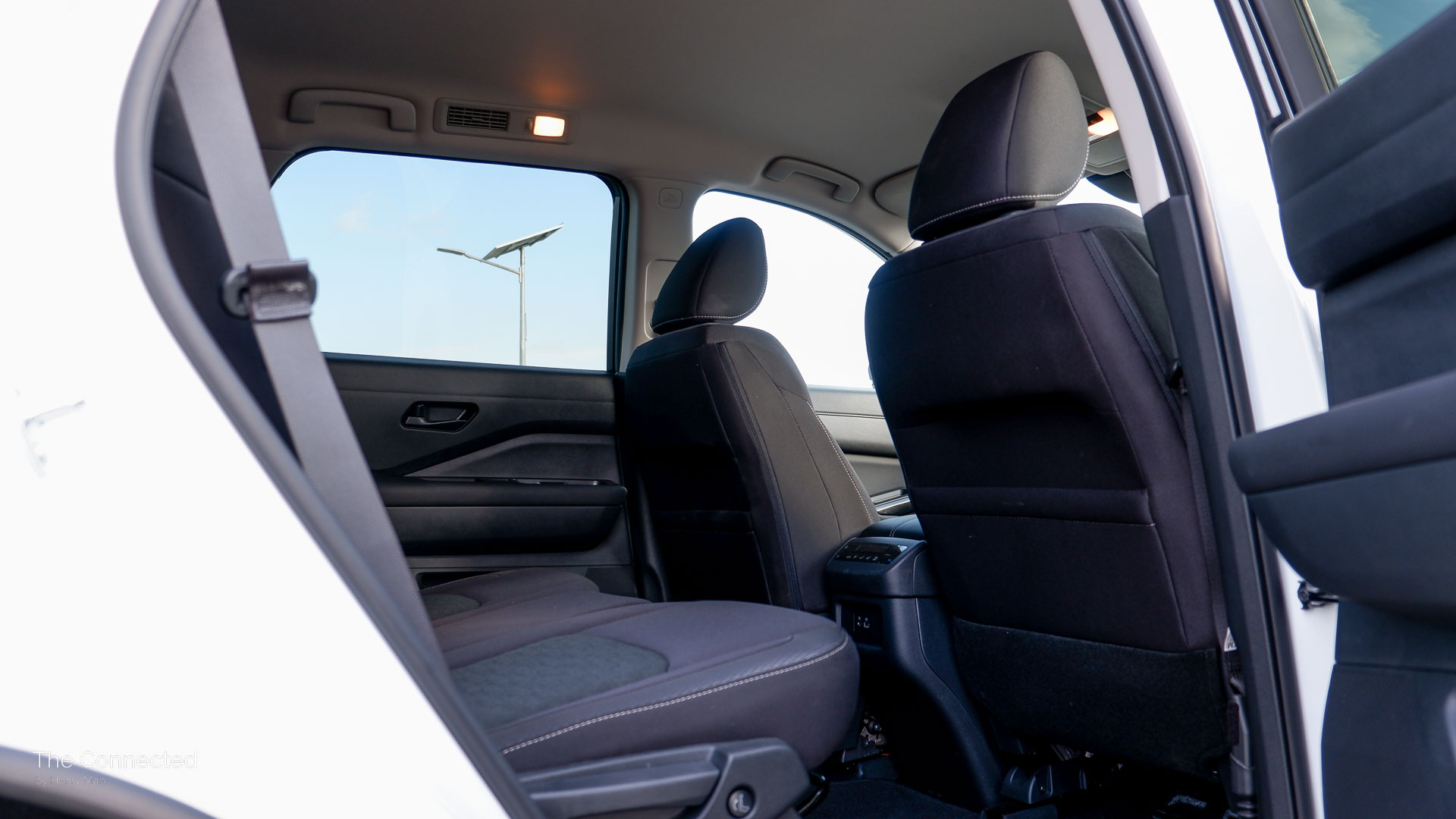
The Pathfinder SUV’s second row provides plenty of leg- and headroom with conveniently located ceiling air vents on each side – albeit in an old coach-style design – and third-zone climate controls that are sensibly placed at the centre console.
Storage-wise, there’s a fold down centre armrest with two cup holders, large door bottle pockets, and two additional cup holders at each door. Old and new cables are catered for with both USB-A and USB-C charging cables offered.
Overall, the Nissan Pathfinder offers an impressively practical interior.
This continues at the front row where the centre console is home to a large and deep centre armrest cubby, two cup holders with grips, a convenient slot to put the key, sizable phone storage space, and an open tray underneath.

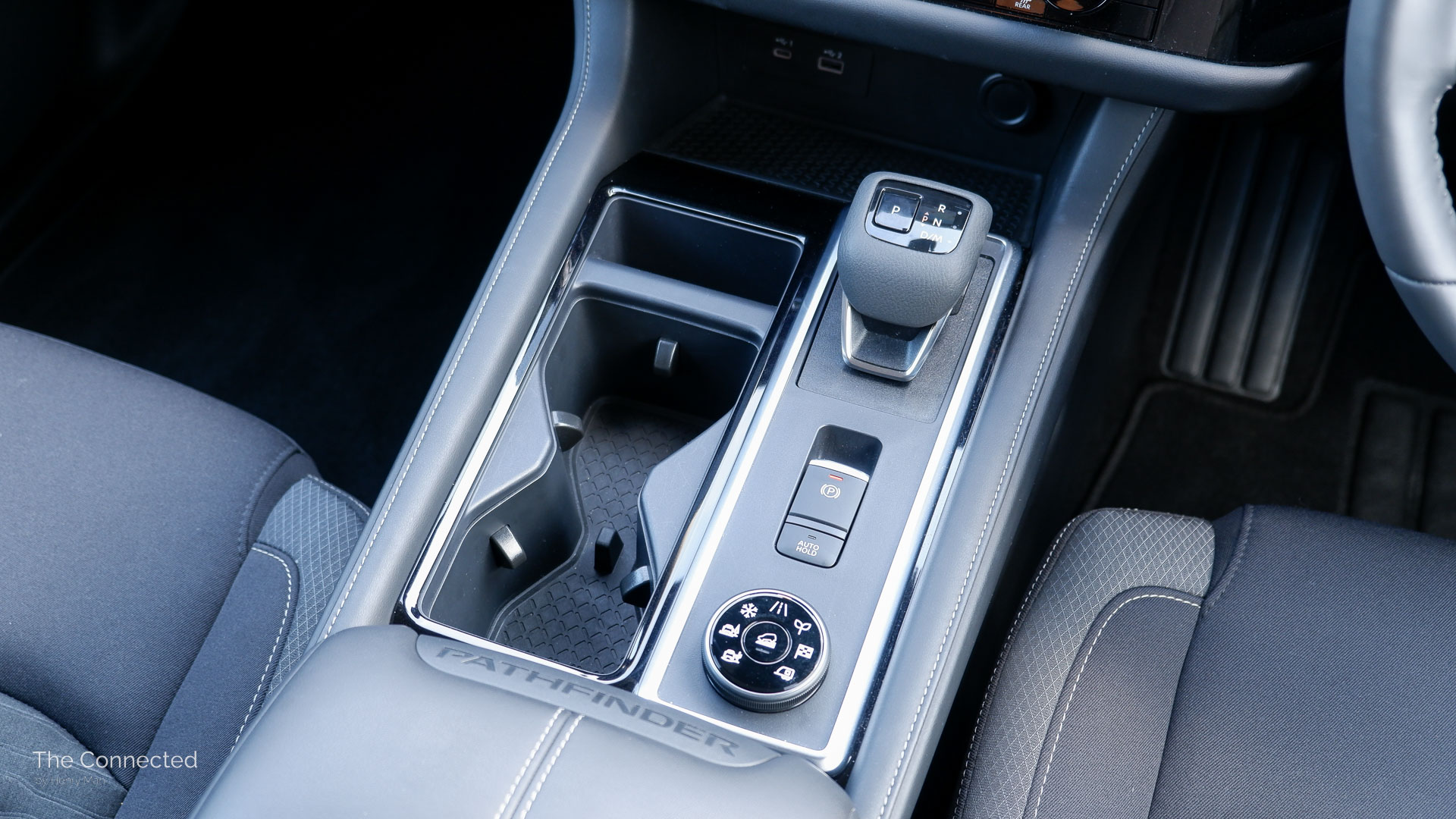
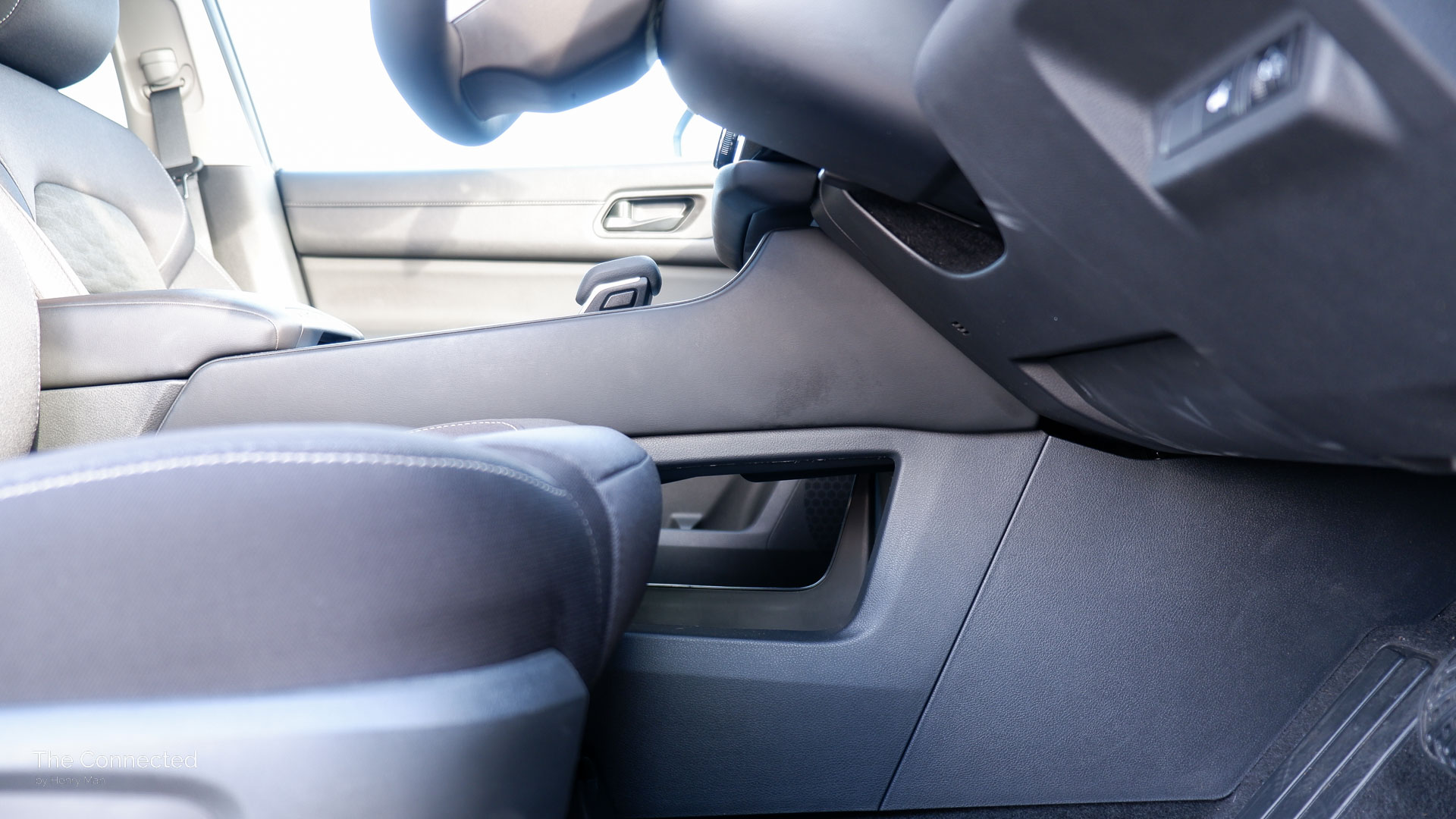
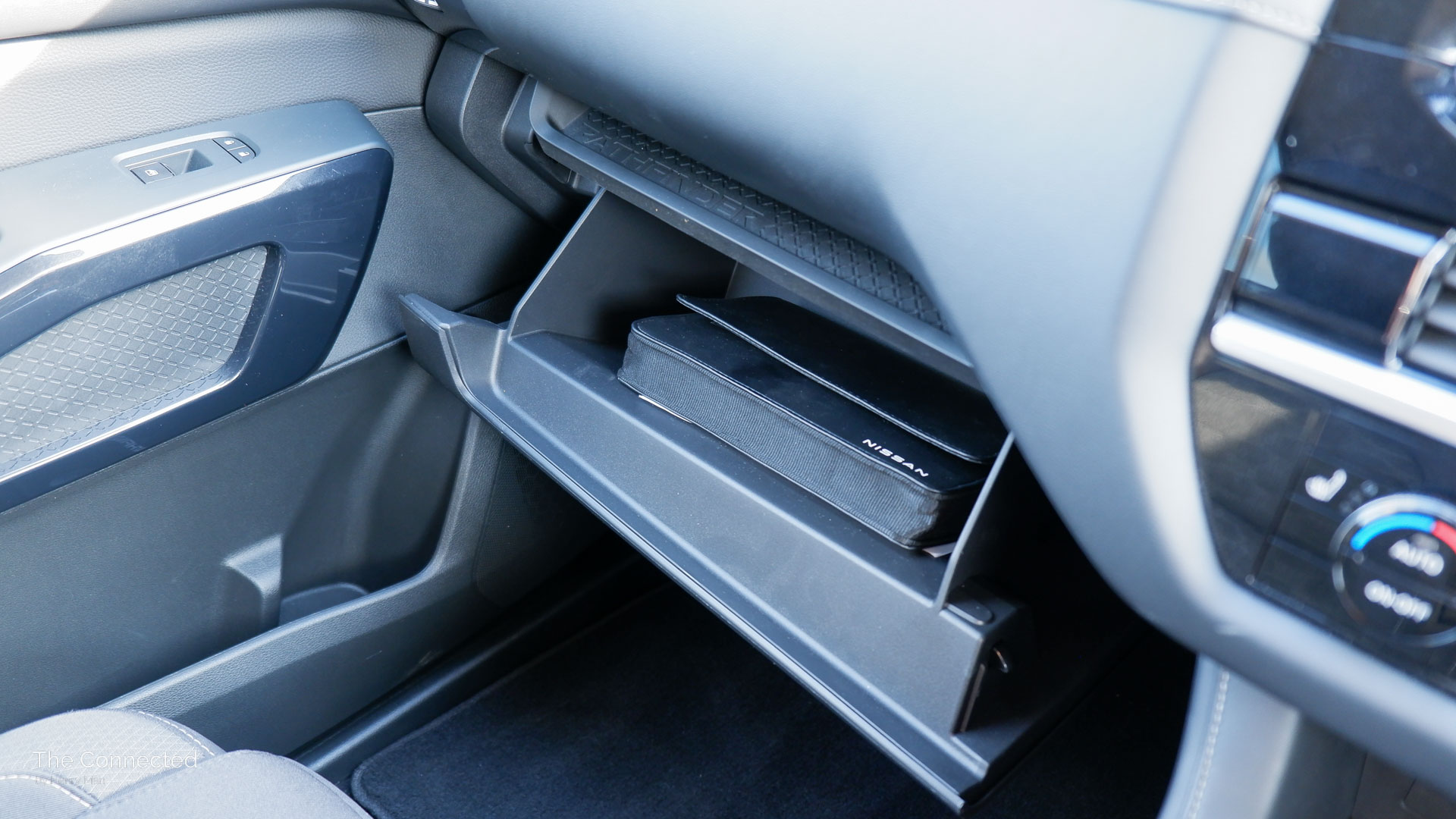
The glovebox is also well-sized but lacks illumination and, while a rubberised open shelf is on offer, it is narrow and slanted towards the passenger so items will likely fall out while driving.
The base Pathfinder ST-L’s fabric seats look basic and the upper backrest strangely juts out, making it slightly uncomfortable. However, it does have electric adjustment with lumbar support and three-level heating, although you’ll need to step up to the flagship Ti-L for a memory function.
I also found the driver’s seat lacking in height adjustment; it doesn’t go high enough in order to have a more commanding SUV position.
Technology.
2025 Nissan Pathfinder ST-L tech features:
| 9.0-inch touchscreen | 7.0-inch driver instrument display with analogue dials |
| Wireless Apple CarPlay and wired Android Auto | 10.8-inch head-up display |
| Built-in maps | Six speakers |
| 2x USB-C, 2x USB-A, and 2x 12-volt power sockets | Proximity key with auto lock/unlock and remote engine start |
The Nissan Pathfinder features a usable technology offering, but is starting to look dated in 2025.
Unfortunately, all Pathfinder models in Australia use a 9.0-inch touchscreen – instead of the wider and newer 12.3-inch display featured on the higher-spec Nissan Qashqai and X-Trails.
While Nissan’s built-in operating system is functional, the user interface has a basic and dated design with noticeable lag when swiping between the home screen pages.
Thankfully, Apple CarPlay and Android Auto fill the entire screen with good processor response, but only the former is able to be connected wirelessly.
This wasn’t too annoying as the base ST-L doesn’t offer a Qi wireless charging pad and Android Auto could be connected via either the USB-C or USB-A ports in front of the large phone storage tray, and benefit from more reliable fast charging.

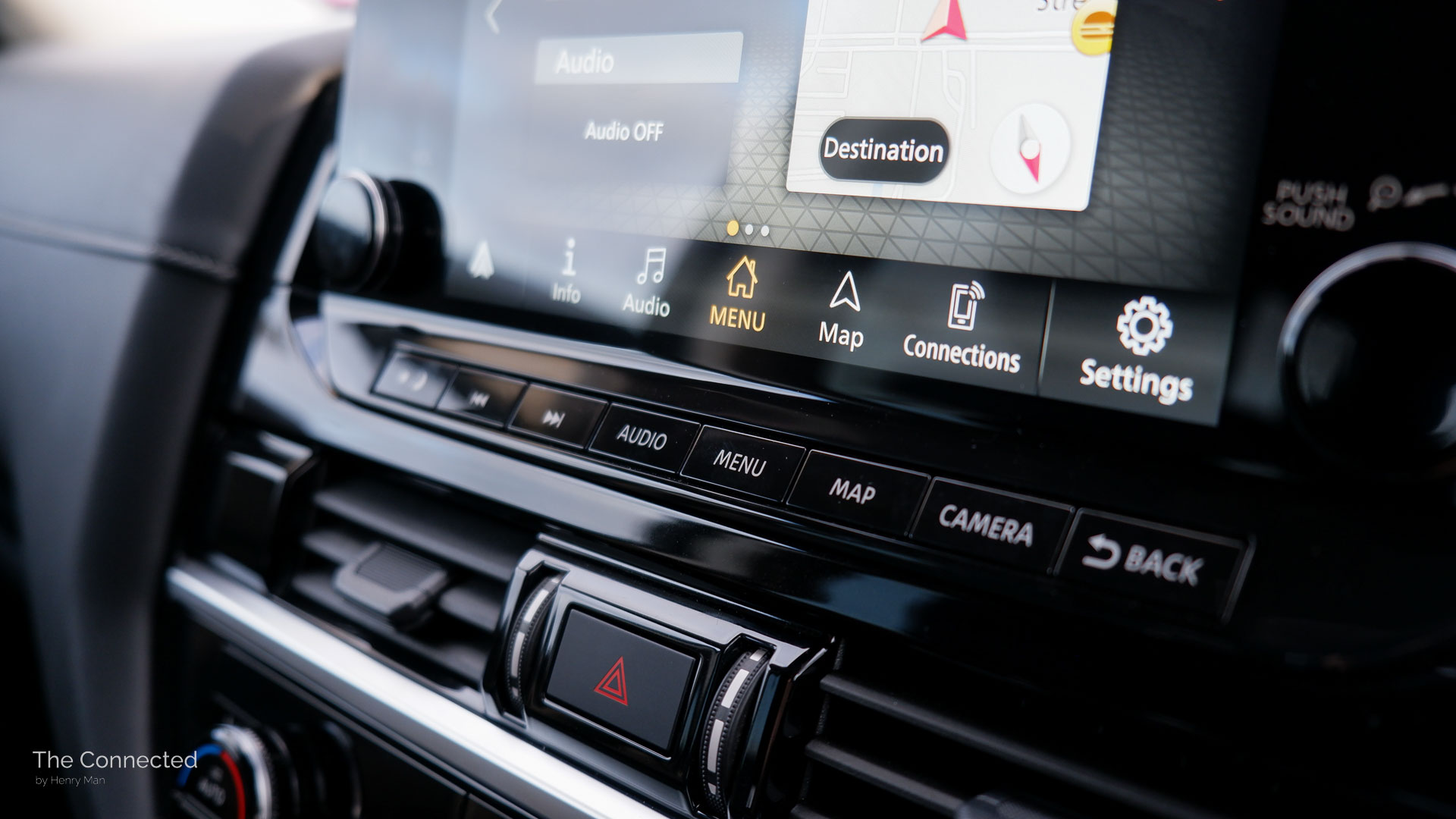


Additionally, the three-row SUV provides clear, tactile buttons and dials to control the three-zone climate system.
The entry-level Pathfinder ST-L and mid-spec Ti adopt a basic 7.0-inch instrument display flanked by traditional analogue dials. It’s a usable setup with similar functionality to the 12.3-inch full screen.
All models include an impressively large, bright and clear 10.8-inch head-up display projected onto the windscreen.
The Nissan Pathfinder doesn’t feature connected services and mobile app functionally in Australia.
Proximity key is standard with a handy auto lock/unlock feature as soon as you are near the car or walk away respectively. The base ST-L doesn’t automatically fold the wing mirrors, so drivers need to press a button every time.

Safety.
2025 Nissan Pathfinder ST-L safety features:
| Front AEB with vehicle/pedestrian/cyclist/junction turning detection | 360-degree camera system |
| Rear AEB | Front and rear parking sensors |
| Blind-spot assist | Speed limit detection |
| Rear cross-traffic alert | Rear occupant alert (logic type) |
| Adaptive cruise control with lane-centring assist | Part-LED auto headlights |
| Lane departure assist | Halogen tail-lights |
Nissan hasn’t skimped out on the safety front, with all Pathfinders including the full suite of active safety assistance systems.
The Japanese automaker’s safety tech is generally well-tuned, but could be a bit more refined compared to systems from brands such as Mazda and Kia.
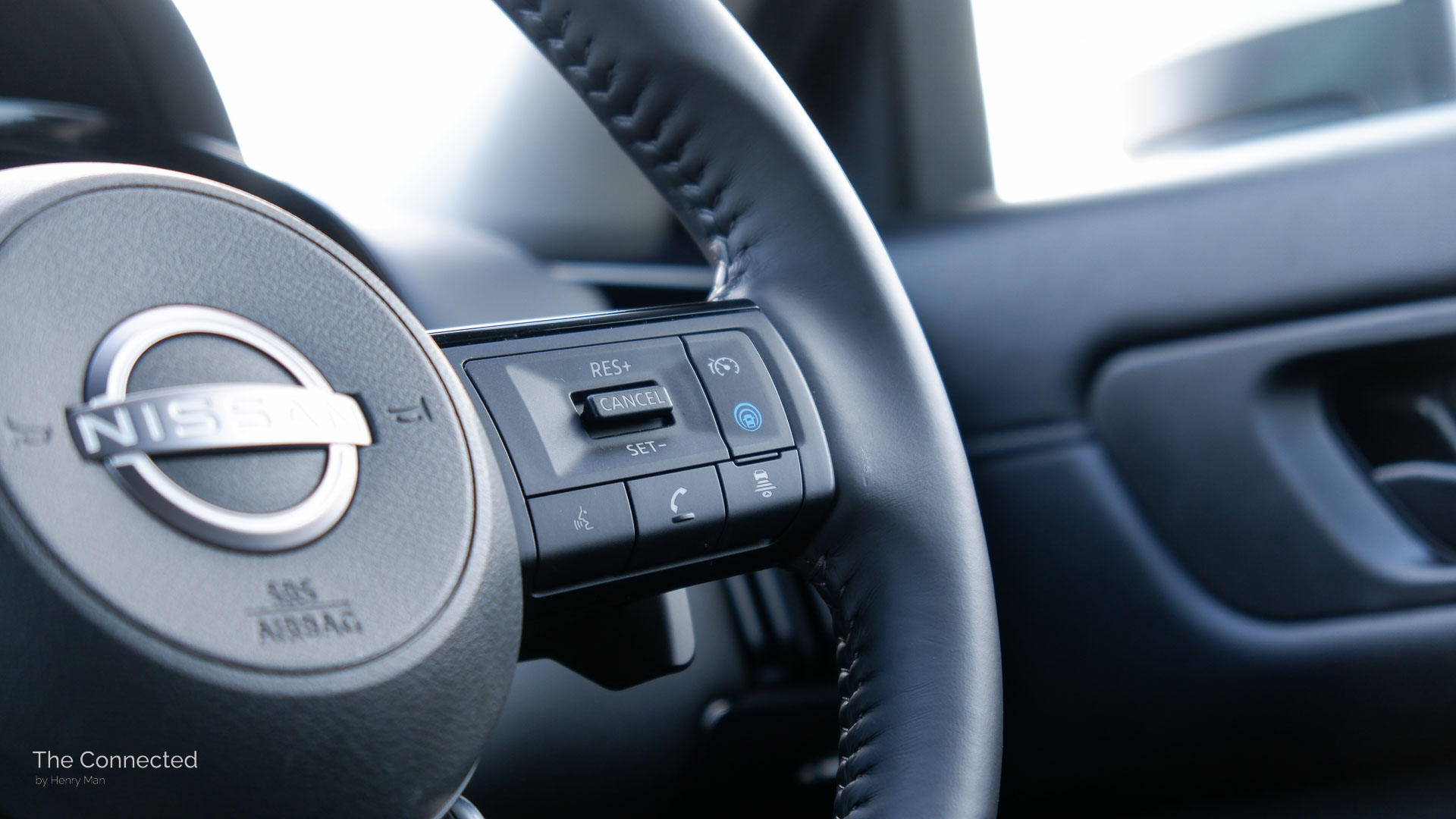
Nissan ProPilot – which combines adaptive cruise control and lane-centring assist – works well at smoothly keeping a distance with the traffic in front and actively stays in the middle of the lane.
However, when you try to take control of the wheel and err on one side (to give some clearance for a passing motorcycle for example), it tends to assertively try to nudge you back into the centre.
Similarly, the emergency lane-keep system brakes the inside wheel when crossing the marked line, which disconcertingly slows the vehicle down.

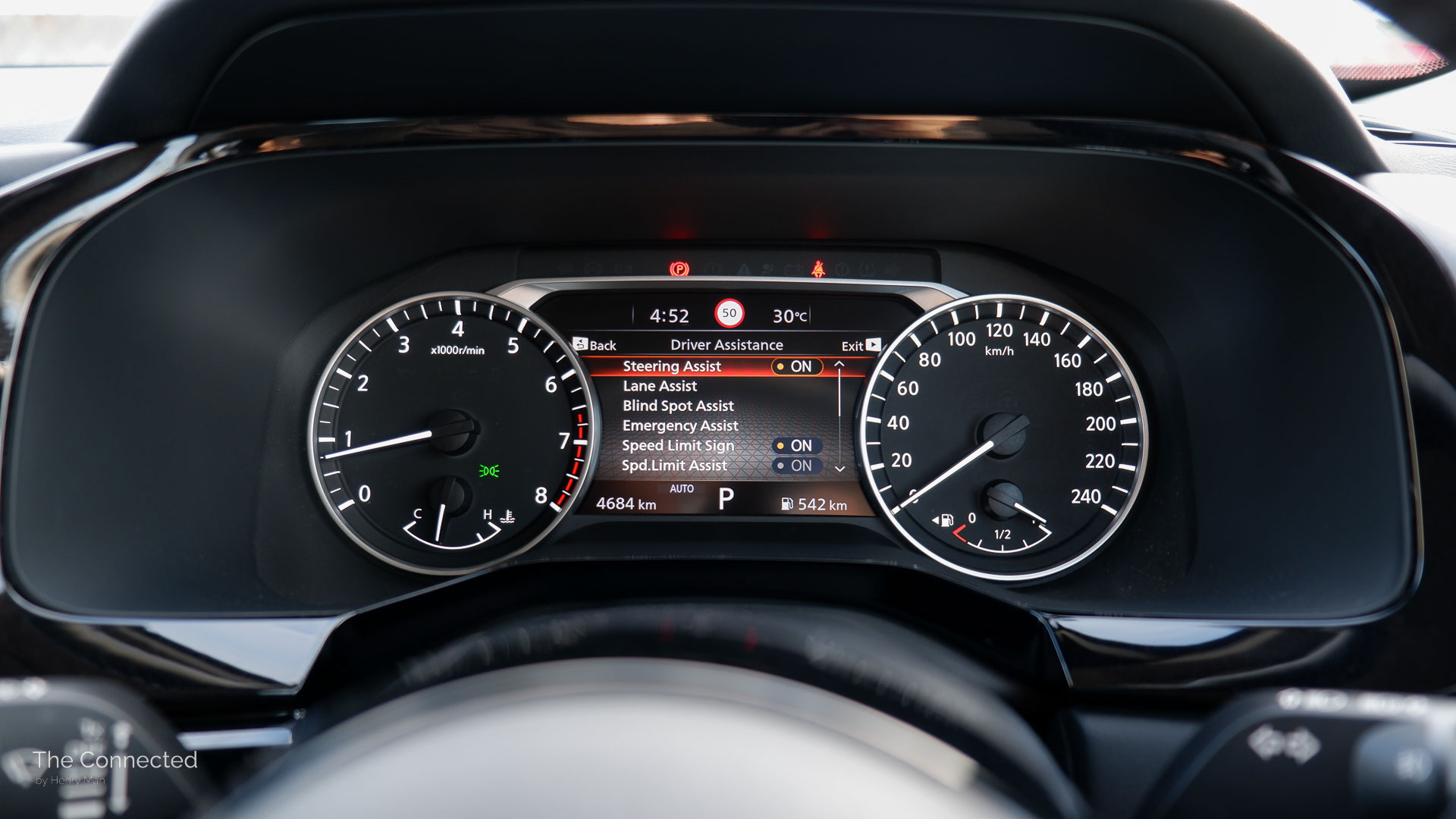
Other safety assist systems are otherwise non-intrusive and dependable.
The 360-degree camera system is useful for maneuvering this large SUV, but is lower resolution and displayed on a slightly small 9.0-inch square display. It cuts out quickly in car parks as soon as you drive faster than 12km/h and you can’t see certain camera views, including the front-right wheel.
While it’s welcome that all Nissan Pathfinder models include bright LED headlights as standard, the automatic light function on our ST-L tester always kept the headlights on even under the bright sunlight.
There’s no way to disable the auto lights either on Nissan’s new cars.
The Nissan Pathfinder was awarded the full five-star Australasian New Car Assessment Program (ANCAP) safety rating under less strict 2022 criteria. The rating is due to expire at the end of 2028.
Range and fuel consumption.
2025 Nissan Pathfinder ST-L AWD fuel and efficiency specs:
| Claimed driving range (combined cycle) | 676km |
| Claimed fuel efficiency (combined cycle) | 10.5L/100km |
| Fuel tank size | 71 litres |
| Minimum fuel quality requirement | 91 RON unleaded petrol (including E10) |
| Claimed CO2 exhaust emissions (combined) | 245g/km |
| European emissions compliance | Euro 5 |
The 2025 Nissan Pathfinder ST-L AWD indicated an average fuel consumption of 12.6L/100km after a week of mixed urban and highway driving.
As a result, expect a driving range of around 564km from its full 71-litre fuel tank.
The Pathfinder’s fuel consumption is high, but not surprising for a large six-cylinder petrol engine without any electrification.
At least the large SUV can accept cheaper 91 RON and E10 unleaded petrol.
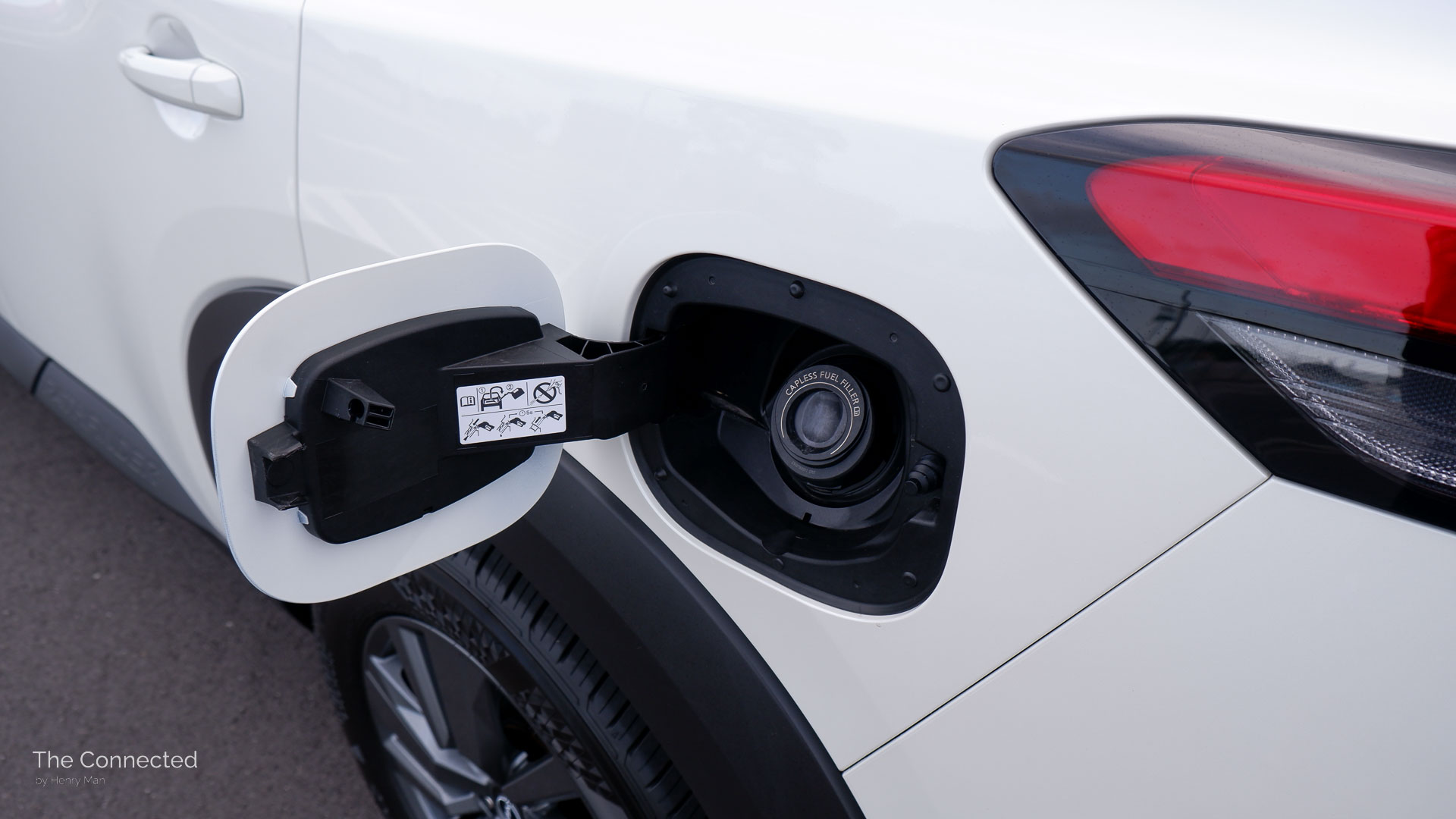
The fuel lid is accessible at the left-rear quarter of the large SUV and is conveniently cap-free.

Driving.
2025 Nissan Pathfinder ST-L AWD powertrain specs:
| Engine | 3.5-litre six-cylinder naturally aspirated petrol engine |
| Power | 202kW @6400rpm |
| Torque | 340Nm @4800rpm |
| Transmission | Nine-speed auto |
| Drive type | AWD |
| Kerb weight | 2052kg |
| Payload | 698kg |
| Towing (unbraked / braked) | 750 / 2700kg |
The Pathfinder delivers a punchy powertrain and a comfortable ride, even though it isn’t fuel efficient.
The 3.5-litre six-cylinder petrol engine outputs up to 202kW of power and 340Nm of torque. Power is sent to all four wheels (with a heavy front wheel bias) as a $4500 option on the ST-L and Ti, but is standard on the top-spec Ti-L
The rather conventional powerplant provides plenty of push fed via the smooth nine-speed torque converter automatic transmission. However, there is only a slight throttle response delay.
It’s also comfortable to drive thanks to the cushy base ST-L’s small 18-inch alloys and a soft but compliant suspension tune.


Road noise and vibration suppression is likewise good.
I would’ve liked the Pathfinder to have a higher seating position, and the rear-view mirror is small and a bit far away from the driver.
Only the flagship Ti-L boasts a digital clear-view mirror camera, which solves the issue of the third row headrests completely blocking the driver’s view of the back when the seats are in use.
Visibility is otherwise good with large mirrors and windows, plus light steering specially at low speeds.

Warranty and servicing.
2025 Nissan Pathfinder ST-L AWD capped-price servicing costs:
| 1 year/15,000km | 2 years/30,000km | 3 years/45,000km | 4 years/60,000km | 5 years/75,000km |
|---|---|---|---|---|
| $399 | $399 | $399 | $399 | $399 |
The 2025 Nissan Pathfinder is now covered by a 10-year, 300,000km warranty – provided owners service it with a Nissan dealer on time.
Servicing is required every 12 months/15,000km (whichever occurs first) with prices fixed for the first five visits.
After the first five years/75,000km, it costs $1995 in total to service the Pathfinder.
Up to 10 years/300,000km of roadside assistance is provided, if Nissan’s servicing conditions are met.
All Nissan Pathfinder models come with a temporary space-saver spare tyre.
Price and rivals.
2025 Nissan Pathfinder model range pricing (accurate as at the time of publication):
| ST-L | Ti | Ti-L |
|---|---|---|
| From $59,670 before on-road costs | From $67,990 before on-road costs | $82,490 before on-road costs |
The 2025 Nissan Pathfinder is priced from $59,670 before on-road costs in Australia.
Three variants are available with the option of all-wheel drive on the ST-L and Ti for an additional $4500, but is standard on the top-spec Ti-L.
All exterior colours except Glacier White and Super Black cost $1030 extra.
The 2025 Nissan Pathfinder directly rivals the following large SUVs:
- Hyundai Palisade (full review)
- Kia Carnival (full review)
- Hyundai Santa Fe (full review)
- Kia Sorento (full review)
- Mazda CX-80
- Toyota Kluger
- Chery Tiggo 8 Pro Max
Other alternatives to the Nissan Pathfinder include:
- Nissan Patrol
- Ford Everest
- Toyota LandCruiser Prado
- Mitsubishi Pajero Sport
- Isuzu MU-X
- GWM Tank 500

Would I pick the 2025 Nissan Pathfinder ST-L AWD?
The 2025 Nissan Pathfinder is a no-thrills, practical large SUV that mostly does the basics right.
The Pathfinder is no show stopper, but it’s utilitarian and rugged design appeals for those who just want a basic A to B family-friendly SUV.
While it’s capable of seating eight people, it’s a very tight fit, the interior and tech are bland and dated, and it isn’t fuel efficient. It would be great to see a Nissan e-Power hybrid option.


I’d pick the base Pathfinder ST-L – and save $4500 by keeping it front-wheel drive, as you don’t get many useful upgrades by going up the range and it becomes quite pricey.
Yet, there are better value options out there, including the Hyundai Santa Fe and Kia Carnival, which are more compelling family cars.
Photographs by Henry Man
READ MORE: 2025 Kia Carnival review: Better than a SUV?
READ MORE: 2024 Mazda CX-90 review
READ MORE: Living with the 2024 Nissan Qashqai Ti e-Power
Pros:
- Practical family-friendly interior
- Bold, rugged design
- Good quality interior for a base model
- Punchy powertrain
- Light steering
Cons:
- Bland interior, dated tech
- Eight-seater is ambitious
- Lower than ideal driving position
- High fuel consumption
- Always-on headlights on tester
About the Author.
Henry Man is an independent content producer passionate about the intersection of technology and transportation.
The former automotive journalist is focused on producing critically-detailed vehicle reviews, and unique short-form content. Learn more.


 The Connected by Henry Man