

Is it time to buy an electric car in 2025?
The future is clear: electric vehicles are the way forward with a lower carbon footprint, addictive instant torque, and cheaper running costs.
But, amid a slowdown in Australian EV demand and as fear, hesitations and misconceptions continue to surround batteries, charging and safety, should you switch to an electric car 2025?
Here are five reasons why you may want to consider buying an EV.
READ MORE: Five reasons why you should avoid an EV in 2025

1. You want to save money
Electric cars are undeniably cheaper to run and own than a petrol or diesel vehicle.
Charging with electricity at home is simply cheaper than refuelling at the pump.
For example, the average household electricity rate is $0.35 per kilowatt-hour (kWh), while let’s assume the average unleaded petrol price is $1.80 per litre.
A Tesla Model Y RWD with a claimed energy consumption of 15.7kWh/100km means it’ll only cost about $5.50 to drive every 100 kilometres. In comparison, the similarly-priced Toyota RAV4 Edge with a claimed fuel consumption of 7.0L/100km will equate to $12.60 per 100 kilometres in running costs. Go for the hybrid RAV4 Edge with its lower 4.8L/100km fuel claim and that works out to be $8.64 per 100 kilometres.
Then, think long-term over the course of a year or more of ownership and the savings can be substantial – as long as the EV is charged at home and before accounting for any charging off free solar energy (if available).
However, while public charging is usually more expensive than plugging in at home, it is still generally cheaper than petrol and diesel. Certain public chargers are exxy, such as using a non-Tesla EV on Tesla Superchargers.
The higher depreciation rates on EVs generally means it’s a buyer’s market to potentially grab a good deal, too.

2. You need a good commuter car
EVs are perfect for commuting with a quiet, smooth and effortless driving experience.
Electric cars are free from anxiety-contributing engine noises and vibrations, with a smooth and instant response from the electric motors helping drivers easily zip around in traffic.
There’s no need to wait for gears to shift or the engine to rev up, and EVs are significantly more efficient than internal combustion engines.
Meanwhile, regenerative braking helps slows down the vehicle as soon as you take your foot off the accelerator – while recouping energy back into the battery.
Certain models, including the MG 4, Hyundai Kona Electric and Tesla Model 3, offer one-pedal driving – where drivers can only modulate the accelerator to slow down the EV to a complete stop without touching the brake pedal.
Electric cars are simply easier to drive.
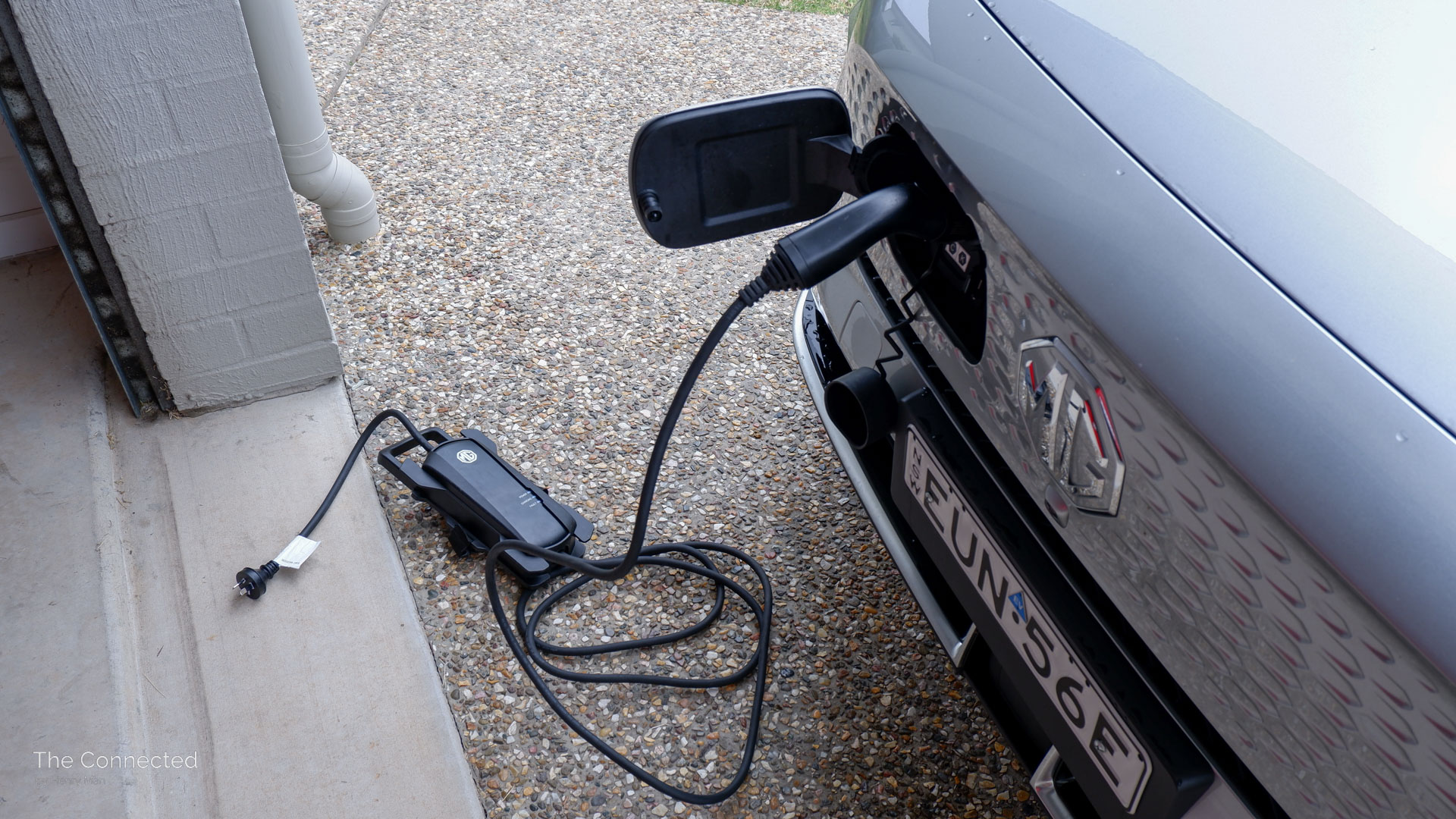
3. You can charge at home
It is most convenient and cost-effective for EV owners to charge at home.
Rather than centring your life and commute around public charging stations, plugging in at home overnight allows your car to top-up without deliberately driving to one or waiting to recharge.
Trickle charging via a standard three-pin socket should top-up enough range for most commutes, but installing a single- or three-phase AC wall box guarantees a full overnight charge.
Crucially, by charging at home, electric car owners benefit from lower electricity costs – generally two to four times cheaper.

4. You love eating in your car
If you love idling, relaxing, and eating with the air-conditioning in your car, an EV is fantastic.
That’s because electric car motors are essentially switched off when stopped – unlike combustion engines – and consume little battery other than the electronics and climate control.
EVs are more relaxing, too, with no engine noise, vibrations and tailpipe emissions.
This presents the perfect opportunity to do more than just driving in electric cars, without the risk of draining the 12-volt battery.
Tesla, Polestar and BMW offer video streaming and arcade games via the touchscreen system, while certain Hyundai and Kia models feature a relation mode for the front seats. Some EVs even have modes that keep the air-conditioning on when it’s locked, in the form of pet and camp modes.
5. You’re sick of noise and pollution
If you ever walk beside traffic and feel disgusted by the fact it’s hard to maintain a conversation and the smell of petrol and diesel fumes, electric cars are the solution.
No, electric cars are not completely silent – you’ll still notice the tyre noise and pedestrian warning sound on the outside, and you’ll still hear outside noises inside.
But there’s no constantly rumbling engine and no local carcinogenic emissions coming from an exhaust.
Research has also demonstrated that, while EVs have a higher carbon footprint initially from the factory, the fact that it’s more efficient and charging off part-renewables (almost 40 per cent of Australia’s electricity grid is made up of renewable energy), it’s still overall better – but not perfect – for the planet than petrol and diesel cars.
If you’re conscious of disturbing pedestrians and the local environment, making the switch to an electric car is a more responsible approach.
Should you buy an EV in 2025?
Electric cars aren’t for everyone, but they will suit many when you think about how much you really drive and where you charge everyday.
The average new car Australians buy is around $50K, the majority live in houses or townhouses with access to a power plug, and the typical daily commute is well less than 100 kilometres.
This makes EVs ideal for many drivers wanting a cost-effective to own and easy to drive commuter car.
However, if you can’t charge at home and an EV doesn’t suit your needs, hybrids present a compelling stopgap alternative to have a taste of electrification without making the complete leap.
But look at the facts rather than opinion, test drive in reality rather than listen to word-of-mouth, and you may find an EV right for you.
READ MORE: 2025 Hyundai Kona Electric review
READ MORE: 2024 Cupra Born review
READ MORE: NEW EV REVIEWS
About the Author.
Henry Man is an independent content producer passionate about the intersection of technology and transportation.
The former automotive journalist is focused on producing critically-detailed vehicle reviews, and unique short-form content. Learn more.


 The Connected by Henry Man