

Most electric cars don’t come with a spare tyre included – but why?
The spare tyre. Once a given necessity included on most new cars are now harder to find – especially the proper full-size ones.
Spare tyres can be useful in the event of a puncture, especially when travelling on long road trips, and in rural and regional areas.
Full-size spare tyres can essentially replace your broken tyre one-to-one. Meanwhile, space-saver spare tyres – which are more common nowadays – are designed for temporary use only to get to your destination; they have a speed limit restriction as they are thinner and smaller.
Yet, many hybrid cars and almost every full electric car don’t include either, with automakers opting to only provide a patch-up sealant kit included or none at all. Let’s explain why…
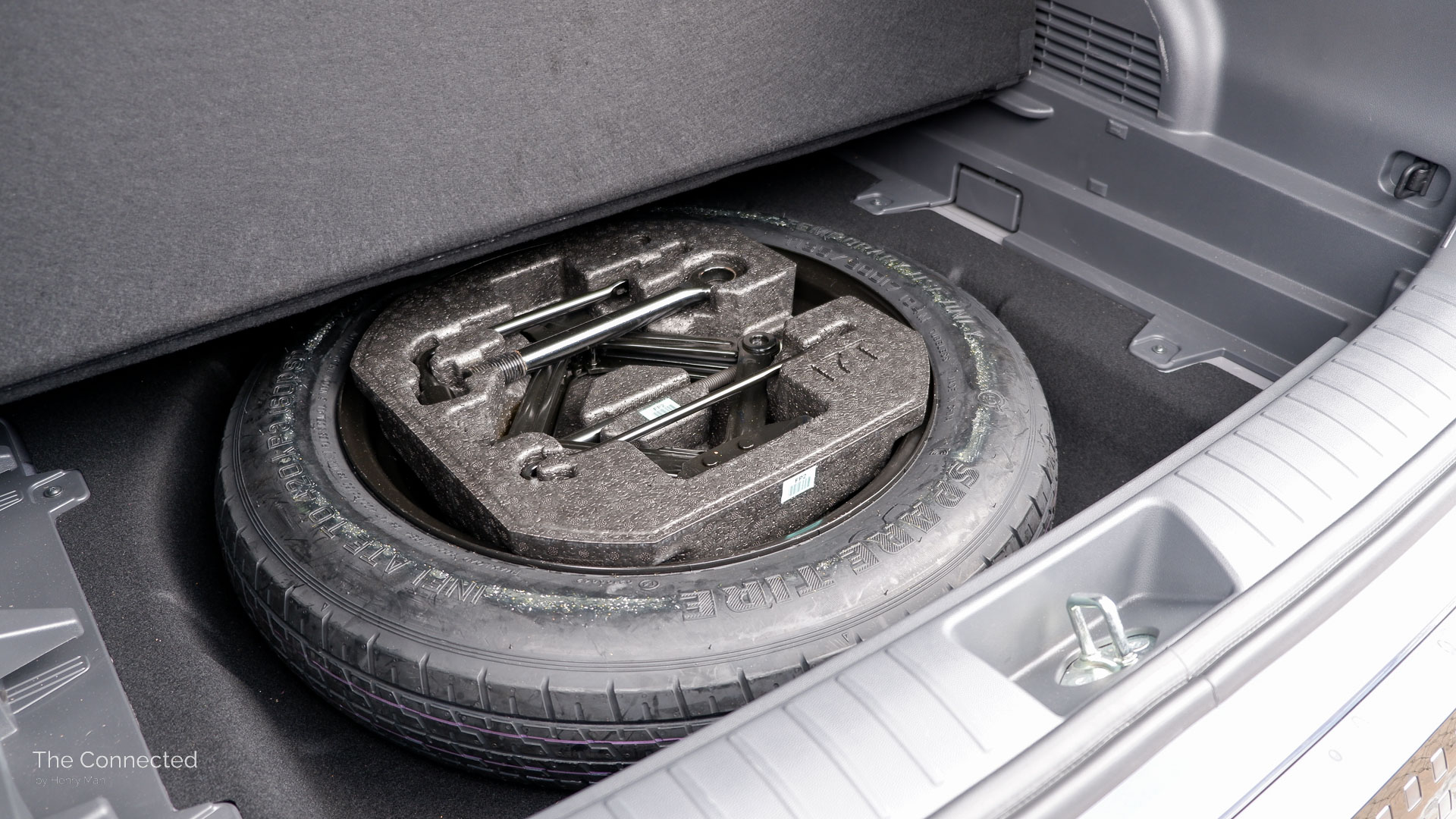
It’s mainly about weight.
Electric cars are heavier – and adding a ~25 to 50kg spare tyre increases energy consumption and decreases payload.
Hybrid and full EV battery packs are naturally heavy, at least with current lithium-ion tech.
This poses the question for manufacturers: why include something that could decrease the driving range (a figure so important to buyers) by increasing energy consumption?
That’s despite EVs generally putting more wear and tare on the tyres due to the heavier weight and instant torque, leading to a shorter tyre life.
Due to the added heft, electric cars generally have less payload too (the total weight you can load on the vehicle including the towball download when towing), so including a spare tyre would restrict it even further.
The presence of one would also reduce the available boot space, particularly when there’s a large battery sitting under the floor as well.
Then, there’s the obvious opportunity to cut manufacturing costs by not including any spare tyre. Simple economics.
How much do spare tyres impact EV range?
In our testing, the inclusion of a space-saver spare tyre in an EV could increase energy consumption by less than 0.9kWh/100km.
After driving a 64-kilometre loop consisting of city and highway conditions twice with and without the temporary space-saver spare tyre, we found its presence would impact the driving range of the 2025 Hyundai Kona Electric Premium Extended Range by less than 33km.
However, here’s the big caveat: the second loop (without the spare tyre) had more stop-start traffic, which skewed the results.
While this test was inconclusive (due to uncontrollable factors) and is based on a lighter space-saver spare tyre, it indicates that the impact to EV range is minimal.

Which EVs include a spare tyre?
Only a handful of full electric cars include some form of a spare tyre as standard, but most only have a patch-up tyre repair kit.
The Tesla Model 3 and Model Y don’t even have any repair saviour, with the popular carmaker opting to sell a tyre sealant kit as a separate accessory.
Some third-party companies sell spare tyres for certain electric car models as an option for buyers who see having one as a priority.
The following full EVs include a spare tyre in Australia:
- Chery Omoda E5 (full-size spare tyre)
- Hyundai Kona Electric (space-saver spare tyre)
Spare tyres may not seem important, but they can be handy when in need and it’s an unfortunate reality that many hybrid and full electric cars don’t come with one as standard.
READ MORE: Living with the 2024 Nissan Qashqai Ti e-Power
READ MORE: Five reasons why you should buy an EV in 2025
READ MORE: What is the point of the blue EV label?
About the Author.
Henry Man is an independent content producer passionate about the intersection of technology and transportation.
The former automotive journalist is focused on producing critically-detailed vehicle reviews, and unique short-form content. Learn more.


 The Connected by Henry Man