
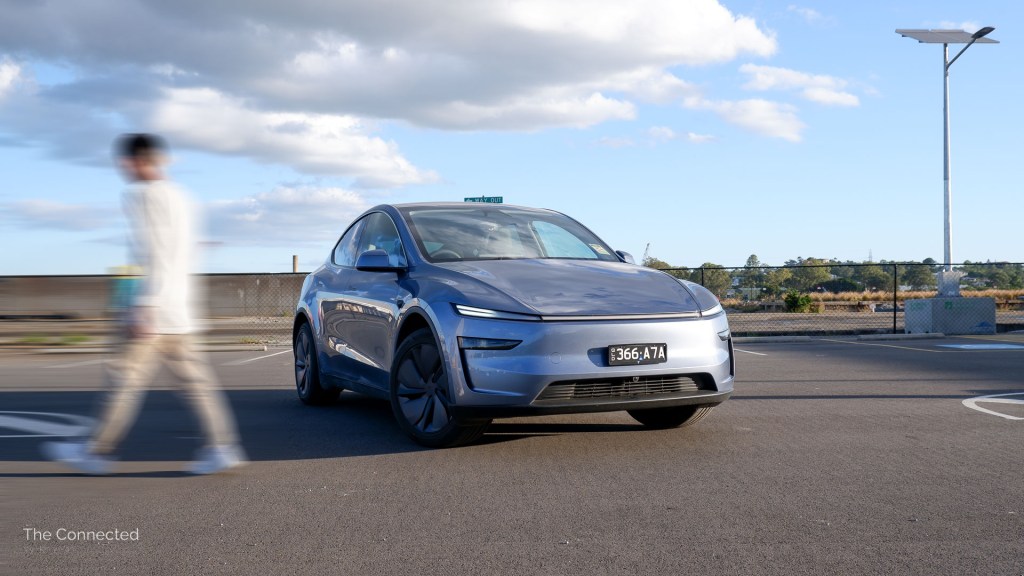
The world’s best selling car has received an extensive refresh, but the Tesla Model Y is also part of the most polarising car brand on the planet…
The new Tesla Model Y has officially launched in Australia, with deliveries now underway for the Launch Series ahead of standard variants from June.
The facelifted medium electric SUV (allegedly codenamed ‘Juniper’) has gained extensive design changes with an updated interior, new technology, and driving comfort and efficiency improvements while retaining the indicator stalk.
The new Model Y is pivotal for the American carmaker amid dwindling sales globally, a general disdain for boss Elon Musk, and intense competition from a plethora of Chinese brands.
I took the entry-level Model Y Rear-Wheel Drive (RWD) on a short customer test drive to find out why it’s still one of the best value new EVs on sale in Australia.
NOTE: The vehicle was provided by Tesla for an one-hour customer test drive. We have no commercial arrangements with the company and it had no editorial control.

Pros.
+ Industry-leading tech
+ Improved ride and comfort
+ Premium interior, more attractive design
Cons.
– Limited rear visibility
– No driver instrument display
– Expensive options, short vehicle warranty
Vehicle tested:
| Model | 2025 Tesla Model Y |
| Variant | RWD |
| Starting price | $58,900 before on-road costs |
| Exterior colour | Glacier Blue (+$2300) |
| Interior colour | All Black Interior |
| Country made | China |
The EV benchmark. Reset.
The 2025 Tesla Model Y continues to lead in vehicle tech, EV efficiency, and practicality – with a more attractive design that looks less of an egg.
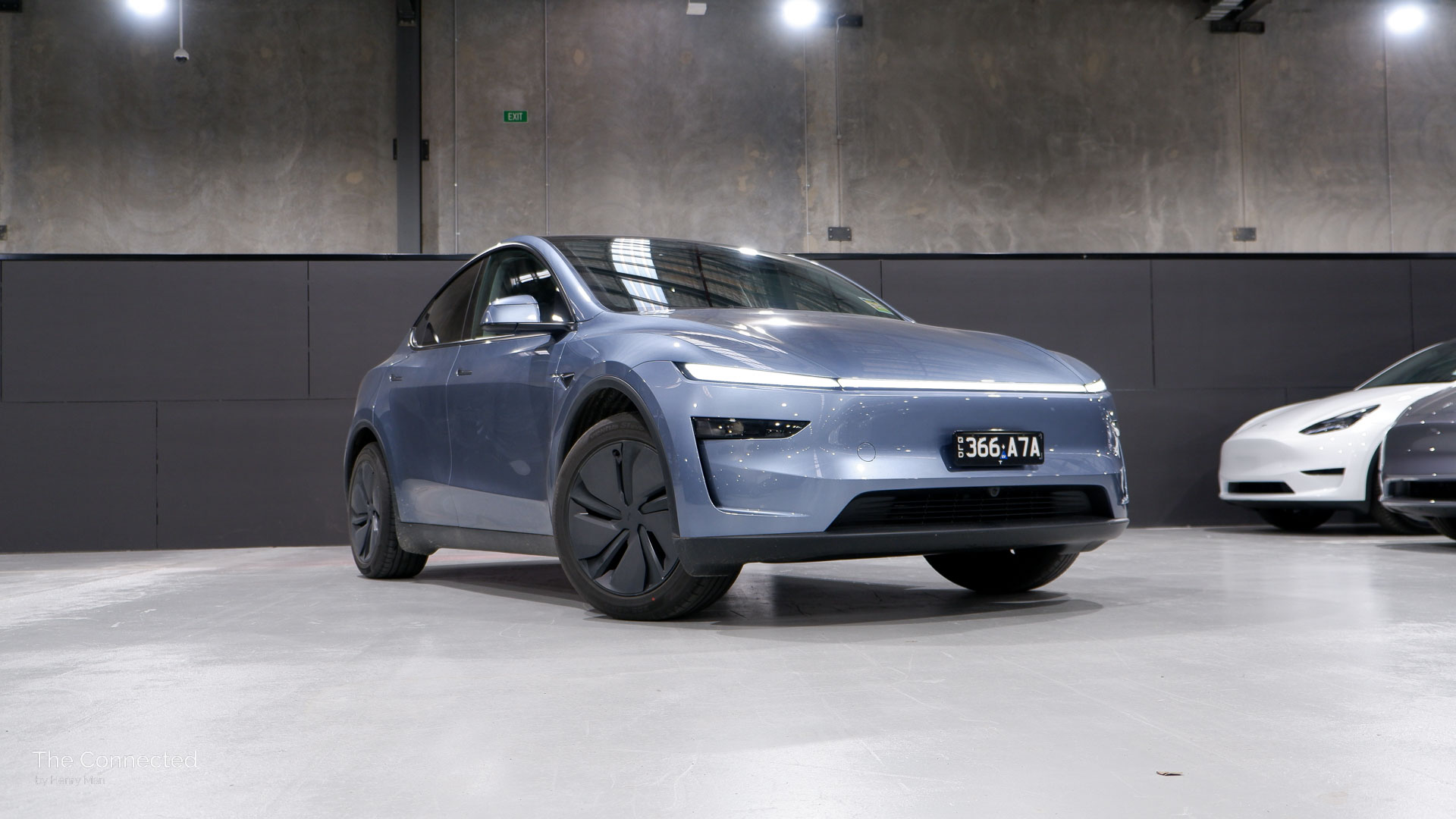
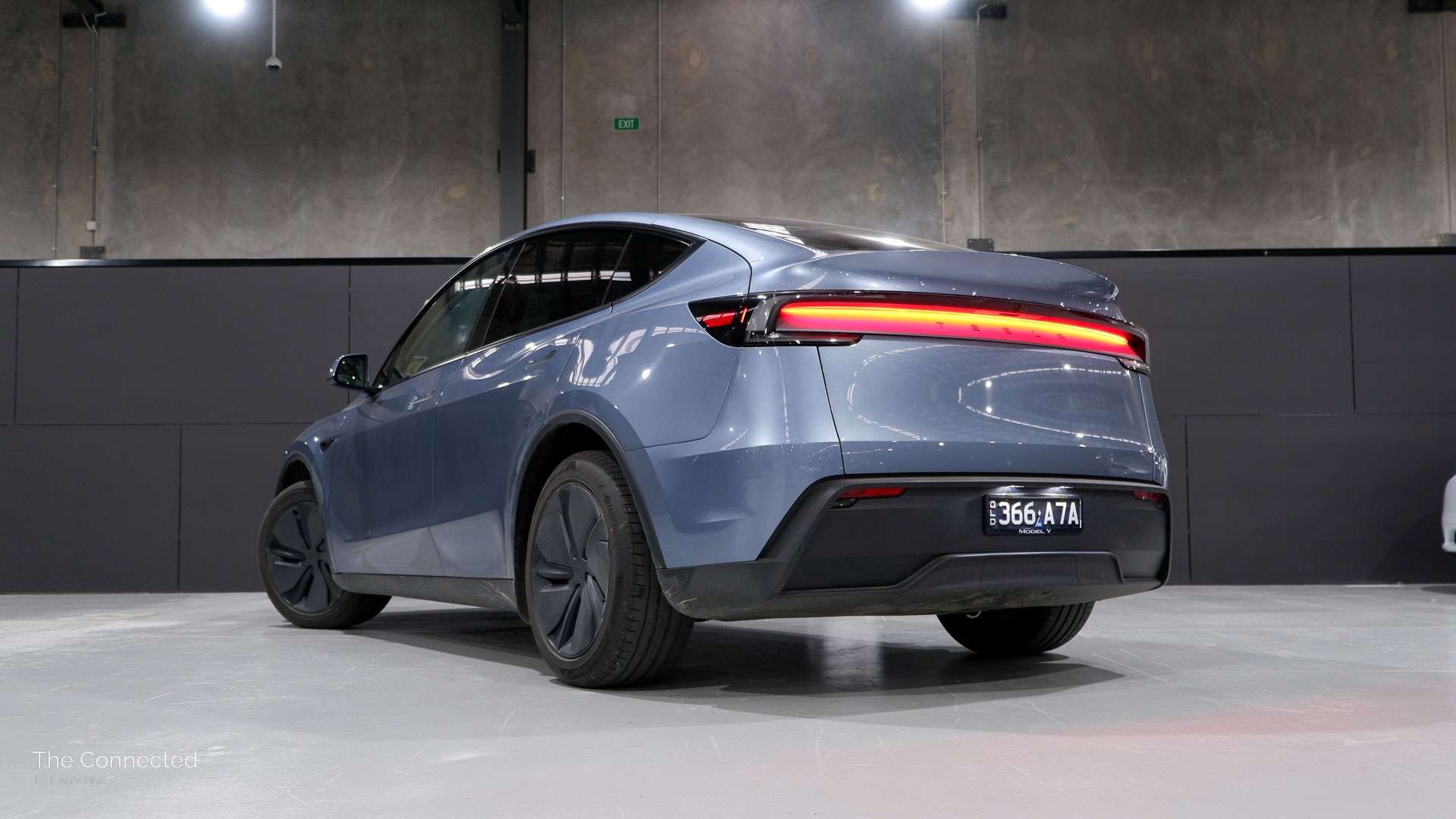
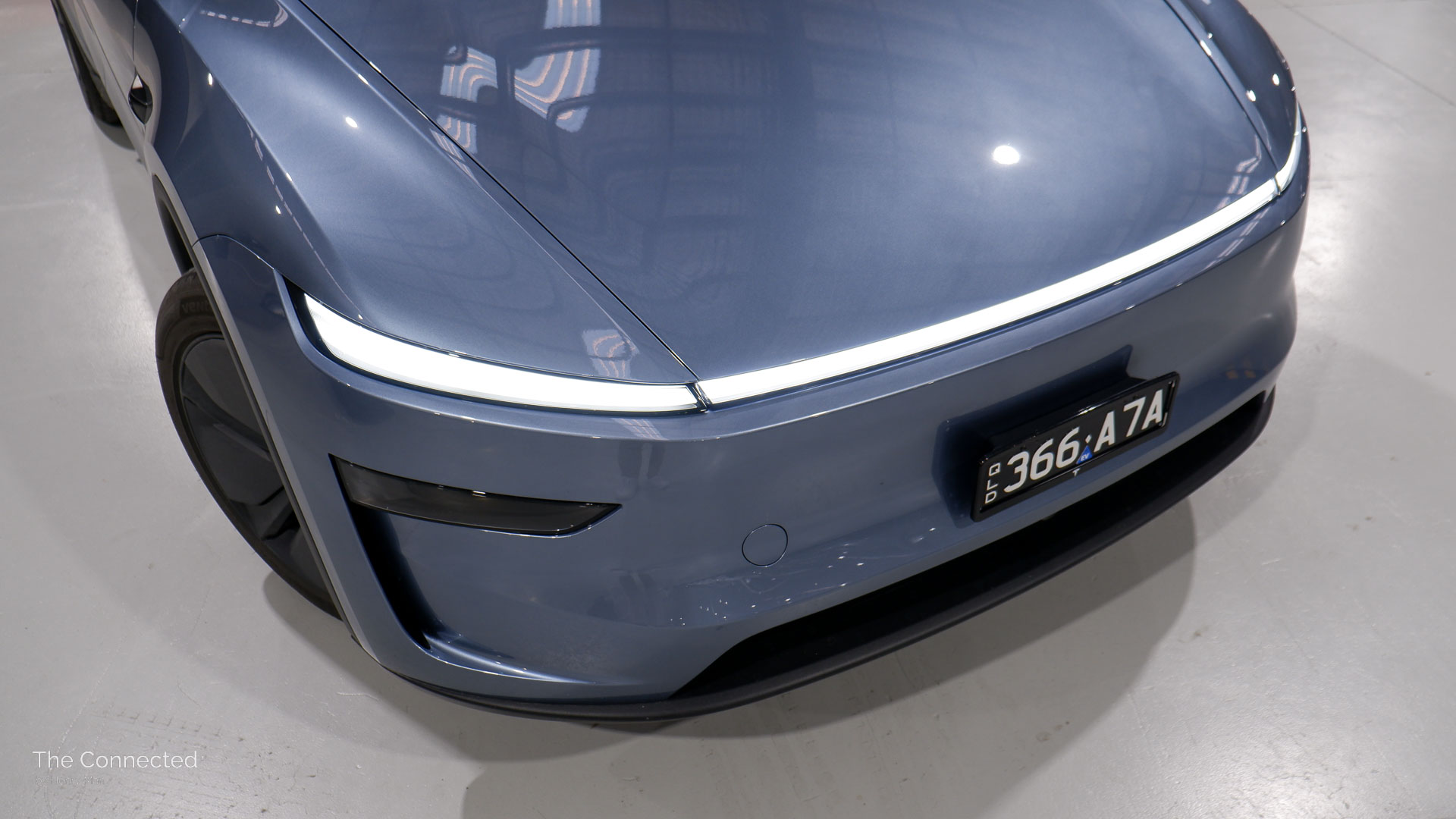
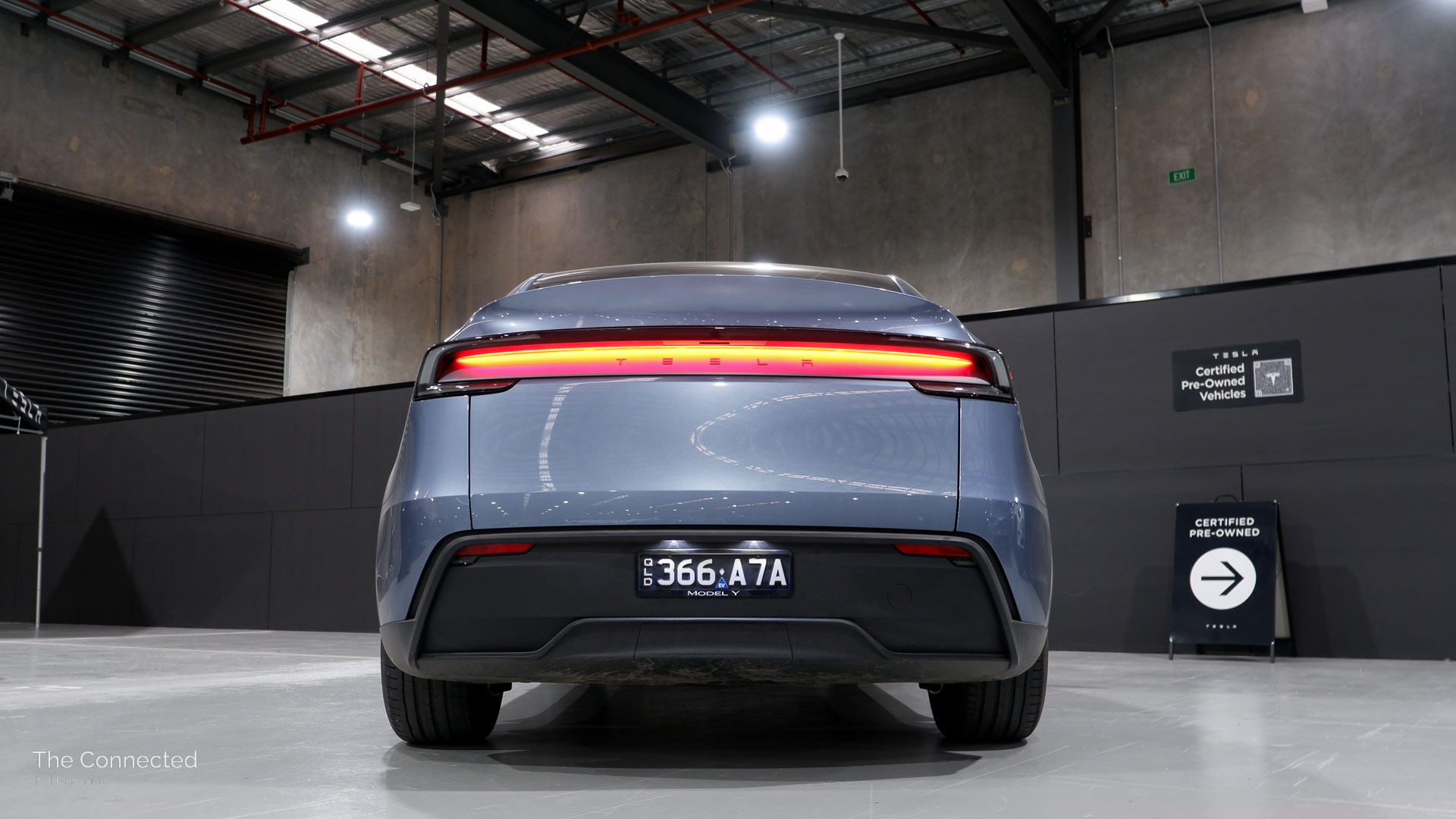
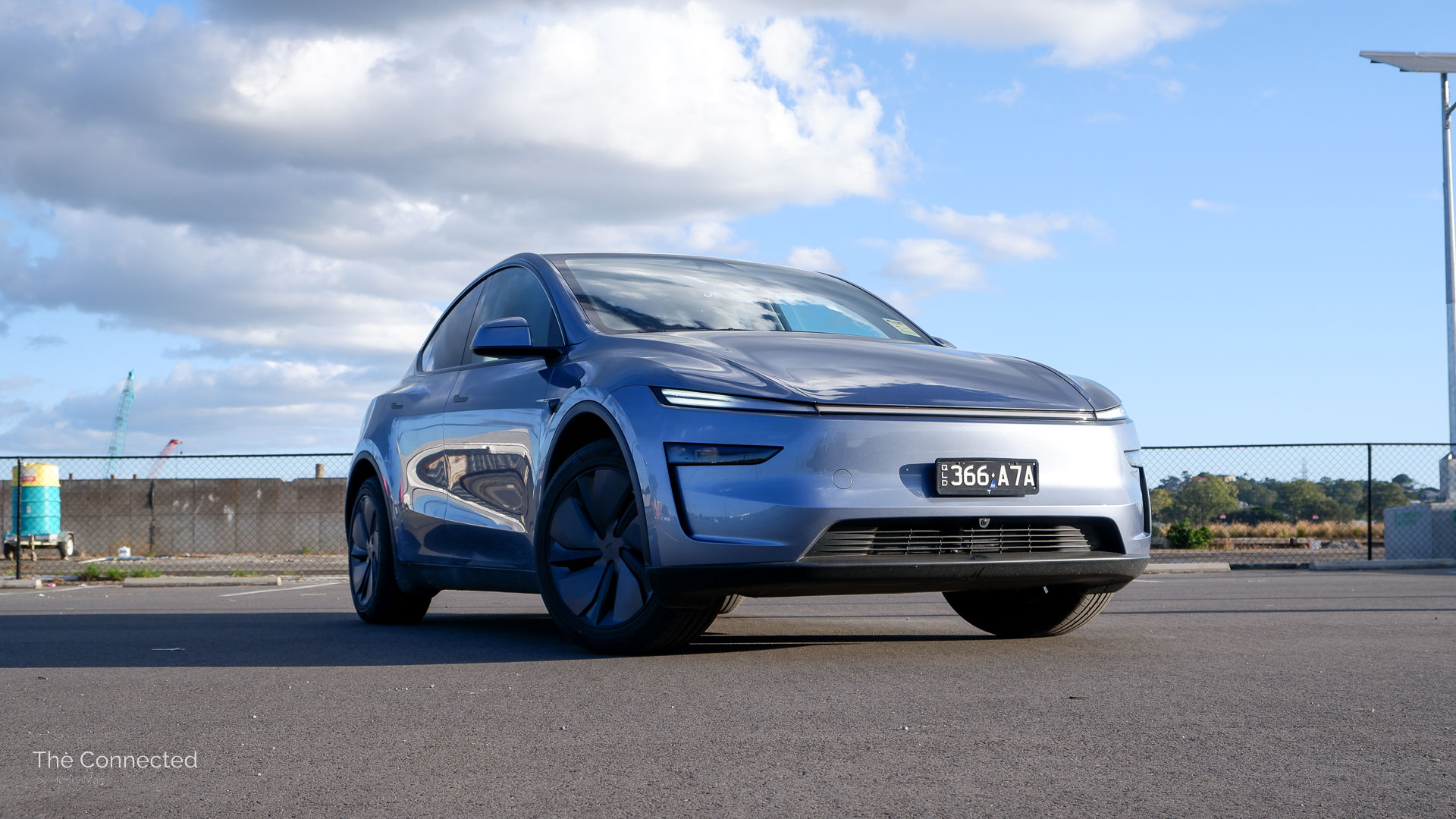
The refreshed electric SUV has gained a major overhaul across its front and rear with a Cybertruck- and Cybercab-esque front light bar as part of the LED daytime running lights, a reshaped bonnet, unique reflective rear light bar that glows onto the ground behind, and a more repairable three-piece tailgate.
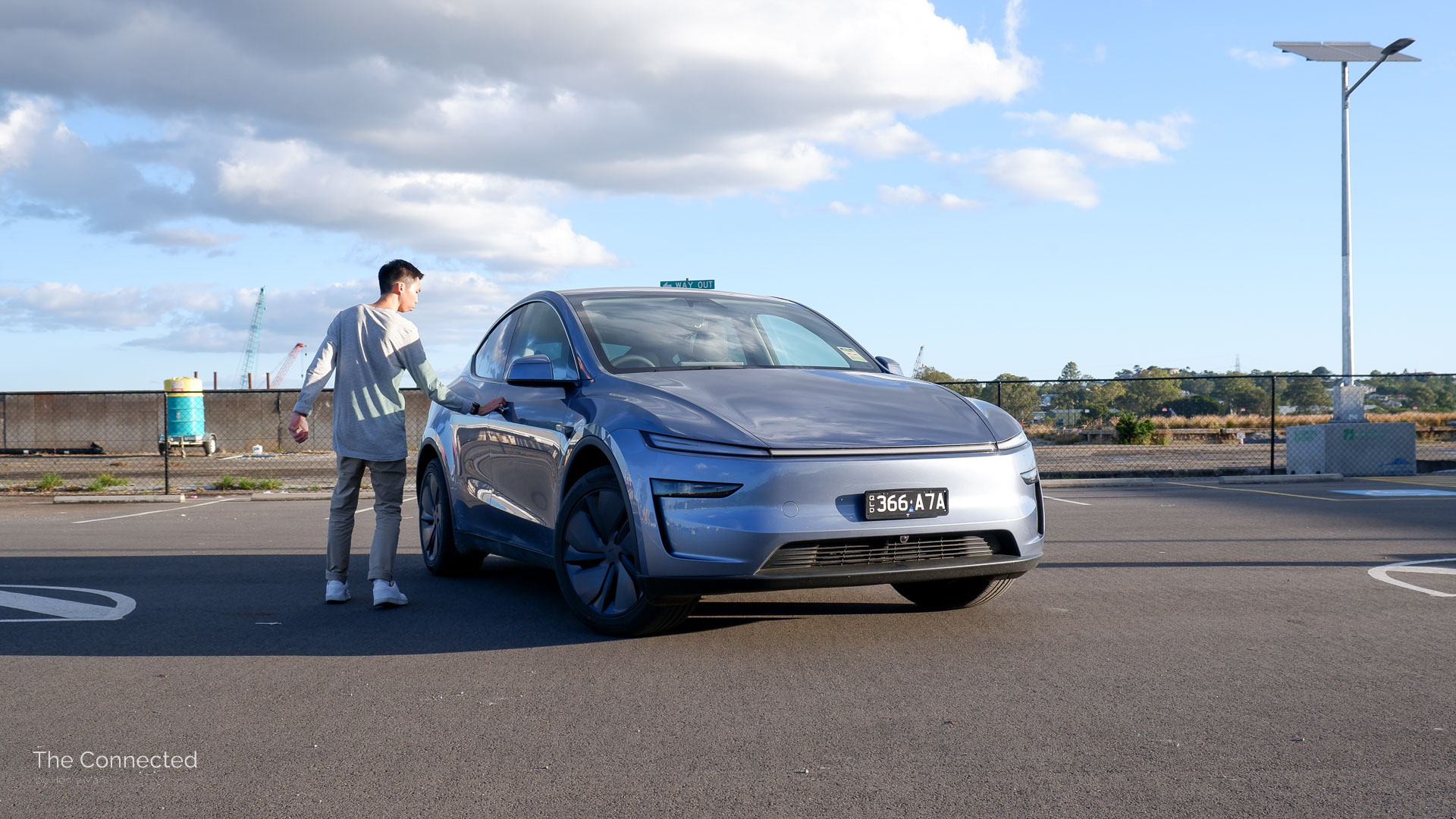
The new Glacier Blue exterior colour option (as pictured) is quite pale and, in some lighting conditions, looks silver-ish. It’s not cheap, though, at $2300 extra.
Meanwhile, its interior feels genuinely premium with an extensive update in line with the Model 3 sedan, even though it can feel a little basic because of its minimalism.
There are more soft-touch fabric materials across the dashboard and doors, redesigned centre console with metal trims, and a wrap-around ambient lighting strip (even though it doesn’t extend into the doors as much as the Tesla Model 3).
These add to the full carpeted door bottle holders, soft-touch lower door cards, carpeted boot that stretches to the side edges, and a felt-lined glovebox – quality details that Volkswagen once led.

Three-level front seat ventilation now finally feature on the Model Y, alongside a new dual-zone climate control system which can swing the electronic vents and a driver-only function as per Hyundai and Kia electric cars.
The Model Y still exclusively has a High-Efficiency Particulate Air (HEPA) filter and a Bioweapon defence mode, unlike its Model 3 relation.
There are some Tesla design approaches that just make sense.
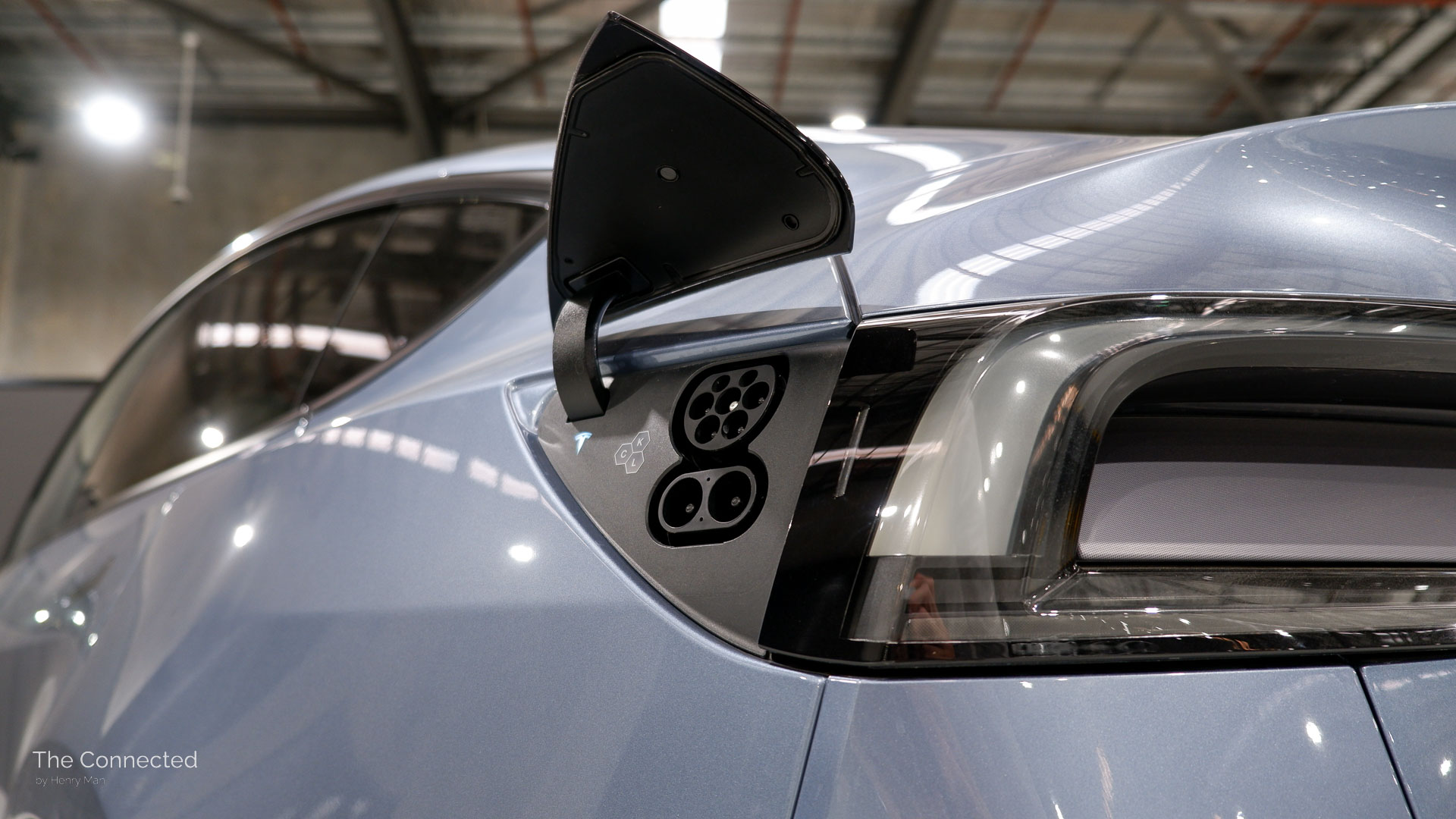
The magnetic sun visor clip means you don’t need to agonisingly pull it while driving just to block the sun on the side, the turning indicators are smart and don’t cancel out as you turn to reverse into a parking space, and the charging port is accessible at the outer edge of the rear-left quarter side without any flimsy plastic caps.
Additionally, the refreshed Model Y continues to offer a spacious family-friendly interior with an 822-litre boot space (which sounds generous as Tesla measures up to the roof), a deep underfloor well, large 116-litre frunk (now with a drain plug), and cavernous centre console storage.
The rear row is spacious, with the bench now electrically reclining and folding with a button press, and a large fixed panoramic glass roof that’s even more tinted than before with no heat felt in my short afternoon test drive.

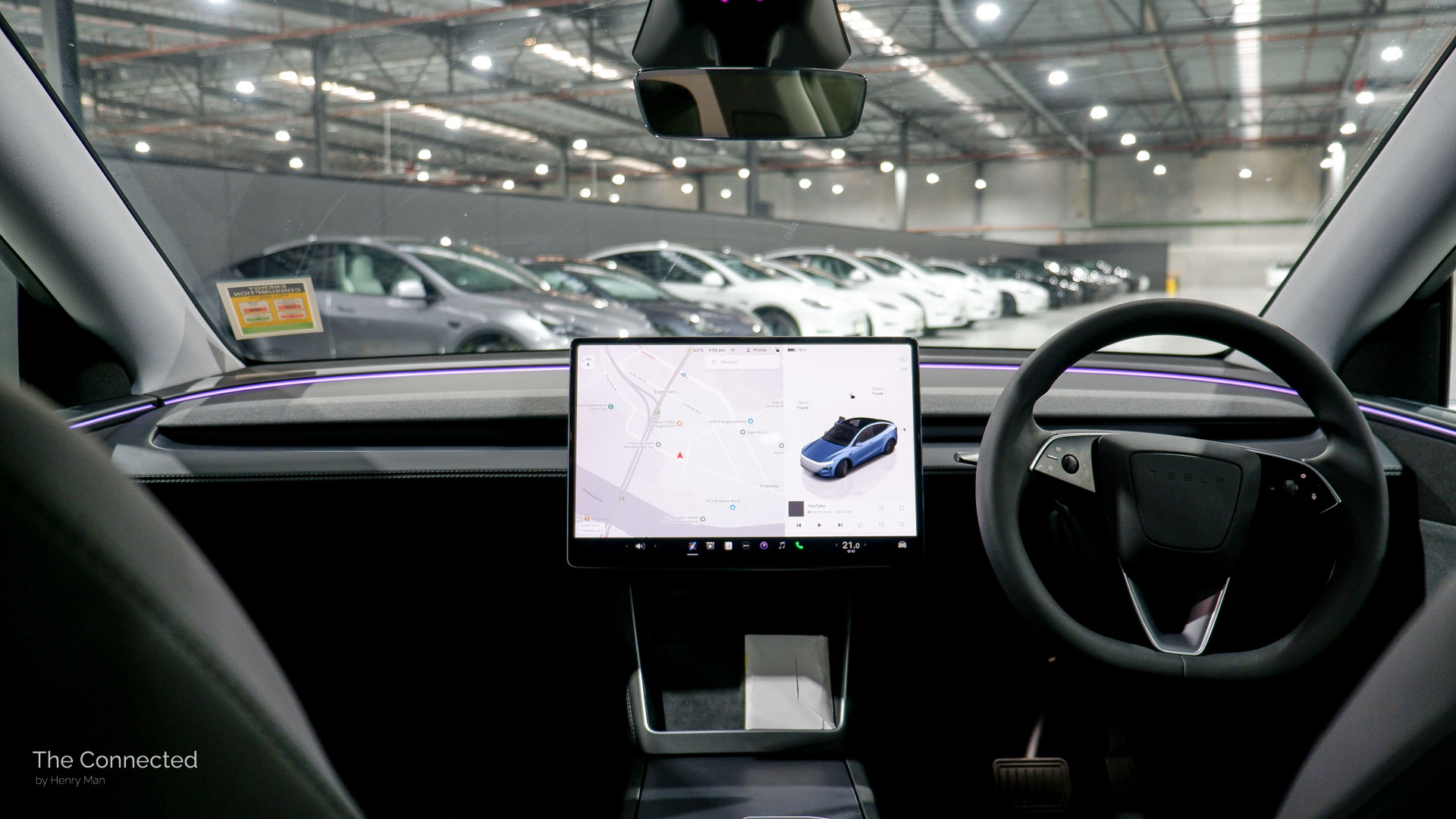
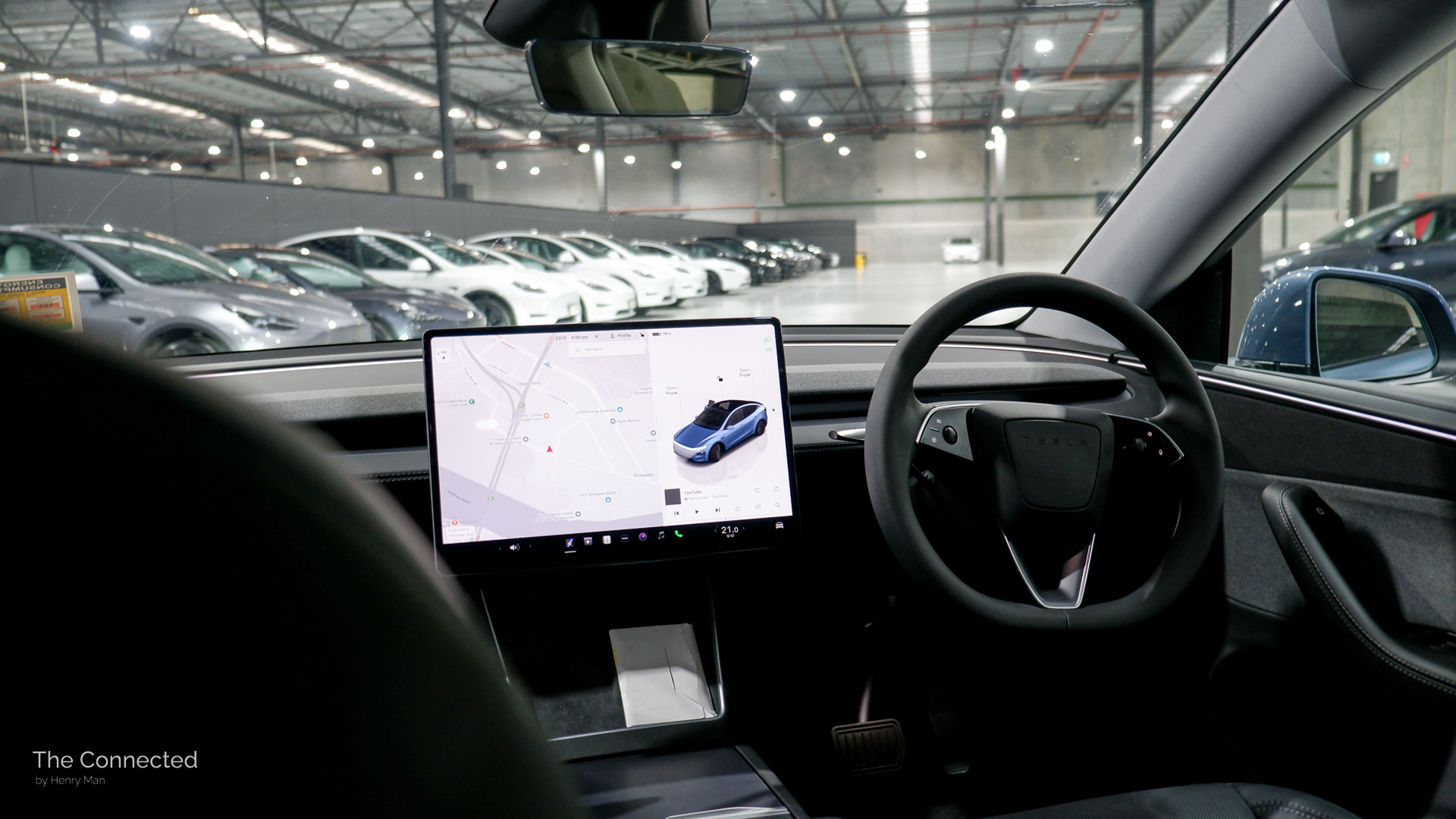
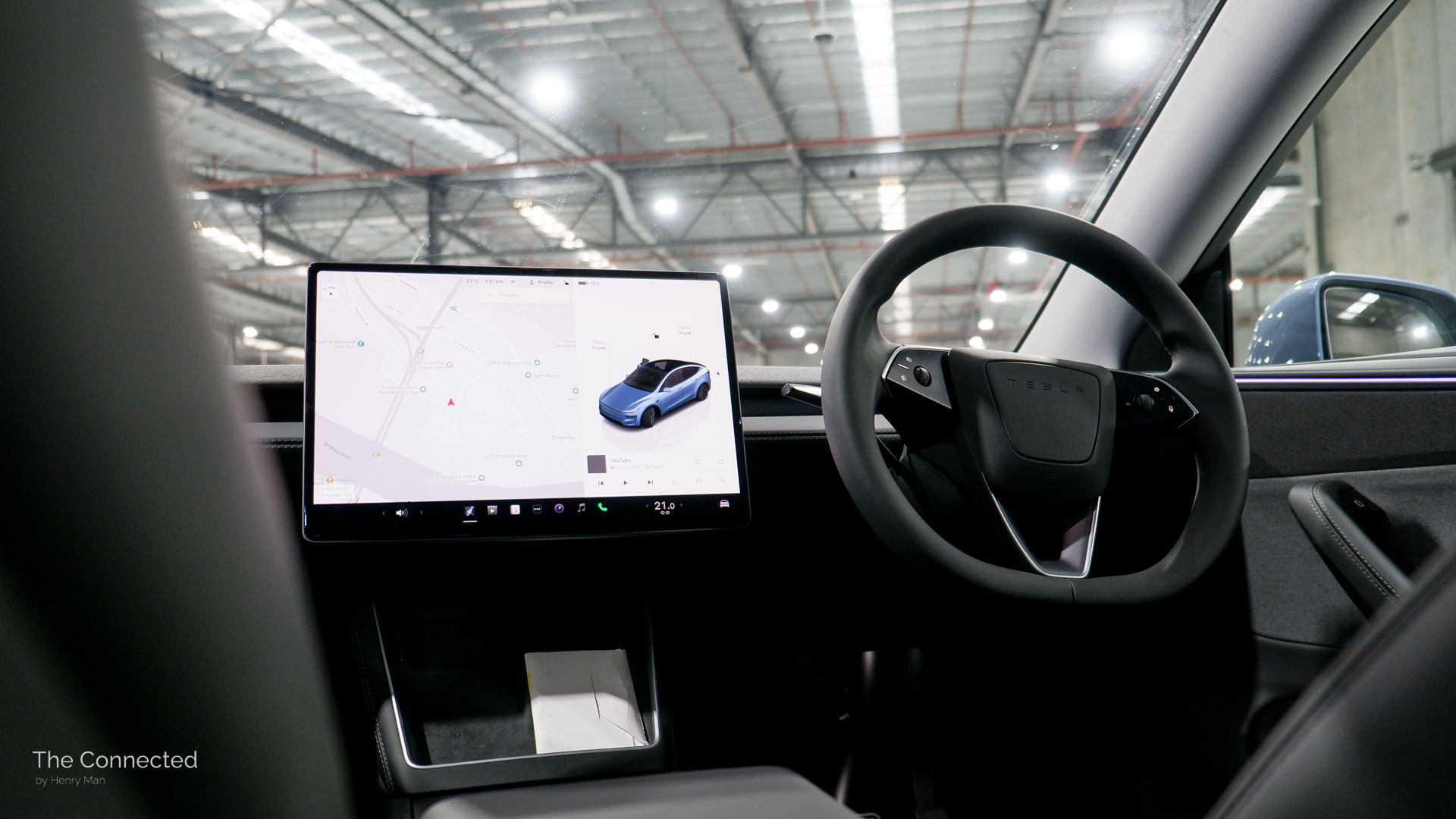
Importantly, the narrower-bezel 15.4-inch central touchscreen is the centerpiece of the Tesla SUV – with modern-looking and super responsive software that feels Apple-like.
It’s packed with features including music and video streaming apps, built-in 24/7 360-degree dashcam recording, and it still remains the only brand that provides constant and meaningful over-the-air software updates.
The new front camera (with a washer) is very convenient to compensate for the hit-and-miss Tesla Vision visualisations, too.
The built-in Google Map based navigation also automatically plans Tesla Supercharging stops for those long trips, too – an underrated ‘range anxiety’ killer – while automatic brightness just works and it auto switches between light and dark modes, which can’t be said for some of its Chinese EV rivals.
While key vehicle functions – such as changing the mirrors, steering wheel, exterior lights and opening the tailgate – are buried within the display, it is easy to find those settings with a logical menu layout, persistent car visual with controls, and tactile physical steering wheel buttons and knobs that provide quick shortcuts.


Fortunately, the new Model Y also retains the turn indicator stalk. While it’s now a more basic stalk with one detent and no quick three-blink function, it is one key learning curve barrier that’s no longer needed as opposed to the refreshed Model 3.
What has changed, though, is the removal of the right drive selector stalk, with Tesla committing to swiping on the edge of the screen to switch between park, drive and reverse. It’s easy to learn and use, thankfully.
Crucially, the updated Tesla Model Y has further refined its ride and noise insulation – making it a more comfortable family car. Its suspension is compliant and controlled when going over bumps and manhole covers, but still has a sportier and firmer edge that matches its firm and very direct steering feel.
Even on the entry-level RWD, it provides plenty of push and instant full torque delivery from a standstill. The company doesn’t officially disclose its power figures, but reports suggest the single motor can produce up to 220kW of power and 420Nm of torque – impressive numbers.
Tesla’s claimed on-paper energy efficiency continues to be industry-leading, now improved at just 13.9kWh/100km for the Model Y RWD, with a charge limit-free lithium-iron-phosphate (LFP) battery pack, and lenient servicing requirements.
A computer on wheels.
Unfortunately, the new Model Y continues to bring some signature Tesla approaches that are an acquired taste.
The high-tech and minimalist focus means nearly all critical functions are controlled via the single 15.4-inch screen, which can take some learning – with no Apple CarPlay or Android Auto option – even though Tesla’s own software is one of the most intuitively designed and user-friendly out there.
Tesla still doesn’t offer a dedicated driver instrument cluster nor a head-up display on the new Model Y either.
Looking at the side of the central touchscreen isn’t a dealbreaker with a clear and bold speed readout, but it’s again another unnecessary adjustment for the driver and means looking inside the vehicle instead of keeping your eyes on the road ahead.

Yet, the American automaker has introduced a new 8.0-inch rear seat central screen that provides more control for passengers, including sliding the front passenger seat, playing music, watching video streaming apps, and playing arcade games.
However, it is a bit awkward to watch as it’s low down near the floor, the glass is easily kickable, and it introduces electronically-directional air vents to the rear which can be tedious to adjust as per the front row.
Similarly, the Model Y still doesn’t offer a physical sunblind for the panoramic glass roof from the factory, although there are plenty of aftermarket accessories out there.
Getting in the car also requires a bit of hand gymnastics due to the flush matter black door handles with no light illuminating it at night (not ideal when your hands are full), although a growing number of rival electric SUVs don’t have auto pop-out handles either.
While Tesla’s camera-based visualisations are very impressive – even showing the traffic lights, the marked road lines and whether a vehicle’s indicator lights are on – it can be distracting and isn’t always accurate.
Despite the eight-camera array, the new Model Y still doesn’t offer a proper 360-degree camera system due to the lack of ground-facing ultra-wide cameras underneath the wing mirror and no proper sonar parking sensors (instead relying on less dependable camera estimations).
Furthermore, while the new Model Y looks much more attractive than before, it can feel a little generic and similar to its rivals – namely the Xpeng G6, Leapmotor C10 and Hyundai Kona Electric.
Tesla Australia also continues to back its EVs with a shorter four-year/80,000km vehicle warranty (whichever occurs first) when most car brands offer five years, unlimited kilometres. Kia Australia can go up to seven years with no distance limit, MG Motor Australia offers 10 years/250,00km, and Nissan Australia provides up to 10 years/300,000km.
At least Tesla’s battery warranty matches the industry standard, at up to eight years/160,000 km for the RWD or eight years/192,000km for the Long Range – both with a minimum 70 per cent battery health retention promise.
You’ll also need a larger wallet to afford customising the Model Y, with exterior paint colours costing from $2300, larger 20-inch Helix wheels priced at $2400, the more premium-feeling black and white interior at $1500, and Enhanced Autopilot (which brings automatic parking, auto lane change assist, and more) for a whopping $5,100.
Would I pick the 2025 Tesla Model Y RWD?
Tesla may be the most divisive car brand on the planet, but the new Model Y is one of the best EVs on sale. Period.
Despite my very limited time with the vehicle where tech, driving, efficiency and charging couldn’t be properly tested and reviewed, initial impressions are good with the Model Y’s more attractive design, premium minimalist interior, and easy to use tech.
Unfortunately, the lack of a driver instrument display remains the key omission, the rear glass is too narrow, and the options are expensive. The shorter vehicle warranty, the lack of actual parking sensors, no glass roof sunblind and less-accessible flush door handles are grating, too.


I’d pick the entry-level Model Y RWD which still represents great value even with a $3000 price rise, starting from $58,900 before on-road costs, with most features included as standard and a daily charge limit-free LFP battery.
Australian deliveries for the standard RWD and Long Range are due to start from June.
Its price and equipment directly competes with Chinese brands including the BYD Sealion 7, Deepal S07 and Xpeng G6, in addition to the Volkswagen ID.4, Cupra Tavascan and Kia EV5 – but it’s way cheaper than the the Hyundai Ioniq 5, Toyota bZ4X and Polestar 4.
If you can overlook the politics, the facelifted 2025 Tesla Model Y is just an excellent electric SUV.
Photographs by Henry Man. And thanks to Tesla for letting us shoot inside the Pinkenba facility!
READ MORE: 2025 Deepal S07 review: First drive
READ MORE: 2025 Kia EV5 review
READ MORE: Living with the 2024 Nissan Qashqai Ti e-Power
Pros:
- Industry-leading tech
- Improved ride and comfort
- Premium interior, more attractive design
Cons:
- Limited rear visibility
- No driver instrument display
- Expensive options, short vehicle warranty
About the Author.
Henry Man is an independent content producer passionate about the intersection of technology and transportation.
The former automotive journalist is focused on producing critically-detailed vehicle reviews, and unique short-form content. Learn more.


 The Connected by Henry Man