
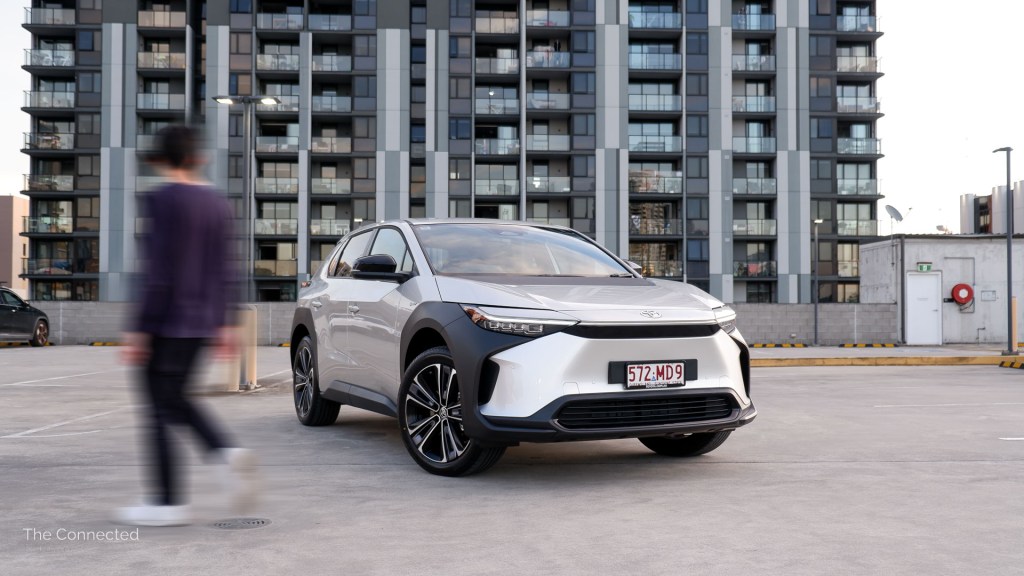
The Toyota bZ4X is a monumental moment for the world’s biggest automaker, but it’s not the car that’s a standout.
The bZ4X is Toyota’s first mass-market full battery-electric vehicle.
Released in Australia in early 2024, the bZ4X is essentially the EV equivalent of the popular Toyota RAV4 medium SUV.
It’s a significant step for the globally popular carmaker – rooted with a reputation for reliability – when it has long focused on hybrids and hydrogen fuel-cells.
Is the Toyota bZ4X the one that will convince Australians to make the electric switch? I tested the base two-wheel drive (2WD) to find out.
NOTE: The press vehicle was provided by Toyota Australia for a 13-day independent evaluation. Free public charging under the Chargefox network was provided – but we have no commercial arrangements with the company and it had no editorial control.

Pros.
+ It’s a Toyota EV
+ Long battery warranty, cheap servicing
+ Impressive energy efficiency
+ Faultless safety assists
+ High ground clearance
Cons.
– High price compared to rivals
– Firm and fidgety ride
– Basic interior quality
– Hit-and-miss tech
– Better to wait for the facelift
Vehicle tested:
| Model | 2025 Toyota bZ4X |
| Variant | 2WD |
| Starting price | $66,000 before on-road costs |
| Exterior colour | Silver Rush (+$587) |
| Interior colour | Black SofTex and fabric |
| Country made | Japan |

Design and quality.
Forget about the stereotypes of Toyota; the bZ4X is a stylish electric car with a few unique quirks.
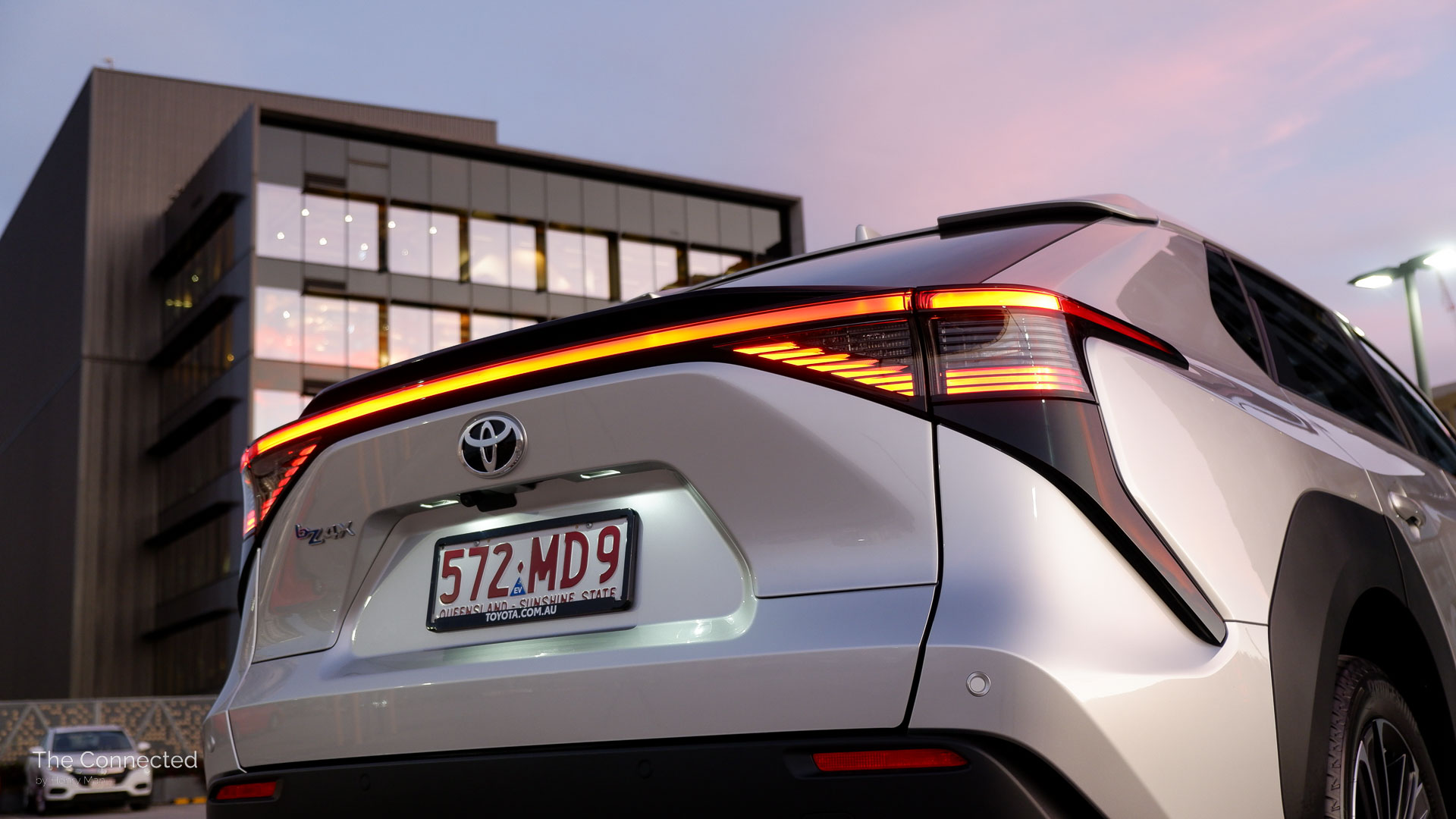
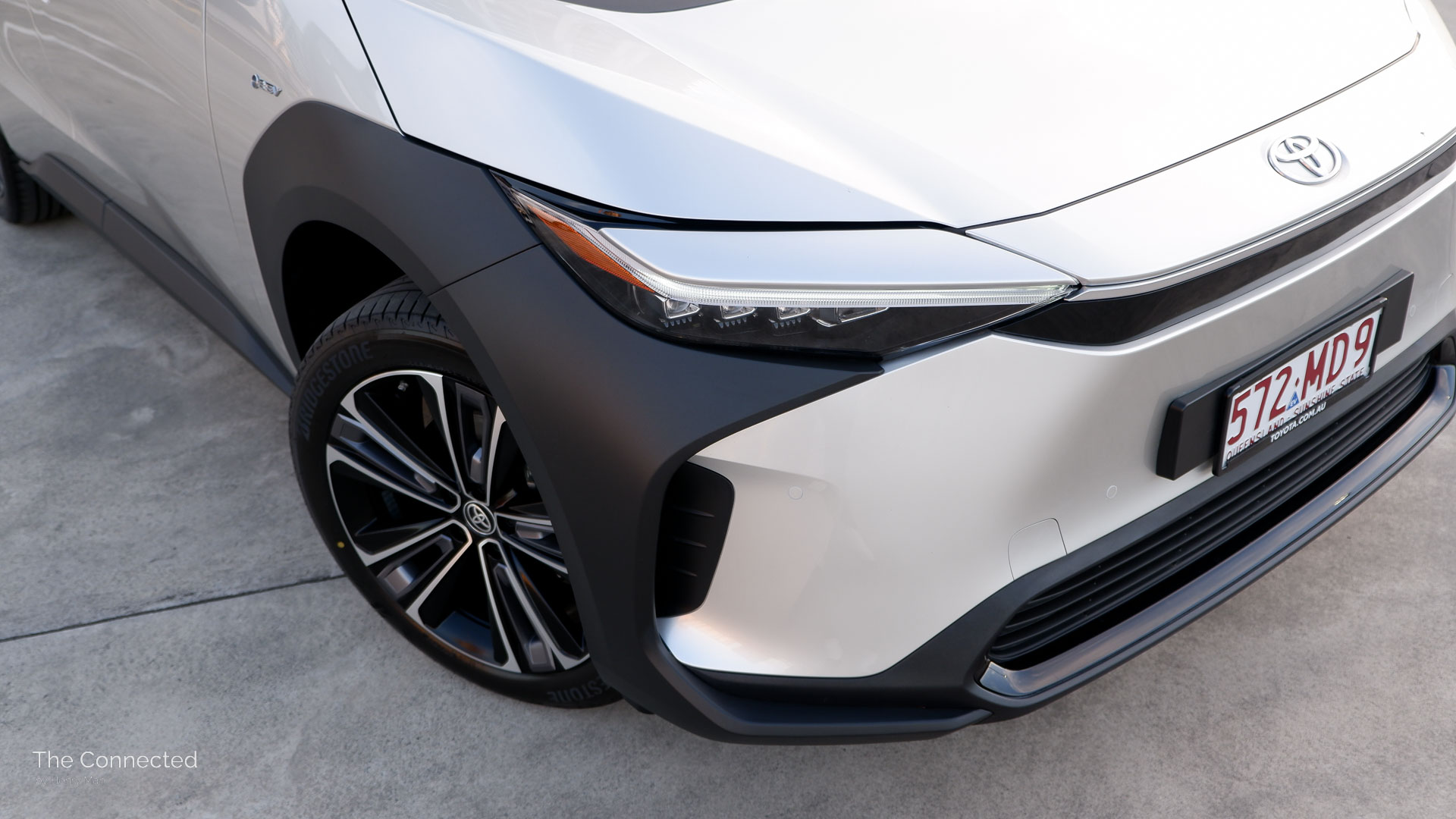
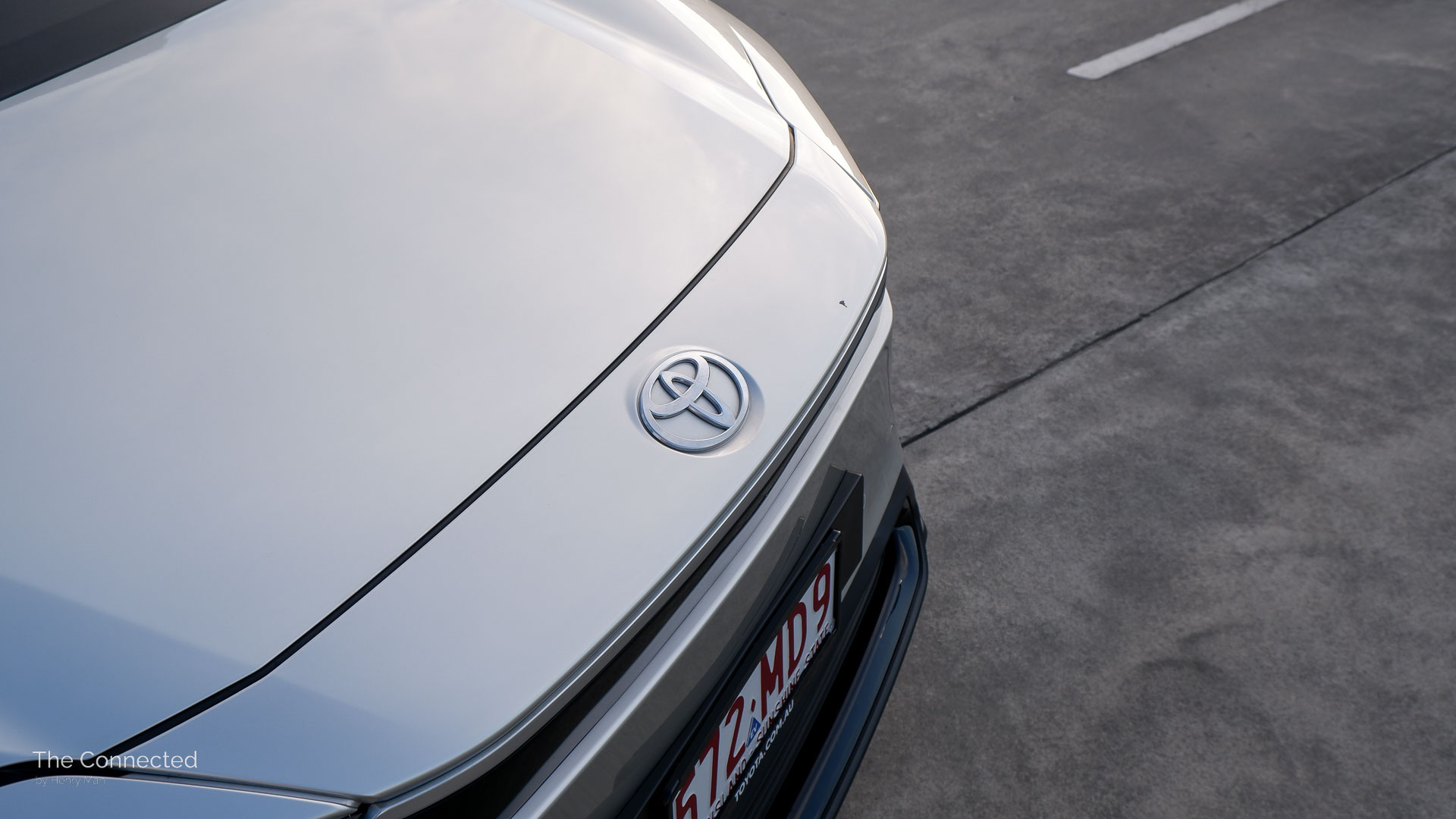
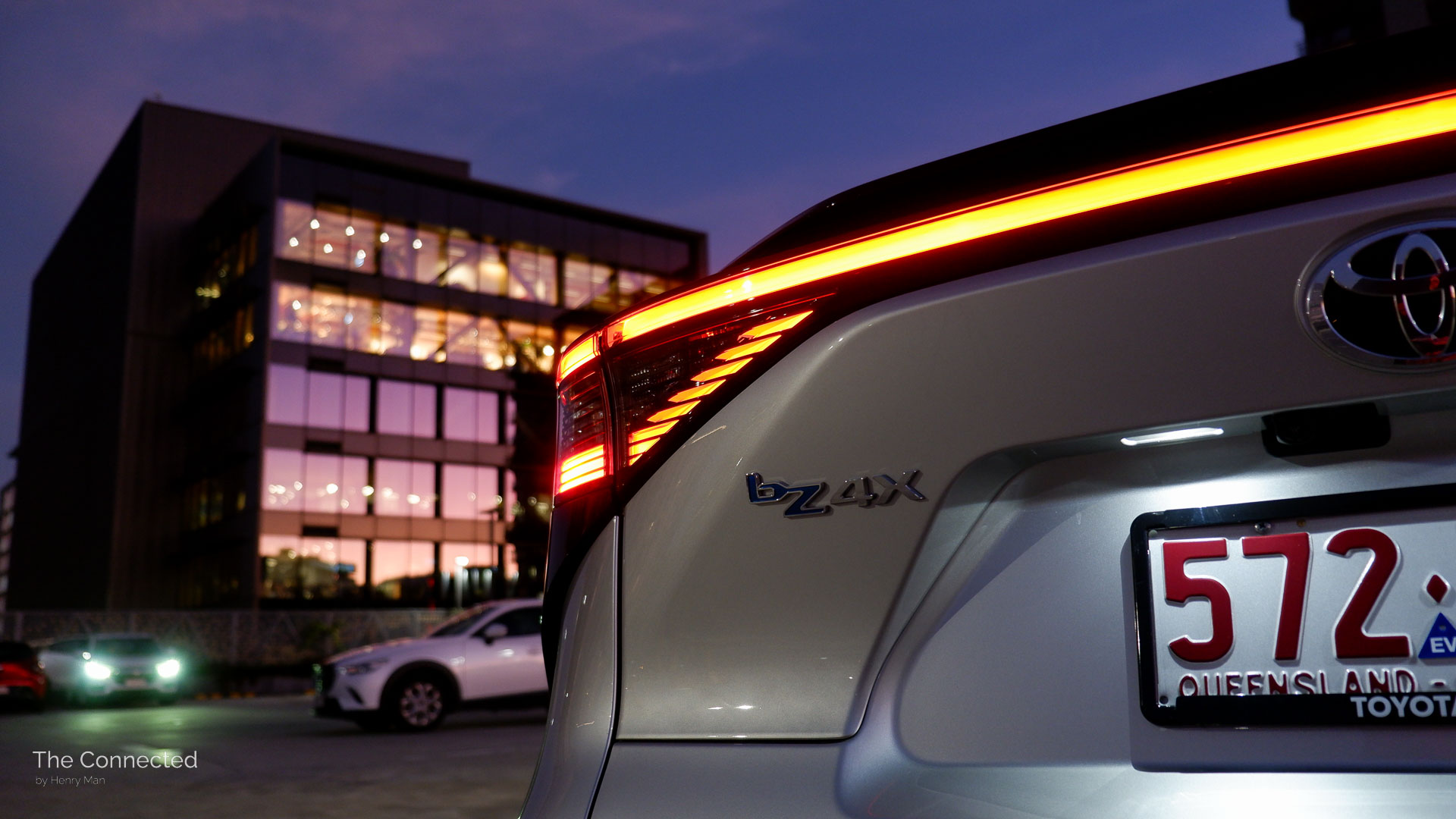
In line with the latest Toyota CH-R and Camry, the bZ4X brings a modern exterior with distinctive thin LED headlights and a tail-light bar, a sleek coupe-style sloping roof, and large 20-inch alloy wheels as standard.
While the plastic cladding around the wheel arches are very prominent, joins the headlights and even features on the bonnet on the base 2WD variant, it is undoubtedly practical.
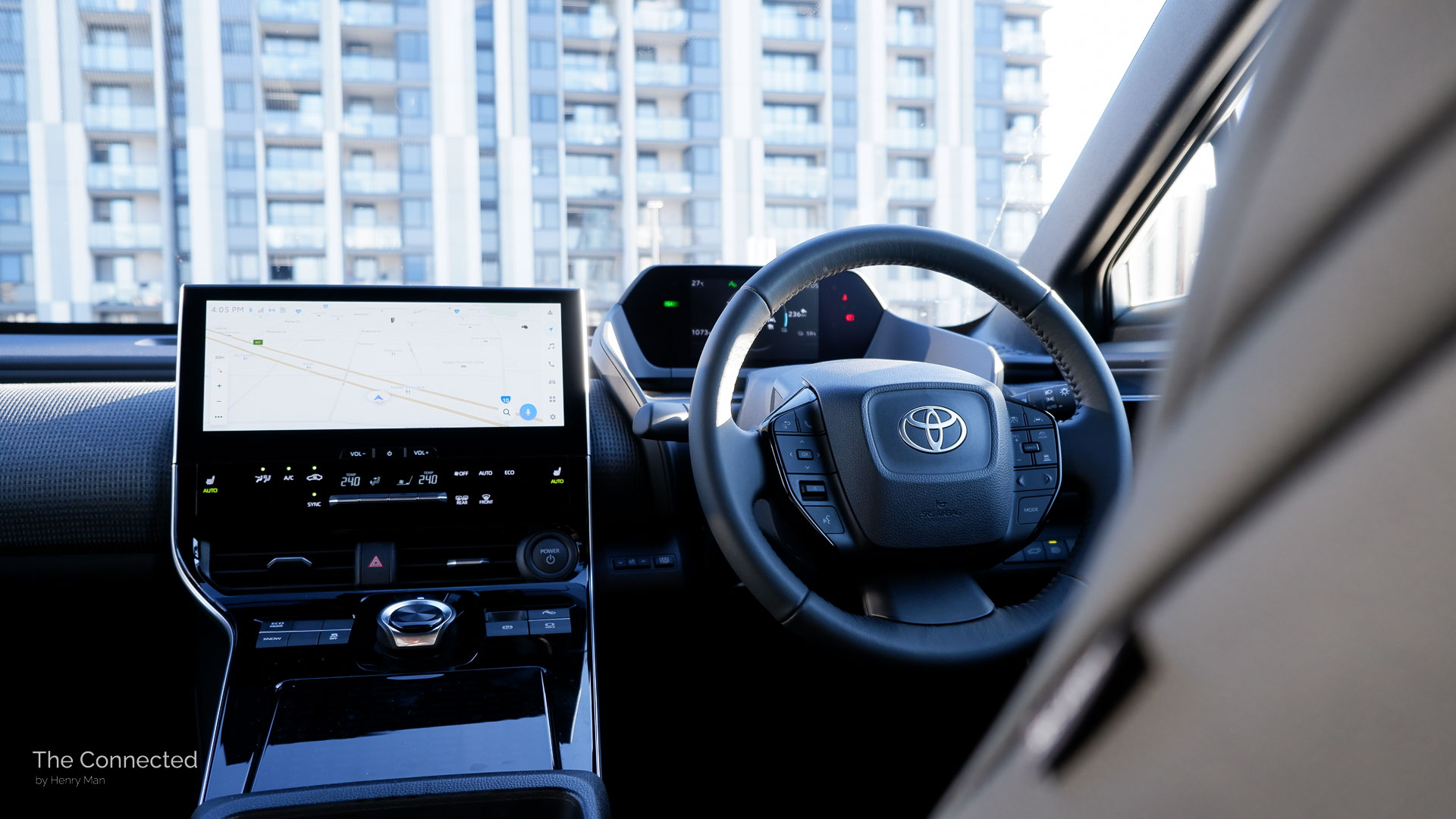
However, while the Toyota bZ4X’s interior is well-designed with a quirky cockpit-style instrument cluster set far ahead and a small steering wheel, interior quality is sub-par for its ~$70K drive-away asking price.

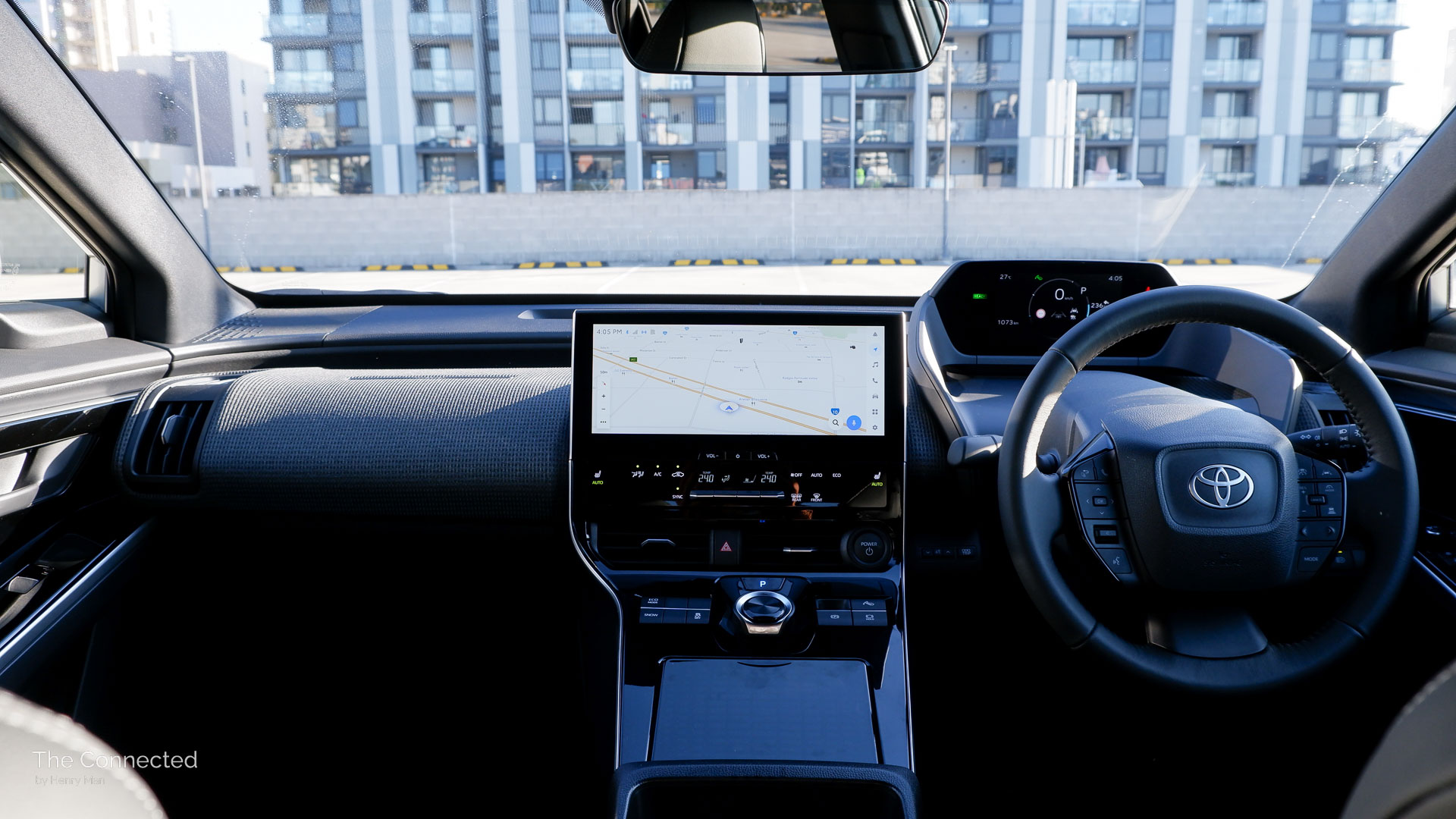

The interior pillars and parts of the centre console are clad in rough and cheap plastic, the trims around the instrument display are firm and flimsy, two centre console storage areas aren’t carpeted so the keys often slide and rattle around the plastic when driving, the carpet on the undertray and armrest cubby are loose fitting, and the fabric dashboard feels slightly low-rent.
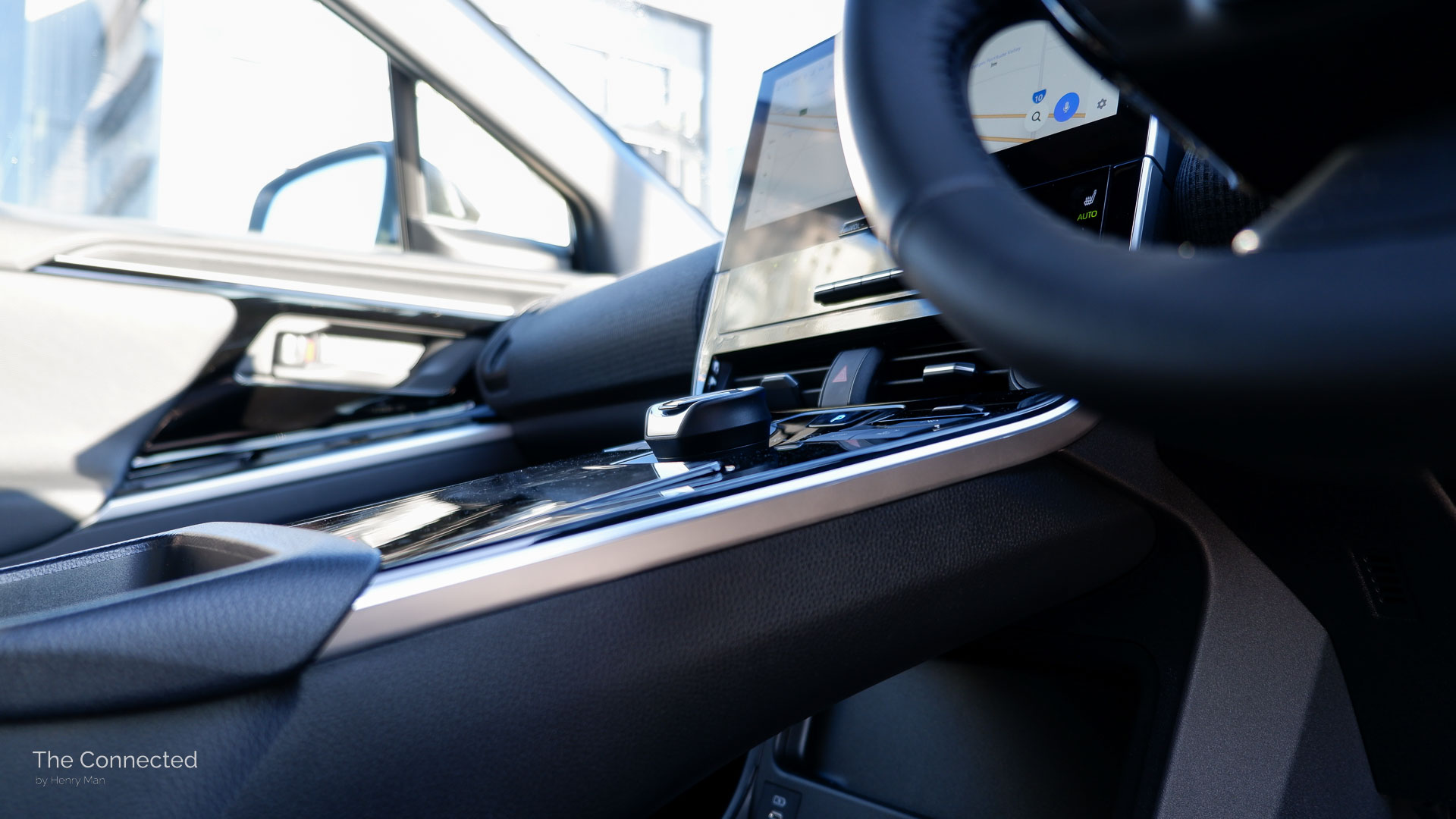
The Japanese brand has also applied gloss black a bit too liberally with the fingerprint-, dust- and scratch-prone surface implemented across the centre console and around the door window switches.
The refreshed bZ4X is expected to bring a higher quality and more modern interior when it arrives later this year.
Practicality.
2025 Toyota bZ4X 2WD dimensions:
| Length x width x height | 4690 x 1860 x 1650mm |
| Wheelbase | 2850mm |
| Ground clearance | 182mm |
| Boot space (min) | 421-452 litres |
| Frunk space | N/A |
| Rear seat split fold | 60:40 |
| Child seat anchors | 2x ISOFIX and 3x top tethers |
| Air-conditioning system | Two-zone climate control with rear air vents |
The 2025 Toyota bZ4X is a practical and family-friendly EV, but isn’t as comfortable to sit at the back.
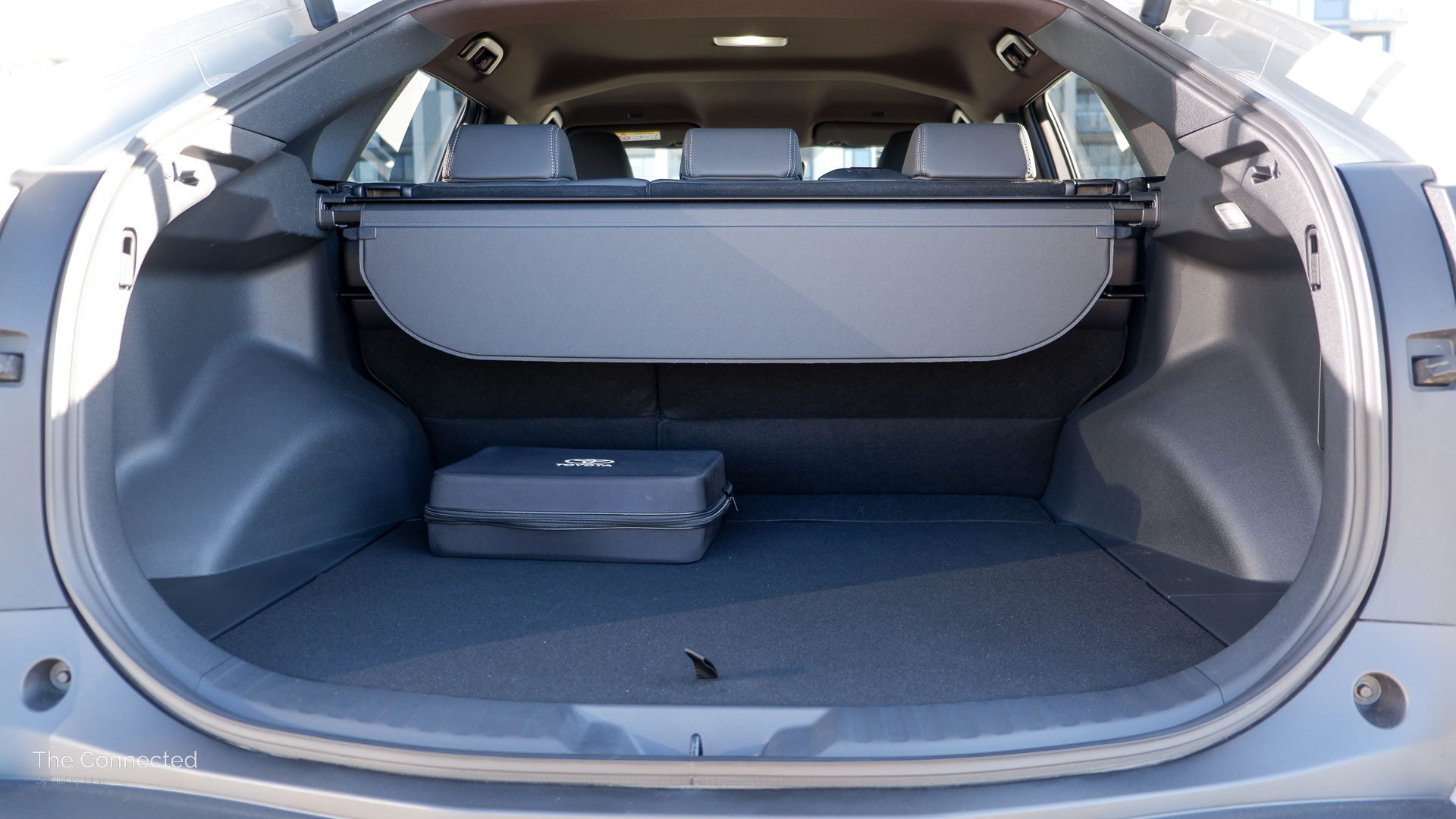
The Toyota electric SUV offers up to 452 litres of boot space, which is wide and deep despite less height clearance due to the sloping roof.
It lacks any bag hooks, but it’s offset by underfloor storage fit for storing charging cables and a couple of bags. The single LED light is on the dimmer side to illuminate the boot at night, though.
An electric tailgate is standard with a handy button that closes and locks all doors when you walk away with the proximity key, plus the boot itself has two buttons to unlock and lock the doors on the outside. A hands-free kick sensor is only available on the top-spec.
The Toyota bZ4X does not offer a frunk.


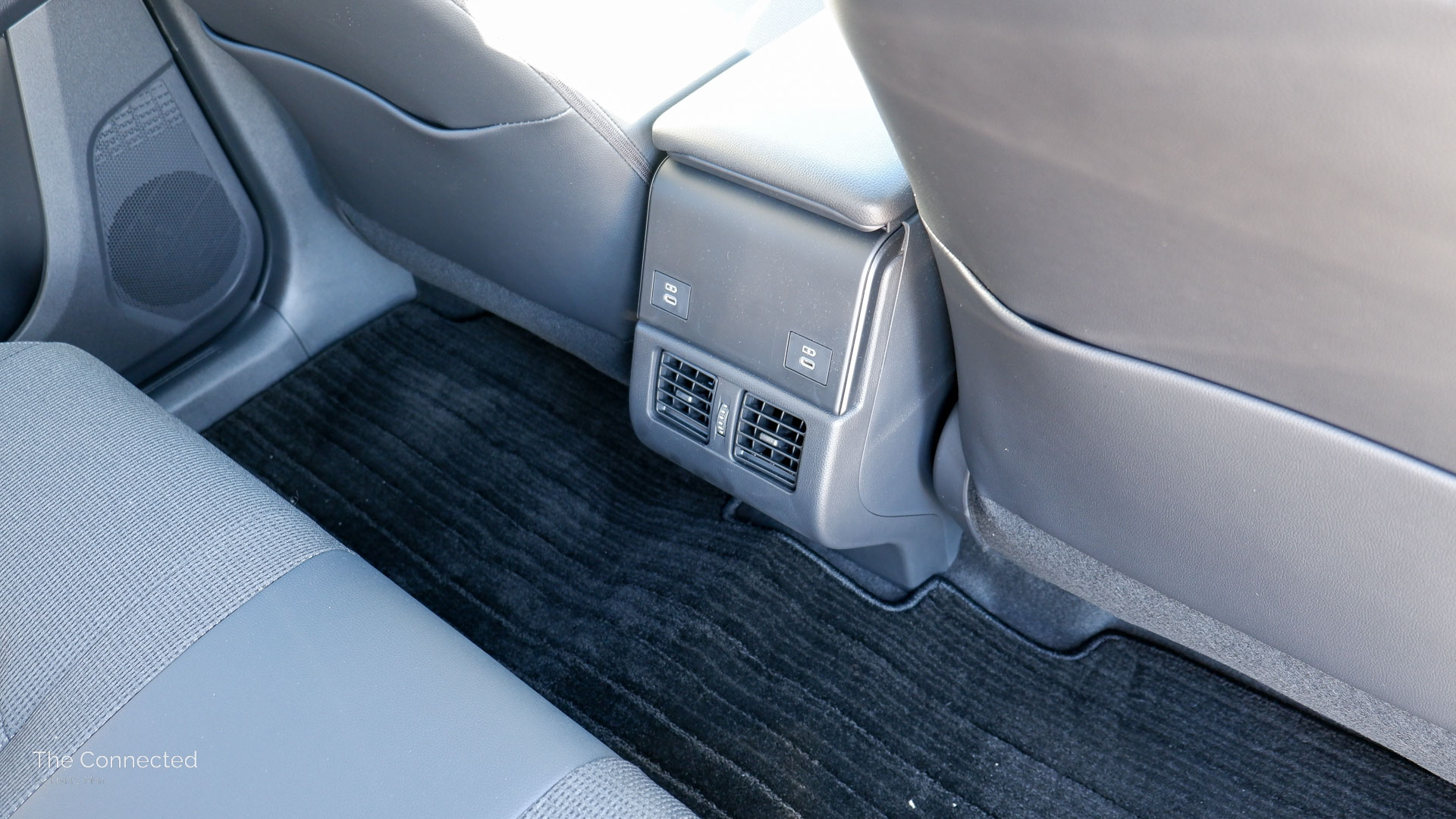
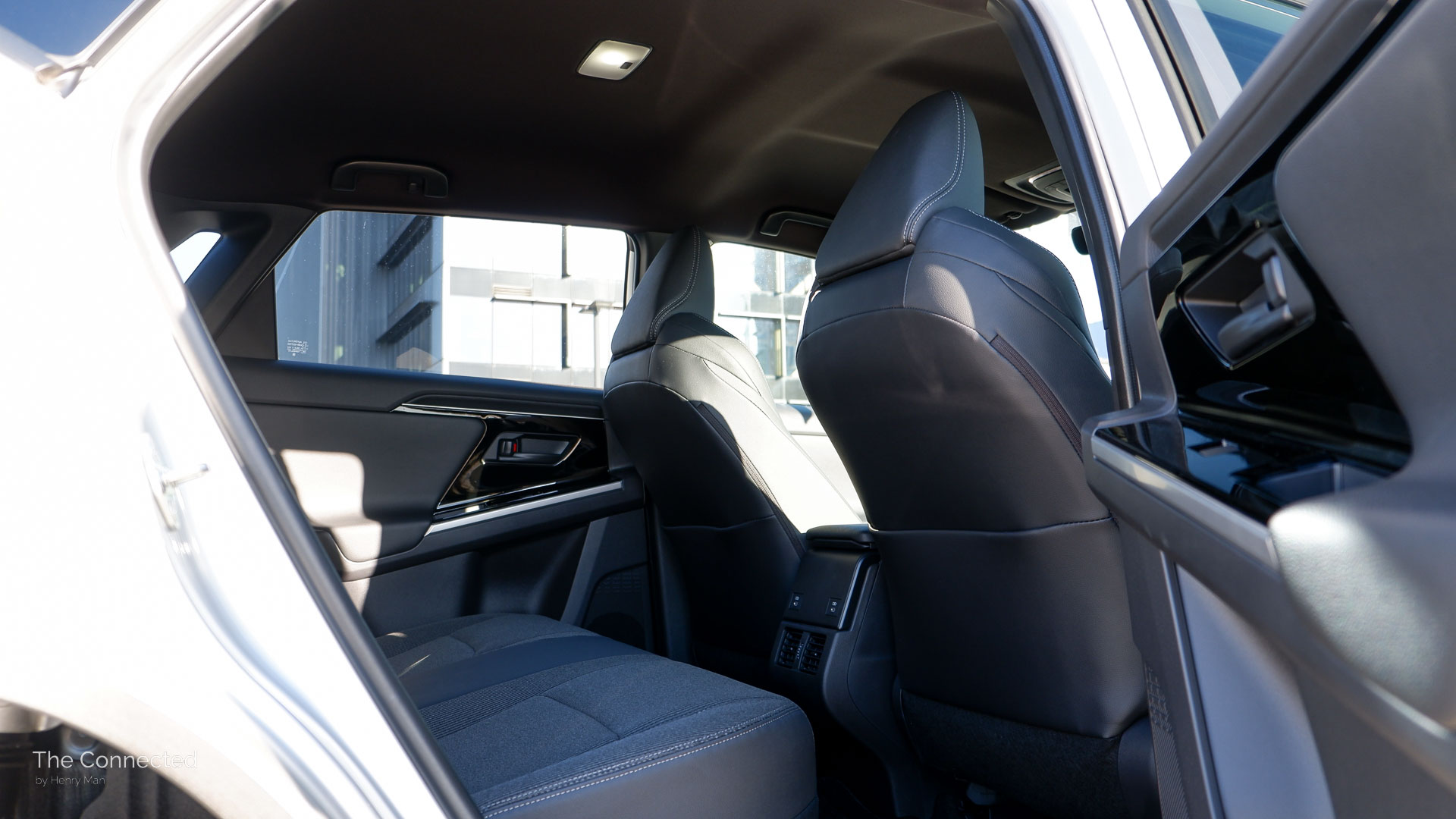
Based on the brand’s dedicated eTNGA EV platform, the medium crossover SUV brings a spacious rear row with plenty of legroom and headroom – but the floor is noticeably higher than its rivals, resulting in uncomfortably perched up knees.
Passengers can’t stretch their feet as much either with tight footroom underneath the front seats. There’s a minimal centre floor hump, too.
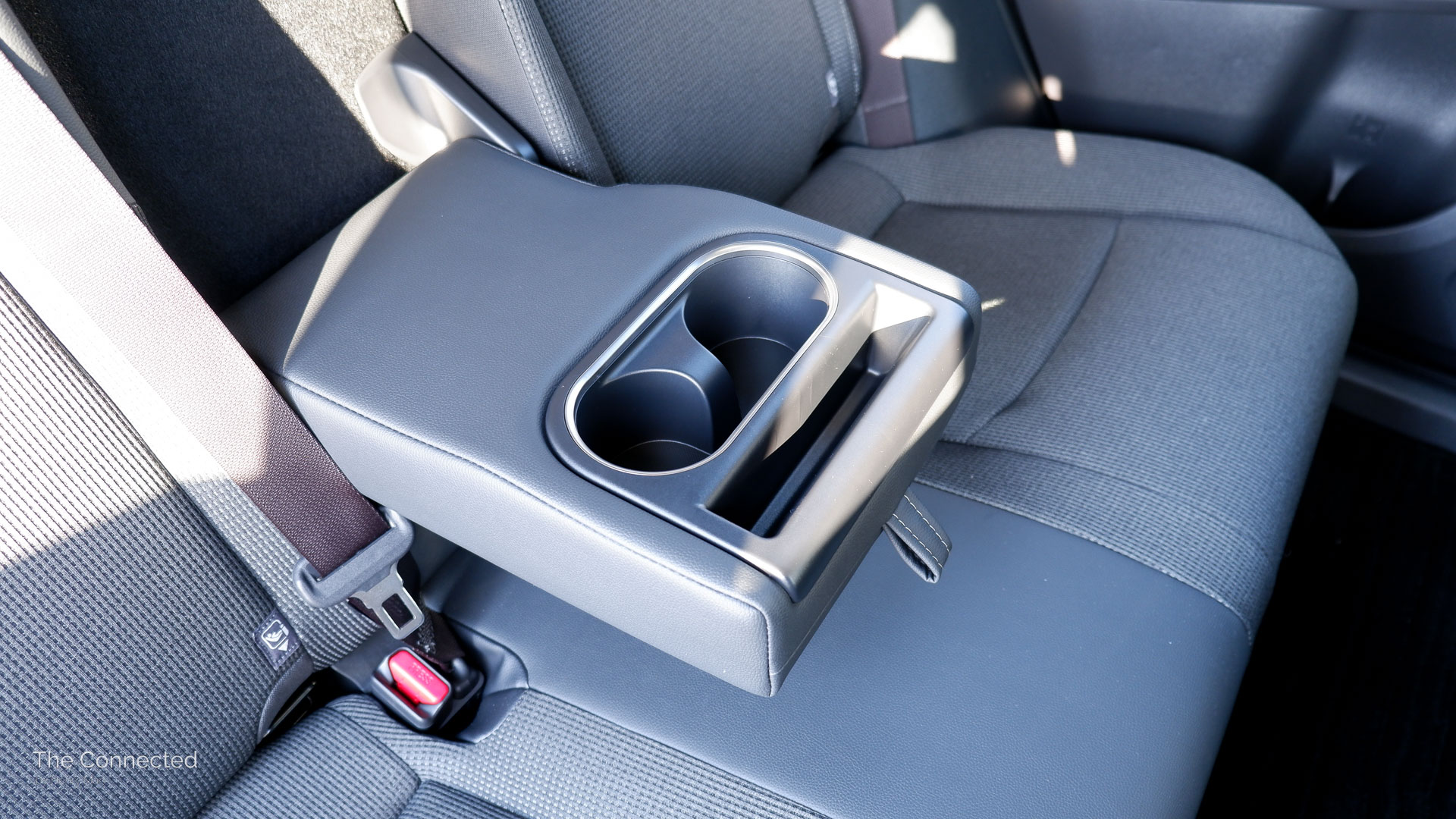
Occupants benefit from a fold-down centre armrest with two cup holders and a phone slot, rear directional air vents, two USB-C charging ports, tinted rear windows, and well-sized door bottle holders.
The interior can feel dark due to the black headliner, but LED lights illuminate the interior brightly across both rows.
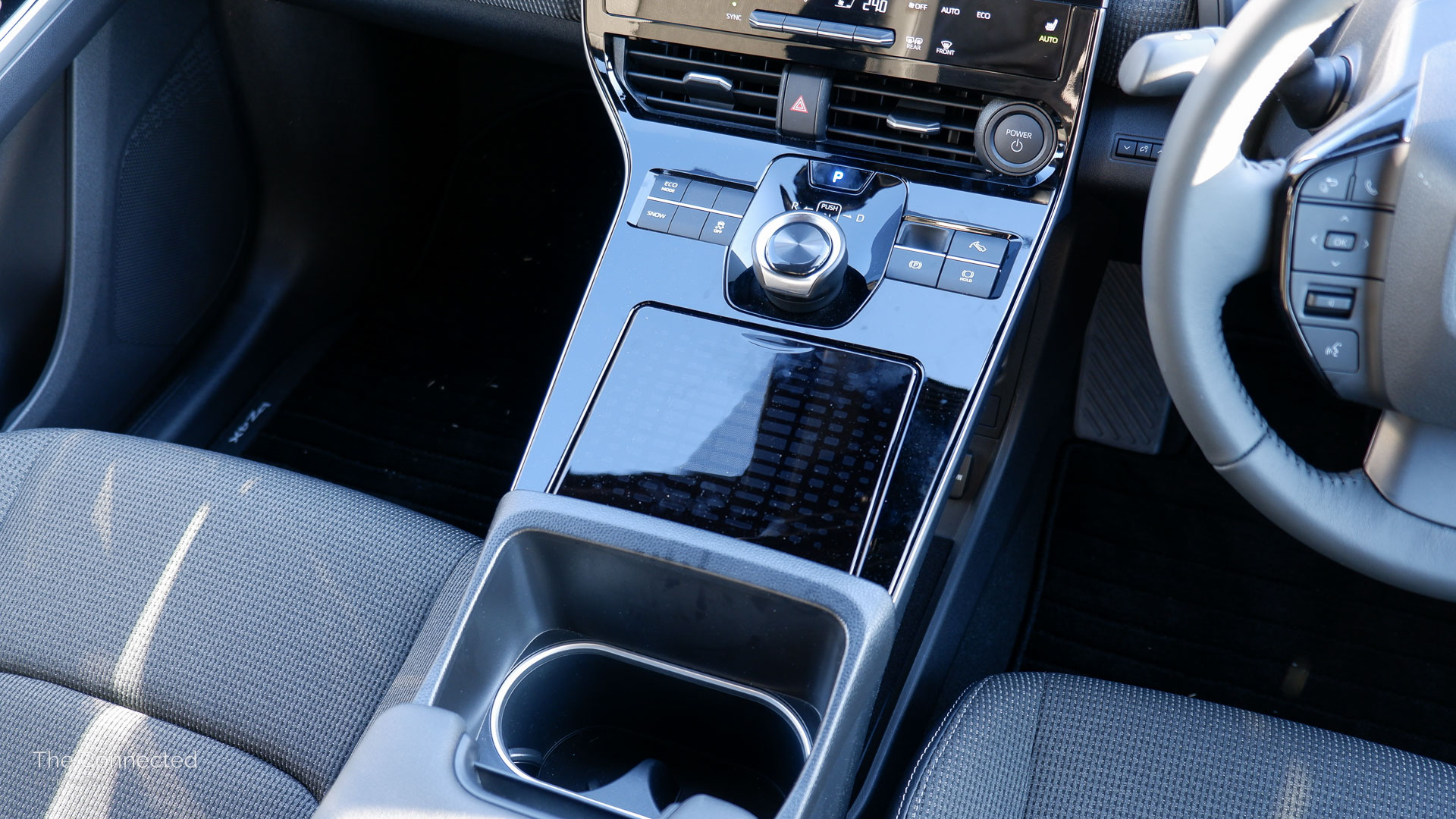


Up front, the bZ4X EV continues the practical theme with a raised centre console allowing clearer access to the open tray underneath, complete with a subtle LED light so you can see in the dark unlike the Kia EV6.
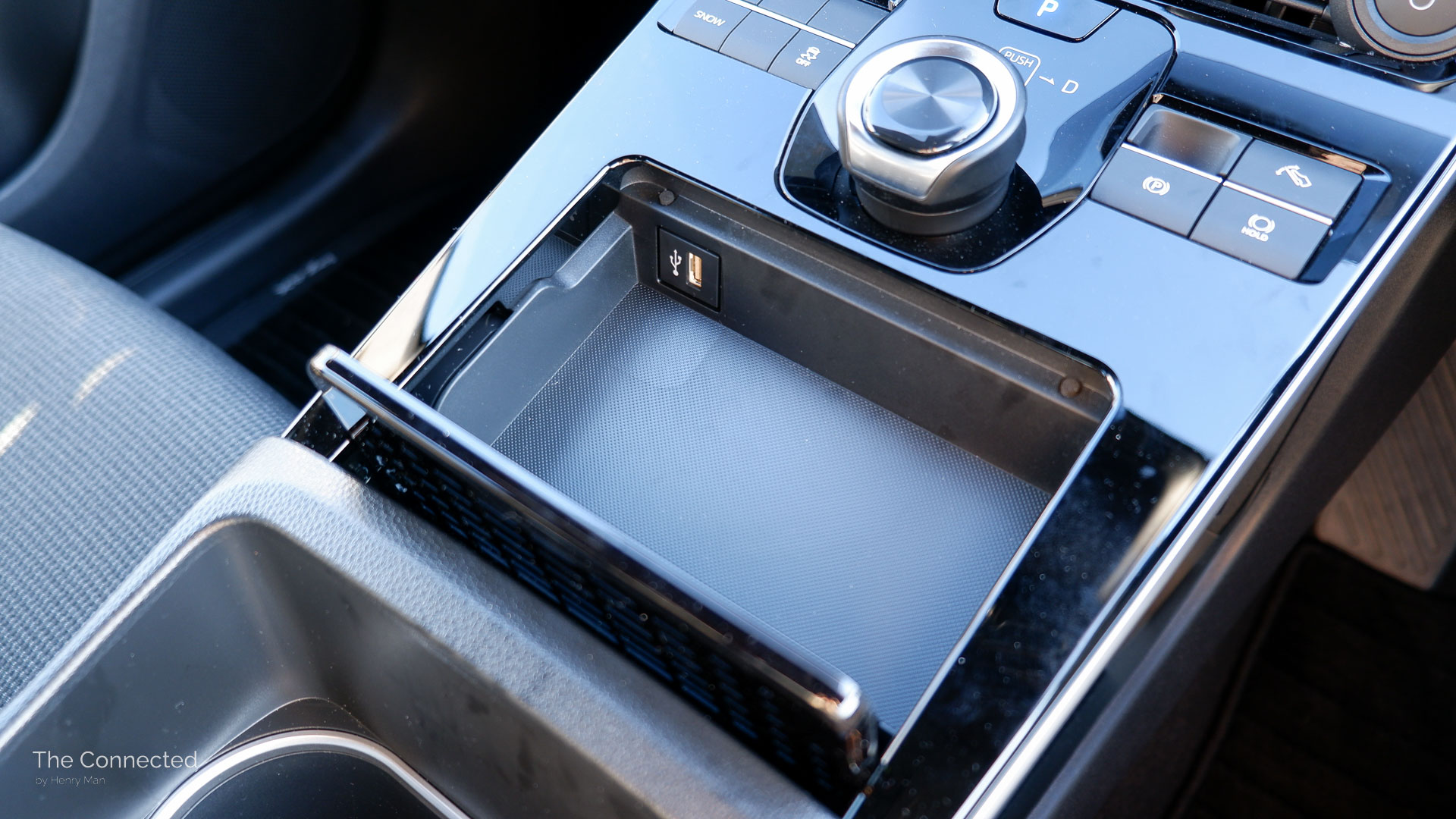
A square tray (which features Qi wireless charging on the top-spec) features a semi-transparent lid that allows you to, rather distractingly, see if your phone screen is on. The slot behind the cup holders are perfect for the car key as well.
Unfortunately, both don’t have a rubberised surface so any loose items often slide around and rattle when driving.
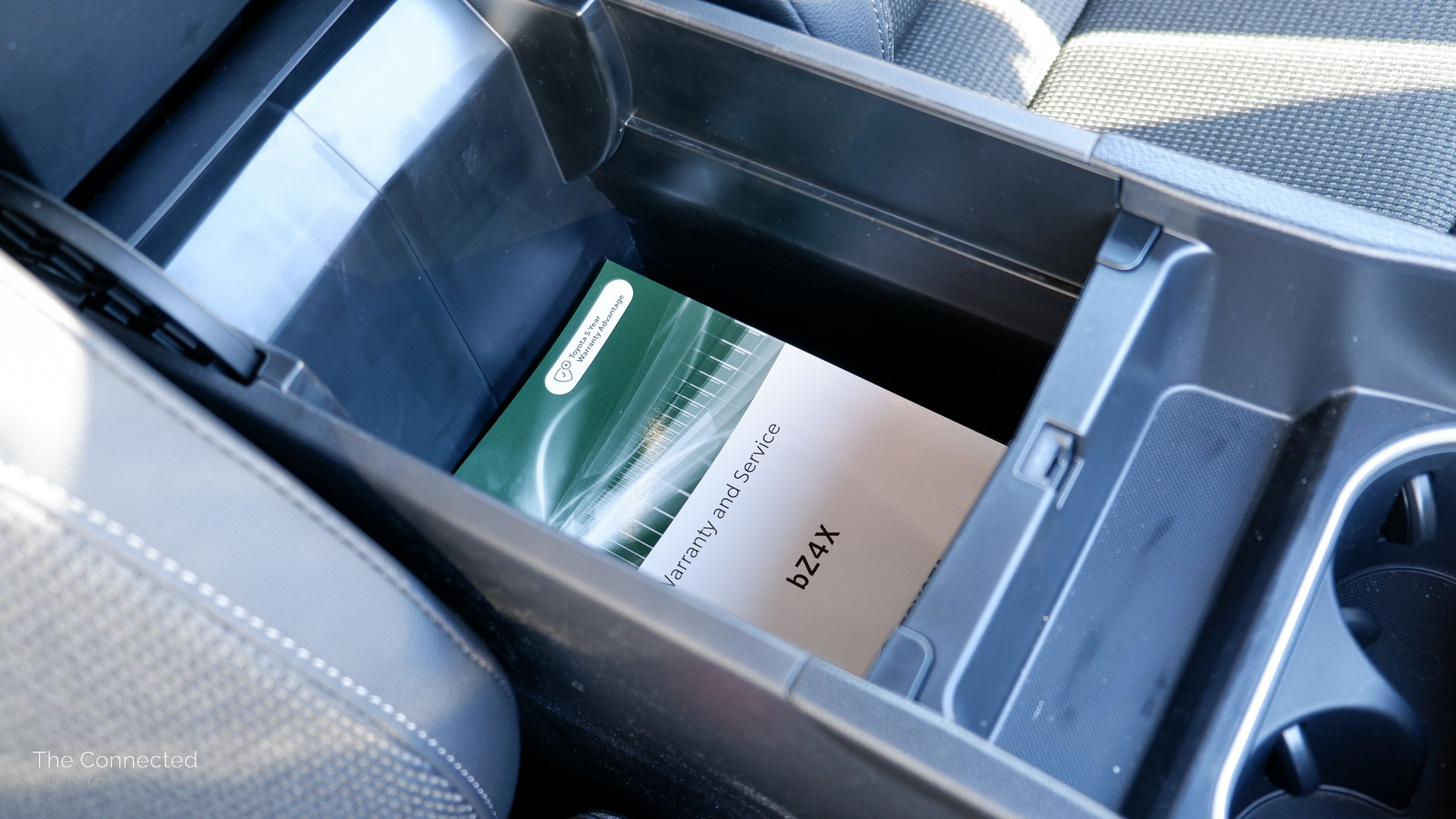
While the Toyota bZ4X doesn’t feature a traditional glovebox, there is ample space under the centre armrest; it is deep enough to store the brand’s multiple owner’s manuals, while still offering a separate tray divider in place above.
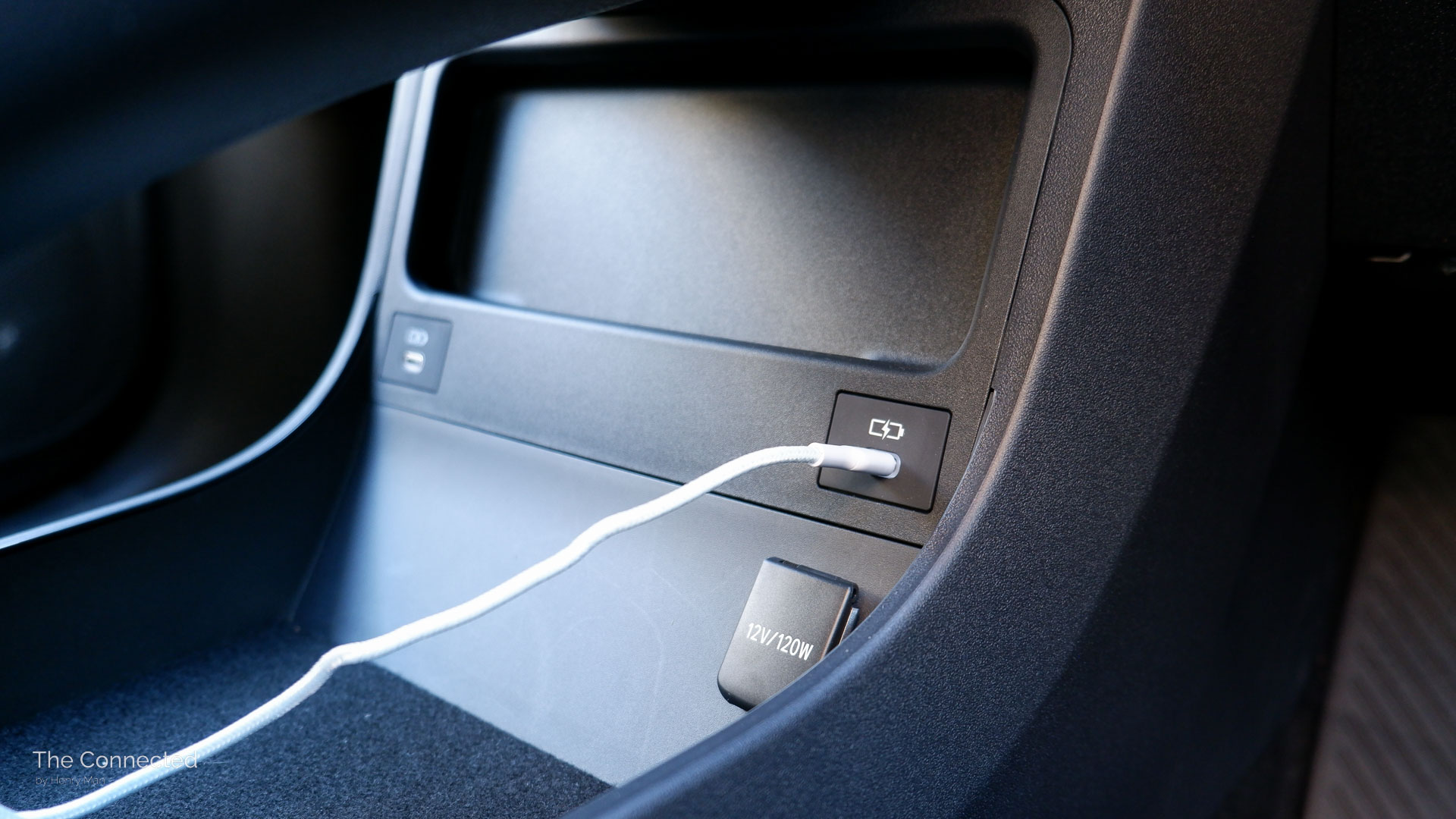
Two USB-C, a traditional USB-A port and 12-volt power sockets are available at the front row, too – although the some switches on the driver’s side, including the door lock/unlock buttons, aren’t visible at night due to the lack of any illumination.



The bZ4X 2WD’s part cloth and artificial leather ‘SofTex’ vinyl seats were supportive with no aching even after a long two-hour drive.
Despite being the base model, electric and lumbar adjustment is available for the driver, plus three-level heating for the front seats.
Unfortunately, only the backrest is heated and you’ll need to step up to the flagship bZ4X AWD to gain a heated steering wheel, driver memory, and ventilated seats. No model can extend the sun visors when on the side, though.
Unlike the upcoming updated 2026 Toyota bZ4X, this pre-facelift model offers a row of tactile physical switches, touch-sensitive buttons and a dedicated LED display for the two-zone climate control system.
Rather than requiring drivers and passengers to learn and dig into a touchscreen, it is easy and non-distracting to adjust the temperature, fan speed, and directly move the air vent direction. It just works.
Technology.
2025 Toyota bZ4X 2WD tech features:
| 12.3-inch touchscreen running Toyota’s built-in software | 7.0-inch driver instrument display |
| Wireless/wired Apple CarPlay and Android Auto | 4x USB-C, 1x USB-A and 1x 12-volt charging ports |
| Built-in maps | Six speakers |
| OTA software update capability | Proximity key with auto-folding mirrors |
| Toyota Connected Services and myToyota mobile app (one-year subscription included) |
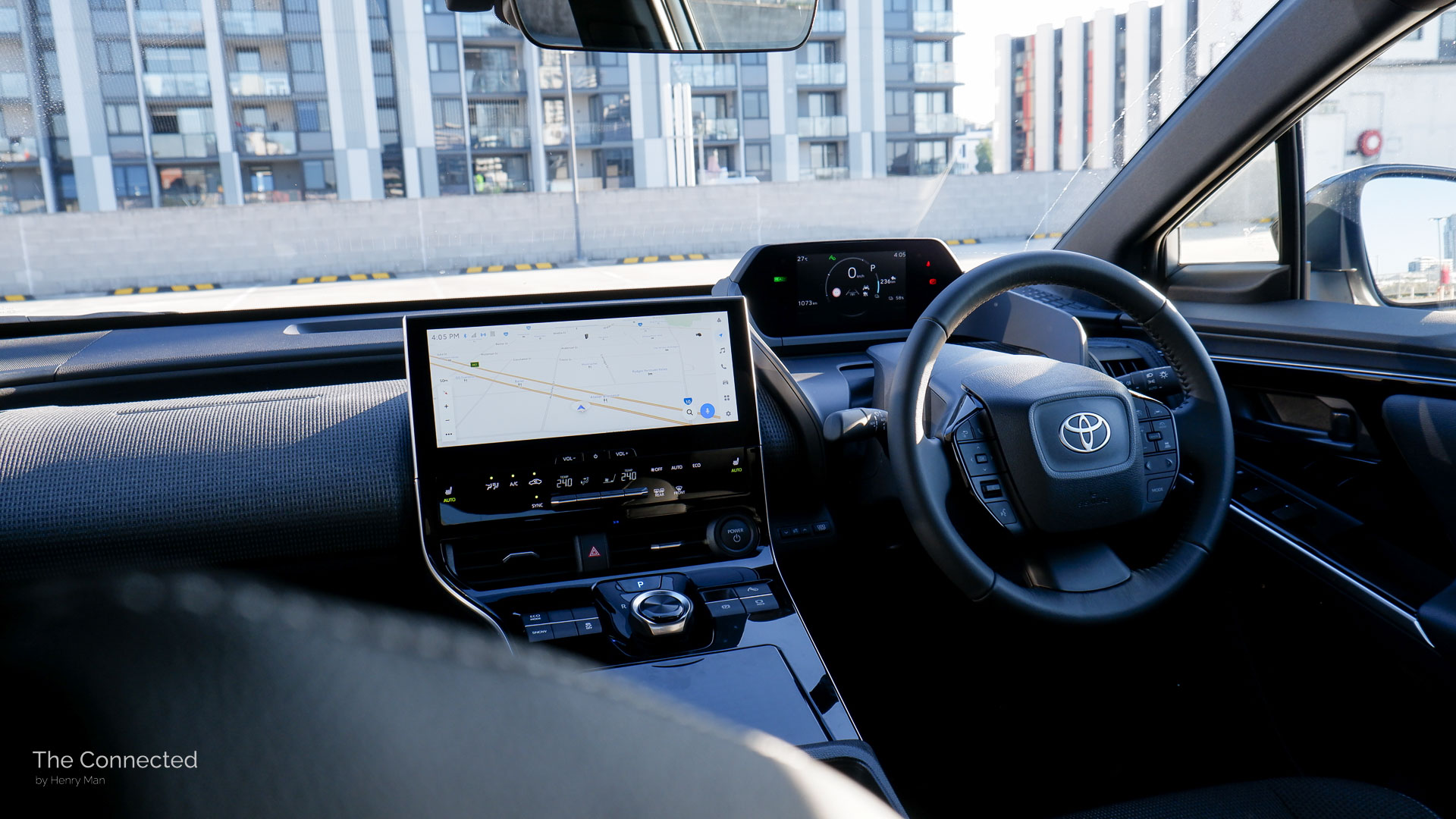
In an age where almost everything is being buried in a large tablet screen, the Toyota bZ4X is refreshingly basic with easy to use technology, even though it’s a bit hit-and-miss.
The 12.3-inch central touchscreen is wide, bright and high resolution with prominent fonts and a colourful blue-purple theme from Toyota’s built-in software.
The user interface has a modern design, a simple layout with a persistent shortcut bar on the side and is generally responsive, although there was some lagginess at times. The native map is easy to use and a built-in web browser is available, but you’ll need to connect to your mobile hotspot and it’s a pretty laggy experience.
The automatic brightness and auto light and dark mode switching just work – which can’t be said for some of its Chinese EV rivals. We even received an over-the-air (OTA) software update in our testing week, which was installed with no issues.

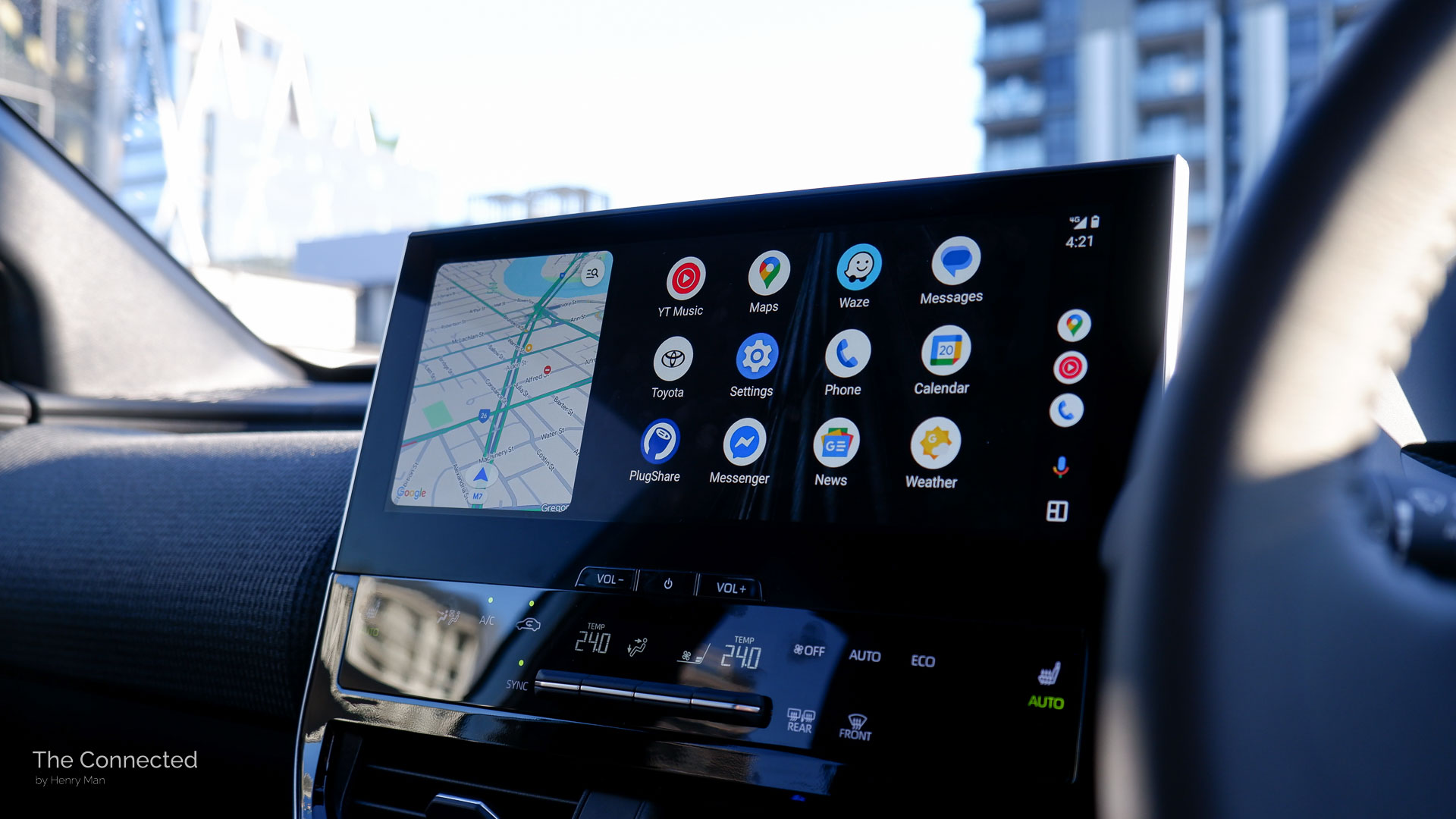

Wireless Apple CarPlay and Android Auto are standard, with the former having better integration due to the option to keep Toyota’s sidebar or go full screen, as well as showing navigation arrows on the driver instrument display.
Unfortunately, audio sometimes dipped out for a few seconds when using Android Auto and we experienced issues with both smartphone projection systems failing to connect at times.
In our testing, we also found that the infotainment sometimes crashed and restarted itself when using Android Auto or the web browser.
A Qi wireless charging pad is only included on the top-spec AWD, which is a given for the base BYD Dolphin or MG 4, but not for the bZ4X when it isn’t cheap.
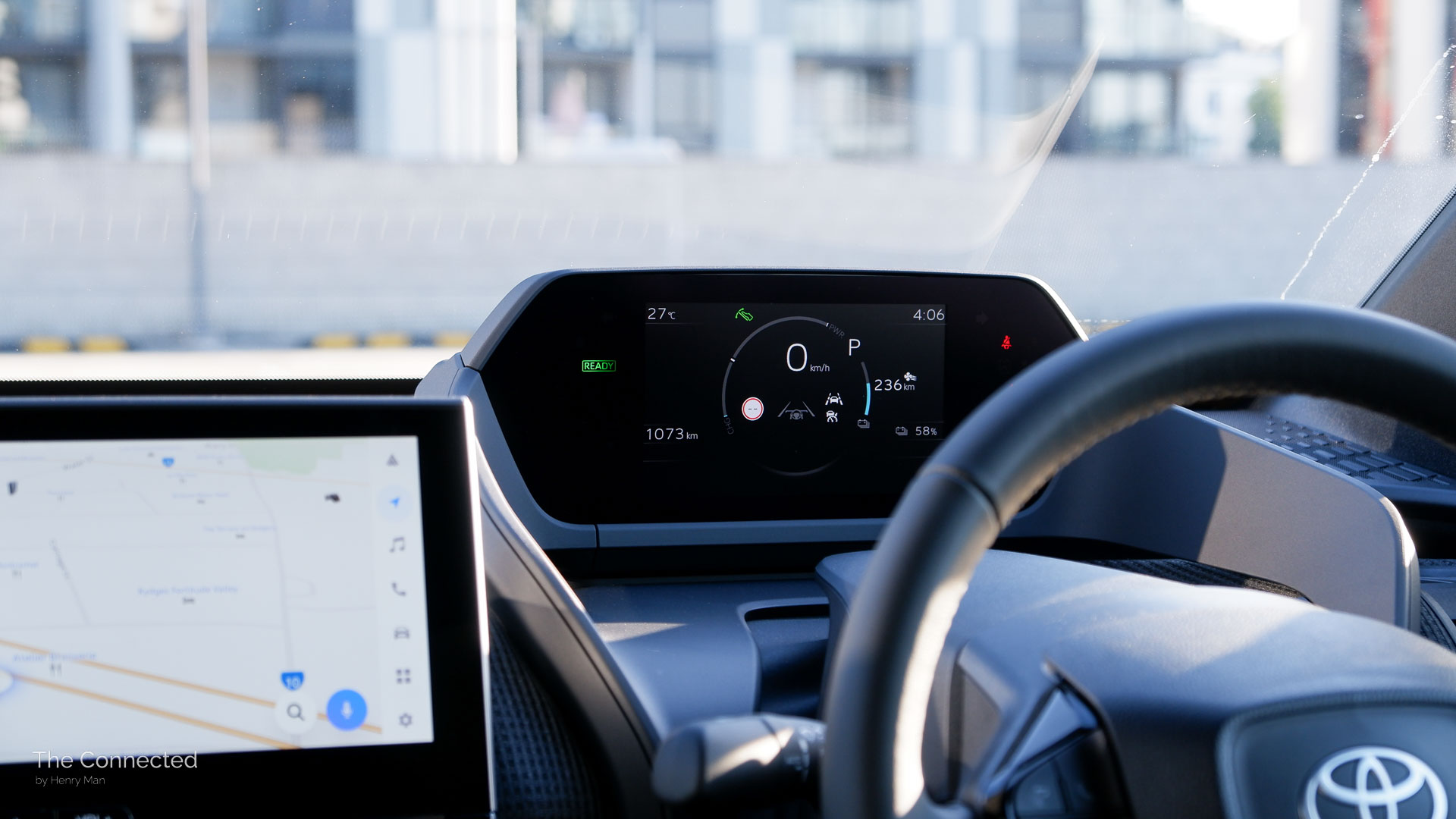
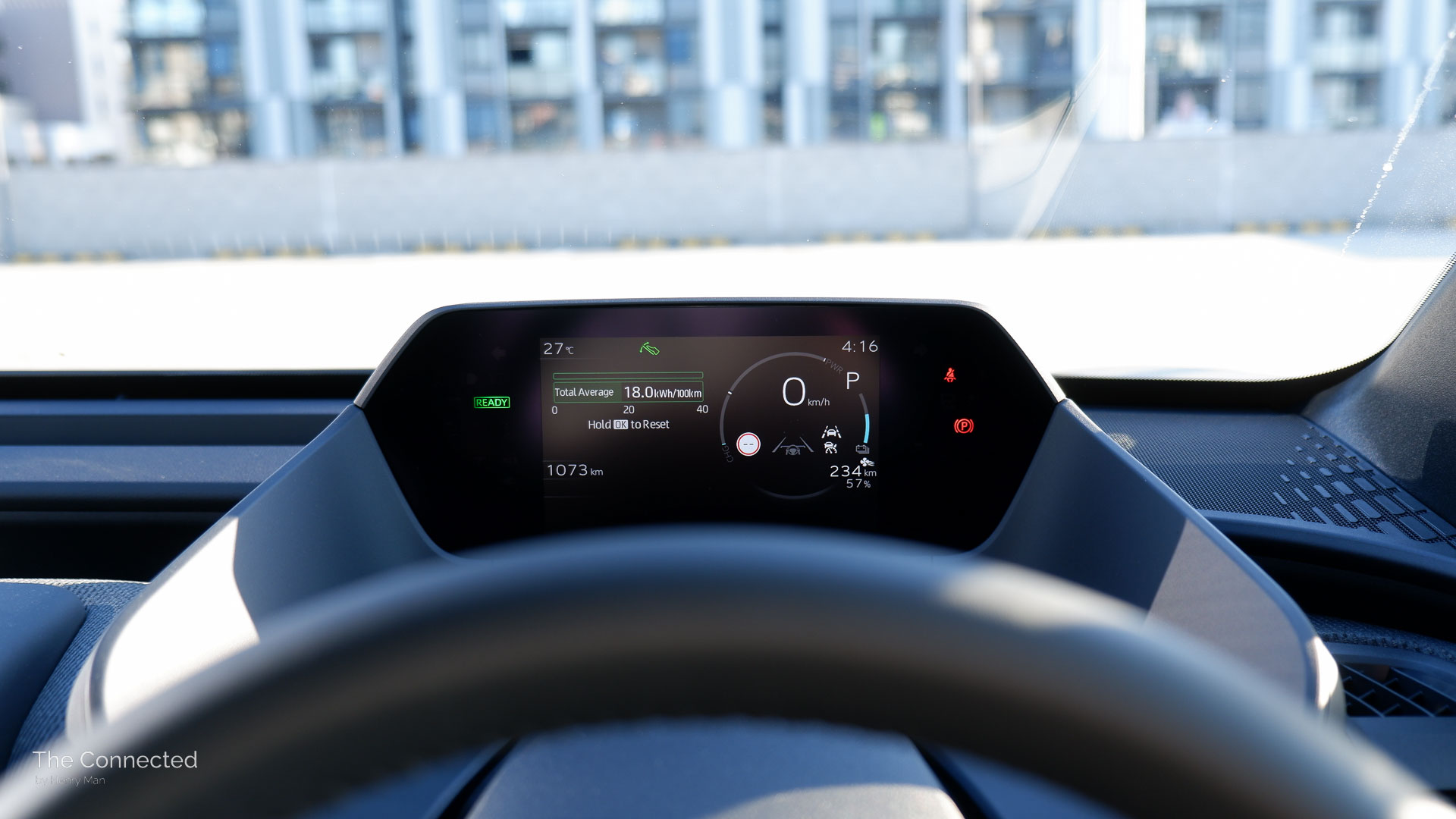
Meanwhile, the Toyota bZ4X features a unique Peugeot-esque cockpit-style 7.0-inch driver instrument display, which is positioned far ahead near the windscreen.
It’s easy to glance at with a high position that makes it act like a quasi head-up display, meaning drivers look at it above the steering wheel (rather than through it), but it’s contingent on your driving position as part of the small display could be blocked.
Strangely, the instrument cluster’s user interface design looks much older and inconsistent with the central touchscreen – even though all fonts and icons are legible, can show the audio playing and navigation directions, and even indicates when the brake lights are on through regenerative braking.
Toyota also offers connected services and a functional myToyota mobile app, which can unlock/lock the doors, start the climate control, and trigger on the exterior chimes or horn remotely. It connects and sends commands to the bZ4X quickly, plus even gives a ‘Driver Pulse’ safety behaviour score.
However, it annoyingly often signs me out of the app every day or so, doesn’t display a battery percentage number (there’s no way of knowing how much the EV exactly charged up by looking at just the icon), and it couldn’t scan the vehicle’s QR code nor VIN number when setting up despite being prompted to.



The Japanese carmaker only includes a limited one-year subscription to its top-tier Toyota Connected Multimedia plan, where it costs either $9.95 or $12.50 per month thereafter.
That’s unlike most other manufacturers which don’t require owners paying for a subscription for several years, up to seven in the case of Kia.
Toyota only provides vehicle status and location monitoring as standard without paying for a subscription – but strangely not stolen vehicle tracking.
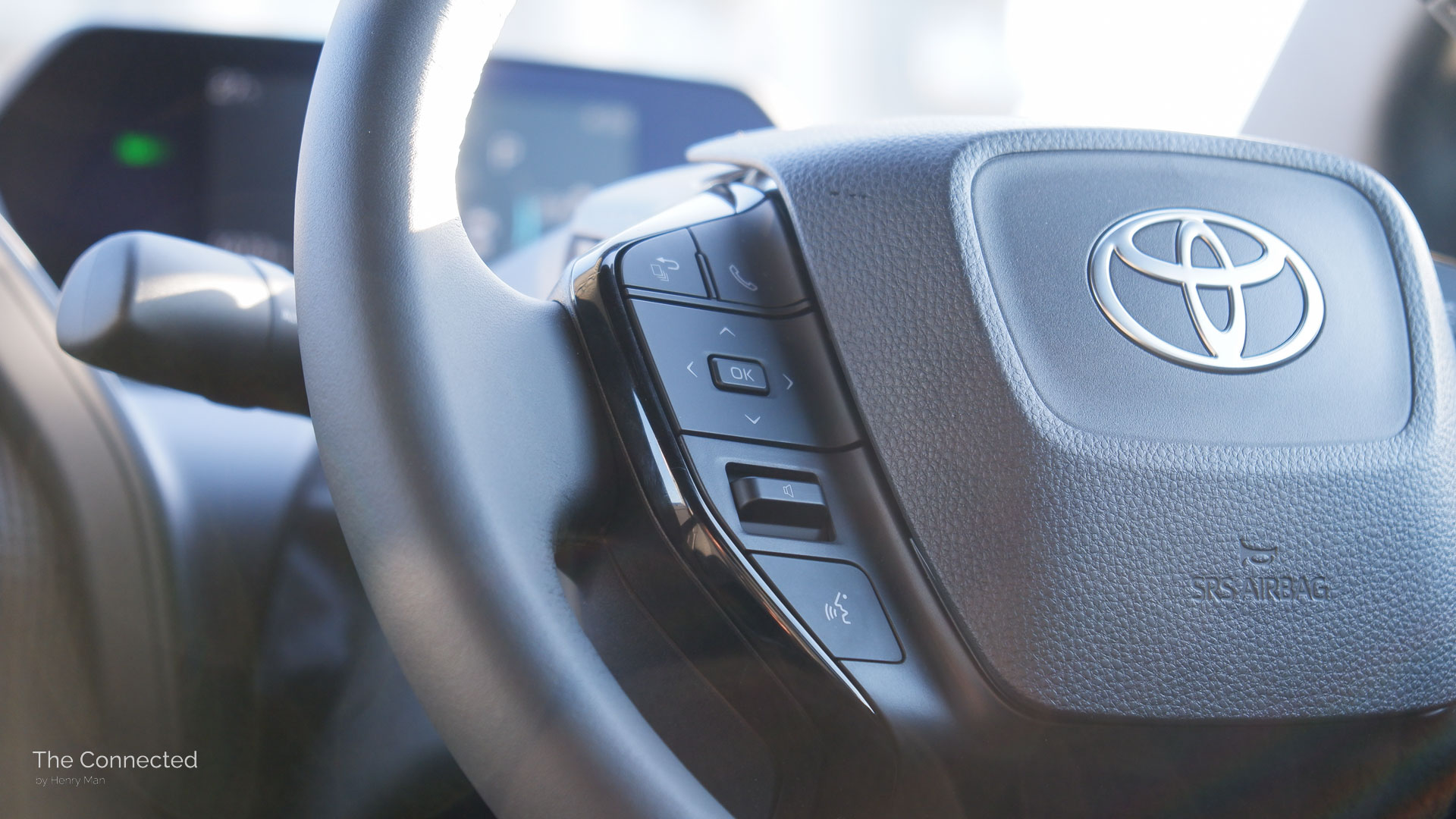
It’s also worth pointing out that, while physical controls on the steering wheel are welcome, they are smaller than ideal with a compact layout, so it can be hard to quickly decipher the adaptive cruise control buttons without looking.

Safety.
2025 Toyota bZ4X 2WD safety features:
| Front AEB with vehicle/pedestrian/cyclist/junction turning detection | Reversing camera |
| Rear AEB | Front and rear parking sensors |
| Lane-keep assist | Toyota Connected Services emergency services calling and remote location tracking |
| Adaptive cruise control with lane-centring assist | Rear occupant alert (logic type) |
| Road sign detection | Full LED headlights with auto adaptive matrix high beam and full LED tail-lights |
The Toyota bZ4X EV offers non-intrusive and reliable safety assistance technologies, but it’s a shame that some are reserved for the top spec.
The entry-level 2WD includes a range of well-calibrated systems as standard with non-aggressive lane-keep assist, a speed sign detection system that doesn’t annoyingly chime, and a reasonably clear reversing camera with a handy ultra-wide angle view.
Adaptive cruise control combined with lane-centring assist is a highway driving saviour. It’s almost perfect.

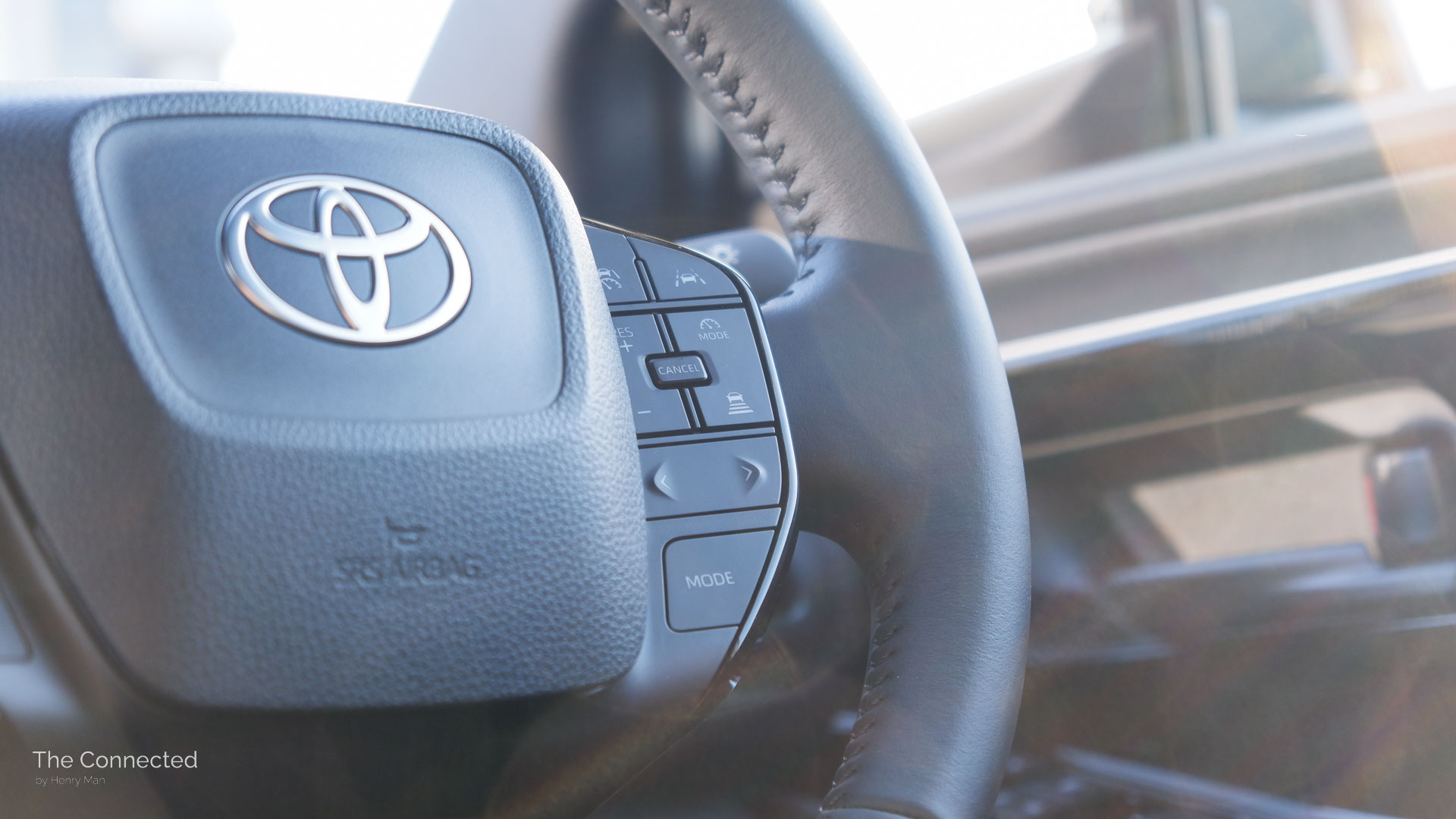

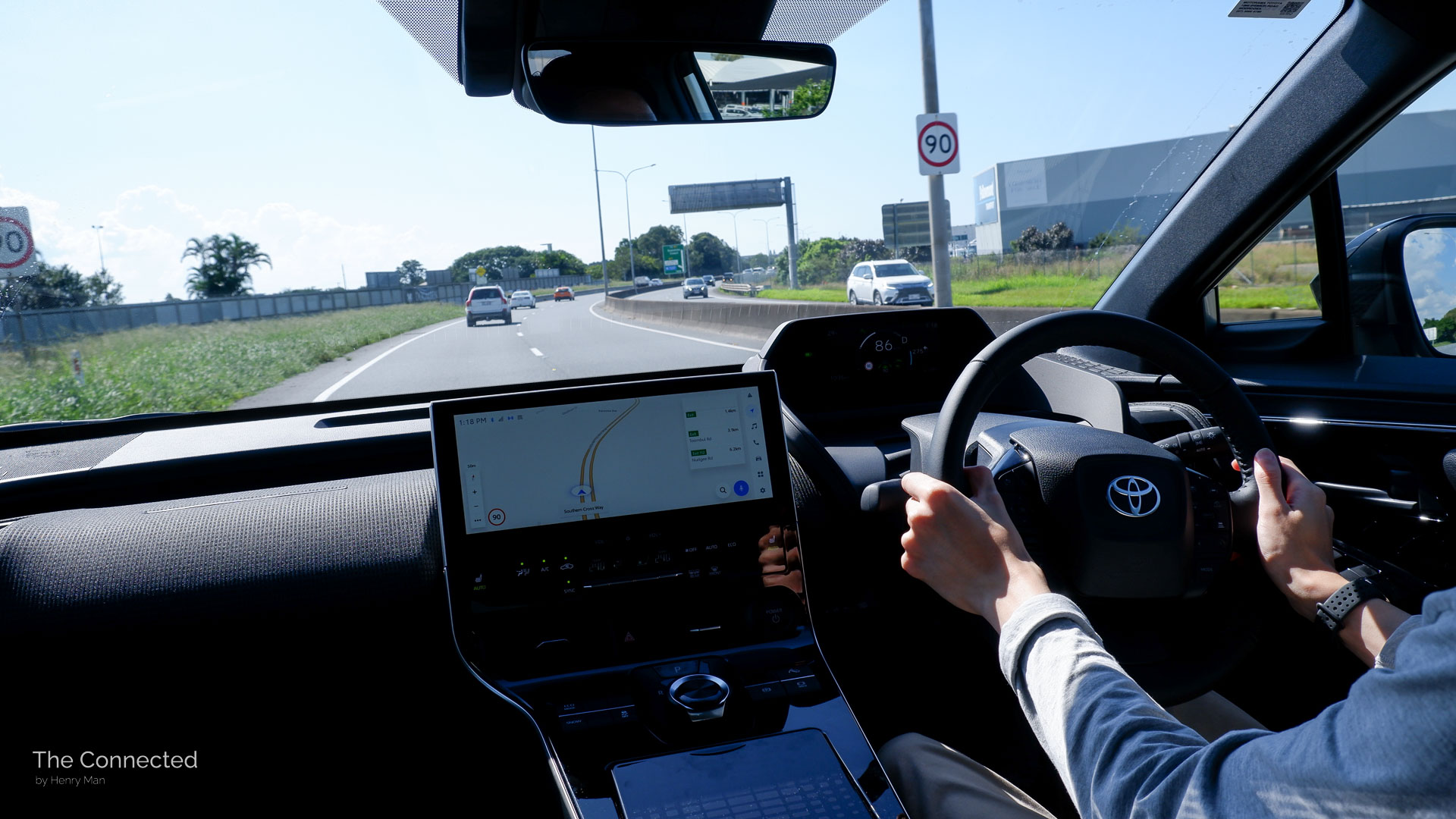
The Toyota system keeps a safe distance well and responds promptly to the vehicle in front – without any aggressive braking – while effectively steering the vehicle in the centre of the lane with subtle inputs. It doesn’t tug assertively when the driver takes control either.
It slows down in bends, but it isn’t as aggressive as some rival electric cars.
Lane-keep assist is well-tuned with gentle steering wheel intervention when crossing the marked lines.
Likewise, the speed sign detection system only shows an icon in the driver display – and doesn’t incessantly chime unless you enable it in the settings.
However, only the flagship AWD has blind-spot monitoring, rear cross-traffic assist, and a 360-degree surround-view monitoring camera. That’s a shame because the base 2WD isn’t cheap at ~$70K drive-away and it’s standard on the Volkswagen ID.4.


Despite these omissions, the bZ4X 2WD boasts an adaptive matrix function for its full LED headlights – which works well at blocking individual pixels to avoid dazzling other vehicles with the high beam, and has a low threshold criteria so it activates even with a few street lights on.
Unfortunately, while it sounds chimes inside the cabin when reversing, the Toyota bZ4X does not have an exterior pedestrian warning sound in Australia; it’s just starting to roll out to some of its hybrid cars locally.
The 2025 bZ4X has obtained the full five-star Australasian New Car Assessment Program (ANCAP) safety rating under 2022 testing criteria, with high 88 per cent adult and child occupant protection and an impressive 93 per cent safety assists score.

Range and charging.
2025 Toyota bZ4X 2WD battery and charging specs:
| Claimed driving range (WLTP combined cycle) | 436km |
| Claimed energy efficiency (WLTP combined cycle) | 16.8kWh/100km |
| Battery size and type | 64kWh usable (71.4kWh) lithium-ion |
| Battery voltage | 355.2 volts (400-volt class) |
| Max AC / DC charging speed | 11 / 150kW |
| Bidirectional charging | N/A |
| Connector type | Type 2 / CCS2 |
| Everyday charging limit recommendation | 80% (generally) |
The single-motor Toyota bZ4X 2WD returned an impressive 15.5kWh/100km average energy consumption after a week of mixed driving, including a long return highway trip.
This results in around 412km of real-world range from its fully-charged 64kWh lithium-ion battery pack.
While Toyota doesn’t specify an everyday charge limit recommendation, an 80 per cent daily cap is generally recommended – resulting in 329km of daily usable range.
The base 2WD is impressively efficient – and comes close to the industry-leading Tesla Model Y.

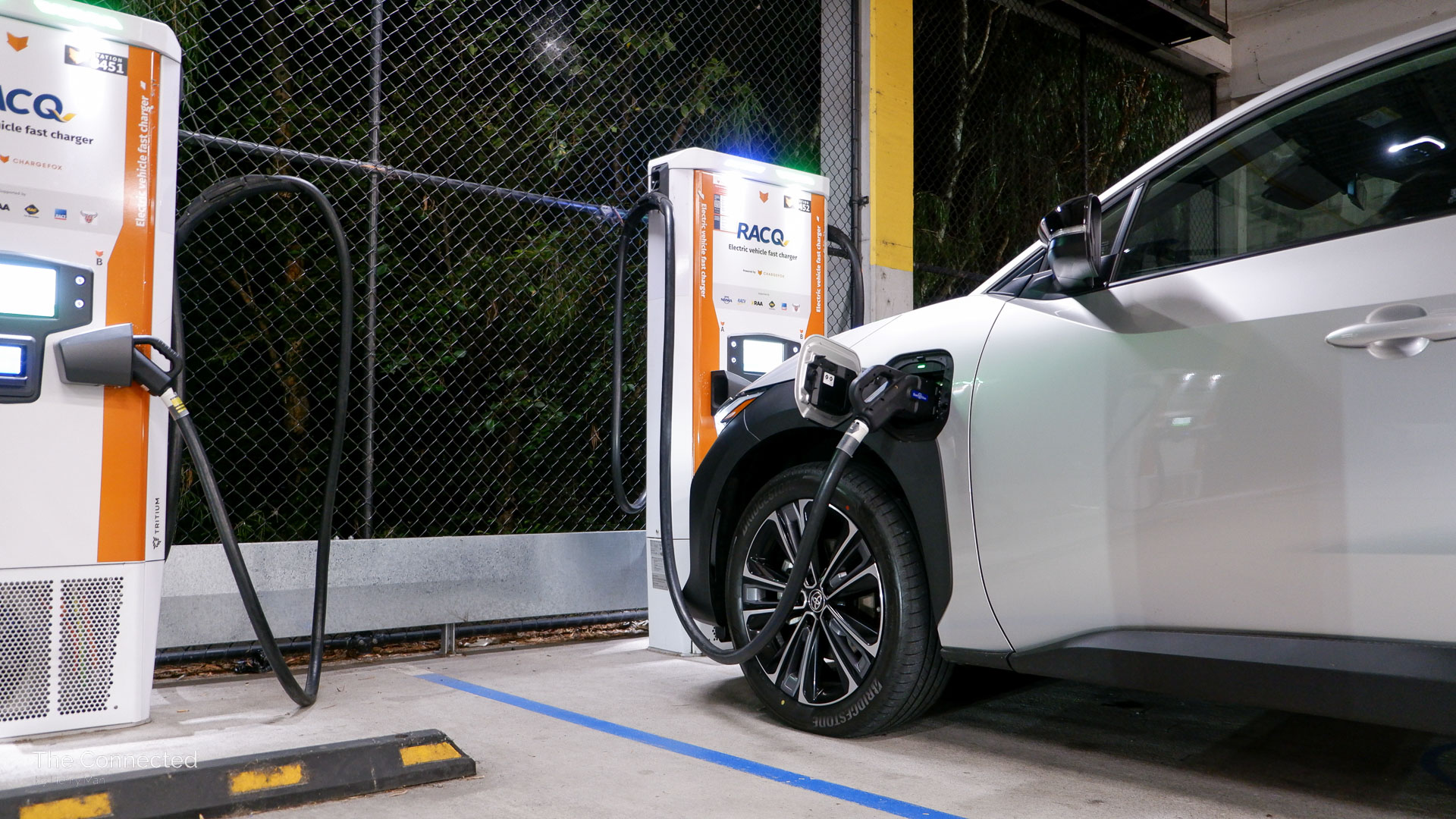
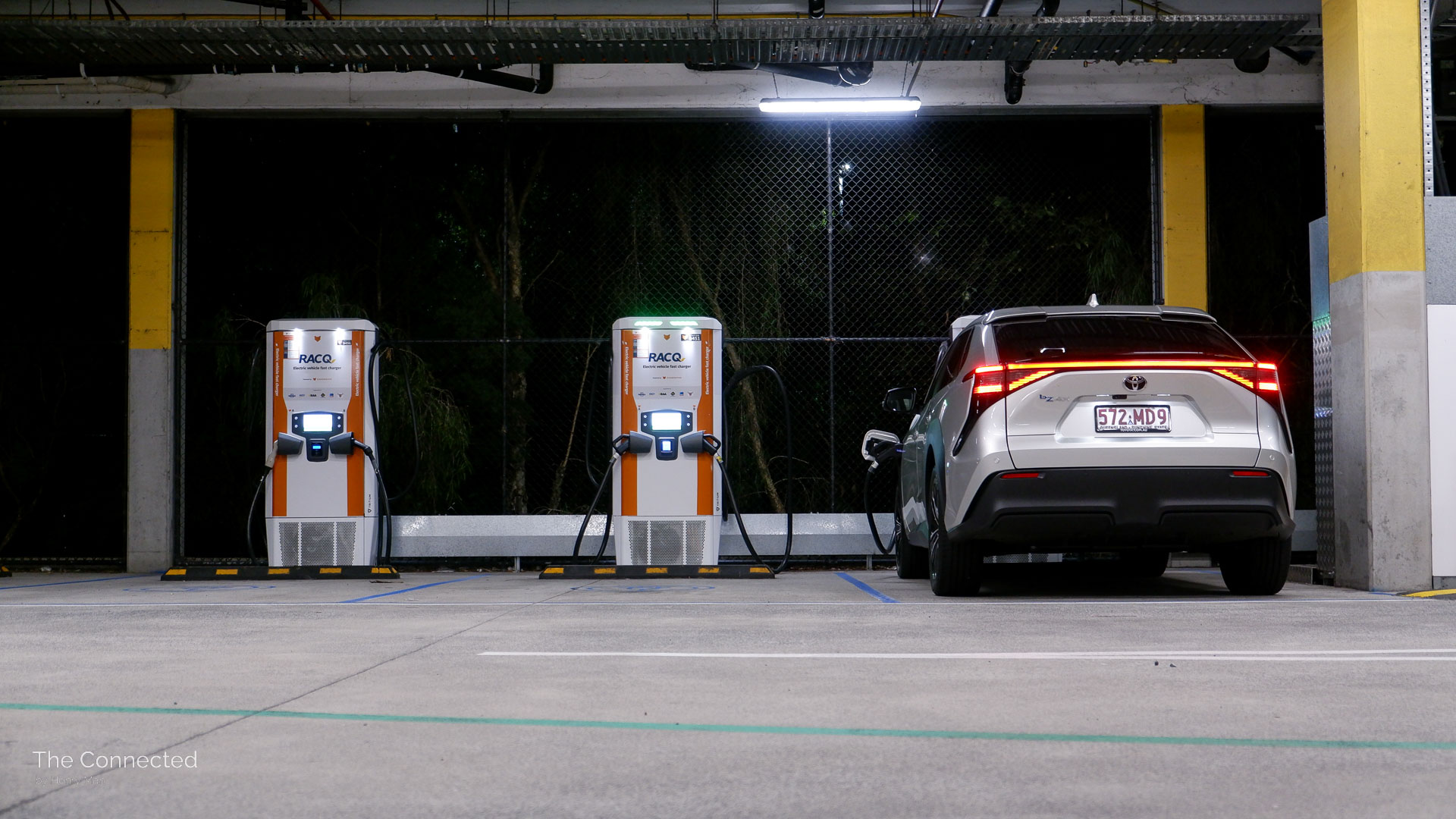


In our testing on a 150kW DC public fast charging station, the Toyota bZ4X recharged from 11 to 80 per cent in about 33 minutes.
We observed a 125kW peak speed and a rather middling 79kW average session speed.
While there are much faster-charging EVs out there at this price point, the bZ4X still charges quick enough for most to take a break on long road trips without rushing.
It’s important these figures represent the speed delivered from the charger since the Toyota bZ4X does not display the charging speed in the car (after energy losses). Additionally, another EV plugged in to an adjacent station around the 50 per cent full mark, resulting in the power cabinet load balancing and potentially impacting the tested speed.
All models offer up to 11kW three-phase AC slow charging capability, too.

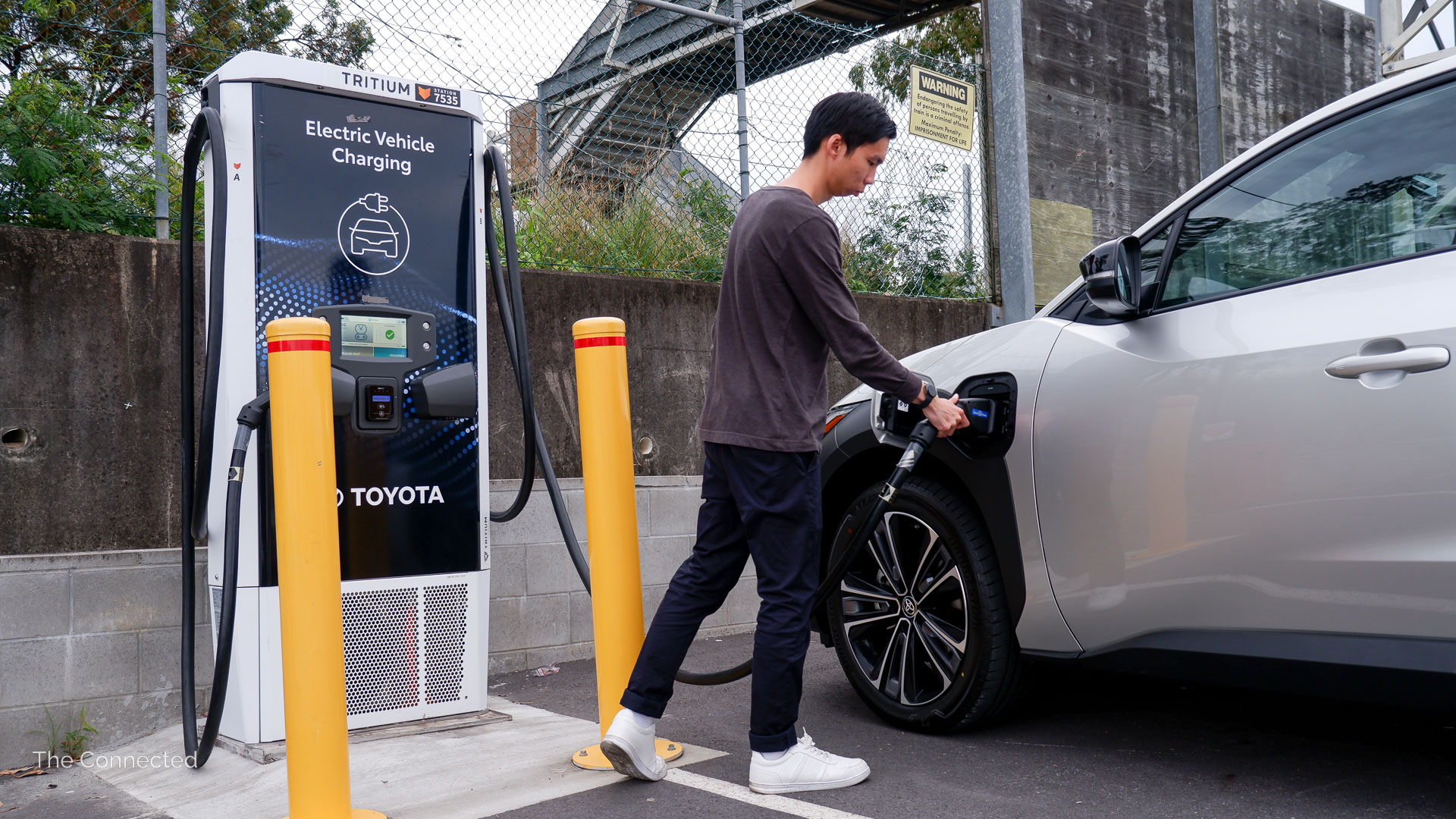


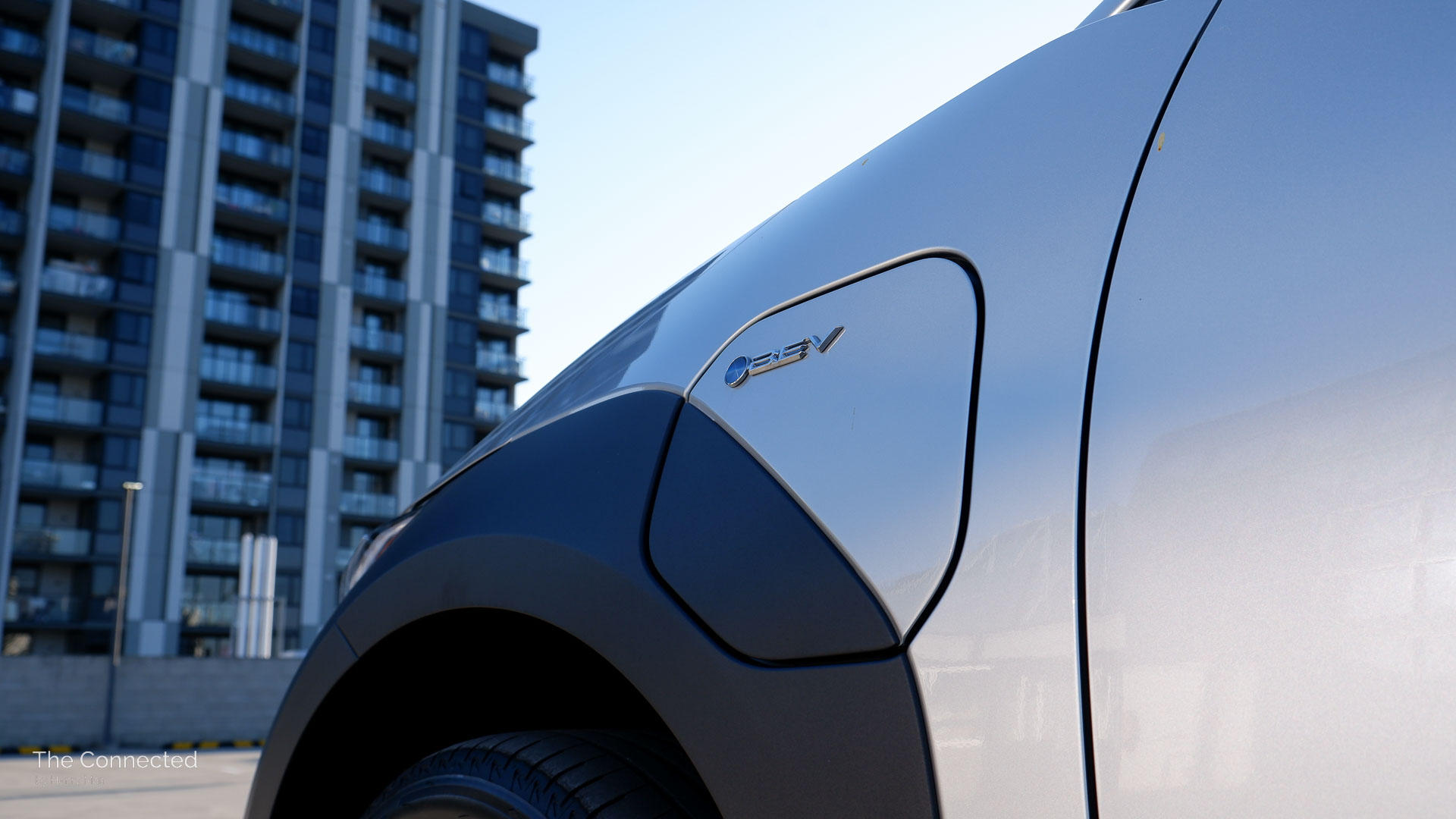
The bZ4X’s front-left quarter Type 2 CCS charging port position is a bit awkward to stretch short and heavy DC charging cables around the bonnet to the wheel fender, but at least it’s at the kerbside for Australia (ideal for streetside chargers).
Most impressive is the thoughtfully designed charge port with LED illumination and caps for both AC and DC plugs that are on a hinge and easy to unclip, unlike many other electric cars that have rubber caps that dangle on the bodywork.
Unfortunately, the Toyota bZ4X doesn’t offer vehicle-to-load (V2L) functionality.

Driving.
2025 Toyota bZ4X 2WD powertrain specs:
| Electric motor | Single permanent magnet synchronous electric motor |
| Power | 150kW |
| Torque | 266Nm |
| Transmission | Single-speed |
| Drive type | FWD |
| Kerb weight | 1960kg |
| Turning circle | 11.2 metres |
| Payload | 505kg (excluding towball download weight) |
| Towing (unbraked / braked) | 750 / 750kg |
The Toyota bZ4X is a surprisingly fun to drive electric SUV, but the overly firm ride could be a dealbreaker.
A single electric motor drives the front wheels with up to 150kW of power and 266Nm of torque.
With a small steering wheel, cockpit-style instruments with a cocooned driving position and instant electric torque on tap, the bZ4X feels a bit sporty to drive.
It doesn’t throw you back in the seat, but there’s plenty of power available to leave many combustion engine vehicles at the lights, while the steering feel is direct and well-weighted.
Accelerate off and corner with a bit more zeal and the Toyota electric car struggles with traction, as typical for a front-wheel-driven EV.


Critically, the bZ4X’s ride is too firm and fidgety for a family car. Road bumps, undulations and tram tracks hit the cabin rather sharply and uncomfortably, likely not helped by the large standard 20-inch wheels.
Tyre and wind noise are noticeable on the highway, but noise insulation is otherwise acceptable around town.
While it doesn’t offer a one-pedal driving function, it provides a more familiar driving experience with conventional coasting when lifting off the accelerator as the default.
Meanwhile, there’s a handy button on the centre console that turns on some regenerative braking (you’ll need to press every time starting the EV), which slows down to 15km/h and then coasts. It progressively provides regen as you lift off the pedal and the blended brake pedal has a good feel.
Toyota even shows whether the brake lights are illuminated on the driver instrument cluster, too, which adds to driving confidence.

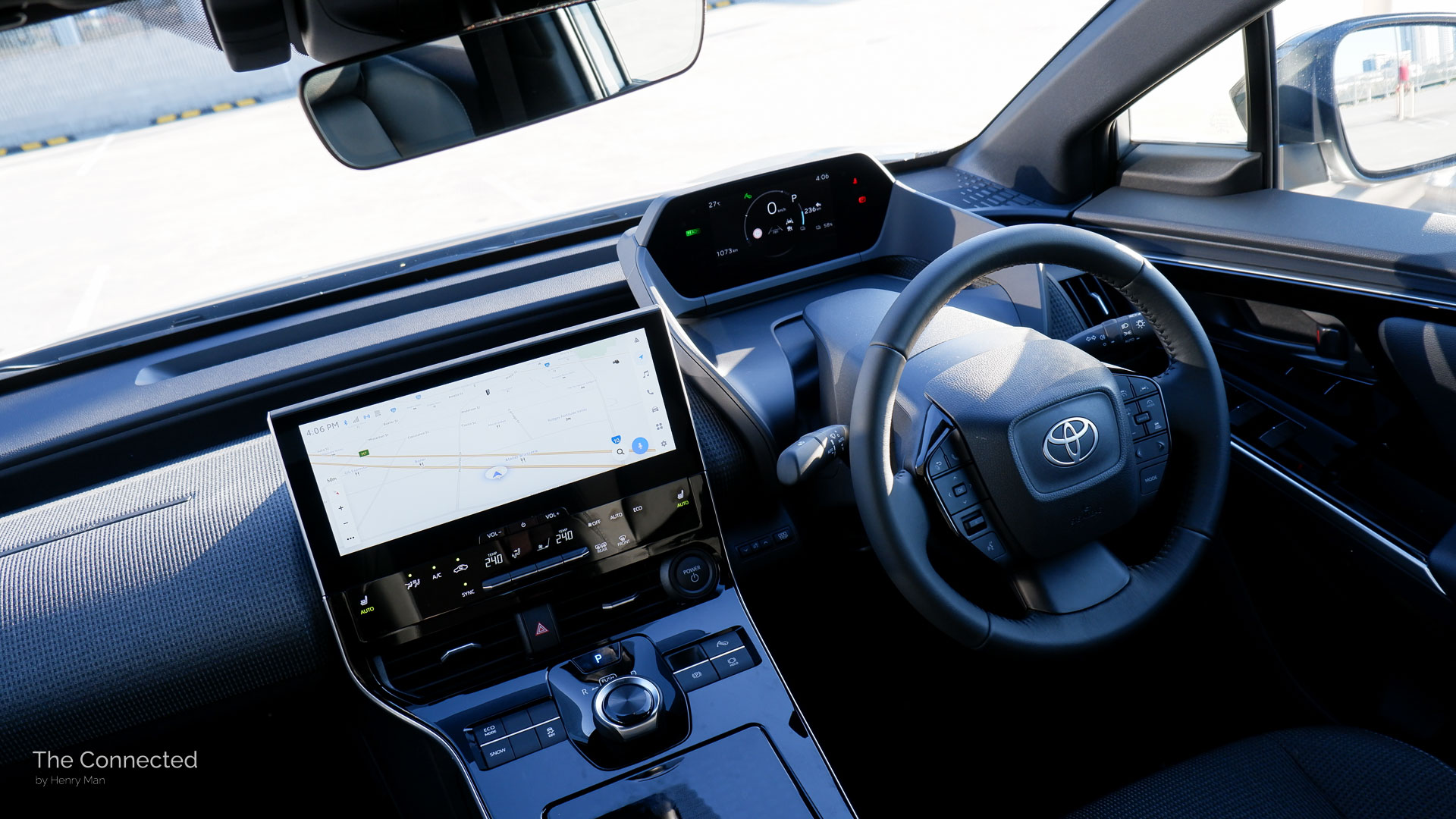


Despite the bZ4X’s sloping roof at the back, rear window visibility through the mirror is impressively good as the glass is very large – unlike the Tesla Model Y.
It doesn’t have a rear wiper which can be annoying when it’s fogged up, though.
The Toyota electric SUV offers a high driving position and its 11.2-metre turning circle is decent with the help of a small steering wheel for easier maneuvering and parking.
Another notable selling point is the bZ4X’s genuinely high ground clearance when most electric SUVs are quite low-down. The base 2WD model already has a 182mm of clearance underneath the battery, but the flagship AWD has 212mm – with the latter making it a genuine light off-roader SUV.

Warranty and servicing.
2025 Toyota bZ4X 2WD capped-price servicing costs:
| 1 year/15,000km | 2 years/30,000km | 3 years/45,000km | 4 years/60,000km | 5 years/75,000km |
|---|---|---|---|---|
| $180 | $180 | $180 | $180 | $180 |
The 2025 Toyota bZ4X is covered by a five-year, unlimited kilometre vehicle warranty and a long 10-year, unlimited kilometre battery warranty.
The latter is industry-leading, with MG and Nissan trailing behind with a kilometre limit – but owners must service the EV each time with a Toyota dealer, otherwise it’s only five years, unlimited kilometres.
The electric motor, and towing and loan vehicle coverage can extend up to seven years, unlimited kilometres provided the same servicing condition is met, too.
Servicing is required every one year/15,000km (whichever occurs first), with maintenance fixed for the first five visits, totalling to just $900 by the time it’s five years/75,000km old.
That’s relatively cheap when many rivals exceed $1000 after five years, even though EVs are generally simpler to service.


Unfortunately, Toyota doesn’t include roadside assistance with its new cars.
Only one year of Toyota Connected Multimedia is included with new vehicles, where it defaults to Toyota Essentials with basic connected services thereafter.
Paying $9.95 per month for the Toyota Connect+ subscription adds features such as: stolen vehicle tracking, remote door/unlock, remote climate control, EV charge status and schedule, and Drive Pulse scoring.
Meanwhile, opting into the $12.50 per month Toyota Connected Multimedia plan further adds: connected navigation, connected voice assistant, and multimedia profiles.
As per most EVs, the Toyota bZ4X does not include a spare tyre. Instead, there’s a tyre patch-up goo kit hidden discreetly at the side of the boot and a first aid kit.

Price and rivals.
2025 Toyota bZ4X model range pricing (accurate as at the time of publication):
| 2WD | AWD |
|---|---|
| From $66,000 before on-road costs | From $74,900 before on-road costs |
The 2025 Toyota bZ4X is priced from $66,000 before on-road costs in Australia.
Two models are available locally – the single-motor 2WD and dual-motor AWD – but both have the same battery and power outputs.
All exterior paint colours except Ebony black costs an additional $587.
The Toyota bZ4X directly rivals the following medium electric SUVs:
- Tesla Model Y (full review)
- Hyundai Ioniq 5 (full review)
- Kia EV5 (full review)
- Kia EV6 (full review)
- Ford Mustang Mach-E
- BYD Sealion 7
- Xpeng G6
- Deepal S07 (full review)
Other alternatives to the bZ4X EV include:
- Geely EX5
- Leapmotor C10
- Hyundai Kona Electric (full review)
- Toyota RAV4 Hybrid
- Hyundai Tucson Hybrid (full review)
- Kia Sportage Hybrid (full review)
- Honda CR-V e:HEV
- GWM Haval H6 Hybrid
- Mitsubishi Outlander PHEV
- BYD Sealion 6

Would I pick the 2025 Toyota bZ4X 2WD?
The Toyota bZ4X is a rather average, no-thrills EV. But its presence is significant to shift consumer mindsets.
Amid plaguing concerns about EV battery longevity, the fact that Toyota – a major automaker rooted with the reputation for reliability – is selling a mass-market electric car is a significant step for the automotive industry.
The bZ4X does the basics well. The single-motor 2WD is impressively energy efficient, its safety assists are super dependable, it has an industry-leading battery warranty, and is cheap to service – and rightly so.
Yet, it isn’t cheap when Tesla and Chinese EV rivals offer far more for much less, the ride is way too firm and fidgety, and the interior feels relatively basic.
I’d pick the entry-level bZ4X 2WD, but it’s best to look out for unsold ex-demonstrators where ~$10K to ~$20K discounts can be had – making its flaws more palatable.
Otherwise, I’d rather wait for the facelifted 2026 Toyota bZ4X at the end of this year, which will bring a more modern exterior and interior, a larger battery, and more power.
Photographs by Henry Man
READ MORE: 2025 Kia EV5 review
READ MORE: 2025 Hyundai Kona Electric review
READ MORE: 2023 Hyundai Ioniq 5 review
Pros:
- It’s a Toyota EV
- Long battery warranty, cheap servicing
- Impressive energy efficiency
- Faultless safety assists
- High ground clearance
Cons:
- High price compared to rivals
- Firm and fidgety ride
- Basic interior quality
- Hit-and-miss tech
- Better to wait for the facelift
About the Author.
Henry Man is an independent content producer passionate about the intersection of technology and transportation.
The former automotive journalist is focused on producing critically-detailed vehicle reviews, and unique short-form content. Learn more.


 The Connected by Henry Man