
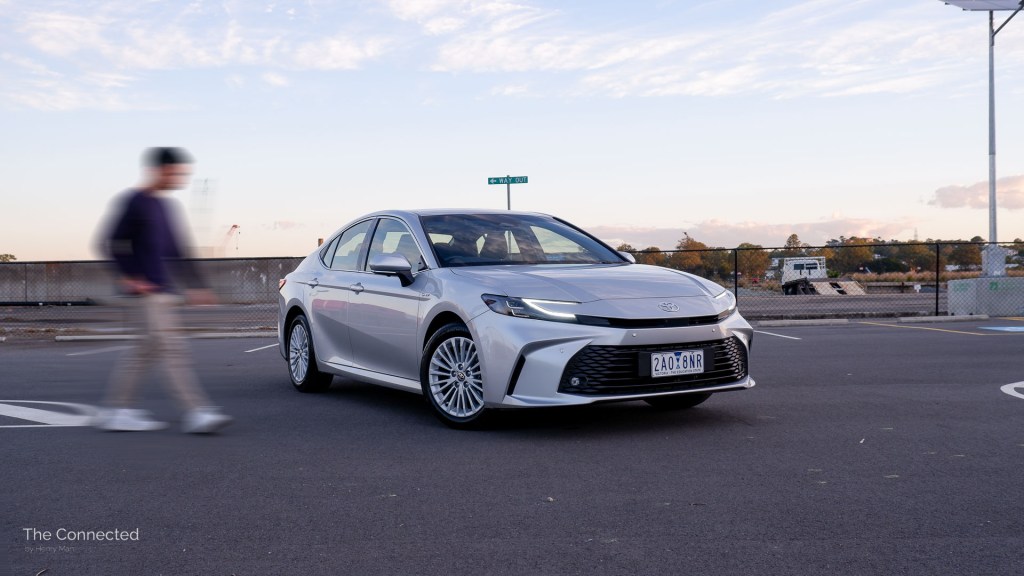
One of the world’s most iconic sedans has entered its 11th generation, but is the Toyota Camry Hybrid still competitive amid a tide of new full electric rival sedans?
The Toyota Camry has been extensively refreshed with a fresher exterior, overhauled interior, and more advanced connected technology.
The medium sedan also debuts the Japanese automaker’s fifth-generation hybrid system, with up to 11 per cent lower claimed fuel consumption while delivering 10kW more power combined.
But its private and business sales pies have been eaten by some full electric rivals in recent years, including the Tesla Model 3, BYD Seal, and Polestar 2 – not to mention the overwhelming preference of SUVs globally.
Is the heavily updated Camry enough to keep it attractive for fleets, private drivers, and Australians? I tested the mid-spec Ascent Sport for a week to see why it’s still the default favourite.
NOTE: The press vehicle was provided by Toyota Australia for a seven-day independent evaluation. We have no commercial arrangements with the company and it had no editorial control.

Pros.
+ Great value ‘default car’
+ Outstanding safety tech
+ No-nonsense, ergonomic interior
+ Super fuel efficient
+ Spacious boot and rear row
Cons.
– Basic interior quality
– Loud engine, groaning CVT
– Wing mirror glare at night
– One-year of full connected services included
– Missing a pedestrian warning speaker
Vehicle tested:
| Model | 2025 Toyota Camry |
| Variant | Ascent Sport |
| Starting price | $42,990 before on-road costs |
| Exterior colour | Silver Pearl (+$587) |
| Interior colour | Black fabric |
| Country made | Japan |
Design and quality.
The new Camry is unmistakably still… a Camry, but it has been Lexus-fied.
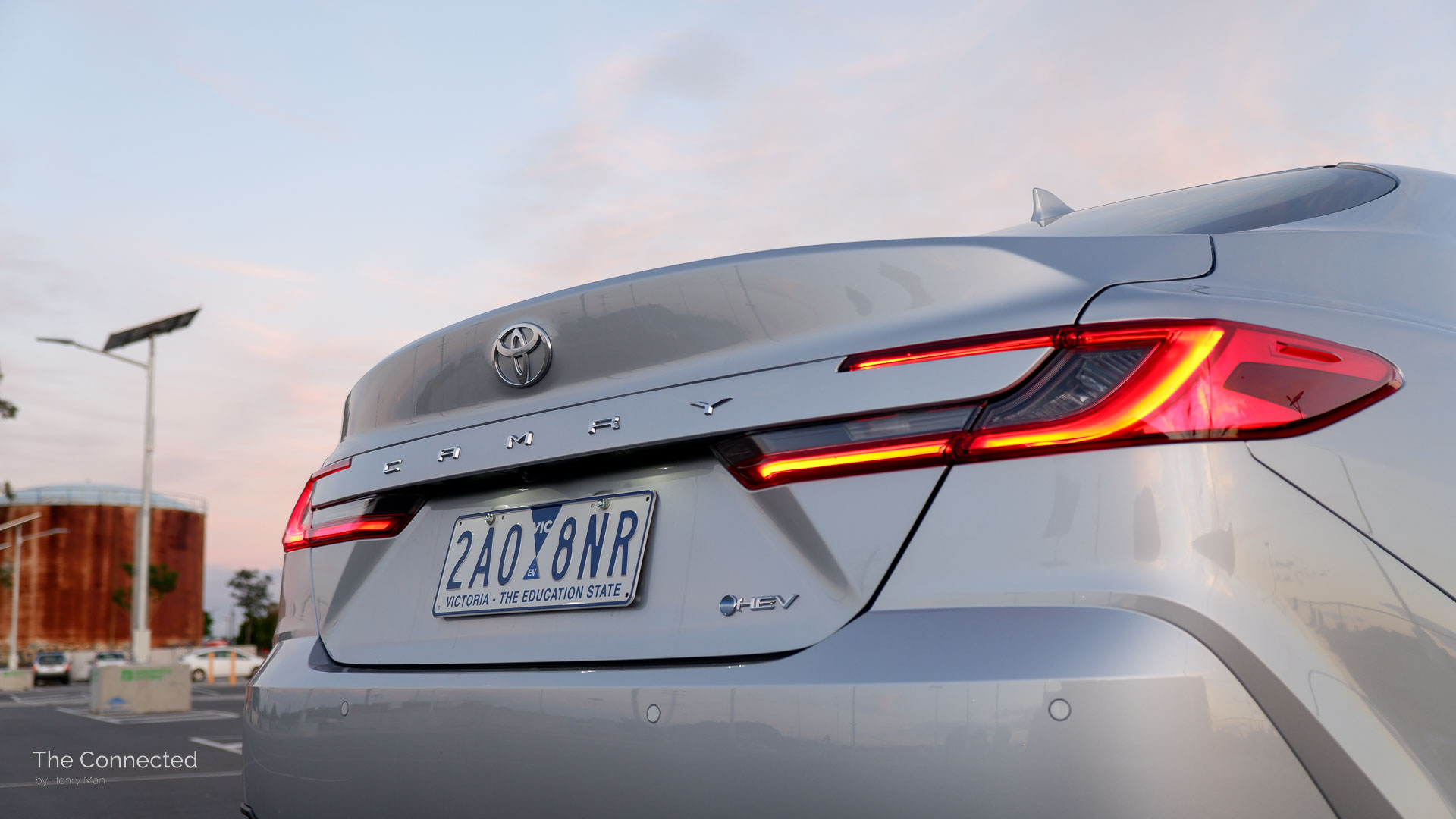
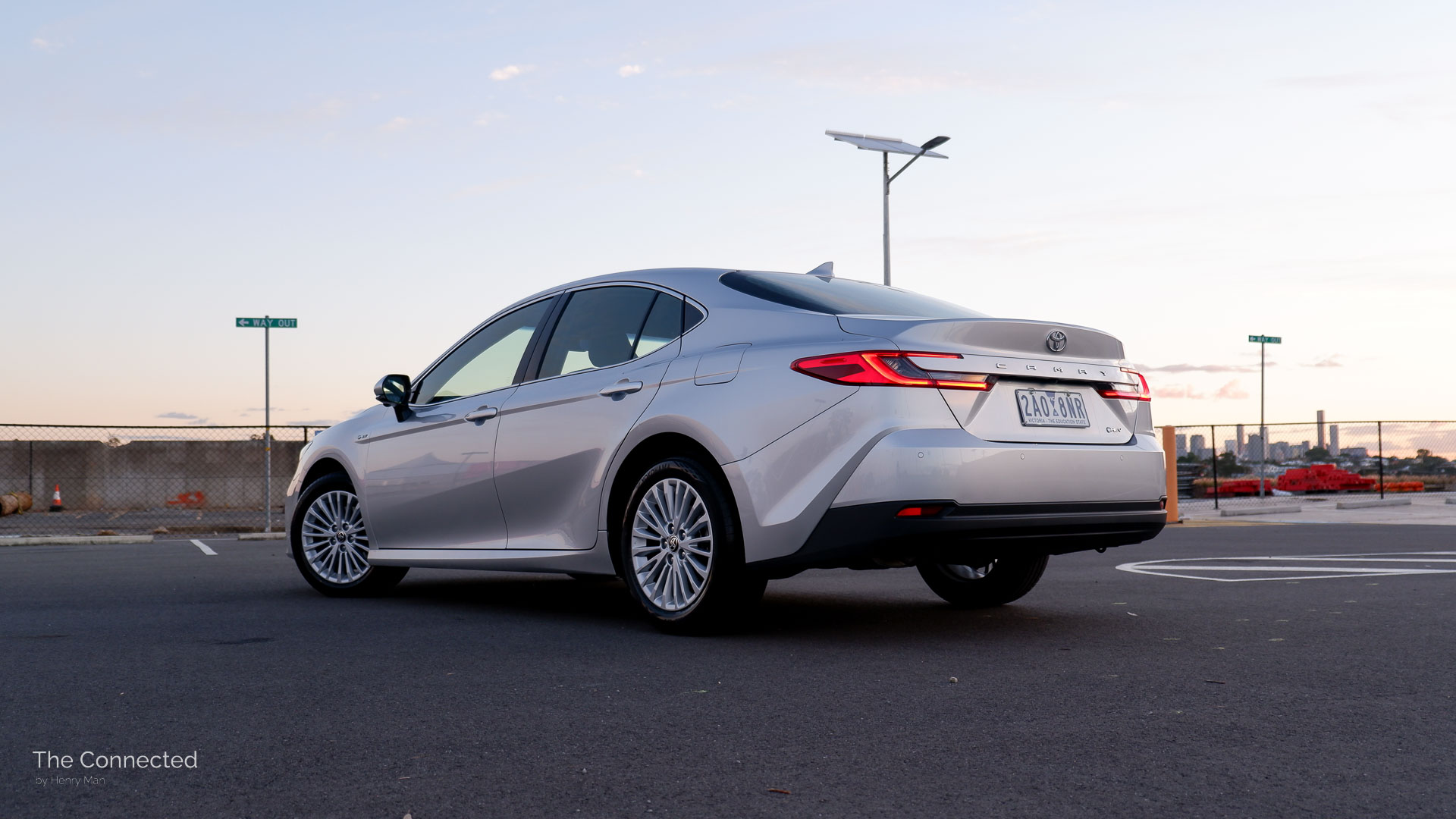
The conservative exterior design is an evolutionary step forward with C-shaped daytime running lights and slimmer LED headlights, which are now connected across the front by a slit, and claw-like tail-lights in line with Toyota’s latest ‘Hammer Head’ design theme.
While the side profile and wing mirrors carry over from the previous generation, Toyota has clearly taken a page out of its luxury brand Lexus to make the Camry feel more upmarket.
Precious Bronze (+$587) is a new boujee exterior colour option across the range – reminiscent of Lexus’ Sonic Copper colour – while the new honeycomb lower grille pattern doesn’t look too distant from the Lexus RX, and the Camry lettering has even become slightly more slender, flatter and spread apart on the tailgate, keyfob, carpets and door sills.


In line with Toyota’s full electric car offerings, the hybrid badge is now a simpler ‘HEV’ (meaning hybrid electric vehicle) with no blue hues inside the Toyota logo anymore.
Meanwhile, changes are more extensive inside. But don’t expect the venerable sedan to be premium.
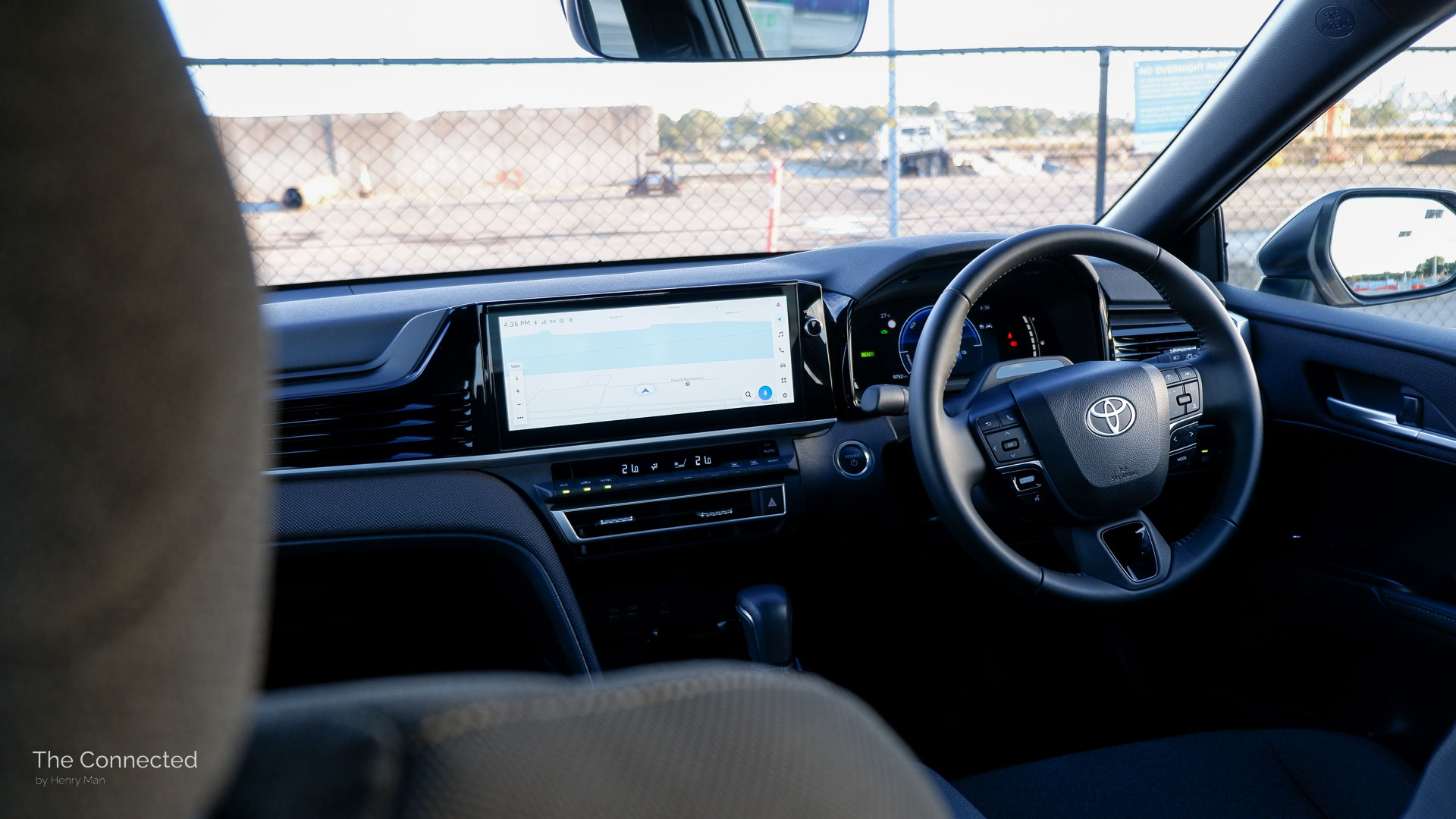
The 2025 Camry has gained a simpler dashboard layout, strokes of gloss black connecting to the air vents and underlined by fabric trims, a more integrated touchscreen, and new climate controls and steering wheel.
There’s no doubt that the new Toyota Camry still feels bland with a very monotone interior theme, a dark headliner, clearly vinyl grained armrests, and silver plastic trims that can’t pretend to be metal.
Material quality is good with fabric trims that don’t feel as low-rent as the bZ4X, knurling on top of the air vents, and tactile buttons and gear shifter.
But, the rear armrest flops down on the seat (instead of floating on a hinge), the use of gloss black across the dash and centre console is questionable for longevity, and closing the fuel lid reverberates a tinny and hollow sound.
Practicality.
2025 Toyota Camry Hybrid Ascent Sport dimensions:
| Length x width x height | 4290 x 1840 x 1445mm |
| Wheelbase | 2825mm |
| Ground clearance | 145mm |
| Boot space (min) | 524 litres |
| Rear seat split fold | 60:40 |
| Child seat anchors | 2x ISOFIX and 3x top tethers |
| Air-conditioning system | Two-zone climate control with rear air vents |
The 2025 Toyota Camry is a practical passenger car, even though interior dimensions are unchanged.
The 524-litre boot is large and deep with a convenient handle for closing the light tailgate with one hand – without needing to touch the bodywork unlike the Hyundai i30 Sedan – and latches to remotely fold down the rear seats.
Toyota doesn’t quote how much boot capacity the Camry offers with the seats folded.
However, there is a prominent loading lip – so expect to use a bit more strength lifting suitcases over the bumper, in and out of the boot – and the two bag hooks are inconveniently placed at the outer edge of the boot.
Similarly, the single halogen light is dim, and the exposed sheet metal and wiring are cost-cutting signs.


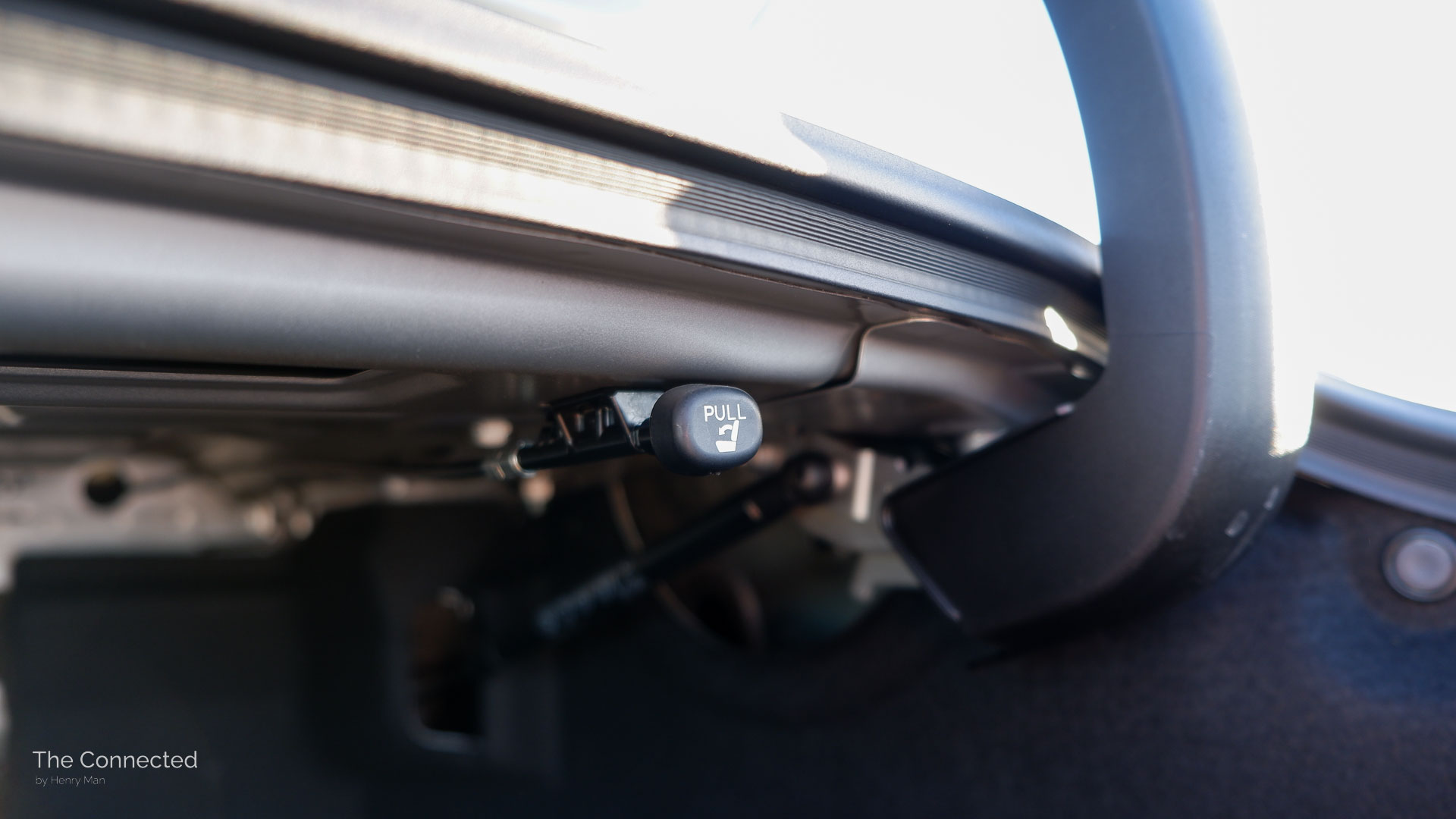
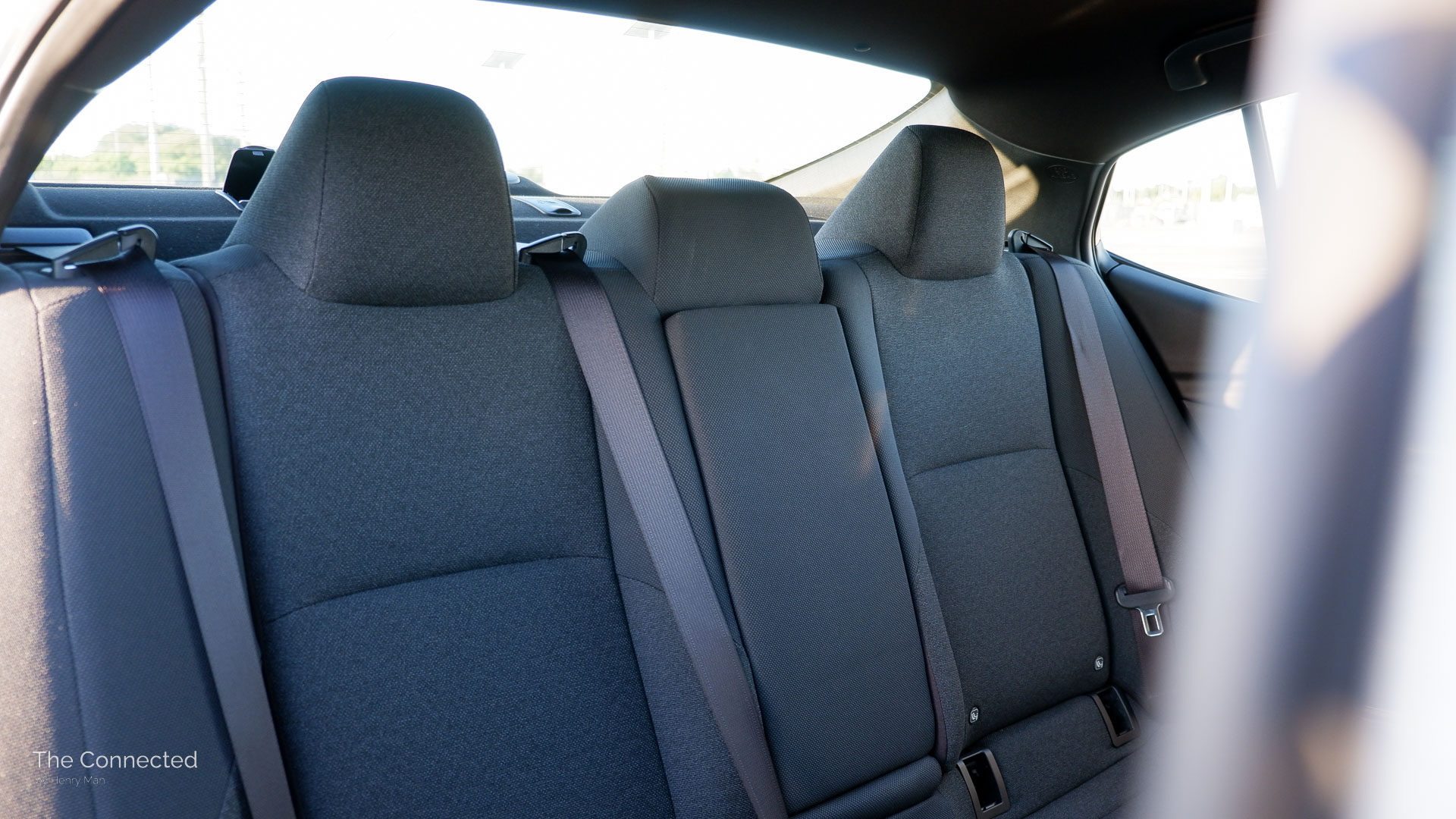
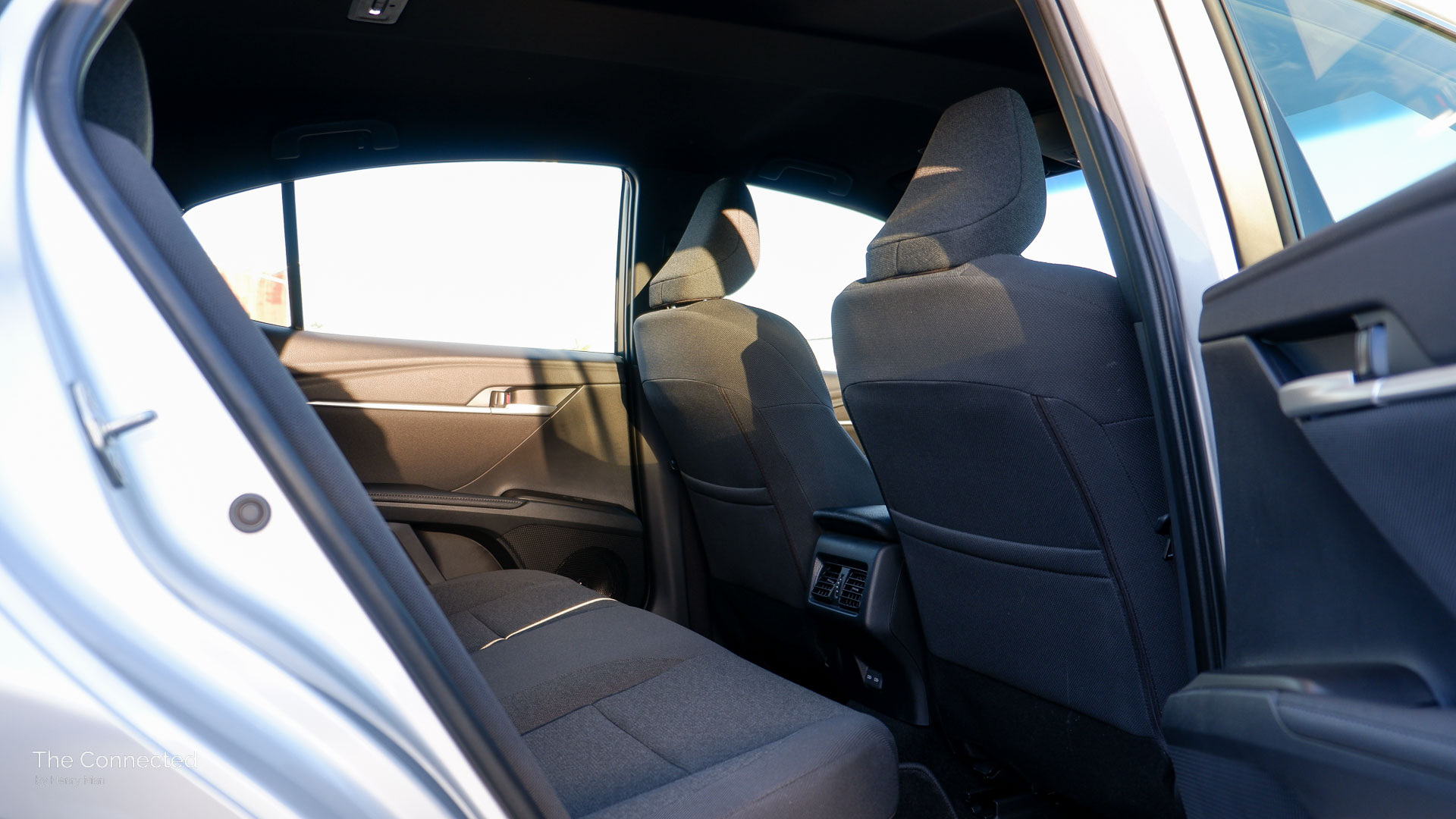
While the new Camry sits on the same TNGA-K platform as its predecessor with a 2825mm wheelbase, it’s still spacious at the back with good legroom and headroom, a fold-down centre armrest with two cup holders, directional rear air vents, two USB-C charging ports and seatback pockets.
The middle passenger has to contend with a small centre floor transmission hump, though.
The almost black headliner also makes the interior feel darker than ideal, but thankfully there are bright LED lights at the front and back rows. The front doors also have courtesy LED lights for illuminating the ground at night, too.
Additionally, the Toyota Camry’s front row is home to a practical centre console – which includes a deep seven-litre centre armrest storage bin with a carpeted surface, two gripped cup holders with an additional open storage space in front, and an accessible Qi wireless charging pad on the Ascent Sport grade.
Three USB-C charging ports and an overhead sunglasses holder also feature – the latter being a rare feature in new cars nowadays. While the glovebox is well-sized, the sedan’s door pockets are narrow and force bottles to be slanted.
The front sun visors don’t extend either, allowing the sun to creep in from the side.


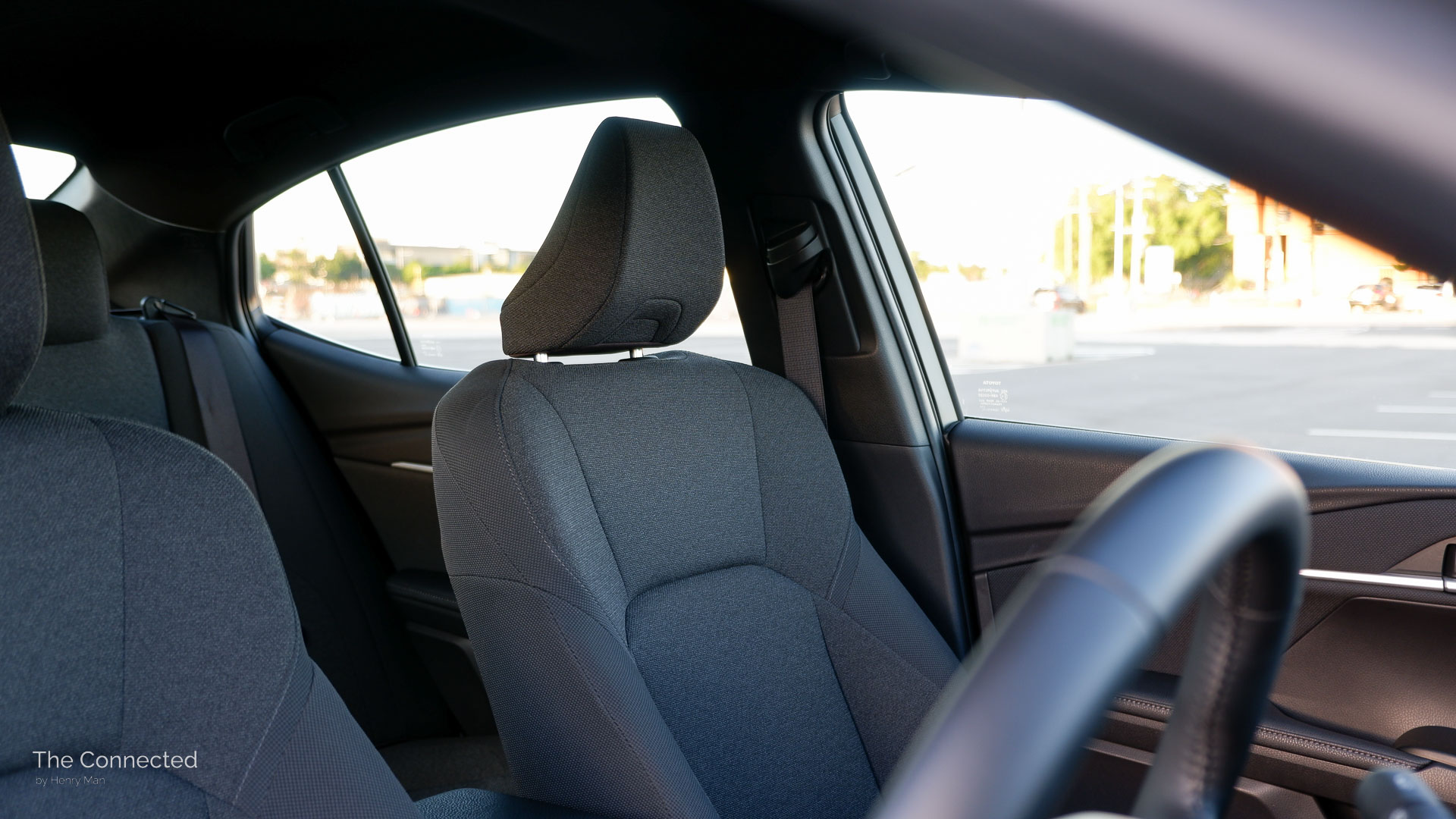
The standard fabric seats look basic, but are supportive with this mid-spec Ascent Sport gaining eight-way electric adjustment and lumbar support for the driver’s seat.
Unfortunately, you’ll need to step up to the flagship SL for driver’s seat memory, heated and ventilated front seats, and a heated steering wheel.
Crucially, the key standout of the new Camry is its no-nonsense dual-zone climate controls.
In an age where car brands are burying air-conditioning controls into touchscreens, the row of well-sized physical buttons, switches and manual directional air vents in the Toyota sedan is refreshingly easy to operate while driving – yet it still looks modern and simple.
A dedicated LED display strip clearly shows what’s set, but there’s also a pop-up on the touchscreen when you change the fan speed and modes.
Even the hazard light button is ergonomically placed on the driver’s side and easily within reach.
Technology.
2025 Toyota Camry Hybrid Ascent Sport tech features:
| 12.3-inch touchscreen running Toyota’s built-in software | 7.0-inch driver instrument display |
| Wireless/wired Apple CarPlay and Android Auto | Qi wireless charging pad |
| Built-in maps | 5x USB-C and 1x 12-volt charging ports |
| OTA software update capability | Six speakers |
| Toyota Connected Services and myToyota mobile app (one-year Multimedia plan subscription included) | Proximity key with door handle touch sensors and auto-folding mirrors |
The refreshed Toyota Camry Hybrid now features connected technology that’s simple and easy to use.
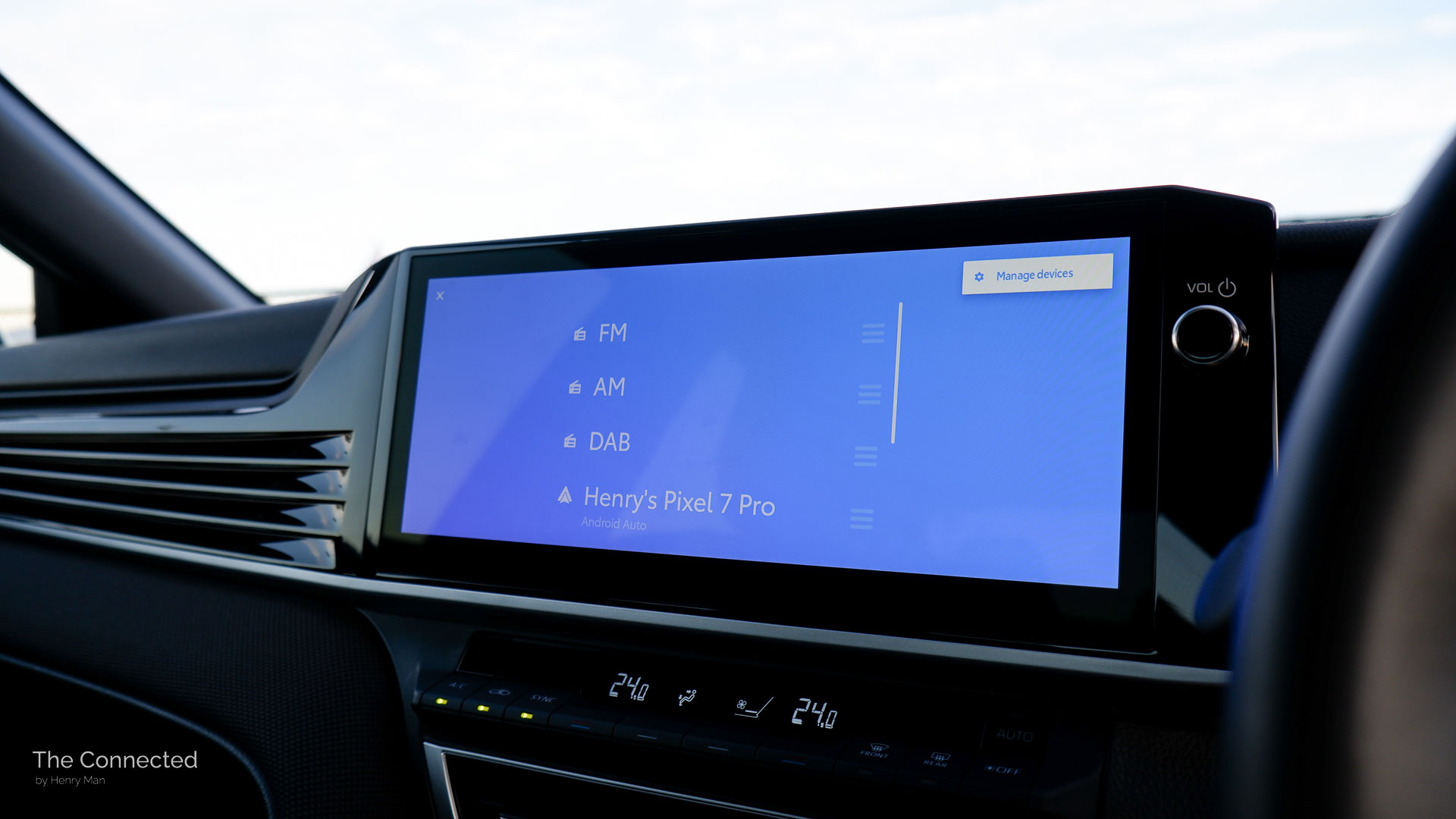
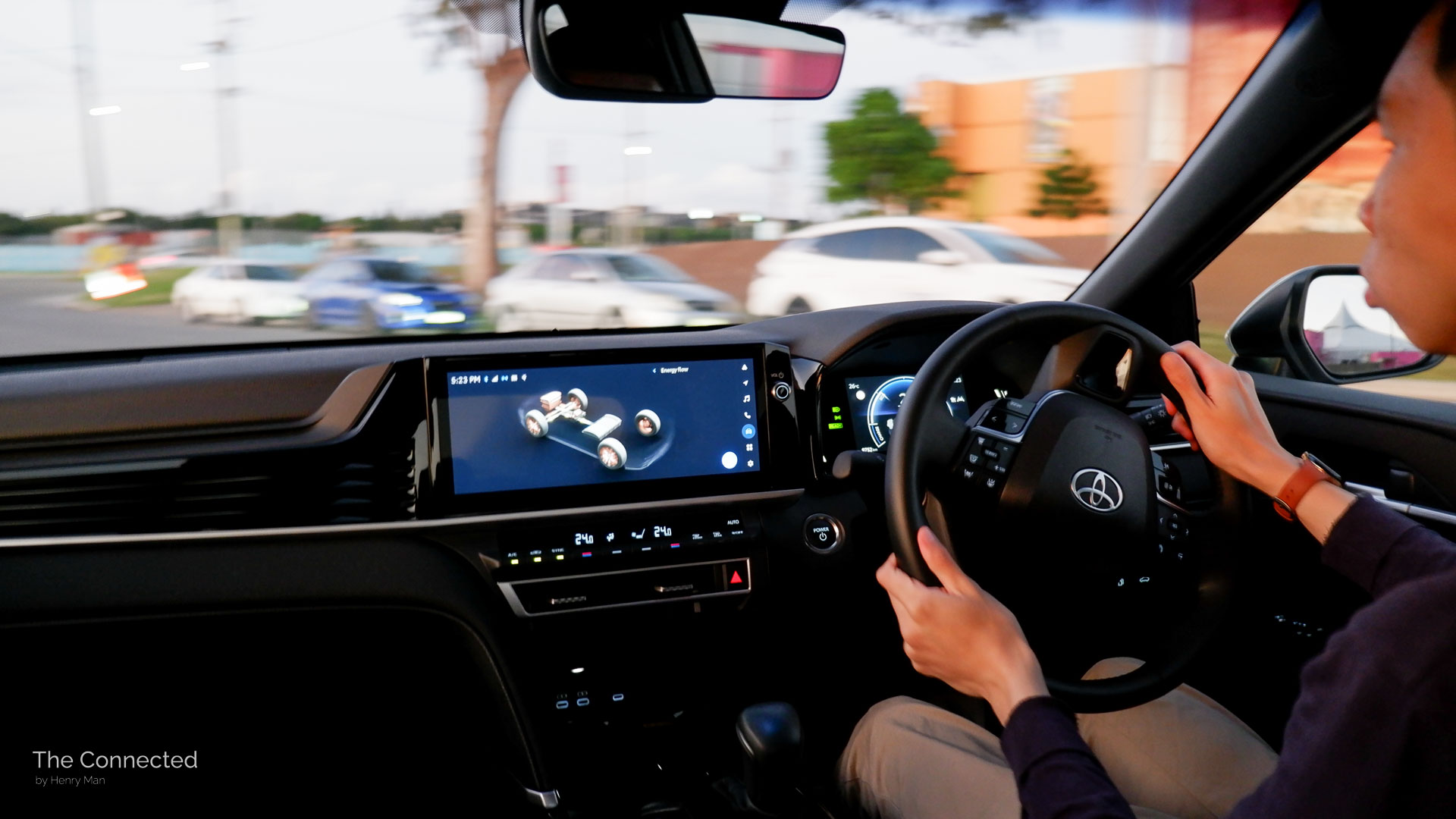
The new larger 12.3-inch wide touchscreen (standard from the Ascent Sport) runs on an upgraded Toyota operating system. It is high resolution and bright, with modern graphics, automatic light and dark mode, and a simple interface with a persistent shortcut bar on the driver’s side.
Compared to the outgoing 2025 Toyota bZ4X, the new Camry appears to have a quicker processor as it feels slightly more responsive.
The built-in software is fairly barebones (in a good way) with built-in maps, a hybrid powertrain status screen and even a web browser to, say, stream YouTube, but you’ll need to connect your mobile data hotspot and it’s a laggy experience.
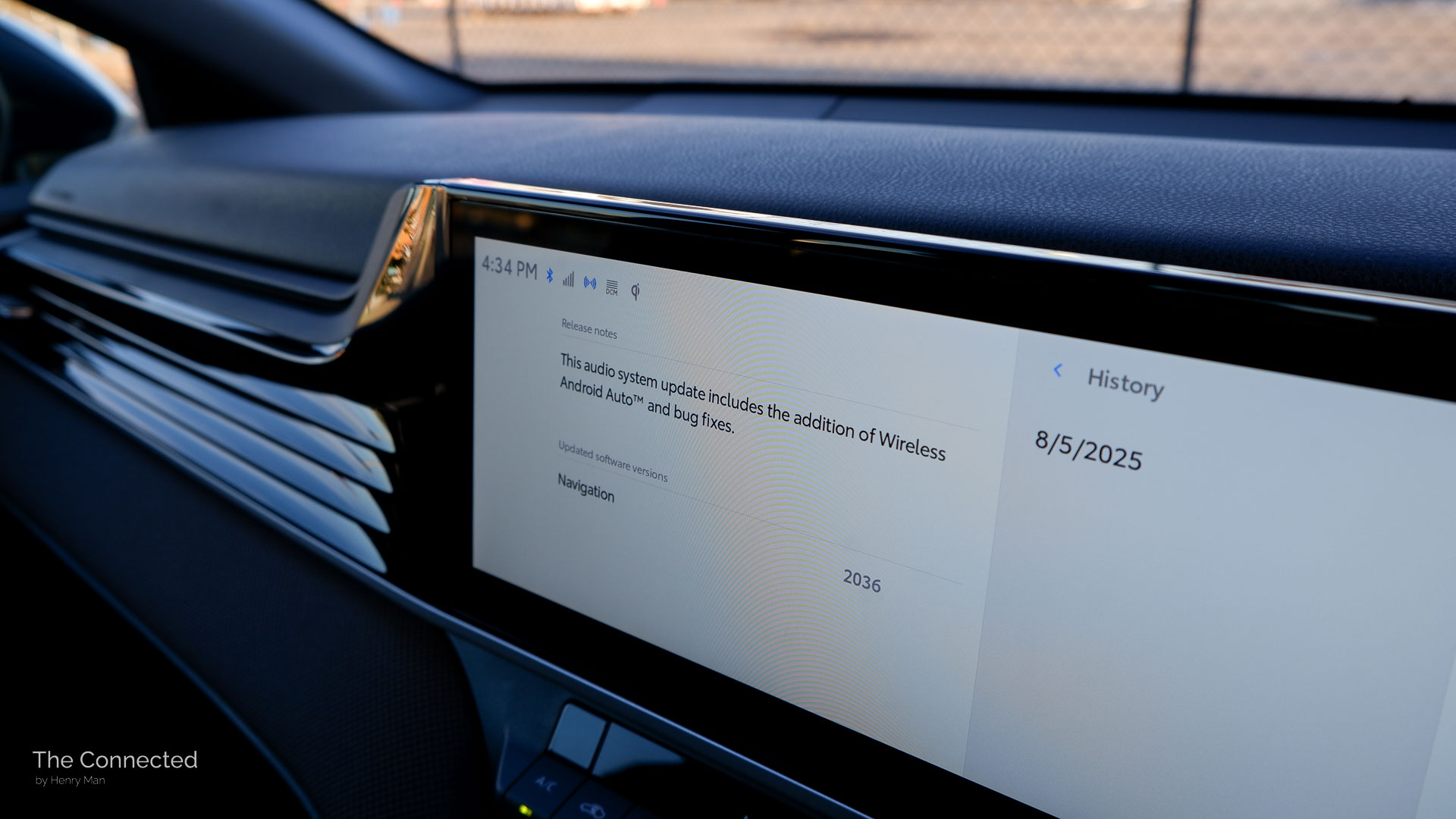
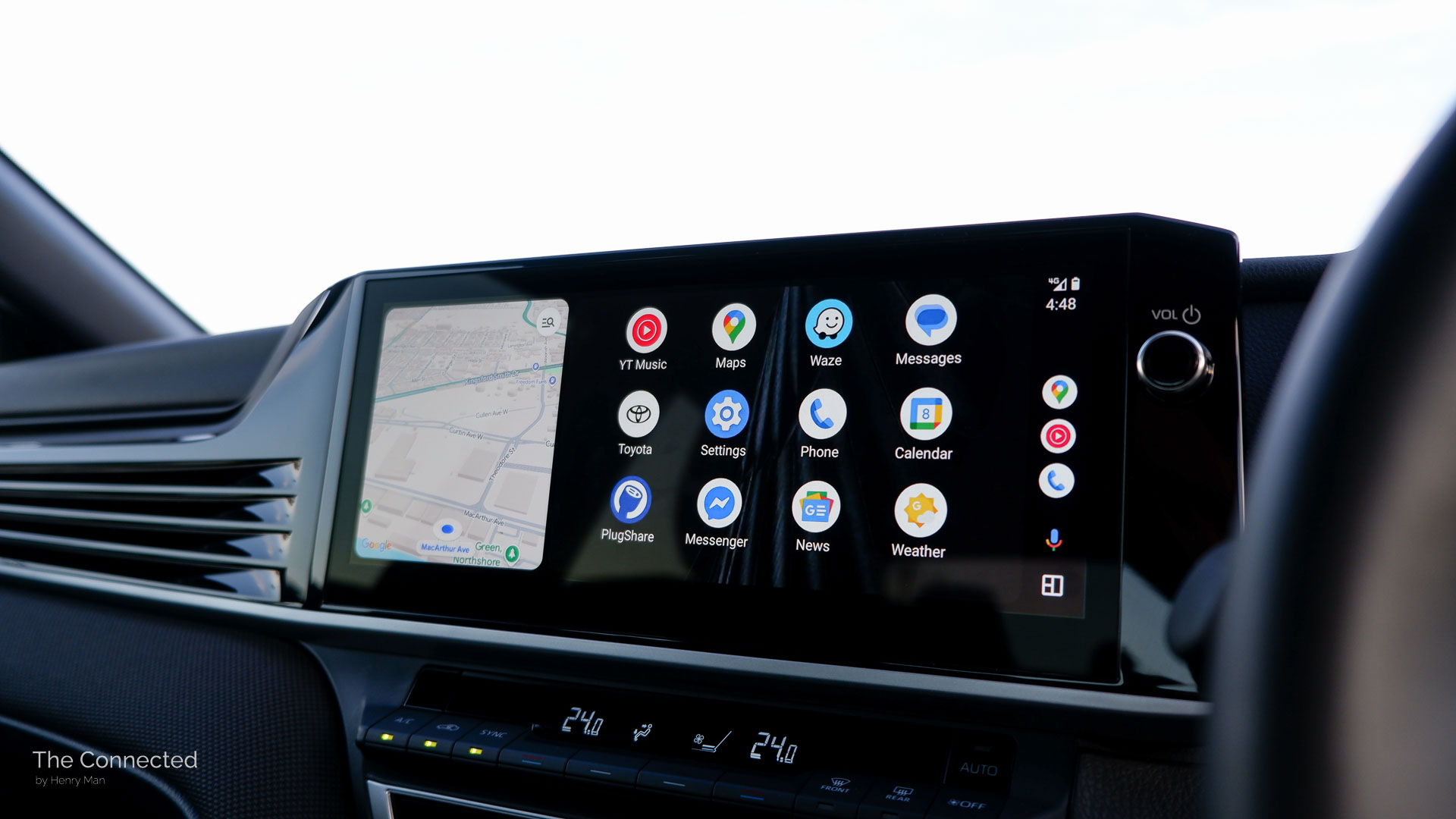

I particularly like the fact that the built-in navigation voices a warning well before approaching stationary traffic – even when you are using smartphone projection systems – although you’ll need to have the top Toyota Connected Multimedia subscription, which costs $12.50 per month after the trial ends.
Unfortunately, Toyota’s full connected services subscription is only included for one year with new vehicles – which pales in comparison to many other carmakers that offer at least three years included, and some stretch to seven years.
Wireless Apple CarPlay and Android Auto connect quickly on startup, although I experienced some audio stuttering at rare times when using the latter. Only Apple CarPlay can keep Toyota’s shortcut bar showing on the side or go full-screen, and integrates with showing map arrows on the instrument display.
While the Qi wireless charging pad is welcome, it lacks a ventilation function so my phone often overheated and stopped charging. The rubber pad isn’t as recessed either, so phones are susceptible to sliding around when driving.


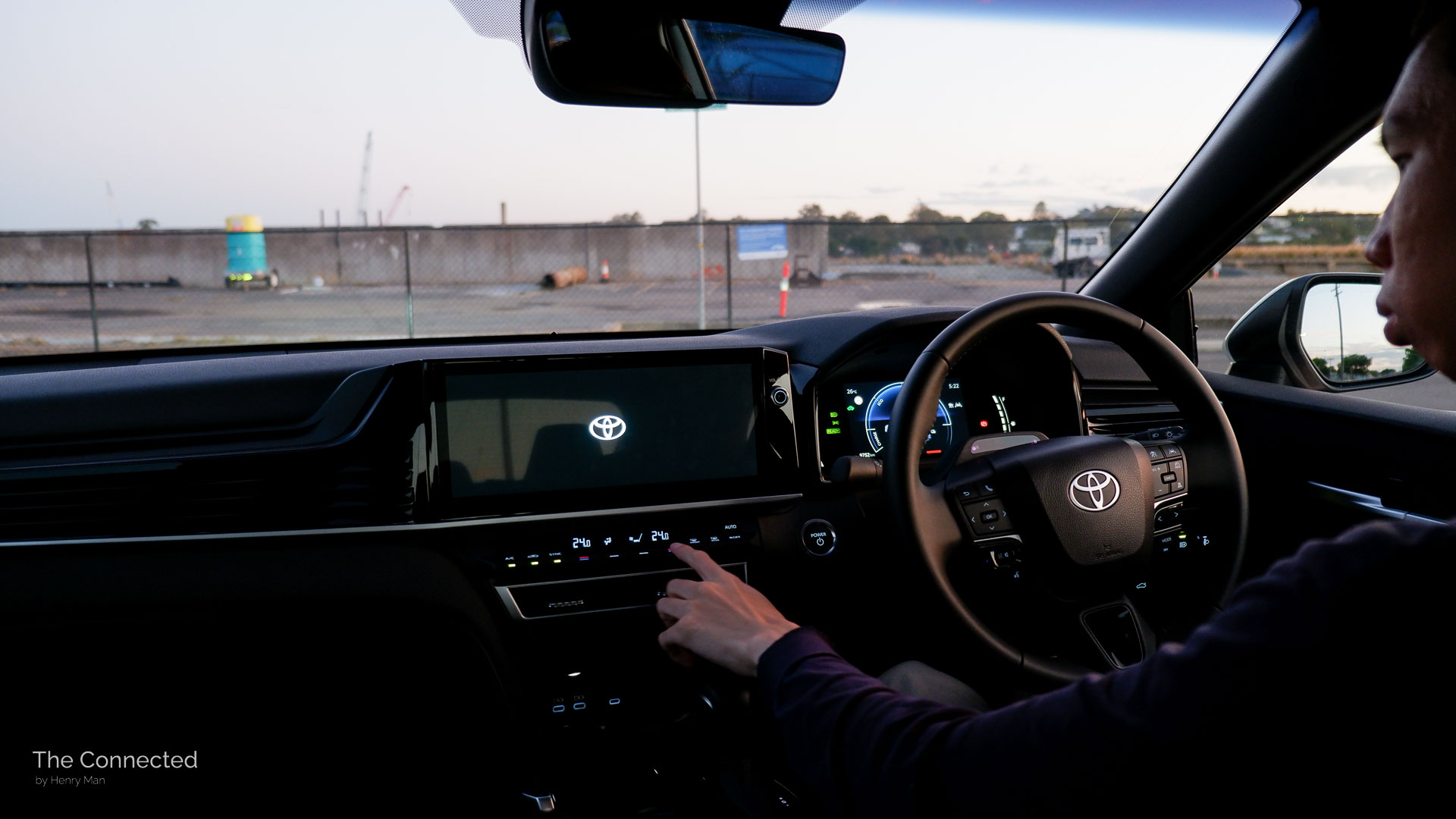
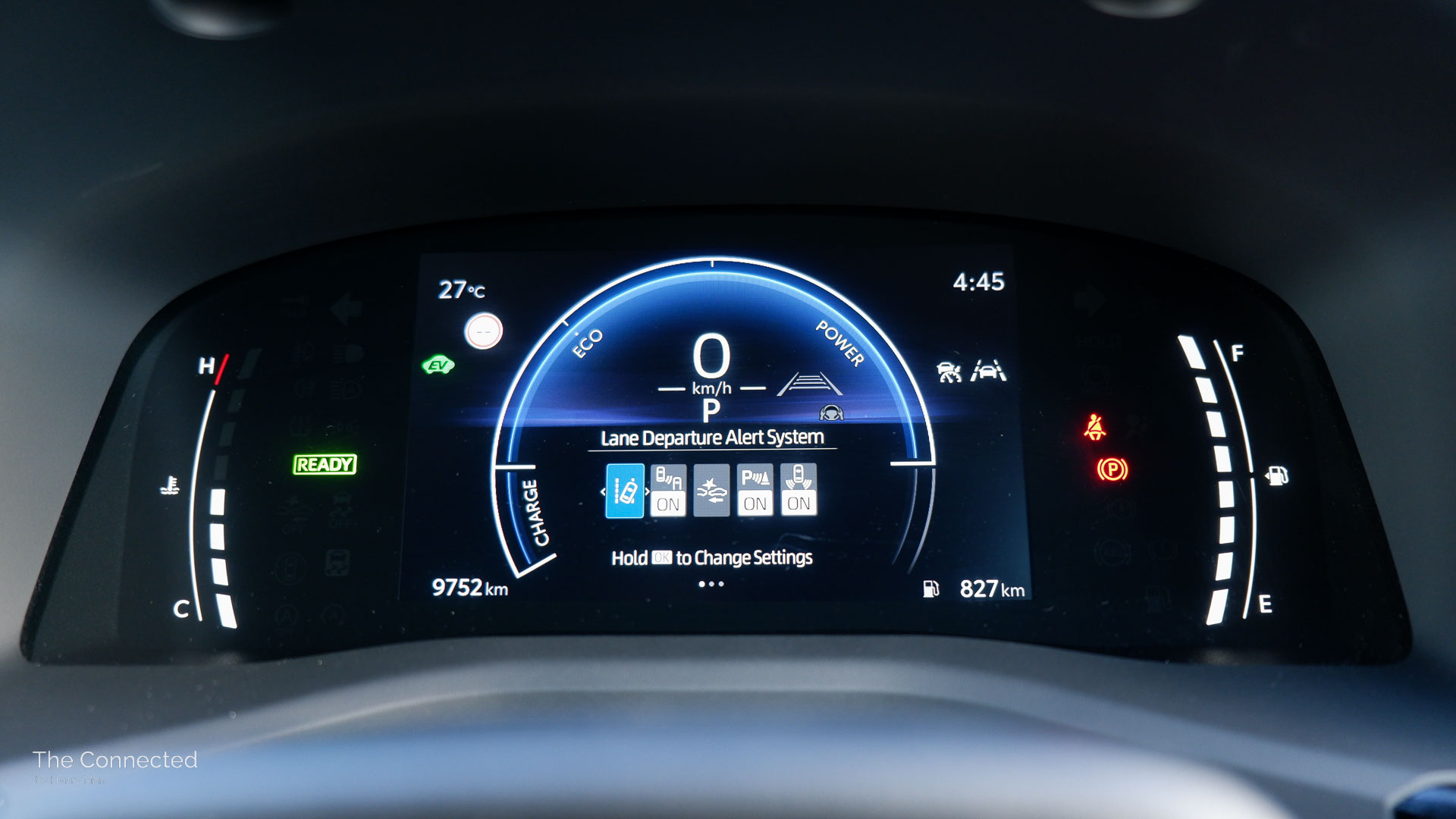
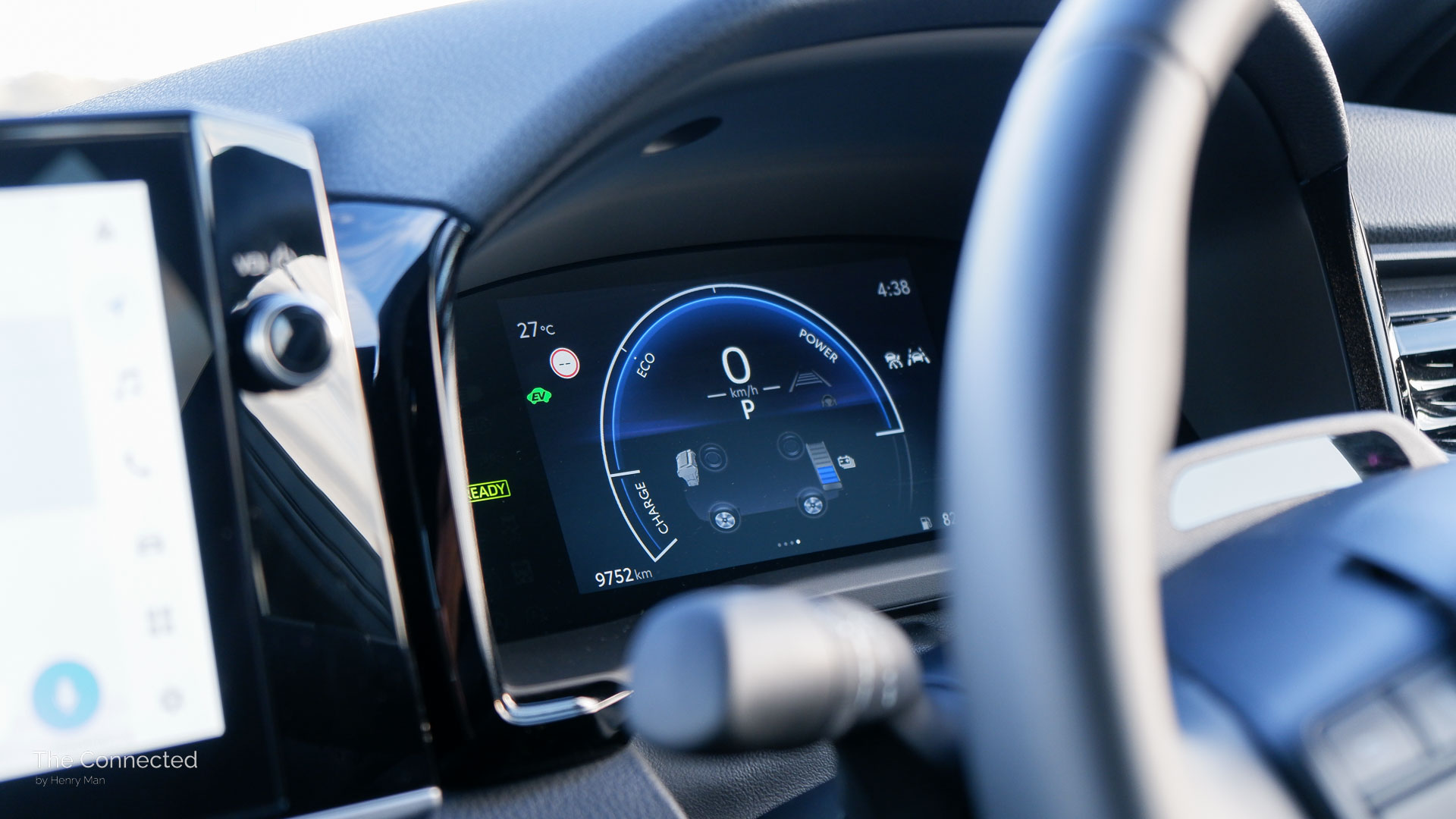
The part digital 7.0-inch driver instrument display on the Ascent and Ascent Sport is very functional with a clear speedometer in the centre, hybrid gauge that encourages drivers to stay in the eco zone to not activate the petrol engine, and a range of customisable pages such as showing the hybrid powertrain and playing audio.
It even shows two red lines to indicate when the brake lights are on – which gives more confidence for drivers.
Yet, some graphics feel a bit outdated and inconsistent with the main infotainment display, especially in the safety assists page.
We couldn’t test out the myToyota mobile app in this Camry since someone had still connected to the vehicle (and resetting the system doesn’t bounce previous owners out), but in our experience with the Toyota bZ4X, it is well-featured and quick to send commands – though constantly signs-out users.
While the flagship SL scores a nine-speaker JBL branded sound system, the stock six speaker unit sounds fairly decent.
Safety.
2025 Toyota Camry Hybrid Ascent Sport safety features:
| Front AEB with vehicle/pedestrian/cyclist/junction turning detection | 360-degree camera system |
| Blind-spot warning | Front and rear parking sensors |
| Rear cross-traffic warning | Speed sign detection |
| Lane-keep assist | Toyota Connected Services emergency services calling and remote location tracking (with subscription) |
| Adaptive cruise control with lane-centring assist | ‘High-grade’ full LED headlights and tail-lights |
| Door open warning and assist | Front LED fog lights |
| Driver monitoring camera |
The new Camry features upgraded safety assistance tech that’s superbly tuned, dependable and leaves drivers in peace.
All Camry models include the full suite of Toyota’s well-calibrated safety assist features as standard, including front automatic emergency braking (AEB) with road user, oncoming vehicle and junction turning detection, blind-spot monitoring, and rear cross-traffic warning.
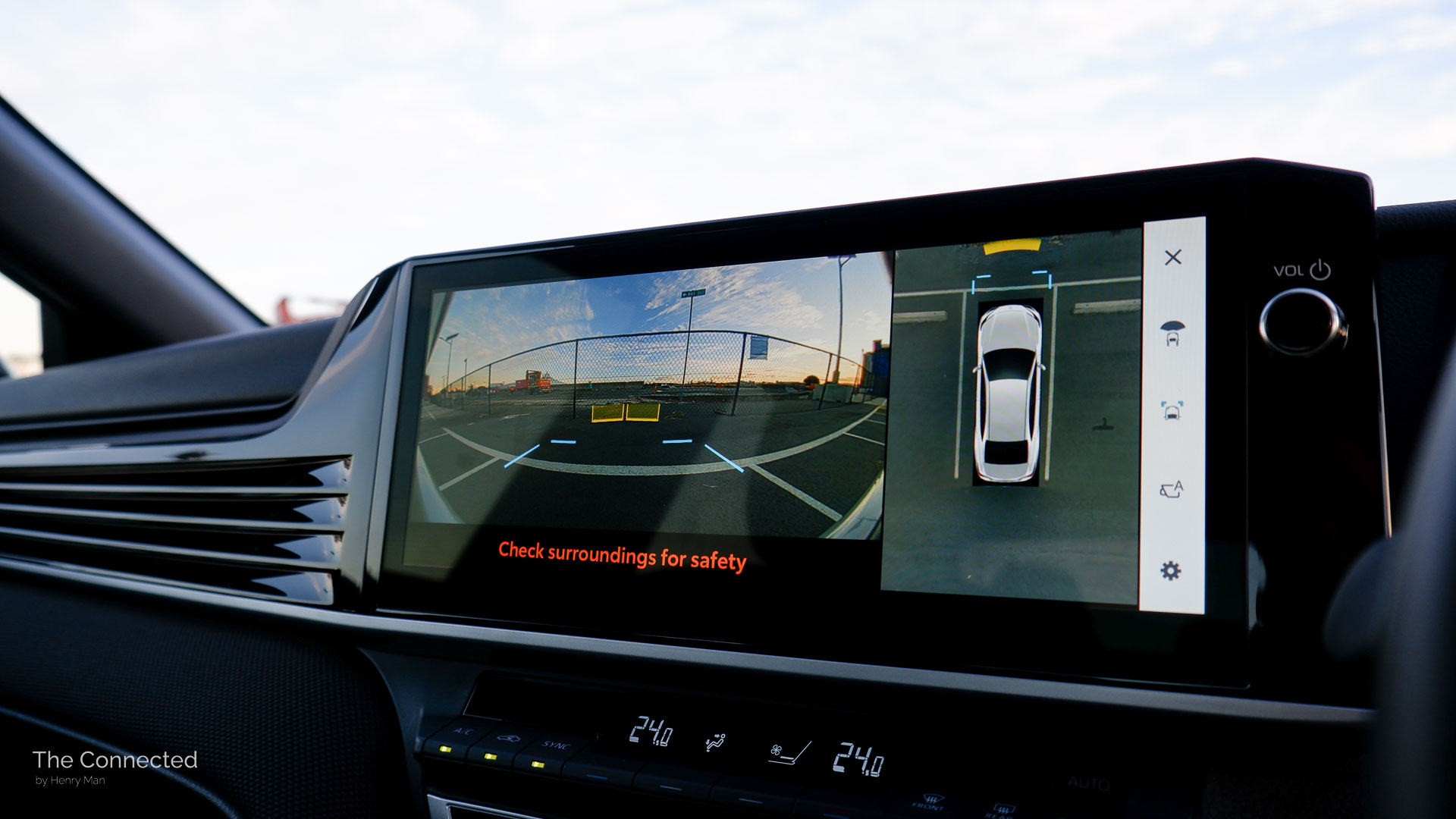
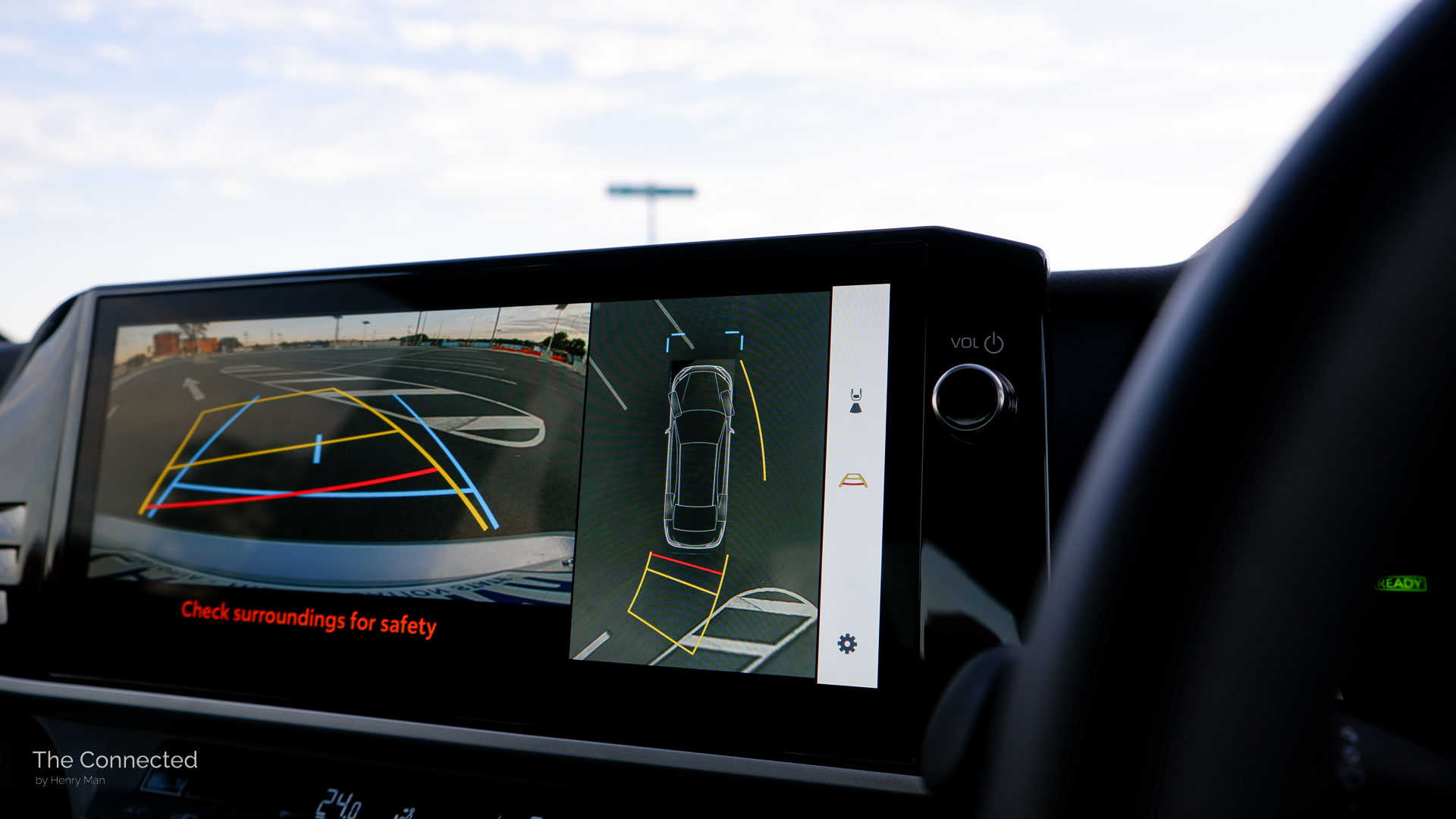
The standard 360-degree surround-view camera system is super clear with a see-through function, virtual walls when the front or rear parking sensors are chiming, and an animated walk-around of the Toyota’s surroundings once parked and you press the button beside the driver.
A particular highlight is that the sedan automatically turns on the cameras on the touchscreen when travelling below 10km/h, allowing drivers to clearly see the surroundings when in traffic and approaching a junction. The camera cuts out above 20km/h, though.

Furthermore, Toyota’s adaptive cruise control system is one of the most reliable in the industry I’ve tested.
It effectively keeps a good, safe distance with the vehicle in front with smooth braking and quickly responds to vehicles cutting in – and even the traffic suddenly braking in front.
Likewise, lane-centring assist is dependable and provides subtle steering inputs that doesn’t fight against the driver when you try to intervene.
The speed limit detection feature doesn’t annoyingly chime and reset every time you start the car and the driver’s attention monitoring camera isn’t sensitive either.
Therefore, it’s hard to fault the Toyota Camry’s safety assists; it’s just missing rear AEB, and active assistance for the blind-spot and rear cross-traffic warnings.


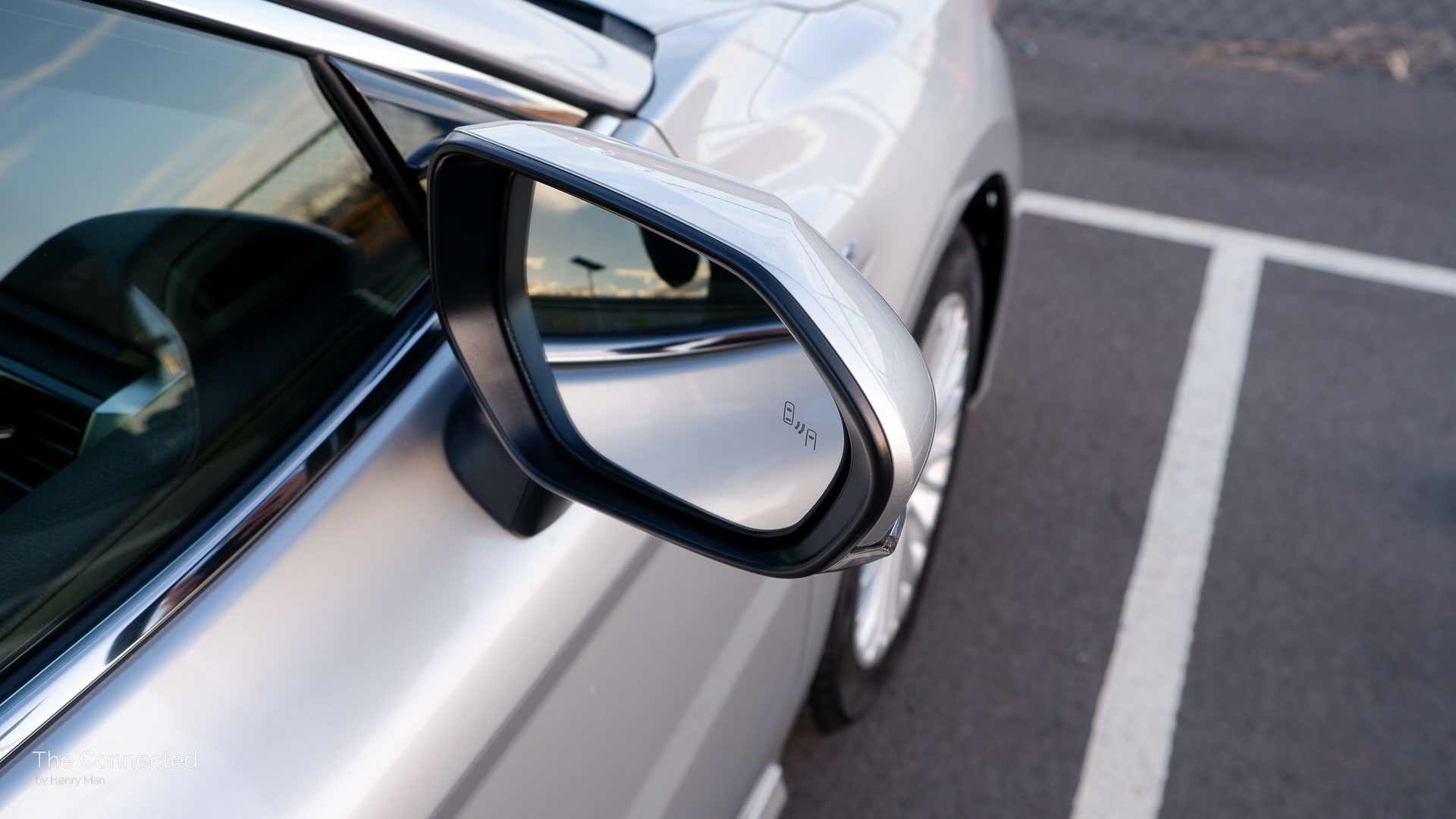
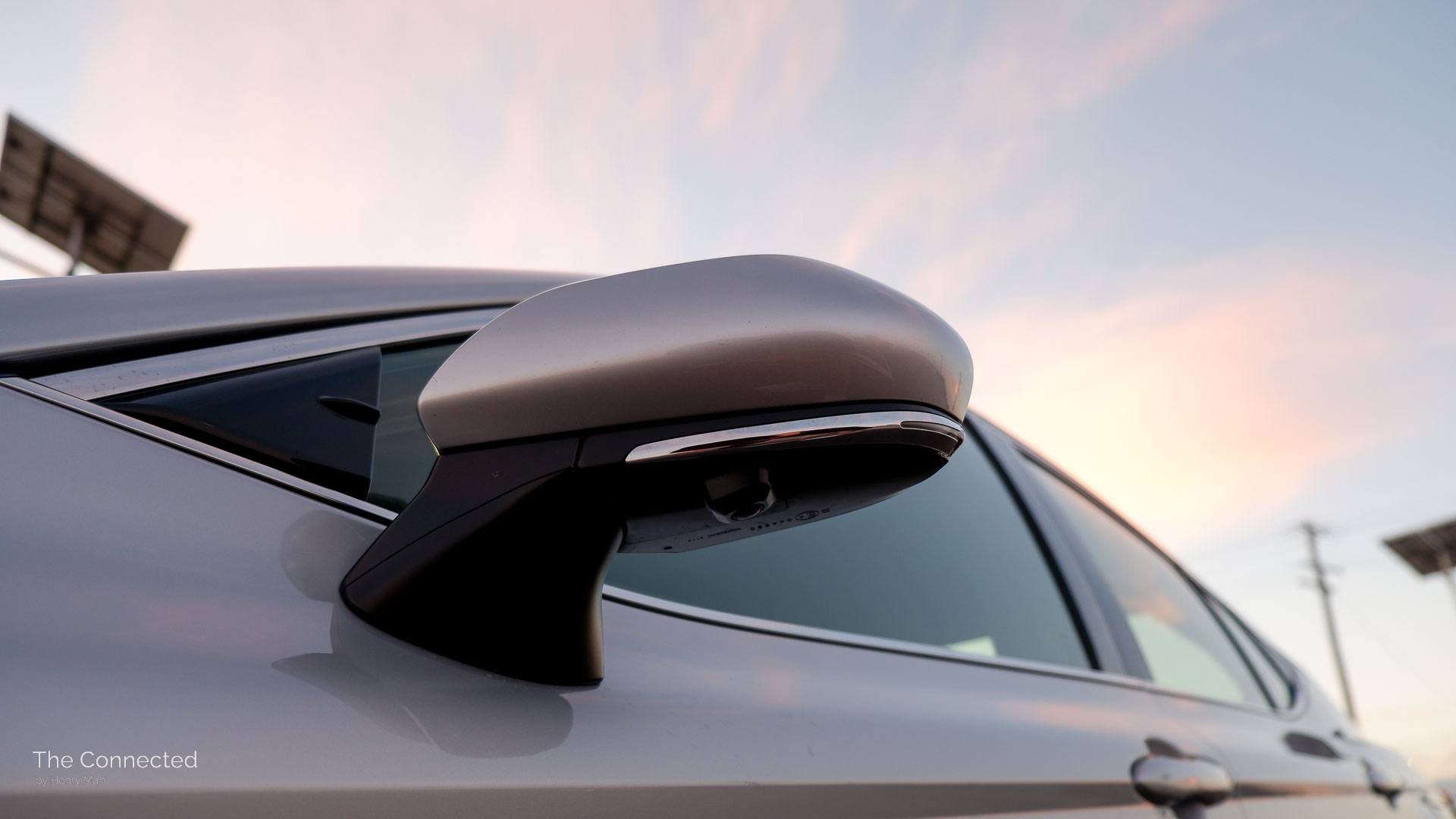
Critically, the medium sedan’s low height and position of the wing mirrors results in headlights from taller large SUVs, utes and trucks directly glaring the mirrors – and eye-searing the driver from both sides at night.
The option of auto-dimming exterior mirrors would be welcome, in addition to the auto-dimming rear-view mirror on this Ascent Sport grade.
This mid-spec also gains full ‘high-grade’ LED headlights with good performance, front LED fog lights, and full LED tail-lights over the base Ascent.
It’s worth noting that, while the standard Toyota Essentials connected services plan includes emergency services calling capability, owners need to optionally pay $9.95 per month for Toyota Connect+ (after the one-year trial) to have remote vehicle location tracking – not ideal if it’s stolen.
We also didn’t observe any exterior pedestrian warning speaker sounds for the Camry, at least in Australia, but is starting to roll out across Toyota’s hybrid cars locally.
The 2025 Toyota Camry has been awarded the full five-star Australasian New Car Assessment Program (ANCAP) safety rating, with impressive 95% adult occupant protection, 87% child occupant protection, 84% vulnerable road user protection, and 81% safety assist scores.
Range and fuel consumption.
2025 Toyota Camry Hybrid Ascent Sport fuel and efficiency specs:
| Claimed driving range (combined cycle) | 1250km |
| Claimed fuel efficiency (combined cycle) | 4.0L/100km |
| Battery size and type | 4Ah lithium-ion battery |
| Fuel tank size | 50 litres |
| Minimum fuel quality requirement | 95 RON premium unleaded petrol |
| Claimed CO2 exhaust emissions (combined) | 91g/km |
| European emissions compliance | Euro 6 |
The 2025 Toyota Camry Hybrid returned a low average fuel consumption of 4.6L/100km after a week of mixed urban and highway driving.
Therefore, the medium sedan can deliver a real-world driving range of around 1086km from its 50-litre fuel tank.
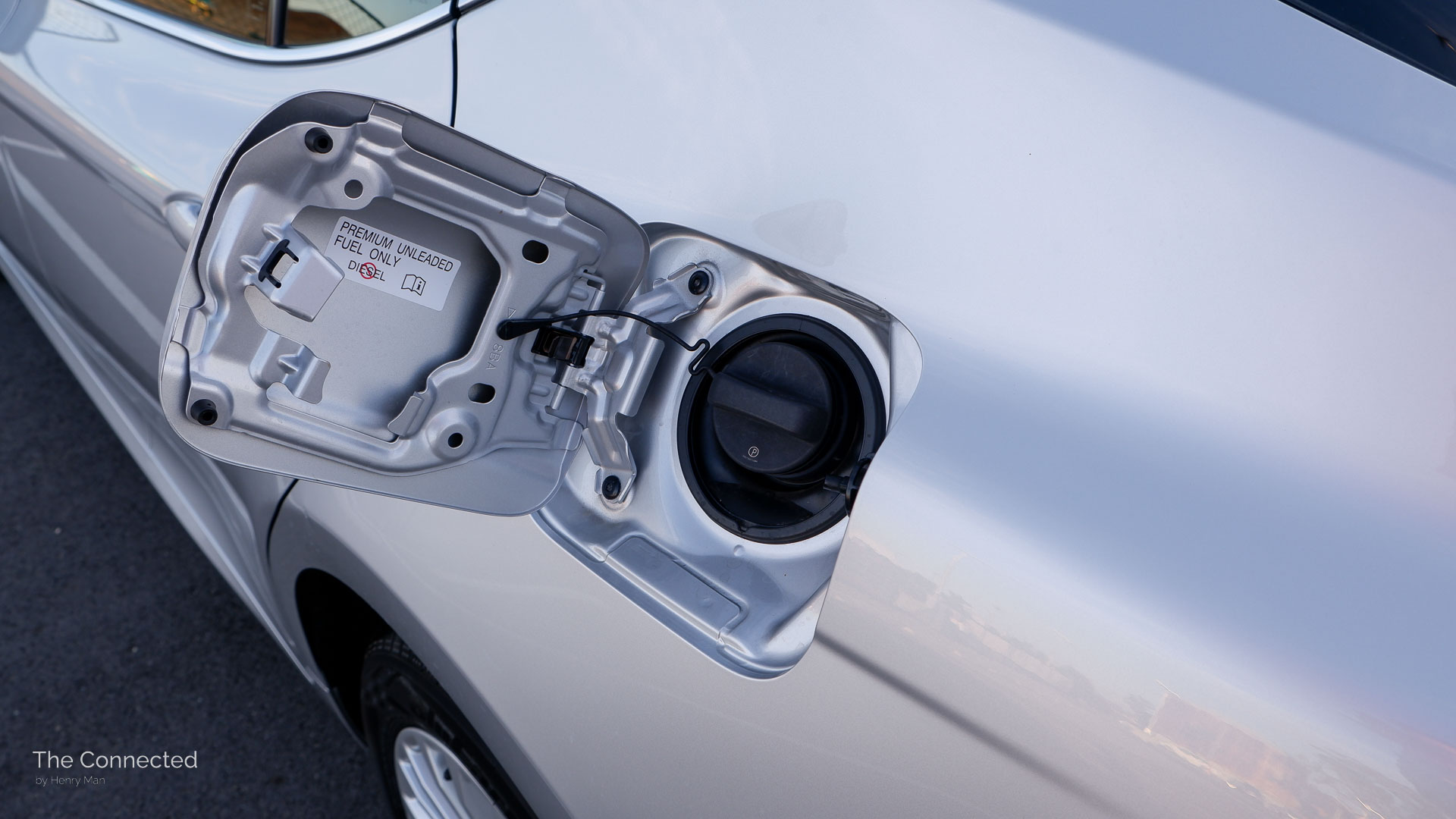
Pricier 95 RON premium unleaded petrol is required.
The new Camry incorporates Toyota’s latest fifth-generation series-parallel hybrid system, which means it can drive the wheels using the petrol engine, electric motor, or both depending on driving needs.
No plug-in charging is required with the small lithium-ion battery refilled via regenerative braking and the engine.
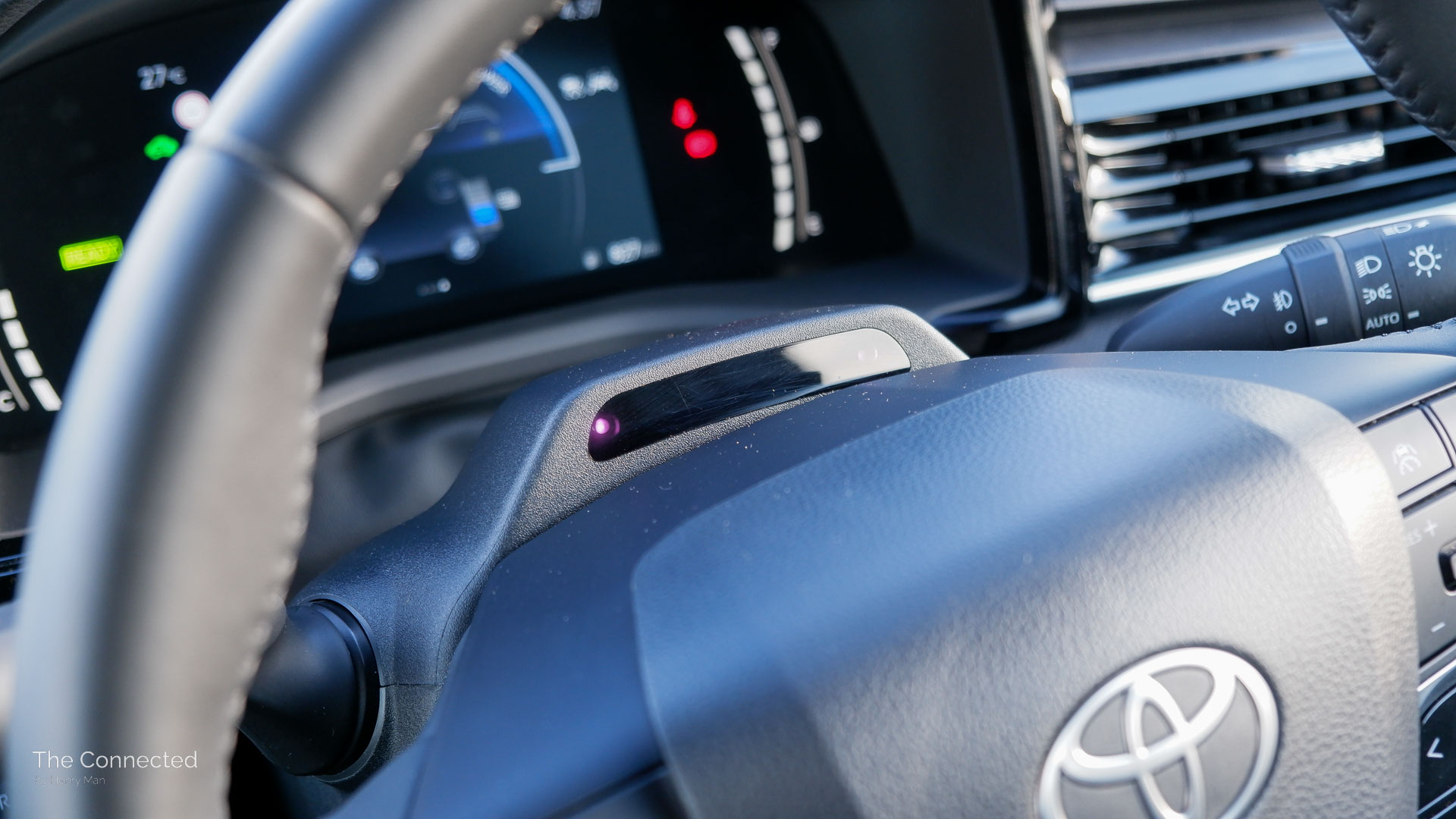
The fuel lid is located at the rear-left quarter side of the vehicle, but you’ll need to press a button beside the steering wheel to pop it out, old-school style.
Driving.
2025 Toyota Camry Hybrid Ascent Sport powertrain specs:
| Engine and electric motor | 2.5-litre four-cylinder inline petrol engine and single front permanent magnet synchronous motor |
| Power | Combined: 170kW |
| Torque | Engine: 221Nm @3600rpm-5200rpmEV motor: 208Nm |
| Transmission | CVT |
| Drive type | FWD |
| Kerb weight | 1565kg |
| Turning circle | 11.4 metres |
| Payload | 535kg |
| Towing (unbraked / braked) | 400 / 400kg |
The heavily updated Toyota Camry is easy to drive with a punchy hybrid powertrain and compliant ride, but the engine is a bit loud when activated.
Debuting Toyota’s fifth-generation hybrid system with a 2.5-litre four-cylinder inline petrol engine, the new Camry provides plenty of push with up to 170kW of power combined, while there’s up to 221Nm of torque from the engine and 208Nm from the EV motor alone (Toyota doesn’t quote a combined system figure).
Combined with the low sedan stance, it feels slightly sporty, too. Yet, it still provides good grip and is controlled enough to not spin the front wheels and torque steer when pushed.
The Japanese carmaker’s series-parallel hybrid transitions between petrol and electric powertrains smoothly, with frequent EV-only moments when coasting, slowing down, and driving at low speeds.
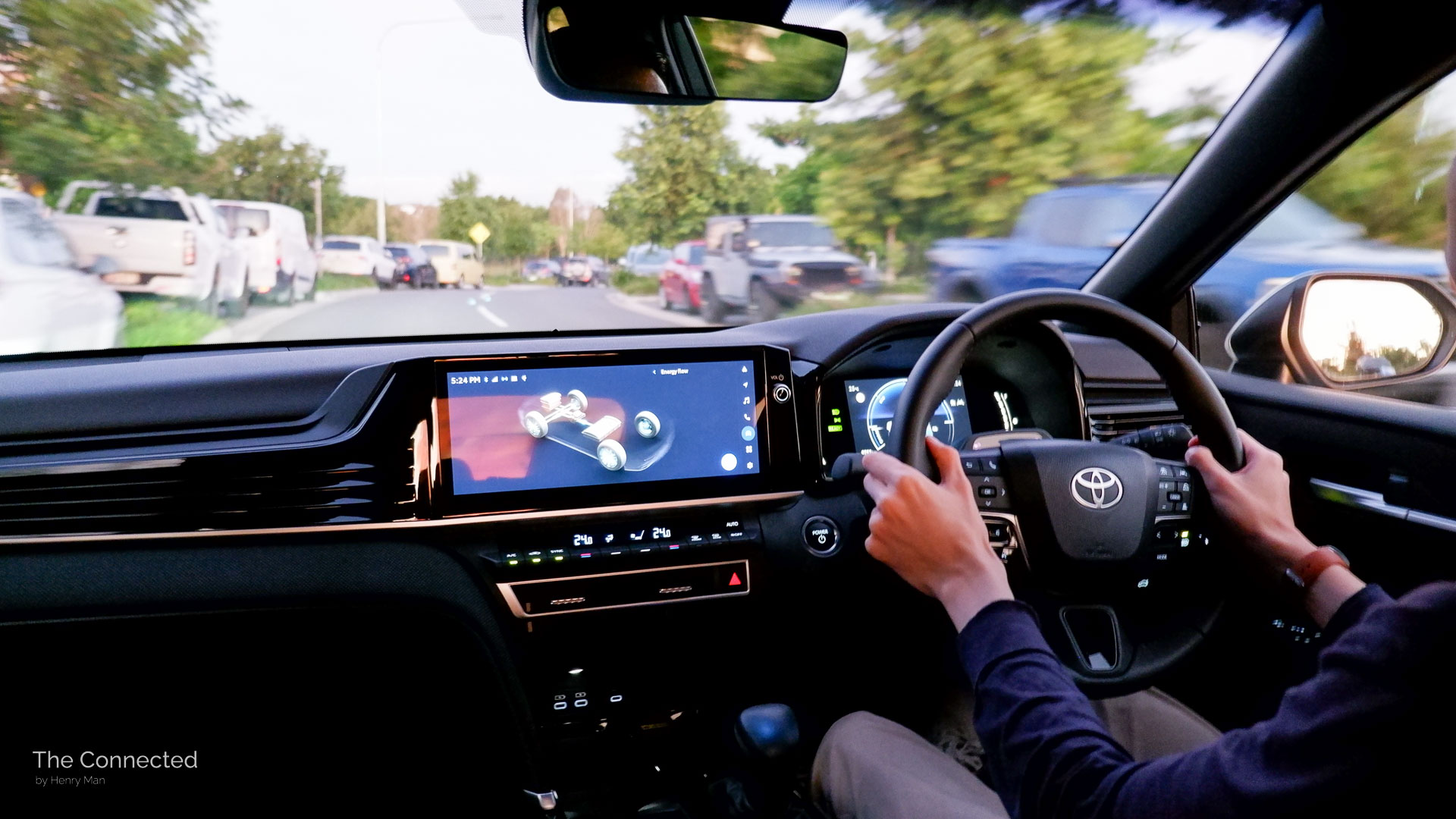
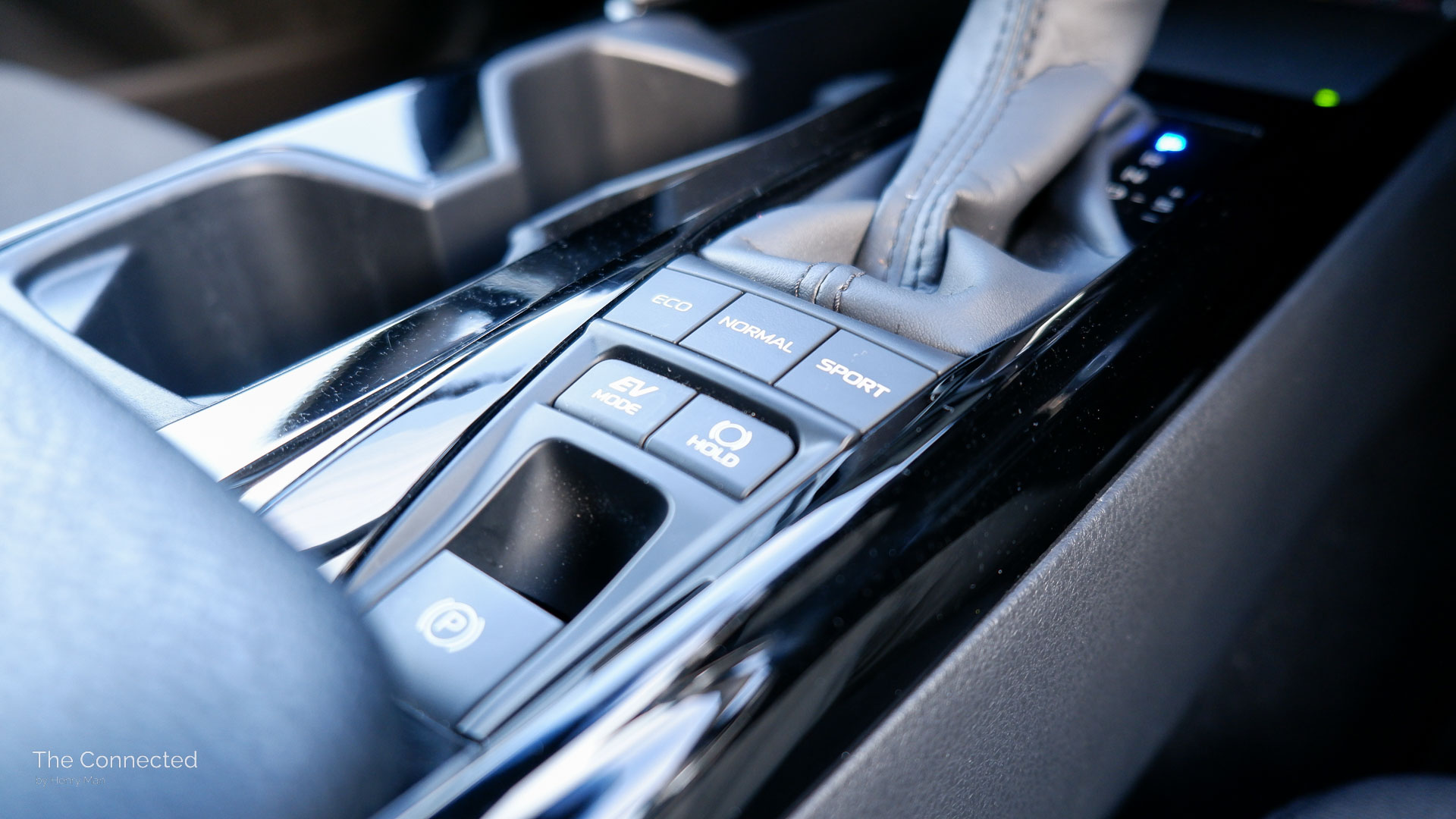

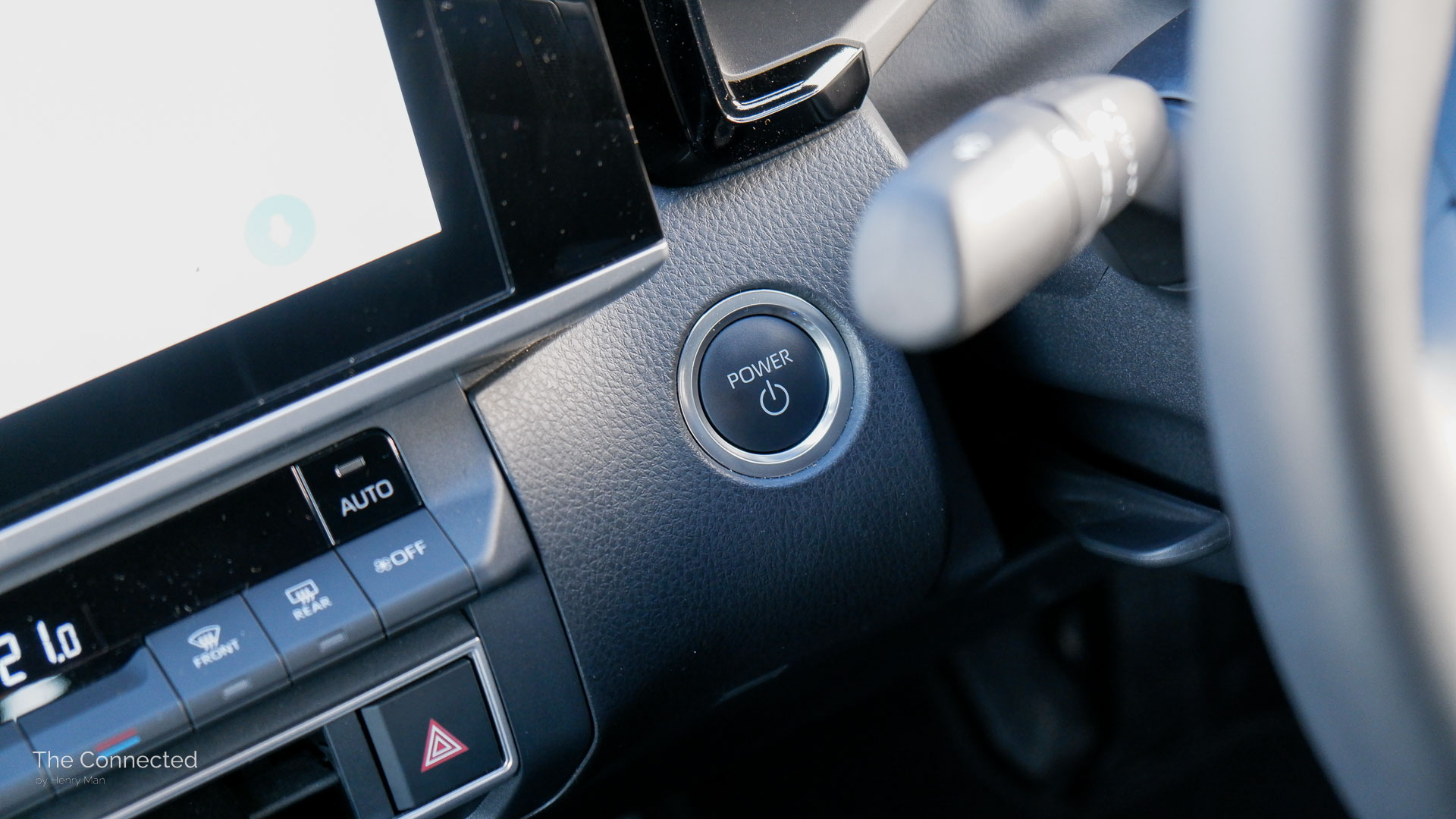
The Toyota Camry also offers a physical gear shifter, three separate buttons for switching between drive modes, and EV-only mode button, though the latter isn’t as useful as the car overrides it anyway when travelling faster than 30km/h.
However, once the petrol engine activates, it sounds loud, groaning and under strain – exacerbated by the single-gear continuously variable transmission (CVT).
The ride is otherwise comfortable and compliant over bumps with generally good noise insulation around town – but there is more tyre noise audible at highway speeds.
The blended brake pedal feels natural for a hybrid car, where energy regeneration is done; unfortunately, there’s no regenerative braking setting to slow down the medium sedan as you lift off the pedal, unlike other hybrid cars.
Meanwhile, despite the low sedan body style, the Toyota Camry still provides good all-round visibility – including tall side windows and good rear glass visibility via the rear-view mirror.

Warranty and servicing.
2025 Toyota Camry Hybrid capped-price servicing costs:
| 1 year/15,000km | 2 years/30,000km | 3 years/45,000km | 4 years/60,000km | 5 years/75,000km |
| $255 | $255 | $255 | $255 | $255 |
The 2025 Toyota Camry is backed by a five-year, unlimited kilometre vehicle warranty and a long conditional 10-year, unlimited kilometre battery warranty.
The latter is based on the requirement that owners service the hybrid sedan each time with a Toyota dealer, otherwise the battery is only covered for five years, unlimited kilometres.
Engine and electric motor drivetrain warranty coverage can also be extended up to seven years, unlimited kilometres provided the same condition is met.
Servicing is required every one year/15,000km (whichever occurs first). Scheduled logbook visits are capped for the first five visits, and total to just $1275 after five years/75,000km.


Low servicing costs are a standout for the Camry, when many full electric vehicles from rival car brands can cost even more to maintain.
Unfortunately, Toyota doesn’t include roadside assistance with its vehicles – only a towing and loan car service for up to seven years, unlimited kilometres (conditional) are offered if a defect covered by the Toyota warranty causes the car to be undriveable
Additionally, only one year of Toyota Connected Multimedia is included with new vehicles, where it defaults to Toyota Essentials with basic connected services thereafter.
Paying $9.95 per month for the Toyota Connect+ subscription adds features such as: stolen vehicle tracking, remote door/unlock, remote climate control, EV charge status and schedule, and Drive Pulse scoring.
Meanwhile, opting into the $12.50 per month Toyota Connected Multimedia plan further adds: connected navigation, connected voice assistant, and multimedia profiles.
A temporary space-saver spare tyre is included underneath the boot floor of all Camrys.

Price and rivals.
2025 Toyota Camry Hybrid model range pricing (accurate as at the time of publication):
| Ascent | Ascent Sport | SL |
| From $39,990 before on-road costs | From $42,990 before on-road costs | From $53,990 before on-road costs |
The 2025 Toyota Camry Hybrid is priced from $39,990 before on-road costs in Australia.
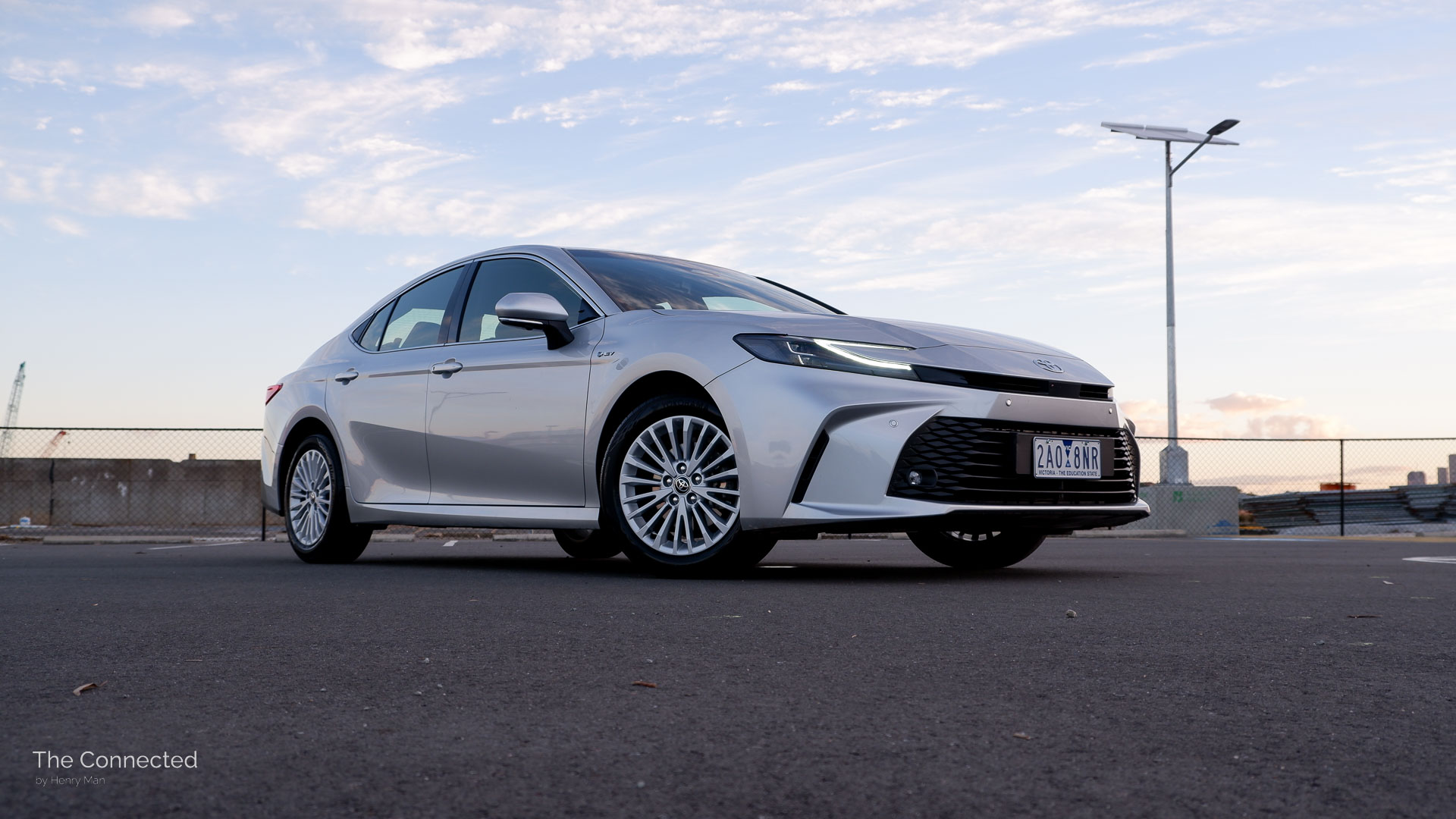
The refreshed hybrid-only medium sedan is offered in three variants, with all exterior colours except Glacier White requiring an additional $587 cost (including Silver Pearl as pictured).
The 2025 Toyota Camry Hybrid directly rivals the following electrified sedans and liftbacks:
- Honda Accord e:HEV
- BYD Seal
- Tesla Model 3
- Polestar 2
Other alternatives to the Toyota Camry include:
- Skoda Octavia
- Hyundai Sonata
- Hyundai i30 Sedan Hybrid (full review)
- Toyota Corolla Hybrid sedan
- Kia K4 sedan
- Mazda 3 sedan
- Toyota RAV4 Hybrid
- Toyota bZ4X (full review)
- Kia Sportage Hybrid (full review)

Would I pick the 2025 Toyota Camry Ascent Sport?
The refreshed 2025 Toyota Camry Hybrid sedan is highly recommended as the default choice for drivers who want a no-nonsense, spacious and safe new car with low running costs.
Easy to use tech, well-tuned safety assist systems, a family-friendly and no-thrills interior, evolutionary styling, and a good value sub-$45K starting price reinforces why the venerable sedan is still so popular.
For fleets, private drivers and Australians who aren’t ready to make the jump into a full electric car yet, the 11th generation Camry represents the ‘easy’ option with low real-world fuel economy from its new hybrid system and cheap servicing costs.
But, expect some trade offs including a bland interior, loud and groaning engine when activated, more road noise at high speeds, the eye-searing glare of other SUV and ute headlights at night via the wing mirrors, and merely one year of full connected services features included.


I’d pick the mid-spec Ascent Sport as tested, which provides key features such as a larger touchscreen, auto-dimming rear-view mirror, leatherette steering wheel and shifter, and driver lumbar support – without stepping up a whopping $11,000 more for the hero SL.
For those who just want a good all-round new car, the new Camry should be the default choice.
Photographs by Henry Man
READ MORE: 2025 Hyundai i30 Sedan Hybrid review
READ MORE: 2025 Kia EV5 review
READ MORE: 2025 Mazda CX-30 review
Pros:
- Great value ‘default car’
- Outstanding safety tech
- No-nonsense, ergonomic interior
- Super fuel efficient
- Spacious boot and rear row
Cons:
- Basic interior quality
- Loud engine, groaning CVT
- Wing mirror glare at night
- One-year of full connected services included
- Missing a pedestrian warning speaker
About the Author.
Henry Man is an independent content producer passionate about the intersection of technology and transportation.
The former automotive journalist is focused on producing critically-detailed vehicle reviews, and unique short-form content. Learn more.


 The Connected by Henry Man