

Front, rear, side. Electric vehicle models have a variety of charge port positions – and it’s a bit awkward…
Internal combustion engine (ICE) cars are pretty straightforward: fuel up via either the left- or right rear-quarter side of the vehicle. Rarely is it elsewhere.
However, when it comes to electric cars, it’s much more varied.
There’s no standard, from rear quarter to front wheel fender and front grille, and public charging stations aren’t always in the same position or orientation either (unlike fuel pumps).
Which is the ‘best’ EV charge port position for accessibility?

Rear quarter side: Ideal.
Like a combustion engine vehicle, the familiar rear-quarter side is generally the best charge port placement – specifically on the passenger side.
Most public chargers are behind the parking bay, and being at the rear side means EV owners don’t need to stretch the charging cable as much since the rear tailgate usually protrudes less than the front bonnet.
Yes, drivers generally need to reverse into a parking space to charge – but it’s better than the front because all new electric cars in Australia include a reversing camera, but a front camera view or sensors aren’t always granted.
The most ideal position is at the passenger side (the left for right-hand drive markets such as Australia) to access kerbside chargers and trailer-friendly stalls.
You’ll find the rear-left quarter charge port on models such as:
- Tesla Model 3 and Model Y (full review)
- Polestar 2, 3 and 4 (full review)
- MG 4 (full review) and S5 EV
Meanwhile, the rear-right quarter placement has been adopted by electric cars such as the:
- Leapmotor C10 (full review)
- Hyundai Ioniq 5 (full review) and Ioniq 6
- Cupra Born (full review) and Tavascan
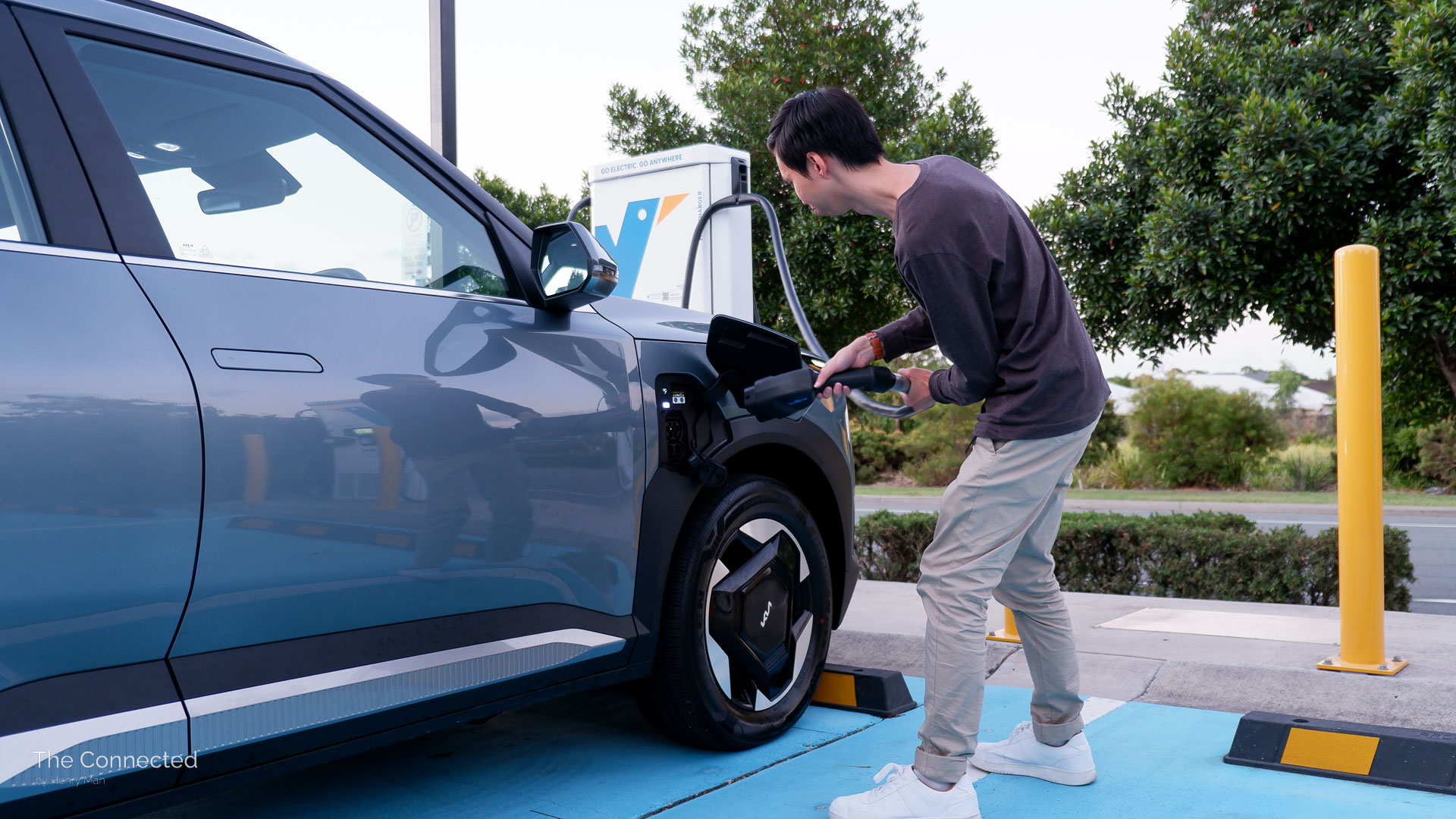
Front wheel side: Questionable.
A growing number of electric cars have charge ports next to the front wheel arches – and it can be awkward.
This fender position can be problematic as owners need to stretch and wrangle a charging cable beyond the front bonnet in order to plug in.
It can be awkward and difficult, especially when fast-charging station cables often are heavy and unwieldy, and front bonnets can be quite extended versus the tailgate.
Again, the passenger side is better as it can face streetside chargers.
Example front left-quarter charge port models include:
- Toyota bZ4X (full review)
- GWM Ora
- Porsche Taycan
EVs with a front right-quarter charging port include:
- Kia EV3 and EV5 (full review)
- BYD Atto 3
- Nissan Ayria

Front grille: Easier.
The front charging port is easier to plug in a cable, but has its weaknesses.
For those who prefer to drive into a parking bay, this placement is ideal.
However, it may be lower than ideal for some, requiring a bit of back bending when plugging in, the front often collects debris and insects while driving, and it’s more vulnerable to front-end accidents.
Some are centred – which is better for accessibility – while other models may err on the left- or right side.
The following EVs adopt front charging ports:
- Hyundai Inster and Kona Electric (full review)
- Chery E5
- Nissan Leaf (outgoing model)
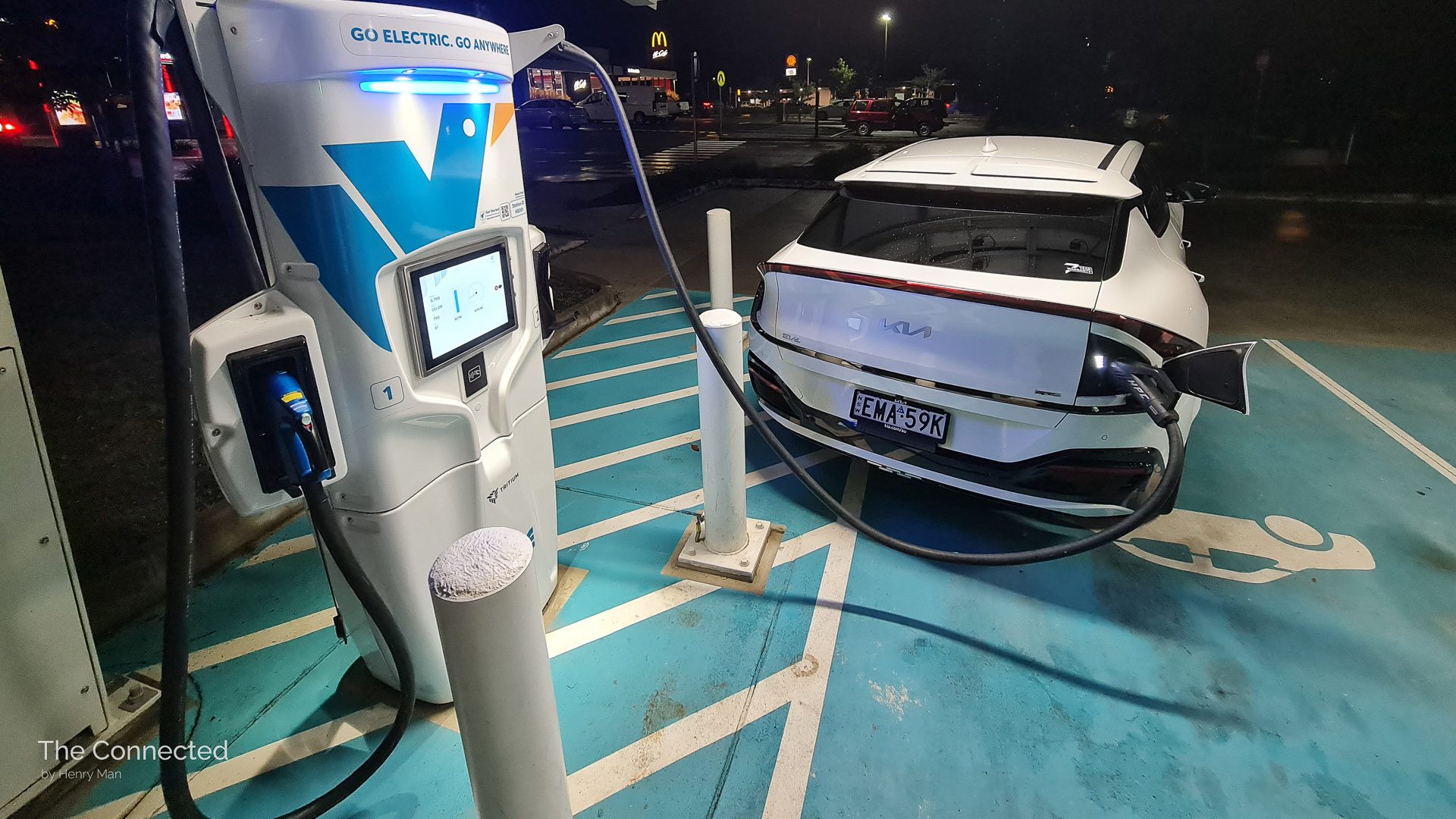
Rear tailgate: Rare.
Few EVs put their charge ports at the back beside the tailgate, but like the front position, it isn’t ideal.
For now, we’ve only seen this on the Kia EV6 crossover – where it places its charge port on the right side of the tailgate.
This makes charging stations that are on the left side, such as kerbside and trailer-friendly stalls, difficult to stretch a cable.
It’s also lower and closely positioned to typical charging stations that are behind the parking space, and prone to rear-end accidents.
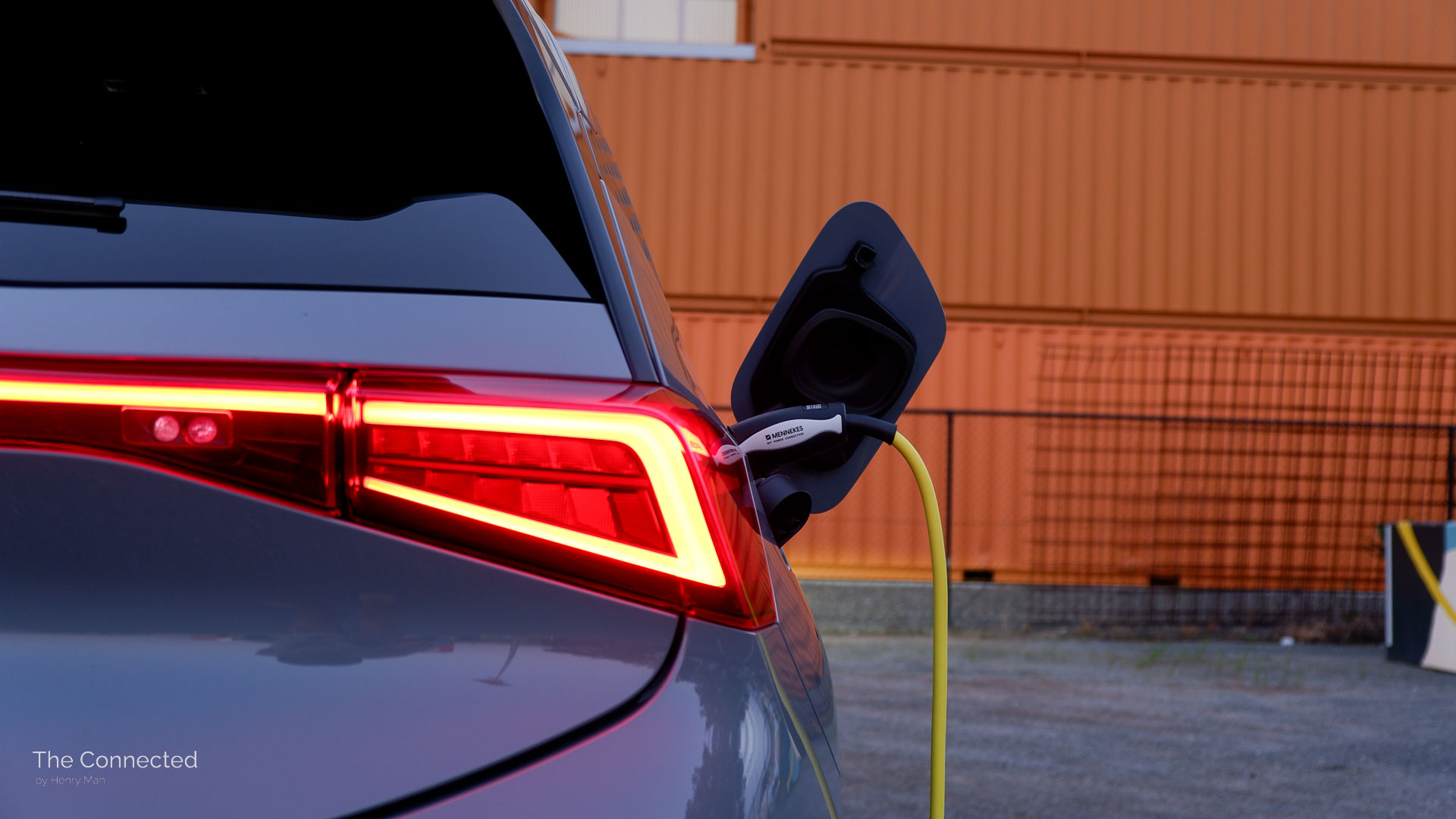
Which EV charge port position is ‘right’?
Car brands choose a variety of charge port positions – and that’s a shame, leaving owners to contend with potential accessibility issues at public charging stations.
Why? There’s no definitive answer, but we suspect it’s a design decision and dependent on the hardware layout of each platform, such as the AC to DC inverter.
Of course, if you’re plugging in at home, most AC charging cables are generally long and light enough to stretch the plug into any kind of EV charge port position.
But we prefer the rear-quarter charge port at the passenger side for EVs. It strikes the best balance between accessibility, ease of use and being familiar to a regular combustion engine car when using public chargers.
READ MORE: What is the point of the blue EV label?
READ MORE: 2025 Kia EV5 review
READ MORE: 2025 Leapmotor C10 BEV review
About the Author.
Henry Man is an independent content producer passionate about the intersection of technology and transportation.
The former automotive journalist is focused on producing critically-detailed vehicle reviews, and unique short-form content. Learn more.


 The Connected by Henry Man