
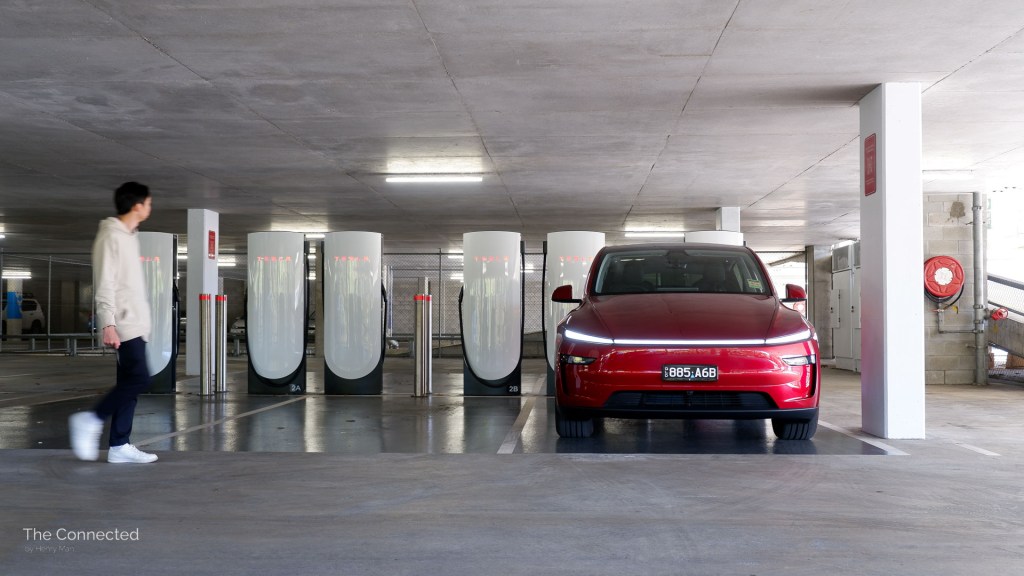
Tesla Superchargers. This public charging network has been universally praised for its ubiquity, accessibility and reliability – but should you buy a Tesla electric car because of it?
Three years ago, I penned a story for Zecar concluding that it isn’t worth buying a Tesla just for its then proprietary fast-charging network in Australia.
Times have changed.
The Tesla Supercharging network has quickly expanded in Australia, more than half of locations are now open to any electric car model, and electricity prices have gradually increased. Let’s explain…

It just works.
Plugging in a Tesla at a Tesla Supercharger just works – and that’s underrated.
When public charging stations can be patchy in reliability, take a few steps (and minutes) to start charging and even a few tries at times, Tesla Superchargers are refreshingly easy to use and seamless.
Whether using the Tesla Model 3 sedan, Model Y medium SUV or older Model S and X, it’s as easy as reversing in and plugging in the cable.
It starts charging by itself and credits the card linked to your Tesla account – no need to fumble with a mobile app or RFID card. Simple.
Other Tesla on Tesla Supercharging advantages include:
- Quick ‘handshake’ – Tesla’s communication process is impressively quick to start charging, in less than 10 seconds in our testing – whereas other EVs typically take more than double that. When it’s pouring rain, this is crucial.
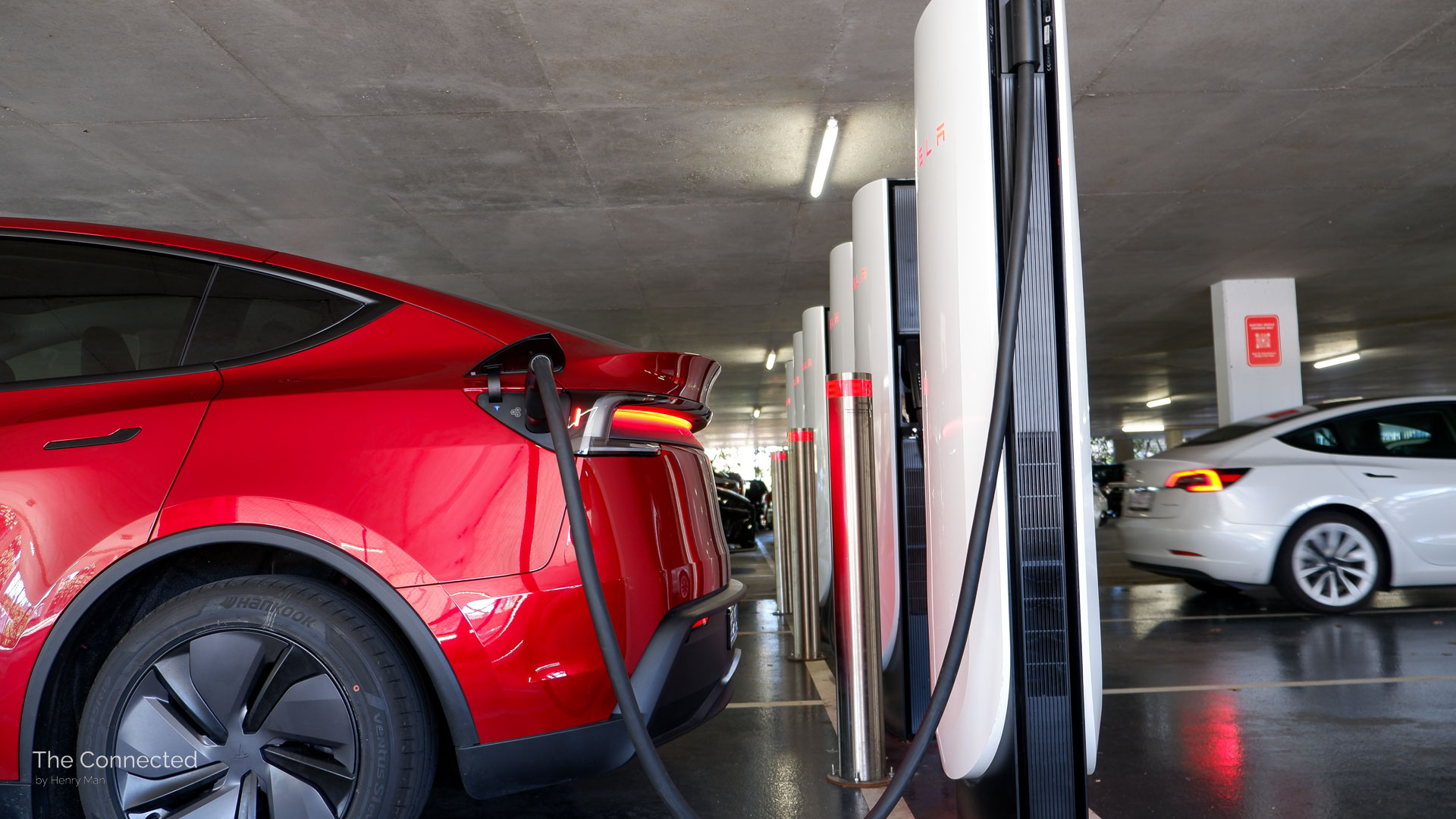
- Accessible charging – All Tesla models have the same left rear-quarter charge port position so Supercharging stalls are designed to easily reach them. The charging cables are lighter than other machines with a convenient button on the thin wand to open the Tesla charging port remotely and stop charging, too.
- Clever navigation stop planning – when there isn’t enough charge to reach a destination, the company’s navigation system automatically plans which Superchargers to stop at and to stay for how long.
- Live Supercharging info – the Tesla software and mobile app outline the availability of stalls and the price, shows the charging cost in real-time (just like the fuel pump), estimates the potential wait time (if applicable), predicts busy periods, and shows nearby amenities.
- Auto pre-conditioning – Tesla vehicles automatically pre-condition the battery to achieve optimum fast-charging speeds when a Supercharger is set on the navigation.
However, it’s not perfect. Tesla Supercharging bays can be very tight in our experience – especially when older V3 stalls are placed on the marked lines – and you may not be able to open the rear doors when plugged in.
Unlike other charge point operators (CPOs), each Supercharging location varies in pricing – some are fixed, others are variable depending on the time of day, and with different electricity rates that are subject to change at any time without notice.
More is better.
With more than 130 Supercharging locations and 750-plus plugs in Australia (and counting), access to more public charging stations benefits all EV owners.
Importantly, Tesla Superchargers often feature more stalls than other charging networks – usually between four to 20 in Australia.
By contrast, Evie Networks, Chargefox, BP Pulse and Ampol Ampcharge CPOs usually offer only two to six plugs.
You may need to power share with another vehicle as well when plugging in the same station, which means a 150kW DC capable charger will cut to a slow 75kW when split with two EVs.
Tesla Superchargers also share power between certain stalls (those labelled with the same number), but it’s dynamic load balancing based on the requirements of each vehicle and the power modules are in cabinets instead of being limited to each stall – an approach adopted by some Kempower units.
Additionally, Tesla enforces idle fees at all locations – up to $1.00 per minute for vehicles still plugged in but finished charging – automatically sets the charge limit to 80 per cent for Tesla vehicles when the site is busy, and some have a congestion charge for exceeding the said battery limit.
These features encourage charging etiquette and the availability of more Supercharging stations means that, if you do need to wait, there’s a higher chance that a space will likely open up sooner rather than later.
The non-Tesla EV dilemma.
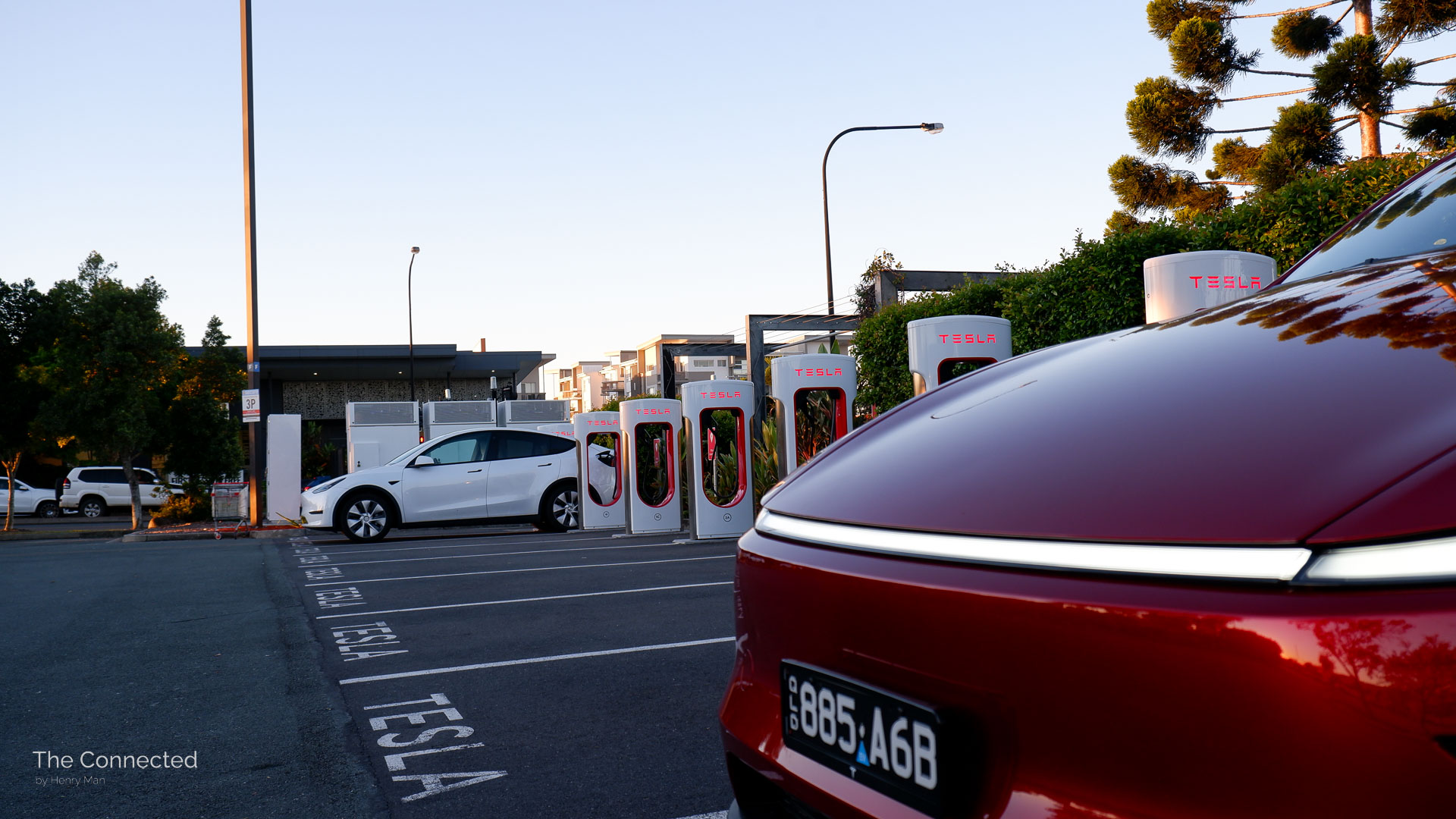
More than half of Tesla Superchargers in Australia are open to non-Tesla EVs – but there is a price premium for the privilege.
Access to Tesla Superchargers mean there’s more locations and opportunities to charge up, particularly important in busy periods on a long road trip.
However, the non-Tesla EV still isn’t as seamless – requiring the mobile app to activate the charge session and it’s more expensive than a Tesla electric car.
Example Tesla Supercharger prices in Australia (July 2025)
| Bowen Hills, QLD | Batemans Bay, NSW | Brighton, VIC | |
| Daytime 9am-5pm Price (Tesla) | $0.51 per kWh | $0.52 per kWh | $0.55 per kWh |
| Daytime 9am-5pm Price (Non-Tesla) | $0.71 per kWh | $0.72 per kWh | $0.77 per kWh |
| Difference | +$0.20 per kWh | +$0.20 per kWh | +$0.22 per kWh |
It’s still worth using a Tesla Supercharger with a non-Tesla EV (more chargers are better after all), but other charging networks may be cheaper albeit potentially less convenient.
Are Tesla Superchargers worth it in 2025?
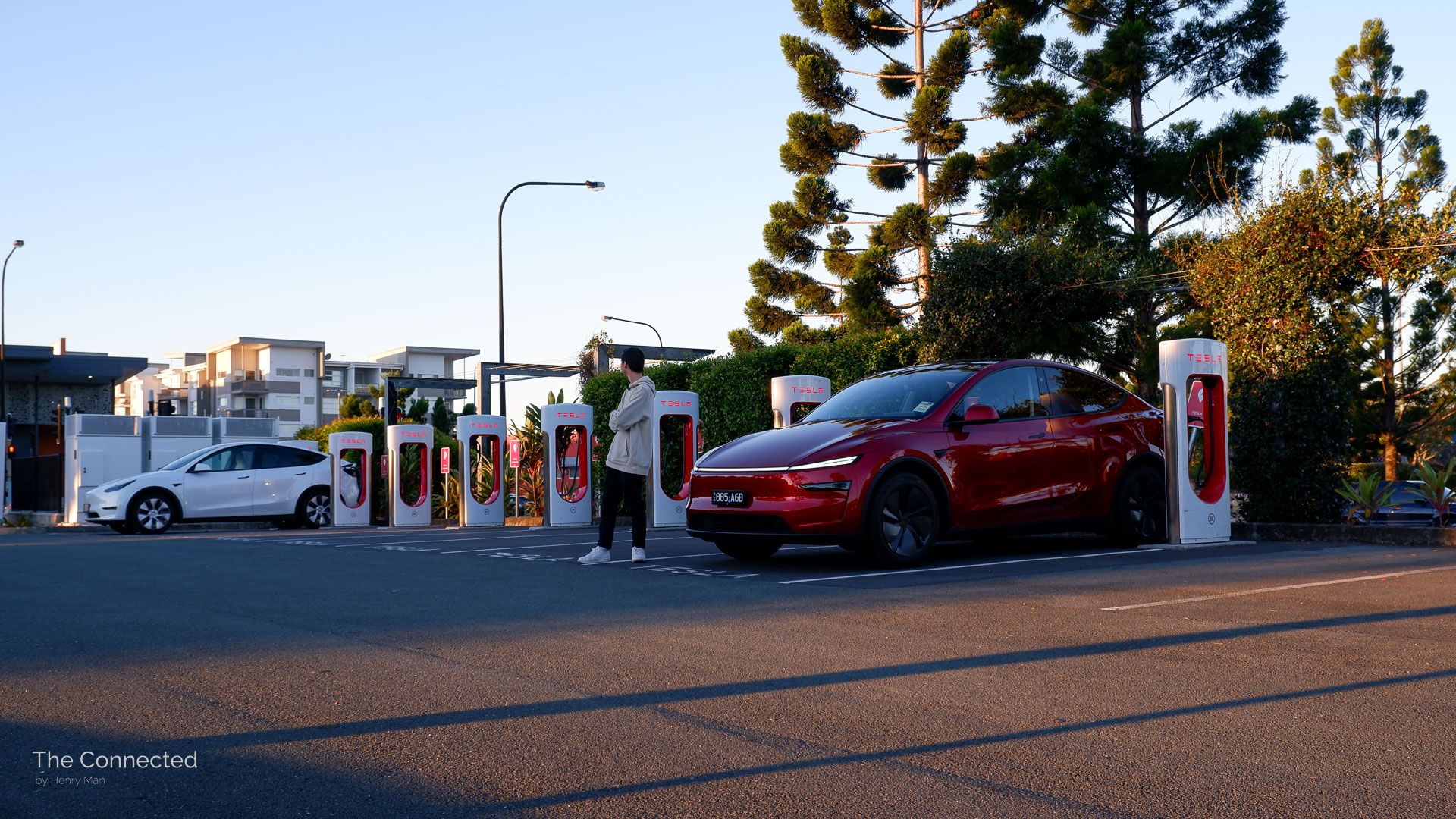
Tesla Superchargers continue to lead the public EV charging industry, with a seamless experience that just works, as long as you drive a Tesla vehicle.
Is it worth buying a Tesla model just for the Superchargers? I’d say yes.
Especially if you can’t charge at home and need to rely on public chargers, Tesla Superchargers are arguably fundamental.
It just works with good reliability, integration with the Tesla navigation system, and seamless plug-and-charge with a quick handshake.
While certain Superchargers are open to all EV models – which is welcome to expand availability – it’s still cheaper and works better with Tesla EVs.
READ MORE: What is the best EV charge port position?
READ MORE: 2025 Polestar 4 review
READ MORE: 2025 Tesla Model Y review: First drive
About the Author.
Henry Man is an independent content producer passionate about the intersection of technology and transportation.
The former automotive journalist is focused on producing critically-detailed vehicle reviews, and unique short-form content. Learn more.


 The Connected by Henry Man