
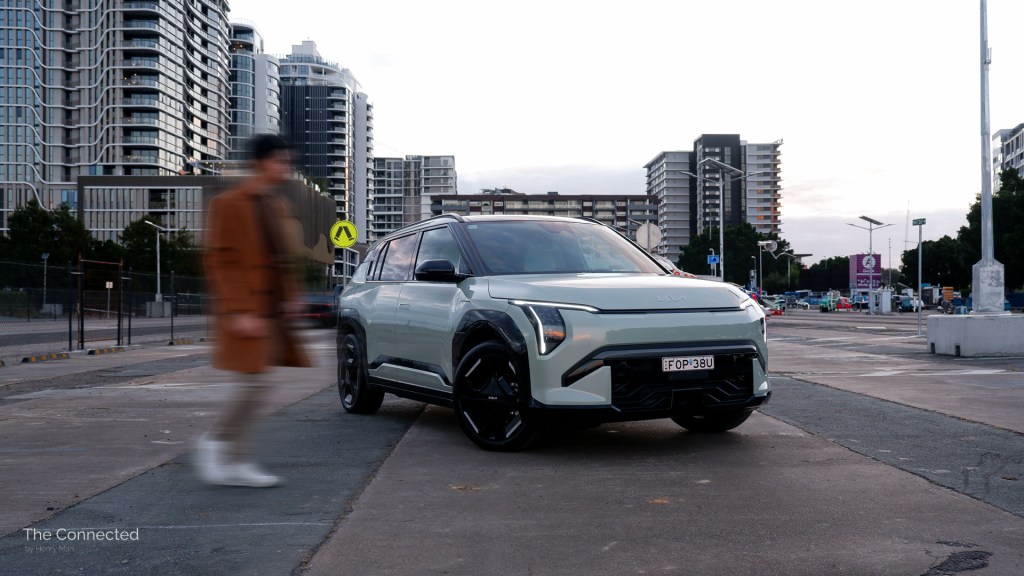
The Kia EV3 is both great value and too expensive depending on what you look at.
Alongside the EV5 medium SUV, the smaller EV3 is one of the most important electric vehicles for the South Korean carmaker with a sub-$50K mass-market starting price.
There’s a heap of options in the affordable electric SUV space – dominated by Chinese models such as the BYD Atto 3, Geely EX5 and MG S5 EV – so what makes the Kia EV3 stand out and worth the extra cost?
I tested both the base Air Standard Range and top-spec GT-Line Long Range for a week each to see why. Depending on which model you choose, the Kia EV3 is either good value or too expensive – the electric equivalent of the Seltos and Niro alternative.
NOTE: Two press vehicles were provided by Kia Australia for a 14-day independent evaluation in total. We have no commercial arrangements with the company and it had no editorial control.
Generative AI was used in some images to remove objects in the background.


Pros.
+ Good value starting price
+ Well-sized interior, small exterior
+ Good energy efficiency, i-Pedal now the default
+ Improved speed limit warnings
+ Unique design
Cons.
– Expensive other than base model
– No 360-degree cameras on any variant
– Lacks driving engagement
– One-pedal driving needs work
– No PAYG capped-price servicing
Vehicles tested:
| Model | 2026 Kia EV3 | |
| Variant | Air Standard Range | GT-Line Long Range |
| Starting price | $47,600 before on-road costs | $63,950 before on-road costs |
| Exterior colour | Terracotta (+$550) | Matcha Green (+$550) |
| Interior colour | Subtle Grey fabric with blue accents | Medium Grey two-tone artificial leather with grey accents |
| Country made | South Korea | |
Design and quality.
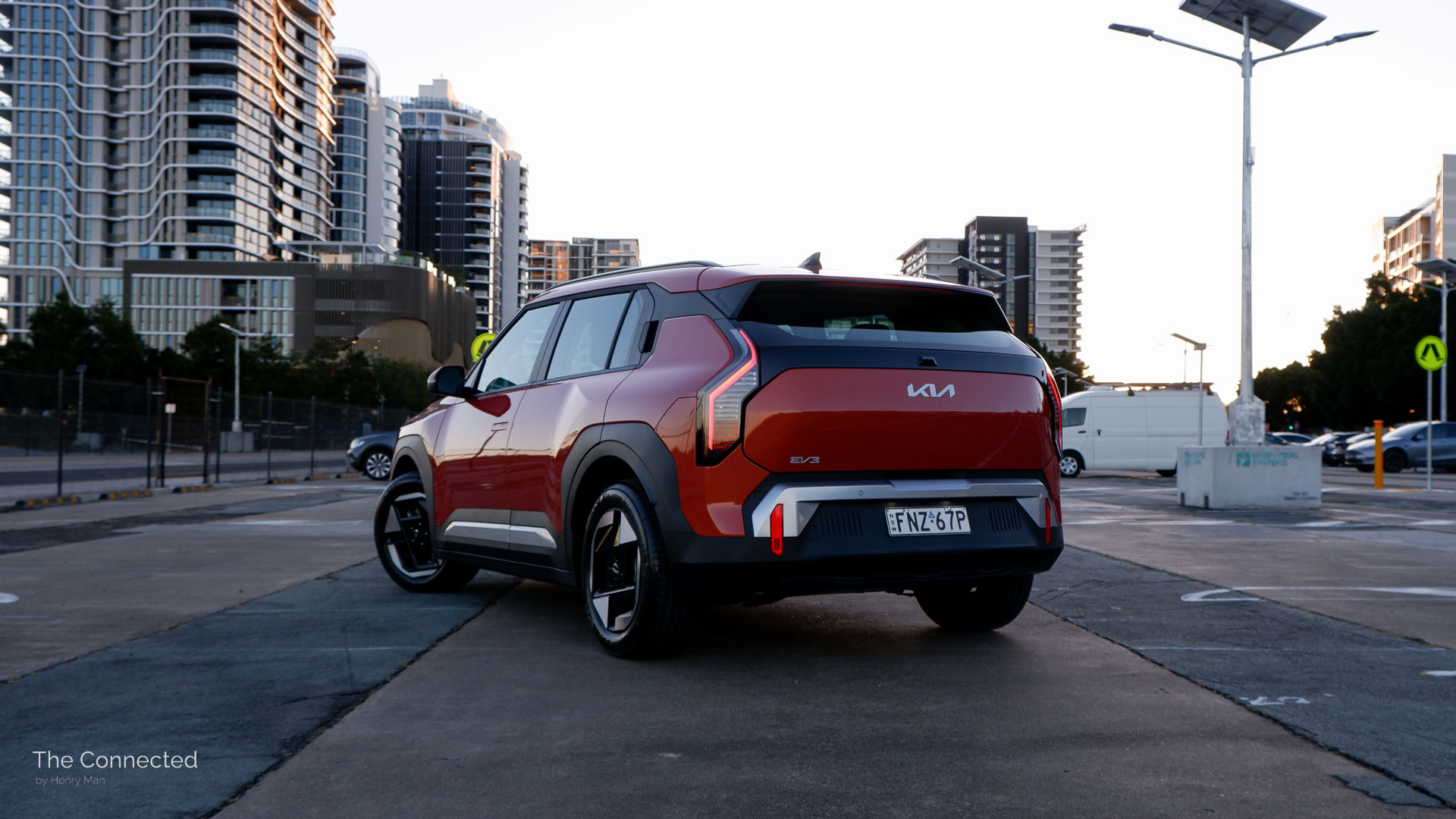
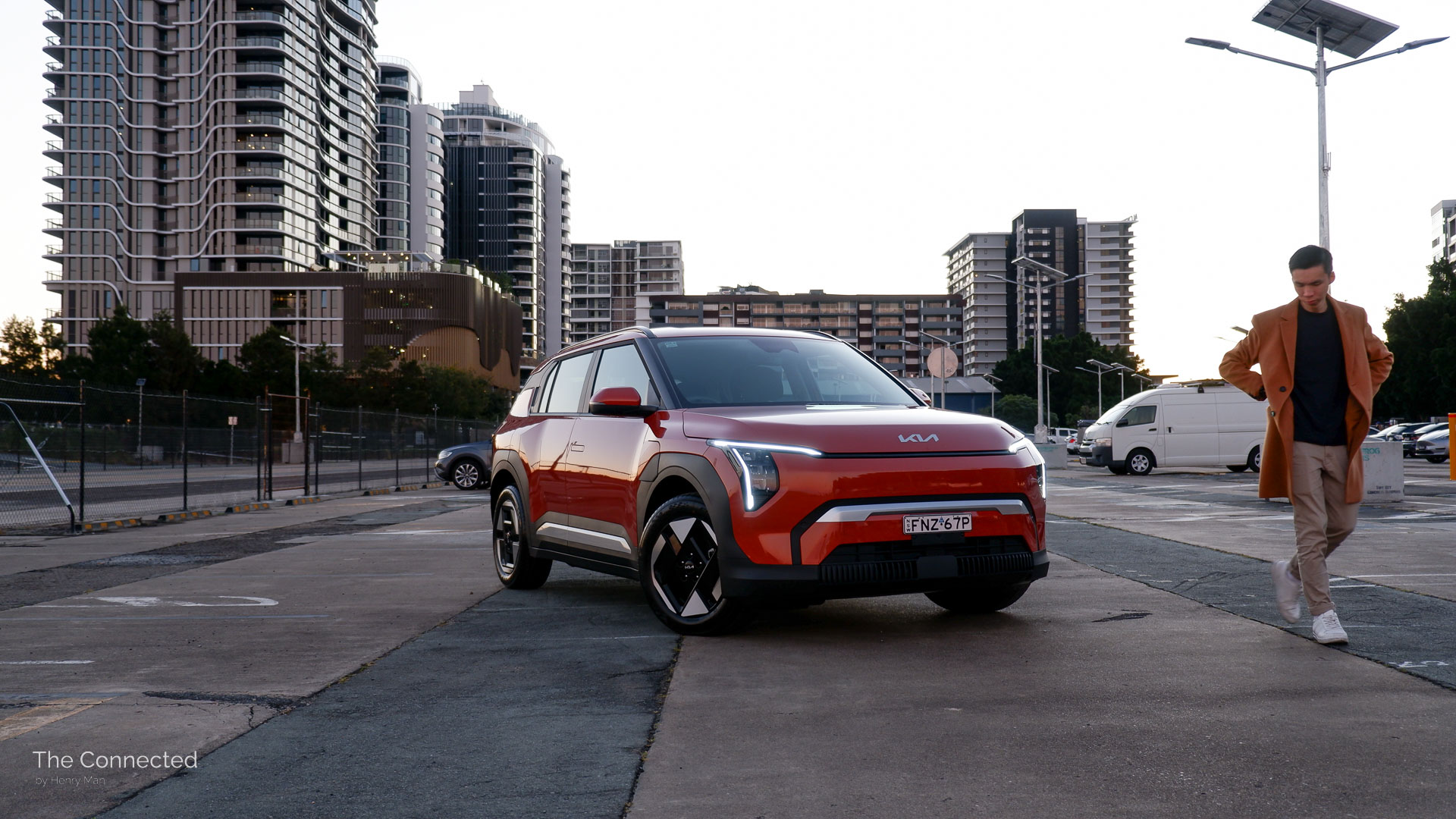
The EV3 continues to carry Kia’s striking design theme with some common elements from the large EV9.
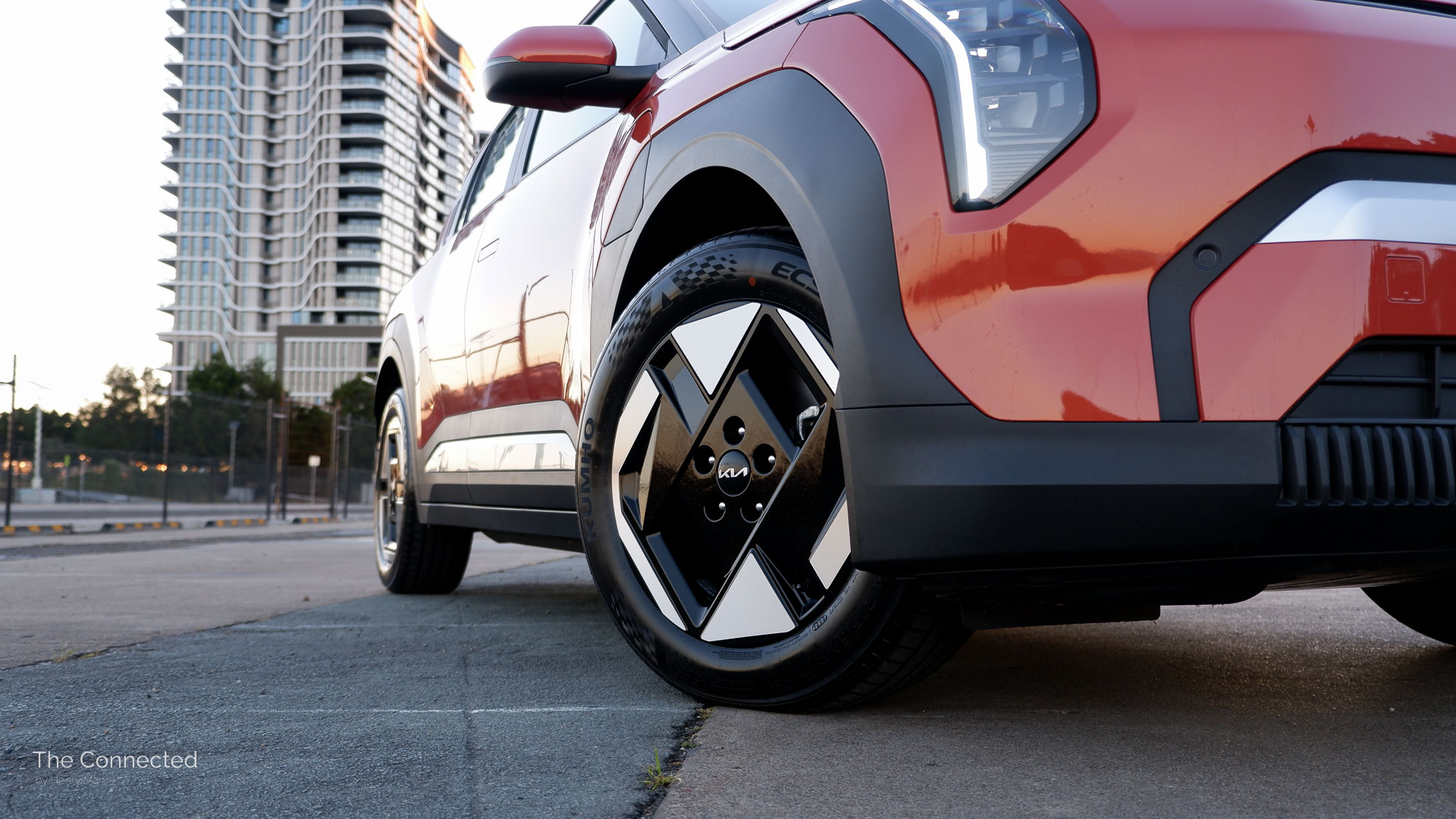
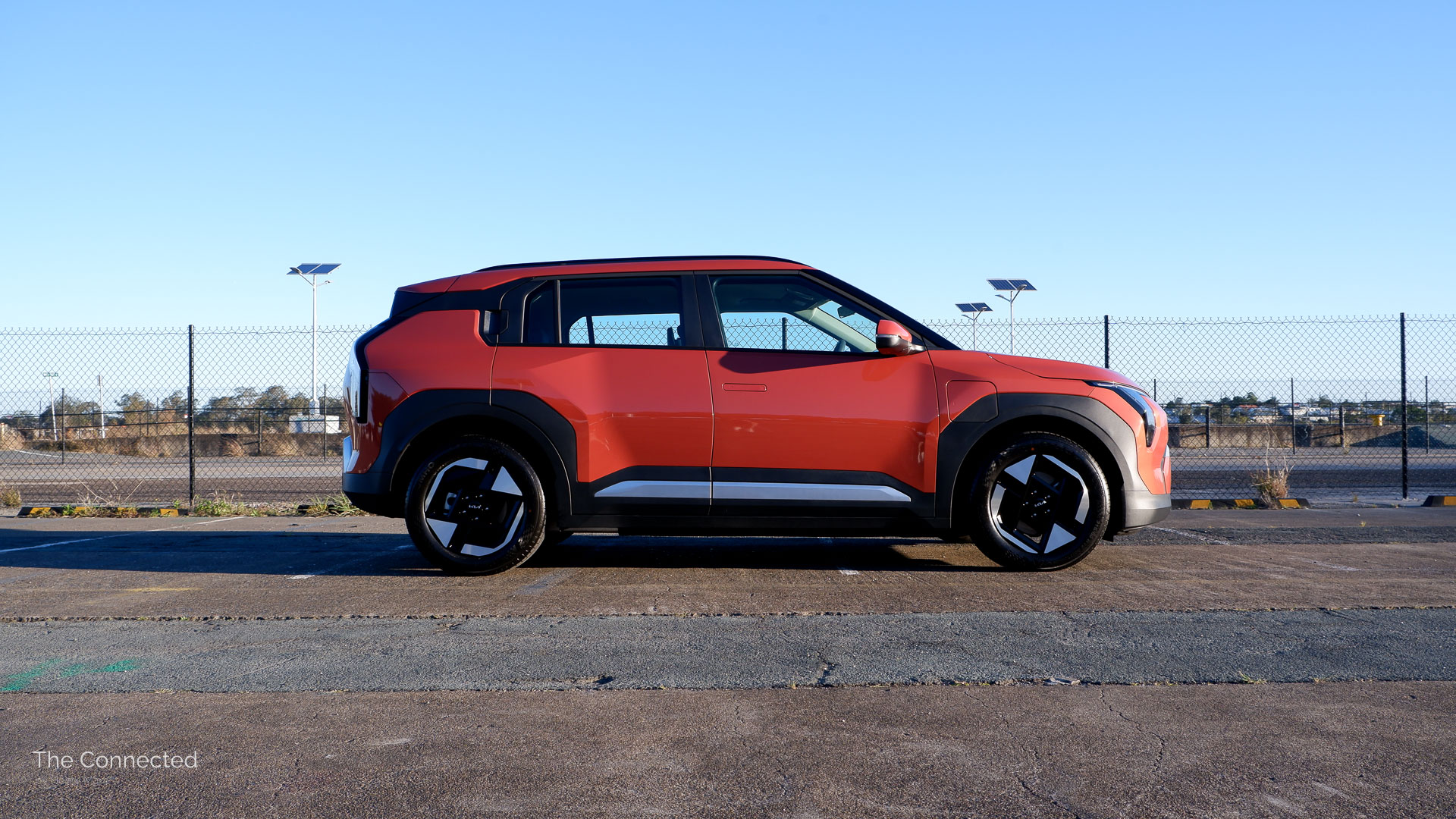
In a world of some same-ish looking Chinese cars, the Kia EV3 looks unique, sporty and angular with the brand applying its ‘Opposites United’ theme on a small electric SUV.
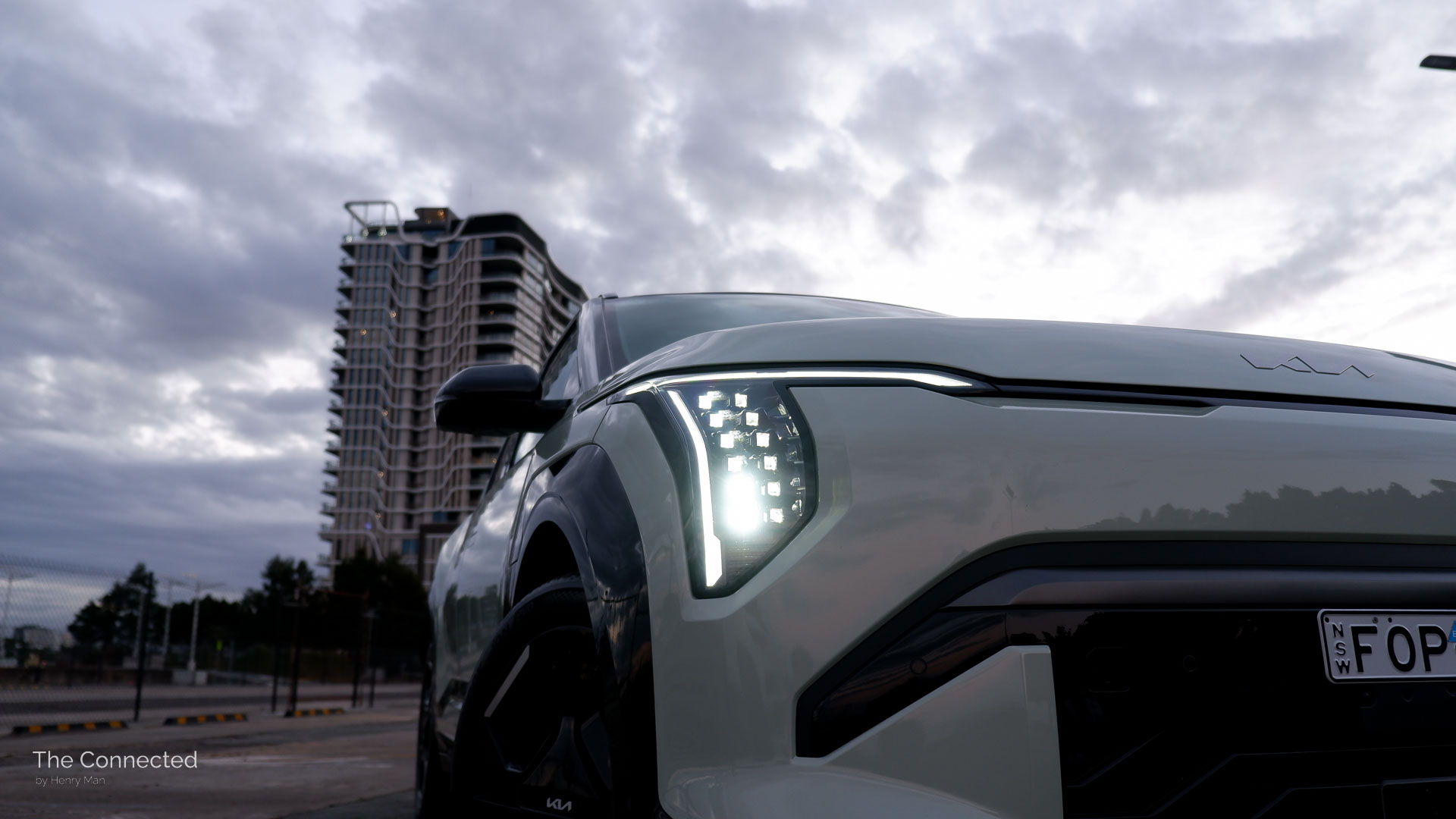
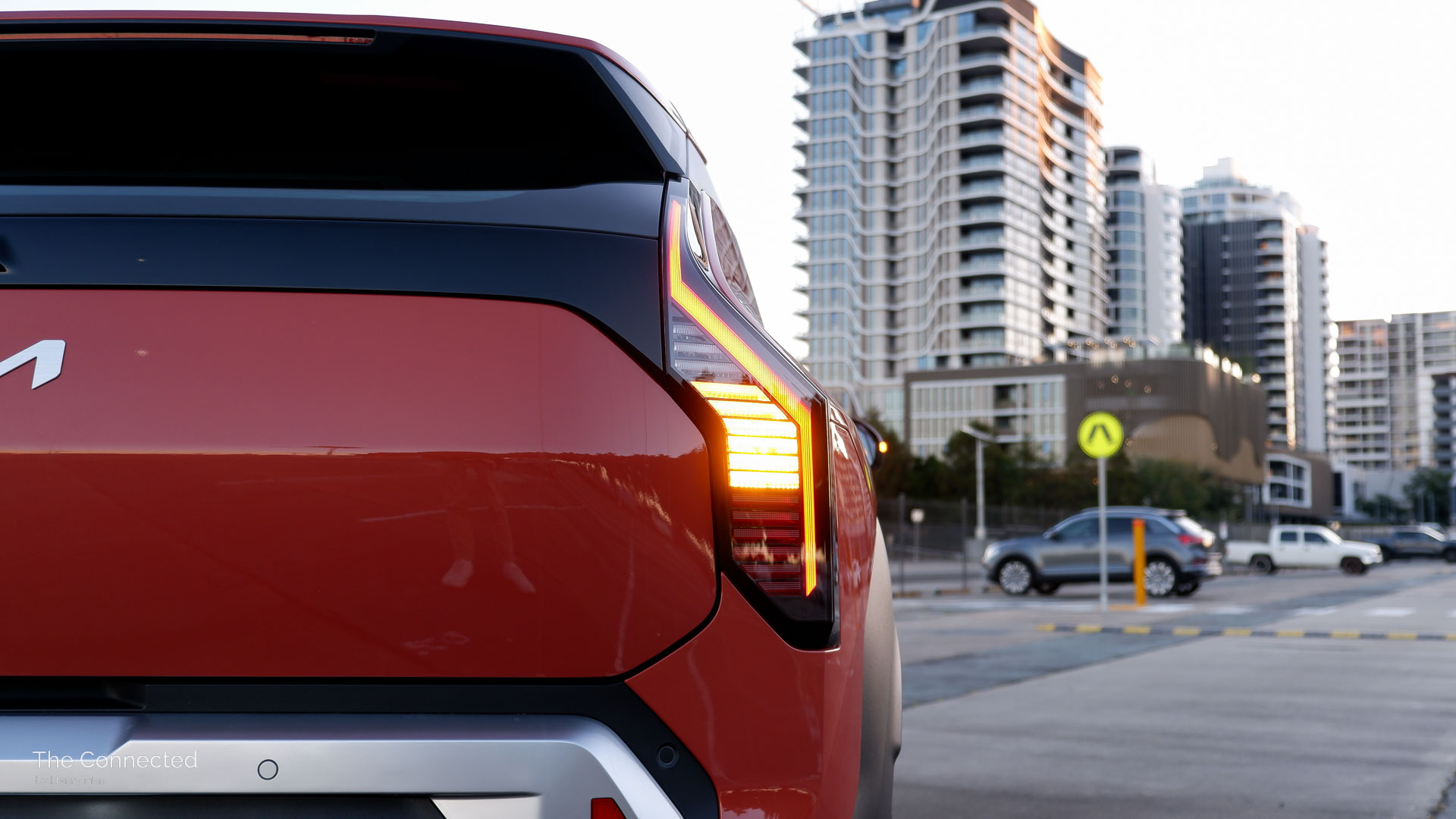
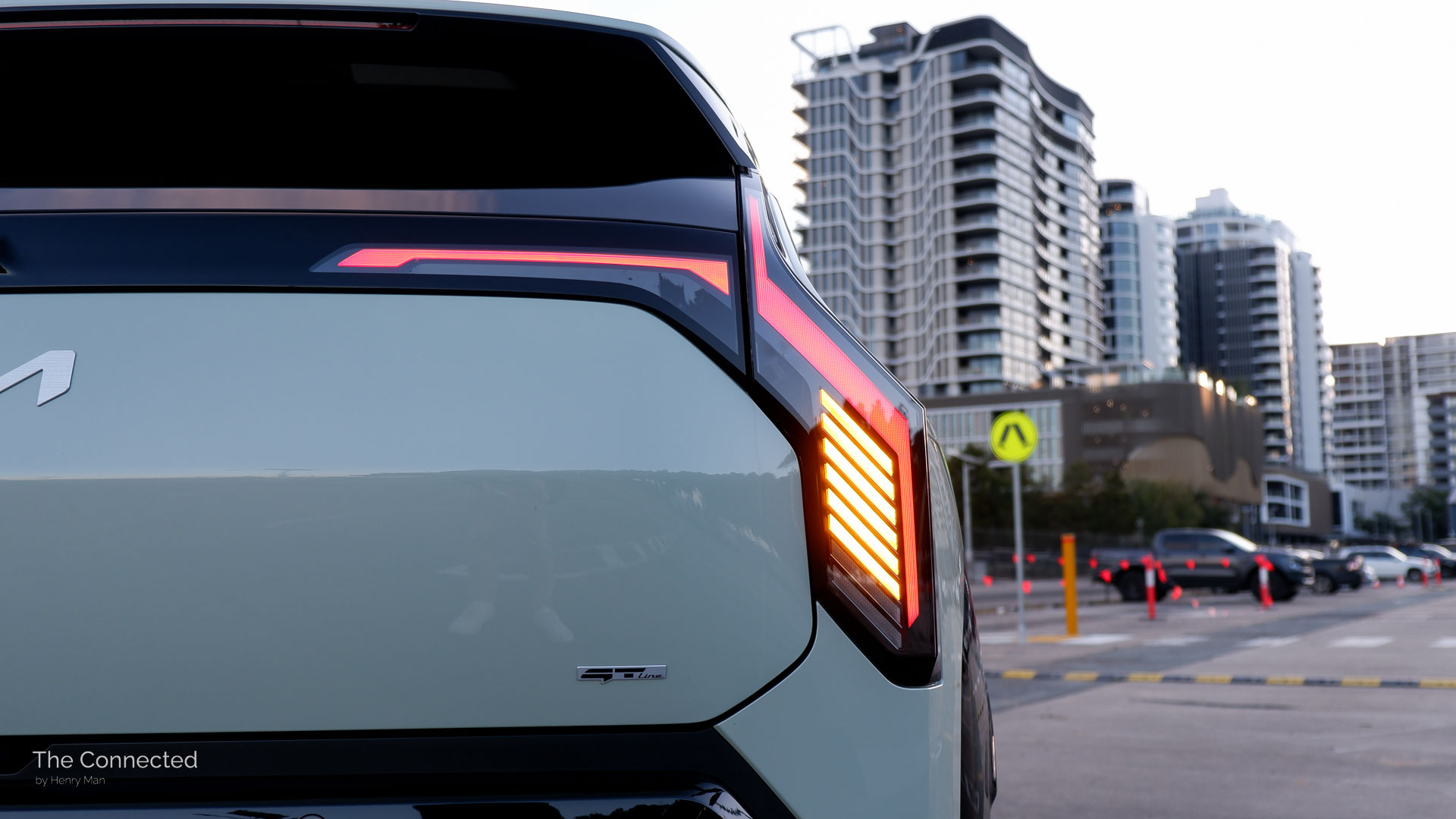
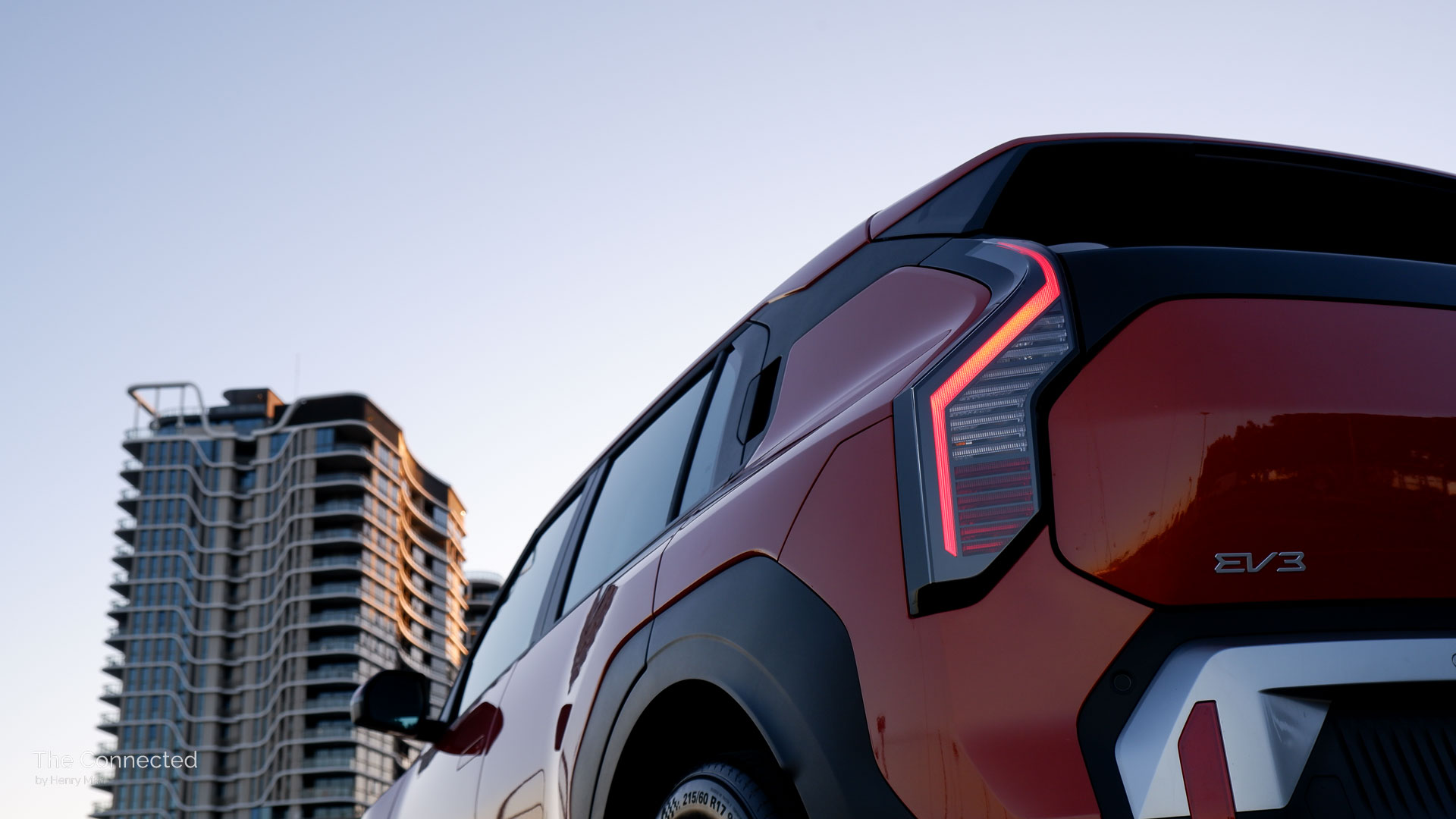
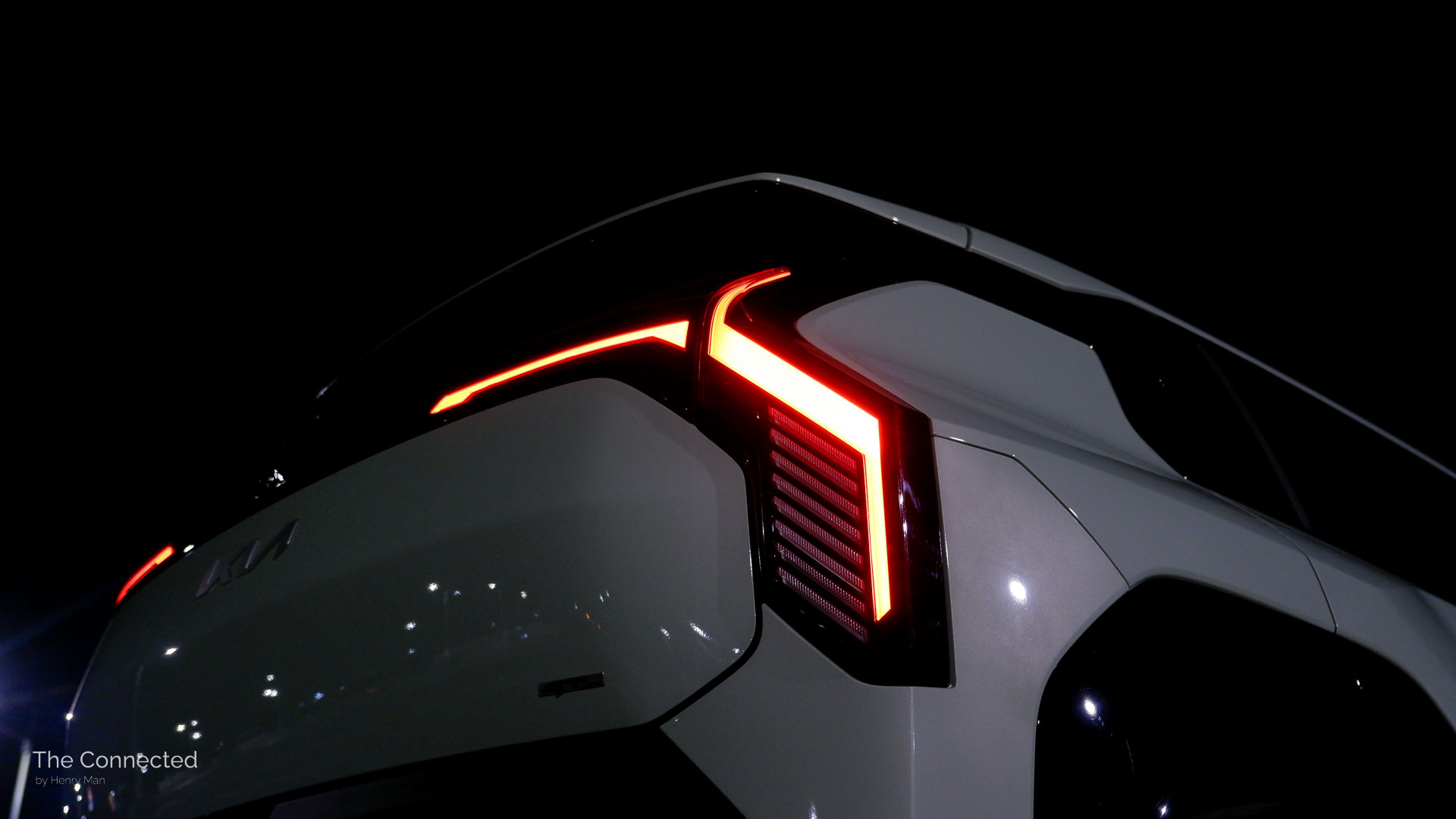
The front LED daytime running light and indicators are distinctive, the rear vertical tail-light is particularly reminiscent of the flagship EV9, and the side profile abruptly stops at the rear with an upright back.
Yet, it still looks distinctly different to the Kia EV5 midsize SUV, alongside the Picanto micro hatchback, Sorento large SUV, and Carnival people mover van.
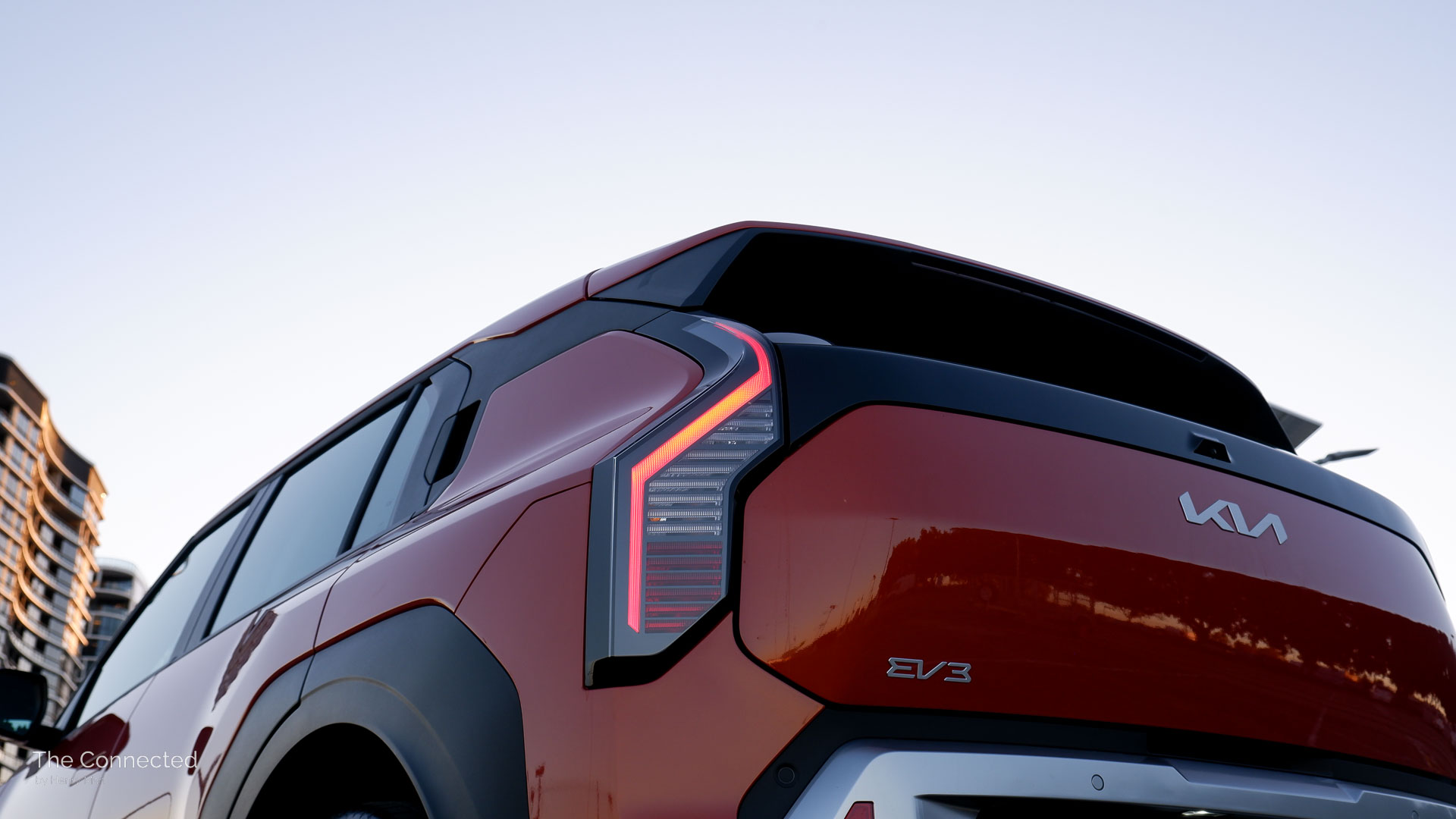
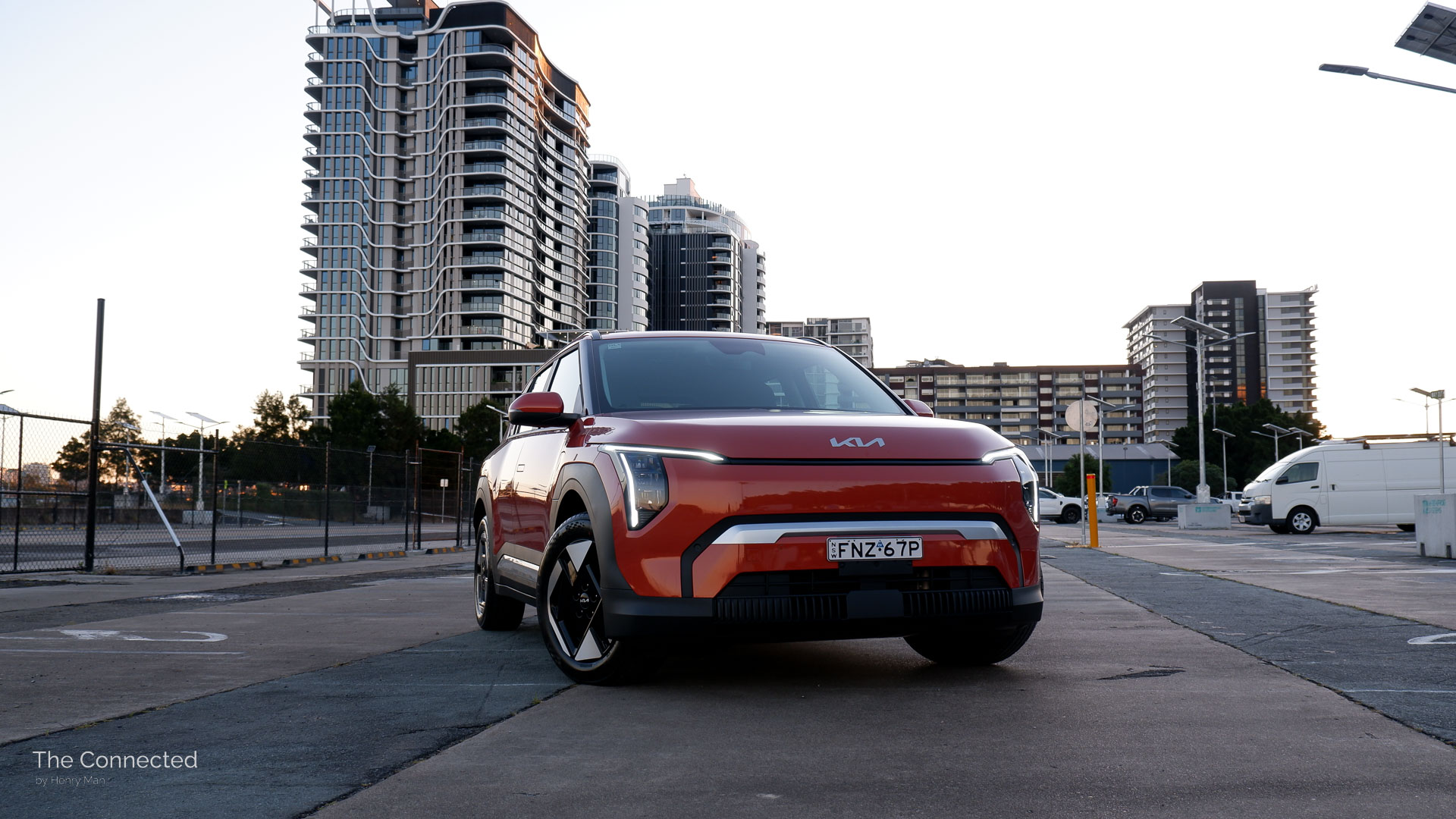
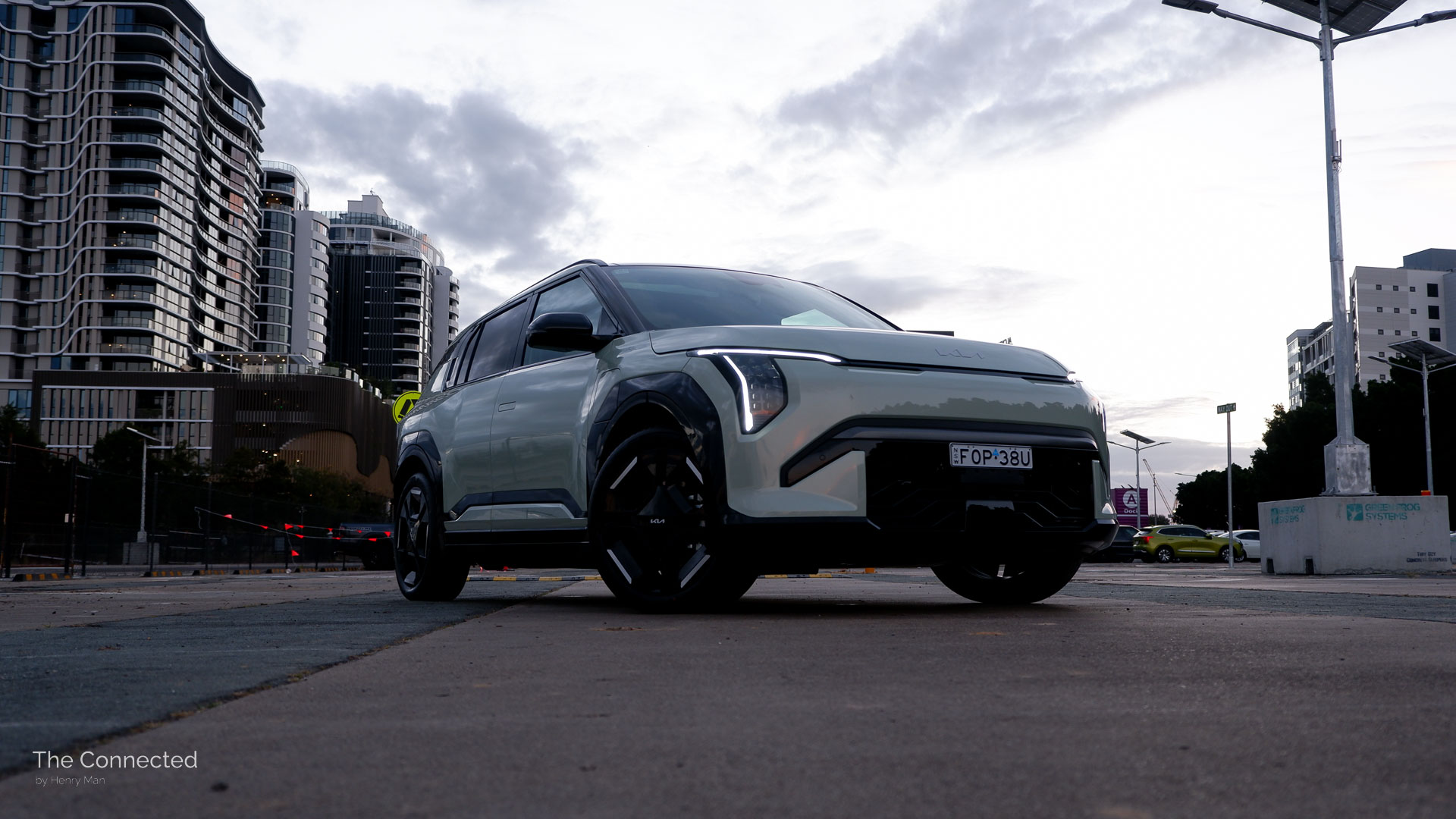
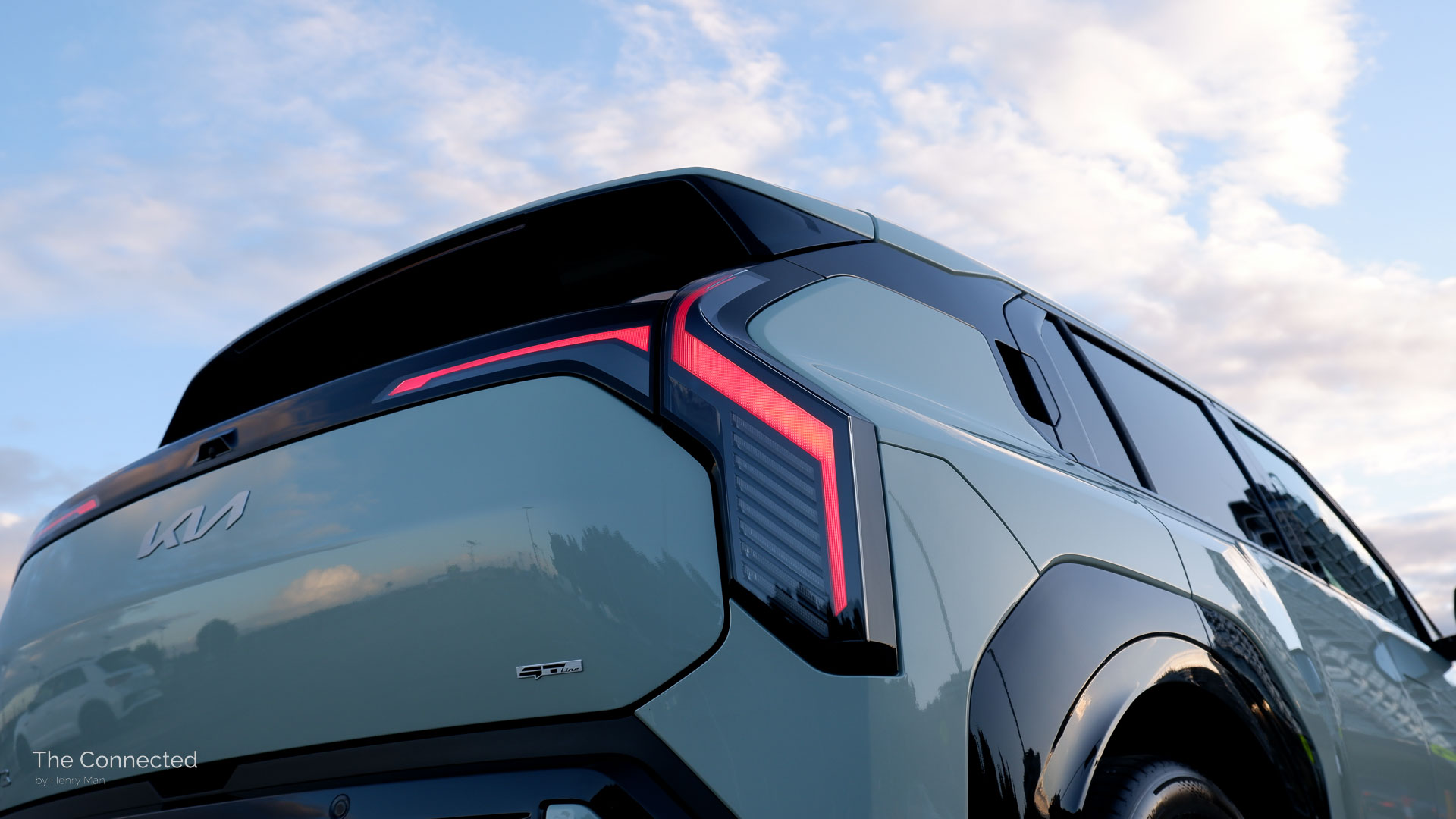
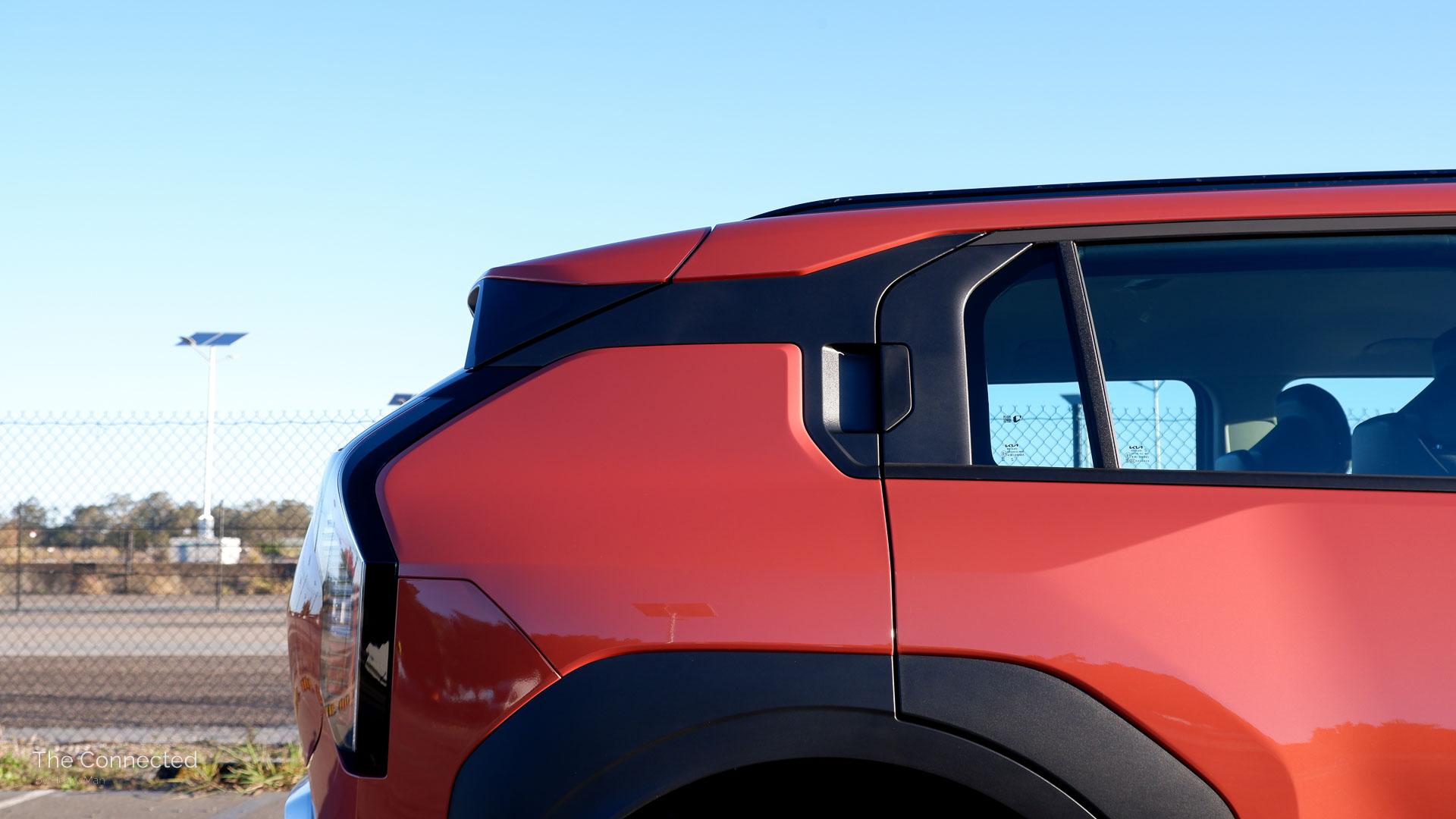
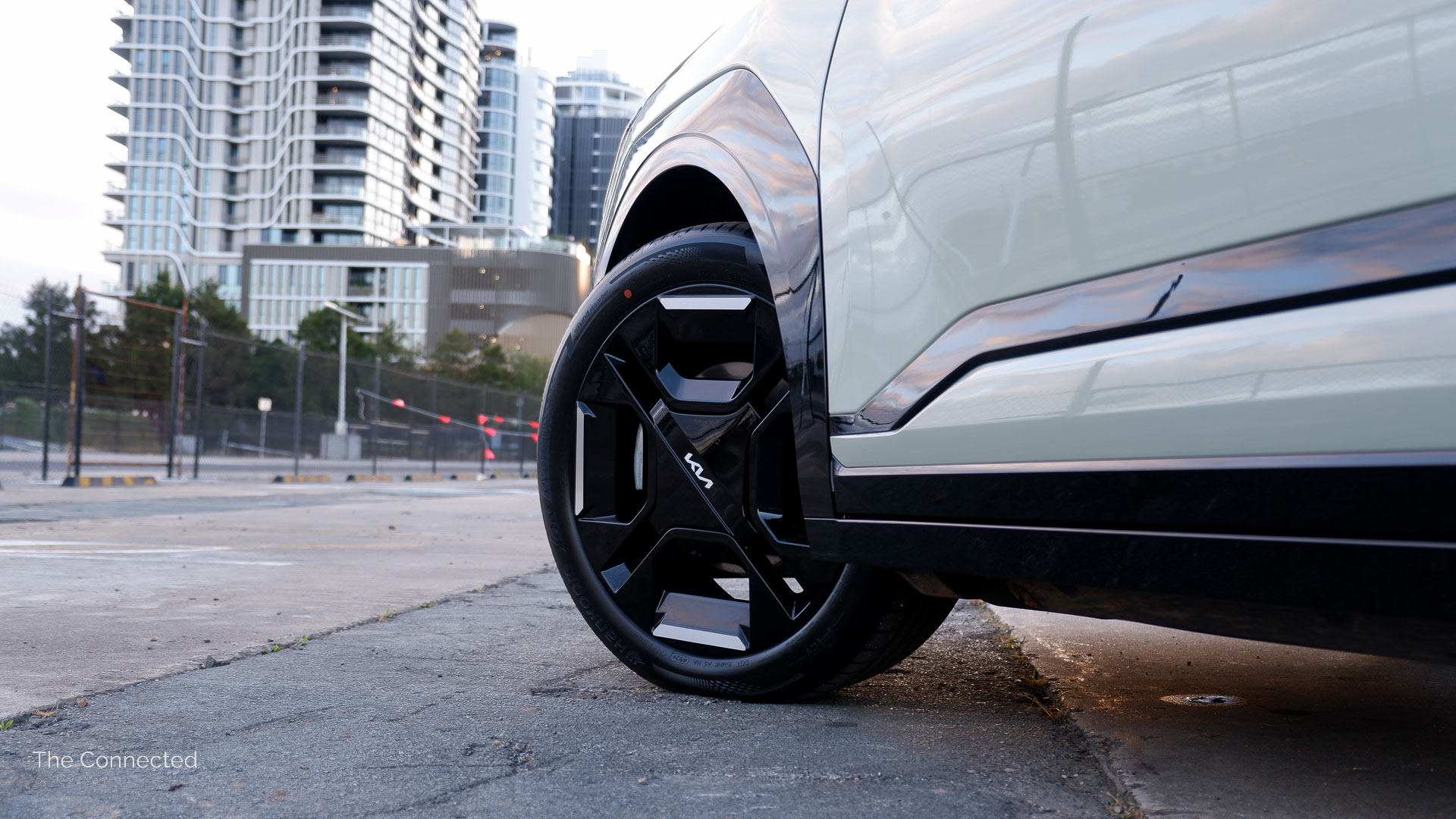
Kia has clearly reserved the best design for the top-spec GT-Line, which is arguably most attractive with its big gloss black accents, larger 19-inch wheels, thicker full LED tail-light which stretches into the tailgate, and animated welcome sequence upon unlocking.
However, the GT-Line’s black painted wheel arches, bumpers and side skirts aren’t practical with it being a magnet for dust and dried waterdrops, as opposed to the coarse matte plastic and silver trims on the Air and Earth.
Oddly, there’s one C-pillar trim piece that isn’t gloss black on the GT-Line – which looks like an afterthought close up.
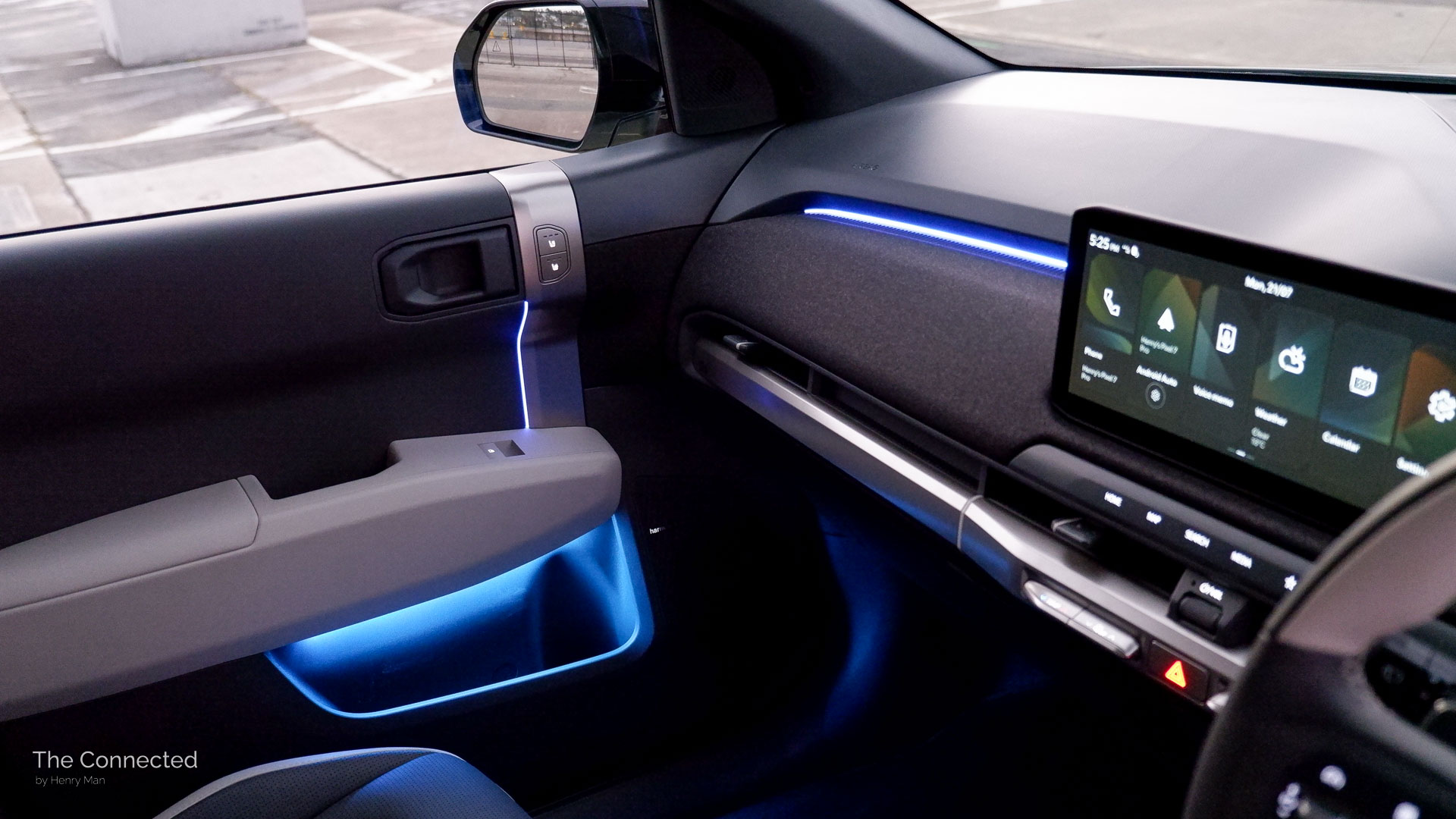
All EV3’s feature a modern and simple interior design with one flat panel made up by three displays, an open-type front centre console, and a mix of fabrics, imitation leather, metallic-like trims, and textured plastics.
The metallic-like climate control switches feel superior to the mushy ones on the larger Kia EV5 and EV9, too.
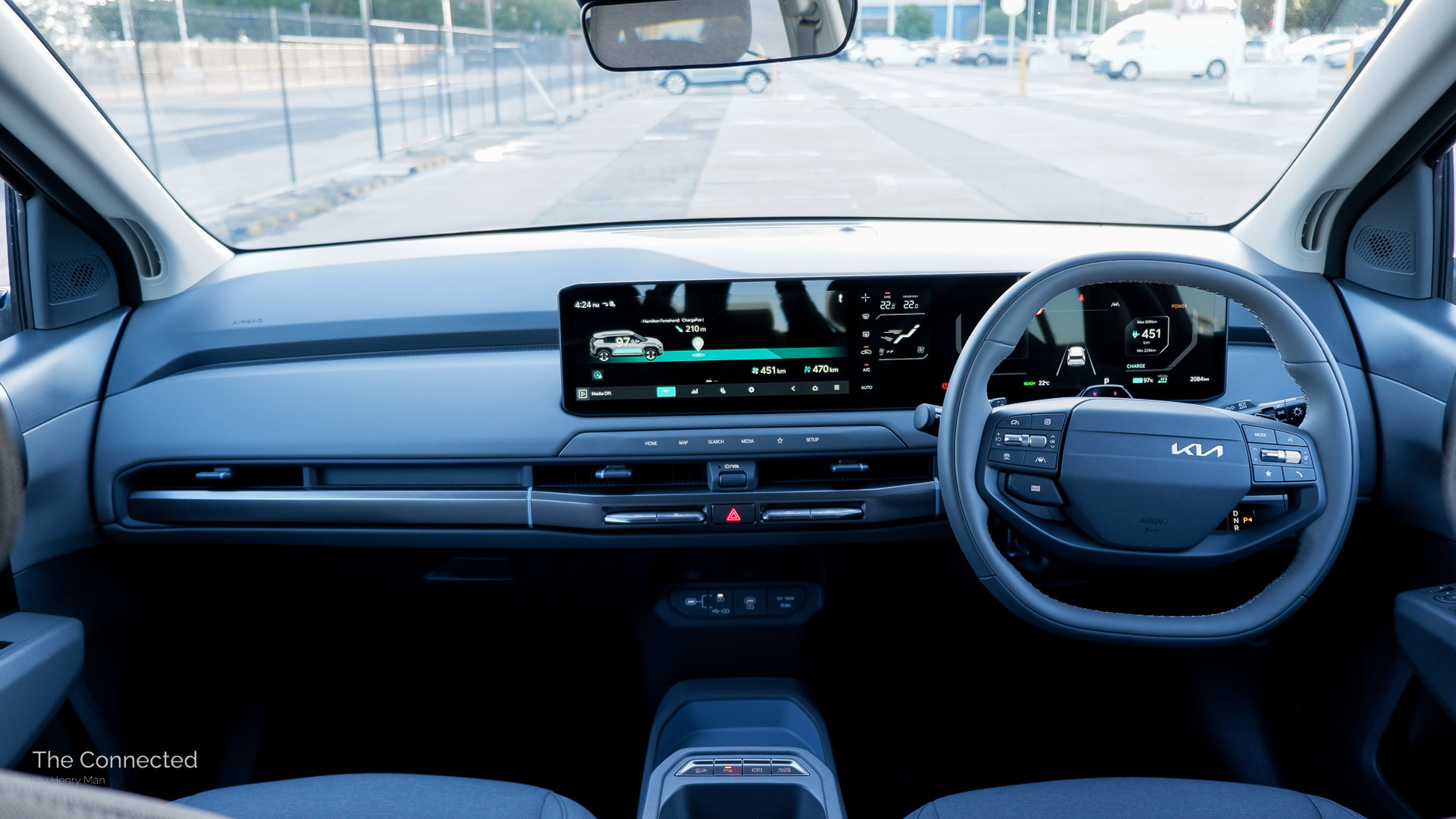
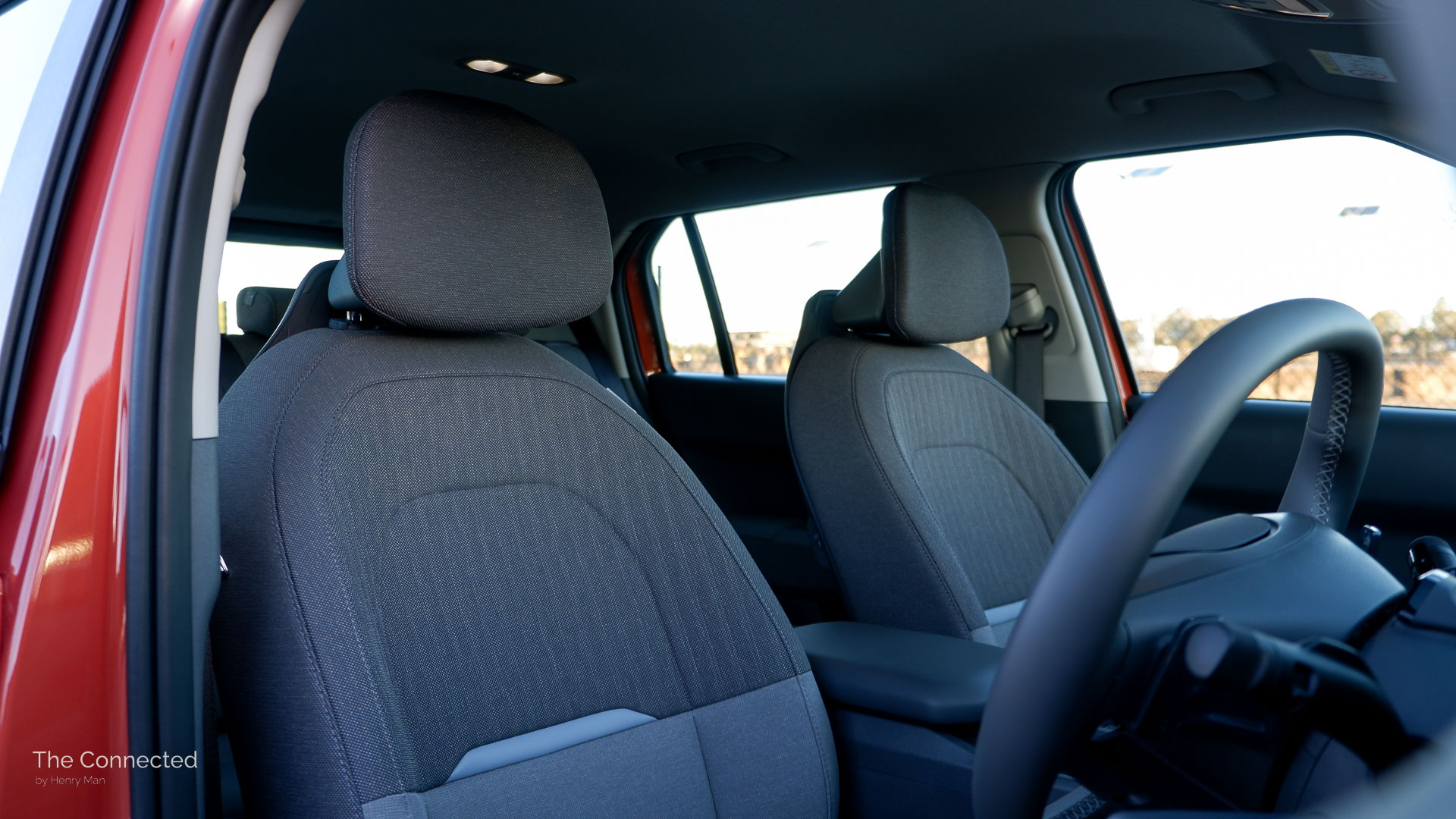
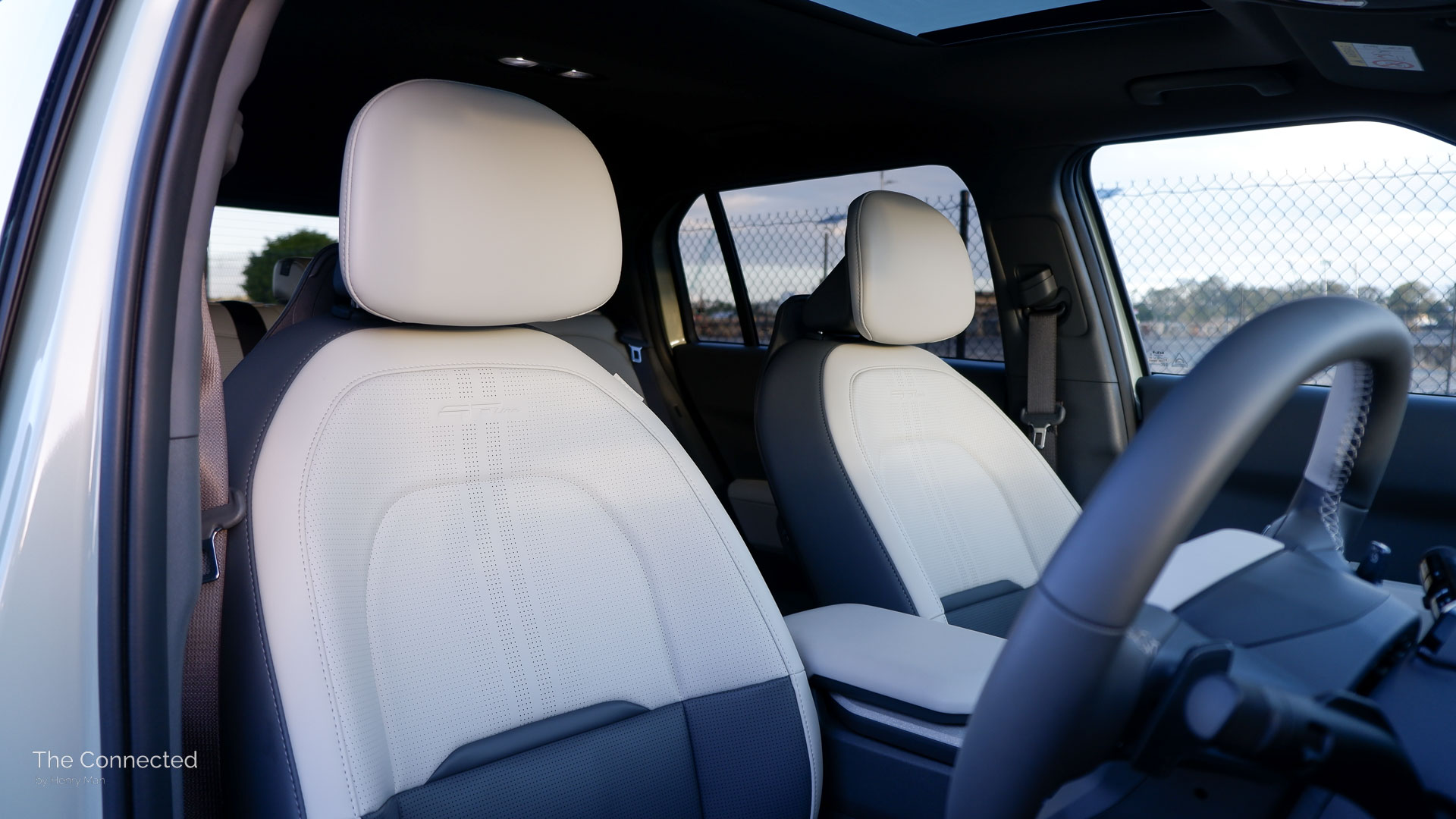
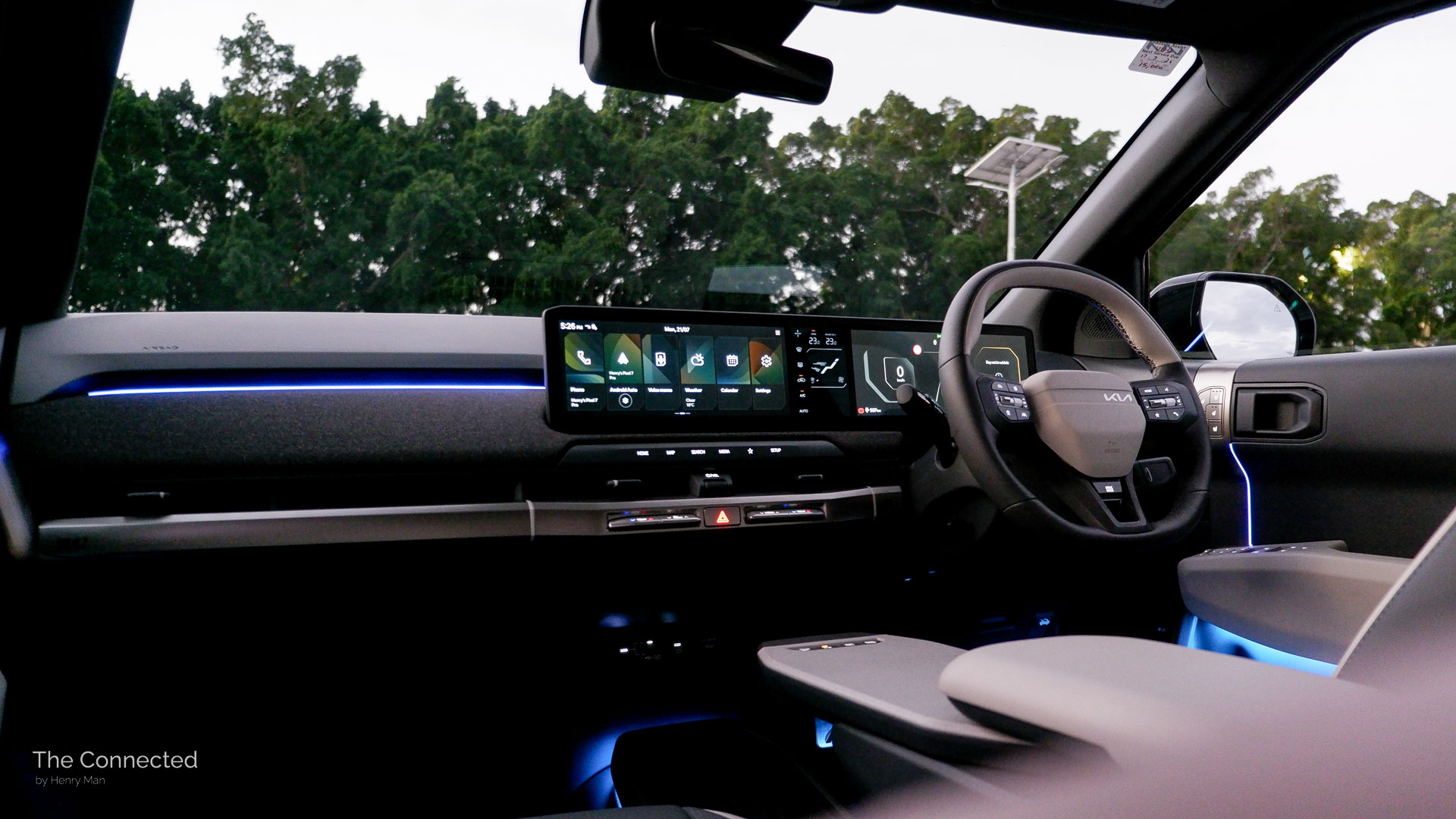
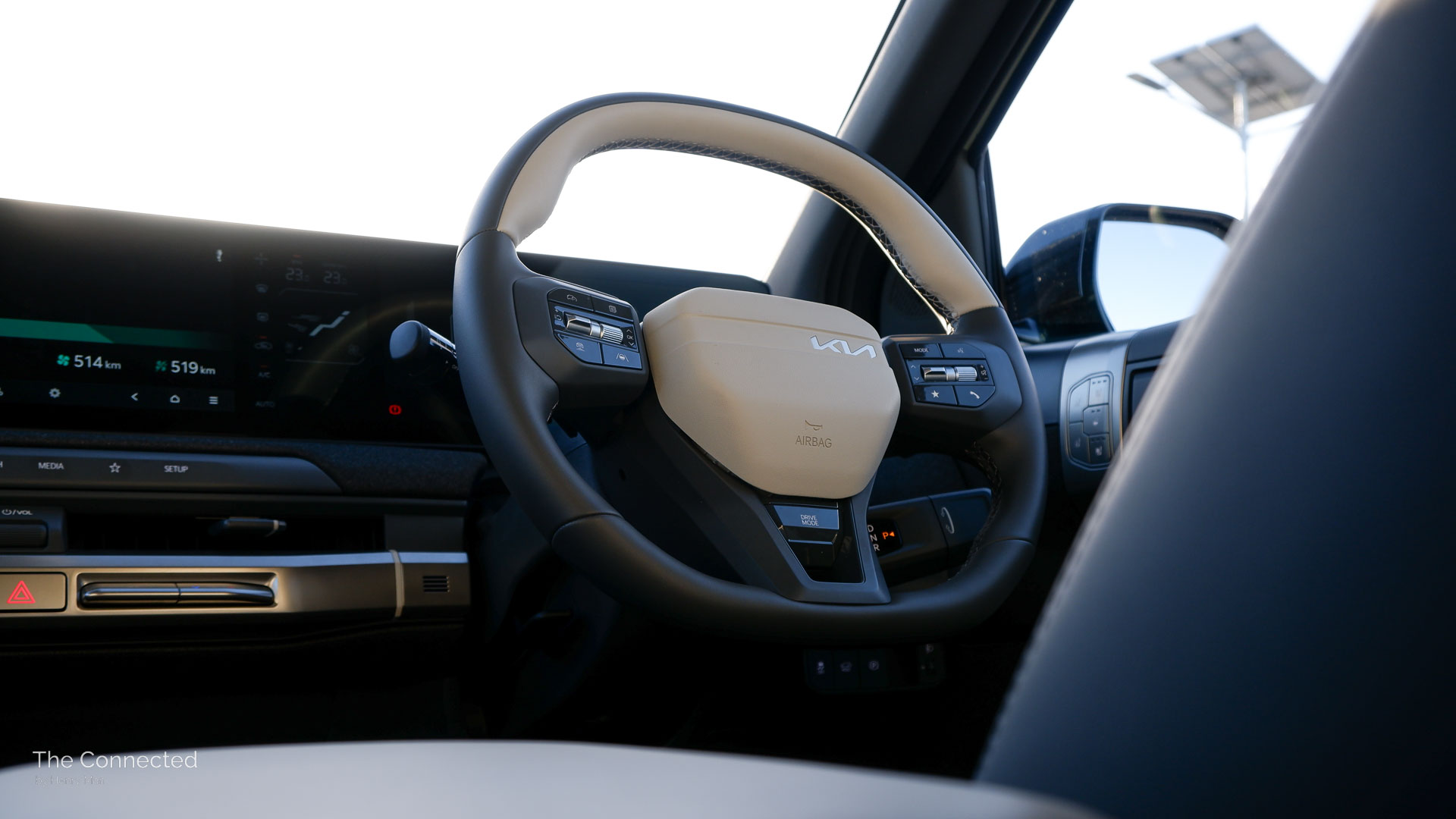
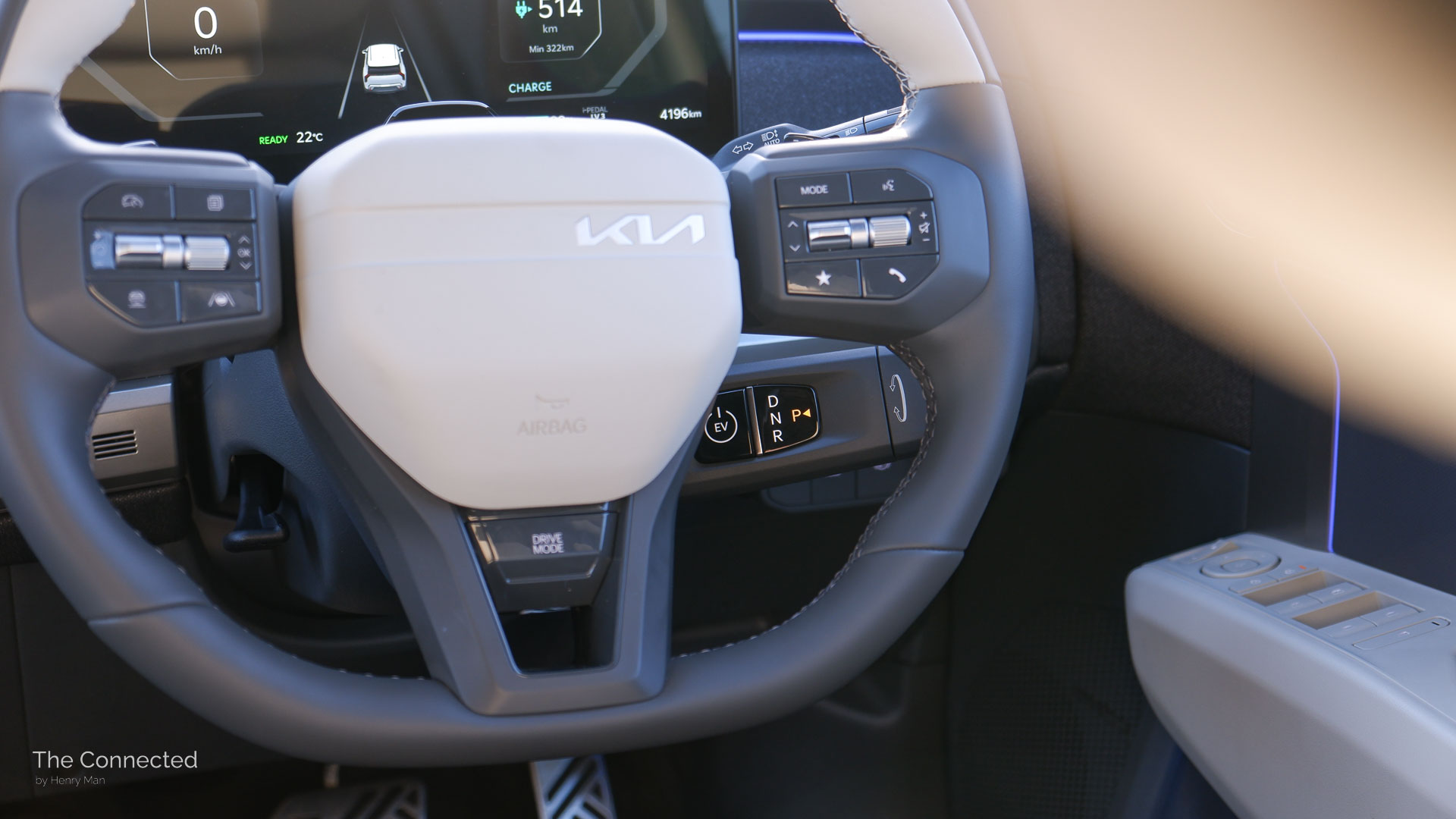
Unsurprisingly, the base Air noticeably uses cheaper materials with hard interior door cards, scratchy plastics around the centre console with a non-rubberised surface in front, and a quirky dish-like steering wheel that juts out toward the driver.
At least the key high-touch points are padded well, including the front armrests, and the blue centre console tray and accents on the fabric seats and air vents are a nice touch on the Air.
Meanwhile, the GT-Line has the advantage of softer front and rear door cards – although the front portion is still hard – a two-tone interior with artificial leather seats, unique centre table with a marble-like surface, fabric dashboard, and lighter chrome silver trims that actually shows the printed QR code more prominently than the Air (which links to a Kia sustainability materials website).
The GT-Line also exclusively features two-colour adjustable ambient lighting, albeit at the front row only – which is a cost-cutting sign.
Again, Kia has clearly reserved the best for the top-spec EV3 GT-Line which looks and feels much better, but it’s not worth the extra ~$16K extra.
Practicality.
2026 Kia EV3 dimensions:
| Length x width x height | 4300 x 1850 x 1560mm / 4310 x 1850 x 1570mm (GT-Line only) |
| Wheelbase | 2680mm |
| Ground clearance | 140mm |
| Boot space (min) | 460 litres |
| Frunk space | 25 litres |
| Rear seat split fold | 60:40 |
| Child seat anchors | 2x ISOFIX and 3x top tethers |
| Air-conditioning system | Two-zone climate control with rear air vents |
The Kia EV3 is a great not-too-big, not-too-small crossover SUV with an open-feeling interior.
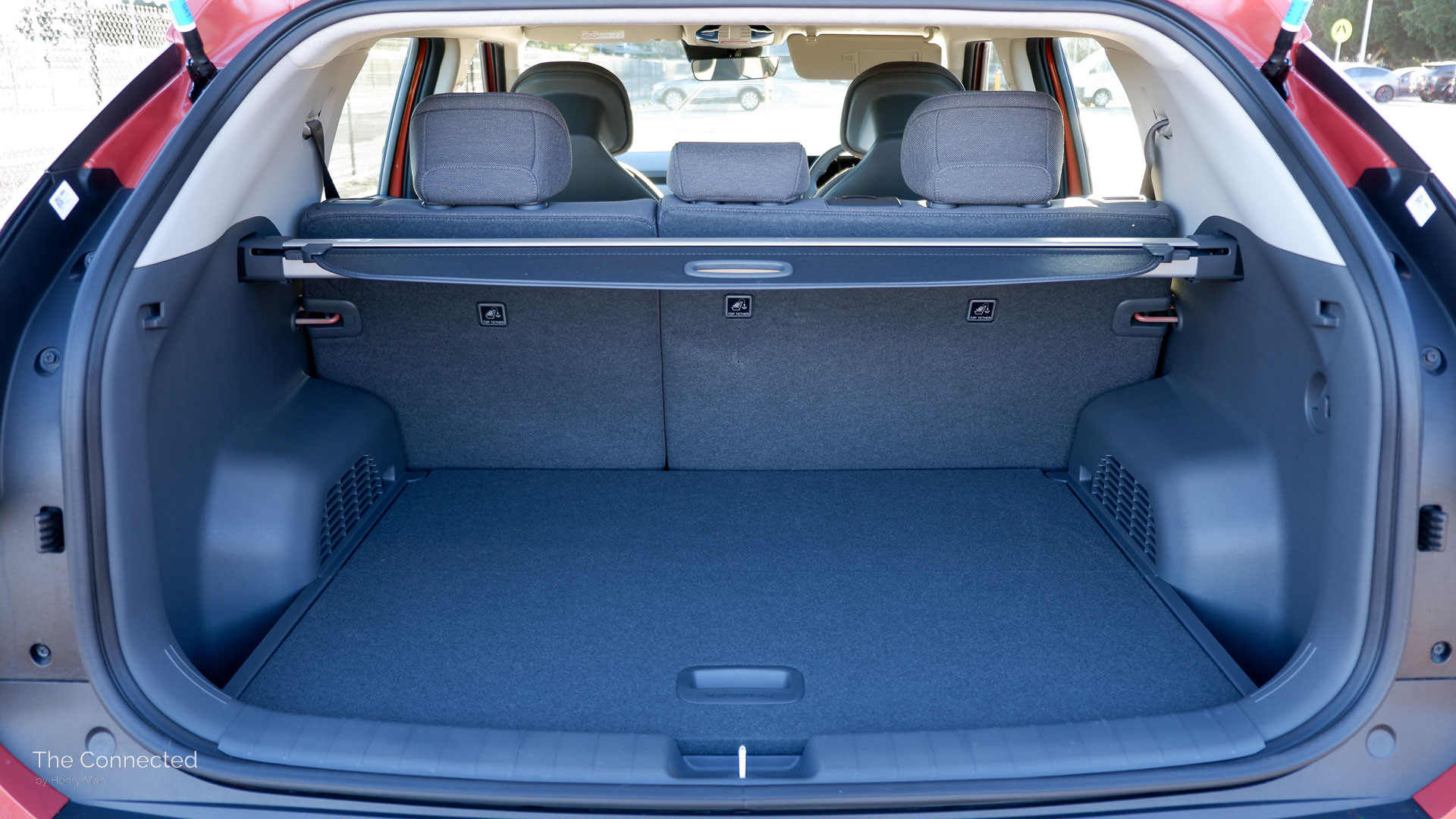
The 460-litre boot provides good space, pockets on each side, and the two-level adjustable floor enables a flat loading lip or more height volume.
Further storage is included underneath, which is quite deep, though there’s clearly room for a space-saver spare tyre which is found on the Hyundai Kona Electric.
One boot hook is included on the base Air and mid-spec Earth, but it’s fairly low-set and not very useful with my backpack often unhooking itself while driving.
The GT-Line doesn’t offer a bag hook at all due to the presence of a subwoofer.
However, all models have an awkward gap between the sliding cargo cover bar and the rear seats, despite the latter not being able to be reclined or slid back.
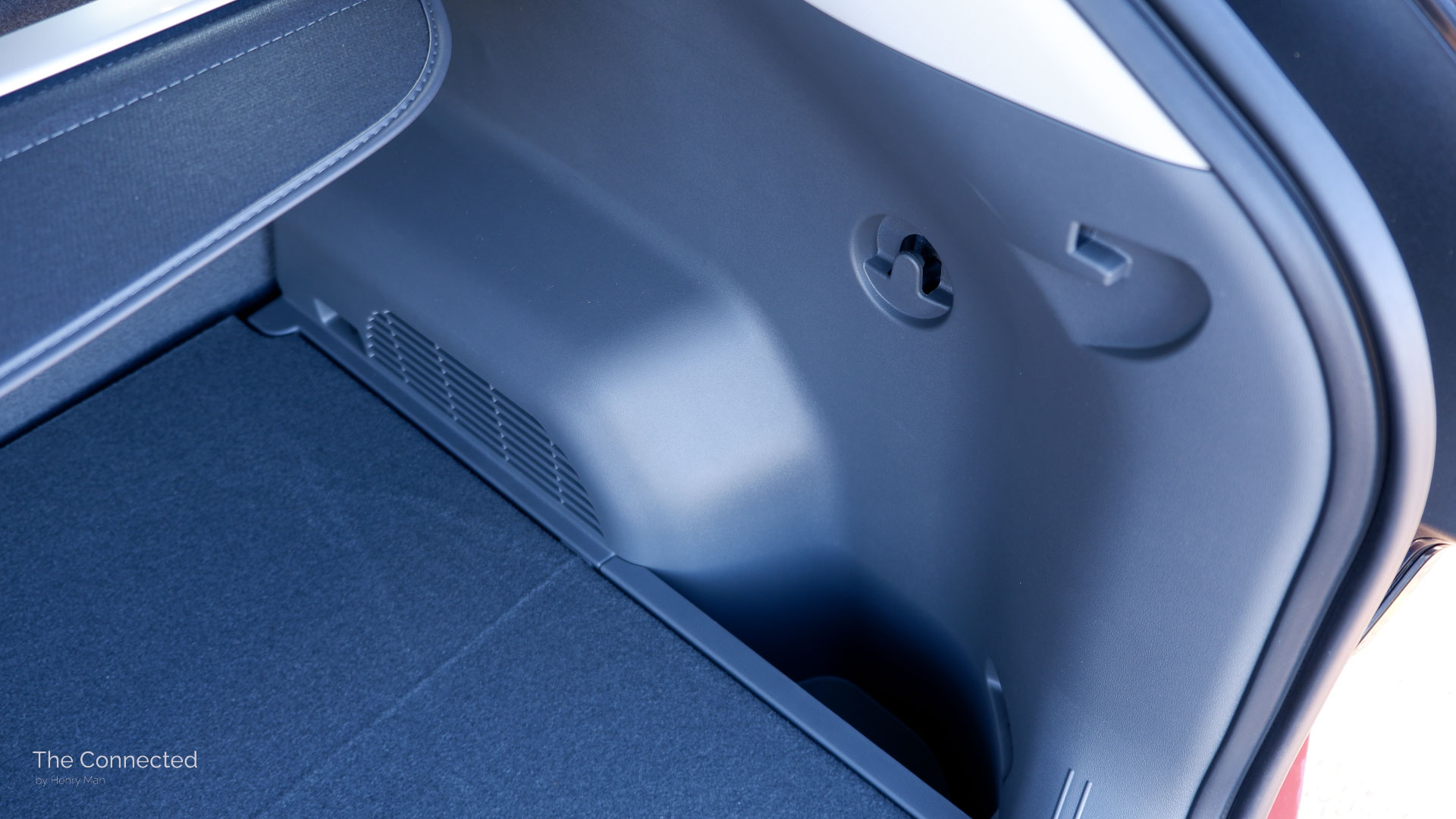
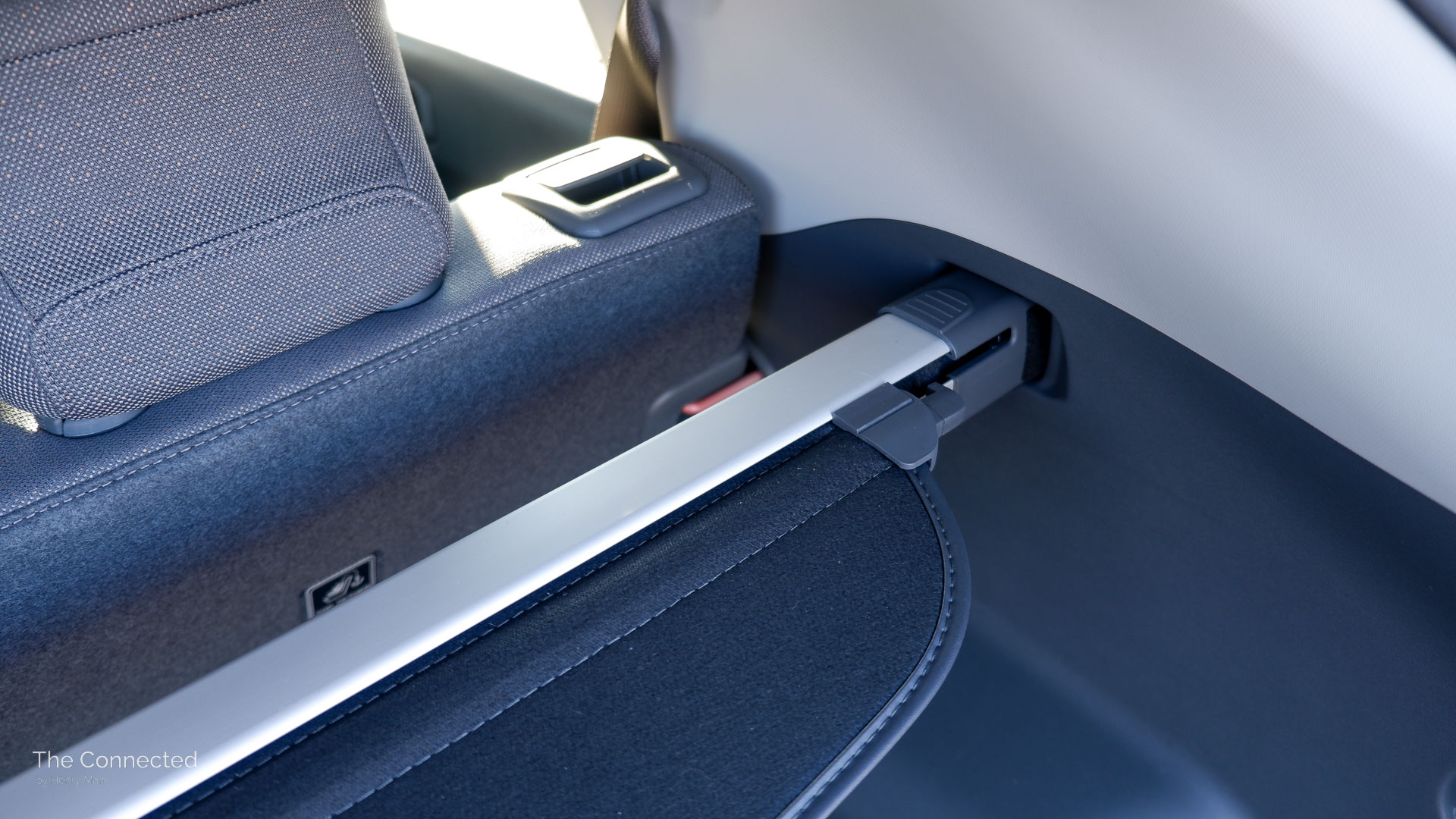
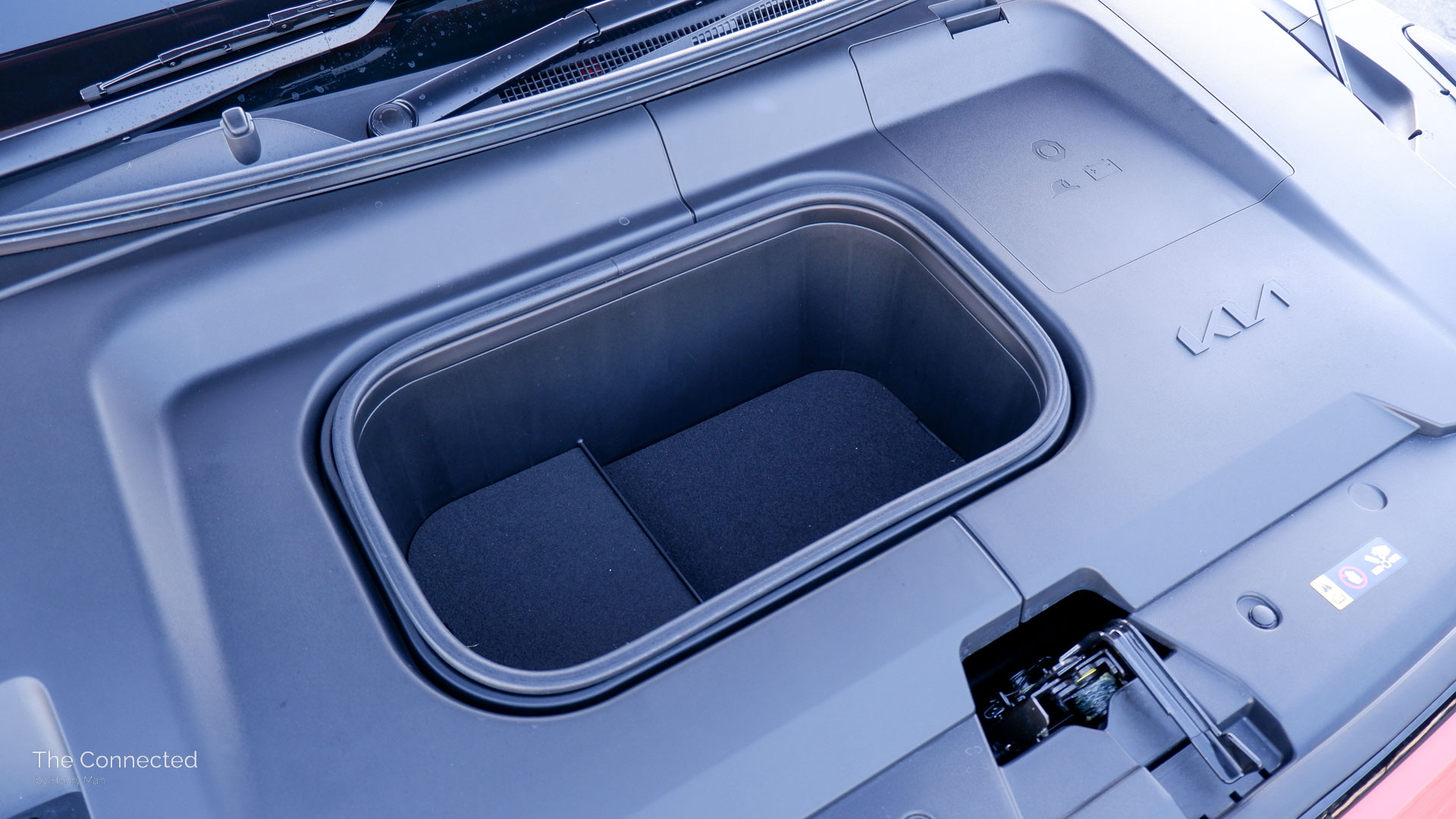
The manual tailgate is light enough to close with one hand thanks to a handle, while the GT-Line exclusively gains an electric tailgate.
I found that, due to the GT-Line’s protruding gloss black rear bumper, it attracts a lot of dust and dirt, and can be easy to get your clothes dirty by simply reaching in the boot.
A small 25-litre frunk is standard on all models, covered under a lid and requires pulling a latch at the driver’s side to pop out the gas-strutted bonnet, unlike the EV9 or Tesla Model Y.
All Kia EV3s have flush front door handles where you’ll need to press in the front portion in order to pull the back of the handle. In one case, the handle snapped my hand as I was releasing it.
Even the ~$65K GT-Line flagship doesn’t auto pop-out the door handles in Australia, even though it’s available on overseas EV3’s.
The back doors are much more usable with a more normal pull handle and hidden design, albeit placed higher up which may be a reach for kids.


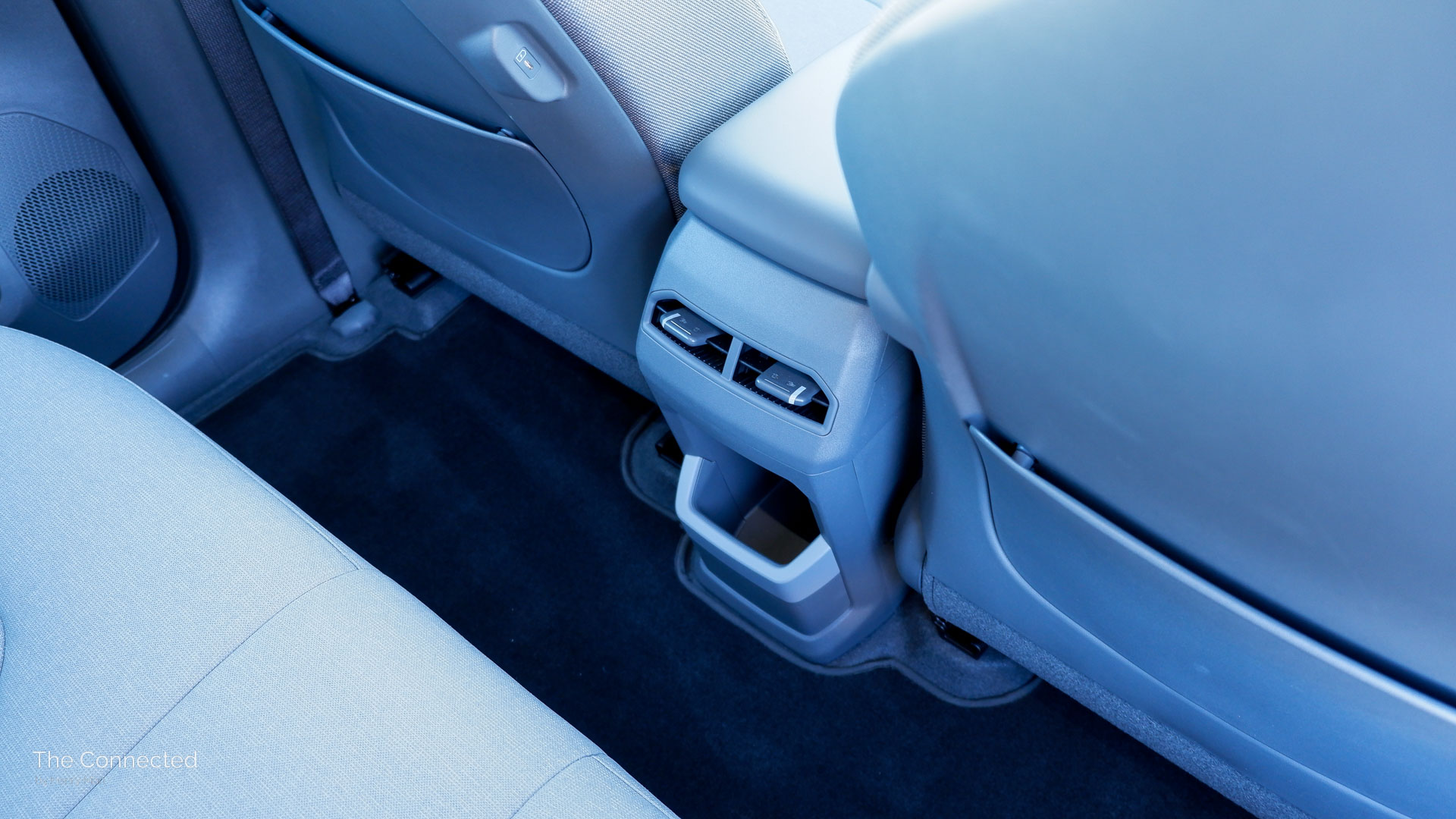
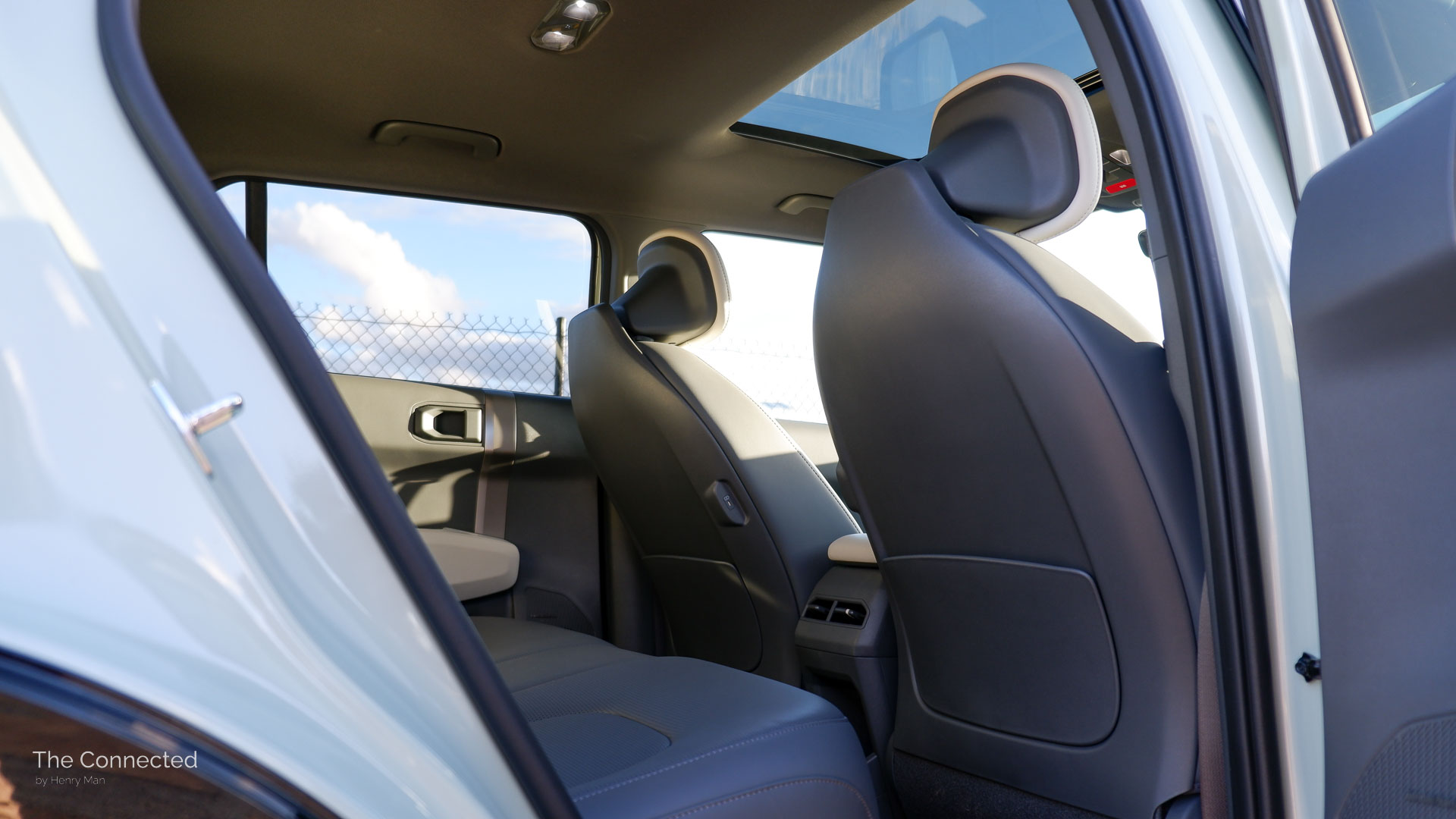
Using the Hyundai Motor Group’s Electric Global Modular Platform (e-GMP), the Kia EV3 provides adequate legroom – but taller passengers may struggle with the curved front seatbacks poking out more than ideal and reducing the feeling of space.
There’s good headroom, a flat floor, rear air vents, a small storage slot underneath, cleverly hidden USB-C charging ports beside each front seat, a fold-down centre armrest with two cup holders, and LED illumination across both rows with the front bulbs having brightness adjustment as standard.
Disappointingly, as commonplace for Kia and Hyundai cars, the EV3’s door pockets are all tight and slanted, and even more narrow at the back.
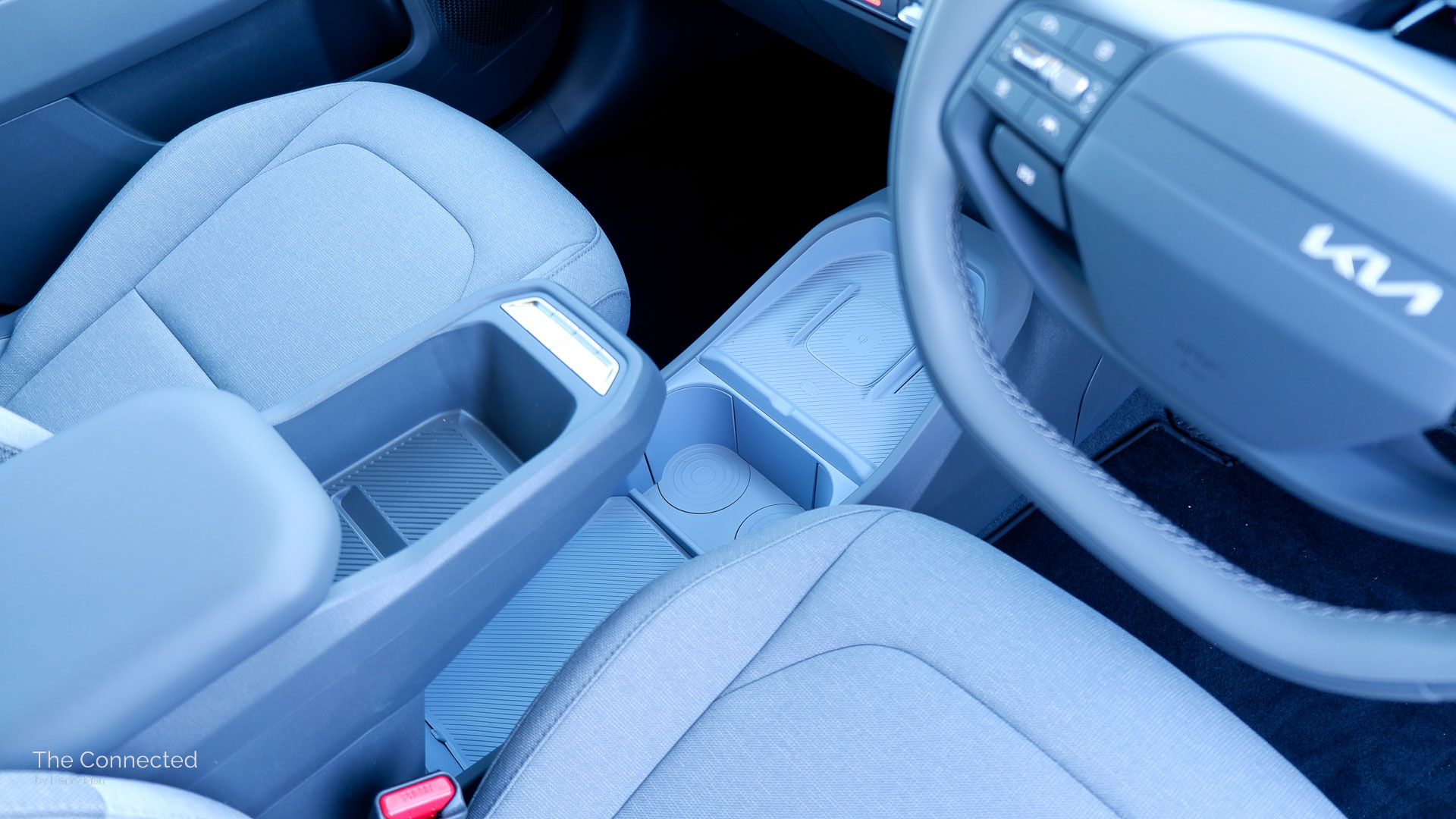
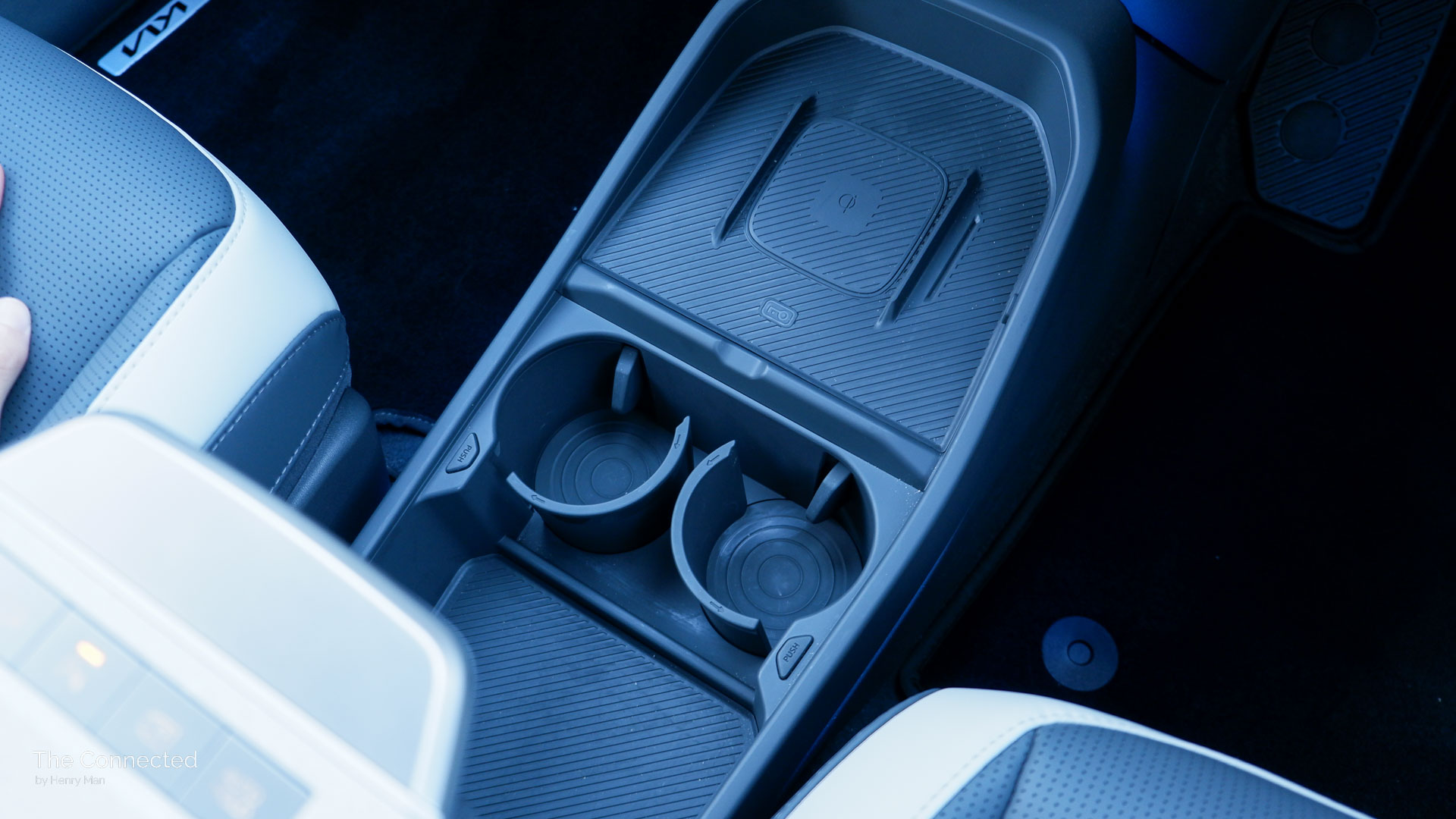
The front row has a spacious feeling thanks to an open-type centre console, with a tray, two pop-out cup holders which are larger than ideal despite the inclusion of grips, and a Qi wireless charging pad placed lower to the floor – even though it’s a bit of a reach down.
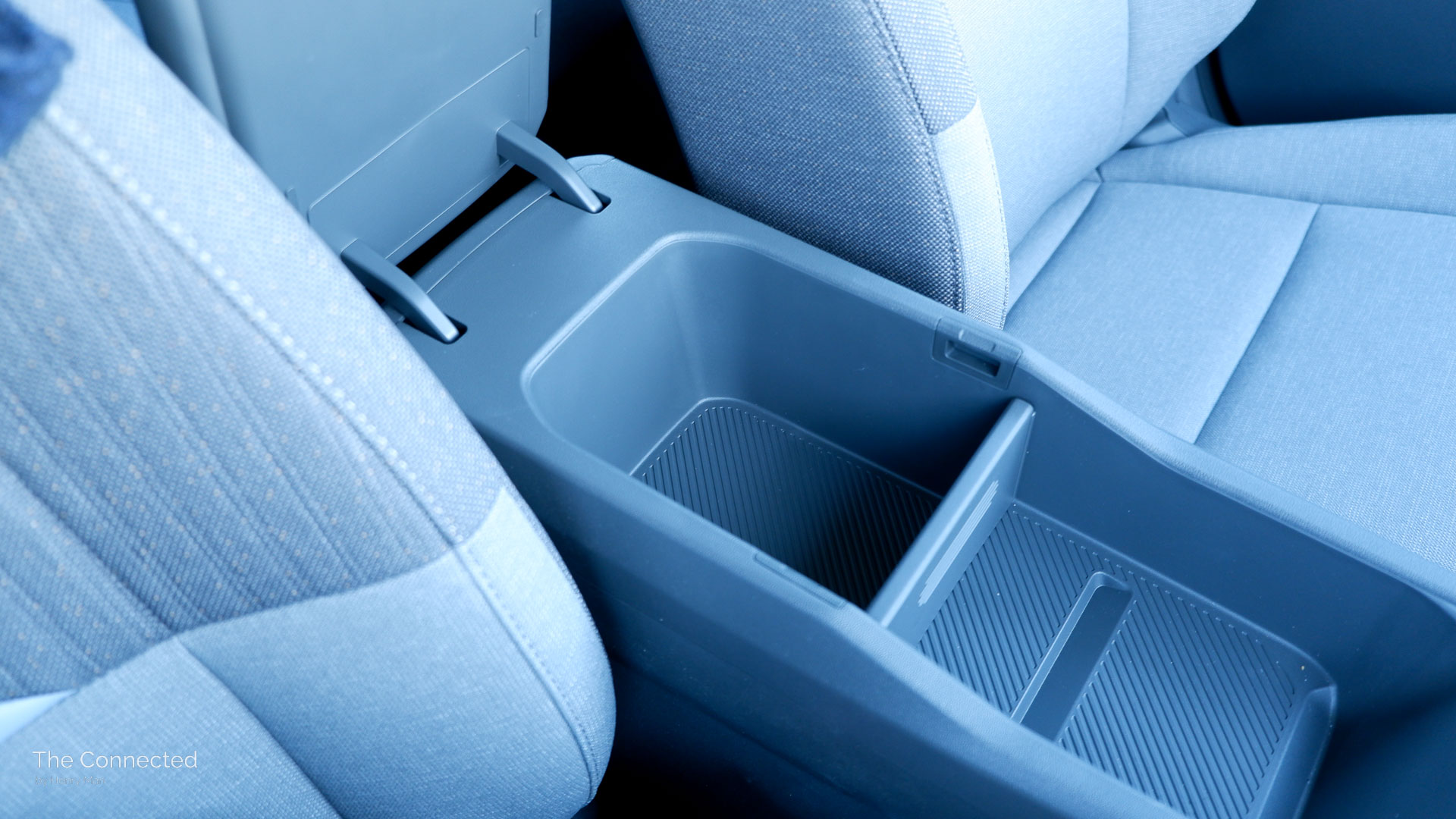
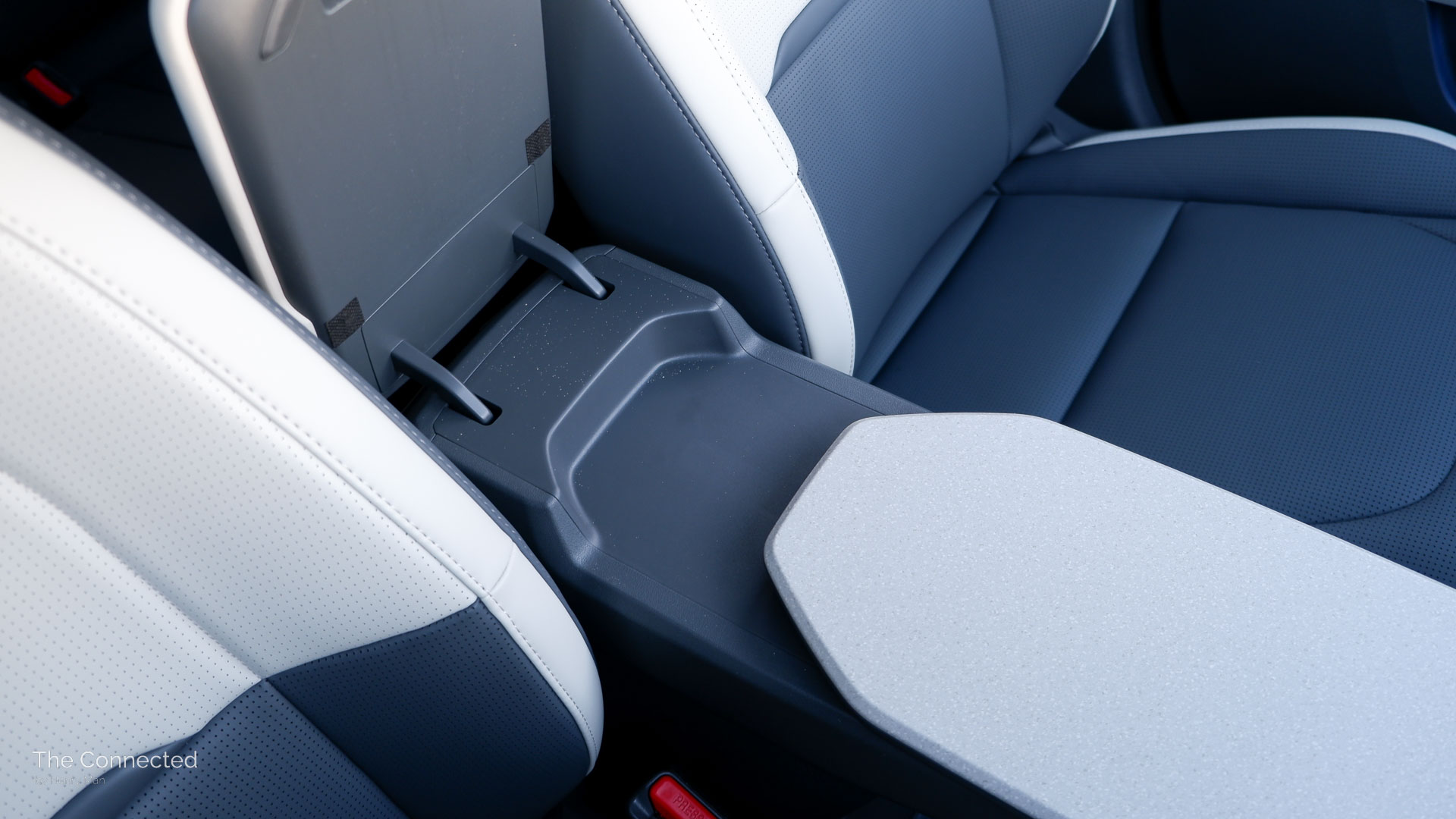
The base Air and mid-spec Earth offer a centre armrest with private storage underneath and an open slot in front, but the latter lacks a rubberised surface with items, such as the car key, often rattling around when driving.
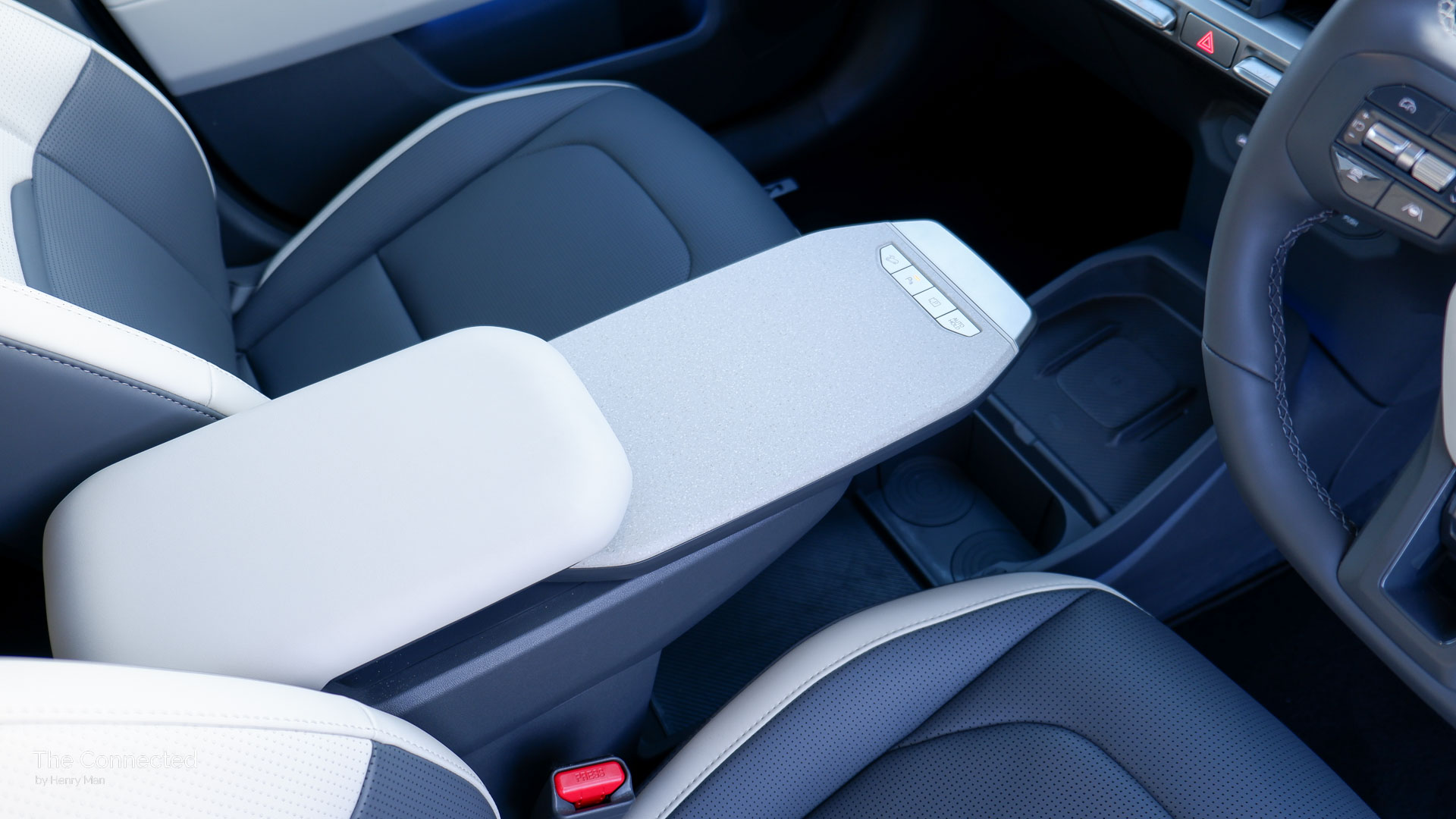
Meanwhile, the flagship GT-Line boasts an arguably less practical slidable tray table, which can be useful for putting takeaway food or a small laptop, but removes any private storage.
You’ll need to rely on the glovebox instead, which at least is well-sized with LED light illumination.
As for seat comfort, the Air has fairly basic manually-adjustable fabric seats, whereas the Earth gains artificial leather pews with full electric and lumbar adjustment, but only the GT-Line has two-level driver seat position memory.
Whether the Air or GT-Line, I found support lacking for longer drives with a firm feel.


The Earth offers three-level heated seats and two-level heated steering wheel, while only the GT-Line has three-level seat ventilation, a reclined relaxation mode, and a standard openable sunroof.
It’s also worth noting that Australian-spec EV3 GT-Line’s don’t adopt the EV9 GT-Line’s soft mesh fabric headrests either, unlike overseas models.
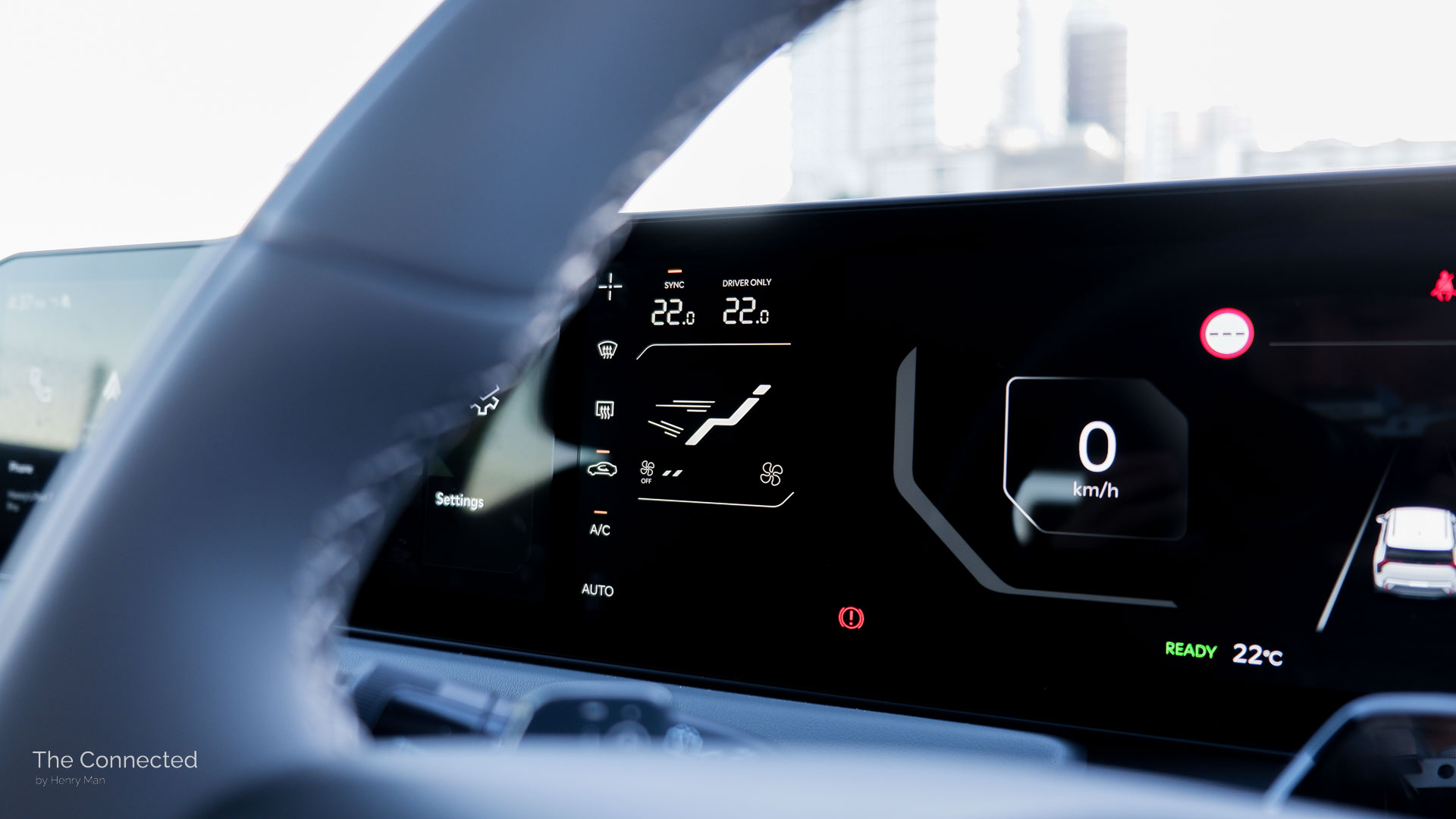
All Kia EV3s include two-zone climate control, which is easy and non-distracting to use thanks to a row of switches to adjust the temperature and fan speed, and a dedicated monochrome climate display filling the gap between the central touchscreen and instrument display.
Utility Mode also features, which is essentially the brand’s camp mode to keep the car running. As a hidden trick, owners can now lock/unlock the doors via the mobile app while the electric SUV is on, too.

Technology.
2026 Kia EV3 tech features:
| 12.3-inch touchscreen running ccNC | 12.3-inch driver instrument display |
| Wireless/wired Apple CarPlay and Android Auto | 5.0-inch monochrome climate control display |
| Qi wireless charging pad | 4x USB-C and 1x 12-volt charging ports |
| Built-in maps | Head-up display (GT-Line only) |
| Kia Connect services and mobile app | Six speakers (Air and Earth) / Eight-speaker Harmon Kardon (GT-Line) |
| OTA software update capability | Proximity key with auto-folding mirrors |
The Kia EV3 offers a modern tech set up, without being too overwhelming to use – though more features are offered overseas.
The 12.3-inch central widescreen is high resolution and bright, powered by the Hyundai Motor Group’s Connected Car Navigation Cockpit (ccNC) operating system.
While it isn’t as cutting-edge as Tesla or Chinese EV rivals, ccNC feels more familiar and easier to learn with a screen that doesn’t dominate the interior.
The user interface is always dark, but has good automatic brightness and light/dark mode switching when using smartphone projection systems. A row of touch-sensitive shortcut buttons below help with ease of use as well, which are much more responsive than the ones on the EV9.
Interestingly, the EV3 is the first Kia in Australia where its display panels don’t have a matte coating. While fingerprint resistance is similar, I found that it’s a more succeptible to light reflections than the one used on models such as the EV5.

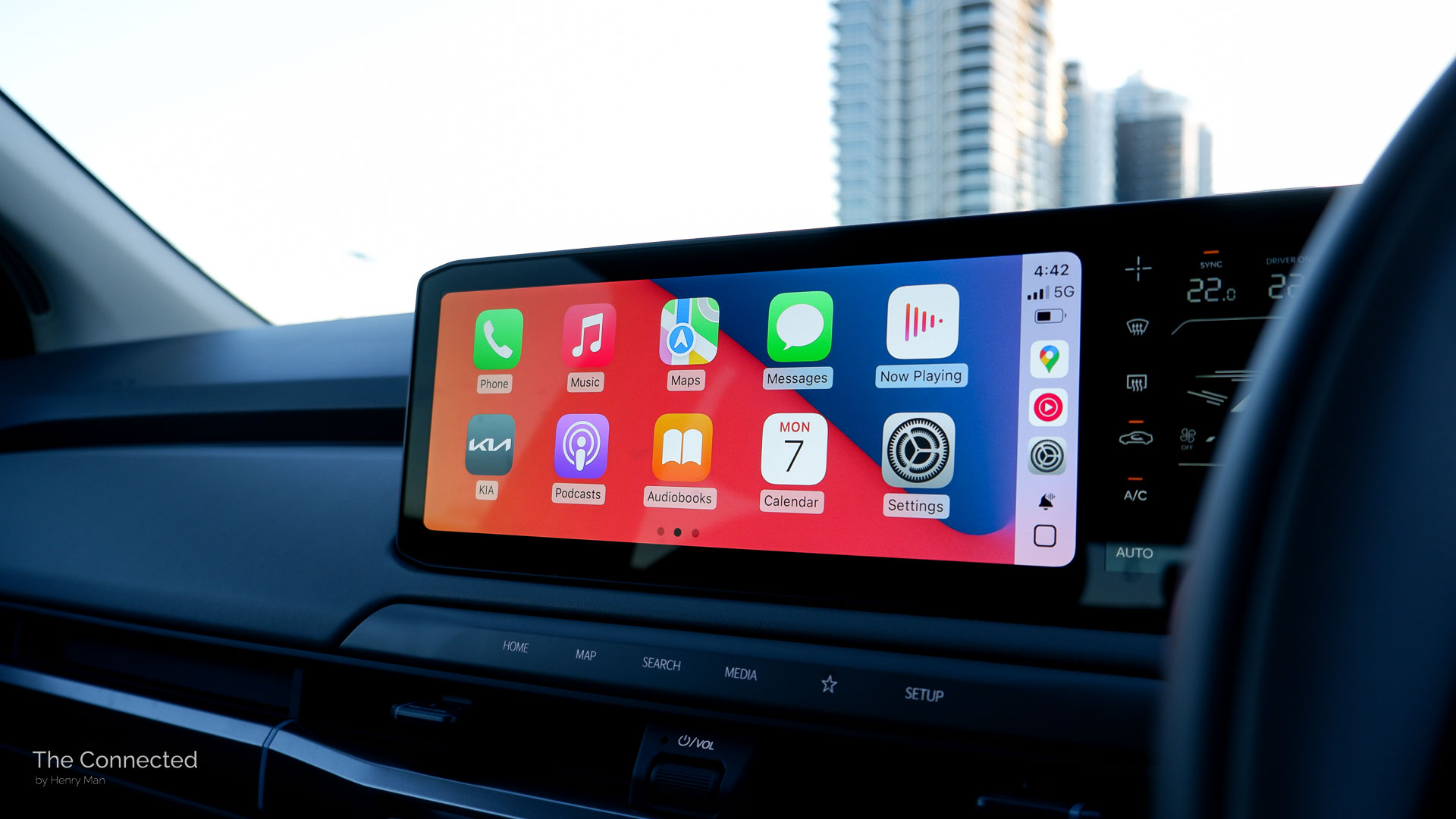
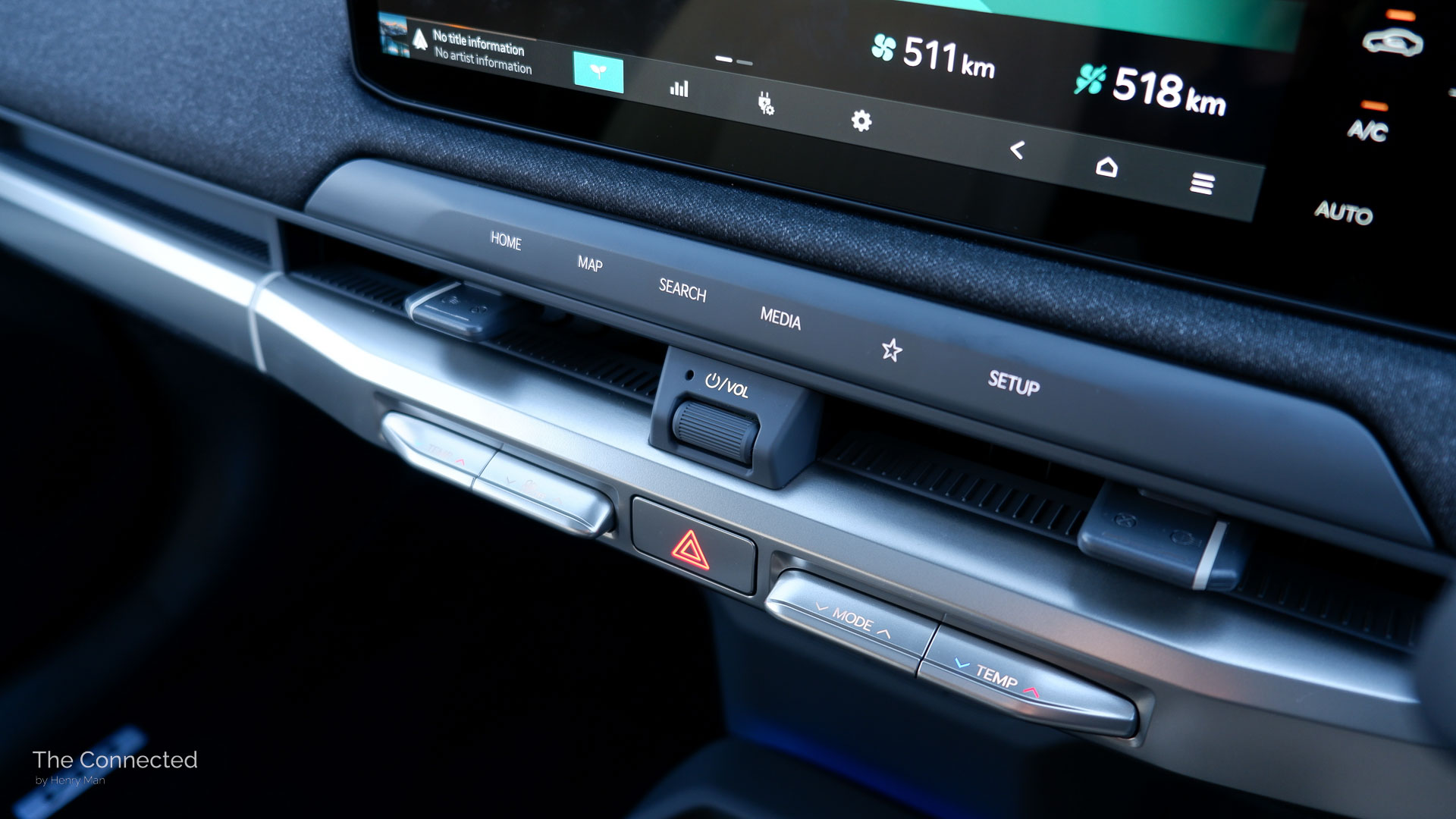
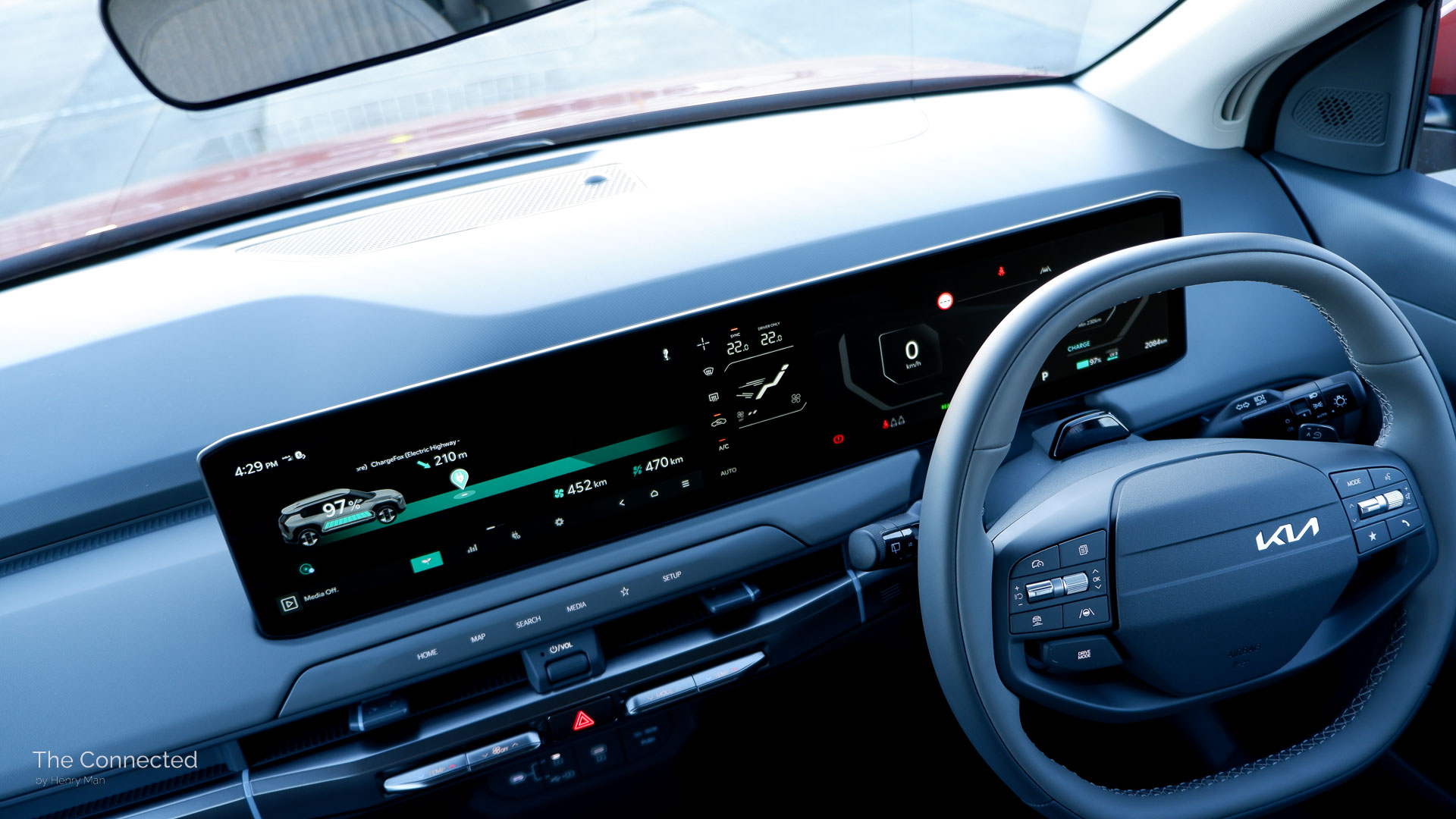
Unfortunately, built-in features are rather barebones with overseas Kia EV3’s available with video streaming apps, such as YouTube and Netflix, and artificial intelligence powered voice control.
You’ll mainly use Apple CarPlay or Android Auto, which connect wirelessly with no connection issues in our testing – though the single Qi wireless charging pad lacks ventilation and stops charging phones over time to prevent overheating.
Meanwhile, Kia has cleverly placed a 5.0-inch monochrome display in the middle of the board for climate controls. While part of the screen can easily be blocked by the steering wheel, it is far better than burying temperature controls into the main screen.
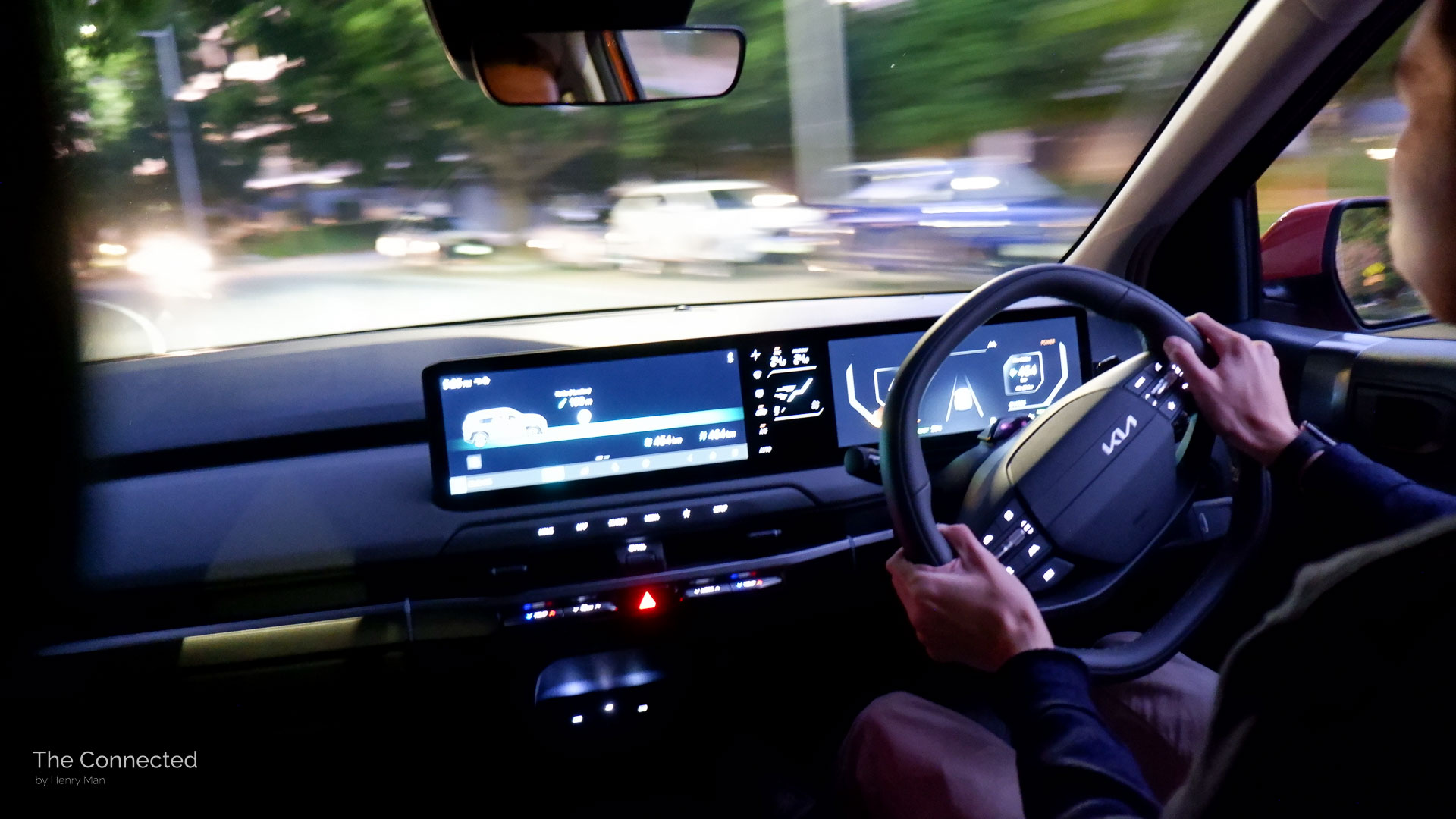
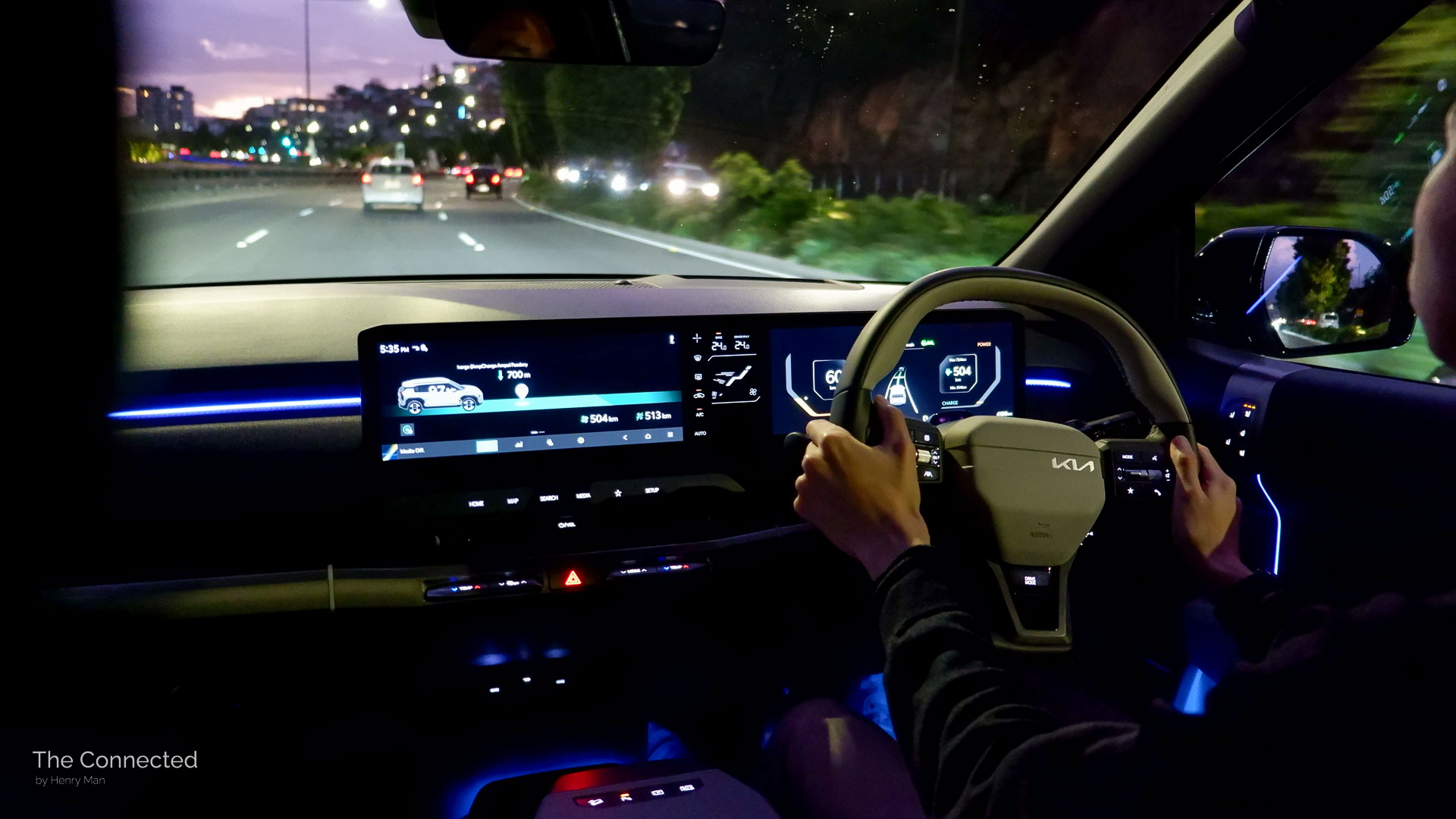
Ahead of the driver is another 12.3-inch instruments screen, which doesn’t offer much customisability, but can show map direction arrows when using Apple CarPlay or Android Auto.
Depending on your driving position, the steering wheel rim may block parts of the instruments, including the light icons atop.

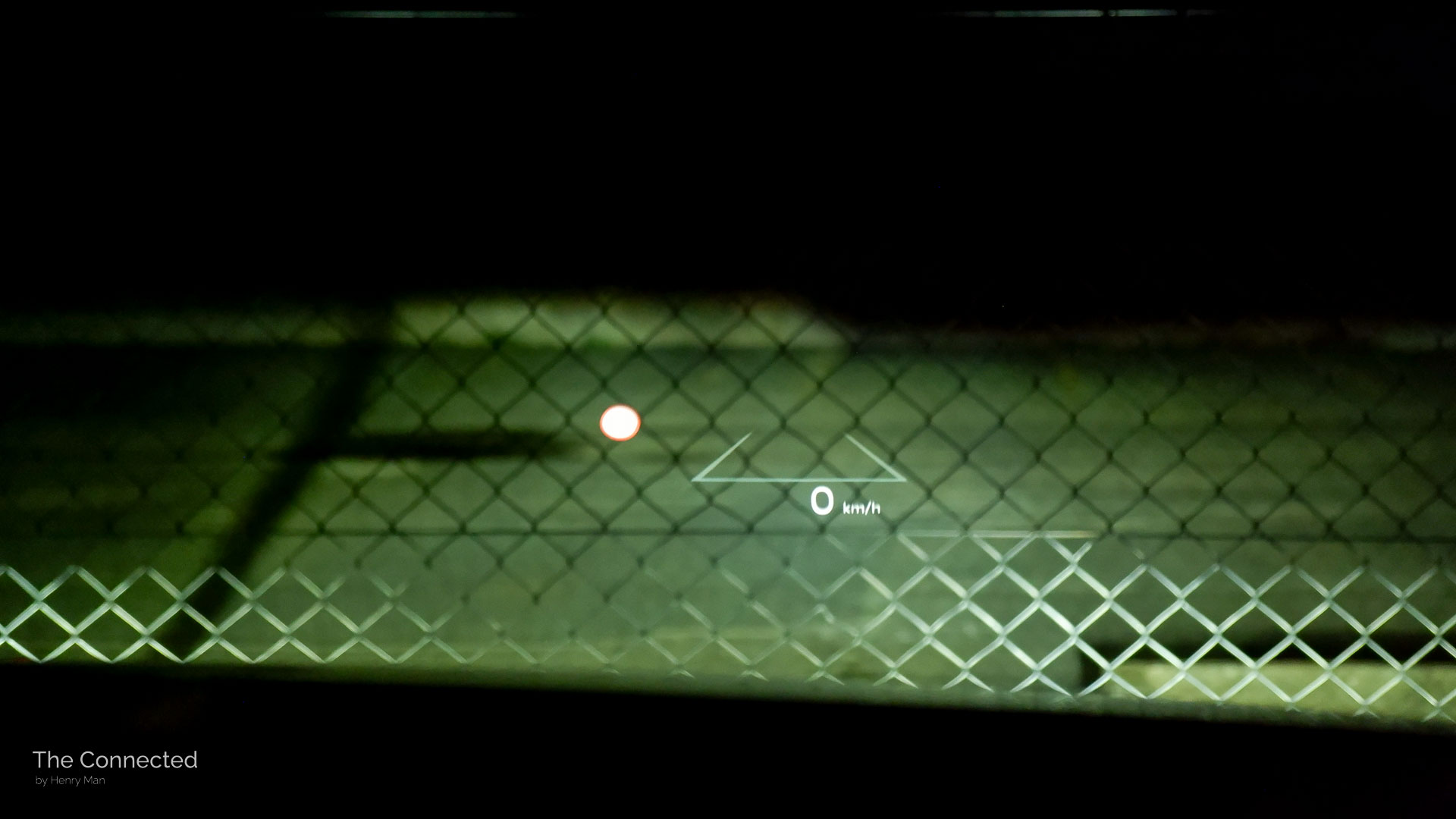

The GT-Line exclusively nets a heads-up display projected onto the windscreen. Although it’s on the smaller side compared to other small SUVs such as the Nissan Qashqai, it’s still a welcome addition by showing the speed, safety alerts and map instructions.
Furthermore, Kia Connect services are included for all EV3s for up to seven years from the date of activation. The Kia mobile app is well-designed with functionality such as monitoring the charge status, turning on the climate control and heated/ventilated seats (if equipped), and unlocking/locking the doors.
Unfortunately, unlike connected apps from Tesla or Leapmotor, it is often slow to send commands, doesn’t offer Apple or Google mobile car key capabilities (which are available overseas), and lacks more advanced functionality.
Even the base EV3 Air’s stock six speakers sound decent, making the GT-Line’s eight-speaker Harmon Kardon branded system sounding less of a substantial step up.
Safety.
2026 Kia EV3 safety features:
| Front AEB with vehicle/pedestrian/cyclist/junction turning detection | Reversing camera |
| Evasive steering assist with direct/oncoming/side lane change detection | Front and rear parking sensors |
| Blind-spot assist | Door open warning |
| Rear cross-traffic assist | Rear occupant alert (memory based) |
| Lane-keep assist | Lead vehicle departure warning |
| Adaptive cruise control and lane-centring assist (HDA2) | Kia Connect emergency services calling and remote location tracking (included for seven years) |
| Road sign detection with speed limit warning | Full LED headlights MFR type (Air and Earth) / full LED headlights projection type (GT-Line) |
| Driver attention monitoring camera | Part LED tail-lights (Air and Earth) / full LED tail-lights (GT-Line) |
The 2026 Kia EV3 includes a comprehensive range of well-calibrated and improved safety assist features as standard, but higher-end models miss out on a 360-degree camera system.
The small electric SUV’s adaptive cruise control and lane-centring assist just works, with a clear reversing camera, and non-intrusive lane-keep assist which only activates from 60km/h and above.
Strangely, on both EV3’s we tested, Kia’s more advanced Highway Driving Assist 2 (HDA2) could not be activated even though it’s advertised and enabled in the settings.
Finally, Kia has improved its infamously annoying Intelligent Speed Limit Assist (ISLA) system to be more tolerable everyday by default.
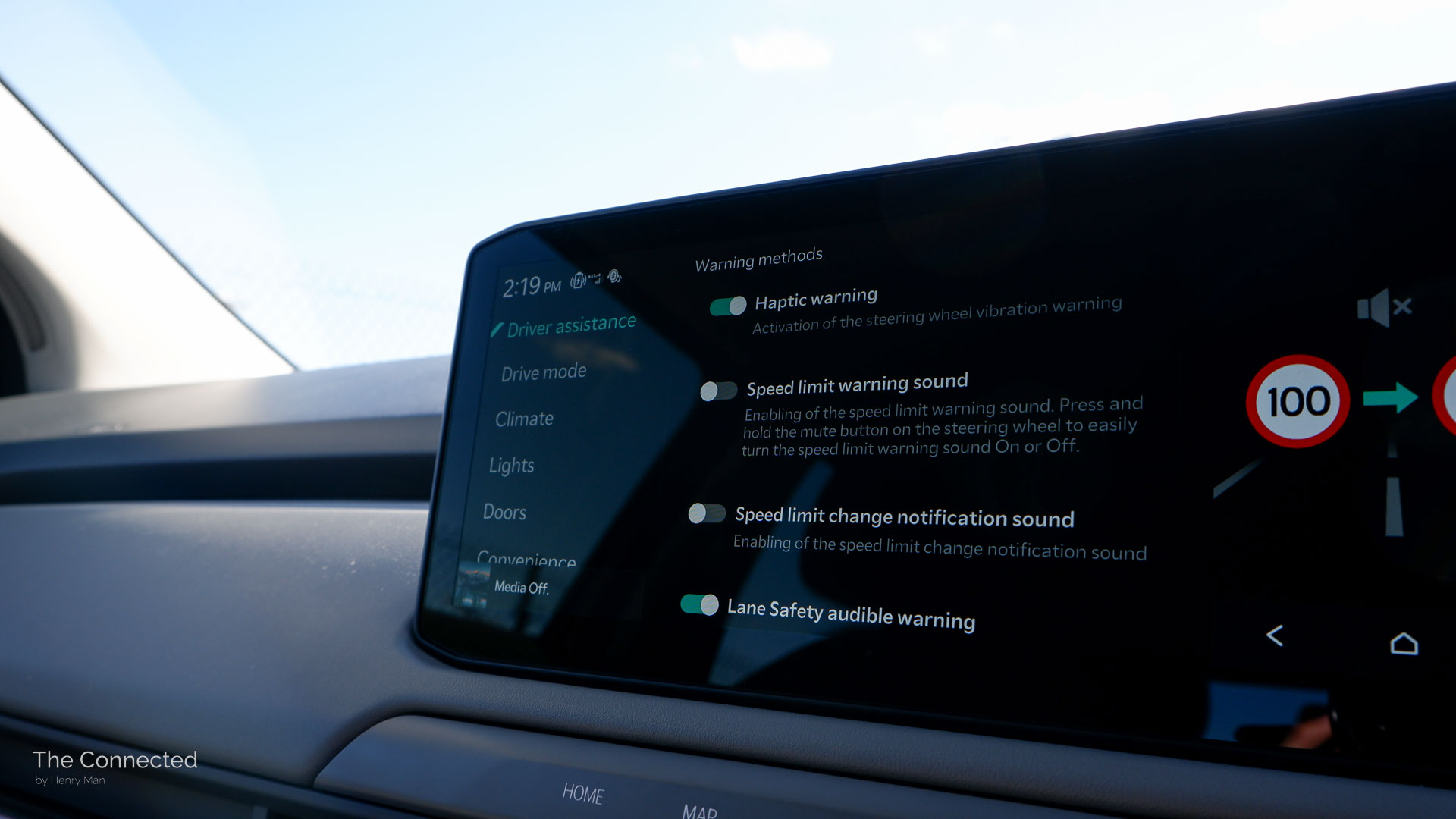

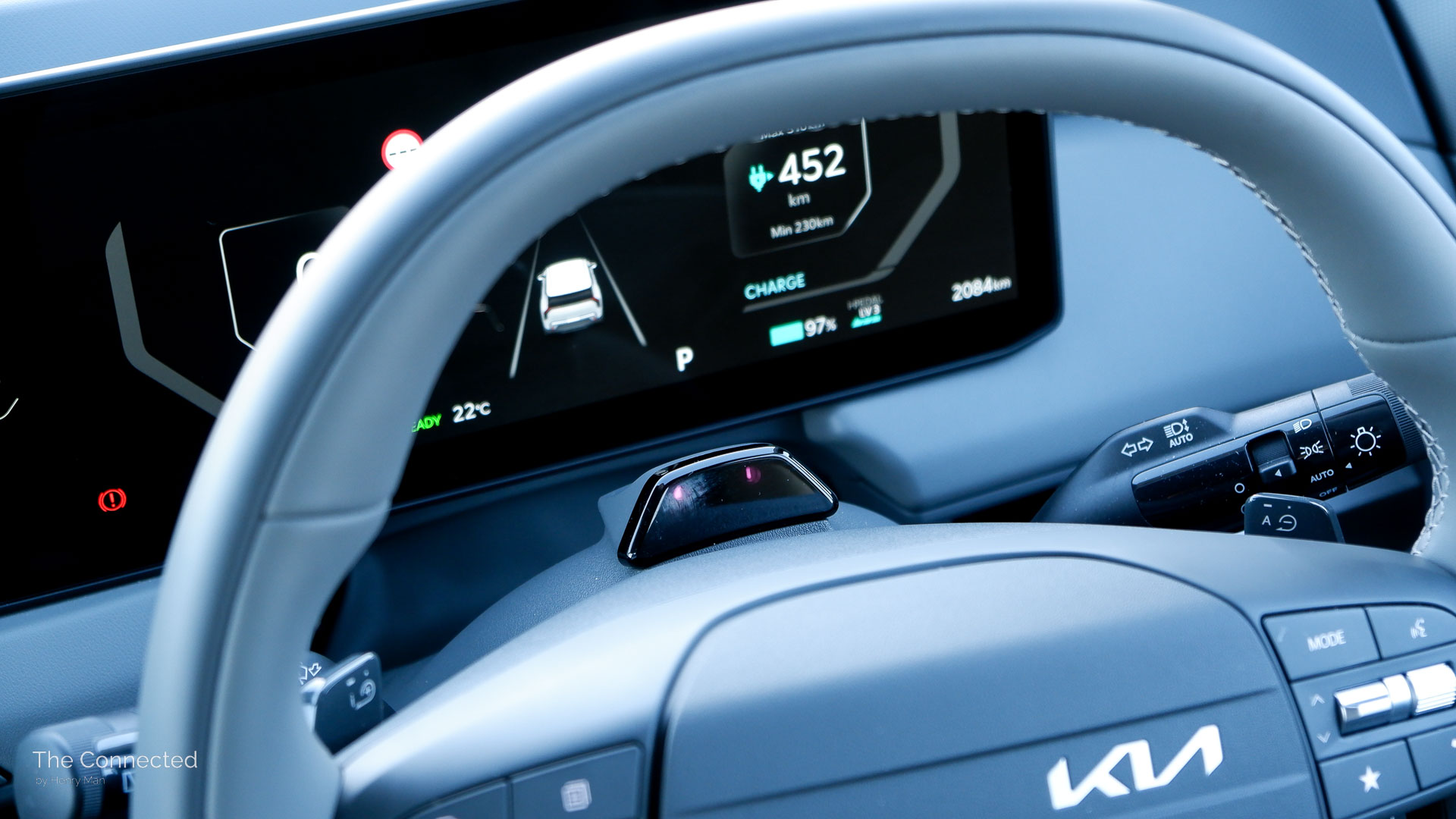
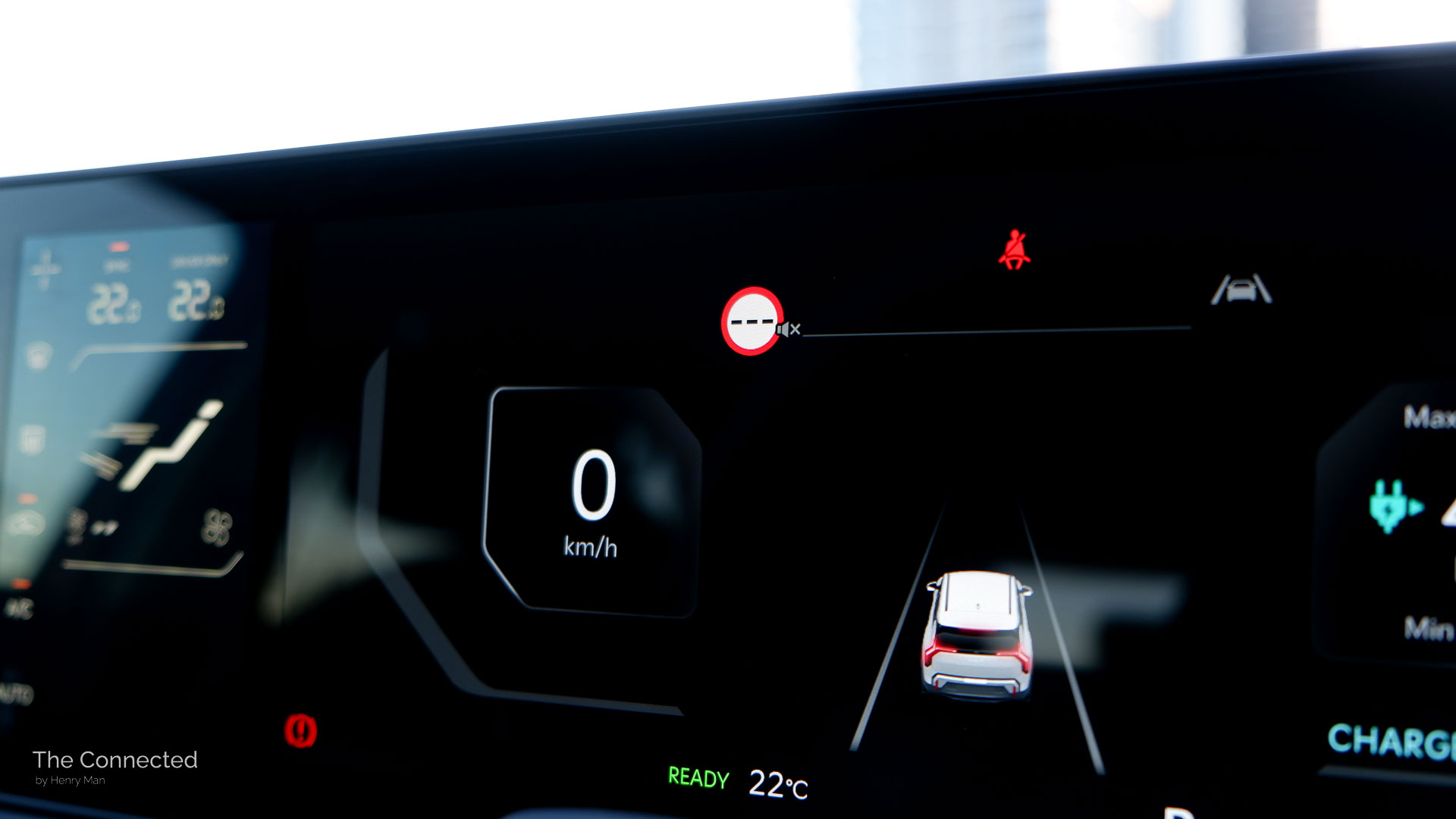
Owners can now turn off the unnecessary chirp every time it thinks it detects a new speed sign – and it’s deactivated permanently.
This is in addition to a steering wheel shortcut to mute the overspeed warnings every time you start the car, which wasn’t available on the bigger EV5.
We noticed the Kia EV3’s driver attention monitoring is more sensitive than other models in the Kia line-up, triggering with the slightest eye movement away from the road. There’s no quick shortcut to turn it off just yet.

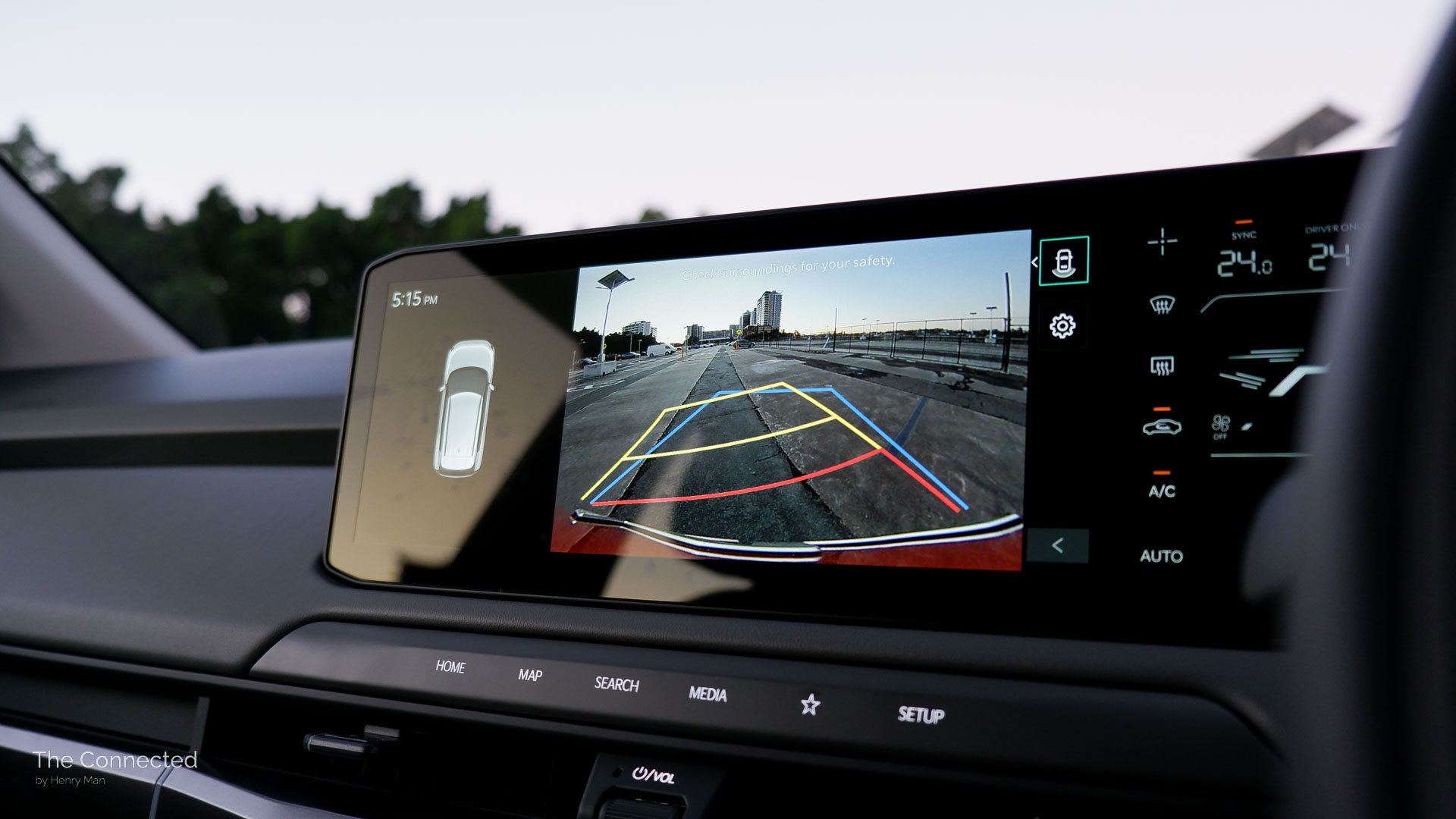
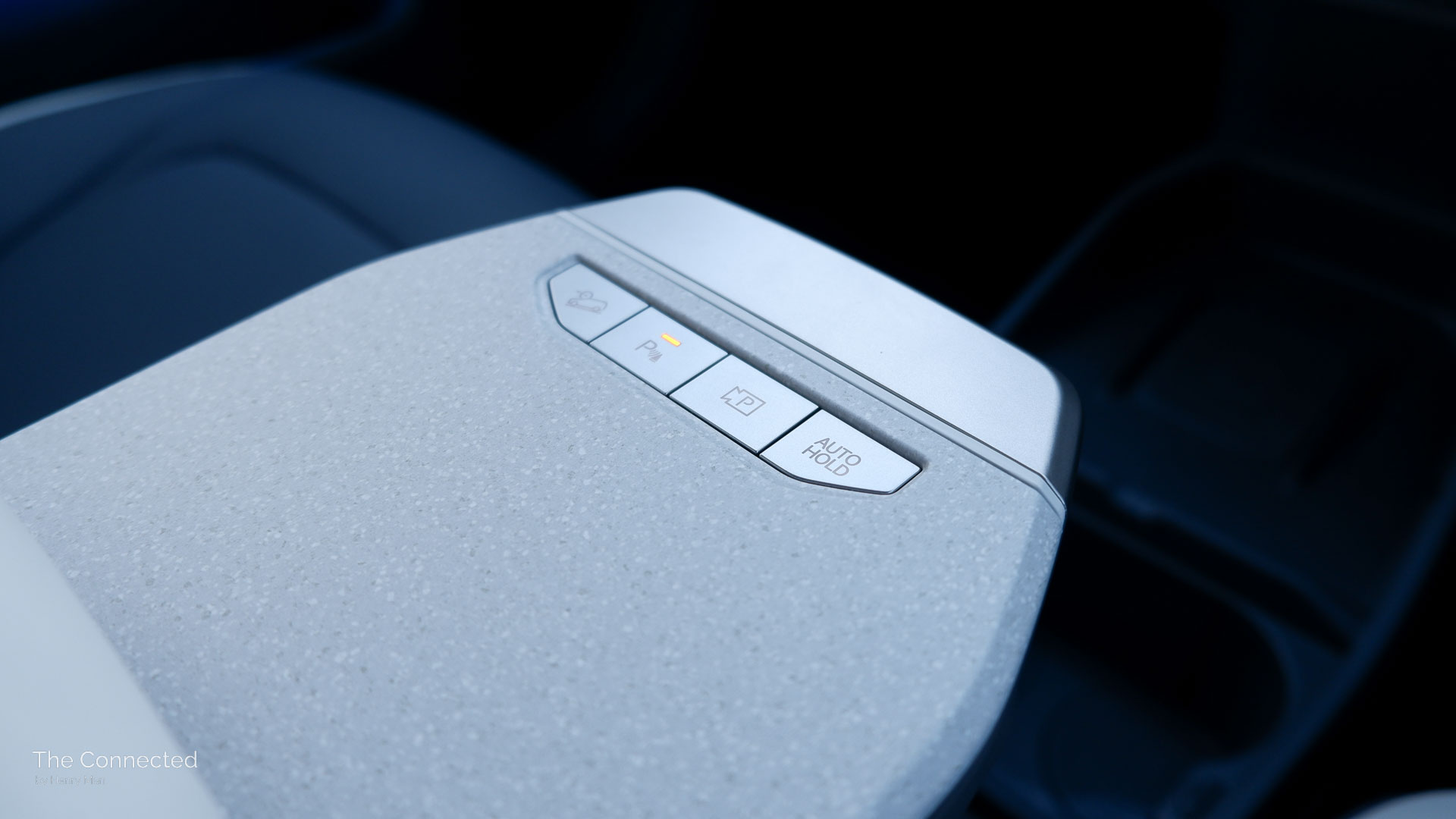
Disappointingly, no EV3 offers a 360-degree surround-view camera system, blind-spot view cameras and Kia’s remote forwards/backwards smart parking feature – even if you spend almost $70K on the road for the top-spec GT-Line.
While the Kia EV3 is small enough to be easy to manoeuvre with the help of front and rear parking sensors, 360-degree cameras are expected when it’s standard on many small EVs that cost less than $50K.
Both the standard Air and Earth’s reflector-type and GT-Line’s projector-type LED headlights perform well at night, but it’s a shame that the latter doesn’t offer an adaptive matrix high beam function on top to justify the premium price despite having a cubed bulb design.
The 2026 Kia EV3 has received the full five-star safety rating by the Australasian New Car Assessment Program (ANCAP) under 2025 testing criteria – with 83 per cent adult occupant protection, 86 per cent child occupant protection, 78 per cent vulnerable road user detection, and 81 per cent for safety assists.
Range and charging.
2026 Kia EV3 battery and charging specs:
| Air Standard Range | Air Long Range | Earth | GT-Line | |
| Claimed driving range (WLTP combined cycle) | 436km | 604km | 563km | |
| Claimed energy efficiency (WLTP combined cycle) | 14.9kWh/100km | 16.2kWh/100km | ||
| Battery size and type | ~55kWh (58.3kWh gross) NMC lithium-ion | ~78kWh (81.4kWh gross) NMC lithium-ion | ~78kWh (81.4kWh gross) NMC lithium-ion | ~78kWh (81.4kWh gross) NMC lithium-ion |
| Battery voltage | 400-volt class | |||
| Max AC / DC charging speed | 10.5 / 100kW | 10.5 / 127kW | ||
| Bidirectional charging | Interior/exterior V2L | |||
| Connector type | Type 2 / CCS2 | |||
| Everyday charging limit recommendation | 80% (general) | |||
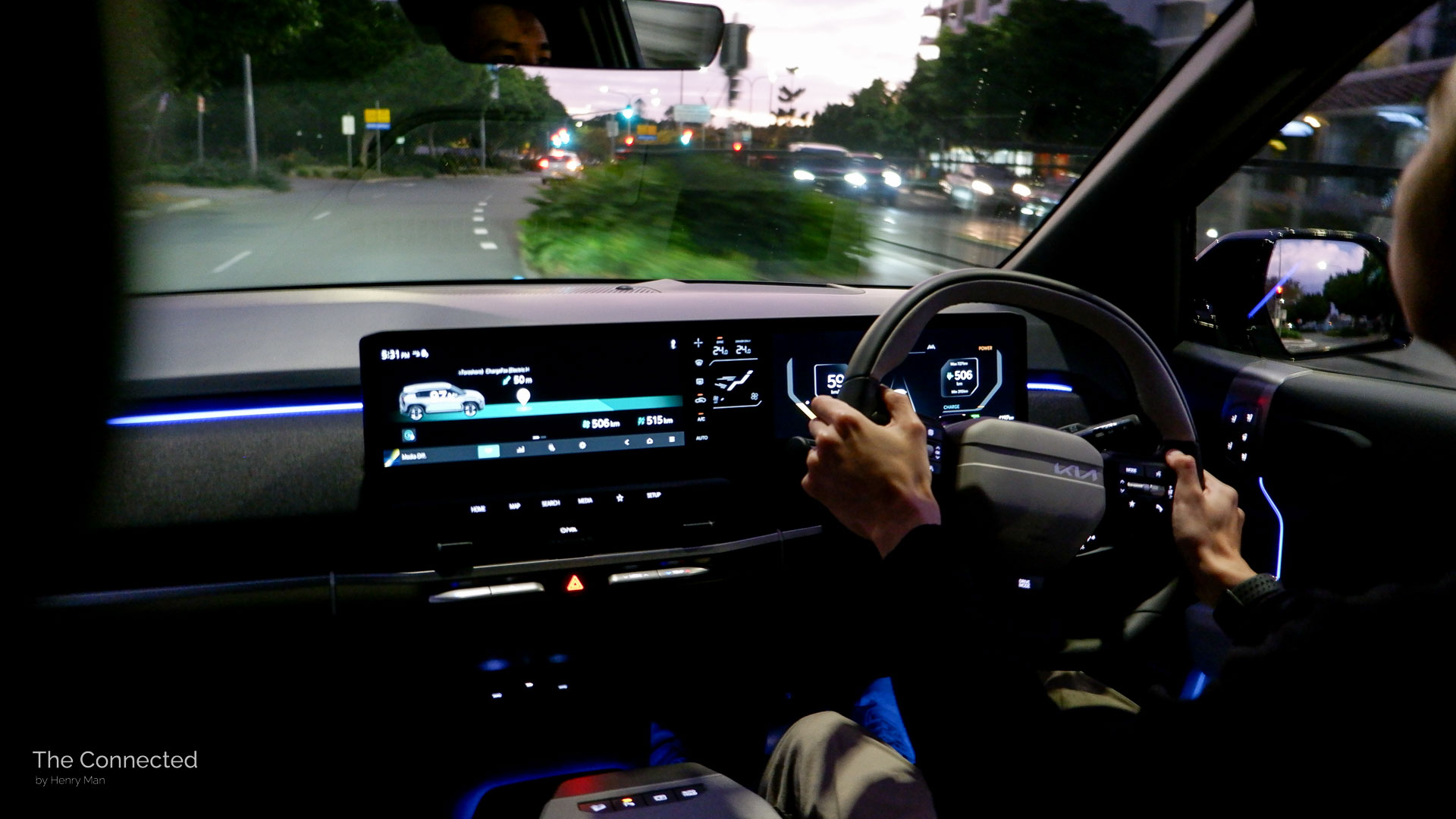
In our testing, the Kia EV3 Air Standard Range achieved an average energy consumption of 15.0kWh/100km, while the GT-Line Long Range indicated 16.1kWh/100km after a week of mixed driving.
Therefore, expect the base Air Standard Range to provide a real-world range of about 366km from a full charge off its 55kWh usable (estimated) battery, or for the GT-Line Long Range around 484km with its 78kWh usable (estimated) battery.
Both the small and large batteries offer good energy efficiency and range.
However, unlike the Kia EV5 medium SUV, all EV3s adopt a conventional nickel-manganese-cobalt (NMC) lithium-ion battery type. While Kia doesn’t offer a daily charge limit recommendation, capping it at 80 per cent is generally recommended for everyday driving.
As a result, expect an everyday usable range of around 292km on the Air Standard Range or about 387km on the GT-Line Long Range in the real world.
A heat pump is not available on any EV3 in Australia.
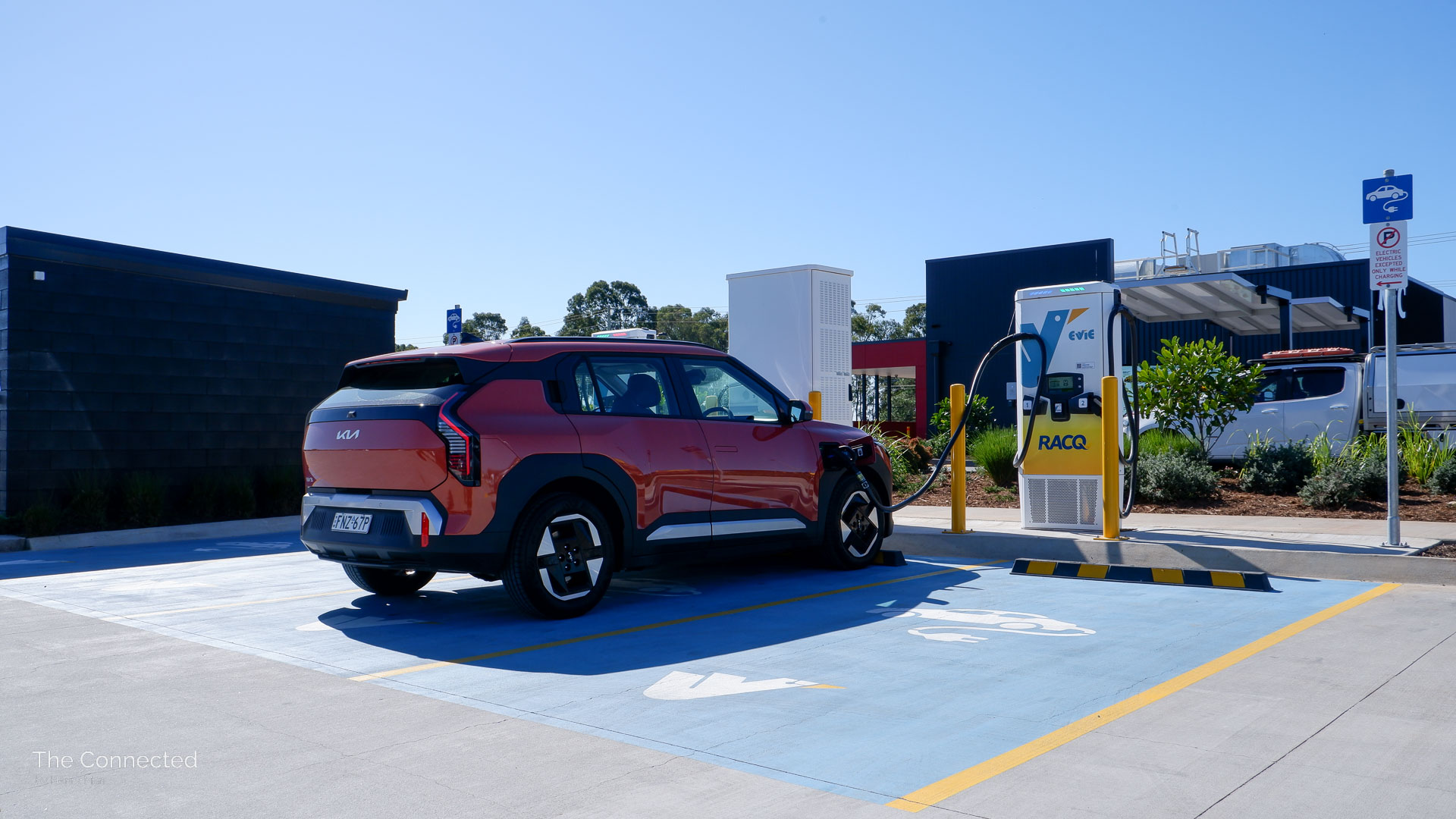
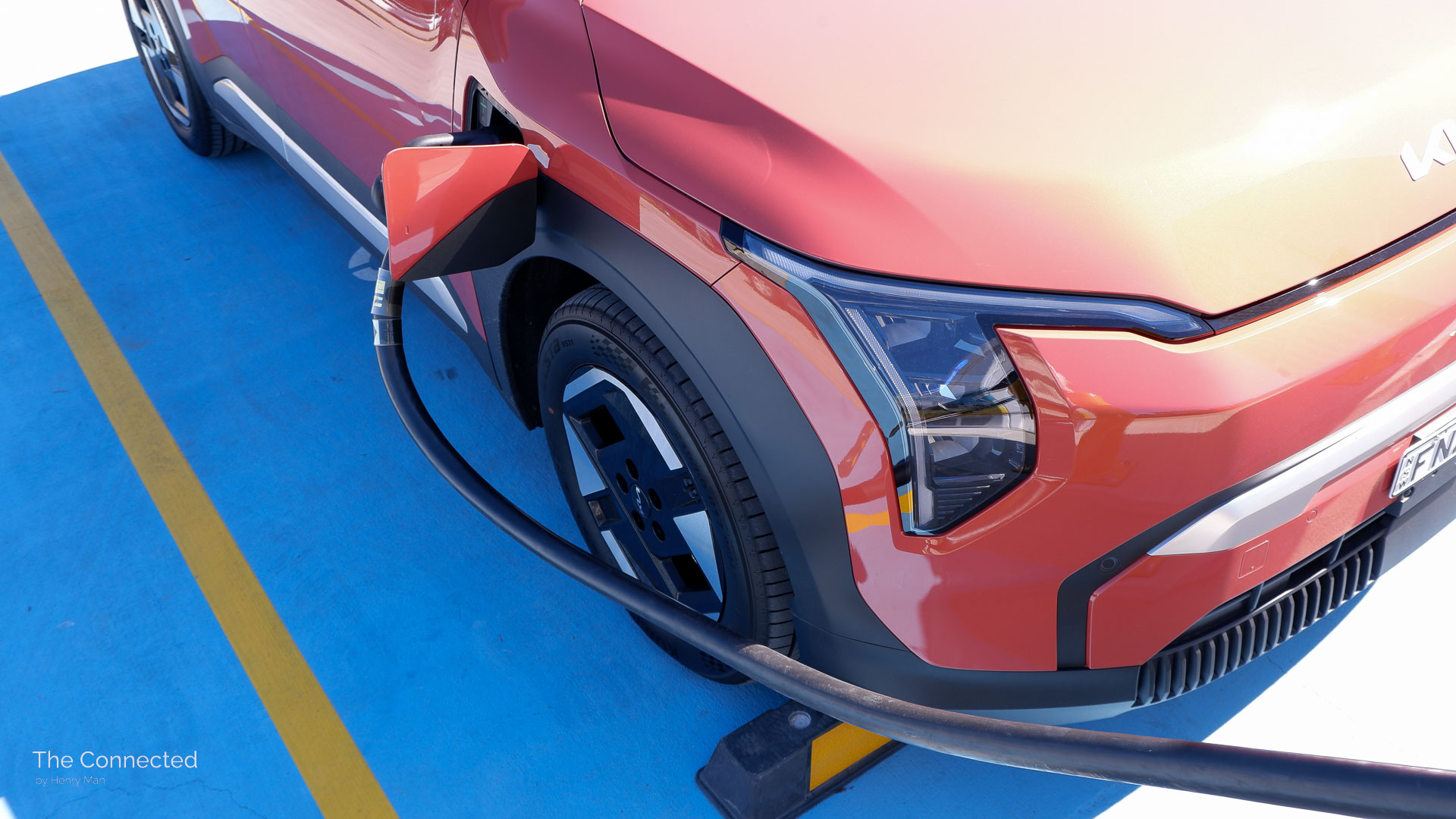
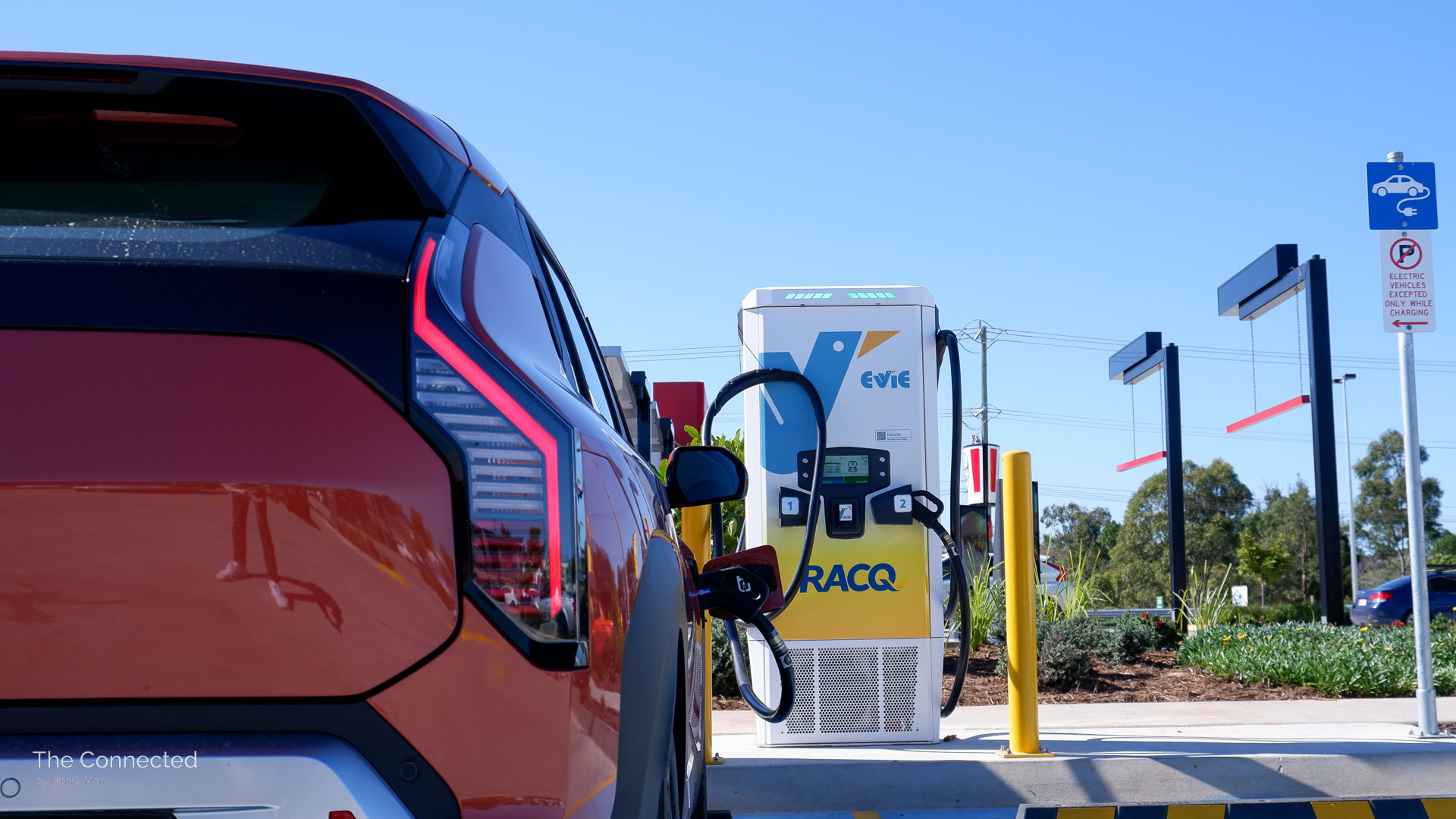


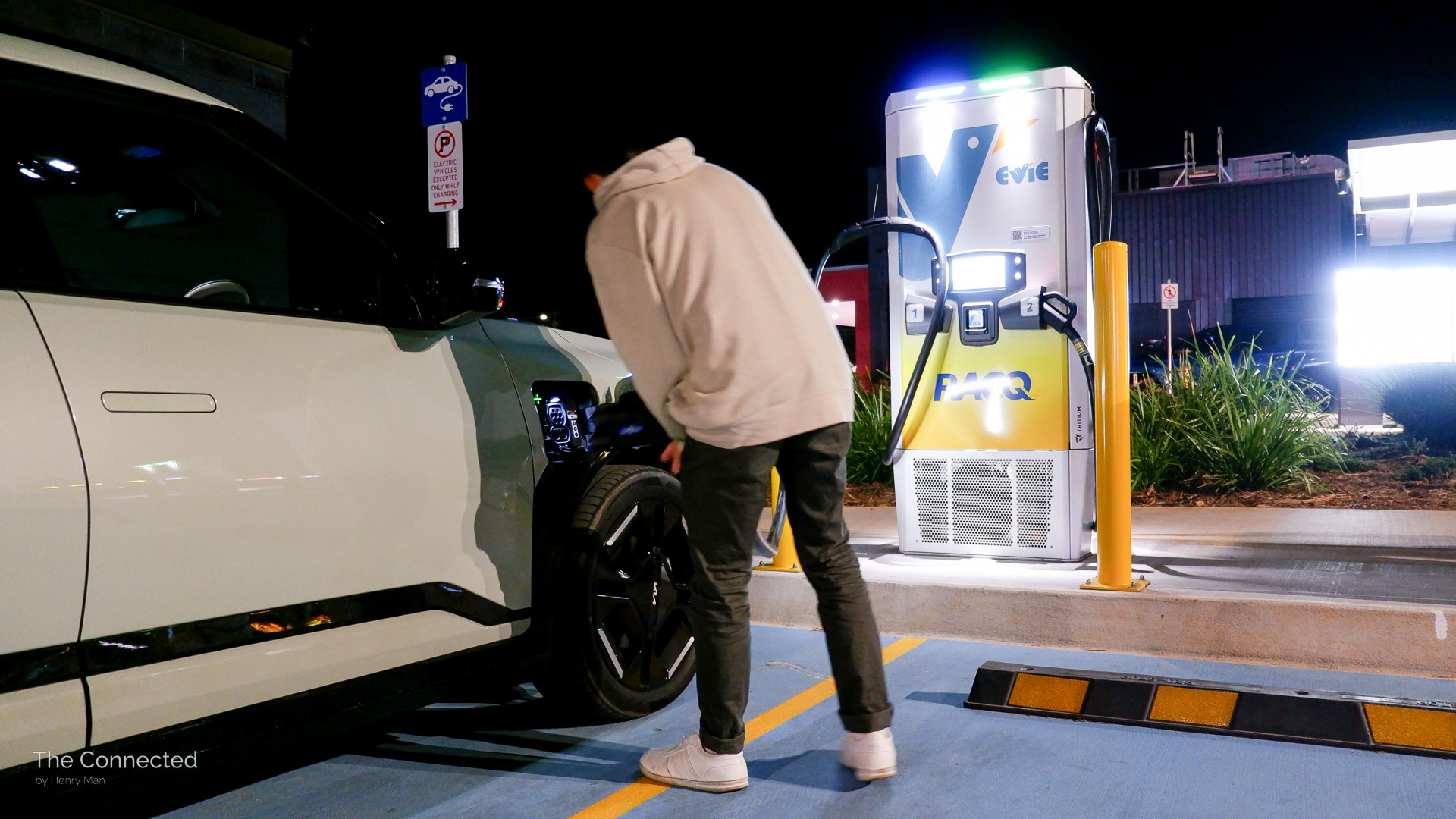
Using a public 150kW DC fast charging station, the EV3 Air Standard Range battery recharged from 11 to 80 per cent in around 29 minutes – peaking at 99kW with an average 83kW session speed.
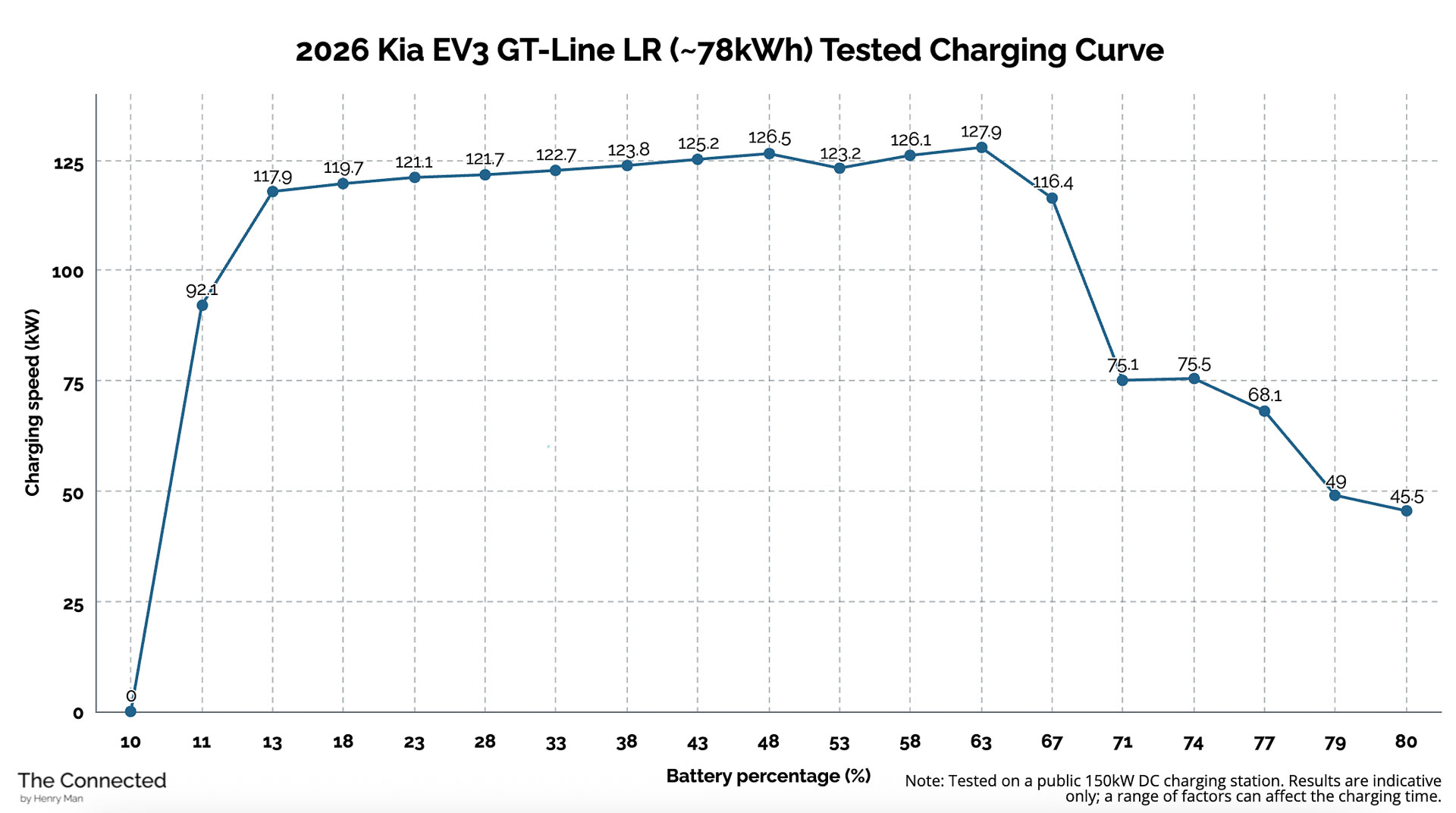
Meanwhile, the EV3 Long Range battery topped-up from 10 to 80 per cent in around 33 minutes – peaking at 127kW with an average 104kW speed.
Both charging curves are fairly flat until the circa-70 per cent mark where it starts to throttle down the speeds.
Unfortunately, Australian EV3’s don’t offer automatic charging stop planning that’s offered overseas, but it does have automatic and manually-triggering battery pre-conditioning.
It’s also a bit annoying that Kia still doesn’t offer a ‘stop charging’ button within the touchscreen itself.
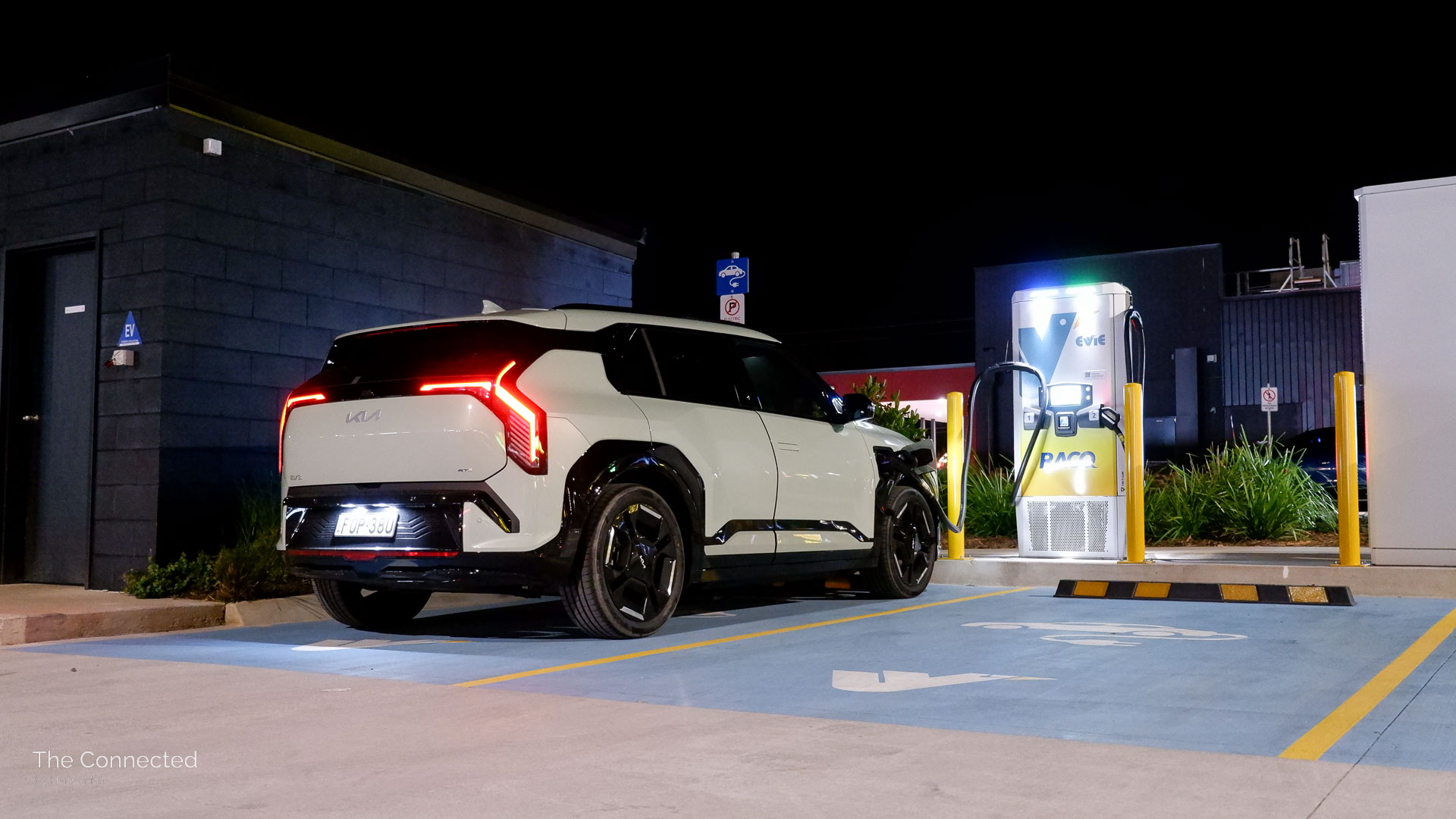
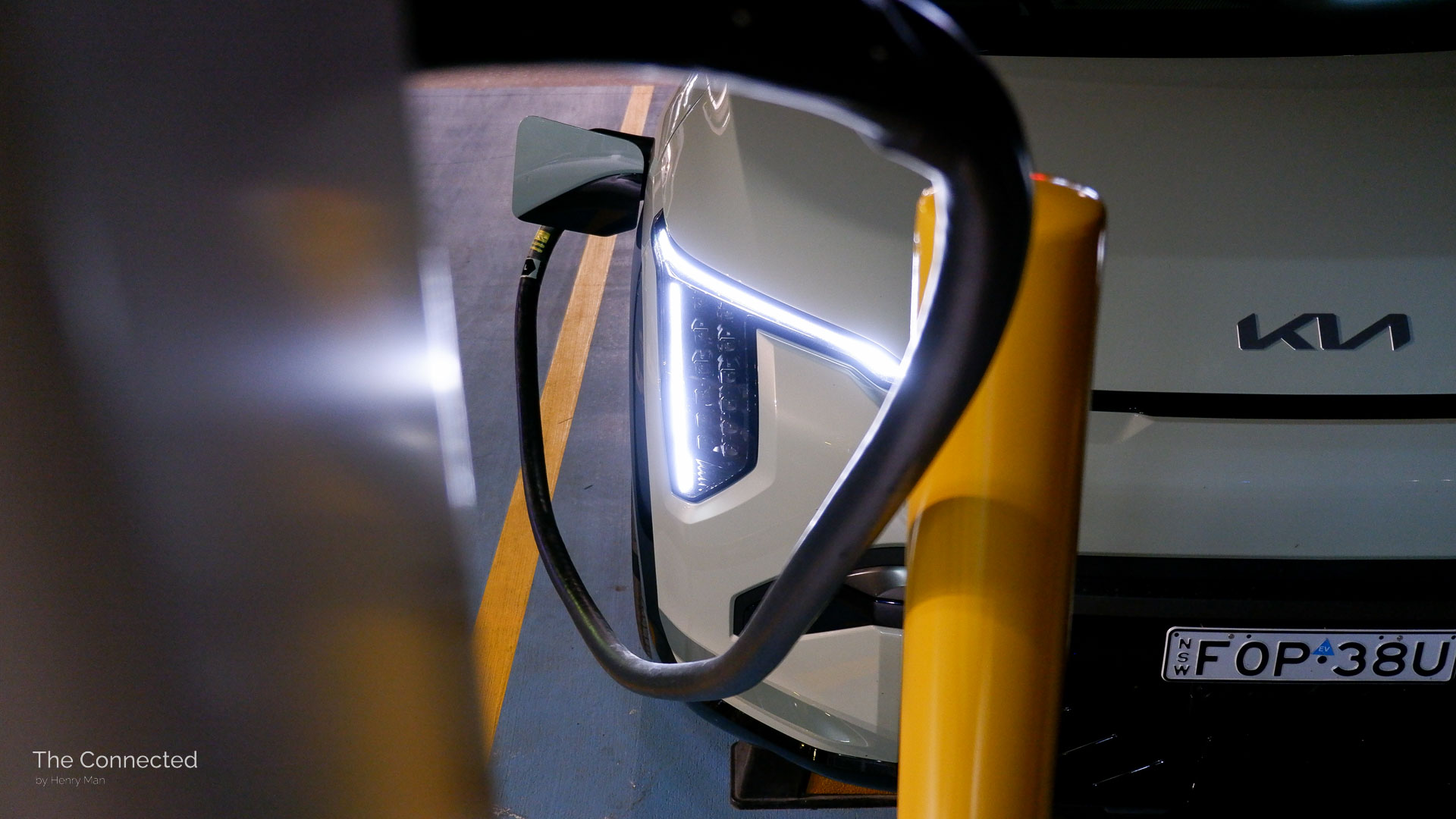
While no EV3 offers an outstanding charging time, most owners should slow charge at home everyday, with three-phase capability up to 10.5kW AC thankfully being standard on all models.
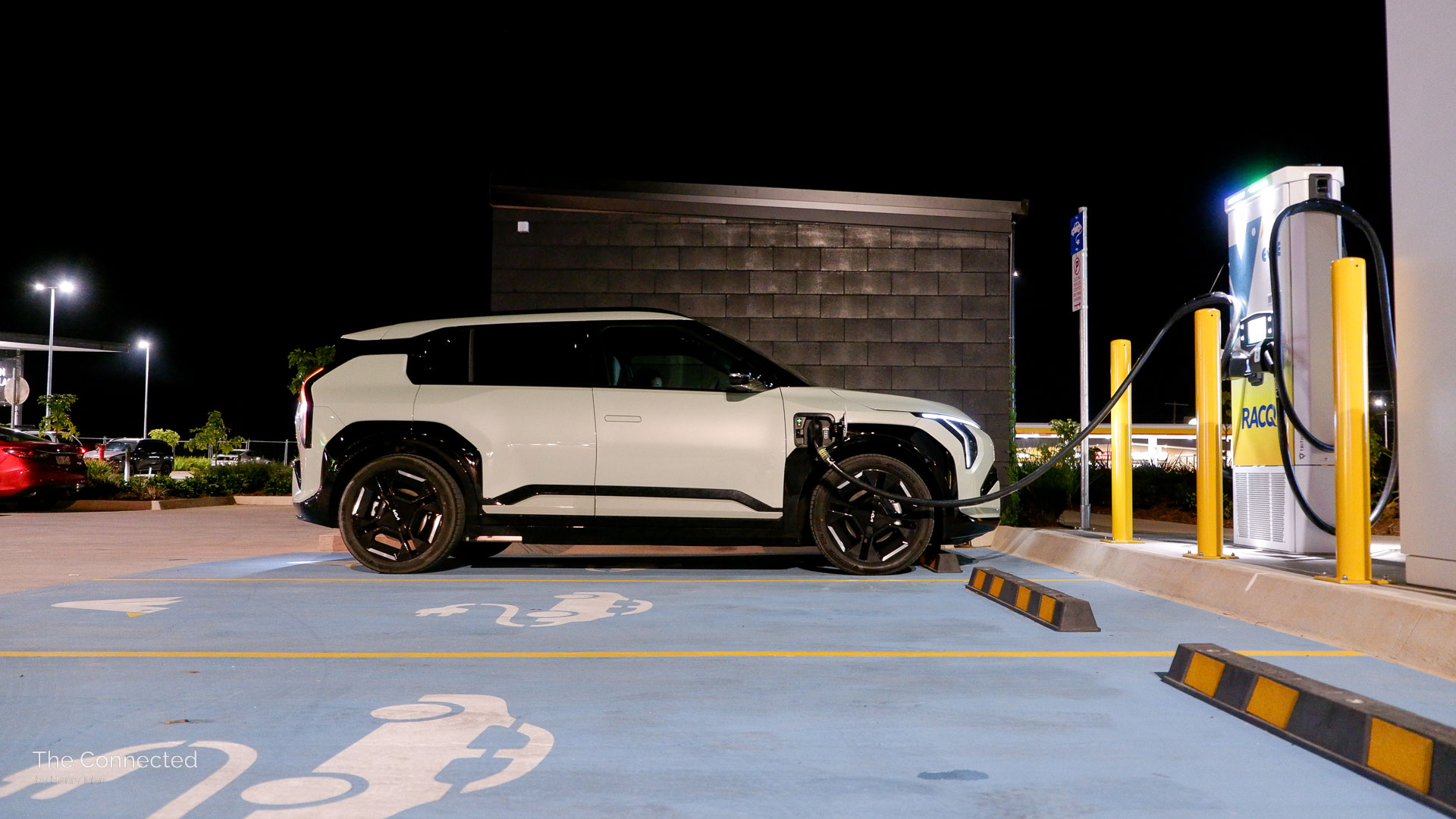
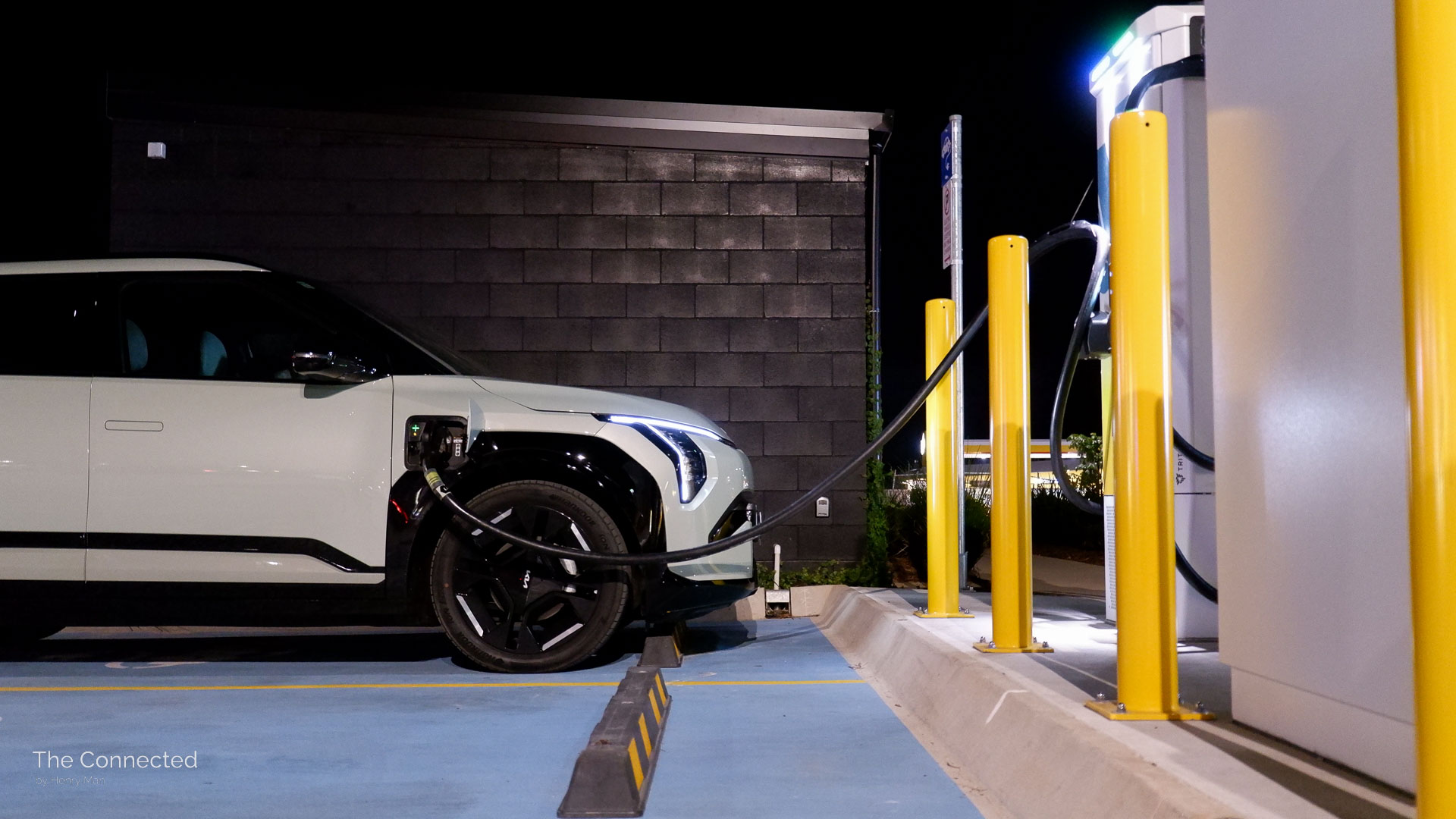
Rather awkwardly, the charge port is positioned at the front-right quarter side of the wheel – which can be tricky to stretch and wrangle often heavy DC charging cables, unlike the rear placement on the EV6 and EV9.
At least there is great LED illumination with two solid hinged caps, which is a big improvement compared to the flimsy dangling ones on the EV5.
Interior and exterior vehicle-to-load (V2L) comes with all Kia EV3’s in Australia – although you can’t use both at once – but more advanced vehicle-to-home (V2H) and vehicle-to-grid (V2G) technology is yet to be enabled in Australia.
Driving.
2026 Kia EV3 powertrain specs:
| Electric motor | Single permanent magnet synchronous motor |
| Power | 150kW @5200-9600rpm |
| Torque | 283Nm @5000rpm |
| Transmission | Single speed |
| Drive type | FWD |
| Kerb weight | 1845kg (Air SR) / 1930kg (Air LR, Earth, GT-Line) |
| Turning circle | 10.4 metres |
| Payload | 425kg (excluding max 100kg towball download weight) |
| Towing (unbraked / braked) | 500/500kg (Air SR only) / 750/1000kg (all other LR models) |
The Kia EV3 may look sporty from the outside, but it lacks driving engagement with unrefined one-pedal driving.
All EV3 variants are powered by the same sole electric motor making up to 150kW of power and 283Nm of torque. It is front-wheel drive.
In fact, the higher up the range you go, the longer Kia claims it takes to accelerate from 0 to 100km/h. Yes, the Earth and GT-Line are the slowest, with the price premium not adding an extra motor as opposed to the EV5.
While the EV3 provides enough push, it is more leisurely with an acceleration calibration that tapers the torque in gradually.
This helps keep the front wheels controlled with no traction loss or torque steer when accelerating hard in sport mode, unlike the single-motor EV5 Air.
Crucially, the real let down is an artificially weighted steering wheel feel with notable body lean.
There’s also tyre squeal when cornering zealously with the base Air’s Kumho tyres, which isn’t a trait of the Earth and GT-Line’s Hankook iON Evo rubber.
Noise insulation is rather average as well with noticeable road noise, especially with the GT-Line’s larger 19-inch wheels, and sounds from other passing vehicles.
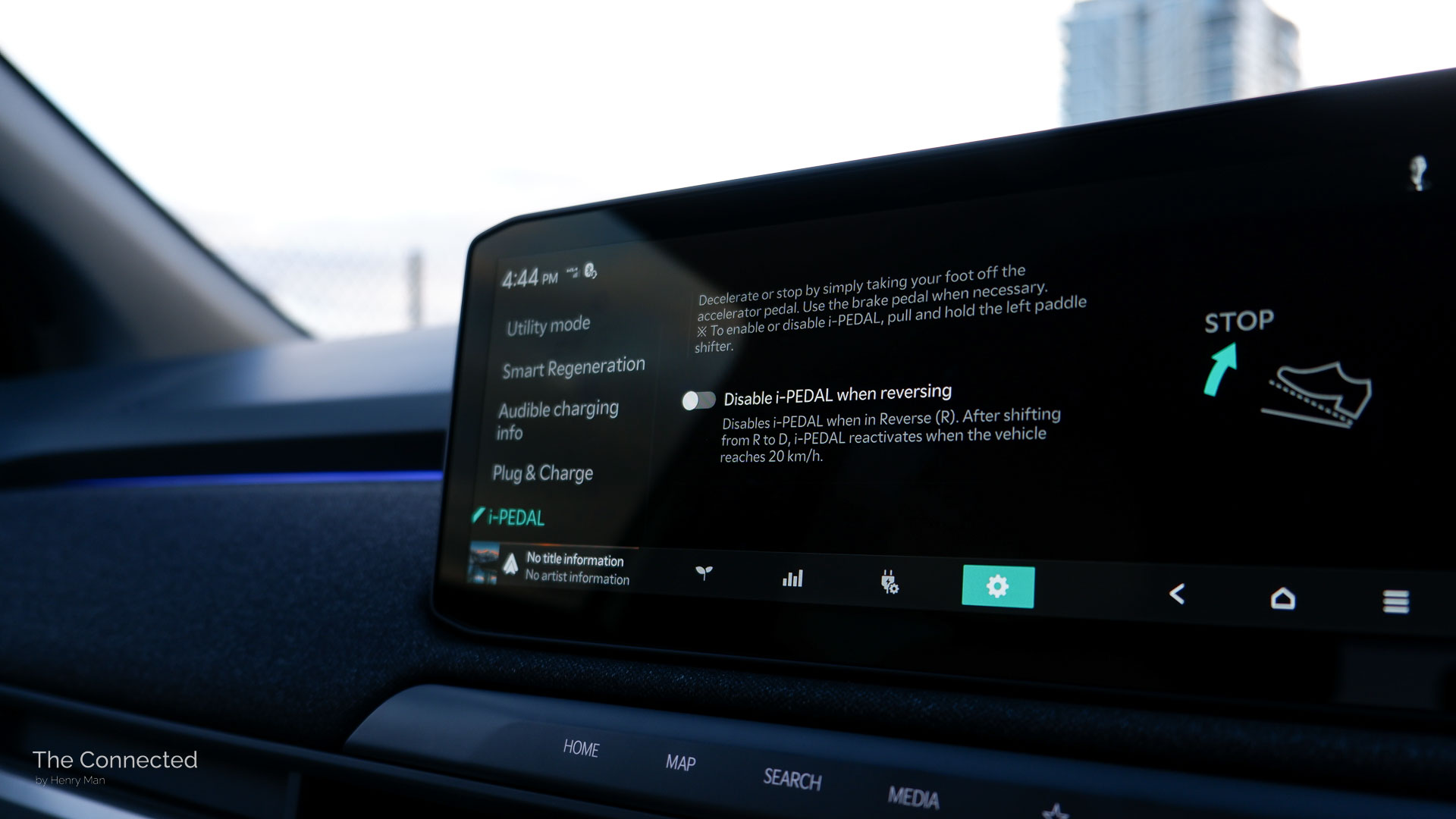
Additionally, the EV3 small SUV debuts i-Pedal 3.0. The upgraded one-pedal driving system now remembers the one-pedal mode by default and doesn’t switch off every time you start the car and change the drive selector, offers three-level one-pedal intensities, and can maintain the one-pedal driving when reversing.
The latter means pressing the brake pedal isn’t required for switching between drive and reverse, which circumvents accidentally going into neutral that was apparent on the EV5 due to its blended brake pedal feel.
The automatic regenerative braking mode can now come to a complete stop, too.

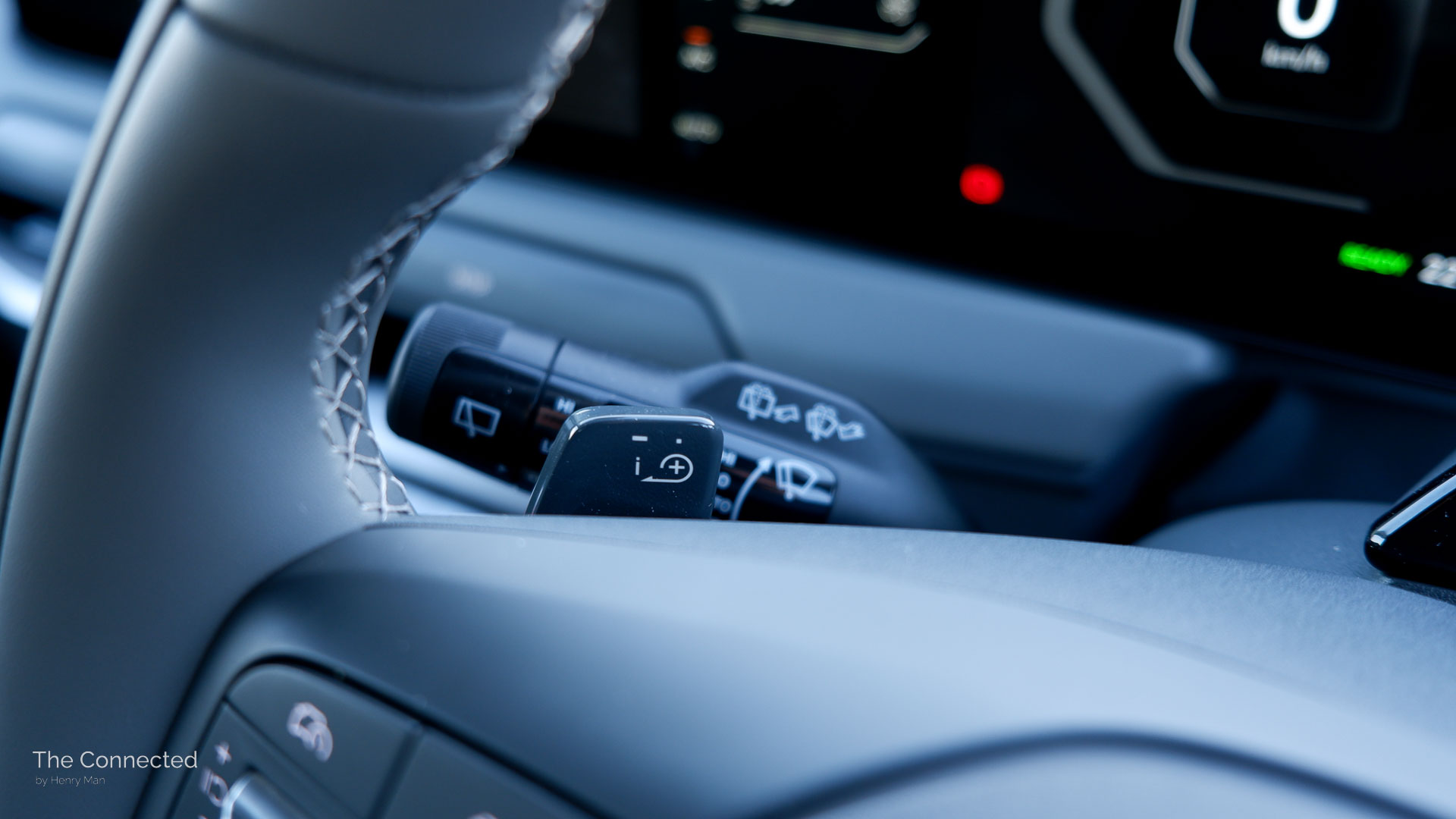
However, unlike the Hyundai Inster, the regen is weaker than ideal just like the EV5 due to the front-wheel drive architecture with it tapering off its strength when almost at a stop.
The blended brake pedal is also touchy with regen completely off when pressing the top of the pedal – causing a jerky sensation when driving at low speeds with the feel akin to an on and off switch.
It’s also worth noting that the Kia EV3 is quite low with only 140mm ground clearance – which is identical to the low K4 Sedan. Yes, you’ll need to be careful with scraping certain car park bay bump stops.
The Kia small electric SUV’s all-round visibility is good with reasonably sized windows and mirrors, but only the base Air misses out on an auto-dimming rear-view mirror.
Warranty and servicing.
The 2026 Kia EV3 is backed by a seven-year, unlimited kilometre vehicle warranty and a seven year/150,000km battery warranty.
The latter is shorter than the industry standard, but the South Korean brand guarantees battery health retention of at least 70 per cent during the warranty period.
Servicing is required every one year/15,000km (whichever occurs first) – which is short for an electric vehicle.
However, Kia Australia peculiarly doesn’t have pay-as-you-go (PAYG) fixed capped-price servicing for its electric cars, as opposed to conventional petrol and diesel models.
Instead, it encourages owners to buy its prepaid EV service plans, which promises to lock in maintenance prices and be transferrable to new owners.
For the Kia EV3, prepaid service plans are priced at the time of publication:
- Three years/45,000km: $674
- Five years/75,000km: $1285
- Seven years/105,000km: $1897
Roadside assistance is included for up to seven years, provided you service it with a Kia dealer every time.
Up to seven years of Kia Connect services are also included from the date of activation.
Despite the large boot underfloor, no EV3 includes a spare tyre with a temporary catch-up good kit included instead.
Price and rivals.
2026 Kia EV3 model range pricing (accurate as at the time of publication):
| Air Standard Range | Air Long Range | Earth | GT-Line |
| From $47,600 before on-road costs | From $53,315 before on-road costs | From $58,600 before on-road costs | From $63,950 before on-road costs |
The 2026 Kia EV3 is priced from $47,600 before on-road costs in Australia.
Three variants are available with only the base Air offering the standard range battery, while all other models have a long range pack.
All models fall under the 2025-26 Luxury Car Tax threshold and are eligible for the fringe benefits tax (exemption) for novated leases.
The mid-spec Earth has the option of either grey fabric seats with blue accents or two-tone ‘warm grey’ artificial leather seats with orange accents for no extra charge.
All EV3 exterior colours cost an extra $550 except for Clear White.
The 2026 Kia EV3 directly rivals the following electric SUVs:
- MG S5 EV
- Geely EX5
- BYD Atto 3
- Jeep Avenger
- Chery E5
- Zeekr X
- Volvo EX30
- Hyundai Kona Electric (full review)
- Leapmotor C10 BEV (full review)
- Deepal S07 (full review)
Other alternatives to the Kia EV3 include:
- Kia Niro
- Hyundai Inster
- MG 4 (full review)
- BYD Seal
- Kia EV5 (full review)
- Kia Seltos (full review)
Would I pick the 2026 Kia EV3?
The Kia EV3 is a good all-rounder small electric SUV – but any variant other than the base model is tough to recommend.
The EV3 offers striking looks in a fantastic not-too-small, not-too-large crossover SUV package, good energy efficiency, less intrusive safety assist warnings, and a sub-$50K starting price.
But step up to any model higher than the base Air Standard Range and the value proposition drops, with a $5715 premium for just the Long Range battery, around $10,400 for the Earth, and a whopping $16,350 for the GT-Line – where you’re better off choosing midsize SUVs including the Kia EV5, Tesla Model Y, and Cupra Tavascan.
Higher variants miss out on features expected for the premium price point – including 360-degree cameras which are available in New Zealand – the one-pedal driving system feels jerky at low speeds, and it isn’t remotely fun to drive.
I’d pick the base EV3 Air Standard Range, which provides the best value with a price that’s more in line with its Chinese small electric SUV rivals. While it has a comparatively more basic interior, Kia makes up for it with refined tech and safety assists.
Even though it’s far better than the overpriced Kia Niro EV, the EV3 range is awkwardly both great value and too expensive, and it’s a shame that Australia misses out on a number of features available overseas on higher-end models – which would’ve likely pushed up the price even further.
Photographs by Henry Man
READ MORE: 2025 Hyundai Kona Electric review
READ MORE: 2025 Leapmotor C10 BEV review
READ MORE: 2026 Cupra Tavascan review
Pros:
- Good value starting price
- Well-sized interior, small exterior
- Good energy efficiency, i-Pedal now the default
- Improved speed limit warnings
- Unique design
Cons:
- Expensive other than base model
- No 360-degree cameras on any variant
- Lacks driving engagement
- One-pedal driving needs work
- No PAYG capped-price servicing
About the Author.
Henry Man is an independent content producer passionate about the intersection of technology and transportation.
The former automotive journalist is focused on producing critically-detailed vehicle reviews, and unique short-form content. Learn more.


 The Connected by Henry Man