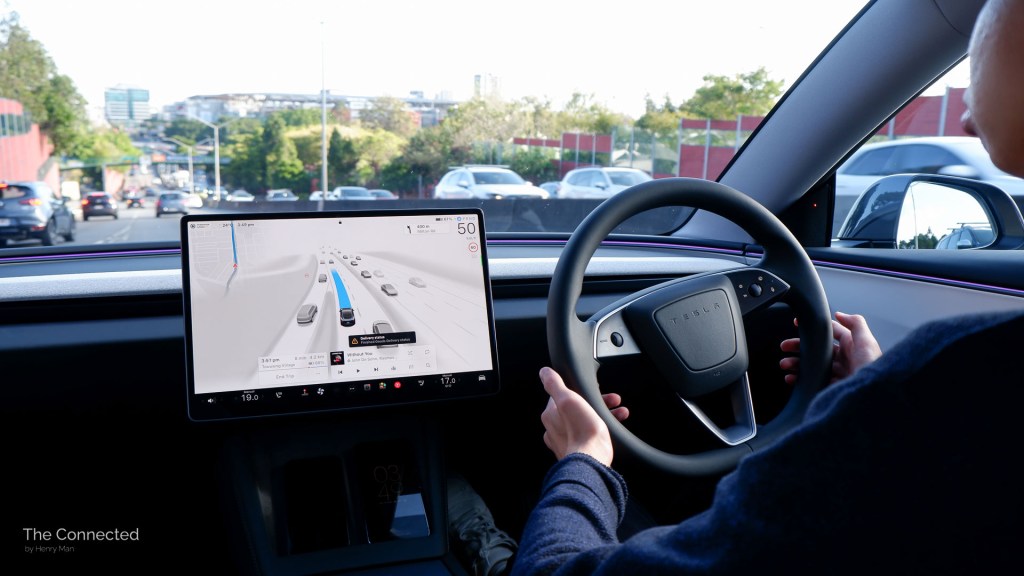
Insane. I tested Tesla’s Full Self-Driving (Supervised) across more than 500 kilometres in cities, along highways, and around the suburbs in Australia.
It’s finally arrived. Tesla’s long-promised Full Self-Driving (FSD) (Supervised) system is now available in Australia and New Zealand to the public – the first right-hand drive markets globally.
Priced at $10,100 upfront or $149 per month to unlock FSD (Supervised), it is available for all Tesla vehicles with Hardware 4 – including all refreshed Model 3 sedans released from late 2023, original Model Y SUVs built from near mid-2024, and all refreshed Model Ys released from May 2025.
Owners who have already purchased Enhanced Autopilot pay $75 per month for the subscription instead.
Is Tesla’s camera-only approach reliable? What are the mistakes? And who does it make sense for?
We secured early access to the FSD (Supervised) software V13.2.9 on the entry-level Tesla Model 3 Rear-Wheel Drive (RWD) to find out whether it’s worth paying $10,100 upfront (or $149 per month) for a software update.
NOTE: The press vehicle was provided by Tesla Australia for a five-day independent evaluation. Supercharging sessions were paid by Tesla, but we have no commercial arrangements with the company and it had no editorial control.

Pros.
+ Super impressive human-like behaviour
+ Generally safer than human drivers
+ Accurate driver attention monitoring
Cons.
– Complacency and distraction is inevitable
– Lacks appropriate lane knowledge, hit-and-miss speed limit detection
– Tends to follow (incorrectly) other vehicles
Vehicle tested:
| Model | 2025 Tesla Model 3 |
| Variant | Standard Range RWD |
| Starting price | $54,900 before on-road costs |
| Exterior colour | Stealth Grey (+$1900) |
| Interior colour | Black and White interior (+$1500) |
| Options | – FSD (Supervised) (+$10,100 or $149/month) – Premium Connectivity (+$9.99/month) |
| Country made | China |

Insanely good.
Tesla’s Full Self-Driving (Supervised) system is remarkably good – but not perfect – for a camera-only, artificial intelligence-based system.
Importantly, Tesla stresses that FSD (Supervised) is not a fully autonomous system.
Instead, it is still a level two safety assistance system – just like regular adaptive cruise control and lane-centring assist – where the driver should have full attention on the road and be ready to take over at any time.
Interestingly, unlike its Autopilot feature, Tesla does not state FSD (Supervised) is a beta system.
Even though it’s early days in V13 form in Australia, the system works really well with a cautious and conservative approach.
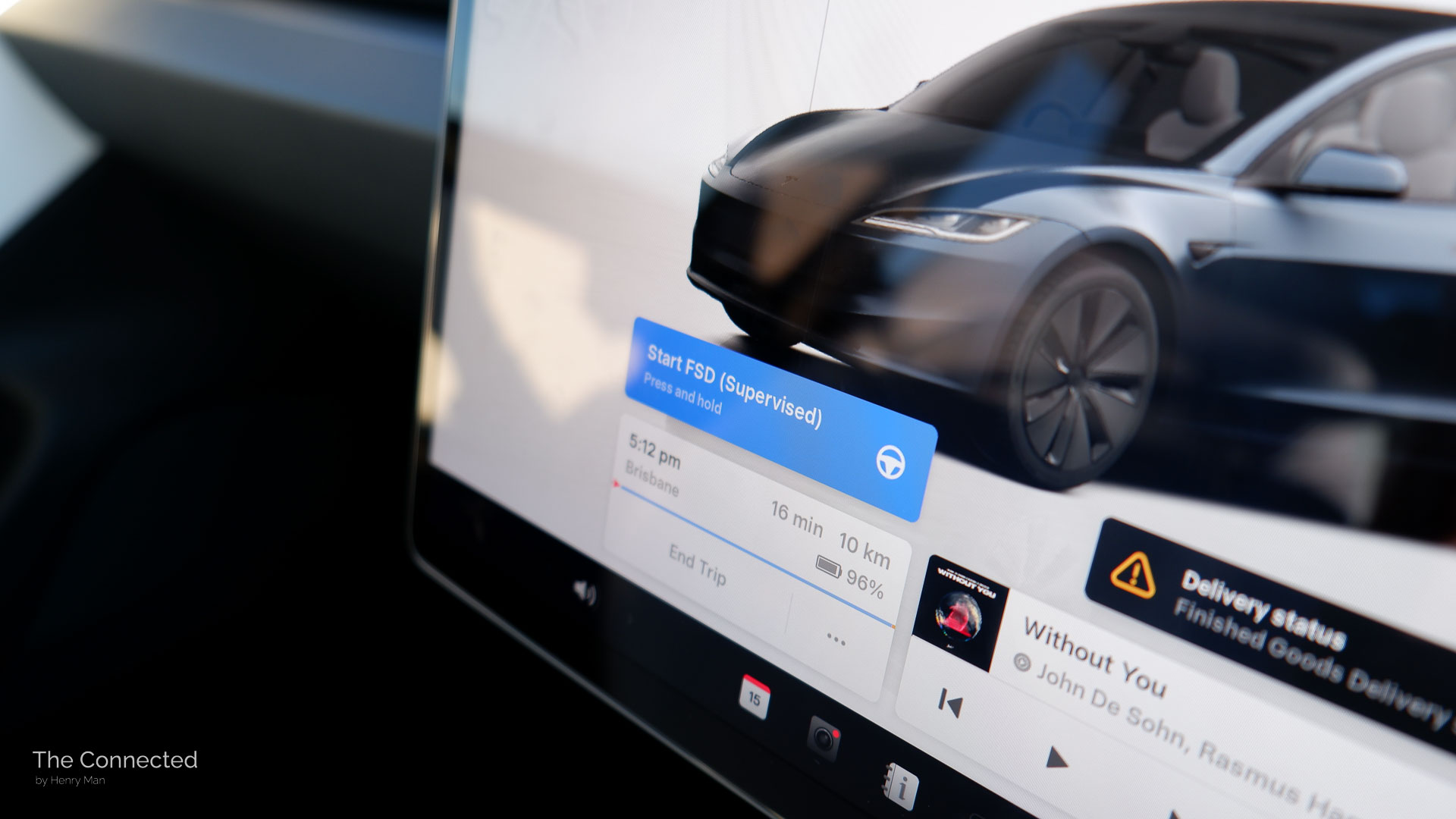
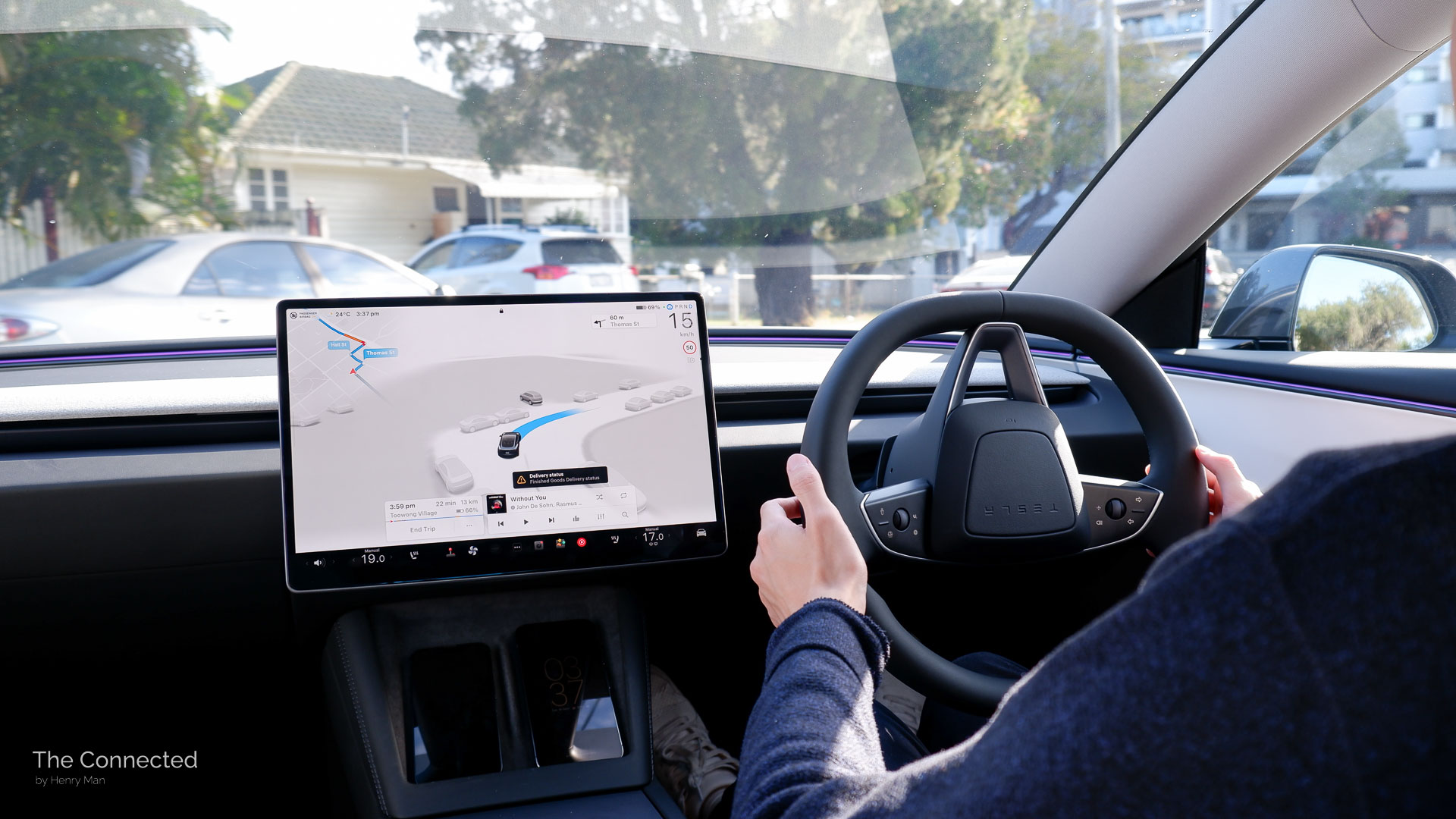
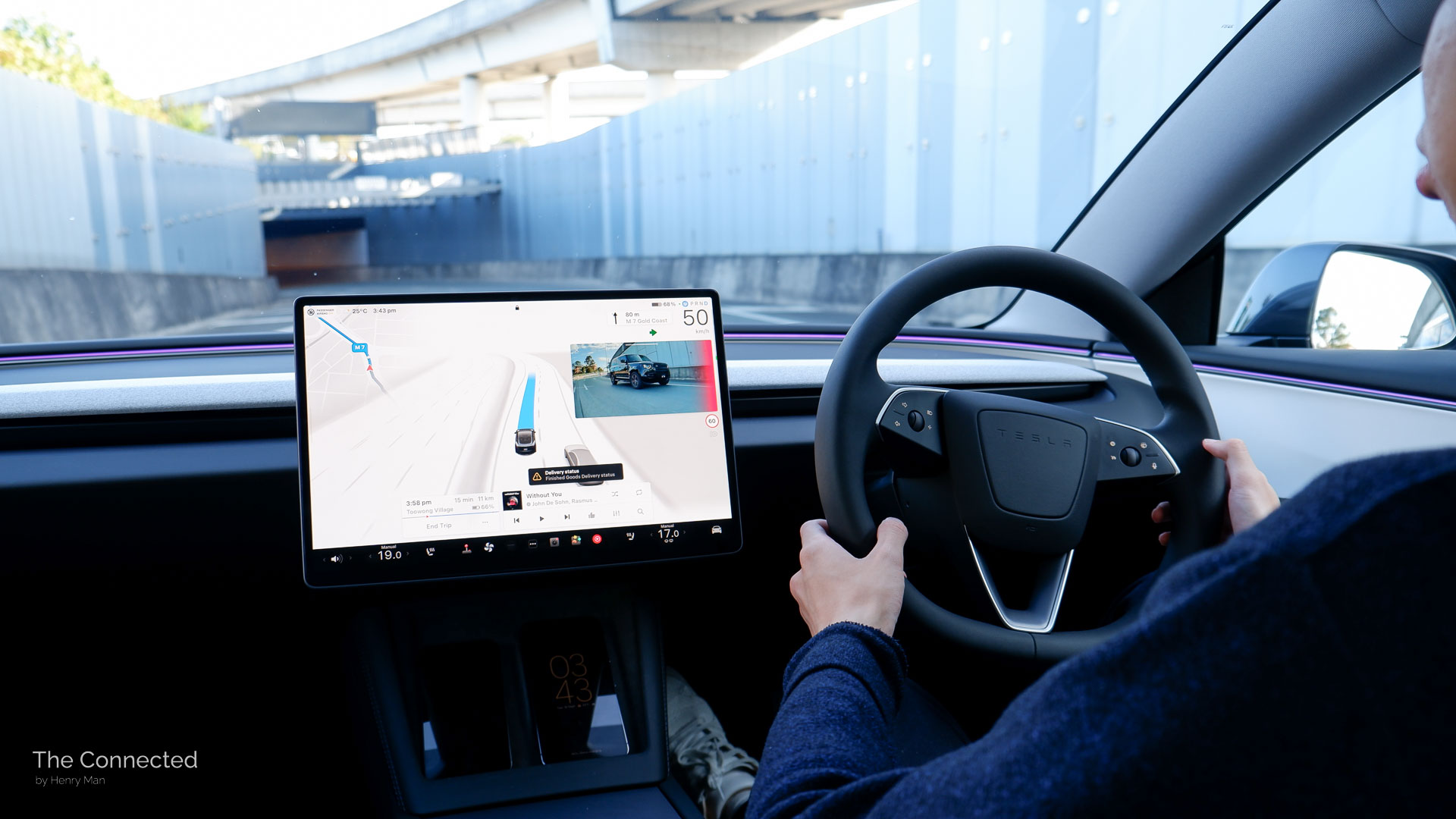
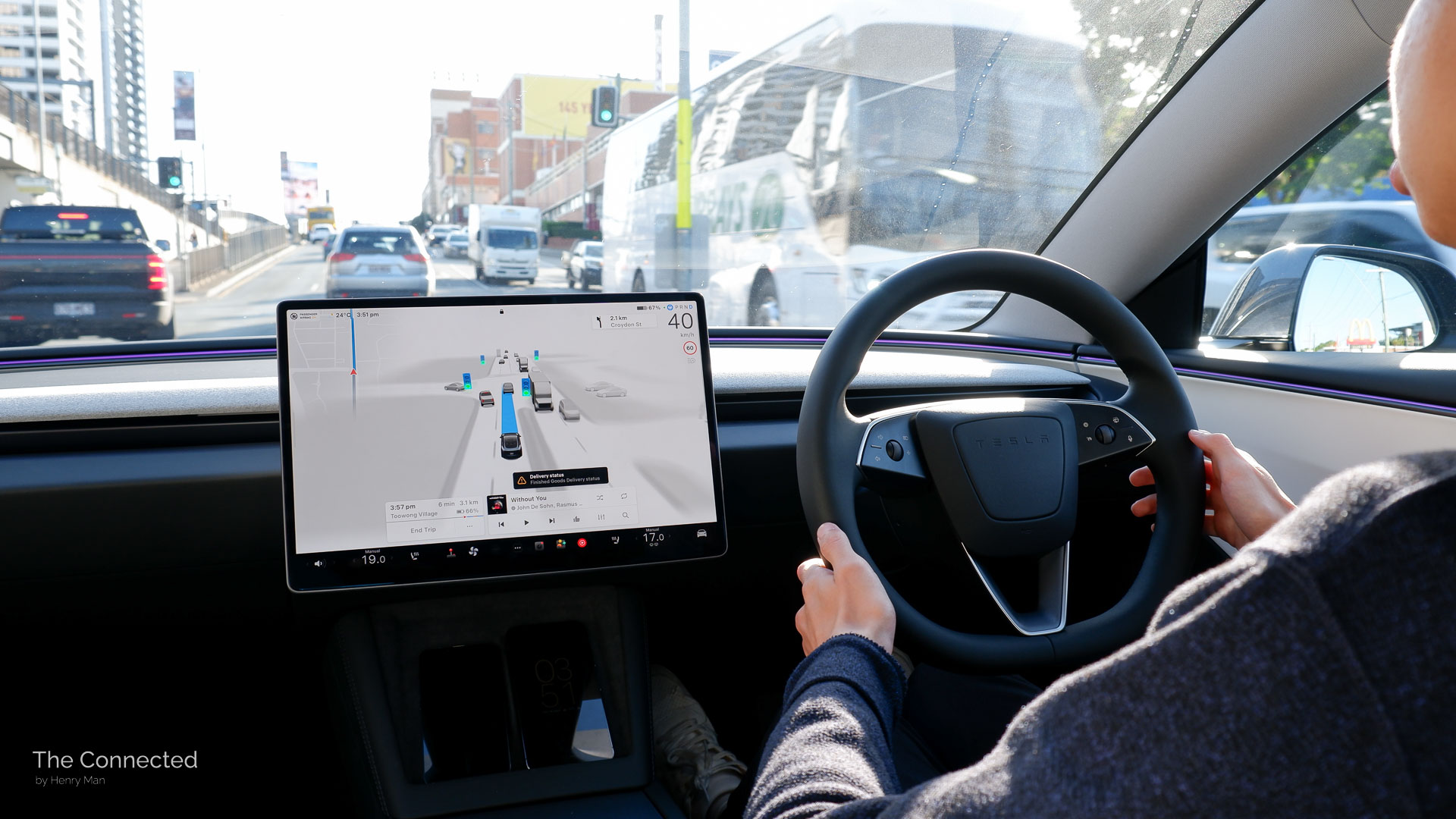
Enter the navigation destination, press and hold a bright blue button (and tap the brake pedal if this confirmation step is enabled), and the Tesla moves off, indicates, takes turns, changes lanes, enters and exits roundabouts, and pulls over by the side itself on arrival.
Yes, I learned to be a more considerate driver after a week with FSD (Supervised) and it definitely makes drivers more calm – especially when driving through unfamiliar roads, with full attention focused on making sure it drives safely.
Key highlights included:
- Human-like behaviour – smooth steering and leisurely acceleration, with quick lane changes and a tendency to overtake slower vehicles. It even overtook a stopping bus, slowed down for speed humps and quickly responded to green traffic light signals.
- Cautious approach – keeps a wider safe gap with the vehicle in front, allows vehicles to cut in front, turns corners, intersections and roundabouts slowly, carefully passes cyclists, gives way to pedestrians crossing, and actually stops at stop signs.
- Rarely overspeeds – often travels under the speed limit within 1 to 10km/h of the detected sign (when correct), with no max speed offset setting enabled.
- Easy to ‘nudge’ and intervene – drivers can ‘help’ the vision-only system by tapping the accelerator to increase the speed, or quickly take over completely by pulling the wheel, tapping the brake pedal or pressing the right scroll wheel.
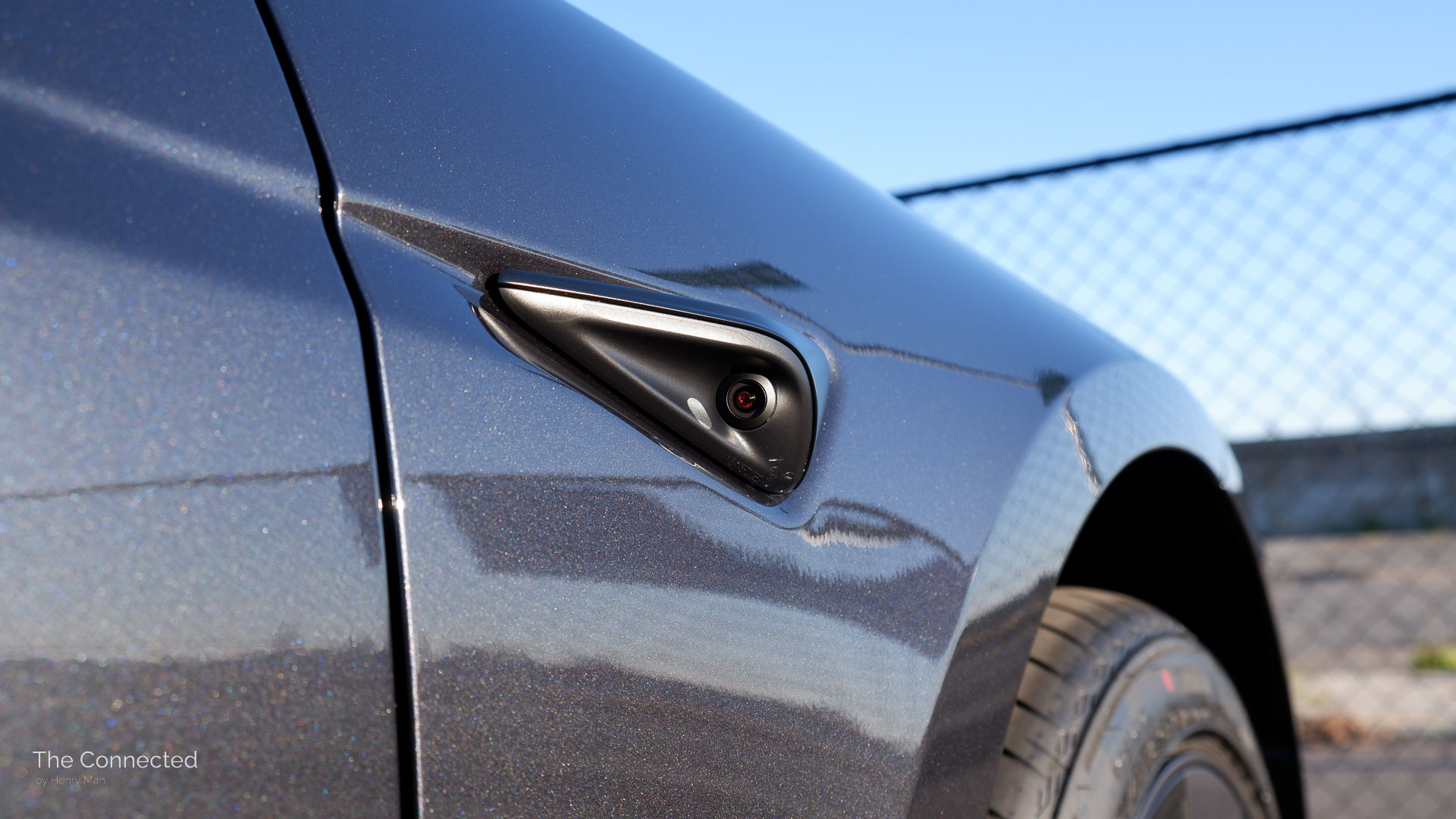
- Driver attention monitoring – an interior camera constantly monitors the driver for full attention, accurately warning when distracted and consistently promoting steering wheel inputs when the driver’s face is blocked (eg: when wearing sunglasses). If non-responsive, it stops the vehicle and turns on the hazards. After five ‘Strikeouts’, Tesla prohibits re-activating FSD (Supervised) for half a week (3.5 days).
Surprising mistakes.
Tesla’s FSD (Supervised) is so impressive that its mistakes and weaknesses are more surprising when they happen.
In V13 form, it has a tendency to make mistakes or unfriendly driving etiquette choices – especially when it seems to follow the behaviour of other road users.
Therefore, as the name suggests, I didn’t feel completely relaxed with full attention required to take over at any time.
It’s essentially akin to the feeling of activating adaptive cruise control and lane-centring assist on the highway, but on almost any road. It helps relieve some pressure, especially when driving through unfamiliar roads, but not all.
Over time, the AI will theoretically be trained and improve. As part of an upcoming V14 update, Tesla promises a host of improvements – notably parking in a bay, driveway or garage, and audio sensitivity to respond to emergency vehicles.
For now, key weaknesses in my experience included:
- Lacks appropriate lane knowledge – often switches lanes to pass slower vehicles, but doesn’t switch back until taking a highway off-ramp or turn last-minute. Human drivers familiar with roads still have better intuition to change lanes early in order to be able to take an exit, for example.
- Follows other road users – tends to follow the behaviour of other vehicles which could be incorrect, such as crossing a solid line or entering a roundabout in line with the car beside.
- Random slow downs – while there’s no ‘phantom braking’ like Tesla Autopilot, the speed sign detection sometimes incorrectly reads signs, causing the car to slow down randomly, or doesn’t recognise new signs for speed limit changes.
- Inconsistent behaviour – sometimes indicates to exit a roundabout, but sometimes doesn’t – even when going through the same road but at a different time. The Tesla also sometimes errs to the outer side of the lane, giving less room for passing cyclists.
- Aggressive behaviour at times – it sometimes made aggressive movements, including indicating too late while already moving to change lanes, and trying to change lanes even though there’s a vehicle very close in the blind spot.
- Camera blind spots – larger SUVs, utes and trucks can sometimes block the camera view of other vehicles, causing the Tesla system to enter in front of oncoming traffic at a roundabout or main road.
- Car park barrier – since the safety assistance system relies on mapping data, it can be confused at how to enter and exit private car parks. It doesn’t know that it can’t stop alongside the yellow line, bus stop, and signed clearway zones either.
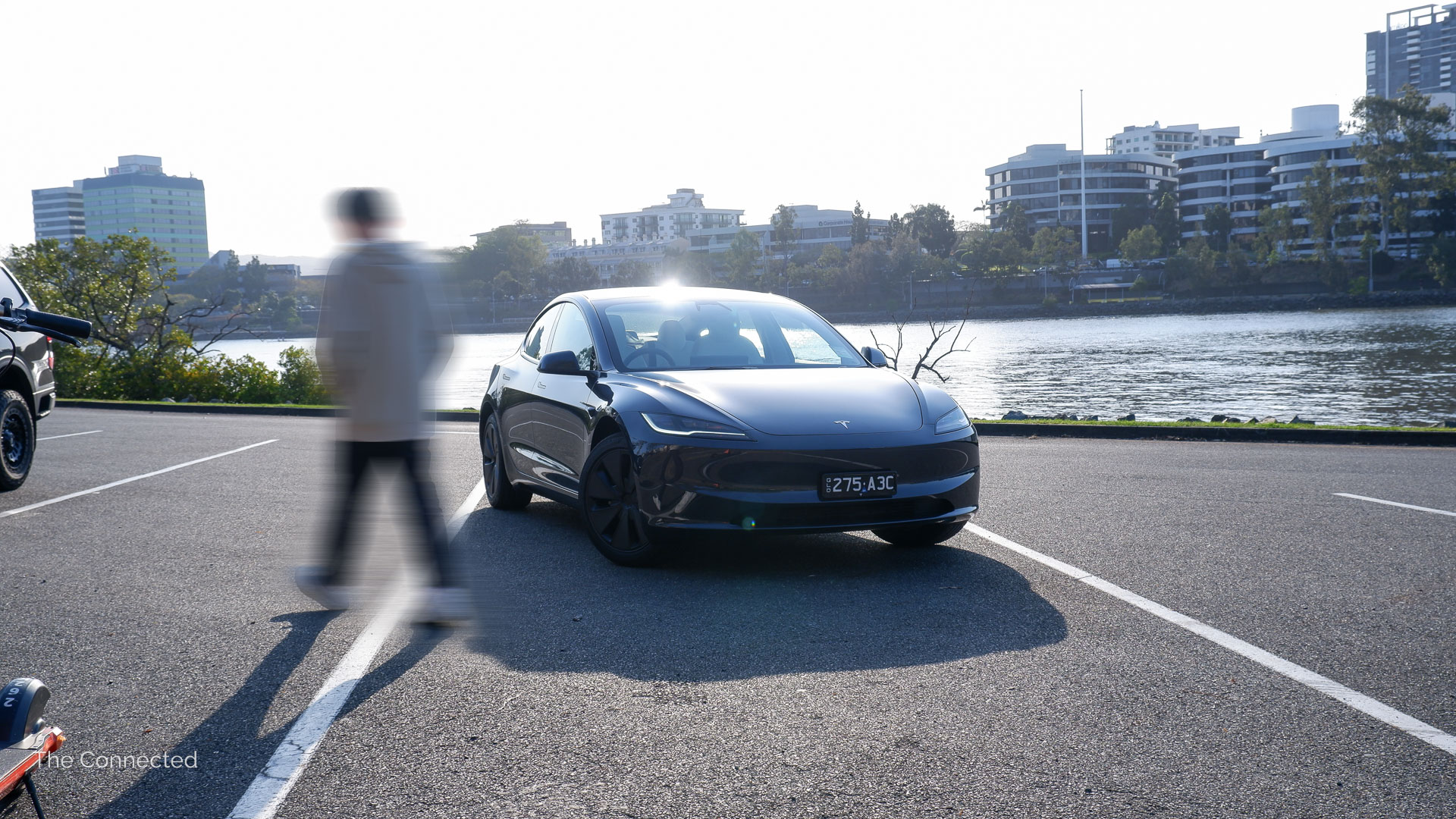
Would I pick Tesla FSD (Supervised) in Australia?
Insane. Tesla has again demonstrated that it is still a world above other car brands for in-car technology with FSD (Supervised).
The camera-only artificial intelligence system is super impressive with eerily human-like behaviour and a cautious approach. I even learned to be a more considerate driver and made me more calm with full attention focused on making sure it drives safely.
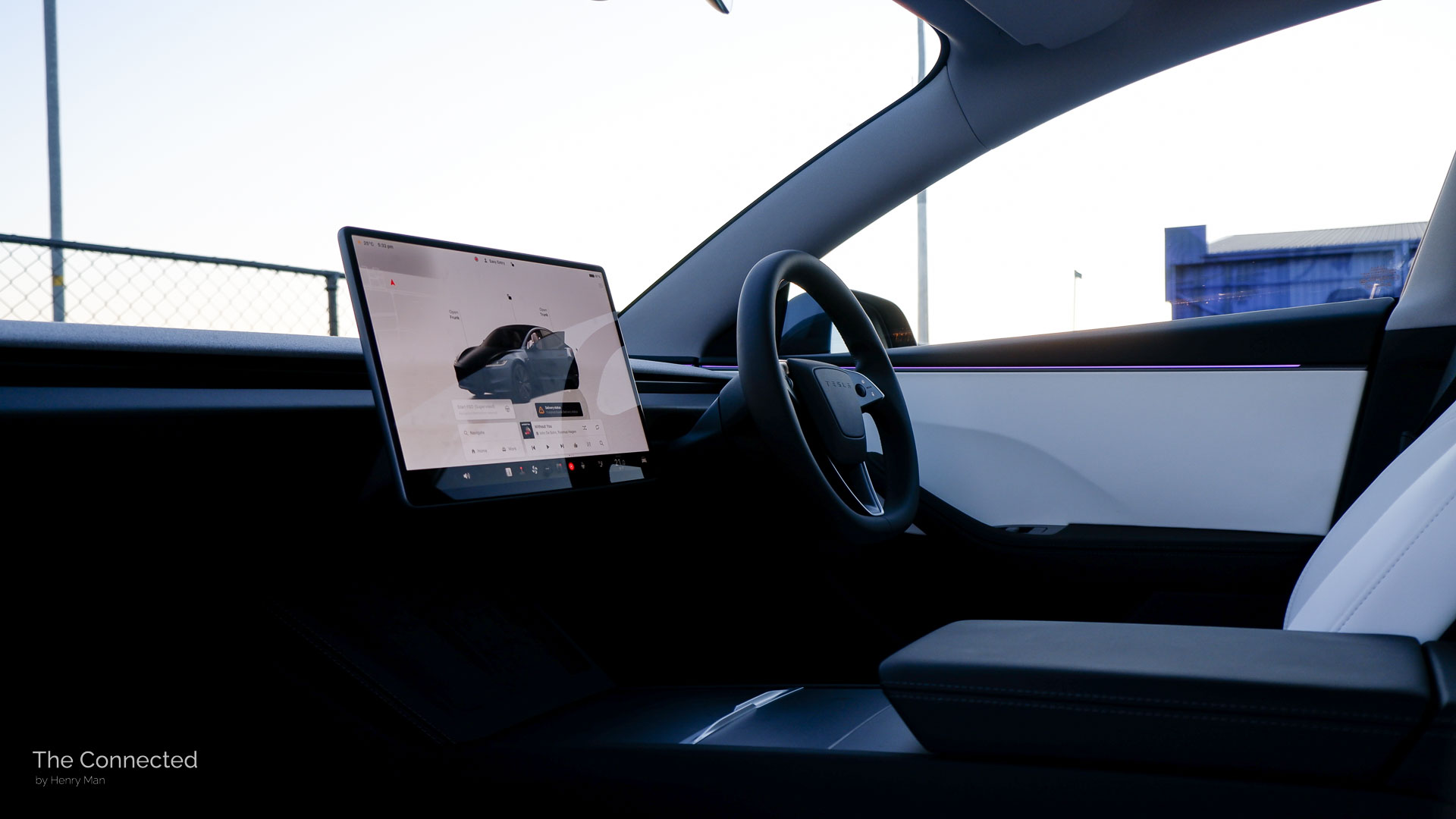
Other camera-based systems have also improved. Unlike the new Tesla Model Y I reviewed in June, the automatic wipers never randomly triggered and the adaptive matrix high beam headlights didn’t glare the vehicle in front on this Model 3 – both prerequisites for using FSD (Supervised).
However, while there are failsafes in place, the true test will be trusting Tesla owners using FSD (Supervised) to be always attentive as intended, rather than being complacent and distracted over time as drivers become ‘comfortable’ with the feature.
It lacks the human intuition and etiquette of choosing the appropriate lane ahead of time, tends to follow (incorrectly) other human drivers, and incorrect speed sign recognition causes the vehicle to randomly slow down at times.
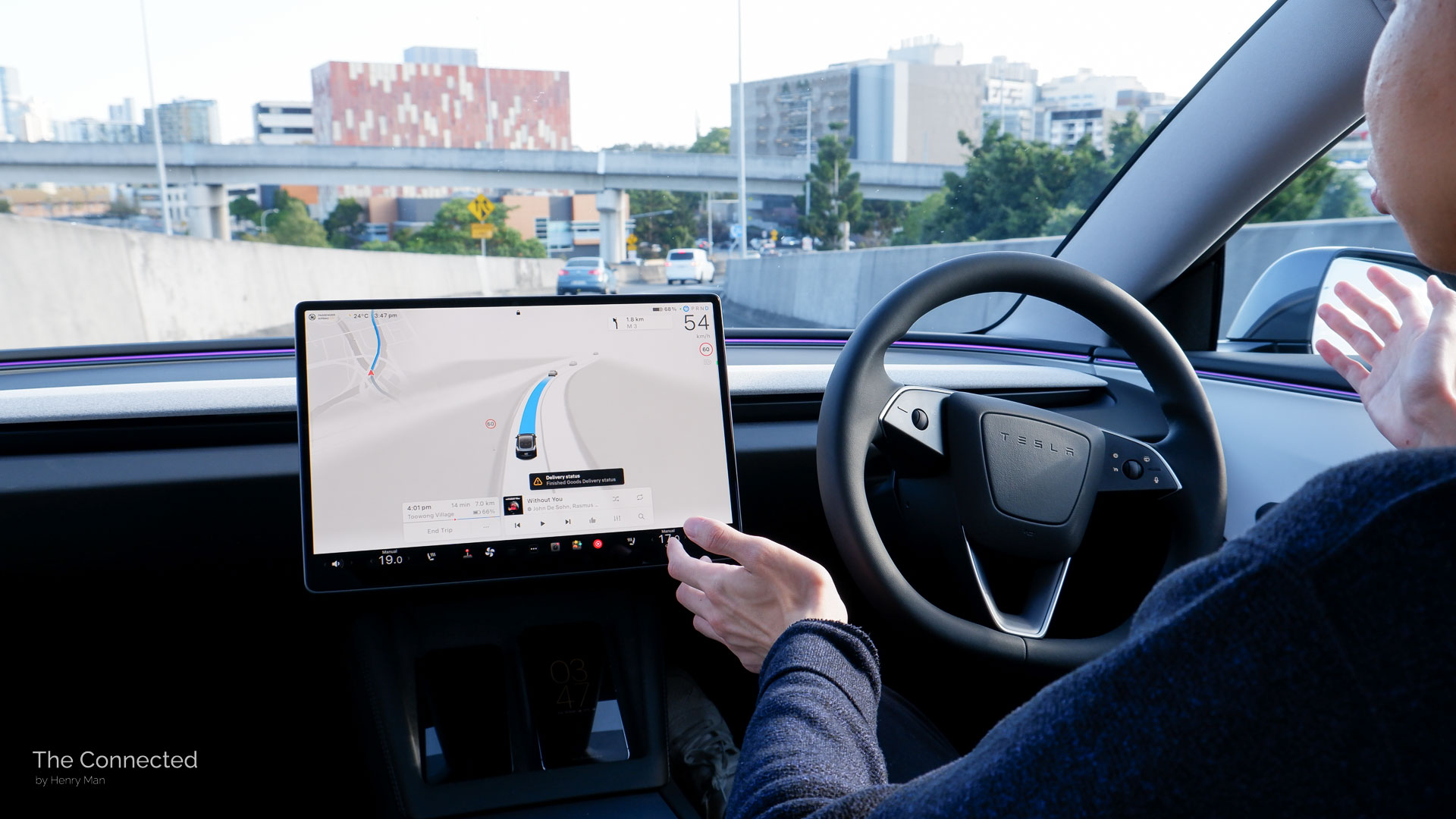
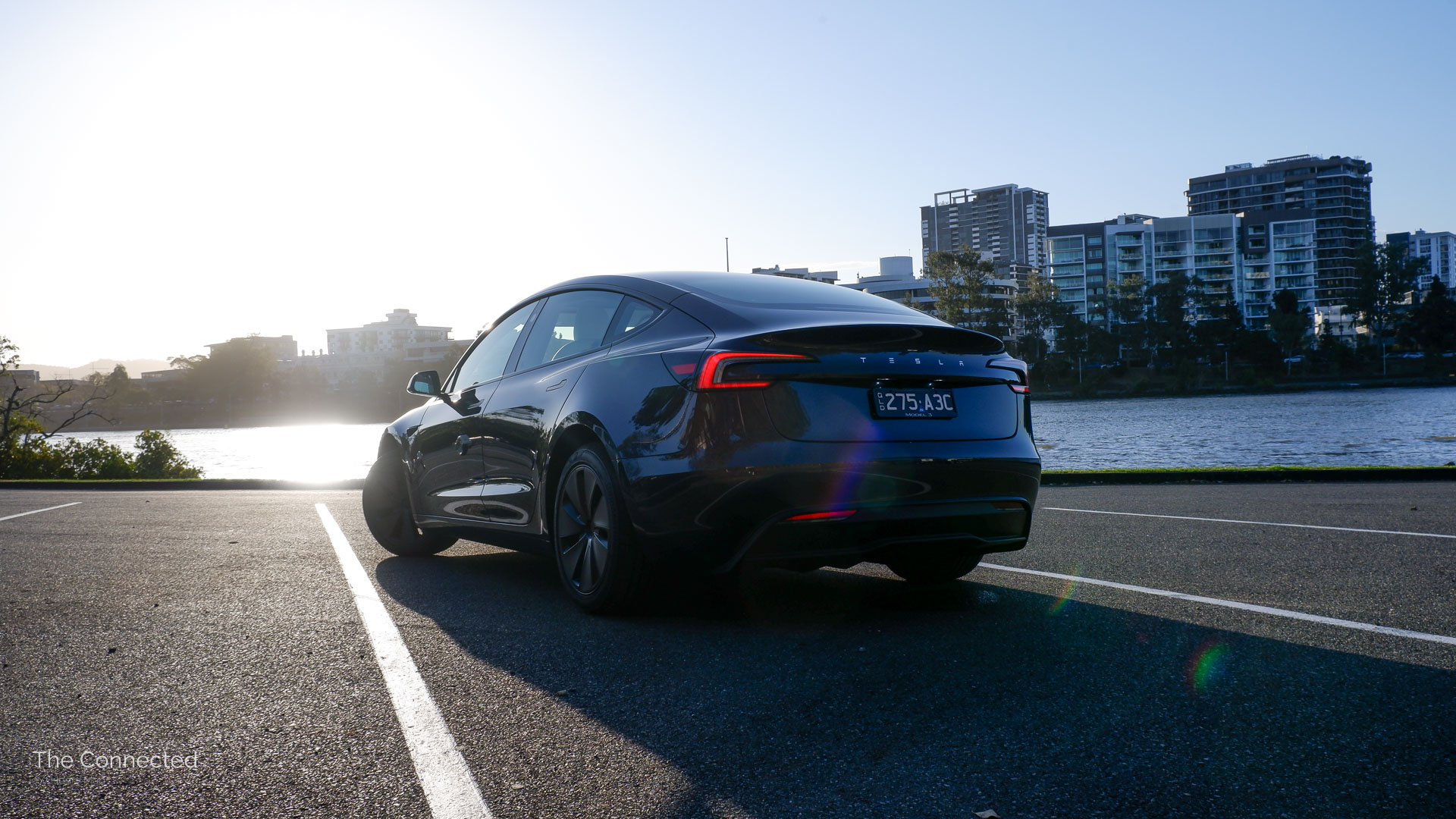
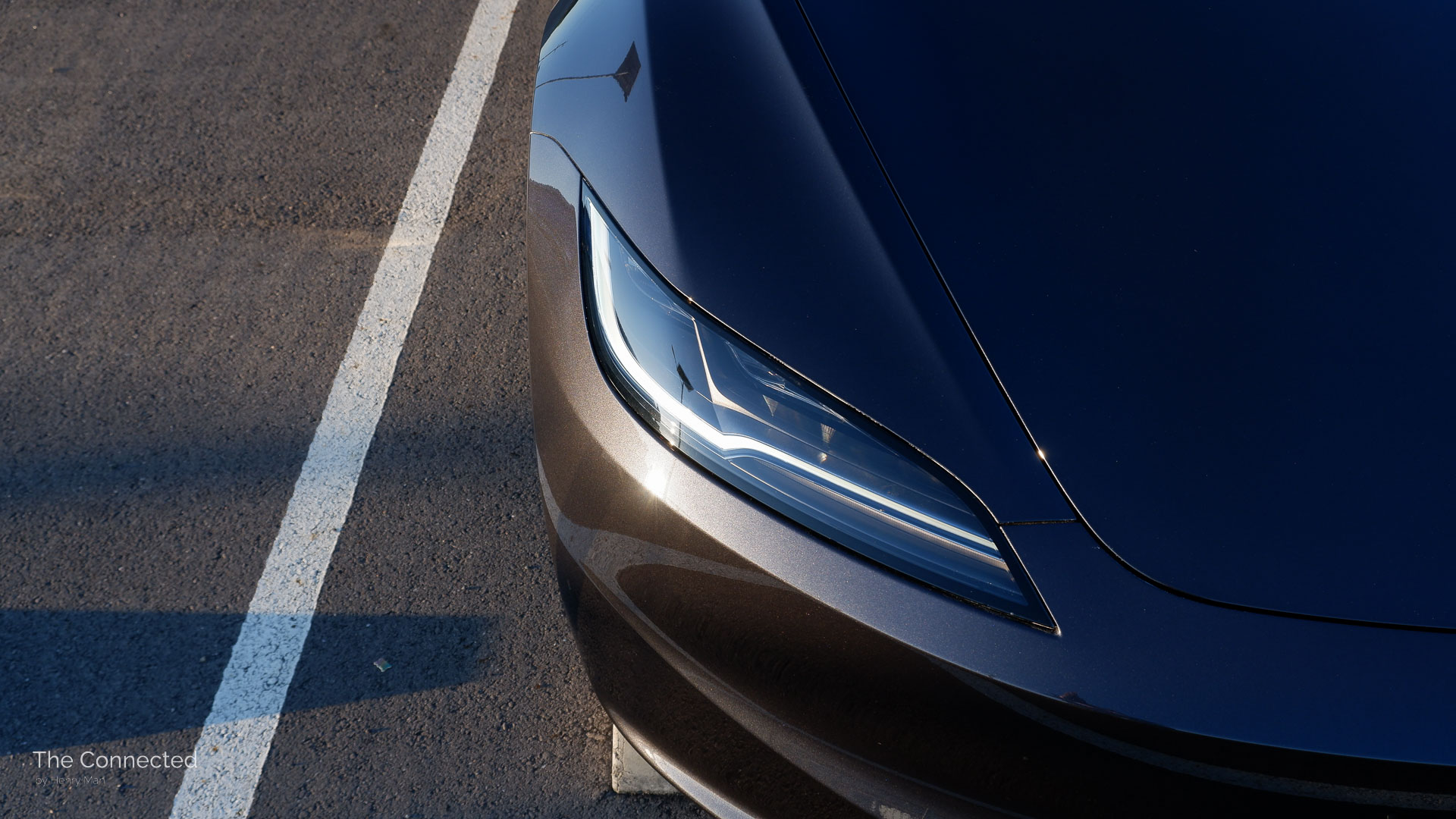

I’d recommend trying out Tesla FSD (Supervised), especially if you’re an early tech adopter. Pay the $149 per month subscription instead of $10,100 upfront since it makes more economic sense – the payback period is 5.6 years.
It reinforces Tesla’s lead in automotive tech – not to mention the new Model 3’s outstanding energy efficiency (12.6kWh/100km on average in my testing), seamless Supercharging access, excellent tech, and interior material quality on par with luxury cars.
Full self-driving Teslas have long been promised and it’s now finally a reality… with some caveats. It is a game-changer.
Photographs by Henry Man
READ MORE: 2026 Tesla Model Y review
READ MORE: Are Tesla Superchargers worth it?
READ MORE: 2026 Kia EV3 review
Pros:
- Super impressive human-like behaviour
- Generally safer than human drivers
- Accurate driver attention monitoring
Cons:
- Complacency and distraction is inevitable
- Lacks appropriate lane knowledge, hit-and-miss speed limit detection
- Tends to follow (incorrectly) other vehicles
About the Author.
Henry Man is an independent content producer passionate about the intersection of technology and transportation.
The former automotive journalist is focused on producing critically-detailed vehicle reviews, and unique short-form content. Learn more.


 The Connected by Henry Man