
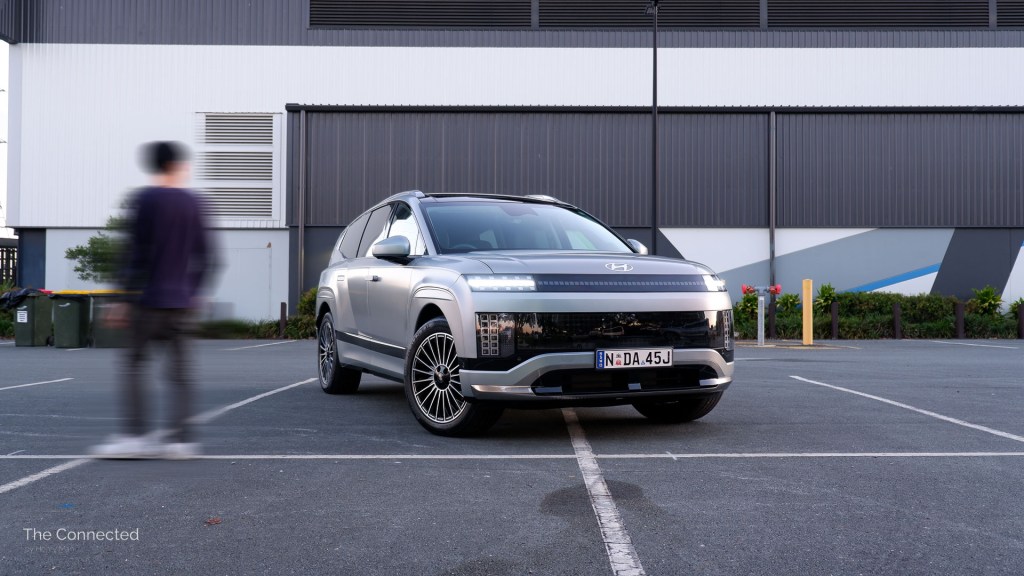
The best Hyundai has arrived.
Another proper three-row electric family car option is now available in Australia.
Following in the trail of the Kia EV9, Volkswagen ID. Buzz, Volvo EX90 and Zeekr 009, the Hyundai Ioniq 9 joins as the South Korean brand’s full-electric version of the Palisade flagship.
It combines the best from the Ioniq 5 SUV and Ioniq 6 sedan. Yet at around $130K on the road, it’s unlikely to boost Hyundai’s lackluster local EV sales numbers which the Elexio is expected to do.
After a week with the Ioniq 9 Calligraphy, it’s still worth the high price tag. Here’s why.
NOTE: The press vehicle was provided by Hyundai Australia for a seven-day independent evaluation. Toll costs were covered, but we have no commercial arrangements with the company and it had no editorial control.

Pros.
+ Exceptional ride comfort
+ Long range, ultra-fast charging
+ Non-overwhelming tech
+ Family-friendly practicality
+ Stunning interior
Cons.
– High price premium
– Intrusive lane-keep assist
– One-pedal driving defaults off
– Missing interior V2L in Australia
– Shared parts aren’t as unique
Vehicle tested:
| Model | 2026 Hyundai Ioniq 9 |
| Variant | Calligraphy (seven-seat) |
| Starting price | $119,750 before on-road costs |
| Exterior colour | Celadon Grey Matte (+$1000) |
| Interior colour | Dark Teal/Dove Grey (no-cost option) |
| Country made | South Korea |
Design and quality.
The Hyundai Ioniq 9 has a futuristic exterior, but it’s the interior where it is really stunning.
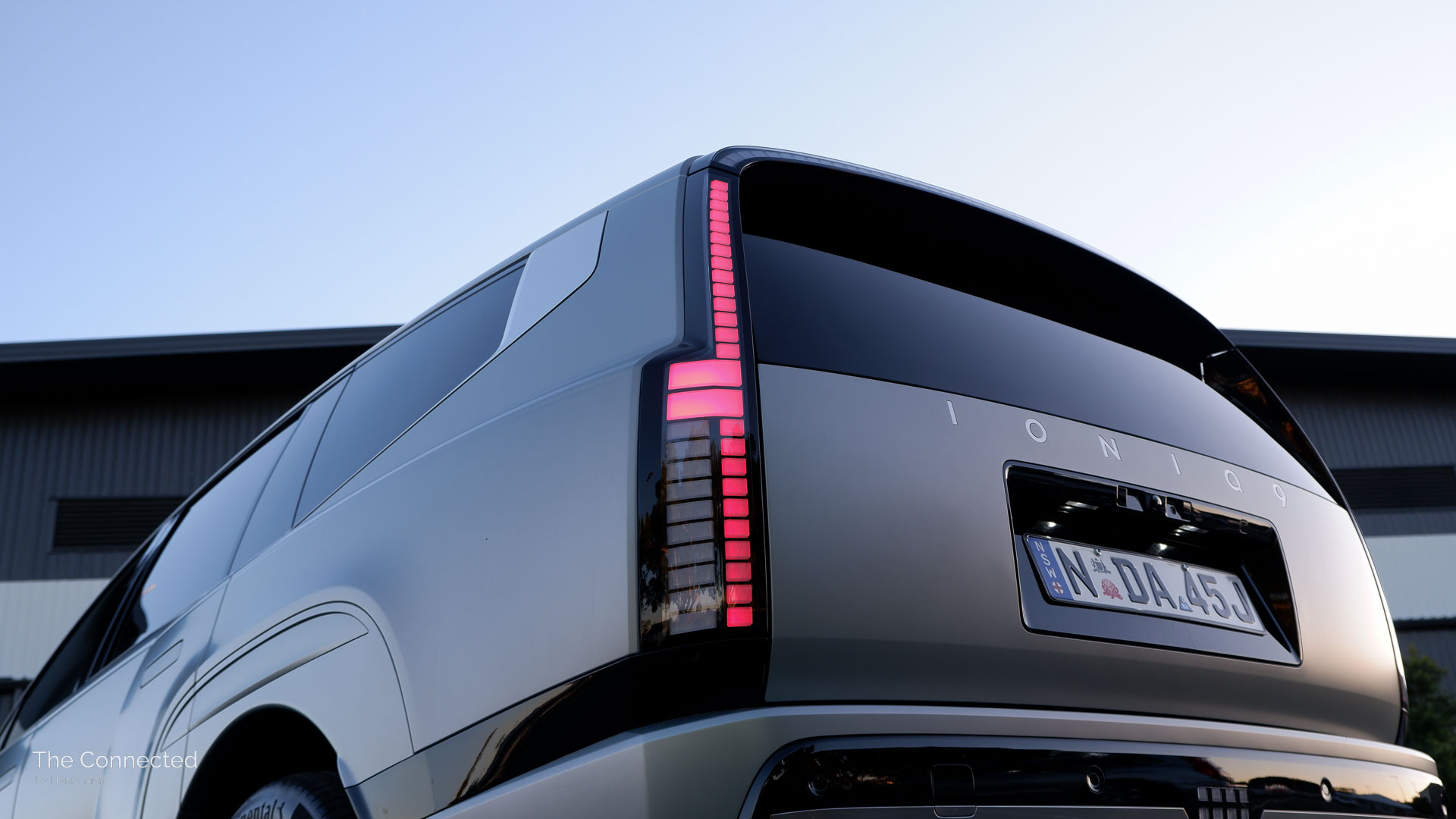
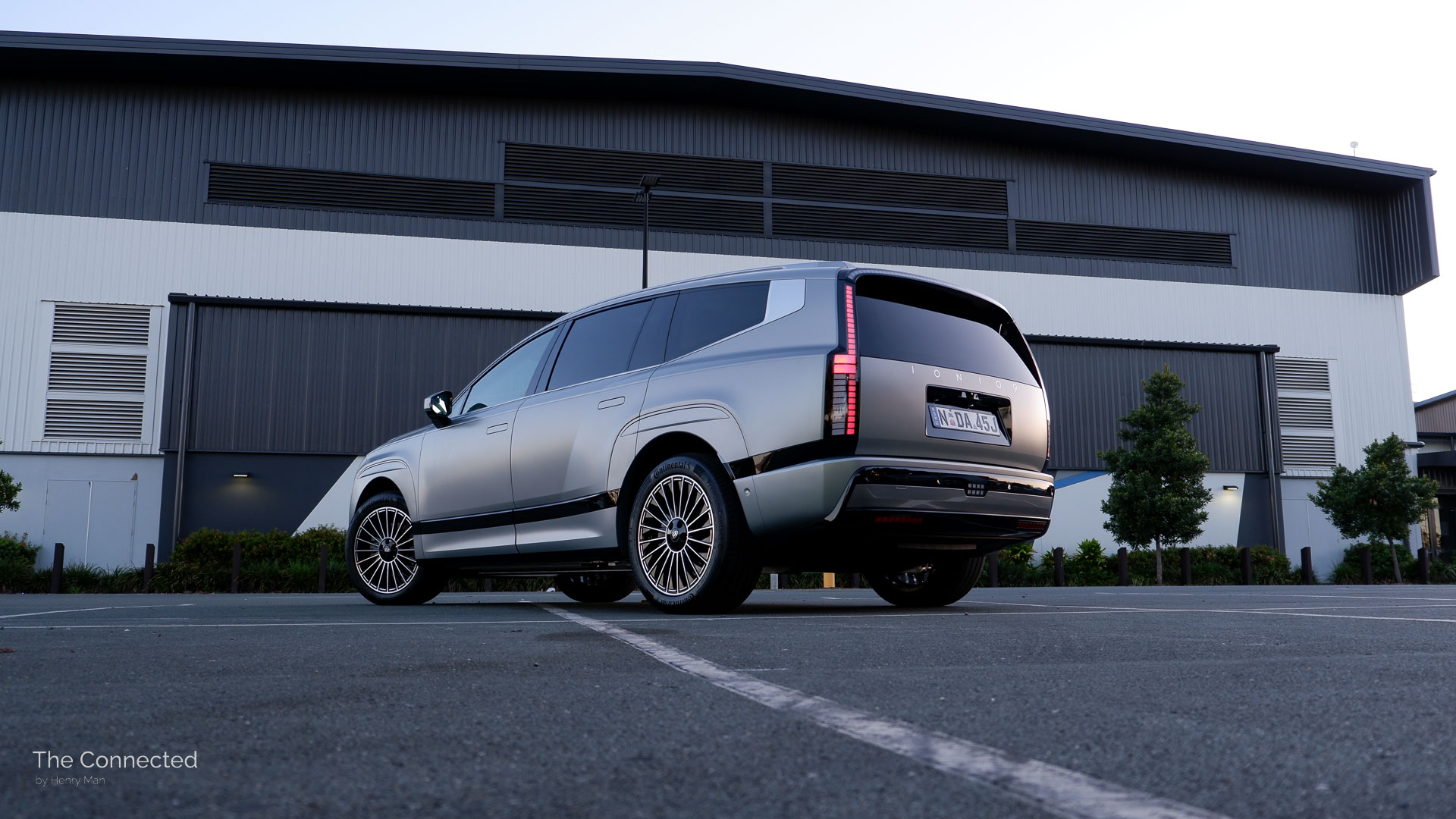
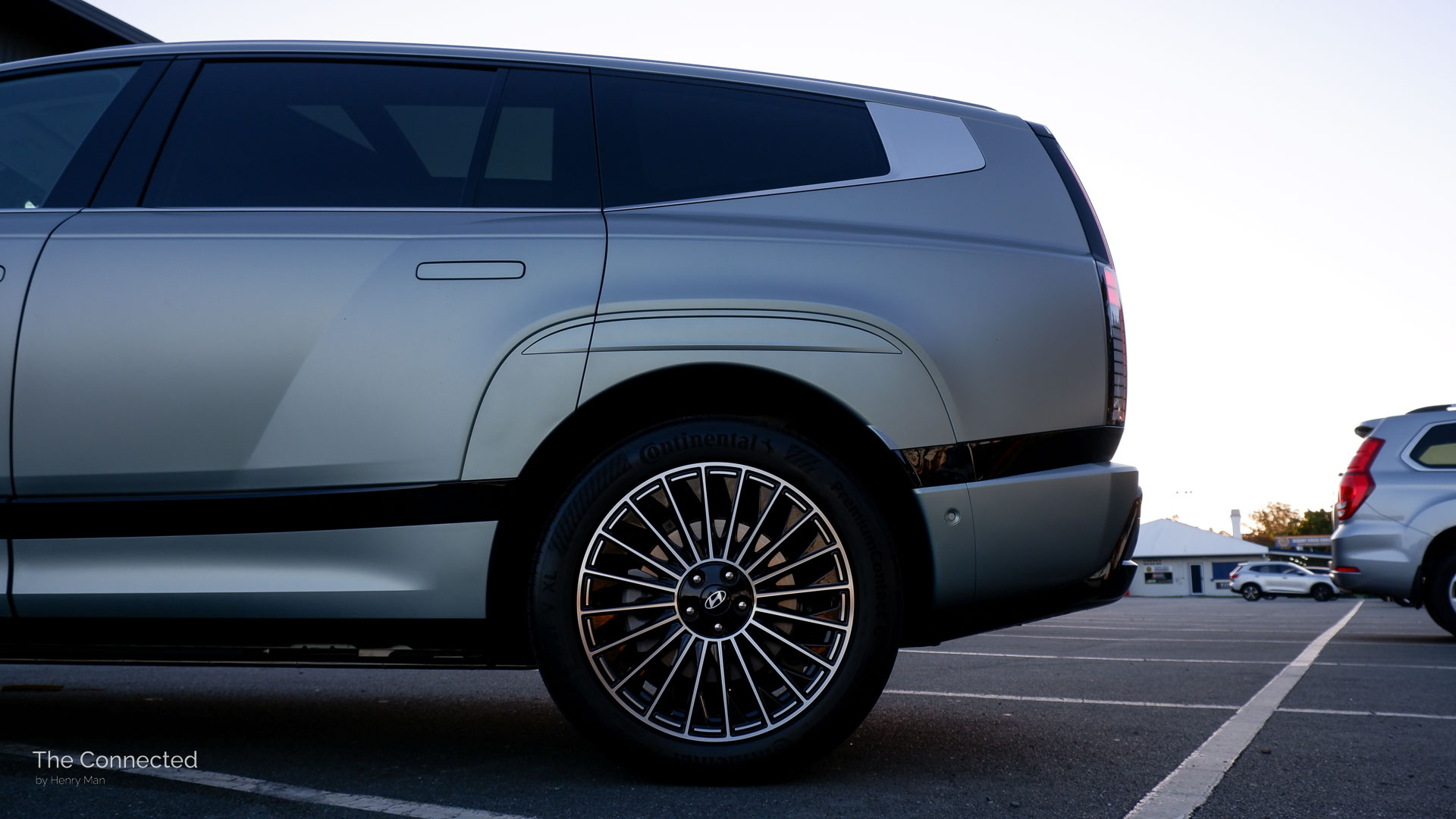
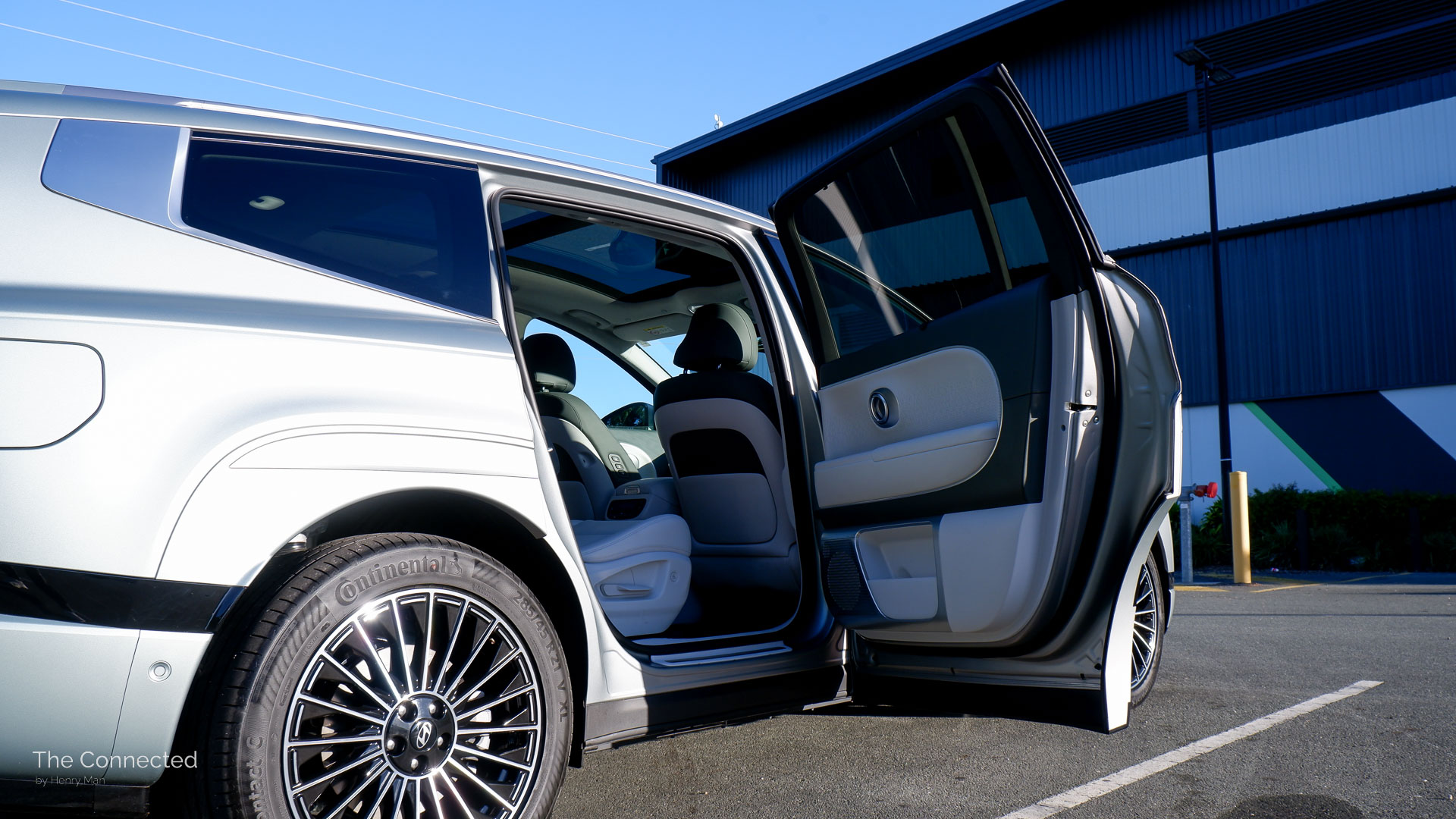
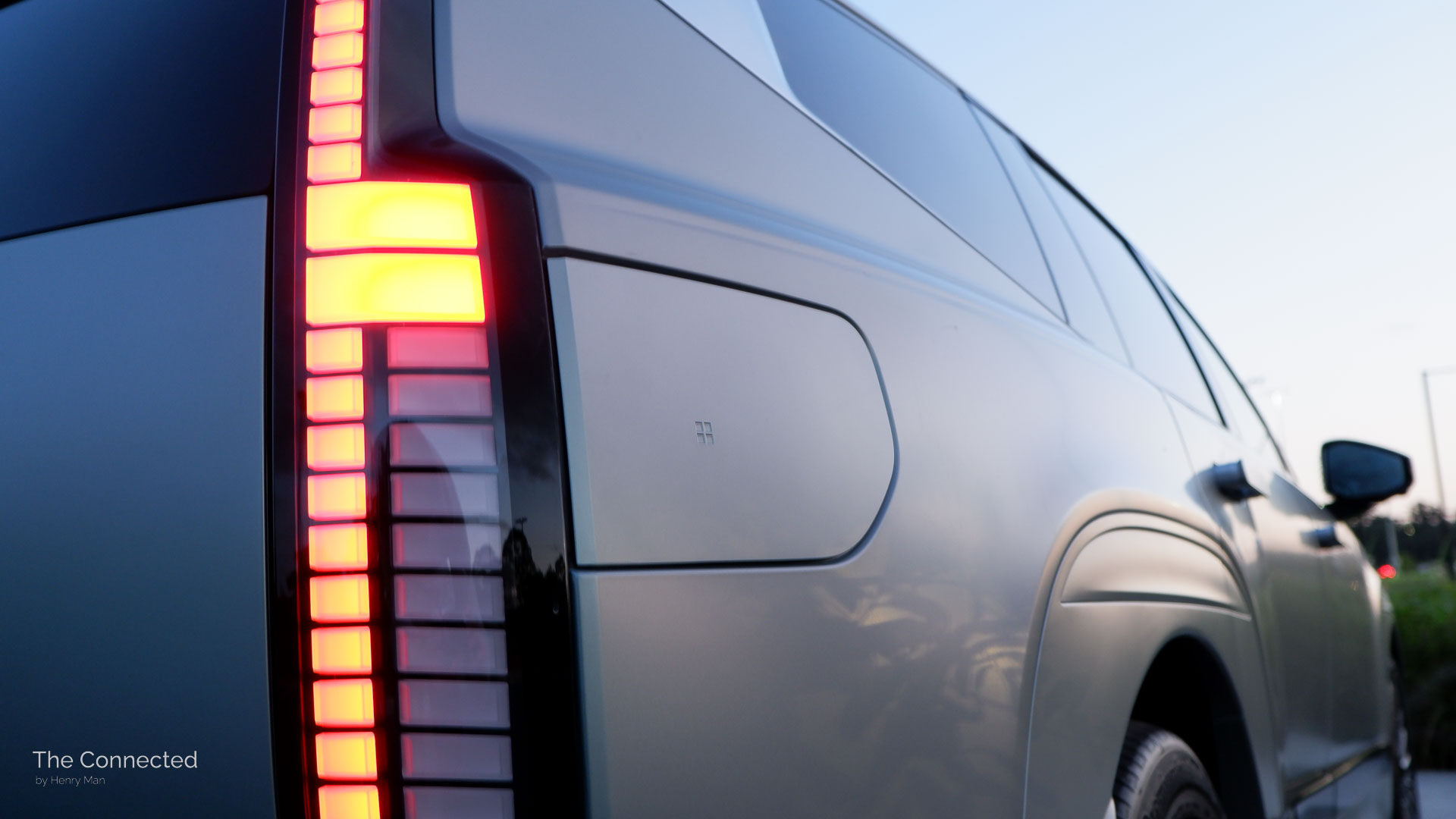
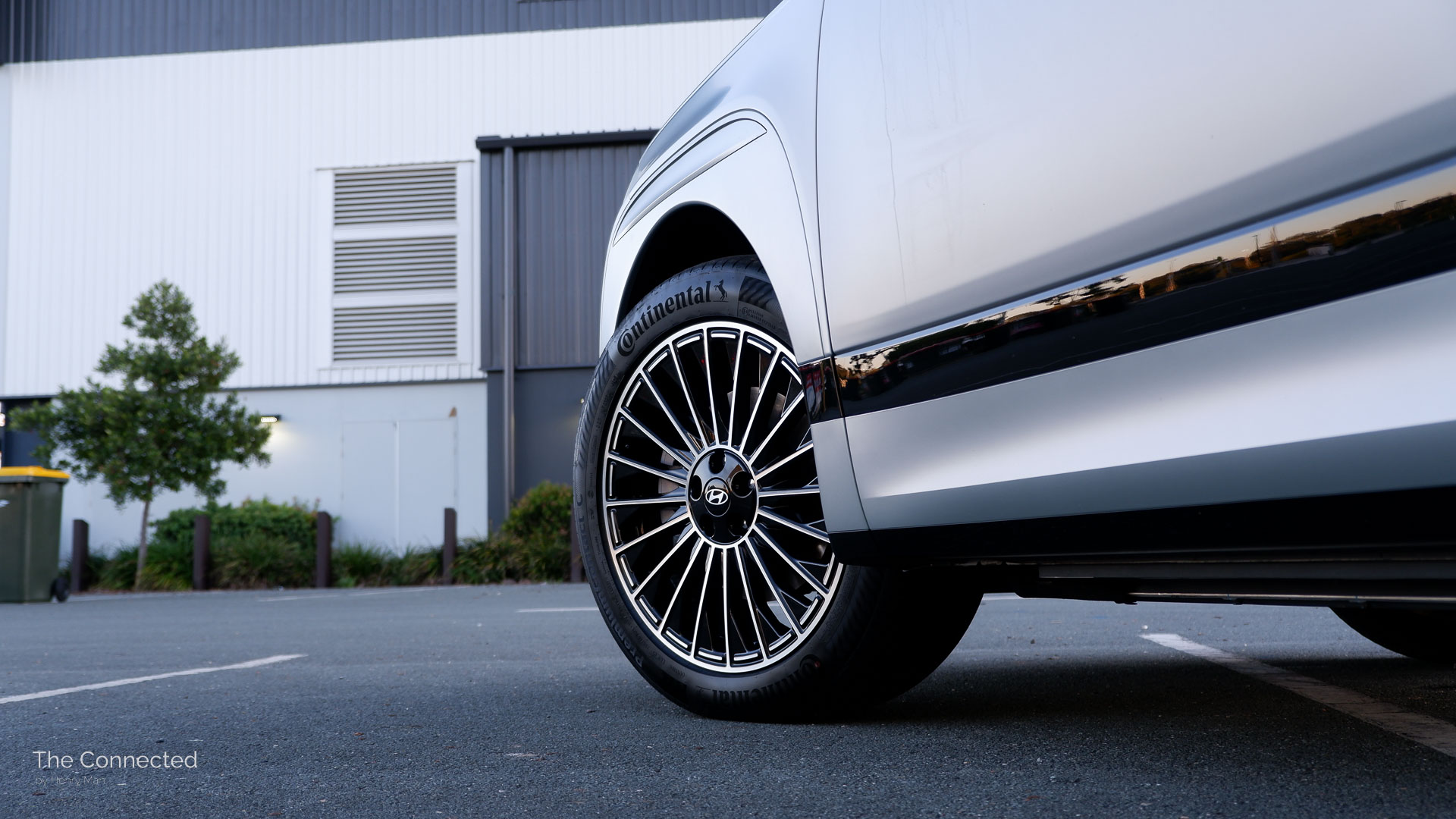
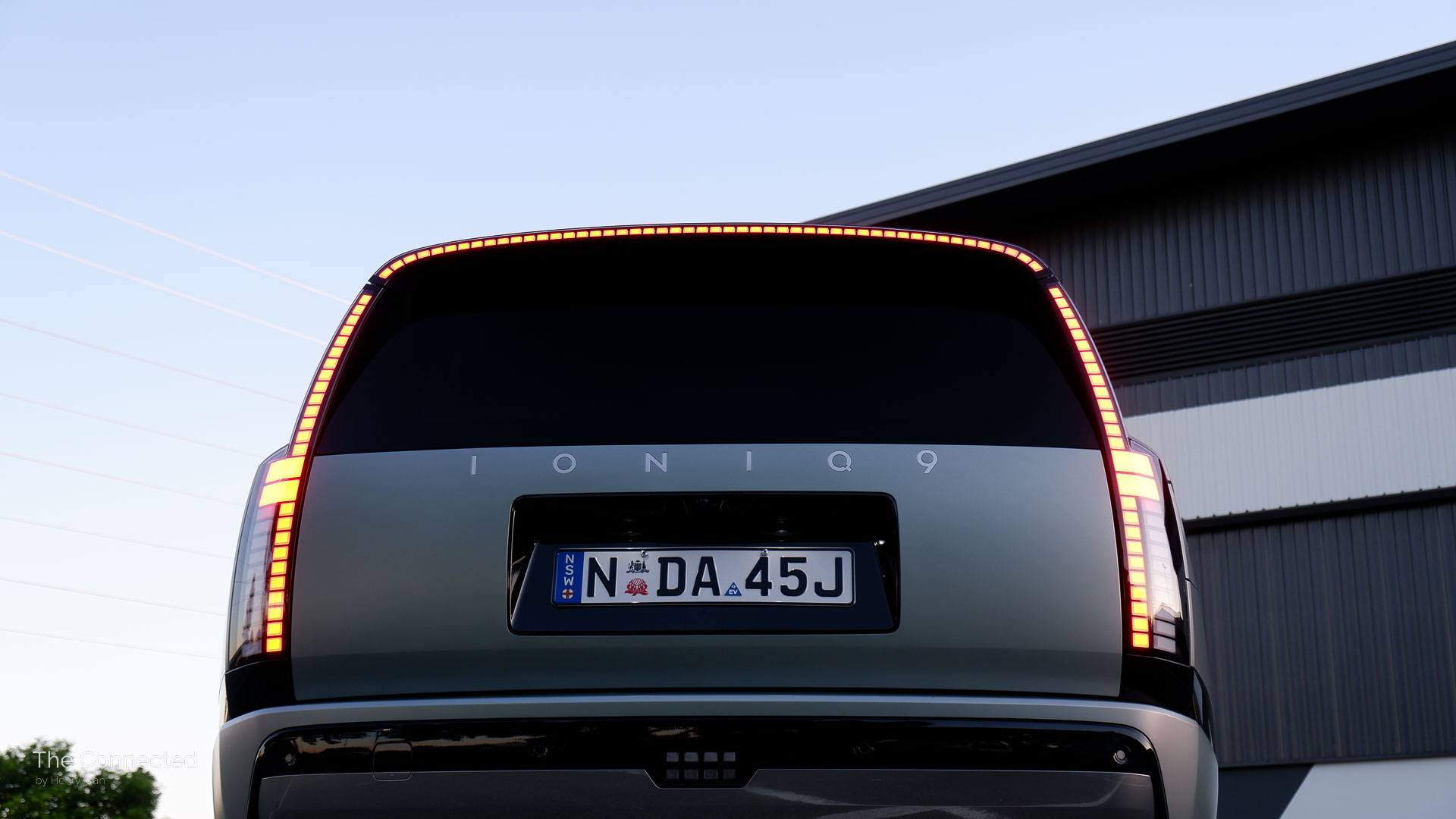
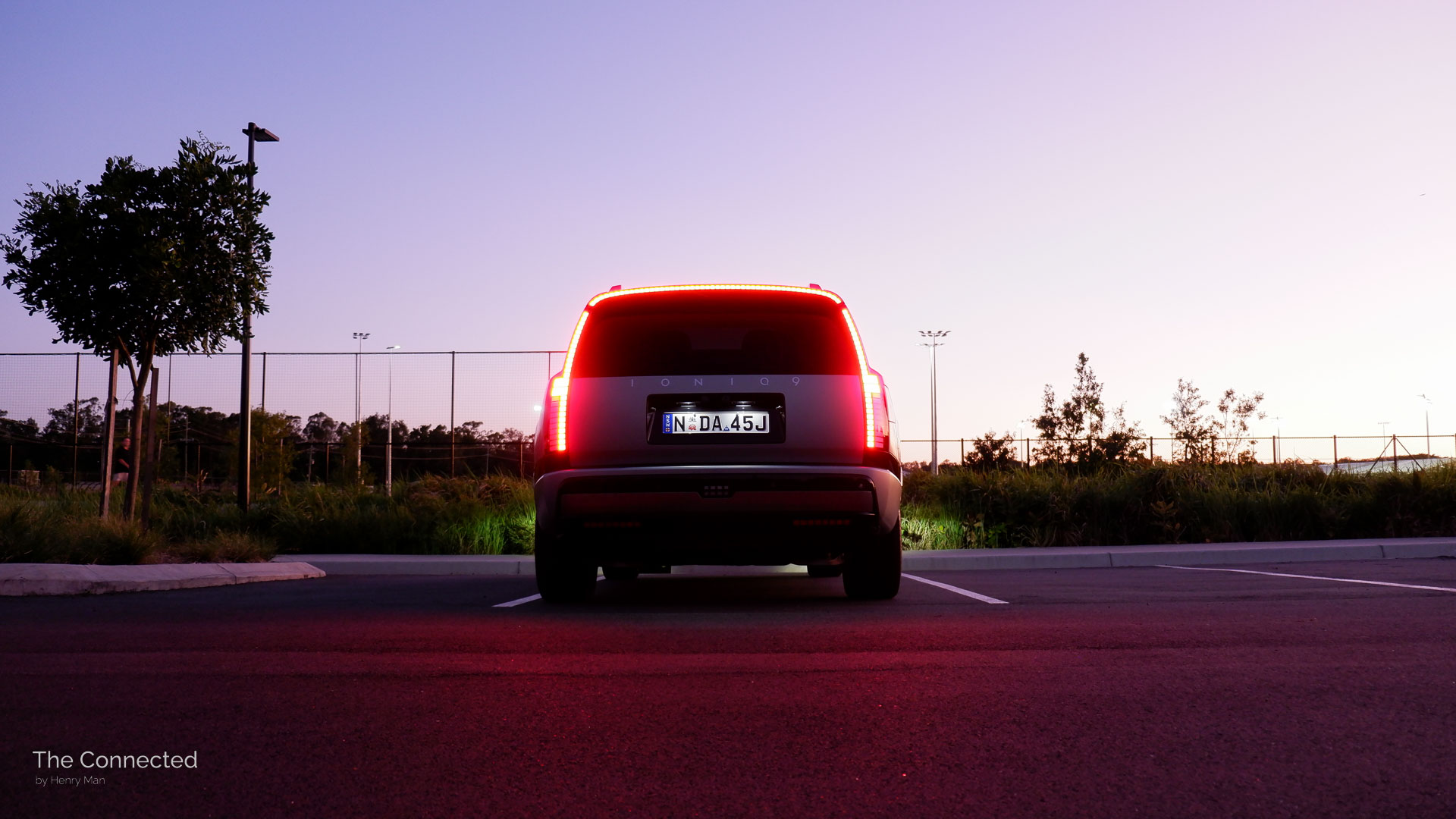
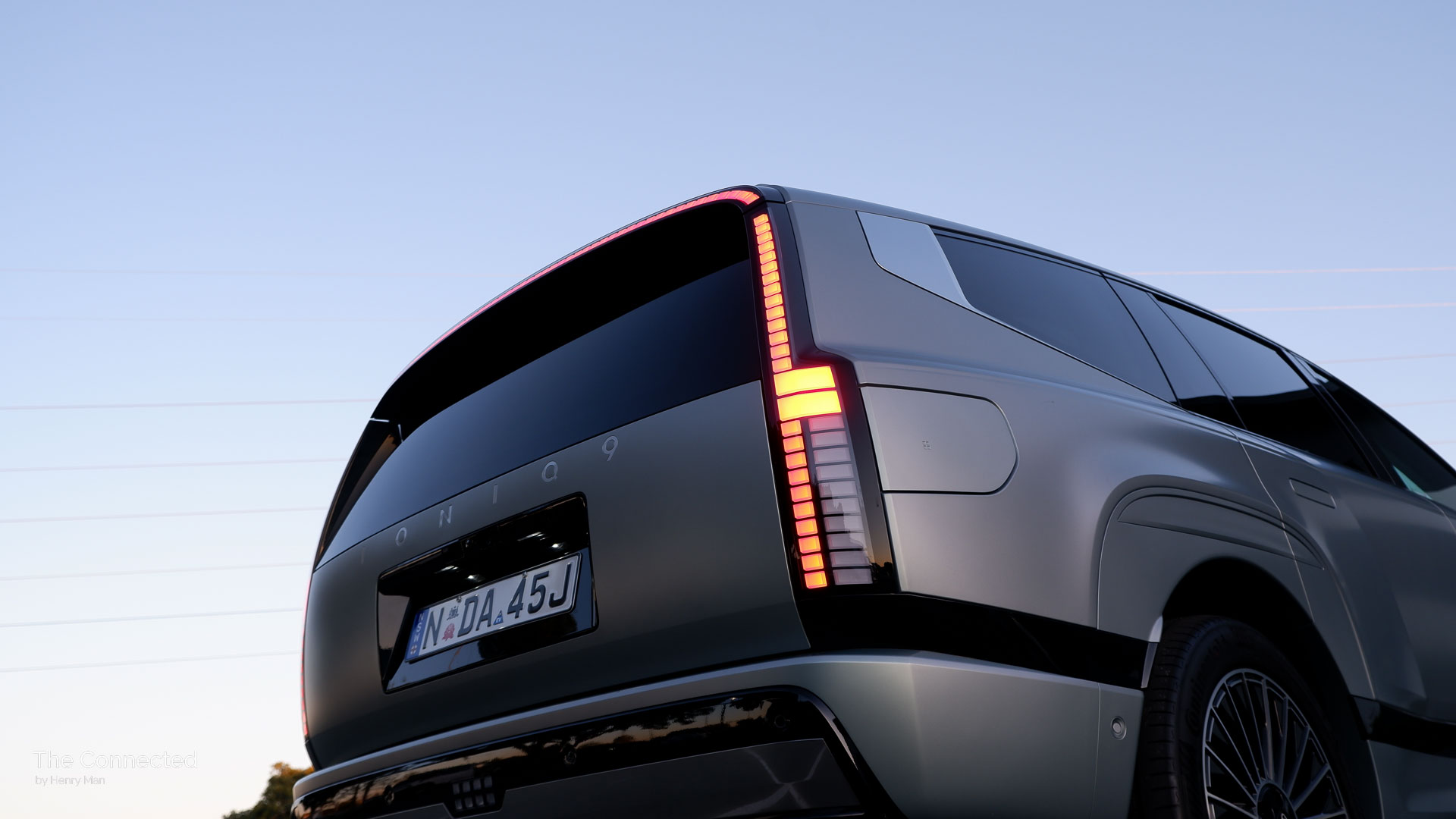
Rather than adopt the edgy and brutalist look of the platform-related Kia EV9, Hyundai’s approach is softer and futuristic with a sloping rear window belt line to hide the upright rear, a prominent pixel design tail-light arch, and intricate turbine-style 20-inch wheels.
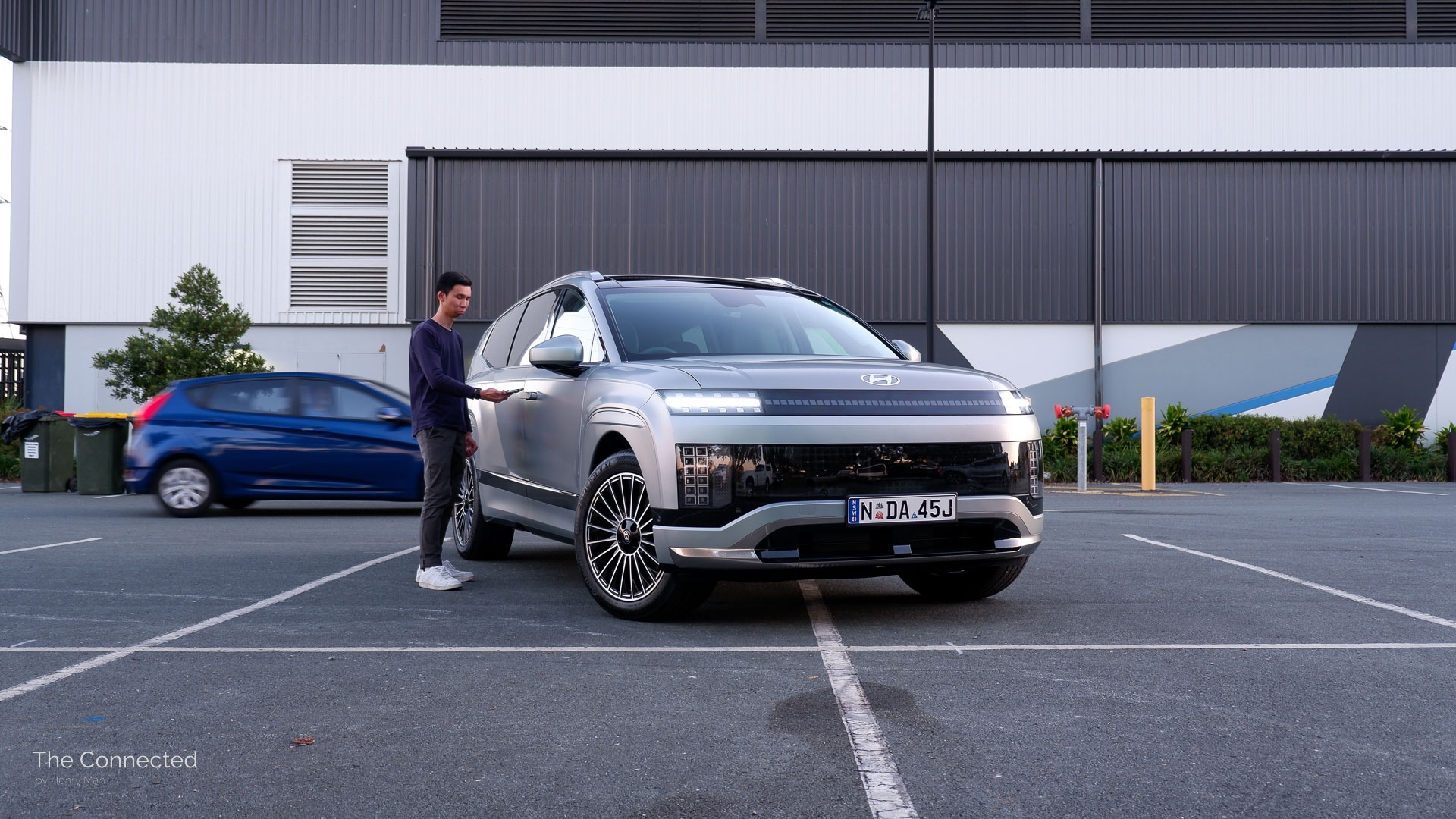
The new $1000 Celadon Grey Matte exterior colour also deserves a shout out as its name does a disservice to its uniqueness. Rather than being grey, it’s actually a matte silver with a light sky blue look under the sun.
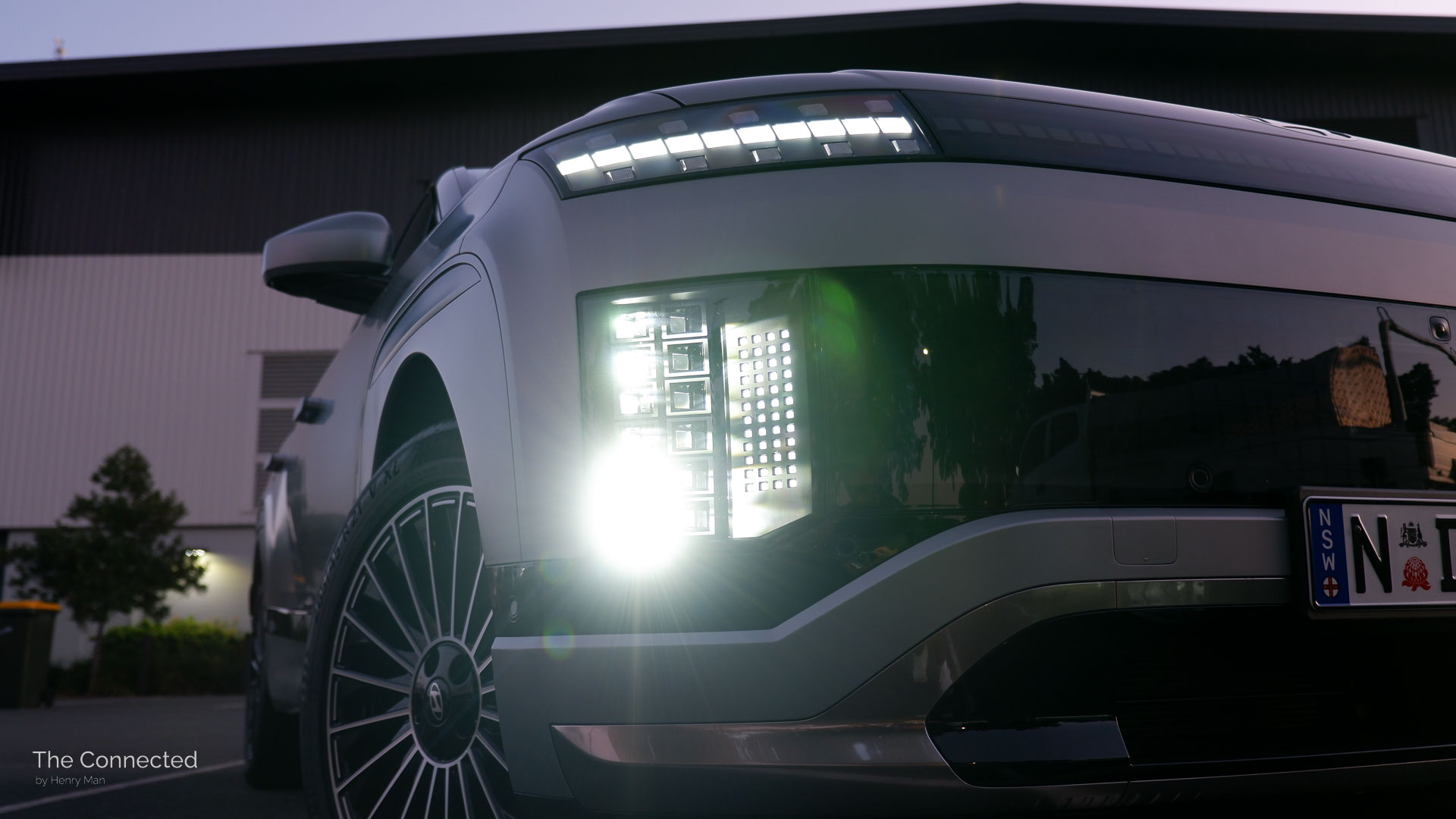
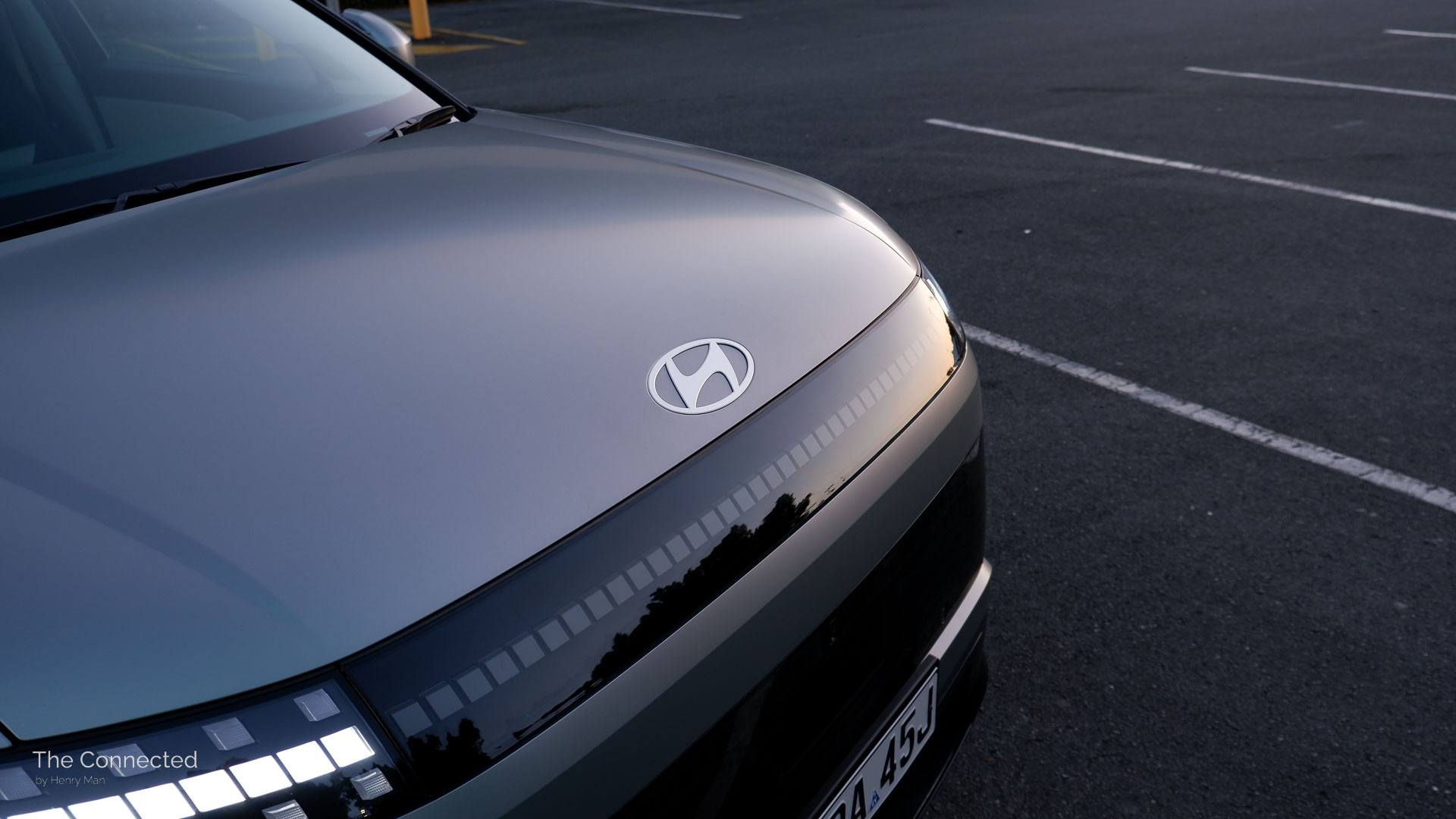
The pixel front light strip is reminiscent of the Hyundai Kona Electric, but unlike that cheaper small SUV, the middle portion doesn’t light up in Australia, likely due to safety regulations.
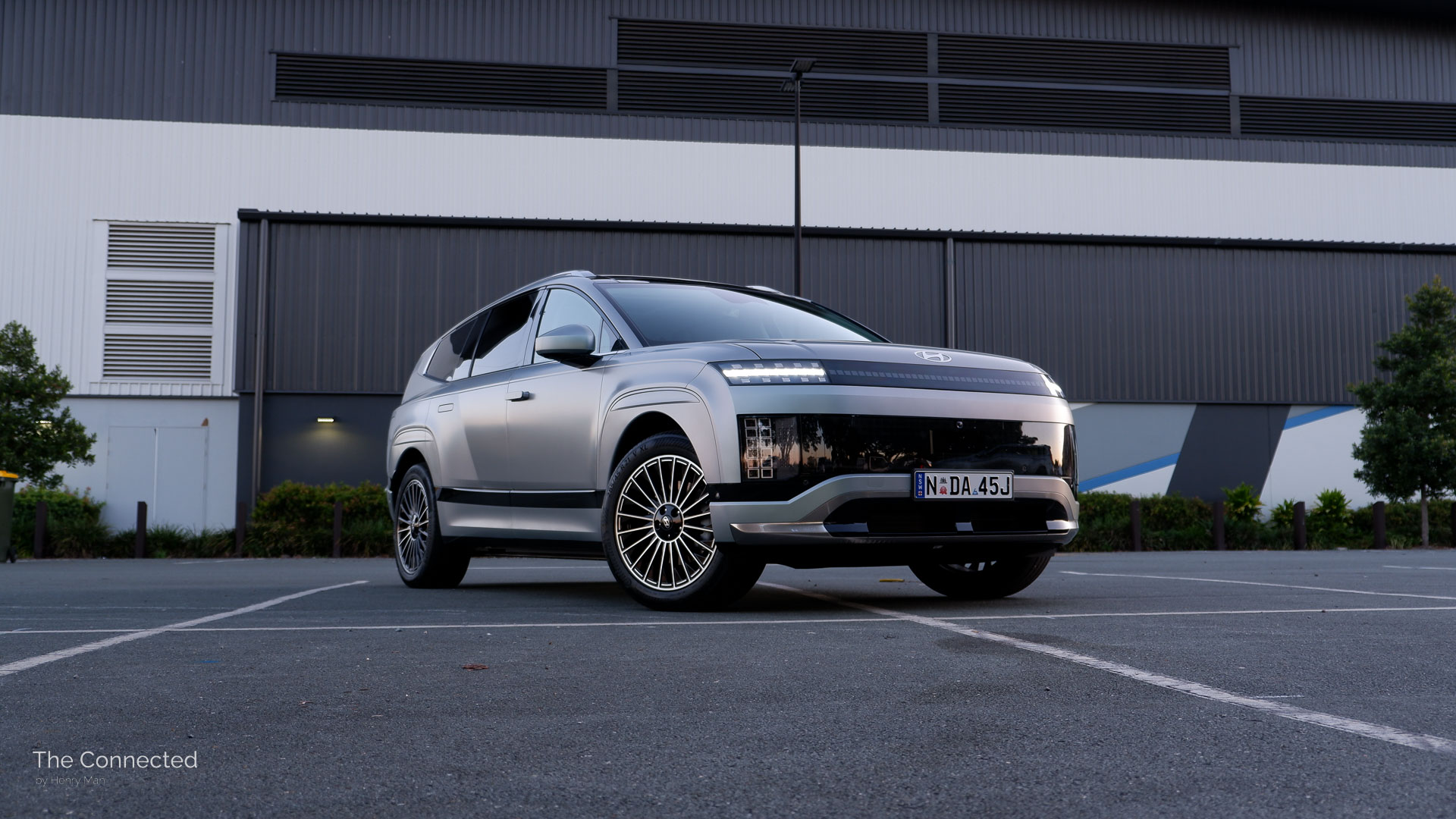
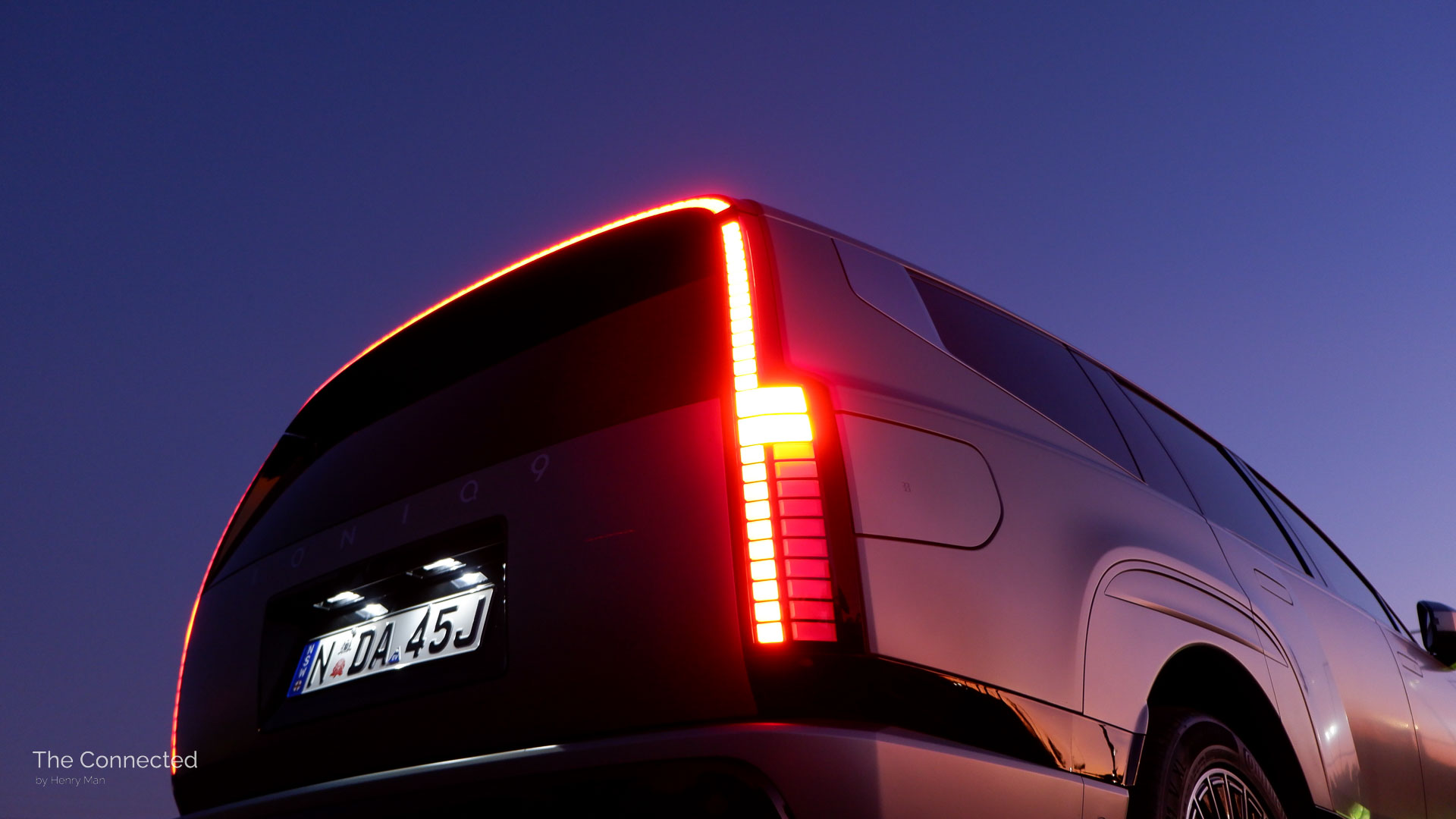
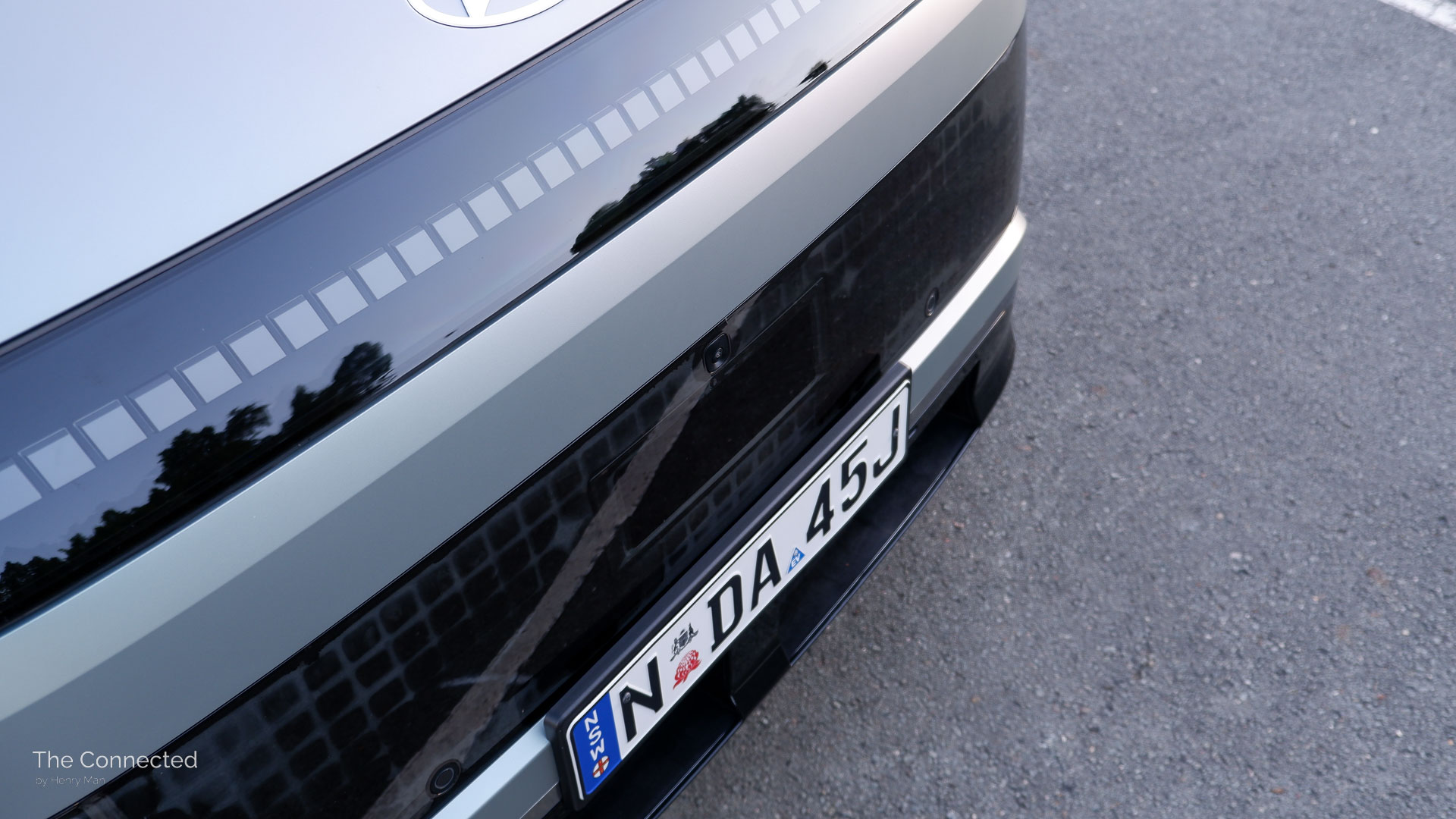
I also noticed the front panel that hides the safety sensors also trapped condensation, at least on this test vehicle.
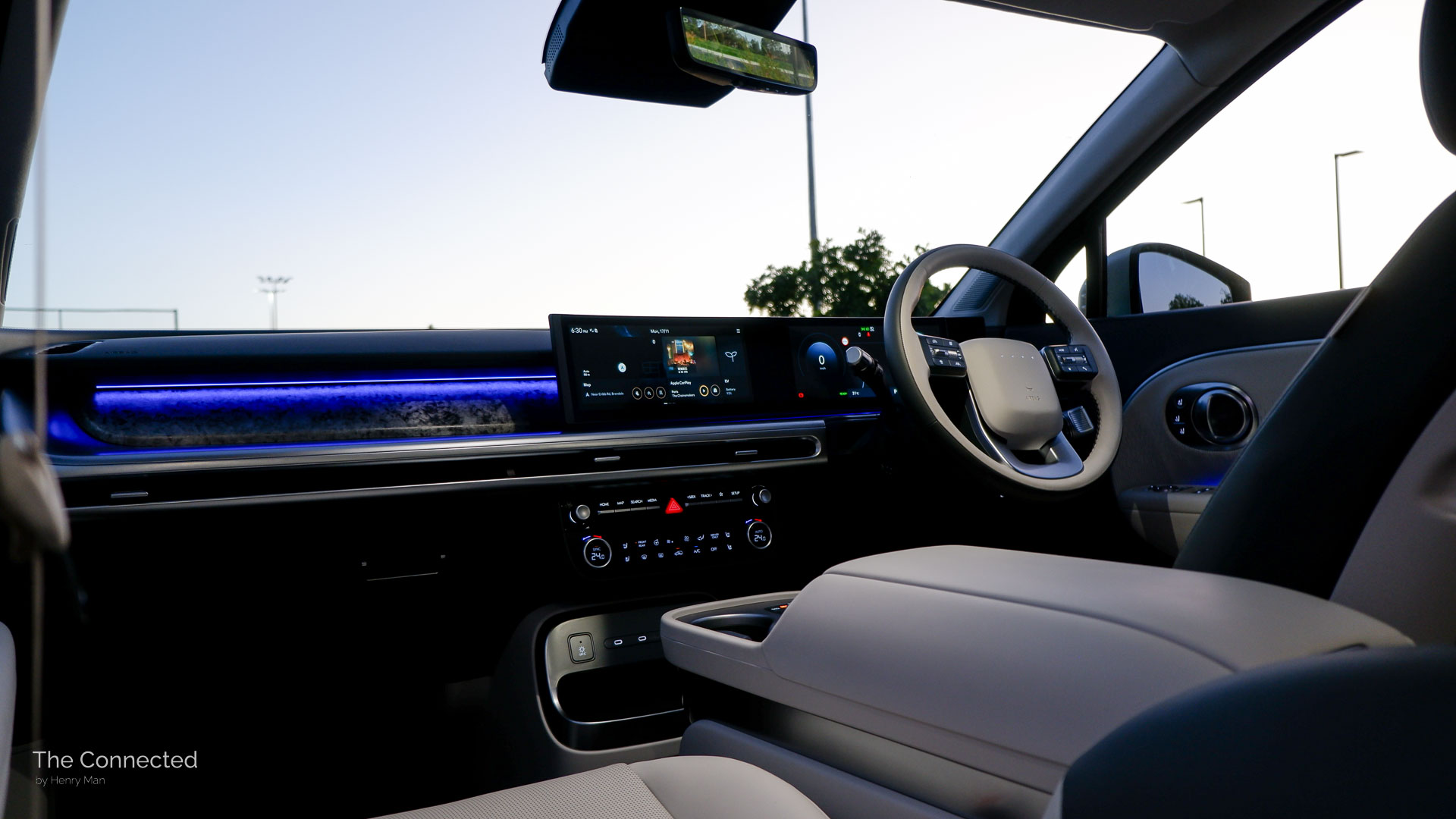
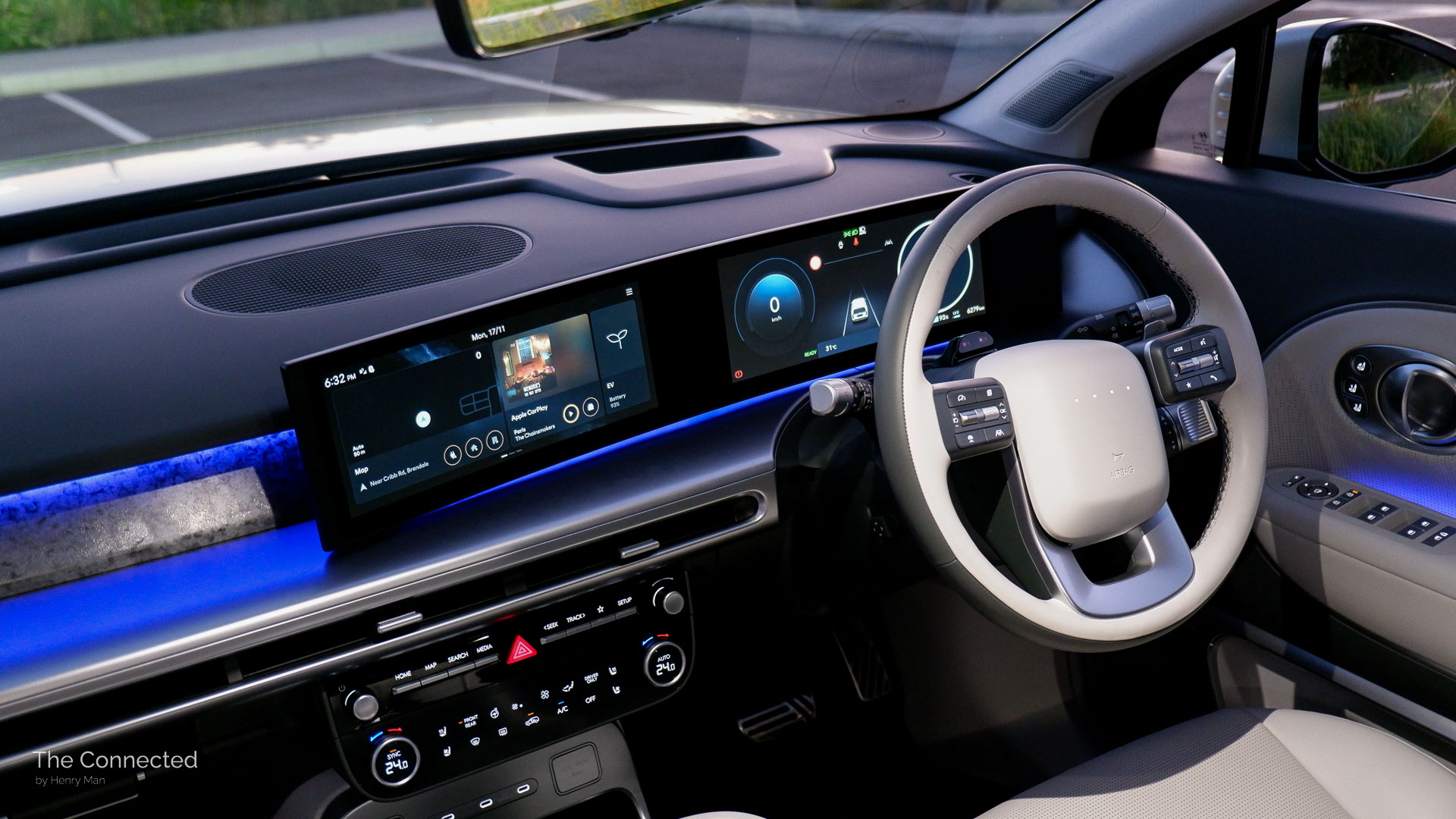
But it’s the Ioniq 9’s interior where it looks really stunning and feels almost like a genuine luxury SUV.
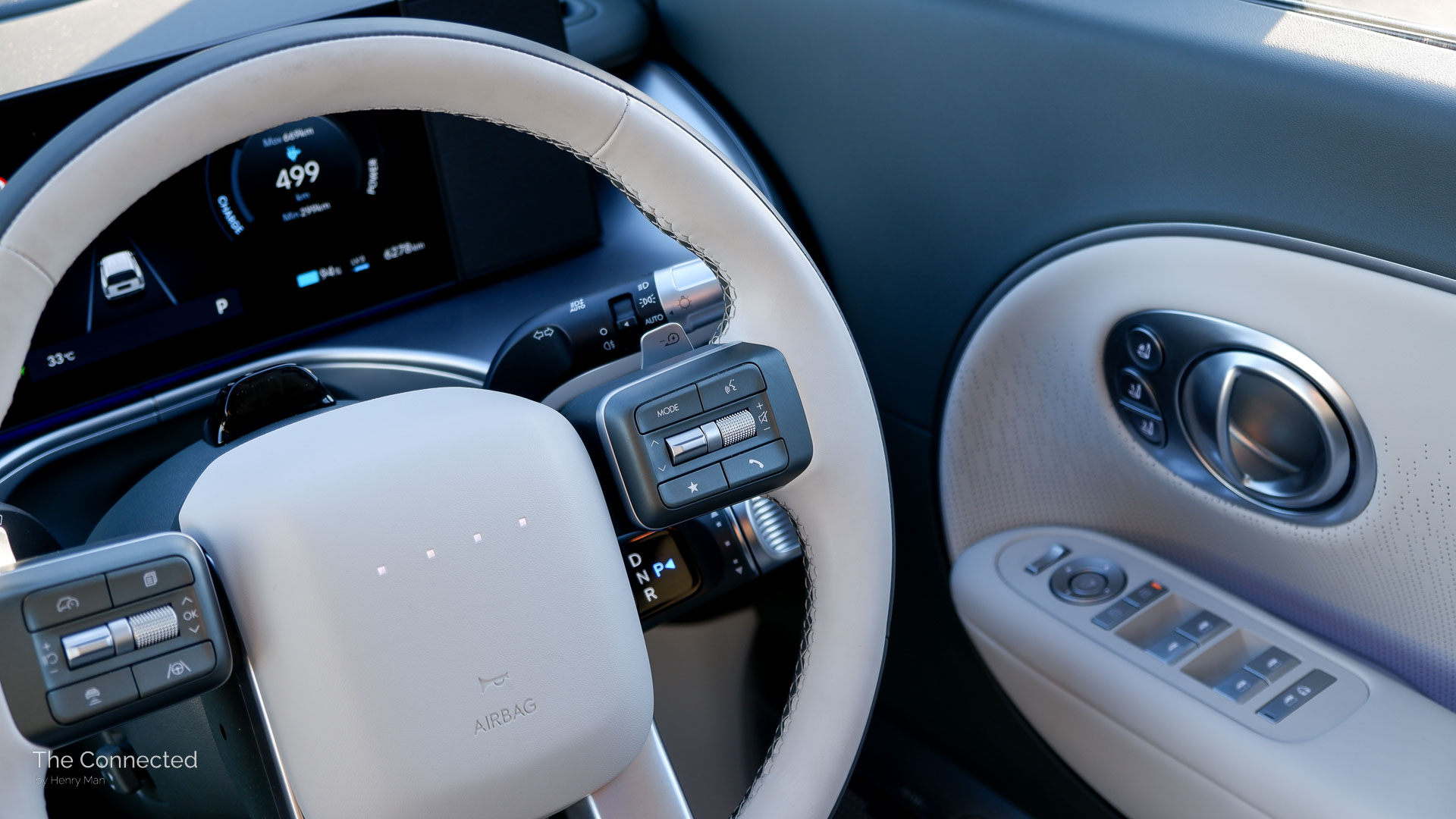
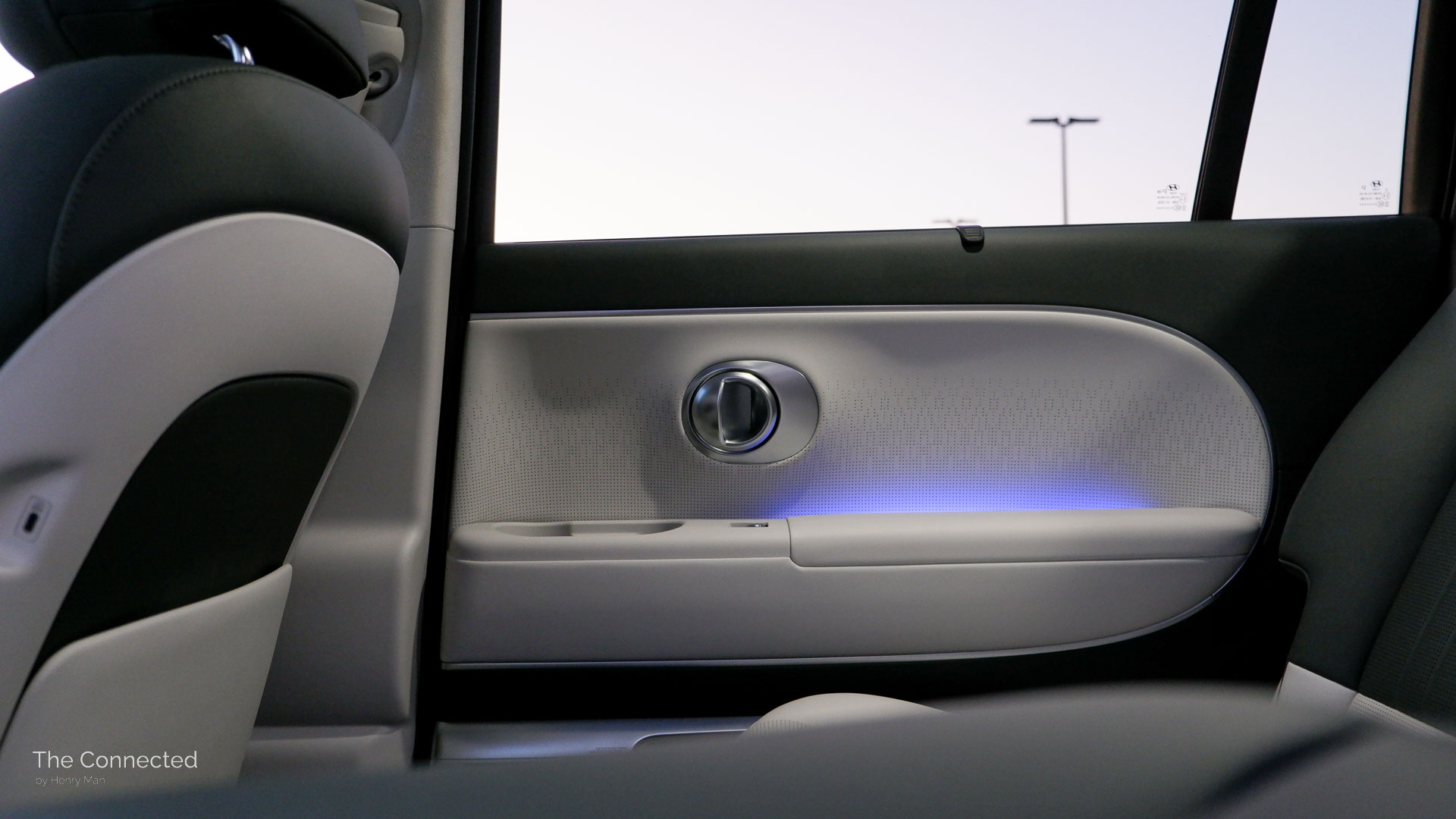
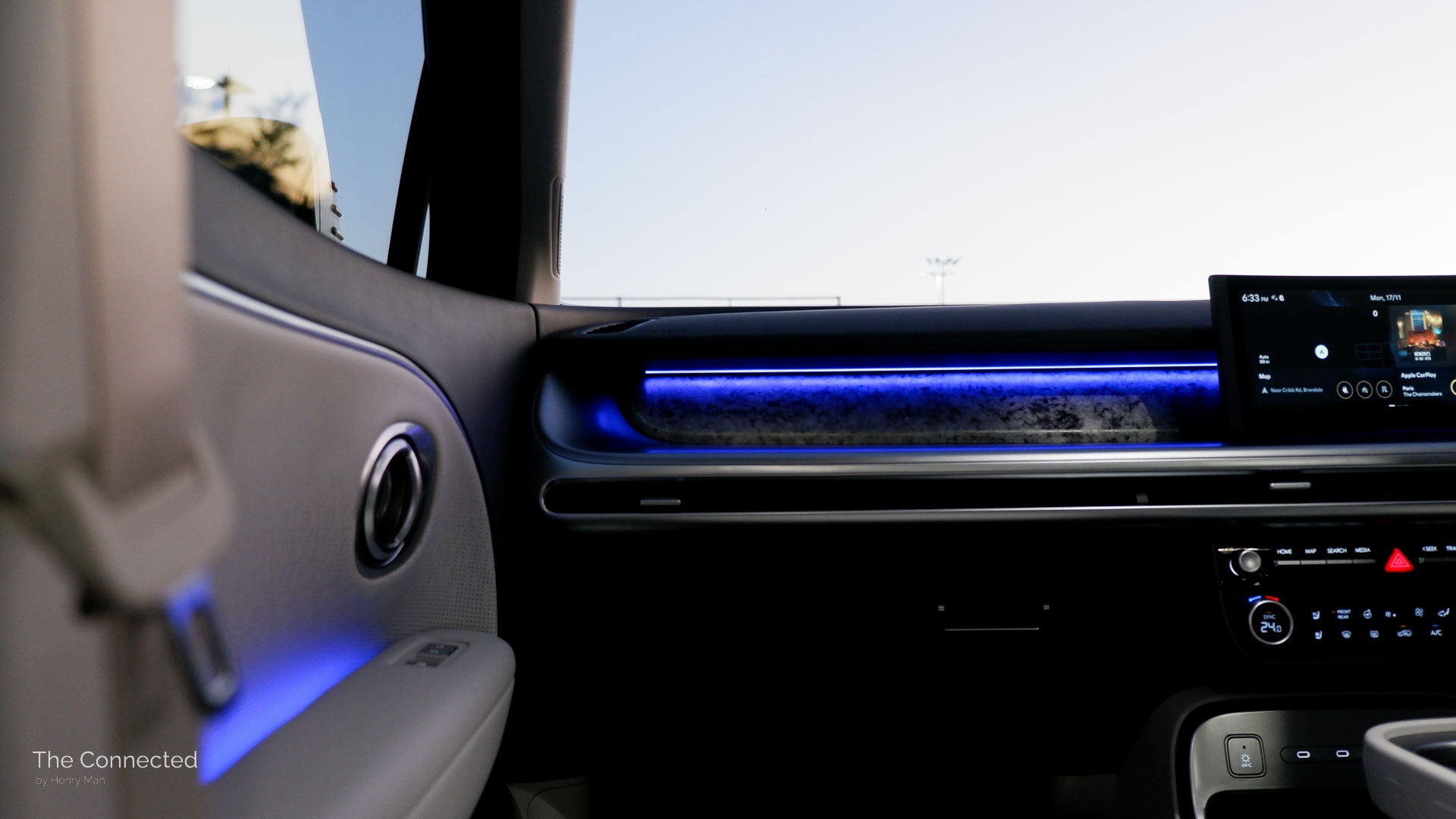
The free two-tone Dark Teal/Dove Grey interior design option is an eye-catcher with pixel design motifs down to the rubberised surfaces and speaker grilles, plus the Dark Teal colour is also applied on the steering wheel buttons, carpets and boot, and oblong shaped door handles and door cards.
This attention to detail is exceptional.
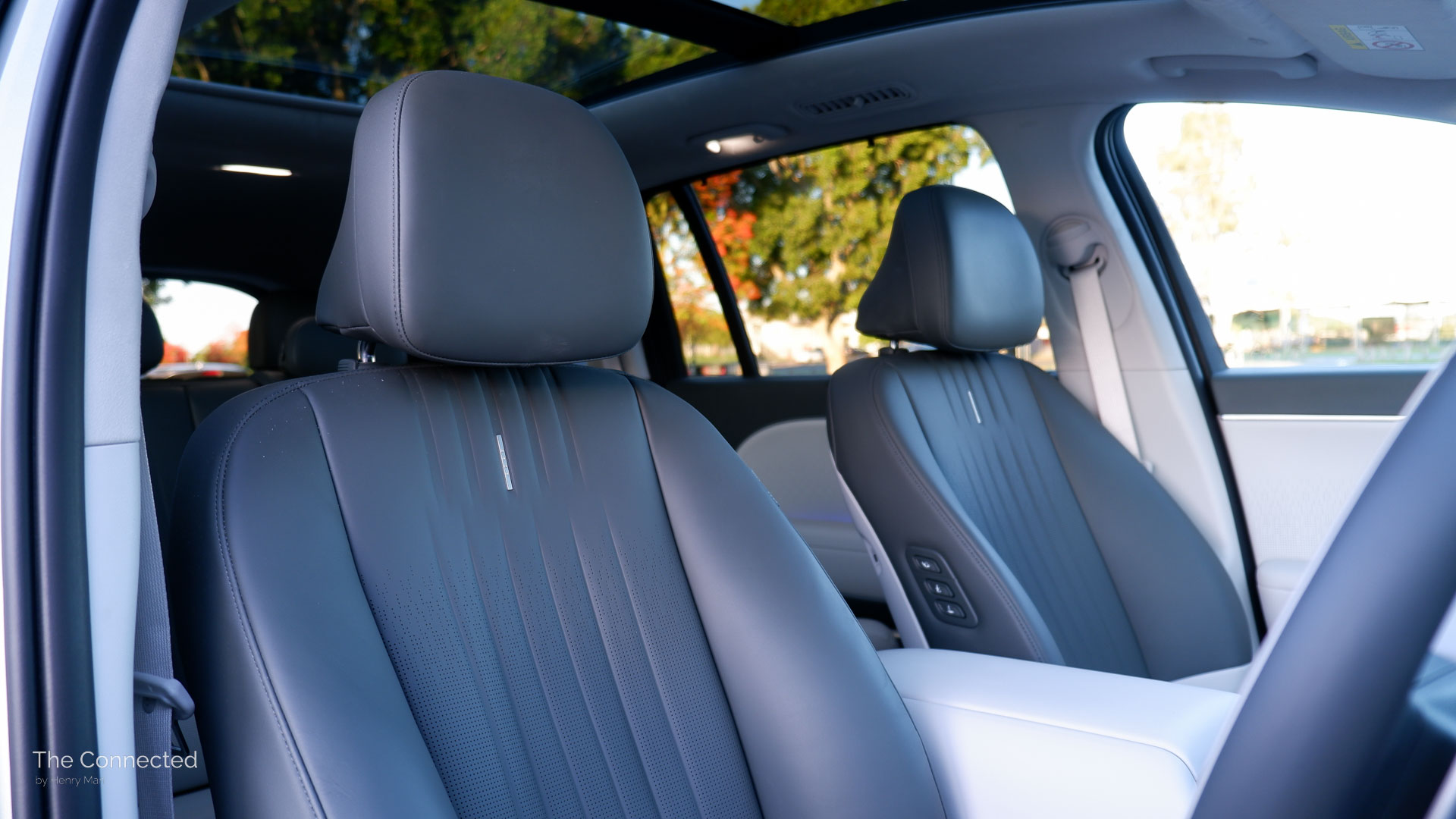
Material quality is premium with soft-touch surfaces in high-touch areas, some metal-look satin silver trims, and plush Nappa leather seats with a light suede headliner.
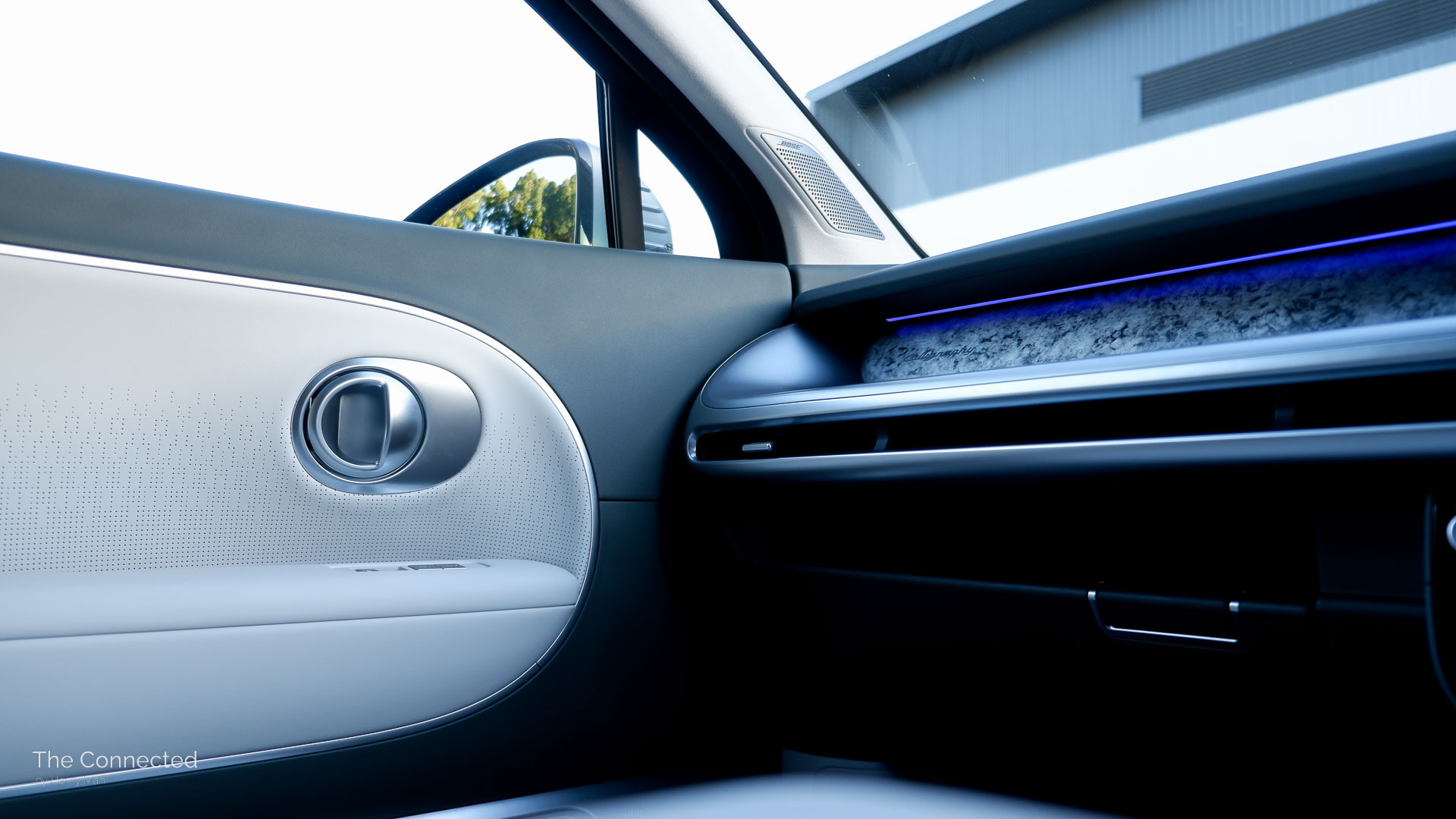
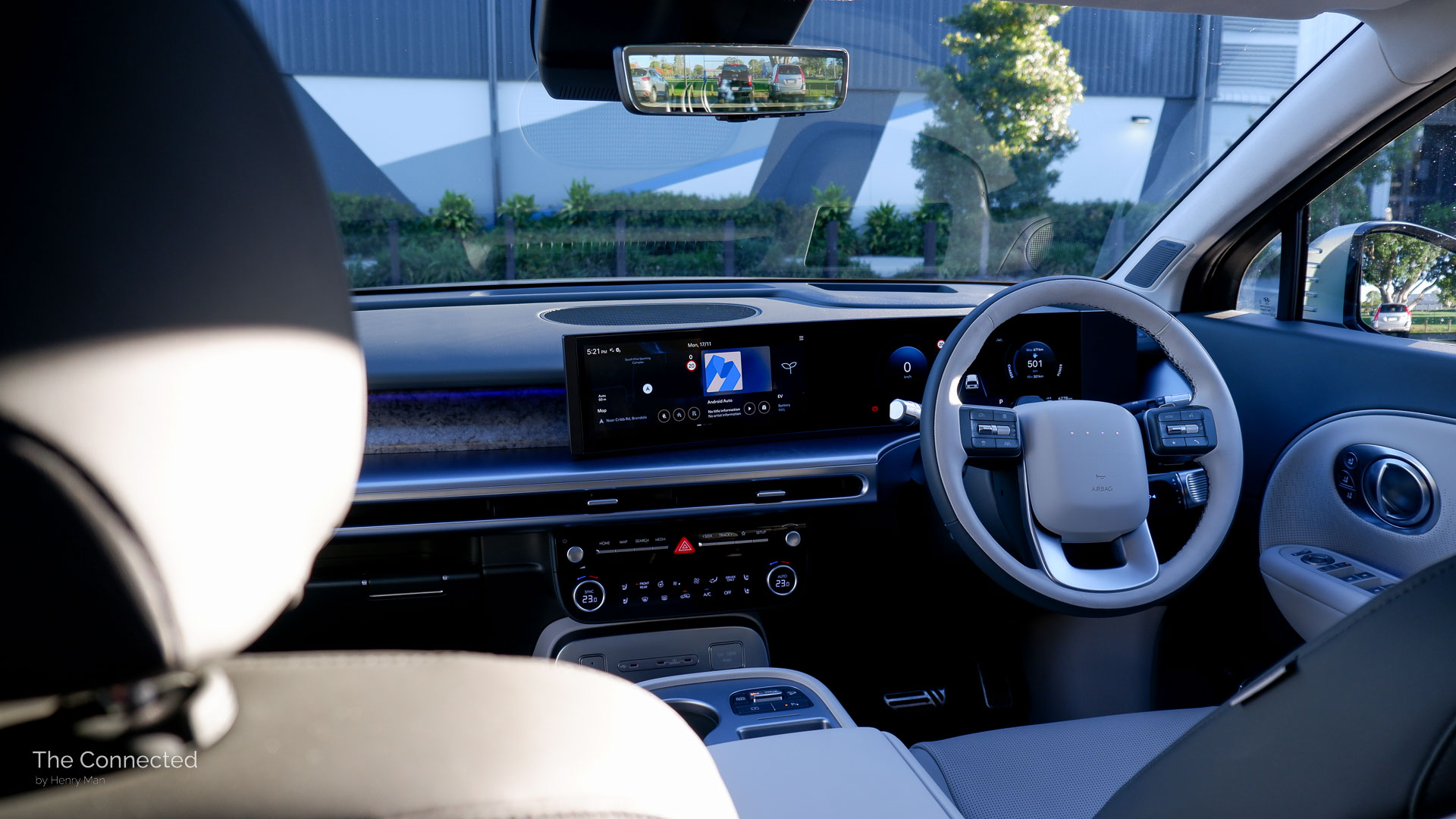
It only falls short with a faux marble or snake skin esque dashboard and some firmer plastics are found lower down the door cards, whereas a Genesis luxury car would be more padded.
There are some carryover parts from the Hyundai line-up, including the same climate control panel as the Tucson midsize SUV half its price.
Still, the Ioniq 9’s interior is a world away from the cheap-feeling Volkswagen ID. Buzz and a step above the related Kia EV9.
Practicality.
2026 Hyundai Ioniq 9 Calligraphy (seven-seat) dimensions:
| Length x width x height | 5060 x 1980 x 1790mm |
| Wheelbase | 3130mm |
| Ground clearance | 174mm |
| Boot space (min / 3rd row folded) | 388 / 908L |
| Frunk space | 52L |
| Rear seat split fold (3rd row / 2nd row) | 50:50 / 60:40 |
| Child seat anchors (3rd row / 2nd row) | 2x ISOFIX and 2x top tethers / 2x ISOFIX and 3x top tethers |
| Air-conditioning system | Three-zone climate control with rear air vents |
The Ioniq 9 is a proper three-row family electric SUV, with a practical-designed interior.
With all seats upright, the 388-litre boot is good enough for a couple of bags. The space is narrow, but items can be staked due to the upright roofline.
Buttons beside the boot can electrically fold and unfold the third row (which you can do via the touchscreen up front as well), plus flip down the second row. With the former down, there’s a capacious van-Iike 908 litres on offer.
It’s also commendable that Hyundai has paid attention to the details, including an interior colour-matching boot mat that neatly folds when the third row is in use, a cargo blind and net that can be stored underneath the boot floor (unlike its hybrid SUVs), and soft carpeting behind the third row seatbacks.
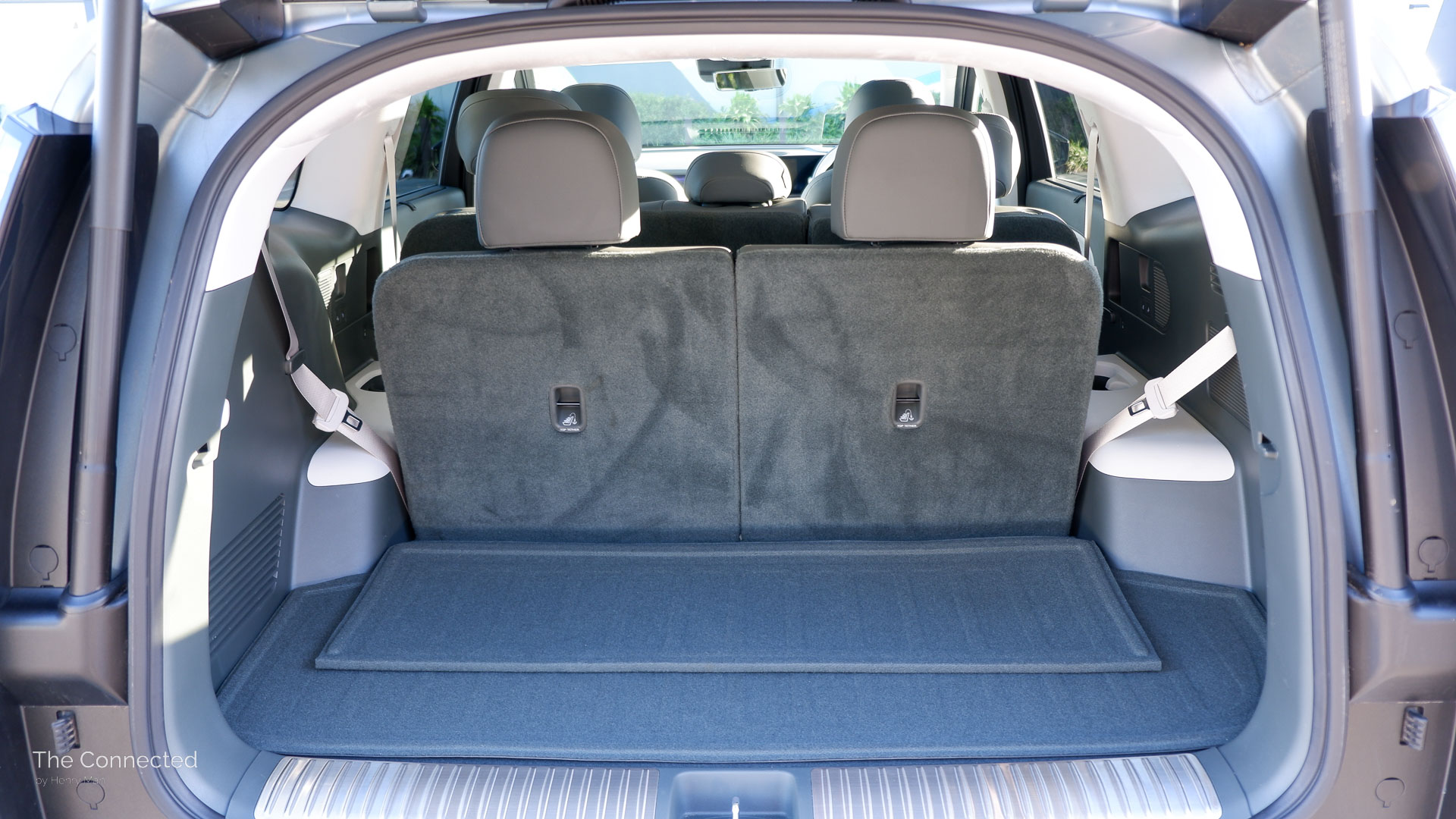
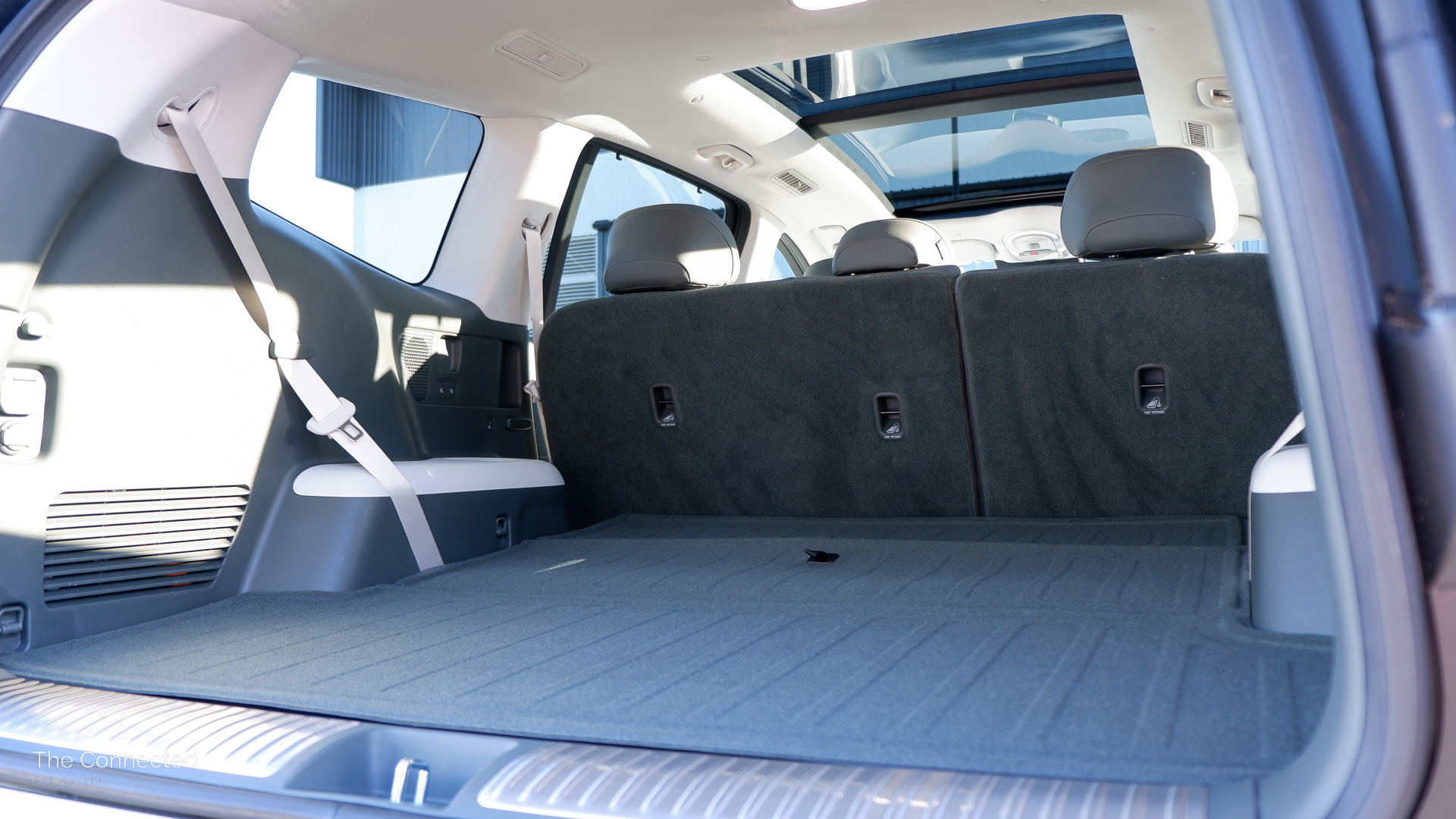
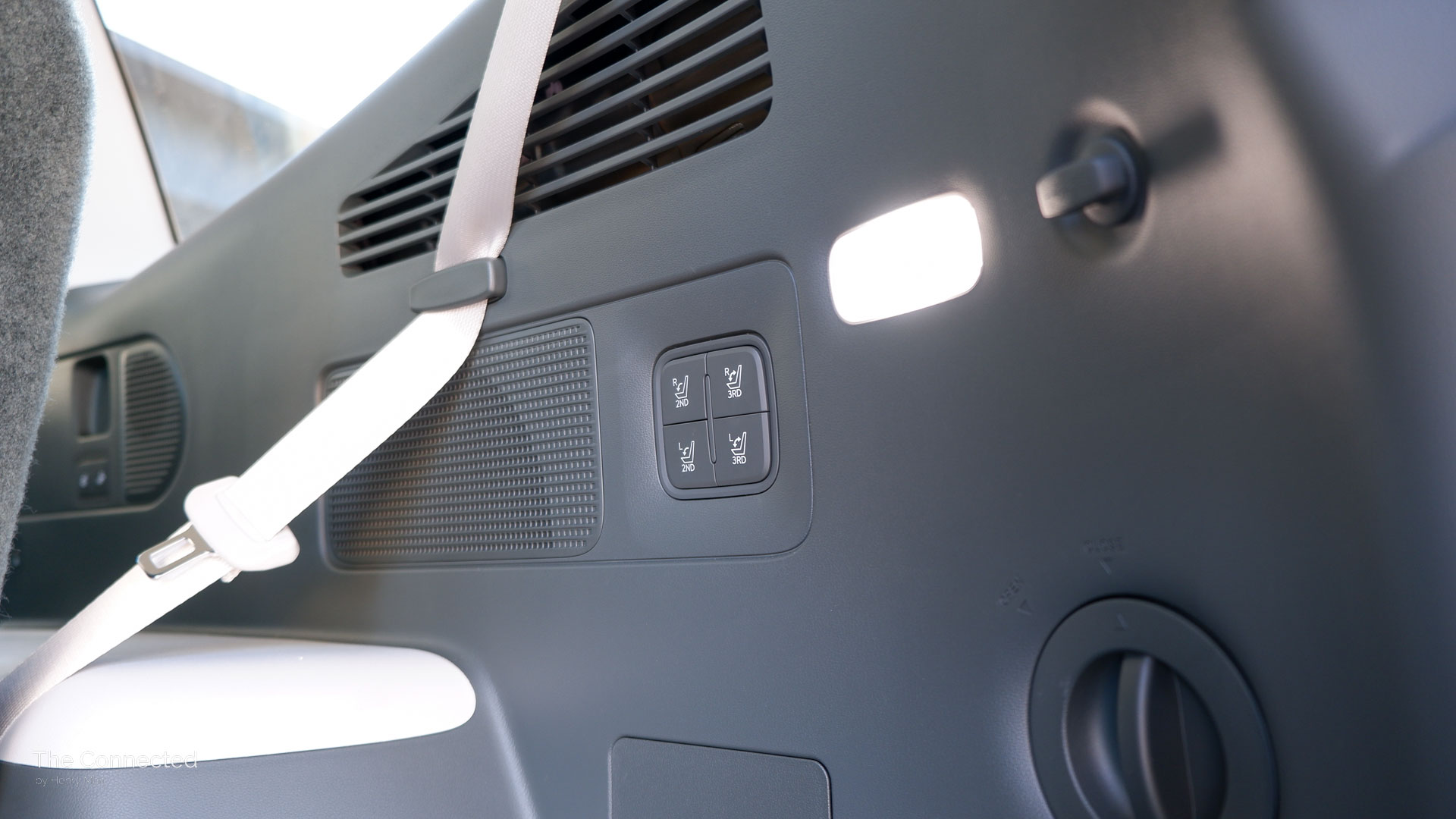
Disappointingly, the Ioniq 9 doesn’t offer proper bag hooks with two narrow ones placed too close to the outer edge of the boot.
The electric tailgate is very upright just like the Hyundai Santa Fe, but while it has a hands-free opening function by standing behind for a few seconds, the car needs to be off and locked, and can’t be closed hands-free.
It would be great if it had a kick sensor as on the Mazda CX-90. At least there is a button to lock all doors while closing the tailgate.
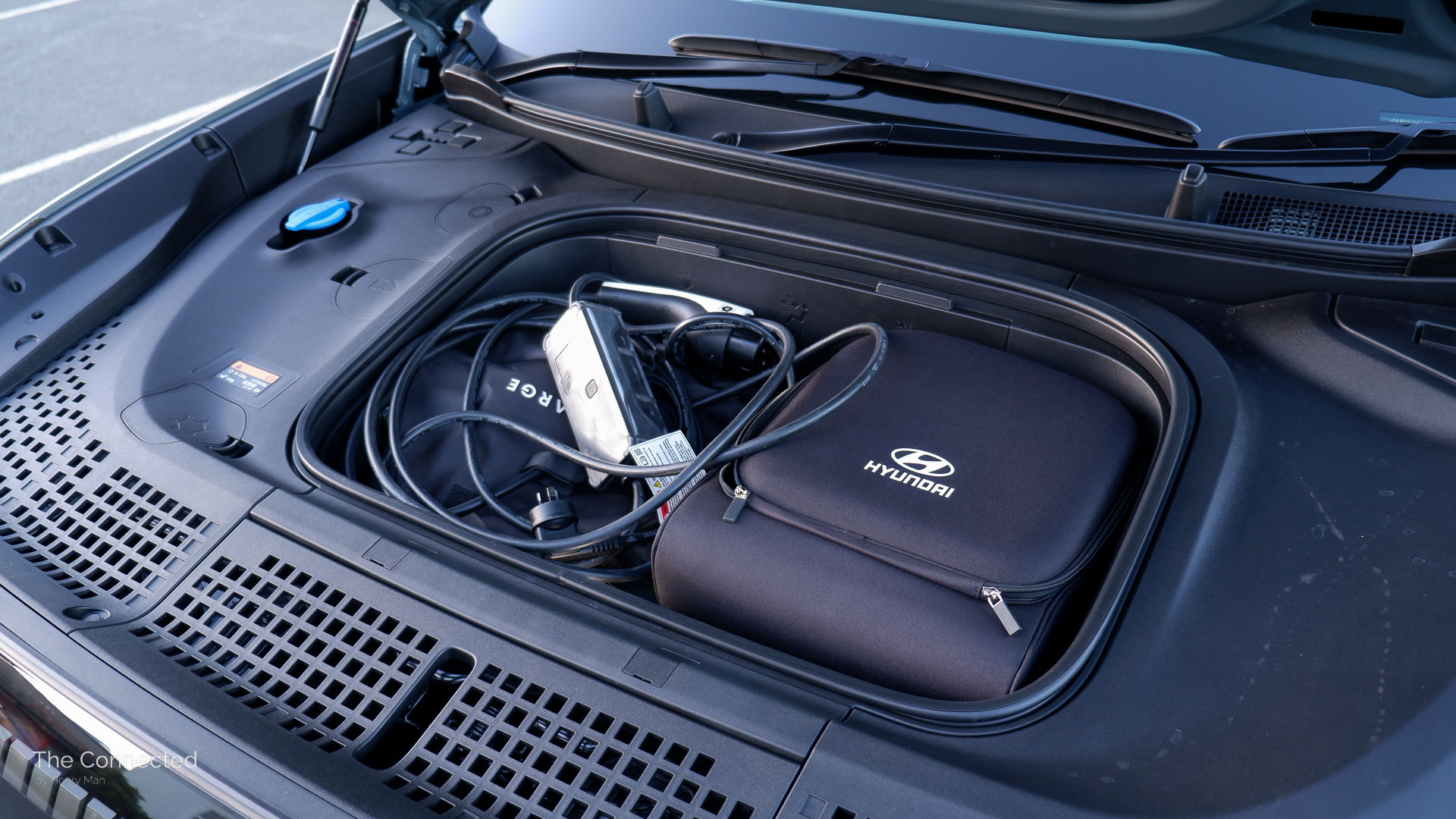
Under the front bonnet, the Ioniq 9 offers a 55-litre frunk which is spacious enough for a couple of charging cables and a backpack, but still can’t match the Tesla Model Y.
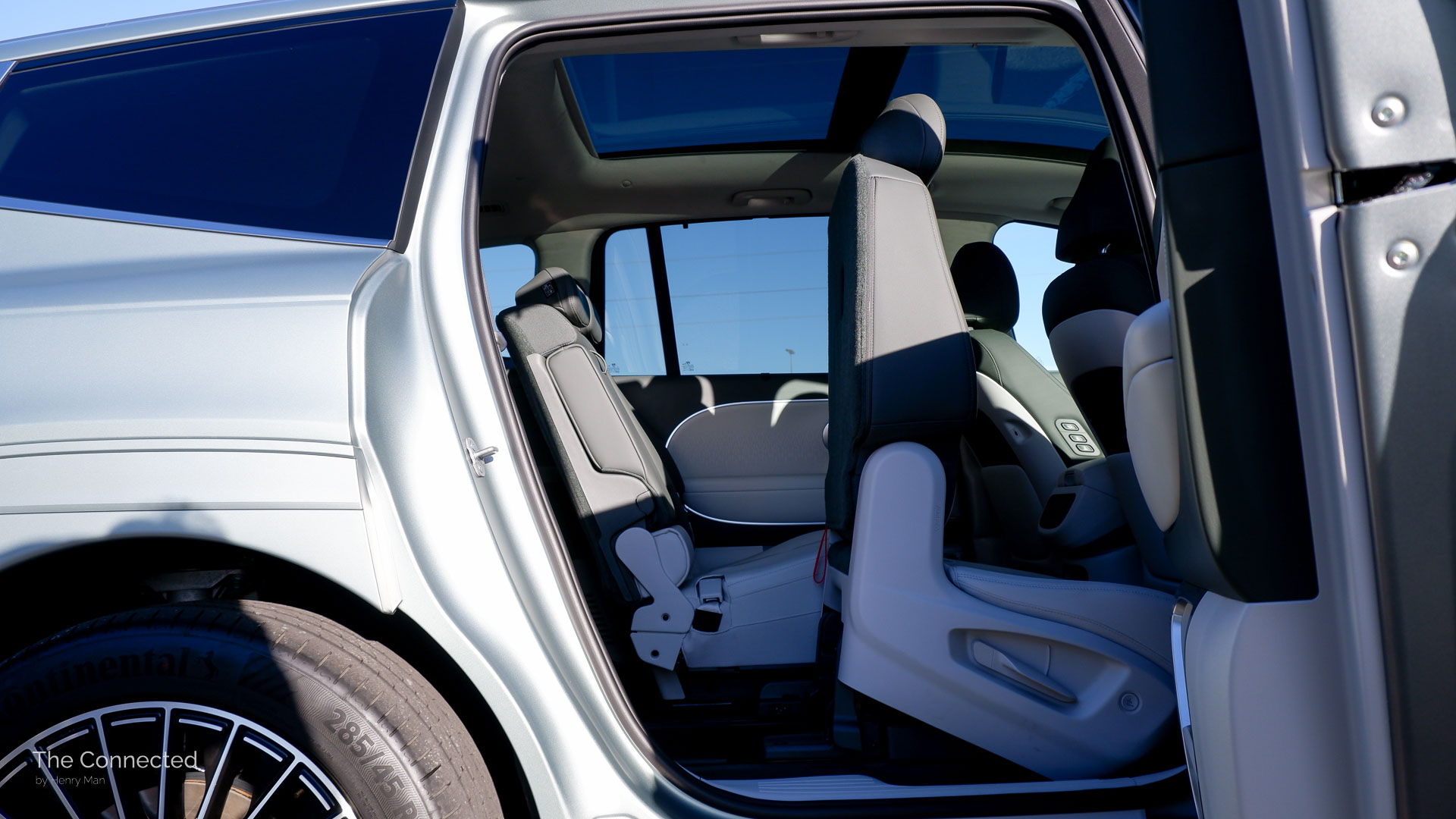
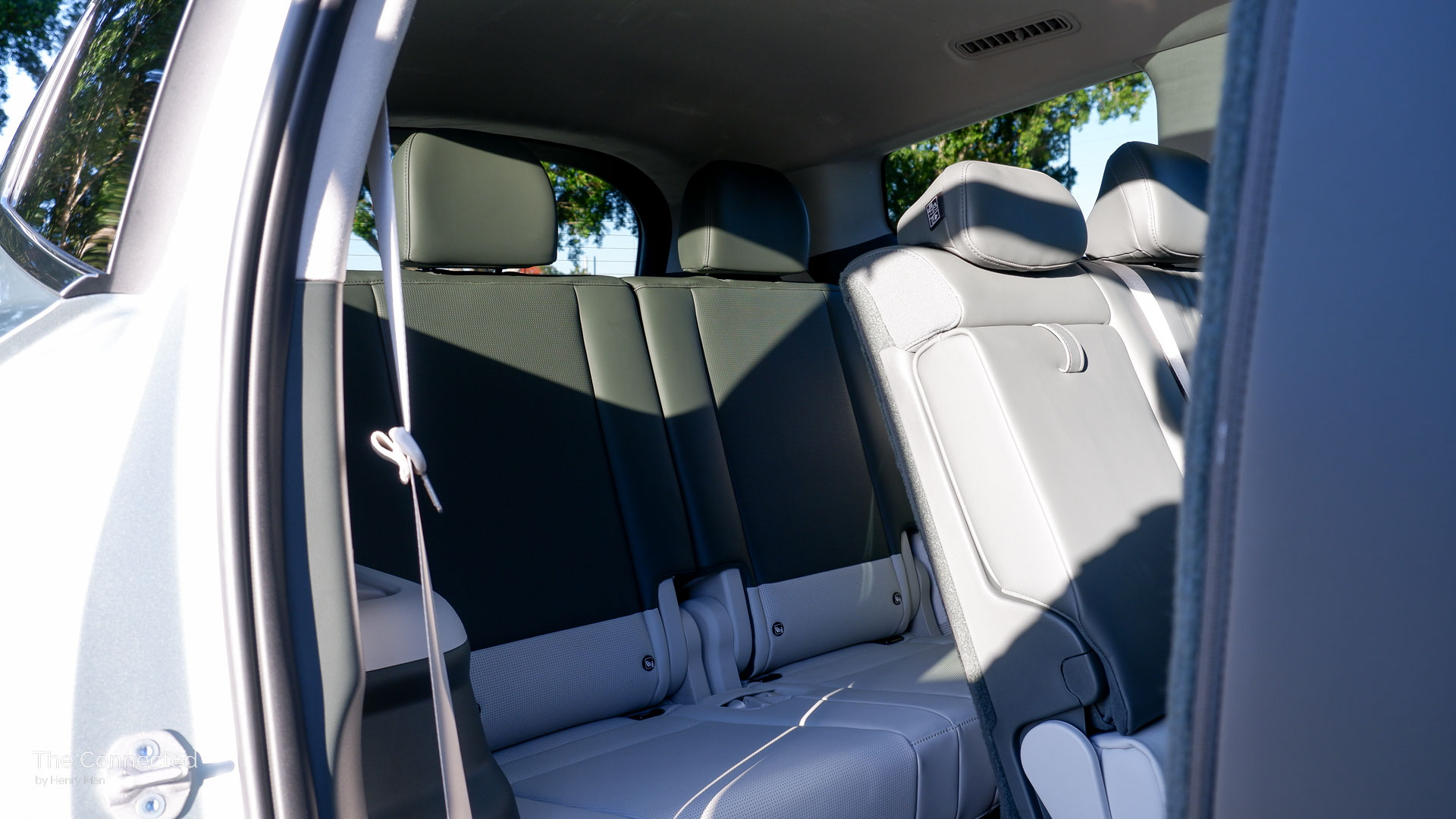
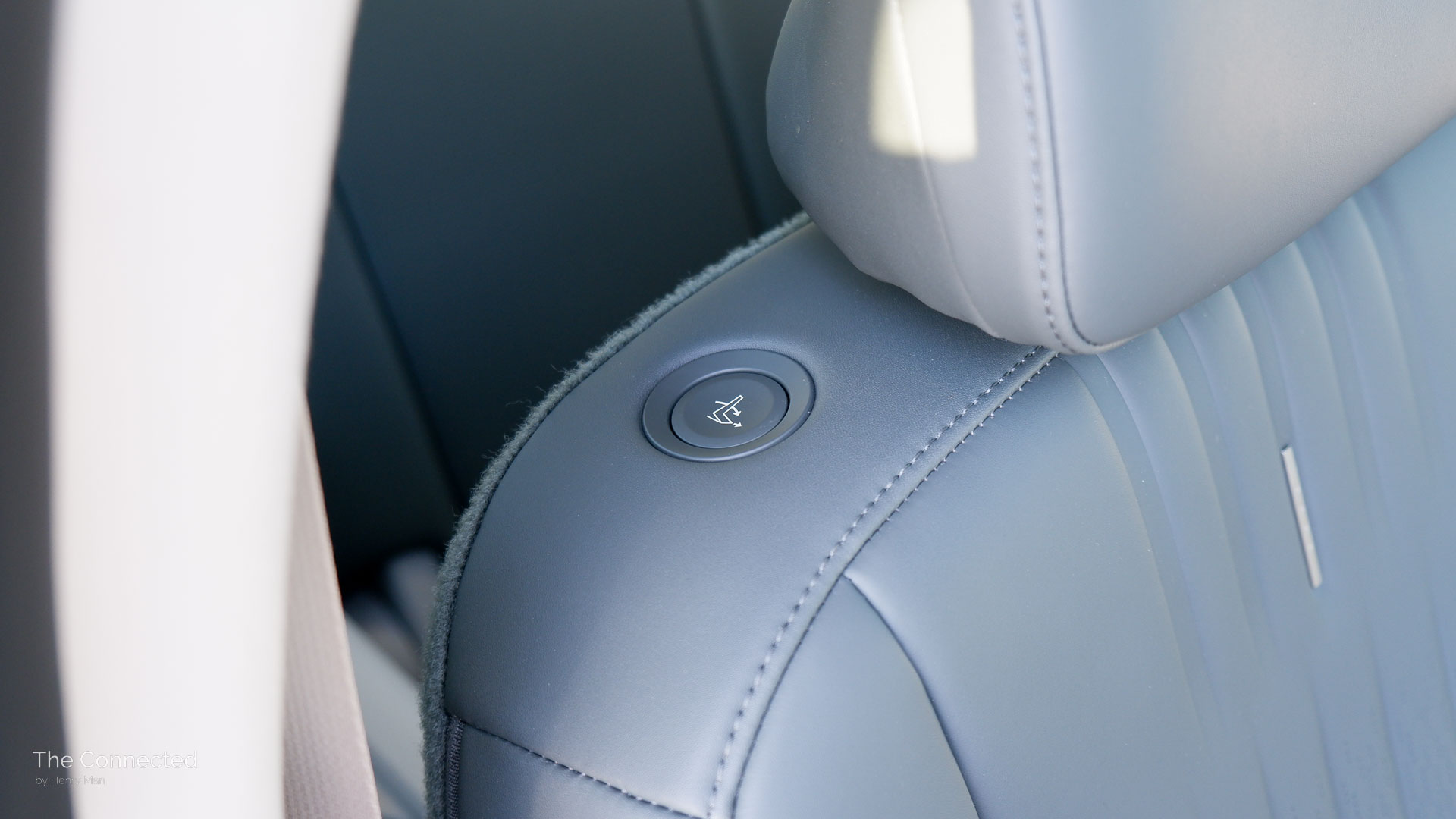
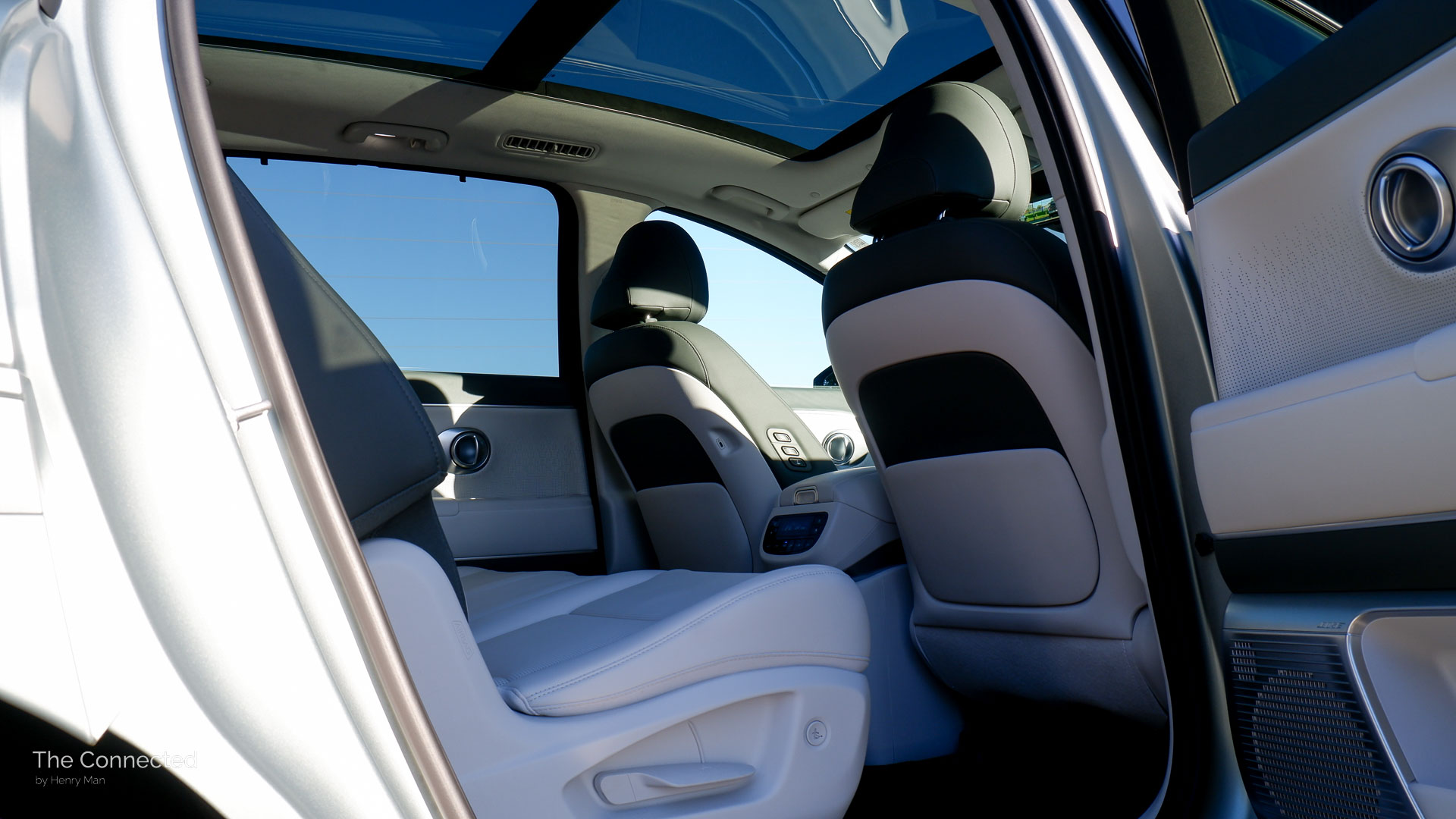
Climbing in the third row of the seven-seat Hyundai Ioniq 9 is fairly easy by pressing a button above the second row seat to flip it forward. It’s lacking an interior grab handle that’s found on the Kia Carnival to help with better accessibility.
The third row offers good headroom thanks to the tall roofline, but adults will have their knees against the plush carpeted seatback when the second row is in the most back position. Sliding it forwards a bit will still provide more than enough legroom for second row passengers.
Still, the Volkswagen ID. Buzz electric van simply offers more space than this large SUV.
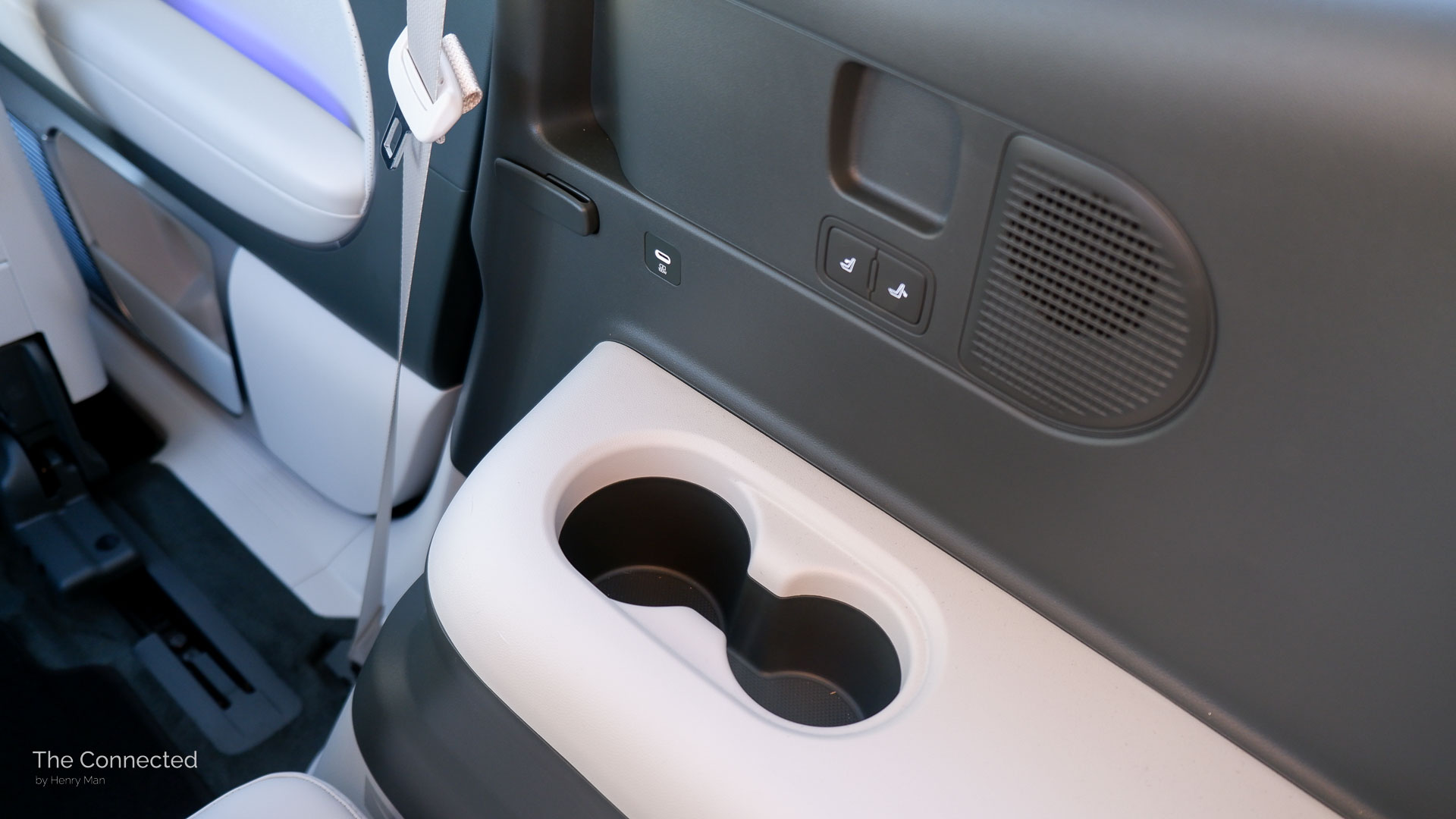
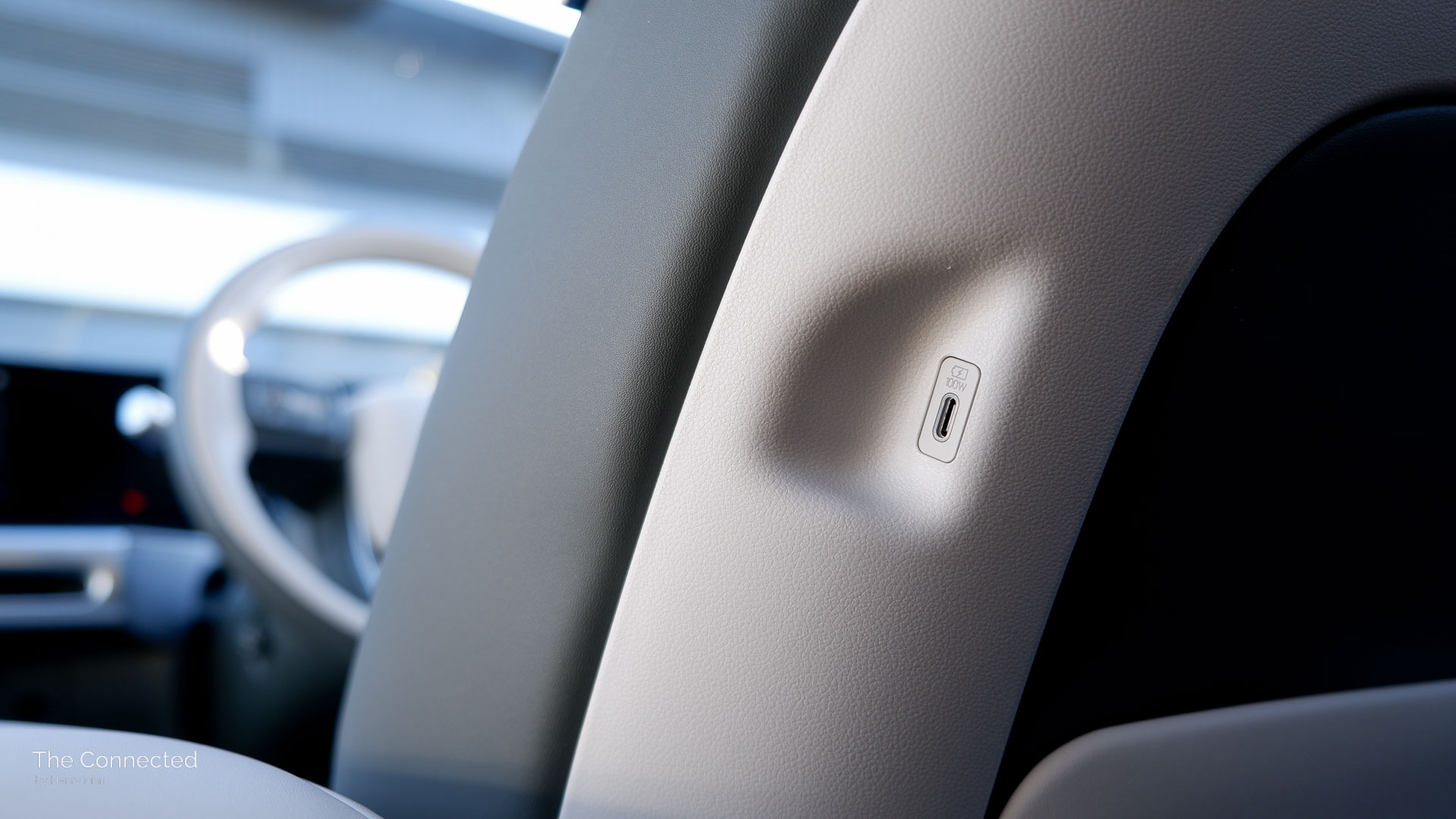
While the third row has hard plastic armrests, there are three cup holders, a storage slot, two illuminated 100-watt USB-C charging ports, buttons to electrically recline the backrests, and it doesn’t feel too claustrophobic with a large enough window even though it’s sloping.
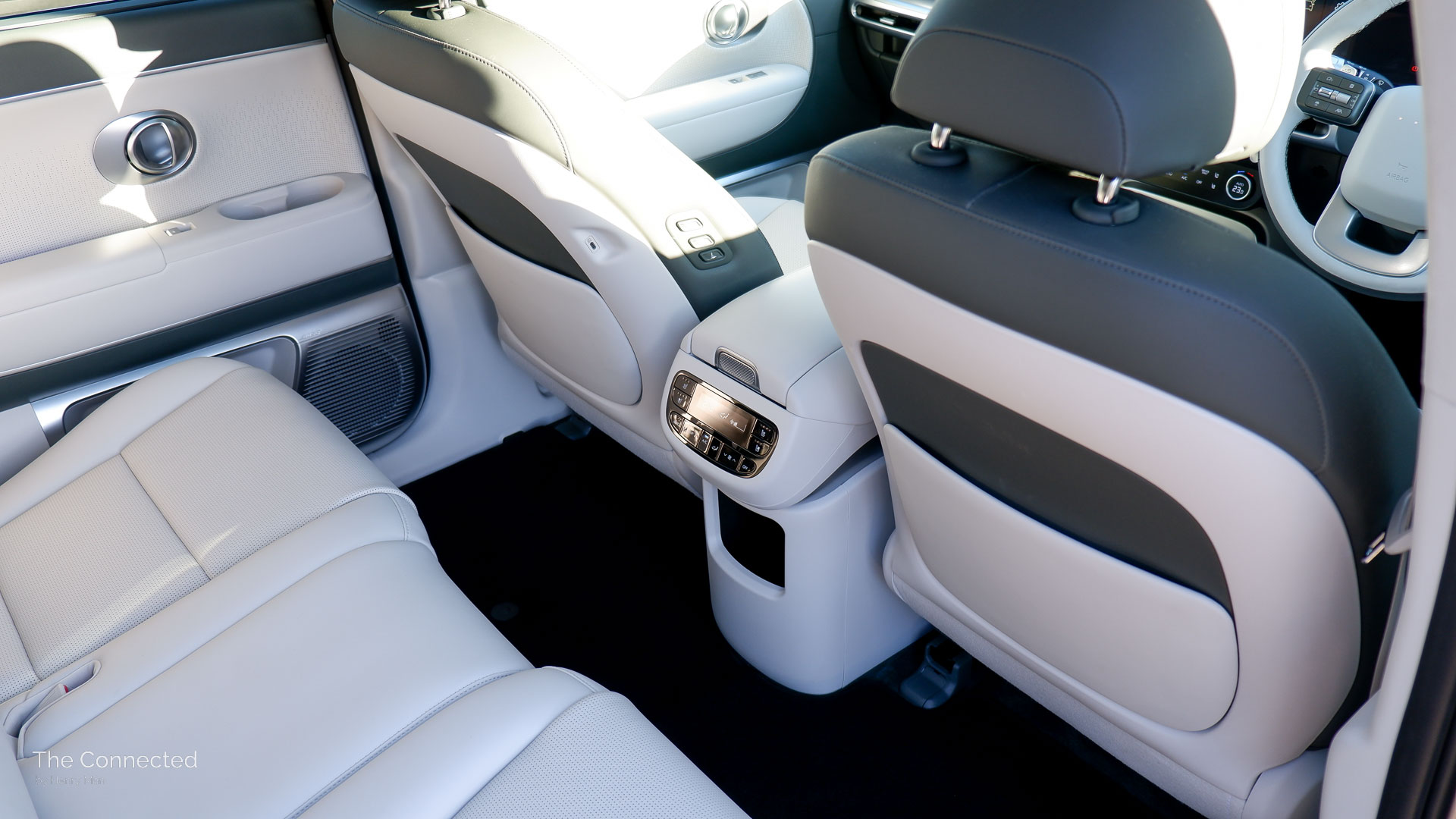
The second row offers commodious headroom, legroom and footroom with a wide bench and flat floor to sit three abreast regularly.
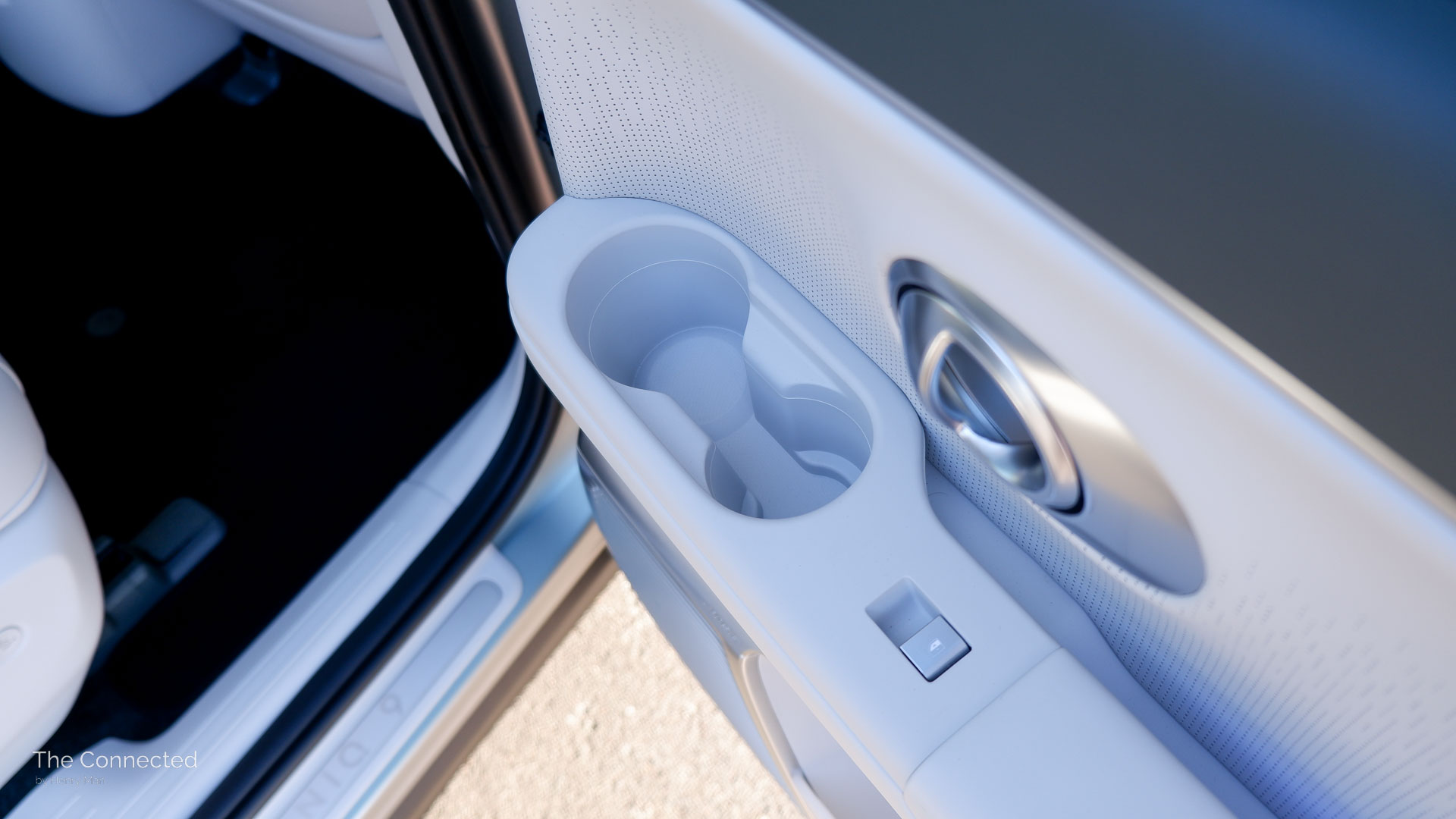
Amenities include two non-gripped cup holders conveniently placed beside each door, a fold-down middle armrest with another two cup holders, two USB-C charging ports hidden beside the front seats, seatback pockets, and a storage hole underneath the third-zone climate control buttons.
The outer second row pews feature three-level heating or ventilation and the windows offer large built-in sunshades, too.
Disappointingly, all door bottle pockets on the Ioniq 9 are very narrow and shallow, especially at the front row where flasks actually jut out.
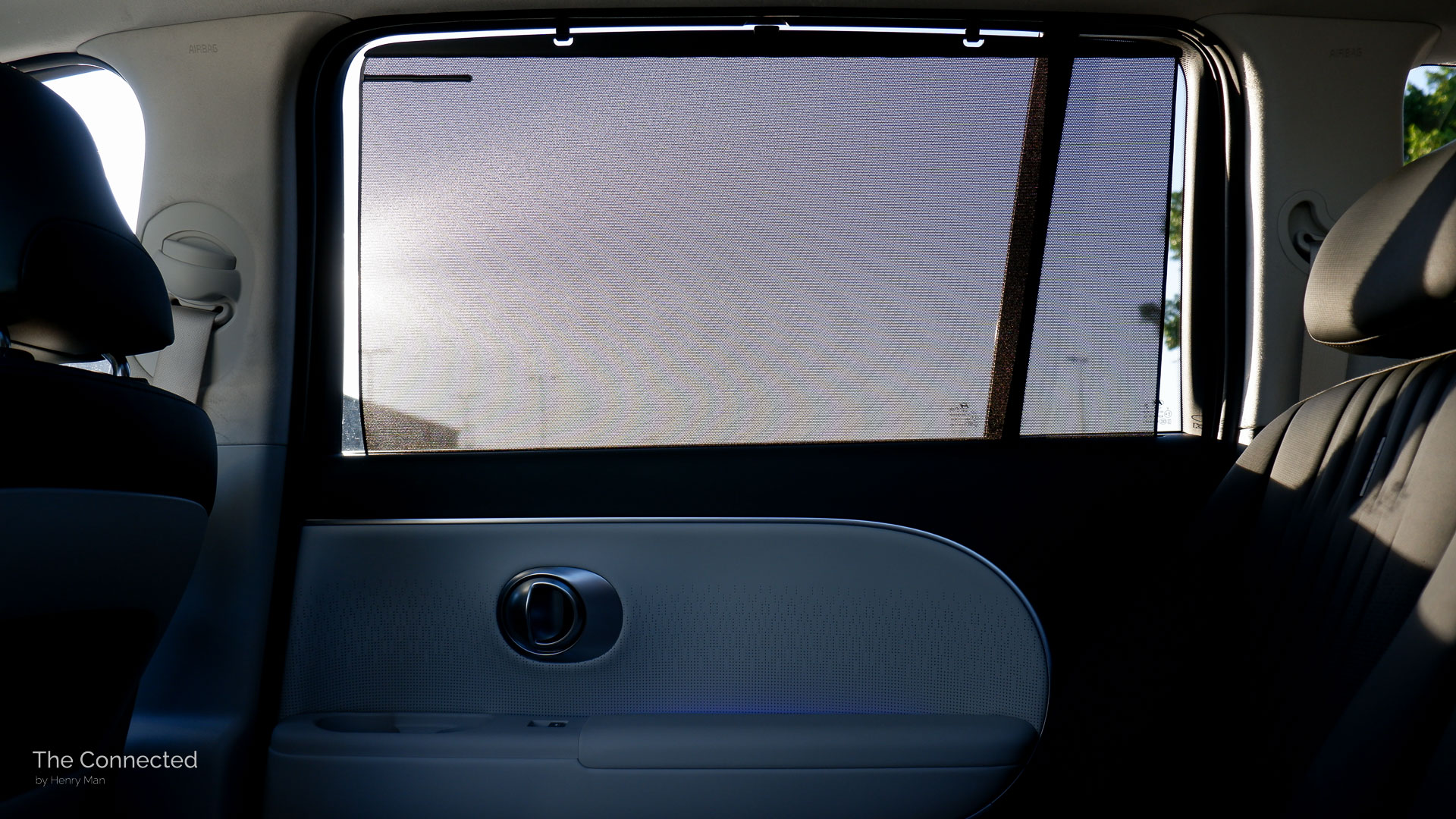
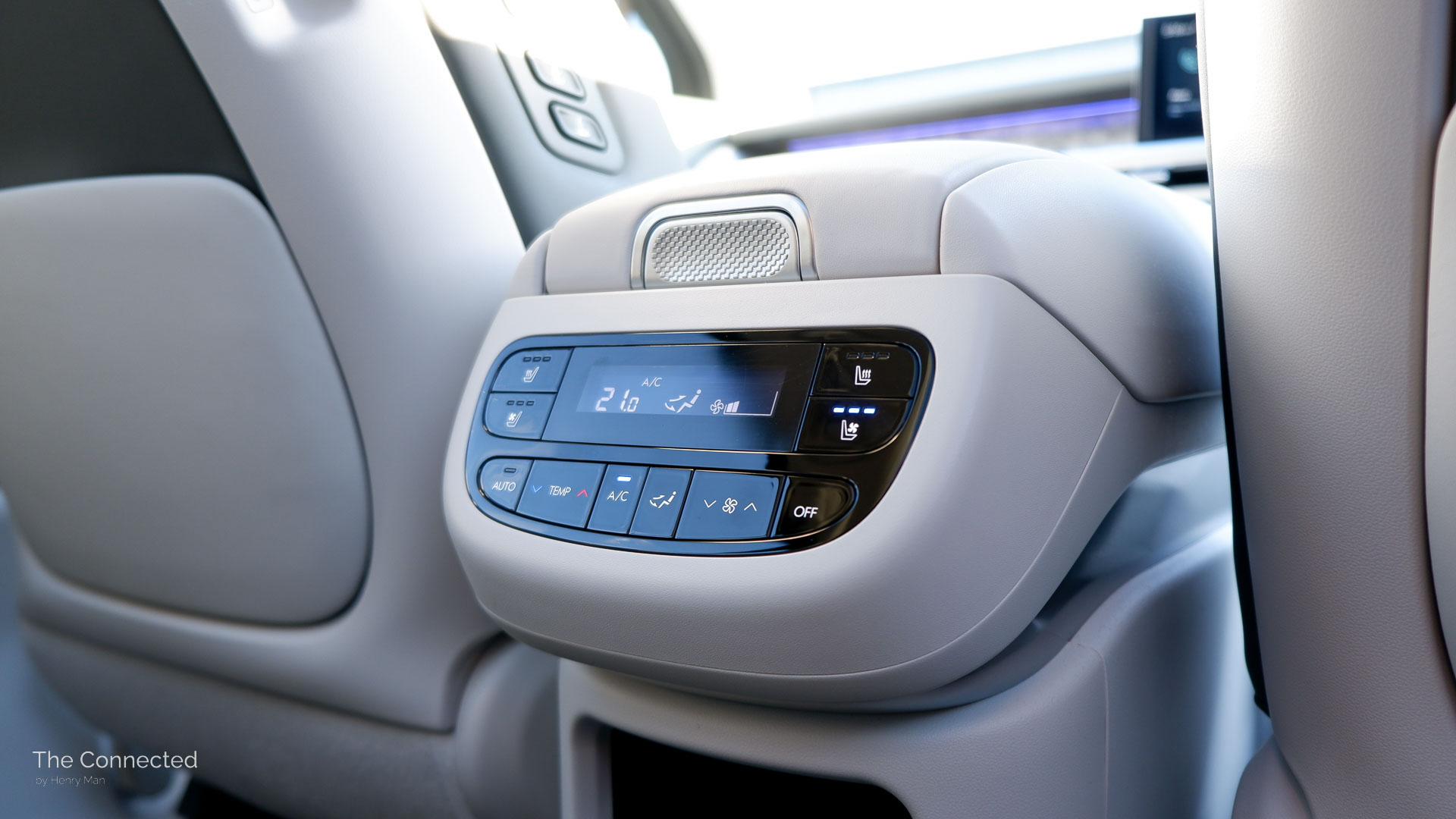
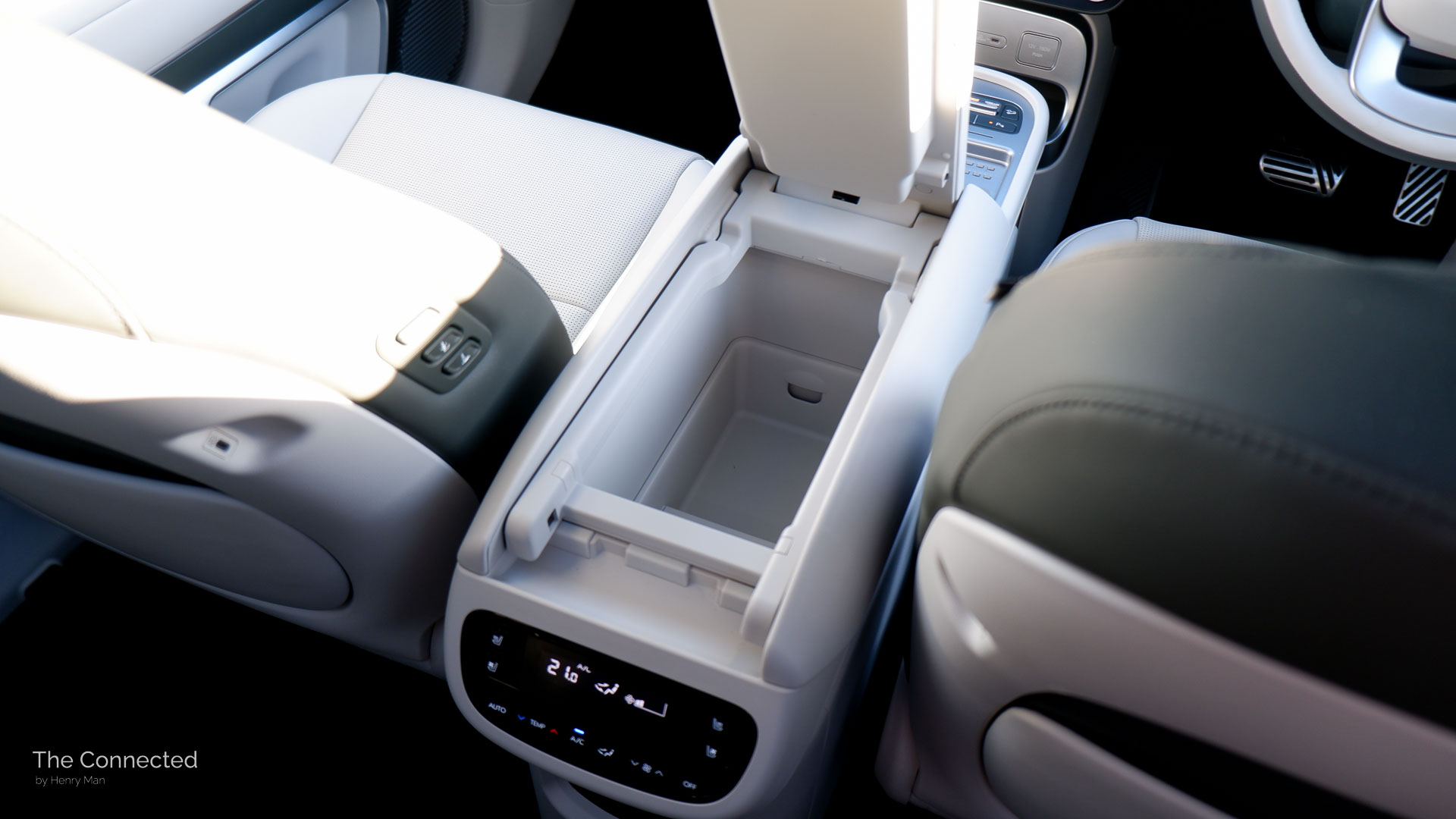
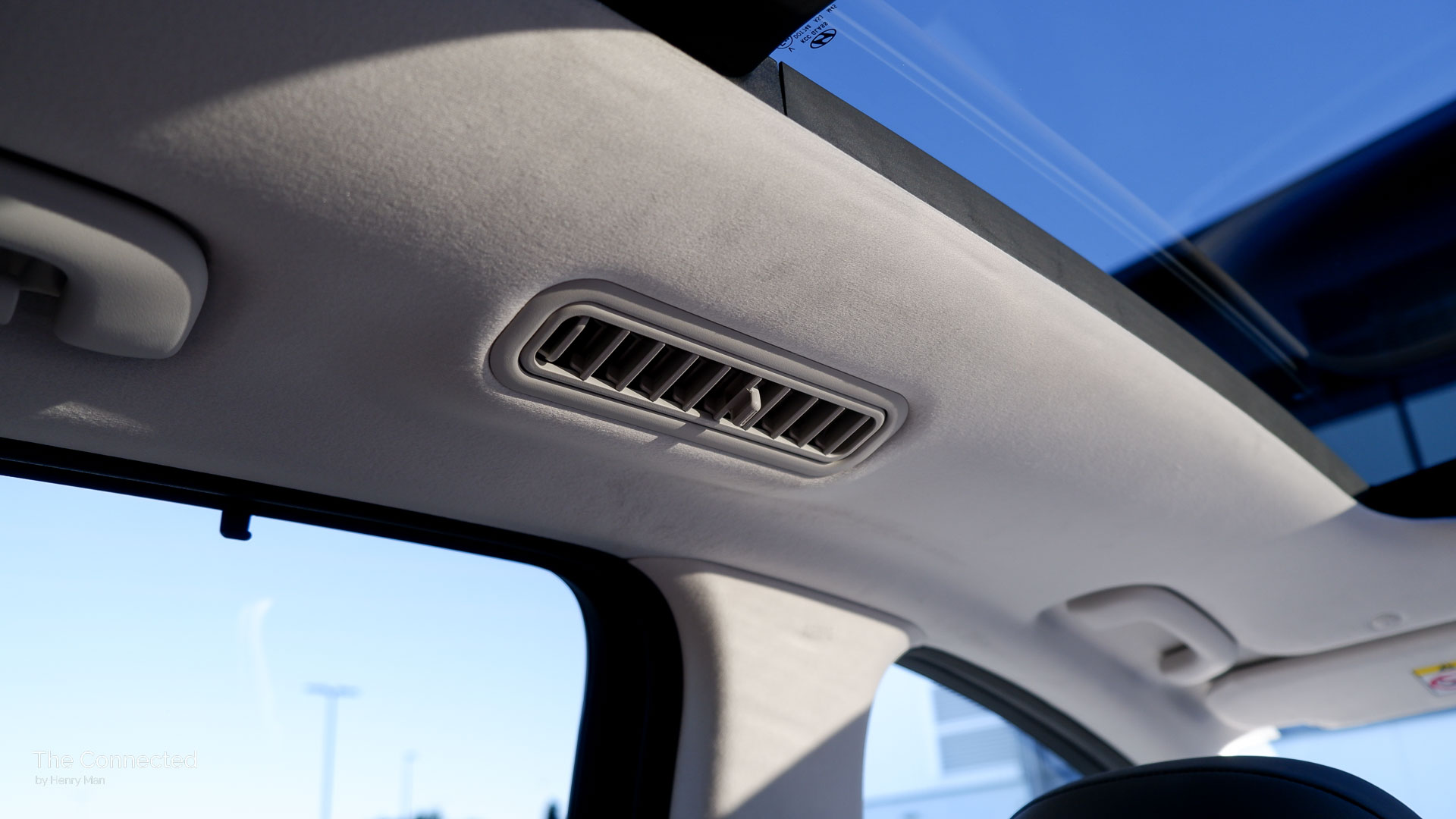
A six-seat captain chair layout is available for $2000 more, which also brings a reclined relaxation mode for the second row, powered folding and unfolding second row, and sliding front centre console.
The standard panoramic sunroof is large, openable, and includes a built-in sunshade with a soft suede material matching the headliner.
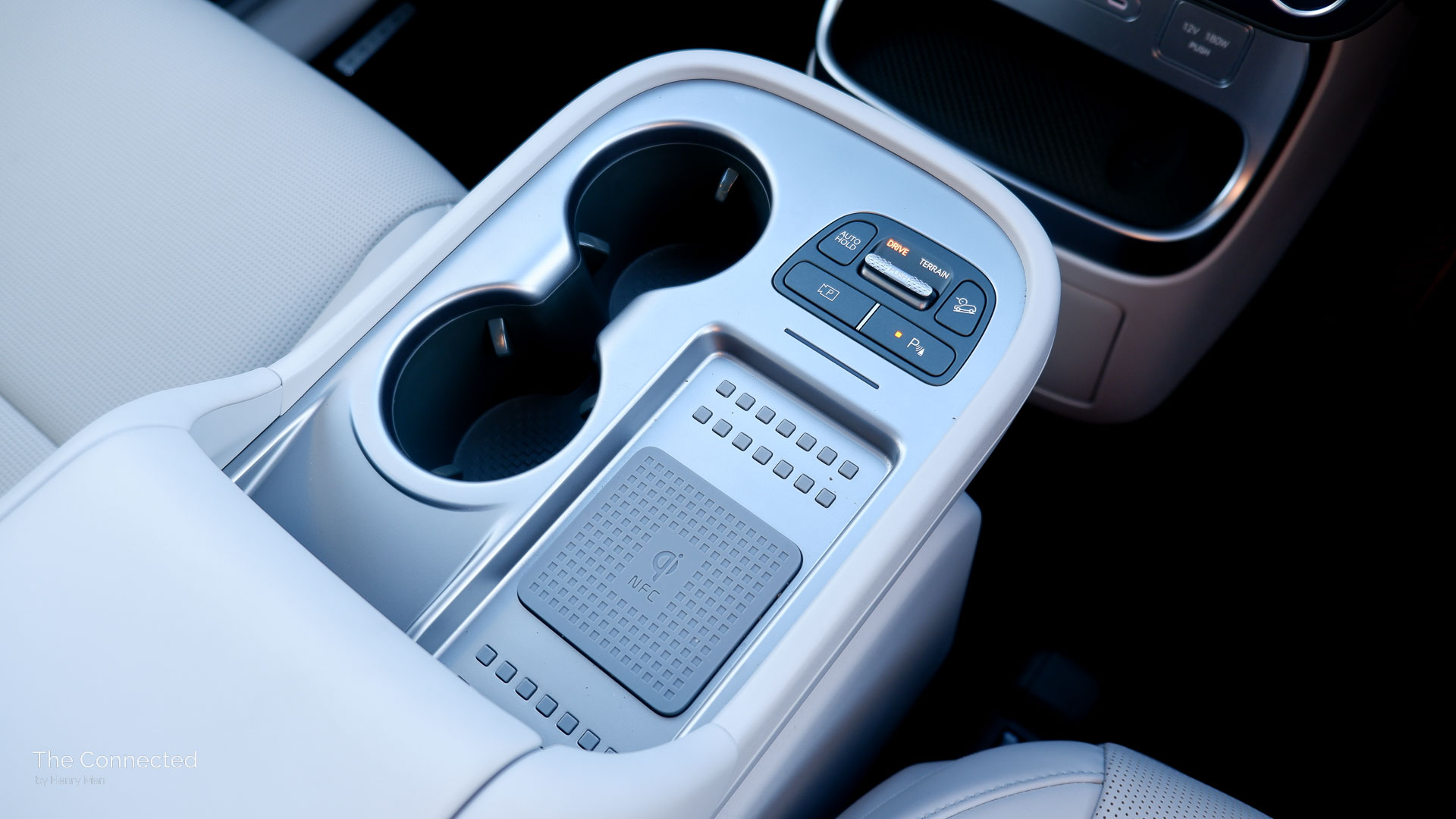
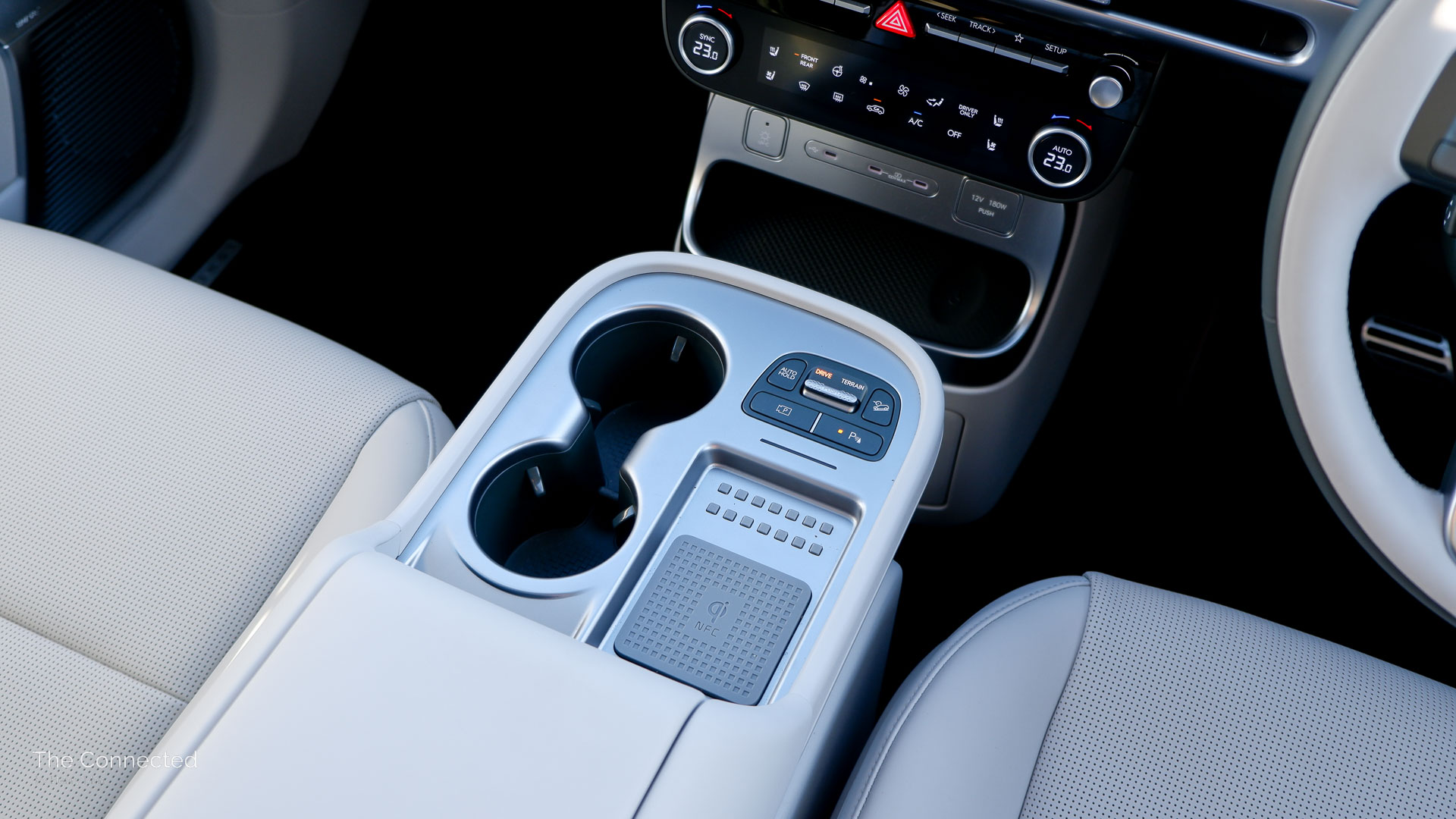
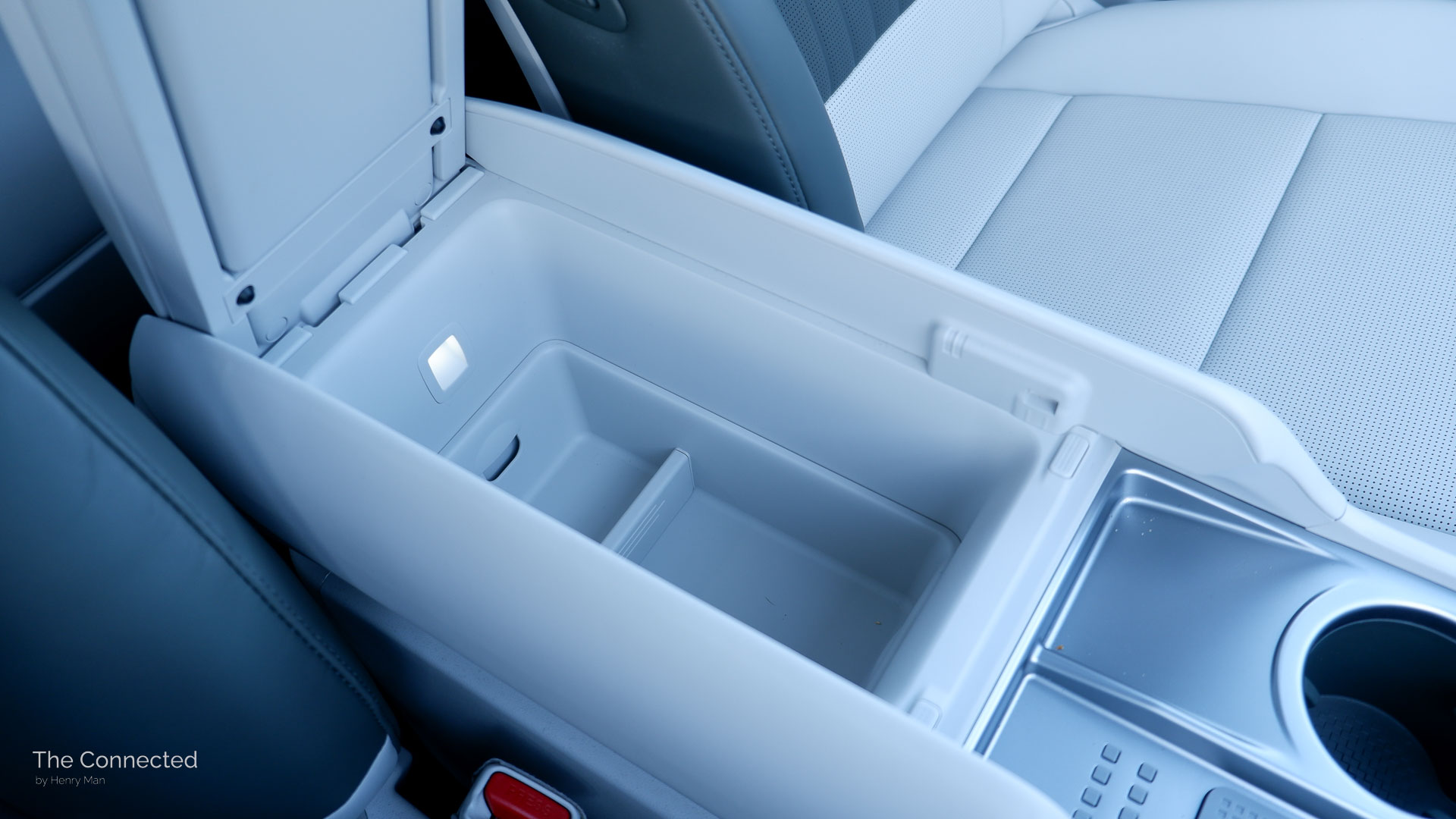
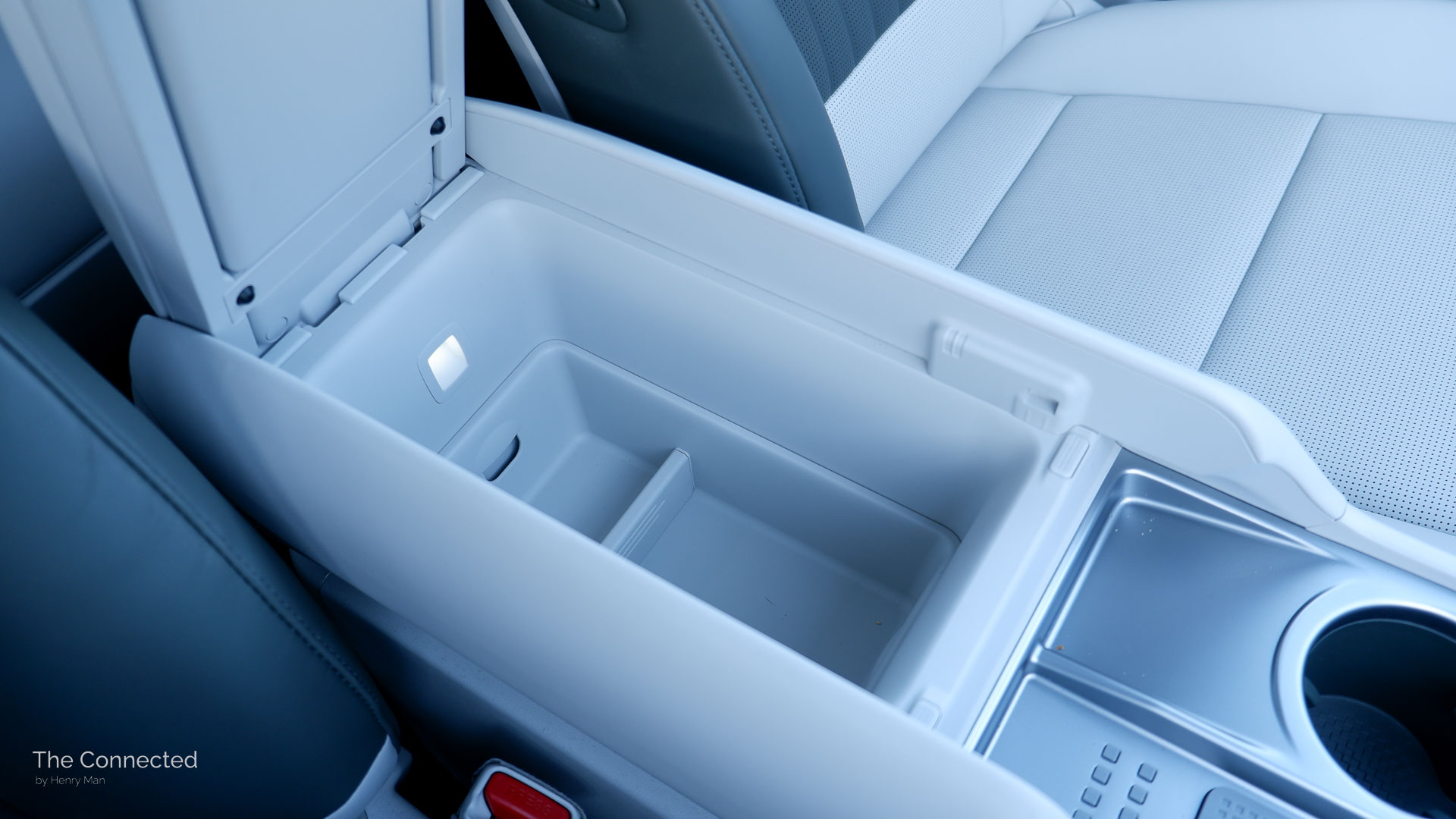
Meanwhile, the front row is home to a centre console with two gripped cup holders, a Qi wireless charging pad, and large storage bin with a removable tiered tray underneath the armrest – which is double hinged and can be accessed by both first and second row passengers, identical to the Hyundai Santa Fe.
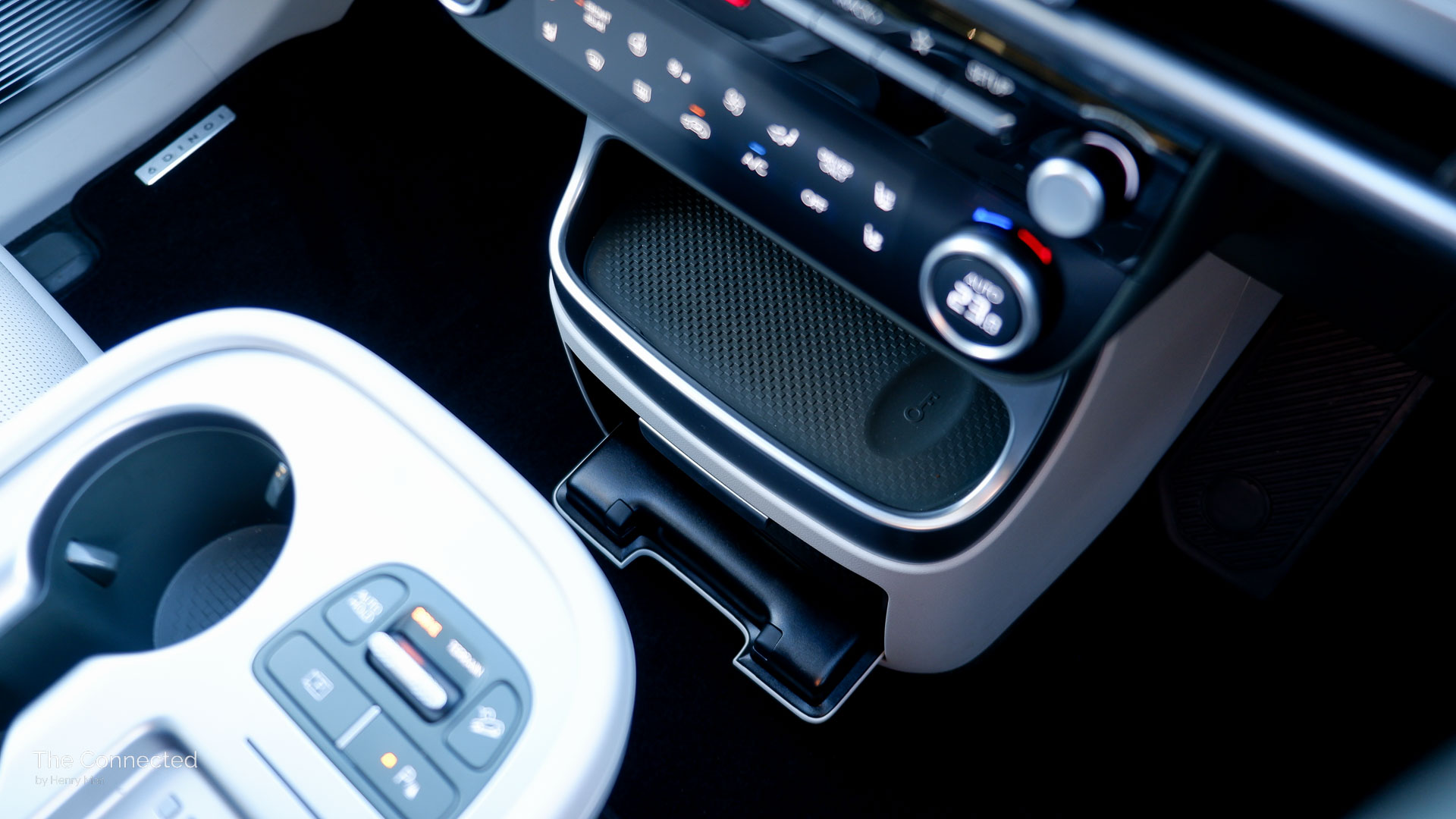
Ahead is even more storage space with a rubberised open surface under the three USB-C ports (with 100-watt output shared across two) and an enclosed space near the floor featuring UV-C sterilisation.
Unfortunately, Australian-spec Ioniq 9s don’t feature an interior vehicle-to-load (V2L) power socket – despite being available overseas and standard on the Inster and Kona Electric.
It’s worth noting that the floor of the front passenger is fairly upright due to the firewall, similar to the Tesla Model Y, so it’s less comfortable to properly stretch your leg.
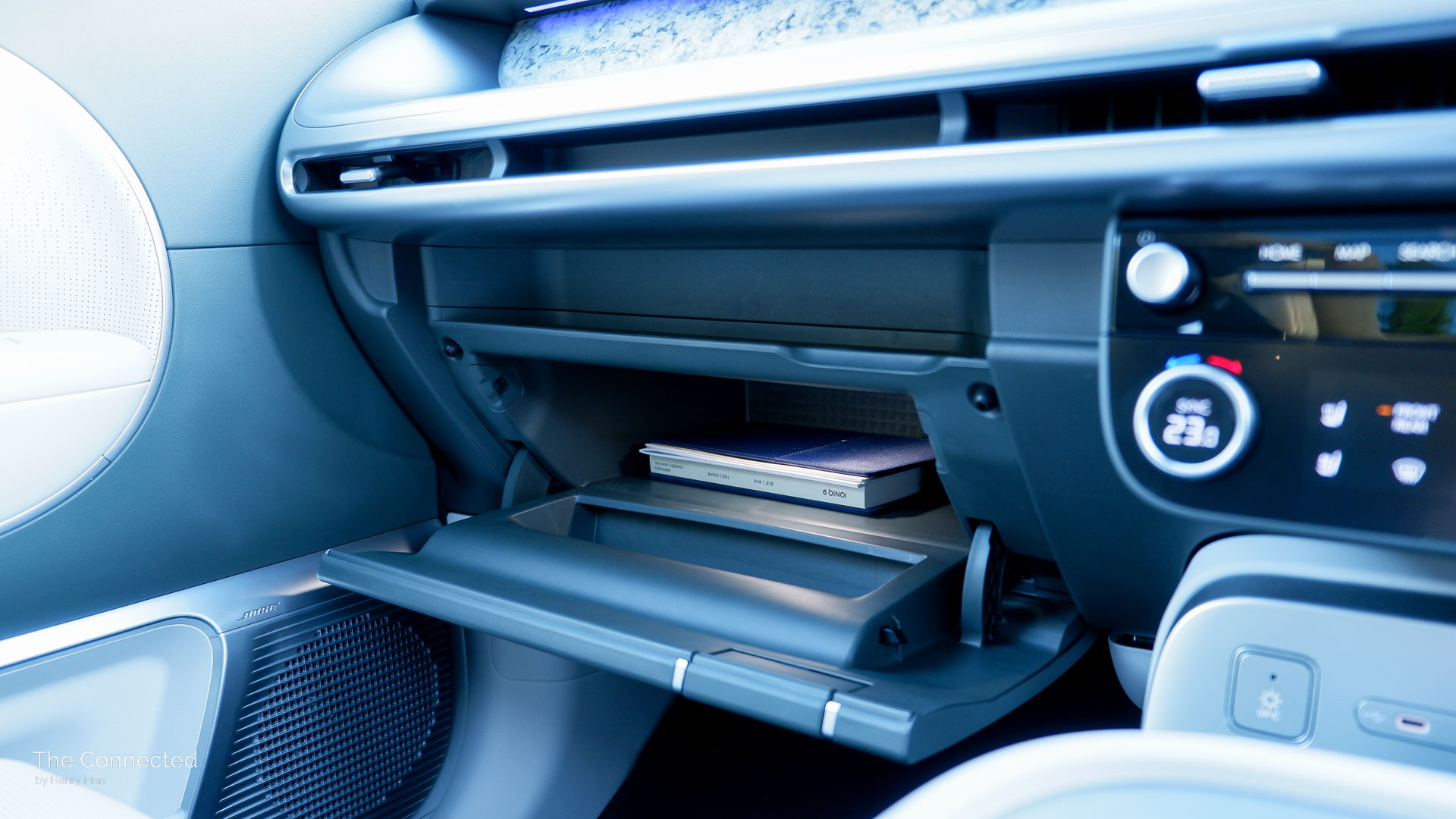
Similar to the popular Santa Fe, there’s a hidden open shelf ahead of the front passenger and a deep illuminated glovebox.
The Hyundai Ioniq 9 also features a prominent dashboard area, but the rubberised silver material is a magnet for dust and fingerprints.
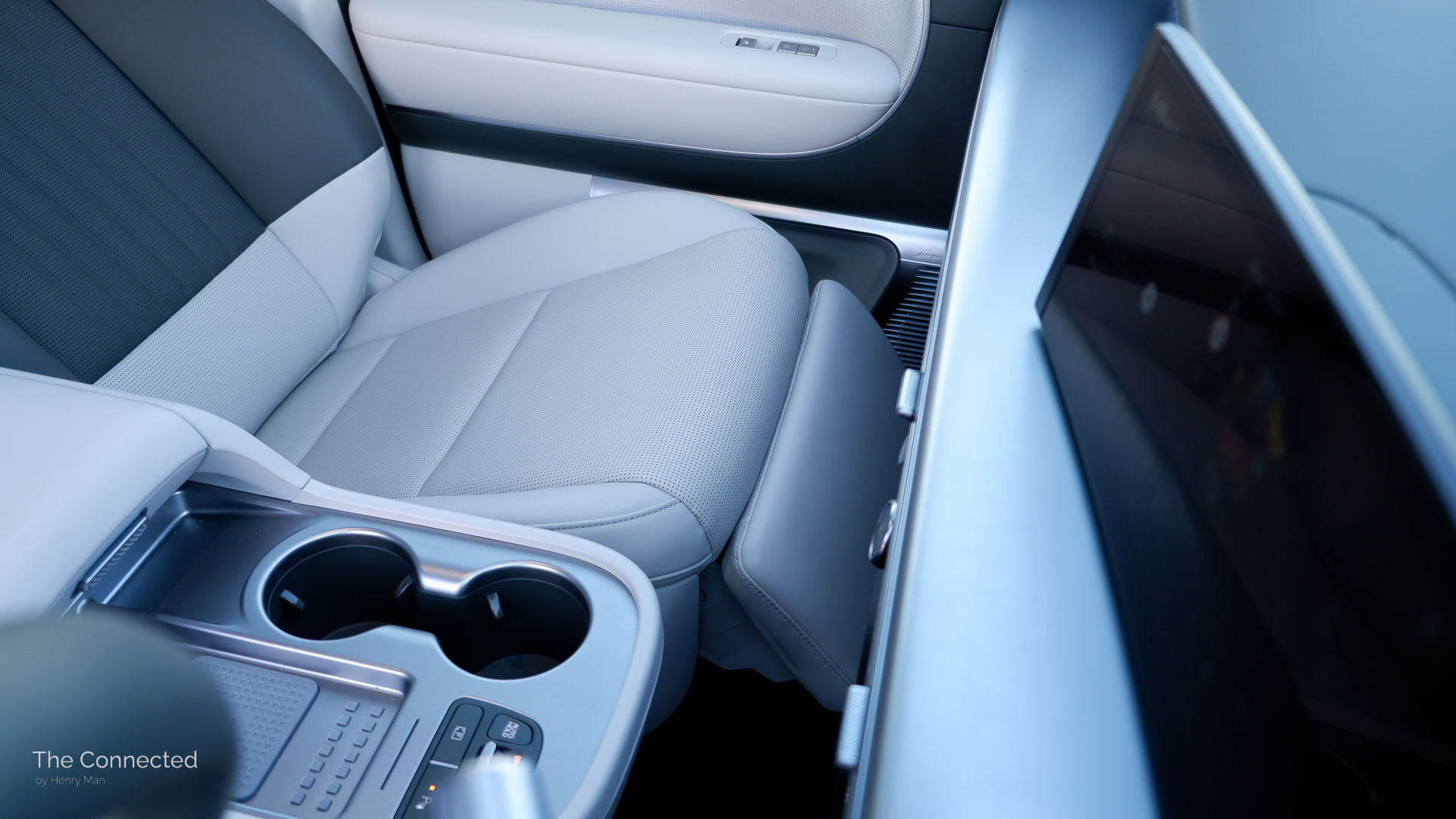
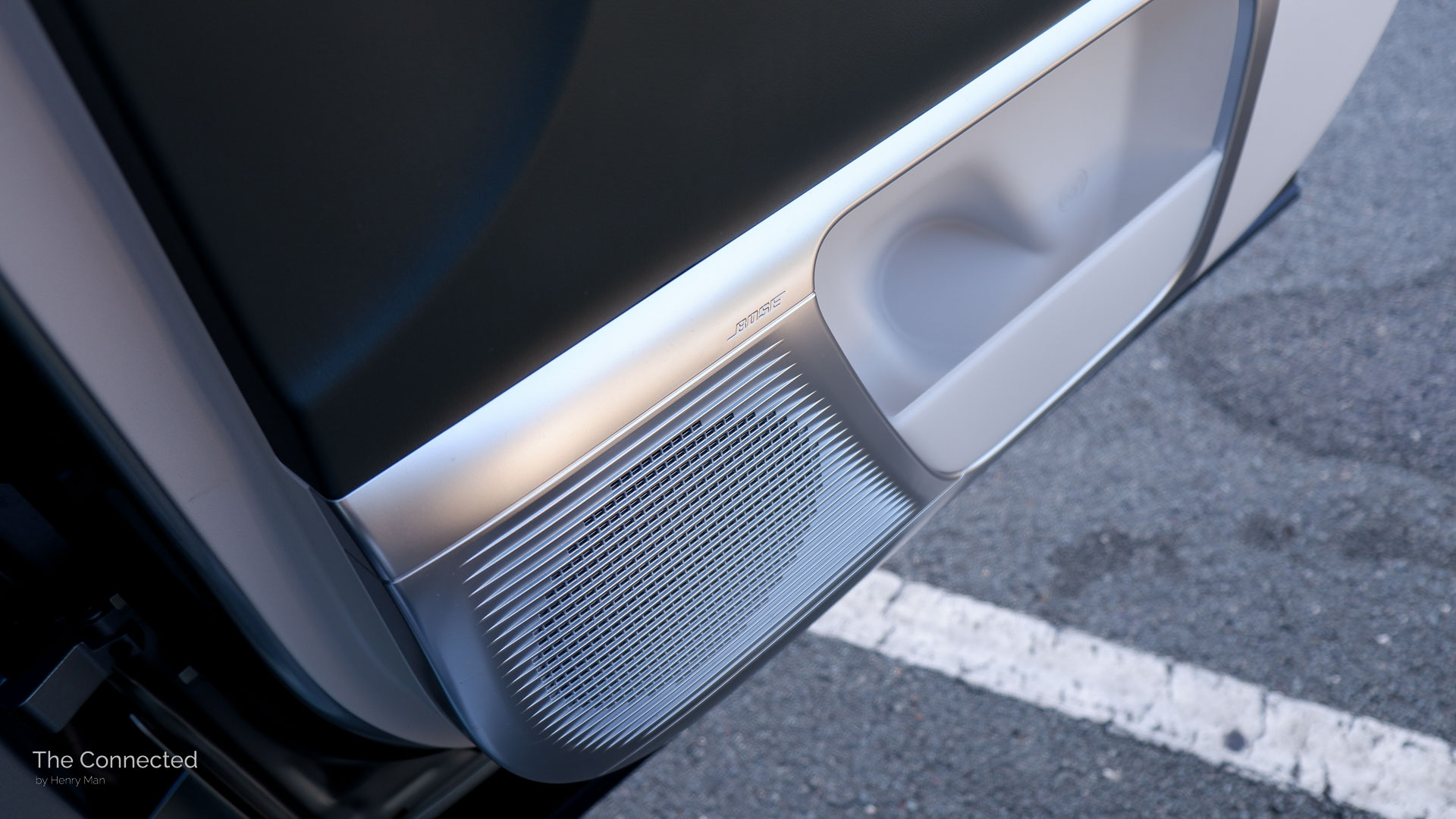
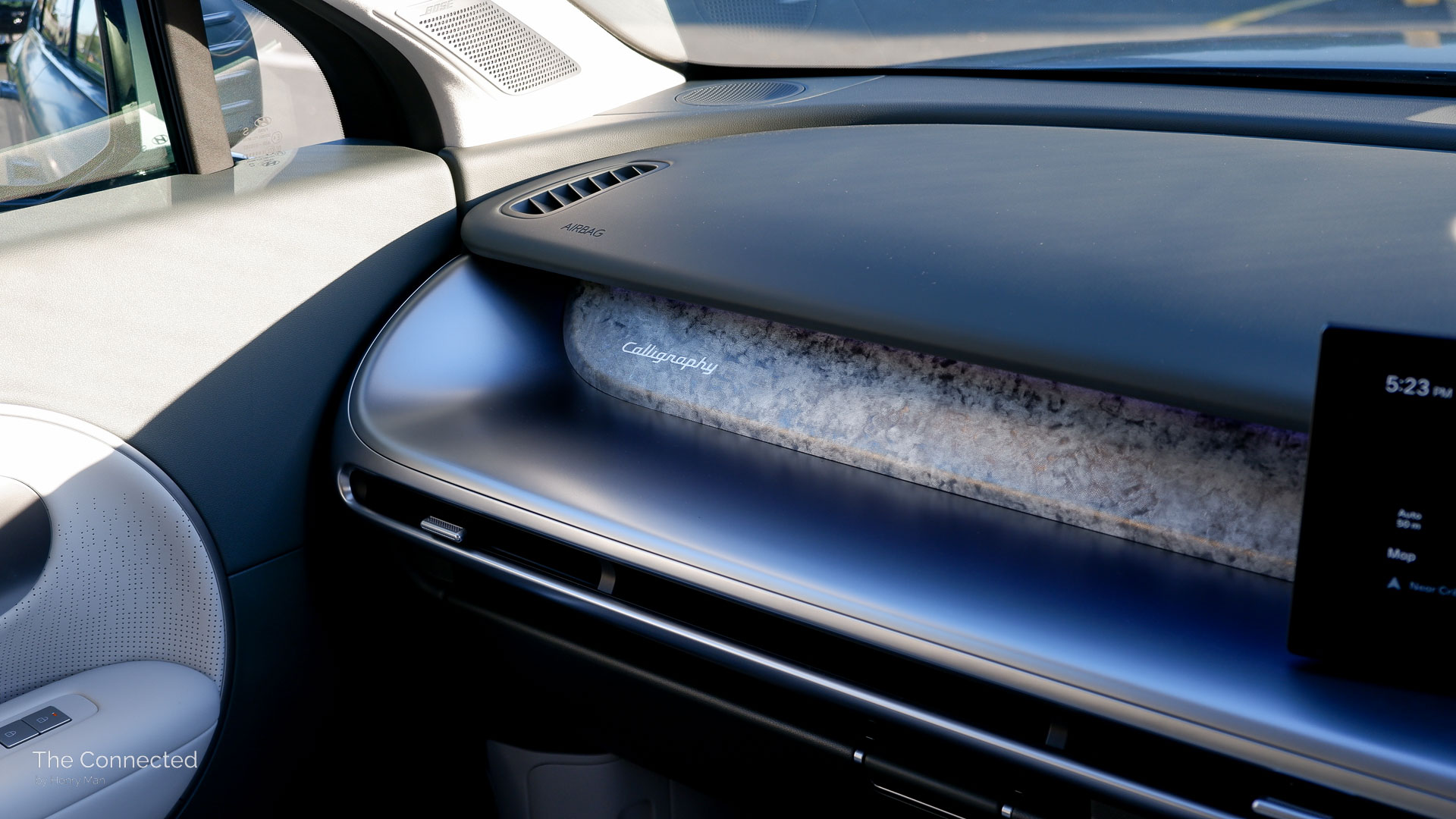
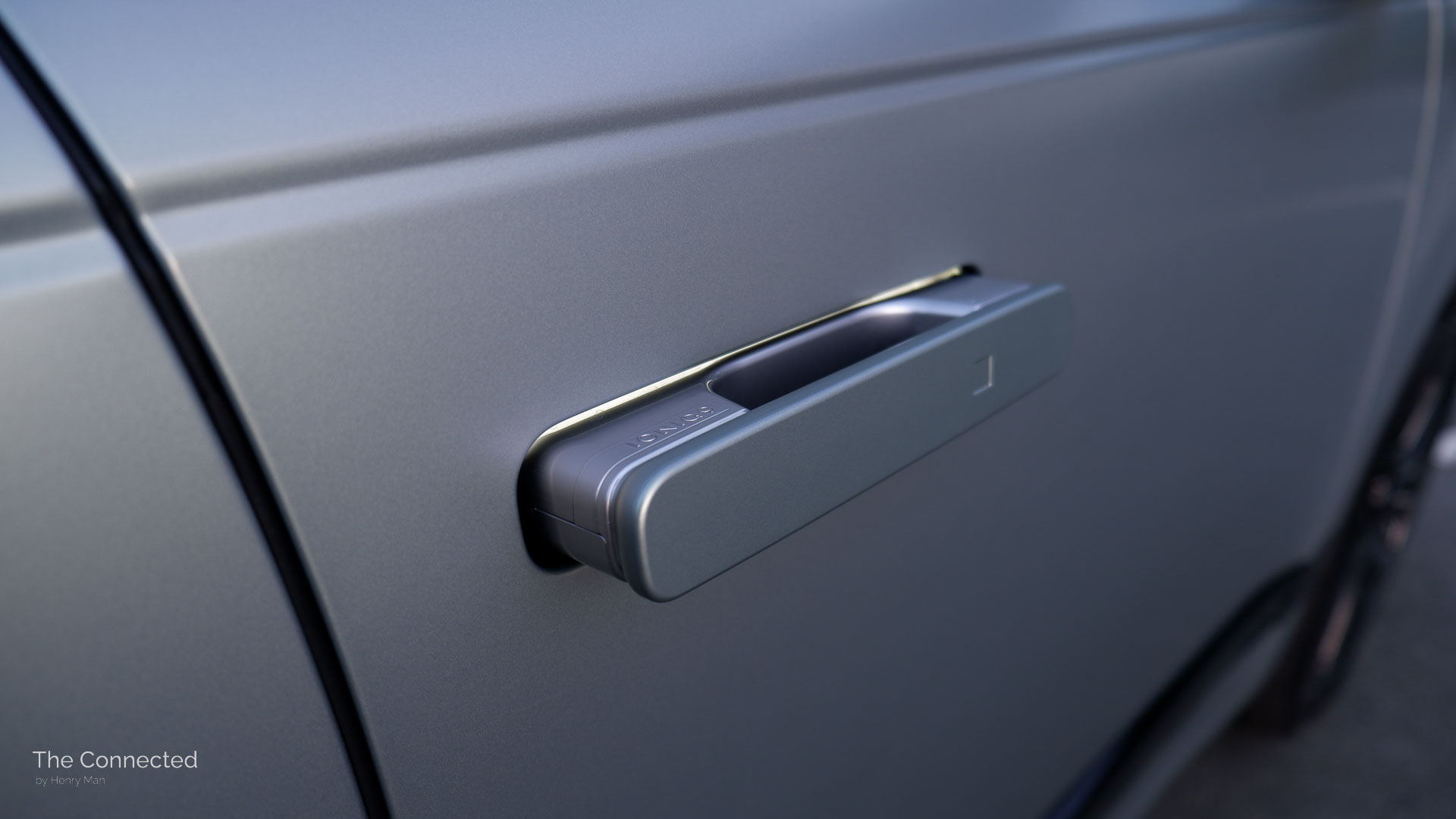
Furthermore, the standard Nappa leather seats are large and comfortable with three-level heating and ventilation for the front seats, a reclined relaxation mode with a leg rest, seat, lumbar and bolster electric adjustment, two-stage memory for both front seats, massaging for the driver only, and a two-level heated steering wheel.
The three-zone climate control system is strong even on the lowest fan setting, with well-placed aeroplane-style air vents on the roof for the rear rows.
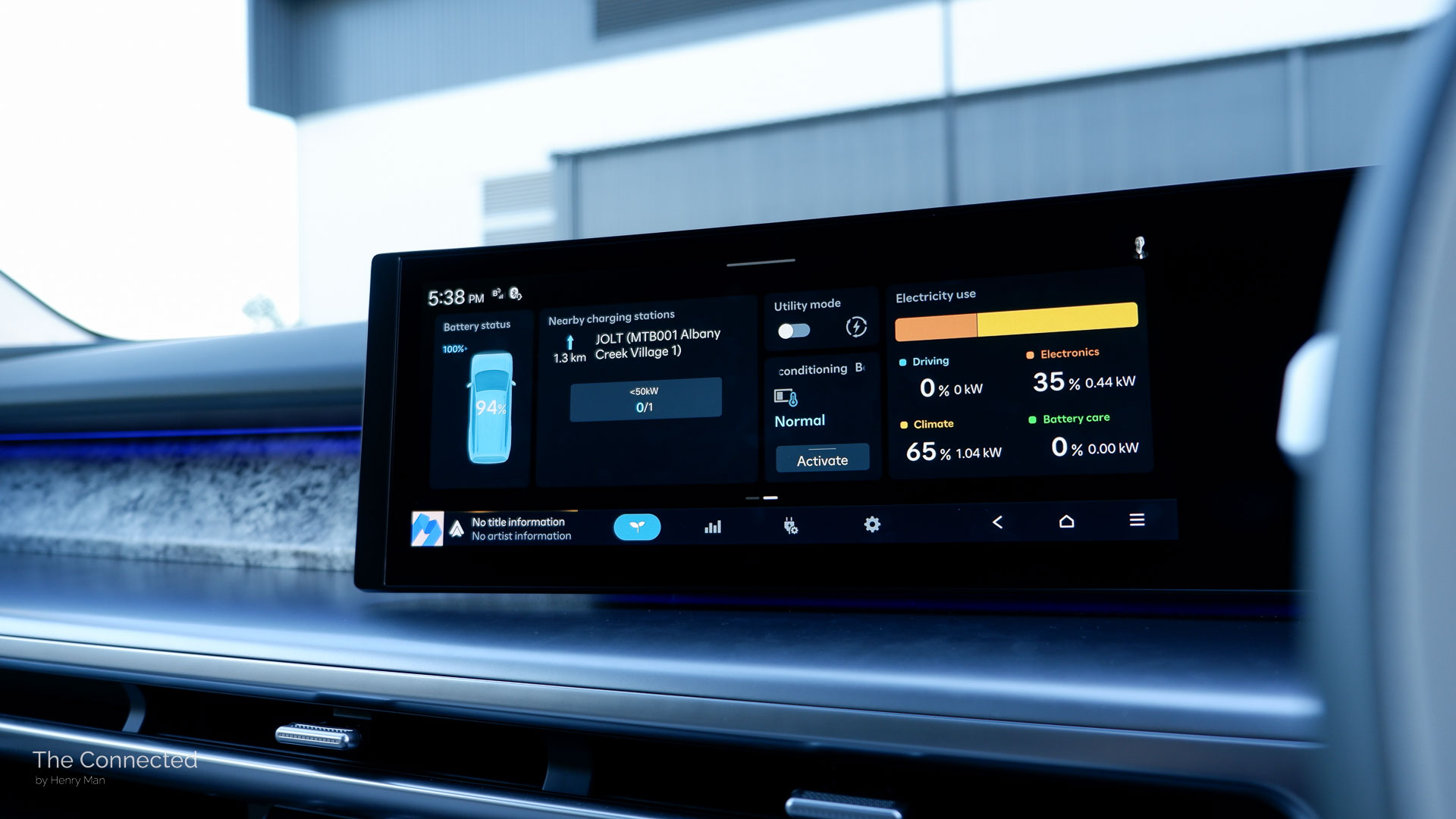
It’s lacking a proper pet or camp mode, but Hyundai’s utility mode keeps the air-conditioning running while stopped and you can use the mobile app to lock the doors.
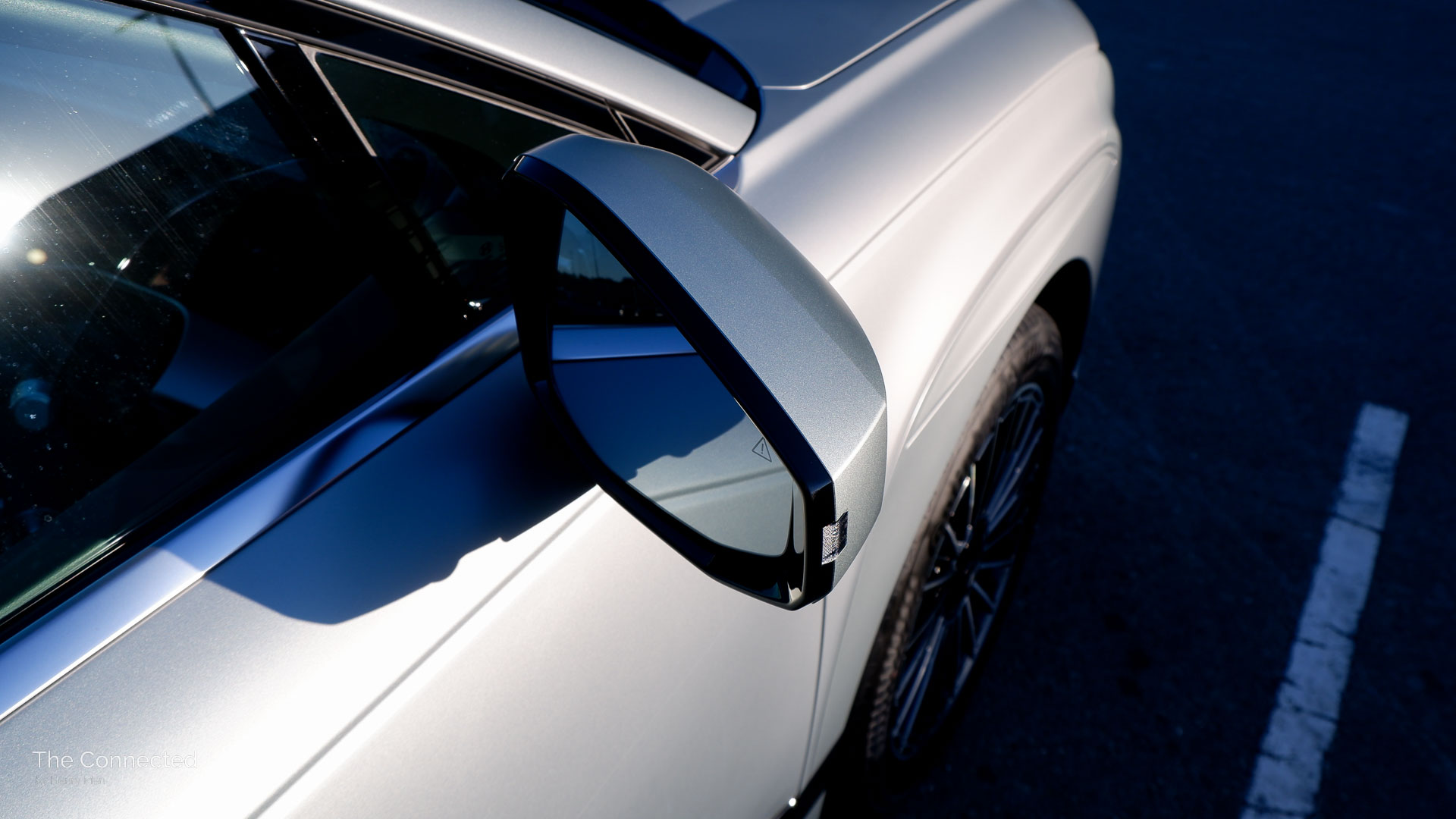
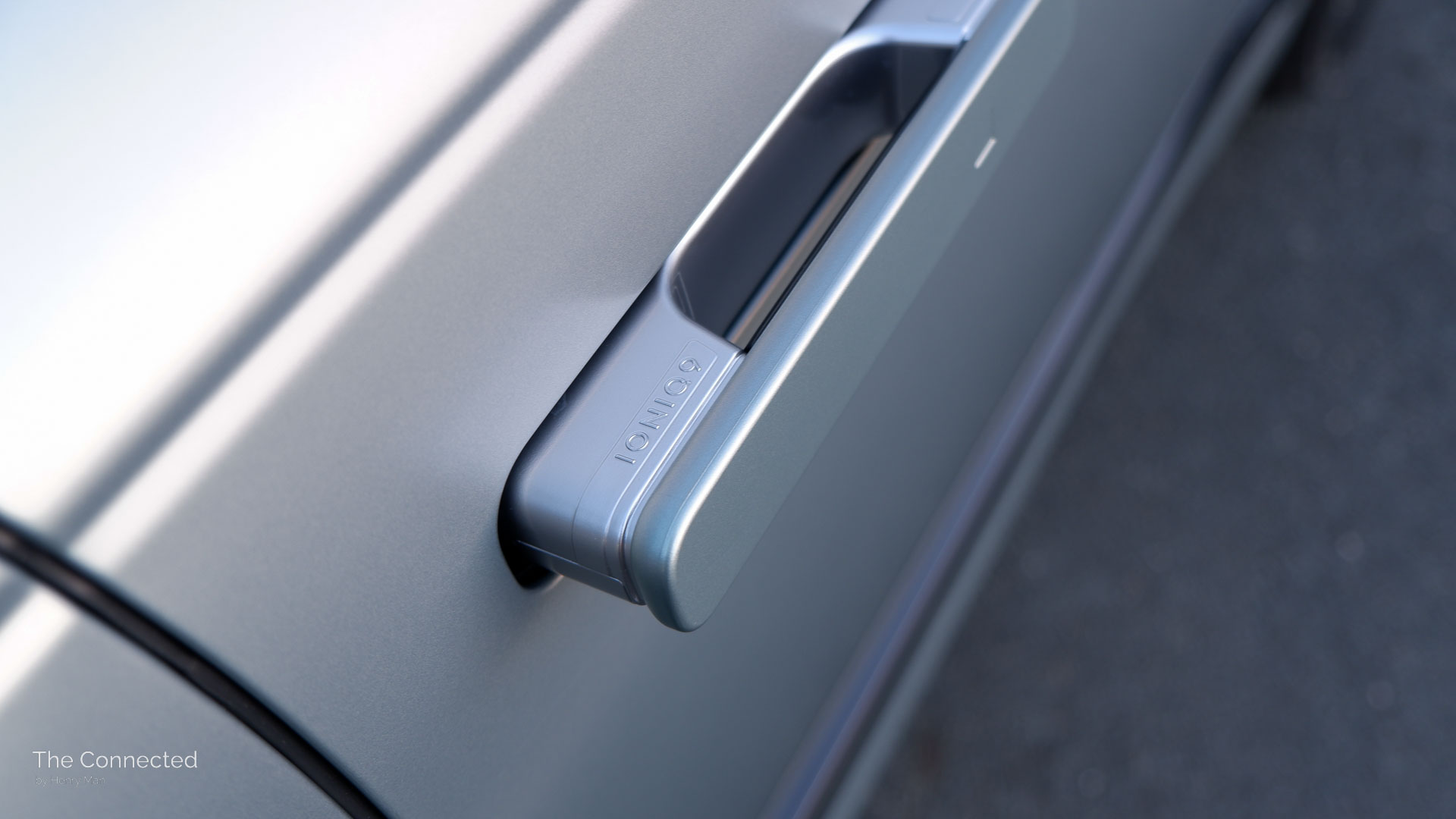
Unlike the Kia EV9, the Hyundai electric SUV incorporates an illumination glow that surrounds the flush door handle when it pops out upon unlocking – helpful at night and another cool luxury car attention to detail.
Technology.
2026 Hyundai Ioniq 9 Calligraphy tech features:
| 12.3-inch touchscreen running ccNC | 12.3-inch driver instrument display |
| Wireless/wired Apple CarPlay and Android Auto | Qi wireless charging pad |
| Built-in maps | 7x USB-C and 2x 12-volt charging ports |
| Bluelink connected services with mobile app (five years included) | Proximity key with auto unlocking, auto-folding mirrors, and pop-out illuminated door handles |
| OTA software update capability | Digital Key 2 with UWB and NFC Apple CarKey and Google Car Key compatibility (five years included) |
| 14-speaker Bose Premium |
The Ioniq 9 offers modern, yet non-overwhelming technology – but it isn’t different to any other cheaper Hyundai.
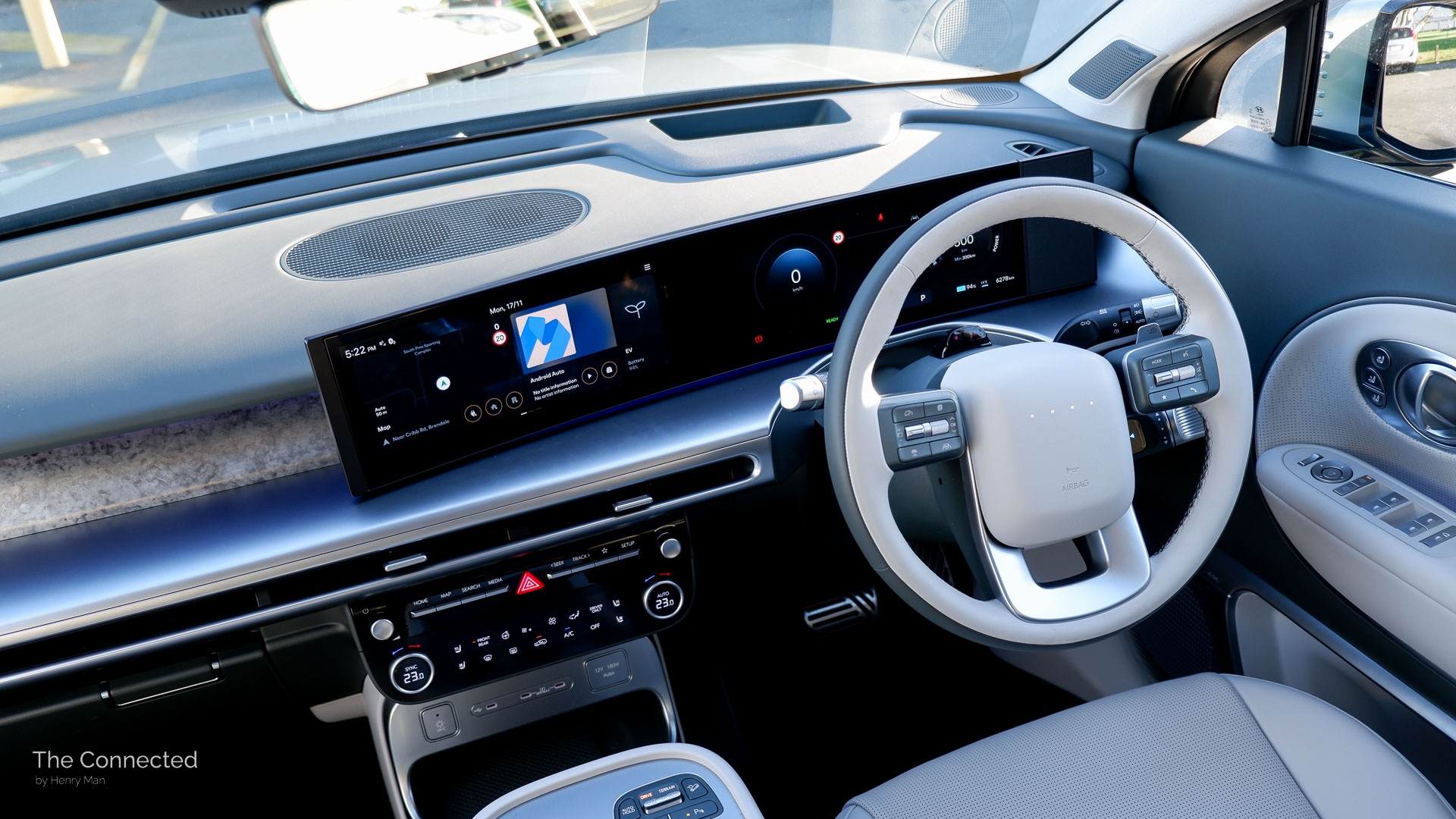
The 12.3-inch infotainment screen is powered by Hyundai’s Connected Car Navigation Cockpit (ccNC) software, which is quick to respond and looks modern without being overly complex to use.
The panel is curved, making it easier to reach far-left elements, with a high-resolution and bright display.
It’s also welcome that the touchscreen doesn’t dominate the dashboard, though it lacks more advanced family-friendly features found on some other brands such as video streaming and gaming apps.
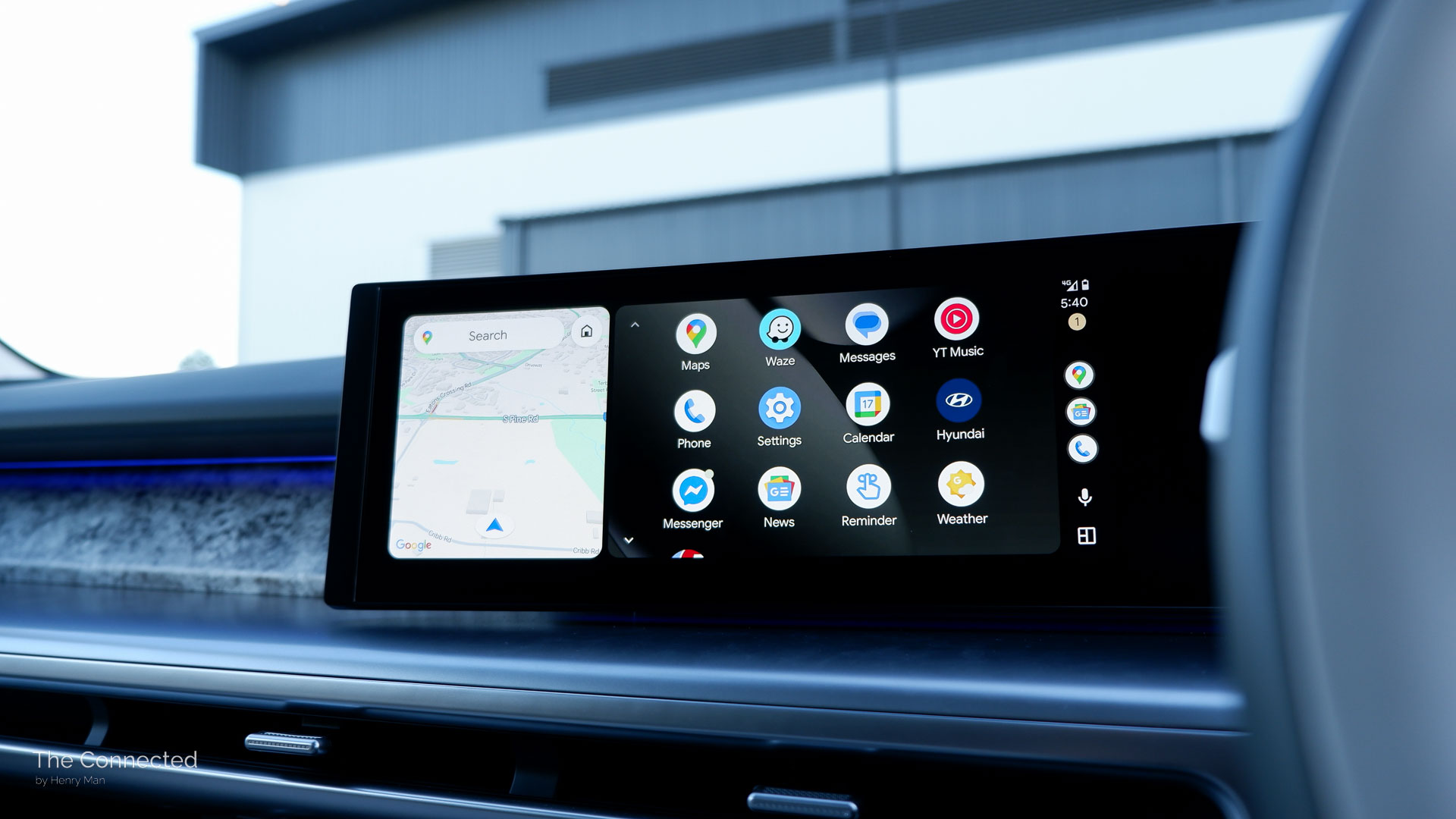
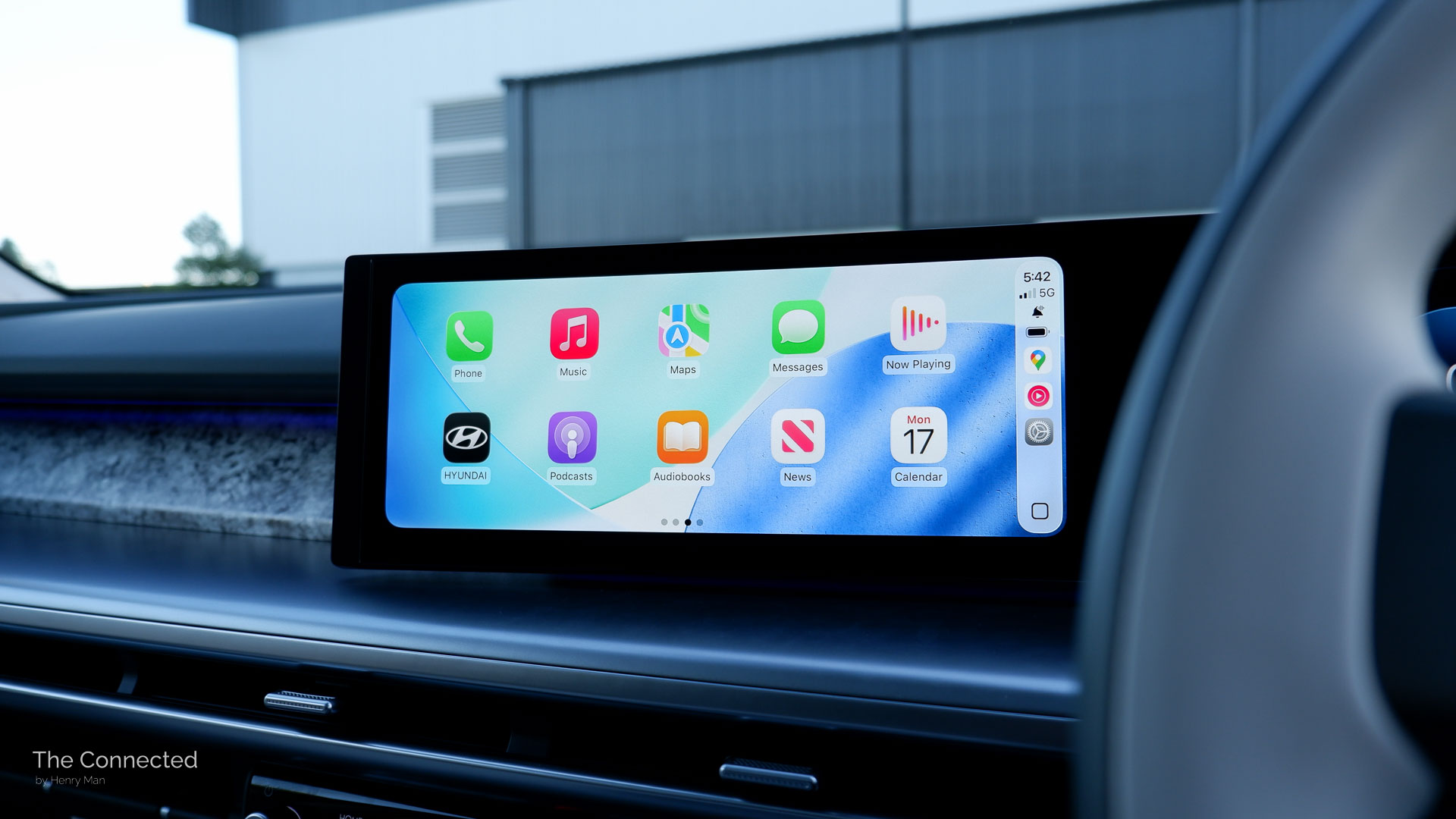
Wireless Apple CarPlay and Android Auto both connect quickly on startup and perform reliably, with navigation app instructions reflected in the instruments and head-up display, too.
Underneath are a row of physical infotainment shortcut buttons and small dials, plus a dedicated touchscreen and temperature dials for the three-zone climate control.
While it’s an identical unit to the facelifted Hyundai Tucson and Santa Fe SUVs, it is positioned slightly too low on the Ioniq 9 as I often had to look down more than ideal while driving,
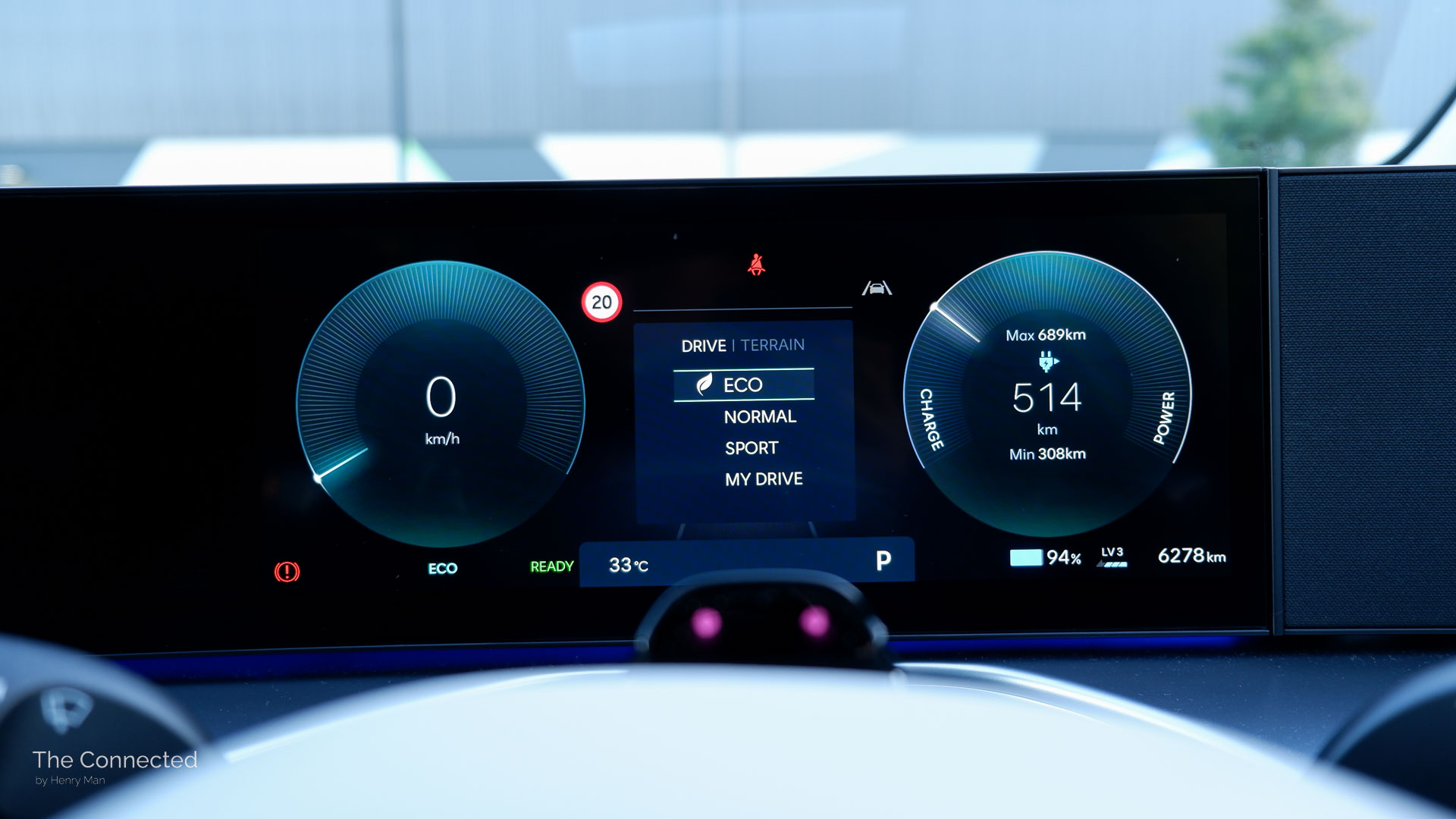
Additionally, the 12.3-inch driver instrument display is clear with multiple themes that changes the font – an improvement compared to previous ccNC versions – although there isn’t much customisability and no full-screen map view option.
The steering wheel rim also blocked the top portion of the instrument screen, at least with my driving position.
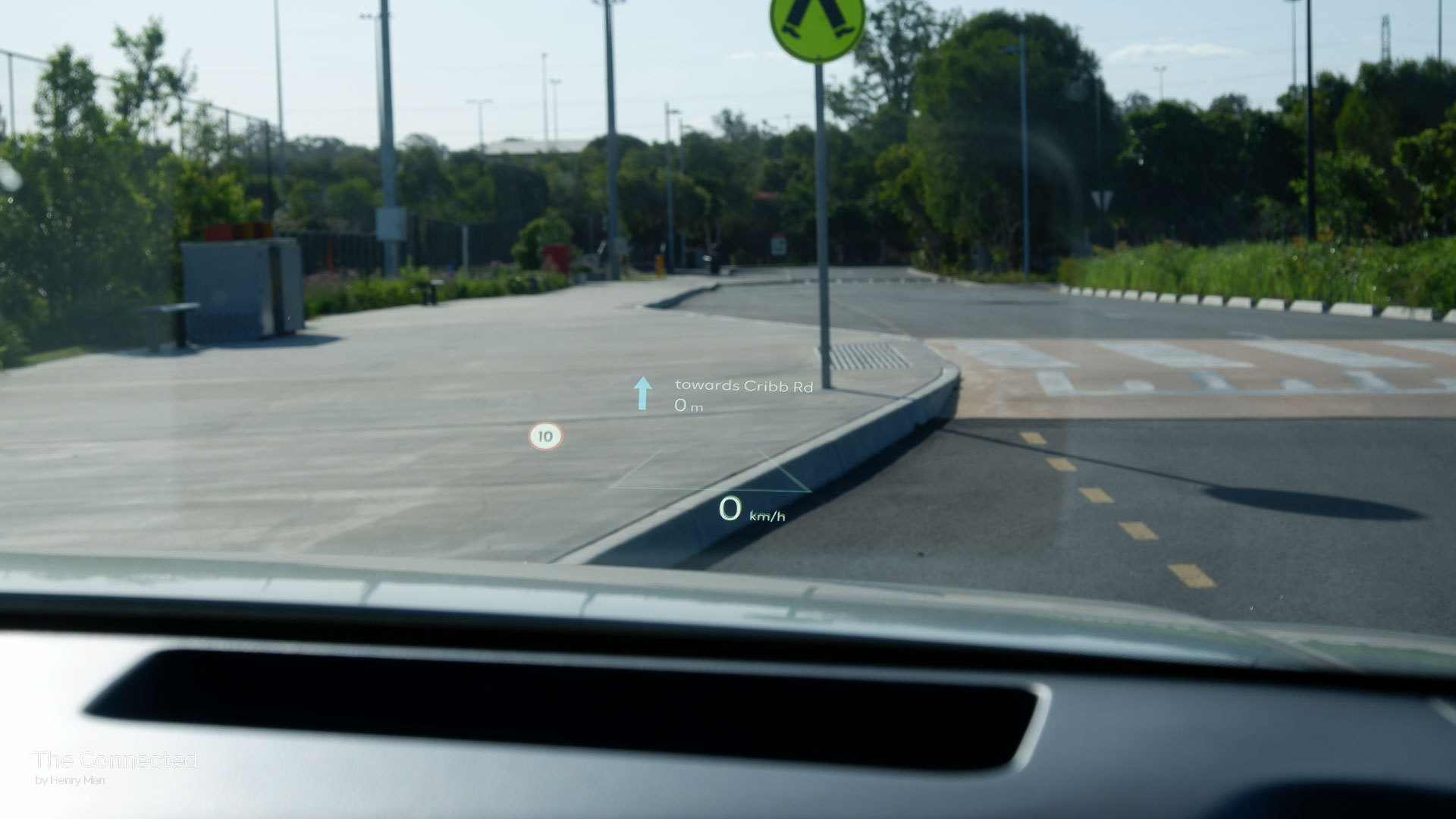
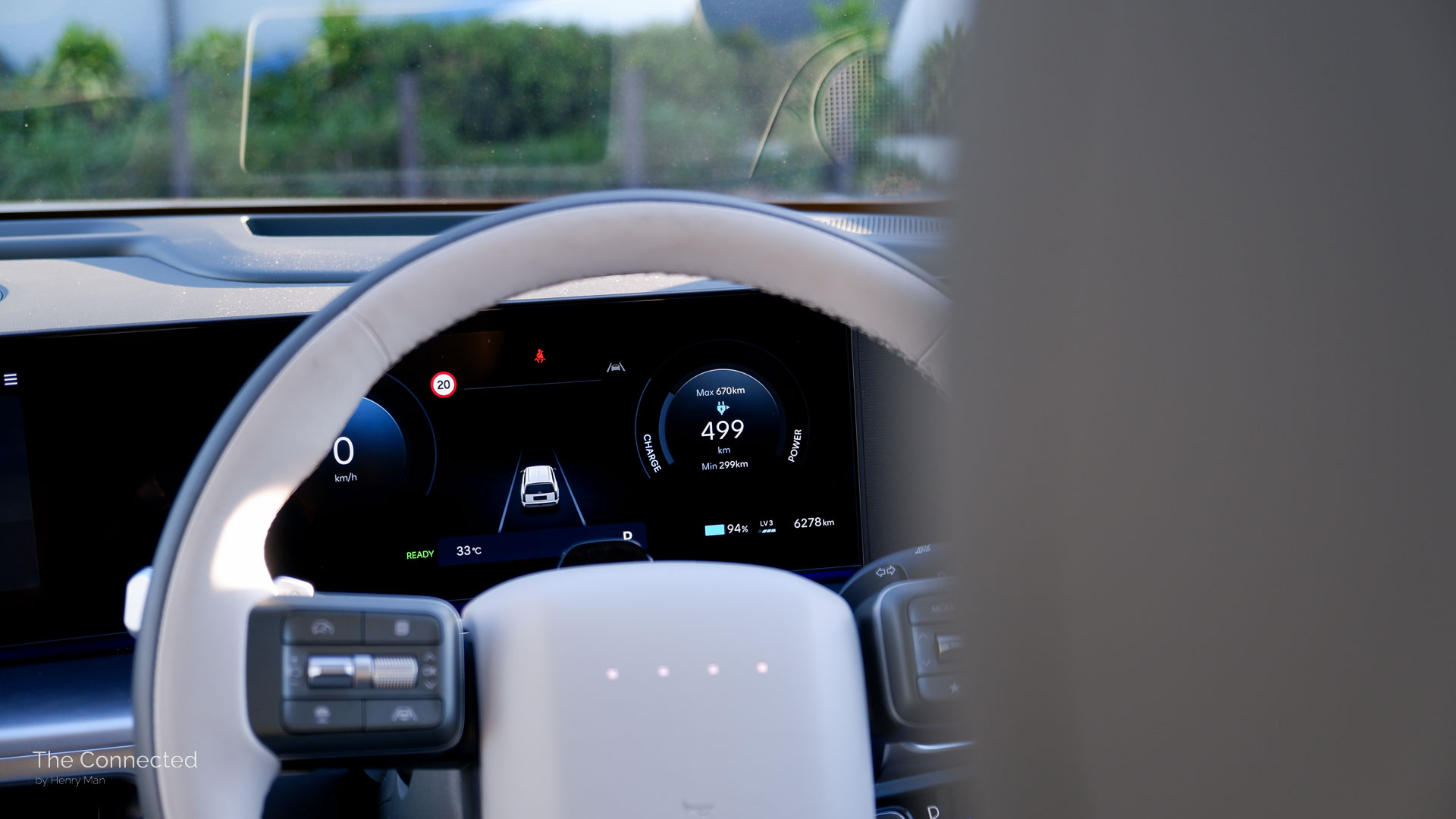
Fortunately, the head-up display clearly projects the speed, detected speed sign, and map directions onto the windscreen – but it isn’t as big as some other carmakers.
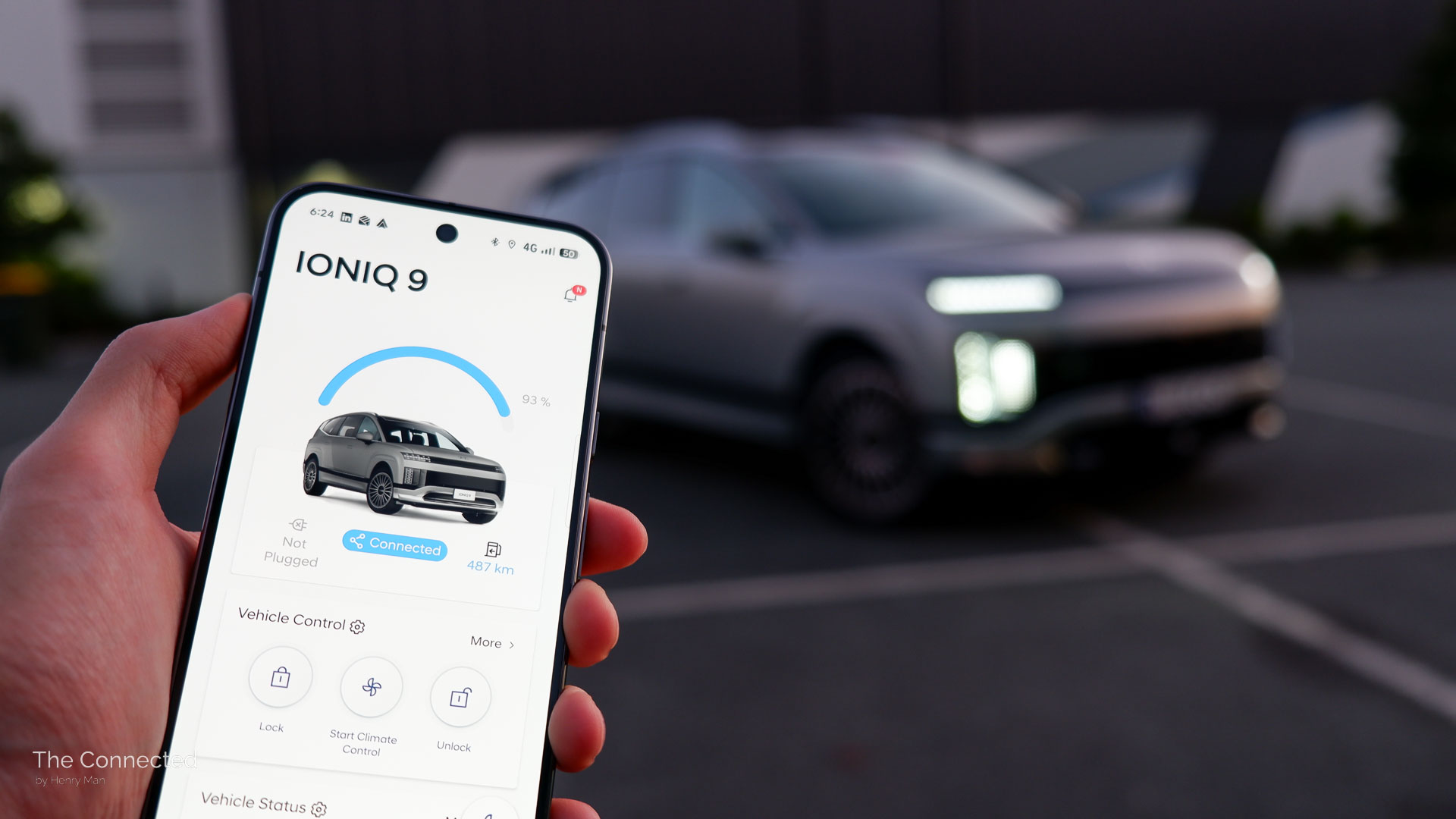
The Hyundai Bluelink mobile app has good design and functionality, including pre-conditioning the interior, unlatching the frunk, and taking a picture of the 360-degree camera system – but can be slow to send commands.
It’s a rather familiar Hyundai tech setup and it’s a little disappointing that there isn’t much differentiating this six-figure Ioniq 9.
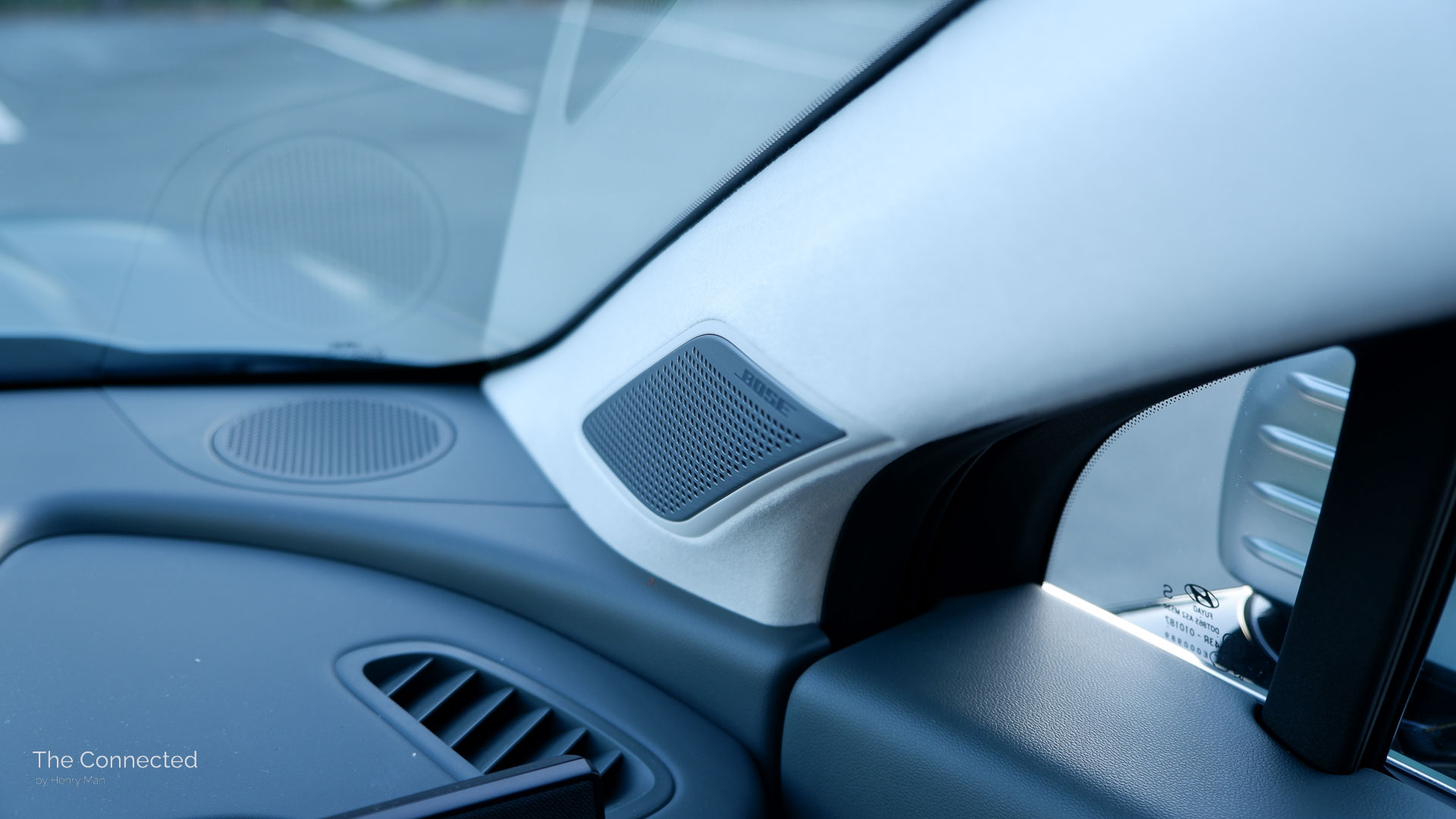
That is except the 14-speaker Bose Premium branded system which is the most impressive I’ve heard on any Hyundai model.
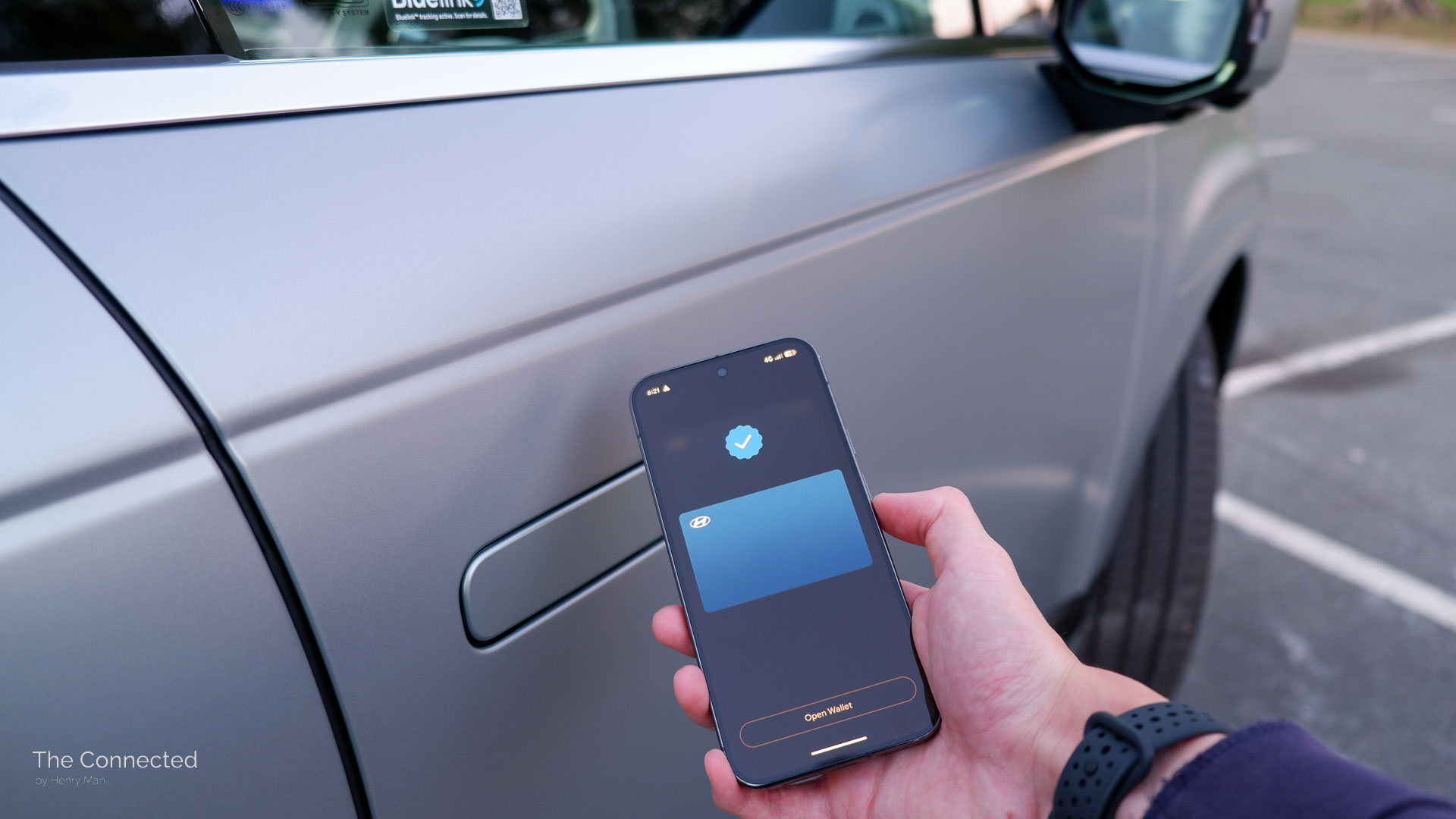
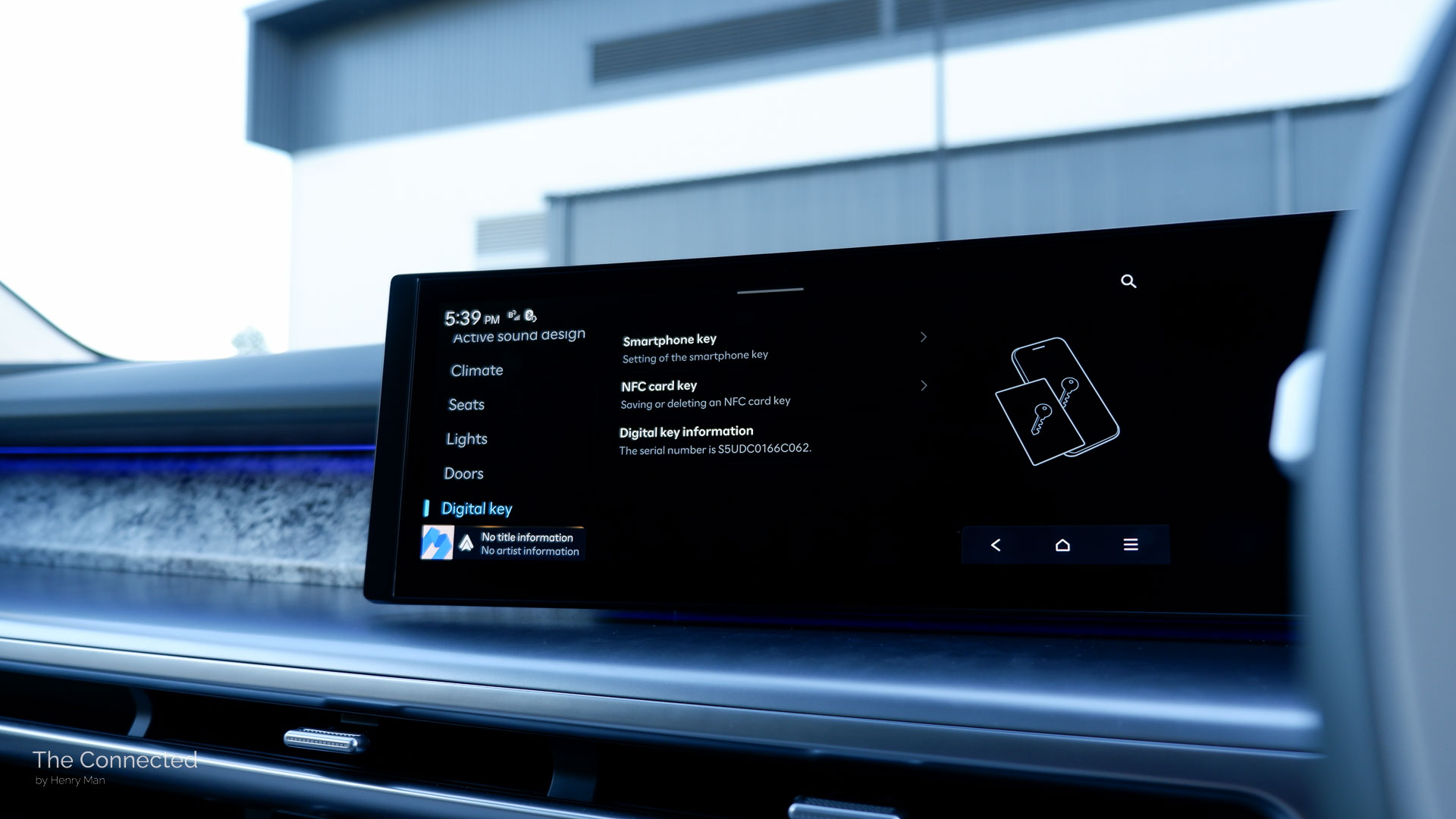
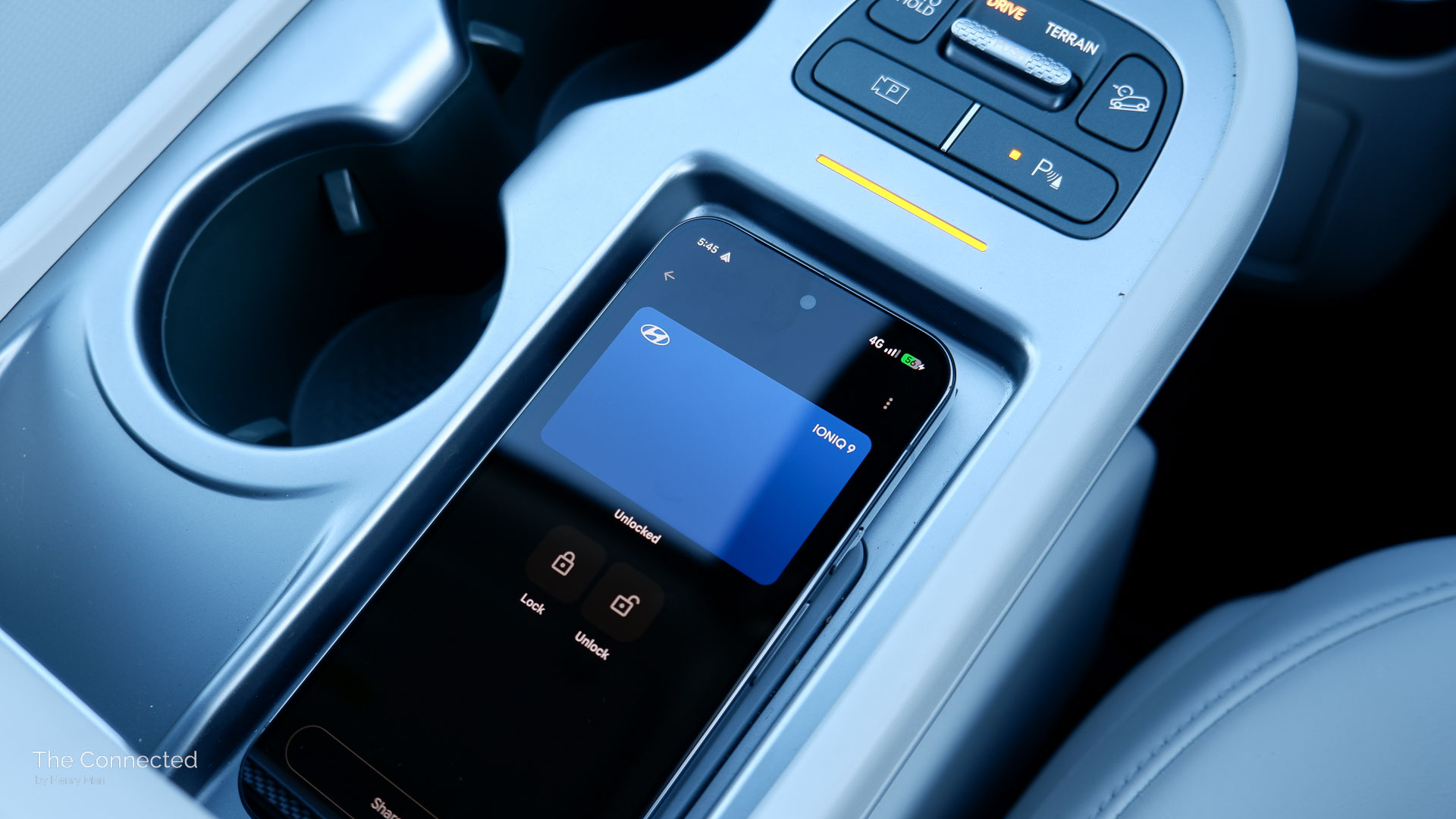
The Ioniq 9 debuts Apple CarKey and Google Car Key functionality in Australia, which includes ultra-wideband (UWB) support for compatible phones and near-field communication (NFC) at the door handle and wireless charging pad, too.
UWB works reliably just like carrying the proximity key, except it doesn’t offer the ability to execute the remote smart parking feature.
Other new Hyundais, including the 2026 Tucson, Santa Fe and Palisade now feature Digital Key 2 so it’s not unique to the Ioniq 9. It’s also tied with the Bluelink subscription, so owners can only use it for free for the first five years from the date of activation.
Safety.
2026 Hyundai Ioniq 9 Calligraphy safety features:
| Front AEB with vehicle/pedestrian/cyclist/junction turning/oncoming side detection | 360-degree camera system |
| Rear AEB | Front, side and rear rear parking sensors |
| Blind-spot assist with blind-spot camera view | Road sign detection with overspeed warnings |
| Rear cross-traffic assist | Driver attention monitoring camera with lead vehicle departure alert |
| Lane-keep assist | Remote Smart Parking Assist (forwards/backwards/auto parking) |
| Adaptive cruise control with lane-centring and auto lane-change assist (HDA 2) | Bluelink emergency calling and location tracking |
| Door open warning with intervention | Full LED headlights with auto adaptive matrix high beam |
| Digital rear-view mirror camera | Full LED tail-lights with rear fog light |
The Ioniq 9 includes a range of generally well-tuned safety technologies, though the lane-keep assist is intrusive due to its wider footprint.
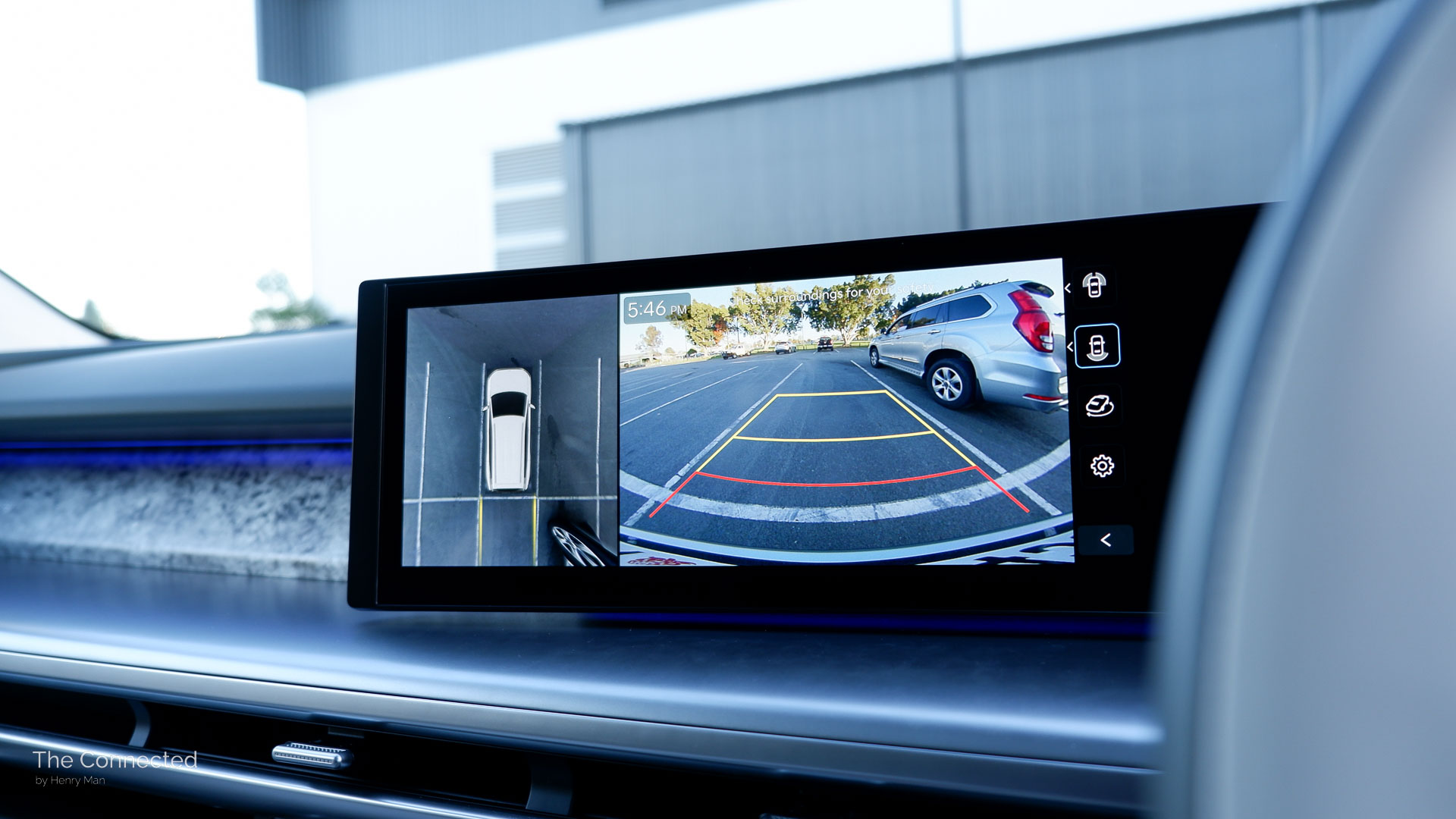
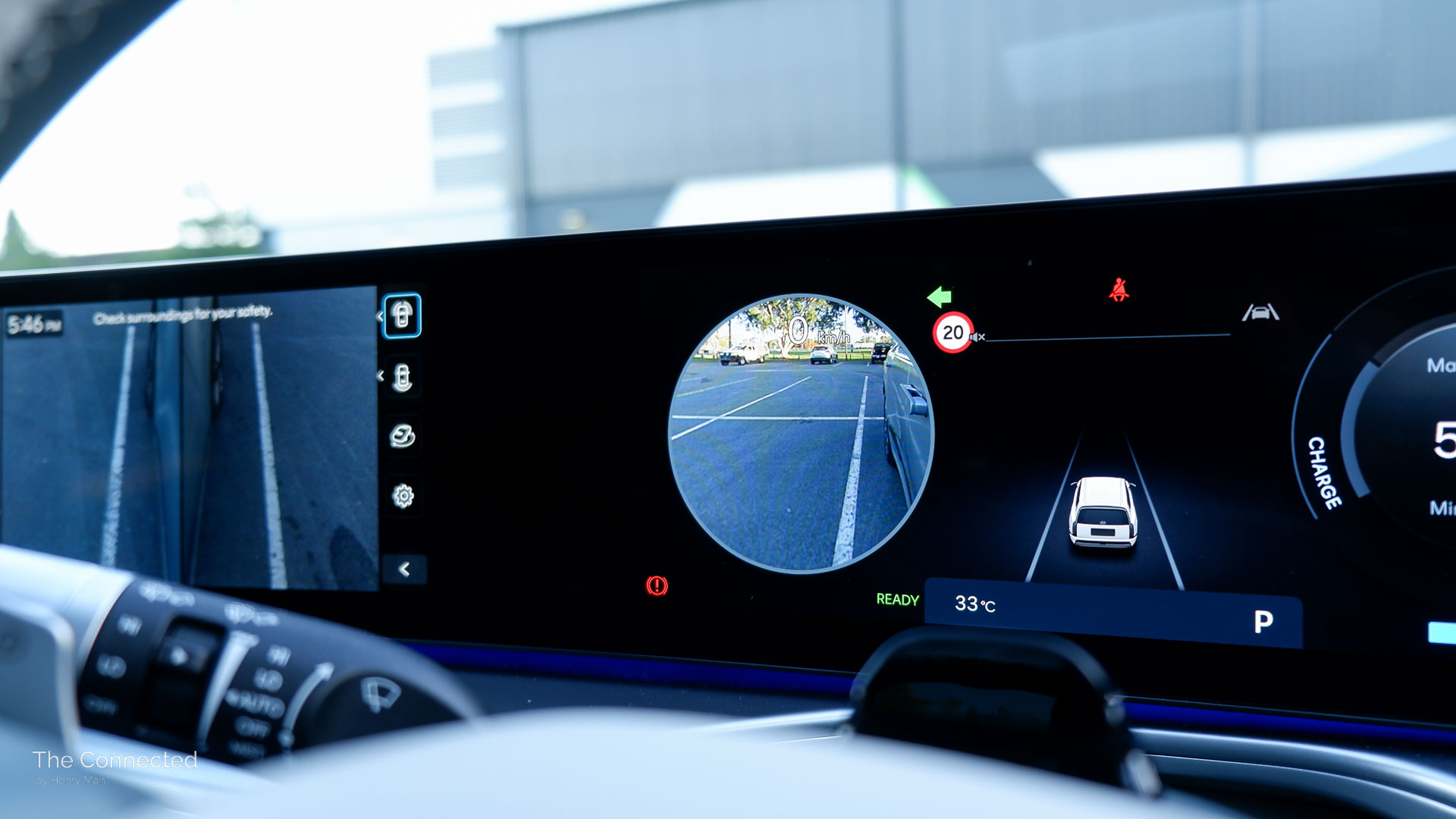
Hyundai’s safety assists offer smooth and dependable adaptive cruise control and lane-centring assist even in torrential rain, a clear 360-degree camera system (which can be activated at any speed via a physical button), and handy blind-spot view cameras shown on the instrument display when indicating.
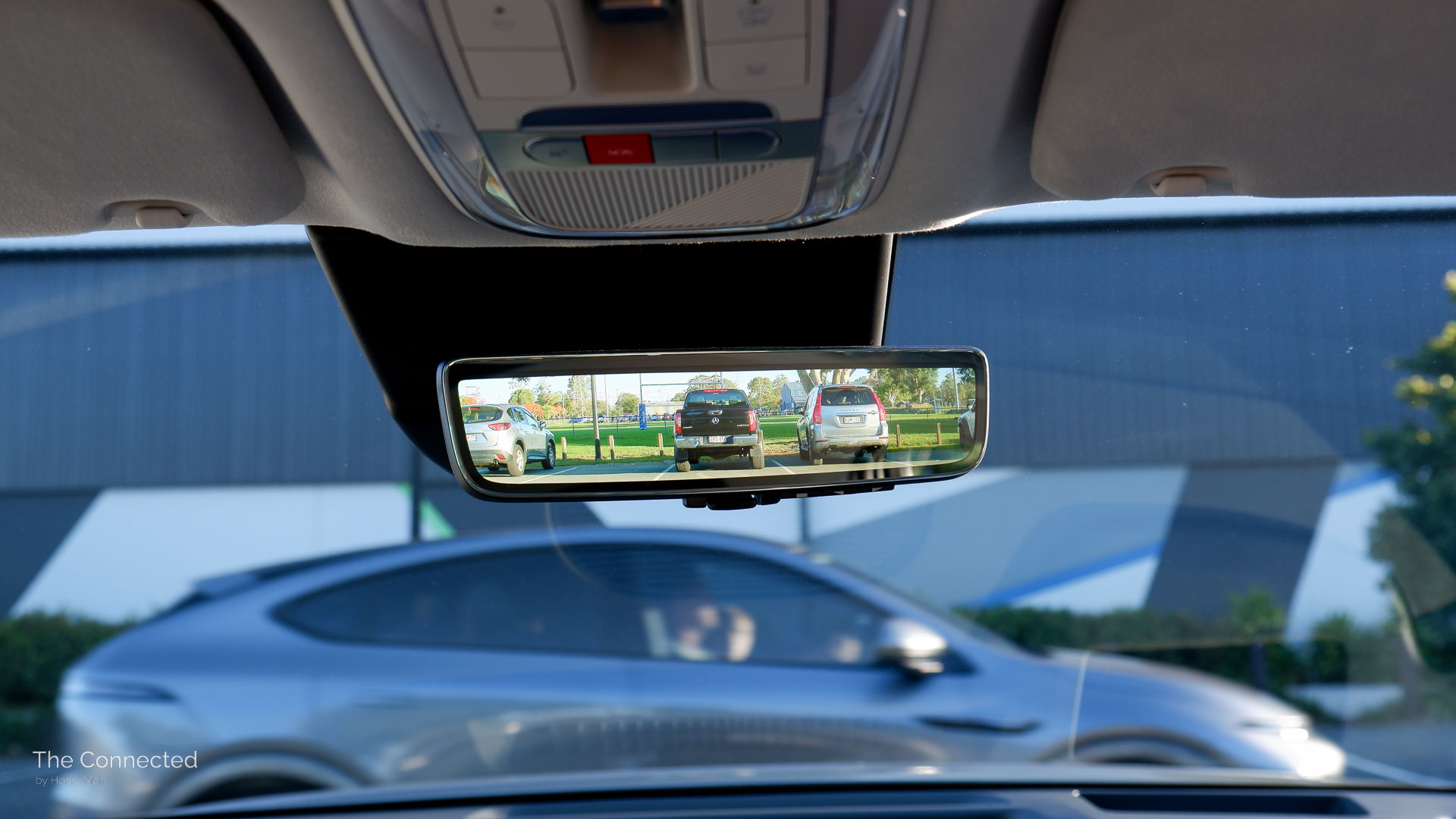
The rear-view mirror camera is equally clear, providing a wider view of the back and doesn’t get obscured by the rain, but a traditional glass mirror is still readily available with a flick.
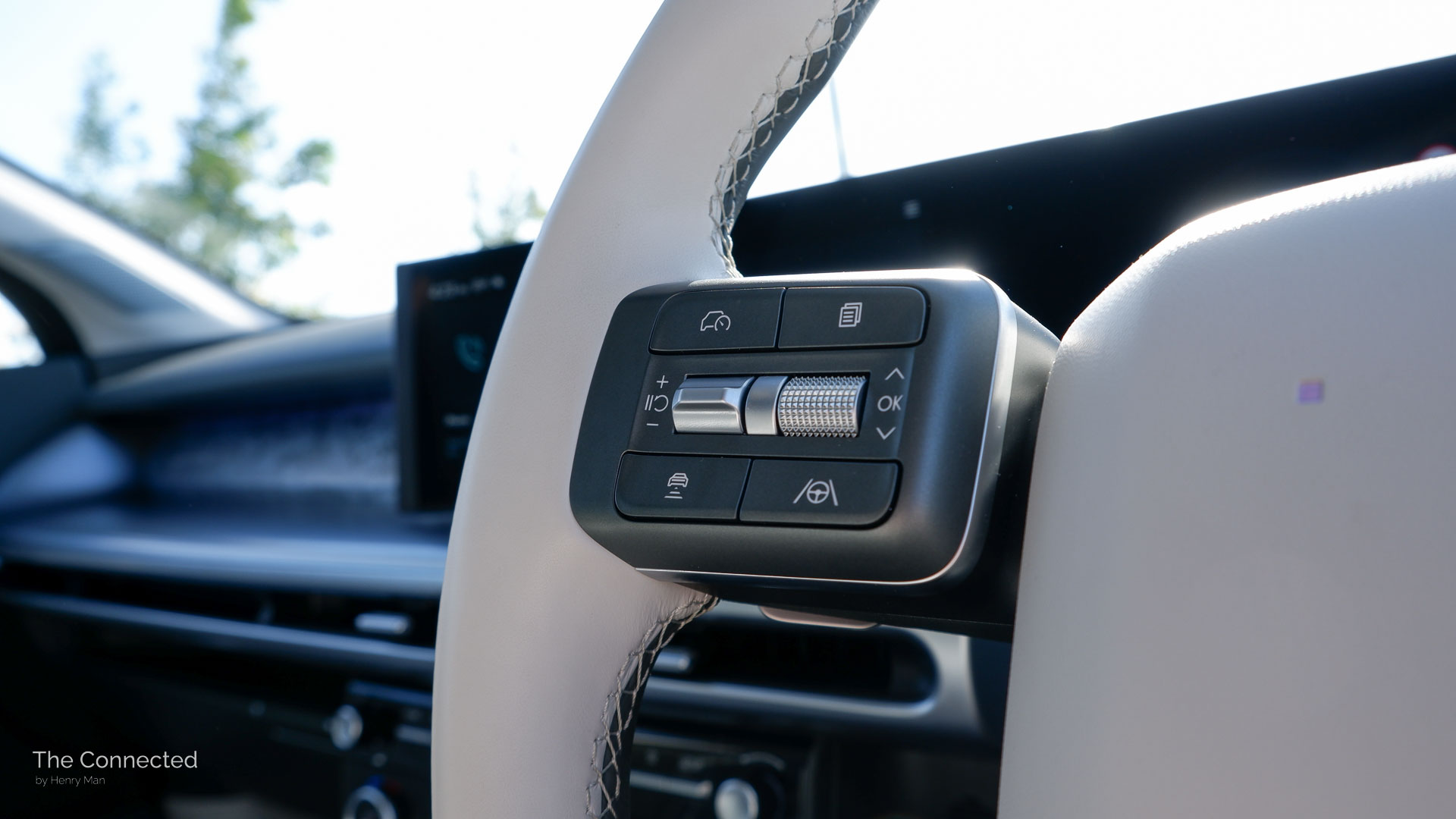
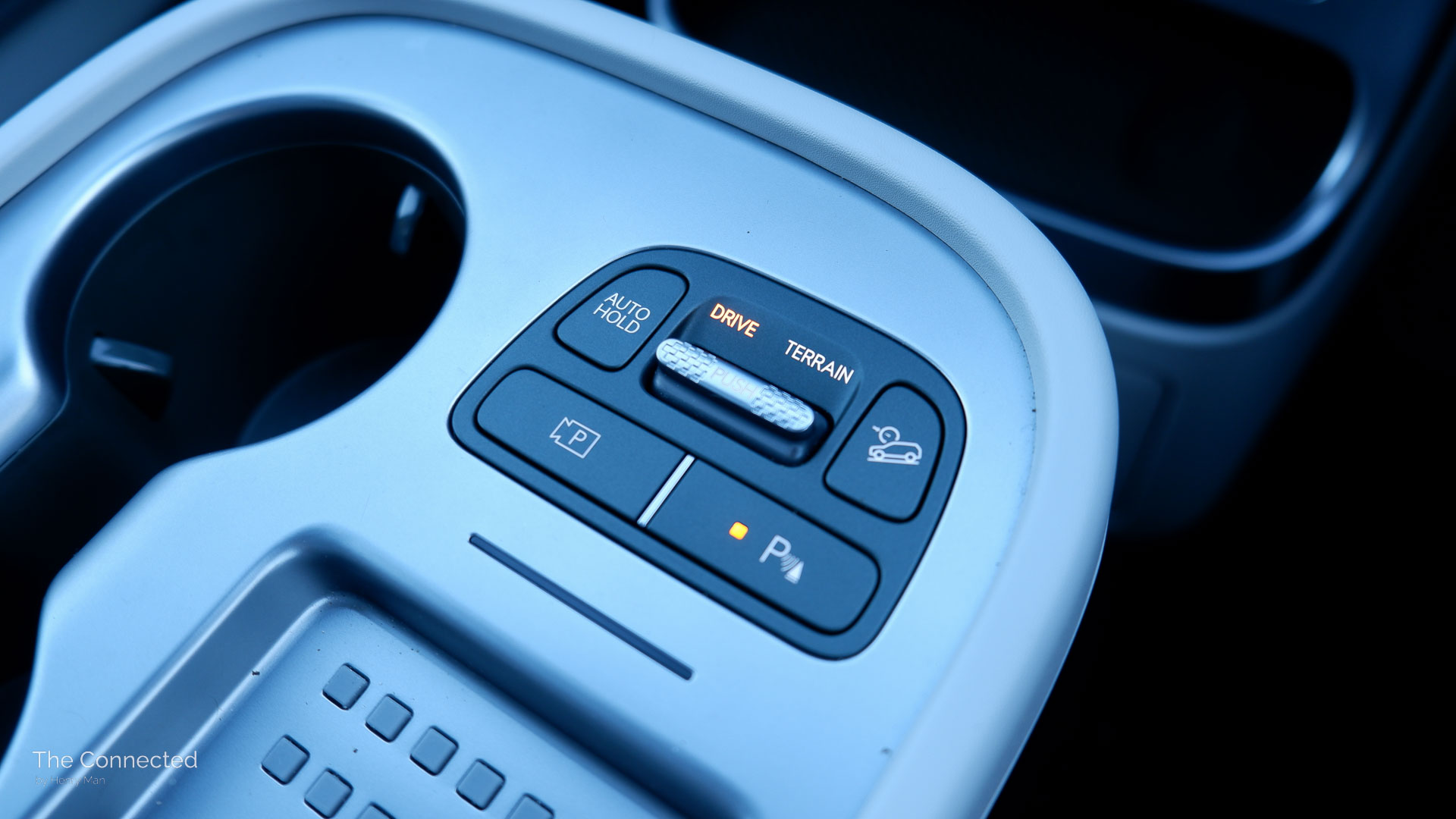
However, due to the Hyundai Ioniq 9’s almost two-metre width, the lane-keep assist often triggered on narrow lanes and roads, annoyingly nudging the wheel toward the centre of the marked lines.
Thankfully, it can be turned off every time you start the SUV by a press and hold of a button on the steering wheel.
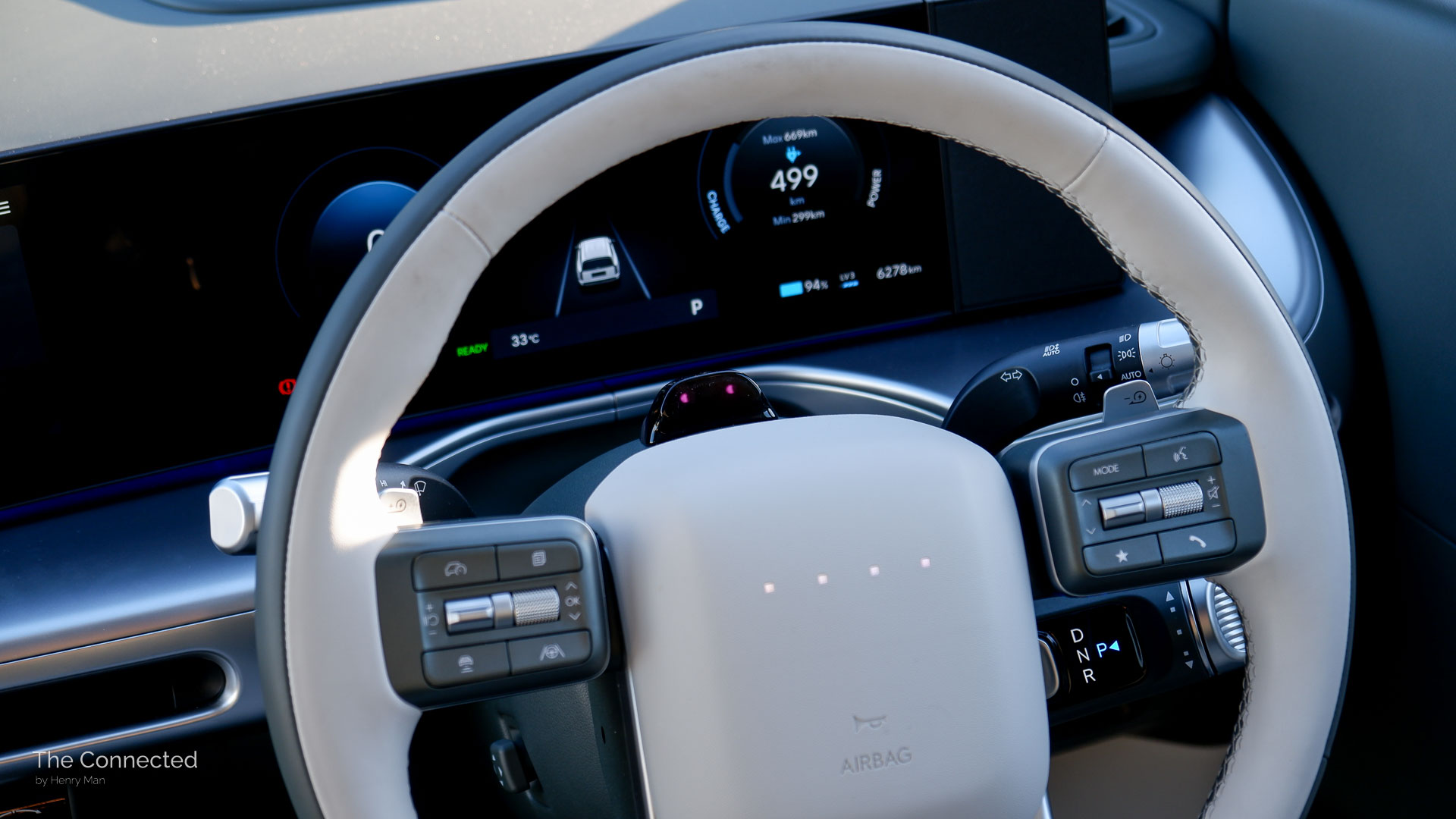
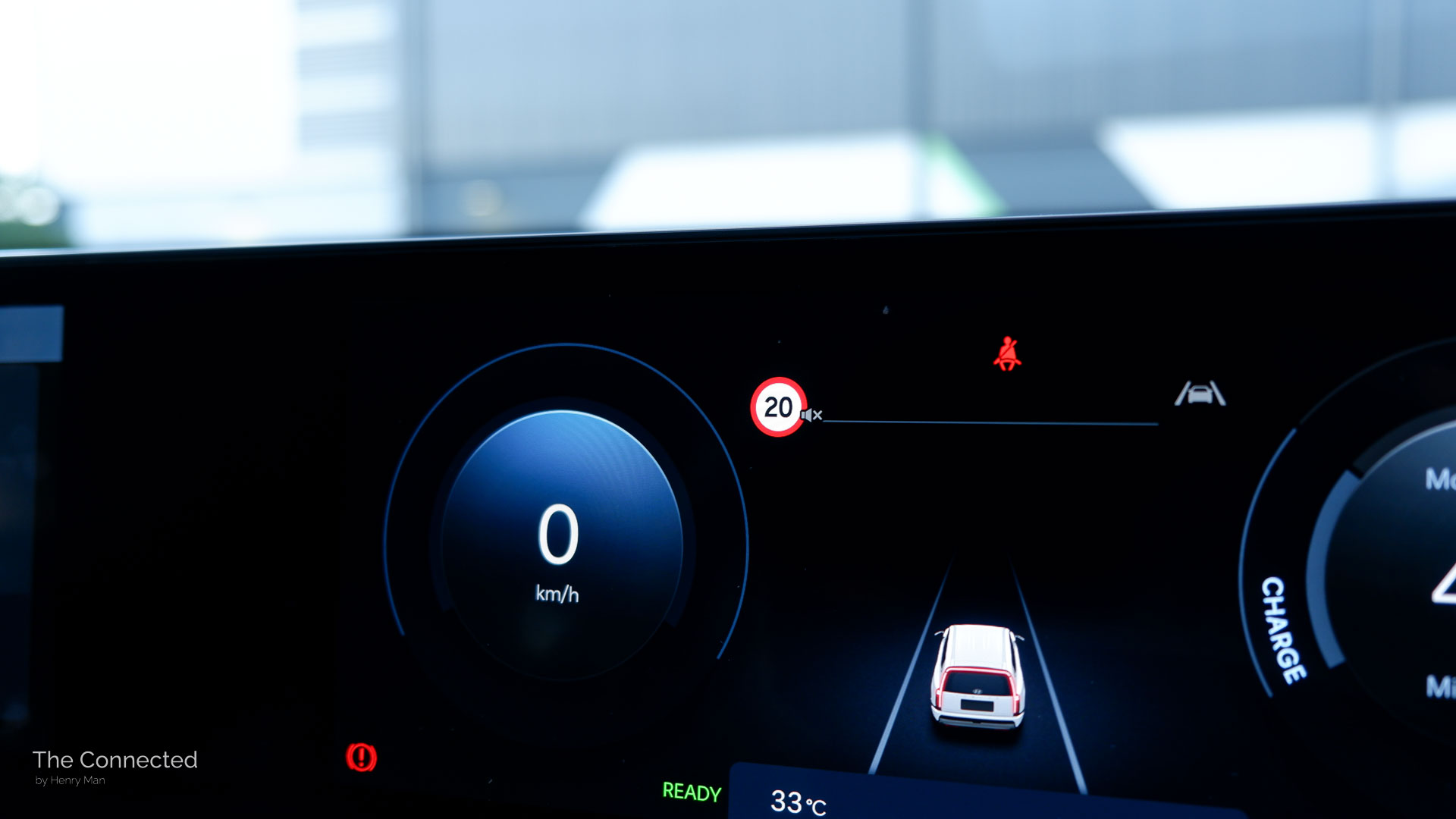
Holding the volume scroll wheel also mutes the overspeed warning feature, which can be annoying at times. The chirp for when it detects a new road sign can be permanently disabled in the settings.
Otherwise, the camera detects road signs well – although not perfect – and understands school zone times.
Similarly, the driver attention monitoring warnings can be too incessant at times and there’s no quick shortcut to disable the system yet.
Full LED lights feature on the Ioniq 9 with good-performing LED headlights at night and an adaptive feature that blocks out individual pixels to have the high beam on while not glaring at other road users. It sometimes flashed the high beam on the side before dimming itself down, however.
The 2026 Hyundai Ioniq 9 has received the full five-star safety rating by the Australasian New Car Assessment Program (ANCAP) under its 2025 testing criteria.
Range and charging.
2026 Hyundai Ioniq 9 Calligraphy battery and charging specs:
| Claimed driving range (WLTP combined cycle) | 600km |
| Claimed energy efficiency (WLTP combined cycle) | 20.6kWh/100km |
| Battery size and type | ~106kWh (110.3kWh gross) NMC lithium-ion |
| Battery voltage | 610 volts (800-volt class) |
| Max AC / DC charging speed | 10.5 / 250kW |
| Bidirectional charging | Exterior V2L |
| Connector type | Type 2 / CCS2 |
| Everyday charging limit recommendation | ~80% |
The dual-motor Hyundai Ioniq 9 returned a 21.7kWh/100km energy consumption after a week of mixed urban and highway driving.
Its efficiency is respectable given the large size, but this results in around 488km of real-world driving range on a full battery – which is well short of the 600km claim.
Due to the conventional nickel-manganese-cobalt (NMC) lithium-ion battery type, limiting daily charging to 80 per cent is generally recommended for its health – resulting in around 390km of everyday range.
A heat pump is standard on all Ioniq 9s.
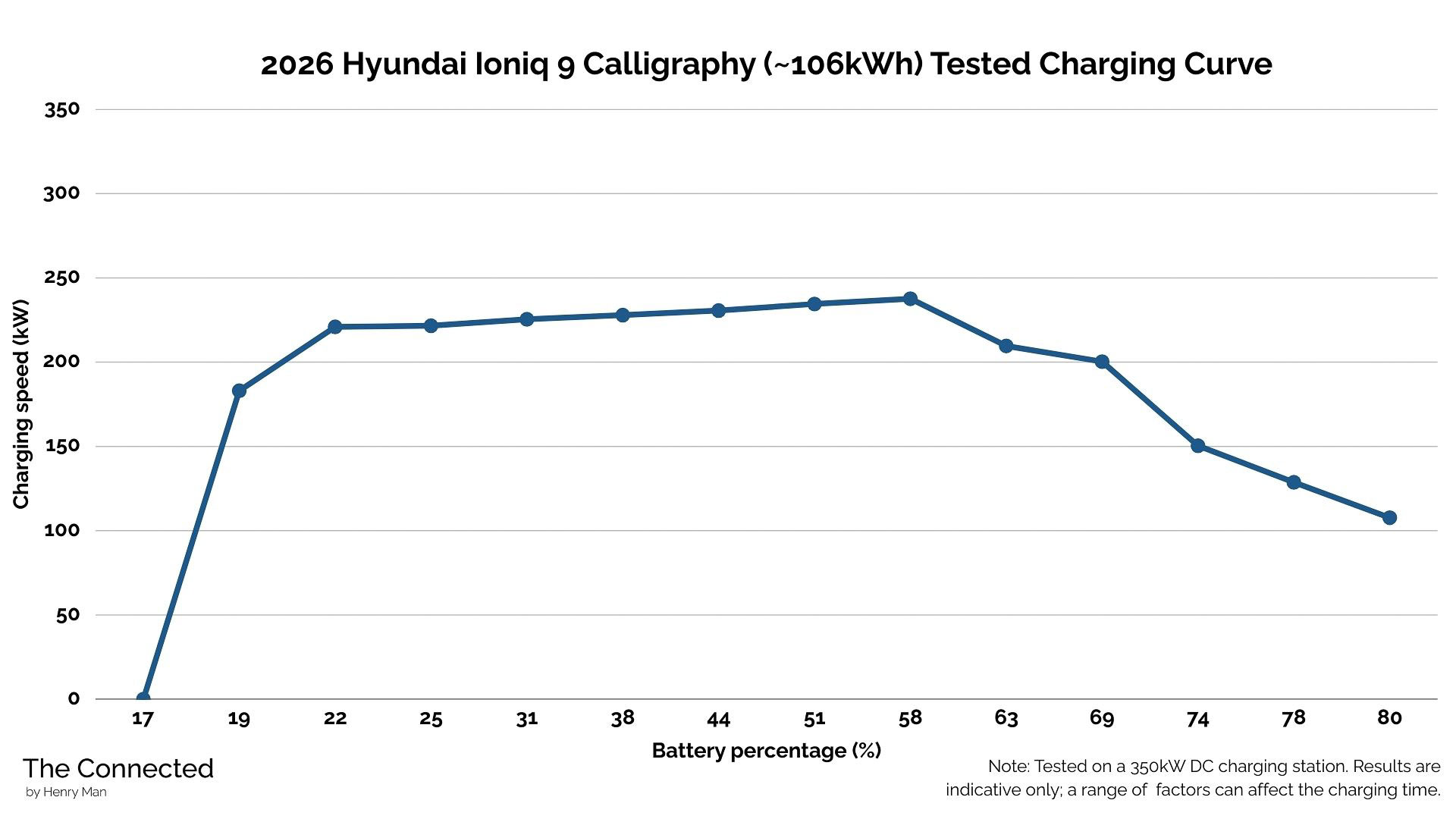
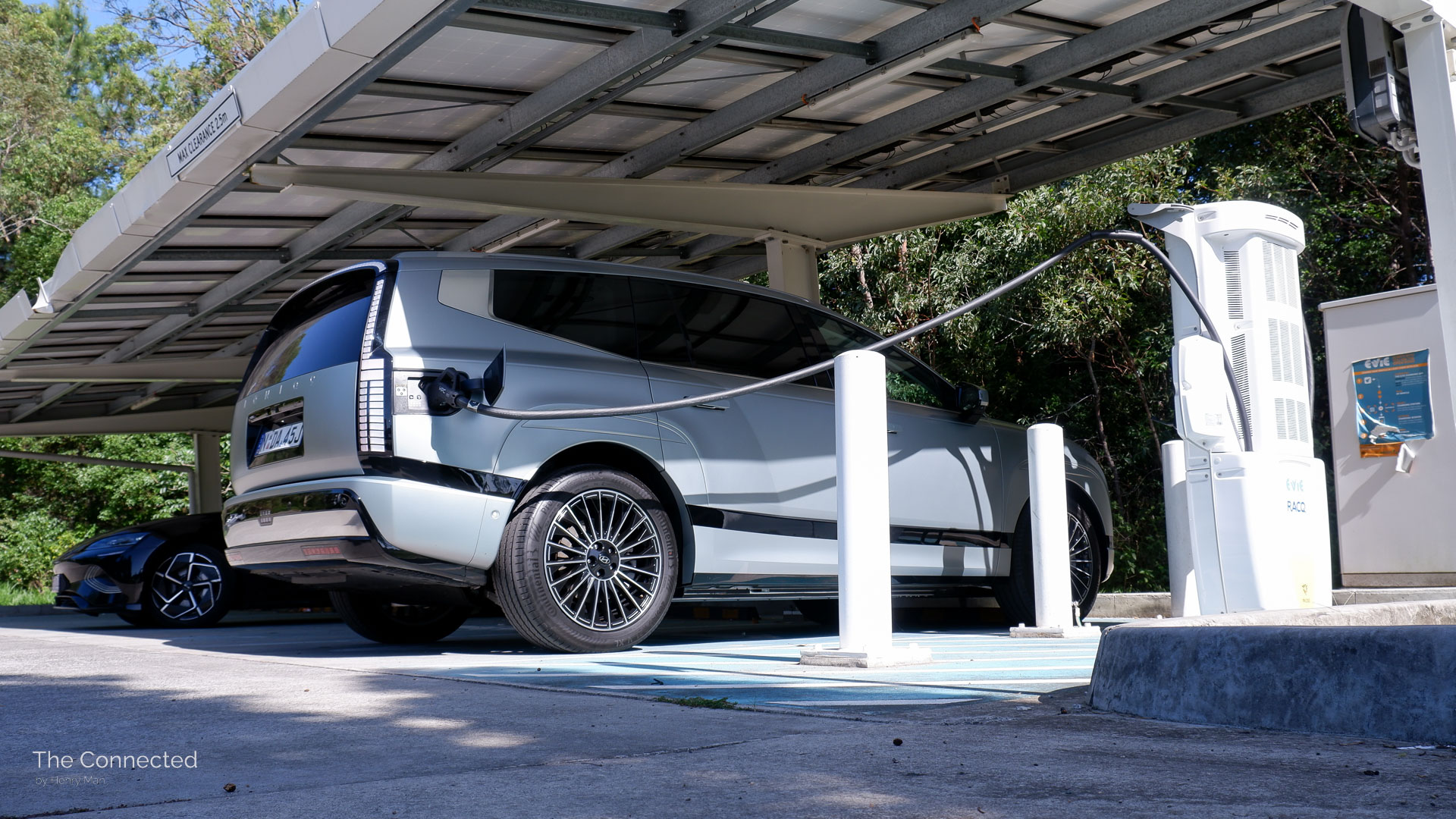
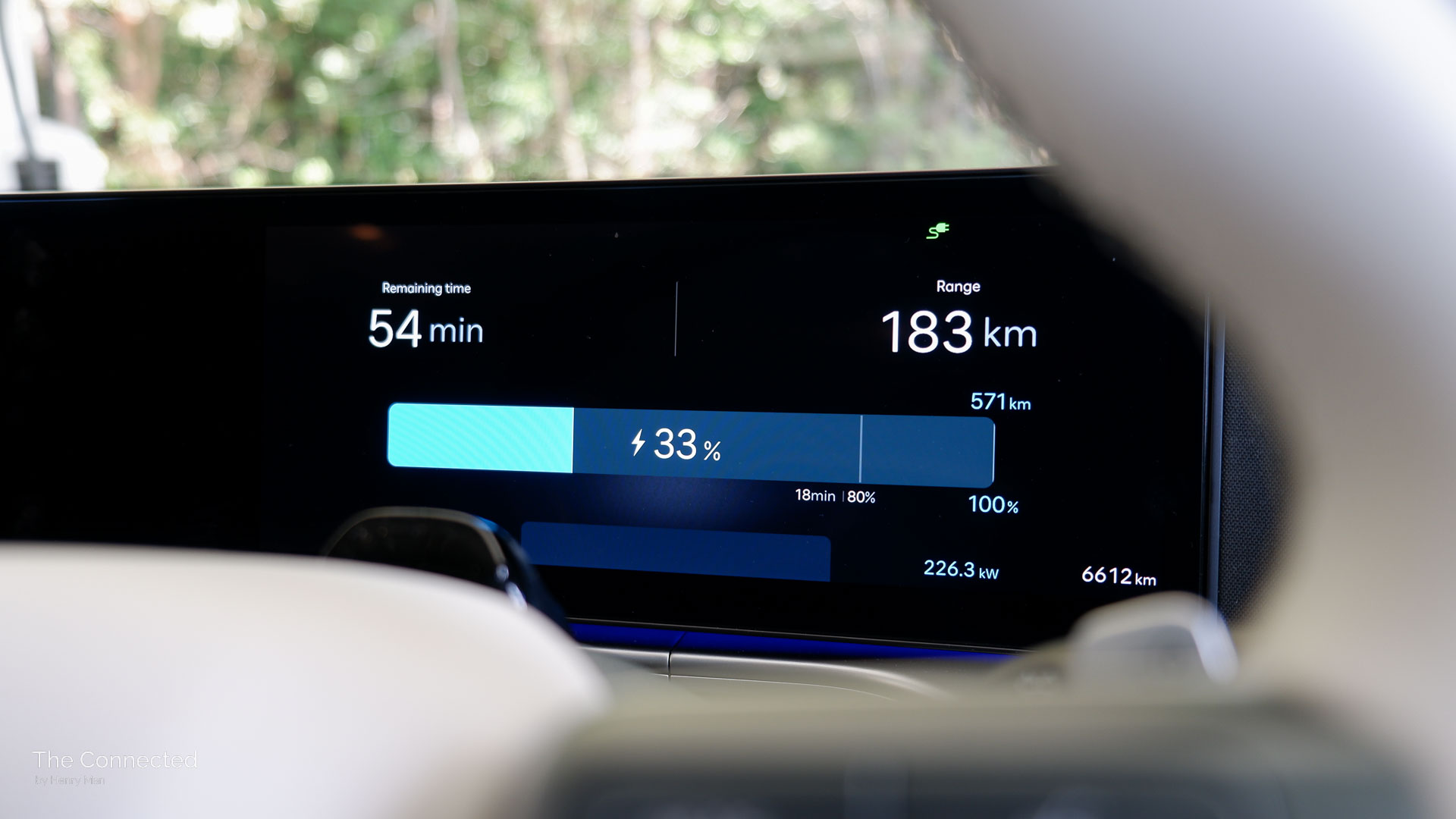
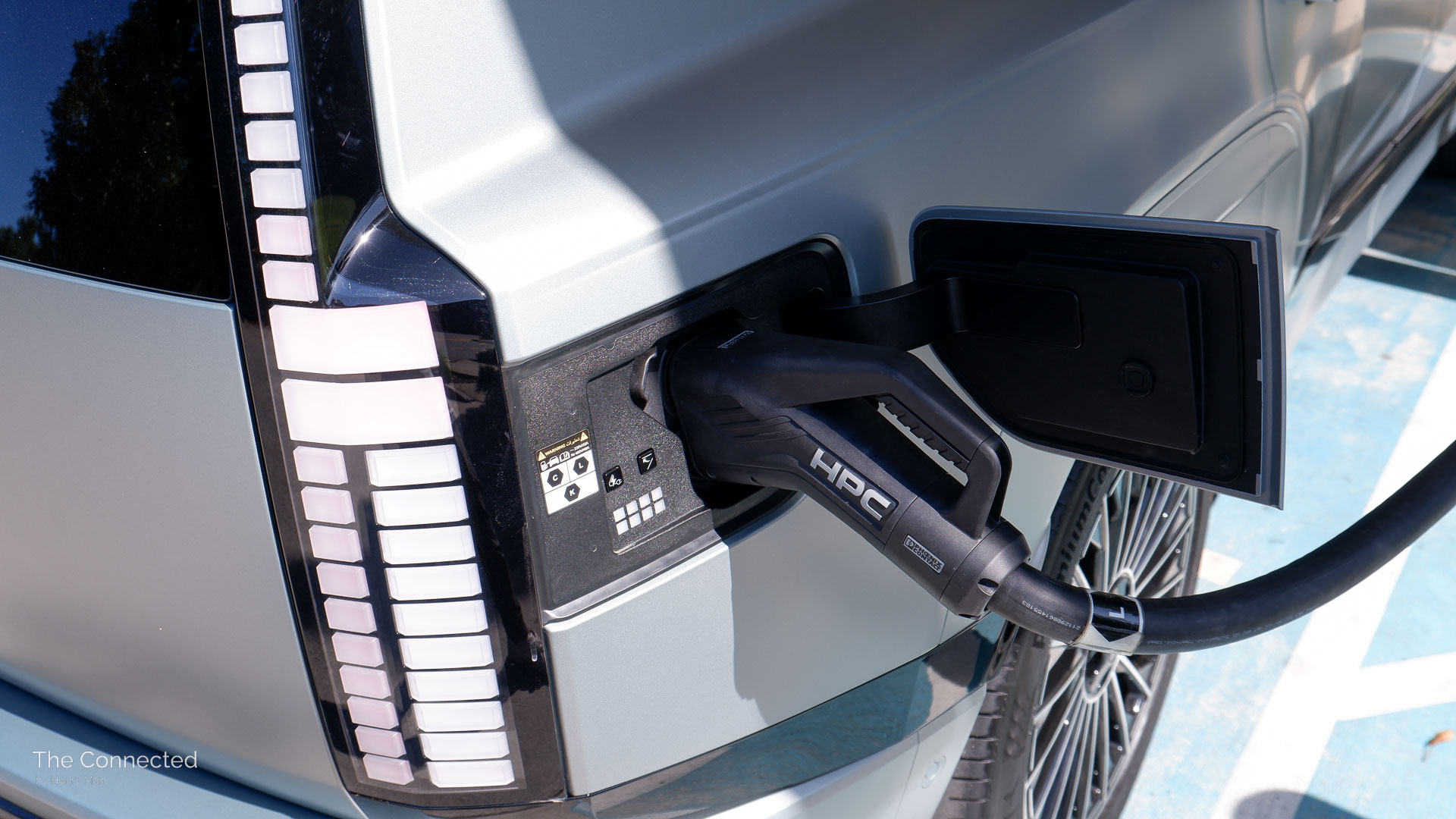
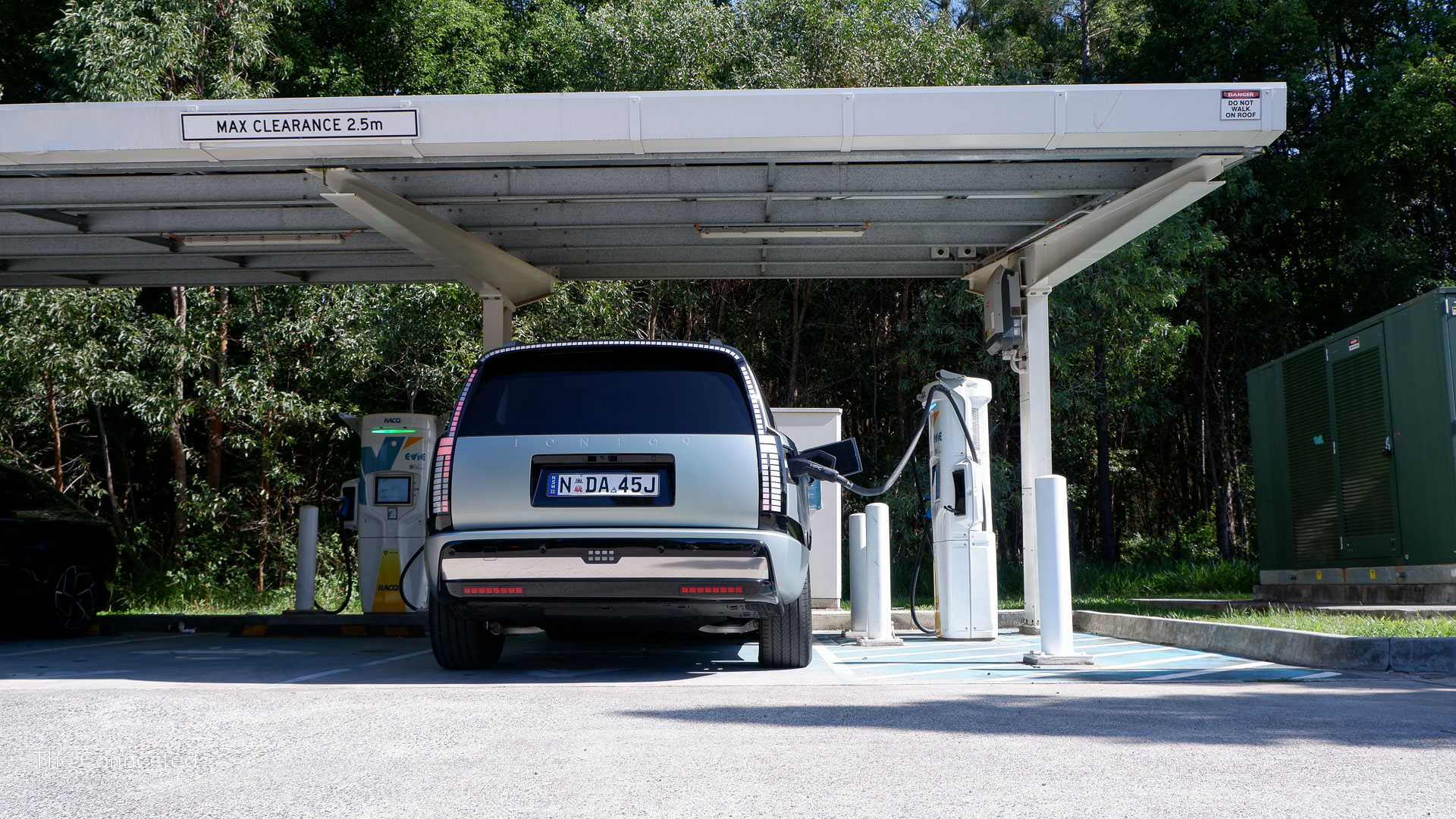
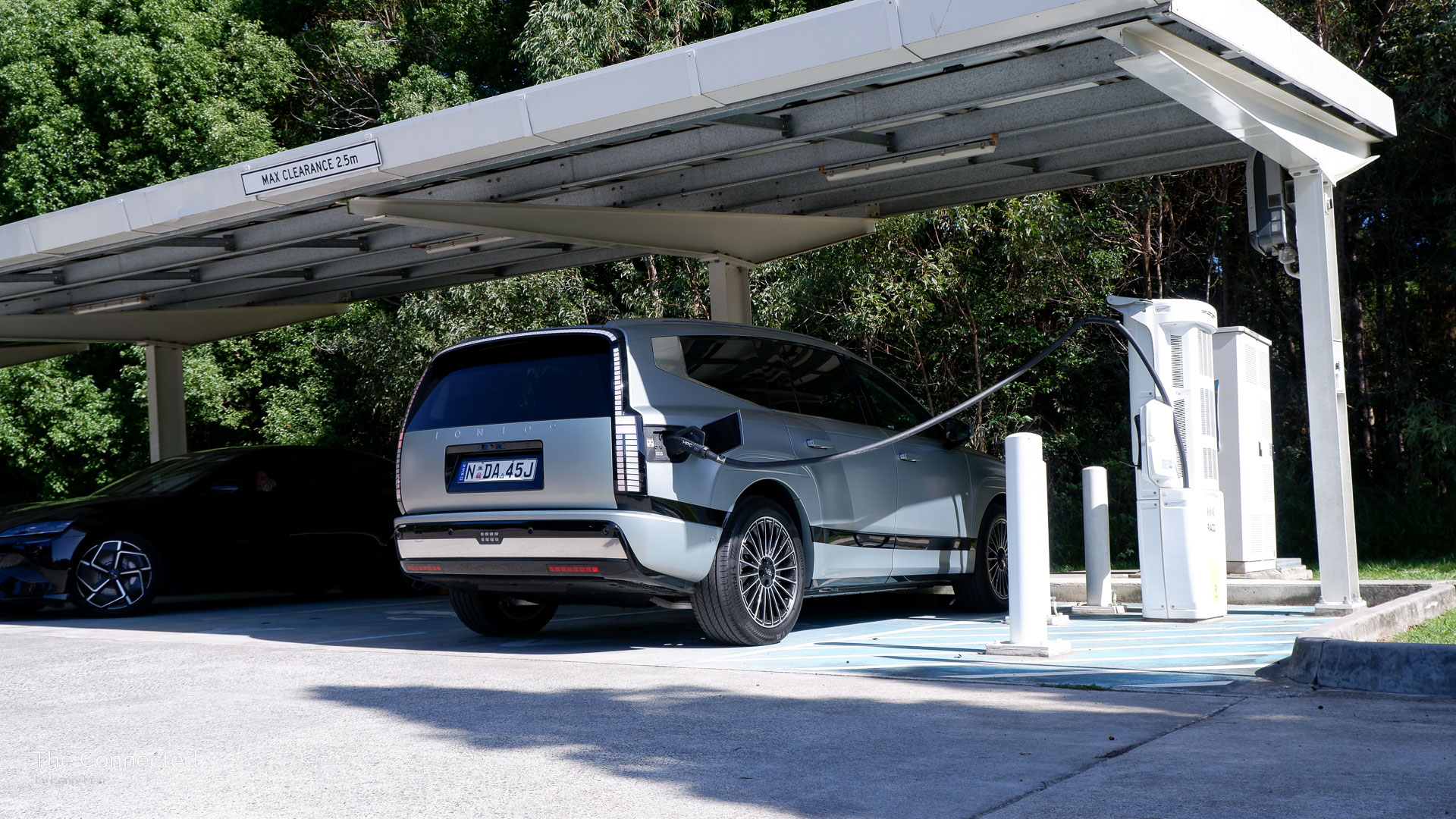
Testing on an 800-volt 350kW capable ultra-fast public charging station, the Hyundai Ioniq 9 recharged from 17 to 80 per cent in just 23 minutes.
The session averaged 198kW DC overall, with it quickly ramping up to a 239kW peak after around 15 minutes before throttling down afterwards.
The 800-volt class battery architecture enables rapid sustained charging speeds, while still being compatible with standard 400-volt class chargers.
Unfortunately, the number of ultra-fast public chargers are limited in Australia. Hyundai Australia claims a standard 50kW DC charger will refill the Ioniq 9 from 10 to 80 per cent in 109 minutes – almost two hours.
Active battery preconditioning can be manually triggered within the touchscreen’s EV settings, but it’s rarely needed in the Australian weather.
Additionally, up to 10.5kW AC slow charging is standard – which guarantees a full charge overnight with a compatible three-phase wall box. It would be better if there was 22kW AC capability given the premium price and large battery.
A home domestic trickle charging cable is included, plus an exterior vehicle-to-load (V2L) adapter.
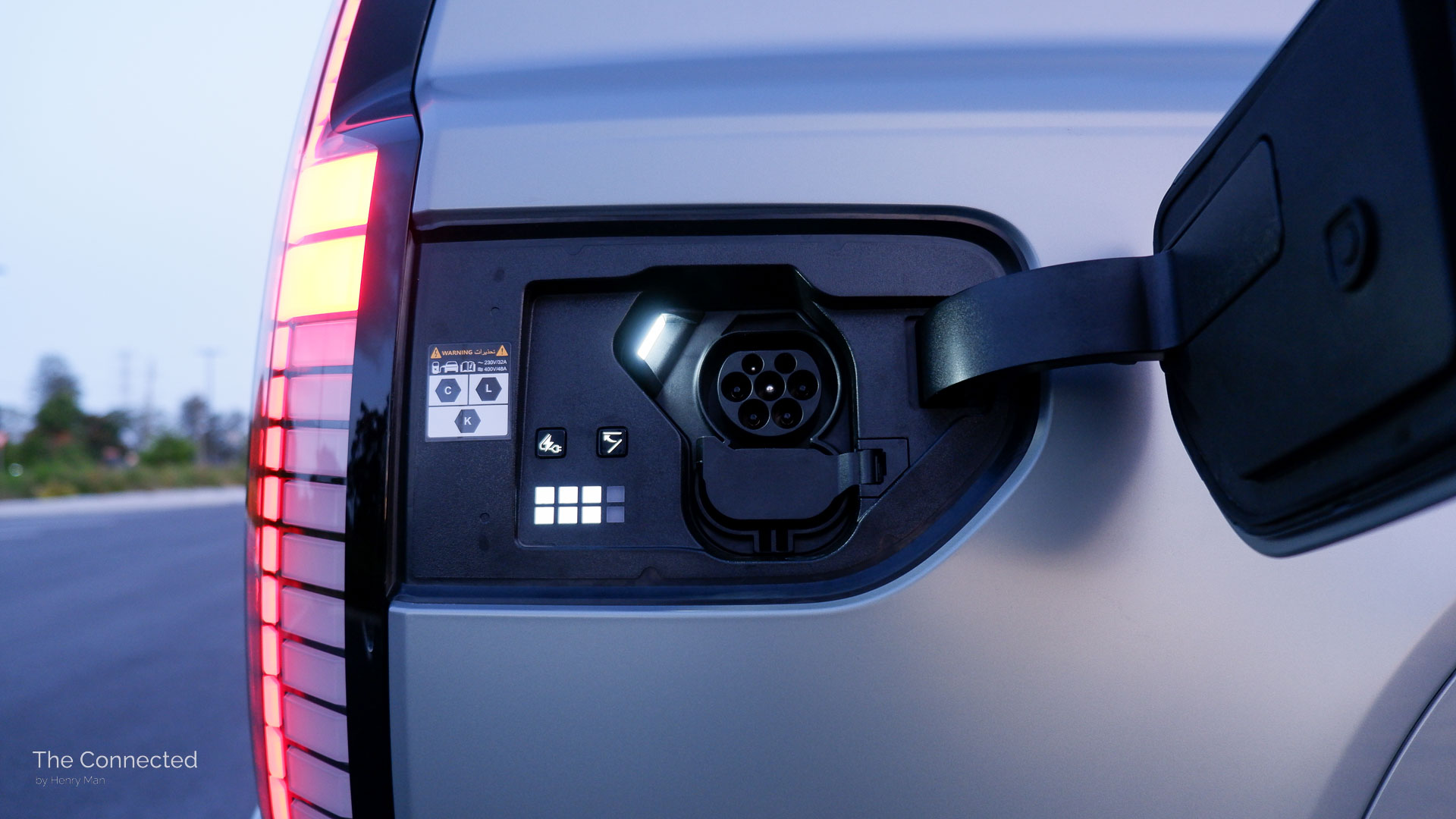
The Type 2 CCS charging port has an electrically-powered flap, LED illumination with a charge status light, and a well-designed cap on the bottom DC pins that’s attached to the port rather than dangling on the body.
The rear-right quarter side position is generally good for accessibility, even though it’s worth noting that it’s on the opposite side for kerbside chargers and use on older V3 Tesla Superchargers.
Driving.
2026 Hyundai Ioniq 9 Calligraphy powertrain specs:
| Electric drive unit | Dual permanent magnet synchronous motors |
| Power / torque | 314kW / 700Nm |
| Transmission | Single-speed |
| Drive type | AWD |
| Kerb weight | 2610-2744kg |
| Payload | 446-610kg (excluding max 125kg towball download) |
| Towing (unbraked / braked) | 750 / 2500kg |
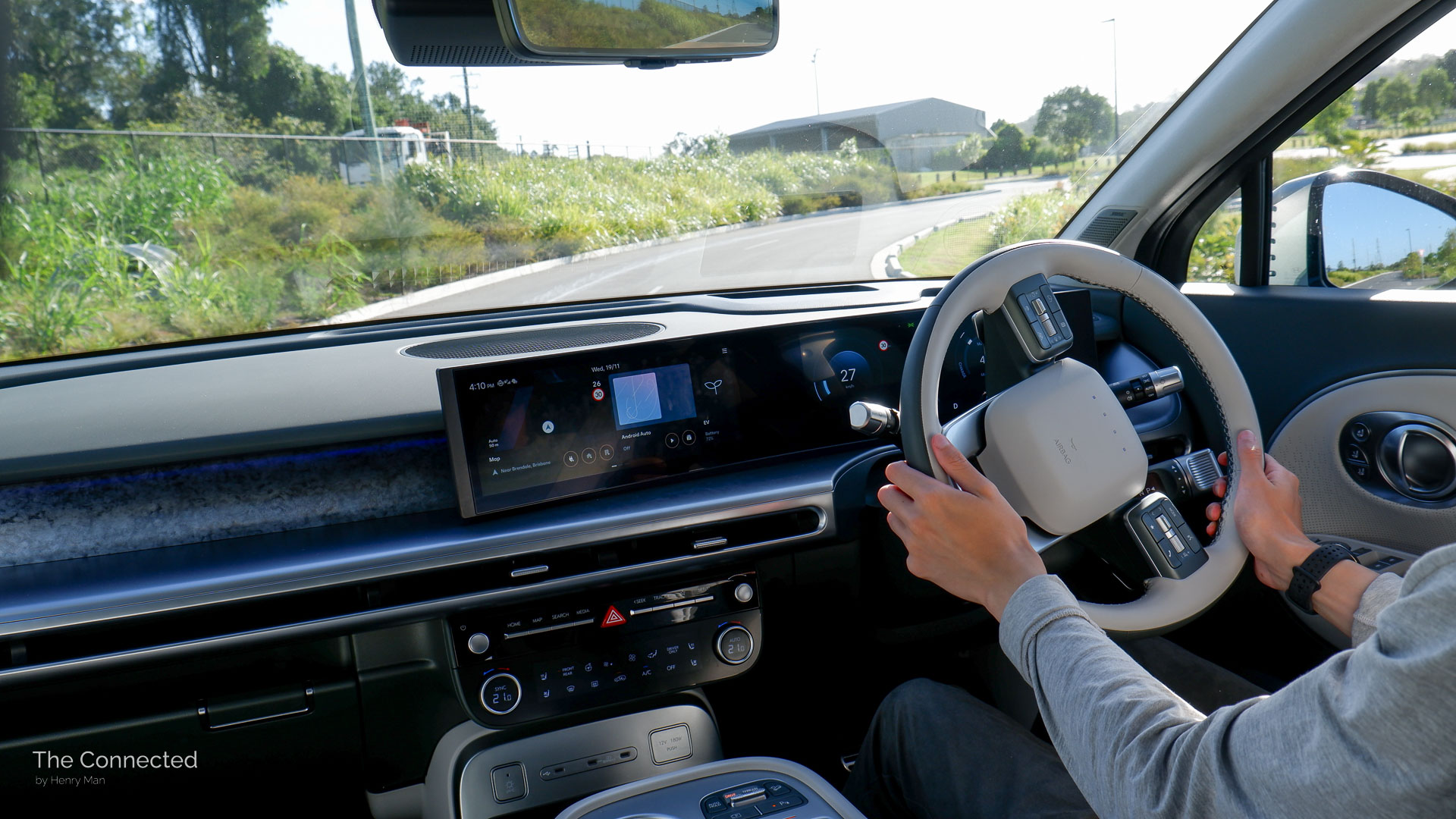
The Ioniq 9 is a fast heavy large SUV, but it excels on providing a luxury car level quiet and comfortable ride rather than driving engagement.
Standard on the single Calligraphy model are dual electric motors producing up to 314kW of power and 700Nm of torque, with all-wheel drive traction.
The drive unit provides plenty of push to move this heavy ~2.6 tonne large SUV, with rapid acceleration in sport mode.
However, while fast, the Hyundai Ioniq 9 doesn’t have thrilling steering with an artificially weighted feel, noticeable body lean around corners, and you can feel its big dimensions and heft. The Volkswagen ID. Buzz is undoubtedly far more fun to drive.
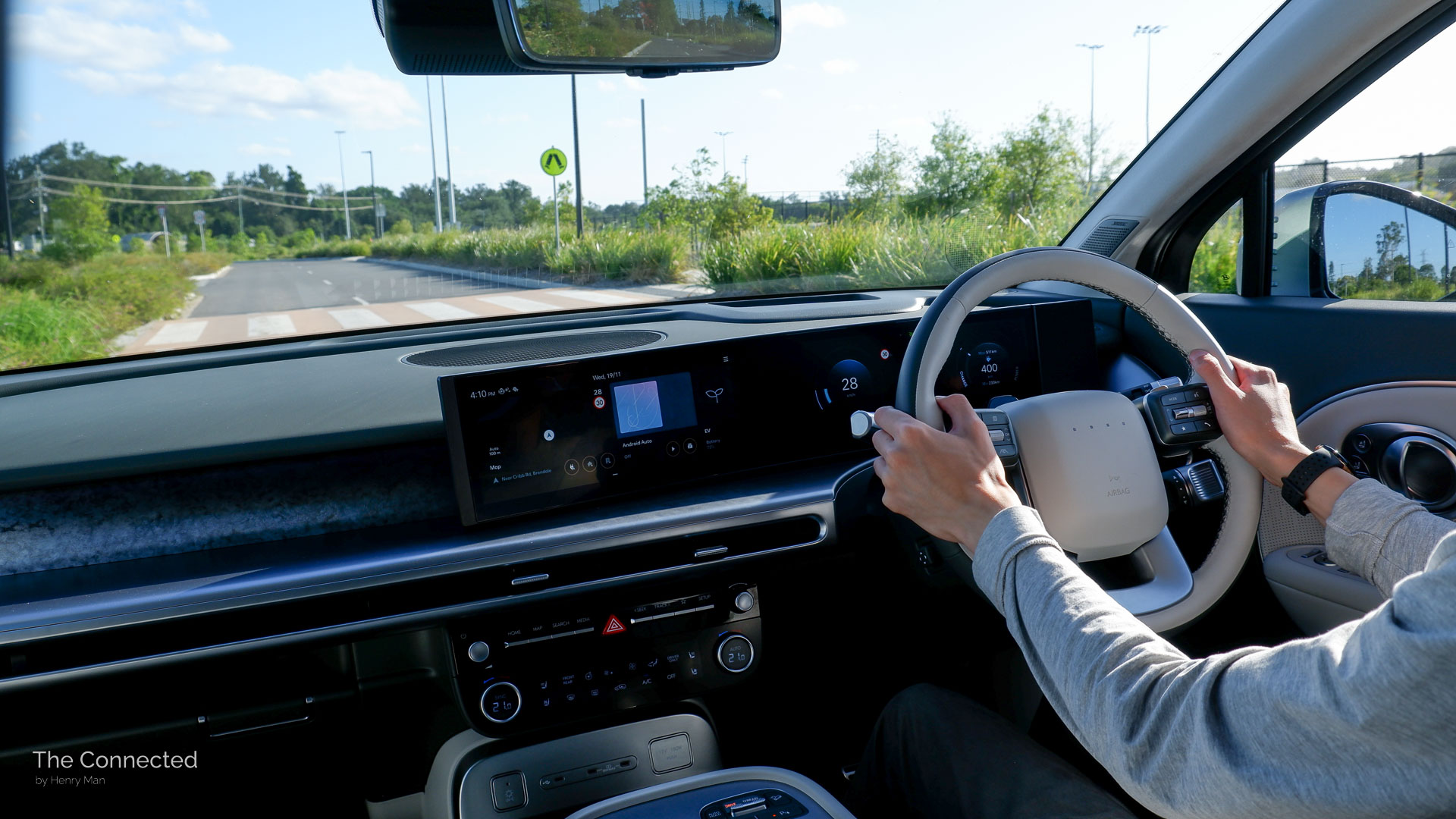
Instead, the Ioniq 9 is more comfort-orientated with a superb ride that almost glides over bumps and a super quiet interior thanks to an active noise cancelling system. It’s luxury car level comfort.
It’s helped by the cushy 45mm tyre sidewalls despite being a 21-inch wheel, which handily reduces the risk of curb rash as well.
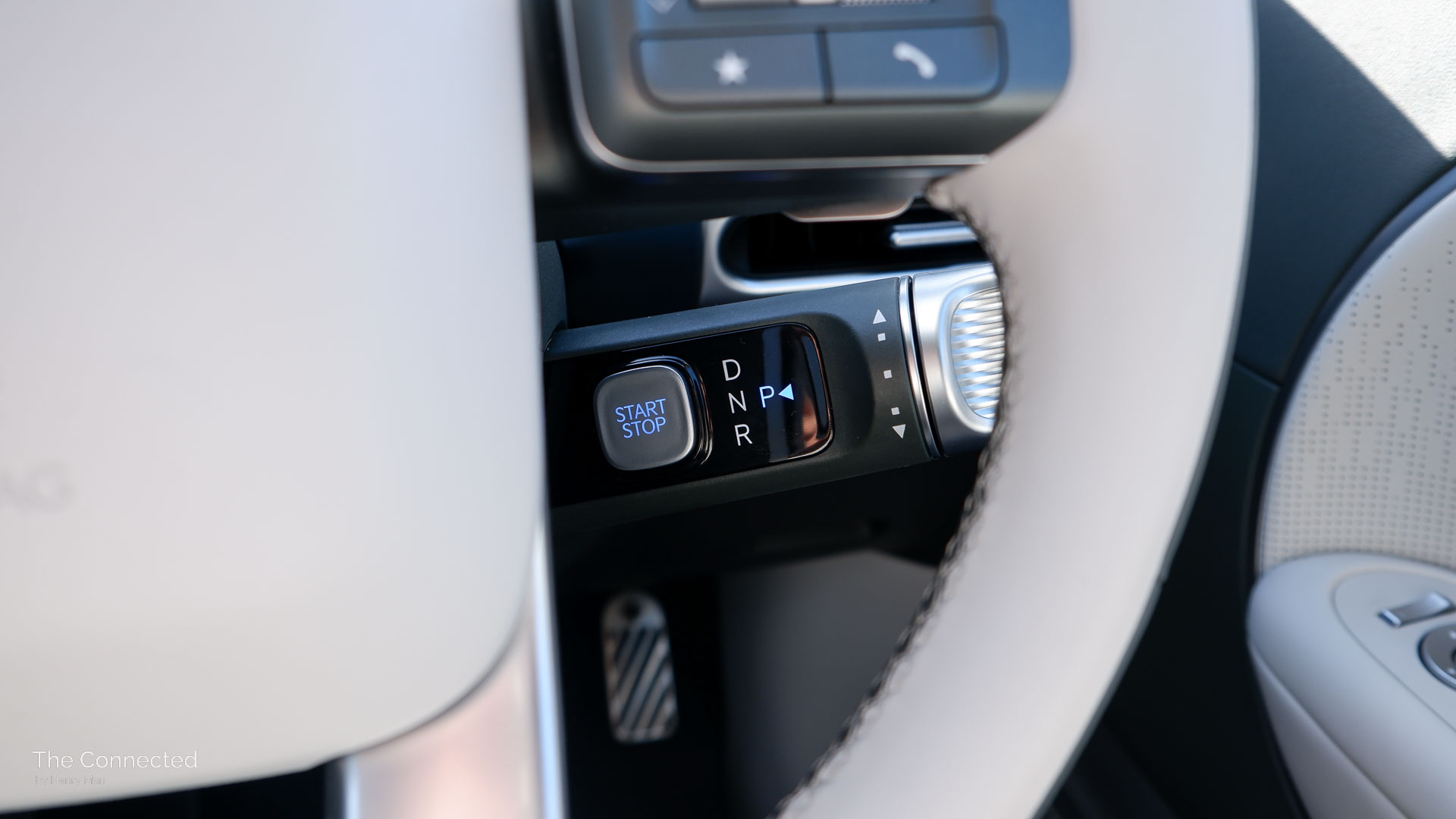
The Hyundai electric SUV offers strong and progressive one-pedal driving, yet it unfortunately defaults to off every time you start the car and when switching to reverse since it still doesn’t feature the latest i-Pedal 3.0 system like the Kia EV3.
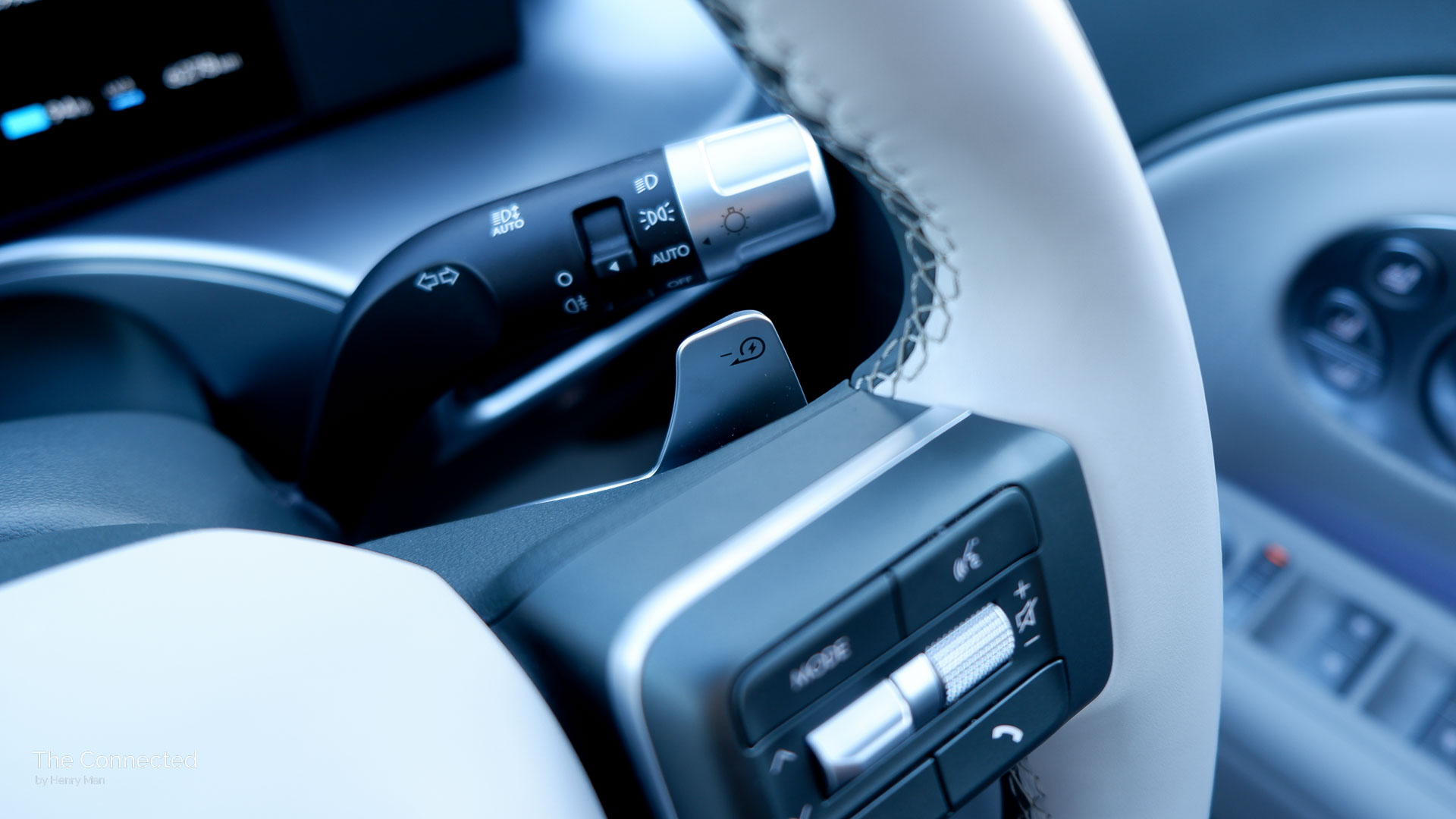
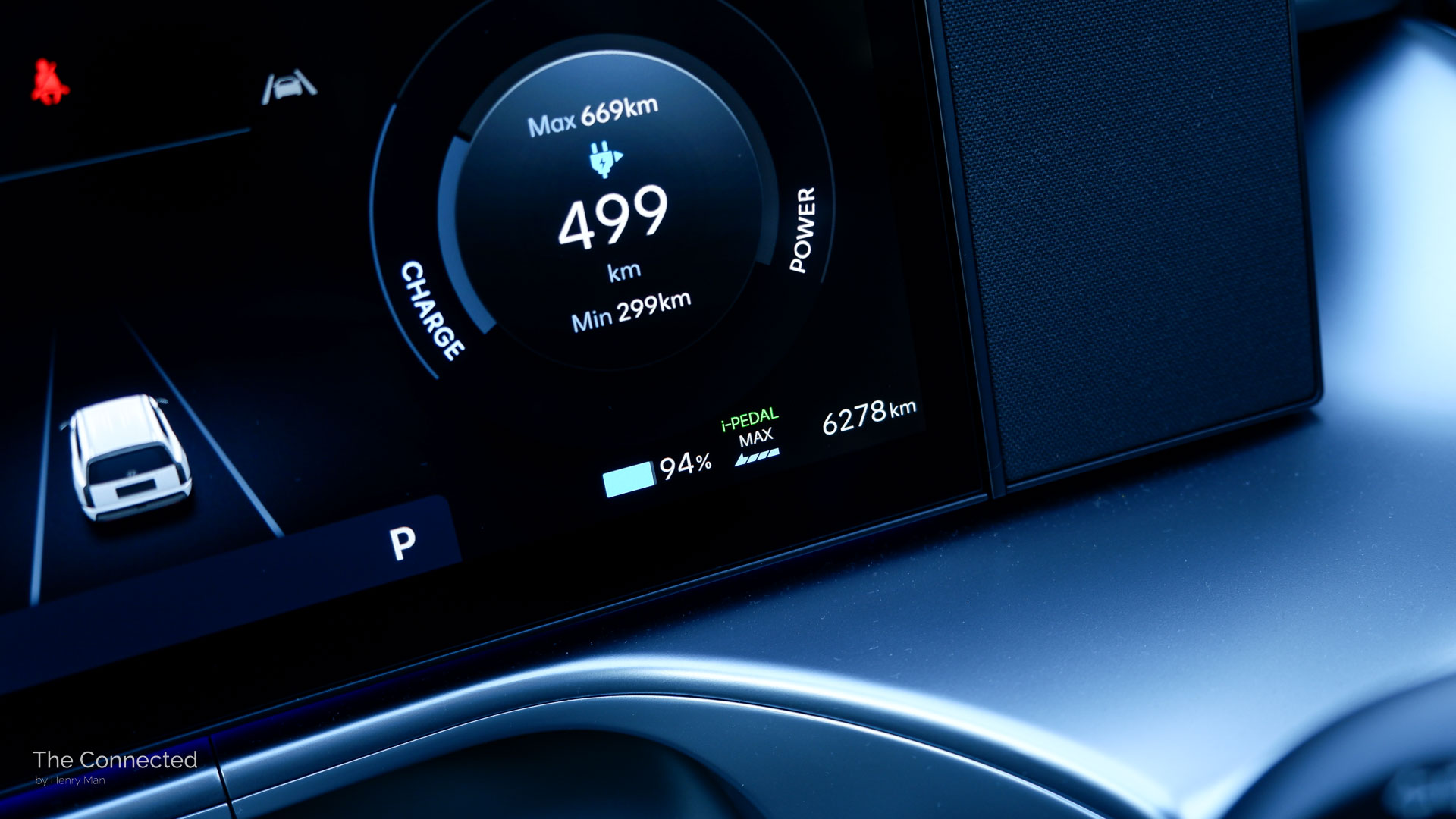
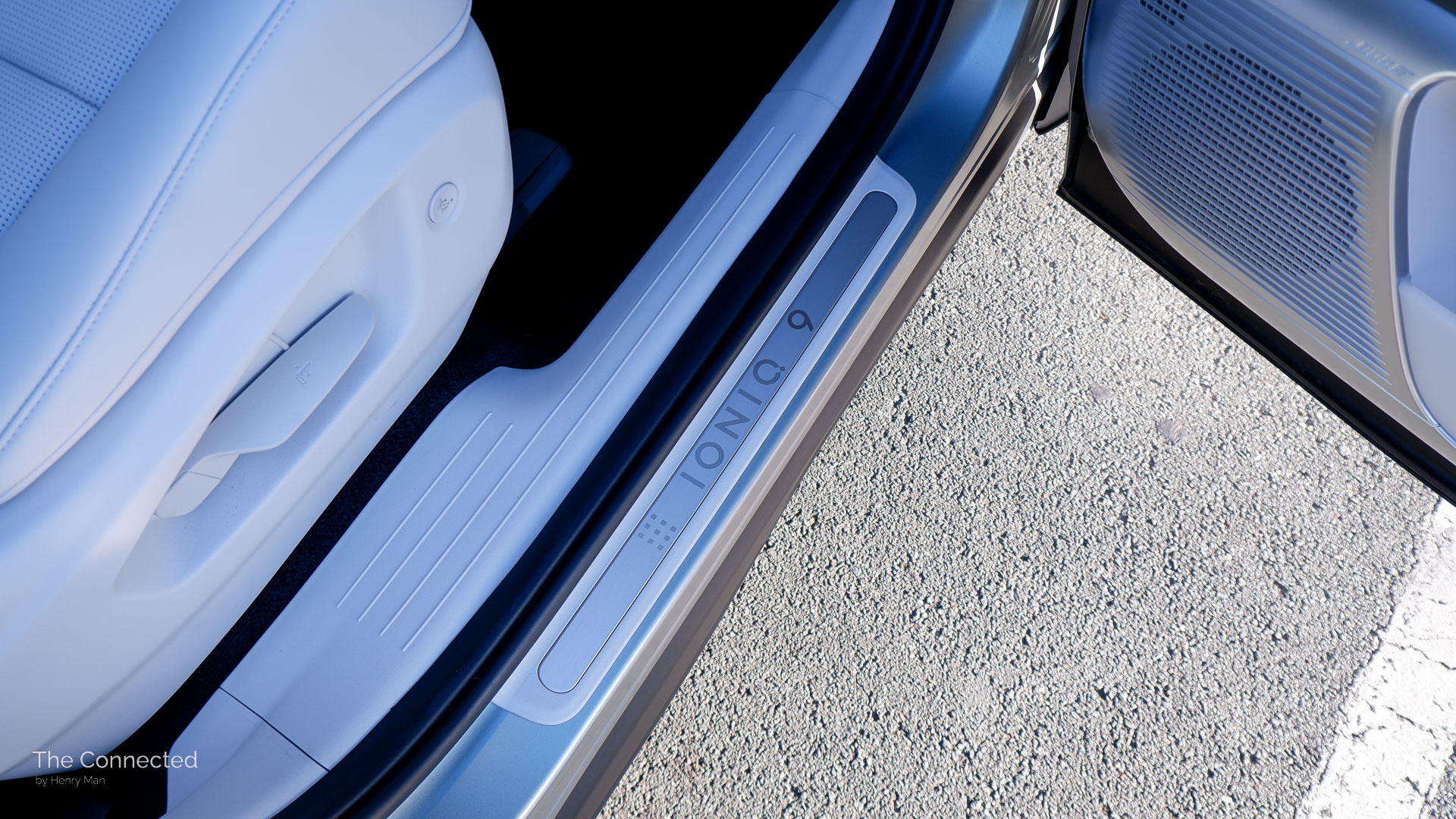
Paddle shifters behind the steering wheel can toggle through a range of regenerative braking intensity levels, which is great for drivers to set their own preference.
The driving position is suitably high, but you’ll gain an even more commanding view with the Volkswagen ID. Buzz electric van.
Unsurprisingly, the Ioniq 9 isn’t easy to park and manoeuvre, but the clear 360-degree camera system really helps, plus an auto dip-down wing mirror when reversing, and all-round parking sensors.
Warranty and servicing.
2026 Hyundai Ioniq 9 Calligraphy capped-price servicing costs:
| 2 years/30,000km | 4 years/60,000km | 6 years/80,000km |
| $668 | $693 | $668 |
The 2026 Hyundai Ioniq 9 is backed by a seven-year/unlimited kilometre conditional vehicle warranty and an eight-year/160,000km battery warranty.
If owners don’t service with a Hyundai dealer each time, the vehicle warranty is a standard five years/unlimited kilometres instead.
Servicing is required every two years/30,000km (whichever occurs first), costing $2029 after the first six years/80,000km – which isn’t exactly cheap.
Hyundai Australia uniquely offers lifetime capped-price servicing and roadside assistance inclusions.
Up to five years of Hyundai Bluelink connected services and Digital Key 2 functionality are included from the date of activation, with a subscription cost afterwards yet to be announced.
As with most electric cars, a spare tyre is not included with Hyundai only including a temporary patch-up goo kit.
Price and rivals.
2026 Hyundai Ioniq 9 model range pricing (accurate as at the time of publication):
| Calligraphy 7-seat | Calligraphy 6-seat |
| From $119,750 before on-road costs | From $121,750 before on-road costs |
The 2026 Hyundai Ioniq 9 is priced from $119,750 before on-road costs in Australia.
The luxury car tax (LCT) applies to all variants.
One halo Calligraphy model is sold in Australia with the option of digital camera wing mirrors for $3000 more and a six-seat captain chair layout for $2000 extra.
All glossy exterior colours except Serenity White cost $750, while matte colours are a $1000 option. Four interior colour themes are available for no cost extra.
The Hyundai Ioniq 9 directly rivals the following three-row large electric cars:
- Kia EV9 (full review)
- Volkswagen ID. Buzz (full review)
- Zeekr 009
- Volvo EX90
- Mercedes-Benz eVito
Other alternatives to the Ioniq 9 include:
- Hyundai Palisade Hybrid
- Hyundai Santa Fe Hybrid (full review)
- Kia Carnival Hybrid (full review)
- Kia Sorento Hybrid (full review)
- Mazda CX-90 (full review)
- Genesis GV80
Would I pick the 2026 Hyundai Ioniq 9 Calligraphy?
The Hyundai Ioniq 9 is a luxurious family electric SUV worthy of its six-figure price tag.
The large three-row electric SUV provides a practical interior, exceptional ride comfort, and ultra-fast charging.
It looks and feels like a genuine Genesis luxury car despite the Hyundai badge, and has touches that make it a step better than the related Kia EV9 GT-Line – including a more upmarket interior, door handle light surrounds, bigger battery and a lower price.
However, the lane-keep assist is slightly intrusive given its almost two-metre width, it still doesn’t adopt the latest i-Pedal 3.0, and Australia misses out on an interior V2L plug.
The Ioniq 9 is also a staggering $29K more expensive than the similarly-equipped Hyundai Palisade Hybrid – which begs the question of its actual value when both SUVs are so similar.
I’d pick the Ioniq 9 Calligraphy with standard glass mirrors and the seven-seat layout (as tested).
The Hyundai Ioniq 9 isn’t cheap, but it is a proper premium – borderline luxurious – seven-seat electric SUV that’s worth shortlisting against the pricier Kia EV9, Volvo EX90, and Zeekr 009.
Photographs by Henry Man
READ MORE: Can EVs go on road trips? Brisbane to Sydney to Melbourne challenge
READ MORE: 2025 Genesis GV70 review
READ MORE: 2025 Polestar 4 review
Pros:
- Exceptional ride comfort
- Long range, ultra-fast charging
- Non-overwhelming tech
- Family-friendly practicality
- Stunning interior
Cons:
- High price premium
- Intrusive lane-keep assist
- One-pedal driving defaults off
- Missing interior V2L in Australia
- Shared parts aren’t as unique
About the Author.
Henry Man is an independent content producer passionate about the intersection of technology and transportation.
The former automotive journalist is focused on producing critically-detailed vehicle reviews, and unique short-form content. Learn more.


 The Connected by Henry Man