

The base Hyundai Kona is already one of the best value small SUVs on sale. But, is the fuel-efficient hybrid and top Premium N Line variant worth the extra spend?
Hyundai Australia is aiming high for the second-generation Kona – positioned to replace the ageing i30 hatchback as the new ‘default’ small car of choice.
Launched locally in mid-2023, the Kona line-up is available with two variants, four powertrains, and a sporty-looking N Line package. In particular, the more fuel-efficient petrol-electric hybrid engine option is poised to be the key driver of its sales success.
We’ve sampled the top-spec Kona Premium with hybrid and N Line options to find out whether they’re worth adding up to $8000 to the price in total, depending on the variant.
NOTE: The press vehicle was provided by Hyundai Australia for an eight-day independent evaluation. We have no commercial arrangements with the company and it did not have any editorial control.

Pros.
+ Powerful, smooth hybrid engine
+ Low real-world fuel consumption
+ Good middle-ground size
+ Advanced tech
+ Unique futuristic design
Cons.
– Some nasty interior plastics
– Firmer, noisier ride
– Blended regen pedals need fine-tuning
– Uncovered, awkward 12V battery
– Exxy servicing costs, no AWD hybrid
Vehicle tested:
| Model | 2024 Hyundai Kona |
| Variant | Hybrid Premium N Line |
| Starting price | $46,500 (before on-road costs) |
| Exterior colour | Neoteric Yellow (no cost extra) |
| Interior colour | N Line interior with red highlights and leather/Alcantara seats |
| Country made | South Korea |
Design.
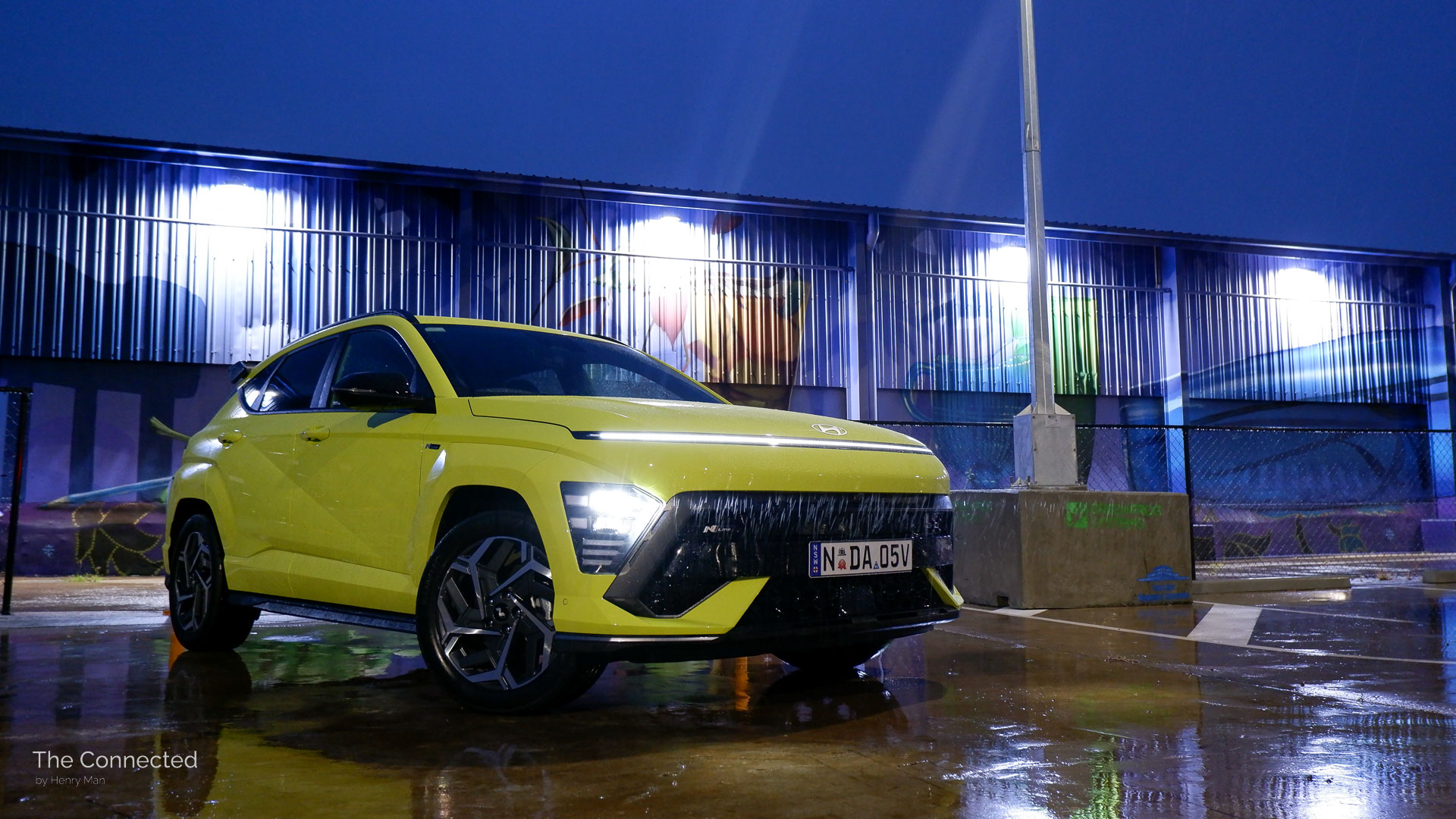
The new-gen Hyundai Kona is headlined by a futuristic exterior design, while maintaining its Iron Man-esque roots.
Claimed to be designed as an electric vehicle first, the Kona features discreet electrically-opening grille shutters, full-width front and rear ‘Seamless Horizon’ LED light bars (the former lighting up with the headlights on N Line and Premium guises), and angular side body creases reminiscent of the Hyundai Ioniq 5.
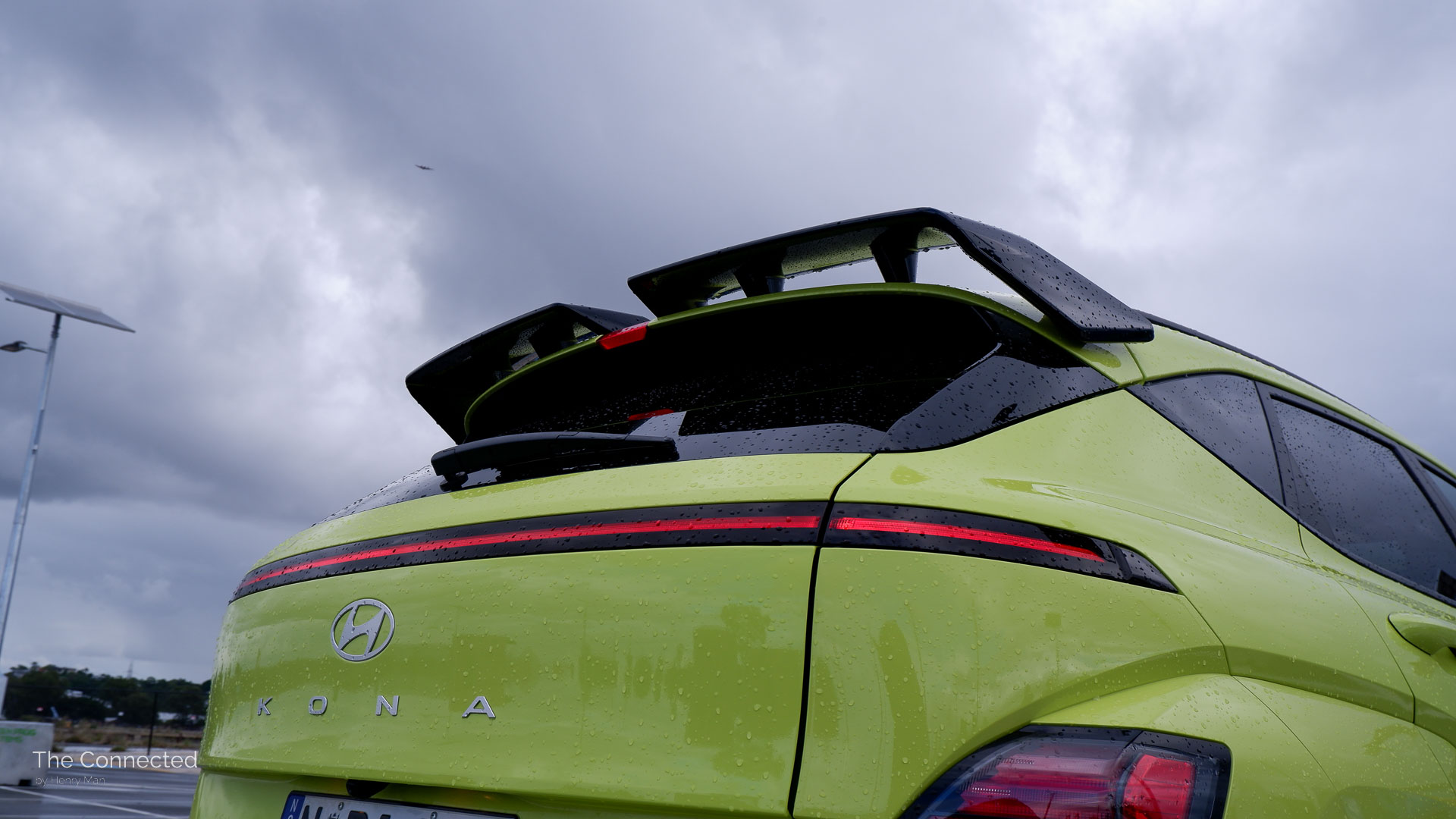
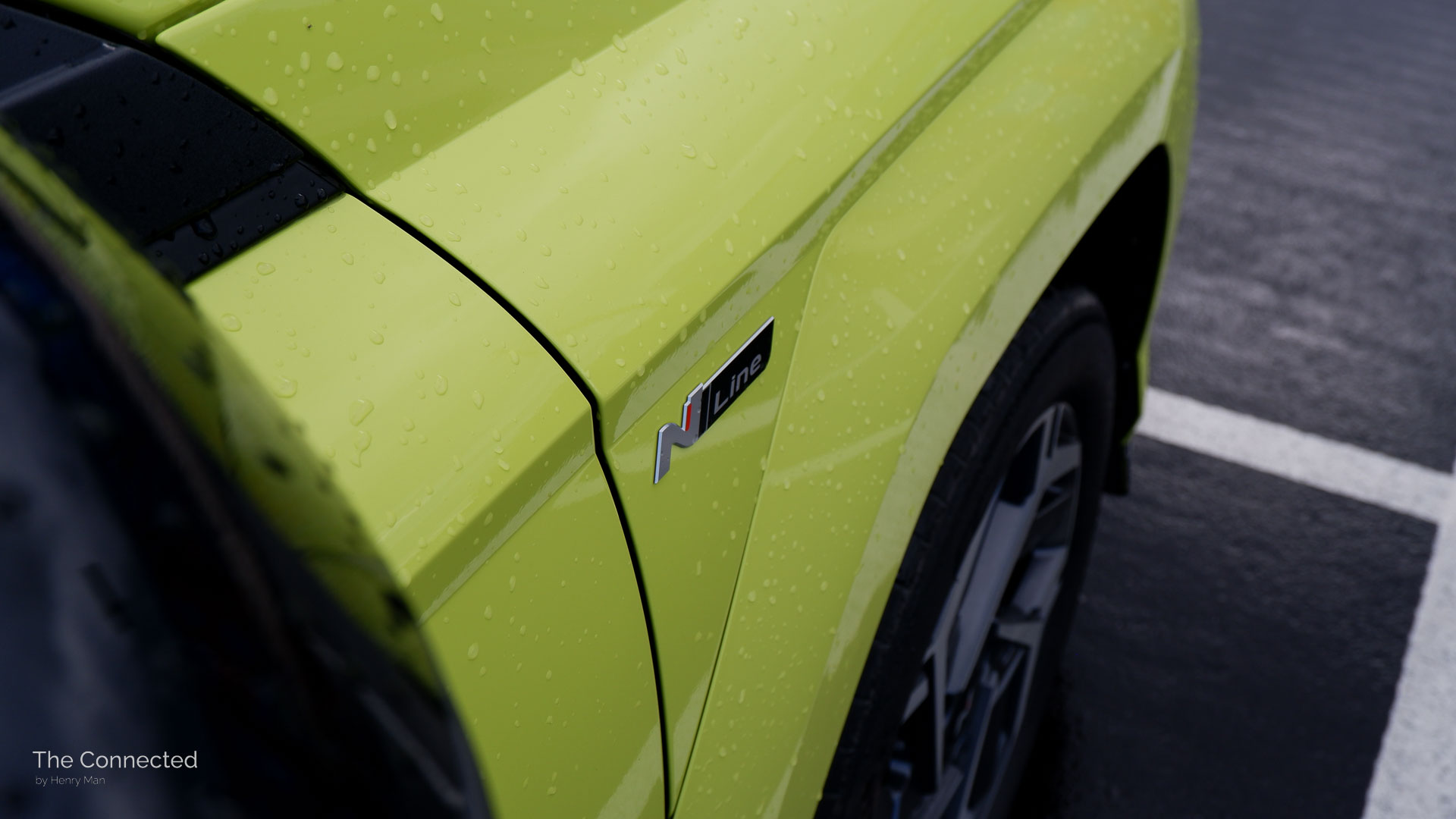
The N Line package option (a $3000 extra for the top-spec Premium) and free-of-charge searingly high-vis bright Neoteric Yellow colour is particularly a head-turner.
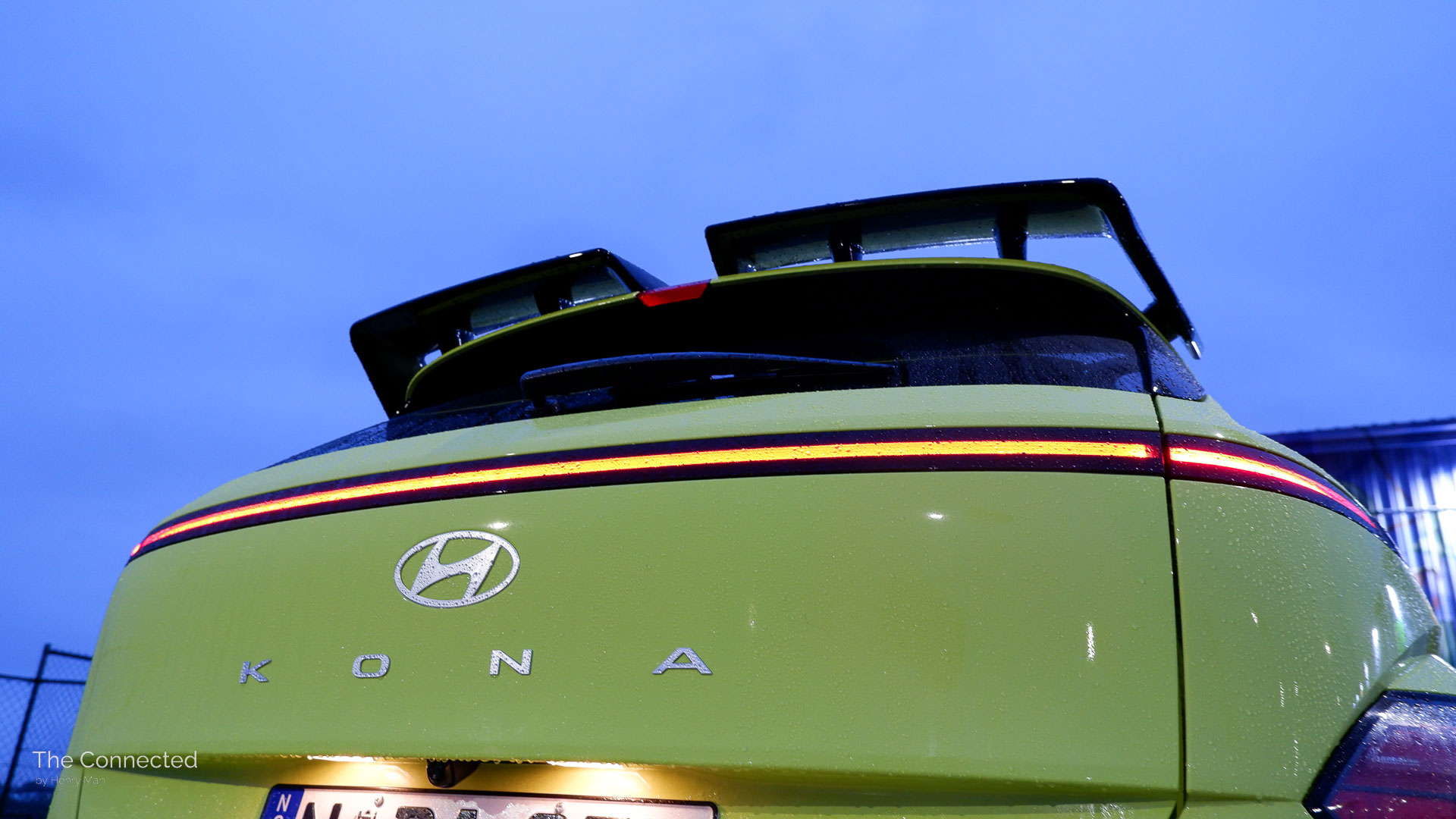
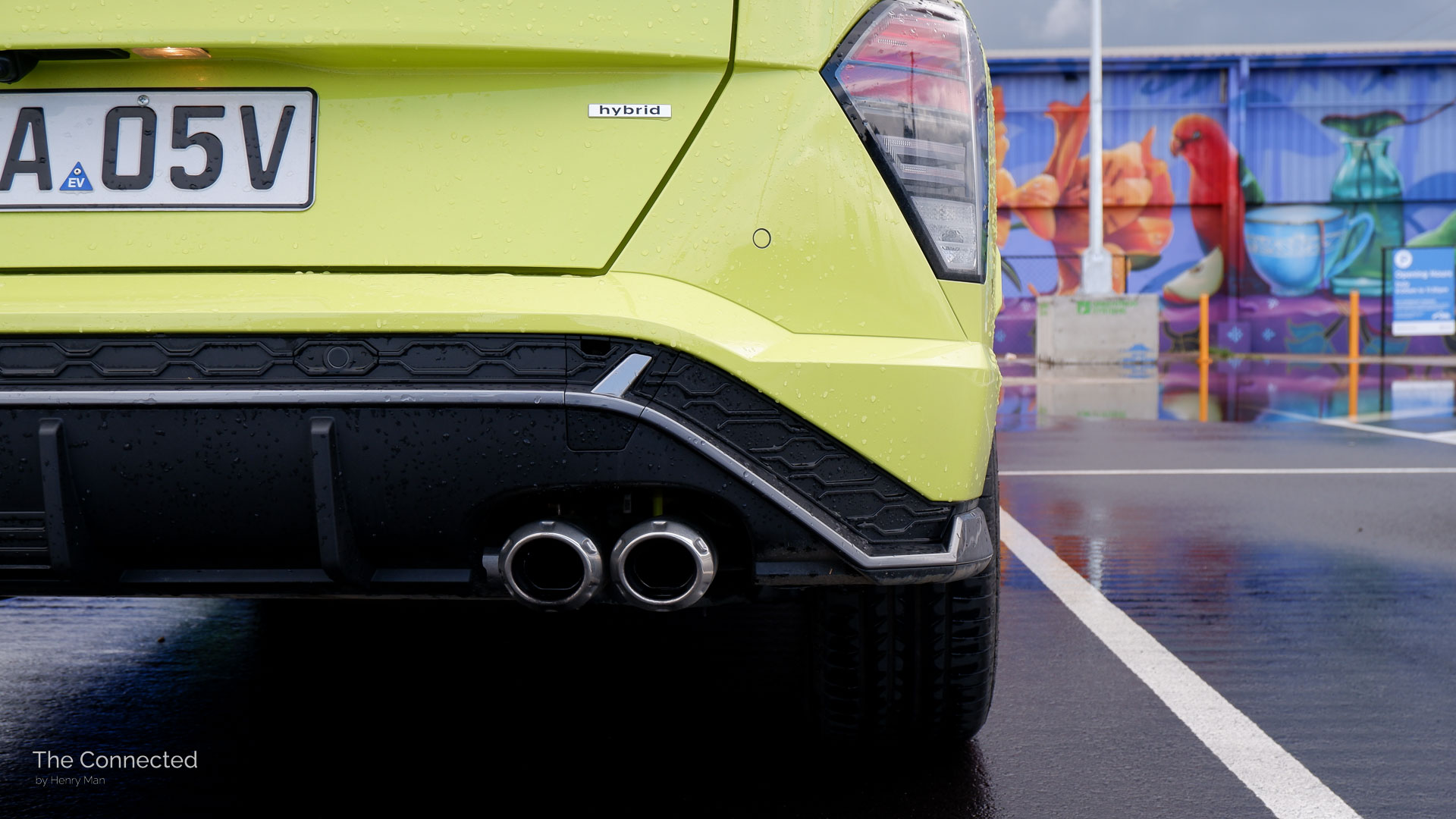
It adds some boy-racer elements to the originally mature design – including a more prominent front, double rear spoiler, gloss black trims, and an aggressive rear bumper with gloss grey trim and faux double exhausts.
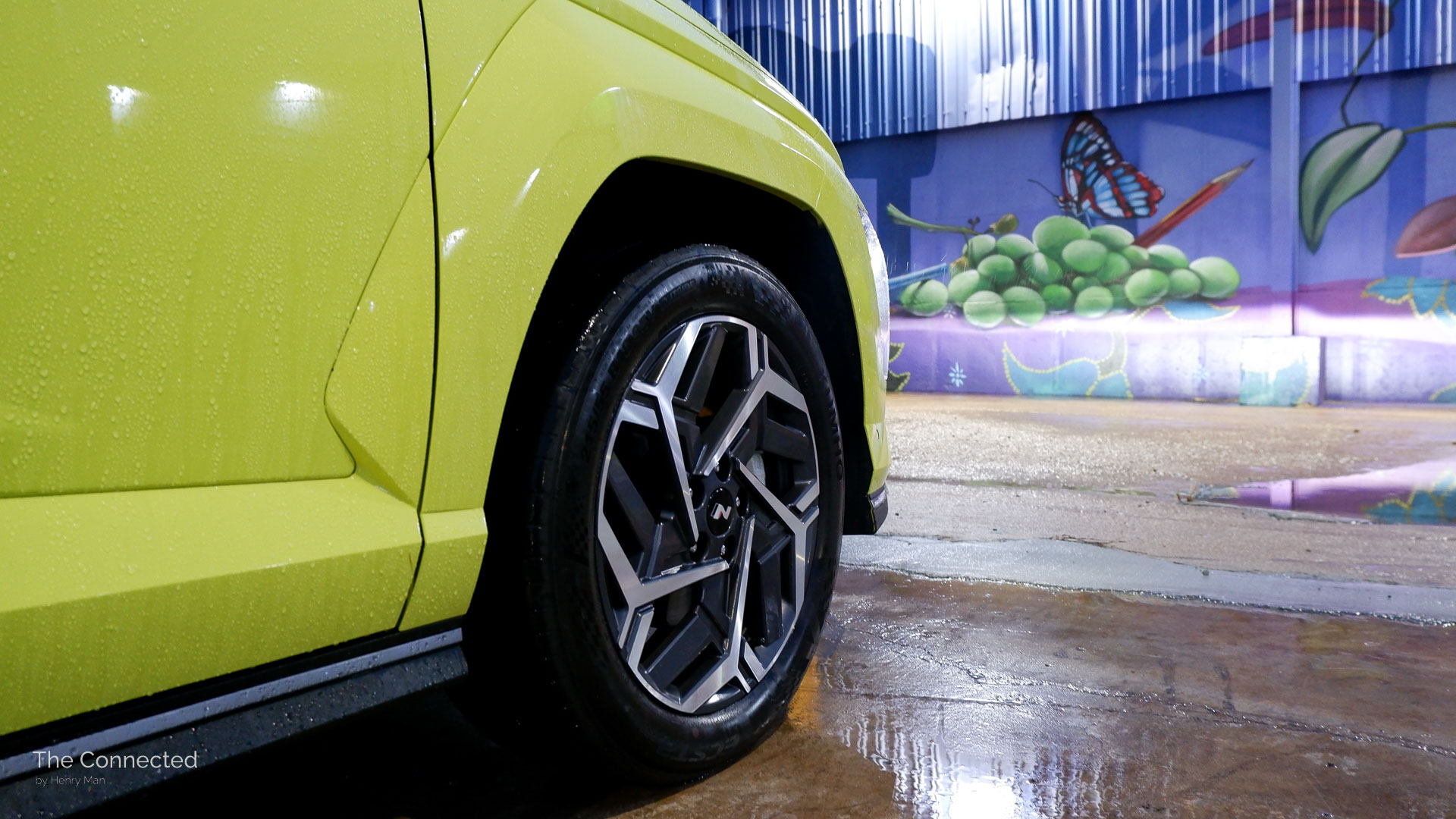
The N Line package also brings web-like design alloy wheels, in either 18-inch form for the hybrid or 19-inch for standard petrol-only engines, and swaps the thick plastic cladding for less practical body-coloured painted panels.
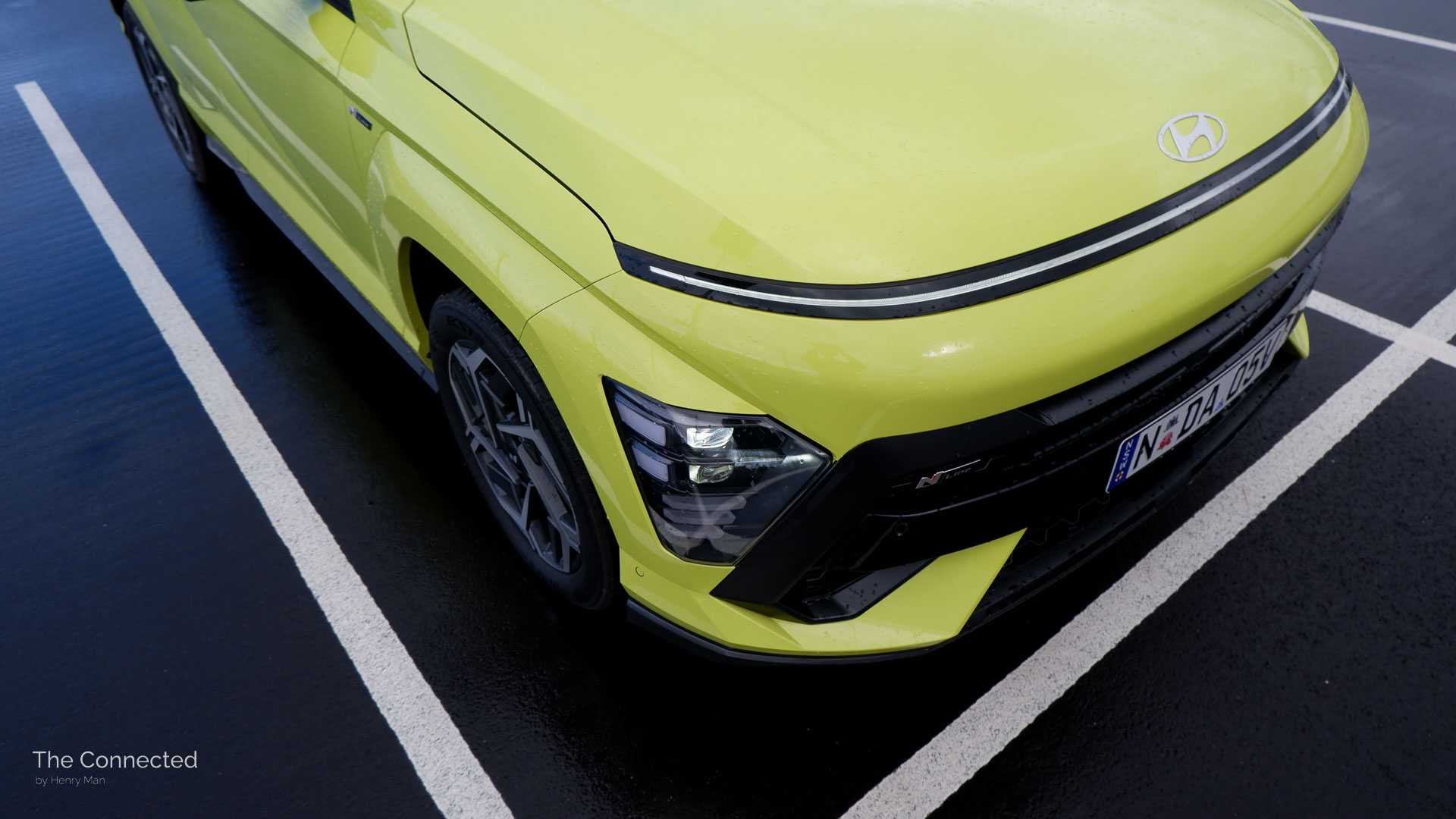
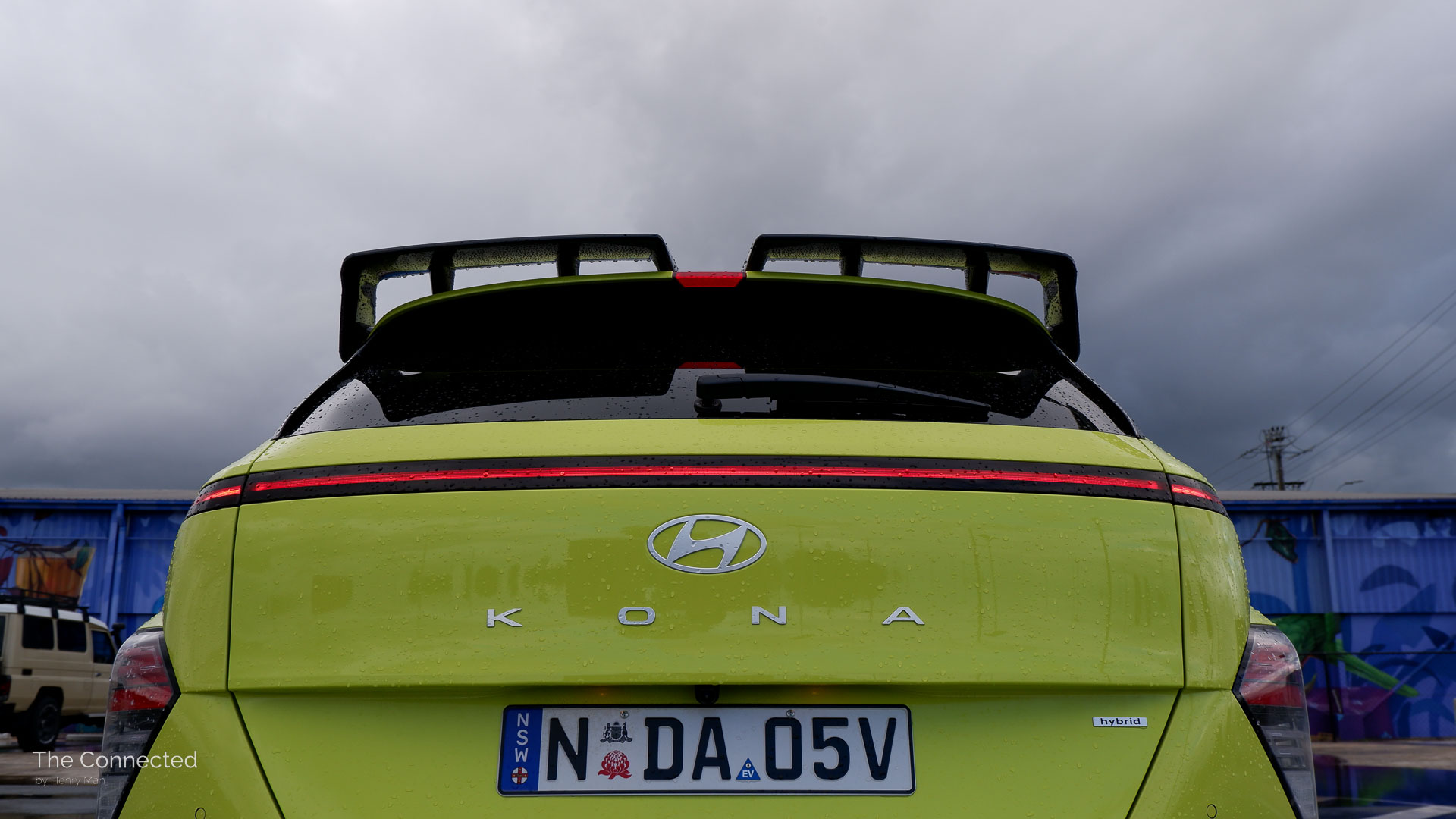
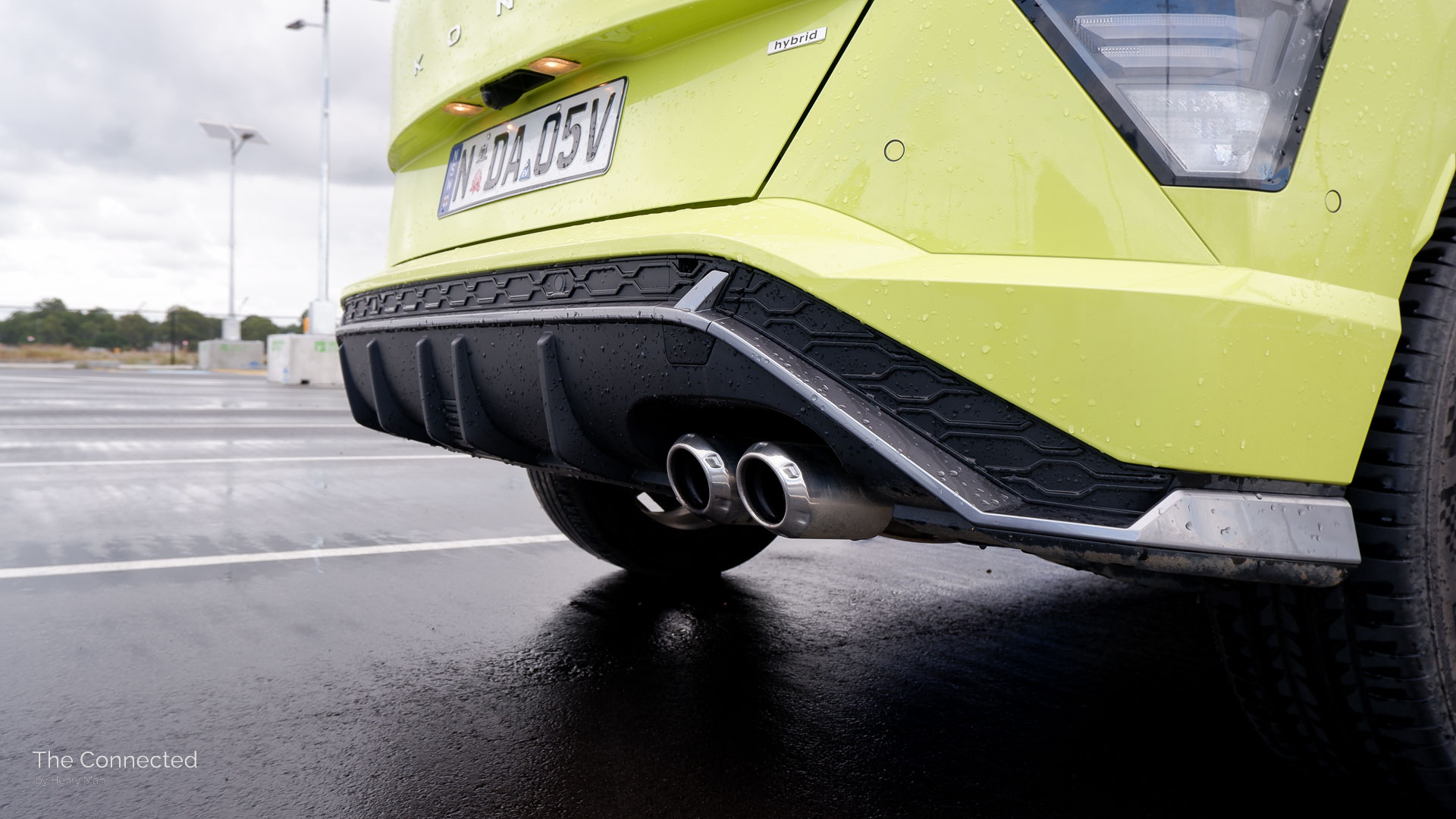
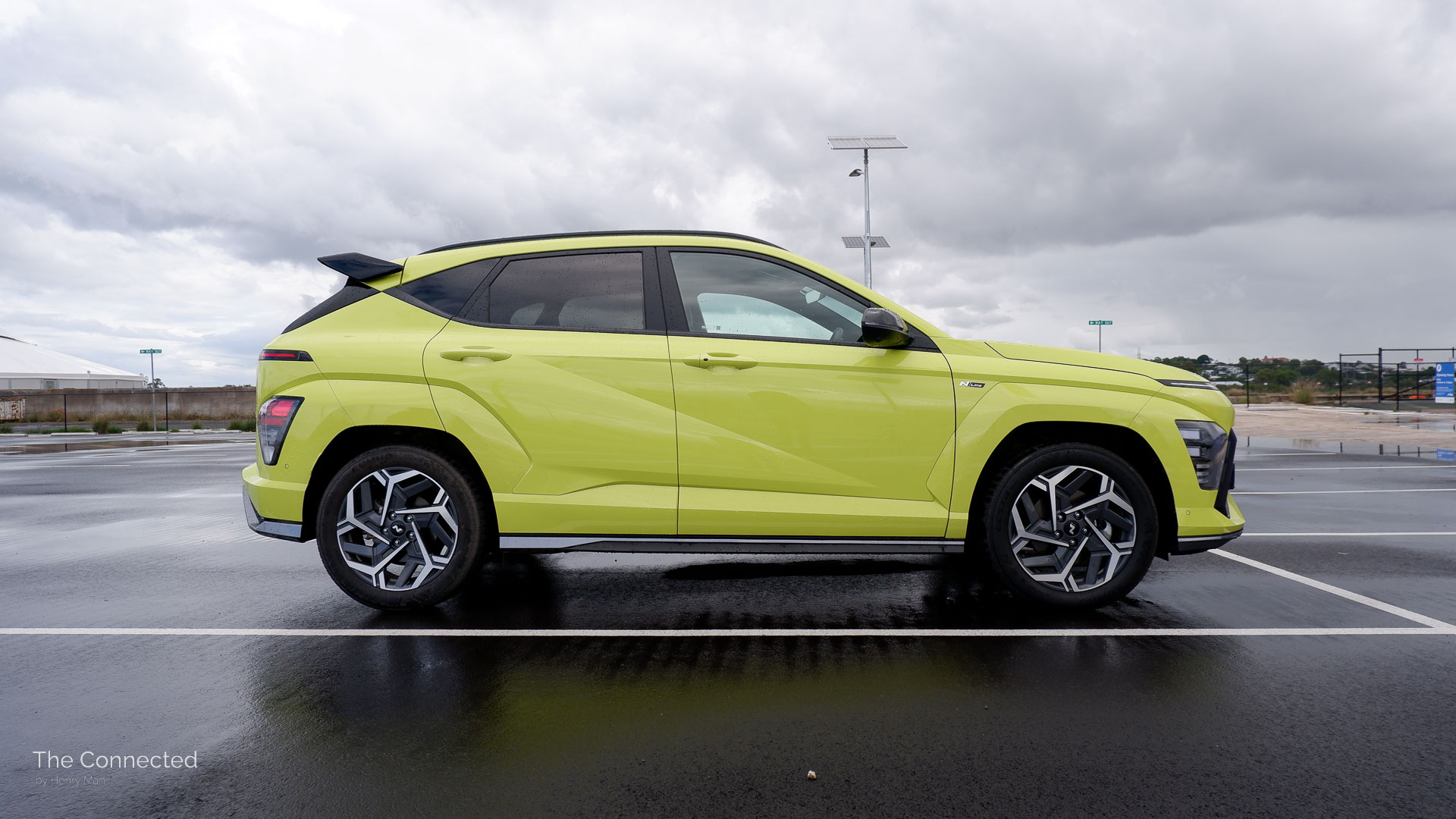
Thankfully, the hybrid isn’t ostentatiously different than the standard petrol-only model either; keen eyes will only notice the smaller N Line wheels, discreet hybrid badge at the tailgate, and mandatory blue EV sticker on the licence plates.
Overall, the Kona is a unique, futuristic looking small SUV. The best part? The N Line package is optional (if you don’t prefer dialling it up to 11) and looks identical whether you option it on the base or Premium variants.
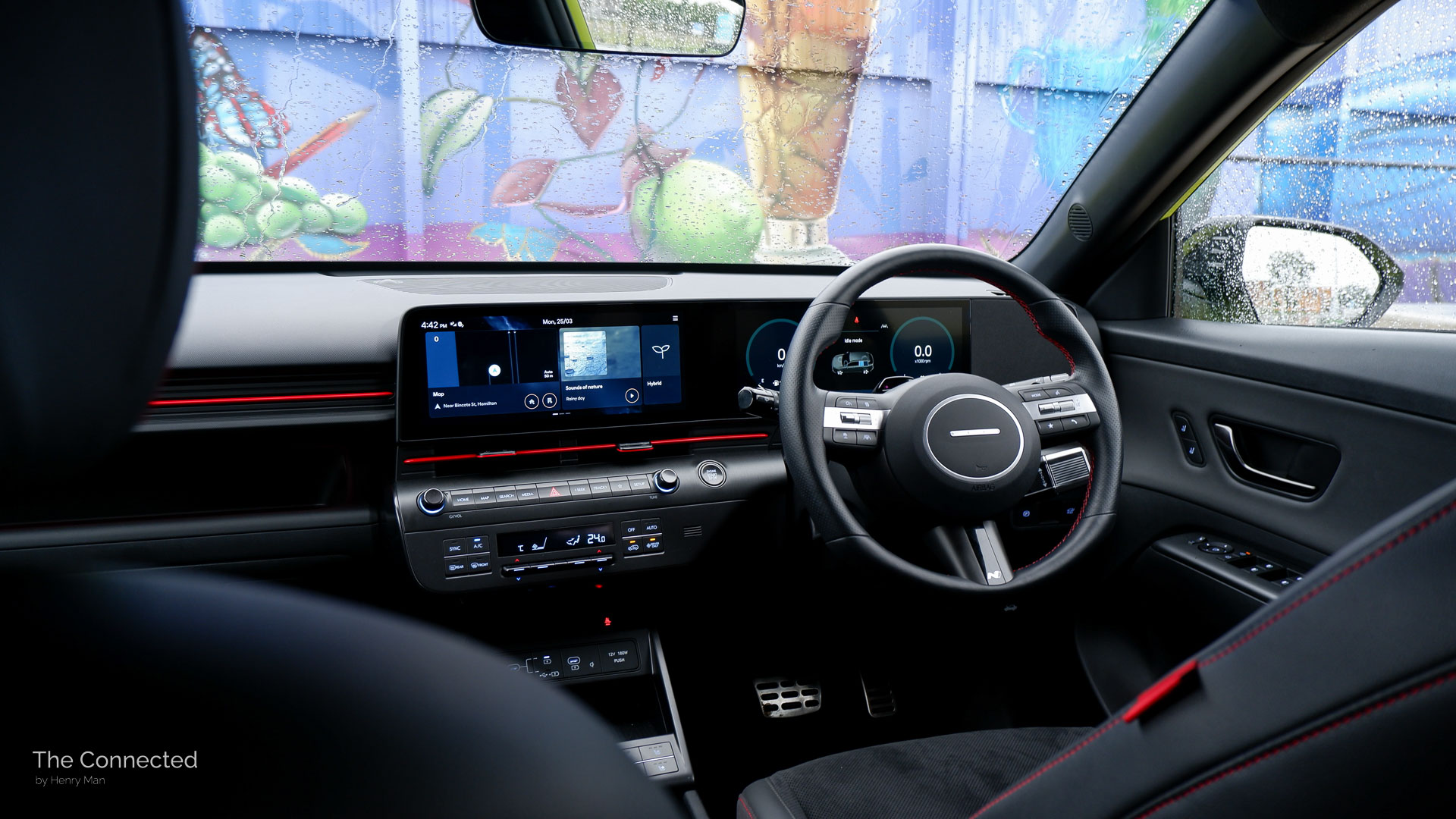
The sporty N Line option theme continues inside – making the interior feel much more interesting than the fairly basic and boring base Kona.
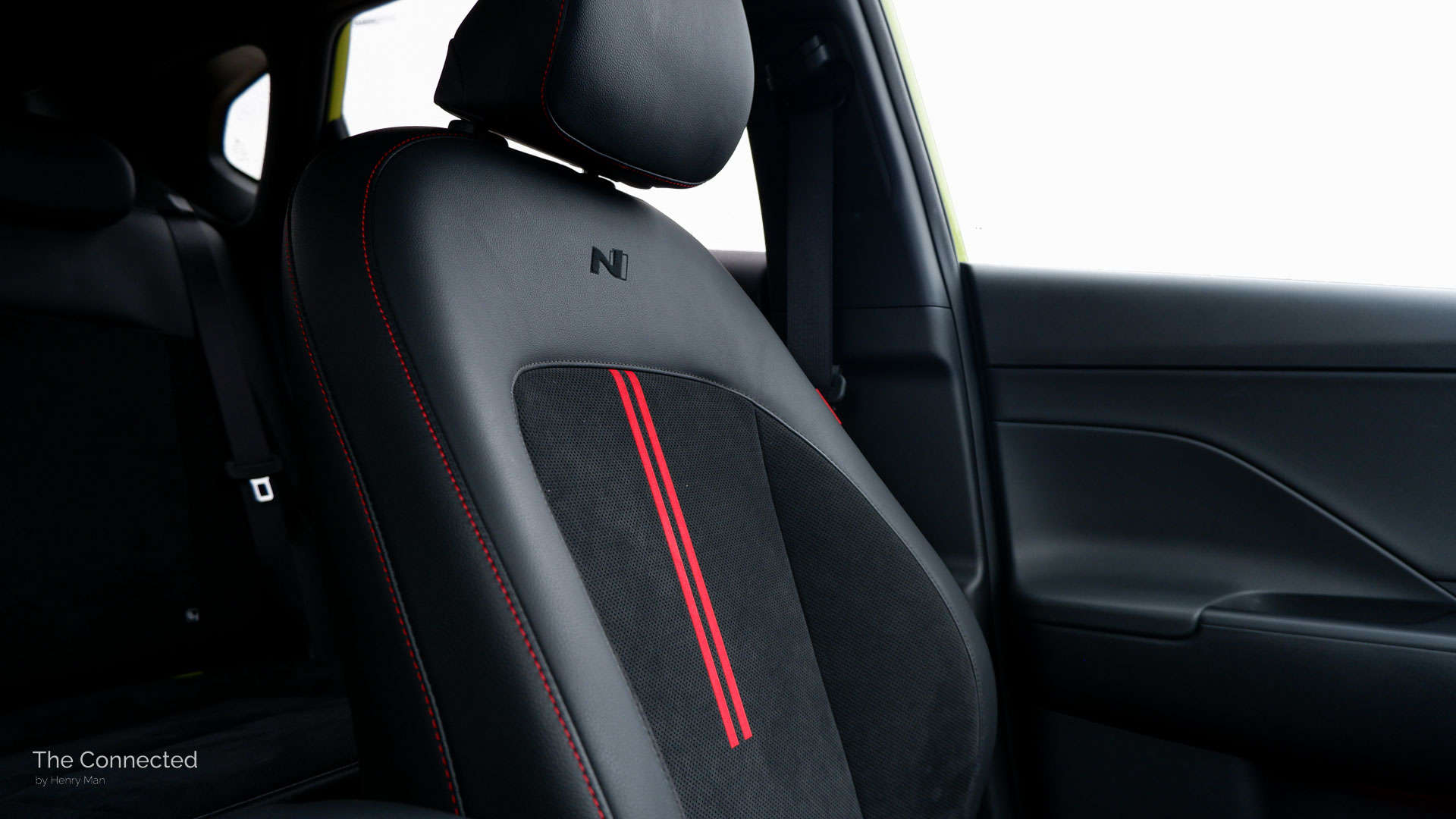
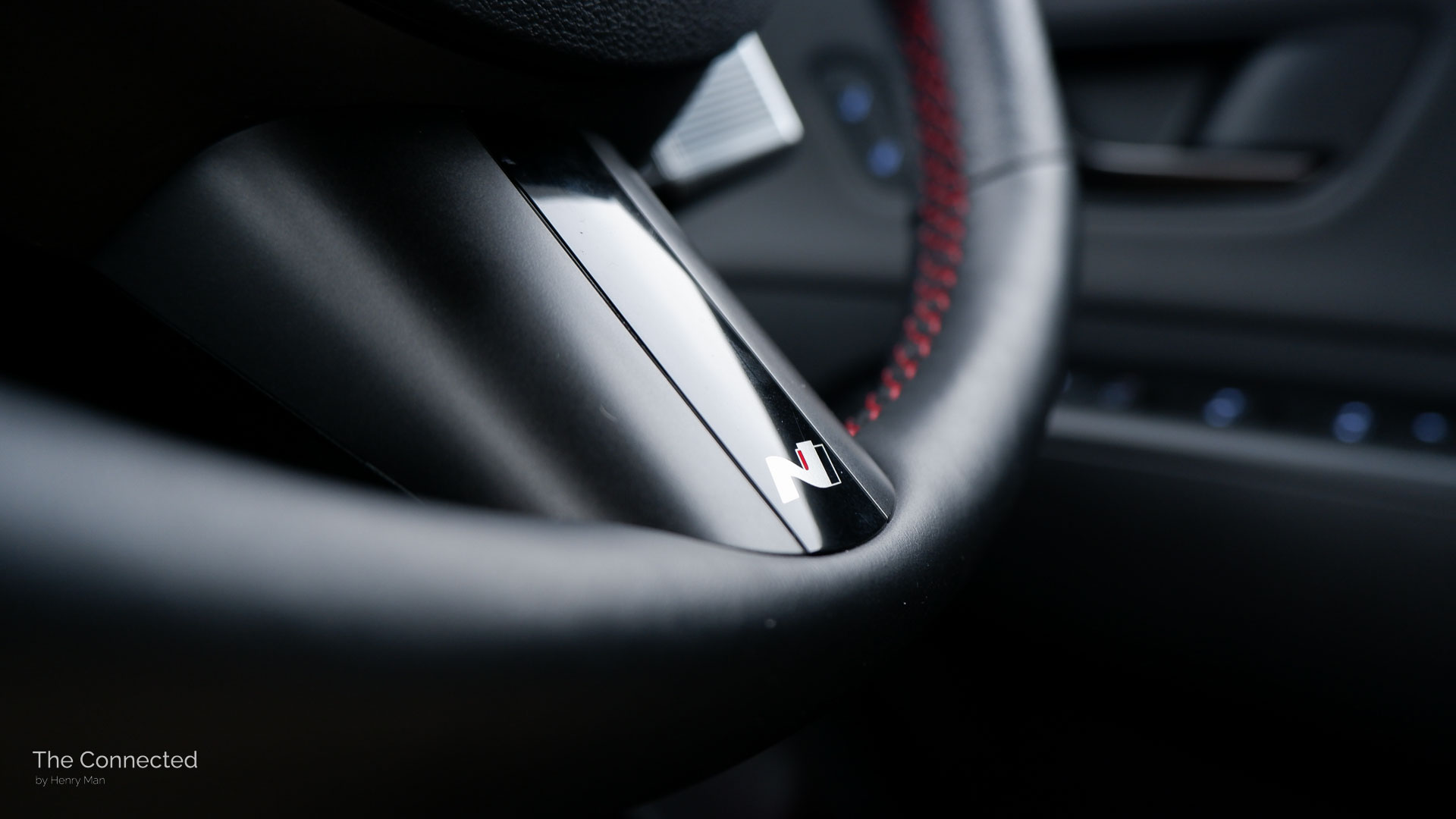
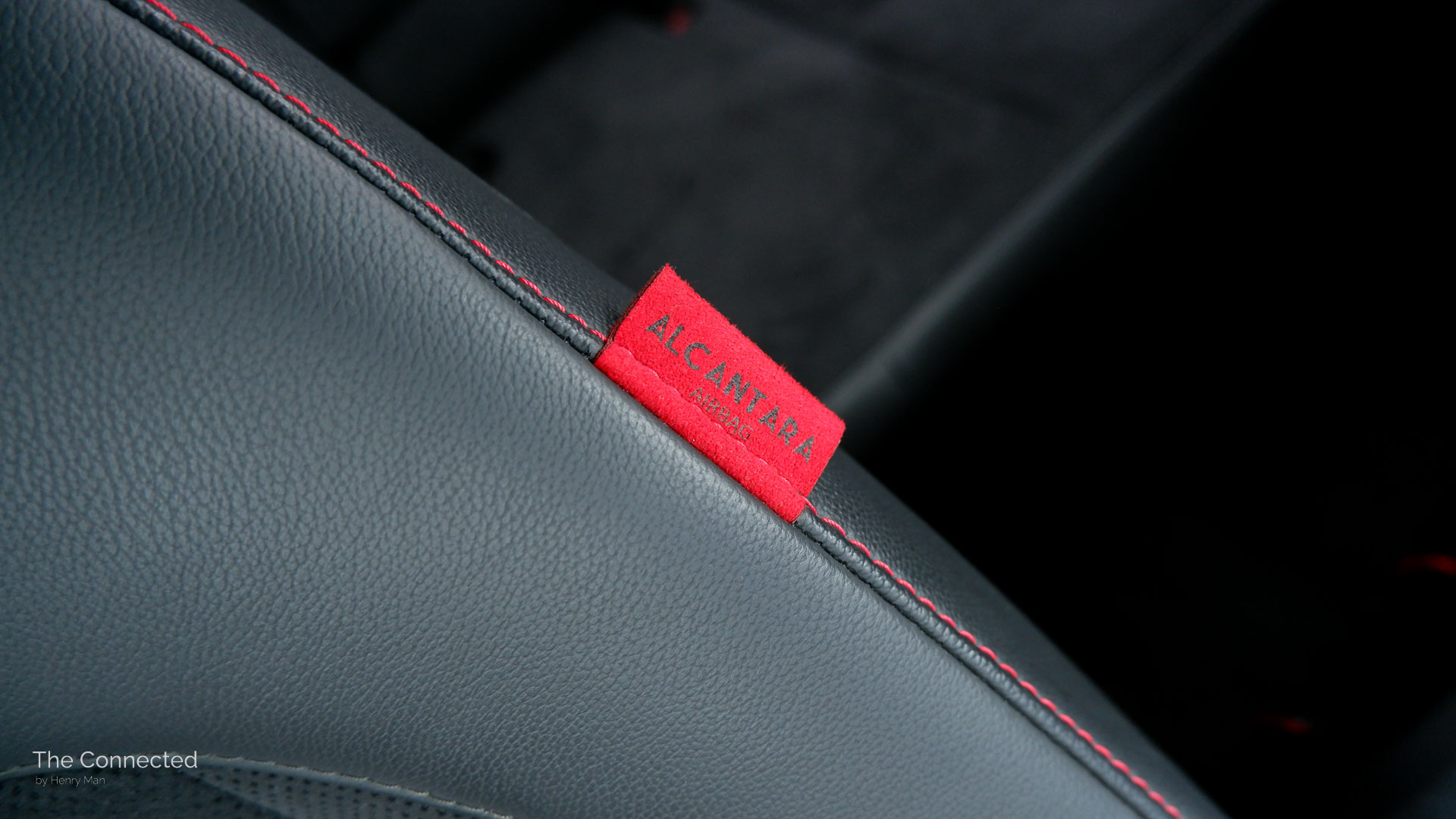
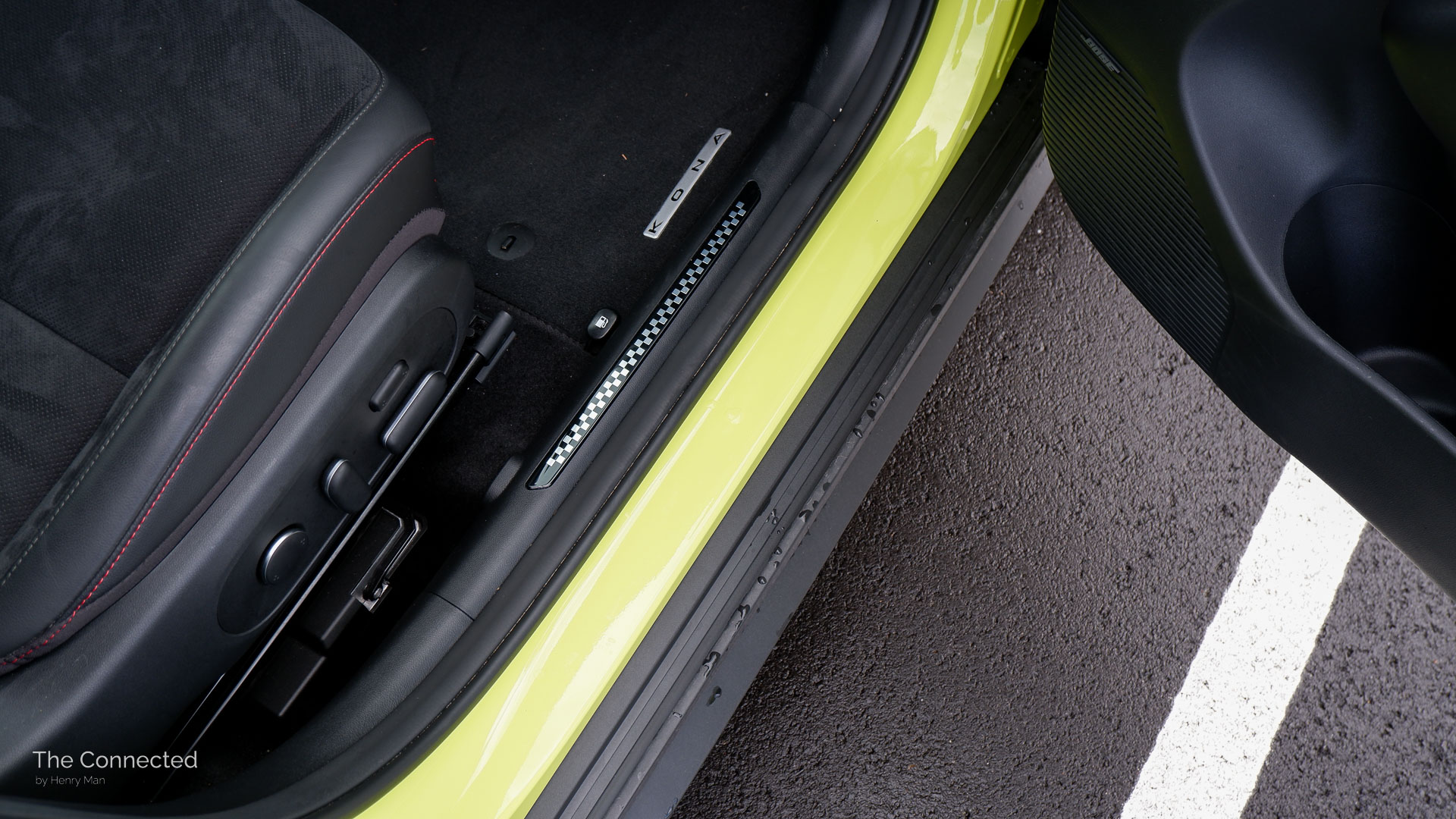
Separated contrasting red strips on the dashboard, red leatherette stitching, a darker brushed metal-look centre panel and grey door handles, perforated leatherette steering wheel, and genuine Alcantara seats with red stripes help lift up the interior with a more sporty character – even though it doesn’t bring any power upgrades.
The N Line package also adds softer padding on the door armrests and panels (including the oft-forgotten rear ones) – which is standard on the Premium and was disappointingly missing on the base model.
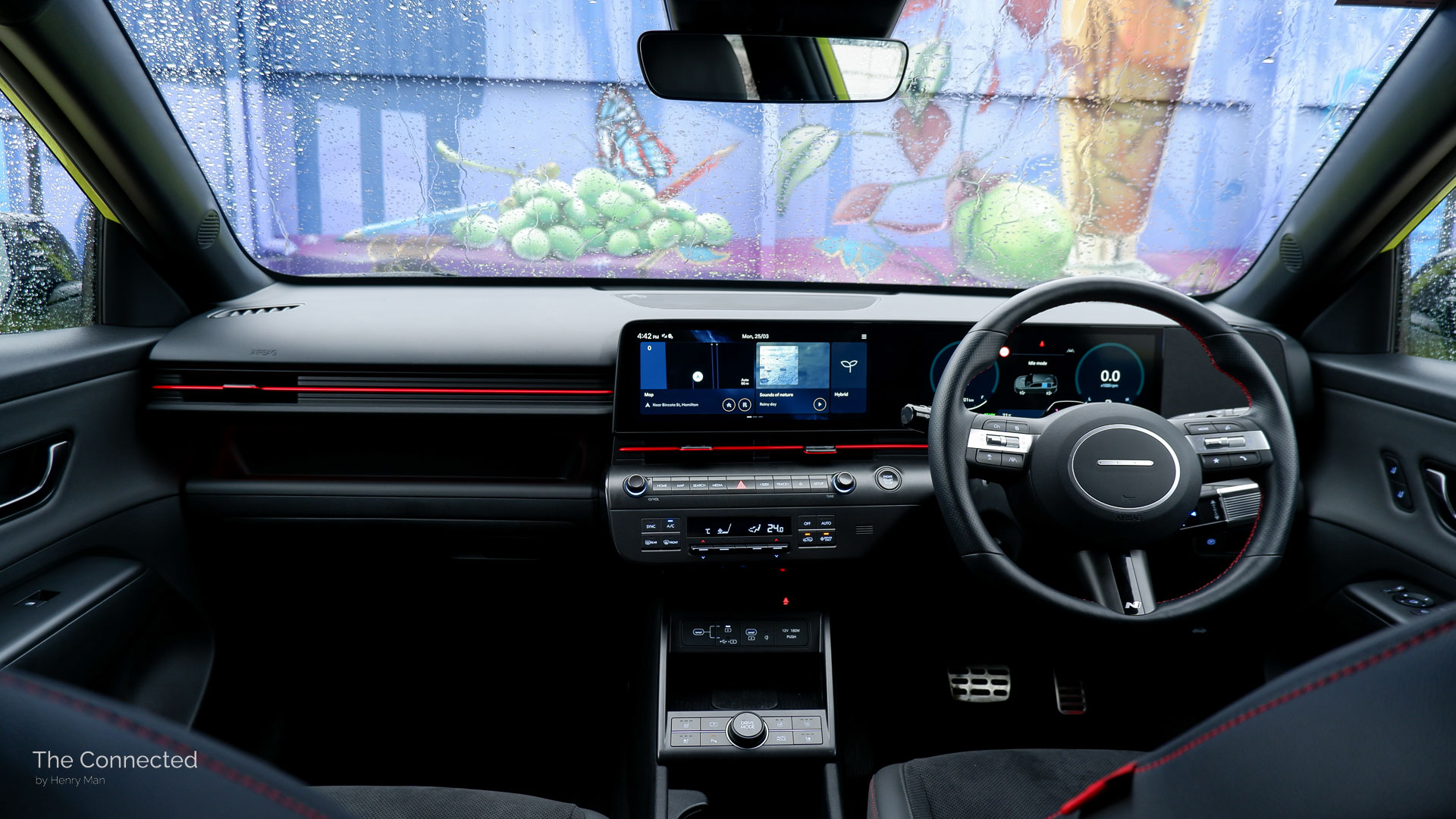
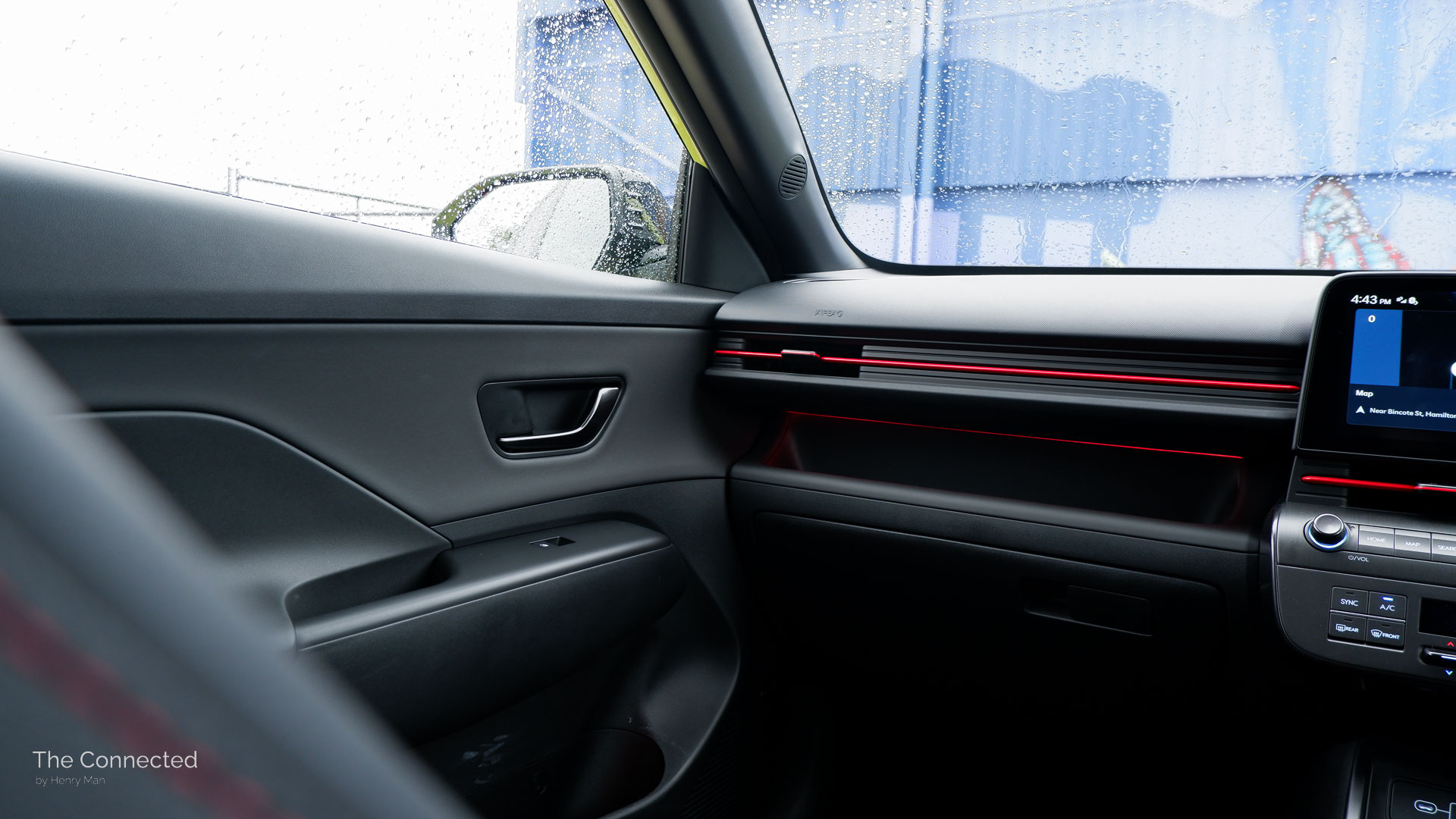
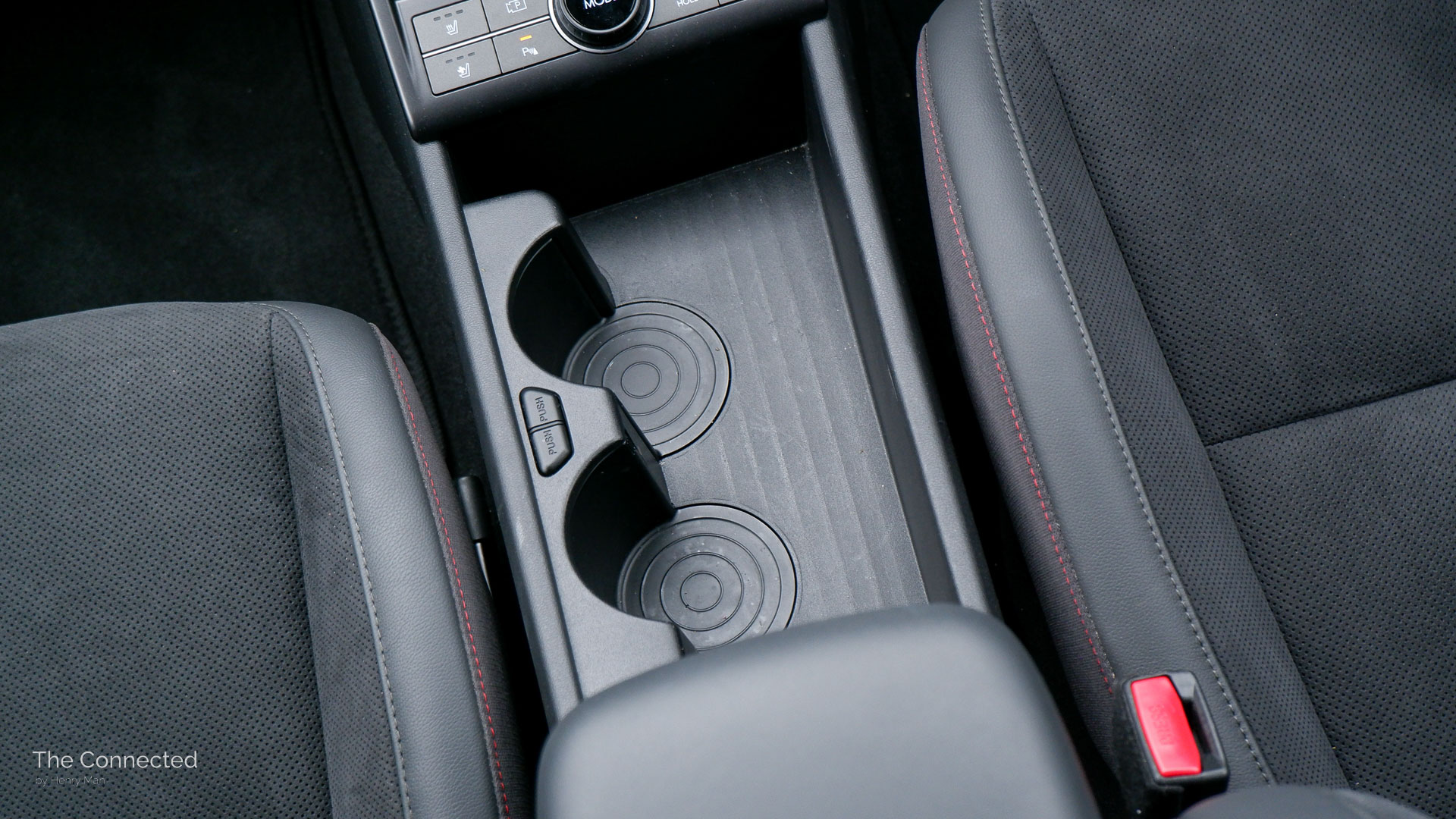
However, even on the ~$50K drive-away flagship Premium with N Line package (as tested), there are still some nasty interior plastics.
Most egregious is the centre console tray and cup holder area, where it has a rough plastic surface – prone to sliding items around while driving with unpleasant scratching sounds.
The hard plastics aren’t durable either, with a few marks and scuffs already showing across the centre console, glovebox and door trims on our tester.
Despite the N Line package lifting up Kona’s interior, the Volkswagen T-Roc SUV and even the MG 4 electric hatchback still offer better perceived quality cabins.
The top-spec Premium brings 64-colour adjustable ambient lighting, though it’s very dim by subtly illuminating the front dashboard shelf and door pockets.
Practicality.
2024 Hyundai Kona Hybrid Premium dimensions:
| Length x width x height | 4385 x 1825 x 1585mm |
| Wheelbase | 2660mm |
| Ground clearance | 170mm |
| Boot space (min / rear seats folded) | 407 / 1241 litres |
| Rear seat split fold | 60:40 |
| Child seat anchors | 2x ISOFIX + 3x top tethers |
The new Kona begs the question whether choosing a medium SUV is necessary – perfectly fitting the ‘not too small, not too big’ criteria.
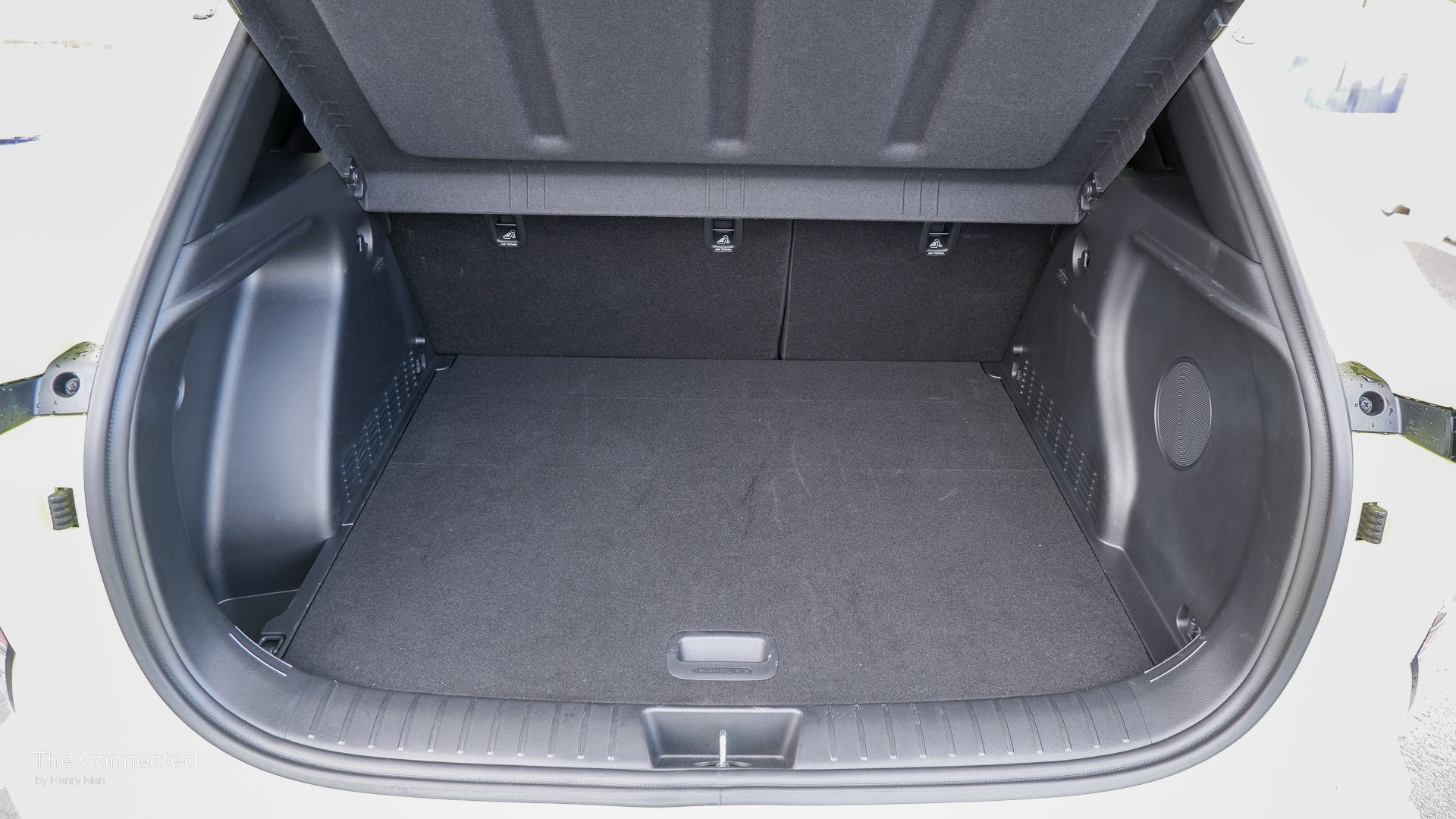
The 407-litre boot is large with a slot on the side and, impressively, three solid bag hooks – even though it’s missing one due to the Bose speaker that’s standard on the Premium. It includes an adjustable two-level boot floor, however.
The flagship Premium gains an electrically-operated tailgate, with hands-free opening by standing behind the door with the proximity key for a few seconds. Unfortunately, it doesn’t have a kick sensor unlike some other rivals – meaning there’s no hands-free closing. The Kona doesn’t offer a lock all doors closing button either, unlike pricier Hyundai’s.
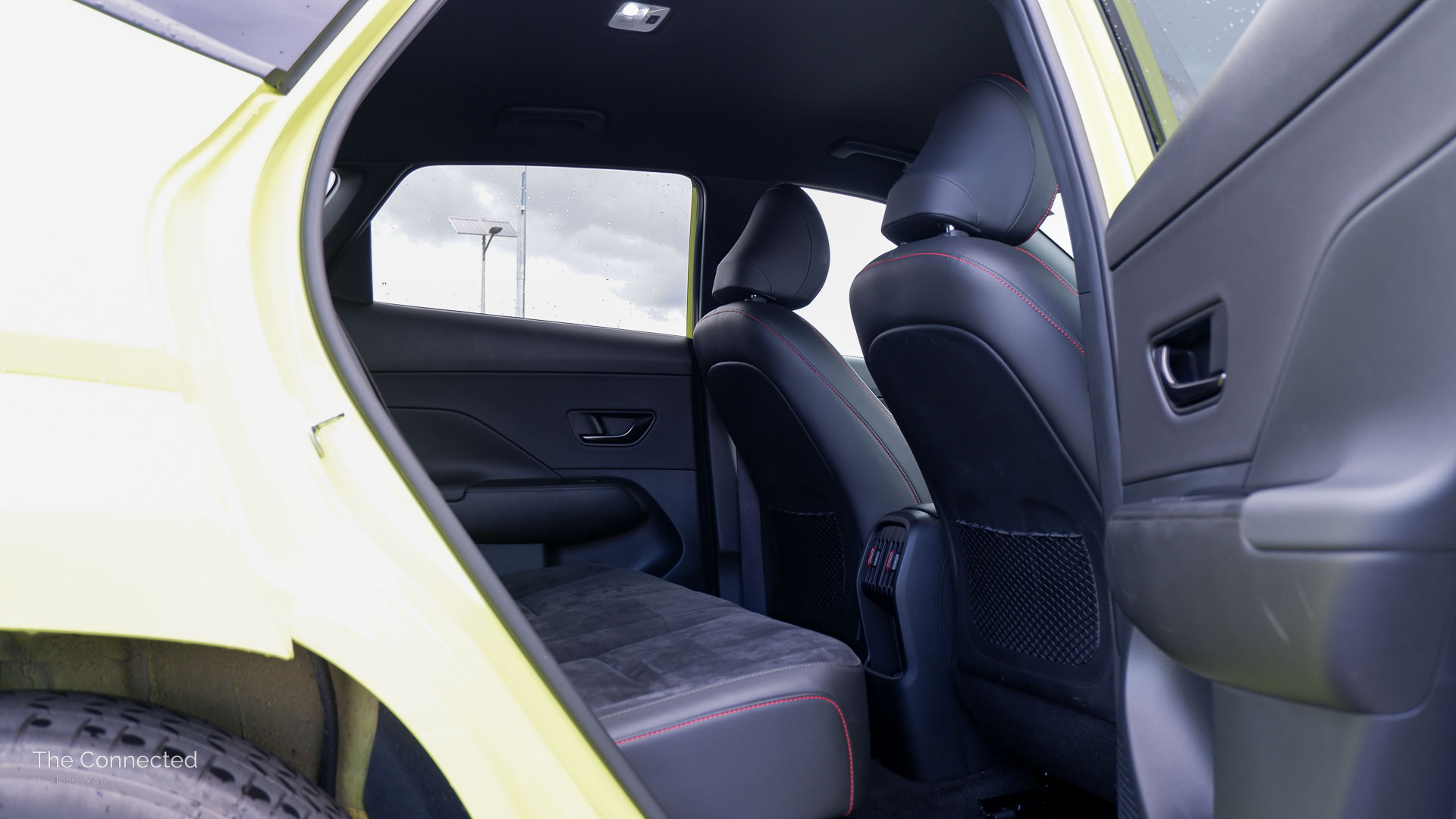
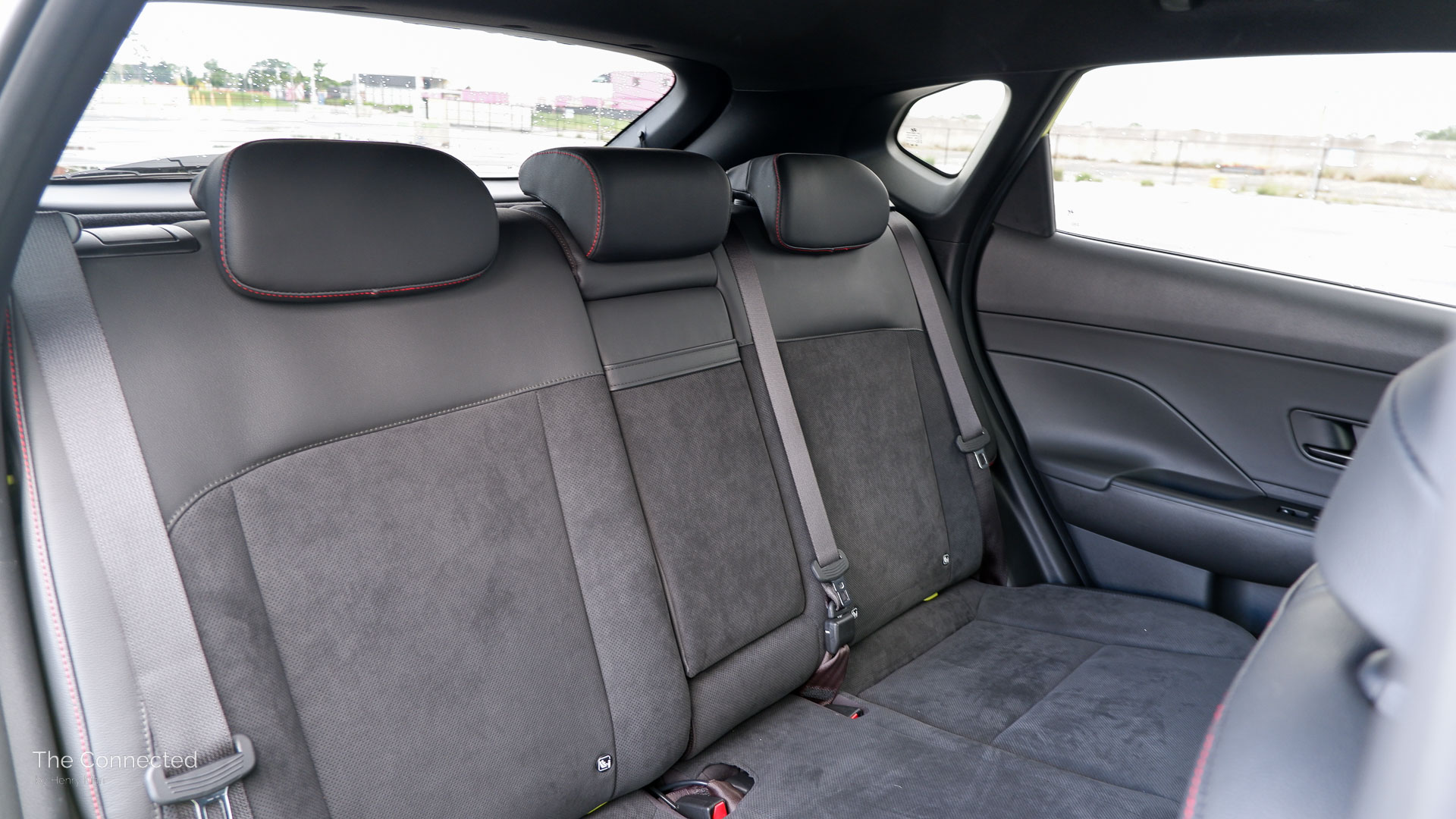
Inside, the second-generation Hyundai Kona offers genuinely family-friendly rear seat space – a significant improvement from the tight and compact predecessor.
Headroom, legroom and feet room is excellent – though middle passengers need to contend with a noticeable floor hump.
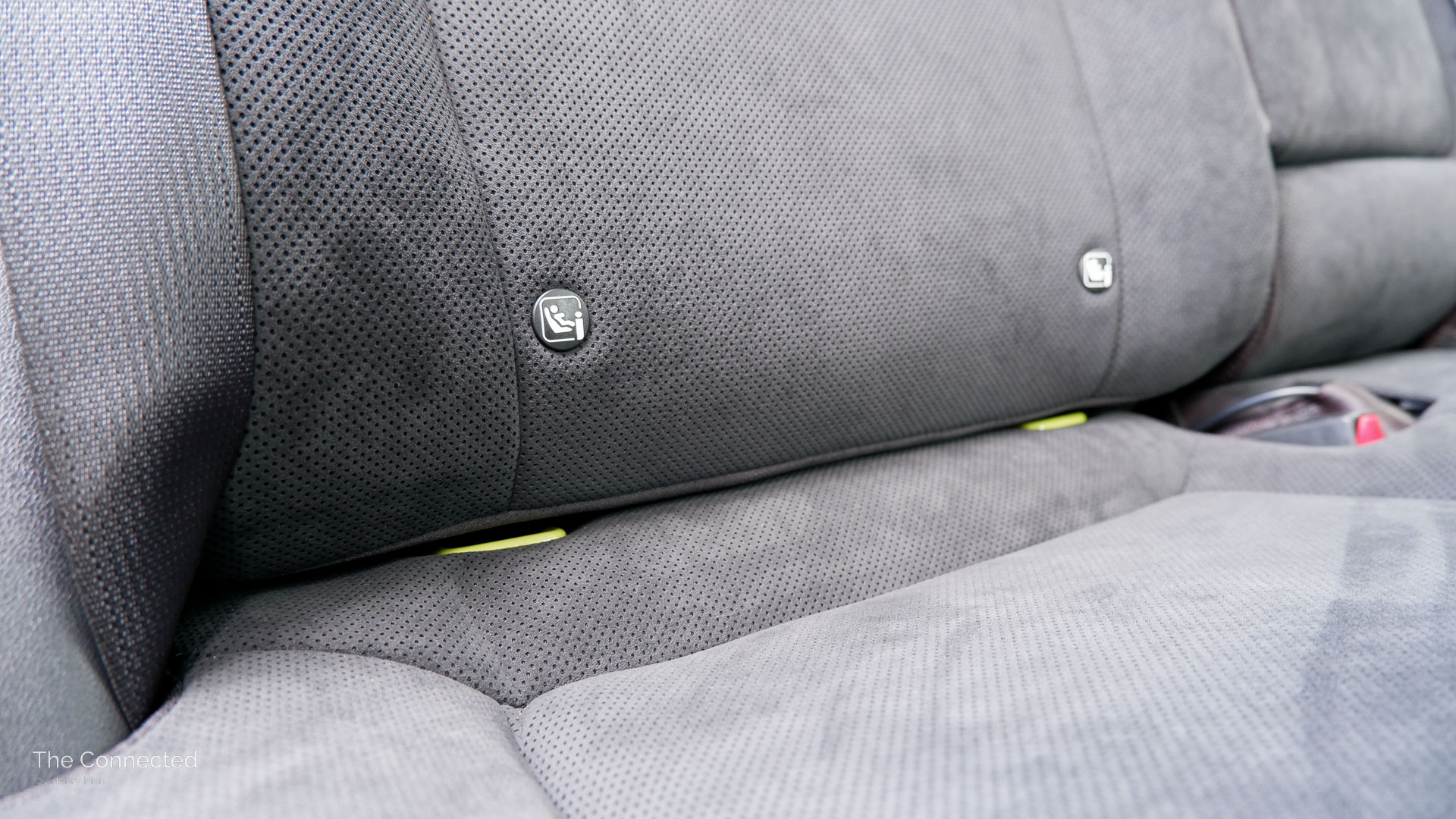
Child seats can be attached via the two exposed ISOFIX anchor points and three top-tethers.
However, there is one strange design oversight for the supposedly ‘EV first’ design…
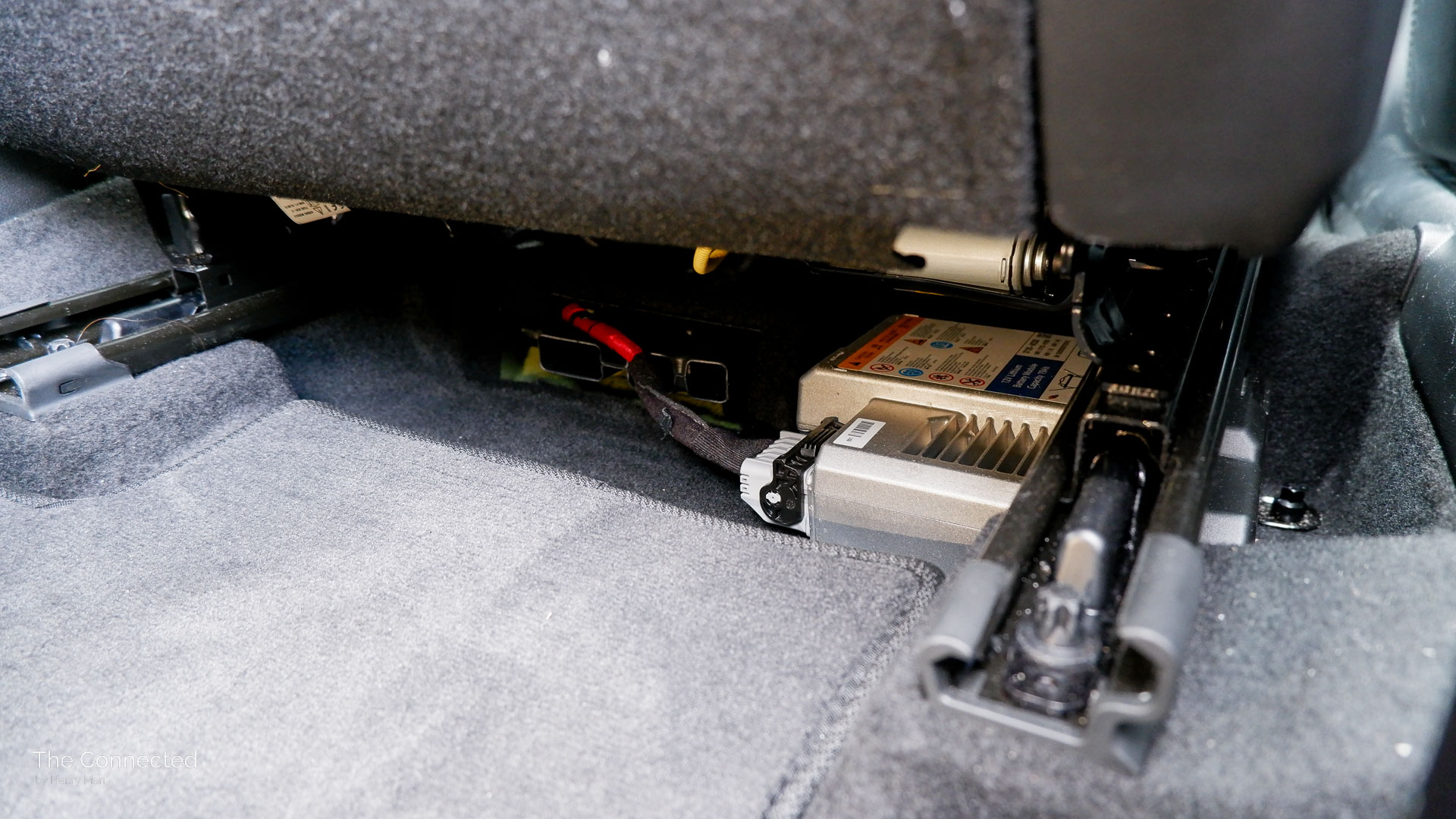
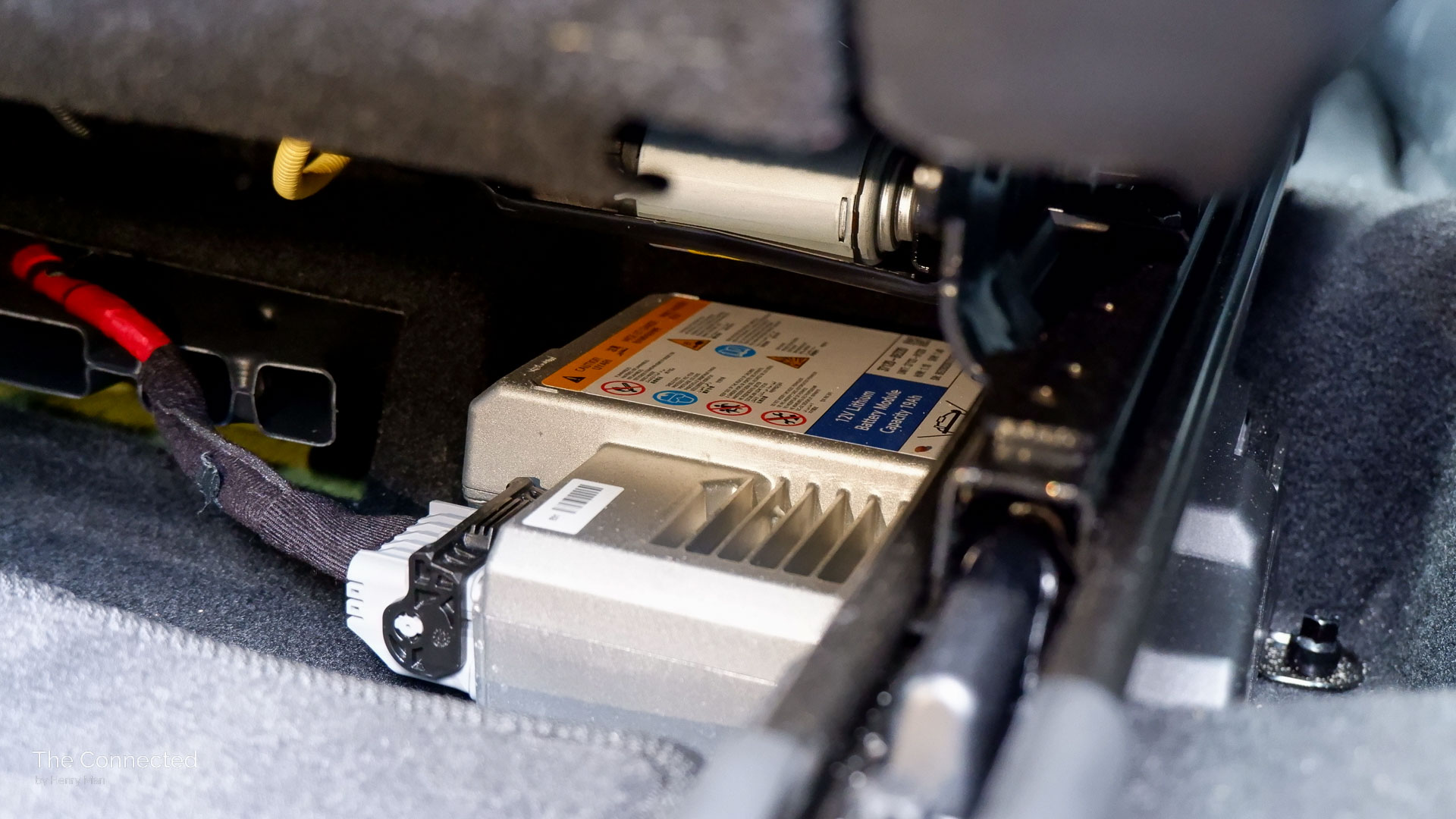
Awkward 12V.
The 12-volt lithium-based electronics battery module is positioned under the driver’s seat and left exposed – seemingly a design oversight.
Unfortunately, this compromises legroom for the rear-right passenger when stretching out, who’ll likely kick the uncovered module and wiring.
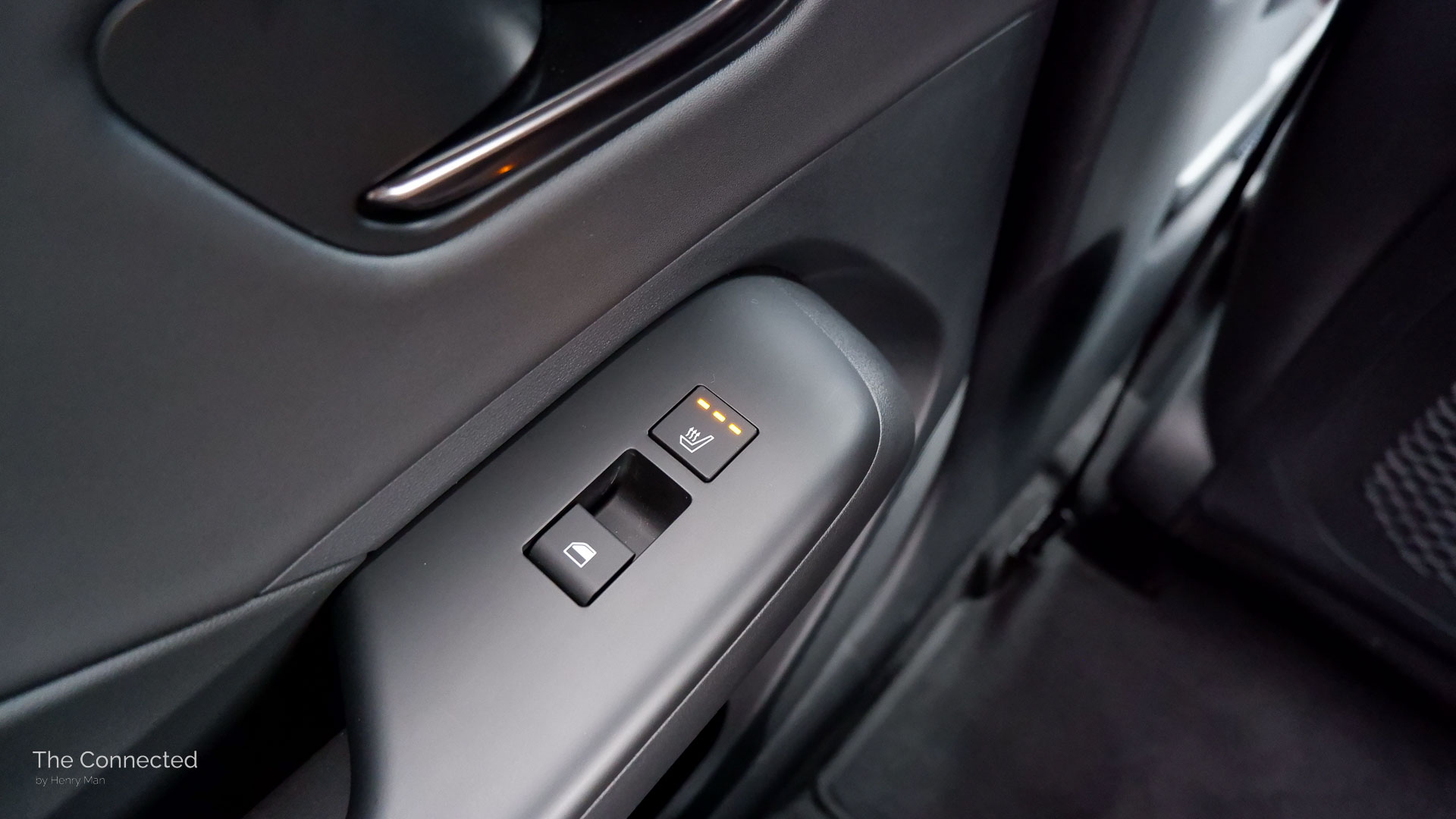
The Premium brings three-stage heated rear outer seats and tinted rear windows, too, but the N Line package adds a black headliner which makes the interior feel more closed-in.
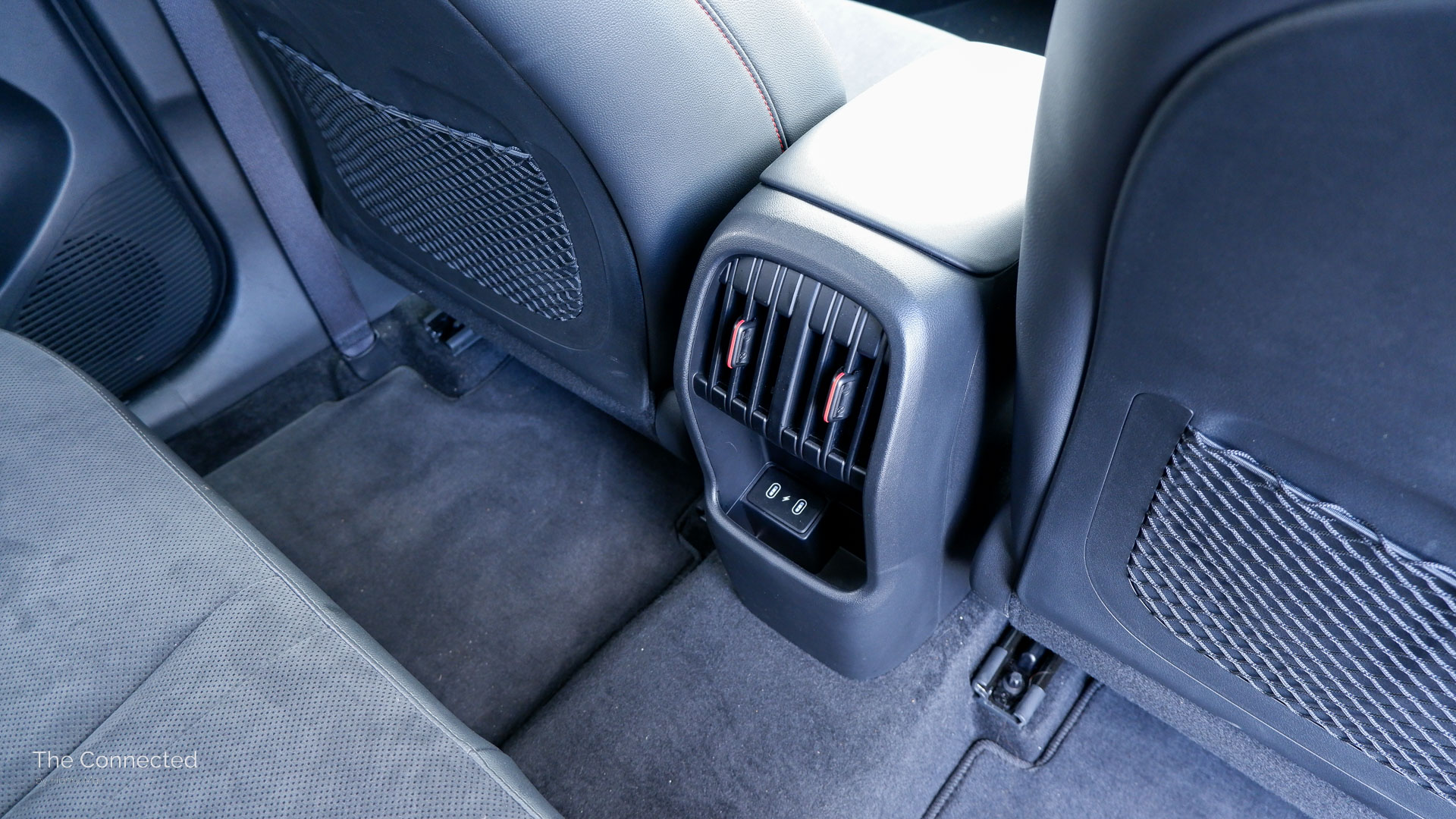
A fold-down armrest with two cup holders, rear air vents and two USB-C charging ports, alingside a small centre bin, seatback pockets, and tight door bottle holders are available for rear passengers.
Fortunately, all models feature bright LED interior illumination across the boot, rear and front rows – which isn’t guaranteed in all similarly-priced new cars today. But note that all passenger window switches (besides the driver) are surprisingly missing illumination for the icon.
Other than the scratchy surface, all Kona’s bar the base petrol-only model has an open-type centre console that offers two cup holders or becomes a storage tray when they’re retracted. Behind a divider is another open storage slot, while the front passenger side has an open shelf ahead.
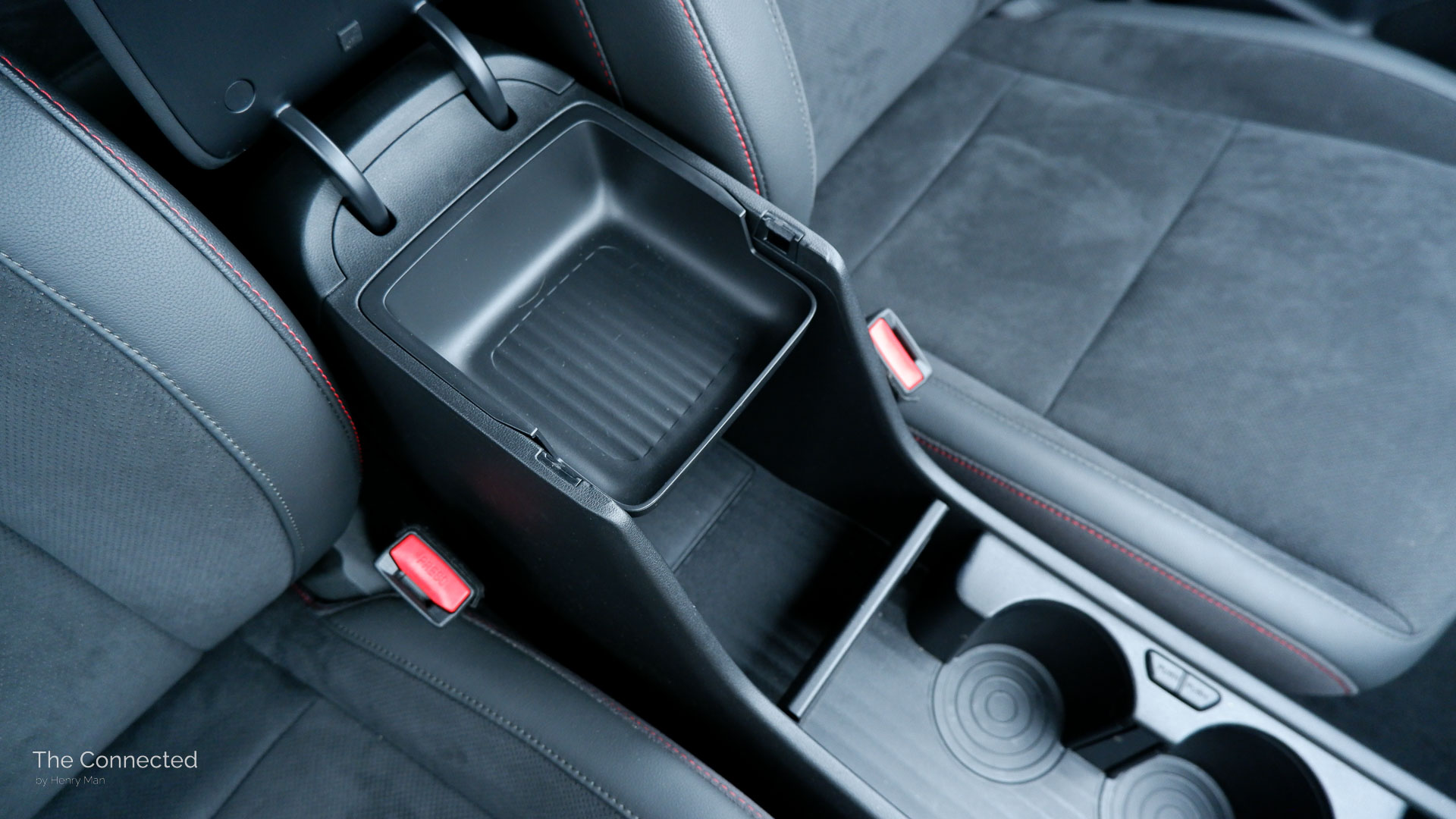
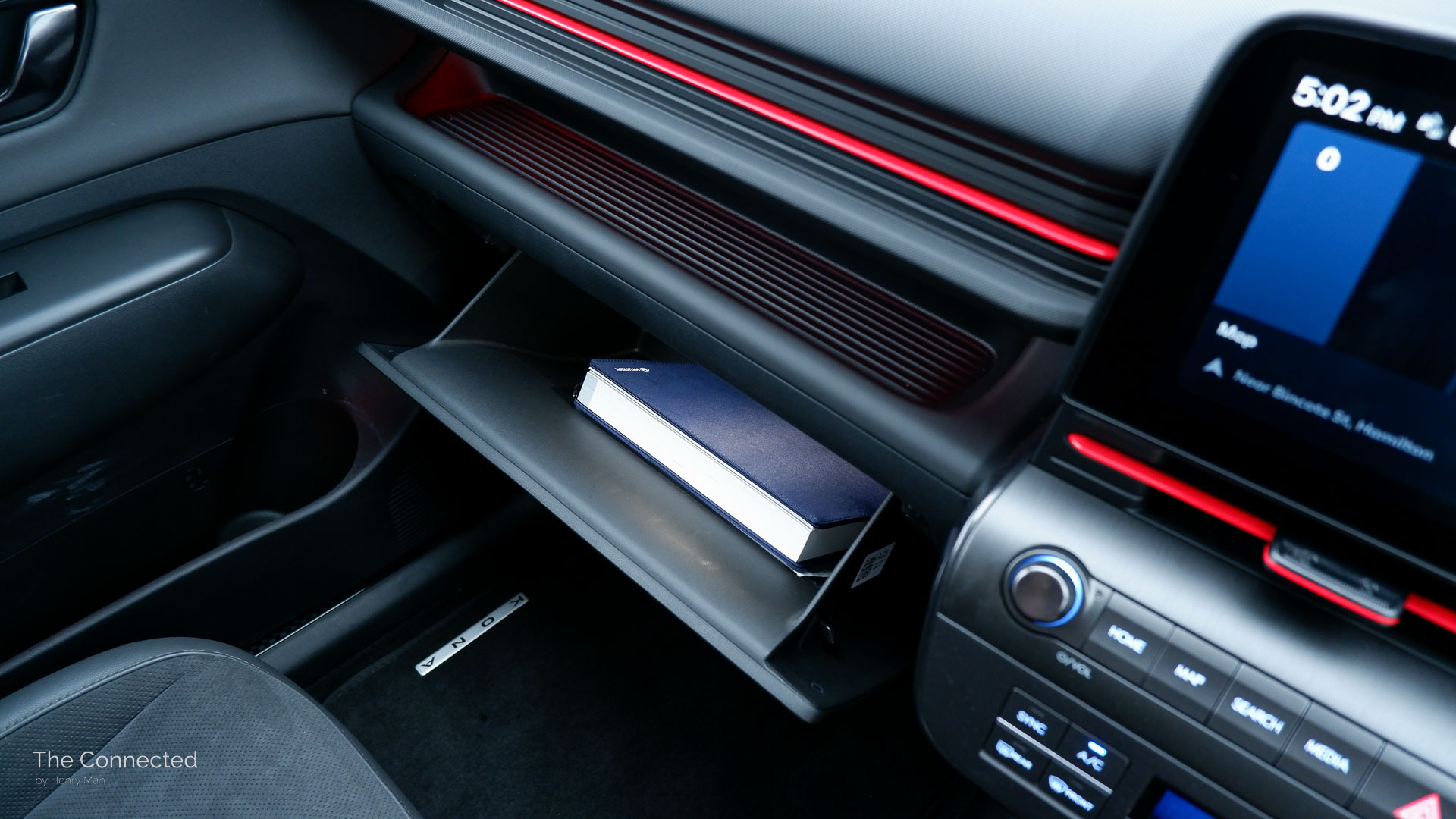
However, this open storage approach has resulted in limited private storage besides a small removable tray underneath the centre armrest and a decent-sized glove box.
Front occupants also get two USB-C charging ports, a 12-volt socket, and an accessible Qi wireless charging pad in front.
The N Line package adds genuine Italian-made seats from Alcantara with leatherette outer bolsters, which is on the firmer side but still plush and supportive. The Alcantara even spreads across the rear bench including the middle seat.
The top Premium grade features front electrically-adjustable seats with three-stage heating and ventilation, and a reclined relaxation mode (which originally debuted on the Ioniq 5), with the driver benefiting from two-position memory and a two-level heated steering wheel.
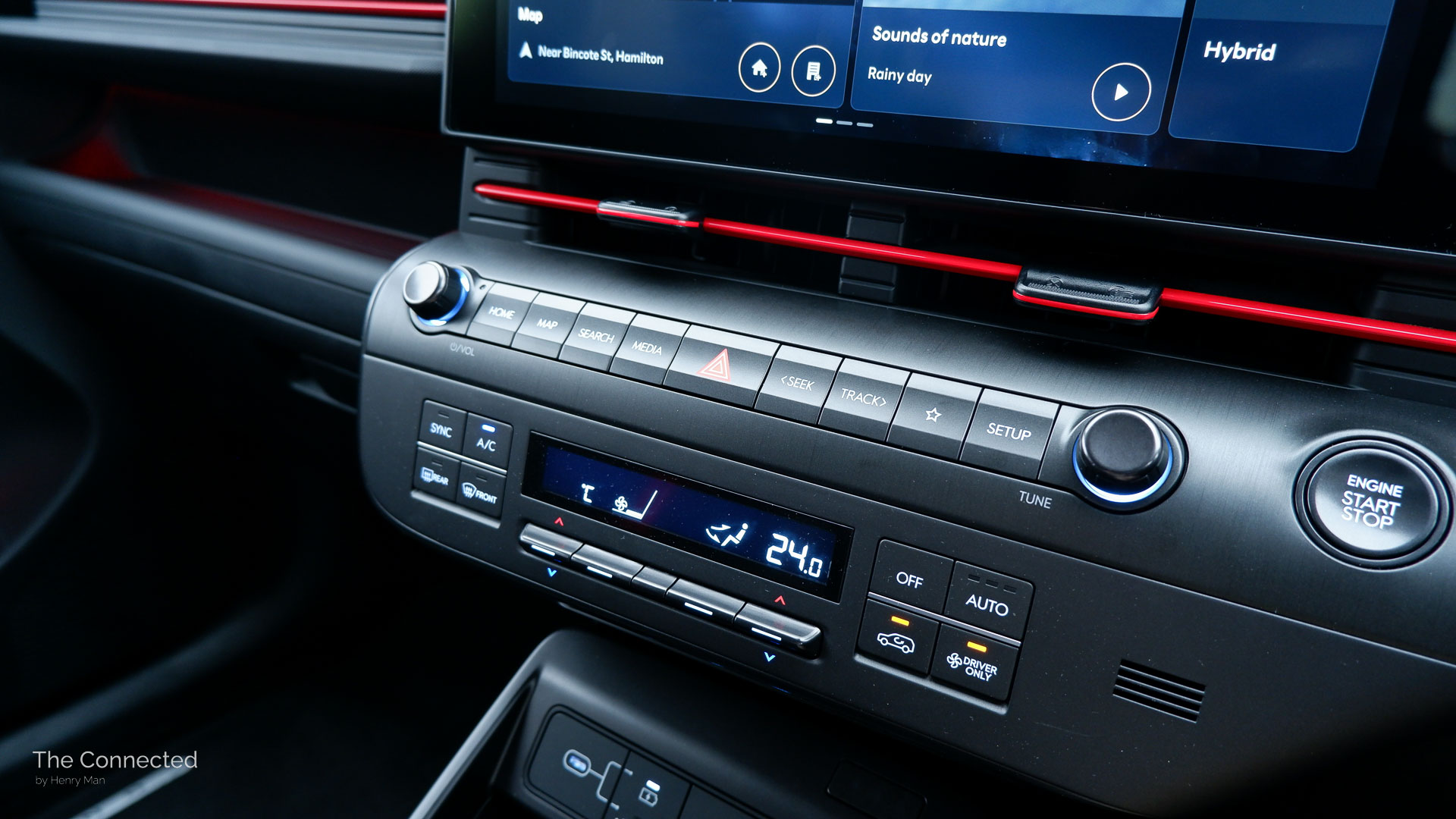
Meanwhile, hybrid Kona’s exclusively gain a driver-only climate control mode – which is handy for saving fuel and energy.
Technology.
2024 Hyundai Kona Hybrid Premium tech features:
| 12.3-inch touchscreen | 12.3-inch driver instruments display |
| ccNC with over-the-air (OTA) software update capability | 4x USB-C charging ports + 1x 12V socket |
| Wireless Apple CarPlay and wireless/wired Android Auto | Eight speaker Bose audio |
| Built-in maps with 10-year update support | Proximity key with remote start and forwards/reverse functionality |
| Hyundai BlueLink cellular connectivity with mobile app | Auto-folding wing mirrors |
| Qi wireless charging pad |
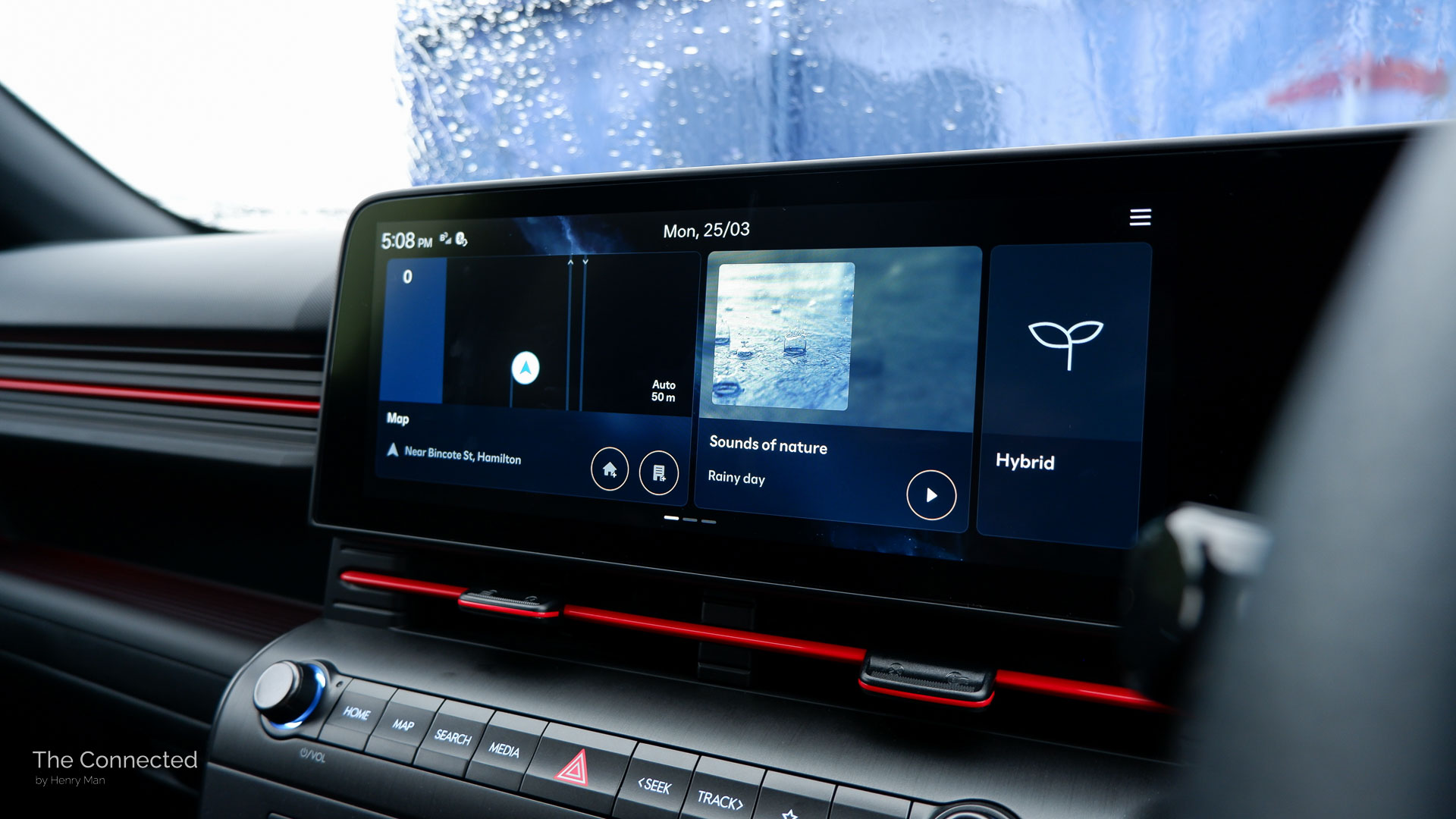
The new-gen Hyundai Kona uniquely features dual 12.3-inch displays – which is larger-than-typical for the small SUV segment.
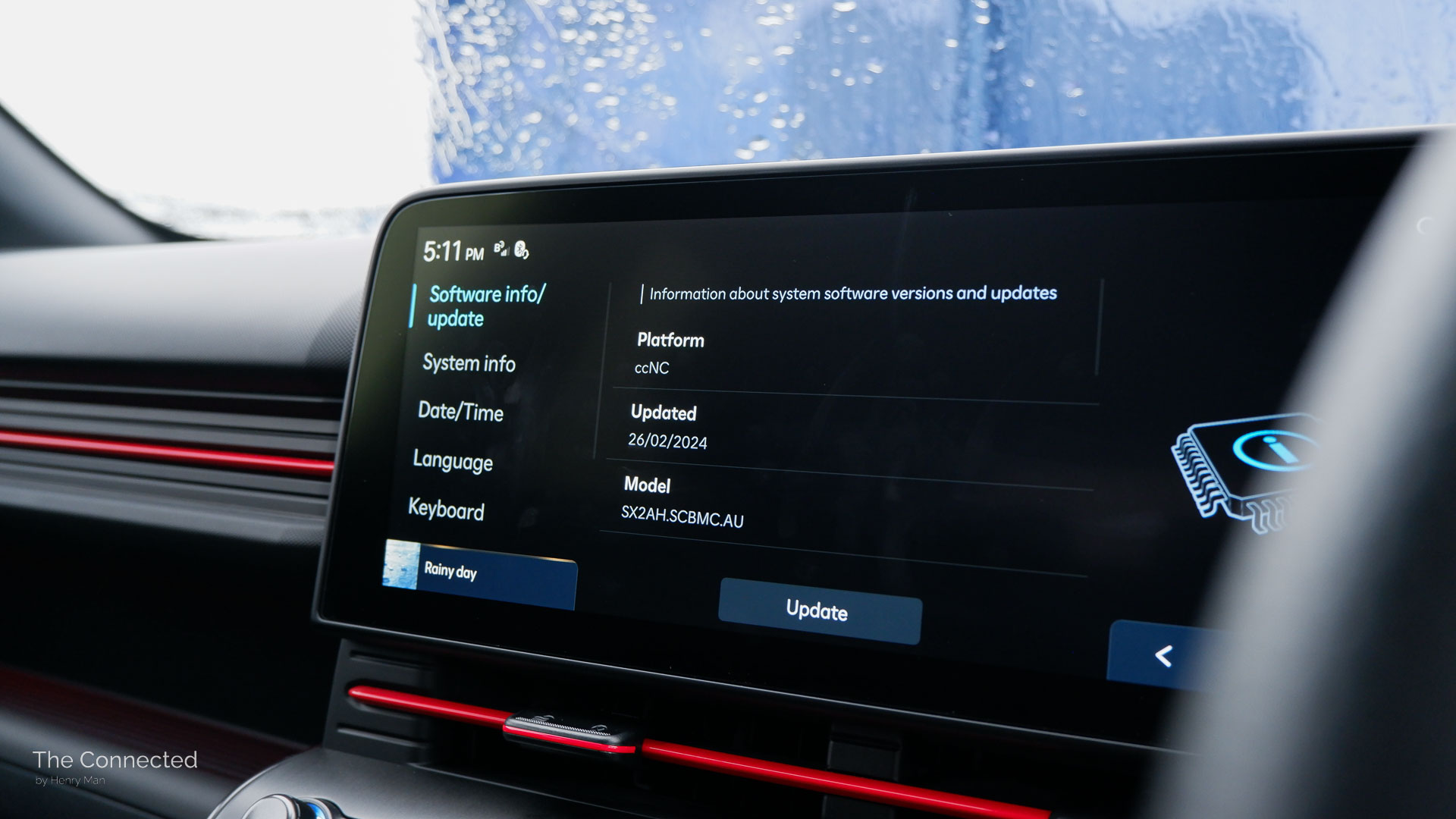
Reflecting the far more expensive Kia EV9 upper large SUV, the Kona brings the South Korean carmaker’s latest Connected Car Navigation Cockpit (ccNC) operating system with a more modern, better performing user interface.
With built-in cellular connectivity, it’s also capable of receiving over-the-air (OTA) software updates.
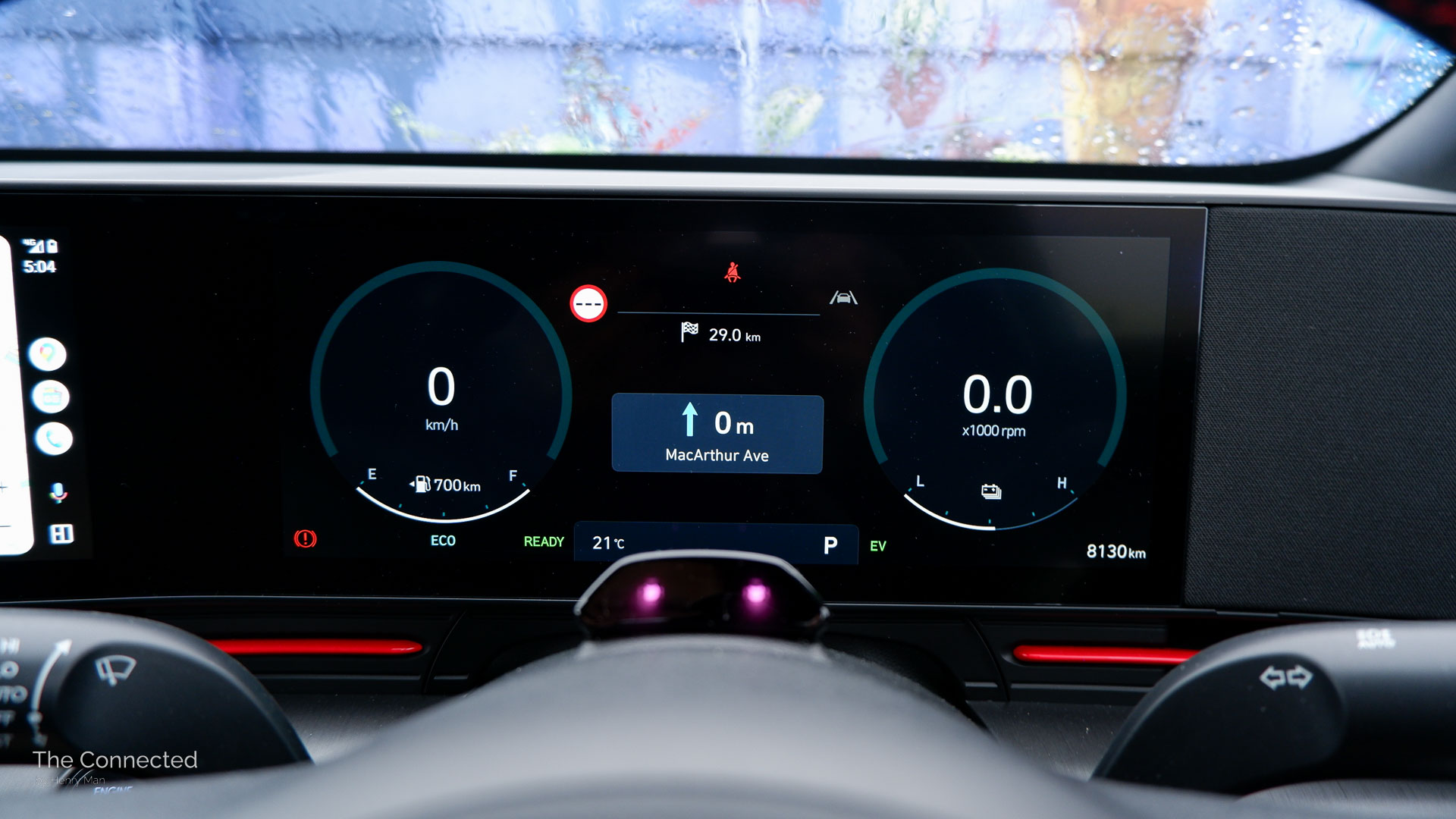
Importantly, ccNC has enabled wireless Apple CarPlay and Android Auto – which connects quickly and performs the same as a wired connection. Android smartphone users gain an advantage: the instrument display shows navigation arrow directions using Android Auto maps.
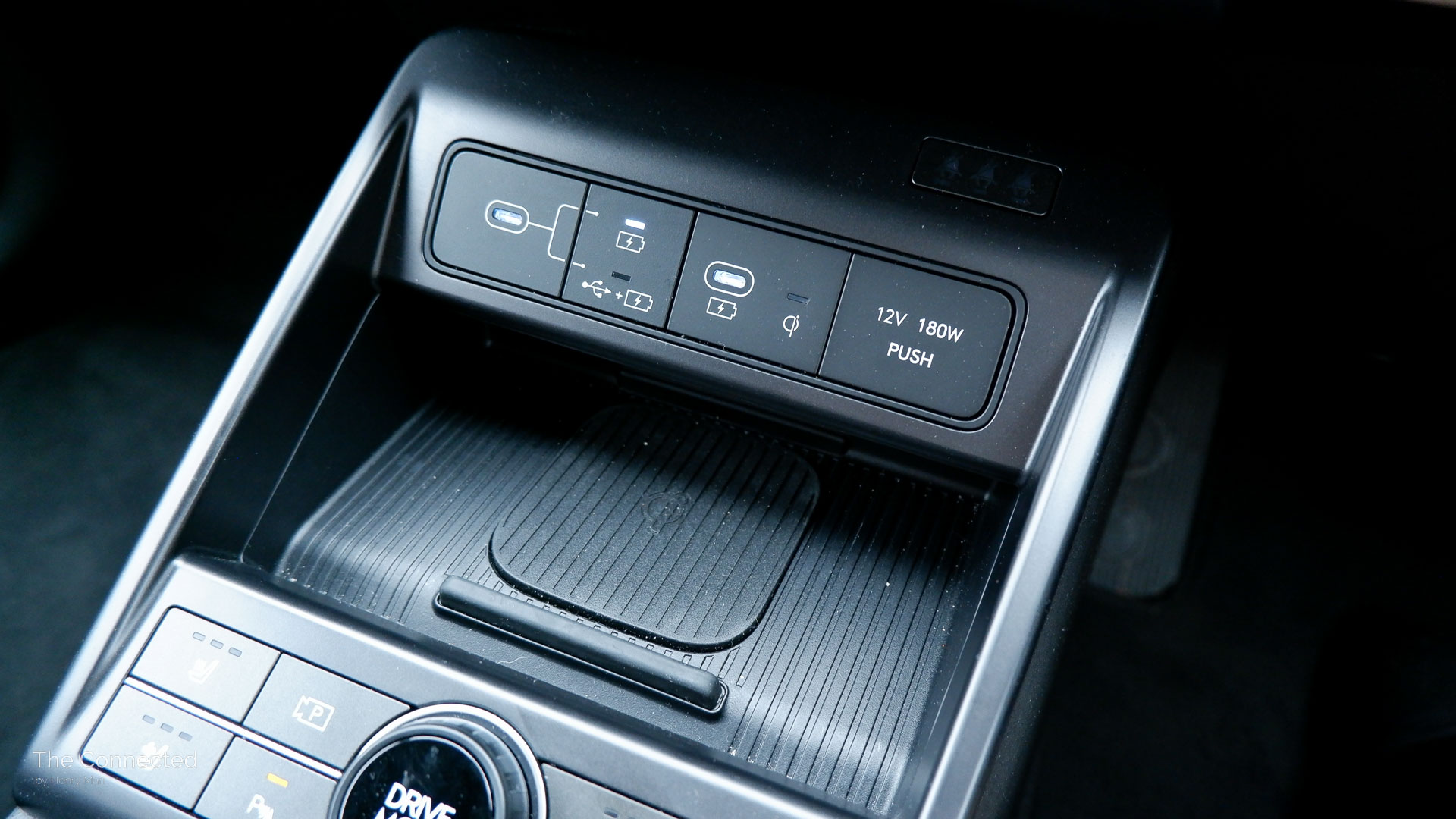
The Qi wireless charging pad either maintained or increased my phone’s battery while using smartphone projection, but on hotter days, it can overheat and stop charging. The Kona’s rubber pad material in particular seems to absorb more heat than ideal, despite elevating the phone from the centre console.
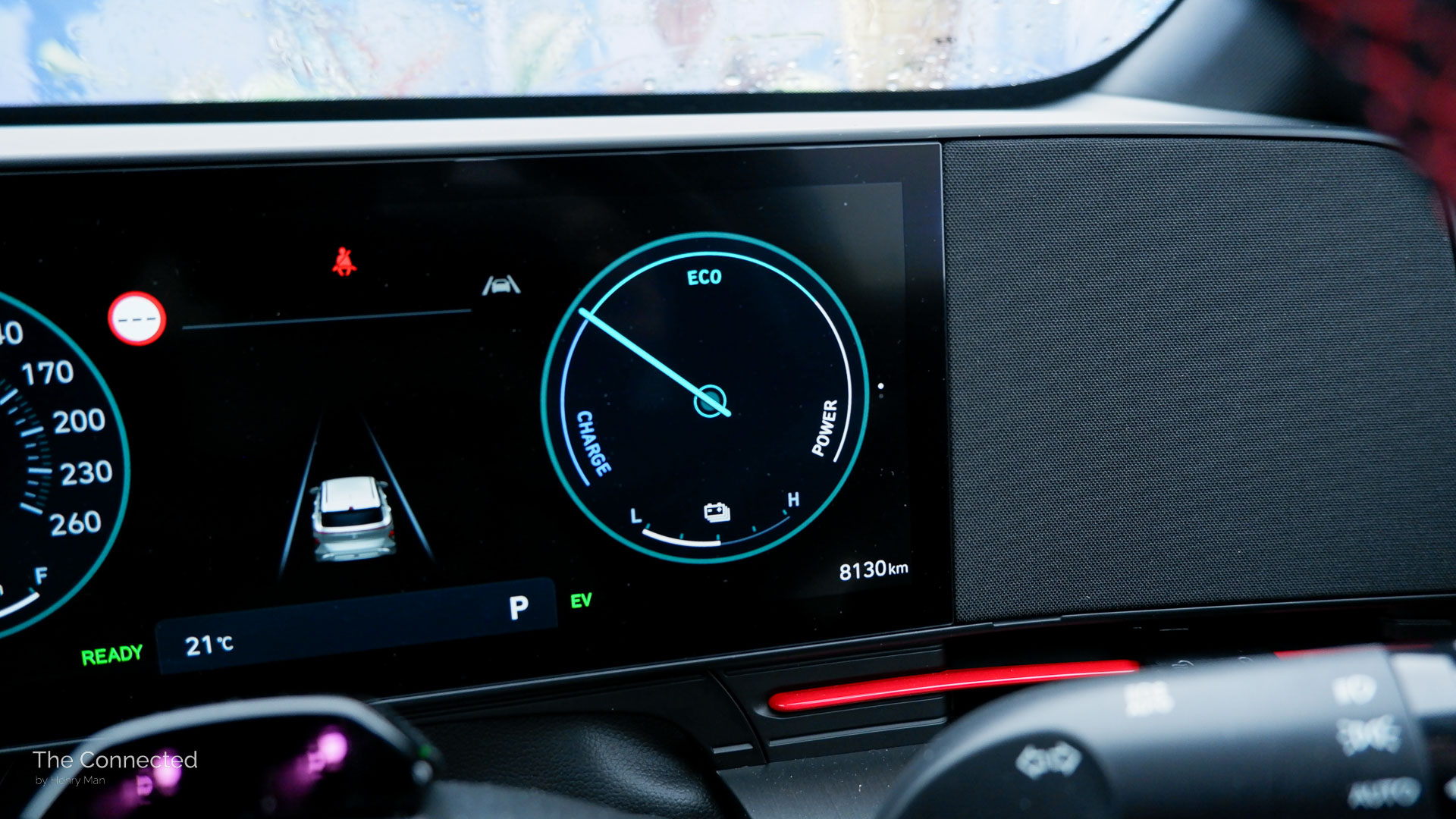
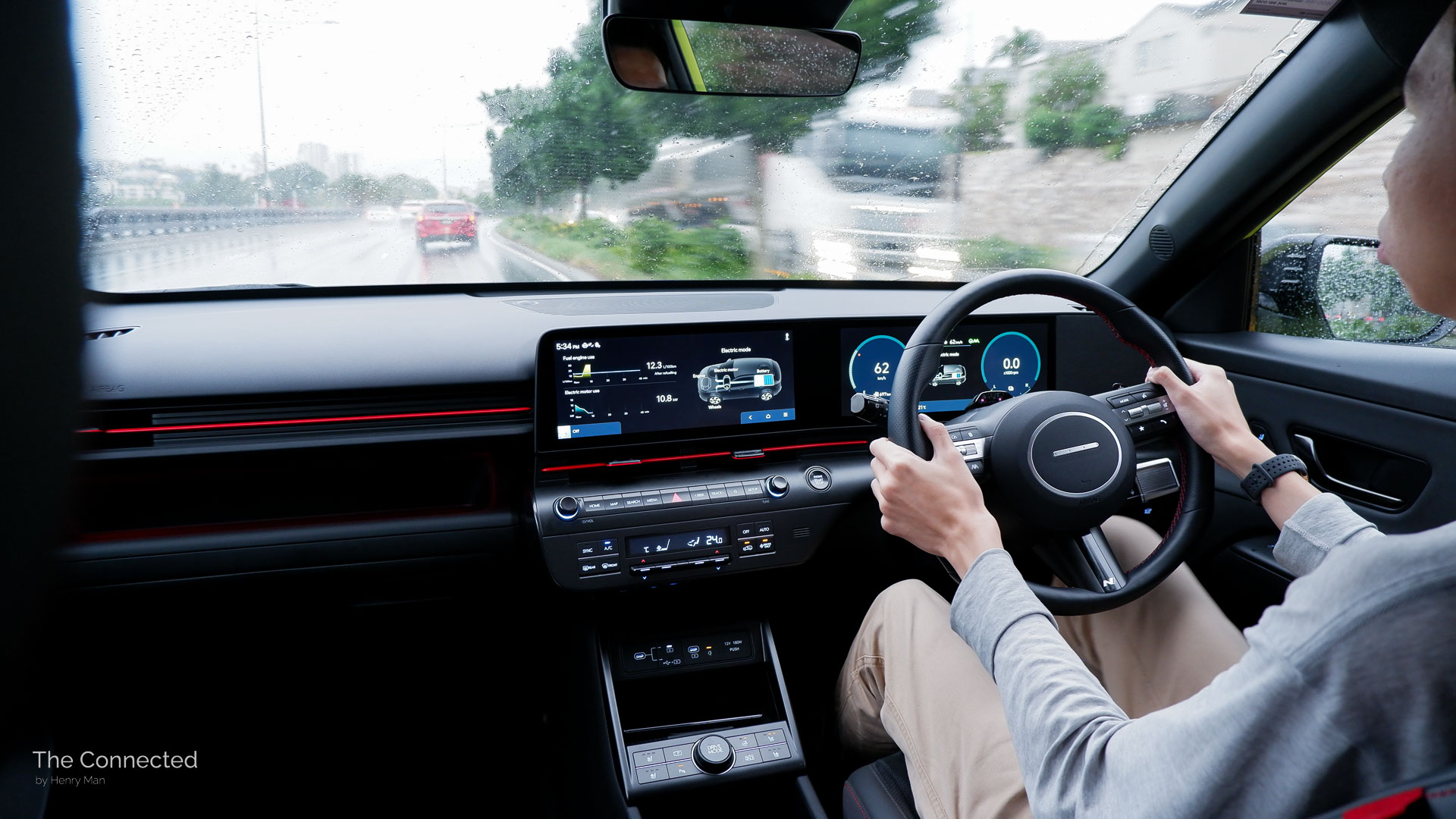
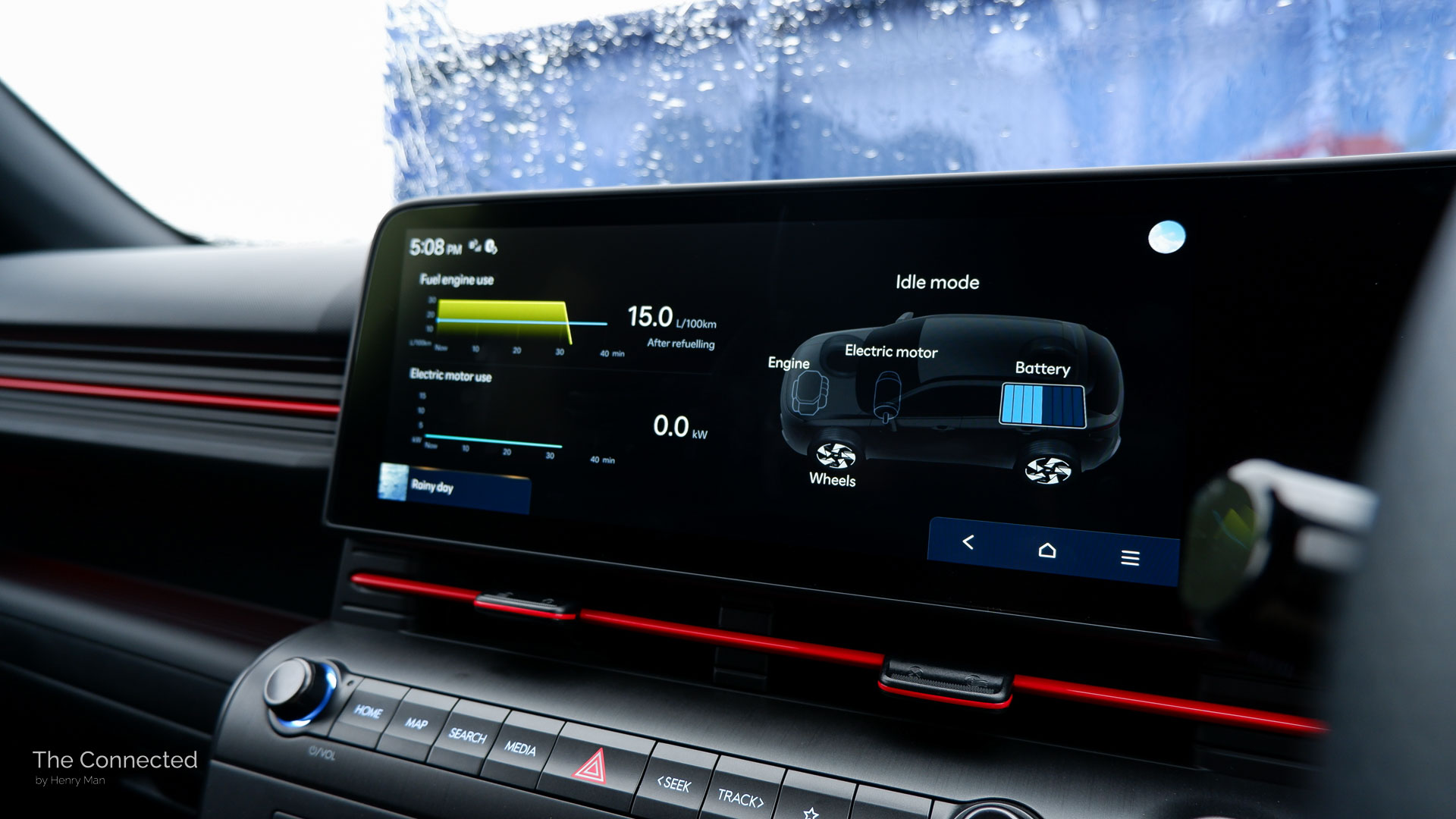
The Kona Hybrid exclusively offers a hybrid app which shows a fuel consumption and electric motor use graph, plus a real-time animation on what EV, engine or hybrid mode it’s in. This is also available on the instrument cluster.
Meanwhile, the 12.3-inch driver’s display employs a simplistic design with digital or analogue dial choices, a few pages (including safety assist, hybrid mode, map direction screens), and three selectable themes. It isn’t as customisable as some other brands, but is easy to use especially while driving.
Unfortunately, only the Kona Electric is available with a head-up display.
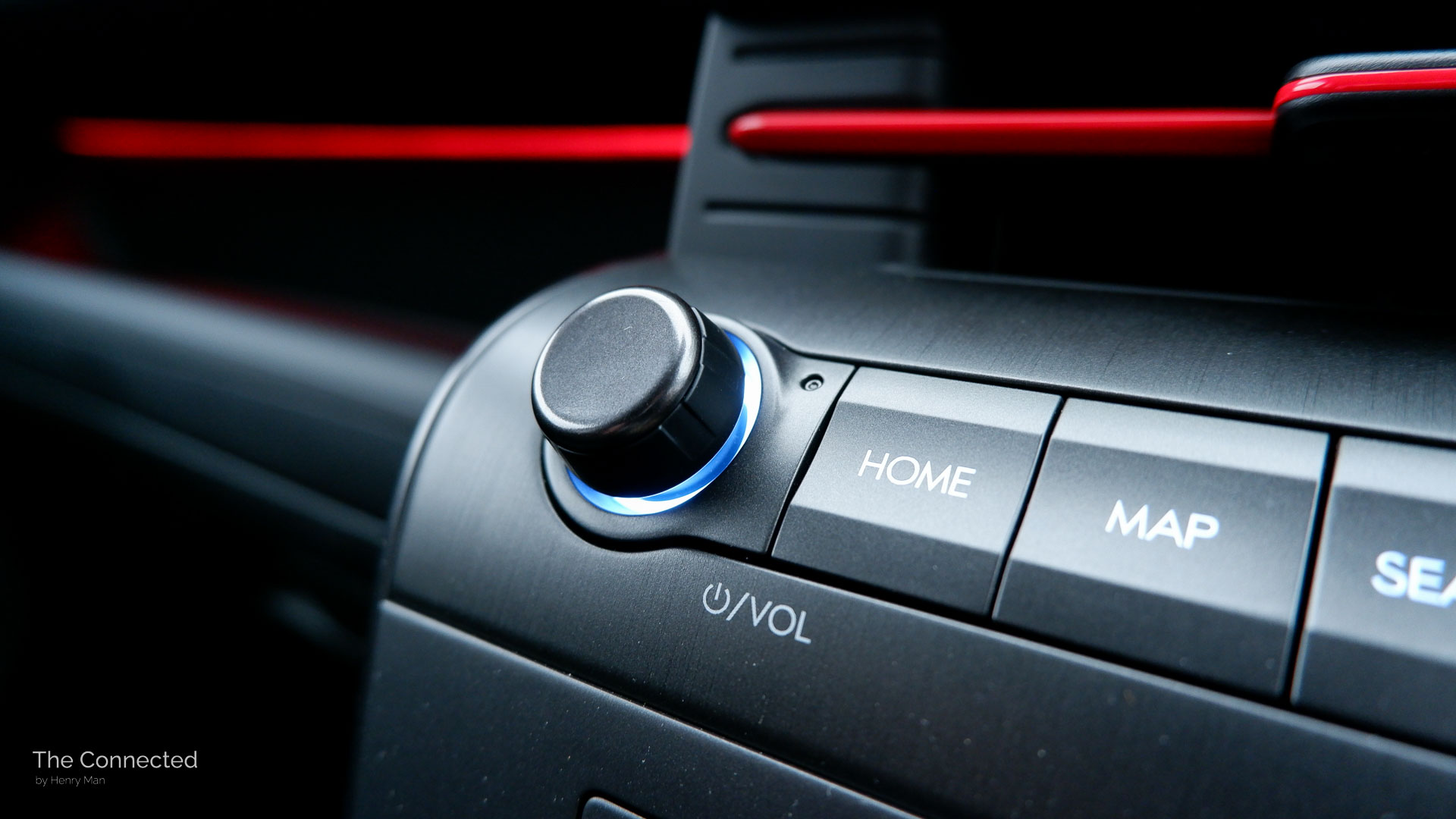
Hyundai’s latest small SUV is also one of its first models to re-introduce physical buttons. While the centre console may look traditional, the smattering of dual-zone climate control, media and touchscreen shortcut switches are much more intuitive, easy to use and tactile than going through software menus on a display.
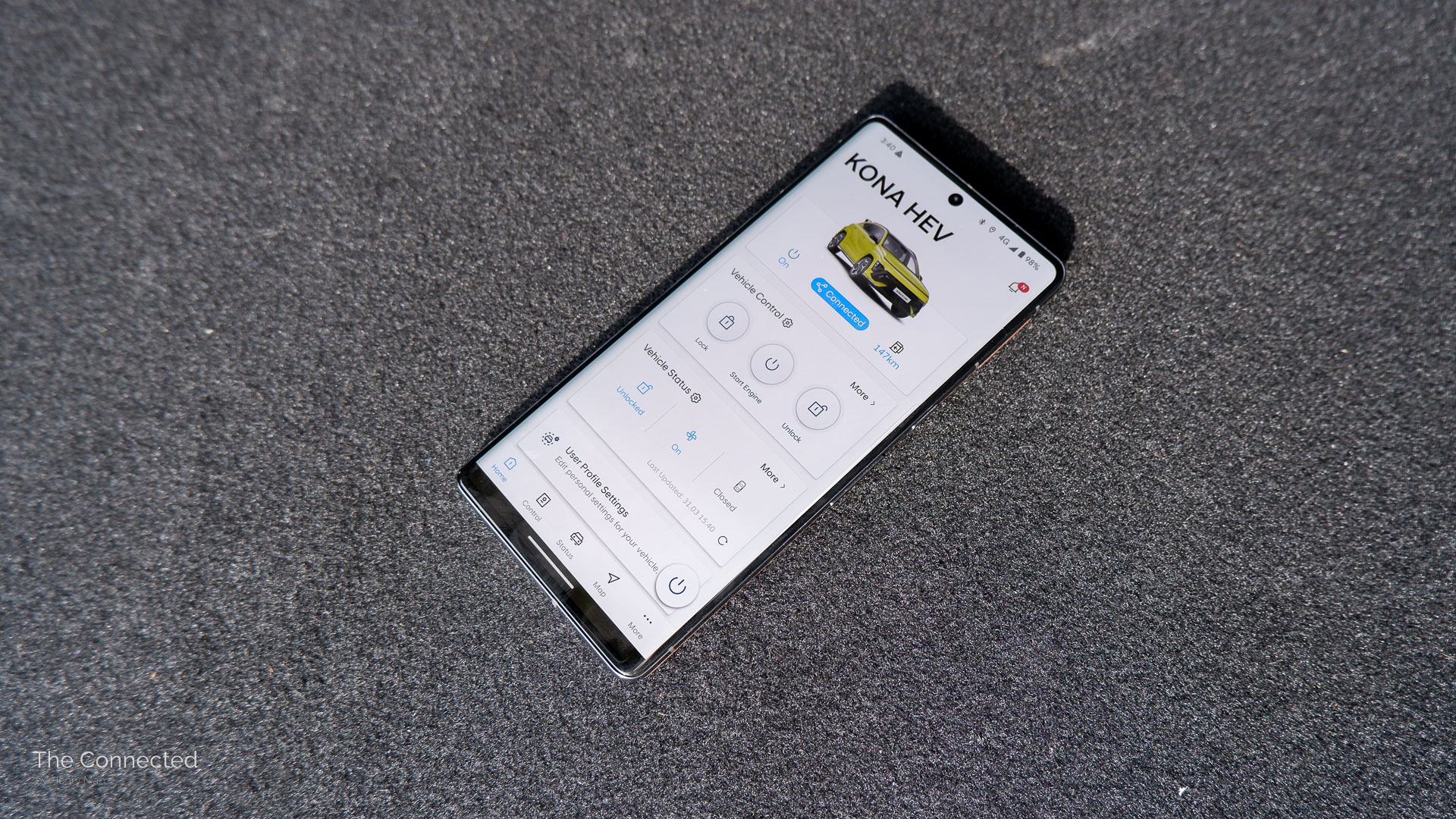
As per all new Hyundai cars, the Kona features Bluelink connected services and a smartphone app as standard – allowing owners to remotely monitor the remaining fuel and driving range, start the hybrid SUV’s air-conditioning and, exclusive on the top-spec Premium, turn on heated/ventilated seats, heated steering wheel, and take a photo of the 360-degree camera system.
The Bluelink app is well-designed, though can be slow to send commands at times. The touchscreen has a decent natural language voice control system, a weather app and calendar syncing integration.
The Kona Premium exclusively has an eight-speaker Bose premium audio system, which sounds good and is more bass heavy compared to the base model.
All variants include a proximity key with an easy to operate physical button at the front door handles for locking and unlocking, with the flagship Premium having the hands-free electric tailgate function and the ability to drive the vehicle forwards and backwards via the key fob.
Also noteworthy is the adoption of a lithium-based 12-volt auxiliary battery, which is theoretically more reliable and longer lasting than the conventional archaic lead-acid module.
Safety.
2024 Hyundai Kona Hybrid Premium safety features:
| Front auto emergency braking (AEB) with vehicle/pedestrian/cyclist/junction turning/direct oncoming detection | Rear low-speed AEB |
| Adaptive cruise control | Driver attention alert with camera monitoring |
| Lane-centring and lane-keep assist | Lead vehicle departure alert |
| Blind-spot assist with blind-spot camera view | Rear occupant alert (logic type) |
| Rear cross-traffic assist | Full LED headlights with auto high beam |
| Adaptive cruise control | Part LED tail-lights |
| Speed limit assist | 360-degree camera system |
| Door open warning | Front, side, rear parking sensors |
The new Kona already comes with every essential active safety assistance technologies as standard, but the Premium levels up with some nice-to-have features.
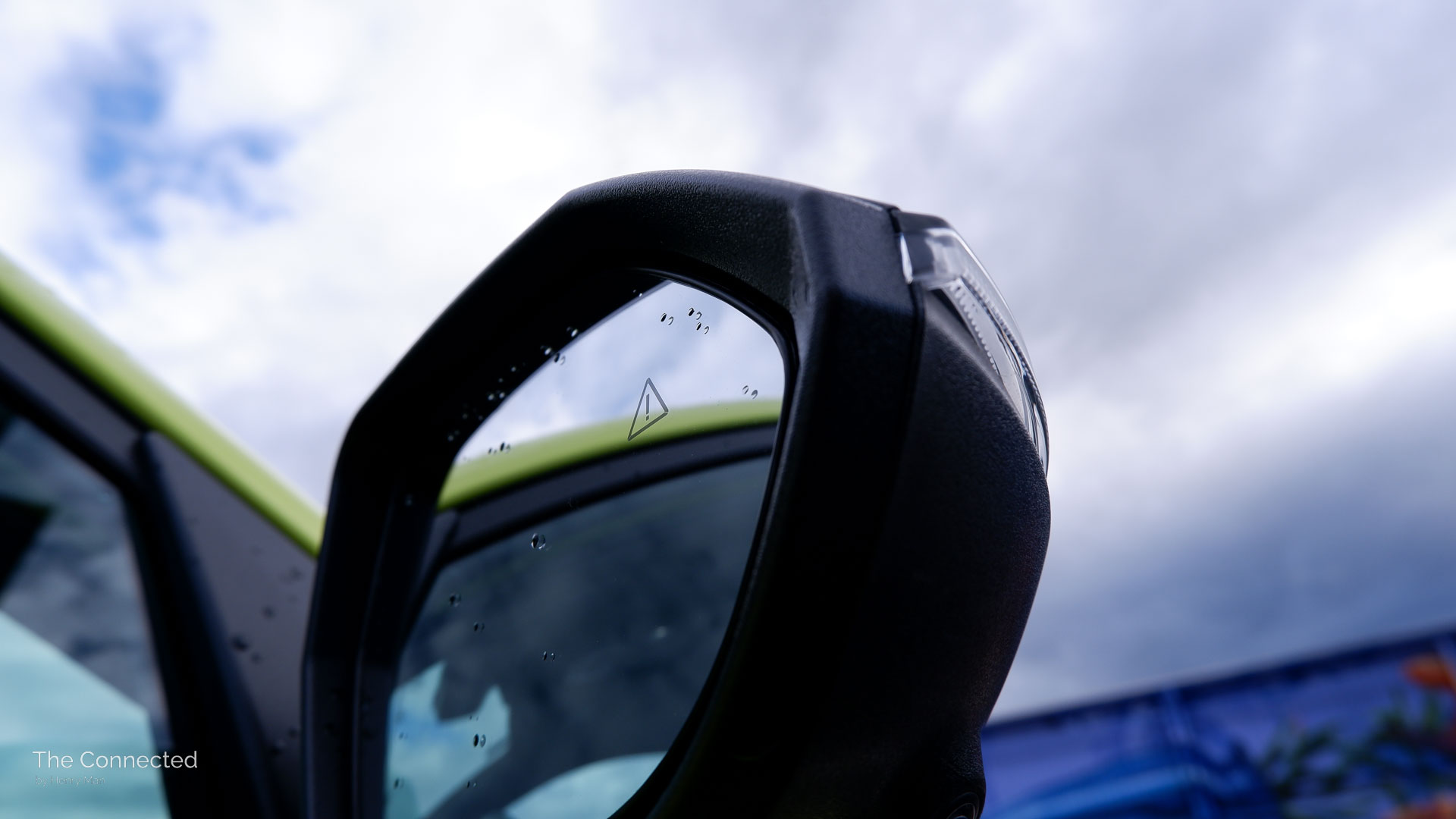
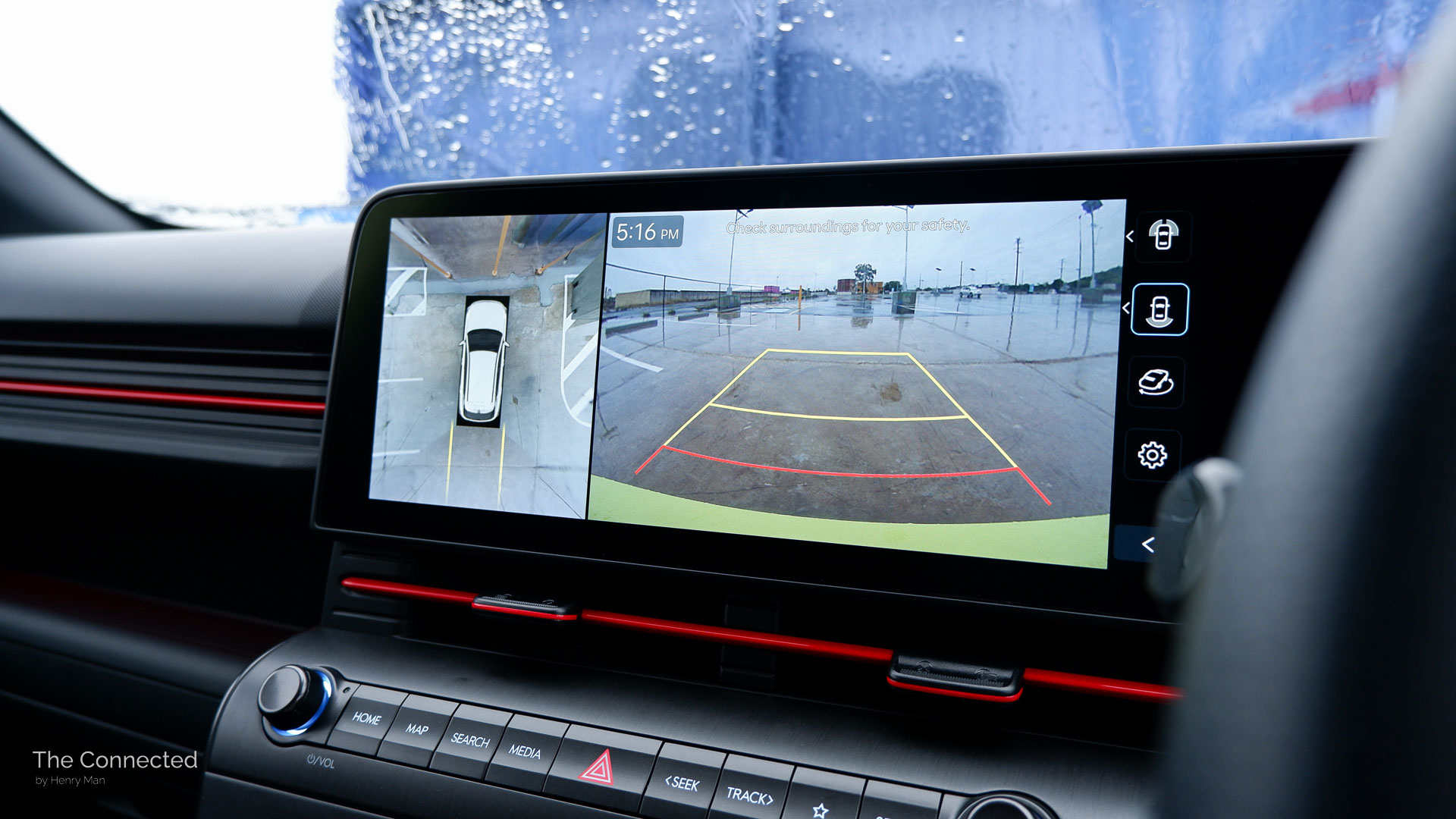
The Kona Premium adds a clear 360-degree camera system, side parking sensors, blind-spot cameras, and rear auto emergency braking (AEB).
However, the base model is already quite comprehensive on the safety tech front, with well-calibrated and smooth adaptive cruise control, blind-spot monitoring that keeps being active while stopped (unlike in the past), and lane-centring assist which can activate without the need for smart cruise.
Unfortunately, the European-mandated speed limit assist system is also here – which chimes every time the front camera detects a new speed sign and warns repetitively when going over the limit.
Hyundai has improved the system by not incorrectly detecting school zone speeds outside of the select morning and afternoon periods, yet the Kona hasn’t received the quieter chimes as found on the Kia EV9 as at the time of testing.
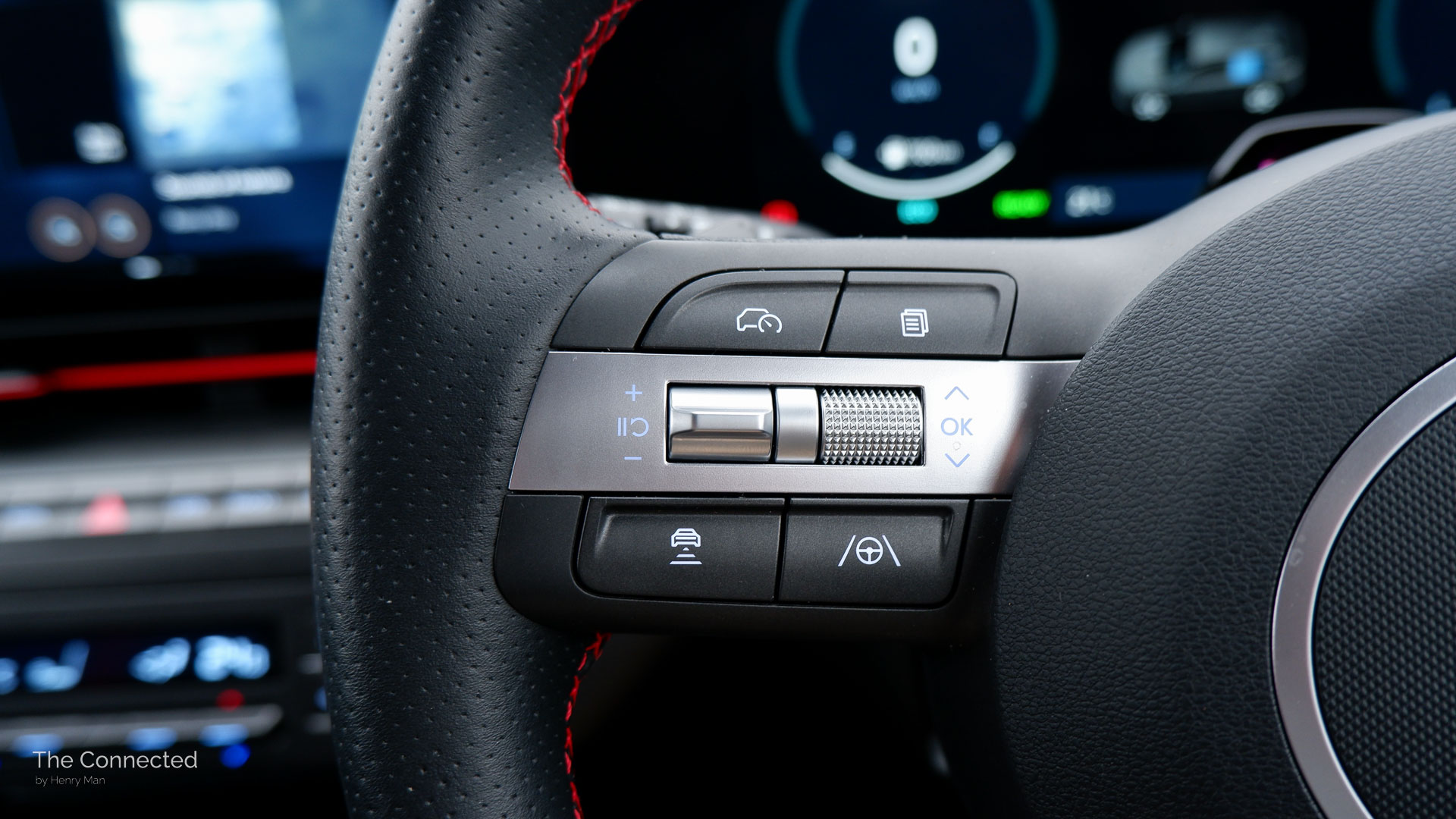
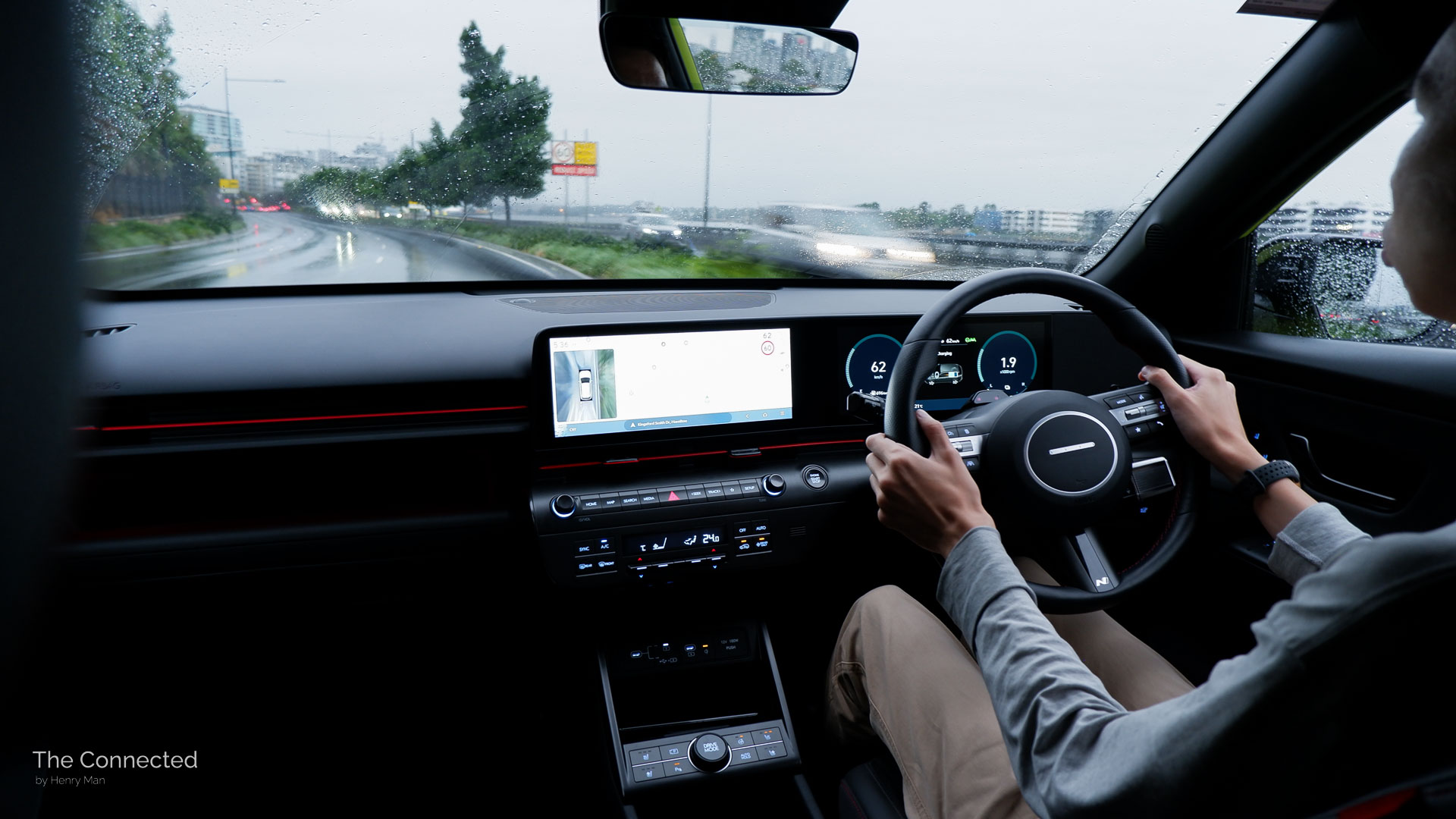
All Kona’s also incorporate an infrared driver monitoring camera above the steering wheel, which chimes whenever the driver is looking away from the road ahead.
It is a genuinely useful safety feature with no unnecessary warnings in my experience – but mainly nagged as I was staring at the hybrid system animations on the instrument cluster and touchscreen too long.
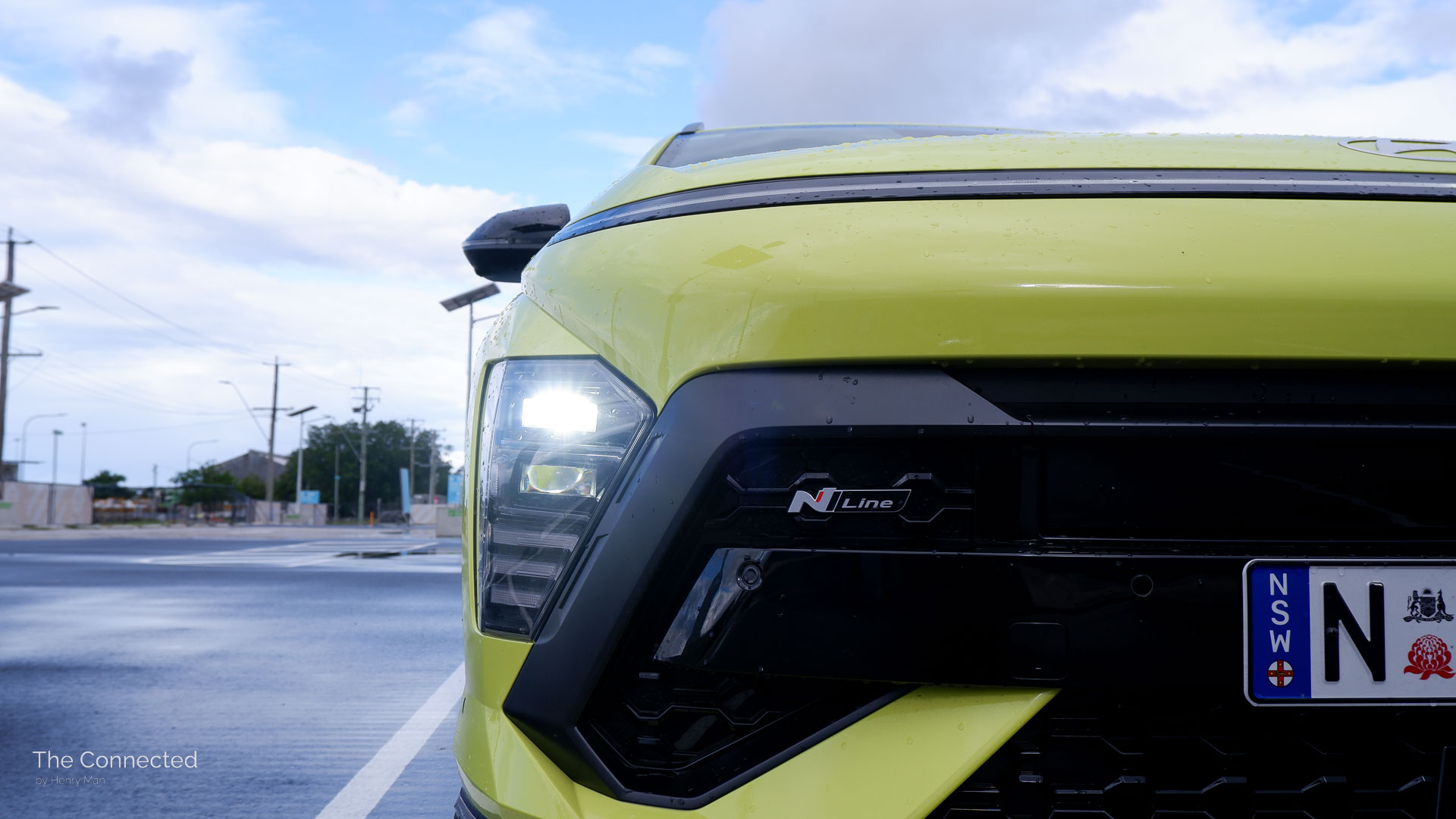
Furthermore, optioning the N Line package on the base Kona or choosing the top-spec Kona Premium adds a full-width front ‘Seamless Horizon Lamp’ light bar, front and rear LED turn indicators, and more sophisticated projector-type LED headlights.
The latter performs well at night with good reach and spread, plus an auto high beam function – but the base model’s standard reflector-type LED headlights was decently bright as well.
Hyundai Bluelink also enables emergency calling automatically when the airbags are deployed to a 24/7 call centre or via the red overhead button, in addition to remote vehicle location tracking.
The Hyundai Kona received a four-star safety rating by the Australasian New Car Assessment Program (ANCAP) based on 2023 testing criteria. The safety authority said the small SUV had ‘mixed results’ and was limited to four stars due to weaker vulnerable road user protection and safety assist scores.
Range and fuel consumption.
2024 Hyundai Kona Hybrid Premium fuel and efficiency specs:
| Claimed driving range (combined) | 974km |
| Claimed fuel efficiency (combined) | 3.9L/100km |
| Fuel tank | 38 litres |
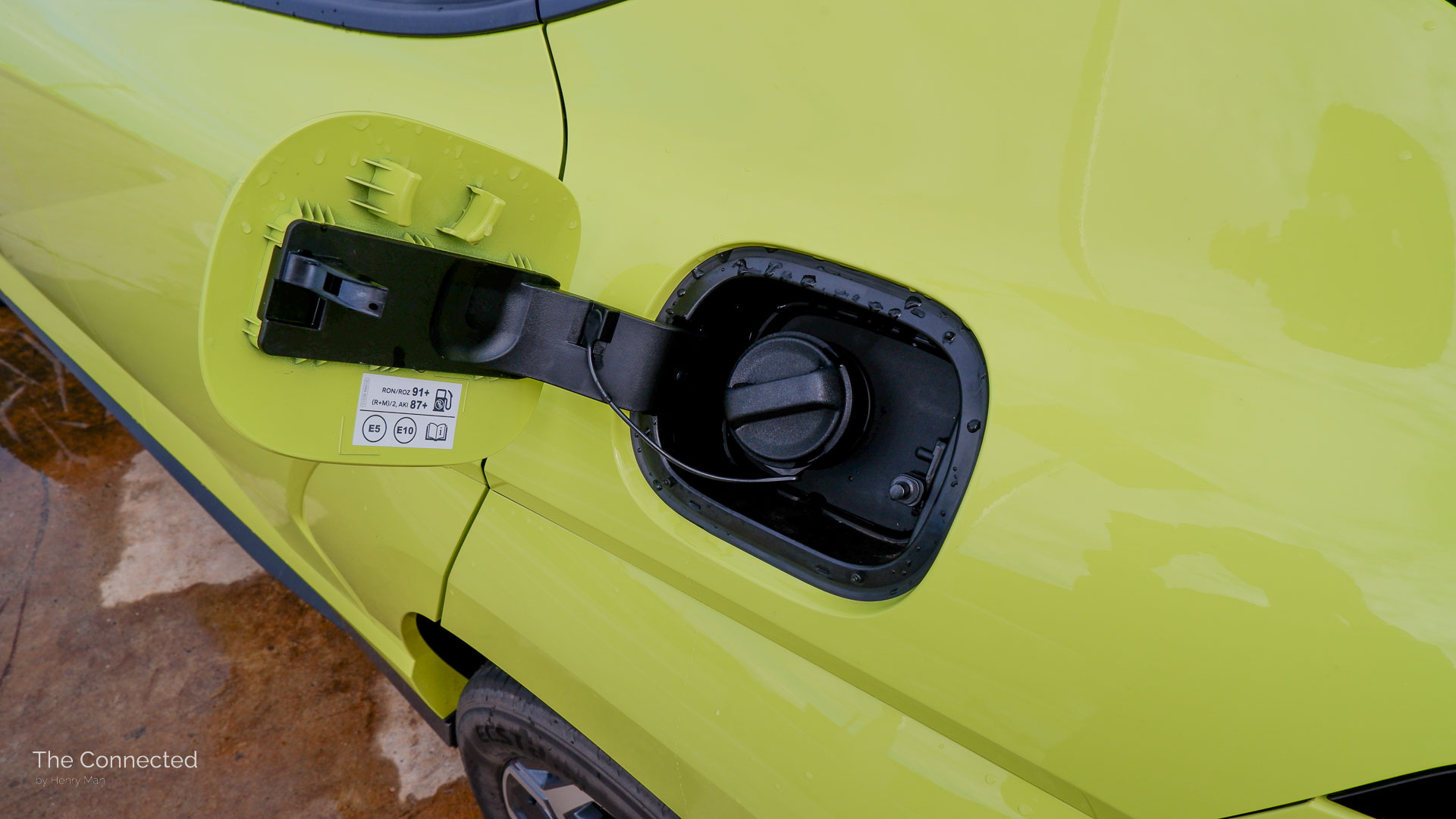
| Minimum fuel quality requirement | 91 RON unleaded petrol |
| Claimed CO2 exhaust emissions (combined) | 88g/km |
| European emissions compliance | Euro 5 |
Is the extra $4000 for the Hyundai Kona Hybrid worth it? After a week of heavy traffic urban and highway driving, the hybrid small SUV returned a 5.0L/100km tested fuel efficiency.
This equates to about 700km real-world driving range from the Kona Hybrid’s smaller 38-litre fuel tank. As per the regular model, the hybrid can consume cheaper 94 RON E10 unleaded petrol.
Hybrids address one of the most inefficient parts of driving with a combustion engine: braking – while being more efficient in urban stop-start traffic environments by regularly disabling the petrol engine from running.
The small 1.32kWh (gross) lithium-ion battery constantly recharges thanks to the engine and regenerative braking and, unless you’re always going uphill, there’s always at least 50 per cent charge. Fortunately, the battery management system doesn’t let the pack go below 20 per cent and above 80 per cent – which is ideal for the longevity of lithium-ion type batteries.


While the tested fuel consumption is notably far off Hyundai’s 3.9L/100km claim, I could meet that low figure on some trips with more stop-start traffic (using electric-only mode more), lower urban speeds and keeping a light foot on the accelerator.
Based on our experience with the standard 2.0-litre petrol engine’s fuel consumption, it would take almost two years to pay back the $4000 premium for the hybrid – assuming an owner drives 15,000km per year with fuel costing $2.00 per litre.
Moreover, the Kona Hybrid’s fuel tank volume is also nine litres less than regular petrol-only variants, which means it can’t offer as much ultra-long range – unlike the previous-gen Hyundai Santa Fe Hybrid which doesn’t compromise on the tank volume.
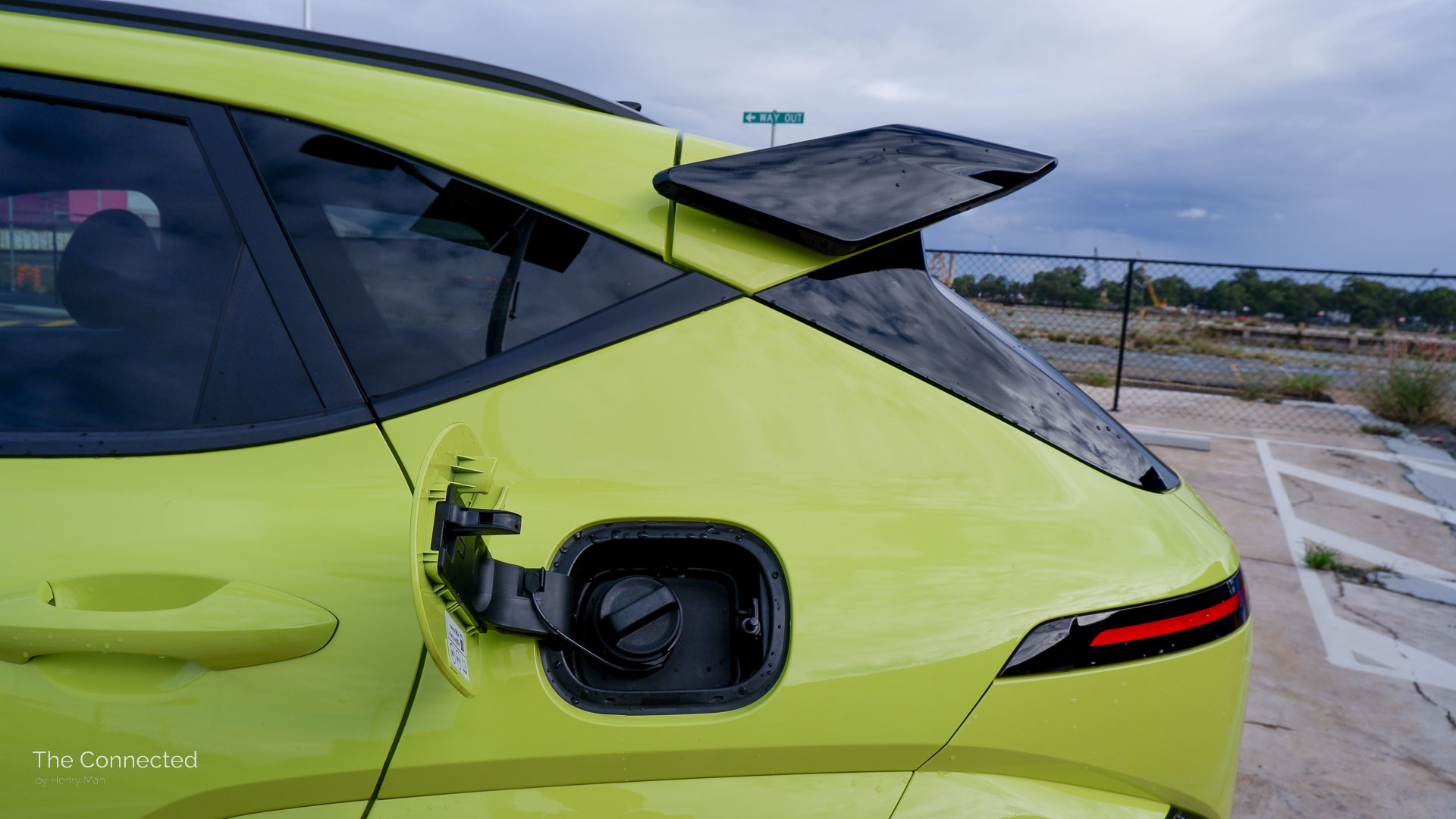
The fuel lid is at the rear-left quarter and is positioned higher above the wheel arches, making it accessible for inserting often heavy and inflexible fuel pump cables. The cap also twists and locks easily thanks to a spring-loaded mechanism.
Driving.
2024 Hyundai Kona Hybrid Premium powertrain specs:
| Engine/Electric motor | 1.6-litre naturally-aspirated four-cylinder petrol engine + permanent magnet synchronous electric motor |
| Battery size and type | 1.32kWh (gross) lithium-ion battery |
| Power (combined) | 104kW |
| Torque (combined) | 206kW |
| Transmission | Six-speed DCT |
| Drive Type | FWD |
| Kerb weight | 1525kg |
| Payload | 425kg |
| Towing (unbraked / braked) | 600 / 1300kg |
The Kona Hybrid’s series-parallel powertrain is punchy and refined – but let down by sub-par noise insulation and ride comfort.
It combines a 1.6-litre naturally-aspirated petrol engine with a front-mounted electric motor to produce 104kW of power and 206Nm of torque combined.
Hyundai’s series-parallel hybrid system is smooth and seamlessly transitions between the two powertrains – a noticeable improvement compared to the last-gen Santa Fe Hybrid.
Response from the EV motor is naturally instant and generally masks the jerkiness of the dual-clutch transmission (DCT) – though it did rarely abruptly shift a gear during hard accelerations at some times.
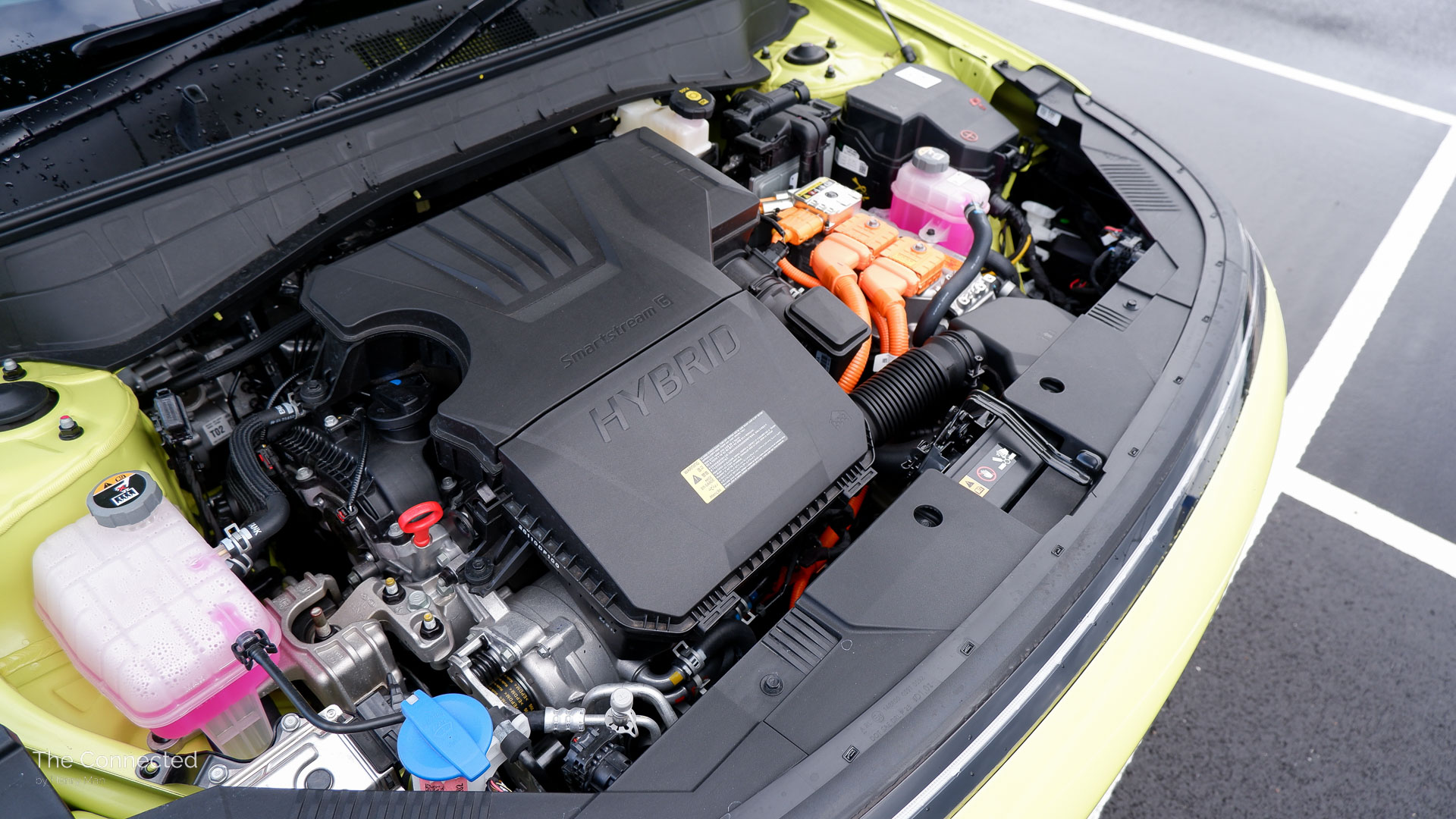
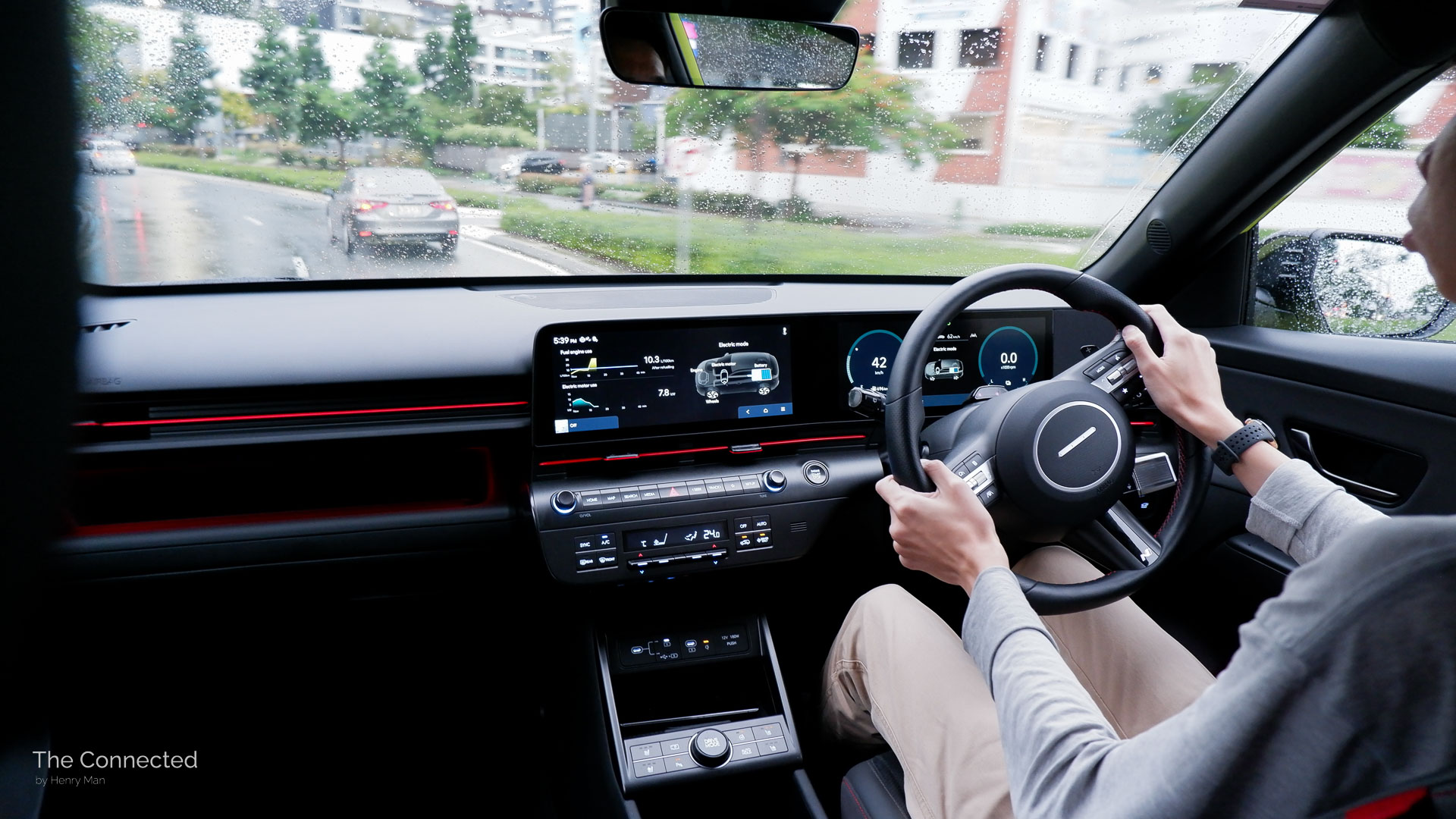
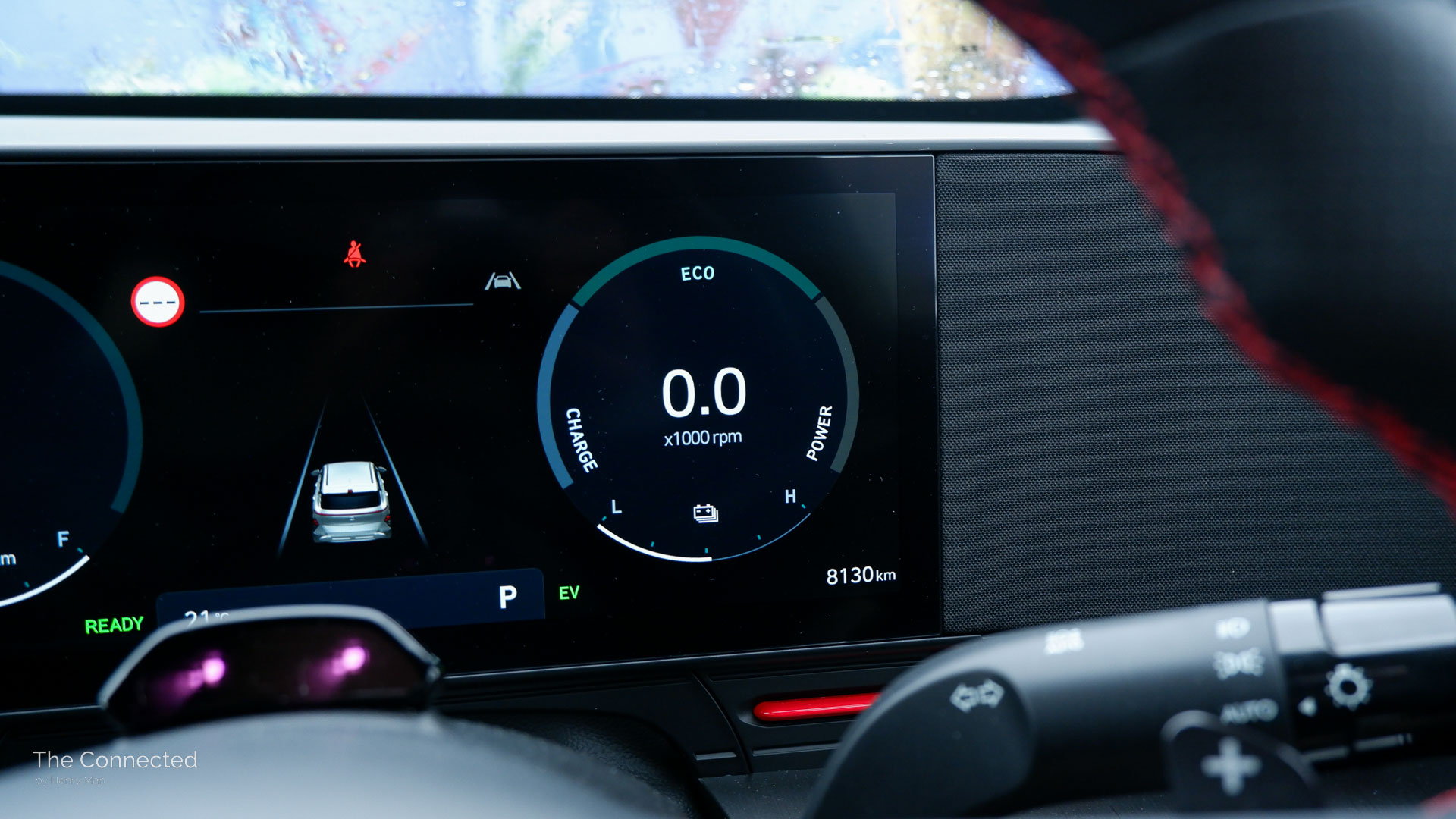
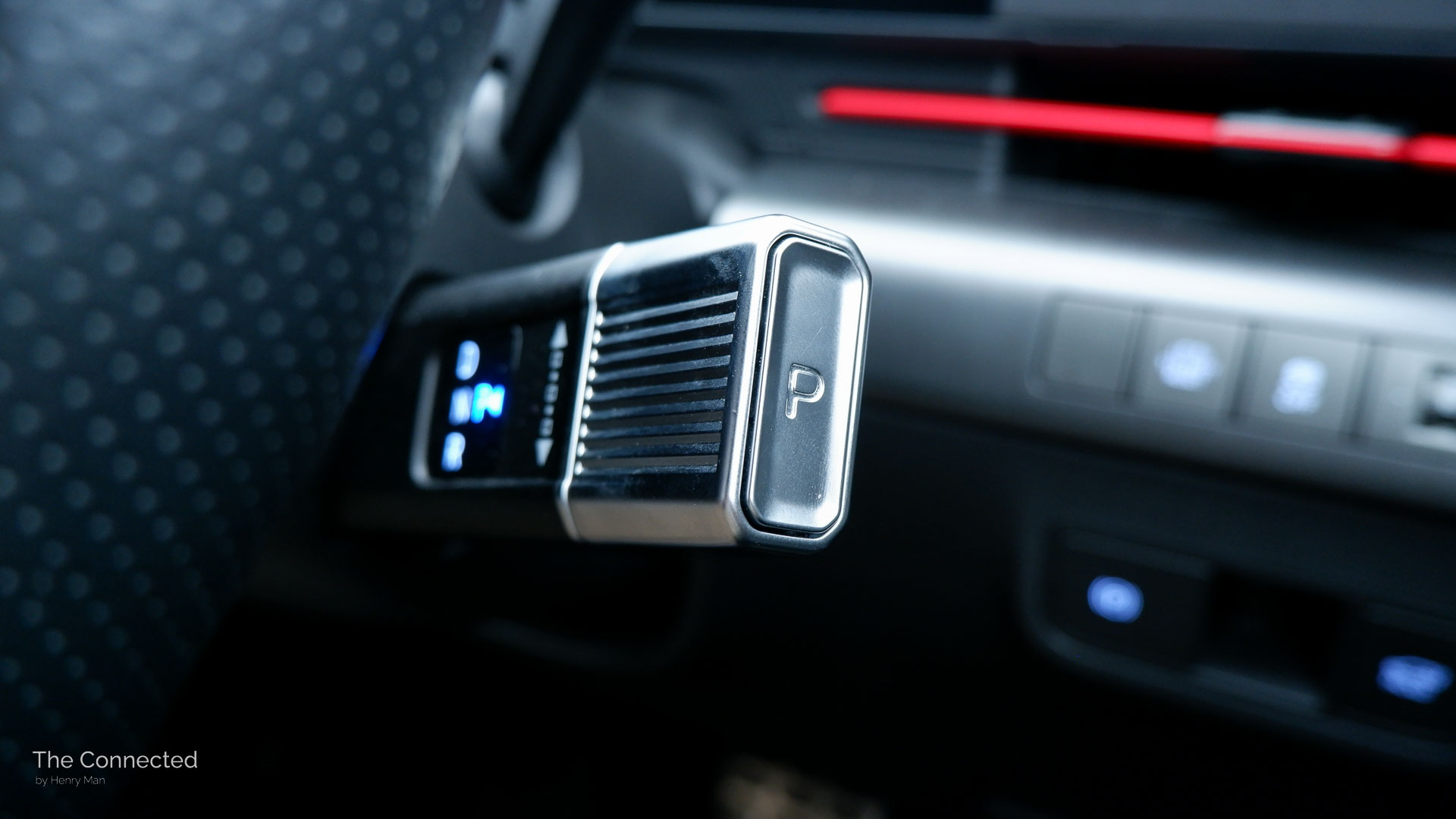
The Kona Hybrid satisfyingly keeps in EV-only mode often – at low speeds with light throttle input, any time it’s maintaining the speed on a flat or downhill gradient, and as soon as it’s slowing down using regenerative braking.
The petrol engine kicks in when more power is needed, and during hard acceleration uses both the engine and motor to provide maximum power.
Even though the hybrid has 6kW less power than the regular 2.0-litre petrol unit, it’s still quicker and is more confidence-inspiring thanks to 26Nm more torque instantly on tap.
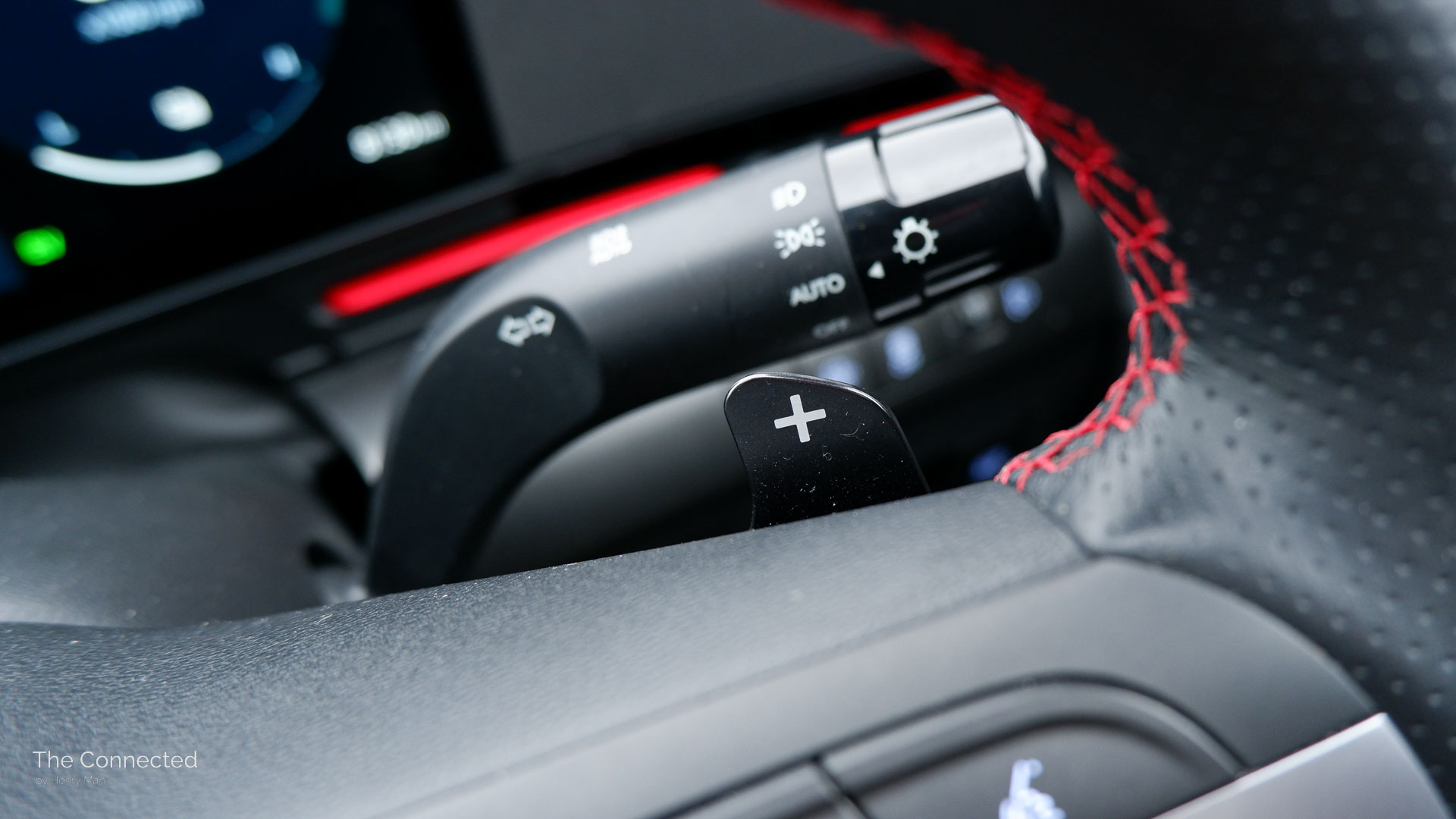
Overall, the hybrid system encourages drivers to drive efficiently and trigger EV-only mode to turn off the petrol engine. I mainly kept the Kona in the default eco mode; sport mode holds onto gears for longer, transforms the steering wheel paddles to shift gears, and turns off the regenerative braking.
Disappointingly, the hybrid is front-wheel drive (FWD) only – unlike the previous Santa Fe Hybrid. Buyers will need to opt for the identically-priced 1.6-litre turbo-petrol instead in order to have all-wheel drive (AWD) – which is a key selling point for Australians.
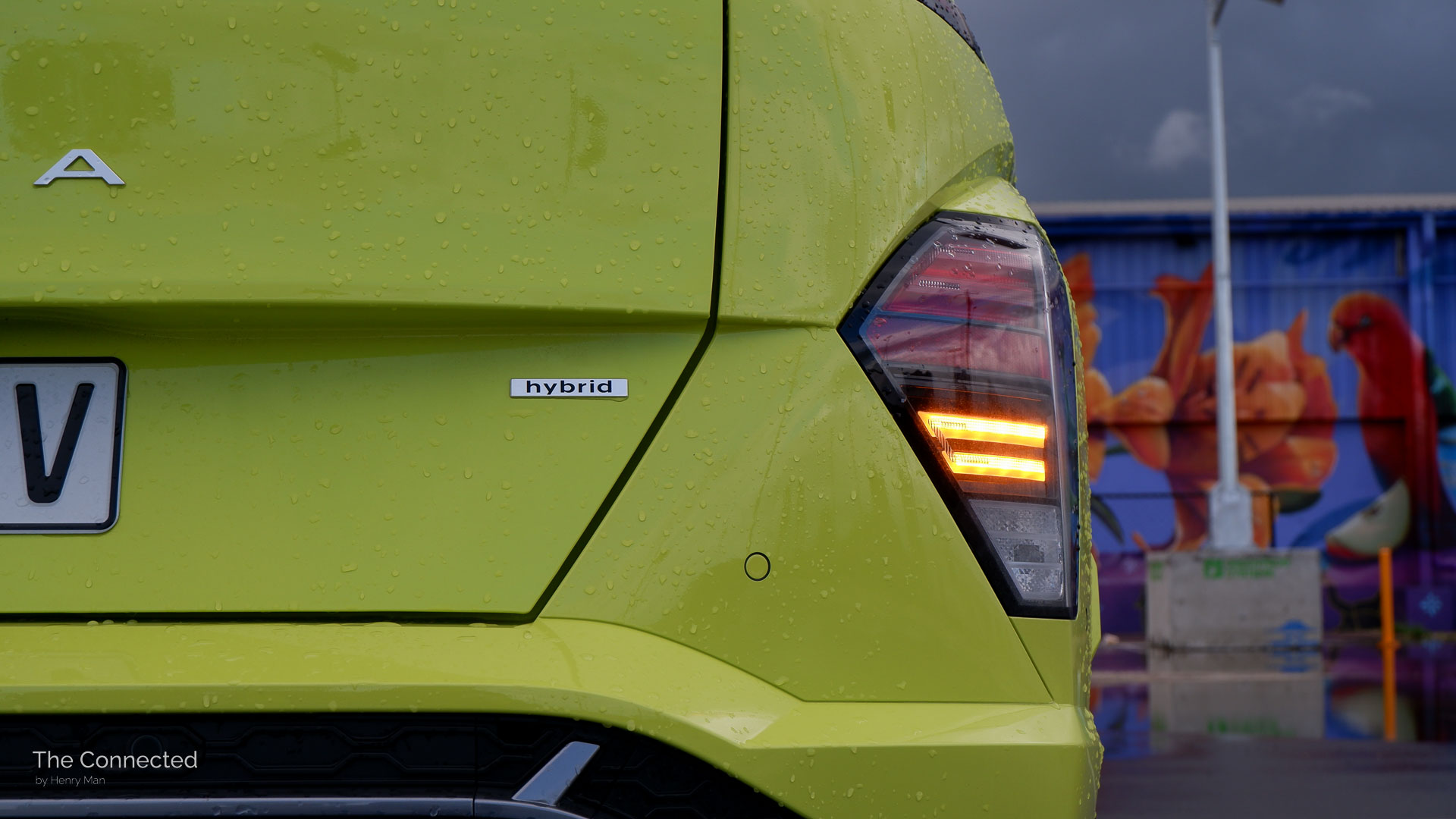
Hybrid heaven.
The new Kona Hybrid features a refined series-parallel drivetrain that seamlessly switches between petrol and electric power.
It enables EV-only driving surprisingly often to save fuel and limit tailpipe emissions, as an excellent stopgap to curb battery longevity and charging concerns.
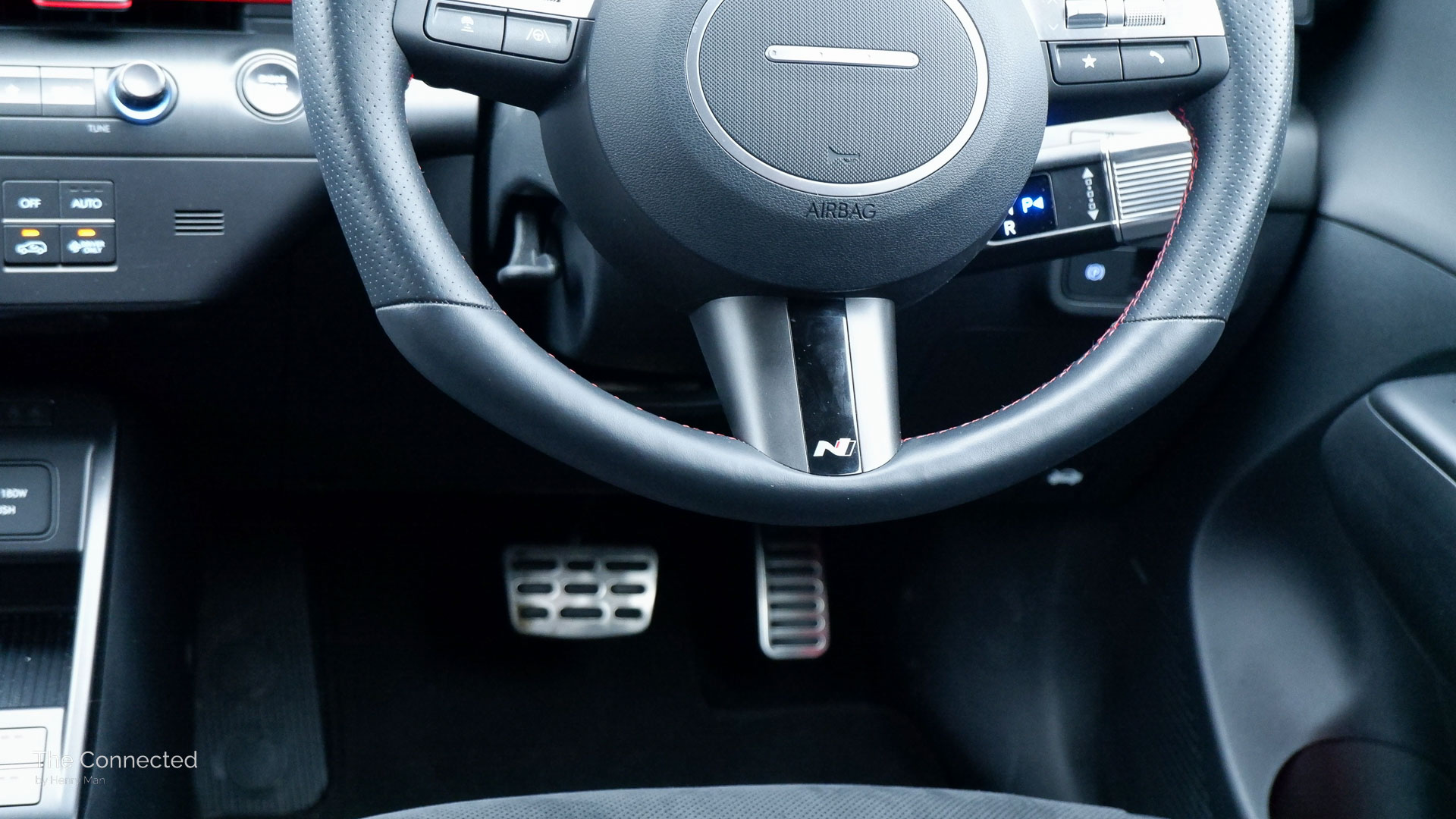
However, the blended brake and accelerator pedals feel inconsistent and need some re-calibration.
The accelerator has a high ‘biting point’ for the regenerative braking system to activate, so it feels like it’s either on or off – rather than being able to gradually slow down.
This causes some awkward jerkiness, particularly when set on the strongest level three regen mode. Thankfully, the regen intensity can easily be adjusted via the steering wheel paddles – I found level two was a good balance.
Hyundai’s hybrid small SUV also offers an automatic recuperation mode – which increases the intensity based on the road conditions ahead – and holding down the left paddle can bring the Kona to a complete stop, albeit abruptly.
On the other hand, the blended brake pedal feels numb and I often needed to press harder than usual to bring the vehicle to a stop.
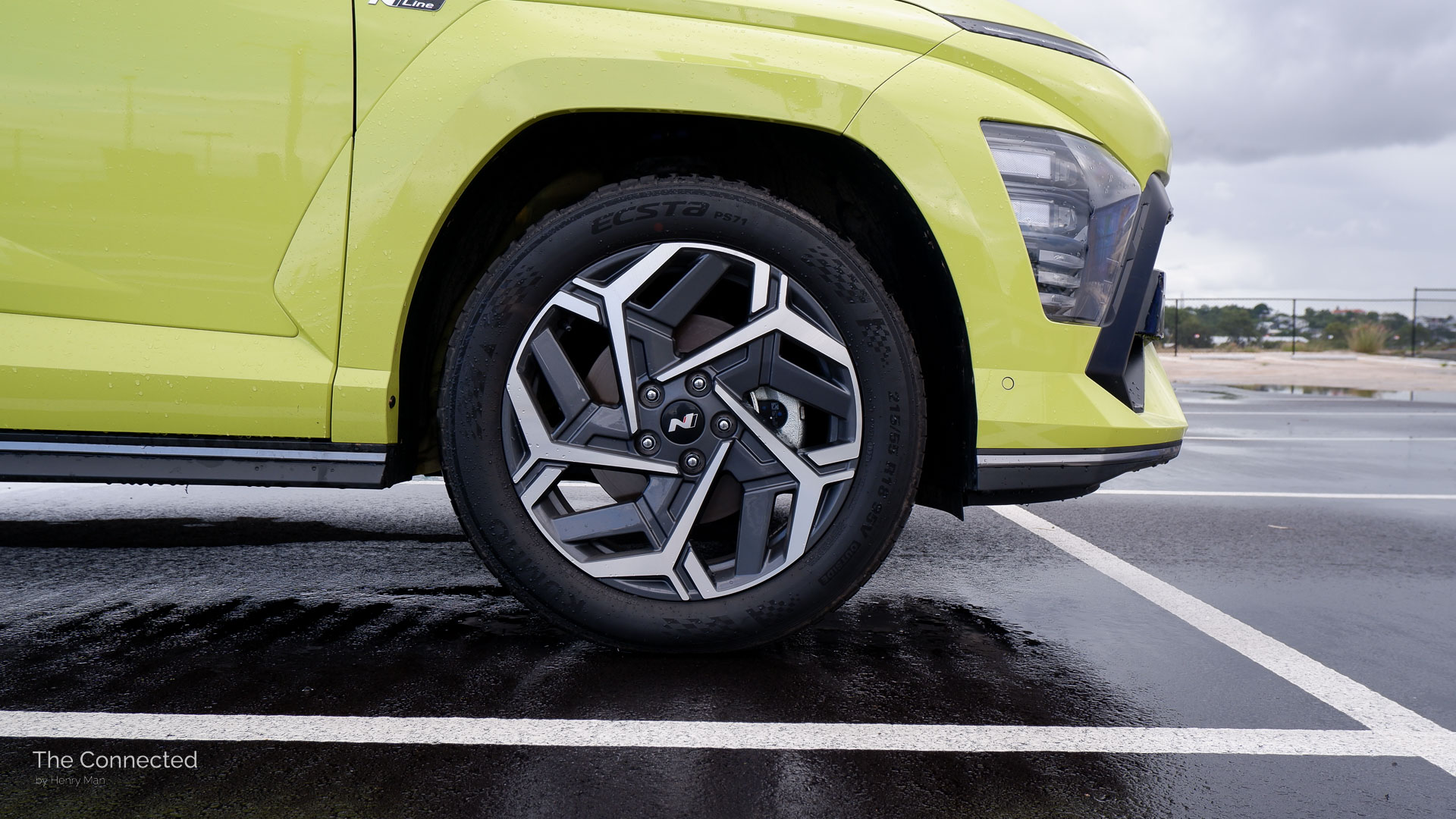
Despite the use of smaller 18-inch wheels (with 15/55 Kumho Ecsta PS71 tyres) on the Kona Hybrid N Line, the suspension is still on the firmer side and rebounds sharply from road patches.
Similarly, noise insulation is sub-par compared to other small SUV rivals with noticeable road tyre roar and outside sounds entering the interior – making for less-than-ideal driving comfort for a family-friendly small SUV commuter.
The Kona satisfies the higher seating height afforded by a small SUV, with good all-round visibility even though the Volkswagen T-Roc has the upper hand with taller rear side windows.
The tight 10.6 metre turning circle is commendable too and makes the Kona a good-sized, city-friendly small SUV.
Warranty and servicing.
2024 Hyundai Kona Hybrid capped-price servicing prices:
| 1 year/15,000km | 2 years/30,000km | 3 years/45,000km | 4 years/60,000km | 5 years/75,000km |
|---|---|---|---|---|
| $399 | $579 | $399 | $579 | $579 |
The Hyundai Kona Hybrid is covered by a five-year, unlimited kilometre vehicle warranty and an eight-year/160,000km battery warranty.
Maintenance is required every one year/15,000km, with the South Korean automaker uniquely offering an unlimited capped-price servicing program – providing the confidence of knowing the running costs ahead of time.
It costs $2535 to service the Kona Hybrid after the first five visits – averaging to $507 per visit.
Unfortunately, this is relatively expensive. For reference, the Toyota Corolla Cross Hybrid averages to $250 per service, Nissan Qashqai e-Power at $446 per service, and Kia Niro Hybrid averaging $530 per service across the first five checkups.
Unlimited roadside assistance is included, provided owners use a Hyundai dealer for each scheduled service – another unique perk not offered by other car brands.
Hyundai’s Bluelink connected services are included for up to five years, which will become a paid subscription thereafter (pricing hasn’t been announced as at the time of publication).
The Kona Hybrid includes a temporary space saver spare tyre placed underneath the boot floor.
Price & rivals.
2024 Hyundai Kona Hybrid model range pricing (excluding on-road costs):
| Kona Hybrid | Kona Hybrid N Line | Kona Hybrid Premium | Kona Hybrid Premium N Line |
|---|---|---|---|
| $36,000 | $40,000 | $43,500 | $46,500 |
Starting prices are accurate as at the time of publication and excludes mandatory on-road costs (unless labelled as ‘drive-away’).
The 2024 Hyundai Kona is priced from $32,000 before on-road costs in Australia, with the optional hybrid adding $4000 more to all variants.
The sporty-looking N Line package costs an additional $4000 for the base Kona or $3000 for the Kona Premium. A $2000 sunroof option is available for the Premium only.
The flagship Premium only brings nice-to-have features – such as heated/ventilated leather seats, 360-degree and blind-spot view camera systems, and an electric tailgate – so the extra $7500 may not be worth it depending on your needs.
As tested, the top-spec Kona Hybrid Premium N Line costs about $50K drive-away – which is typical for the small SUV segment. It’s also notably much better value than the Kia Niro Hybrid – which is about $4K more expensive – with a smaller interior, older tech and less features compared to the Hyundai Kona Hybrid.
The Hyundai Kona Hybrid directly competes with a range of hybrid small SUVs:
- Nissan Qashqai e-Power – from $33,890
- Toyota Corolla Cross Hybrid – from $36,480
- GWM Haval Jolion Hybrid – from $36,990 drive-away
- Subaru Crosstrek Hybrid – from $38,590
- Toyota C-HR – from $42,990
- Kia Niro Hybrid – from $44,930
The Kona Hybrid range is also priced in line with a handful of all-electric alternatives including:
- MG 4 – from $39,990 drive-away (full review)
- MG ZS EV – from $39,990 drive-away
- BYD Atto 3 – from $48,011
- BYD Seal – from $49,888
- Jeep Avenger – from $53,990

Would I pick the 2024 Hyundai Kona Hybrid Premium N Line?
The Hyundai Kona Hybrid is a good value small SUV and a fantastic stopgap for those who aren’t ready to make the full electric switch yet.
It’s well-sized, far more practical than the previous generation, and features advanced tech within a futuristic-looking exterior.
While the hybrid costs $4000 more, it offers low fuel consumption in our test, satisfyingly regular part-time electric-only driving, and is more enjoyable to drive compared to the standard petrol-only unit.
Yet, some interior plastic surfaces are too scratchy for its price point, the ride is firmer with weaker noise insulation, the blended pedals are inconsistent, and the uncovered 12-volt battery is an awkward design.
Hyundai’s hybrid small SUV is also more expensive to service and the low-emissions powertrain isn’t offered with in-favour AWD traction either.
I’d pick the base Hyundai Kona Hybrid as the better value option, since the flagship Premium only brings nice-to-have features for a hefty $7500 extra.
Priced from $36,000 before on-road costs (or from $39,990 drive-away offered nationwide as at the time of publication), it includes all essential tech and safety assist features, and looks essentially the same as the top-spec from the outside.
If you want a slightly more interesting interior than the boring base model, a spicier exterior design and full LED lights, consider adding the N Line package option for $4000 more.
Hyundai Kona Hybrid represents the South Korean company’s new default small car of choice, but there’s better value lower down the range.
Photographs by Henry Man
READ MORE: 2024 Volkswagen T-Roc review: Best of VW?
READ MORE: 2024 Kia Seltos review: Now on brand.
READ MORE: 2023 Hyundai Santa Fe Hybrid Elite review: Anti-diesel?
About the Author.
Henry Man is an independent content producer passionate about the intersection of technology and transportation.
The former automotive journalist is focused on producing critically-detailed vehicle reviews, and unique short-form content. Learn more.


