
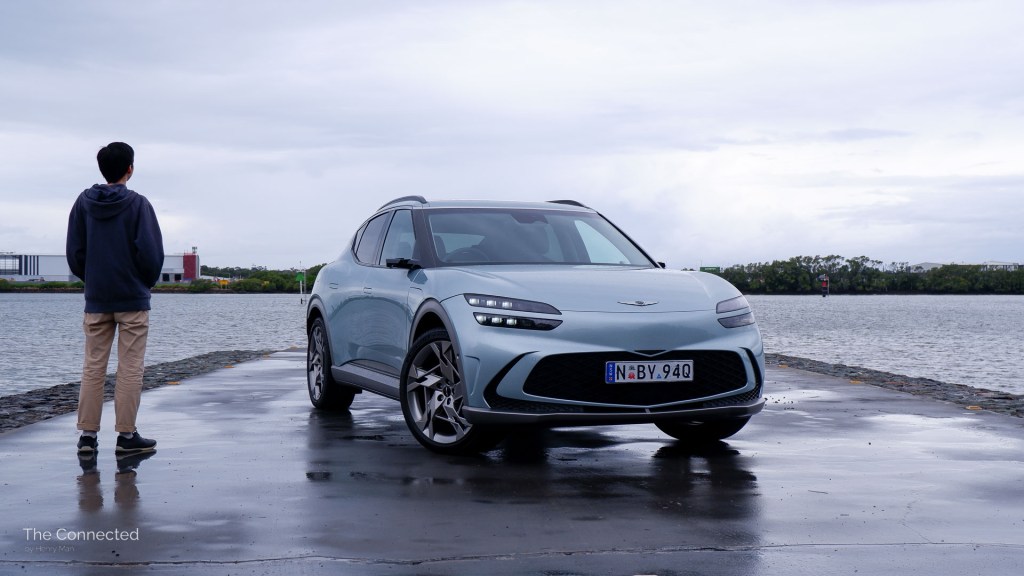
The Genesis GV60 – the luxury carmaker’s more youthful, entry electric vehicle model – hasn’t sold well globally. That’s a shame.
It’s easy to think electric cars only come from Tesla and Build Your Dreams (BYD).
But there’s been underdogs that have moved the EV industry forward – think the Jaguar I-Pace, BMW i3, and original Hyundai Ioniq Electric.
Now, let’s add the Genesis GV60 to that honourable mentions list. Released locally from mid-2022, the medium hatchback-SUV crossover received minor specification additions in 2023.
Merely 332 have been sold in Australia since its launch (to the end of April 2024), with the Hyundai Motor Group’s luxury car brand even forced to pause production in South Korea for two months due to low sales globally.
Ahead of a facelift expected later this year, we tested the flagship GV60 Performance AWD to understand why it hasn’t had much sales success.
NOTE: The press vehicle was provided by Genesis Motors Australia for a seven-day independent evaluation. We have no commercial arrangements with the company and it had no editorial control.

Pros.
+ Good value compared to rivals
+ High-end modern interior
+ Advanced tech upgrade
+ Insanely quick and quiet
+ Generous ownership inclusions
Cons.
– Quirky exterior is an acquired taste
– Still no wireless Apple CarPlay/Android Auto
– Unimpressive tested driving range
– High seating position
– Limited rearward visibility
Vehicle tested:
| Model | 2024 Genesis GV60 |
| Variant | Performance AWD |
| Starting price | $111,000 (before on-road costs) |
| Exterior colour | Hanauma Mint (no cost option) |
| Interior colour | Torrent Navy Nappa leather and suede interior (no cost option) |
| Country made | South Korea |
Design.
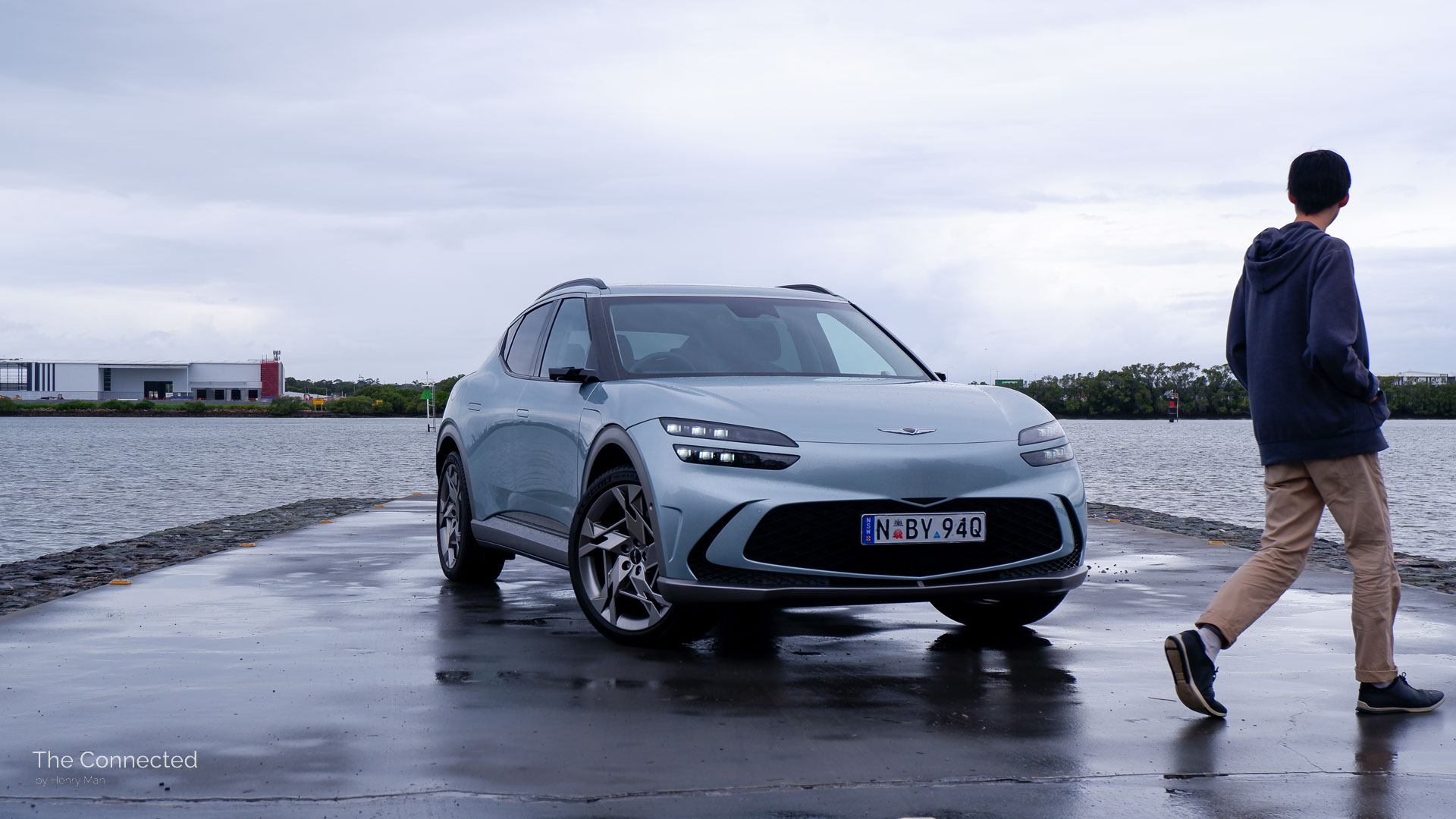
The Genesis GV60 has a rounded exterior that arguably doesn’t fit with the brand’s other models – but offers an impressively contemporary and luxurious interior.
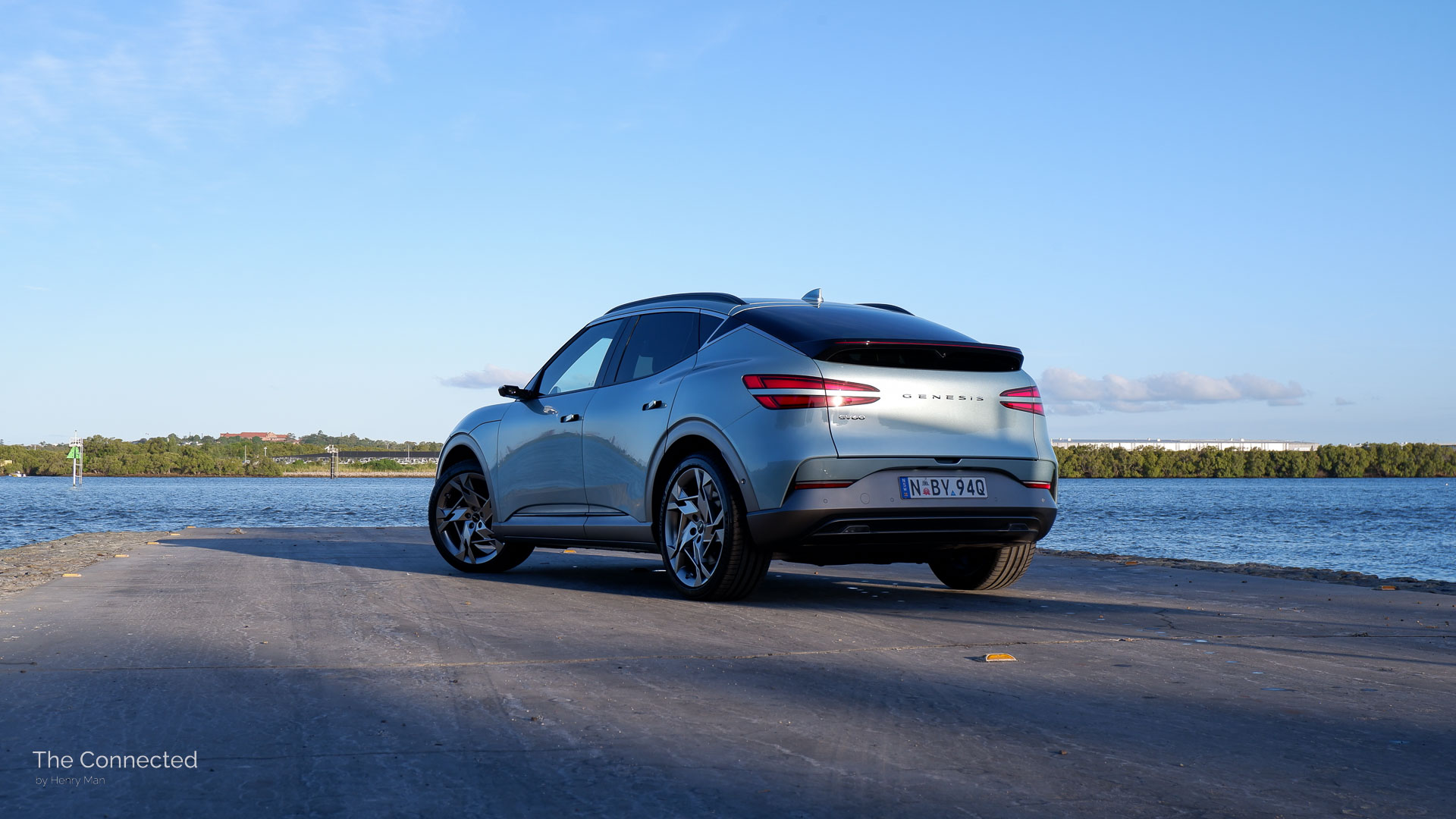
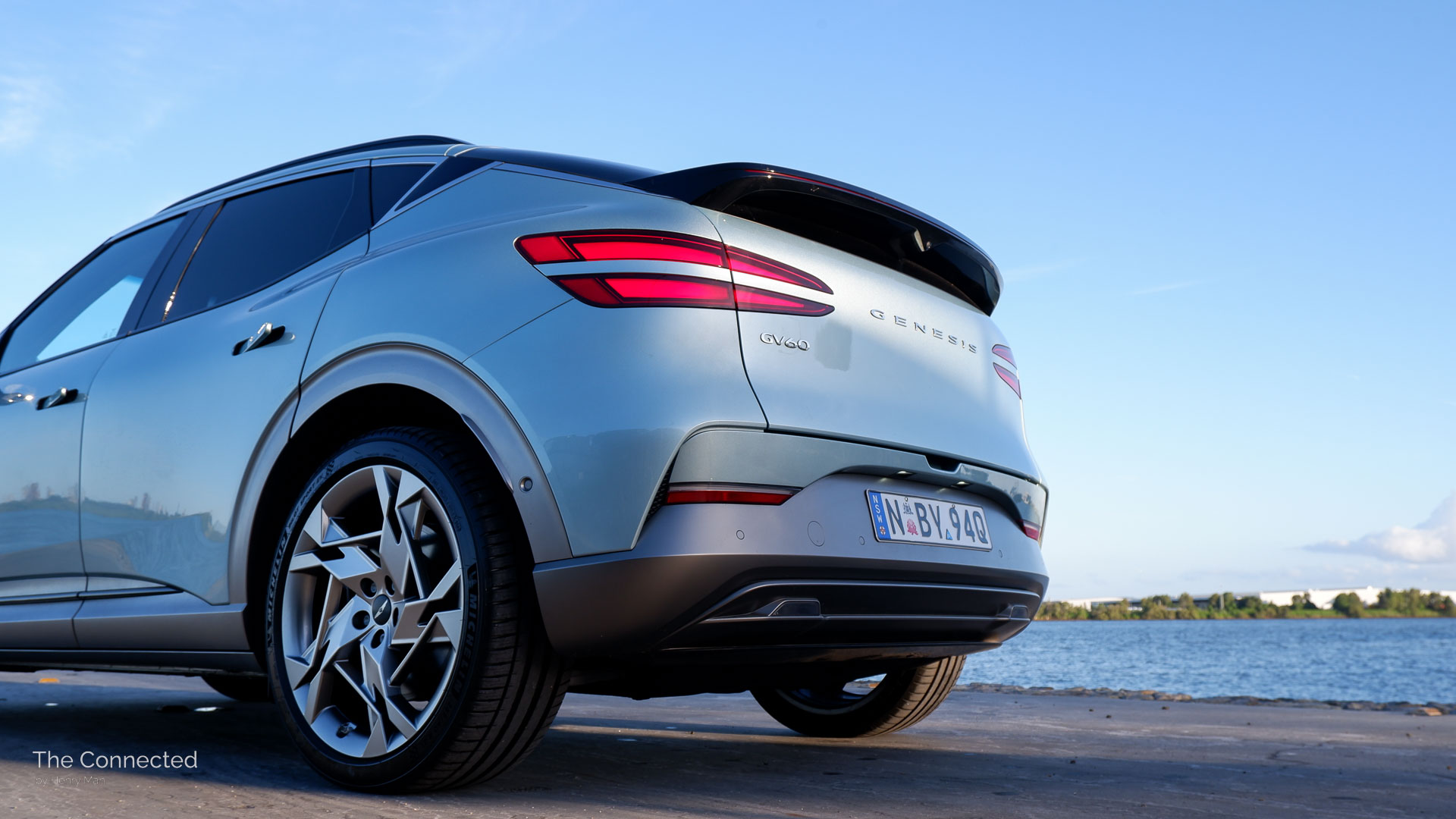
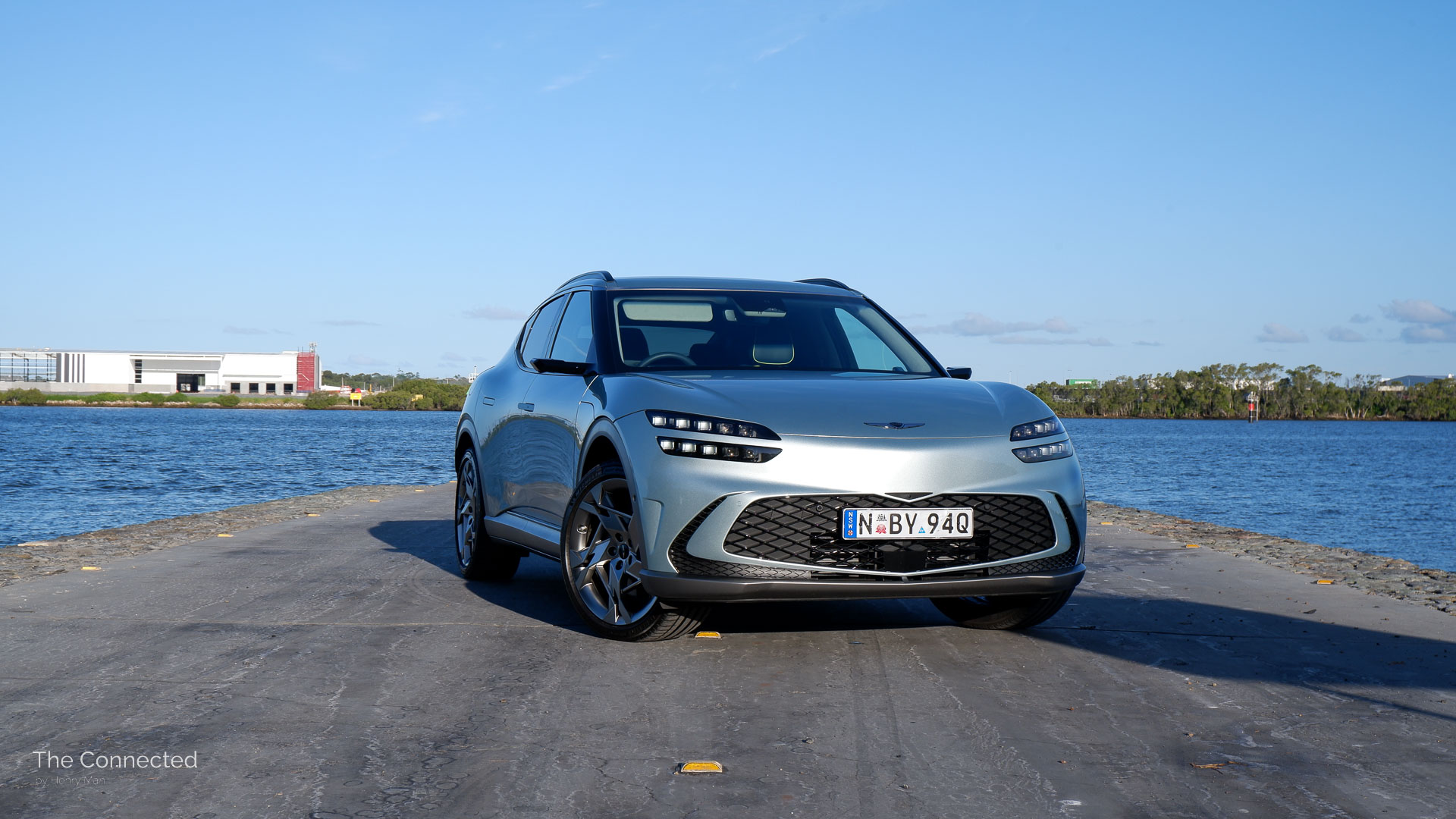
Even though the GV60 is marketed as an electric SUV, it’s really a hatchback crossover with a low stance, 160mm of ground clearance, and sloping rear similar to the related Hyundai Ioniq 5 and Kia EV6.
Unlike other Genesis models, the GV60 has a more curvaceous body and seems to try to be more youthful and athletic than the brand’s best-selling GV70 medium SUV. It’s certainly different.
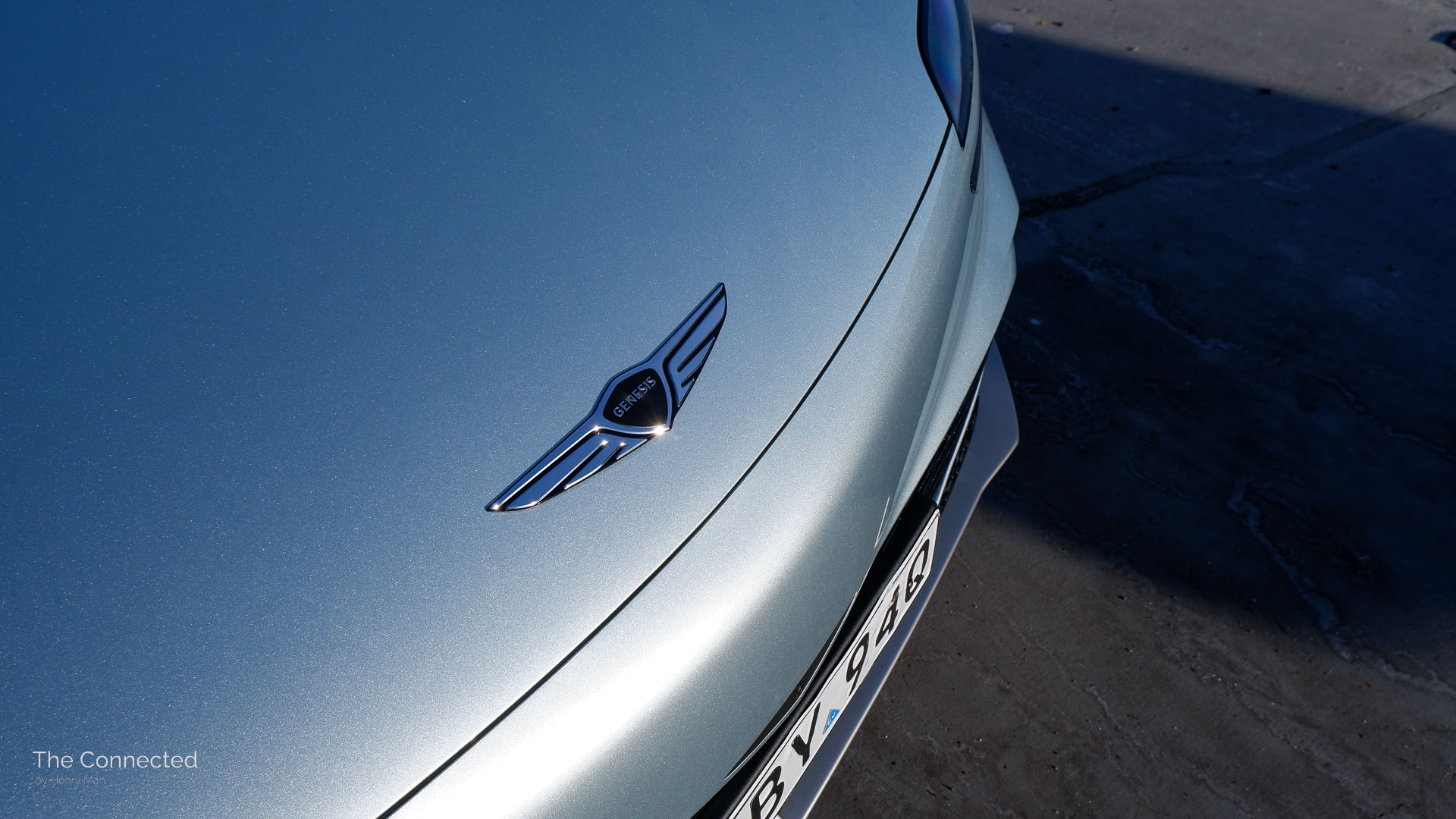
Add in the South Korean marque’s signature double-line and diamond crest shape motifs, and it arguably doesn’t fit with the rest of the line-up by being more ‘cute’.
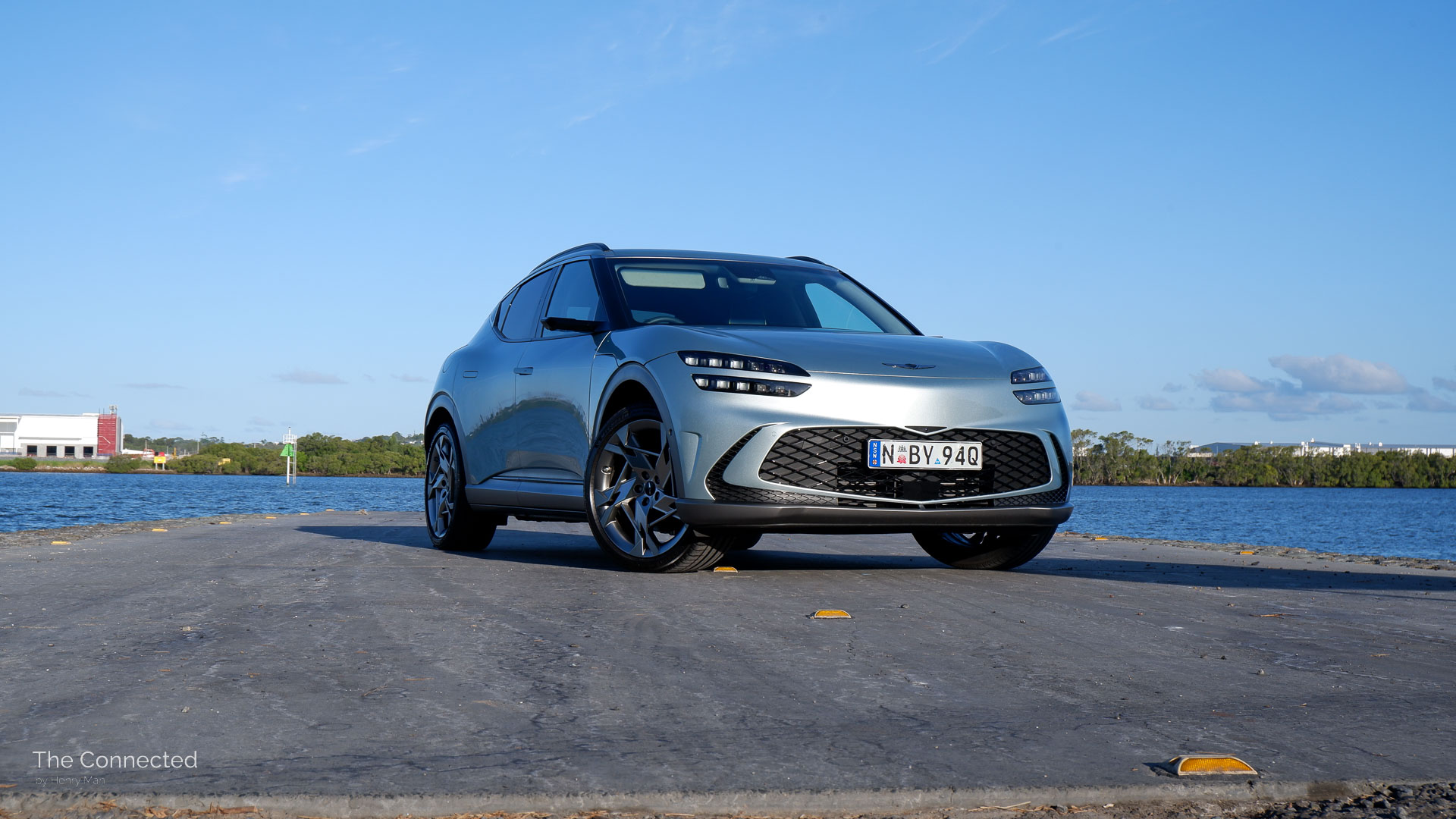
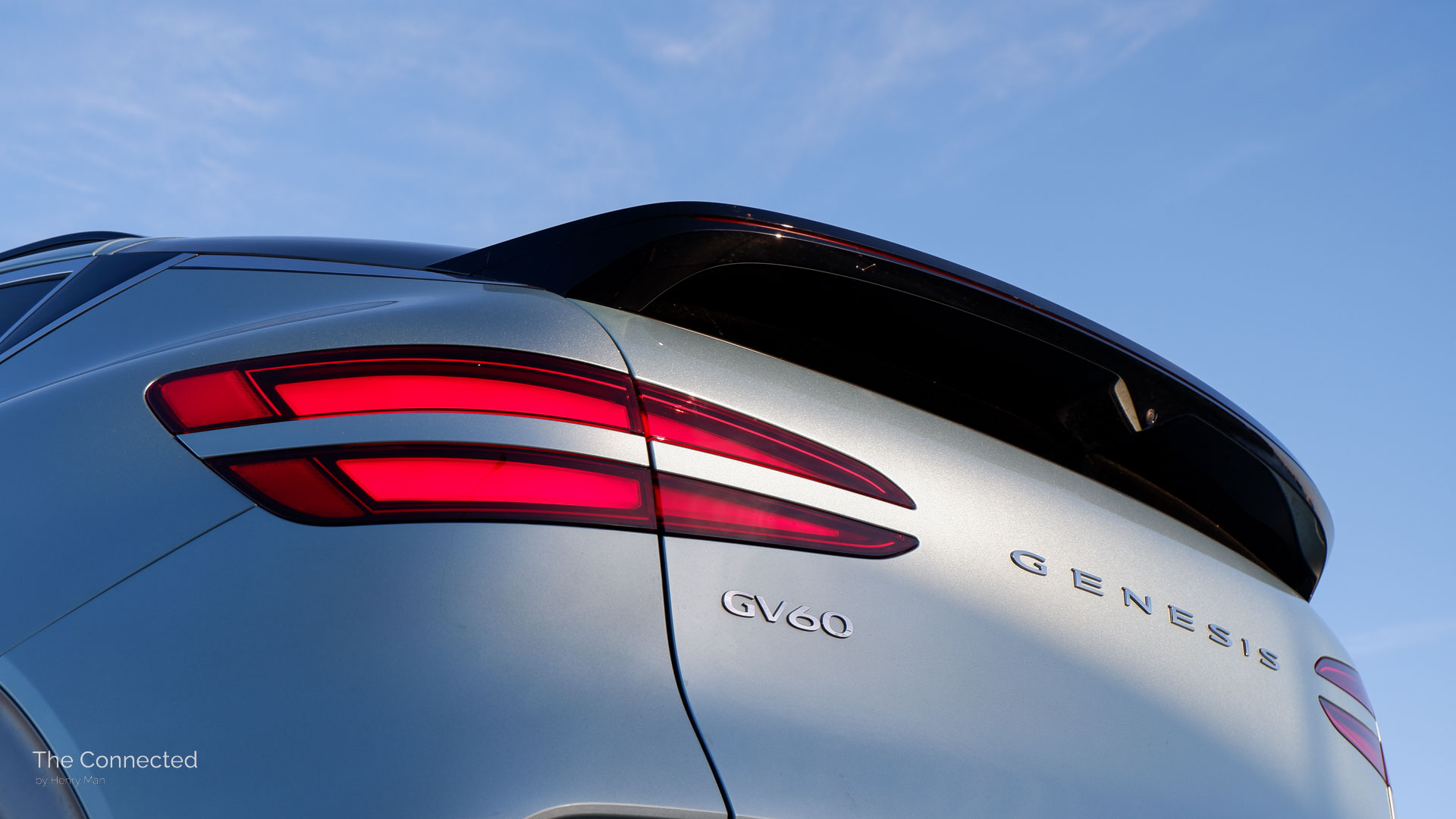
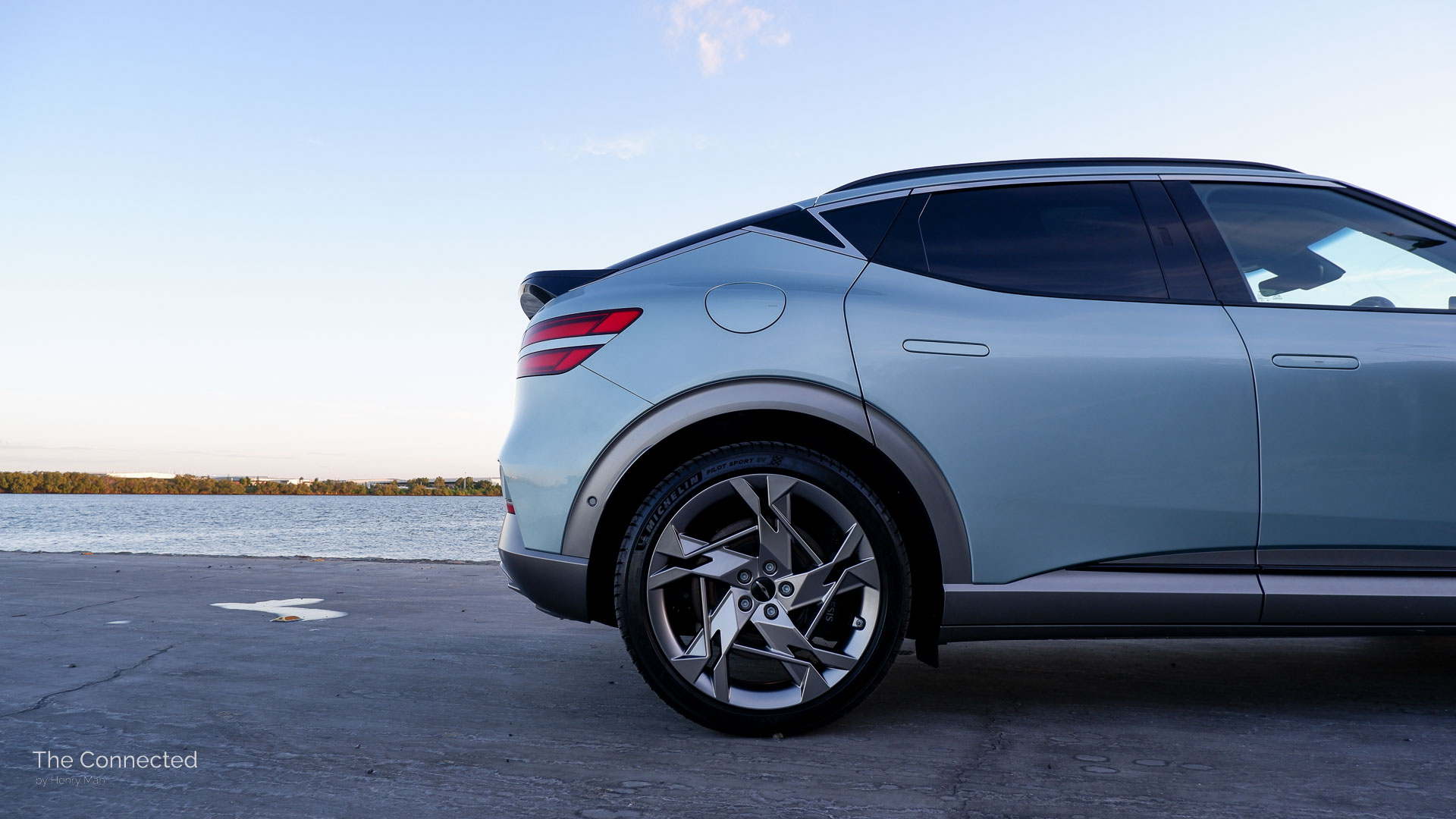
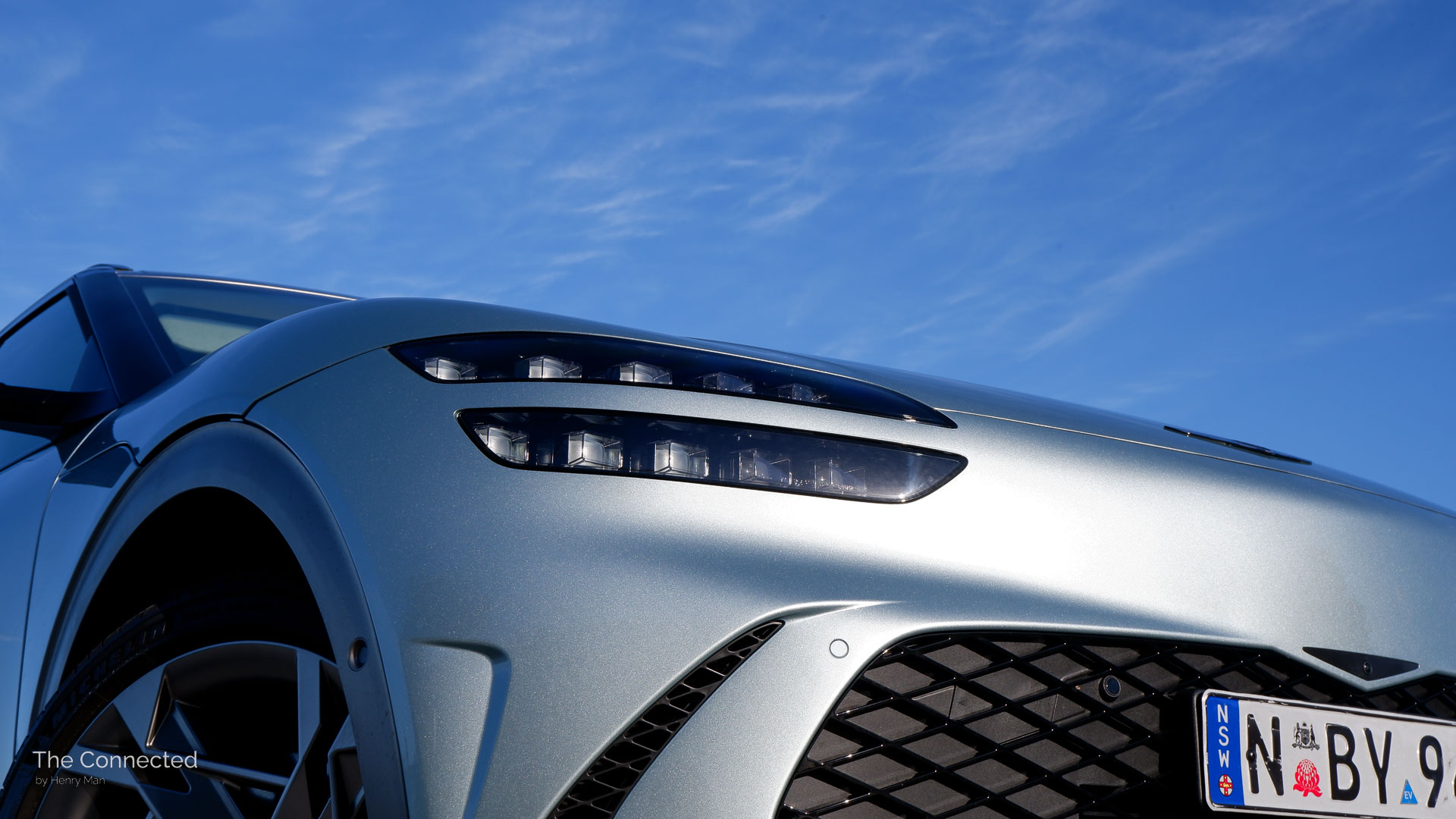
The GV60 Performance AWD is differentiated by 21-inch ‘Technical Deconstruction’ alloy wheels, black monobloc front brakes, alloy interior pedals, and silver metallic accents around the air vents (instead of copper).
It’s rather subtle for a performance EV, but Genesis hopes to address this with its upcoming Magma sub-brand to directly rival Mercedes-AMG and the BMW M division.
All glossy paint colours are free-of-charge, with the unique matte finish ones being a $2000 extra. Unfortunately, Genesis no longer offers the high-vis Sao Paulo Lime and the classy Tacama Copper, among other colours, for the 2024 model year.
Modern luxury.
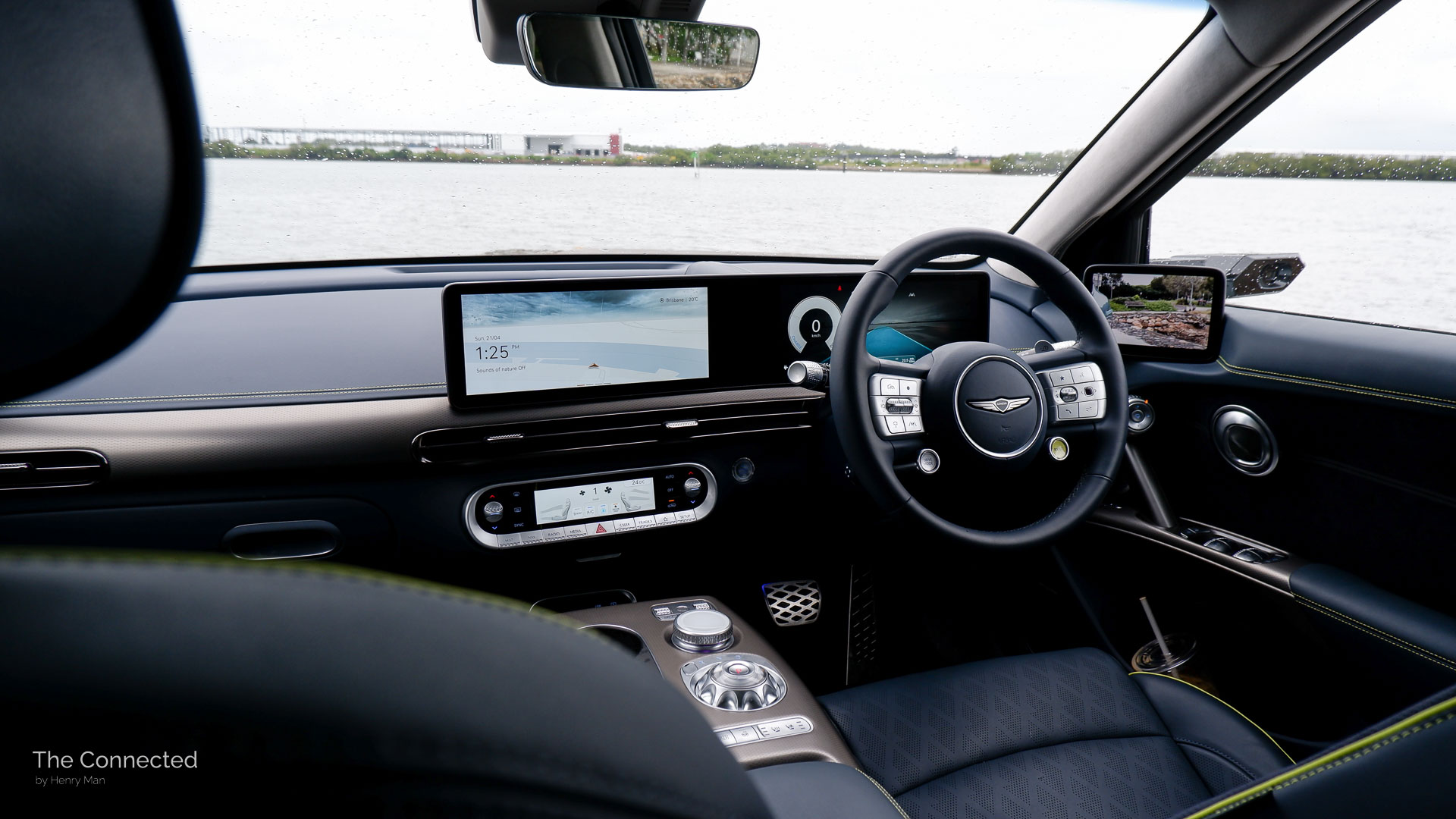
Aside from the ambiguous exterior, the GV60 offers a genuine high-end interior with plush leather and cold-to-touch aluminium that foregors the conservative design approach as per its German luxury brand rivals.
In contrast, the Genesis GV60 is less contentious inside with a modern and high-end interior that feels worth the six-figure spend.
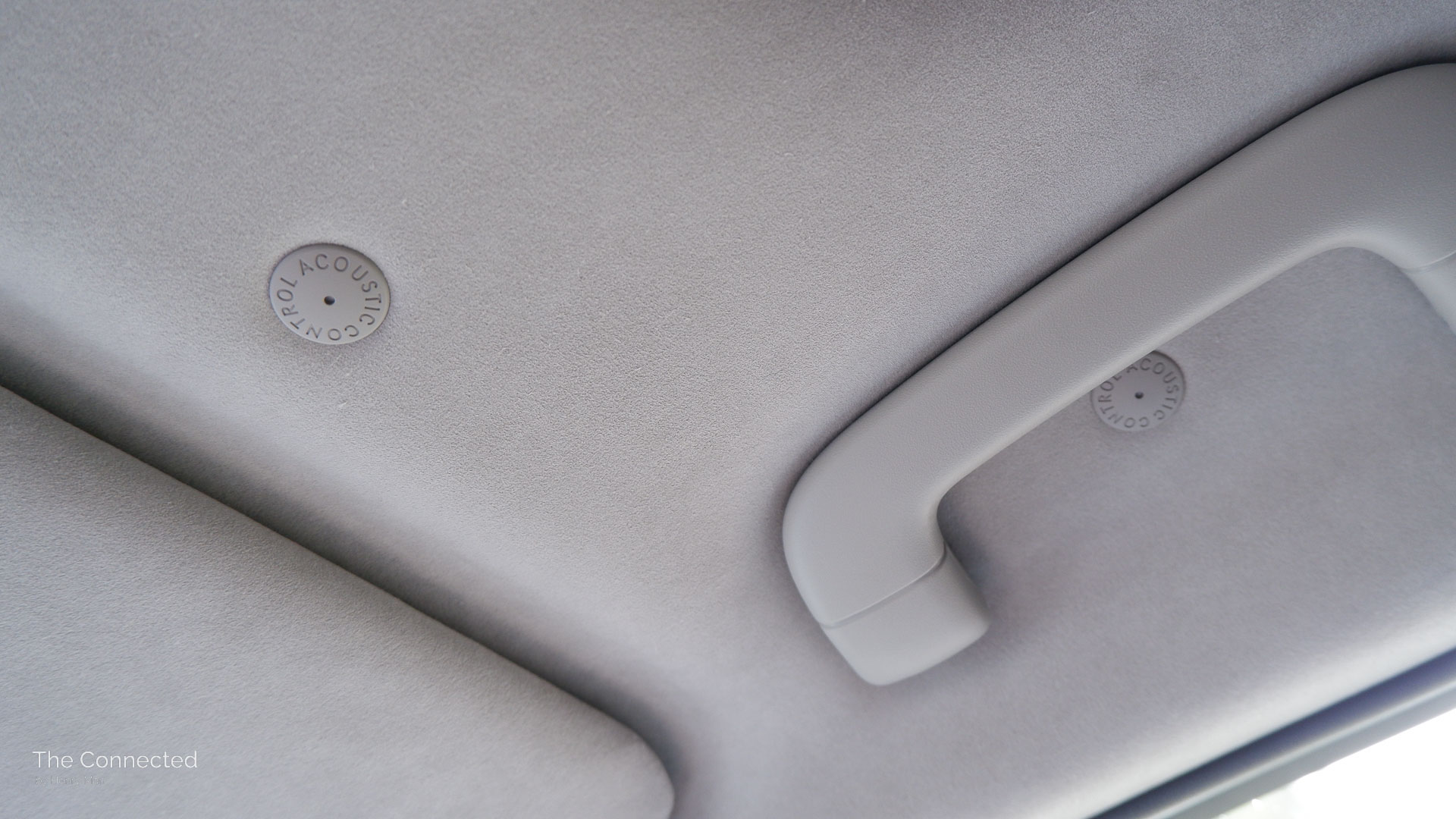
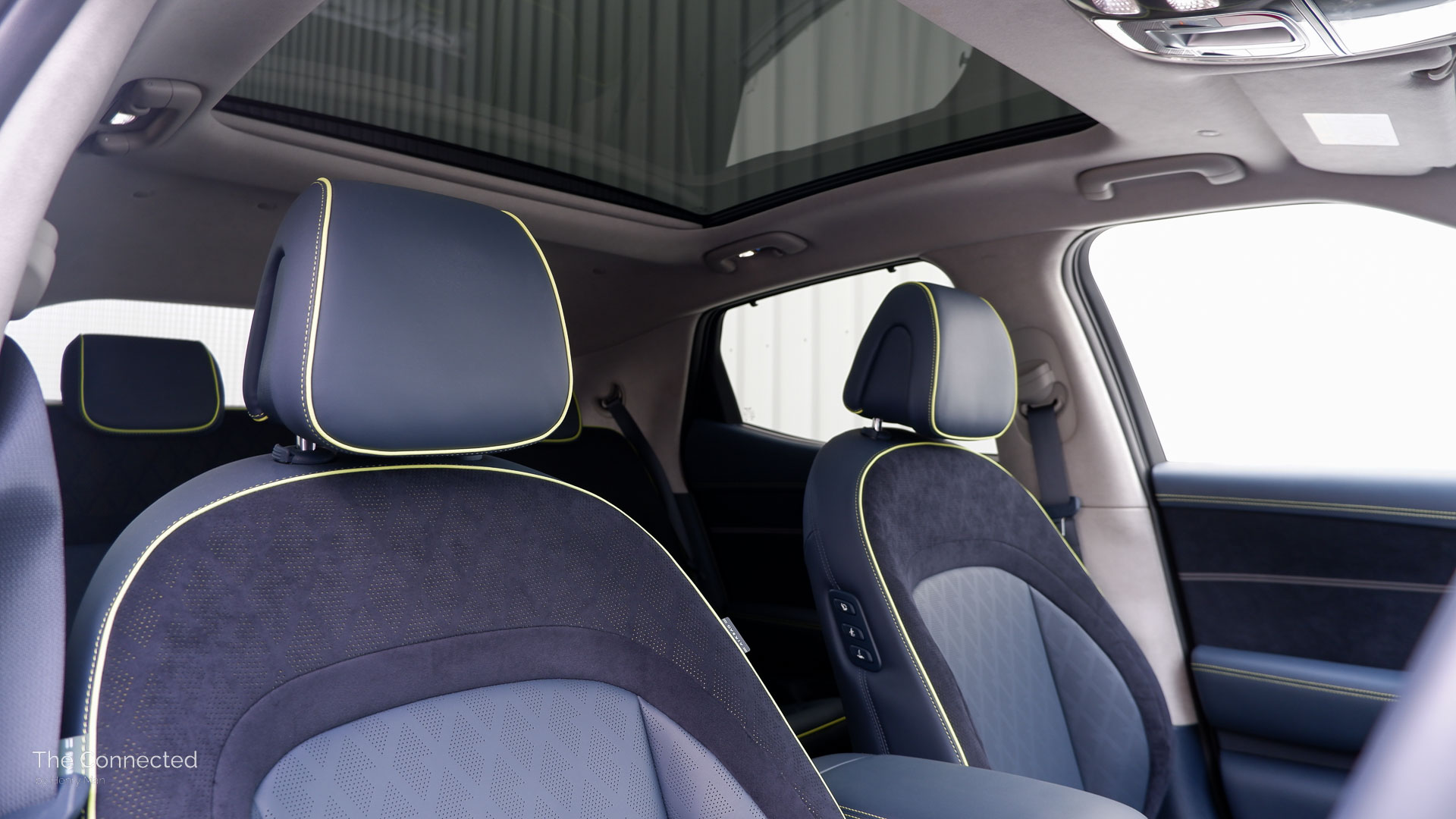
Nappa leather seats, plush suede across the door cards and headliner (which doesn’t easily show hand marks unlike other cars), prominent double-line stitching, clicky knurled switches, and cold-to-touch aluminium trim with intricate arrow-shaped textures across the centre console and doors all ooze luxury.
Our tester’s no-cost Torrent Navy interior exclusively offered on the Performance AWD is particularly fetching with green contrast stitching and piping, and adds a touch of suede to the seats.
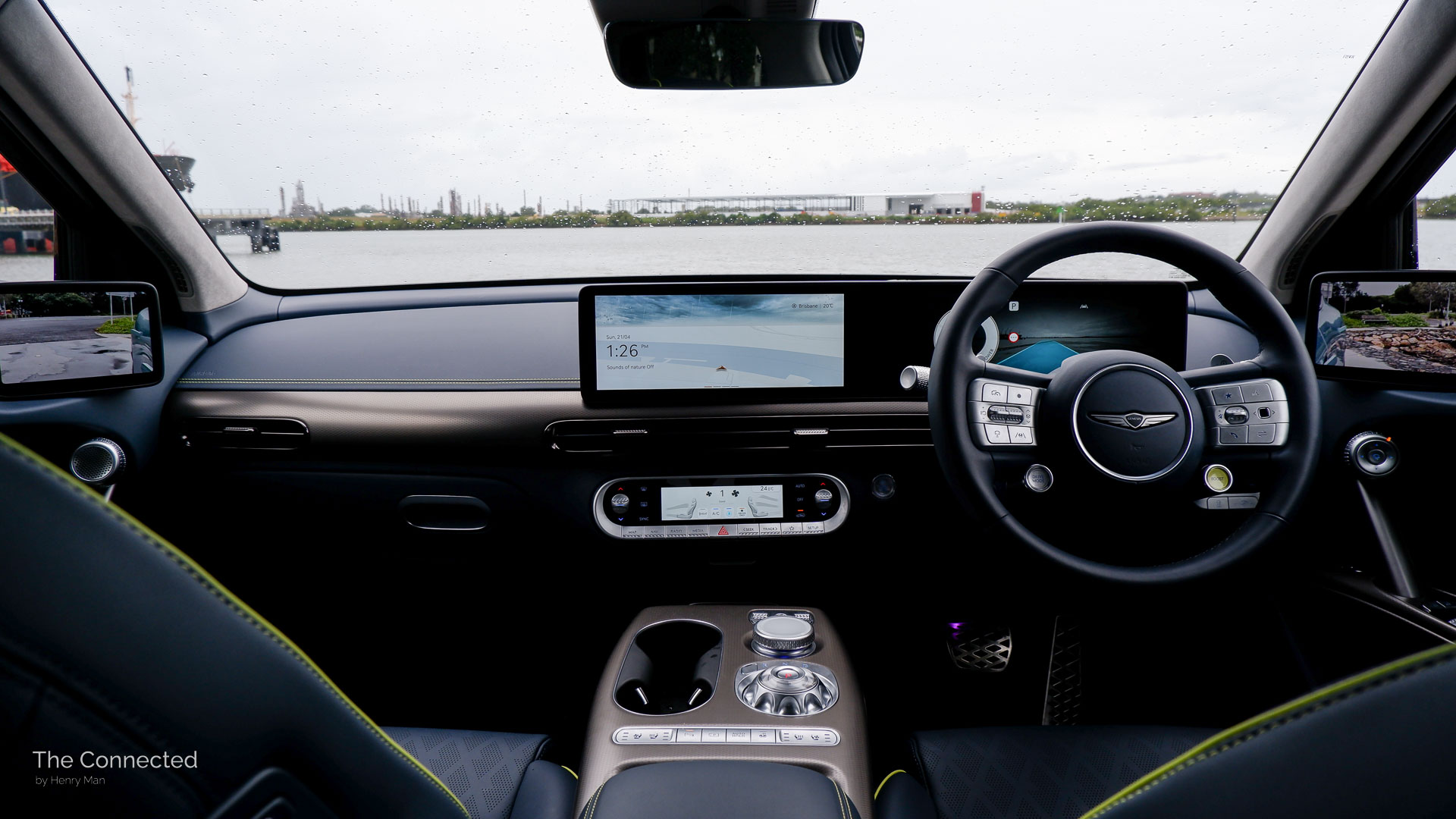
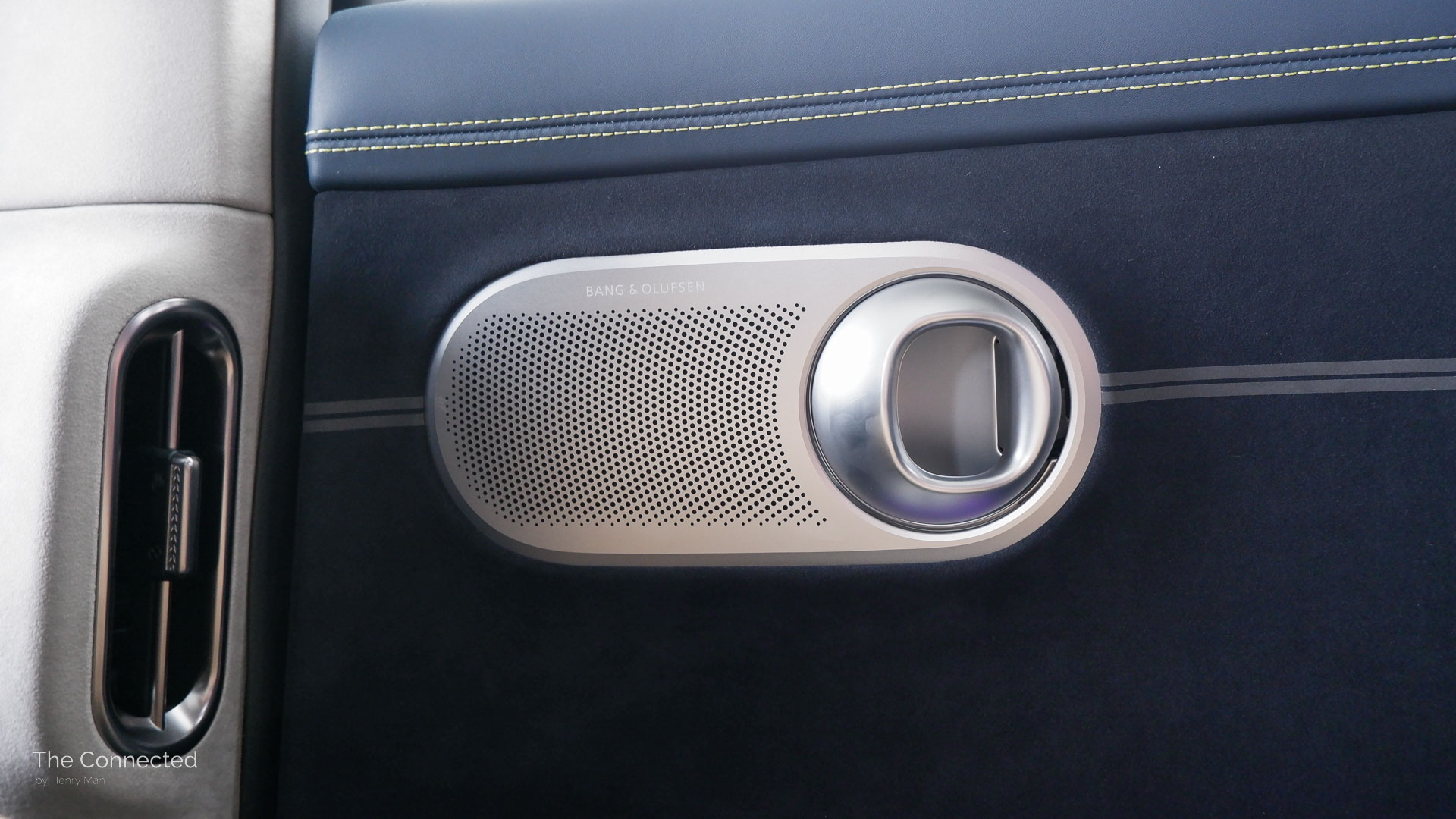
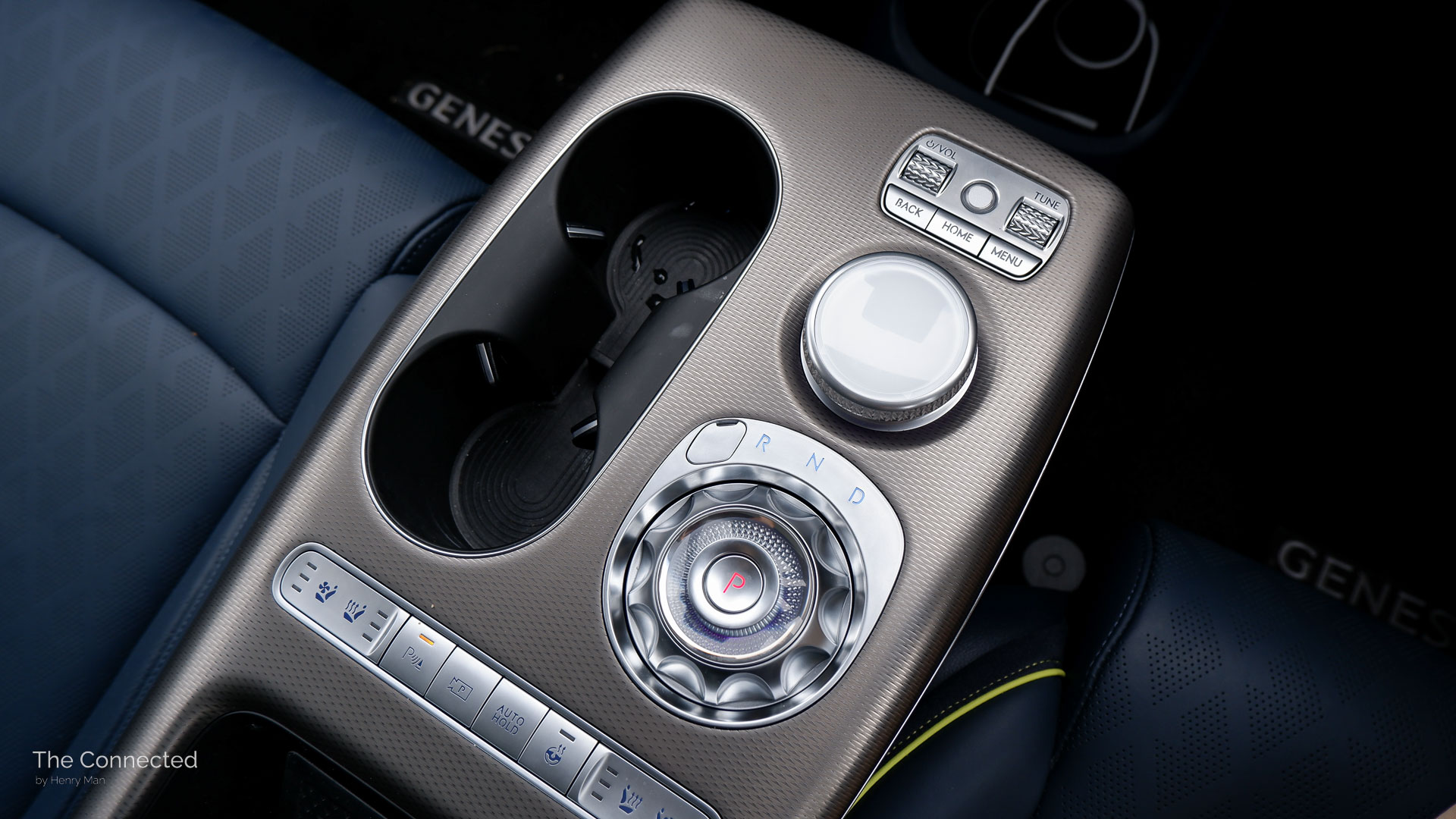
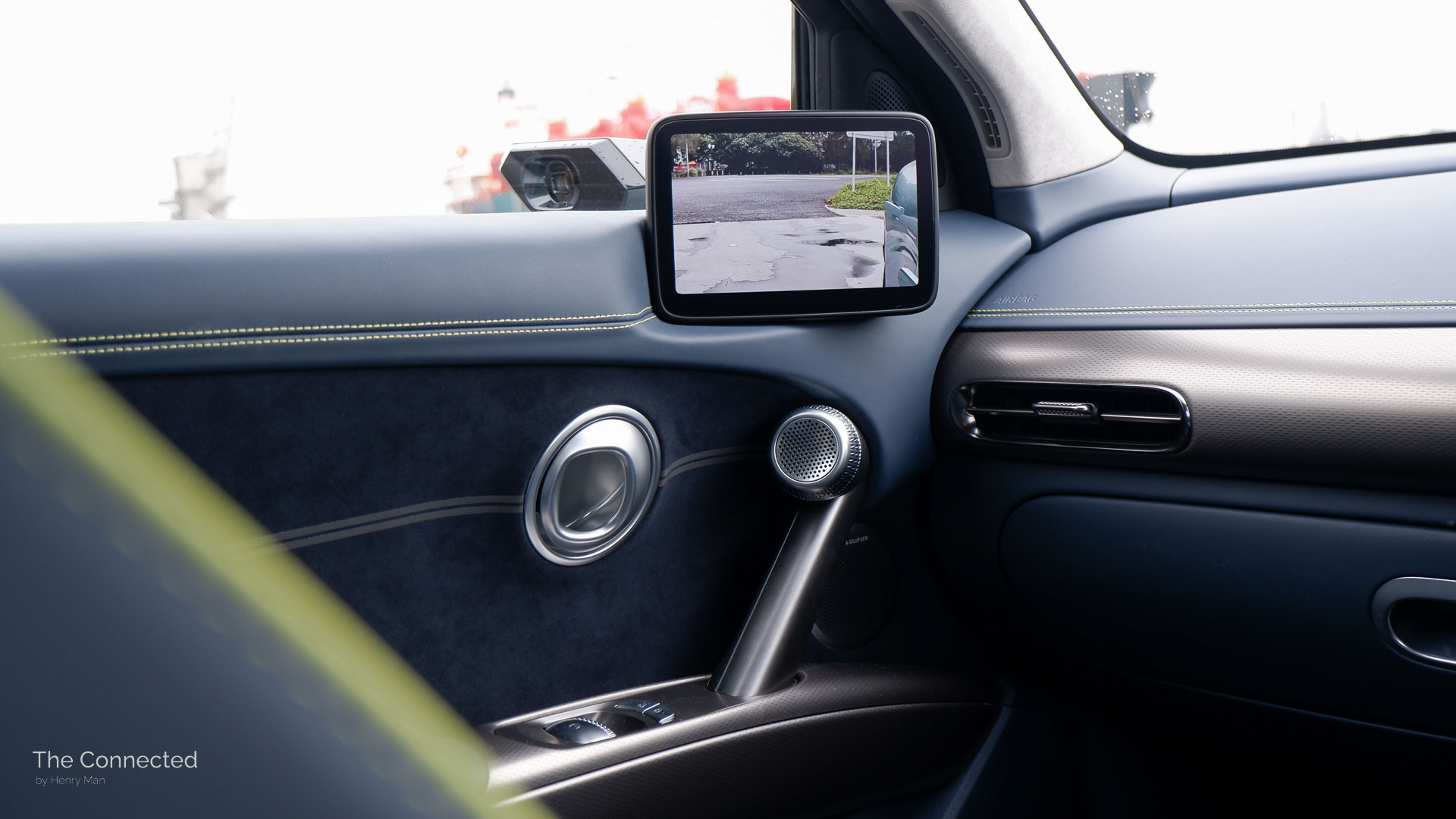
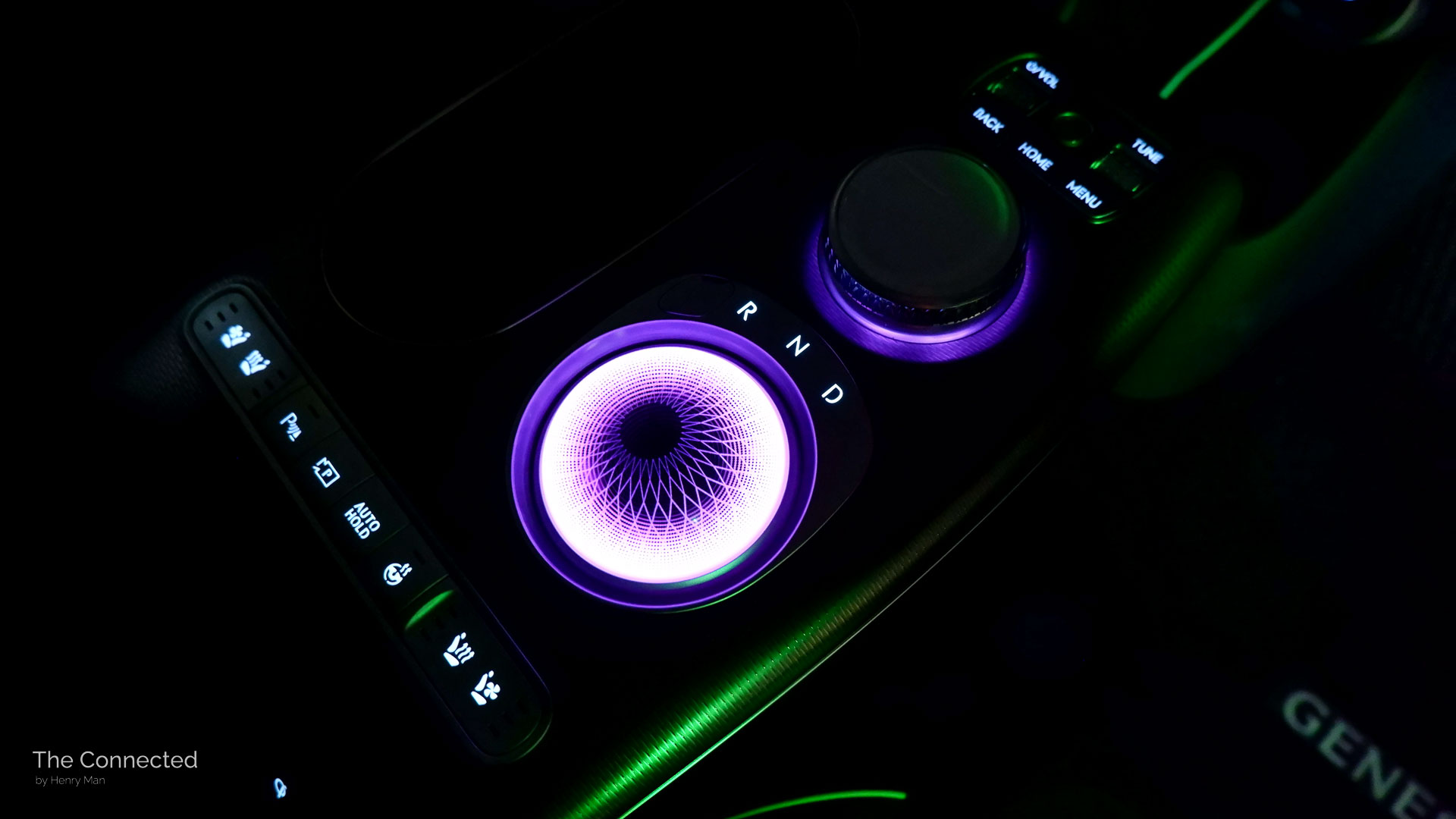
New for the updated GV60 is the 64-colour selectable interior ambient lighting that extends to the front footwells.
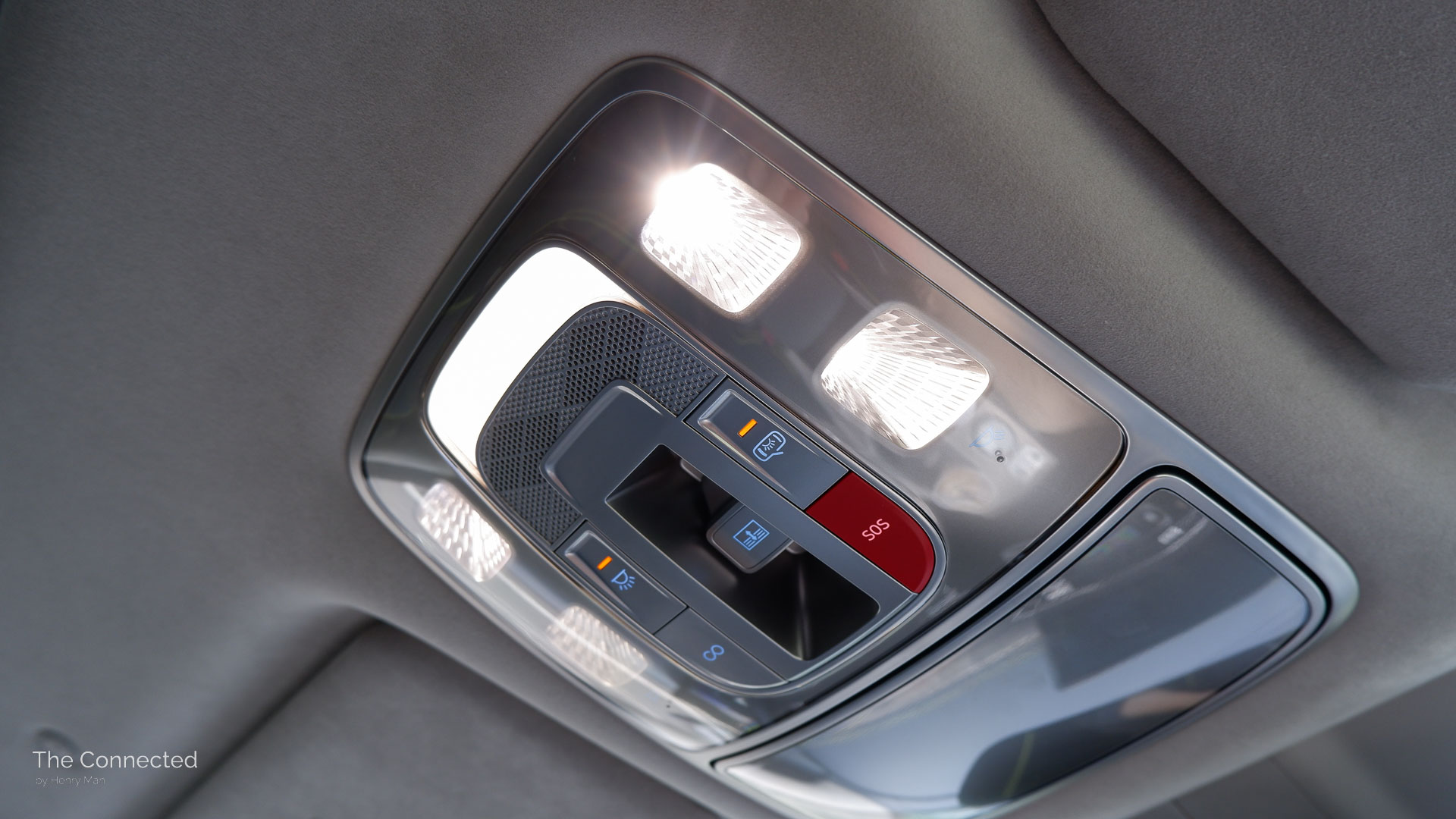
It’s worth noting that there are still some harder plastics around the low-set centre cubby, the interior door grab handle is plastic rather than aluminium, and the front overhead ceiling controls use a particularly unconvincing cheaper type of plastic.
Our tester also had some rattling in the roof – build quality that’s unbefitting for a luxury car.
Practicality.
2024 Genesis GV60 Performance AWD dimensions:
| Length x width x height | 4515 x 1890 x 1595mm |
| Wheelbase | 2900mm |
| Ground clearance | 160mm |
| Boot space (min / rear seats folded) | 432 / 1460 litres |
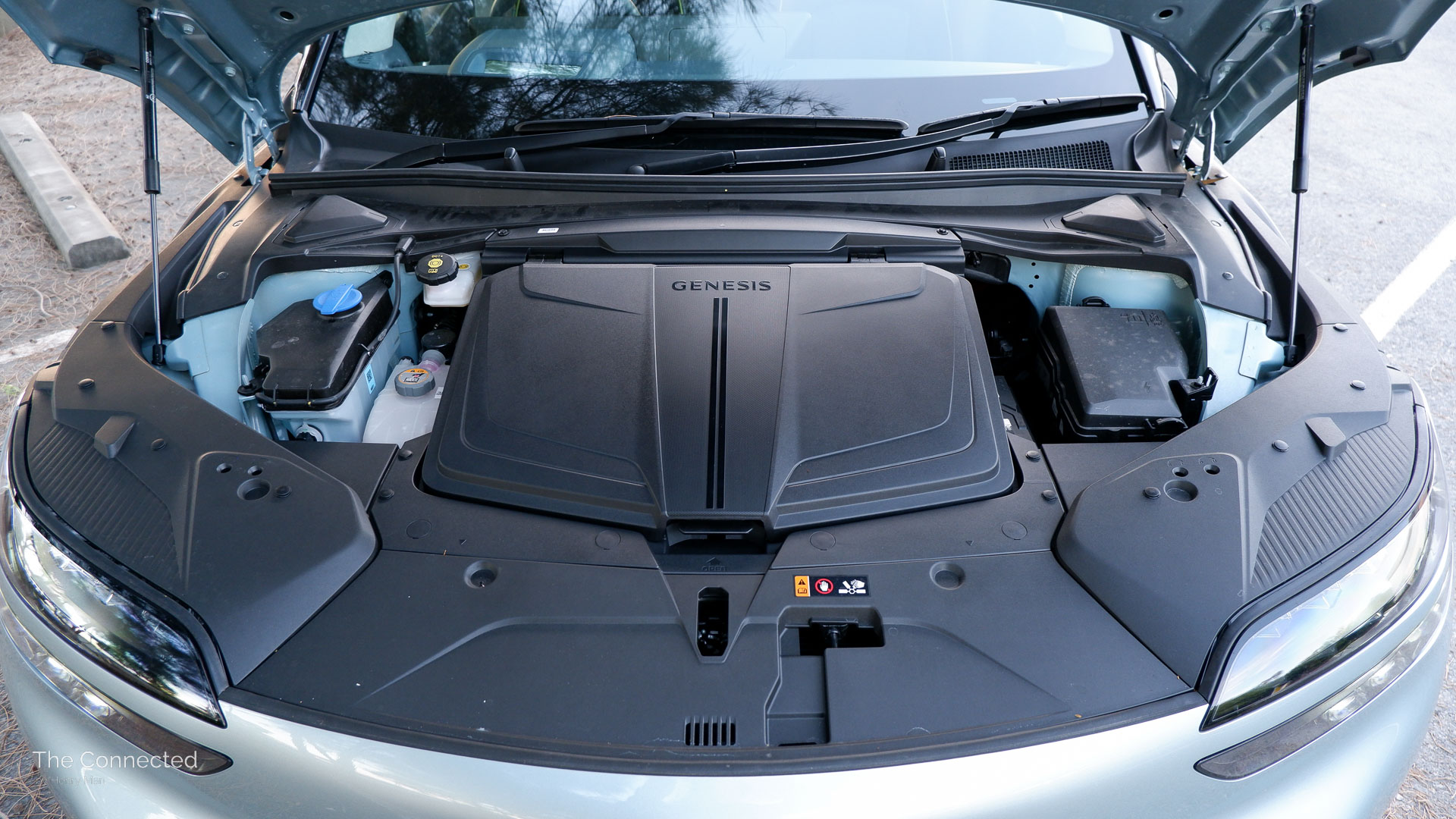
| Frunk space | 20 litres |
| Rear seat split fold | 60:40 |
| Child seat anchors | 2x ISOFIX (outer seats) + 3x top-tethers (rear row) |
The Genesis GV60 may not look as big from the outside, but still provides plenty of interior space.
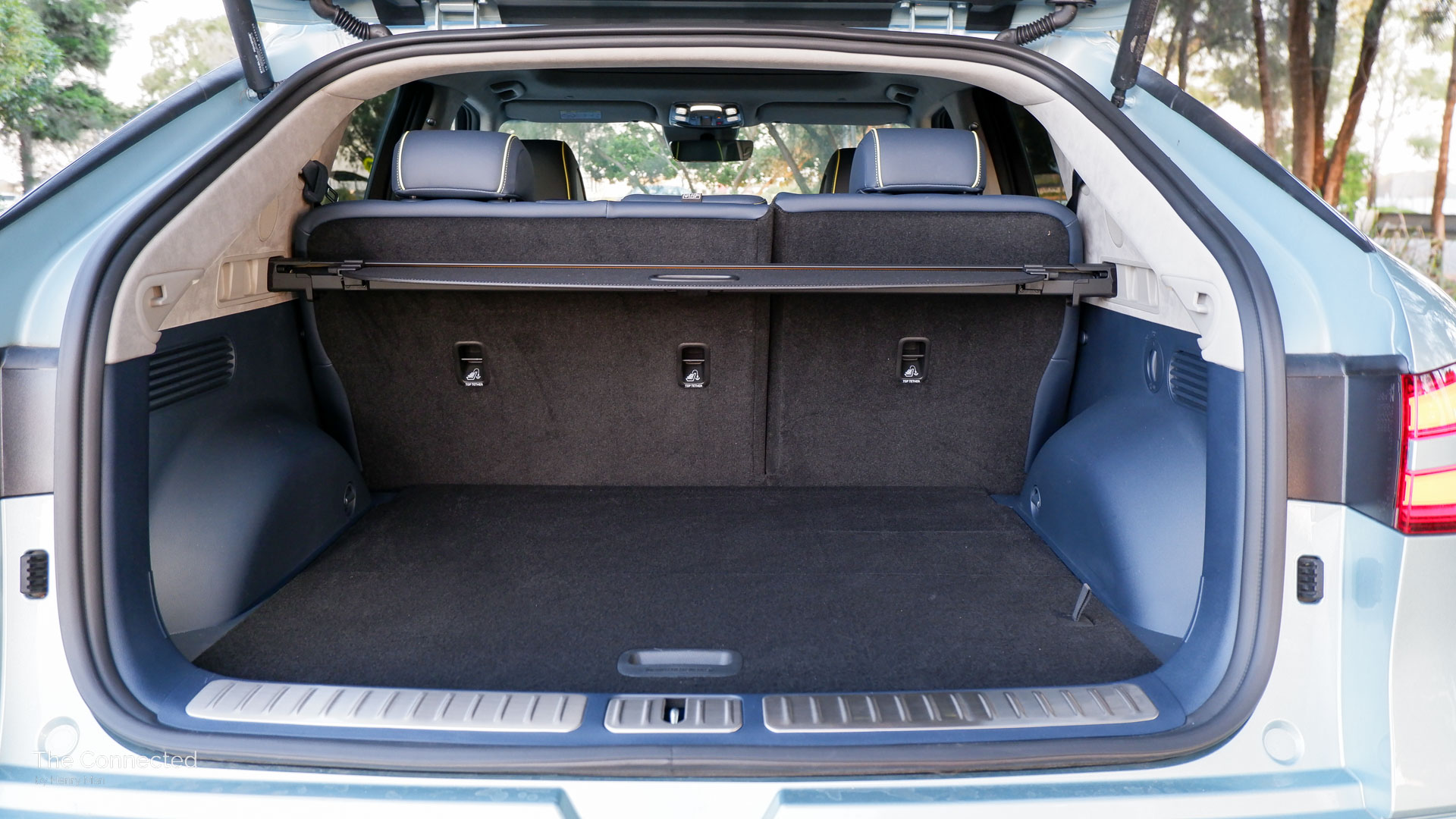
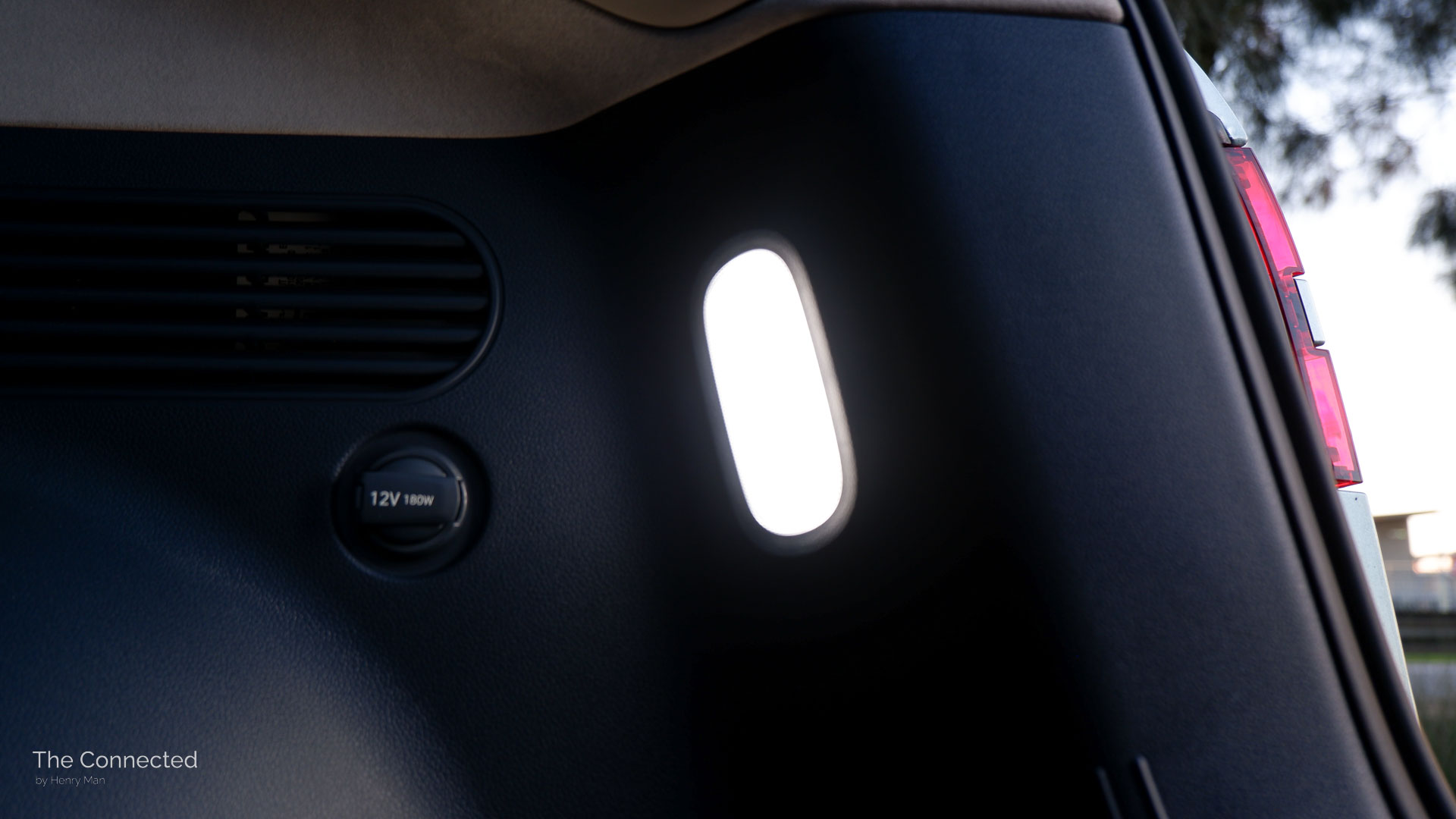
The 432-litre boot is wide and deep with two bright LED lamps, a 12-volt power socket, and underfloor storage that’s enough to store the tyre patch-up kit and a charging cable.
Disappointingly, the retractable privacy blind is fairly low and it lacks any bag hook hooks, but includes a cargo net as standard.
The boot door is electrically-operated and has hands-free opening (not closing) by standing behind the tailgate for a few seconds. However, with the auto unlocking function enabled, if you walk past the front doors with the proximity key, it will disable the hands-free function.
A handy lock all doors button is available when closing the boot.
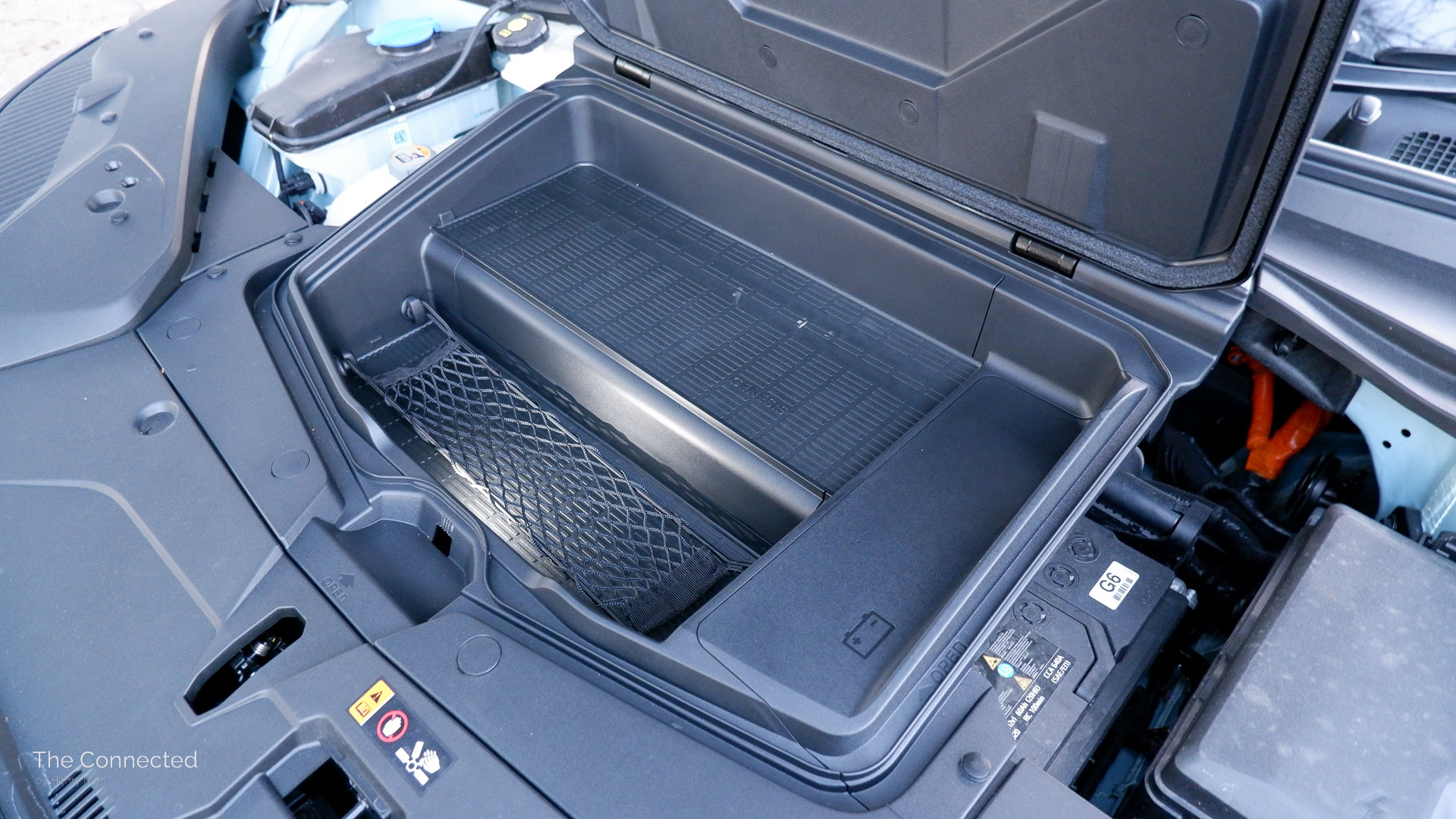
Under the bonnet is a small 20-litre frunk compartment with LED illumination and even a securing net.
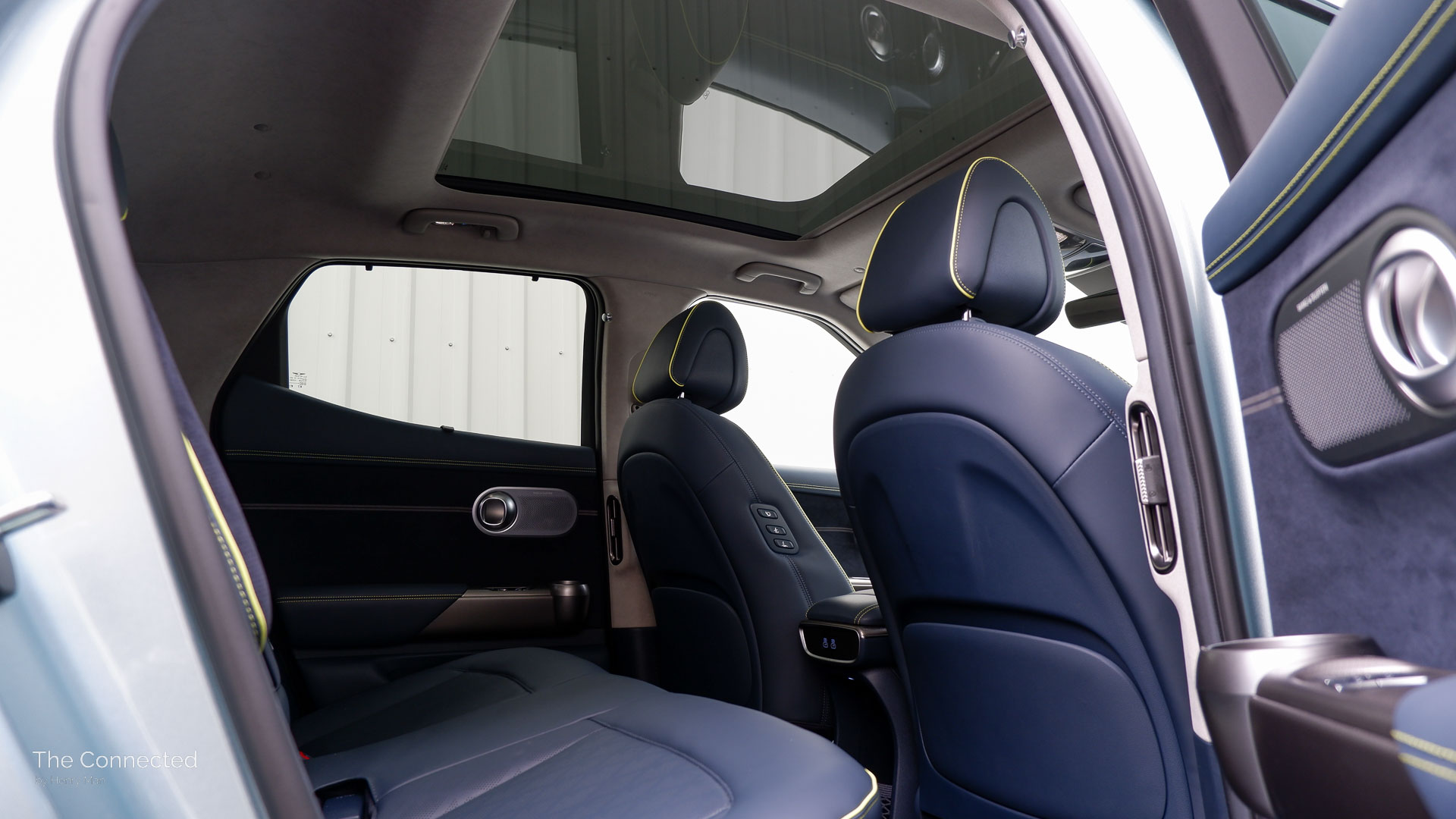
The GV60 EV offers good rear-seat room, even though there’s slightly less leg space than the related Hyundai Ioniq 5 and Kia EV6. As per most electric cars, the floor is raised higher to accommodate the battery underneath, resulting in slightly more perched up knees if your legs don’t stretch out under the front seats.
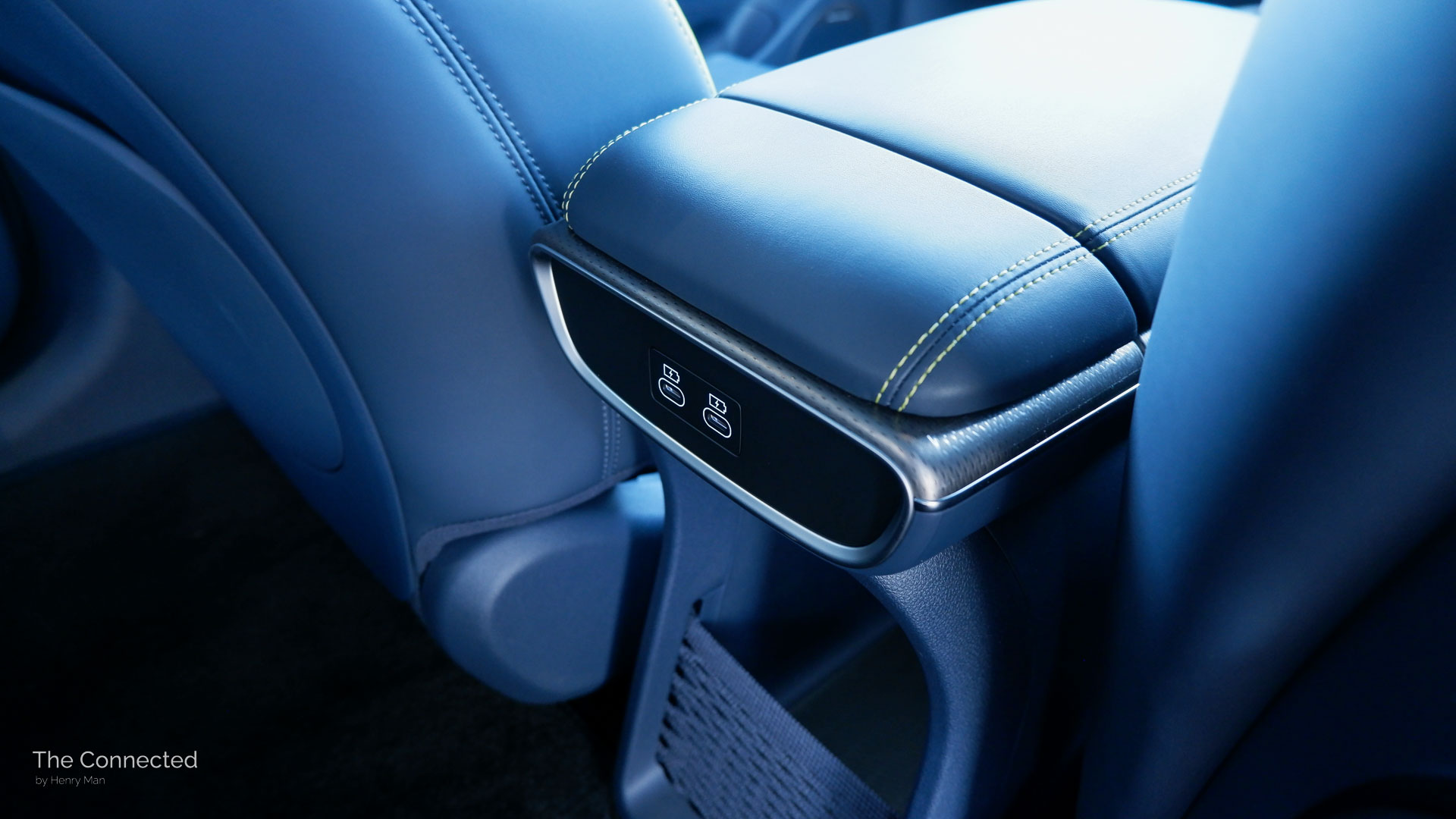
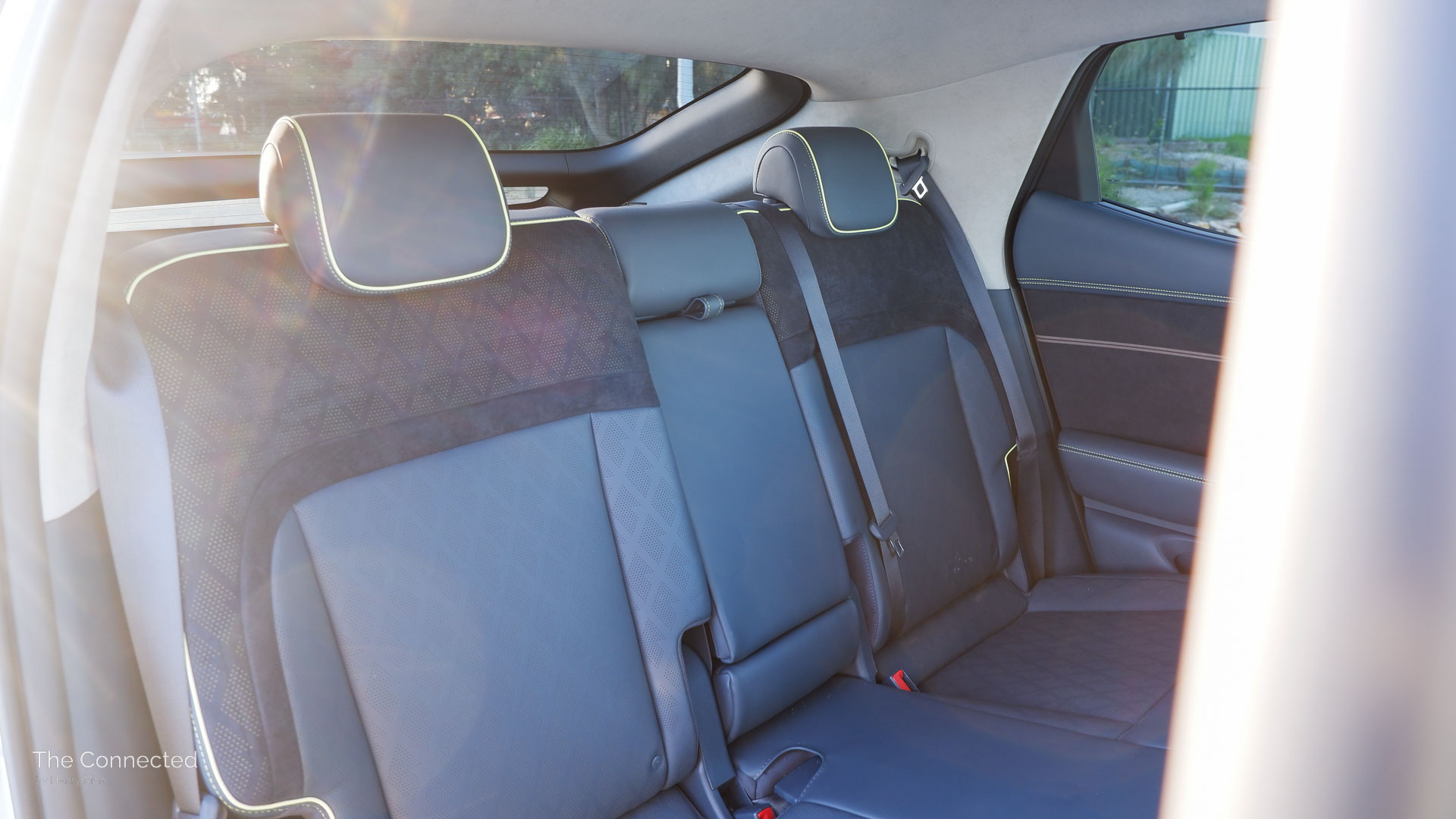
Rear passengers benefit from amenities including: higher B-pillar mounted air vents, three-level heated outer seats, tinted rear glass, built-in manual window sunshades, a fold-down centre armrest with two cup holders, two USB-C charging ports, a vehicle-to-load (V2L) plug, a large centre console storage tray, aeroplane-style seatback pockets, and coat hooks on each B-pillar.
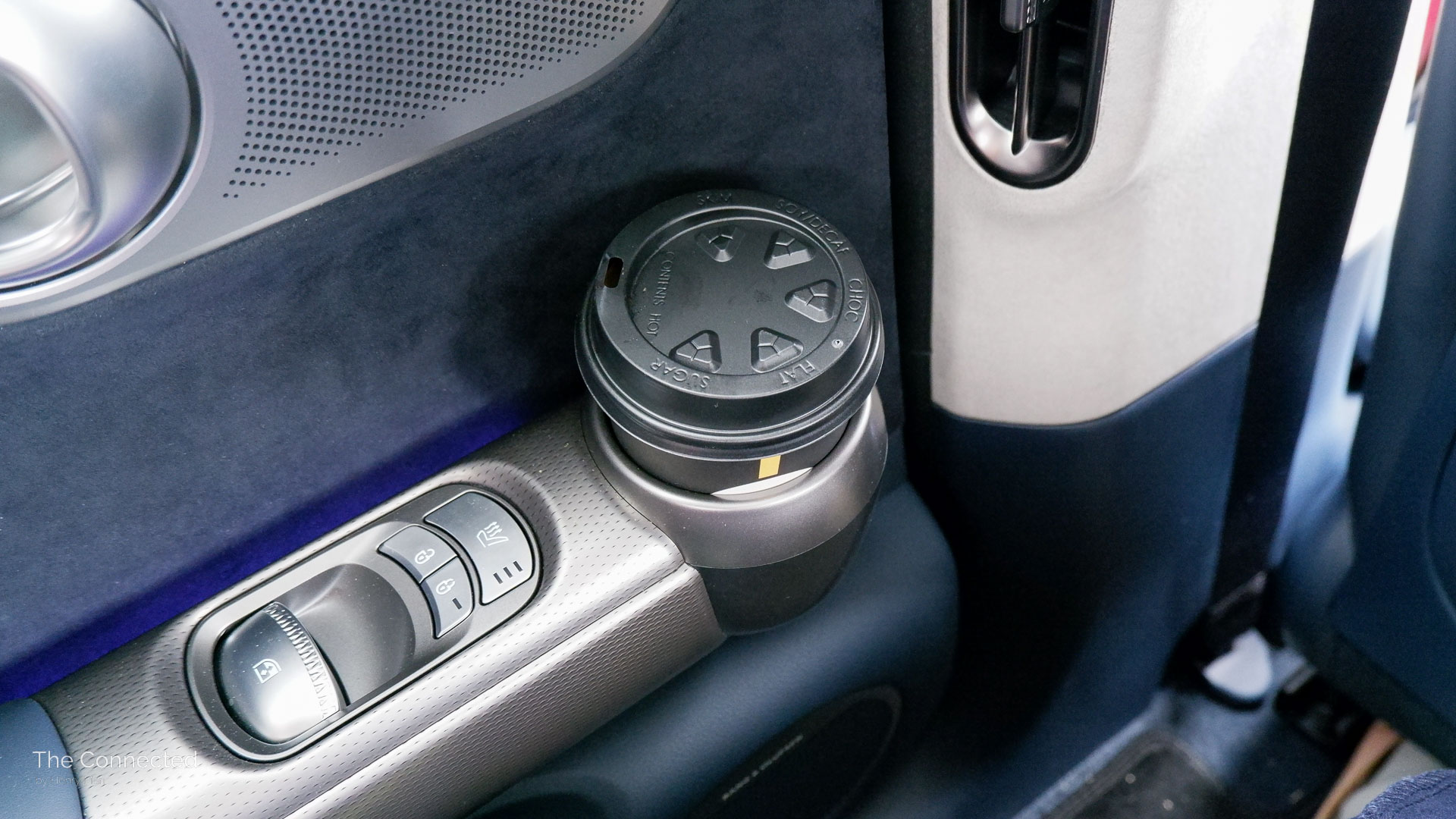
I particularly like that there’s an ergonomically-positioned cup holder beside each door and all four doors each have buttons to lock and unlock all doors (usually it’s only on the driver’s side).
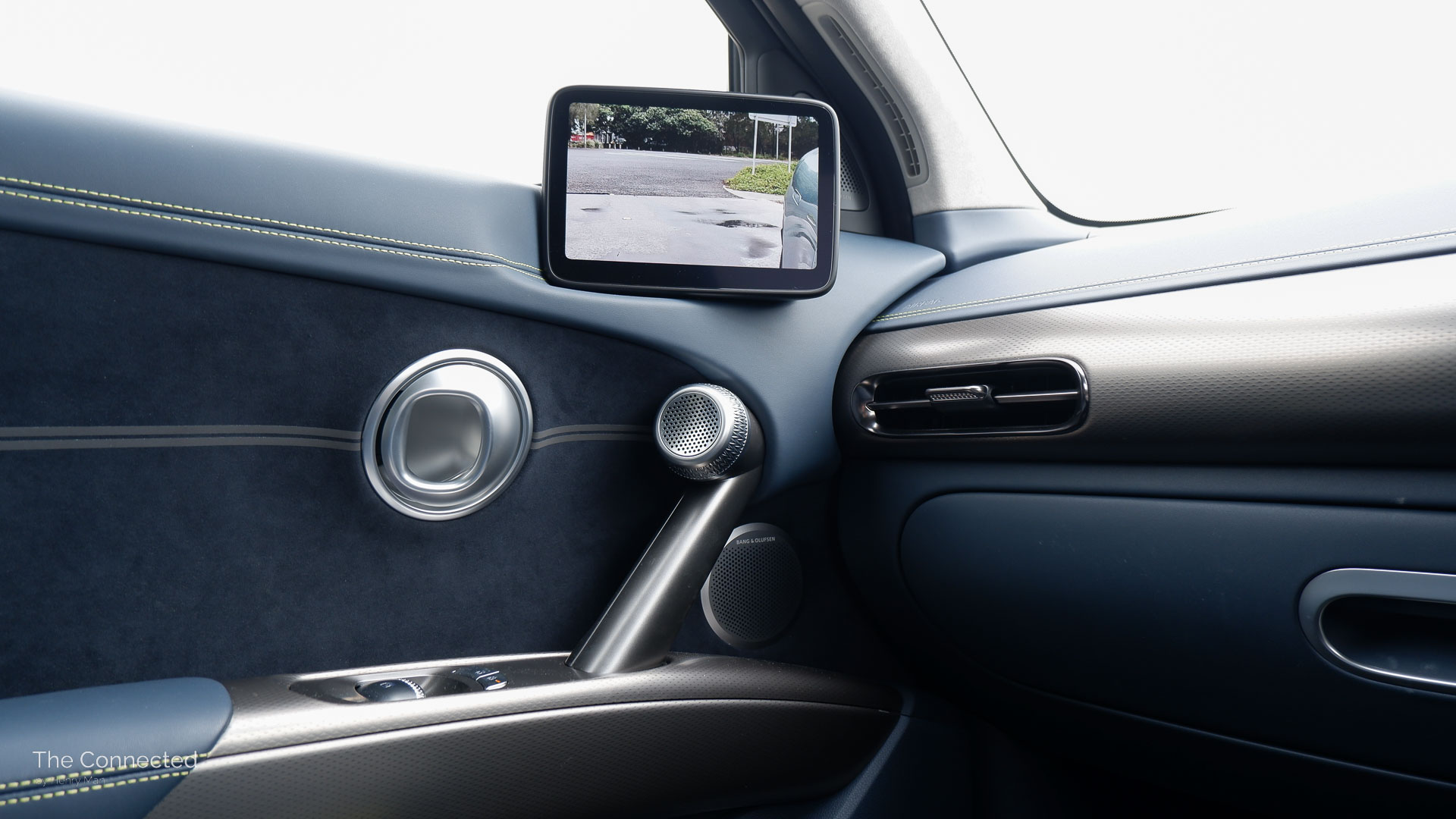
The back row offers the same interior quality as the front – including Nappa leather and suede seats, soft suede door cards, and large aluminium speaker grilles that connect with the door handle.
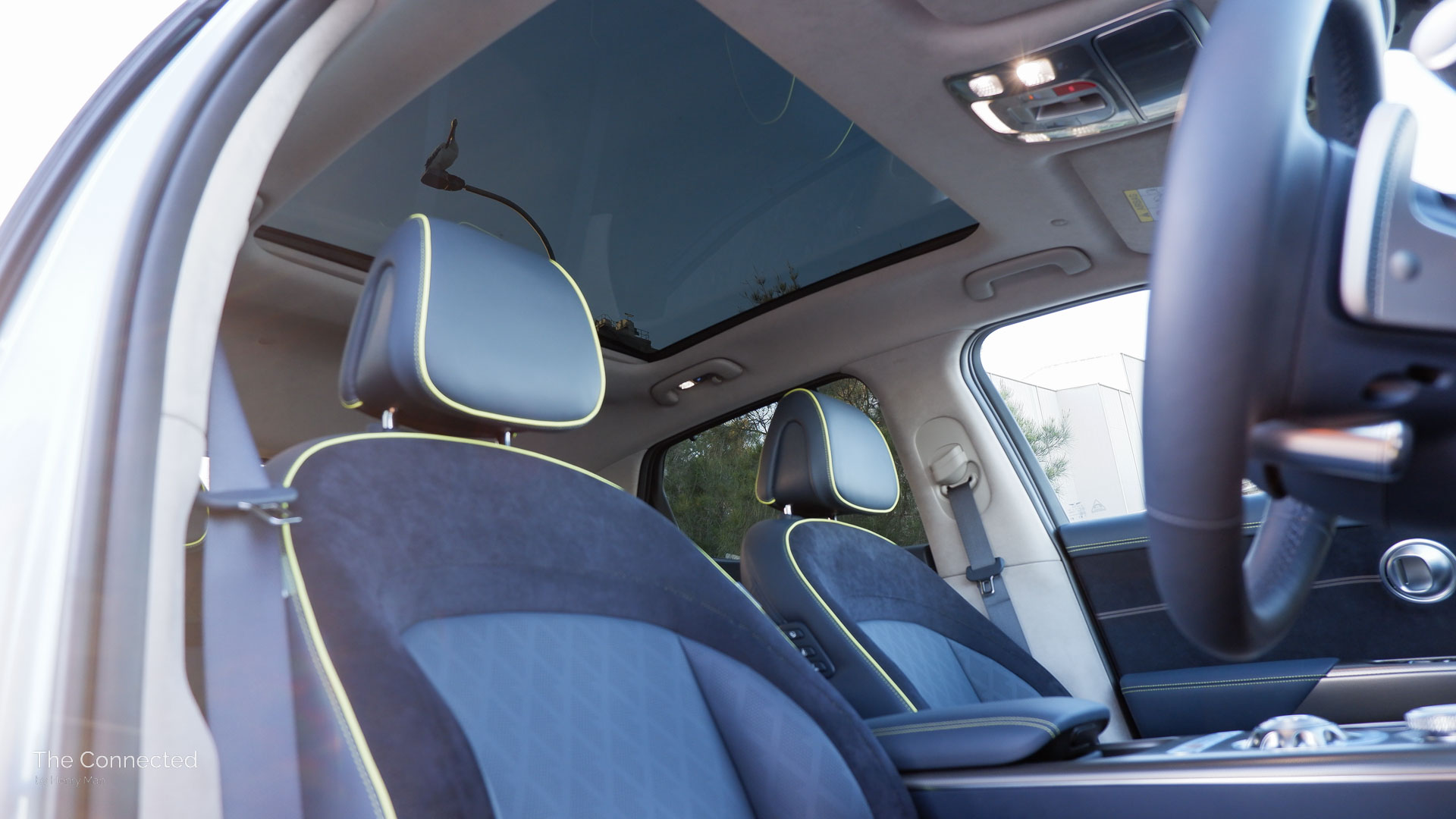
A fixed panoramic glass roof is standard with a thick suede material sunshade, even though it’s heavily tinted. Both rows are illuminated with bright LED lights.
Additionally, the front seats are comfortable and well-bolstered with three-level heating or ventilation, and a reclined relaxation mode position. The driver has the advantage of massaging (which pulses the cushion and backrest), 18-way electric seat adjustment with two-position memory, and a heated and electrically-adjustable steering wheel.
The centre console is home to an ergonomic pair of cup holders, a row of physical switches – although it’s placed further back than ideal for the driver – and a slanted Qi wireless charging pad that’s partly hidden by the centre armrest.
The GV60 also offers a slide-out glove drawer (which gets strangely warm over time), a hidden compartment underneath the climate controls, and an overhead sunglasses holder.
Unfortunately, it doesn’t have the convenient floor-mounted storage tray offered by its EV siblings and, as per the Hyundai Motor Group style, all door cards offer limited bottle storage.
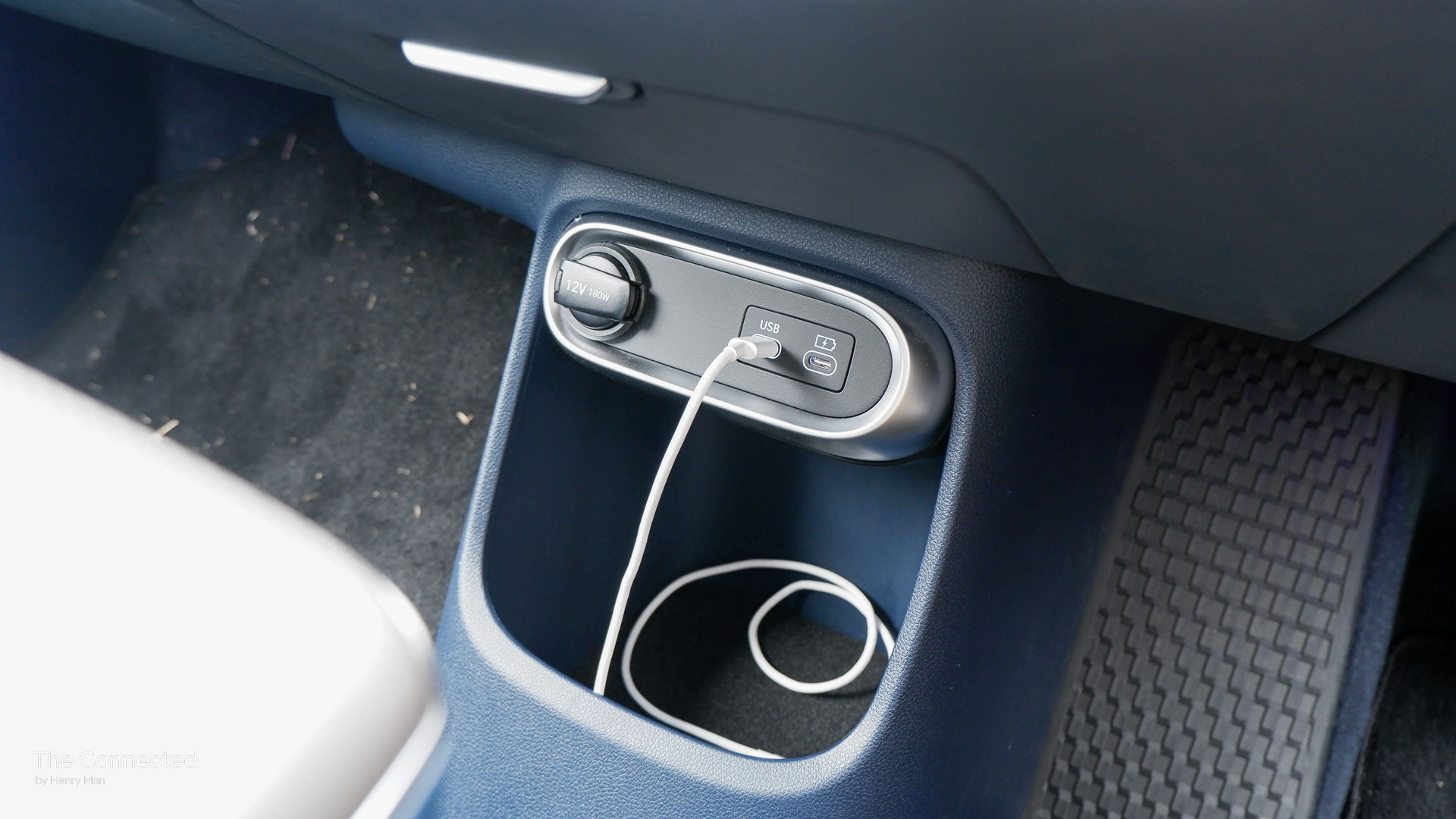
There’s a centre cubby, but it’s particularly annoying as it’s positioned low near the floor, where the two USB-C charging ports and a 12-volt socket sit. Since Apple CarPlay and Android Auto are still wired only on the 2024 Genesis GV60, it’s an inconvenience to habitually hunch in order to connect my smartphone every time before driving off.
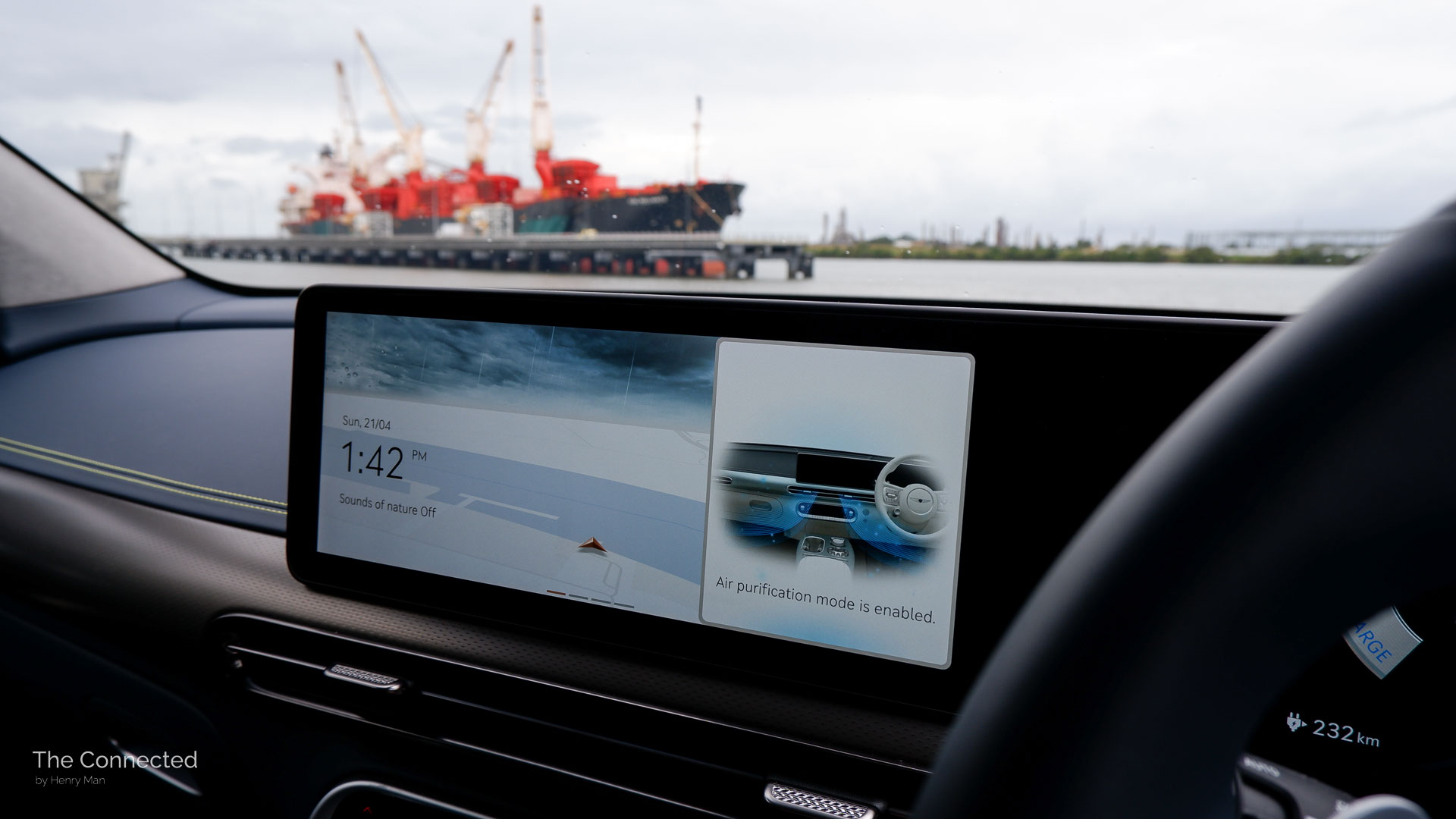
The dual-zone climate control also now benefits from an air purification mode from the 2023 model year – with sensors that displays the level of outside air quality – but isn’t the stronger high-efficiency particulate air filter (HEPA) as found on the Tesla Model Y electric SUV.
Technology.
2024 Genesis GV60 Performance AWD tech features:
| 12.3-inch touchscreen | 12.3-inch driver instruments display |
| ccIC with over-the-air (OTA) software update capability | Head-up display (HUD) |
| Wired Apple CarPlay and wired Android Auto | 6.0-inch climate control display |
| Built-in maps with 10-year traffic and map update support | Proximity key with remote start and Remote Smart Park Assist functionality |
| Genesis Connected Services (GCS) cellular connectivity with mobile app | Facial recognition unlocking and fingerprint scanner start |
| Qi wireless charging pad | Digital camera wing mirrors |
| 4x USB-C charging ports + 2x 12V sockets + V2L plug interior and exterior | Auto unlocking with auto-folding wing mirrors and auto-retracting door handles |
| 17-speaker Bang & Olufsen audio | Genesis logo puddle lights with front door handle illumination |
The updated Genesis GV60 finally brings upgraded connected technology, but trails behind newer offerings by Hyundai and Kia in some aspects.
Running on the Connected Car Integrated Cockpit (ccIC) operating system, it is related to the Connected Car Navigation Cockpit (ccNC) rolling out for Hyundai and Kia cars – but with some key differences.
Visually, Genesis’ ccIC software is a blend of the old Standard-class Gen5W Navigation and latest-generation ccNC.
Welcome Genesis-exclusive touches include a copper theme, light and dark modes, prominent home screen tiles with real-life images (instead of icons), more slicker animations, adjustable font sizes, the ability to select any GV60 body colour for the car visualisations, and augmented reality (AR) navigation using the front camera.
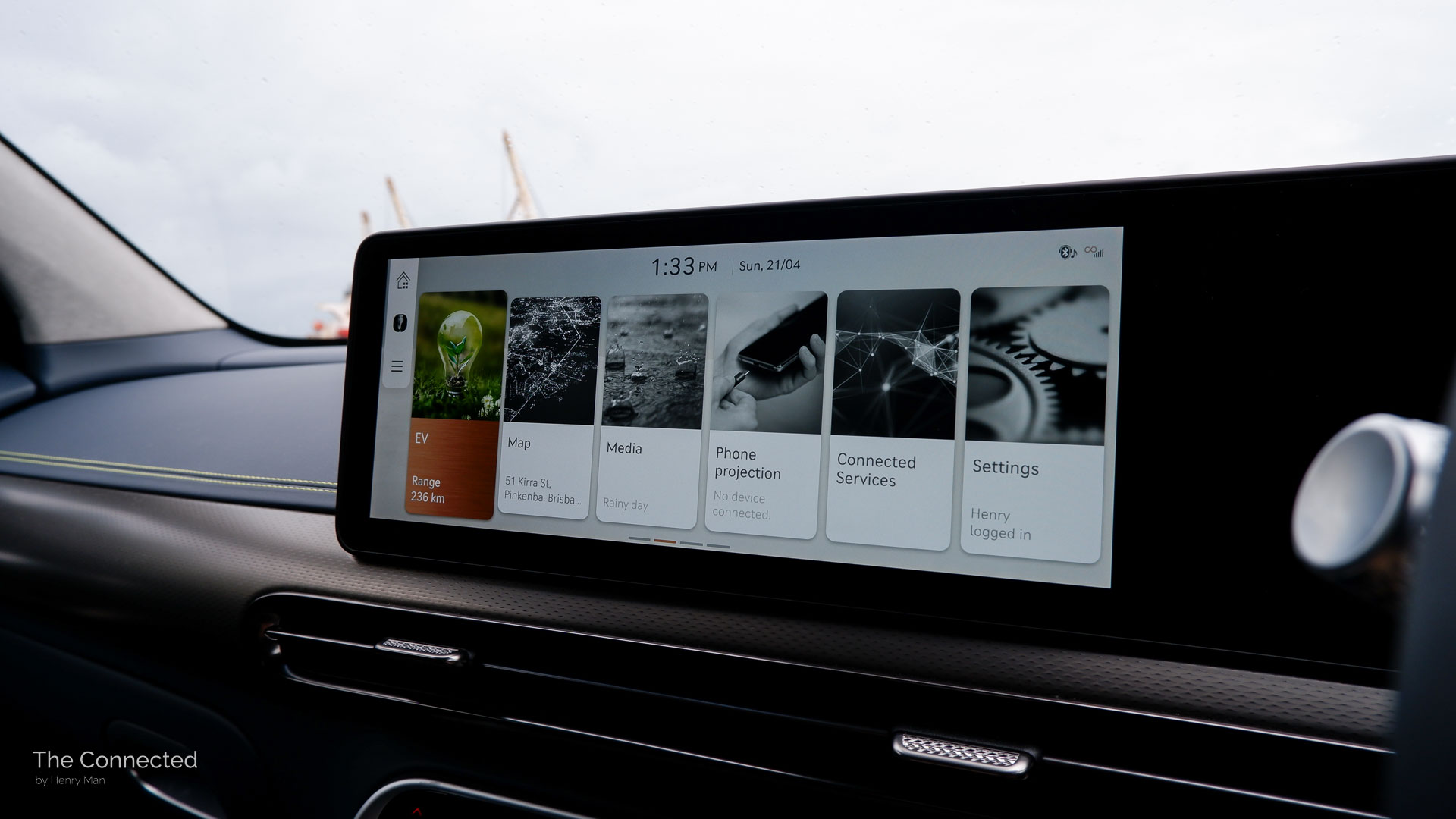
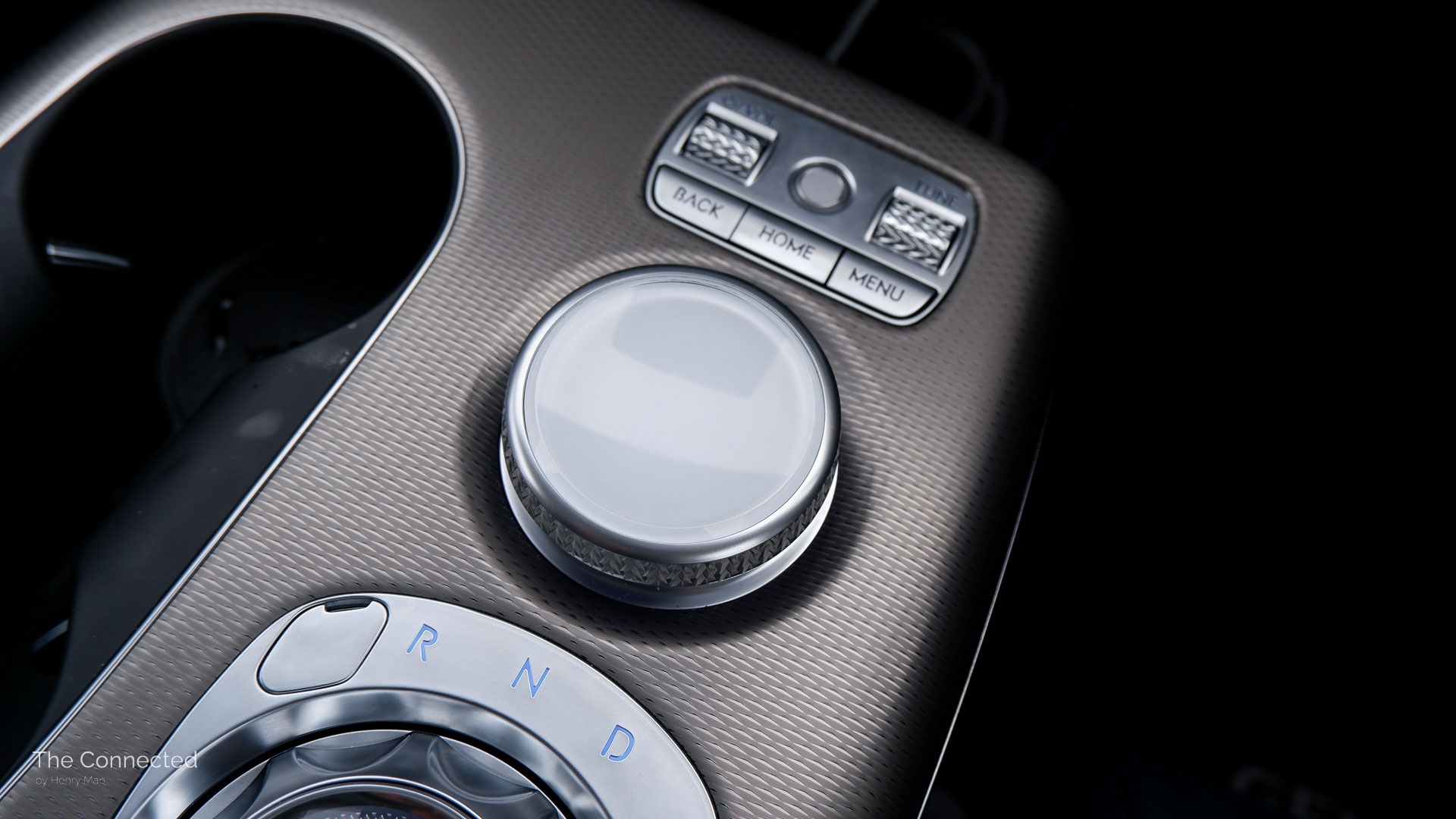
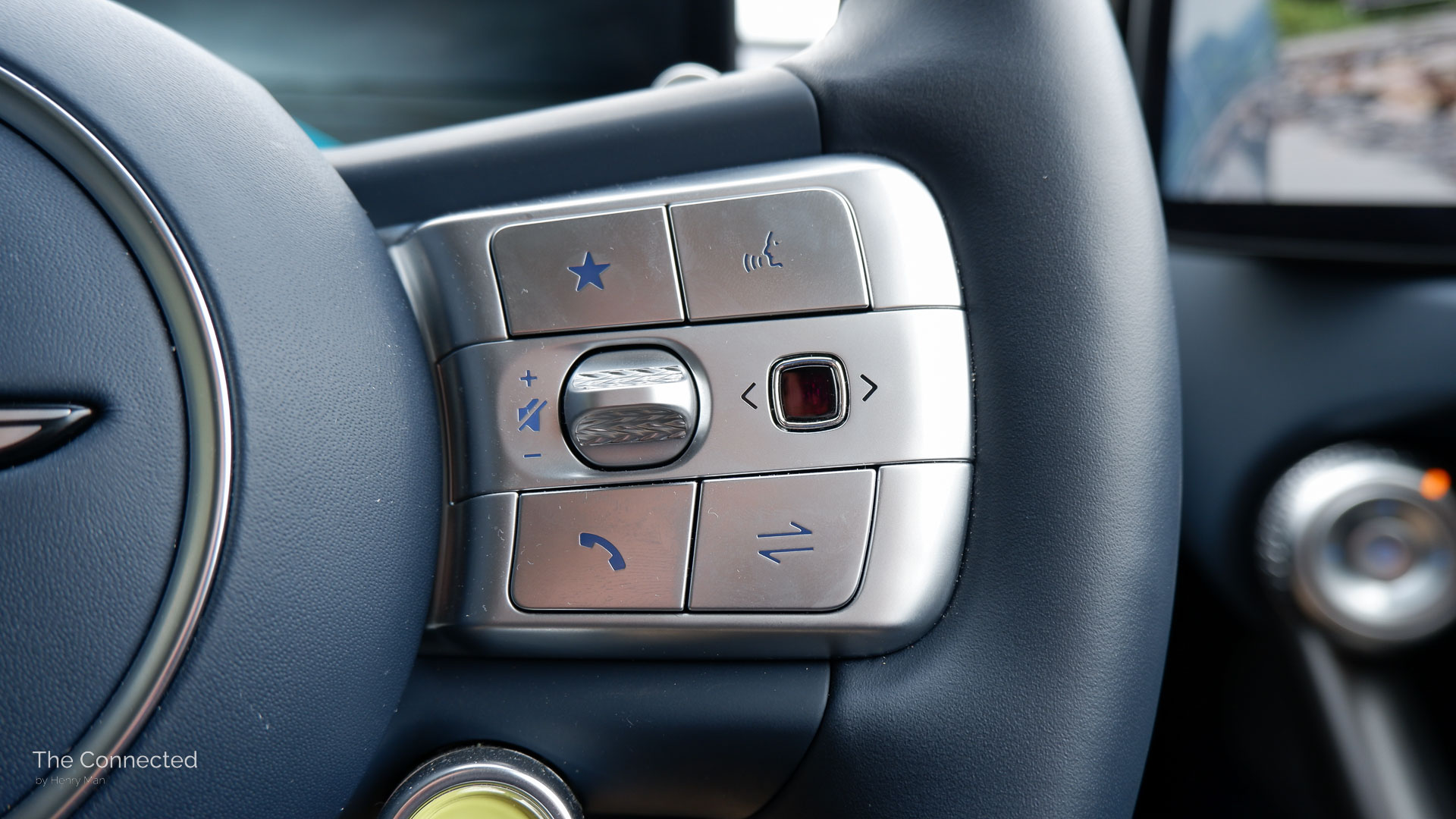
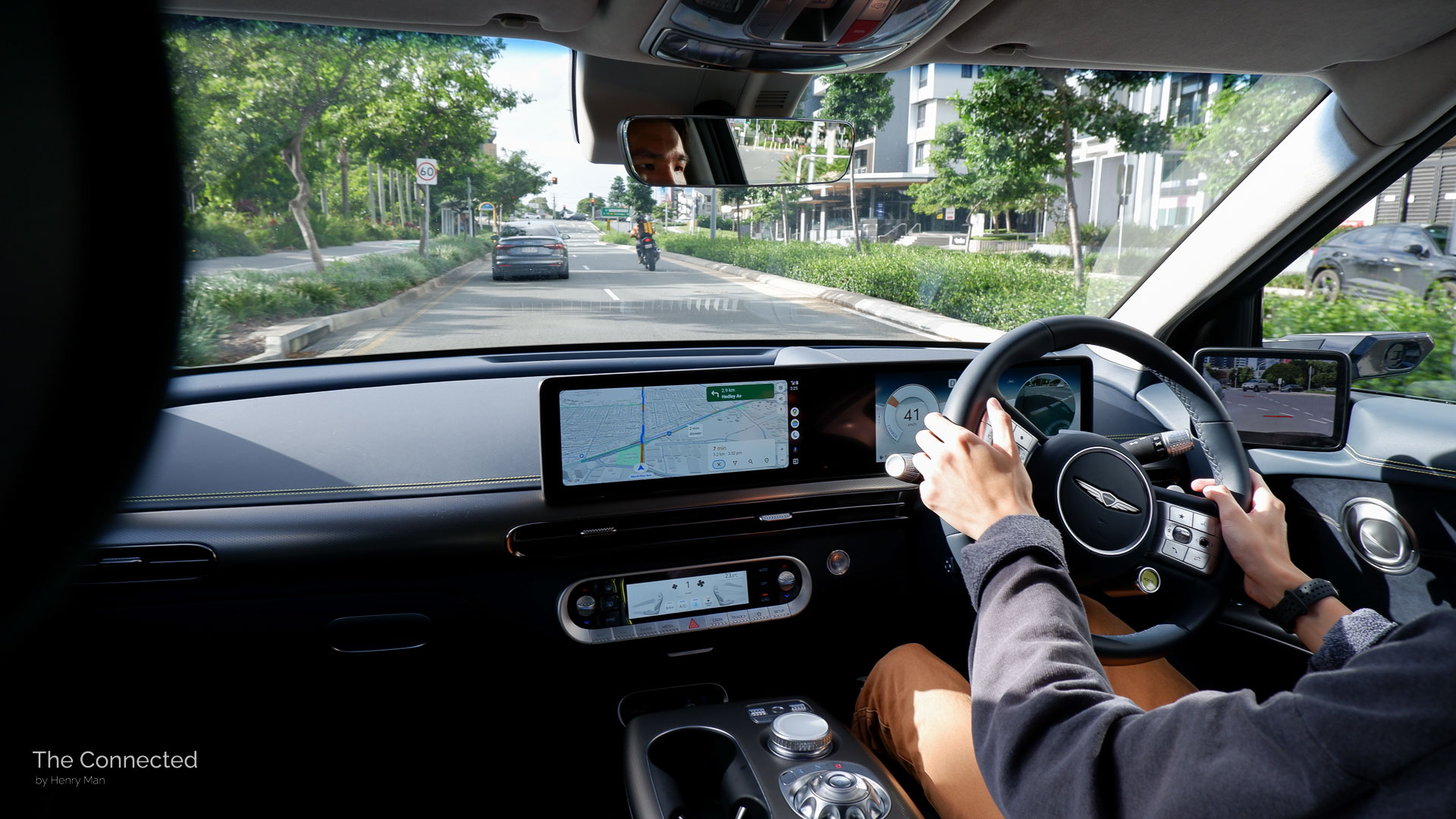
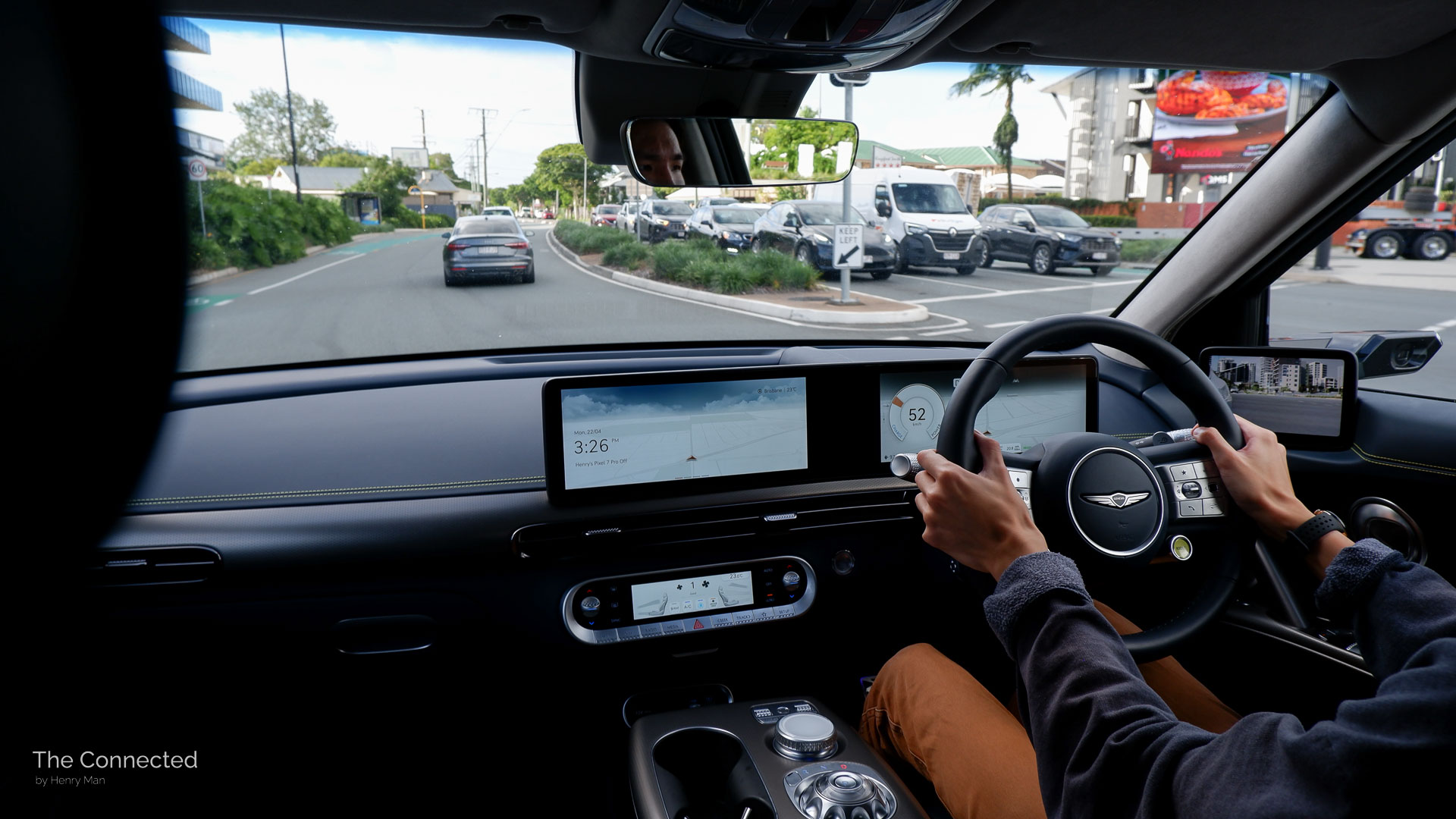
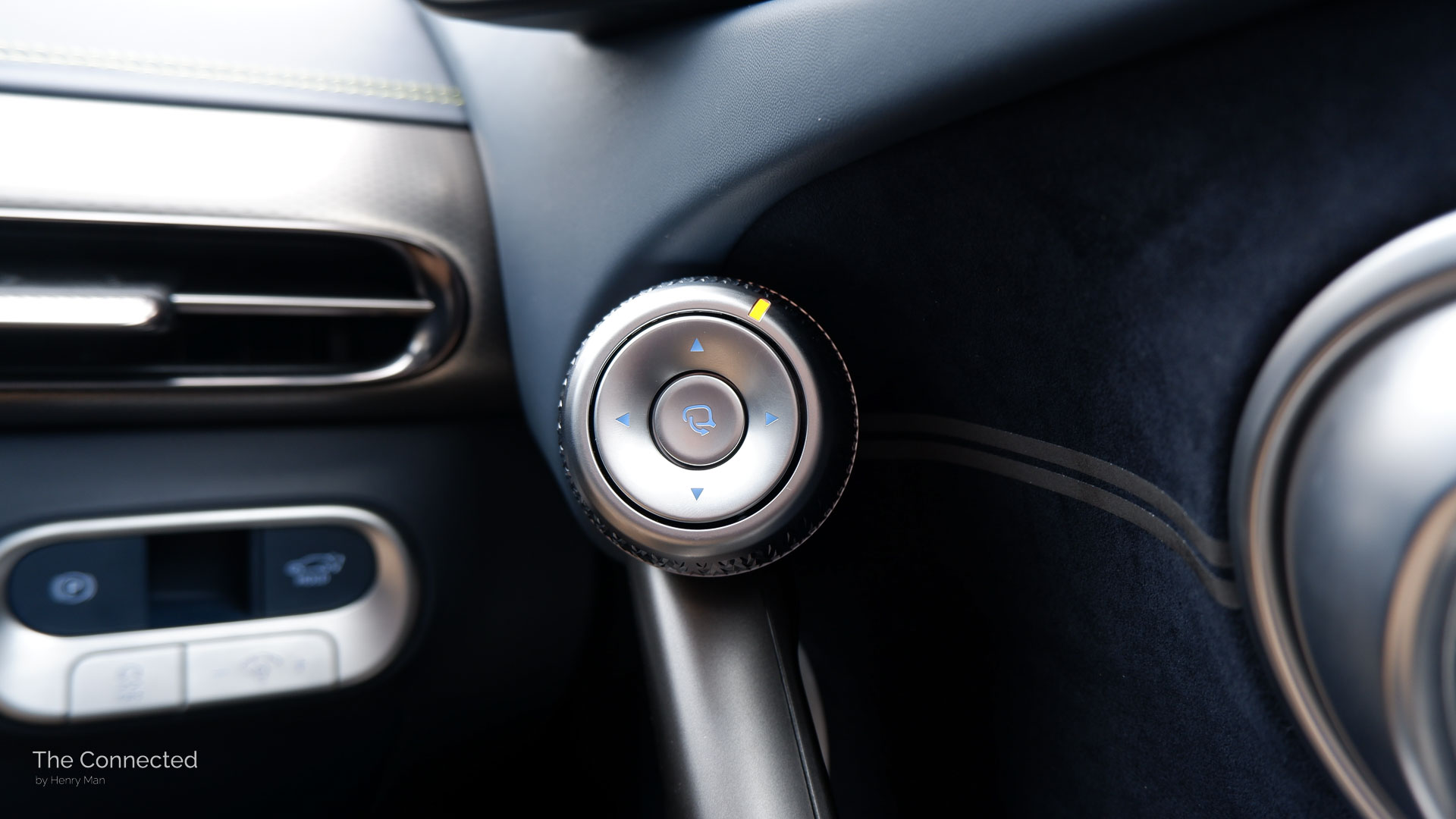
The infotainment performs well, the 12.3-inch touchscreen is clear, and is easy to navigate thanks to the ergonomic centre rotary controller and knurled media dials – but owners can directly tap the display regardless of whether the vehicle is in park or driving.
This is when the touchscreen comes in especially handy since the dial isn’t ideal for touch-centric Apple CarPlay and Android Auto user interfaces, to avoid smudging the fingerprint-prone display, and the rotary controller’s handwriting recognition is quite finicky and time-consuming.
Disappointingly, unlike ccNC found on cheaper Hyundai’s and Kia’s, the Genesis GV60’s ccIC still does not offer wireless smartphone projection – so you’ll hunch down to the cubby and plug in a cable to use wired Apple CarPlay or Android Auto.
That’s despite the GV60 spec update introduced last year bringing Genesis Connected Services (GCS) – enabling over-the-air (OTA) software update capability, built-in maps with live traffic routing, weather and calendar apps, and built-in voice control that can listen to natural language commands.
The missing link.
The updated GV60 finally brings connected services with OTA software update capability and a smartphone app in Australia – which should’ve come with it at launch.
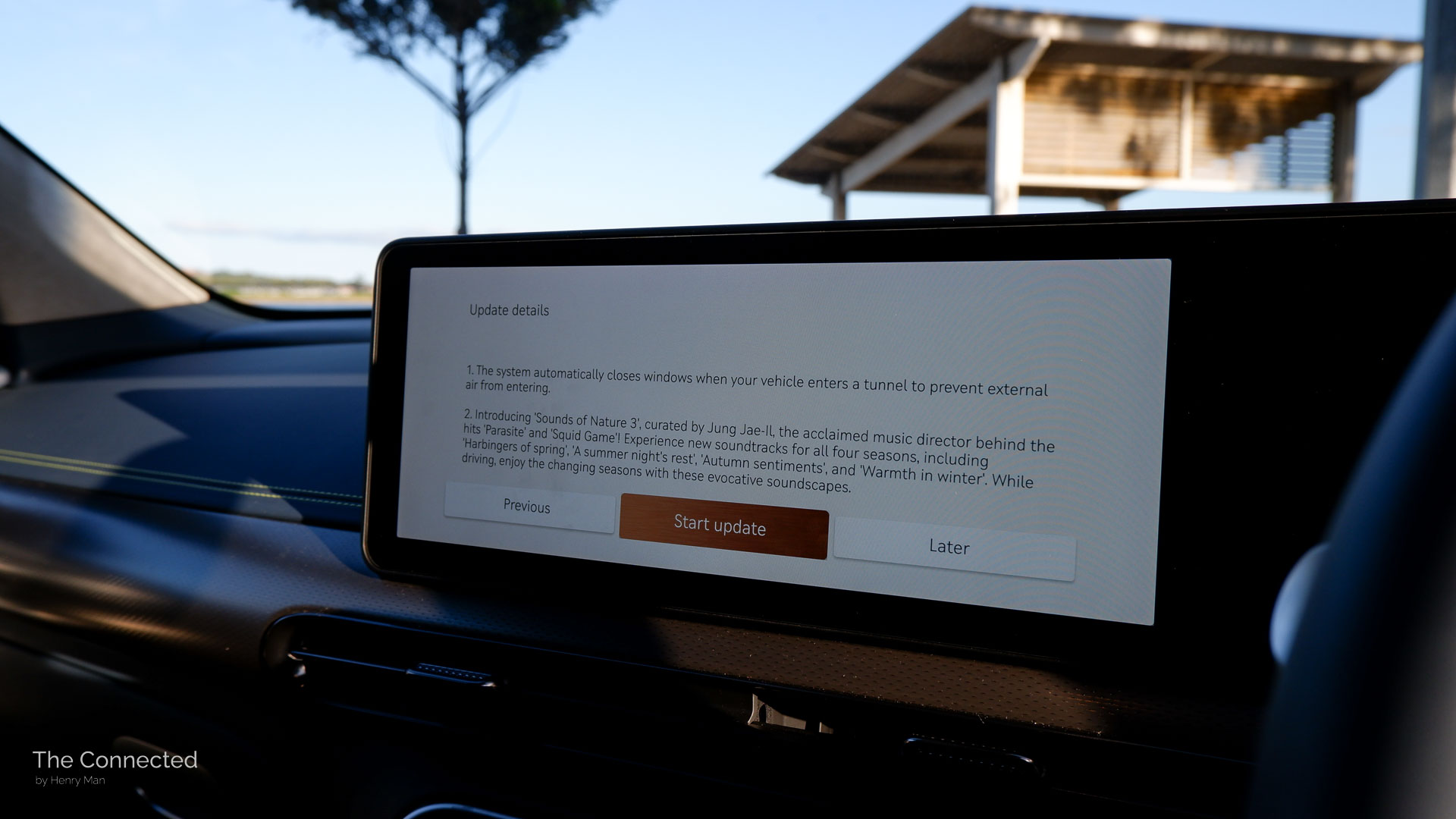
We even received an OTA update during our testing week – which added the latest ‘Sounds of Nature’ tracks from ccNC, an auto wind up the windows function before driving into tunnels, and user interface improvements – and installed quickly in less than 10 minutes while parked.
When not using Apple CarPlay or Android Auto, the Qi wireless charging pad is well-positioned – but lacks fan cooling expected at this price point; phones could overheat in hotter climates and stop charging over time.
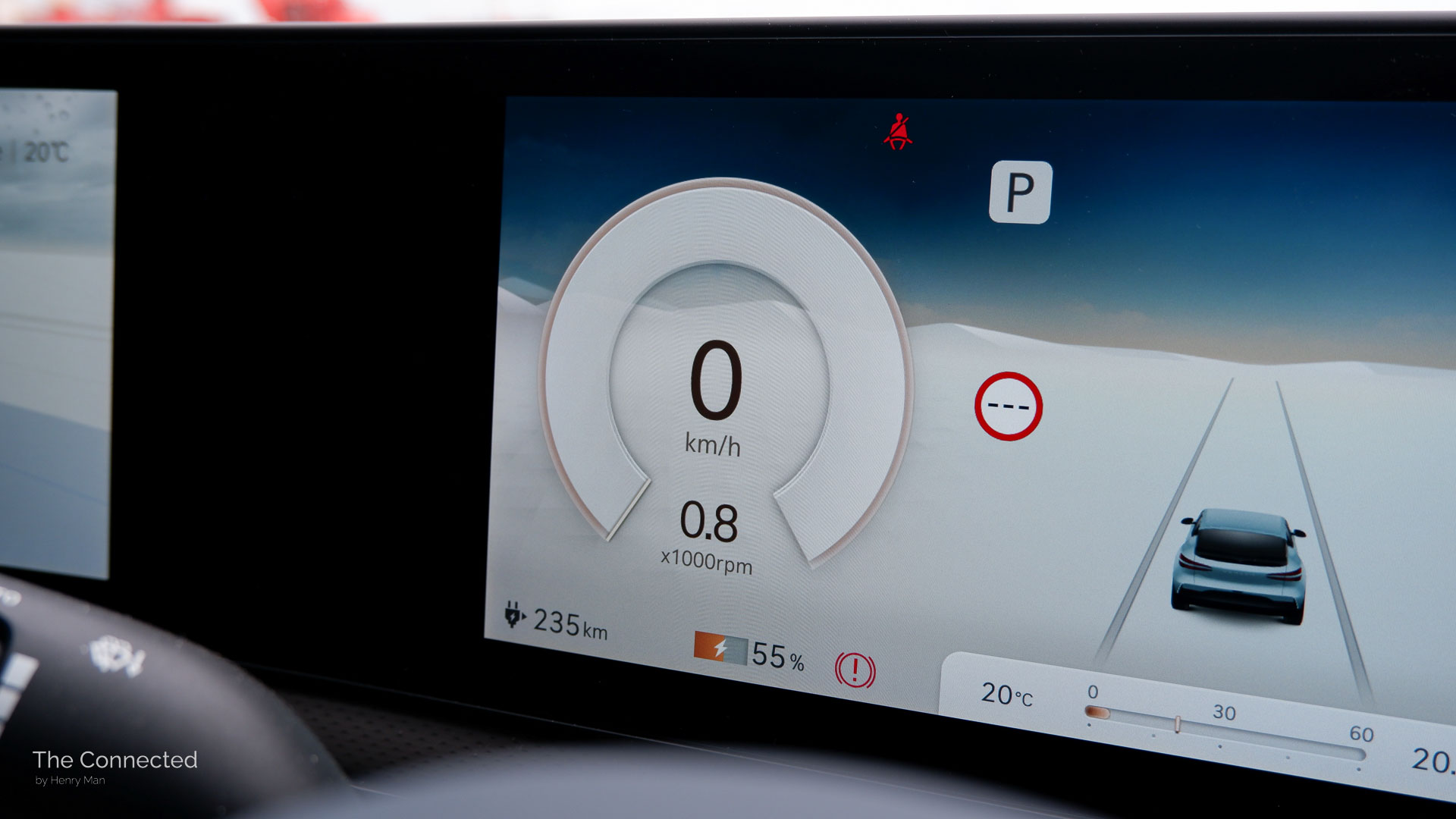
Furthermore, the adjoined 12.3-inch driver instrument display is similarly clear and responsive – with the Genesis ccIC having the advantage of more configurability over Hyundai and Kia’s ccNC system.
Genesis’ instrument cluster can exclusively show the front camera showing the AR navigation – which also shows a virtual line behind the vehicle ahead while in adaptive cruise control and pop up a virtual red wall when the lane departure warning is triggered – or show the built-in maps in a ‘neon’ theme.
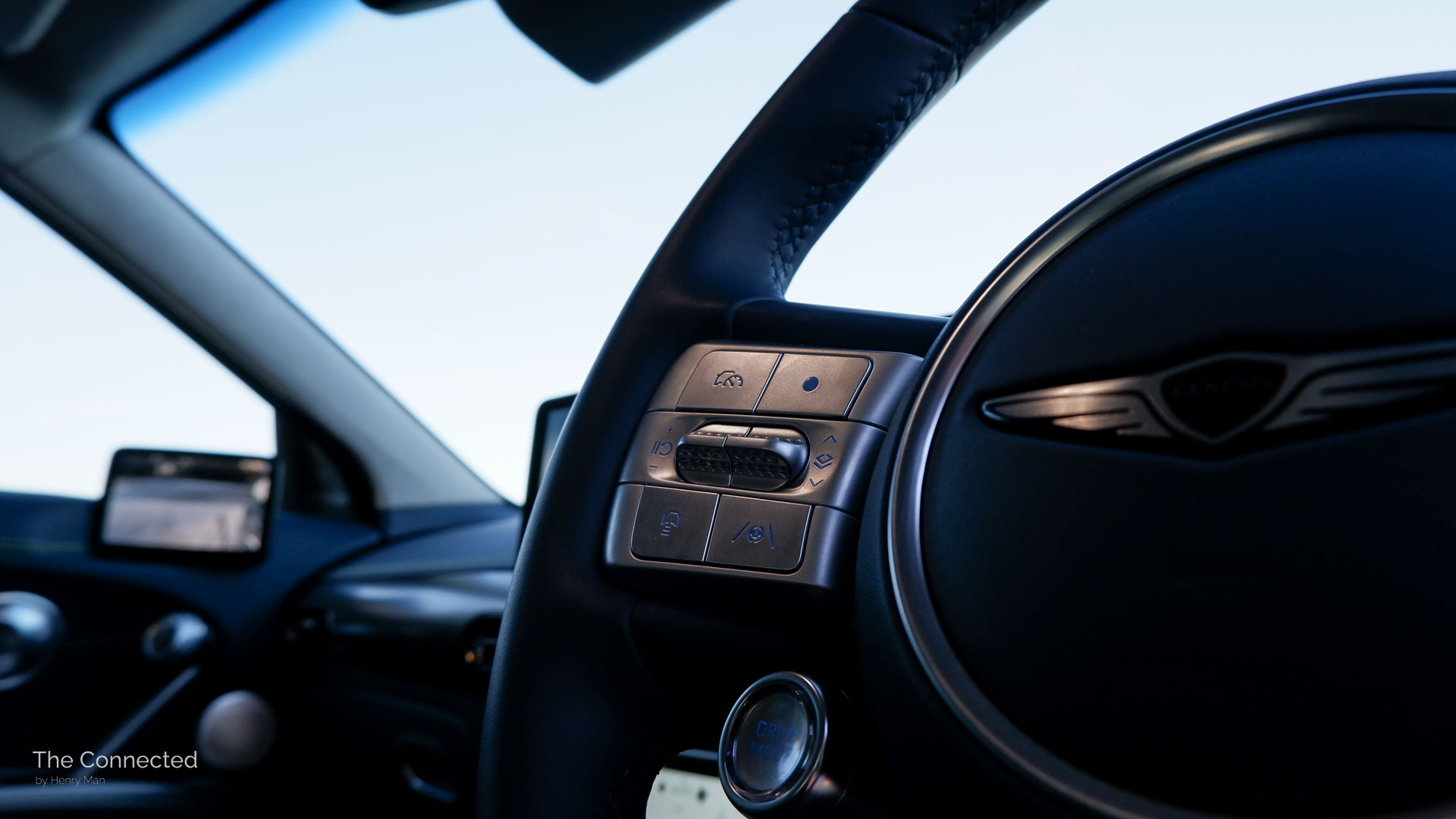
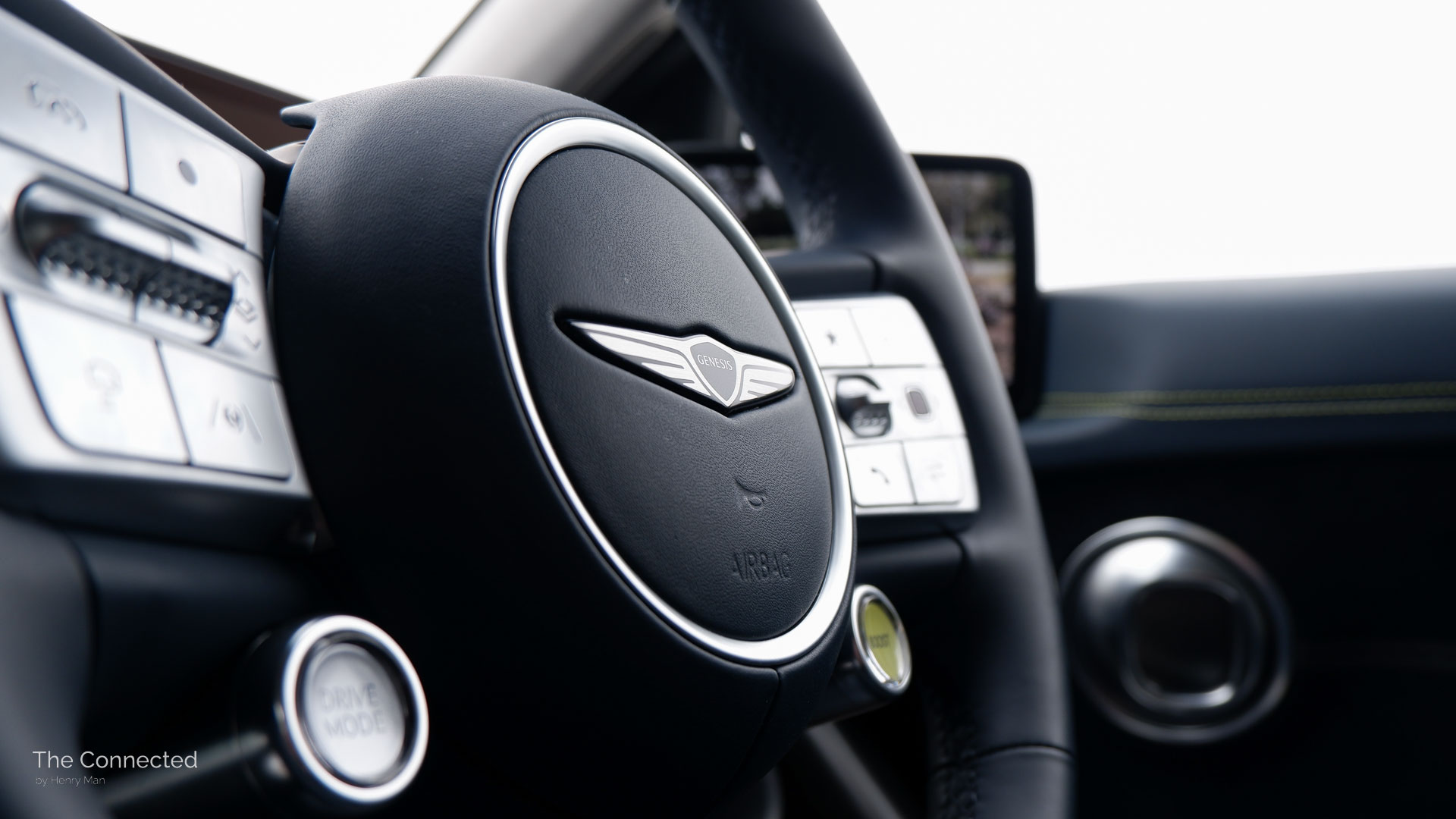
Additionally, drivers can toggle between a variety of widgets – such as the weather forecast, media playback and trip computer – via swiping on the steering wheel touchpad. The touchpad isn’t as intuitive and can be slow to react at times, though.
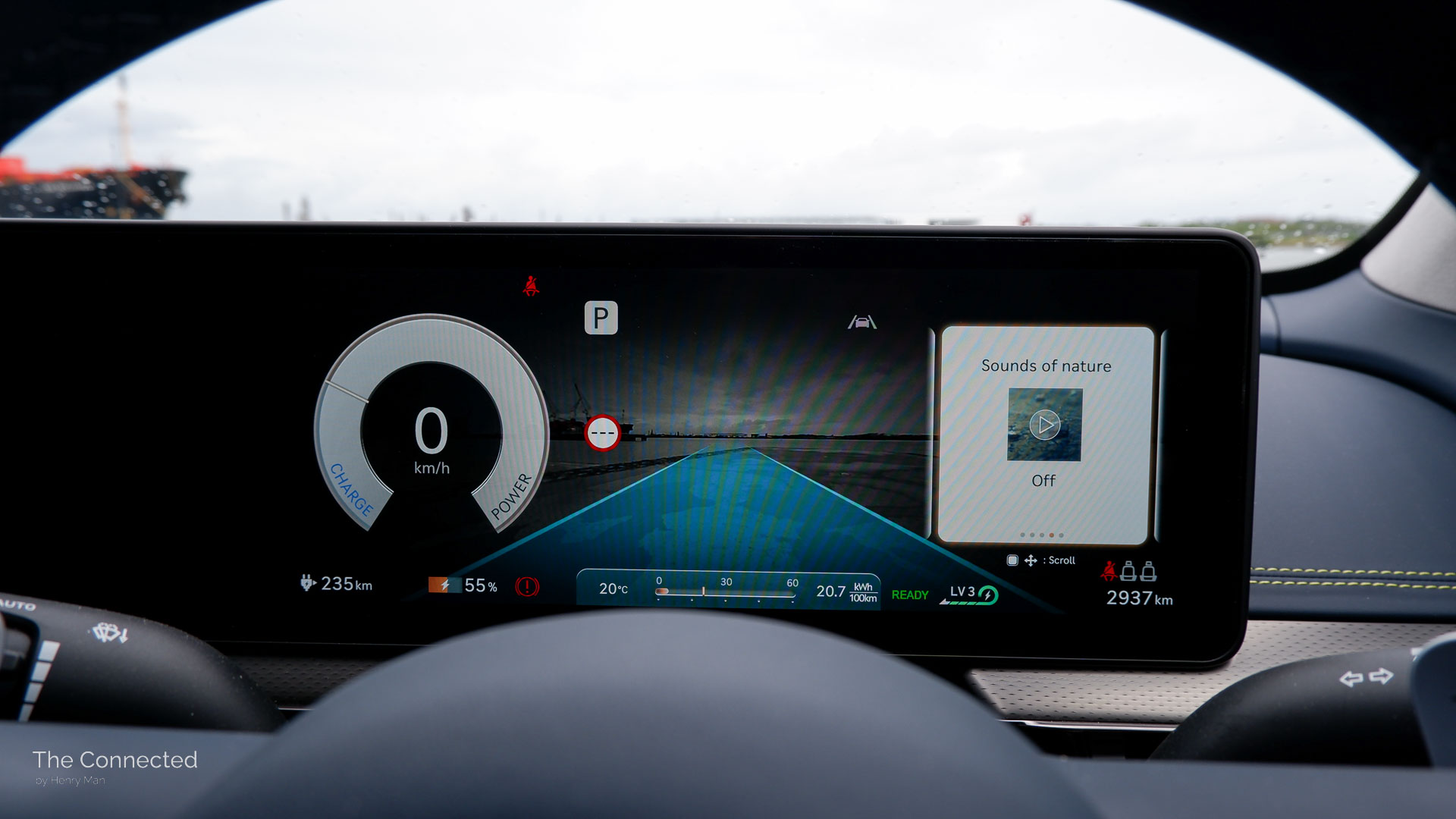
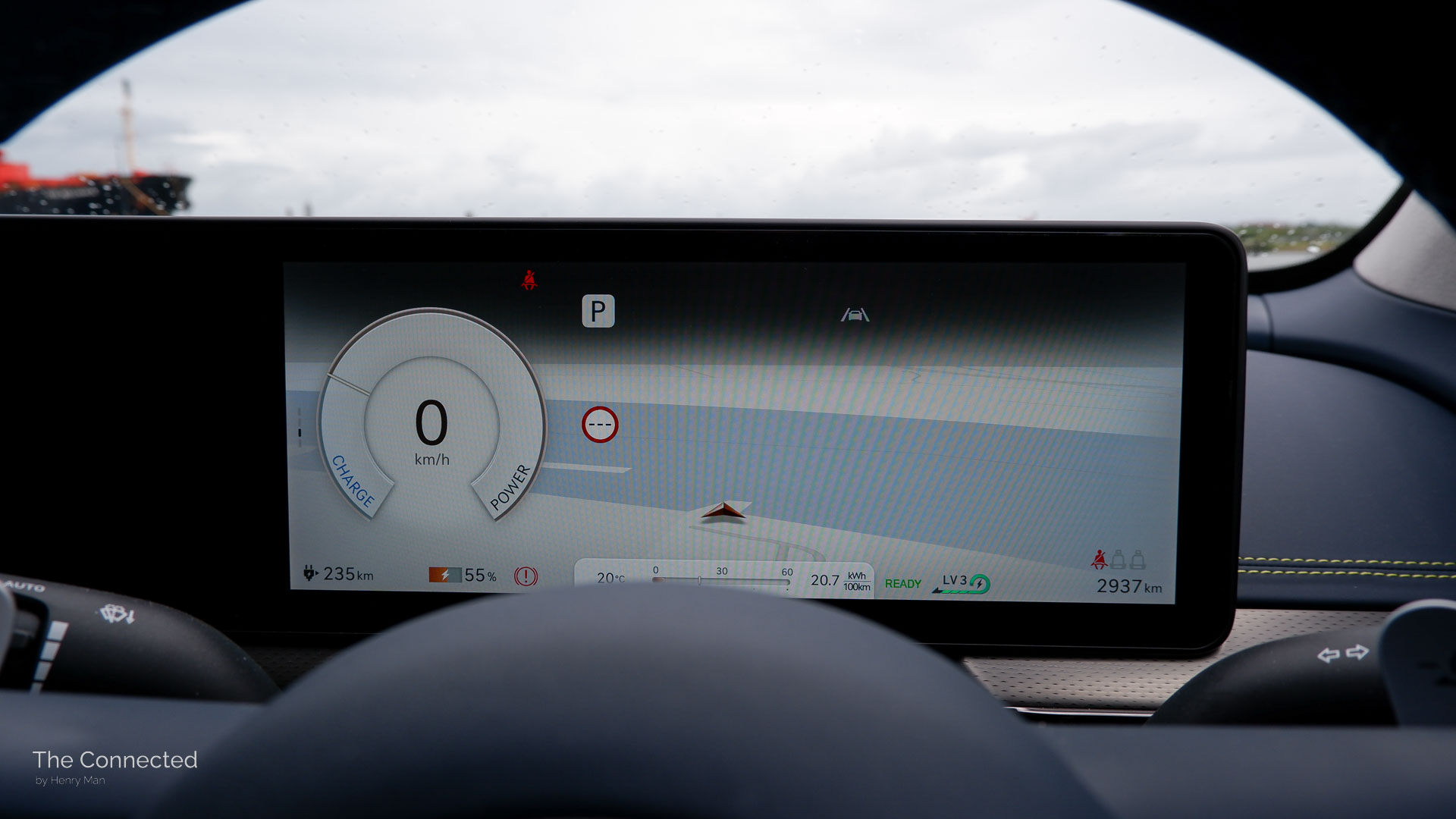
The April 2024 OTA update also brought user interface improvements in line with Hyundai and Kia’s ccNC software, including displaying a prominent screen of the remaining battery percentage and driving range when the vehicle is turned off, and (finally) indicating whether the rear brake lights are illuminated from regenerative braking.
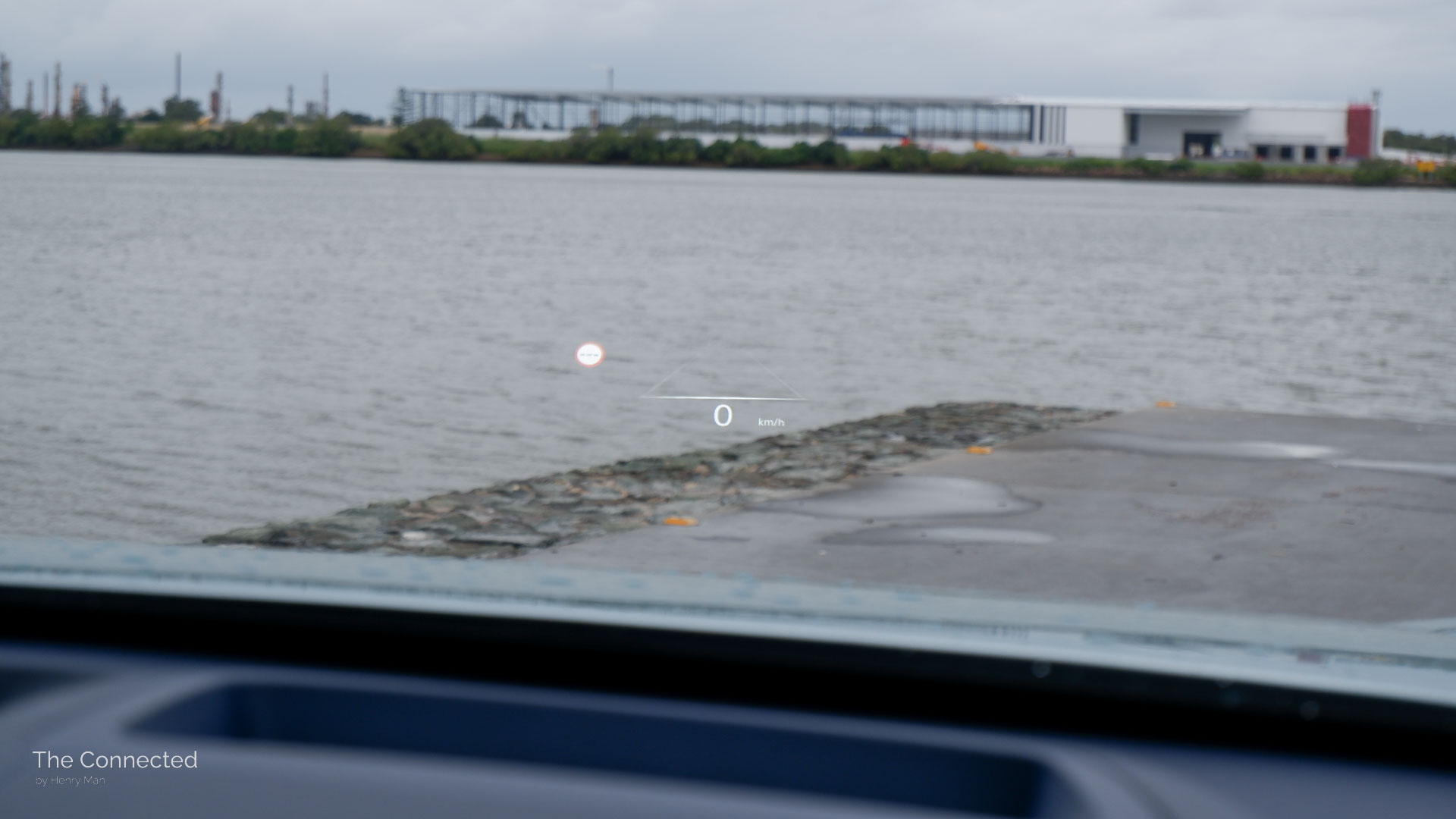
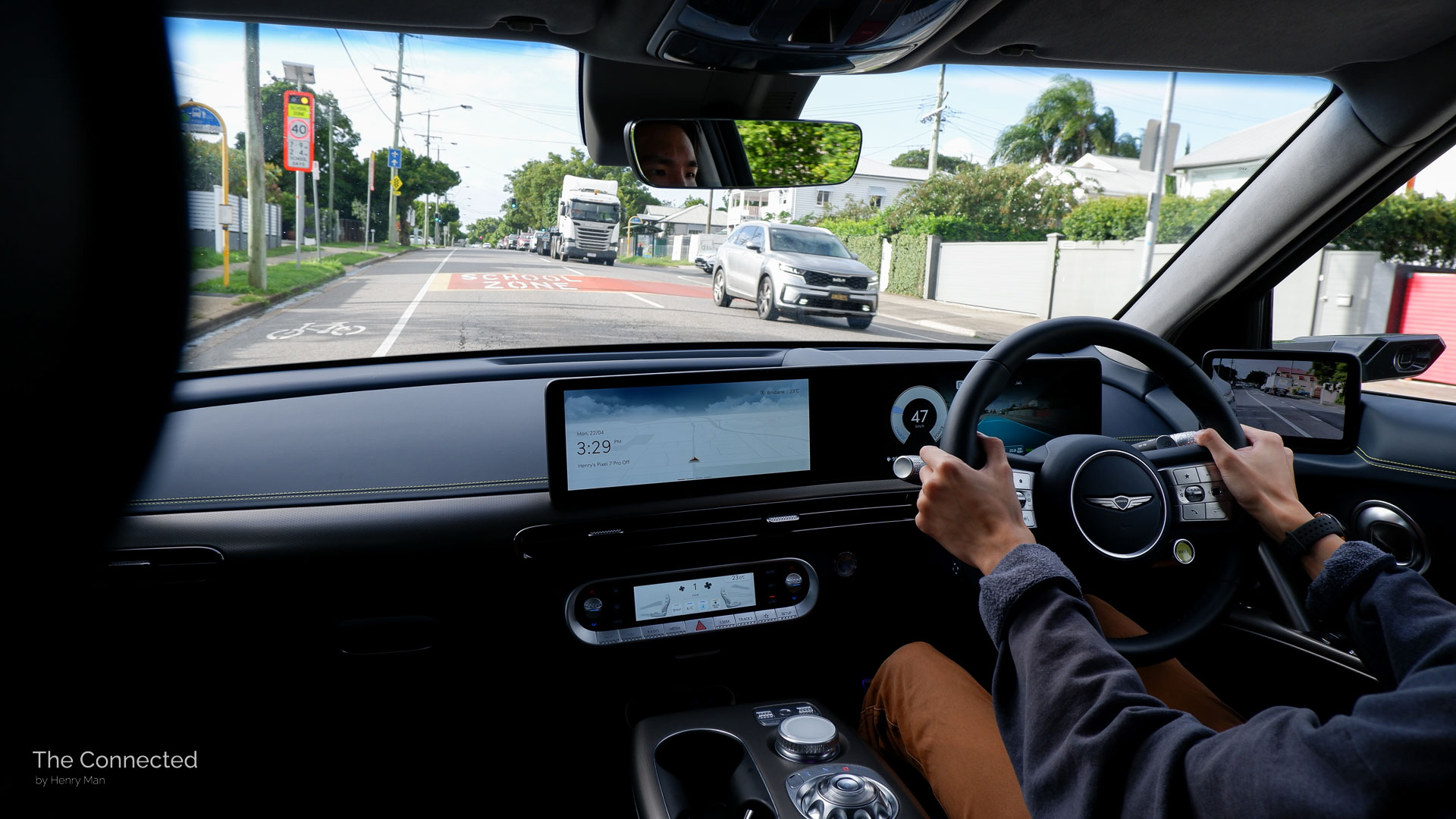
While the driver display is feature-rich – more in line with Volkswagen – my eyes were mainly focused on the standard head-up display projected onto the windscreen – clearly displaying the speed and safety assist warnings without needing to look down.
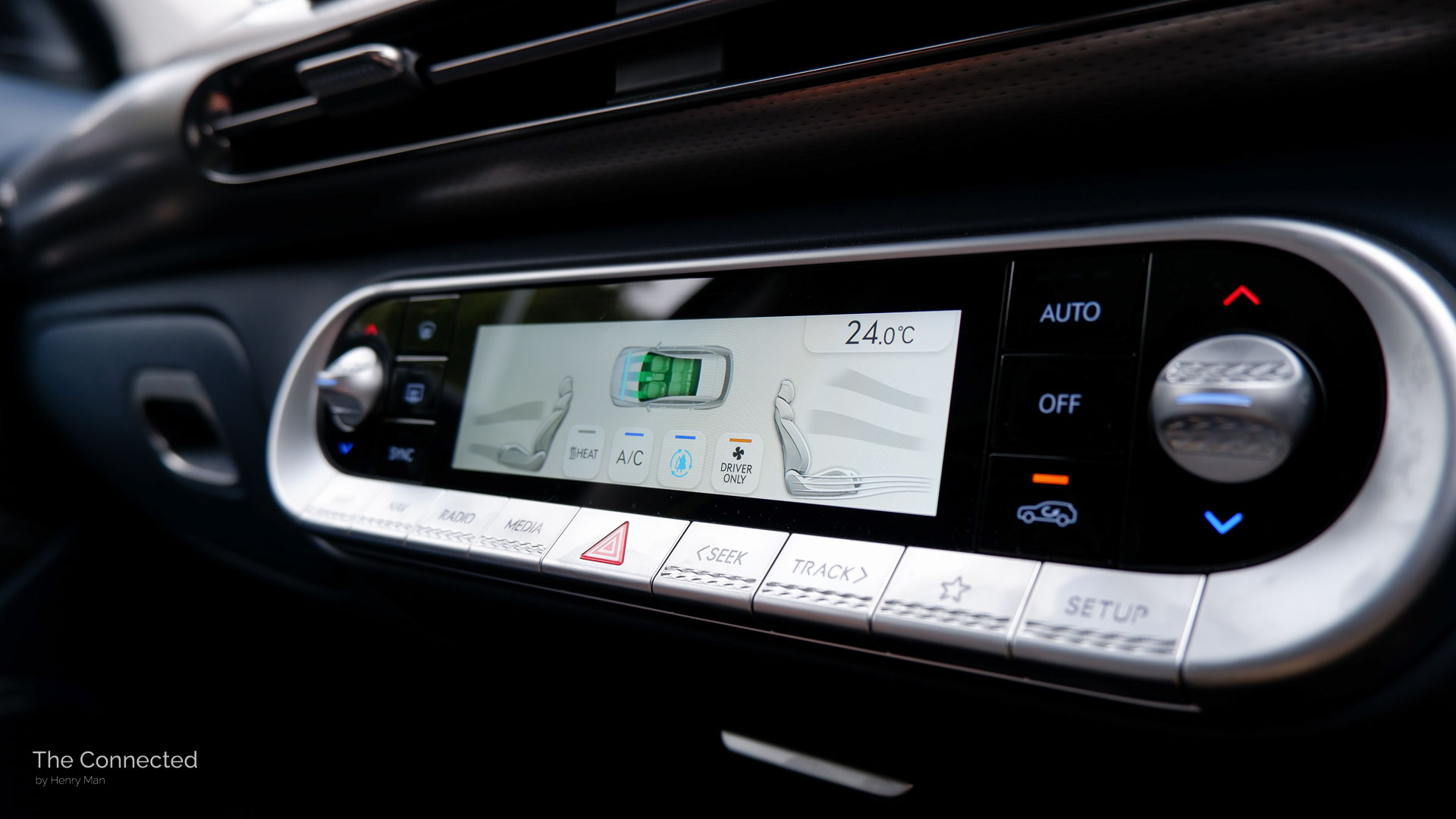
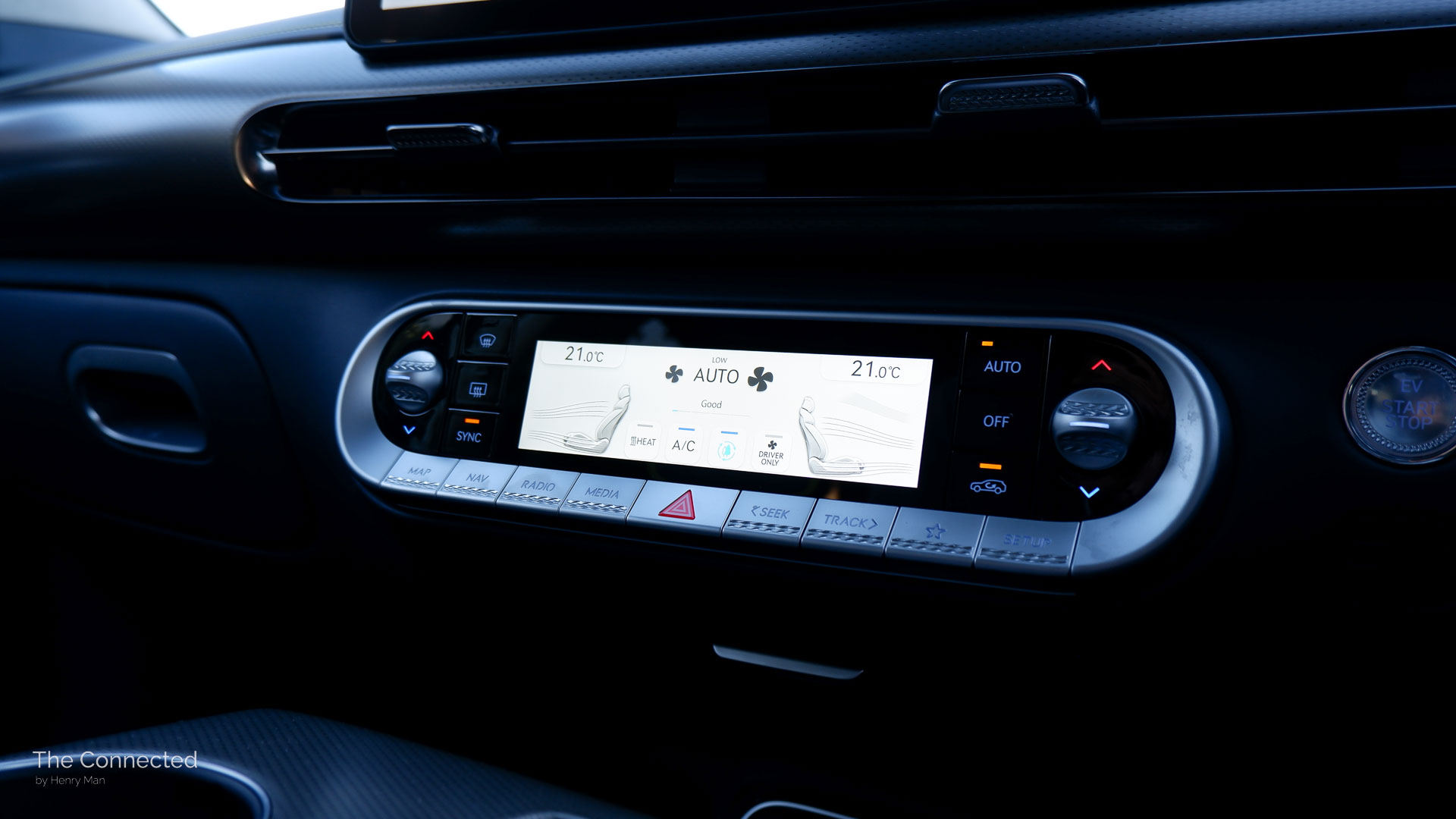
Another Genesis luxury car touch is a dedicated 6.0-inch climate control display with haptic feedback (which has three vibration intensities), but is still conveniently flanked by tactile physical buttons and switches for adjusting the temperature and circulation.
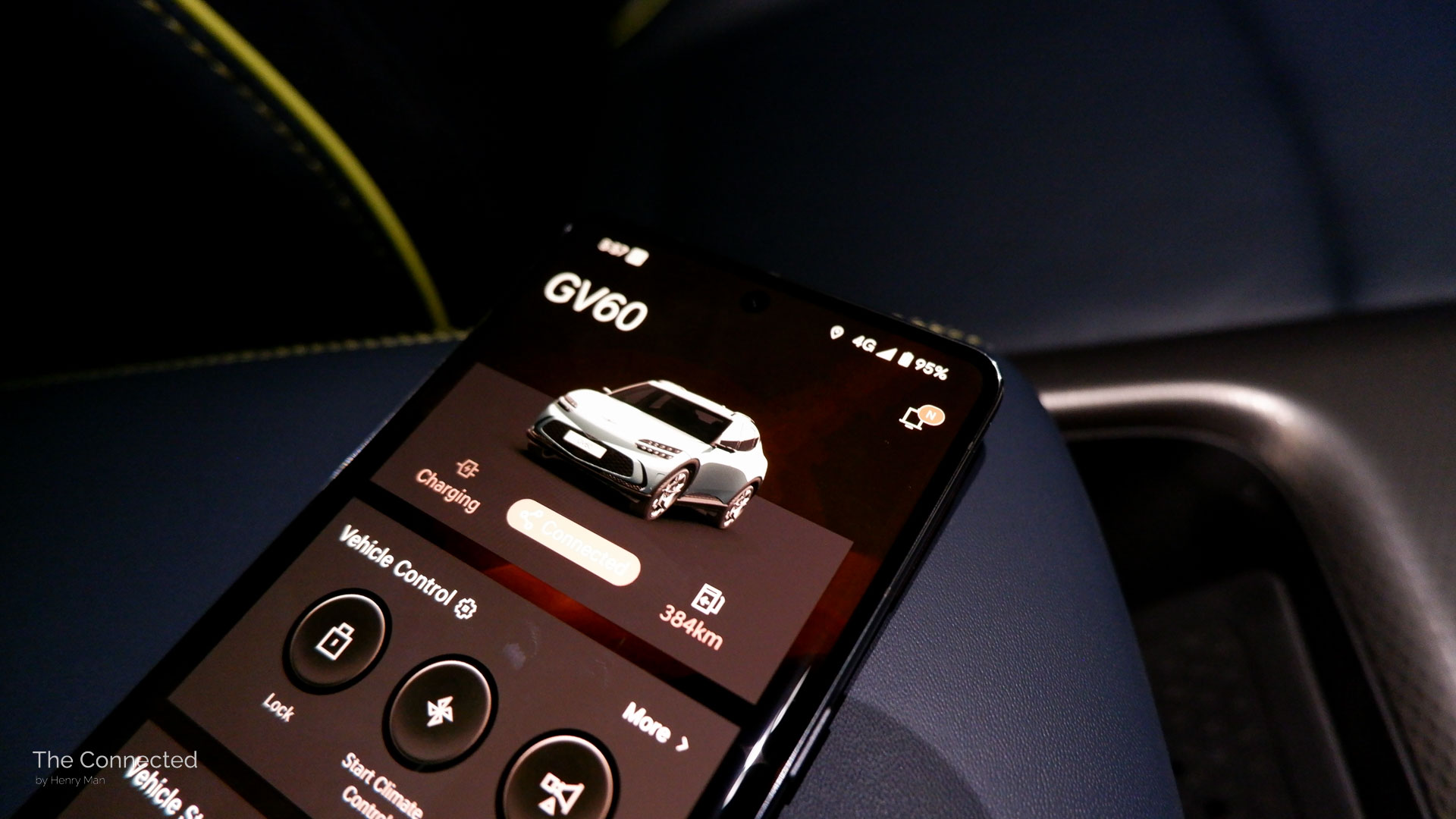
The updated GV60 finally added Genesis Connected Services (GCS) in Australia, with the remote smartphone app allowing owners to start the air-conditioning and windscreen demisters, monitor the charging status, and take a photo of the 360-degree cameras.
Strangely, the GCS app couldn’t activate the heated and ventilated seats, and heated steering wheel at the time of testing – unlike the essentially identical Hyundai Bluelink and Kia Connect apps. Unlike those brands, we found that it sends commands more quickly to the luxury crossover EV.
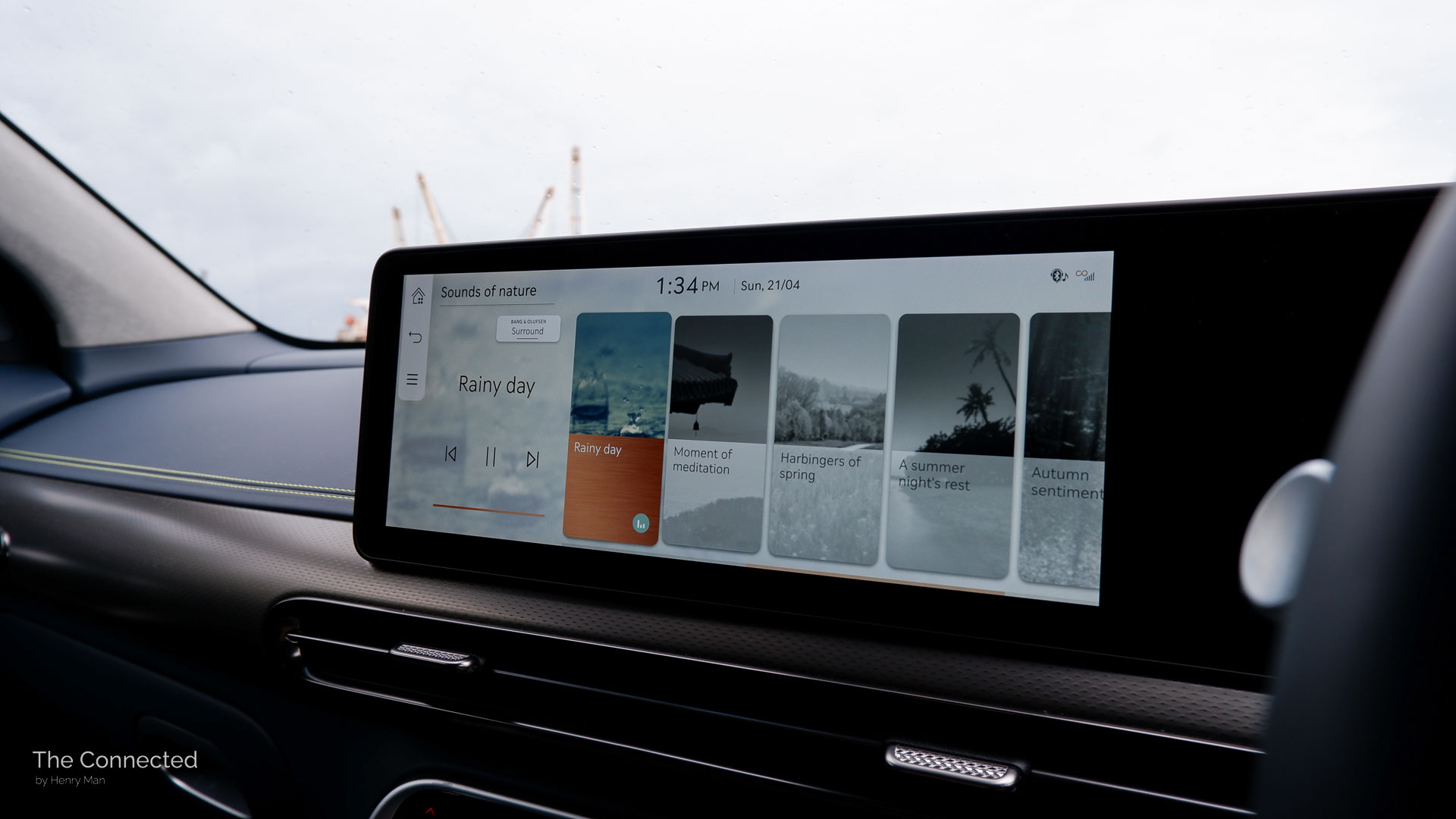
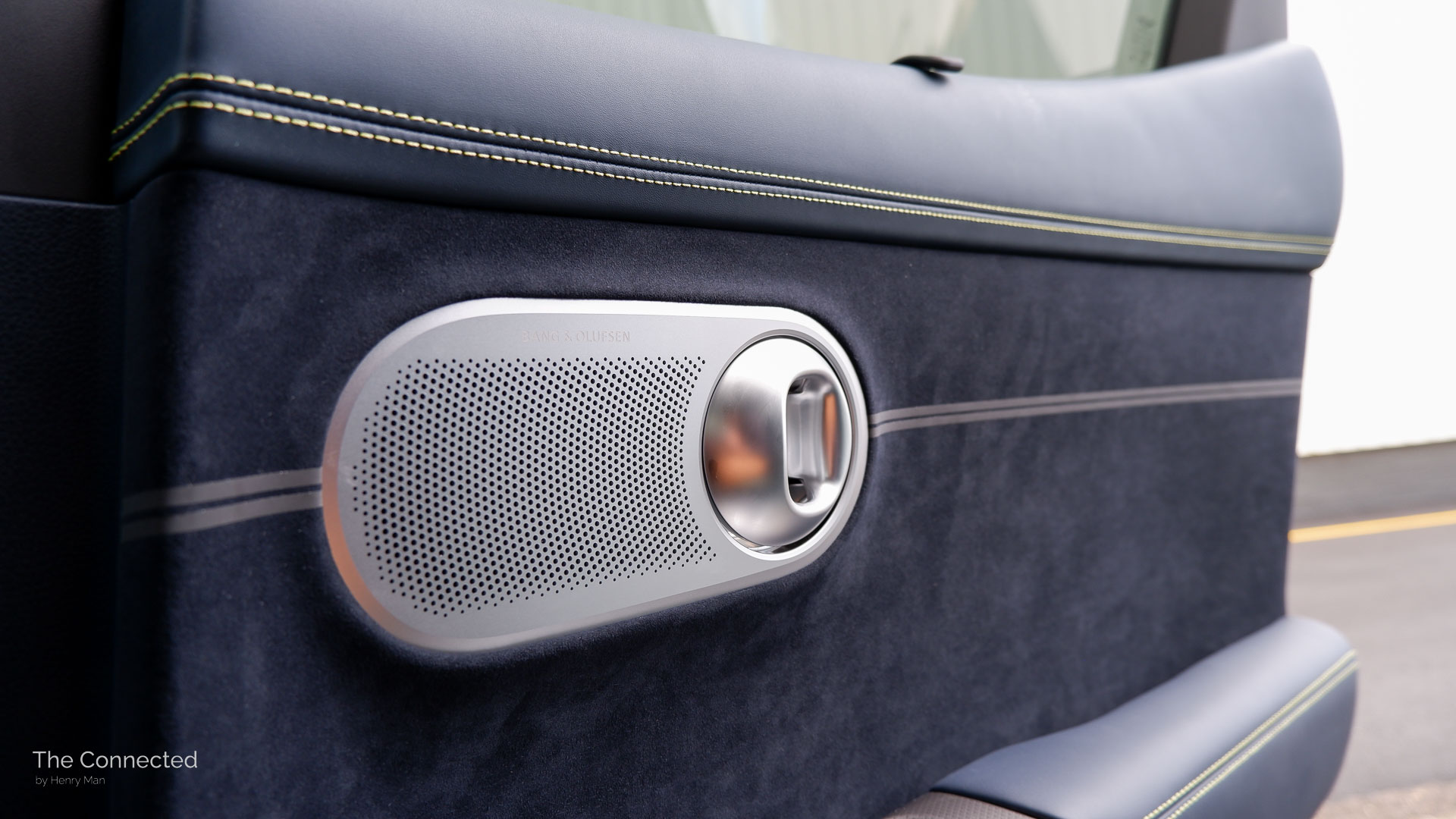
The GV60 EV also comes with a 17-speaker Bang & Olufsen audio system, which performs well albeit with only some mid-bass clipping.
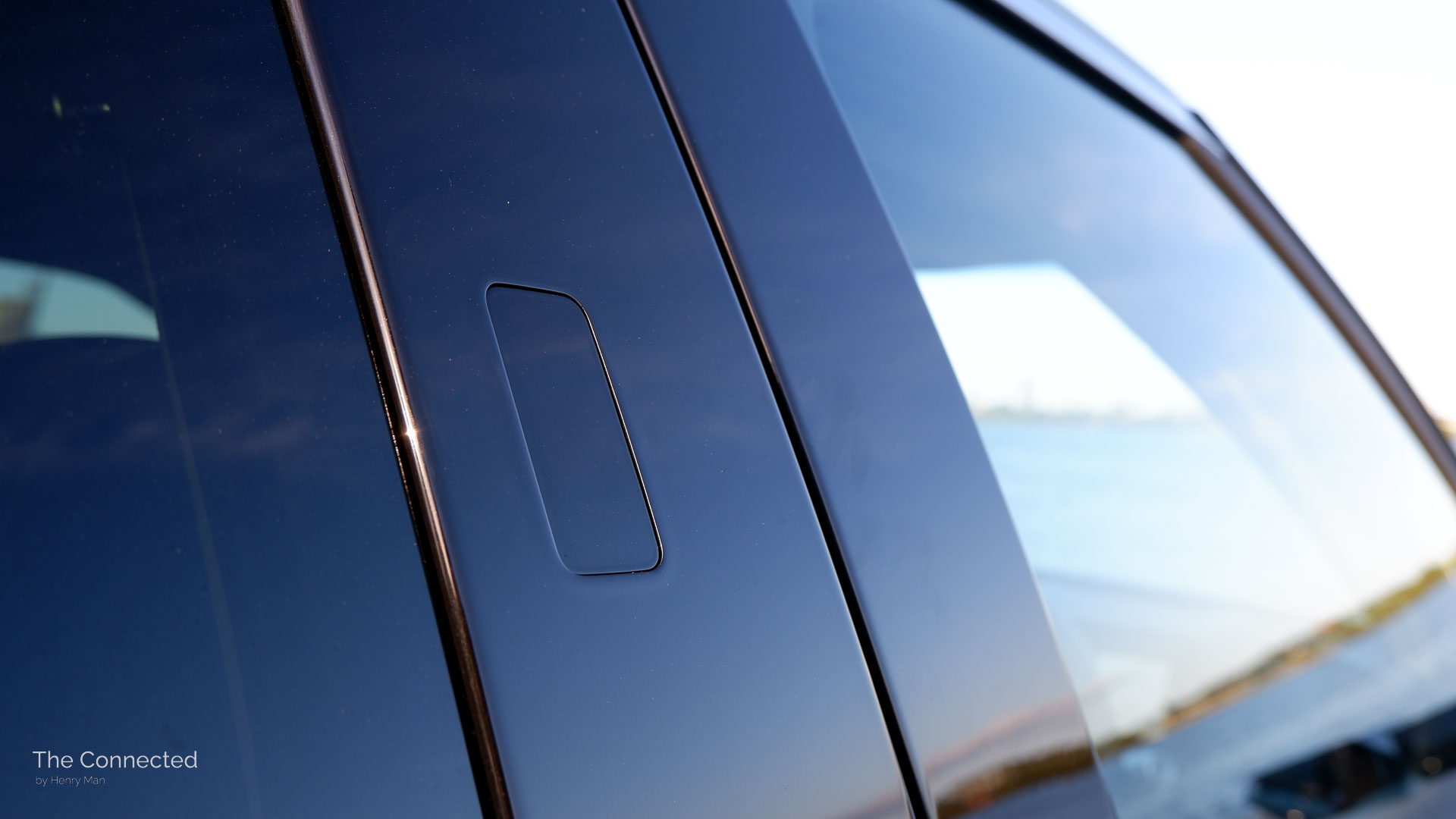
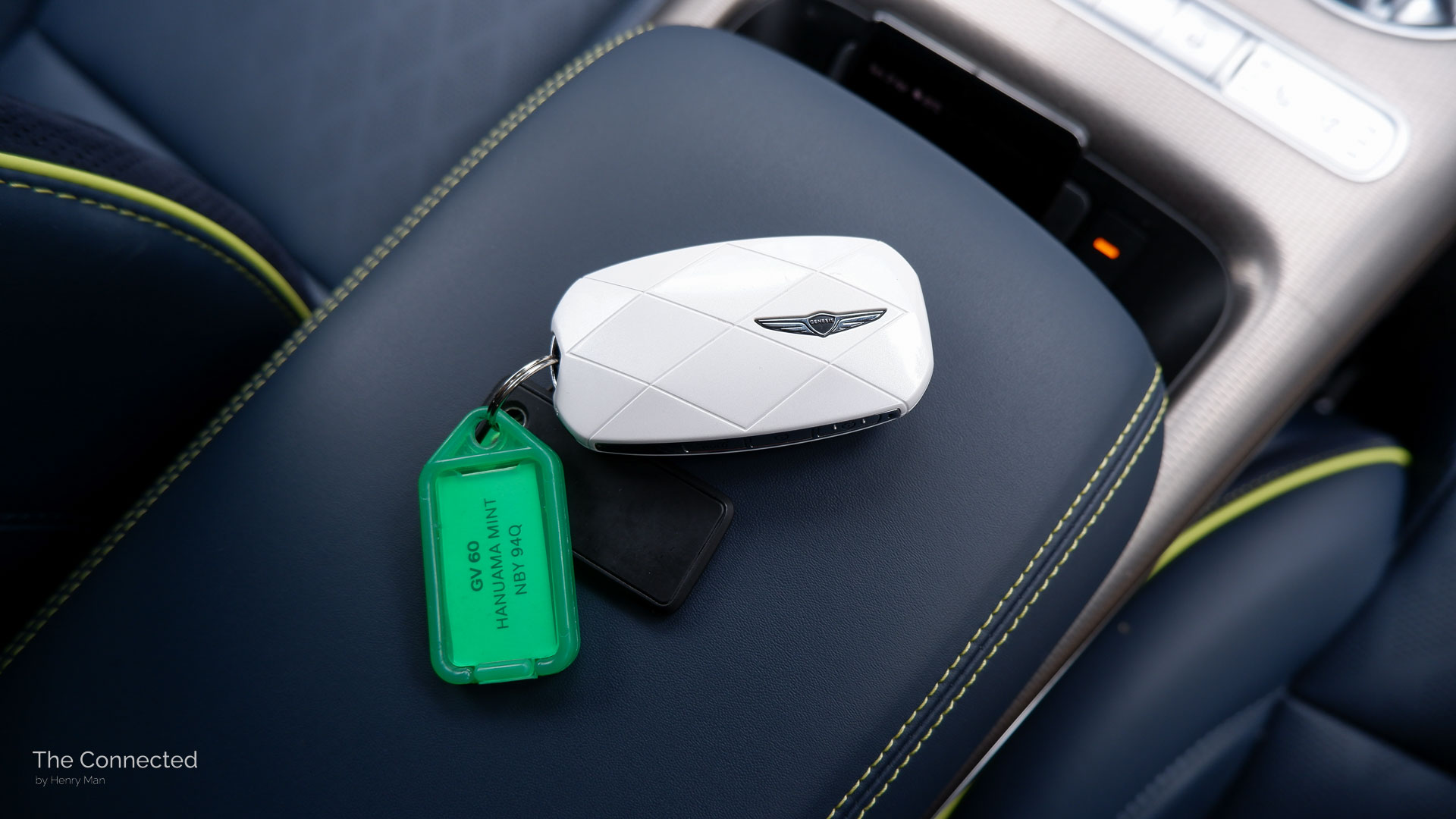
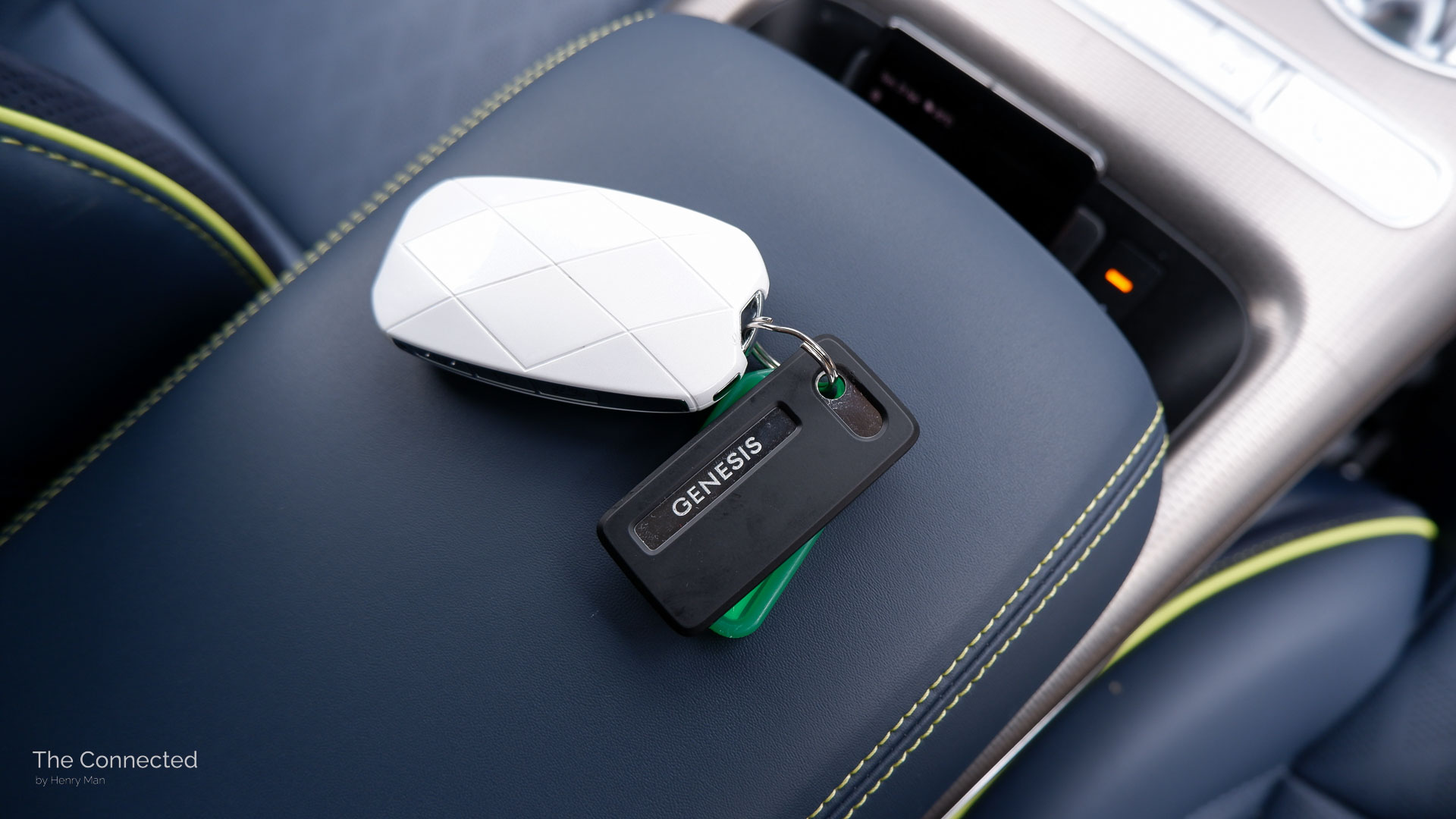
The proximity key can auto unlock the doors when near the front two doors, and has the physical backup key attached separately on the keyring. At night, the puddle lights illuminate the ground with the Genesis logo and the flip-out door handles include subtle lights inside, too.
New for the 2023 GV60 update is a unique facial recognition camera on the driver’s side B-pillar to unlock the vehicle and a fingerprint scanner that can now start the EV without the key.
It’s essentially a more sophisticated version of Tesla’s mobile app key. Unfortunately, we weren’t able to test this out as it required both key fobs for the setup.
Safety.
2024 Genesis GV60 Performance AWD safety features:
| Front auto emergency braking (AEB) with vehicle/pedestrian/cyclist/junction turning/oncoming lane change detection | Rear low-speed AEB |
| Lane-centring and lane-keep assist | Driver attention alert with lead vehicle departure alert |
| Blind-spot assist with blind-spot camera view | Full LED headlights with adaptive matrix high beam function |
| Rear cross-traffic assist | Full LED tail-lights |
| Adaptive cruise control | 360-degree camera system |
| Door open warning and assist | Front, side, rear parking sensors |
The Genesis GV60 comes with a range of well-calibrated active safety assistance systems as standard – with the update bringing more airbags, in a now uncommon move.
The 2023 spec update added two additional thorax airbags for outboard rear occupants, bringing the total count to 10 airbags – a change which would normally be seen two decades ago.
The adaptive cruise control is smooth, while the refined lane-centring assist can be activated at any speed without the need to enable the former. The lane departure assist system’s steering wheel intervention isn’t as aggressive as some other brands.
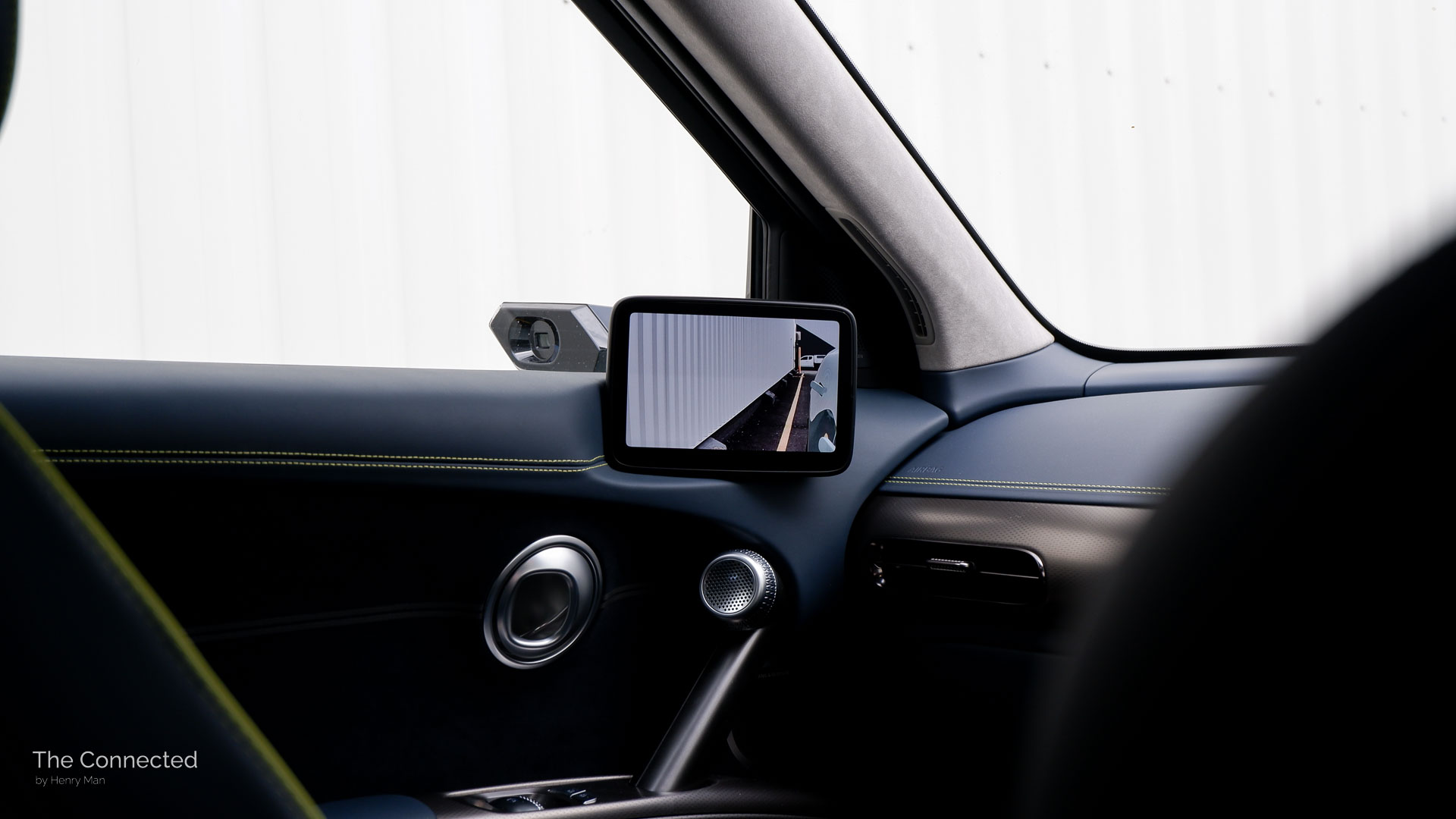
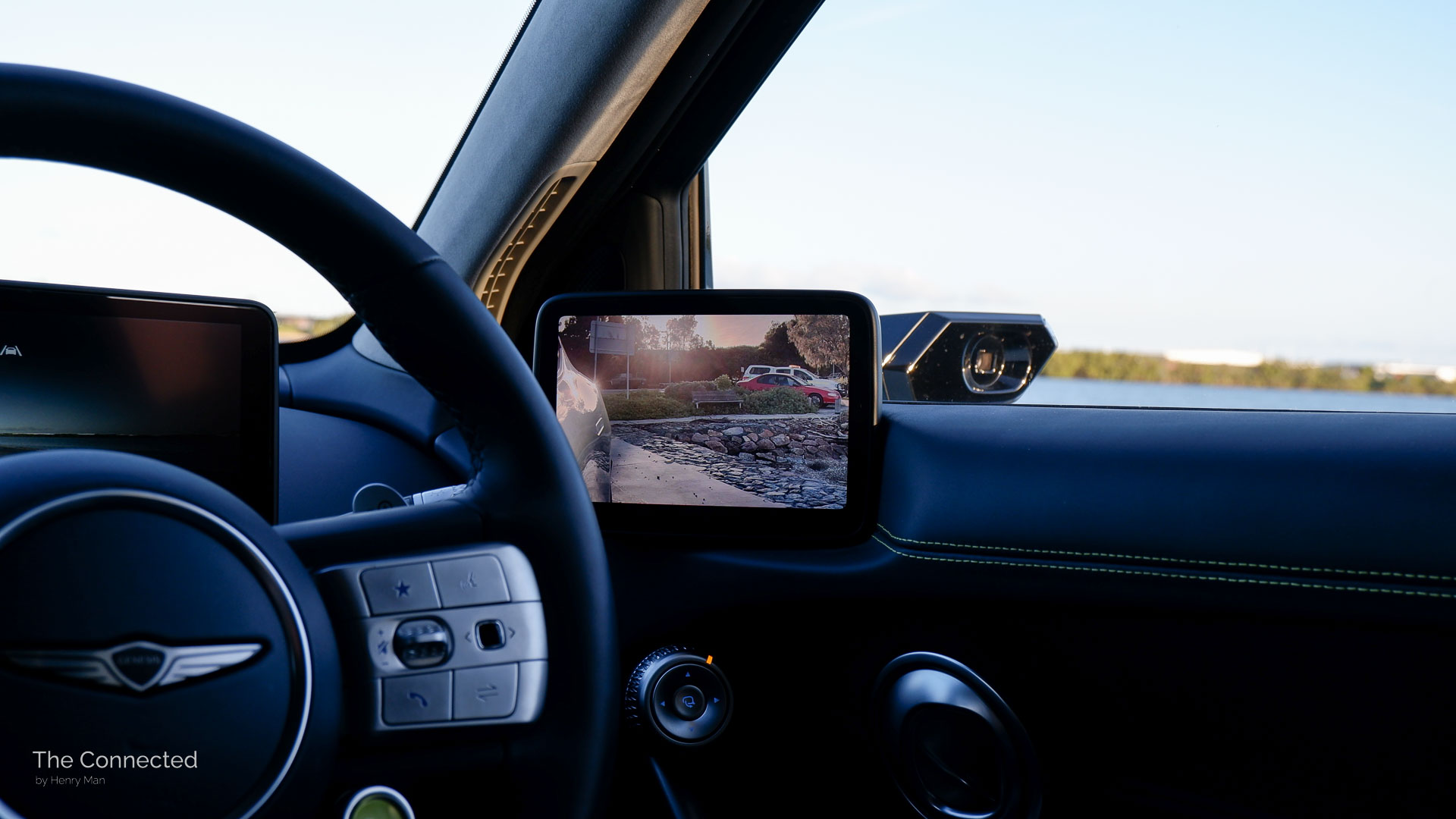
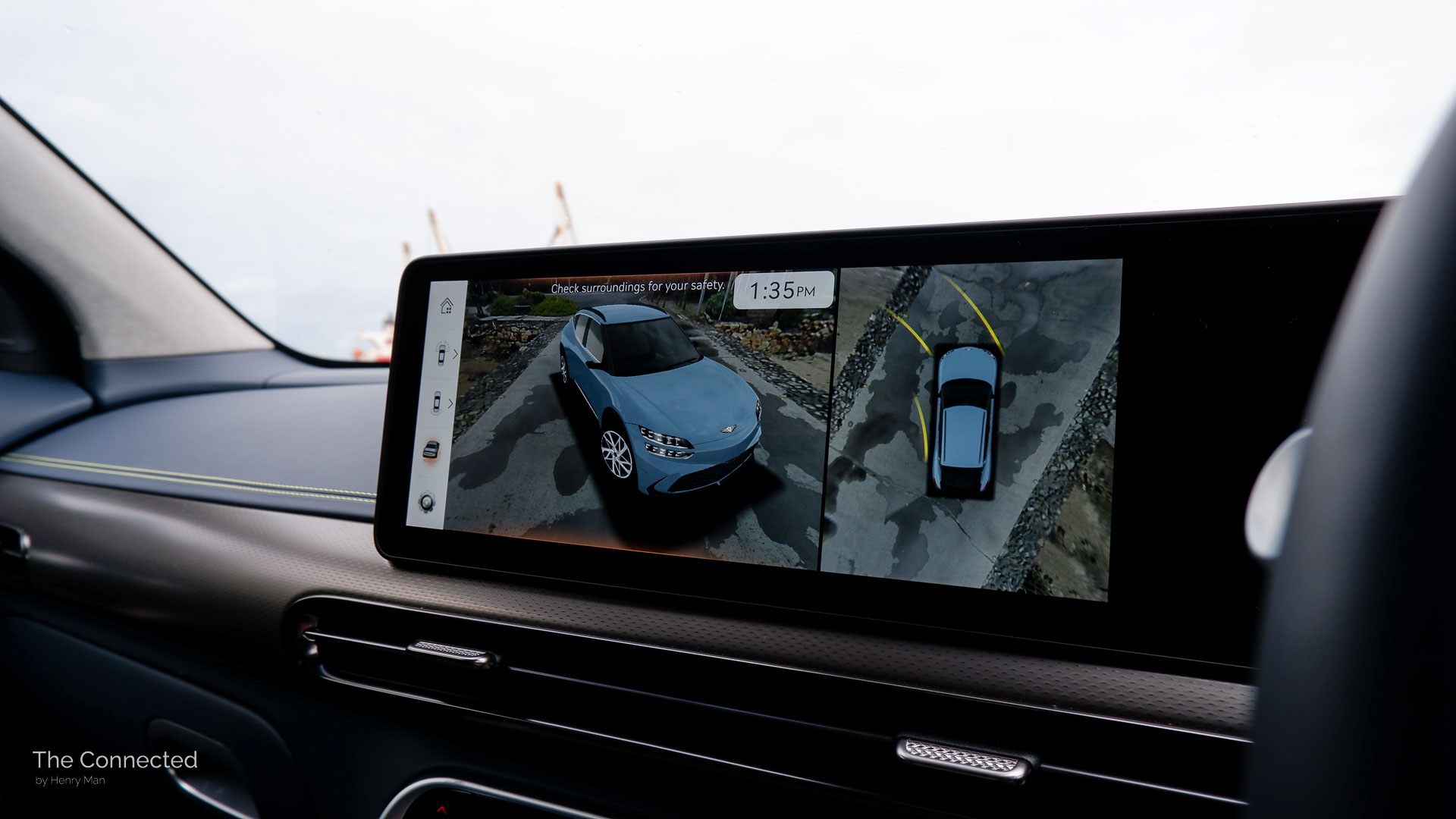
Additionally, the 360-degree camera system and blind-spot view cameras are clear – but the digital camera wing mirrors take some time adjusting to.
Displayed on the two clear, high frame rate and wide-angle Organic Light-Emitting Diode (OLED) screens, it lacks depth and can be difficult to gauge where the back of the GV60 is.
Thankfully, there are guidelines that pop-up when indicating to somewhat help and, at the end of the week, I was more confident changing lanes with the GV60 – better than the Kia EV9 GT-Line upper large electric SUV, which is far longer and harder to judge its length.
An exterior pedestrian warning system is audibly more prominent than some other EVs, especially when reversing.
Additionally, the Genesis GV60 range comes with full LED head- and tail-lights as standard. The front units adopt an adaptive matrix high beam function which automatically switches off individual bulbs to avoid glaring at other road users at night.
Overall LED headlight performance is adequate; its light spread could be wider. At the back, the turn indicators and reverse light are strangely positioned lower down the bumper, though the latter uniquely projects reversing guidelines on the ground at night.
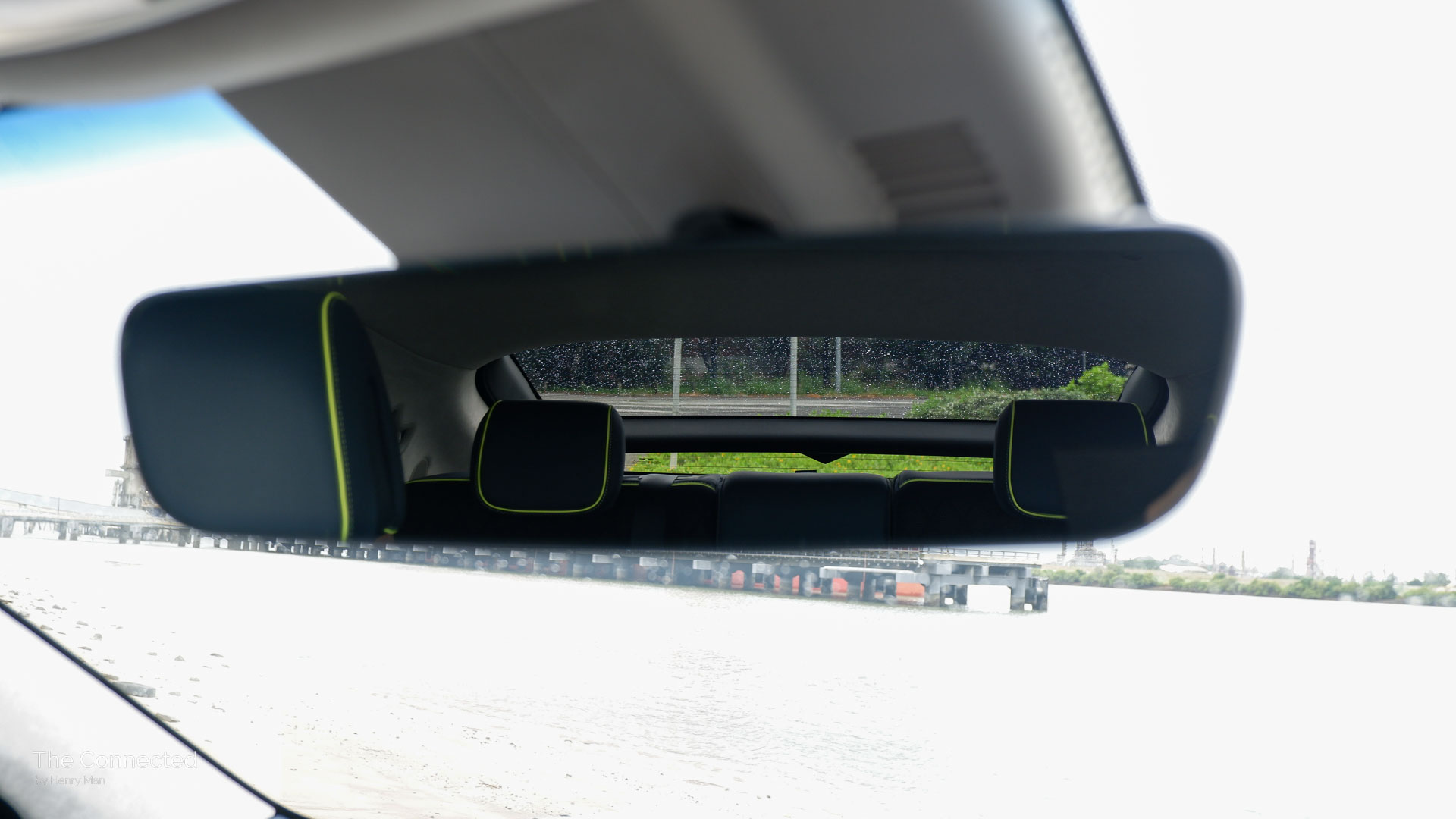
The GV60 offers decent all-round visibility for drivers with the advantage of wider-angle camera side mirrors. However, the rear view is limited as the spoiler splits the glass. On cold mornings, the bottom part can be frosted and the larger top portion clear after putting the demisters on. There’s no rear wiper.
This is why the digital rear-view mirror camera would be useful, as available on the Hyundai Ioniq 5 and Kia EV9.
GCS also enables emergency services calling automatically when the airbags are deployed or via the red SOS overhead button, and remote location tracking.
The Genesis GV60 received the full five-star safety rating by the Australasian New Car Assessment Program (ANCAP) under older 2022 testing criteria. This applies to the updated model, despite the airbag safety upgrade.
Range and charging.
2024 Genesis GV60 Performance AWD battery and charging specs:
| Claimed driving range (WLTP combined) | 466km |
| Claimed energy efficiency (WLTP combined) | 19.1kWh/100km |
| Battery size and type | 74kWh est. usable (77.4kWh gross) lithium-ion |
| Battery voltage | 697 volts (800-volt class) |
| Max AC / DC charging speed | 10.5 / 240kW |
| Bidirectional charging | V2L interior + exterior |
| Connector type | Type 2 / CCS2 |
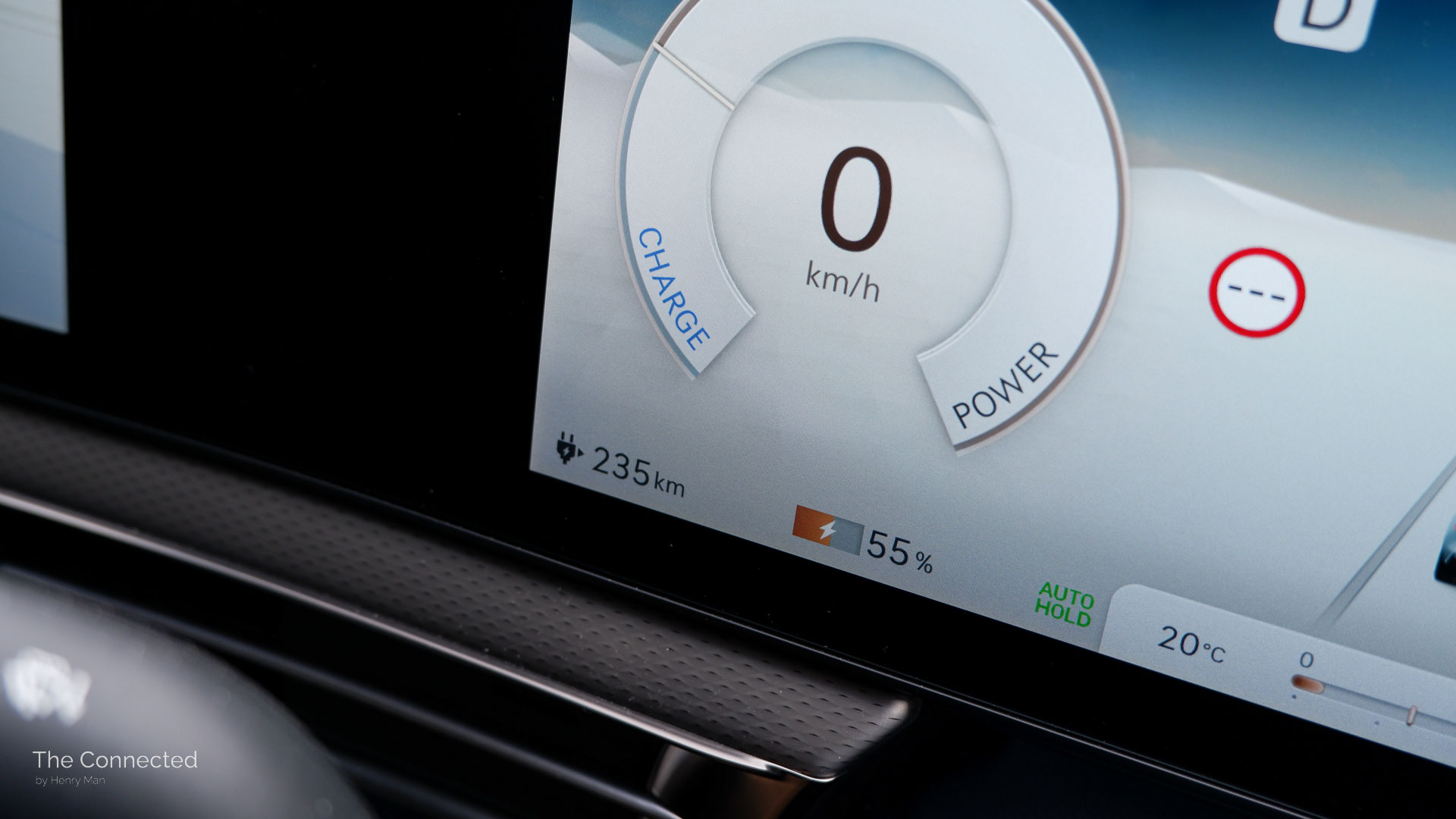
In our week driving a mix of heavy traffic, urban and highway conditions, the GV60 Performance AWD indicated a 19.1kWh/100km energy consumption – matching the claim.
This results in about 387km real-world driving range on a full charge – based on an estimated 74kWh usable battery (Genesis only discloses the gross size).
However, since the GV60 uses the standard lithium-ion type battery, it’s generally recommended to limit everyday charging to 80 per cent to maximise its longevity.
This means daily real-world range is more like 310km. It’s rather unimpressive – but not surprising for a high performance EV with up to 360kW of power on tap in boost mode.
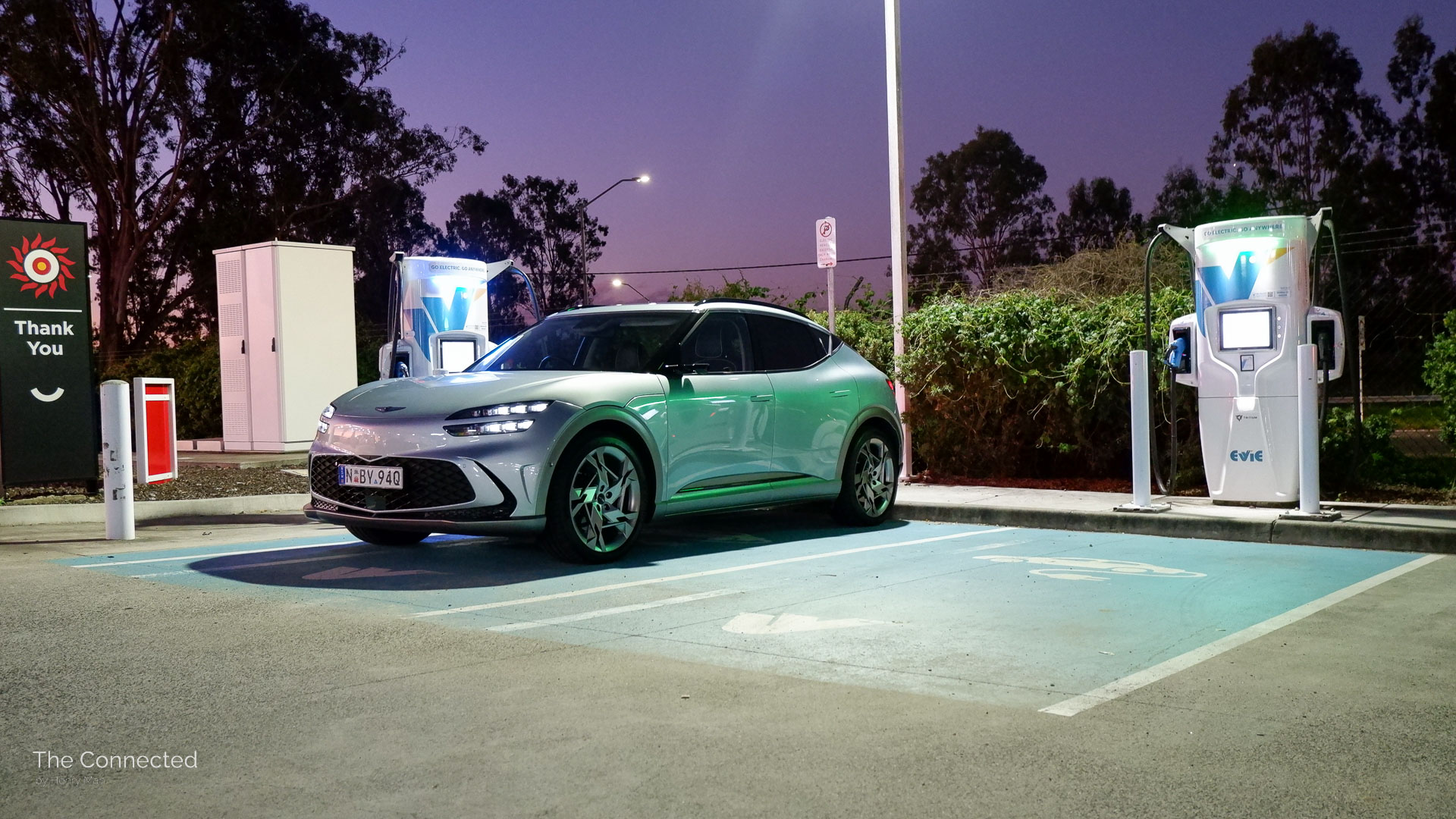
To offset this, all GV60’s have a heat pump as standard, which is a more energy-efficient way to heat the interior – even though it’s most useful for ultra-low winter temperatures.
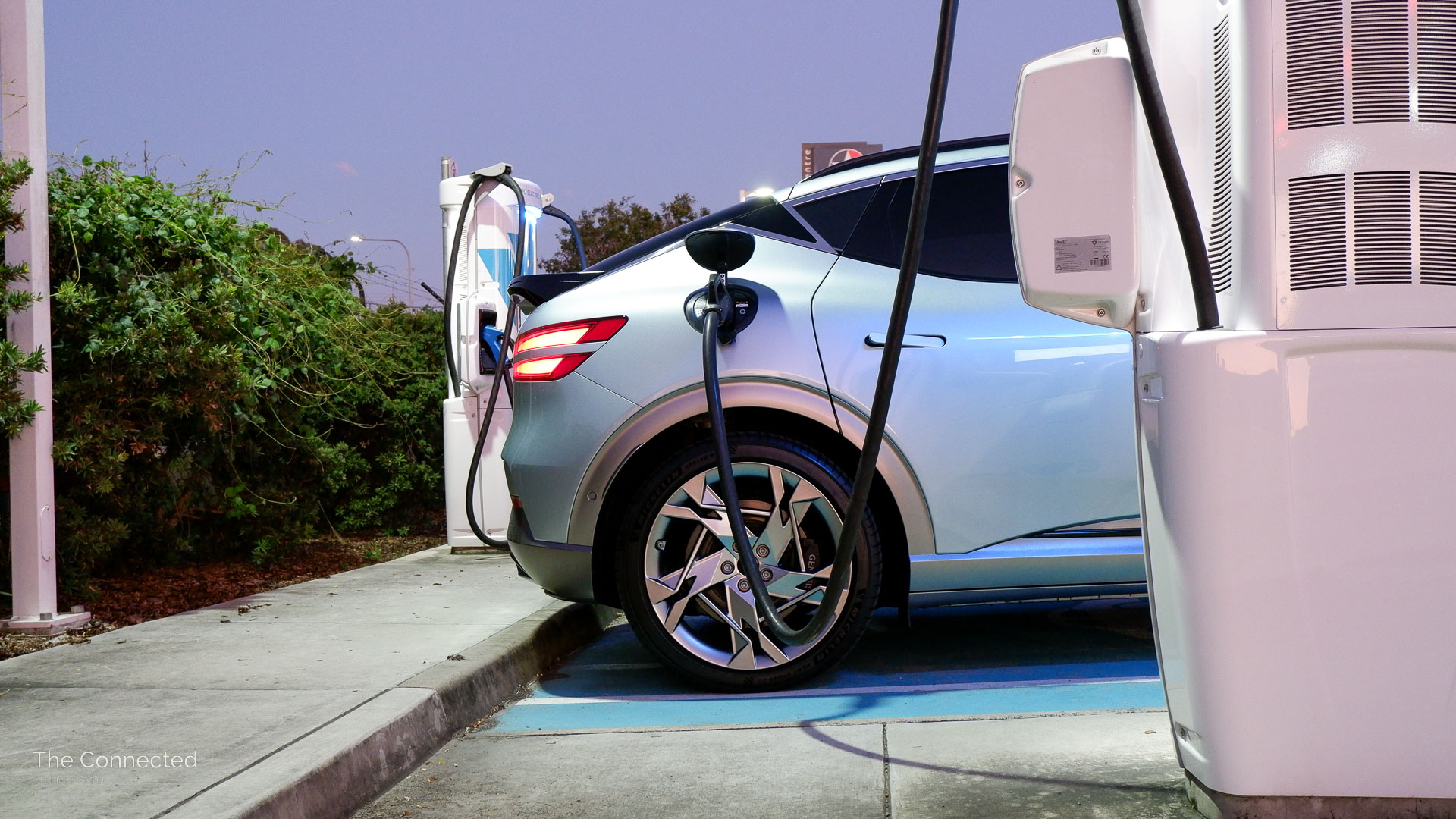
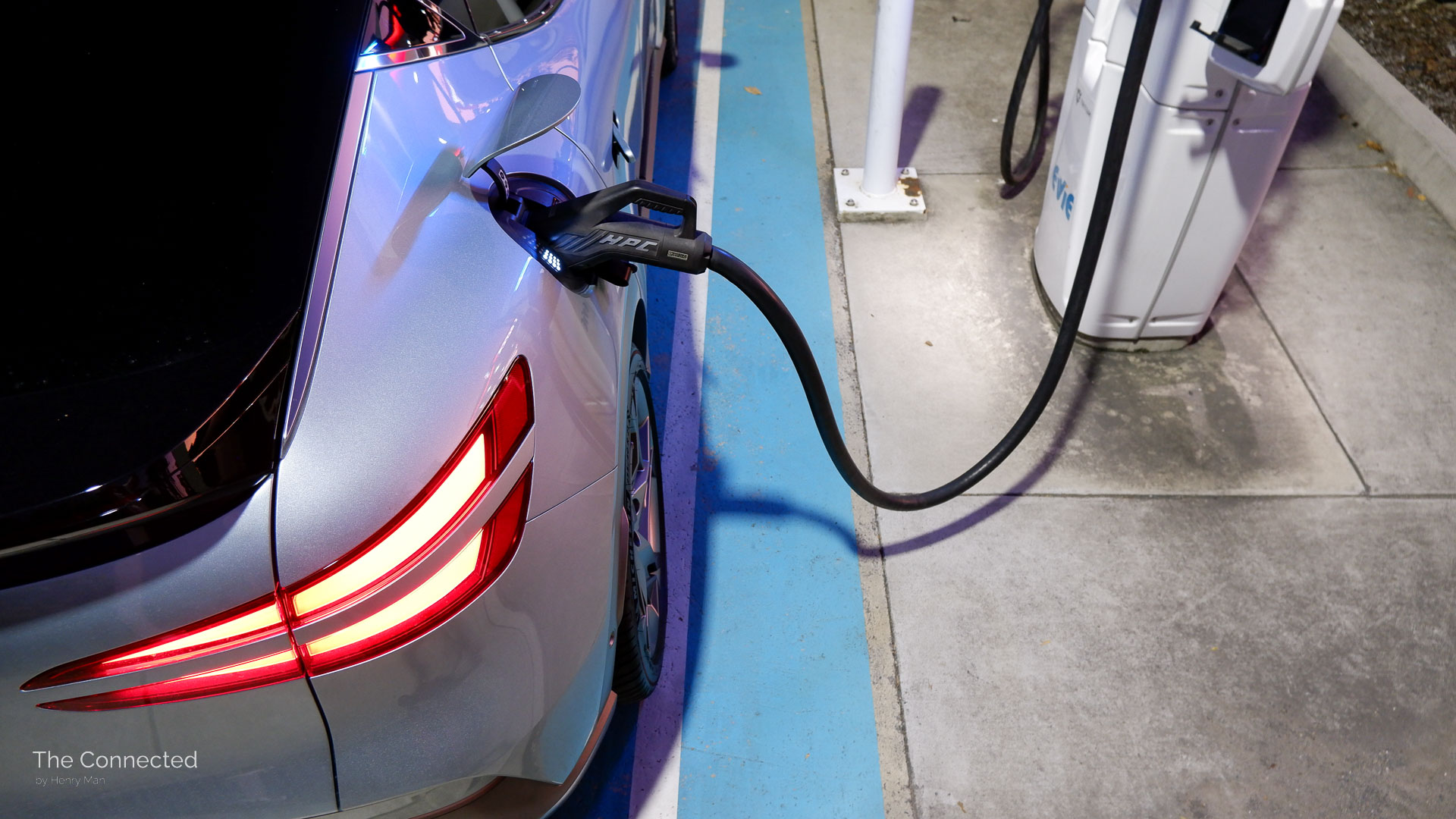
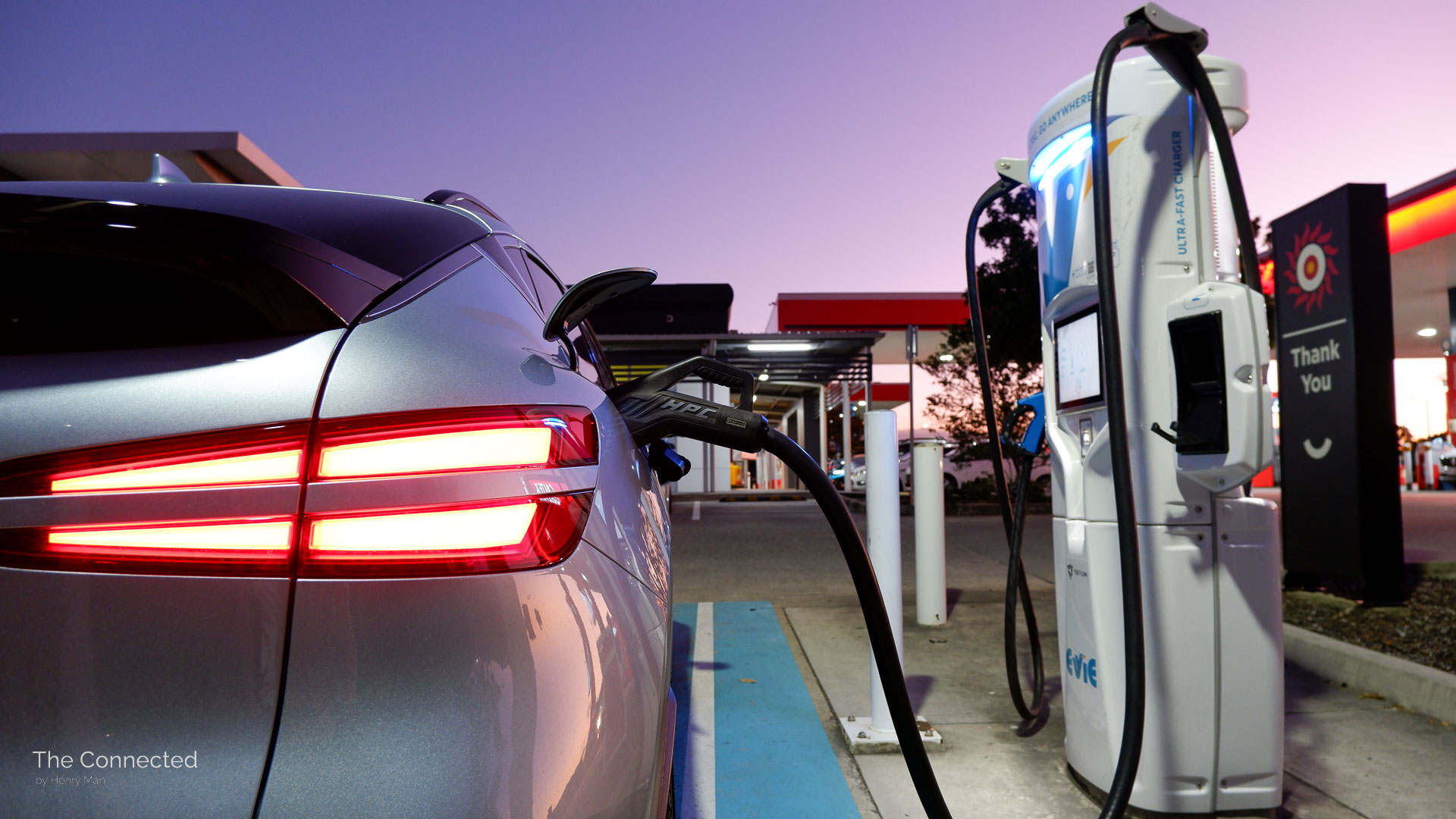
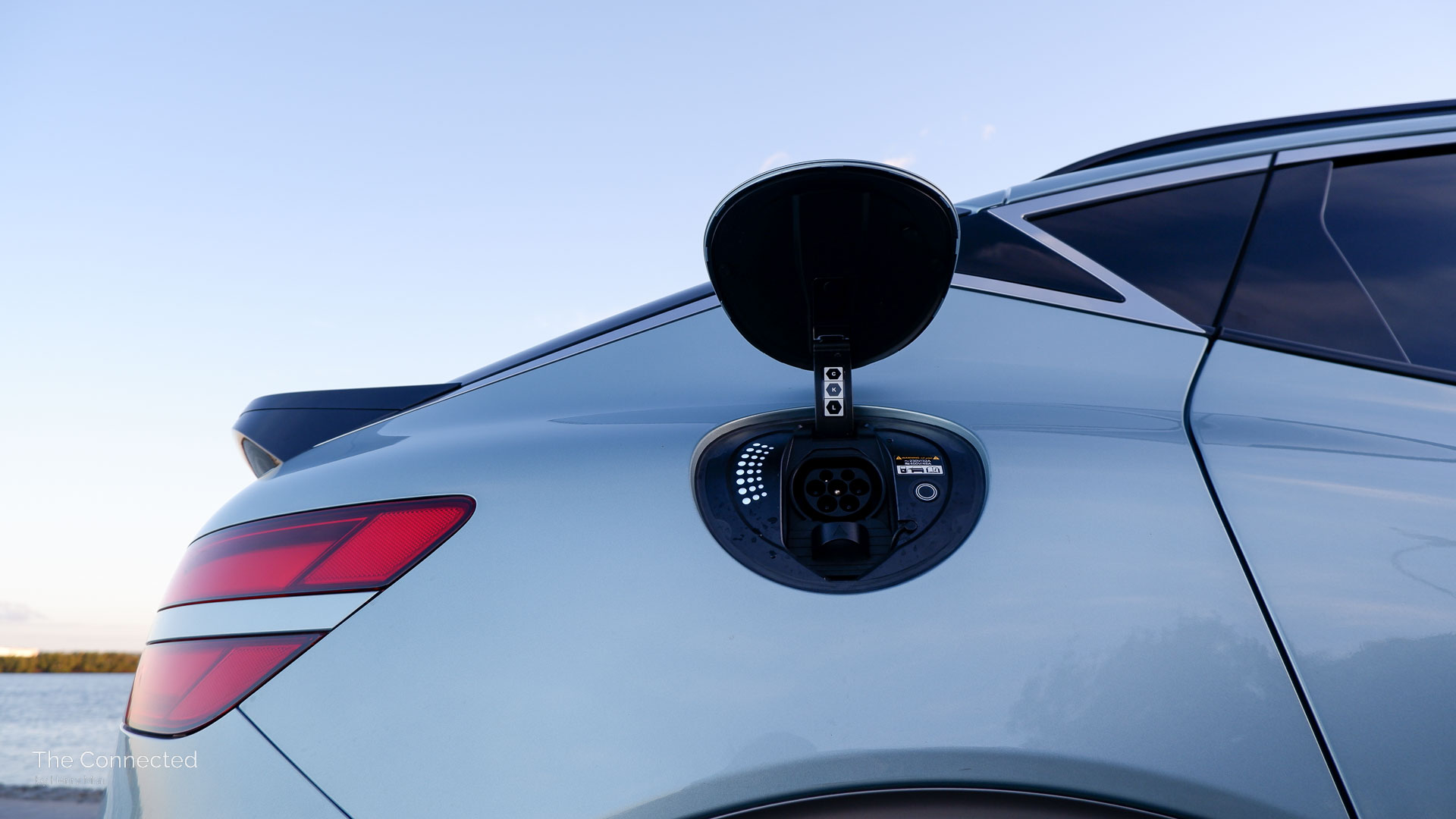
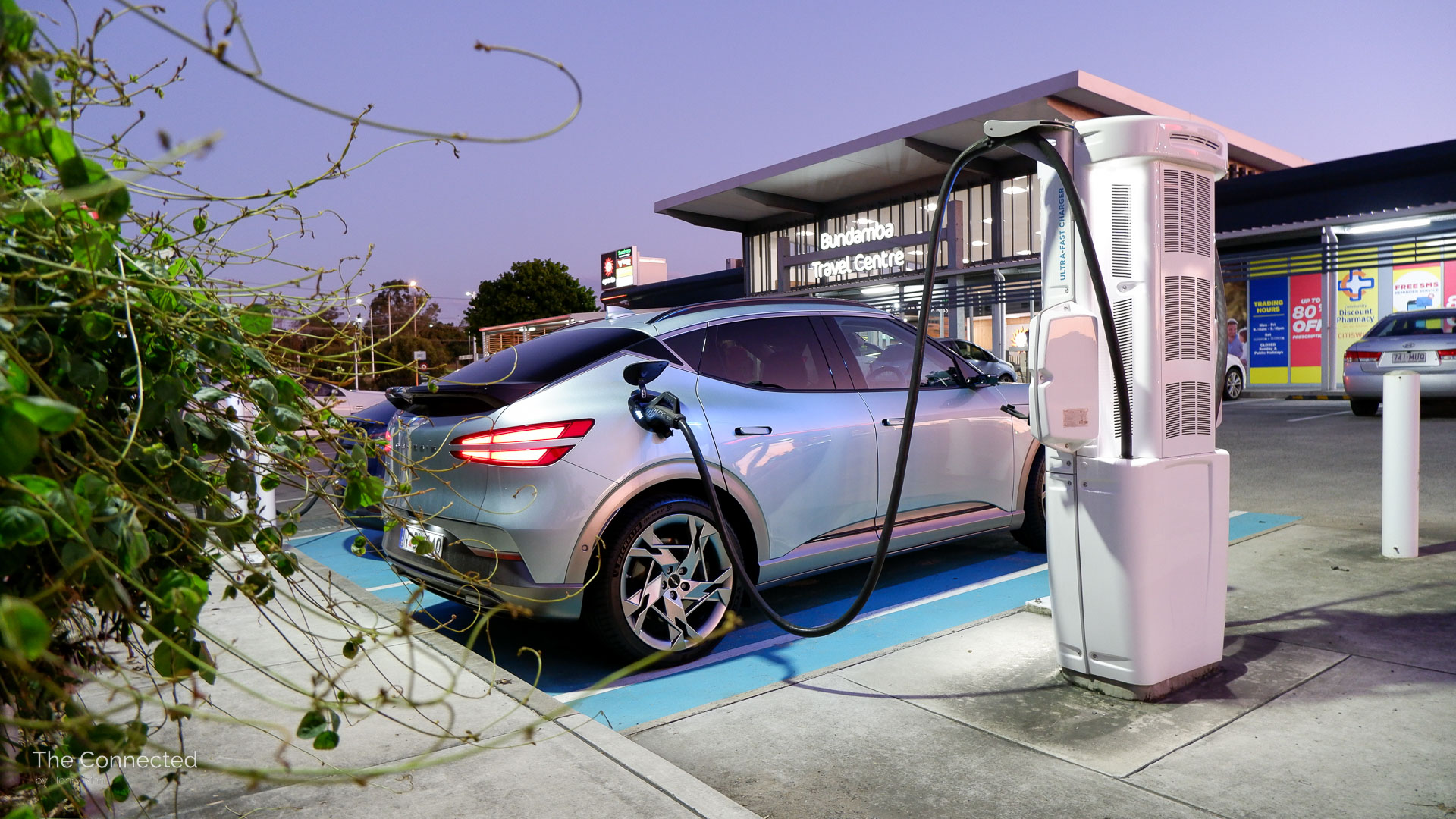
Meanwhile, the Type 2 CCS charging port is located at the rear-right quarter of the Genesis GV60. The lid electrically opens upwards with a DC cap and LED battery status indicators.
It’s a good accessible location – though you’ll need to be careful of the wider wheel haunches and higher charge port height when using those heavy and ungainly public fast charging stations.
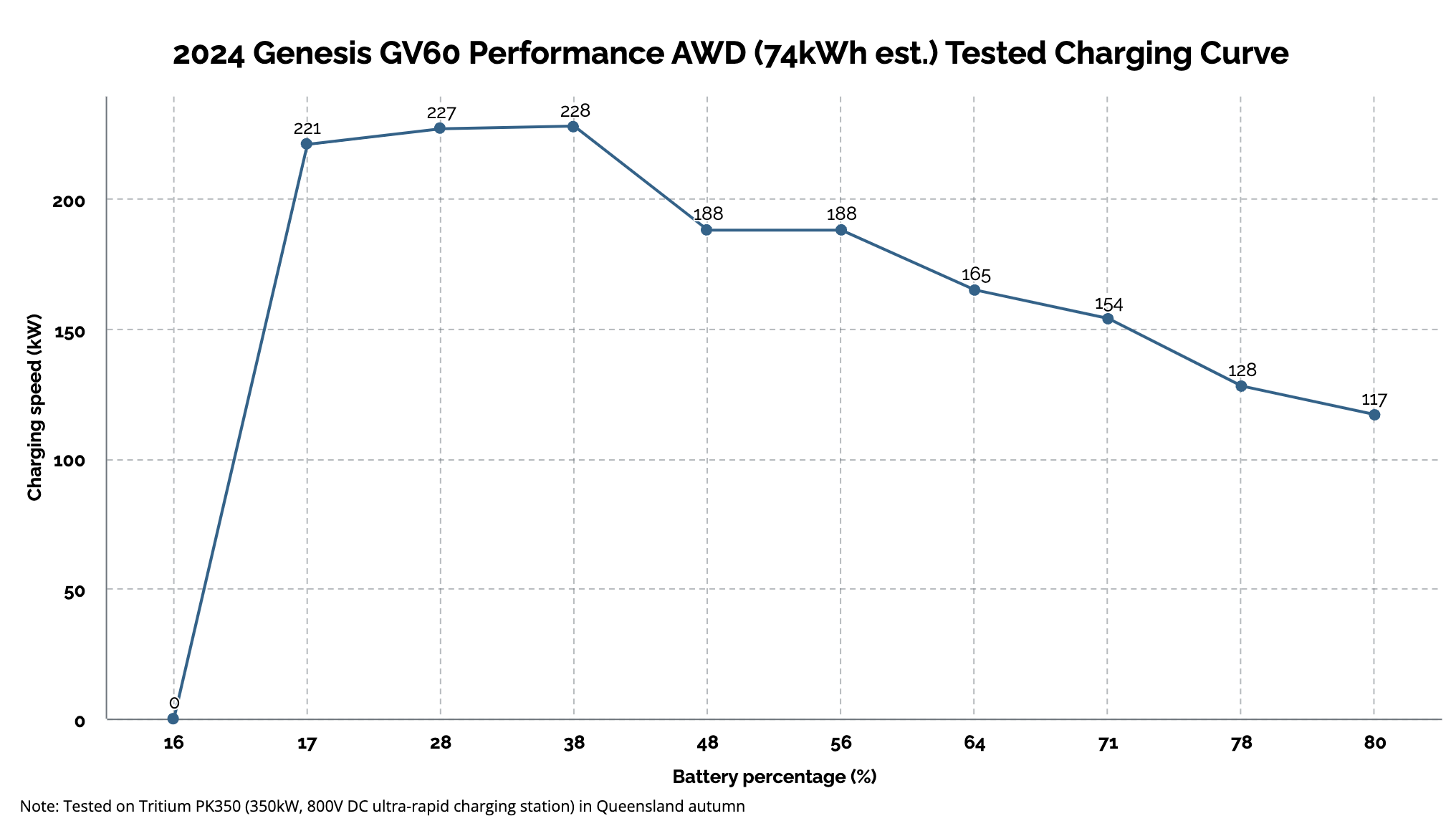
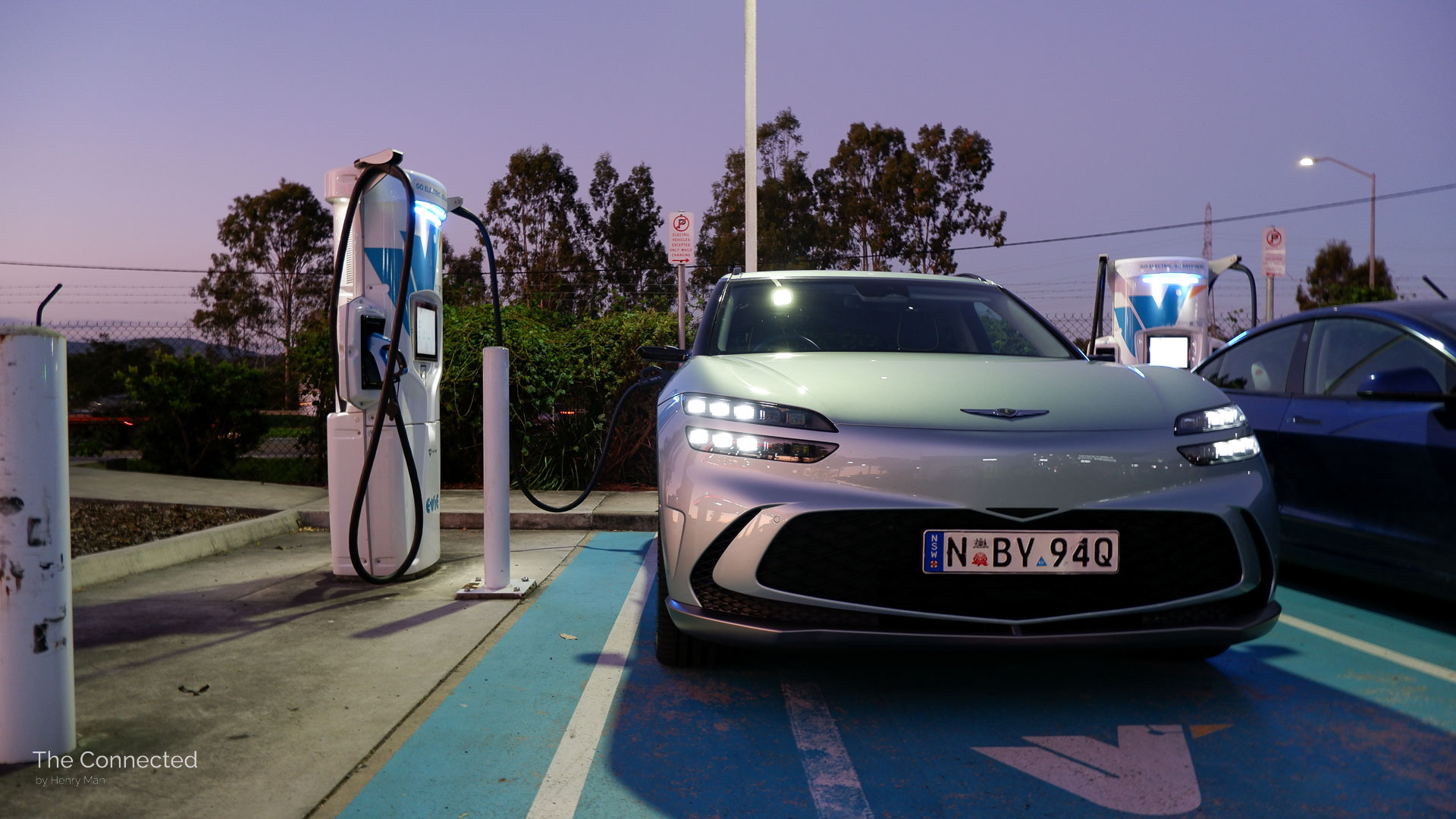
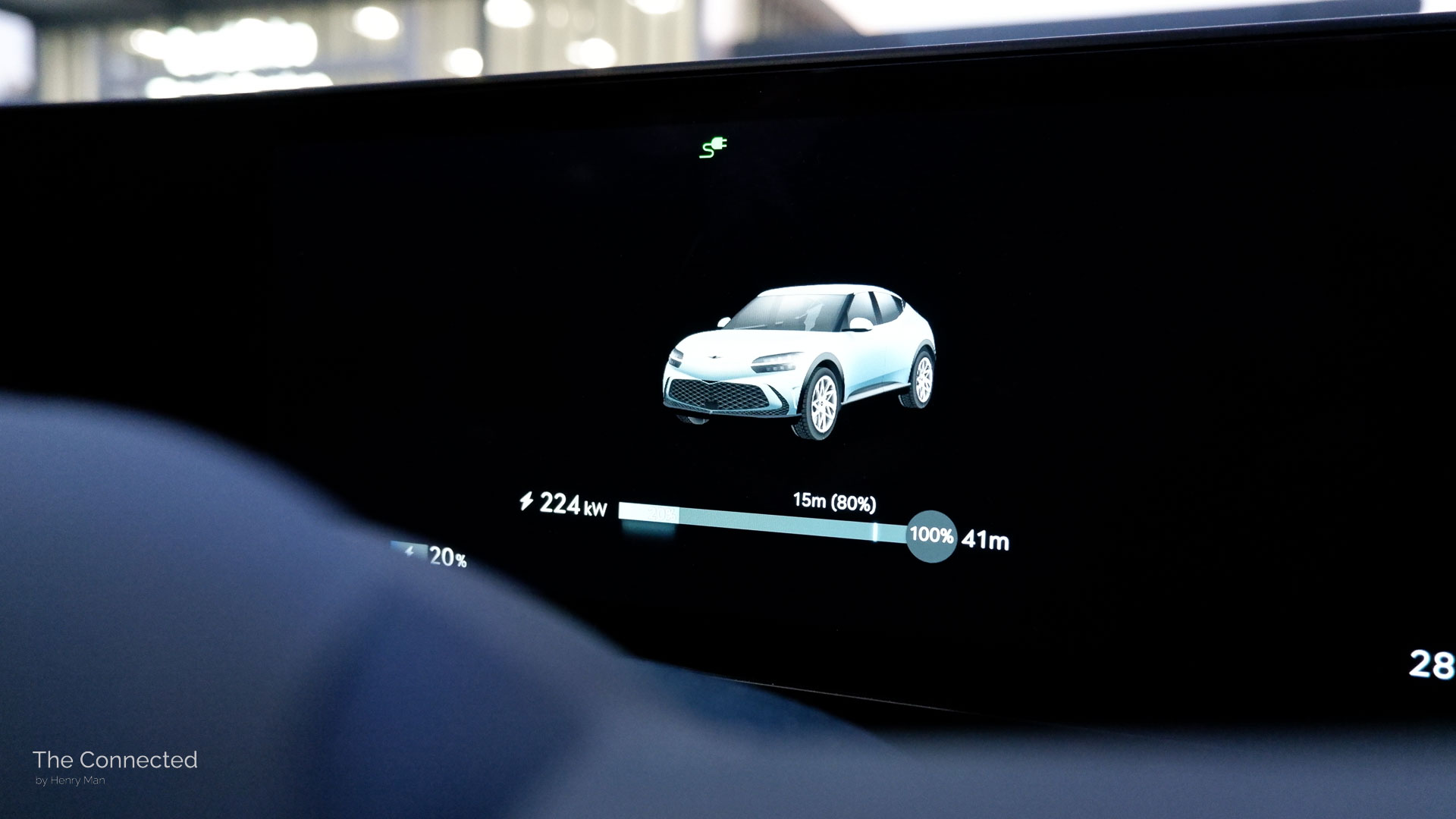
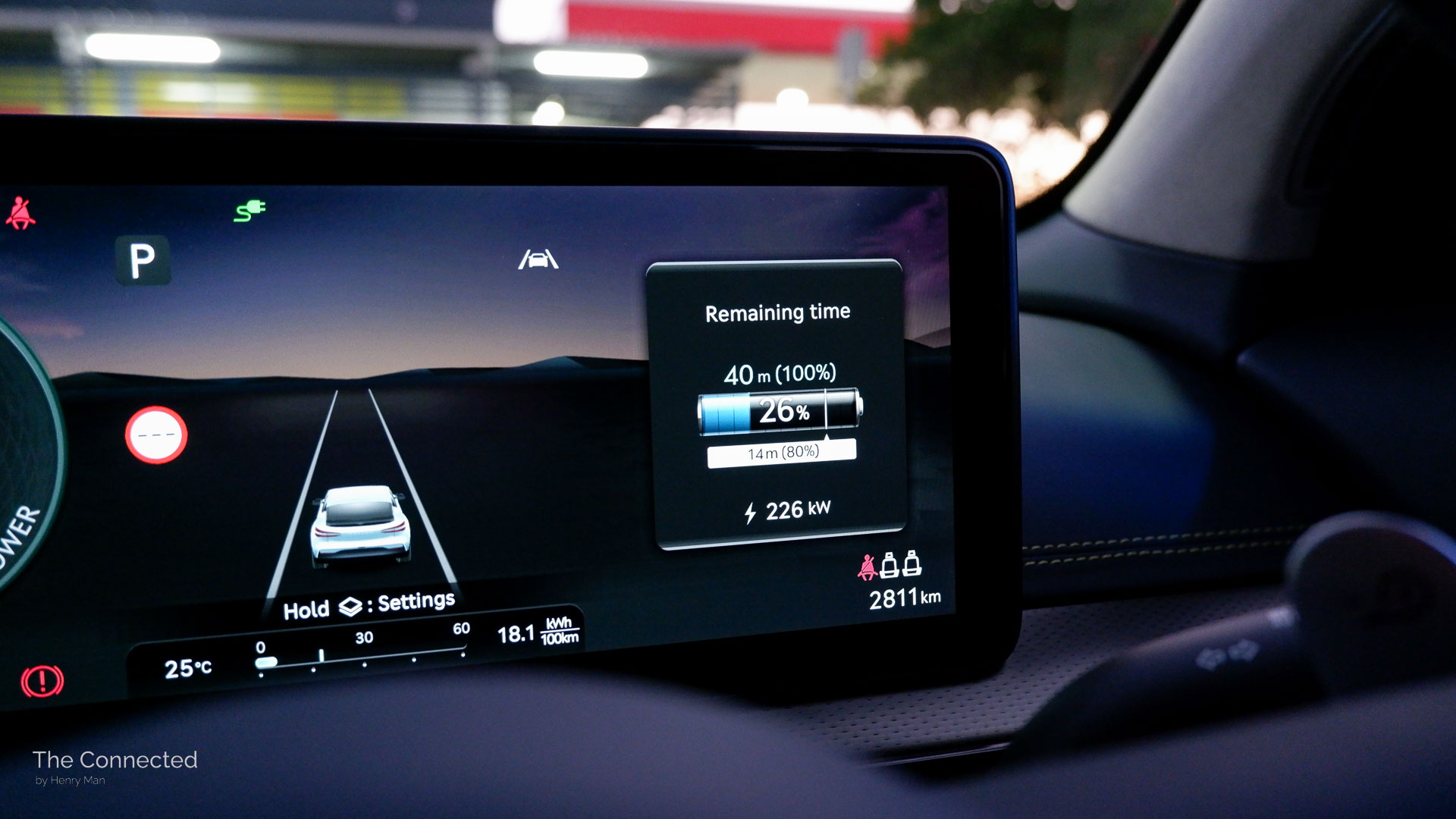
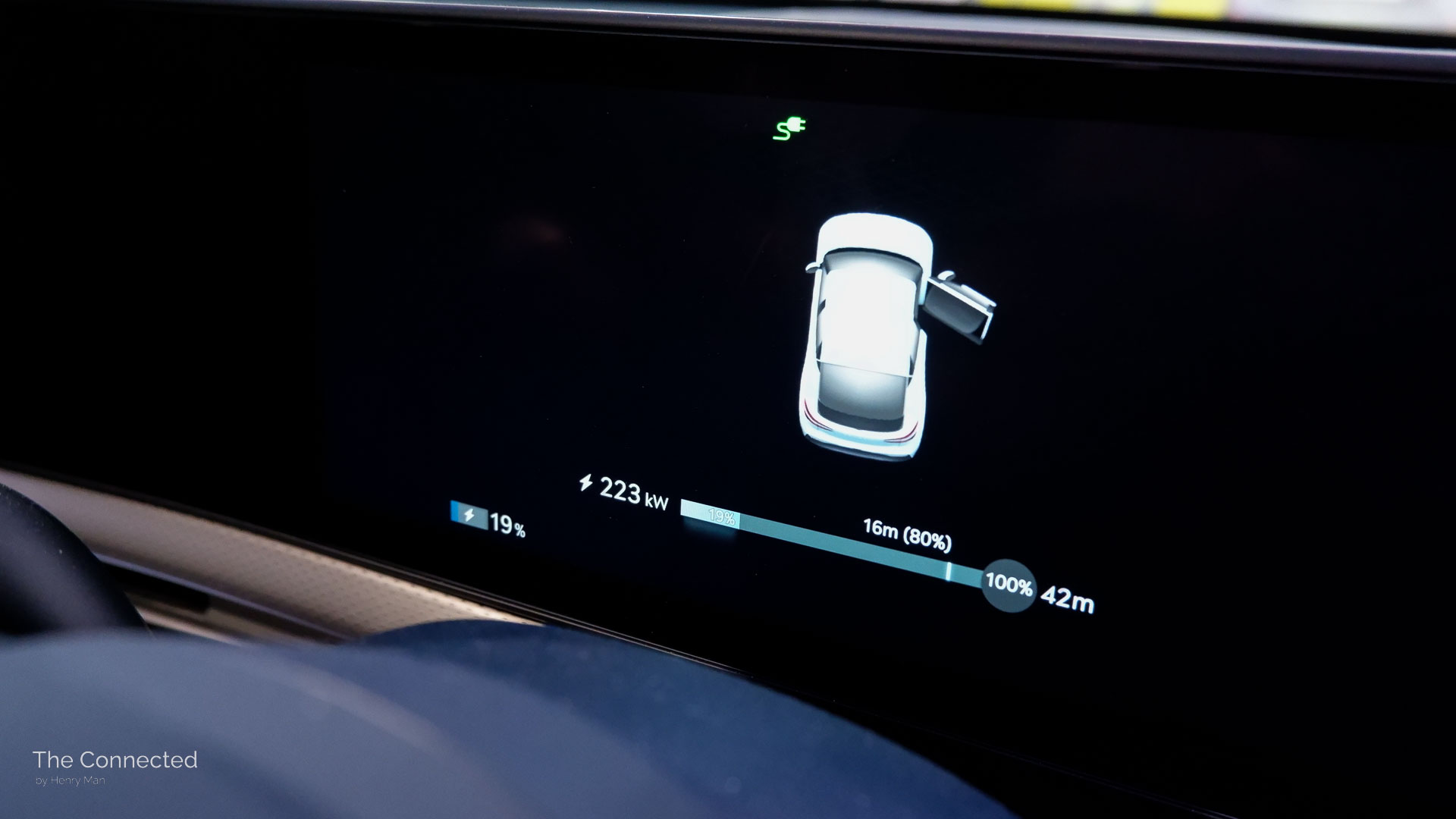
In our real-world charging test on a public ultra-fast 350kW DC charging station, the Genesis GV60 recharged from 16 to 80 per cent in just 15 minutes.
The charging session sustained a high rate over time – thanks to the 697-volt battery architecture – and averaged about 180kW DC. We observed a 229kW charging speed peak.
Battery preconditioning is available, but didn’t automatically activate in our experience when setting the charger on the navigation.
The company claims the GV60 from 10 to 80 per cent in around 73 minutes on the more commonly found 50kW DC fast chargers in Australia.
However, the ideal, convenient and cost-effective way to own an EV is charging at home.
Genesis claims using a standard three-pin socket will take about four nights to get from 10 to 80 per cent or within one night when using an installed 11kW three-phase home charging wall box.
Vehicle-to-load (V2L) is standard on the GV60 to power any device, using the interior power plug underneath the rear row or via the included Type 2 charging port adapter outside. Owners cannot use both at the same time, nor use V2L while charging the EV.
Driving.
2024 Genesis GV60 Performance AWD powertrain specs:
| Electric motor | Dual permanent magnet synchronous |
| Power | 320kW (standard) / 360kW (Boost mode) |
| Torque | 605Nm (standard) / 700Nm (Boost mode) |
| Transmission | Single-speed |
| Drive Type | AWD |
| Claimed 0-100km/h time | 4.6 seconds |
| Tare weight | 2210kg |
| Payload | ~450kg |
| Towing (unbraked / braked) | 750 / 1600kg |
The Genesis GV60 Performance AWD offers a rapid yet comfortable driving experience – but isn’t the best model to go for.
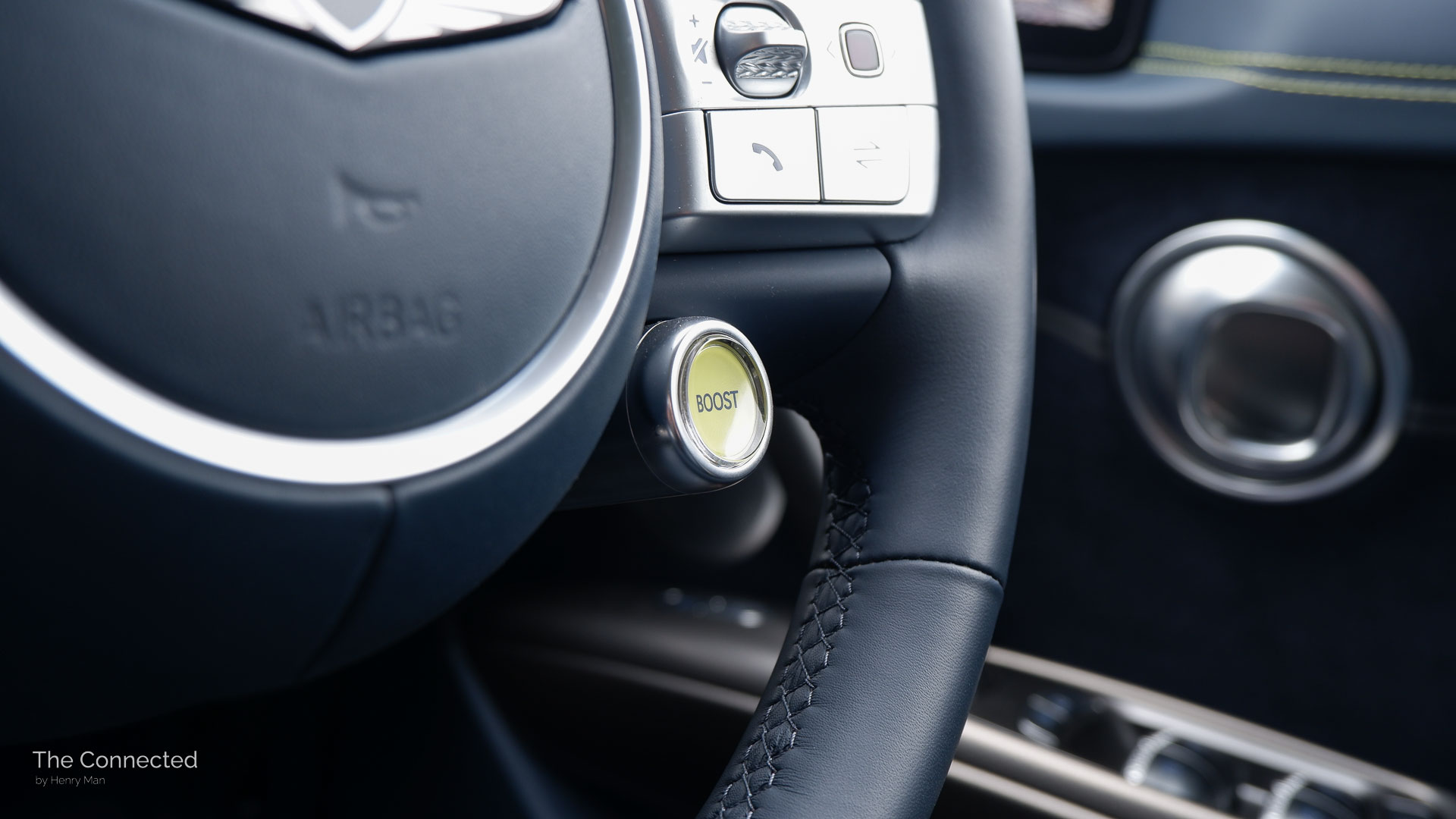
With two electric motors producing 320kW of power and 605Nm of torque, it’s already blisteringly fast in normal mode – but a press of the neon yellow boost button (dangerously) increases outputs to 360kW/605Nm for up to 10 seconds (which is more than enough time).
You’ll seriously need to be a responsible driver. The standard entry GV60 already provides more than enough power for public roads, while providing better energy efficiency.
The GV60 Performance AWD exclusively gains an electronically-controlled rear limited slip differential, adaptive electronically controlled suspension, monobloc front brakes, boost mode and, as part of the 2023 spec update, a Virtual Gear Shift (VGS) feature.
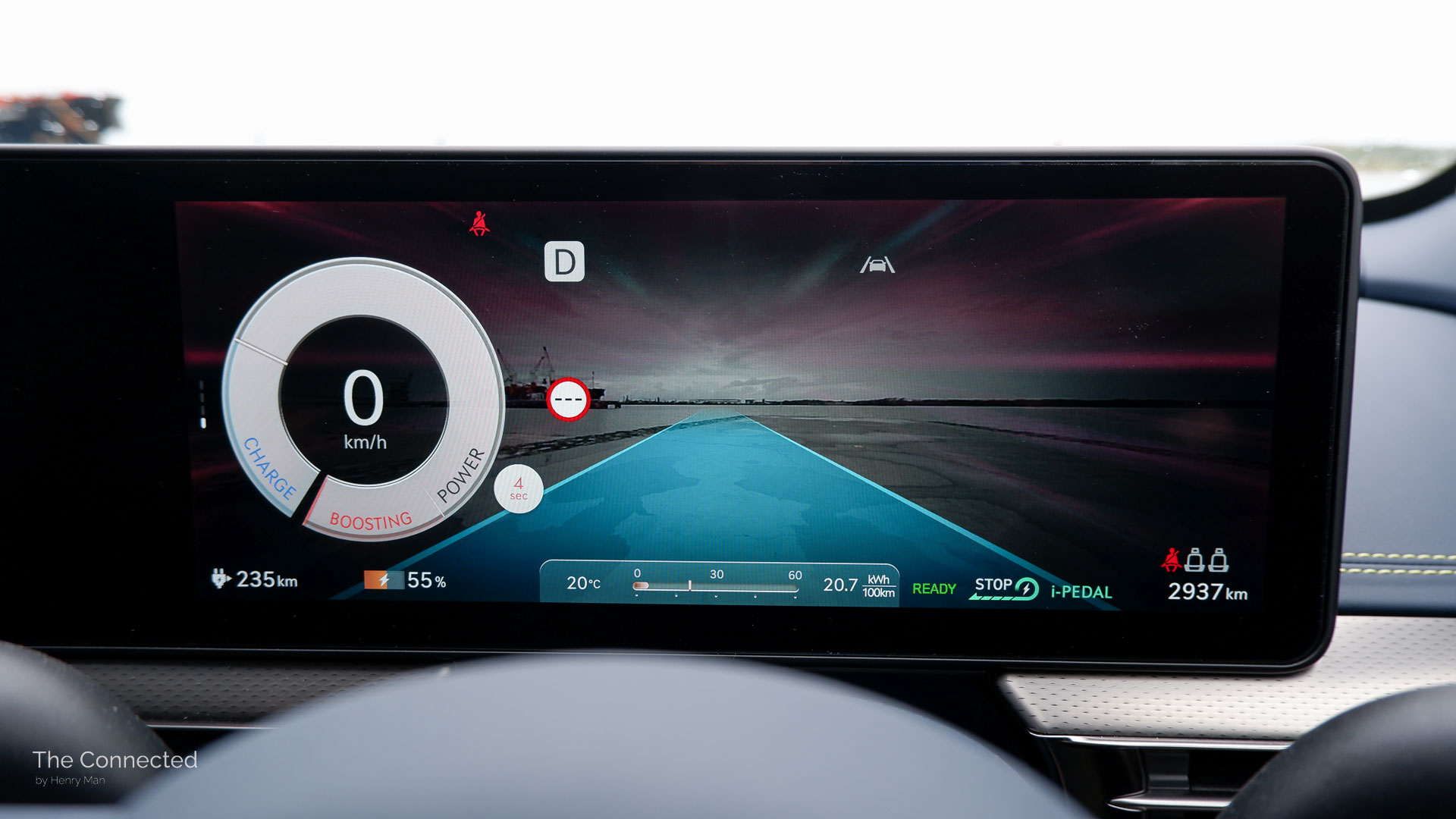
VGS disables the regenerative braking and transforms the steering wheel paddles to, as the name suggests, artificial gear shifters and pumps the ‘G-Engine’ noise into the interior. It’s a trick that’s now borrowed by the hot Hyundai Ioniq 5 N and is a clear attempt to keep the feel of the internal combustion engine alive.
Unfortunately, while it offers some nifty simulated jolts into the interior when shifting, the artificial engine sound doesn’t sound realistic enough and is more of a party trick.
The GV60 Performance’s steering rack is well weighted via the chunky bolstered leather steering wheel, but doesn’t provide as much driver engagement as some significantly cheaper rear-wheel driven EVs.
With active noise cancellation (ANC) and adaptive suspension, the GV60 offers a quiet and comfortable ride with good noise insulation and is compliant with poorly-paved roads – masking the larger low-profile 21-inch alloys fitted to the Performance.
However, the front seats don’t go low enough for me as a consequence of the underfloor battery and electric adjustment hardware. The higher SUV-style seat height doesn’t suit the sporty EV driving intentions of the GV60 Performance.
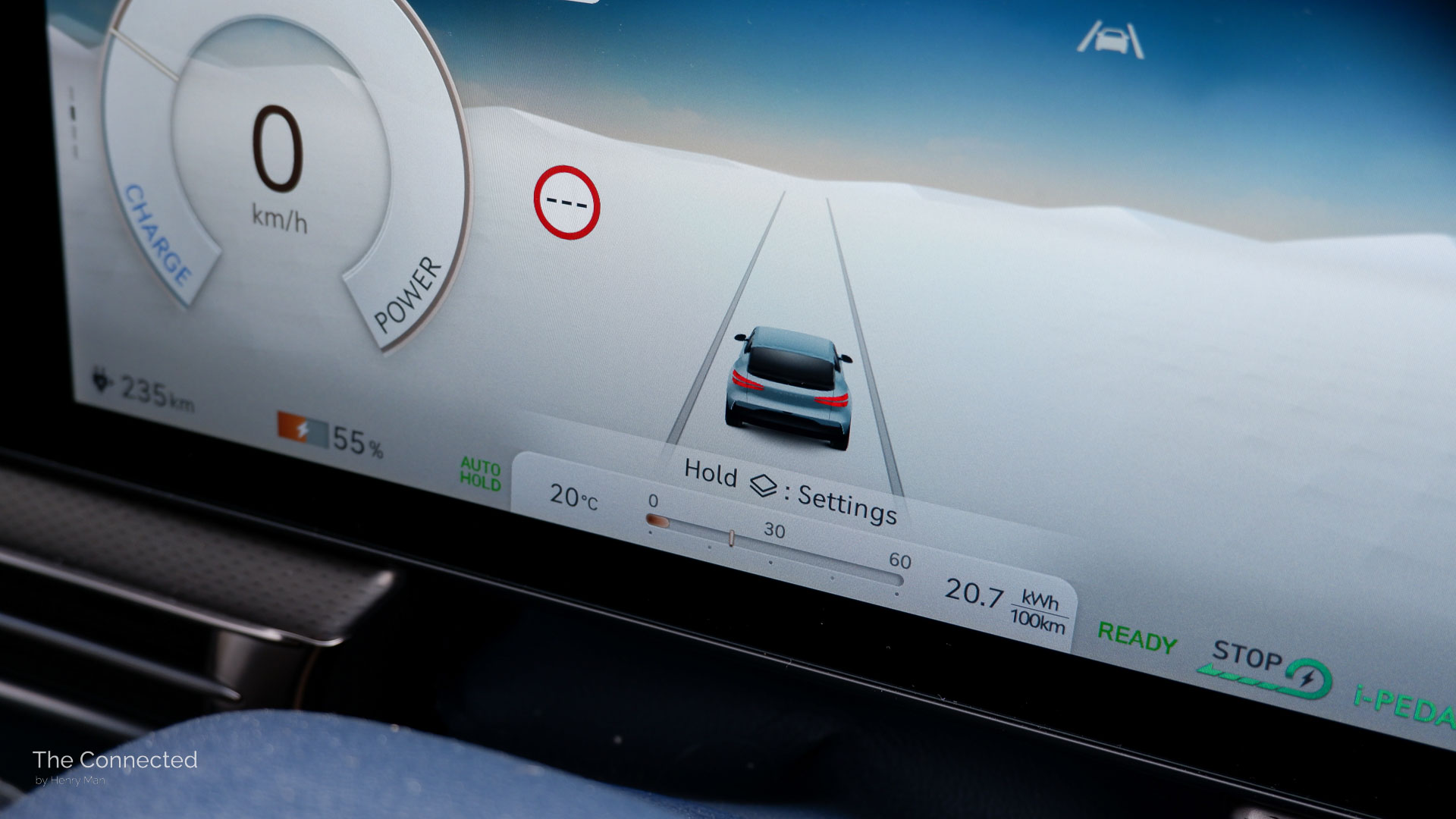
As per its Hyundai and Kia counterparts, the Genesis GV60 offers four regenerative braking level intensities adjusted via the steering wheel wheel paddles, from the ability to disable it completely to ‘i-Pedal’ which brings the vehicle to a complete stop without touching the brake pedal.
Importantly, even with the latest April 2024 OTA software update, the GV60 still doesn’t keep the rear brake lights on when completely stopped – which has been addressed in newer models such as the Kia EV9 electric SUV. Drivers must still use the brake pedal.
The instrument cluster now displays whether the brake lights are illuminated while regenerating braking thanks to the OTA update, though.
Three artificial driving sounds are available, including Futuristic, G-Engine, and E-Motor. All are rather annoying and disrupt the otherwise quiet and serene EV driving experience.
The Genesis GV60 is the smallest compared to its Hyundai Ioniq 5 and Kia EV6 siblings, making it a good size to manoeuvre around urban roads – though the 11.94-metre turning circle could be improved.
Warranty and servicing.
2024 Genesis GV60 Performance AWD capped-price servicing prices:
| 1 year/15,000km | 2 years/30,000km | 3 years/45,000km | 4 years/60,000km | 5 years/75,000km |
|---|---|---|---|---|
| Free-of-charge | Free-of-charge | Free-of-charge | Free-of-charge | Free-of-charge |
The Genesis GV60 is covered by a five-year, unlimited kilometre vehicle warranty and an eight-year/160,000km battery warranty.
The luxury car brand bundles generous ownership inclusions for new Genesis EV buyers.
This includes up to five years/75,000 km free scheduled servicing, with a guaranteed loan car and pick up/drop off service, and the choice of a free five-year Chargefox public charging network subscription or a free 7.2KW AC Genesis branded home charging station (including standard installation fees).
These perks are welcome inclusions to help ease the transition into EVs – and we applaud Genesis Motor Australia for still offering it two years after the GV60’s launch.
Unlike Hyundai, servicing is required every one year/15,000km – with the first five visits being free-of-charge.
Premium roadside assistance cover is included for up to 10 years, provided the vehicle is serviced with Genesis every time.
Genesis Connected Services (GCS) lasts for up to five years. The company hasn’t detailed the subsequent subscription cost yet to maintain built-in cellular and mobile app connectivity.
As per most EVs, the GV60 doesn’t include any spare tyre with only a temporary tyre patch-up kit included underneath the boot floor.
Price & rivals.
2024 Genesis GV60 model range pricing (excluding on-road costs):
| AWD | Performance AWD |
|---|---|
| $104,000 | $111,000 |
The Genesis GV60 luxury electric car is priced from $104,000 before on-road costs in Australia. Only two models are sold locally – and both aren’t eligible for most EV incentives and are subject to the Luxury Car Tax (LCT).
Genesis adopts a non-negotiable, fixed-price approach and buyers can customise the GV60 via its ‘Build to Order’ system.
Most features are standard on all GV60s, with the only options being free-of-charge glossy exterior colours or an $1000 extra for matte colours, and a variety of free-of-charge interior colour styles which differ between the entry AWD and flagship Performance AWD.
As tested, the Genesis GV60 Performance AWD is about $123K drive-away (depending on the state). It’s $7K more than the entry AWD – but isn’t worth the extra cost for most as the standard GV60 shares most features as standard, offers more than enough power for daily driving, and has more driving range.
The Genesis GV60 Performance AWD directly competes with a range of performance-focused EVs:
- Tesla Model Y Performance – from $82,900
- Polestar 4 Long Range Dual Motor – from $92,150
- Kia EV6 GT – from $99,590 (full review)
- Ford Mustang Mach-E GT – from $104,900
- Hyundai Ioniq 5 N – from $111,000
However, while these are similarly-priced, they’re mostly from mainstream brands, with EVs from the rival luxury badges offering substantially less power than the GV60 Performance.
Other alternatives to the Genesis GV60 include:
- BMW iX3 – from $89,100
- Mercedes-Benz EQB – from $89,100
- Lexus RZ – from $121,675
- Jaguar i-Pace – from $147,475
Would I pick the 2024 Genesis GV60 Performance AWD?
The Genesis GV60 is an upmarket EV that’s impressively good value compared to its high performance rivals. Unfortunately, it’s been underrated.
It offers plenty of power, a modern luxurious interior, a comfortable and quiet driving experience, and generous ownership inclusions such as free servicing and charging perks. The 2023 GV60 update has also (finally) added connected tech – which really should’ve been included at launch.
However, the Performance AWD as tested has unimpressive tested driving range, there’s still no wireless Apple CarPlay and Android Auto, no digital camera rear-view mirror to compensate for the compromised window visibility, and the higher SUV-style seating position doesn’t suit the otherwise sporty premium EV.
For the price of the flagship GV60 Performance AWD, it’s relatively good value as similarly-priced performance electric cars mainly from mainstream brands – such as the Kia EV6 GT, Ford Mustang Mach-E GT, and Hyundai Ioniq 5 N – except for the Tesla Model Y Performance and Polestar 4 Long Range Dual Motor.
The closest rival to the Genesis GV60, the Lexus RZ crossover, is also at least $10K more expensive than the Performance in base model RZ450e Luxury form, but has notably less power, claimed driving range, and standard features.
I’d pick the entry-level Genesis GV60 AWD. It shares all features with the Performance, but with less (still more than enough) power, slightly more range, and costs $7K less.
While a facelift is expected to debut soon, likely with styling, tech and battery changes, the current model still holds up well today.
It’s a real shame that the GV60 hasn’t been a sales success globally, as it’s a fantastic choice for those seeking a more upmarket, unique and unconventional luxury EV.
Photographs by Henry Man
READ MORE: 2024 Kia EV9 review: Made for Australia?
READ MORE: 2023 Kia EV6 GT review: True electric GT?
READ MORE: Can’t start charging an electric car? Here’s your guide.
About the Author.
Henry Man is an independent content producer passionate about the intersection of technology and transportation.
The former automotive journalist is focused on producing critically-detailed vehicle reviews, and unique short-form content. Learn more.


 The Connected by Henry Man