
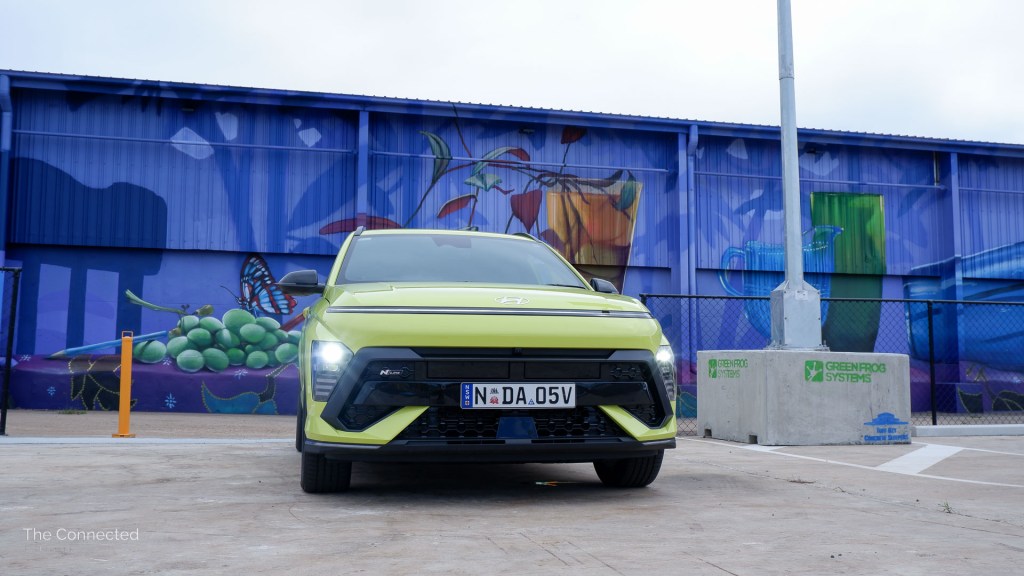
Hyundai claims its new Kona Hybrid small SUV can deliver low fuel consumption. But does it hold true in reality?
Using the combination of a 1.6-litre naturally aspirated petrol engine with a small electric motor and 1.32kWh (gross) lithium-ion battery, the series-parallel hybrid SUV is said to be able to achieve 3.9L/100km fuel efficiency on the combined cycle.
That equates to 974km claimed driving range from its smaller 38-litre fuel tank, while emitting just 88g/km of carbon dioxide.
We tested the 2024 Hyundai Kona Hybrid to find out what its real-world range and fuel consumption is like. Read the full critically detailed review here.
NOTE: The press vehicle was provided by Hyundai Motor Australia for a seven-day independent evaluation. We have no commercial arrangements with the company and it had no editorial control.

How much fuel does the Kona Hybrid use?
After a week of heavy traffic urban and highway driving, the hybrid small SUV returned a 5.0L/100km tested fuel efficiency.
This equates to about 700km real-world driving range from the Kona Hybrid’s smaller 38-litre fuel tank. As per the regular model, the hybrid can consume cheaper 94 RON E10 unleaded petrol.
Hybrids address one of the most inefficient parts of driving with a combustion engine: braking – while being more efficient in urban stop-start traffic environments by regularly disabling the petrol engine from running.
The small lithium-ion battery constantly recharges thanks to the engine and regenerative braking and, unless you’re always going uphill, there’s always at least 50 per cent charge. Fortunately, the battery management system doesn’t let the pack go below 20 per cent and above 80 per cent – which is ideal for the longevity of lithium-ion type batteries.


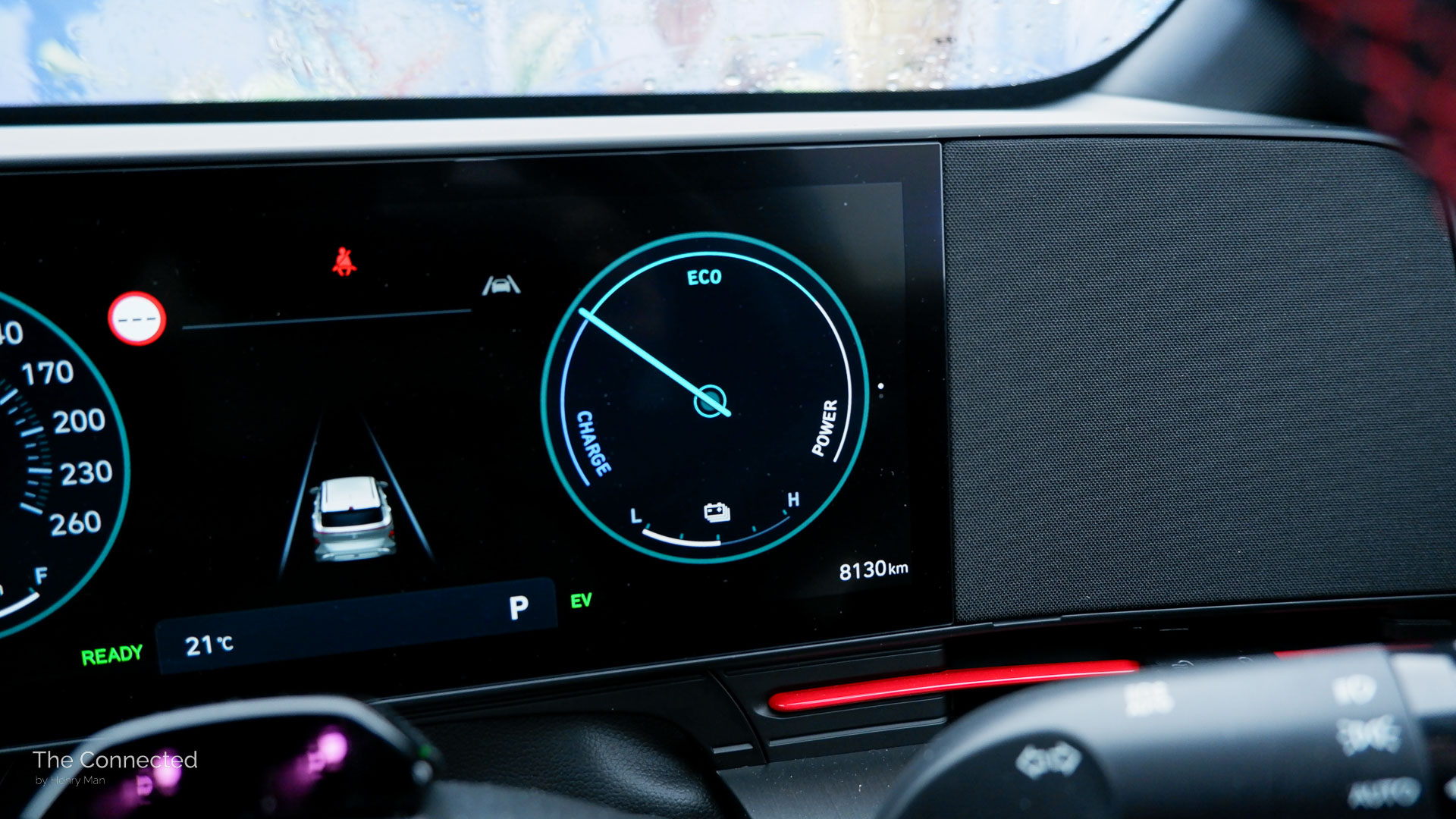
While the tested fuel consumption is notably far off Hyundai’s 3.9L/100km claim, I could meet that low figure on some trips with more stop-start traffic (using electric-only mode more), lower urban speeds and keeping a light foot on the accelerator.
Based on our experience with the standard 2.0-litre petrol engine’s fuel consumption, it would take almost two years to pay back the $4000 premium for the hybrid – assuming an owner drives 15,000km per year with fuel costing $2.00 per litre.
Moreover, the Kona Hybrid’s fuel tank volume is also nine litres less than regular petrol-only variants, which means it can’t offer as much ultra-long range – unlike the previous-gen Hyundai Santa Fe Hybrid which doesn’t compromise on the tank volume.
The fuel lid is at the rear-left quarter and is positioned higher above the wheel arches, making it accessible for inserting often heavy and inflexible fuel pump cables. The cap also twists and locks easily thanks to a spring-loaded mechanism.
For the full rundown, read our full detailed 2024 Hyundai Kona Hybrid N Line Premium review.

Is the 2024 Hyundai Kona Hybrid fuel efficient?
The Hyundai Kona Hybrid is an impressively efficient, practical and feature-packed small SUV.
The hybrid powertrain represents an excellent stopgap for those who aren’t ready to make the full electric switch yet, and is more enjoyable to drive than the standard petrol engine.
While it costs $4000 more, it can quickly be paid back over time by pumping less petrol at the pump – amid continued record high fuel prices.
I’d recommend sticking to the base Kona Hybrid as the better value model, but there are a variety of hybrid small SUVs to consider – including the Toyota Corolla Cross, GWM Haval Jolion Hybrid, and Nissan Qashqai e-Power.
Photographs by Henry Man
READ MORE: 2024 Volkswagen T-Roc review: Best of VW?
READ MORE: 2024 Kia Seltos review: Now on brand.
READ MORE: How much fuel do electric cars use?
About the Author.
Henry Man is an independent content producer passionate about the intersection of technology and transportation.
The former automotive journalist is focused on producing critically-detailed vehicle reviews, and unique short-form content. Learn more.


 The Connected by Henry Man