
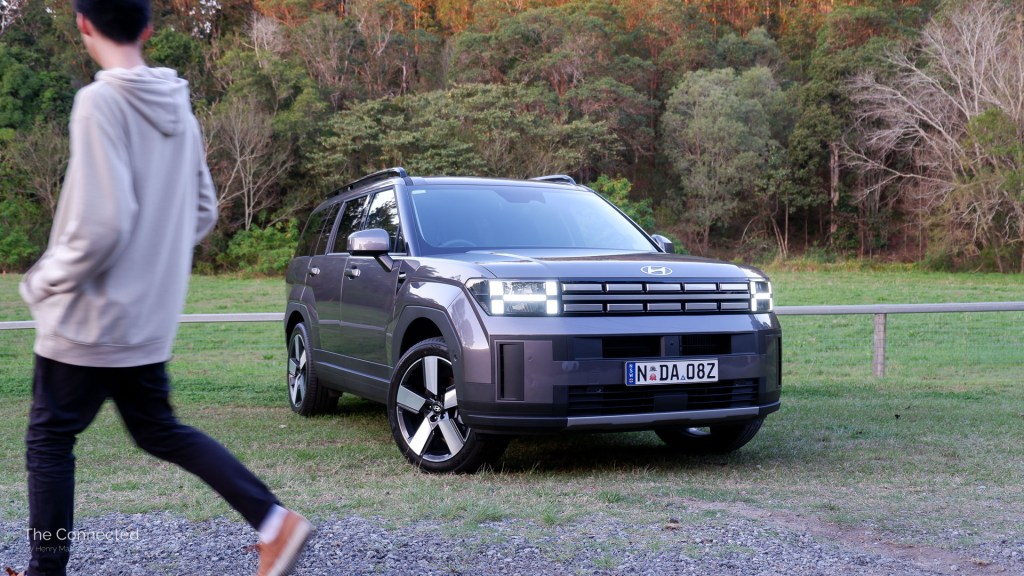
Could the all-new Hyundai Santa Fe Hybrid in entry-level form be the best value seven-seat SUV yet?
The fifth-generation Santa Fe is like no Hyundai SUV from before.
With a futuristic boxy design, larger interior and a petrol-electric hybrid engine option instead of tried and true diesel, the South Korean large SUV represents a significant departure from its predecessor.
Starting from just ~$60K drive-away for the base Santa Fe Hybrid front-wheel drive (FWD) with a long list of standard features, is this be the best seven-seat SUV of the year?
NOTE: The press vehicle was provided by Hyundai Australia for a seven-day independent evaluation. We have no commercial arrangements with the company and it had no editorial control.


Pros.
+ Value-packed base model
+ Genuinely fuel-efficient hybrid
+ Practical interior
+ Third-row airbag coverage
+ Bold unique design
Cons.
– Cannot store boot cover due to the battery
– Tight boot behind third row
– Light blended brake pedal
– No disable speed limit warning shortcut yet
– Arguably polarising design
Vehicle tested:
| Model | 2025 Hyundai Sante Fe Hybrid |
| Variant | Santa Fe FWD (entry level) |
| Starting price | $55,500 before on-road costs |
| Exterior colour | Magnetic Force (+$695) |
| Interior colour | Obsidian Black with premium cloth seats |
| Country made | South Korea |

Design and quality.
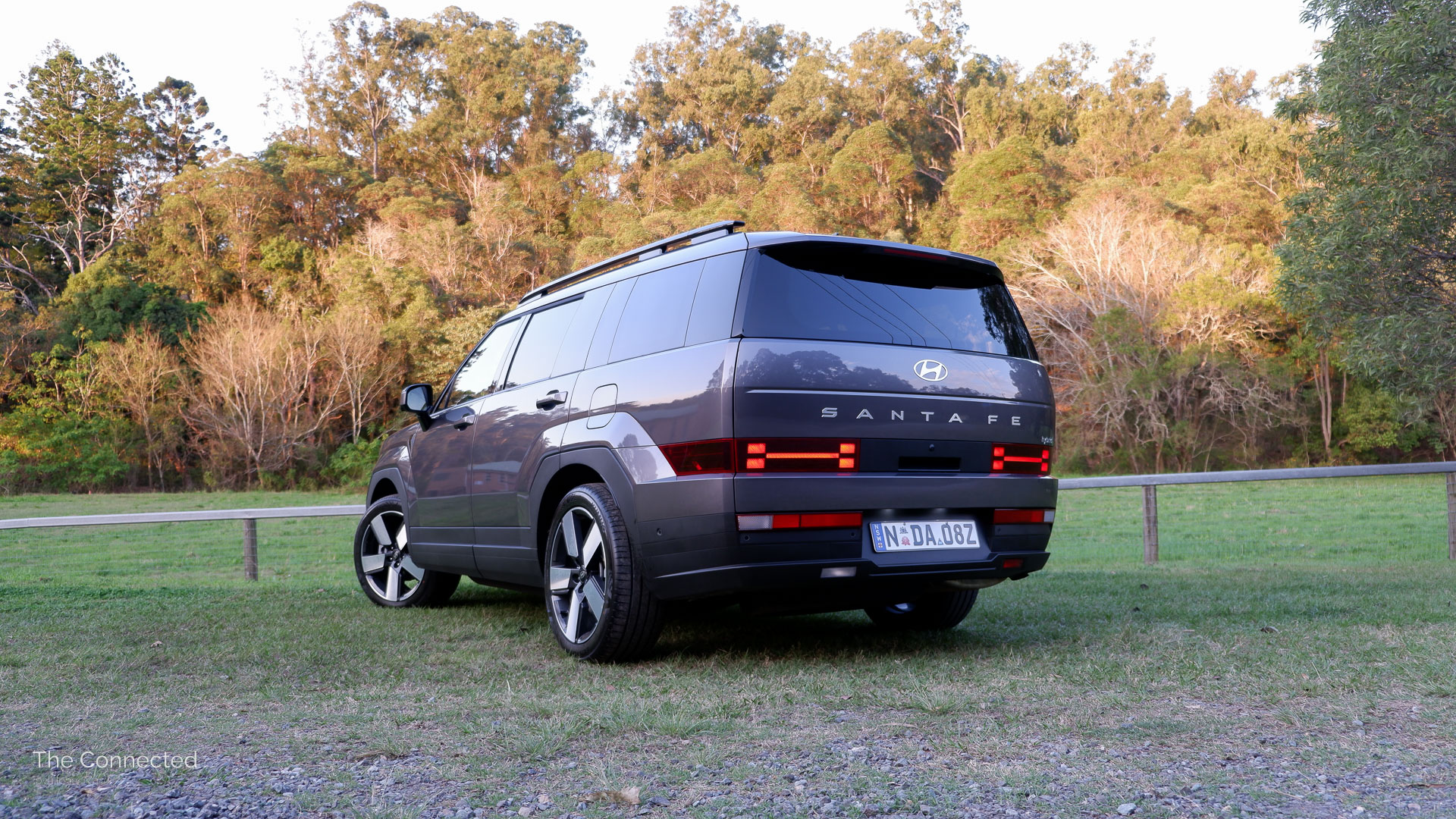
Call the new Santa Fe a copycat, but Hyundai has incorporated design elements to make it feel unique and futuristic.
There’s no denying that the 2025 Hyundai Santa Fe is South Korea’s interpretation of the Land Rover Defender, with a boxy body, bold 20-inch wheels, and even a side gloss black garnish with ‘Santa Fe’ lettering.
The tame colour palette reinforces the outdoor lifestyle oriented design.
Yet, the H-shaped motifs – including the front LED daytime running lights, front bumper, and tail-lights – makes it look more special (while constantly reminding you that it’s a Hyundai). Gone is the Santa Fe sun emblem, though.
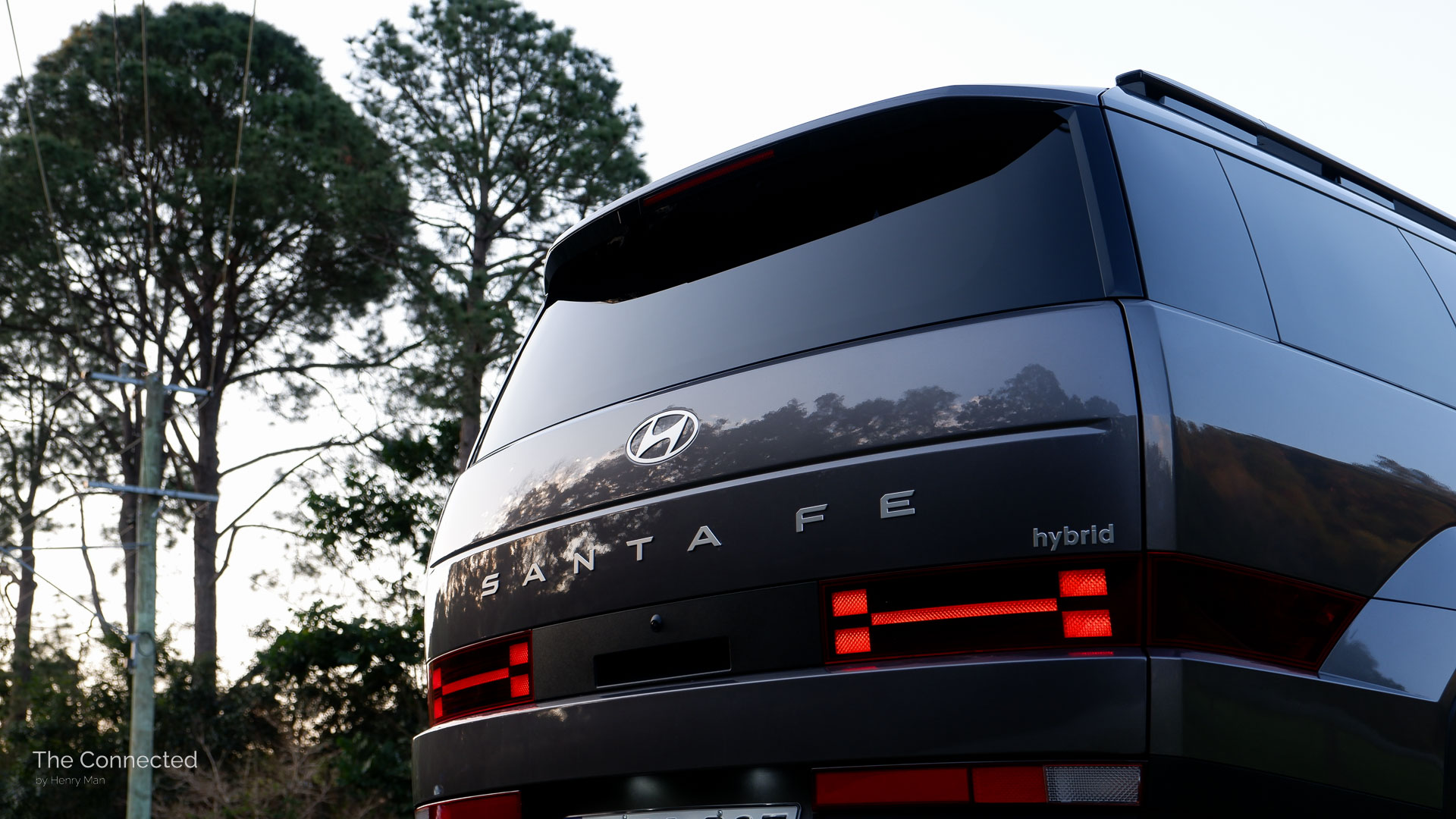
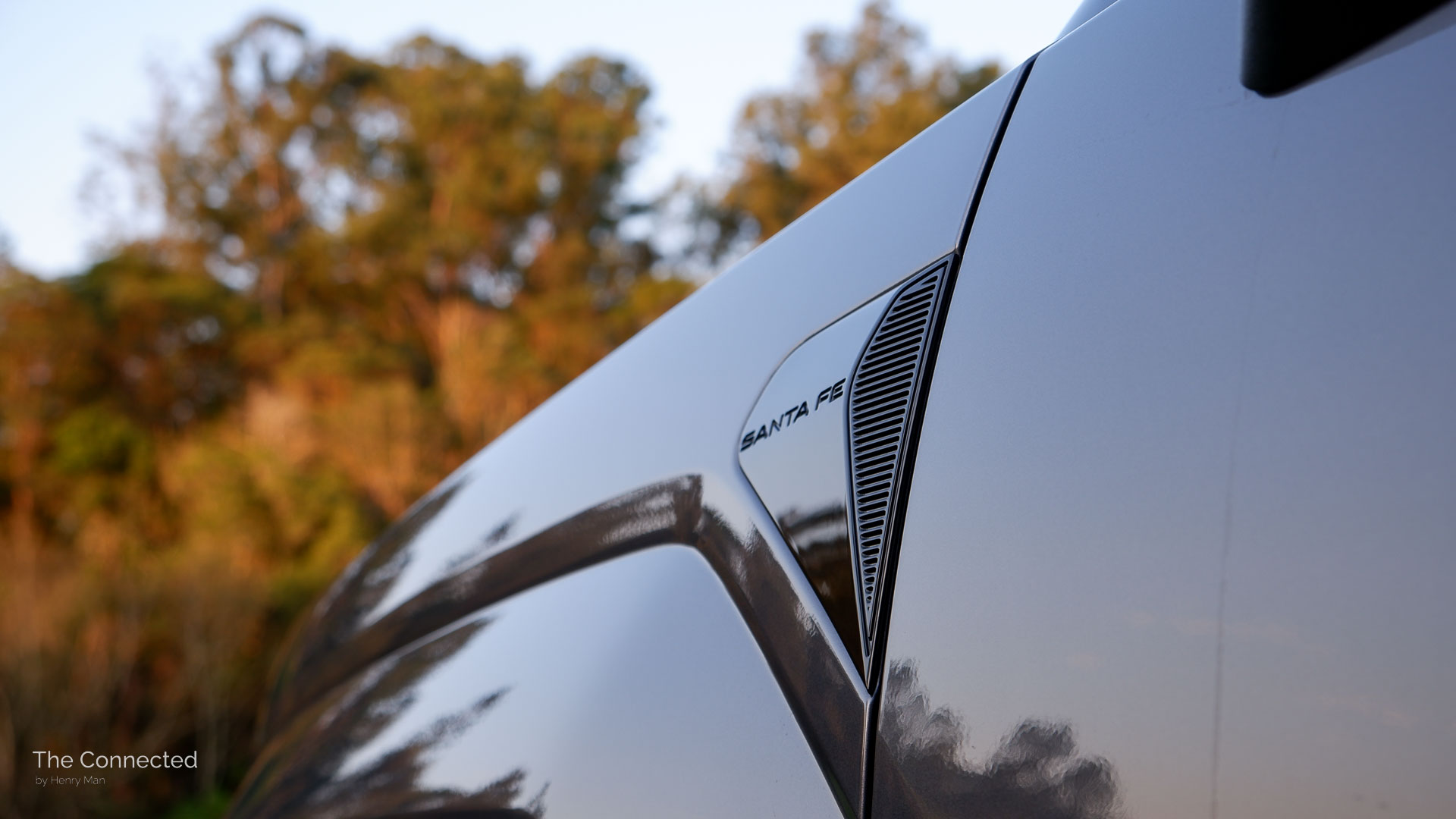


This theme continues inside with H shapes at each air vent, across the dashboard, seatbacks, side sills and even the front seat airbag tags, alongside pixel motifs laid out on storage rubber surfaces, and a Defender-esque steering wheel.
The entry-level Santa Fe as tested also features a Volkswagen GTI style chequered fabric seat pattern, albeit without the red.
Even though it’s a base model, the interior doesn’t feel cheap.
There are padded leatherette materials, textured surfaces, and silver plastics imitating metal across the cabin.
However, while the front and rear door cards are mainly soft touch, the middle portion is made up of a harder hollow plastic build on the entry-level grade.

Practicality.
2025 Hyundai Santa Fe Hybrid dimensions:
| Length x width x height | 4830 x 1900 x 1770mm |
| Wheelbase | 2815mm |
| Ground clearance | 177mm |
| Boot space (min / 3rd row folded / 2nd row folded) | N/A / 628 / 1949 litres |
| Rear seat split fold (3rd row/2nd row) | 50:50 / 60:40 |
| Child seat anchors | 4x ISOFIX and 5x top tethers |
The 2025 Hyundai Santa Fe is a bigger and more spacious seven-seat SUV, with the addition of third-row airbag coverage.
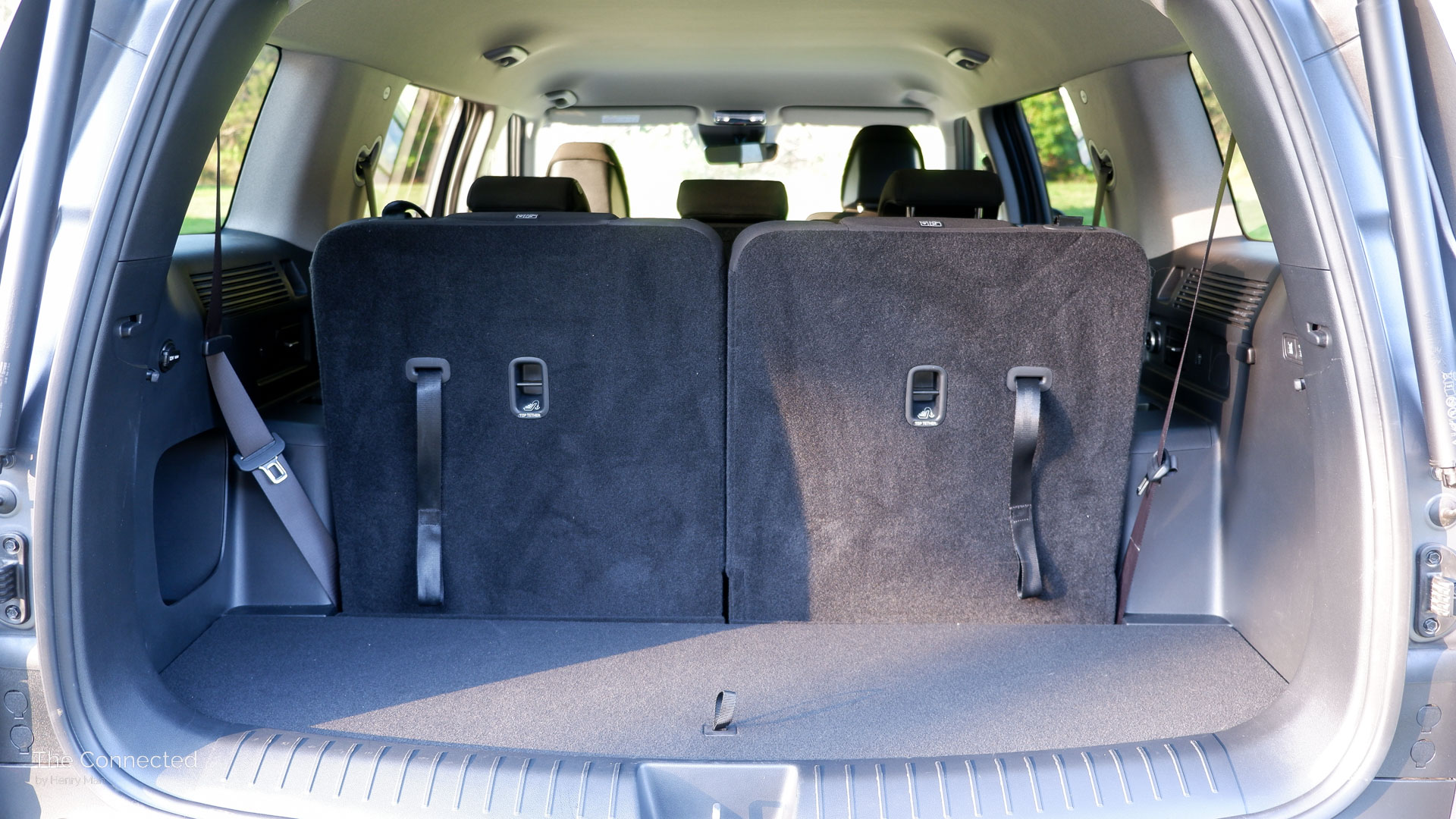
While the South Korean carmaker doesn’t officially disclose the boot volume with all three rows in place, it appears to be marginally bigger than the related Kia Sorento’s 179 litres.
The Santa Fe’s third row seat backs can also be set in a more upright position, resulting in better cargo capacity height-wise.
Disappointingly, the Santa Fe Hybrid’s battery underneath the boot floor obstructs the ability to store the cargo cover blind – even though the slots are there – so you’ll need to leave it at home when you’re using all seven seats, like the Kia Sorento Hybrid.

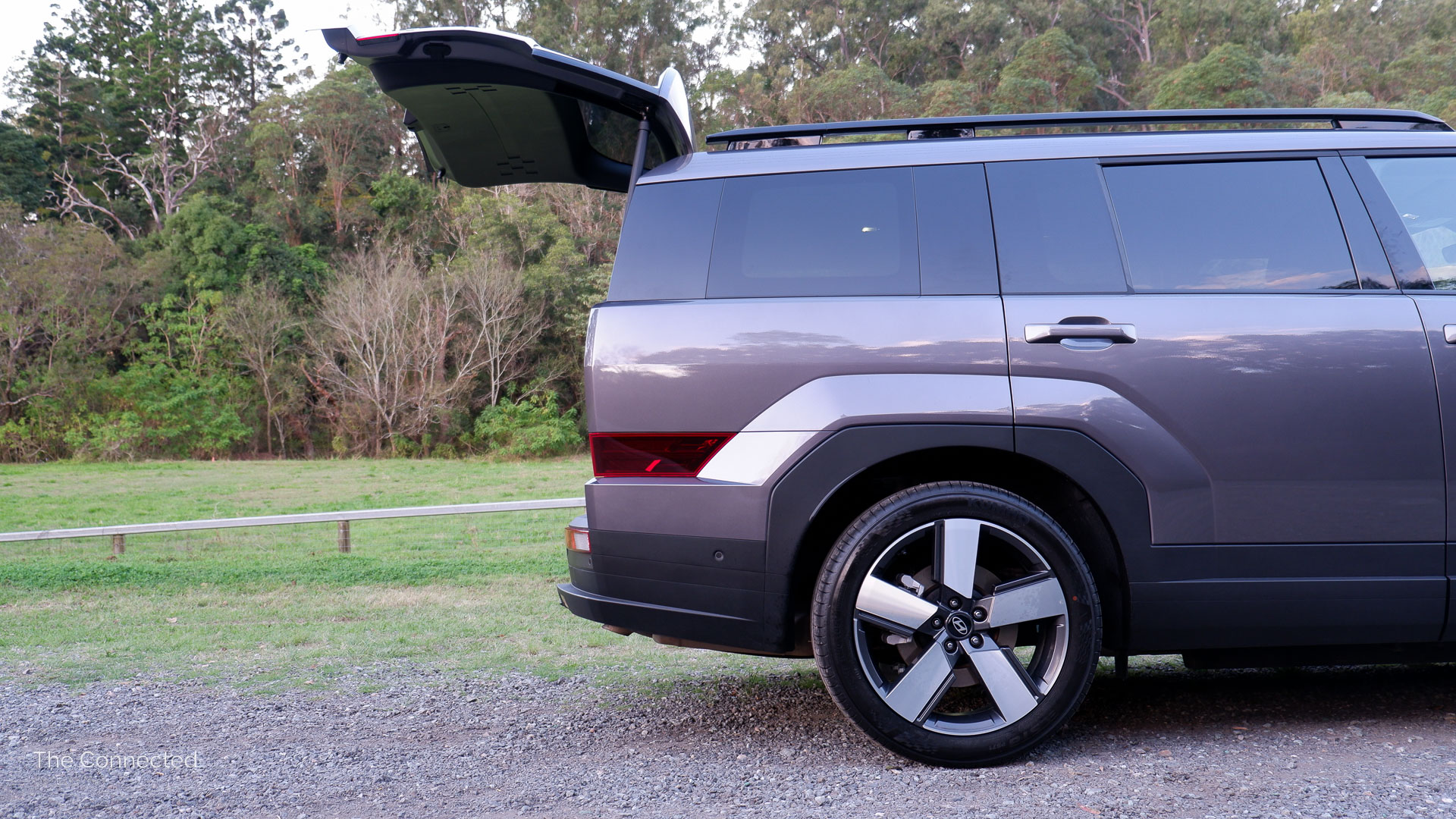
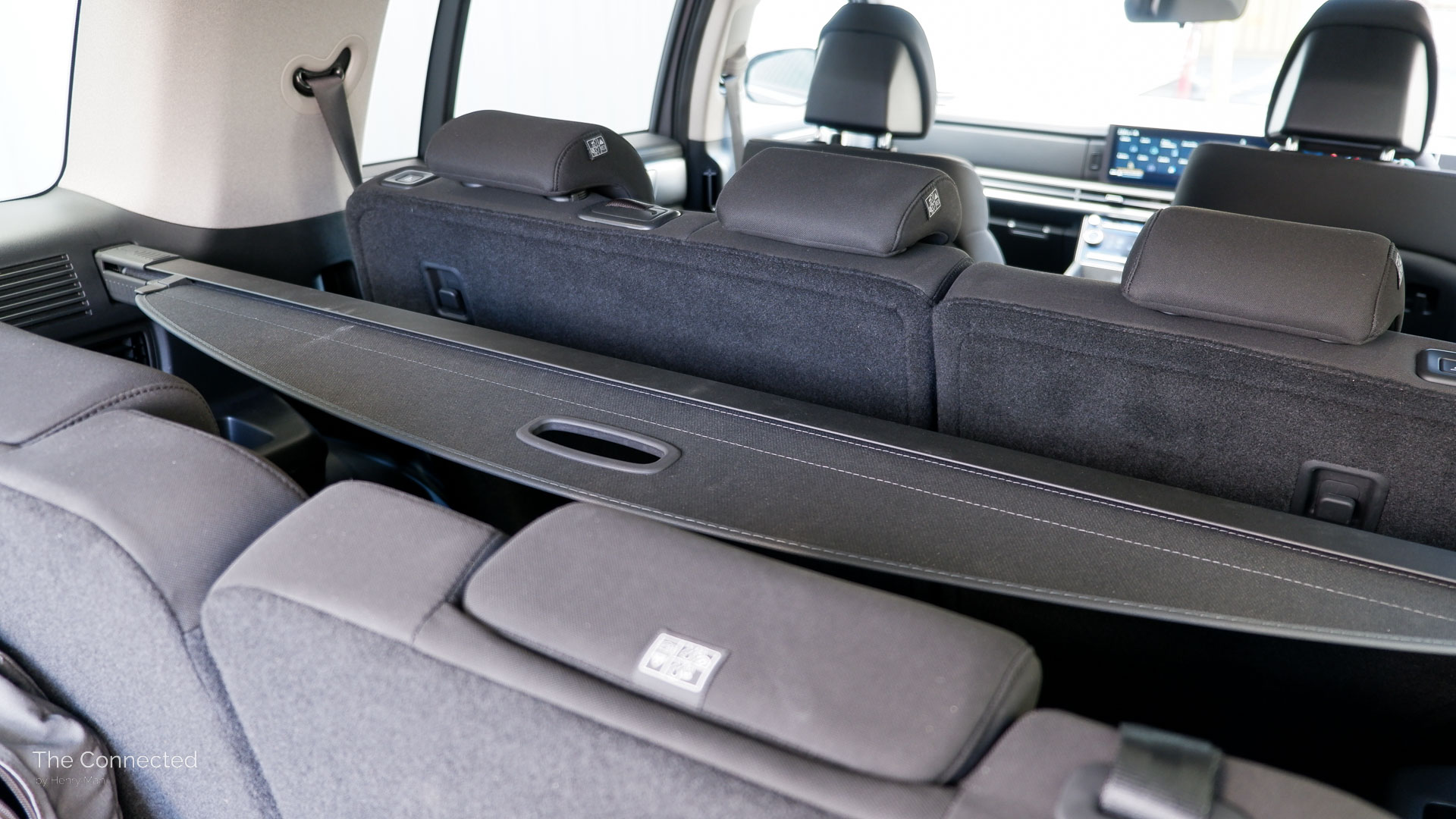
Thankfully, even the base model includes an electrically-powered tailgate with a hands-free function by standing behind the boot for a few seconds with the proximity key.
This only happens when all doors are locked and you can’t close it hands-free, though. A button is available to close the boot and lock all doors with one press.
The two boot hooks are also very tight and too narrow to attach thicker backpack hooks – but it’s compensated by proper-sized two bag hooks behind the second row and four hooks behind the front seats.
They can be useful given the tailgate is long and can’t be opened when backed up against the wall, even though anything hanging behind the seatbacks obstruct passenger space.

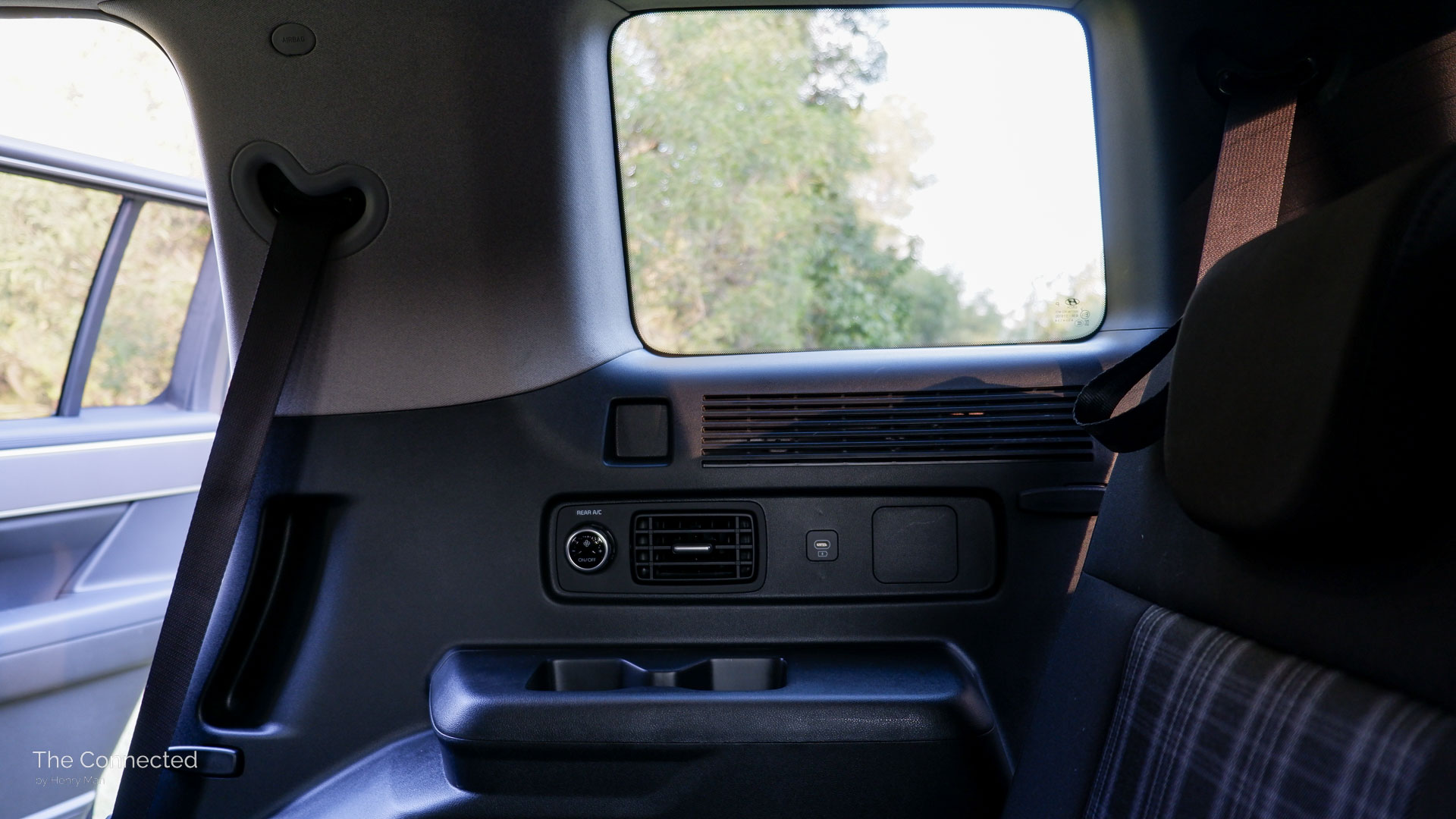
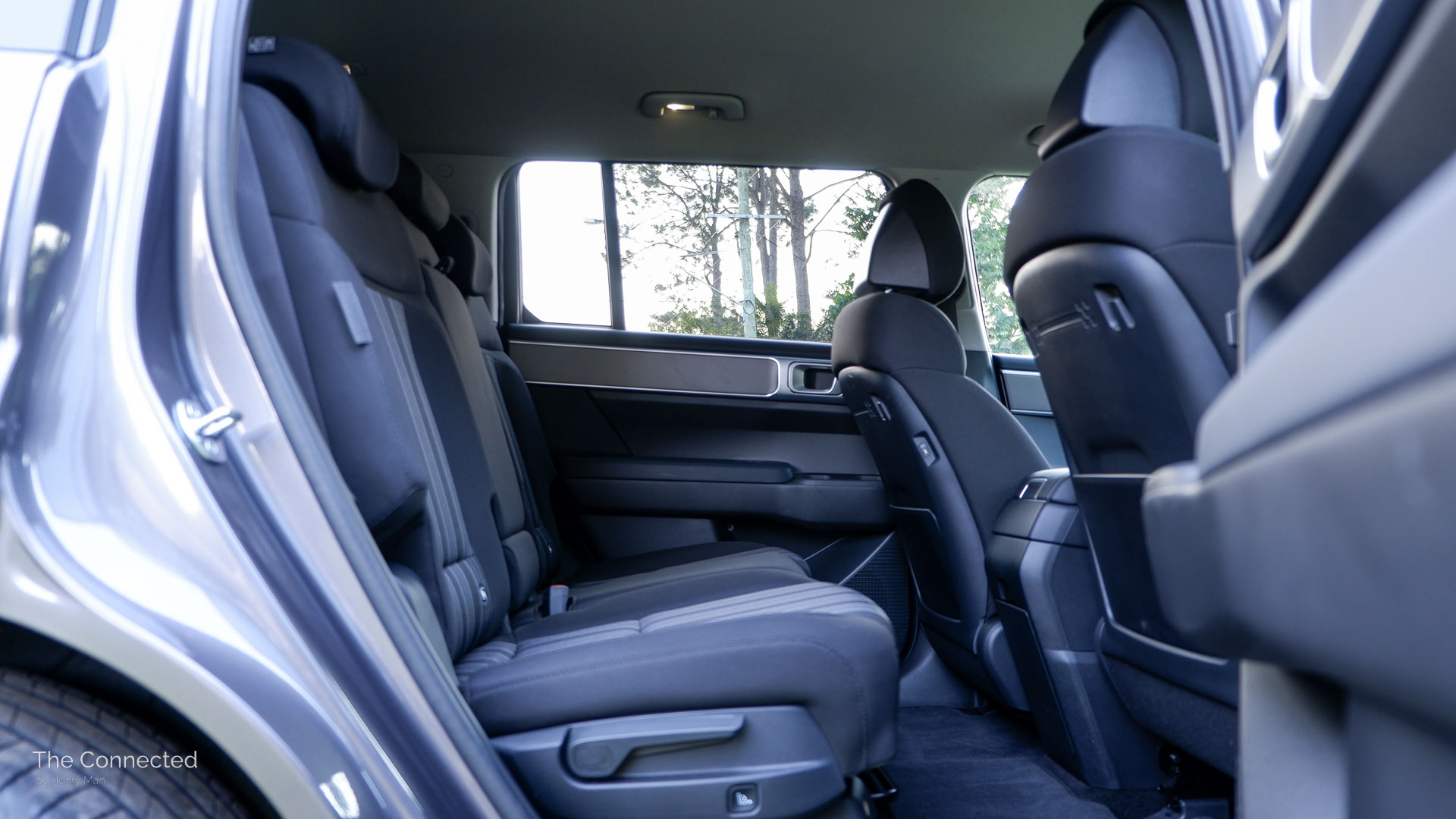

Meanwhile, the third row provides just enough legroom for adults, plenty of headroom and large windows thanks to the boxy design, but the floor is higher.
The rear seats can be easily accessed via the release buttons beside the second row seats, there are air vents with fan controls, cup holders with storage spaces, two USB-C charging ports, and dedicated LED lights even on the entry-level Santa Fe.
Importantly, all models include third row airbag coverage, making it a doable full-time seven-seat family car unlike the related Kia Sorento – but the Carnival people mover is still more spacious at this price point.
The all-new Hyundai Santa Fe’s second row is even more spacious than before with ample legroom and headroom, practical B-pillar mounted air vents similar to the Ioniq 5, two large cup holders at each door, tinted rear windows, two USB-C ports, and a slidable storage tray behind the centre console.
Rear passengers can also access the front middle compartment thanks to the bi-directional hinge. It’s very deep with a tray within helping it divide the centre console with the slidable tray underneath for second row passengers.


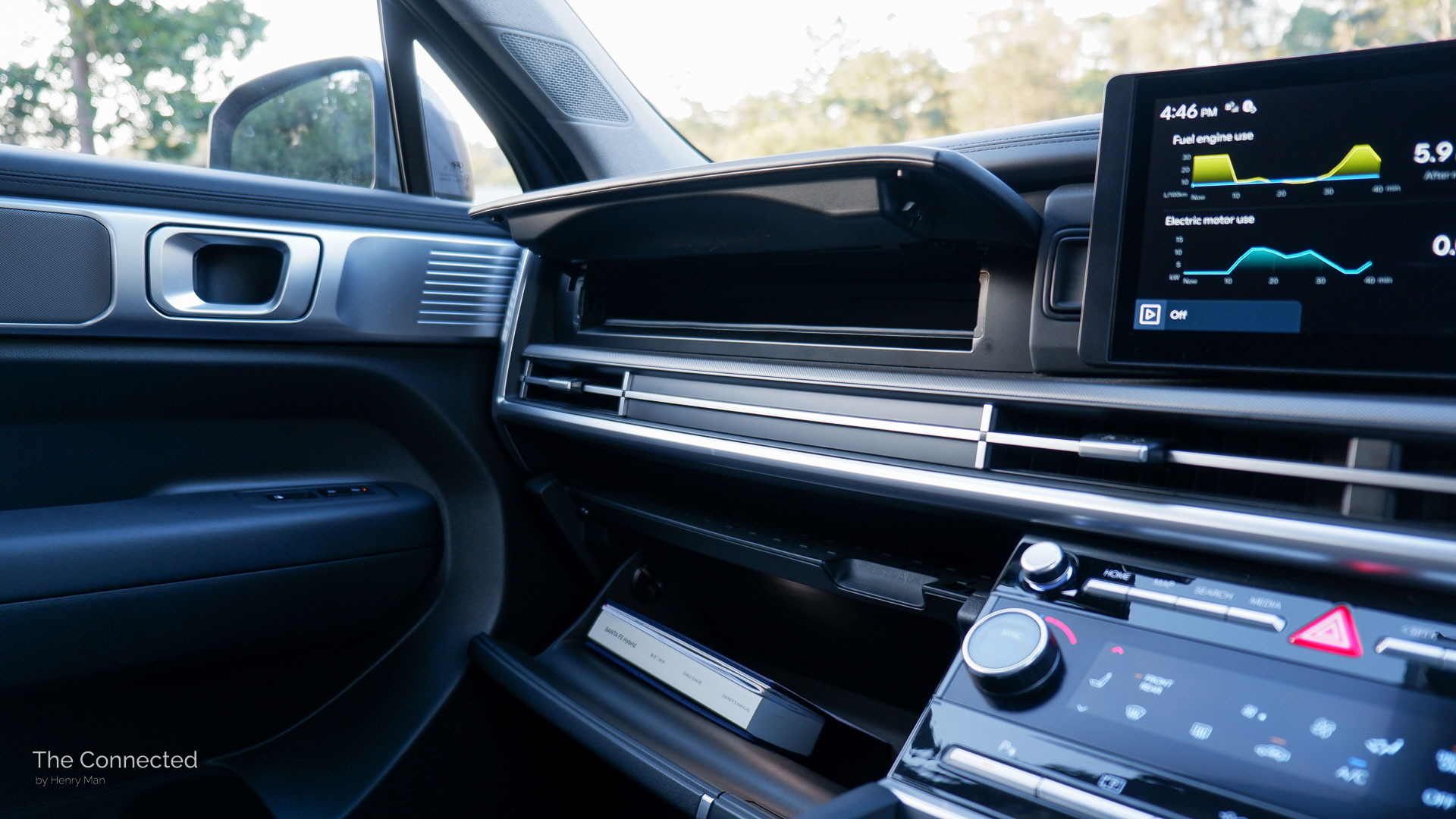

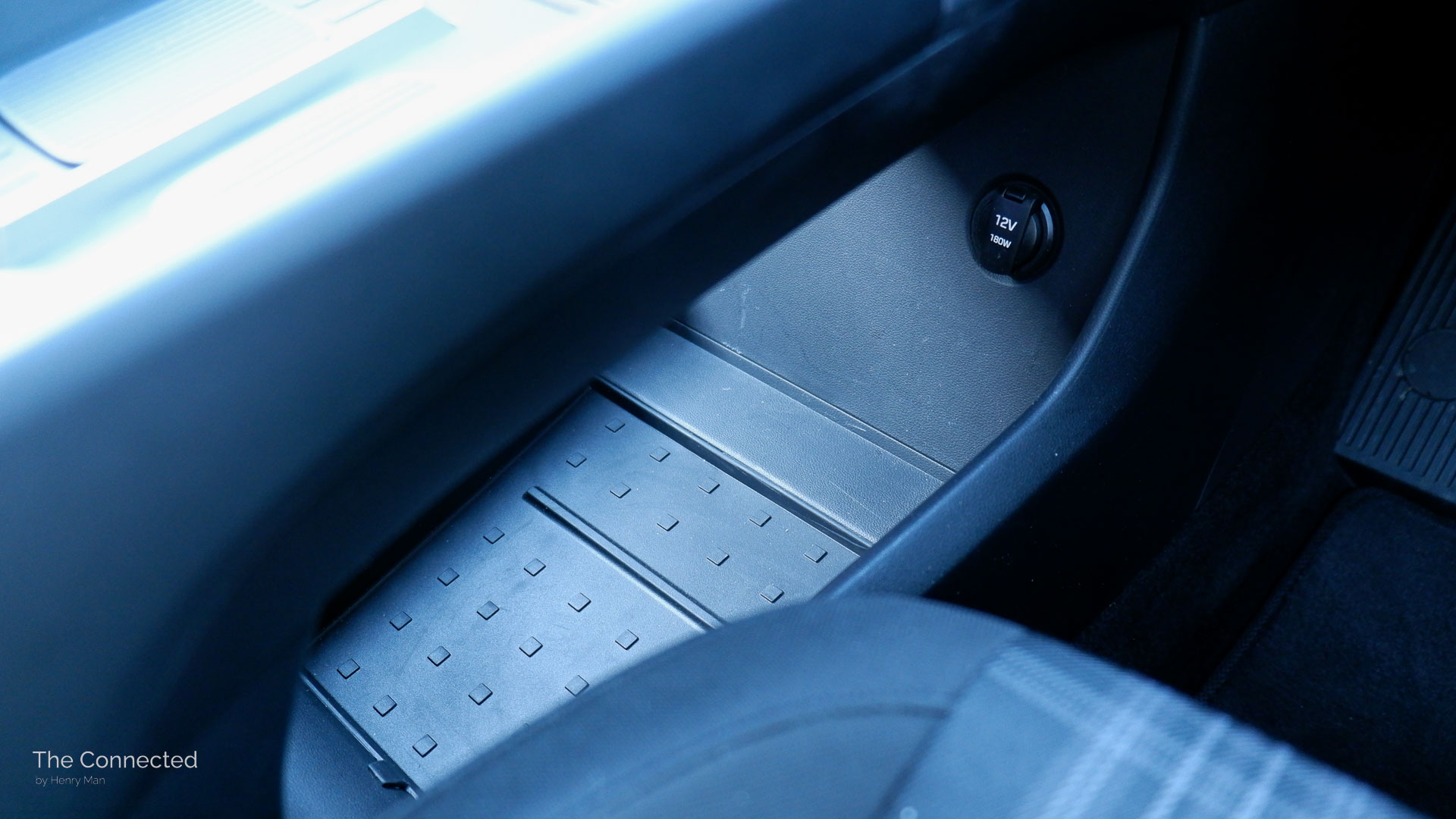
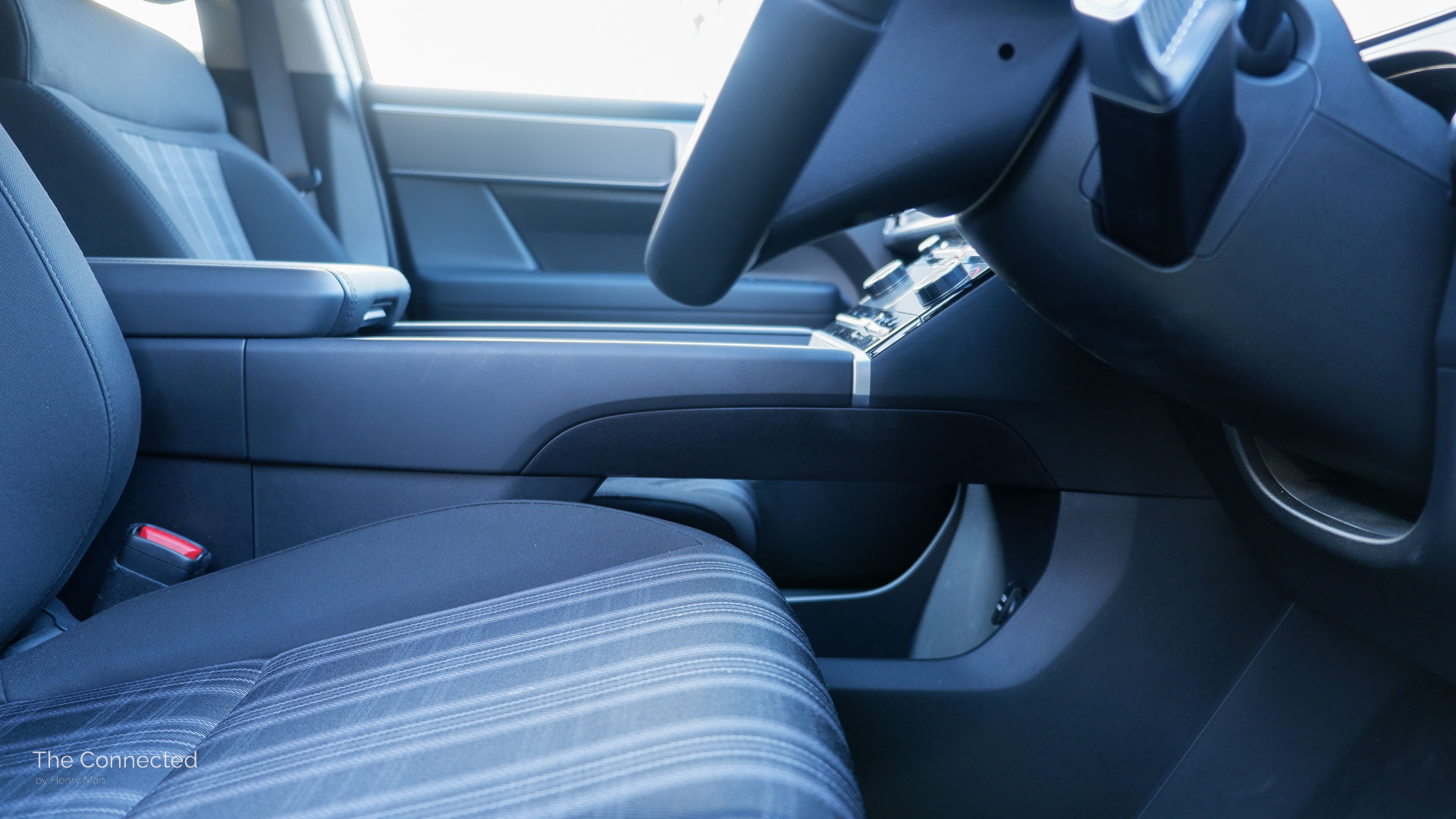
The front row also benefits from a large open tray under the centre console, two rubber pads for placing your smartphone, a decently-sized glovebox, dashboard glovebox atop, and an open shelf in between. However, the latter two are very narrow and slightly difficult to access.
Fortunately, most storage spaces are lined with a rubberised surface with pixel motifs helping with grip, unlike the cheaper Hyundai Kona small SUV. They can also be removed for easier cleaning.
The front cup holders are deep and not ideal for shorter cups. Meanwhile, the door pockets are sizable and keeps bottles upright.
Even on the base Santa Fe, the front seats have three-stage heating and the driver has electric adjustment with lumbar support.
The cloth seat material doesn’t absorb heat as much as leather, but feels rougher on the skin.
Technology.
2025 Hyundai Santa Fe Hybrid tech features:
| 12.3-inch touchscreen running ccNC | 12.3-inch driver instrument display |
| Wireless Apple CarPlay and Android Auto | 1x Qi wireless charging pad |
| OTA software update capability | 6x USB-C charging ports and 2x 12-volt power outlets |
| Hyundai Bluelink connected services and mobile app | Six speakers |
| 6.6-inch dual-zone climate control touchscreen | Proximity key with auto folding mirrors and front door handle welcome lights |
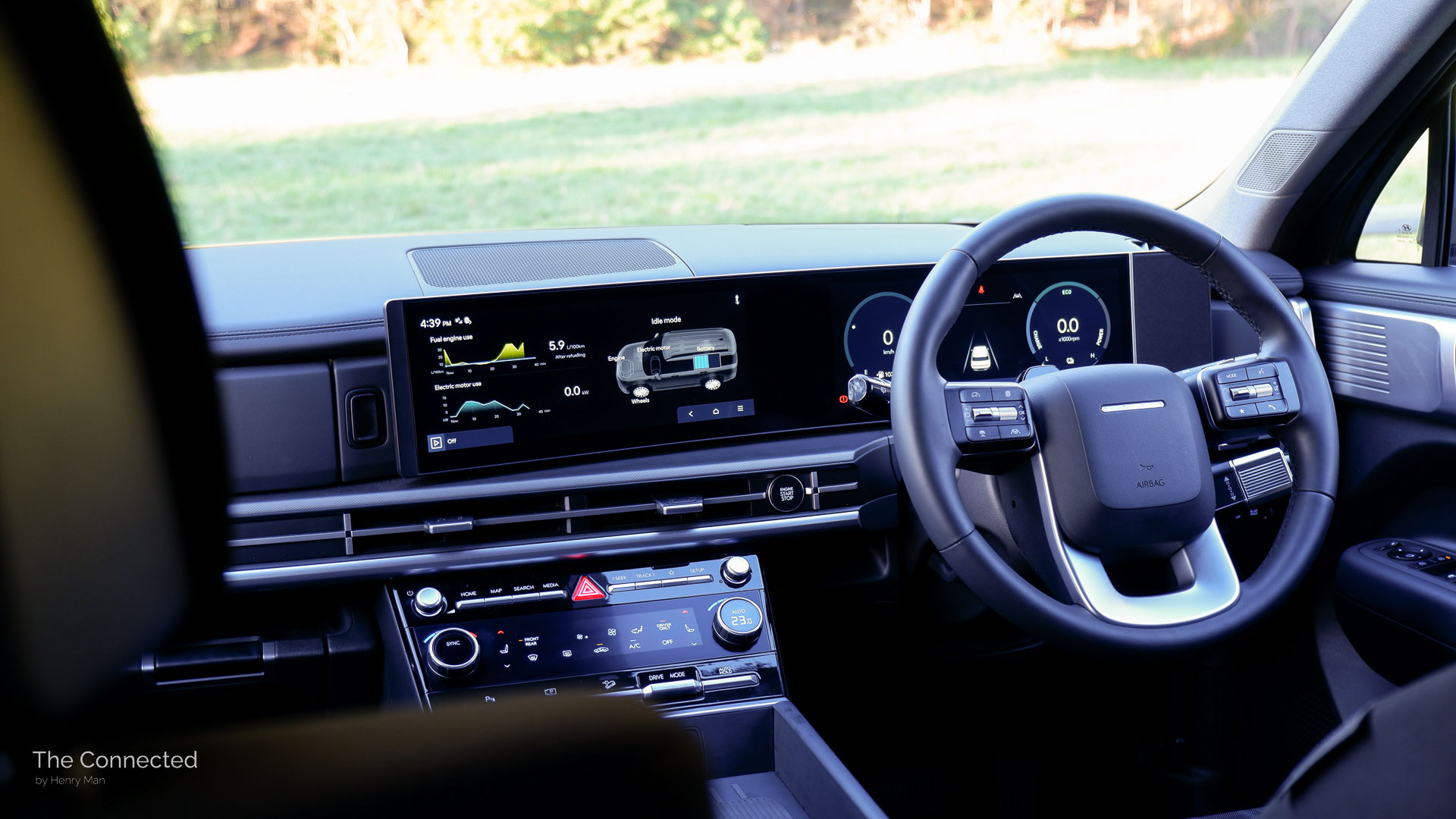
The new Hyundai Santa Fe offers a well-designed and functional technology offering even on the entry-level grade.
Powered by the carmaker’s latest Connected Car Navigation Cockpit (ccNC) operating system with over-the-air (OTA) software update capability, it is easy and responsive to use with a modern interface.
Wireless Apple CarPlay and Android Auto are standard, with the latter connecting reliably and quickly every time you start the car in my testing.
The 12.3-inch touchscreen is high resolution and curved towards the driver, though the matte coating doesn’t reject fingerprints as well.
Strangely, the fifth-gen Santa Fe was one of the few models excluded in the July 2024 OTA update in Australia and New Zealand, which introduced a shortcut to disable the speed limit warning function.
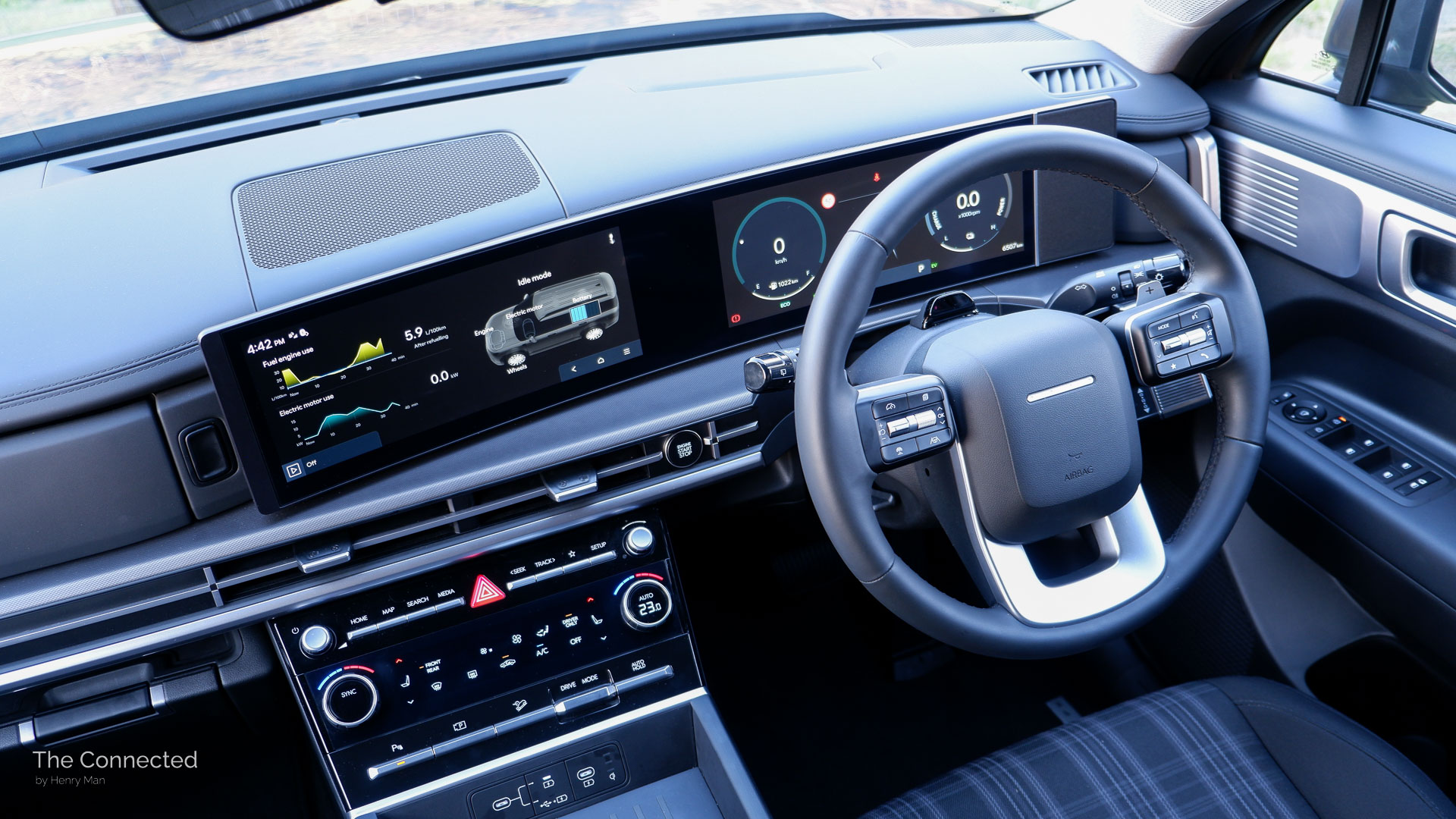
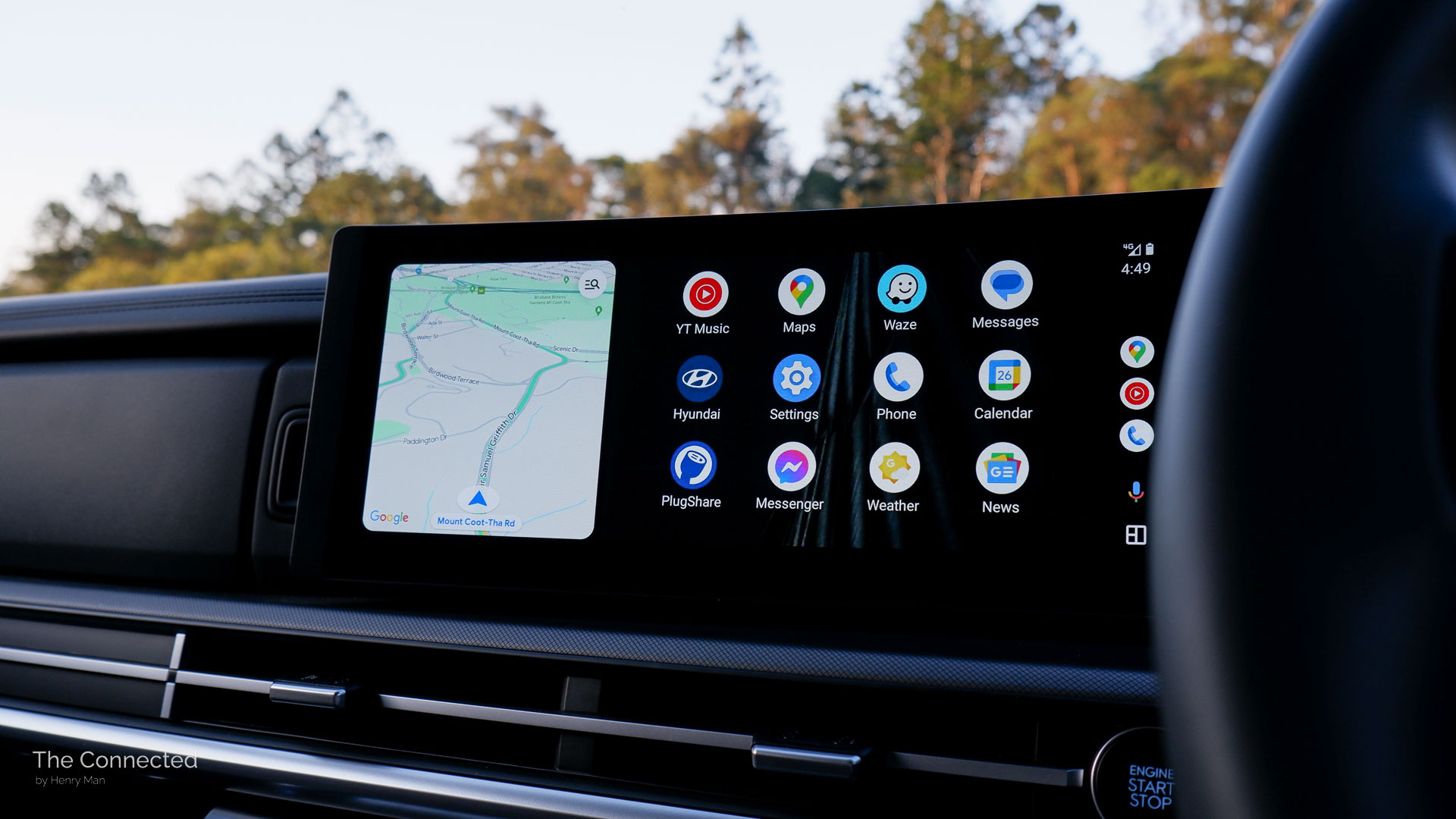


Additionally, the 12.3-inch driver instrument screen is simple with the choice of digital and analogue themes. Note that since the base Santa Fe doesn’t feature built-in maps unlike pricier variants, it can’t show map directions from Android Auto either.
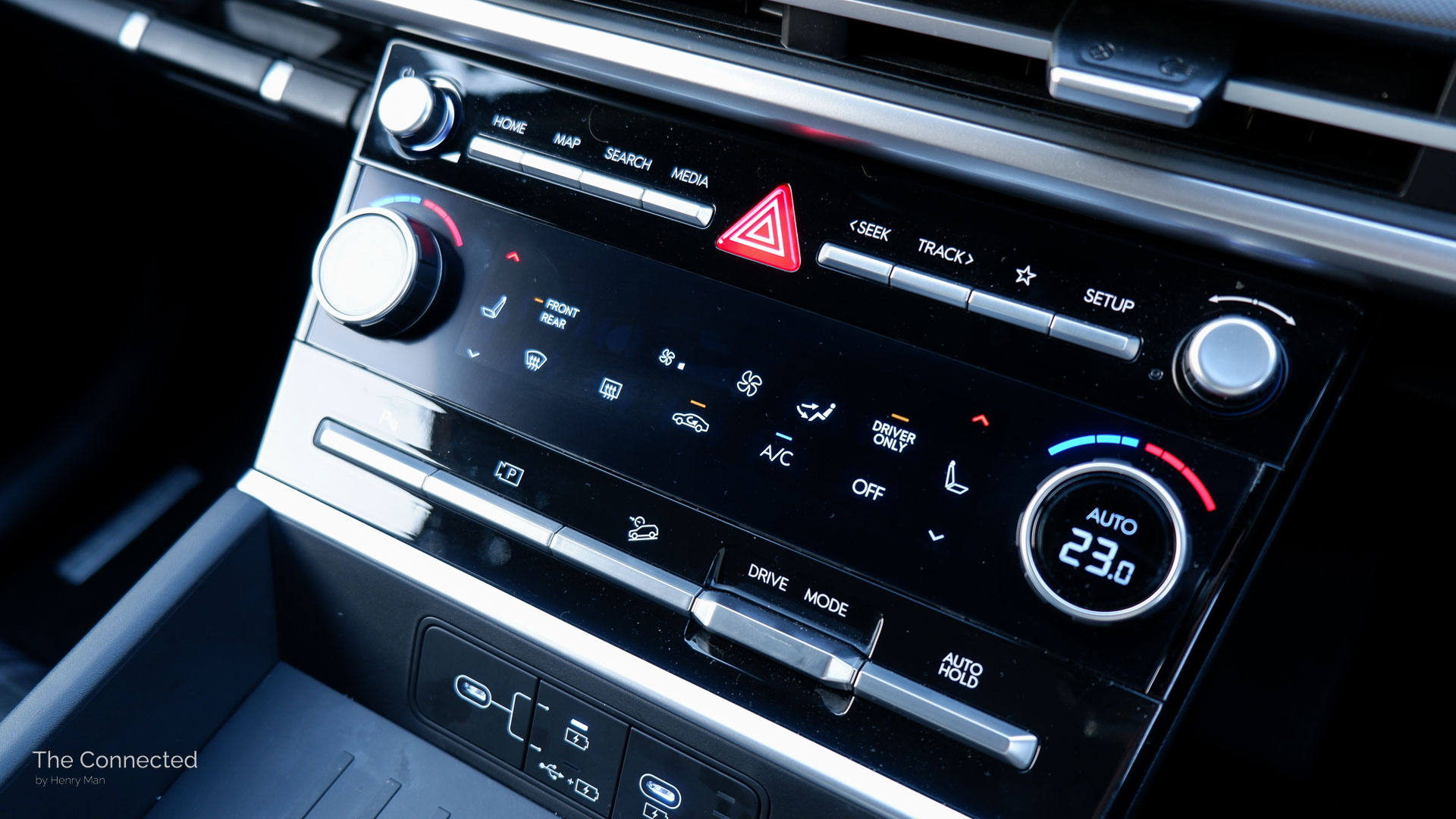
Below the infotainment is a dedicated 6.6-inch climate control touch panel – but the touch buttons are on the smaller side, it couldn’t sense my press at times, and the screen is a magnet for fingerprints. There are two tactile physical dials with clear temperature displays.
Hyundai Bluelink is also standard on all models with the connected remote mobile app coming in handy for pre-conditioning the interior, checking the fuel status, and capturing a photo from the 360-degree surround-view cameras.
While the app is well-designed and functional, sending commands to the vehicle is on the slower side.
Also notable is the basic non-branded six-speaker system which is a decent performer.

Safety.
2025 Hyundai Santa Fe Hybrid safety features:
| Front AEB with vehicle/pedestrian/cyclist/junction turning/crossing/oncoming detection | 360-degree camera system |
| Rear AEB | Front, side and rear parking sensors |
| Blind-spot assist | Blind-spot view cameras |
| Rear cross-traffic assist | Safe Exit Assist |
| Lane-keep and lane-centring assist | Rear occupant alert (logic type) |
| Adaptive cruise control | Full LED headlights with auto high beam |
| Intelligent Speed Limit Assist | Part LED tail-lights |
| Hyundai Bluelink auto emergency services calling and remote location tracking |
The entry-level Santa Fe generously comes with most active safety assistance systems as standard.
The camera- and radar-based systems are dependable and calibrated well. While the base variant doesn’t feature Highway Driving Assist 2 (HDA 2), the standard adaptive cruise control performs similarly and fortunately doesn’t slow down when turning a bend.
Lane-centring assist is smooth and reliable, and can be activated without the need for adaptive cruise.
Even the base model has clear 360-degree and blind-spot view cameras – which aren’t common for some large SUVs at the lower-end ~$60K price point.


Moreover, Hyundai’s Intelligent Speed Limit Assist (ISLA) system doesn’t always detect speed signs accurately and thinks it’s always 40km/h outside school times, then chimes multiple times.
Unfortunately, the shortcut to disable the speed limit warning function wasn’t available on the fifth-gen Santa Fe at the time of testing, but I expect it roll out in the future.
However, while the driver monitoring camera warning may seem annoying at first, it isn’t too sensitive and is useful at preventing the driver from being distracted.
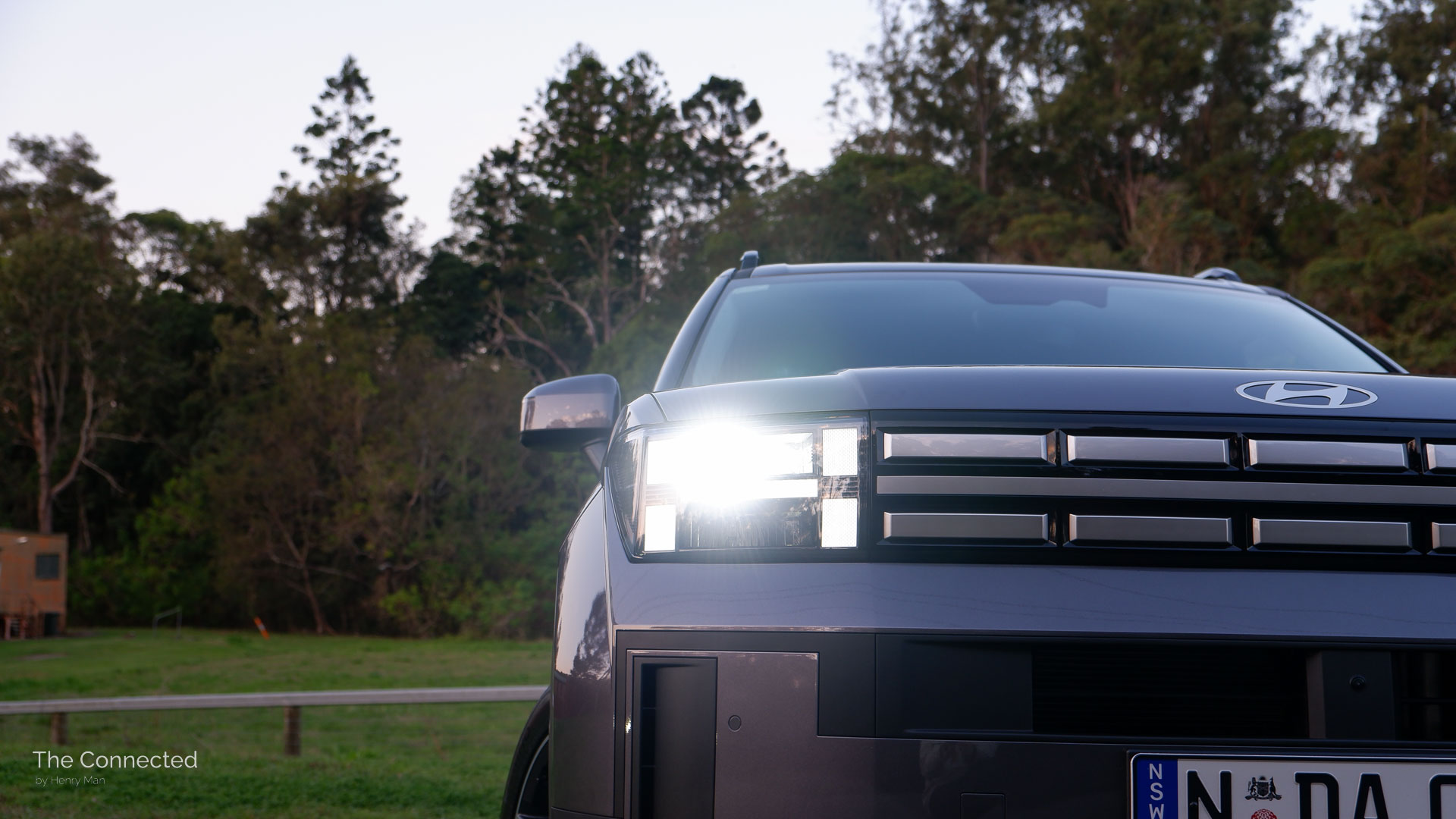
The full projector-type LED headlights on this base grade provides good visibility at night, as is the LED brake tail-light which now stays on during the day.
Yet, the rear halogen turn indicators and reverse lights are placed at the lower bumper to facilitate the large tailgate, which aren’t ideal.
The all-new 2025 Hyundai Santa Fe hasn’t been rated by the Australasian New Car Assessment Program (ANCAP), nor its European counterpart yet.

Range and fuel consumption.
2025 Hyundai Santa Fe Hybrid fuel and efficiency specs:
| Claimed driving range (combined) | 1196km |
| Claimed fuel efficiency (combined) | 5.6L/100km |
| Fuel tank size | 67 litres |
| Minimum fuel quality requirement | 91 RON unleaded petrol |
| Claimed CO2 exhaust emissions (combined) | 128g/km |
| European emissions compliance | Euro 5 |
After a week of urban and highway driving, the Hyundai Santa Fe Hybrid achieved a fuel efficiency of 5.7L/100km.
This yields about 1175km of real-world driving range from its 67-litre fuel tank.
In our testing, the hybrid seven-seat SUV is genuinely efficient – almost matching Hyundai’s combined cycle claim – and provides ultra-long, diesel-like range if you drive in urban conditions.

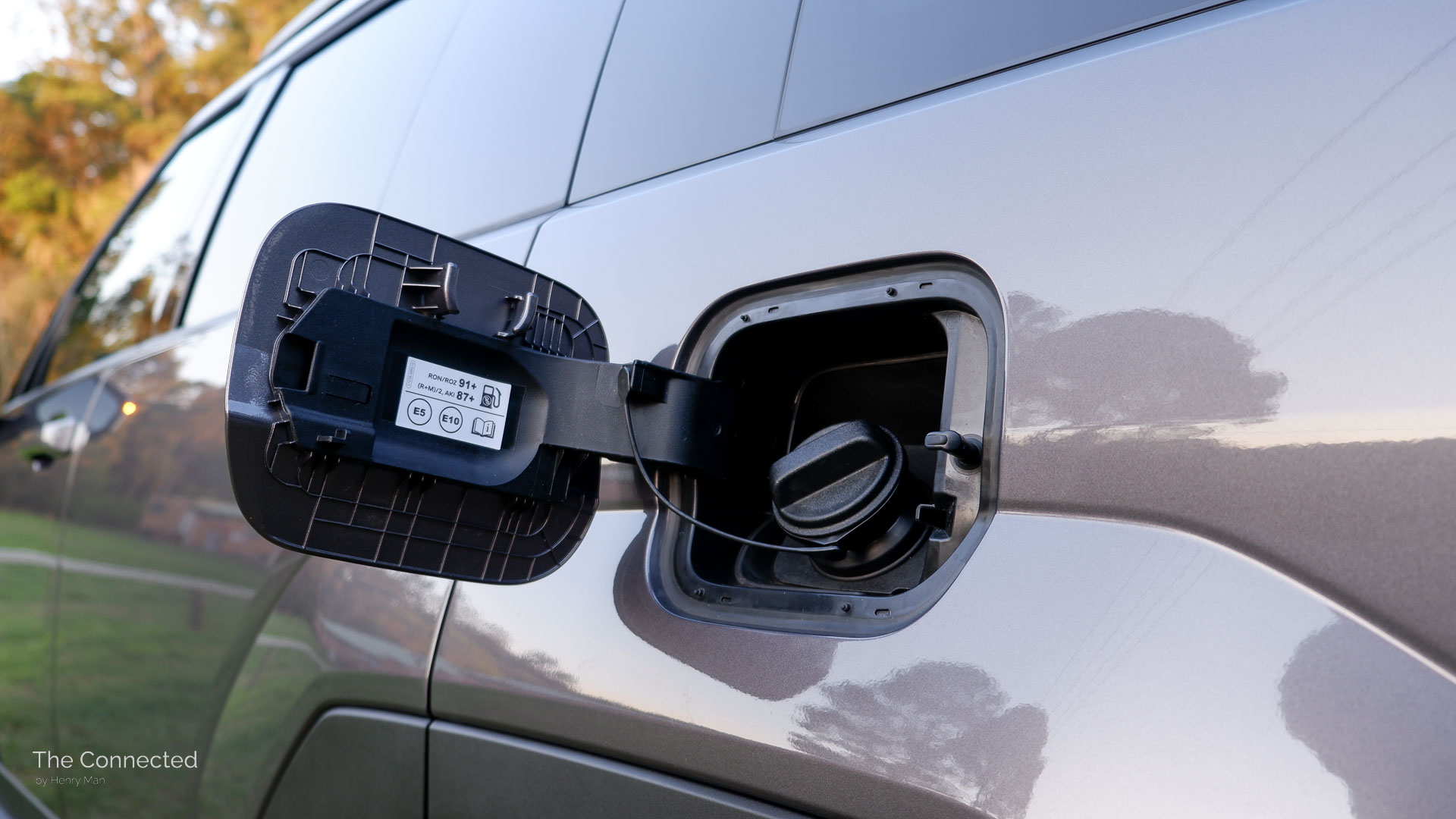
The Santa Fe Hybrid is a self-contained series-parallel hybrid – which means no plug-in charging is required. Instead, it utilises the engine and regenerative braking to recharge the small battery.
It can be refuelled using cheaper 91 RON unleaded and 94 RON E10 unleaded petrol, via the fuel lid at the rear-left quarter side of the vehicle.
The fuel flap is locked/unlocked along with the doors and the cap adopts an easy to use spring-loaded mechanism.
Driving.
2025 Hyundai Santa Fe Hybrid FWD powertrain specs:
| Engine/Electric motor | 1.6-litre turbocharged petrol engine and single permanent magnet synchronous motor |
| Battery size and type | 1.49kWh (gross) lithium-ion battery |
| Power | 172kW @5600rpm |
| Torque | 367Nm @1000-4100rpm |
| Transmission | Six-speed automatic (torque converter) |
| Drive Type | FWD |
| Kerb weight | 1925-2040kg |
| Payload | 600-715kg (excluding max 100kg tow ball download) |
| Towing (unbraked / braked) | 750 / 1650kg |
The all-new Santa Fe foregoes the optional diesel engine in favour of a petrol-electric hybrid. Is it the right move?
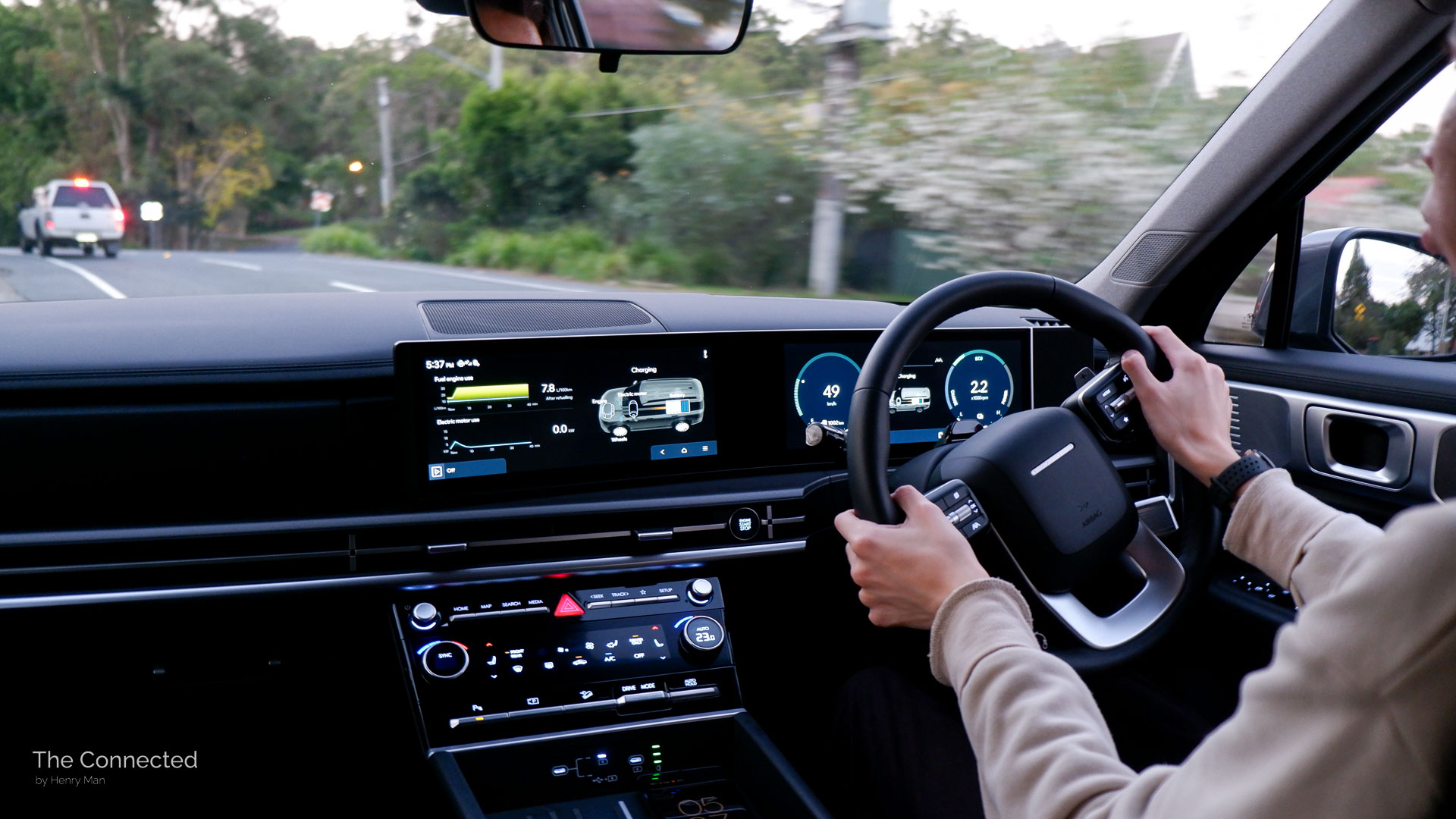
Combining a 1.6-litre turbocharged petrol engine and a single front electric motor, the series-parallel hybrid SUV makes up to 172kW of power and 367Nm of torque.
The Santa Fe Hybrid provides more than enough power in everyday driving (provided you’re not in the default eco mode), with peak torque coming in at a low rev band thanks to the instant power delivery from the electric motor.
It represents a viable substitute to the no-longer available diesel engine, with none of the tractor-like rattling and vibrations.
The entry front-wheel-driven setup provides enough traction during everyday driving, but does wheel slip when accelerating harder on a steep hill.
All-wheel drive is available for a $3000 extra, but is standard on the Elite and Calligraphy variants. Don’t expect to do any heavy off-roading with only 177mm of ground clearance, despite its exterior design suggesting otherwise.


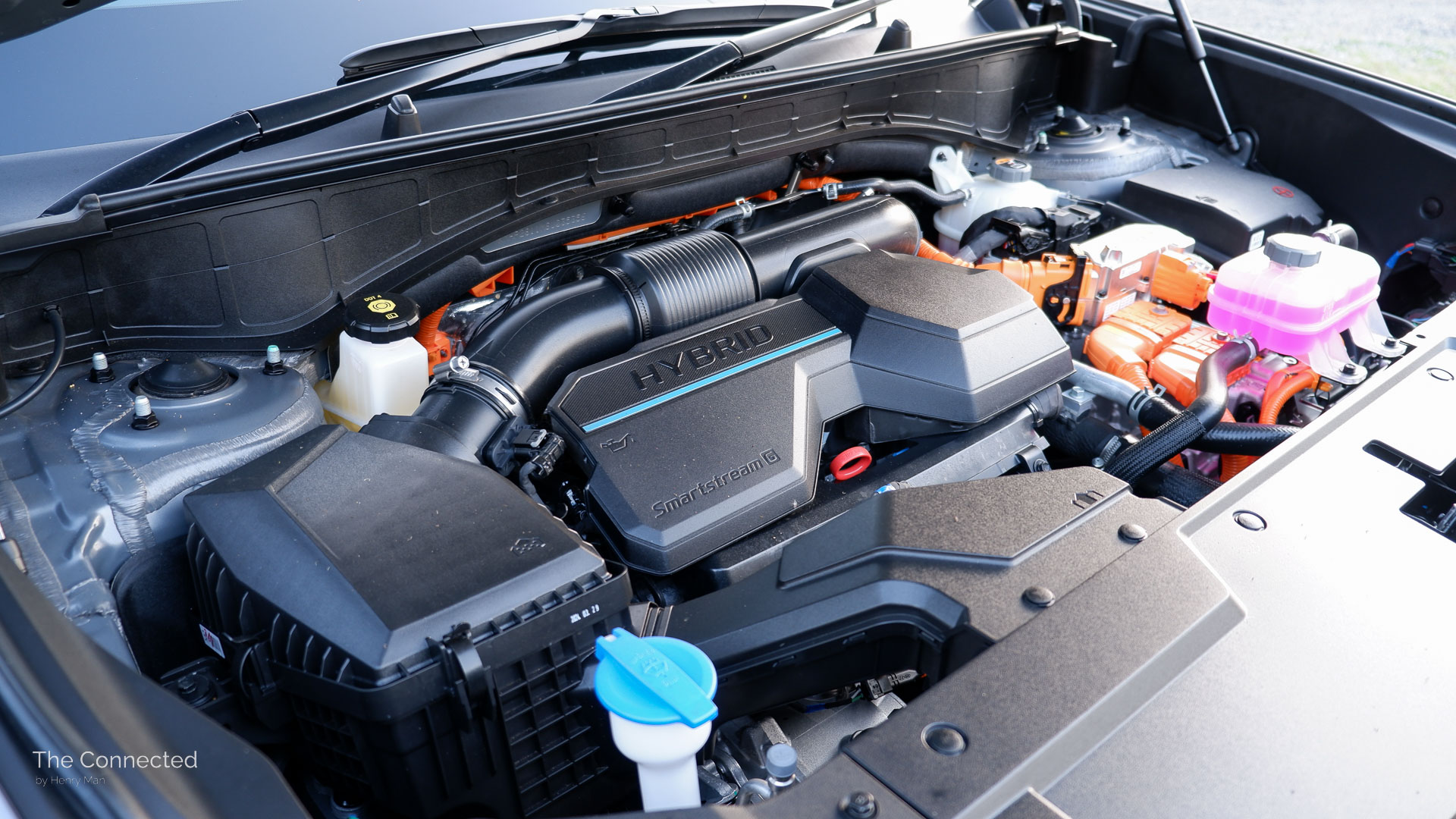
Despite the large 20-inch wheels with 255/45 Kumho tyres across the range, noise insulation is excellent with little road noise, and the suspension is comfortable and well-balanced.
The series-parallel hybrid system is refined and smoothly switches between the electric motor and petrol engine, in concert with the six-speed automatic transmission.
Three regenerative braking intensities are available via the steering wheel paddles, but the Santa Fe Hybrid defaults to off every time you start the vehicle.
I was most comfortable with level one or two since the strongest level three setting slows down more aggressively than ideal. Auto regen modes are also available and dials up the intensity when approaching a vehicle in front.
However, the regen cuts out at speeds below 15km/h, so drivers eventually must use the blended brake pedal.
Unfortunately, the brake pedal is light at the top and, when shifting, it often changed into neutral as I wasn’t pressing the brake hard enough. I had the same gripe with some other Hyundai Motor Group hybrid models.
The steering is light and makes the large Hyundai SUV slightly easier to drive and manoeuvre than the related Kia Sorento. Similarly, the boxy shape allows for tall square windows which are easy to see out of – especially through the third row D-pillar window.
Warranty and servicing.
2025 Hyundai Santa Fe Hybrid capped-price servicing costs:
| 1 year/10,000km | 2 years/20,000km | 3 years/30,000km | 4 years/40,000km | 5 years/50,000km |
|---|---|---|---|---|
| $459 | $459 | $569 | $459 | $459 |
The 2025 Hyundai Santa Fe is covered by a five-year, unlimited kilometre vehicle warranty and an eight-year/16,000km battery warranty.
Servicing is required every one year/10,000km (whichever occurs first) – with the latter being shorter than ideal for regular long-distance drivers due to the turbocharged petrol engine.
Uniquely, Hyundai offers unlimited fixed-price scheduled servicing.
After the first five years/50,000km, it would cost $2405 to maintain the Santa Fe Hybrid, which averages to $481 per service.
Roadside assistance is also provided for the lifetime of the vehicle, provided you service it with Hyundai every time it’s due.
Moreover, Hyundai Bluelink connected services and mobile app connectivity is included for the first five years from activation. OTA software update support covers the lifetime of the vehicle.
Uniquely for a hybrid car, a full-size spare tyre is included on all models, albeit located underneath the vehicle.

Price and rivals.
2025 Hyundai Santa Fe Hybrid model range pricing (accurate as at the time of publication):
| Santa Fe FWD | Santa Fe AWD | Elite AWD | Calligraphy AWD |
|---|---|---|---|
| $55,500 before on-road costs | $58,500 before on-road costs | $65,000 before on-road costs | $75,000 before on-road costs |
The 2025 Hyundai Santa Fe Hybrid is priced from $55,500 before on-road costs in Australia.
All-wheel drive (AWD) can be optioned on the base model for $3000 more, while the Elite and Calligraphy come with AWD as standard.
A cheaper non-electrified 2.5-litre turbocharged petrol engine is expected to be available for all variants by the end of 2024.
All exterior colours except Creamy White cost $695 extra, with the top-spec Calligraphy gaining a wider range of colour options and matte finishes for $1000 more.
The 2025 Hyundai Santa Fe Hybrid directly competes with a handful of hybrid seven-seat large SUVs:
- Kia Sorento Hybrid (full review)
- Toyota Kluger Hybrid
Other alternatives to the Santa Fe Hybrid include:
- Kia Carnival Hybrid
- GWM Tank 500 Hybrid
- Mitsubishi Outlander PHEV seven-seat
- Mazda CX-80 PHEV (coming soon)
- Nissan X-Trail e-Power seven-seat
- Honda CR-V e:HEV seven-seat

Would I pick the 2025 Hyundai Santa Fe Hybrid?
Bold, boxy and big. The 2025 Hyundai Santa Fe Hybrid is a practical, fuel-efficient and value-packed large SUV with a next-level design.
The entry-level model is fantastic value and isn’t stripped out of features with a solid interior, power tailgate, 360-degree camera system, blind-spot view cameras, and front heated seats all included as standard.
While a diesel engine is no longer an option, the petrol-electric hybrid is able to provide comparable efficiency, power, and range if you drive it in metro areas – without any agricultural engine rattling.
However, the hybrid battery gets in the way of storing the cargo cover underneath the floor, boot space is still limited when all seven seats are in use, and the brake pedal is a touch too light at the top.


I’d pick the base Santa Fe Hybrid FWD, unless you prioritise niceties such as all-wheel drive traction, leather seats, and ambient lighting.
It may be a polarising significant departure from before, but the new-gen Santa Fe Hybrid is among the best value seven-seat large SUVs yet.
Photographs by Henry Man
READ MORE: 2025 Kia Carnival review: Better than a SUV?
READ MORE: Hyundai i30 N vs Ioniq 5 N comparison review: Petrol or electric?
READ MORE: What is the point of the blue EV label?
Pros:
- Value-packed base model
- Genuinely fuel-efficient hybrid
- Practical interior
- Third-row airbag coverage
- Bold unique design
Cons:
- Cannot store boot cover due to the battery
- Tight boot behind third row
- Light blended brake pedal
- No disable speed limit warning shortcut yet
- Arguably polarising design
About the Author.
Henry Man is an independent content producer passionate about the intersection of technology and transportation.
The former automotive journalist is focused on producing critically-detailed vehicle reviews, and unique short-form content. Learn more.


 The Connected by Henry Man