

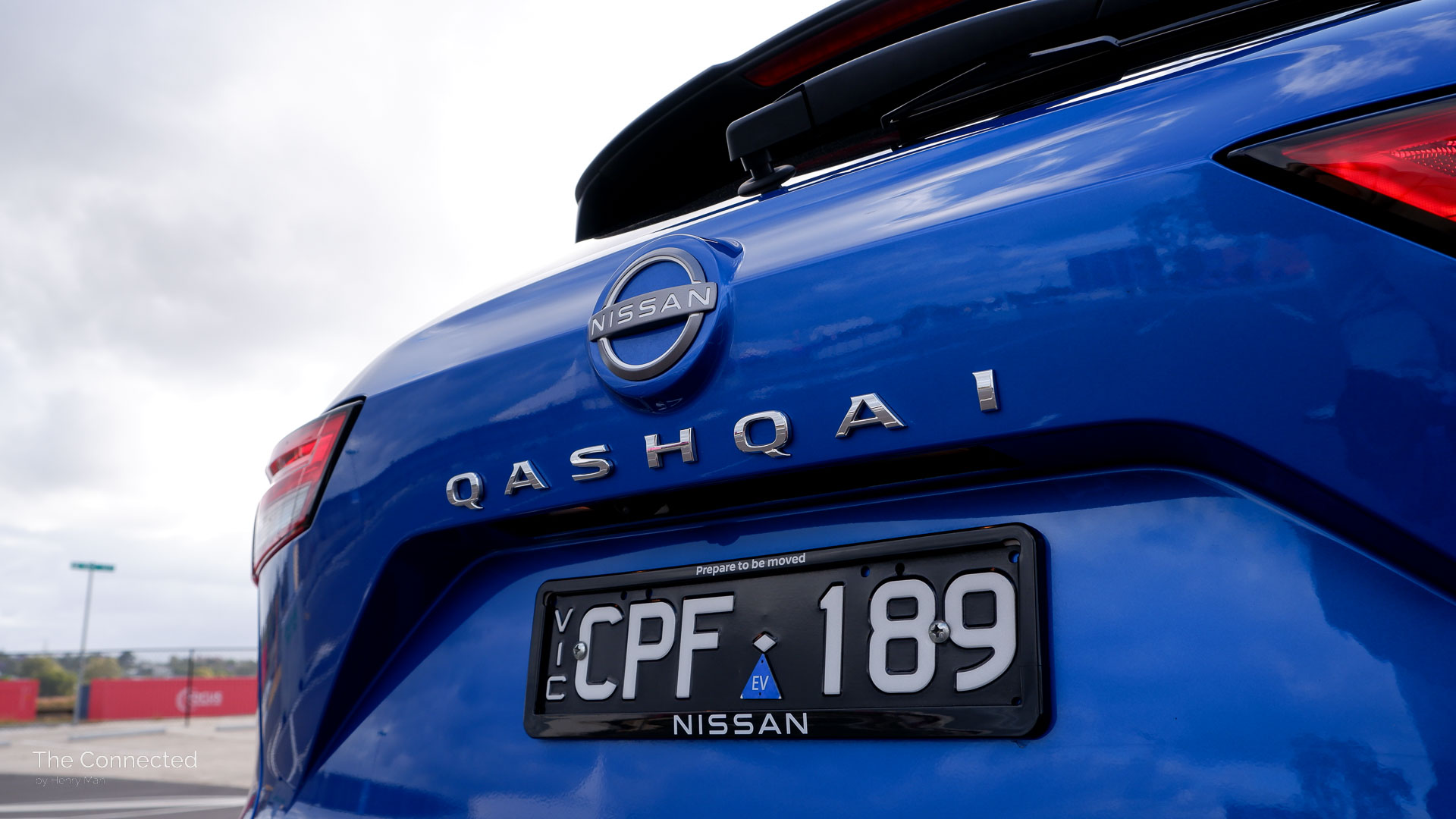
I lived with the 2024 Nissan Qashqai Ti e-Power for a week – and I’m impressed.

Pros.
+ Enjoyable to drive hybrid system
+ Excellent e-Pedal regen braking
+ High-quality interior
+ Family-friendly interior and boot
+ Modern and refined tech
Cons.
– Not as fuel efficient as traditional hybrids
– E-Power is unavailable with cheaper variants
– Low-res 360-degree camera system
– Wired Android Auto, high white levels
– Halogen interior lights
Vehicle tested:
| Model | 2024 Nissan Qashqai |
| Variant | Ti e-Power |
| Starting price | $52,090 before on-road costs |
| Exterior colour | Magnetic Blue with Pearl Black Roof (+$500) |
| Interior colour | Ti blue and black interior with quilted leather Monoform seats |
| Country made | United Kingdom |
The Britain-made Qashqai’s Japanese origins are clear.
The hybrid small SUV sounds a cute chirp upon locking and unlocking, safety assistance warnings are subtle, and the welcome and goodbye sequences are soothing – all very Nintendo-esque.
While the exterior is on the conservative side, the Nissan Qashqai Ti’s interior feels genuinely premium with soft-touch navy blue dashboard and door cards, white double-lined stitching, and brushed imitation metal surfaces that don’t attract fingerprints. Material quality is markedly better than the Hyundai Kona and on par with the Volkswagen T-Roc.
Yet, Nissan still retains tactile and easy to use physical climate controls and steering wheel buttons.


The flagship Qashqai Ti also features an impressively large fixed panoramic glass roof with a built-in sunshade, subtle white ambient lighting accents, and a nifty seat massage function that quickly pulses the comfortable and supportive front quilted leather seats.
There’s even adaptive matrix LED headlights that blocks individual bulbs while keeping the high beams on – a feature that’s almost unheard of for a mainstream small SUV.
While the Nissan Qashqai is classed as a small SUV, it is fit for families with a large 452-litre boot. Two deep pockets are on offer with the right side offering a nifty strap to hold things in place, in addition to two sturdy bag hooks.
The top-spec Ti features a split adjustable boot floor and the electrically-operated tailgate can be opened and closed hands-free via kicking underneath the rear bumper. It works reliably, too.
Inside, the rear seats provide plenty of space, rear air vents, both USB-C and USB-A charging ports, and large door pockets. However, the use of dimmer halogen-type interior lights isn’t fitting for a top-spec $50K-plus small SUV, and there is a large centre floor transmission hump that limits foot room with three passengers abreast.


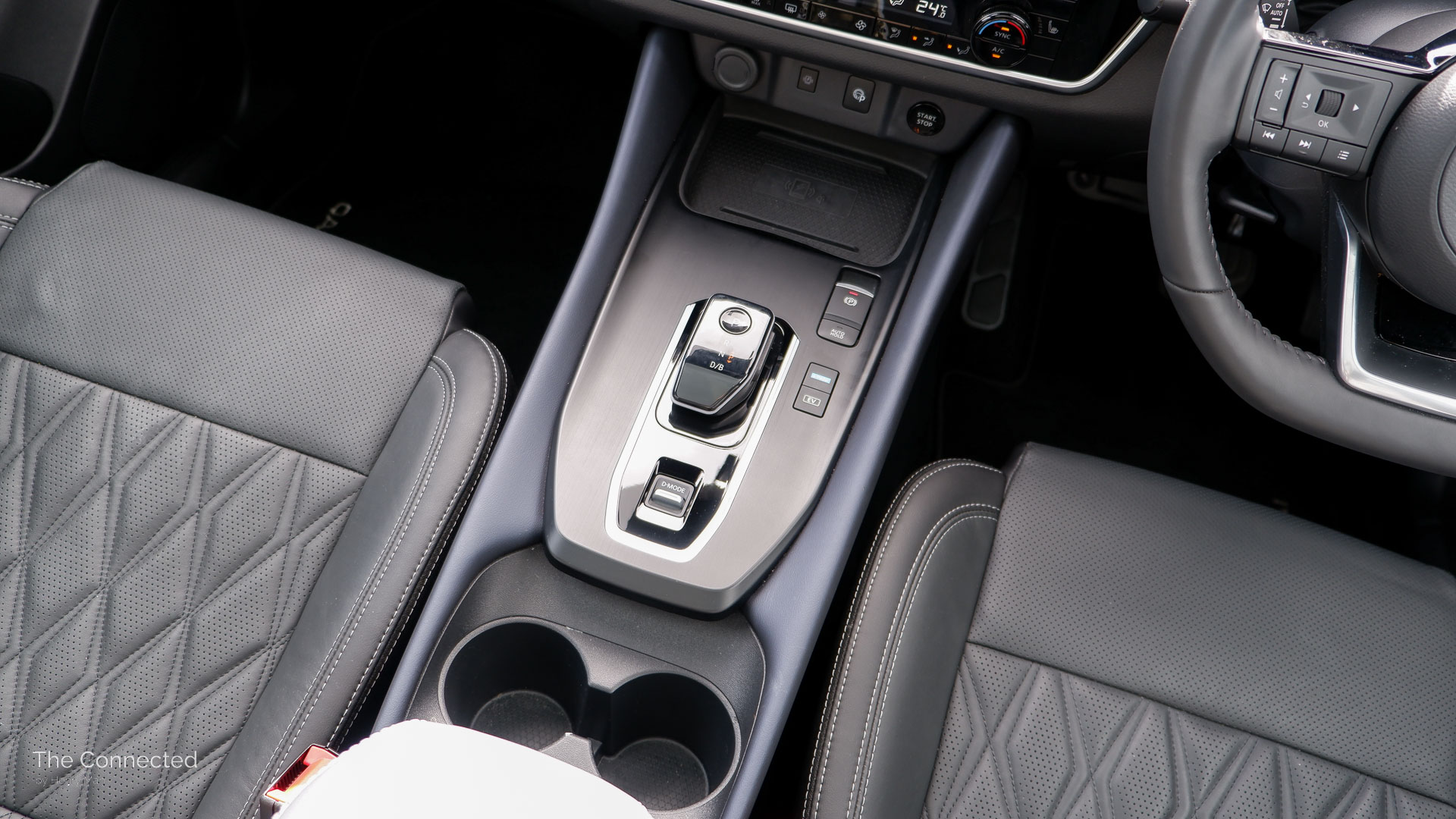

The centre console could also be more practical as it has a lot of blank space with a small shifter, and the cup holders lack grip mechanisms.
Meanwhile, the 12.3-inch touchscreen is bright and high resolution with a modern user interface that incorporates a persistent sidebar always offering easy access to shortcuts, a highly customisable home screen pages, and wireless Apple CarPlay.
Unfortunately, Android Auto still requires plugging in a cable – either via the USB-C or USB-A charging ports underneath the centre console cubby. This will be addressed with the upcoming facelifted 2025 Nissan Qashqai, though.
By default, the display has also dialled up the white levels a bit too much as it looks a bit overexposed and lacking contrast in Android Auto and Google Maps. Turning up the black levels in the settings menu offsets it, but this lowers the display brightness.
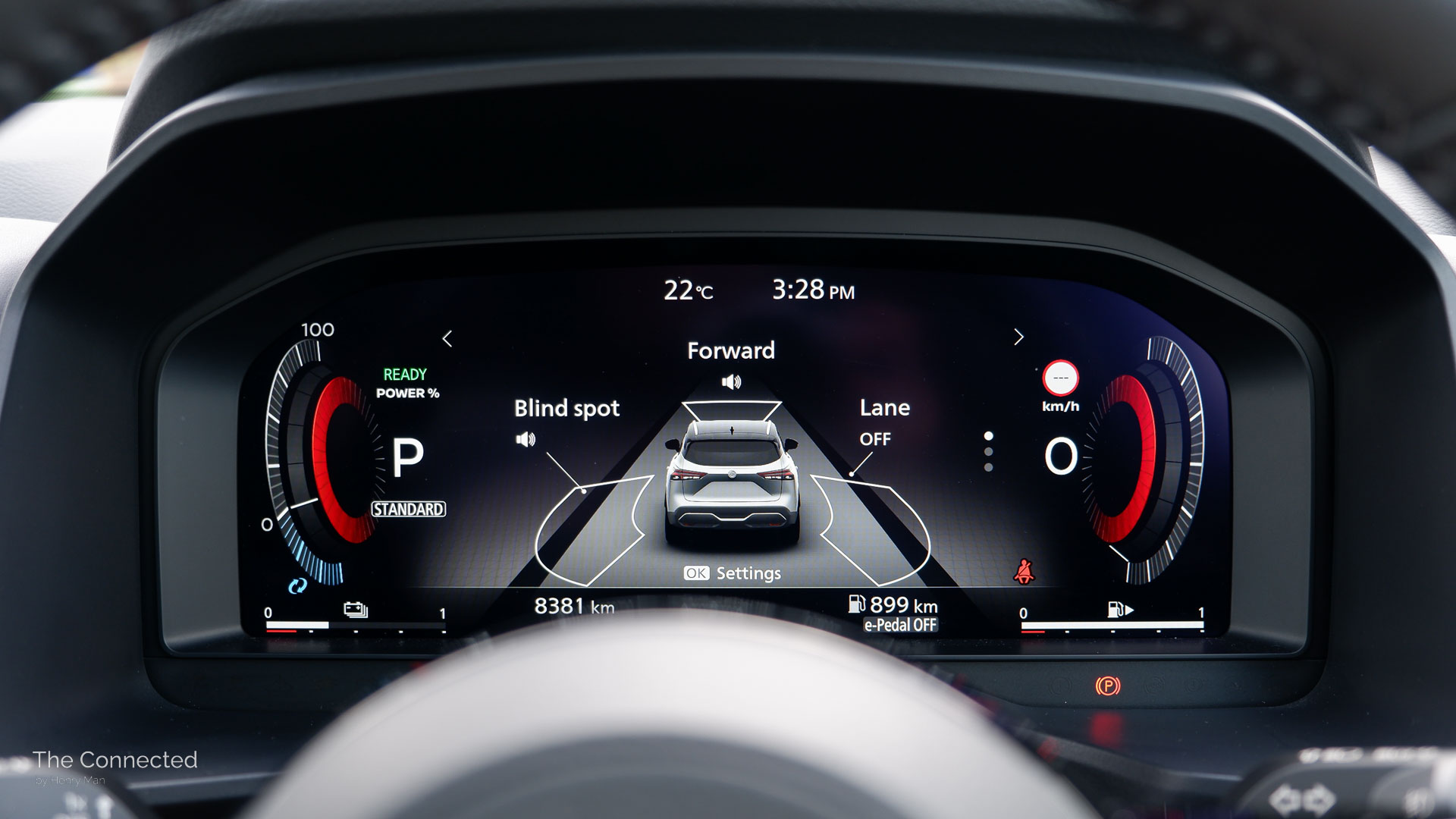
Ahead of the driver is an equally high resolution 12.3-inch instrument display with multiple pages providing good customizability and slick transition animations. Likewise, the 10.8-inch head-up display projected onto the windscreen is very large, bright and high resolution.
The Ti’s 10-speaker Bose branded system sounds impressively good, too.


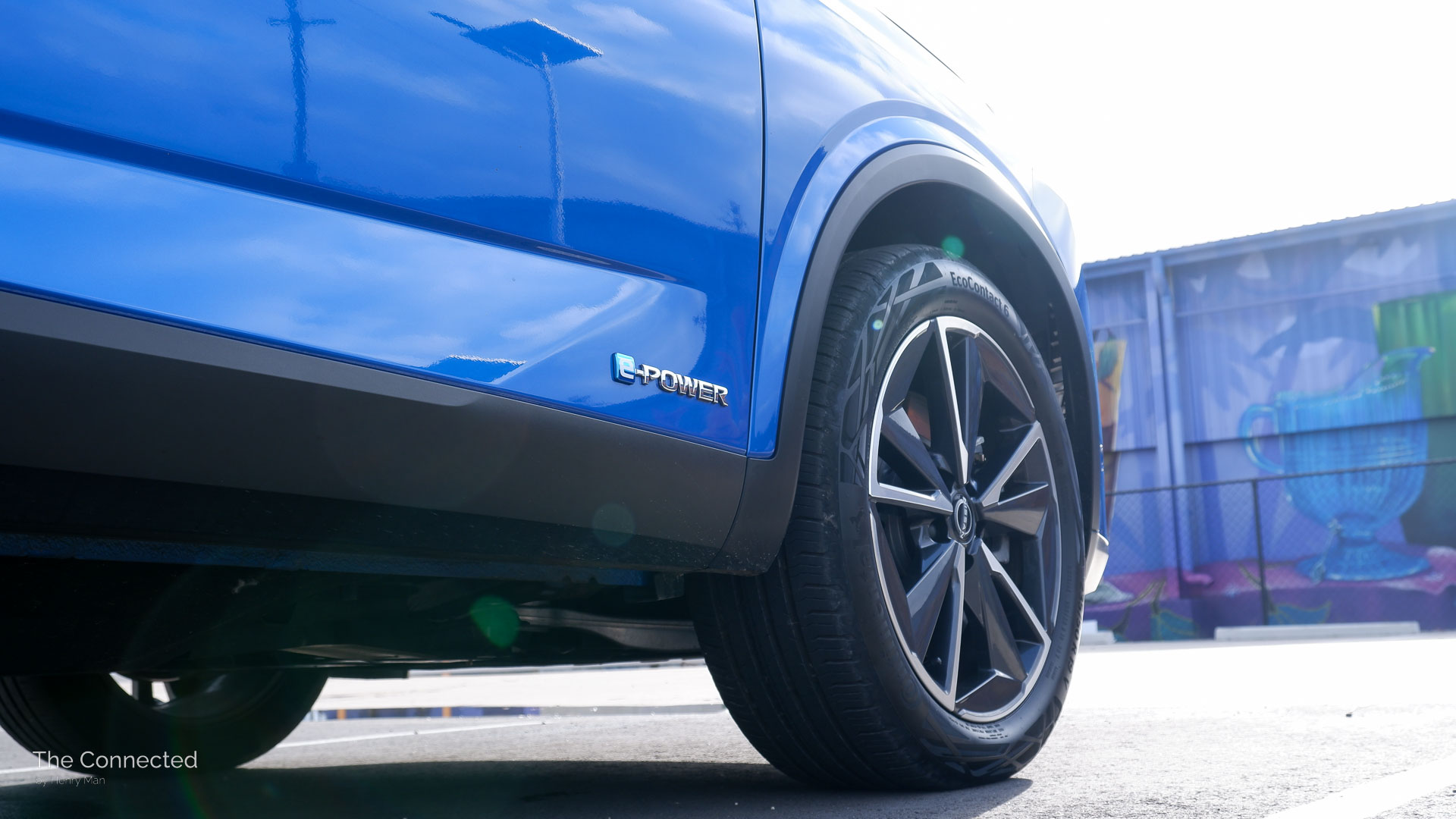
Uniquely, the Nissan Qashqai e-Power adopts a series-only hybrid approach that only uses the engine as a generator to charge the battery and power the wheels – with a $4200 premium on top of the regular flagship Ti variant.
I averaged 5.4L/100km fuel efficiency after a week of urban and highway driving, resulting in 1019km of real-world driving range from its 55-litre fuel tank.
It isn’t as efficient as some traditional series-parallel hybrid SUVs, but at least its fuel tank is the same capacity as the petrol-only model.
Unlike the bigger X-Trail, the e-Power tech is disappointingly unavailable on cheaper Qashqai variants.
The hybrid small SUV is powered by a front-mounted electric motor producing up to 140kW of power and 330Nm of torque via a single-speed automatic transmission, with a 1.5-litre turbocharged three-cylinder petrol engine exclusively charging the 2.1kWh (gross) lithium-ion battery.
This unique hybrid car approach provides an impressively similar experience to driving a full electric vehicle, without ‘charging anxiety’ concerns – instant torque, calm and smooth.
It’s aided by the Qashqai’s excellent noise insulation, minimal electric motor whines, and a comfortable suspension setup.
The e-Pedal button turns up the regenerative braking and, while it isn’t a complete one-pedal driving system (it cuts out at about 15km/h), it’s easy to modulate the accelerator to slow down with a progressive pedal feel.


Meanwhile, Nissan’s active safety assistance systems are refined and mostly dependable. The ProPilot adaptive cruise control system performs well, but I found that it sometimes brakes slightly harder and stops earlier than ideal.
It also takes some time for the camera to lock on and enable lane-centring assist, even when the lines are clearly marked on the road. Moreover, when I try to nudge the wheel to err on one side of the lane (to give clearance for motorbikes, for example), the ProPilot system tugs the wheel keep you in the centre of the lane slightly too assertively.
Similarly, the lane-keep assist system aggressively brakes the inside wheel – which is quite annoying, especially when you’re going over the marked lines intentionally.
While the Qashqai’s 360-degree camera system is helpful, its lenses are low resolution and slightly distorted, the camera cuts out when travelling faster than 12km/h, and you strangely can’t see every camera angle (left front wheel, but not the right one).
On the other hand, Nissan’s automatic parking system is surprisingly good at detecting lines and spaces between vehicles, operates quickly without too much back-and-forth, and parks against the curb with good clearance.
While the Qashqai features a speed limit detection system, it isn’t annoying as it doesn’t sound any warning chimes. Signs are detected fairly reliably and doesn’t turn to 40km/h outside school zone times.

The 2024 Nissan Qashqai Ti e-Power is an impressively premium, EV-like and family-friendly small SUV – albeit with a slightly higher price tag.
While its $50,990 before on-road costs starting price is a touch more than rival hybrid small SUVs, it delivers a more enjoyable to drive EV-centric hybrid system, quality interior and a plethora of features, some of which are usually found from luxury cars.
There is the trade off of slightly higher – but still low – fuel consumption compared to traditional series-parallel hybrids, and I wish cheaper Qashqai variants such as the base ST or at least the ST-L could be optioned with the e-Power powertrain.
I’m really impressed with the Nissan Qashqai e-Power; it’s worth shortlisting if you’re looking for an all-rounder, feature-packed and fuel-efficient SUV.
Pros:
- Enjoyable to drive hybrid system
- Excellent e-Pedal regen braking
- High-quality interior
- Family-friendly interior and boot
- Modern and refined tech
Cons:
- Not as fuel efficient as traditional hybrids
- E-Power is unavailable with cheaper variants
- Low-res 360-degree camera system
- Wired Android Auto, high white levels
- Halogen interior lights
READ MORE: Nissan e-Power hybrid review
READ MORE: 2024 Kia Sportage Hybrid review: Perfected SUV?
READ MORE: 2025 Hyundai i30 Sedan Hybrid review
About the Author.
Henry Man is an independent content producer passionate about the intersection of technology and transportation.
The former automotive journalist is focused on producing critically-detailed vehicle reviews, and unique short-form content. Learn more.


 The Connected by Henry Man