

Is the 2025 Hyundai Kona Electric overpriced?
The small electric SUV enters its second generation with more interior space, new technology, and a slightly larger battery at a similar price.
Launched in late 2023, Hyundai claims the new Kona is designed as an electric vehicle first – even though it doesn’t sit on a dedicated EV platform.
But amid competitive Chinese rivals including the BYD Atto 3, Chery Omoda E5 and even the Zeekr X at the top end, is the Hyundai Kona Electric’s $54,000 to $68,000 before on-road costs price too much?
I tested the high-spec Kona Electric Premium Extended Range for a week to find out.
NOTE: The press vehicle was provided by Hyundai Australia for a seven-day independent evaluation. We have no commercial arrangements with the company and it had no editorial control.

Pros.
+ Much more practical than predecessor
+ Traction issues fixed
+ Convenient one-pedal driving
+ Refined tech and safety assists
+ Temporary spare tyre now included
Cons.
– Expensive for what you get
– Not as efficient as before
– Fast charging capability could be better
– Cost-cutting material quality
– Noisier ride than ideal
Vehicle tested:
| Model | 2025 Hyundai Kona Electric |
| Variant | Premium |
| Starting price | $68,000 before on-road costs |
| Exterior colour | Meta Blue (+$595) |
| Interior colour | Light Shale Grey interior (+$295) |
| Country made | South Korea |
Design and quality.
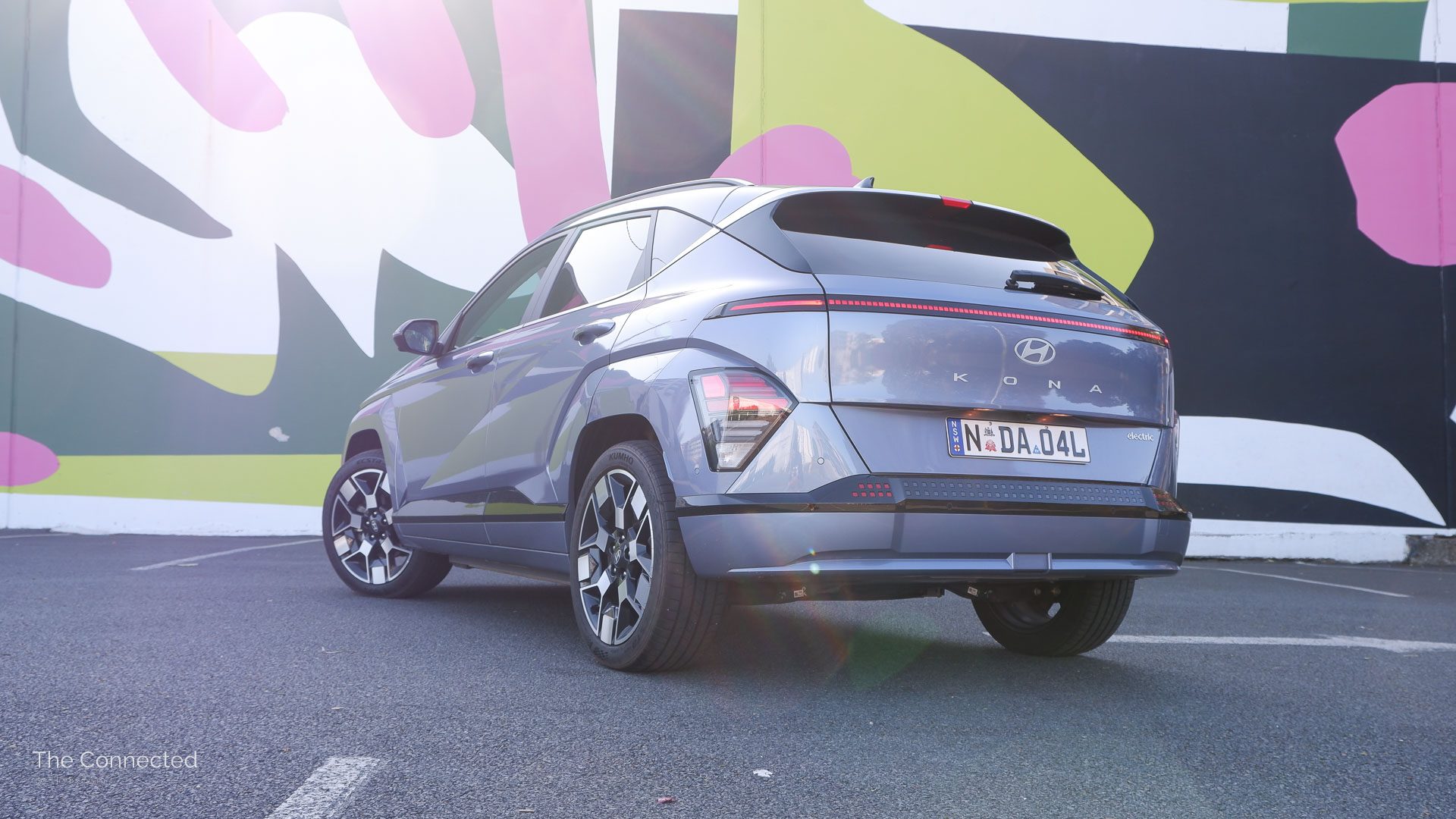
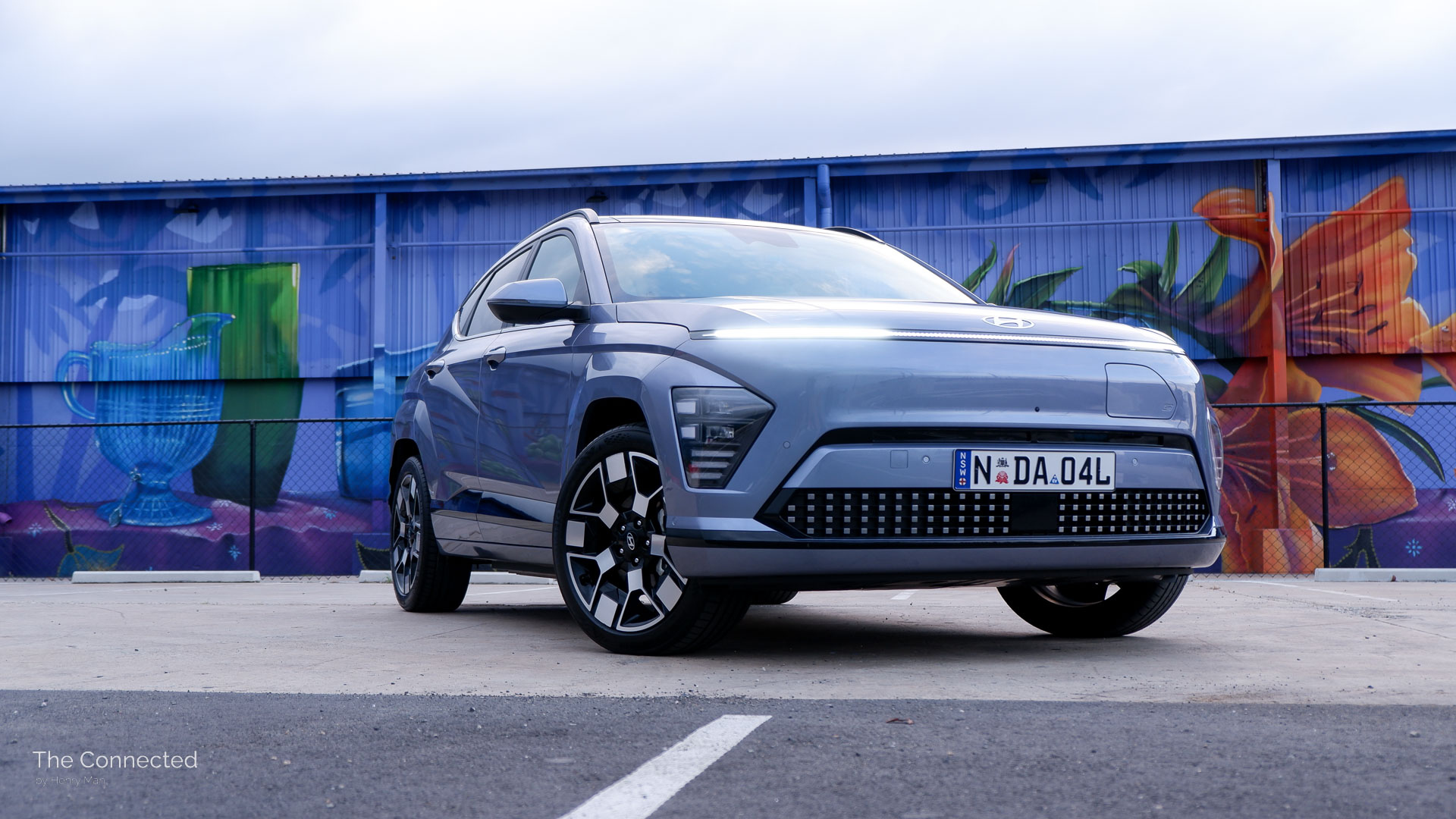
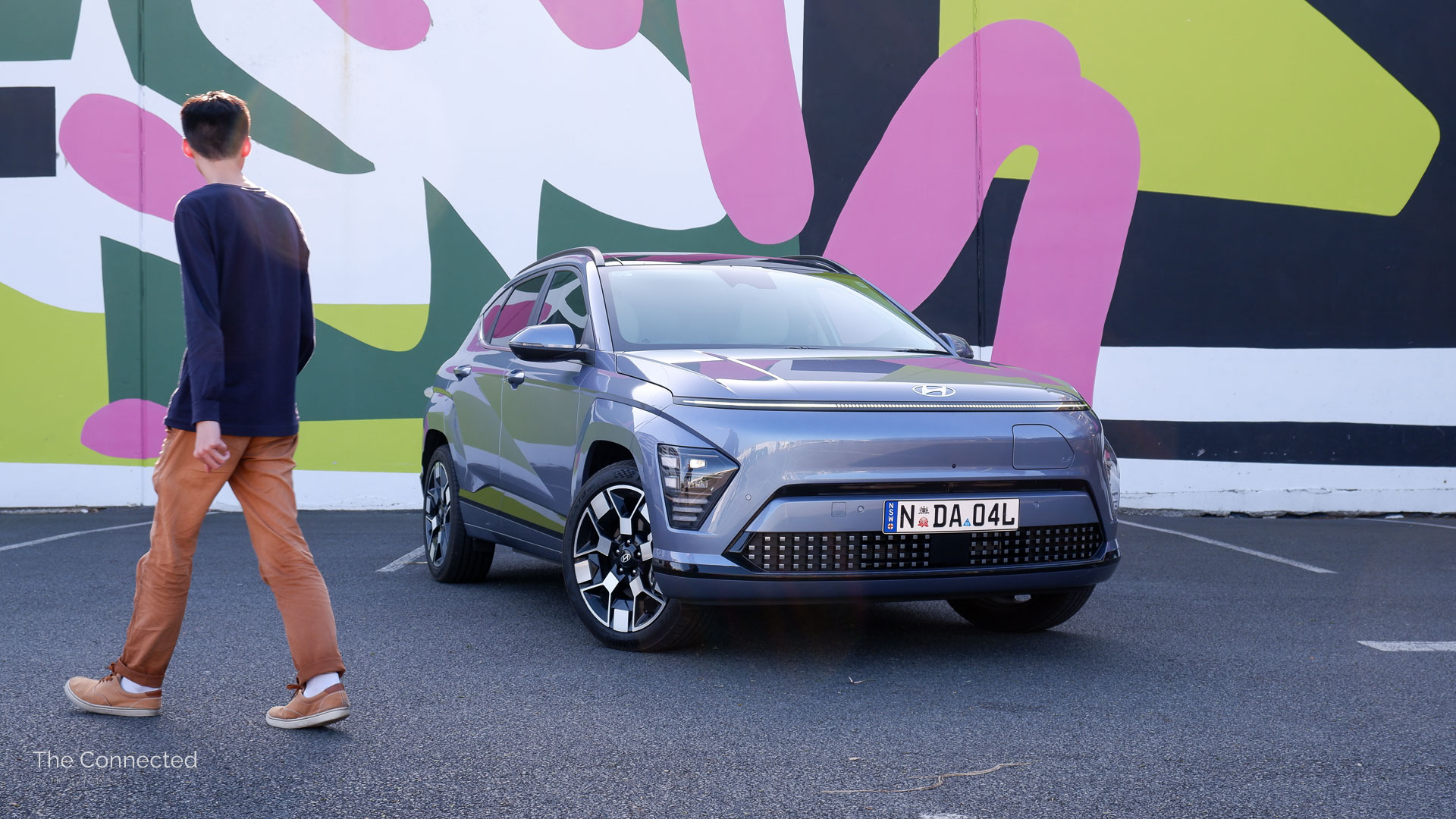
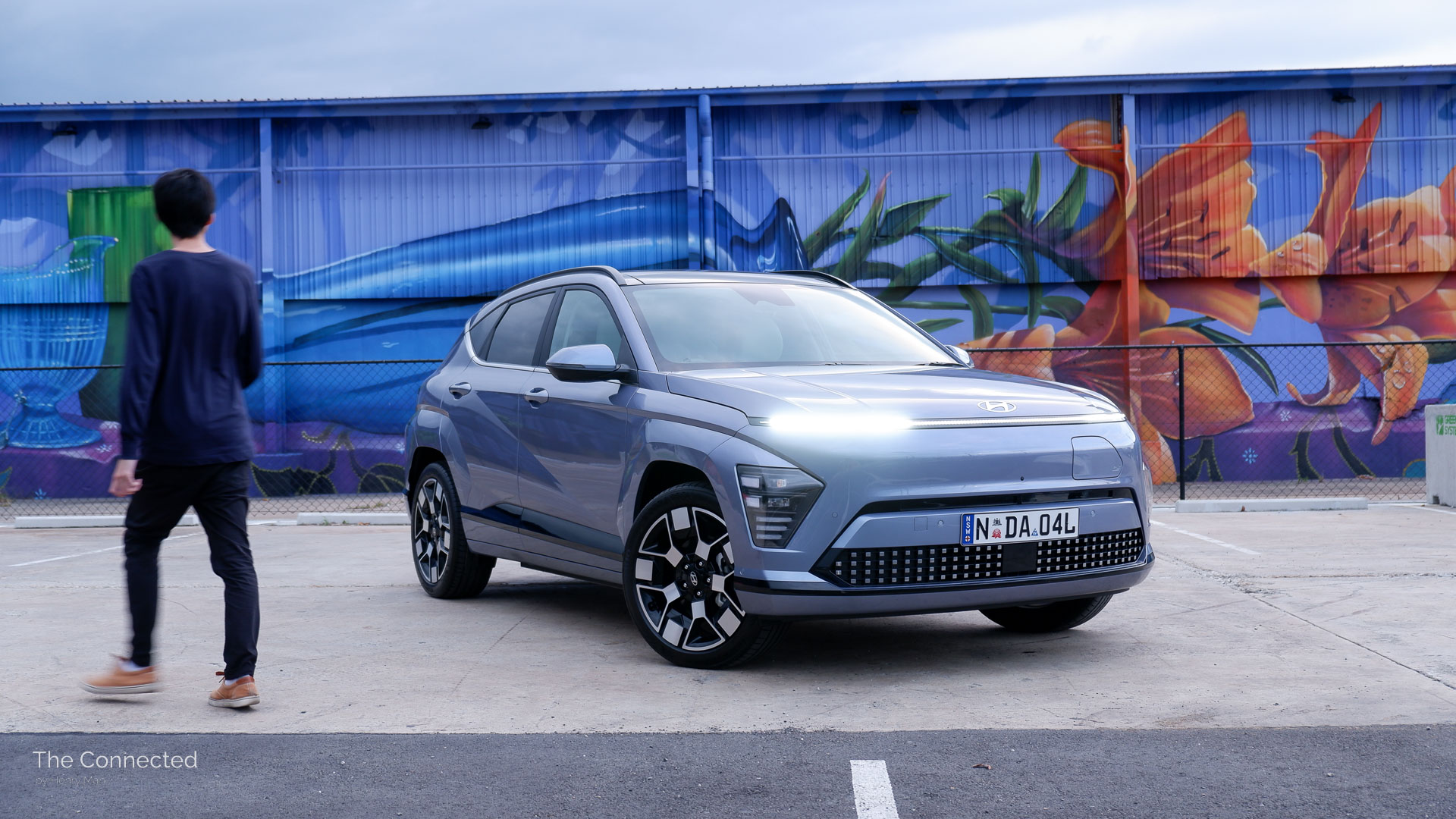
The new Hyundai Kona Electric comes with a more futuristic design, but doesn’t do enough to differentiate itself from regular petrol and hybrid variants.
That’s mainly because the South Korean carmaker claims the second-gen Kona was designed as an EV first.
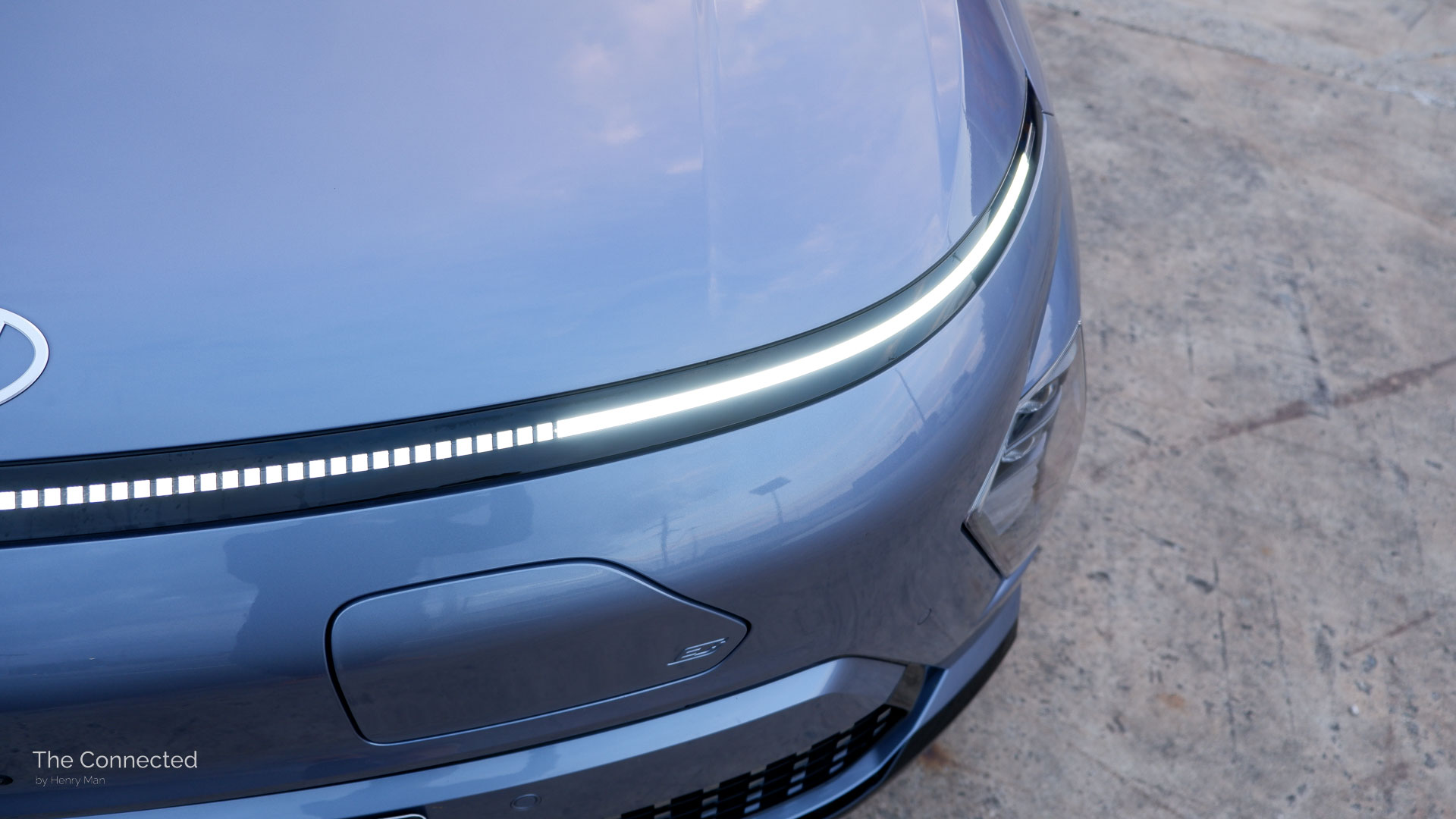
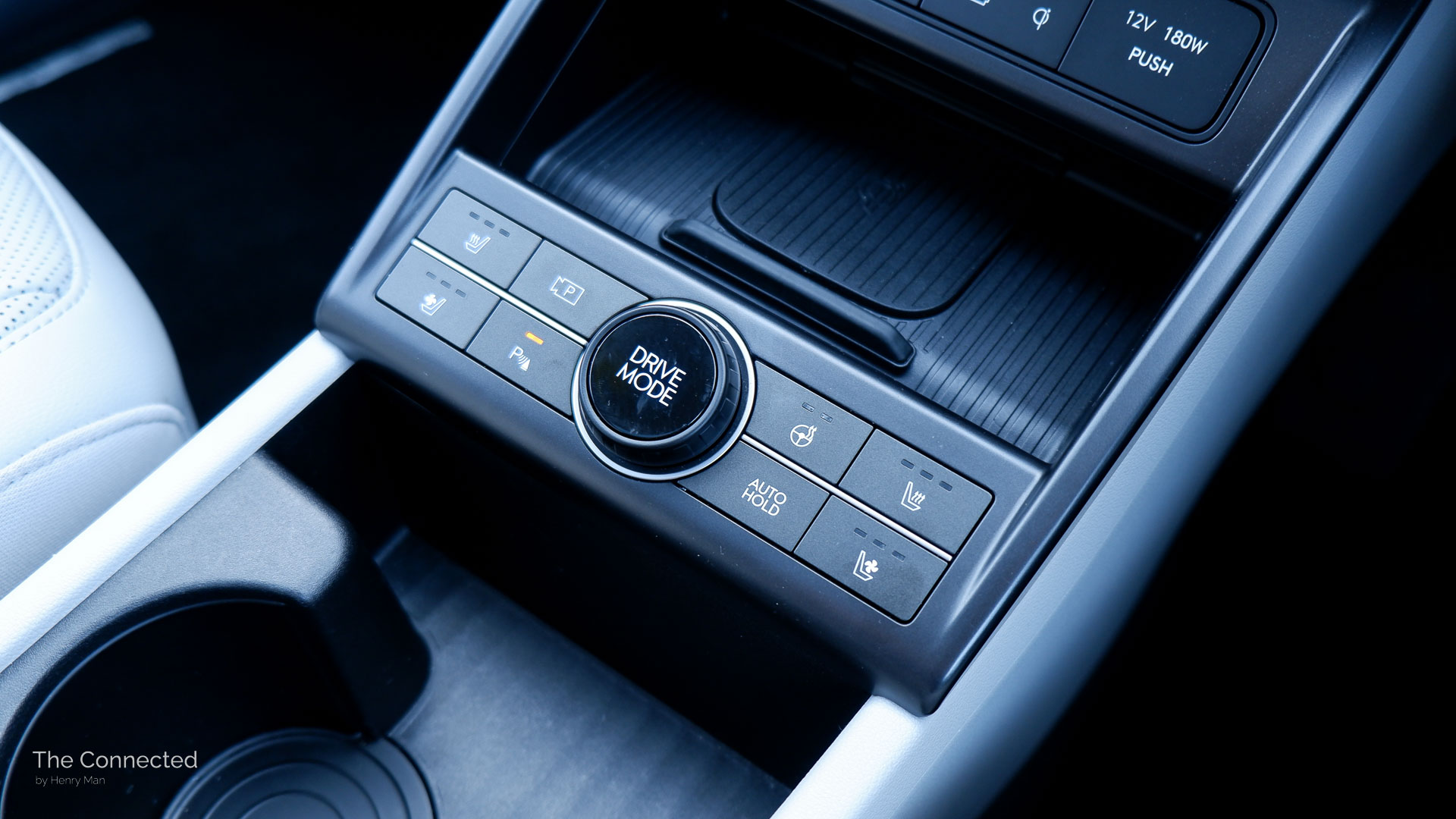
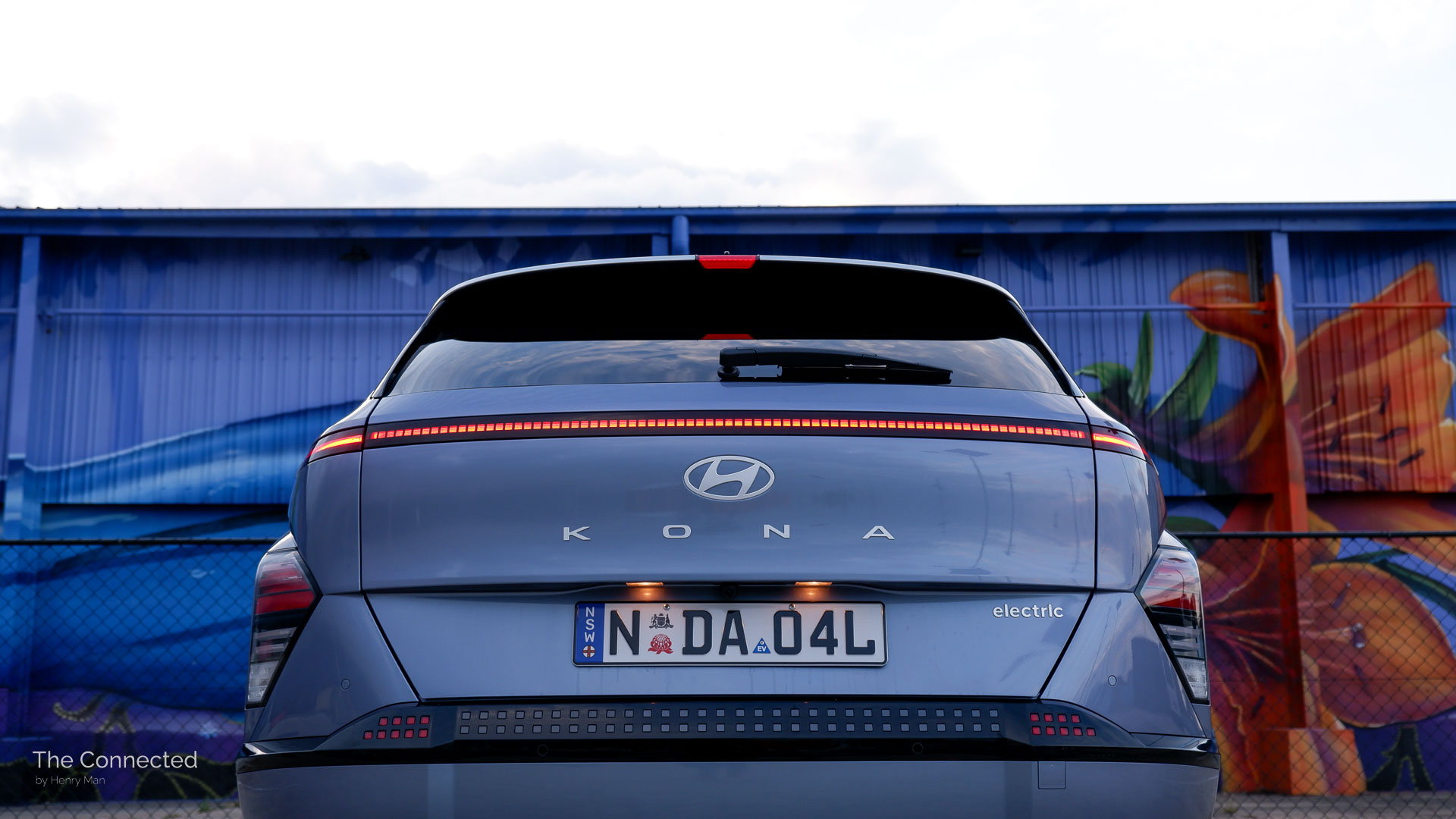
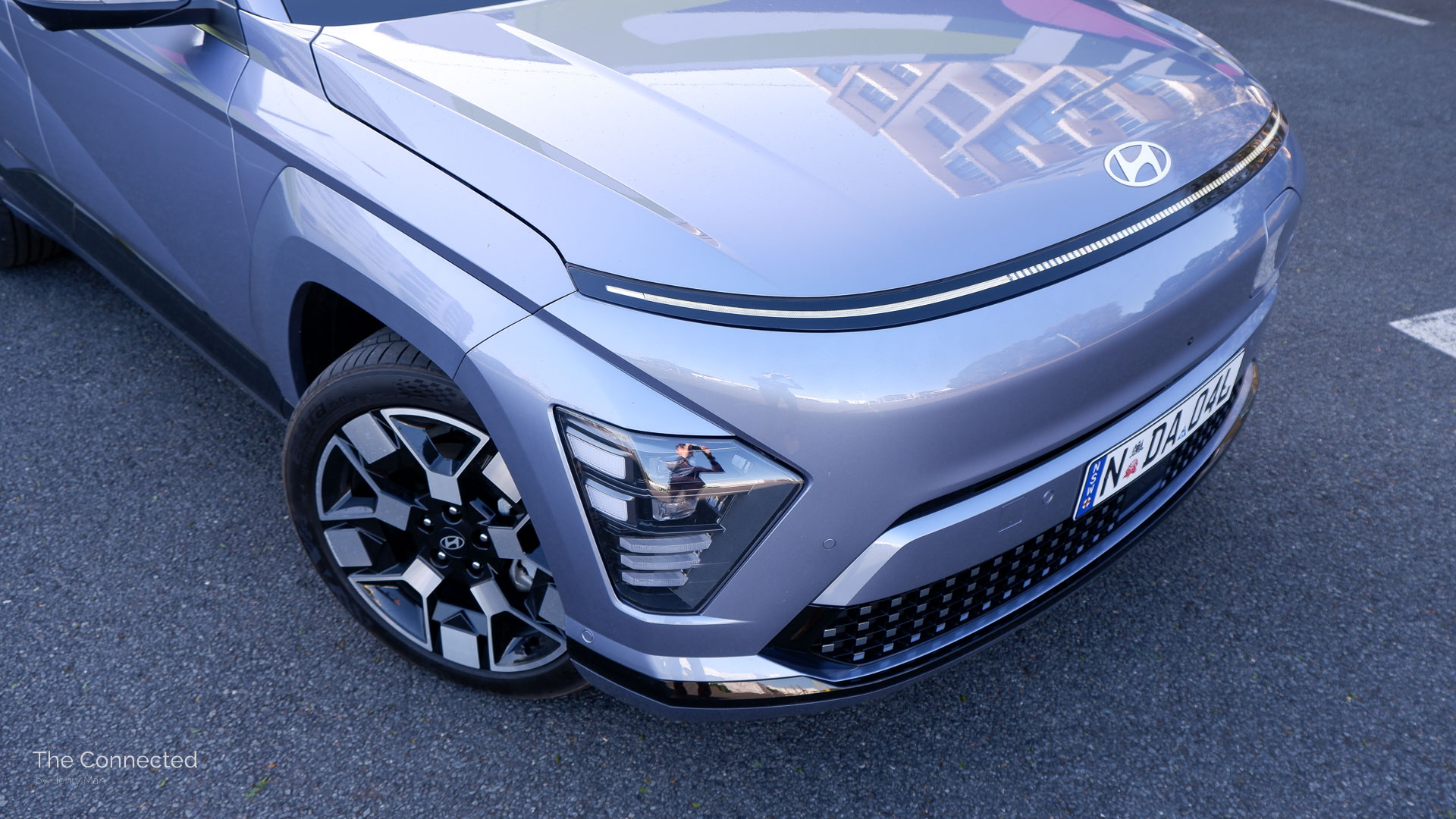
To separate the EV from regular internal combustion engine (ICE) Konas, it incorporates square pixel design elements across the middle portion of both front and rear light bars, and lower bumpers on both sides.
Keen spotters will also notice the front shutter intake flaps from ICE variants are much slimmer, although they don’t open on the EV.
The front-left charging port also appears to use the same lid as its predecessor. It still looks like an afterthought with an asymmetrical face, unlike the Hyundai Inster EV and Kia Niro EV which feature a more integrated design.
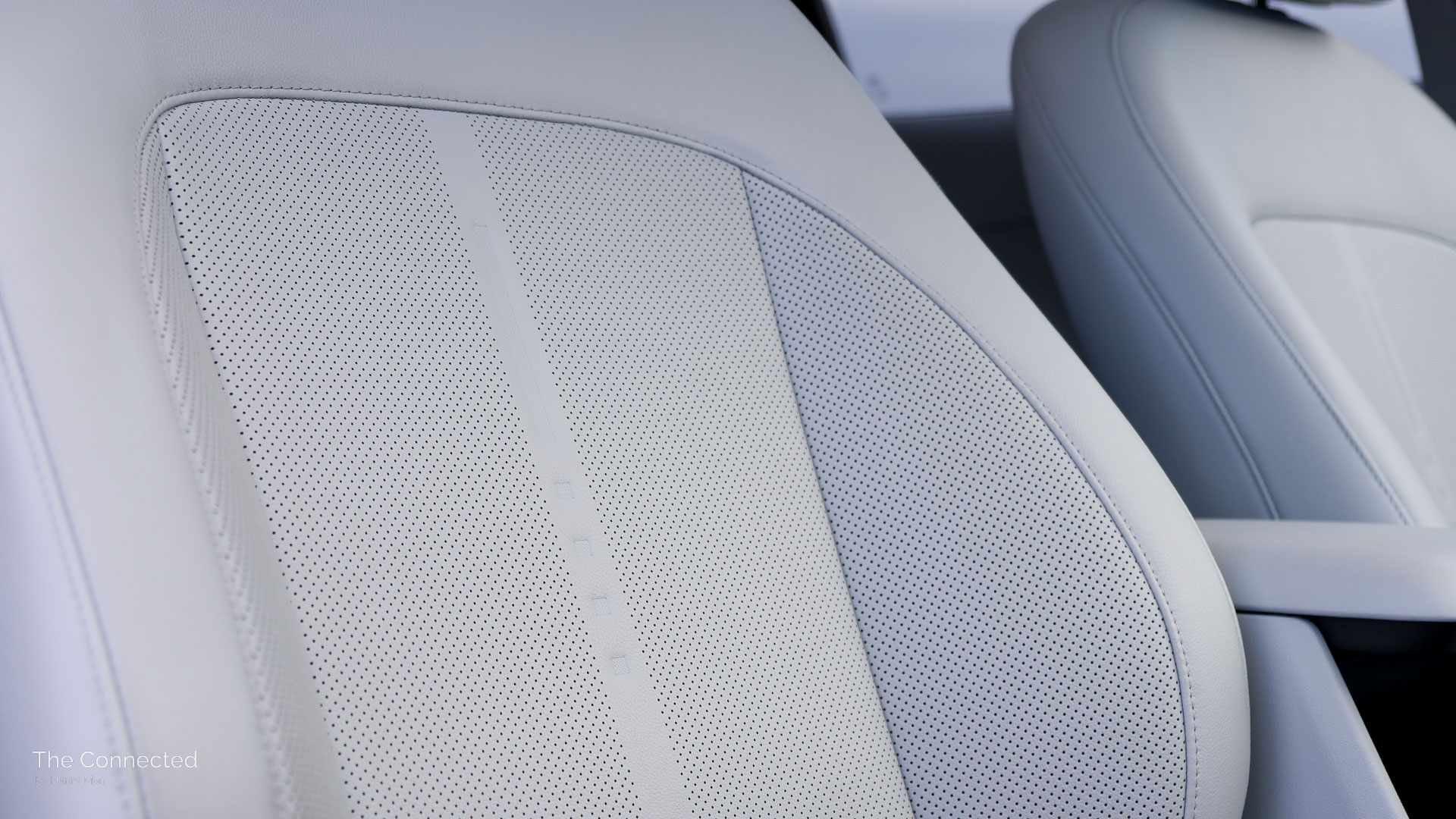
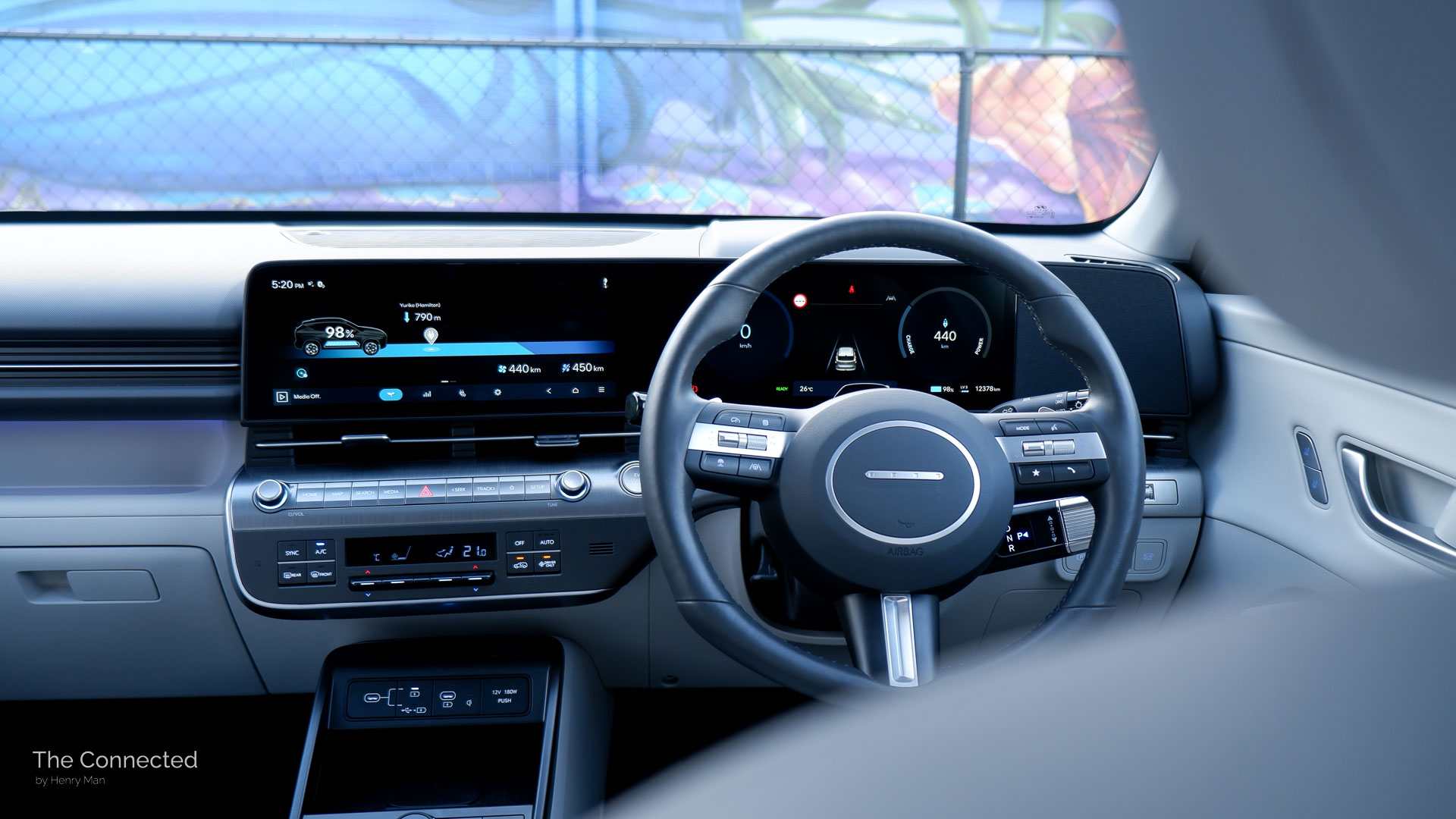
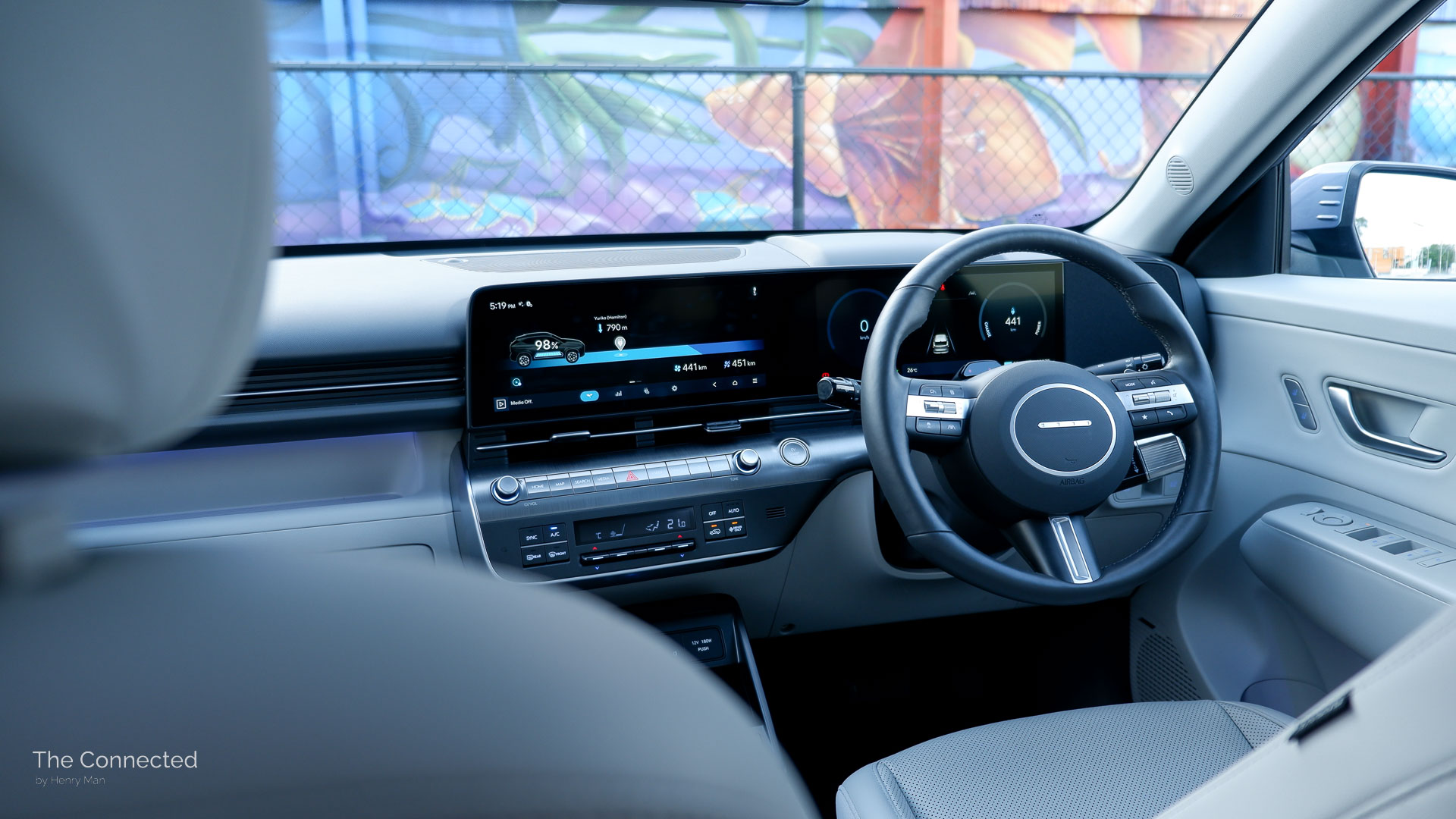
Inside, the 2025 Kona EV isn’t as unique – with subtle square pixels on the steering wheel and seats differentiating itself from the petrol and hybrid Konas.
The small SUV’s interior is still modern, though, aside from the rather traditional-looking brushed silver trim and plastics around the centre climate and infotainment controls.
Only the top-spec regular Kona Premium can be optioned with a Light Shale Grey or Sage Green interior for $295 (depending on the exterior colour). It’s worth every cent as it lifts the perceived interior feel more than the sporty N Line option.
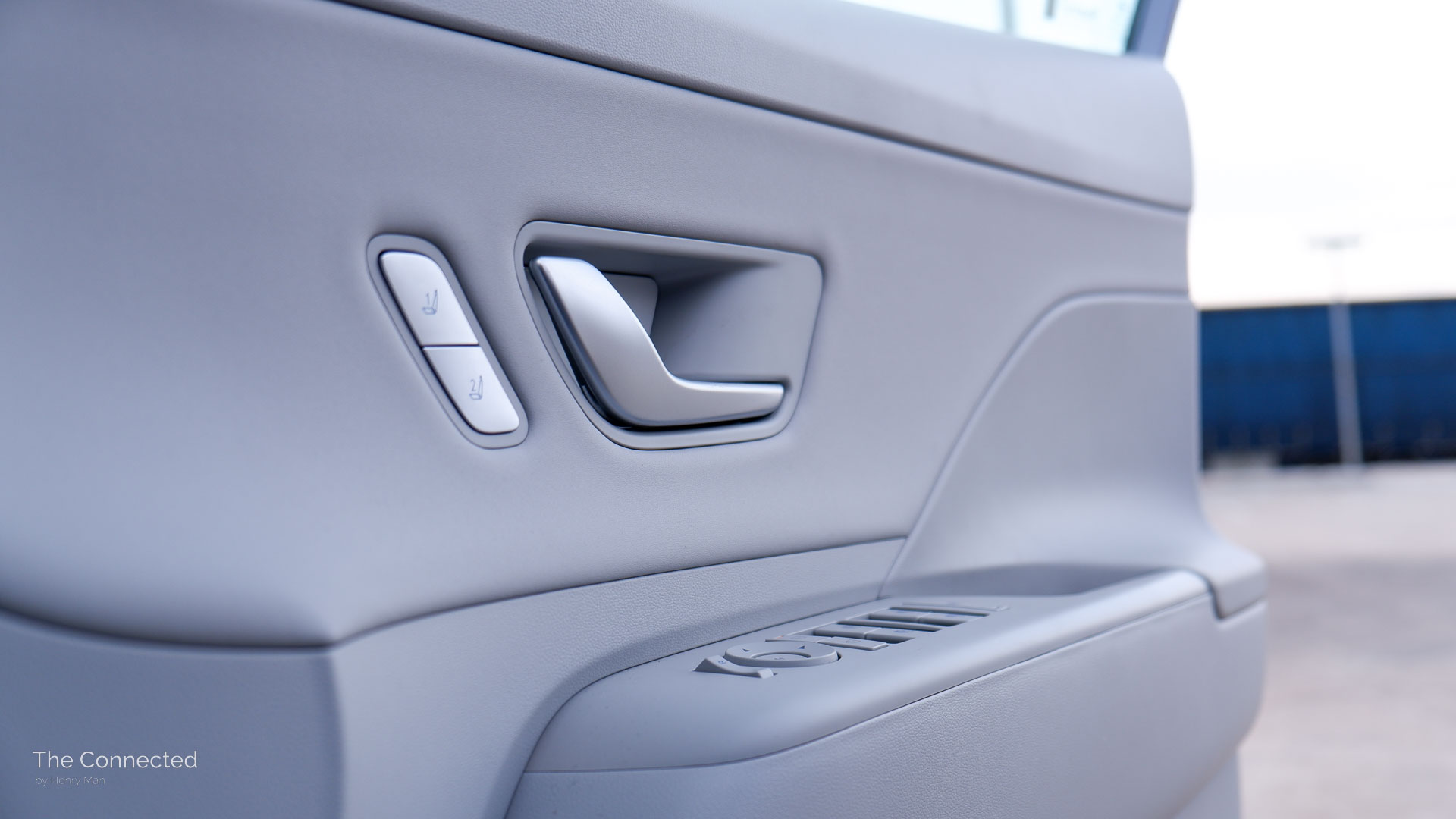
Disappointingly, despite the Kona Electric Premium costing ~$70K drive-away, material quality could be better to justify its ‘premium’ badge.
The centre console tray has a nasty raw, untextured surface that’s prone to permanent scratches, the steering wheel and armrests are wrapped in a thin layer of leatherette, and all window switches besides the driver’s door aren’t illuminated at night.
Practicality.
2025 Hyundai Kona Electric dimensions:
| Length x width x height | 4355 x 1825 x 1580mm |
| Wheelbase | 2660mm |
| Ground clearance | 151mm |
| Boot space (min / rear seats folded) | 434 / 1268 litres |
| Frunk space | 27 litres |
| Rear seat split fold | 60:40 |
| Child seat anchors | 2x ISOFIX and 3x top-tether points (rear seats) |
The 2025 Kona EV is bigger in every direction than the previous model, making it a genuine family-friendly small SUV.
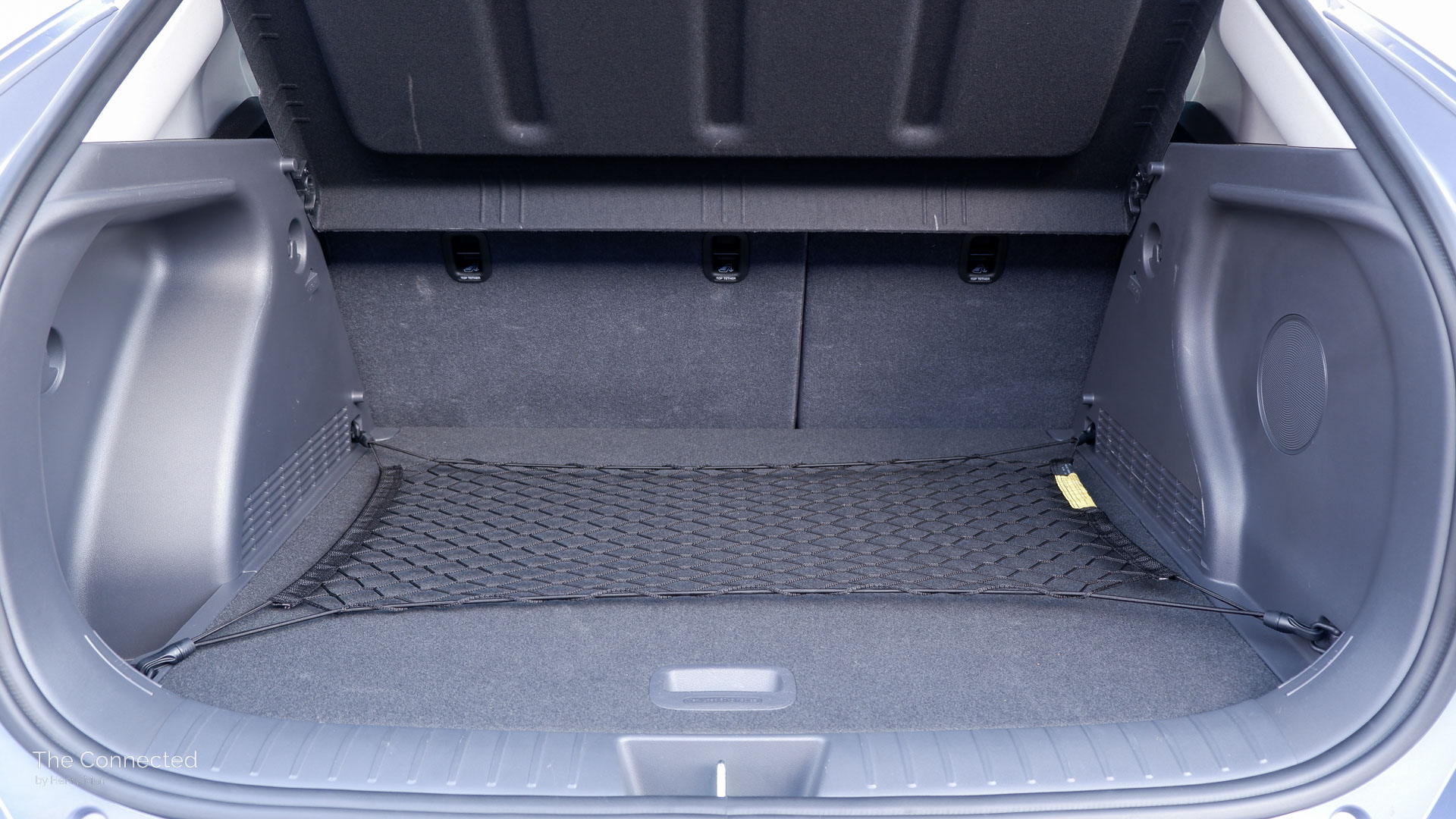
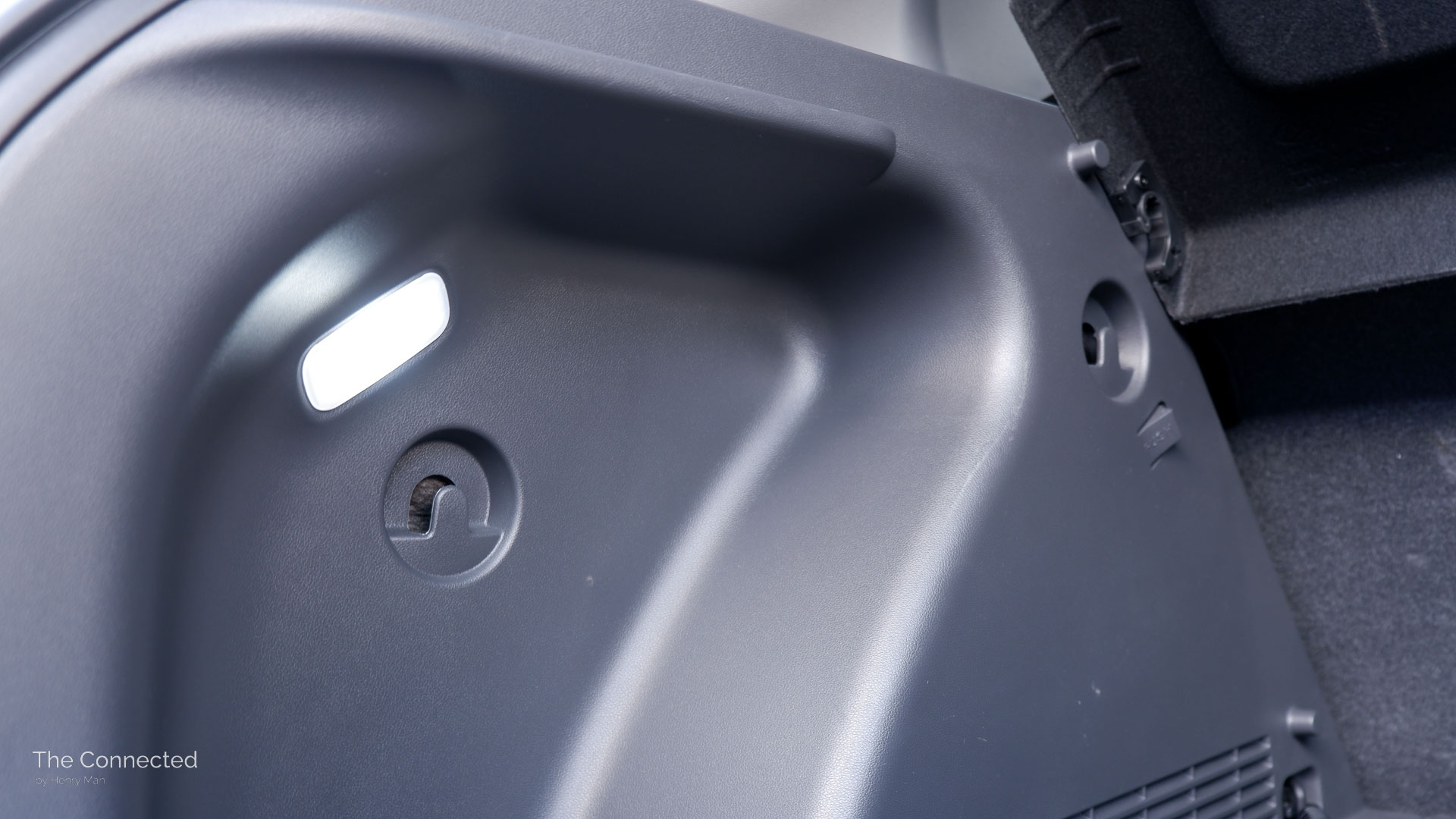
The 434-litre boot is generous with a flat loading lip, shallow pockets on each side, and three sturdy bag hooks, although they’re low-set and whatever is hooked may eventually detach.
The Premium features an electric tailgate, which can open hands-free by standing behind the vehicle with the key. However, it doesn’t have a kick sensor so it only opens when all doors are locked. It can’t close hands-free either.
On our early build tester, we found the cargo cover sometimes got in the way of the tailgate closing.
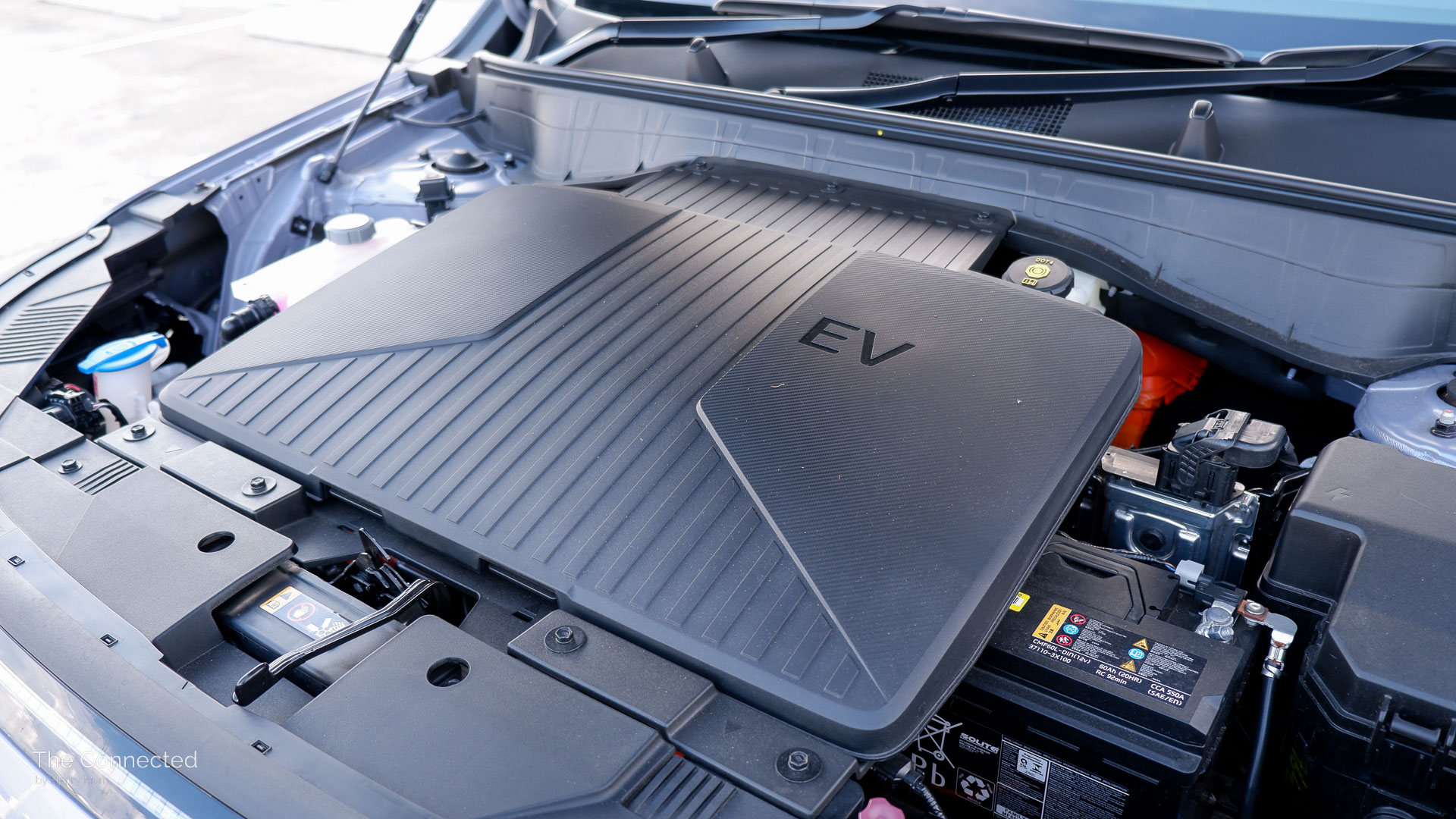
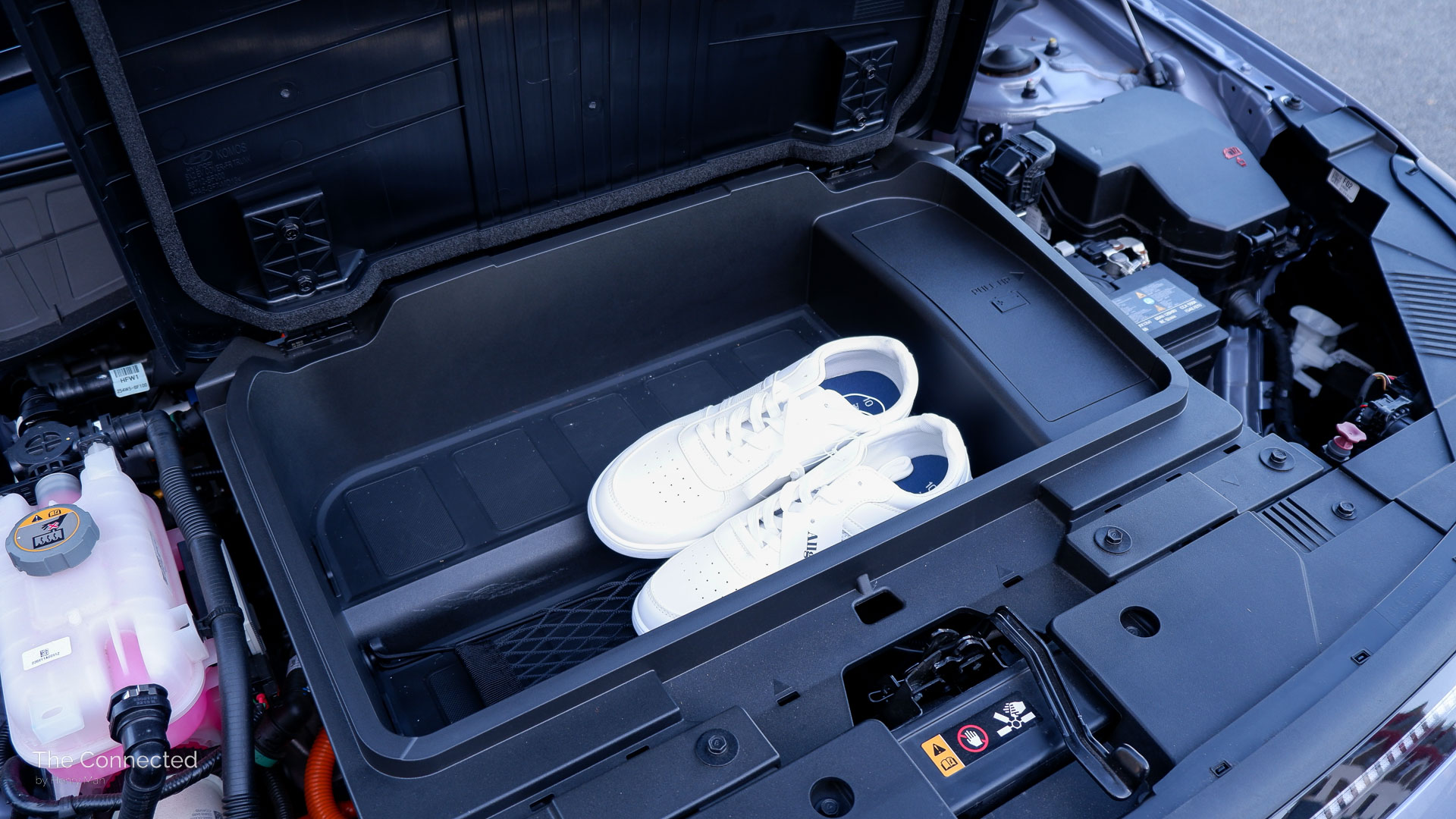
Thankfully, despite the new Kona EV still riding on an ICE architecture, it now offers a small 27-litre frunk under the bonnet. It’s under a lid, but includes LED illumination and even a cargo net.
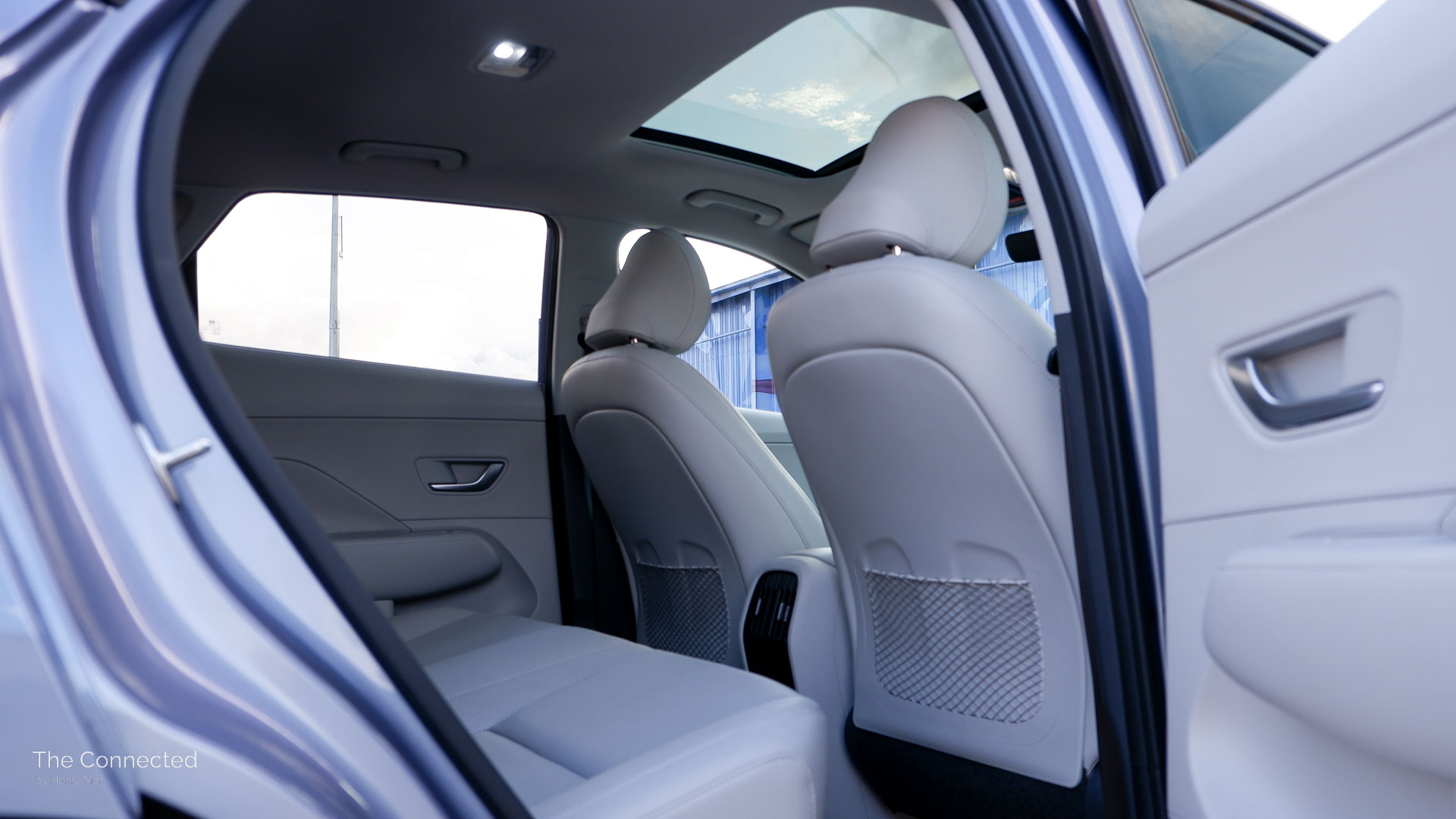
Crucially, the second-gen Kona’s bigger dimensions now yields a spacious and family-friendly rear row, with plenty of headroom and good legroom.
Fortunately, in a sign of the EV-first design, the 12-volt electronics battery is placed under the bonnet – rather than being exposed and intruding foot space under the driver’s seat on regular petrol and hybrid Konas.
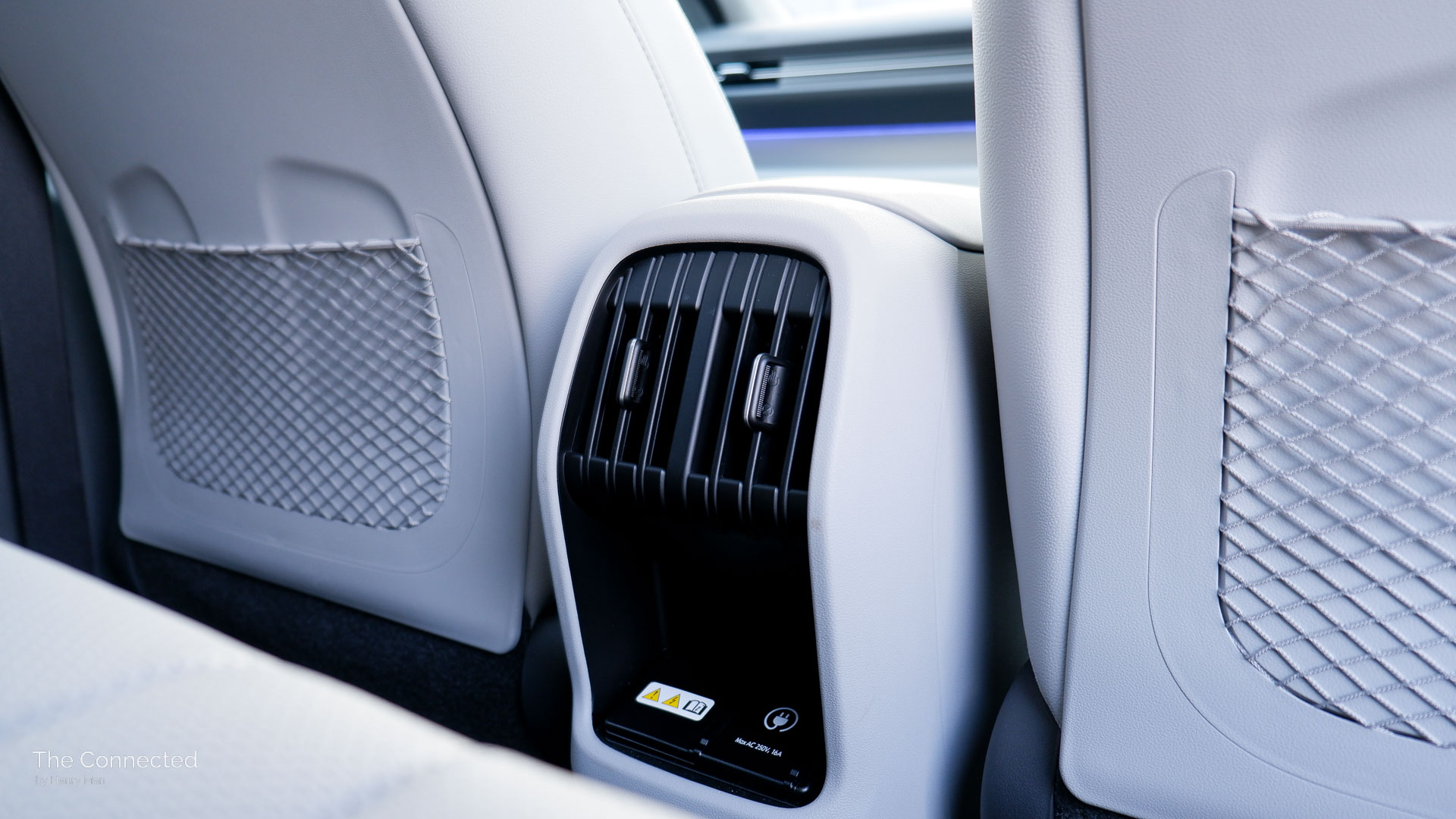
The bench is also wide enough to sit three people abreast, with rear air vents now included, in addition to two USB-C charging ports, a vehicle-to-load (V2L) power socket, and a fold-down centre armrest.
Bright LED interior lights are standard across both rows. The Premium gains tinted rear windows, a standard-sized sunroof and three-level heated rear outer seats, too.
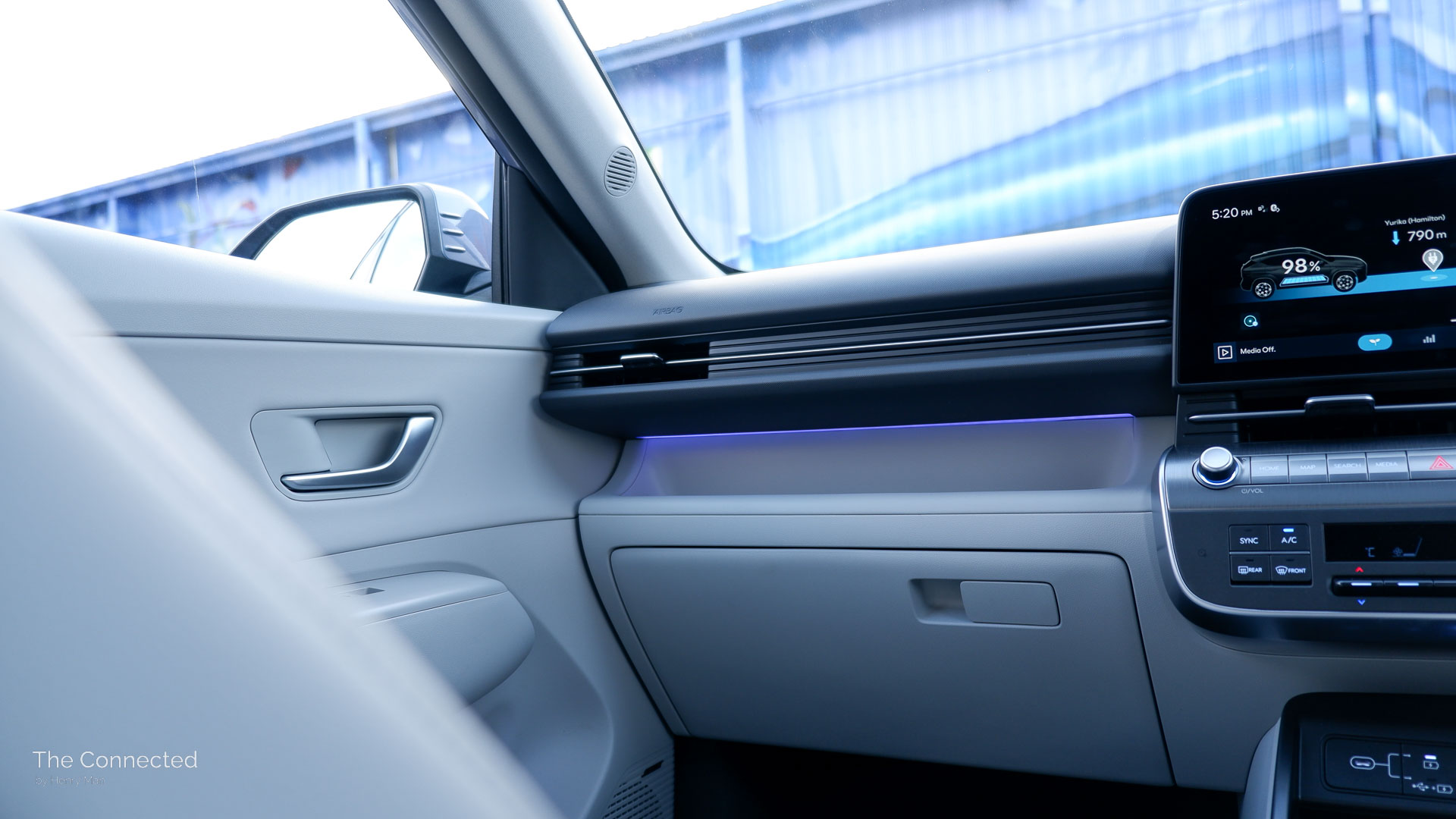


Up front, the new Kona Electric features a more open centre console with pop-out cup holders and an open shelf in front of the passenger.
Unfortunately, this also means there’s less private storage with a shallow removable tray underneath the centre armrest and a well-sized glovebox. Side door bottle pockets are reasonably-sized.
Despite the inclusion of lumbar support on all models, I found that the Kona’s seats were lacking some bolstering and comfort with my back aching slightly after a one-hour drive.
At least the top-spec Premium has electric adjustment, a reclined relaxation mode, two-level driver’s seat memory, three-level heated and ventilated front seats, and three-level heated rear outboard seats.
Technology.
2025 Hyundai Kona Electric tech features:
| 12.3-inch touchscreen running ccNC | 12.3-inch driver instrument display |
| Wireless Apple CarPlay and Android Auto | Qi wireless charging pad |
| Built-in maps with traffic-based routing | 4x USB-C, 1x 12-volt, and 1x V2L power sockets |
| OTA software update capability | Eight-speaker Bose audio |
| Hyundai Bluelink connected services and mobile app | Proximity key with auto-folding mirrors |
The Hyundai Kona Electric now boasts new-gen connected tech that’s responsive, easy to use and refined.
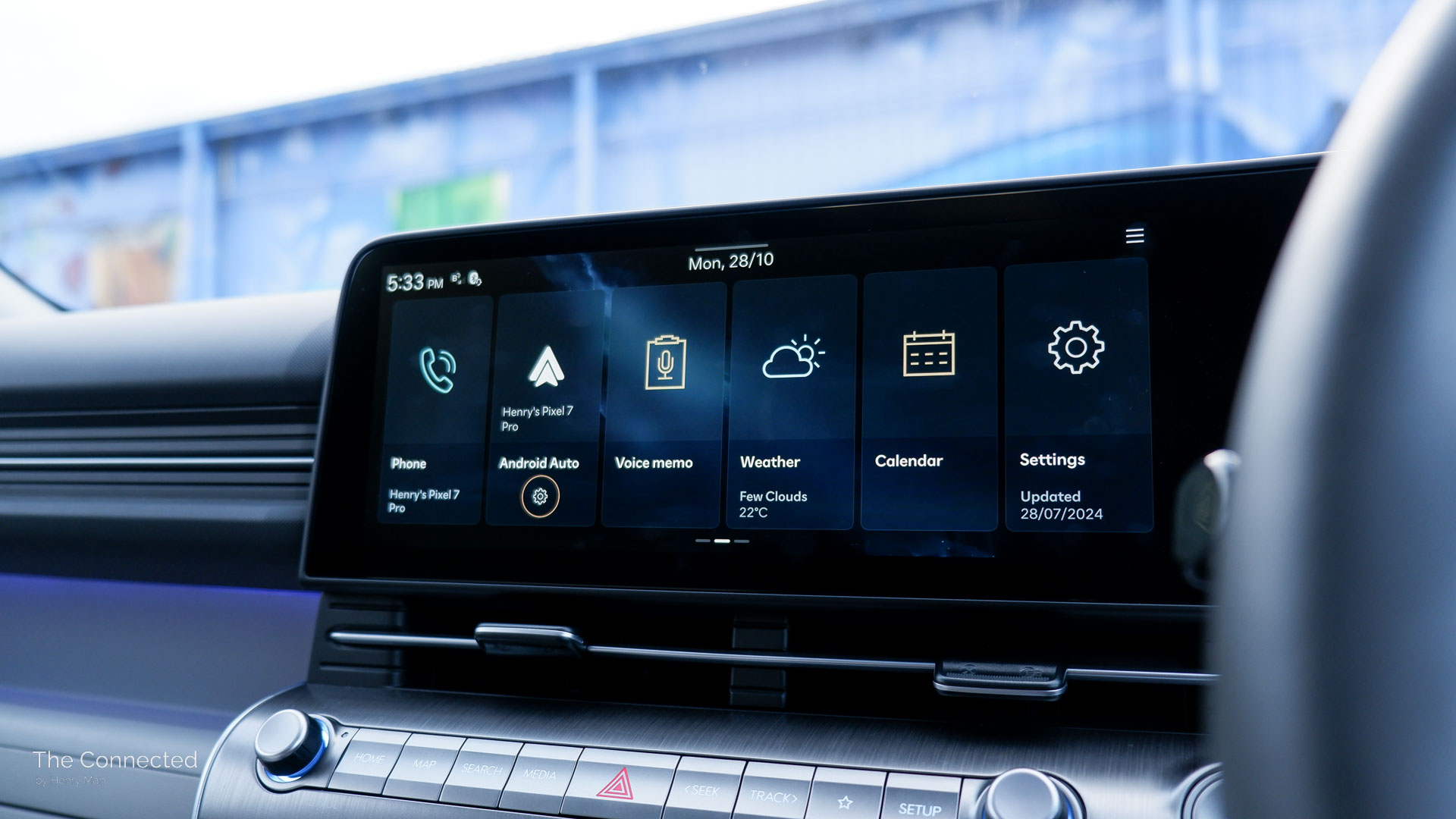
The central 12.3-inch touchscreen is large and high resolution with a fast processor and a row of quick shortcut buttons underneath.
Powered by the South Korean carmaker’s latest Connected Car Navigation Cockpit (ccNC) operating system, the user interface is modern and refined with over-the-air (OTA) software update capability.
Wireless Apple CarPlay and Android Auto are standard with no connection issues experienced, as well as a conveniently placed Qi wireless charging pad. Keep in mind that it doesn’t feature a cooling fan and smartphones will stop charging over time to avoid overheating.
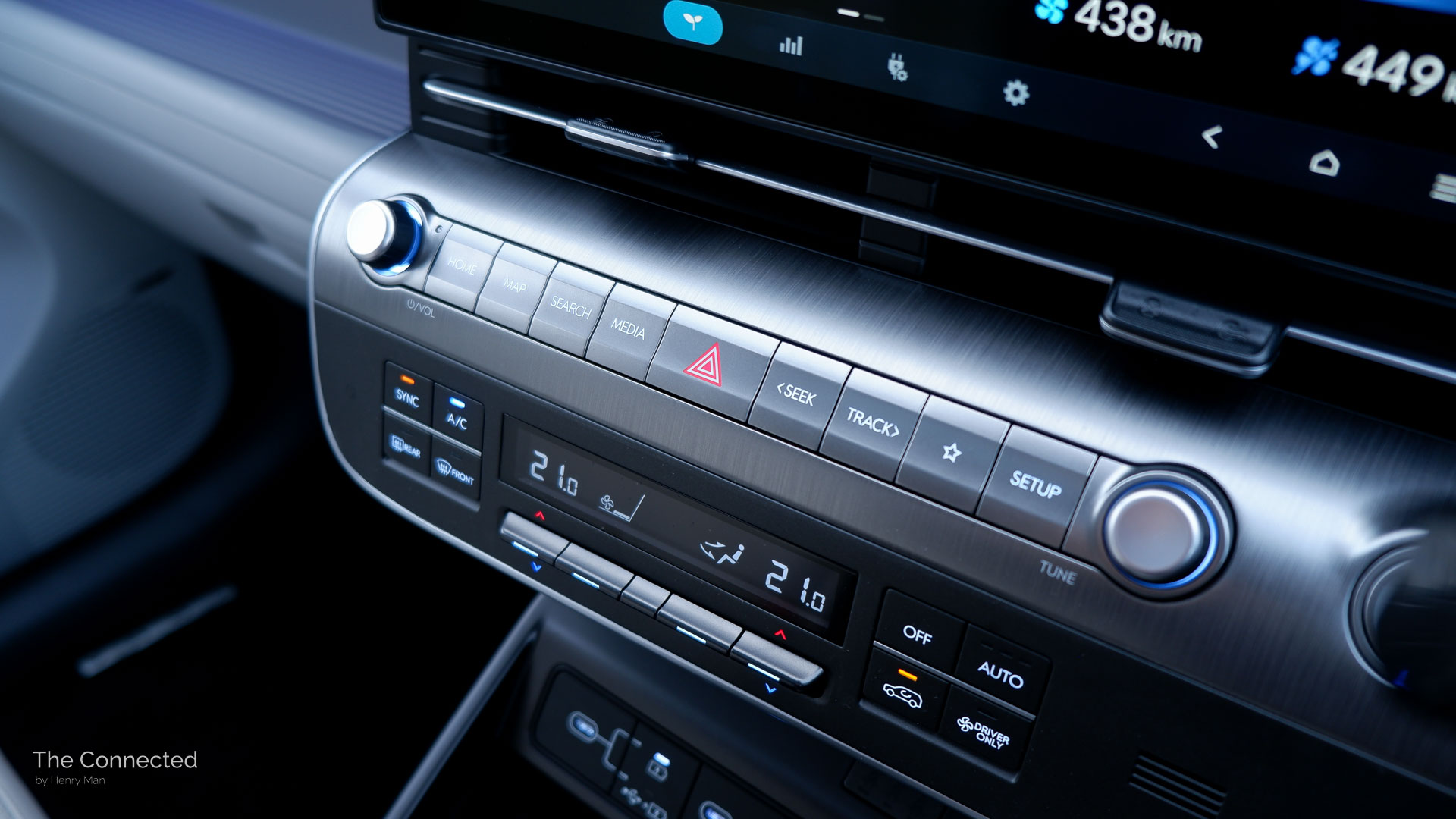
The dual-zone climate control switches are tactile and easy to use with a dedicated LED screen, even though it looks a bit traditional.
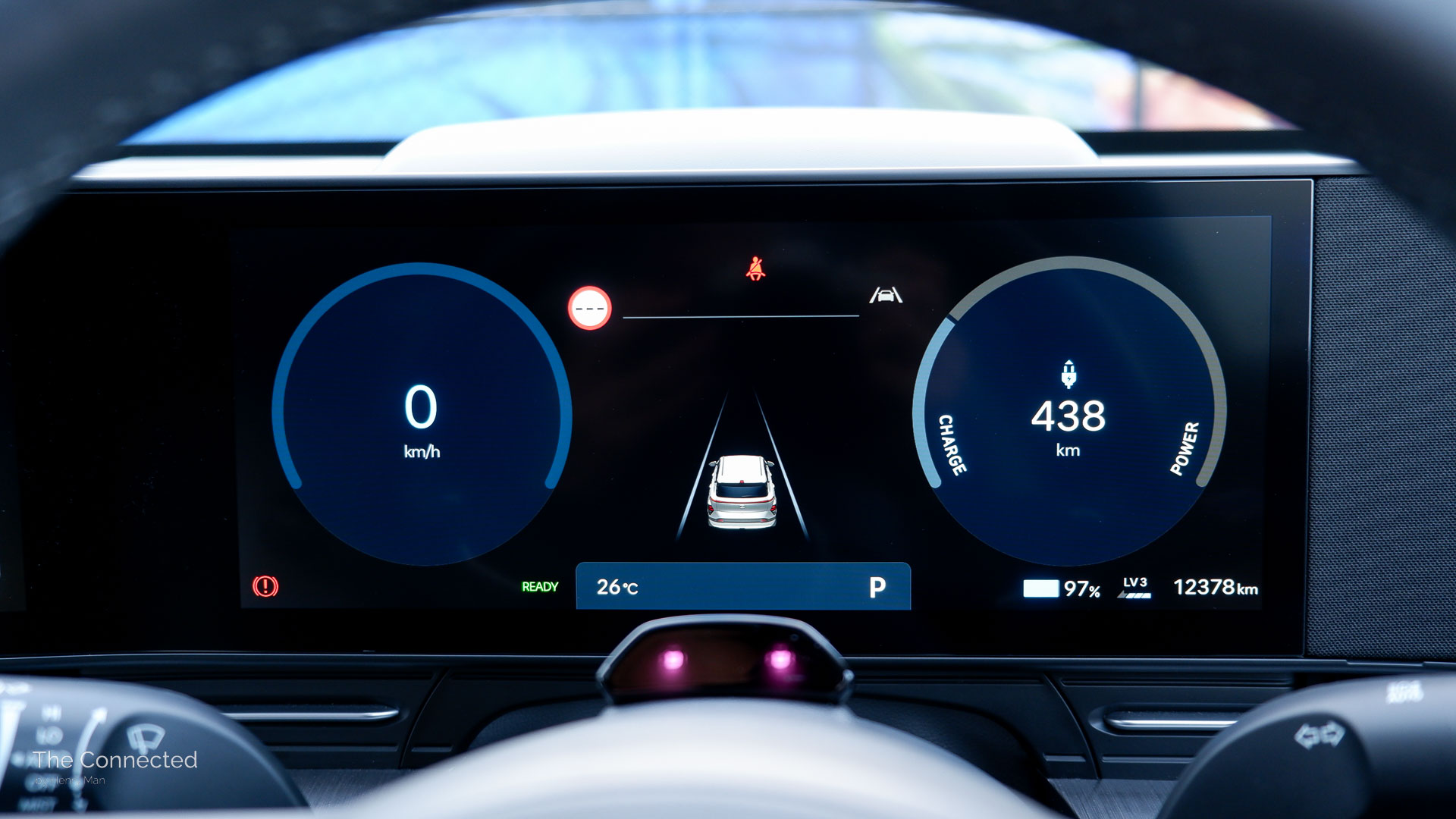
Meanwhile, the adjoined 12.3-inch driver’s instrument display is simple and legible, at the expense of customizability with only analogue and digital dial types, and not much differentiating the drive mode themes.
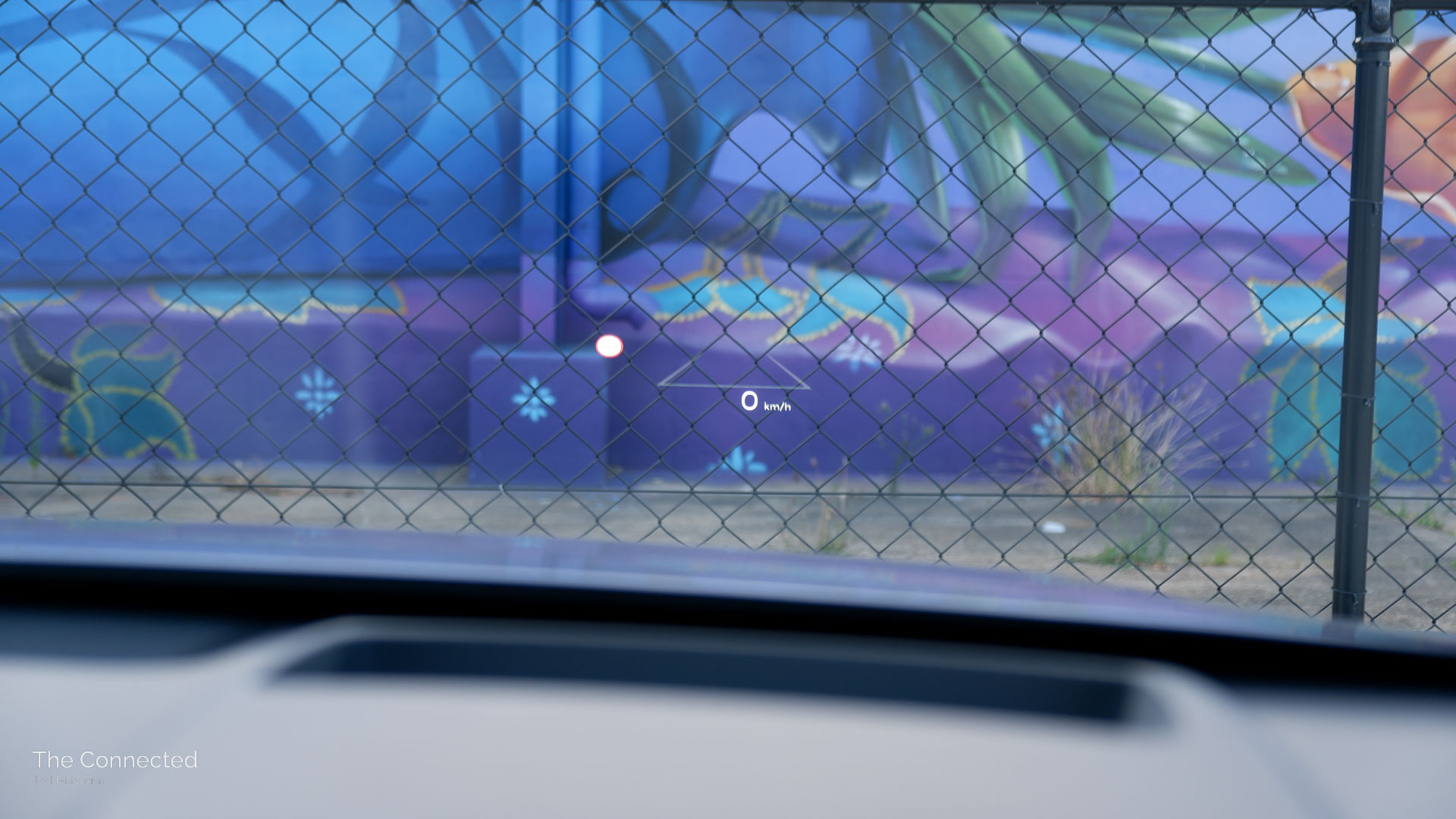
The 2025 Kona Electric Premium uniquely features a convenient projection head-up display that puts the speedometer, safety warnings and map directions closer to the driver’s line of sight. However, it’s on the smaller side compared to some rival small SUVs.
Furthermore, the EV handily includes Hyundai Bluelink connected services as standard with a remote smartphone app capable of displaying the remaining battery and driving range, monitor the charging status, turn on the climate control, and more.
While the app is well-designed, it can be slow to send commands to the car and can’t act as the primary key unlike more advanced systems from similarly-priced Tesla and Polestar models.

Safety.
2025 Hyundai Kona Electric Premium safety features:
| Front AEB with vehicle/pedestrian/cyclist/junction turning detection | 360-degree surround view camera system |
| Front AEB with direct oncoming and lane change oncoming/side detection | Blind-spot view cameras |
| Evasive steering assist | Front, side and rear parking sensors |
| Rear AEB | Driver attention monitoring camera |
| Adaptive cruise control | Door open warning |
| Lane-keep and lane-centring assist | Rear occupant alert (logic type) |
| Blind-spot assist | Remote smart parking assist (forwards/backwards only) |
| Rear cross-traffic assist | Bluelink automatic emergency services calling and remote location tracking |
| Intelligent speed limit assist | Full LED headlights and part LED tail-lights |
The 2025 Hyundai Kona EV comes with a plethora of well-tuned active safety assistance systems as standard, but likes to make its warnings heard.
While it doesn’t feature the brand’s latest Highway Driving Assist (HDA) system, adaptive cruise control still performs well and lane-centring assist – which can be enabled at any time – is smooth and reliable.
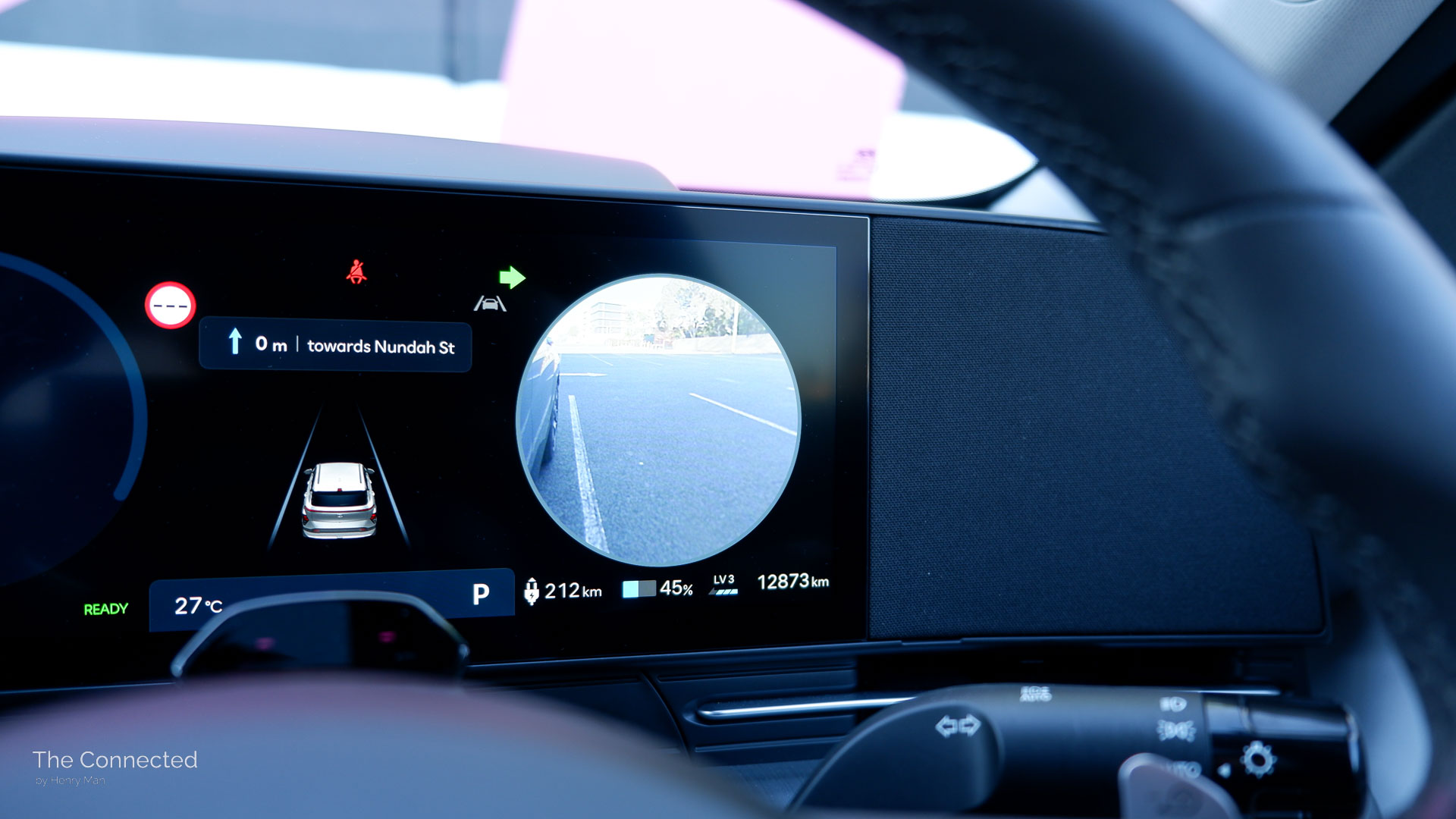
The Kona Electric Premium’s 360-degree camera system and blind-spot view cameras are clear and high-resolution, too – and are key reasons to opt for the top-spec.
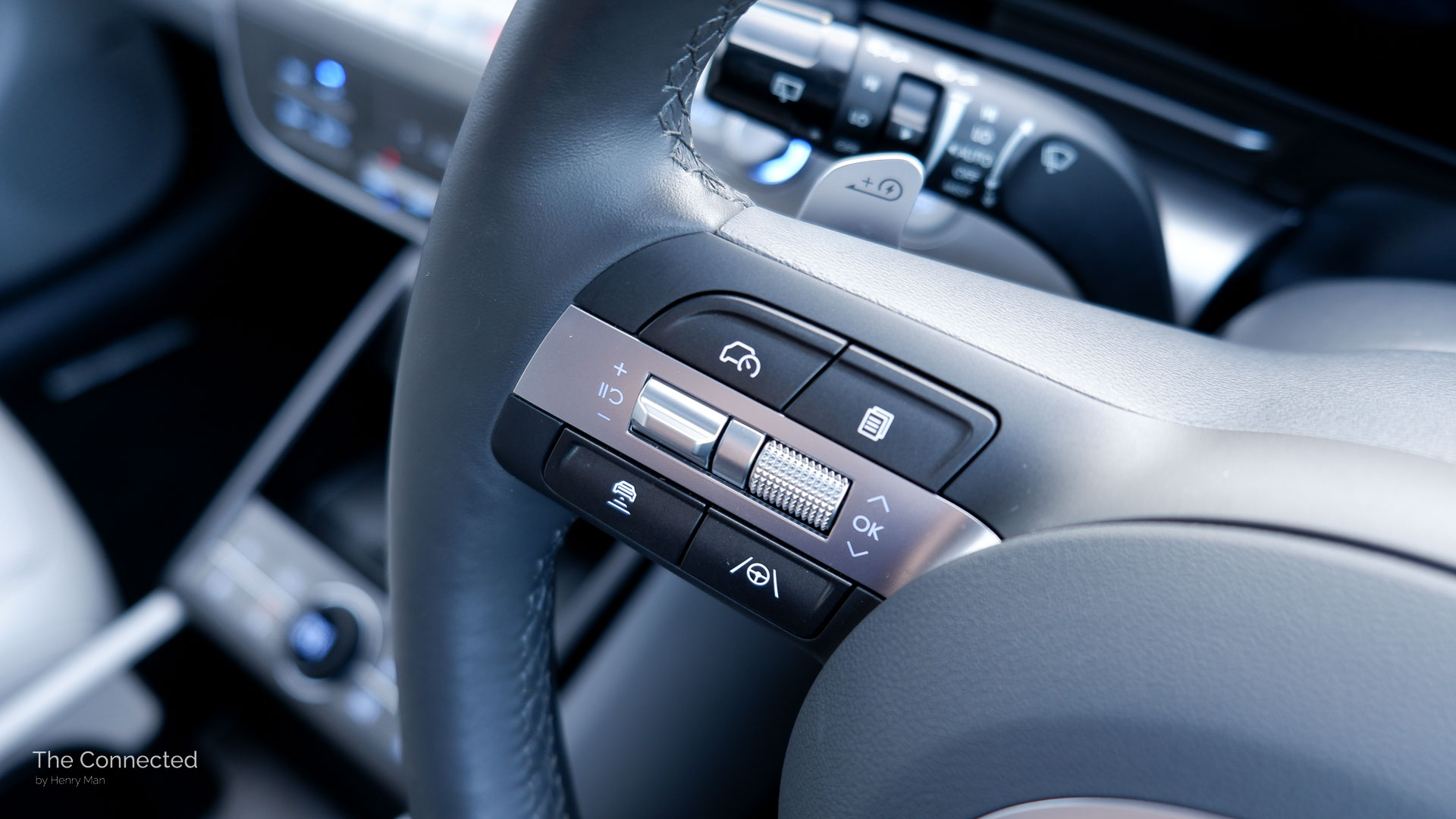
However, as per Hyundai style, it likes to sound safety warnings more poignantly than other brands, including blind-spot, rear cross-traffic, and lane-departure alerts.

There is an in-cabin driver monitoring camera which isn’t overly sensitive, but can confuse drivers by chiming at the same time as other warnings.
This includes the irritating European-mandated Intelligent Speed Limit Assist (ISLA) system. Thankfully, Hyundai now allows drivers to press and hold the steering wheel mute button to disable the warnings, although it’s required every time you start the car.
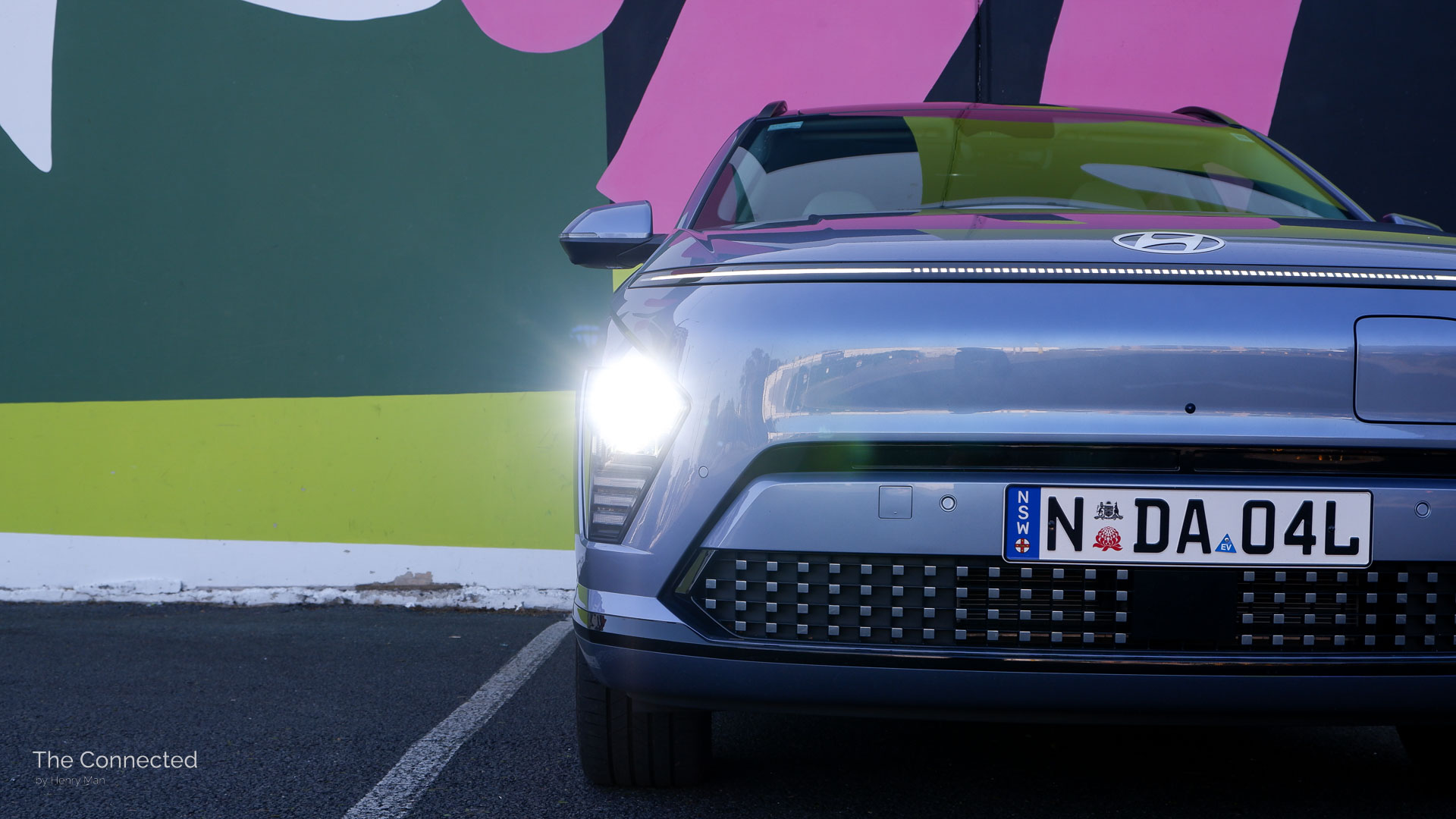
The Kona Premium EV’s more advanced multi-projector full LED headlights provide good visibility at night, while the rear tail-lights are all LED bar the reversing lamps.
The 2025 Hyundai Kona Electric received a four-star safety rating by the Australasian New Car Assessment Program (ANCAP) under 2023 standards, which is shared with its regular petrol and hybrid siblings.
Range and charging.
2025 Hyundai Kona Electric Extended Range battery and charging specs:
| Claimed driving range (WLTP combined) | 444km |
| Claimed energy efficiency (WLTP combined) | 16.7kWh/100km |
| Battery size and type | 64.8kWh usable (68.5kWh gross estimated) lithium-ion battery |
| Battery voltage | 358 volts (400-volt class) |
| Max AC / DC charging speed | Up to 10.4kW AC / 100kW DC |
| Bidirectional charging | V2L interior and exterior |
| Connector type | Type 2 / CCS2 |
| Everyday charging limit recommendation | 80% (general recommendation) |
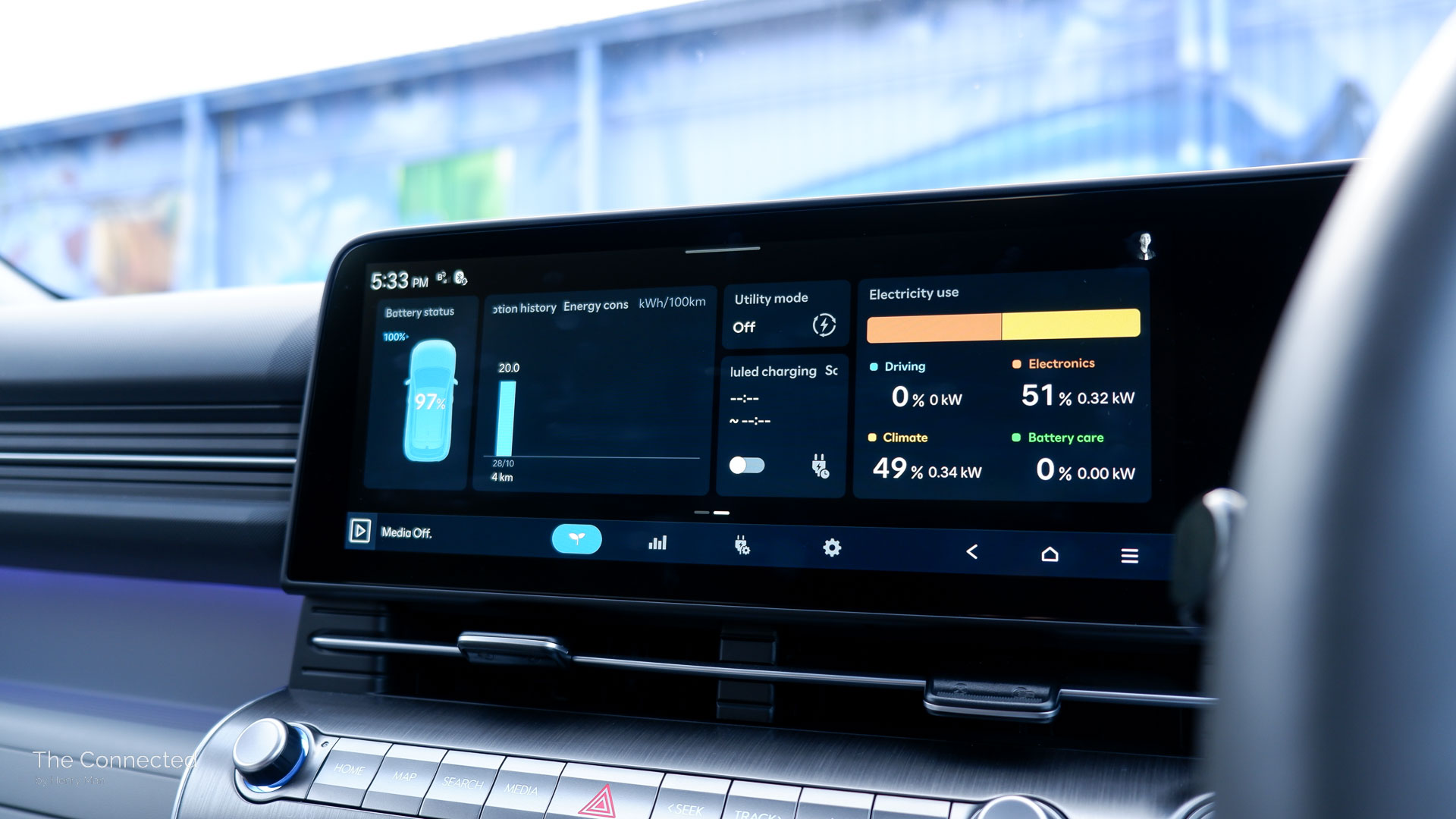
After my week of urban and highway driving, the 2025 Kona EV Extended Range indicated a real-world energy consumption of 15.2kWh/100km.
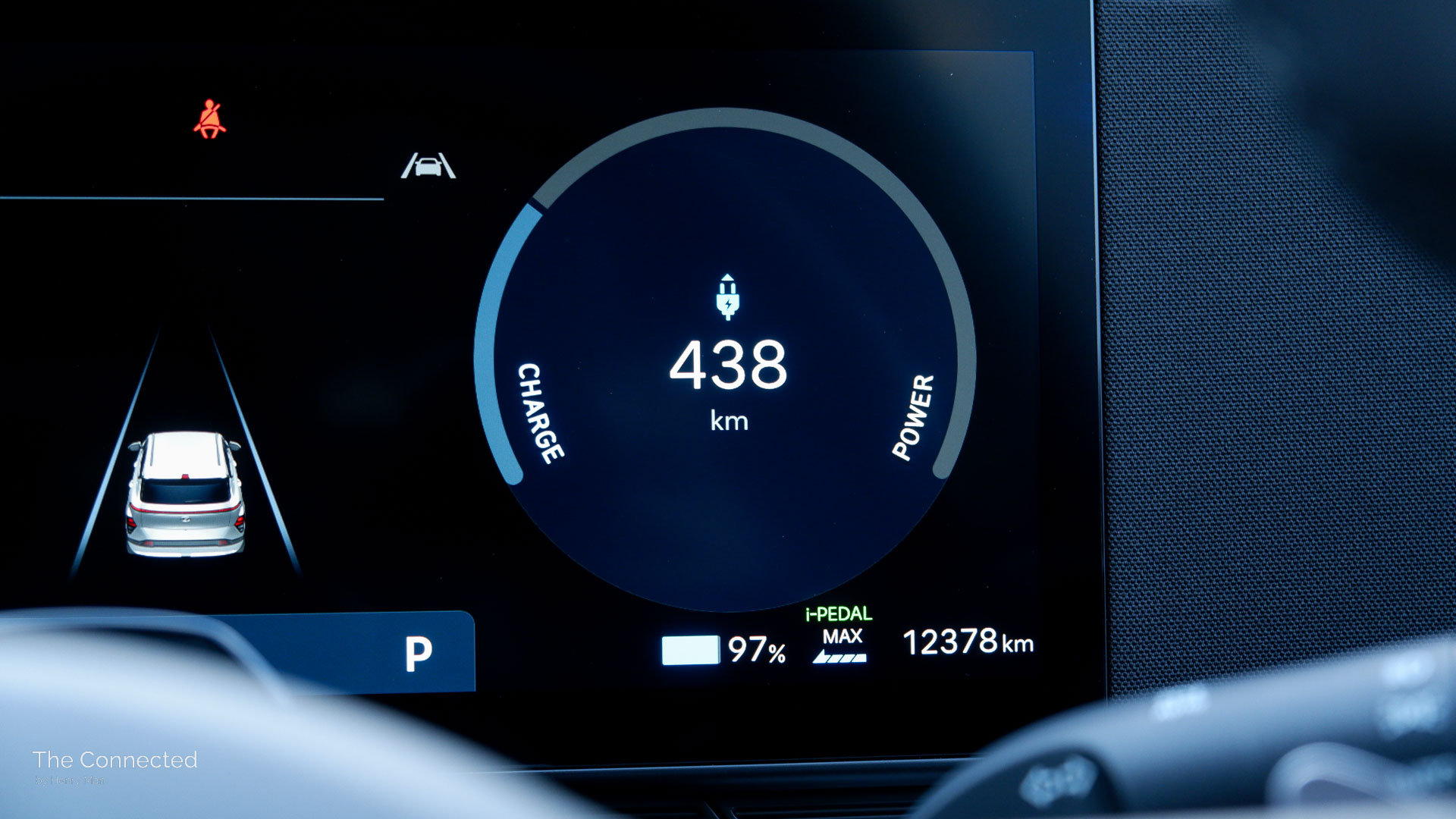
Therefore, expect a real-world driving range of 426km on a full charge.
While Hyundai doesn’t provide a specific recommendation, charging typical lithium-ion batteries generally should be capped at 80 per cent for everyday driving to maintain good battery longevity – meaning daily real-world range is around 341km.
An energy-saving heat pump is fortunately now standard on all Kona EVs, but is most useful in low temperature conditions.
Still, the new-gen Hyundai Kona EV still isn’t as efficient as its predecessor – which previously could match industry-leader Tesla on maximising its battery.
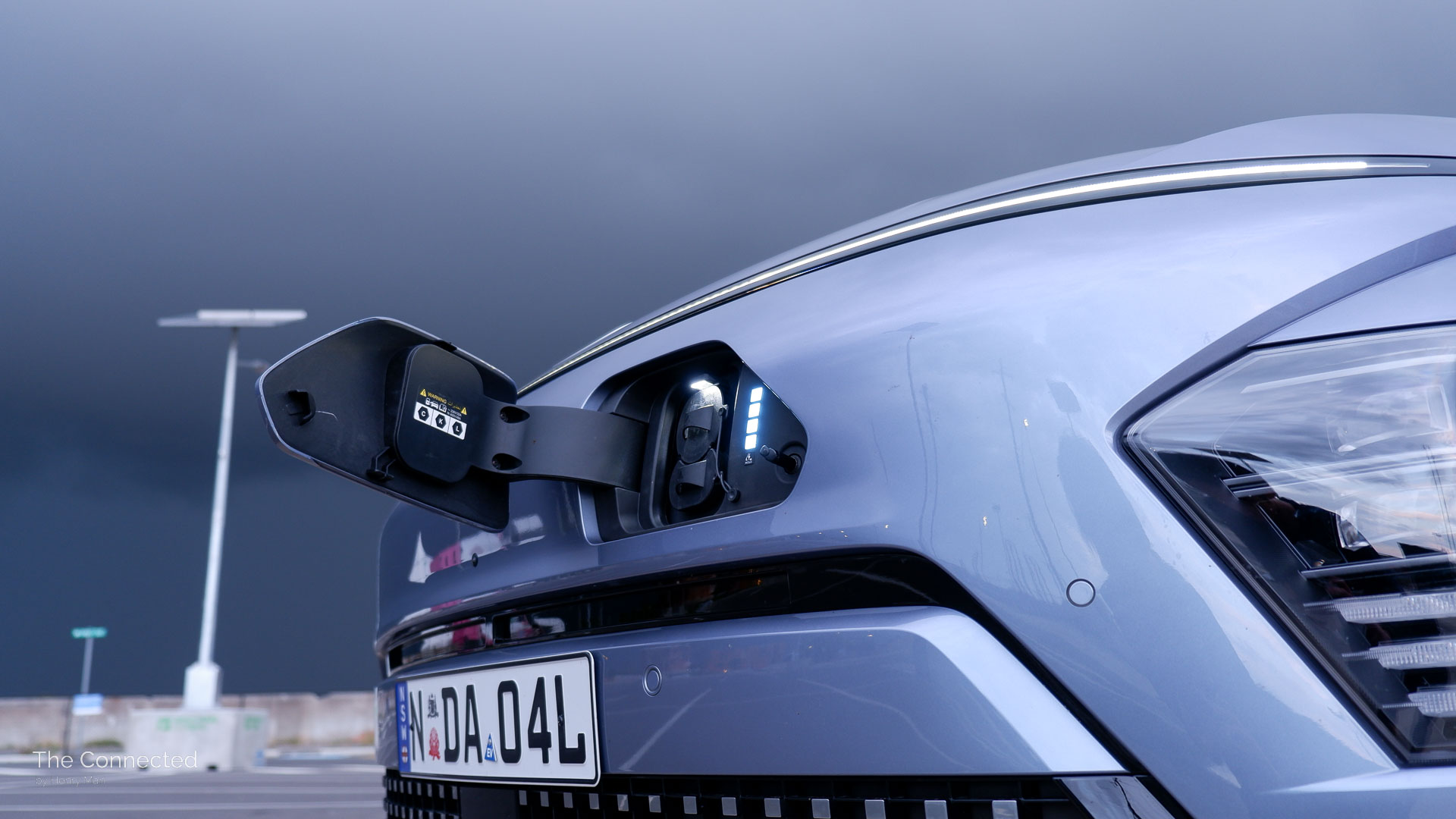
The Type 2 CCS charging port remains situated at the front-left side of the Kona EV with a manual pop-out flap, caps for both AC and DC pins, and a port illumination light with pixel-shaped charging indicators.
For everyday charging, the Kona EV can now accept three-phase slow charging speeds, up to 10.5kW AC.
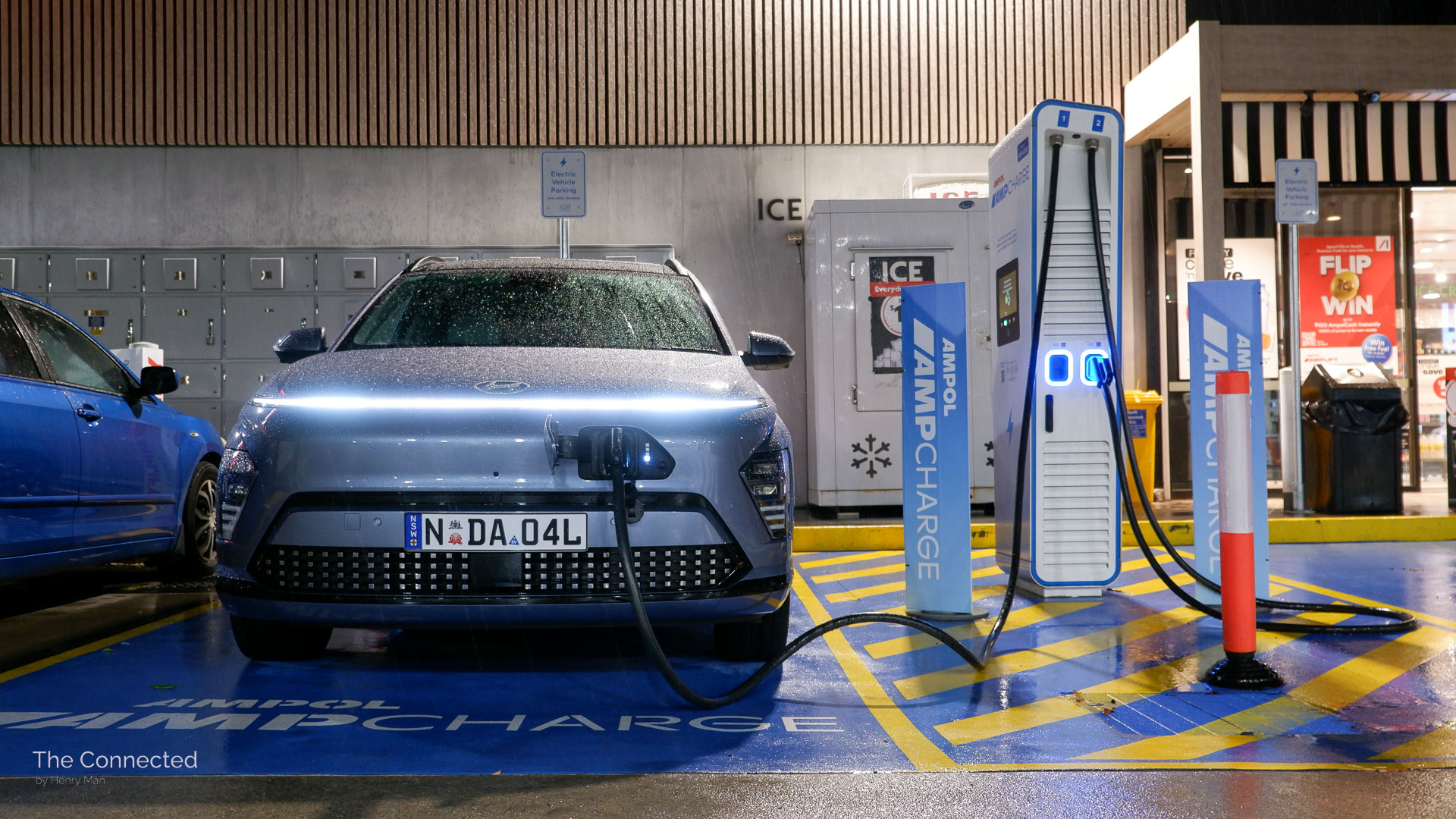
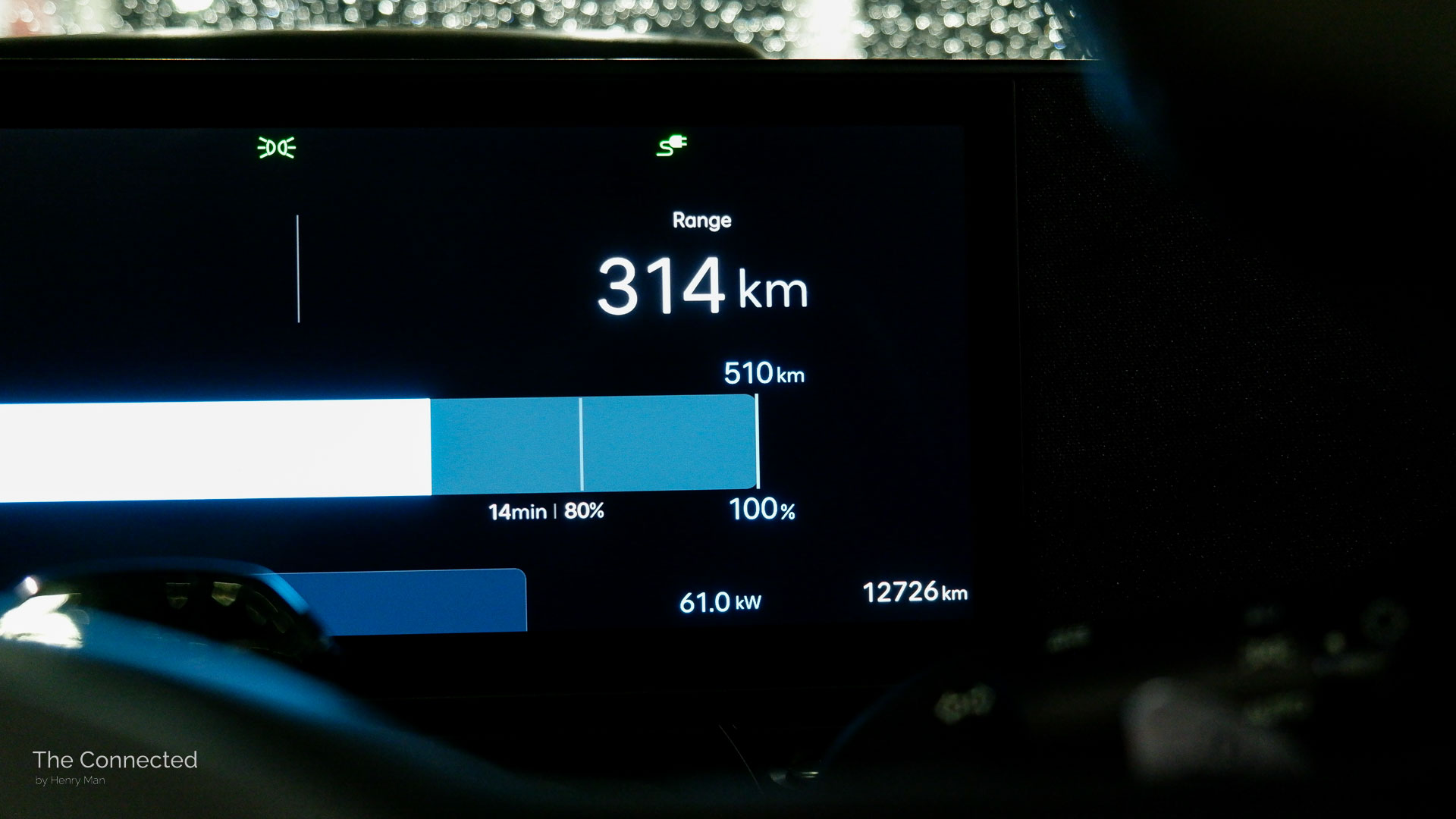

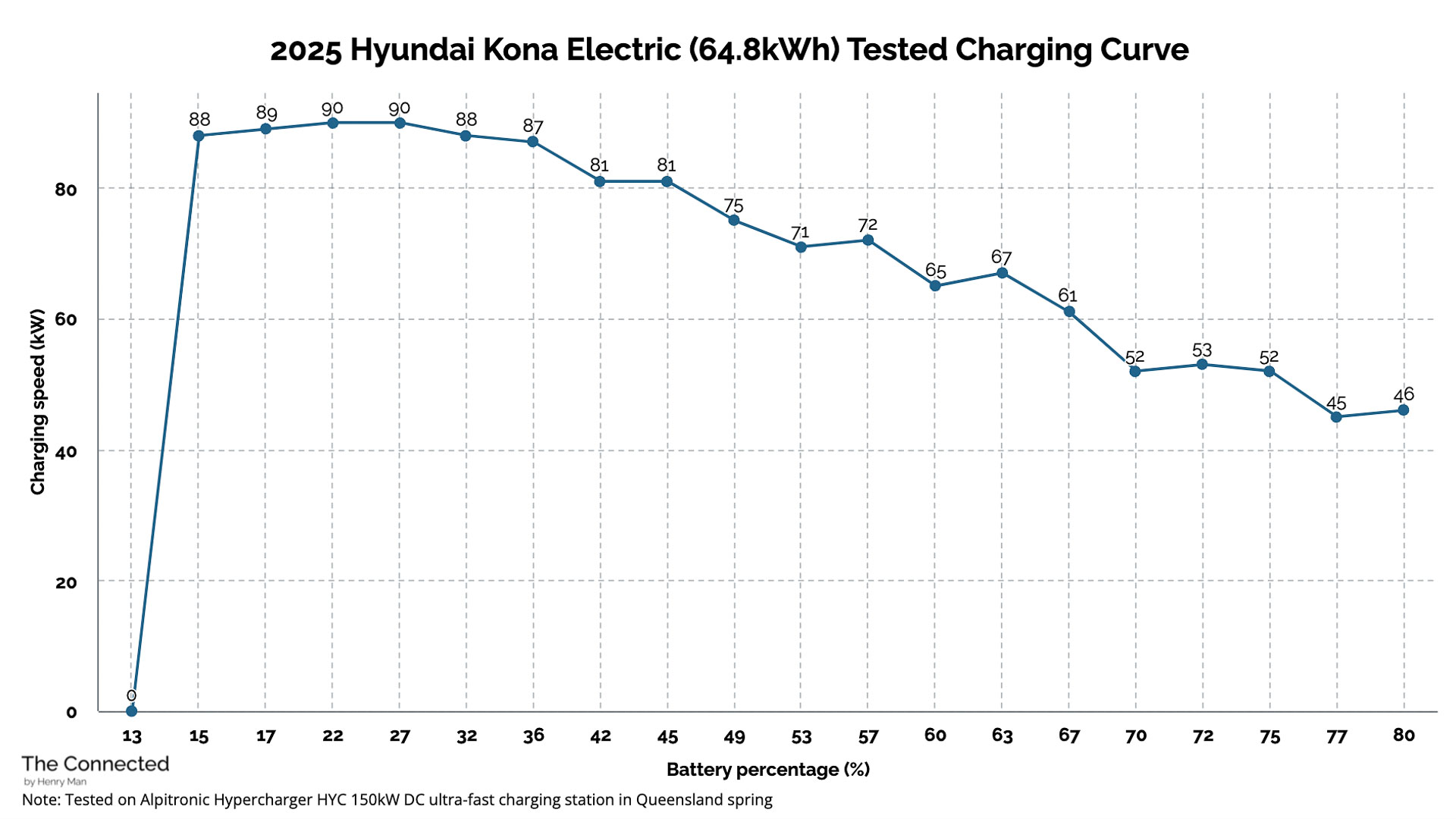
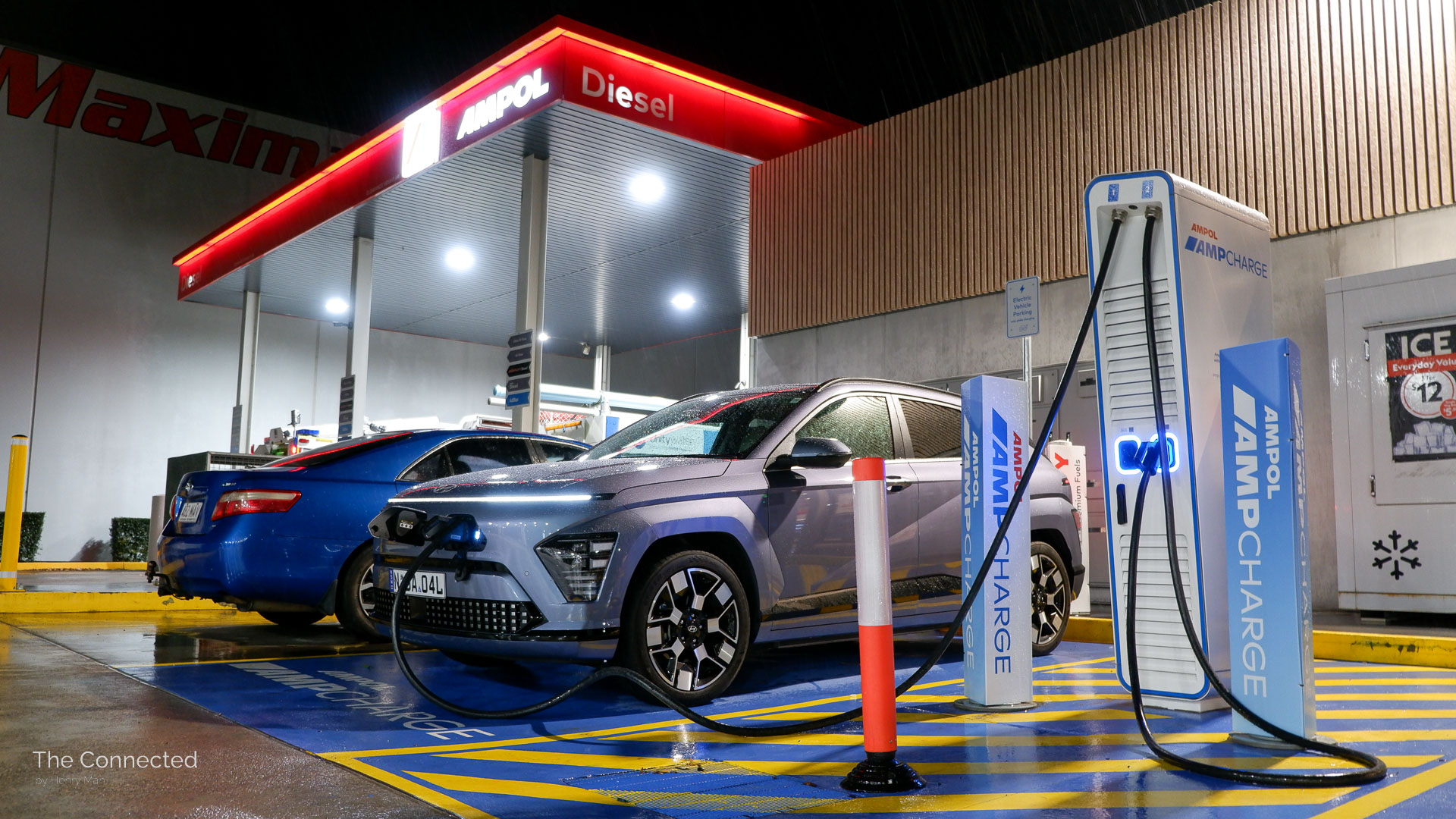
Using a ultra-fast 150kW capable public charging station, the 2025 Kona Electric Extended Range recharged from 13 to 80 per cent in 36 minutes. The charging session averaged 71kW speeds.
The small electric SUV achieved a 90kW peak in our testing – below the 100kW claim – and gradually throttled down to 46kW by the 80 per cent mark.
While the new Kona EV doesn’t offer ultra-fast charging speeds expected for its price point – especially at ~$70K for the flagship Premium – it doesn’t throttle speeds as quickly, contributing to a decent, but still unimpressive, overall charging time.
And think: 36 minutes is an acceptable charging time if you’re taking a rest stop on a long road trip, but could be too long if you’re in a rush.
Manually enabling battery preconditioning is available via the infotainment system.
An interior vehicle-to-load (V2L) power plug is standard on all Kona EVs capable of outputting up to 3kW – and is more sensibly placed behind the centre console, instead of underneath the rear seats as per other Hyundai electric cars.
Unfortunately, the exterior V2L adapter for plugging into the front charging port is a $595 separate accessory purchase.

Driving.
2025 Hyundai Kona Electric Extended Range powertrain specs:
| Electric motor | Single front-mounted permanent magnet synchronous motor |
| Power | 150kW |
| Torque | 255Nm |
| Transmission | Single-speed auto |
| Drive Type | FWD |
| Kerb weight | 1698-1795kg |
| Payload | 425-522kg (excluding max 100kg towball download weight) |
| Towing (unbraked / braked) | 300 / 750kg |
The second-gen Hyundai Kona EV is easy to drive and no longer has traction issues, even though it’s rather uninspiring.
A single front-mounted electric motor produces 150kW of power and 255Nm of torque on Extended Range battery models – which is a substantial 140Nm less than its predecessor.
Thankfully, less torque – along with the new Kumho Ecsta PS71 tyres – have fixed the electric crossover’s traction control issues, which constantly slipped the wheels previously when accelerating with a slightly heavier foot.
In my experience, there’s still minimal wheel slip when accelerating harder out of a turn, but it’s not egregious anymore.
While the new Kona Electric is still fast enough for everyday driving with instant electric torque, I sometimes wish it was a bit more zippy.

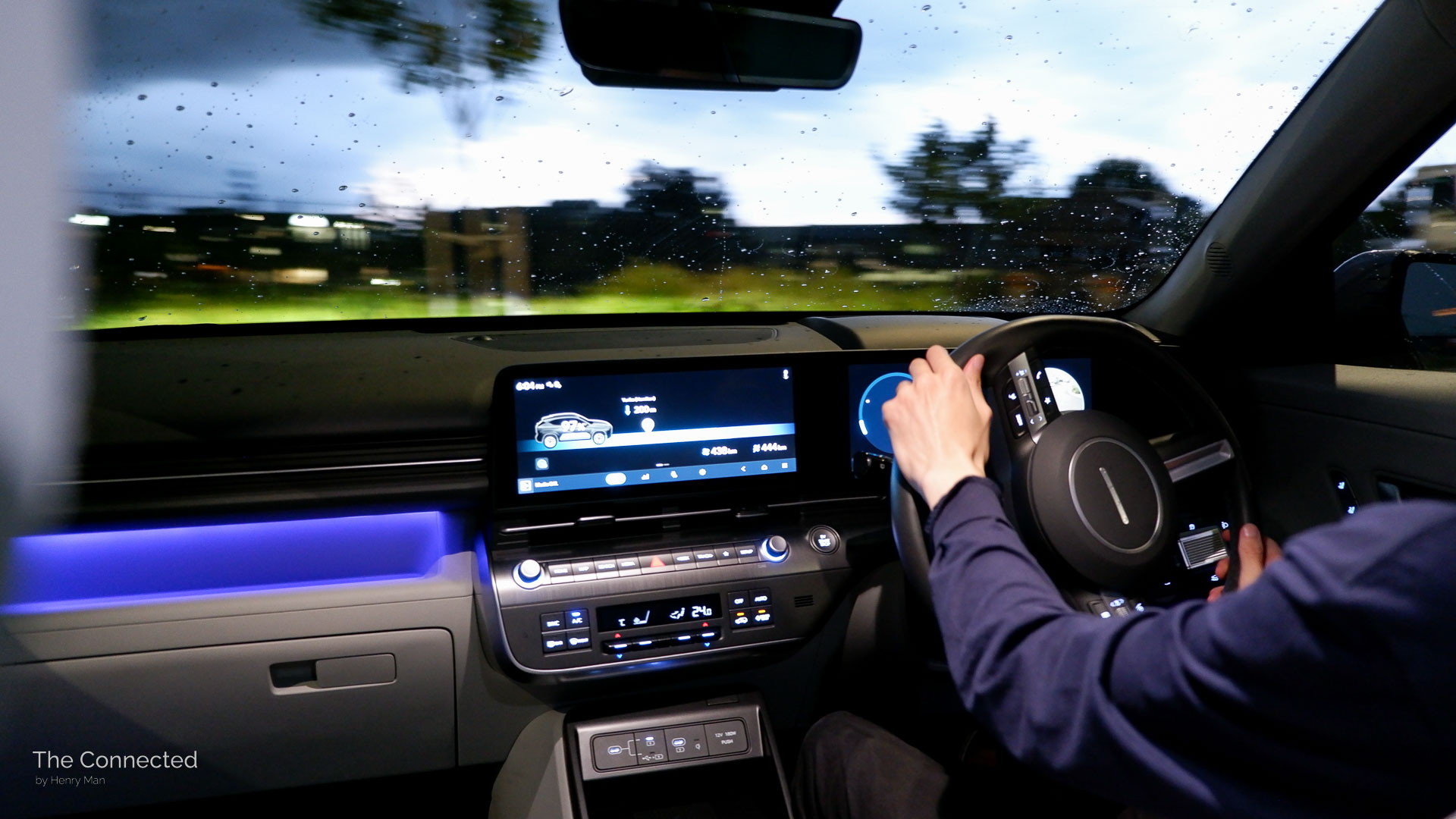
It also has vague and uninspiring steering which likes to centre quickly on release, and the blended brake pedal feels a bit wooden.
Hyundai also offers four levels of regenerative braking settings via the paddle shifters, including automatic adaptive modes and one-pedal driving called i-Pedal.
The latter is calibrated well, makes city driving more easy and keeps the brake lights on when completely stopped – although it defaults to level three regen every time you start the car and switch the drive selector column to reverse.
While the Kona EV has a generally comfortable and compliant ride, tyre noise from the Premium’s larger 19-inch wheels are more audible in the cabin than ideal.
All-round visibility is good with a well-sized rear windscreen, large mirrors and short dash.
Warranty and servicing.
2025 Hyundai Kona Electric capped-price servicing costs:
| 2 years/30,000km | 4 years/60,000km | 6 years/90,000km | 8 years/120,000km | 10 years/150,000km |
|---|---|---|---|---|
| $520 | $520 | $520 | $456 | $663 |
The 2025 Hyundai Kona Electric is backed by a five-year, unlimited kilometre vehicle warranty and an eight-year/160,000km battery warranty.
Servicing the electric SUV is required every 24 months/30,000km (whichever occurs first) with prices fixed for the lifetime of the vehicle.
After the first six years/90,000km, it’ll cost $1560 in total to maintain the Kona EV or $520 per visit.
Unlimited roadside assistance is included as well, provided owners service it with a Hyundai dealer every time.
Five years of Hyundai Bluelink connected services are included from the date of activation, with a subsequent subscription cost yet to be announced.
A temporary space-saver spare tyre is now included underneath the boot floor of all new Hyundai Kona EVs – a unique rarity for an electric car, even though the Chery Omoda E5 offers a full-size spare tyre.
Price and rivals.
2025 Hyundai Kona Electric model range pricing (accurate as at the time of publication):
| Kona Electric Standard Range | Kona Electric Extended Range | Kona Electric Premium Extended Range |
|---|---|---|
| From $54,000 before on-road costs | From $58,000 before on-road costs | From $68,000 before on-road costs |
The 2025 Hyundai Kona Electric is priced from $54,000 before on-road costs in Australia. Two variants and two battery pack sizes are offered.
The Luxury Car Tax (LCT) does not apply to all Kona EVs, meaning it’s eligible for the Fringe Benefits Tax (FBT) for company novated leases.
Compared to the regular petrol-powered Kona, the EV has a price premium of between $21,500 to $28,500, while the price jump from the Kona Hybrid to the EV is $17,500 to $24,500 – all very hefty premiums for going full electric.
A sporty-looking N Line package option is now available on the Kona Electric Extended Range for $4000 extra, while adding it to the Premium costs $3000 more.
All exterior colours except Atlas White and Mirage Green on regular models or Atlas White and Neoteric Yellow on N Line models cost $595. Regular Kona Electric Premium models are available with either a Light Shale Grey or Sage Green interior for $295 more (depending on the exterior colour).
The 2025 Hyundai Kona Electric directly rivals a range of electric SUVs:
- Kia EV5 (full review)
- Tesla Model Y
- Zeekr X
- Xpeng G6
- Deepal S07
- BYD Atto 3
- Leapmotor C10
- MG ZS EV (to be discontinued)
- Chery Omoda E5
Other alternatives to the Kona Electric include:
- Cupra Born (full review)
- MG 4 (full review)
- Hyundai Kona Hybrid (full review)
- Nissan Qashqai e-Power (full review)
Would I pick the 2025 Hyundai Kona Electric Premium?
The 2025 Hyundai Kona Electric is a good EV – but it’s tough to recommend in a sea of more competitively-priced electric models.
In isolation, the second-gen Kona EV is a practical, reasonably efficient and long-range, and futuristic-looking small SUV with refined tech and safety assists.
If you’re looking for a good EV that isn’t made in China, the Kona Electric is one of the cheapest you can choose in Australia – and it’s worth a consideration if that’s a key sticking point for you.
However, it’s too expensive for what you get – with a substantial price premium over its regular petrol and hybrid Kona counterparts.


The BYD Atto 3 is at least ~$10K cheaper with more standard features, while the Kia EV5 is a similarly-priced but bigger medium electric SUV that offers the same tech, and there’s the undeniable value of the high-tech Tesla Model Y.
I’d avoid the 2025 Hyundai Kona Electric, unless you don’t want to buy a Chinese-made electric SUV. Only consider the entry-level Kona Electric Standard Range if you don’t mind having a more basic interior – but avoid the base Extended Range and Premium if you can’t score a good deal.
The top end is where the value proposition falls off and you’re better off with the base Hyundai Ioniq 5.
Photographs by Henry Man
READ MORE: 2024 Hyundai Ioniq 5 N review: Ridiculous.
READ MORE: 2025 Hyundai Santa Fe Hybrid review
READ MORE: Living with the 2024 Nissan Qashqai Ti e-Power
Pros:
- Much more practical than predecessor
- Traction issues fixed
- Convenient one-pedal driving
- Refined tech and safety assists
- Temporary spare tyre now included
Cons:
- Expensive for what you get
- Not as efficient as before
- Fast charging capability could be better
- Cost-cutting material quality
- Noisier ride than ideal
About the Author.
Henry Man is an independent content producer passionate about the intersection of technology and transportation.
The former automotive journalist is focused on producing critically-detailed vehicle reviews, and unique short-form content. Learn more.


 The Connected by Henry Man