
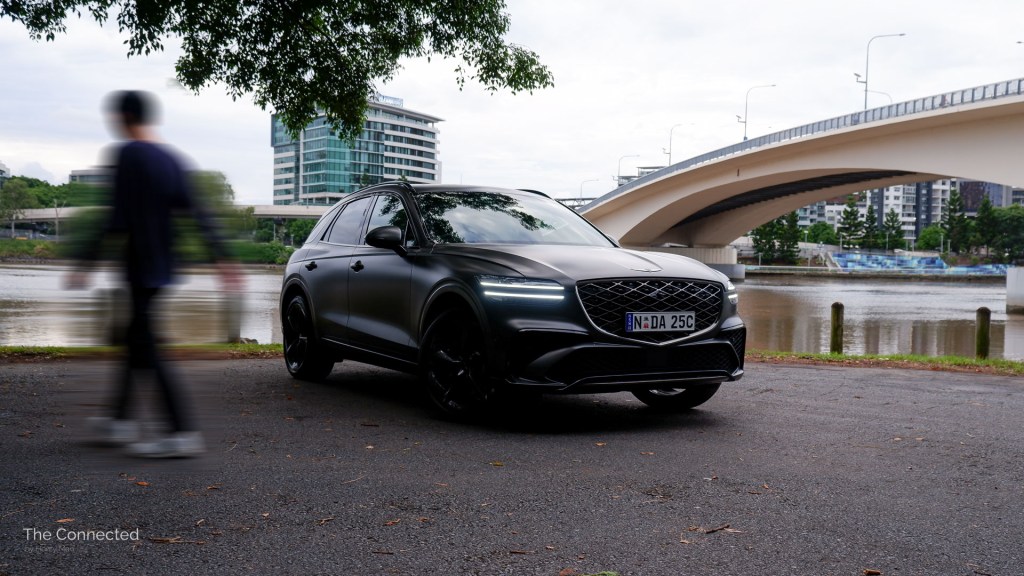
Is the facelifted Genesis GV70 an underrated medium luxury SUV bargain?
The BMW X3, Mercedes-Benz GLC and Audi Q5 typically come to mind if you’re dreaming of owning the ultimate luxury medium SUV. But what about something different?
Originally released in 2021, the Genesis GV70 has been facelifted with tweaked looks, more advanced technology, and more equipment as standard.
We tested the 2025 GV70 in flagship 3.5T Signature Sport form for a week to find out why it’s the South Korean marque’s best-selling model.
NOTE: The press vehicle was provided by Genesis Motors Australia for a seven-day independent evaluation. We have no commercial arrangements with the company and it had no editorial control.

Pros.
+ Good value, generous ownership inclusions
+ High-end interior and details
+ Superb driving comfort
+ Toned-down safety assists
+ Advanced, but simple to use tech
Cons.
– Thirsty on fuel
– Interior could be more practical
– No digital rear-view mirror camera
– Missing wireless charging pad ventilation
– Buggy software
Vehicle tested:
| Model | 2025 Genesis GV70 |
| Variant | 3.5T Signature Sport |
| Starting price | $100,000 before on-road costs |
| Exterior colour | Makalu Grey Matte (+$2000) |
| Interior colour | Obsidian Black/Vanilla Beige Two-Tone (no cost extra) |
| Country made | South Korea |
Design and quality.
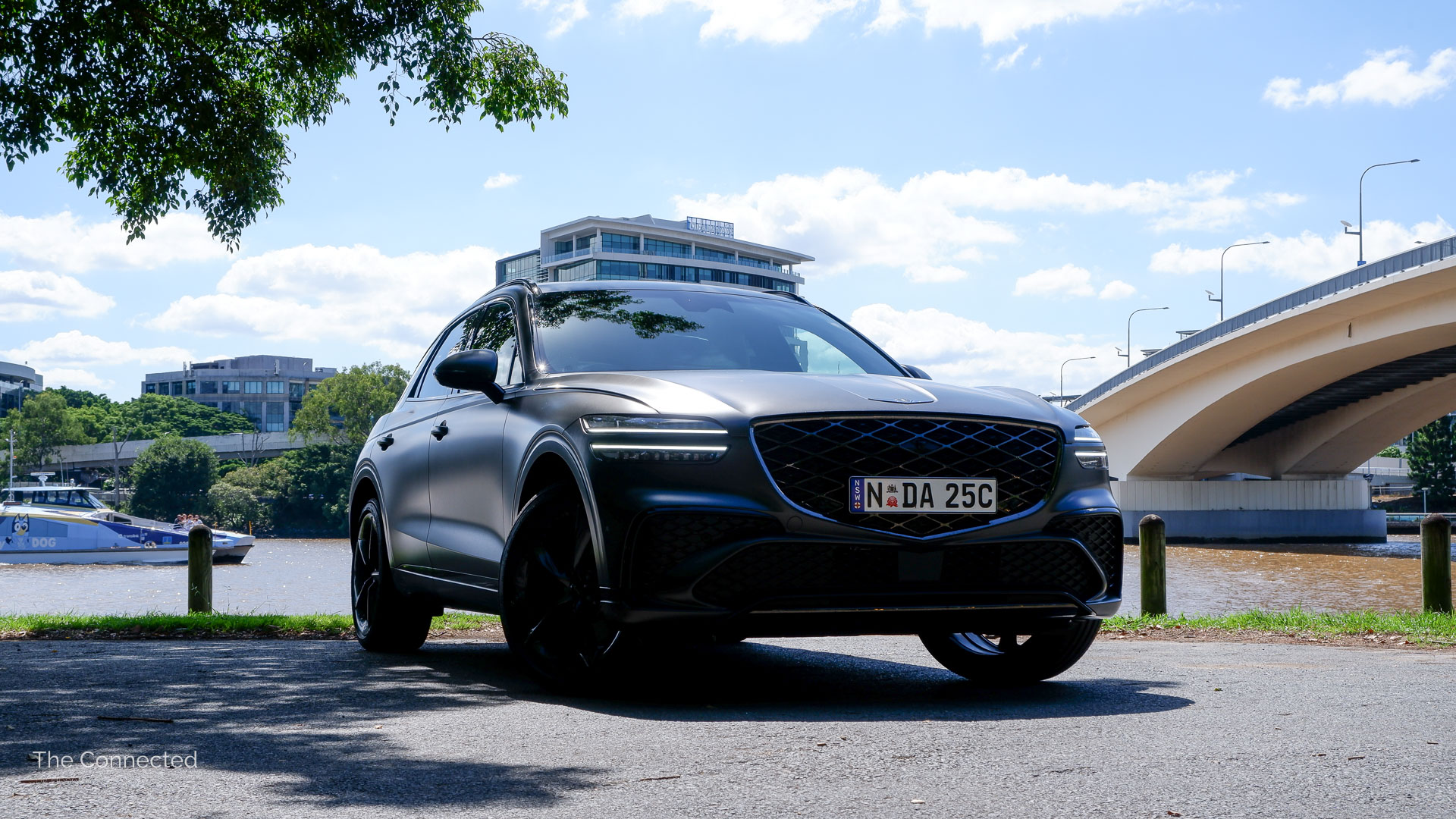
Design upgrades are subtle, but the Genesis GV70 still looks super lux with a head-turning exterior and premium interior.
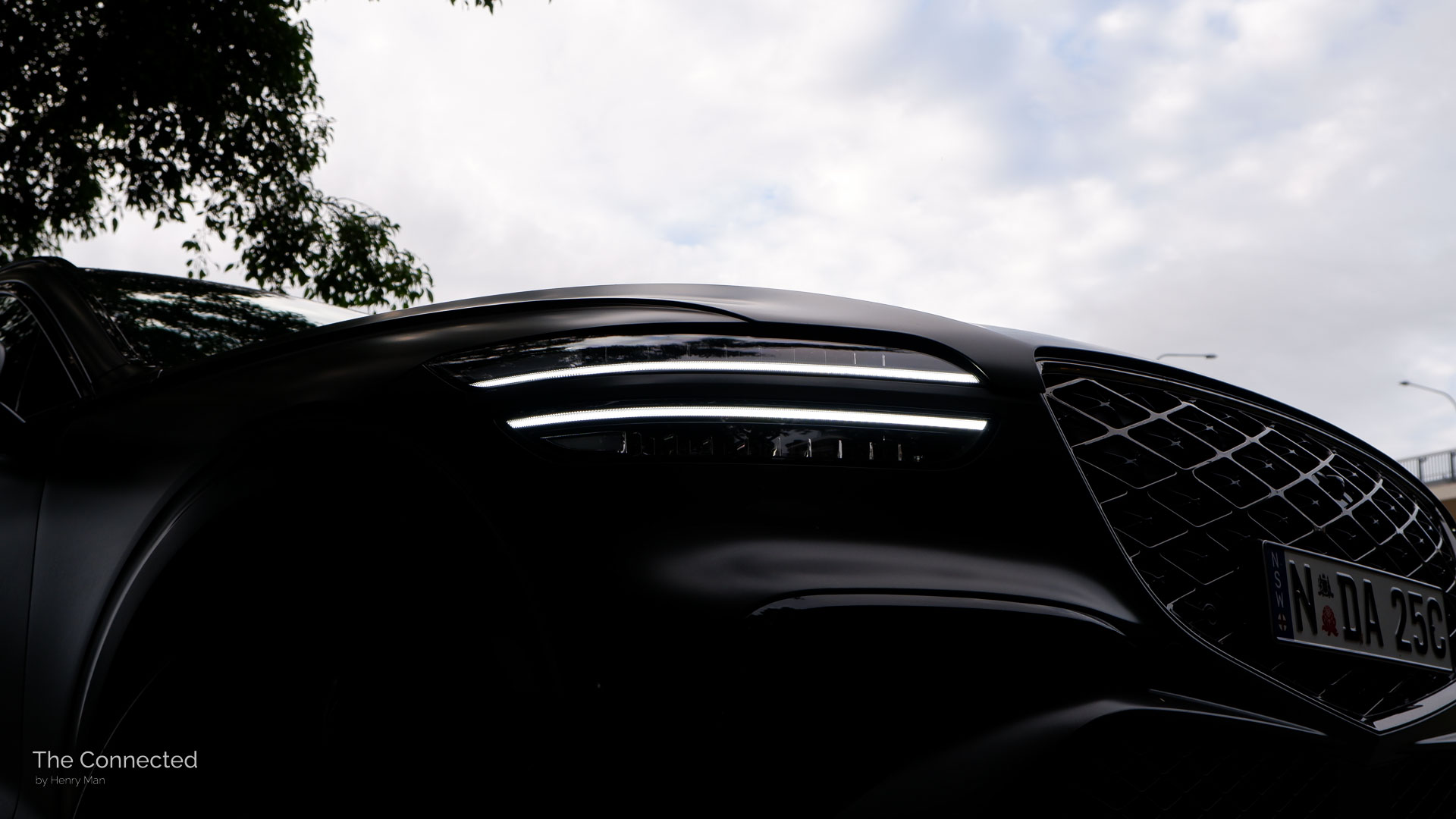
The 2025 facelift subtly brings updated front and rear bumpers, thinner Micro-Lens Array LED headlights with three selectable dynamic welcome sequences upon unlocking, and new alloy wheel designs.
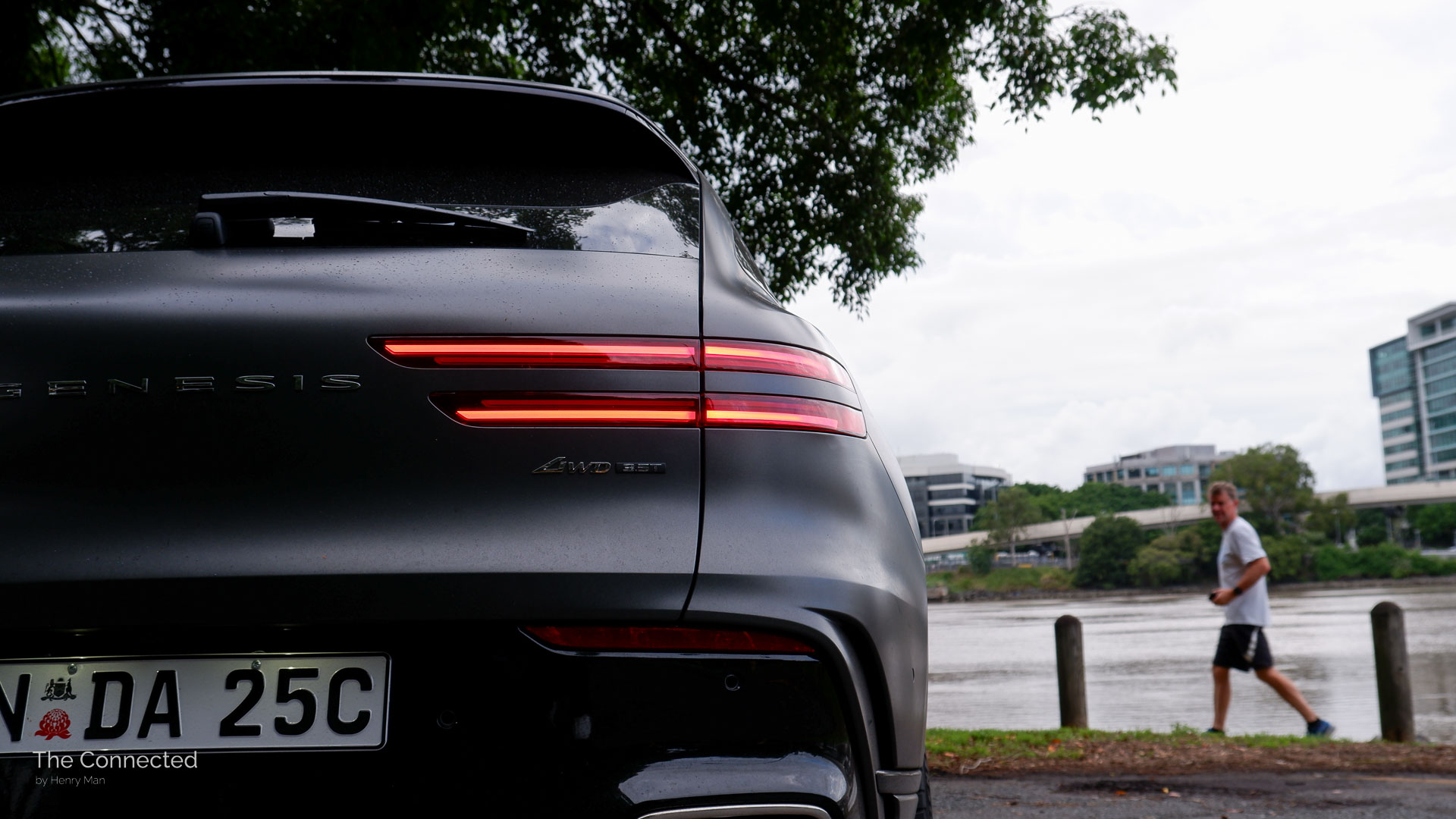
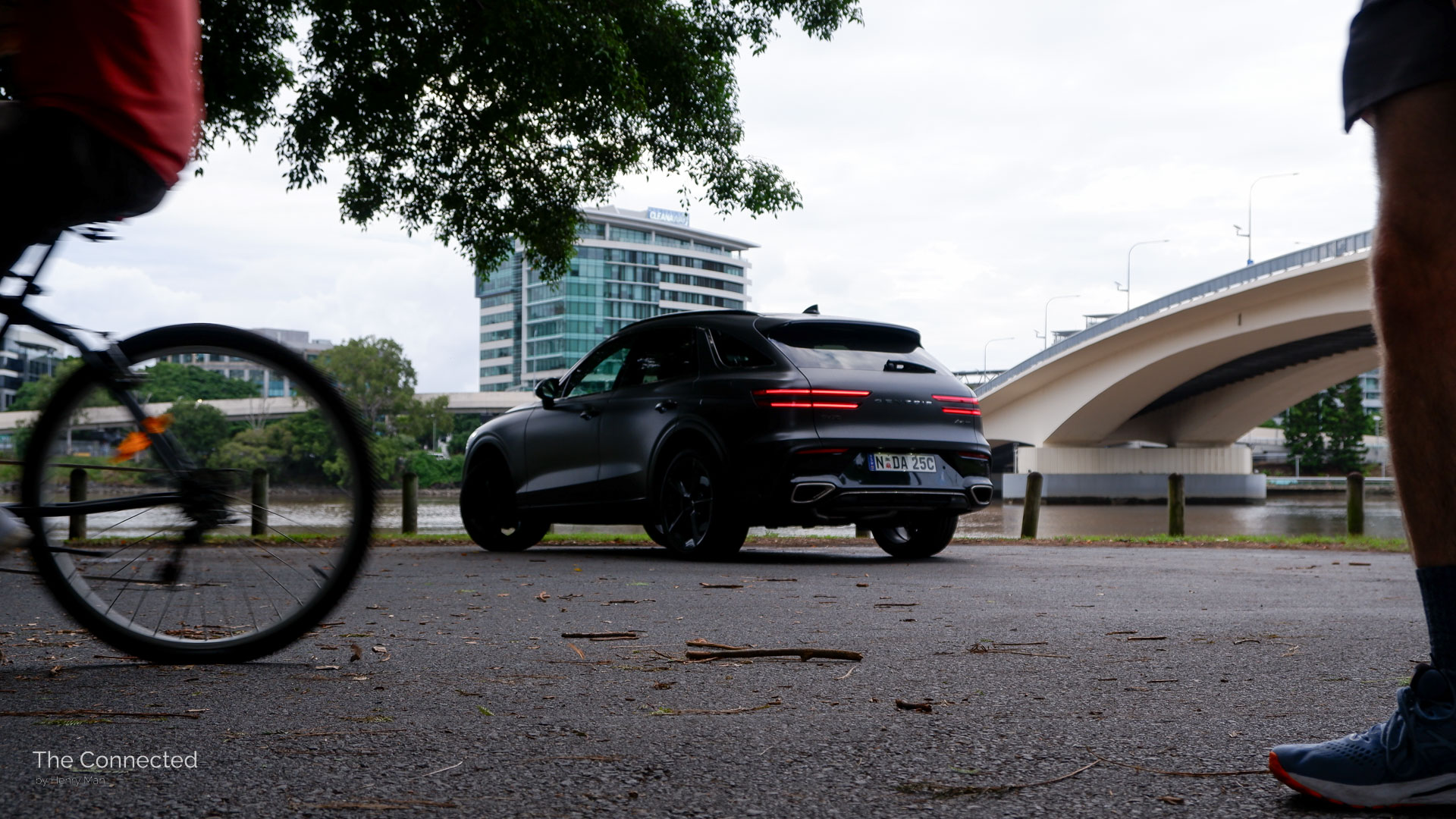
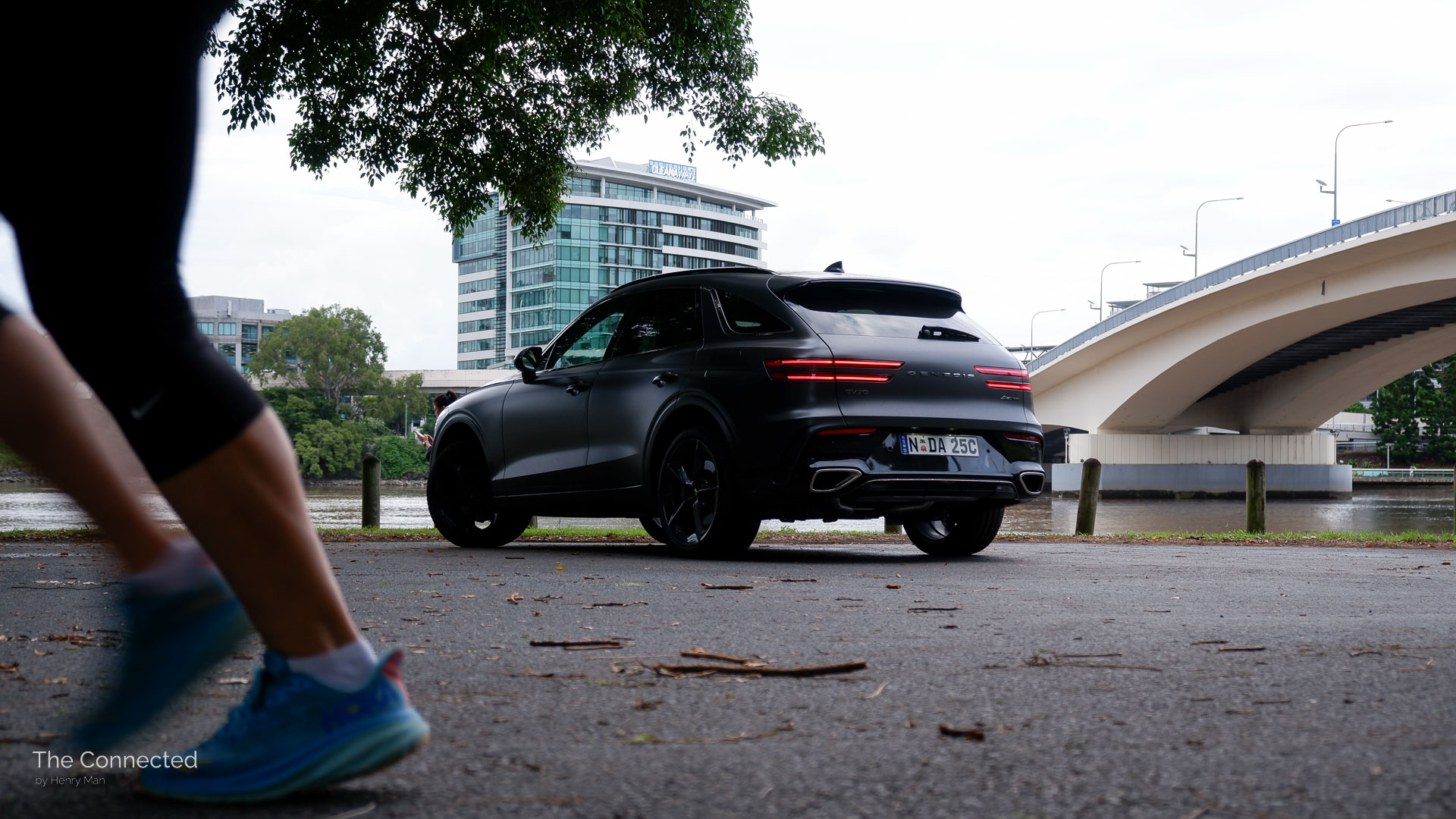
Crucially, the rear turn indicators have been moved into the main tail-light unit, rather than being at the lower bumper.
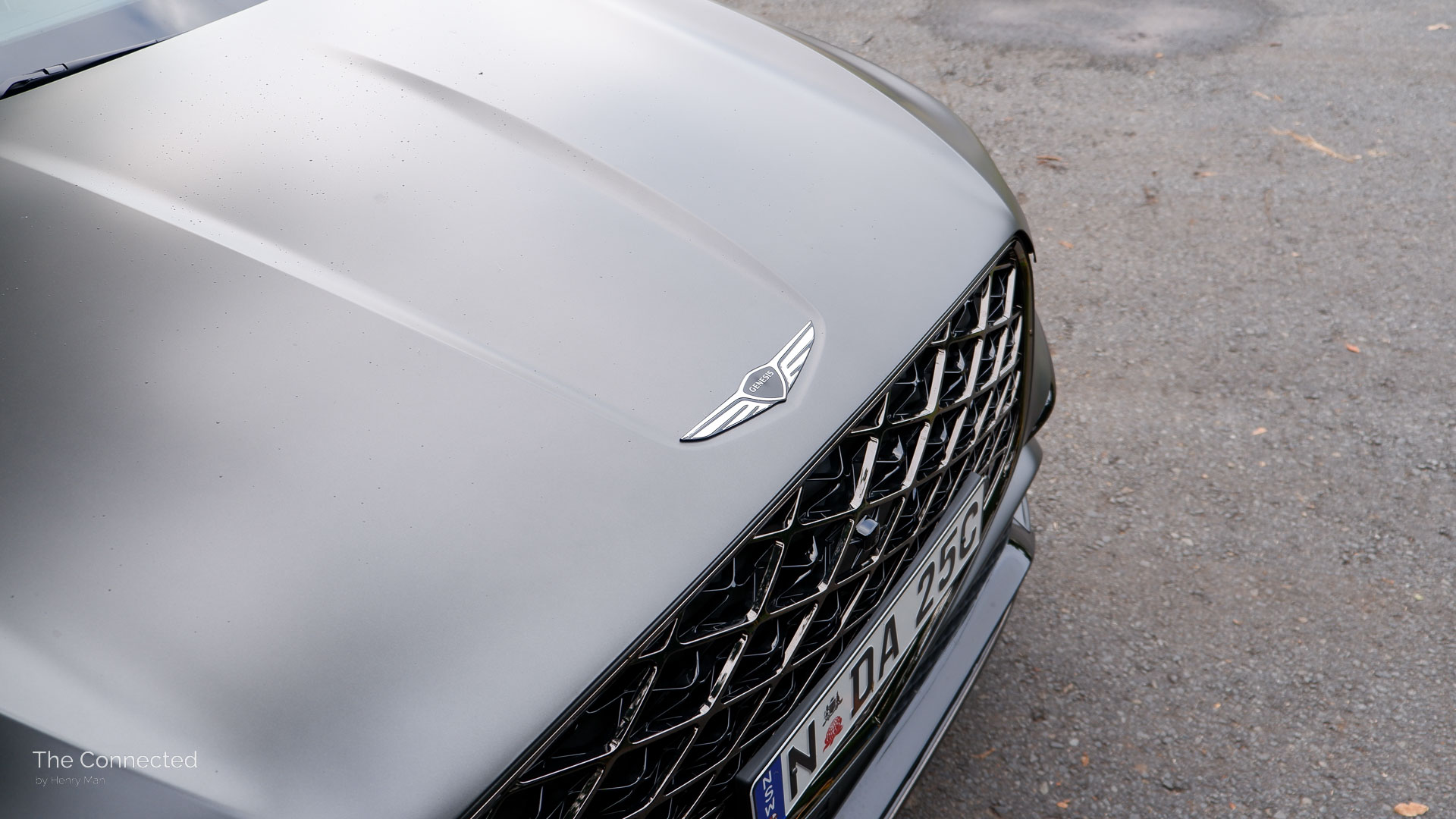
The GV70 is still eye-catching – partly because it gives Bentley vibes – especially with the sleeper Makalu Grey Matte colour for just $2000 extra matched with dark 21-inch alloys included with the Signature Sport.
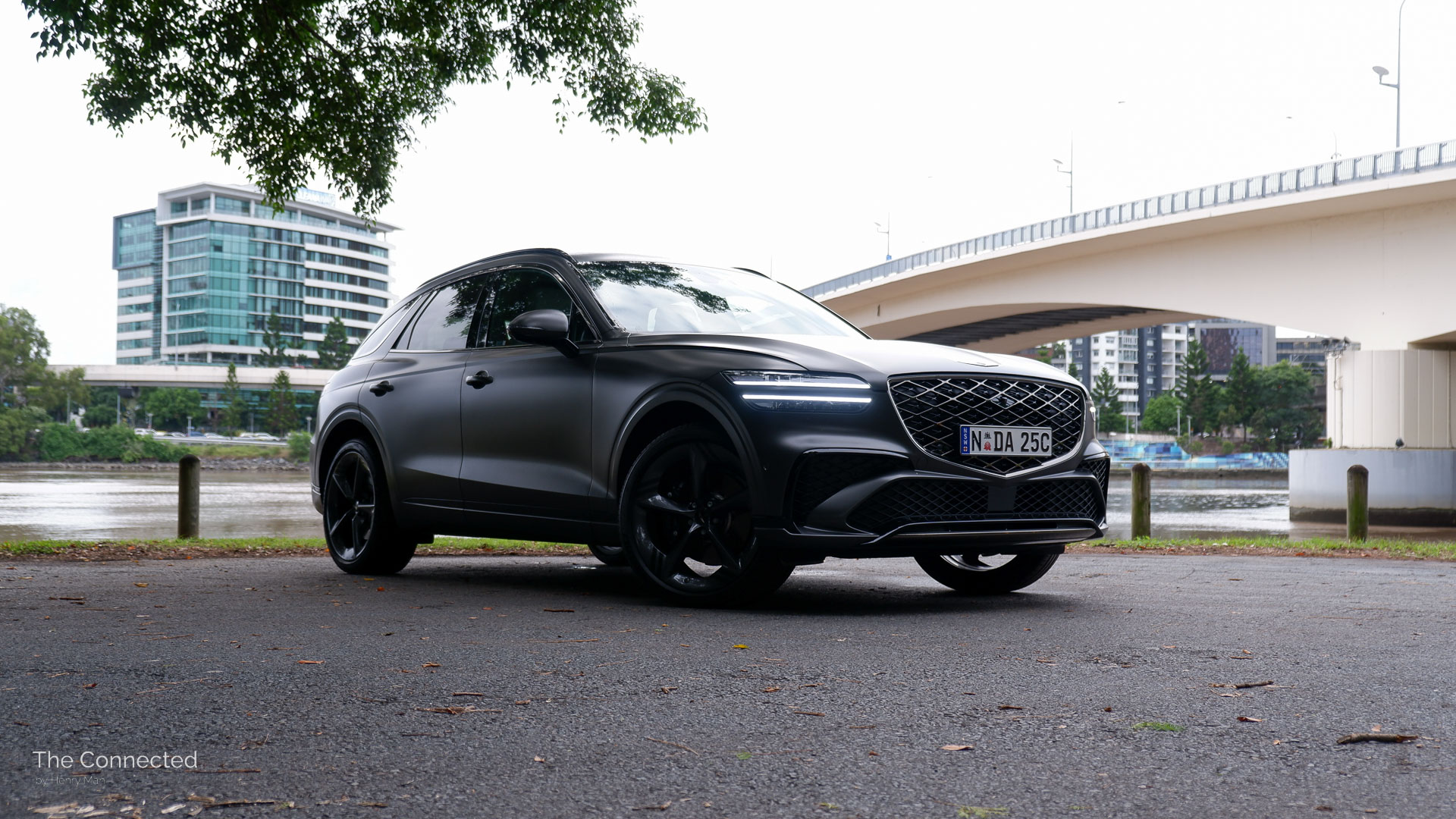
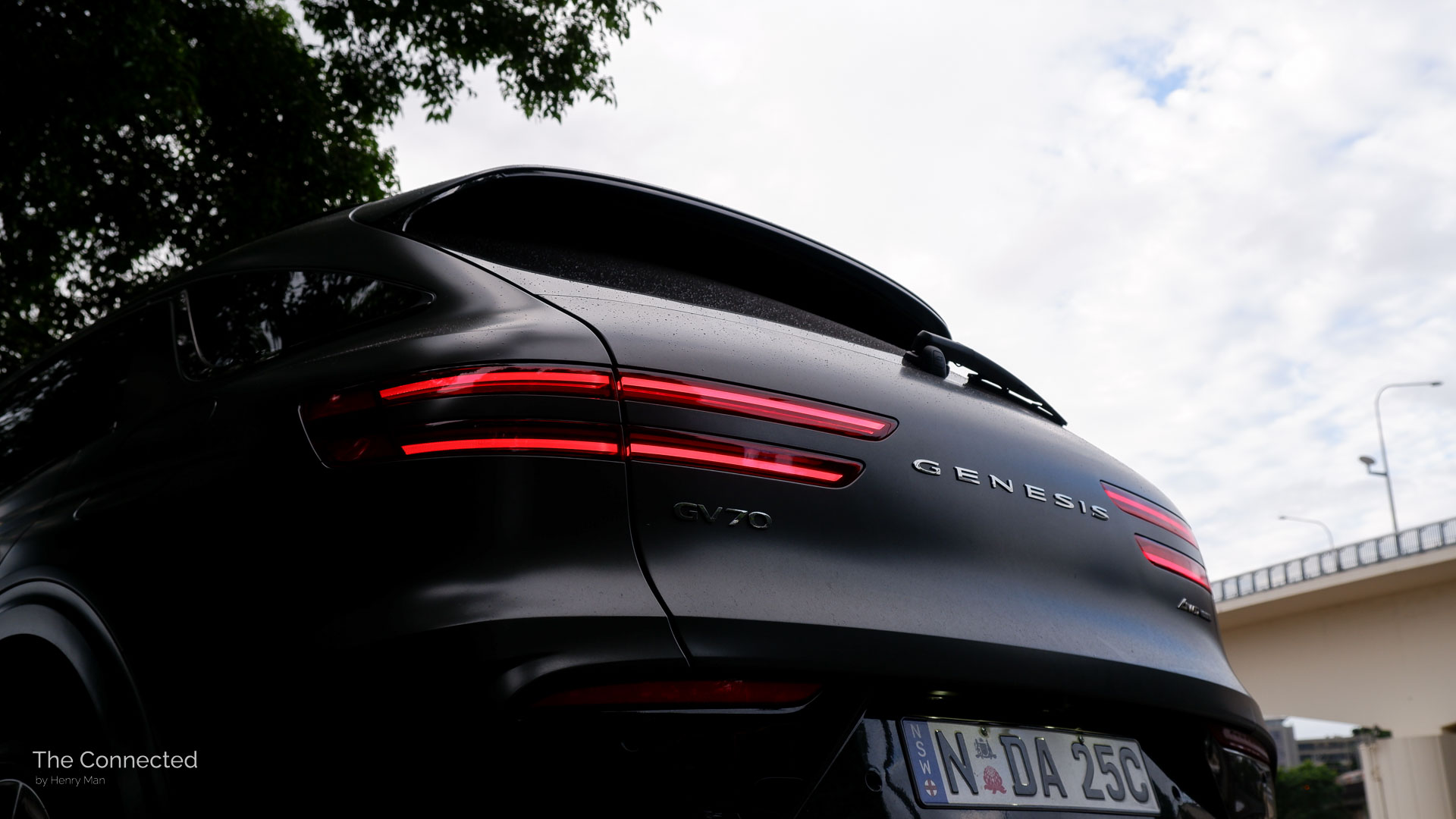

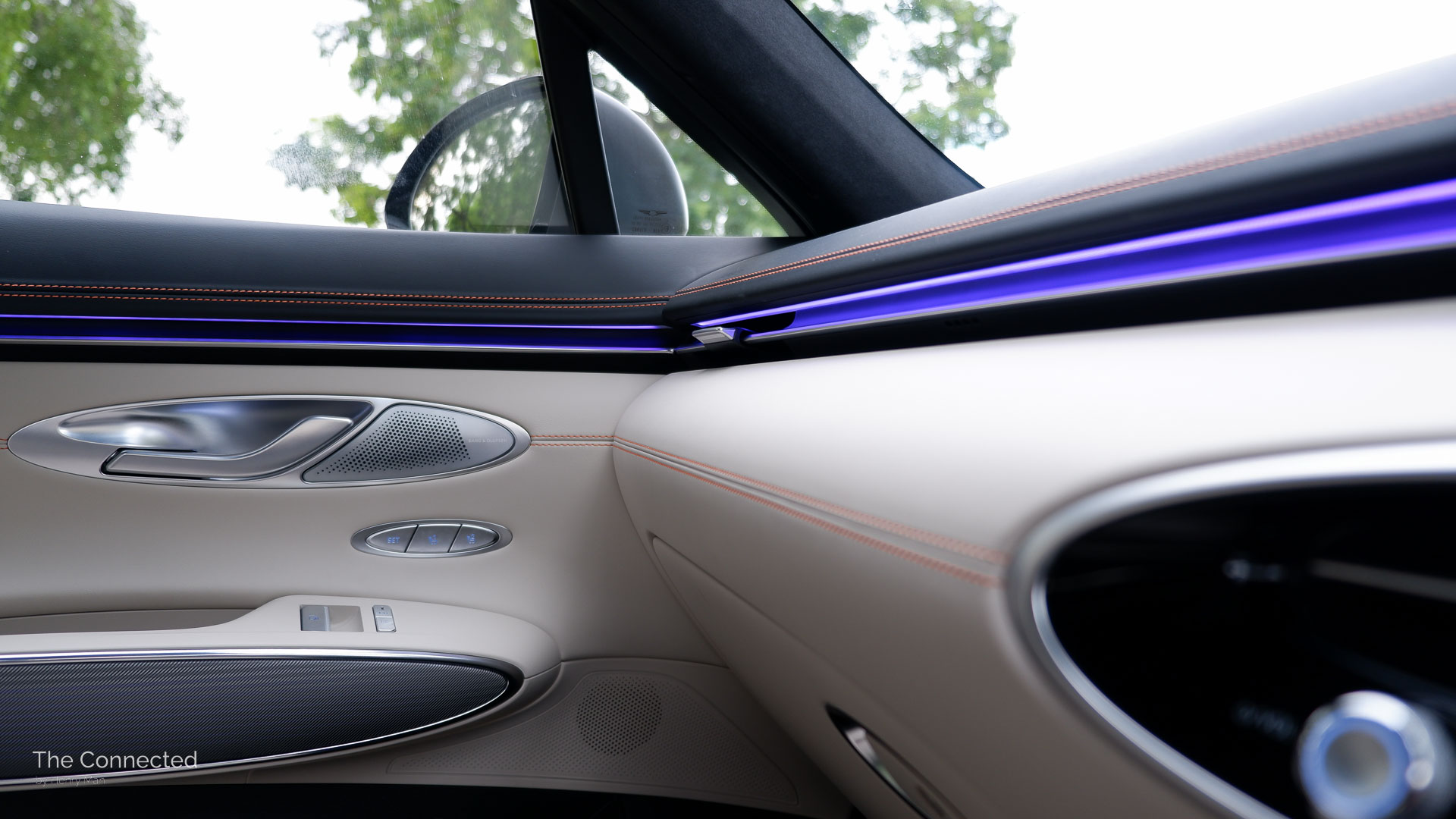
The South Korean luxury medium SUV looks and feels like it’s worth every cent of its premium price tag.
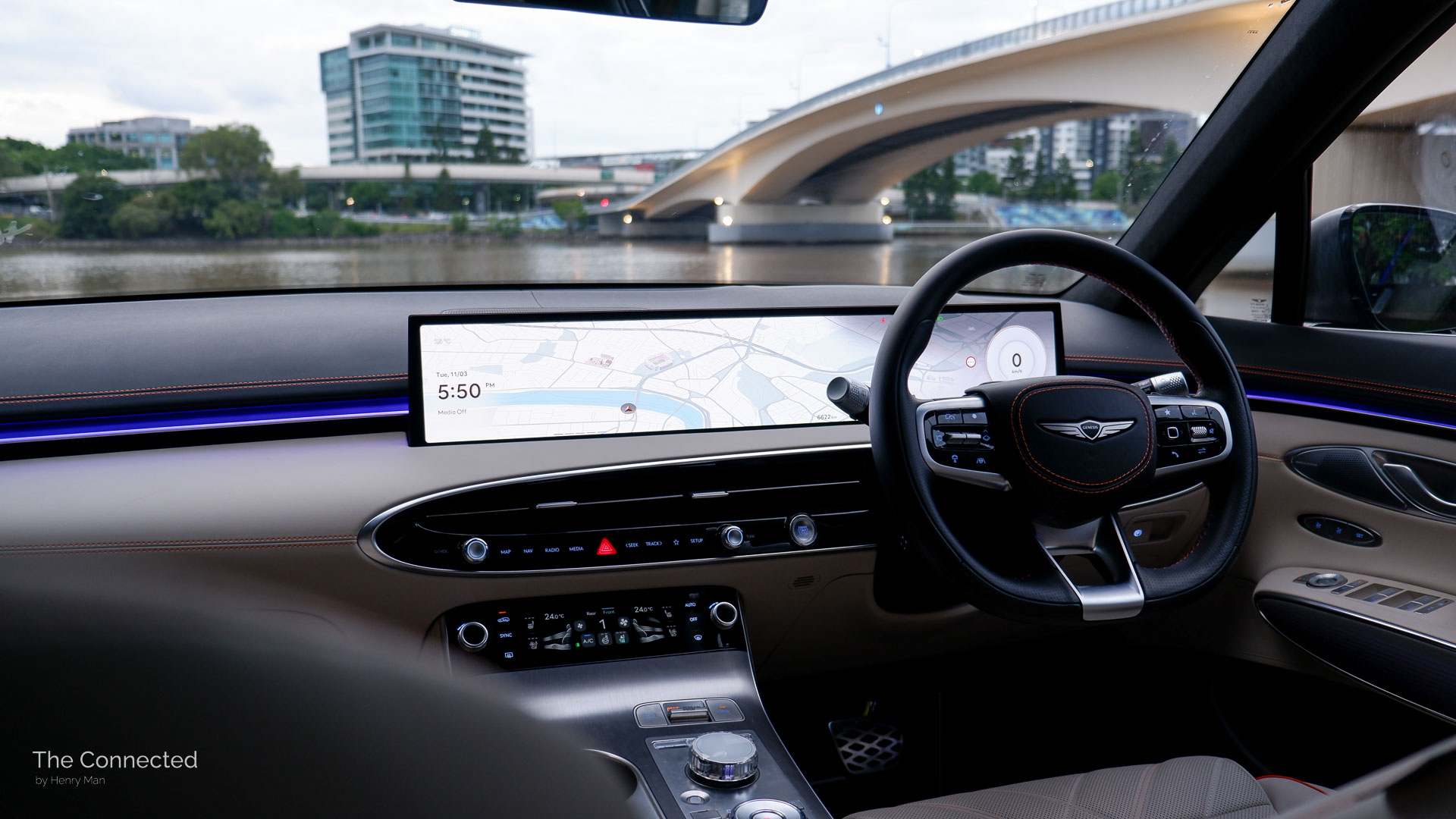
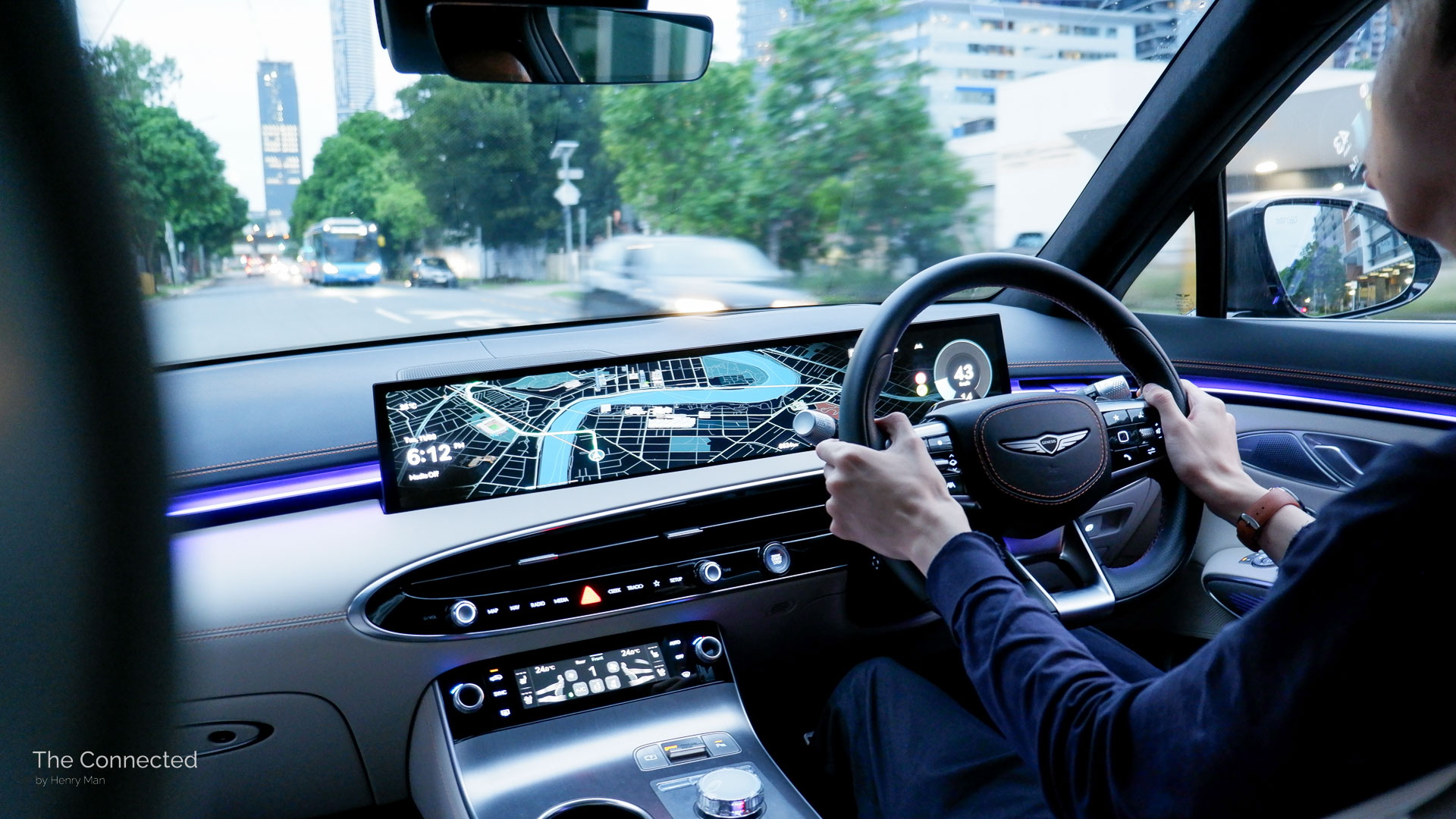
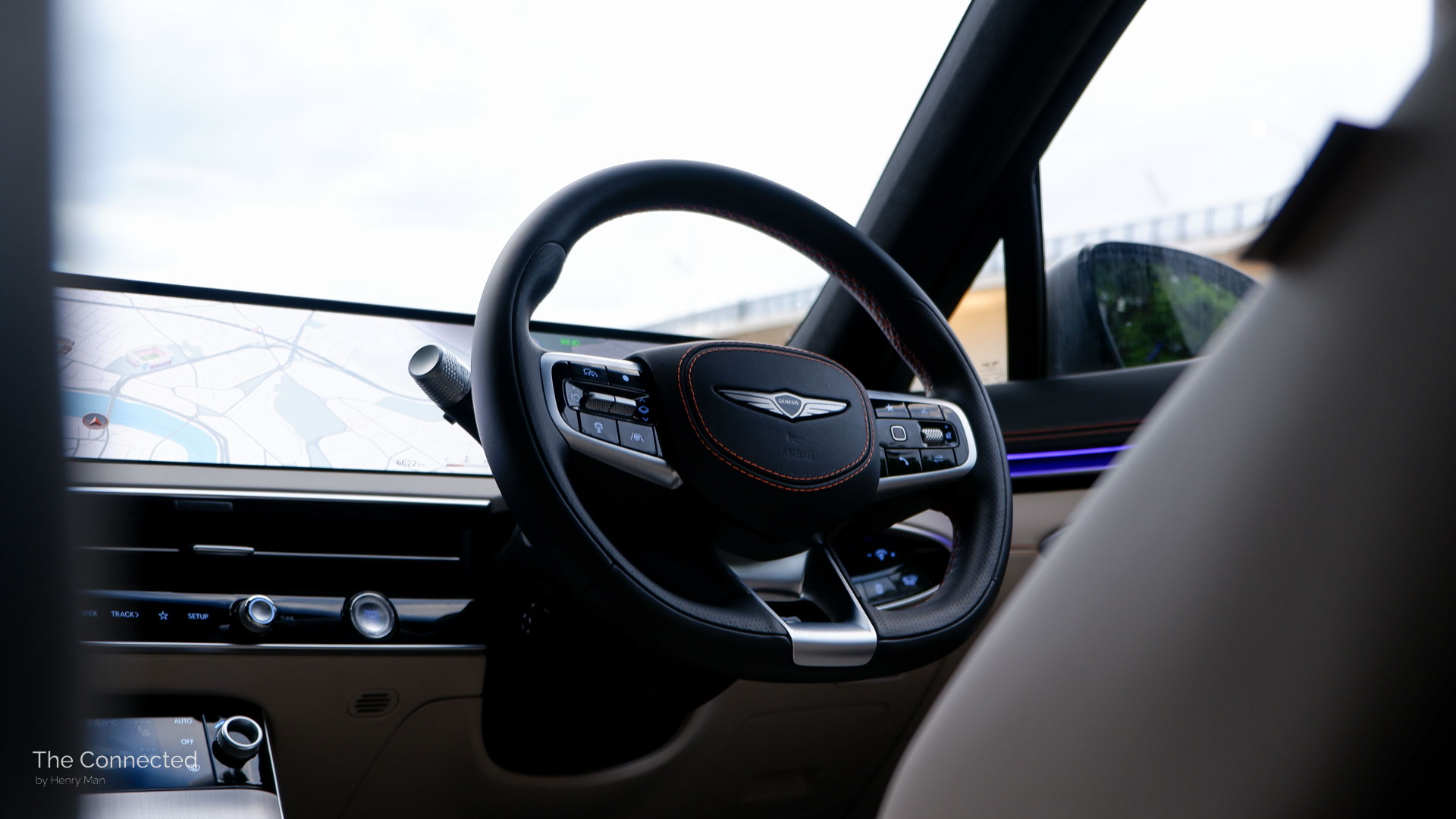
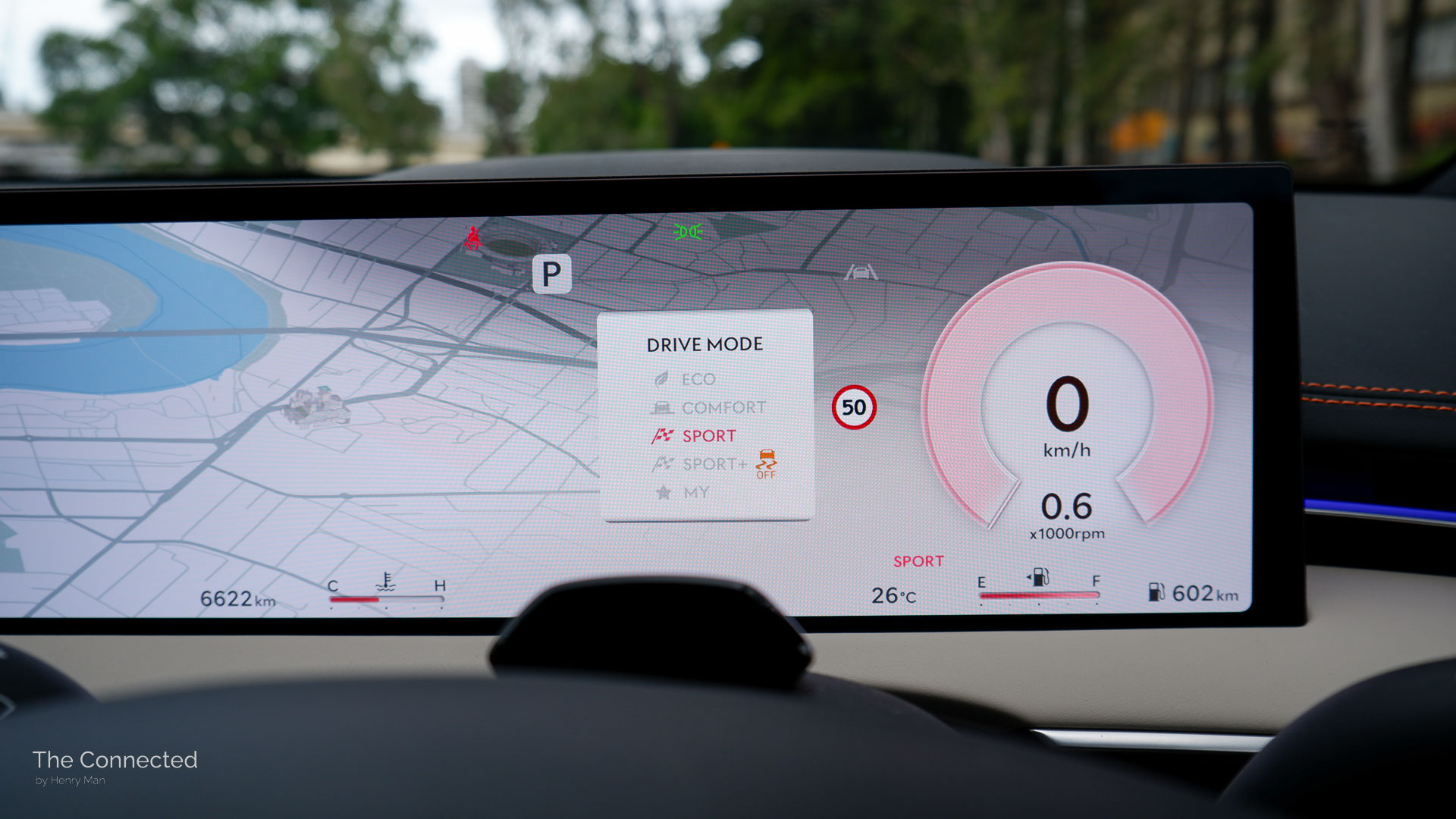
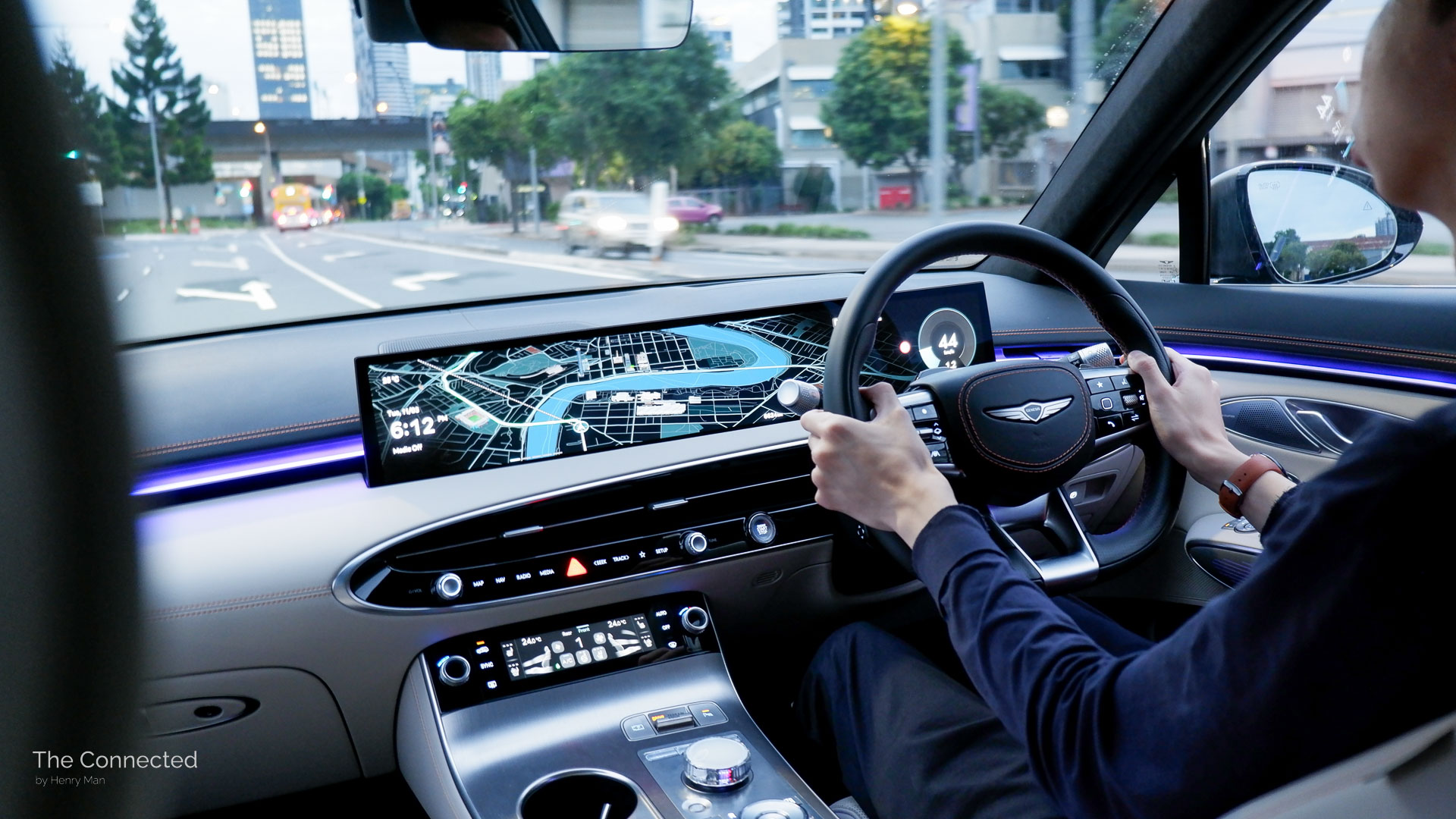
Inside, the new GV70 gains a new single-piece 27-inch diagonal central and driver display, updated climate control touchscreen, and redesigned centre console while still retaining its oblong-shaped elements.
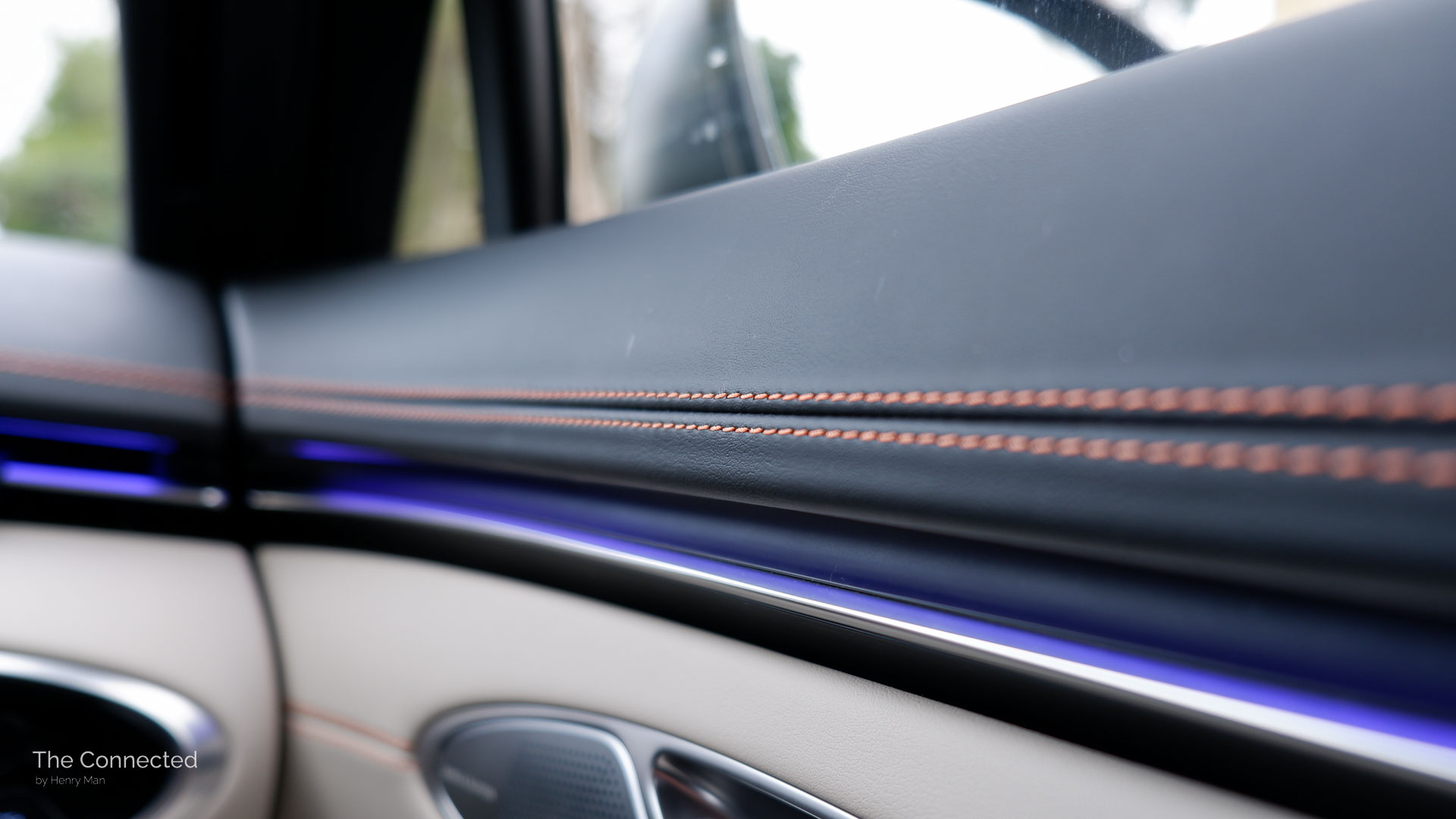
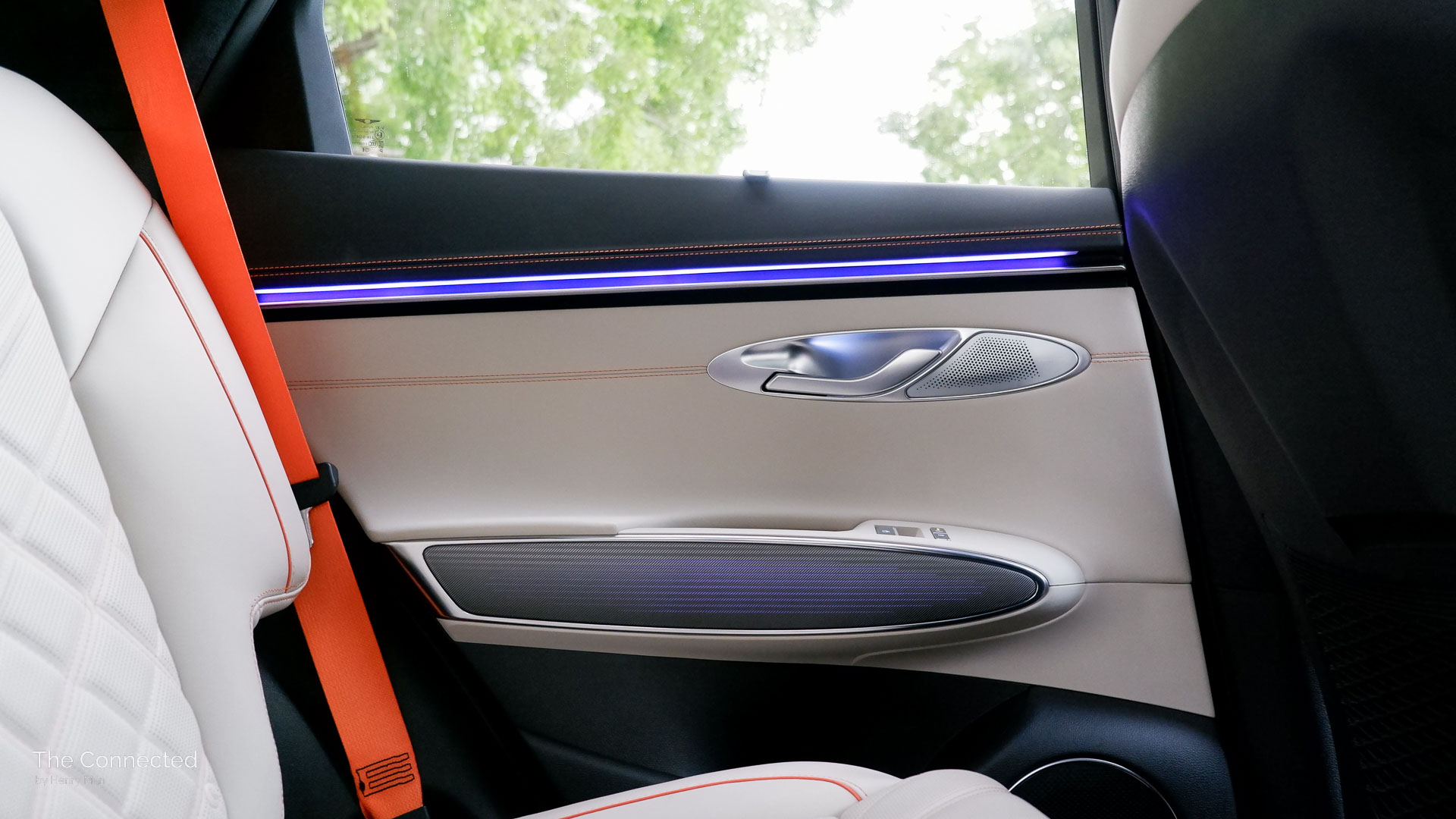
The 64-colour adjustable ambient lighting has been upgraded too and looks far more striking – with discreetly hidden lighting strips in the metallic trim glowing from the rear and front doors to the dashboard.
Material quality is superb – when some German rivals are cutting costs on this front – with soft-touch and padded materials across the interior, and metal trims and speaker grilles.
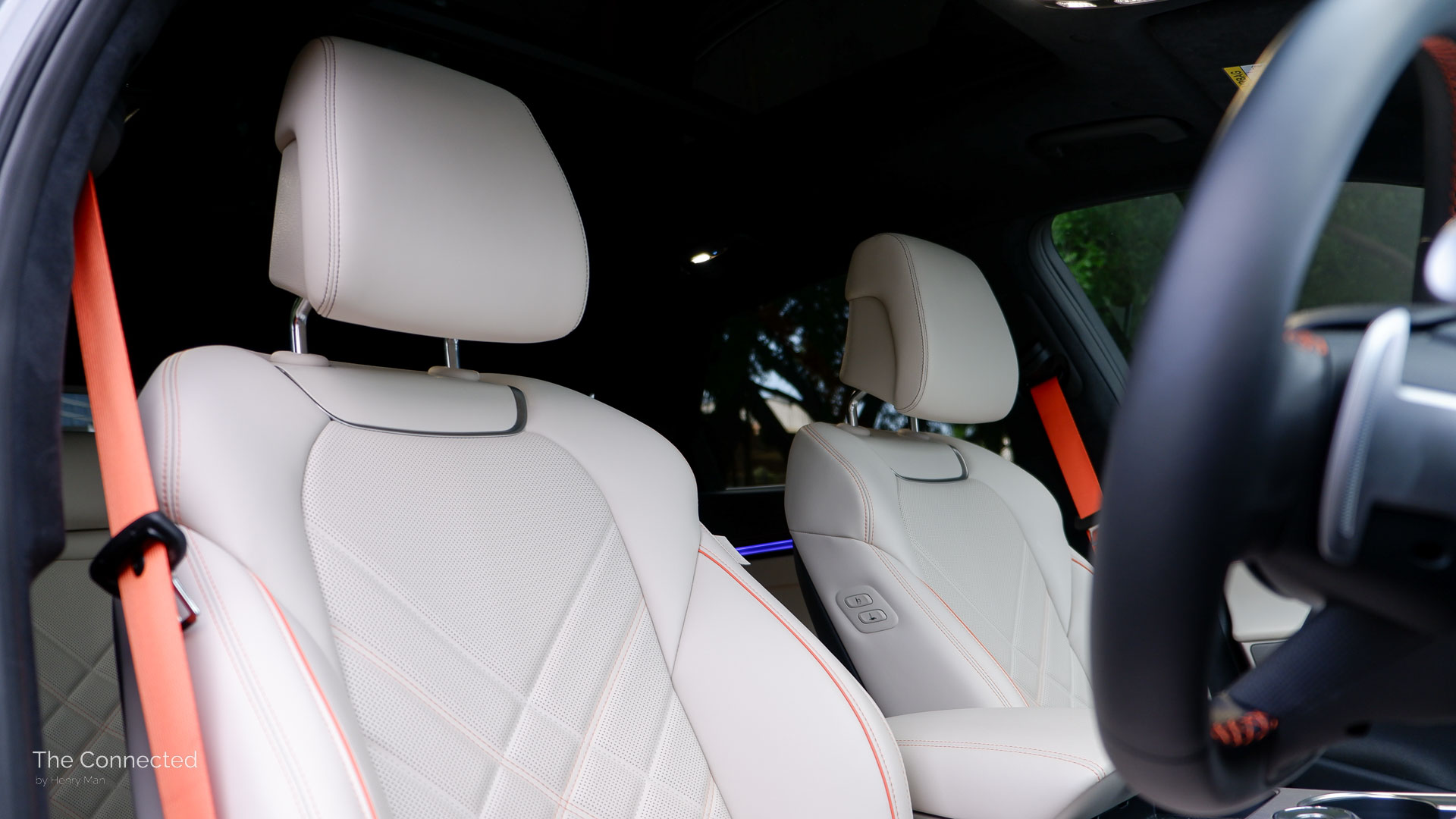
Prominent orange stitching and seatbelts on the Signature Sport forewarns Genesis’ upcoming Magma performance brand, too.
A key benefit of Genesis is the ability to select any interior colour choice for no extra cost.
However, the centre console knee rest is a bit firmer than even the Mazda CX-60 and the large aluminium centre console annoyingly reflects and glares in my eyes under bright sunlight.
Practicality.
2025 Genesis GV70 Signature Sport dimensions:
| Length x width x height | 4715 x 1910 x 1630mm |
| Wheelbase | 2875mm |
| Ground clearance | 185mm |
| Boot space (min) | 542 litres |
| Rear seat split fold | 60:40 |
| Child seat anchors | 2x ISOFIX and 3x top tethers |
| Air-conditioning system | Three-zone climate control with rear air vents |
The 2025 GV70 medium SUV offers good cargo capacity, but the interior could be more practically-designed.
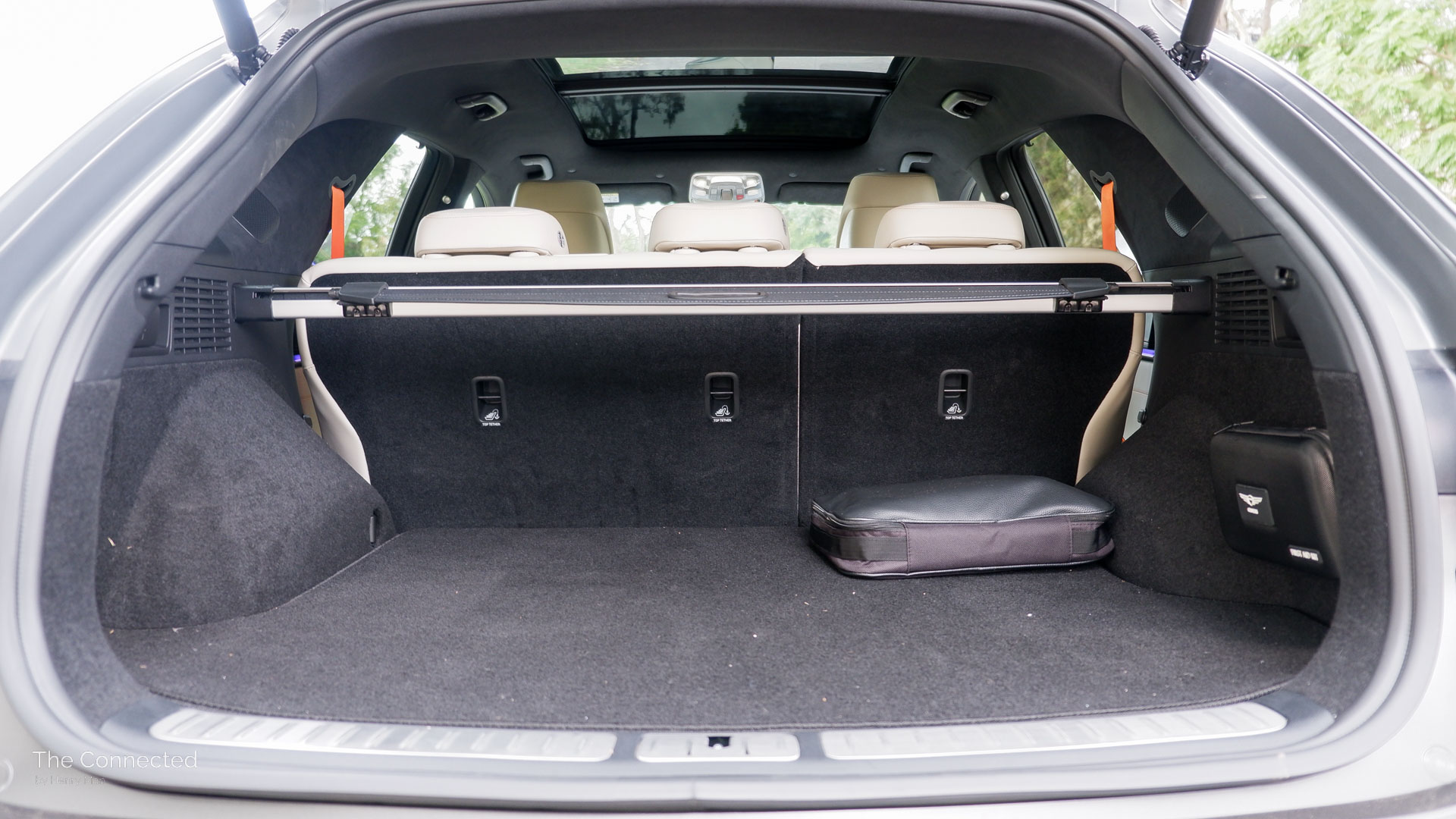
The 542-litre boot is spacious with a flat loading lip, plush carpeting, and levers to fold-down the rear seats manually. I like that the Porsche Macan-style boot open button is conveniently placed under the rear wiper, too.
A hands-free electric tailgate is standard and opens when standing behind the vehicle with the key for a few seconds, but there’s no kick sensor nor hands-free closing.
Disappointingly, the Genesis GV70 doesn’t offer any bag hooks.
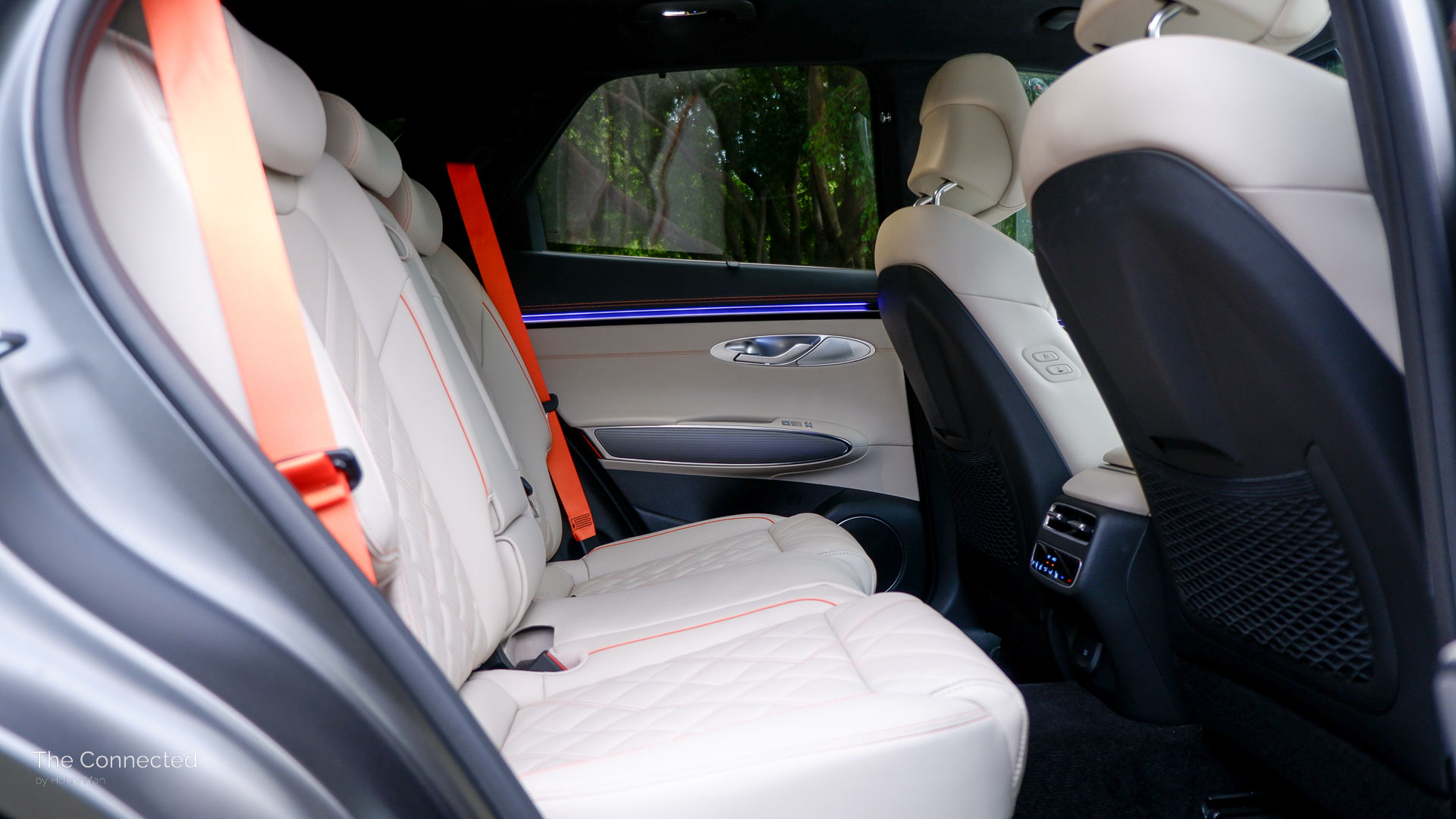
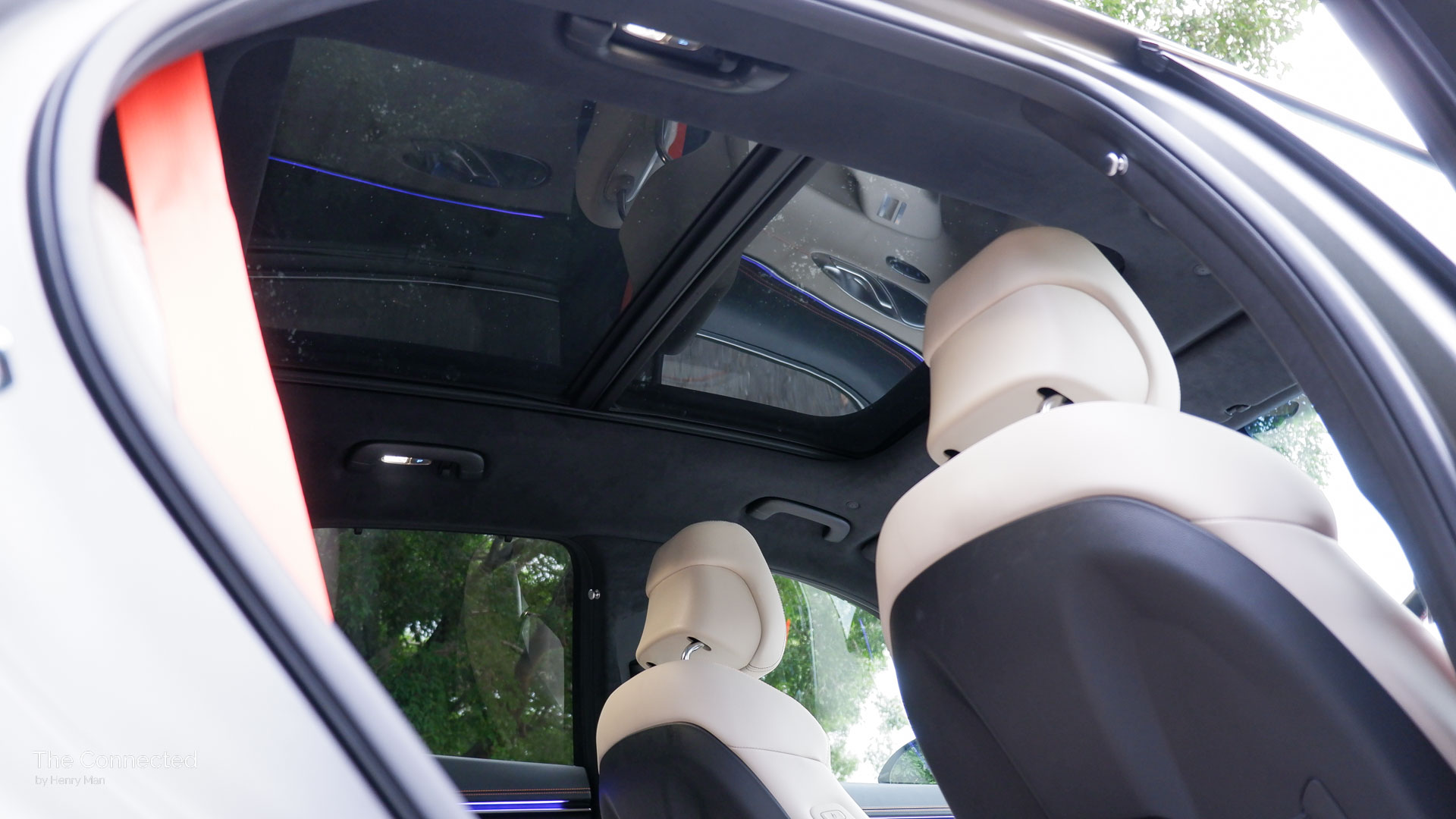
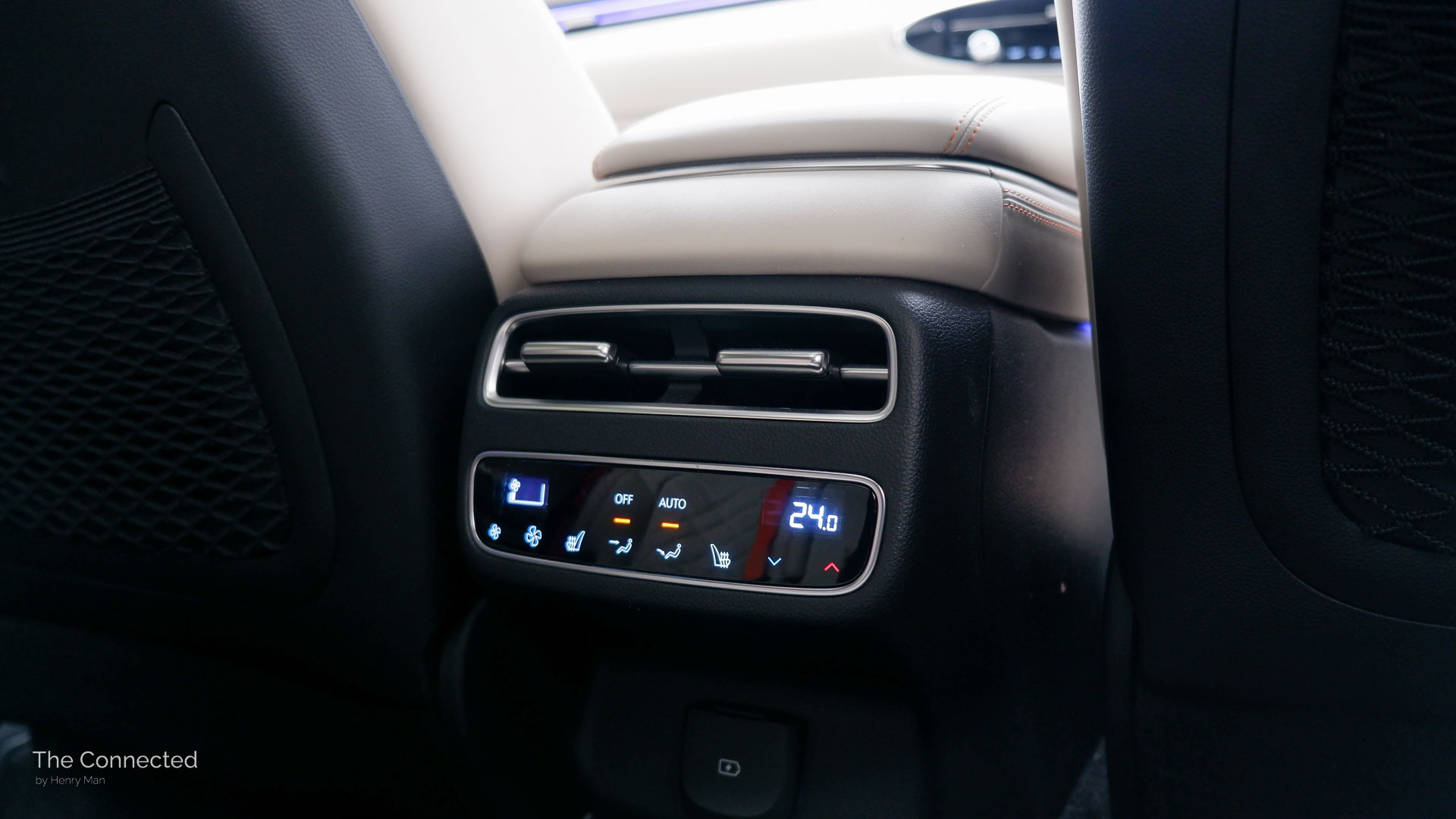
The rear seats aren’t as practical with only adequate legroom and headroom. The centre floor transmission hump is prominent and makes sitting three abreast a bit difficult.
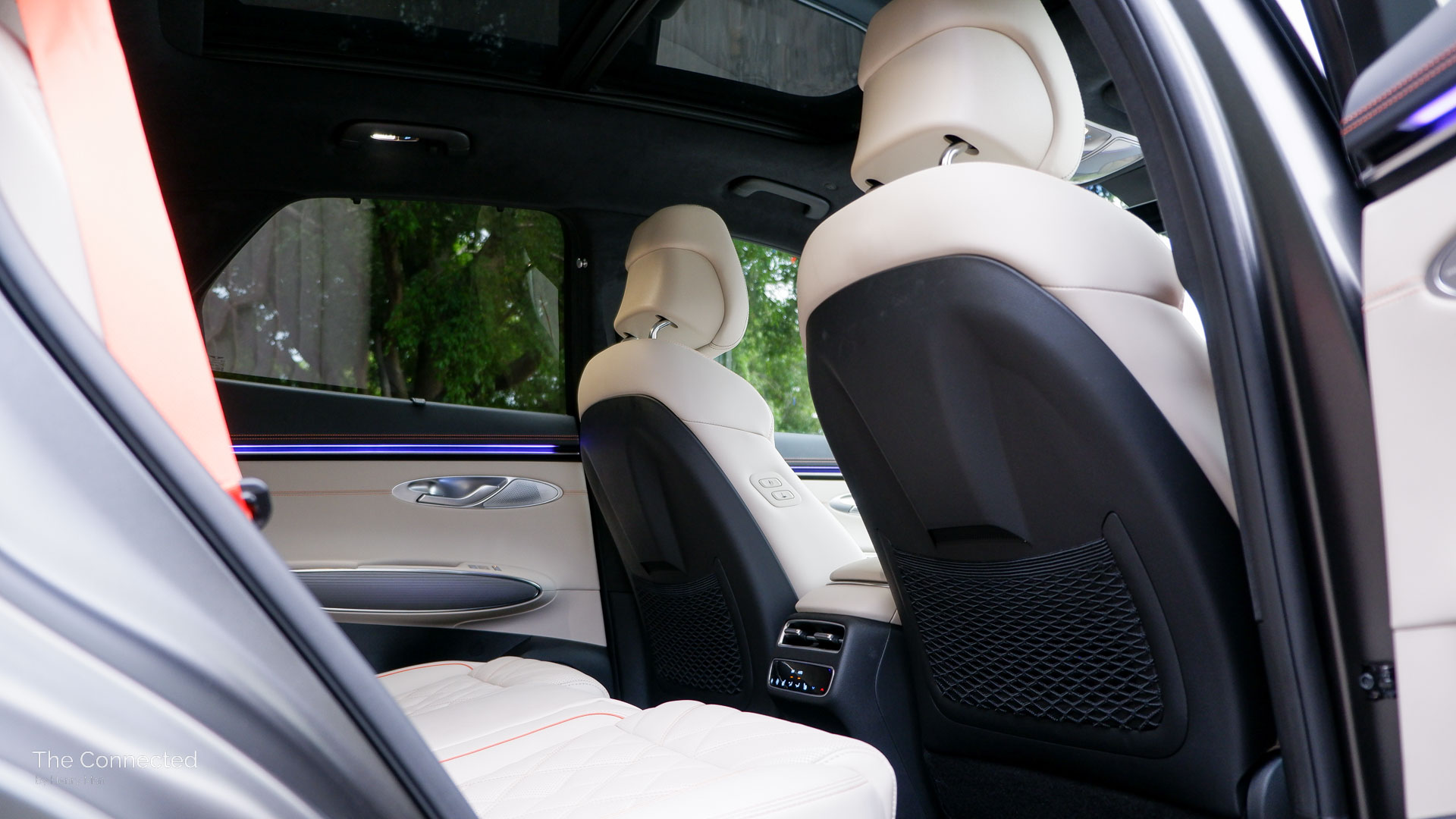
At least there are manually-retracting window sunblinds, rear air-vents with individual temperature control for the rear row, heated outer rear seats, a fold-down centre armrest with two cup holders, two USB-C charging ports, and LED interior lights across both rows.
Rear passengers can move the front passenger seat with a button press, too.
The openable panoramic sunroof is large, but heavily tinted and dark to view outside. A built-in sunblind is also included with a soft suede material, matching the rest of the headliner and pillars.

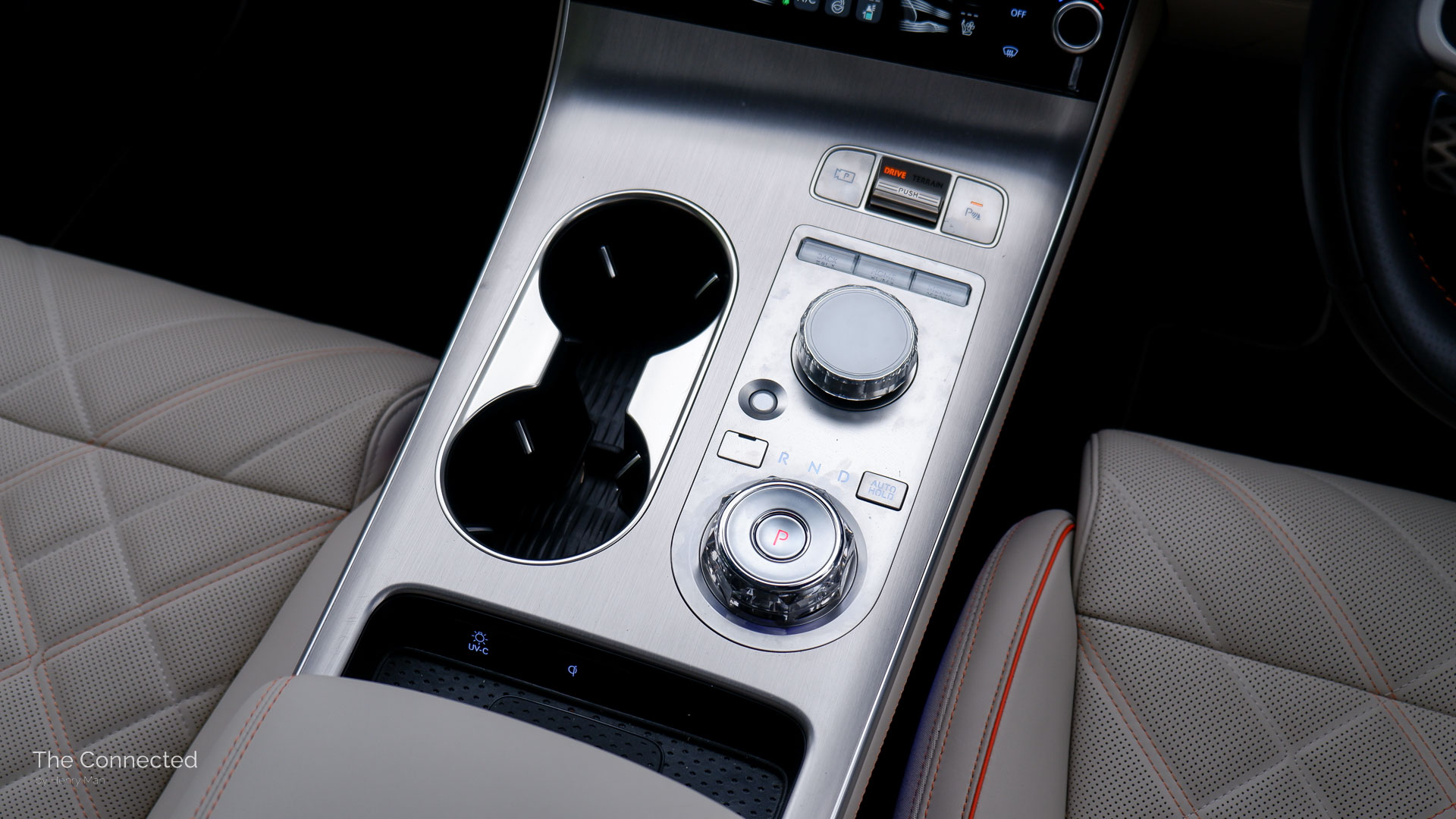
At the front row, there’s two gripped cup holders, a Qi wireless charging pad, and a decently-sized felt-lined glovebox.
However, the centre console isn’t as practical with a shallow storage space under the centre armrest – although it now features a UV sterilisation feature with two USB-C charging ports – no open tray underneath, and narrow door bottle holders.
The front Nappa leather seats are comfortable and firm with electric adjustment (18-way for the driver or 12-way for the passenger), three-level heating and ventilation, and massaging for the front seats. That’s in addition to a two-level heated steering wheel, an overhead sunglasses holder, extendable sun visors, and new cabin fragrances built into the glovebox.
Genesis’ new Mood Curator offers four energetic and relaxing ensembles of sound and pulsing ambient lighting, along with fragrance and seat massaging for two modes. It’s a luxury car, after all.
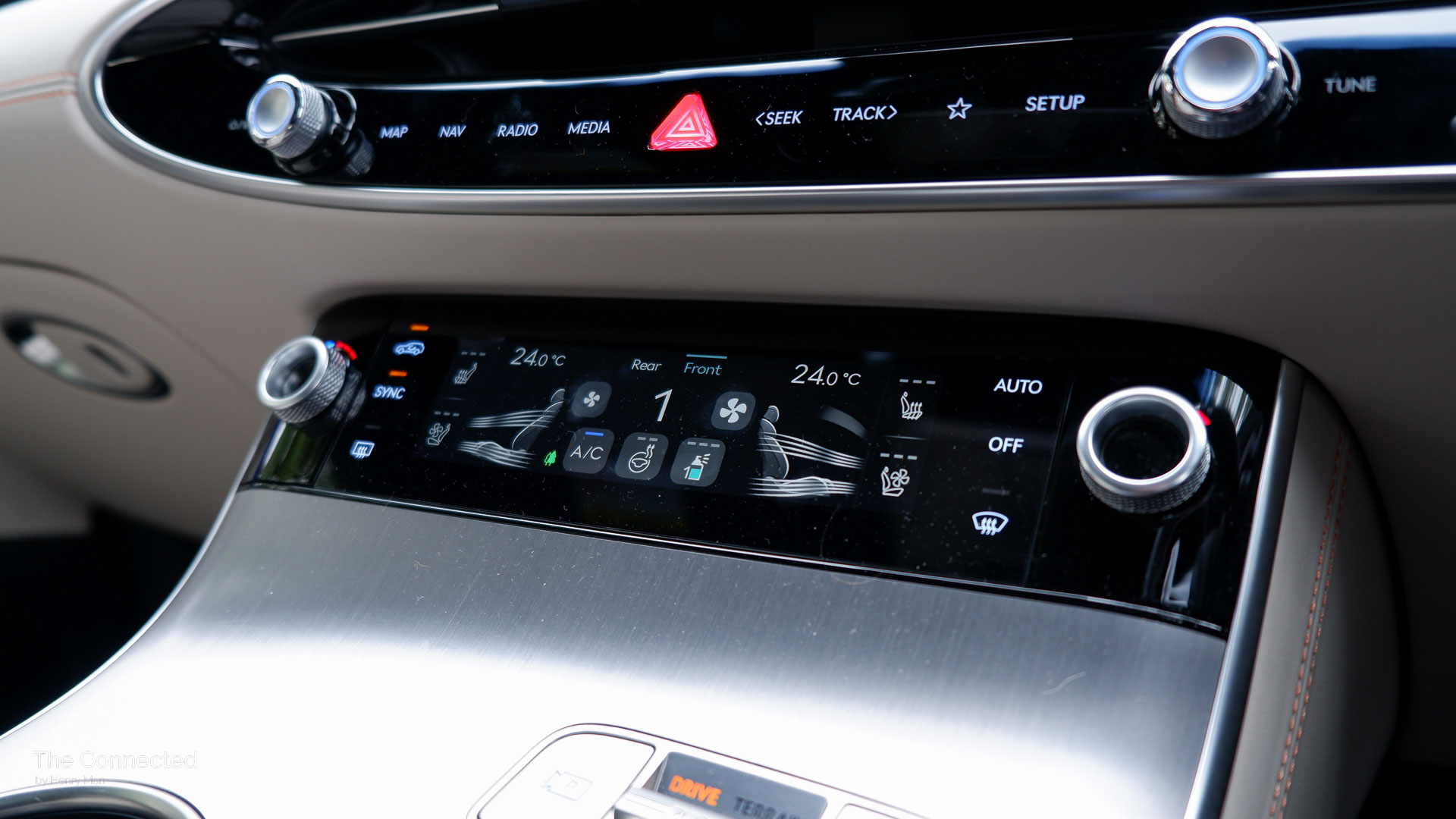
The three-zone climate control is operated via a redesigned 6.0-inch touchscreen with haptic feedback and temperature dials on each side. It’s easy to use while driving, although the dials are lacking some tactility expected for a luxury car.
Technology.
2025 Genesis GV70 Signature Sport tech features:
| 27-inch OLED central and driver instrument display running ccIC | 6.0-inch climate control touchscreen with haptic feedback |
| Wireless/wired Apple CarPlay and Android Auto with maps driver instruments integration | Head-up display |
| Built-in maps | 16-speaker Bang and Olufsen |
| Genesis Connected Services and mobile app | 4x USB-C and 1x 12-volt power ports |
| OTA software update capability | Fingerprint authentication scanner |
| Qi wireless charging pad | Proximity key with auto-folding mirrors, Genesis logo puddle lights, and door handle lights |
The updated 2025 Genesis GV70 now features an impressive, high-tech setup even though the software is somewhat buggy at times.
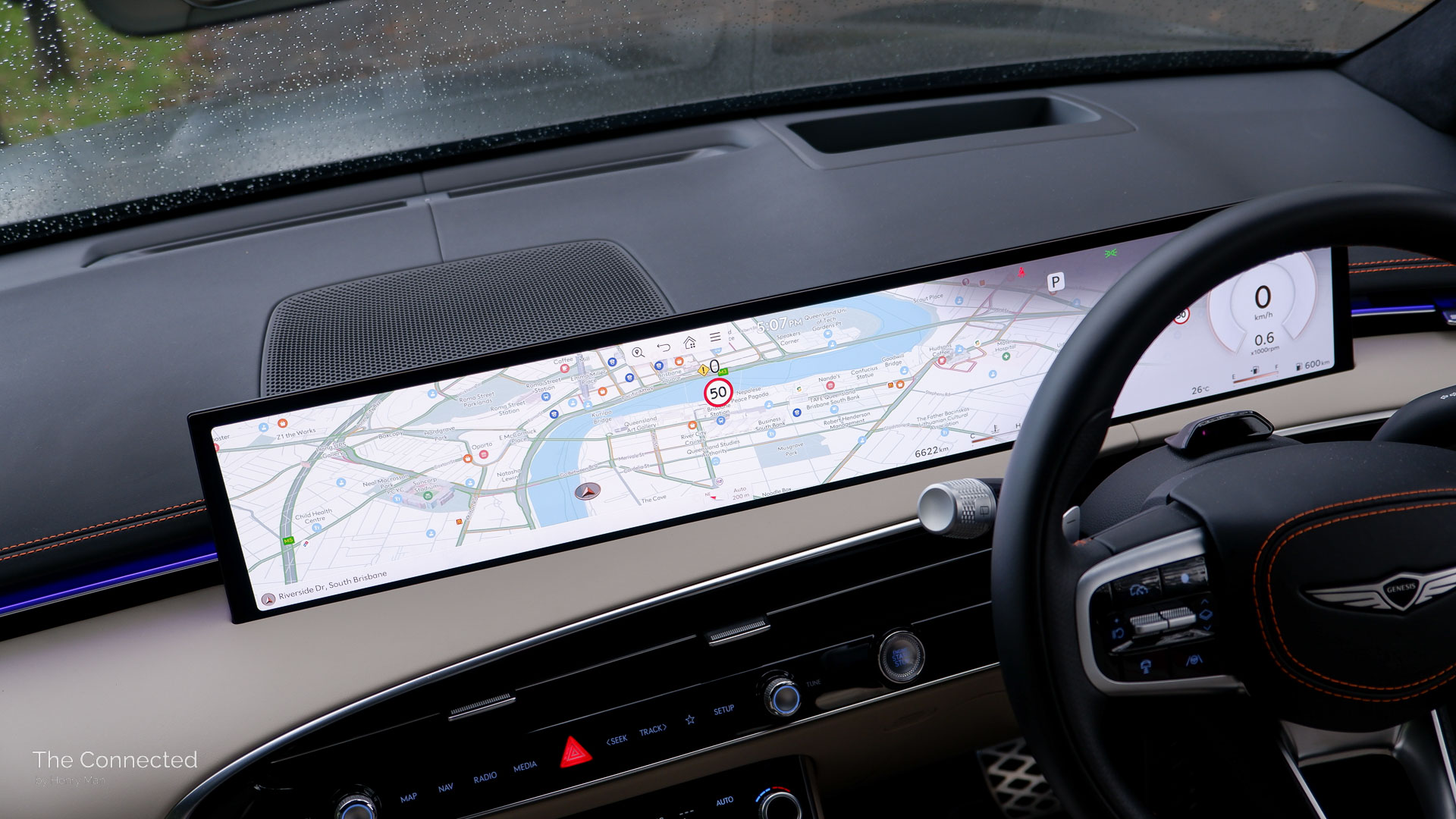
Identical to the larger facelifted GV80, the new 27-inch diagonal display finally fuses the central touchscreen and driver instruments in one single unit, and showcases the brand’s latest Connected Car Integrated Cockpit (ccIC) operating system.
Colours are bright thanks to the South Korean brand using a high-resolution organic light-emitting diode (OLED) display for the first time.
Maps naturally flow into the driver instruments when using the built-in navigation system, but other than showing the clock in the middle section at other times, there isn’t much utility to the single-piece display – unlike Kia’s three-screen setup.
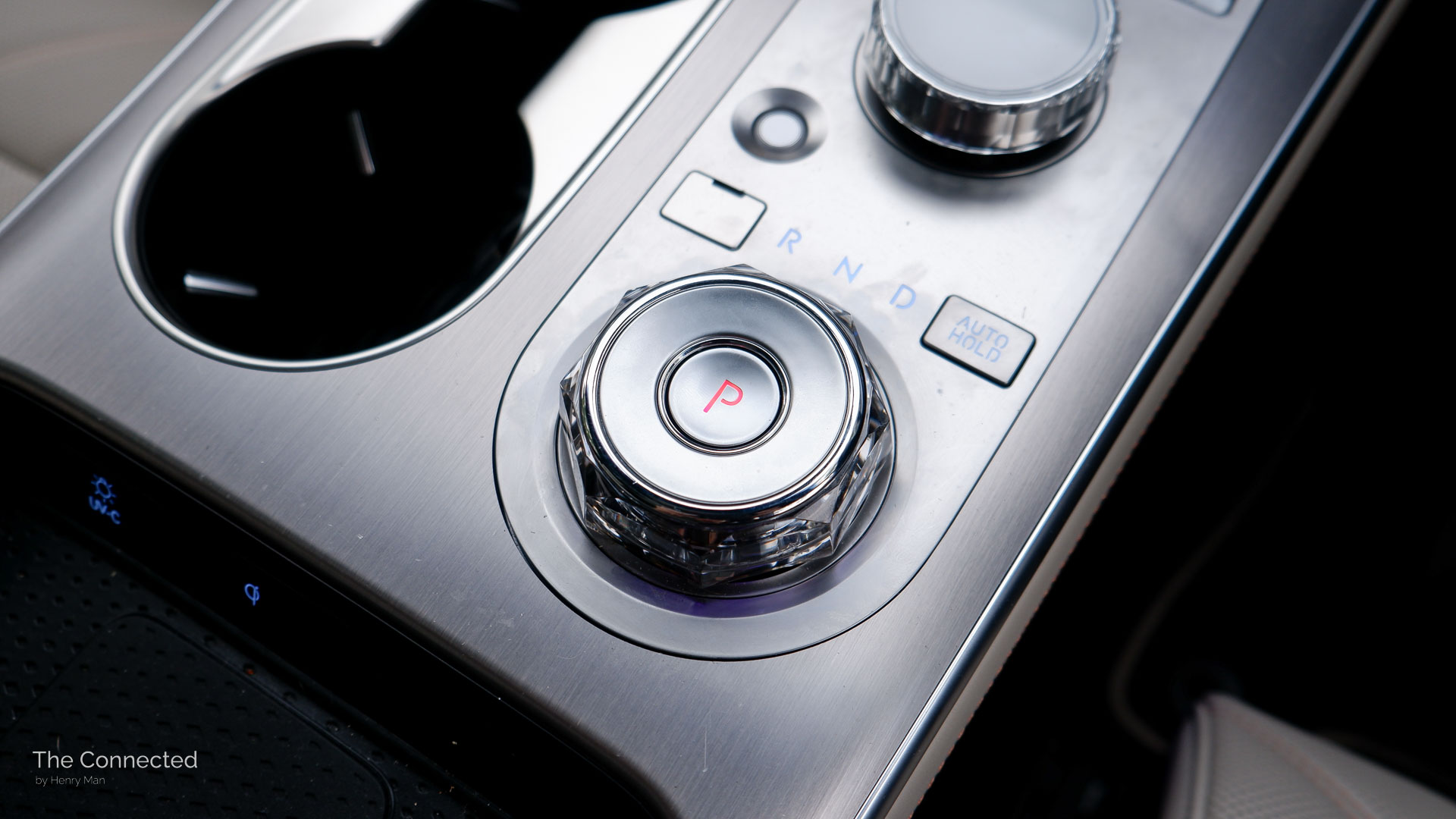
The ccIC software is well-designed and responsive, with the ability to conveniently directly touch the central screen or use the rotating dial and shortcut buttons at the centre console.

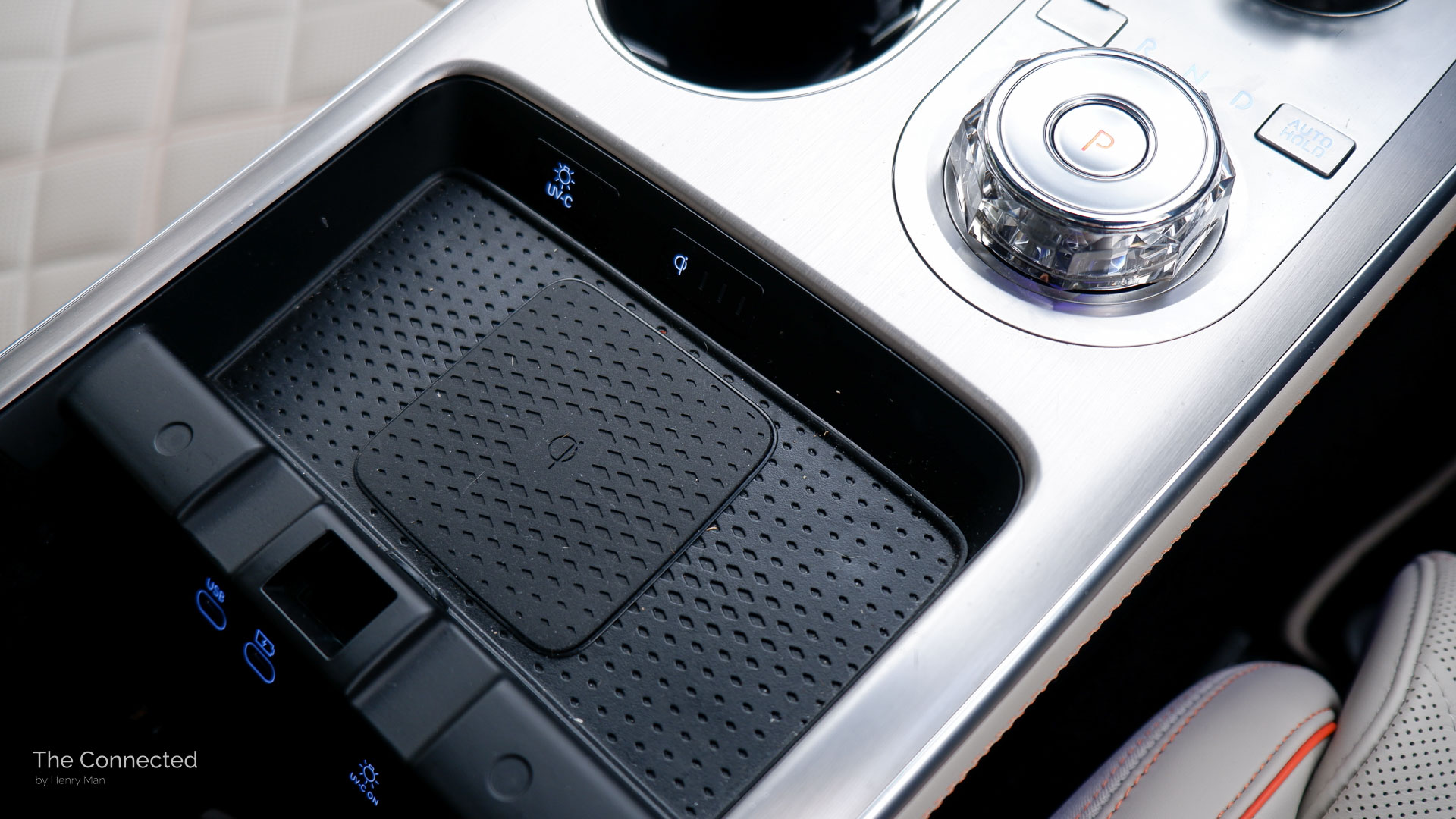
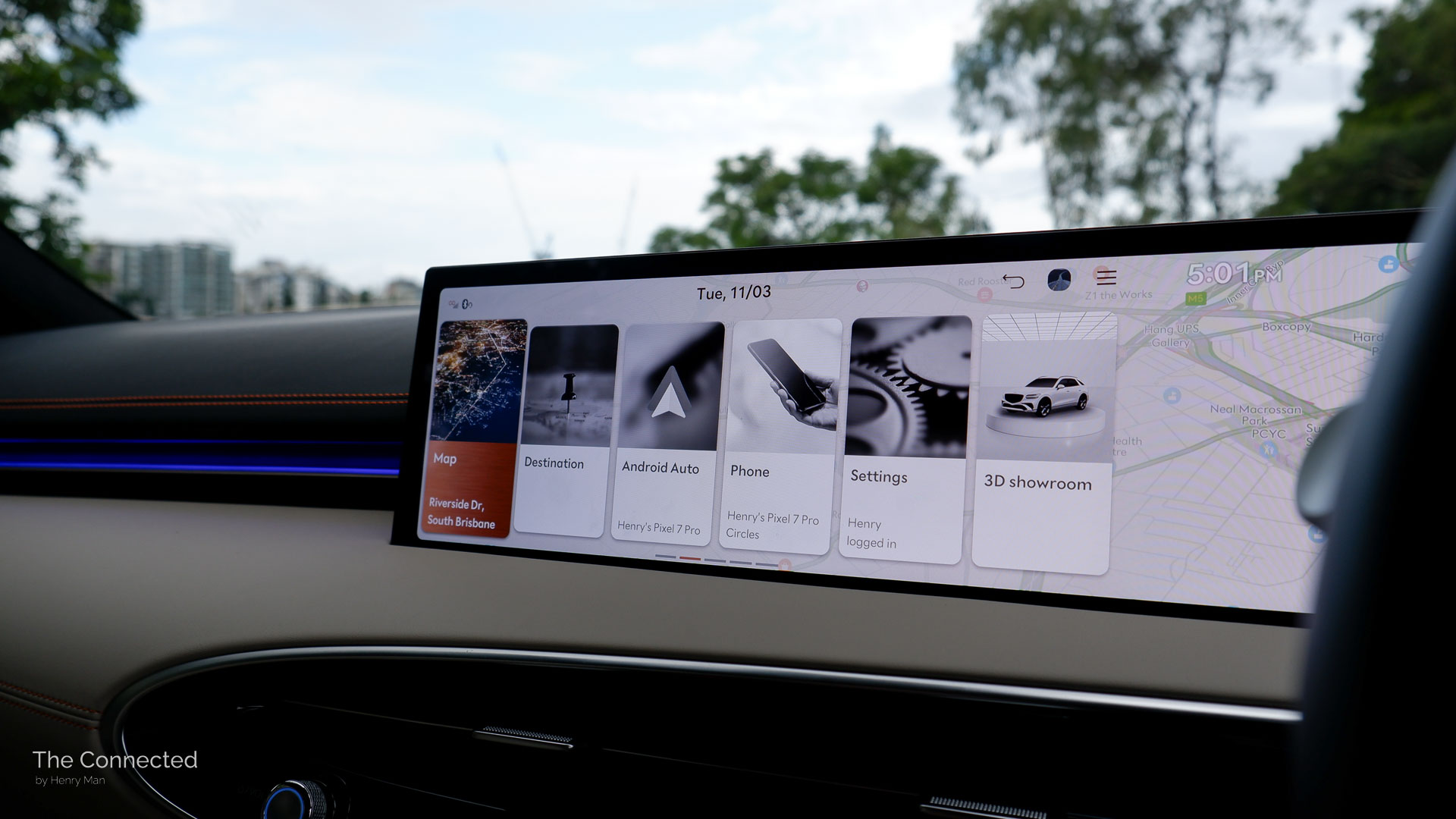
Wireless Apple CarPlay and Android Auto are standard. Unfortunately, the Qi wireless charging pad isn’t ventilated – despite being available in much cheaper mainstream cars – so my phone eventually overheats and stops charging.
Additionally, the 27-inch ccIC software is glitchy at times.
Both wireless smartphone projection systems weren’t able to reconnect again if they were disconnected after hopping out of the car while it’s still on, requiring an infotainment restart.
We also experienced the entire system constantly rebooting itself after it failed to install an over-the-air (OTA) software update on the GV80, which has been echoed by others. Seems like there are still some ccIC growing pains.
Genesis offers a variety of customisable driver instrument display views and widgets, with the latter configured via a somewhat fiddly touch-sensitive pad on the steering wheel.
Apple CarPlay and Android Auto mapping apps (only Apple Maps for the former) can impressively show on the driver instrument display itself, while there’s also the option to always show the front camera with augmented reality safety assist graphics.
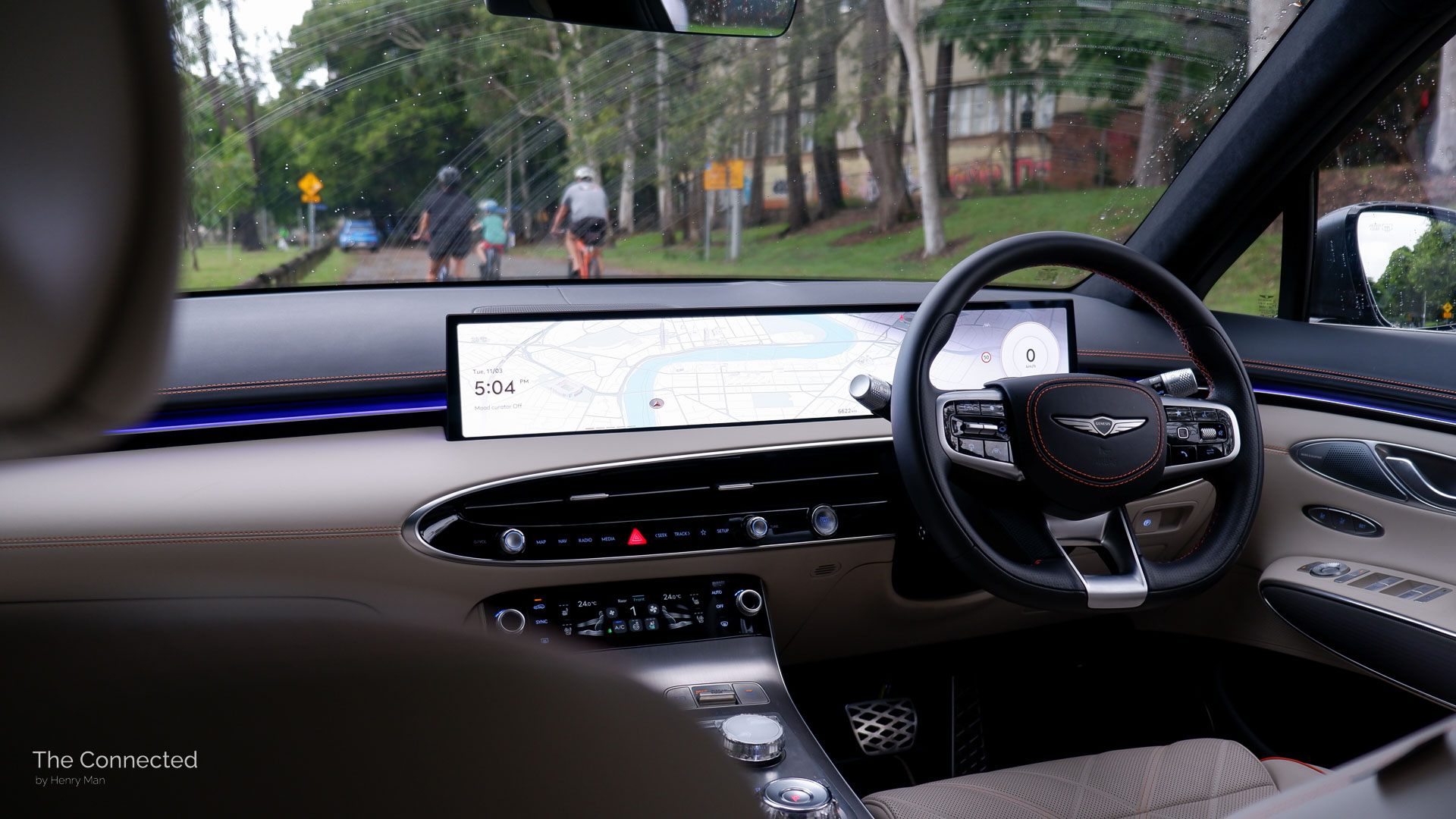
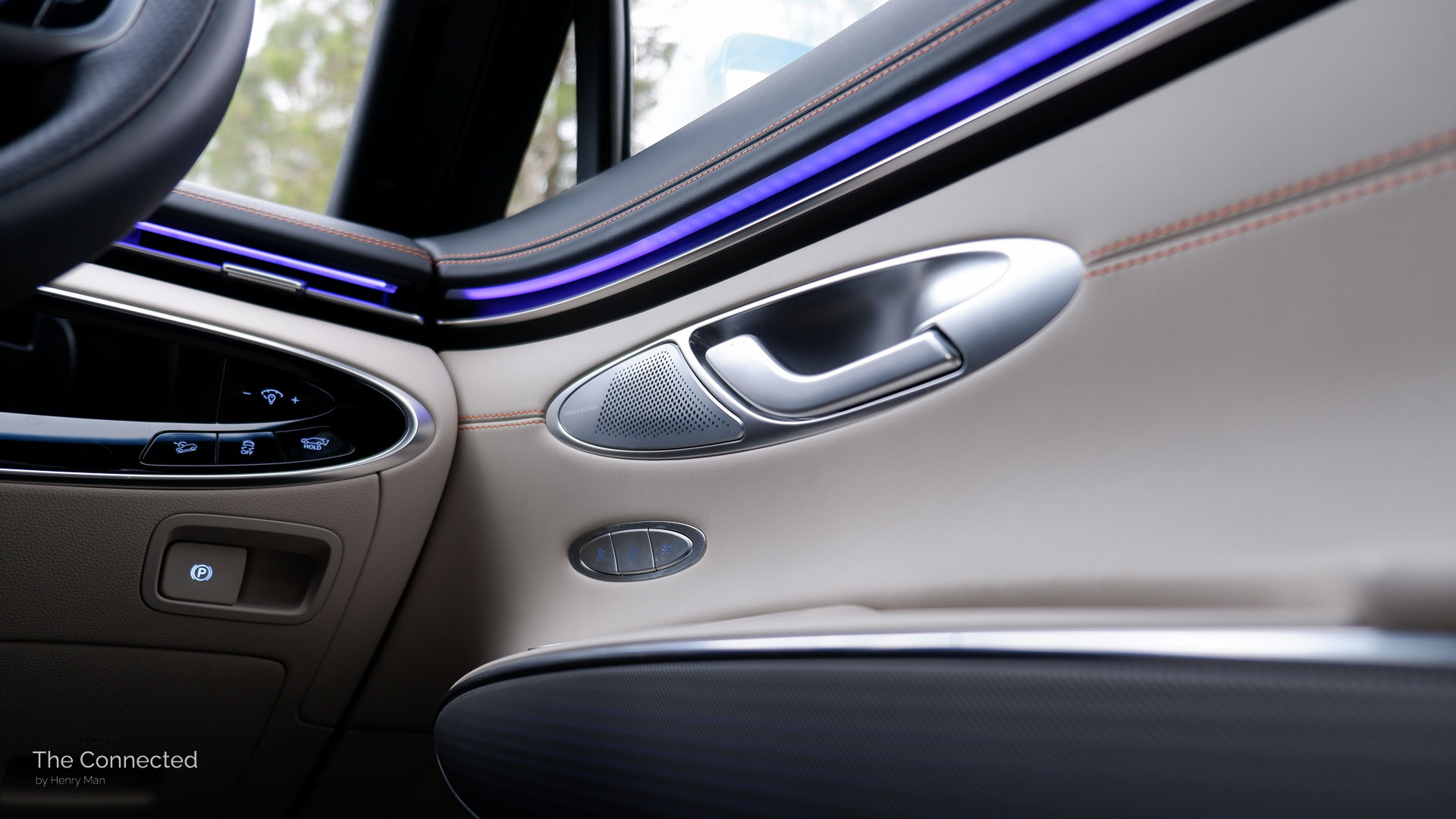
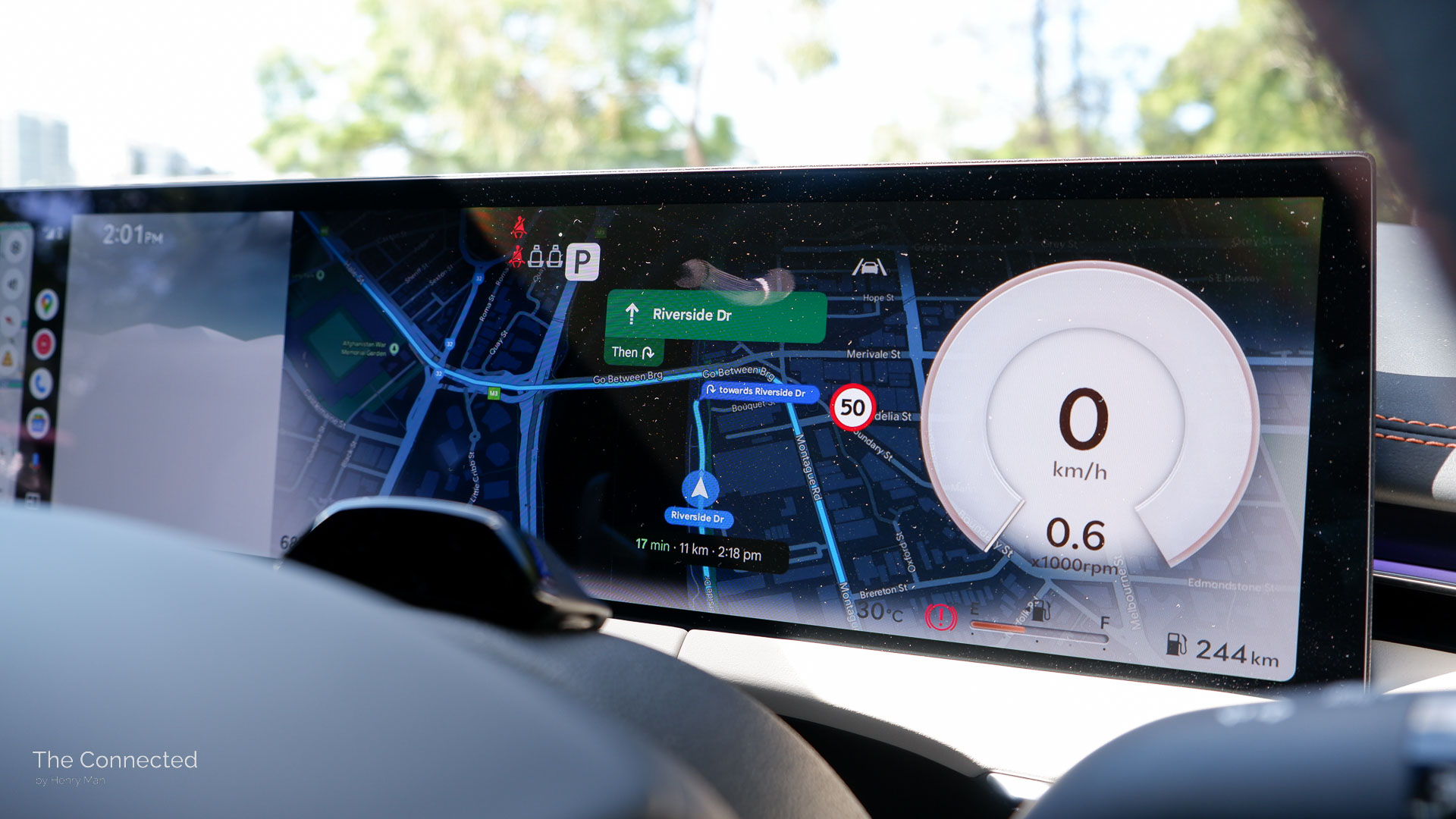
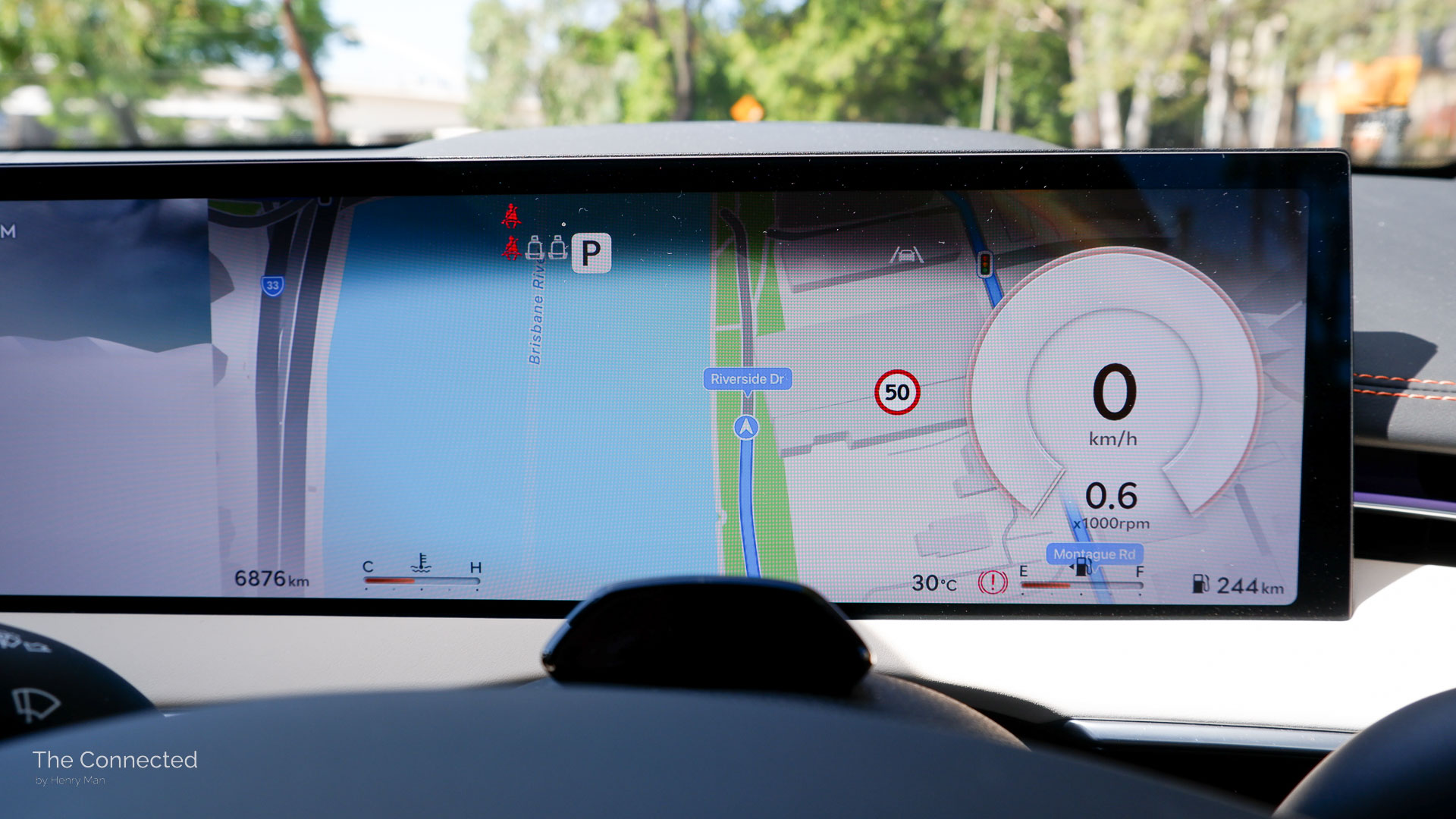
The head-up display clearly projects the speedometer and safety assist warnings onto the windscreen, while projecting turn-by-turn directions from both Apple and Google systems, too.
Genesis Connected Services (GCS) are included for free for the first five years, with a well-designed mobile app that allows owners to pre-start the air-conditioning, check the fuel level, and even take a photo from the 360-degree camera system.
These are all handy features, but it can be slow to initially send commands to the luxury SUV, the phone can’t act as a replacement to the car key, and functions such as opening the boot or live dashcam recording aren’t available.
Moreover, the 16-speaker Bang and Olfusen branded audio system is excellent, while all four door handles now feature touch-based proximity key sensors which unlock the vehicle as you grab the inside of the handle.

Safety.
2025 Genesis GV70 Signature Sport safety features:
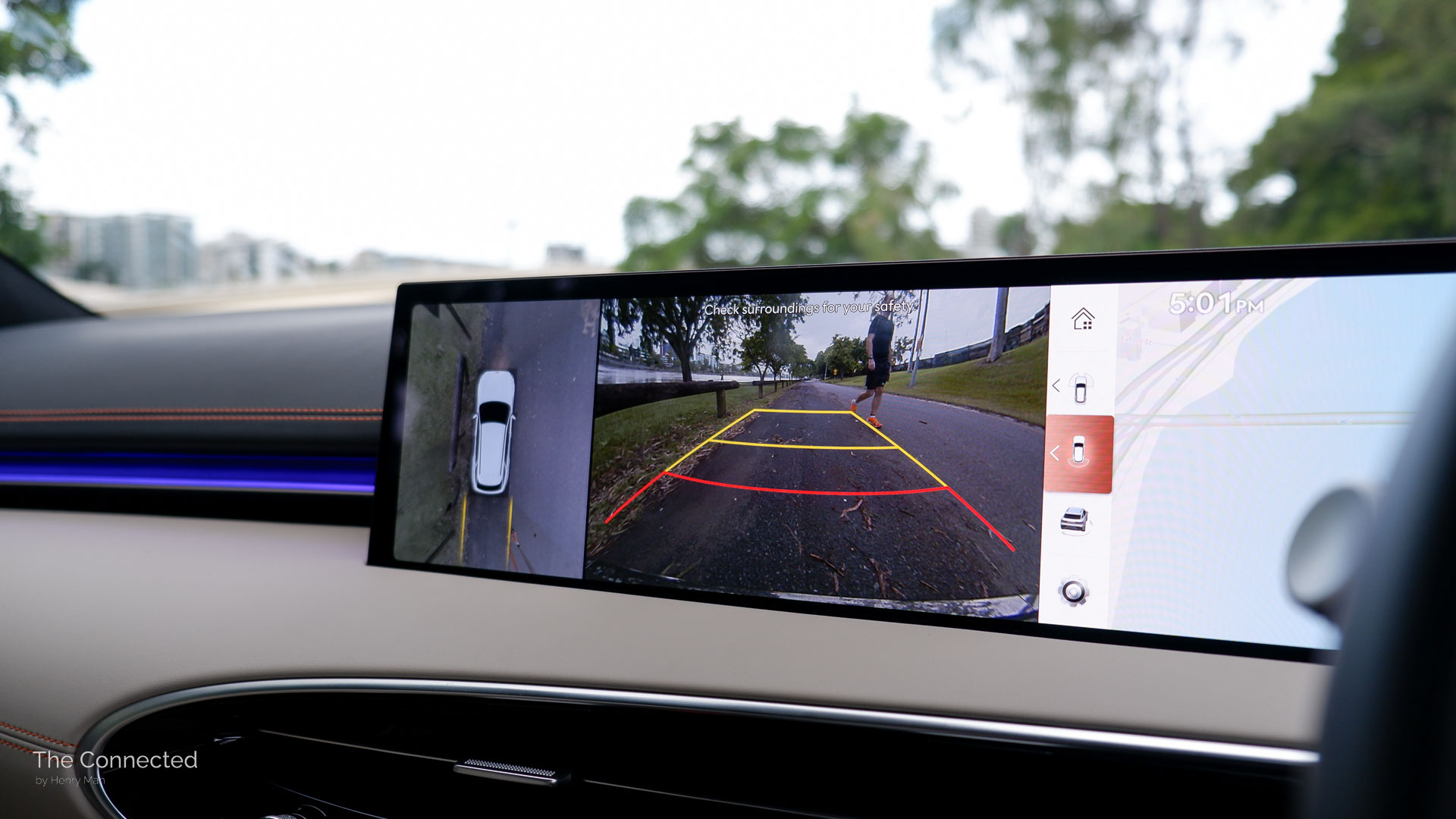
| Front AEB with vehicle/pedestrian/cyclist/junction turning detection | 360-degree camera system |
| AEB with direct oncoming/side detection | Blind-spot view cameras |
| Rear AEB | Front, side and rear parking sensors |
| Blind-spot assist | Door open warning |
| Rear cross-traffic assist | Rear occupant alert (sensor type) |
| Lane-keep and lane-centring assist | Road sign detection and speed limit assist |
| HDA2 adaptive cruise control with auto lane change assist | GCS emergency services calling and remote vehicle location tracking |
| Automatic parking assist | Full LED headlights with adaptive matrix high beam |
| Remote parking assist (move forwards/backwards/parking) | Full LED tail-lights with projection reversing lines |
The new GV70 introduces some annoying safety assist features, but warning sounds are fairly tame.
Highway Driving Assist 2 (HDA2) brings a well-calibrated and dependable adaptive cruise control with lane-centring assist, with automatic lane changing – although it’s quite slow to action and more of a party trick.
Thankfully, it has a steering wheel capacitive sensor so it doesn’t nag drivers to tug the steering wheel.
Importantly, all of Genesis’ safety warnings sound subtler and gentler than its Hyundai and Kia counterparts, from the road sign detection chime to parking sensor warnings.
However, the lane-keep assist system now activates from 45km/h speeds and is a touch too sensitive, pulling the wheel when the luxury SUV is barely touching the lines. A quick press and hold of a button on the steering wheel temporarily disables, though.
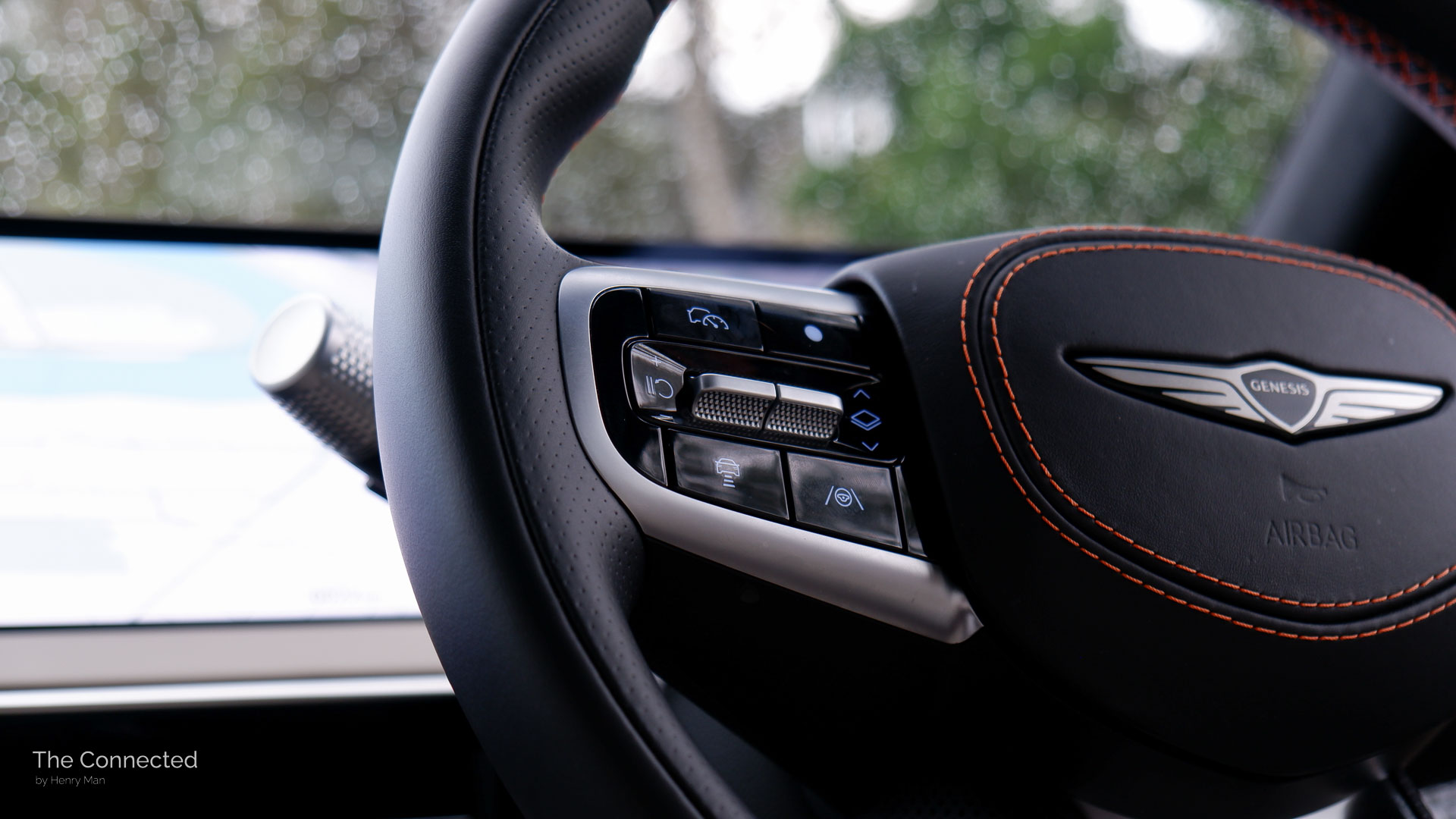
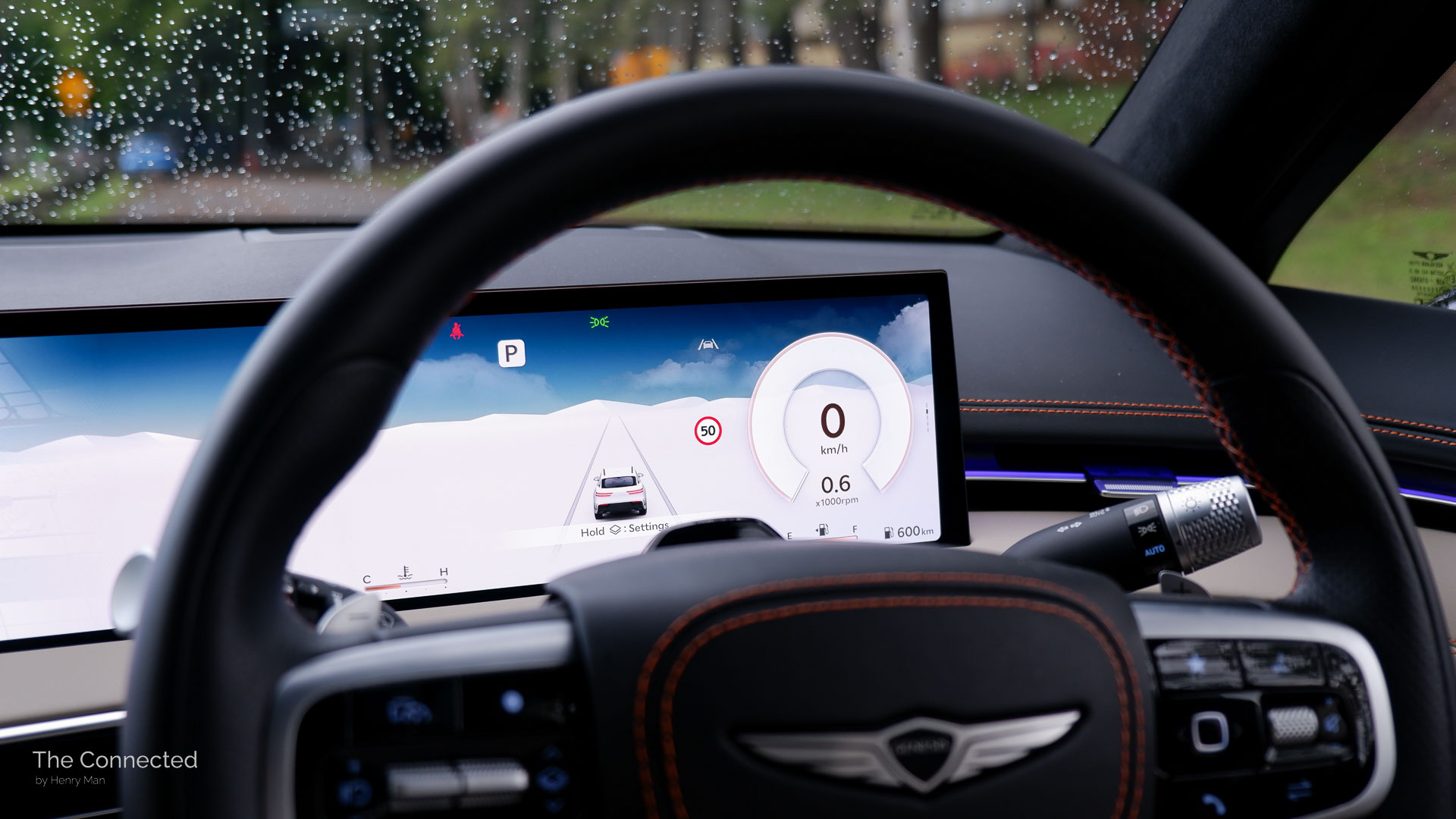
Also newly introduced is the European-mandated Intelligent Speed Limit Assist (ISLA) system. While it detects road signs generally well and knows school zone times, it warns repeatedly as you drive over what it thinks is the speed limit with a loud initial chime, then quieter ones thereafter.
You can mute the speed limit assist warning via holding the steering wheel button – but it still chimes every time you pass a new speed limit sign unlike other models, so it’s not completely disabled unless you dive into the settings on the screen.
The new driver distraction monitoring camera which, while well-tuned and accurate compared to some other brands, can be annoying at times with no quick way to disable it every time you start the GV70.
Additionally, the front LED headlights perform well and boast an adaptive matrix function, which can turn on the high beams at night while automatically blocking individual LED pixels to avoid dazzling at other road users.
The rear indicators are finally now placed within the main tail-lights, rather than lower down at the bumper as per its predecessor.
The 2025 Genesis GV70 carries over the same five-star Australasian New Car Assessment Program (ANCAP) safety rating from the pre-facelift model, tested under the less strict 2021 criteria.
Range and fuel consumption.
2025 Genesis GV70 3.5T Signature Sport fuel and efficiency specs:
| Claimed driving range (combined cycle) | 584km |
| Claimed fuel efficiency (combined cycle) | 11.3L/100km |
| Fuel tank size | 66 litres |
| Minimum fuel quality requirement | 95 RON premium unleaded petrol |
| Claimed CO2 exhaust emissions (combined) | 257g/km |
| European emissions compliance | Euro 5 |
The Genesis GV70 with the optional 3.5-litre six-cylinder petrol engine returned a fuel consumption of 13.0L/100km, after a week of mixed urban and highway driving.
This results in about 507km of real-world driving range from its fairly large 66-litre fuel tank. Higher-quality 95 RON premium unleaded petrol is required.
Unsurprisingly for a powerful and large turbocharged six-cylinder petrol unit, the GV70 3.5T is not efficient.
A hybrid option would be welcome to help reduce the fuel consumption.
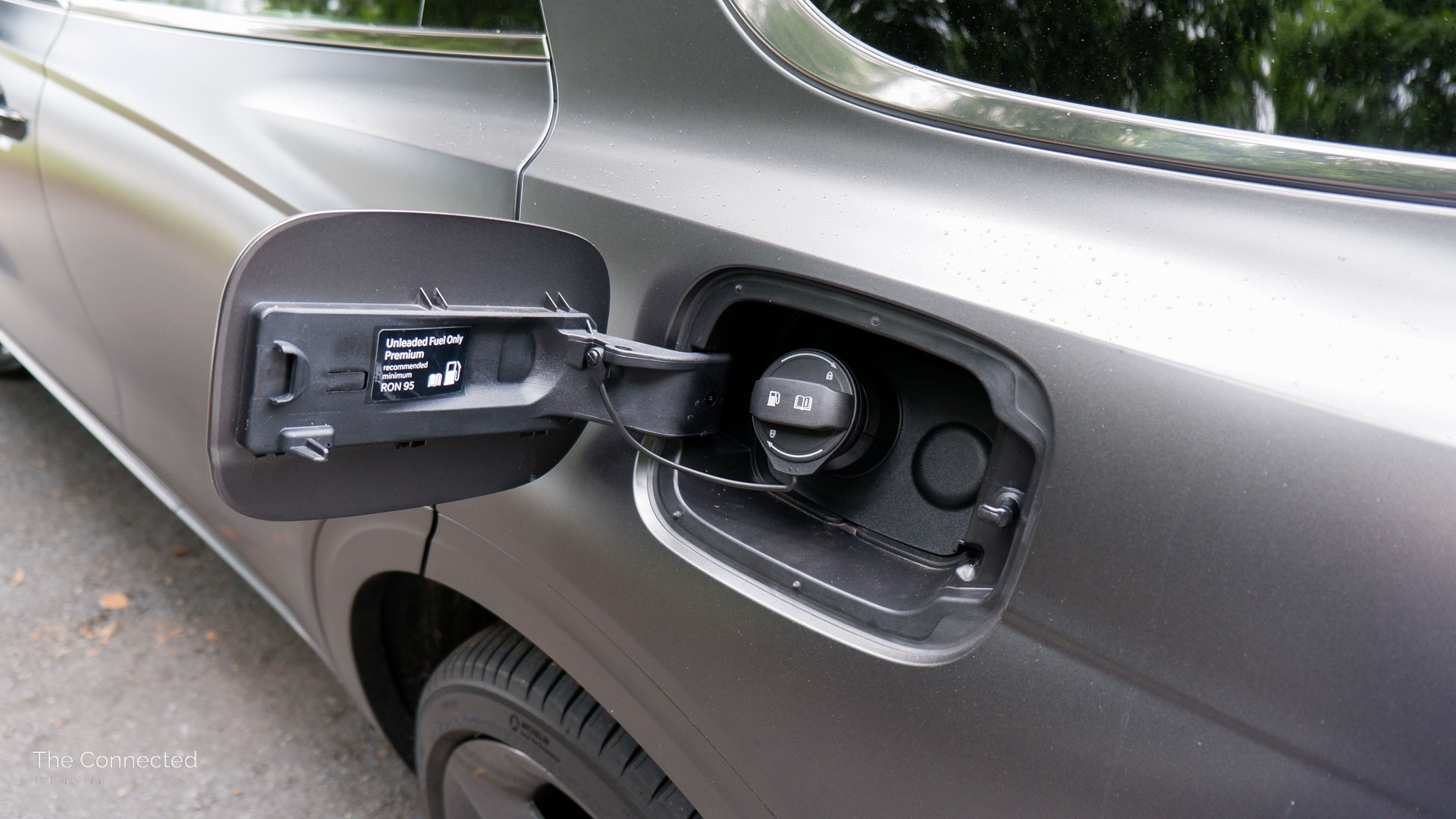
The fuel lid is located at the left-rear quarter side of the vehicle and unlocks in concert with the doors, so there’s no need to pull a lever inside to pop it open.
Driving.
2025 Genesis GV70 3.5T Signature Sport powertrain specs:
| Engine | 3.5-litre turbocharged six-cylinder petrol engine |
| Power | 279kW @5800rpm |
| Torque | 530Nm @1300-4500rpm |
| Transmission | Eight-speed auto |
| Drive type | AWD |
| Tare weight | 2088kg |
| Turning circle | 11.5 metres |
| Payload | ~477kg (excluding max 159kg towball download) |
| Towing (unbraked / braked) | 750 / 2200kg |
The 2025 Genesis GV70 drives like a luxury medium SUV should with a sporty powertrain and superb comfort.
Powertrains are unchanged compared to the pre-facelifted model.
Here, we tested the $10,500 optional 3.5-litre turbocharged six-cylinder petrol engine, which outputs up to 279kW of power and 530Nm of torque to all four wheels.
It provides plenty of punch with a strong, muscle car like engine sound – although the conventional eight-speed torque convert automatic transmission can be slow to shift gears when accelerating with the foot to the floor from a standstill.
It would be great if there was an electrified hybrid option, which would help provide better instant acceleration and cut fuel consumption.

The standard 2.5-litre four-cylinder already makes up to a healthy 224kW/442Nm and is all-wheel drive with slightly better claimed fuel economy, so spending the sizable $10,500 extra doesn’t seem worth it.
Moreover, the GV70 features excellent driving comfort with a pillow-like ride that glides over poorly-paved roads and fantastic noise insulation.
It’s even better than before with the facelift bringing extensive noise, vibration and harshness (NVH) improvements – a reinforced body structure, revised springs, dampers and anti-roll bars, more sound deadening and more.
Active noise cancellation is standard, while adaptive camera-based suspension and an electronic limited slip differential are included with the 3.5T powertrain.
There’s a high and commanding driving position, with decent all-round visibility – although there’s a larger C-pillar blind-spot and rear window is slightly small due to the sloping roof.
The updated GV70 unfortunately misses out on a wide-angle digital rear-view mirror camera, which is available on the Hyundai Santa Fe and Palisade SUVs.

Warranty and servicing.
2025 Genesis GV70 3.5T Signature Sport capped-price servicing costs:
| 1 year/10,000km | 2 years/20,000km | 3 years/30,000km | 4 years/40,000km | 5 years/50,000km |
|---|---|---|---|---|
| Free | ||||
The Genesis GV70 is covered by a five-year, unlimited kilometre warranty.
Servicing is required every one year/10,000km (whichever occurs first) – with the distance limit being shorter than ideal.
A key ownership advantage of choosing a Genesis car is the inclusion of free servicing for the first five years/50,000km.
The South Korean brand also offers a free pick up/drop off service and free loan cars for the first five scheduled services.
Roadside assistance is included for up to 10 years, provided owners service it with Genesis every time (otherwise it’s five years).
Genesis Connected Services are included for the five years from the date of activation, with subscription pricing thereafter yet to be announced.
A temporary space-saver spare tyre is included underneath the boot floor on all GV70s, alongside a roadside assistance kit bag velcroed at the side of the boot.
Price and rivals.
2025 Genesis GV70 model range pricing (accurate as at the time of publication):
| Advanced | Signature | Signature Sport |
|---|---|---|
| From $78,500 before on-road costs | From $87,500 before on-road costs | From $89,500 before on-road costs |
The 2025 Genesis GV70 is priced from $78,500 before on-road costs in Australia.
Three variants are available with the option of a 3.5-litre turbocharged six-cylinder petrol engine on the Signature and Signature Sportfor $10,500 extra.
The Luxury Car Tax (LCT) applies to all variants and configurations.
All interior design choices and glossy exterior colours are no-cost extra, with only matte colours – including Makalu Grey Matte as pictured – costing $2000 more.
The 2025 Genesis GV70 directly rivals the following luxury midsize SUVs:
- BMW X3
- Mercedes-Benz GLC
- Audi Q5
- Lexus NX
- Volvo XC60
- Land Rover Discovery Sport
- Alfa Romeo Stelvio
Other alternatives to the GV70 include:
- Genesis GV60 (full review)
- Mazda CX-60 (full review)
- Volkswagen Toureag
- Polestar 4
- Porsche Macan
- Tesla Model Y
- Genesis G70
Would I pick the 2025 Genesis GV70 3.5T Signature Sport?
The facelifted Genesis GV70 is an even more refined, high-tech and comfortable luxury medium SUV. It’s difficult to fault.
The GV70 feels like it’s worth every cent of the luxury car premium with an upmarket interior, sleek single-piece 27-inch OLED display and connected mobile app, and even better ride comfort than before.
Most of the range costs less than six-figures, with everything included at no cost besides matte paint, plus free servicing for the first five years/50,000km.
There aren’t many flaws to Genesis’ most popular model, then – except for the high fuel consumption, slightly buggy software, and the interior isn’t the most family-friendly out there (if we’re being picky).
I’d pick the entry-level GV70 Advanced with the standard 2.5-litre turbocharged four-cylinder petrol engine, which provides plenty of equipment and punch on paper for ~$85K drive-away. It’s a great value luxury SUV.
The updated Genesis GV70 again challenges why you’d choose one of the German luxury badges – and it’s definitely worth shortlisting.
Photographs by Henry Man
READ MORE: 2024 Mazda CX-90 review
READ MORE: 2025 Hyundai Santa Fe Hybrid review
READ MORE: 2025 Kia Carnival review
Pros:
- Good value, generous ownership inclusions
- High-end interior and details
- Superb driving comfort
- Toned-down safety assists
- Advanced, but simple to use tech
Cons:
- Thirsty on fuel
- Interior could be more practical
- No digital rear-view mirror camera
- Missing wireless charging pad ventilation
- Buggy software
About the Author.
Henry Man is an independent content producer passionate about the intersection of technology and transportation.
The former automotive journalist is focused on producing critically-detailed vehicle reviews, and unique short-form content. Learn more.


 The Connected by Henry Man