
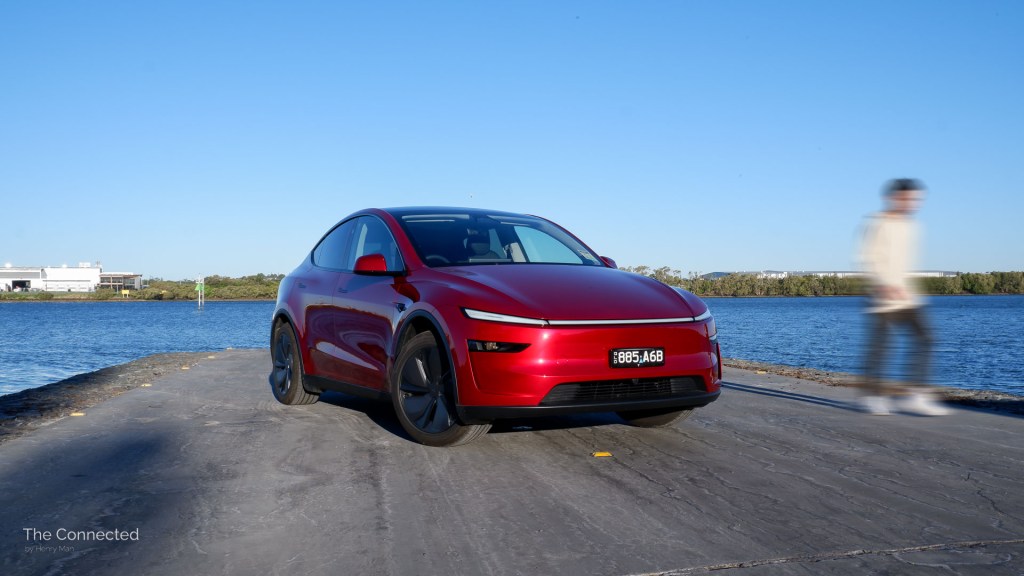
The Tesla Model Y has gained an extensive refresh. But amid a tide of competitive Chinese electric vehicle rivals, has Tesla lost its industry-leading shine?
Think of electric cars and one brand comes to mind for many: Tesla.
The Model Y medium SUV (allegedly codenamed ‘Juniper’) has received a host of changes – an updated exterior design, more upmarket interior, upgraded technology, driving comfort improvements, and better claimed efficiency.
It’s a big deal when the Model Y has been one of the world’s best-selling new cars, when Tesla is experiencing a downturn in sales globally, and amid the rise of fiercely competitive Chinese EV brands including BYD, Xpeng and Zeekr.
Is the ‘honeymoon phase’ over for one of the original EV pioneers? I got the chance to drive the entry-level Model Y rear-wheel drive (RWD) for almost a week to see why it’s still an industry leader.
NOTE: The press vehicle was provided by Tesla Australia for a five-day independent evaluation. Supercharging sessions were paid by Tesla, but we have no commercial arrangements with the company and it had no editorial control. As with all new-car reviews, we are evaluating the car and not what the brand may represent.

Pros.
+ Industry-leading tech
+ Superb energy efficiency, charging network
+ Premium and spacious interior
+ Improved design
+ Great value all-round EV
Cons.
– Camera-only systems need work, including ‘phantom braking’
– Tiny software icons and text
– No charge cables included, pricey options
– Compromised rear visibility
– Short vehicle warranty
Vehicle tested:
| Model | 2026 Tesla Model Y |
| Variant | Rear-wheel drive (RWD) |
| Starting price | $58,900 before on-road costs |
| Exterior colour | Ultra Red (+$2600) |
| Interior colour | All Black Interior (standard) |
| Options | Premium Connectivity (+$9.99/month) ‘Full Self-Driving’ Capability (+$10,100) |
| Country made | China |
Design and quality.
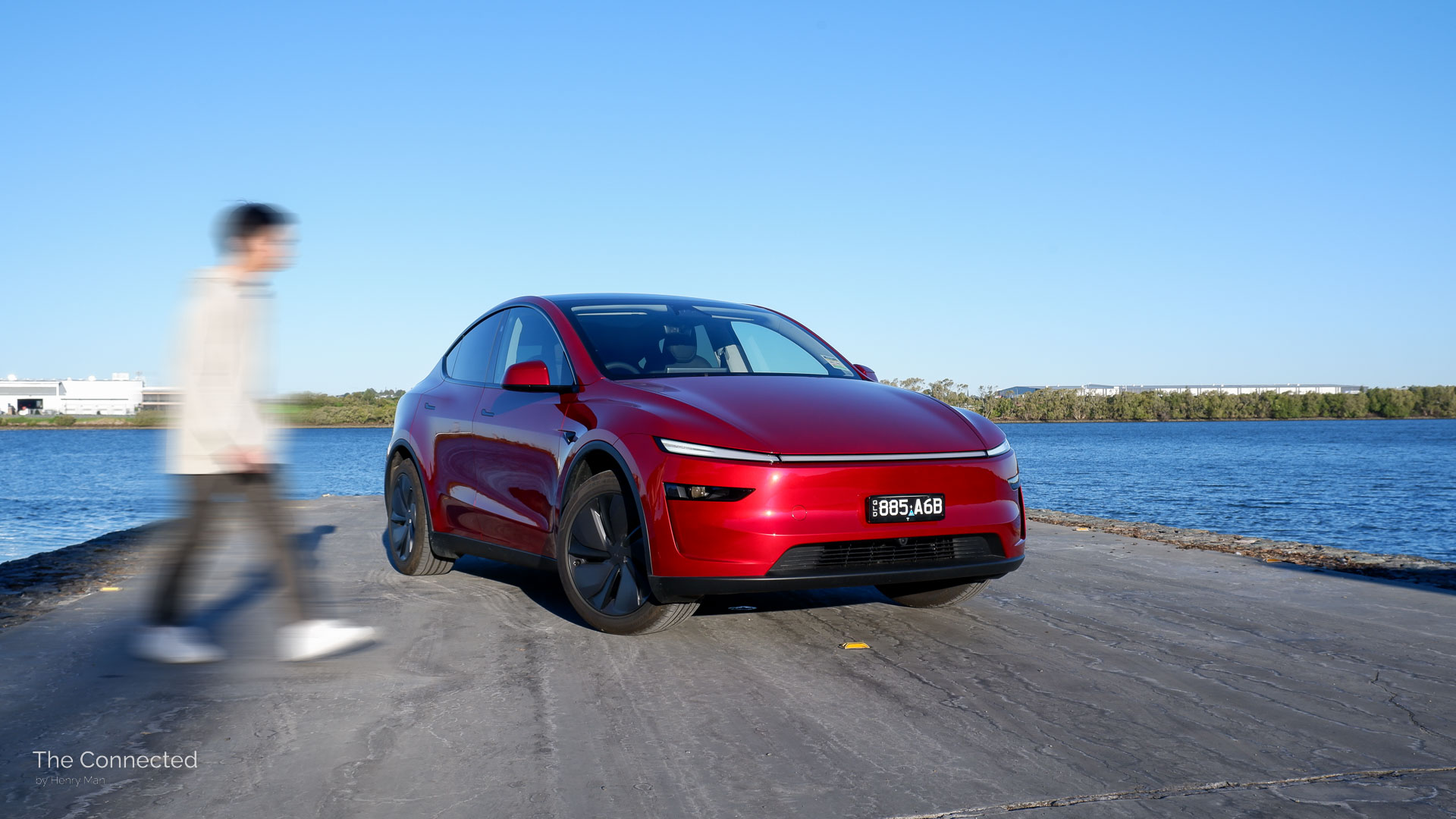
The refreshed Tesla Model Y looks far more stylish than before, although it’s still generic with a clinically minimalist interior.
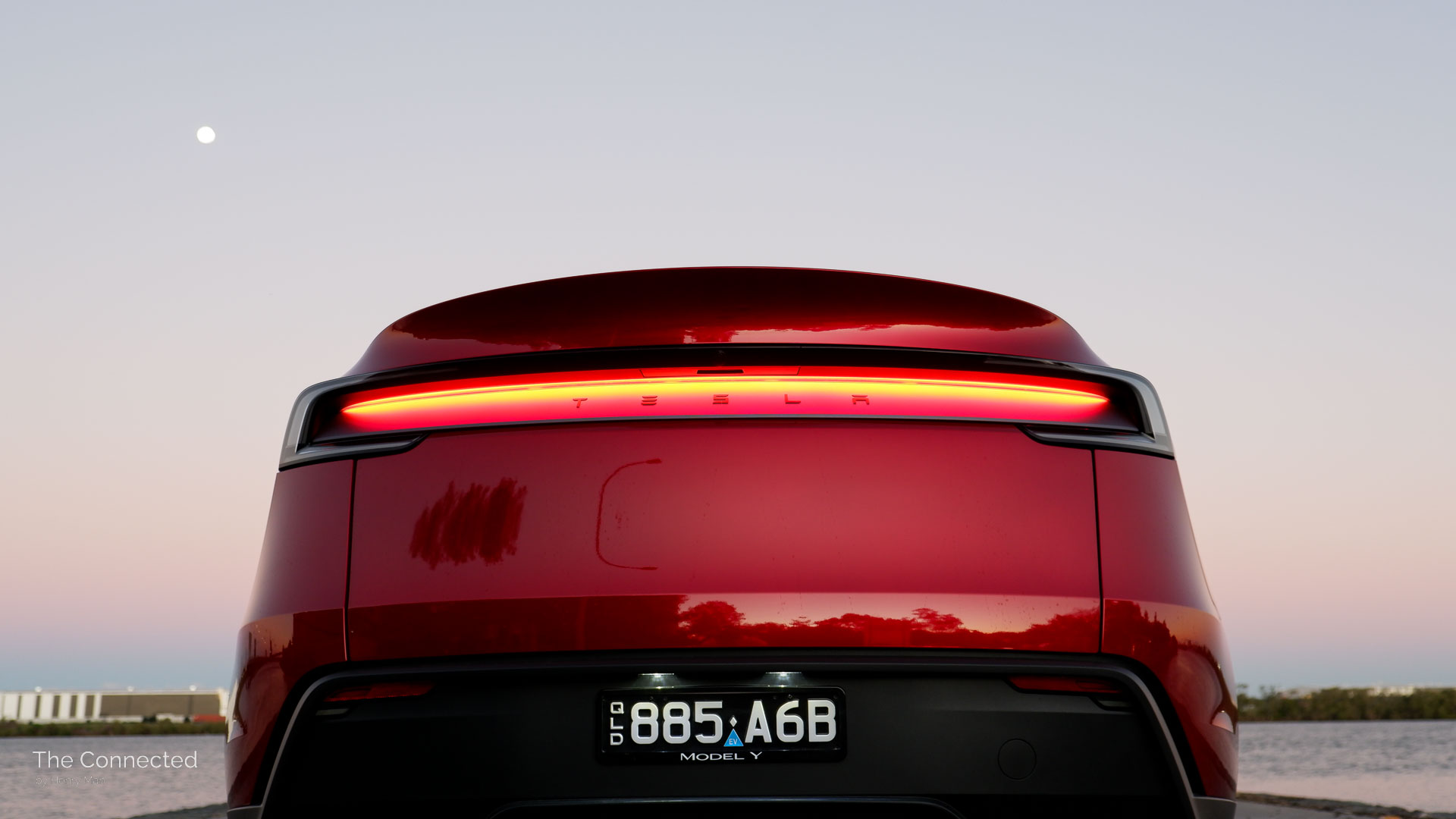
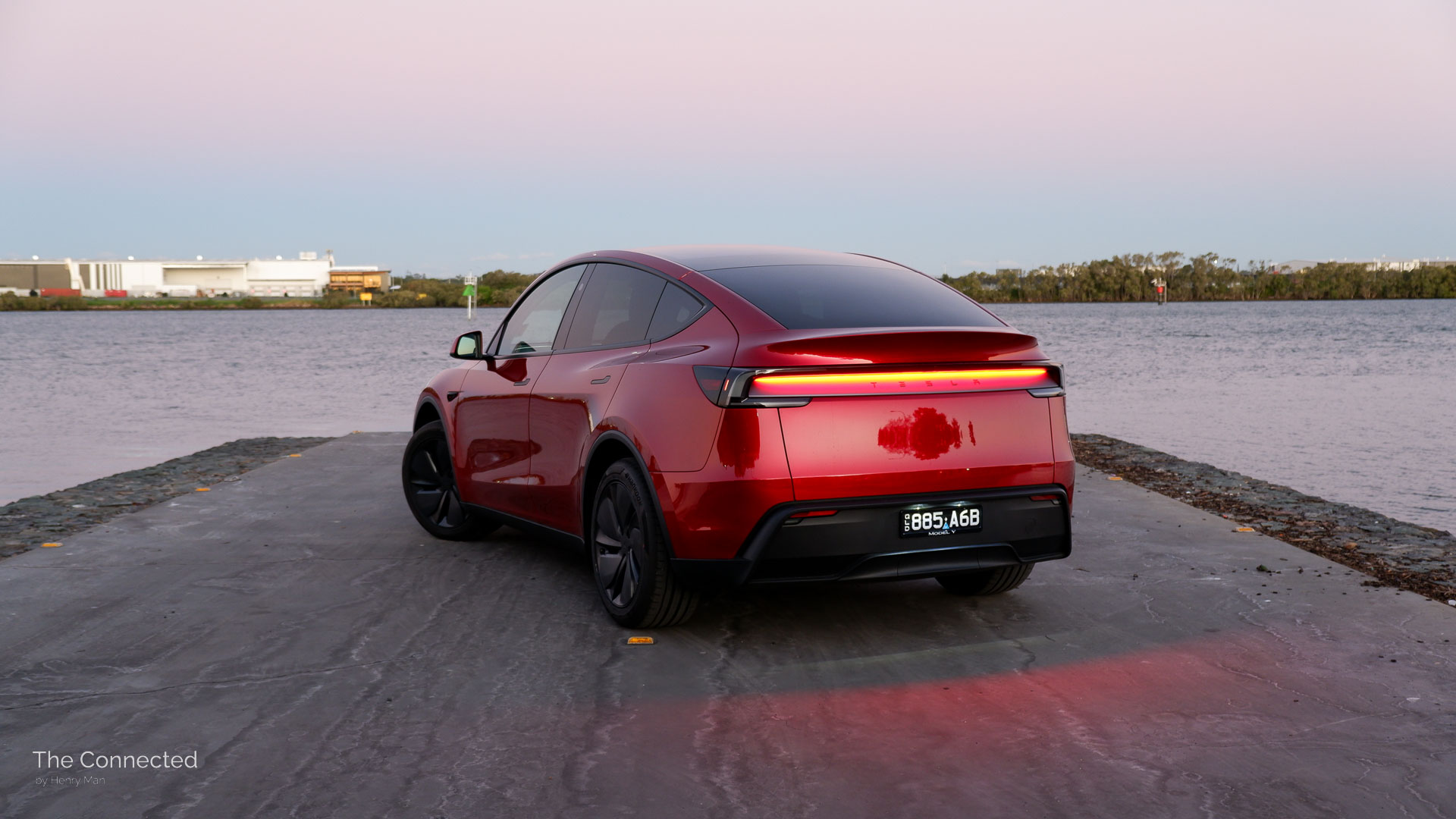
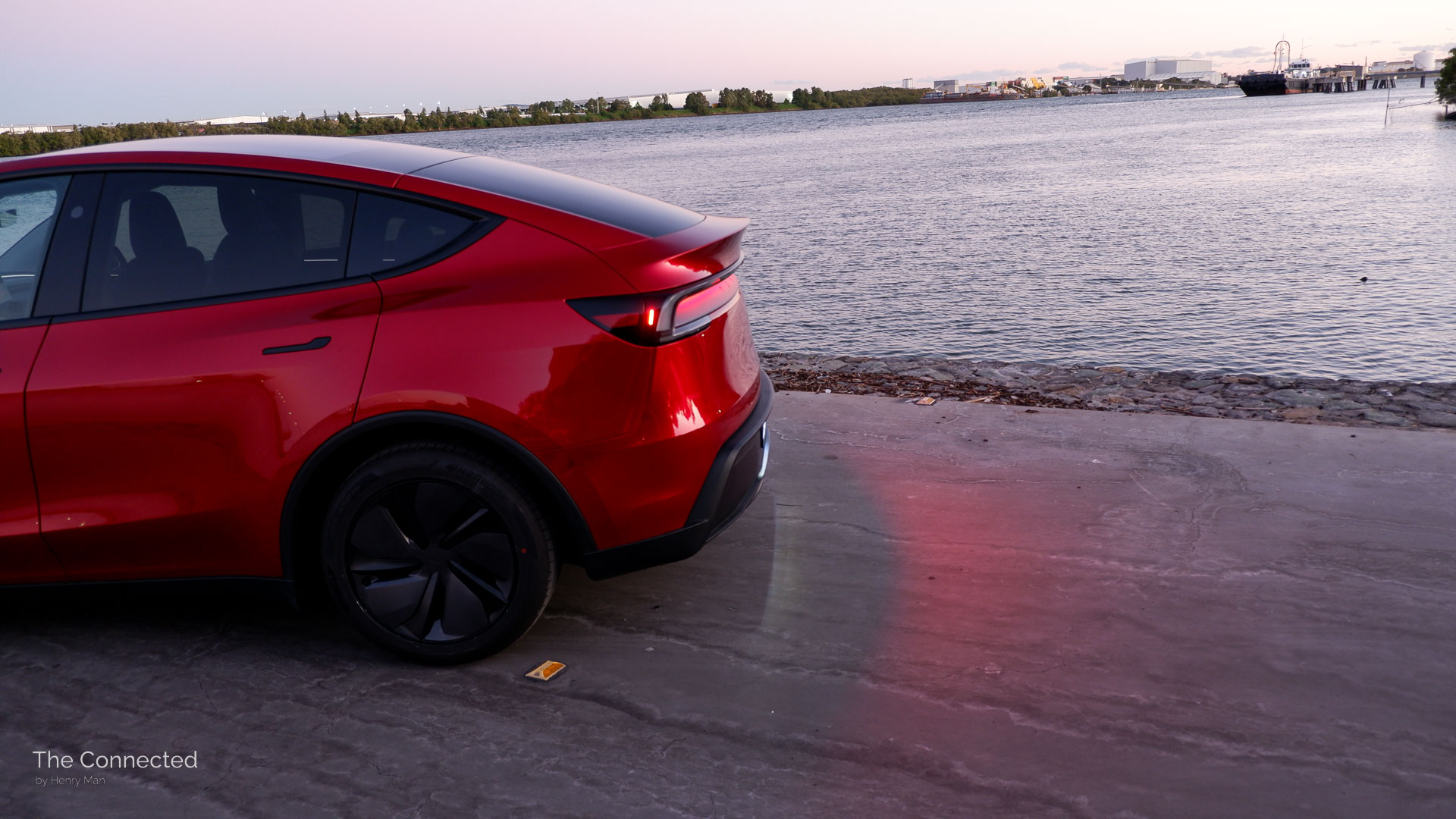
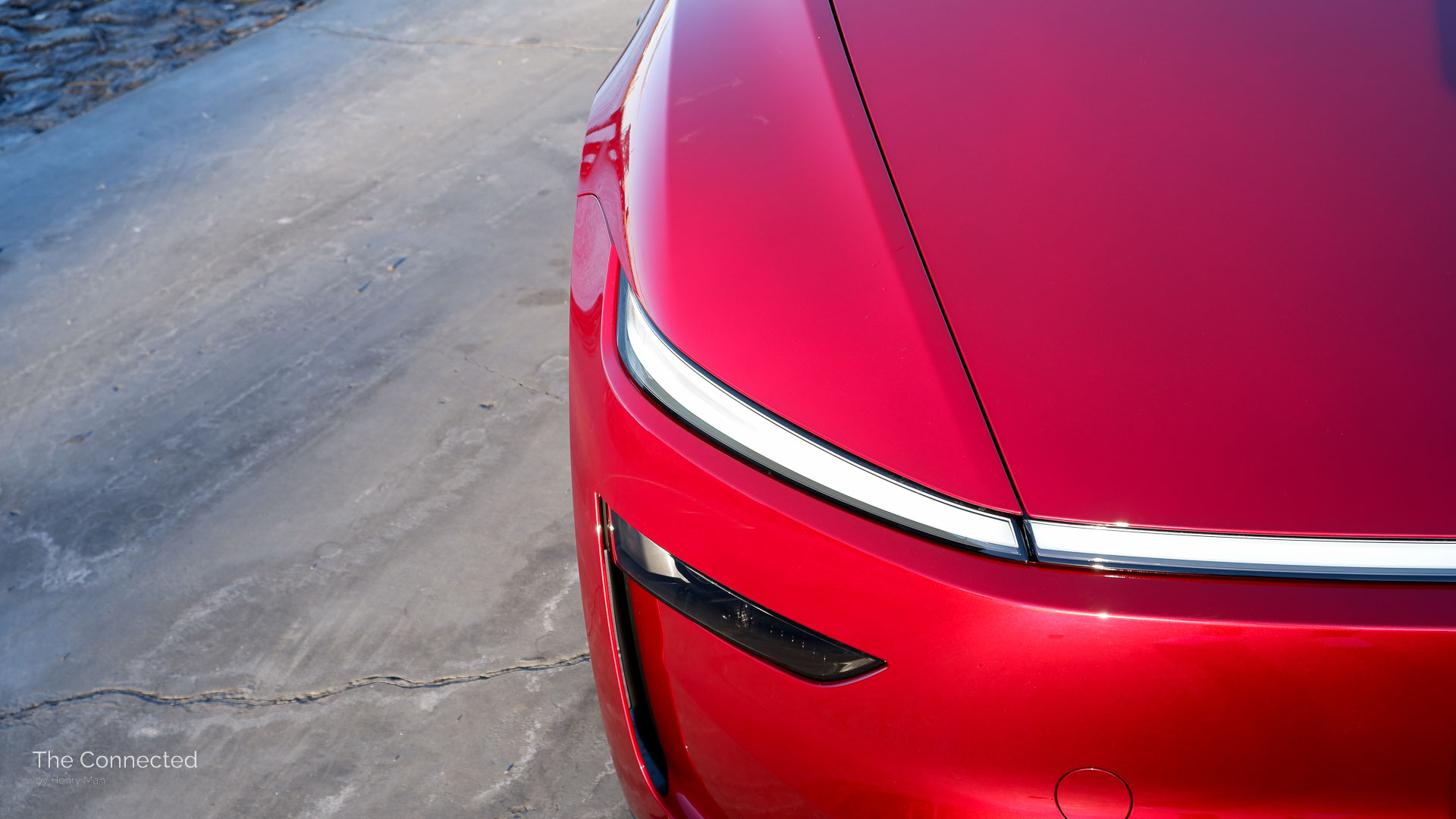
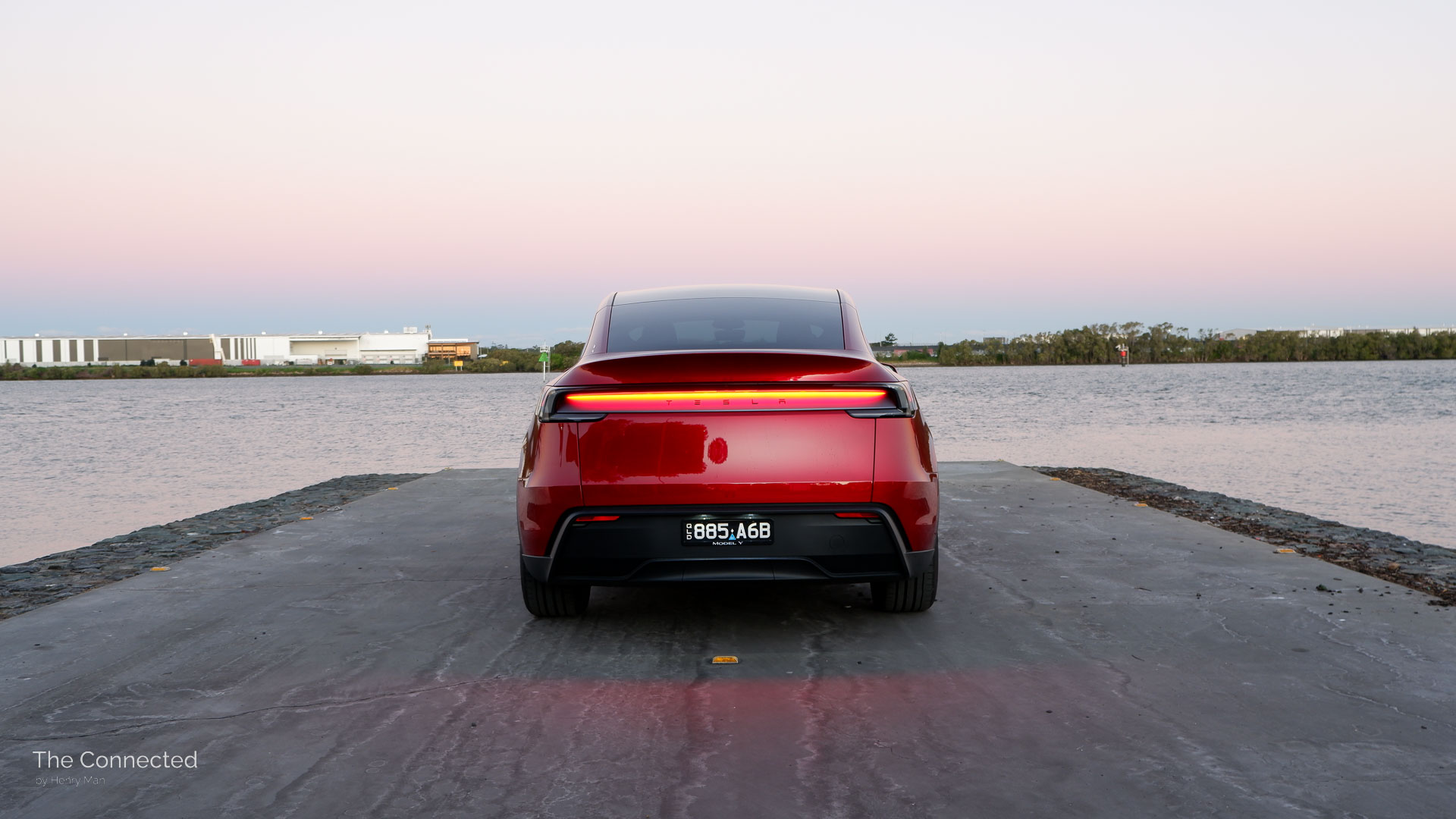
The new front LED daytime running light bar aligns with the Cybertruck’s signature and the Tesla ‘T’ logo nowhere to be seen anymore, while the rear light strip reflects onto a textured panel and uniquely creates a glowing light trail effect onto the ground at night.
The side profile is mostly unchanged, but the extensive update has introduced an all-new sloping bonnet and crease on the wing mirror to improve energy efficiency, and a more repairable three-piece tailgate with a tweaked rear bumper.
The Ultra Red option as tested here is an expensive $2600 option and shines under the sun – much like Mazda’s signature Soul Red Crystal paint which is far more affordable at below $1000.
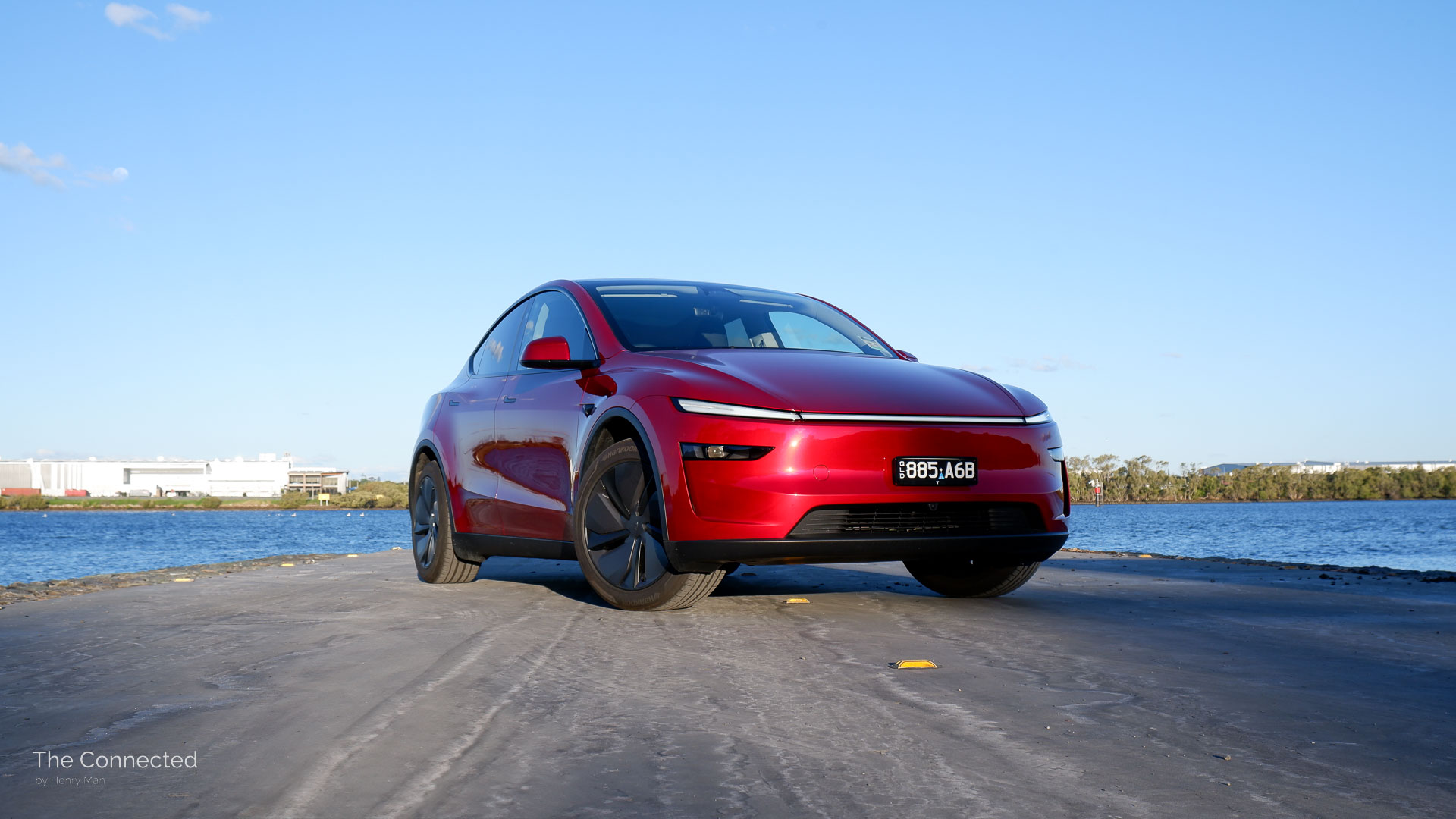
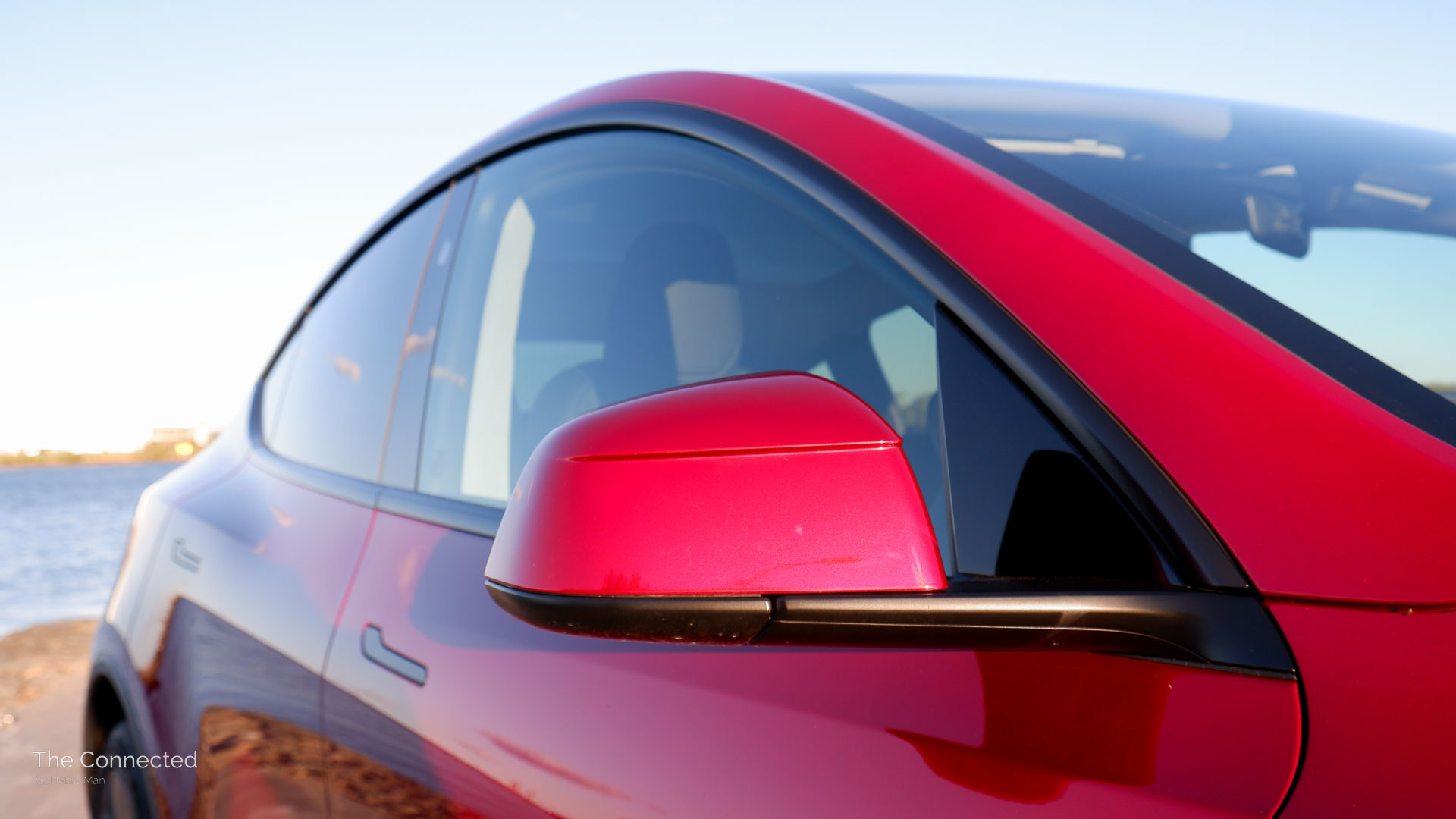

The electric SUV looks much more modern and sporty than before, while being more distinct than the related Model 3 sedan.
Yet, it still looks slightly generic from afar with full-width light bars that aren’t too dissimilar from the Hyundai Kona Electric, Xpeng G6 and Mercedes-Benz EQB.
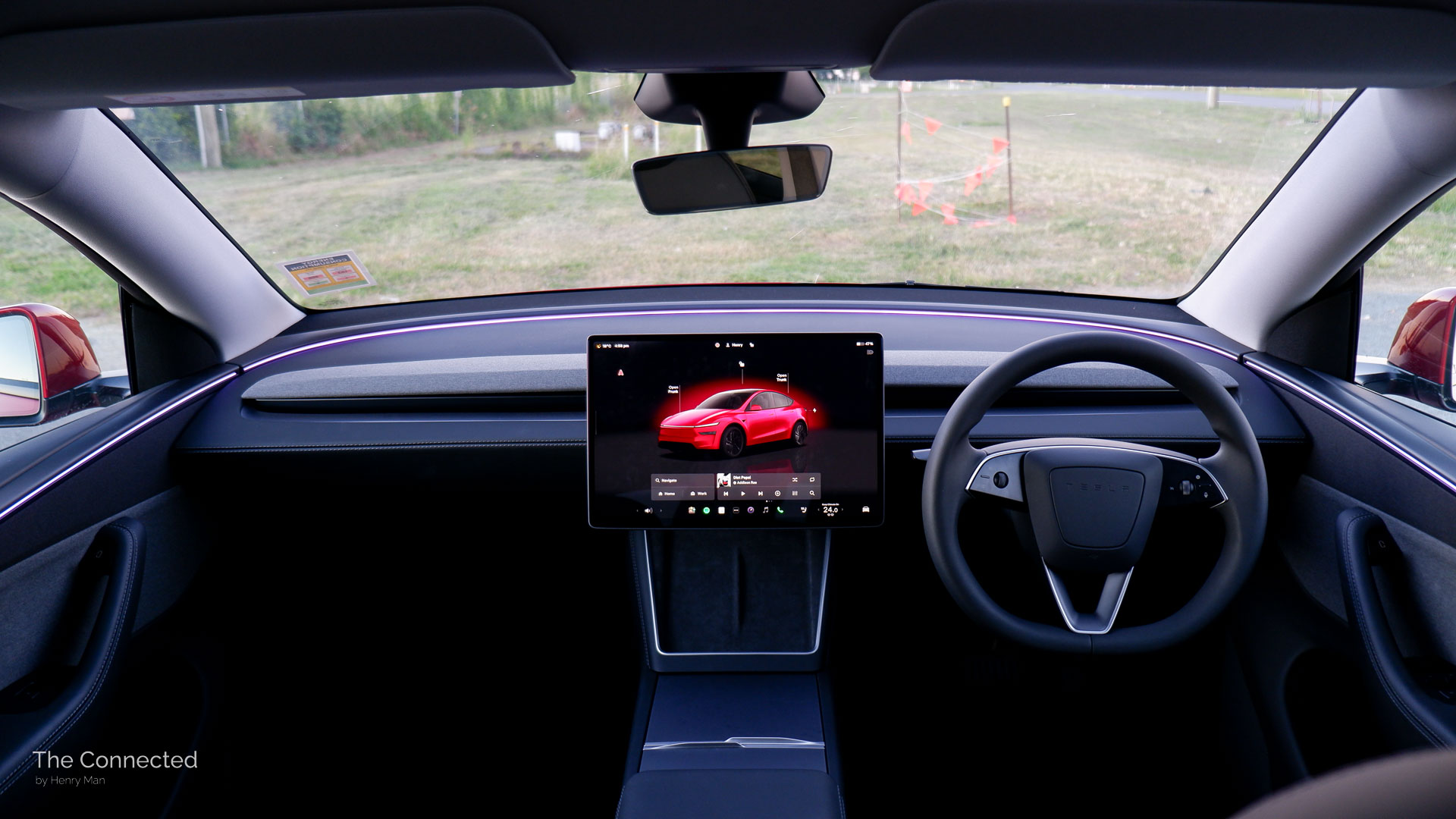
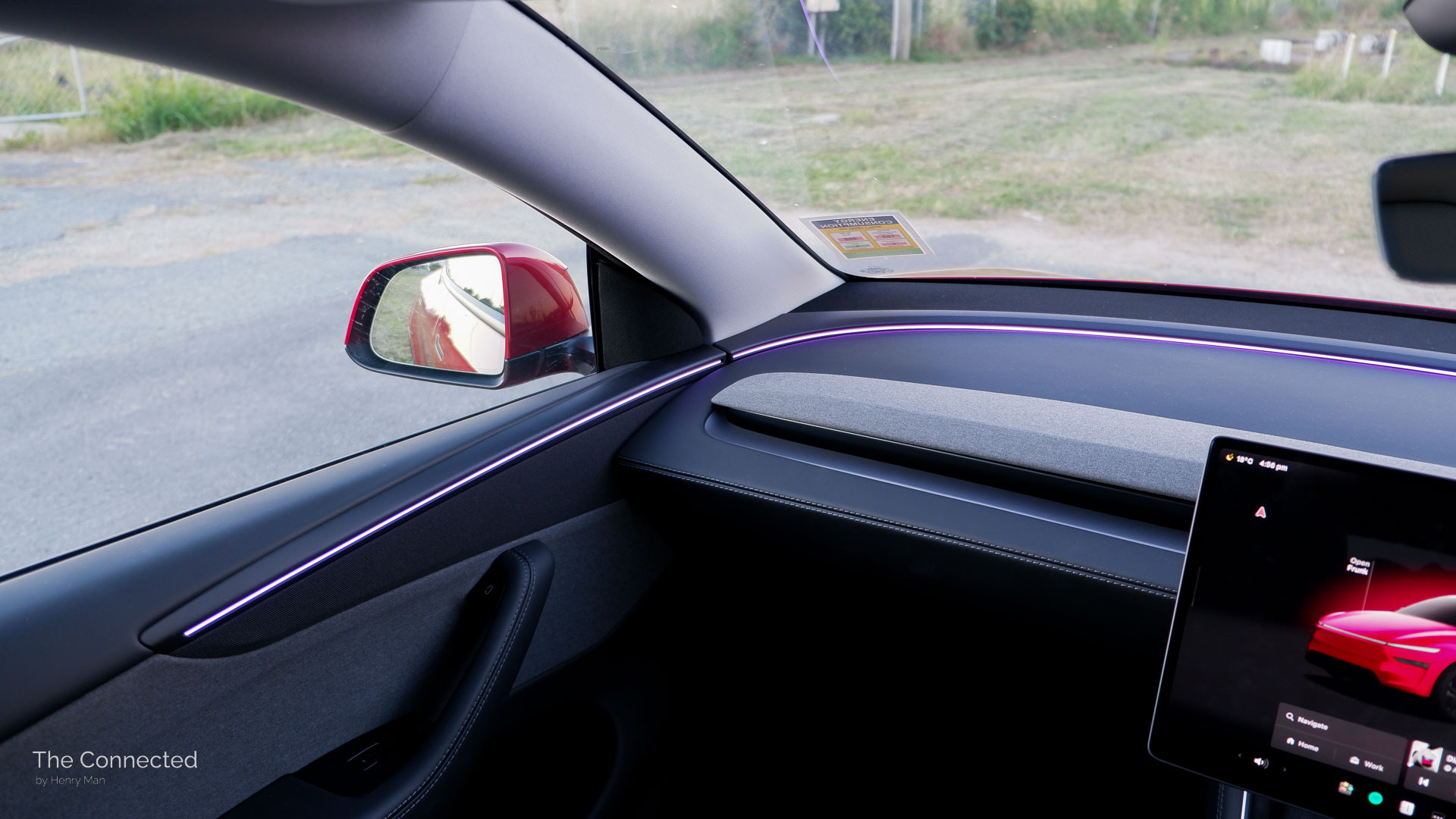
Meanwhile, the Model Y’s upgraded interior looks and feels more upmarket than before.
Softer fabric door trims and a dashboard panel, a metallic centre console, and bright wrap-around ambient lighting strips make the interior feel more European-esque and premium.

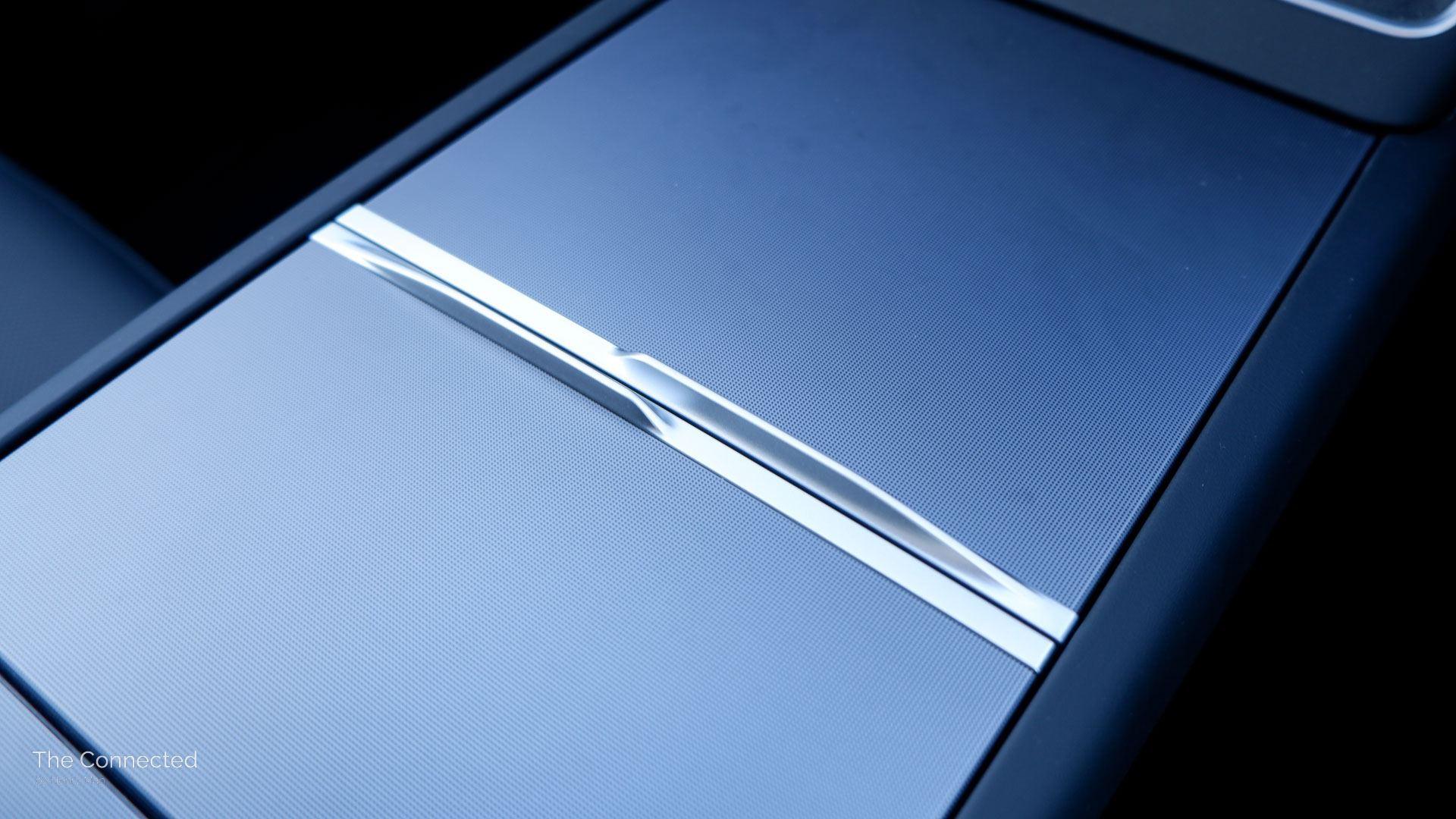
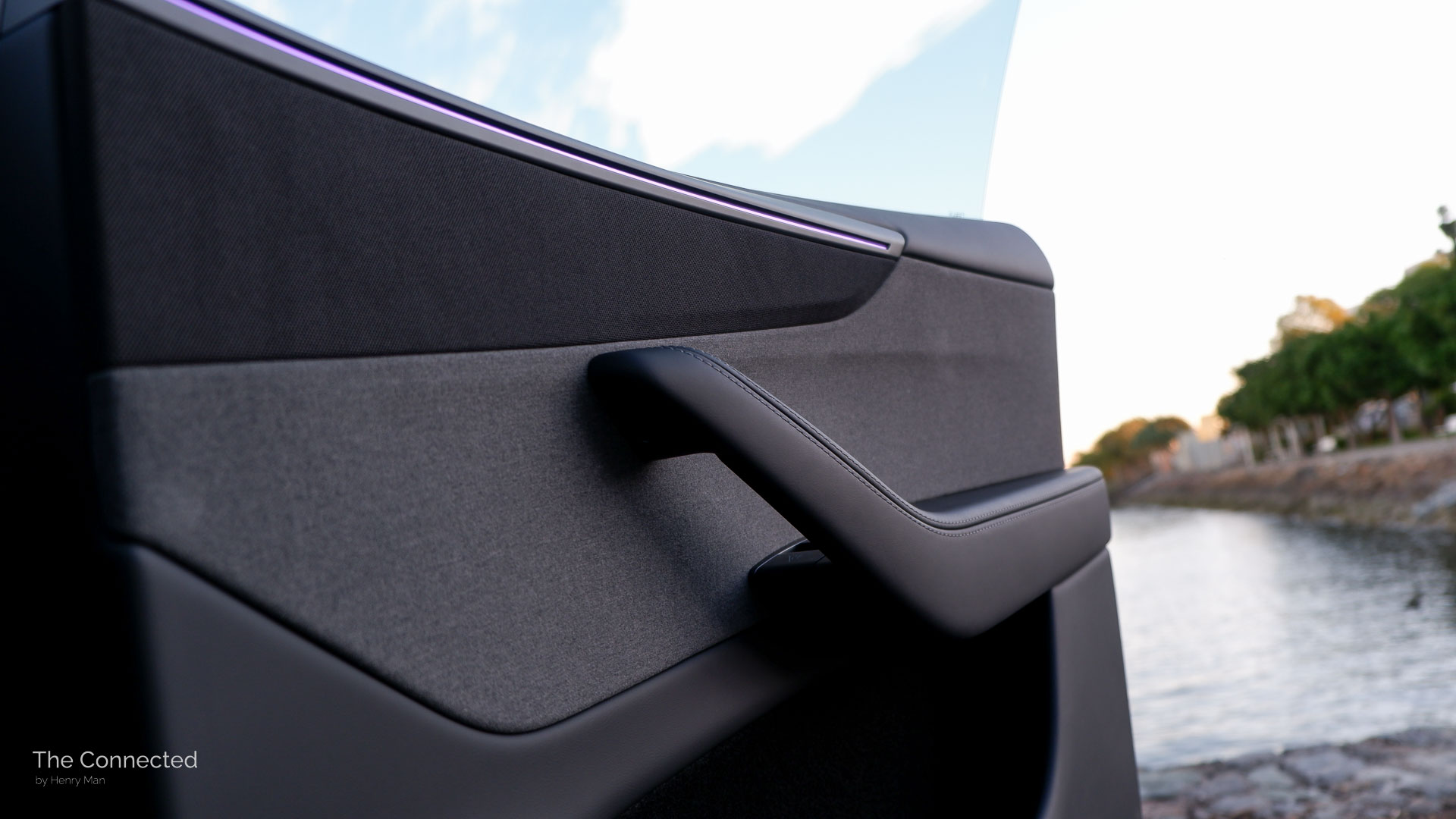
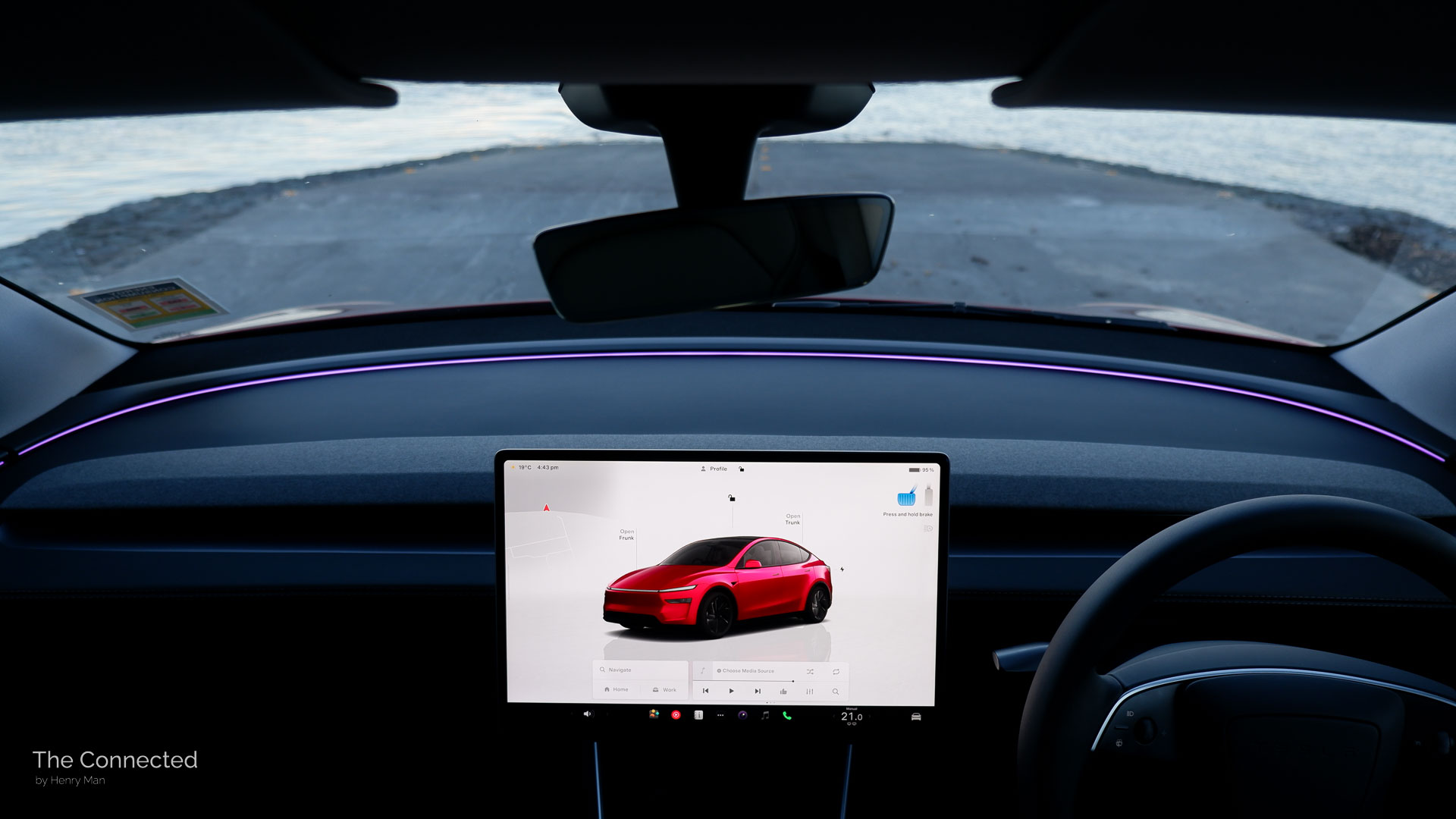
Material quality is borderline with luxury cars with soft-touch surfaces and vegan leather that extend down to the lower door cards, completely carpeted door bottle pockets, clicky switches, dampened centre console cover sliders, and a magnetised centre armrest lid, sun visor clips and glovebox.
It’s super impressive for a ~$60K new car compared to similarly-priced alternatives.
However, the Model Y interior remains very minimalistic with a contemporary but basic theme and lacks the design ‘wow factor’ that you get on some rivals, including the Polestar 4.
Practicality.
2026 Tesla Model Y RWD dimensions:
| Length x width x height | 4792 x 2129 x 1624mm |
| Wheelbase | 2890mm |
| Ground clearance | 167mm |
| Boot space (min / rear seats folded) | 822 / 2022 litres (but measured up to the roof) |
| Frunk space | 116 litres |
| Rear seat split fold | 40:20:40 |
| Child seat anchors | 2x ISOFIX and 3x top tethers |
| Air-conditioning system | Three-zone climate control with rear air vents |
The Model Y is a well-packaged EV and one of the most spacious medium SUVs available.
The 822-litre boot (albeit measured up to the roof instead of the industry-standard up to the top of the rear seats) is what you’d expect from a large SUV and completely carpeted edge-to-edge.
Impressively, there’s a well underneath the boot floor – which is deep and wide enough to fit a small carry-on suitcase laid flat – in addition to another shallower well behind. There’s two deep pockets on each side to compensate for the lack of bag hooks.
While a cargo cover is now included – providing privacy and shade for items – it is slightly flimsy to fold away with its magnetic mechanism. Fortunately, there’s a dedicated slot underneath the boot to store it when detached.
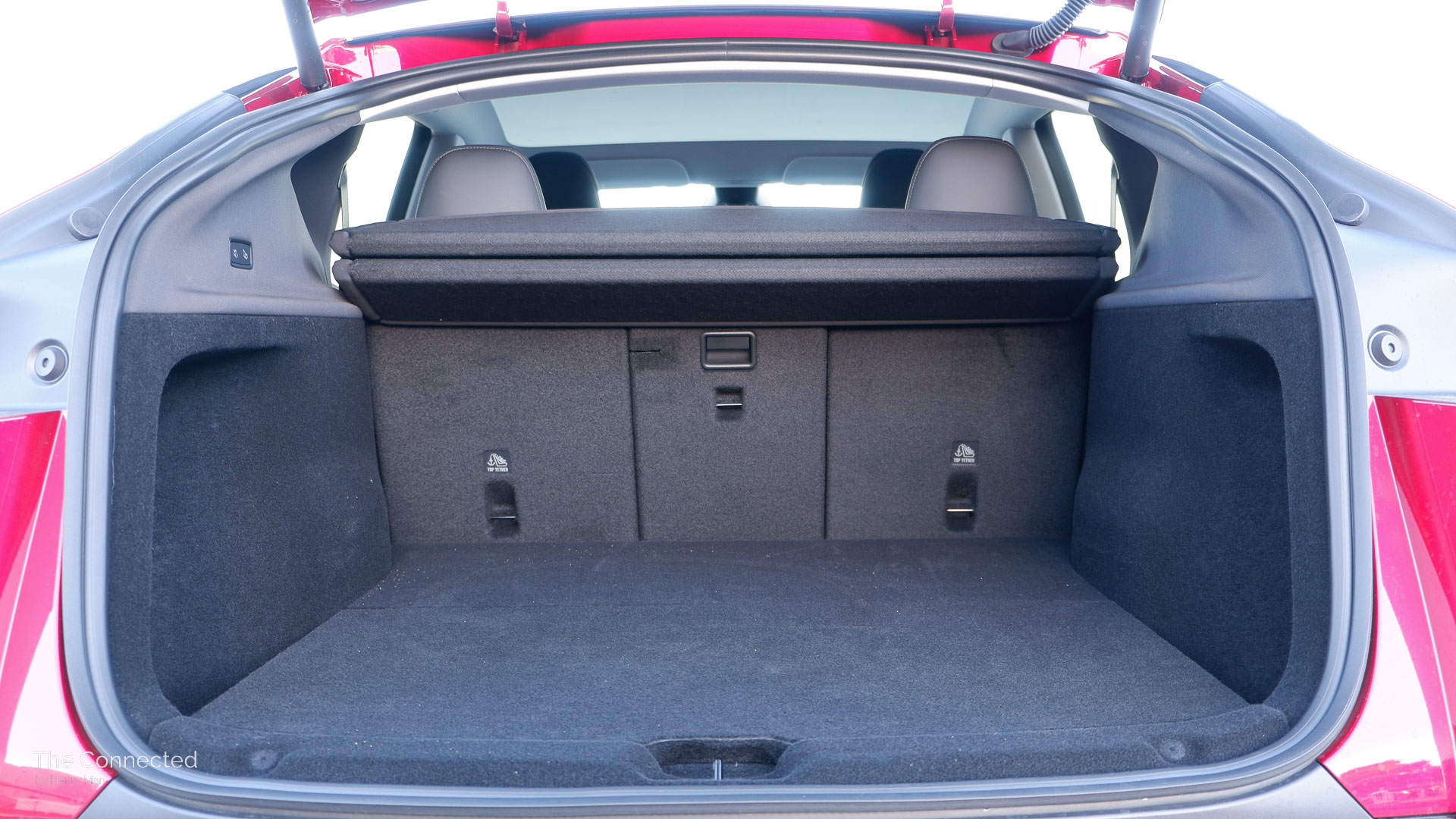

An electric tailgate is standard, but hands-free opening by standing behind the boot for a few seconds (Hyundai and Kia style) is only available with a connected mobile key that supports ultrawide band (UWB), usually flagship Apple, Google and Samsung devices.
There’s no proper hands-free closing function either.
A tiny but bright LED light illuminates the boot well, but its placement inside the tailgate means it can be easy to block at night.
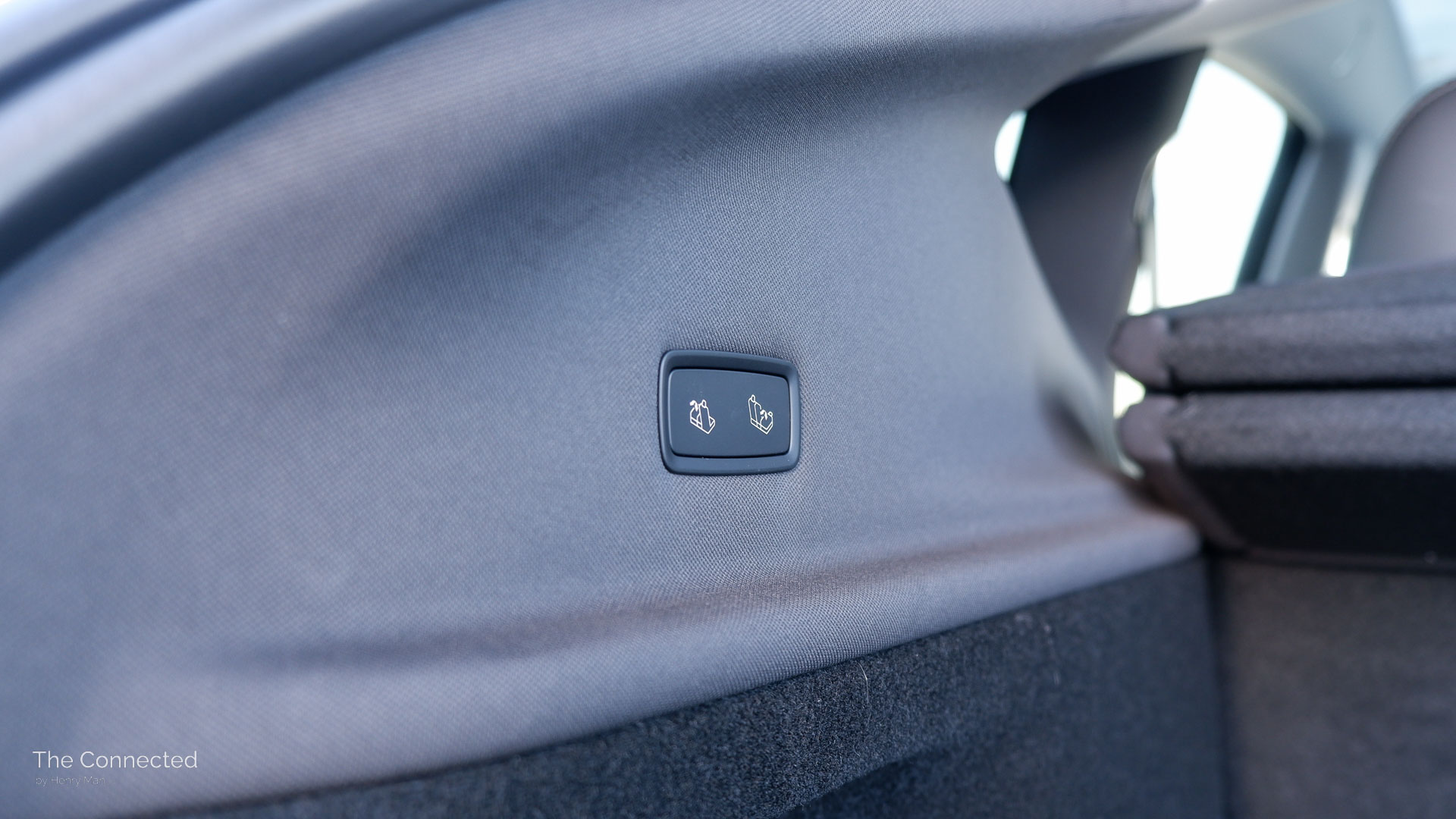
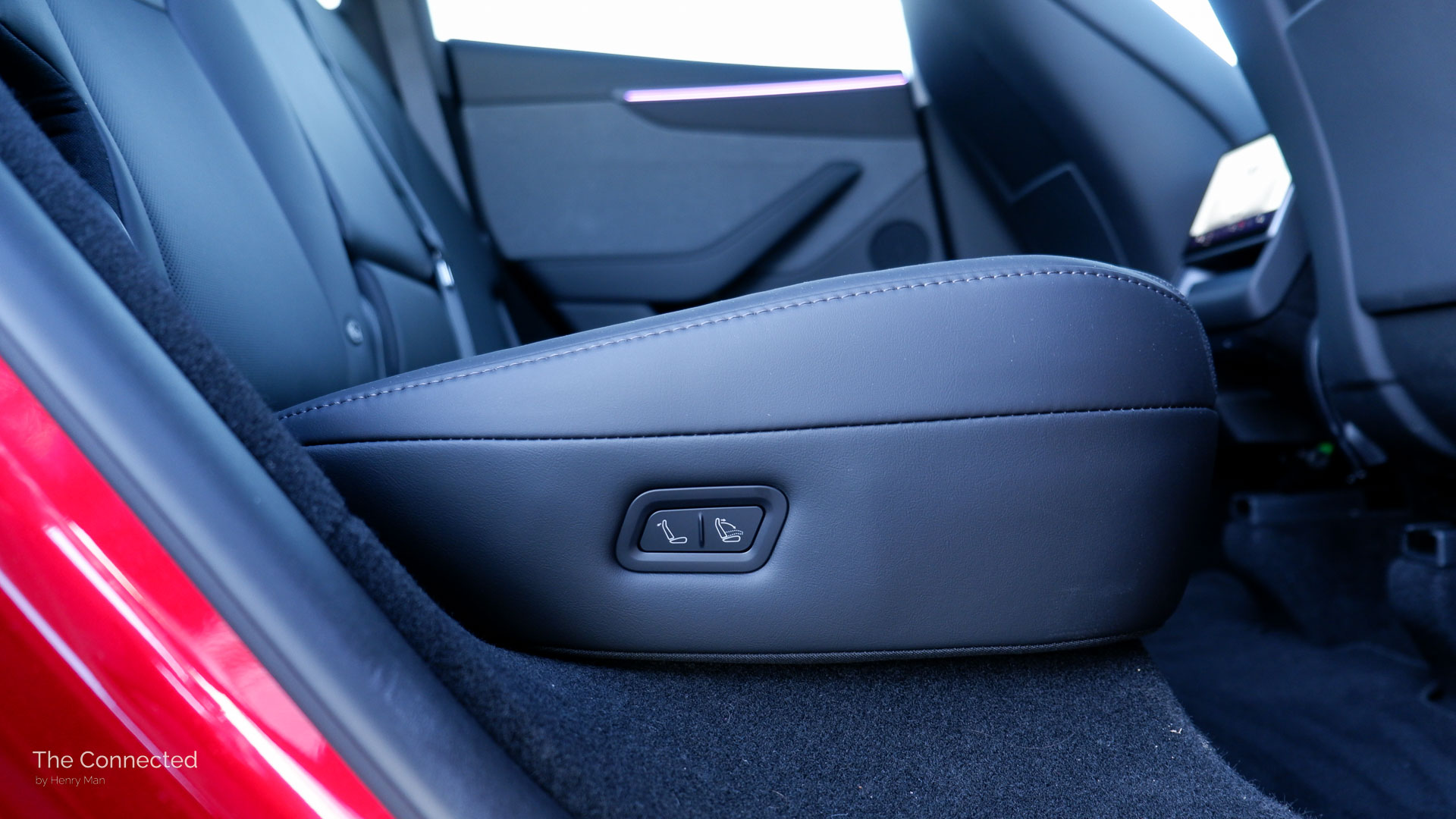
Newly introduced buttons at the boot and beside the rear bench electrically fold and unfold the second row seats in a 60:40 split, but you can manually flip the centre portion for a 40:20:40 split.
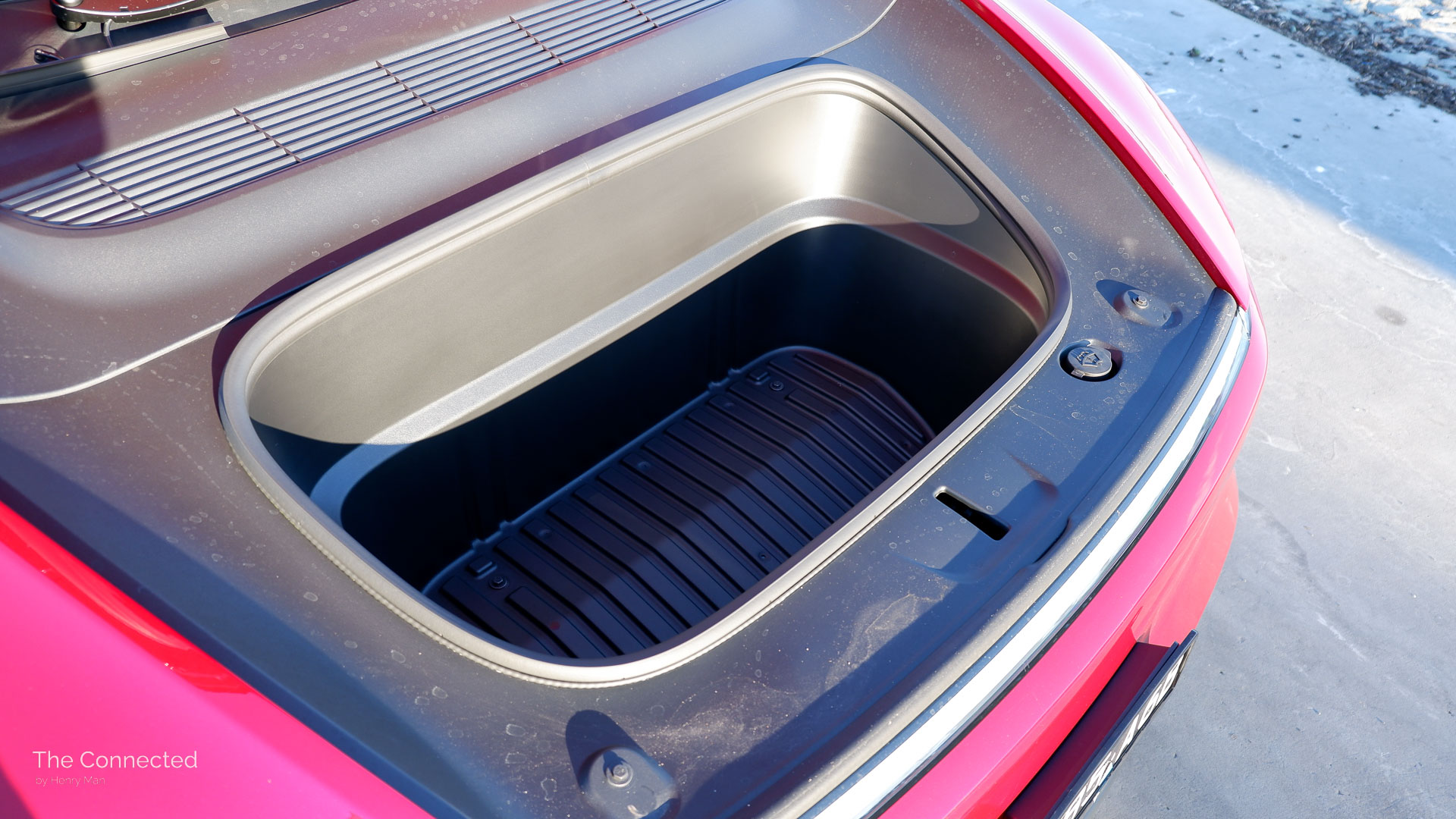
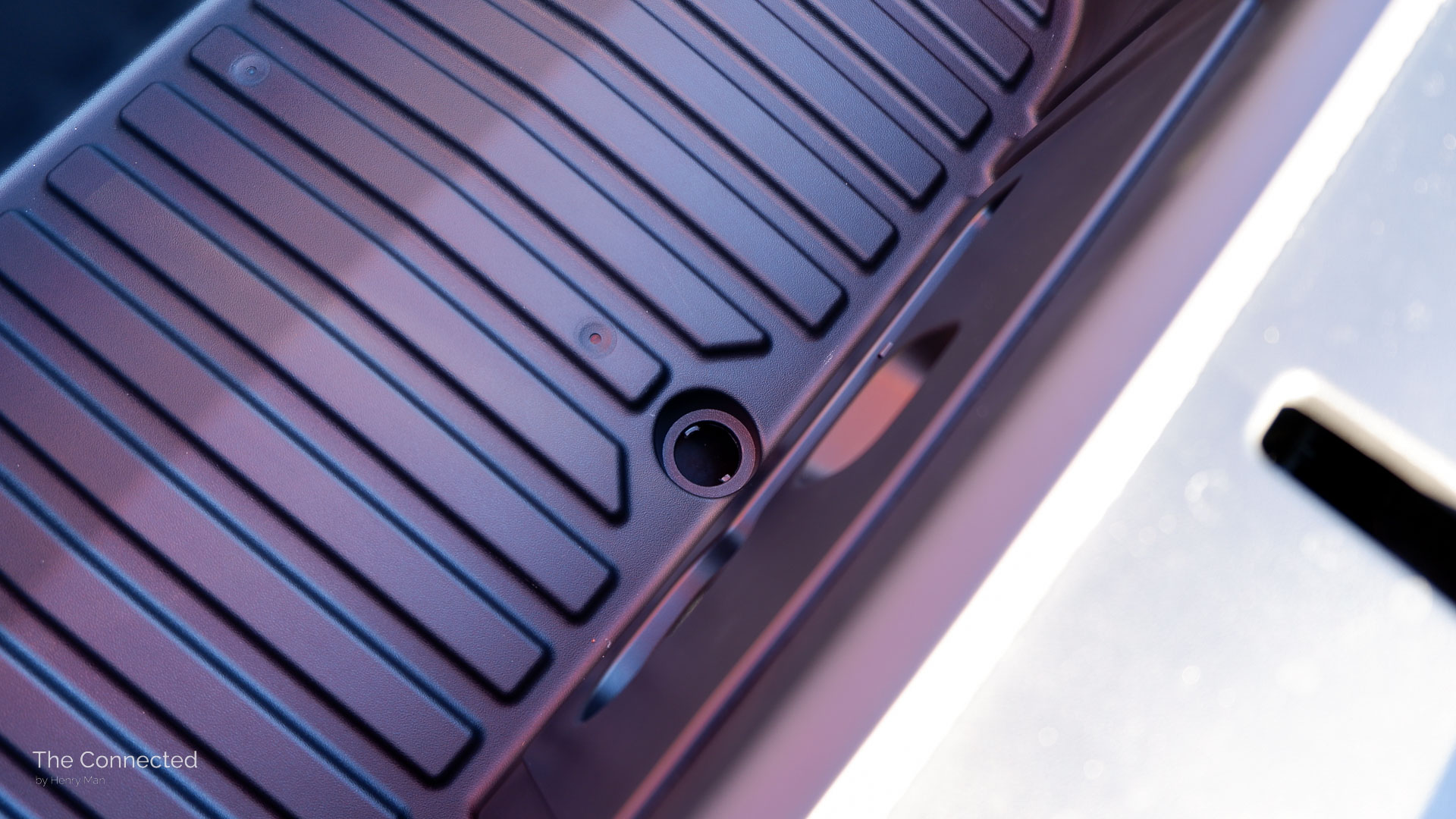
Under the front bonnet of the Tesla Model Y is a large 116-litre frunk which now features a drain plug. It can also be easily popped open via the central touchscreen inside, via the Tesla mobile app or Apple Watch app.
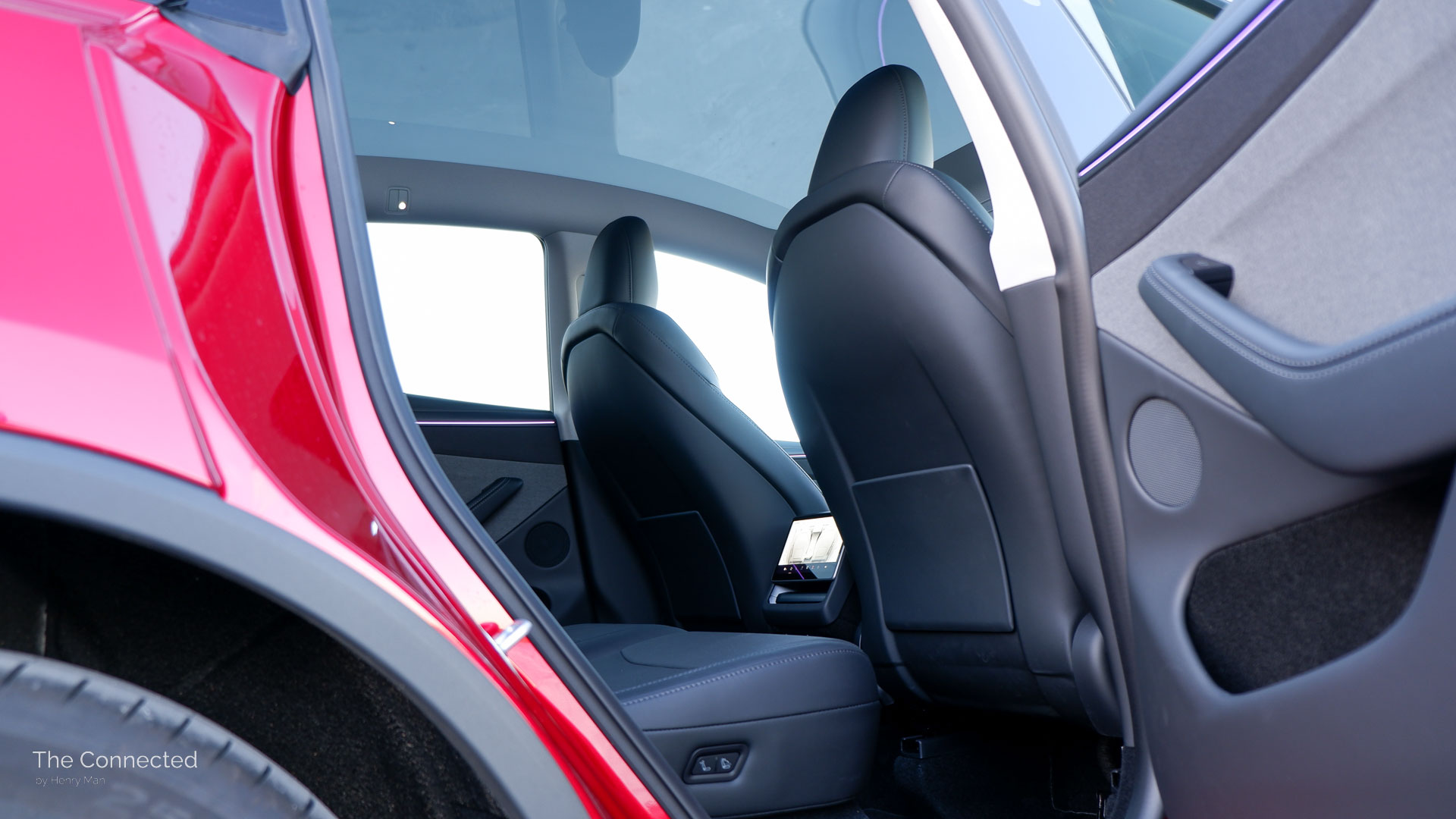
The Model Y provides a spacious rear row with plentiful headroom and legroom.
While the floor is flat, it’s slightly high due to the underfloor battery – but offset by the commodious footroom thanks to the front seats being elevated on rails. The seatbacks can now be electrically reclined via side buttons, too.
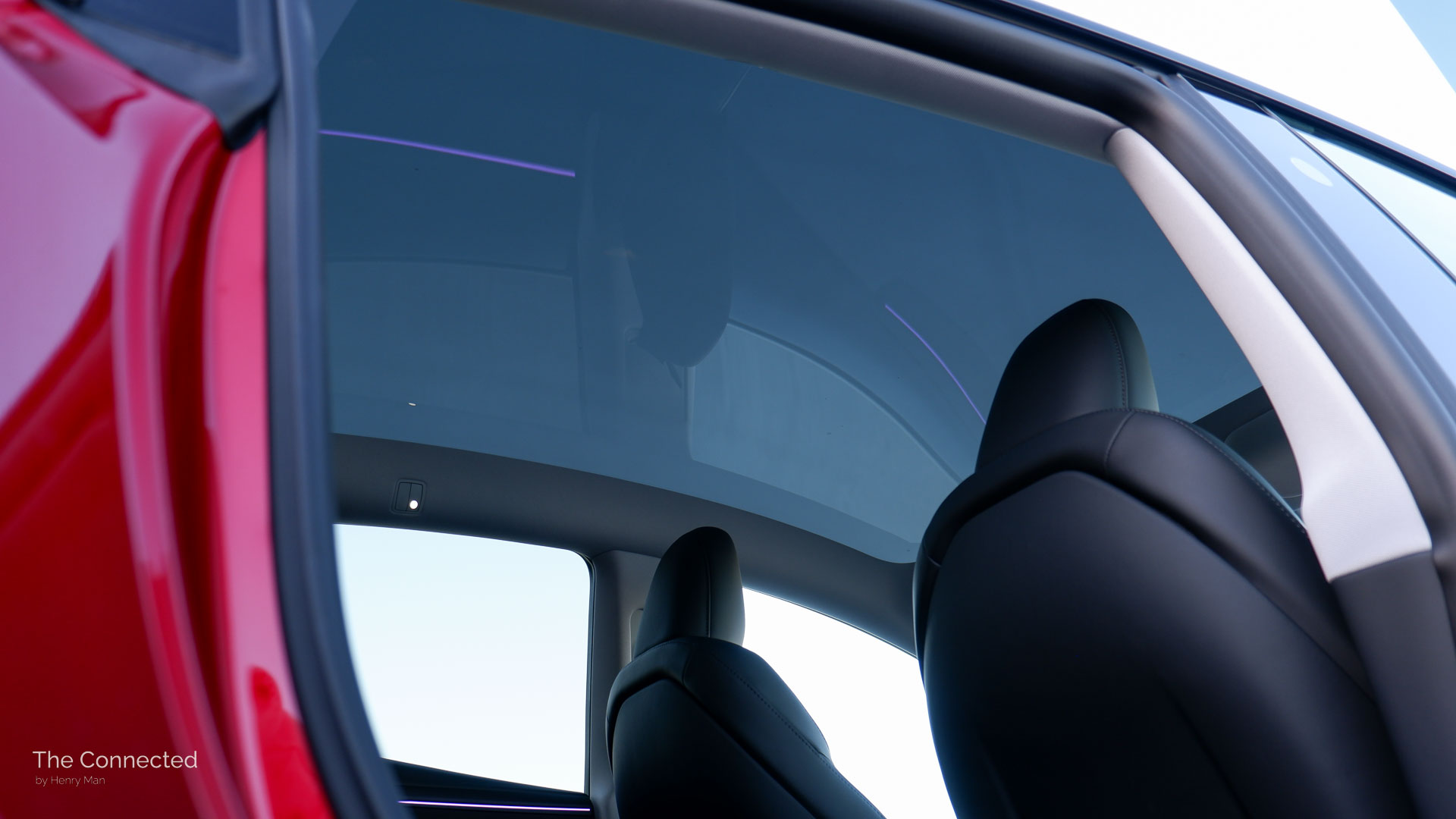
Rear passengers most benefit from the large pillar-less fixed panoramic glass roof, with Tesla adding stronger silver coating for sun and infrared protection. Only a portion of the back isn’t coated to allow for cellular signals to come through.
We could barely feel warmth from above under the sun – yet it’s so protected now that the view outside is slightly dark and obscured. This could be addressed by adding a physical sunshade, which the Model Y still excludes.


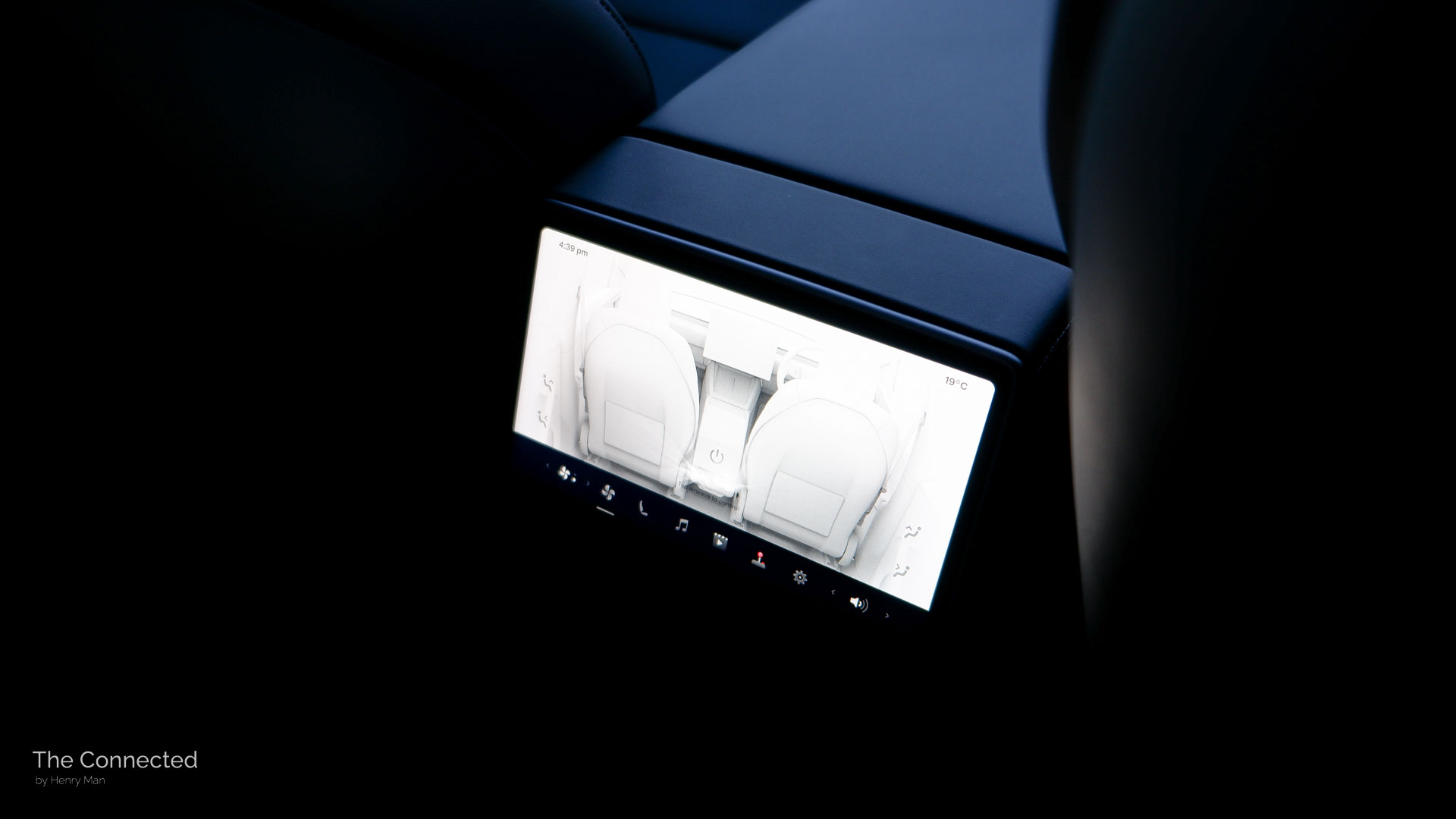
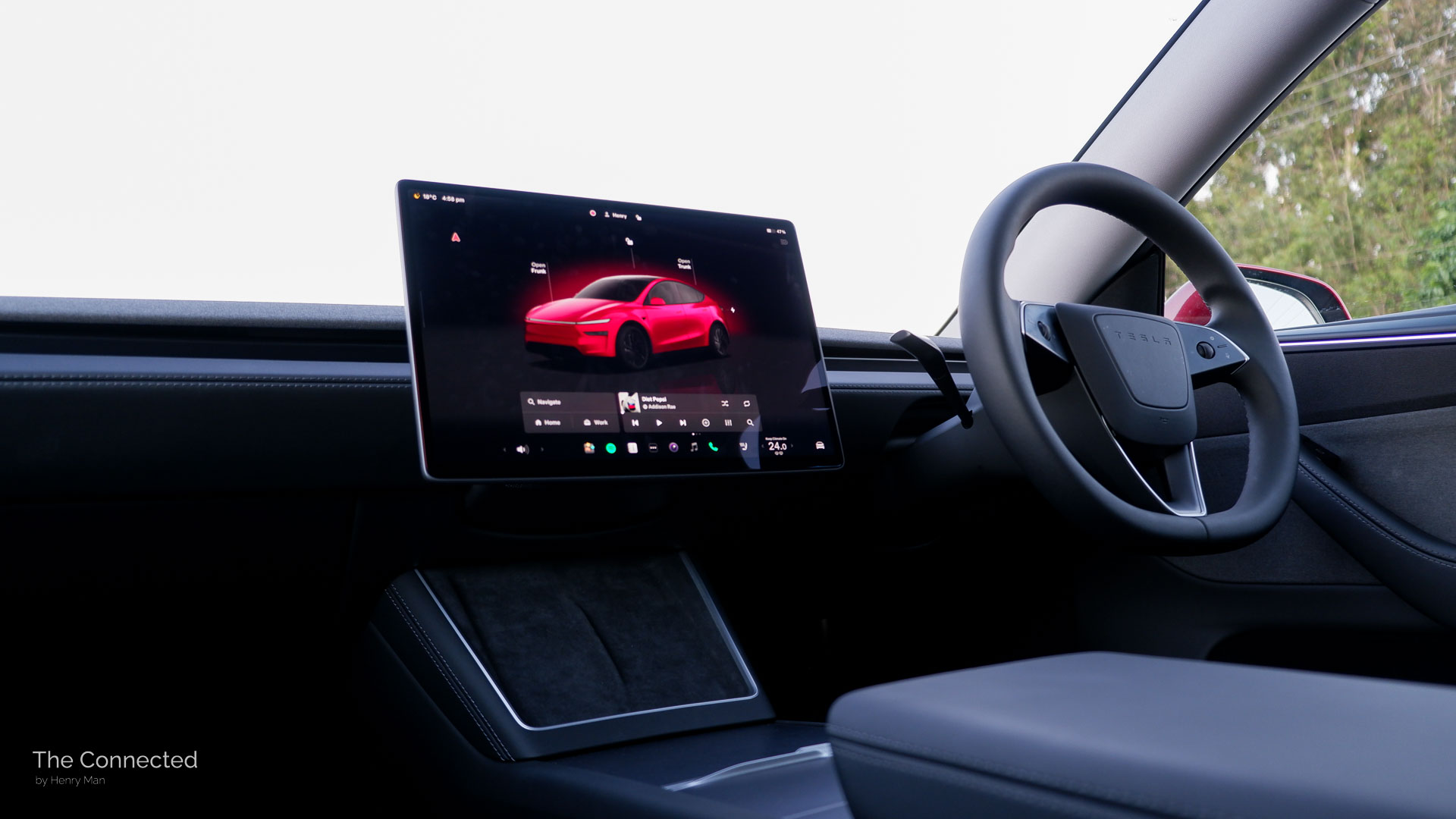
A new 8.0-inch touchscreen sits in the centre providing access to multimedia features and adjusting the third-zone climate control since there aren’t any physical air vents anymore – adding some complexity.
Two high-powered 65-watt USB-C ports sit underneath the screen, but they aren’t as visible and lack illumination.
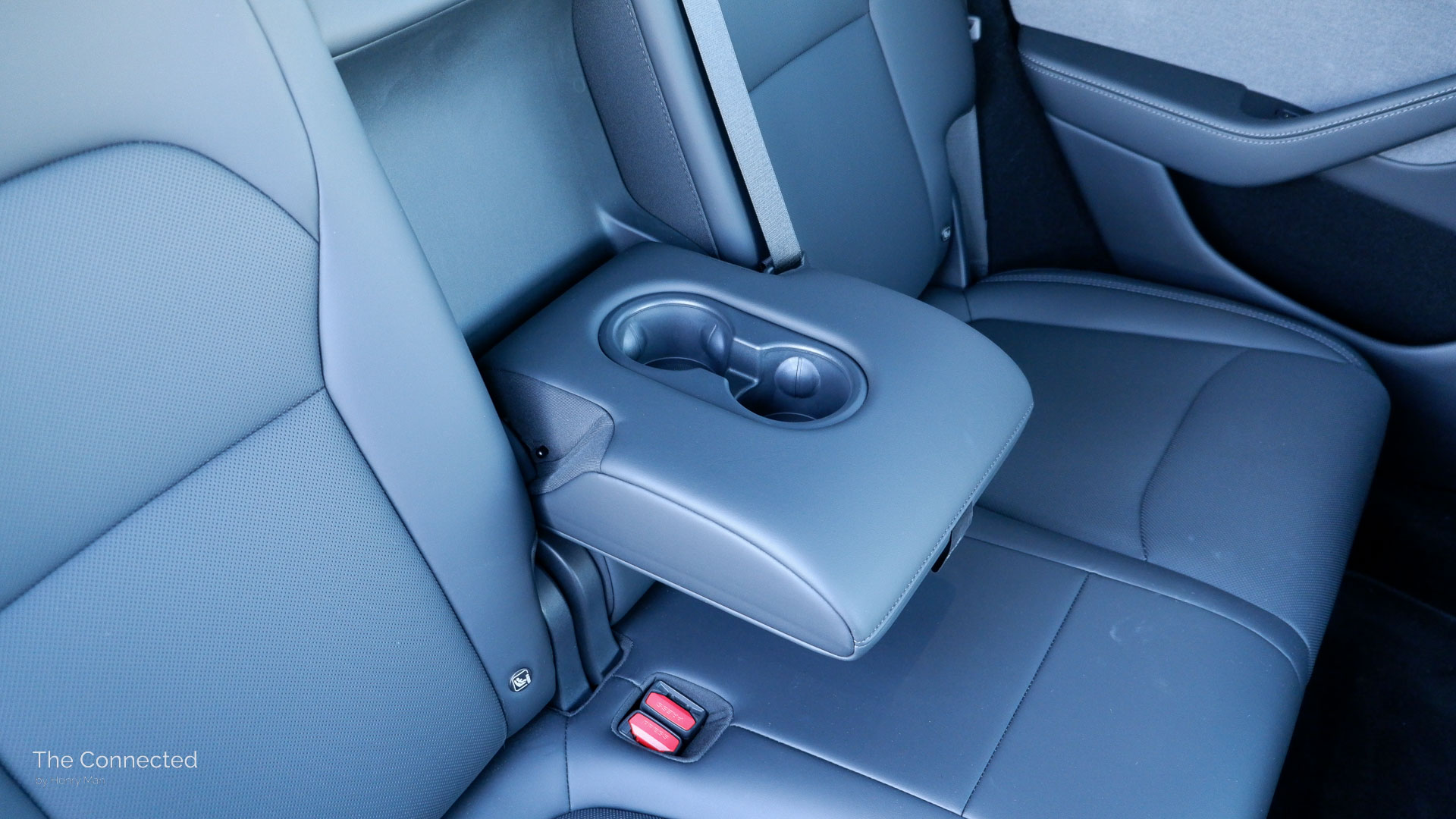
LED lights across both rows are bright and the seatback pockets now adopt an aeroplane-style mechanism – but the unchanged fold-down armrest is rather short with two cup holders that can get in the way of resting elbows.
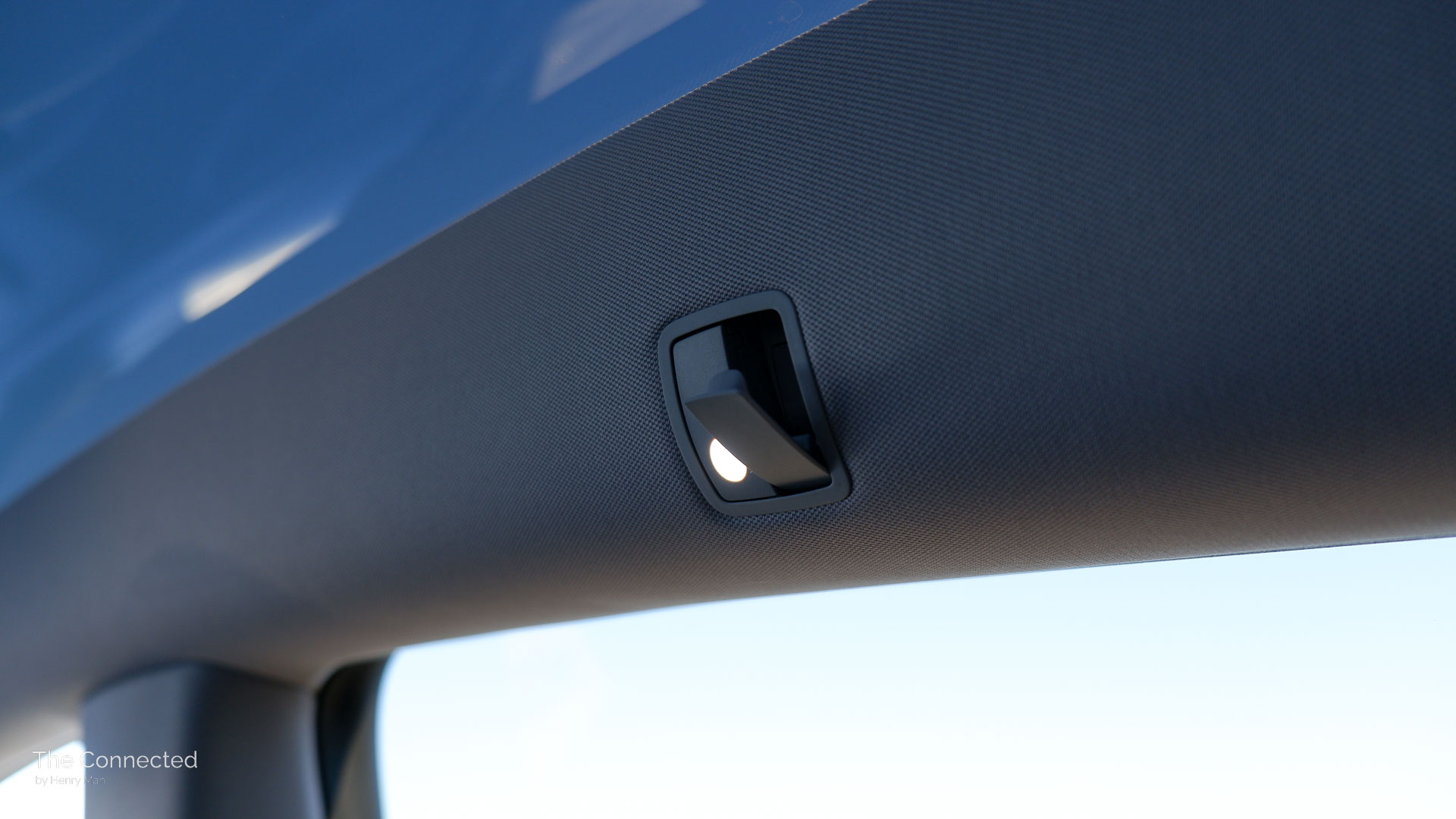
The pop-out coat hooks above are rather thin as well and the Tesla medium SUV doesn’t offer any roof grab handles either.
On the other hand, all door bottle pockets are completely carpeted – so items don’t slide and rattle around unlike other similarly-priced rivals – with LED illumination. There are white puddle lamps under all four doors that light up the ground at night, too.
The sun visors are uniquely curved with the headliner, offer bright LEDs with a magnetized cover for the mirror, and can be extended when put on the side to block out the sun – an important feature which isn’t guaranteed at this price point.



Getting in the top-selling medium SUV is slightly convoluted with the use of flush, matte black and non-illuminated J-shaped door handles that don’t automatically pop out like the Hyundai Ioniq 5; you’ll need to do some hand gymnastics by pressing the back hook-shaped area to pop it out and pull the thin handle.
Inside, buttons on the door handle electronically release the doors, but while the front door emergency latches are now more prominently labelled, no passenger accidentally pulled it in our experience.
The front door emergency manual releases are more accessible alongside the window switches than the rear doors which require uncovering a portion of the carpeted bottle pocket.
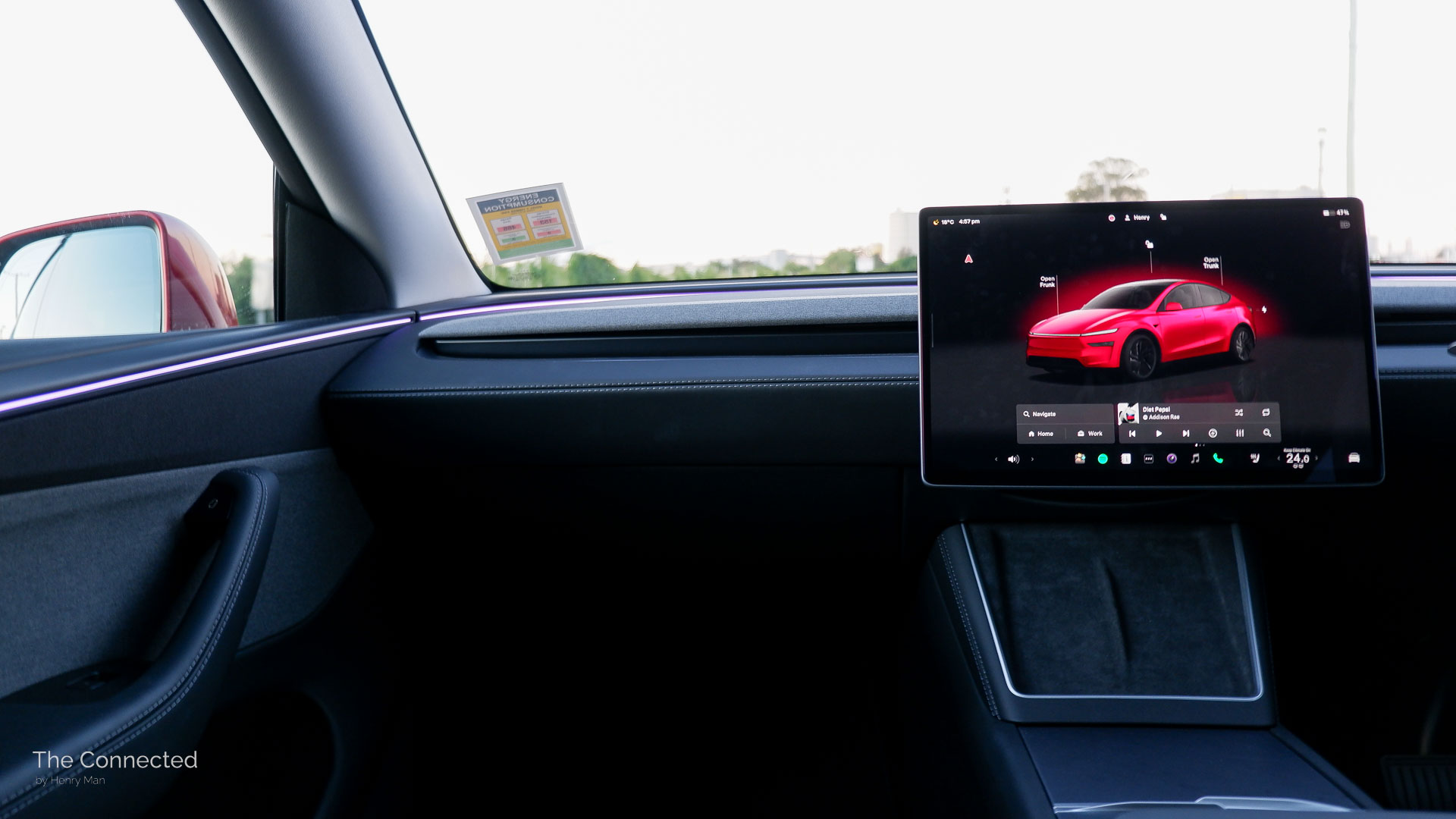
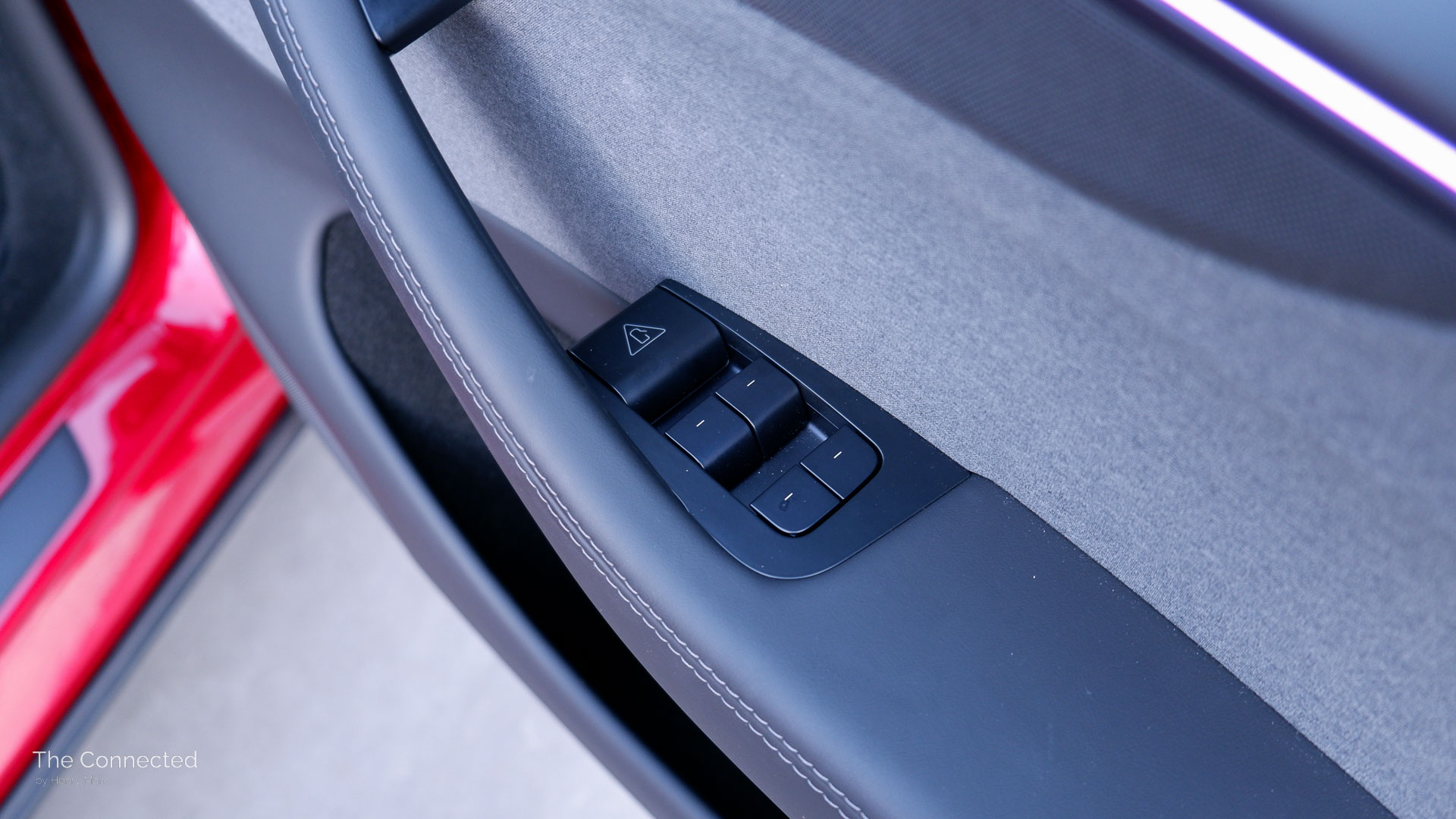
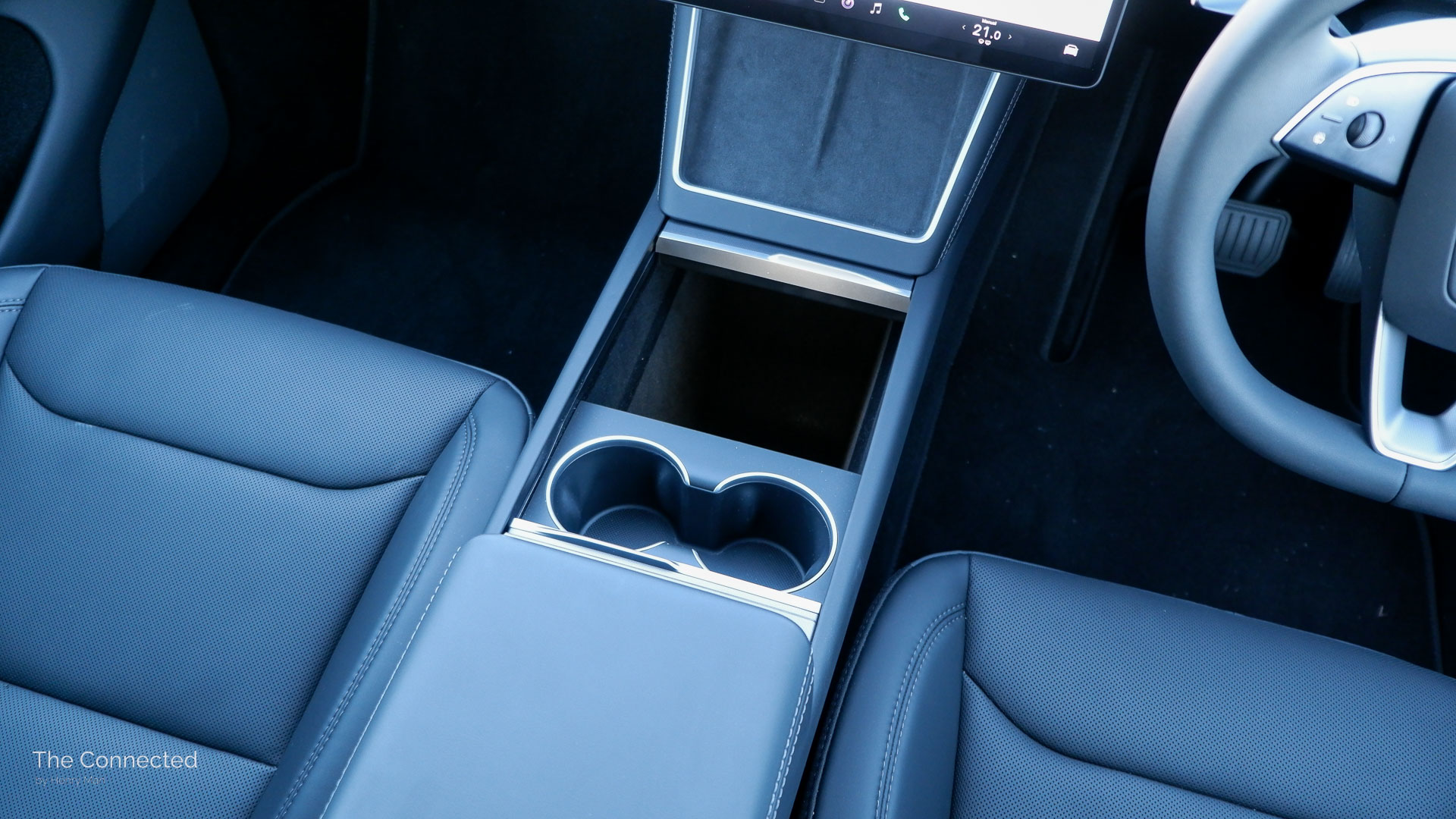
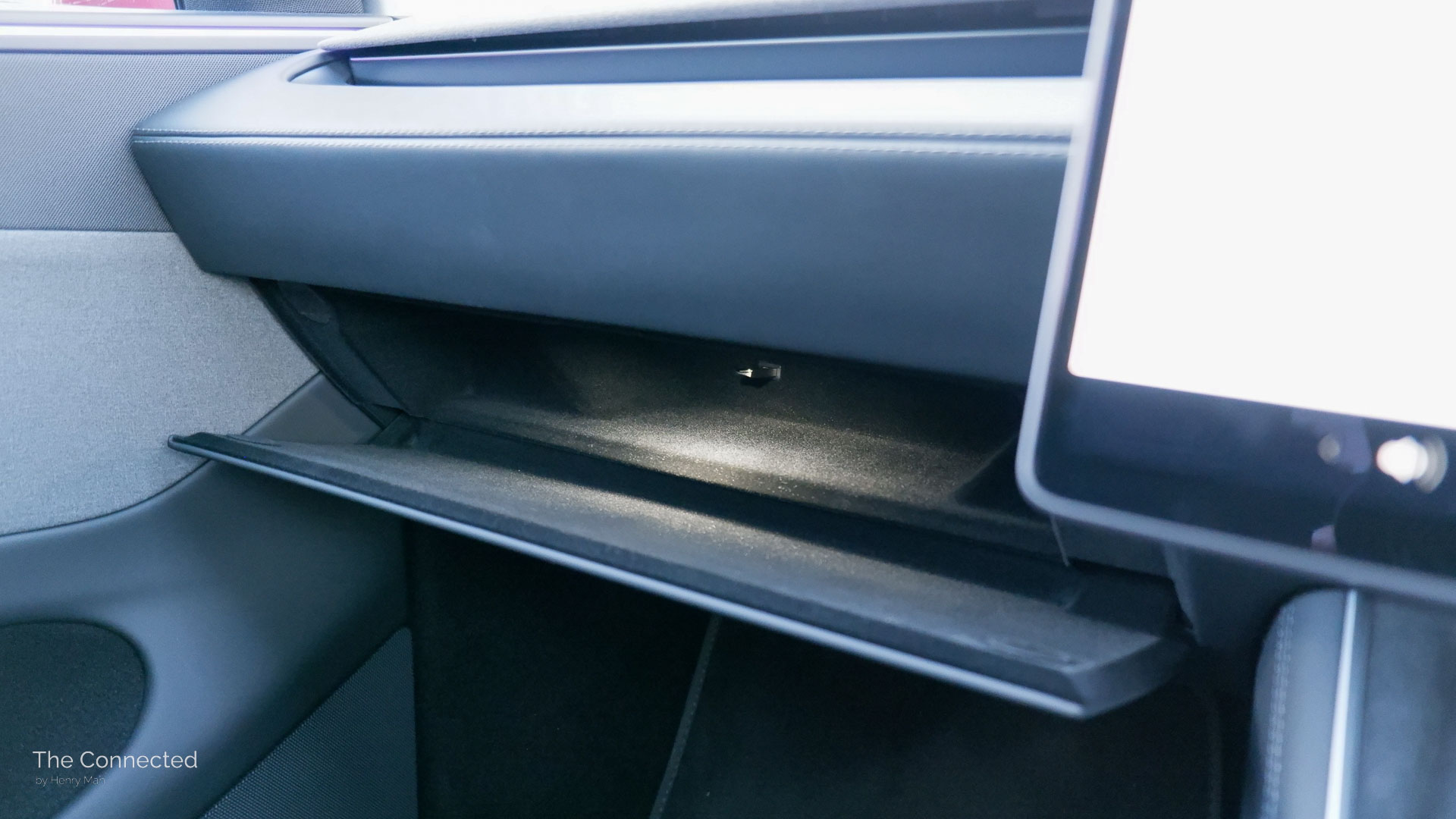
Meanwhile, a key annoyance for the front passenger is a strangely upright firewall in the footwell area, which limits legroom.
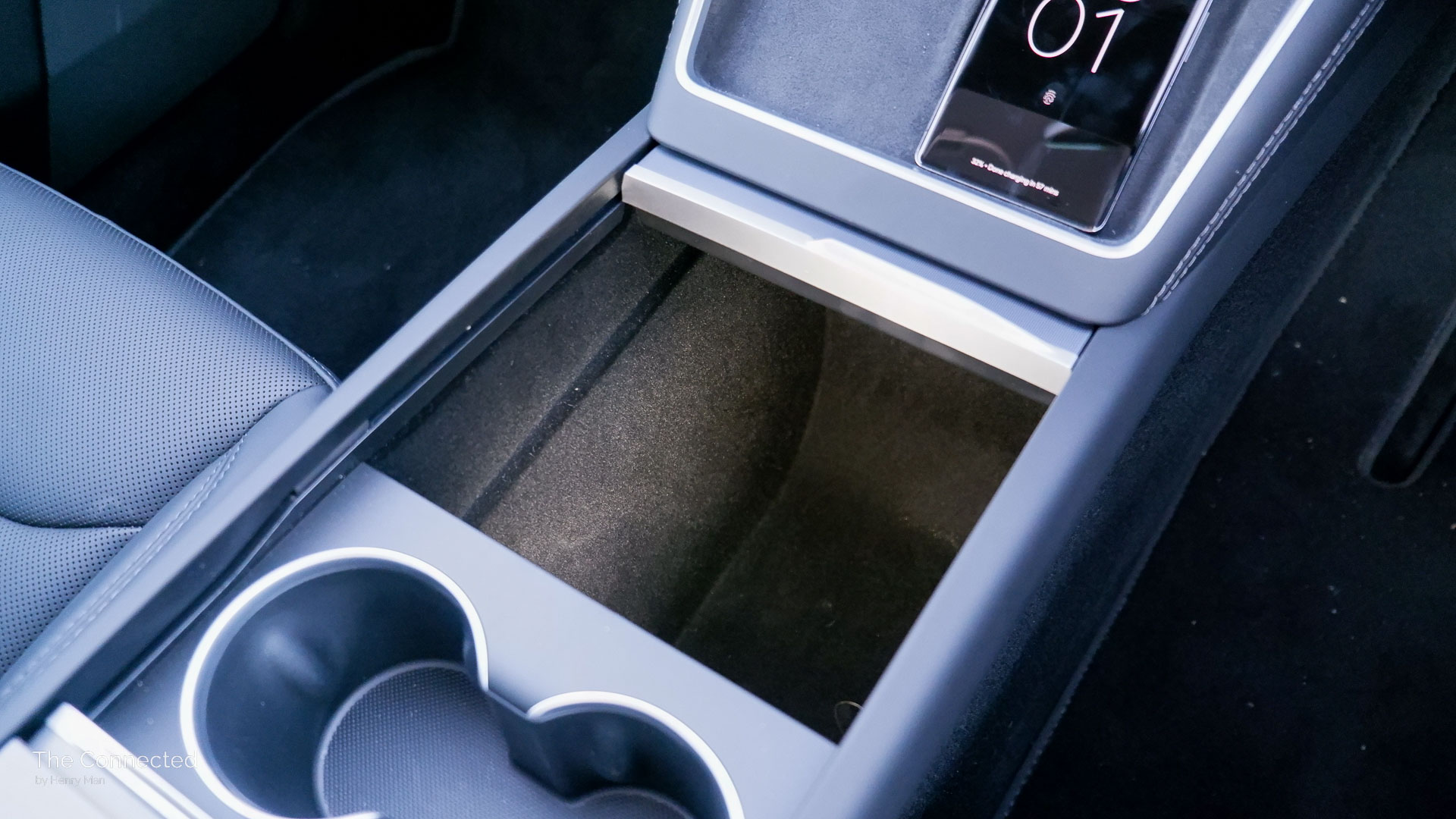
The front centre console and armrest storage is a traditional closed type, but both are felt-lined and super deep – to the point where it may be worth adding an aftermarket tray.
As a consequence of using a fine felt material surface – similar to the Genesis GV70 – across the centre console and glovebox, it is a dust, lint and hair magnet, and isn’t easy to clean off.
The two gripped cup holders and centre console storage area can each be hidden by a sliding metallic cover, while the centre armrest lid is magnetized. They’re all lit by LEDs inside that softly activate upon opening.
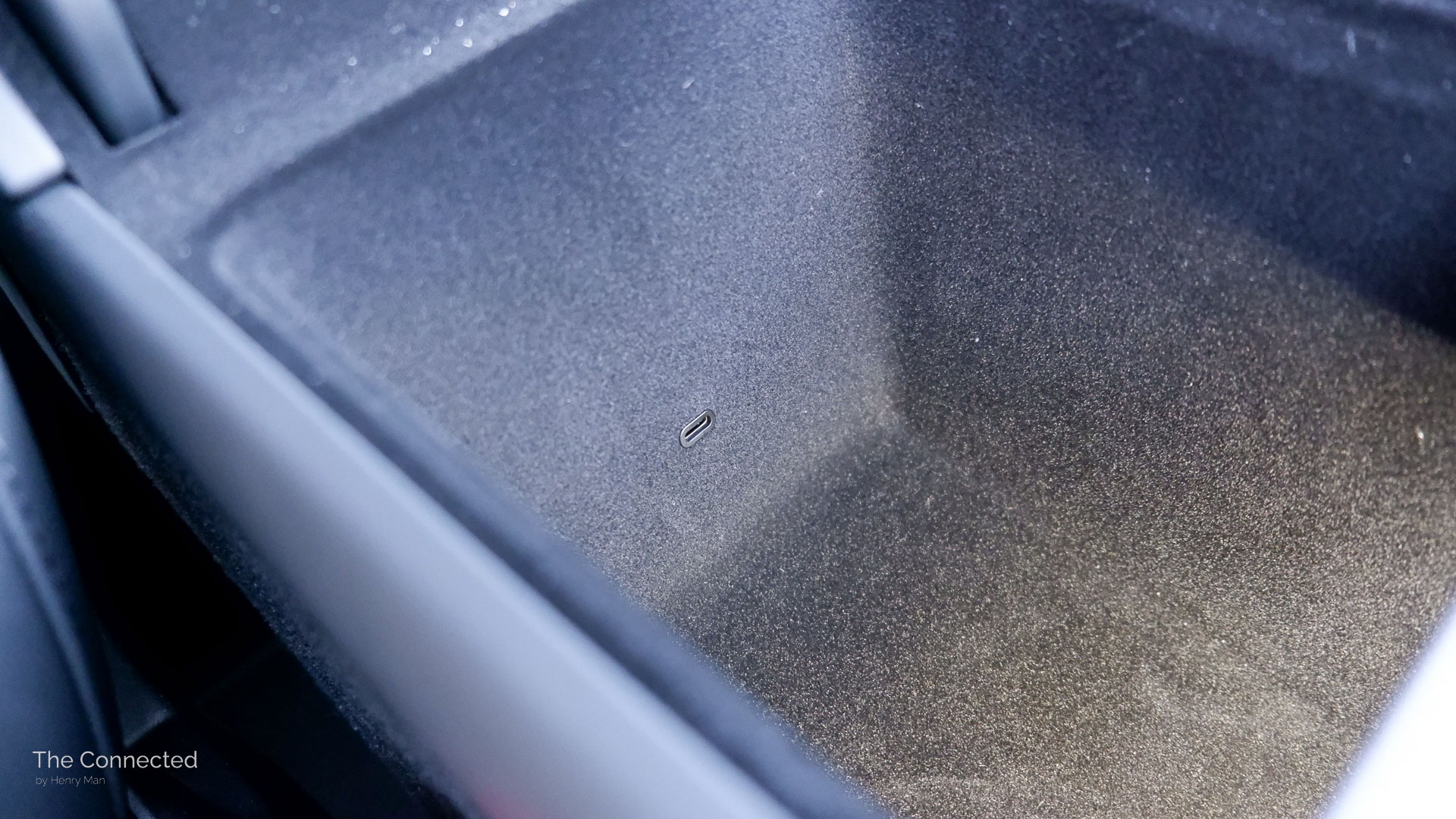
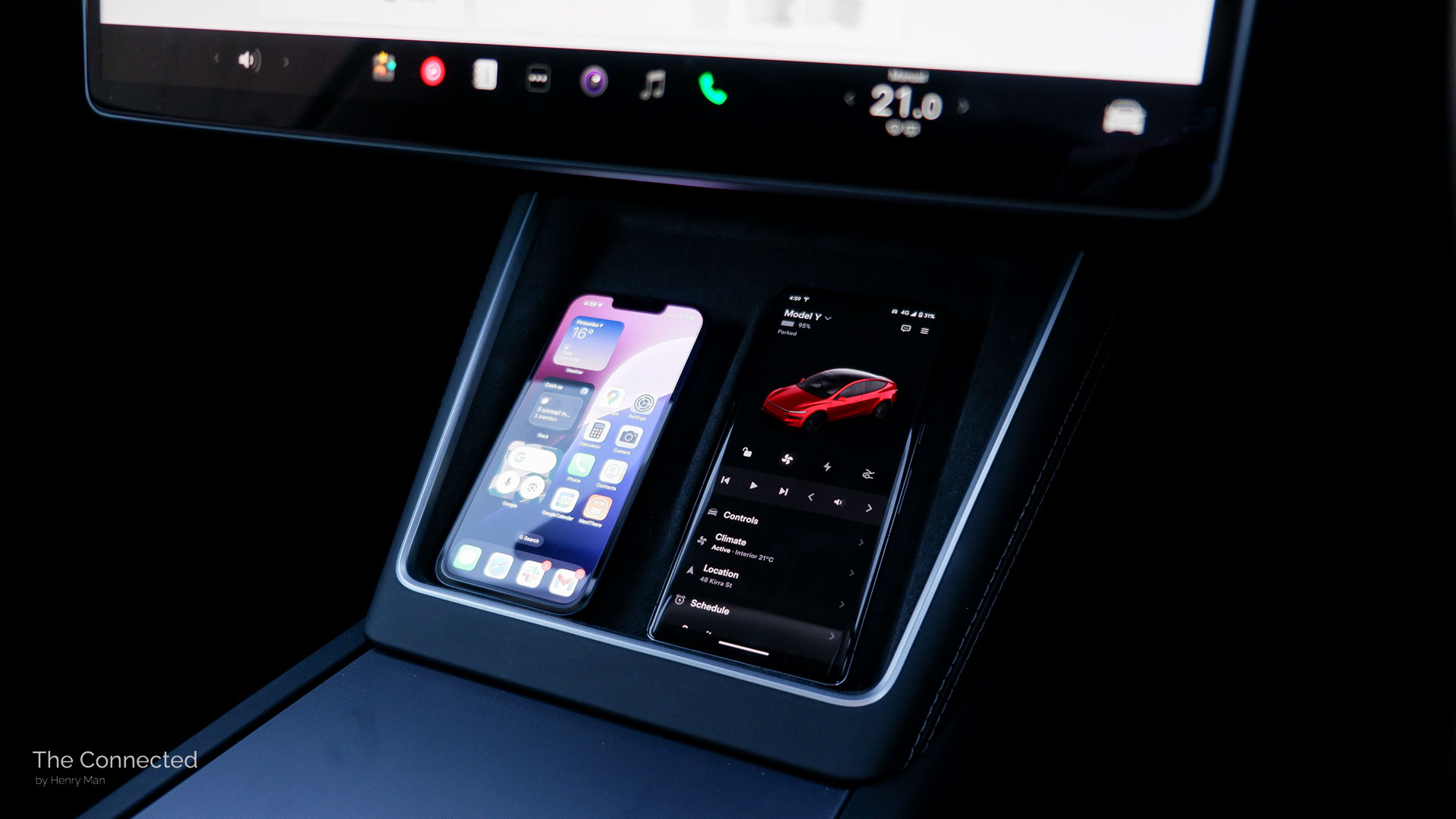
Disappointingly, only one 42-watt USB-C charging port is available inside the centre console, and is slightly hidden. Two Qi wireless charging pads are useful, but lack ventilation and stop charging phones as they overheat over time.
The glovebox has also become very narrow and is still only openable via the screen.
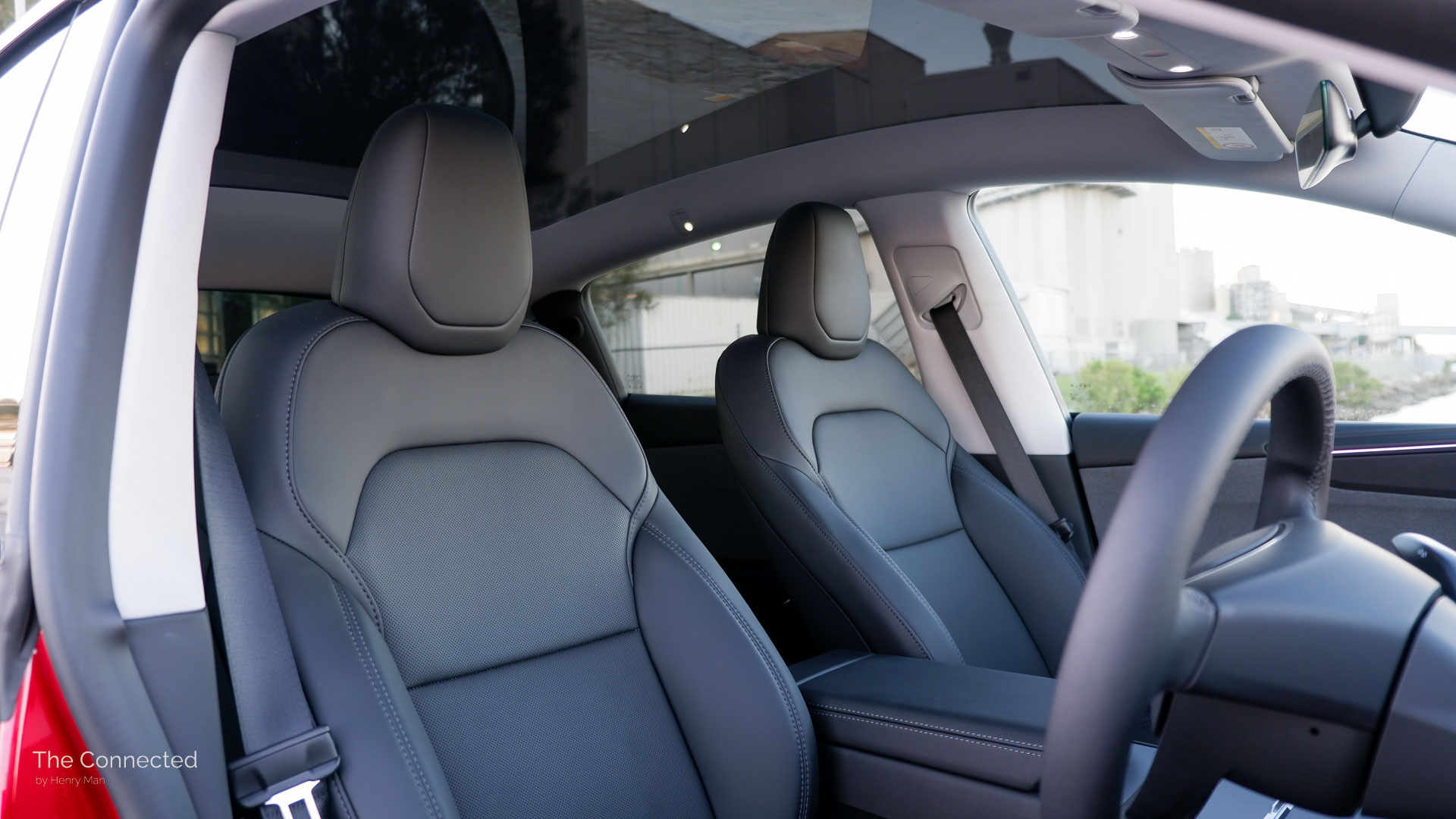
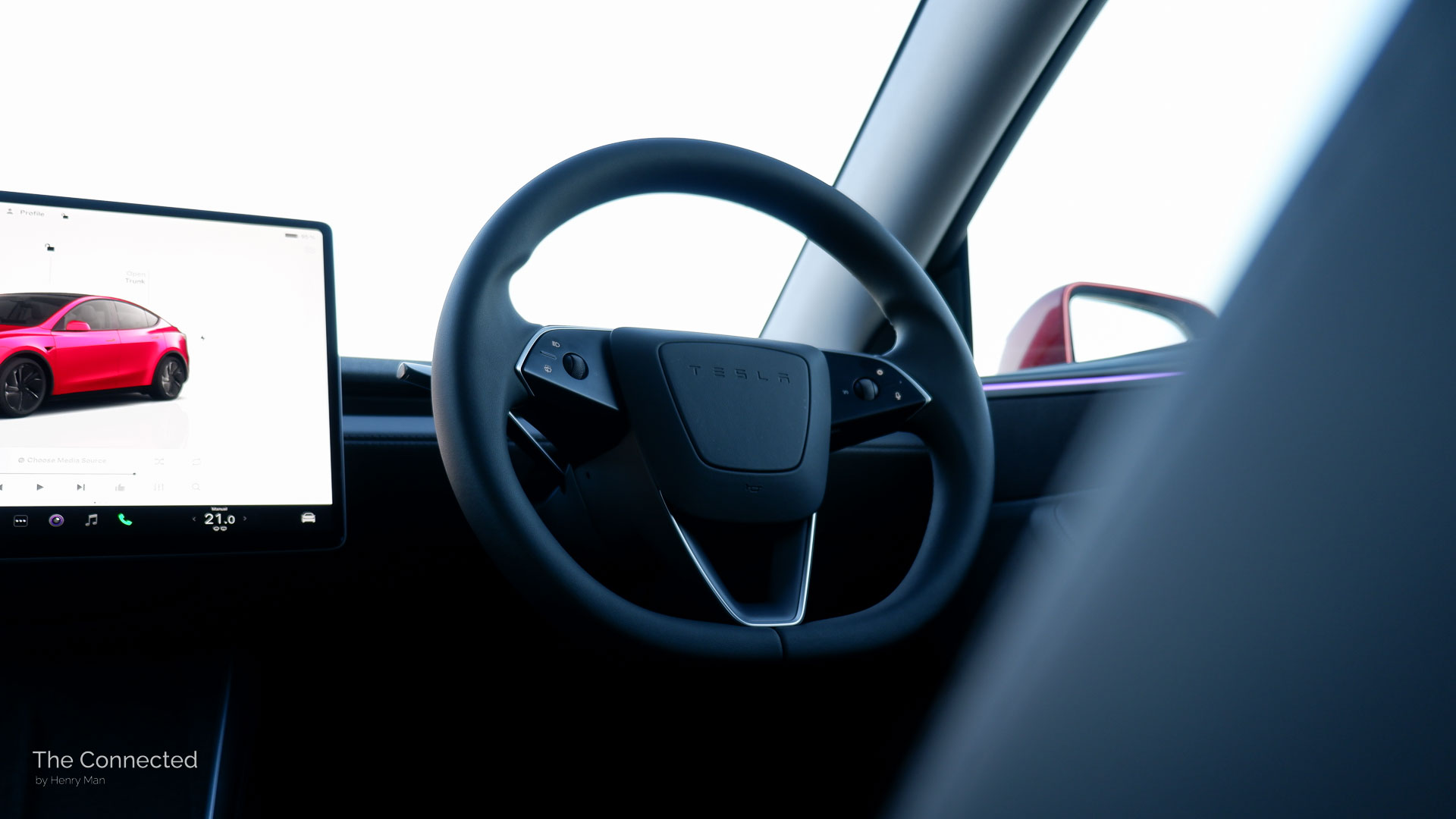
Tesla’s redesigned faux leather seats are soft and supportive with the welcome introduction of three-level ventilation (perfect for Australia), in addition to heating and a heated steering wheel. The driver benefits from up to 10 seat, mirror and steering wheel position memory linked to the profile settings, plus lumbar adjustment.
Adjusting the wing mirrors and steering wheel column requires digging through the touchscreen, but at least it’s accessible on the first ‘controls’ settings page and set via physical steering wheel scroll wheels.
Meanwhile, the front passenger seat can also be electrically adjusted forwards and backwards via the front or rear touchscreens – as long as there isn’t anyone sitting on it.
The Tesla Model Y’s updated three-zone climate control system is distractingly operated via the touchscreen only, including the direction of the electronic air vents.
I found it was more effective at blowing air directly onto the face than other models, such as the Polestar 4, Leapmotor C10 and Deepal S07, due to the unobstructed dashboard ‘hidden’ air vents that can emit through the steering wheel rim thanks to the lack of a driver instrument display.


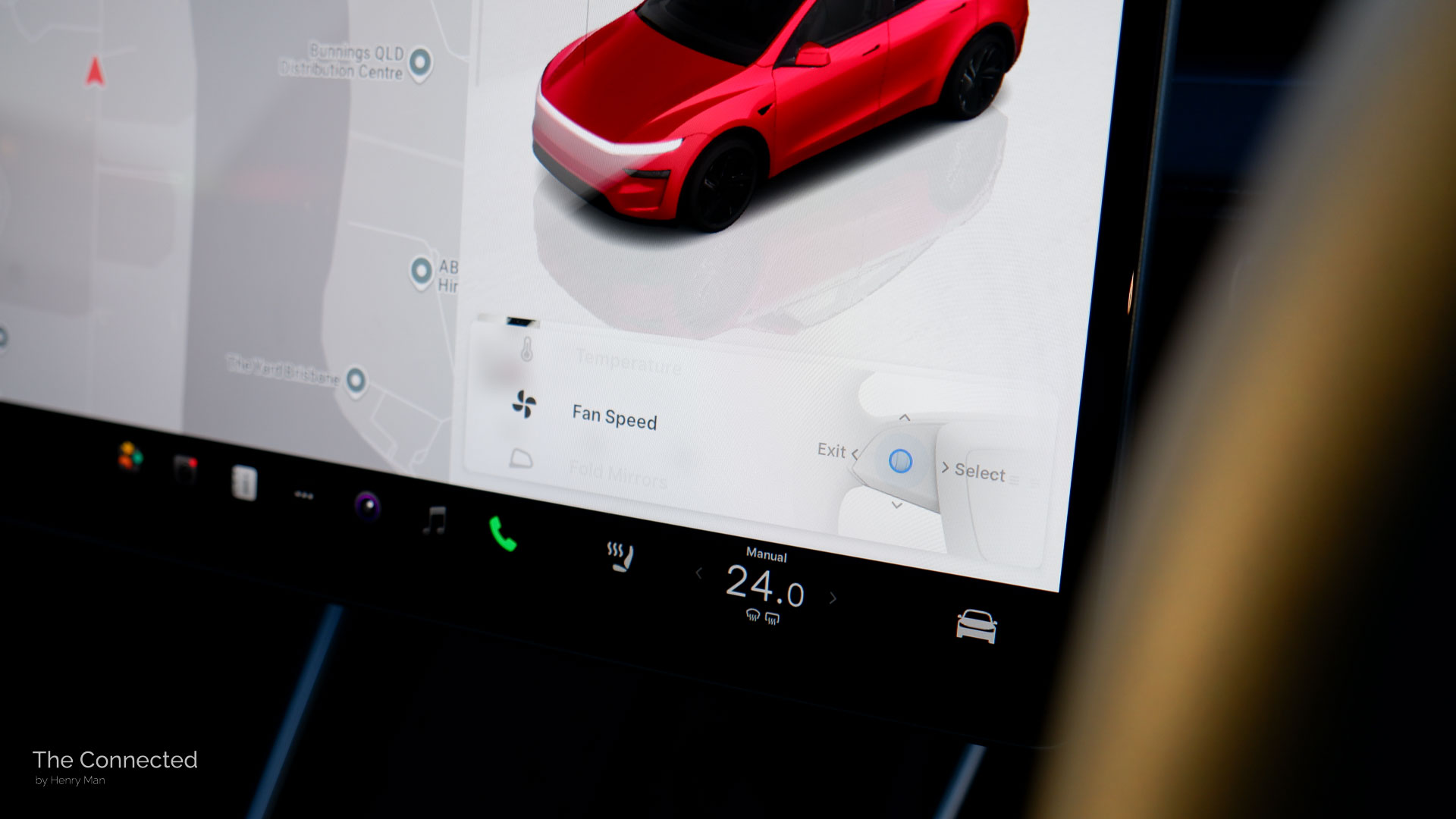
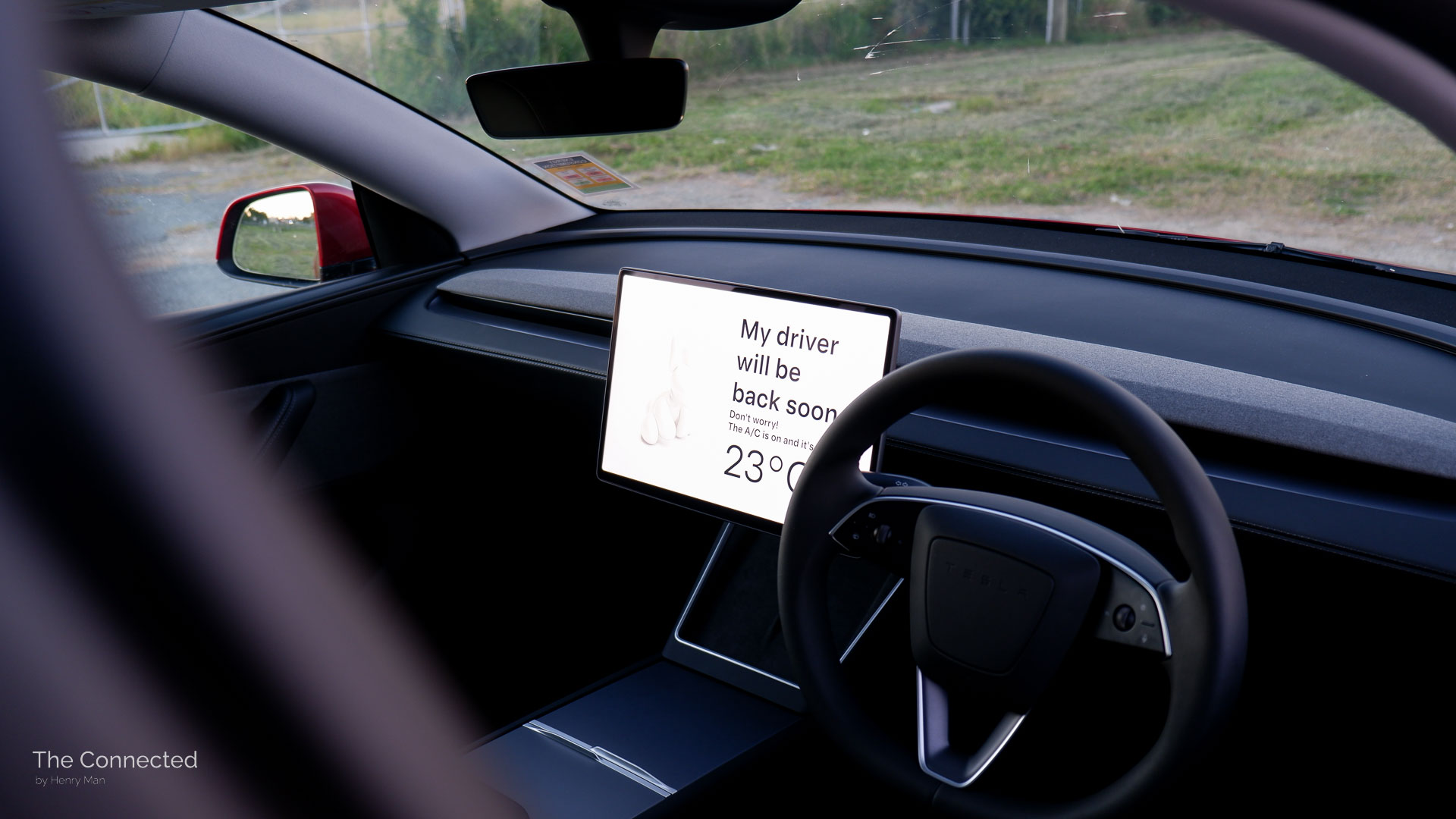
Drivers can adjust the temperature and fan speed via the left wheel scroll wheel shortcut or voice control, there is now an automatic swing function, and the Model Y still exclusively has a High Efficiency Particulate Air (HEPA) filter with Bioweapon Defence Mode.
Tesla still offers climate modes that just make sense – including Dog Mode, Camp Mode and Keep Climate On. While other brands such as Polestar, Leapmotor and Deepal now offer these features as well, it is still best executed by the American car brand – they can be activated remotely via the Tesla mobile app, owners can set the temperature, and the exterior lights turn off.
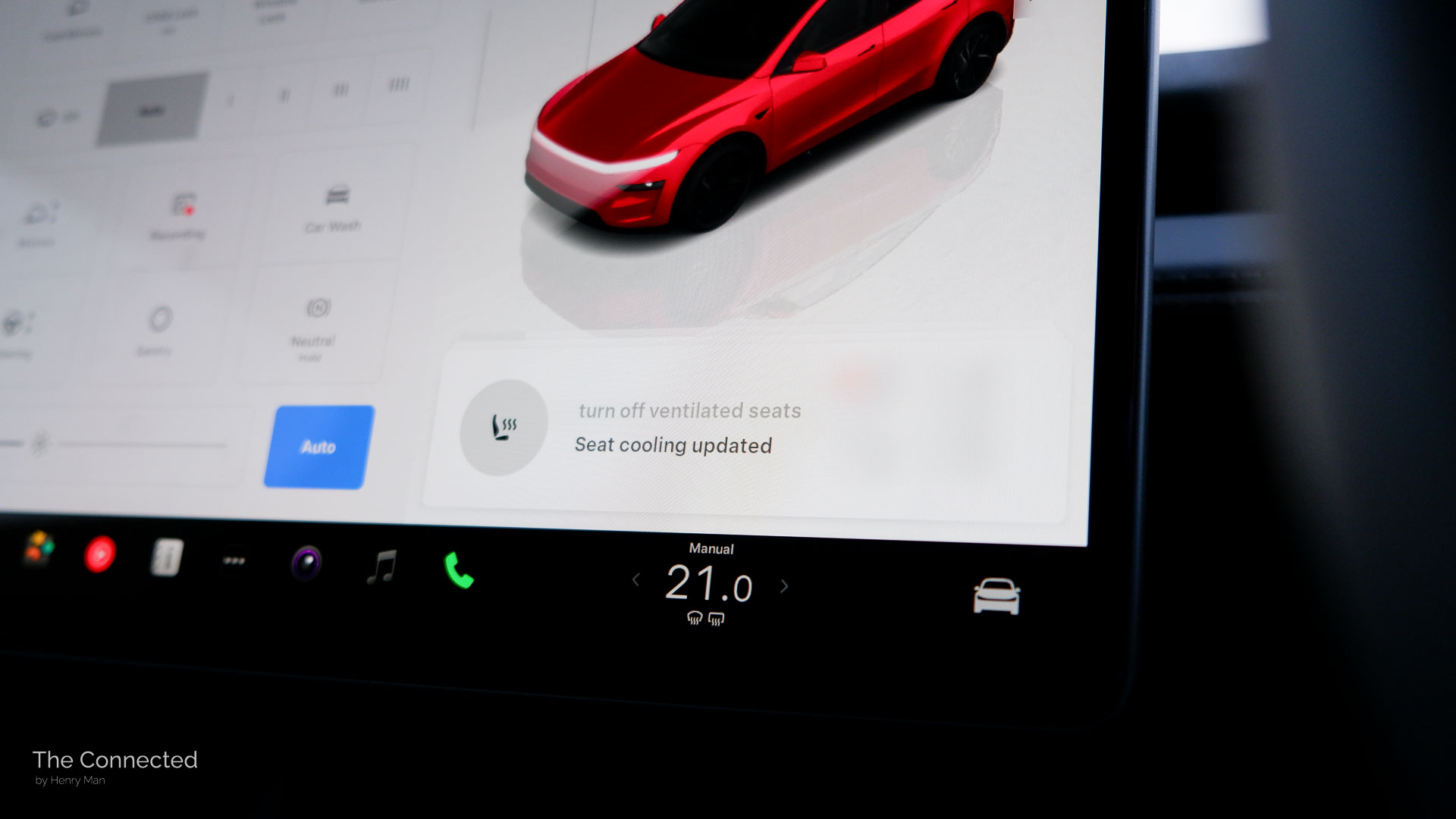
Disappointingly, despite the temperature controls and seat settings being always available at the bottom bar, it is rather fiddly to adjust due to tiny software icons and text.
Technology.
2026 Tesla Model Y RWD tech features:
| 15.4-inch touchscreen running Tesla software | 1x USB-A port for dashcam and Sentry Mode |
| OTA software update capability | Standard Connectivity (eight years included, Premium Connectivity subscription optional) |
| Built-in maps with auto Supercharging stop planning | Nine speakers |
| Tesla Arcade, Theatre and Toybox entertainment apps | Tesla mobile app |
| 2x Qi wireless charging pads | Tesla Phone Key with UWB and Bluetooth sensing, auto unlocking/locking, auto-folding mirrors, and door puddle lights |
| 3x USB-C and 2x 12-volt charging ports | NFC key card |
The Tesla Model Y features industry-leading technology and a mobile app – but its software icons and text are tiny.
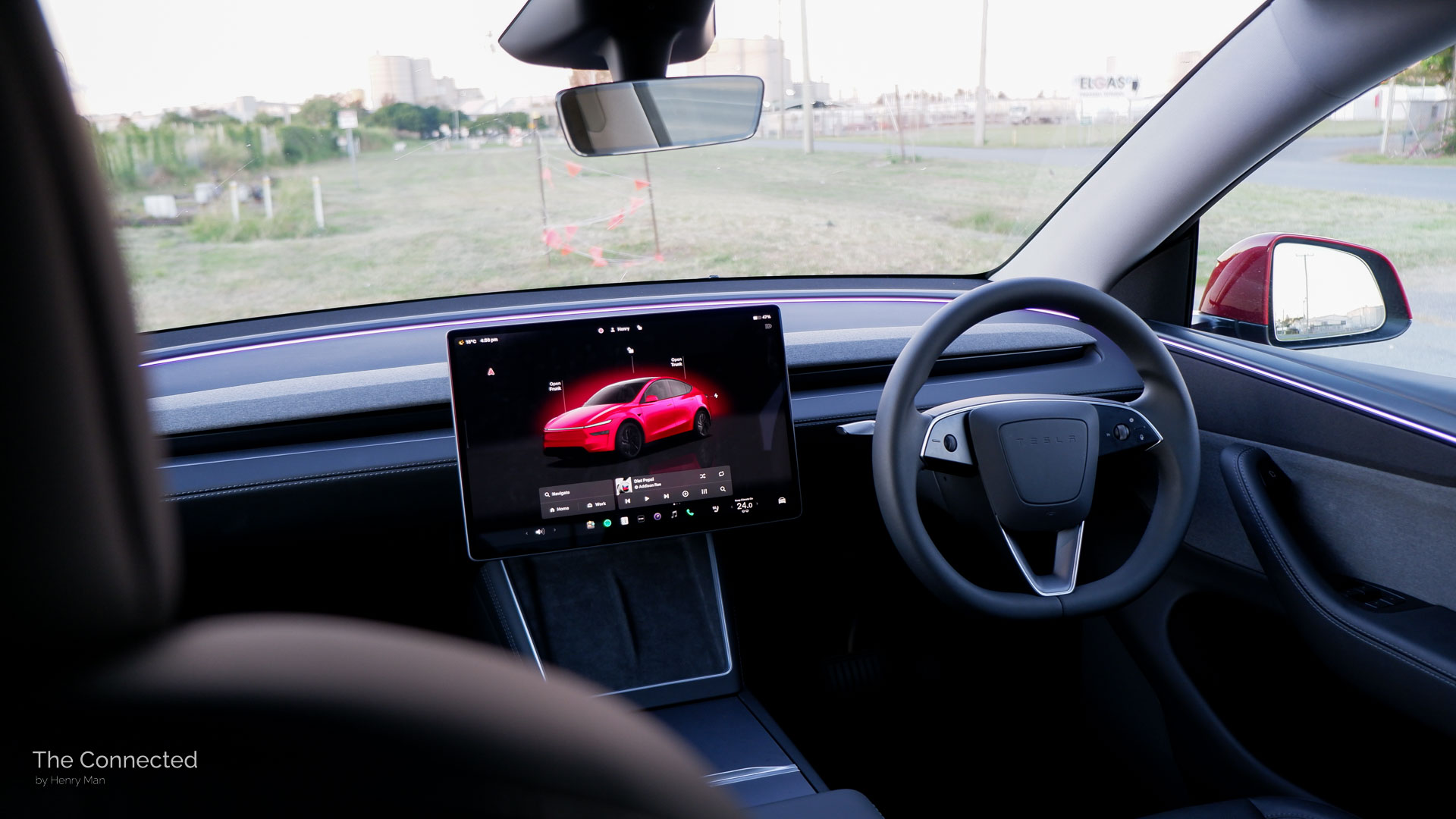
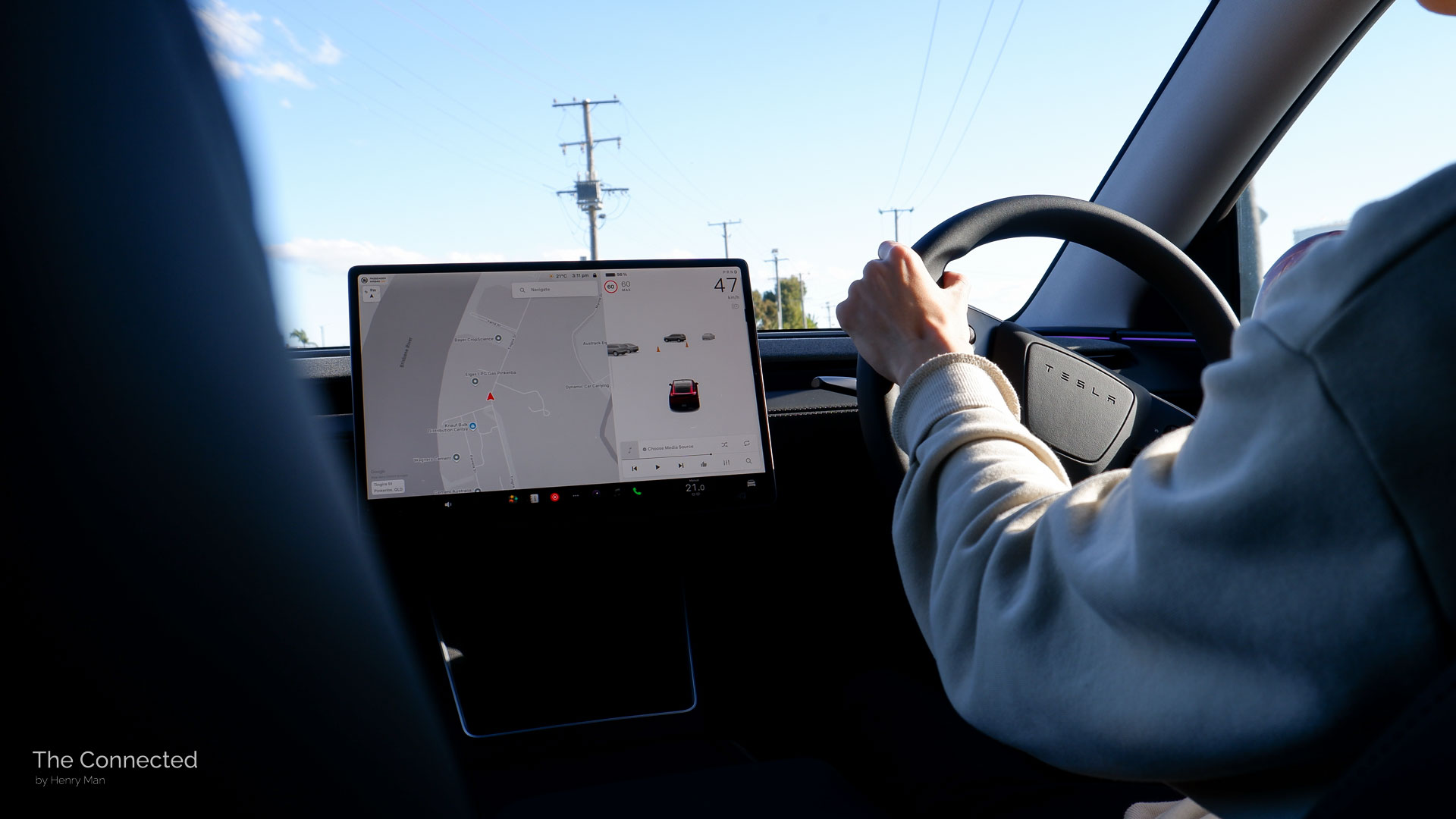
The refreshed electric SUV boasts a larger 15.4-inch touchscreen thanks to narrower bezels. The display itself is high-resolution with good automatic brightness and light/dark mode switching sensitivity – although you’ll need to use the screen cleaning mode quite frequently as it’s a hub for dust and fingerprints.
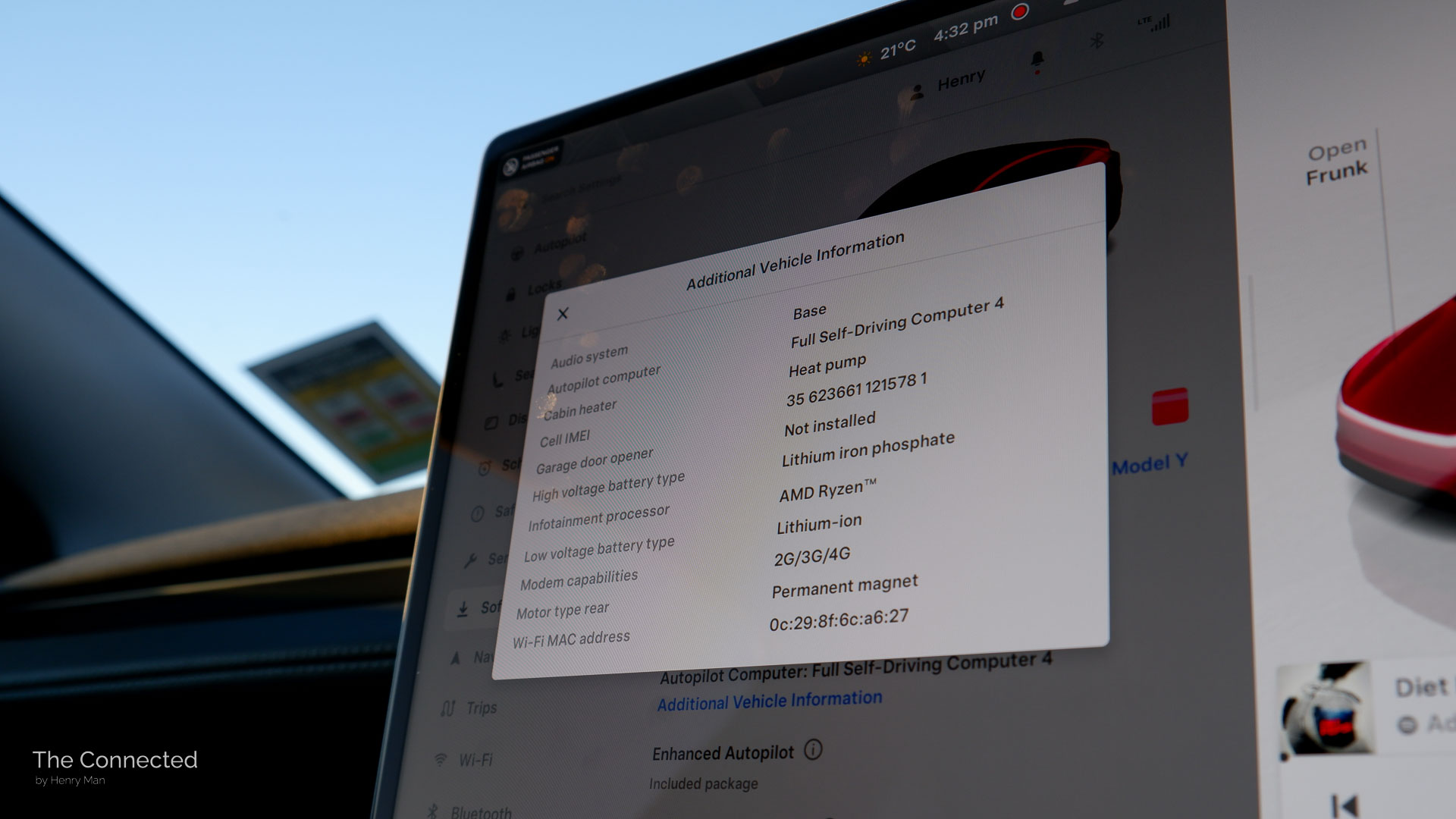
It runs Tesla’s own operating system with a very Apple-esque user interface – including swipe-based gestures, quick and smooth transitions, and a modern design. We tested V12 (2025.14.3.2).
Unlike other car brands, Tesla is still one of the only carmaker’s that deploy regular over-the-air (OTA) software updates with meaningful changes and feature additions.
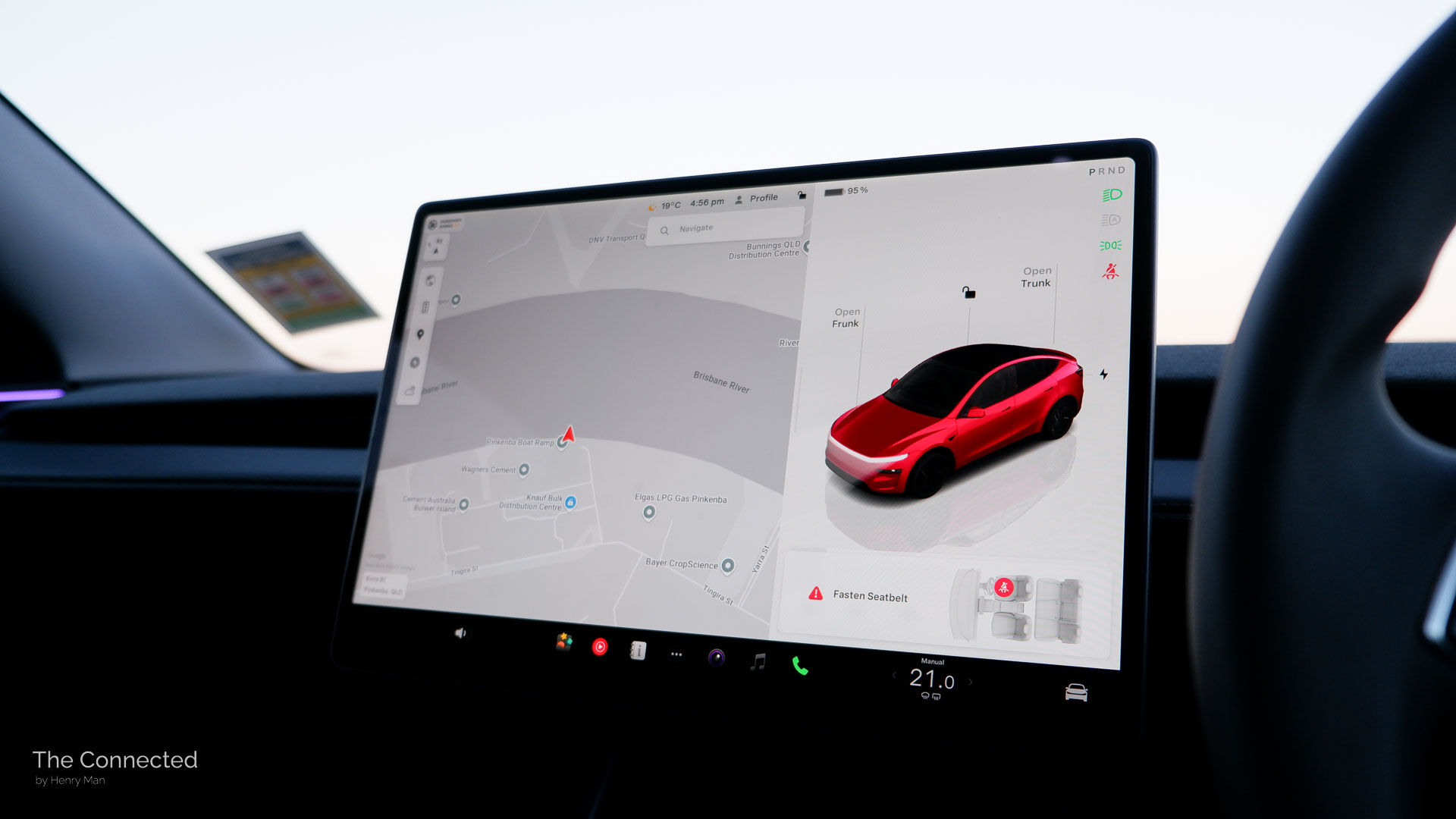
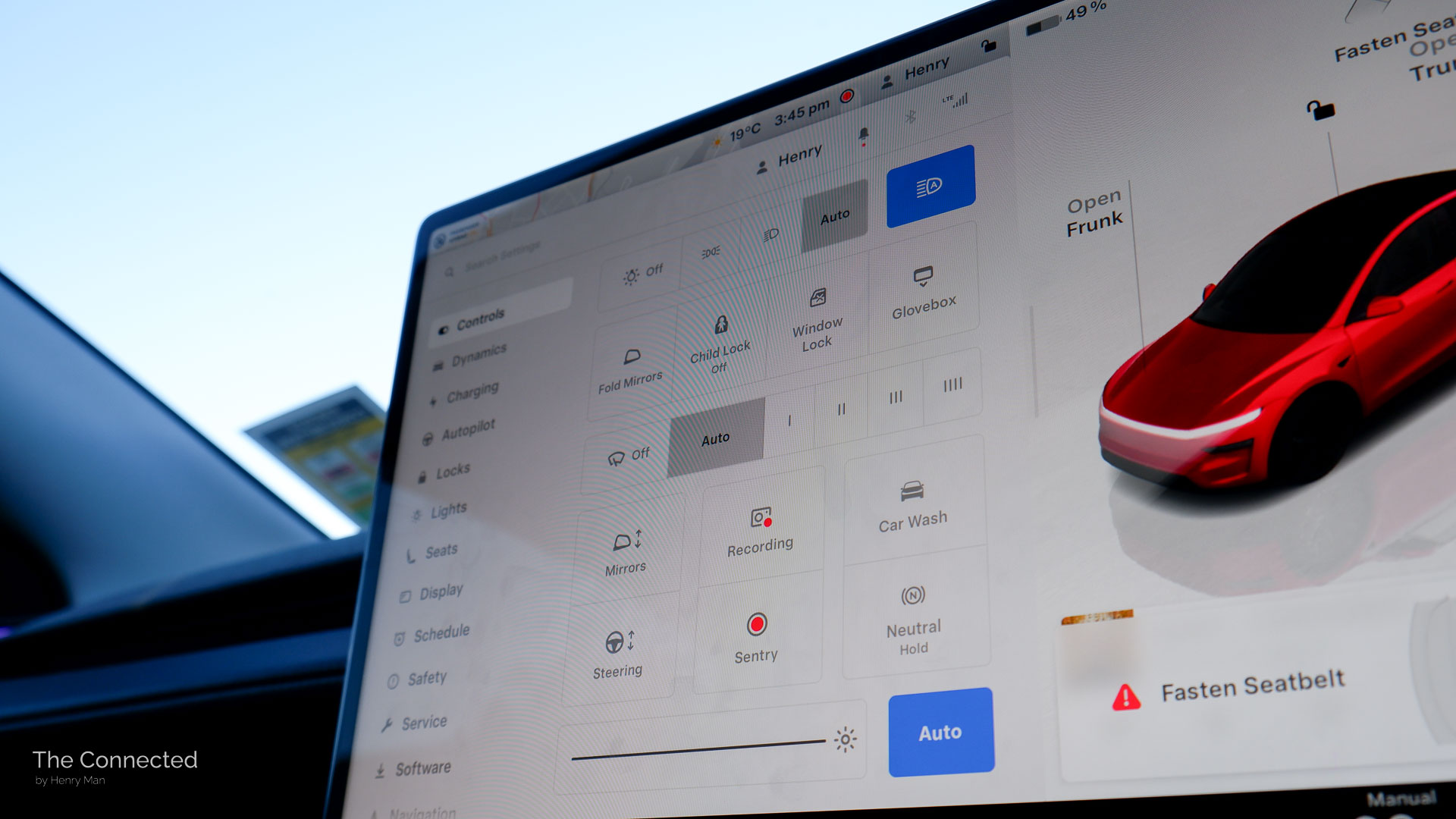

The software two screen modes – either maps with visualisations on the side or full-screen the latter. A bottom bar of app and climate control shortcuts are always visible and can be customised.
Likewise, the boot, frunk and charge port controls are always on the screen – no digging into vehicle settings unlike other systems.
However, even with a larger text option enabled, I found that icons and text were still too small – particularly with tiny touch targets for adjusting the climate control temperature and toggling the heated/ventilated seats, a small grid of app icons, and a hard-to-discern hierarchy between titles and text in the settings pages.
Some user interface elements are a far reach for the driver on the front passenger side, too, including certain map functions and vehicle settings tabs.
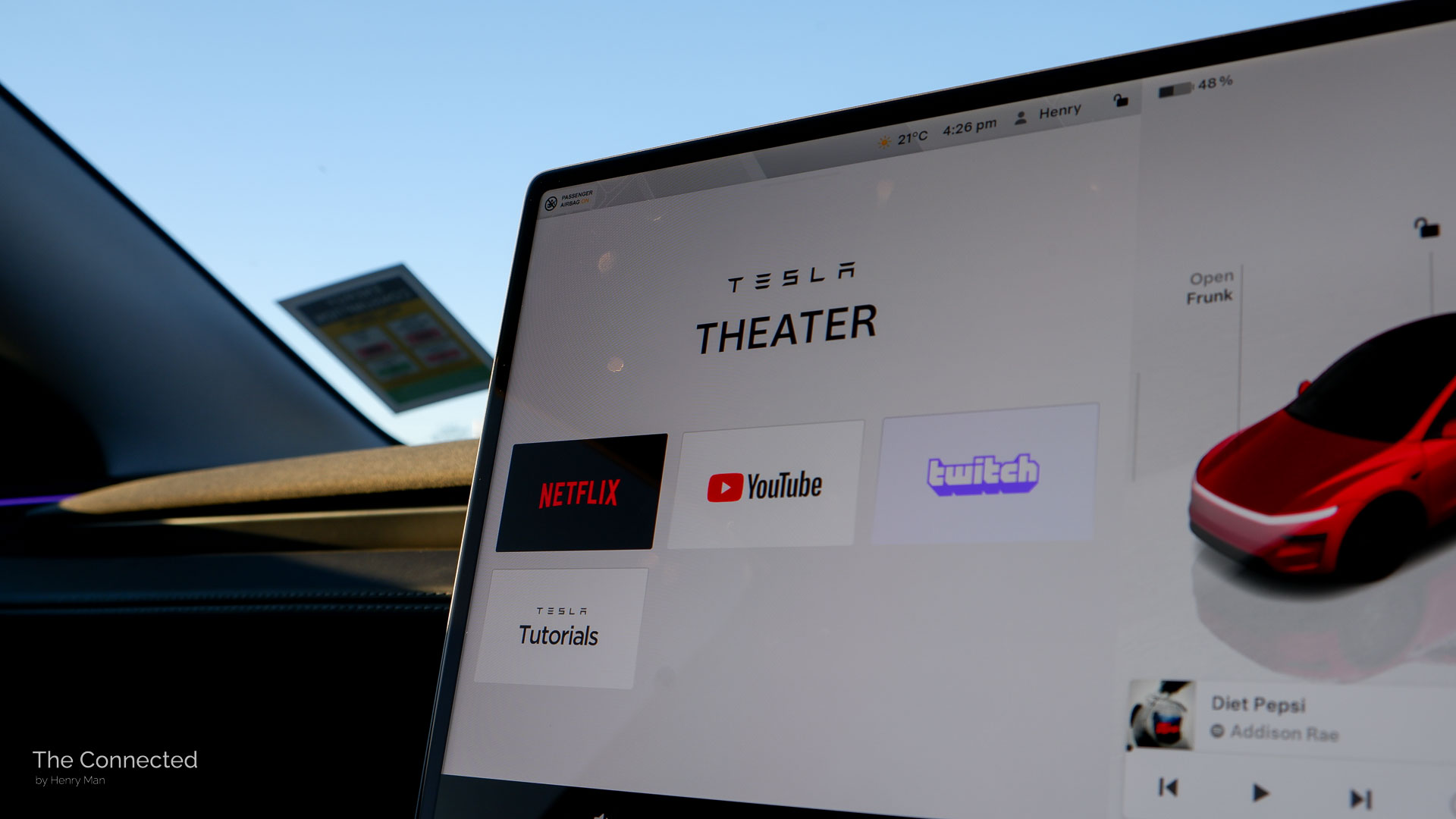
While it doesn’t offer Apple CarPlay and Android Auto, Tesla’s system is highly feature-rich with built-in Google Maps, every major music streaming app including Spotify, Apple Music and YouTube Music, karaoke, video streaming services including YouTube, Netflix and Twitch, and even arcade games.
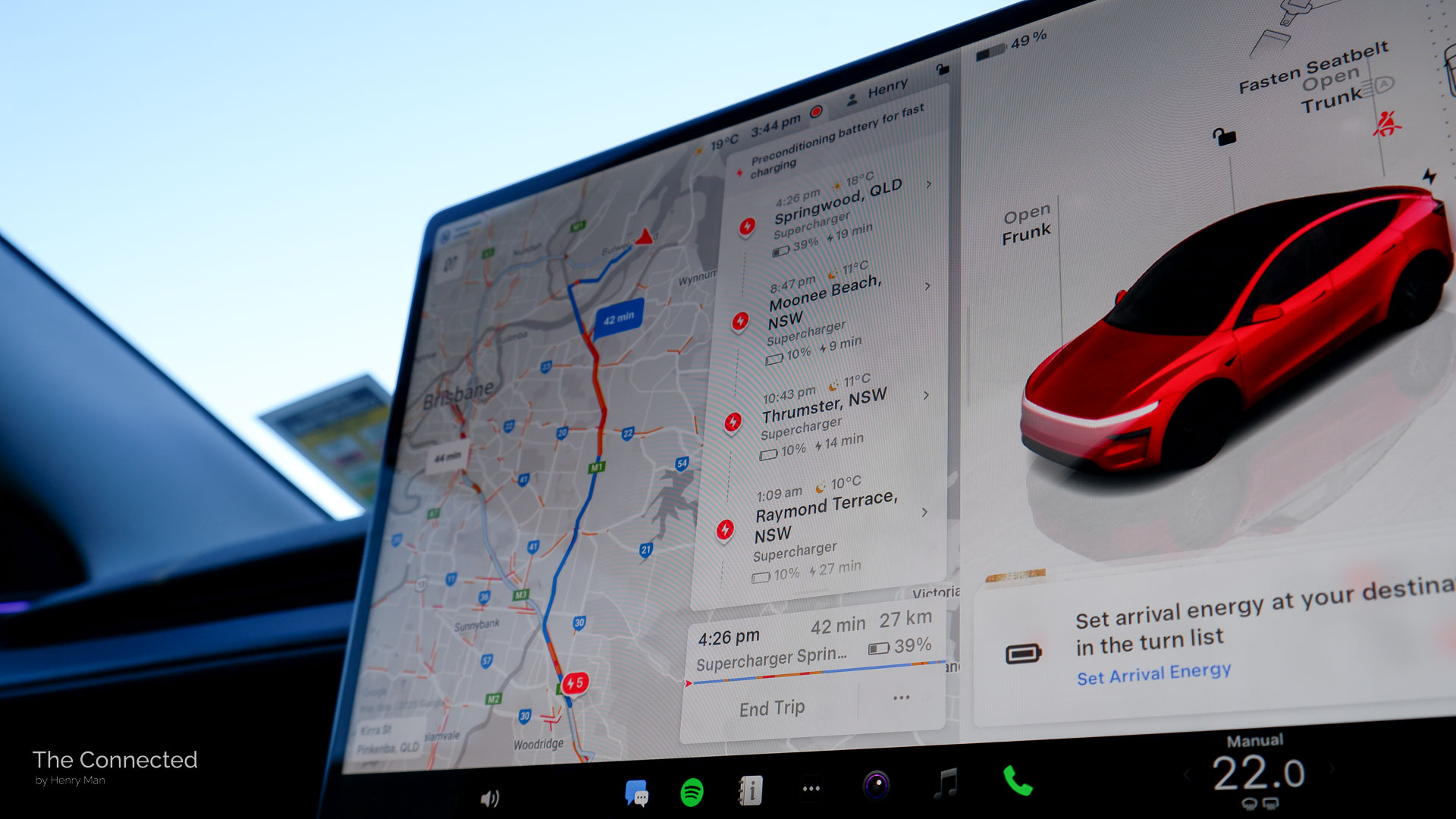


The only thing I missed were traffic alerts from Google Maps and Waze, and voice control that could be activated other than pressing the steering wheel button and one that would speak back, although the Grok assistant is rolling out.
There are many quirky and headline-grabbing features, too, such as Zero Emissions Testing Mode (i.e. fart mode), Rainbow Road Mode and Sketchpad, alongside plenty of other easter eggs.
Unfortunately, owners need to pay $9.99 per month for the Premium Connectivity subscription to unlock basic features such as satellite-view maps with live traffic lines, speed camera alerts, music, video and karaoke streaming from the built-in SIM card, and Dashcam and Sentry Mode viewing on the mobile app.
Many of those mapping features would usually be available on the phone – and without paying extra – via Apple CarPlay and Android Auto.
It’s also great to see simple tutorials and instructions when first setting up the Tesla on the touchscreen itself to help new owners ease in – which often isn’t seen by other tech-focused vehicles.
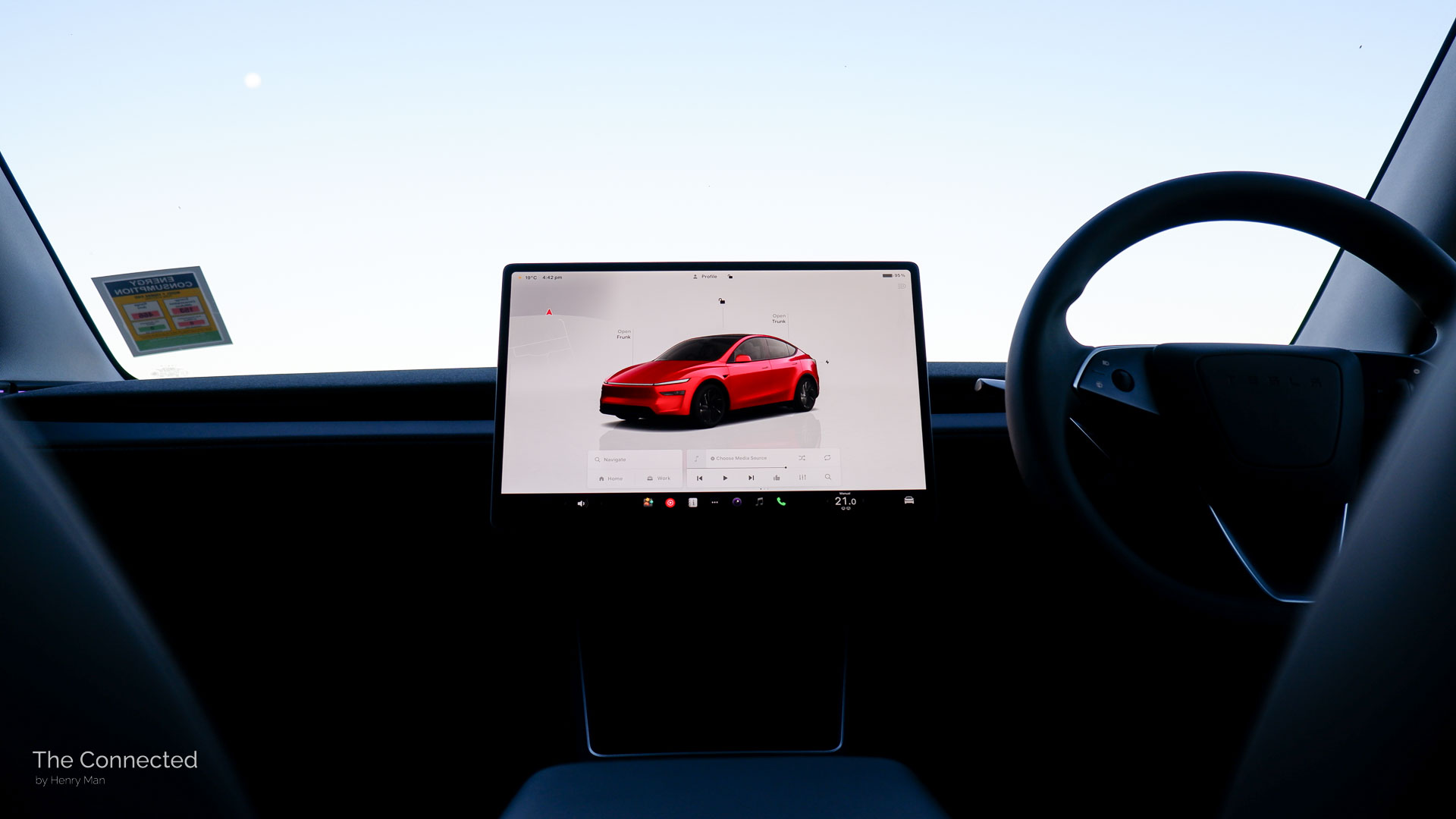
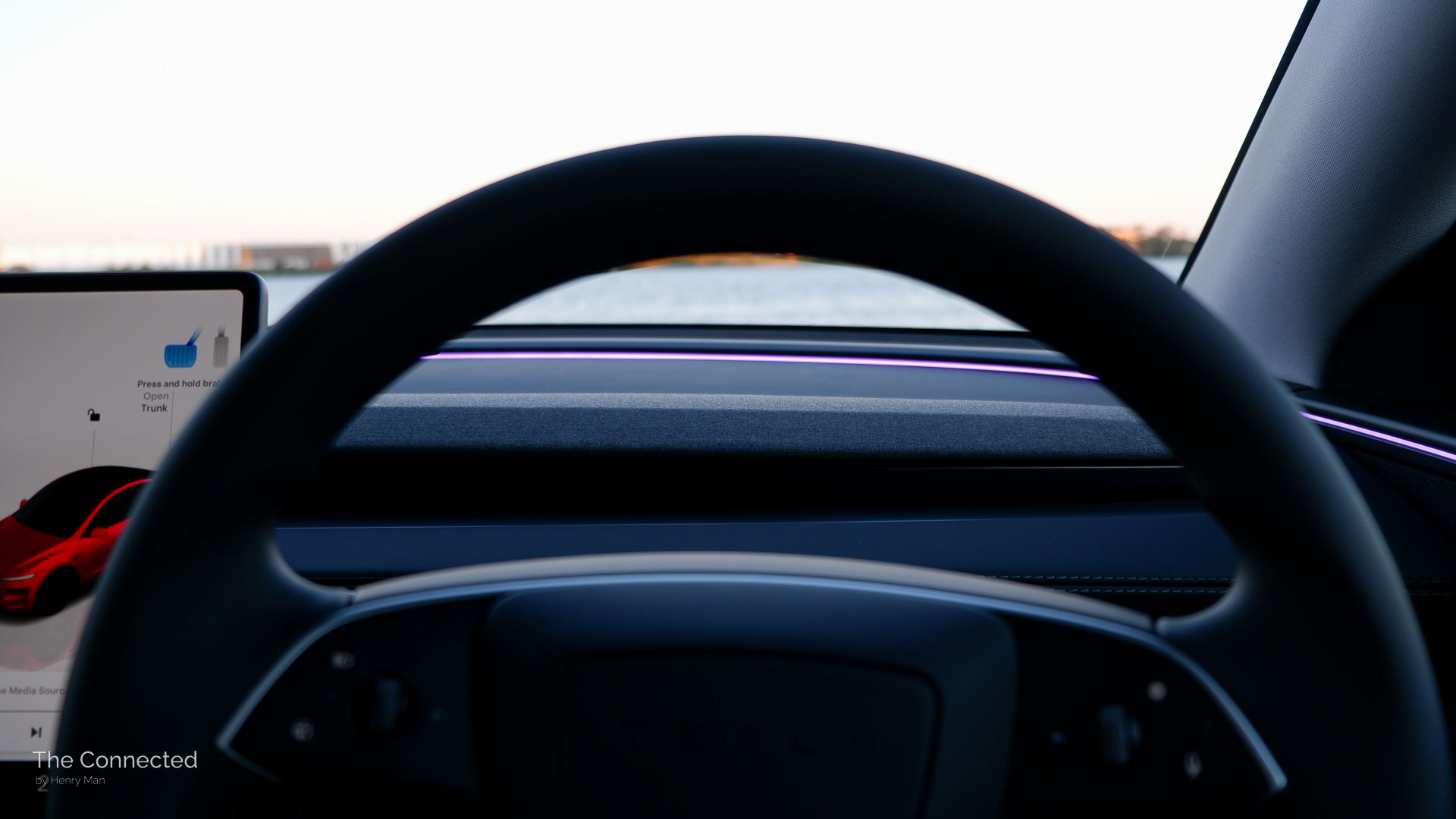
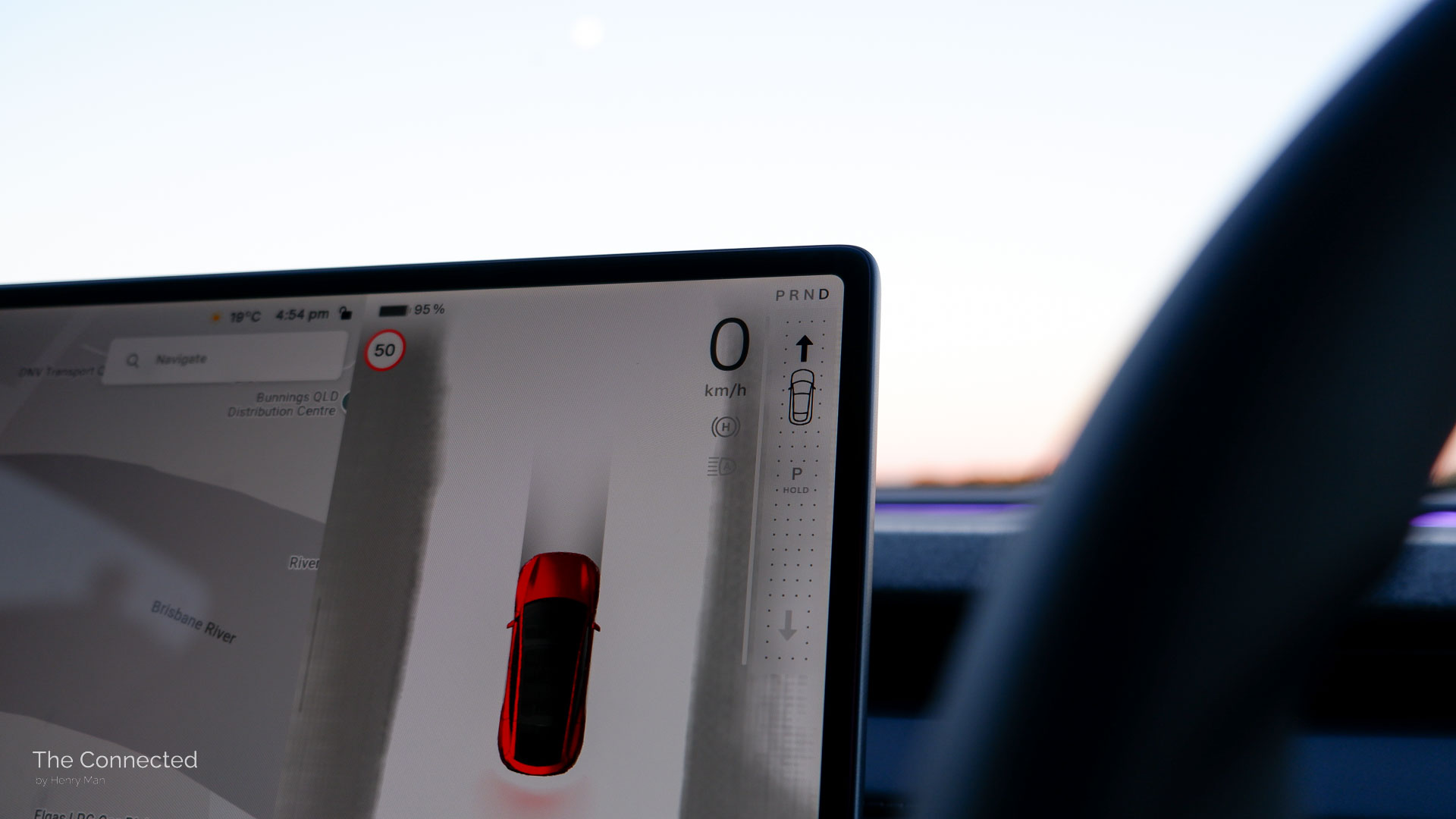

Tesla doesn’t offer a dedicated instrument display in front of the driver, with elements located at one portion of the central touchscreen. Cards at the bottom below offer access to media controls, the trip computer, tyre pressure monitor, and other suggestions.
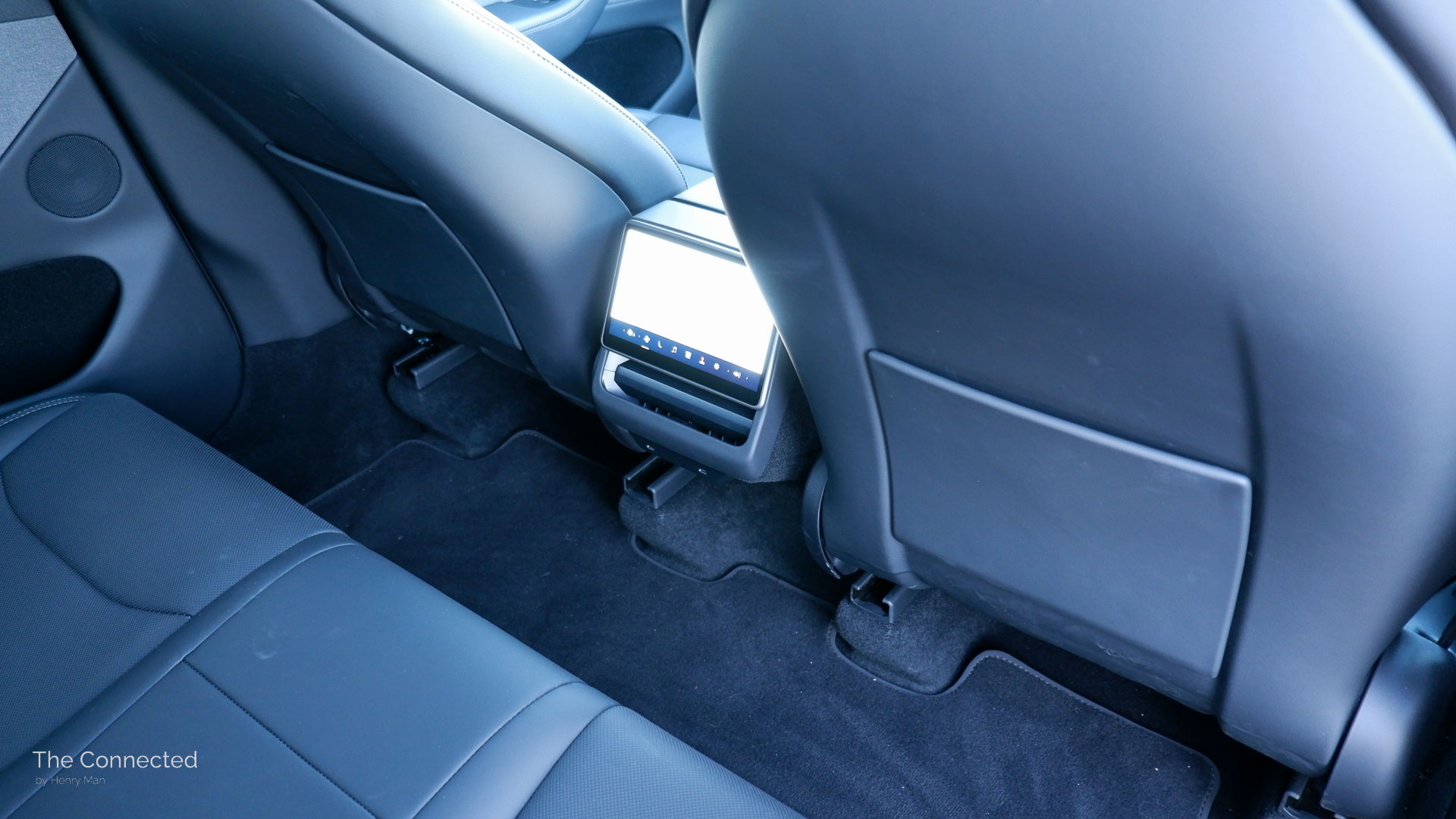
Rear passengers now benefit from an 8.0-inch rear touchscreen on the new Model Y, with the ability to adjust the climate controls, stream videos and control audio playback. Though, it would be handy to show the navigation too, with it currently only showing destination and estimated arrival time text at the top of the screen.
While it is low-set and in the middle, it is still easy to see thanks to a bright and crisp display. It also does a good job at mirroring videos and karaoke that is playing in front, but can be separated and stream videos independently as well; connecting Bluetooth headphones can play audio individually rather than going through the speakers.
The standard nine-speaker system on the base Model Y RWD performs well.
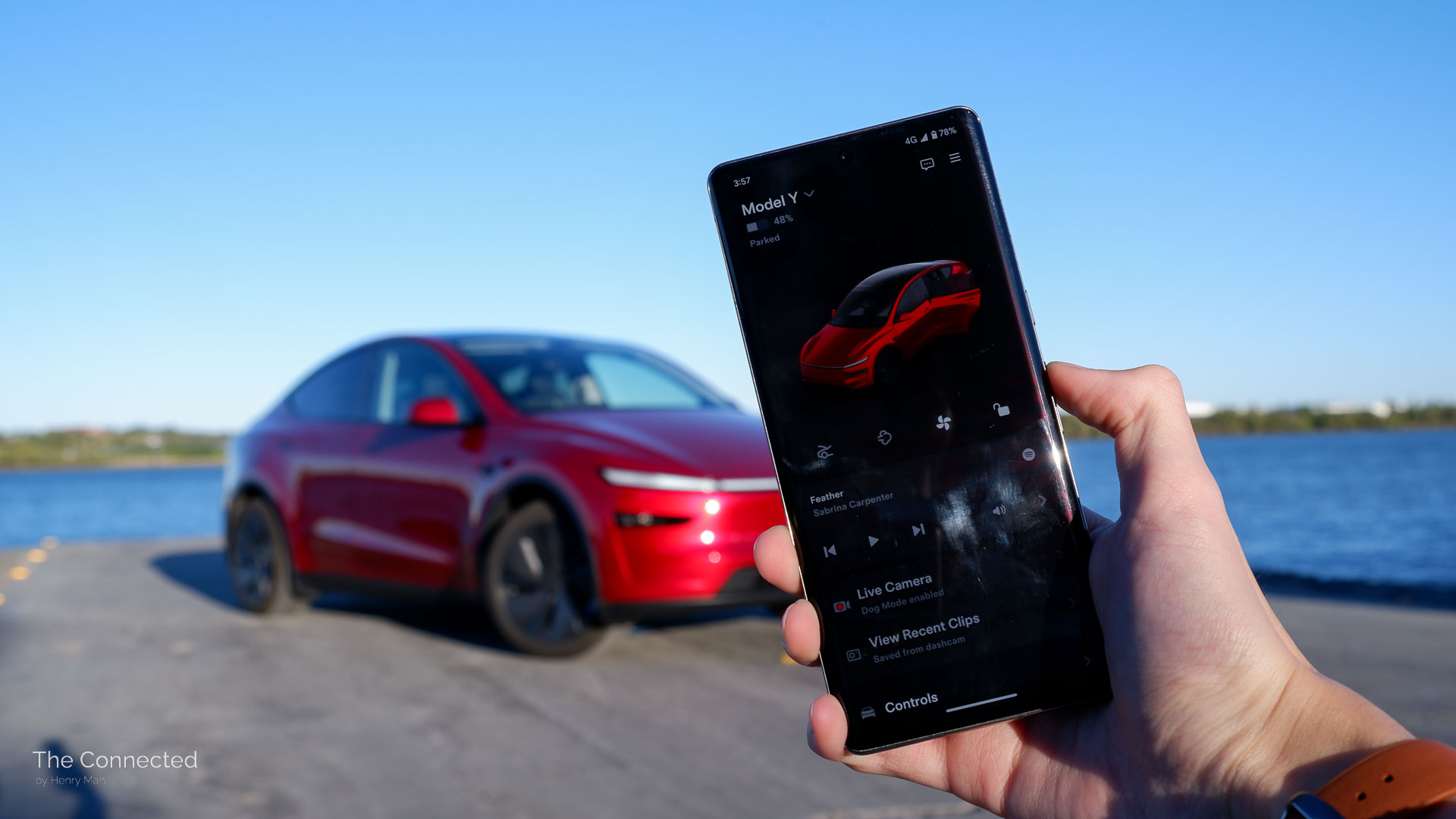

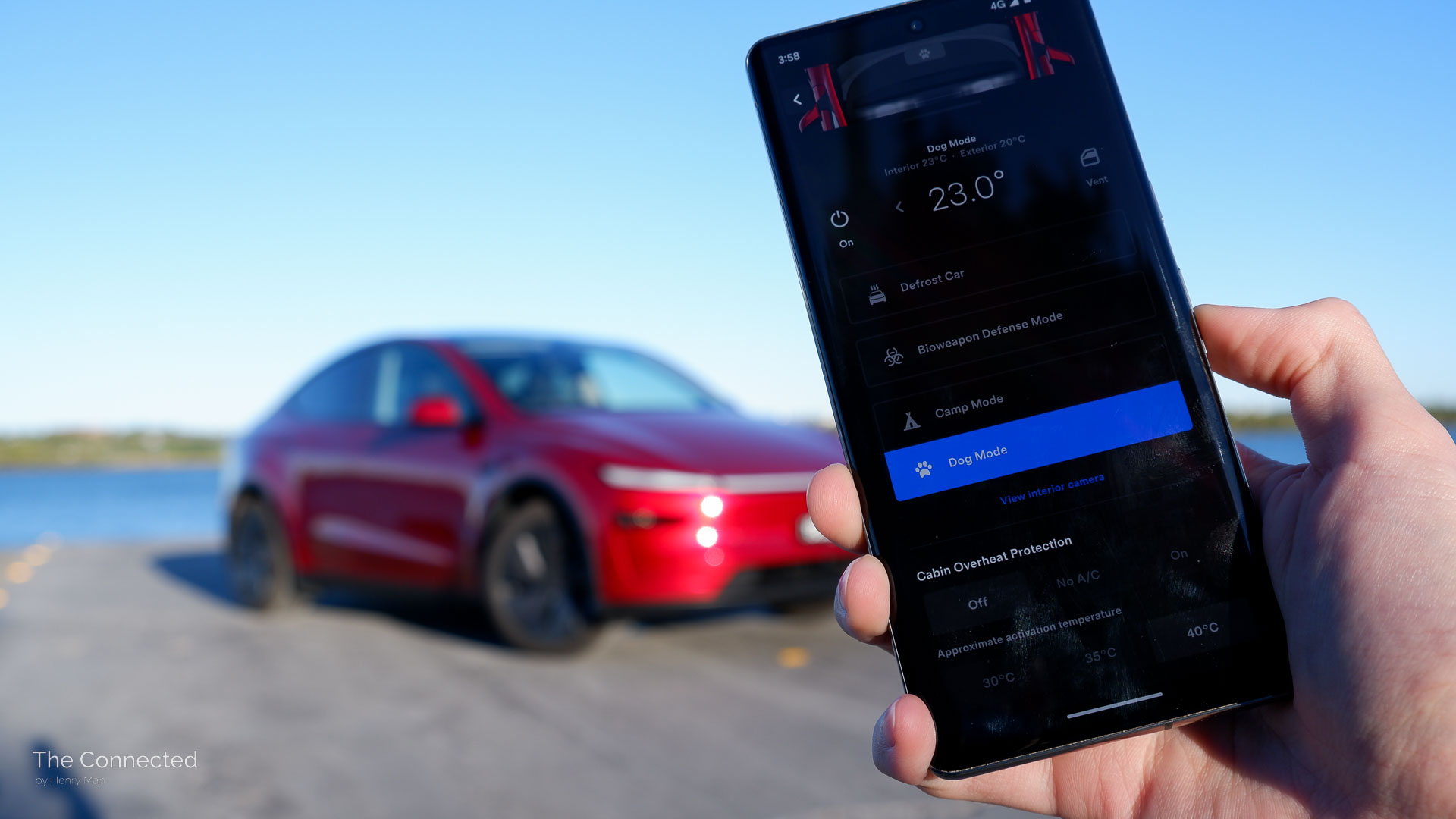
Another highlight of the Tesla electric SUV is its mobile app. Whereas other carmakers’ apps can feel slow and barebone, the Tesla app is easy to set up, super quick to send commands and packed with functionality.
It can turn on the climate control, open the boot and frunk, to viewing the vehicle speed and location in real-time, triggering fart noises, and live monitoring the vehicle’s seven exterior and interior cameras with Sentry Mode (and a Premium Connectivity subscription).
Apple iPhones, Apple Watches and Android phones can also act as the proximity key with better reliability thanks to a new UWB sensor for compatible devices or Bluetooth. It would be great if there was support for Google Wear OS smartwatches, too.
The Model Y automatically unlocks when opening a door and locks when walking away with a sound effect via the exterior speaker, although there aren’t any buttons on the door handle to provide more assurance.
Tesla only includes two key cards which should be backup options since owners need to tap the B-pillar and place it on the right-side Qi wireless charging pad to drive the electric car off.

Safety.
2026 Tesla Model Y RWD safety features:
| Front AEB with vehicle/pedestrian/cyclist/junction turning detection | Reversing camera with 360-degree Tesla Vision visualisations |
| Rear AEB | Front, side and rear camera-based parking sensing |
| Blind-spot assist and blind-spot view cameras | Traffic light and stop sign chimes (with ‘Full Self-Driving Capability’) |
| Rear cross-traffic assist | Door open warning |
| Lane-keep assist | Road sign detection |
| Adaptive cruise control with lane-centring assist (Basic Autopilot beta) | Full LED headlights with auto adaptive high beams |
| Adaptive cruise control with auto-lane change assist, overtaking assist and highway off-ramp assist (with Enhanced Autopilot beta) | Full LED tail-lights |
The updated Model Y includes a host of safety assistance systems as standard – but its reliance on cameras only needs work, with disconcerting ‘phantom braking’.
Rather than using a combination of camera, radar and sonar sensors, Tesla elects to only use the former called ‘Tesla Vision’ in a similar approach as Subaru’s front safety systems.
Tesla’s adaptive cruise control (called ‘Traffic Aware Cruise Control’) performance is average. It generally works well at keeping a distance – but isn’t as smooth in low-speed stop-start traffic and stops too far from the vehicle in front.
There also isn’t a resume button at the previously set speed – it automatically relies the detected speed sign or drivers can use the intuitive physical scroll wheels to adjust the speed and sitance.
Adaptive cruise combined with good but assertive lane-centring assist (called Basic Autopilot and Autosteer beta) – although it annoyingly cancels the entire system and triggers regenerative braking as soon as drivers put some pressure on the wheel.
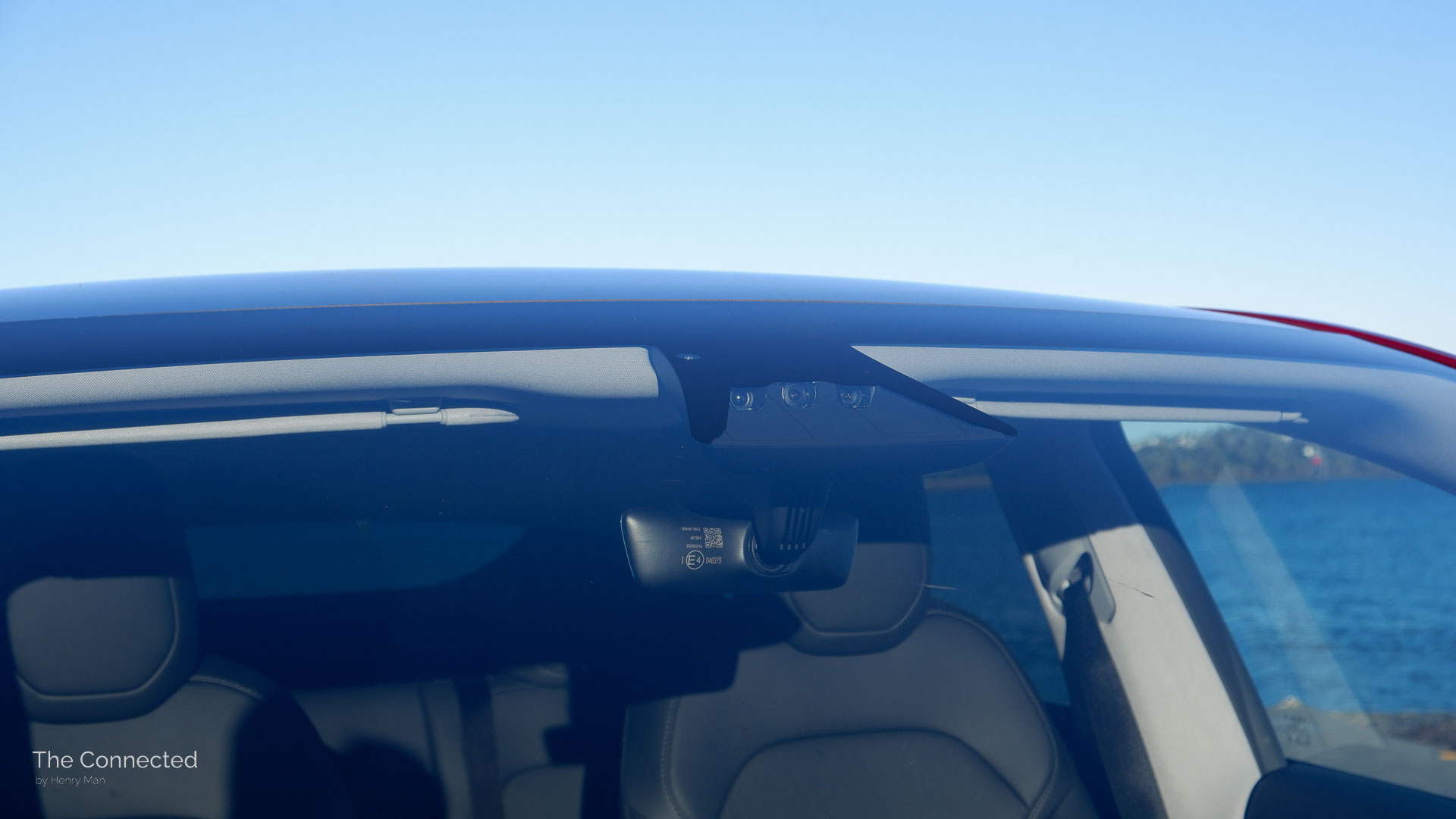

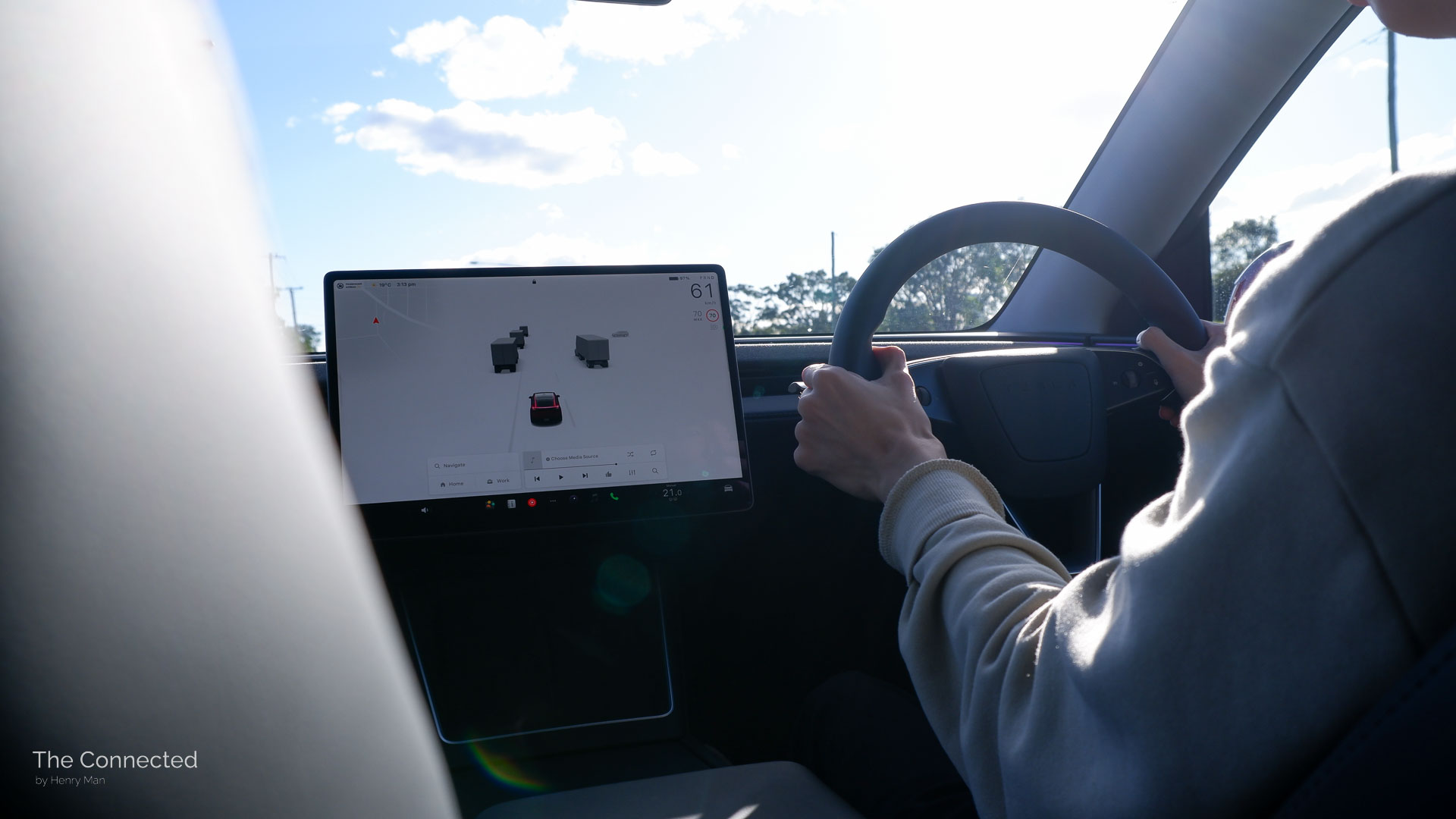
Disappointingly, I experienced several situations where the vehicle randomly slows down aggressively on the highway, down from 100km/h to under 50km/h when there isn’t anything in front of the vehicle, other than shadows.
This has been coined as ‘phantom braking’. While it’s also present from time-to-time with other car brands, it happens too frequently on the Tesla Model Y – an important lesson that it is by no means a hands-off autonomous system.
However, what’s more impressive is auto lane change assist which switches lanes quickly without much hesitation, unlike Highway Driving Assist 2 (HDA 2) on Hyundai and Kia cars, and startlingly fast auto parking assist.
Both are part of a costly $5100 Enhanced Autopilot option. It also brings Navigate on Autopilot (NOA) – which I quickly disabled as it doesn’t choose which lane to be in appropriately and fails to take off-ramps safely. It even suddenly swerved the wheel to the exit without indicating and last minute in my testing.
It’s important to note that no Tesla is self-driving as at the time of publication. While there is an eye-watering $10,100 option for ‘Full Self-Driving Capability’, it only brings a chime when the traffic light turns green, in addition to Enhanced Autopilot features. Avoid this option.


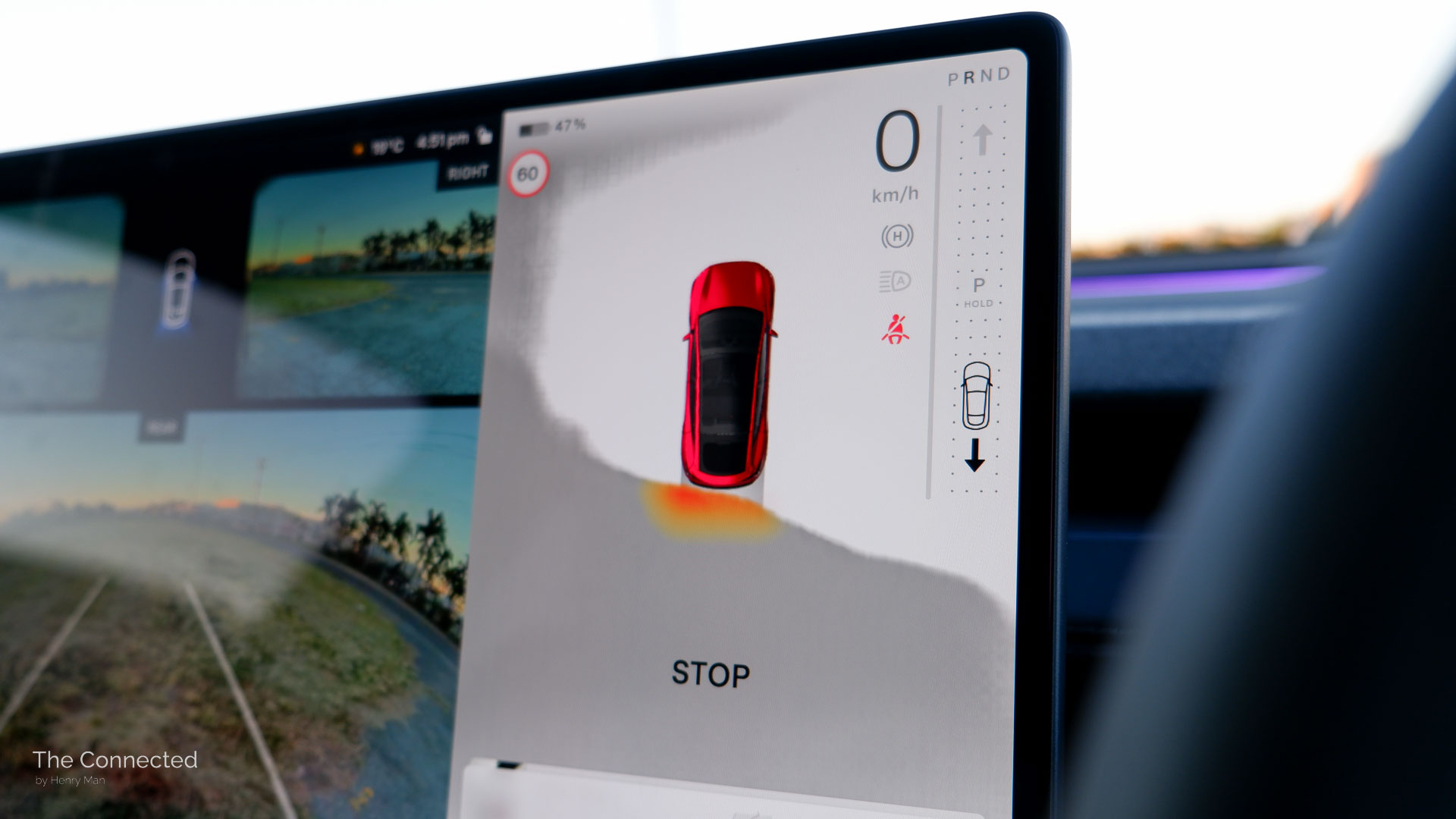
Furthermore, Tesla offers unique visualisations on the touchscreen that animates what the eight all-round cameras see rather impressively – including pedestrians, road markings, traffic lights and signs, rubbish bins, and even what indicators are activated on other vehicles.
While the updated Model Y still doesn’t offer a proper 360-degree surround-view camera system (due to the lack of ultra-wide lenses underneath the wing mirrors), it draws out the surroundings well as a good substitute, including parking bay lines.
Yet, it often thinks the vehicle behind is rear-ending the Model Y – even though the reversing camera is super clear with Hardware 4.0.
While the blind-spot view cameras are high-resolution and can be set in three different positions, Hyundai, Kia and Genesis’ approach is simply more intuitive since you don’t need to look beside at the central touchscreen.
The new Tesla Model Y also introduces a front bumper camera with a washer function and a subtle red dot LED near the A-pillar for the camera-based blind spot monitoring system, too.
The former is very useful since there aren’t any sonar-based parking sensors with the American company relying on cameras to estimate the distance to objects and kerbs for the front, sides and rear.
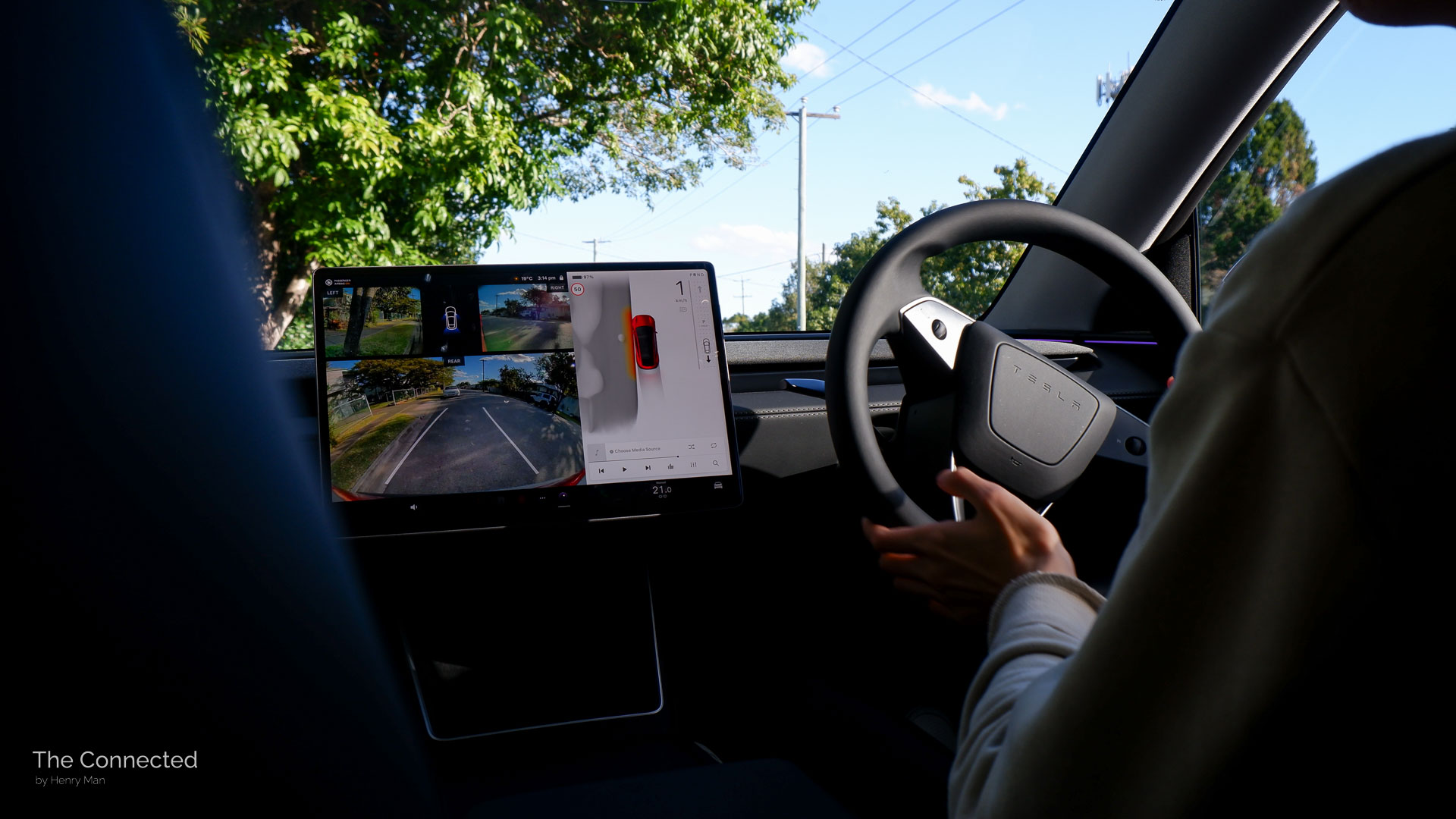
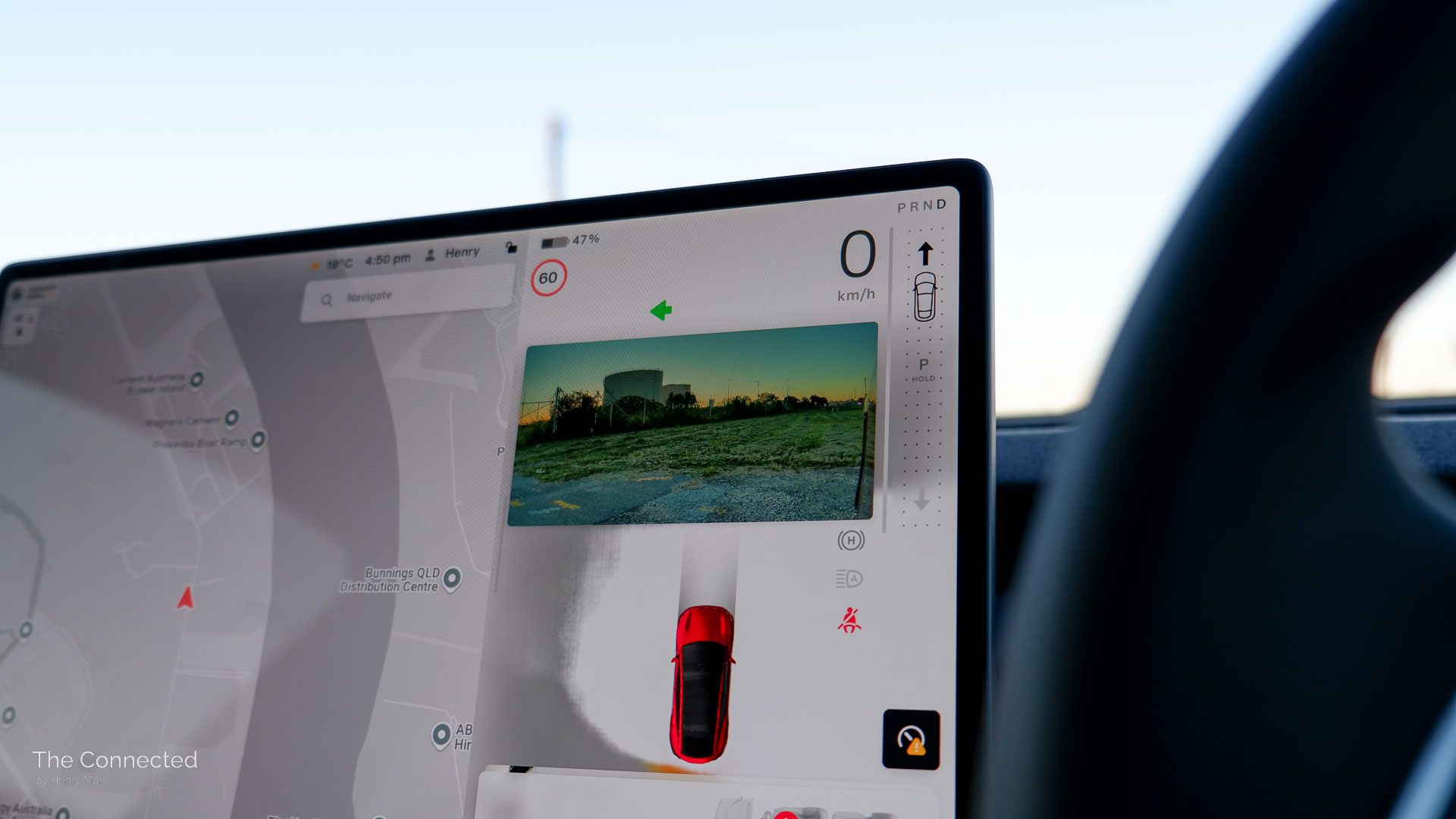
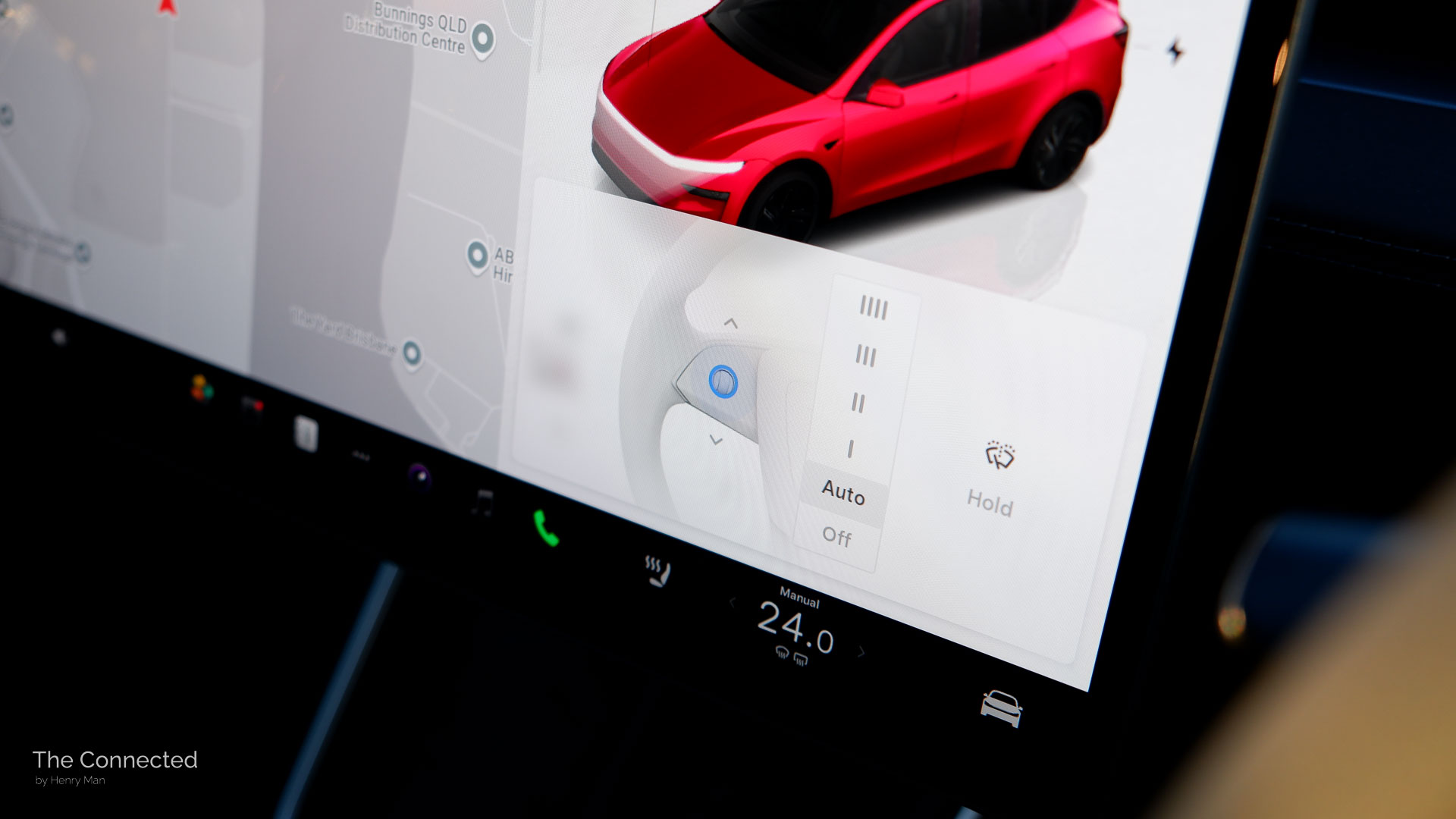

Unfortunately, its reliability is hit and miss with it sometimes telling me that it’s too close to something accurately, but other times incorrectly saying it’s close to anything at all.
The move to a camera-only system has also meant ‘Dumb Summon’ and ‘Smart Summon’ still aren’t available yet in Australia, even though the transition started globally in 2022.
The reversing camera doesn’t offer a guideline to safely open the boot as well – a trend other carmakers have adopted, too.
Tesla’s safety warnings are subtle (even quieter in ‘Joe Mode’), except for the alarmist lane-departure warning – with a speed sign detection system that doesn’t annoyingly chime when you’re overspeeding by default in Australia.
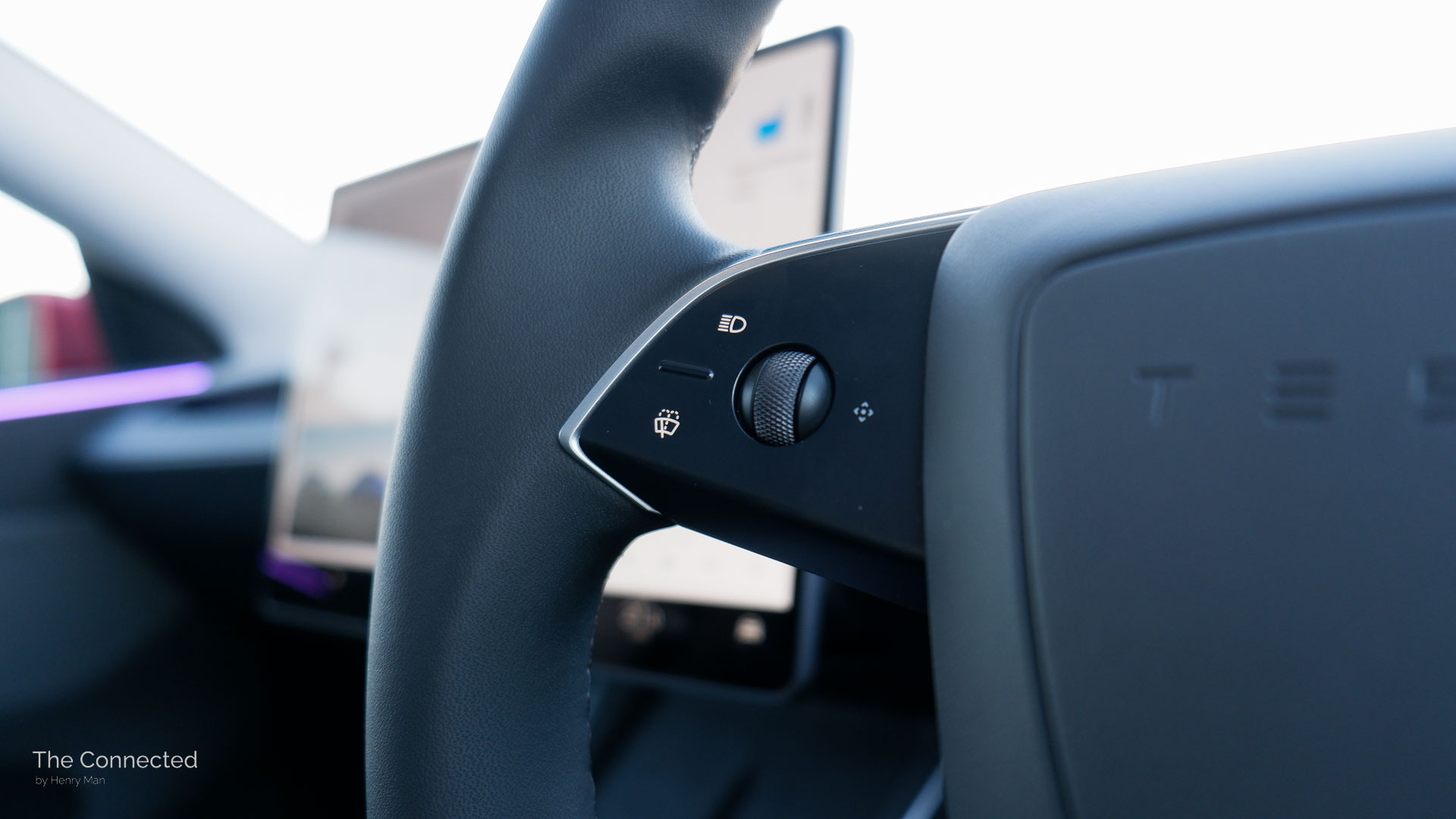
Meanwhile, the camera-based auto wipers were hit-and-miss with it randomly dry wiping the windscreen when it wasn’t raining – seemingly being triggered by the sun glare.
Although auto wipers can be disabled, they automatically re-enable when Autopilot is activted.

Another camera-only system that needs work is its adaptive LED headlights. While the units are bright and provide good visibility at night, the auto matrix high beam function often glared half of the vehicle in front intermittently – causing other road users to think you’re flashing the lights.
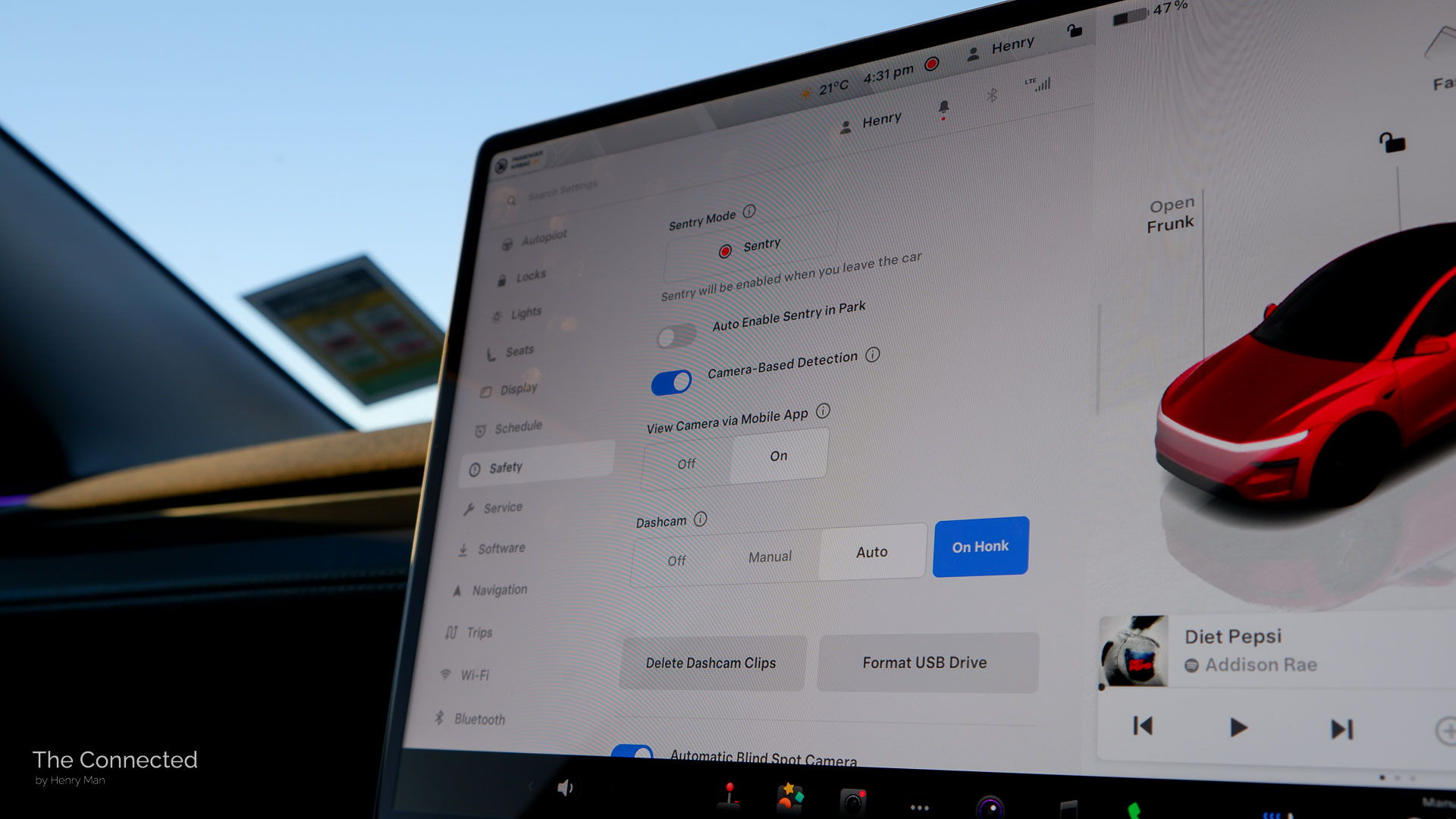
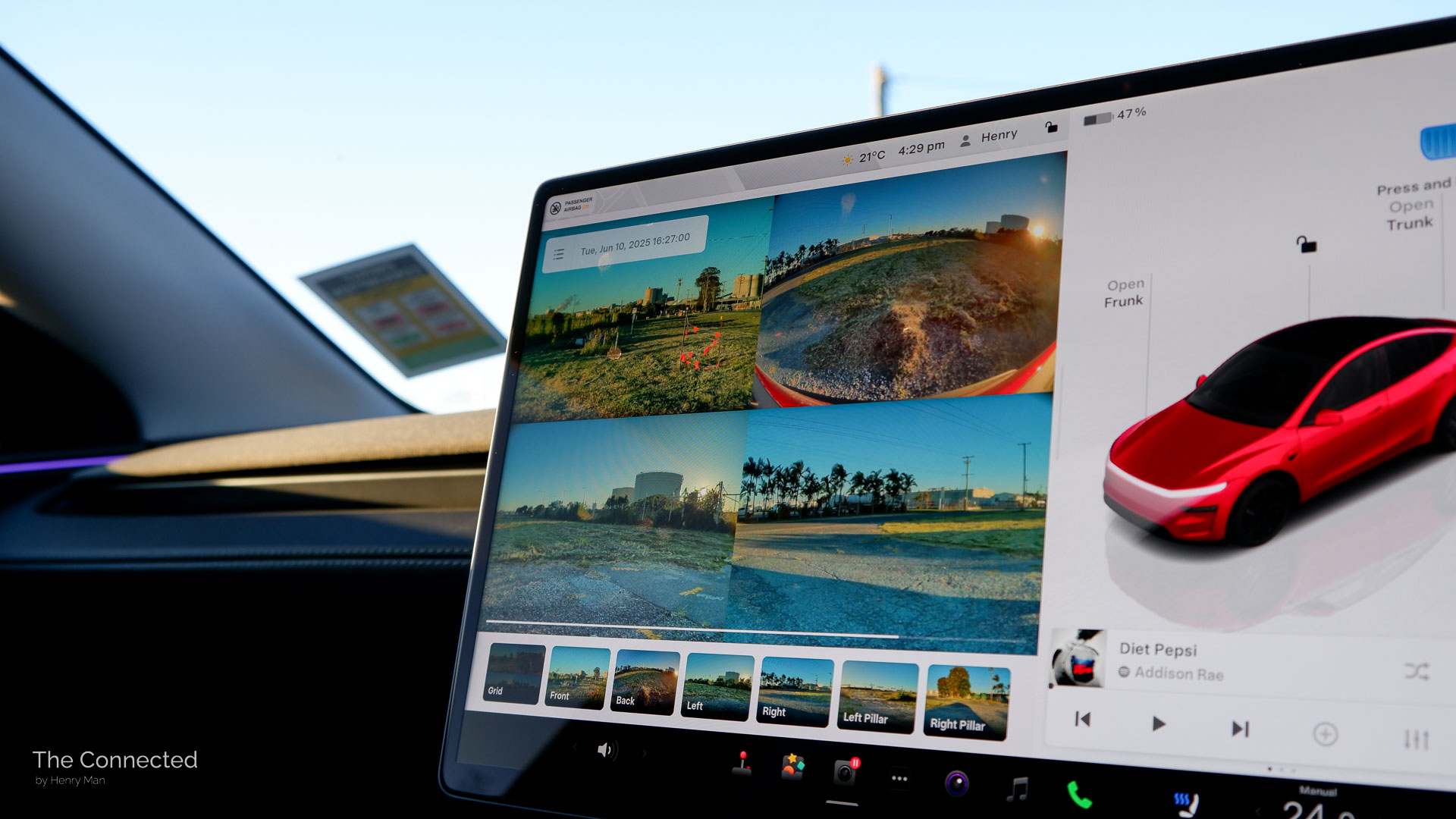
Crucially, a key selling point of Tesla electric cars is its built-in dashcam recording feature using all-round cameras (with six camera angles) which are saved on an included 128GB USB-A stick.
Even better is activating Sentry Mode, which records 24/7 at the expense of consuming more battery energy. The Tesla mobile app can activate Sentry Mode, remotely stream the cameras live, and view recorded clips – as long as you pay $9.99 per month for Premium Connectivity.
When anything can happen while driving or parked, this provides peace-of-mind without the need to install any devices and hide ungainly cables.
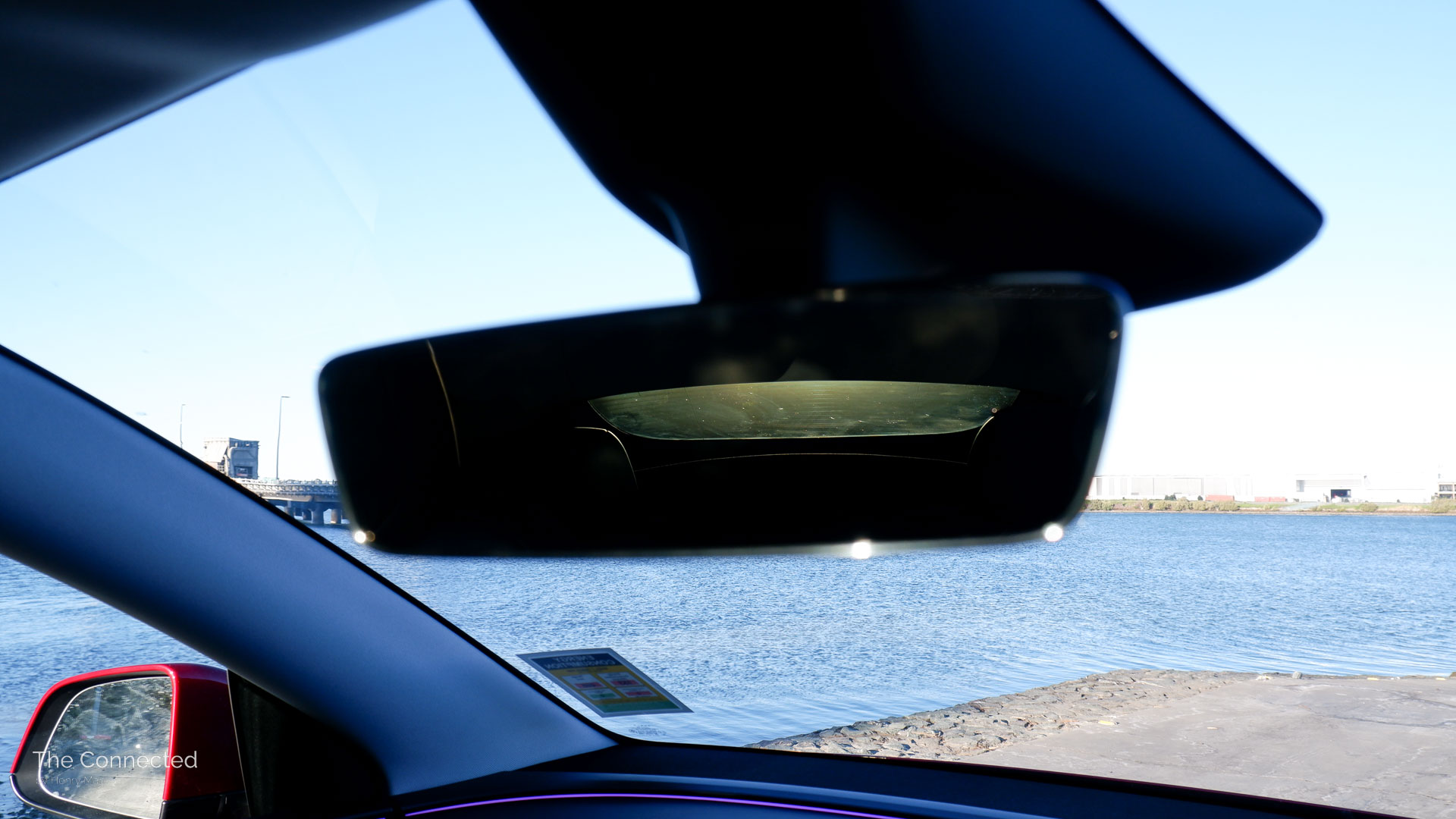
Similarly, the Model Y features auto-dimming function for the rear-view mirror and both wing mirrors – with the latter uniquely able to be disabled via the touchscreen settings.
The 2026 Tesla Model Y hasn’t been safety tested by the Australasian New Car Assessment Program (ANCAP) and is unrated at the time of publication.
Range and charging.
2026 Tesla Model Y RWD battery and charging specs:
| Claimed driving range (WLTP combined cycle) | 466km |
| Claimed energy efficiency (WLTP combined cycle) | 13.9kWh/100km |
| Battery size and type | 60kWh (62.5kWh gross) LFP lithium-ion (estimated) |
| Battery voltage | 400-volt class |
| Max AC / DC charging speed | 11 / 170kW |
| Bidirectional charging | N/A |
| Connector type | Type 2 / CCS2 |
| Everyday charging limit recommendation | 100% |
The 2026 Tesla Model Y RWD achieved a super impressive 13.8kWh/100km energy efficiency in my testing after a week of urban and highway driving.
This equates to around 434km of real-world driving range from a full charge.
While Tesla doesn’t officially disclose battery sizes, it is estimated to be a 60kWh usable lithium-iron-phosphate (LFP) unit for the standard range pack.
Unlike the Long Range, Tesla recommends regularly charging this battery to 100 per cent without excessive degradation concerns. An energy-saving heat pump is standard.
With the addition of a new bonnet and design changes to maximise range, the refreshed Model Y continues to provide industry-leading efficiency with similar range than rivals that typically have a 10 to 20kWh bigger battery.
The smaller battery has environmental and charging benefits, too.
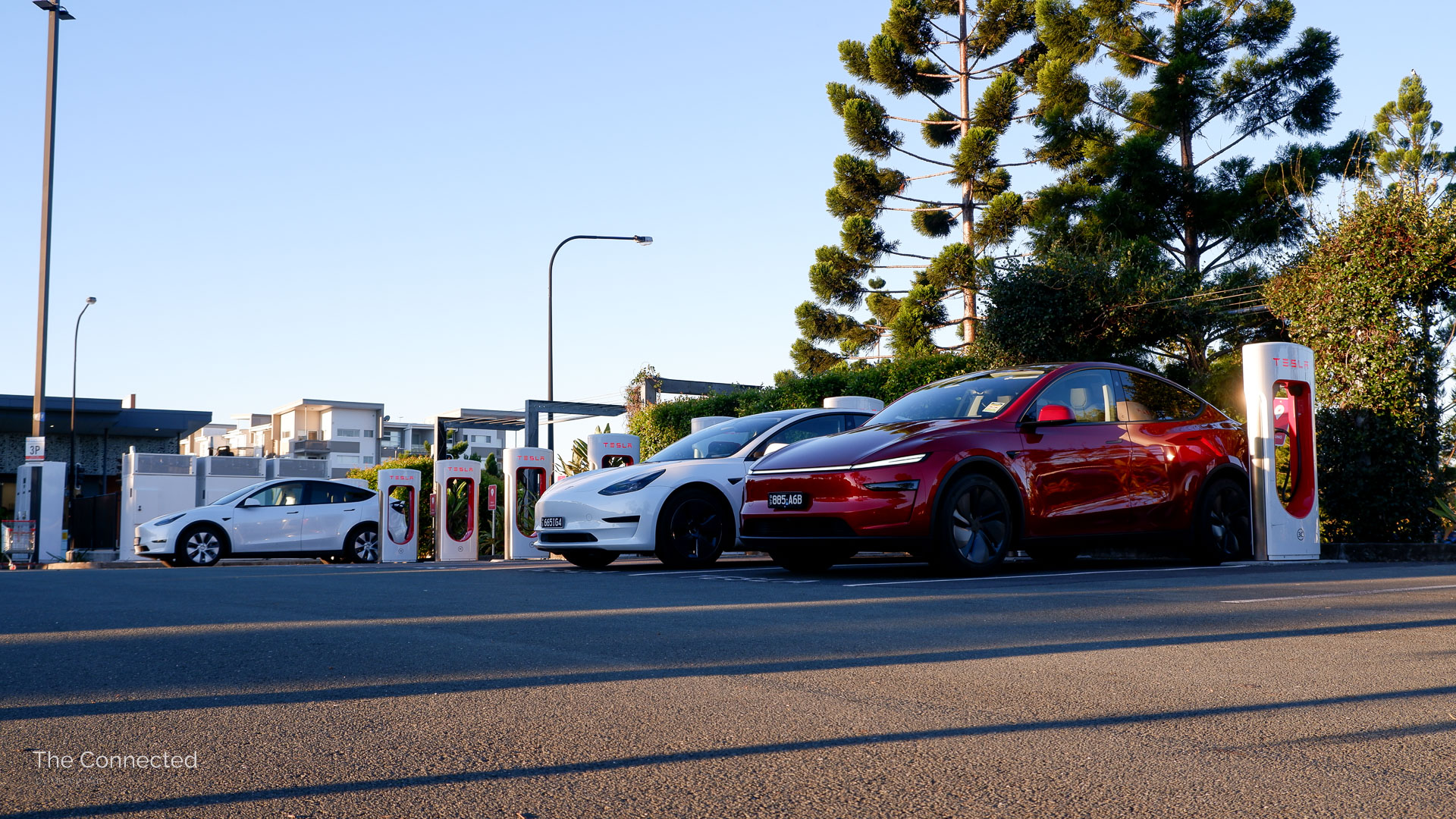
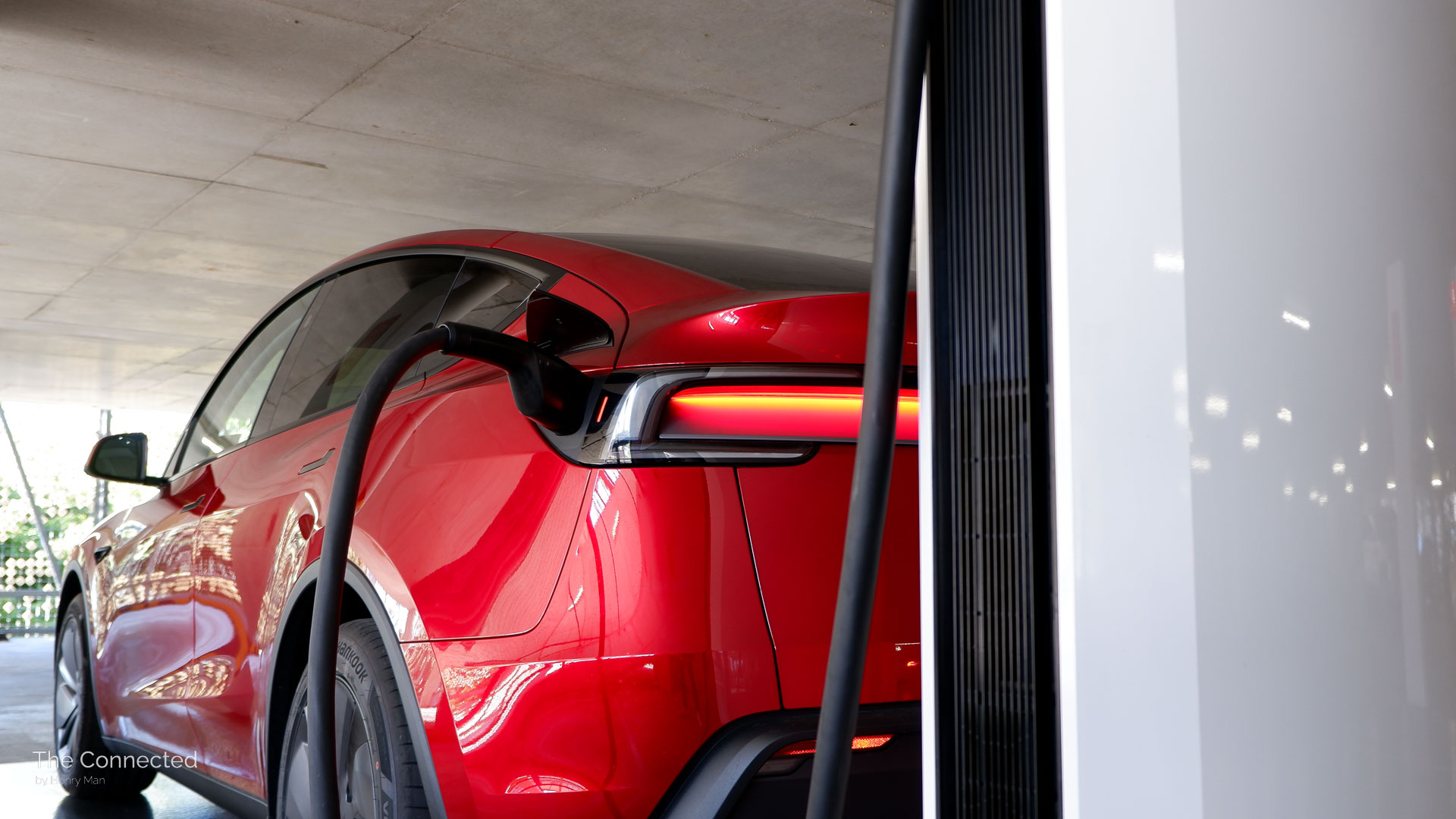
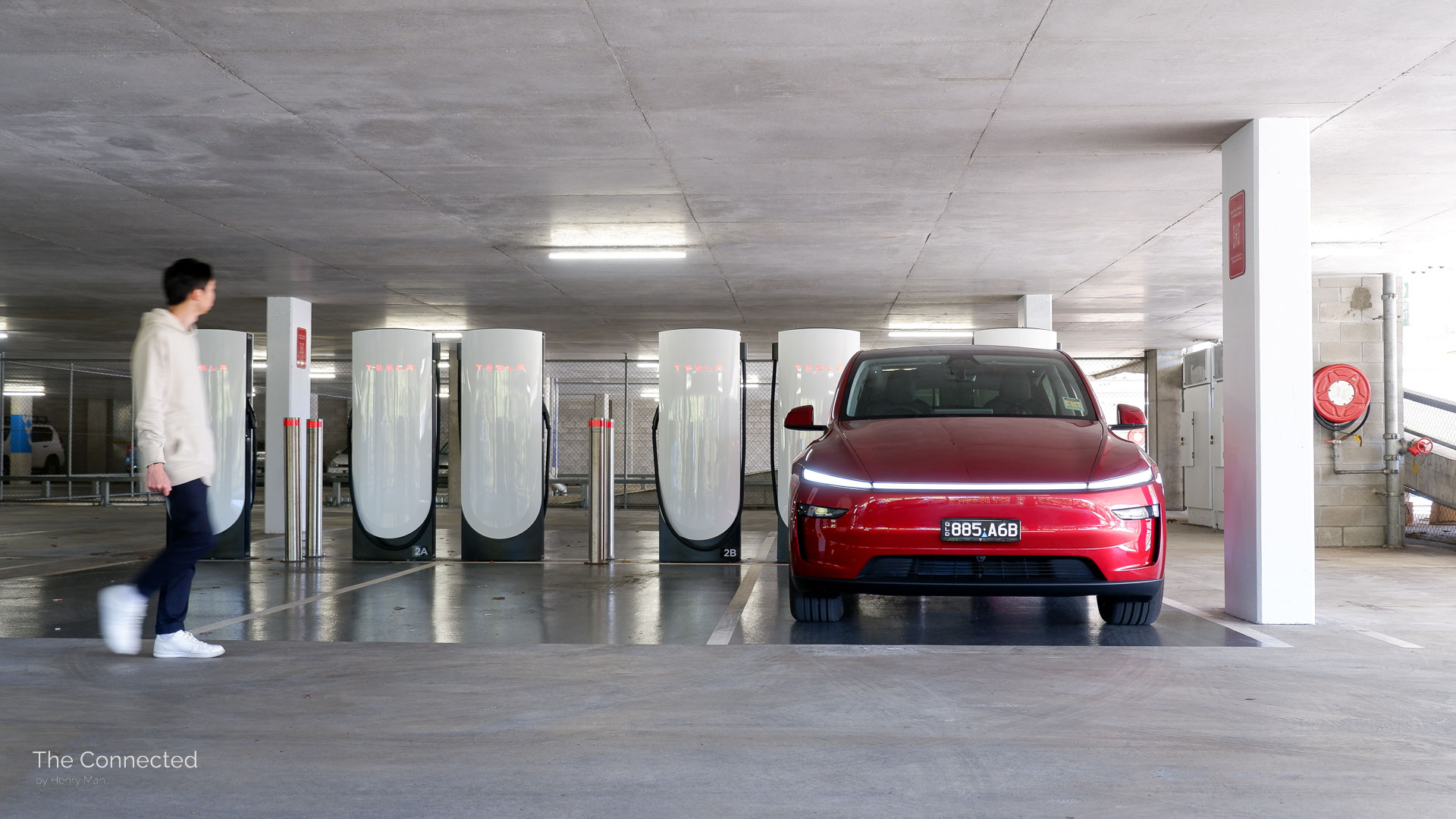


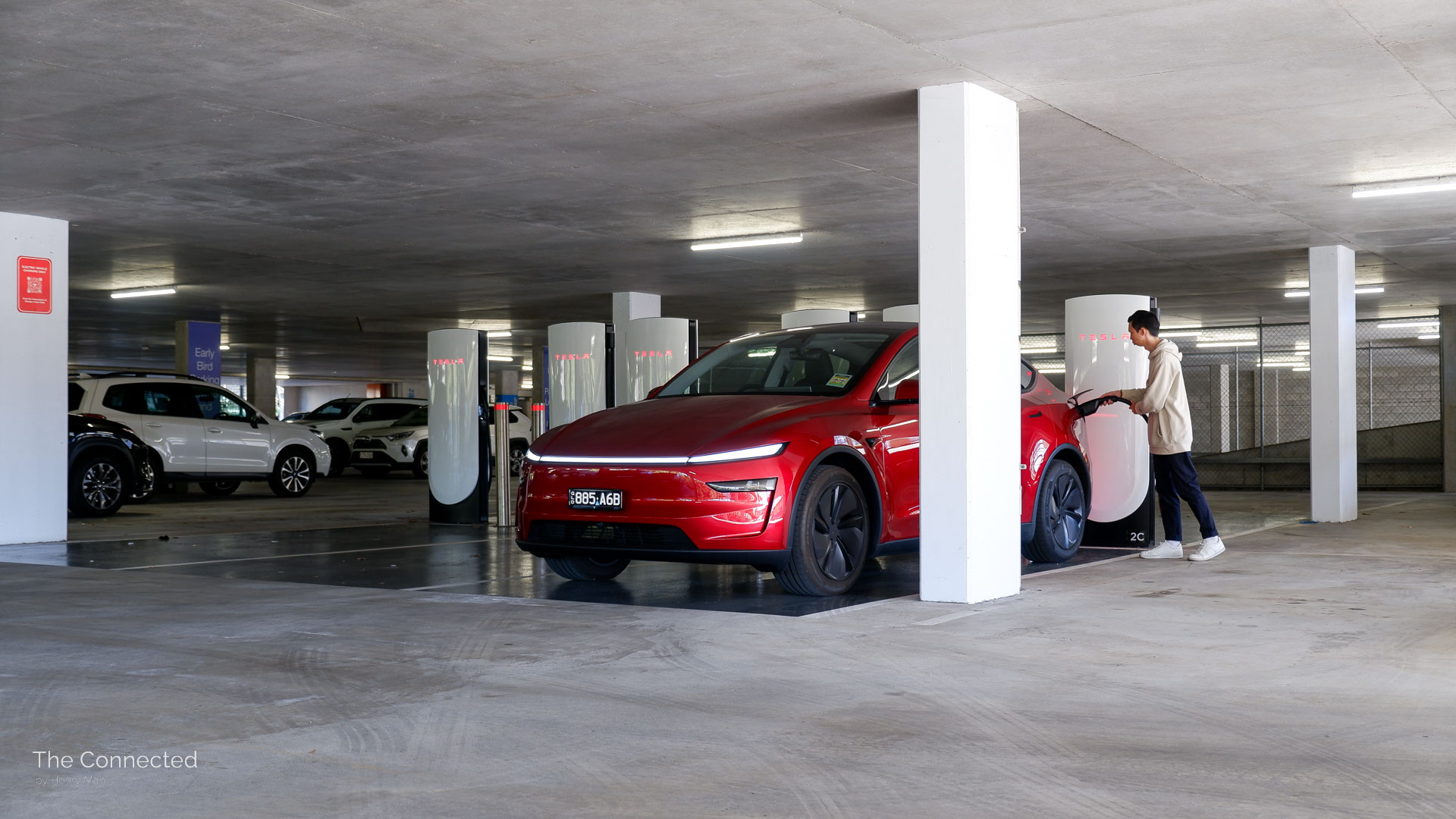
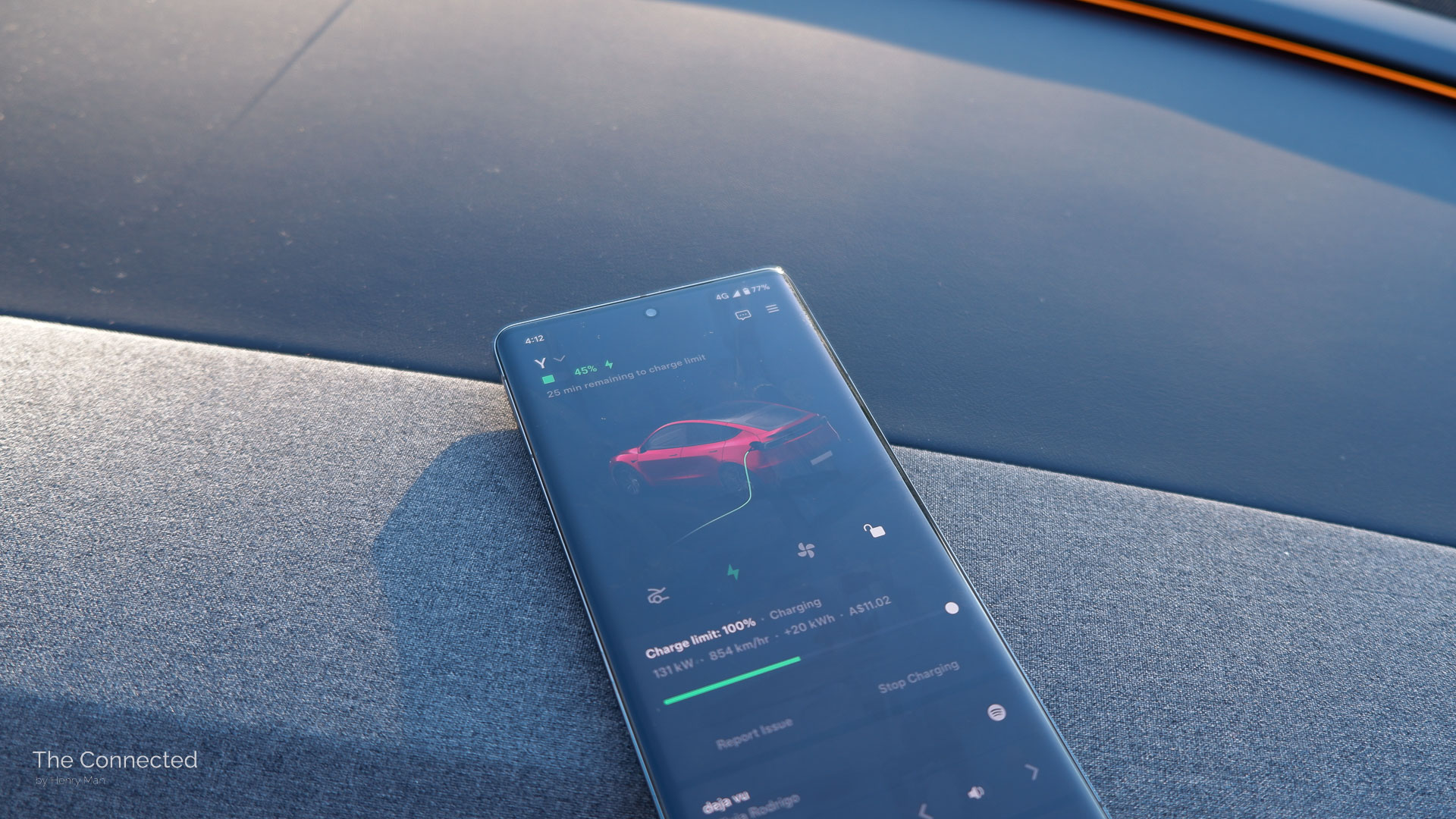
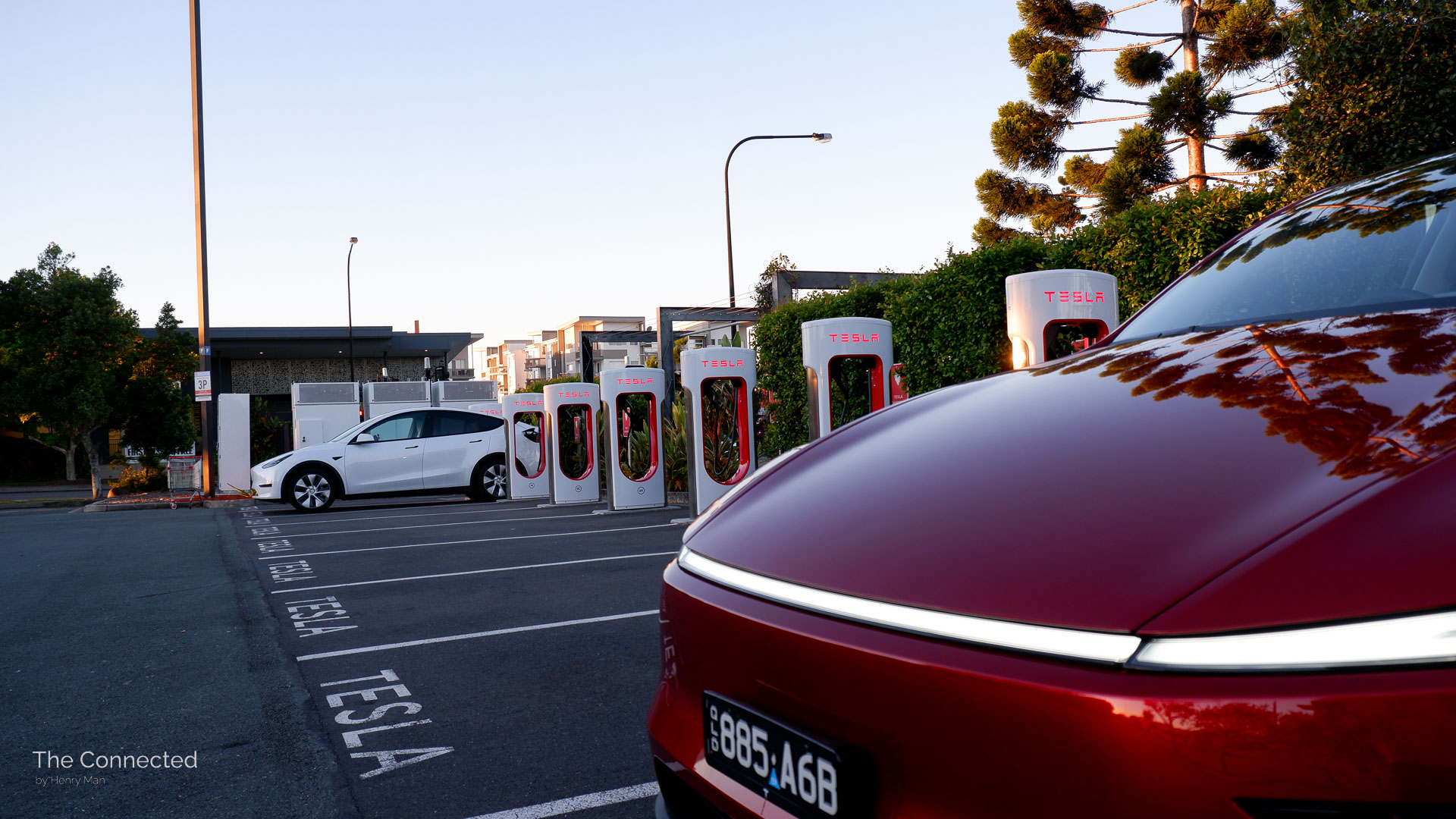
In my testing on a 250kW capable V3 Tesla Supercharger, the Model Y RWD recharged from 14 to 80 per cent in around 24 minutes.
The session averaged 112kW with fairly good sustained fast-charging speeds, reaching an 183kW initial peak – more than the 170kW DC claim. Battery pre-conditioning was enabled via putting the charger on the navigation prior
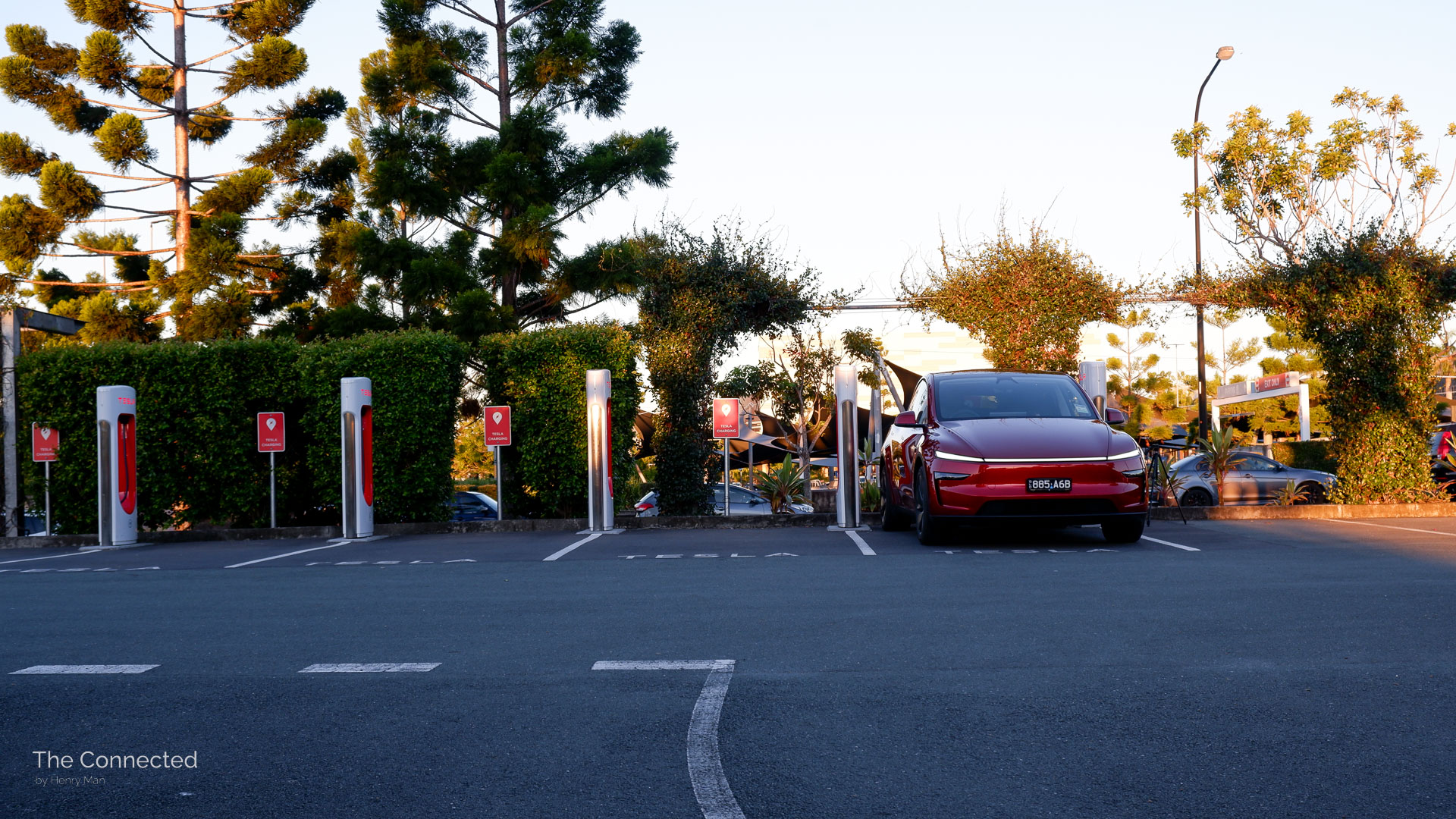
A key selling point is access to all Tesla Supercharging locations at a cheaper price than non-Tesla EVs. A quick handshake, plentiful stalls, and integration with the navigation system make public charging easy.
Tesla Superchargers are arguably fundamental for EV owners who can’t charge at home and need to rely on public infrastructure.
The 2026 Model Y continues to be capable of up to 11kW three-phase AC slow charging.
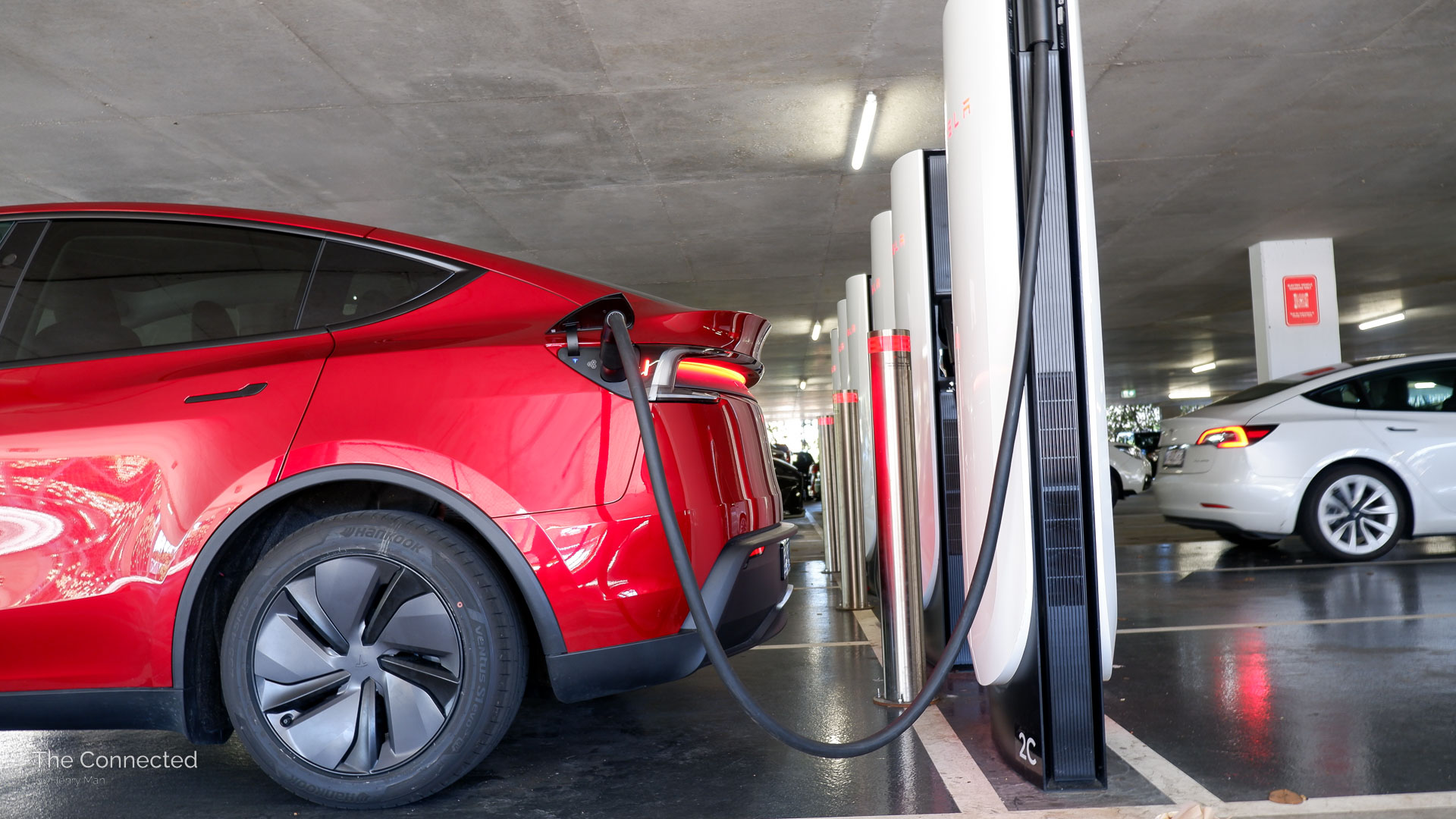
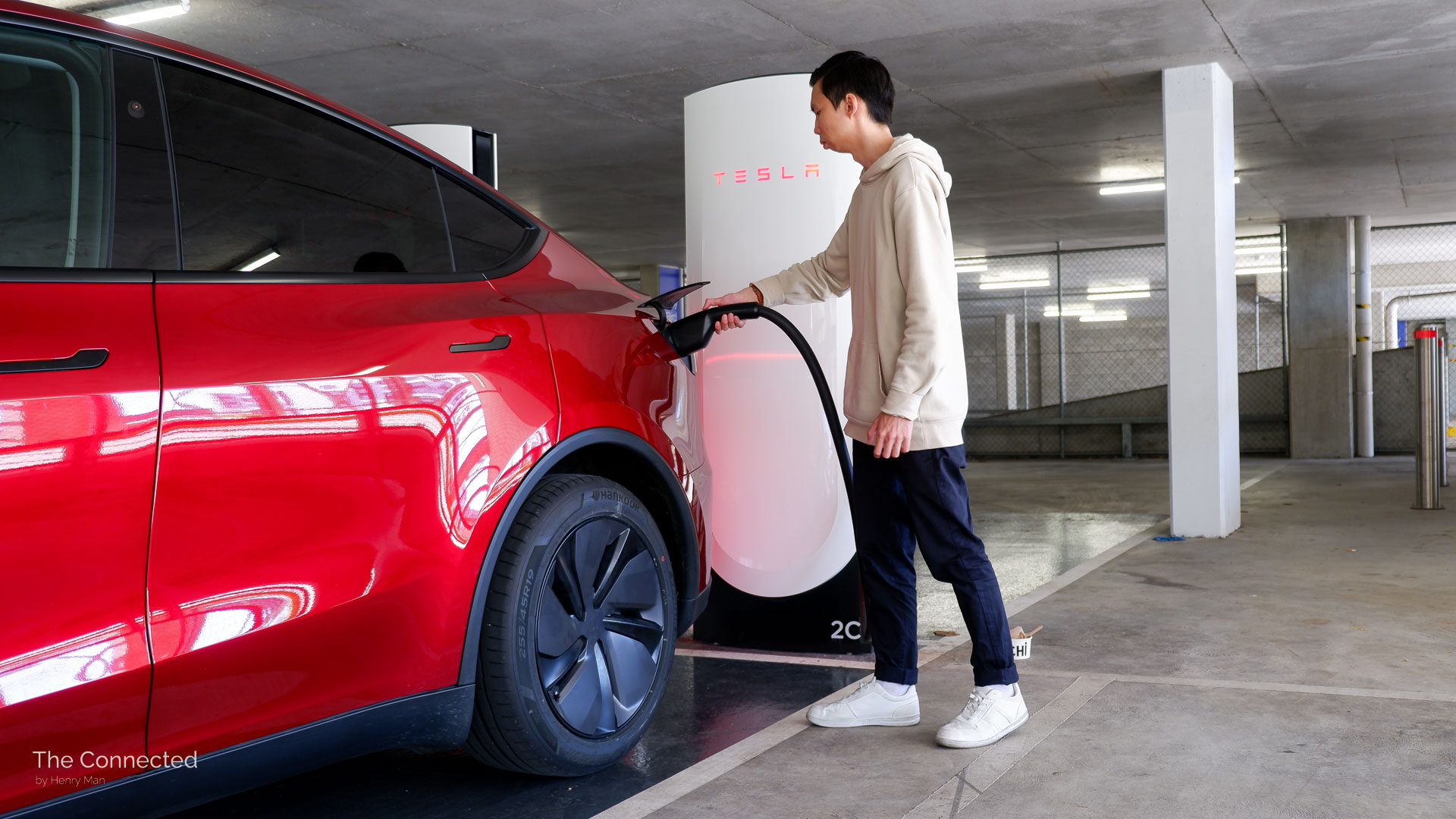

The rear-left quarter charge port position is accessible with a charging status indicator light and quick electrically-operated flap.
Unlike other electric cars, there aren’t any flimsy rubber caps for both AC and DC pins. It’s only missing an LED light to help illuminate the port at night.
Disappointingly, Tesla does not include any charging cable with new Model Ys. While this may be understandable for smartphones, where most consumers already have a charging adapter, this is rather unsavoury when many buyers are new to owning an EV.
Tesla charges $550 for a trickle charging cable and $800 (excluding installation expenses) for its up to 11kW Gen 3 Wall Connector.
Unlike EVs from BYD, MG and Kia, Tesla does not offer bidirectional charging capability – including vehicle-to-load (V2L) and vehicle-to-grid (V2G). However, a software update earlier this year enabled a setting to keep the USB-C charge ports activated when the vehicle is shut off.
It’s also clever that the 2026 Model Y adopts a unique 12-volt lithium-ion auxiliary battery – foregoing the dated lead-acid type which is less reliable and doesn’t last as long.
Driving.
2026 Tesla Model Y RWD powertrain specs:
| Electric motor | Single rear permanent magnet synchronous motor |
| Power | 220kW (estimated) |
| Torque | 350Nm (estimated) |
| Transmission | Single-speed |
| Drive type | RWD |
| Kerb weight | 1921kg |
| Turning circle | 12.1 metres |
| Towing (unbraked / braked) | 750 / 1588kg |
The facelifted Tesla Model Y electric SUV offers a more comfortable ride, while still retaining a sporty driving feel.
Driving in the electric SUV has a futuristic and computer-like vibe by simply jumping in with your phone, it turns on immediately, and an open view of the short dashboard in front due to the omission of a driver instrument display.
Even on the base rear-wheel drive, it’s brisk with a single motor producing up to 220kW of power and 350Nm of torque. These are estimated figures based on official regulatory filings since Tesla (for some reason) does not officially disclose all specs.
The Model Y delivers full power on tap rather than easing it in, but the RWD is not neck-breaking.


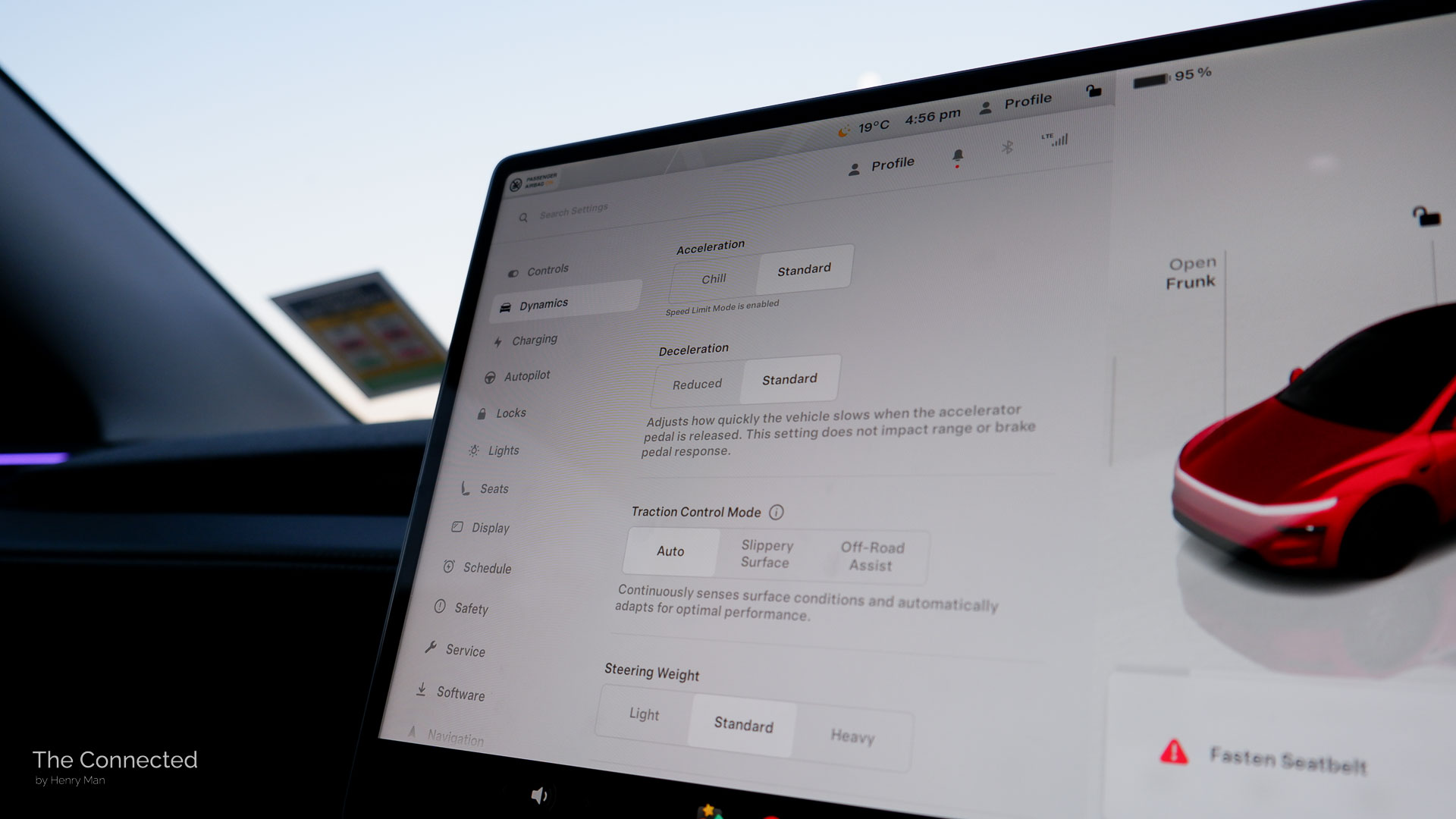
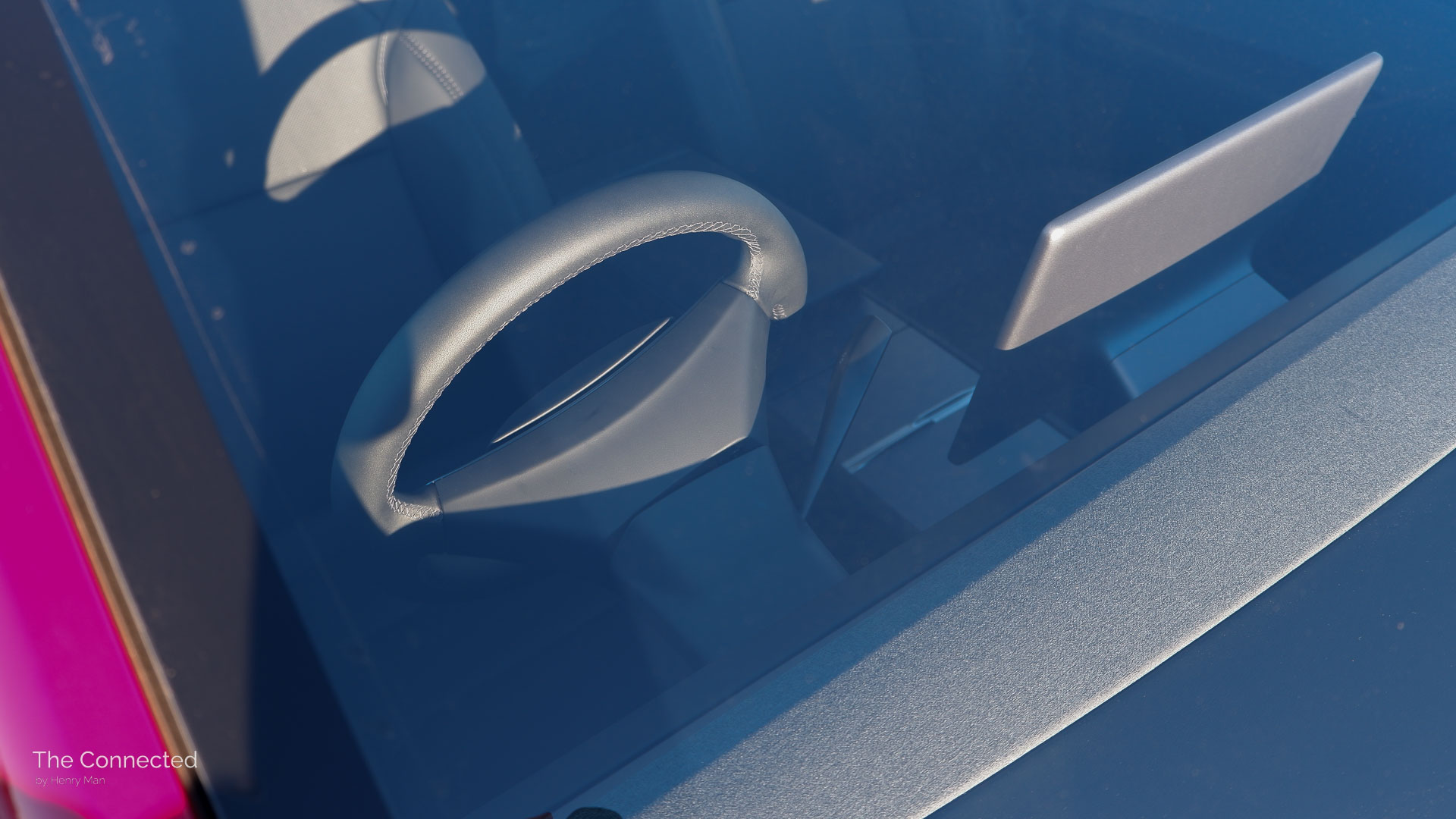
The steering is on the firmer side even on the standard setting. Combined with a small steering wheel, the Model Y feels slightly sporty and nimble to drive for a midsize SUV.
Likewise, while the new Model Y has a comfortable and compliant ride thanks in part to the addition of frequency selective dampers, there is still a firmer and sporty edge when it hits bumps.
Noise insulation is excellent with softer interior materials and double-laminated glass across all windows, too.
One-pedal driving is compulsory with standard and reduced settings. Tesla’s regenerative braking system is well-calibrated and progressively slows down the vehicle as you lift off the accelerator with good intensity.
Unfortunately, when the physical brake pedal is needed, such as emergency stops, it feels wooden and numb without much travel.
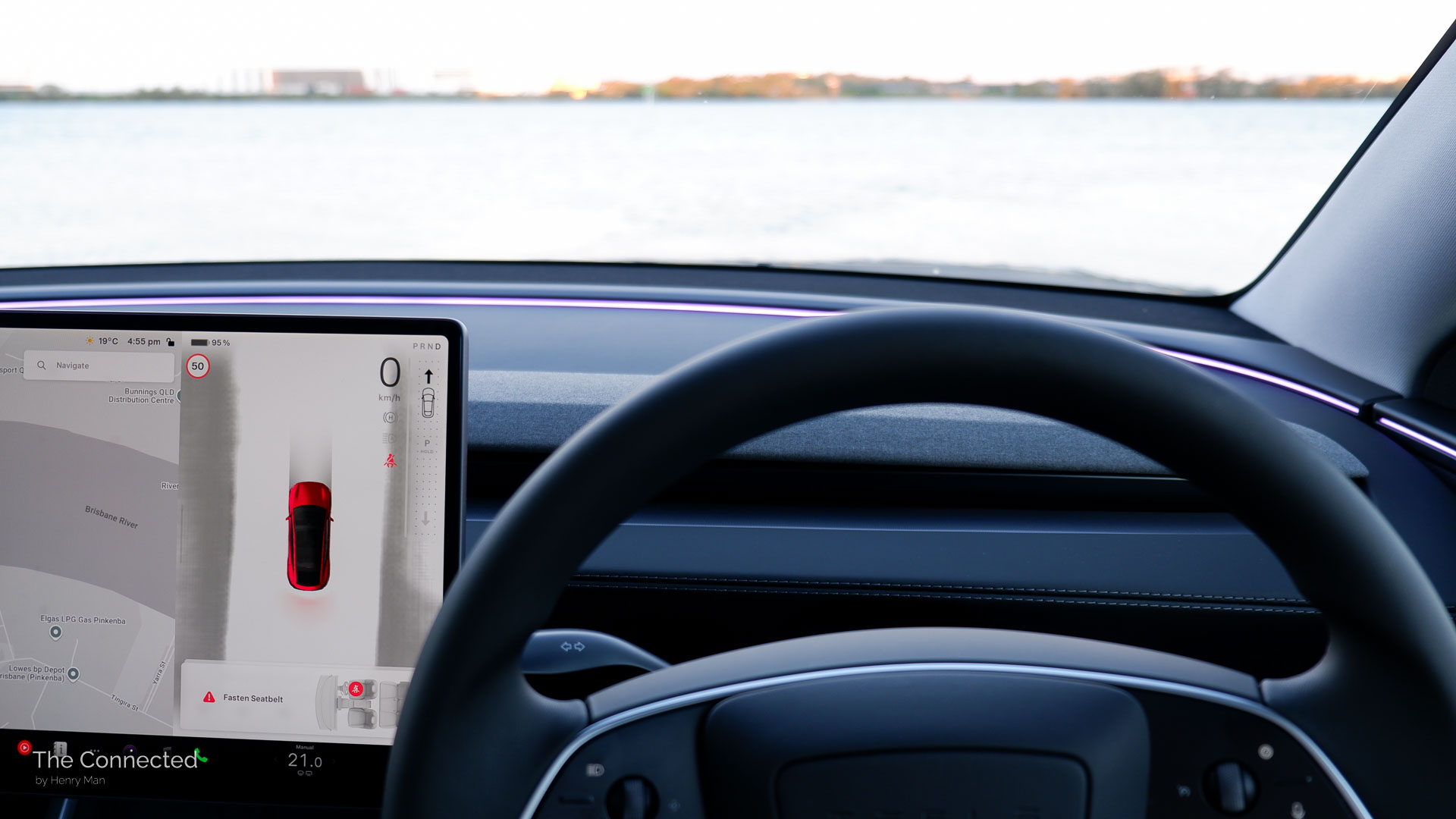
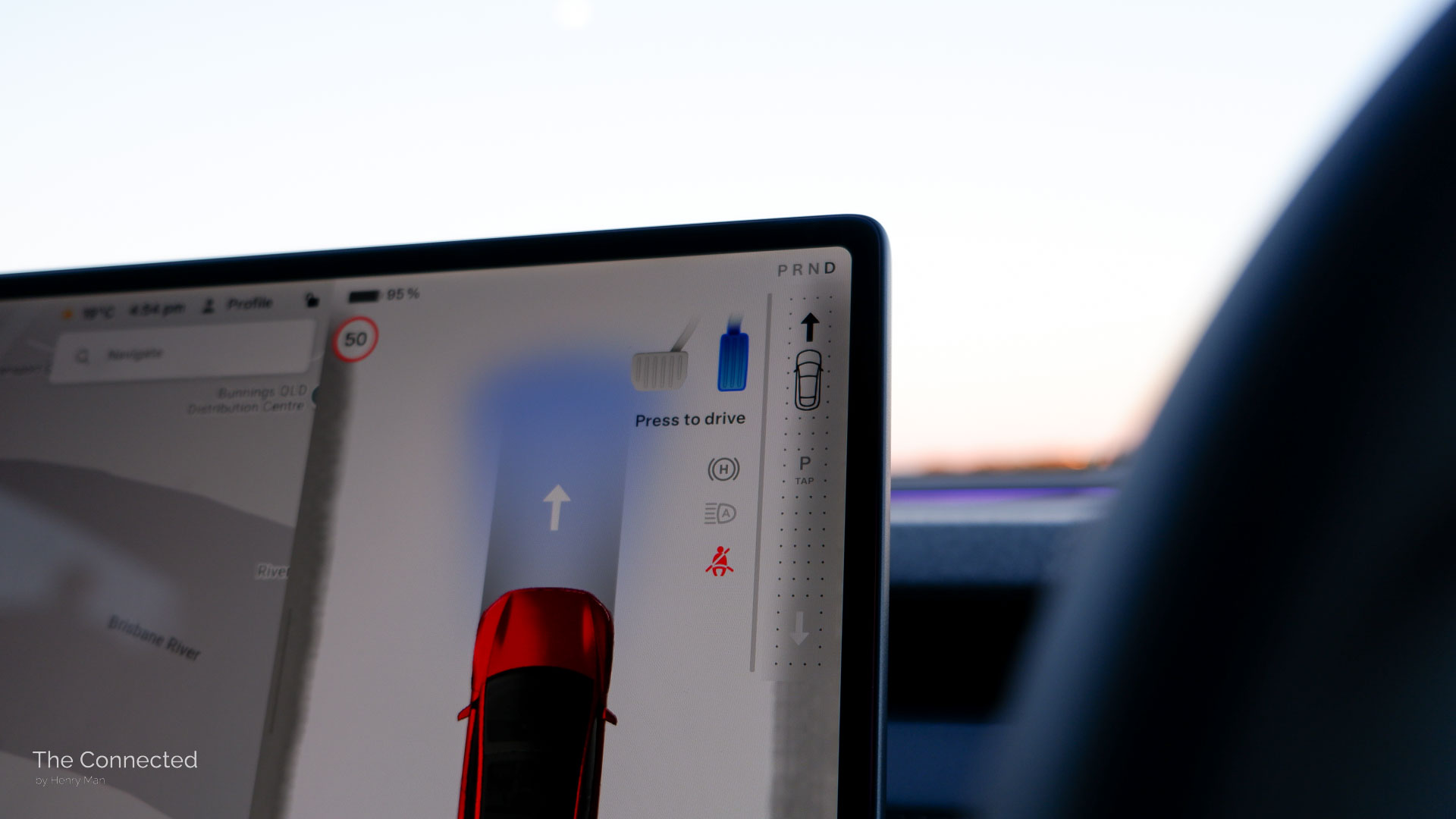
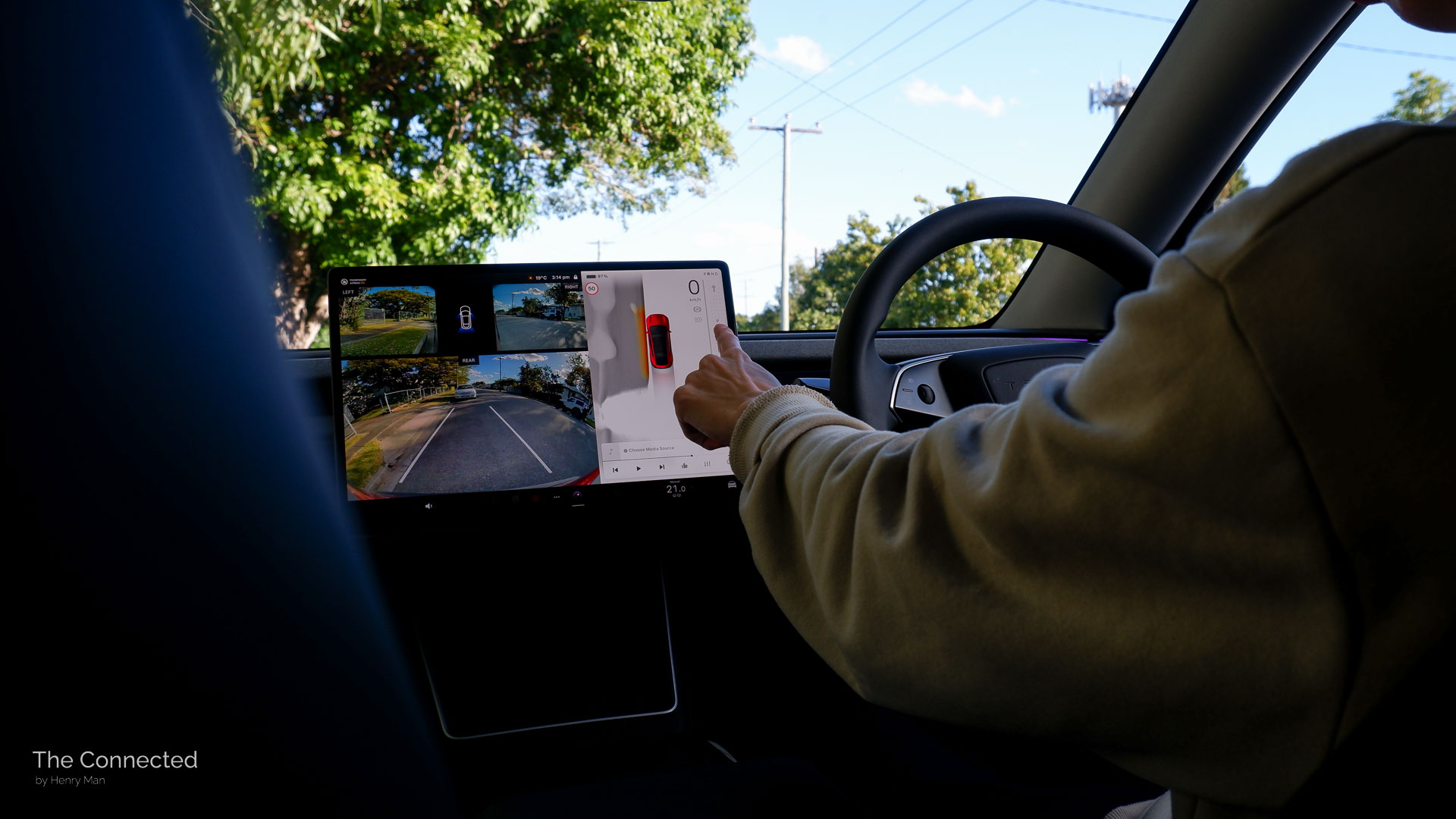
While the speedometer is relegated to the edge of the central touchscreen, I found it was quick to learn and adjust to looking sideways. After all, drivers look to the middle for the map and media anyway. The addition of a head-up display in front of the driver’s view would feel safer, though.
Following the updated Tesla Model 3 sedan, the Model Y has removed its drive selector stalk; drivers now need to swipe the edge of the touchscreen, but it’s fairly quick to learn and intuitive.
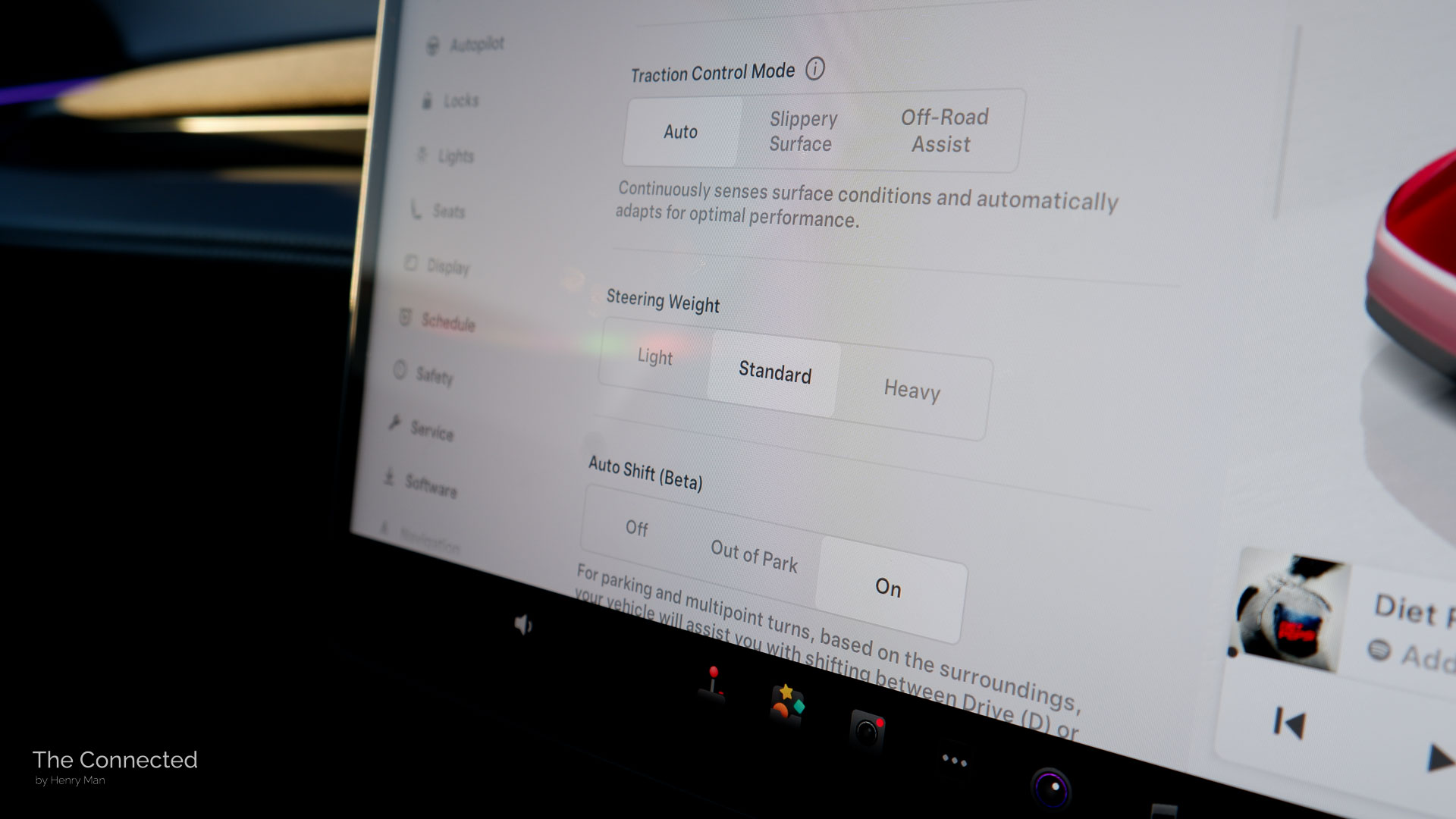
The EV maker also offers an Auto Shift beta feature which can automatically suggest changing to drive or reverse depending on its surroundings, with the press of the brake pedal.
However, as I found, it sometimes recommended drive when an entire wall was clearly in front for the cameras. It also requires some assertive steering wheel lock with pressing the brake pedal – causing dry steering – when auto switching between reverse and drive.
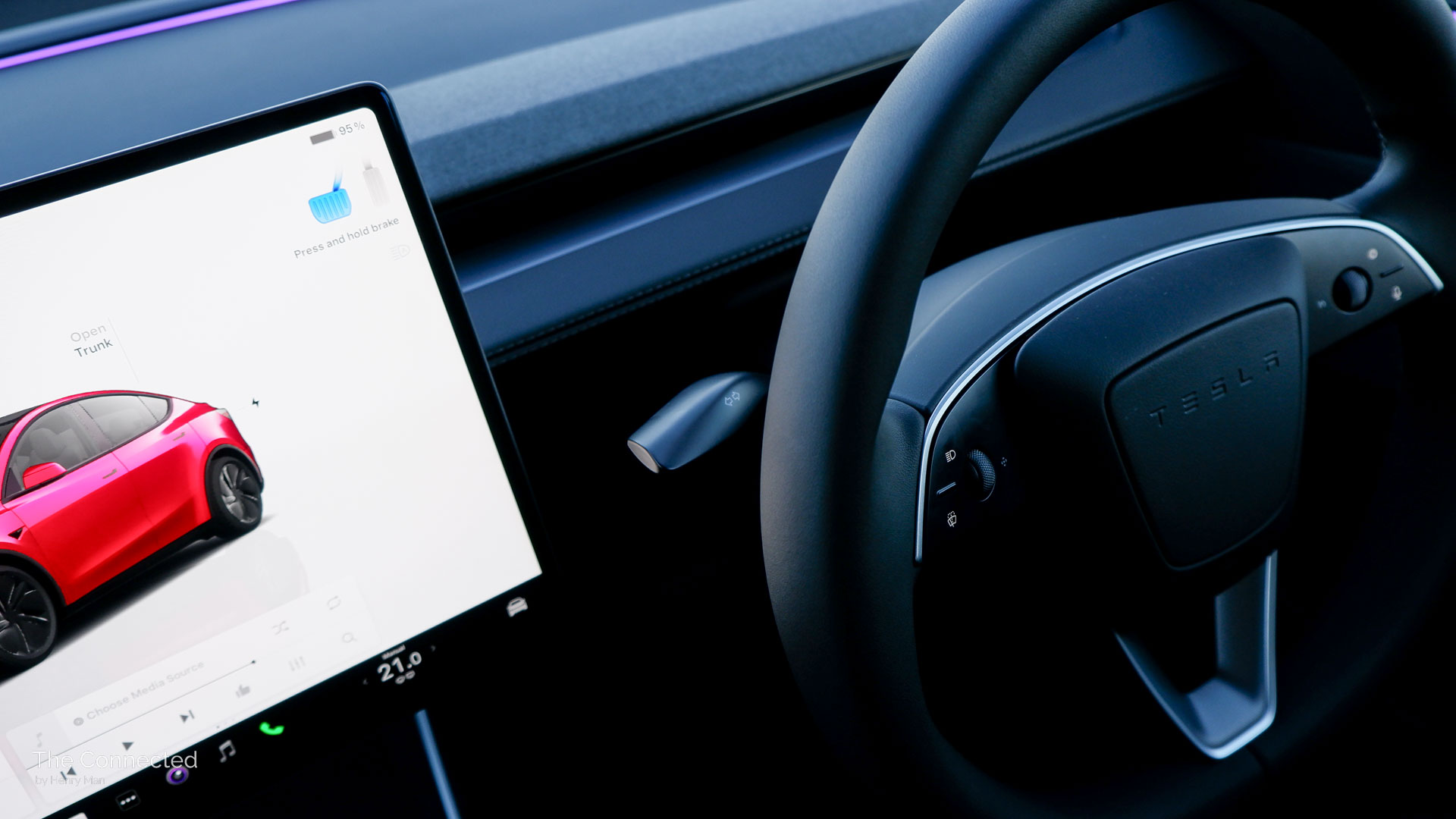
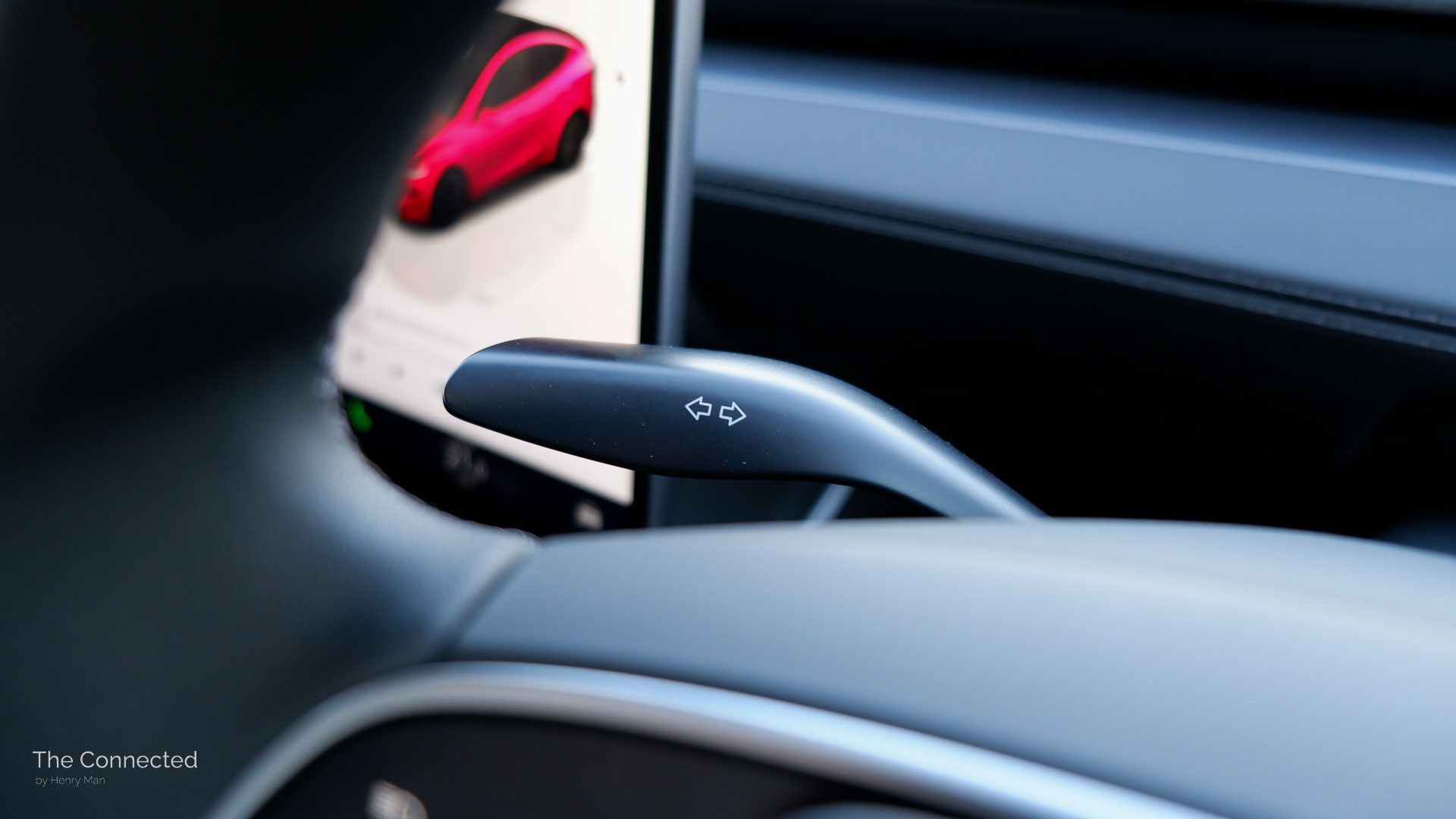
Fortunately, unlike its Model 3 sedan sibling, the refreshed Model Y retains a physical indicator stalk on the left of the steering wheel column.
It has been redesigned with a firmer feel and is single-stage only with no half press for three blinks. The Tesla electric SUV smartly auto cancels the indicators after changing lanes, though.
The inclusion of an indicator stalk means the Model Y has one less major learning barrier for drivers.
With the front seats prominently raised on rails, the Model Y offers a high driving position – but rear window visibility is severely compromised and narrow due to the sloping roof. It’s even worse than the swoopy Cupra Tavascan and Kia EV6, and feels like it’s worthy of having a rear-view mirror camera.
The 12.1-metre turning circle is rather unimpressive as well, although the small steering wheel helps with maneuvering easier.
Warranty and servicing.
The 2026 Tesla Model Y is covered by a four-year/80,000km vehicle warranty – which is shorter than the industry standard.
The entry-level Model Y RWD has an eight-year/160,000km battery warranty (whichever occurs first), whereas the Long Range includes a longer eight-year/192,000km battery warranty.
Tesla warrants both batteries with no more than 30 per cent degradation during the coverage period.
The brand doesn’t require traditional regular logbook servicing unlike most other automakers. Instead, servicing is condition-based and the vehicle will notify owners when certain areas need attention depending on usage, such as rotating tyres.
All services are conveniently booked via the Tesla mobile app and the company offers a mobile service in certain areas for minor tasks.
Roadside assistance is included for the warranty duration, up to four years/80,000km.
Standard Connectivity is included for up to eight years from the date of delivery, with Premium Connectivity features available for $9.99 per month.
The Tesla Model Y does not include a spare tyre as per most EVs, but a patch-up repair goo kit isn’t standard either with it being a $85 accessory.
Price and rivals.
2026 Tesla Model Y model range pricing (accurate as at the time of publication):
| RWD | Long Range |
| From $58,900 before on-road costs | From $68,900 before on-road costs |
The 2026 Tesla Model Y is priced from $58,900 before on-road costs in Australia.
Two variants are currently on sale, but a flagship Performance is expected to be introduced later on.
Enhanced Autopilot, which brings auto lane change assist, highway off-ramp assist and auto parking, costs $5100 more. Meanwhile, ‘Full Self-Driving Capability’ adds all Enhanced Autopilot features with traffic light and stop sign chimes for a whopping $10,100 more.
Both can be added afterwards with a software update by purchasing them in the Tesla mobile app.
A black interior is standard, while a white and black theme is available for an additional $1500.
The Pearl White Multi-Coat exterior colour is standard, with Black Diamond and Glacier Blue priced at $1500 extra, Stealth Grey for $1900, and Quicksilver and Ultra Red costing $2600 – all pretty expensive and on par with luxury car brands.
Disappointingly, charging cables are sold separately. Tesla charges $550 for a trickle charging cable and $800 (excluding installation expenses) for its up to 11kW Gen 3 Wall Connector.
The 2026 Tesla Model Y directly rivals the following electric medium SUVs:
- Kia EV5 (full review)
- Volkswagen ID.4
- Volkswagen ID.5
- Cupra Tavascan (full review)
- BYD Sealion 7
- Xpeng G6
- Nissan Ariya
Other alternatives to the Tesla Model Y include:
- Polestar 4 (full review)
- Toyota bZ4X (full review)
- Kia EV6 (full review)
- Hyundai Ioniq 5 (full review)
- Ford Mustang Mach-E
- Skoda Enyaq
- Leapmotor C10 BEV (full review)
- Geely EX5
- Deepal S07 (full review)
- Hyundai Tucson Hybrid (full review)
- Kia Sportage Hybrid (full review)
- Mazda CX-60 (full review)
Would I pick the 2026 Tesla Model Y RWD?
The refreshed Tesla Model Y is an outstanding electric SUV across tech, efficiency and space. It’s an EV that just works and should still be the default option – despite some glaring weaknesses.
The Tesla tech is fantastic, the energy efficiency is superb, the integration and access to all Tesla Superchargers is seamless, and the interior feels genuinely premium with soft-touch materials, carpeted bottle pockets and no build quality qualms.
The American brand has listened to feedback with a far more stylish exterior, while adding a front bumper camera and retaining a physical indicator stalk. Yet, the new Tesla Model Y still costs ~$63K drive-away with a promise that it won’t frequently cut prices anymore – representing great value for money.
However, the camera-only Tesla Vision safety assist systems need improving with disconcerting ‘phantom braking’ happening too many times, randomly-triggered automatic wipers, poor adaptive LED high beam headlights calibration, and unreliable parking sensor warnings.
The Tesla software also has tiny icons and buttons that are hard to hit while driving, it doesn’t include any charging cables, rear visibility is still severely compromised, and the four-year/80,000km vehicle warranty is sub-par.
I’d pick the entry-level Model Y RWD as tested with its charge limit-free LFP battery and most efficient single motor. Rationalise your options as adding larger wheels, a white interior, and selecting a paint colour other than white quickly increases the price tag.
It’s clear to see why the Tesla Model Y has been a global favourite – now upgraded. In many ways, it’s become the Toyota of EVs as the industry, including traditional automakers and a wave of new Chinese brands, continue to follow Tesla’s lead.
Photographs by Henry Man
READ MORE: 2025 Toyota bZ4X review
READ MORE: 2026 Cupra Tavascan review
READ MORE: Are Tesla Superchargers worth it?
Pros:
- Industry-leading tech
- Superb energy efficiency, charging network
- Premium and spacious interior
- Improved design
- Great value all-round EV
Cons:
- Camera-only systems need work, including ‘phantom braking’
- Tiny software icons and text
- No charge cables included, pricey options
- Compromised rear visibility
- Short vehicle warranty
About the Author.
Henry Man is an independent content producer passionate about the intersection of technology and transportation.
The former automotive journalist is focused on producing critically-detailed vehicle reviews, and unique short-form content. Learn more.


 The Connected by Henry Man