
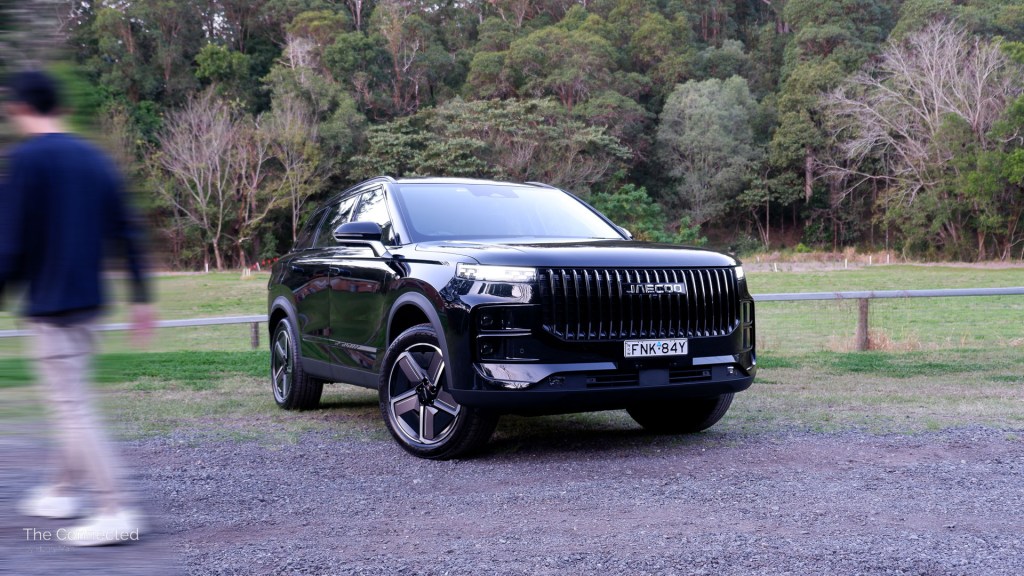
There’s one thing holding the Jaecoo J7 SHS back from being recommendable…
Jaecoo has entered Australia, which is positioned as the more premium brand of Chery alongside Omoda.
The J7 midsize SUV is its debut vehicle with rugged looks, the availability of a flagship Super Hybrid System (SHS) plug-in hybrid electric vehicle (PHEV) powertrain with up to 1200km claimed total range, and a sub-$50K price tag that undercuts many traditional plug-less hybrid SUV rivals.
After spending a week with the Jaecoo J7 SHS, it’s an impressively good hybrid five-seat family SUV – but there is one key dealbreaker that prevents it from being a recommendation.
NOTE: The press vehicle was provided by Jaecoo Australia for a seven-day independent evaluation. We have no commercial arrangements with the company and it had no editorial control.


Pros.
+ Super sharp value
+ High quality interior
+ Electric range and fuel efficiency
+ Good safety tech… for a Chinese car
+ Unique portrait touchscreen
Cons.
– Dangerous traction loss issue, no AWD
– Stiff and touchy brake pedal
– Adaptive cruise, lane-centring need re-calibration
– Small boot, low tailgate, weird rear-view mirror
– Poor LED headlight performance
Vehicle tested:
| Model | 2026 Jaecoo J7 |
| Variant | SHS Summit |
| Starting price | $47,990 drive-away |
| Exterior colour | Carbon Black (+$600) |
| Interior colour | Black synthetic leather |
| Country made | China |
Design and quality.
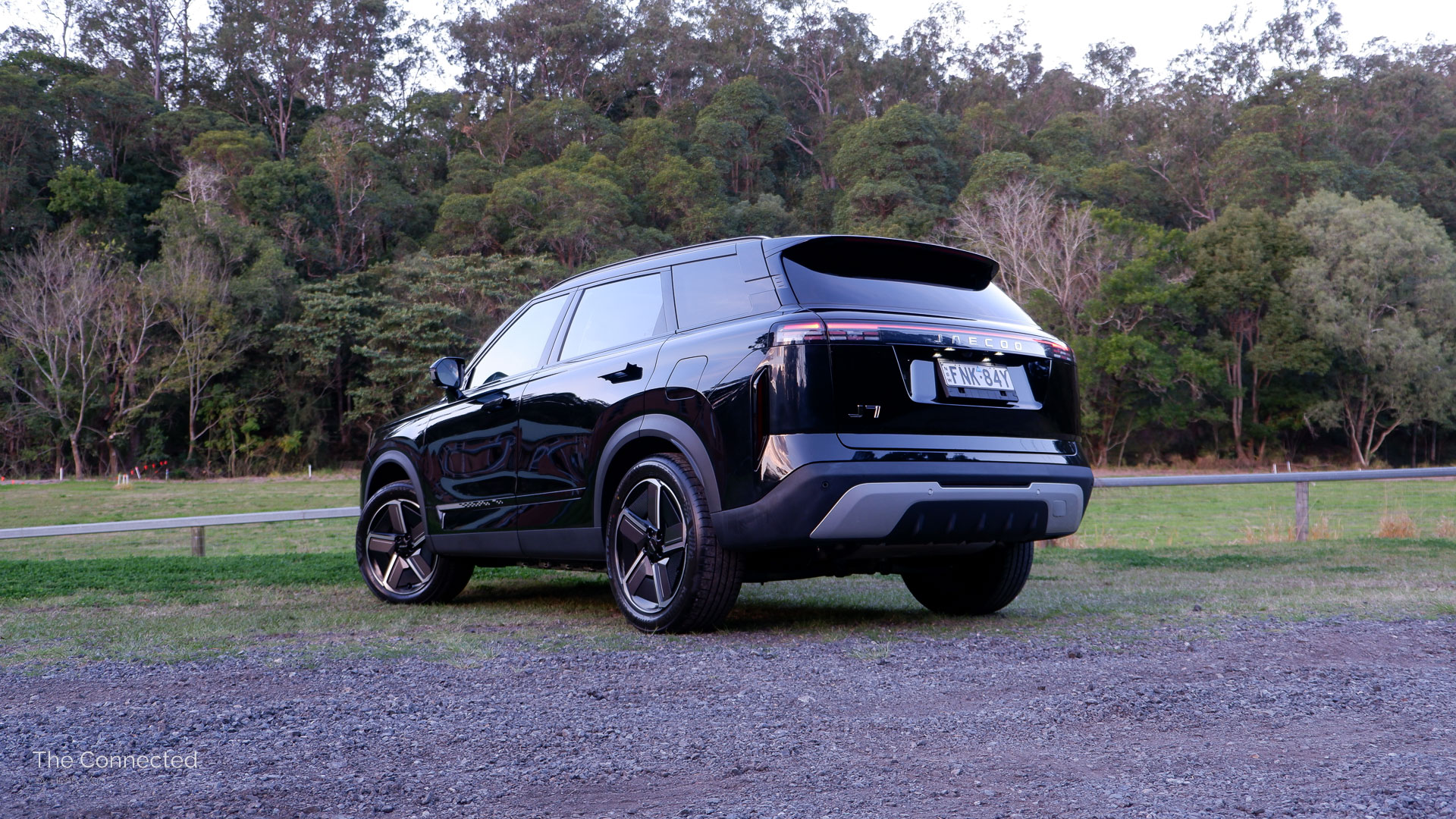
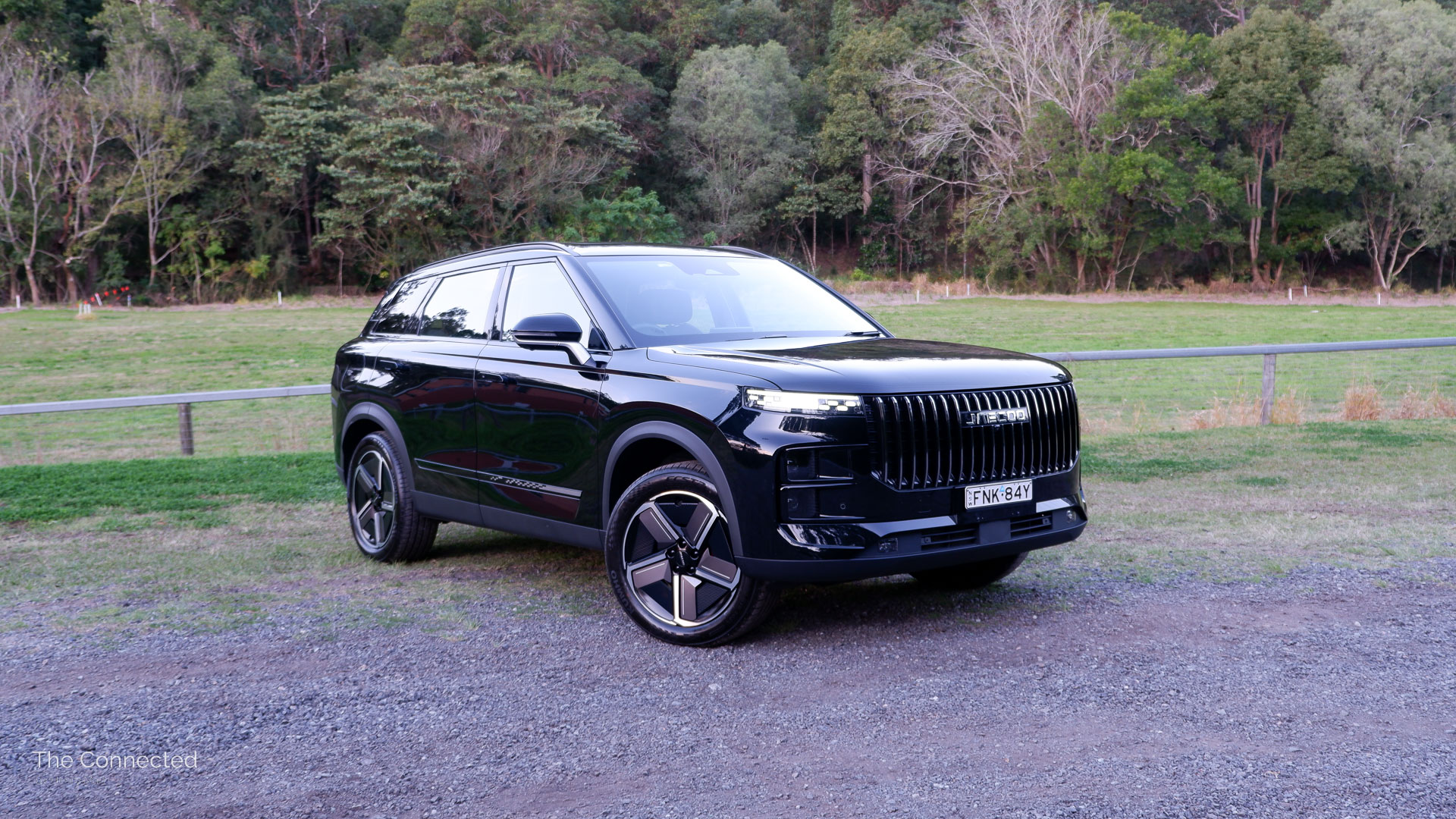
The Jaecoo J7 clearly has hints of a Range Rover exterior with an impressively high quality interior.
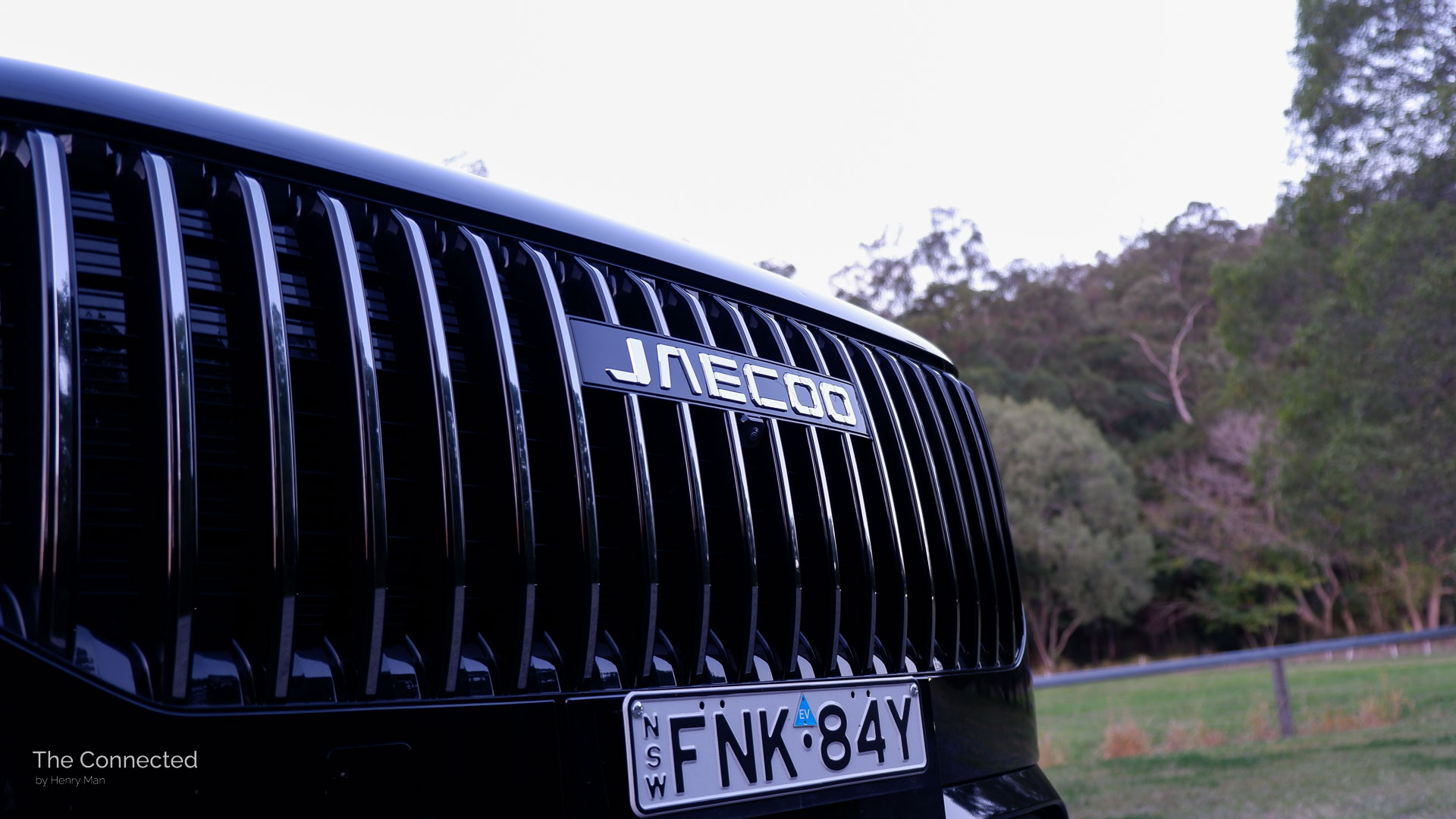
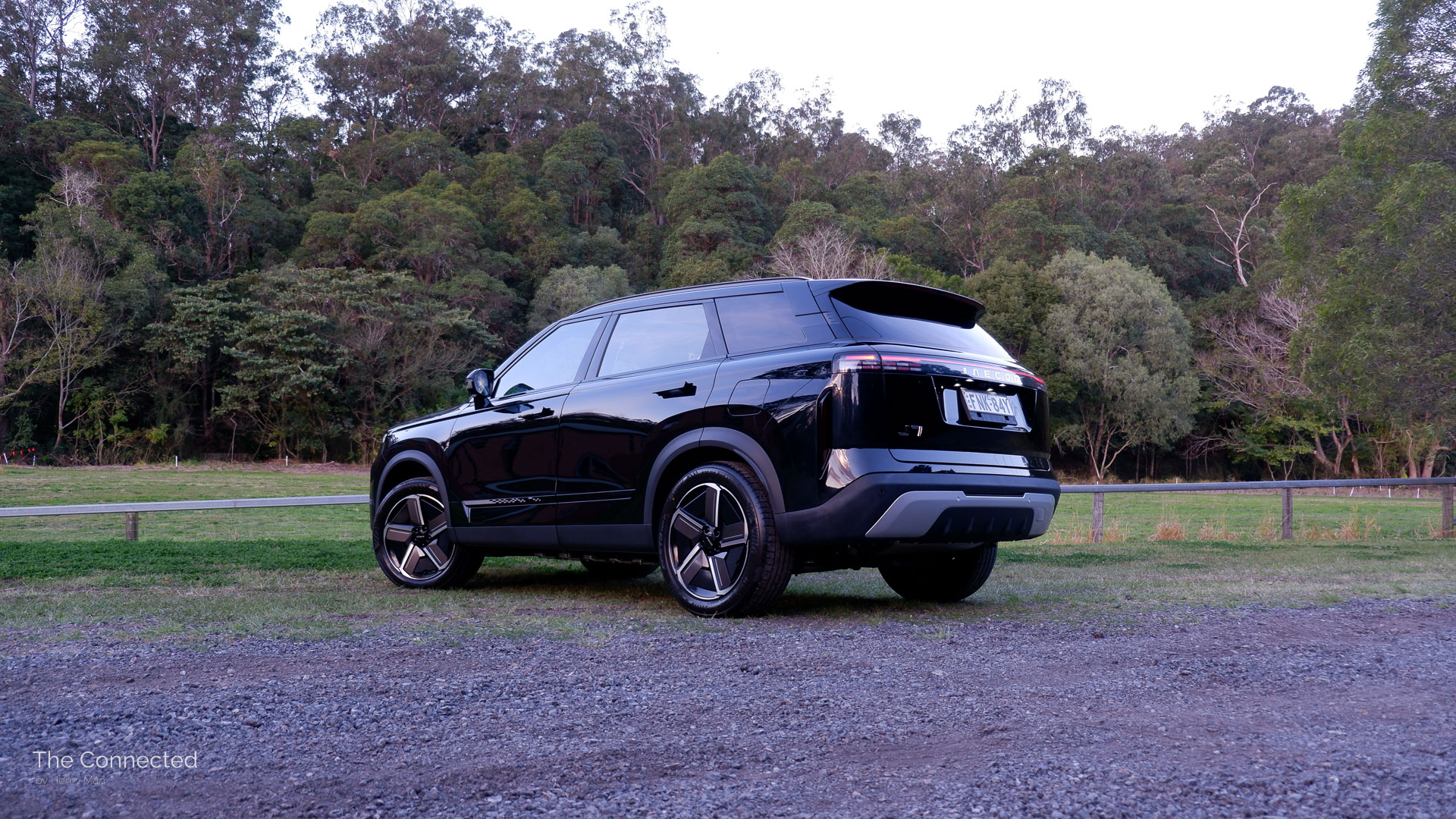
Especially in the Carbon Black exterior colour as tested here, the Chinese SUV looks premium and rugged with a short, boxy design and lashings of chrome.
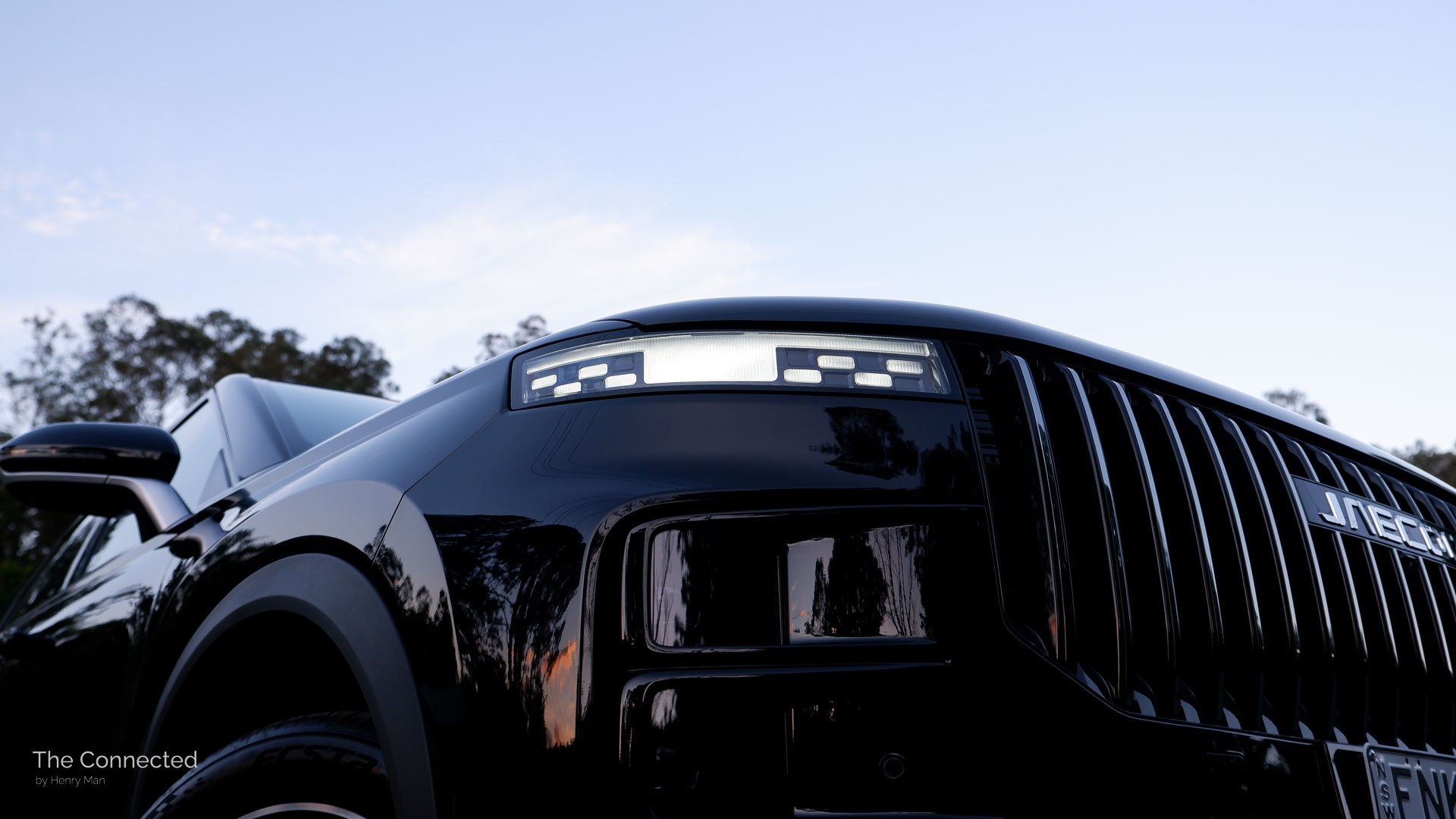
I particularly like the racing flag pixel motifs that are consistently incorporated in the LED daytime running lights, rear brake lights and indicators in the LED light bar, along the side skirts, and even inside with the floor mats.
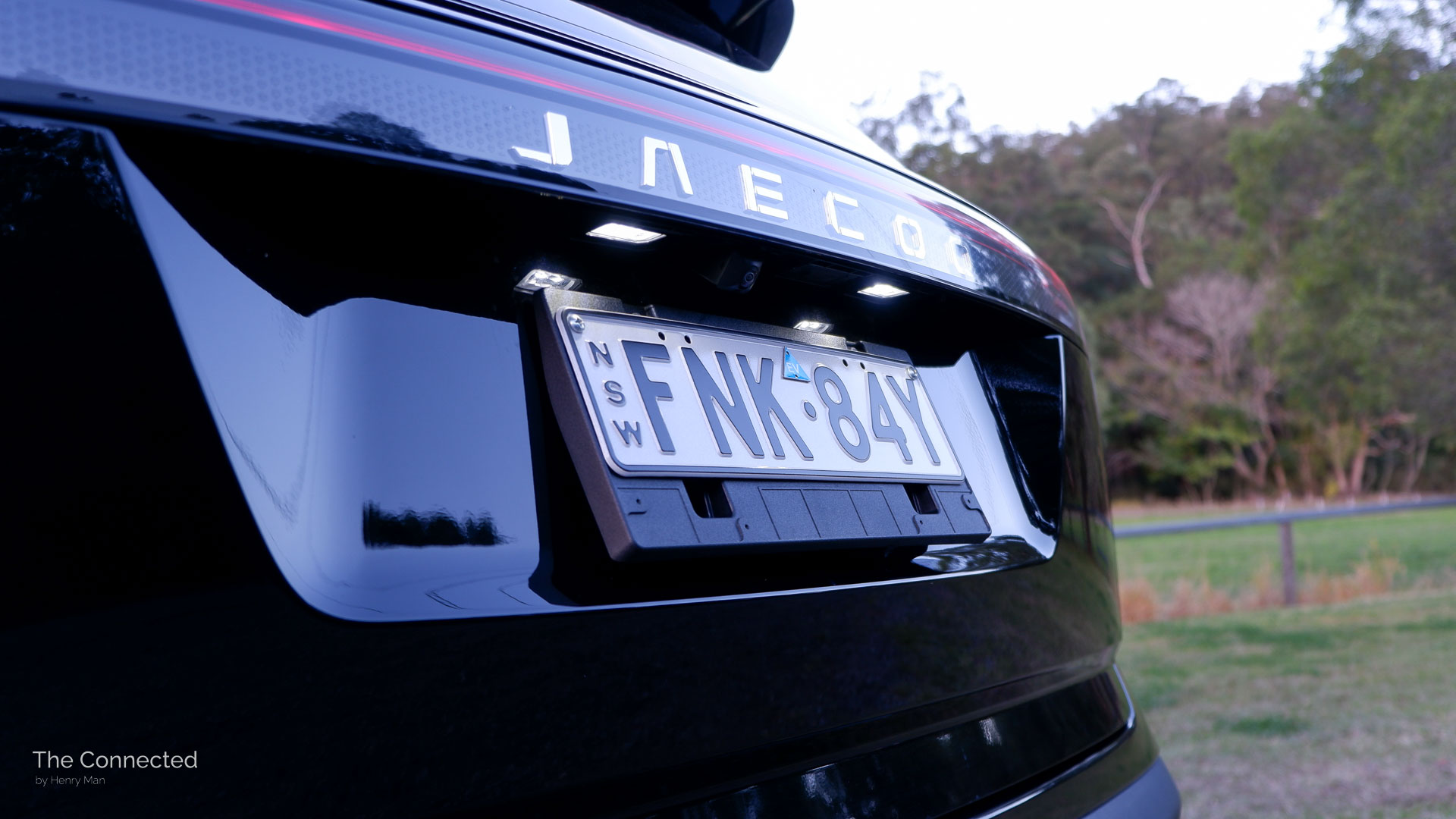
Yet, the only design flaw is the large rear licence plate holder which sticks out with Australian licence plate designs (especially the slimline ones as pictured here).

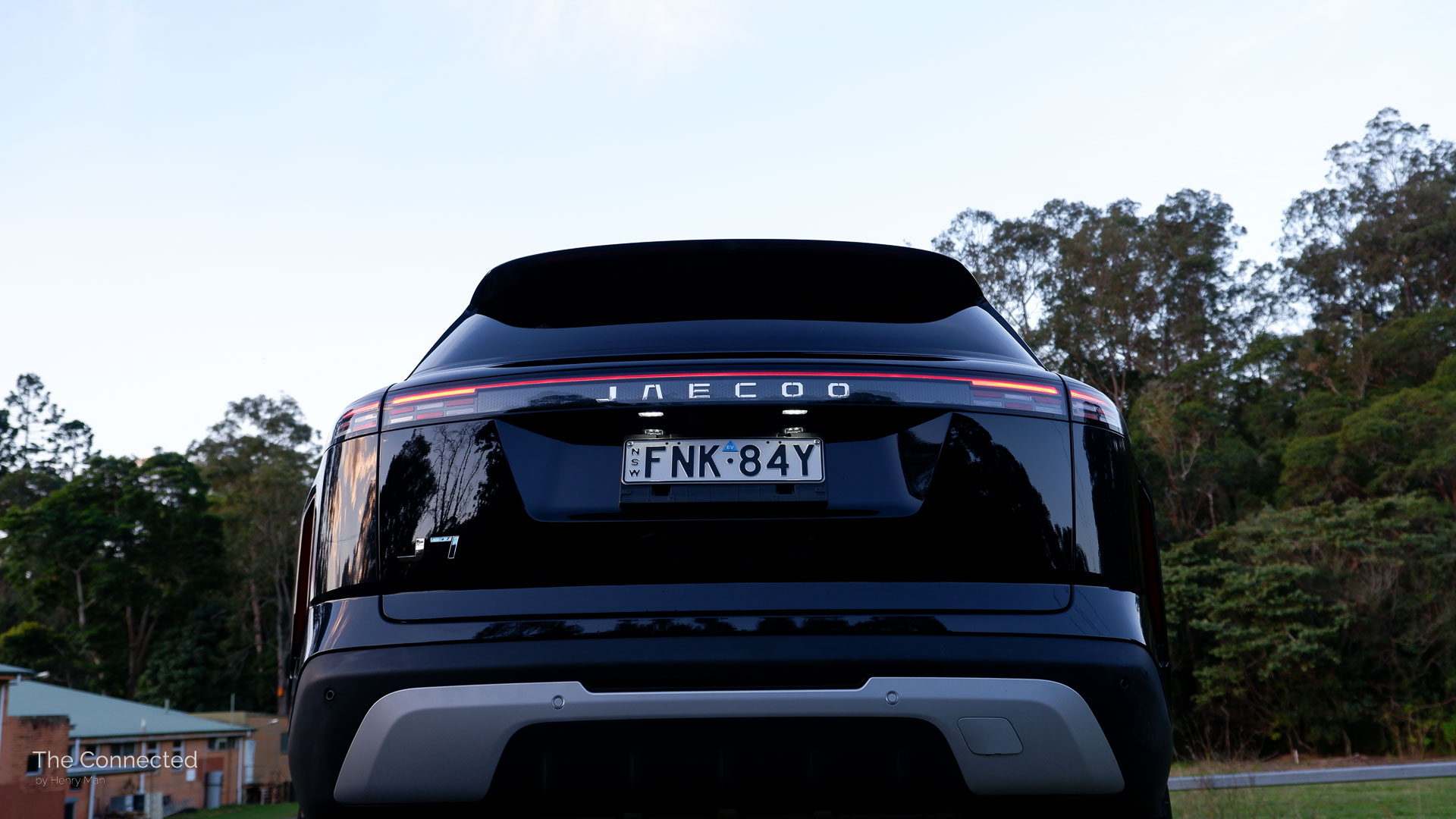
The J7 presents more than its sub-$50K asking price.
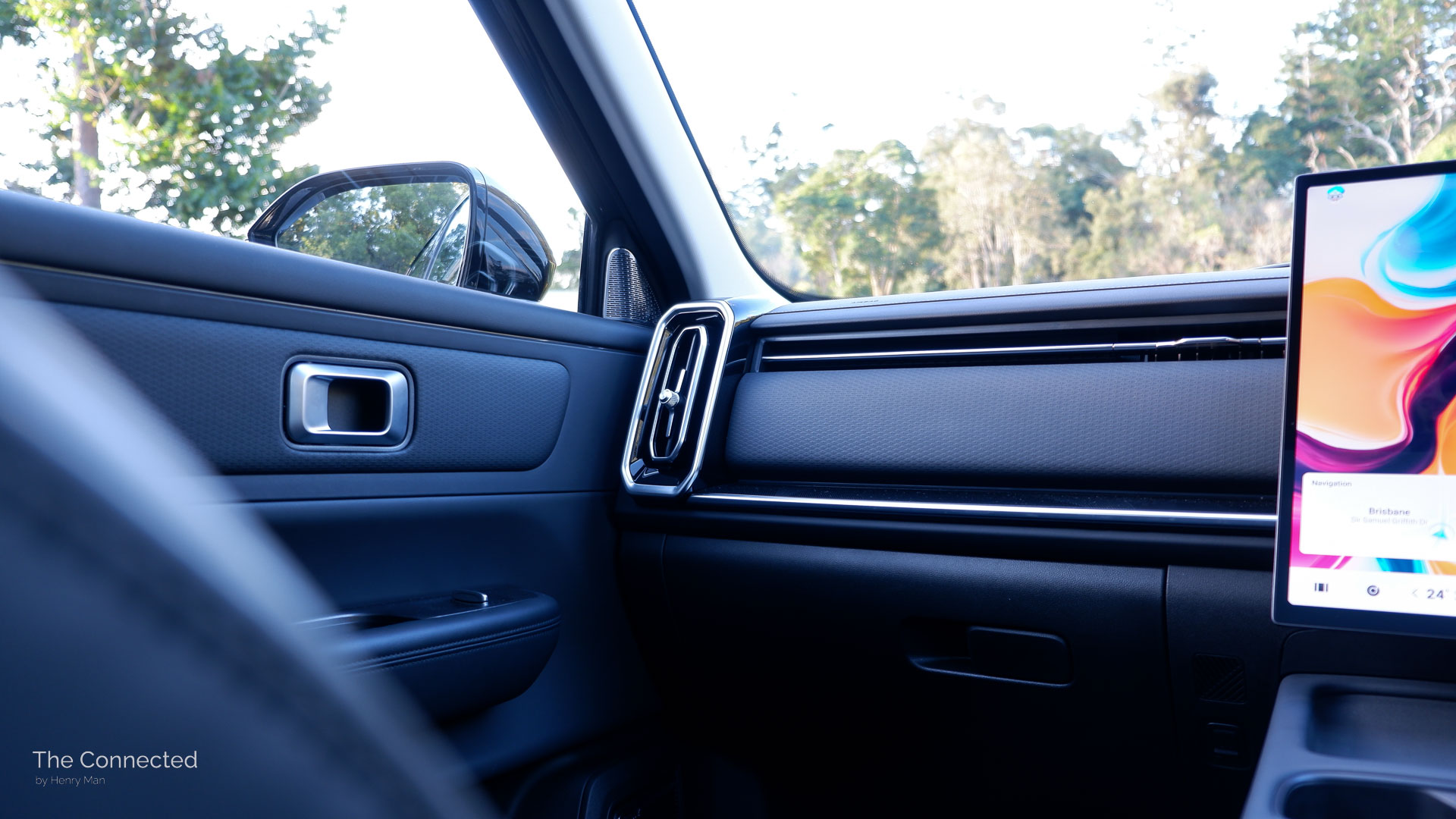
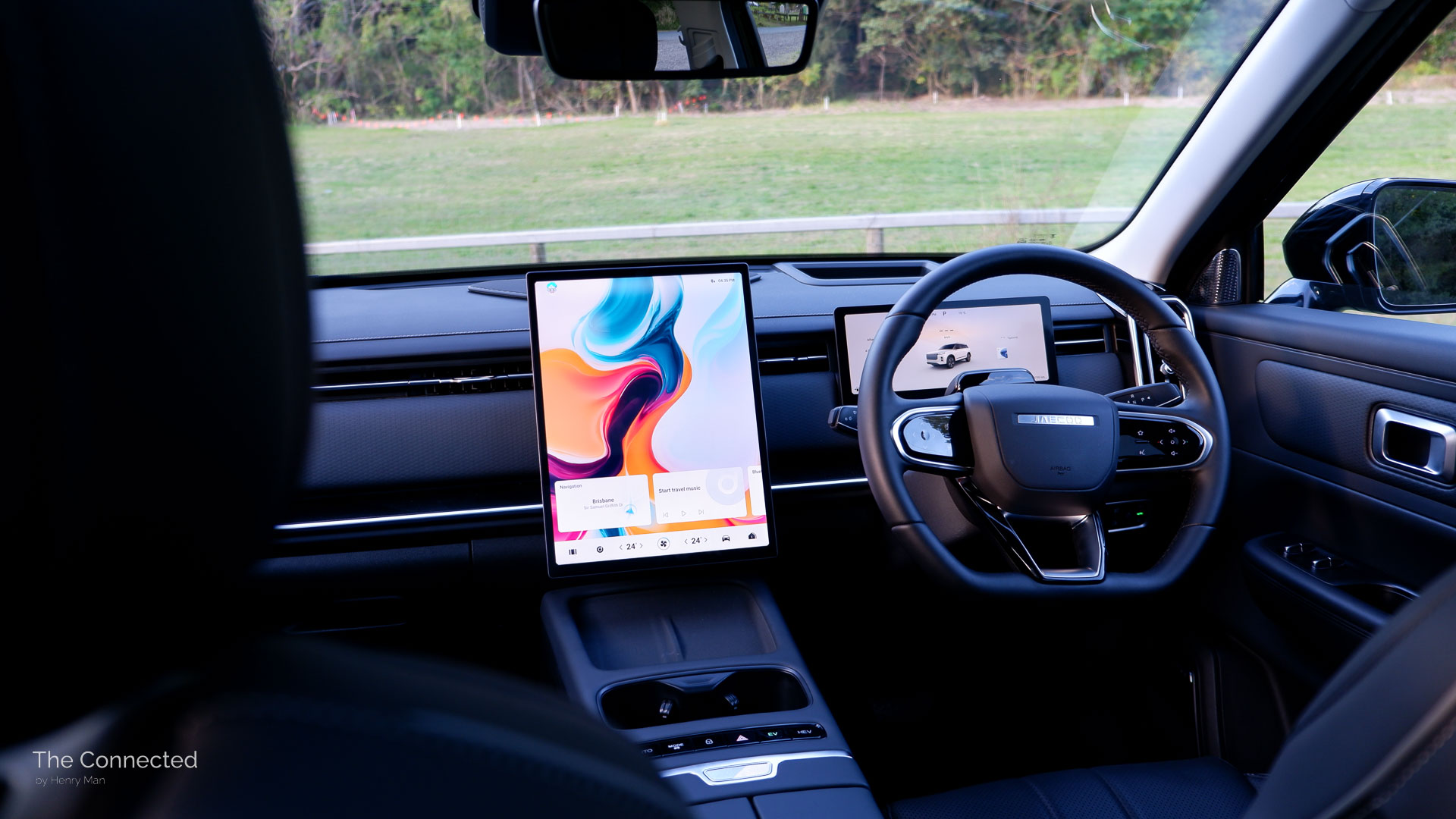
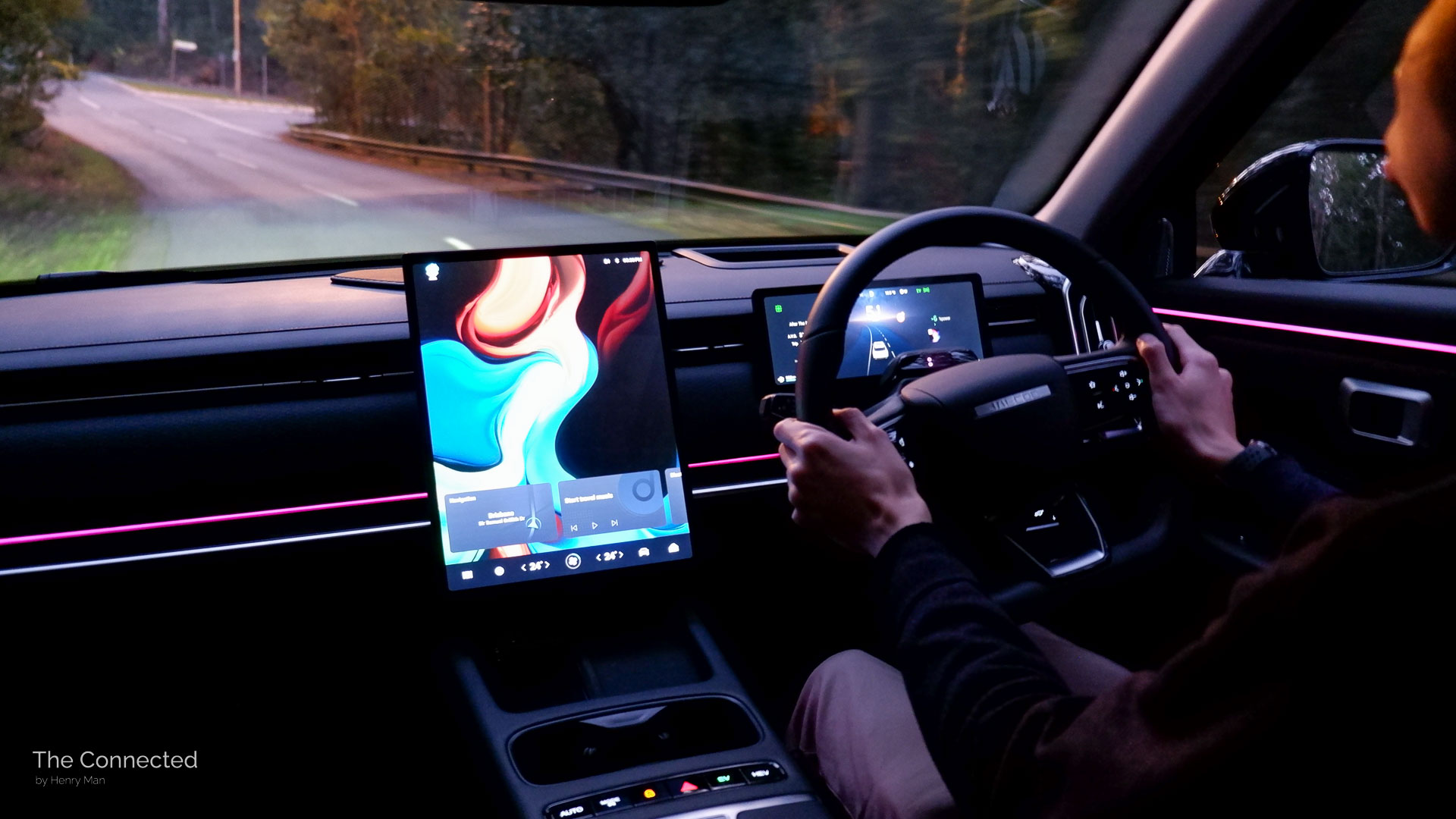
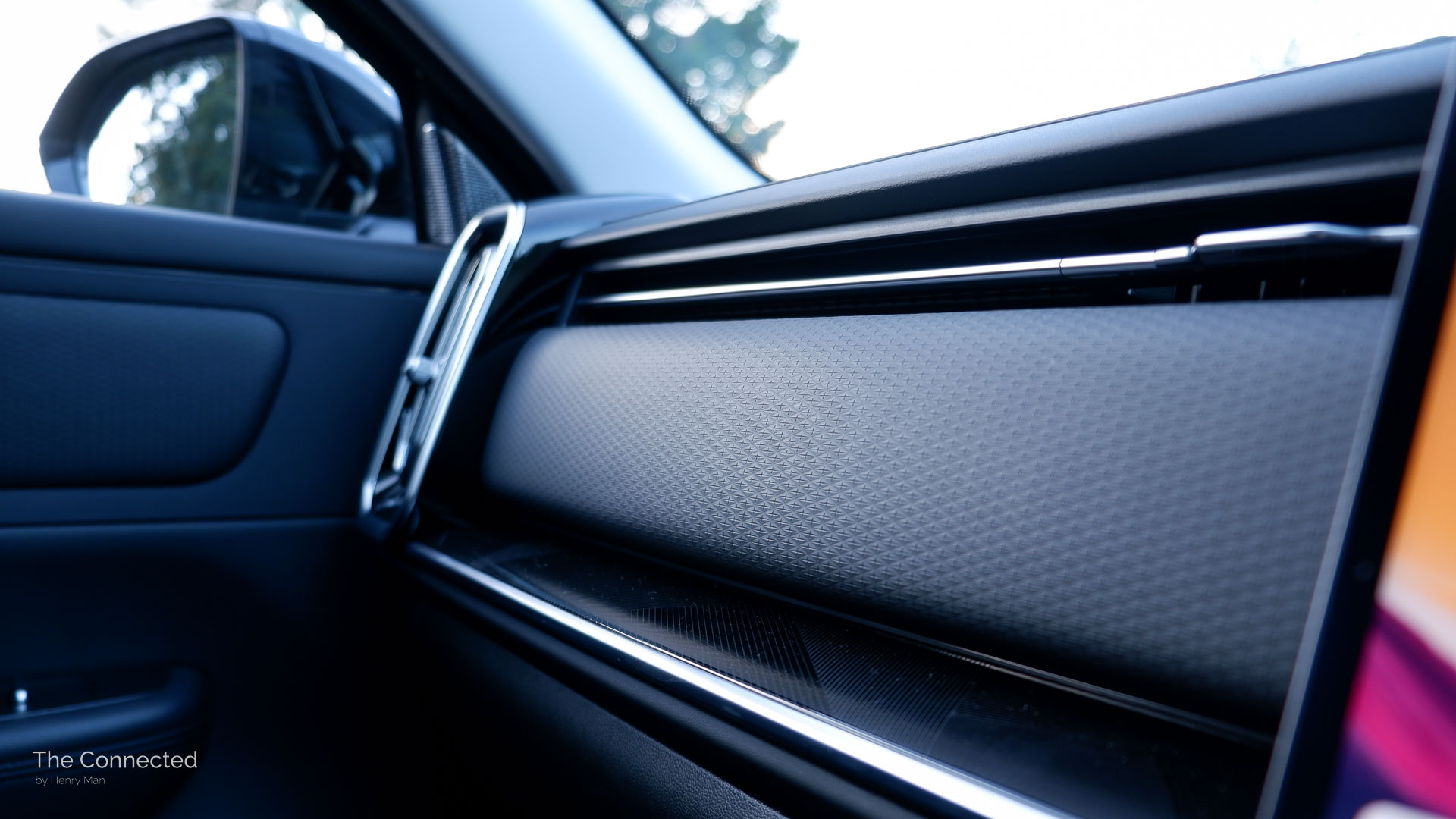
The Jaecoo’s interior looks and feels premium with a large portrait-orientated touchscreen, Volvo-esque chrome air vents and door handles, and matrix textured patterns.
Most impressive is a high quality mix of soft-touch synthetic leather materials across the upper door cards, dashboard and flat-bottomed steering wheel, in addition to a clicky row of buttons at the centre console, solid steering wheel stalks, and cool thin strips of colour-selectable ambient lighting.
The glovebox and internal door handle hinges are super dampened, too.
Only harder plastics are found lower down the door and centre console, plus a scratchier surface around the window switches, but it’s rather inoffensive for the price point.
Practicality.
2026 Jaecoo J7 SHS Summit dimensions:
| Length x width x height | 4500 x 1865 x 1680mm |
| Wheelbase | 2672mm |
| Boot space (min / rear seats folded) | 340 / 1265 litres |
| Rear seat split fold | 60:40 |
| Child seat anchors | 2x ISOFIX and 3x top tethers |
| Air-conditioning system | Two-zone climate control with single rear air vent |
The Jaecoo J7 SHS is a family-friendly five-seat medium SUV, but let down by sub-par boot space and less comfortable rear seats.
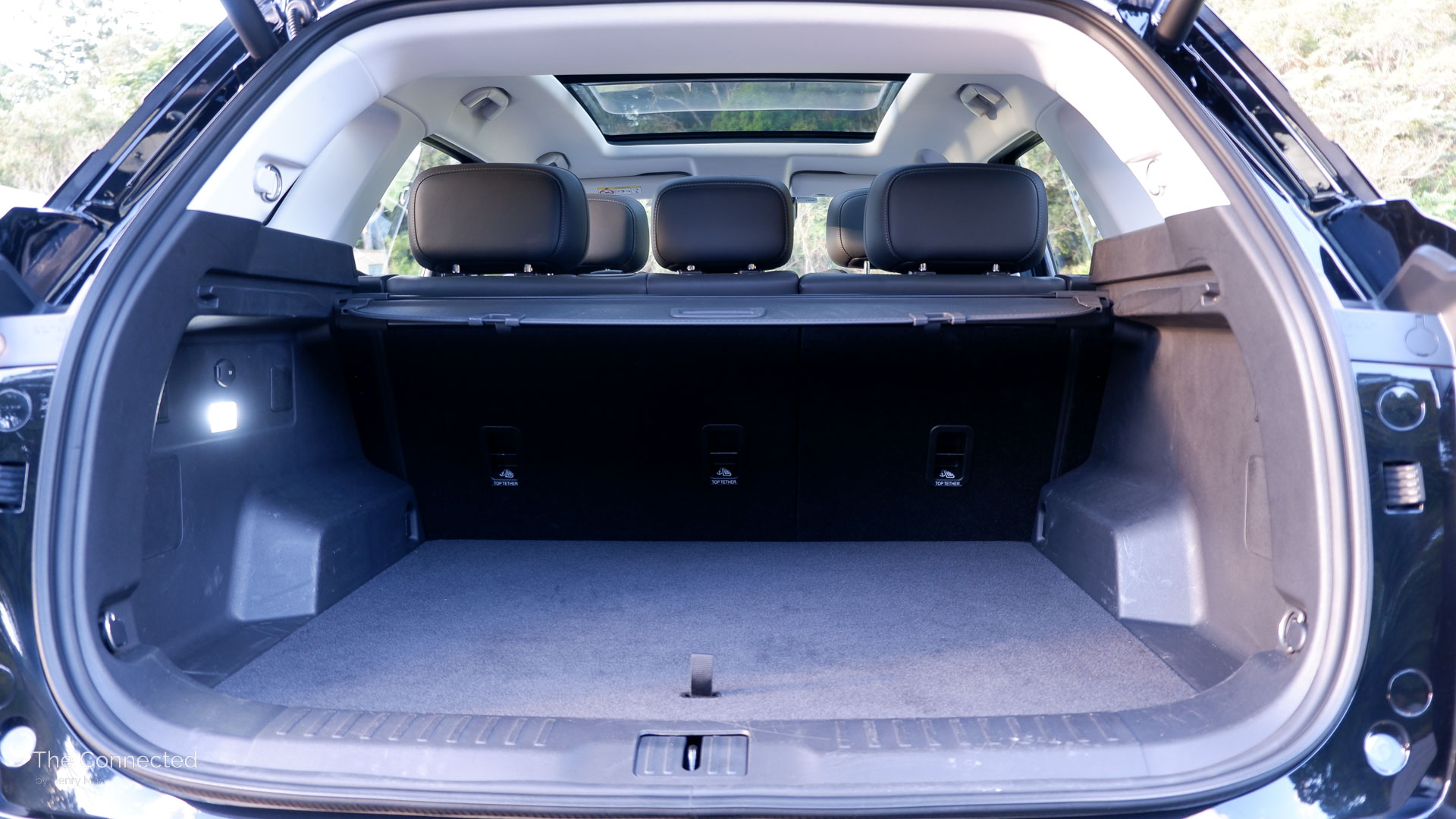
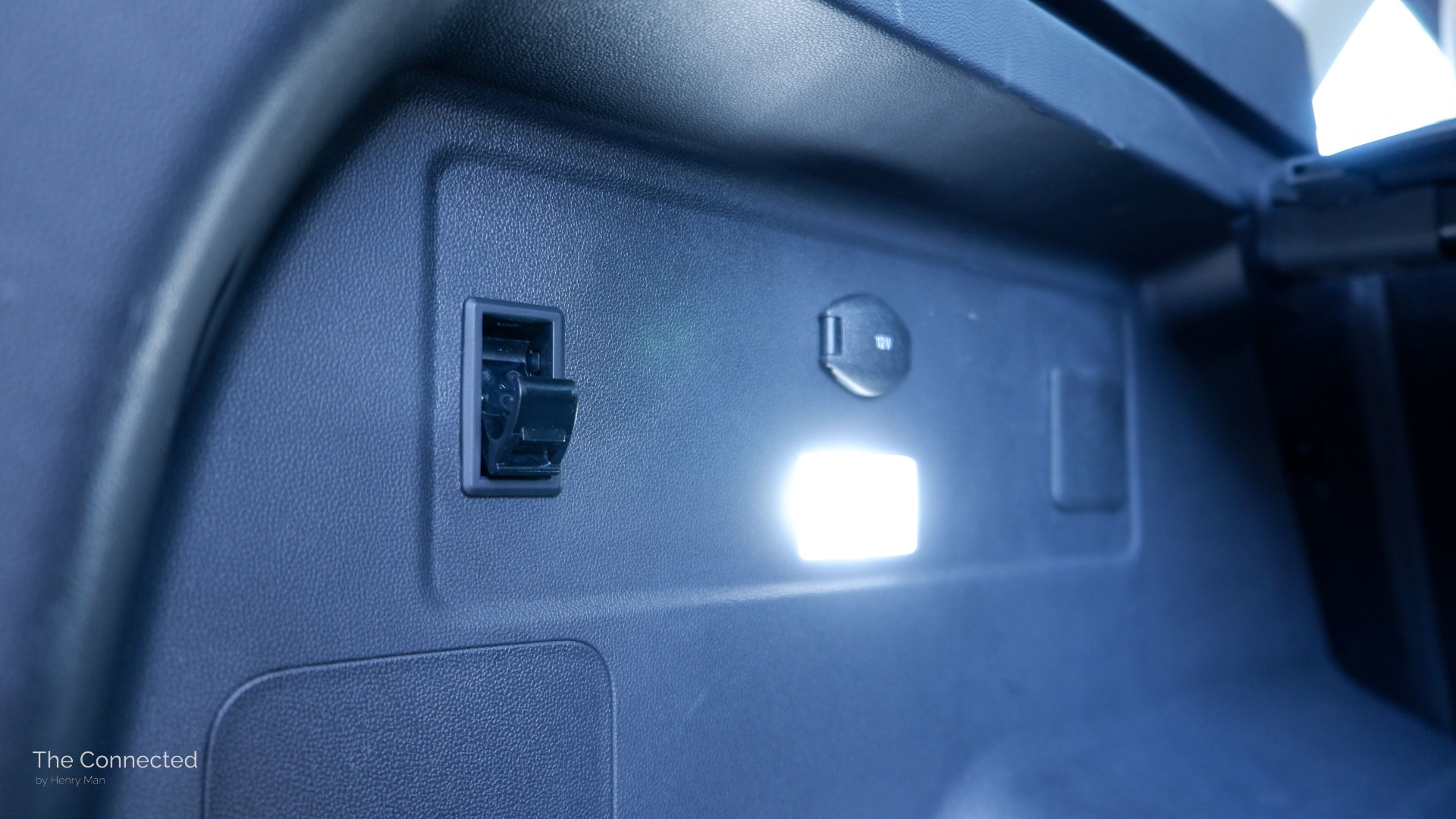
The 340-litre boot is smaller than most midsize SUVs in the segment and even some small SUVs on paper, but it’s fairly usable in reality with a flat loading lip, bright LED lights in both the boot and inside the tailgate illuminating the ground like the Volkswagen ID. Buzz van, and four pop-out bag hooks.
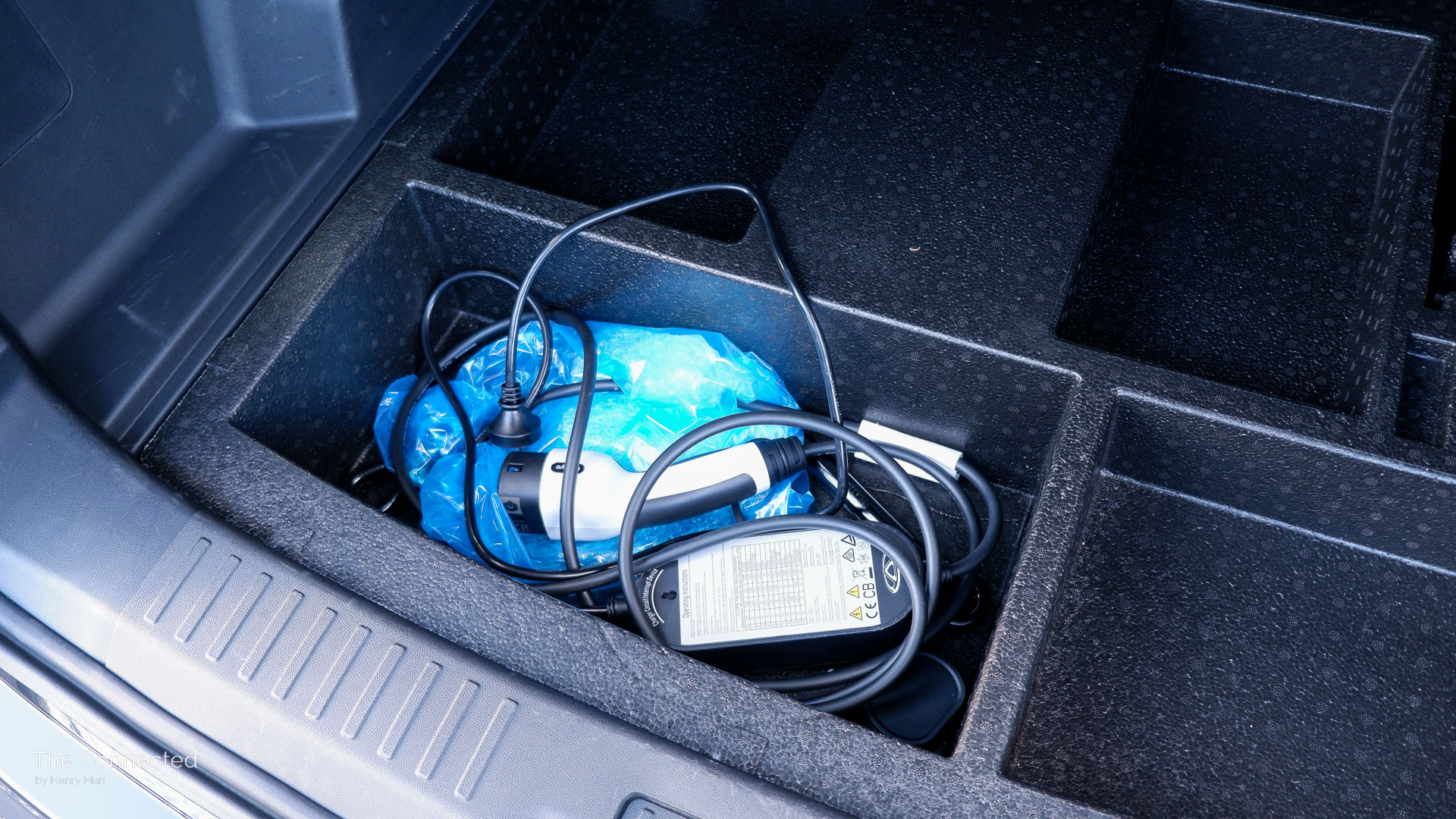
There’s some underfloor storage in the form of a styrofoam partition to keep the included trickle charging cable, too.
An electric tailgate is standard on the J7 SHS hybrid, yet the hands-free function is rather unintuitive. Owners need to stand close behind the tailgate with the proximity key for a few seconds, then walk away once the lights flash in order for it to open.
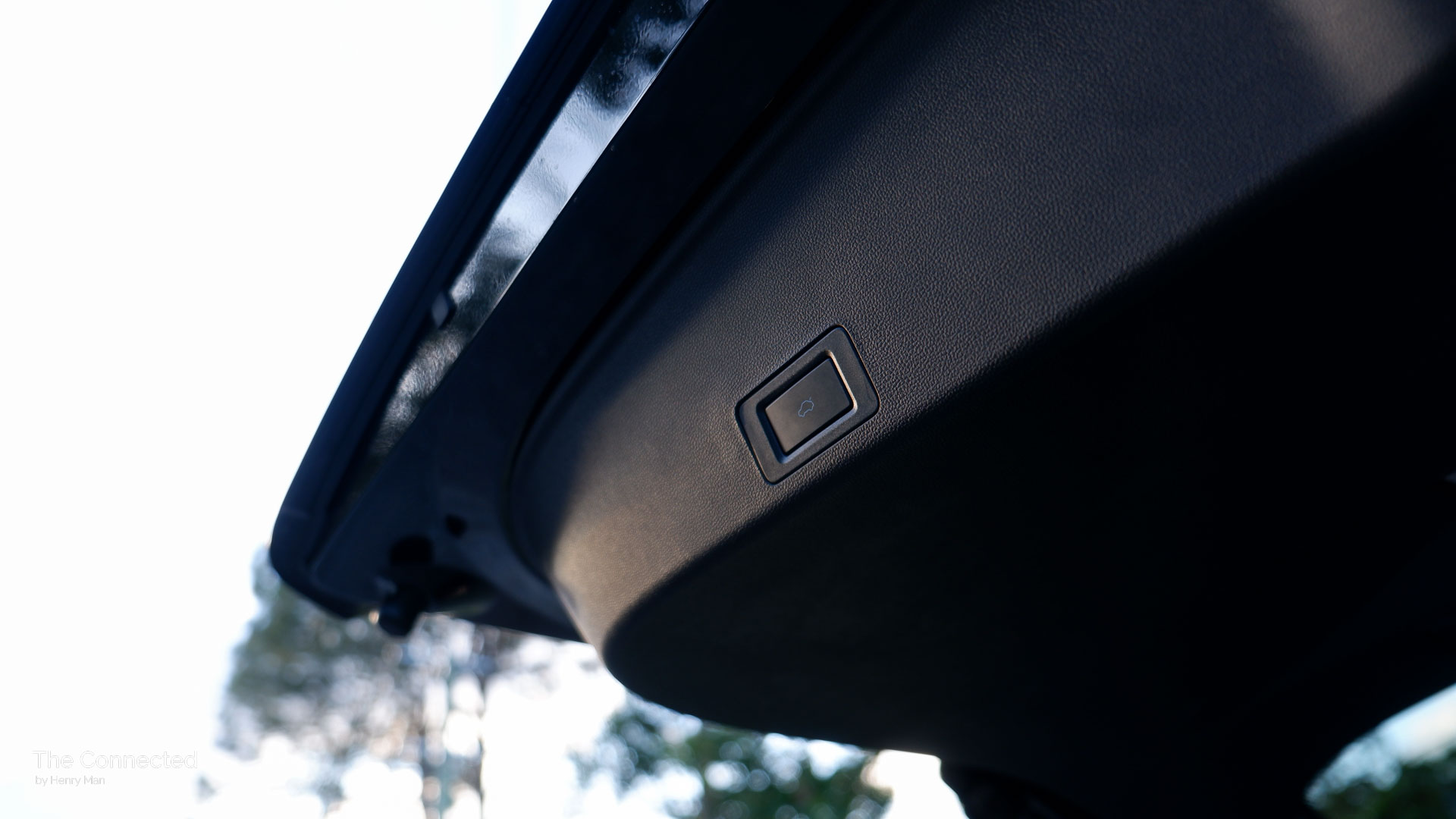
The button to open the tailgate above the licence plate is flat and not recessed as well, which meant that it was more difficult to feel where the button was.
The tailgate itself is also fairly low even when on the highest opening setting, with my head sometimes hitting the door.
There’s no hands-free closing feature either and no button that closes the boot and locks all doors at the same time.
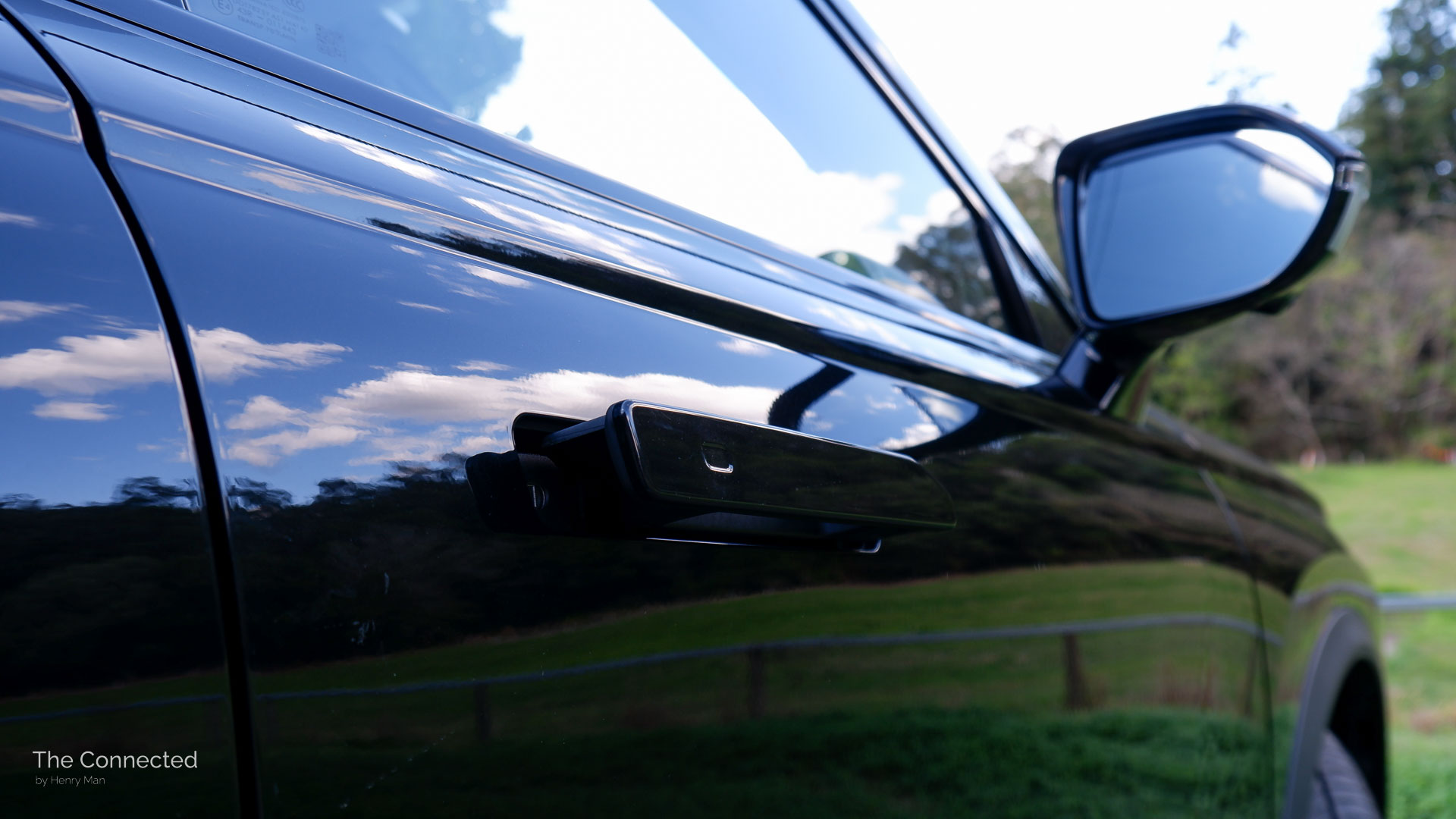
The Jaecoo J7 adopts flush door handles that automatically pop-out completely upon unlocking and is accessible by having the same design as a conventional handle, albeit being single-hinged.
The only button to unlock and lock the doors without touching the key fob is on the driver’s door handle as well, which can be inconvenient even though it has automatic unlocking on approach and locking when walking away.
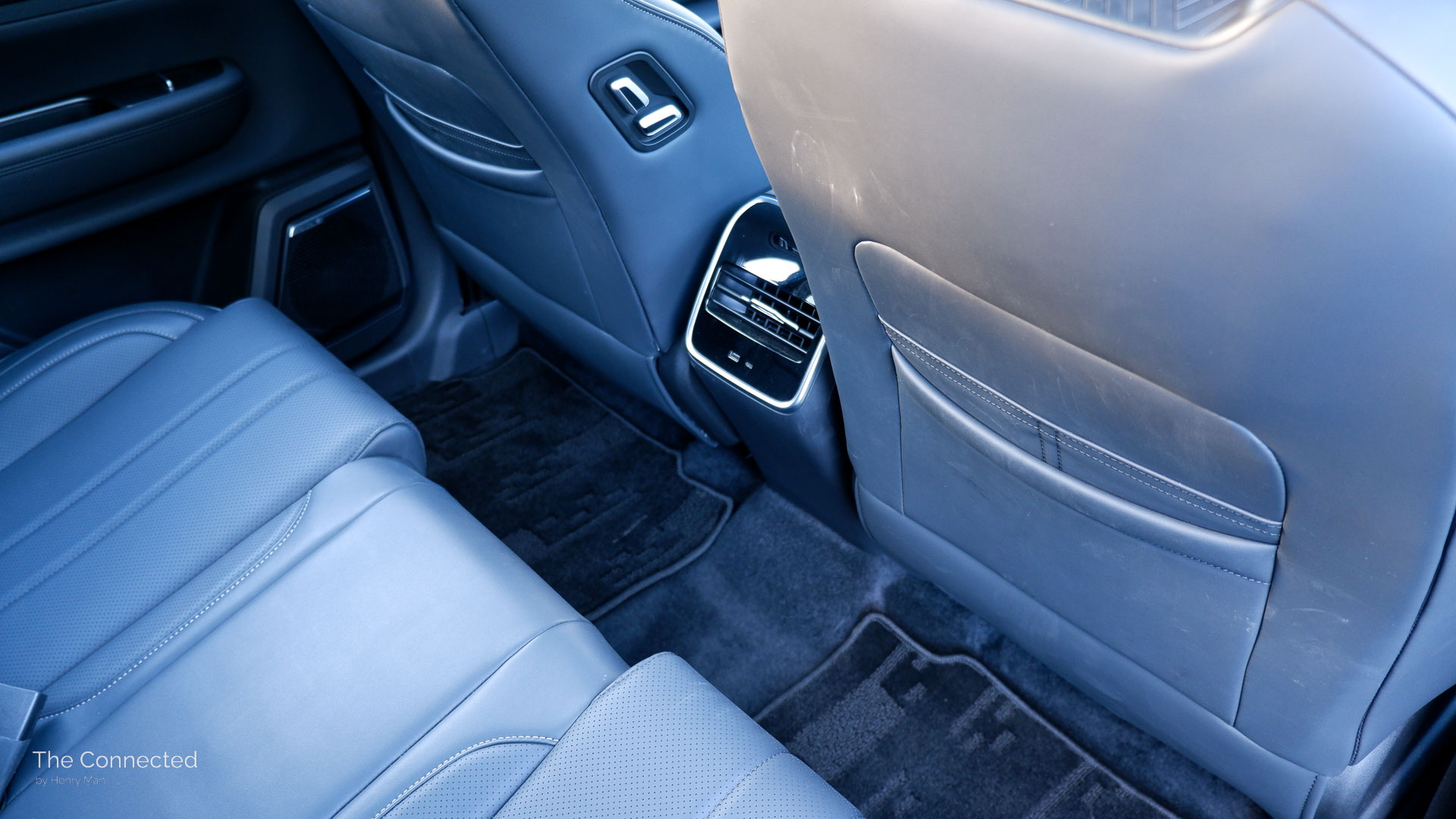
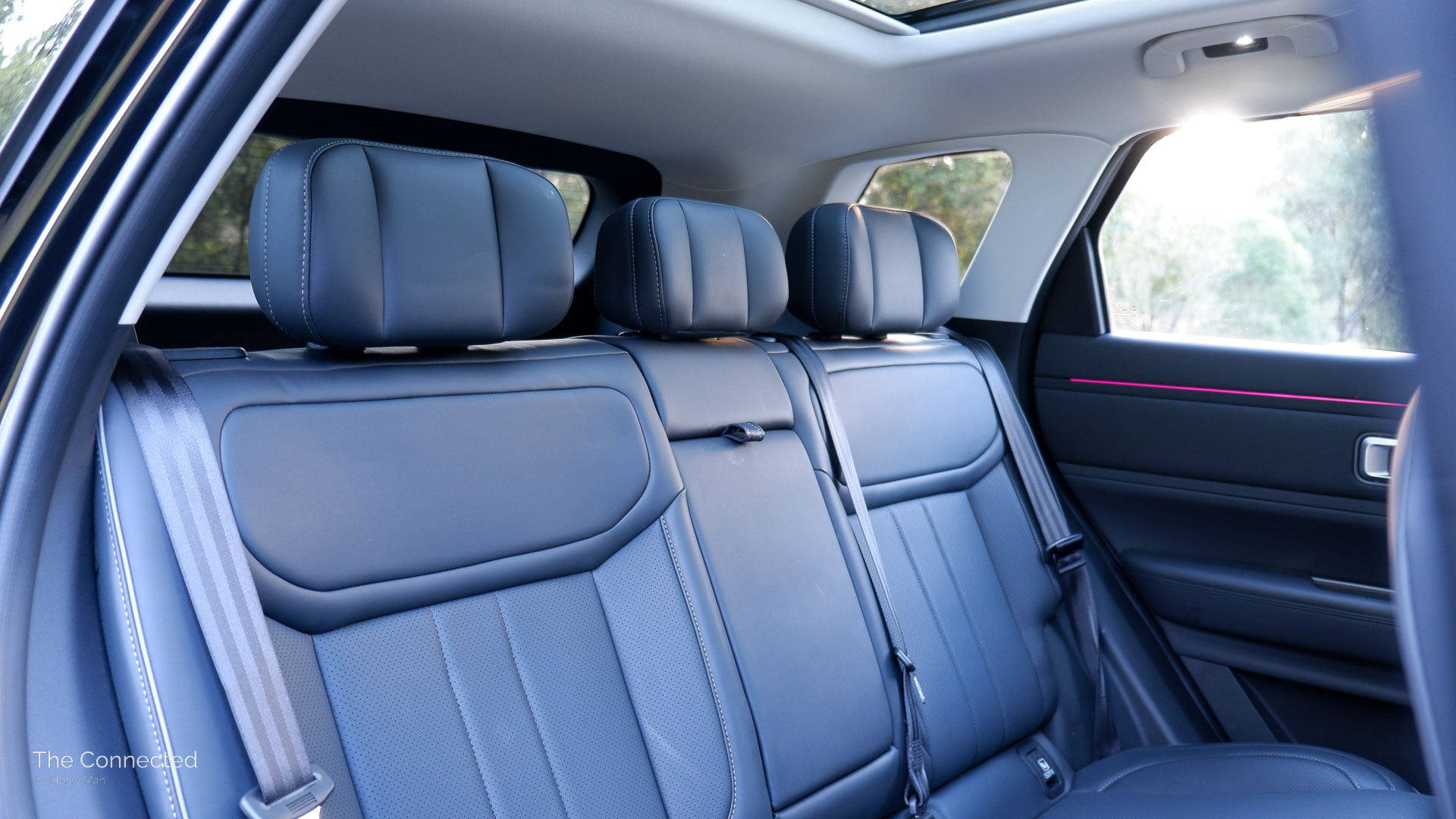
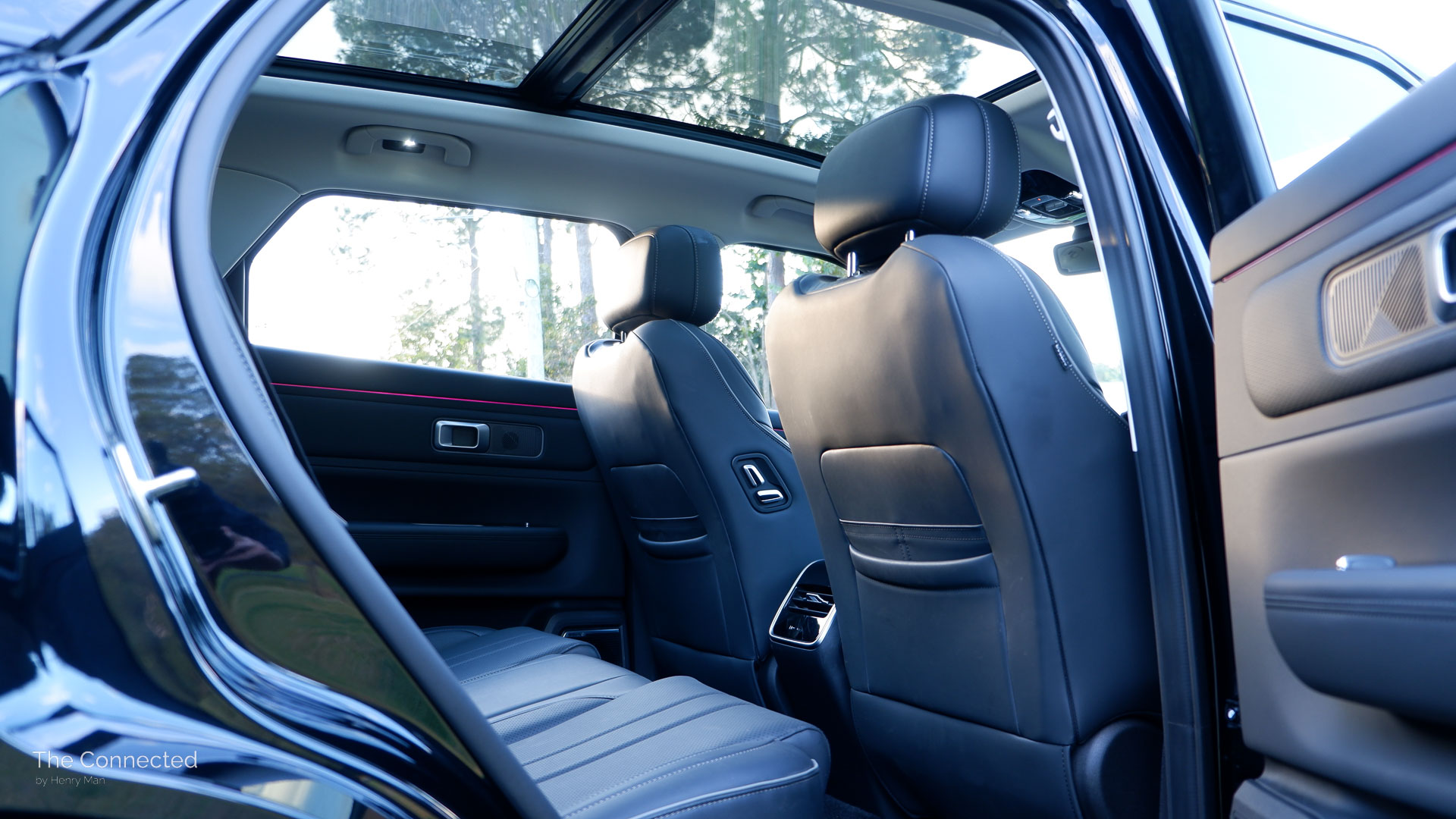
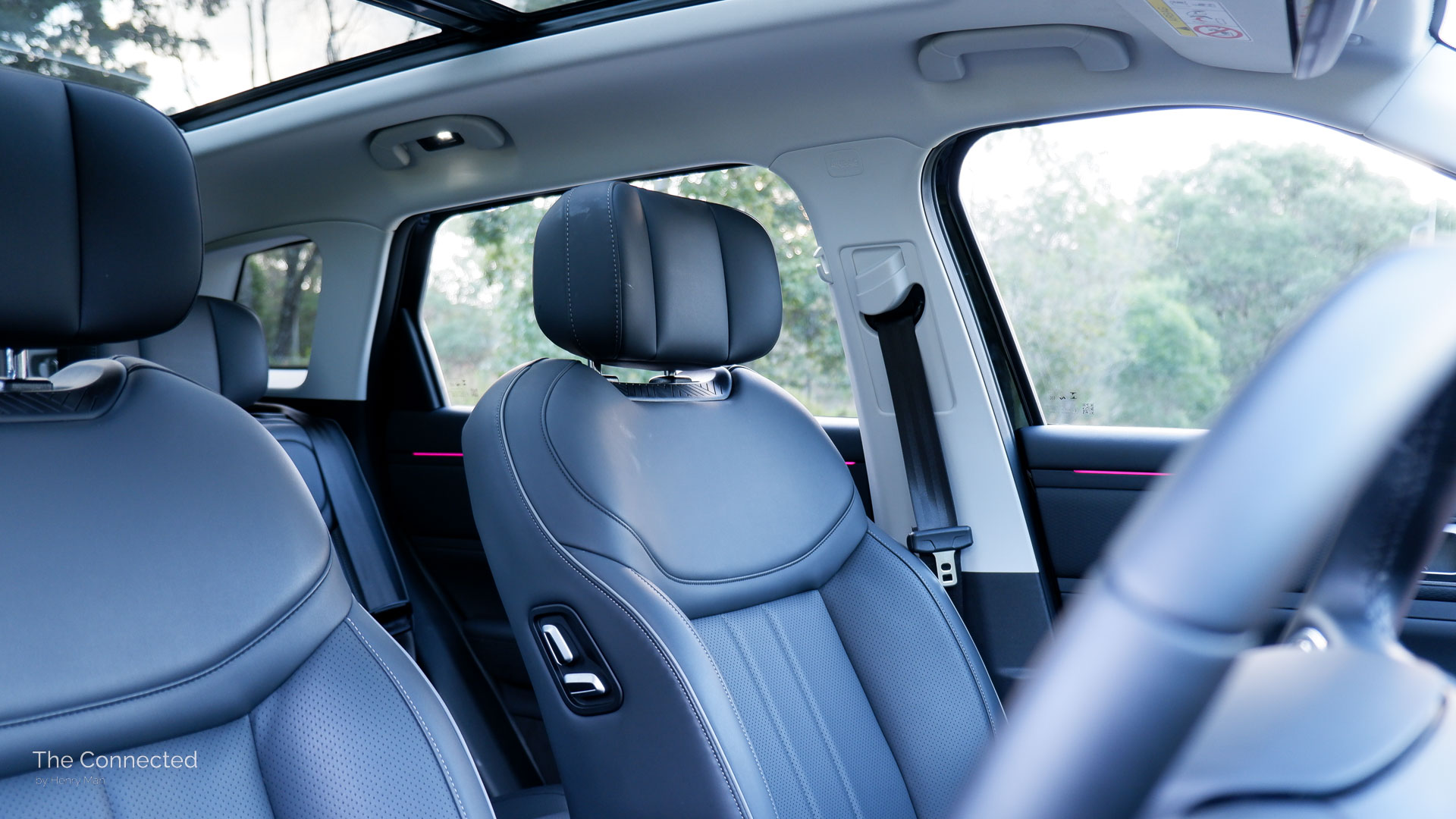
Inside the rear seats, the hybrid SUV provides good legroom, footroom and legroom with a fold-down armrest and two cup holders, a view of the big openable panoramic sunroof, and bright LED interior lighting across both rows.
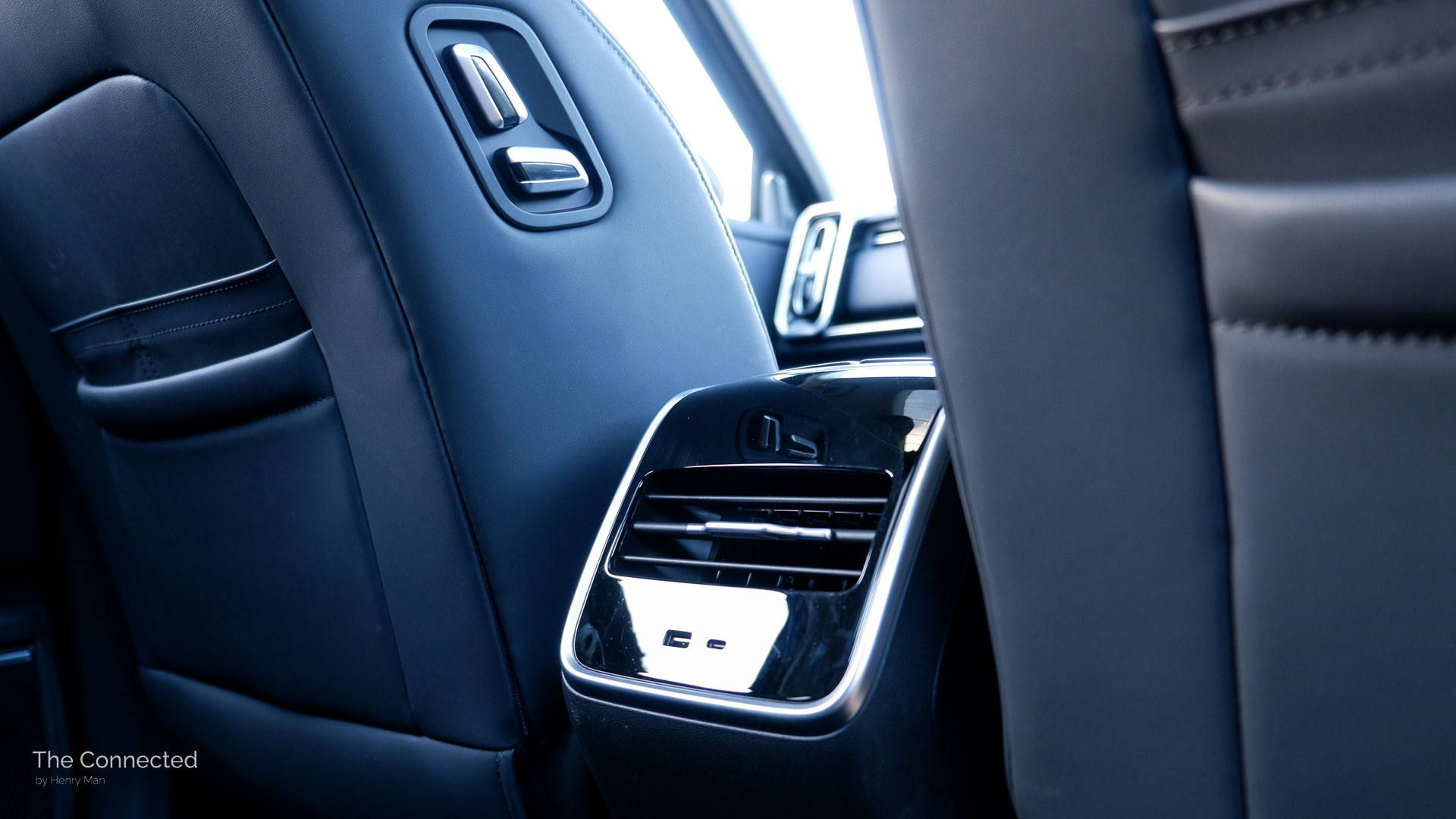
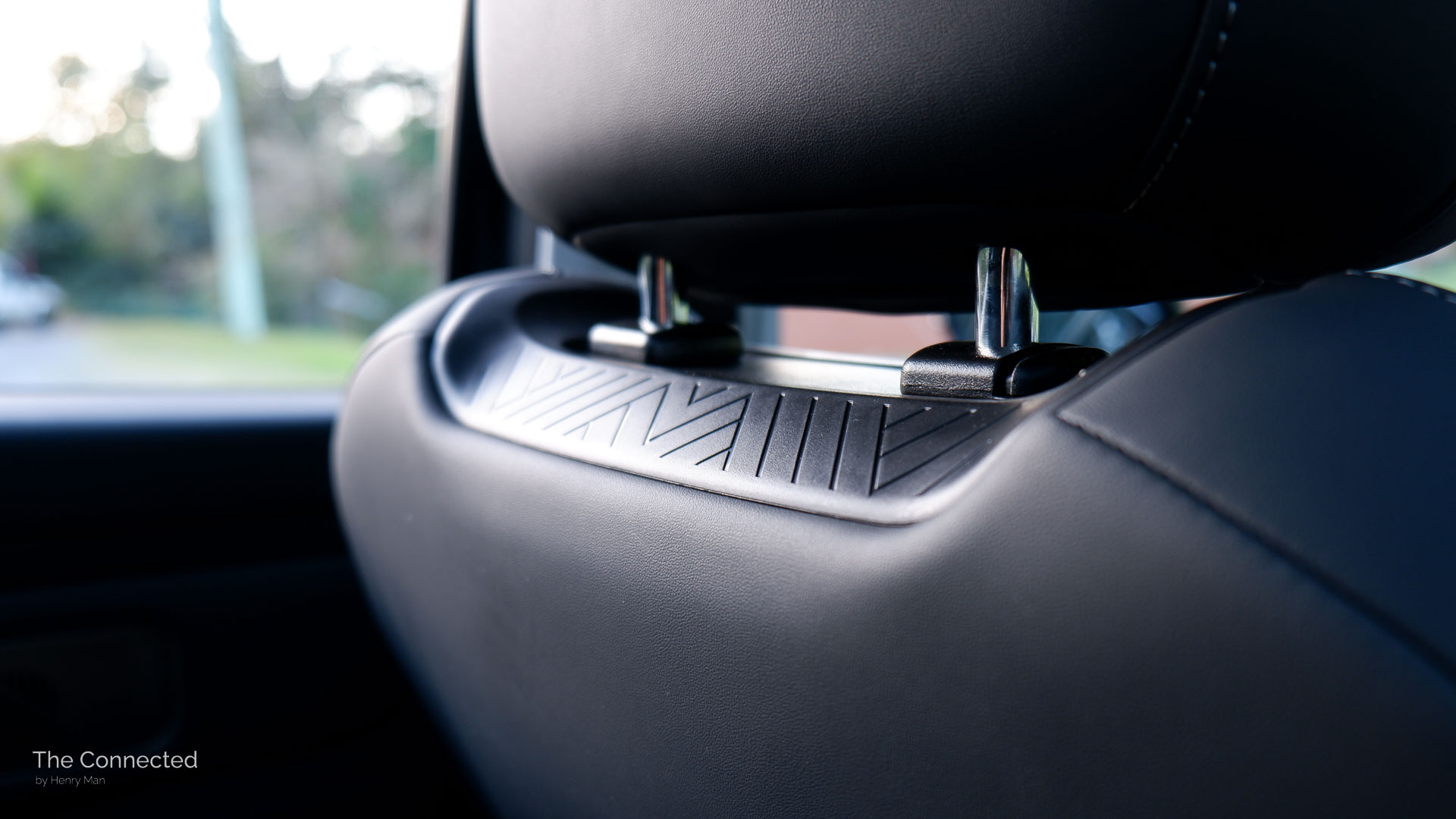
However, while the floor is flat, it is high and the rear bench feels awkwardly low – resulting in perched up knees and the outside view mainly blocked by the front seats – the rear directional air vent is singular only (it can only blow one passenger side), and only one USB-C and one old-school USB-A charging port is provided.
Similar to some Hyundai and Kia cars, Jaecoo offers switches beside the front seat to allow rear passengers to adjust it for more room.
The rear privacy windows have weak tinting, but at least the sunroof includes a built-in sunshade – which handily closes automatically when the SUV is locked – even though it doesn’t completely open with one flick of the overhead switch (it only goes halfway).
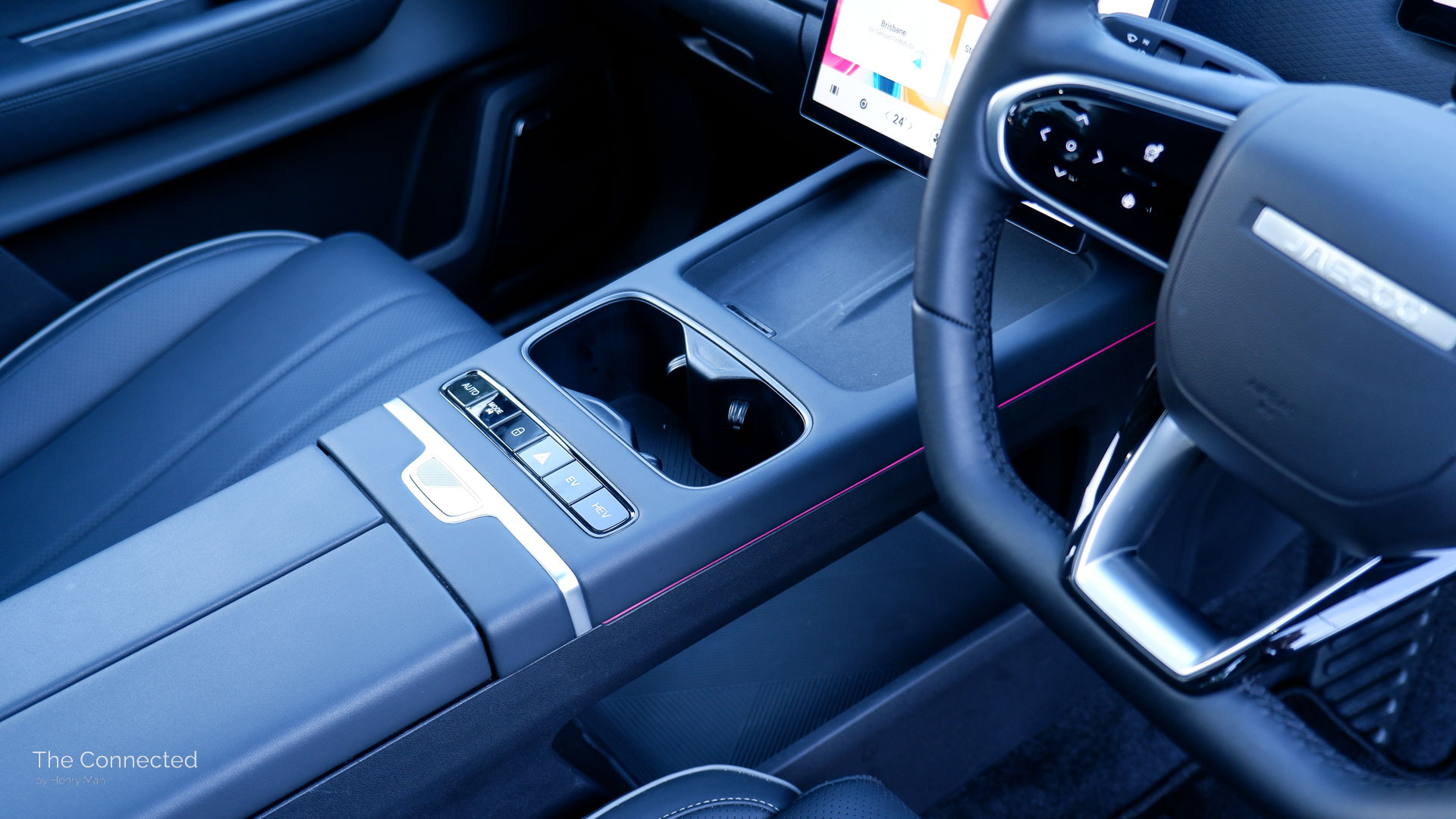
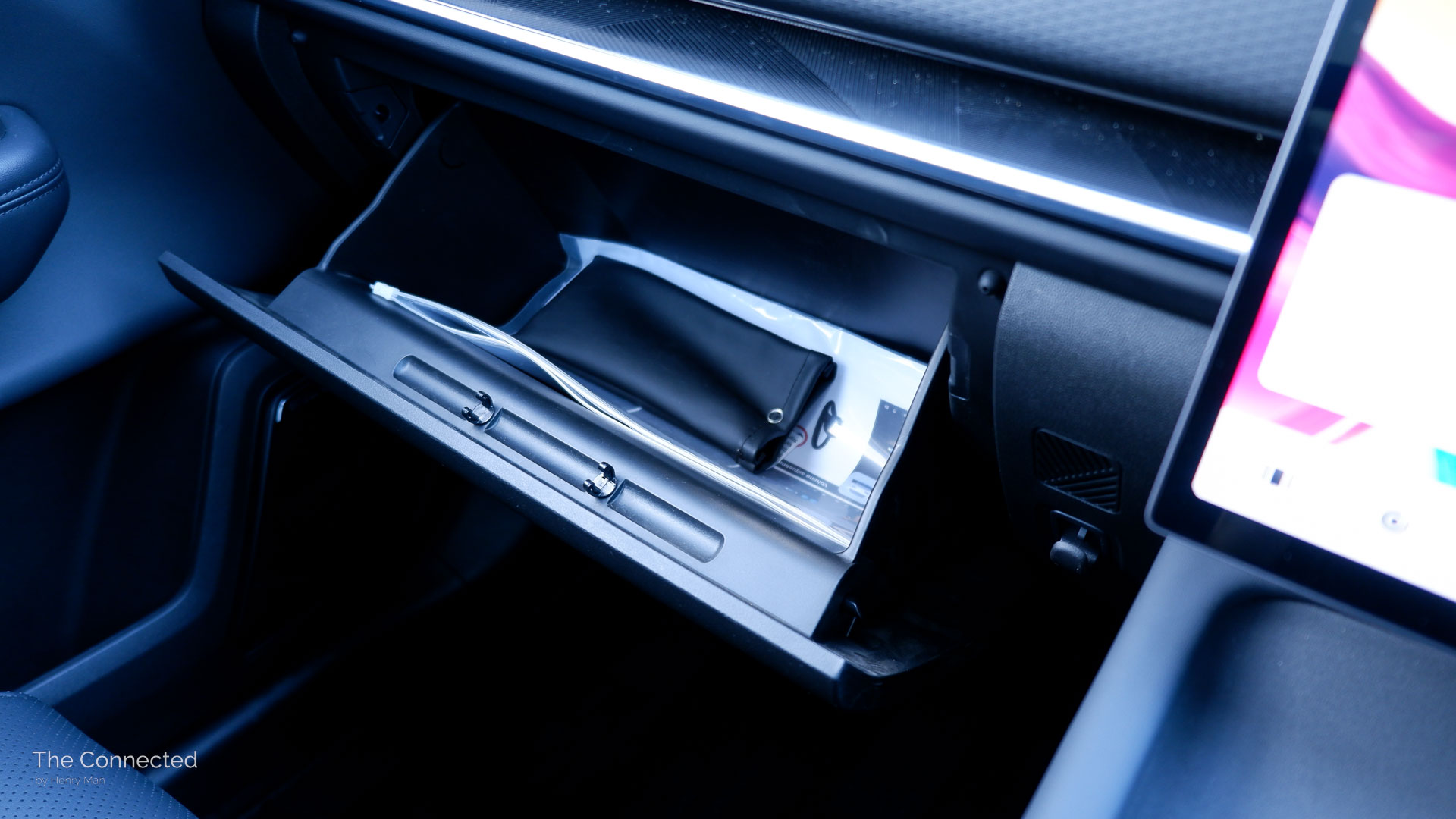
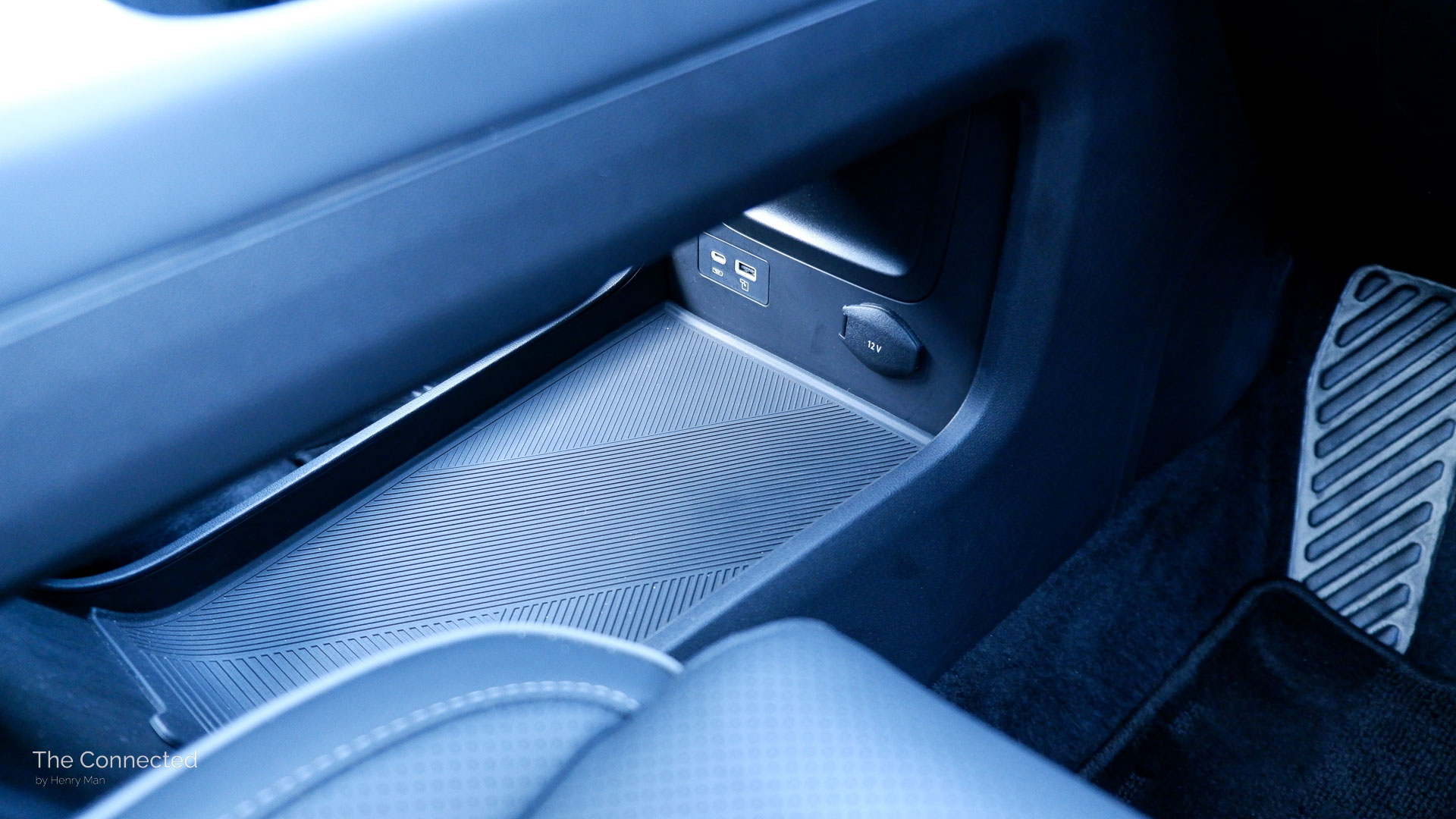
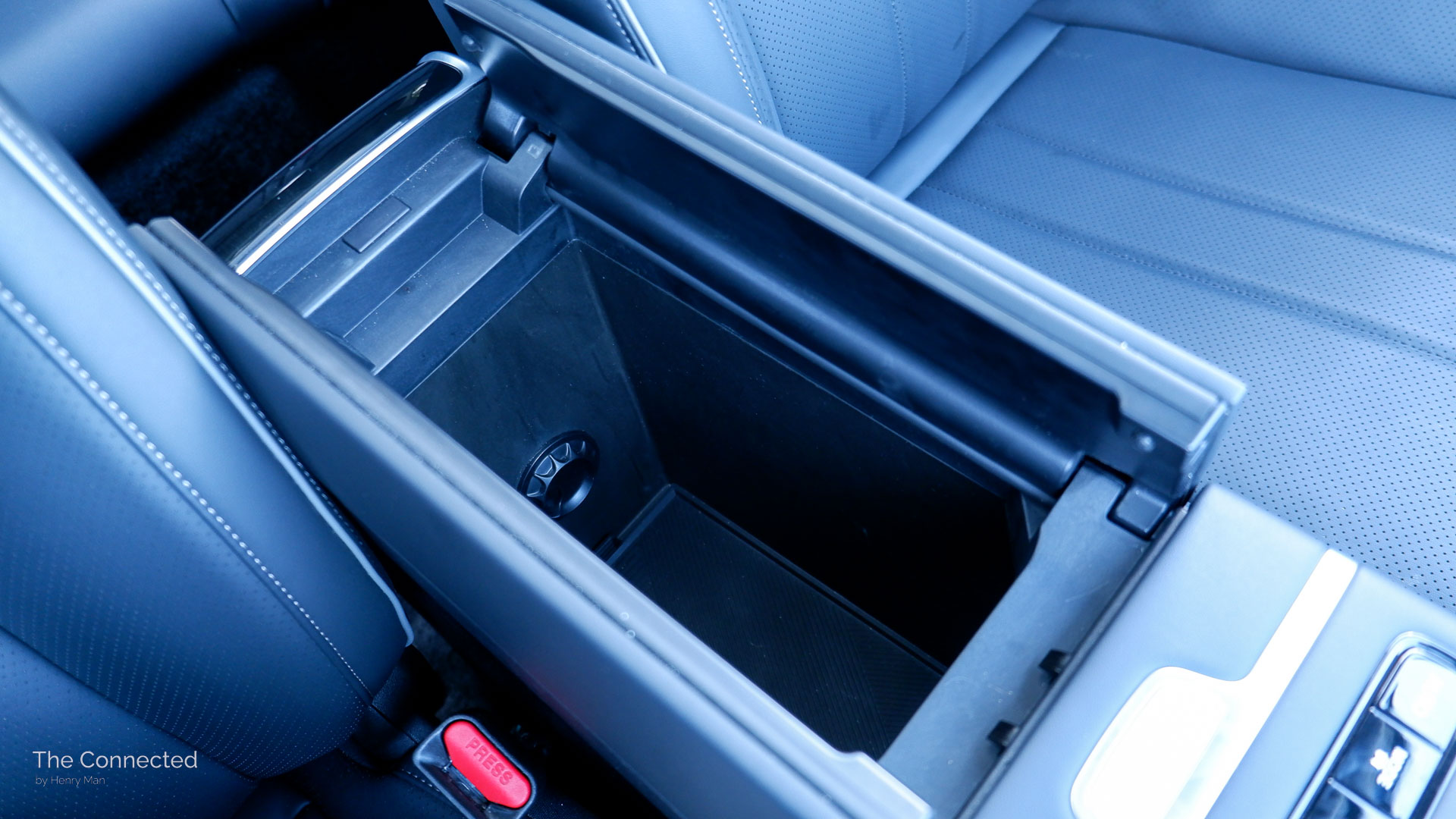
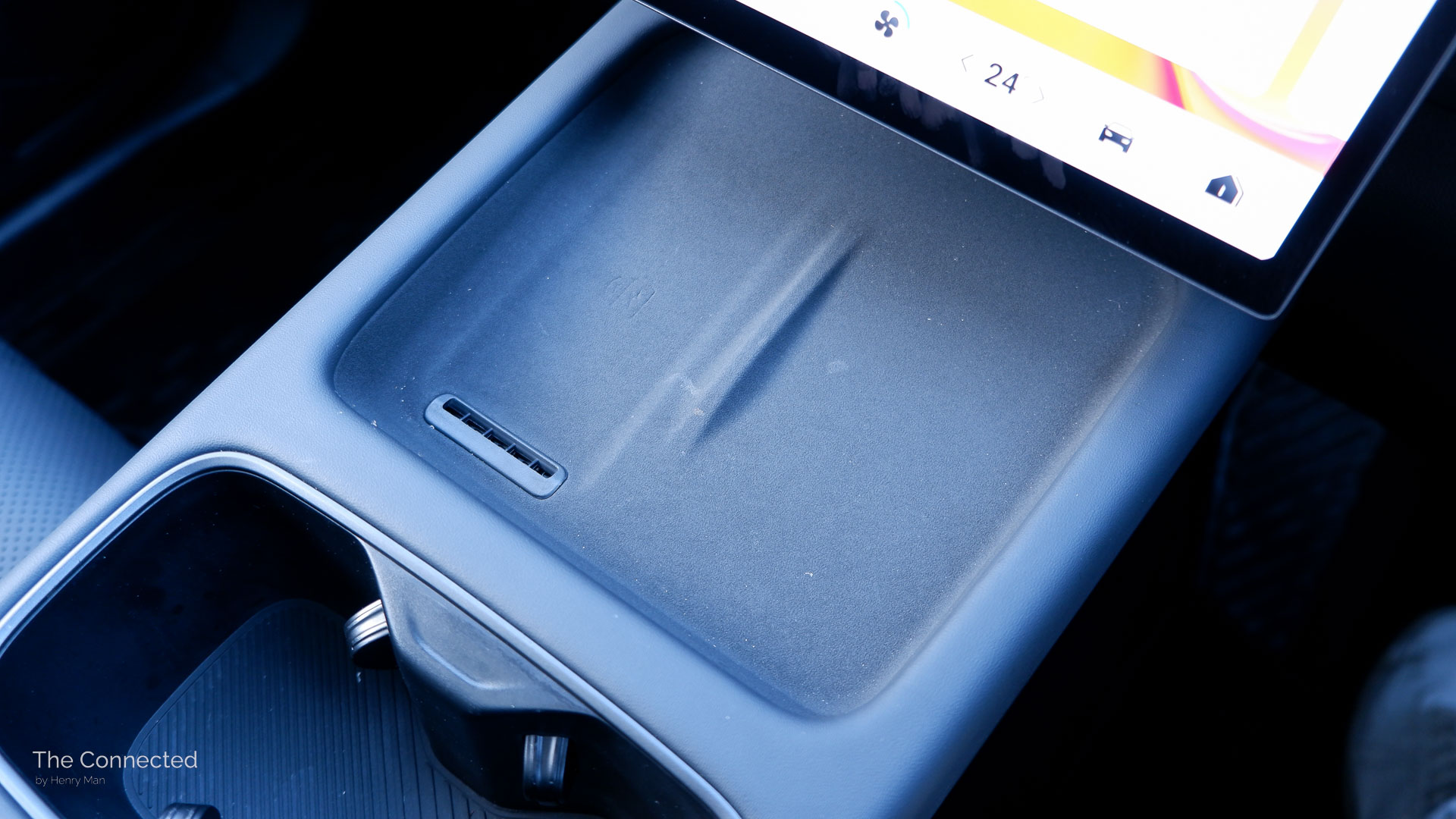
Meanwhile, the Jaecoo J7’s front row is fairly practical with a tray for two smartphones (even though only one side is a Qi wireless charging pad), a deep split opening centre cubby with air ventilation connected to the rear vents, and an open tray underneath the centre console complete with a grippy rubberised surface, USB-C and USB-A ports even though there’s no dedicated illumination.
All door pockets are well-sized, as well as the glovebox with a super soft and damped hinge. Even the pop-out coin tray beside the driver is dampened – which can’t be said for Mazda SUVs. A pop-out hook is also at the passenger side dash.
Annoyingly, the window switches are reversed – much like many Chinese cars from brands such as Leapmotor and Deepal – so flicking the clicky metal-like switch up actually winds the window down.
The J7 SHS Summit also includes three-level heated and ventilated front seats, yet it’s fiddly to delve into the touchscreen to toggle them on as it is in a separate tab in the climate screen, then another press to go into the heated or ventilated seat settings.
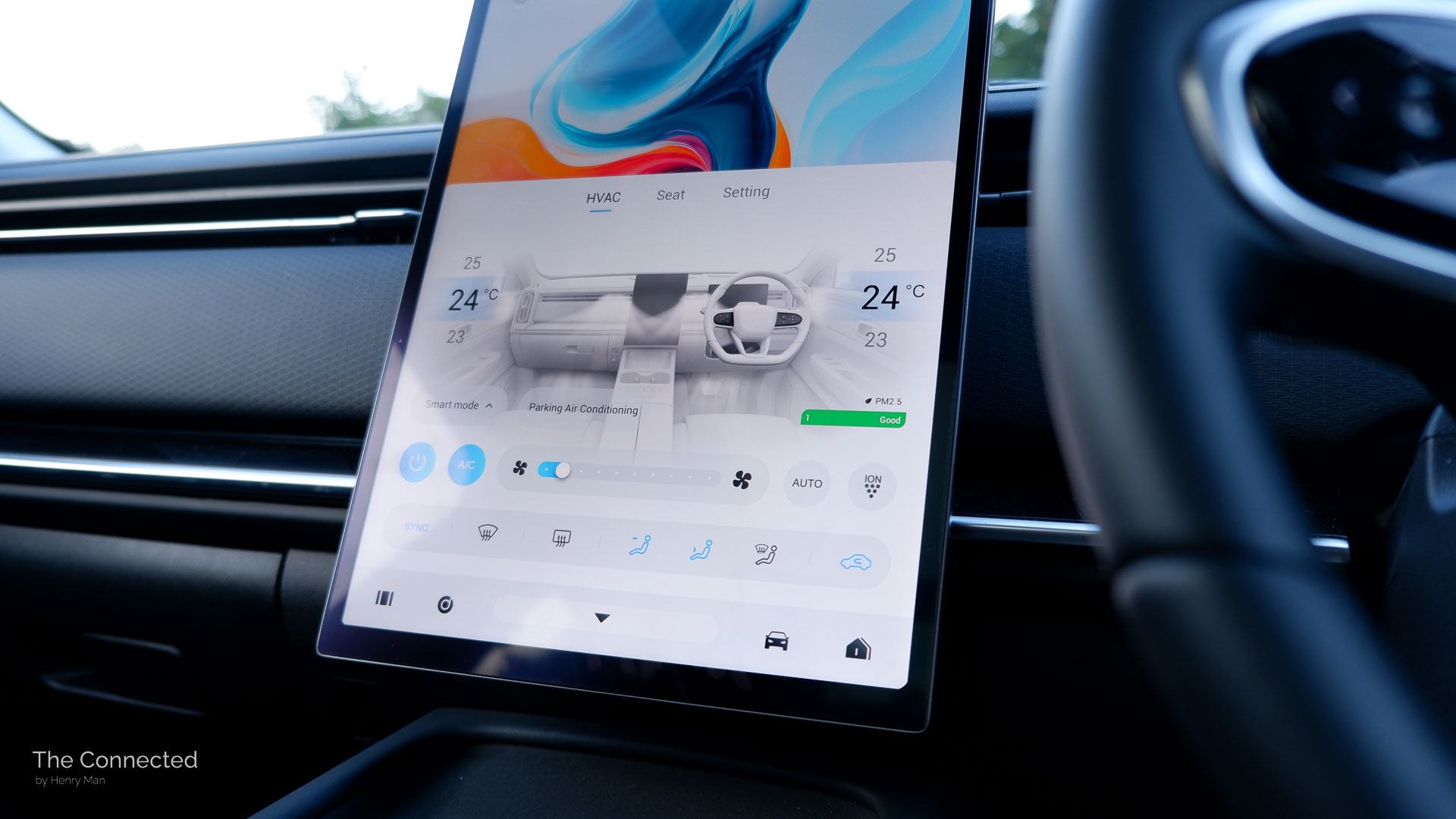
Frustratingly, the heated seat intensity toggles down itself every 10 minutes until it’s on level one, which is way too quick and almost makes this feature redundant. It’s also odd that Jaecoo doesn’t offer steering wheel heating, too.
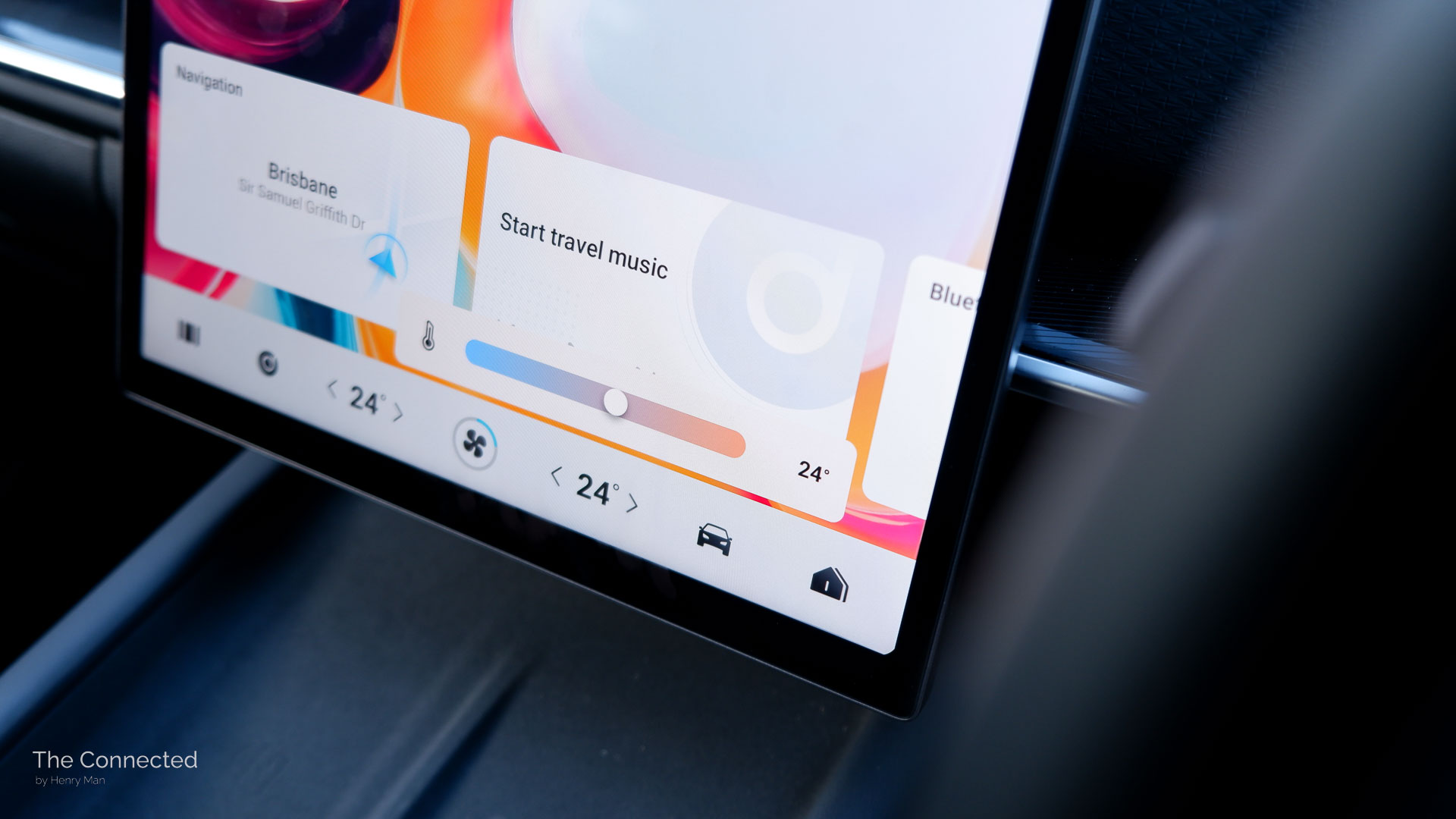
The two-zone climate control is operated via swiping up a panel from the bottom of the touchscreen, which can be fiddly to change the temperature and fan speed while driving.
At least the directional air vents are manual. The Chinese brand offers a ‘Parking Air Conditioning’ function on the plug-in hybrid version to keep it on while the car is locked, as long as there’s enough battery charge.
Annoyingly, the bottom climate bar is placed lower-down due to the portrait-orientated screen, which can be difficult to reach as it can be obscured by taller bottles in the cup holders.
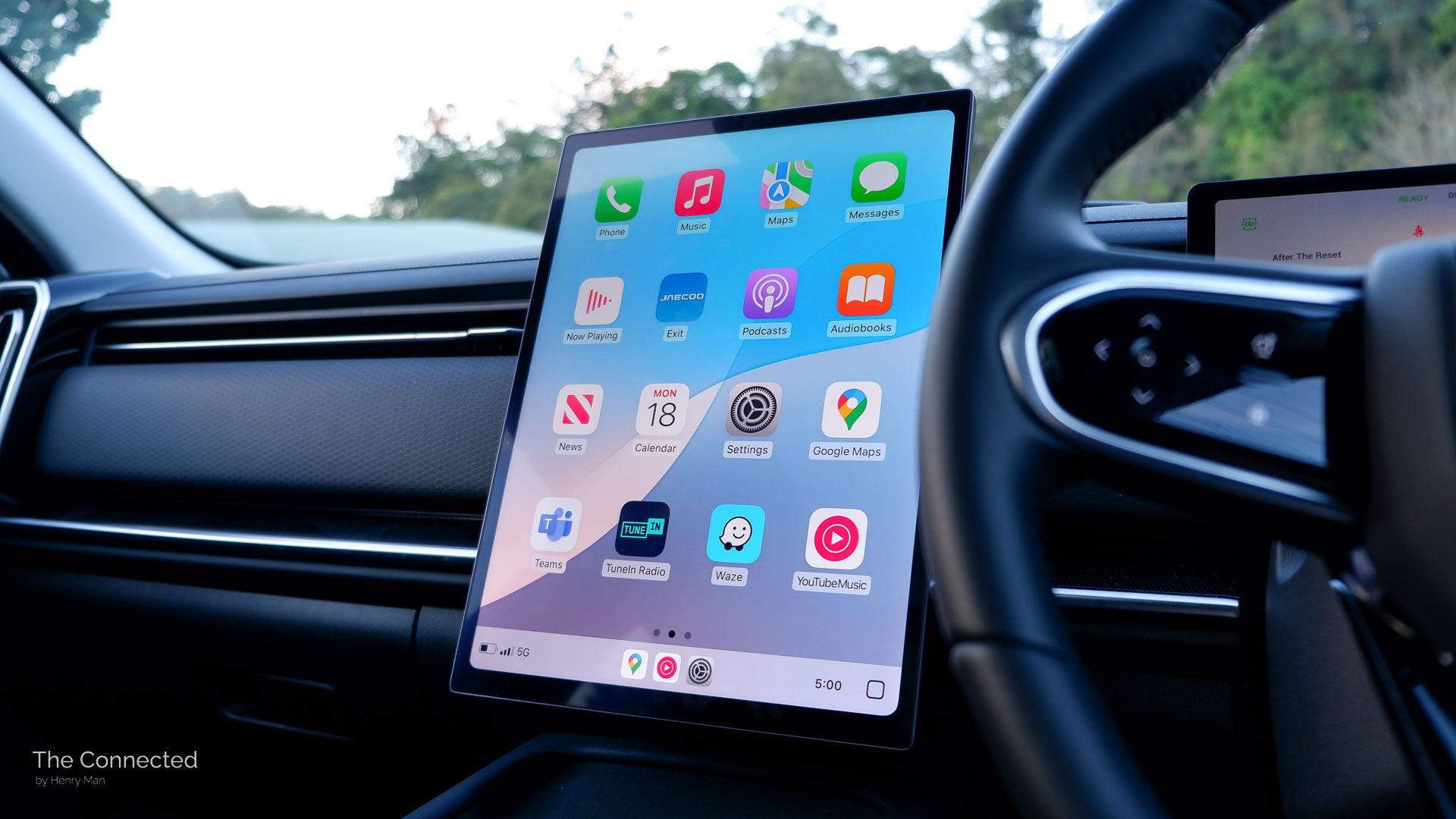
The climate bar also hides itself when using Apple CarPlay and Android Auto, requiring two swipes to open the climate panel.
Technology.
2026 Jaecoo J7 SHS Summit tech features:
| 14.8-inch portrait touchscreen running … | 10.25-inch driver instrument display |
| Wireless/wired Apple CarPlay and Android Auto | Head-up display |
| Built-in maps | Eight-speaker Sony |
| 50-watt Qi wireless charging pad with ventilation | Proximity key with auto-folding mirrors, auto pop-out door handles, and auto unlock/lock |
| 2x USB-C, 2x USB-A, and 2x 12-volt charging ports |
Jaecoo’s technology is impressively good, but imperfect in some areas.
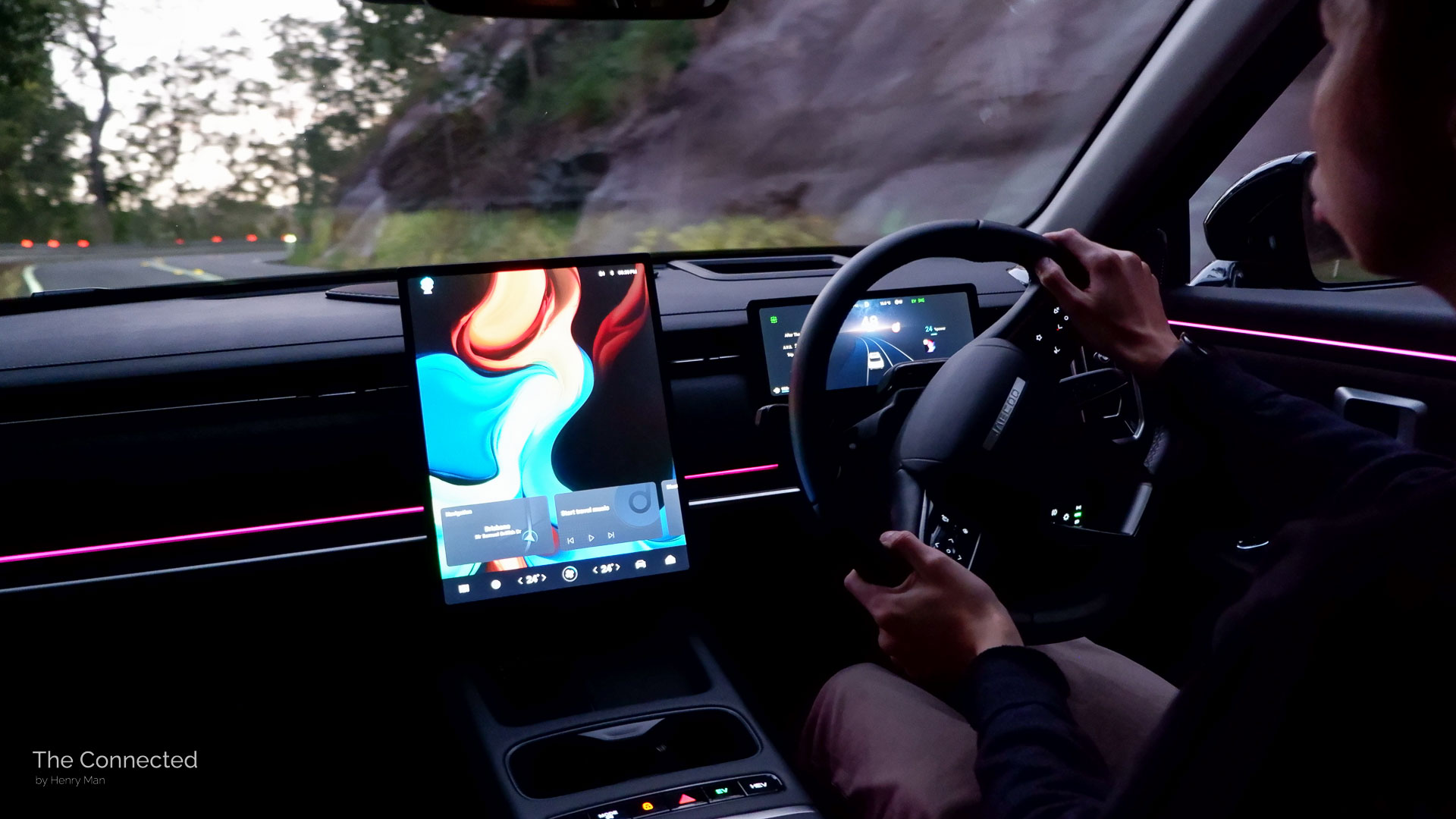
The 14.8-inch touchscreen is super clear and high resolution with a unique tall portrait orientation that is perfect for showing the map and an audio player in a split screen.
The Chinese automaker’s own software is easy to use, with quick processing speed, and auto light and dark mode switching – which thankfully includes the home screen wallpaper unlike the Leapmotor C10.
Automatic brightness also features, but strangely the sensor gets distracted by the brake lights of other vehicles as the central screen brightens up every time I stopped behind a vehicle at night.

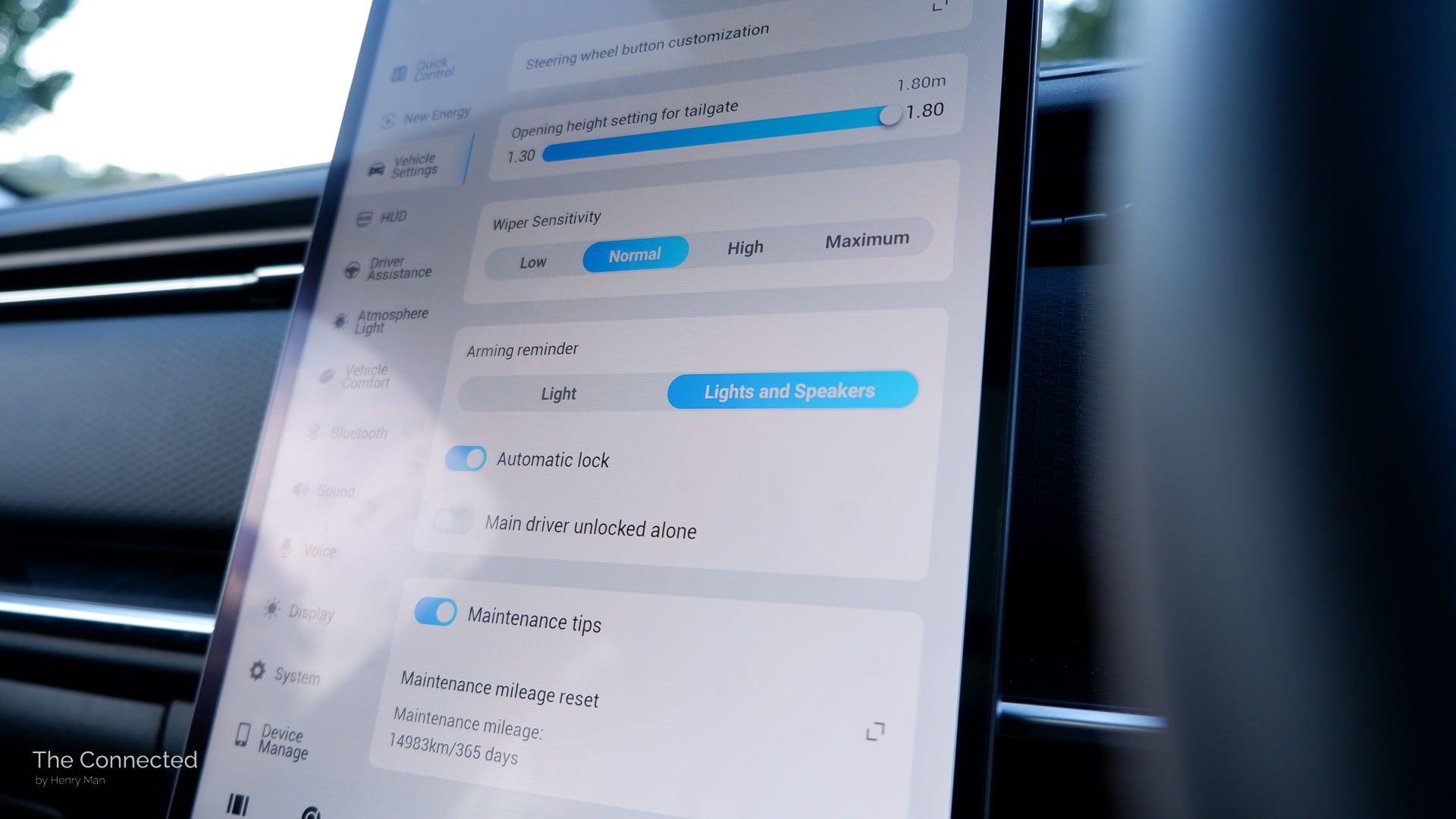
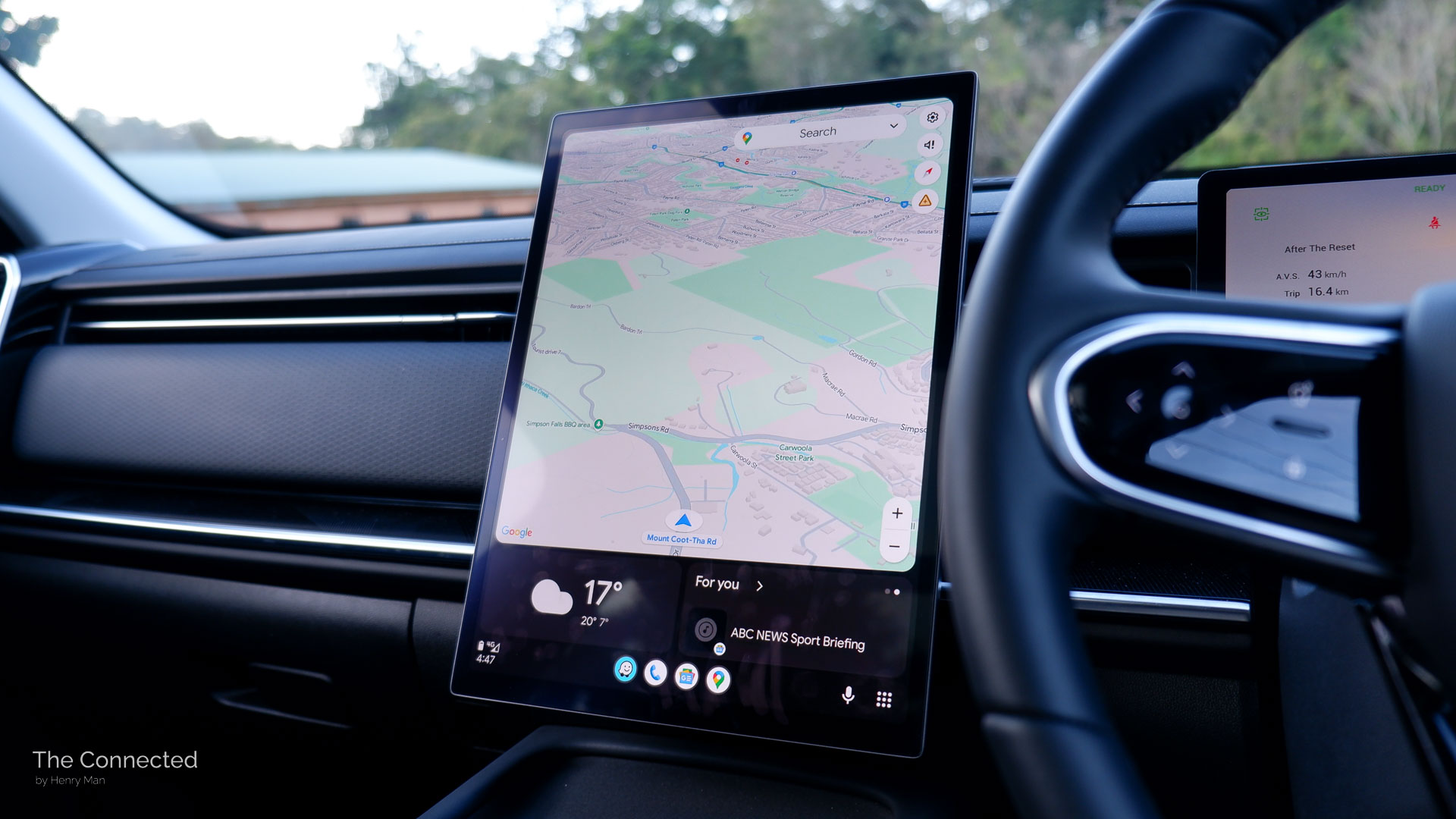
Disappointingly, there are some basic English user interface issues that don’t make sense, especially in the vehicle settings. For example, a toggle under the exterior light settings states “close to guests” and door locking is labelled as “arming” with the “main driver unlocked alone” toggle suggesting unlocking the driver door only on approach.
It’s poor customer experience design that’s a common theme with many Chinese cars.
Fortunately, wireless Apple CarPlay and Android Auto connect reliably and fill the entire screen, although the option to keep the bottom bar persistent would be welcome.
The single 50-watt Qi wireless charging pad also has an active ventilation function, which means phones rarely overheat and stop charging – even though the fan is audible. The wetsuit-like pad material means phones slide around a bit, though.
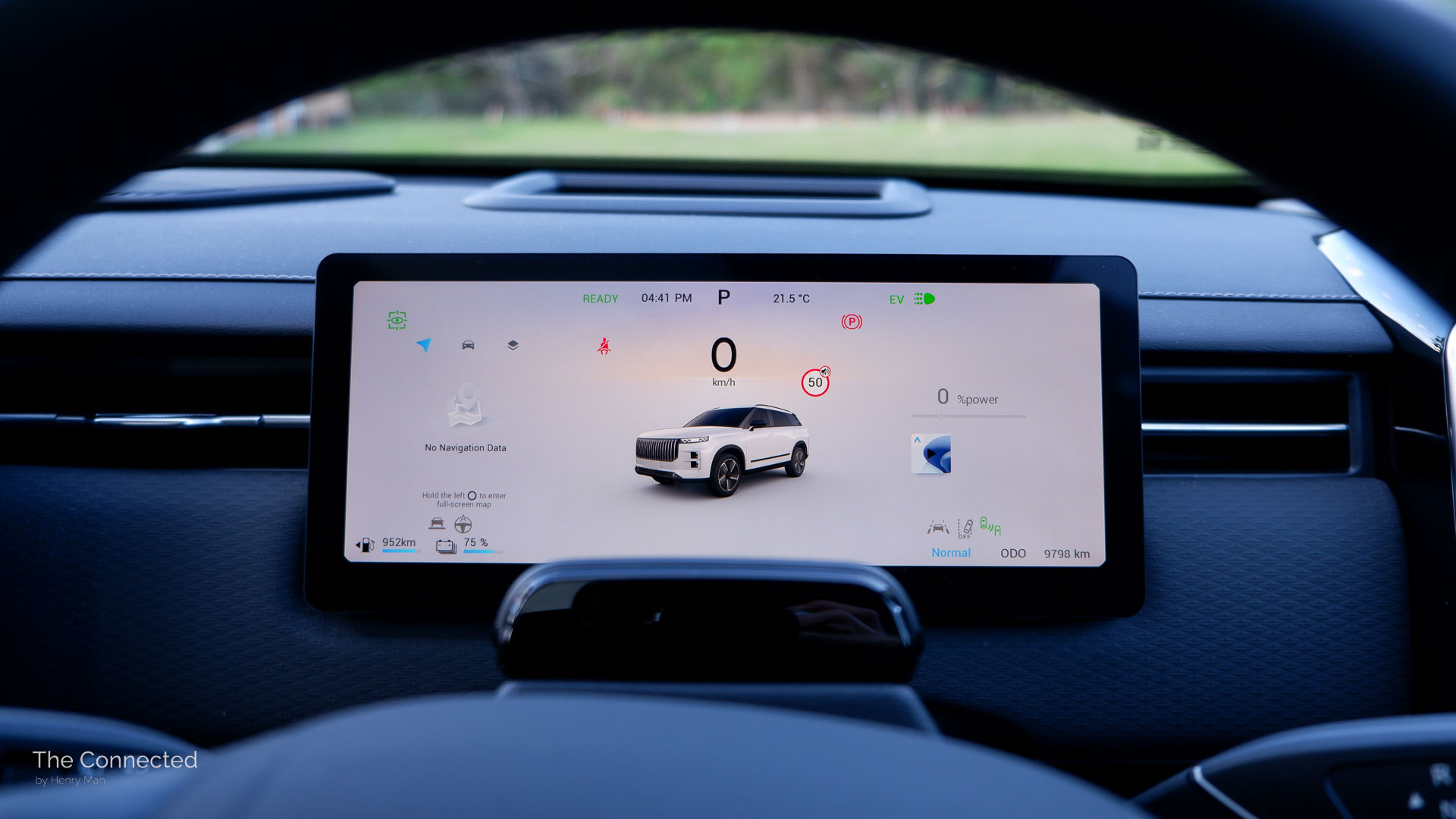
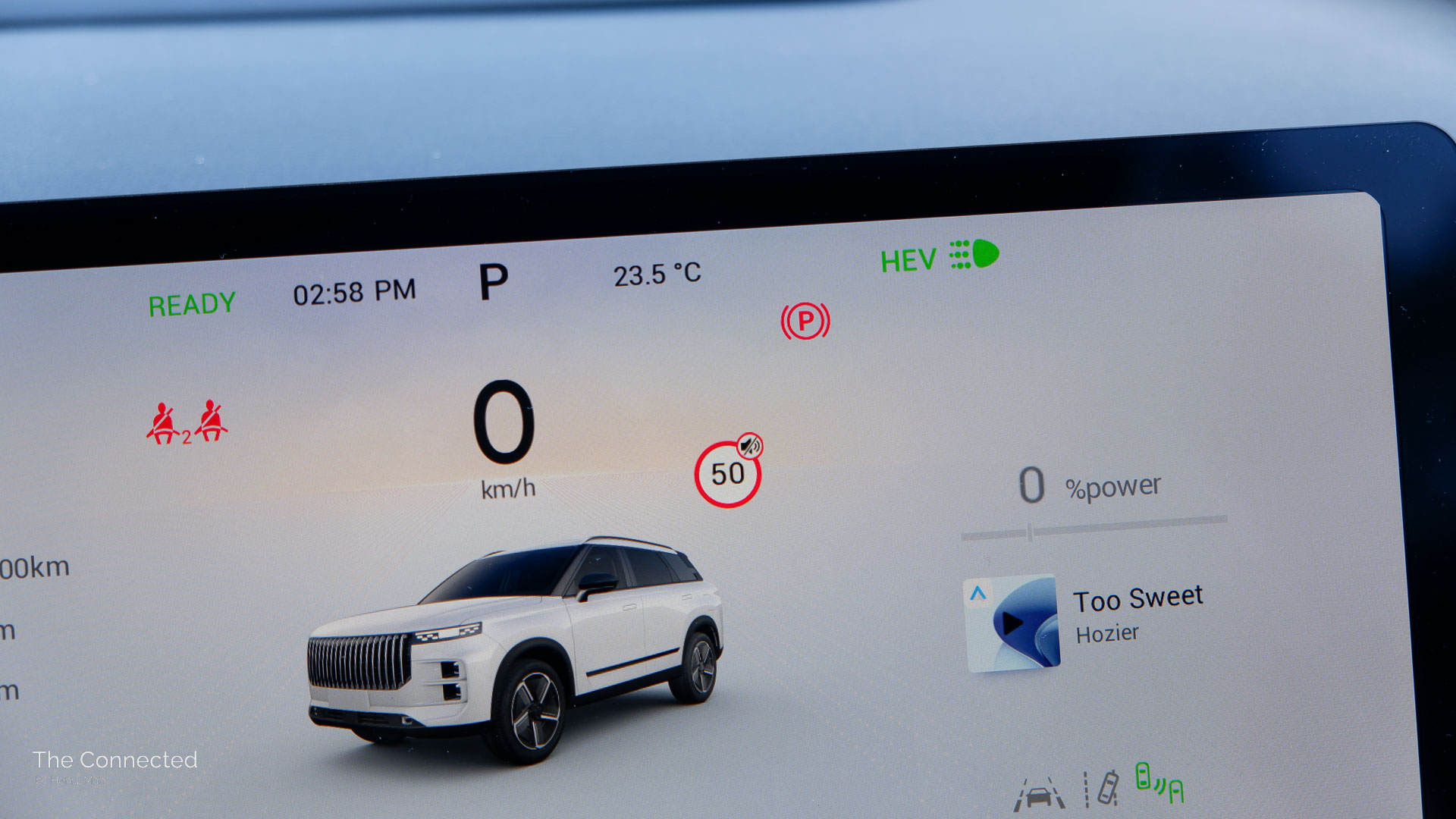
While the 10.25-inch driver instrument display is bright with three customisable side panels and the choice of driver assist visualisations or a full-screen map view, many icons and text are too small.
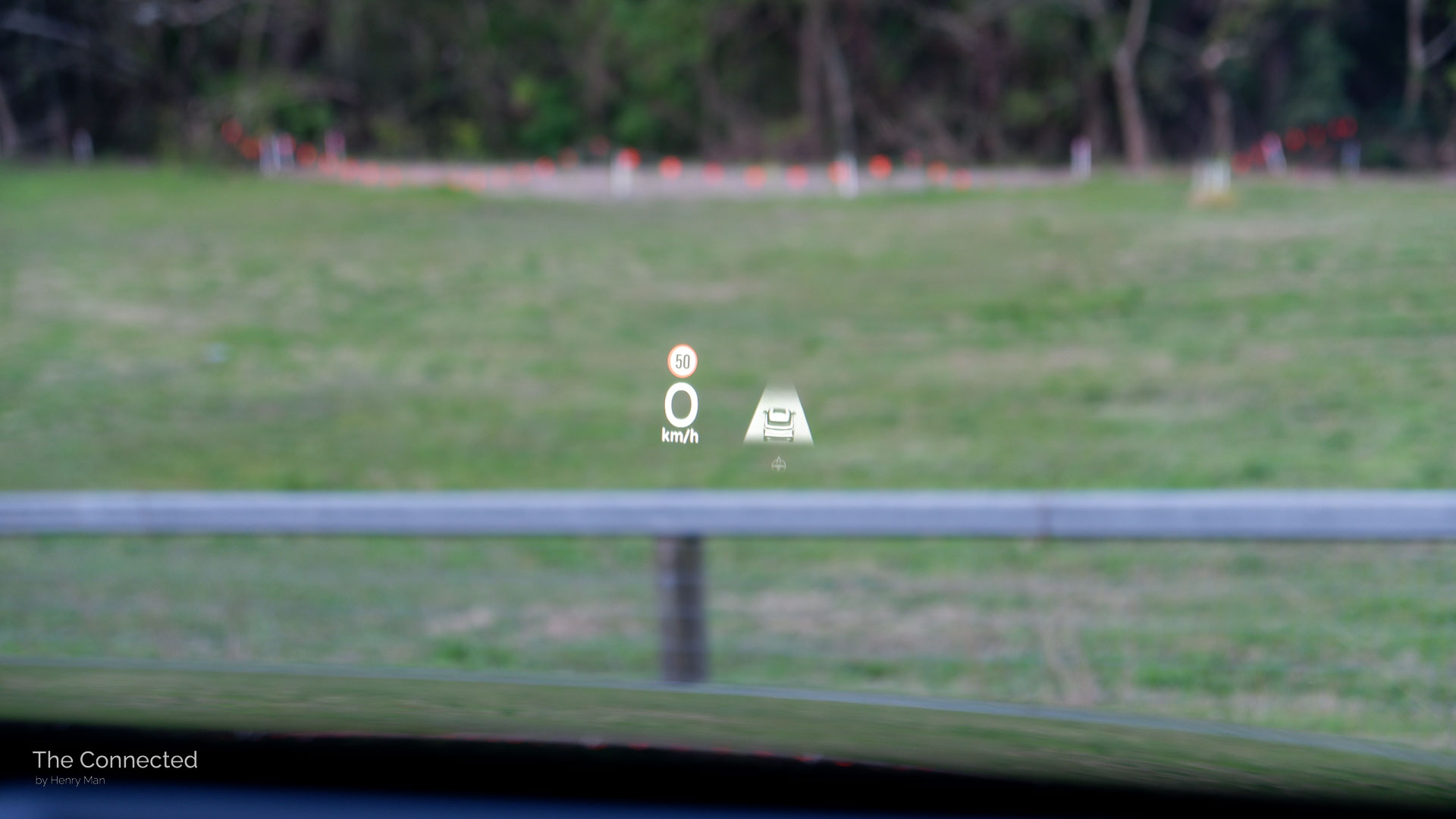
The head-up display clearly projects onto the windscreen, but the speed sign icon and safety assists portion is again smaller than ideal, and there’s no automatic brightness adjustment,
While the J7’s steering wheel adopts controls consisting of two single gloss black panels, it is still easy to use with good physical tactility, ridges and illuminated icons.
Jaecoo doesn’t offer connected services nor a mobile app yet.
Safety.
2026 Jaecoo J7 SHS Summit safety features:
| Front AEB with vehicle/pedestrian/cyclist/junction turning detection | 360-degree camera system |
| Blind-spot assist | Front and rear parking sensors |
| Rear cross-traffic assist | Driver attention monitoring camera |
| Lane-keep assist | Speed sign detection with overspeed warning |
| Adaptive cruise control with lane-centring assist | Full LED headlights with front fog lights and cornering function |
| Door open warning | Full LED tail-lights with rear fog lights |
The Jaecoo J7 includes active safety assistance systems that are mostly well-tuned and can be permanently deactivated, but some features need work.
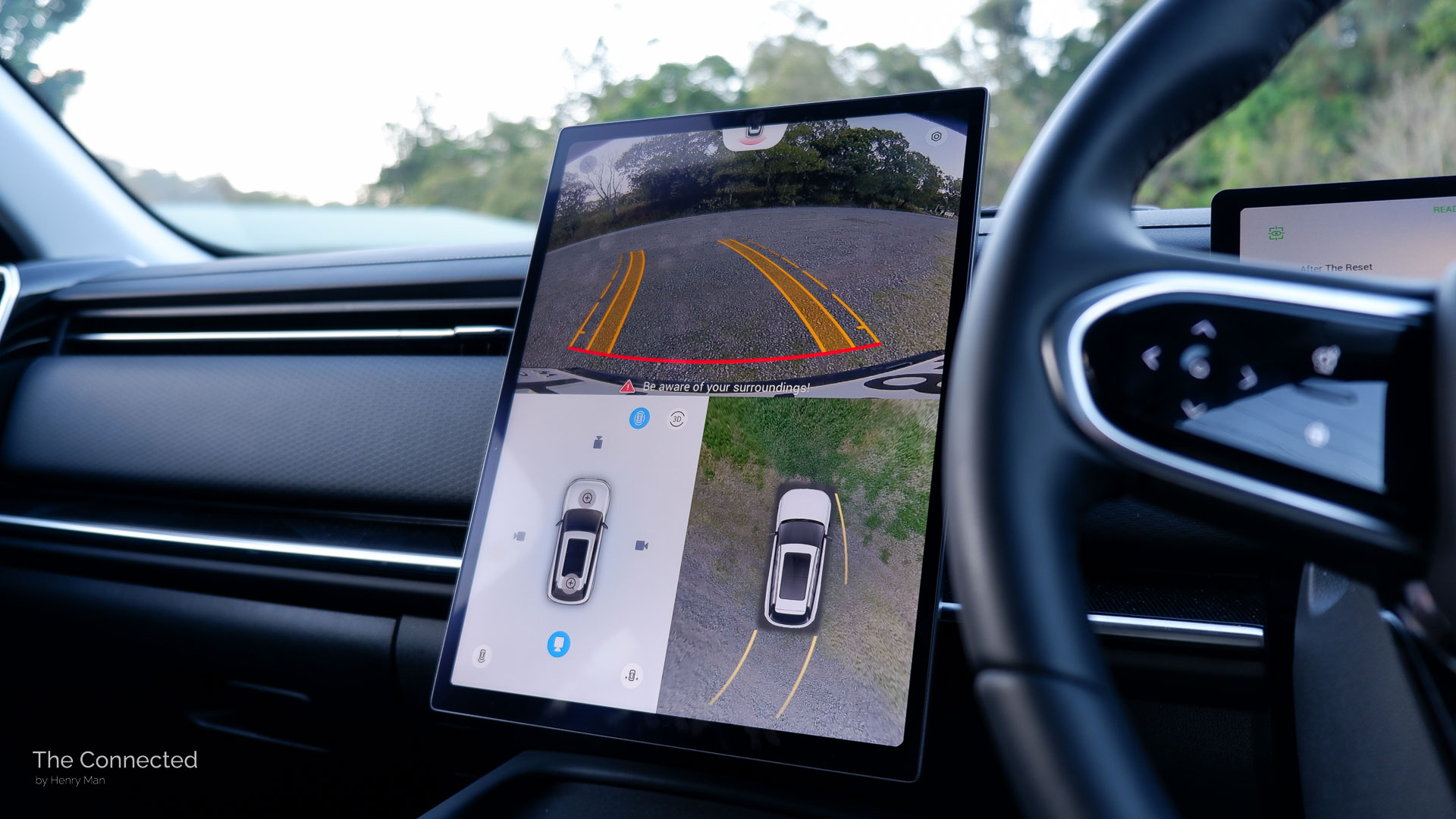
For a Chinese car, the Chery sub-brand’s safety assists are pretty good with a non-sensitive and non-aggressive lane-keep assist, gentle warning sounds, and a clear 360-degree surround-view camera system that conveniently shows automatically as you turn the steering wheel lock more.
The adaptive cruise control system keeps a good and consistent distance with the vehicle in front, and is easy to adjust via the physical steering wheel controls.
It strangely consistently travels 1km/h above the set speed limit and aggressively slows down up to 15km/h when driving on a bend, though.


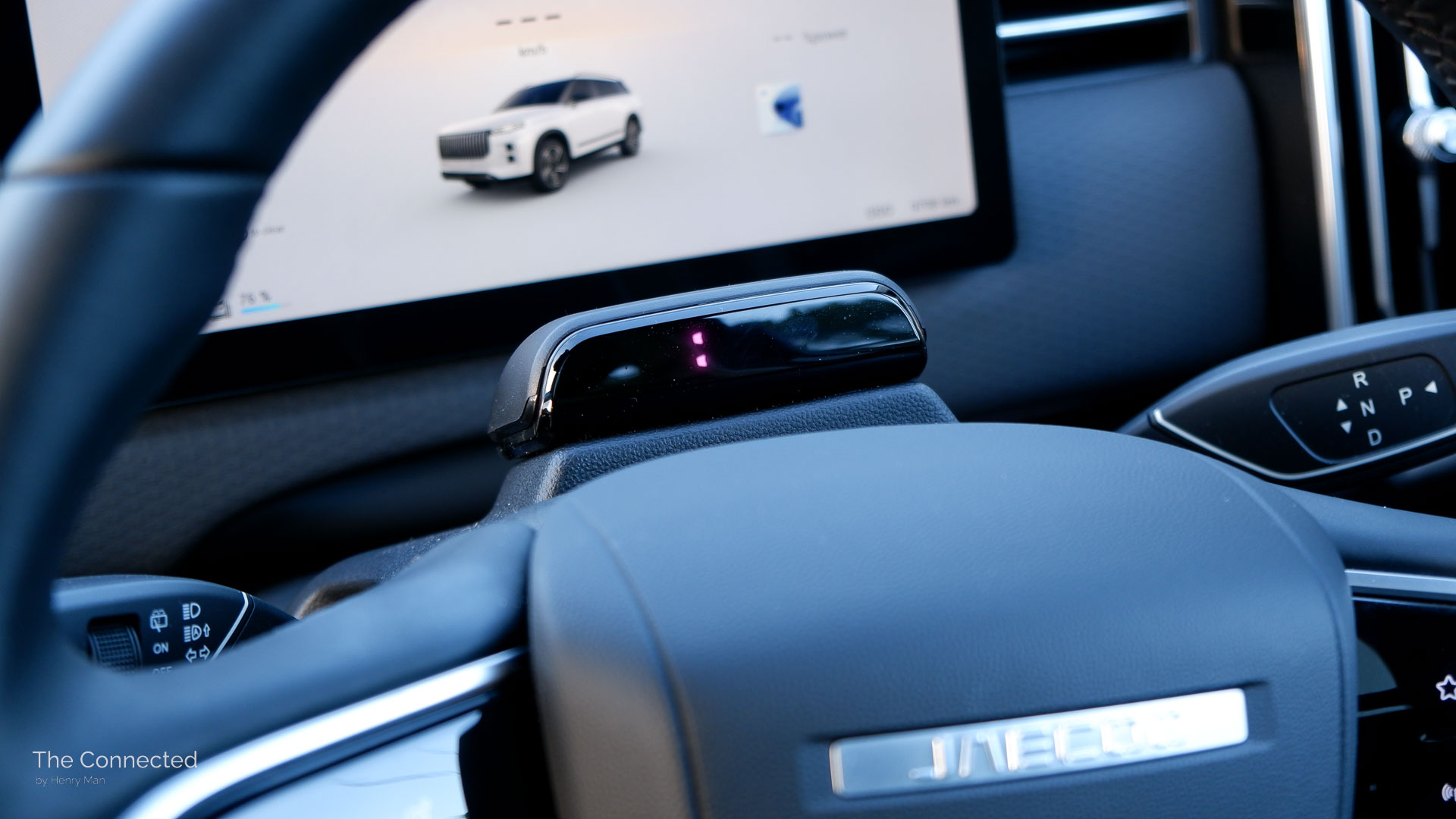
However, Jaecoo’s lane-centring assist is fairly poor as it constantly snaps out abruptly (causing a jolt in the cabin) and chimes as soon as it can’t detect the lines (which happens frequently even when the markings are clear) or there’s some driver input on the wheel.
Thankfully, it is easy to deactivate lane-centring from the adaptive cruise system with a press and hold of a button on the wheel.
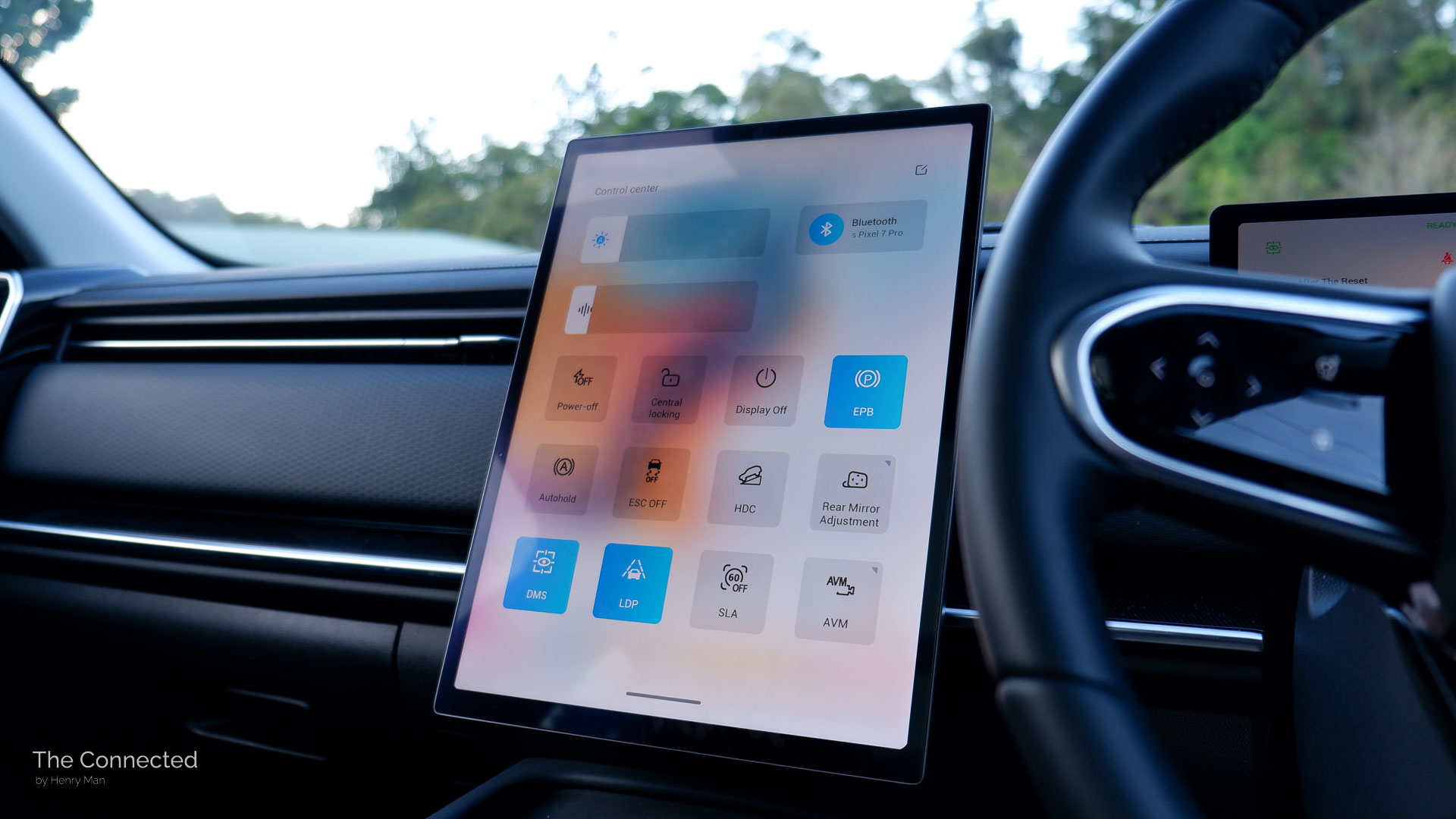
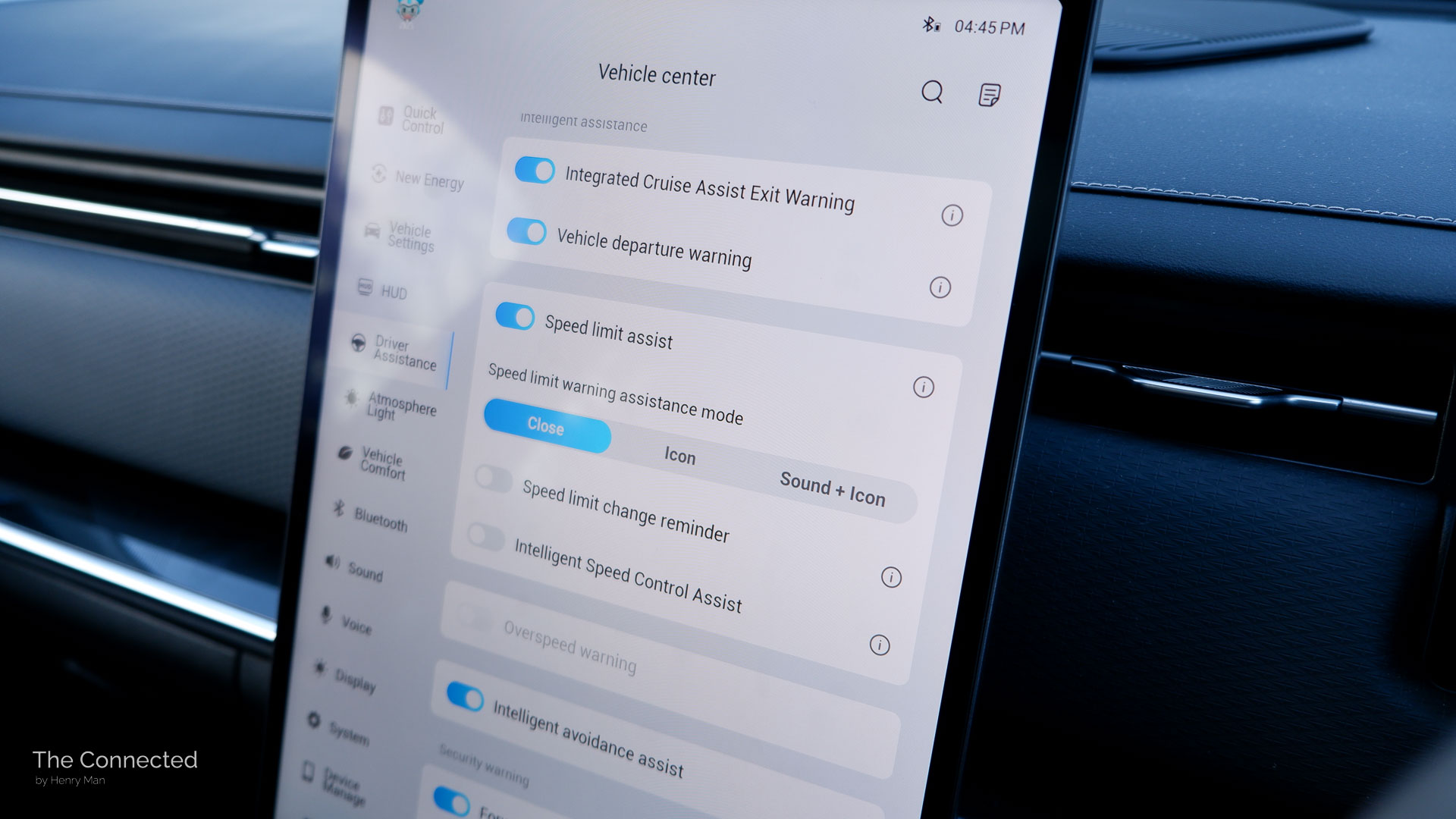
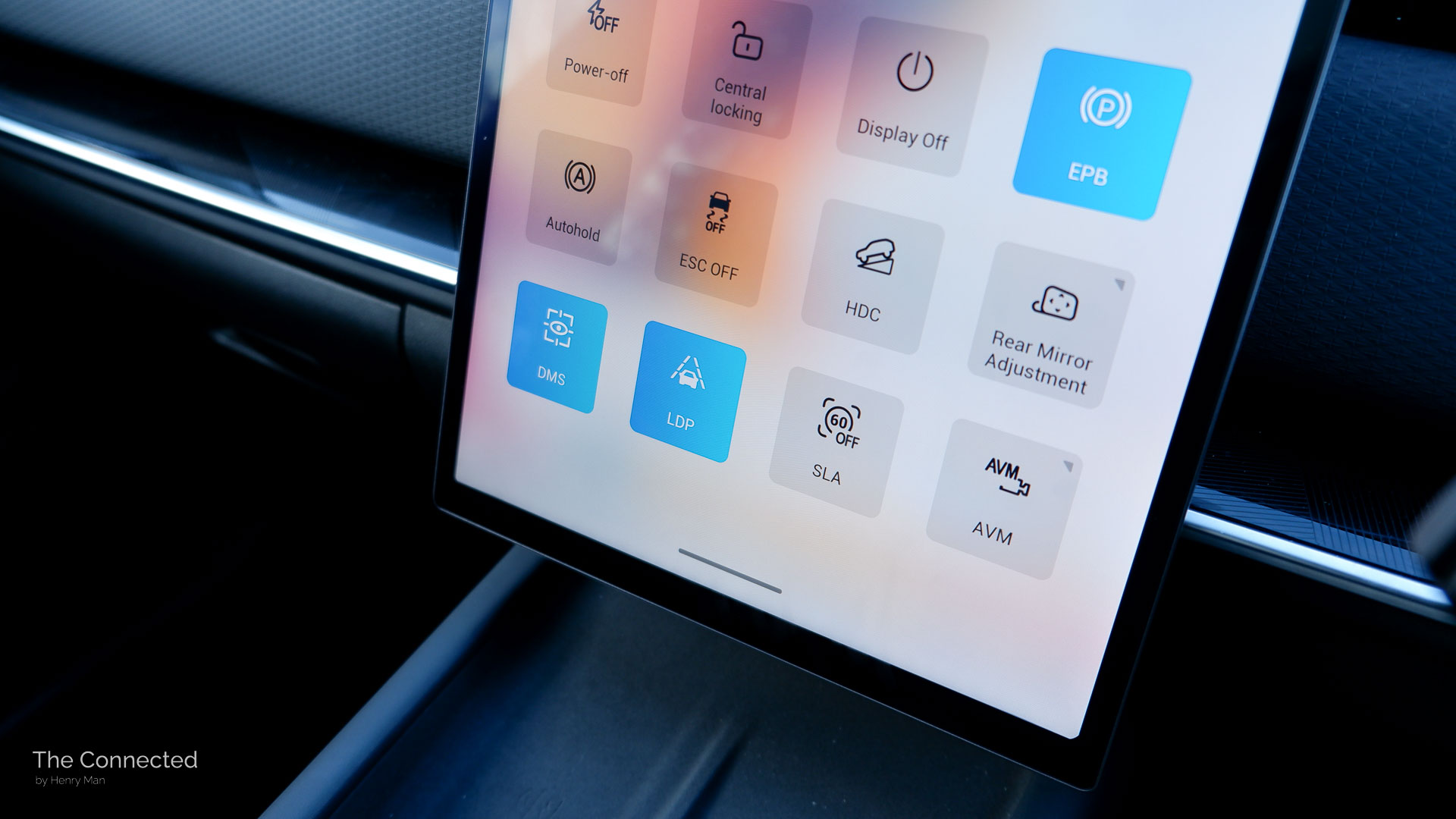
A key positive is the ability to permanently turn off the sensitive, alarmist driver attention monitoring and overspeed limit warnings. It doesn’t reactivate every time you start the car and can easily be accessed via swiping down the control panel, unlike other brands.
Yet, like many Chinese brands, anytime a safety assist alert chimes – including the parking sensors – the turn indicator chirps are cancelled out as well, which could cause some confusion for drivers.
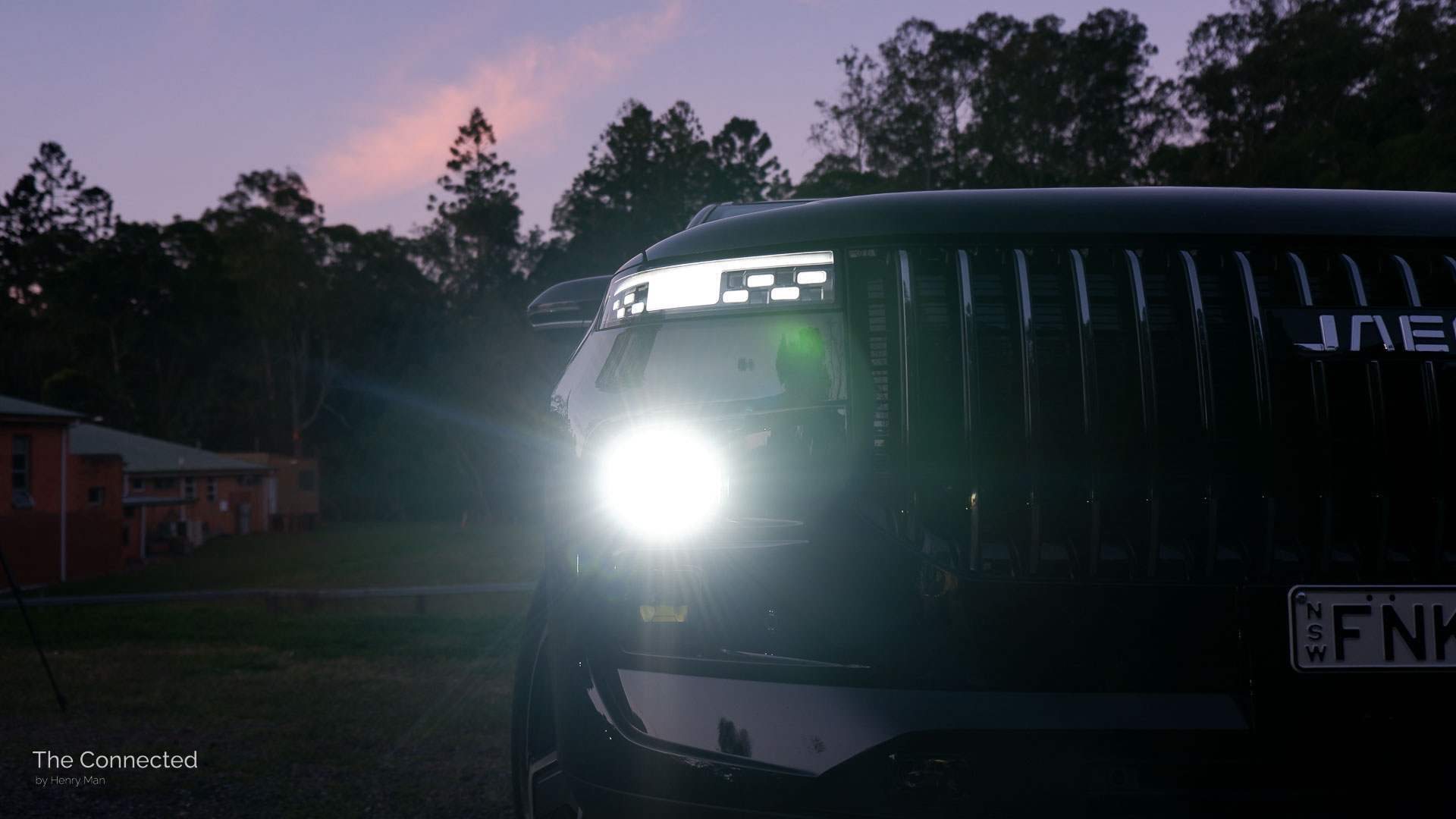
Disappointingly, LED headlight performance is poor with weak reach and spread at night similar to the Leapmotor C10. The automatic headlights could also turn on earlier with no setting to change the sensitivity.
The Chinese brand also offers a built-in front dashcam recording function, but a microSD card is not included with the vehicle.
Only the Jaecoo J7 SHS plug-in hybrid has received the full five-star safety rating by the Australasian New Car Assessment Program (ANCAP) under 2025 testing criteria, with all four assessment scores on or above 80 per cent.
Range and fuel consumption.
2026 Jaecoo J7 SHS Summit fuel and efficiency specs:
| Claimed driving range (combined cycle) | 1200km |
| Claimed driving range (EV-only) | 90km |
| Claimed fuel /energy efficiency (combined cycle) | 1.0L/100km / 15.9kWh/100km |
| Battery size and type | 18.3kWh LFP |
| Fuel tank size | 60 litres |
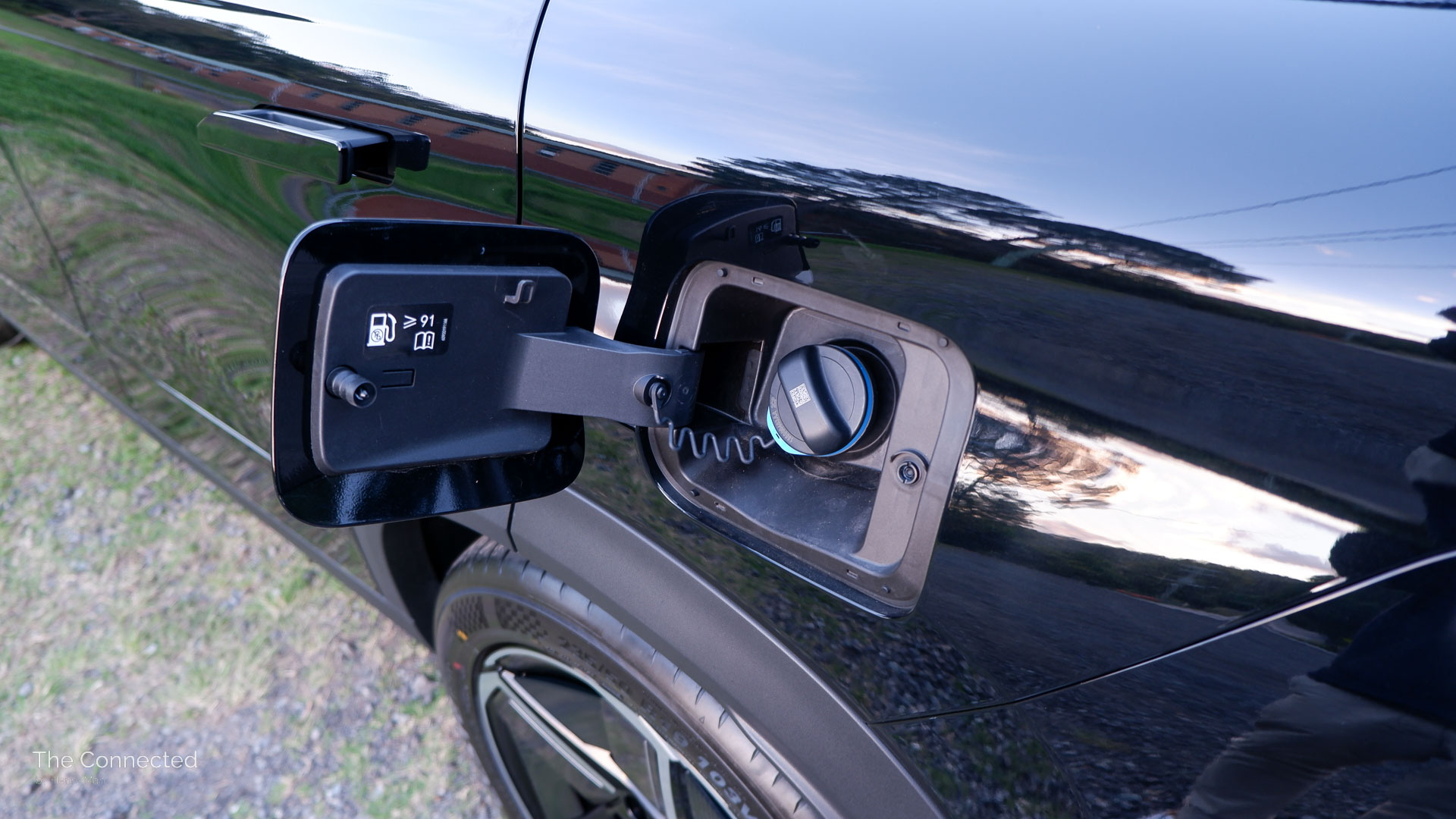
| Minimum fuel quality requirement | 91 RON unleaded petrol |
| Claimed CO2 exhaust emissions (combined) | 31g/km |
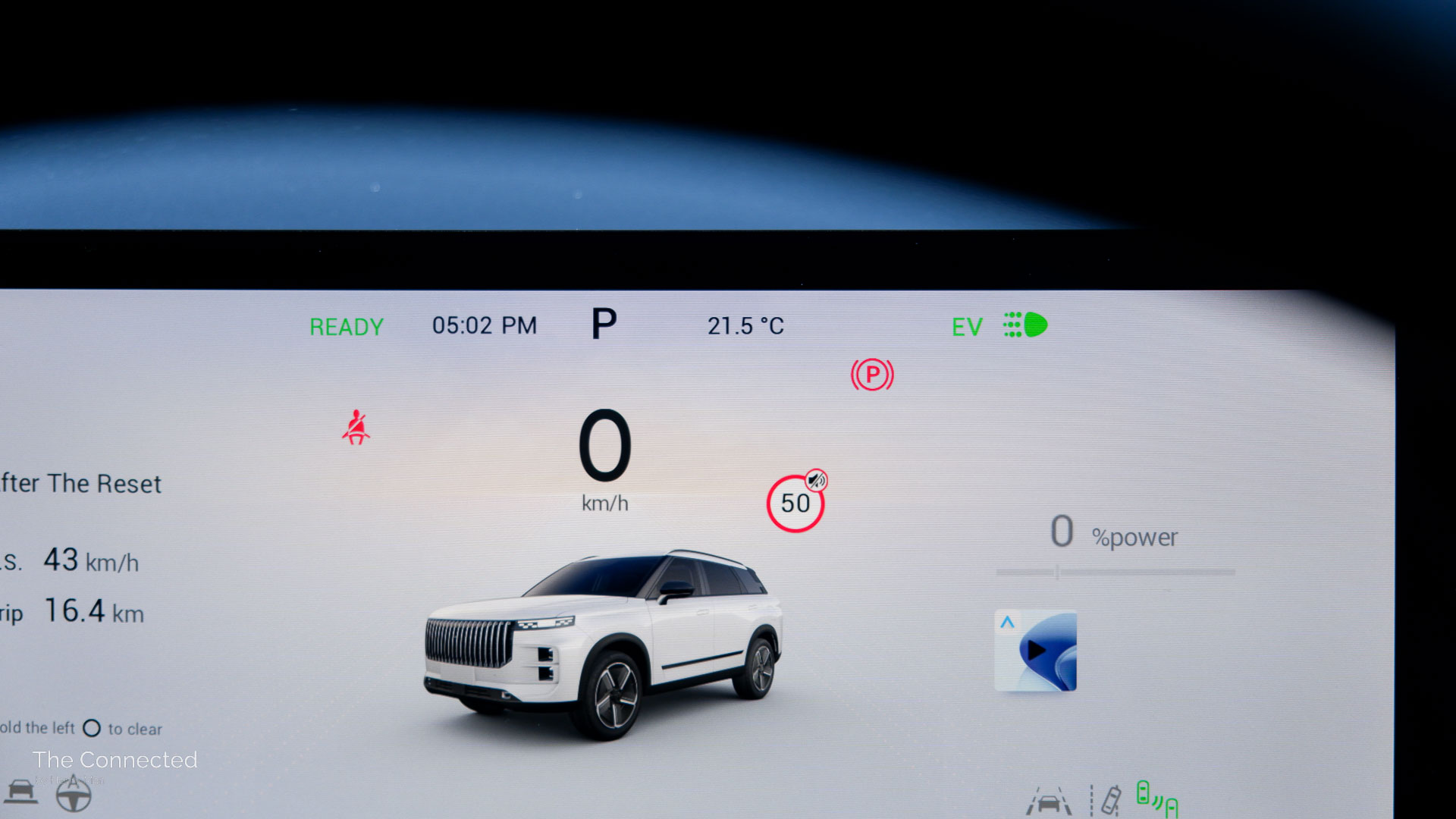
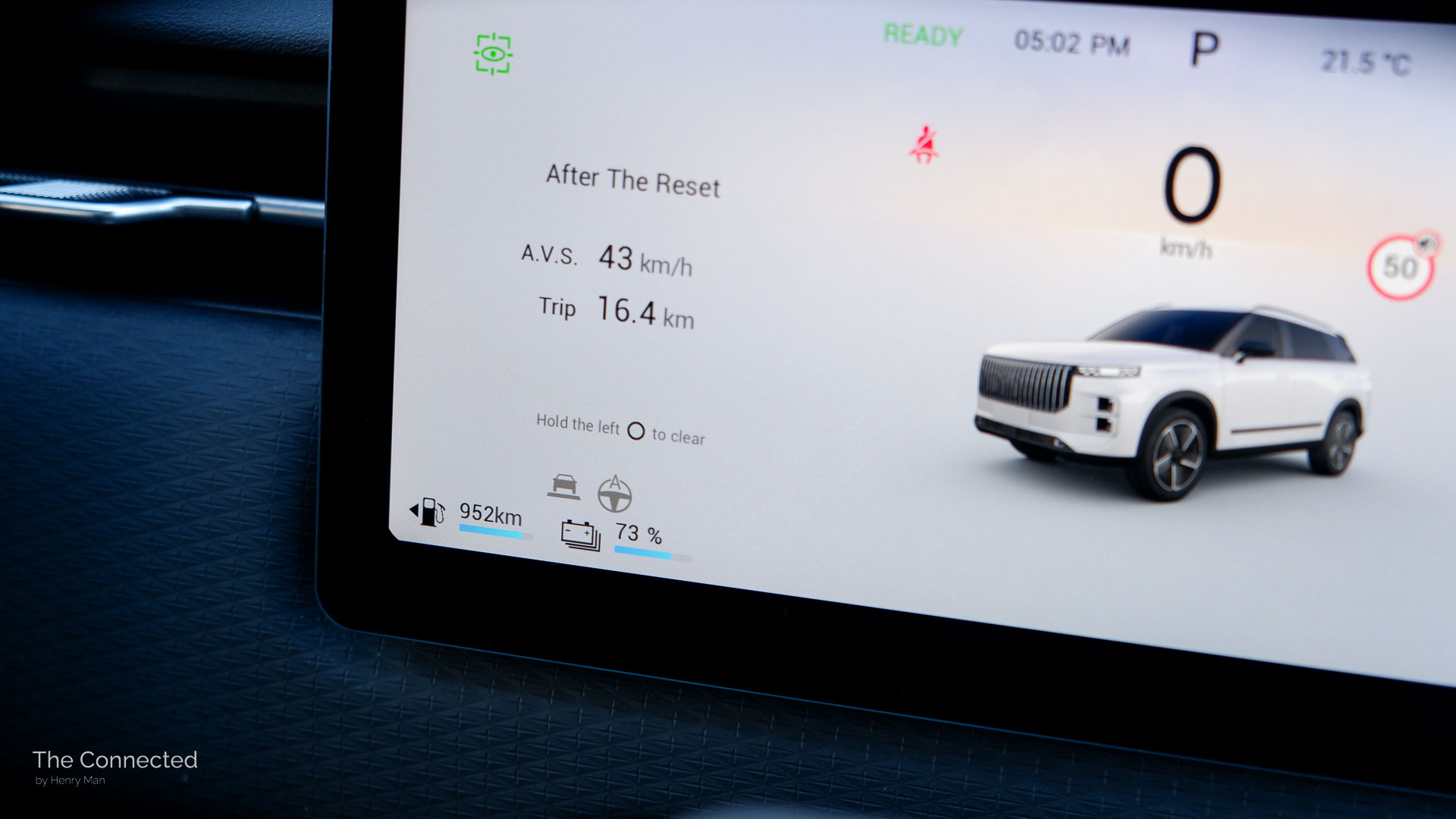
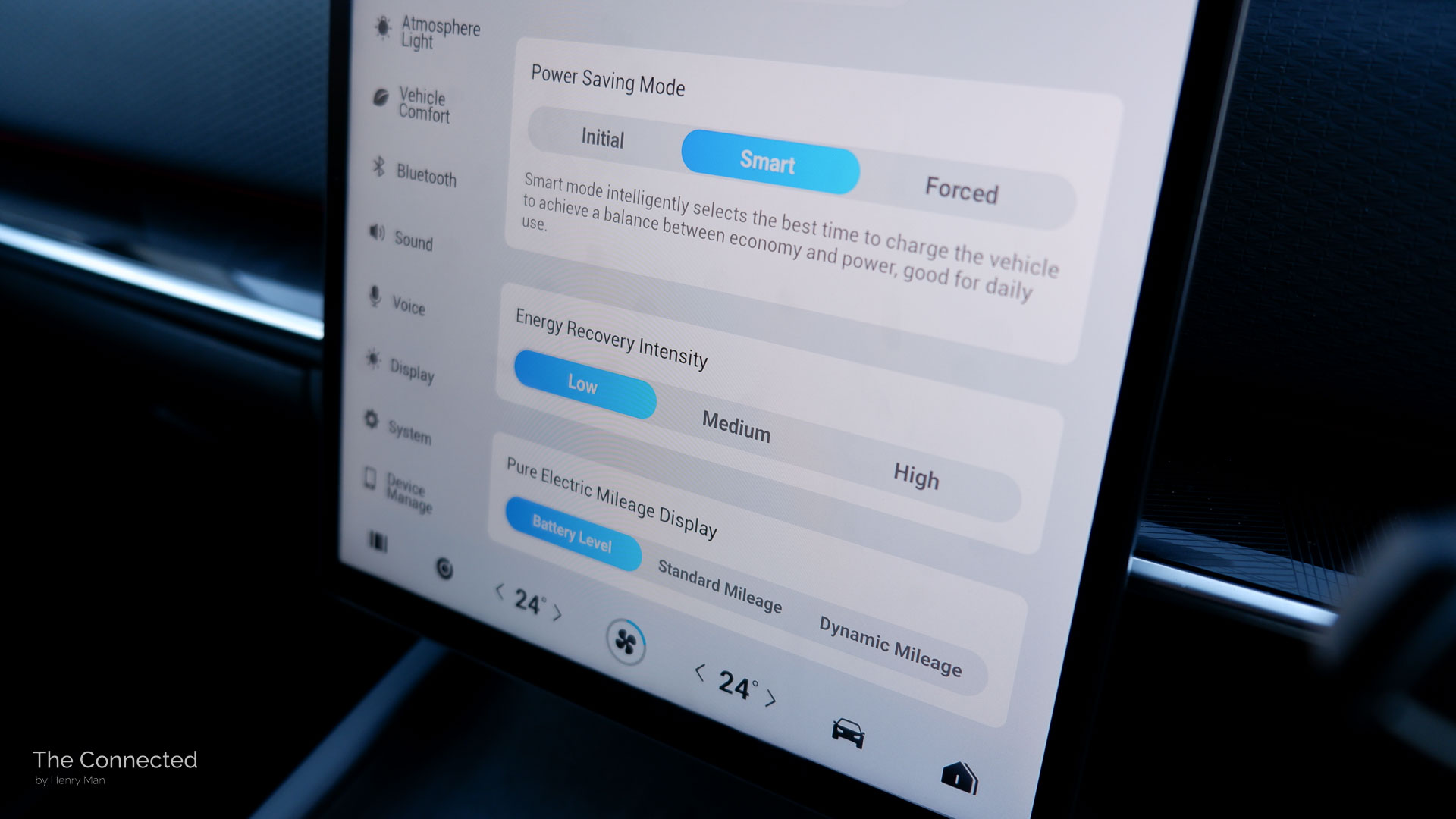
In our testing, the Jaecoo J7 SHS plug-in hybrid achieved an EV-only energy efficiency of 16.4kWh/100km and hybrid-only fuel consumption of 5.8L/100km after a week of mixed driving.
As a result, expect around 79km of electric-only range for 1113km of total driving range with electric and hybrid modes from the 18.3kWh lithium-iron-phosphate (LFP) battery and 60-litre fuel tank.
In the default ‘initial’ mode, Jaecoo prevents depleting the battery under around 20 per cent to maintain good health. Impressively, even with the battery almost empty, its fuel efficiency is on par with rival traditional hybrid SUVs such as the Hyundai Tucson Hybrid.
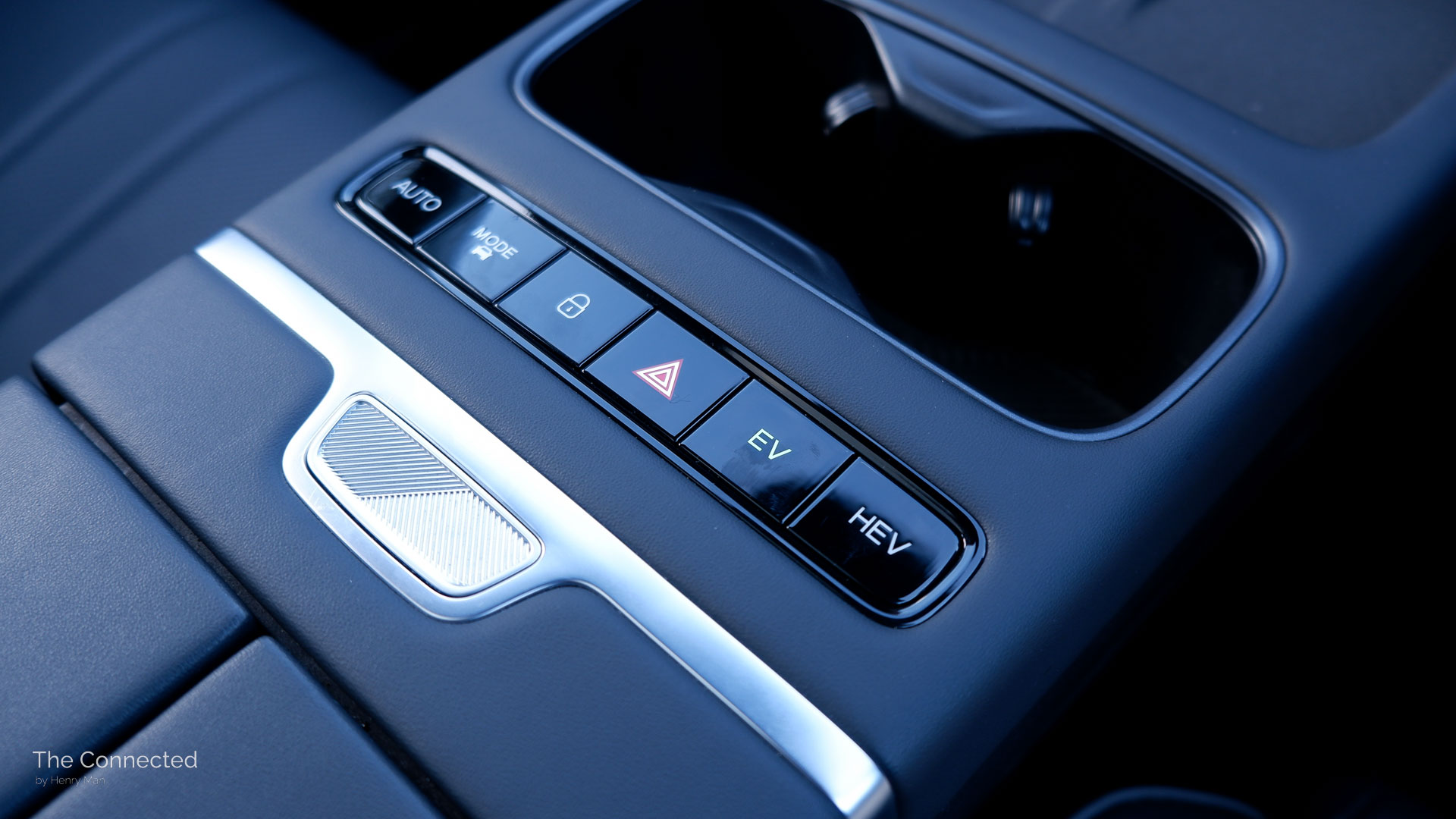
Two physical buttons on the centre console allow drivers to select electric vehicle (EV) and hybrid electric vehicle (HEV) modes.
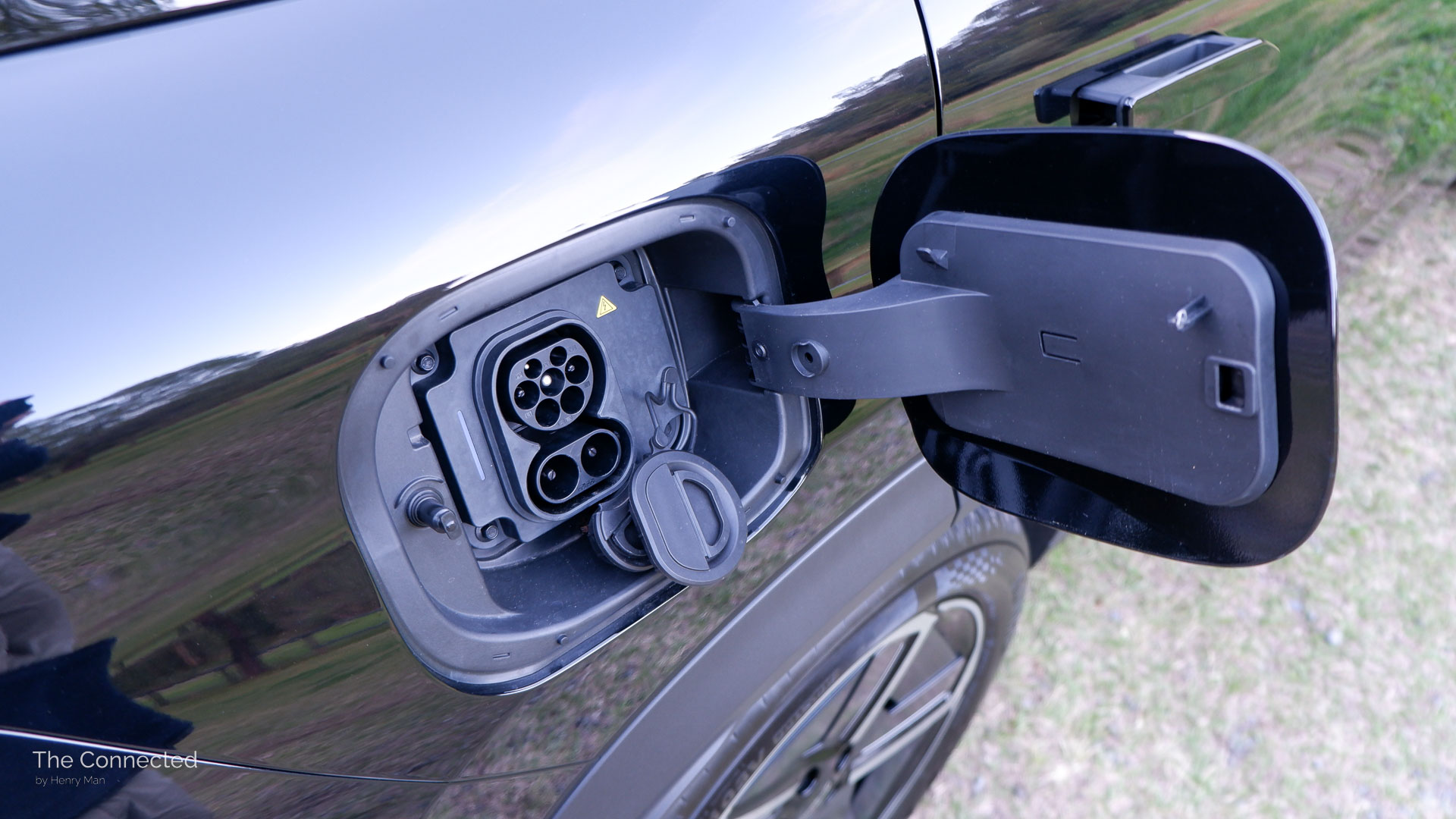
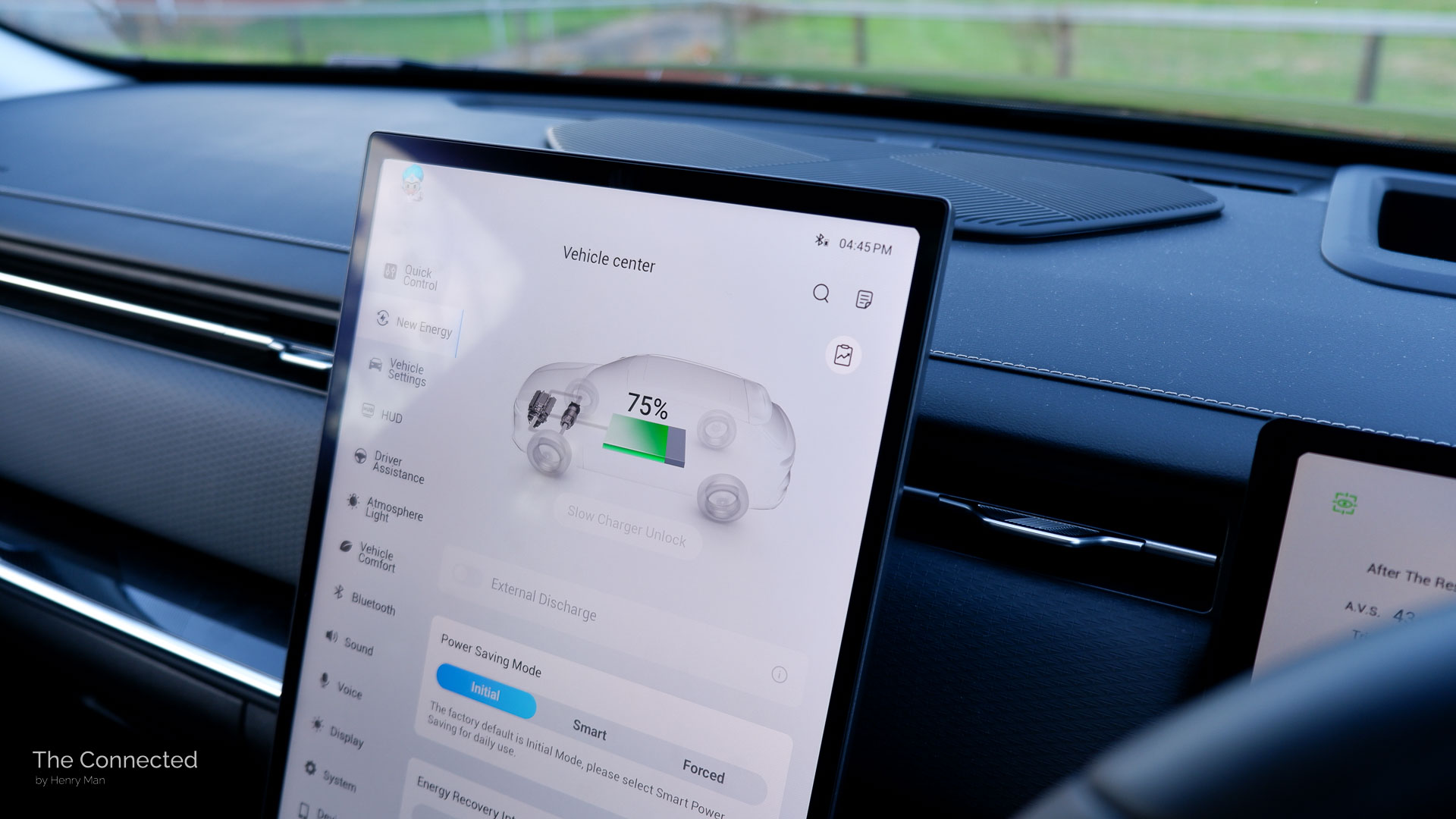
The Jaecoo J7 SHS plug-in hybrid SUV is capable of up to 6.6kW single-phase AC charging – but not three-phase AC power stations – and up to 40kW DC fast charging speeds.
The charge port is located at the rear-right quarter side with flimsy plastic caps covering both AC and DC pins and no light illumination at all. Meanwhile, the fuel cap is on the opposite side.
When the battery is emptied, the J7 SHS acts as a normal traditional hybrid car with a series-only powertrain like Nissan e-Power, using the engine and regenerative braking to top-up the battery.
Driving.
2026 Jaecoo J7 SHS Summit powertrain specs:
| Engine and electric motor | 1.5-litre turbocharged four-cylinder petrol engine and single permanent magnet synchronous motor |
| Power | Combined: 255kW / EV-only: 150kW |
| Torque | Combined: 525Nm / EV-only: 310Nm |
| Transmission | Single-speed auto |
| Drive type | FWD |
| Tare weight | 1794kg |
| Turning circle | Unknown |
| Payload | ~446kg |
| Towing (unbraked / braked) | 750 / 750kg |
The Jaecoo J7 SHS is a good to drive hybrid SUV, but there’s one key potential dealbreaker that sets it back.
A 1.5-litre turbo four-cylinder petrol engine is paired with a single front electric motor to produce up to 255kW of power and 525Nm of torque combined. There’s no traditional push button start in this PHEV; just hop in and drive just like a Tesla or Polestar.
When forced in EV-only mode via a press of a button on the centre console, the Chinese hybrid SUV provides good brisk acceleration and silent running – but weak regenerative braking even on the strongest level three setting (it doesn’t even activate the brake lights) and it defaults to level one every time you enter the car.
In HEV mode, there’s more pickup thanks to the combination of both the engine and EV motor. It adopts a series-only hybrid approach, which means the engine never drives the wheels; it only generates energy to charge the battery and power the electric motor when needed.


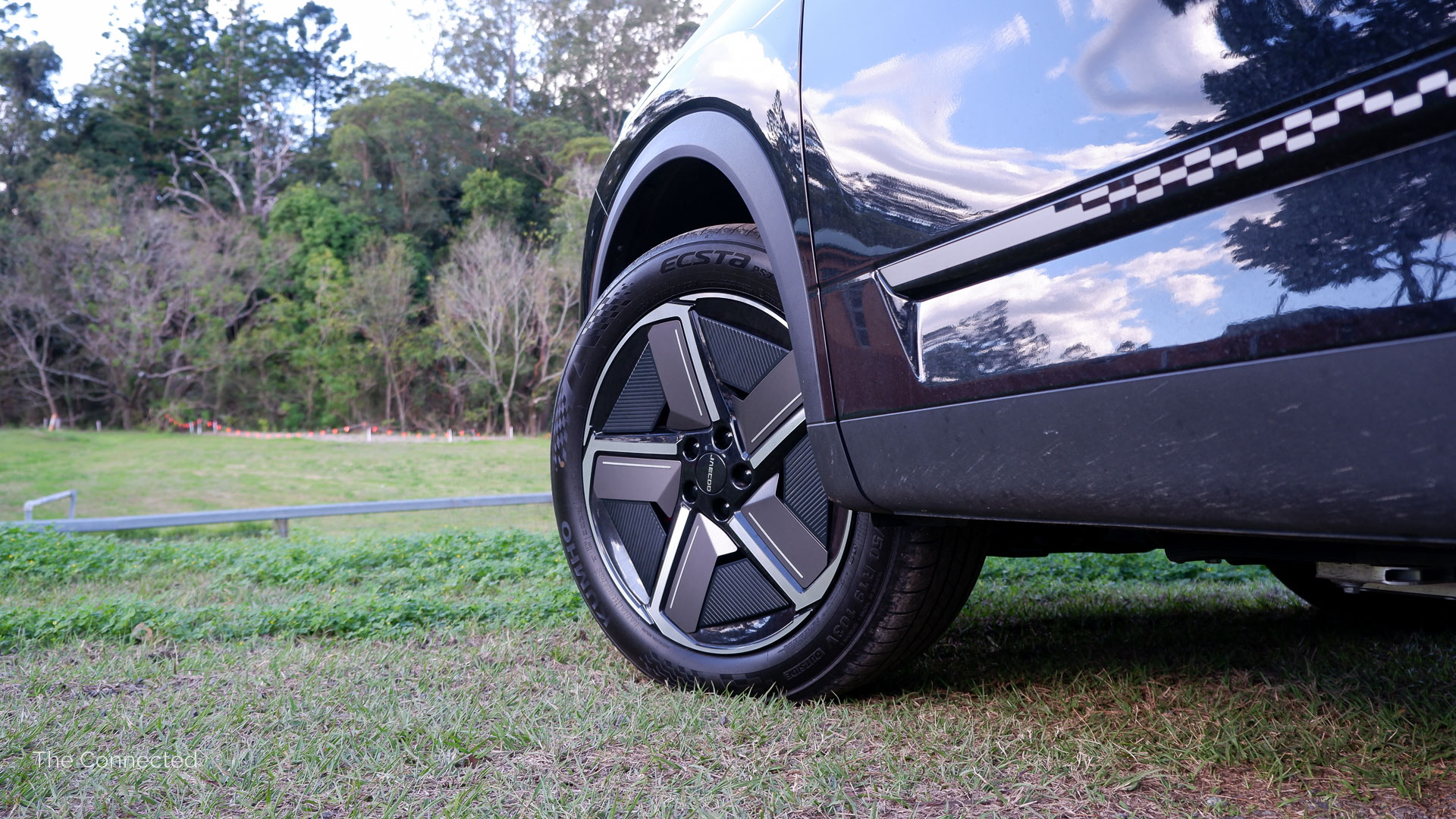
However, here’s the dealbreaker: Jaecoo has poorly calibrated the 525Nm of torque delivery with the stock Kumho PS71 tyres.
Even with a slightly harder press of the accelerator in normal drive mode, the front wheels of the J7 SHS get easily overwhelmed, slip and lose traction, and sound a chirp.
On damp and wet roads, accelerating from a standstill is borderline dangerous as it loses traction and spins the wheels aimlessly as the electronic stability control tries to fight back.
While traction loss and torque steer isn’t uncommon for some hybrid and electric cars, such as the first-generation Hyundai Kona Electric, it is disappointing that Jaecoo didn’t pick this up when testing the J7 SHS before it’s gone onto market.
The Jaecoo PHEV is strangely front-wheel drive as well, despite the cheaper petrol-only Ridge variant coming with all-wheel drive traction.
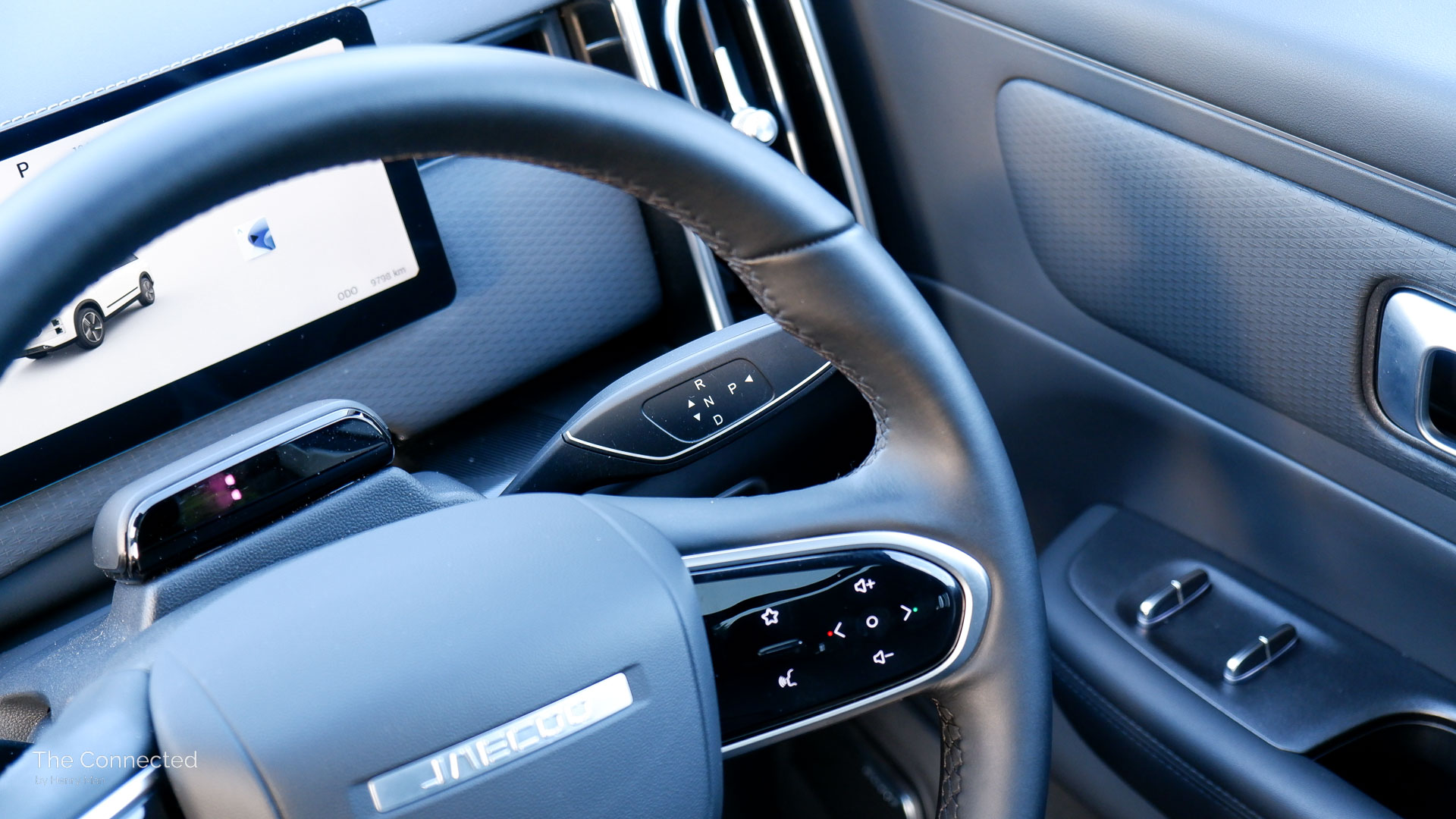
Additionally, the default steering setup feels light with a vague centre, but changing it to ‘sport’ in the settings makes it more amenable (which stays on permanently). I noticed a subtle creaking sound when turning the steering wheel to the left, though.
Disappointingly, the blended brake pedal feels stiff and lacks travel with a short regen portion at the top. This meant that I often abruptly stopped, especially when parking at low speeds, as the pedal is very touchy.
It also requires a firmer press on the brake in order to change gears, as I often accidentally switched into neutral with Jaecoo not providing a confirmation sound with the drive selector.
Noise insulation is good, but the ride is more firmer and fidgety than ideal over minor bumps.
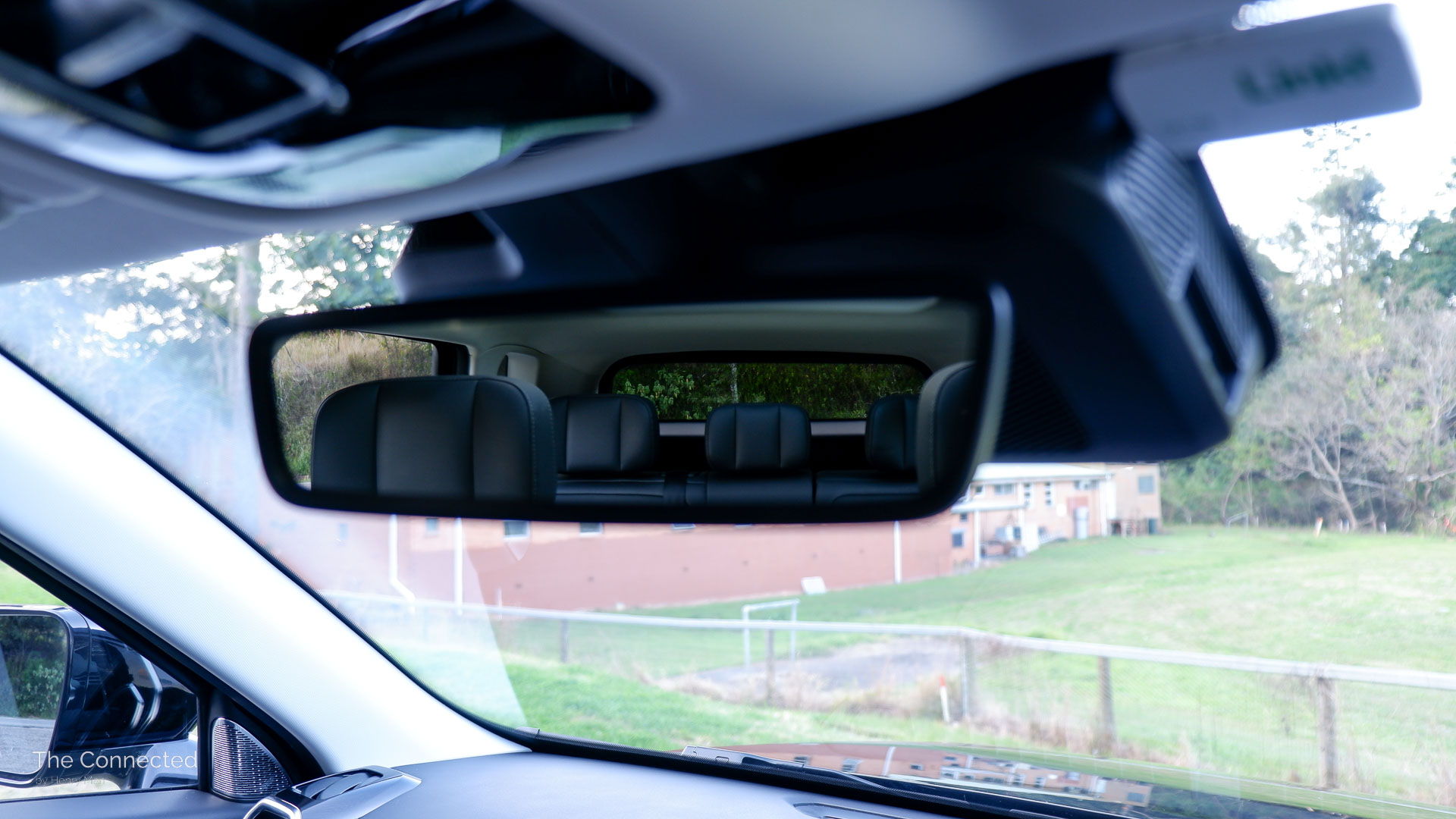
While all-round visibility is good, the inside rear-view mirror is strangely ultra-wide and convex (not conventional concave). This resulted in an awkwardly small view of the rear with more visibility of the rear seat headrests, and C- and D-pillars.
Warranty and servicing.
2026 Jaecoo J7 capped-price servicing costs:
| 1 year/15,000km | 2 years/30,000km | 3 years/45,000km | 4 years/60,000km | 5 years/75,000km |
| $299 | $299 | $299 | $499 | $499 |
The 2026 Jaecoo J7 SHS is covered by an eight-year, unlimited kilometre vehicle and battery warranty.
Servicing is required every one year/15,000km (whichever occurs first) with prices fixed for the first eight years/120,000km.
After the first five years/75,000km, it’ll cost a reasonable $1895 in total to maintain the J7 SHS plug-in hybrid SUV in Australia.
Up to eight years of roadside assistance is included too, which is renewed every year you service it with a Jaecoo dealer.
The PHEV model doesn’t include a spare tyre with only a temporary patch-up repair kit available.

Price and rivals.
2026 Jaecoo J7 model range pricing (accurate as at the time of publication):
| Core | Track | Ridge | SHS Summit |
| From $34,990 drive-away | From $37,990 drive-away | From $42,990 drive-away | From $47,990 drive-away |
The Jaecoo J7 is priced from $34,990 drive-away as at the time of publication in Australia, with the PHEV topping out at $47,990.
Four variants are available, but only the flagship offers a plug-in hybrid powertrain.
All exterior colours except Forest Green costs $600 extra.
The Jaecoo J7 SHS directly rivals the following hybrid and plug-in hybrid SUVs:
- Chery Tiggo 7 CHS
- Geely Starray EM-i
- BYD Sealion 6
- Leapmotor C10 REEV
- Hyundai Tucson Hybrid (full review)
- Kia Sportage Hybrid (full review)
- Toyota RAV4 Hybrid
- Nissan Qashqai e-Power (full review)
Other alternatives to the J7 SHS include:
- Leapmotor C10 BEV (full review)
- Deepal S07 (full review)
- Mitsubishi Outlander PHEV
- Mazda CX-60 (full review)

Would I pick the 2026 Jaecoo J7 SHS Summit?
The Jaecoo J7 SHS is an excellent value plug-in hybrid medium SUV, but there’s one key negative holding it back.
At less than $50K, you get a PHEV with good electric-only range, good fuel efficiency even after the battery is depleted, an impressively high-quality presenting interior, and decent tech that’s a step forward for the Chinese auto industry.
But, the software and safety assists still can’t match the bar of its Japanese, South Korean and European rival brands with basic customer experience issues, the boot isn’t as competitive, the blended brake pedal is too stiff, and the LED headlights need work.
Crucially, the instant 525Nm of hybrid torque delivery overwhelms the front wheels too easily and slips the wheels – which is particularly dangerous in the wet. This is the key negative holding the Jaecoo PHEV back from being recommendable.

I’d pick the mid-spec petrol-only Track which is likely more controlled to drive and provides most features, even though it isn’t as fuel efficient.
The Jaecoo J7 SHS is an impressive great value plug-in hybrid SUV. It’s a shame that you’ll just need a light and steady foot on the accelerator.
Photographs by Henry Man
READ MORE: 2026 Nissan Qashqai e-Power review
READ MORE: 2025 Leapmotor C10 BEV review
READ MORE: 2026 MG ZS Hybrid+ review
Pros:
- Super sharp value
- High quality interior
- Electric range and fuel efficiency
- Good safety tech… for a Chinese car
- Unique portrait touchscreen
Cons:
- Dangerous traction loss issue, no AWD
- Stiff and touchy brake pedal
- Adaptive cruise, lane-centring need re-calibration
- Small boot, low tailgate, weird rear-view mirror
- Poor LED headlight performance
About the Author.
Henry Man is an independent content producer passionate about the intersection of technology and transportation.
The former automotive journalist is focused on producing critically-detailed vehicle reviews, and unique short-form content. Learn more.


 The Connected by Henry Man