

Is the Hyundai Inster the most underrated new electric car ever?
A post-$40K price tag for a Kia Picanto-sized electric micro car arguably seems absurd when Chinese rivals offer more for less.
From the BYD Atto 1, MG 4 and even the Geely EX5, the Hyundai Inster (called the Casper Electric in South Korea) costs in line with bigger Chinese rivals with a smaller battery and less advanced features.
To put the Inster in context, the base Standard Range is a staggering $11K more expensive than the top-spec BYD Atto 1 Premium with comparable specs and claimed range.
But after spending a week with Hyundai’s cheapest electric vehicle, it’s clear to see that the Inster shouldn’t be overlooked by Australians – despite its flaws on paper.
NOTE: The press vehicle was provided by Hyundai Australia for a seven-day independent evaluation. We have no commercial arrangements with the company and it had no editorial control.


Pros.
+ Compact and practical size
+ Zippy and fun to drive
+ Well-tuned driving dynamics
+ No-nonsense tech
+ Small battery, good energy efficiency
Cons.
– Premium price for a micro car
– Cheap interior materials
– Odd boot design
– Wired Apple CarPlay and Android Auto
– Ambiguous quirky SUV design
Vehicle tested:
| Model | 2026 Hyundai Inster |
| Variant | Standard Range |
| Starting price | $39,000 before on-road costs |
| Exterior colour | Dusk Blue Matte (+$1000)* |
| Interior colour | Obsidian Black – Recycled PET Cloth |
| Country made | South Korea |

Design and quality.
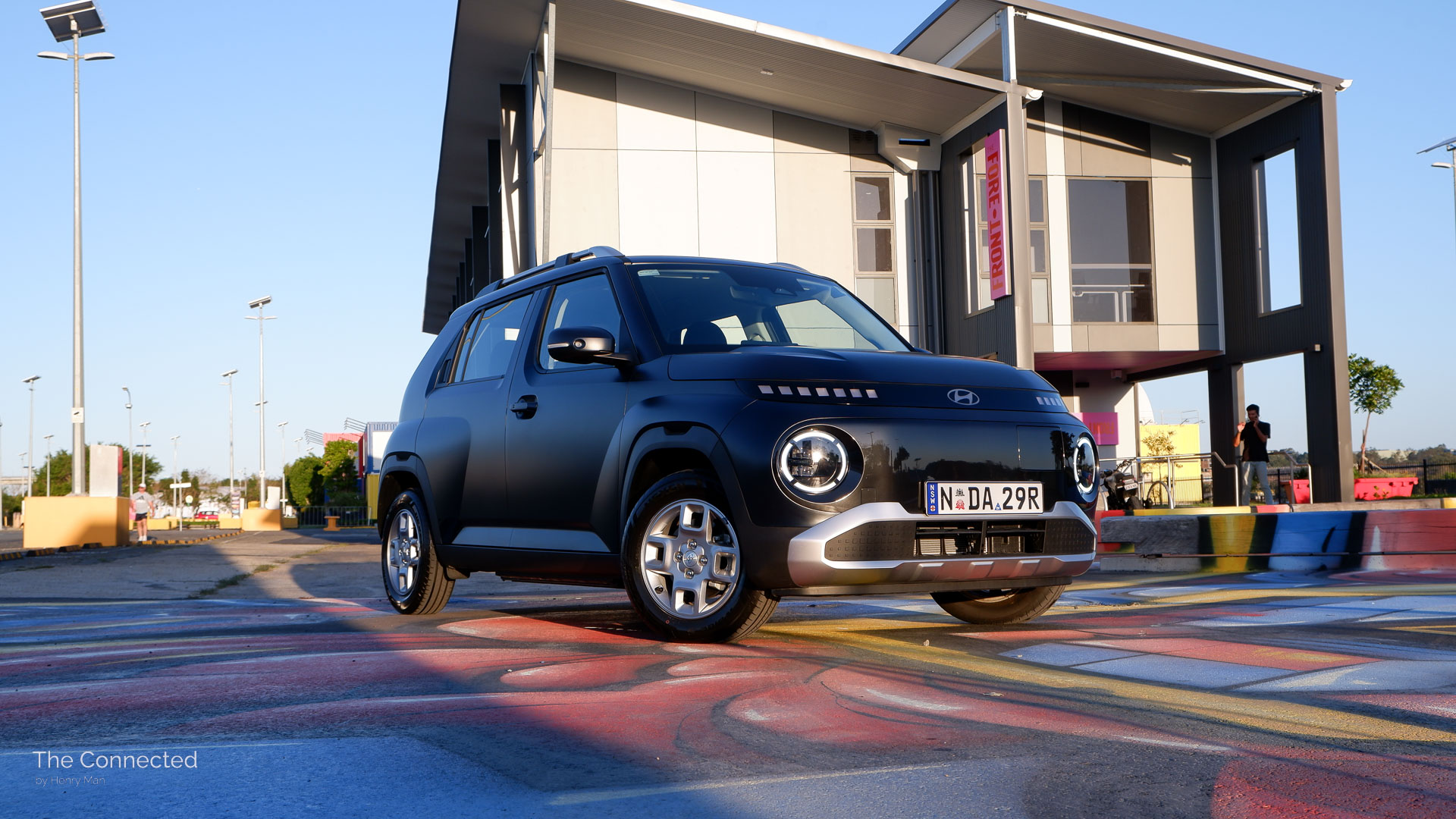
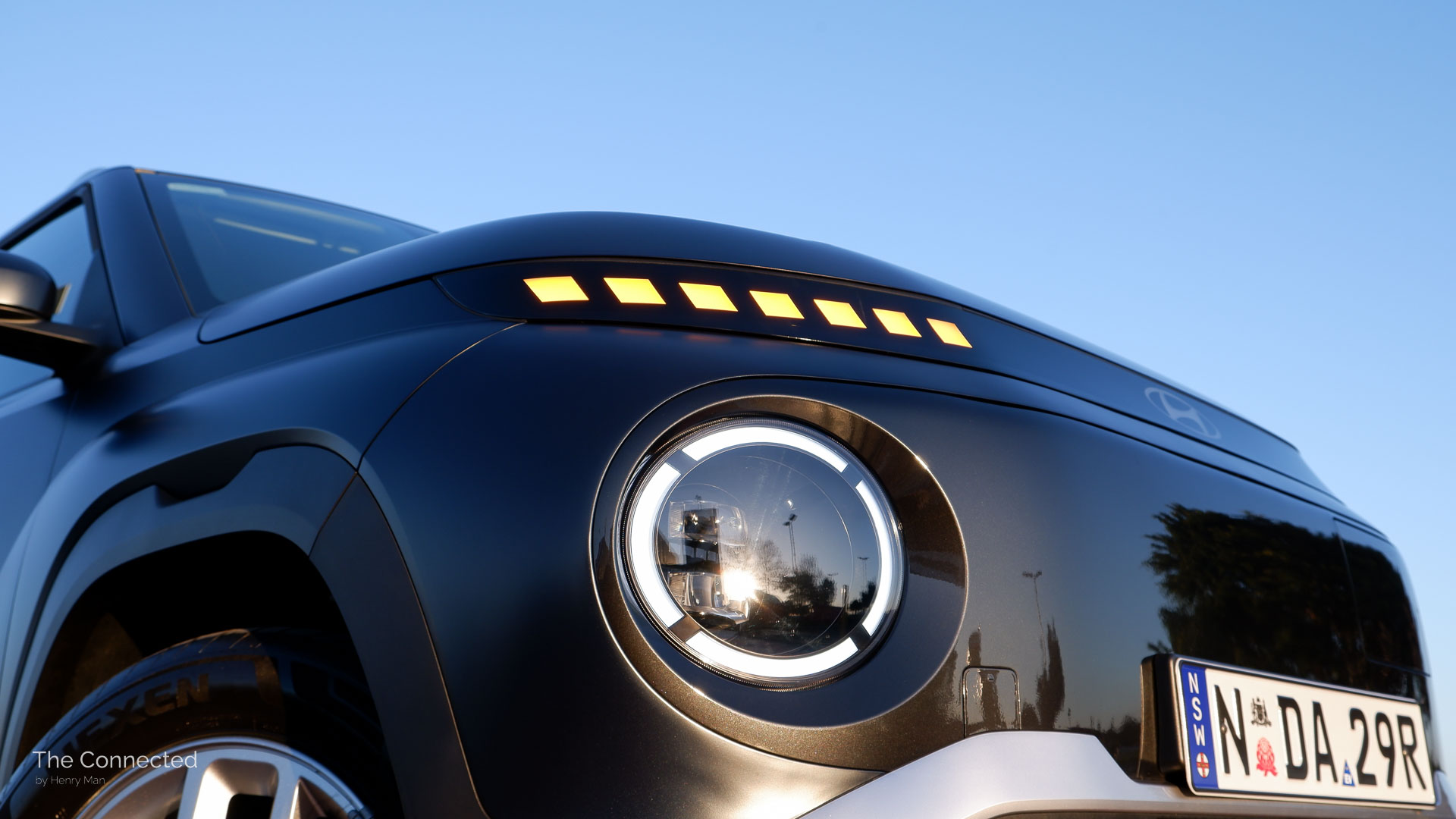
The Hyundai Inster features a unique quirky design, while the interior feels retro with cheap materials for the premium price.
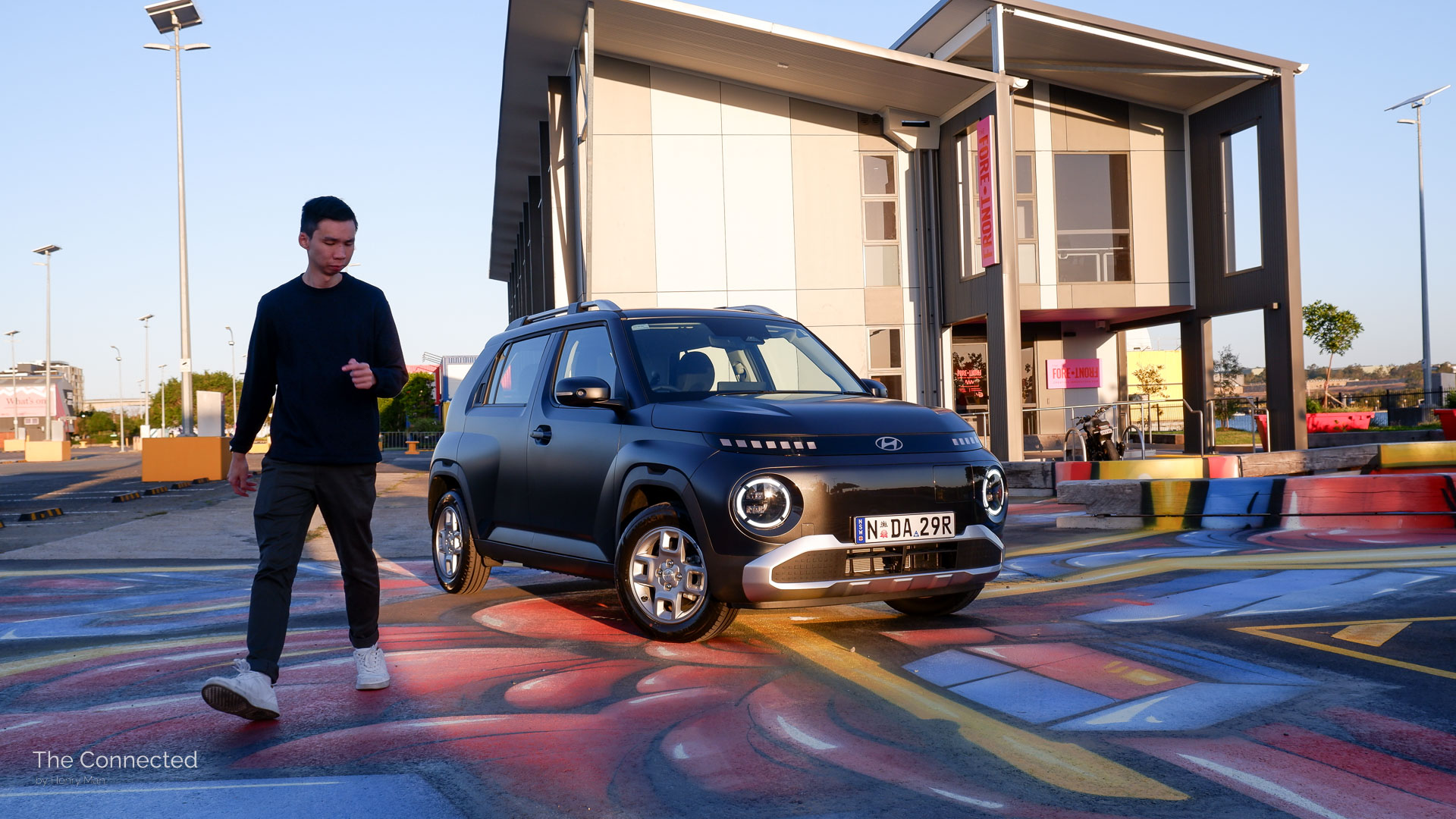
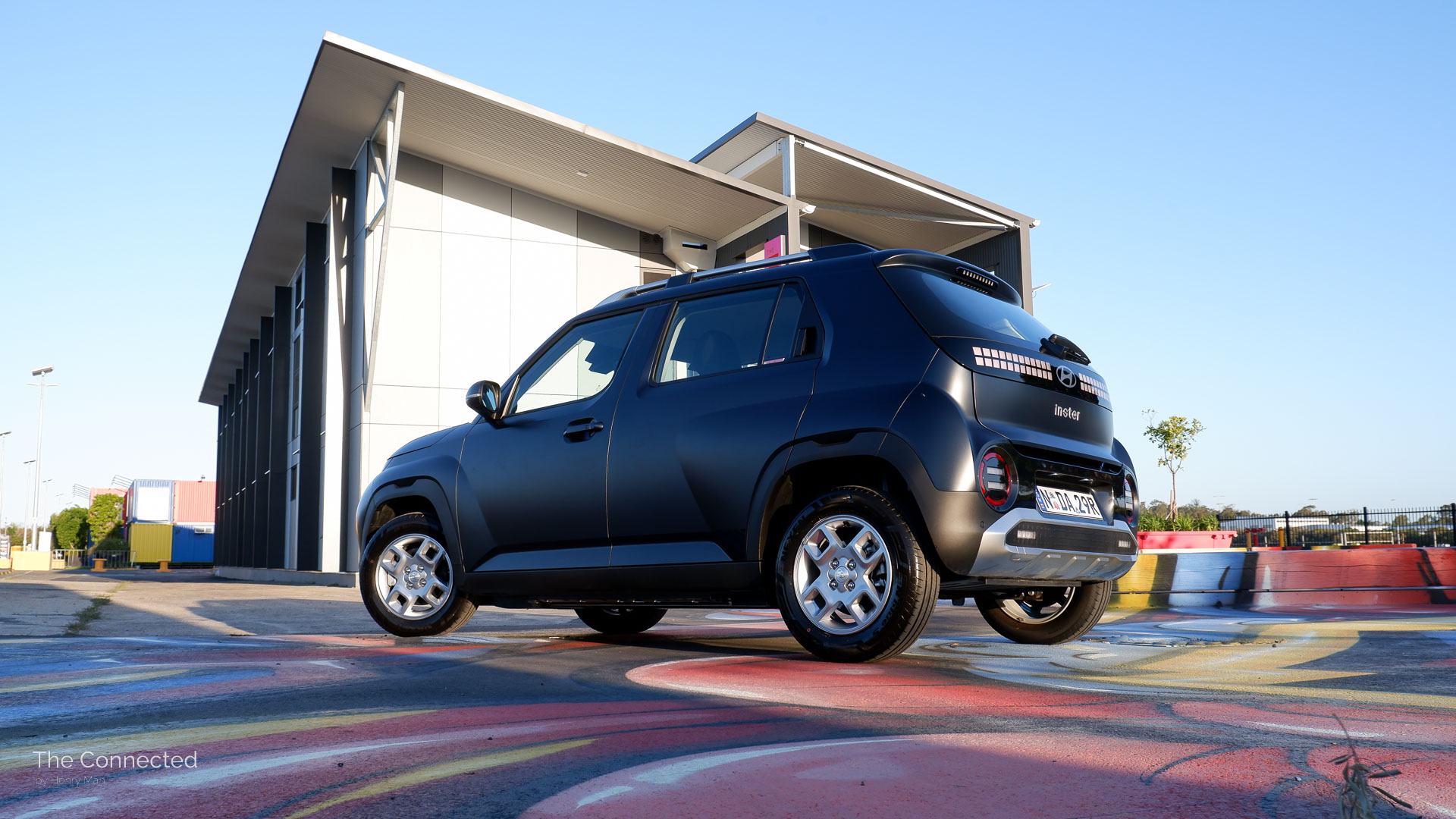
The signs of the defunct Suzuki Ignis are inherent with tiny dimensions, a quirky tall and boxy van-like body, and rugged SUV design that’s significantly different from the sporty Kia Picanto – despite sharing the same K1 platform.
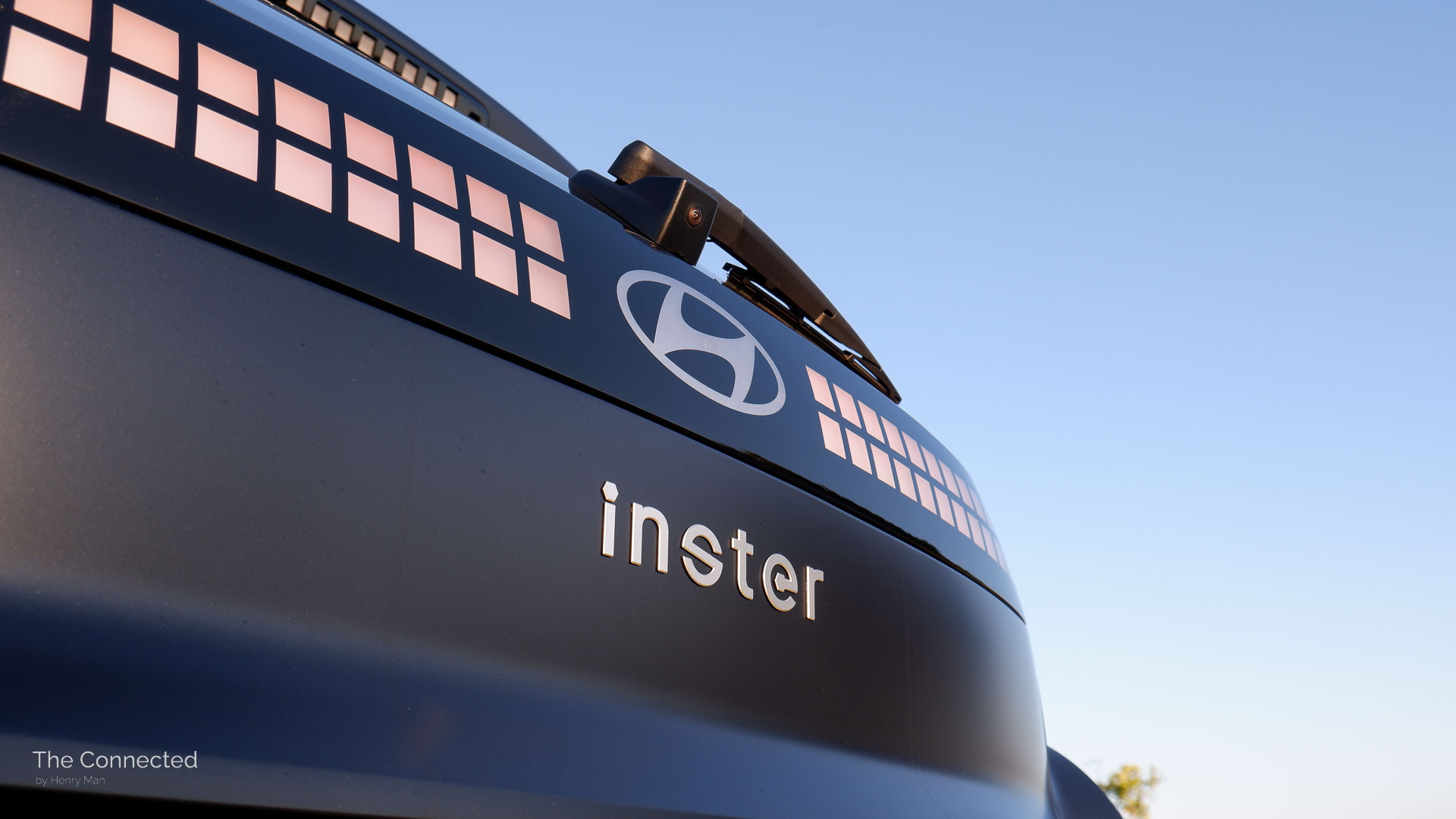
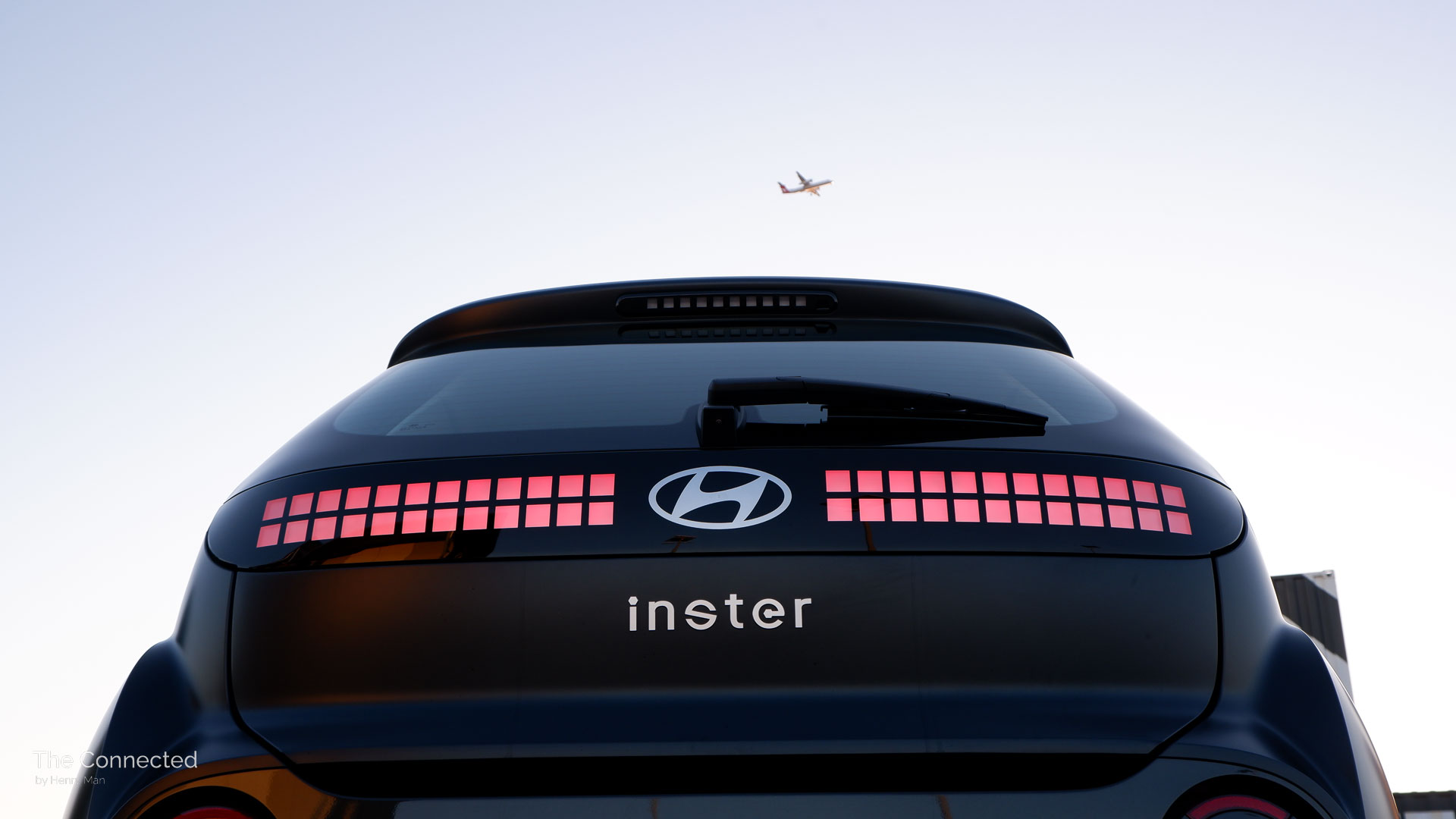
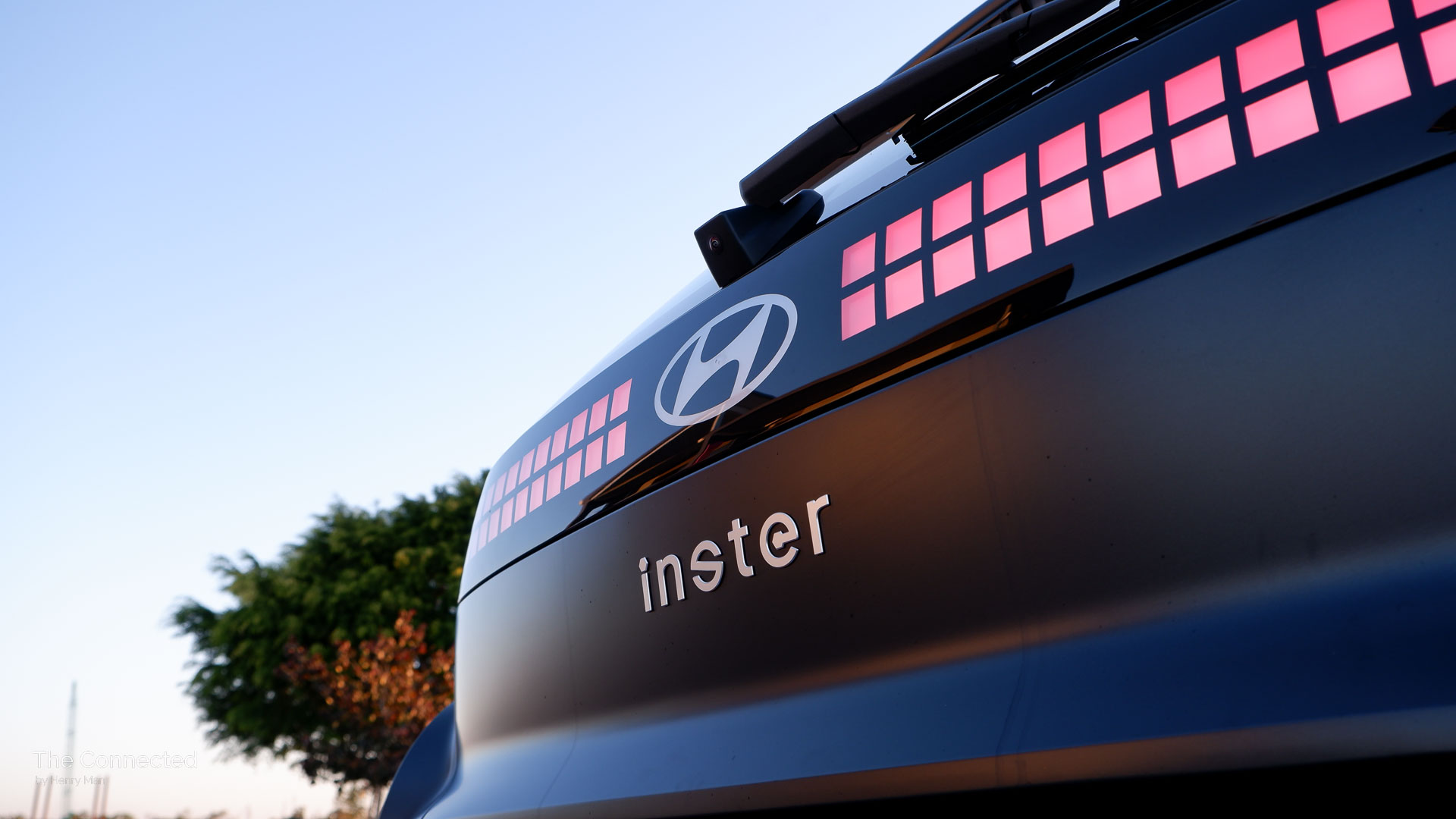
While it isn’t part of Hyundai’s Ioniq EV line-up by name, there are hints of the Ioniq 9 flagship large SUV much like the Kona Electric with its front pixel indicators and prominent LED pixel light bar.
The avaialbility of factory matte paint for a reasonable $1000 extra is also unique for a compact car, although it’s now exclusive to the top-spec Inster Cross (it was briefly across the range at launch, as per our Standard Range tester here).

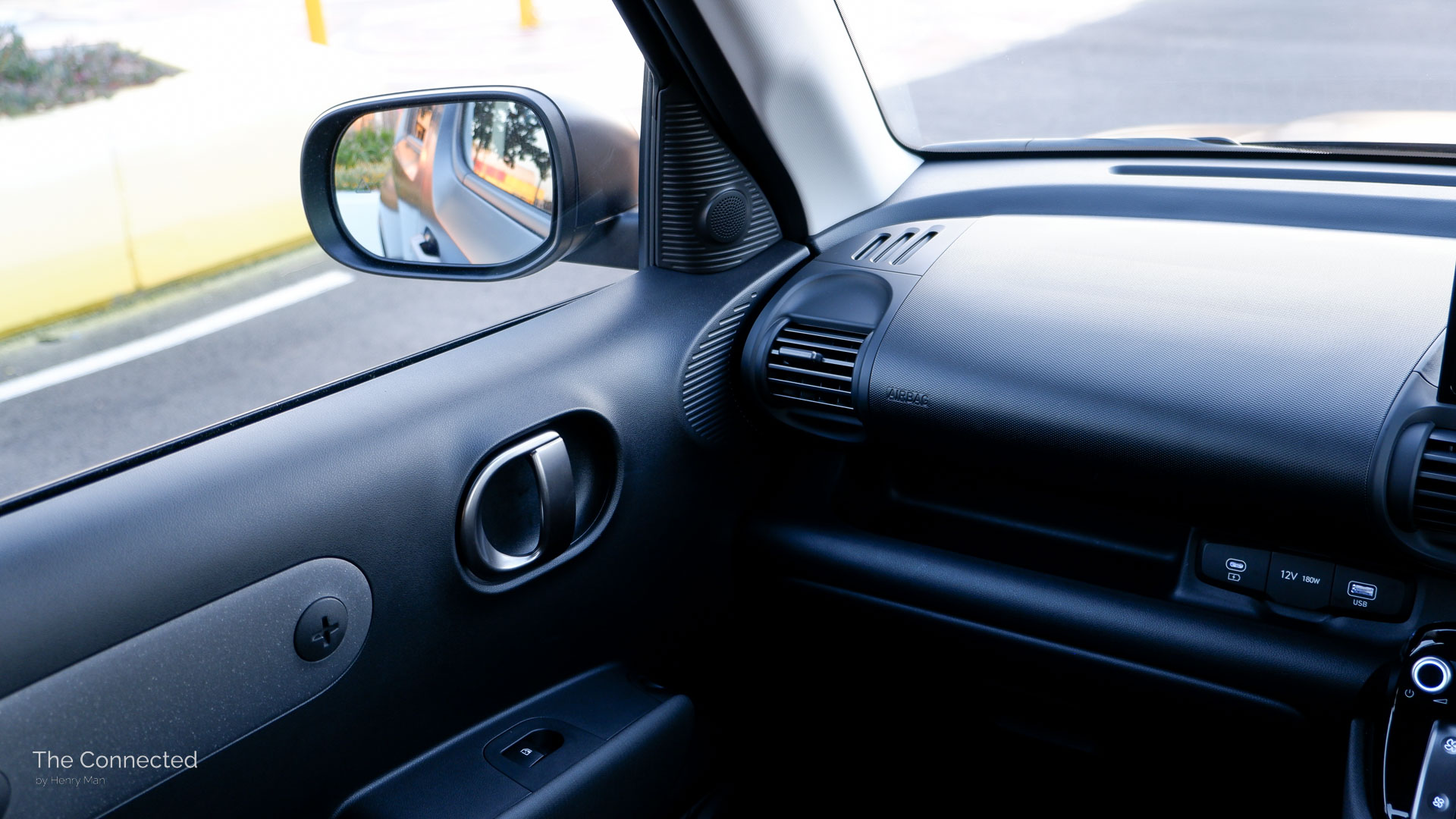
Inside, the Inster gives an old-school retro vibe with its prominent air vent louvres.
It’s a rather gloomy and monotone interior – broken up by some rounded shapes, a textured grey pattern door piece with two big screws, grey plastic trims, houndstooth-style light fabric headliner, and a prominent interior door handle pulled from the Ioniq 5.
The Extended Range has the no-cost option for a houndstooth Newtro Beige interior, while the Cross can be had with a Amazonas Khaki two-tone theme – which are worth going for. This base Standard Range only comes with a black and grey cabin.
However, it’s a shame that a range of customisable accessories offered overseas in South Korea and Europe aren’t available here, including swappable door trim pieces and even a tray table for the rear row.
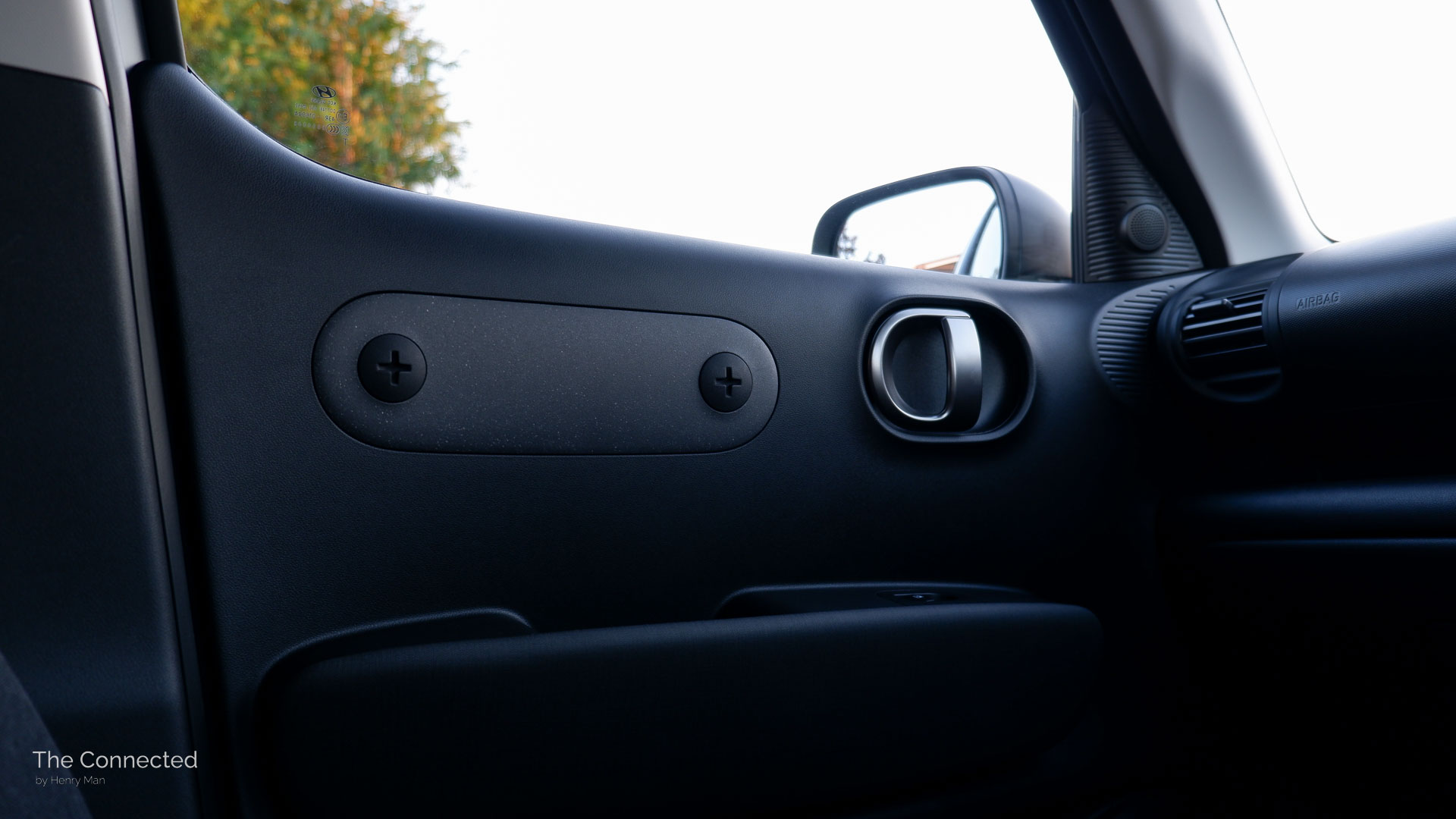
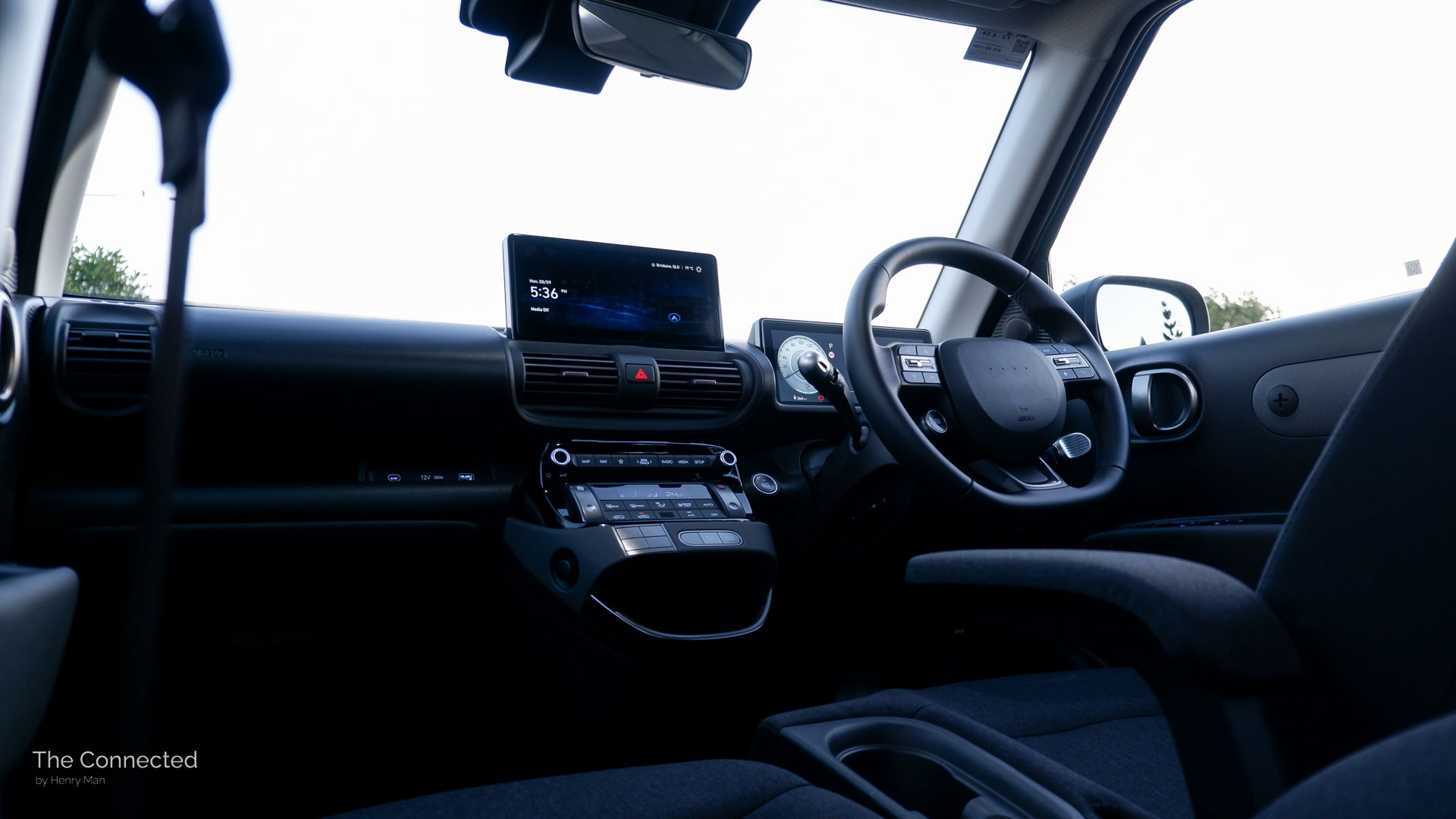
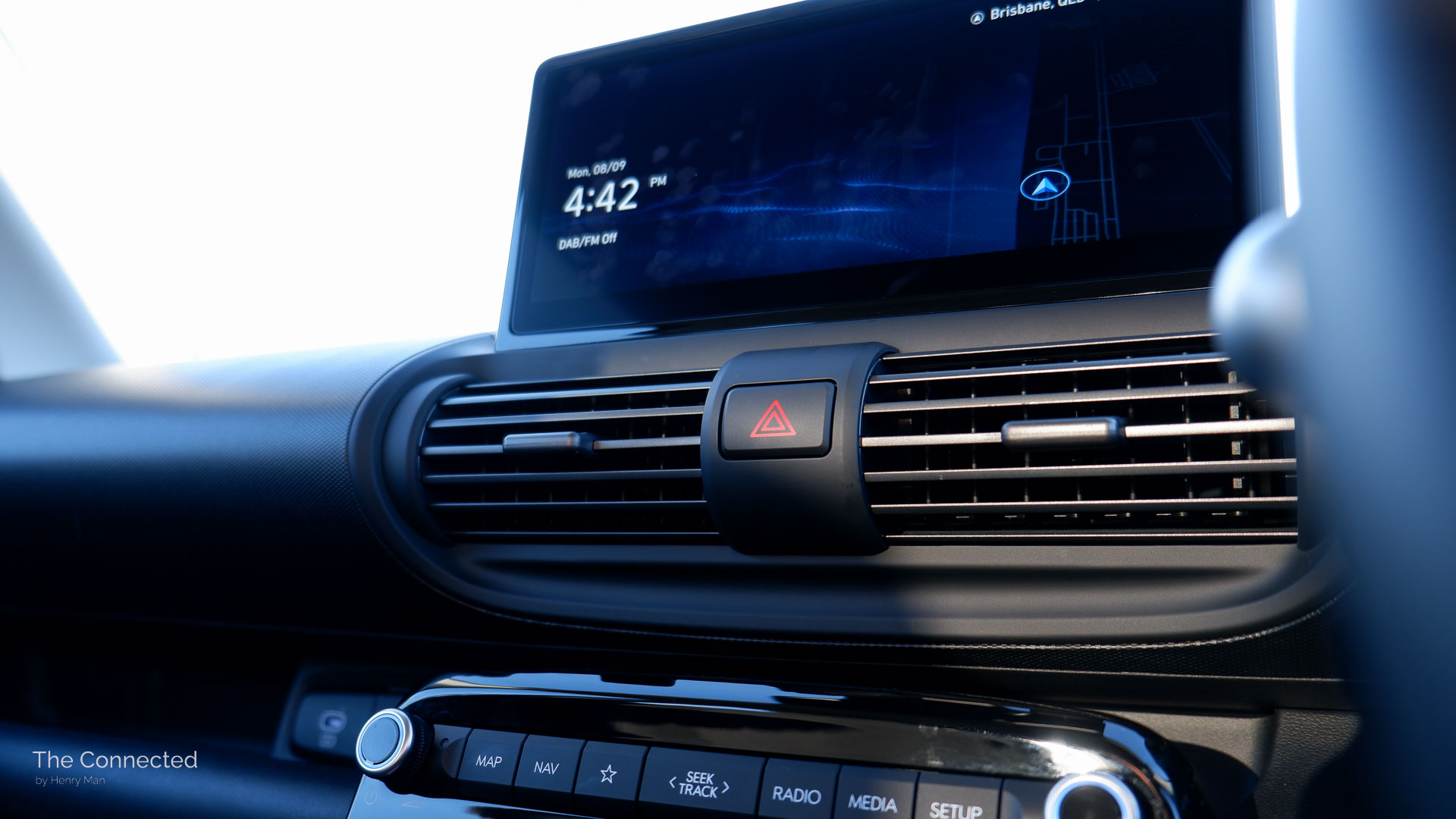

There are a lot of hard plastics that don’t bode well for the post-$40K price, including unpadded door armrests (even though the side is soft-touch vinyl), and textured firm door cards and dashboard.
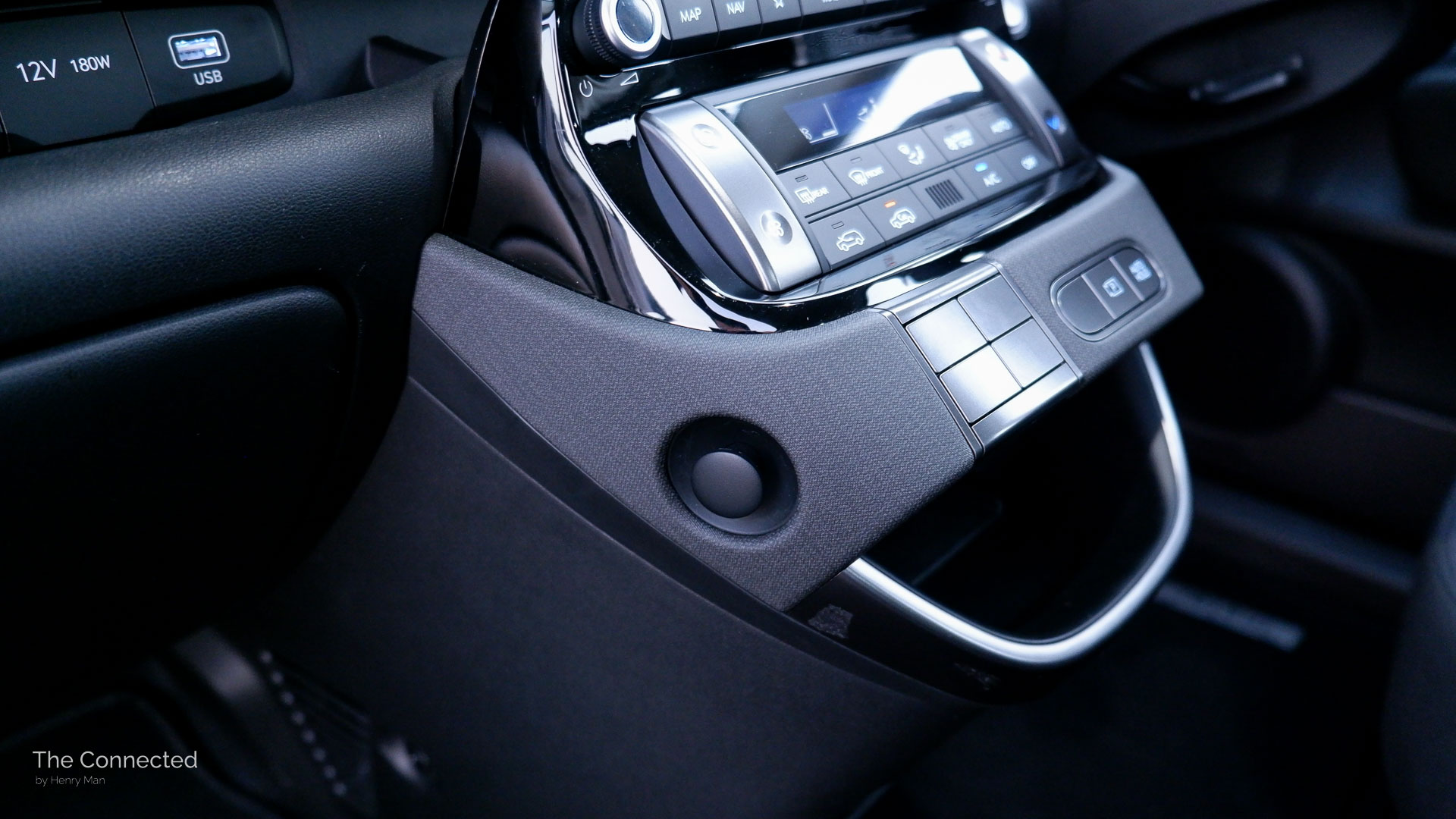
Prominent blank buttons on the centre console highlight the features you miss by going for the base model, while the glovebox flops down when opening.
Fortunately, the leatherette steering wheel and stalks feel good quality, and the fabric covering the single armrest and seats don’t feel cheap.
Practicality.
2026 Hyundai Inster Standard Range dimensions:
| Length x width x height | 3825 x 1610 x 1610mm |
| Wheelbase | 2580mm |
| Ground clearance | 144mm |
| Boot space (min / rear seats folded) | 280 / 1059 litres |
| Frunk space | N/A |
| Rear seat split fold | 50:50 |
| Child seat anchors | 2x ISOFIX and 3x top tethers |
| Air-conditioning system | Single-zone climate control with rear air vents |
The Inster is a compact car, but is surprisingly well-packaged and spacious inside.
The 280-litre boot is undoubtedly small, though arguably more than enough for most singles’ daily needs with space for a couple of bags. Additional underfloor storage, a flat loading lip and LED lighting are welcome, too.
However, Hyundai hasn’t designed the boot as well with two unnecessarily long flaps attached to the backrests to cover the gap between the second row bench and boot. Therefore, sliding the rear seats means shifting whatever is in the boot as well. It seems like a lazy solution.
Nonetheless, it enables a flat loading floor with the rear seats folded in a 50:50 split when more space is needed.

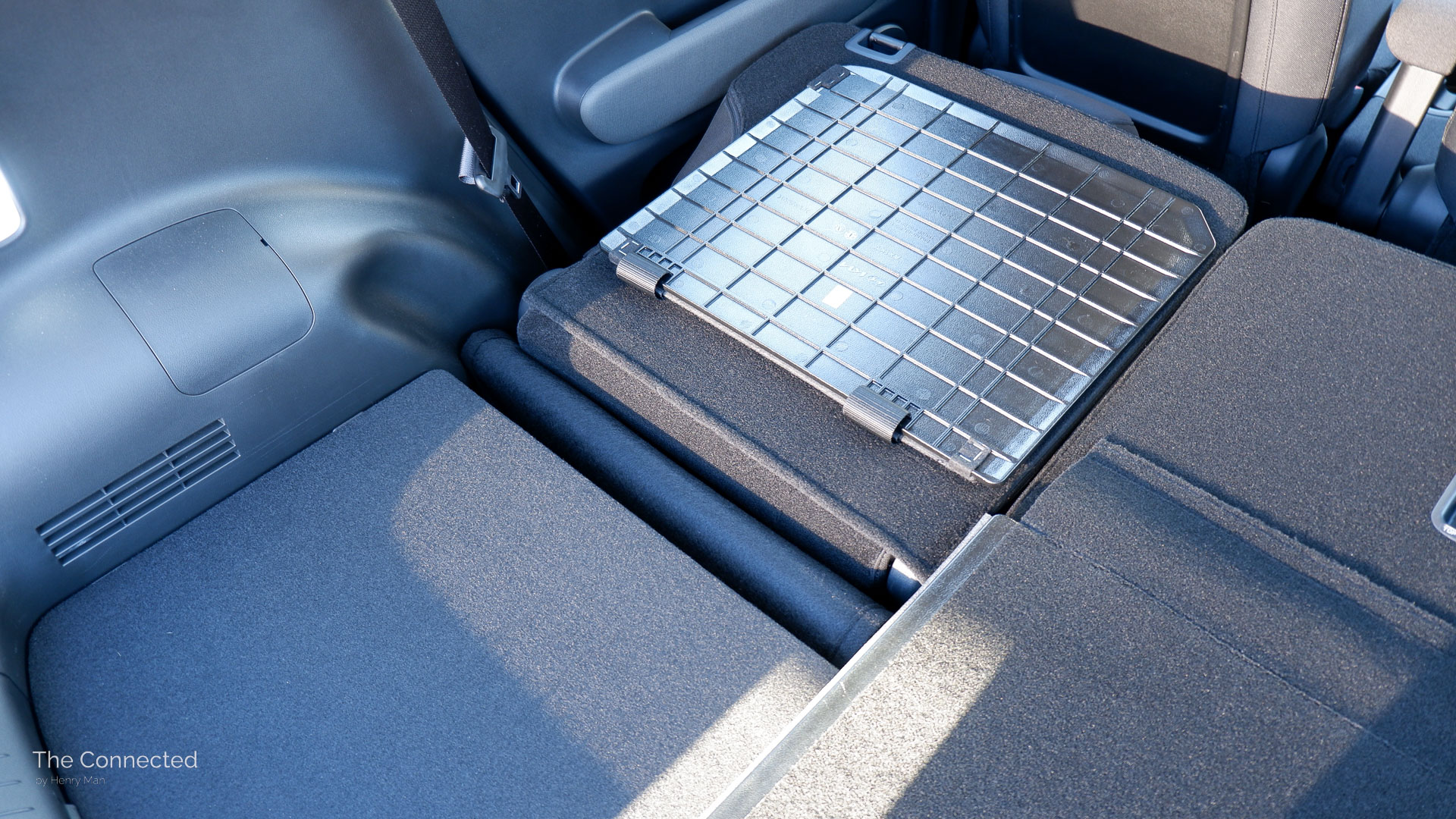
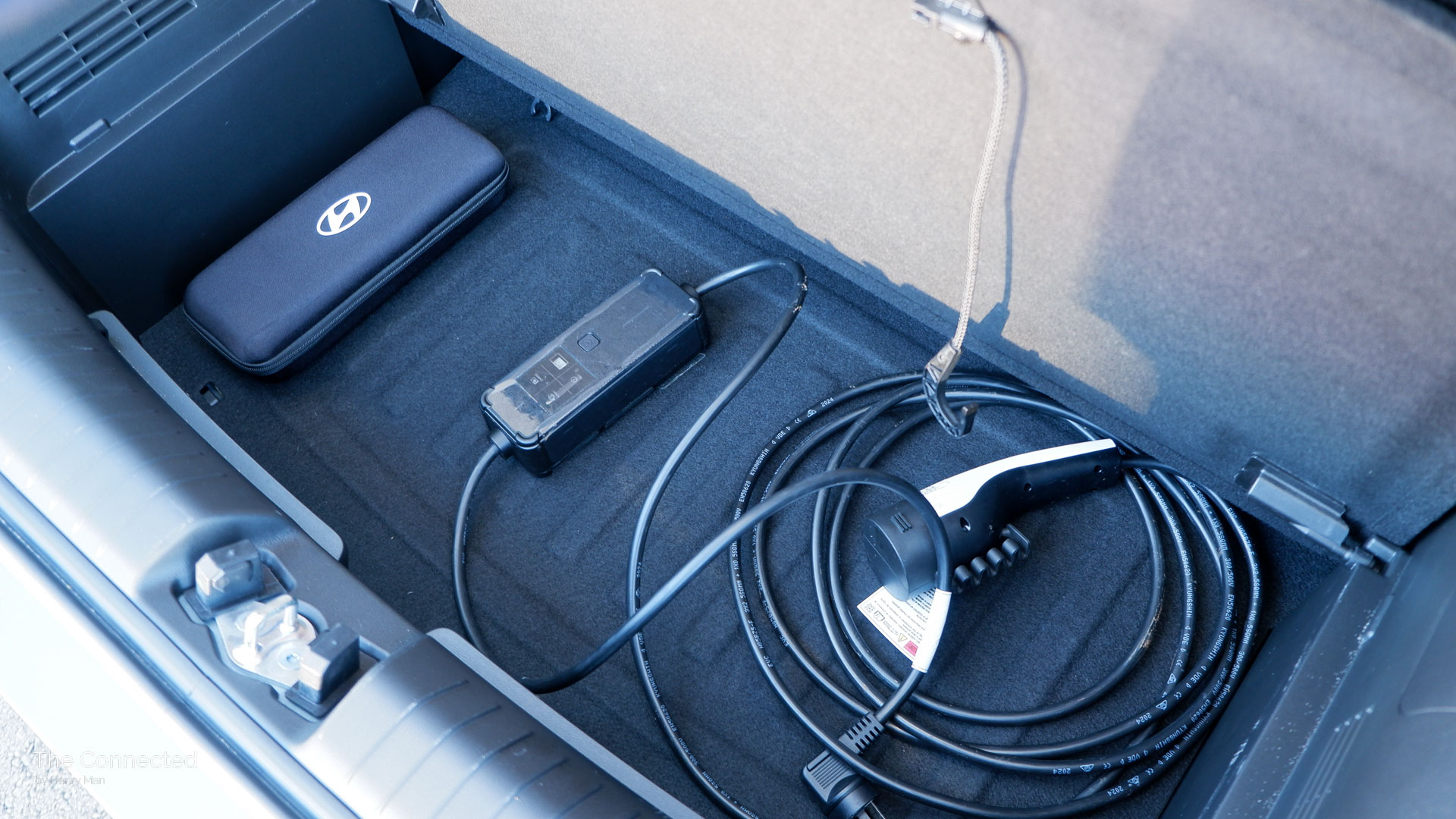

There isn’t any cargo cover for privacy and sun protection, despite nubs for one already in the boot, nor bag hooks either. The manual tailgate is light and easy to close with one hand thanks to a handle. The Hyundai Inster doesn’t offer a frunk.
Meanwhile, the micro electric car features conventional door handles at the front, but the rear ones are a hidden-type placed higher up at the C-pillar akin to the Kia EV3.
The rear doors open impressively wide for a compact vehicle and are notably longer than the front doors.
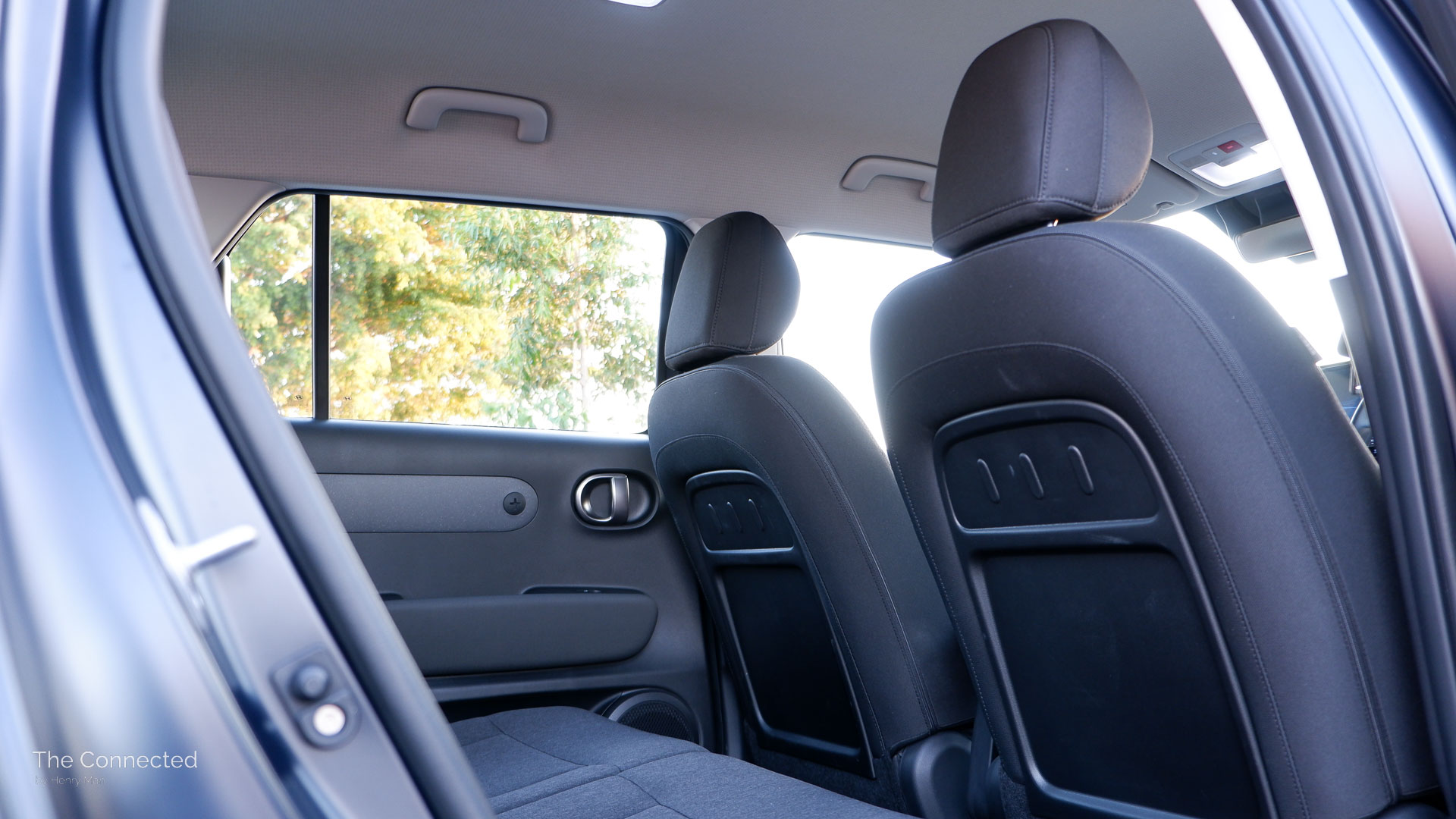
While a four-seater only, the Inster’s rear seats provide good legroom and fantastic headroom thanks to the tall boxy shape. The 50:50 split bench can be manually slid forward to yield more boot space with a lot of backrest angle reclination adjustment, too.
The small EV’s tall windows, light headliner and dedicated rear LED light provide a great sense of open space. Hyundai hasn’t cheapened out with bright LED lighting for both rows, unlike the MG 4 and Kia Picanto.
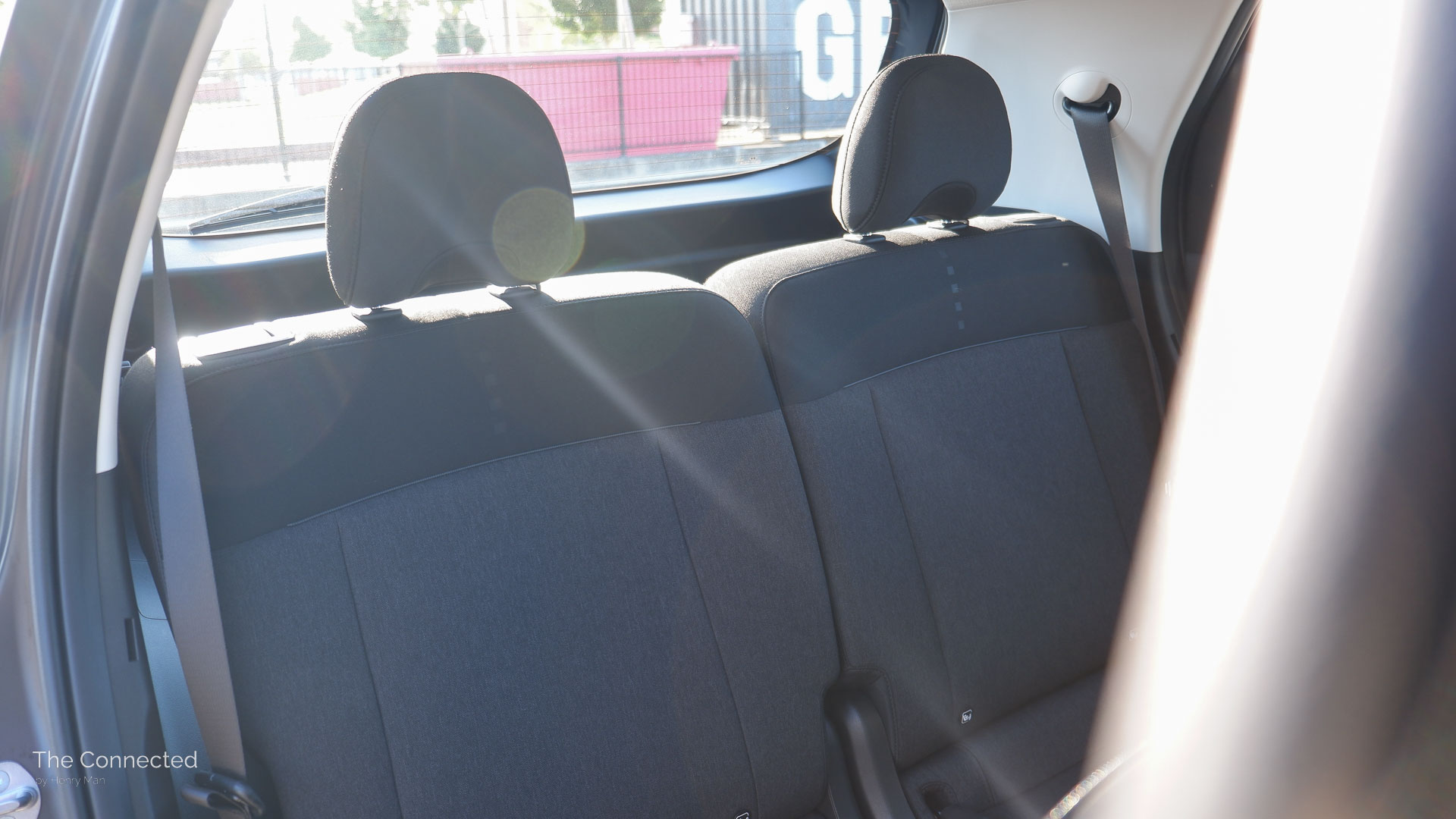
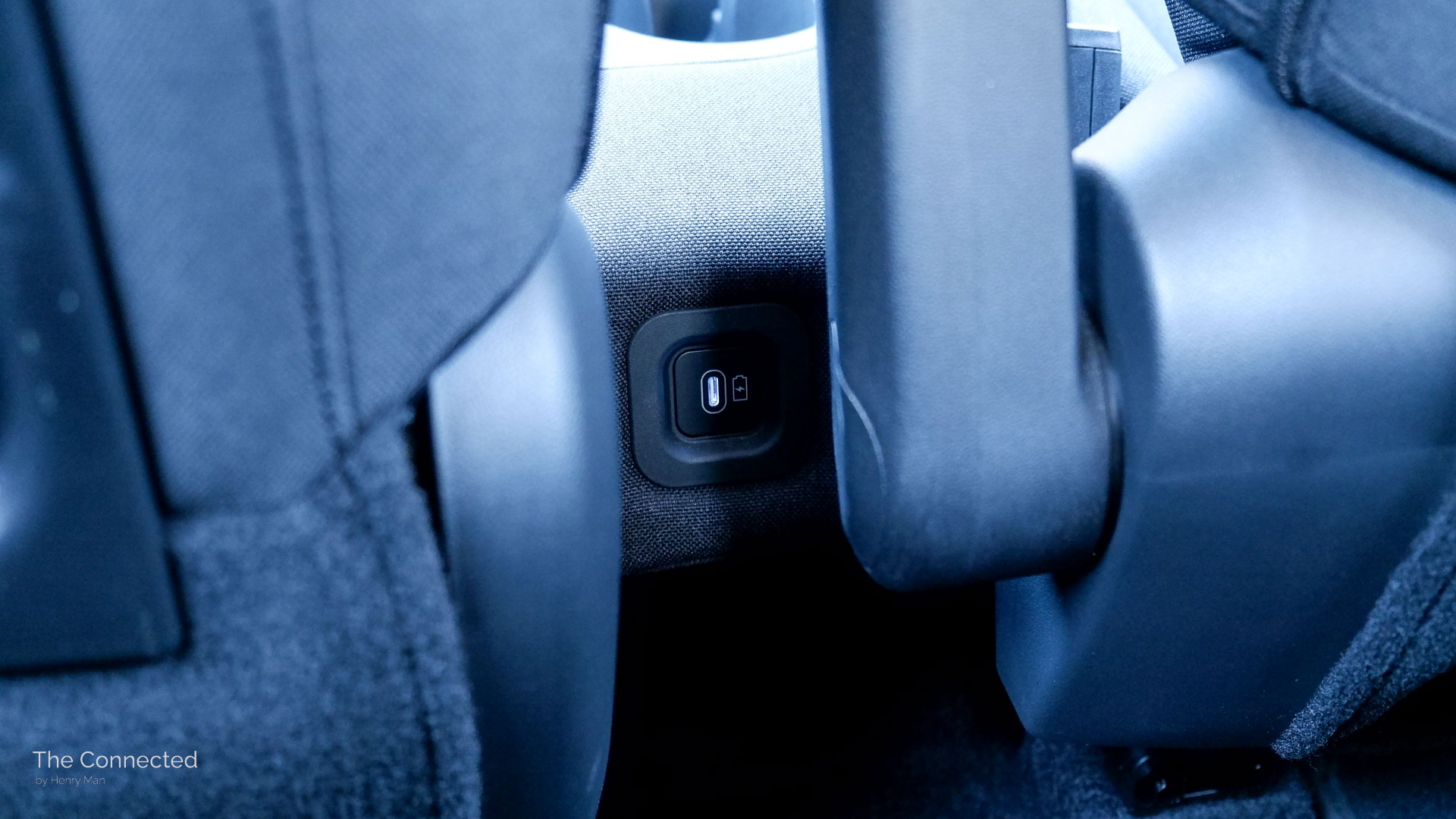

Unfortunately, all side door bottle holders are too narrow with no pockets behind the front seats. There aren’t any rear air vents nor cup holders for rear passengers either, with only one illuminated USB-C charging port hidden underneath the front armrest.
Furthermore, the front row is similarly practical with an ergonomic central Qi wireless charging pad tray, storage slot underneath, a well-sized but non-illuminated glovebox, and an open floor design between the front two occupants.
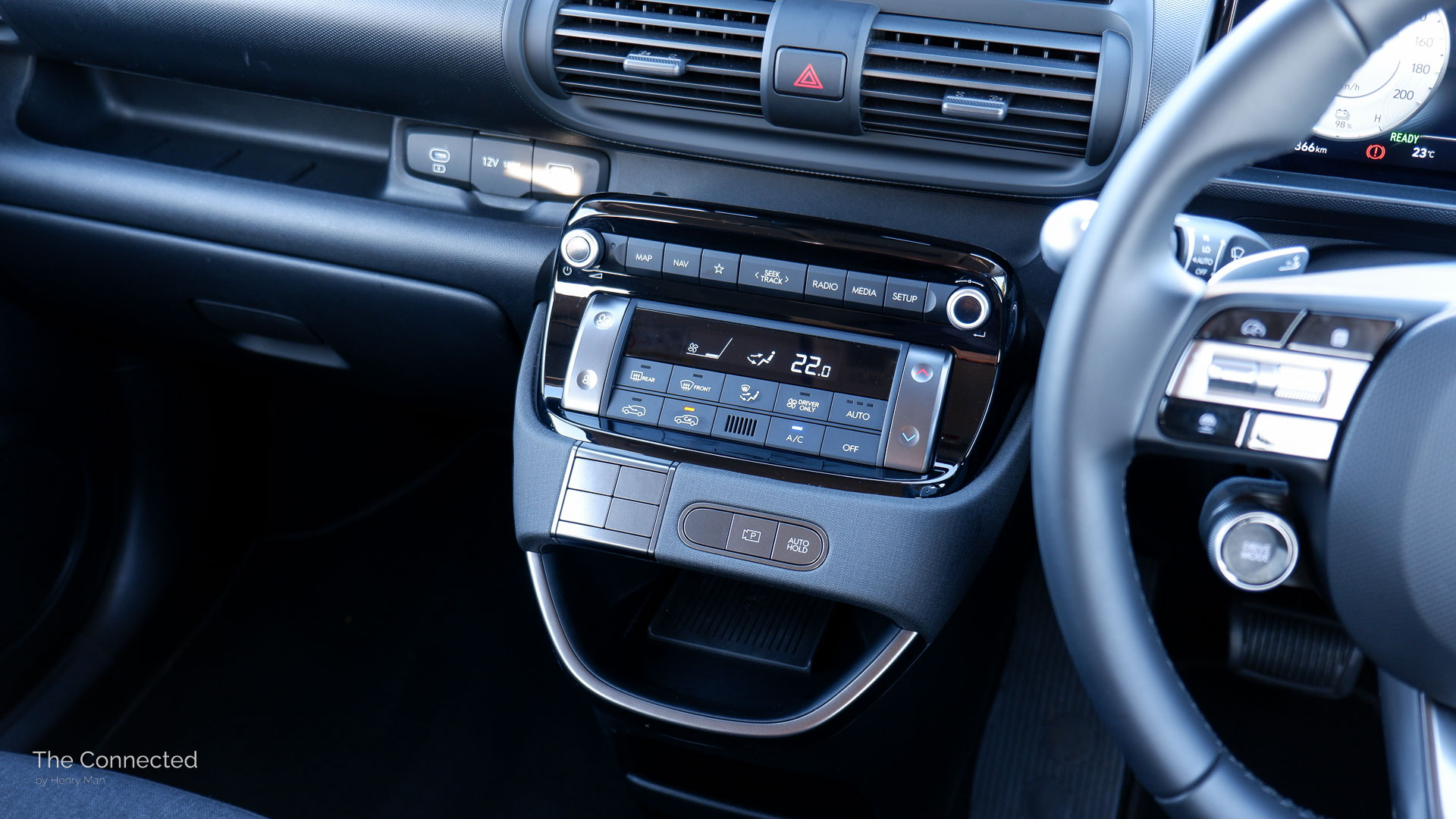
A recessed open shelf spans from the front passenger side to the steering wheel, complete with dividers, USB-A, USB-C and 12-volt charging ports, and a section that hides items behind the infotainment controls.
Two non-gripped cup holders are interestingly attached to the driver’s seat, much like the Kia EV5, with a single Volkswagen ID. Buzz van style armrest which can fold up, even though it’s only for one occupant.
Hooks are also available at the centre and front passenger door side.


While I applaud Hyundai for including extendable front sun visors, the forward position of the windscreen and tall windows meant that it still couldn’t completely block the sun from glaring the interior from the side even when extended.
Even though the base Inster Standard Range’s seats are fabric with manual adjustment and no lumbar support, it is comfortable on longer drives. Only the top-spec Inster Cross offers heated and ventilated seat functionality.
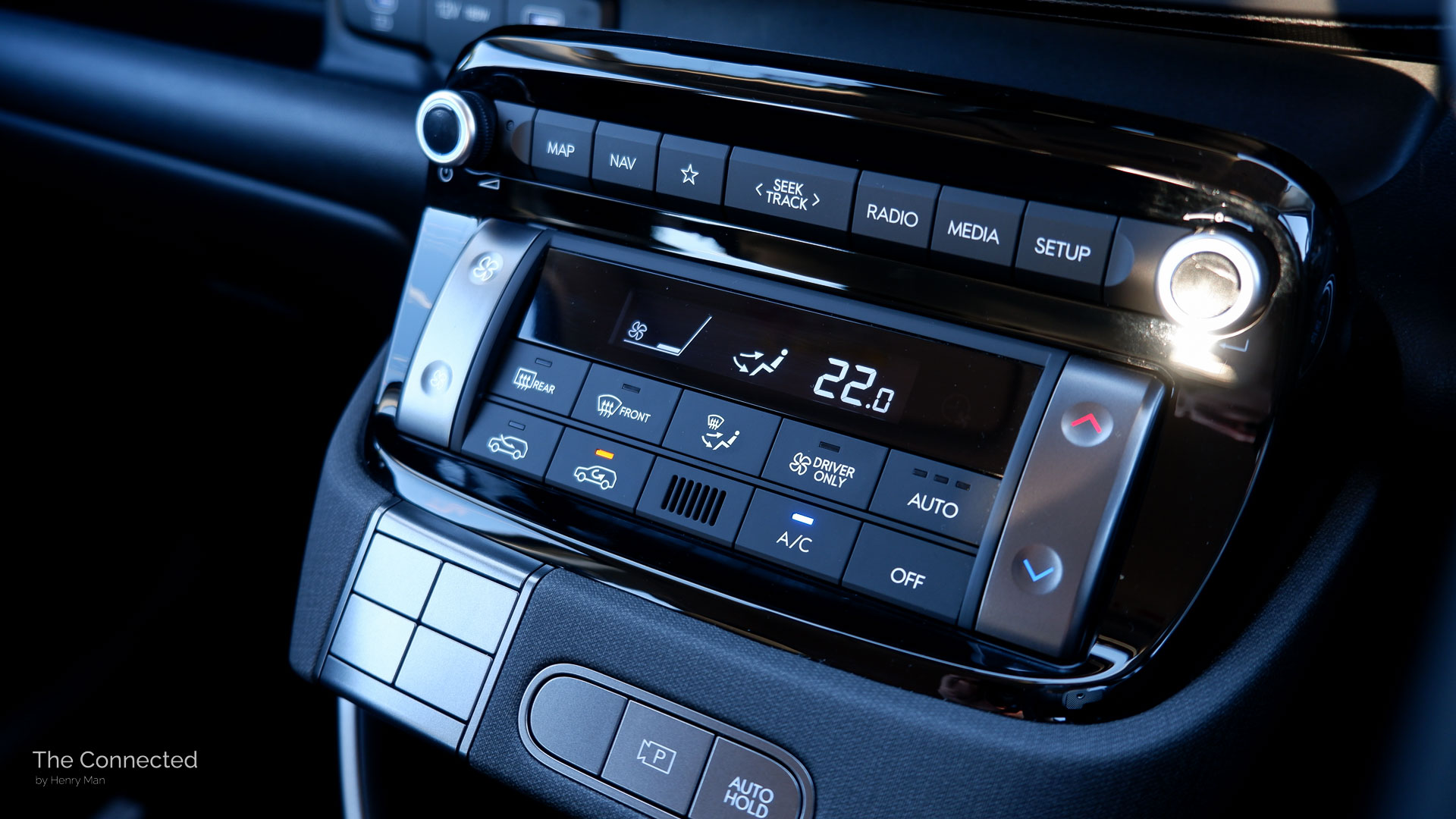
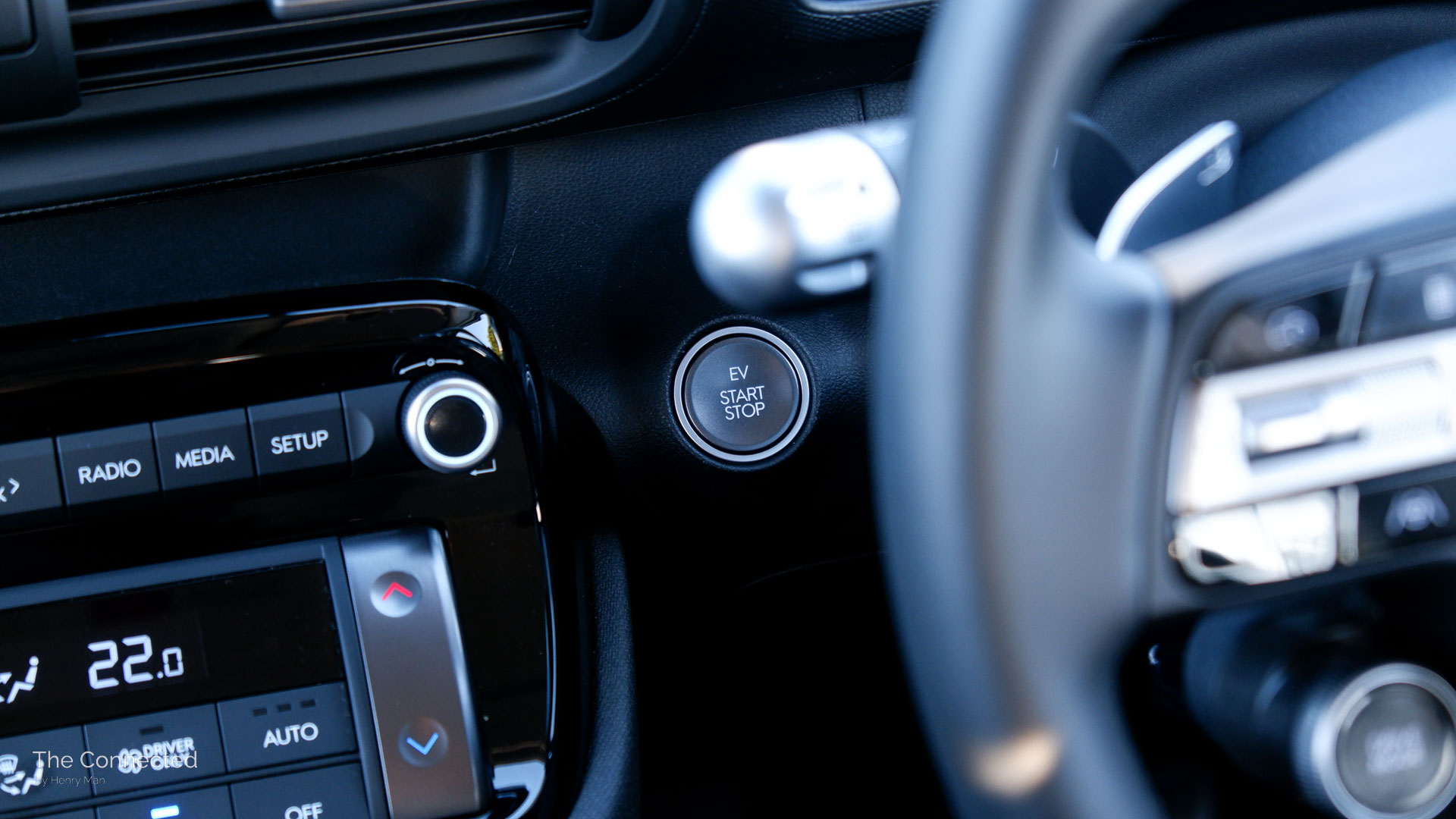
Refreshingly, the Hyundai Inster features big and tactile physical buttons to adjust the standard single-zone climate control, with big and powerful directional air vents.

Technology.
2026 Hyundai Inster Standard Range tech features:
| 10.25-inch touchscreen running Standard Gen5W Navigation | 10.25-inch driver instrument display |
| Wired Apple CarPlay and Android Auto | Qi wireless charging pad |
| Built-in maps | 1x USB-A, 2x USB-C and 1x 12-volt charging ports |
| OTA software update capability | Proximity key with auto-folding mirrors |
| Hyundai Bluelink connected services and mobile app |
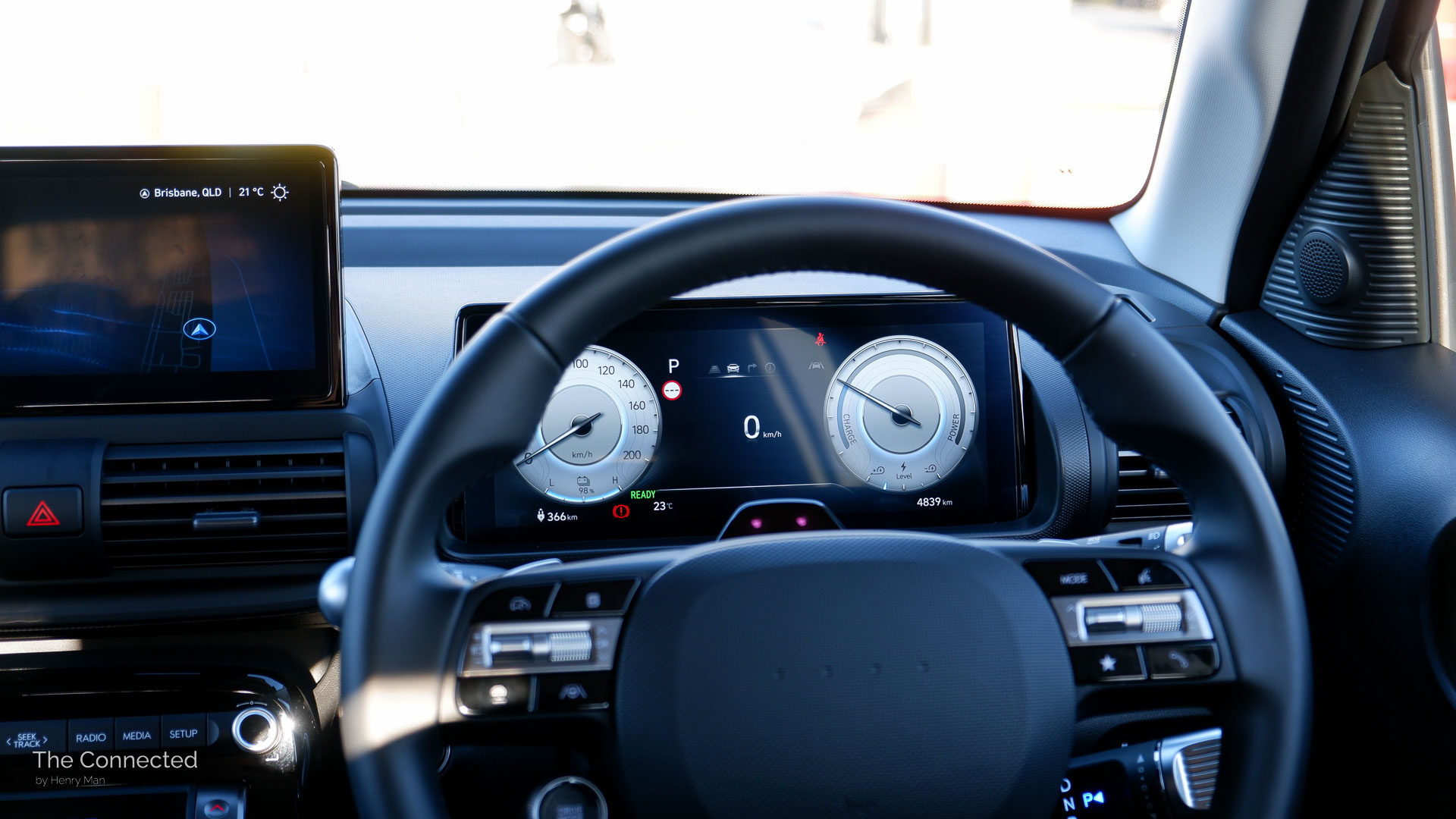
The Hyundai Inster has a simple and no-nonsense technology setup, even though it feels slightly dated in 2026.
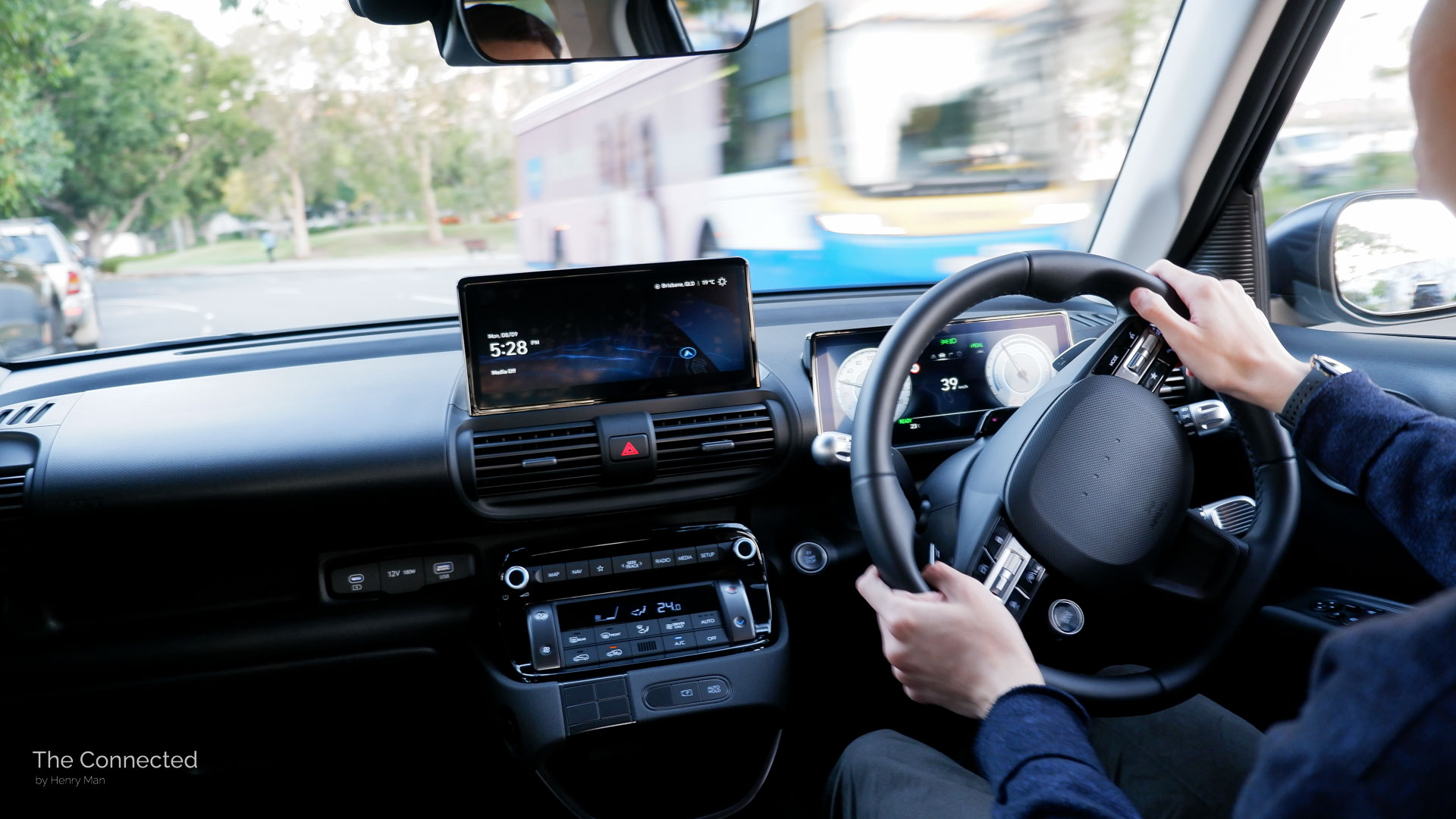
A 10.25-inch touchscreen protrudes from the dashboard to be in the driver’s line-of-sight with a clear display, good automatic brightness, and a row of shortcut buttons underneath with volume and tuning dials.
However, it still uses the South Korean brand’s older Standard Gen5W Navigation software as per the Hyundai i30 Sedan. While the user interface is decent with the benefit of a more unique home screen versus the latest operating system, it is slower to boot up than ideal with a noticeable lag when switching between pages.
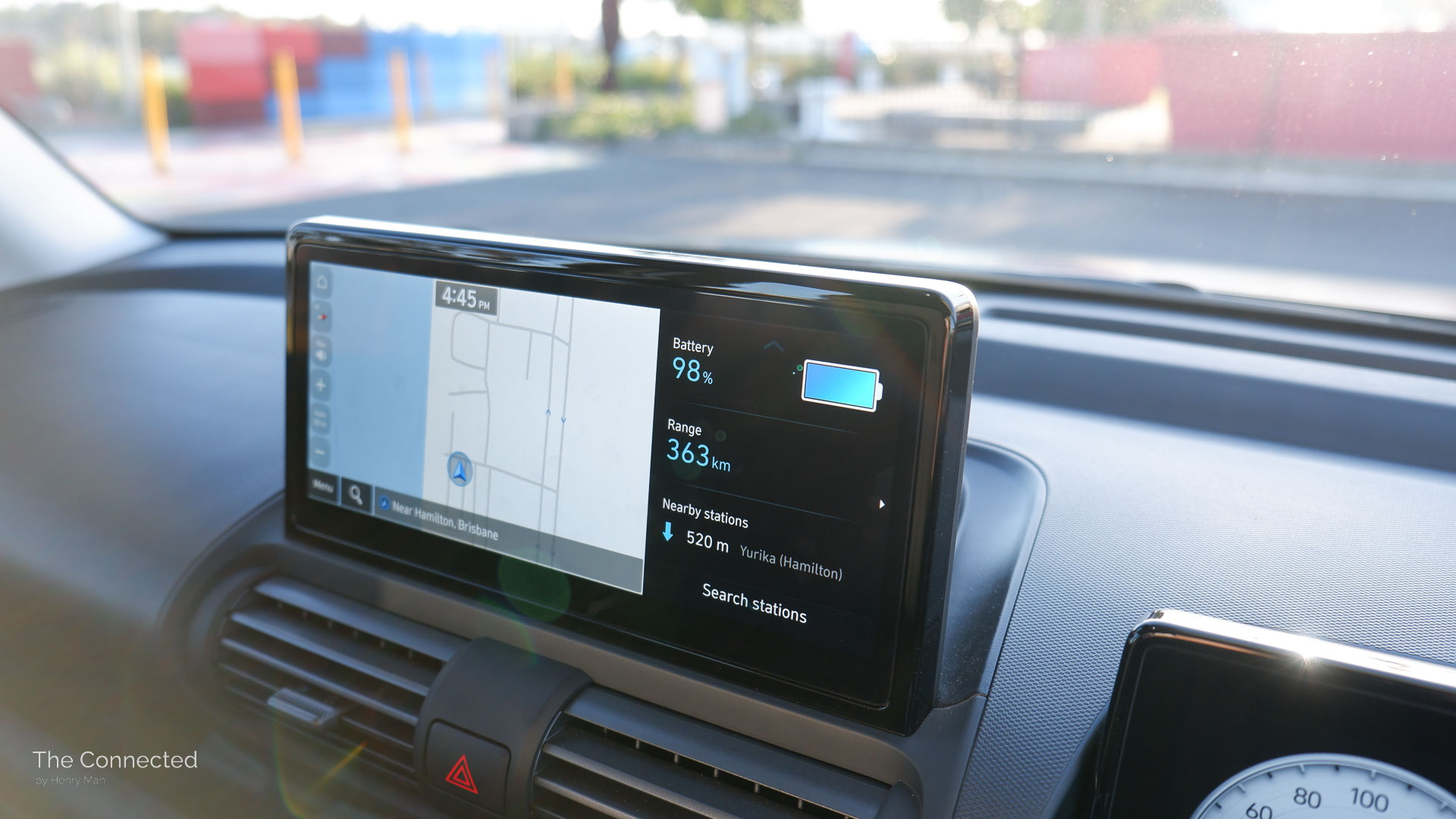

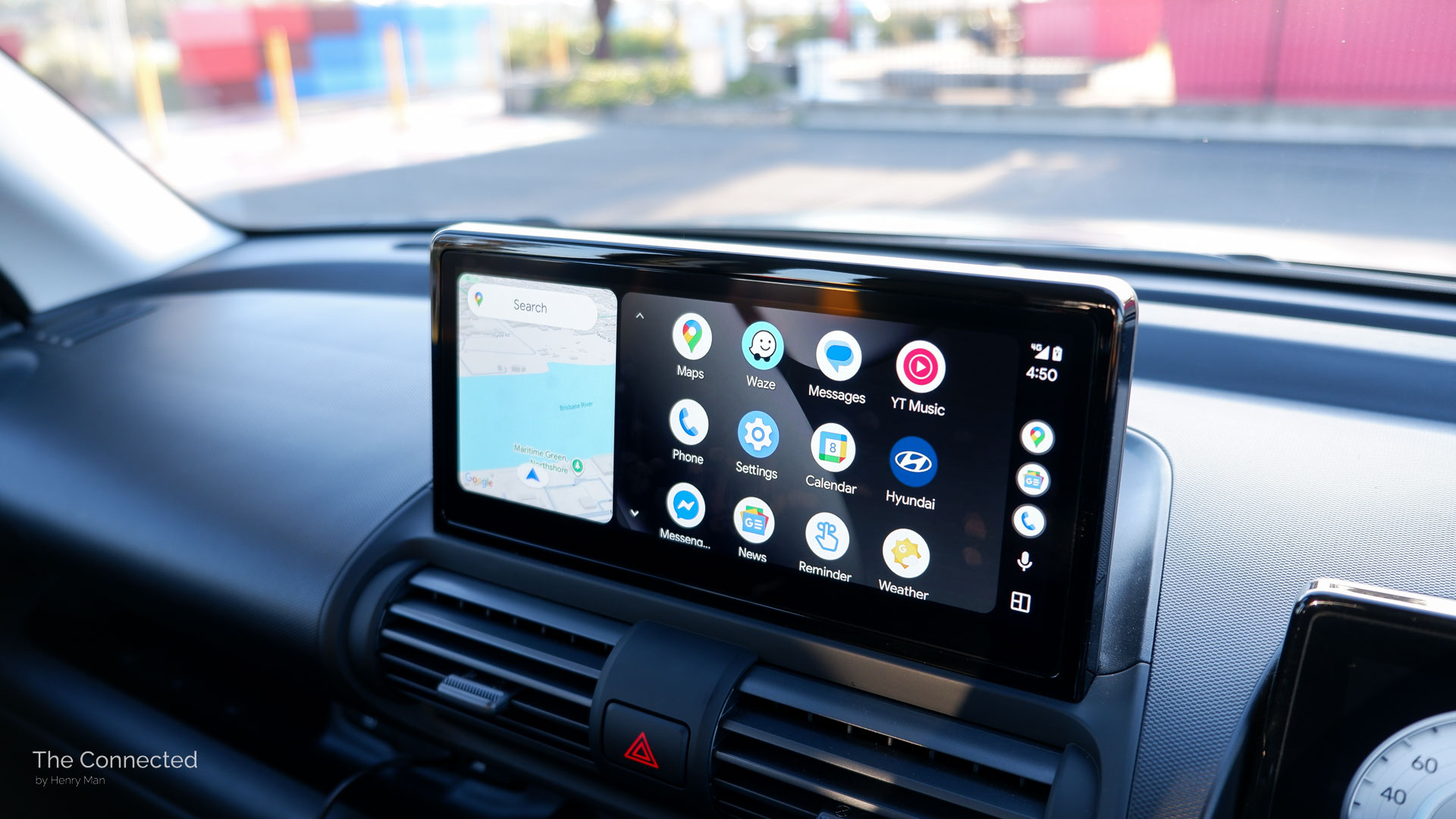
It also means Apple CarPlay and Android Auto are wired only via the single old-school USB-A data port in the Inster EV.
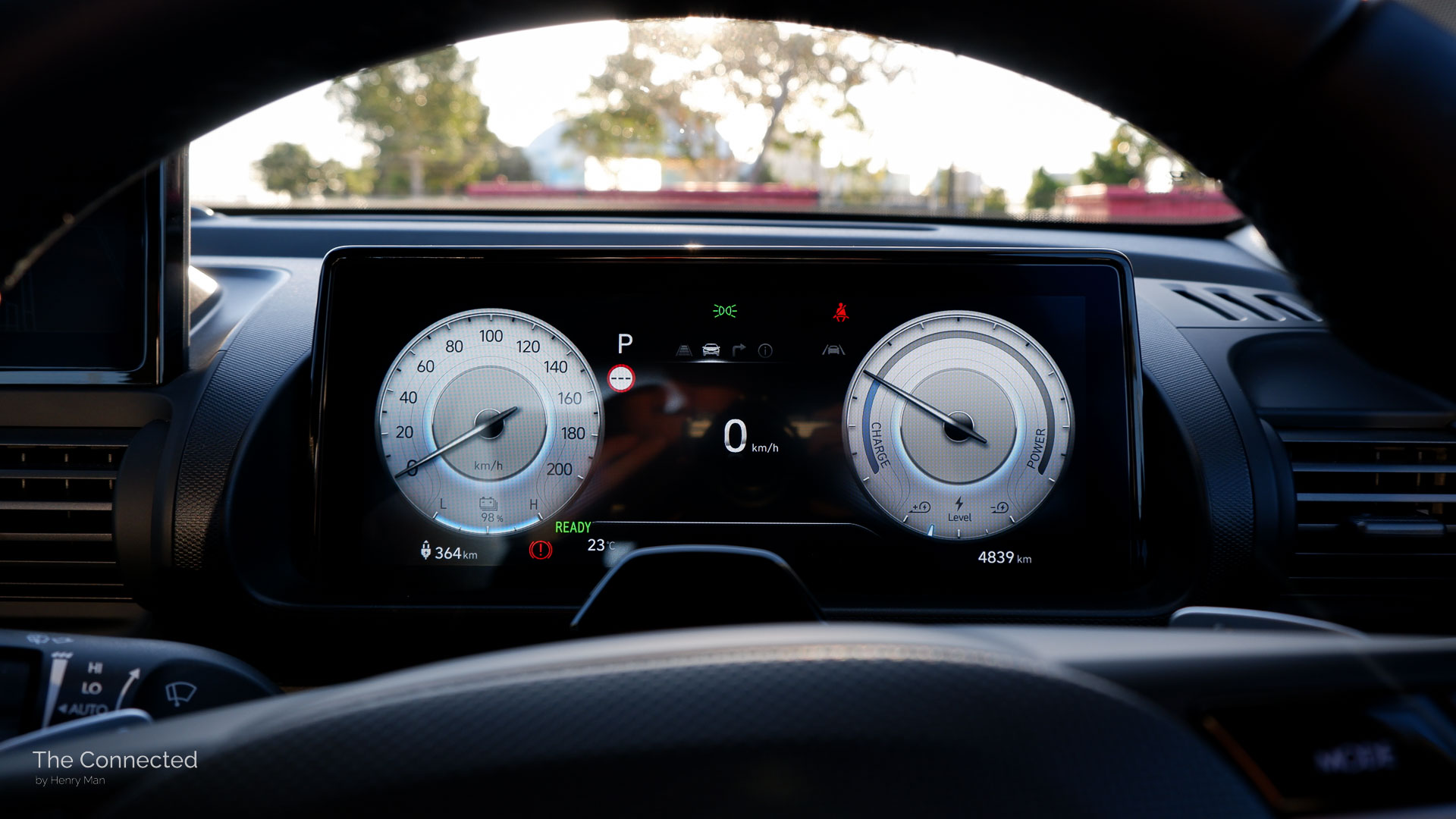
The 10.25-inch instrument cluster also boasts a variety of different analogue themes with neat animations when switching between them, plus a digital Cube theme that looks more special than Hyundai’s newer software.
Yet, the default normal mode theme’s bright white dials don’t change in the dark, so it’s quite eye-searing. Thankfully, you can untie the instrument theme from the drive mode.
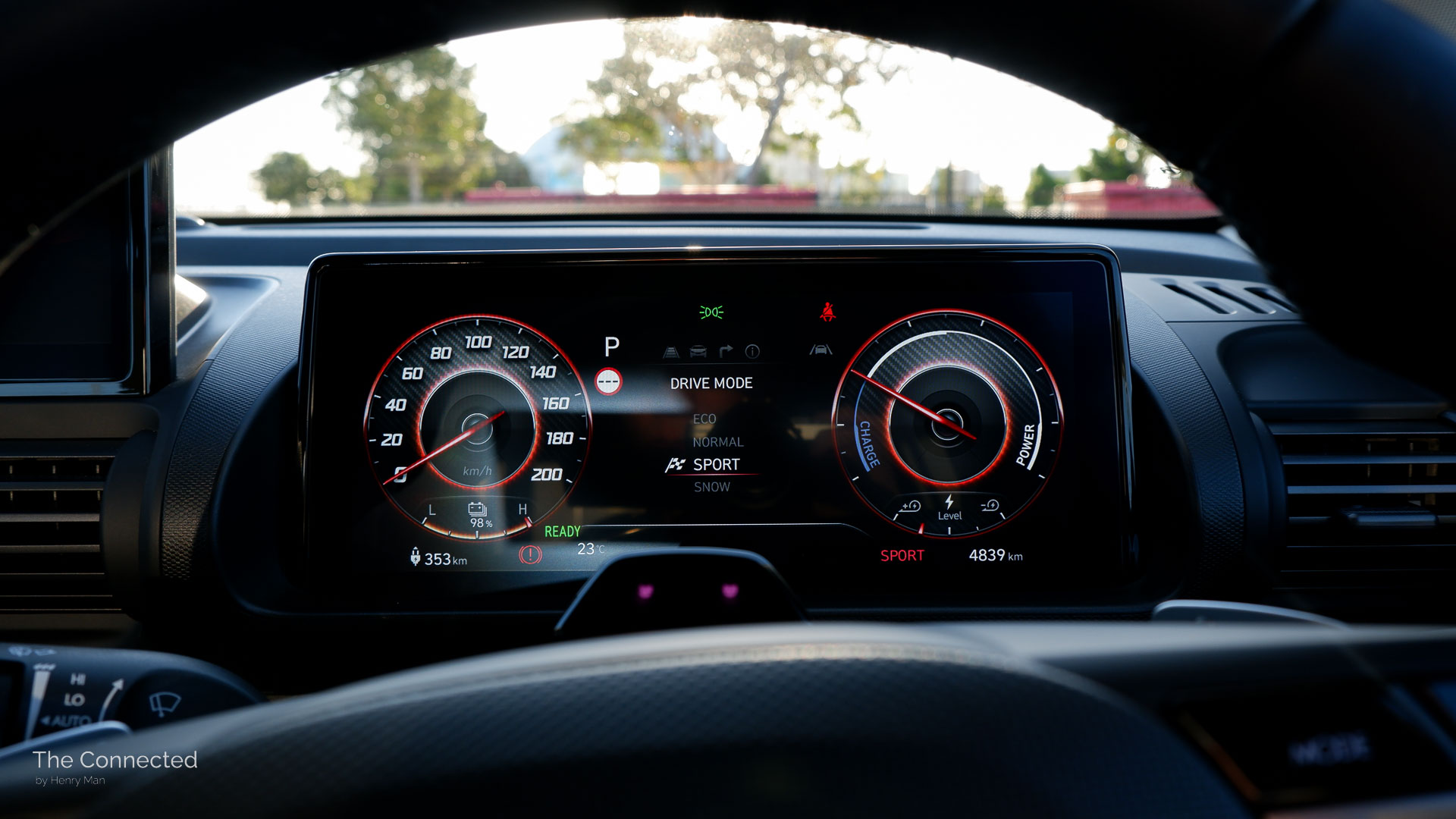
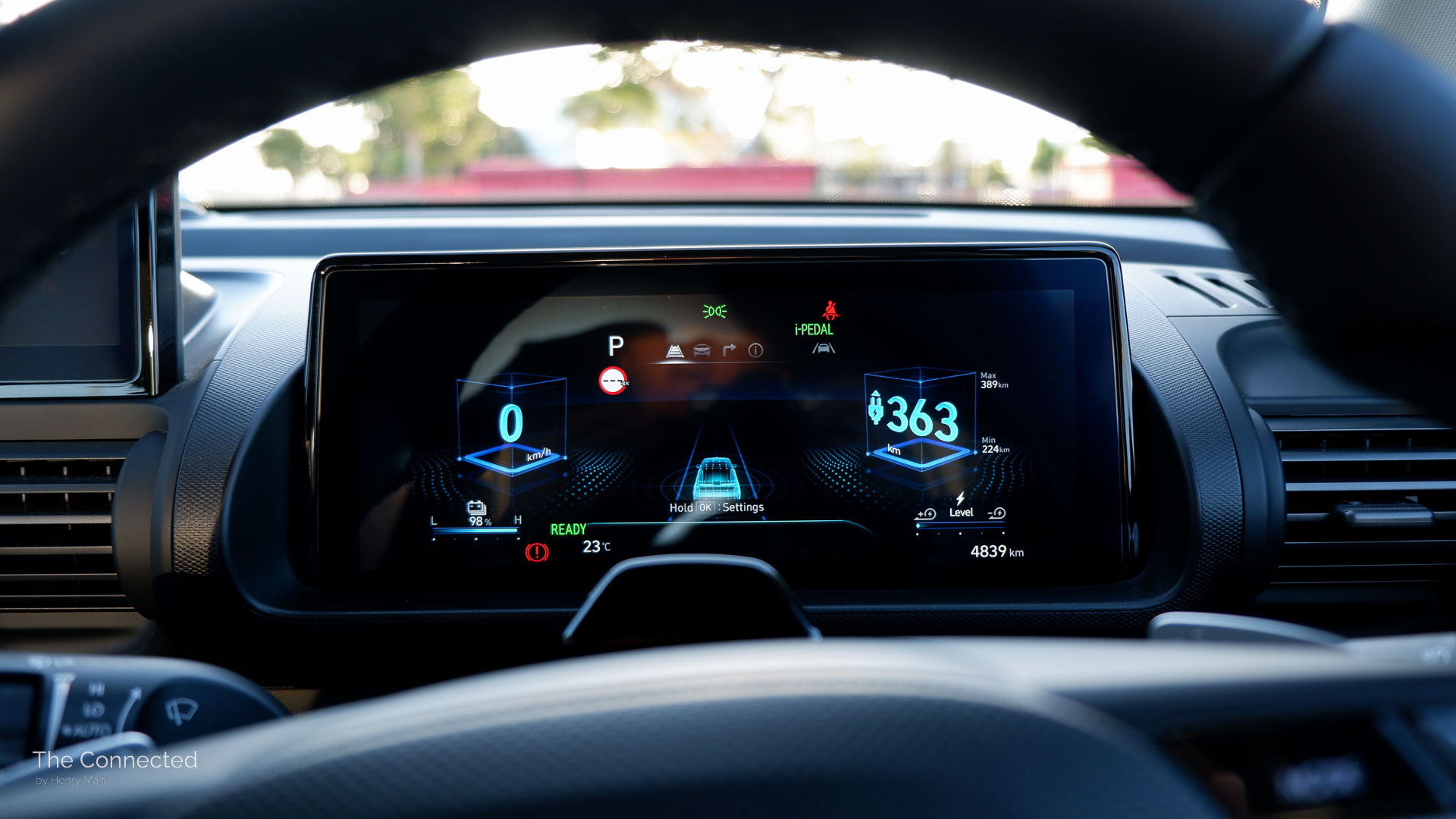
Using the analogue themes also means you need to use the middle section if you want to see the digital speedometer, rather than see other functions such as the safety assists or range guide.
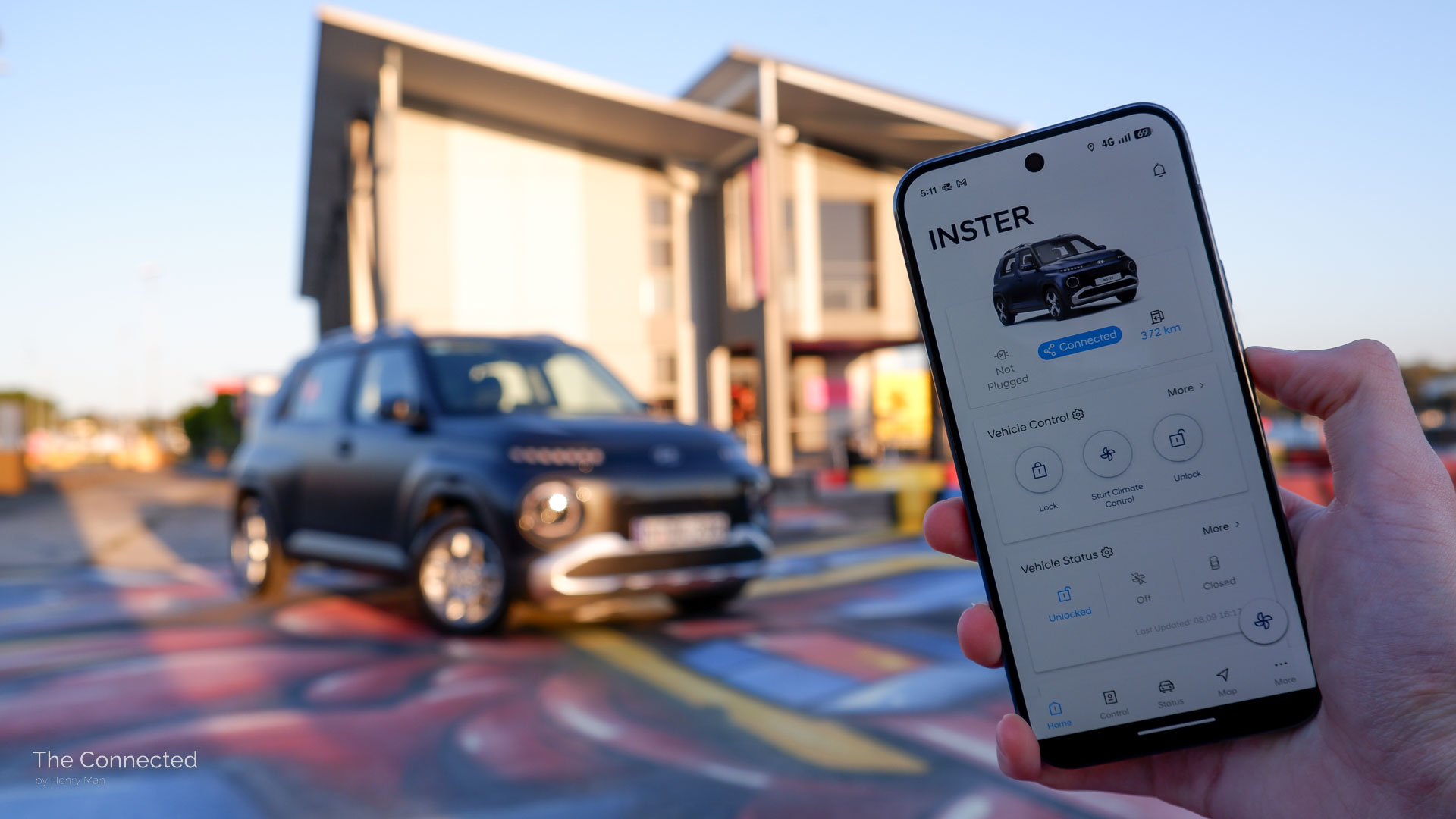
Additionally, Hyundai Bluelink connected services are included for the first five years from activation. This includes a well-designed mobile app with convenient features, including climate pre-conditioning, charge status monitoring, and location tracking.
Australian Insters don’t have Apple CarKey and Google Car Key compatibility.
Safety.
2026 Hyundai Inster Standard Range safety features:
| Front AEB with vehicle/pedestrian/cyclist/junction turning detection | Reversing camera |
| AEB with direct oncoming and lane-change oncoming/side detection | Rear parking sensors |
| Blind-spot assist | Road sign detection with overspeed warning |
| Rear cross-traffic assist | Driver attention monitoring camera |
| Lane-keep assist | Hyundai Bluelink emergency services calling and remote vehicle tracking |
| Adaptive cruise control and lane-centring assist (Highway Driving Assist 1.5) | Full LED headlights and tail-lights with rear fog light |
The Inster EV offers well-calibrated safety assistance systems as standard with some annoyances.
Most crucial safety tech is included on the base Standard Range with good lane-keep assist, blind-spot and rear cross-traffic detection, and a smooth adaptive cruise and lane-centring system that just works.
It’s refreshingly intrusive for the most part, except for the overspeed and driver attention chiming.
The road sign detection is generally accurate and understands school zone times. While Hyundai has substantially quietened the overspeed warnings with a shortcut on the steering wheel to turn it off, it is still annoying as it reactivates every time you start the Inster.
Fortunately, the new detected sign chirp can be permanently disabled via the settings.


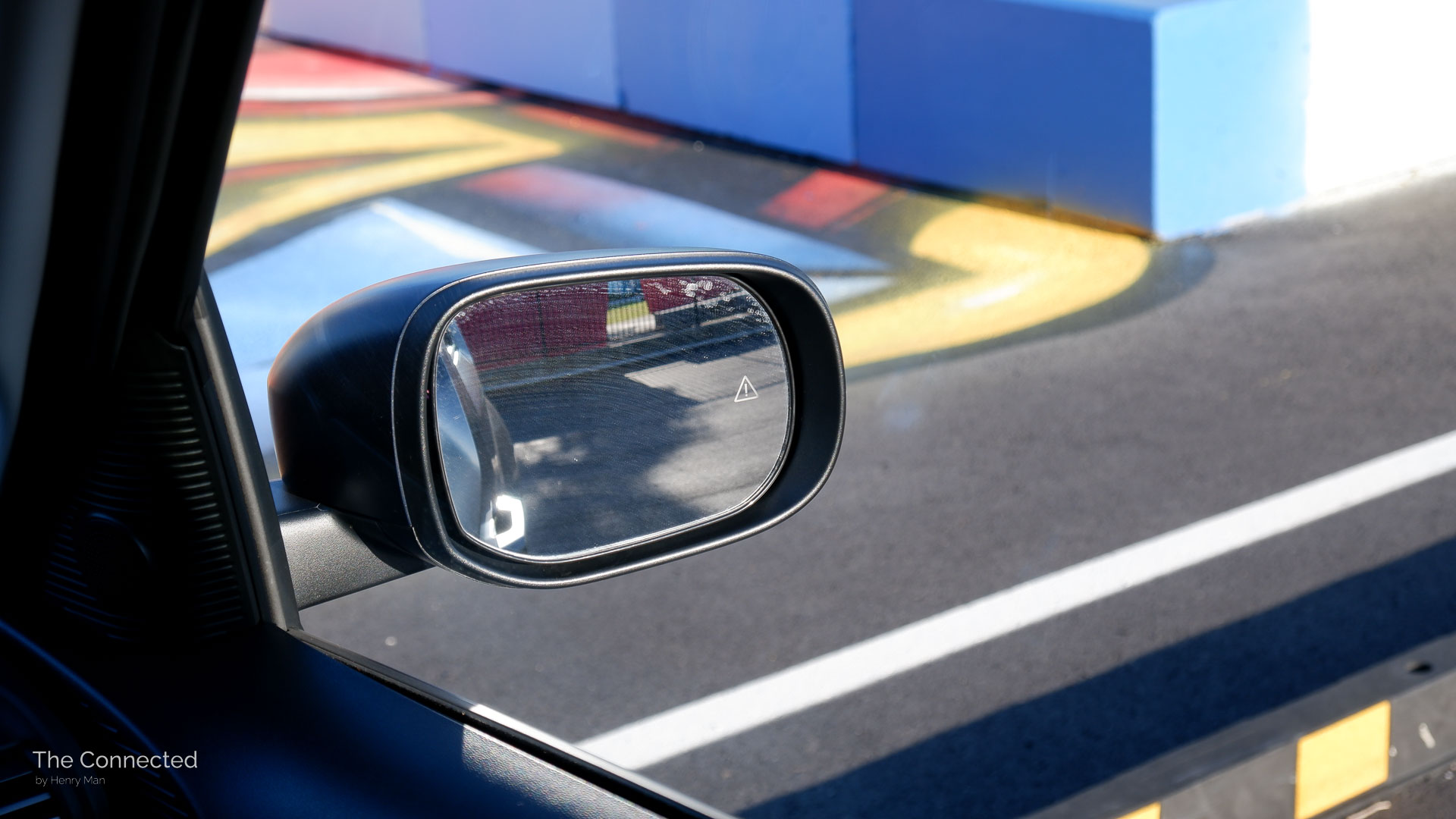
Meanwhile, the driver attention monitoring system is accurate, but sensitive and easily triggers with a few seconds of inattention. There’s no way to permanently turn it off either.
In line with older Hyundai products, including the i30 Sedan, the reversing camera looks grainy and off-colour.
All Hyundai Inster models boast full LED headlights with weaker than ideal reach performance at night.
The full LED tail-light illuminates the entire pixel light bar as the brake light, though there’s only one small LED reversing bulb located at the rear bumper.
The 2026 Hyundai Inster achieved a four-star Australasian New Car Assessment Program (ANCAP) safety rating under 2025 testing criteria.
Range and charging.
2026 Hyundai Inster Standard Range battery and charging specs:
| Claimed driving range (WLTP combined cycle) | 327km |
| Claimed energy efficiency (WLTP combined cycle) | 14.3kWh/100km |
| Battery size and type | ~39kWh (42kWh gross) lithium-ion |
| Battery voltage | 400-volt class |
| Max AC / DC charging speed | 10.5 / 120kW |
| Bidirectional charging | V2L interior/exterior |
| Connector type | Type 2 / CCS2 |
| Everyday charging limit recommendation | 80% (general) |
The Hyundai Inster Standard Range returned a low energy efficiency of 13.6kWh/100km after a week of mixed driving conditions.
With a 39kWh usable (estimated) lithium-ion battery, expect a real-world driving range of around 295km on a full charge.
However, everyday range is more about 236km as capping the charge limit to 80 per cent is generally recommended for lithium-ion type batteries.
The Inster EV is impressively energy efficient with a small battery providing enough range for most driver’s daily needs – without causing major ‘range anxiety’.
It’s not a big impediment for going on longer trips either, unlike historically short-range EVs including the Fiat 500e, Honda e, and original Nissan Leaf.
The small battery and good efficiency also means cheaper running costs, too, which is a win for long-term ownership – and is what an EV should be.
Hyundai still can’t match Tesla’s industry-leading EV efficiency bar, though.



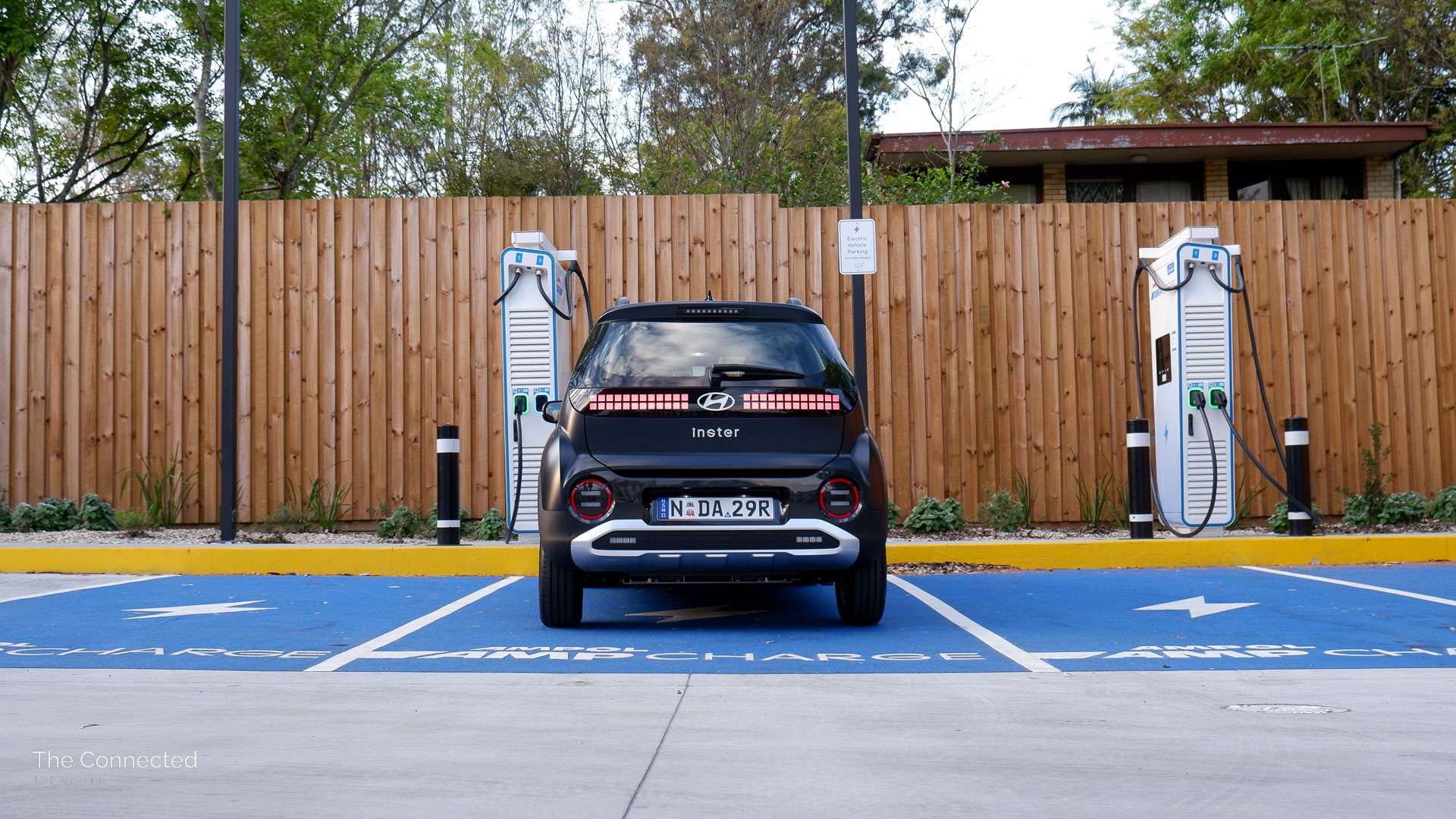
In my testing on a 150kW DC fast-charging station, the Hyundai Inster Standard Range recharged from 18 to 80 per cent in around 28 minutes.
The charging session averaged 59kW overall with a 70kW observed peak – which is rather unimpressive, with the total time on par with typical bigger-battery EVs.
However, the Inster has a flat charging curve, sitting in the 60 to 70kW DC speed range until around 70 per cent charge.
There’s no active battery preconditioning feature.
All Hyundai Inster models can charge at up to 10.5kW AC speeds, too.
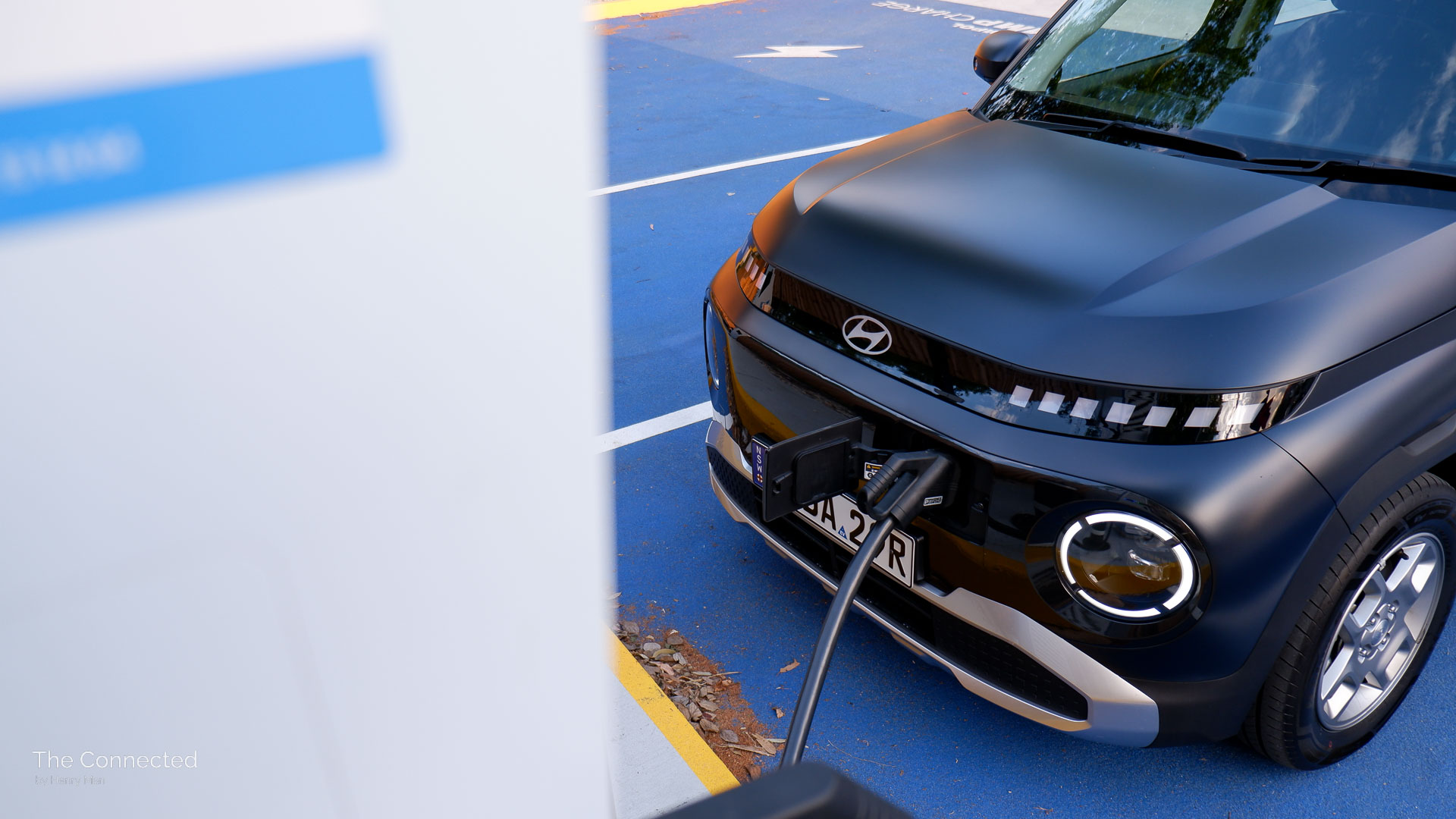
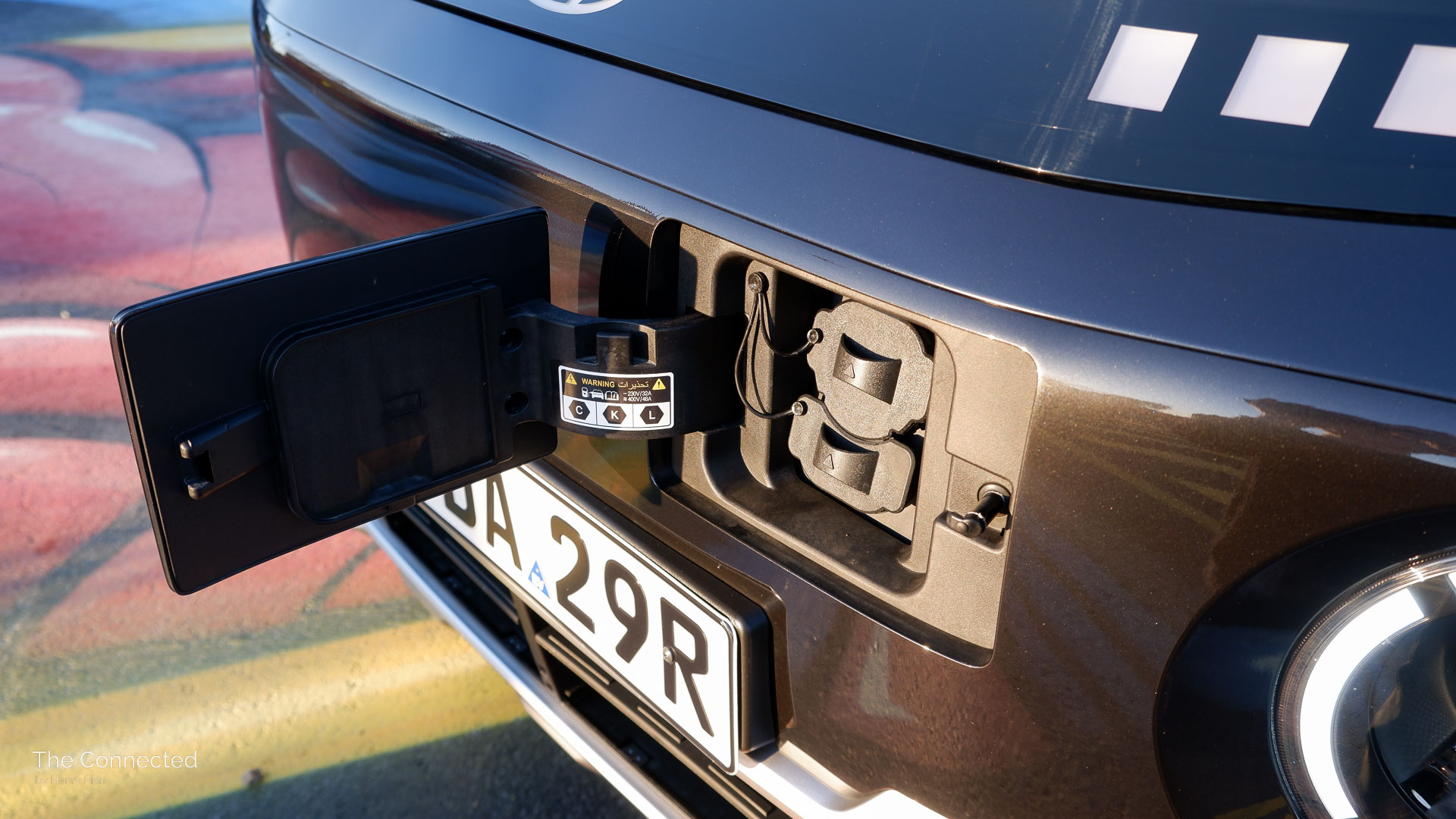
The charge port is accessible at the front face on the left side, with a manual pop-out lid and two flimsy caps covering the AC and DC pins. There isn’t illumination either, but does have a charge status indicator.
Vehicle-to-load (V2L) is standard with an interior three-pin domestic socket underneath the centre console and an exterior adapter included. They can’t be both used at the same time, though.
Driving.
2026 Hyundai Inster Standard Range powertrain specs:
| Electric motor | Single permanent magnet synchronous motor |
| Power | 71.1kW |
| Torque | 147Nm |
| Transmission | Single-speed |
| Drive type | FWD |
| Kerb weight | 1305-1393kg |
| Turning circle | 10.6 metres |
| Payload | 337-425kg |
| Towing (unbraked / braked) | N/A |
The Hyundai Inster’s driving dynamics are a key highlight with a fun-to-drive nature, engaging handling and well-tuned regenerative braking.
Even though the Standard Range’s detuned single electric motor making up to 71.1kW of power and 147Nm of torque may seem minute, the Inster is impressively zippy in reality thanks to instant electric response and a light ~1.3-tonne weight.
Even in sport mode with the accelerator flat to the floor, it doesn’t suffer from any traction loss or torque steer at the front wheels.
Unlike many EVs, including the Kia EV3 and Leapmotor C10 BEV, the blended brake pedal is tuned well with a good consistent feel and travel, plus a smooth and progressive ‘i-Pedal’ one-pedal driving mode.

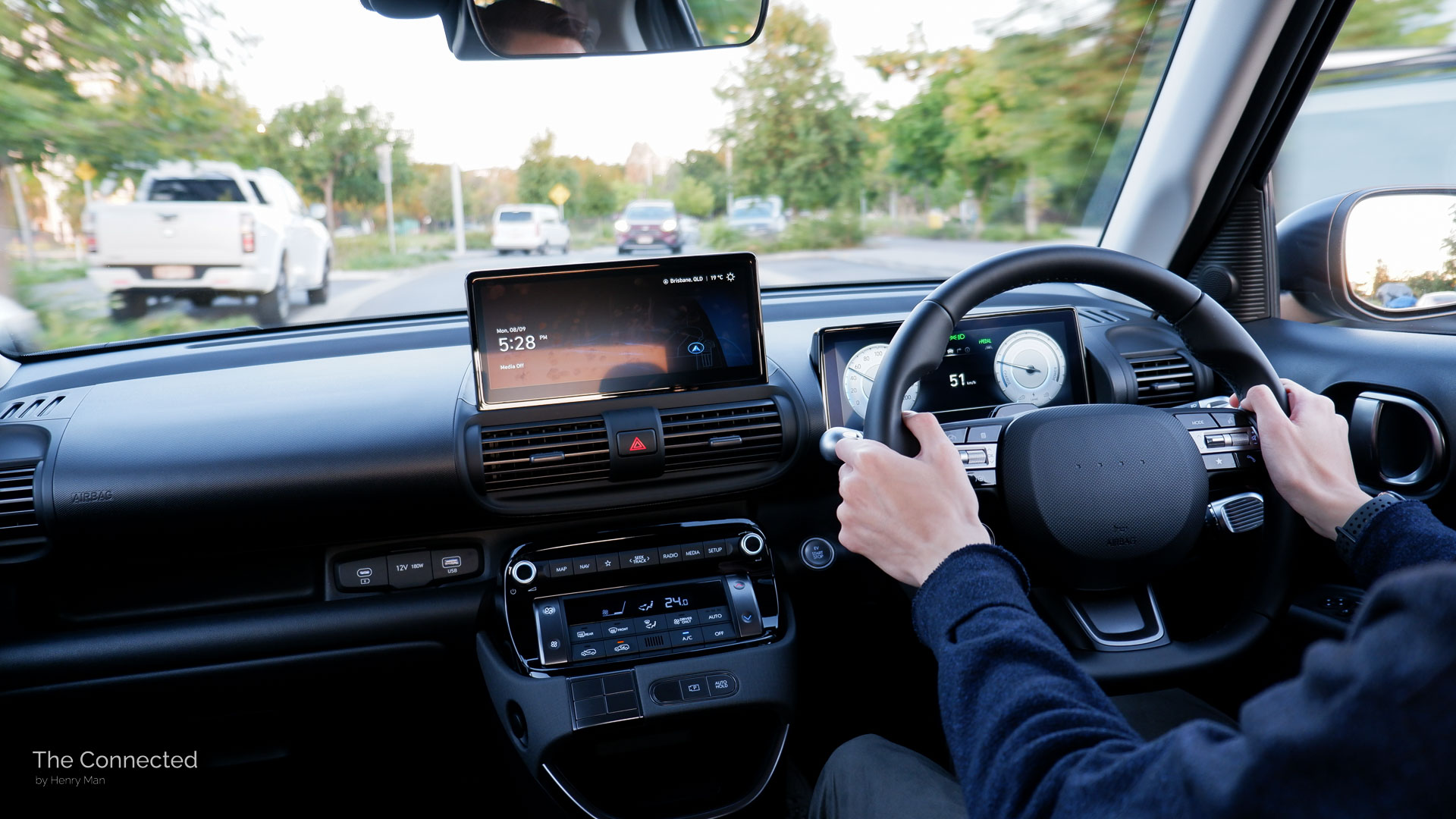


Regenerative braking intensities are toggled via the steering wheel paddles with completely off, three levels, automatic and i-Pedal modes. Unfortunately, the latter deactivates every time you start the vehicle and flick the drive selector – unlike the newer version on the Kia EV3.
The Inster has excellent-calibrated steering, too – it’s light enough at low speeds and firms up when driving. It’s a genuinely fun and engaging hatchback to drive, especially when it’s so easy to chuck it around corners thanks to the light weight, with only some body roll.
Meanwhile, the ride is compliant thanks to a local ride and handling tune by Hyundai Australia and the base model’s tiny 15-inch alloy wheels.

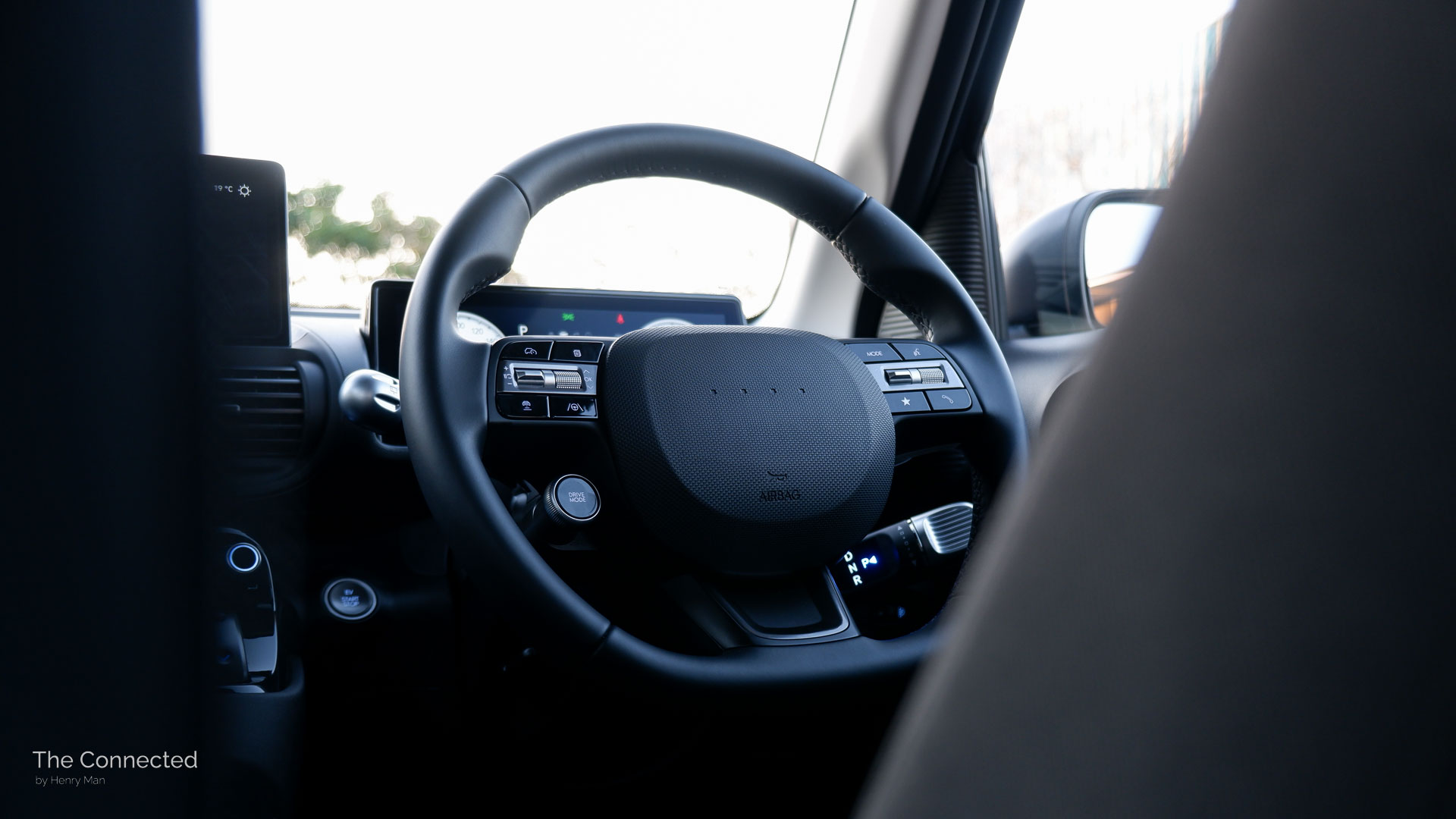
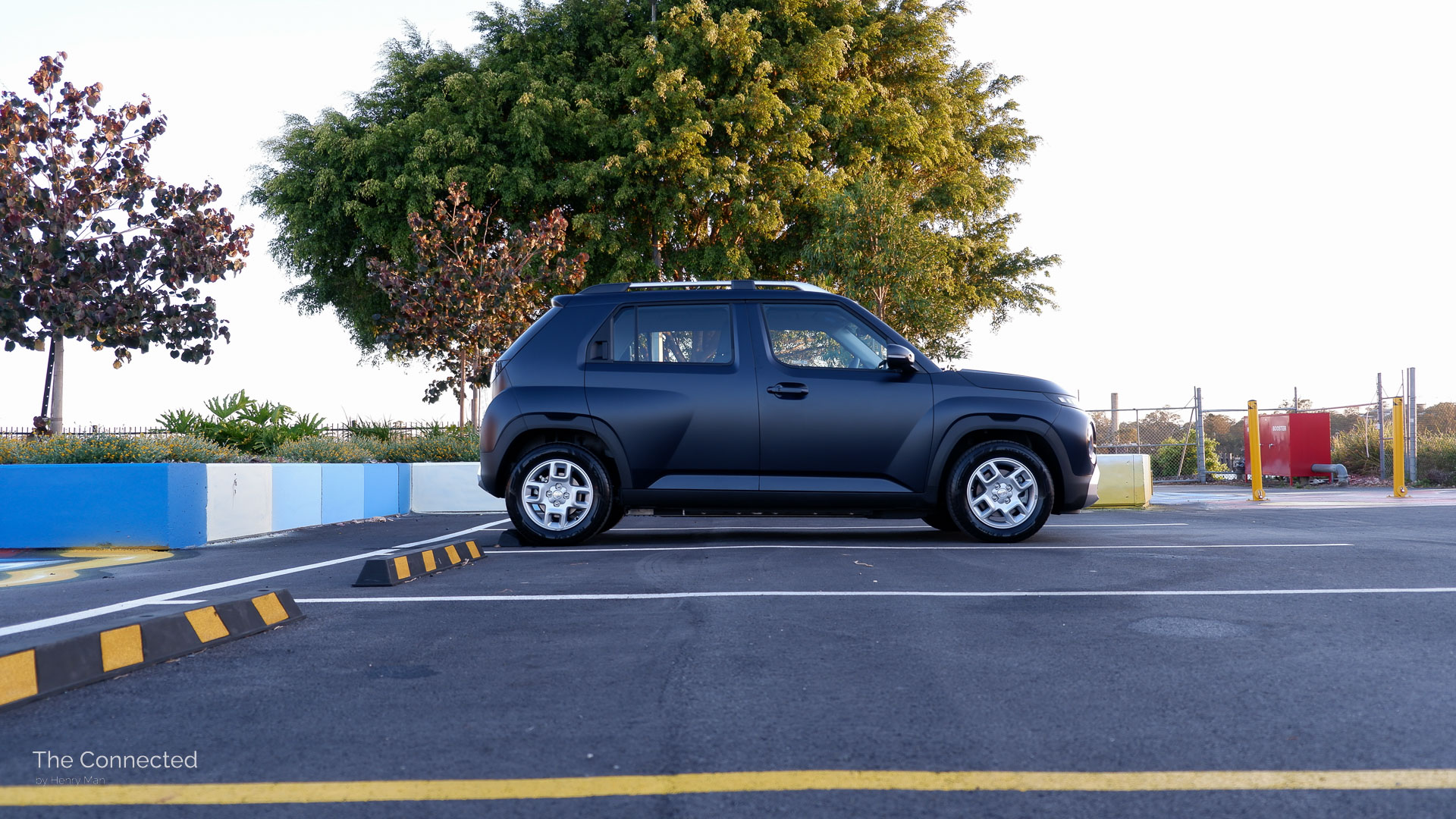
While the Hyundai Inster EV is an entry-level compact car, it doesn’t feel vulnerable to drive around big SUVs and trucks with decent noise insulation – better than the Kia Picanto – and the body isn’t too phased by crosswinds at high speeds.
It’s refreshingly easy to park and manoeuvre as well, although the steering wheel feels quite large for a compact electric car.
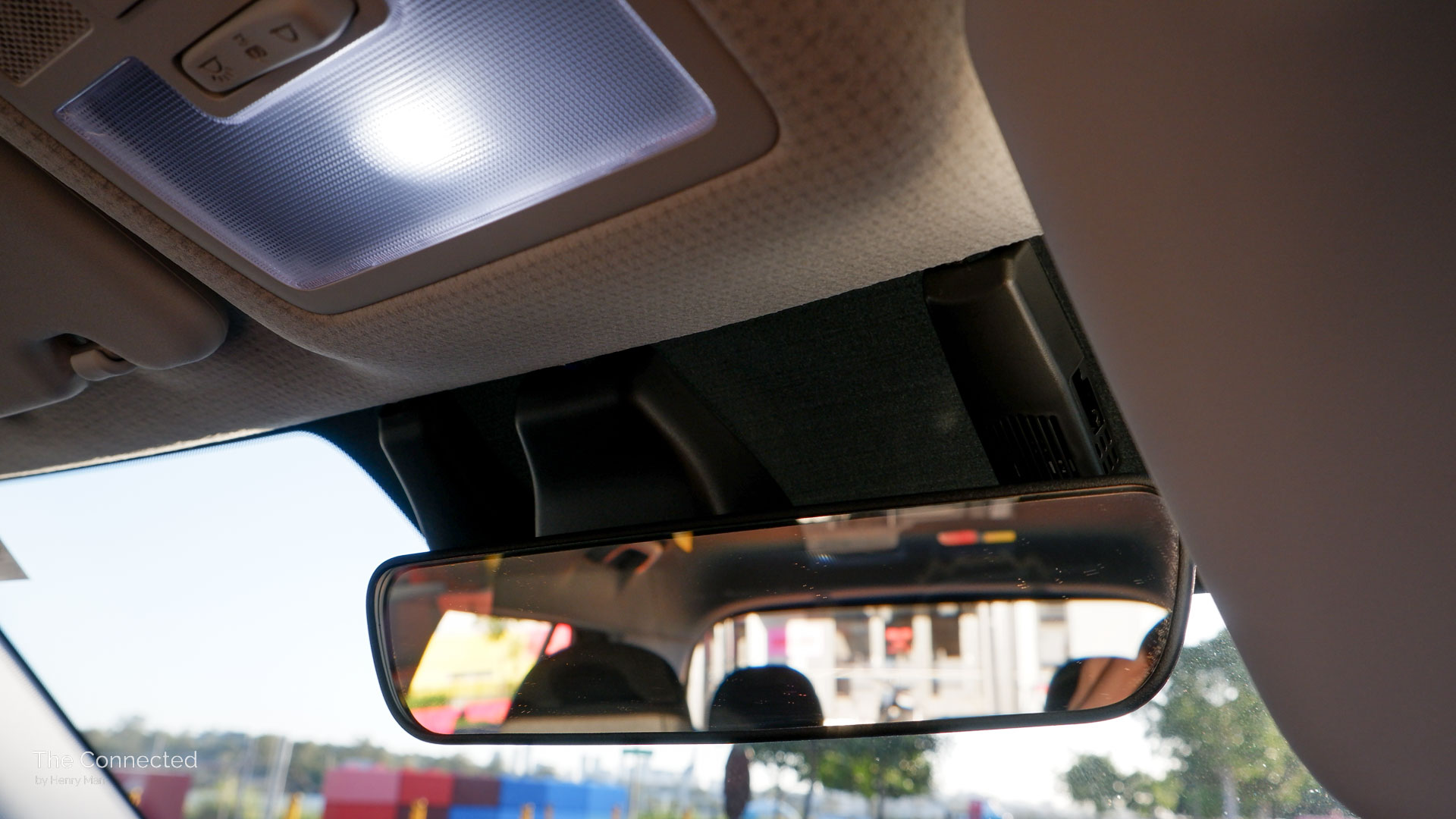
The tall and boxy shape provides excellent all-round visibility for drivers, with tall windows and a large rear opening through the rear-view mirror which just doesn’t offer auto-dimming functionality.
Warranty and servicing.
2026 Hyundai Inster capped-price servicing costs:
| 2 years/30,000km | 4 years/60,000km | 6 years/90,000km |
| $660 | $660 | $660 |
The Hyundai Inster is covered by a seven-year, unlimited kilometre conditional warranty and an eight-year/160,000km battery warranty.
The former reverts to a five-year, unlimited kilometre vehicle warranty if owners don’t service the Inster with a Hyundai dealer every time it’s due.
Servicing is required every two years/30,000km (whichever occurs first) with the first six years/90,000km costing $1980 in total – which is disappointingly on par with regular combustion engine vehicles, despite the longer intervals.
Uniquely, Hyundai Australia has a lifetime capped-price servicing program – which means all logbook maintenance costs are outlined and fixed from day one.
Roadside assistance is included for the lifetime of the vehicle on the condition that you service it with Hyundai each time.
Up to five years of Hyundai Bluelink connected services are included from the date of activation, with a subscription cost afterwards yet to be announced.
As with most electric cars, a spare tyre is not included with Hyundai only bundling a temporary patch-up goo kit underneath the boot.

Price and rivals.
2026 Hyundai Inster model range pricing (accurate as at the time of publication):
| Standard Range | Extended Range | Cross |
| From $39,000 before on-road costs | From $42,500 before on-road costs | From $45,000 before on-road costs |
The 2026 Hyundai Inster is priced from $39,000 before on-road costs in Australia.
Three variants are on offer with the regular Inster coming in either Standard Range or Extended Range battery sizes, while the flagship crossover SUV inspired Cross adopts the latter only with more equipment.
A range of no-cost exterior colours are available, while premium glossy colours cost $595 extra, and matte colours (exclusive on the Inster Cross) are priced at $1000.
As at the time of publication, Hyundai Australia is also offering a promotional discount with the Inster Standard Range priced from $39,990 drive-away.
The Hyundai Inster directly rivals the following small electric cars:
- BYD Atto 1
- Fiat 500e
- Jeep Avenger
- MG 4 Urban (coming soon, unconfirmed name)
- GWM Ora
- BYD Dolphin
Other alternatives to the Inster include:
- Kia EV3 (full review)
- MG 4 (full review)
- Leapmotor C10 BEV (full review)
- Geely EX5
- BYD Atto 2
Would I pick the 2026 Hyundai Inster Standard Range?
It’s easy to dismiss the Hyundai Inster. But look beyond the spec sheet and it’s an impressively unique EV.
Yes, it is a better-equipped electric Kia Picanto for more than $40K. However, uniquely it is a genuine small EV, with a suitably small battery and efficient drivetrain, sporty driving manners, impressively practical interior, and tech that just works.
While Hyundai has cheapened out in areas, it has invested in an Australian-specific ride and handling tune, well-calibrated steering and brake pedal, LED exterior and interior lights, and well-tuned safety assists as standard.
Yet, the premium price is hard to digest when interior materials should belong to vehicles half its price, the flaps to cover a gap in the boot is a lazy solution, Apple CarPlay and Android Auto require plugging in a USB-A cable, and the quirky SUV inspired design could be ambiguous for some.
Hyundai’s cheapest EV is also a hard sell against the fiercely competitive and attractive sub-$25K BYD Atto 1, even though we’re yet to review it properly.
I’d pick the base Inster Standard Range which provides the best value and includes most essential features. The Extended Range only adds 33km of extra claimed range with 13.4kW more power, whereas the Cross gets too pricey when the Kia EV3 is the better buy.
If you can score a discounted or demonstrator Hyundai Inster below $40K, it’s worth considering as it’s one of the most underrated and overlooked EVs in Australia.
Photographs by Henry Man
READ MORE: 2025 Hyundai Kona Electric review
READ MORE: 2025 Polestar 4 review
READ MORE: 2026 Kia K4 Sedan review
Pros:
- Compact and practical size
- Zippy and fun to drive
- Well-tuned driving dynamics
- No-nonsense tech
- Small battery, good energy efficiency
Cons:
- Premium price for a micro car
- Cheap interior materials
- Odd boot design
- Wired Apple CarPlay and Android Auto
- Ambiguous quirky SUV design
About the Author.
Henry Man is an independent content producer passionate about the intersection of technology and transportation.
The former automotive journalist is focused on producing critically-detailed vehicle reviews, and unique short-form content. Learn more.


 The Connected by Henry Man