
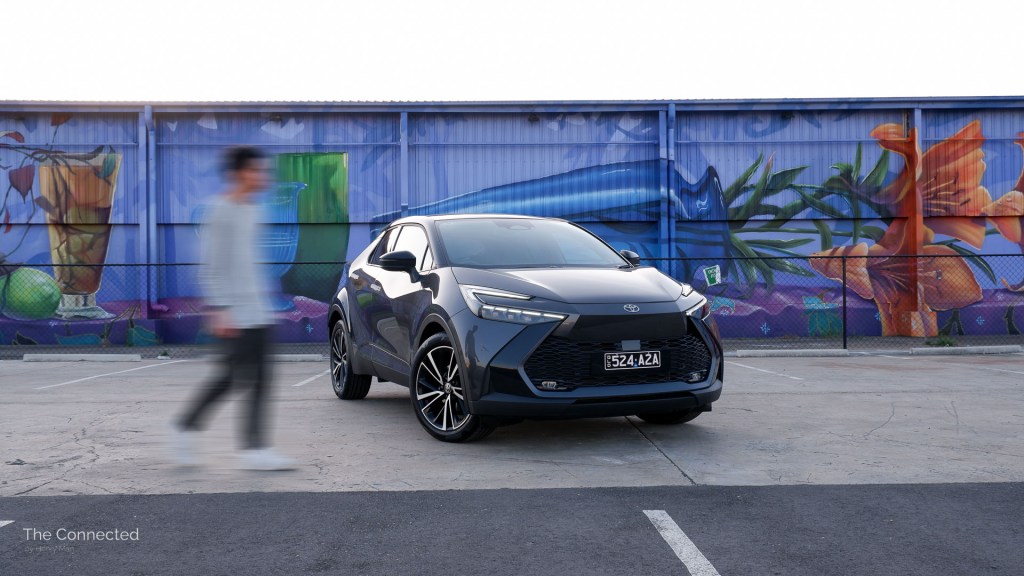
There is a price to pay with the Toyota C-HR.
Toyota’s style-focused small crossover SUV has entered its second generation.
Named the Coupe High Rider (C-HR), the new hybrid-only model has gained new evolutionary looks, connected technology, and an entry price increase of more than $11K.
Sitting between the Yaris Cross and Corolla Cross, the Toyota C-HR is pitched as a more stylish offering – but after a week of testing, it’s clear to see that there are compromises to good looks.
NOTE: The press vehicle was provided by Toyota Australia for a nine-day independent evaluation. We have no commercial arrangements with the company and it had no editorial control.

Pros.
+ Dependable tech and safety assists
+ Easy to use climate controls
+ Fuel-efficient hybrid
+ Low-cost servicing
+ Stylish design
Cons.
– Expensive price for style
– Tight-feeling rear seats
– Loud and groaning engine
– Confusing gear shifter
– One-year full connected services
Vehicle tested:
| Model | 2026 Toyota C-HR |
| Variant | Koba |
| Starting price | $53,390 before on-road costs |
| Exterior colour | Graphite with Two-Tone Plus (+$1550) |
| Interior colour | Black leather and suede |
| Options | Panoramic glass roof (+$1150) |
| Country made | Türkiye |
Design and quality.
Design is the key focus of the C-HR – and it’s far from being a stereotypical ‘boring’ Toyota.
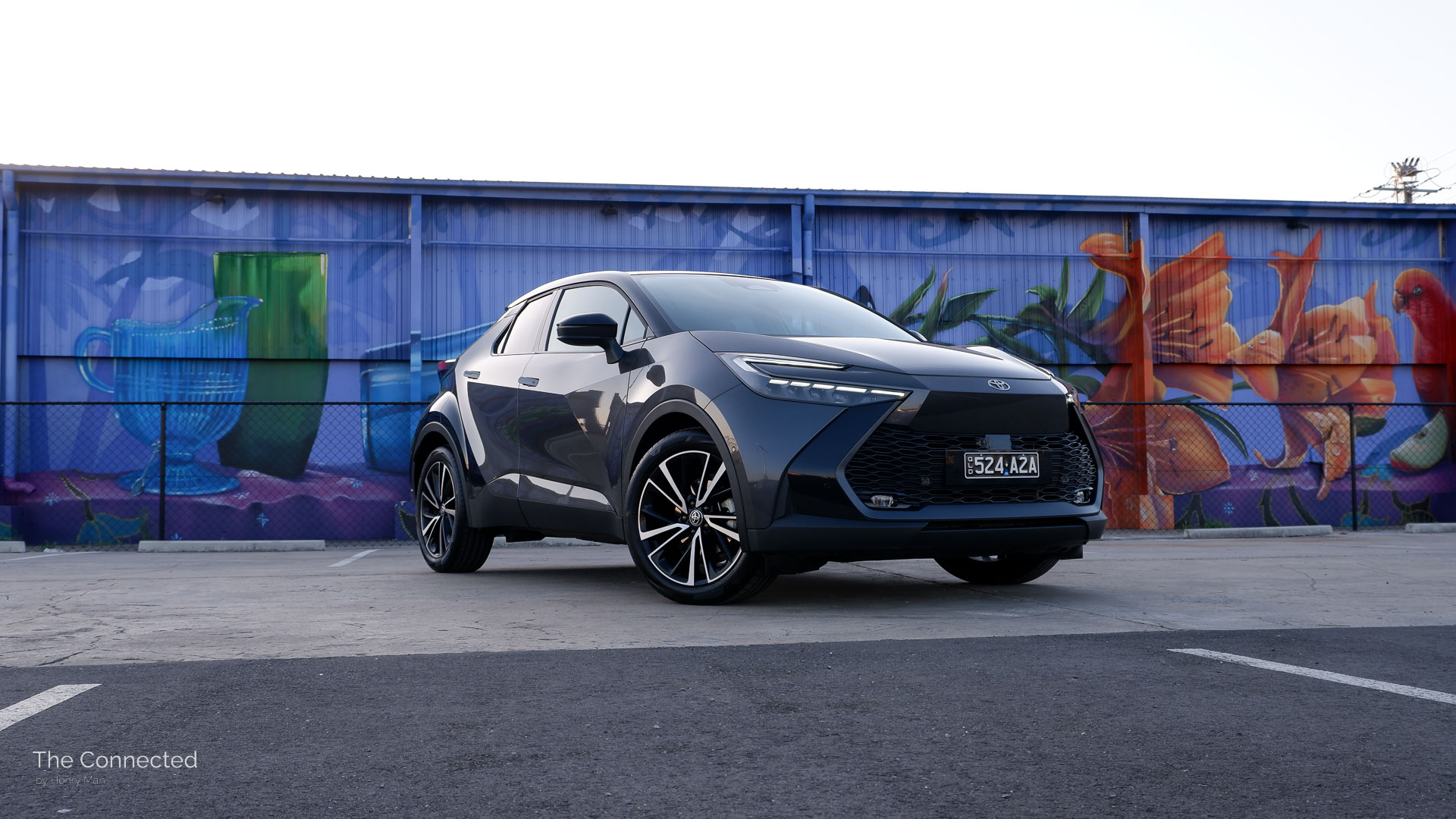
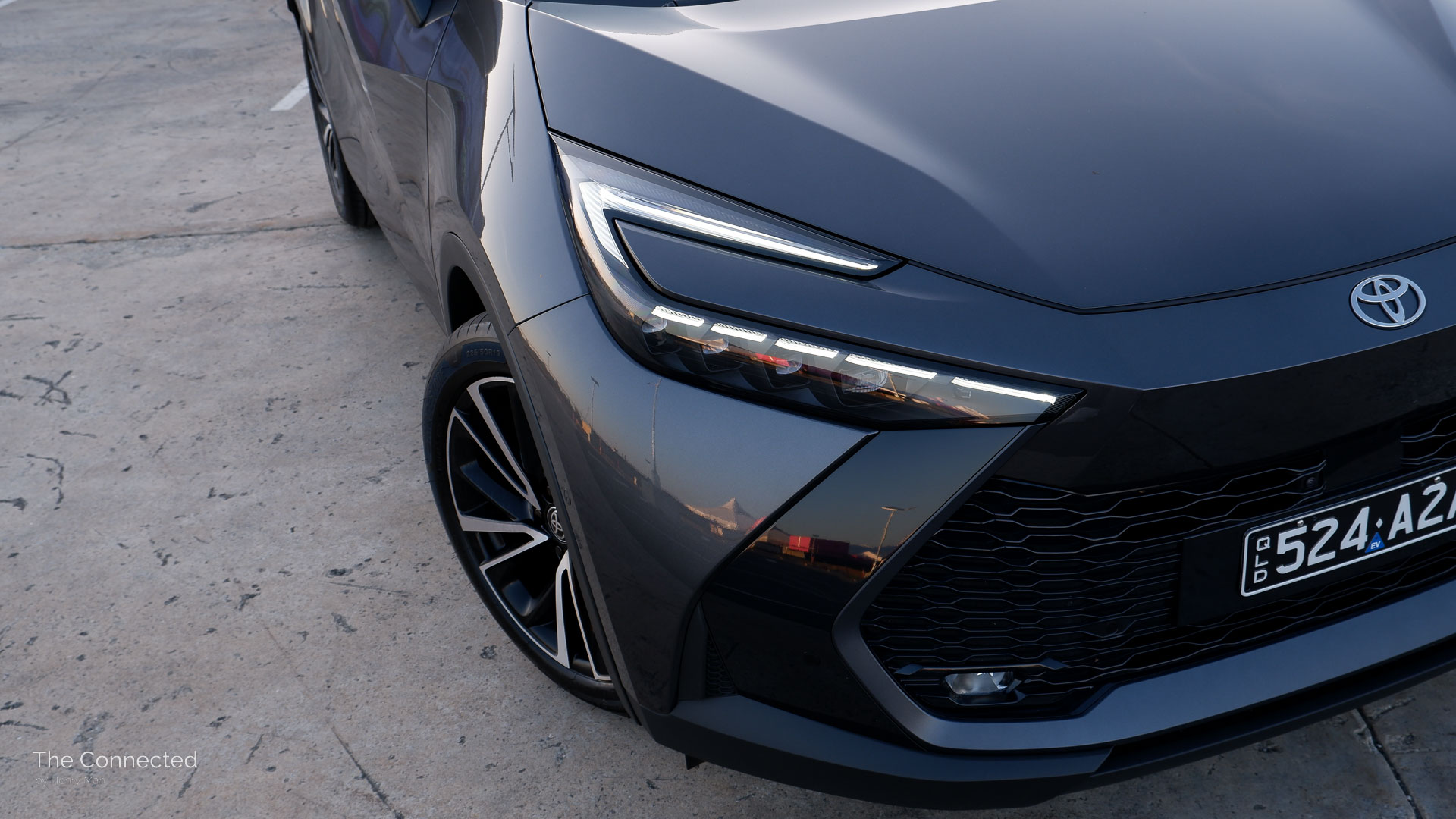
The small coupe crossover SUV has adopted Toyota’s latest ‘Hammer Head’ design in line with the bZ4X and Camry with segmented LED daytime running light claws, forming part of a pug-like face.
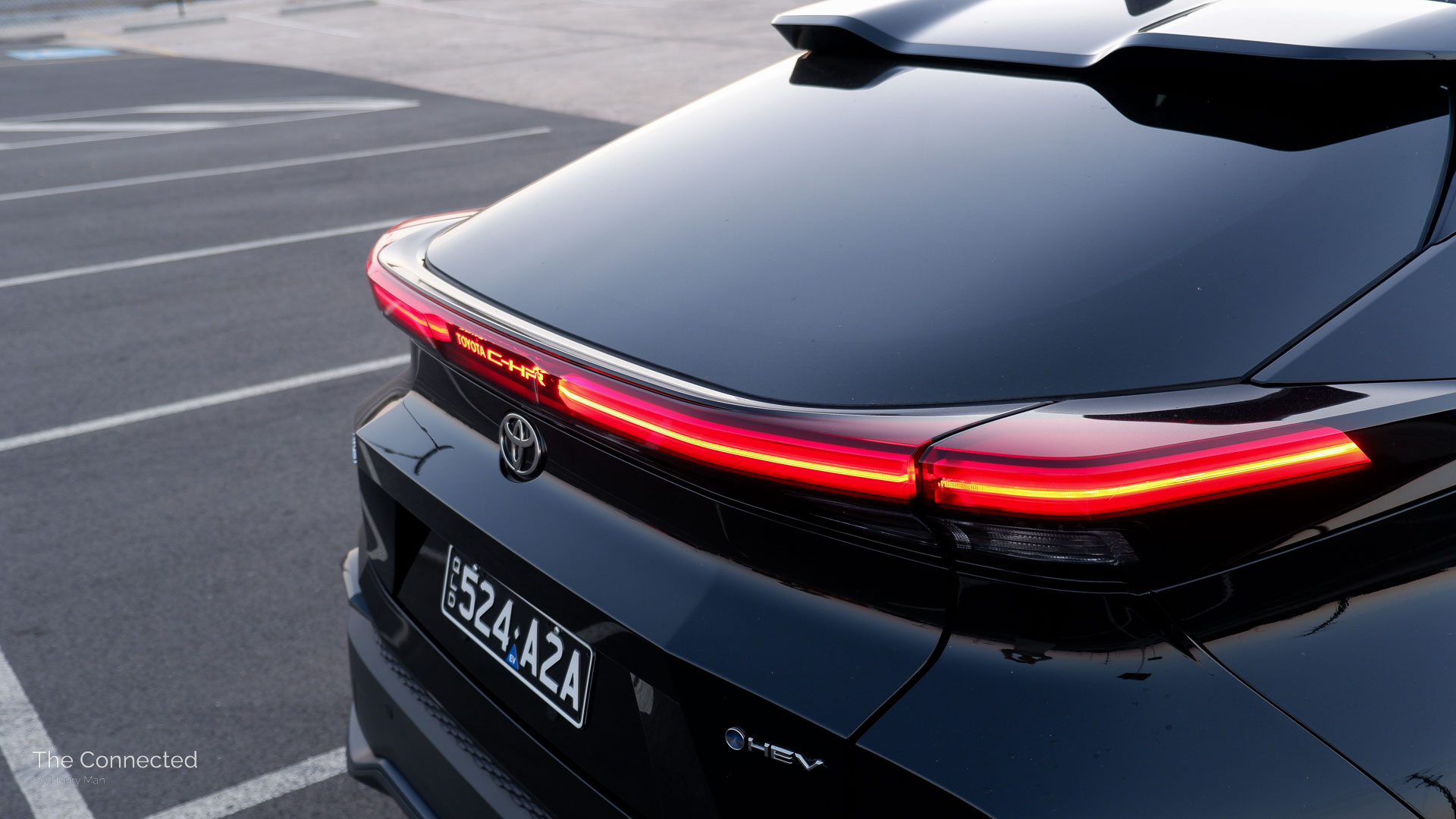
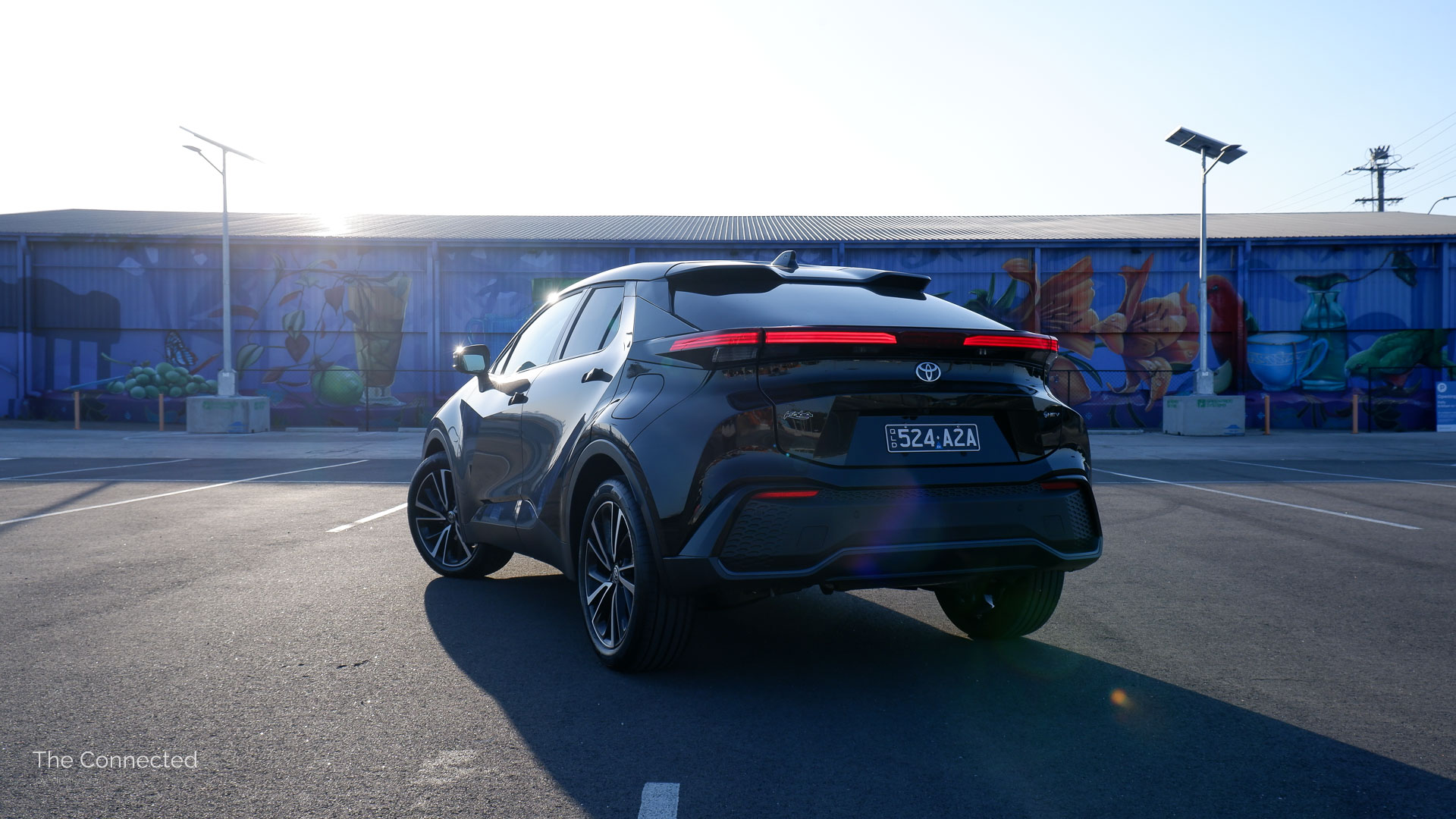
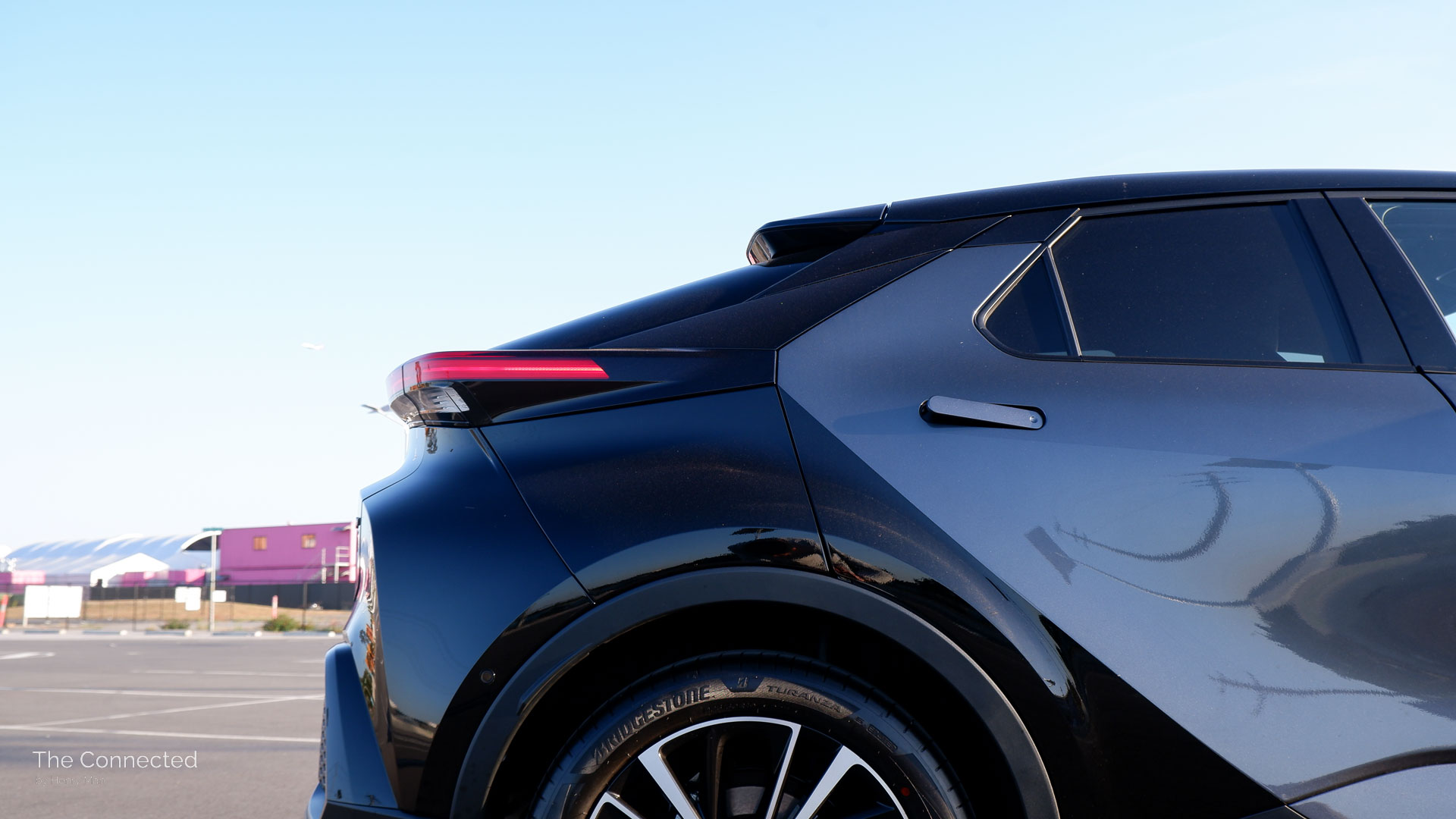
There are sharp Hyundai Ioniq 5-esque side profile creases, EV-style flush door handles, and a long double-layer rear LED light bar spoiler with a light-up ‘Toyota C-HR’ badge upon unlocking, too.
It’s also available with a Two Tone Plus exterior colour option, which uniquely paints the tailgate and D-pillar in black alongside the roof akin to the old Peugeot 308 GTi, although it’s a pricey $1550 extra. The Graphite and black combo as tested here also isn’t as obvious.
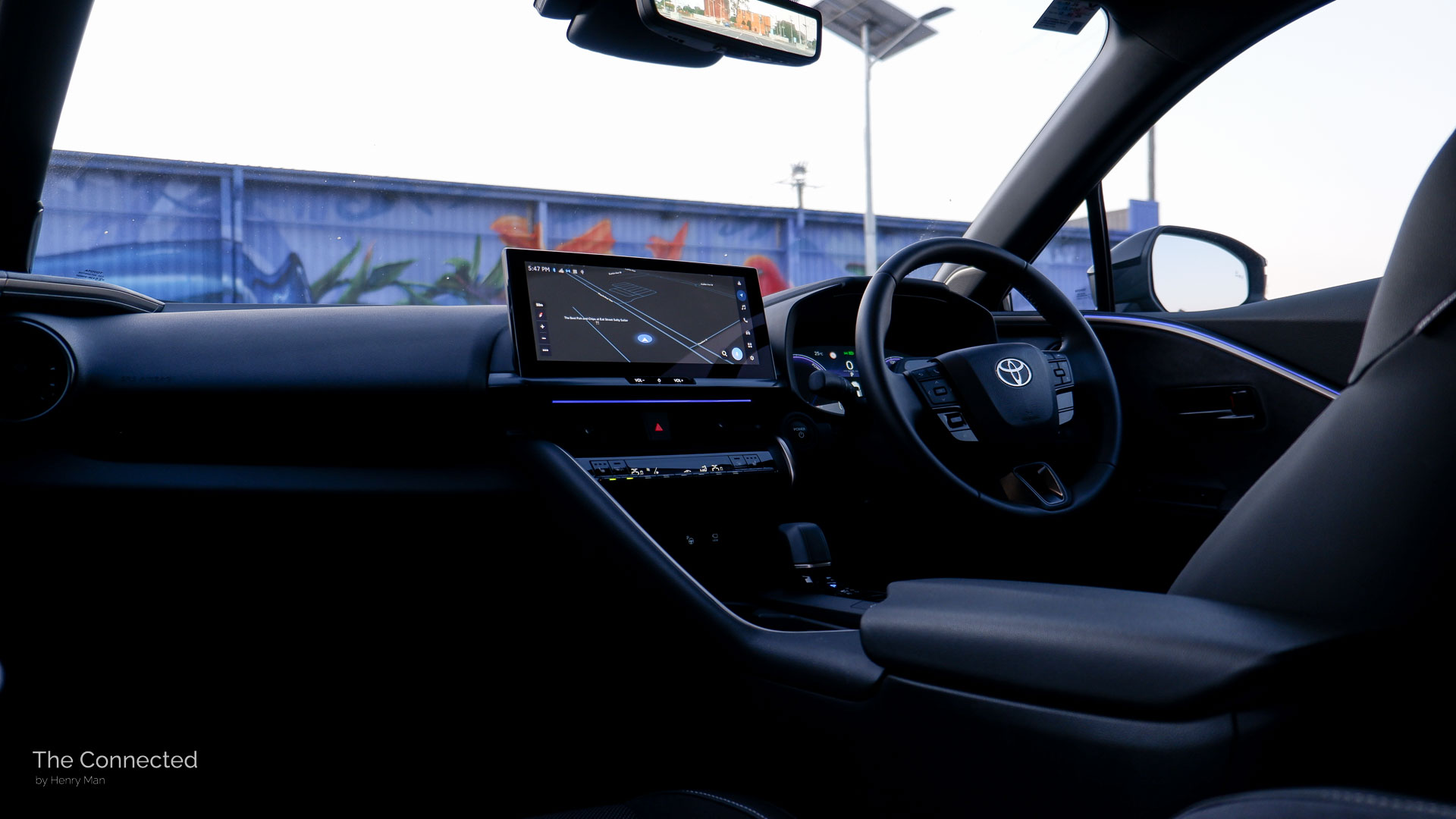
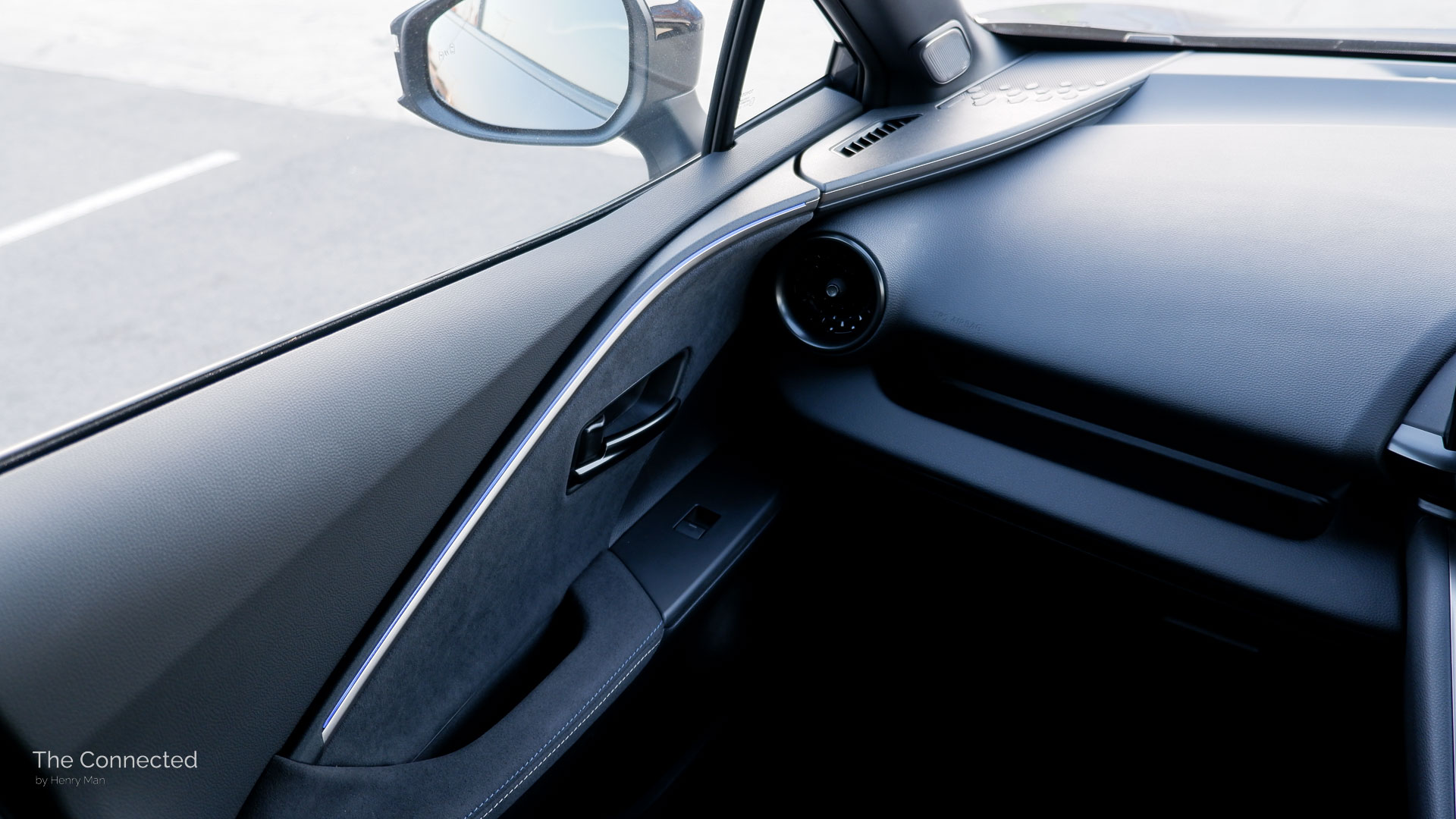
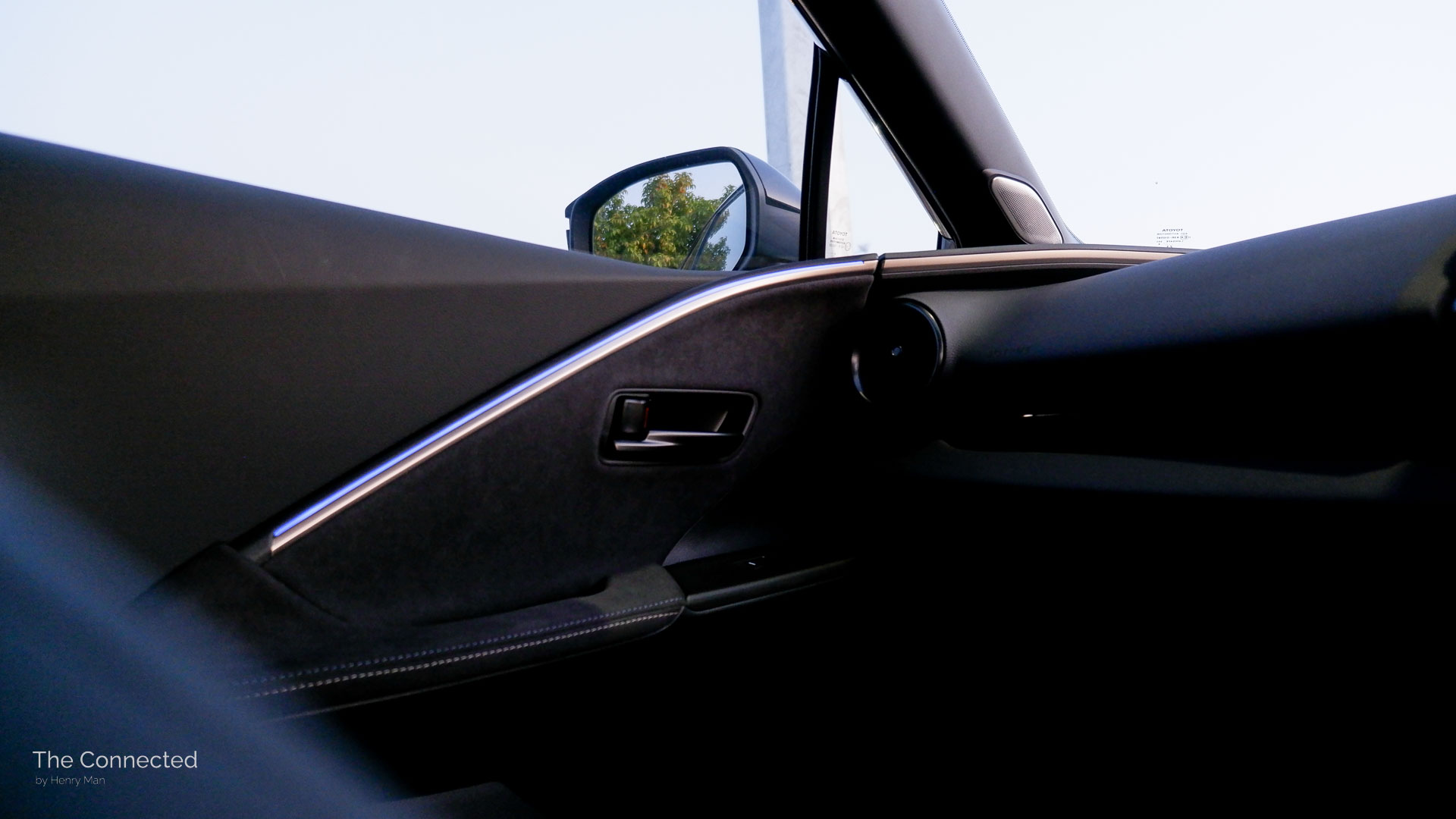
It’s less extroverted inside with a simple and modern dashboard layout, curved door card that flows past the circular outer air vents, and a divider that slopes up between the driver and front passenger.
Koba and GR Sport variants incorporate soft suede door cards, colour-selectable ambient lighting strips under the touchscreen and along the doors with subtle animations (when changing the temperature for instance), and artificial suede and leather sports seats lifted from the GR Corolla.
Some harder plastics are found lower down which could be better at this almost $60K drive-away price point – with the Tesla Model 3 offering a better quality interior – and the automatic pop-out flush door handles sound cheap with a loud thud from the inside when they fold back in.
Practicality.
2026 Toyota C-HR Koba HEV dimensions:
| Length x width x height | 4362 x 1832 x 1564mm |
| Wheelbase | 2640mm |
| Ground clearance | 130mm |
| Boot space (min) | 388 litres |
| Rear seat split fold | 60:40 |
| Child seat anchors | 2x ISOFIX and 3x top tethers |
| Air-conditioning system | Two-zone climate control with rear air vents |
The Toyota C-HR compromises practicality for style with a tight-feeling rear row.
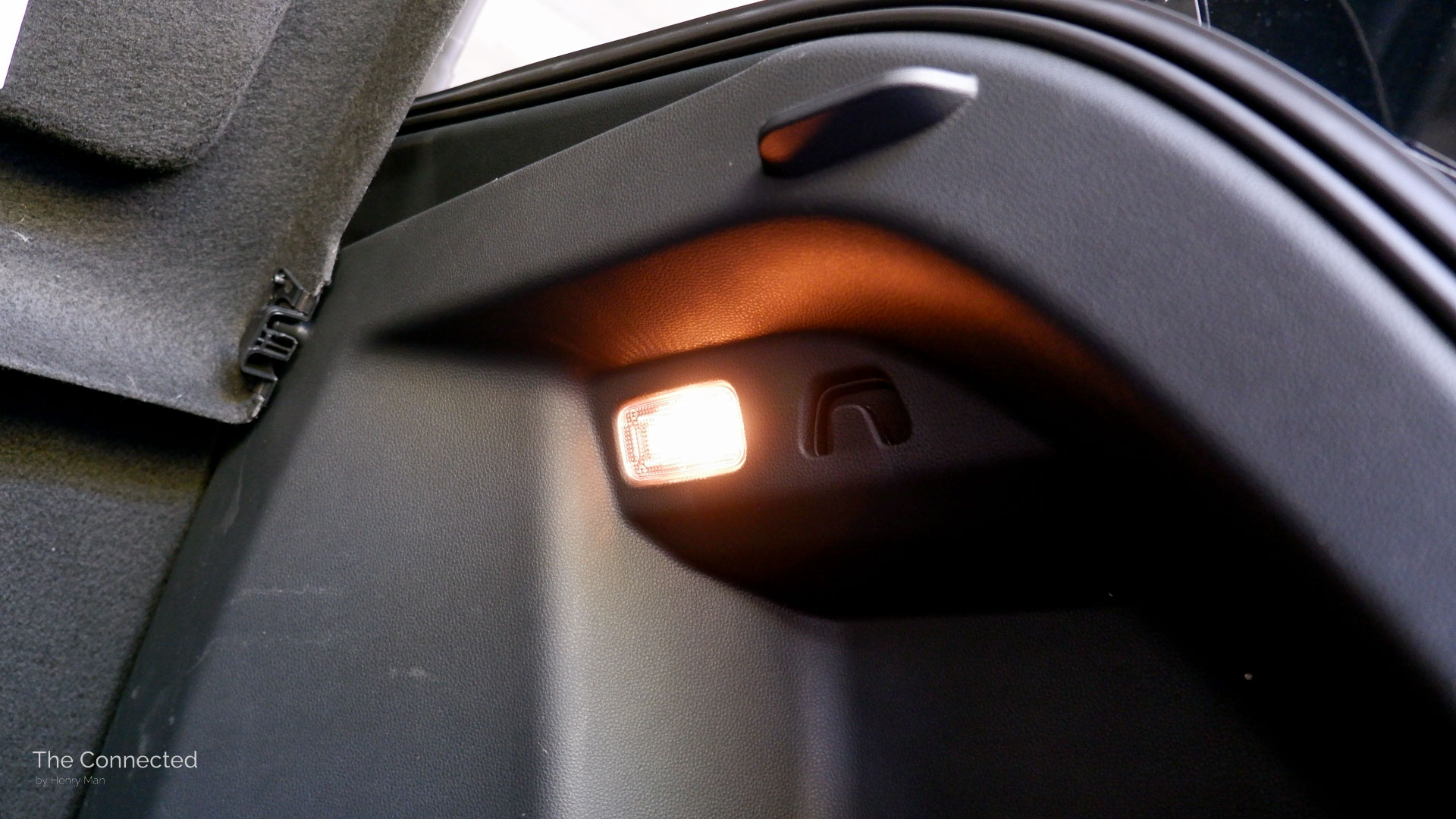
The 388-litre boot is decent with two bag hooks and a halogen light – but with a small loading lip. The tailgate also opens higher than usual – something worth keeping in mind in low-roof car parks.
An electric tailgate is included on the Koba, but it annoyingly beeps repeatedly when opening and closing unlike the Toyota bZ4X. The default medium volume is rather loud as well, but it can be toned down in the settings even though it can’t be completely silenced.
As per most Toyota models, there is an additional button on the right of the boot open button to lock all doors from the back.



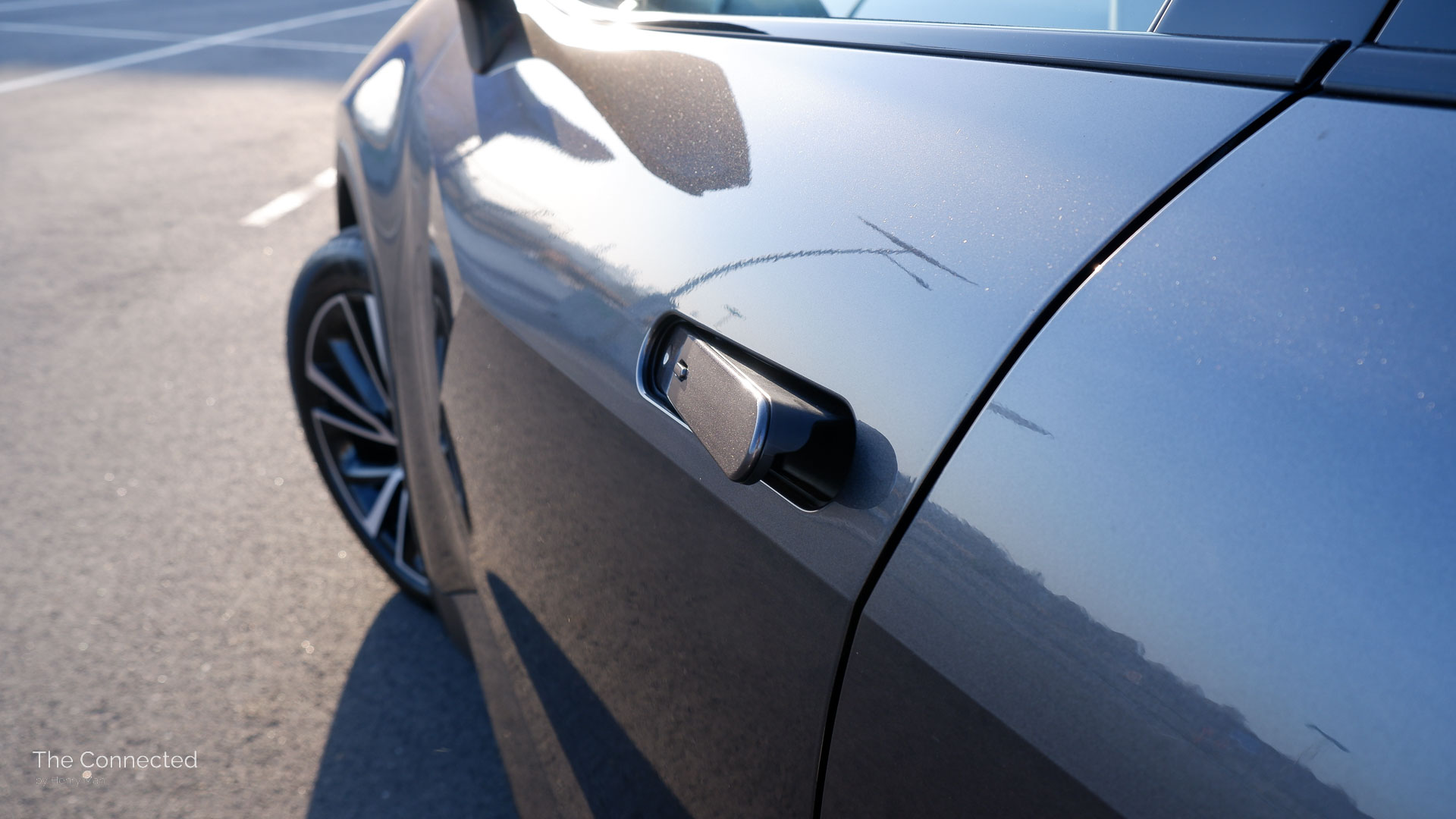
The second-generation C-HR now features flush-type door handles which automatically pop out one side upon unlocking. This enables good accessibility, but the handles are blocked off from the top, so passengers need to learn to grab it from the bottom.
This design seems intentional as the handles feel more stable and solid than the Kia EV6 and Hyundai Ioniq 5.
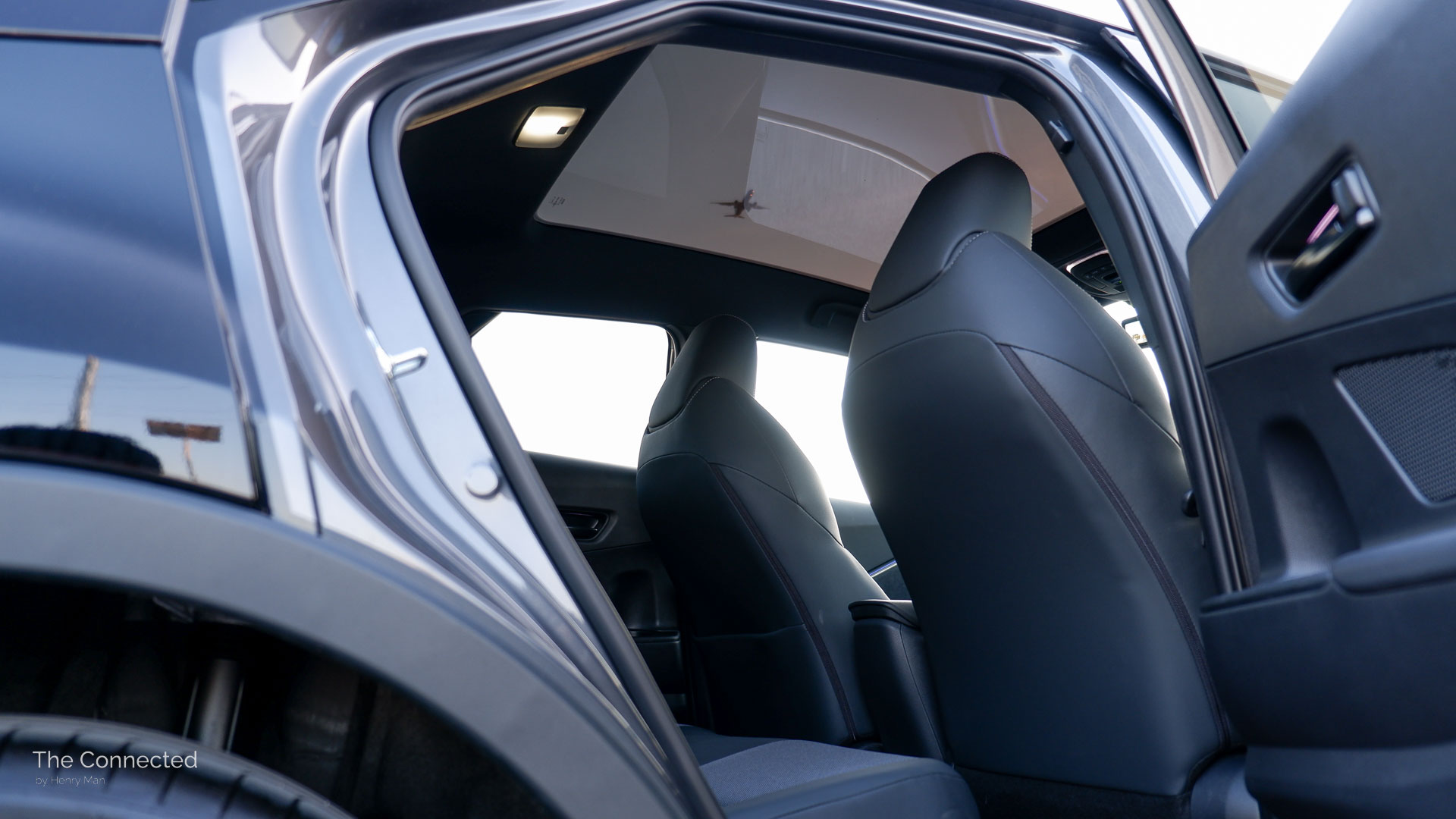
Inside, the rear seats offer average legroom, footroom and headroom – but with a small middle floor hump, the rear doors don’t open wide enough and the sloping roof can get in the way, especially for taller passengers.
The C-HR’s rear row also feels tight and claustrophobic due to the small rear window, thick C-pillar, prominent front sports seats, and a dark headliner.
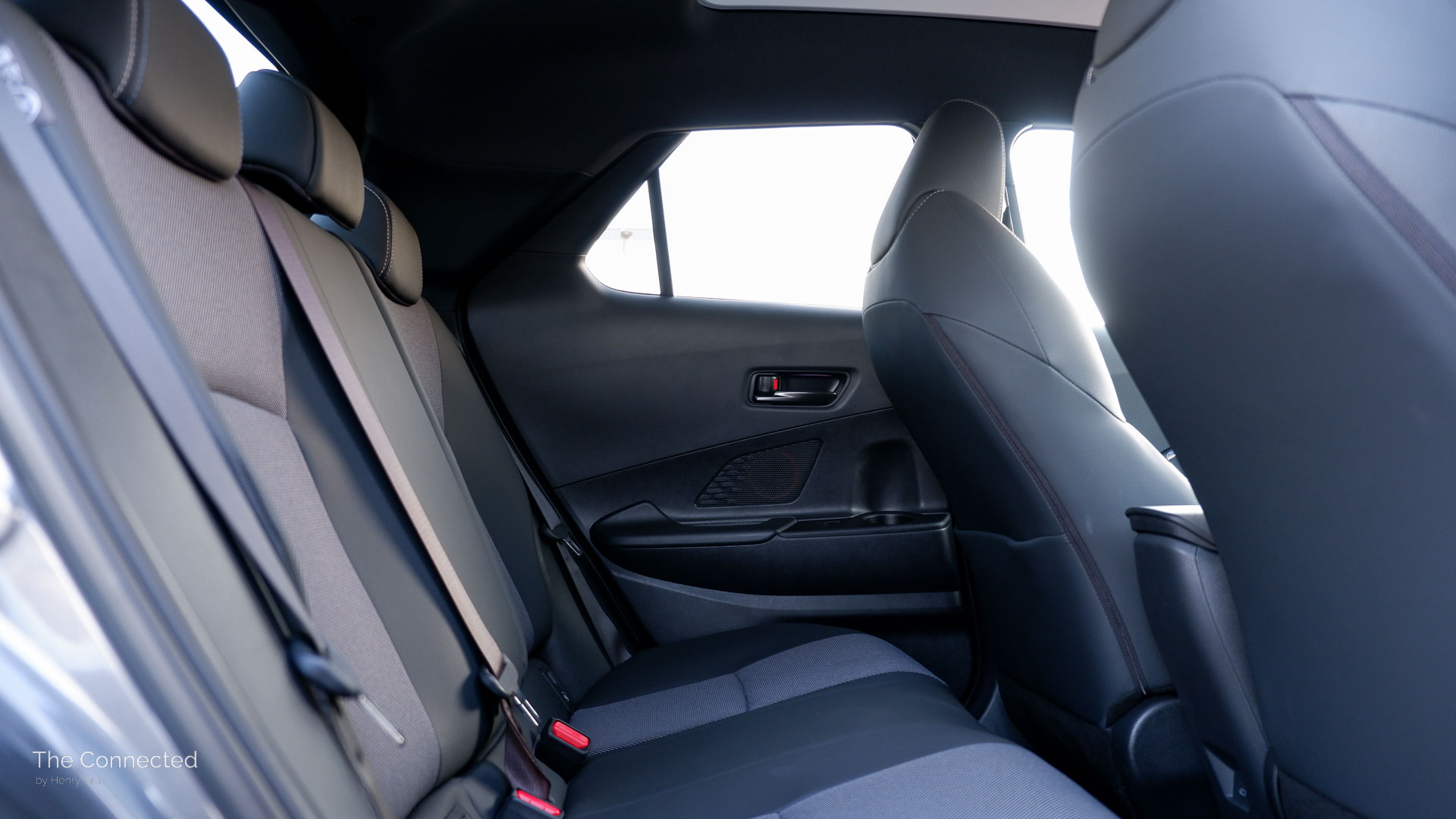


There aren’t any rear air vents and rear ceiling grab handles either, but the Toyota small SUV includes non-gripped cup holders conveniently at the doors, a fold-down armrest with two additional cup holders, and only one USB-C charging port.
The optional $1150 fixed panoramic glass roof is large and offers good sun protection, although there’s no physical sunshade. LED lights illuminate both rows with a brightness that isn’t as eye-searing.
Up front, there are two cup holders – which still lack grips – a Qi wireless phone charging tray, and a large centre armrest cubby with a small removable tray on top perfect for holding cards and the car key.
The glovebox is decently-sized, even though it lacks a light, with an open shelf ahead of the front passenger.


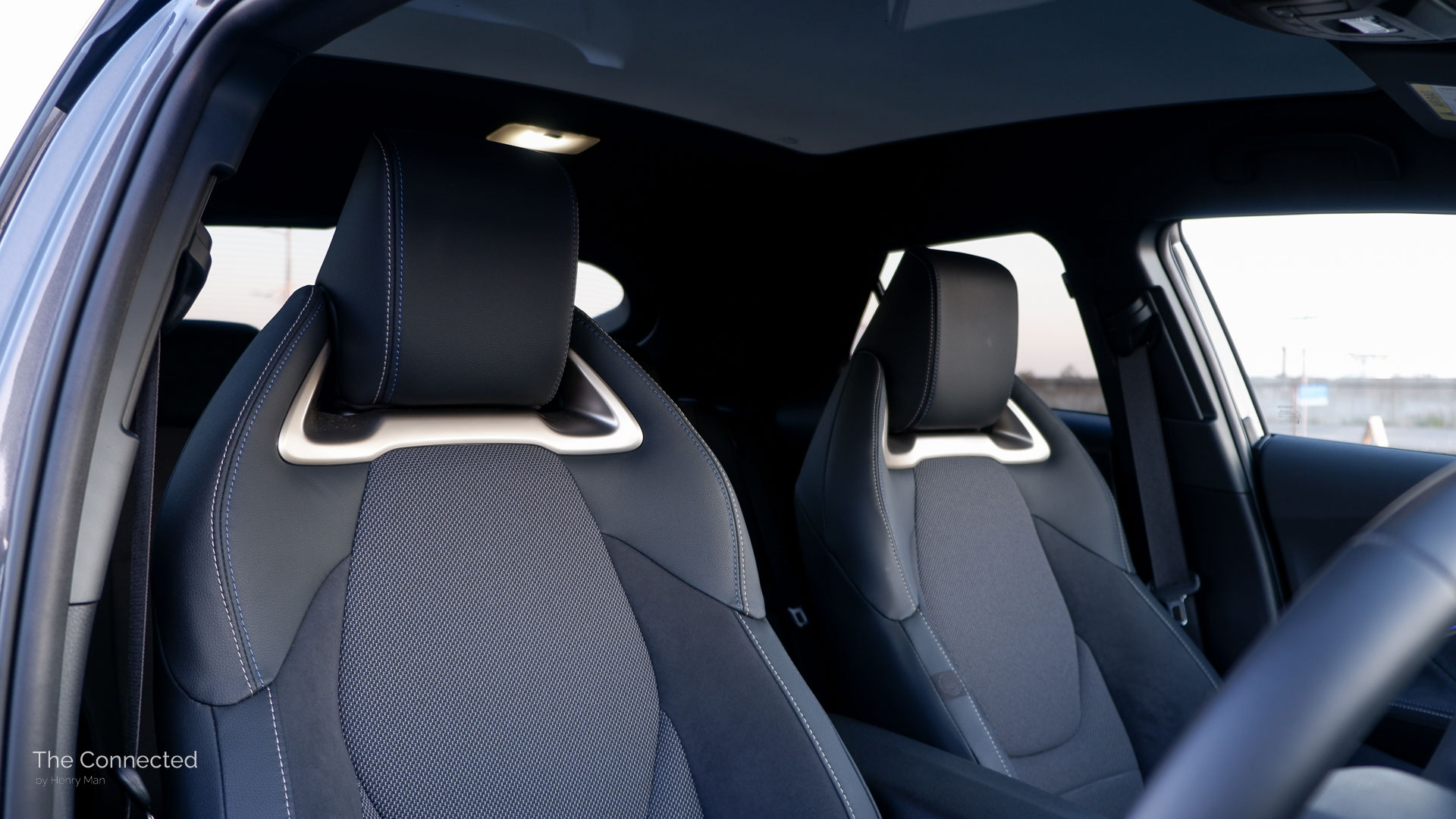
Moreover, the front sports seats provide good support with a non-sticky fabric centre, electric adjustment, lumbar support, and two-position memory for the driver.
Disappointingly, the front passenger doesn’t have electric nor height adjustment – despite the C-HR Koba costing around $60K drive-away.
Both front seats have three-level heating, although no variant offers a heated steering wheel.
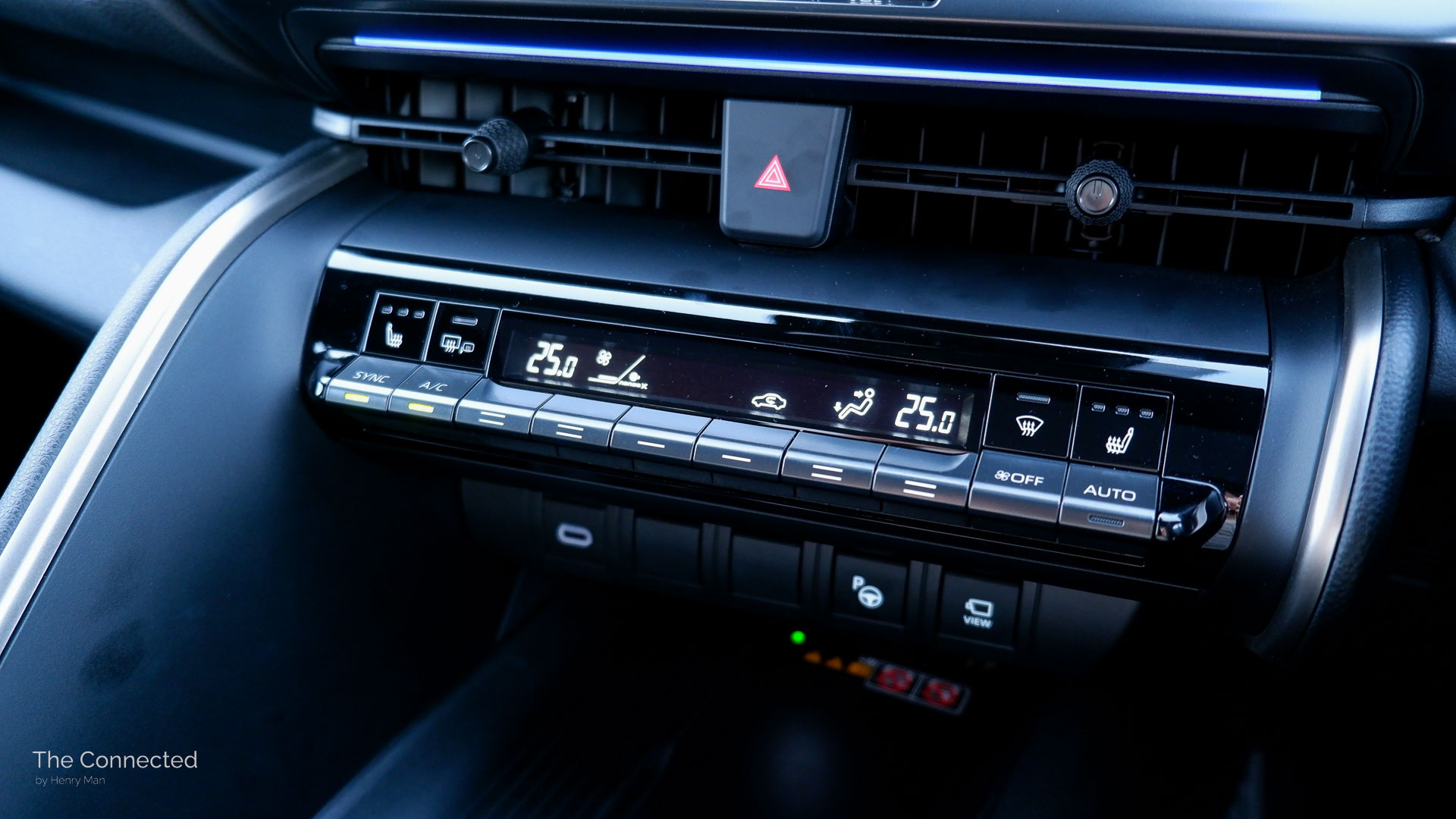
The Toyota small SUV refreshingly provides a row of easy-to-use physical switches for the powerful two-zone climate control with manual-adjusting air vents.
Technology.
2026 Toyota C-HR Koba HEV tech features:
| 12.3-inch touchscreen running Toyota software | 12.3-inch driver instrument display |
| Wireless/wired Apple CarPlay and Android Auto | Head-up display |
| Built-in maps | Qi wireless charging pad |
| OTA software update capability | 2x USB-C and 1x 12-volt charging ports |
| Toyota Connected Services with mobile app | Proximity key with auto-folding mirrors, auto pop-out door handles, and ground puddle light |
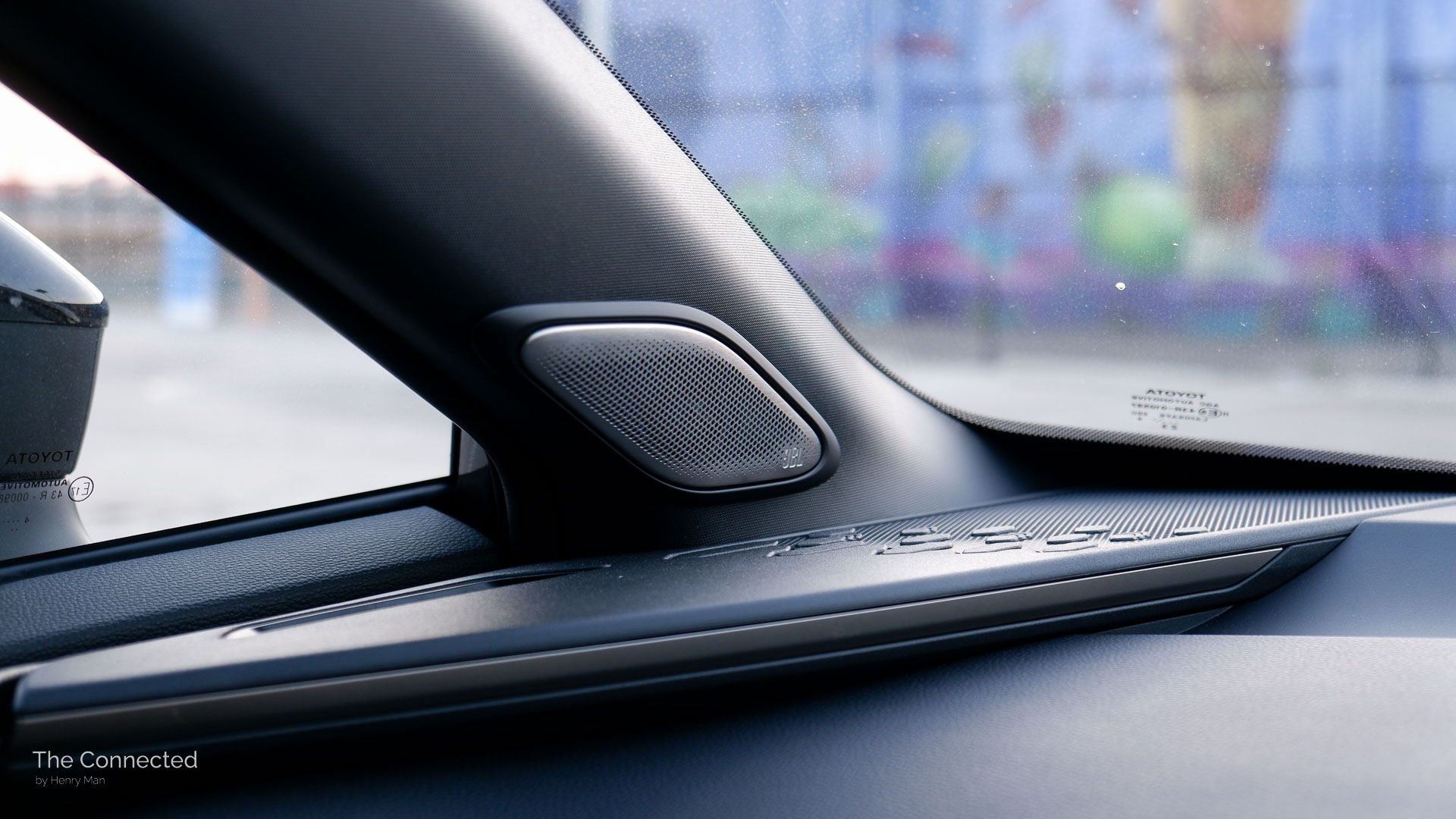
| Nine-speaker JBL |
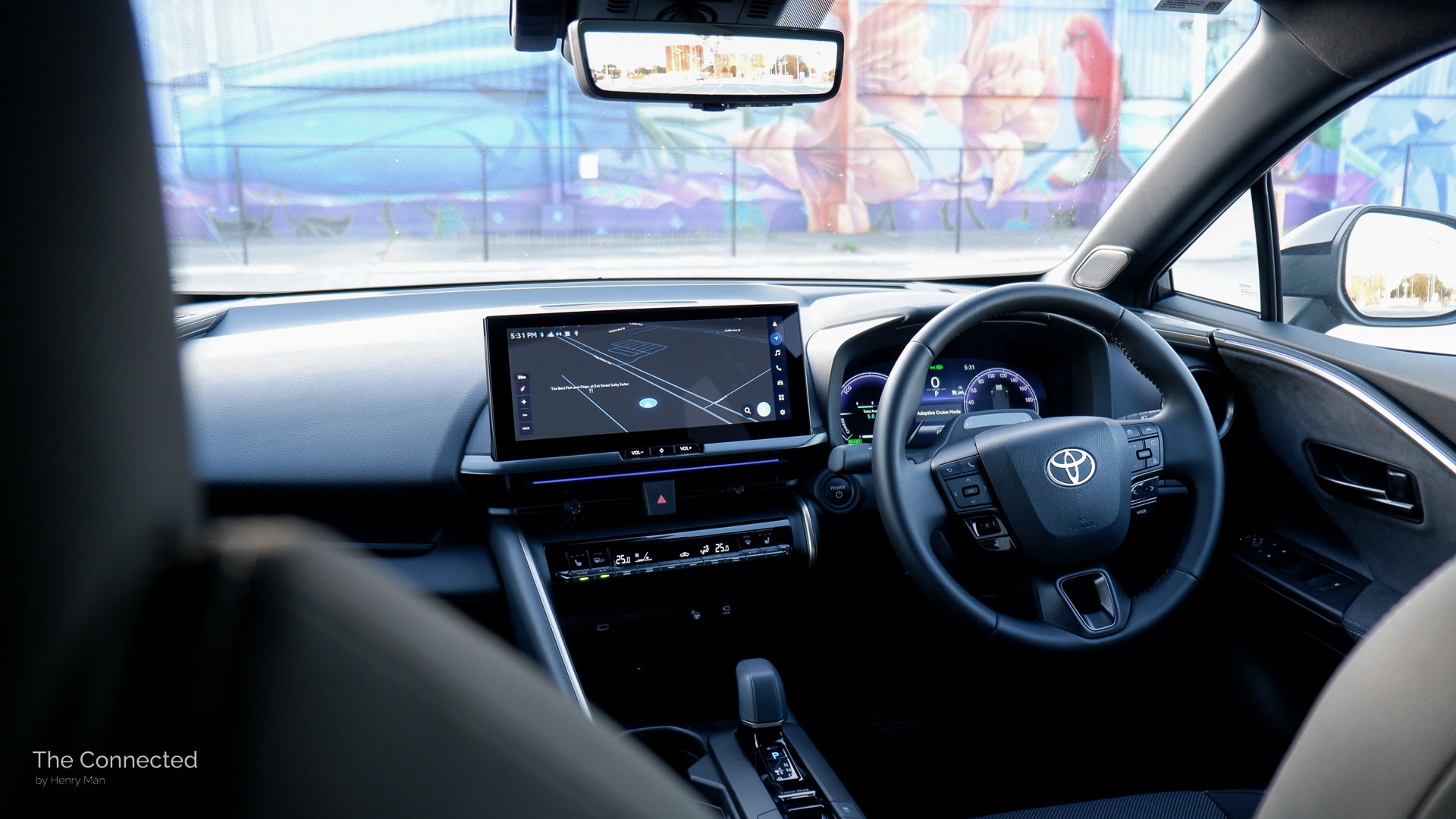
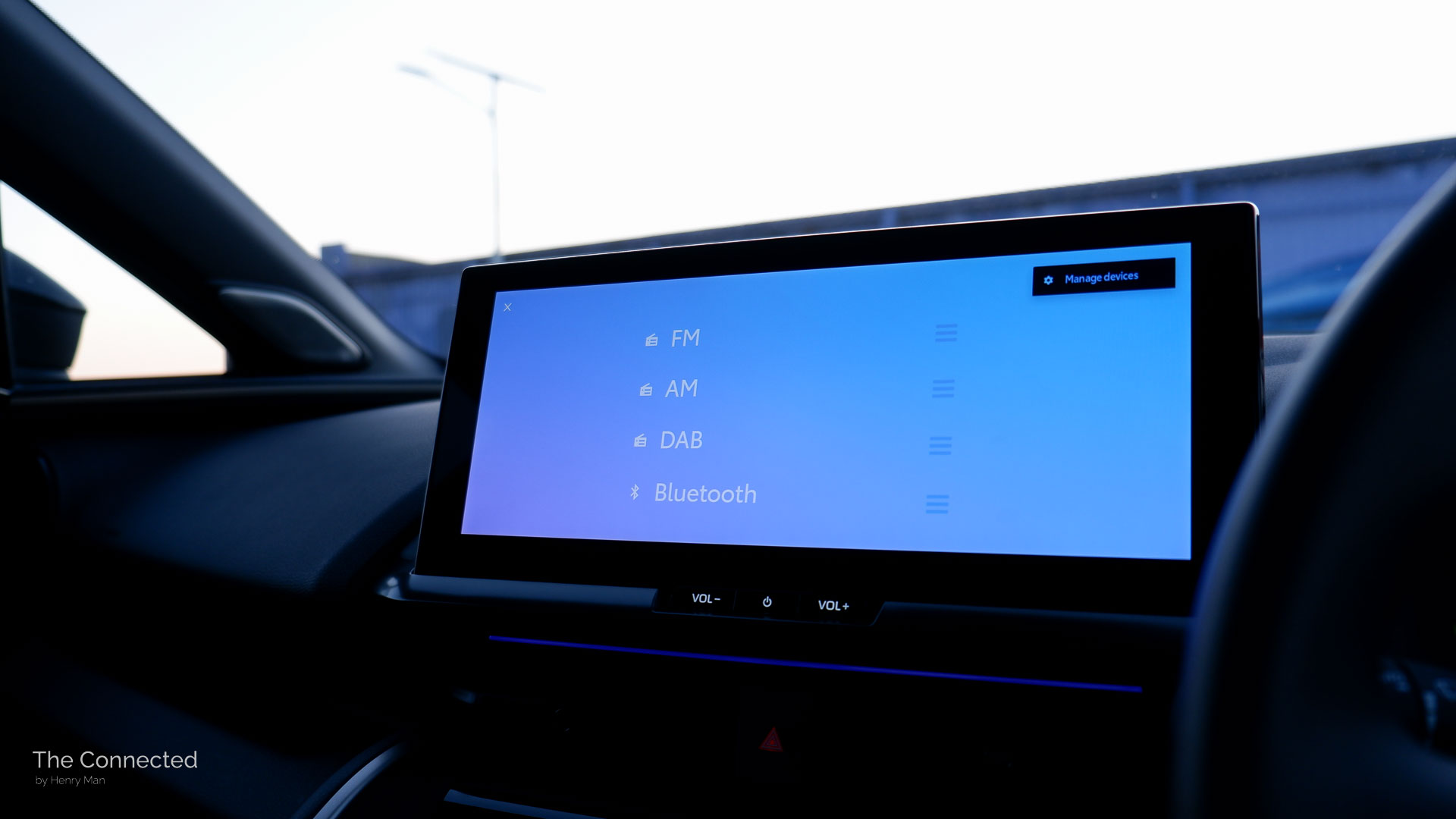
The Toyota C-HR offers a modern and no-nonsense technology setup.
The 12.3-inch widescreen is clear, high resolution and positioned higher in the driver’s line-of-sight.
Toyota’s own operating system is very simple to use with easy access to shortcuts on the side and good performance, even though the latest Arene software in the RAV4 is more advanced.
There’s wireless Apple CarPlay and Android Auto which connect quickly and are mostly reliable. However, we experienced audio stuttering at times with the latter Google system.
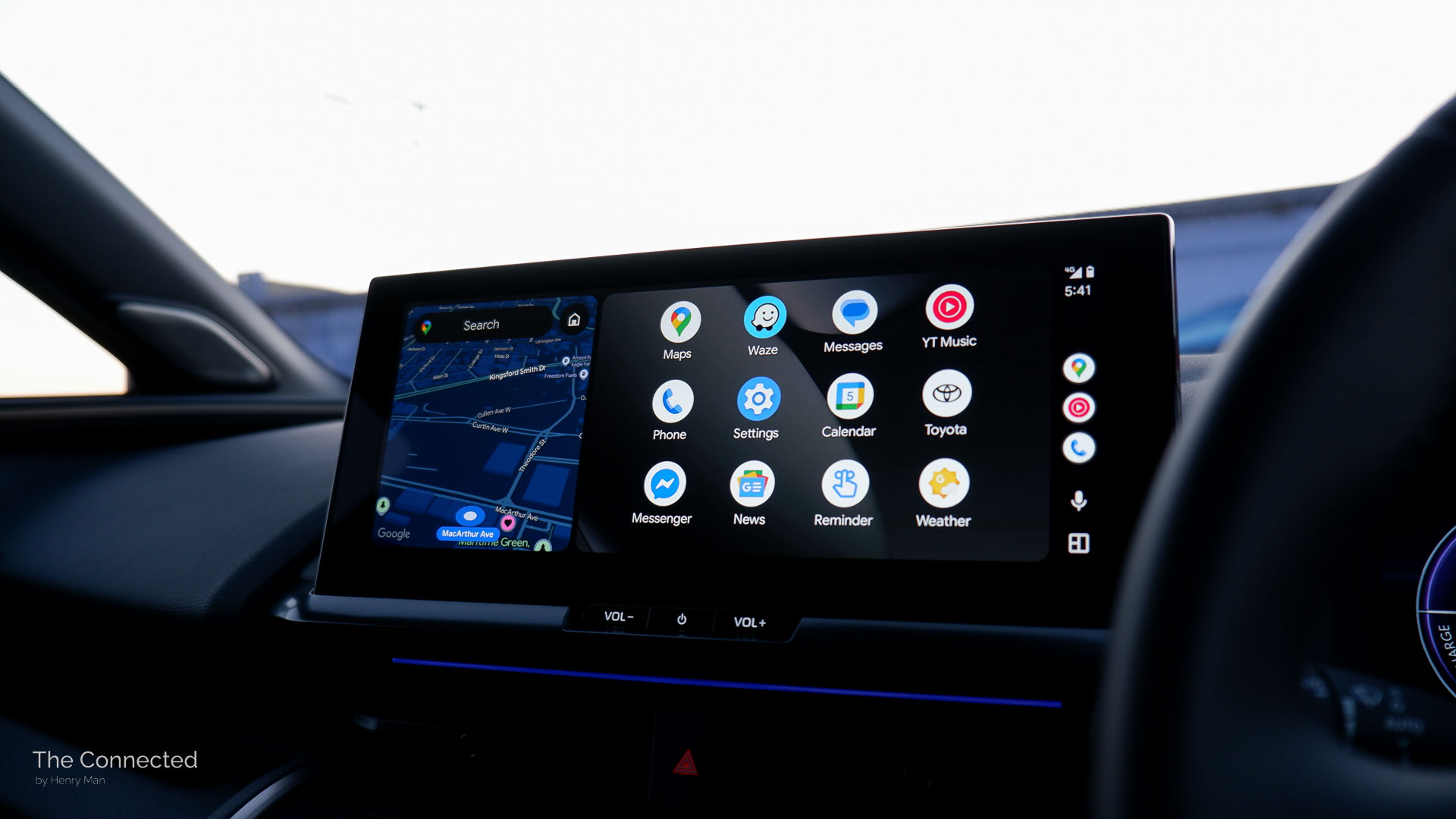


Apple users also have the advantage of being able to show Toyota’s side bar next to CarPlay for quick access or go full-screen (Android Auto is full-screen only), plus navigation direction integration with the head-up display.
While the standard Qi wireless charging pad is welcome, there isn’t active cooling so phones quickly overheat and stop charging under the sun.
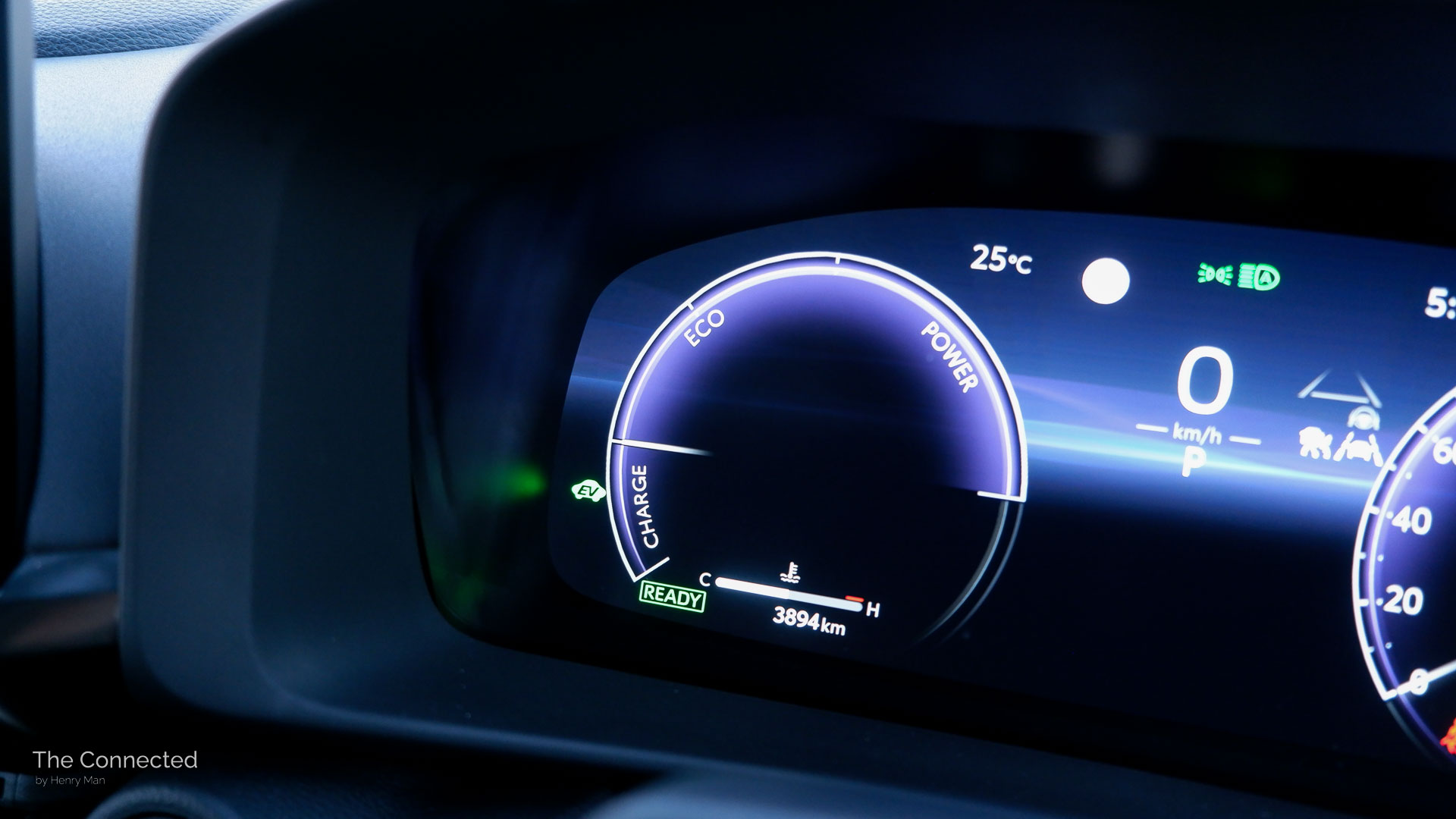
Furthermore, the 12.3-inch driver instrument display is equally clear and highly customisable with three preset pages and the ability to switch between different information widgets across left, middle and right dial sections.
There’s a cool animation with a C-HR side profile graphic when changing drive modes, too.
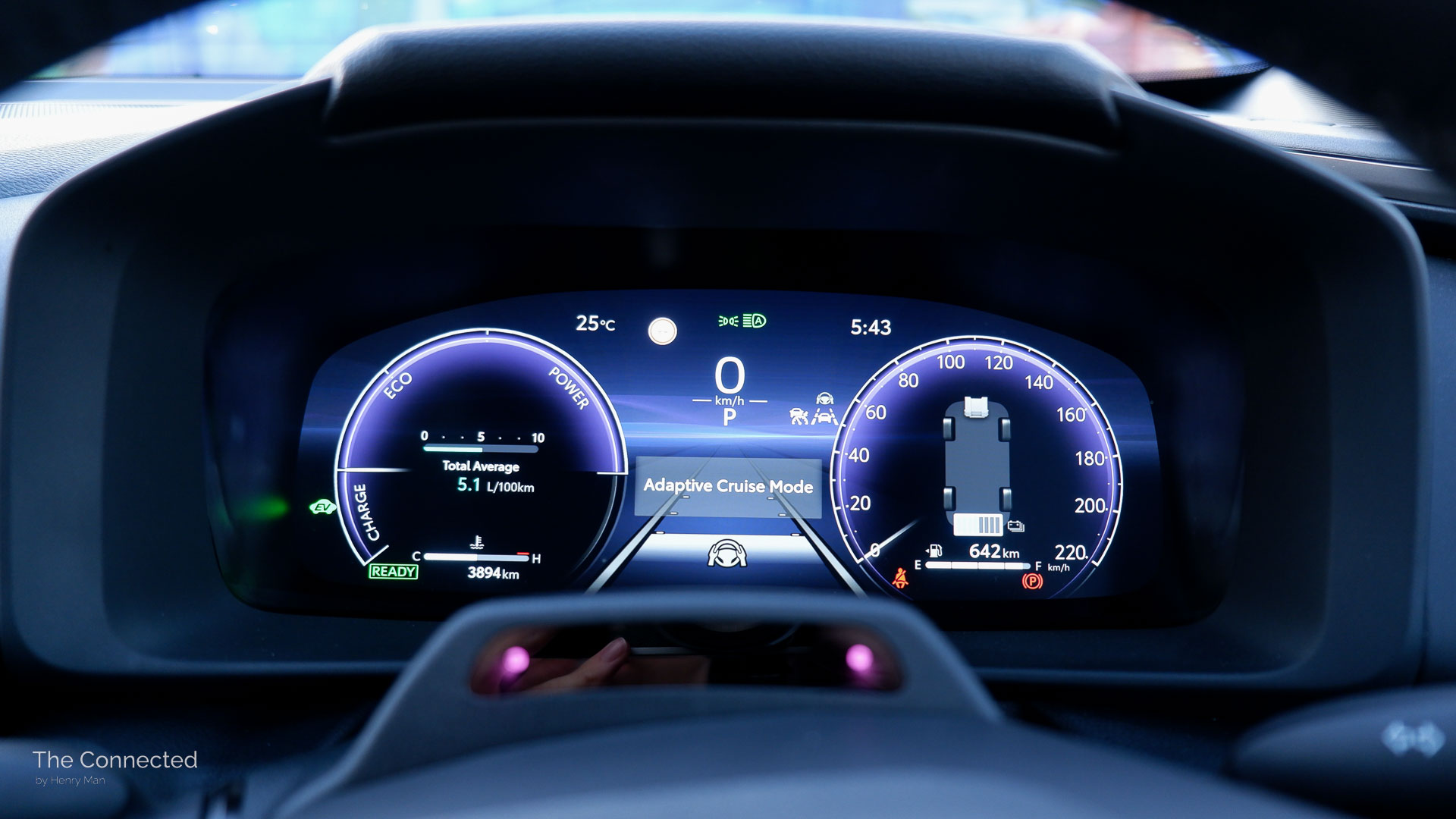


The Koba’s head-up display also projects onto the windscreen with a clear speedometer, detected speed sign and adaptive cruise setting, although Toyota doesn’t offer a height adjustment setting.
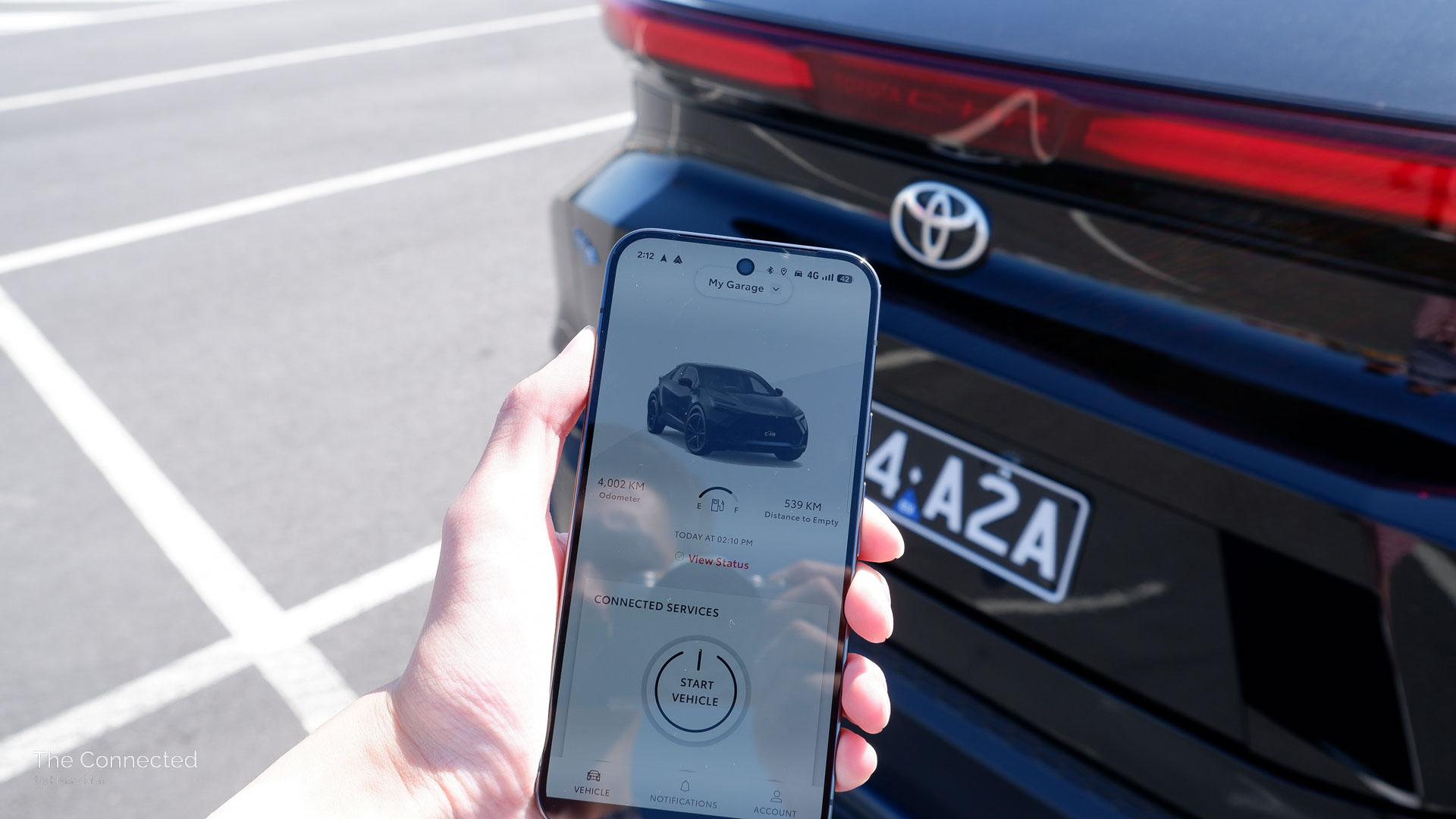
Toyota Connected Services enables mobile app connectivity, with the ability to pre-condition the vehicle remotely, trigger the horn, and even see a Driver Pulse behaviour score.
Disappointingly, Toyota Australia only includes full functionality (called Toyota Connected Multimedia) for the first year from activation, with it costing $12.50 per month afterwards. A lesser-featured Connect+ is also available for $9.95 per month.
Toyota Essentials, which includes emergency services calling, location tracking and vehicle status monitoring, is standard for the lifetime of the car.

Safety.
2026 Toyota C-HR Koba HEV safety features:
| Front AEB with vehicle/pedestrian/cyclist/junction turning detection | 360-degree camera system |
| Rear AEB | Front and rear parking sensors |
| Blind-spot assist | Automatic parking system |
| Rear cross-traffic assist | Door open warning |
| Lane-keep assist | Toyota Connected Services with emergency services calling (subscription required for stolen vehicle tracking) |
| Adaptive cruise control with lane-centring assist | Full LED headlights with adaptive matrix high-beam and front fog lights |
| Driver attention monitoring camera | Full LED tail-lights |
| Road sign detection |
The C-HR features Toyota’s dependable and non-frustrating safety assistance systems.
The standard lane-keep assist is subtle, the road sign detection system is good, understands school zone times and doesn’t annoyingly chime as soon as you overspeed by default, and the adaptive cruise and lane-centring is smooth and responsive.
While a driver attention monitoring camera is attached to the steering wheel column, it is far less sensitive than Hyundai and Kia cars. When it does trigger, it only sounds a subtle, short beep and message pop-up on the instrument cluster.
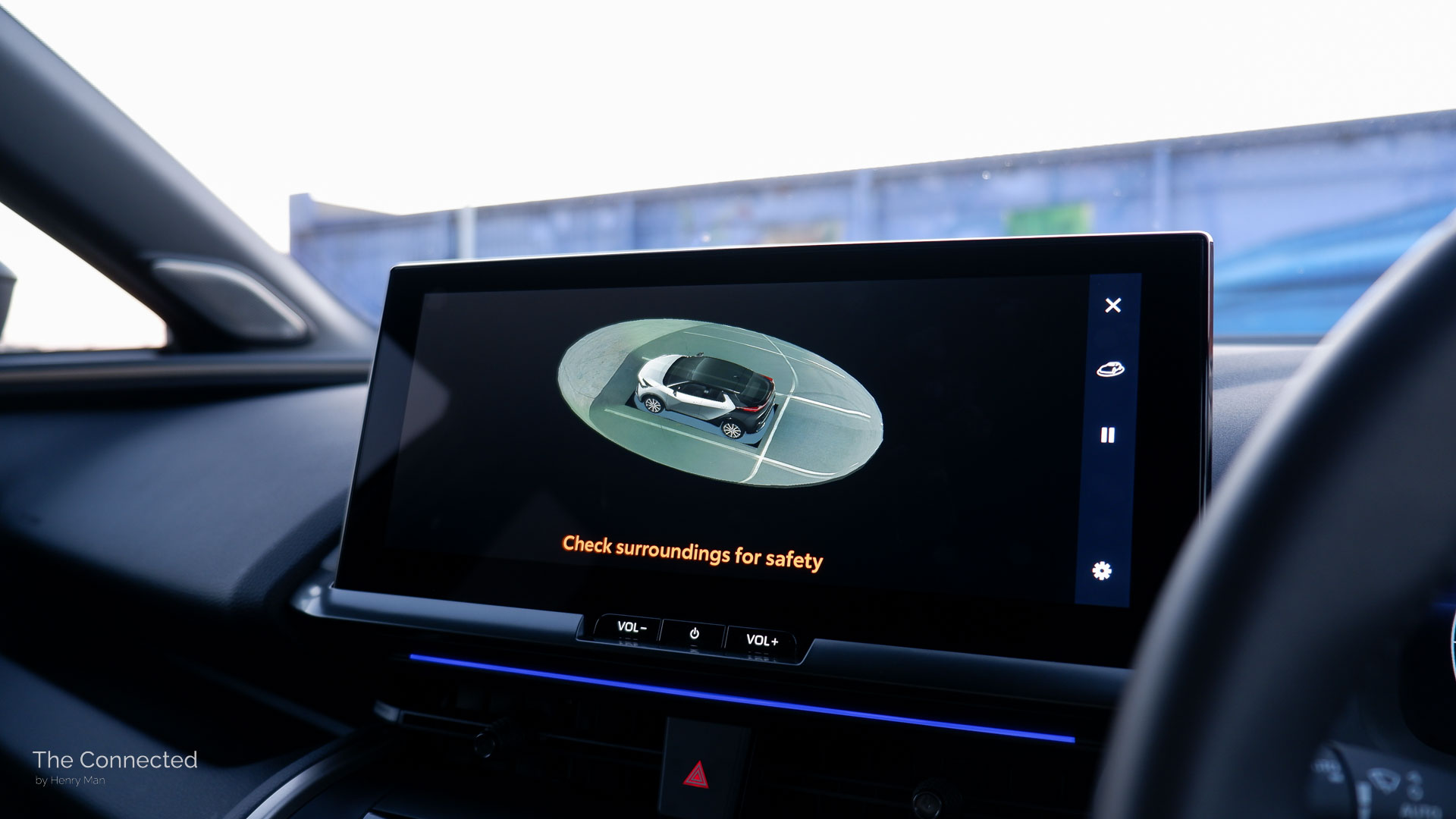
Meanwhile, the 360-degree camera system is also impressively clear and auto-activates on the screen when travelling at low speeds. Toyota’s system even paints a transparent underbody view as you drive forwards, with a surround view animation when parked and the button at the centre console is pressed. The cameras can’t be shown after 20km/h, though.


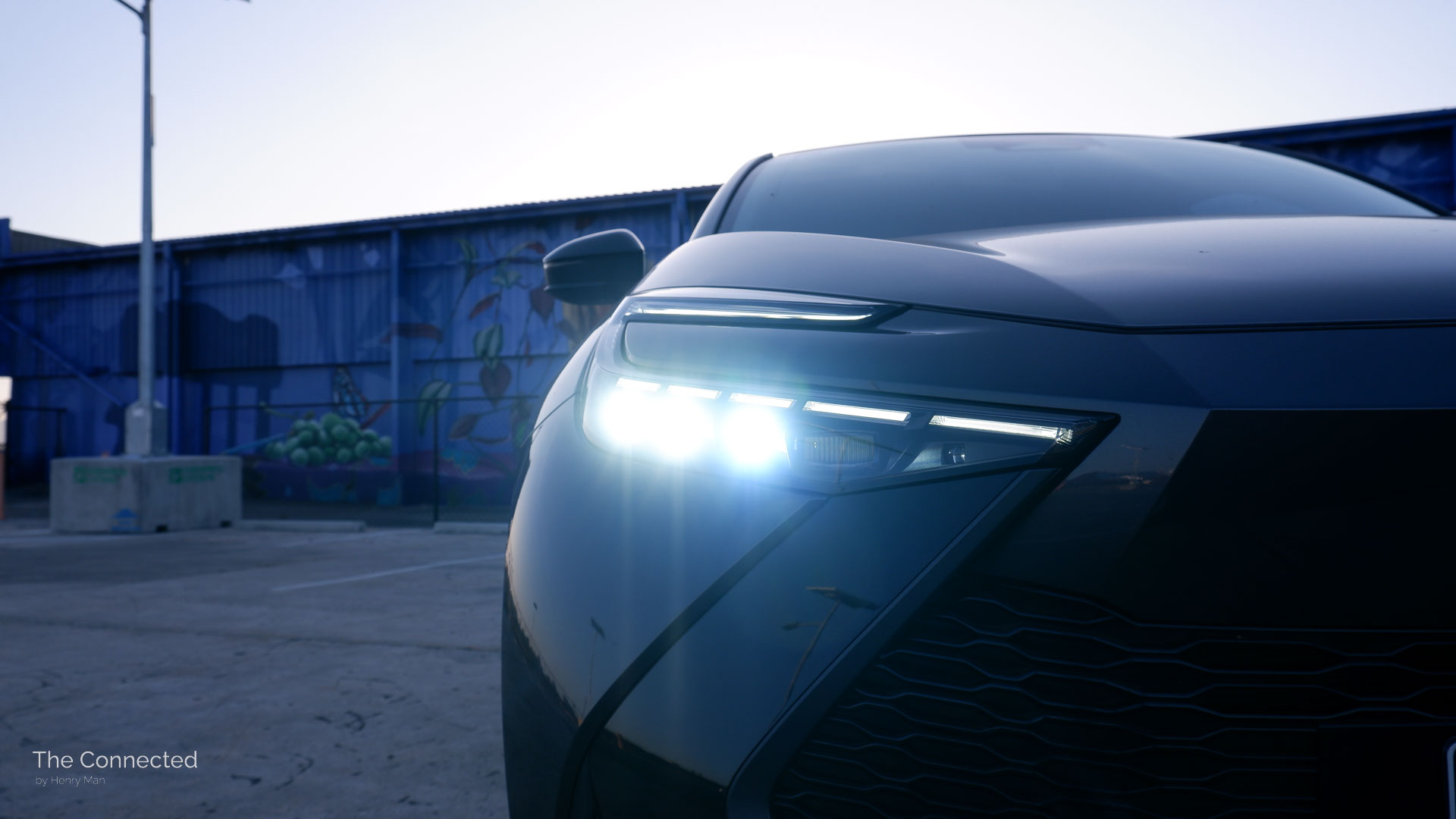
The full LED headlights offer good performance at night with a clever automatic matrix function, which reliably keeps the high beams on and blocks individual pixels to not glare other road users in very dark conditions.
Disappointingly, while emergency services calling is included for the lifetime of the vehicle, owners need to pay at least $9.95 per month for Toyota Connect+ to retain stolen vehicle tracking. A one-year subscription trial is included.
The 2026 Toyota C-HR has the full five-star Australasian New Car Assessment Program (ANCAP) safety rating, but the top-spec GR Sport remains unrated.

Range and fuel consumption.
2026 Toyota C-HR Koba HEV fuel and efficiency specs:
| Claimed driving range (combined cycle) | 1075km |
| Claimed fuel efficiency (combined cycle) | 4.0L/100km |
| Battery size and type | 4.08Ah lithium-ion |
| Fuel tank size | 43 litres |
| Minimum fuel quality requirement | 91 RON unleaded petrol |
| Claimed CO2 exhaust emissions (combined) | 89g/km |
| European emissions compliance | Euro 5 |
The 2026 Toyota C-HR hybrid returned a low average fuel efficiency of 5.0L/100km after a week of mixed driving conditions.
As a result, expect around 860km of total real-world driving range from the 43-litre fuel tank. Cheaper 91 RON unleaded petrol is accepted.
While this small SUV is fuel efficient, the Toyota Camry hybrid sedan still has a slight advantage.
The C-HR adopts a conventional self-contained series-parallel hybrid system, which means no plug-in charging is required. The engine and regenerative braking system solely recharge the small hybrid lithium-ion battery.
The fuel lid is accessible at the rear-left quarter side of the small SUV, but drivers need to release it via a toggle at the floor.

Driving.
2026 Toyota C-HR Koba HEV powertrain specs:
| Engine and electric motor | 1.8-litre naturally-aspirated four-cylinder petrol engine + single electric motor |
| Power | 103kW |
| Torque | 142Nm |
| Transmission | Seven-speed CVT |
| Drive type | FWD |
| Kerb weight | 1490kg |
| Turning circle | 10.8 metres |
| Payload | 440kg |
| Towing (unbraked / braked) | 725 / 725kg |
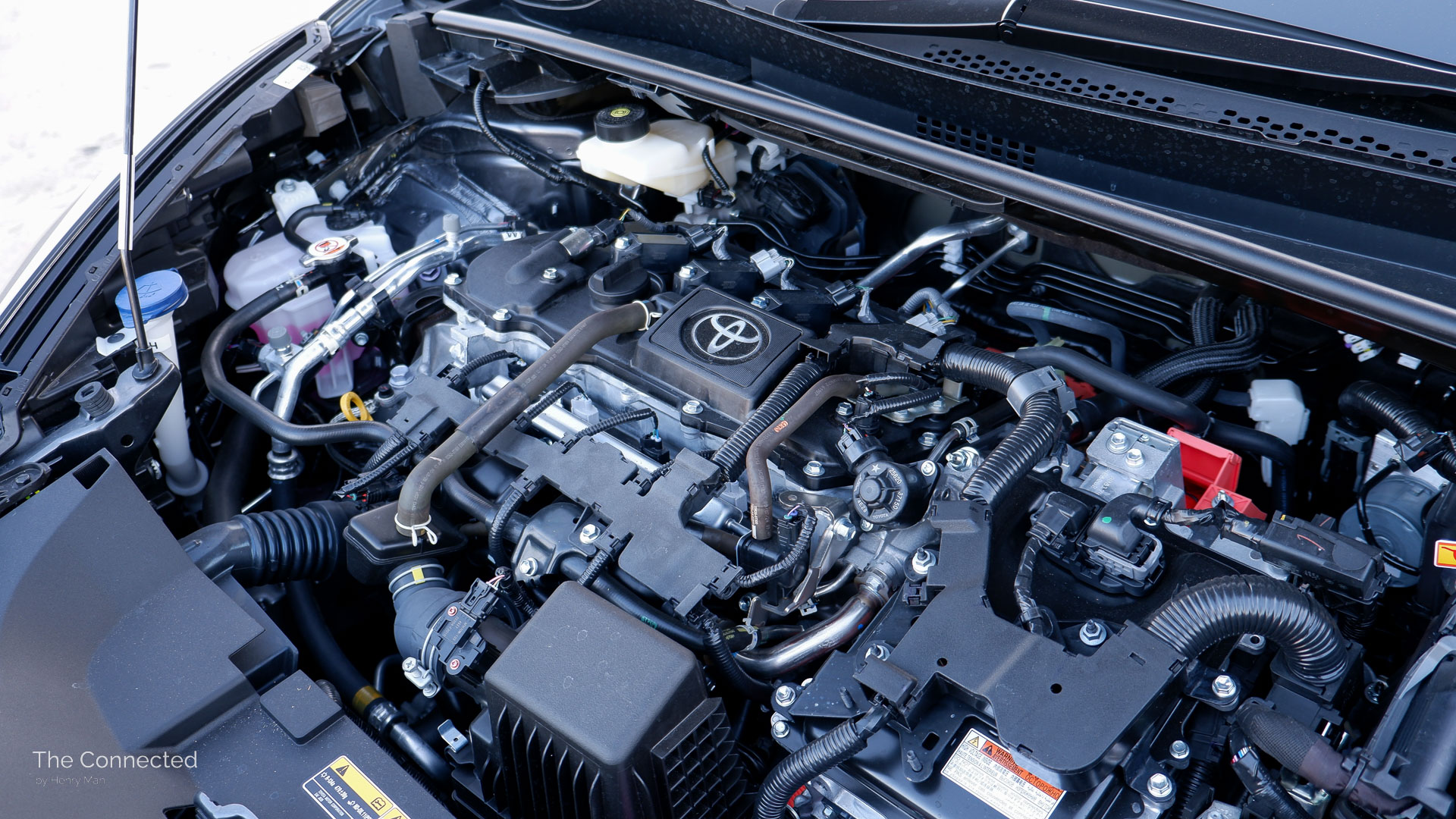
The C-HR hybrid drives well, but the engine groans when activated, not helped by the continuous variable transmission.
GXL and Koba models are powered by a 1.8-litre naturally-aspirated petrol engine and an electric motor to make up to 103kW of power and 142Nm of torque combined, and is front-wheel drive.
While the power figure may seem small, the Toyota hybrid SUV provides enough punch when accelerating harder thanks to the EV motor and a conventional series-parallel hybrid approach – which switches between driving the wheels with the petrol engine, EV motor or both depending on the situation.
It seamlessly transitions between each, except for a loud- and strained-sounding engine when activated, which is exacerbated by the continuous variable transmission (CVT) with seven simulated steps.
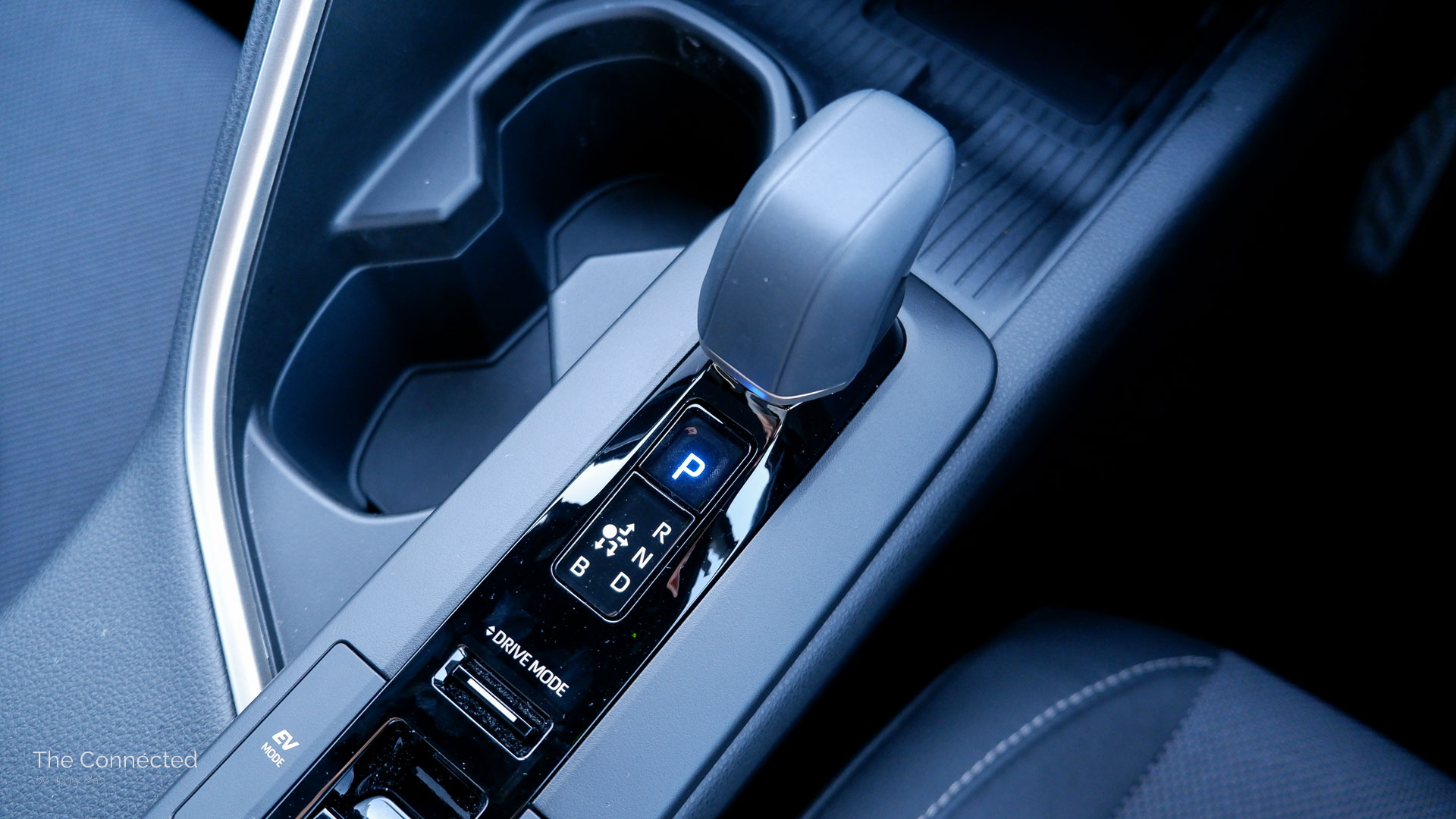
An EV mode button is available at the centre console, but it’s barely useful as it cuts out as soon as you step on the accelerator more, drive faster than 30km/h and/or don’t have enough battery charge.

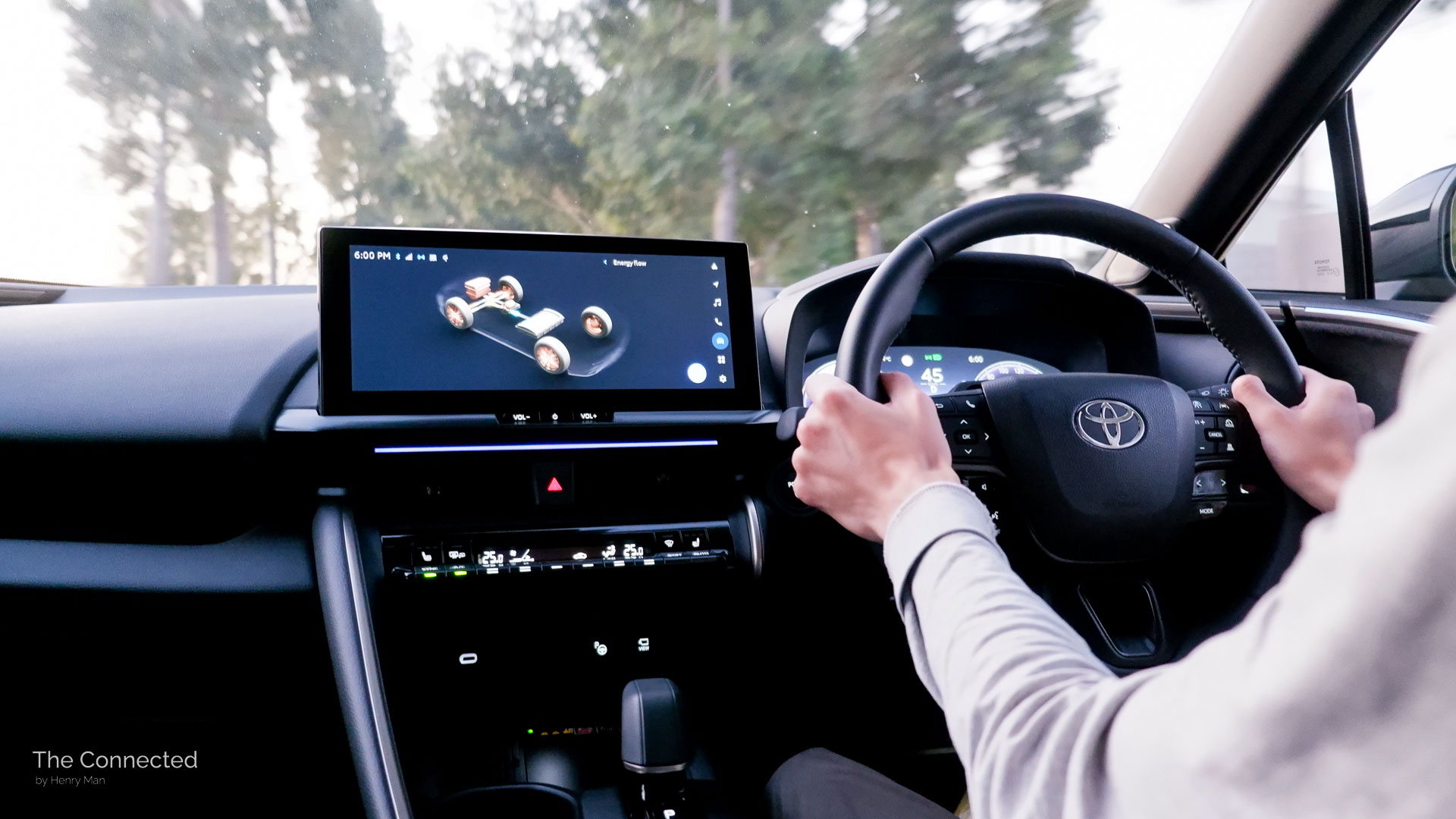
The C-HR’s steering is also well-balanced – its light but also not lacking feel, although not overly engaging.
I also found the driver’s footrest was narrower than ideal for my large-sized shoes.
It’s worth noting that the electronic gear shifter is rather strange. Unlike the Camry hybrid sedan, drivers need to shift the small stick to the right in order to put it down for drive or up for down, otherwise it goes into neutral.
I can see this design being confusing and result in accidental shifts for some unaccustomed drivers.
Toyota offers a B mode, yet it’s not a proper regenerative braking system as it’s rather weak and introduces engine braking, too. When in this mode, adaptive cruise control can’t be enabled either.
Noise insulation is good, while the suspension is firmer and gets upset by smaller bumps.


Interestingly, the Toyota C-HR’s front windows are curved inwards so it’s slightly trippy to look out sometimes (what’s in the top portion appears slightly bigger than the bottom portion).
The C-pillar is also very thick and is a notable blind spot, similar to the Mazda CX-30.
This mid-spec Koba grade gains a digital rear-view mirror camera, which is activated via a flick from the conventional centre mirror. While it usefully provides a clearer image in the rain, Toyota’s camera is noticeably lower-resolution and less wide than Hyundai, Kia, Mazda and Polestar.

Warranty and servicing.
2026 Toyota C-HR Koba HEV capped-price servicing costs:
| 1 year/15,000km | 2 years/30,000km | 3 years/45,000km | 4 years/60,000km | 5 years/75,000km |
| $255 | $255 | $255 | $255 | $255 |
The 2026 Toyota C-HR is covered by a five-year, unlimited kilometre vehicle warranty and a 10-year, unlimited kilometre conditional battery warranty.
If owners don’t service the hybrid SUV with a Toyota dealer every time, the battery warranty is cut in half to five years, unlimited kilometres instead.
Servicing is required every one year/15,000km (whichever occurs first) with prices capped for the first 10 visits.
After the first five years/75,000km, it’ll cost a low $1275 to service the C-HR.
Toyota Australia doesn’t include roadside assistance coverage, but is willing to cover towing and loan vehicle expenses (if eligible) for seven years, unlimited kilometres on the condition it’s serviced with a Toyota dealer (otherwise it’s five years, unlimited kilometres).
Only one year of Toyota Connected Multimedia services are included, with it costing $12.50 per month afterwards to retain full functionality. A lower-tier Connect+ is also available for $9.95 per month.
Toyota Essentials, which has basic connected services features, is standard for the lifetime of the car.
No spare tyre is available with a tyre patch-up goo kit under the boot floor.
Price and rivals.
2026 Toyota C-HR HEV model range pricing (accurate as at the time of publication):
| GXL | Koba | GR Sport |
| From $45,440 before on-road costs | From $52,390 before on-road costs | From $57,390 before on-road costs |
The 2026 Toyota C-HR is priced from $45,440 before on-road costs in Australia.
Three variants are available with GXL and Koba being front-wheel drive with a 1.8-litre naturally-aspirated hybrid engine and the GR Sport exclusively coming with all-wheel drive and a 2.0-litre hybrid engine.
On the GXL, all exterior colours except Glacier White costs $575 extra.
On the Koba and GR Sport, all colours except Ink are priced at $775 since a black-painted roof is mandatory. A Two Tone Plus option is available for $1550, which paints the tailgate and D-pillar in black in addition to the roof.
These high-spec grades can also be had with a fixed panoramic glass roof with Two Tone Plus paint for $2700 altogether.
The Toyota C-HR directly rivals the following coupe-style small crossover SUVs:
- Volkswagen T-Roc (full review)
- Mazda CX-30 (full review)
- Mitsubishi ASX
- Chery C5
- Honda HR-V e:HEV
- Peugeot 208
Other alternatives to the C-HR include:
- Toyota Corolla Cross
- Toyota Camry (full review)
- Hyundai Kona Hybrid (full review)
- MG ZS Hybrid+ (full review)
- Kia Seltos (full review)
- Kia EV3 (full review)
- Nissan Qashqai e-Power (full review)

Would I pick the 2026 Toyota C-HR Koba?
The new Toyota C-HR demonstrates that there is a price to pay for style.
The small hybrid SUV is a cool looker with dependable tech and safety assists, an ergonomic interior, fuel-efficient efficient and punchy hybrid powertrain, and low capped-price servicing costs.
But it is an expensive small SUV with compromised rear row space, the engine sounds loud and strained when activated, the e-shifter design is confusing, and only one-year of full connected services functionality is provided.


I’d pick the mid-spec Koba as tested since it balances spec and price.
The new Toyota C-HR continues to be the peak heart over head choice, but other rivals including the Corolla Cross, Hyundai Kona Hybrid and Nissan Qashqai e-Power are more pragmatic options.
Photographs by Henry Man
READ MORE: 2024 Volkswagen T-Roc review
READ MORE: 2025 Toyota Camry Hybrid review
READ MORE: 2026 Nissan Qashqai e-Power review
Pros:
- Dependable tech and safety assists
- Easy to use climate controls
- Fuel-efficient hybrid
- Low-cost servicing
- Stylish design
Cons:
- Expensive price for style
- Tight-feeling rear seats
- Loud and groaning engine
- Confusing gear shifter
- One-year full connected services
About the Author.
Henry Man is an independent content producer passionate about the intersection of technology and transportation.
The former automotive journalist is focused on producing critically-detailed vehicle reviews, and unique short-form content. Learn more.


 The Connected by Henry Man