
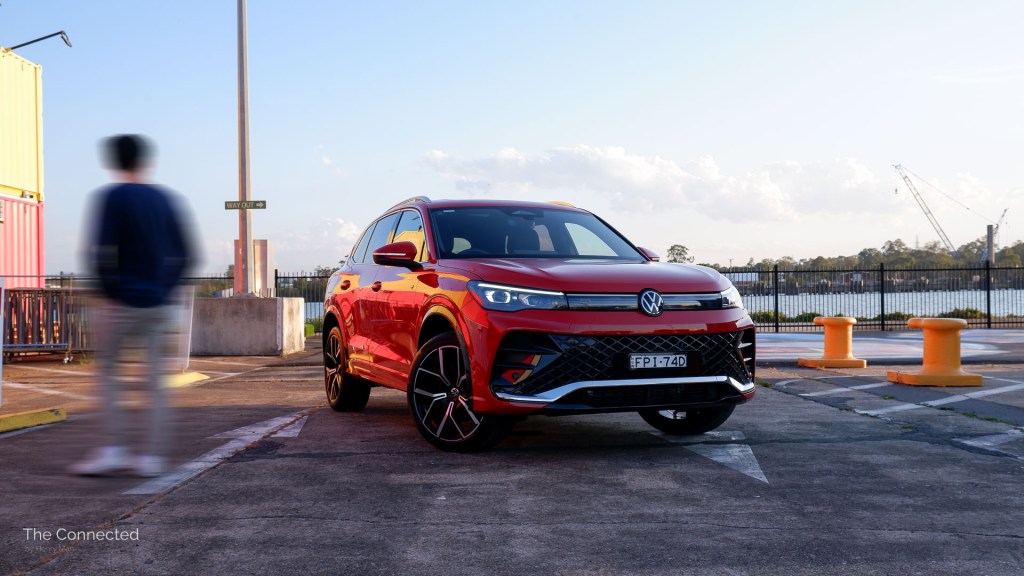
The new Tiguan is a refreshing return to form for Volkswagen.
Now in its third generation, the Volkswagen Tiguan medium SUV has been upgraded with an updated platform, new technology and aims to address key complaints that have surrounded the German brand in recent years.
As one of Volkswagen’s most popular models other than the T-Roc small SUV, there’s a lot riding on the new Tiguan.
With so many midsize SUVs, is the Tiguan worth considering in a sea of more competitively-priced models from the Jaecoo J7, Toyota RAV4 and Hyundai Tucson? I tested the post-$70K flagship sporty 195TSI R-Line to see whether it’s worth the extra money.
NOTE: The press vehicle was provided by Volkswagen Australia for a seven-day independent evaluation. We have no commercial arrangements with the company and it had no editorial control.

Pros.
+ Spacious and family-friendly
+ Physical buttons, illuminated sliders
+ Clear and responsive touchscreen
+ Sporty 195TSI powertrain
+ Upmarket feel without a showy badge
Cons.
– Expensive at the top-end
– Thirsty on fuel, high servicing costs
– Plasticky grab handle, gloss black surfaces
– Jerky at low speeds
– Low-res 360-degree cameras
Vehicle tested:
| Model | 2026 Volkswagen Tiguan |
| Variant | 195TSI R-Line |
| Starting price | $70,490 before on-road costs |
| Exterior colour | Persimmon Red Premium Metallic (+$1100) |
| Interior colour | Black R-Line Varenna leather seats |
| Options | Panoramic sunroof (+$2100) |
| Country made | Germany |
Design and quality.
The new Tiguan offers an evolutionary classy design with an upgraded interior that addresses complaints on recent Volkswagens.
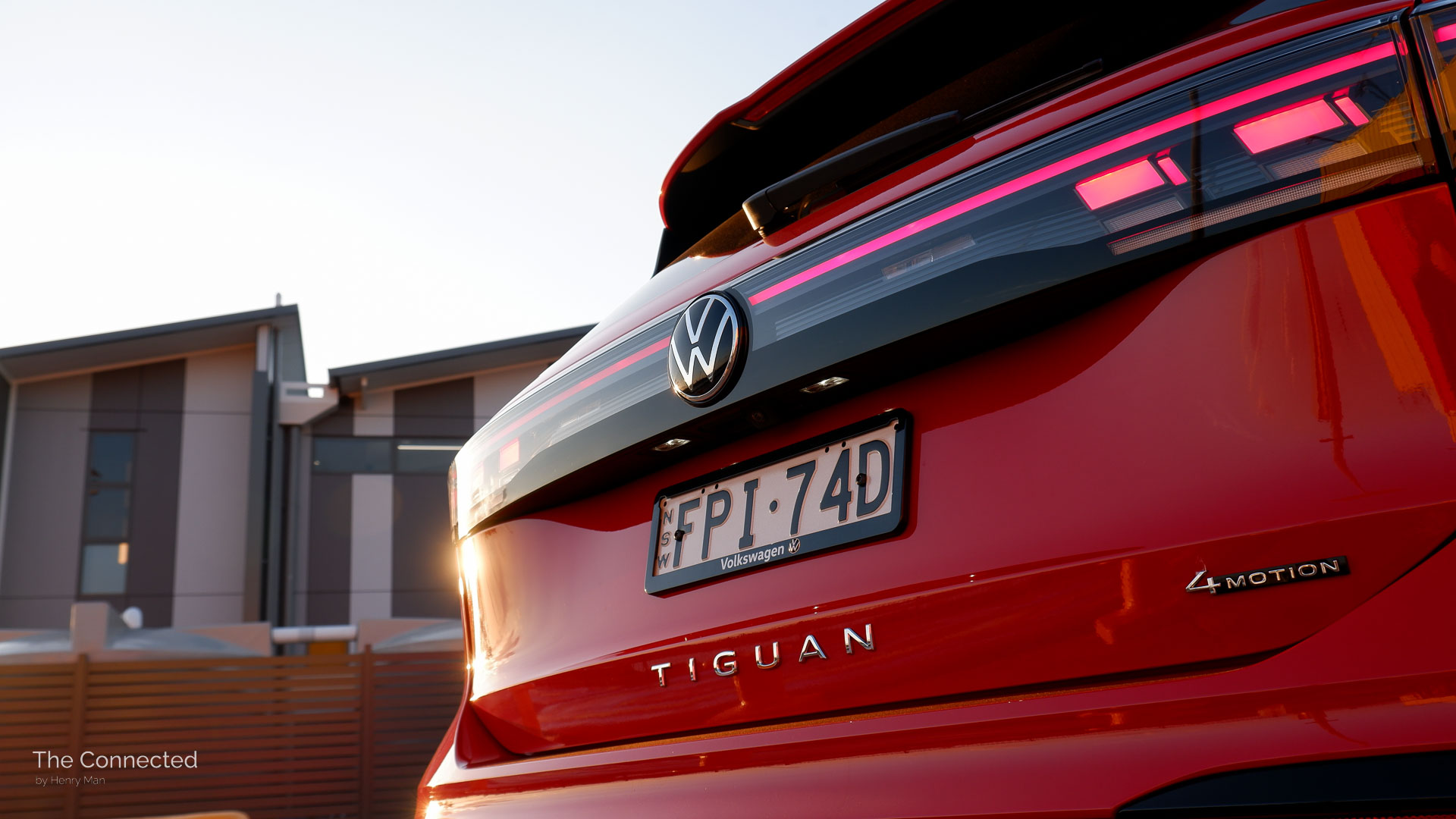
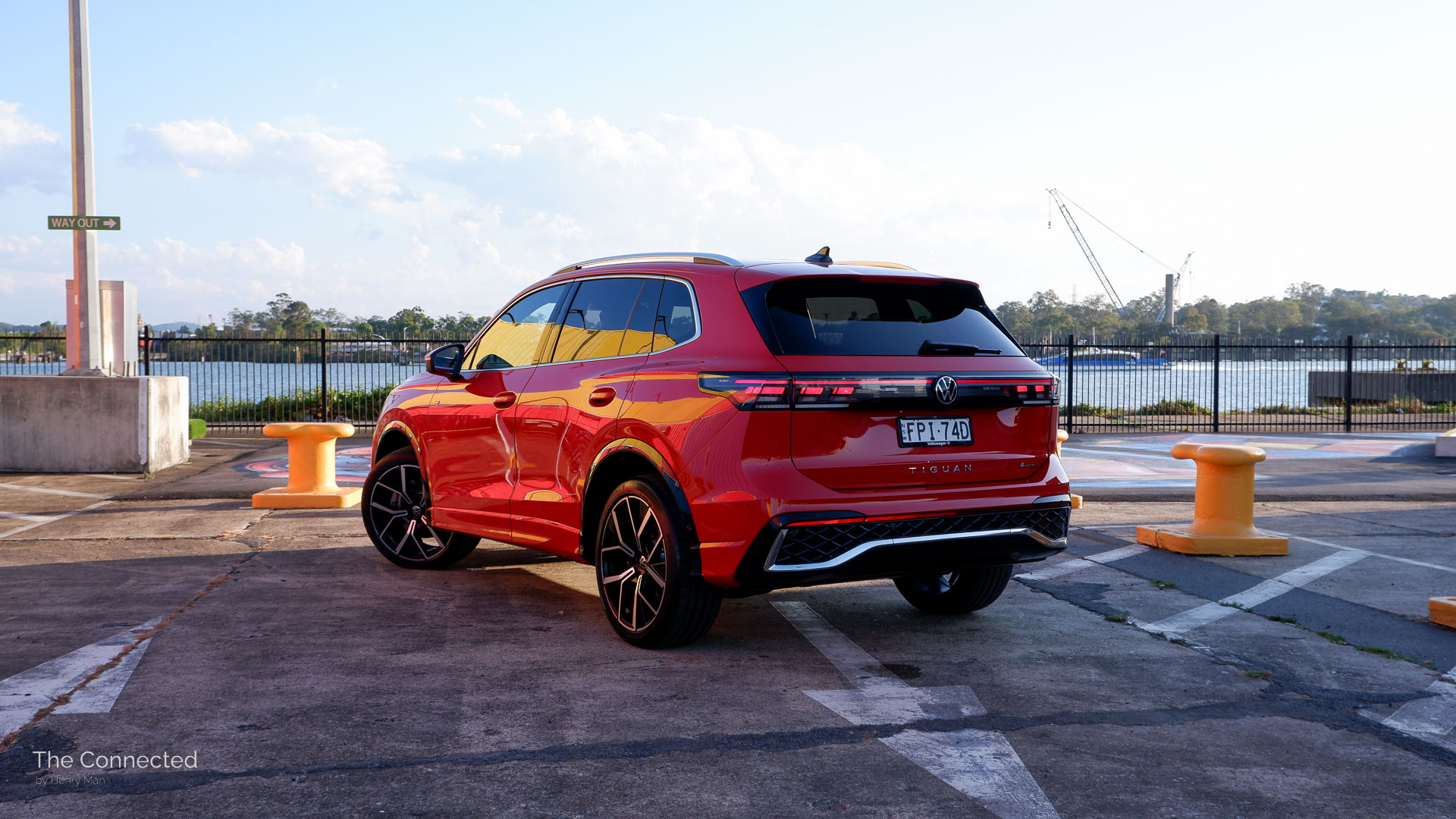
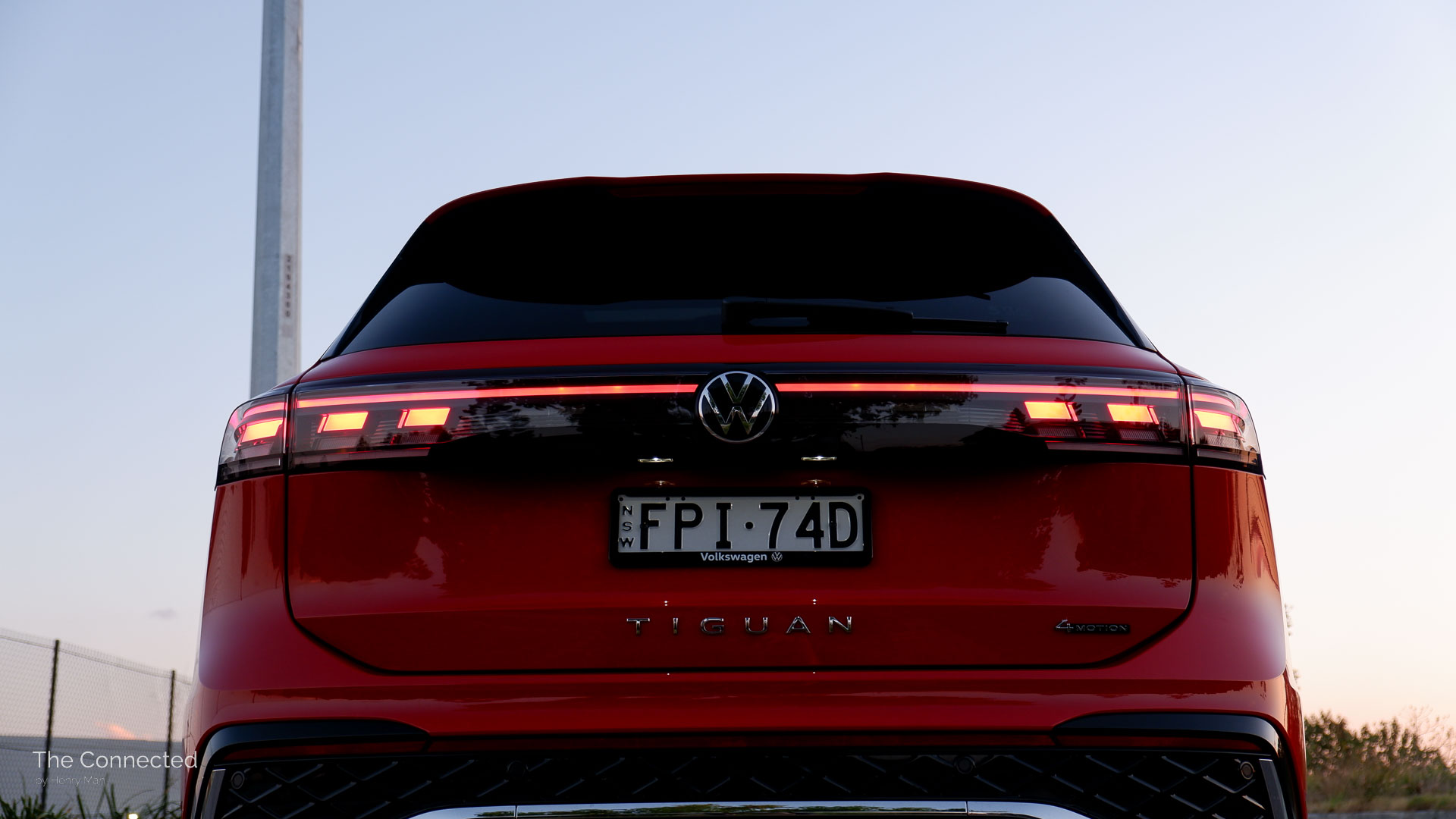
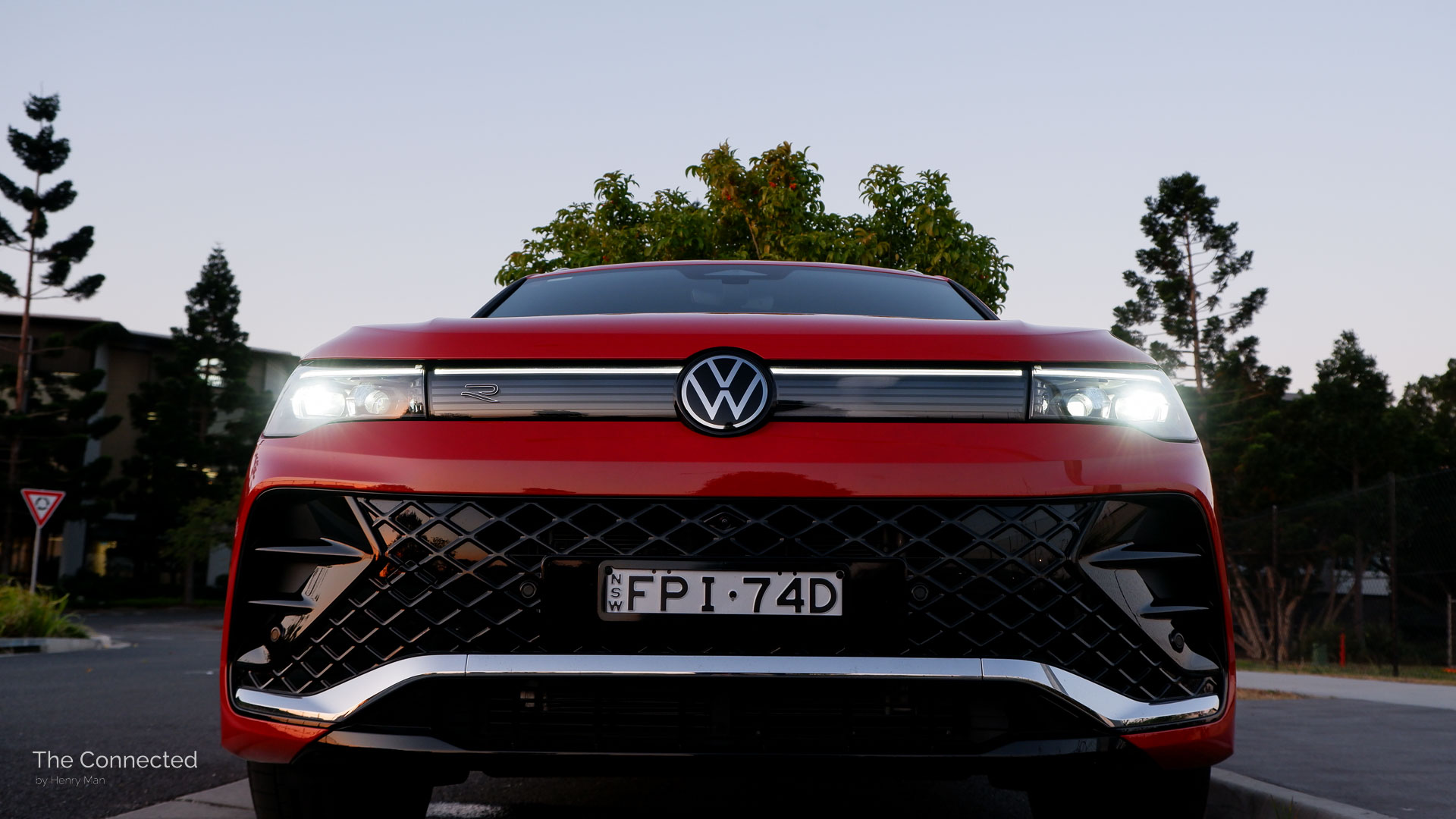
The third-gen Volkswagen Tiguan is unmistakably a Tiguan with similar, but different light designs (now light bars) with a more friendly face in line with Volkswagen’s electric vehicles, while still being shorter in length than many medium SUVs at sub-4.6 metres.
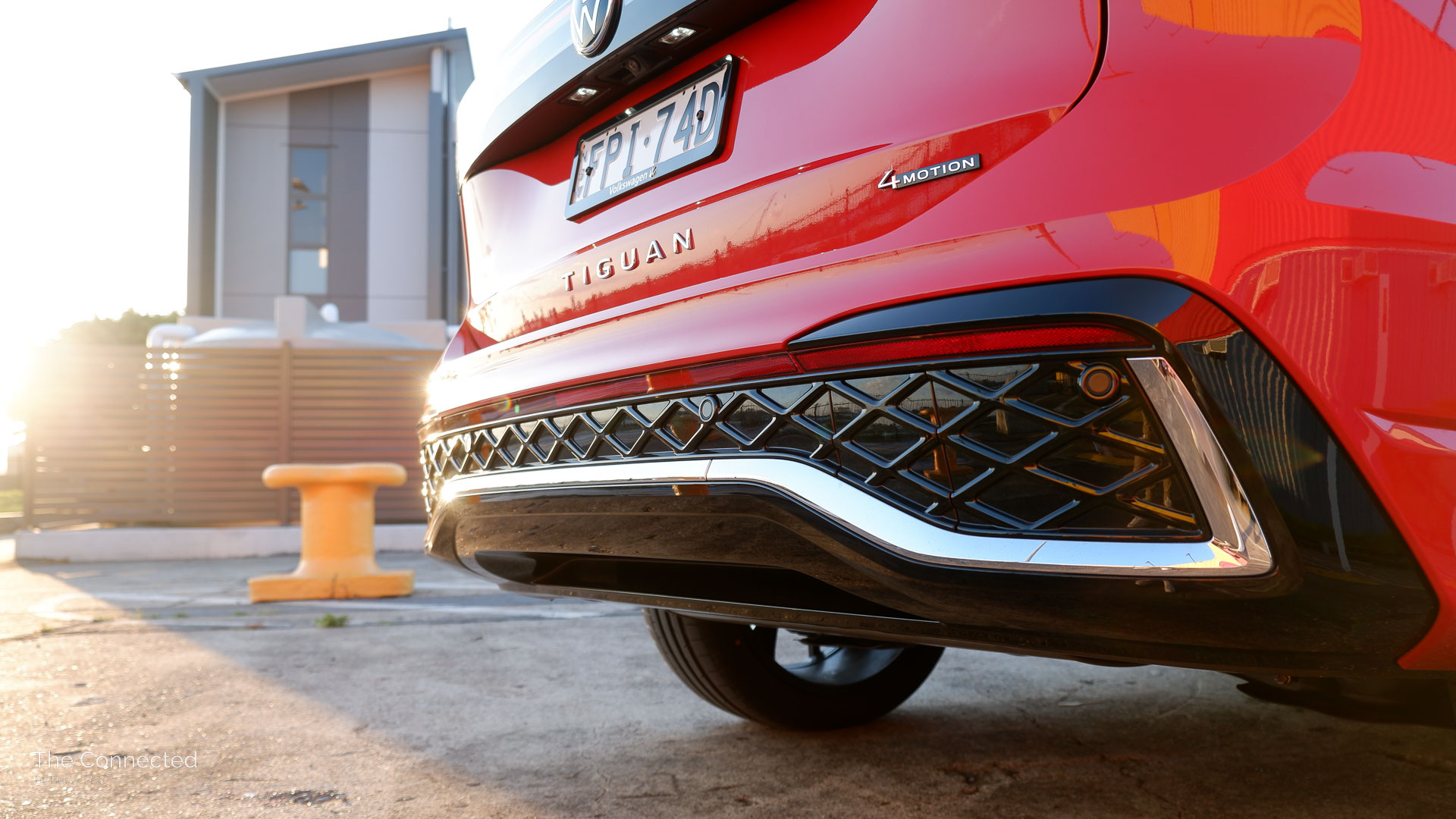
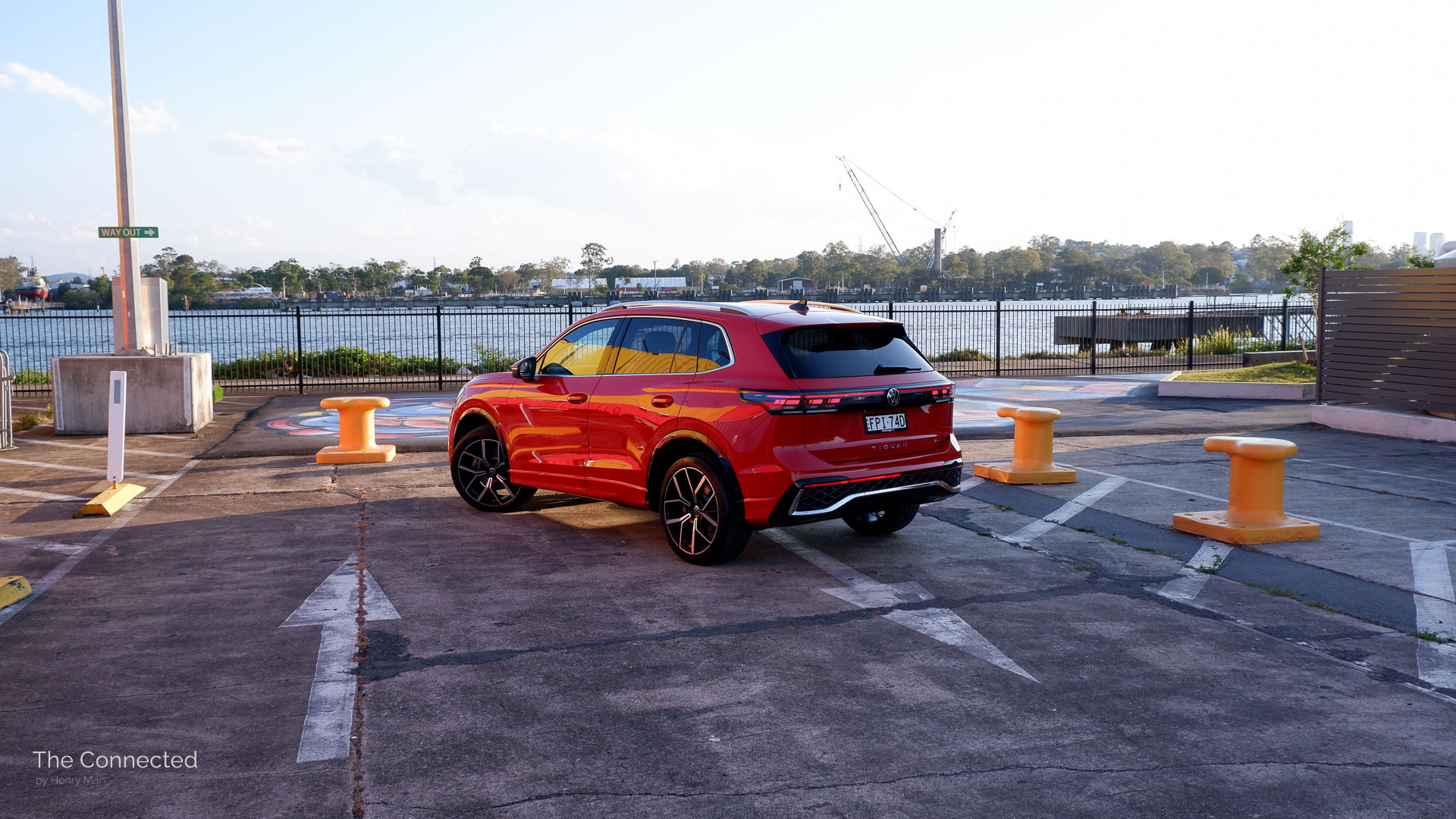
This top-spec R-Line levels up with super shiny gloss black and chrome bumpers, with this tester’s hero Persimmon Red Premium Metallic paint (+$1100) and 195TSI R-Line’s 20-inch ‘Leeds’ alloys making it look and feel very upmarket – fittingly so for a $70K-plus midsize SUV.


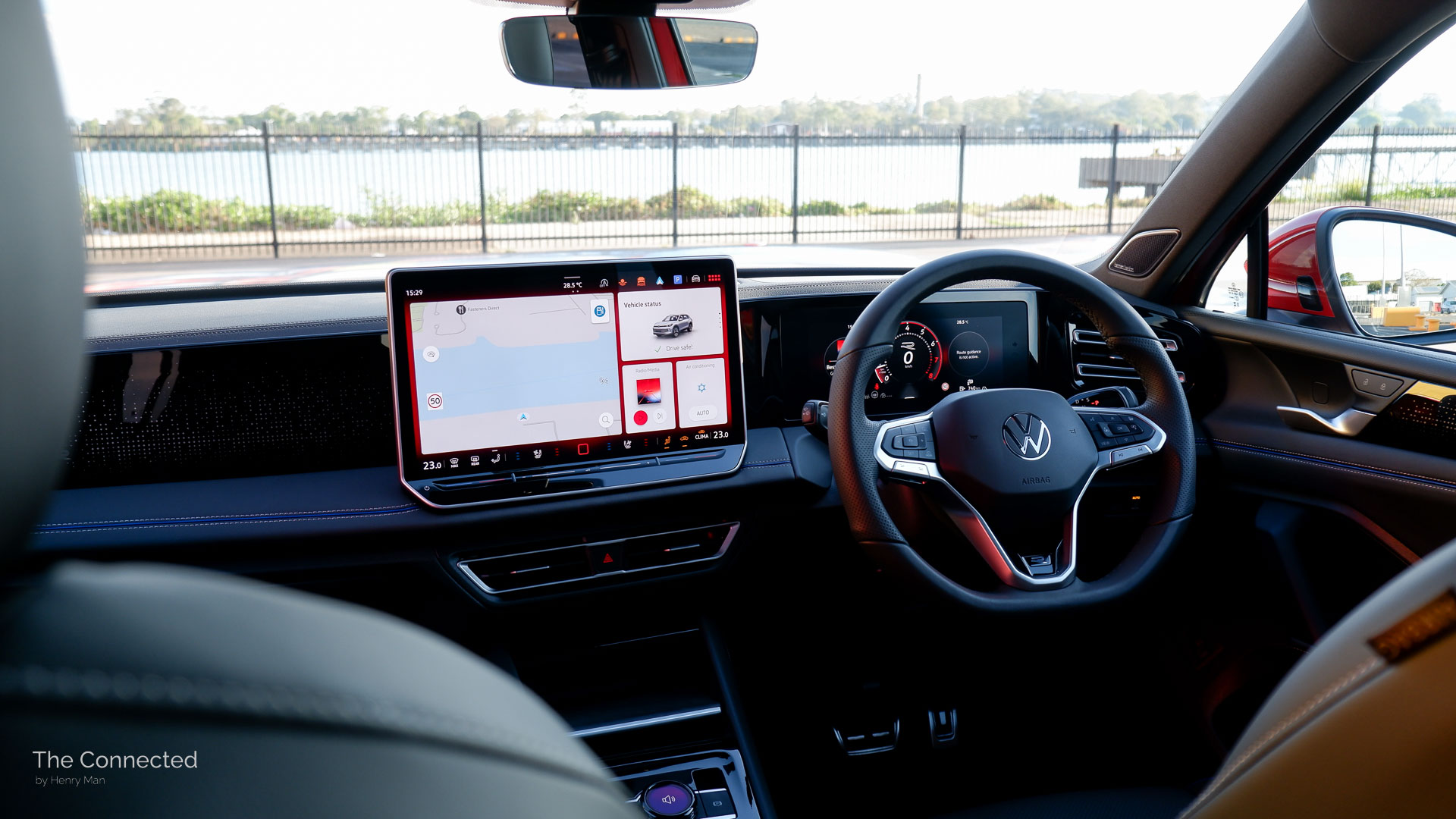
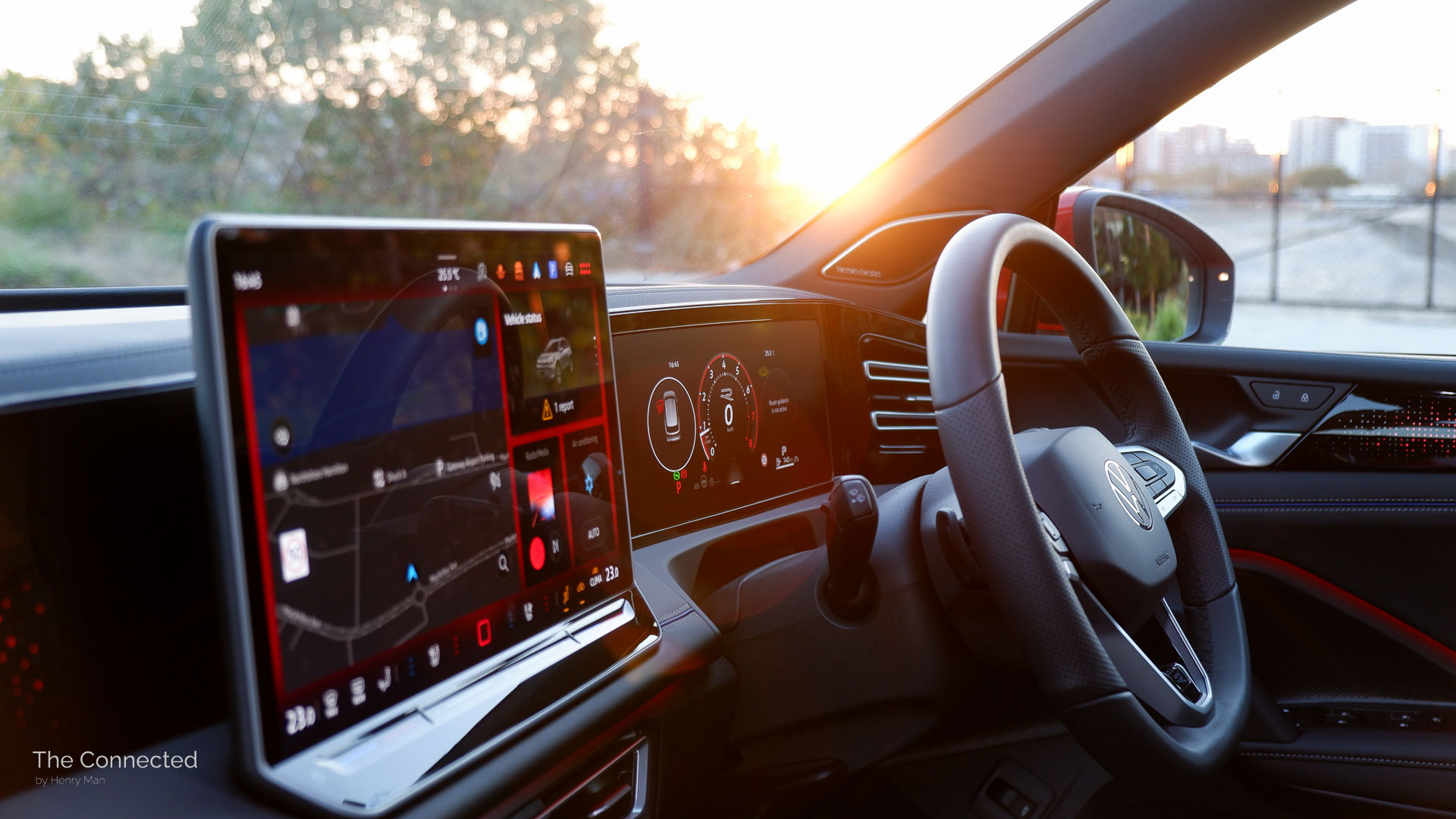
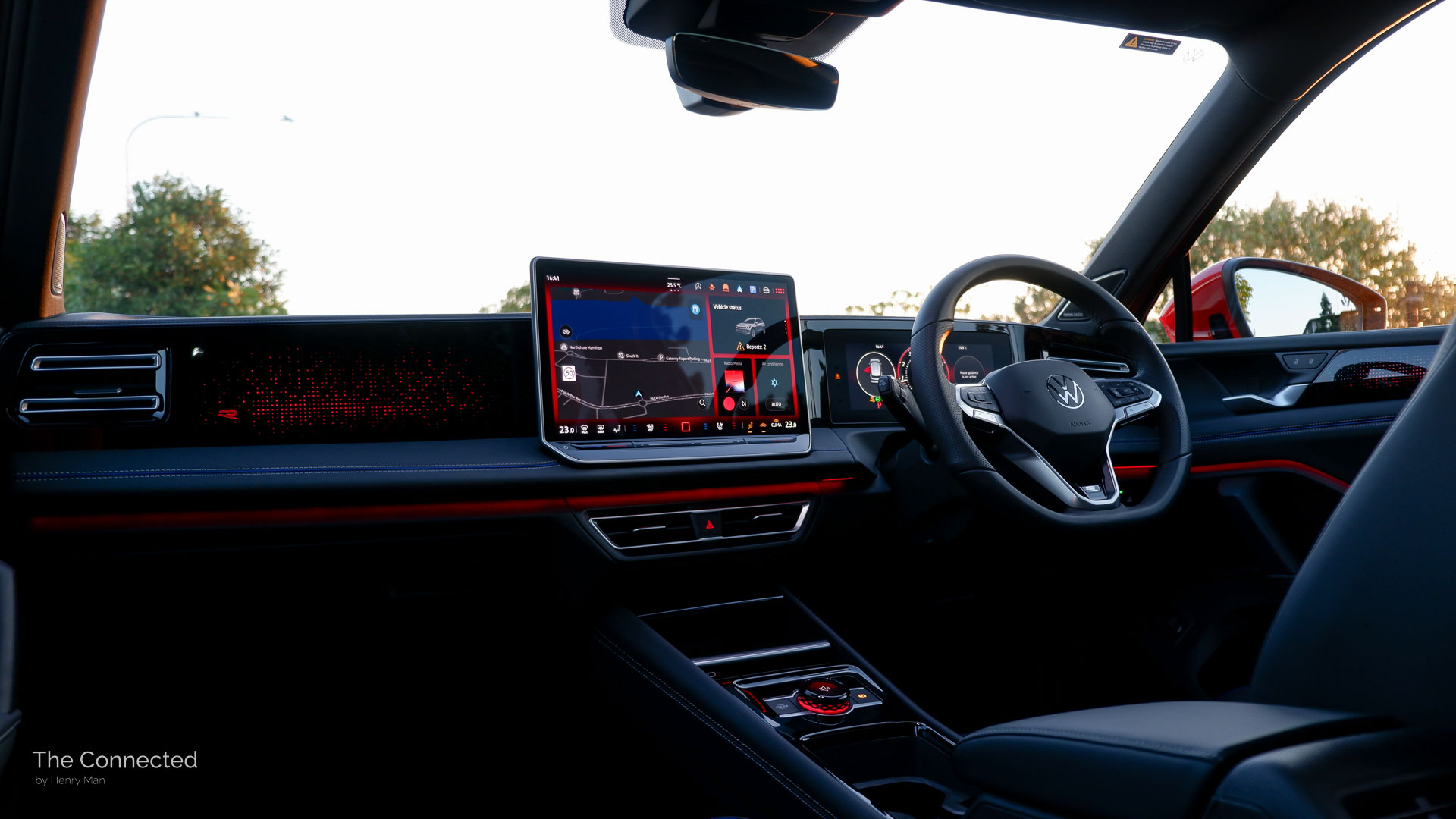
Inside, the new Tiguan is dominated by a new large protruding central touchscreen and a three-piece gloss black panel that gives the impression of it connecting across the dashboard.
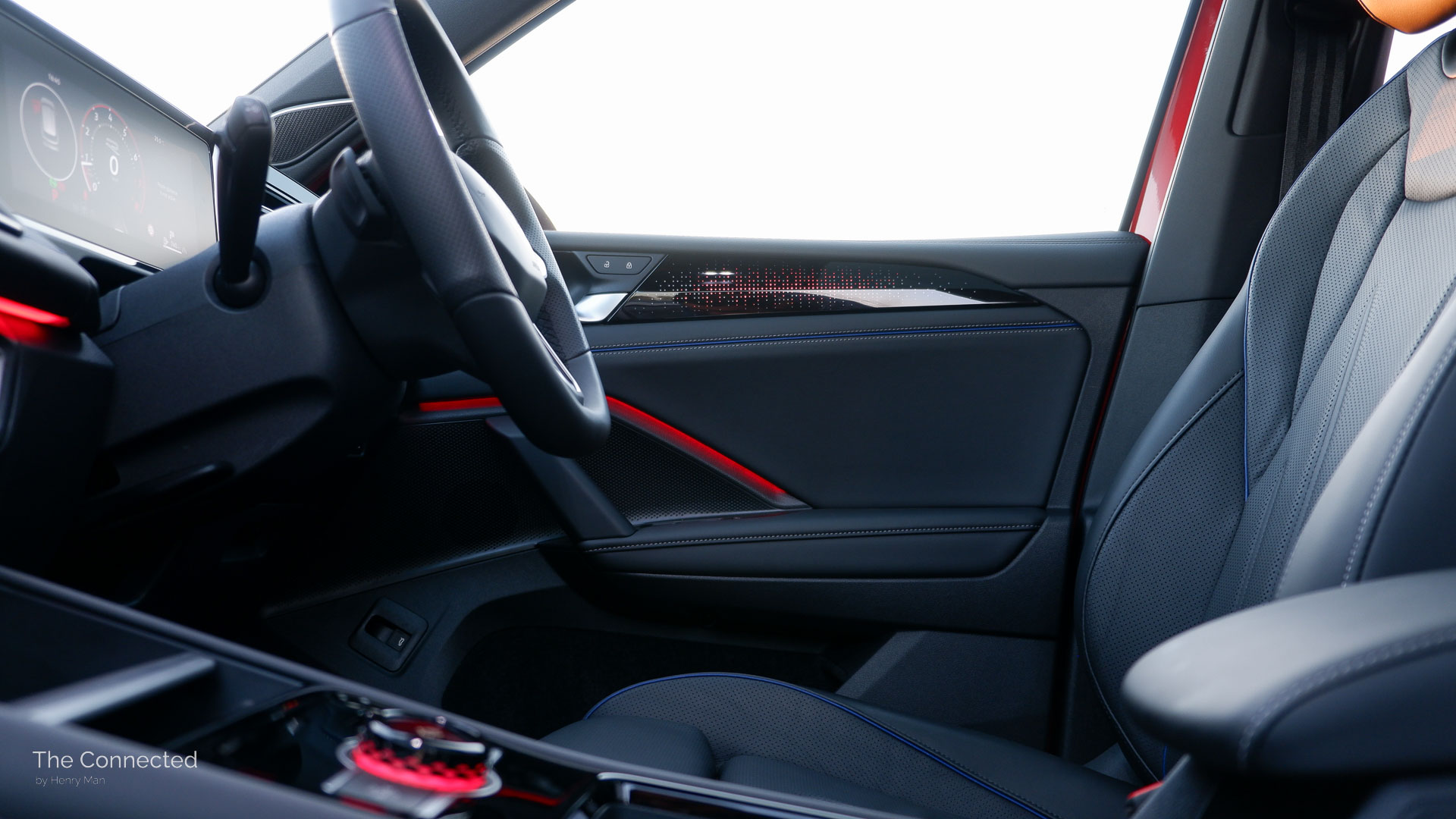
R-Line models gain blue piping with white stitching across the dashboard, doors and seats. The ambient lighting is bright, illuminating a pattern inside the gloss black panels with strips glowing from the door cards and underneath the dash.
Unlike recent Volkswagen Group EVs, the new Tiguan has foregone their foibles with four window switches for the driver, physical steering wheel buttons, illuminated temperature and volume sliders and, while the exterior light controls are no longer in a dial, the buttons are physical just like the Cupra Tavascan.


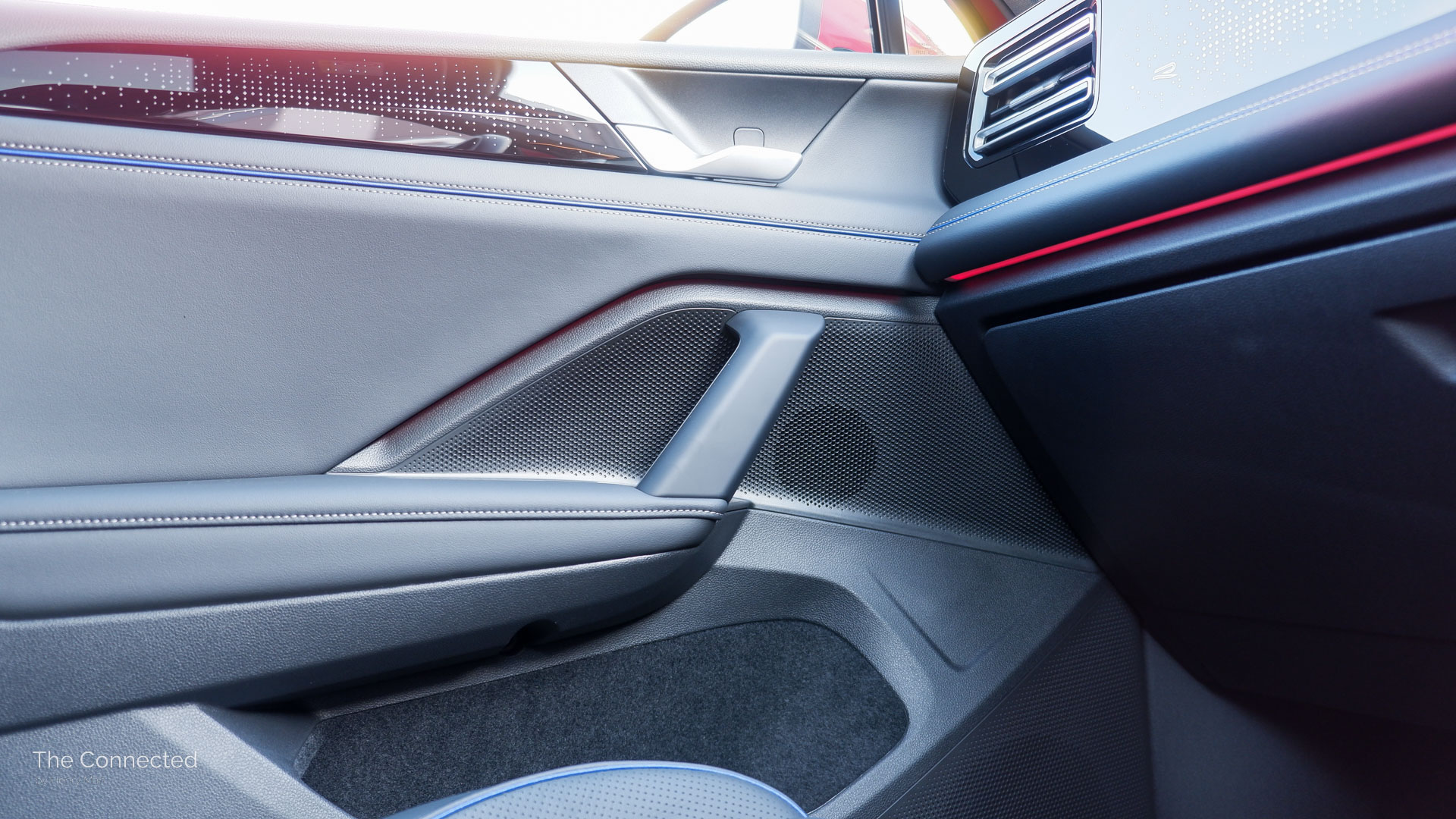

The interior feels premium with soft-touch materials applied, except for the lower down door cards, and a tactile multi-functional dial at the centre console even though it isn’t as clicky as the Mazda CX-60, Geely EX5 and Polestar 4.
Unfortunately, the Tiguan is let down by a plasticky interior door grab handle – which isn’t wrapped in leatherette unlike the Tesla Model Y – with more fingerprint- and dust-prone gloss black surfaces across the dash and centre console than ideal which may not age well over time, especially if kids get their hands on them.
On this particular tester, we also noticed both wing mirrors were squeaky when folding and unfolding, plus the glovebox didn’t always align with the dash when closed, requiring a harder push in.

Practicality.
2026 Volkswagen Tiguan 195TSI R-Line dimensions:
| Length x width x height | 4539 x 1859 x 1666mm |
| Wheelbase | 2681mm |
| Ground clearance | 171mm |
| Boot space (min / rear seats folded) | 652* / 1650 litres |
| Rear seat split fold | 40:20:40 |
| Child seat anchors | 2x ISOFIX and 3x top tethers |
| Air-conditioning system | Three-zone climate control with rear air vents |
The new Volkswagen Tiguan offers a spacious interior, without extending itself to be a too-long medium SUV.
The boot is practical with a flat loading lip thanks to a height-adjustable boot floor, one solid bag hook, wells on each side with straps, a small elevated storage spot on the left, an LED light, and soft carpeting.
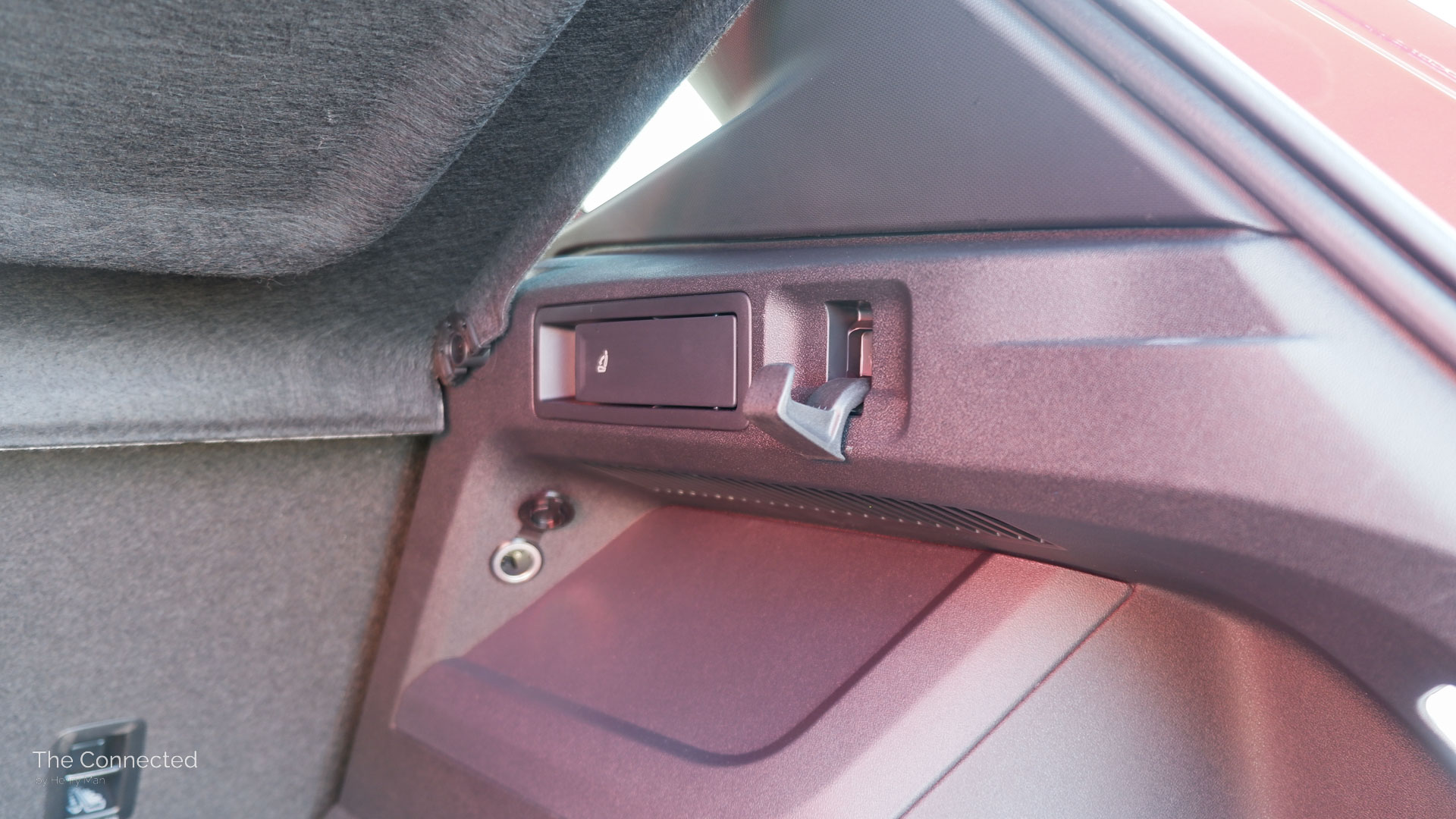
Volkswagen only quotes capacity with the second row seats slid in its most forward position: 652 litres. There are levers to remotely fold down the rear seats from the boot, too.
The electric tailgate features a convenient and reliable kick to open and close hands-free function that only does the latter when you walk away with the proximity key.
But while there is an interior boot open switch on the driver’s side – which actually works every time unlike the ID. Buzz – you can’t close the tailgate as well, as per typical Volkswagen fashion.



Inside, the new Tiguan offers plenty of legroom, footroom underneath the raised front seats, and good headroom – albeit with a prominent centre floor hump which would make fitting five adults a tighter fit.
Riding on an updated Modular Transversal Toolkit (MQB) Evo platform, it retains the same 2681mm wheelbase but its overall length has been stretched by 30mm.
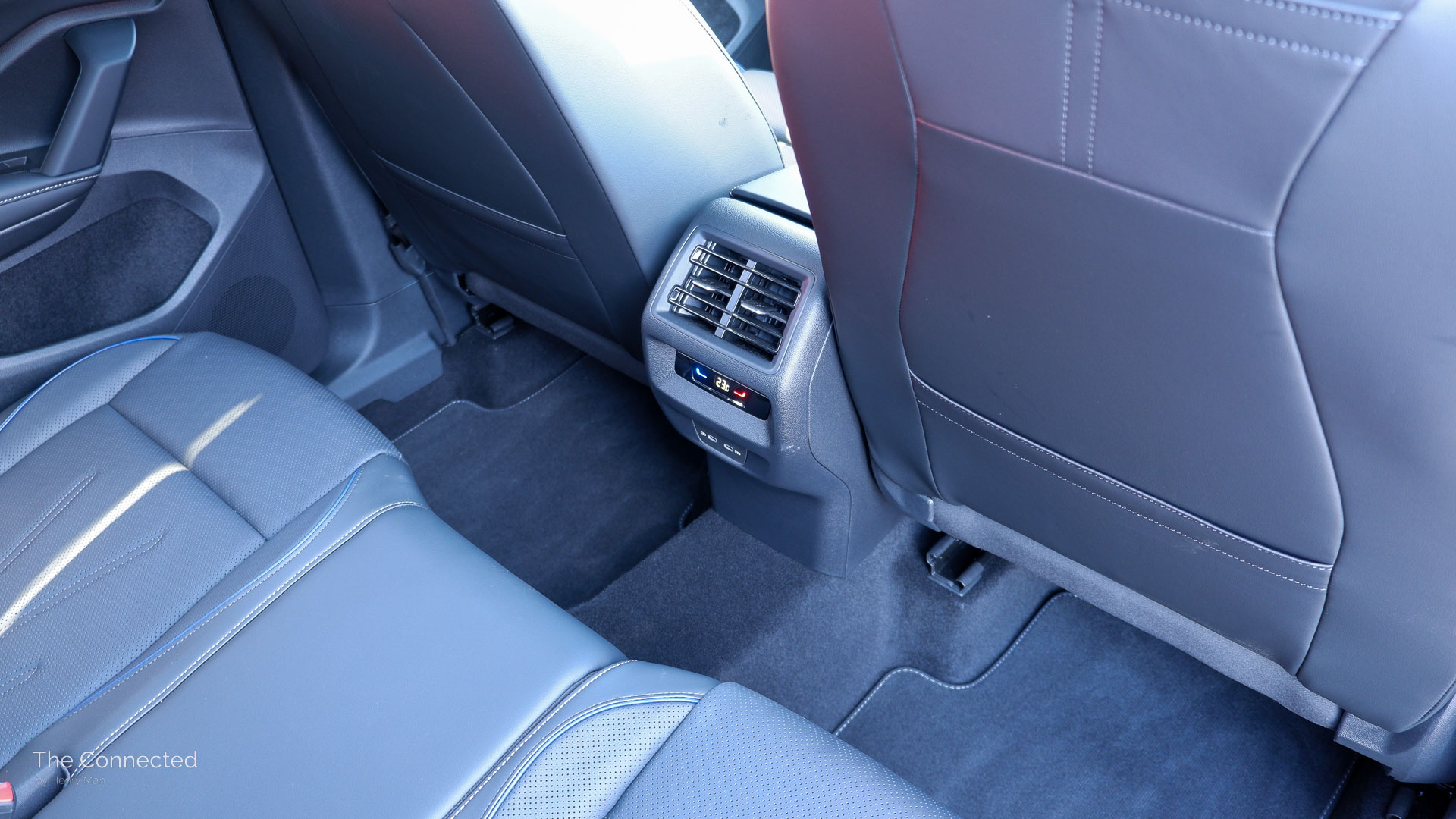
It’s also one of the only medium SUVs with three-zone climate control as standard (even though it annoyingly defaults to turning off the air recirculation every time you start the car), so rear passengers can set their own temperature via the touch slider underneath the rear air vents.
Other amenities include a small storage slot on each side of the bench, seatback pockets with two smaller pockets fit for phones atop, two 45-watt USB-C charging ports, a unique fold-down armrest with two pop-out cup holders, and tinted rear windows.


There’s also a good view of the panoramic sunroof – but it’s a shame that it is still a $2100 optional extra on this flagship 195TSI R-Line variant.
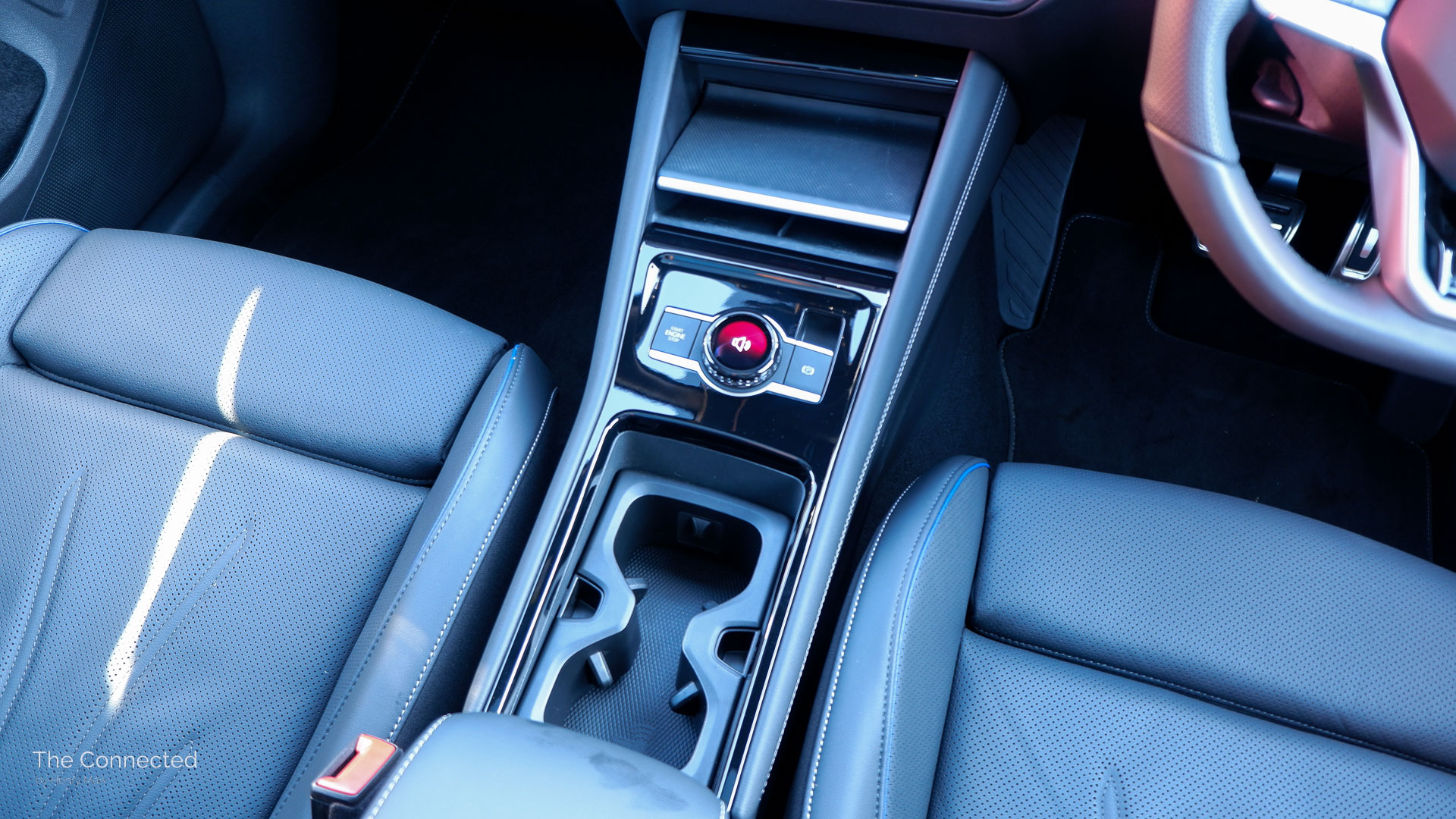
Meanwhile, the front row is home to a redesigned centre console with open storage, two gripped cup holders that can be removed and set back underneath the armrest, and dual Qi wireless charging pads with a flippable cover on top and two USB-C ports.
However, the open design has compromised private storage space with no enclosed bin under the centre armrest. The glovebox is well-sized, though.


All door pockets are impressively large with a carpeted backing helping prevent bottles from rattling while driving, even though the inside isn’t lined as well.
The 195TSI R-Line’s leather seats are supportive with three memory settings for the driver, electric adjustment for the front passenger, and three-level heating and ventilation for both front seats (which can both be activated concurrently) with a range of massaging settings.
Compared to some rivals, such as the Hyundai Tucson and Tesla Model Y, no Tiguan model offers heated rear seats.
Technology.
2026 Volkswagen Tiguan 195TSI R-Line tech features:
| 15.0-inch Discover Pro Max touchscreen running VW OS | 10.25-inch driver instrument display |
| Wireless/wired Apple CarPlay and Android Auto | Head-up display |
| Built-in maps | 2x 15-watt Qi wireless charging pads |
| GoConnect mobile app | 4x 45-watt USB-C and 1x 12-volt charging ports |
| Driving Experience Control dial | Proximity key with auto-folding mirrors, puddle and door handle lights, and auto unlocking/locking |
| 10-speaker Harman Kardon |
The Volkswagen Tiguan features fantastic software with one key quirk, but many rivals offer more functionality.
A bigger 15.0-inch unit is standard on R-Line models, which is super large, high resolution with bright colours, and responsive with good processing speed.
The German automaker’s own software is modern, has large fonts and text (unlike the Tesla Model Y system), and highly customisable across the home page, bottom and top shortcut bars, swipe-down panel and vehicle settings shortcuts.
Strangely, the VW system doesn’t automatically switch between light and dark modes – even though the built-in maps are able to.


Volkswagen Australia has also been unable to implement its in-house connected services here, so it’s adopted a third-party GoConnect mobile app to monitor the vehicle status only. It can’t receive over-the-air software updates and doesn’t automatically set the system time as a result.
Wireless Apple CarPlay and Android Auto connect quickly and are reliable to use. The dual 15-watt Qi wireless charging pads are useful with a flip-down cover to help keep devices cool, even though there’s no active ventilation.
All Tiguans also feature a new Driving Experience Control dial at the centre console, which changes the volume by default. A press switches it to change the drive mode, while a swipe on the circular touchscreen can also make it adjust atmosphere ambient lighting and volume themes.
It’s a welcome addition – allowing three ways to change the volume at the dial, touchscreen slider and steering wheel – and the screen is pretty cool as it reacts when a hand is close by.

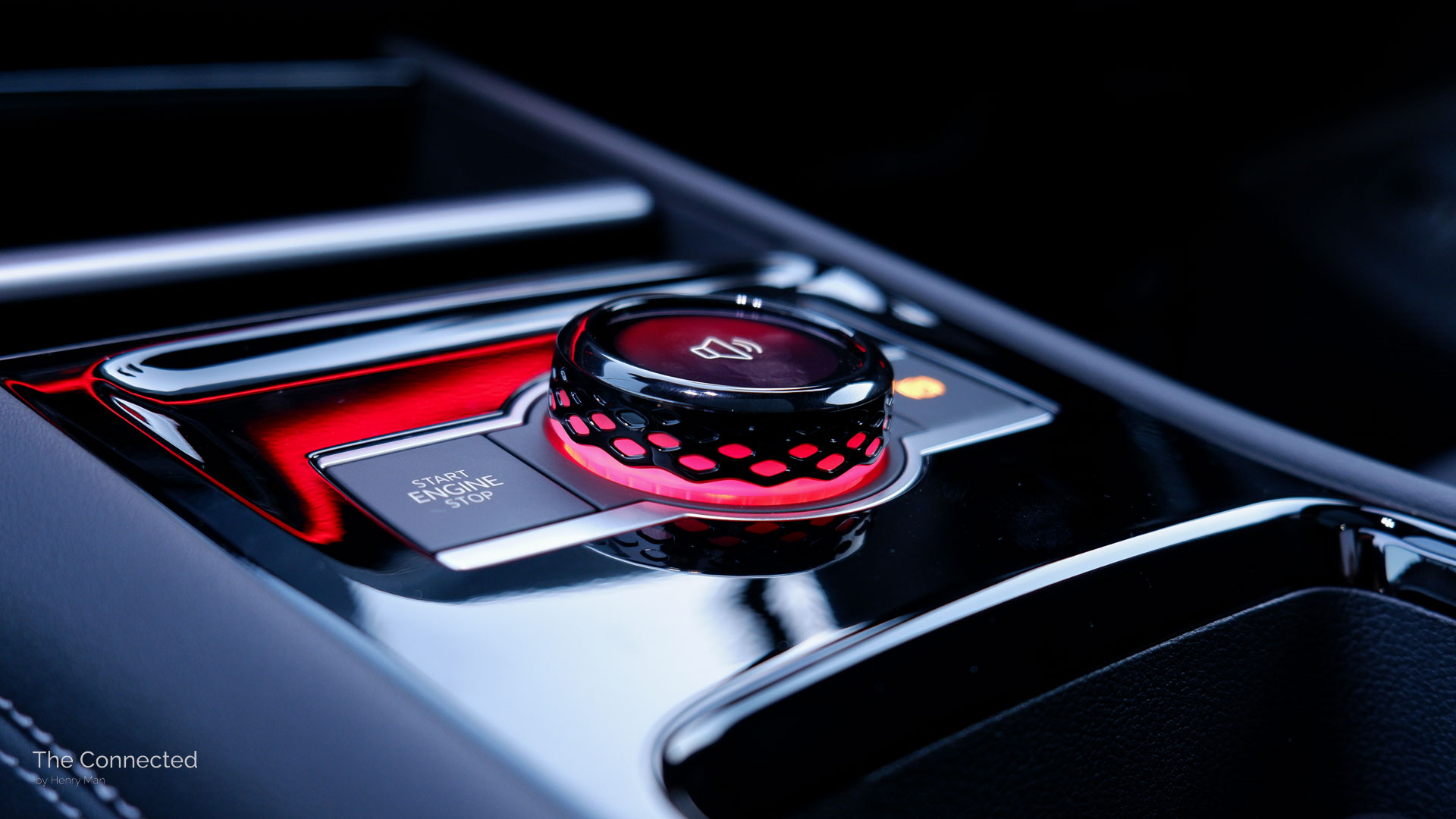
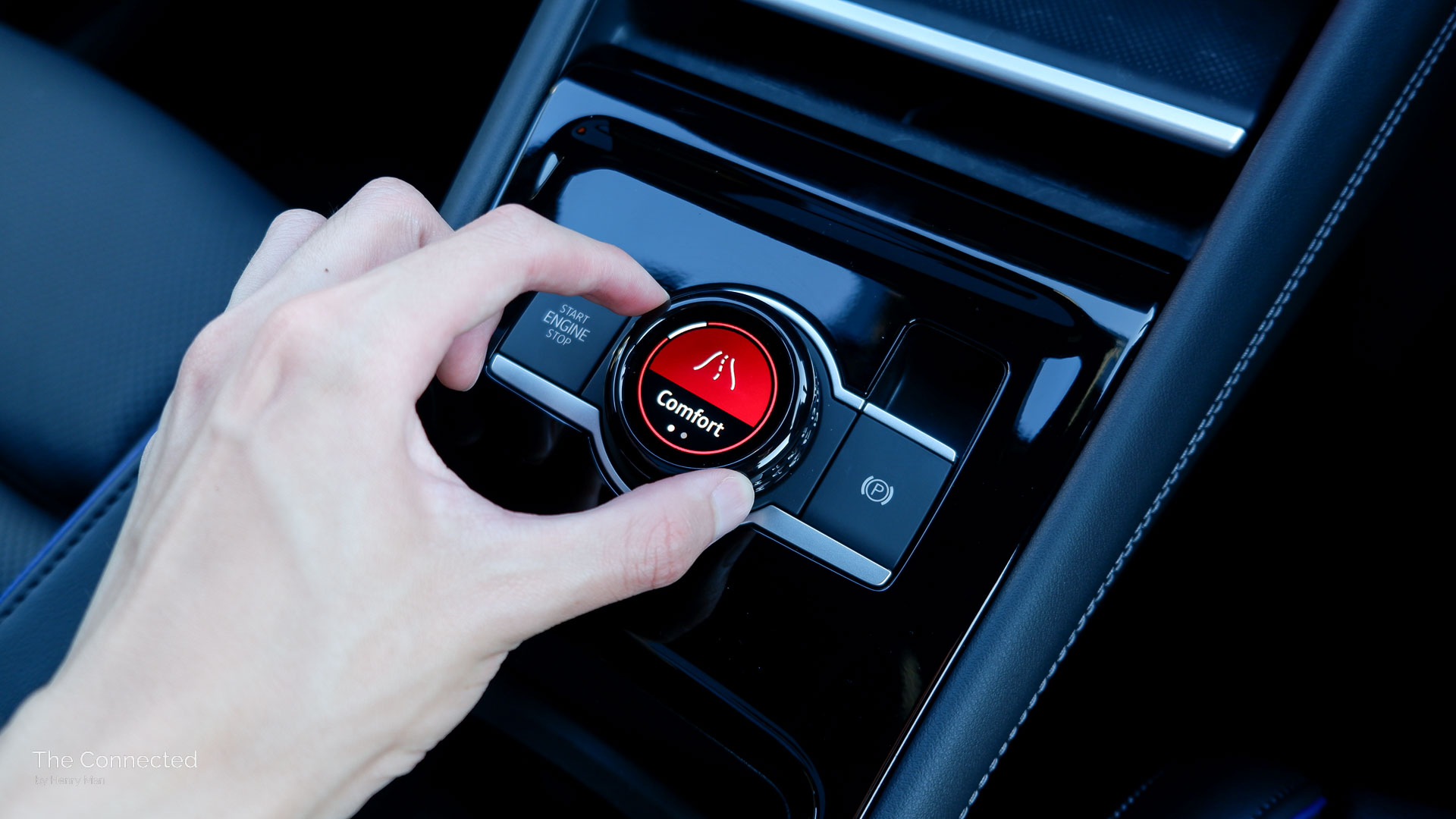

However, I wish it could be configured to change the fan speed and temperature as well, similar to the Geely EX5.
Fortunately, the touch-sensitive volume and temperature sliders are always illuminated and visible with an audible clicking response sound.
While the three-zone climate control is primarily operated via the touchscreen, tapping the slider is easy enough and the climate control bottom bar always shows on the screen even when using Apple CarPlay or Android Auto.
Certain climate shortcuts can also be added to the bar, including air recirculation and fan zone, but adjusting the fan speed requires digging into the climate app.


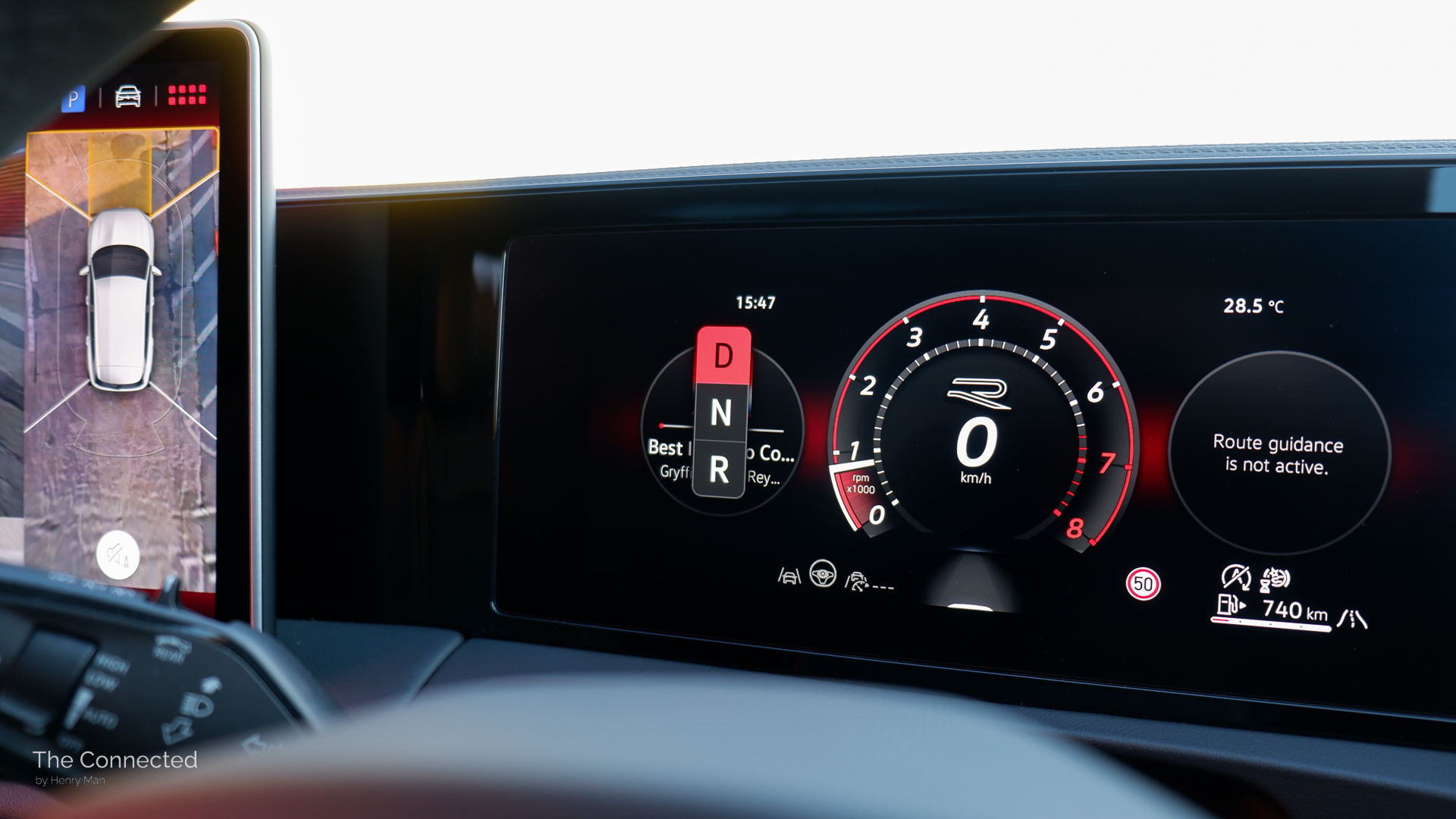
Additionally, the Volkswagen Tiguan’s 10.25-inch driver instrument display is highly customisable with a variety of views (such as the full-screen built-in map and safety assists) and selectable widgets on each side (such as map directions and audio player).
There’s the choice of a sporty central engine rev dial, dials on the side or full digital, too. Volkswagen’s full Digital Cockpit Pro instrument cluster is one of the best in the market.
Meanwhile, the head-up display clearly projects onto the windscreen with a legible speedometer, detected speed sign icon, and even navigation instructions from Apple CarPlay or Android Auto.
Yet, unlike the main screens, it doesn’t automatically adjust the brightness.
The 10-speaker Harman Kardon system is also fantastic with good clarity, richness and bass.

Safety.
2026 Volkswagen Tiguan 195TSI R-Line safety features:
| Front AEB with vehicle/pedestrian/cyclist/junction turning detection | 360-degree camera system |
| Rear AEB | Front, side and rear parking sensors |
| Blind-spot assist | Door open warning |
| Rear cross-traffic assist | Road sign detection |
| Lane-keep assist | Full LED headlights with adaptive matrix high beam and cornering function |
| Adaptive cruise control with lane-centring assist (Travel Assist) | Full LED tail-lights |
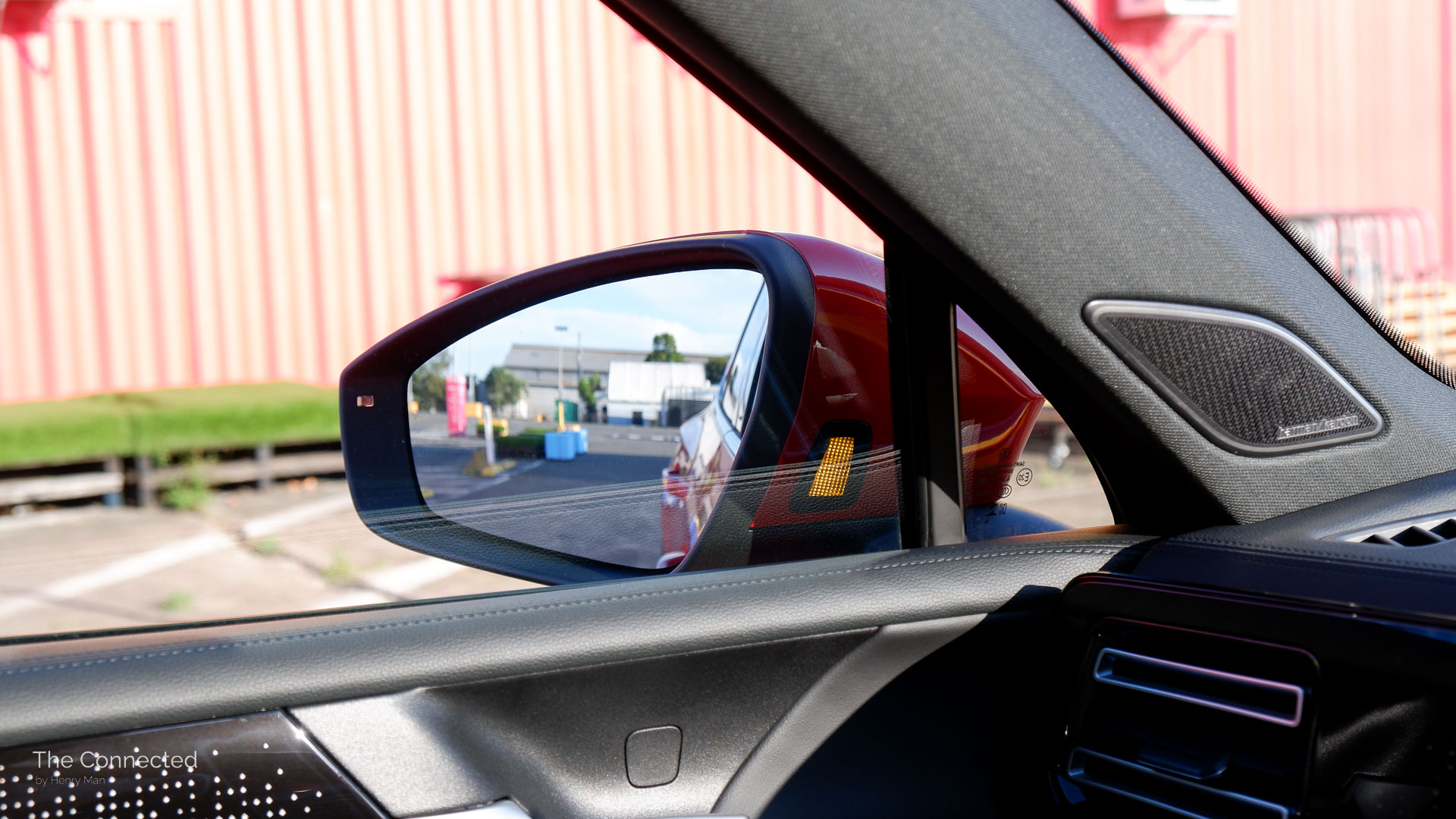
The new Tiguan brings a range of well-calibrated and discreet safety assistance systems as standard.
The lane-keep assist has subtle steering intervention input, the road sign detection system is non-intrusive by default (without frustratingly chiming every time you go past a new sign or overspeed), and the adaptive cruise control and lane-centring assist just work as intended.
Unlike previous Volkswagen cars we’ve reviewed, the Tiguan is the first model that doesn’t follow behind a slower vehicle in the right adjacent lane to avoid undertaking.
However, the 360-degree camera system quality is low resolution and distorted with new cars half its price offering much better clarity. It also deactivates after driving above 17km/h which is a pretty low bar even in car parks.


On our Tiguan tester, we experienced random error messages with certain safety assist systems deactivating, often when initially driving. It resolves itself after a few minutes, though.
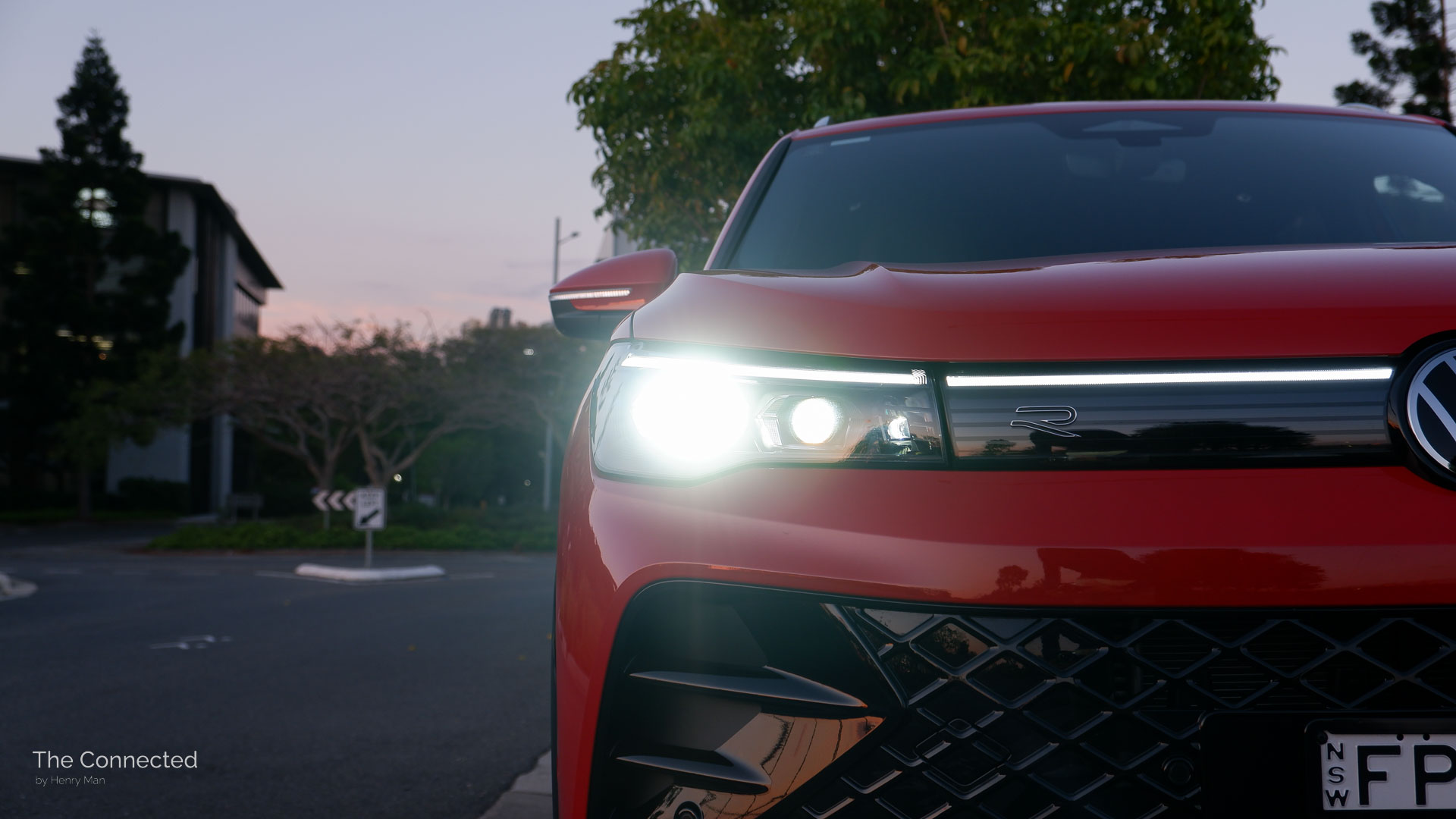
The full LED headlights also provide great visibility at night and the adaptive matrix high beam feature performs reliably.
It uniquely uses its pixels to illuminate the ground of the lane more while driving, which is great for seeing low-lying objects and animals at night.
The 2026 Volkswagen Tiguan achieved the full five-star safety rating by the Australasian New Car Assessment Program (ANCAP) under 2024 testing criteria.

Range and fuel consumption.
2026 Volkswagen Tiguan 195TSI R-Line fuel and efficiency specs:
| Claimed driving range (combined cycle) | 682km |
| Claimed fuel efficiency (combined cycle) | 8.5L/100km |
| Fuel tank size | 58 litres |
| Minimum fuel quality requirement | 95 RON premium unleaded petrol |
| Claimed CO2 exhaust emissions (combined) | 194g/km |
| European emissions compliance | Euro 6 |
The halo Volkswagen Tiguan 195TSI R-Line indicated a high average fuel consumption of 11.3L/100km after a week of urban and highway driving.
Therefore, expect around 513km of real-world driving range from its reasonably-sized 58-litre fuel tank.
That’s rather unimpressive, but expected for a potent SUV similar to the Mazda CX-60. A more efficient plug-in hybrid electric vehicle (PHEV) version is expected to arrive in 2026.
Pricier 95 RON premium unleaded petrol is required at a minimum.
The fuel cap is accessible at the right-rear quarter side of the vehicle with the lid locking with the doors.

Driving.
2026 Volkswagen Tiguan 195TSI R-Line powertrain specs:
| Engine | 2.0-litre inline turbocharged four-cylinder petrol engine |
| Power | 195kW @6500rpm |
| Torque | 400Nm |
| Transmission | 7-speed DCT |
| Drive type | AWD |
| Kerb weight | 1754kg |
| Turning circle | 11.7 metres |
| Payload | 546kg (excluding max 200kg towball download) |
| Towing (unbraked / braked) | 750 / 2300kg |
The Volkswagen Tiguan in 195TSI R-Line guise is great to drive, at the expense of fuel efficiency.
The 2.0-litre inline turbocharged four-cylinder petrol engine produces up to 195kW of power and 400Nm of torque via a seven-speed dual-clutch transmission (DCT). It’s down 40kW but with identical torque compared to the discontinued last-gen Tiguan R.
Unsurprisingly, it provides plenty of punch – albeit with only some accelerator response delay due to the DCT. The powerplant provides some cool-sounding turbo whines when revved up, too.
Small paddle shifters are available behind the wheel, but you can’t force the Tiguan to stay in manual shifting mode.



The start/stop engine feature doesn’t weaken the air-conditioning like it did with the T-Cross we’ve tested either, but there’s still a noticeable delay in reactivating it on acceleration.
Thankfully, a shortcut button can be pinned to the top of the touchscreen to deactivate it every time.
Combined with the engine stop/start system, a harder tap on the pedal results in a sudden lurch forward due to the DCT, so you’ll learn to be more gentle and progressive on the accelerator to negate this.
It handles well for a midsize SUV as well with good feedback without being too light or heavy.


Despite riding on low-profile 20-inch wheels, the 195TSI R-Line offers good noise insulation and a compliant ride, with the latter helped by the standard adaptive dampers. Sliding the scale up in the individual drive mode noticeably increases the firmness, but still remains fairly compliant.
New for this third-gen German SUV is a simple stalk-based gear shifter carried across from its electric cars.
The Tiguan provides a higher SUV seating position with good all-round visibility and isn’t tedious to park thanks to its short-for-a-midsize SUV sub-4.6 metre length and auto dip-down wing mirror.
Warranty and servicing.
2026 Volkswagen Tiguan 195TSI R-Line capped-price servicing costs:
| 1 year/15,000km | 2 years/30,000km | 3 years/45,000km | 4 years/60,000km | 5 years/75,000km |
| $475 | $948 | $475 | $1271 | $475 |
The 2026 Volkswagen Tiguan is covered by a five-year, unlimited kilometre warranty.
Servicing is required every one year/15,000km (whichever occurs first) with prices capped for the first five visits.
Disappointingly, as typical for Volkswagen, servicing with the dealer is an expensive exercise at $3644 in total after five years/75,000km. It costs a painful $948 at the second service and an agonising $1271 at the four year mark.
Lifetime roadside assistance is included, with it renewed every 12 months when a scheduled service is undertaken.
Up to five years of GoConnect services are included, which becomes a subscription paid to the dealer thereafter.
A temporary space-saver spare tyre is included underneath the boot floor of the Tiguan – which is unique for a midsize SUV nowadays.

Price and rivals.
2026 Volkswagen Tiguan model range pricing (accurate as at the time of publication):
| 110TSI Life | 110TSI Elegance | 150TSI Elegance | 150TSI R-Line | 195TSI R-Line |
| From $44,990 before on-road costs | From $50,690 before on-road costs | From $60,690 before on-road costs | From $55,990 before on-road costs | From $70,490 before on-road costs |
The 2026 Volkswagen Tiguan is priced from $44,990 before on-road costs in Australia.
Five variants are sold with two engine options for the Elegance and R-Line (each with different equipment, too).
A longer seven-seat version called the Volkswagen Tayron (previously the Tiguan Allspace) is also available.
Pure White is the standard exterior paint colour, while metallic colours cost $800 extra with Cypress Green Premium Metallic and Persimmon Red Premium Metallic (as pictured) being $1100.
A number of options are also available depending on the variant, such as the Sound and Vision Package (+$2700) on the 110TSI Elegance and 150TSI R-Line, panoramic sunroof (+$2100) on all Elegance and R-Lines, and the Black Style Package (+$600) on the 195TSI R-Line.
The Volkswagen Tiguan directly rivals the following medium SUVs:
- Mazda CX-60 (full review)
- Skoda Karoq
- Cupra Terramar
- Hyundai Tucson (full review)
- Kia Sportage (full review)
- Jaecoo J7 (full review)
- Toyota RAV4
- Peugeot 3008
Other alternatives to the Volkswagen Tiguan include:
- Skoda Kodiaq
- Volkswagen ID.4
- Cupra Tavascan (full review)
- Tesla Model Y (full review)
- Kia EV5 (full review)
- Toyota bZ4X (full review)
- BYD Sealion 7
- Zeeker 7X

Would I pick the 2026 Volkswagen Tiguan 195TSI R-Line?
The third-gen Volkswagen Tiguan is an impressively practical, potent and premium medium SUV – but it’s not cheap to own.
A spacious and practical interior, physical buttons, dials and switches with illuminated sliders, and a super clear and responsive touchscreen are key highlights from a brand that has hit some stumbling blocks in recent years.
The halo 195TSI R-Line’s powertrain and handling dynamics also appeases driving enthusiasts (who also need a five-seat family SUV).
But there is a price for being an upmarket German SUV with expensive servicing costs, high fuel consumption, some questionable material choices given the cost, the transmission isn’t always smooth, and the 360-degree camera system ought to be better.


I’d pick the Tiguan 110TSI Elegance which is more reasonably priced, still offers niceties such as heated, ventilated and massaging front seats, and should theoretically be more fuel efficient.
Amid more cost-effective hybrids and low-cost Chinese rivals, the new Tiguan suits buyers who want a more upmarket-feeling family SUV without having a showy luxury badge.
It’s a better all-rounder package compared to the Mazda CX-60.
Photographs by Henry Man
READ MORE: 2025 Mazda CX-60 review
READ MORE: 2026 Cupra Tavascan review
READ MORE: 2026 Kia K4 Sedan review
Pros:
- Spacious and family-friendly
- Physical buttons, illuminated sliders
- Clear and responsive touchscreen
- Sporty 195TSI powertrain
- Upmarket feel without a showy badge
Cons:
- Expensive at the top-end
- Thirsty on fuel, high servicing costs
- Plasticky grab handle, gloss black surfaces
- Jerky at low speeds
- Low-res 360-degree cameras
About the Author.
Henry Man is an independent content producer passionate about the intersection of technology and transportation.
The former automotive journalist is focused on producing critically-detailed vehicle reviews, and unique short-form content. Learn more.


 The Connected by Henry Man