
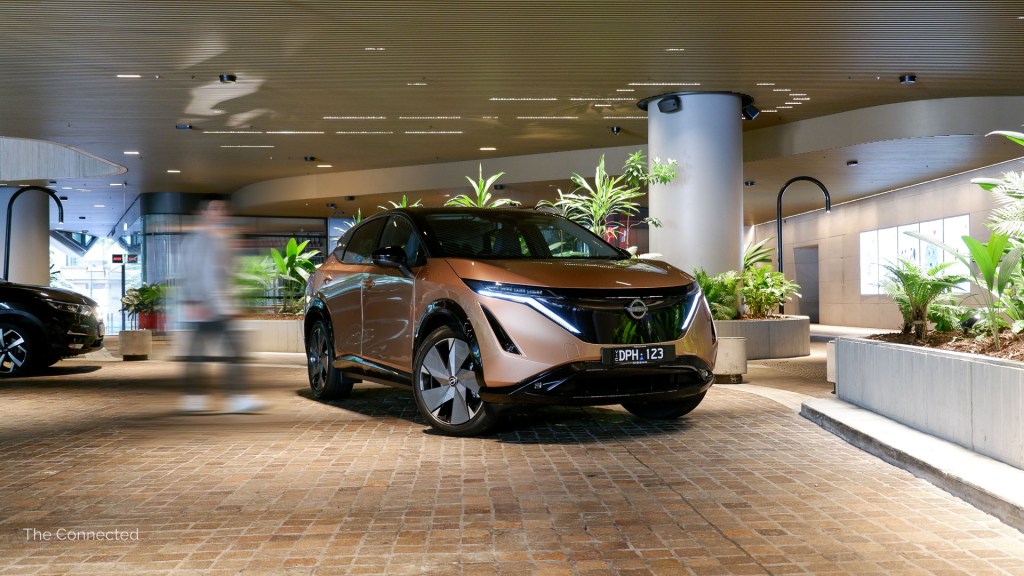
Nissan has finally released its second full electric vehicle in Australia… but it’s almost four years late.
As one of two mainstream pioneers in the electric vehicle space with the Nissan Leaf hatchback, the Japanese automaker has finally introduced a new electric vehicle model.
The Nissan Ariya medium SUV launches in Australia in late 2025, years after it was released globally in early 2022.
Is it nearly four years too late to come to the Australian market? With a facelift expected soon and the new-generation Leaf “paused indefinitely”, the current Ariya still shouldn’t be overlooked on your EV shortlist.
NOTE: The press vehicle was provided by Nissan Australia for a seven-day independent evaluation. Toll costs were covered, but we have no commercial arrangements with the company and it had no editorial control.

Pros.
+ Unique and modern interior design
+ Competitive pricing
+ Good to drive, strong regen
+ 22kW AC charging capability
+ Long conditional warranty
Cons.
– Tech feels dated
– Middling DC charge speed, no limit setting
– Safety assists could be better
– Low-res 360-degree cameras
– Australia got this too late
Vehicle tested:
| Model | 2026 Nissan Ariya |
| Variant | Evolve e-4orce |
| Starting price | $71,840 before on-road costs |
| Exterior colour | Akatsuki Copper with Black Roof (+$1495) |
| Interior colour | Blue upholstery – Nappa leather seats with ultrasuede inserts (standard) |
| Country made | Japan |
Design and quality.
The Nissan Ariya’s design is the key standout, with a special-feeling contemporary interior.
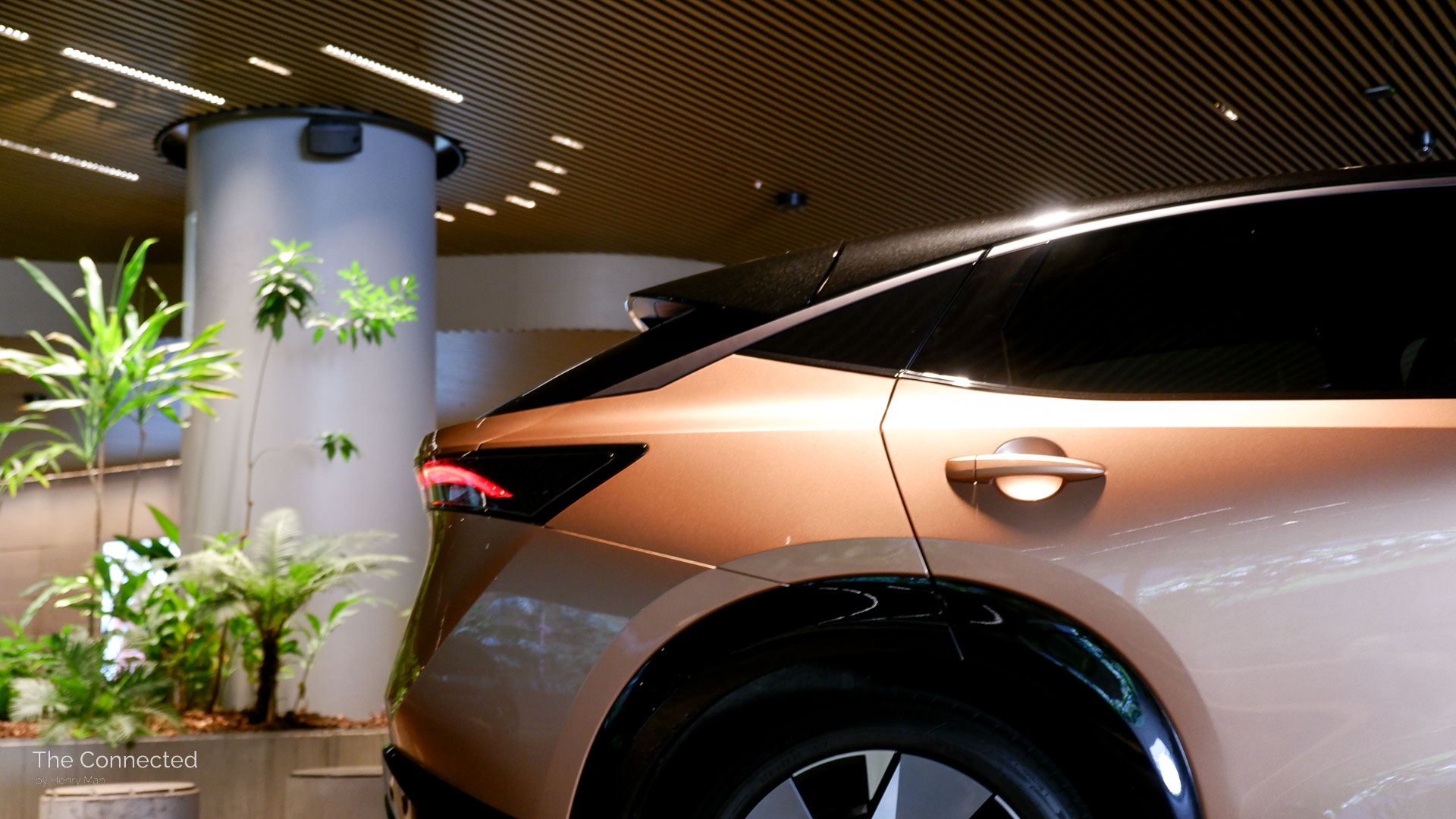
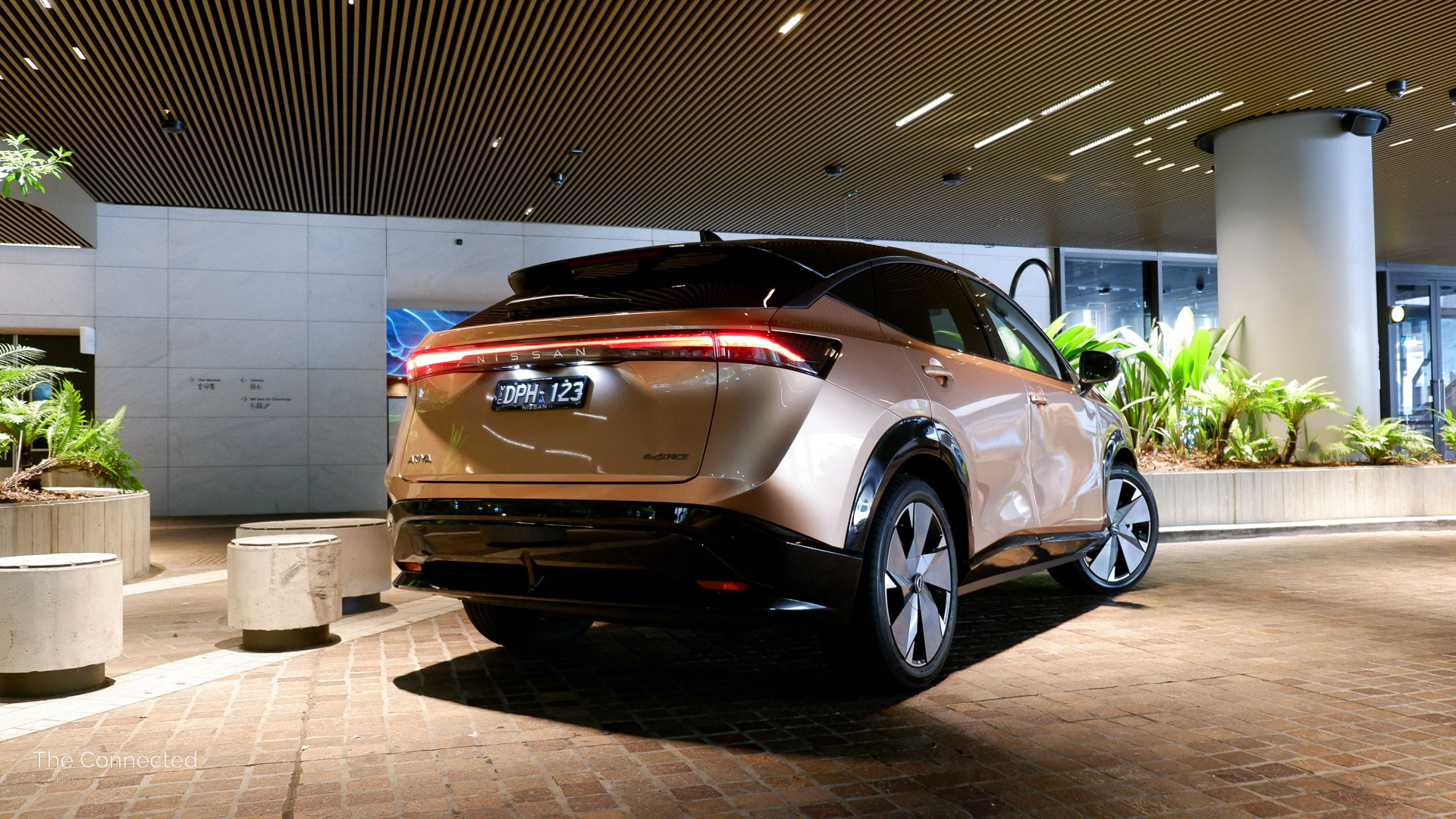
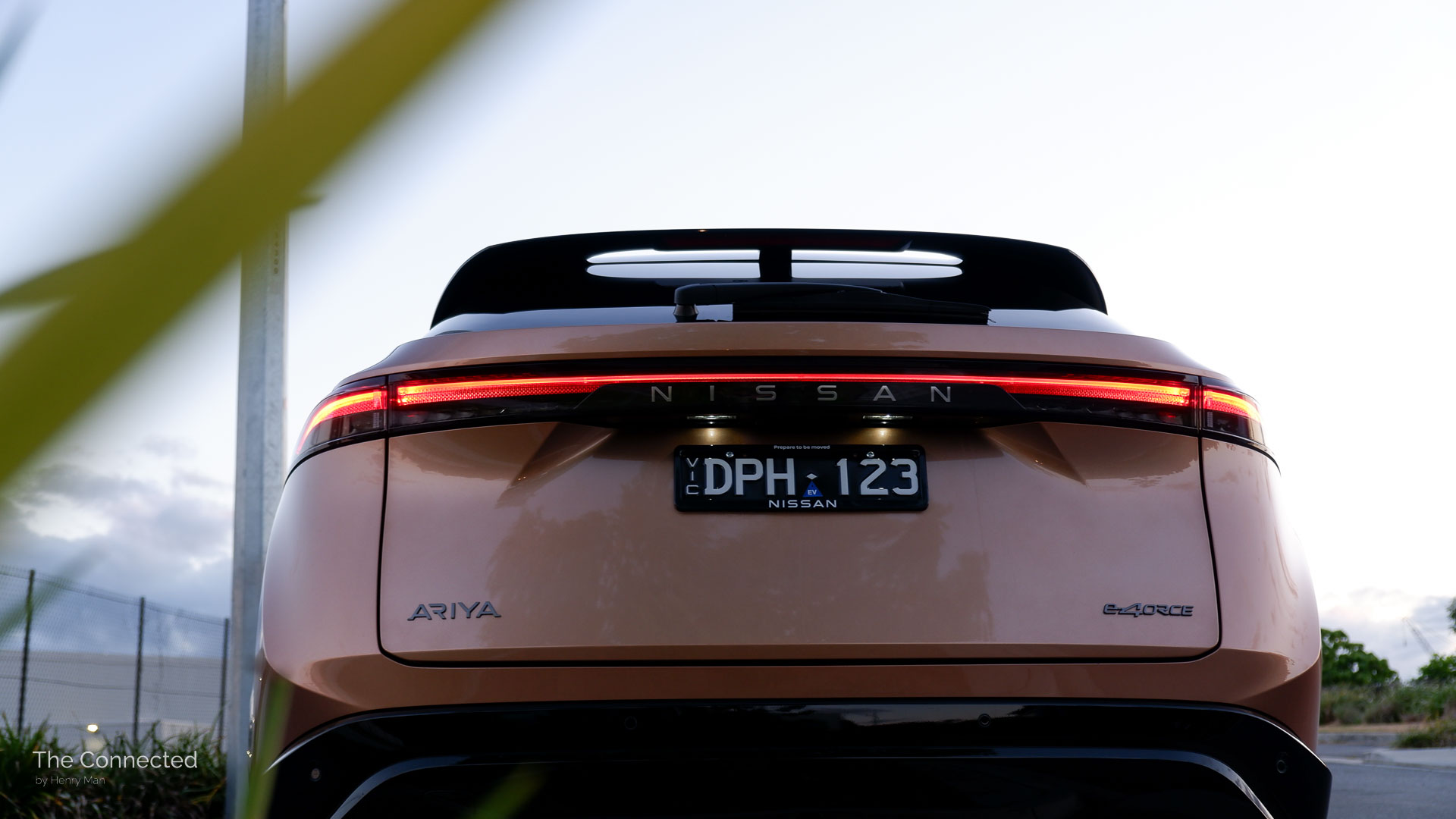
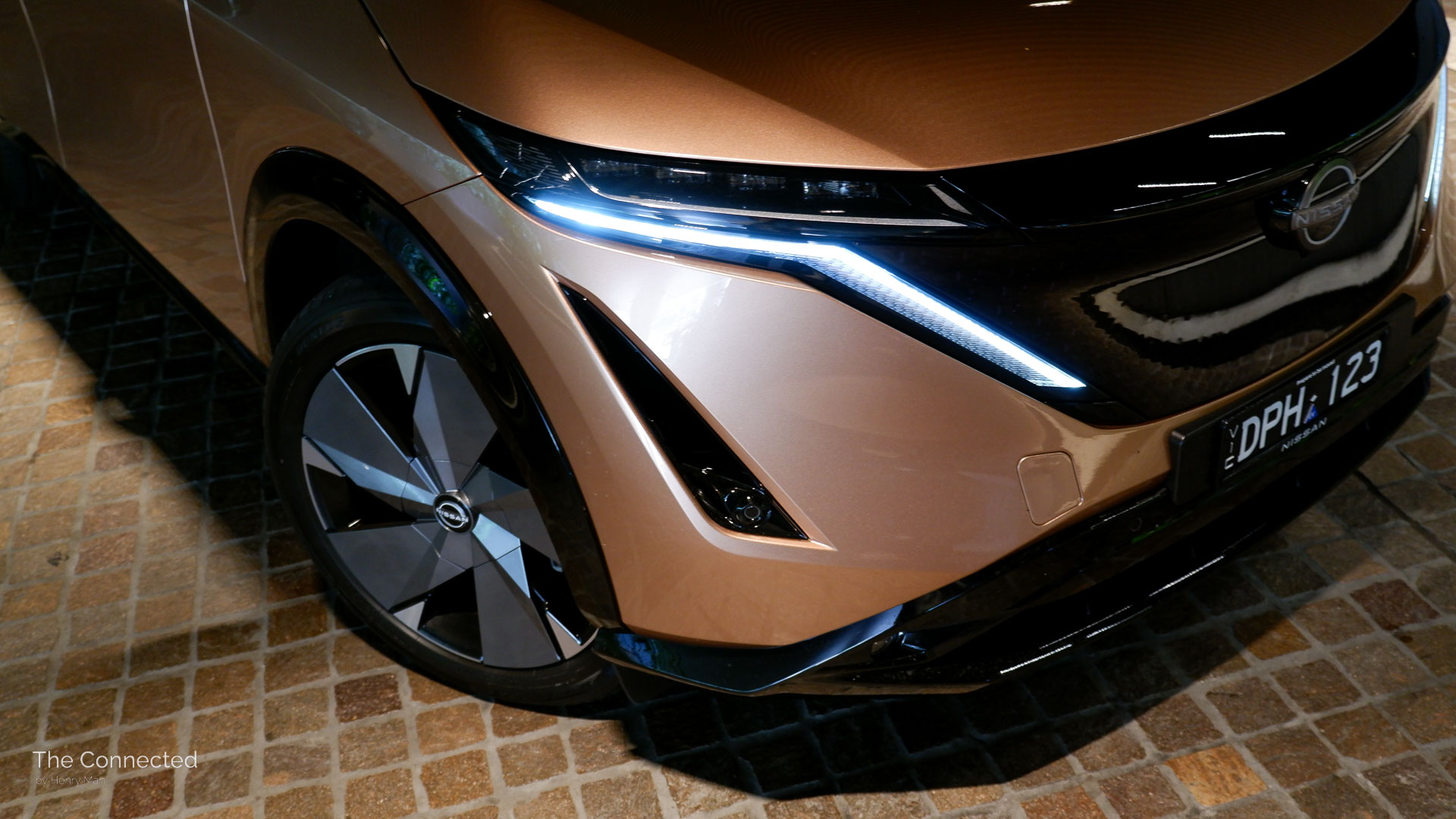
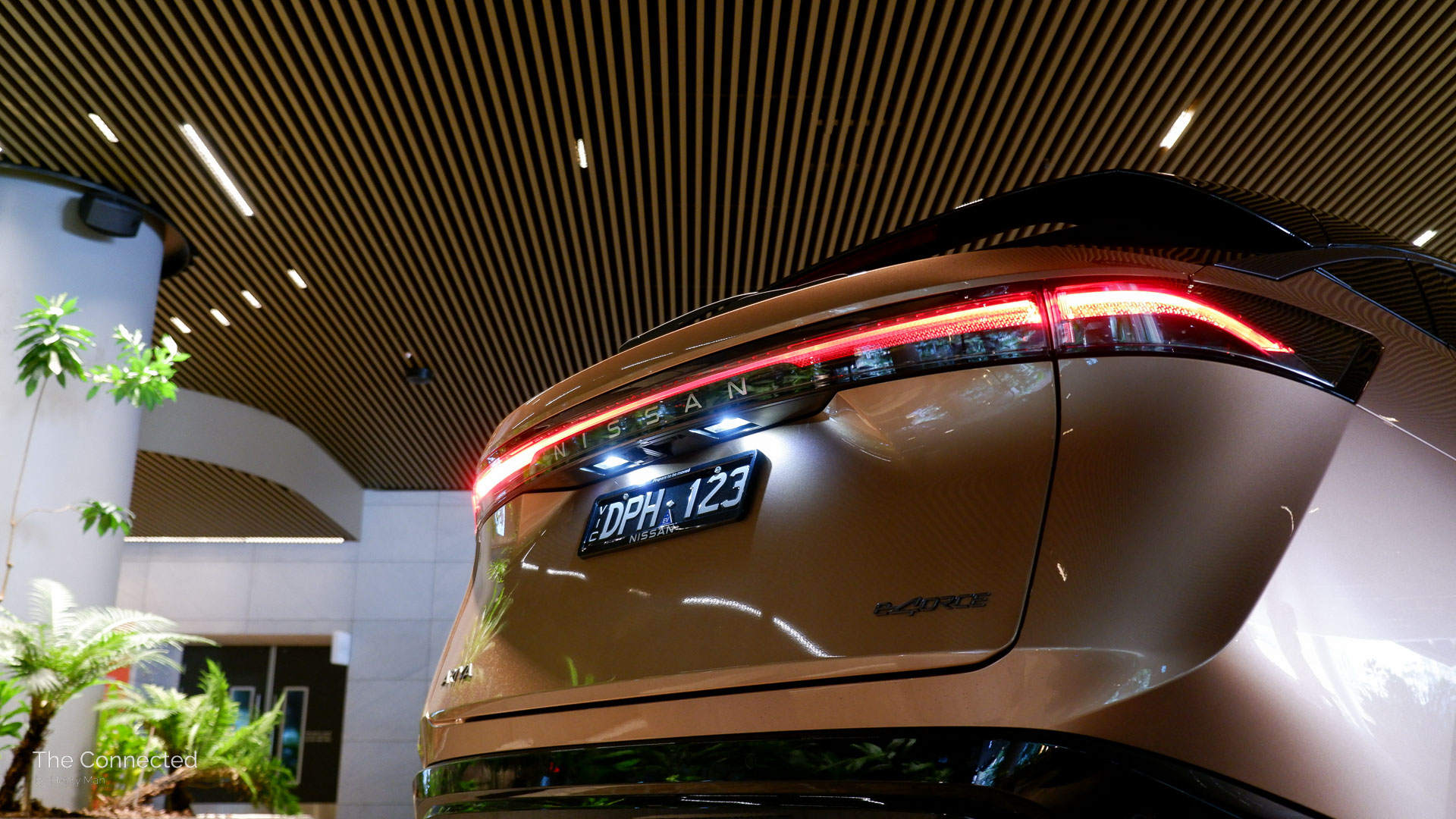
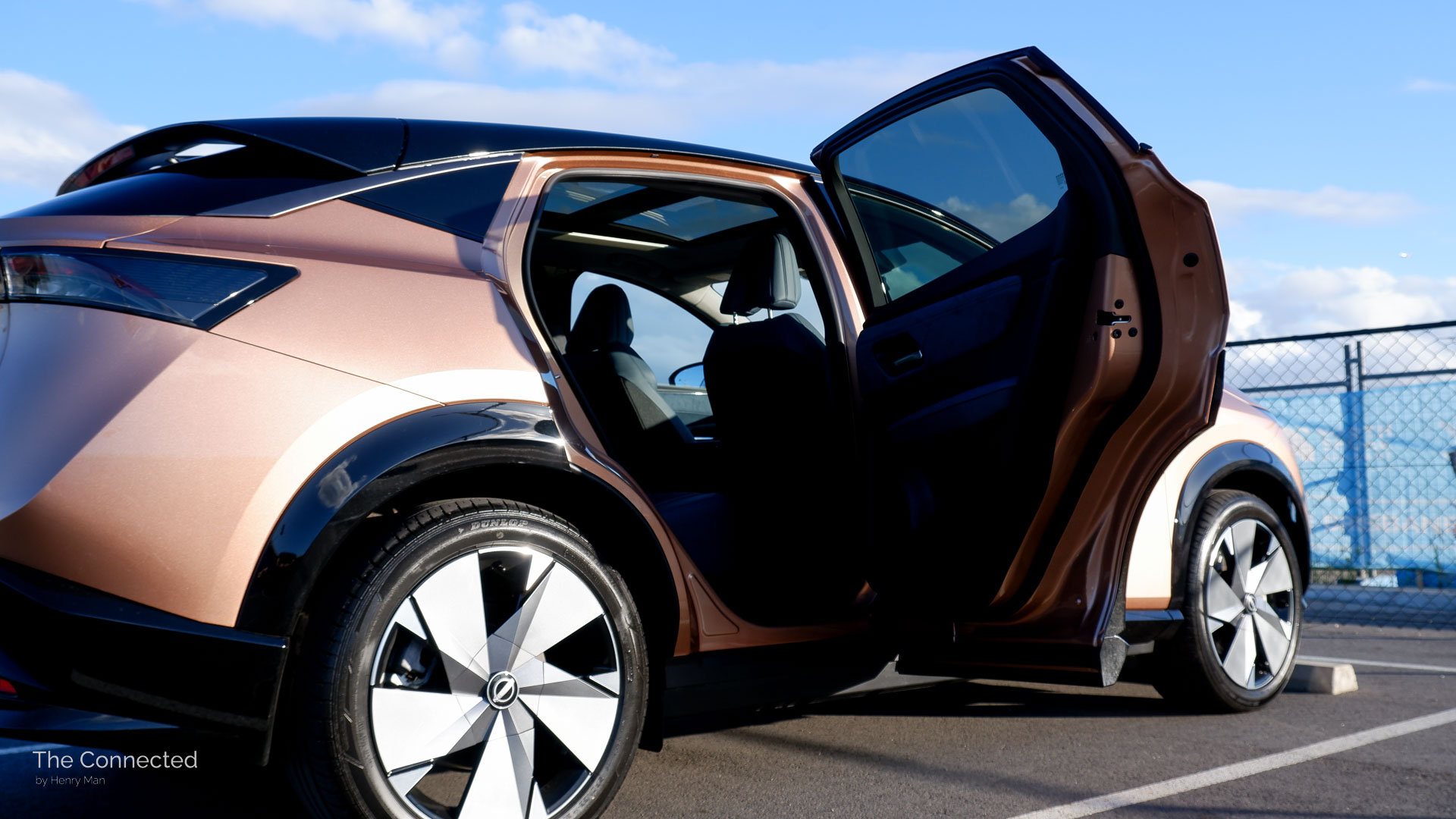
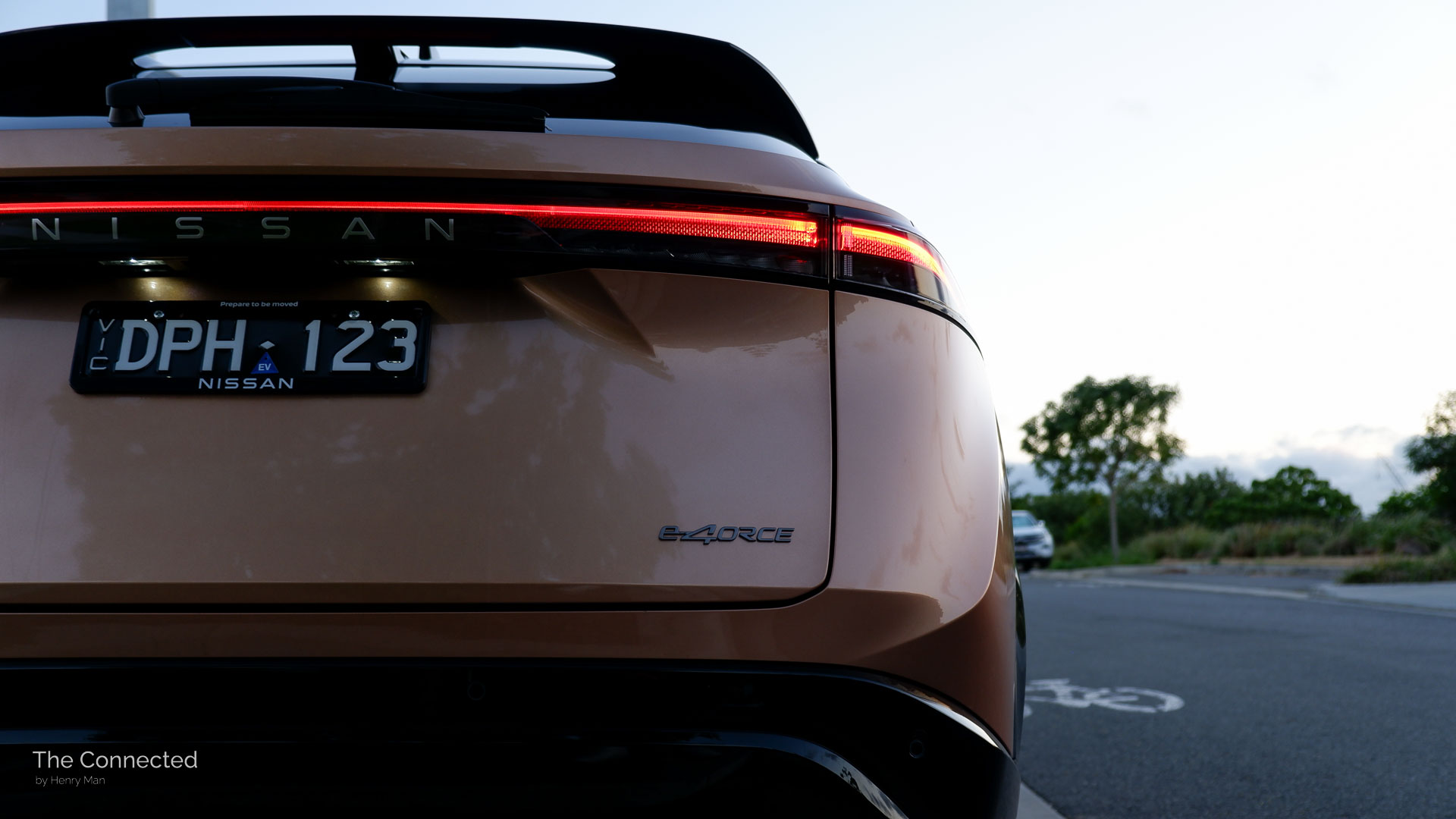
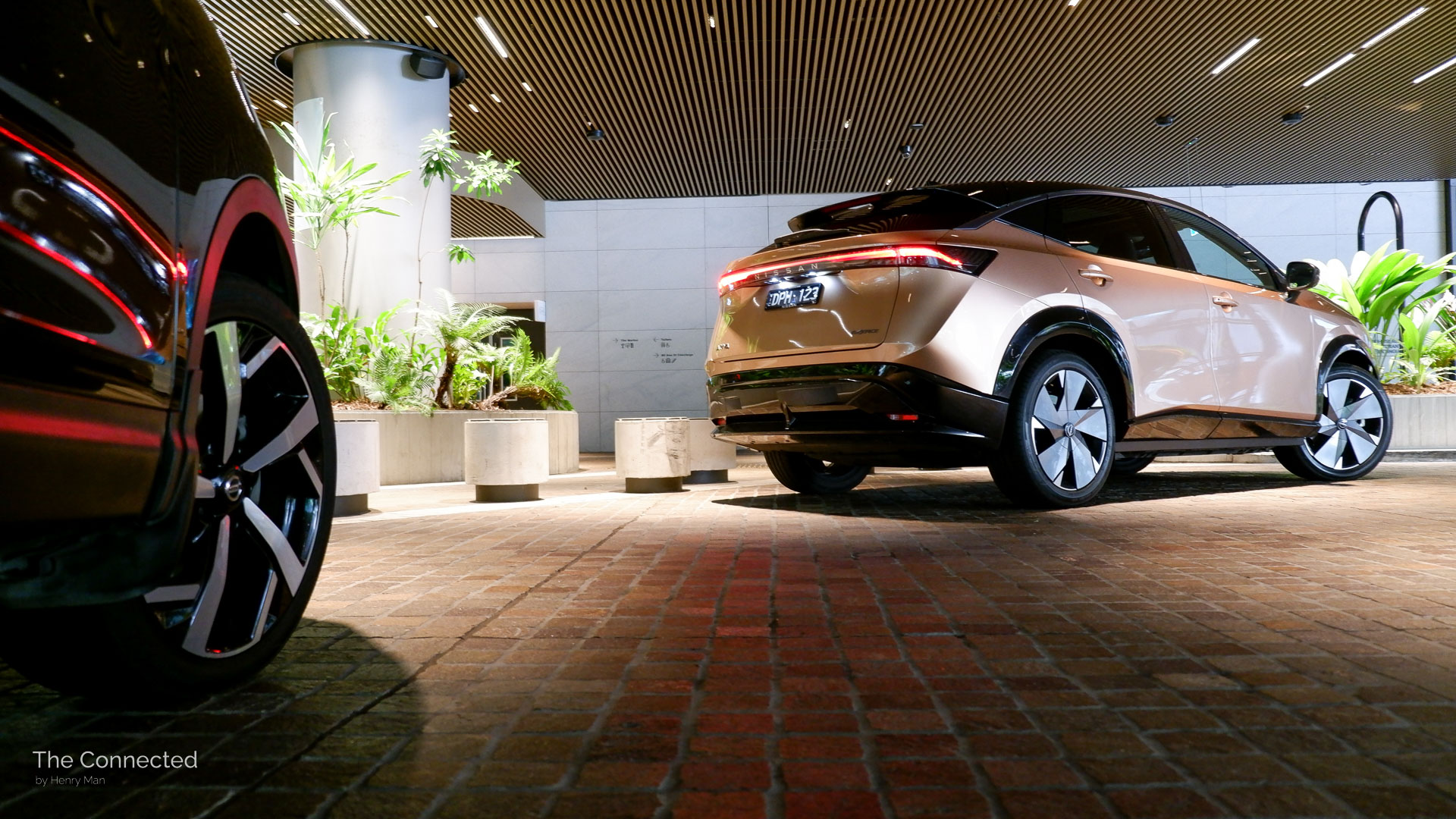
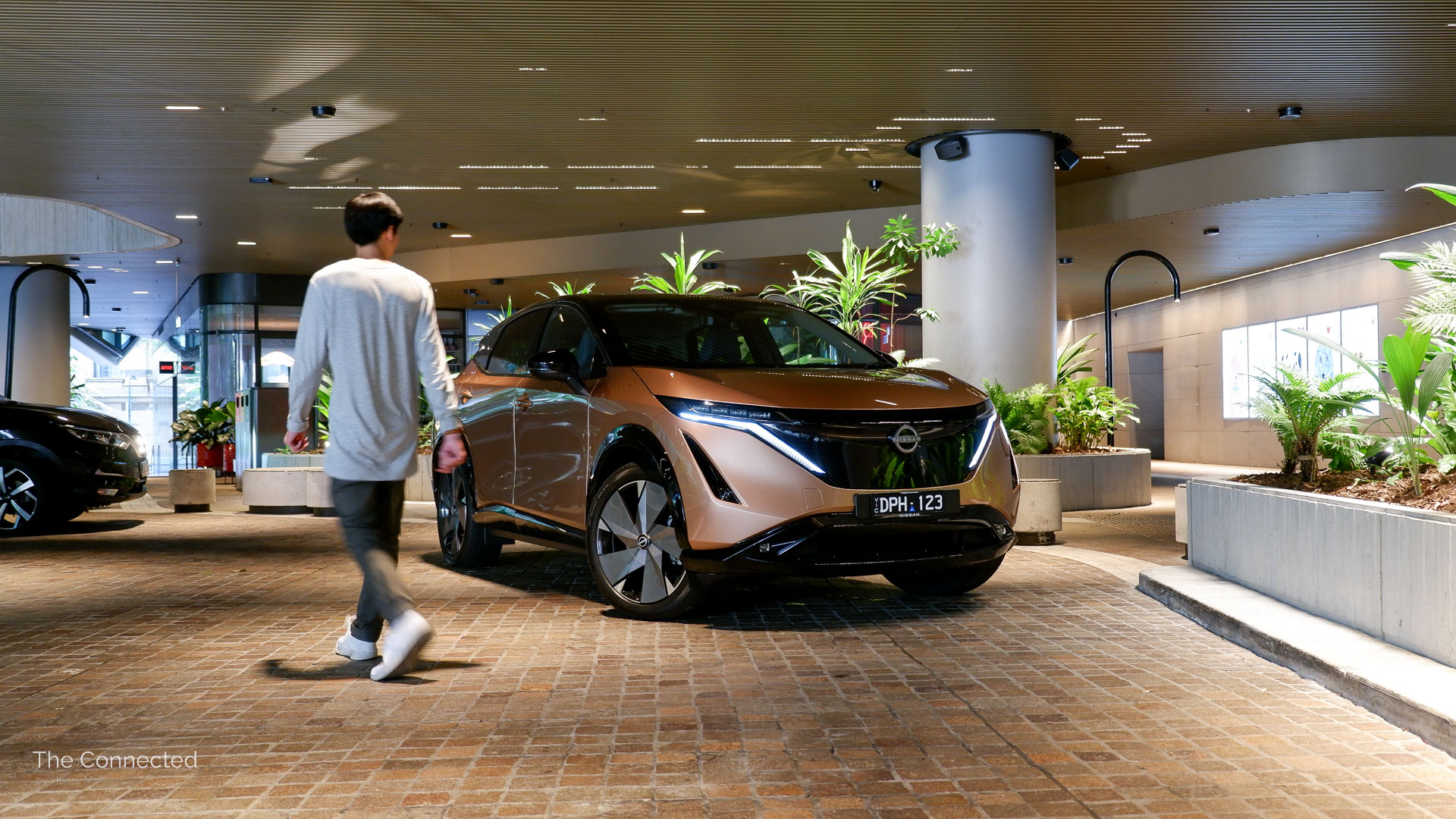
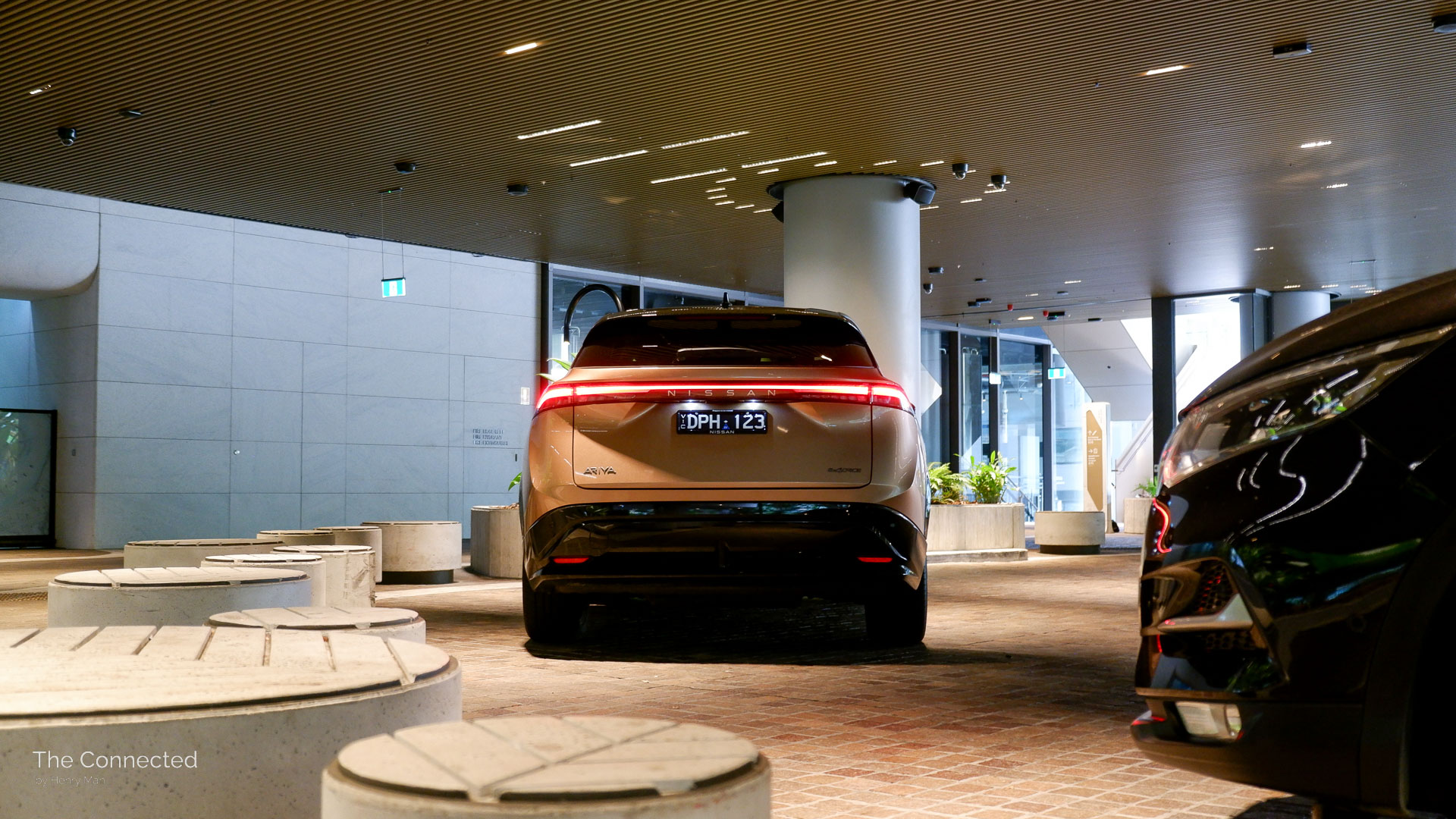
The Japanese-made electric SUV adopts a sloping coupe-style roofline design (thanks to the black-painted roof) with a raked window line, cool blade-like sequential indicators front and back, and a black-patterned grille flanked by air ducts on each side.
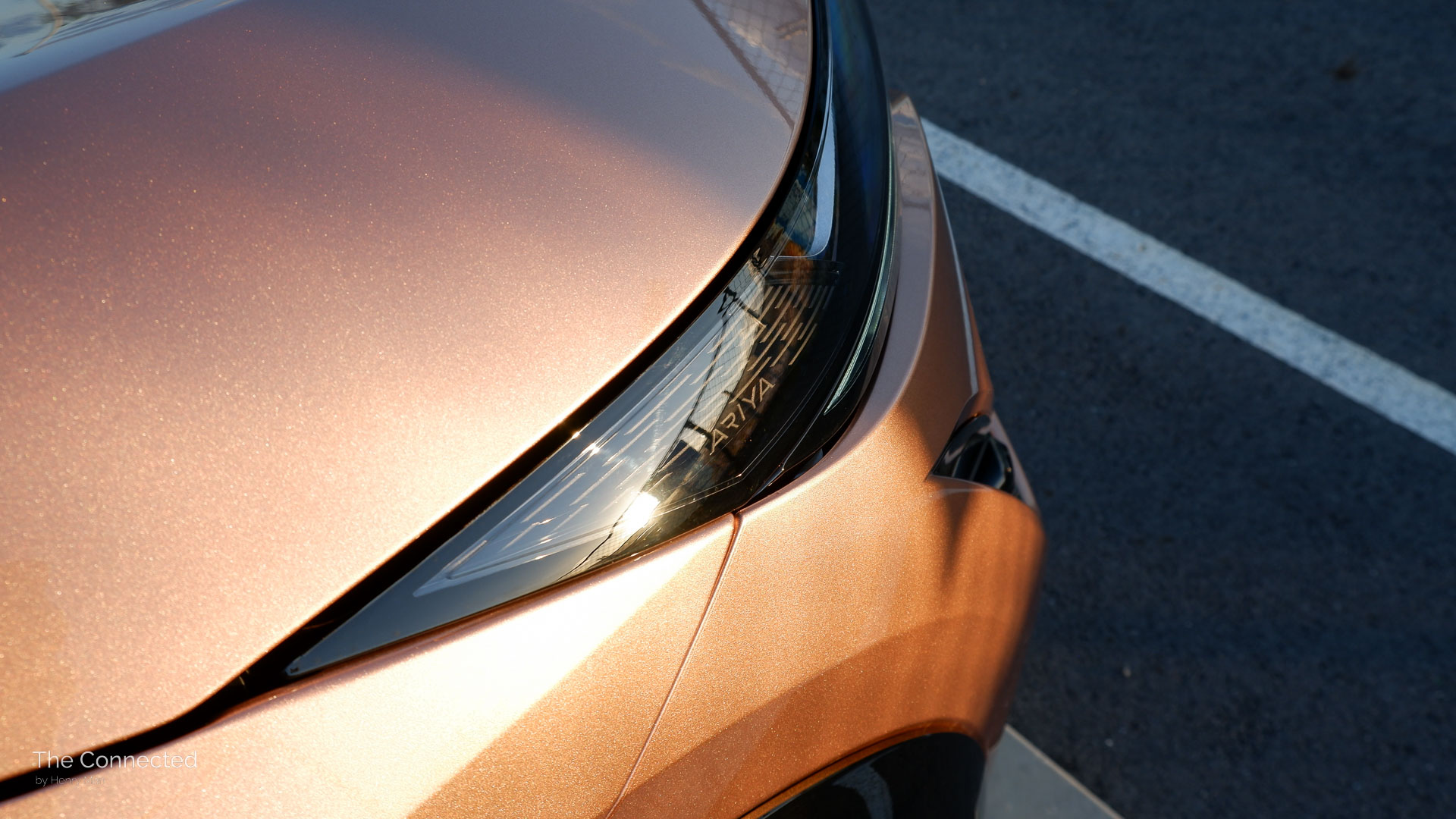
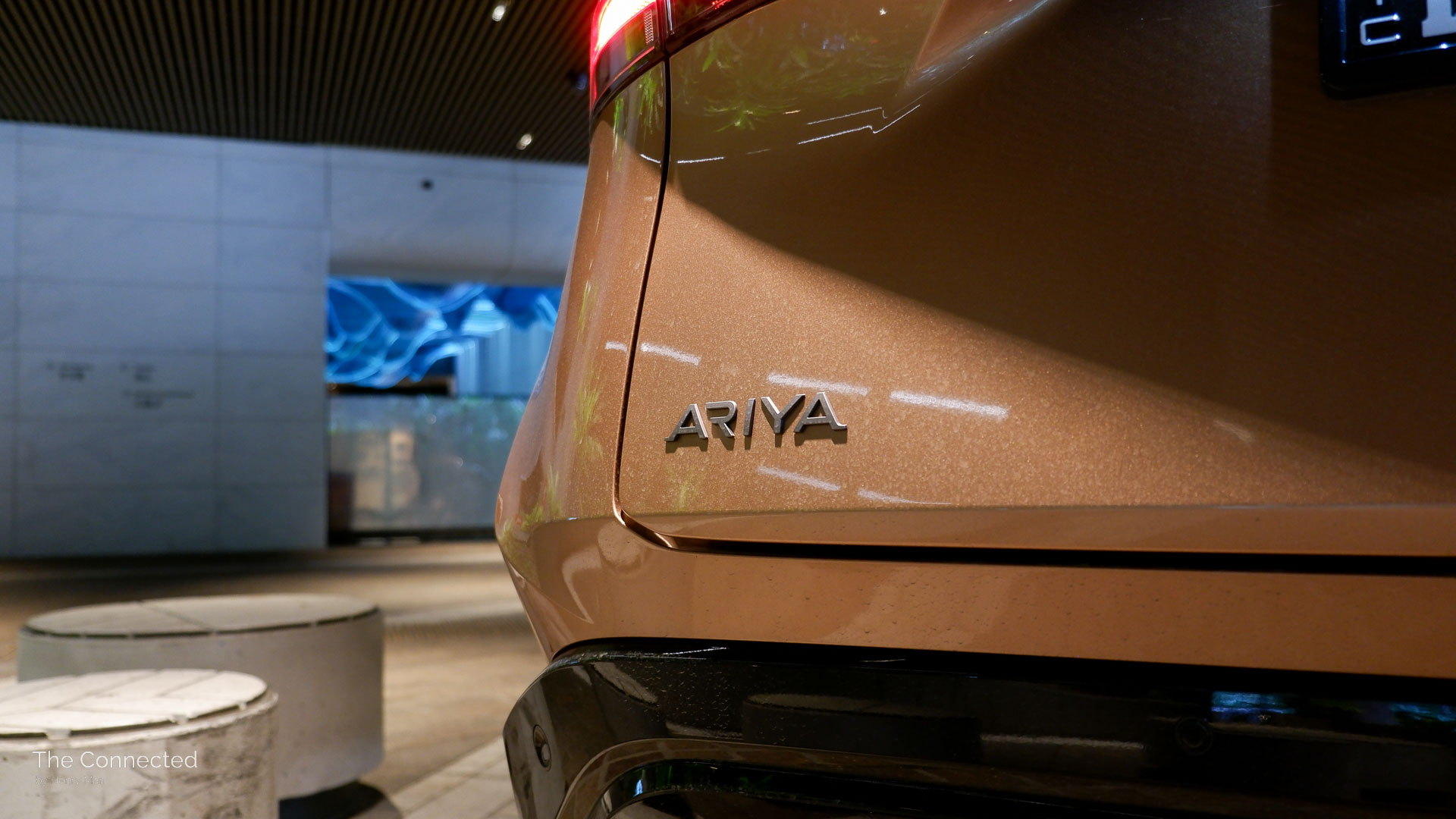
It’s rather stylish with this tester’s optional Akatsuki Copper paint colour being a particular eye catcher.
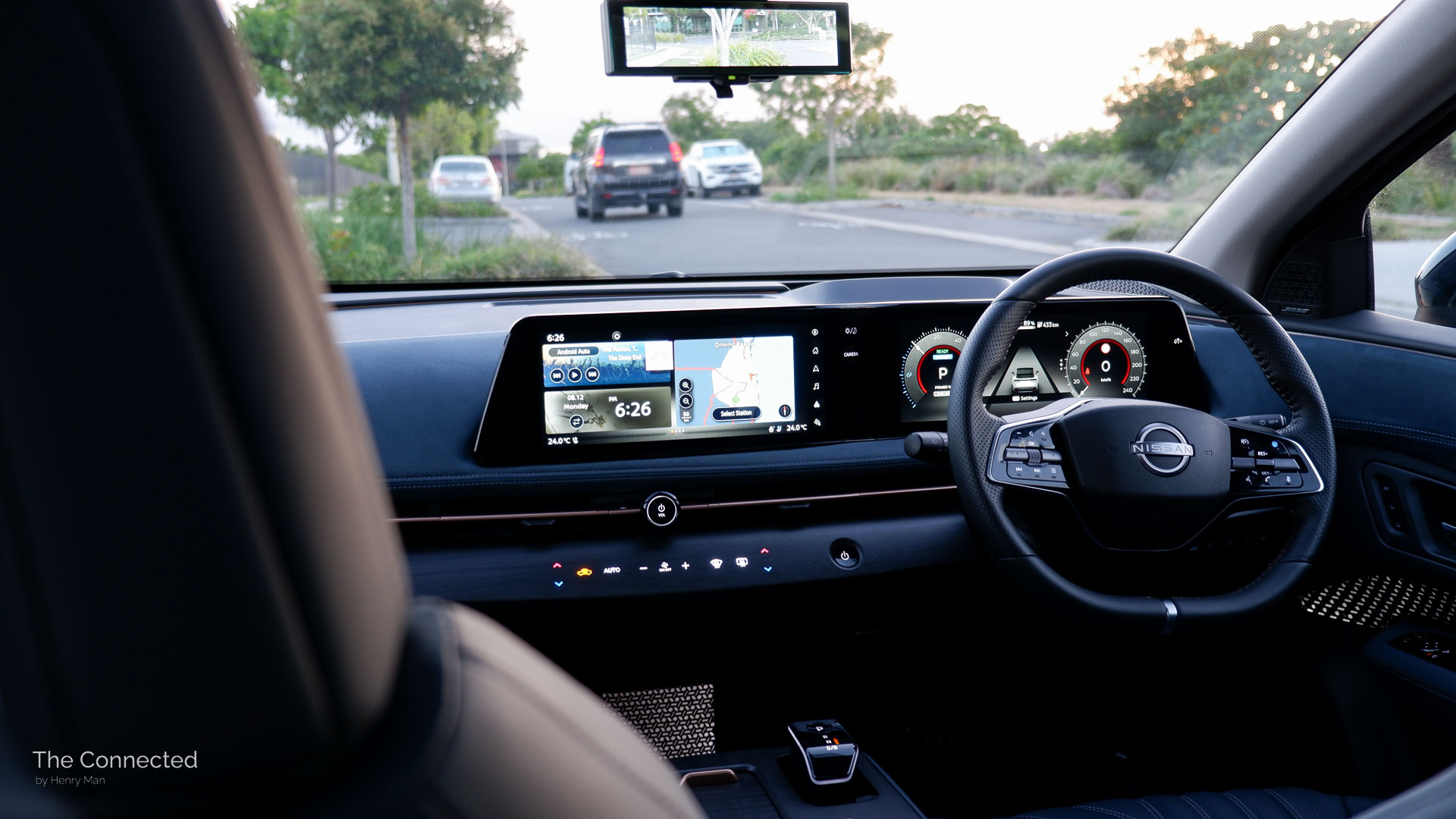
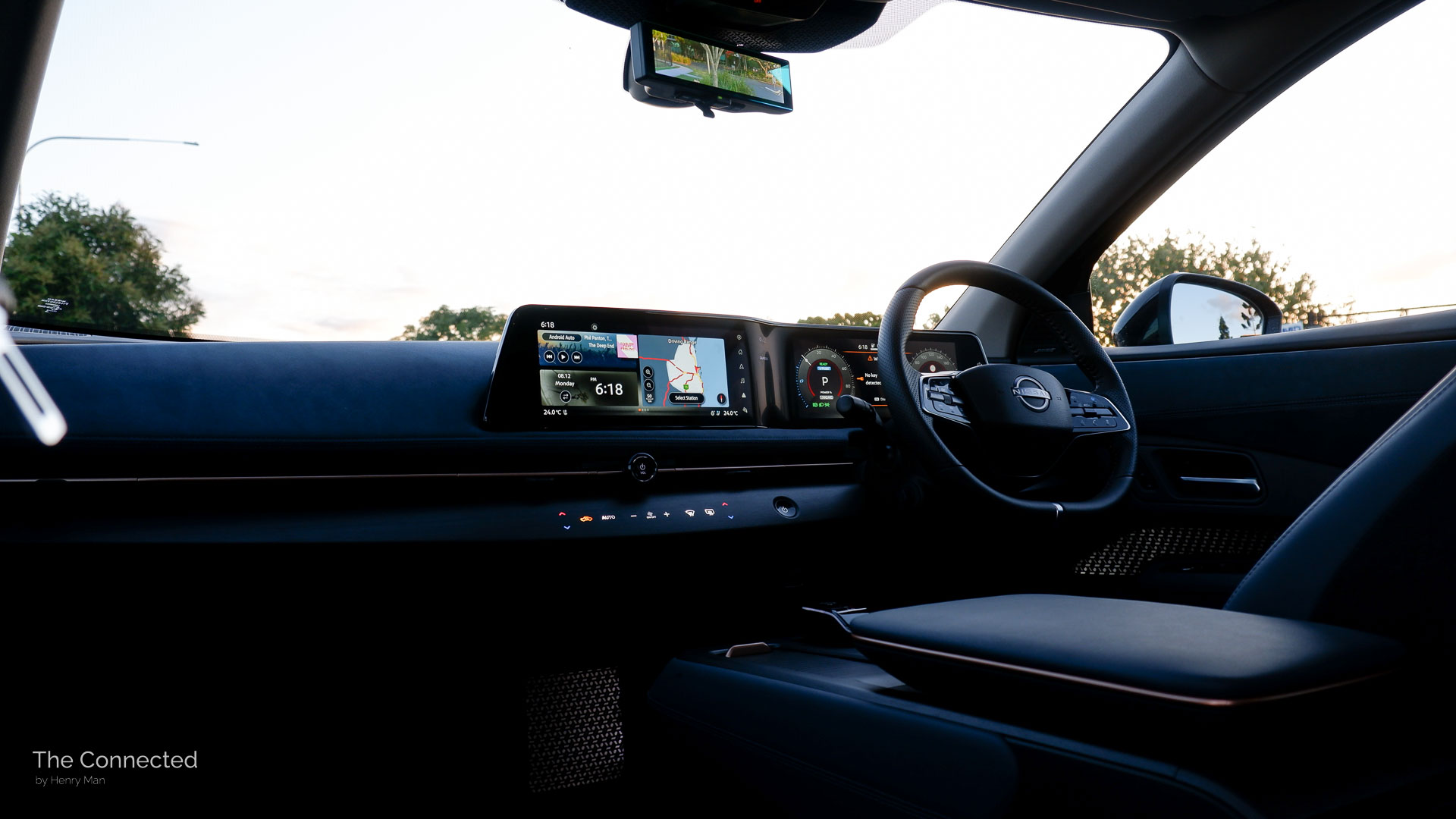
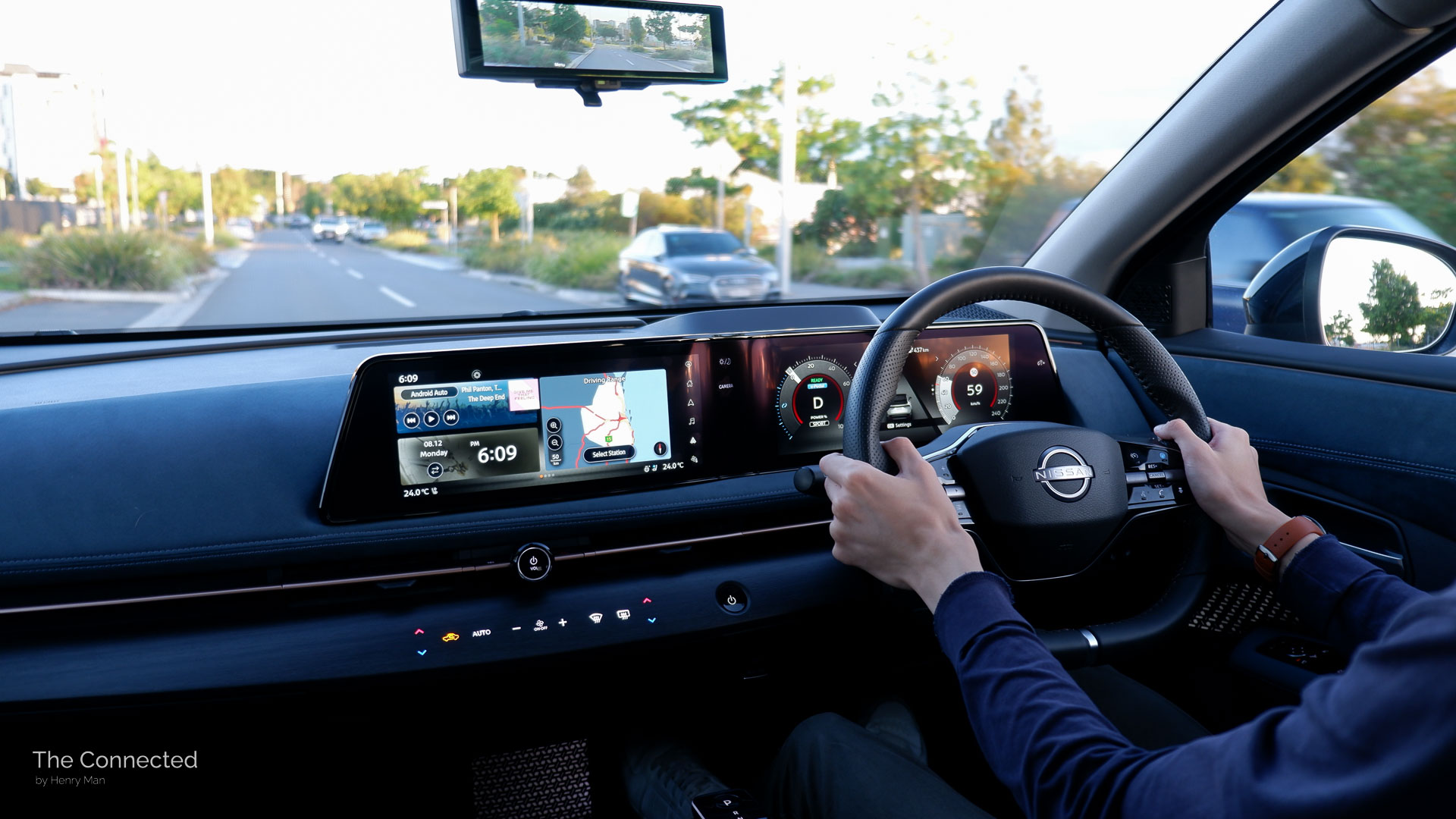
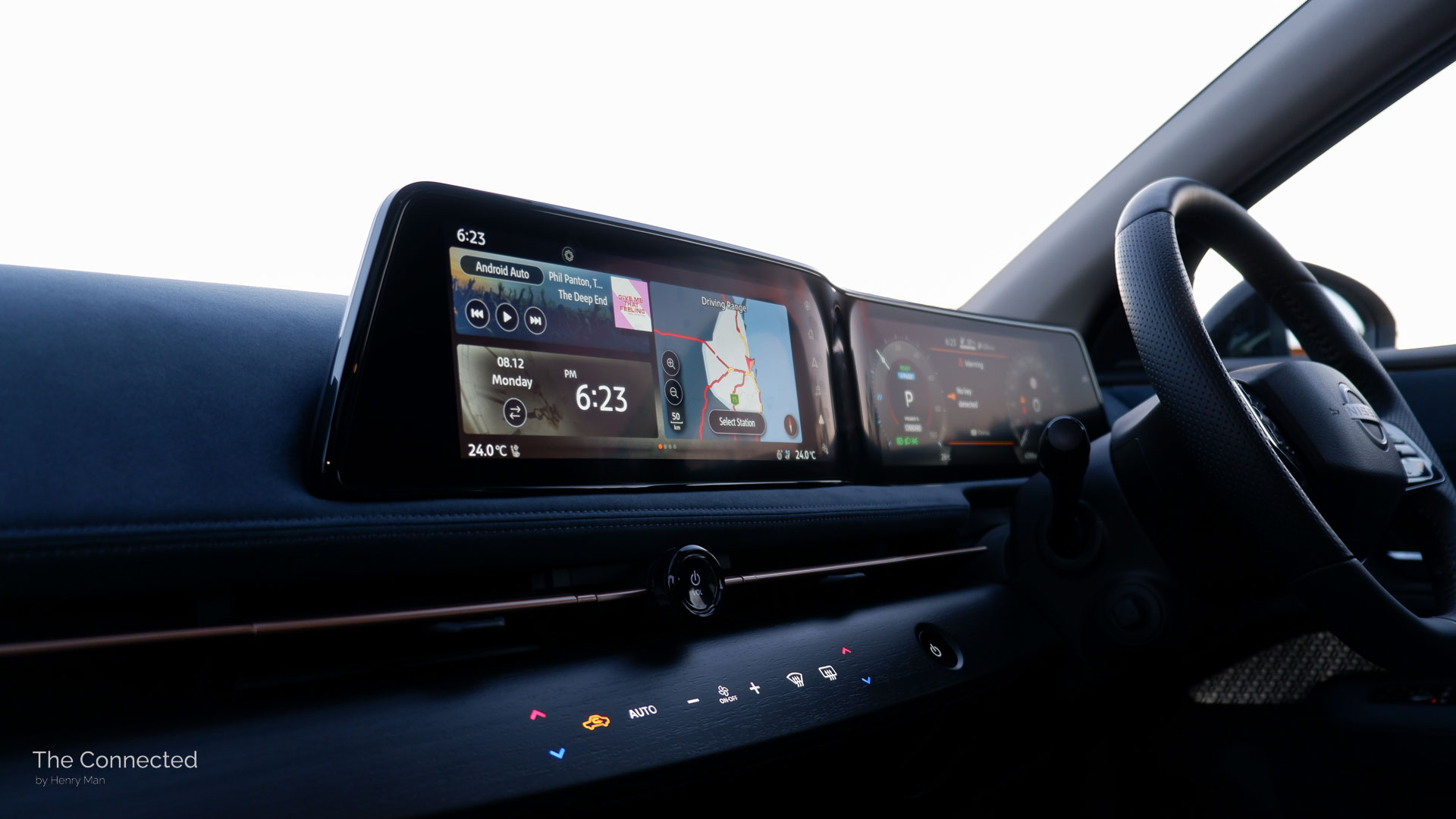
The Ariya’s inside feels even more unique with an open front row design, wood dashboard and centre console surfaces, and two widescreen displays that are joined together with a curved kink in the middle.
It feels uniquely modern for a Nissan.
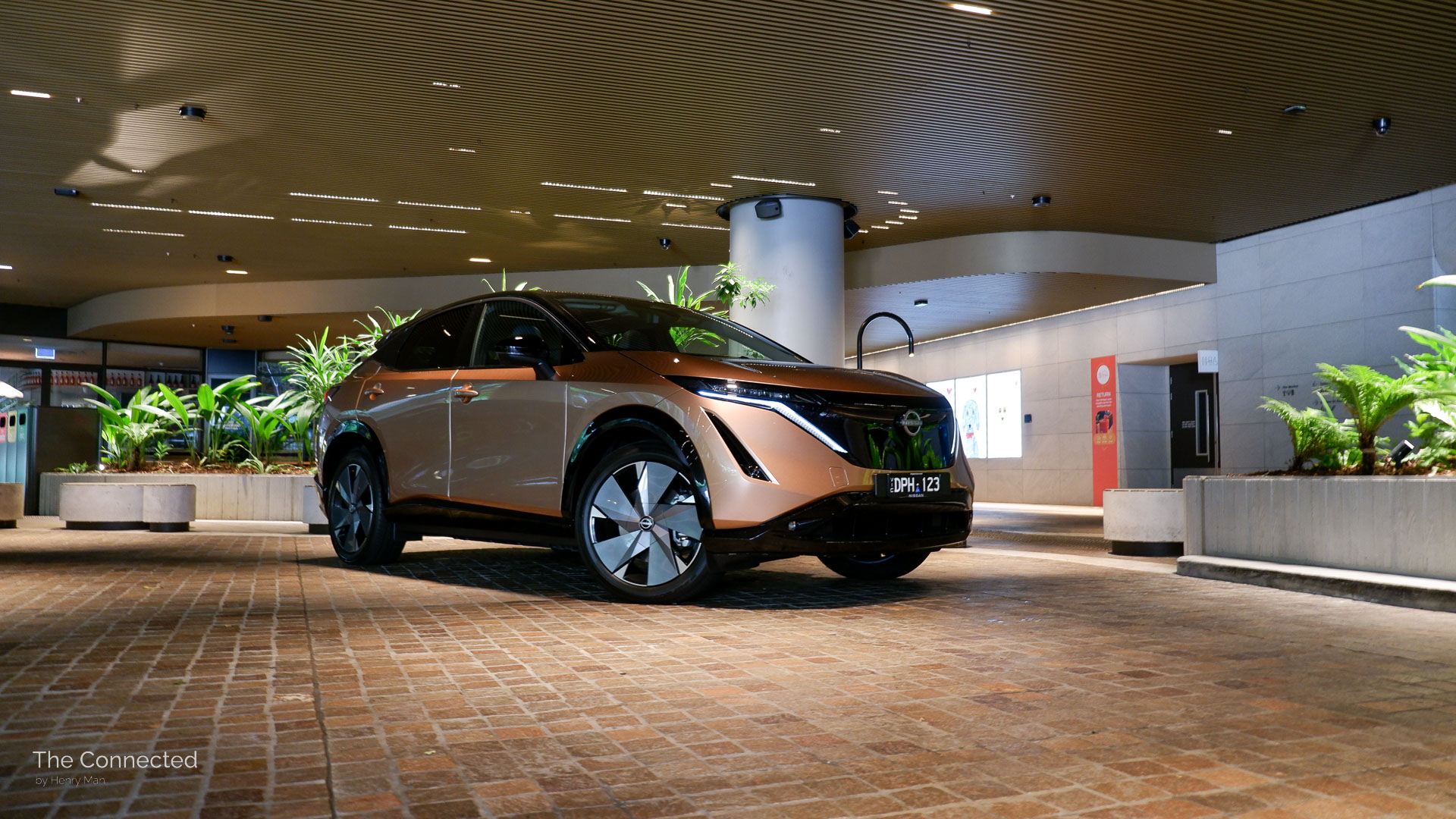
Touch-sensitive buttons are embedded in the wooden dash, while the centre volume dial, hazard light and media forwards/backwards rocker buttons are beautifully integrated with the copper strip.
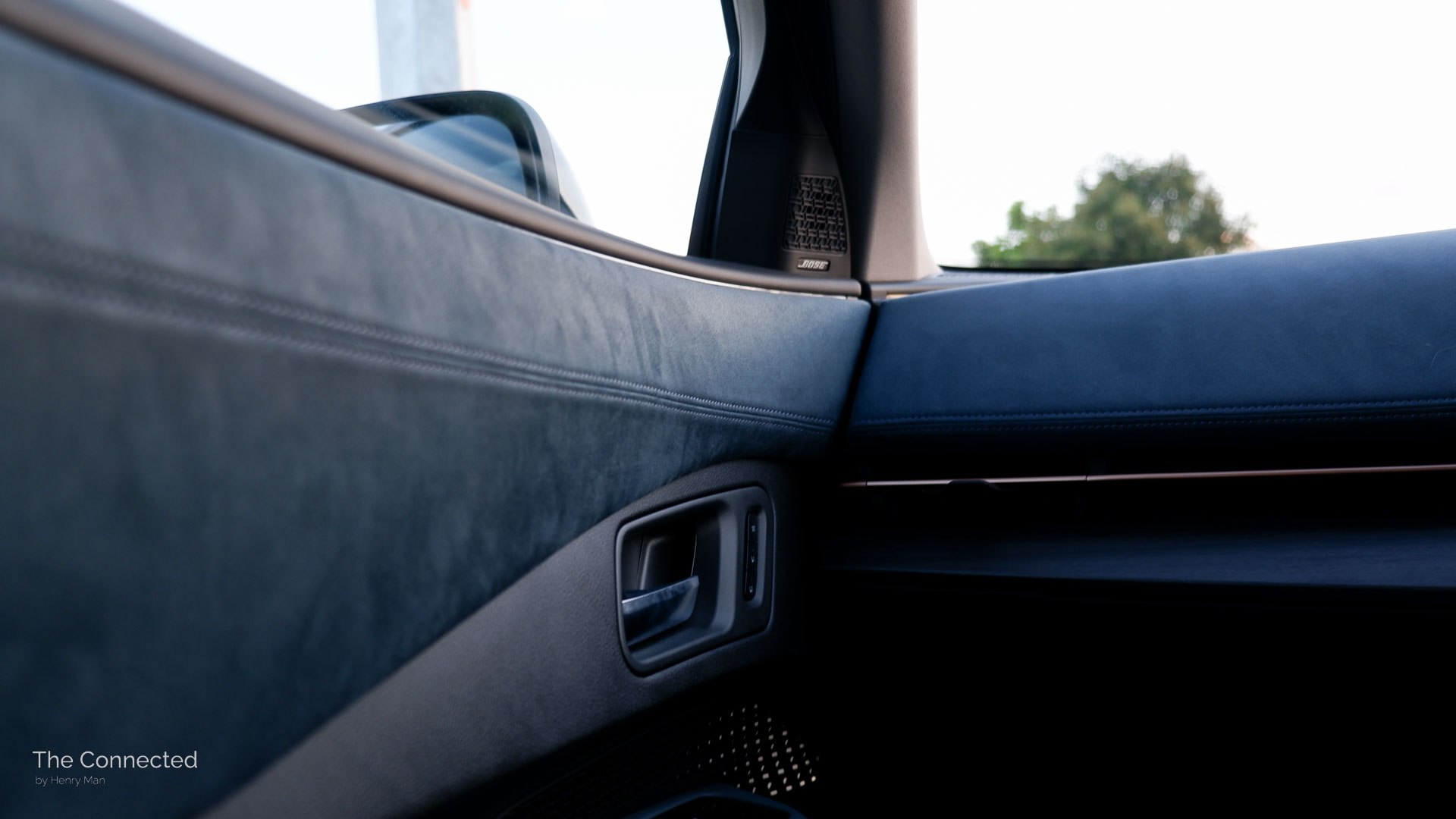
The flagship Evolve’s blue Nappa leather and suede interior combine well with the standard copper strip across the dash and centre armrest surround – which is reminiscent of Cupra (in a good way).
Nissan has also sprinkled Japanese-inspired kumiko and cherry blossom shapes across the interior – including a bright beehive-esque white light at the front row centre near the floor, alongside the doors, and textured surfaces from the wireless charger to cup holders.
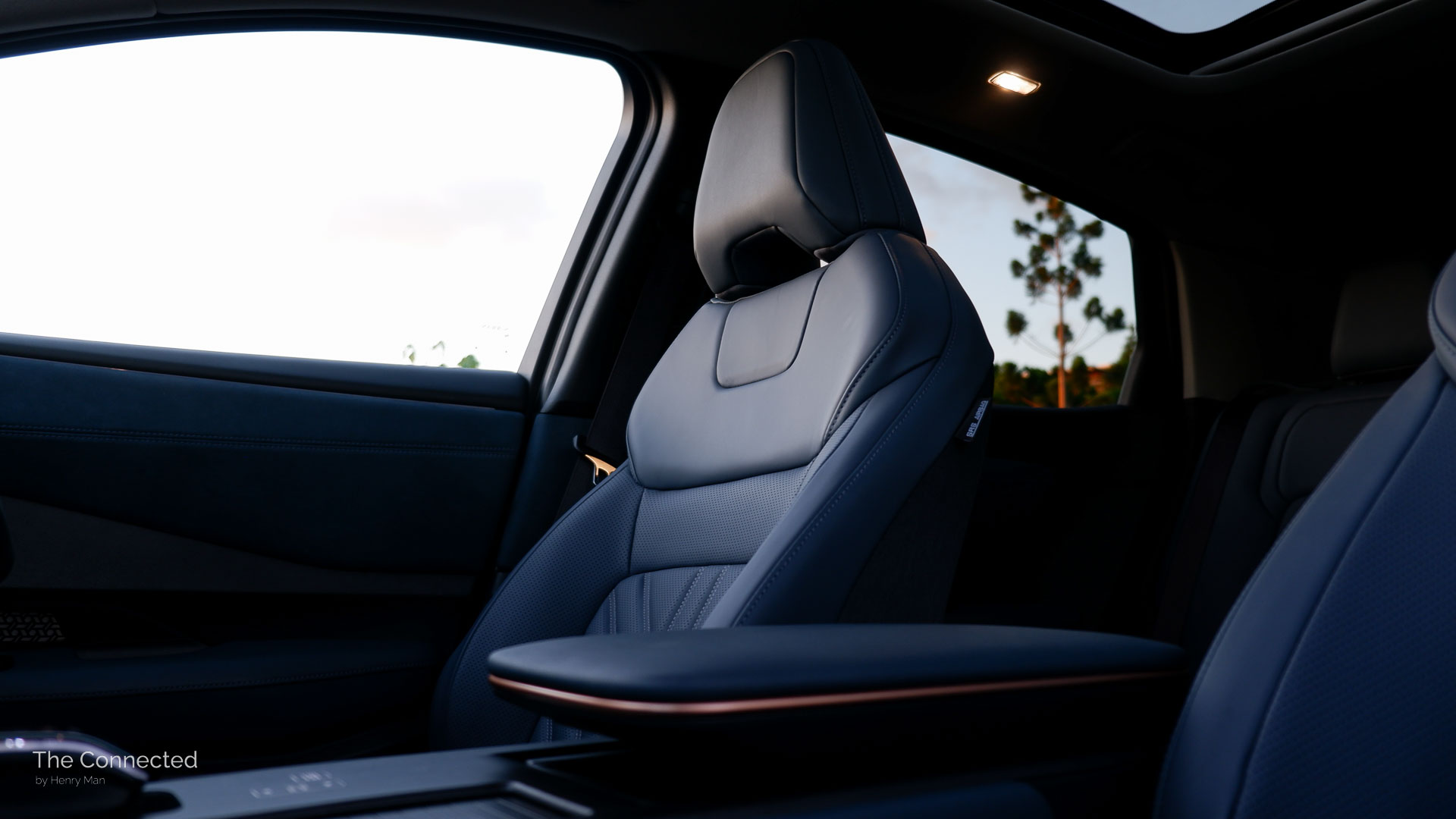
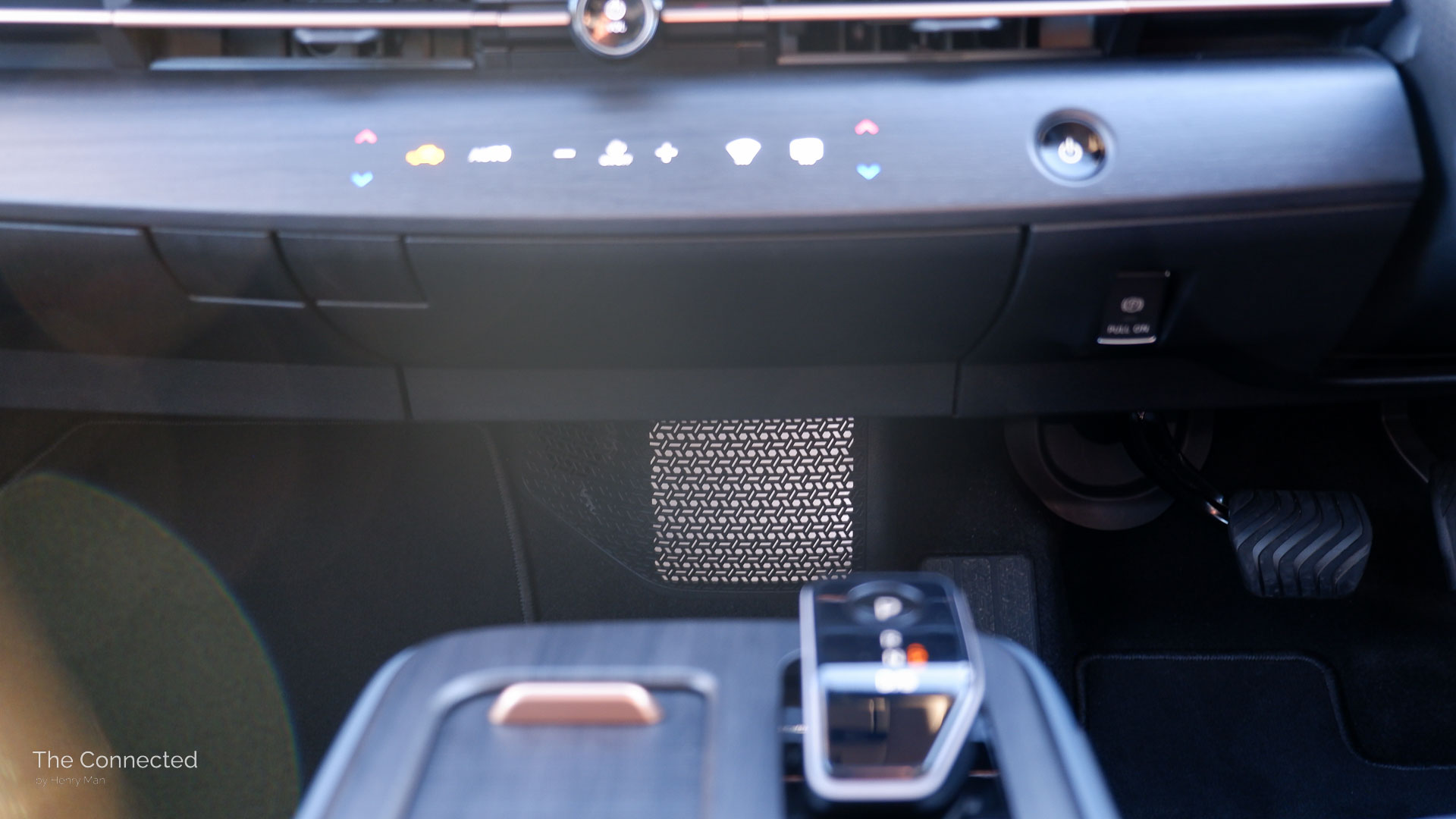
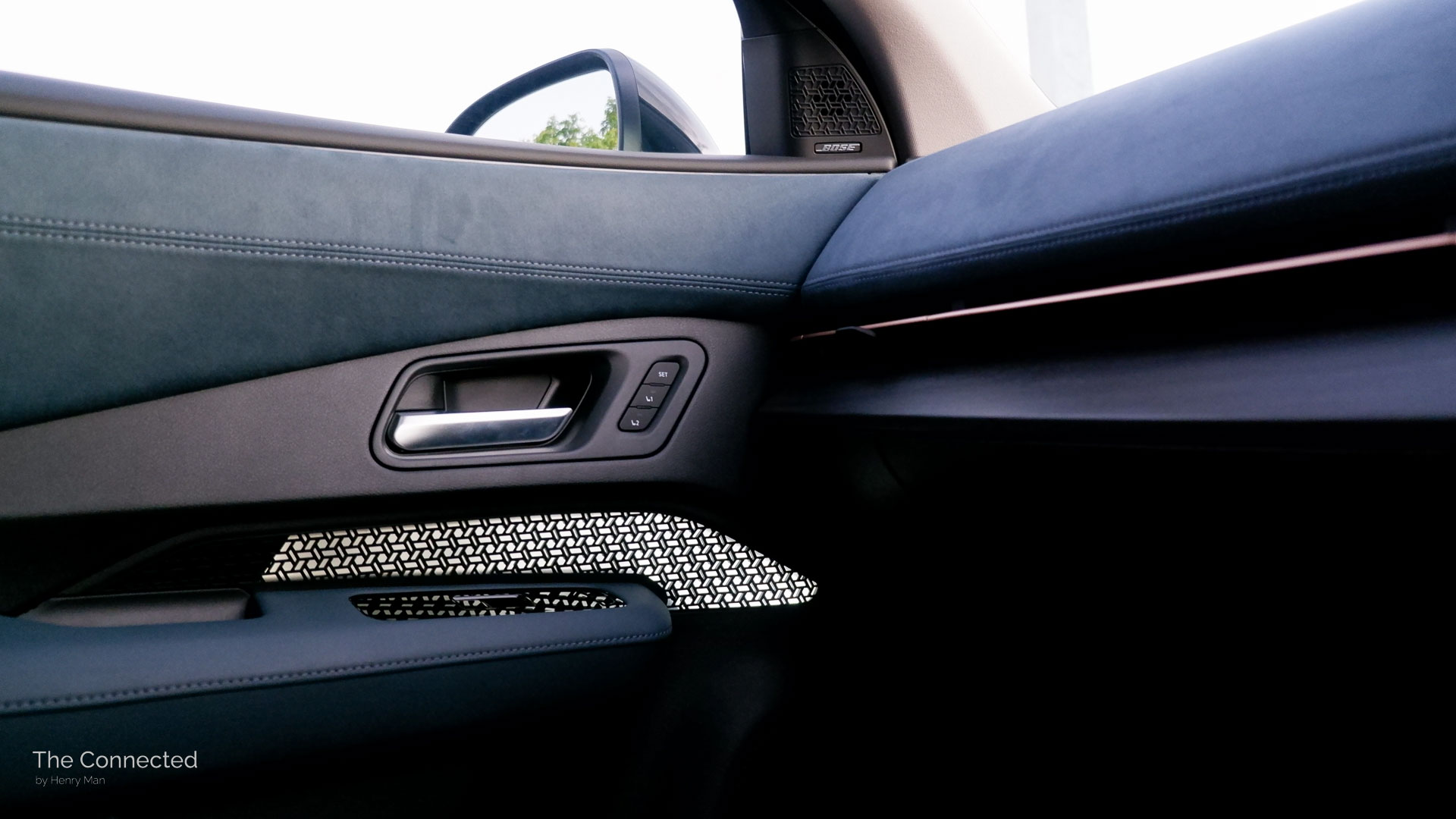
Unfortunately, the Tesla Model Y-style ambient lighting strip which is too dim with no colour customisability and only turns on when adaptive cruise control and lane-centring are active.
Material quality is great with soft-touch surfaces in common areas, suede centre console knee pads, and clicky switches – although Chinese EVs half its price can provide similar perceived quality. Another premium touch is the electrically-adjustable steering wheel column on the flagship Evolve.
Only harder plastics found lower down and the middle portion of the doors, plus the inside of the boot and tailgate surrounds aren’t completely painted, usually a sign on more budget cars.
Practicality.
2026 Nissan Ariya Evolve e-4orce dimensions:
| Length x width x height | 4595 x 2172 x 1660mm |
| Wheelbase | 2775mm |
| Ground clearance | 180mm |
| Boot space (min / rear seats folded) | 408 / 1280L |
| Frunk space | N/A |
| Rear seat split fold | 60:40 |
| Child seat anchors | 2x ISOFIX and 3x top tethers |
| Air-conditioning system | Two-zone climate control with rear air vents |
The Ariya is practical for a medium electric SUV, yet the rear seats aren’t as comfortable.
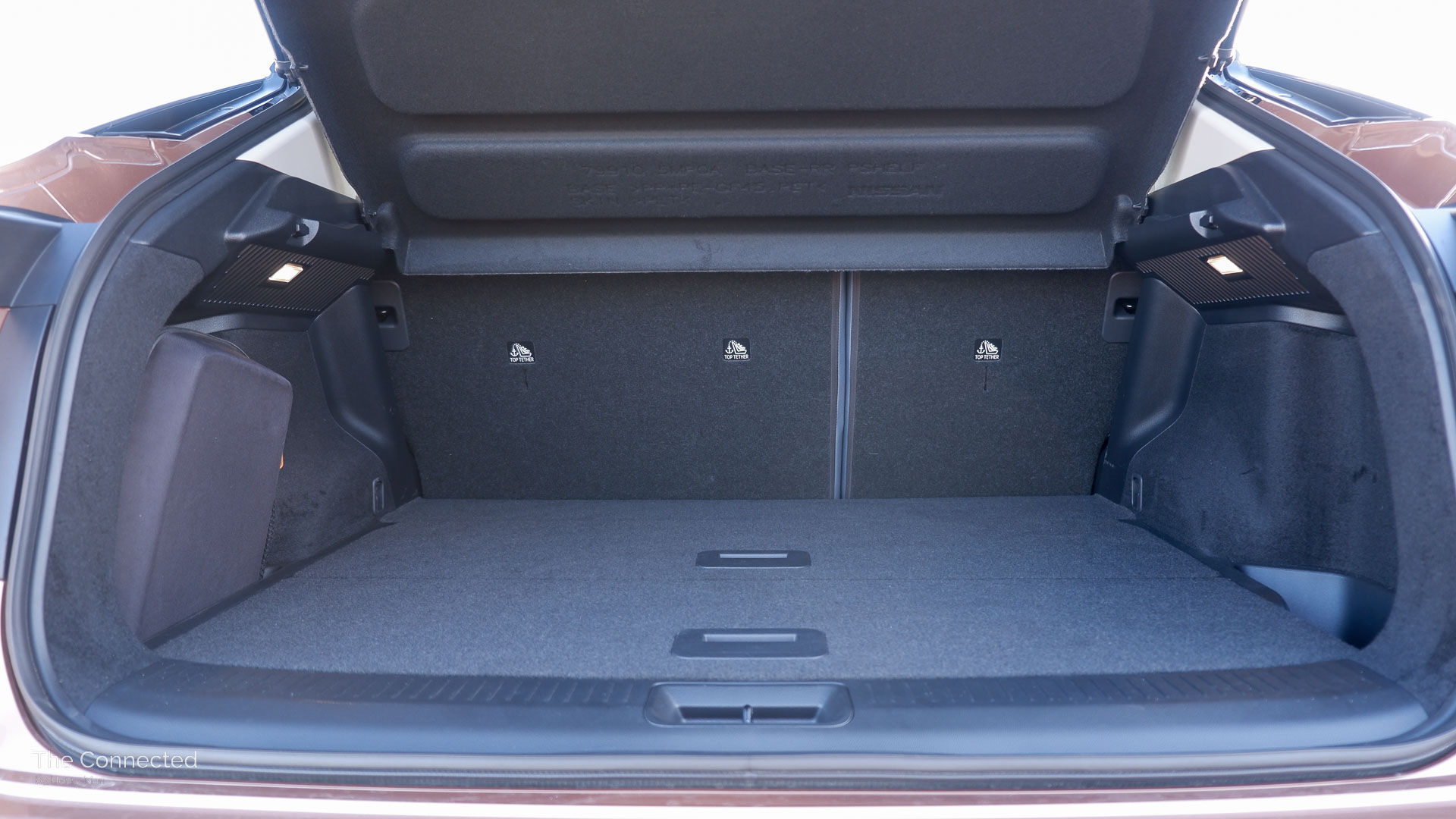
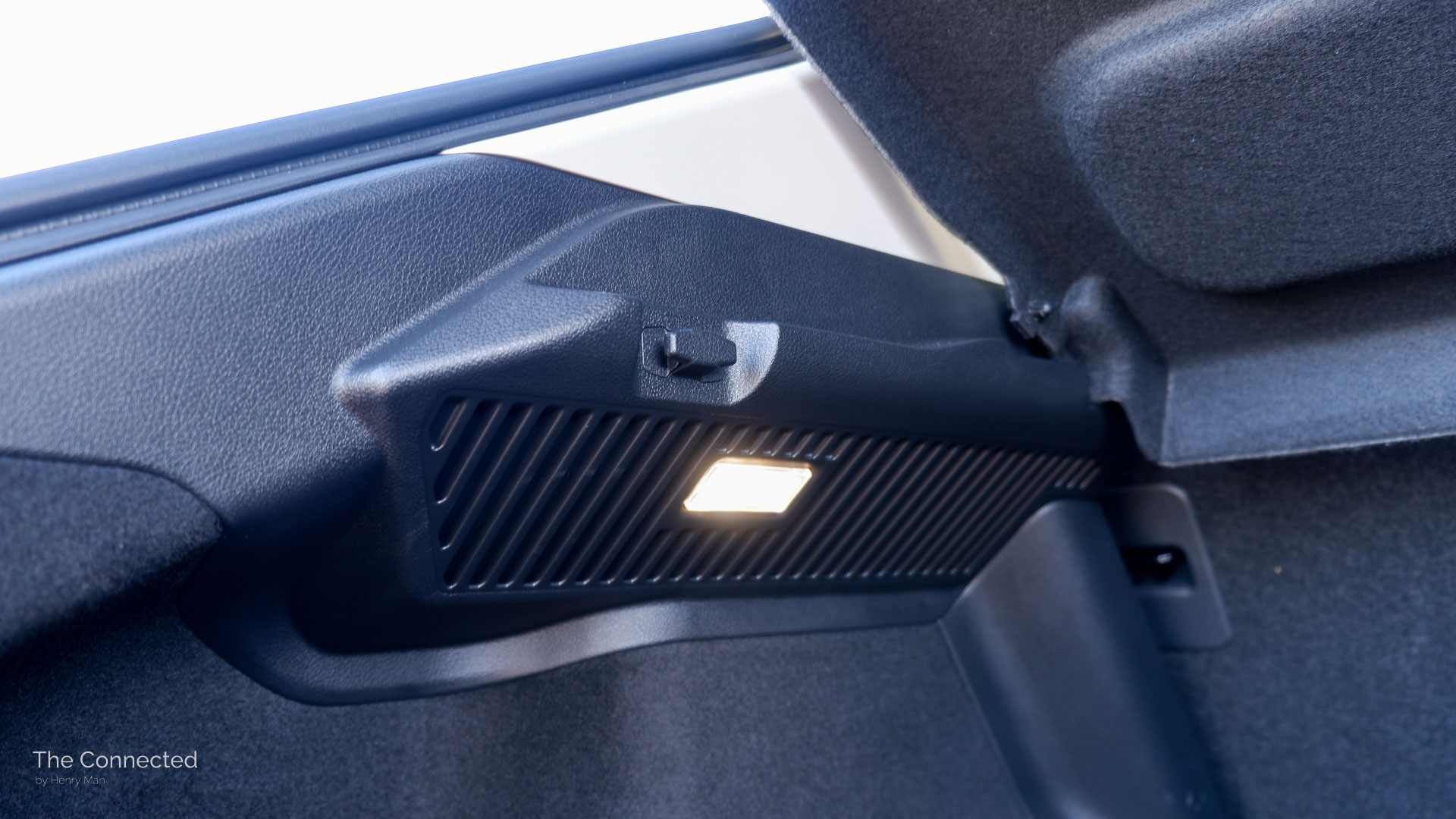
The 408-litre boot is deep and plentiful – even though it isn’t the biggest compared to rivals – with a flat loading lip, two LED lights and two bag hooks, although they don’t do a great job at securing items.
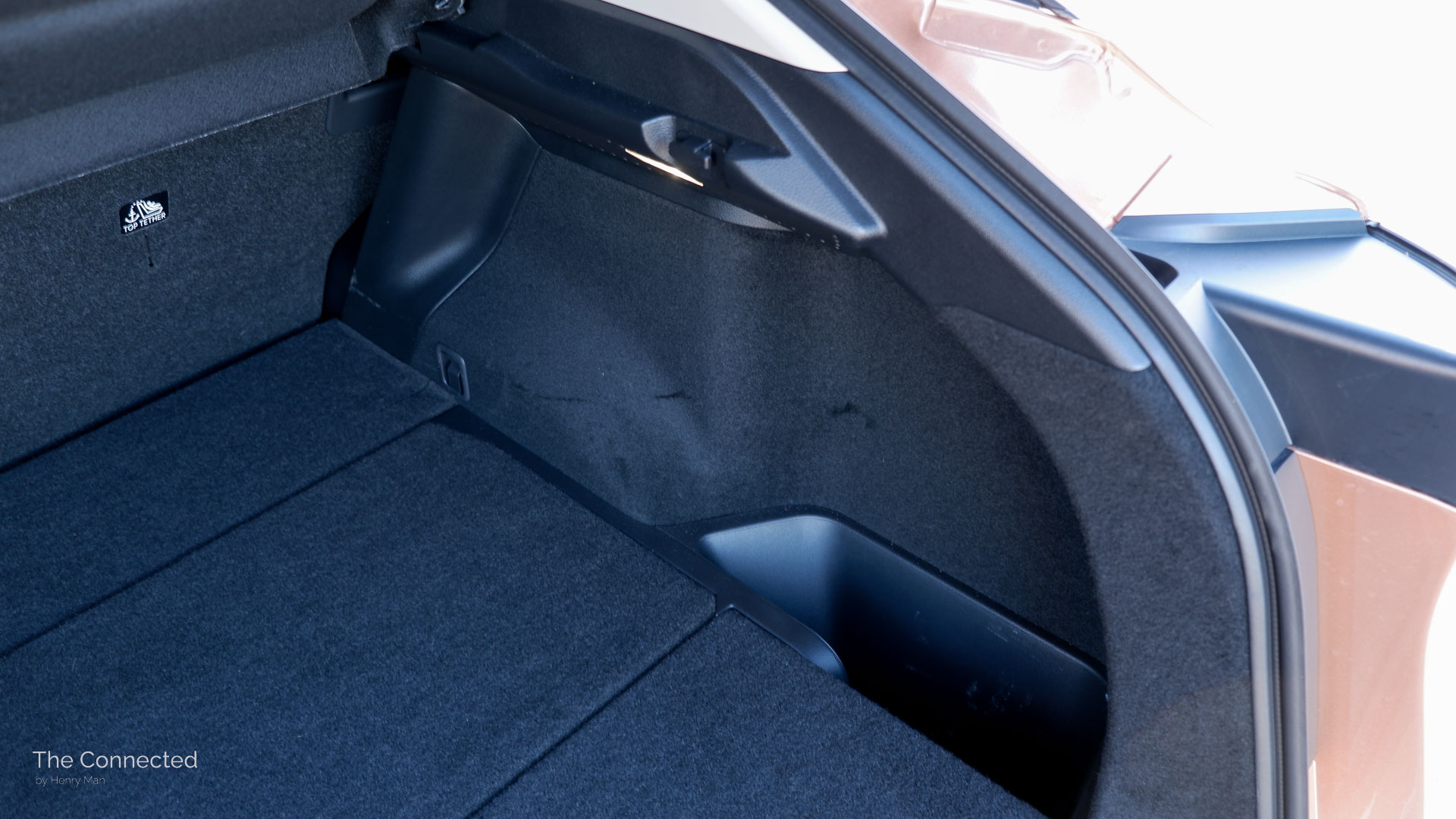
Underfloor storage is limited to a small slot in the styrofoam partition that perfectly fits the charge cable, but there are wells on each side. The Nissan EV doesn’t offer a frunk.
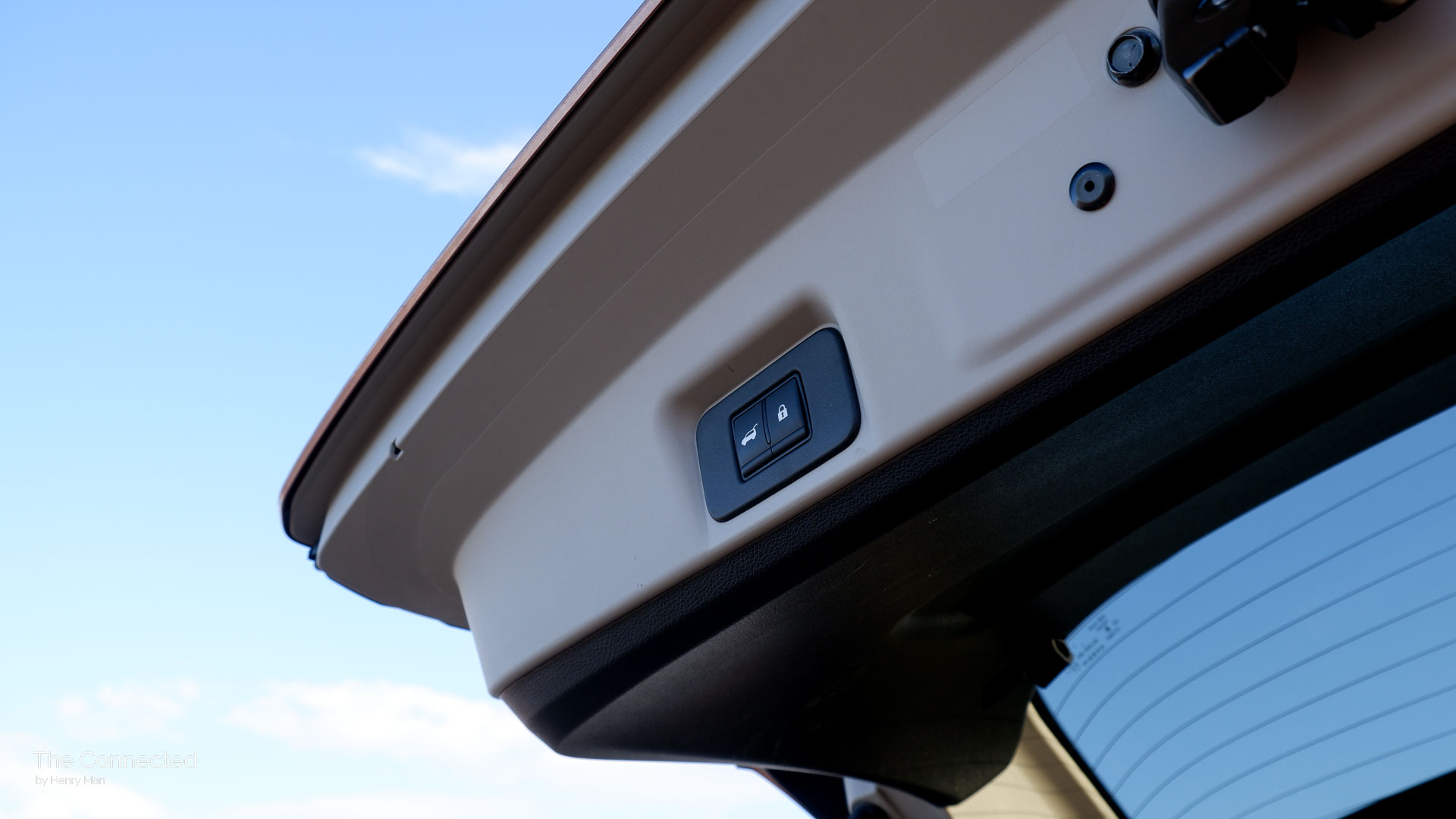
An electric tailgate features a convenient and reliable hands-free kick sensor to open and close the boot with a kick, regardless of whether the Ariya is turned on or off. A button can also lock the doors from the tailgate.
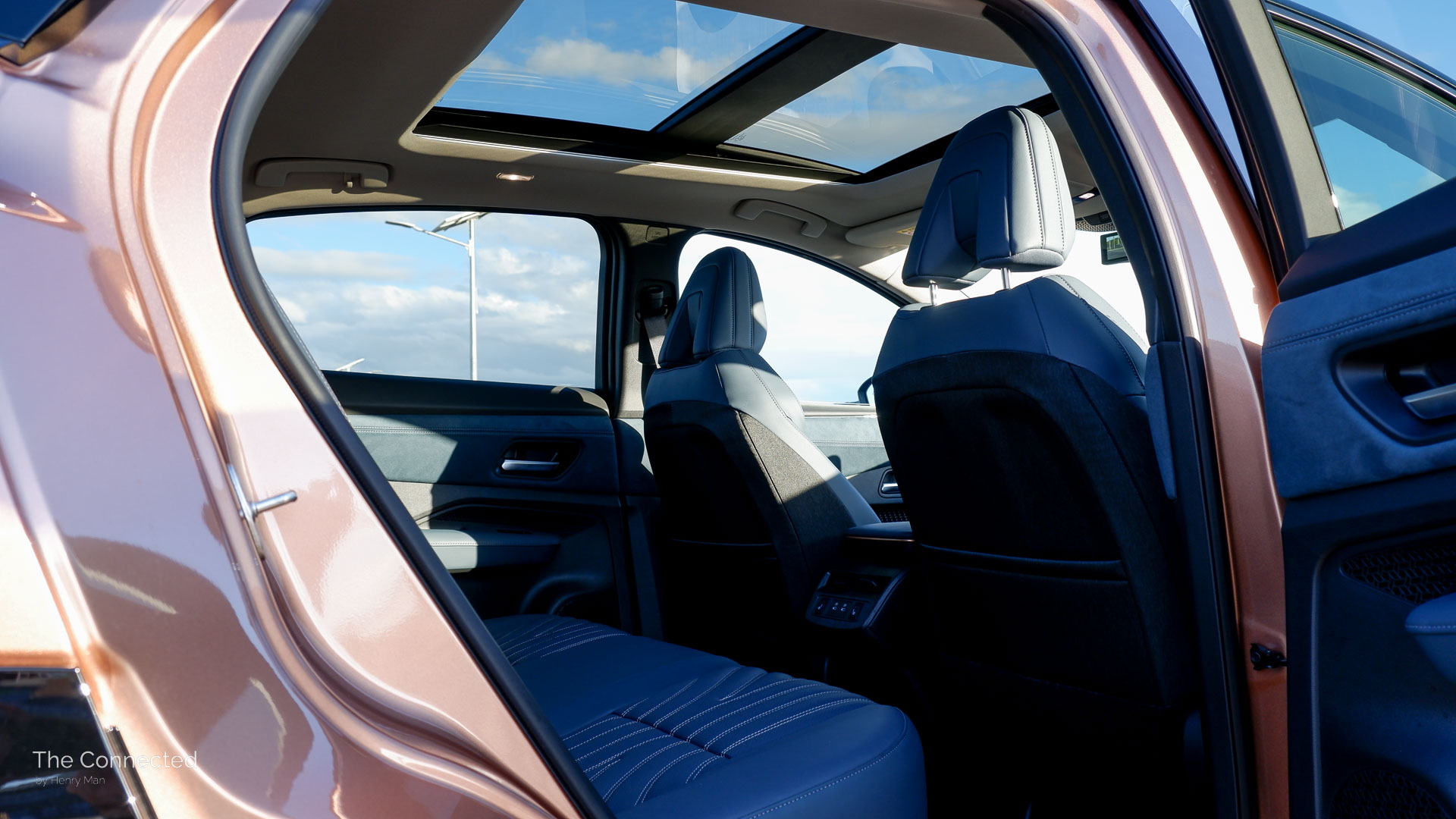
Getting in and out of the Nissan Ariya is made easier thanks to wide-opening rear doors to almost 90-degrees, just like the popular Qashqai SUV.
The rear seats offer good headroom despite the sloping roof and good legroom with a flat floor.
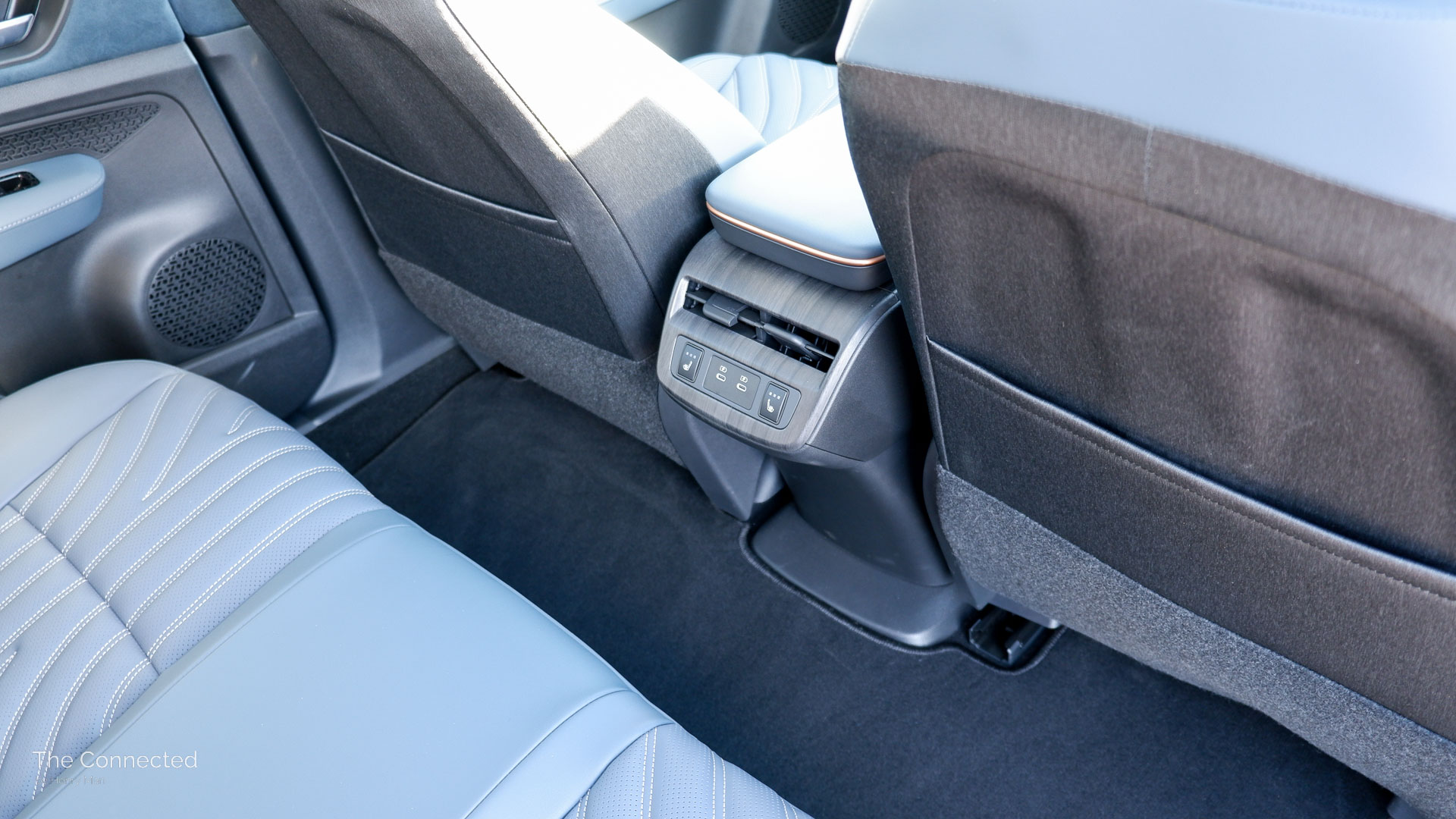
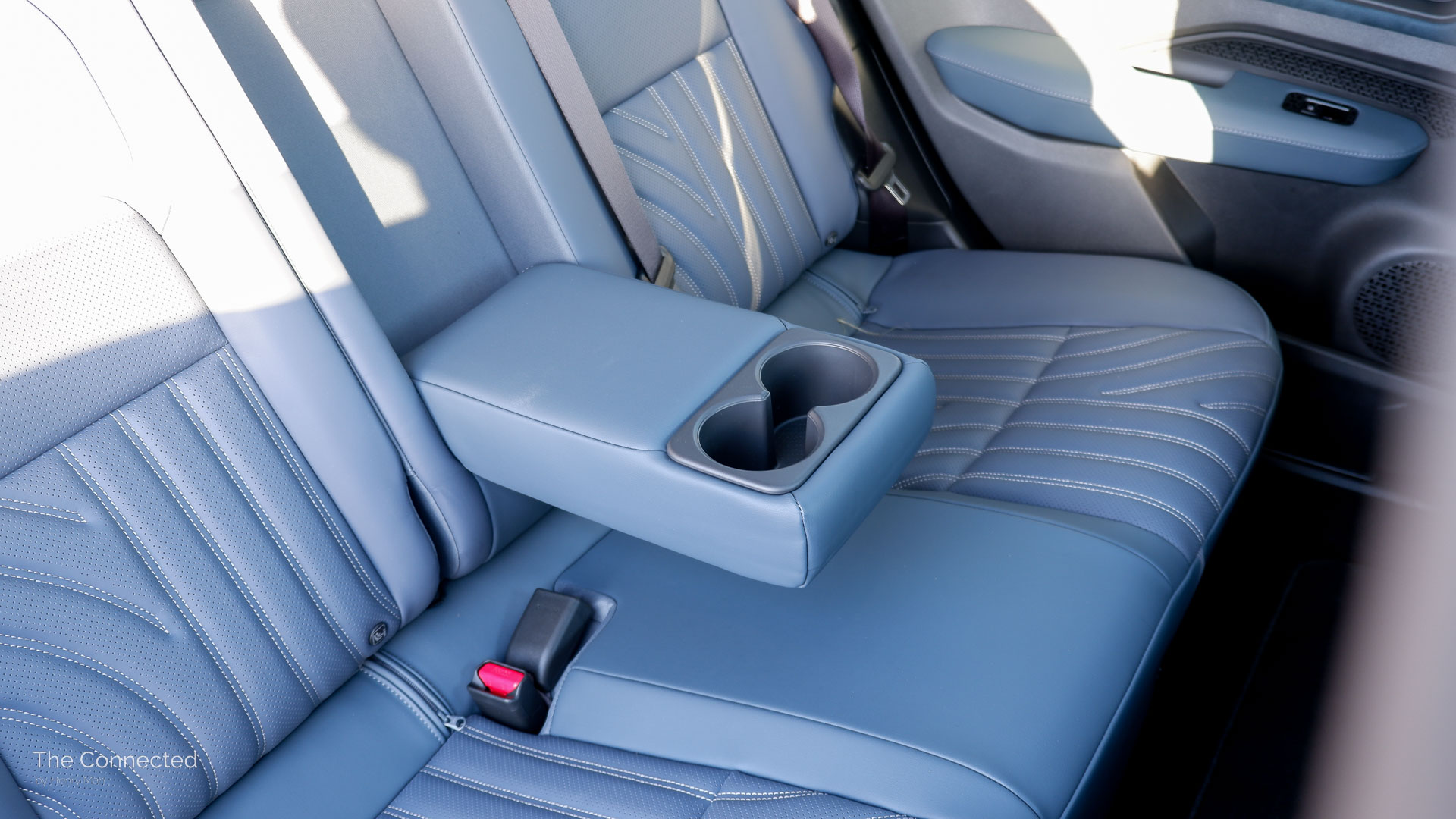
Unfortunately, like many EVs, the floor is high due to the battery pack, resulting in perched knees and limited footroom when slid underneath the front seats. The slanted bench exacerbates this, with a similar rear row feeling found on the Toyota bZ4X EV.
Amenities include a fold-down centre armrest with two cup holders, rear air vents, two USB-C charging ports, seatback pockets, and well-sized door pockets.
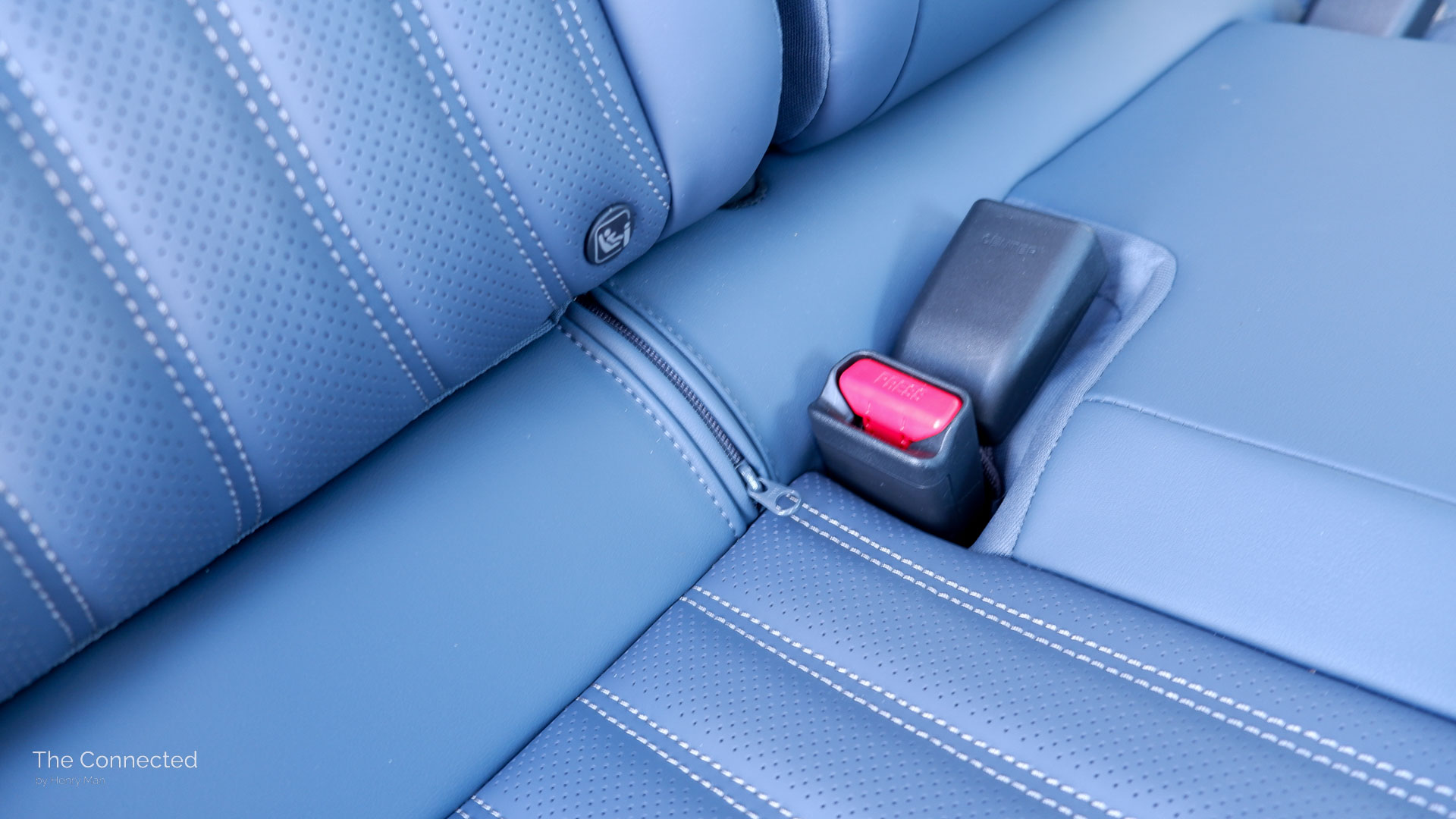
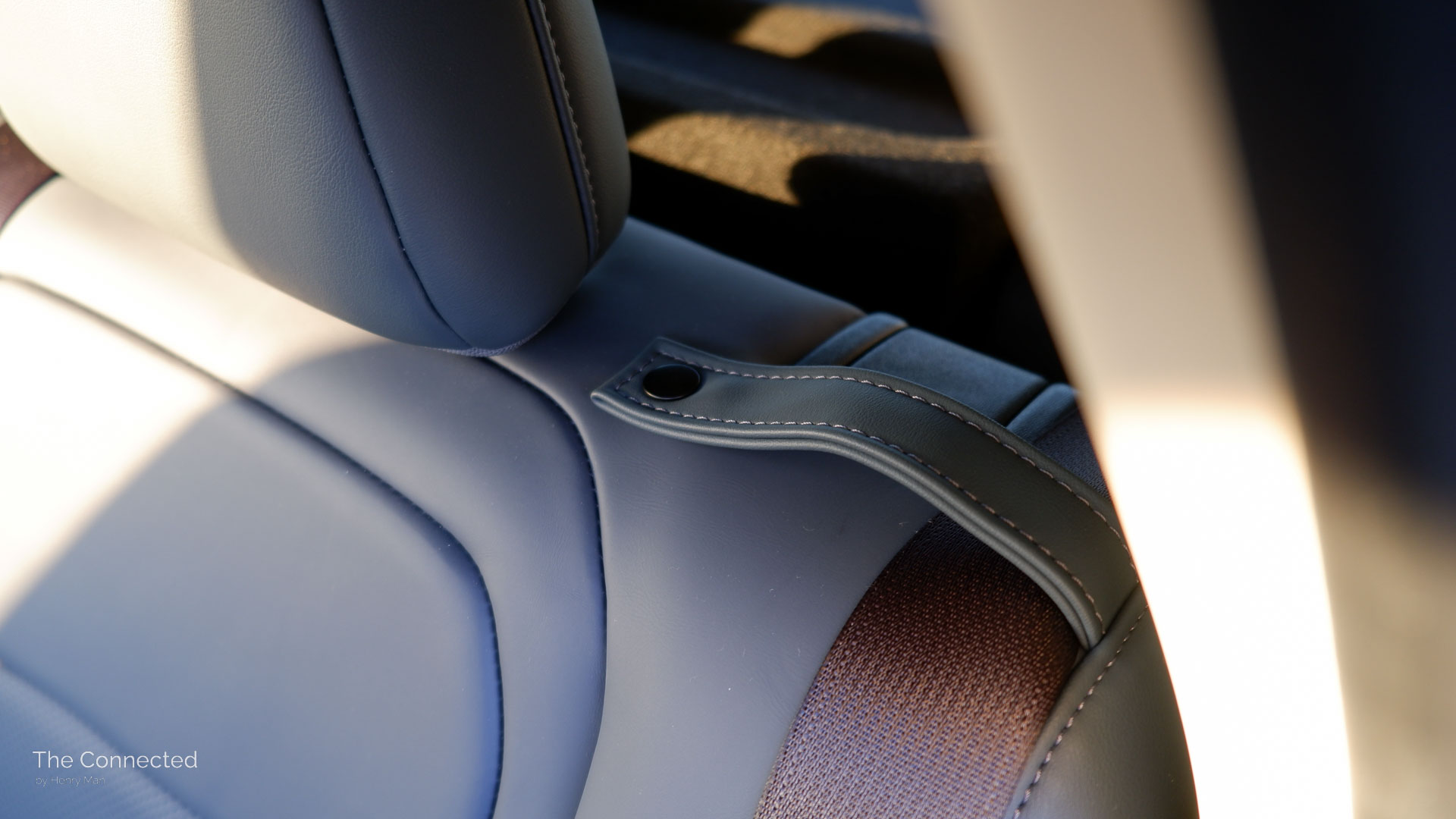
The two outer ISOFIX anchorage points are covered by a zipper – another unique Nissan design touch.
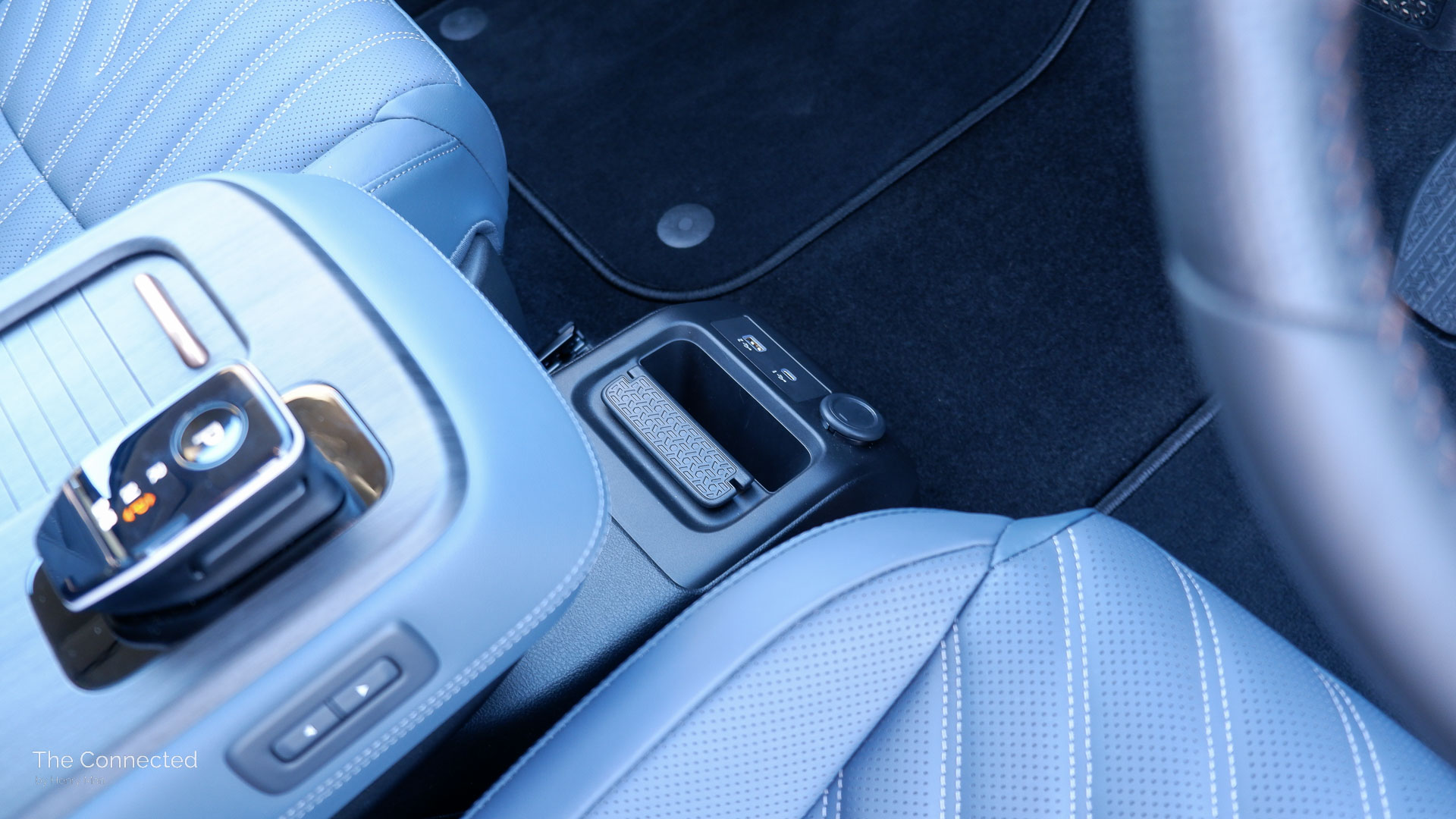
Up front is where there are some more Ariya-unique touches, including a centre console that electrically slides forwards and backwards with a press and hold of a button on the driver’s side, similar to the manually-adjusting concept on the Hyundai Ioniq 5.
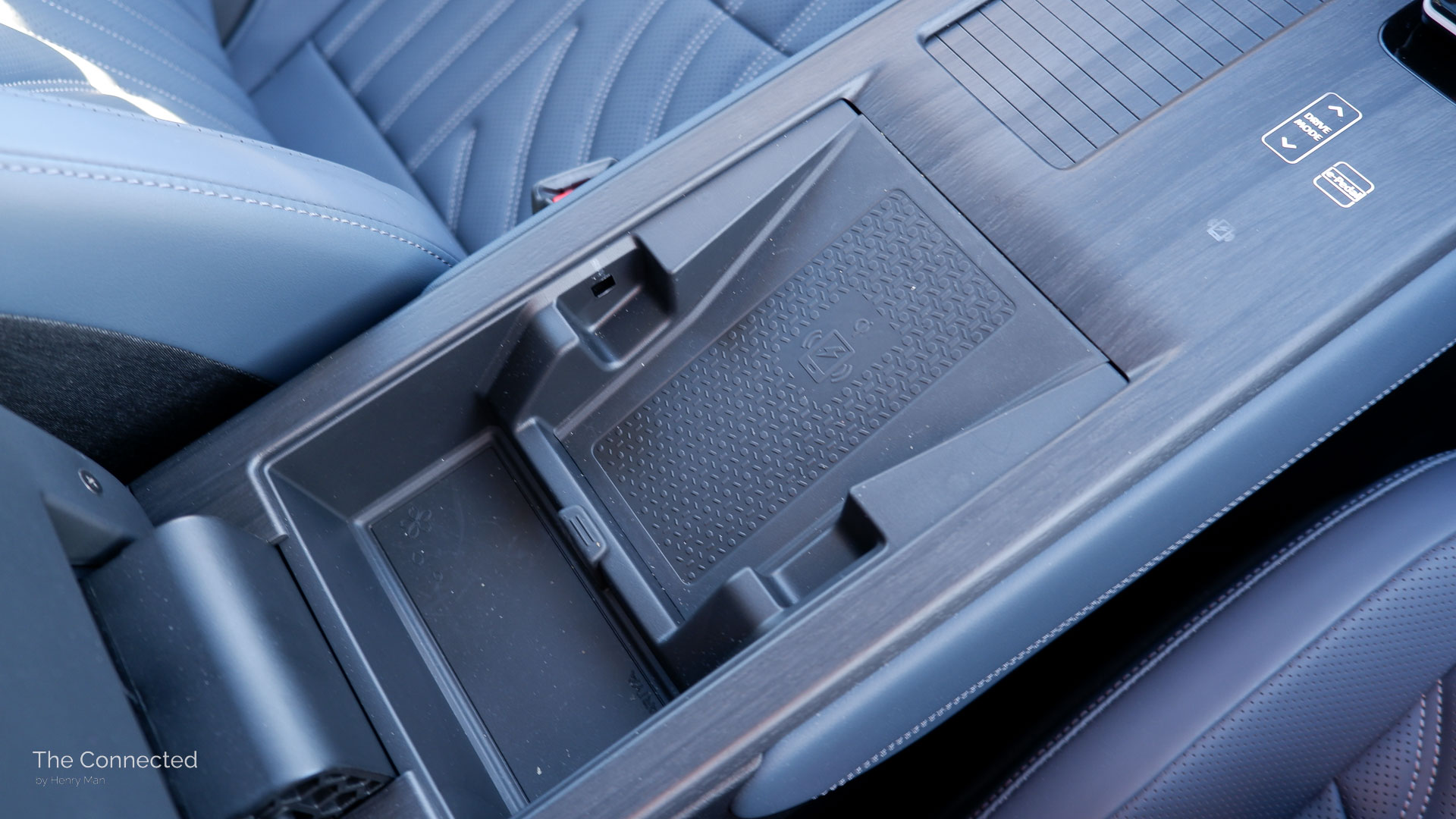
It’s also home to a rolling shutter that can hide two cup holders, albeit with grips that aren’t as strong, and the Qi wireless charging pad is underneath the centre armrest – effectively hiding the phone out of sight.
There are two USB-C charging ports with a precarious slot to hold a phone, but it’s awkwardly positioned close to the floor and requires electrically sliding the centre console back in order to access.
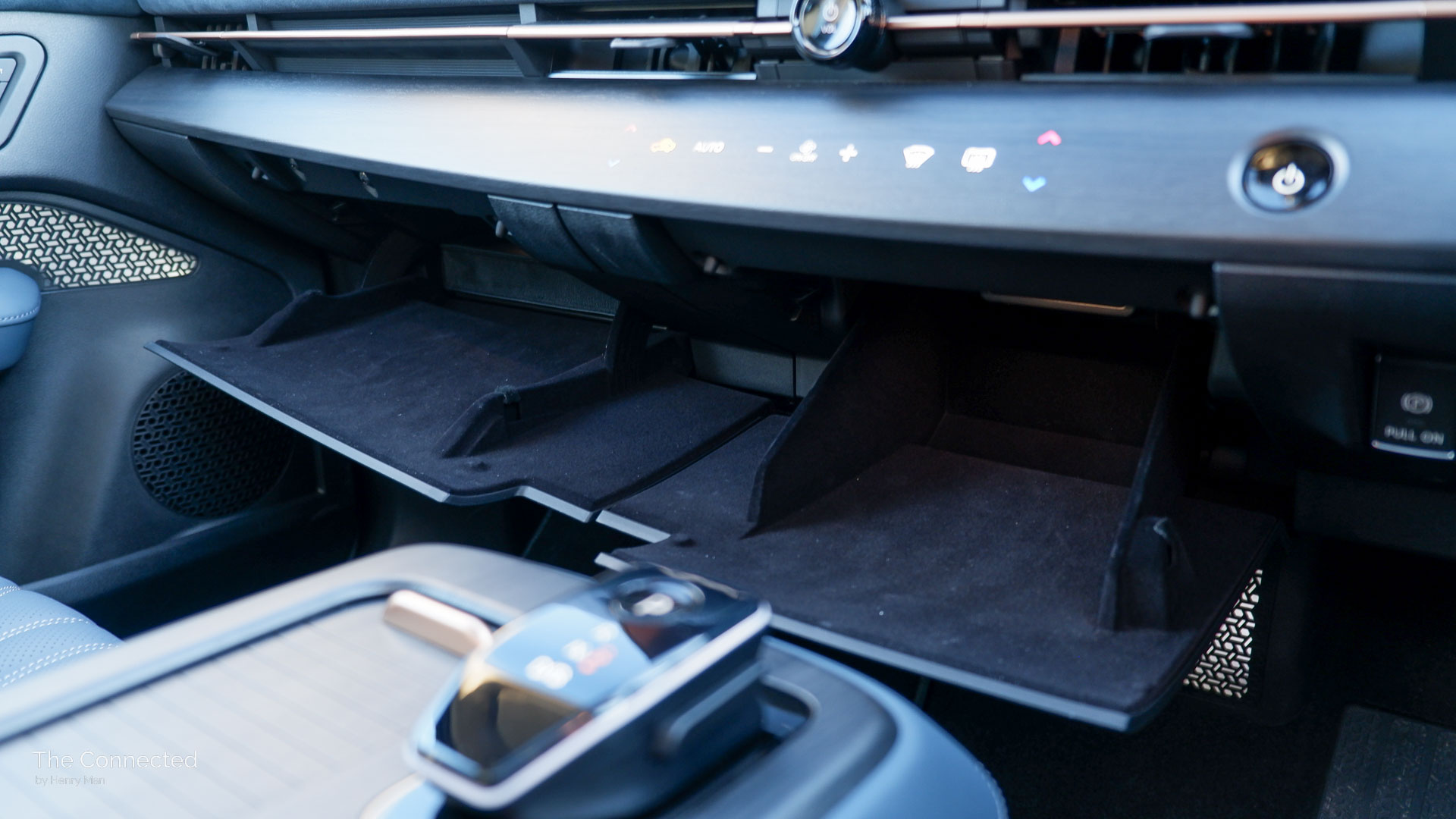
The lack of storage in the centre console is made up by two gloveboxes which flip down ahead of the front passenger and in the middle with a press of a button. Both are felt-lined just like a luxury car and have LED illumination.
The Nissan SUV offers a sunglasses holder at the ceiling too, which is a rare feature nowadays.
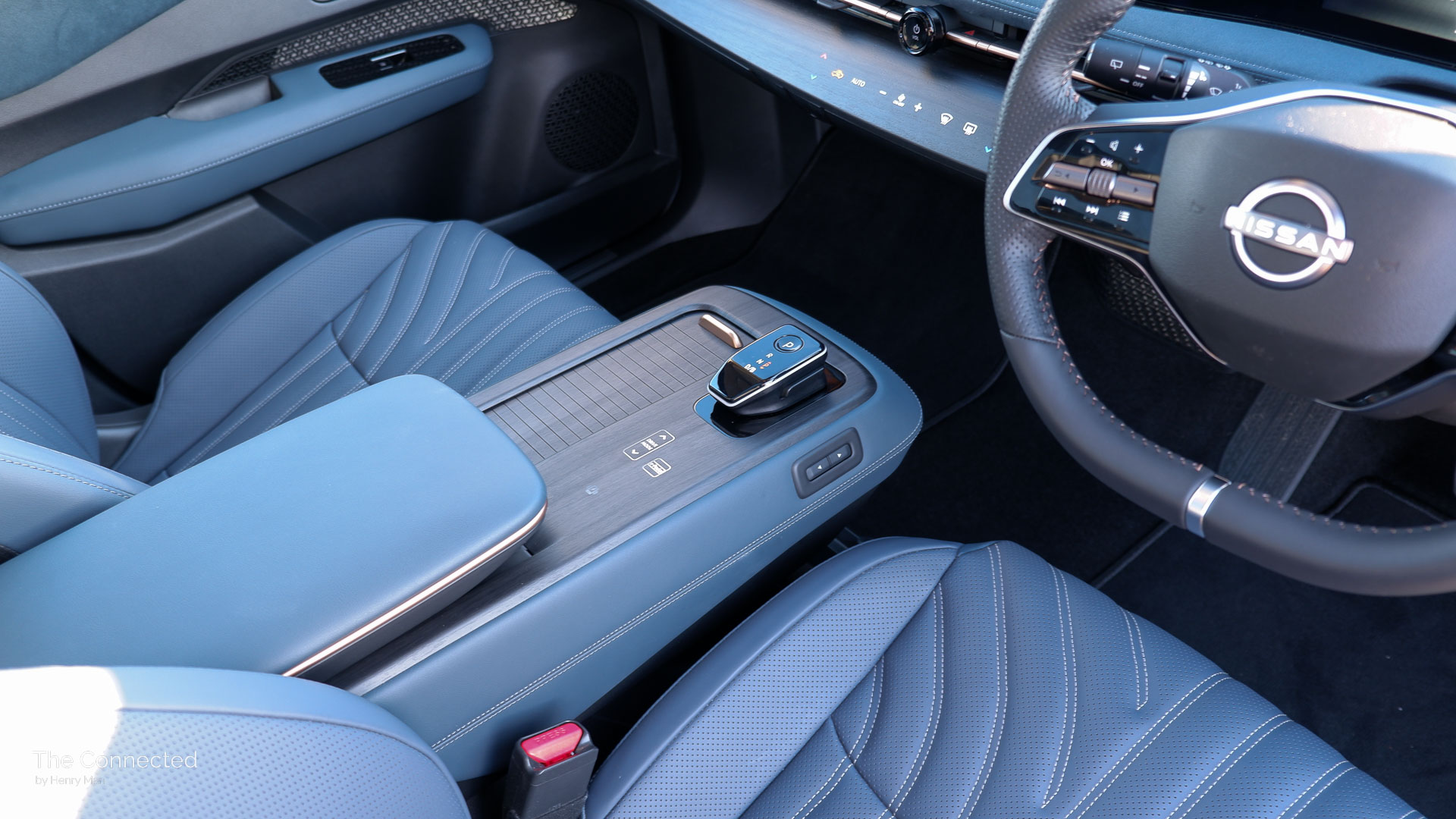
The Nappa leather seats are supportive with front three-level heating or ventilation, which reactivate at the same previous setting every time you start the EV, plus two-position memory for both the driver and front passenger seats, and a heated steering wheel.
Even the Evolve’s steering wheel is electrically operated and linked to the driver memory settings.
It’s worth shouting out the Ariya’s door handles, too. They’re ordinary, familiar and accessible when many electric SUVs in this price range incorporate unnecessarily complex flush handles.
Technology.
2026 Nissan Ariya Evolve e-4orce tech features:
| 12.3-inch touchscreen running Nissan Connect software | 12.3-inch driver instrument display |
| Wired/wireless Apple CarPlay and Android Auto | 10.8-inch head-up display |
| Built-in maps | 10-speaker Bose |
| Qi wireless charging pad | Proximity key with auto approach/walk-away locking and auto-folding mirrors |
| 3x USB-C, 1x USB-A and 1x 12-volt charging ports |
The Nissan Ariya’s technology is usable, but starting to look dated with slightly finicky software.
Powered by Nissan’s own operating system, the 12.3-inch touchscreen is clear and bright, but isn’t as high resolution and feels slightly slow when switching between pages.
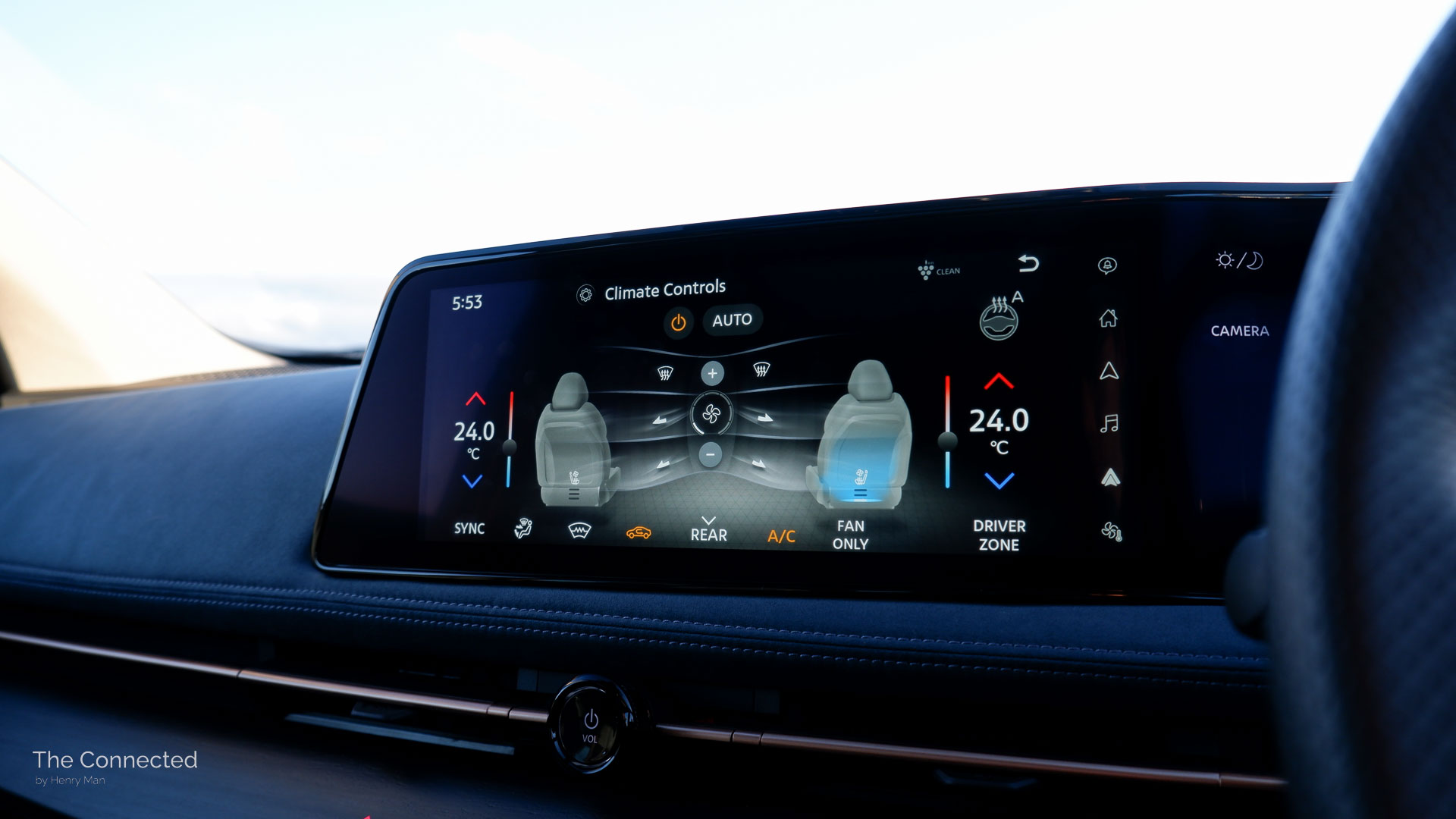
The software also looks slightly dated in some areas with the climate screen looking particularly convoluted and hard to decipher while driving.
This is important as the heated/ventilated seats and heated steering wheel must be toggled via the display via some small touch targets.
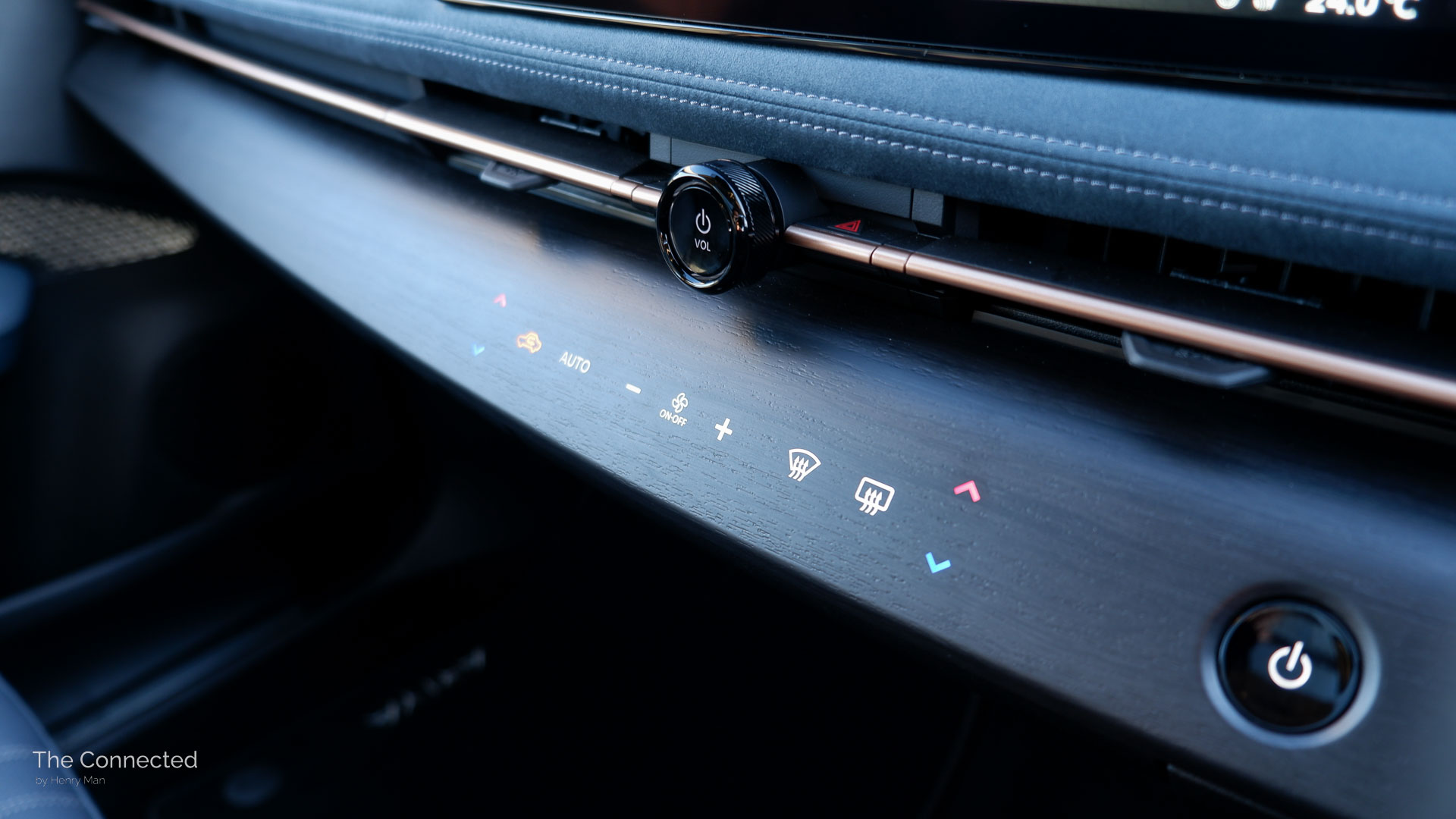
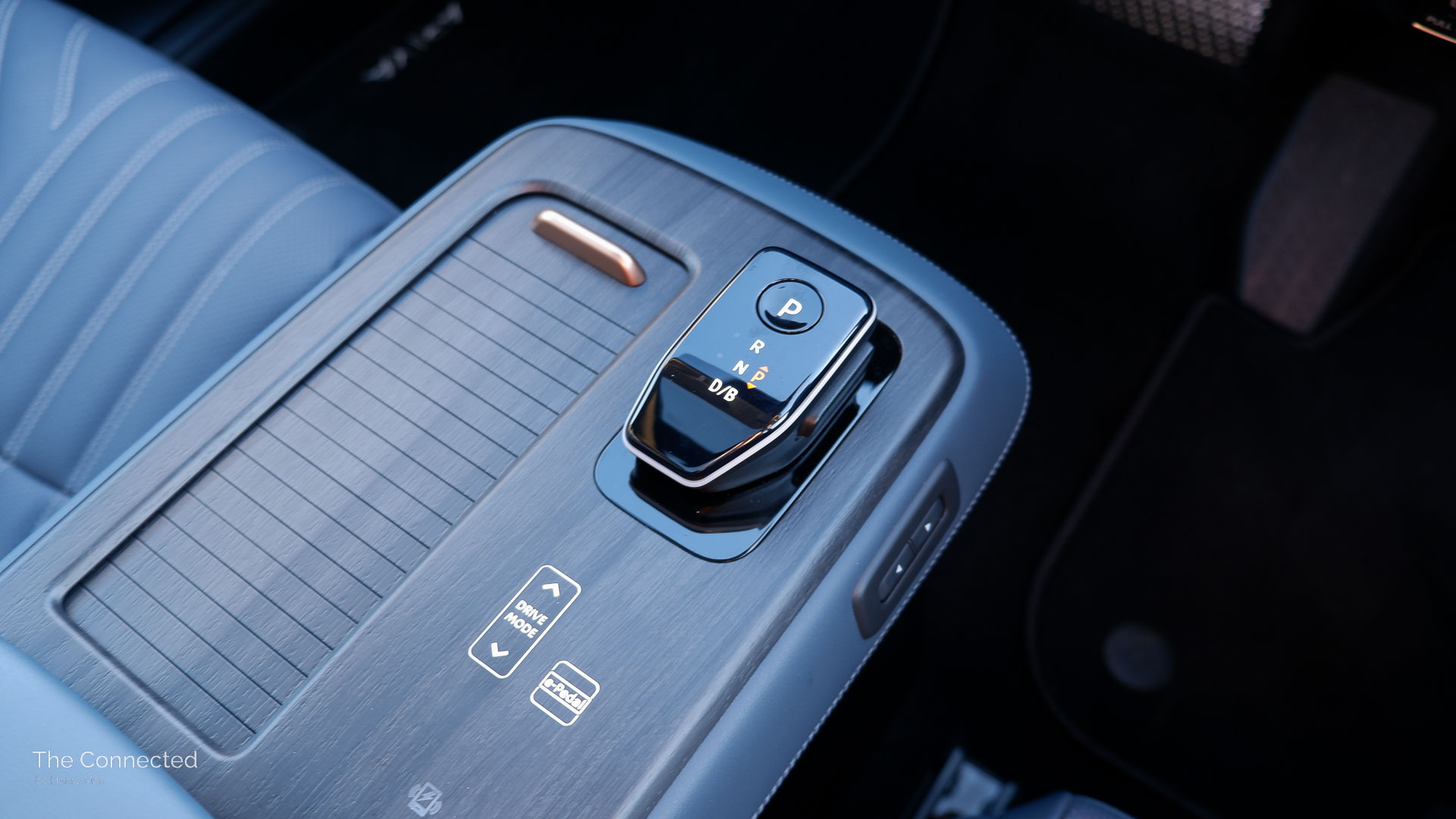
A row of illuminated touch-sensitive buttons sit below with haptic feedback response to control key climate functions – including the temperature, fan speed, and demisters – plus the centre console has drive mode and e-Pedal buttons.
However, while a welcome feature, it’s slightly too sensitive for the climate control buttons, yet it isn’t as responsive with a harder press required on the centre console buttons.
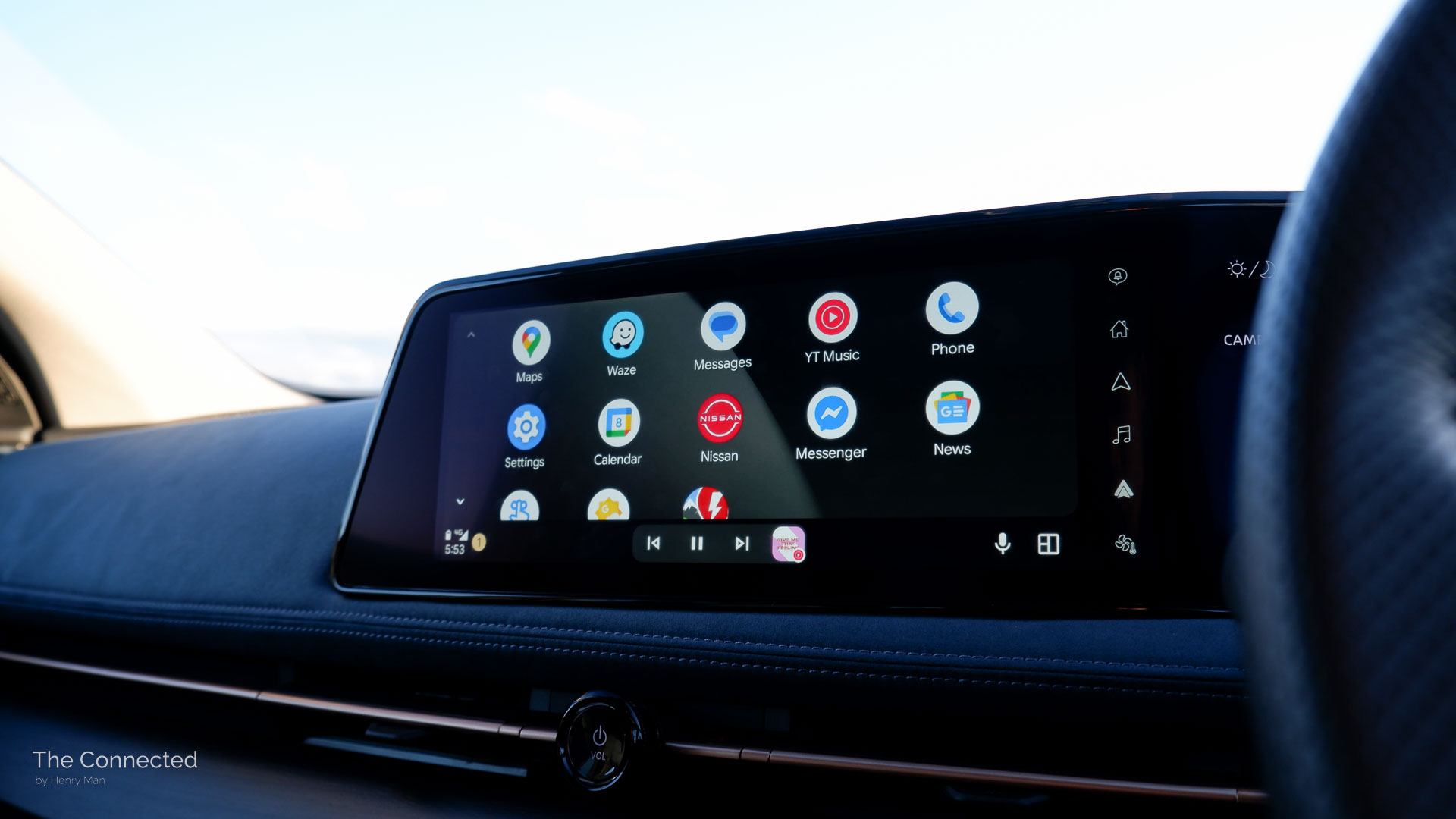
You’ll mainly be using Apple CarPlay or Android Auto which connect wirelessly quickly and reliably – but I did notice that the rendering of the latter system is relatively low resolution with high white levels.
The upcoming facelifted Nissan Ariya is expected to introduce more modern technology powered by Google’s Android Automotive software.
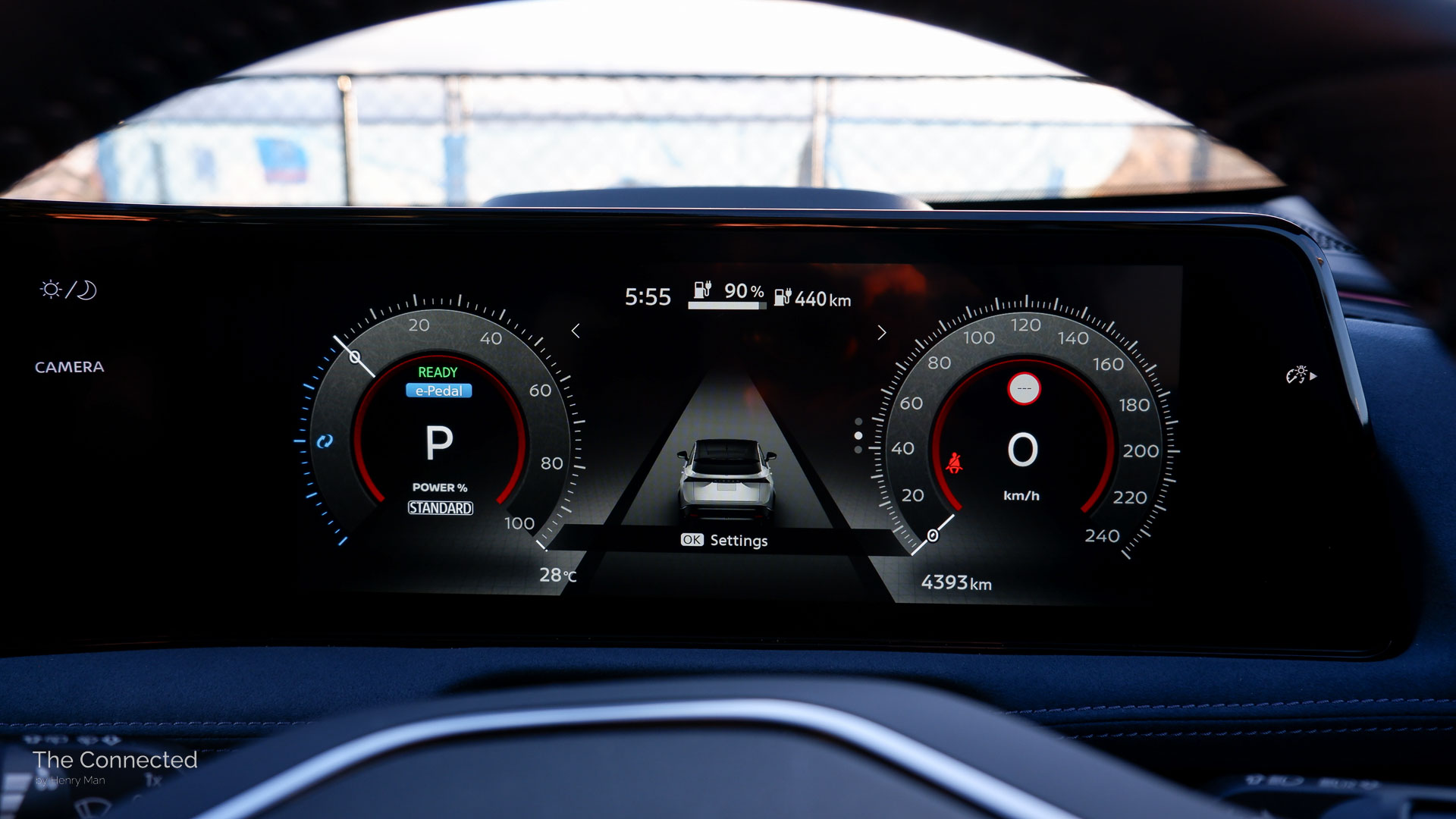
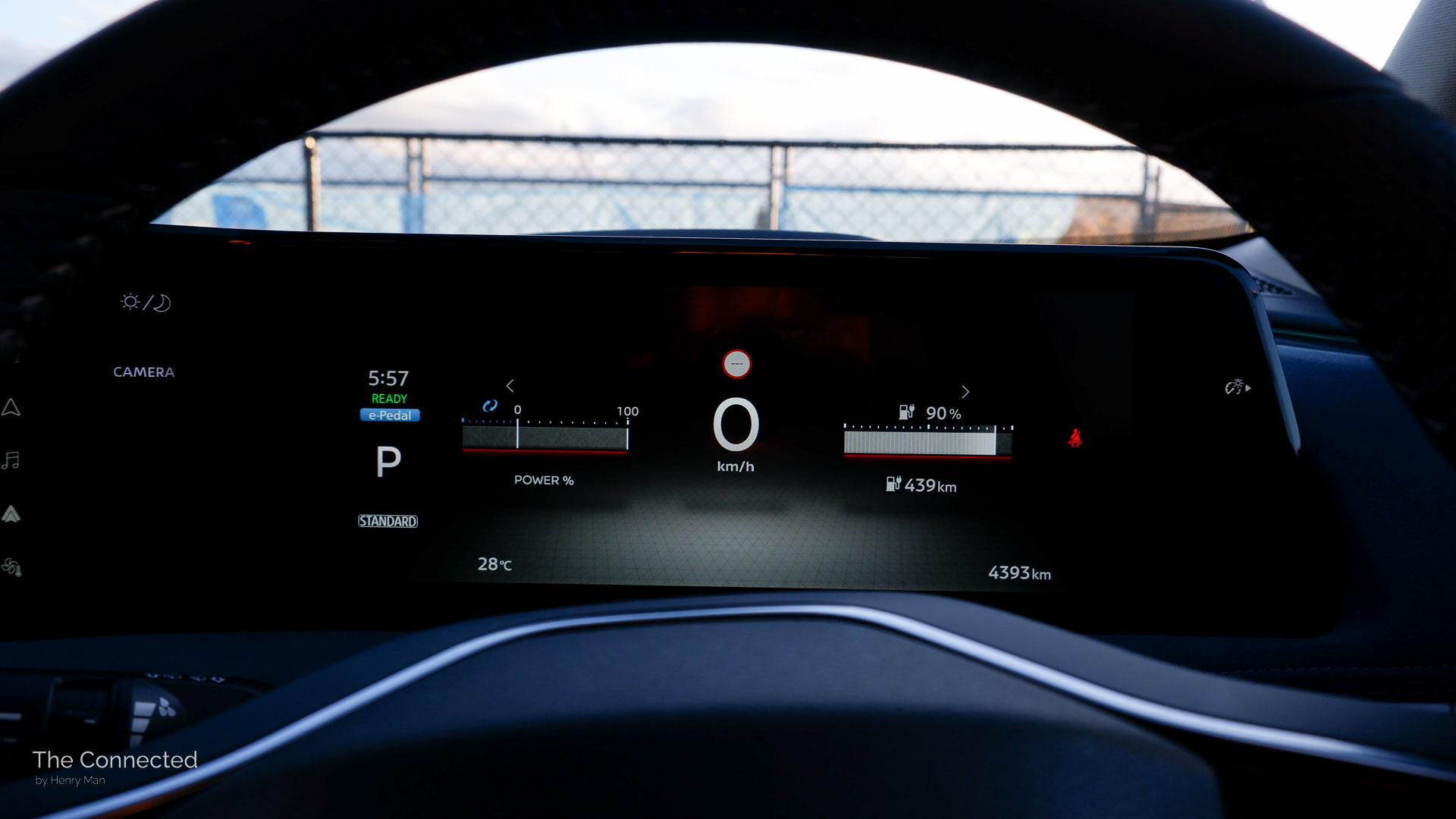
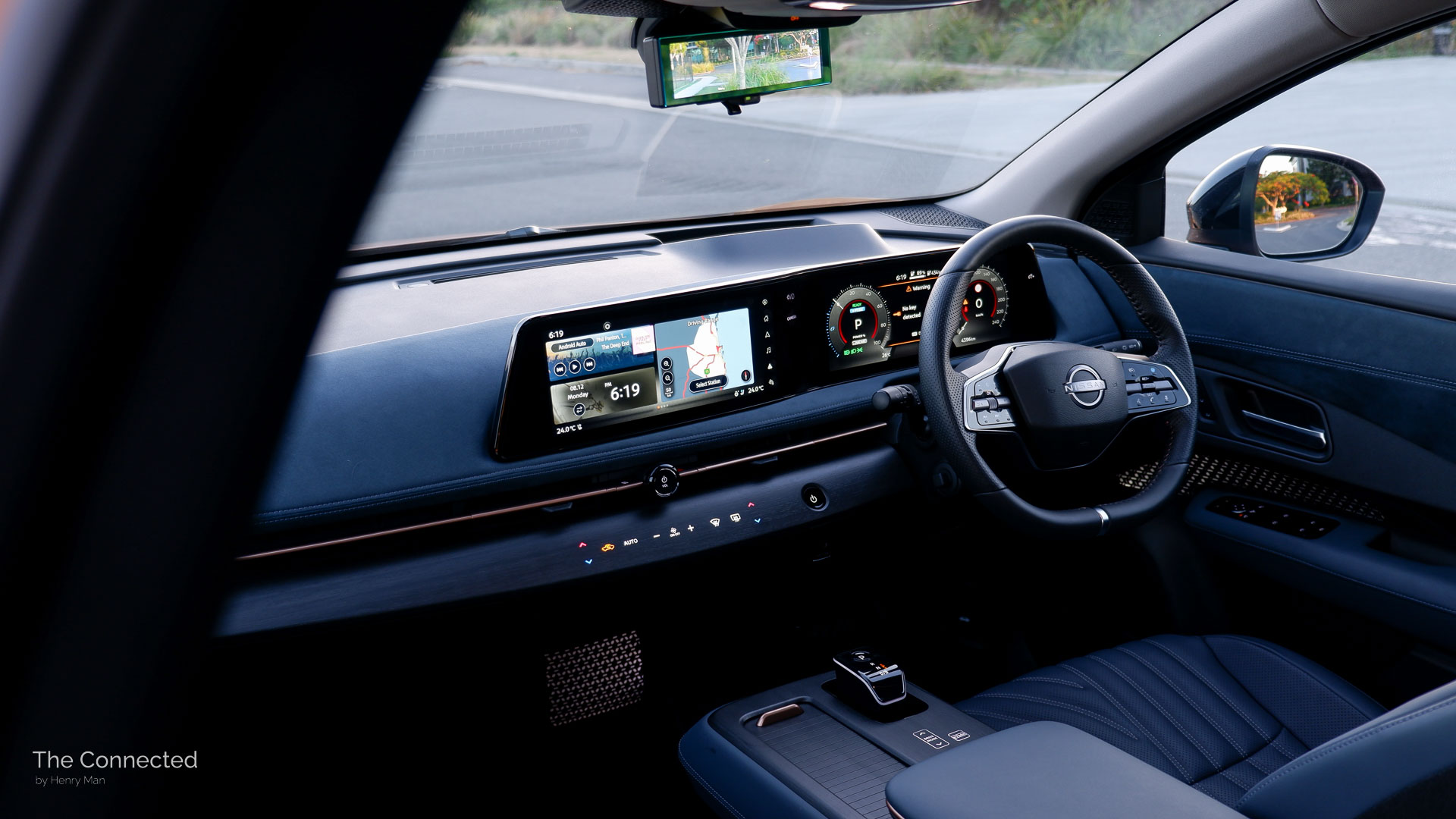
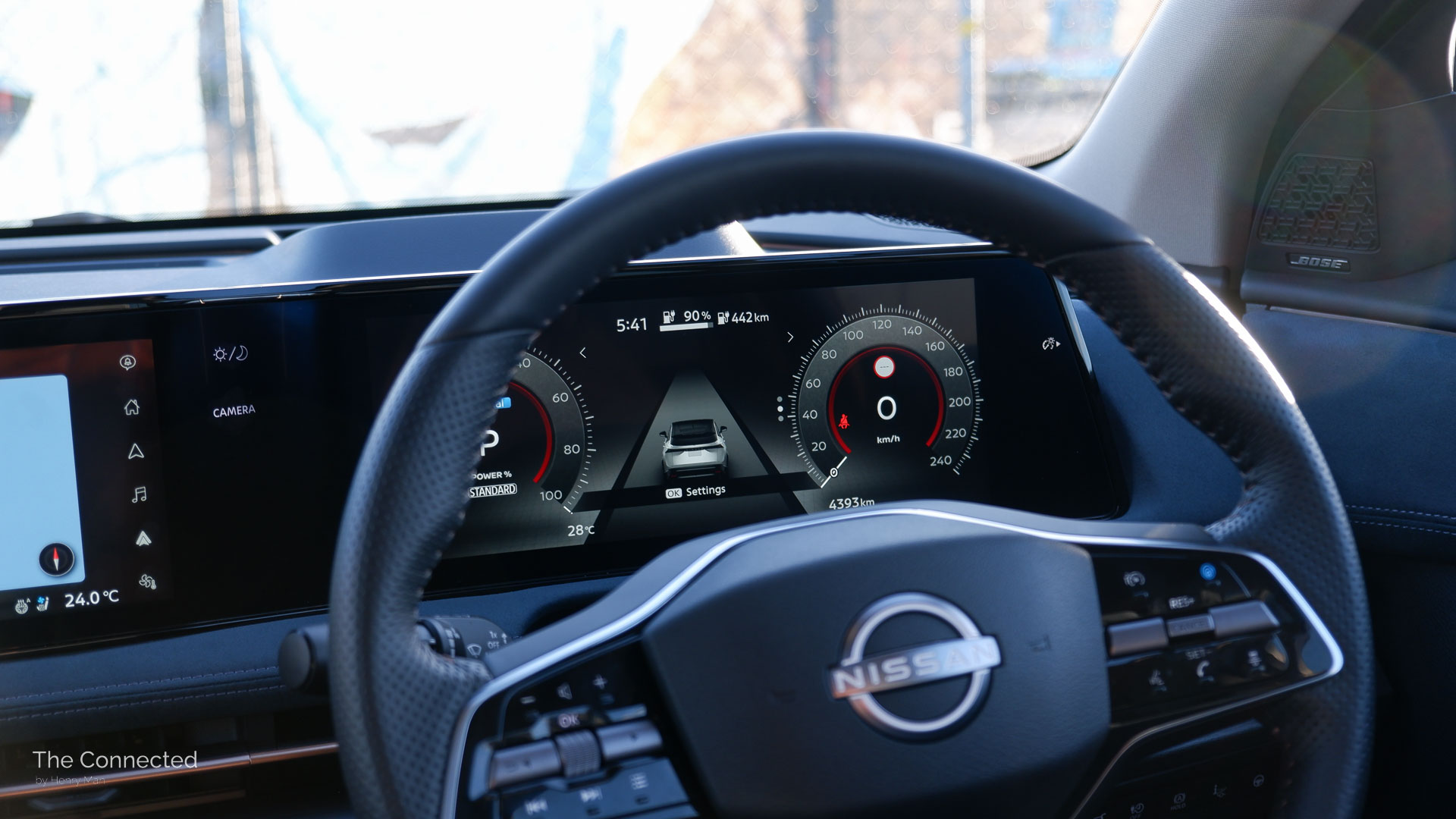
Additionally, the 12.3-inch driver instrument display is legible and responsive with a range of selectable pages and either analogue dial or minimalist digital themes.
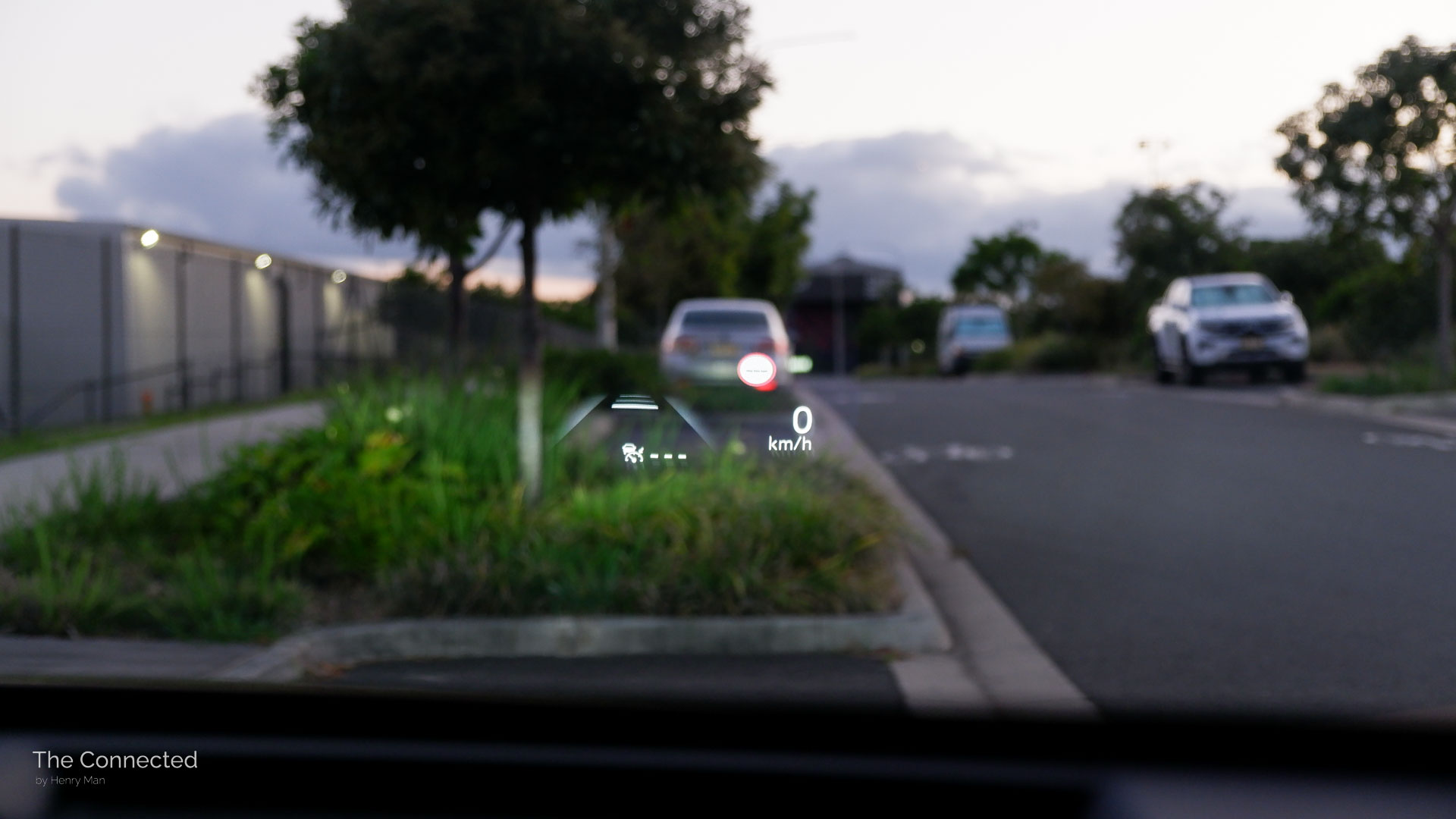
The 10.8-inch head-up display clearly projects the speed readout high on the windscreen in big and bold font, alongside speed sign detection and adaptive cruise status icons.
Disappointingly, while other Nissans have started rolling out connected services with mobile app connectivity, the Ariya does not offer such – another sign of its age.
Safety.
2026 Nissan Ariya Evolve e-4orce safety features:
| Front AEB with vehicle/pedestrian/cyclist/junction turning detection | 360-degree camera system with Moving Object Detection (MOD) |
| Rear AEB | Front and rear parking sensors |
| Blind-spot assist | Road sign detection |
| Rear cross-traffic assist | Rear occupant alert |
| Lane-keep assist | Full LED headlights with adaptive high beam matrix function |
| Adaptive cruise control with lane-centring assist (Nissan ProPilot+) | Full LED tail-lights with rear fog light |
The Nissan electric SUV offers a range of generally well-tuned safety assistance systems, but it isn’t flawless.
The Ariya’s active safety warnings are subtle with a speed sign detection and overspeed warning system that doesn’t annoyingly chime by default.
The adaptive cruise control brakes too abruptly and aggressively when responding to a vehicle stopping in front, even though it’s not close.
It doesn’t include any driver attention monitoring camera, rather thankfully.
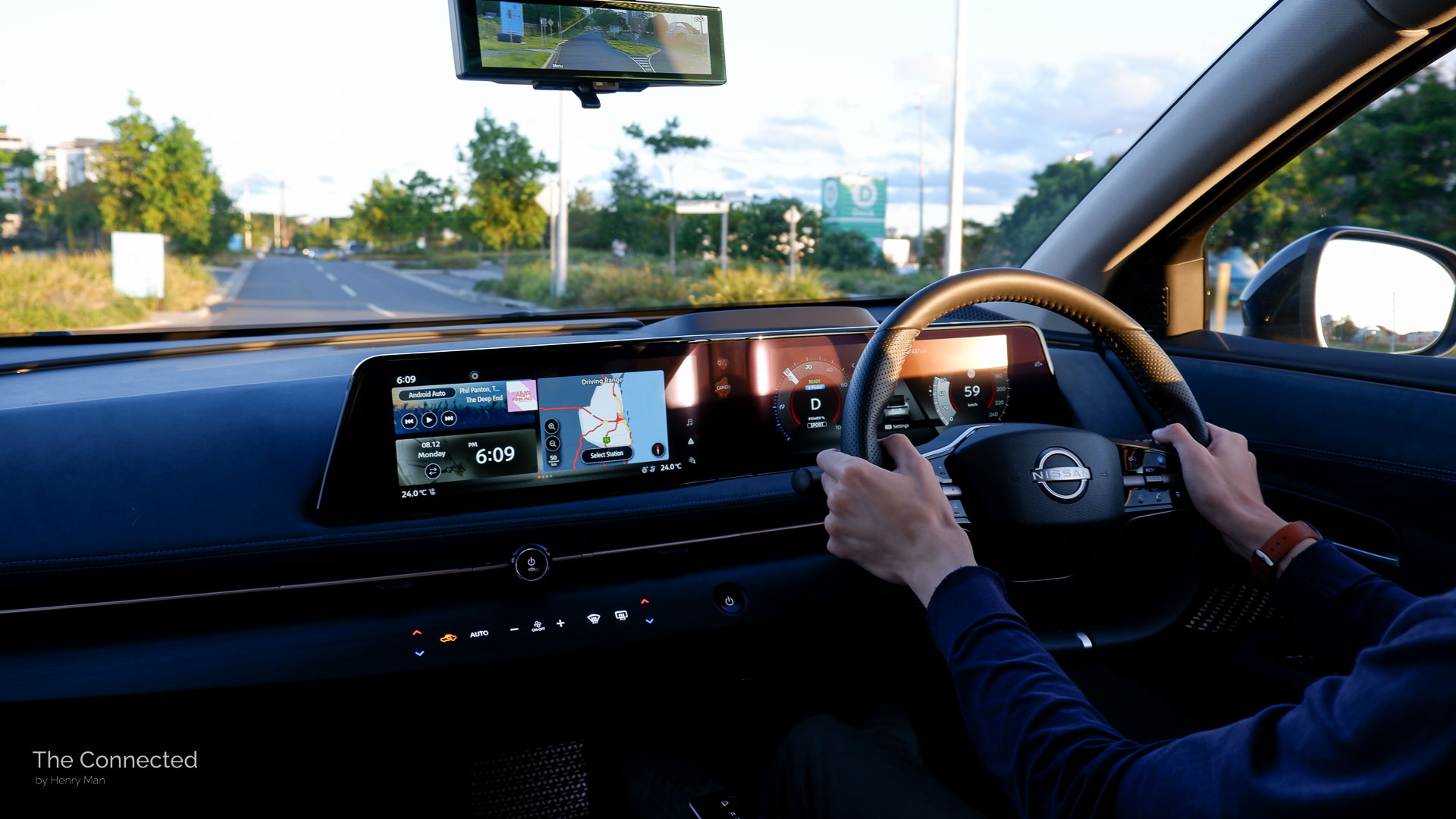
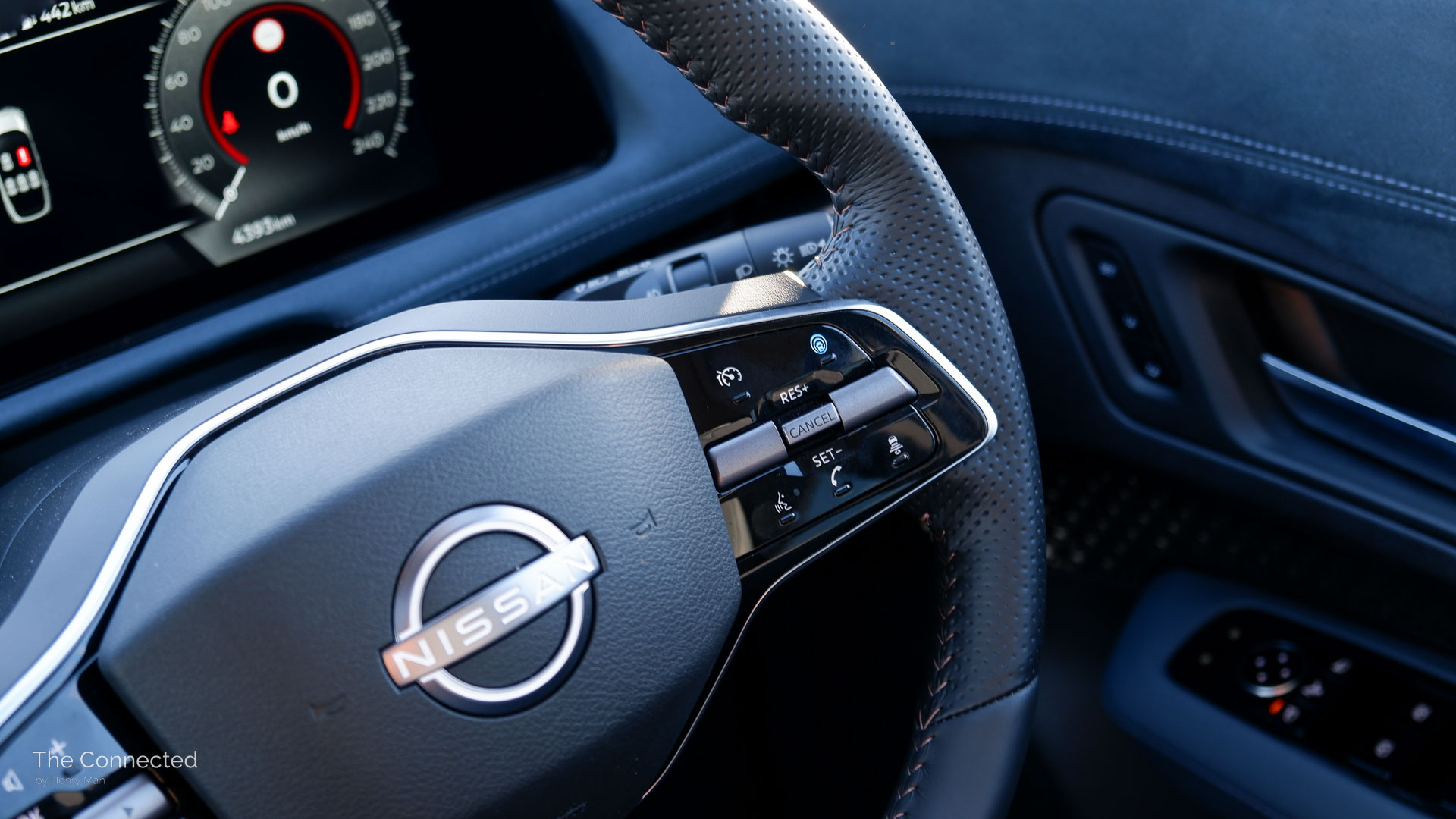
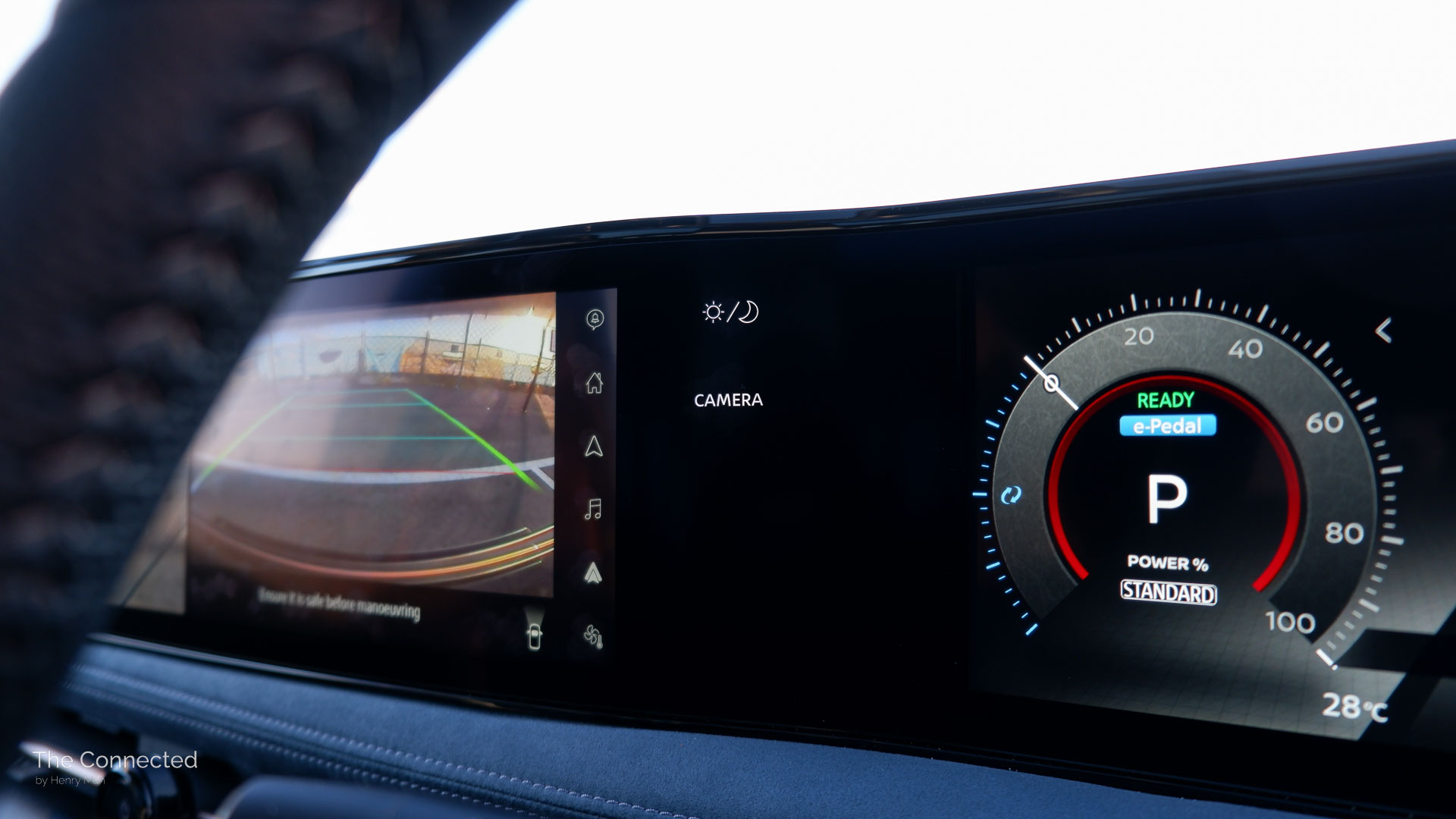
While the lane-centring system is effective, it sometimes doesn’t lock onto the marked lines for a while and deactivates under certain conditions that wouldn’t be the case with other brands.
Meanwhile, the emergency lane-keep assist brakes the inside wheel, instead of tugging the wheel, which slows down the car more than ideal.
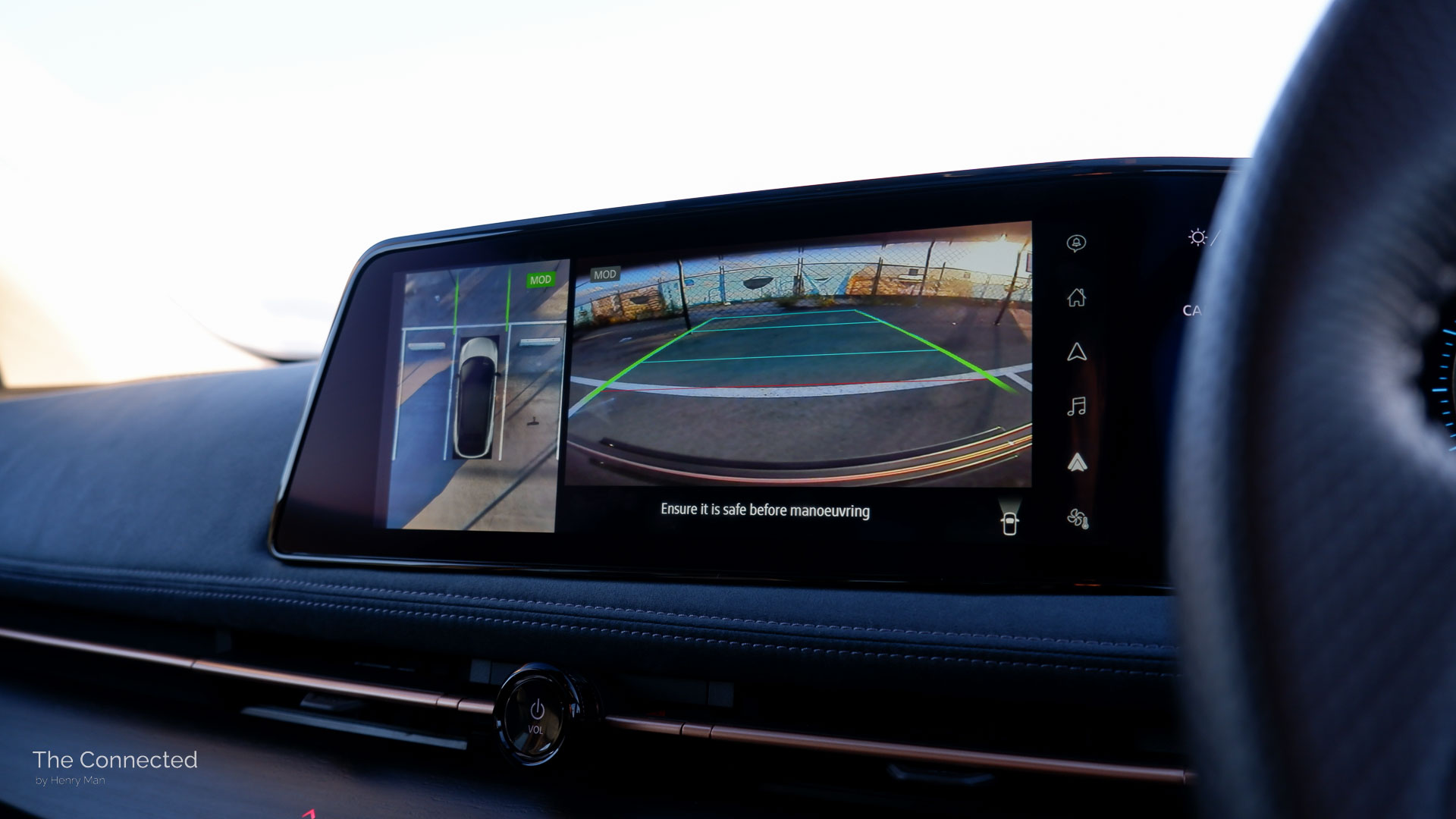
The Ariya’s 360-degree camera system can be easily accessed via tapping the touch-sensitive button in between the two screens – but it can’t be activated and cuts out when driving beyond 12km/h, which is too low, and the camera quality is low resolution, off-colour with limited views.
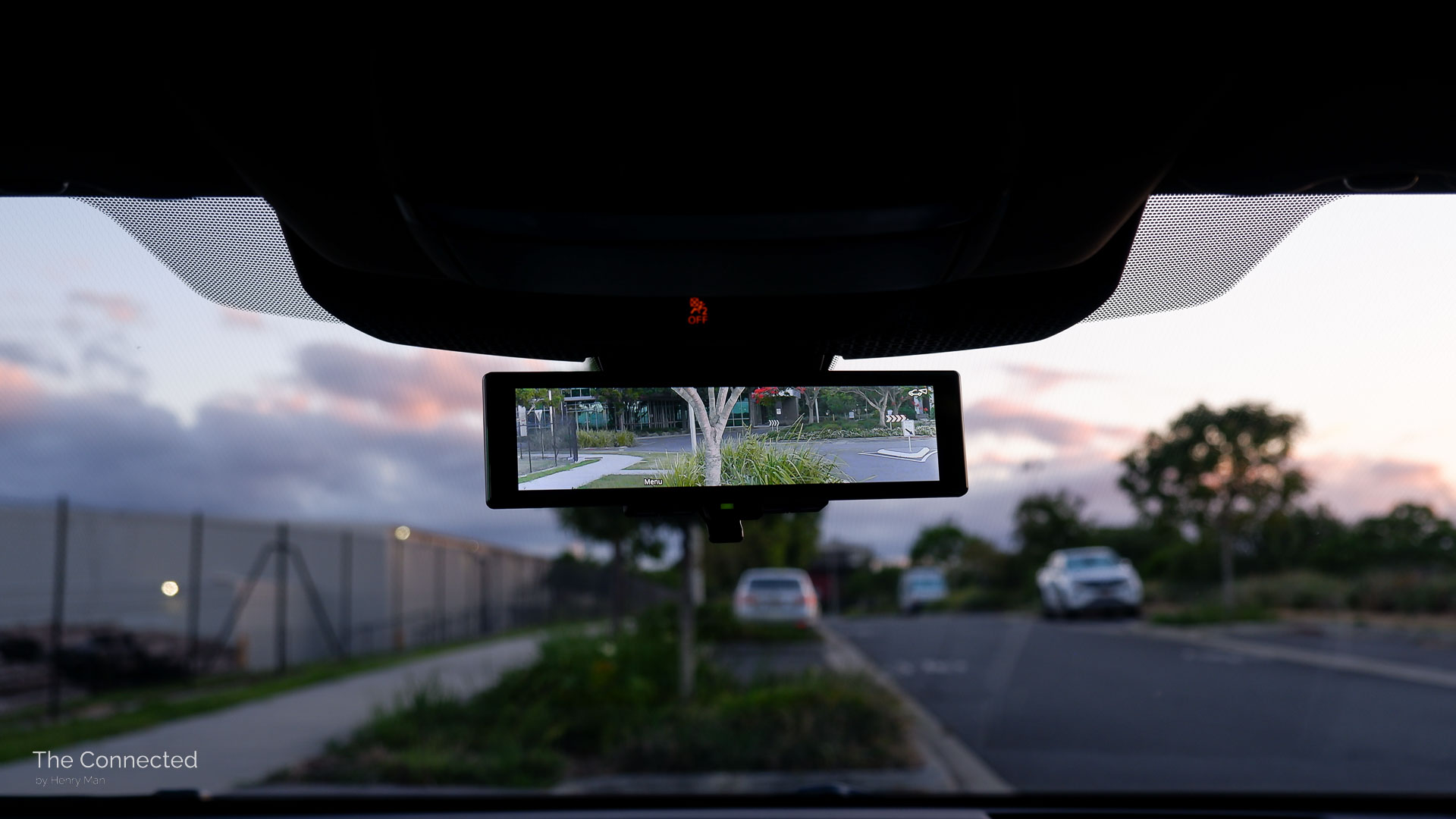
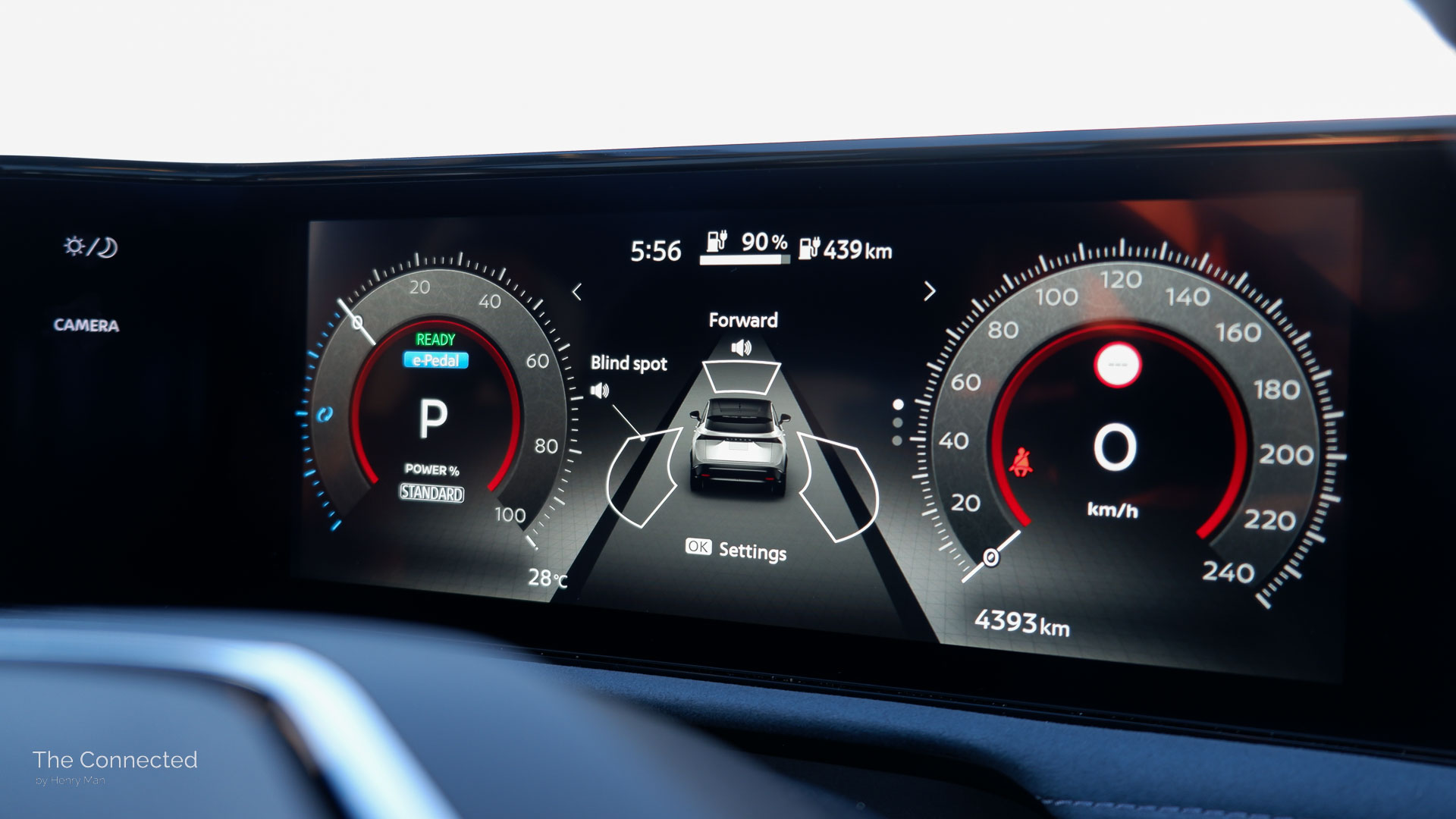
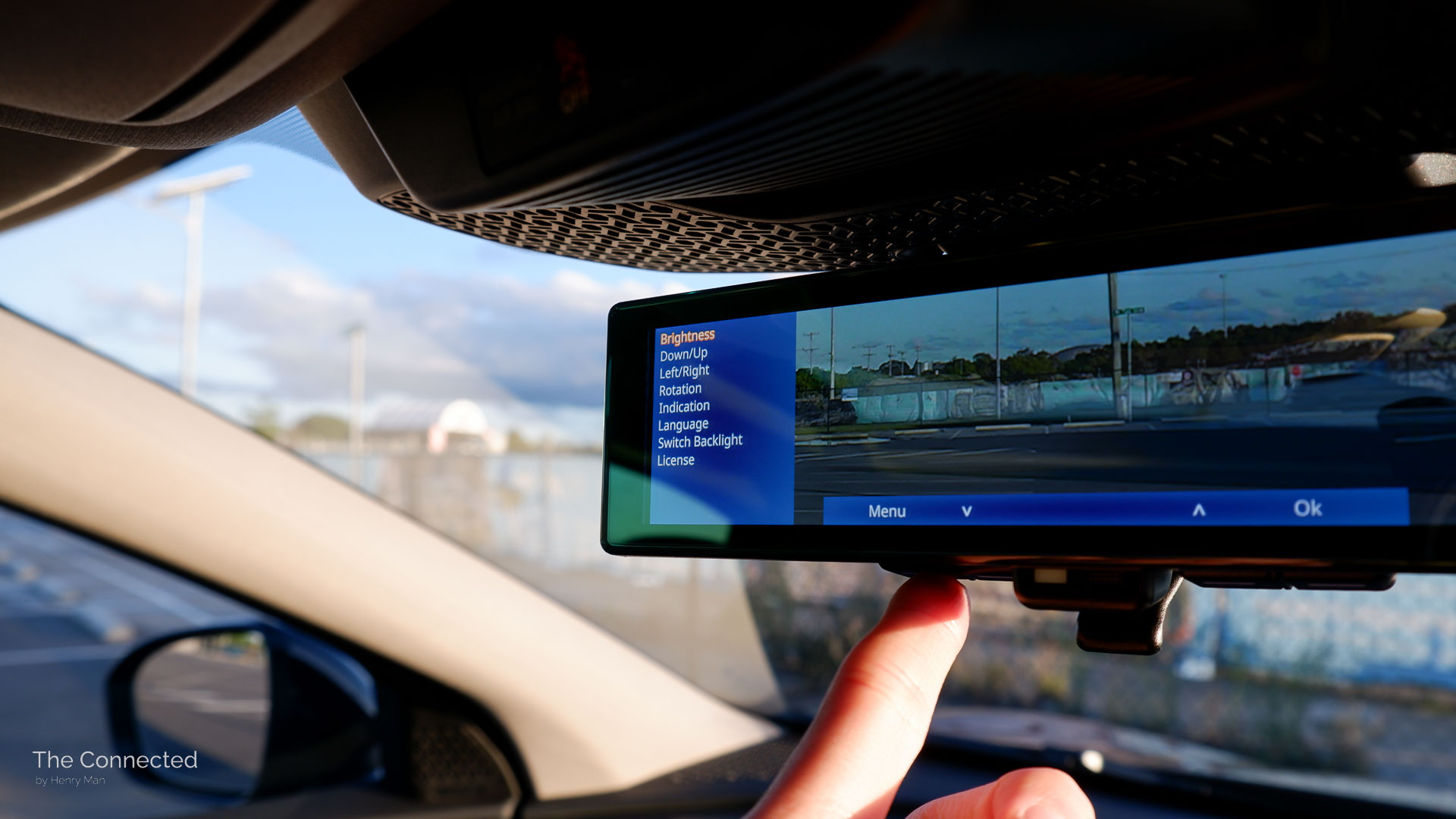
Similarly, the digital camera-based rear-view mirror isn’t as clear and wide as what you find on a Hyundai, Mazda or Polestar – with an old Windows XP-style settings UI – but is useful given the small sloping rear window.
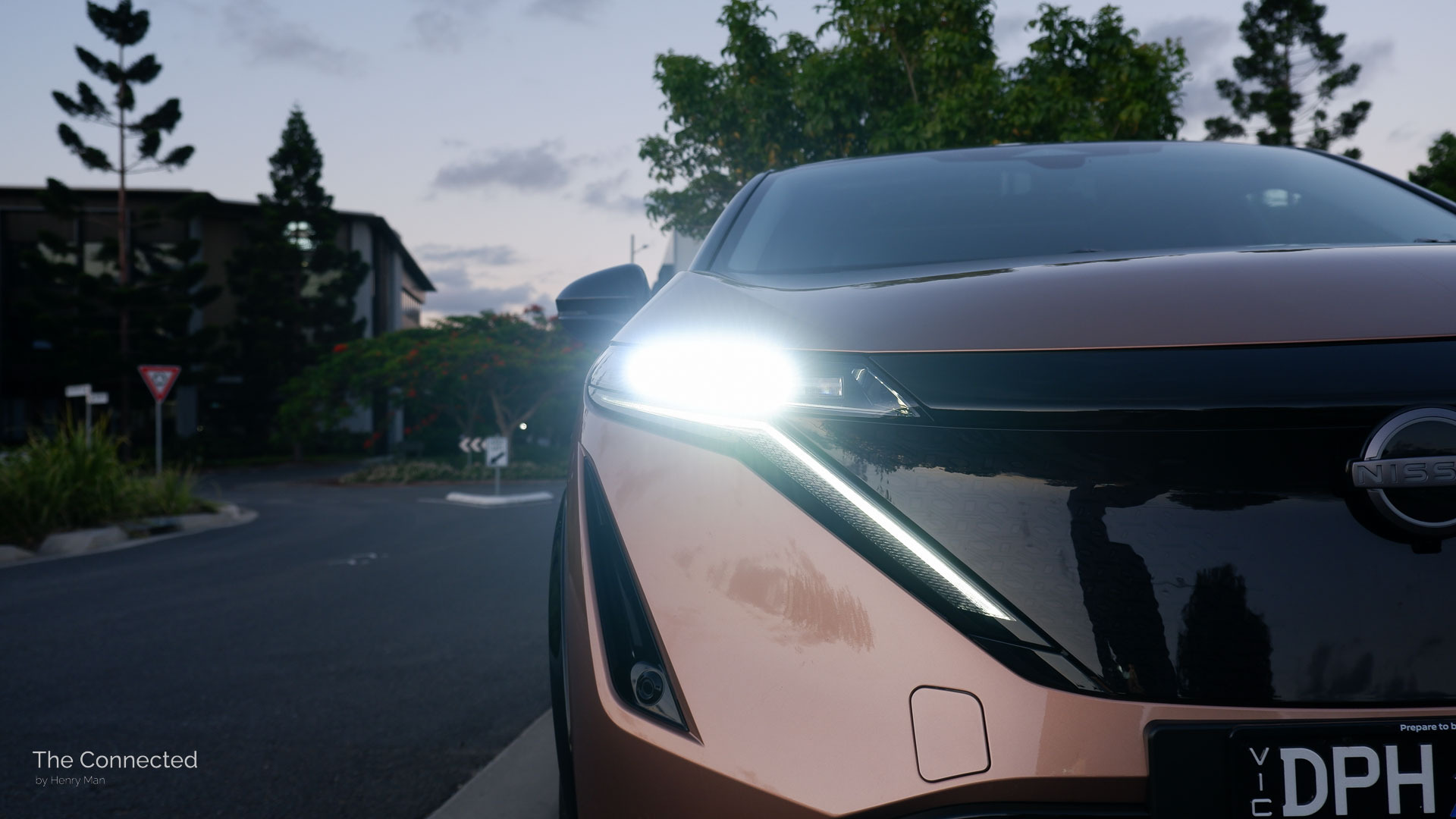
On the other hand, the full LED headlights are bright with an adaptive high beam matrix function that effectively blocks individual pixels to avoid glaring at other road users.
The 2026 Nissan Ariya scored the full five-star Australasian New Car Assessment Program (ANCAP) safety rating under 2022 testing criteria.
Range and charging.
2026 Nissan Ariya Evolve e-4orce battery and charging specs:
| Claimed driving range (WLTP combined cycle) | 487km |
| Claimed energy efficiency (WLTP combined cycle) | 20.8kWh/100km |
| Battery size and type | 87kWh (91kWh gross) NMC lithium-ion |
| Battery voltage | 400-volt class |
| Max AC / DC charging speed | 22 / 130kW |
| Bidirectional charging | N/A |
| Connector type | Type 2 / CCS2 |
| Everyday charging limit recommendation | 80% (generally) |
The most powerful Nissan Ariya Evolve e-4orce isn’t great on energy efficiency and its charging performance is rather average, but has one perk that sets it apart.
The performance electric SUV indicated an average energy consumption of 20.2kWh/100km after a week of mixed driving conditions, resulting in a real-world range of about 430km from its 87kWh lithium-ion battery.
However, it uses the conventional nickel-manganese-cobalt (NMC) cathode, so capping daily charging to 80 per cent is generally recommended; expect about 344km of daily range.
Unfortunately, there’s no way to set a charging limit within the vehicle system itself.
While it isn’t particularly energy efficient, it provides respectable real-world range given it has dual motors outputting 290kW combined.
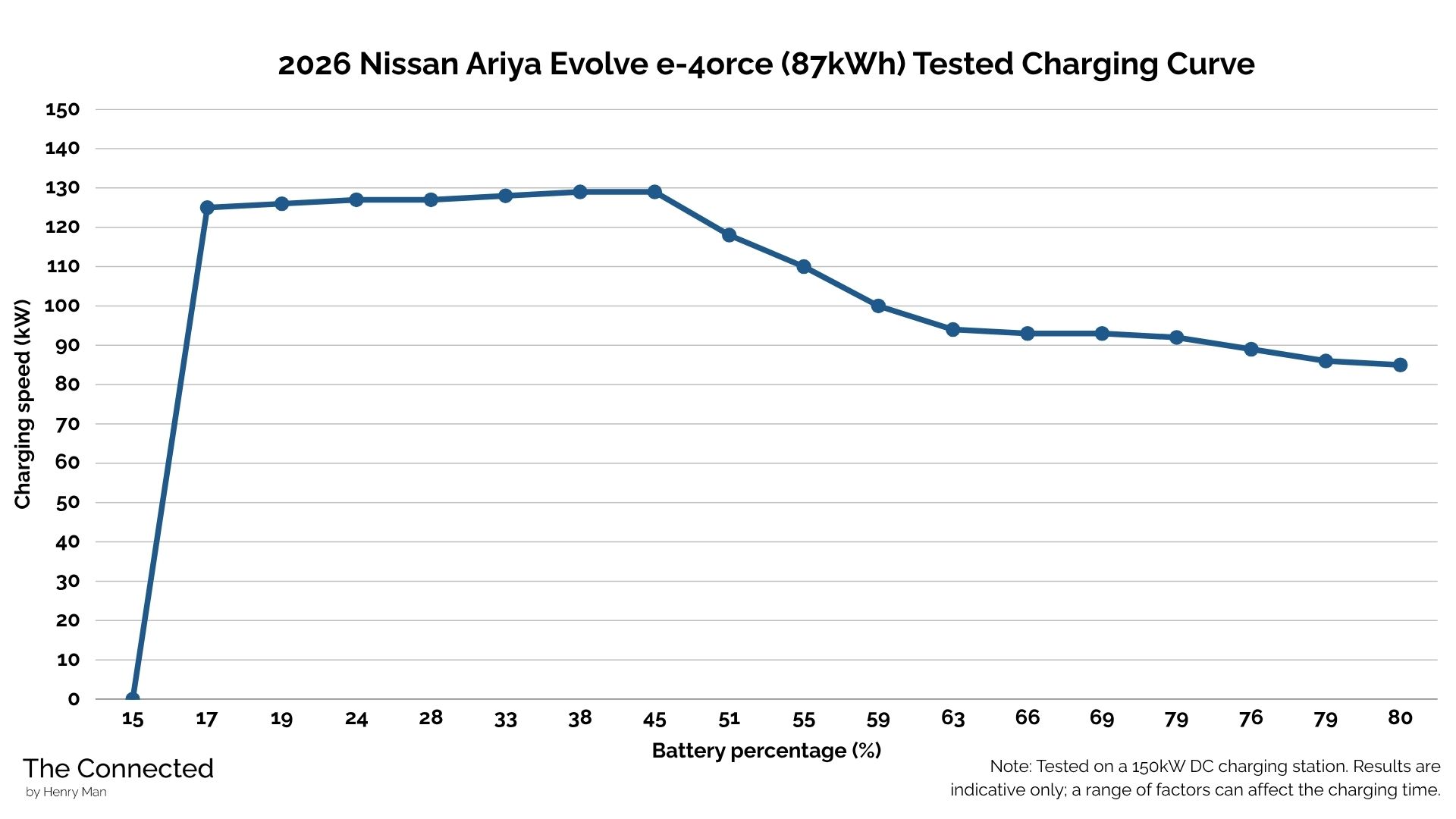
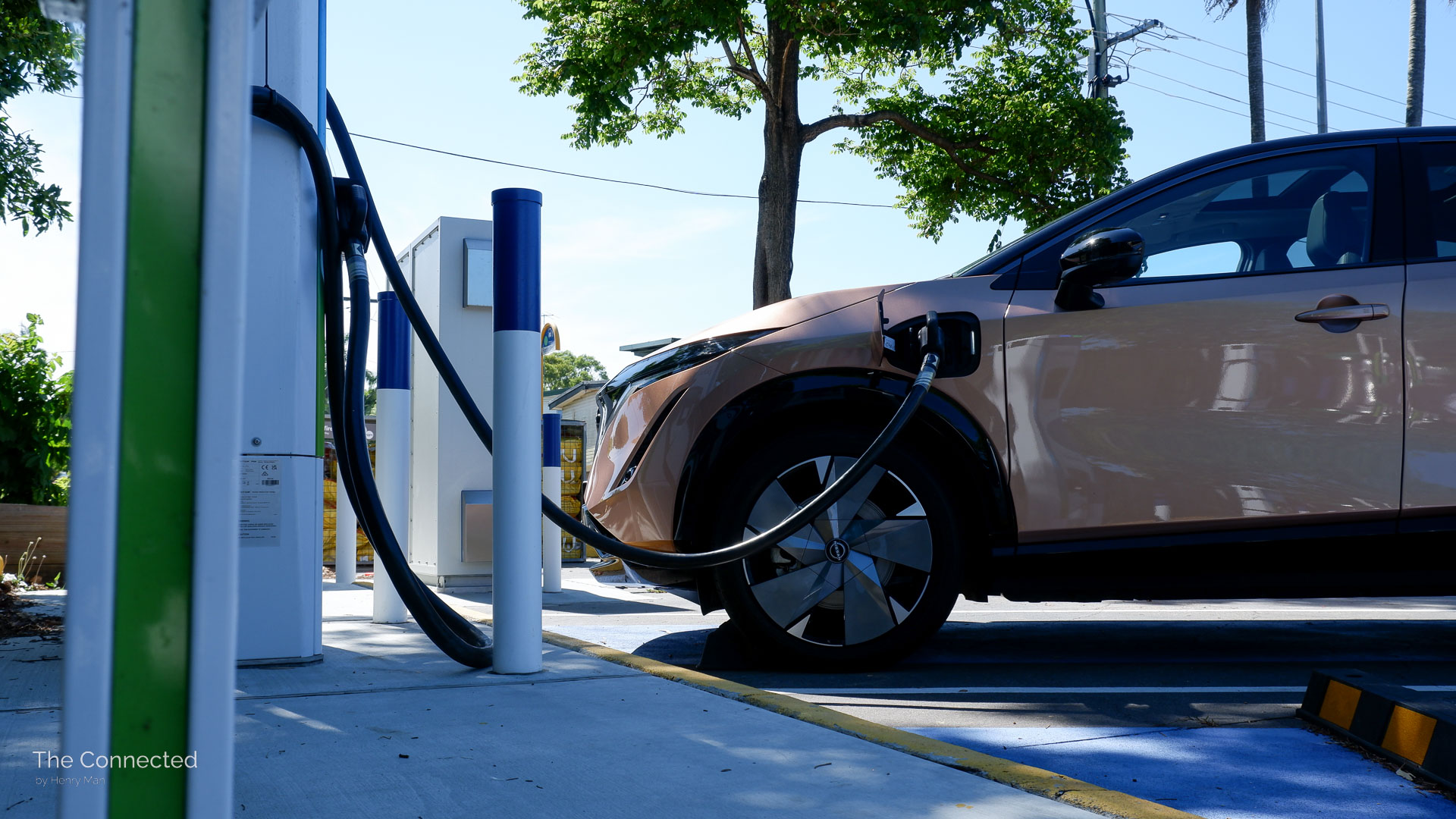
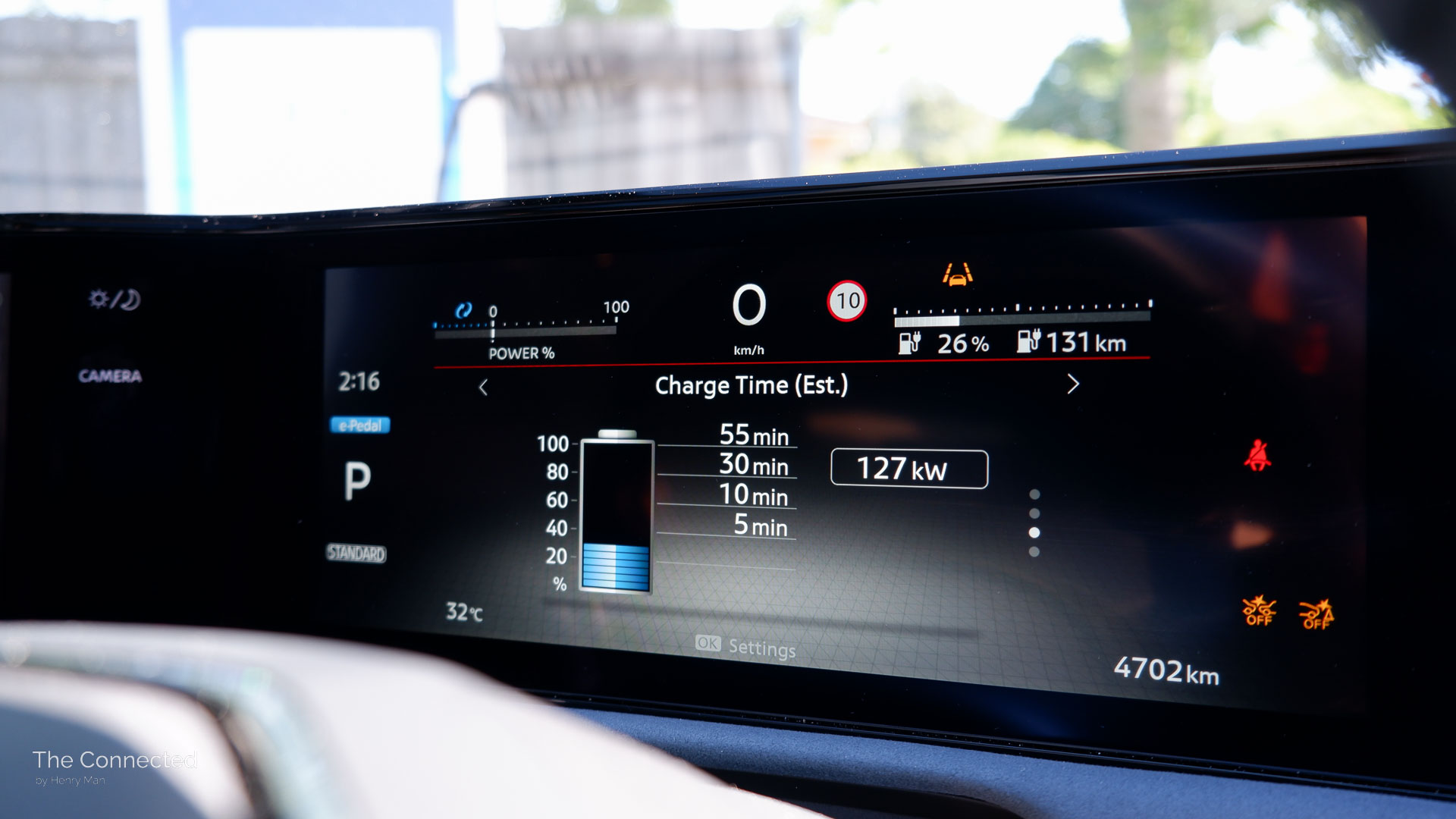
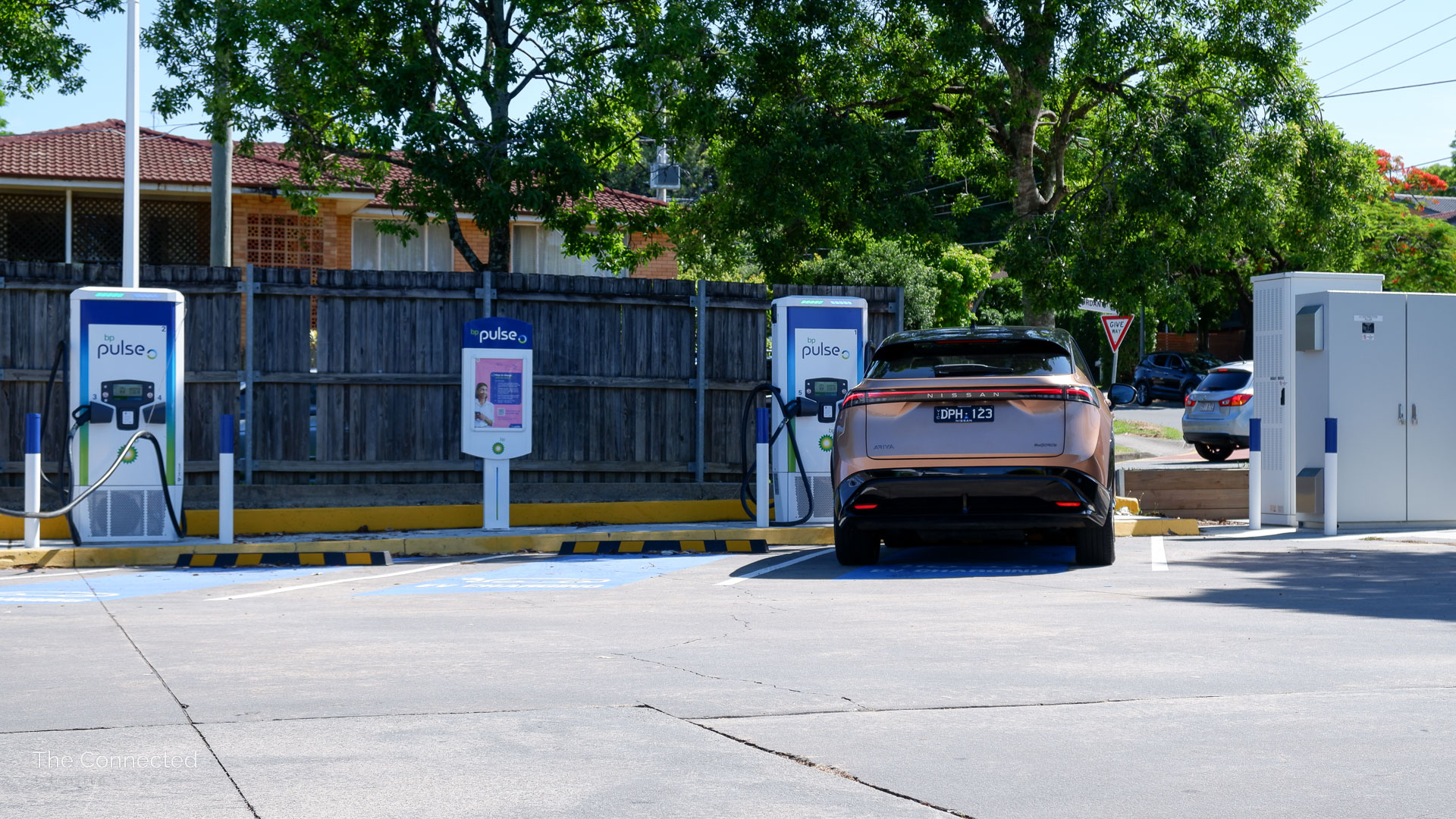
Using a 150kW DC public fast charging station, the Nissan Ariya Evolve recharged from 15 to 80 per cent in about 31 minutes.
We observed a charging speed peak of 129kW in line with the advertised claim, with an average session speed of 109kW.
The Nissan system allows manual battery preconditioning via a press of a button within the EV settings screen.
Uniquely, the top-spec Ariya Evolve variant offers up to 22kW AC charging capability as standard – which means you can take full advantage of public three-phase wall boxes and cut the time by hours compared to the 7.4kW AC speed on lesser variants.
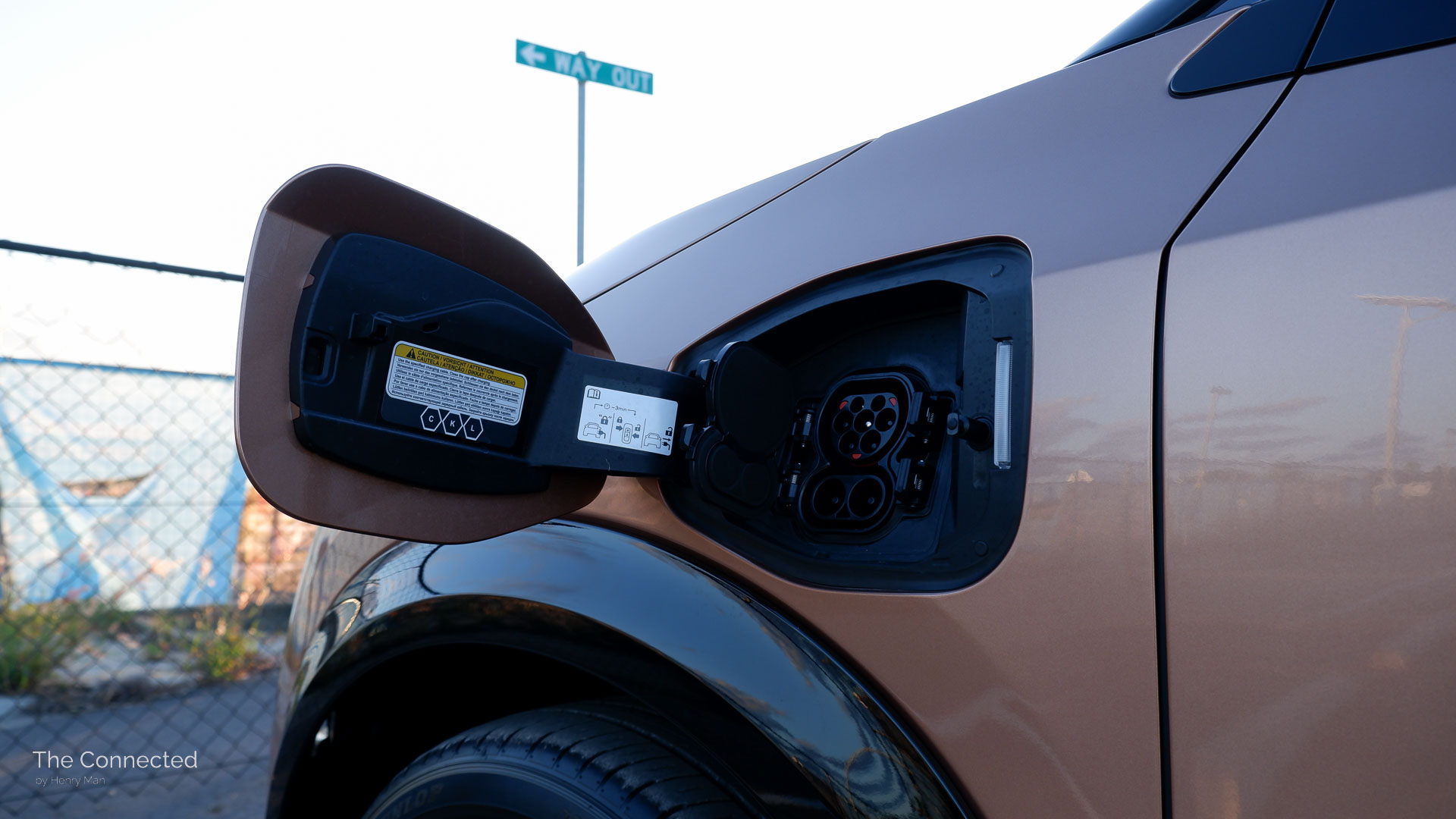
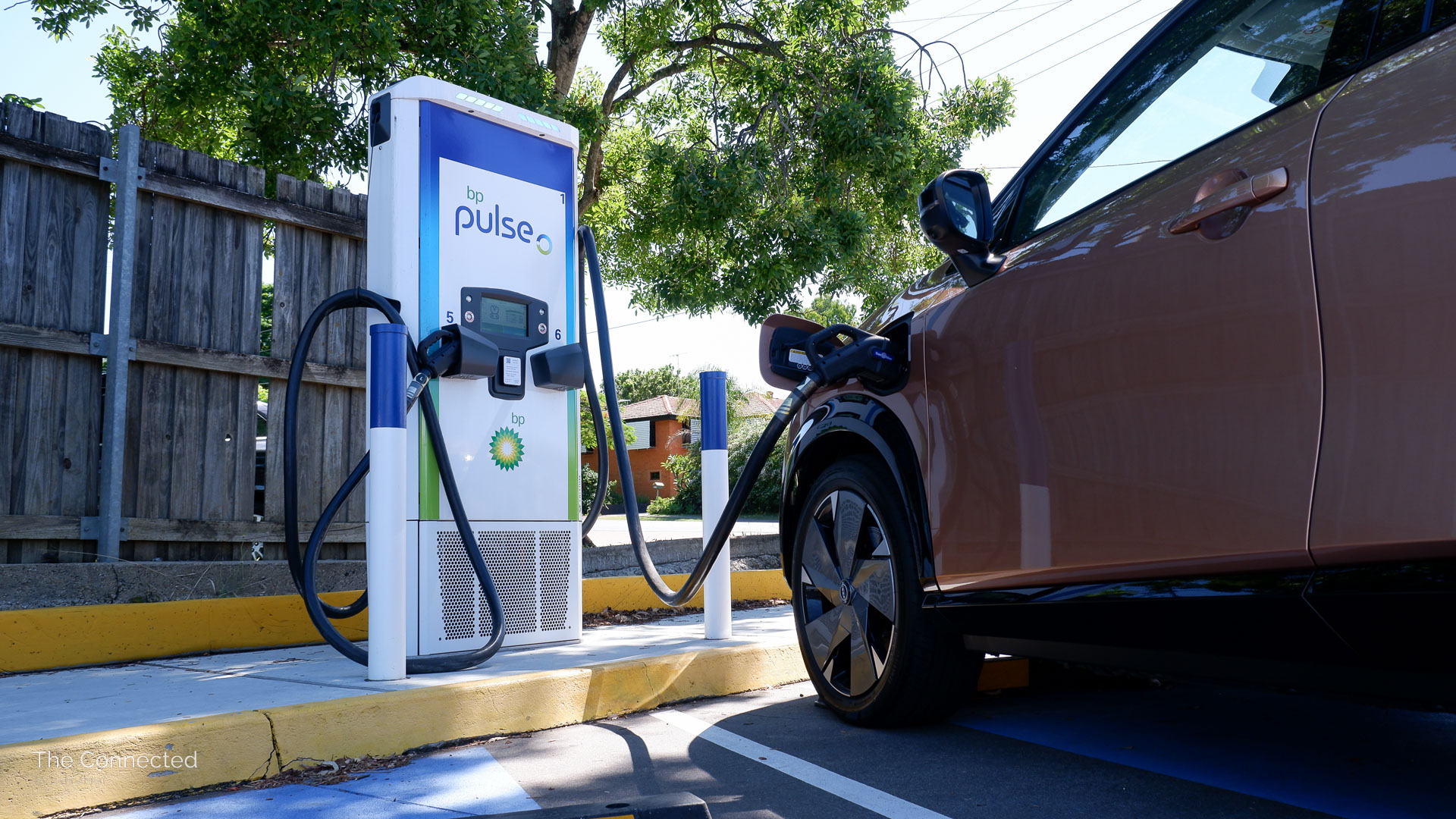
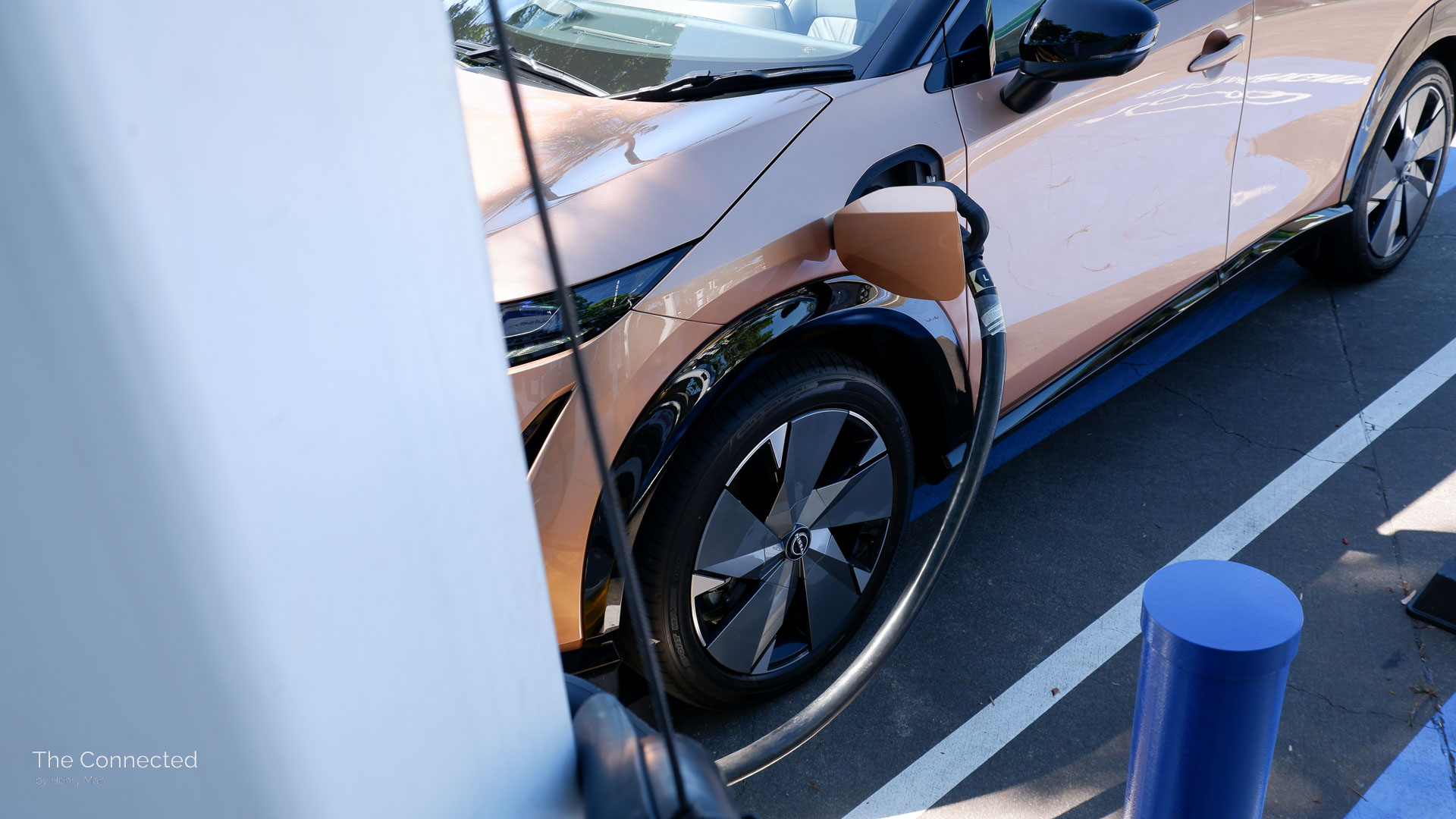
Unlike the old-school Nissan Leaf, the Ariya adopts the modern-standard Type 2 CCS port with it located at the front-left quarter wheel of the vehicle.
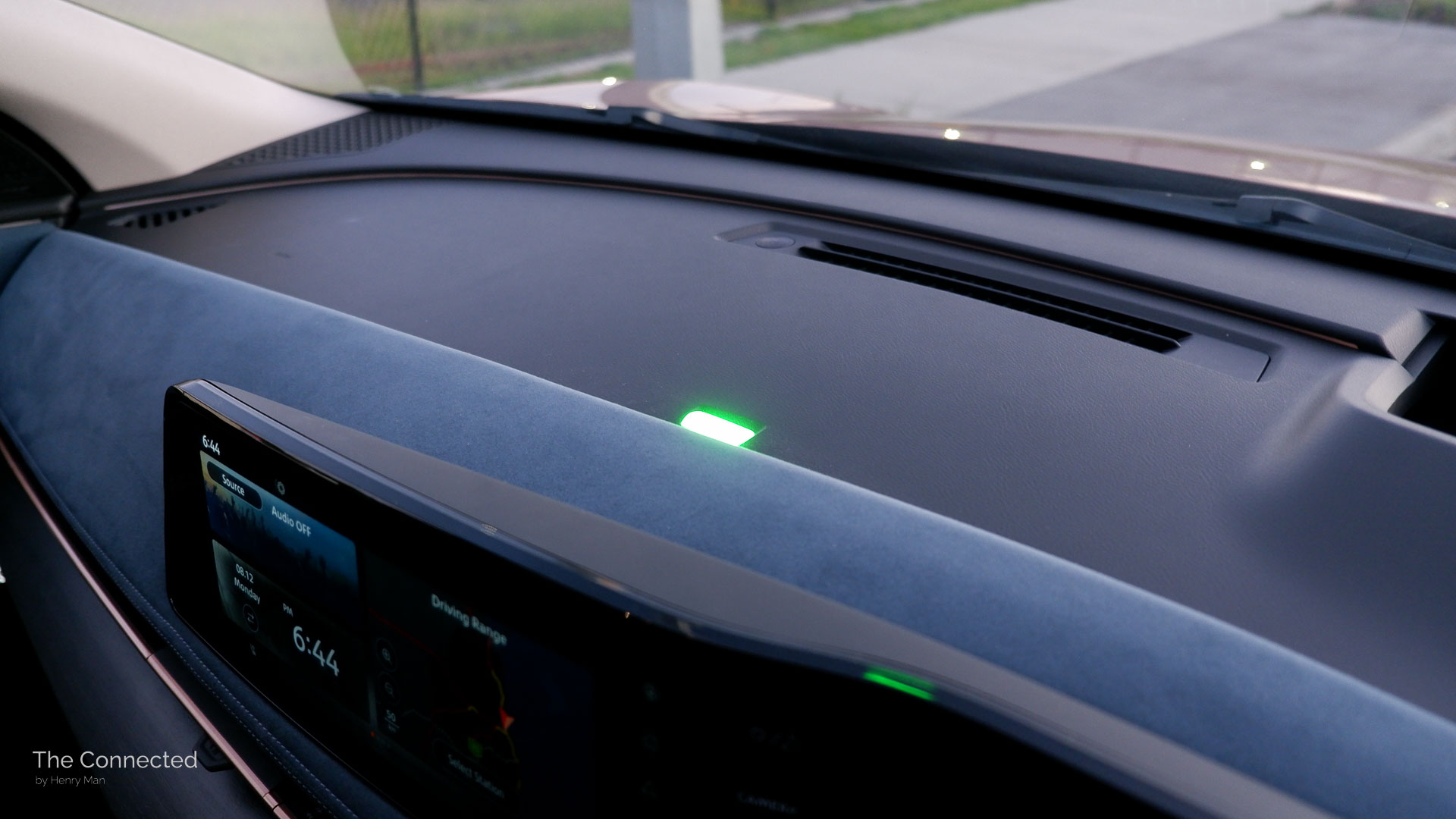
The charging flap pops open manually with hinged AC and DC caps, rather than flimsy ones dangling on the body work, and charging status lights at both the port and inside the dashboard.
However, the charge port position could be awkward for some EV charging cables to reach, including older Tesla Superchargers where a front-right side placement would be more ideal.
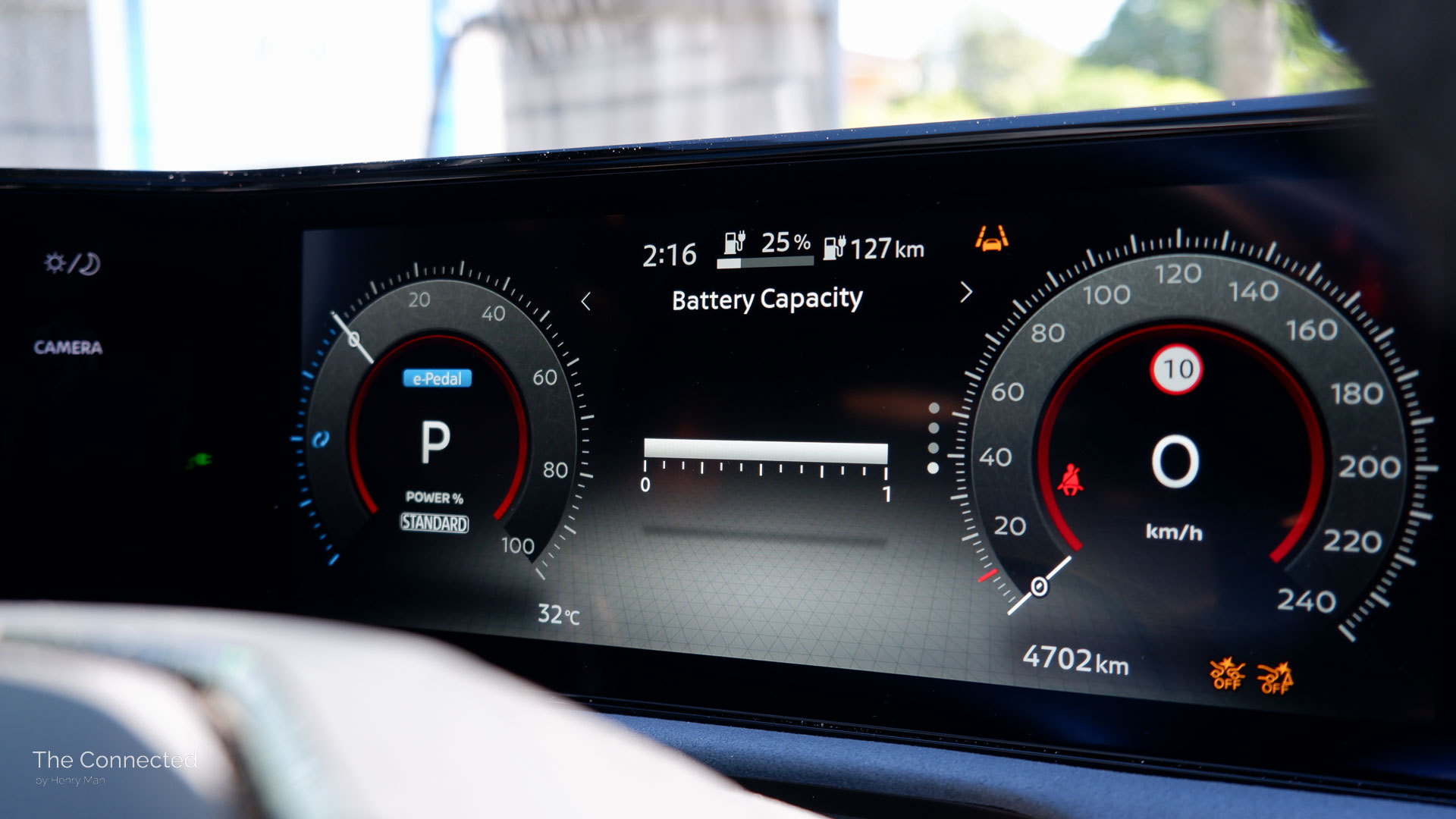
Nissan is also one of the few car brands that indicates the battery health capacity in a bar graphic on the instrument display, similar to the old-school Leaf.
Driving.
2026 Nissan Ariya Evolve e-4orce powertrain specs:
| Electric drive unit | Dual permanent magnet synchronous motors |
| Power / torque | 290kW / 600Nm |
| Transmission | Single-speed |
| Drive type | AWD |
| Kerb weight | 2234kg |
| Payload | 433km |
| Towing (unbraked / braked) | 750 / 1500kg |
| Turning circle | 11.5m |
The Ariya is great to drive with plenty of power on the dual-motor Evolve, but it’s unfortunate that Nissan has stepped back its e-Pedal system.
The Nissan Ariya Evolve e-4orce provides up to 290kW of power and 600Nm of torque with all-wheel drive traction.
It provides good grip and more than enough speed, even though it isn’t as neck breaking as the Ford Mustang Mach-E GT, Hyundai Ioniq 5 N and Tesla Model Y Performance.
The steering is also well-weighted with it becoming artificially heavier in sport mode, although I still prefer the Cupra Tavascan for fun around corners.
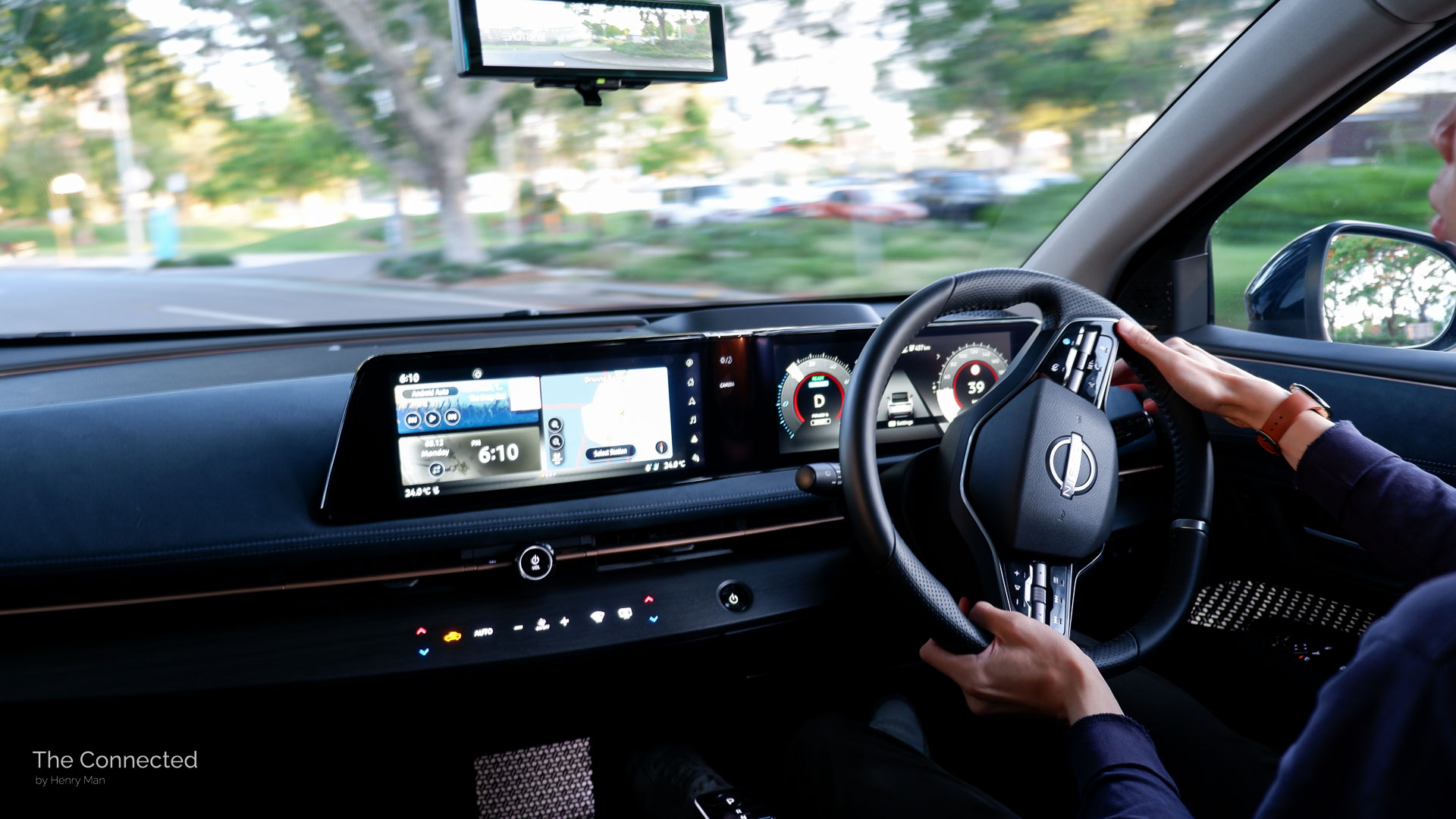
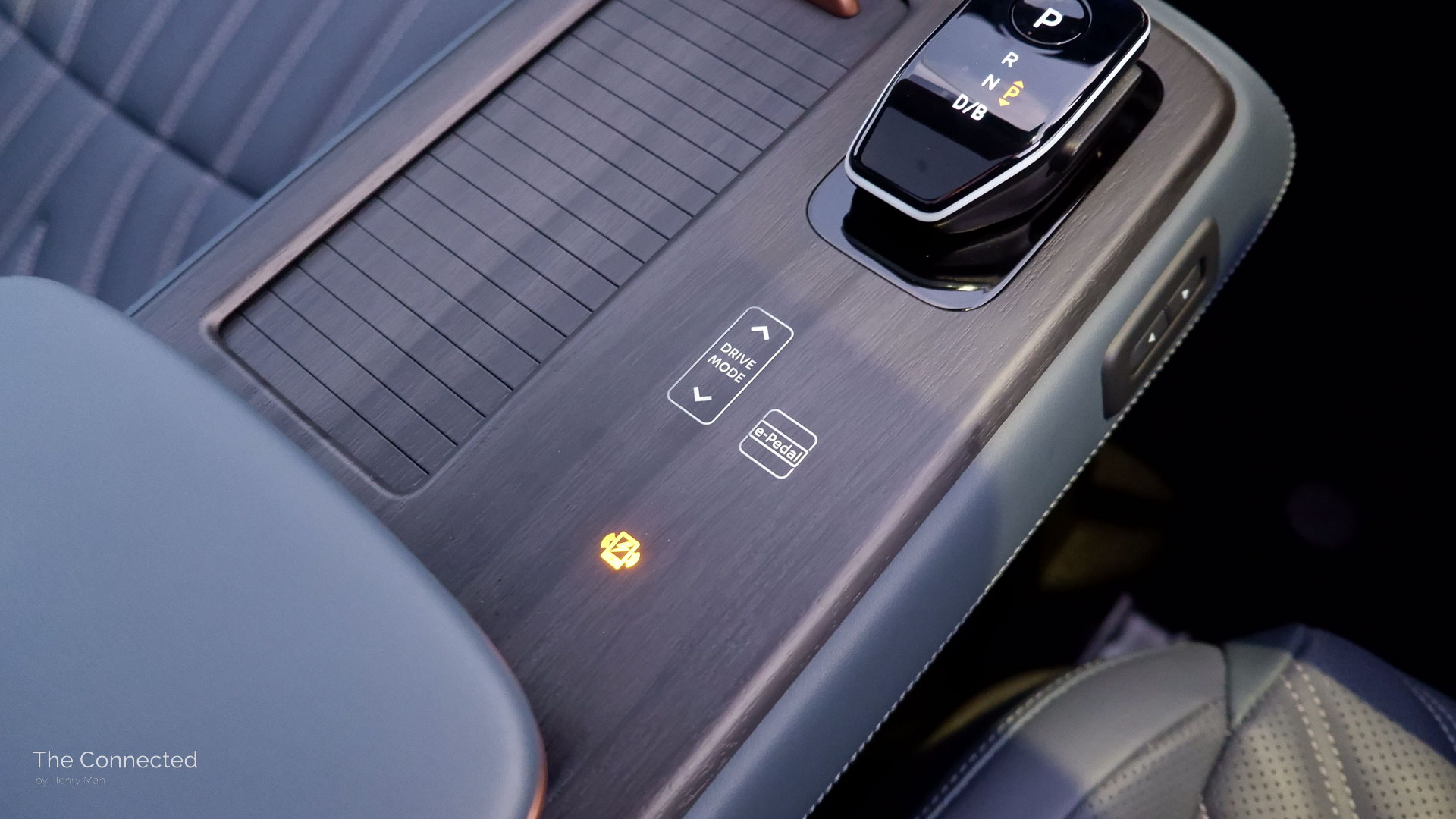
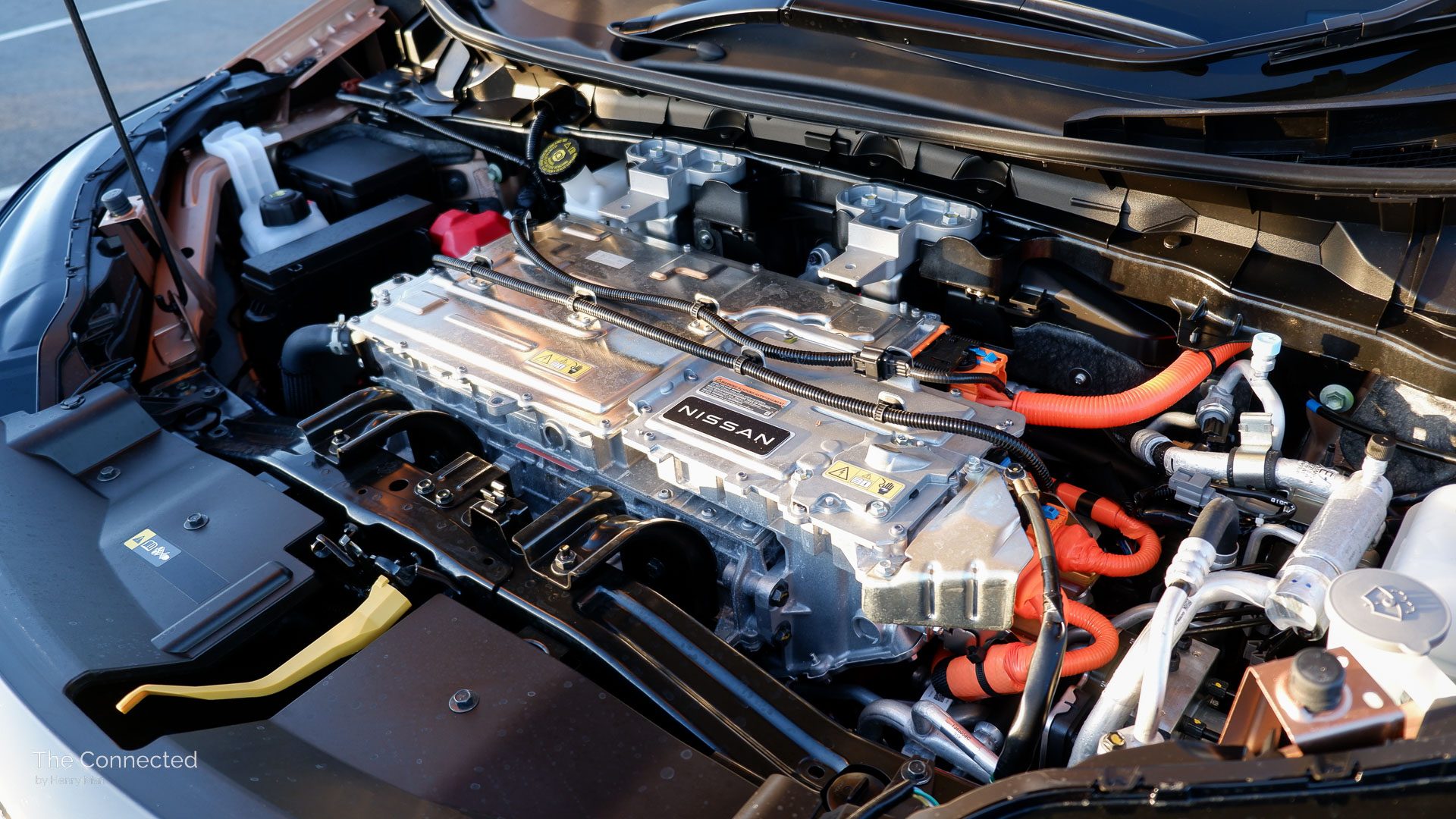
Disappointingly unlike the Nissan Leaf EV, the Japanese automaker has changed its e-Pedal mode – it’s no longer one-pedal driving by cutting out the regenerative braking at around 15km/h.
At least the regen is intense and progressive, plus doesn’t switch off every time you start the car as opposed to the Qashqai e-Power hybrid.
It’s rather strange that the brake pedal physically moves with the regen, though.
When using the blended brake pedal, it’s okay but not outstanding for feel.
As for ride comfort, it’s decent but the large 20-inch wheels on the Evolve are noticeable with a slightly firmer ride over bumps and some audible road noise.
Warranty and servicing.
2026 Nissan Ariya Evolve e-4orce capped-price servicing costs:
| 1 year/20,000km | 2 years/40,000km | 3 years/60,000km | 4 years/80,000km | 5 years/100,000km |
| $299 | $299 | $299 | $299 | $299 |
The 2026 Nissan Ariya is backed by a 10-year/300,000km conditional vehicle warranty and an eight-year/160,000km battery warranty.
If owners don’t service with a Nissan dealer every time, the vehicle warranty is restricted to five years, unlimited kilometres.
Servicing is required every one year/20,000km (whichever occurs first) with prices capped at $299 for the first five visits, resulting in a maintenance cost of $1495 after the five years/100,000km.
Roadside assistance is included for one year, which is renewed up to 10 years/300,000km every time you service it with a Nissan dealer.
Like many EVs, the Ariya does not include a spare tyre with a temporary patch-up goo kit instead.
Price and rivals.
2026 Nissan Ariya model range pricing (accurate as at the time of publication):
| Engage | Advance | Advance+ | Evolve e-4orce |
| From $55,840 before on-road costs | From $59,840 before on-road costs | From $63,840 before on-road costs | From $71,840 before on-road costs |
The 2026 Nissan Ariya is priced from $55,840 before on-road costs in Australia.
Four models are sold with two battery sizes and all-wheel drive exclusive on the flagship Evolve.
All exterior colours except Aurora Green costs $995 extra. On the Evolve, black-painted roof and mirrors are mandatory and therefore costs more at $1495.
The Nissan Ariya directly rivals the following midsize electric SUVs:
- Tesla Model Y (full review)
- Zeekr 7X
- Kia EV5 (full review)
- Kia EV6 (full review)
- Hyundai Ioniq 5 (full review)
- Ford Mustang Mach-E
- BYD Sealion 7
- Cupra Tavascan (full review)
Other alternatives to the Ariya include:
- Nissan Qashqai e-Power (full review)
- Nissan X-Trail e-Power
- Geely EX5 (full review)
- Leapmotor C10 (full review)
- Hyundai Elexio
- Hyundai Tucson Hybrid (full review)
- Kia Sportage Hybrid (full review)
Would I pick the 2026 Nissan Ariya Evolve e-4orce?
Don’t overlook the Nissan Ariya. It’s a cool-looking and unique-feeling medium electric SUV in a sea of sameness.
Standouts include its unique-feeling interior design, good driving dynamics, the availability of 22kW AC charging capability, and one of the longest vehicle warranties in Australia as long as you service it with a Nissan dealer.
But it’s not outstandingly quick to fast charge at this price point, the cameras are too low-res for a new car in 2026, and an improved facelifted model should be coming soon.
I’d pick the base Ariya Engage which has a better value price in the mid-$50K mark – undercutting the Tesla Model Y, Zeekr 7X and Kia EV6.
Almost four years after its release overseas, the Nissan Ariya has finally landed in Australia. It’s another great EV option amid record high fuel prices, but I’d consider holding off for the refreshed version if you can…
Photographs by Henry Man
READ MORE: 2026 Kia EV3 review
READ MORE: Can EVs go on road trips? Brisbane to Sydney to Melbourne challenge
READ MORE: 2026 Hyundai Ioniq 9 review
Pros:
- Unique and modern interior design
- Competitive pricing
- Good to drive, strong regen
- 22kW AC charging capability
- Long conditional warranty
Cons:
- Tech feels dated
- Middling DC charge speed, no limit setting
- Safety assists could be better
- Low-res 360-degree cameras
- Australia got this too late
About the Author.
Henry Man is an independent content producer passionate about the intersection of technology and transportation.
The former automotive journalist is focused on producing critically-detailed vehicle reviews, and unique short-form content. Learn more.


