
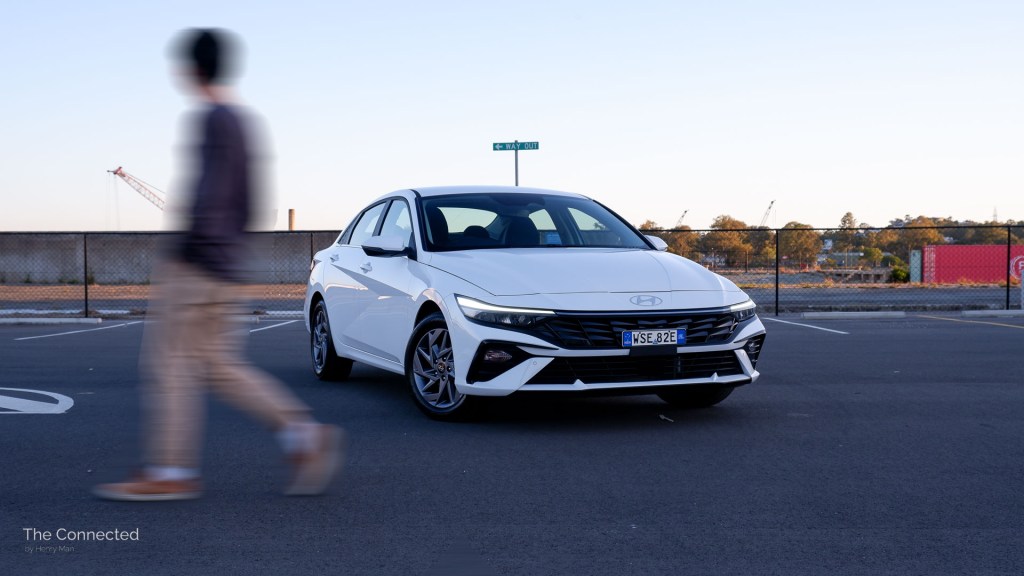
Could the 2025 Hyundai i30 Sedan Hybrid be the most fun base model new car?
The facelifted i30 Sedan (otherwise known as the Elantra or Avante overseas) brings a fresh design, more standard features, and the option for a hybrid powertrain for the first time in Australia.
Priced from $33,000 before on-road costs (or on offer for $35,990 drive-away as at the time of publication), it’s $3000 more than the petrol-only model and aims directly at the Toyota Corolla Hybrid sedan.
After a week of testing the entry-level i30 Sedan Hybrid, it was surprisingly fun to drive, fuel-efficient, and even a head turner. But is it too basic for the price?
NOTE: The press vehicle was provided by Hyundai Australia for a seven-day independent evaluation. We have no commercial arrangements with the company and it had no editorial control.


Pros.
+ Super fuel-efficient
+ Head-turning sporty design
+ Fun to drive
+ Good quality interior
+ Spacious boot
Cons.
– Pricey amid competitive Chinese rivals
– Sub-par tech, annoying speed limit assist
– No tailgate release button
– Average noise insulation and comfort
– Servicing isn’t cheap
Vehicle tested:
| Model | 2025 Hyundai i30 Sedan |
| Variant | i30 Sedan Hybrid (entry level) |
| Starting price | $33,000 before on-road costs ($35,990 drive-away offer) |
| Exterior colour | Atlas White (no cost extra) |
| Interior colour | Obsidian Black premium cloth seats |
| Country made | South Korea |
Design and quality.
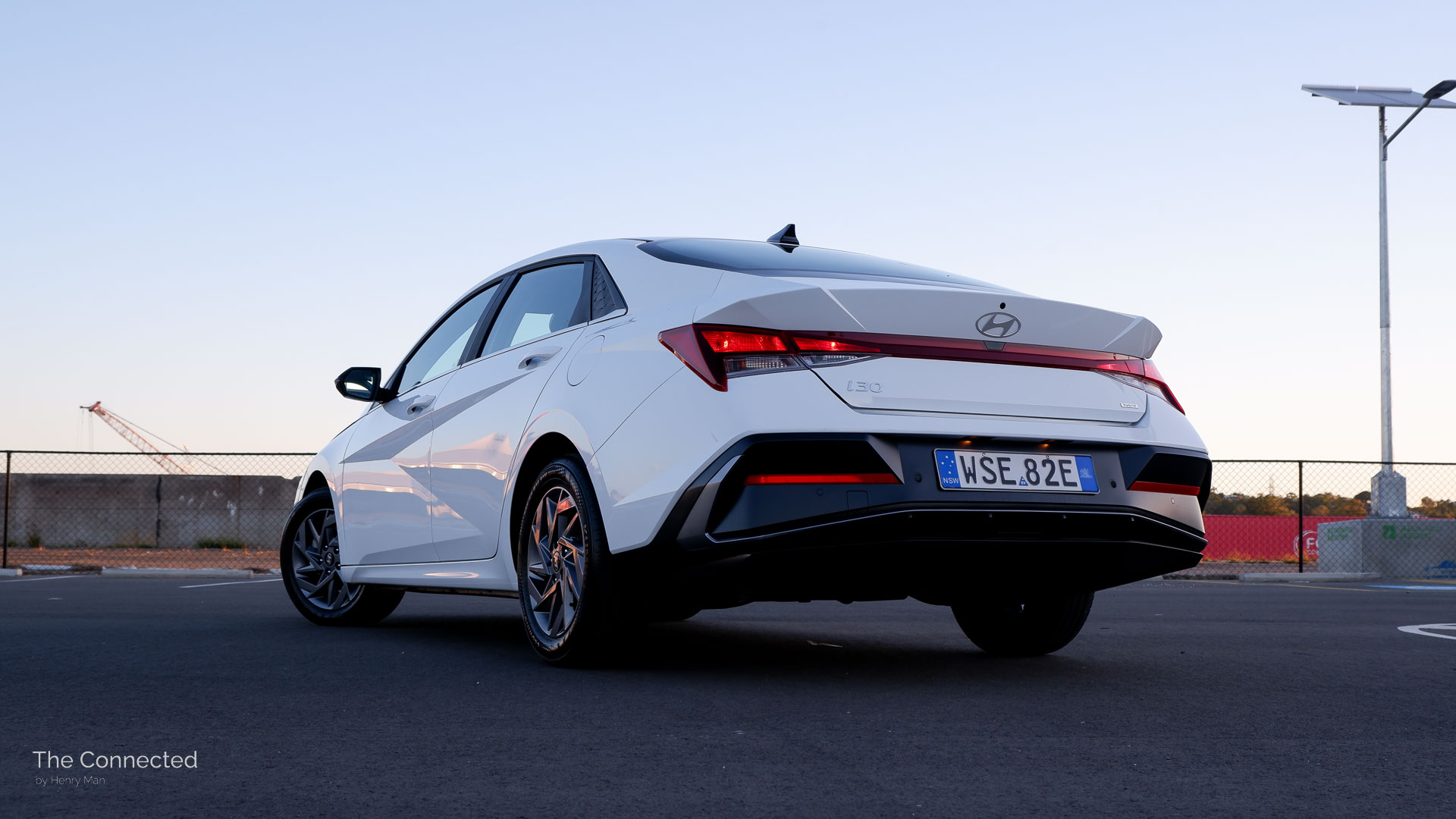
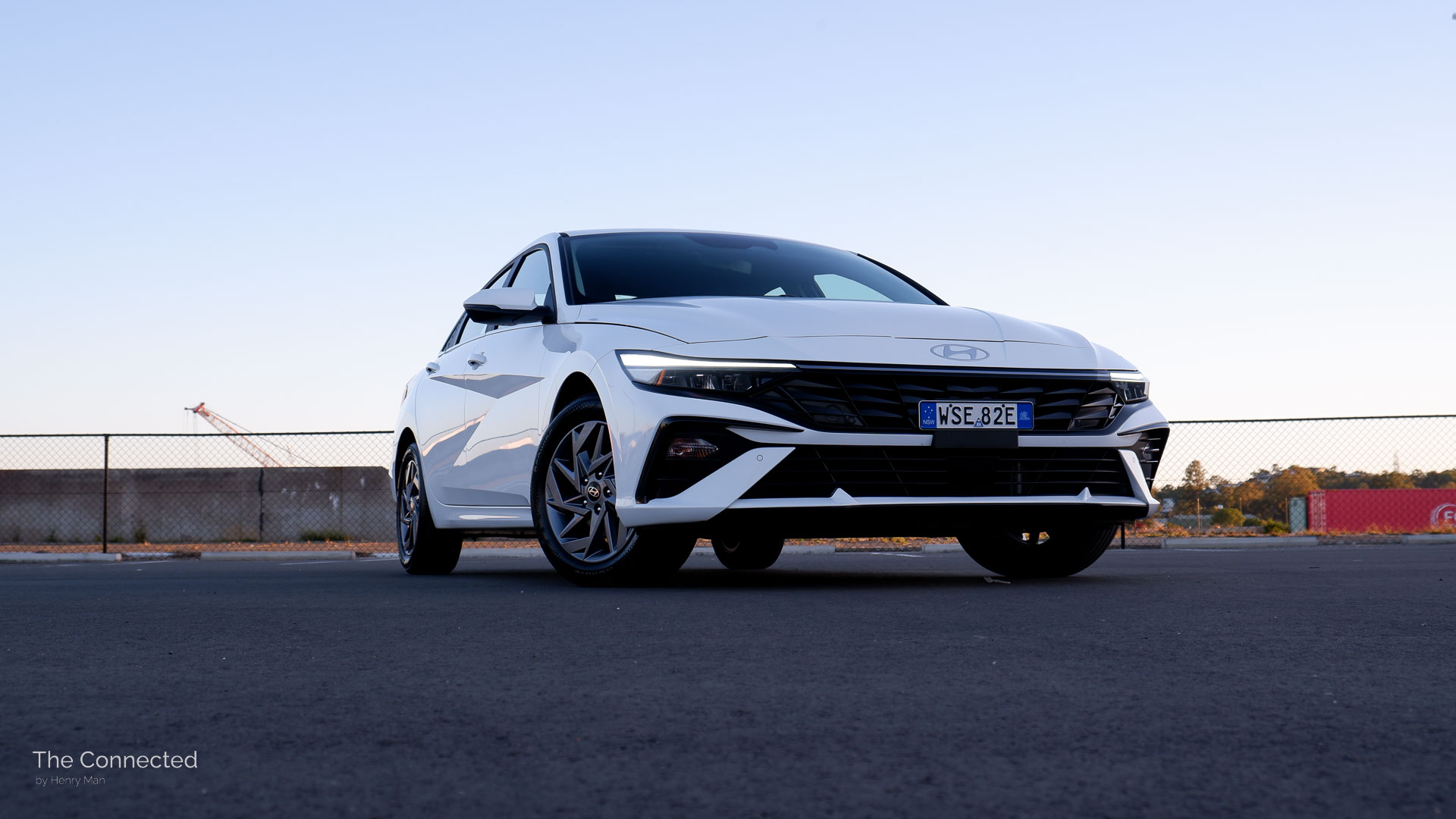
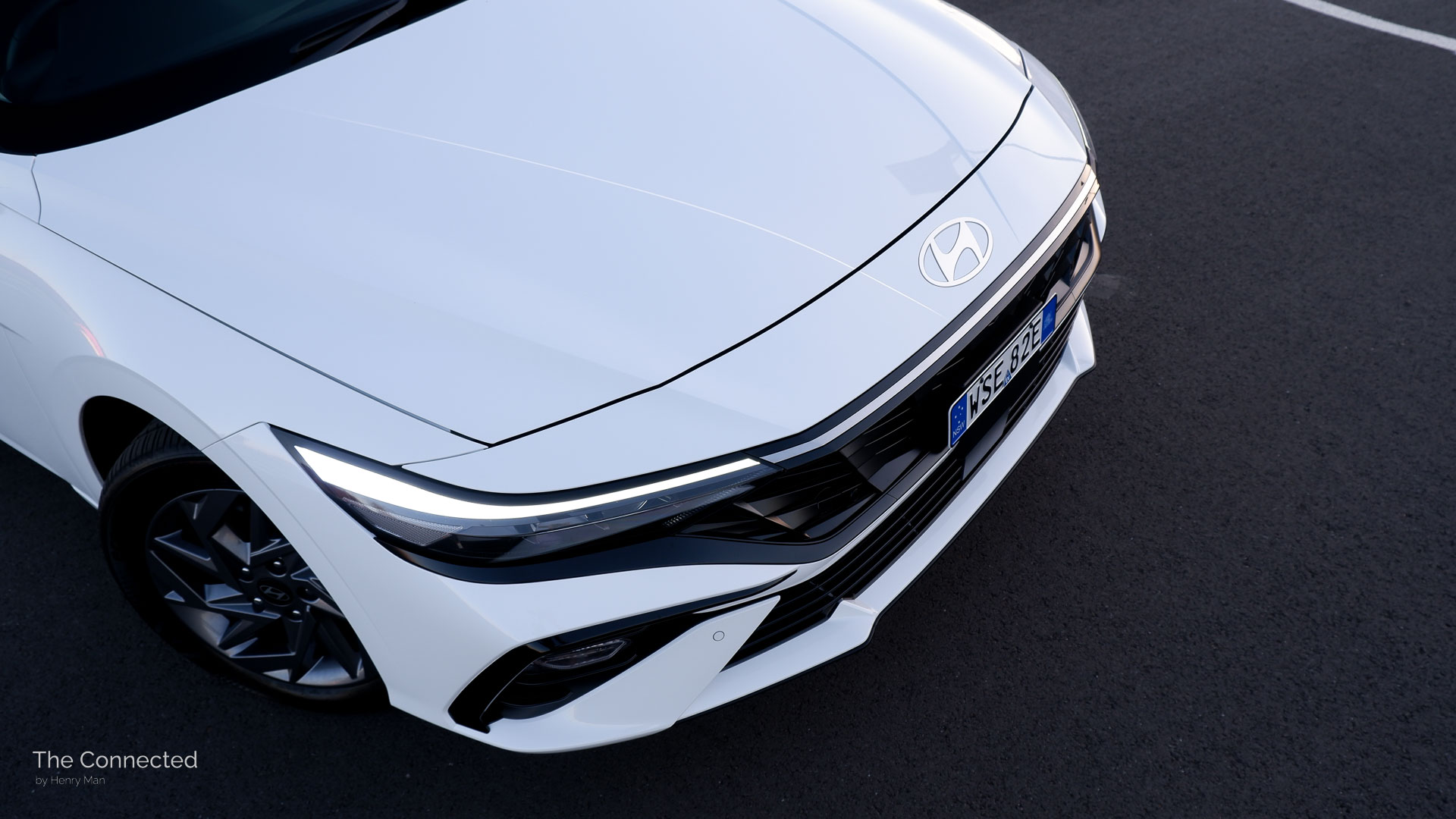
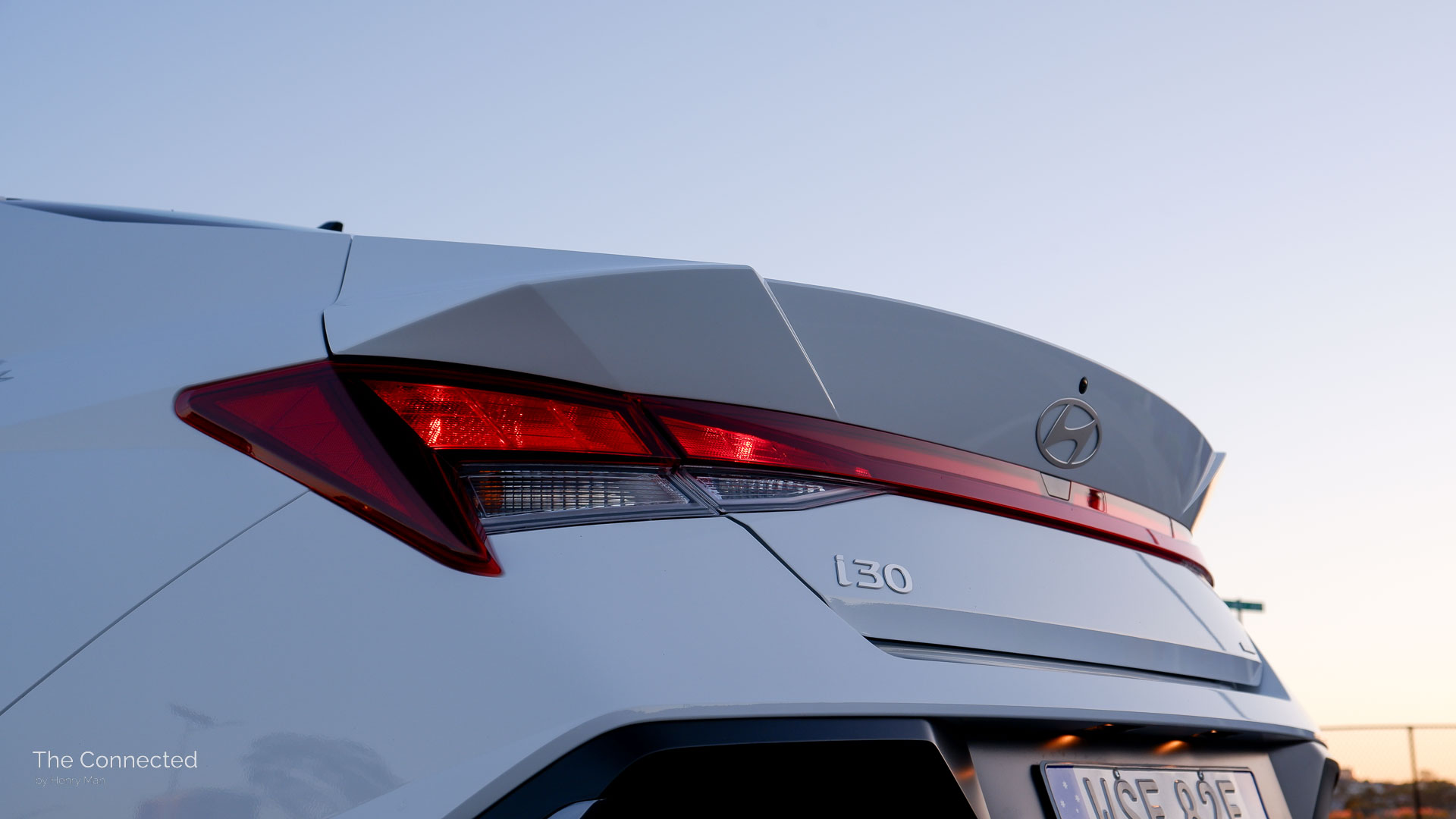
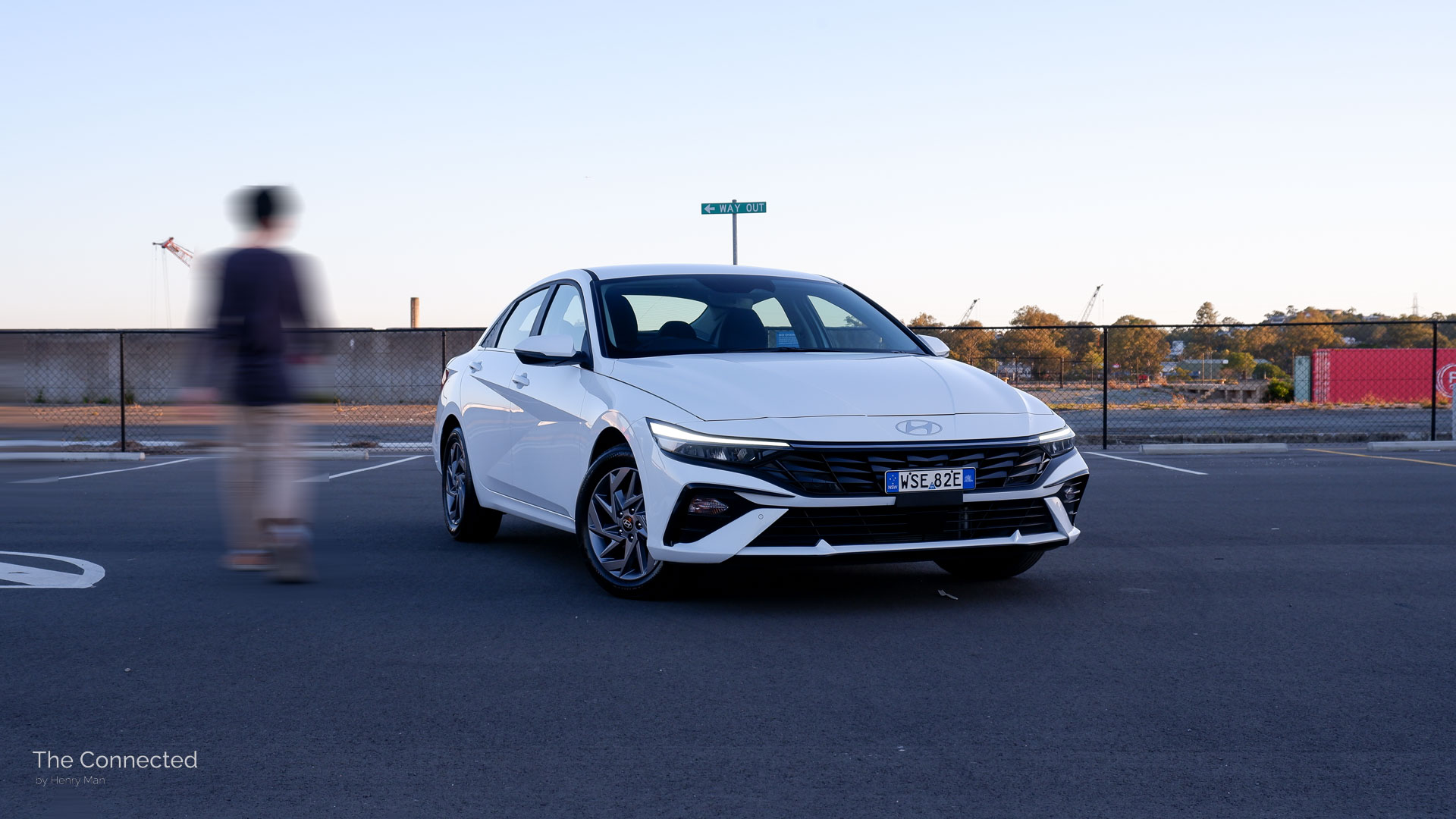
Even on the base model with no-thrills white paint, the Hyundai i30 Sedan looks sharp and sporty.
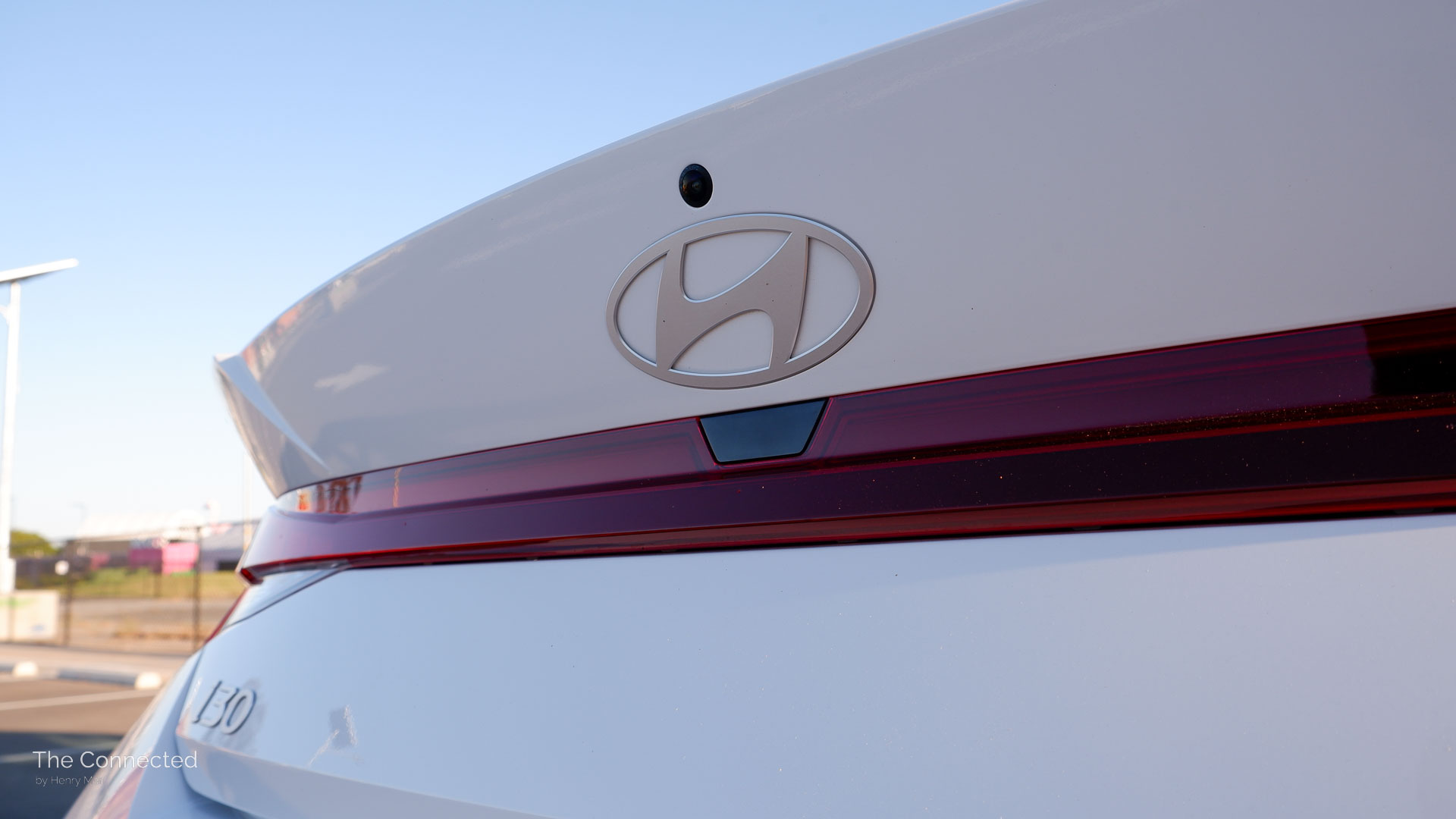
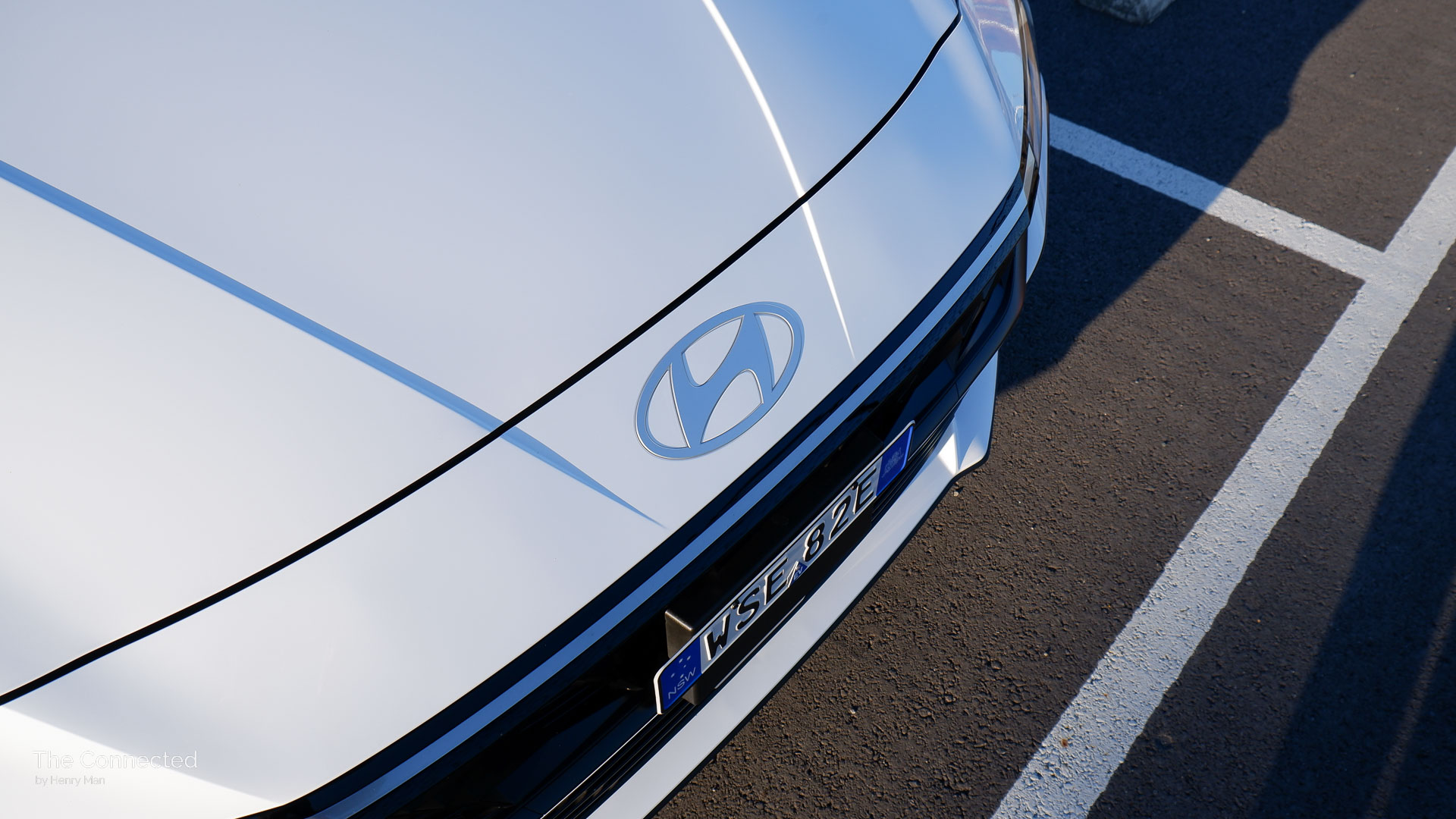
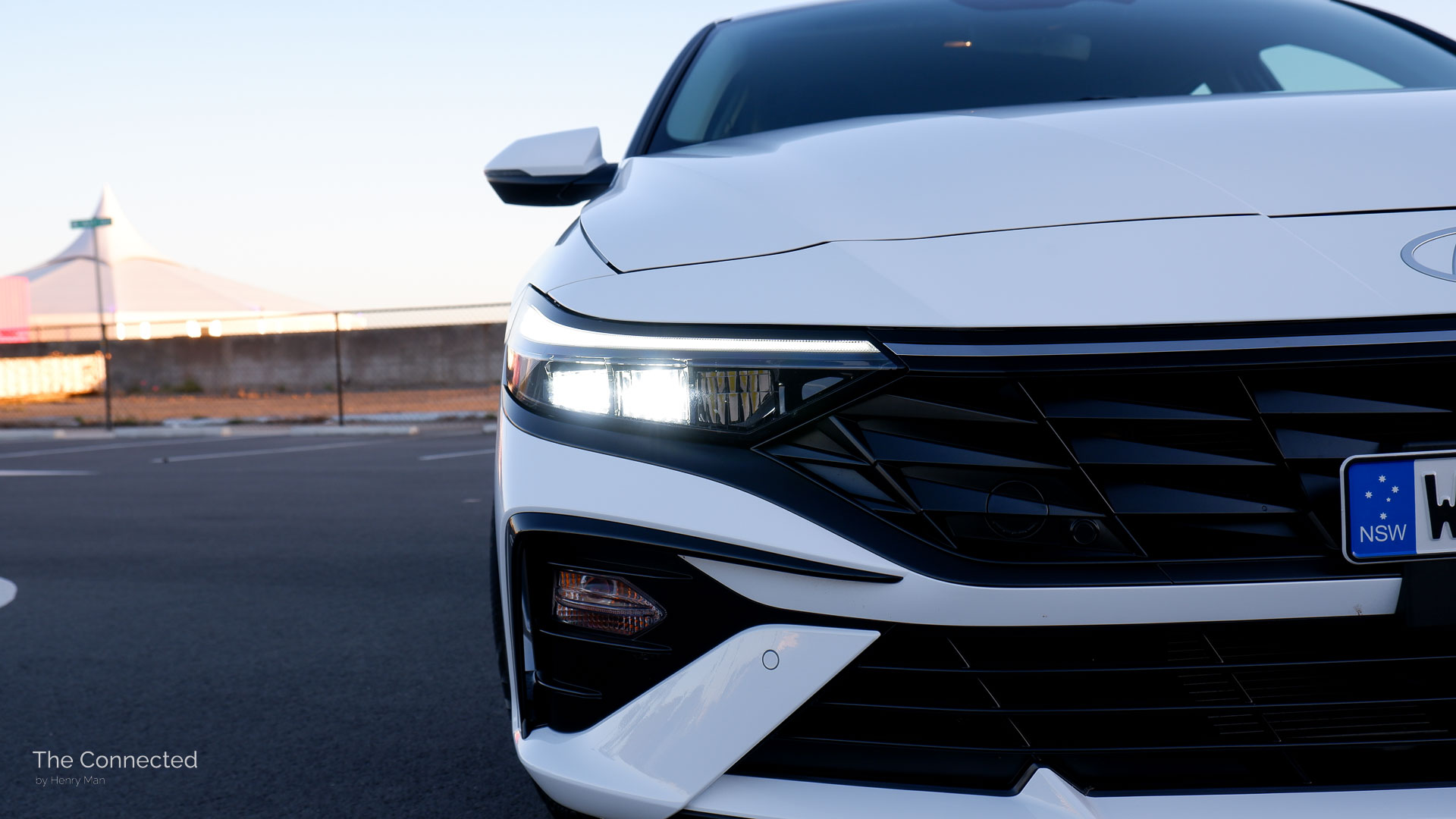
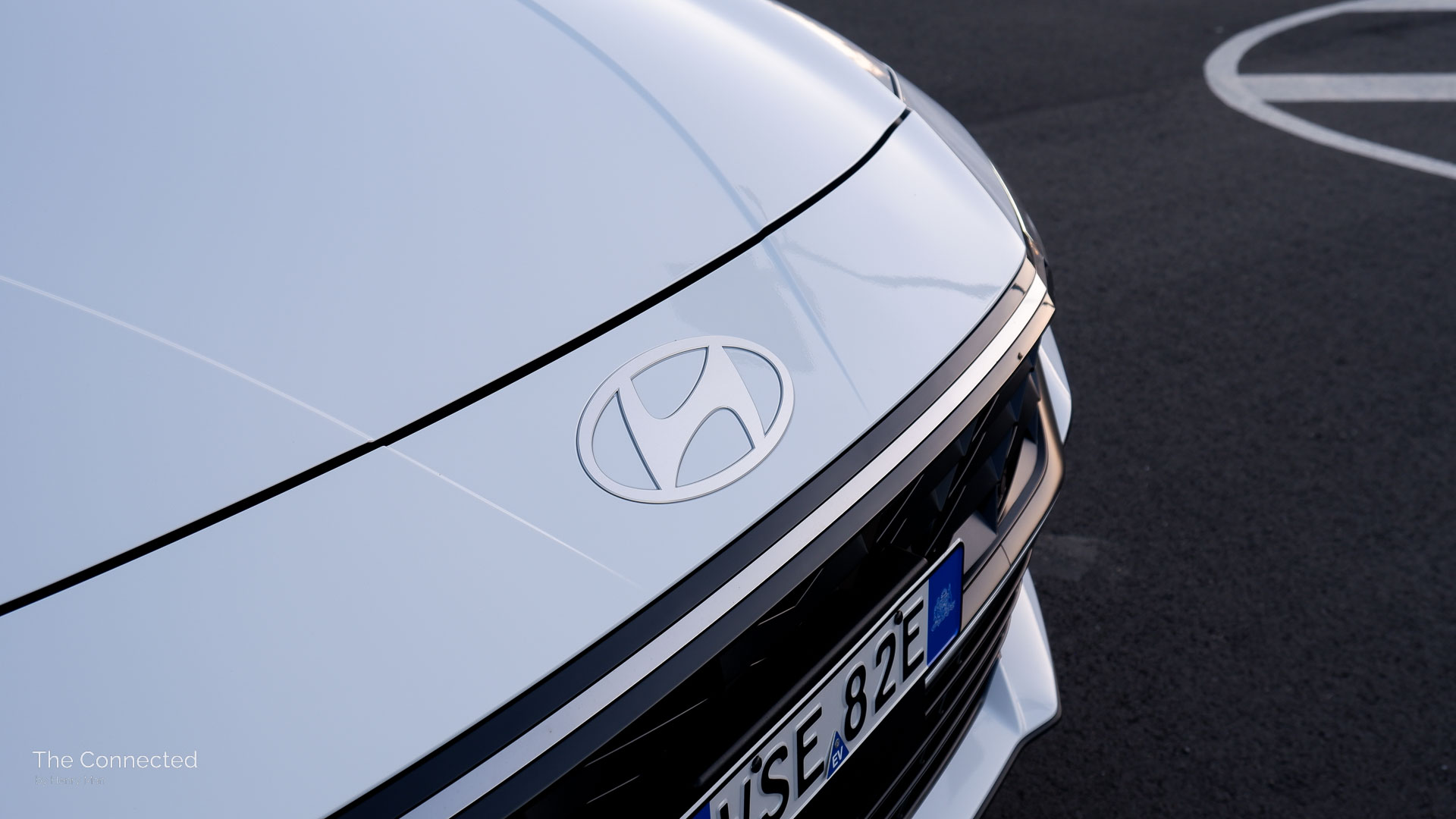
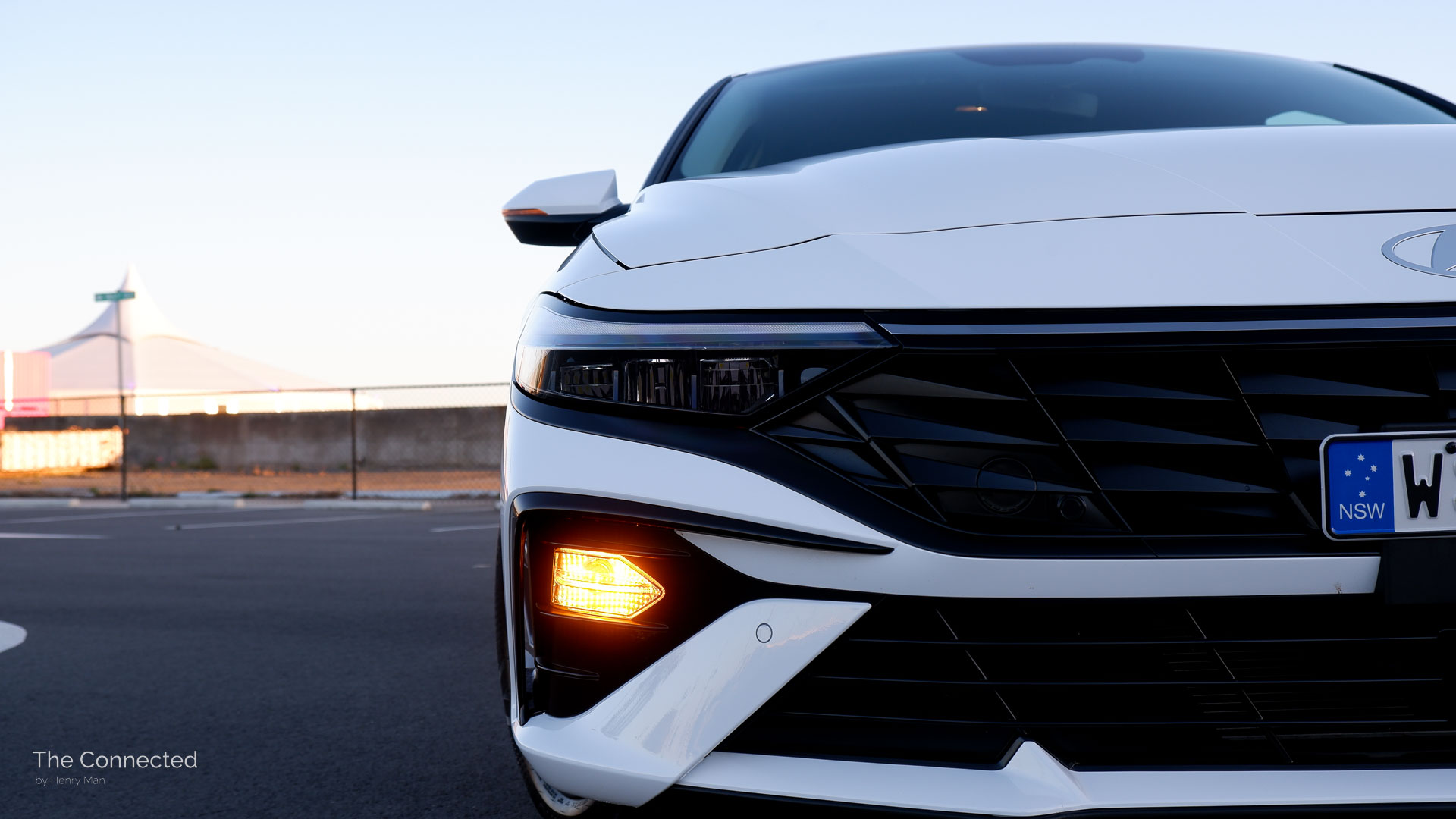
The mid-life facelift in late 2023 introduced a wider and squatter face with slimmer LED headlights, connected by a silver trim, more prominent black rear bumper, and flat badges.
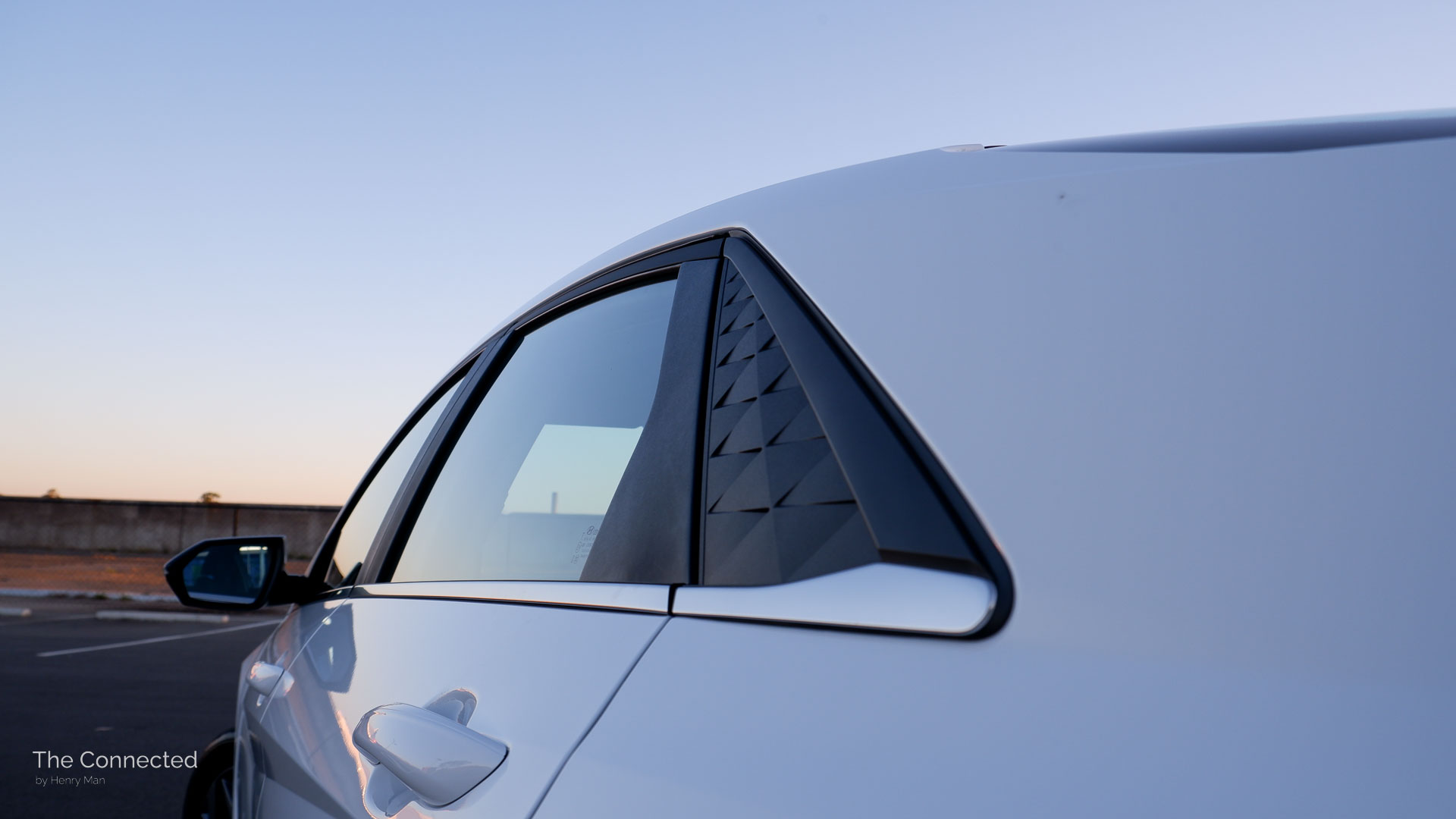
Even though it’s not the high-performance i30 Sedan N, the entry-level variant still looks sporty with a low stance, sloping roofline, and sharp side body creases. Yes, it’s still a head turner.
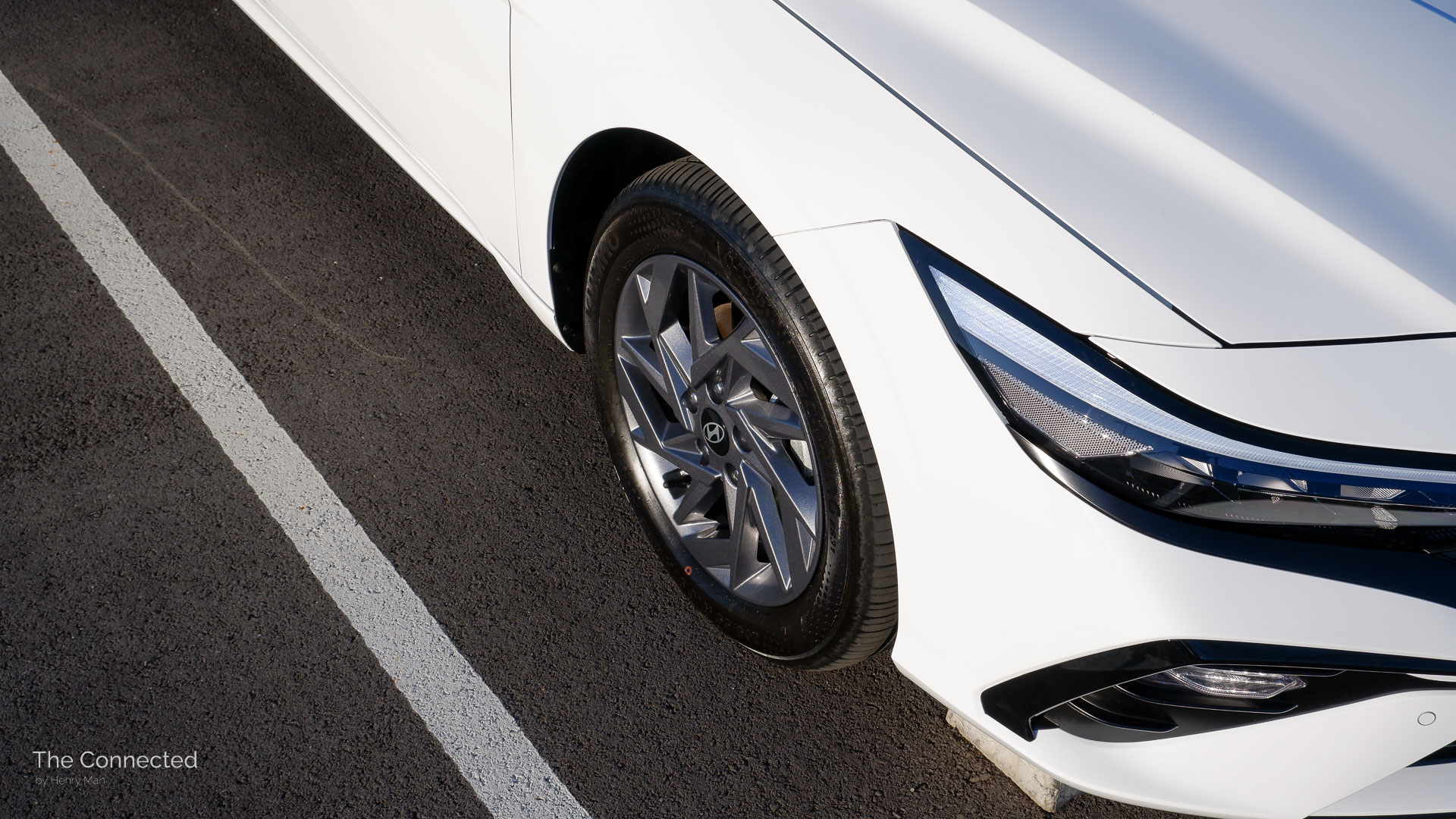
The standard 16-inch wheels don’t look too cheap either with a subtle grey finish.
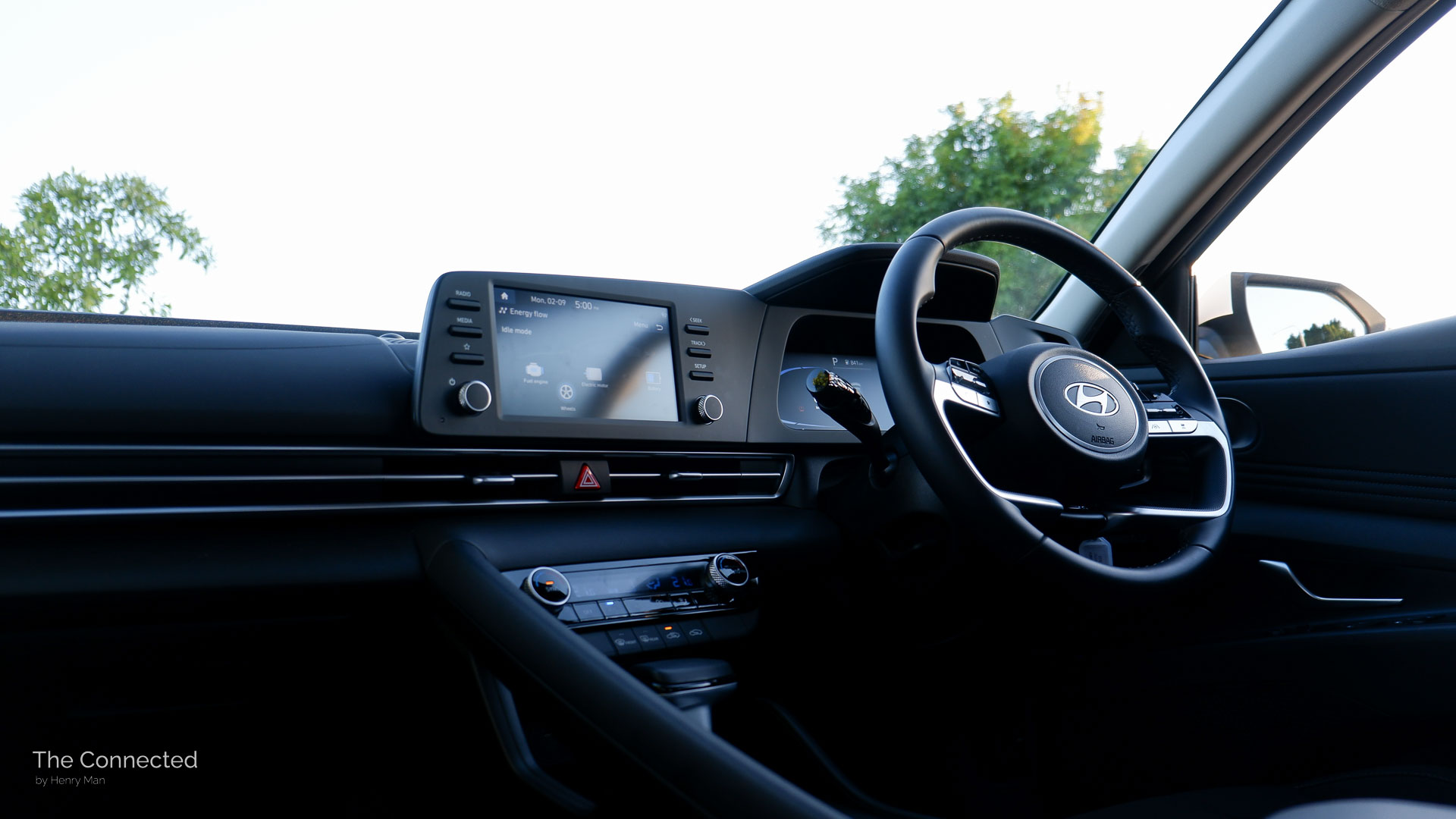
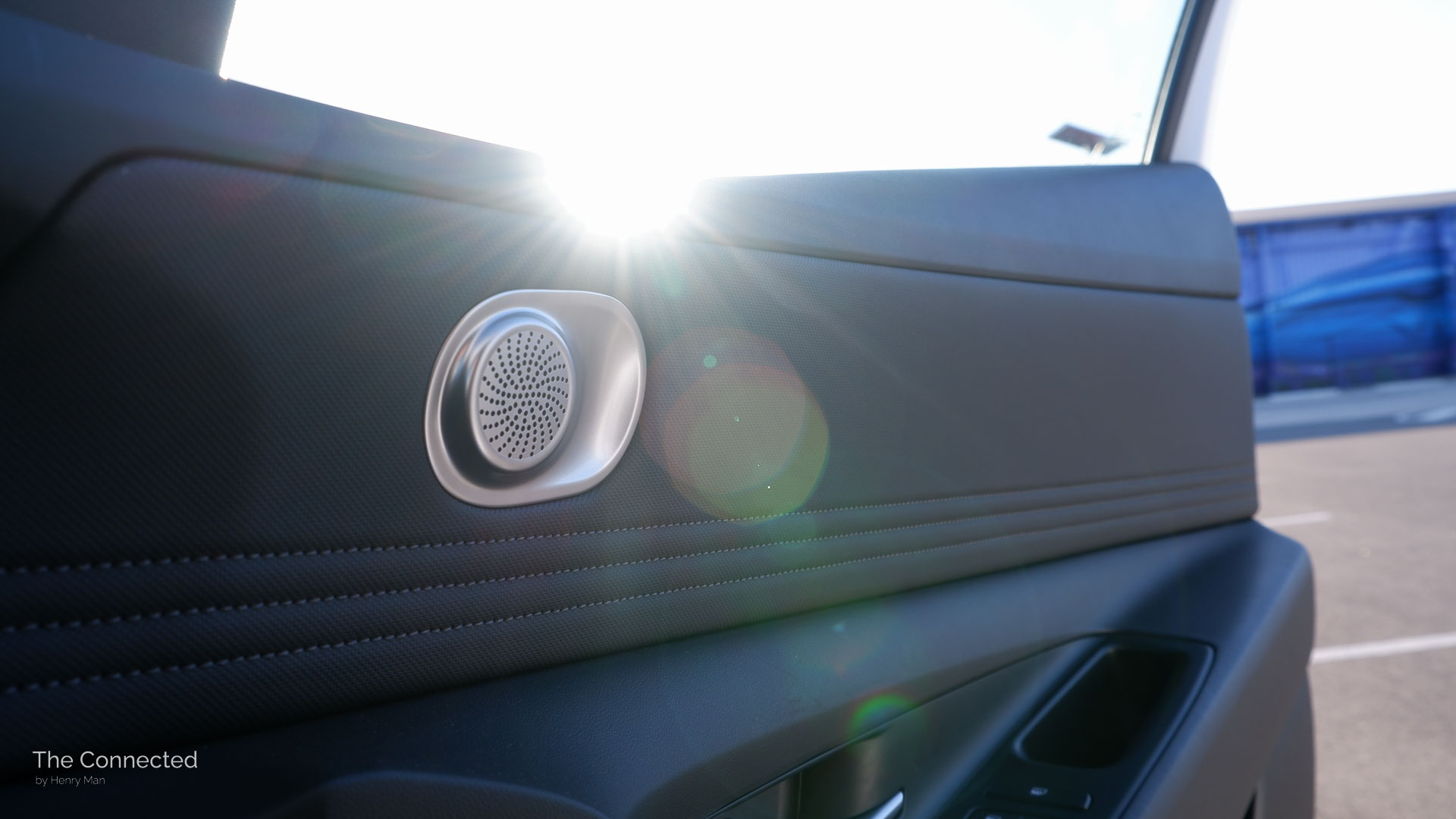
Similarly, the interior quality is substantially better than the popular Hyundai Kona small SUV with soft touch door materials, textured cup holder surfaces, and a unique-looking leatherette steering wheel with a textured bottom spoke – which would’ve been welcome on the much pricier Kia EV9.
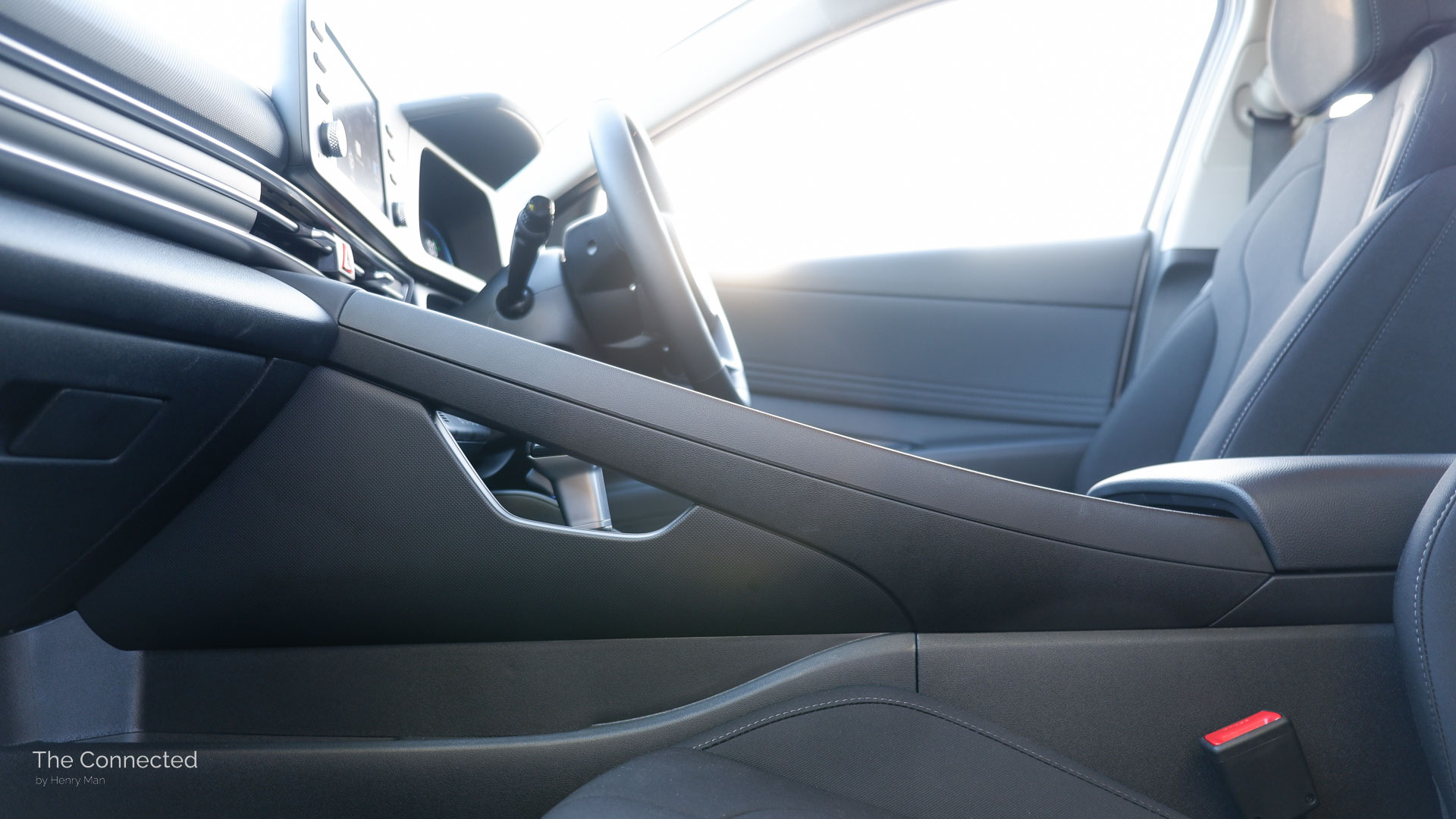
Triple satin lines flow from the door cards to the air vents, while a grab handle divides the driver and front passenger, and the interior door handles and window switches are low-set to provide a sporty feeling.
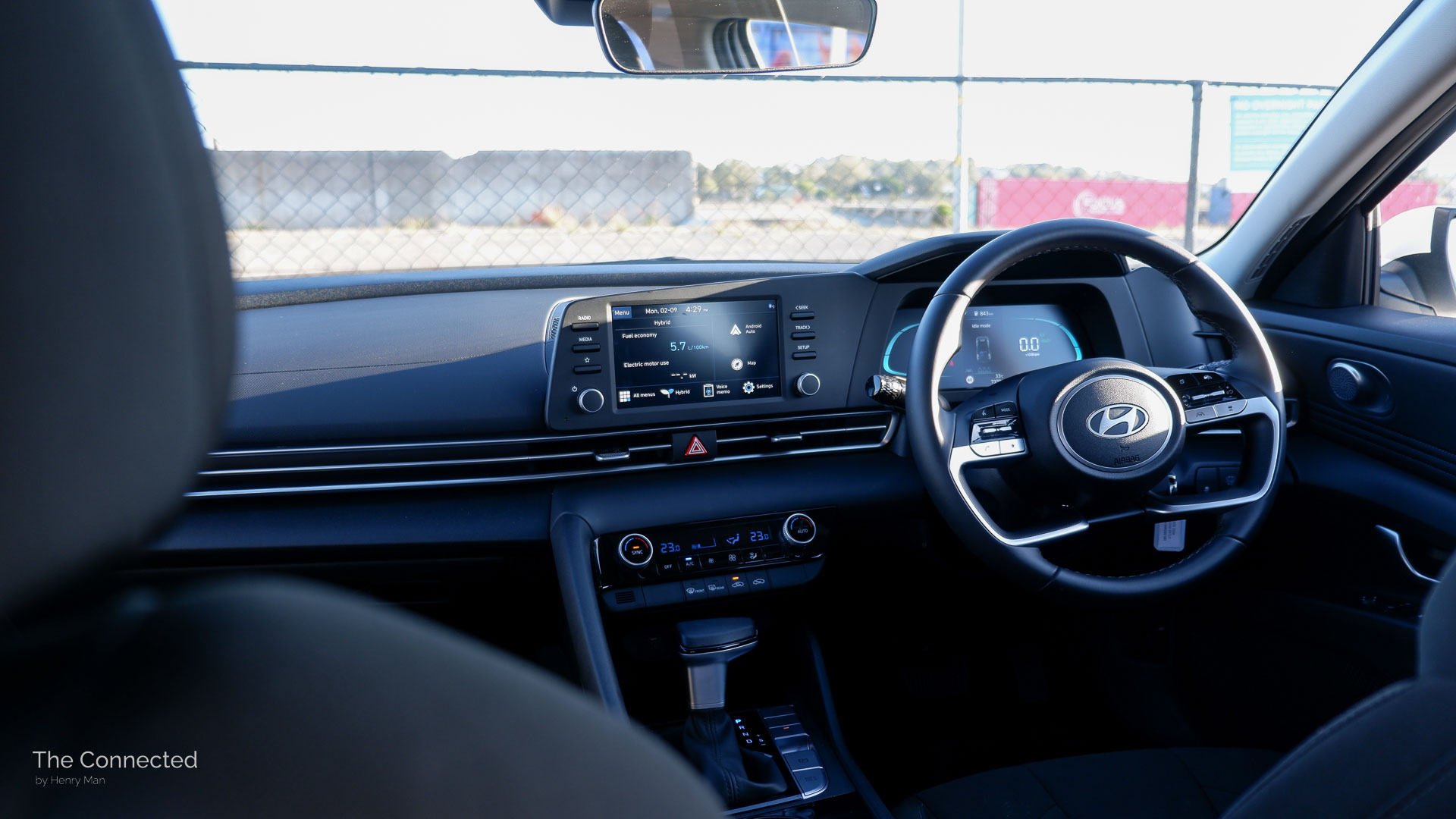
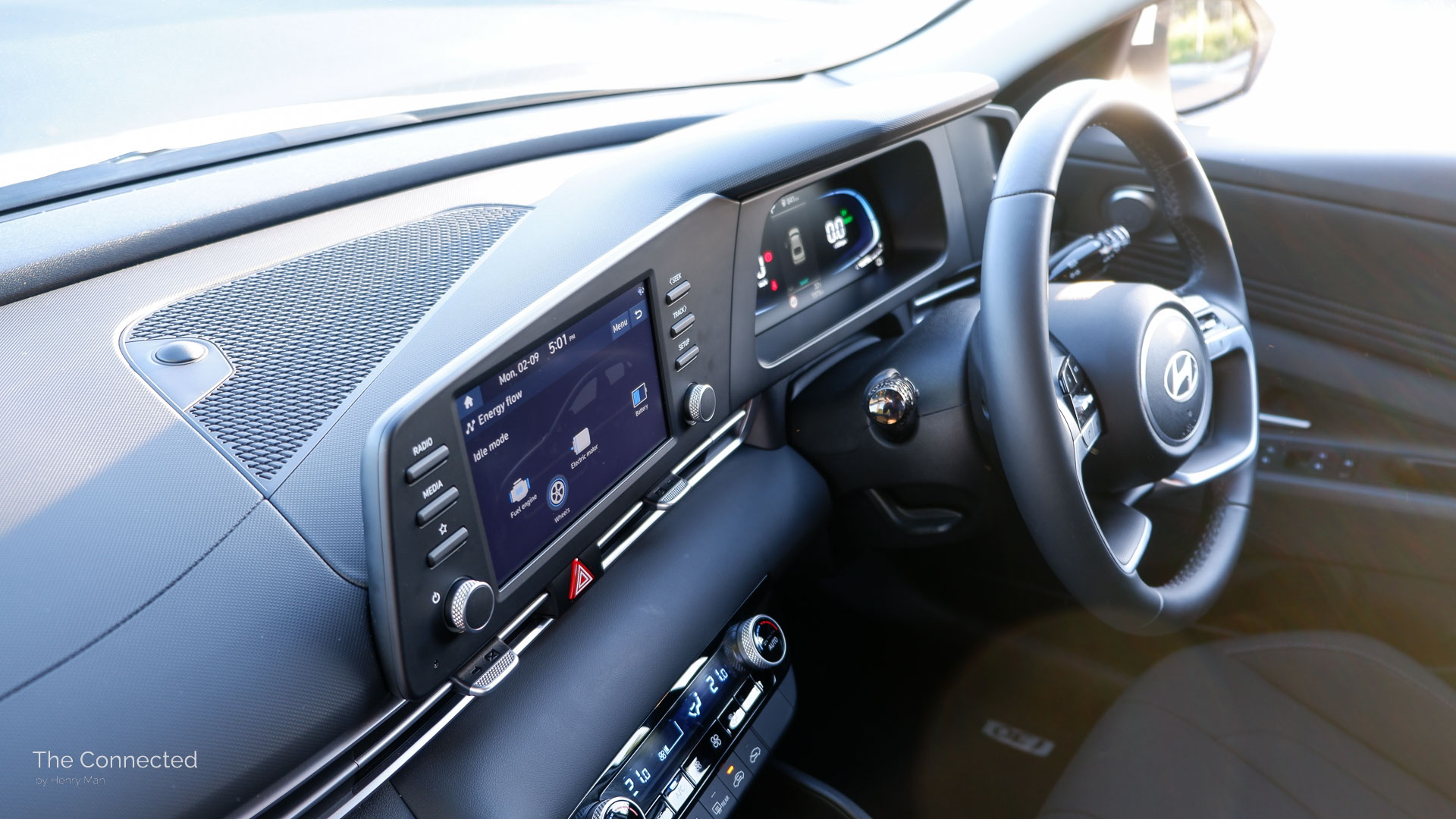
However, while the entry-level i30 Sedan offers a quality interior, it is let down by a small touchscreen with prominent black plastic bezels that makes the interior feel more basic and cheap-looking.
The centre console’s use of a dust- and fingerprint-prone gloss black surface isn’t practical either and there’s a particularly nastier piece of plastic trim at the very front of the dashboard.
Practicality.
2025 Hyundai i30 Sedan Hybrid dimensions:
| Length x width x height | 4710 x 1825 x 1420mm |
| Wheelbase | 2720mm |
| Ground clearance | 140mm |
| Boot space (minimum) | 474 litres |
| Rear seat split fold | 60:40 |
| Child seat anchors | 2x ISOFIX and 3x top-tether anchor points (rear seats) |
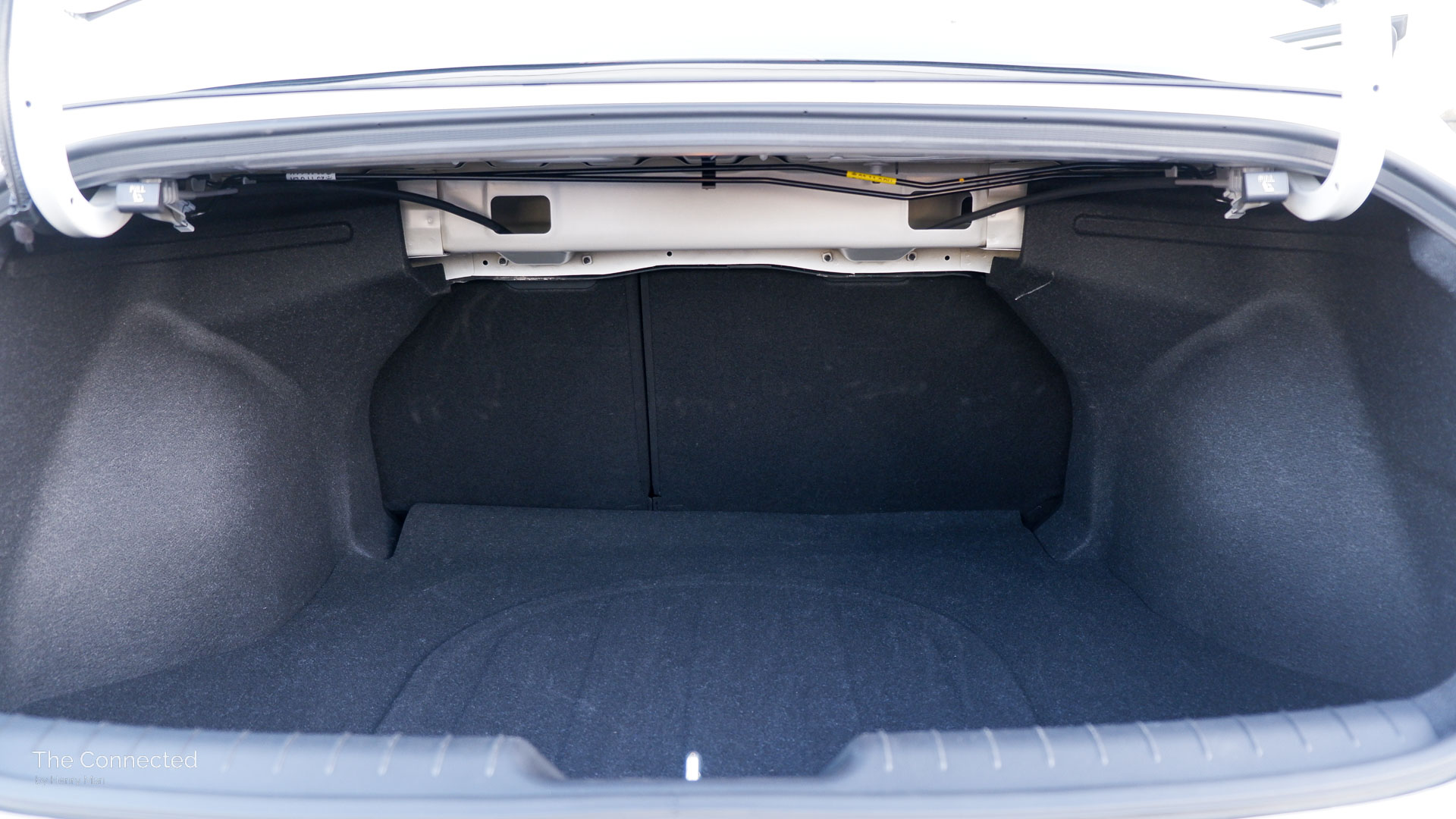
The i30 Sedan Hybrid offers generous boot space, but taller passengers may find the rear seats tighter than ideal.
The small sedan’s 474-litre boot is wide and deep, but there’s a loading lip and it lacks any bag hooks.
Two pull tabs can remotely unlatch the seatbacks in a 60:40 split, though you’ll still need to go around to fold the bench down. The middle seatbelt remains attached to the seat once folded, which can get in the way when storing taller items.
Unfortunately, the base model doesn’t have a release button at the tailgate. Instead, you’ll need to press and hold the button on the car key or pull the tab at the driver’s side floor to open the boot.
This wasn’t too inconvenient since there’s no proximity key, so I needed to press the key anyway to unlock the doors, but it could be annoying in some situations.
Likewise, there’s no interior handle to close the boot, so you’ll need to touch the outside of the tailgate which may leave some dusty hands.
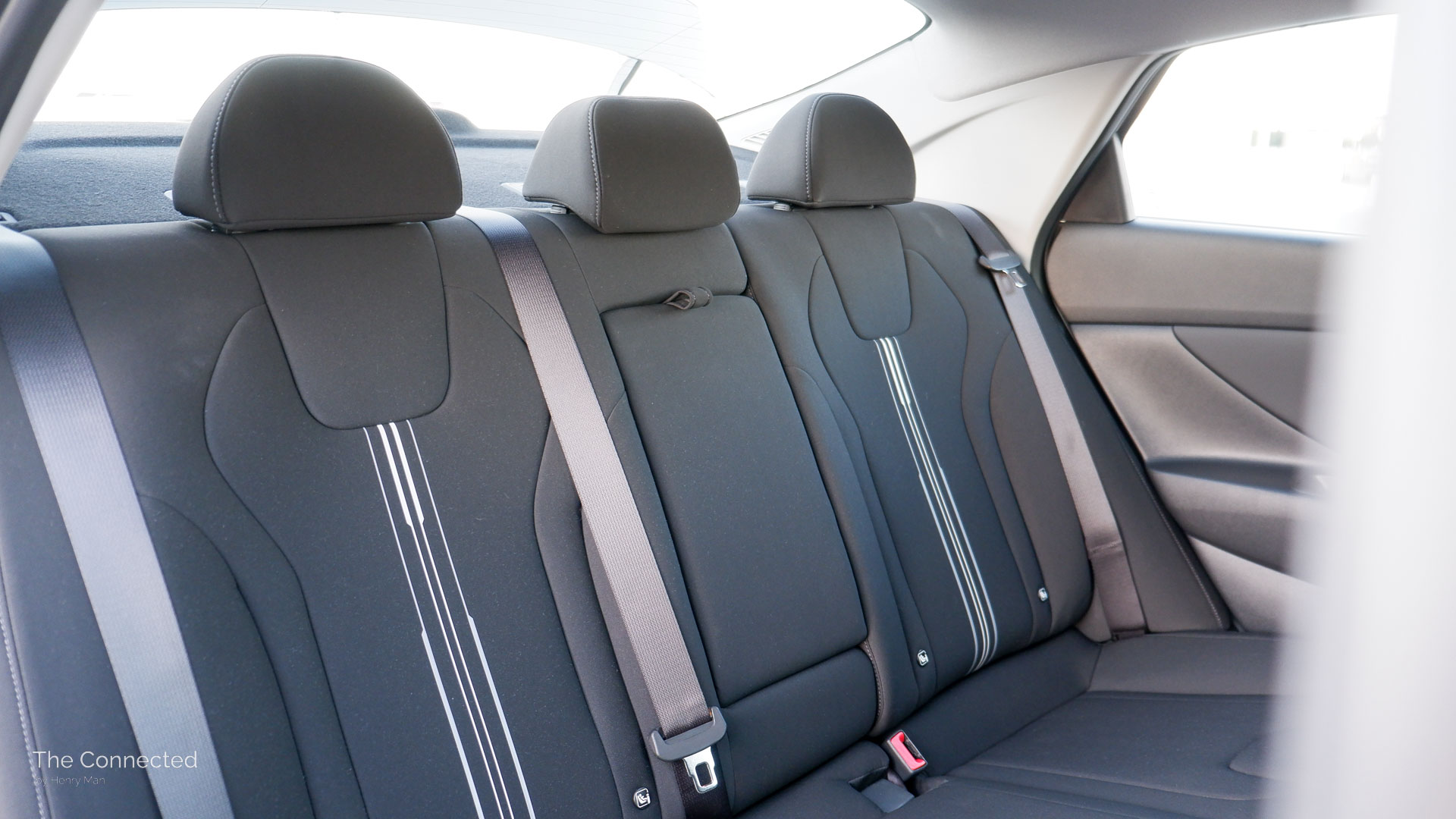
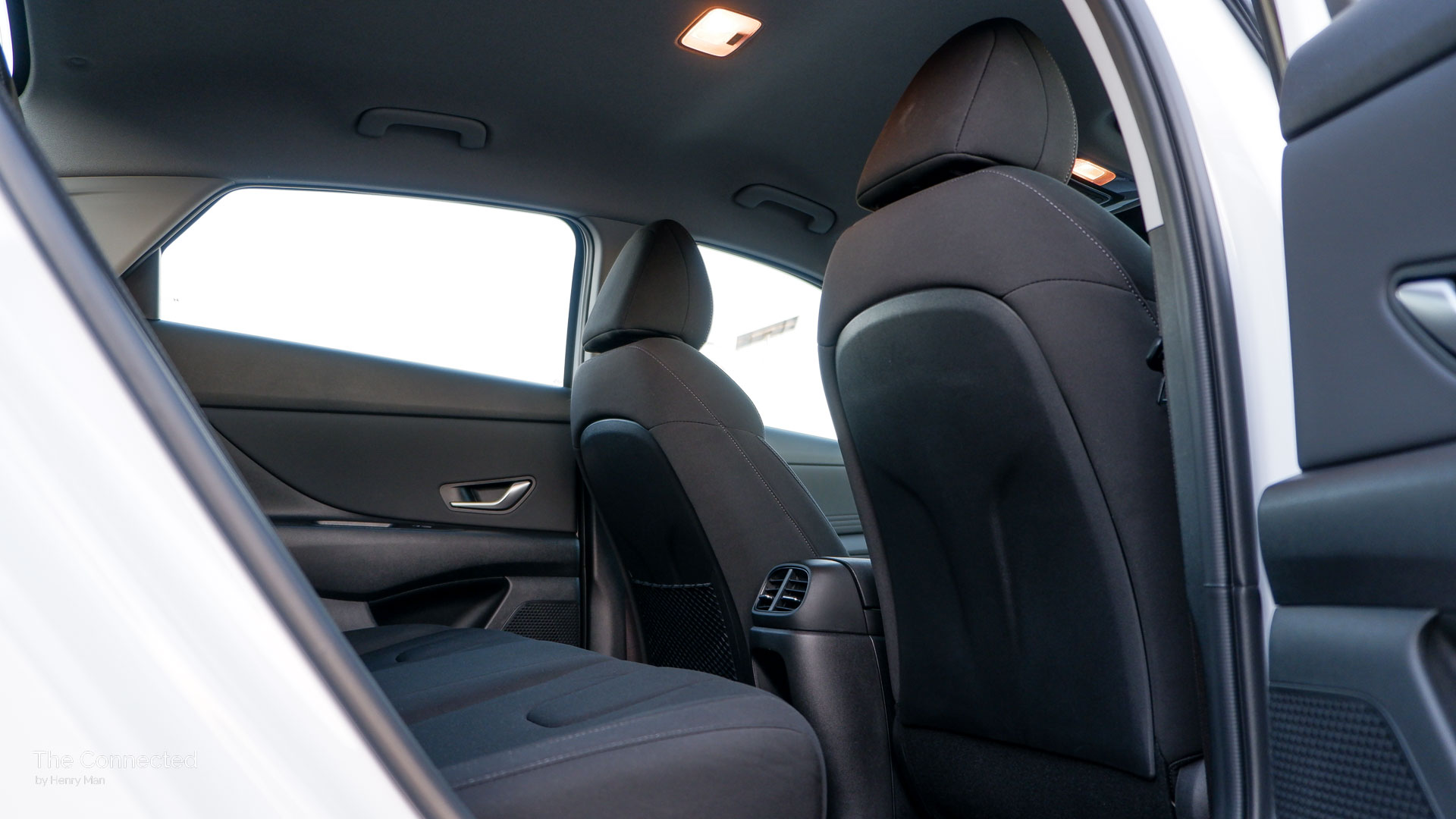
At the second row, there is adequate legroom and footroom, although the centre floor hump is sizable, and headroom is narrower due to the low sloping roof. This means passengers need to be more careful when getting in and out.
The hybrid sedan provides adequate passenger comfort for drivers who want to use it as a rideshare transport vehicle.
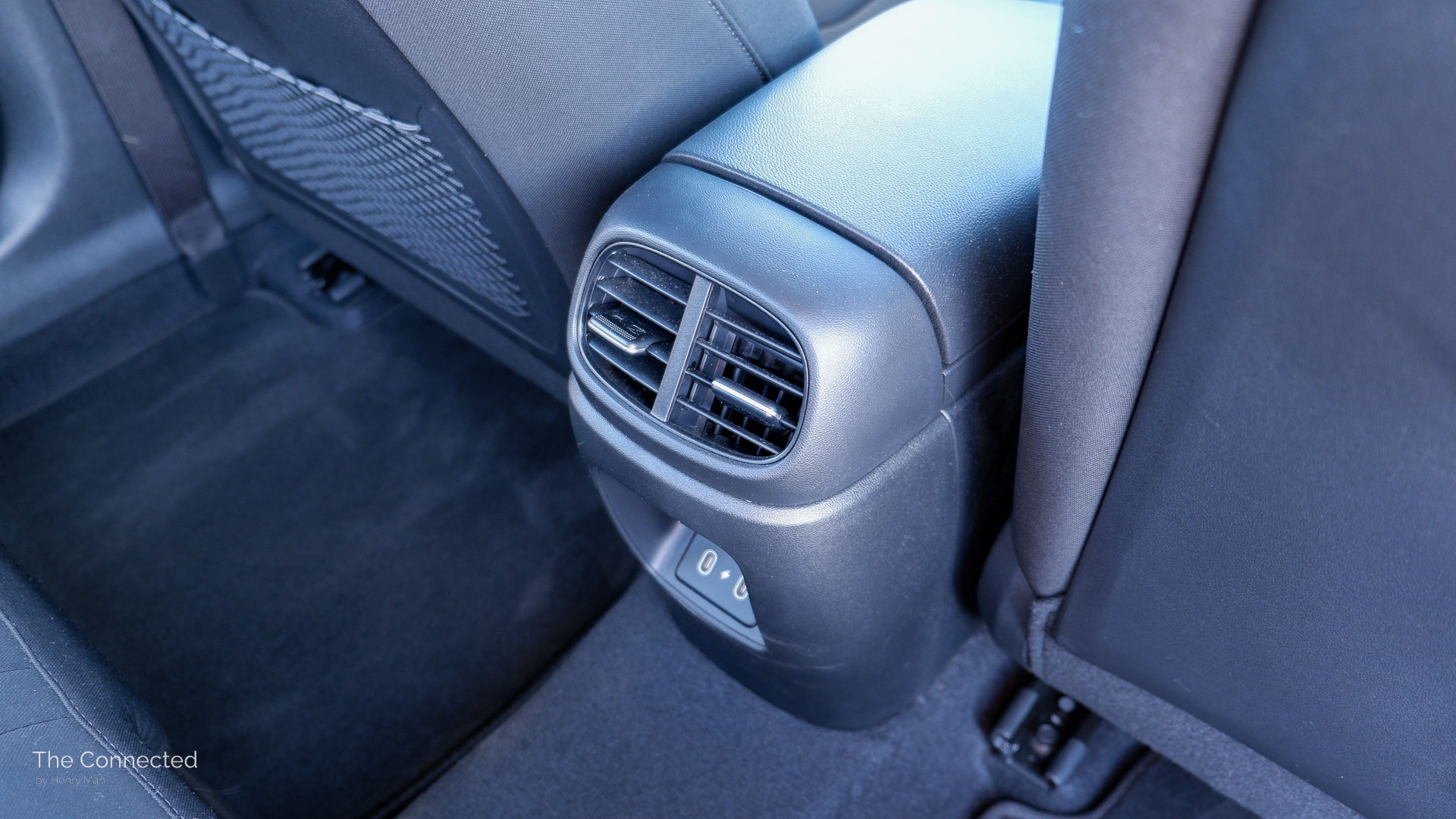
Fortunately, even the entry-level i30 Sedan Hybrid has rear air vents, two USB-C charging ports, a fold-down armrest with two cup holders, and rear halogen lights.
Due to the sporty design of the interior door cards, all bottle pockets are very tight and slanted.
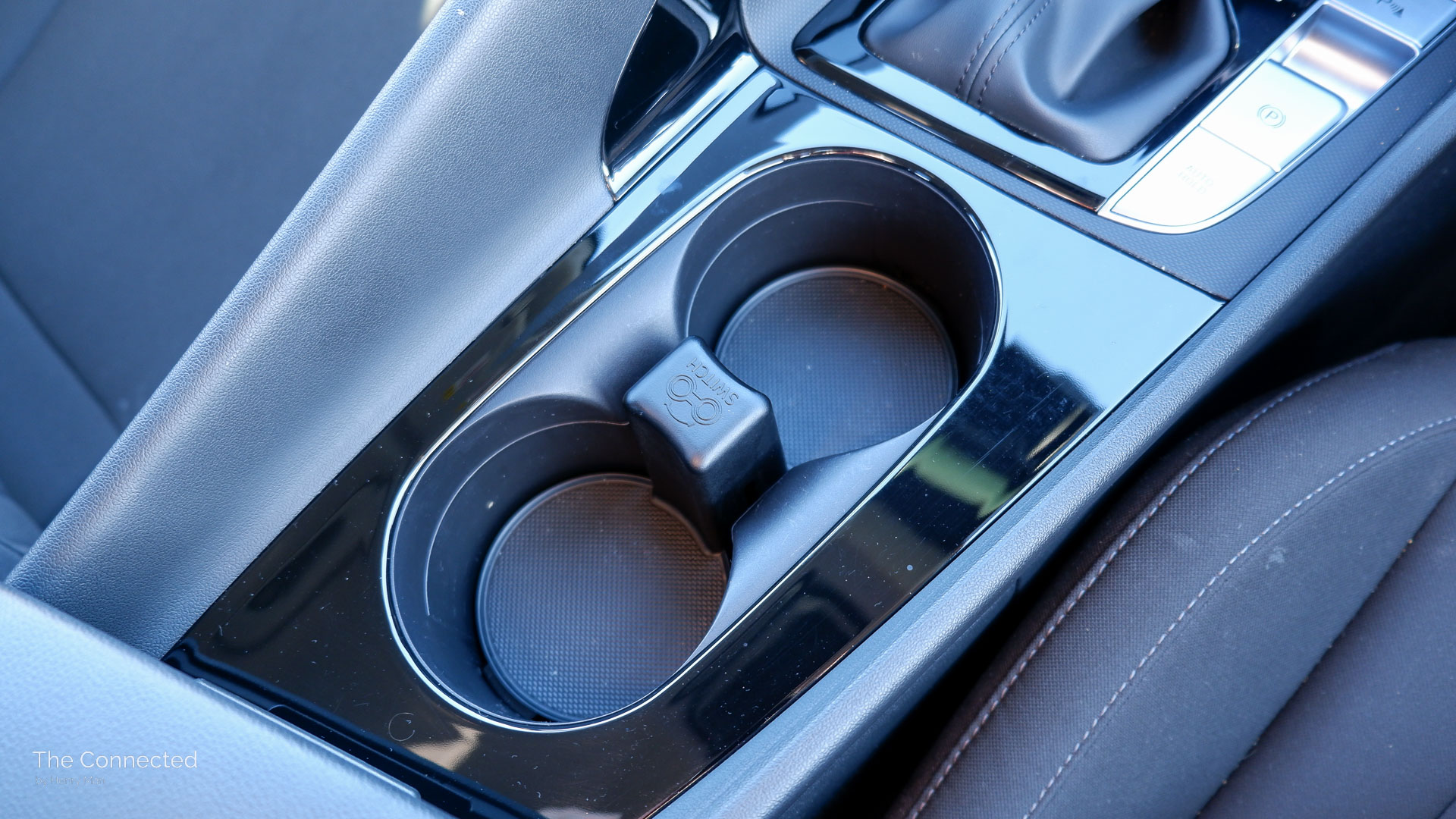
Up front, the centre console is home to a clever cup holder mechanism where you can rotate it to have an elevated bottom for shorter cups, although there aren’t any side grips.
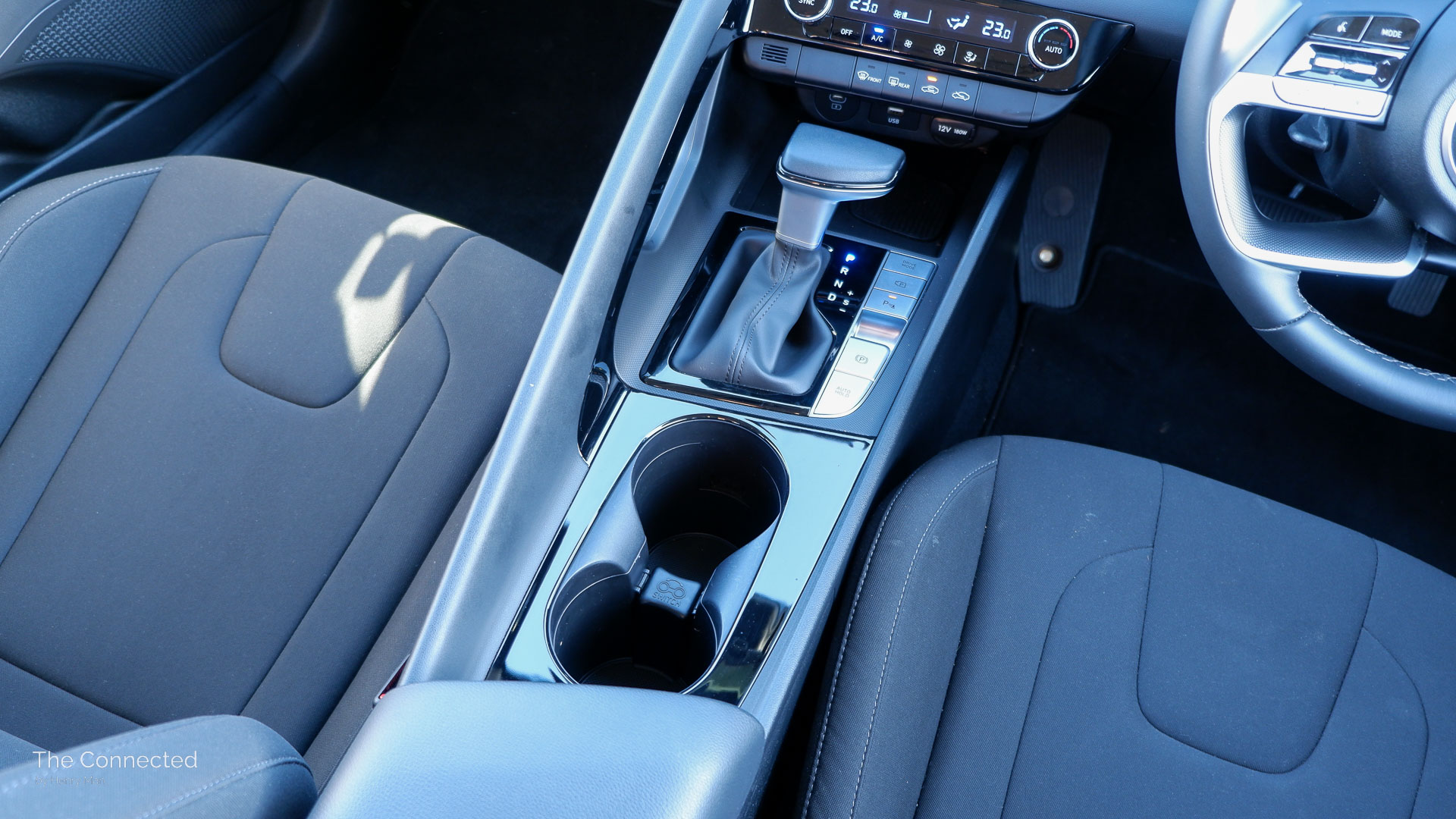
The Qi wireless charging pad and a tight storage space are ahead of the gear shifter, which itself can get in the way when it’s in park.
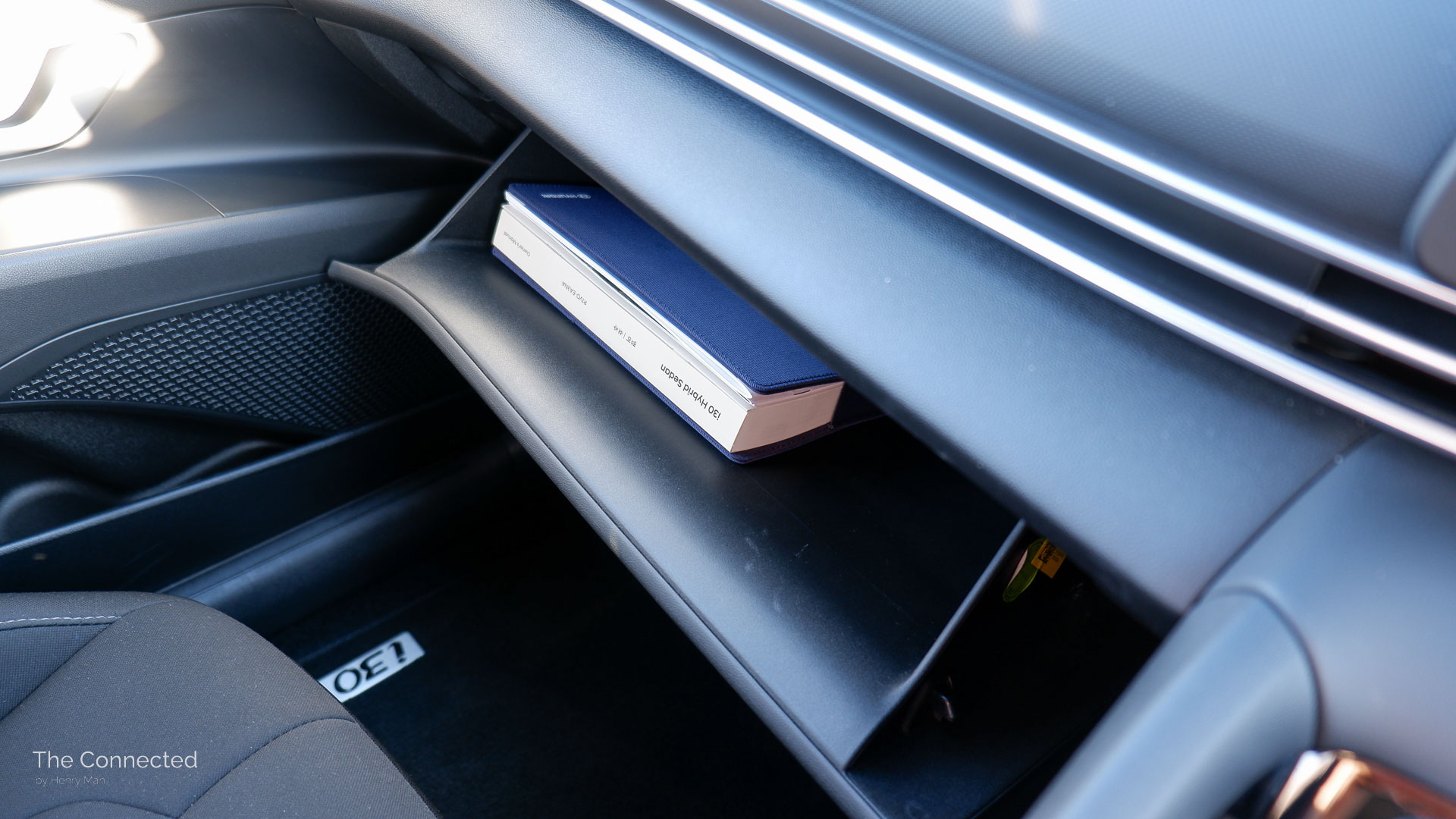
The glovebox is decently-sized, but flops down since there’s no hinge dampening and lacks illumination inside. The front passenger also peculiarly has a centre console grab handle and a small storage pocket below.
Meanwhile, the hybrid sedan provides a low seating position and the manually-adjustable cloth seats are generally comfortable, but lack lumbar support and more cushioning would be welcome.
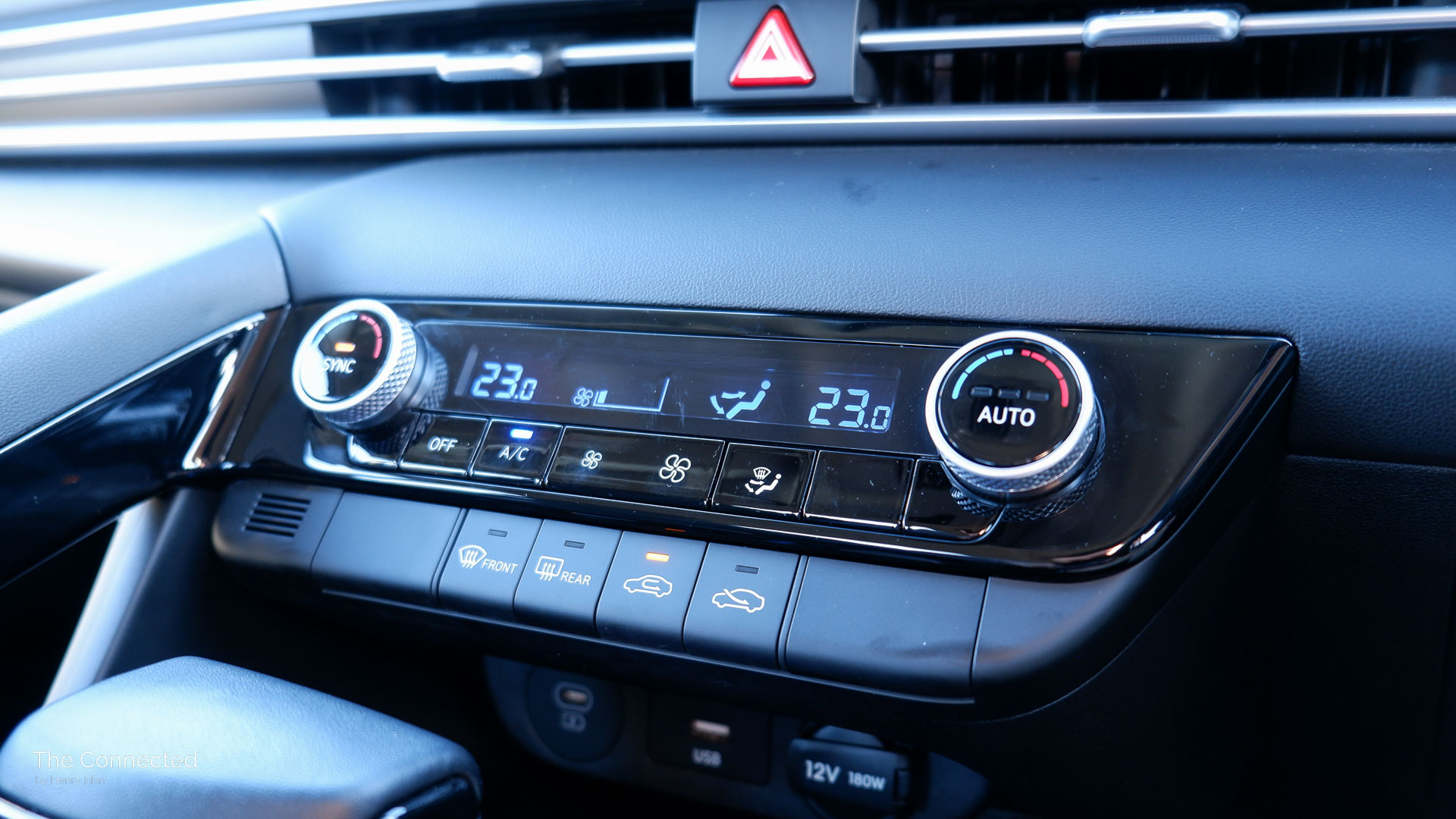
The i30 Sedan Hybrid exclusively adds automatic wipers and two-zone automatic climate control to the base model. However, it strangely doesn’t introduce Hyundai’s useful driver-only function as well.
Unlike the updated Kia Picanto city car, there are no power folding mirrors for the low-end variant.
Technology.
2025 Hyundai i30 Sedan Hybrid tech features:
| 8.0-inch touchscreen | 4.2-inch driver display with digital-type instruments |
| Wireless Apple CarPlay and Android Auto | Six speakers |
| Qi wireless charging pad | Keyless entry |
| 3x USB-C, 1x USB-A, and 1x 12-volt charging ports |
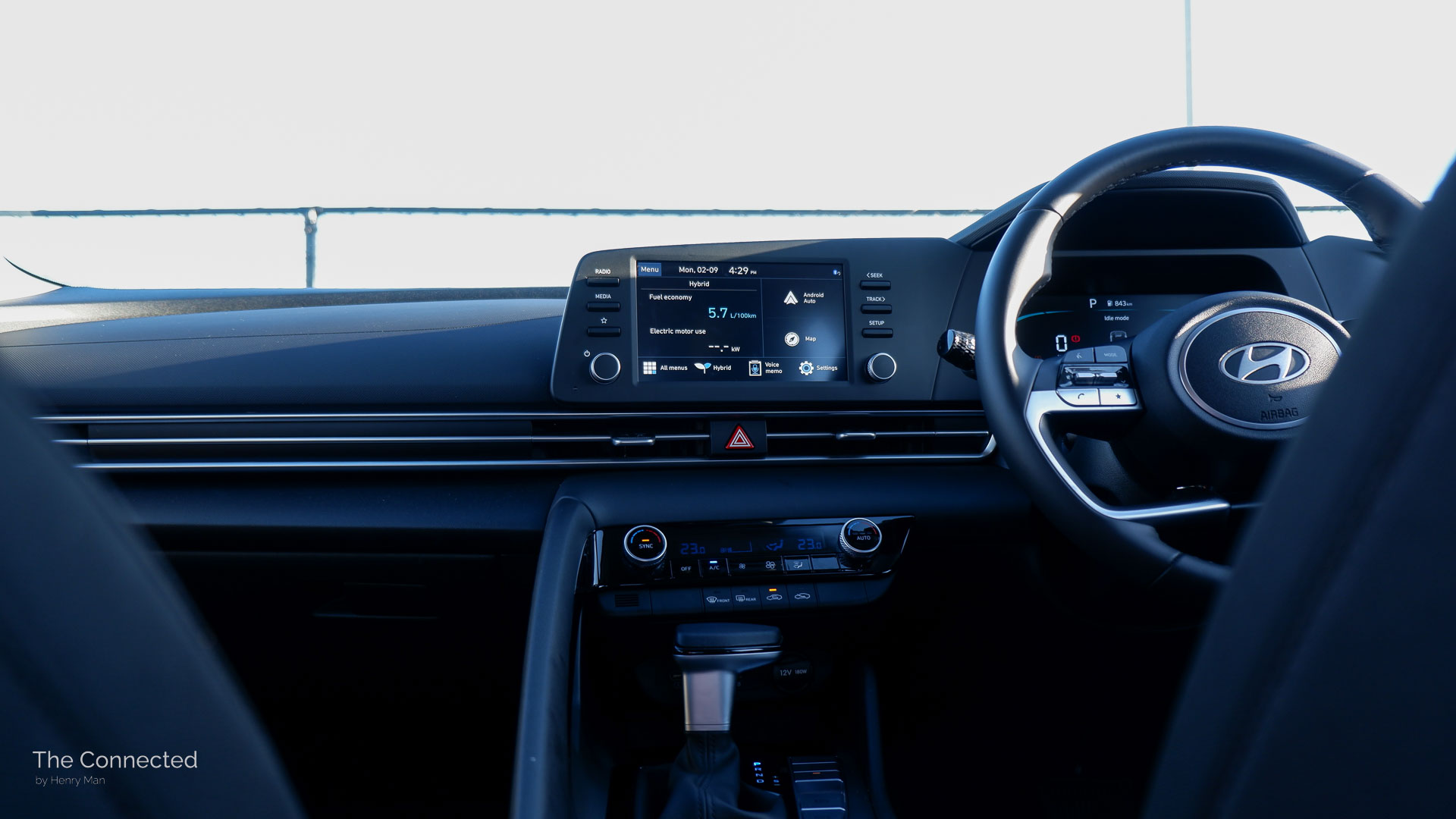
The entry-level 2025 Hyundai i30 Sedan Hybrid has a fairly basic technology setup compared to similarly-priced models.
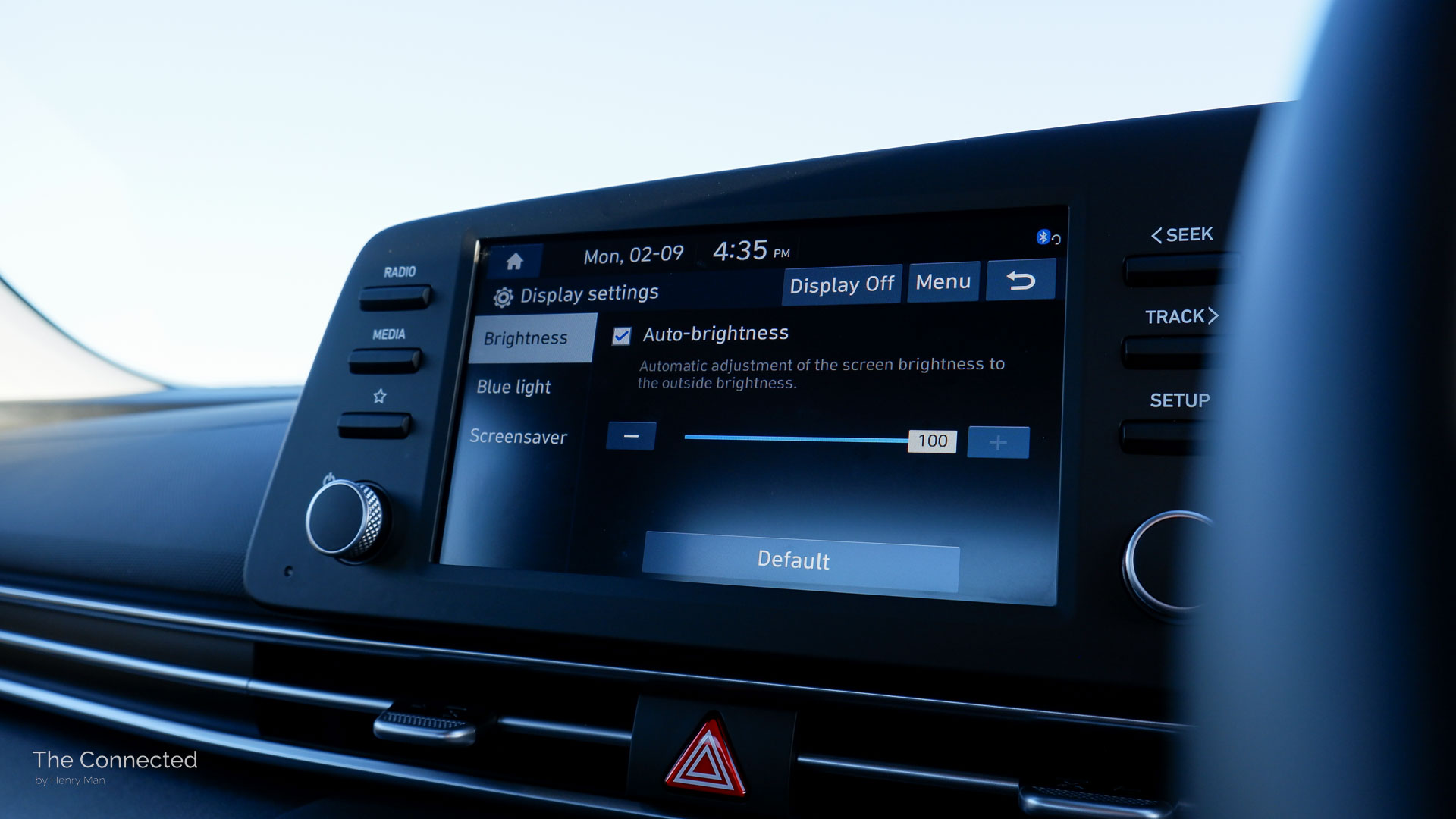
The 8.0-inch touchscreen is small by today’s standards with thick plastic bezels and clear shortcut buttons, and the display looks too washed-out and dim – even when set at the highest brightness setting.
However, the matte-coated display’s fingerprint resistance is impressive and the built-in software is easy to use since there’s not too much functionality – but there’s some lag when switching between menus.
Thankfully, Apple CarPlay and Android Auto connect wirelessly and even the base model includes a Qi wireless phone charging pad.
However, I found that sometimes Android Auto wouldn’t connect automatically to my phone when starting up the i30, requiring me to dig into the settings, force a connection and wait a few agonising seconds. Hyundai’s newer Connected Car Navigation Cockpit (ccNC) software has no such issue.
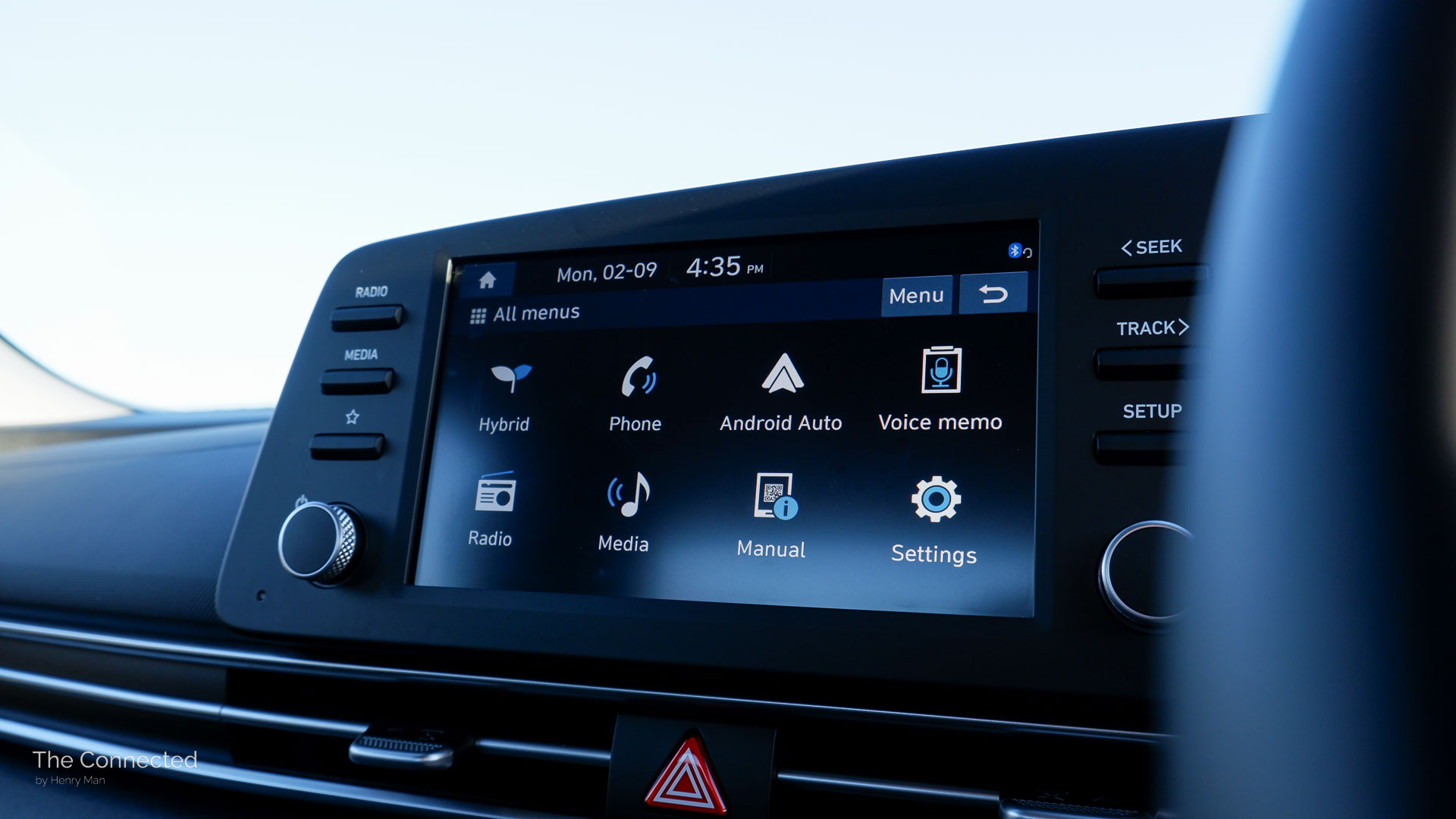
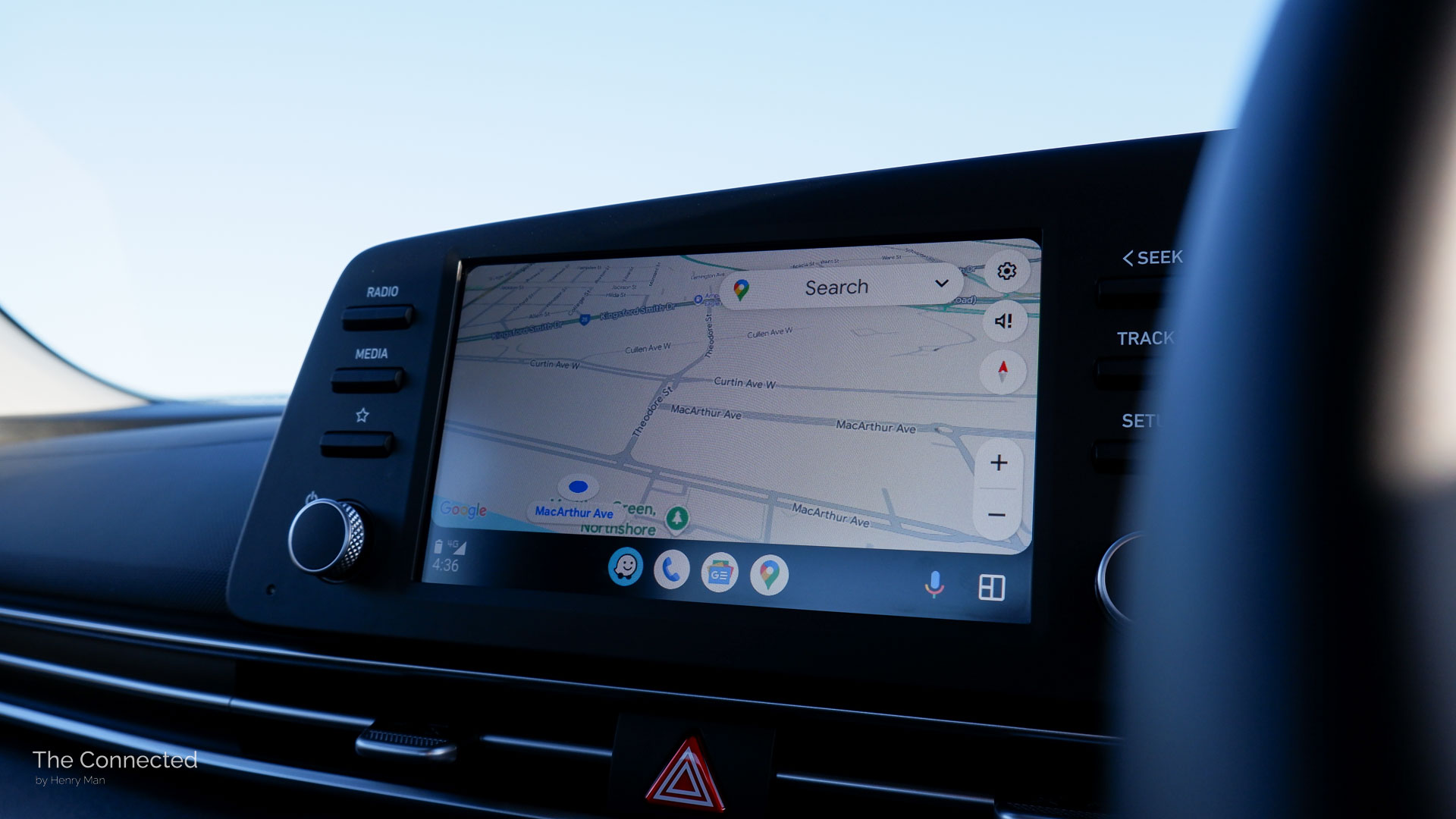
Don’t expect built-in maps, Hyundai Bluelink connected services with a mobile app, and over-the-air software update capability; they’re all reserved for the Elite grade and above.
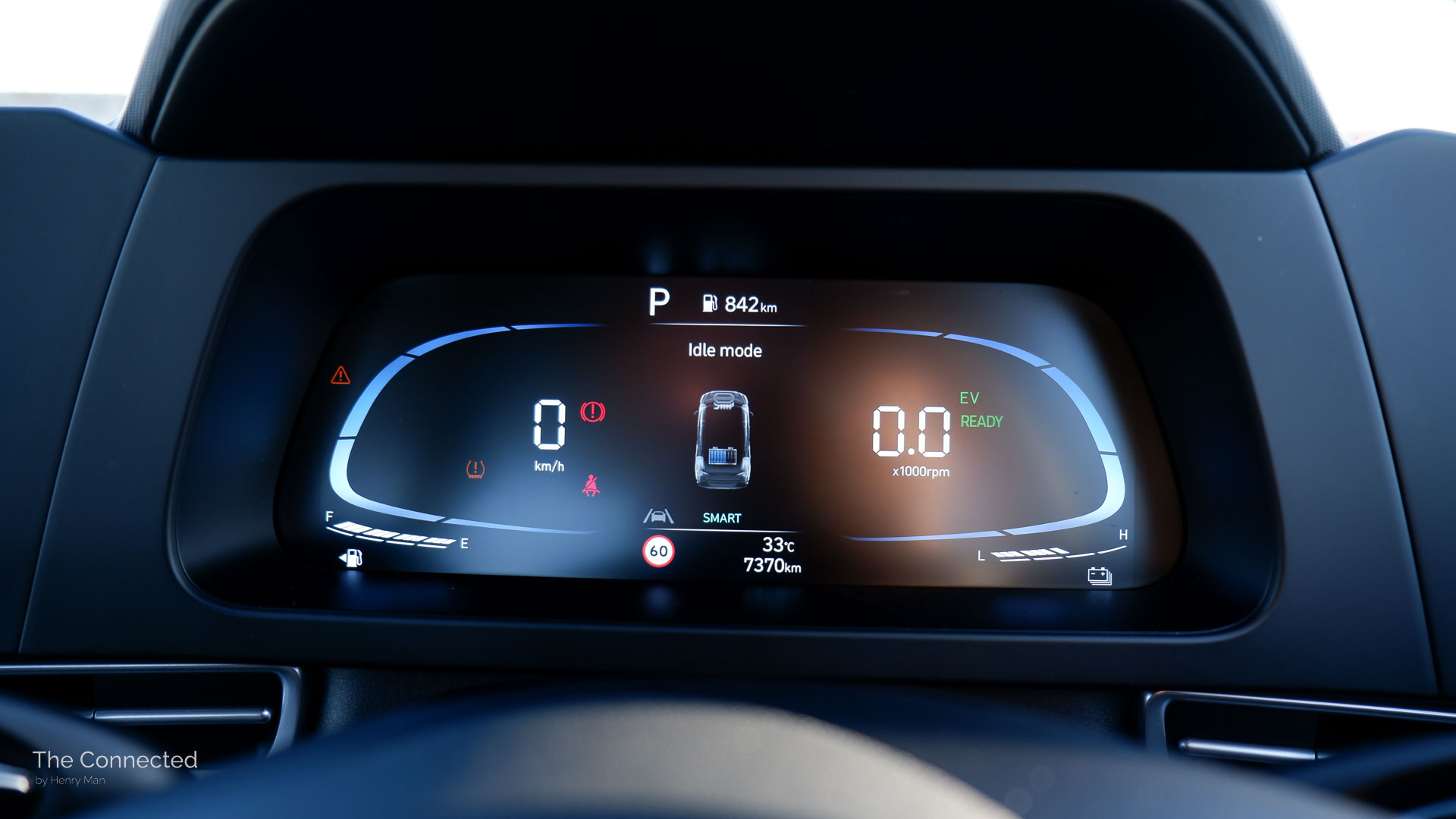
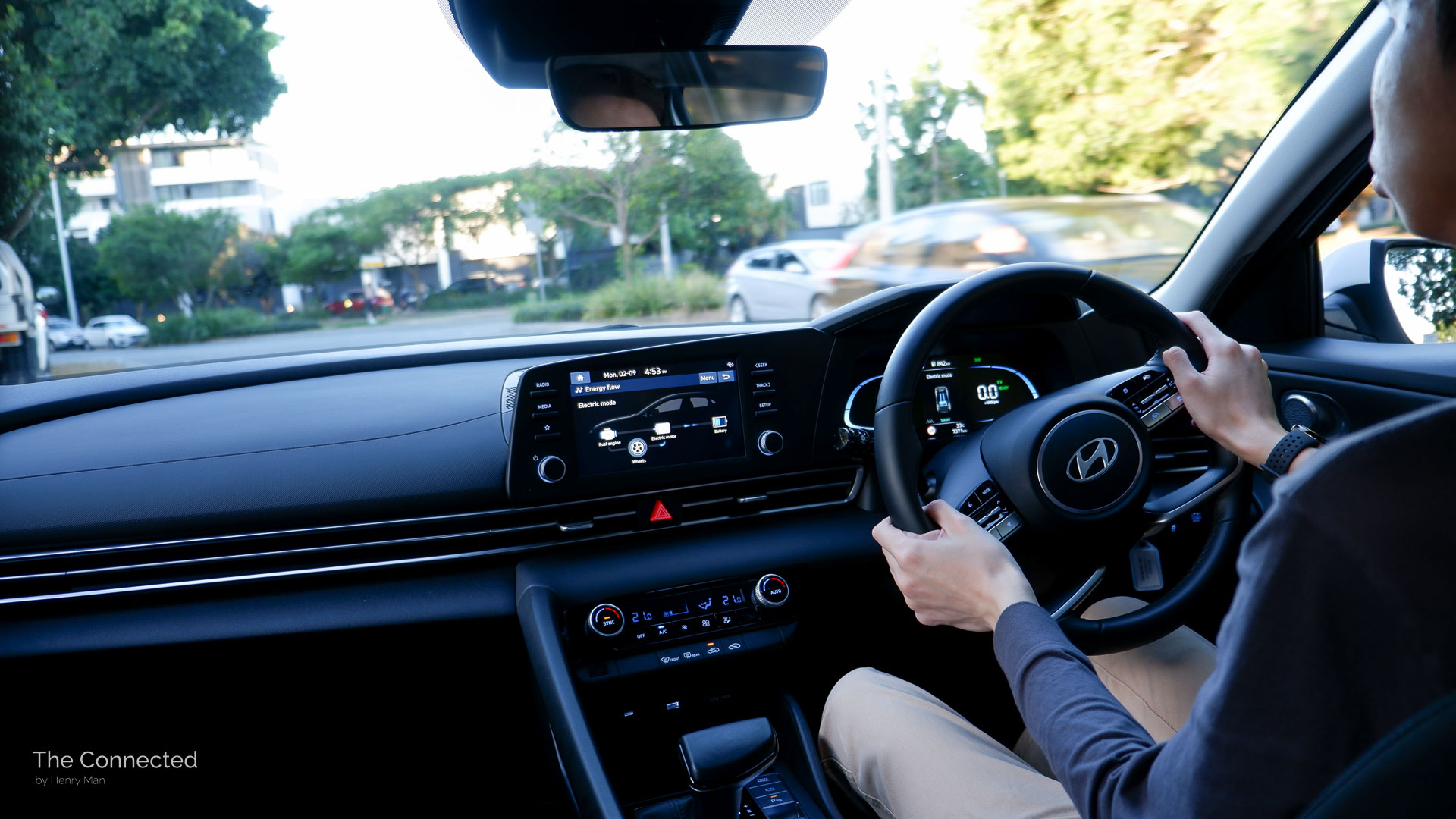
Additionally, the South Korean carmaker cleverly gives the impression of a full digital driver instrument cluster on the base i30 Sedan. The 4.2-inch centre display provides the same functionality as the full 10.25-inch implementation on pricier variants – including a hybrid animation page – and is flanked by a clear digital dot-matrix style speedometer and rev counter.
The latter blends with the small middle screen well and there is a light-up spectrum, which can change colours, illuminates more steps as the engine revs higher, and even flashes red when the forward collision warning is activated.
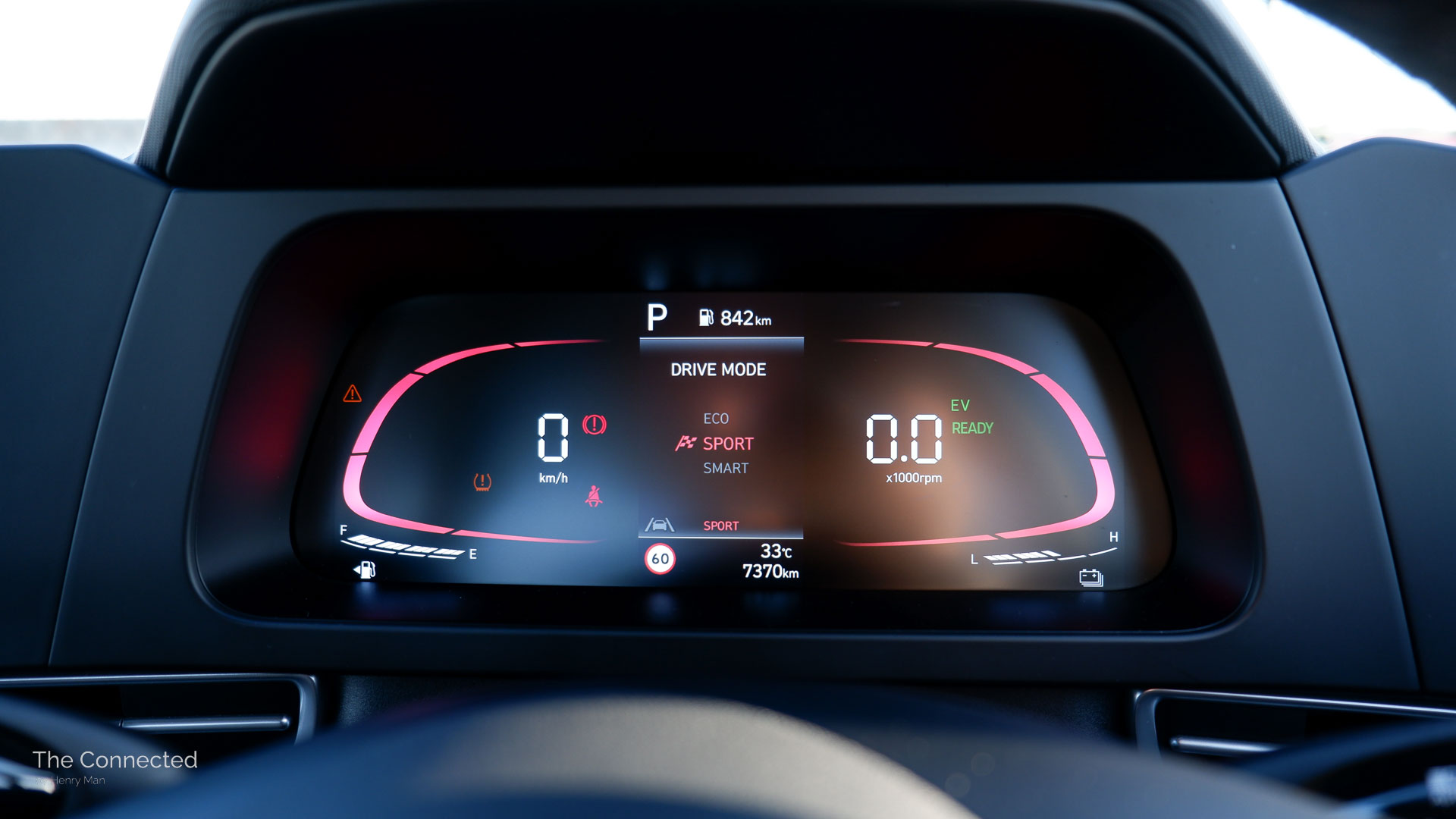
But the protective housing ahead is prone to reflections; if strong sunlight hits the instrument cluster, it could obscure the digital speed readouts.
Below the touchscreen, the two-zone climate controls have clear and tactile buttons and dials, with a dedicated temperature and fan LED display.
The standard six-speaker system sounds very average.
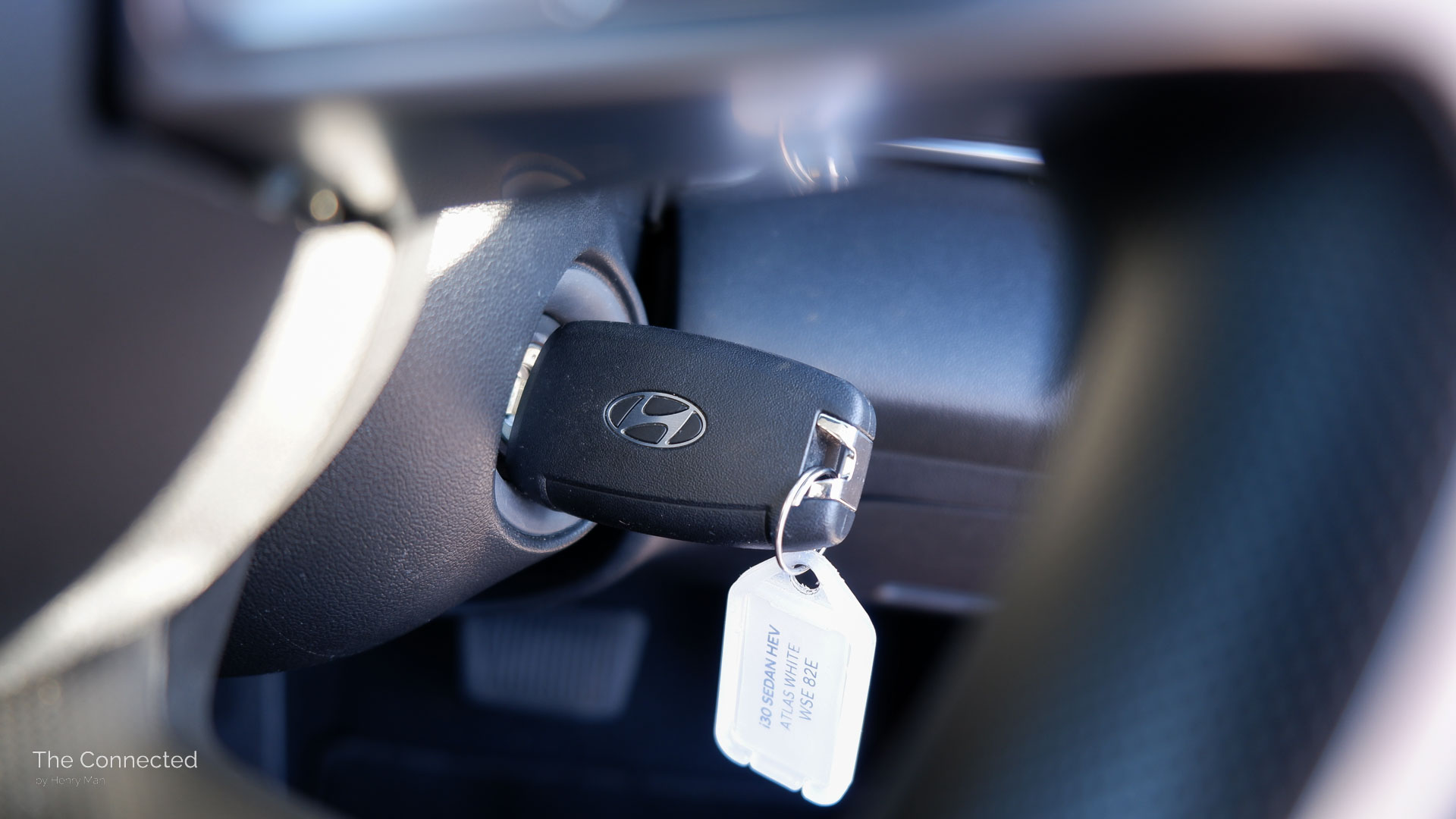
The entry-level i30 Sedan has a basic manual car key, so owners need to press the button to unlock/lock the doors, pop the tailgate open, and insert the key into the ignition barrel. Thankfully, the latter is surrounded by a blue light for better visibility.
Safety.
2025 Hyundai i30 Sedan Hybrid safety features:
| Front AEB with vehicle/pedestrian/cyclist/junction/oncoming detection | Rear-view camera |
| Lane-keep assist | Front and rear parking sensors |
| Lane-centring assist | Rear occupant alert (logic type) |
| Adaptive cruise control | Part LED headlights with auto high beam |
| Intelligent Speed Limit Assist (ISLA) | Halogen tail-lights |
The base i30 Sedan Hybrid includes a range of reliable active safety assistance features as standard, with only some systems reversed for higher models.
Unlike the flagship i30 Sedan N sports sedan, the entry-level model adopts both camera and radar sensors, enabling stop/go adaptive cruise control – which is refined and works well with the hybrid powertrain.
Lane-keep assist isn’t overly intrusive and lane-centring provides dependable, smooth steering assistance.
The base model only misses out on a rear sonar sensor for blind-spot monitoring and rear cross-traffic alert. These aren’t necessities and weren’t too missed in my experience, even though it’s worth noting that they’re now standard on the Kia Picanto hatchback.
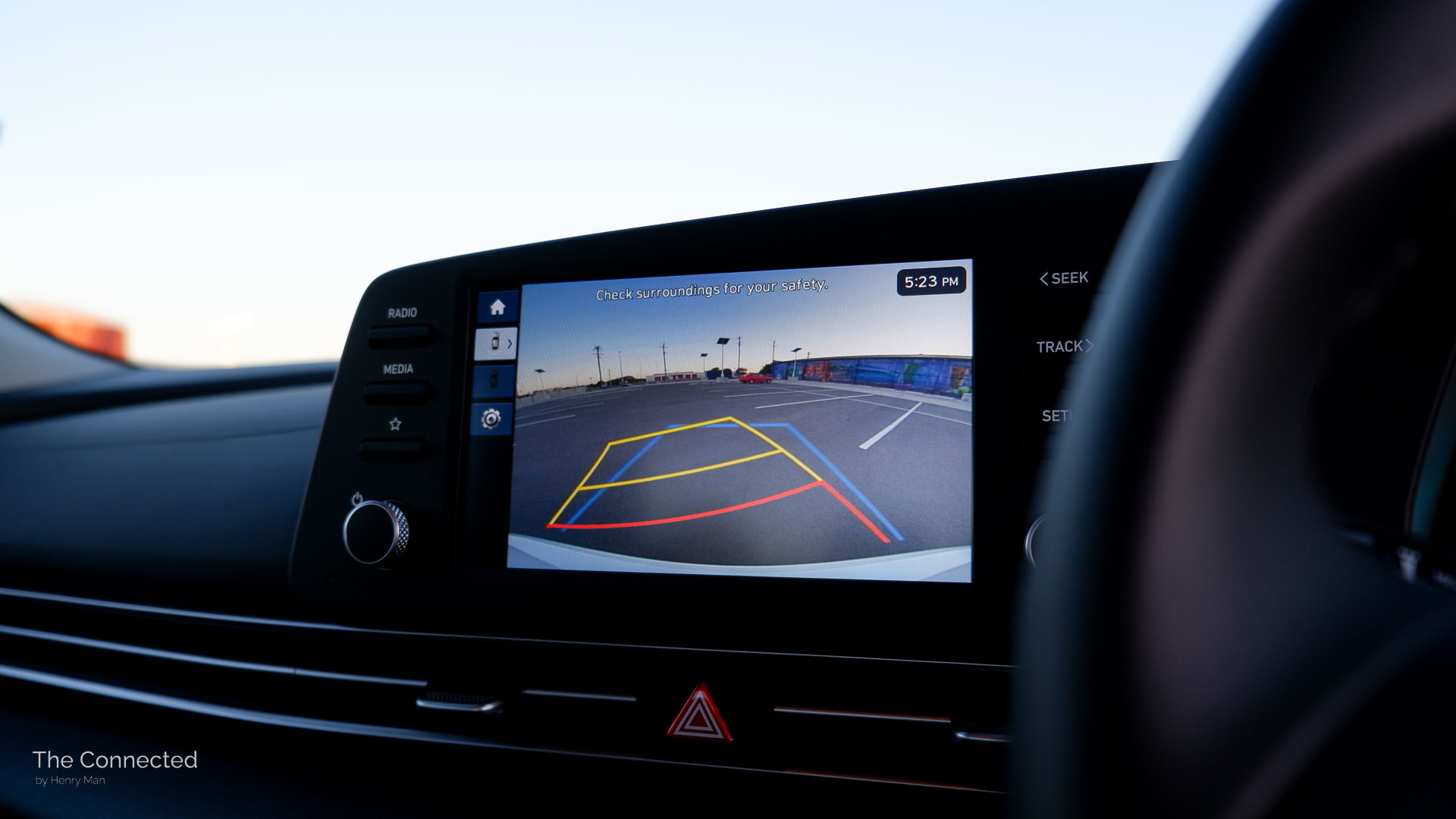
However, the i30 Sedan across the line-up has a noticeably lower-resolution reversing camera that tends to display off-colour temperatures and a lot of noise in low-light conditions.
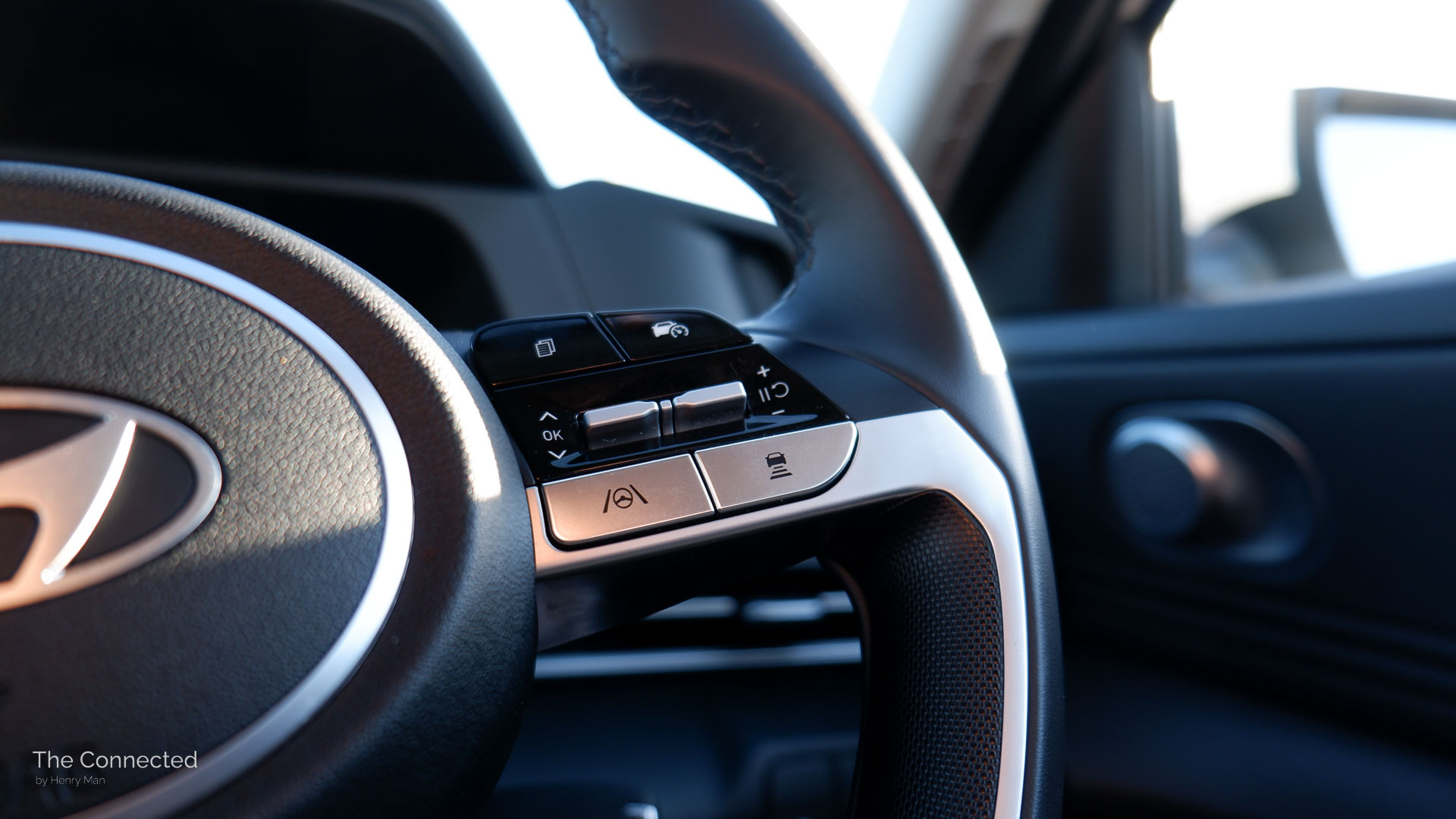
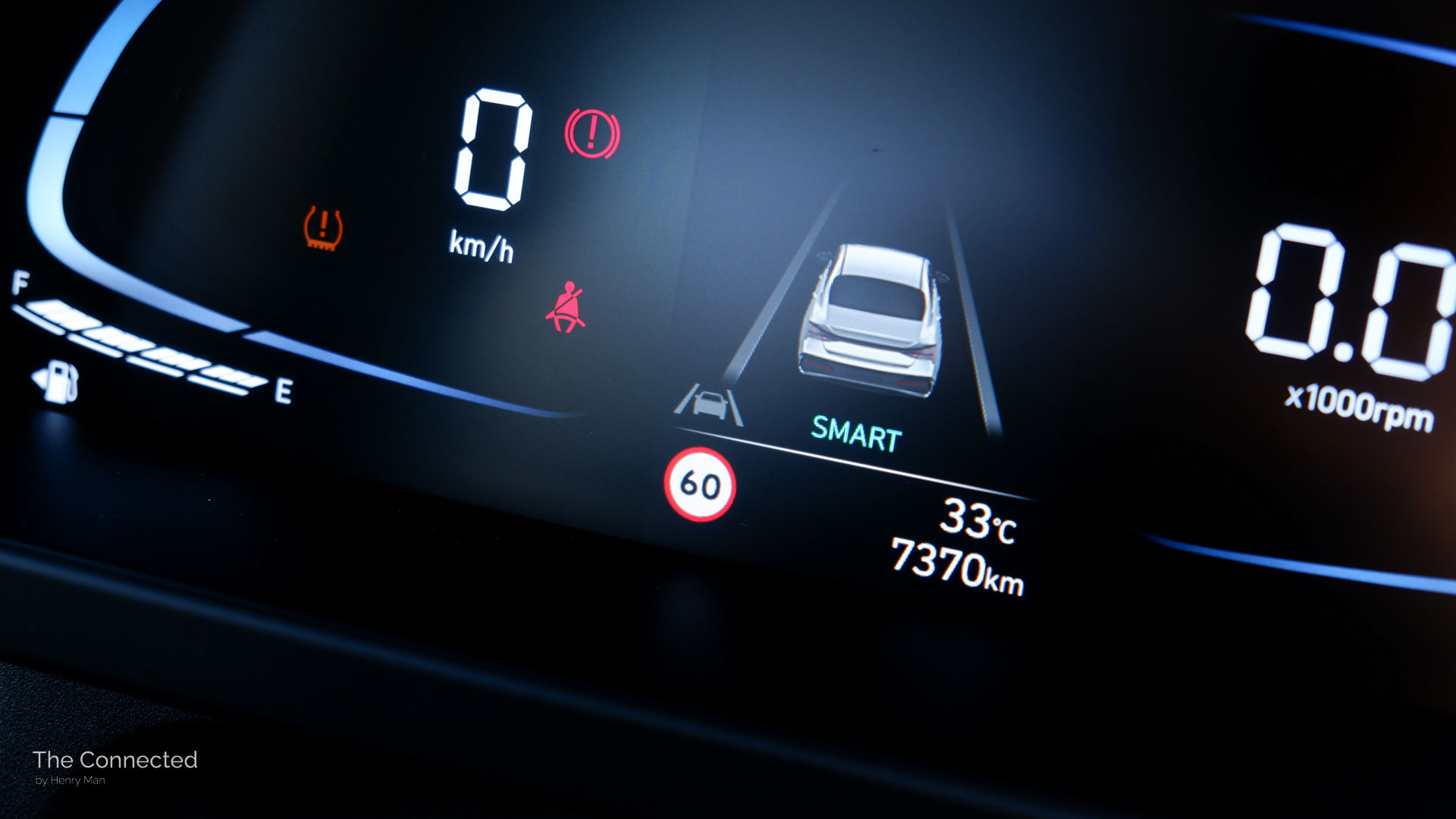
The European mandated speed limit assist system can also be annoying as it chirps every time it passes a new speed sign and sounds multiple times as soon as you drive faster than the recognised limit.
While it’s reliable most times, it can fail to detect new signs sometimes, warns in low speed limit car parks, and doesn’t know the times outside school zones.
It’s also on older software, so it has higher volume chimes than newer Hyundai cars on ccNC software and doesn’t offer the steering wheel shortcut to disable it either.
As part of the facelift, the base i30 Sedan now includes reflector-type LED headlights that provide good visibility at night, despite the slimmer design.
The front indicators and tail-lights use halogen-type bulbs.
The 2025 Hyundai i30 Sedan has not been rated by new car safety authorities as at the time of publication.
Range and fuel consumption.
2025 Hyundai i30 Sedan Hybrid fuel and efficiency specs:
| Claimed driving range (combined) | 1077km |
| Claimed fuel efficiency (combined) | 3.9L/100km |
| Fuel tank size | 42 litres |
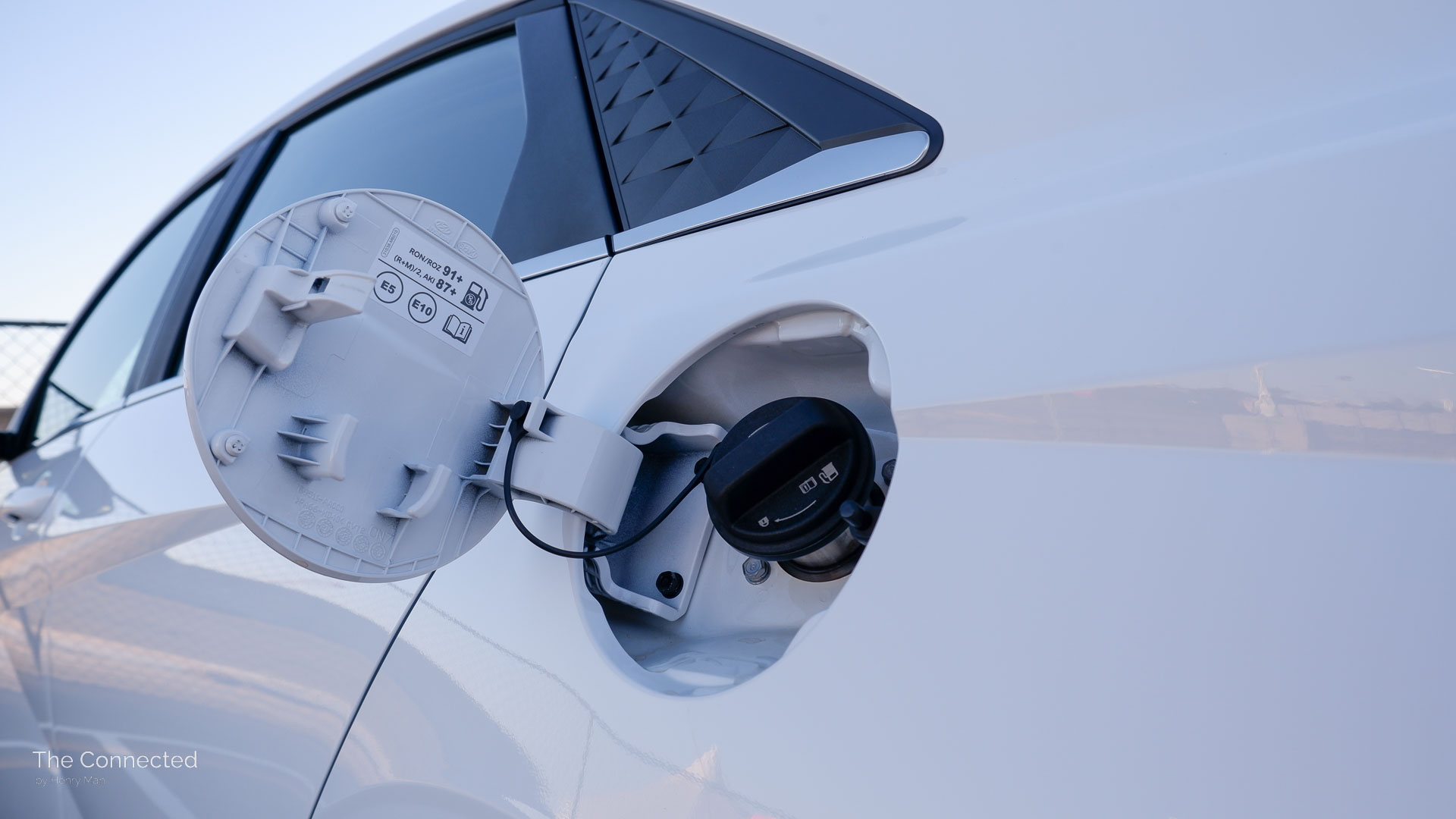
| Minimum fuel quality requirement | 91 RON unleaded petrol |
| Claimed CO2 exhaust emissions (combined) | 92g/km |
| European emissions compliance | Euro 5 |
After a week of urban and highway driving, the updated i30 Sedan Hybrid achieved an impressive 4.3L/100km fuel consumption.
This is the most fuel-efficient Hyundai hybrid car to date thanks to the low aerodynamic design and economy-focused petrol-electric hybrid powertrain tune.
Therefore, expect about 977km real-world driving range from its full 42-litre fuel tank. It can accept cheaper 94 RON E10 unleaded petrol.
The i30 Sedan Hybrid is self-contained, meaning no plug-in charging is required as the engine and braking help with regenerating energy back into the small 1.32kWh (gross) lithium-ion battery.
The fuel lid is at the rear-left quarter side of the vehicle, though you’ll need to pull the toggle at the driver’s side floor to unlock it – the traditional way.
Driving.
2025 Hyundai i30 Sedan Hybrid powertrain specs:
| Engine/electric motor | 1.6-litre naturally aspirated, four-cylinder petrol engine and single permanent magnet synchronous motor |
| Battery size and type | 1.32kWh (gross) lithium-ion battery |
| Power | 104kW |
| Torque | 265Nm |
| Transmission | Six-speed DCT |
| Drive Type | FWD |
| Kerb weight | 1360-1405kg |
| Payload | 425-470kg |
| Towing (unbraked / braked) | N/A |
The Hyundai i30 Sedan Hybrid is a touch fun to drive even on the base model, with an efficiency-focused powertrain tune.
Combining a naturally-aspirated 1.6-litre petrol engine and front-mounted electric motor, up to 104kW of power and 265Nm of torque is delivered to the front wheels.
With a low driving position, well-weighted steering and light weight, it feels slightly nimble and sporty to drive around corners.
Twist the key fob in the ignition and there’s an uncanny lack of engine noise.
Hyundai’s series-parallel hybrid system is refined and smoothly between the electric motor, petrol engine and both.
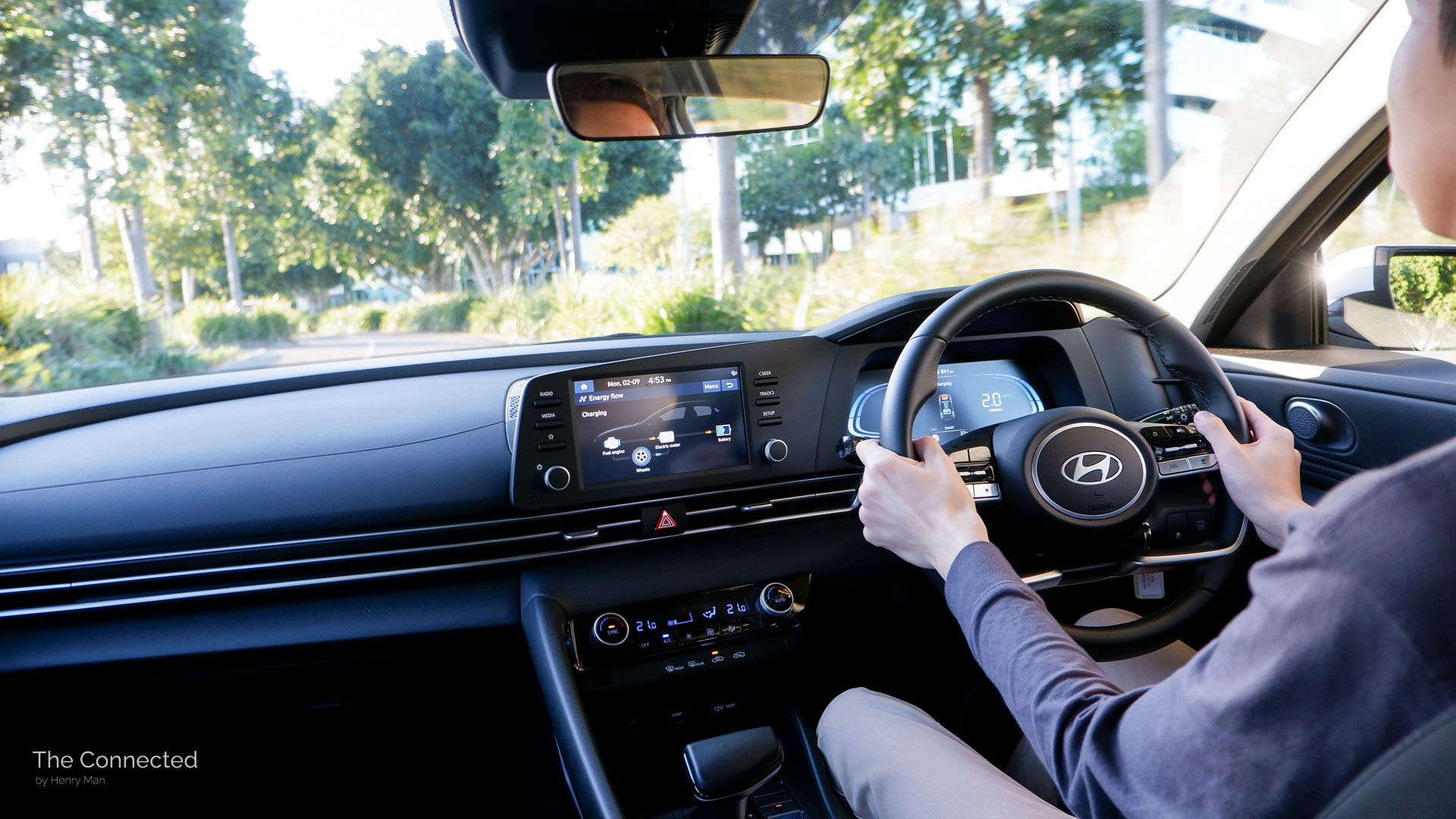
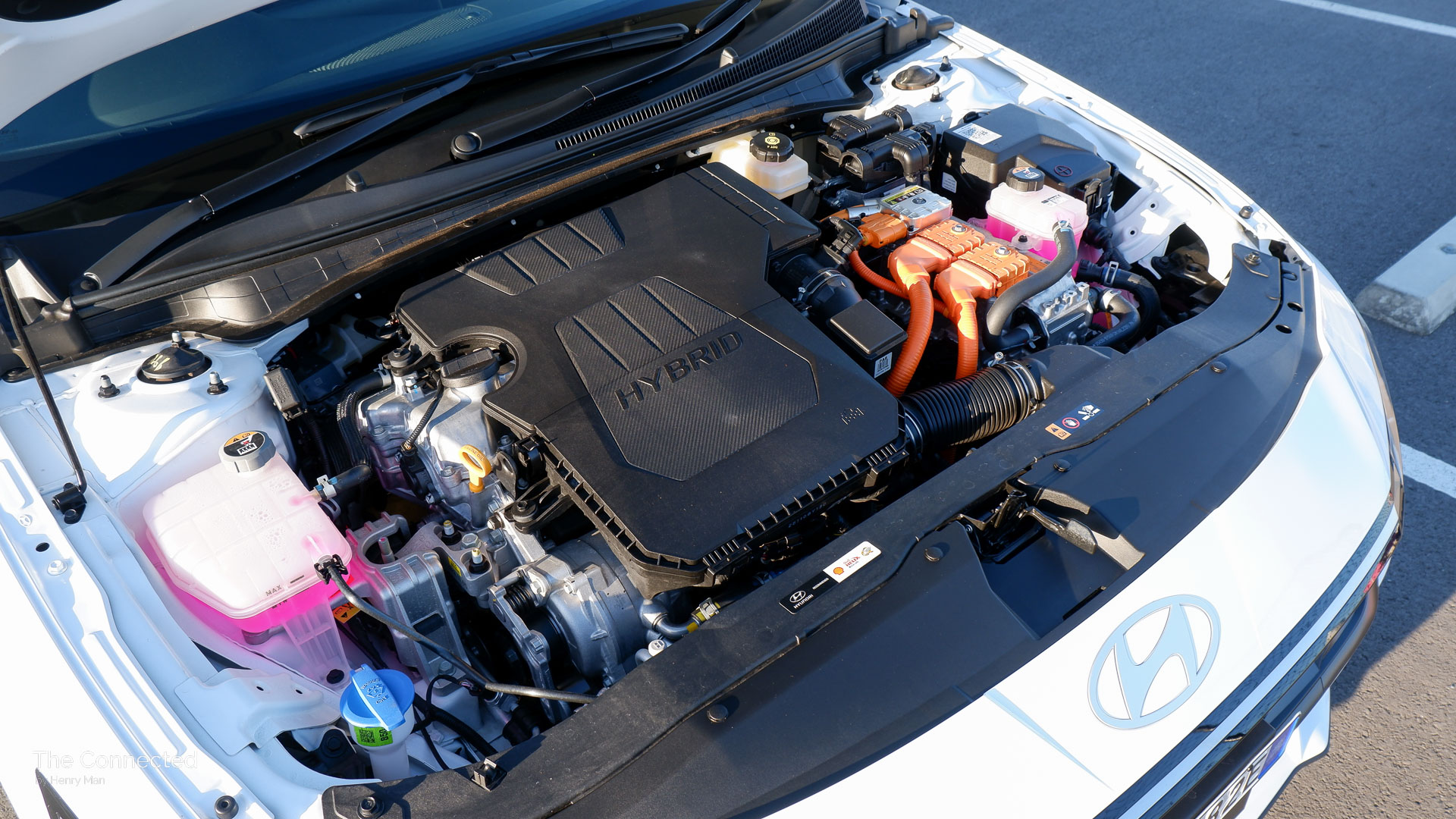
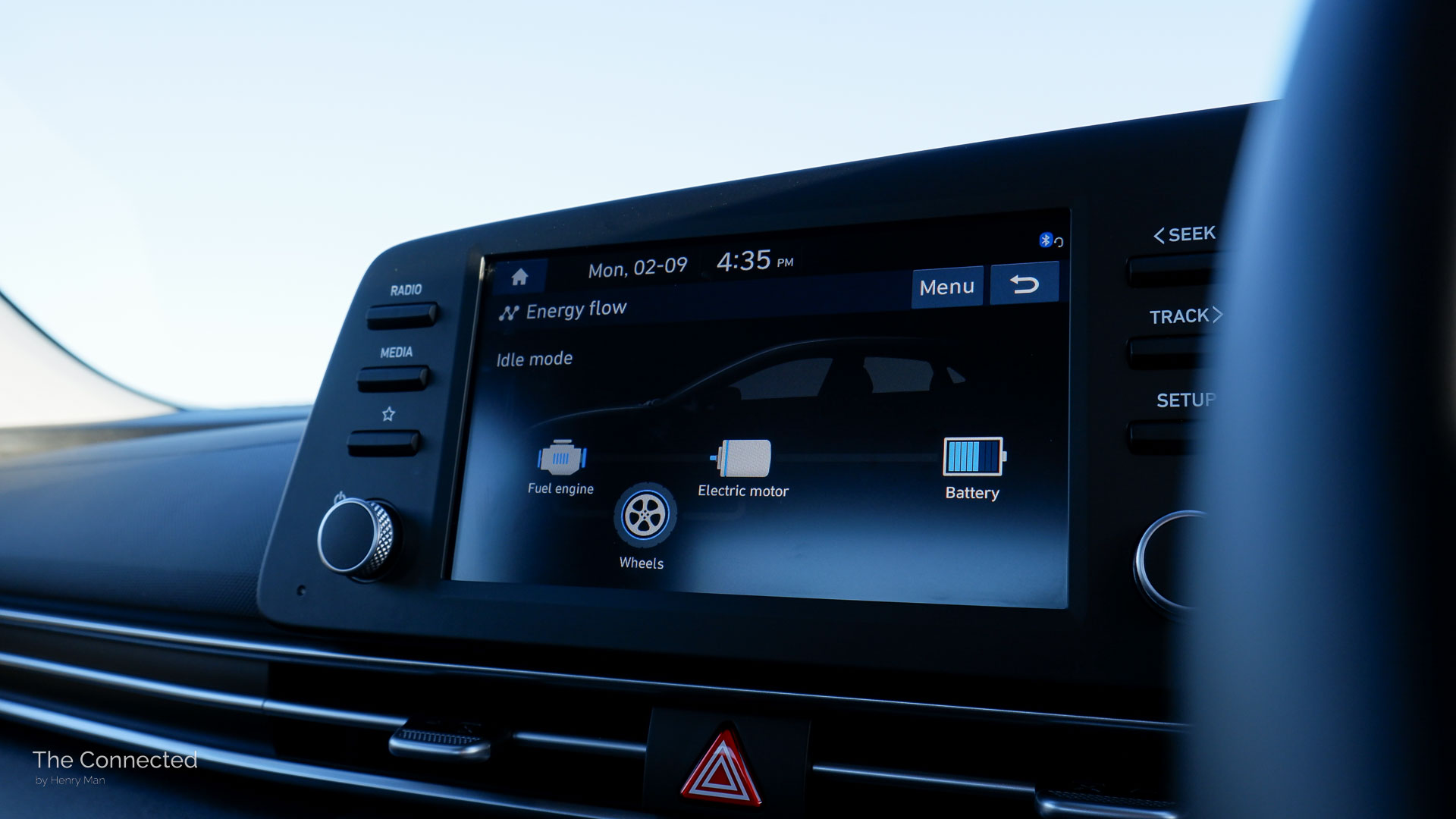
It’s clearly tuned for maximising fuel economy as it impressively keeps in electric-only mode longer than other Hyundai hybrid SUVs, by accelerating up to about 30km/h without activating the combustion engine. With a lighter foot and no uphill gradient, the i30 Sedan Hybrid could even stay in electric-only mode until nearly 60km/h.
However, this fuel-efficiency focus also results in moments where I wish there was more power when taking off since it’s limited by the small 32kW/170Nm electric motor, requiring a harder foot to activate the petrol engine.
Unlike the South Korean automaker’s newer second-generation hybrids, the i30 Sedan Hybrid doesn’t offer adjustable regenerative braking intensities. Instead, it coasts like a traditional petrol car and relies on the blended brake pedal for regen.
Unfortunately, the hybrid sedan’s budget consciousness shows with average noise insulation, noticeable road noise, and a slightly firm ride – despite the small 16-inch wheels with 205/55 Kumho eco-focused tyres on the base model.
The Hyundai i30 Sedan Hybrid is easy to manoeuvre thanks to its 10.8-metre turning circle and low driving position, although visibility through the rear window is compromised due to the sloping roof.
Warranty and servicing.
2025 Hyundai i30 Sedan Hybrid capped-price servicing costs:
| 1 year/15,000km | 2 years/30,000km | 3 years/45,000km | 4 years/60,000km | 5 years/75,000km |
|---|---|---|---|---|
| $310 | $420 | $410 | $720 | $310 |
The 2025 Hyundai i30 Sedan Hybrid is covered by a five-year, unlimited kilometre vehicle warranty and an eight-year/160,000km battery warranty.
Servicing is required every one year/15,000km (whichever occurs first), with prices uniquely fixed for the lifetime of the vehicle.
After the first five years/75,000km, expect to pay $2170 in total for maintenance or $434 per visit on average. That’s not cheap for an entry-level attainable new car, with the four year/60,000km major service costing a hefty $710.
Hyundai Australia also includes unlimited roadside assistance, which is renewed for an additional one year if you service it with them each time.
A temporary spare tyre is included underneath the boot floor of all i30 Sedan Hybrids, whereas petrol-only models offer a proper full-size spare.
Price and rivals.
2025 Hyundai i30 Sedan Hybrid model range pricing (accurate as at the time of publication):
| i30 Sedan Hybrid | Elite Hybrid | Premium Hybrid |
|---|---|---|
| From $33,000 before on-road costs | $37,500 before on-road costs | $TBA (coming soon) |
| From $35,990 drive-away offer | N/A | N/A |
The 2025 Hyundai i30 Sedan Hybrid is priced from $33,000 before on-road costs in Australia.
The mid-spec Elite Hybrid costs $4500 more, while the flagship Premium Hybrid is expected to join the line-up later.
As opposed to the Hyundai Kona Hybrid, the i30 Hybrid can’t be had in the sportier N Line design since it uses a different petrol unit.
All exterior colours except Atlas White require spending $595 more.
The 2025 Hyundai i30 Sedan Hybrid directly competes with a pair of hybrid sedans:
- Toyota Corolla Hybrid sedan
- Toyota Camry Hybrid
Other alternatives to the i30 Sedan Hybrid include:
- GWM Jolion Hybrid
- Hyundai Kona Hybrid (full review)
- Honda HR-V e:HEV
- MG ZS Hybrid+ (coming soon)
- MG 5
- Kia Cerato sedan (to be replaced by Kia K4)
- Mazda 3 sedan
Would I pick the 2025 Hyundai i30 Sedan Hybrid?
The updated entry-level Hyundai i30 Sedan Hybrid is a basic and compromised, but super fuel-efficient and sporty affordable sedan.
For ~$36K drive-away, it provides low fuel consumption, a sporty design and solid interior, refined safety tech, and every necessary feature as standard.
The facelifted i30 Sedan isn’t cheap anymore, but no new car is anymore with so much equipment loaded to meet Australians’ changing preferences.
However, at this price point, it looks comparatively basic against fiercely competitive Chinese rivals such as the GWM Jolion Hybrid, MG ZS Hybrid+, and Cherry Omoda 5. The touchscreen is also too washed-out and dim, the base model lacks a simple button to open the tailgate, and ride comfort and quietness is average.

I’d still pick the base i30 Sedan variant, though, which offers the best value for money without going into the $40K territory.
It’s more exciting than the venerable Toyota Corolla sedan, more efficient and has a better interior than the Hyundai Kona Hybrid, and is worth considering if you’re looking for a refined and cost-effective-to-own new car.
Photographs by Henry Man
READ MORE: 2024 Hyundai Kona Hybrid review: The new default.
READ MORE: 2024 Hyundai i30 Sedan N review: Fresh cut.
READ MORE: What is the point of the blue EV label?
Pros:
- Super fuel-efficient
- Head-turning sporty design
- Fun to drive
- Good quality interior
- Spacious boot
Cons:
- Pricey amid competitive Chinese rivals
- Sub-par tech, annoying speed limit assist
- No tailgate release button
- Average noise insulation and comfort
- Servicing isn’t cheap
About the Author.
Henry Man is an independent content producer passionate about the intersection of technology and transportation.
The former automotive journalist is focused on producing critically-detailed vehicle reviews, and unique short-form content. Learn more.


 The Connected by Henry Man