

Convertibles are on edge of extinction. Yet, the Mazda MX-5 remains the most affordable new convertible on sale in Australia. Is it worth buying a 10-year-old sports car in 2026?
The iconic ND Mazda MX-5 (called Miata in North America or Roadster in Japan) has been given a minor facelift with new lights, wheel designs, and upgraded Mazda Connect technology with connected services.
But a lot has changed since its original debut in 2015. The popularity of sporty crossover SUVs and hot hatchbacks have overshadowed two-door convertibles globally, as many automakers pull back on less profitable vehicles amid increasing emissions regulations.
A decade later, the fourth-generation MX-5 soldiers on – but is buying a ‘new’ 10-year-old sports car worth it in 2026?
I tested the cheapest MX-5 G20 Roadster with a soft top and manual transmission – and found out that this little Mazda is an achievable ‘dream car’.
NOTE: The press vehicle was provided by Mazda Australia for a seven-day independent evaluation. We have no commercial arrangements with the company and it had no editorial control.


Pros.
+ Fun old-school sports car
+ Attainable price tag
+ Quality interior, simple tech
+ Commendable fuel tank size
+ Timeless design
Cons.
– Unergonomic driving position
– Poor outside visibility
– No digital speedometer
– Stock exhaust isn’t as cool
– Alternatives are more dailyable
Vehicle tested:
| Model | 2026 Mazda MX-5 |
| Variant | G20 Roadster |
| Starting price | $42,140 before on-road costs |
| Exterior colour | Soul Red Crystal Metallic (+$595) |
| Interior colour | Black cloth with Legane synthetic suede seats |
| Country made | Japan |
Design and quality.
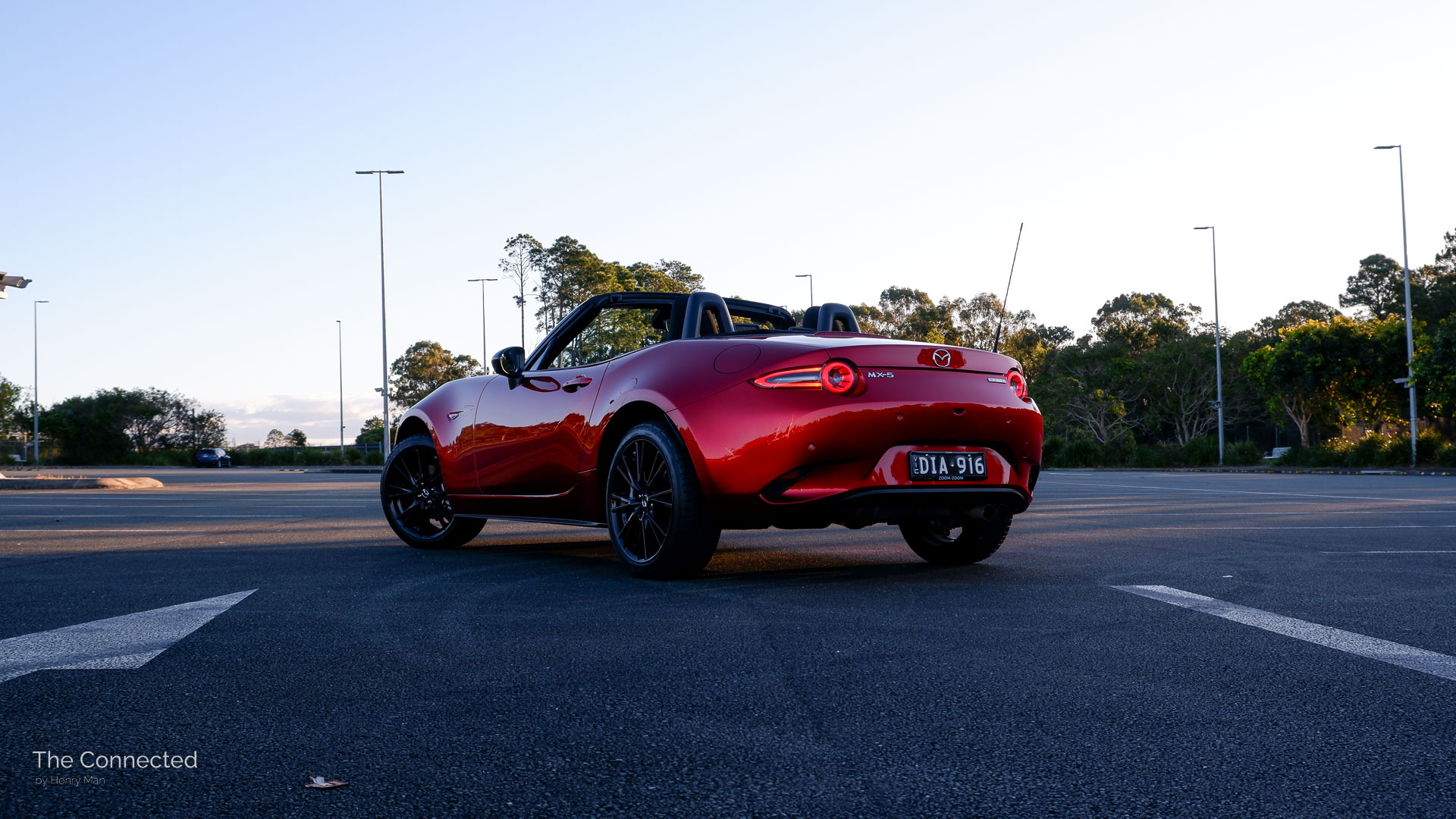
The ND Mazda MX-5’s design hasn’t aged at all and continues to turn many heads 10 years on.
The two-door convertible is compact and low – standing out against a tide of tall and wide crossover SUVs and utes.
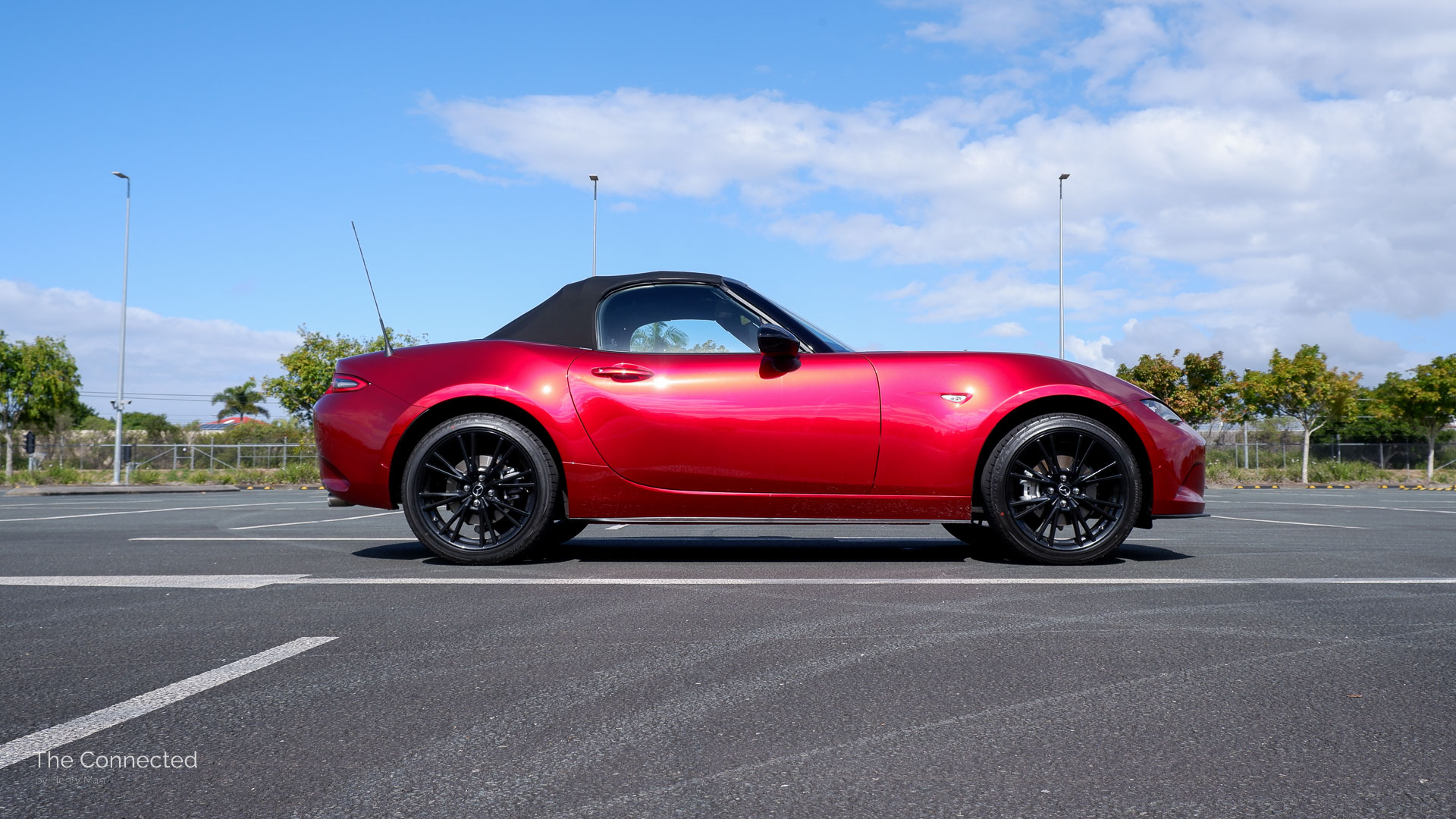
You’d be mad to not pay the $595 extra for Mazda’s signature Soul Red Crystal Metallic paint, which best suits the MX-5 particularly when matched with this base Roadster’s gloss black 17- inch wheels and wing mirror caps.
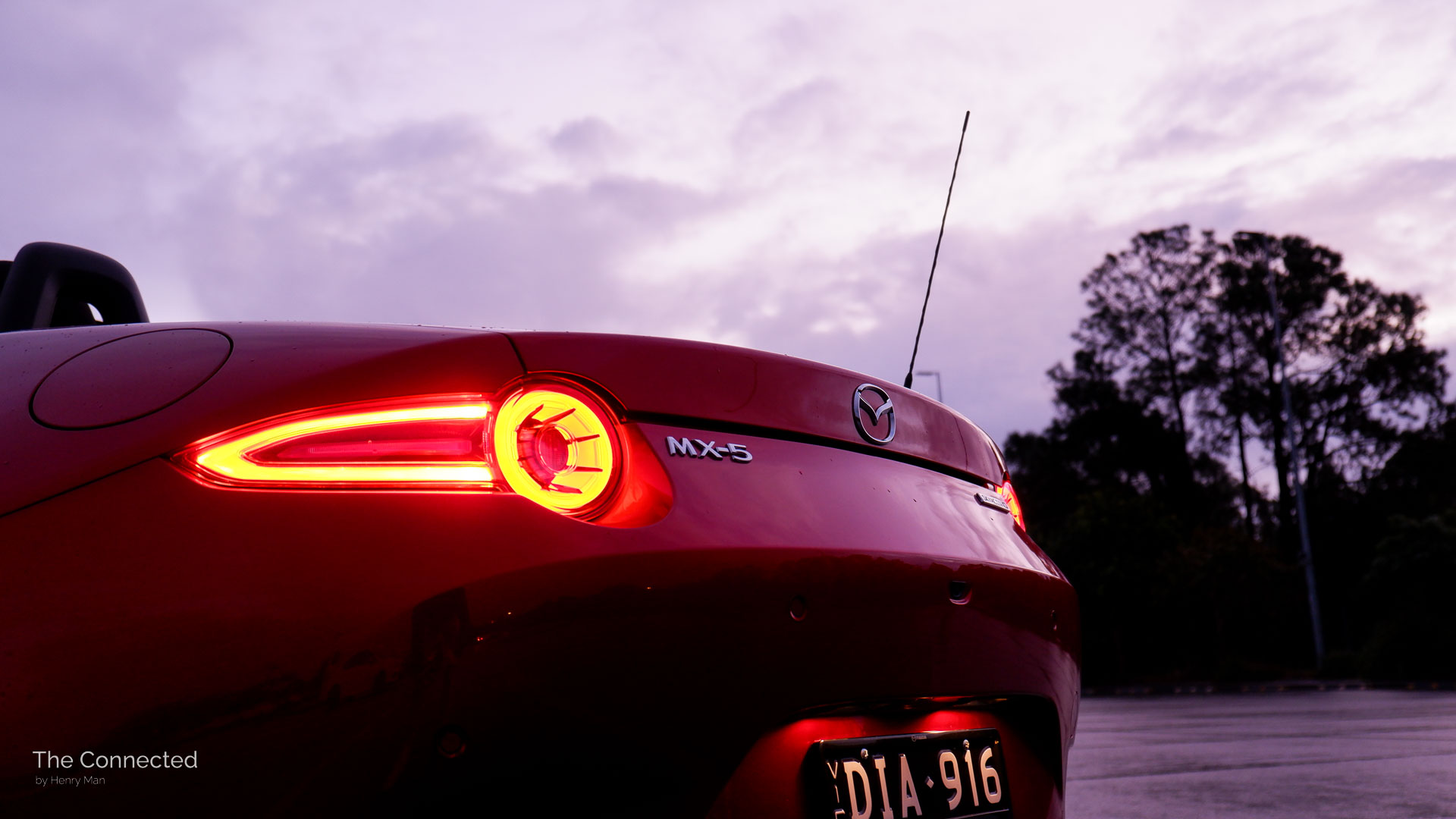
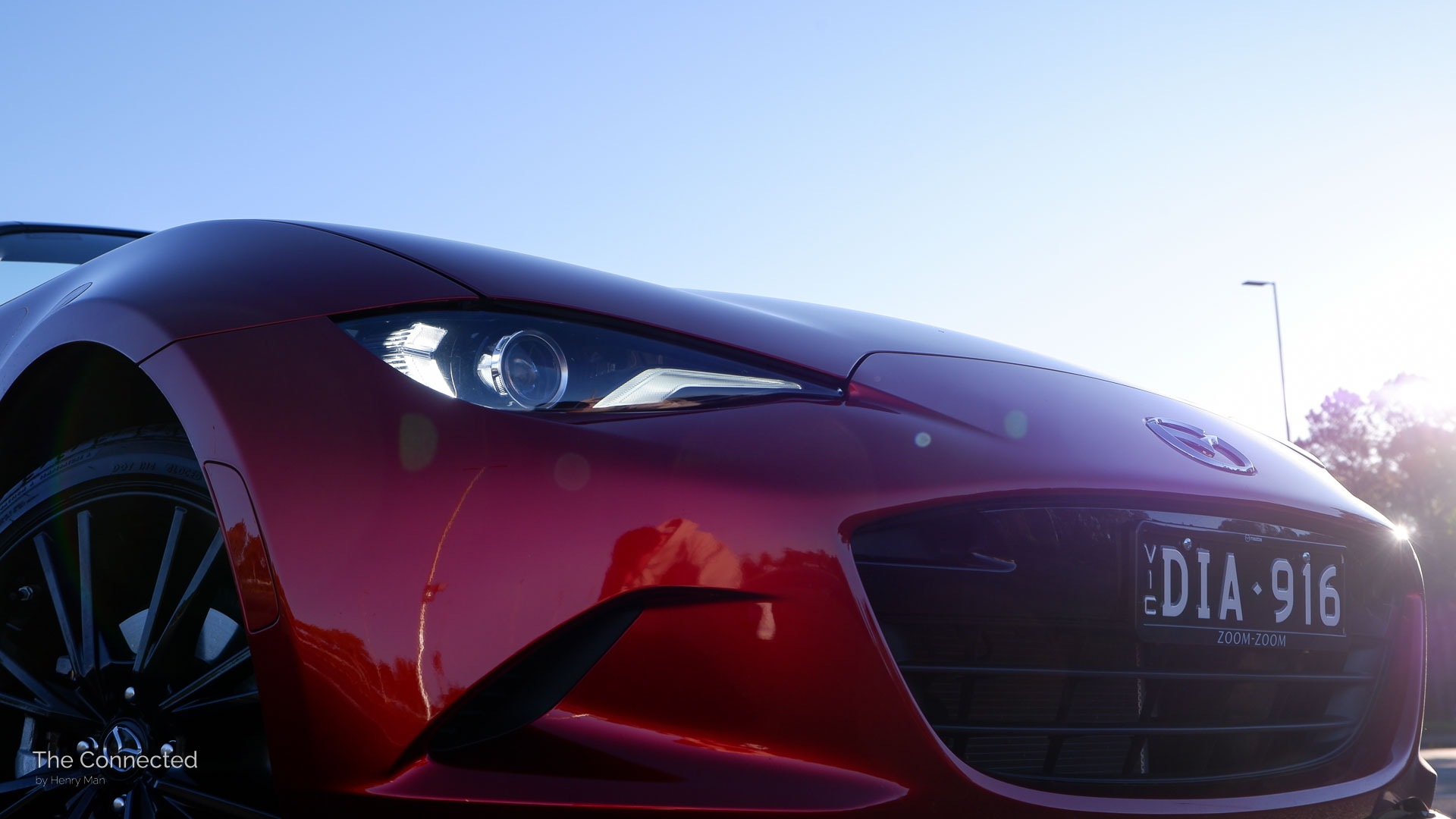
The 2025 facelift is very minor, only introducing new front and rear internal LED light designs that are more defined and in line with Mazda’s latest-generation models including the CX-60 and CX-90.
The Japanese carmaker hasn’t touched the bodywork nor removed the old-school protruding antenna at the back.
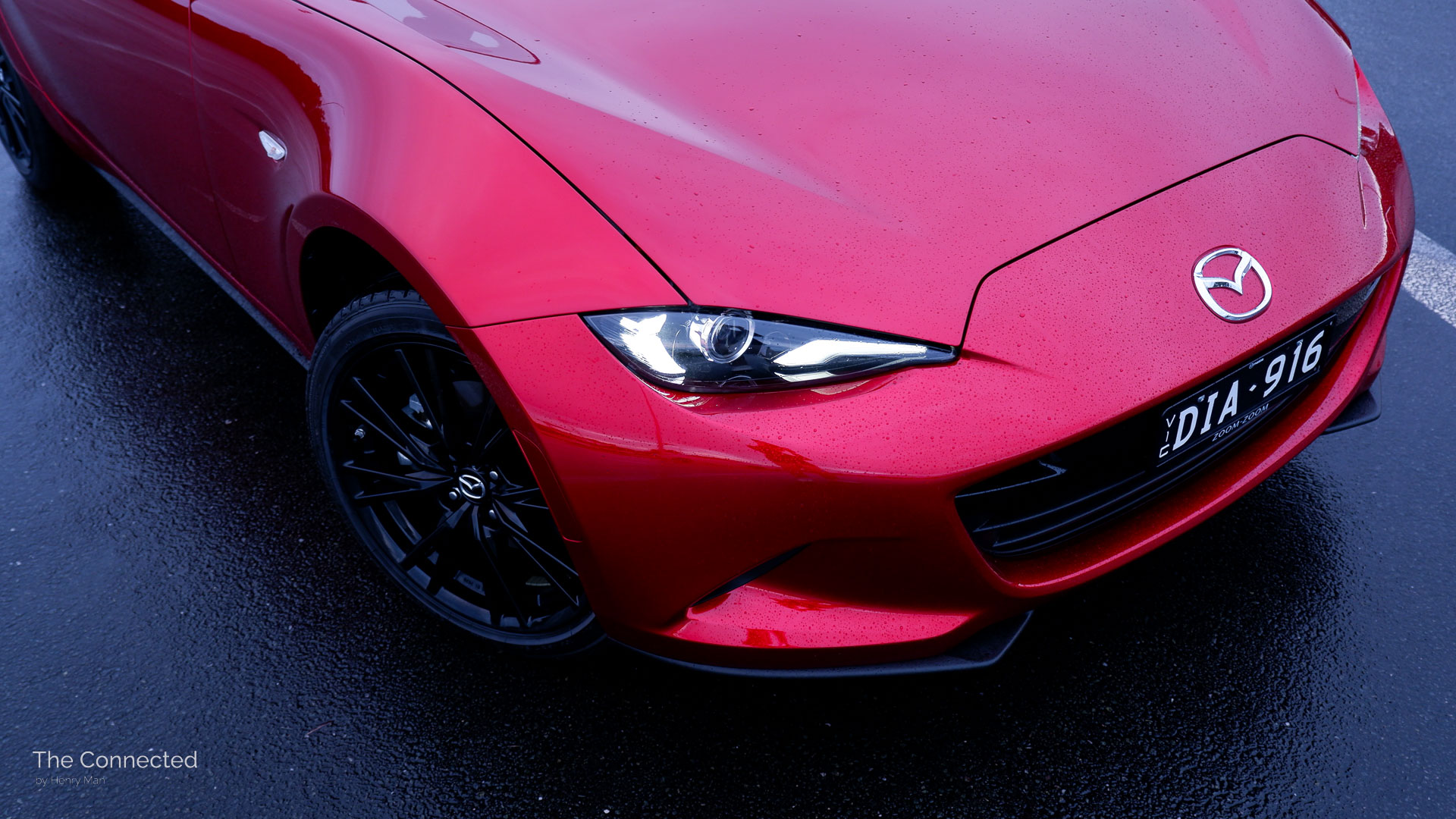

Yet, the fact that it’s still head-turner despite dating back to 2015 highlights how timeless its design is.
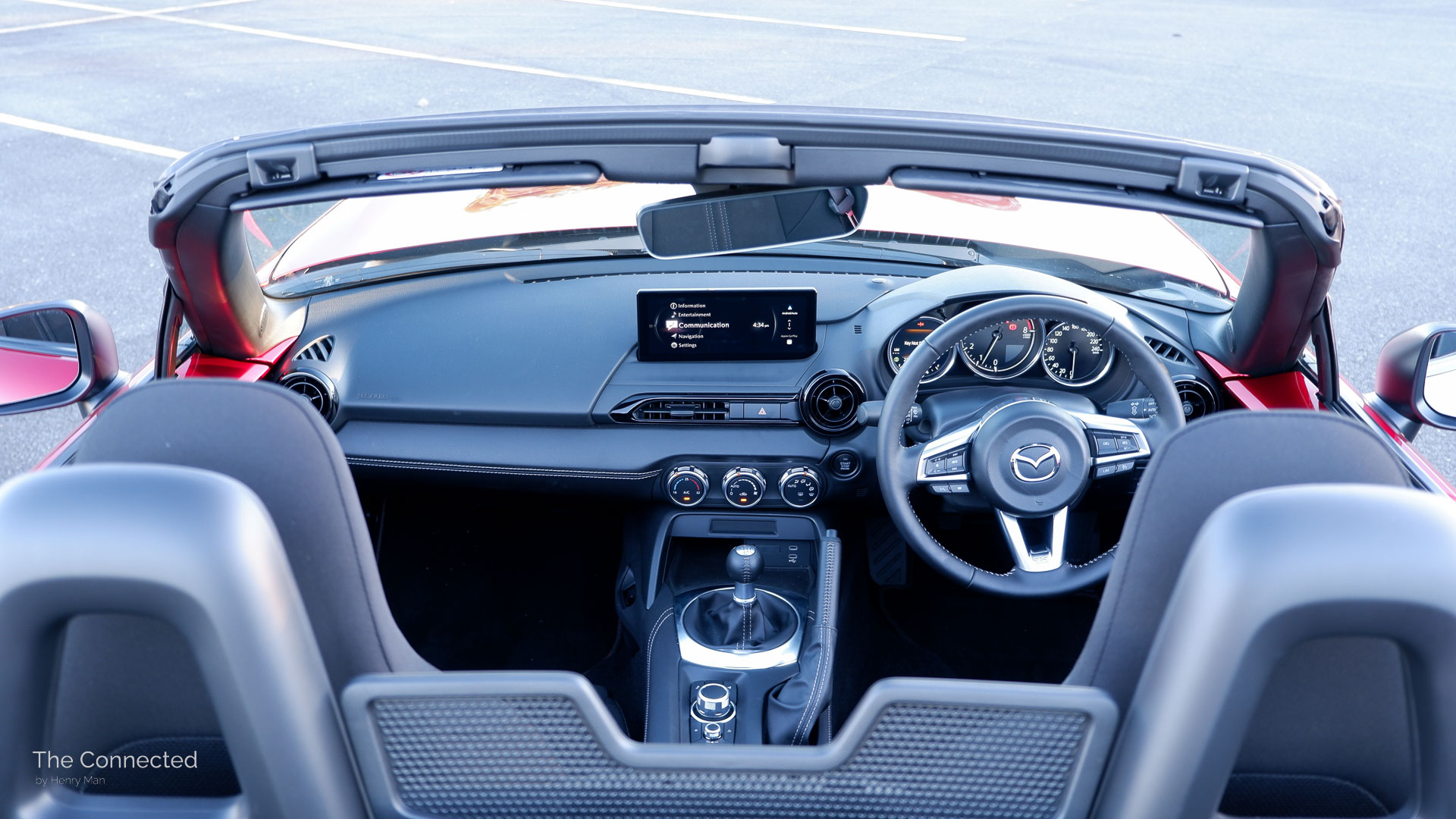
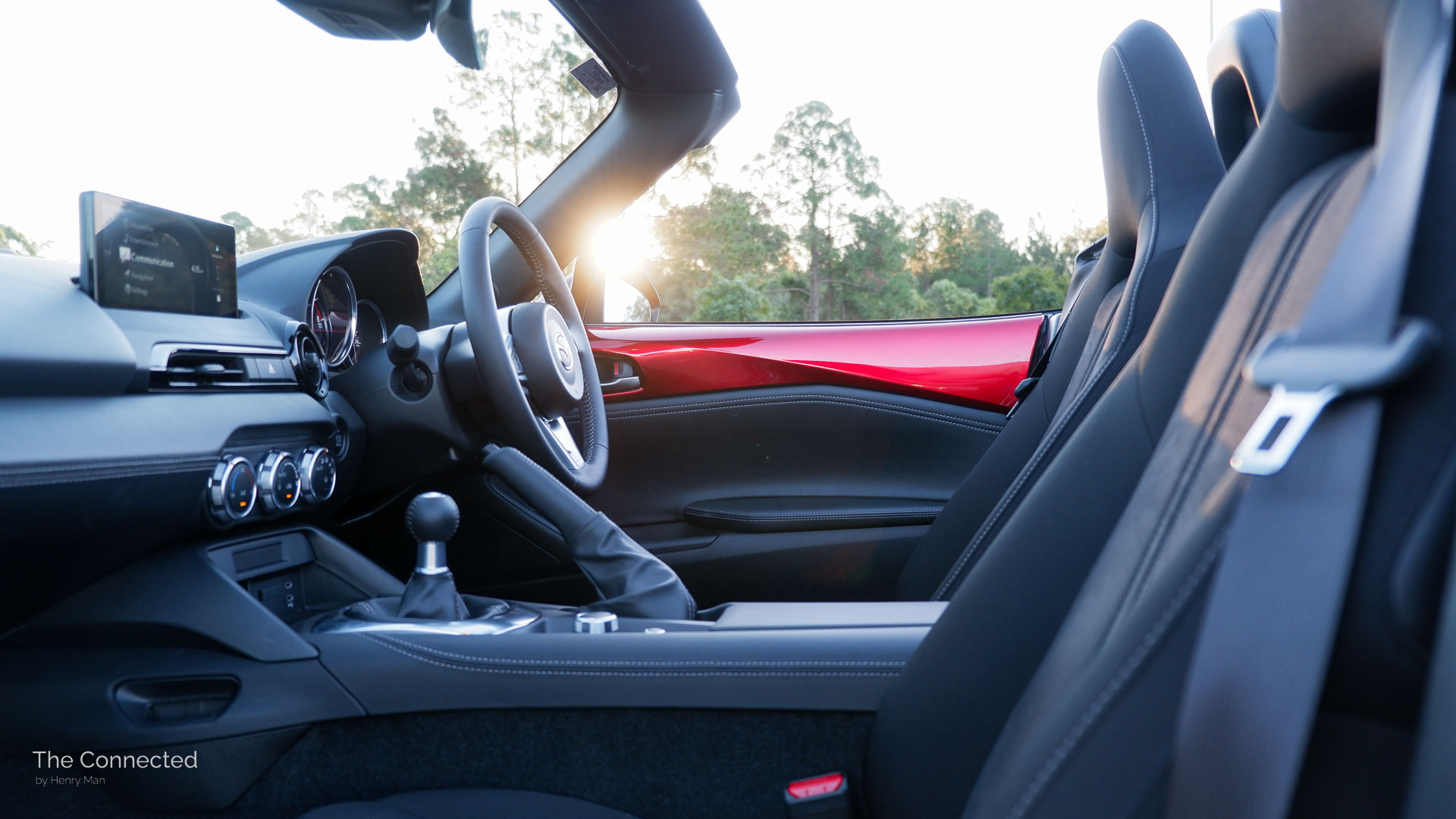
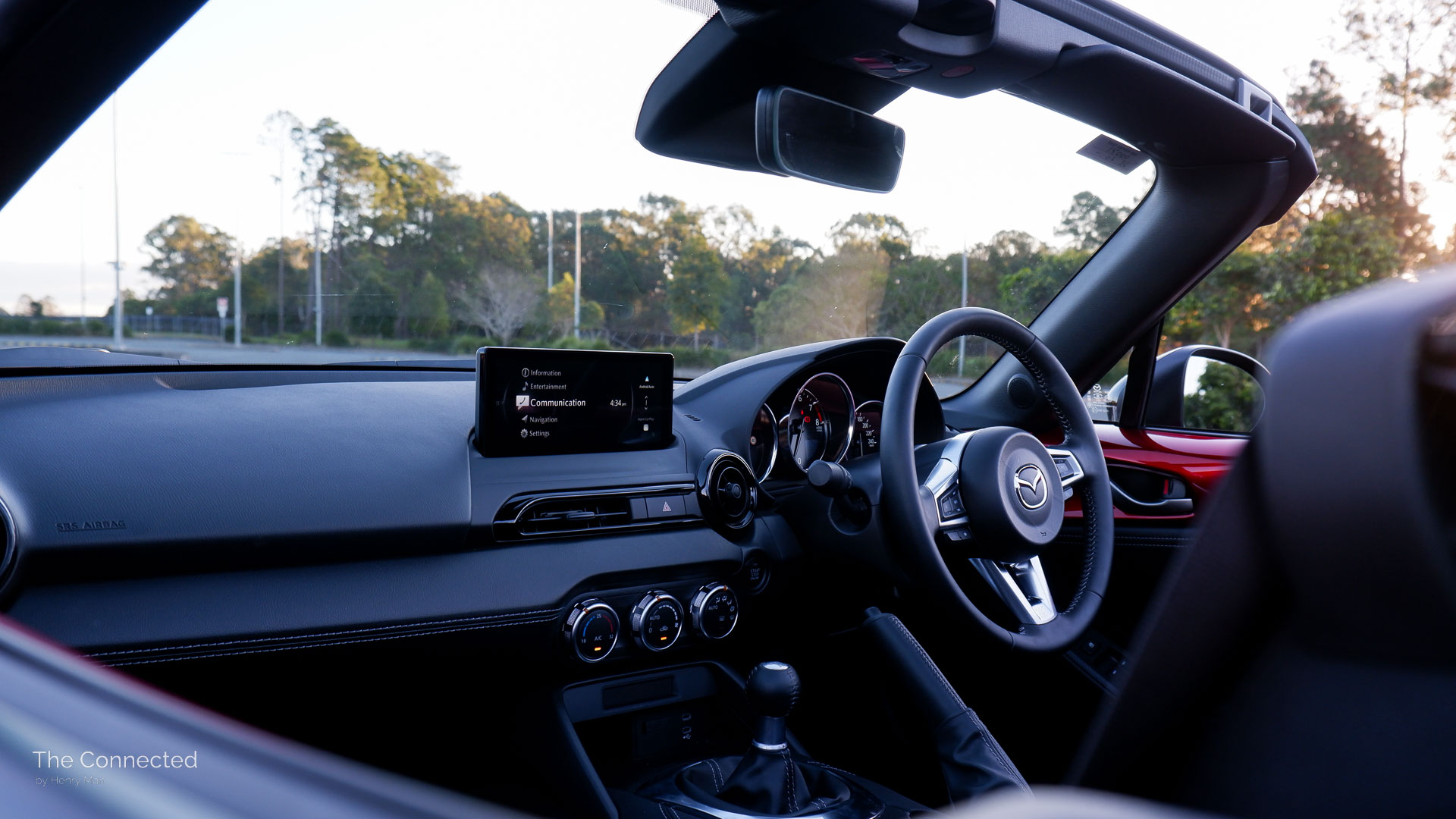
Inside, the updated MX-5 is unchanged except for the touchscreen with the same upper door card plastic piece that uniquely matches the exterior colour, some faux carbon fibre surfaces and circular air vents akin to the Mazda 2, and a simple dashboard.
Material quality is solid with a soft-touch dash, tactile but not as clicky buttons and switches as per the CX-30, and some harder plastics around the doors.
Practicality.
2026 Mazda MX-5 G20 Roadster dimensions:
| Length x width x height | 3915 x 1735 x 1230mm |
| Wheelbase | 2310mm |
| Ground clearance | 150mm (135mm with 75kg driver) |
| Boot space (min / rear seats folded) | 130 litres |
| Rear seat split fold | N/A |
| Child seat anchors | N/A |
| Air-conditioning system | Single-zone climate control |
The two-seater MX-5 convertible is by no means a practical car, but storage space is surprising.
The 130-litre boot is small, yet deep and wide enough to store a couple of decent bags.
With a lack of a spare tyre, Mazda velcroes some tyre repair tools in the boot itself and the single halogen light is quite dim.
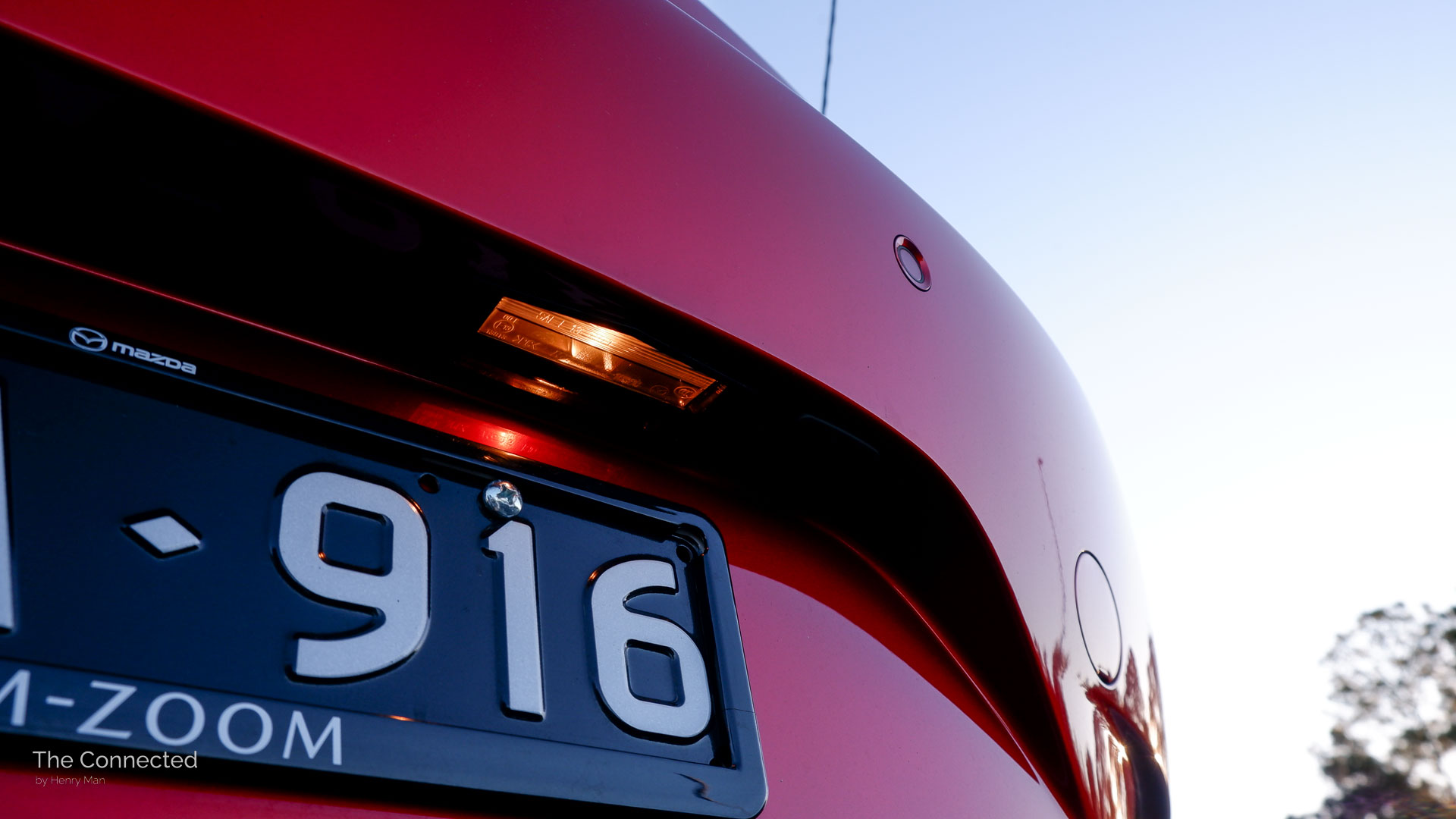
The boot is popped out by pressing a button awkwardly below-right the licence plate area or via the key fob button. Unfortunately, there’s no switch inside unlike most sedans.


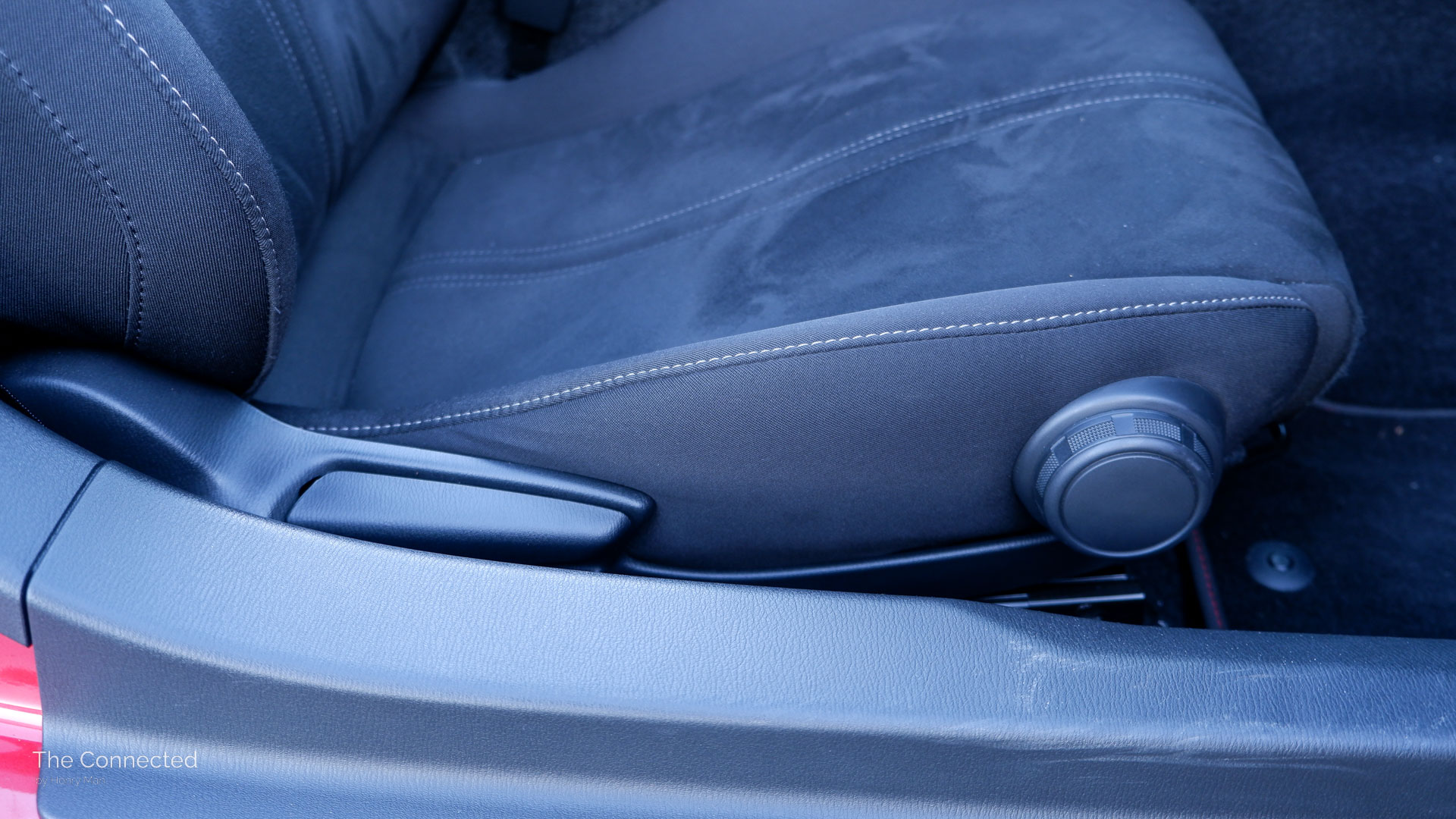
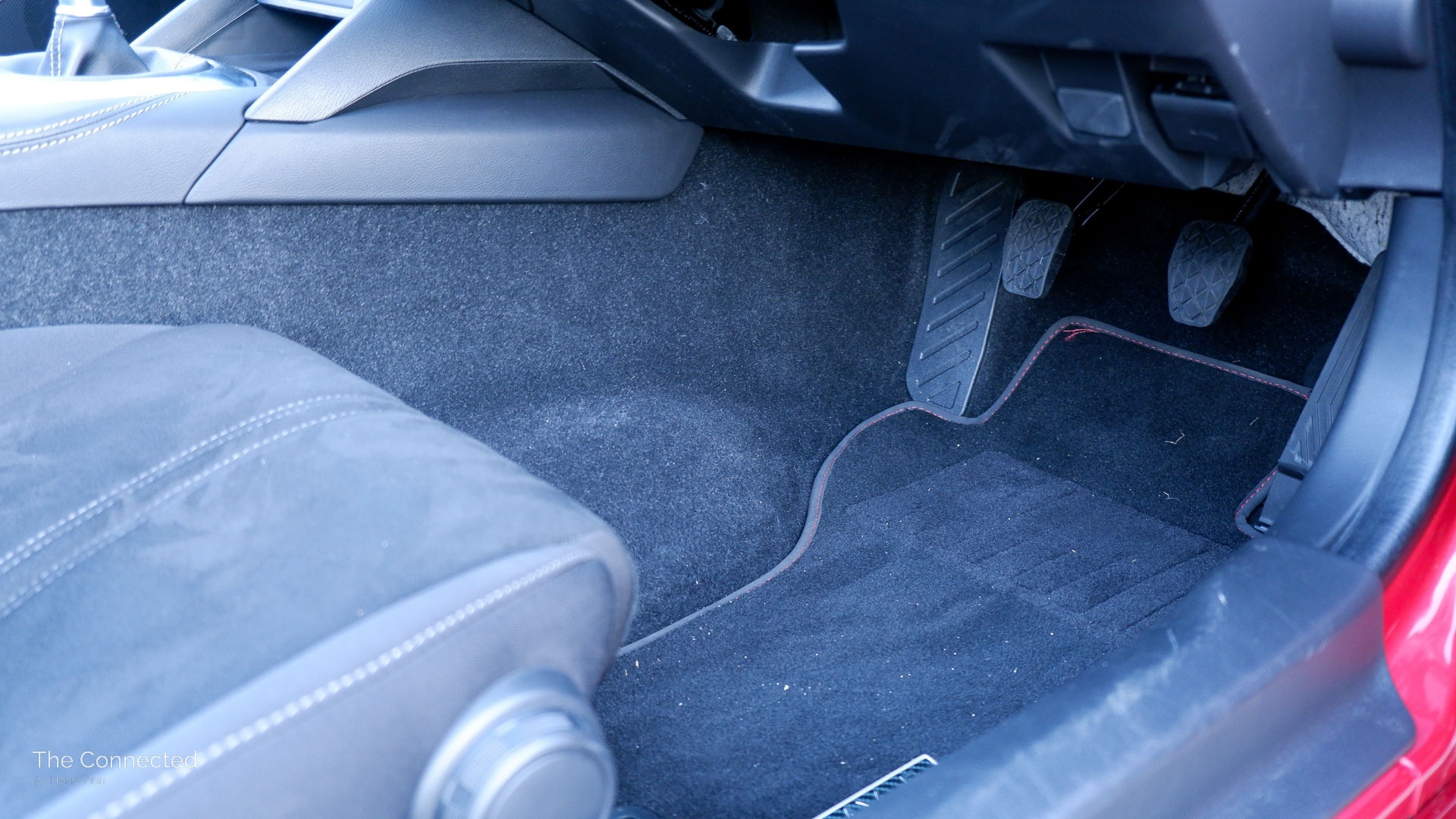
Inside, the MX-5 is fairly tight with limited seat longitudinal adjustment, no height adjustment, a prominent floor hump on the driver’s side attached to the centre console, and the pedals are placed very forward at the firewall.
This all means that the Mazda MX-5 will suit a niche set of people who aren’t too tall, yet have legs long enough to reach the pedals comfortably.
Ingress and egress is not a seamless movement due to the low height and tight cabin, too.
The MX-5 doesn’t offer any anchorage points for fitting a child seat.
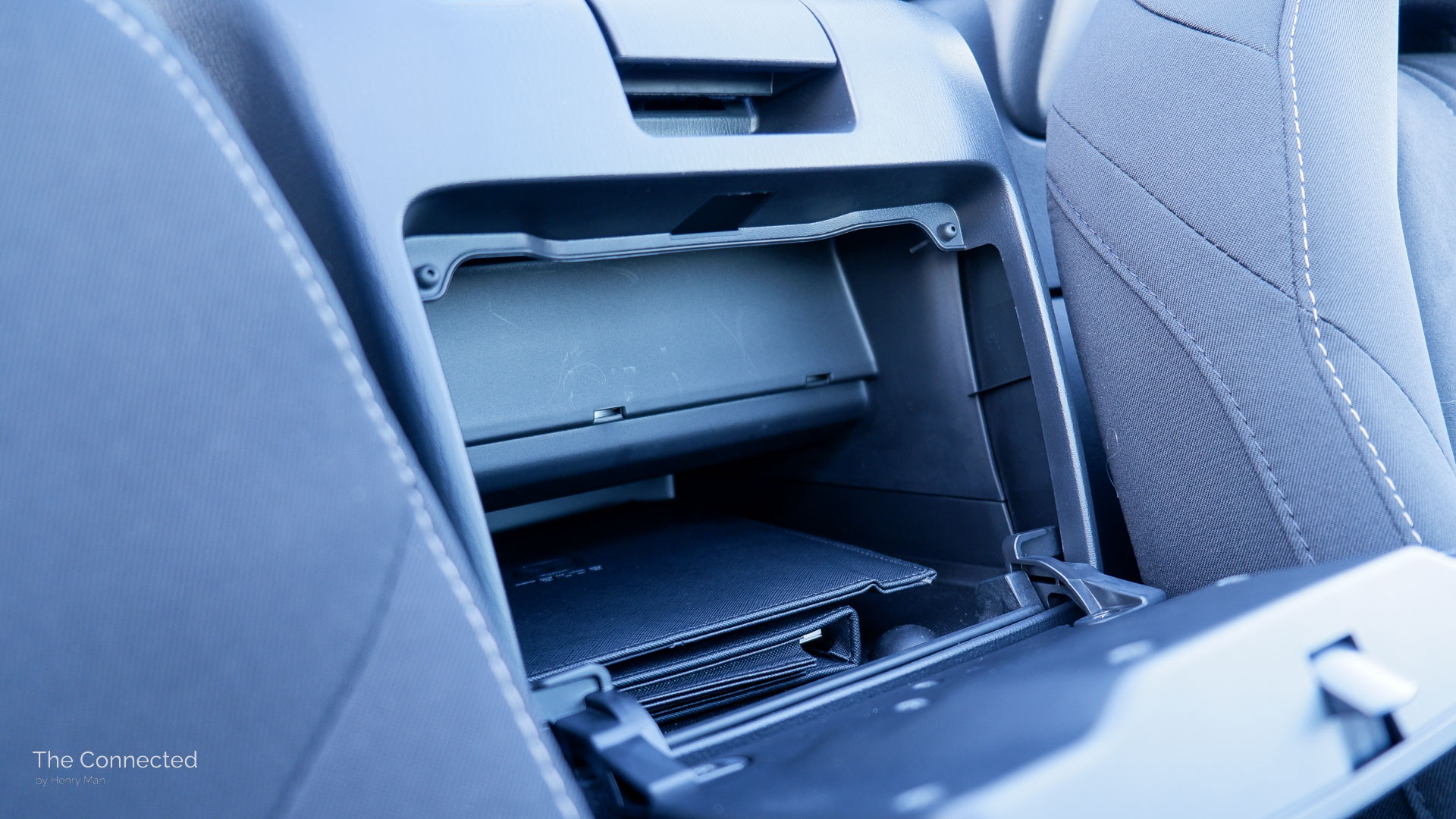
In terms of storage space, it makes up for the lack of a glovebox and door bottle pockets with a large lockable box behind the centre console. The Japanese carmaker even includes a hidden storage area behind the passenger seat, though you’ll need to move it forward for access.
While the centre console armrest has a lid, it opens up to a very shallow and narrow slot which is only good for the car key.

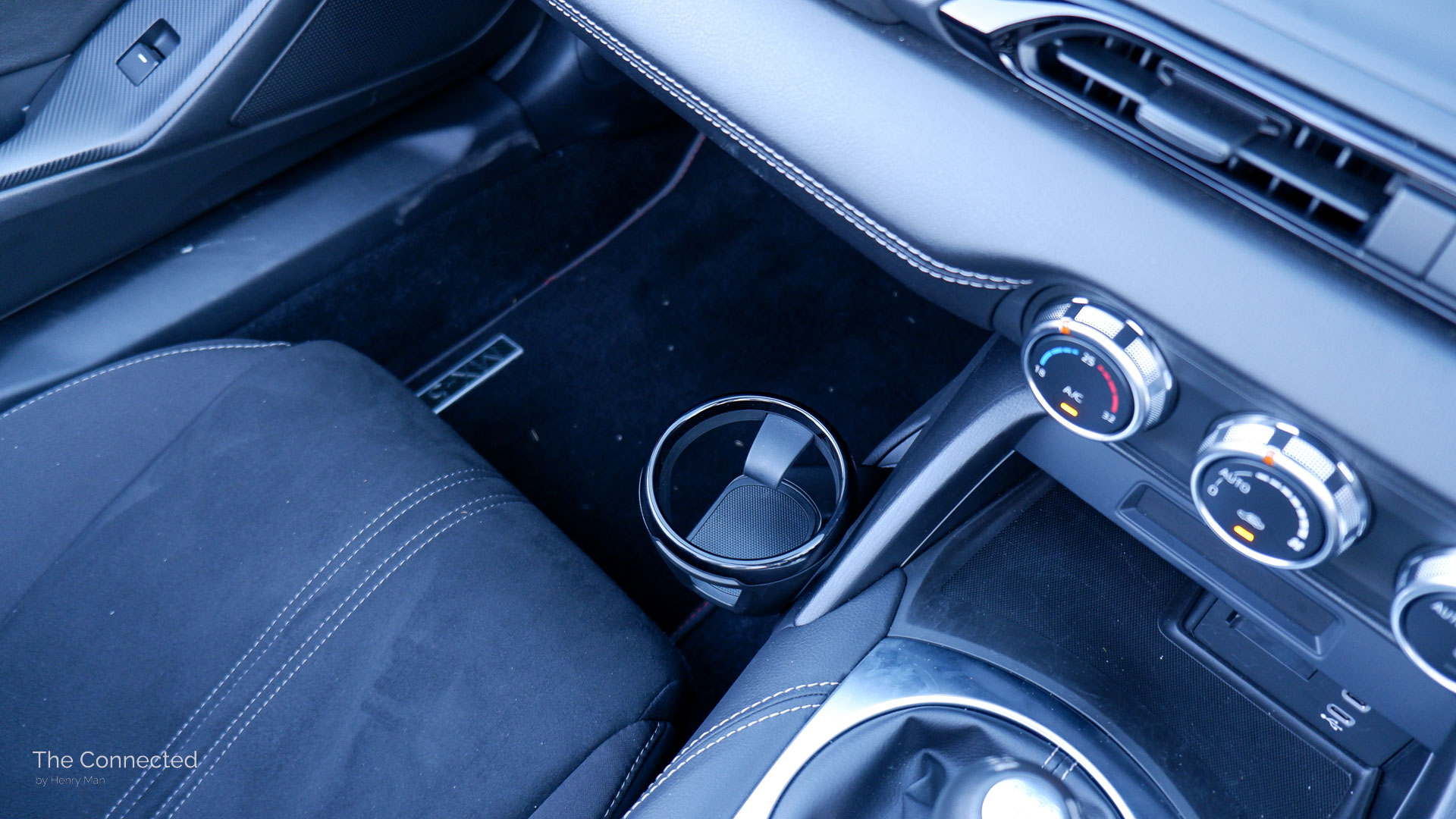
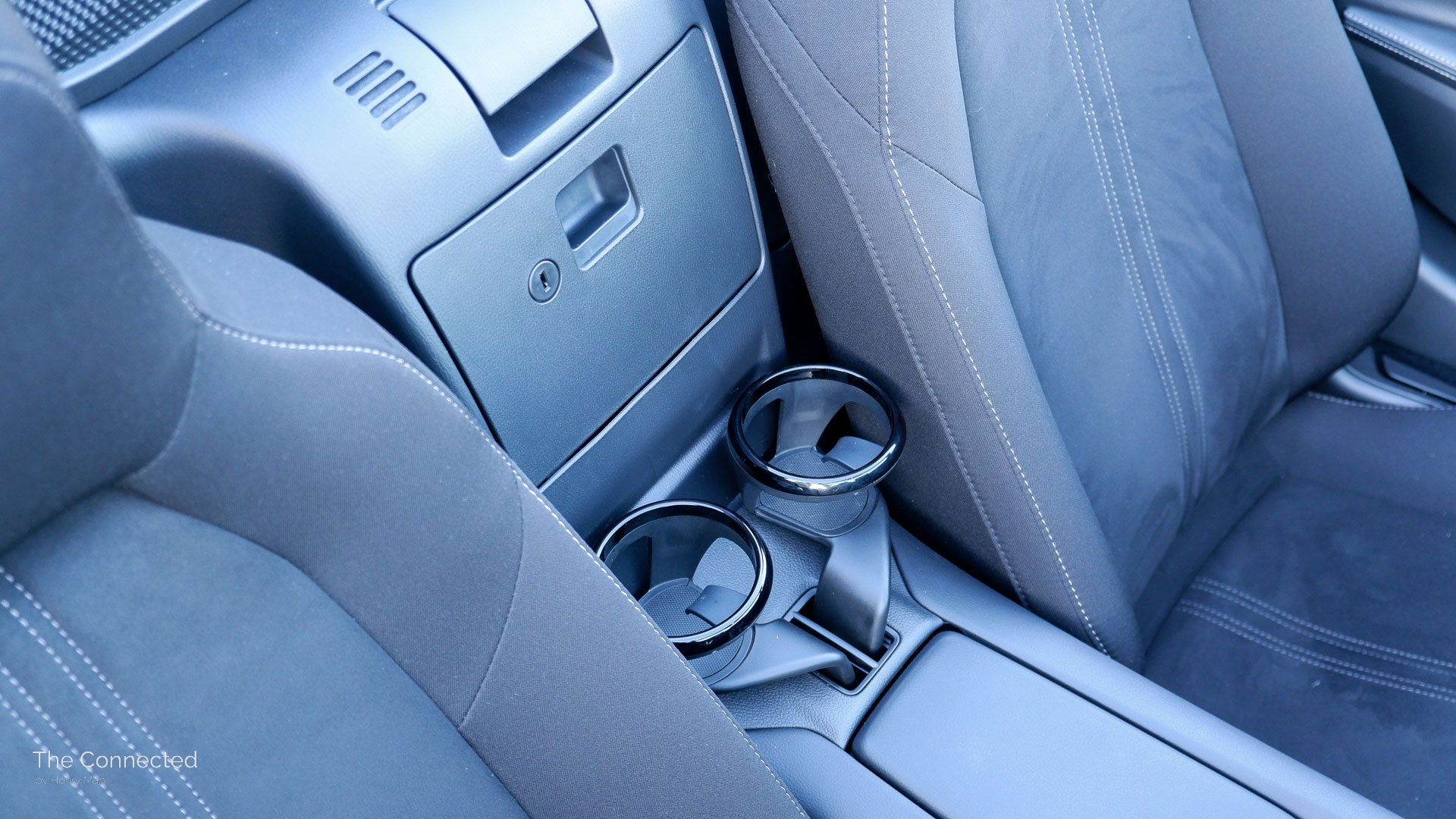
Two solid modular cup holders are placed behind with adaptable grips, and I never accidentally knocked them with my elbow when driving unlike the Leapmotor C10.
They can be detached as well; the passenger side has a slot beside the centre console so you can still have a cup holder in front and within reach, albeit limiting passenger legroom.
Two USB-C charging ports are now available, but the tray isn’t big enough to fit a modern-day phone with my Google Pixel 7 Pro hanging on the gear shifter rim and sometimes sliding out when cornering.
Another weakness is the single dim halogen interior bulb, which does a poor job at illuminating the interior at night, and a small sun visor that can’t extend when set on the side.
Strangely, the doors don’t automatically lock when driving either and the two window switches are capable of auto down with a single press but not up.
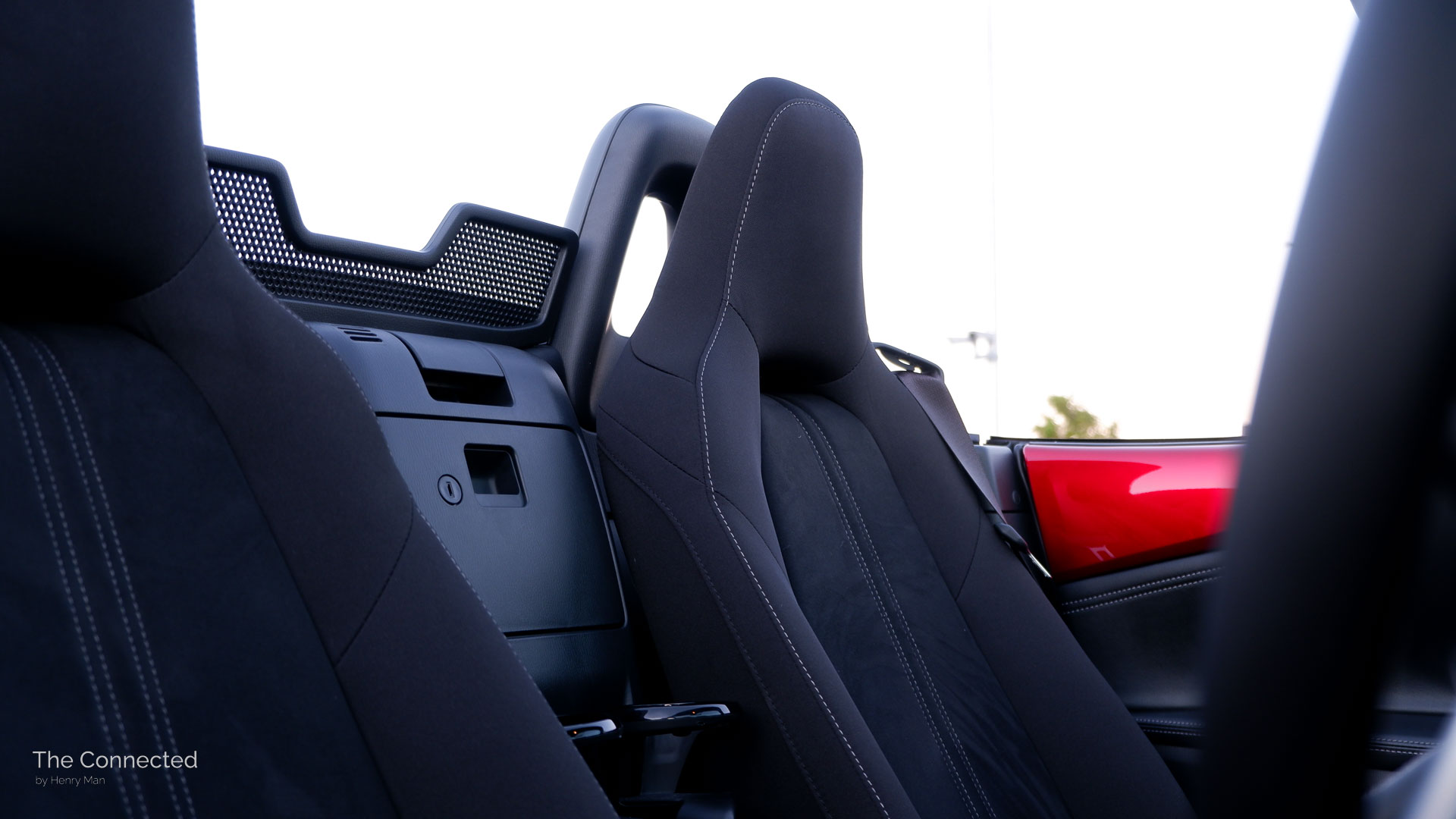


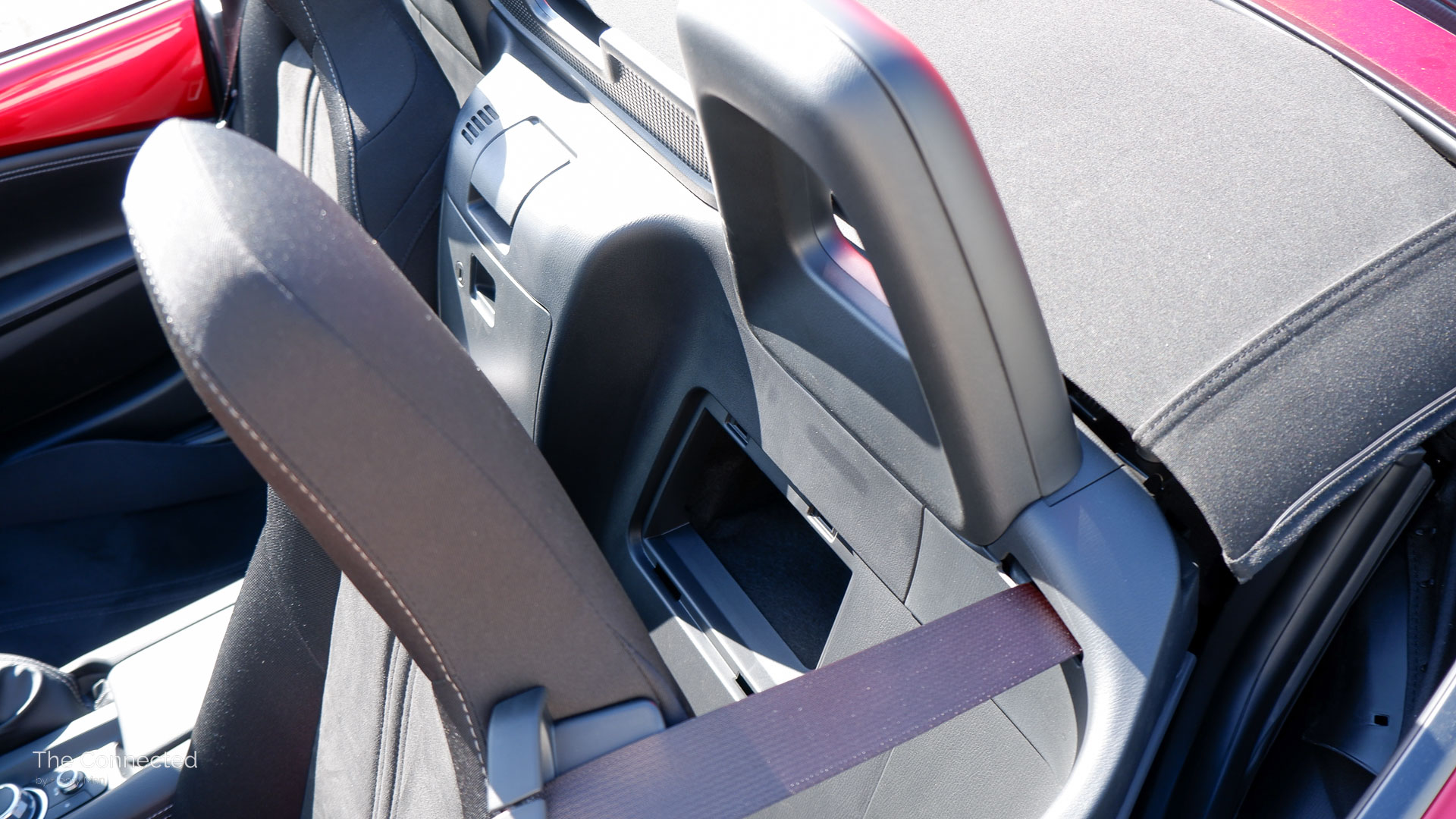
The G20 Roadster’s standard artificial suede and fabric seats are high quality for a base model, but lacks some support on long drives with no lumbar adjustment.
Meanwhile, the single-zone auto climate controls are operated via physical dials, weirdly with no display to show what temperature you’ve set it at. It’s easy to use with physical circular and horizontal vents to direct the air.
It’s also simple and quick to conceal the fabric soft top roof by unlocking the central latch and pulling the handle to fold it flat. It takes a bit of effort to lock it in at the back and you’ll need to use two hands while the convertible is stopped, but it’s fairly easy to operate otherwise.
For those looking for better ease-of-use at the expense of slower folding and unfolding, Mazda offers the MX-5 RF hard top which isn’t available in the base G20 Roadster guise.

Technology.
2026 Mazda MX-5 G20 Roadster tech features:
| 8.8-inch touchscreen running Mazda Connect with rotating controller dial | Analogue driver instrument cluster with LED display |
| Wireless/wired Apple CarPlay and Android Auto | 2x USB-C charging ports |
| Built-in maps | Six speakers |
| OTA software update capability | Keyless entry with manual remote locking and proximity push button start |
| Mazda Connected Services with MyMazda mobile app (three years included) |
The 2026 Mazda MX-5 has upgraded technology and debuts a connected mobile app in Australia.
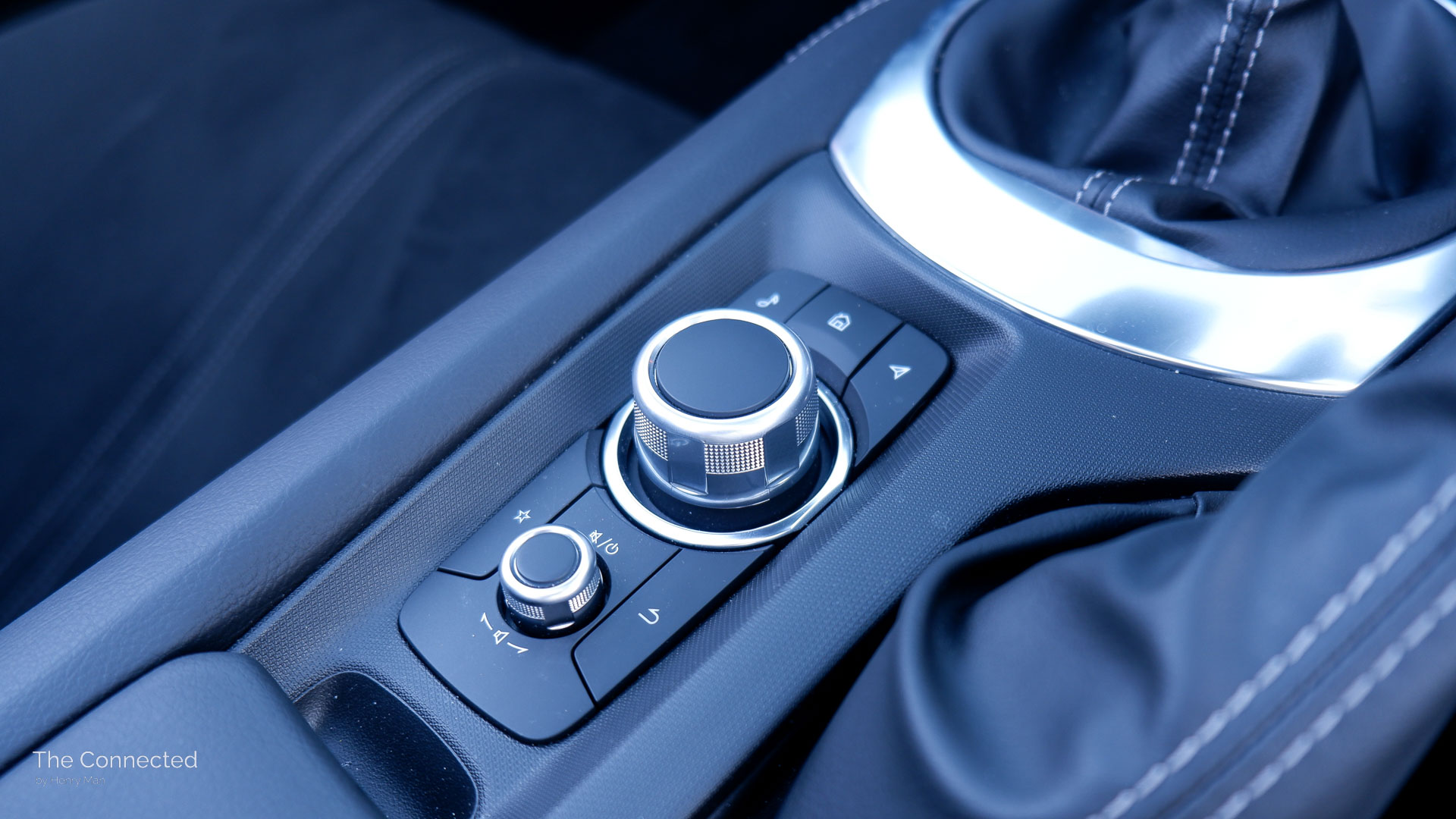
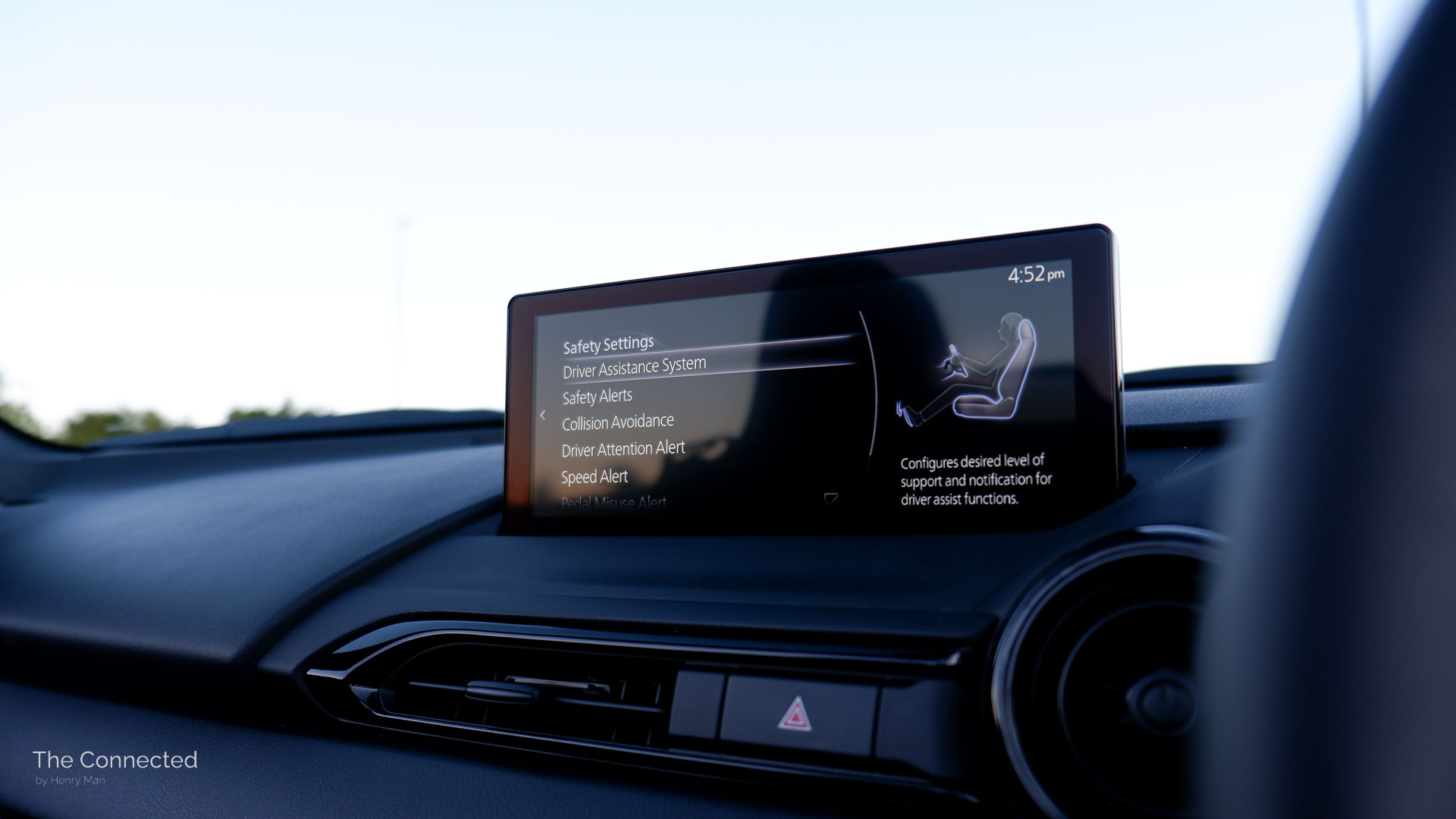
The new 8.8-inch widescreen runs the Japanese brand’s latest Mazda Connect software which is used in models ranging from the CX-30 to CX-90 SUVs, while retaining the same MZD Connect rotary controller dial and shortcut buttons.
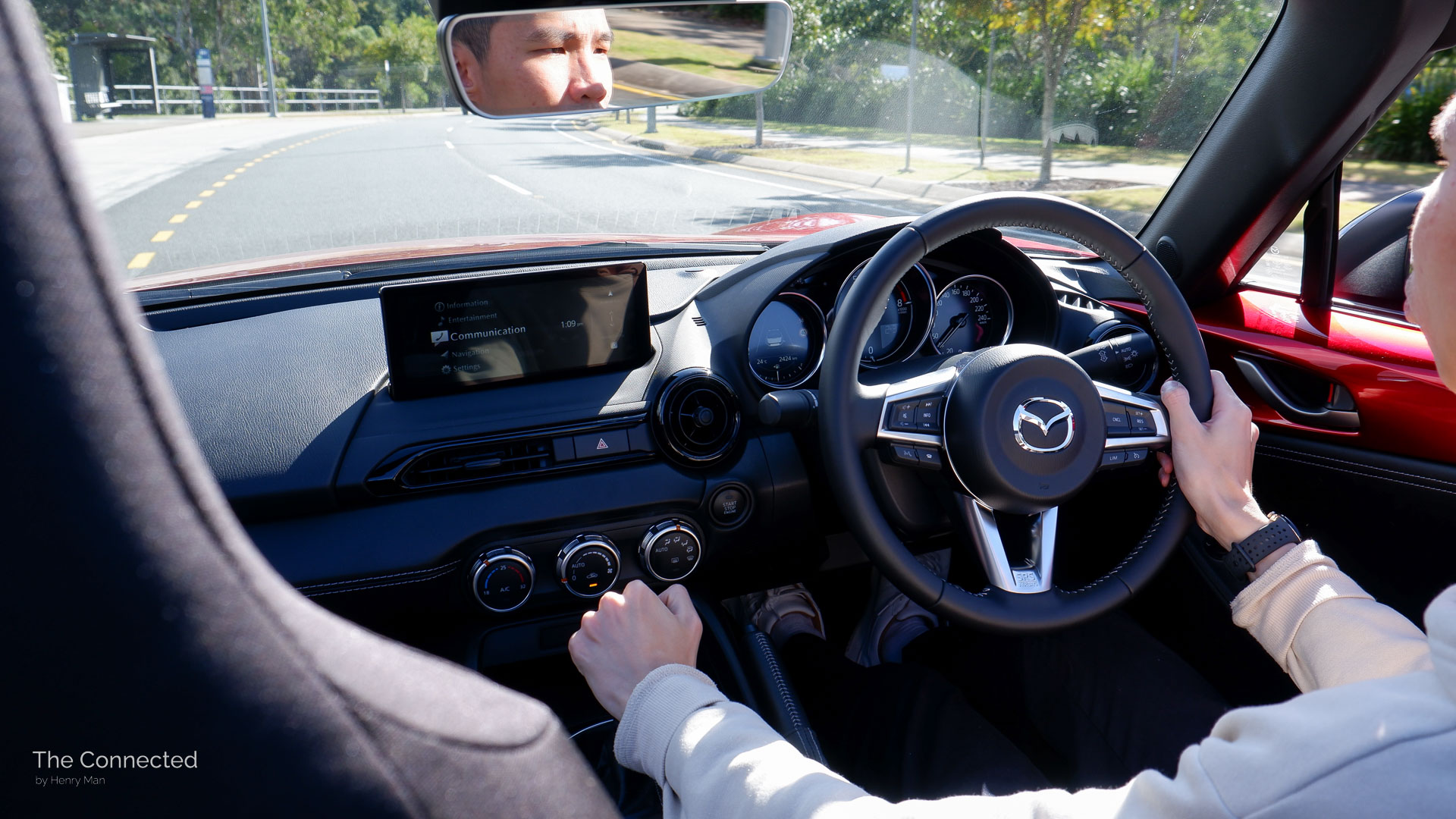
The system is simple and minimalistic, operated by the clicky dial only. However, due to the MX-5’s tight interior, it isn’t as ergonomic compared to other Mazda models since the driver needs to reach backwards for the controller dial.
It’s backed by a good processor and a clear display, even though it’s narrow and squishes user interface elements into buttons, especially in Android Auto.

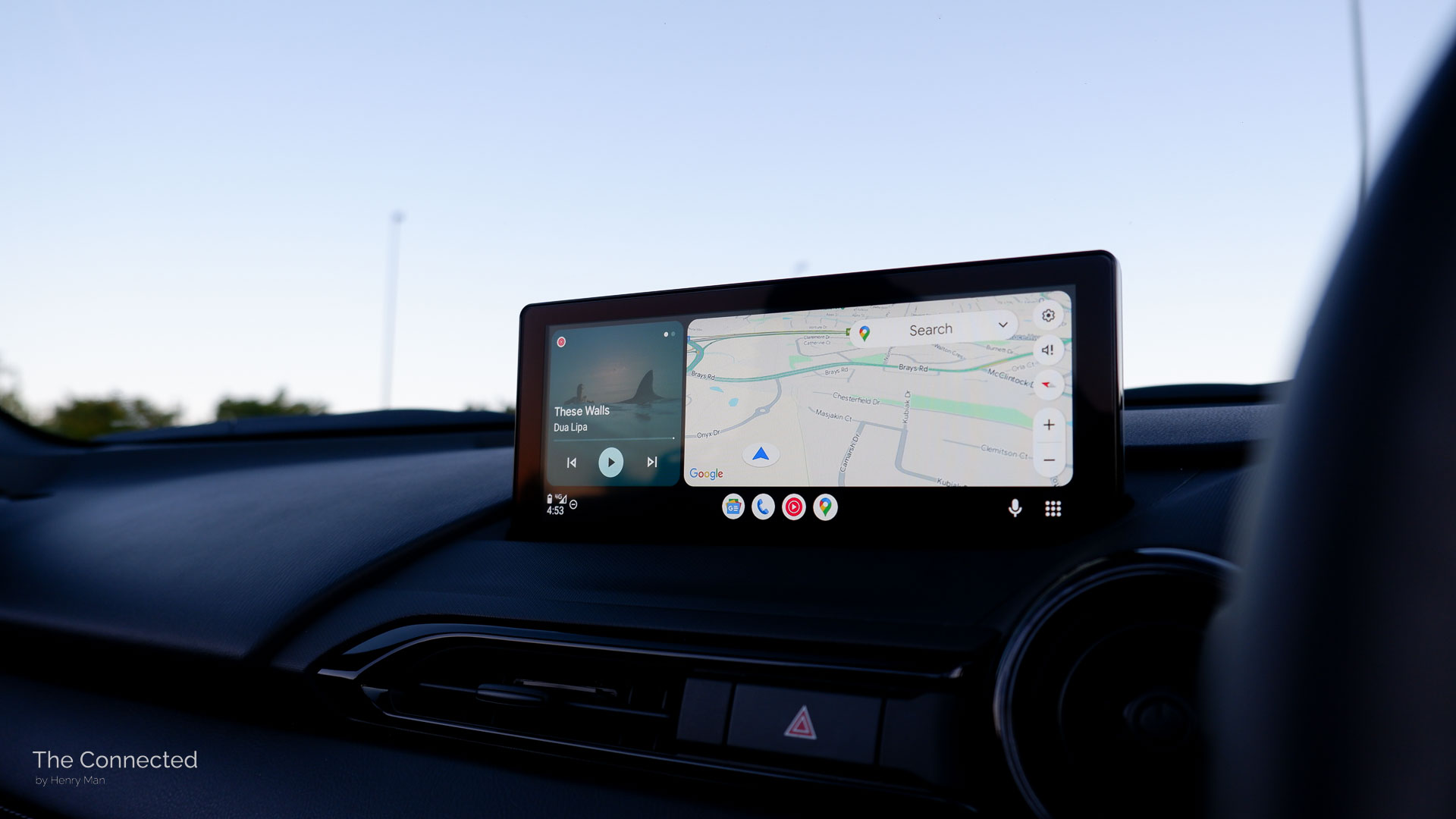
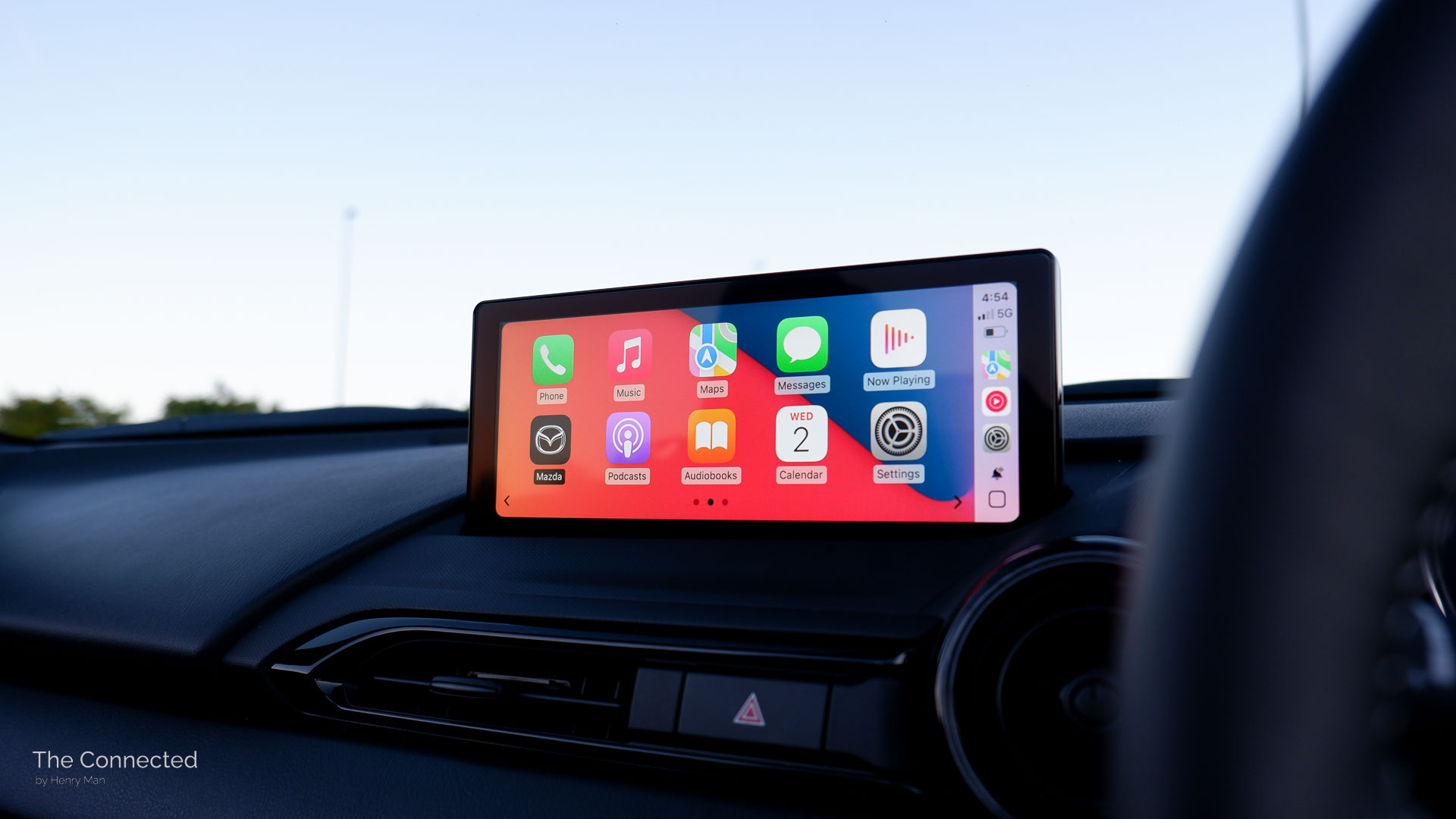
Wireless Apple CarPlay and Android Auto are now standard and connect reliably.
The touchscreen is only enabled while in these smartphone projection systems and, unlike most other Mazda cars, it is easy to reach and touch the screen.
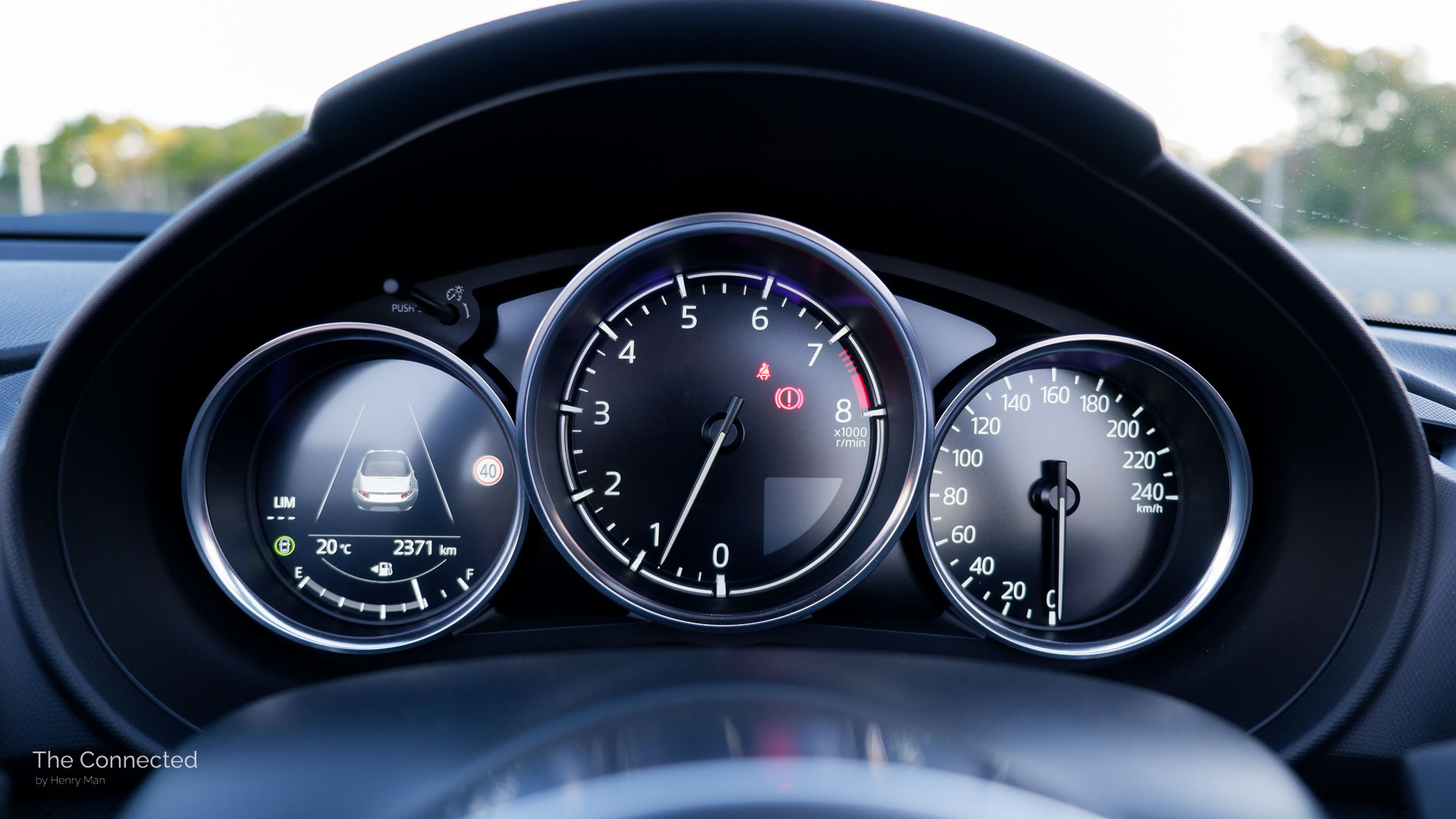
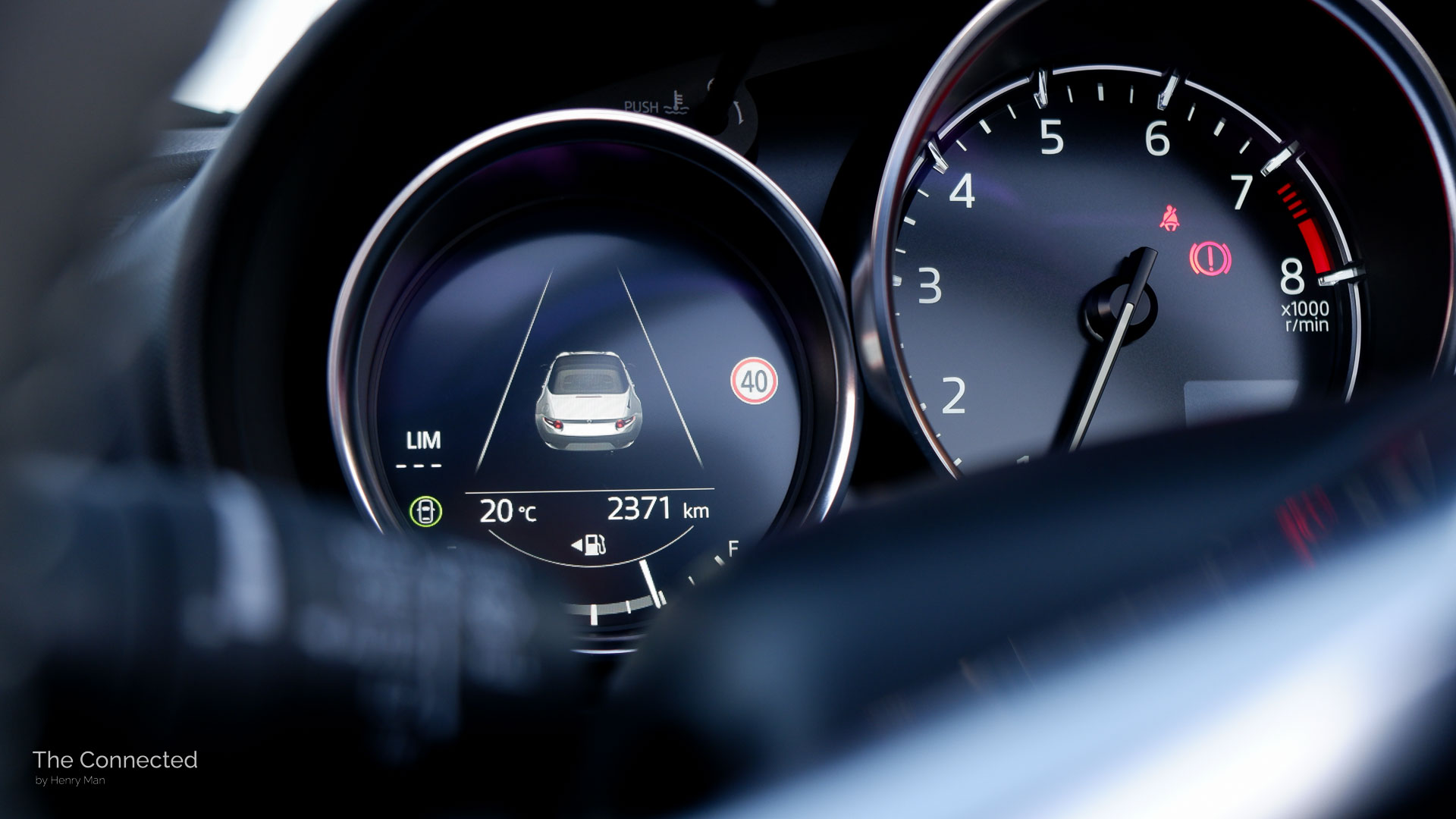
Unfortunately, the driver instrument display is unchanged with two analogue dials and one small display dial on the left. It’s slightly pixelated and shows basic functions, including safety assists, the detected road sign, and trip computers.
Critically, despite the part digital instrument cluster and an LED gear number readout, it still doesn’t show the digital speedometer, with drivers needing to rely on the old-school analogue needle instead.

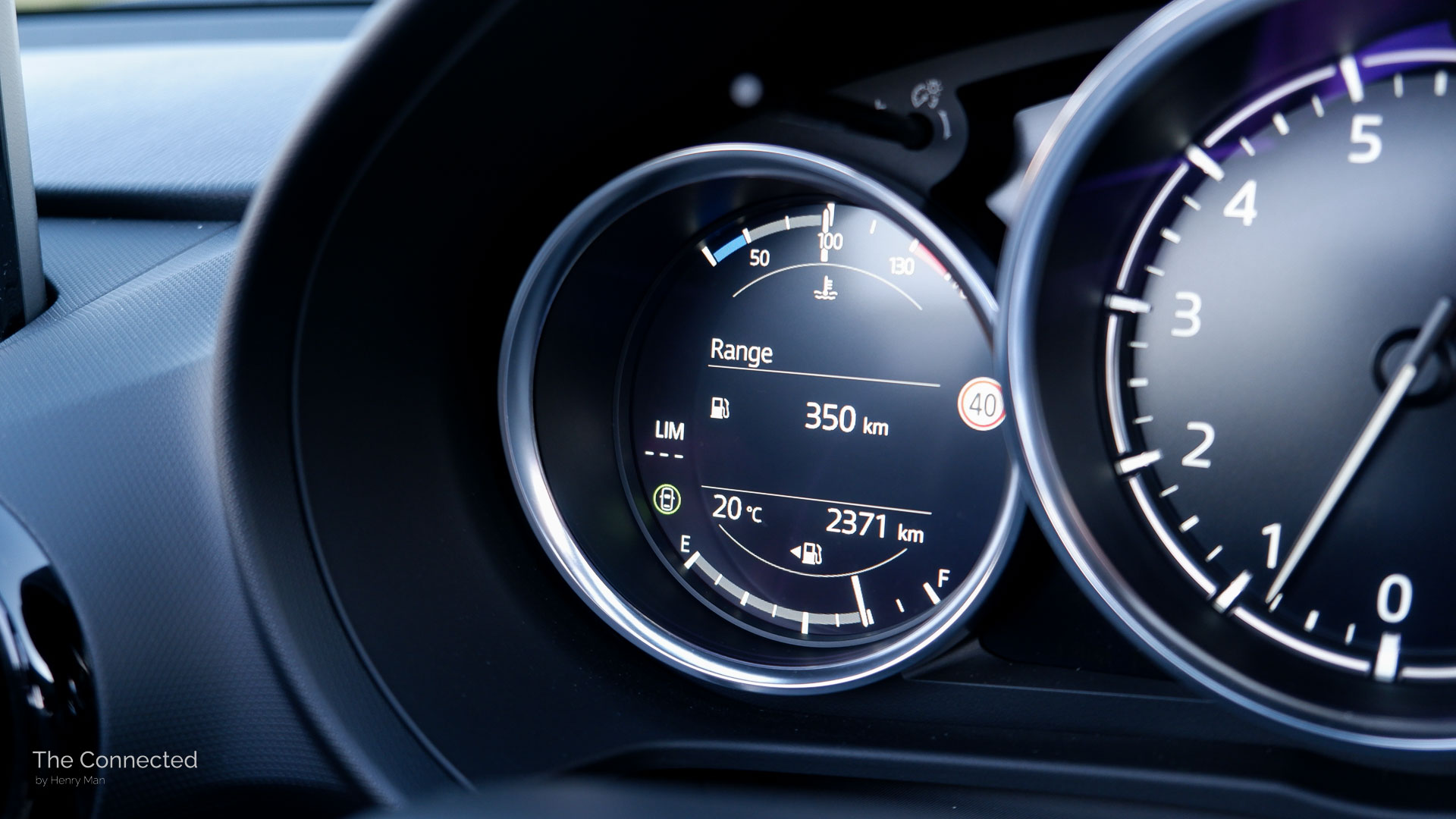

Furthermore, the facelifted MX-5 is the first vehicle in Australia to debut Mazda Connected Services and the MyMazda mobile app, which includes emergency services calling and stolen vehicle location tracking.
Disappointingly, the app is barebones with functionality limited to locking the vehicle (no unlocking), flashing the lights, viewing the remaining fuel and vehicle location – even though an Apple Watch version is available unlike most other car brands.
Mazda Australia only includes its connected services for three years as well, which is middling compared to Toyota and MG at one year, Hyundai at five years, and Kia stretches up to seven years.
The base MX-5 G20 Roadster also has a decent stock six-speaker system, but strangely doesn’t offer proximity unlocking and locking despite having a push button start function. Buyers need to step up to the mid-spec GT to gain the former.
Safety.
2026 Mazda MX-5 G20 Roadster safety features:
| Front AEB with vehicle/pedestrian detection | Rear-view camera |
| Rear AEB | Rear parking sensors |
| Blind-spot alert | Door open warning |
| Rear cross-traffic alert | Auto-dimming rear-view mirror |
| Lane-keep assist | Mazda Connect emergency services calling and location tracking |
| Basic cruise control and speed limiter | Full LED headlights and tail-lights |
| Road sign detection |
The updated Mazda MX-5 brings a range of well-tuned camera-only powered safety assistance systems – but does little to help the poor outside visibility from the driver’s seat.
All safety warning chimes are gentle, an auto-dimming rear-view mirror is handily standard on all models, and the lane-keep assist provides a subtle steering nudge.
The new road sign detection system simply shows an icon on the left digital part of the instrument cluster and subtly flashes if you’re going overspeed, rather than annoyingly beeping.
However, whenever a safety warning chime sounds off, it strangely cancels out the turn indicator clicking as well – a trait that’s typically found on Chinese cars.



A continued annoyance is Mazda intentionally keeping the right driver’s side wing mirror flat, rather than convex like the passenger side unit. This causes a very zoomed-in view and a notable blind spot, which exacerbates the MX-5’s poor all-round visibility and shoulder check blocked by the roof when closed.
The wing mirrors don’t have a dimming function either, which would be useful given the convertible’s low height makes it directly susceptible to SUV and ute headlights directly glaring the mirrors and reflecting onto the occupants’ eyes at night, similar to the Toyota Camry sedan.
While clear, only a reversing camera is standard with rear parking sensors that aren’t sensitive enough, warning when very close to an object behind, with front sonar sensors being a $781 accessory.
It would be great if there was a 360-degree camera system as per the similarly-old Mazda 2.

There’s no adaptive cruise control, even on the GT’s automatic transmission due to a lack of a front radar, but the speed limiter helps drivers keep in check particularly when there’s no digital speedometer.
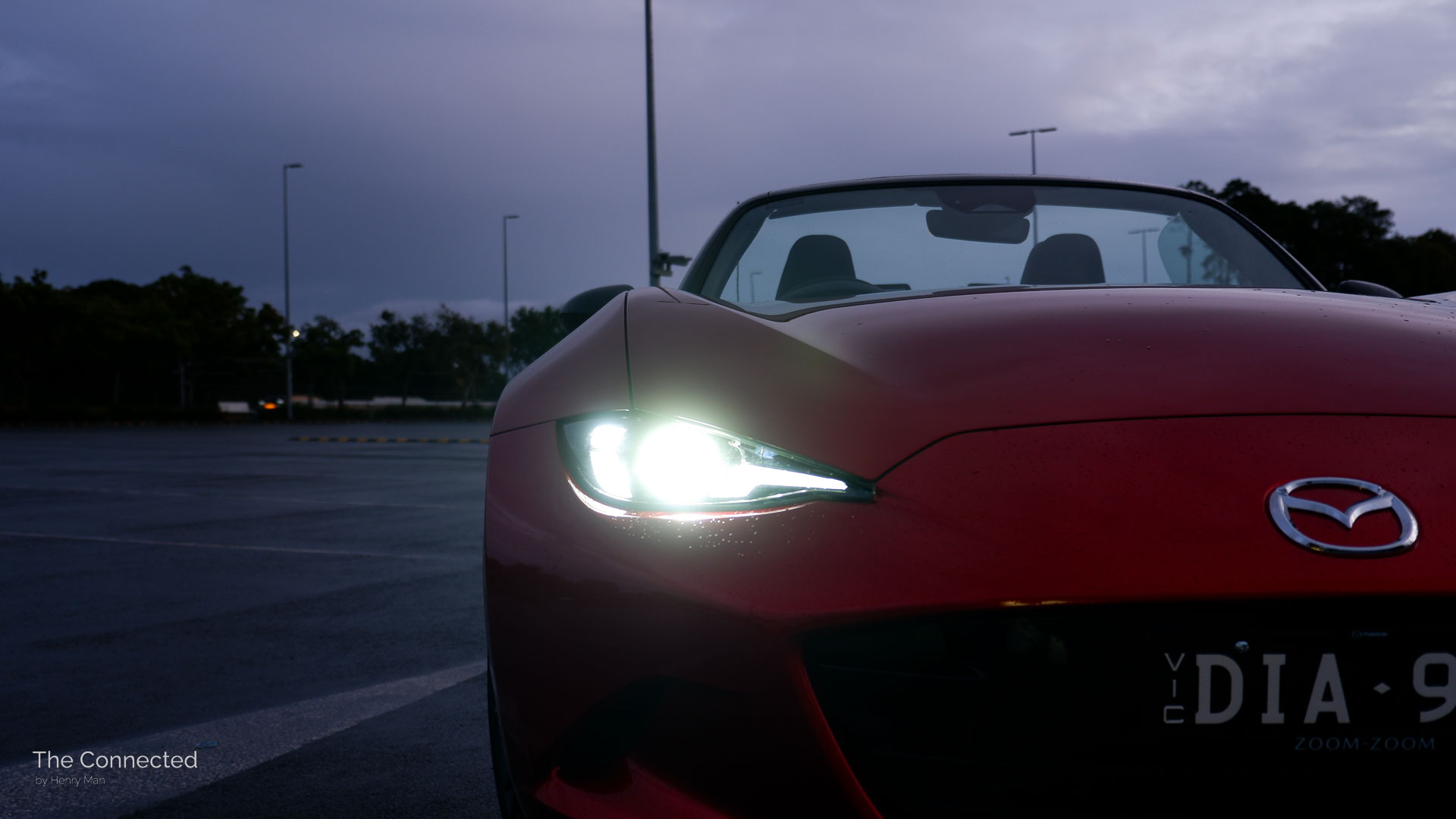
The refreshed Mazda MX-5 has received redesigned full LED lights with LED indicators and reversing bulbs, instead of halogen as per its predecessor.
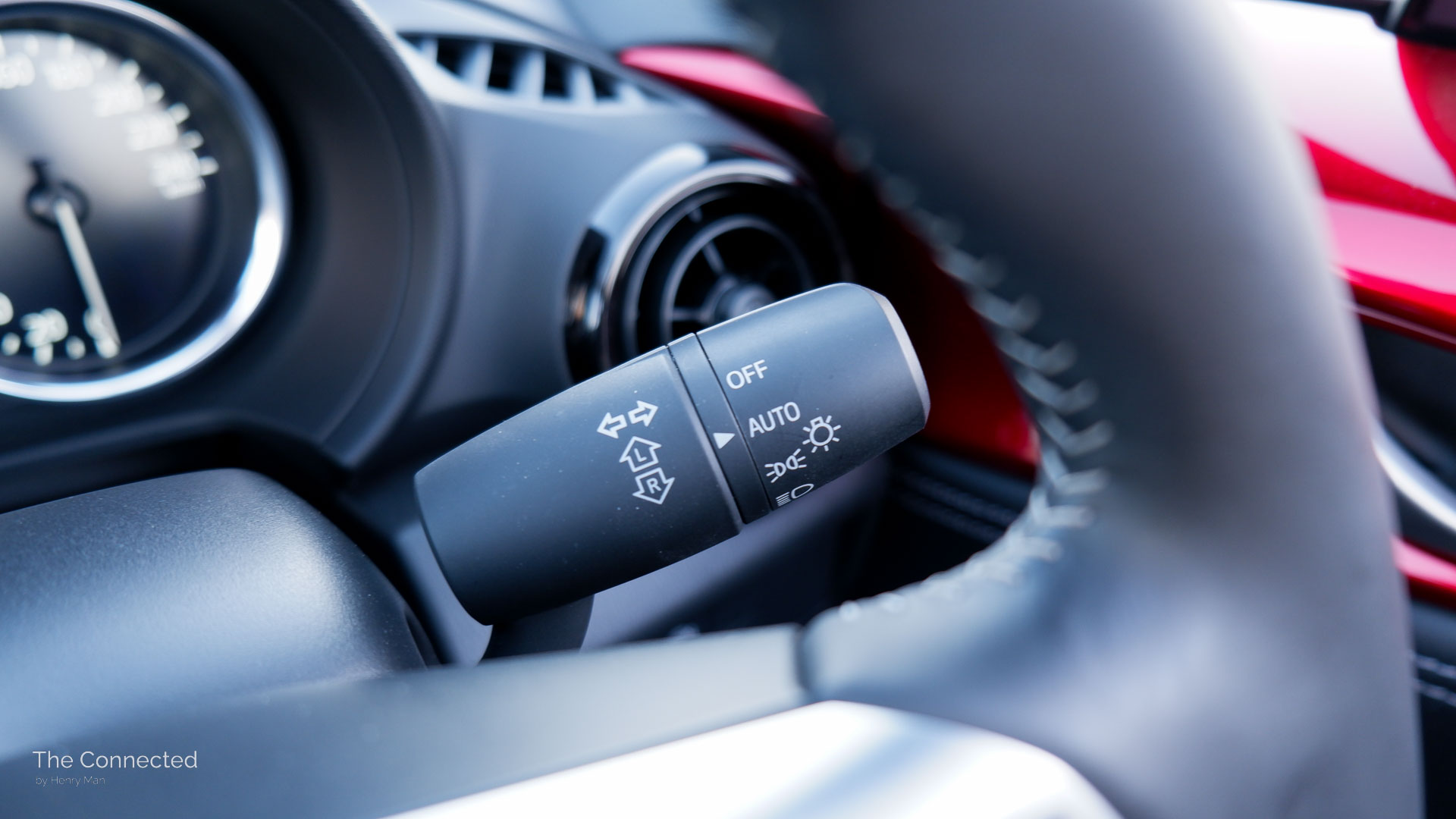
While the LED headlight units look small, they perform great at night with impressive reach and spread. It’s also commendable that Mazda forces the headlights to turn on at night when driving, even when the light switch stalk is flicked to off – an excellent safety feature.
There’s an auto high beam function on the base Roadster, but the GT gains adaptive matrix high beams.
The 2026 Mazda MX-5 is unrated by the Australasian New Car Assessment Program (ANCAP) rating as at the time of publication.
Range and fuel consumption.
2026 Mazda MX-5 G20 Roadster fuel and efficiency specs:
| Claimed driving range (combined cycle) | 130 litres |
| Claimed fuel efficiency (combined cycle) | 6.8L/100km |
| Fuel tank size | 45 litres |
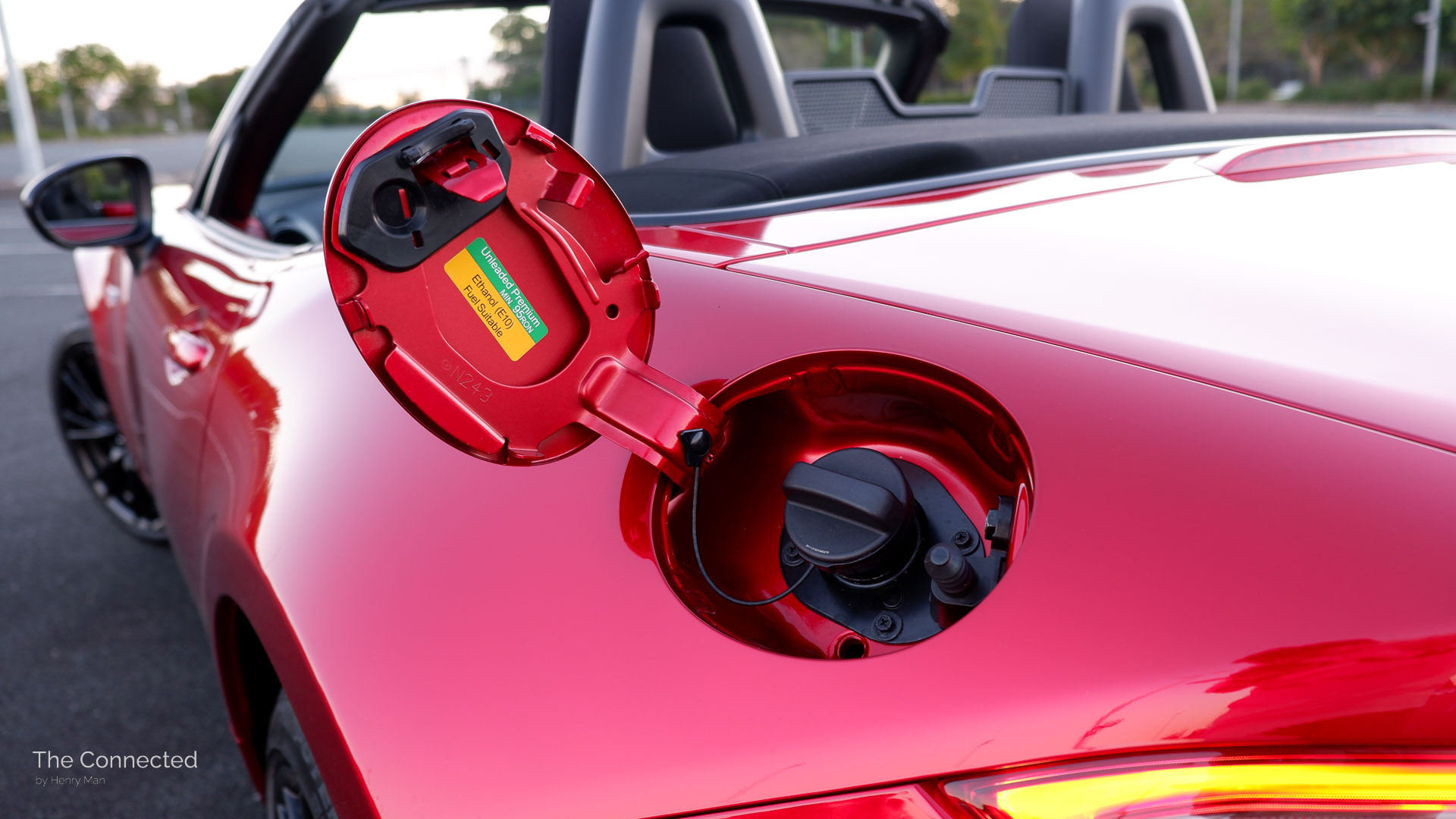
| Minimum fuel quality requirement | 95 RON premium unleaded petrol |
| Claimed CO2 exhaust emissions (combined) | N/A |
| European emissions compliance | Euro 5 |
The Mazda MX-5 G20 returned an average fuel consumption of 7.8L/100km with a week of mixed urban and highway driving.
As a result, expect a real-world driving range of around 576km from its 45-litre fuel tank. Pricier 95 RON premium unleaded petrol is required.
While the MX-5’s fuel efficiency is rather average for a light sub-1.1 tonne two-seater convertible, at least the fuel tank is large for its size.
For context, the Hyundai i30 Sedan N only has a two litre bigger tank.
The fuel cap is accessible at the rear-right quarter side of the vehicle and unlocks with the doors.
Driving.
2026 Mazda MX-5 G20 Roadster powertrain specs:
| Engine | 2.0-litre in-line four-cylinder petrol engine |
| Power | 135kW @7000rpm |
| Torque | 205Nm @4000rpm |
| Transmission | Six-speed manual |
| Drive type | RWD |
| Kerb weight | 1070kg |
| Turning circle | 9.4 metres |
| Payload | 166kg |
| Towing (unbraked / braked) | N/A |
The Mazda MX-5 is a nimble, fun and corner-carving little convertible that gives an old-school driving feel.
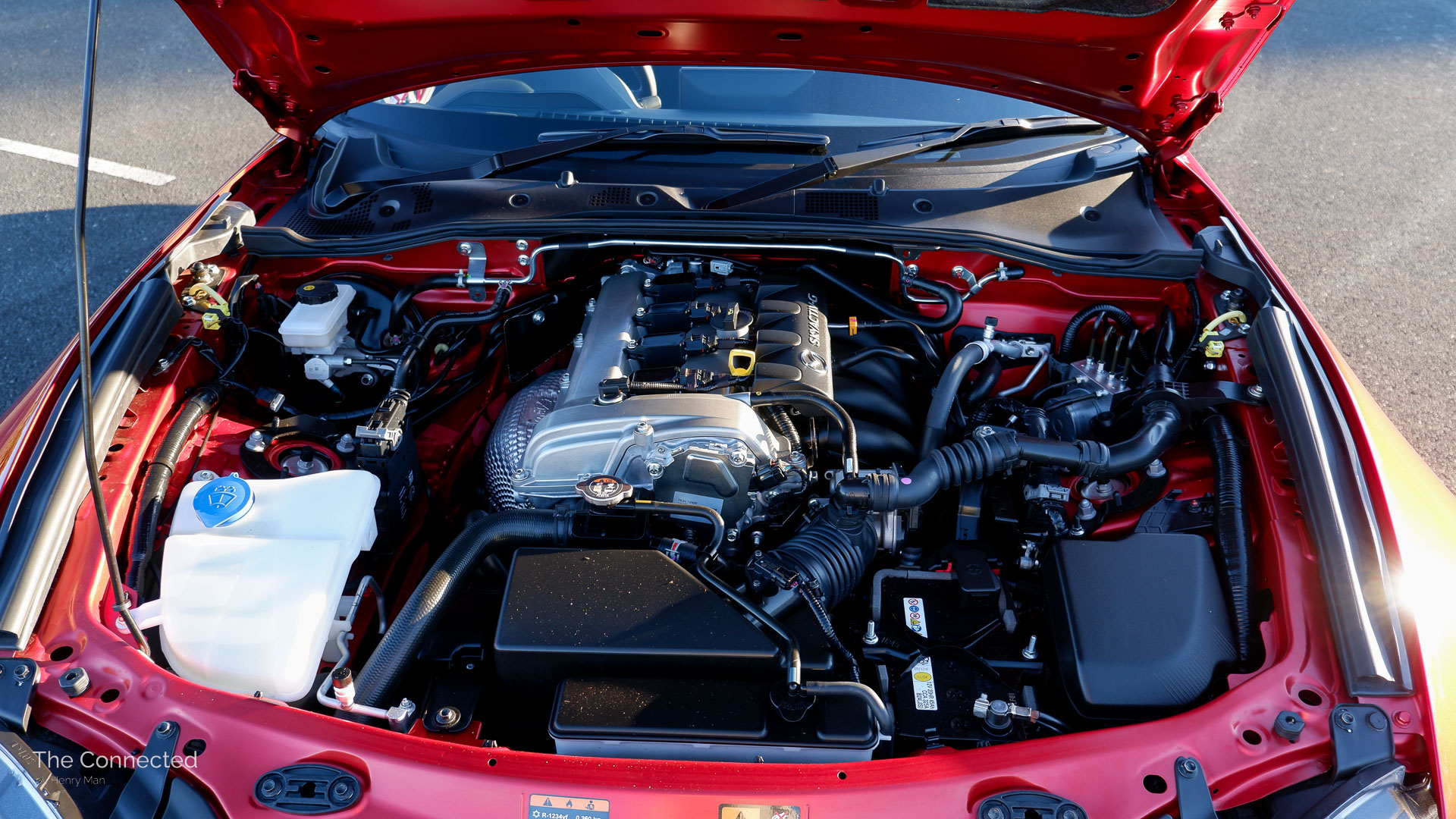
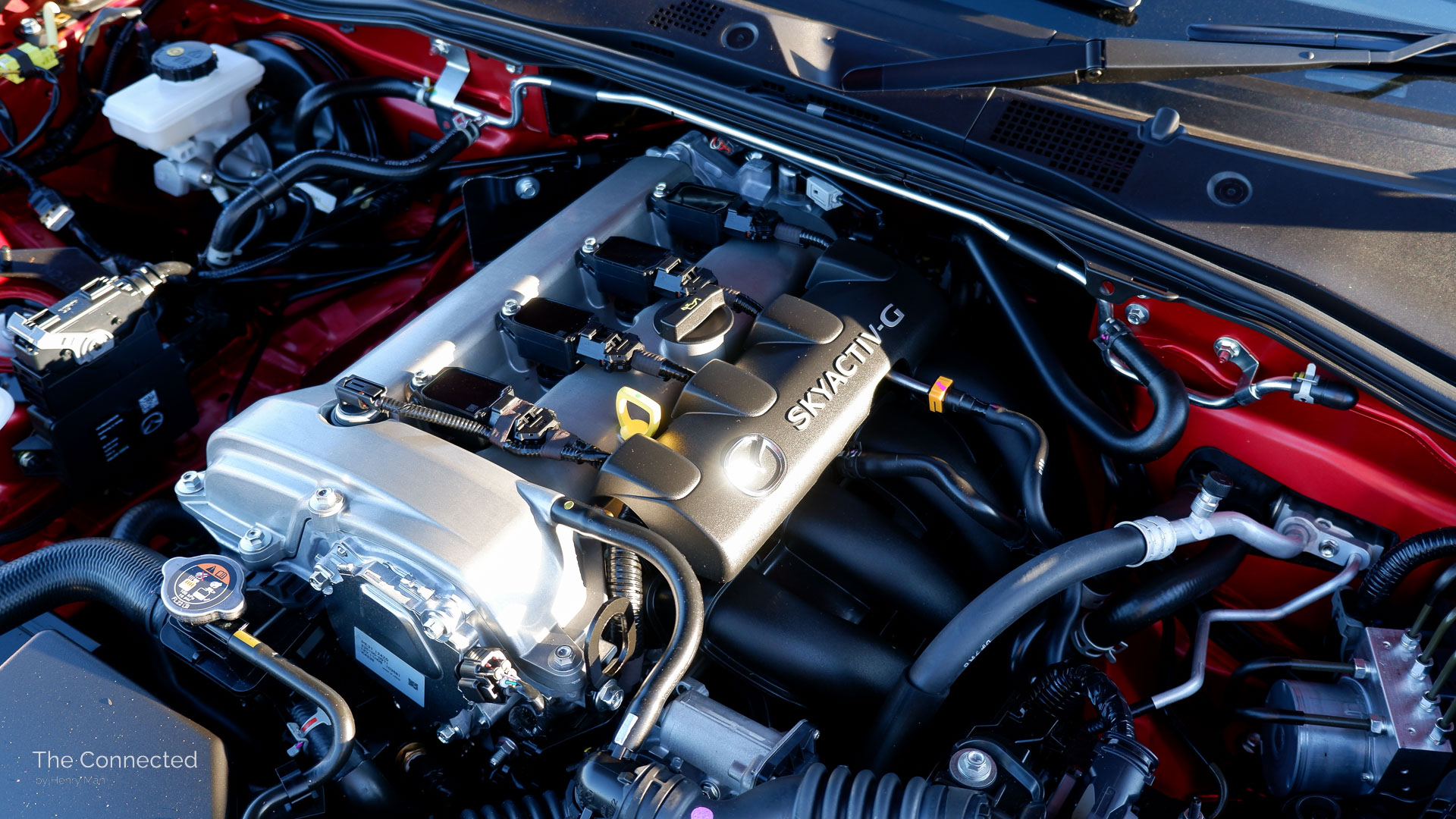
The 2.0-litre petrol engine is purely naturally aspirated and in-line, making up to 135kW of power and 205Nm of torque, and is rear-wheel drive.
Combined with a 1070kg rated kerb weight, there’s plenty of punch. It’s driven via an ergonomic six-speed manual gear shifter with a short and notchy throw, and short gear ratios.
While it has a good anti-stall function, it would be great if there was automatic rev matching for downshifts as well like the Hyundai i20 N hot hatchback.


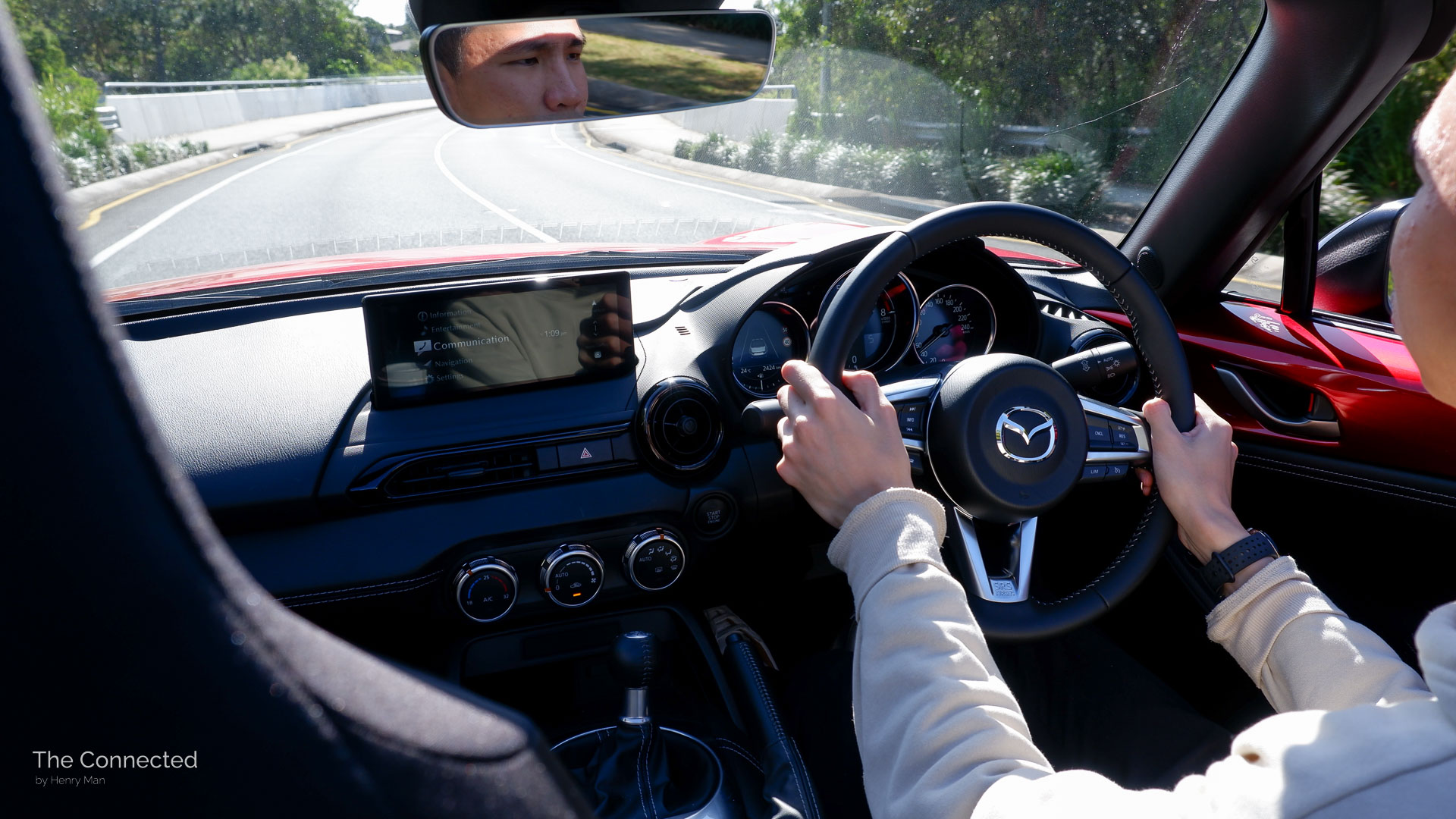
Meanwhile, the manual handbrake is large and driftable, and the clutch pedal has good resistance, even though it has a higher biting point.
This base G20 Roadster is sold as a manual transmission only, while a six-speed torque converter automatic is solely available on the mid-spec GT.
The MX-5 is best designed to punt around corners with a solid chassis and minimal body roll despite its light weight, although it paradoxically has a heavy steering tune and large steering wheel unit.
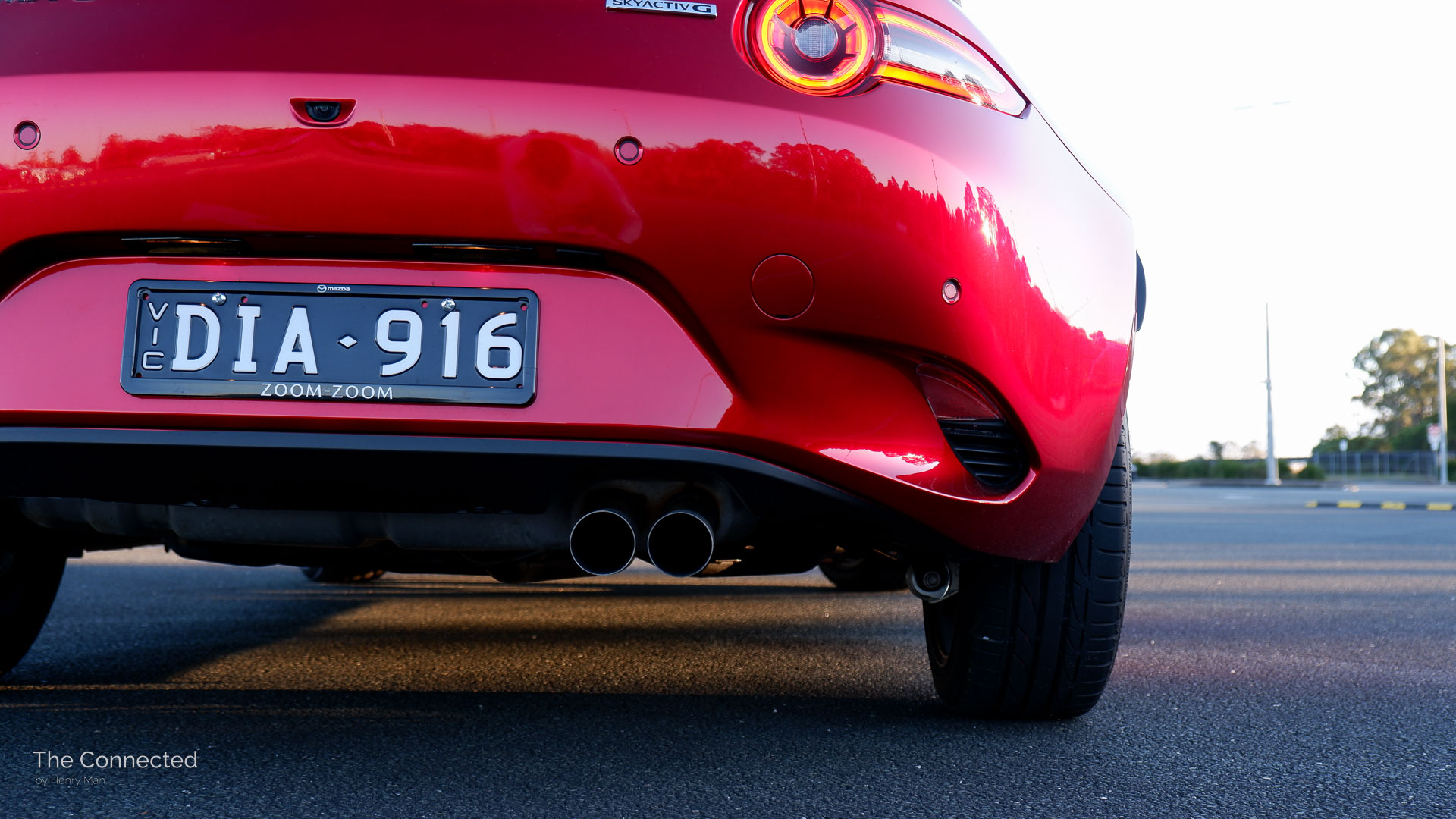
There’s an old-school feeling with a loud and deep – but not Hyundai N cool – stock exhaust note, and a visibly vibrating gear shifter and cabin when idle from the naturally aspirated engine.
Unsurprisingly, the convertible sports car has a firm ride where you can almost feel every road bump and hear everything going on outside, especially wind and rain at highway speeds, even though it isn’t too unruly with the fabric roof closed.
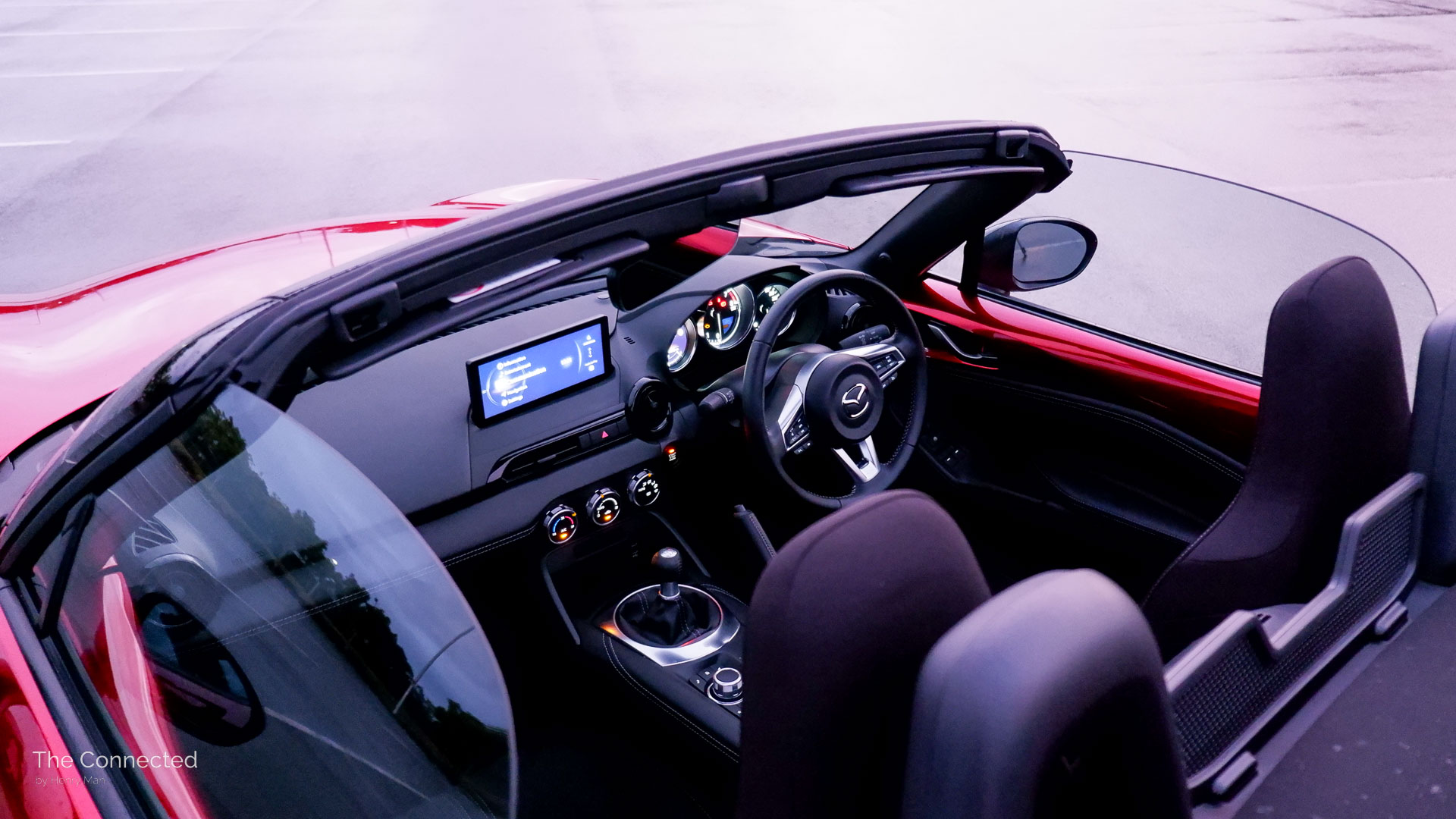

With the roof open, there’s an undeniable unique sense of driving in the open unlike a sunroof, with the windscreen and rear filter effectively blocking out the wind. The latter can be detached to allow the wind to blow through and mess with your hair for the ultimate convertible feeling.
However, I rarely opened the roof as it also exposes you to all the vehicle exhaust pollution and any debris flying around.
The driving position is tight and limited with pedals buried deep inside the firewall and a large steering wheel rim.
Despite being a tiny convertible, the MX-5’s all-round visibility is surprisingly worse than many larger SUVs and vans with a low seat position that lacks height adjustment, blind spot shoulder checks blocked by the roof mechanism when closed, and a zoomed-in driver’s side wing mirror.
The 9.4-metre turning circle and tiny dimensions are refreshing, but the heavy steering doesn’t bode well for manoeuvring.
Therefore, the MX-5 isn’t the ideal daily commuter car; hot hatches such as the Hyundai i20 N, i30 N and Volkswagen Polo GTi are simply better all-rounders.

Warranty and servicing.
2026 Mazda MX-5 G20 Roadster capped-price servicing costs:
| 1 year/15,000km | 2 years/30,000km | 3 years/45,000km | 4 years/60,000km | 5 years/75,000km |
| $457 | $569 | $543 | $569 | $647 |
The 2026 Mazda MX-5 is covered by a five-year, unlimited kilometre vehicle warranty.
Servicing is required every one year/15,000km (whichever occurs first) with costs fixed for up to seven years/105,000km.
After the first five years/75,000km, expect to pay $2787 in total to maintain the MX-5.
Up to five years of roadside assistance is included, while three years of Mazda Connected Services are standard with a subscription cost thereafter yet to be announced.
The Mazda MX-5 does not have a spare tyre with a patch-up goo kit and tools included instead.
Price and rivals.
2026 Mazda MX-5 model range pricing (accurate as at the time of publication):
| G20 Roadster | G20 GT | G20 GT RS |
| From $42,735 before on-road costs | From $49,385 before on-road costs | From $52,385 before on-road costs |
The 2026 Mazda MX-5 is priced from $42,735 before on-road costs in Australia.
Three soft-top variants are sold with the base G20 Roadster and flagship GT RS only available with a six-speed manual transmission, while a six-speed automatic is optional on the mid-spec GT for $1500 extra.
Mazda also sells the electronic hard top MX-5 RF in GT and GT RS guises only, which has a $4500 premium compared to the manual soft top.
All exterior paint colours are free, except for the signature Machine Grey Metallic and Soul Red Crystal Metallic (as pictured) which cost $595.
Uniquely, the interior upper door cards match the exterior colour on all variants, too.
The 2026 Mazda MX-5 directly rivals the following convertibles:
- Mini Cooper Convertible
- Ford Mustang Convertible
- BMW 4 Series Convertible
- Audi A5/S5 Convertible
- BMW Z4
- MG Cyberster
Other alternatives to the Mazda MX-5 include:
- Hyundai i20 N
- Volkswagen Polo GTi
- Toyota GR Yaris
- Hyundai i30 N (full review)
- Hyundai i30 Sedan N (full review)
- Nissan Z

Would I pick the 2026 Mazda MX-5 G20 Roadster?
The Mazda MX-5 is a rare, fun little convertible that’s still a head turner 10 years on.
It may be a decade old, but its design has not aged at all, with upgraded and refined tech, zippy naturally aspirated engine with a satisfying manual, and a sub-$50K price that’s a realistic attainable ‘dream sports car’.
Yet, it only suits a niche set of people due to limited seat adjustment, a tight cabin and prominent hump on the driver’s side, outside visibility is poor for a micro car, and there’s still no digital speed readout despite the presence of a digital instrument display.
Its key rival, the Hyundai i20 N hot hatch, is thousands cheaper, has a more outlandish stock exhaust, and is more dailyable with five seats and a proper boot.

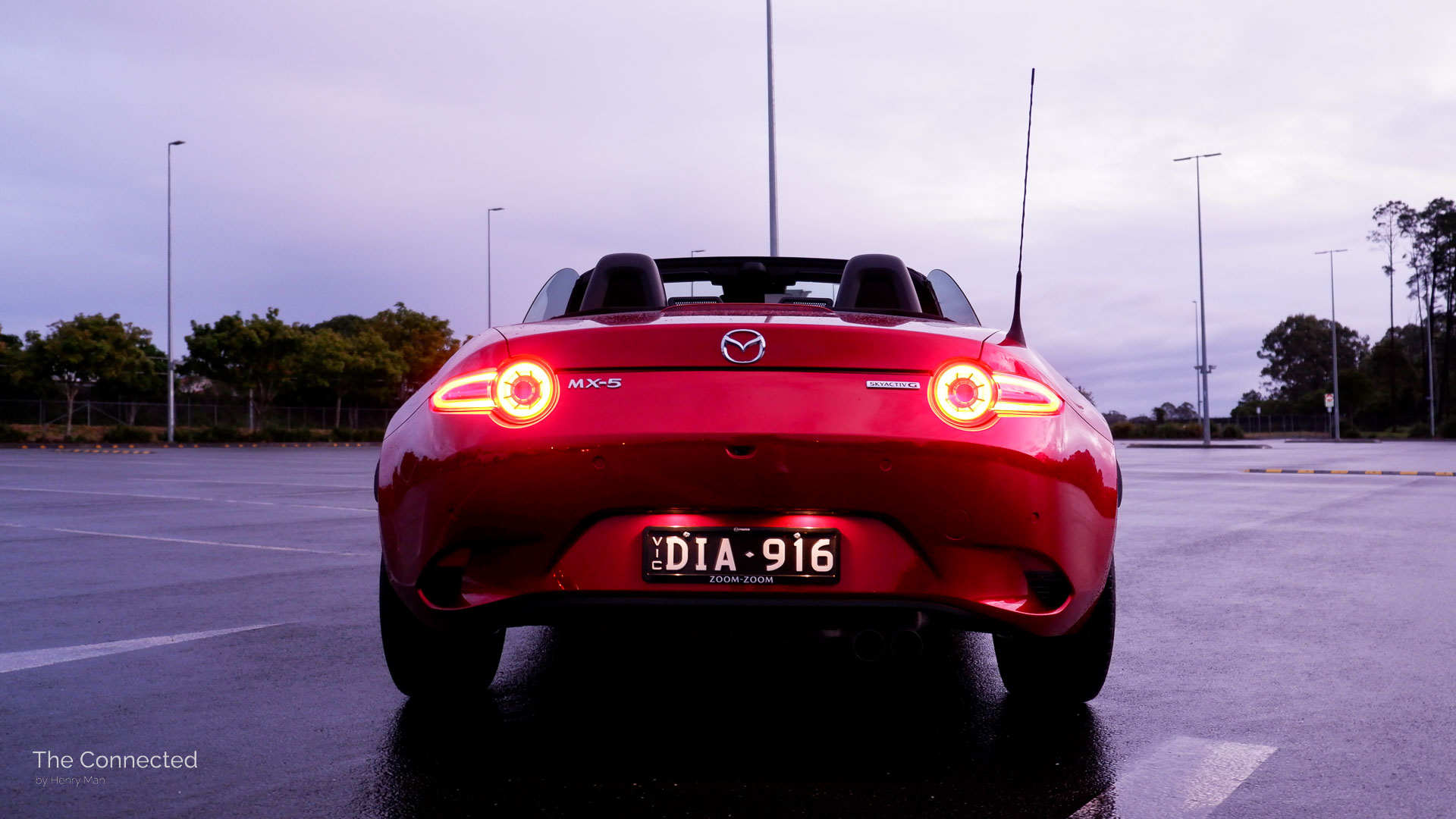
I’d pick the base MX-5 G20 Roadster as tested which is the best value for money with the traditional soft top and manual transmission driving engagement. You’d be mad to not pay for the stylish Soul Red Crystal Metallic paint, too.
If the convertible life suits you, the MX-5 is a rare affordable choice in a shrinking segment.
Photographs by Henry Man
READ MORE: 2025 Hyundai i30 N review
READ MORE: 2024 Cupra Born review
READ MORE: 2024 Mazda CX-90 review
Pros:
- Fun old-school sports car
- Attainable price tag
- Quality interior, simple tech
- Commendable fuel tank size
- Timeless design
Cons:
- Unergonomic driving position
- Poor outside visibility
- No digital speedometer
- Stock exhaust isn’t as cool
- Alternatives are more dailyable
About the Author.
Henry Man is an independent content producer passionate about the intersection of technology and transportation.
The former automotive journalist is focused on producing critically-detailed vehicle reviews, and unique short-form content. Learn more.


 The Connected by Henry Man