
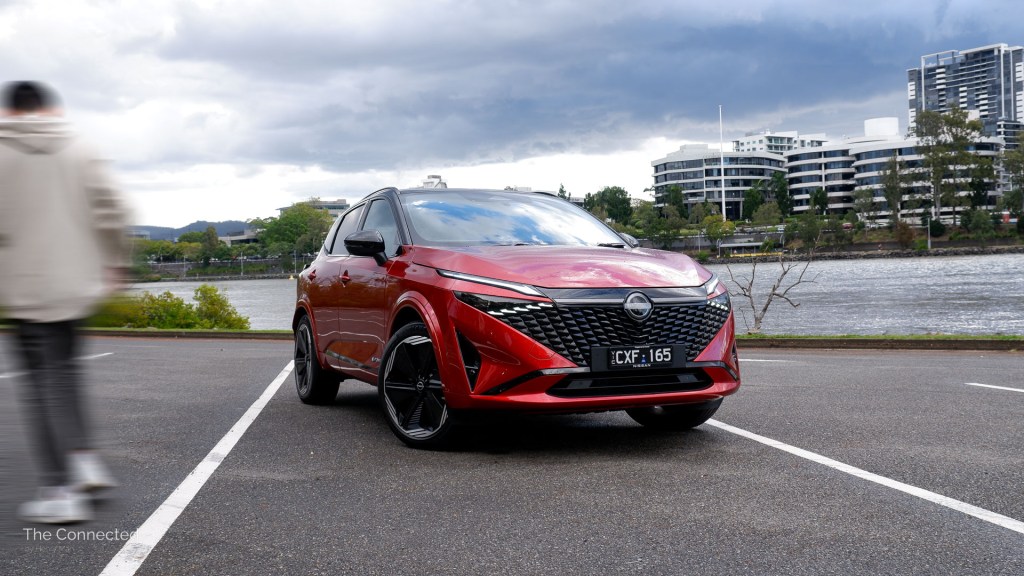
The refreshed Nissan Qashqai e-Power improves upon an already super impressive SUV, but there are some glaring compromises on the new flagship model.
The facelifted Nissan Qashqai has arrived in Australia with a fresher design, new technology, and more variants.
It’s one of the most popular new cars in the United Kingdom, where the Japanese small SUV is made, yet it isn’t as favoured by Australians.
With a range of hybrid small SUVs to choose from, I tested the new flagship Qashqai N-Design e-Power to see why it’s an underrated option that should be at the top of your shortlist.
NOTE: The press vehicle was provided by Nissan Australia for a seven-day independent evaluation. We have no commercial arrangements with the company and it had no editorial control.

Pros.
+ Smooth EV-like driving
+ Good fuel efficiency, same fuel tank size
+ Spacious and family-friendly
+ Upgraded LED interior lights
+ Long 10-year conditional warranty
Cons.
– Dated tech, no Android Automotive in Australia
– N-Design features and boot compromises
– Expensive price for the top-spec
– Adaptive cruise isn’t as refined
– Third-gen e-Power is coming soon
Vehicle tested:
| Model | 2026 Nissan Qashqai |
| Variant | N-Design e-Power |
| Starting price | $54,365 before on-road costs |
| Exterior colour | Fuji Sunset Red and Black Onyx Roof (+$995) |
| Interior colour | Black Monoform seats with Alcantara and synthetic leather |
| Country made | United Kingdom |

Design and quality.
The facelifted 2026 Nissan Qashqai gains a sharper, more edgy exterior design with minor interior changes.
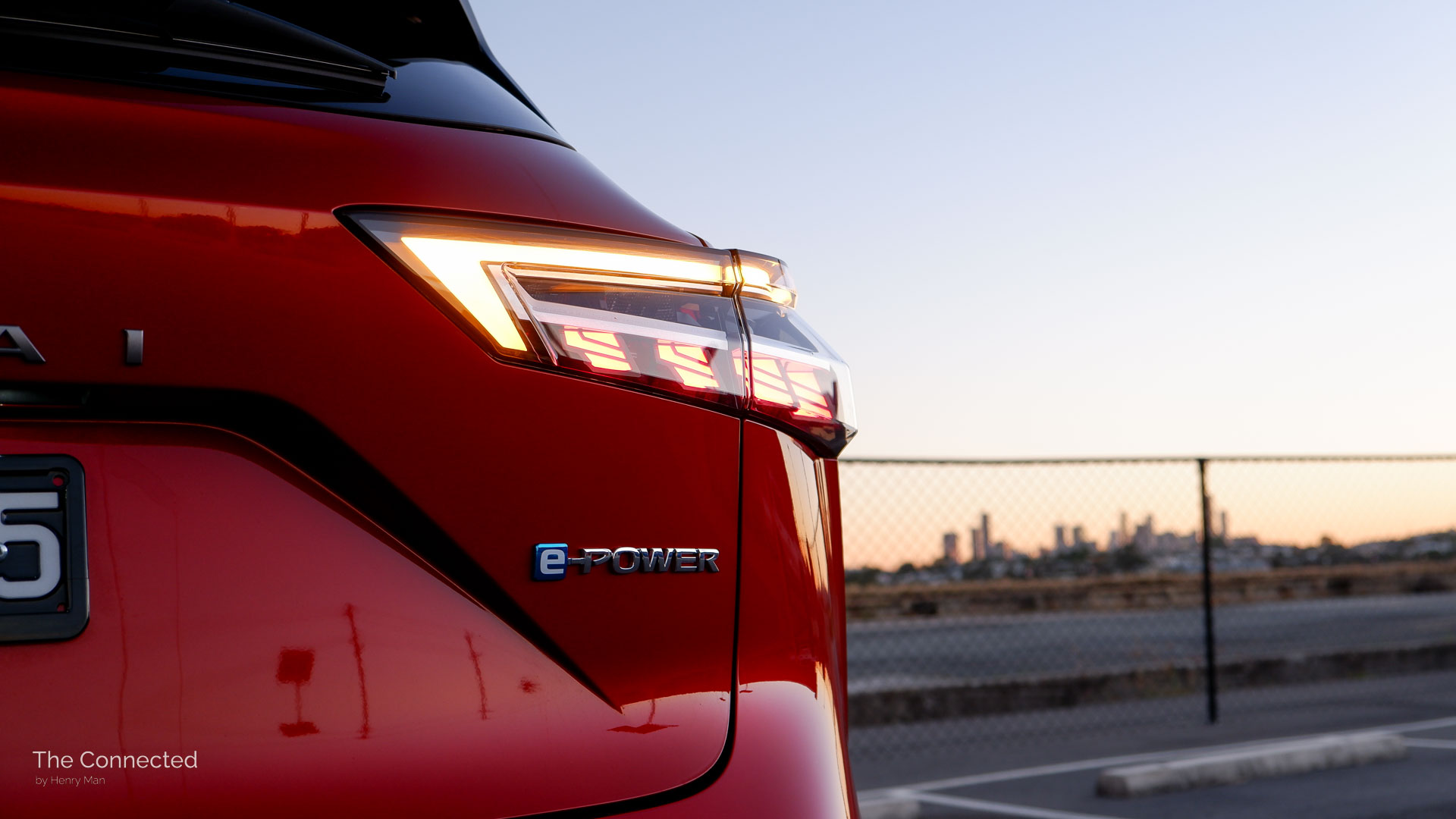
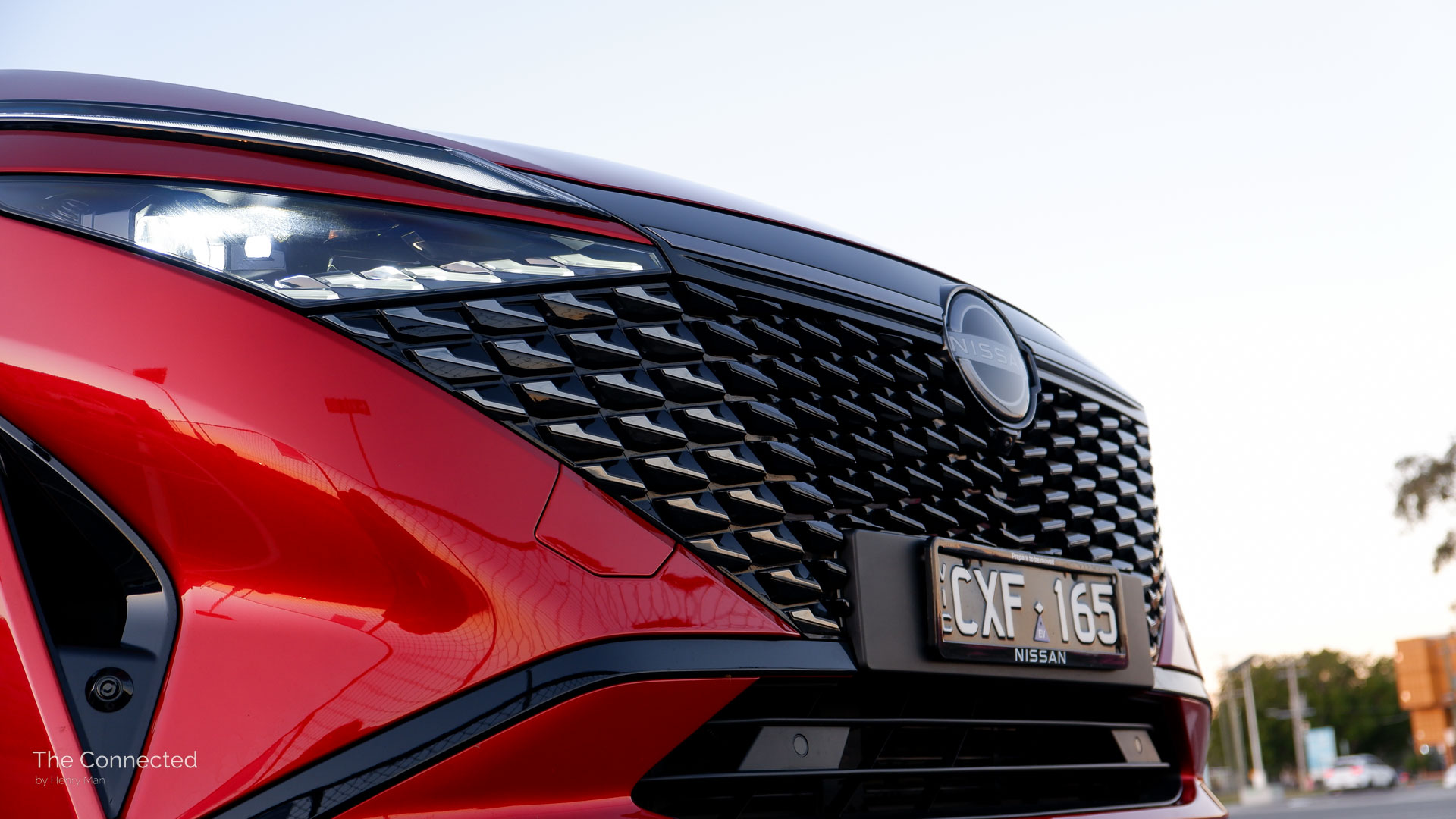
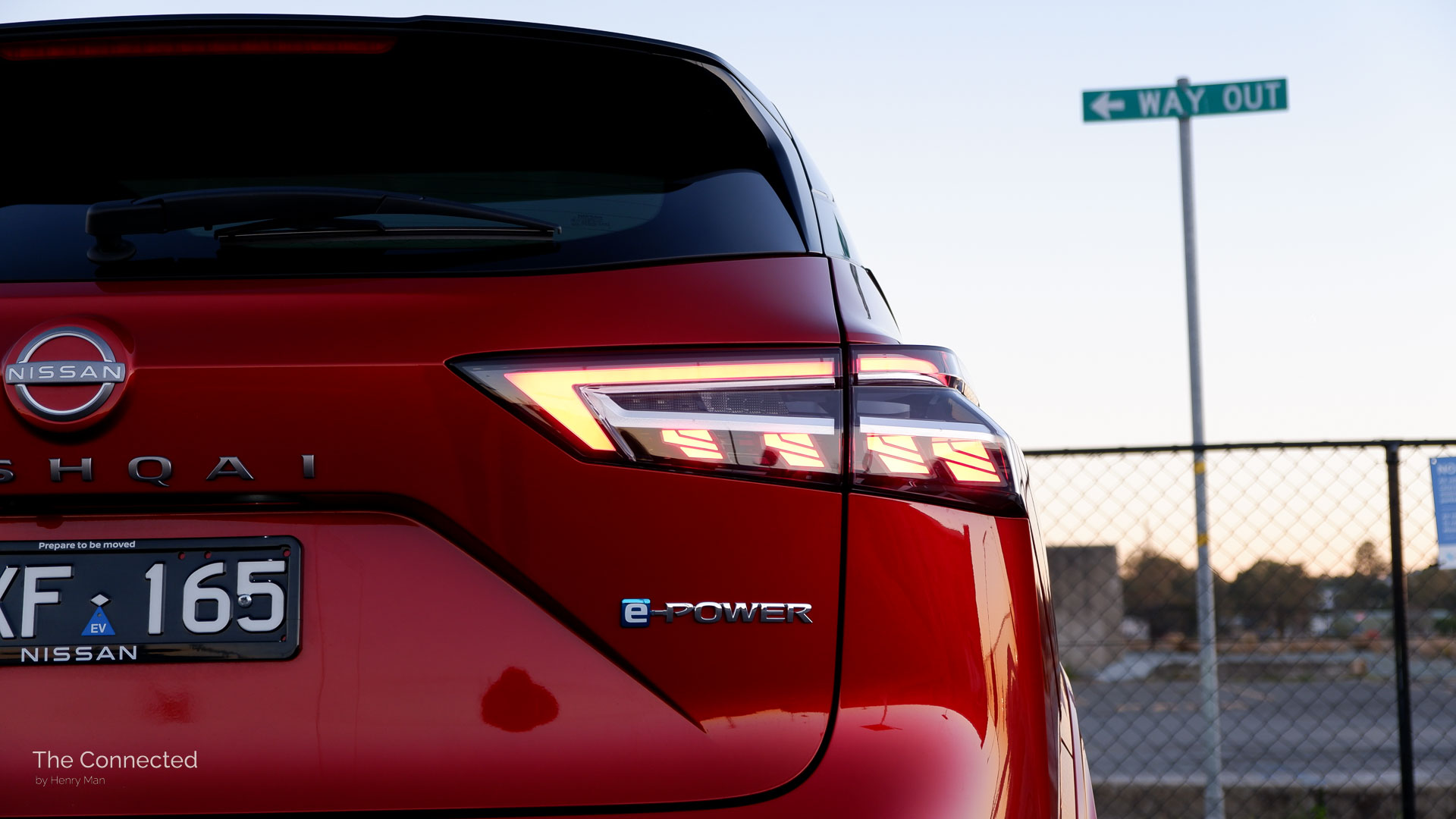
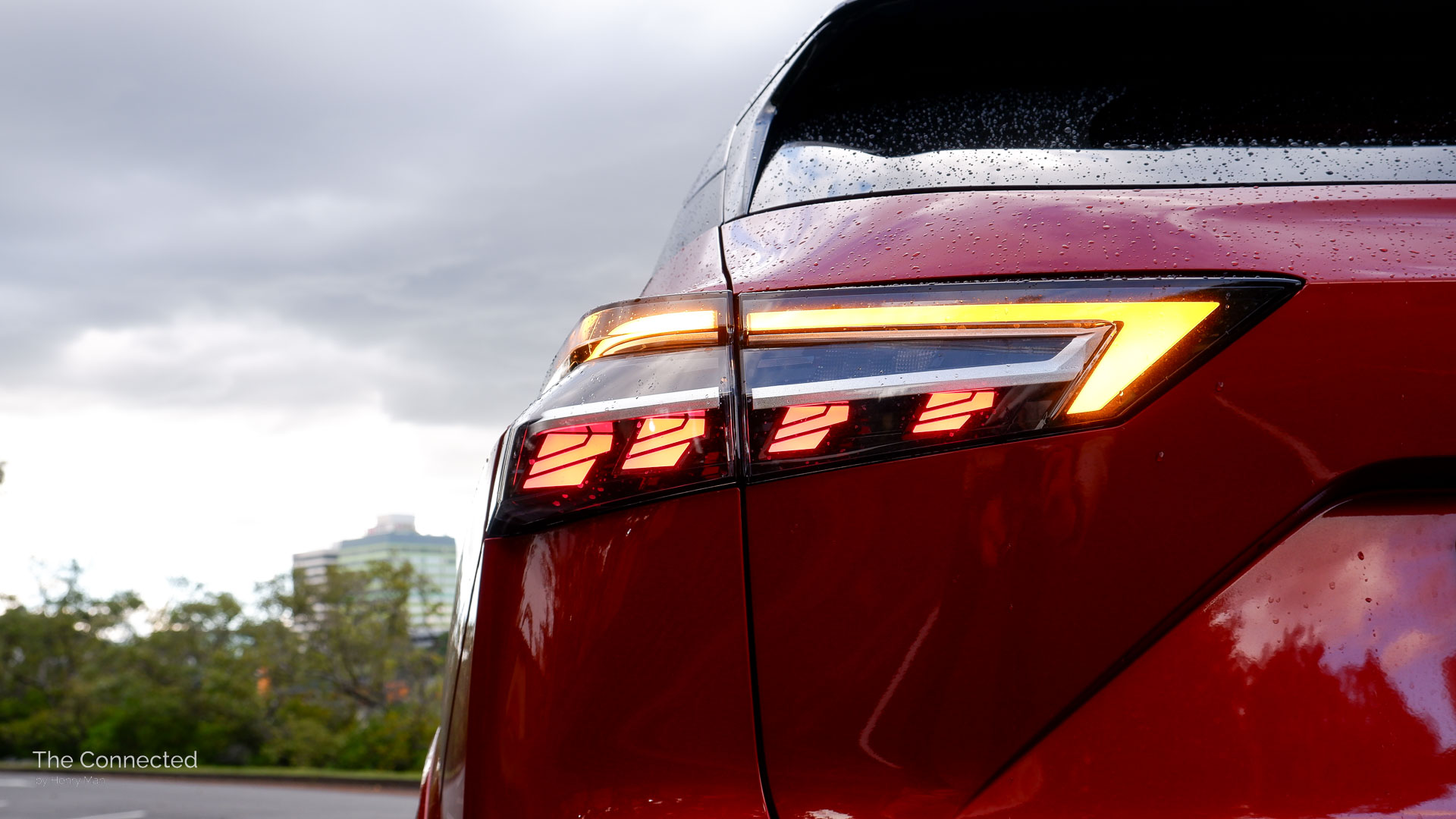
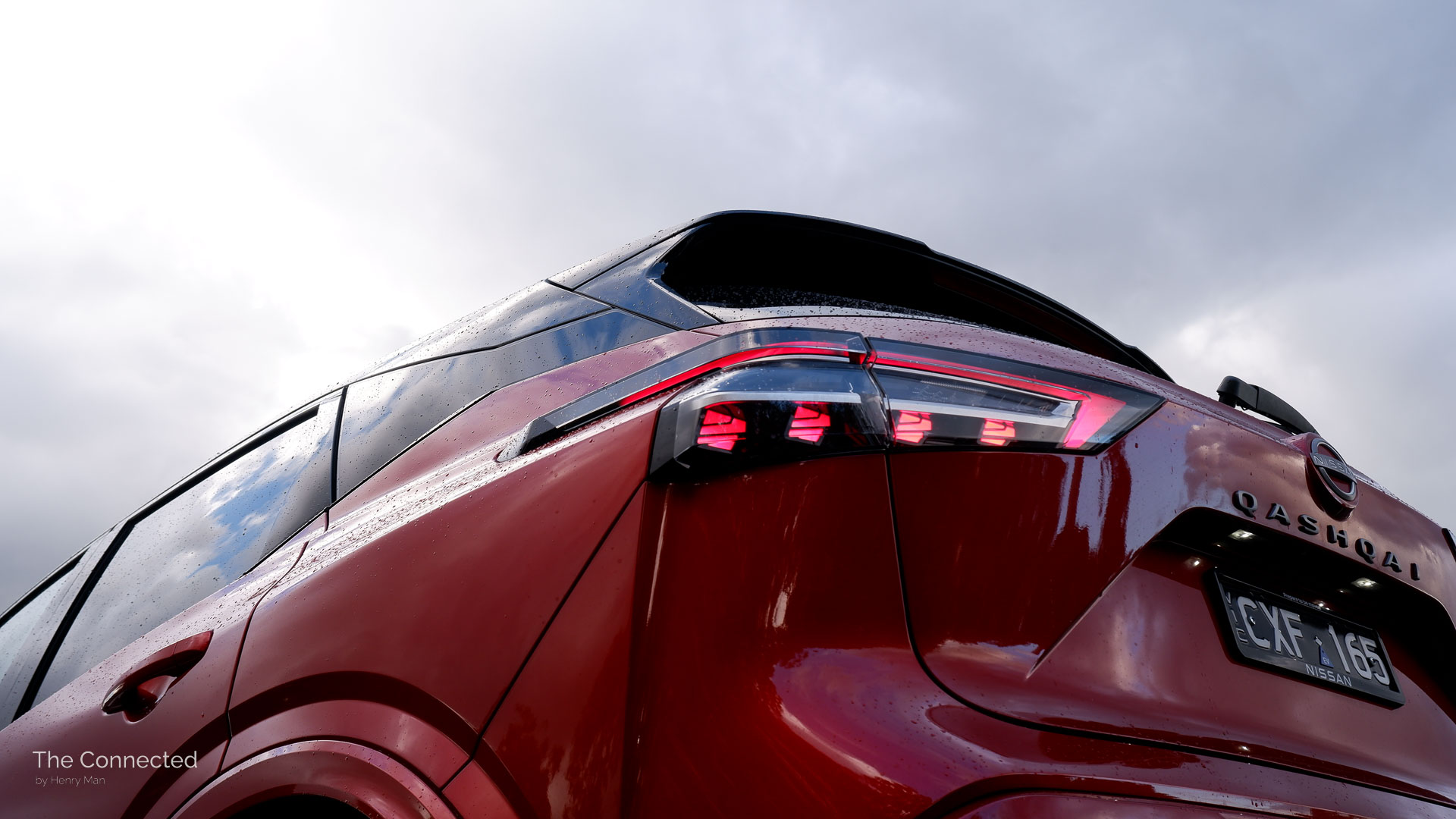
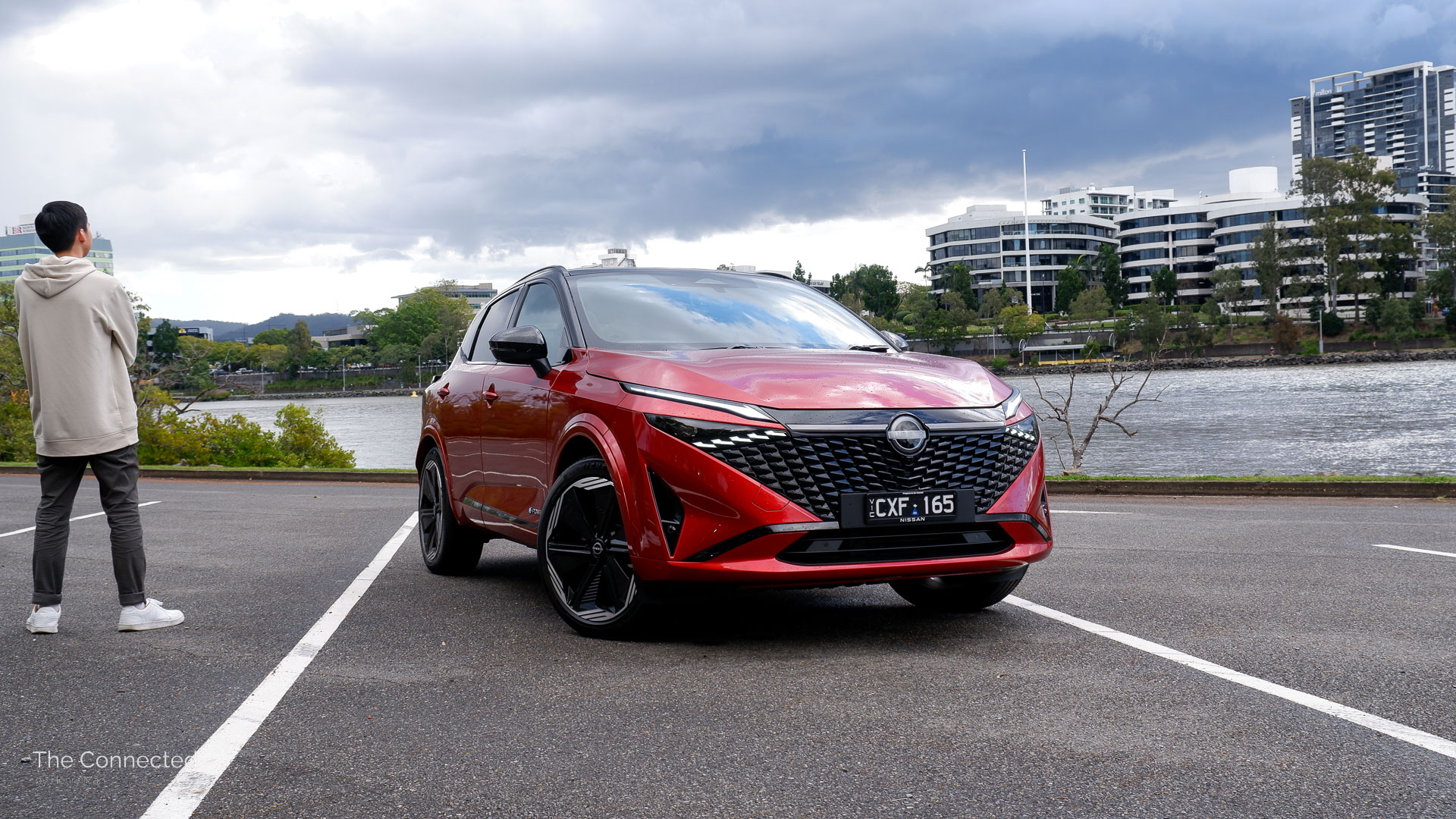
The new ‘clear-coated gunmetal foil stamp’ grille with integrated LED daytime running lights looks more modern and akin to the Hyundai Tucson, there’s new smoked LED tail-lights, and new wheel designs.
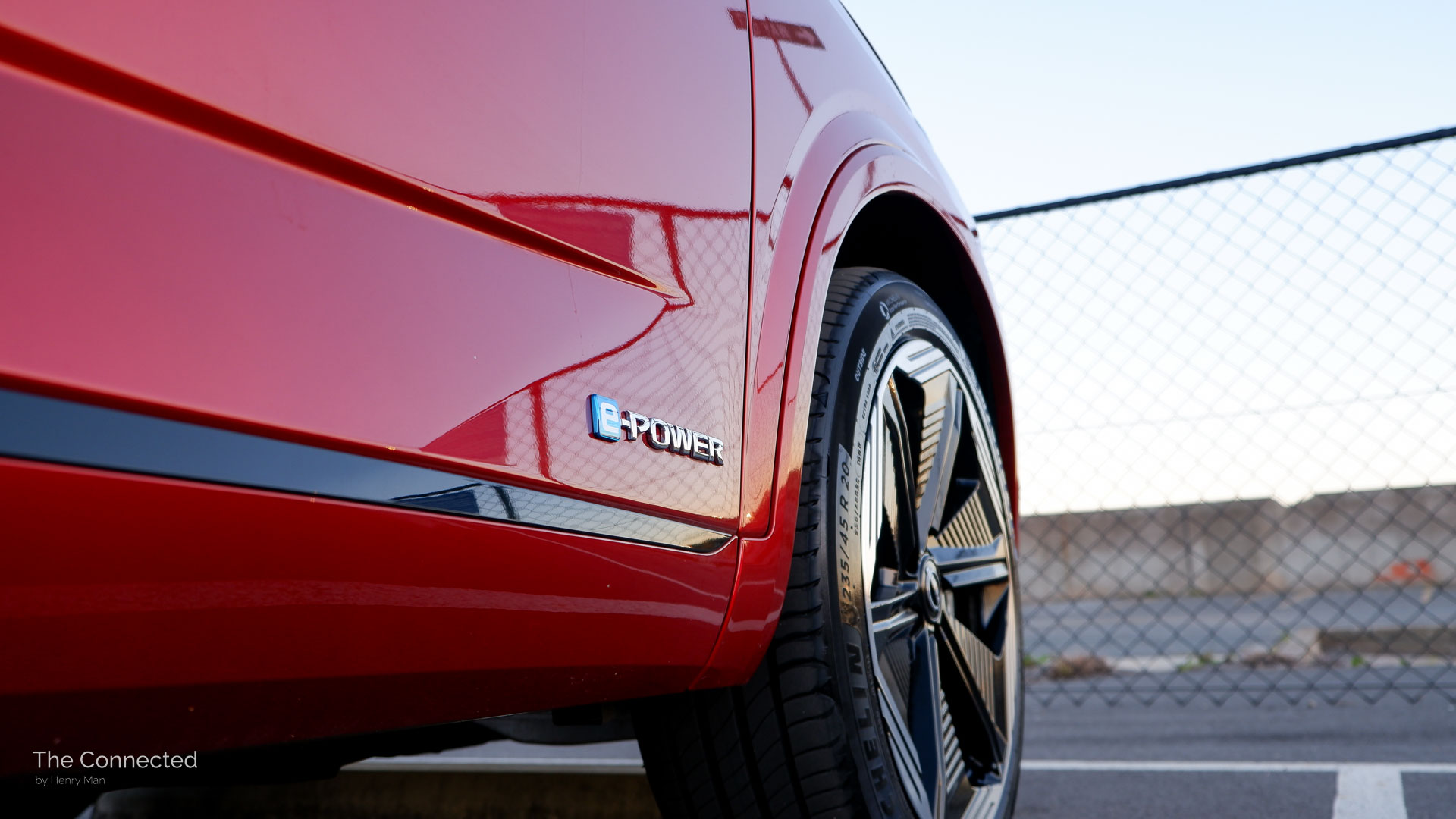
A new flagship N-Design model (as tested) boasts a unique grille, removes plastic cladding, with a black-painted roof and mirrors as standard, 20-inch wheels that remind me of the Volkswagen ID.3, and cool sequential turn indicators front and back.
The Qashqai doesn’t look as conservative anymore, which may hinder its appeal, but it’s been uplifted and more fitting for 2026.

Inside, the United Kingdom-made small SUV hasn’t been modernised as extensively with upgraded materials and the same layout that balances being traditional and modern.
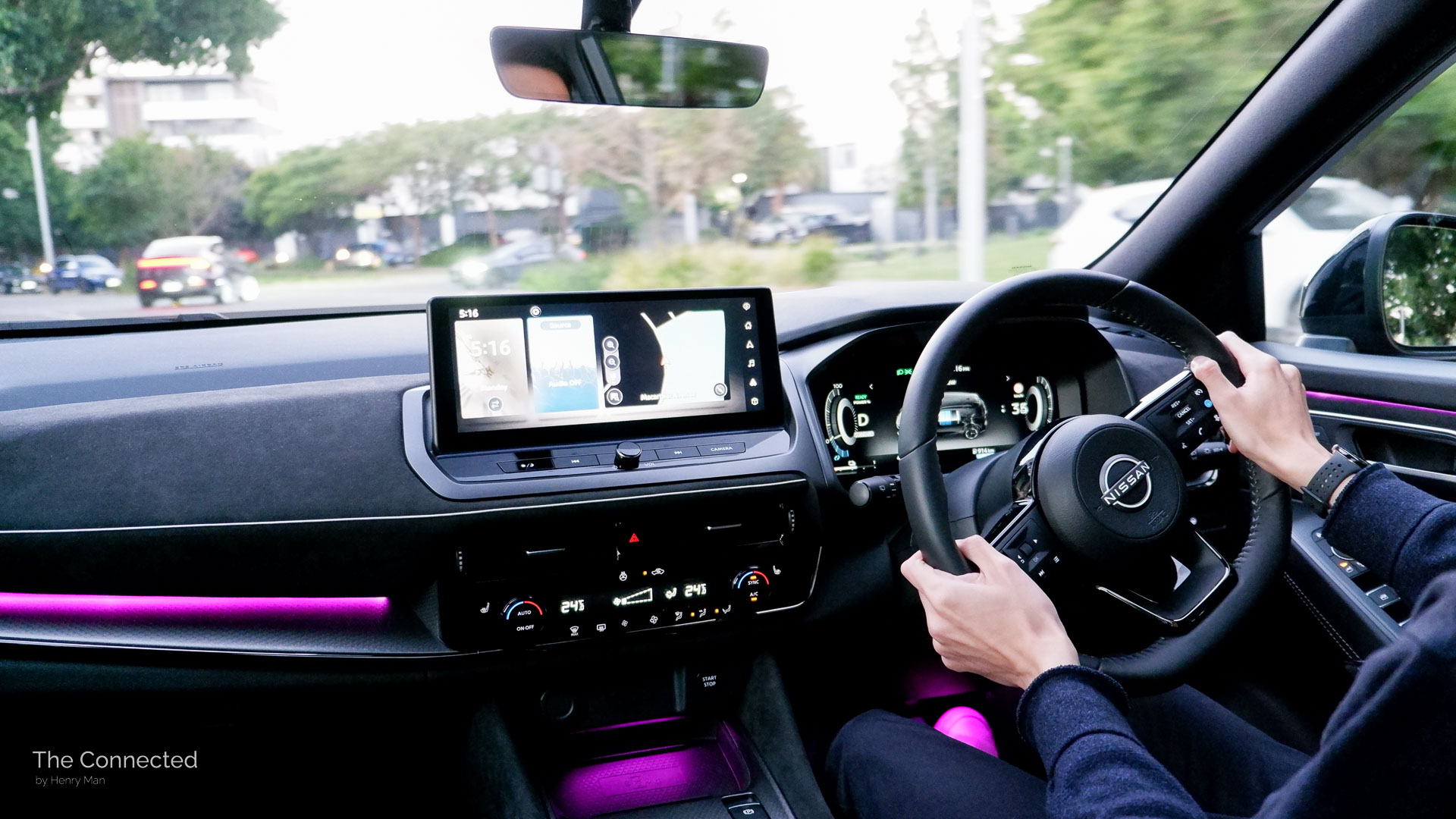
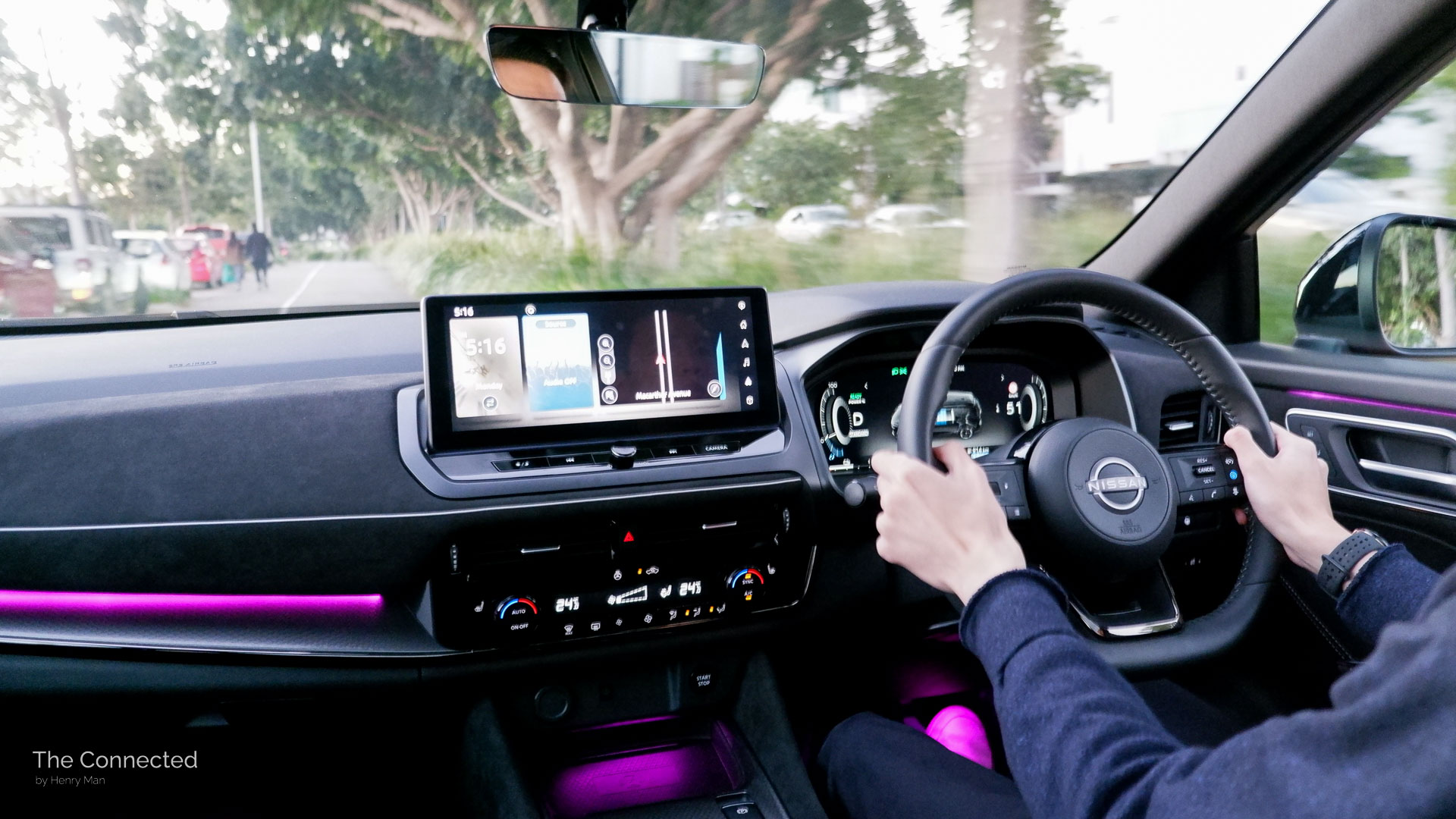
The refresh has introduced colour selectable ambient lighting that glows on the dashboard, door cards and bottle holders, around the electronic shifter, and footwells.
The N-Design adds plush Alcantara across the dash, door cards, armrests, centre console sides and seats with white piping and stitching, too.
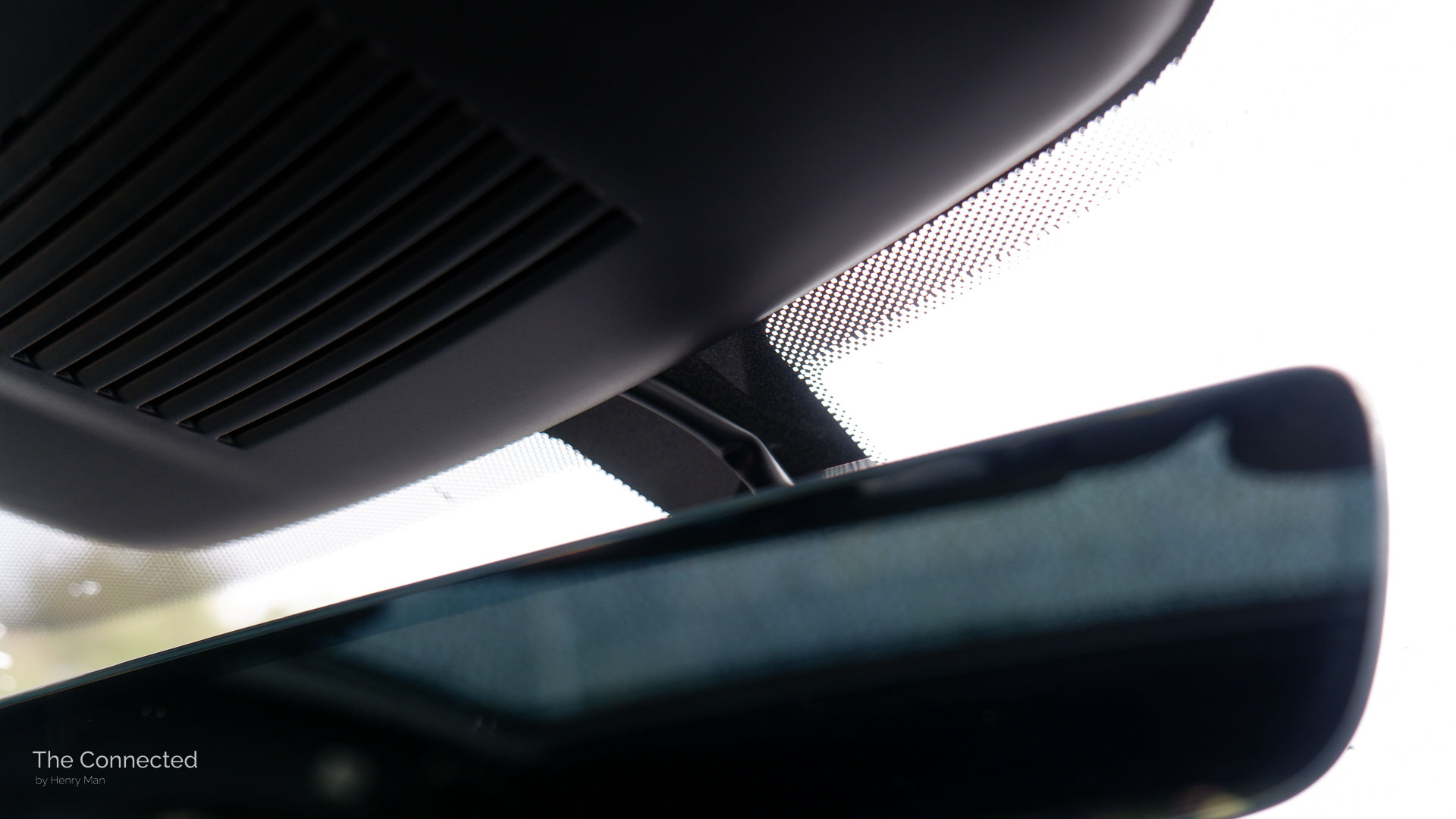
Material quality continues to be solid with only harder plastics found lower down. Yet, just like the pre-facelifted model, there’s an exposed wire for the auto-dimming rear-view mirror which isn’t ideal.
Practicality.
2026 Nissan Qashqai N-Design e-Power dimensions:
| Length x width x height | 4425 x 2084 x 1625mm |
| Wheelbase | 2665mm |
| Ground clearance | 175mm |
| Boot space (min / rear seats folded) | 404 / 1328 litres |
| Rear seat split fold | 60:40 |
| Child seat anchors | 2x ISOFIX and 3x top tethers |
| Air-conditioning system | Two-zone climate control with rear air vents |
The new Qashqai continues to be a genuinely spacious and family-friendly small SUV, but the top-spec N-Design has one key compromise.
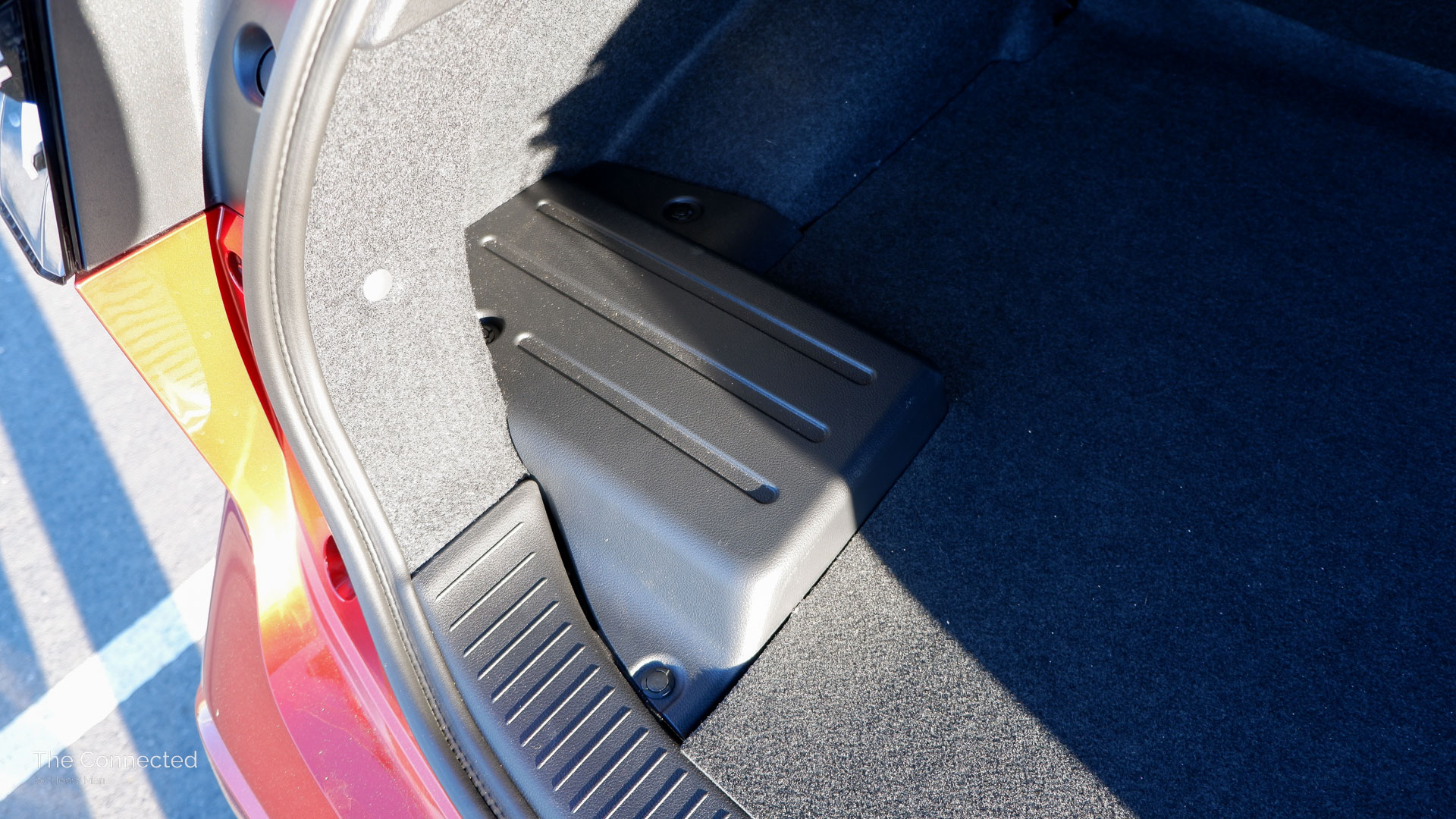
The 404-litre boot is spacious with two usable bag hooks and new LED lighting.
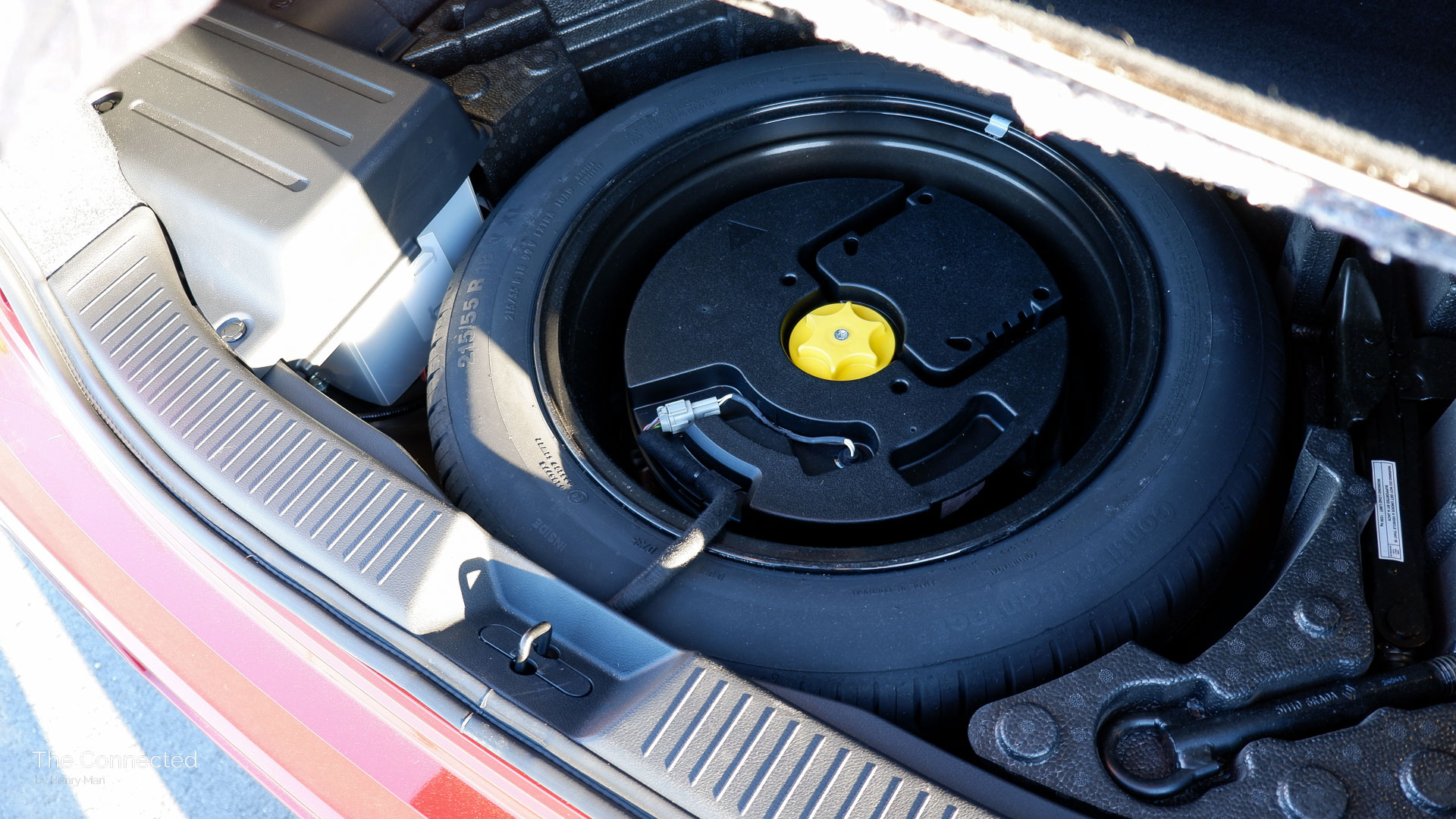
However, due to the inclusion of a temporary space-saver tyre on the N-Design, the hybrid battery sits prominently on the left (removing a storage pocket), doesn’t feature underfloor storage, nor the divided floor design on the Ti-L.
A convenient electric tailgate is included, with an easy to use kick sensor allowing for hands-free opening and closing. A lock all doors button is available, too.


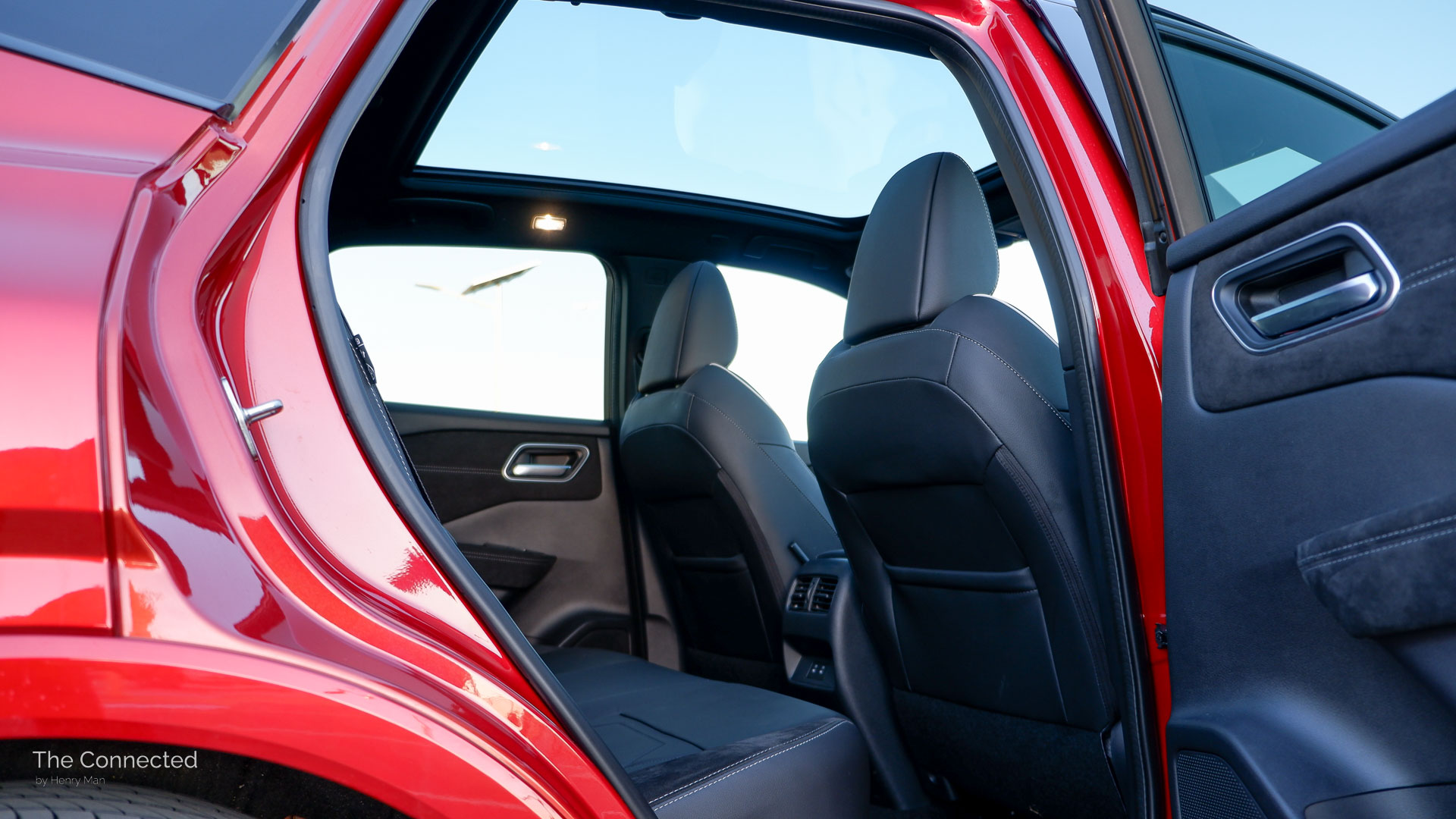
Crucially, a key highlight of the Qashqai is its impressive interior space that makes it genuinely family-friendly, despite being classed as a ‘small’ SUV in Australia.
It offers good legroom and plenty of headroom, but a notable middle floor hump. While medium SUVs nowadays can offer more leg space, the Qashqai is still suitable as a family car.
The rear doors also open super wide, almost at a 90-degree angle, making ingress and egress or fitting a child seat easier.
It may sound minor, but the introduction of LED interior lights across both rows is a key improvement compared to the dim halogen bulbs on the pre-facelifted Qashqai. It also has a warm hue to it, so it’s more comfortable at night.

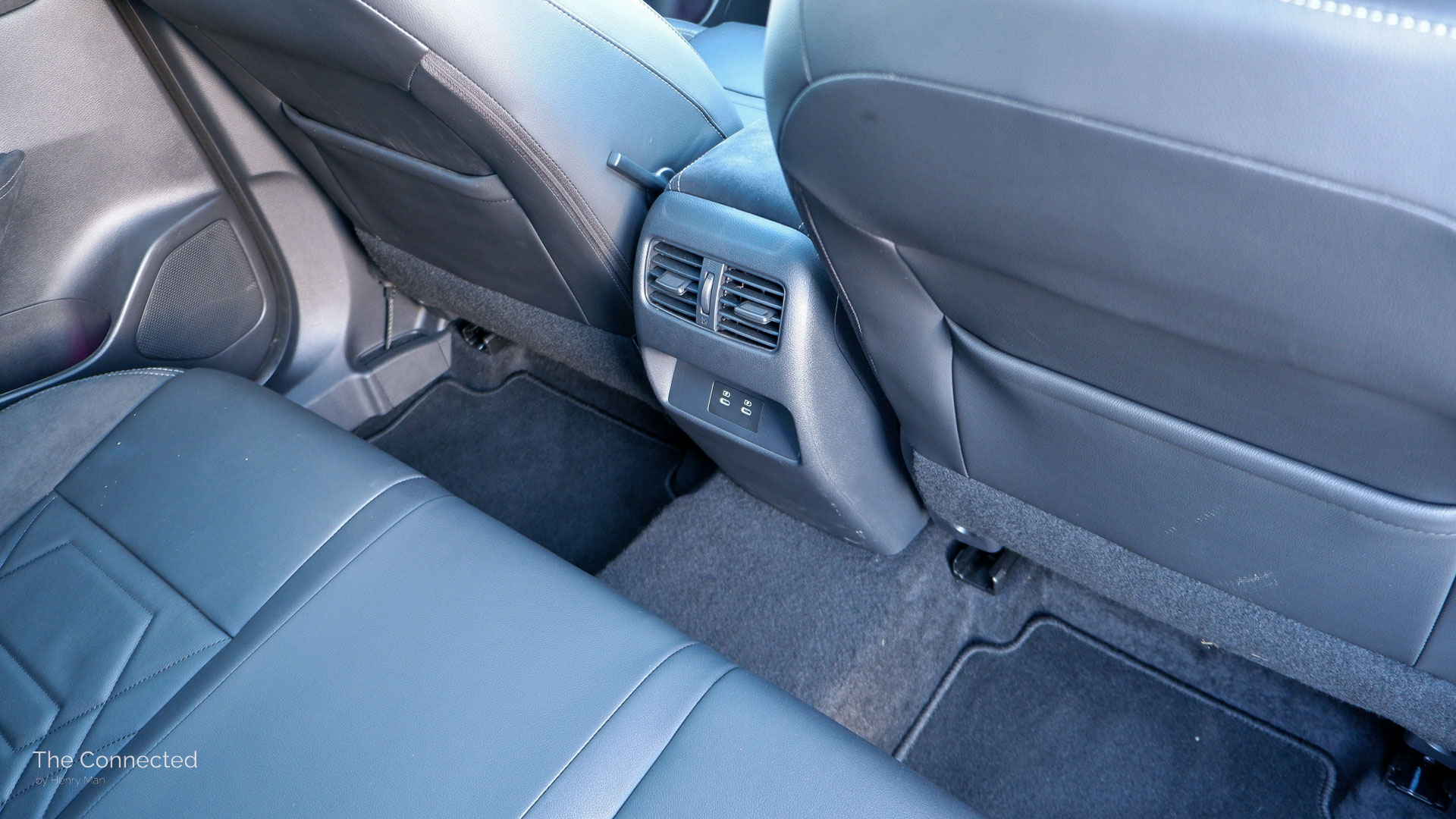
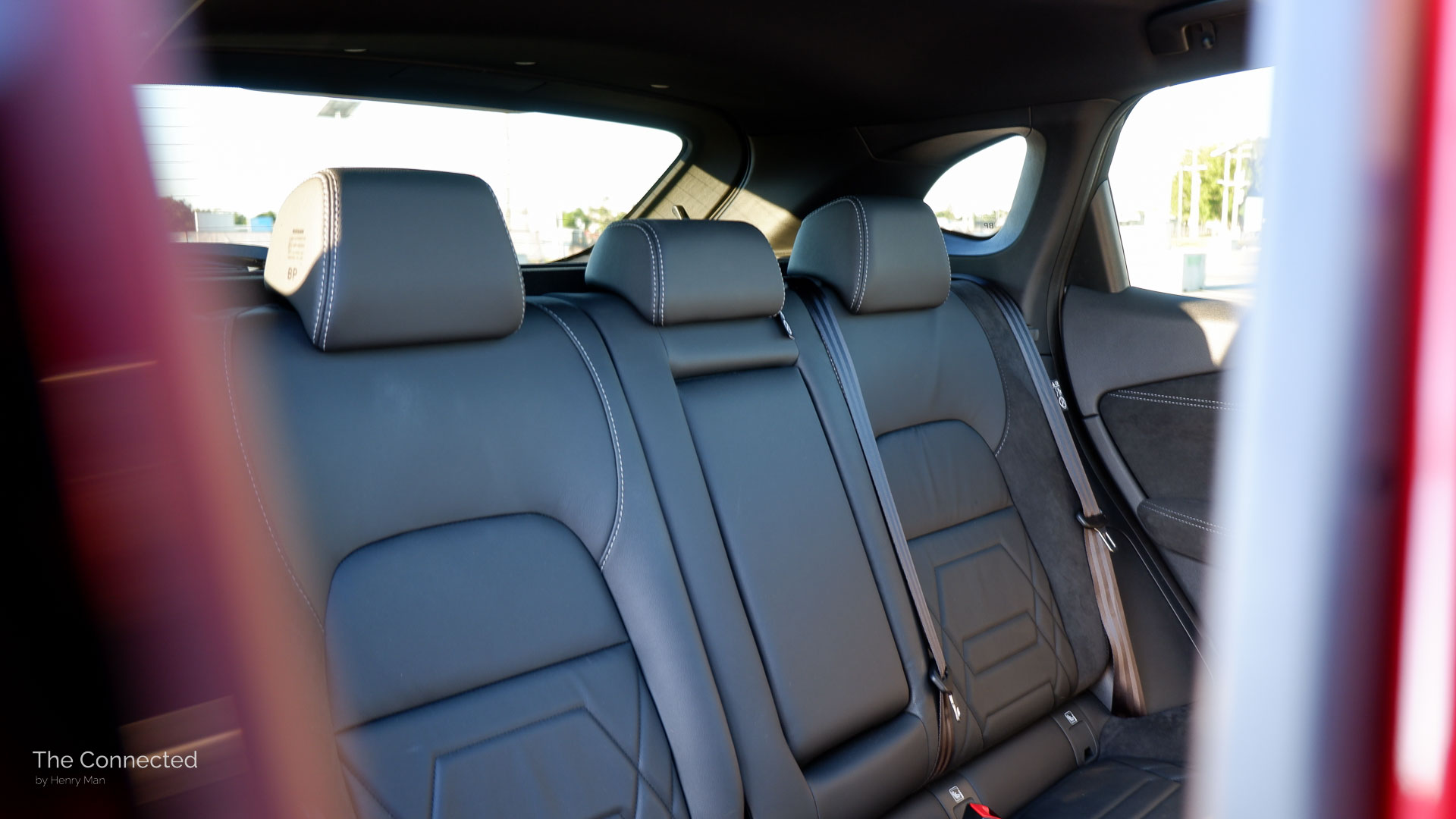

Two USB-C charging ports are available at the rear row, as well as a fold-down armrest with two cup holders, and decently-sized door pockets.
High spec variants still offer the same impressively large, pillar-less fixed panoramic glass roof with a built-in sunshade, which helps offset the N-Design’s dark headliner.
Up front, the Nissan SUV remains largely unchanged with the same small two cup holders that lack grip mechanisms, lots of unused blank space on the centre console, and a recessed tray for the Qi wireless charging pad.
Despite being made in a right-hand-drive market, the glovebox is still compromised in half by the fuse box.
The centre armrest also still includes a unique two-level shallow tray above a deeper compartment, which is where you’ll find two additional USB-C ports.


The N-Design’s Alcantara and leatherette seats are firm but supportive with two driver memory settings and three-level heating for both front seats (which remembers the setting every time you start the vehicle).
Disappointingly, despite costing around $60K drive-away, the flagship N-Design doesn’t offer electric adjustment for the front passenger with only manual lumbar adjustment via a basic lever on the side, and omits the massaging function available on the cheaper Ti-L.
As per its predecessor, the Nissan Qashqai has easy to use physical buttons and dials for the two-zone climate control system, even though they’re on the smaller side and lacks the satisfying tactility found on the Mazda CX-30.

Technology.
2026 Nissan Qashqai N-Design e-Power tech features:
| 12.3-inch touchscreen running Nissan Connect | 12.3-inch driver instrument display |
| Wireless/wired Apple CarPlay and Android Auto | 10.8-inch head-up display |
| Built-in maps | 4x USB-C and 1x 12-volt charging ports |
| Qi wireless charging pad | Six speakers |
| Nissan Connected Car Services and mobile app | Proximity key with auto walk away unlocking/locking and auto folding mirrors |
The new Qashqai comes with improved technology, but Android Automotive doesn’t debut in Australia.
The carryover 12.3-inch central touchscreen is decent, but starting to look dated with a lower resolution compared to its rivals, high white levels and low contrast, slightly old-style user interface design, and slow transitions between pages.
Unfortunately, it uses the same built-in Nissan operating system as before, despite debuting Android Automotive software overseas which would’ve made it feel fresher and faster.

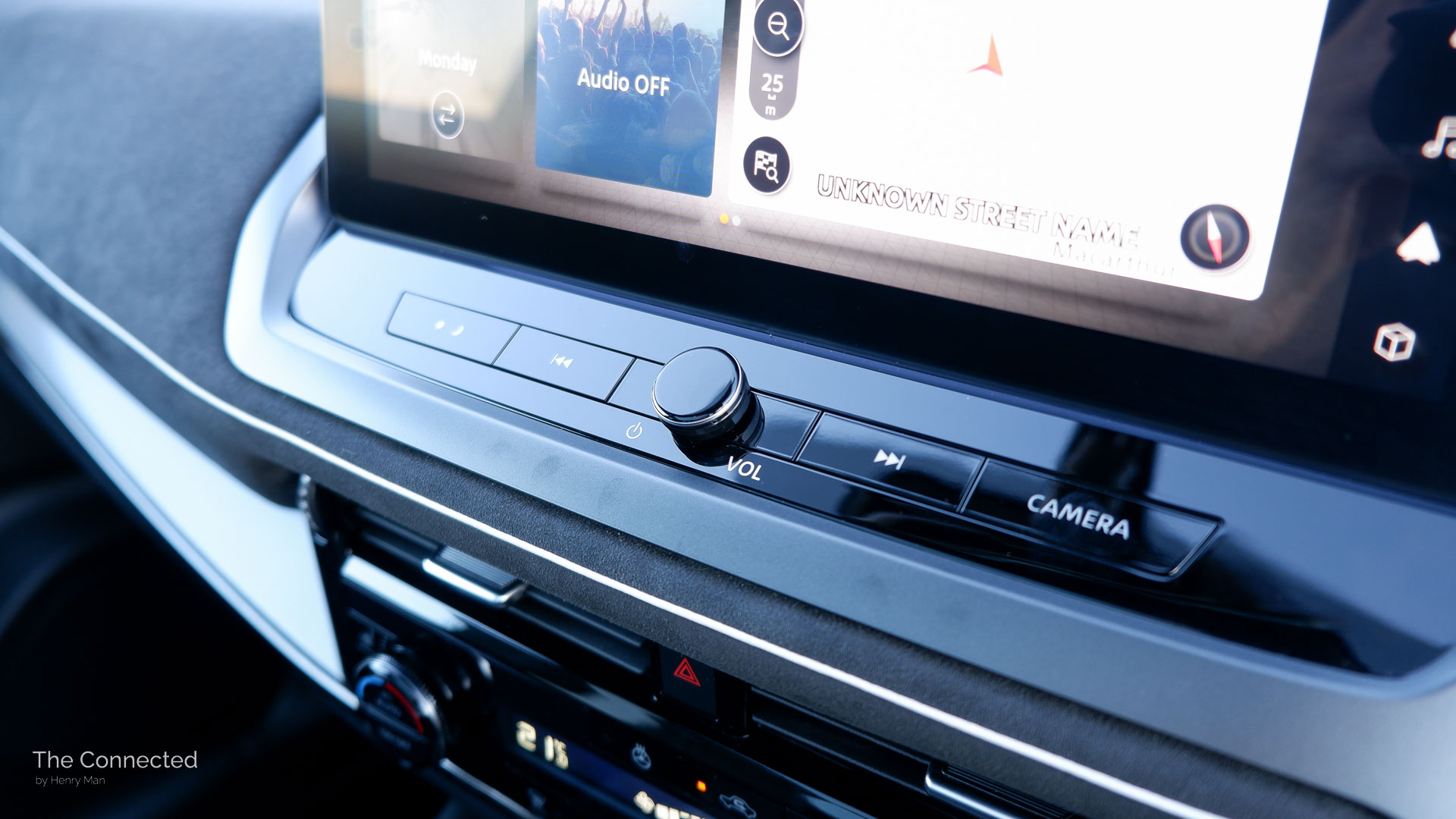


At least Android Auto is now wireless, joining Apple CarPlay – though the Qi wireless charging pad is still slow and doesn’t have ventilation fans, so phones stop charging to prevent overheating.
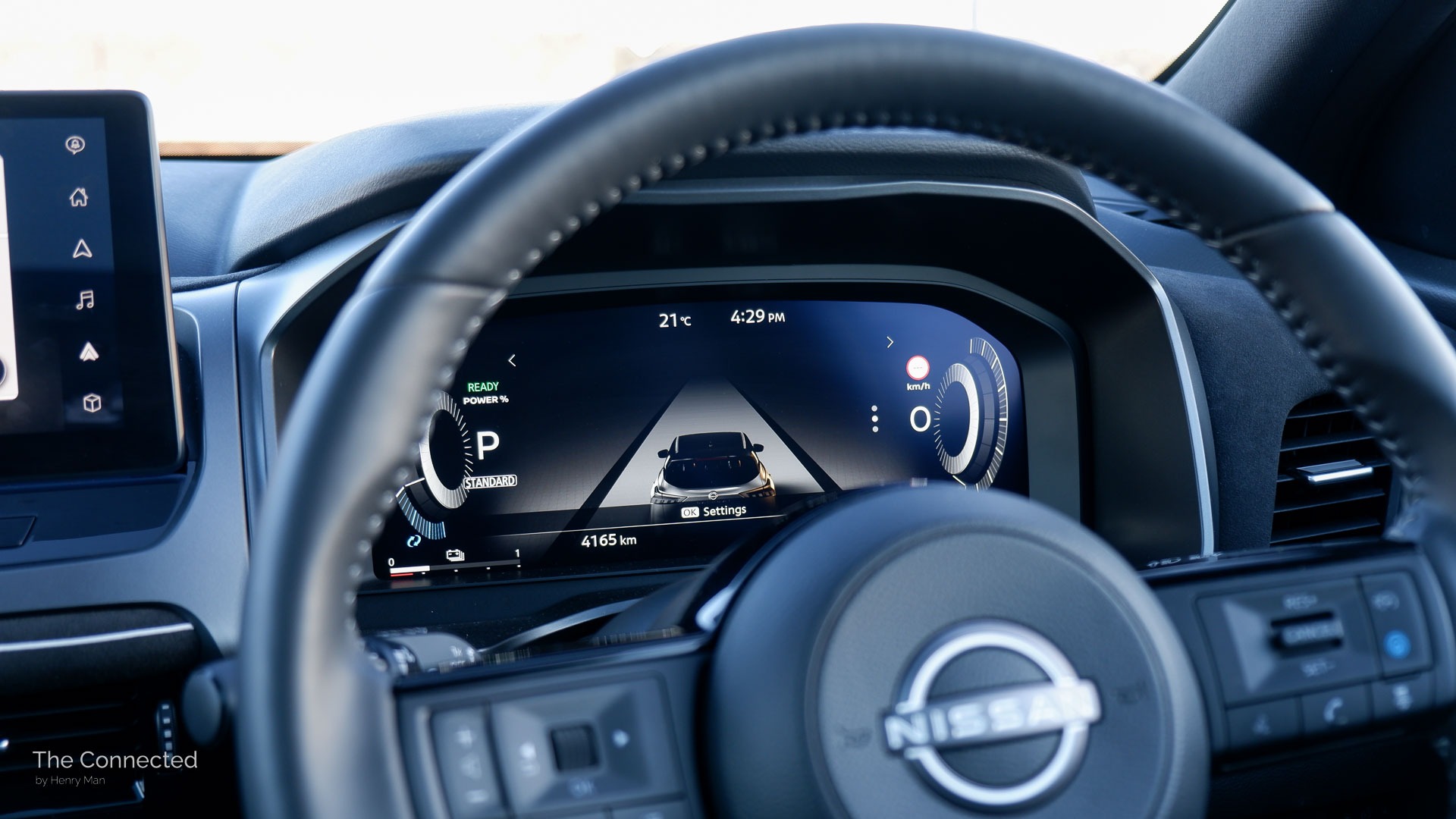
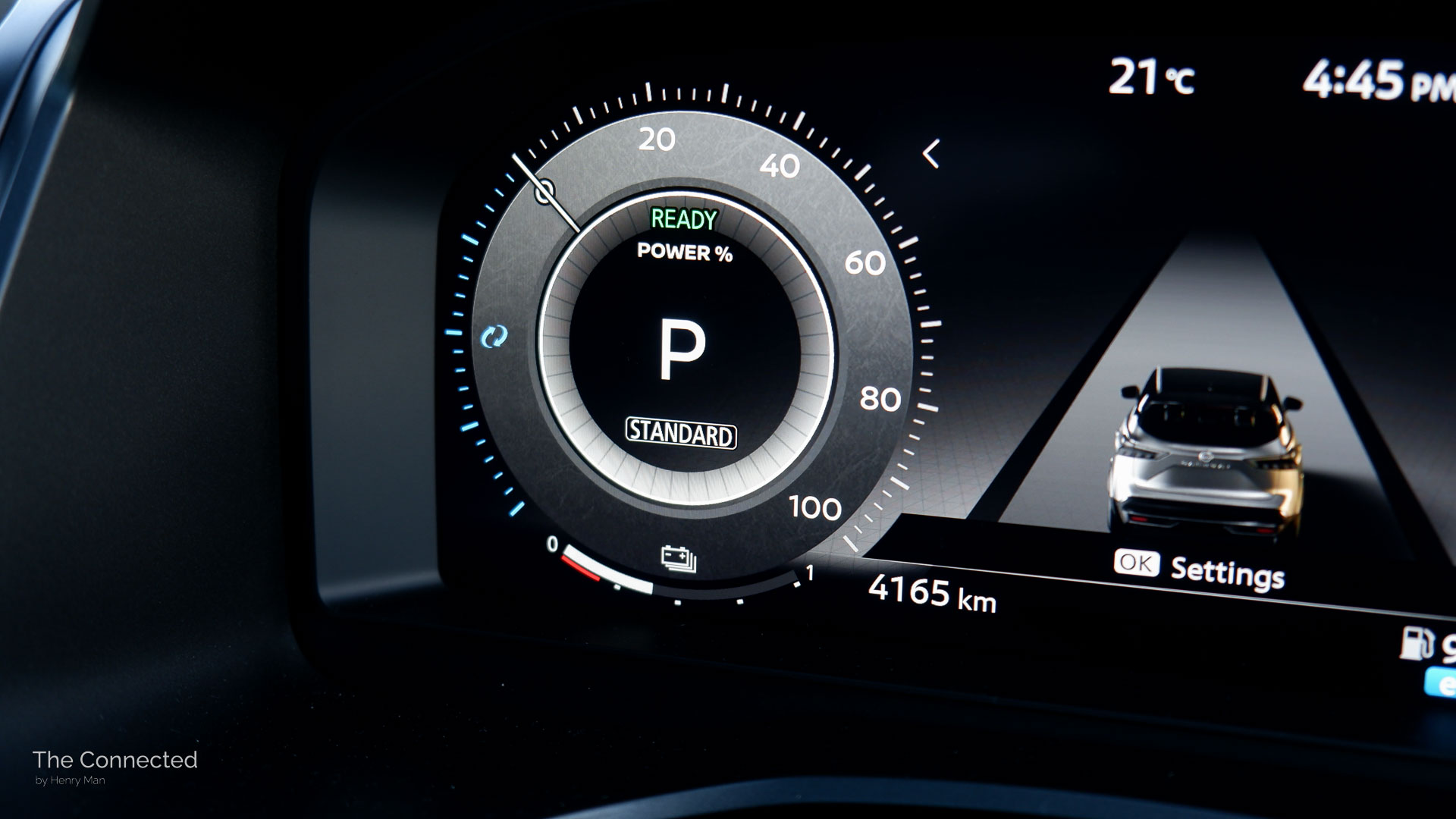
Meanwhile, some graphics have been updated on the 12.3-inch driver instrument display, which provides a range of different pages and views.
It’s also confidence-inspiring that the instruments show when the rear brake lights are illuminated, which is especially useful with the e-Pedal regenerative braking system enabled.
A large head-up display clearly projects the speed, safety and detected speed sign onto the windscreen.



New for the facelifted model is Nissan Connected Car Services with a mobile app, which is disappointingly quite barebones in functionality. It can unlock/lock the doors, sound the alarm, check the vehicle location and remaining fuel levels, yet it can’t remotely start the climate control – a key point for having an app.
Another compromise for opting for the sporty-looking N-Design flagship is the step back to the standard six-speaker stock system, rather than the 10-speaker Bose on the Ti-L, even though it sounds decent for what it is.

Safety.
2026 Nissan Qashqai N-Design e-Power safety features:
| Front AEB with vehicle/pedestrian/cyclist/junction turning detection | 360-degree camera system |
| Rear AEB | Front and rear parking sensors |
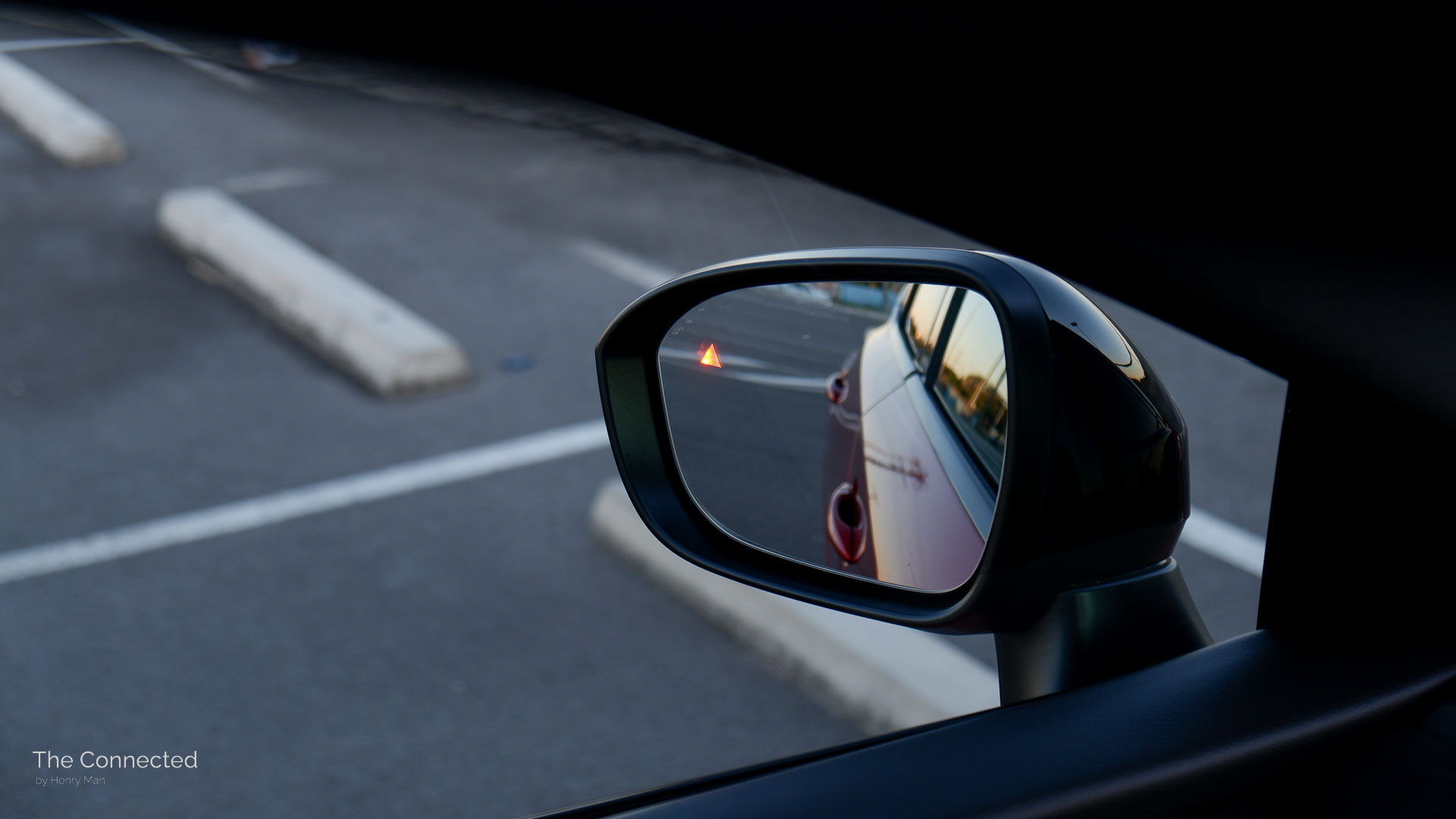
| Blind-spot assist | Road sign detection |
| Rear cross-traffic assist | Remote vehicle location tracking |
| Lane-keep assist | Full LED headlights with auto adaptive high beam function |
| Adaptive cruise control and lane-centring assist (Nissan ProPilot) | Full LED tail-lights |
The Nissan Qashqai comes with a range of subtle safety assists as standard, but some systems need work.
All safety warning sounds are gentle with a road sign detection system that doesn’t constantly chime and no annoying driver attention monitoring camera either.
We found that Nissan’s ProPilot system isn’t as refined with later-than-ideal aggressive braking in response to the vehicle in front and assertive lane-centring assist that somewhat fights any driver input to what it thinks is the middle of the lane.
Furthermore, the lane-keep assist still brakes the inside wheel and slows down the vehicle too aggressively.


The 360-degree camera system is also unchanged with a low resolution, off-colour temperature, limited views, and cuts out when driving faster than 20km/h.
Unfortunately, the top-spec N-Design again compromises on not having Nissan’s quick and nifty auto parking assist system, which is featured on the Ti-L.
The Nissan small SUV’s full LED headlights are fantastic with a reliable adaptive matrix high beam function on the N-Design.
It’s also commendable that there’s no way to turn off the automatic headlight function.
The 2026 Nissan Qashqai has the same five-star safety rating by the Australasian New Car Assessment Program (ANCAP) rating, albeit under 2021 testing criteria.

Range and fuel consumption.
2026 Nissan Qashqai N-Design e-Power fuel and efficiency specs:
| Claimed driving range (combined cycle) | 1145km |
| Claimed fuel efficiency (combined cycle) | 4.8L/100km |
| Battery size and type | 2.1kWh lithium-ion battery |
| Fuel tank size | 55 litres |
| Minimum fuel quality requirement | 91 RON unleaded petrol (95 RON recommended) |
| Claimed CO2 exhaust emissions (combined) | 112g/km |
| European emissions compliance | Euro 6 |
The Nissan Qashqai e-Power achieved an average fuel efficiency of 5.6L/100km after a week of mixed urban and highway driving.
Therefore, expect around 982km of real-world driving range from its 55-litre fuel tank. Pricier 95 RON premium unleaded petrol is recommended for the turbocharged engine.
While the Qashqai e-Power hybrid isn’t the most fuel efficient in the segment, it is more rewarding to drive with a series-only hybrid system.
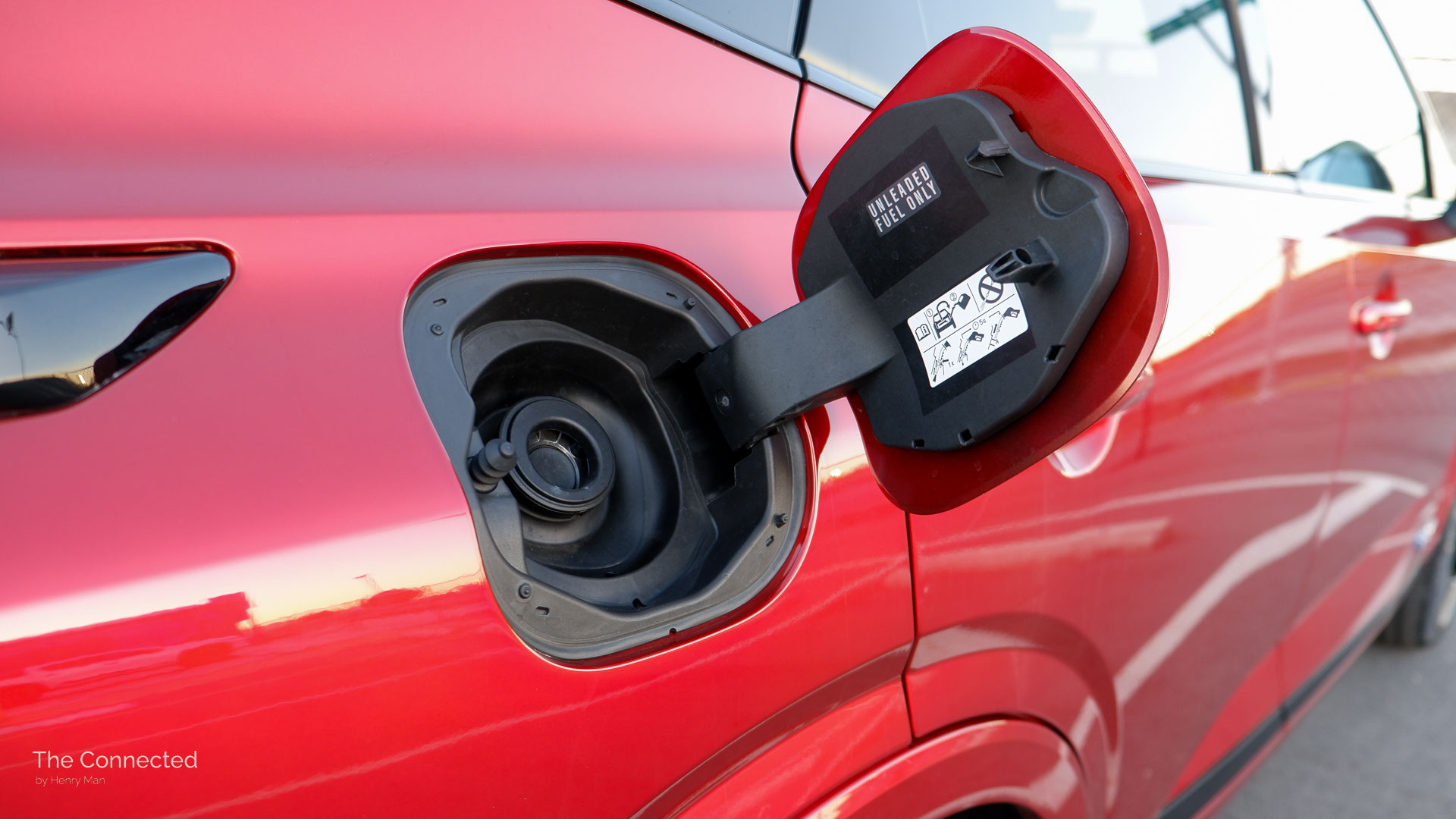
Importantly, a the key advantage of the Qashqai e-Power compared to its hybrid SUV rivals is no reduction to the fuel tank size compared to regular petrol-powered models.
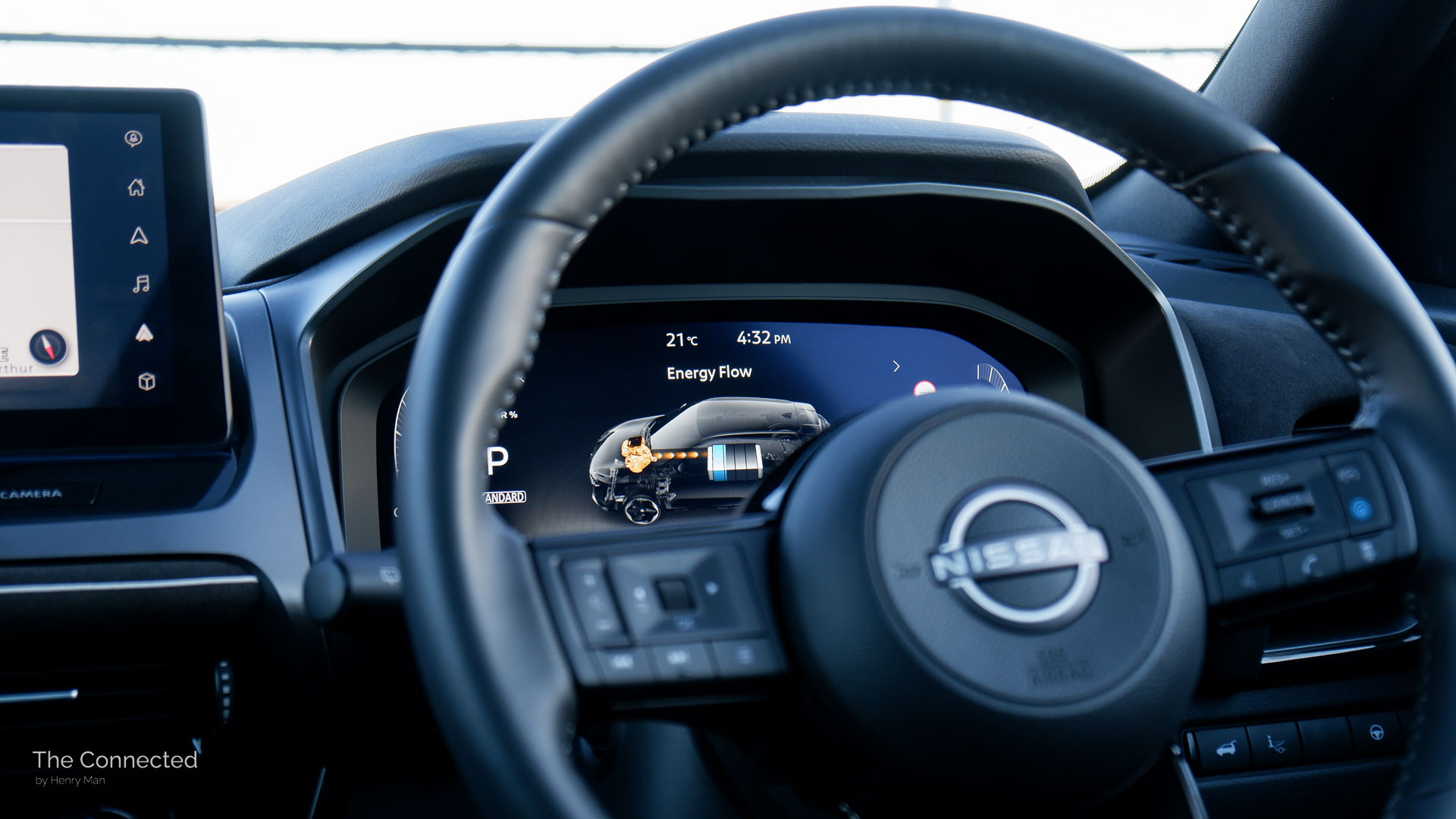

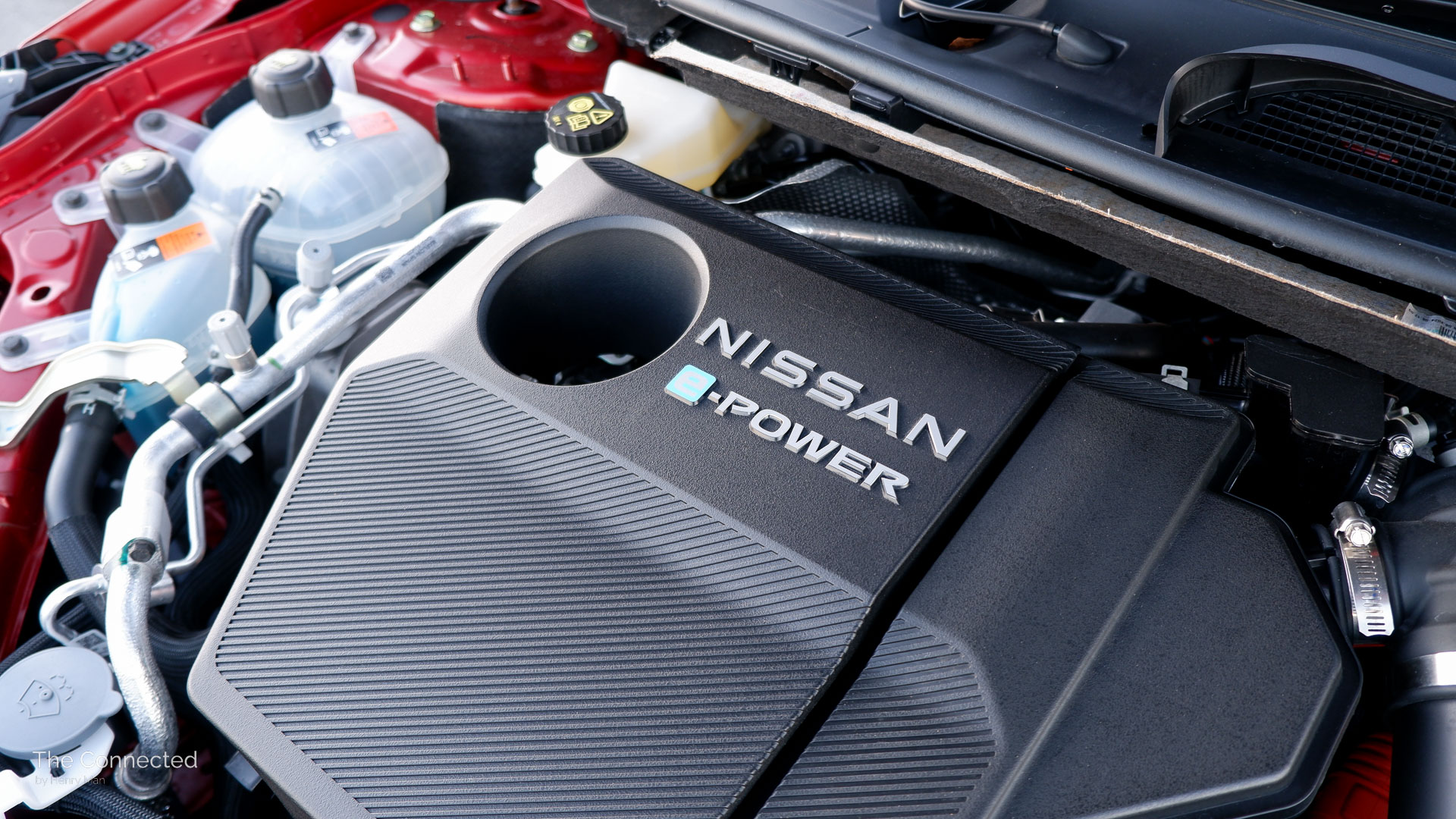
No plug-in charging is required with the small 2.1kWh battery charged via the engine and regenerative braking.
It’s worth noting that Nissan has confirmed a third-generation e-Power system is coming next year, with better claimed fuel efficiency at 4.5L/100km on the WLTP combined cycle, up to 10kW more power, and improved noise insulation.
The fuel lid is accessible via the rear-right quarter side of the vehicle and is capless.
Driving.
2026 Nissan Qashqai N-Design e-Power powertrain specs:
| Engine and electric motor | 1.5-litre turbocharged in-line three-cylinder petrol engine and permanent magnet synchronous motor |
| Power | 140kW |
| Torque | 330Nm |
| Transmission | Single-speed auto |
| Drive type | FWD |
| Kerb weight | 1732kg |
| Turning circle | 11.1 metres |
| Payload | 448kg |
| Towing (unbraked / braked) | 750 / 750kg |
The Nissan Qashqai e-Power hybrid continues to be an enjoyable to drive SUV with an EV-esque experience.
Unlike traditional hybrids, Nissan’s second-generation e-Power is a series-only hybrid system.
The turbocharged petrol engine is used as a generator only to charge a small battery to power a front-mounted electric motor, making up to 140kW of power and 330Nm of torque via a single-speed automatic transmission.
The result is the closest driving experience to a proper full electric vehicle, without plugging in required with instant and smooth acceleration – even though it’s more brisk than rapid – and well-tuned gradual regenerative braking with the e-Pedal feature enabled.

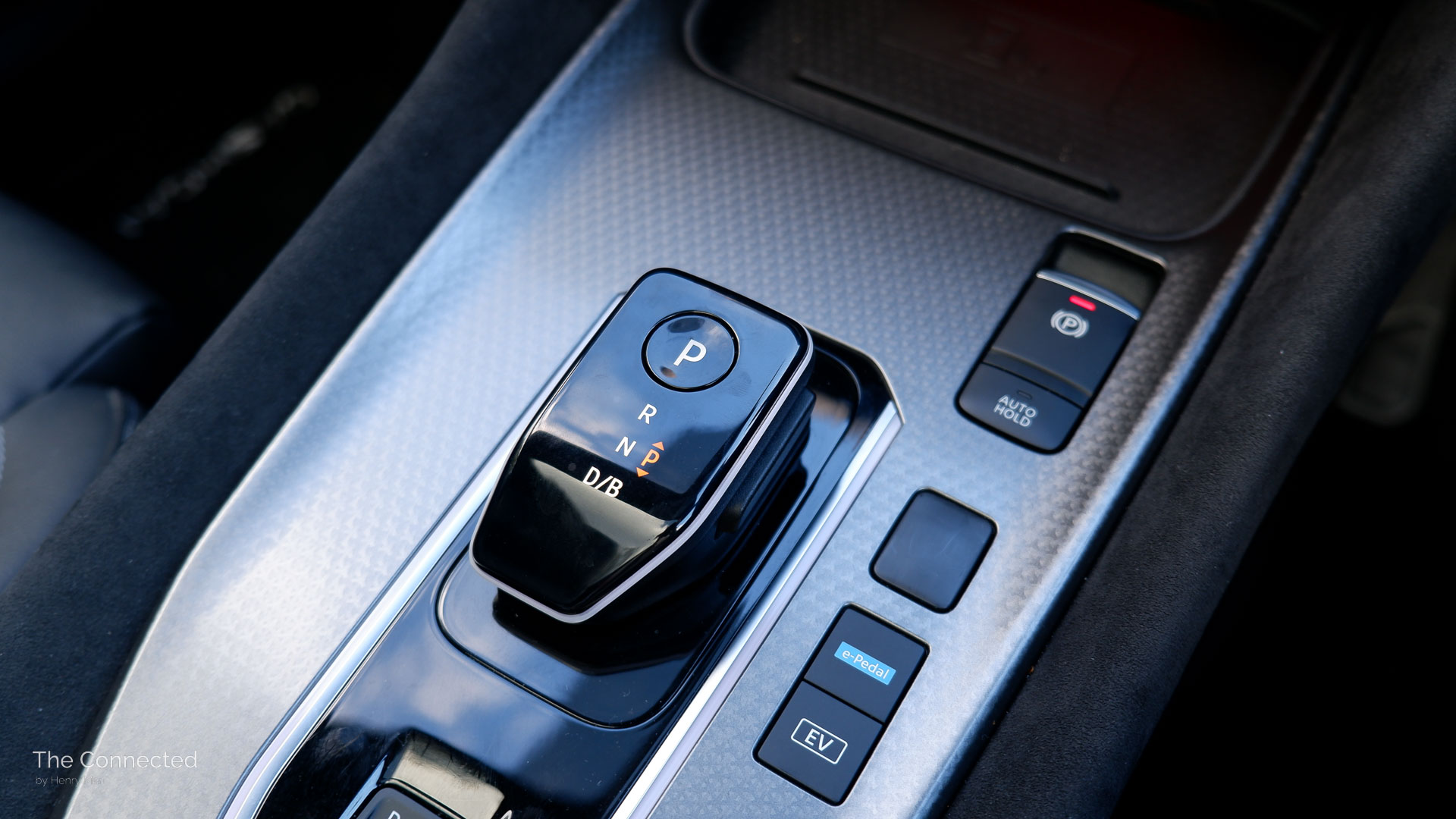
Yet, e-Pedal turns off every time you start the car and cuts the regen when travelling below 15km/h. The blended brake pedal is somewhat stiff, too.
The engine activates randomly and is constantly on at high speeds to charge the battery, but it’s almost imperceptible with good firewall insulation and minimal vibration felt in the cabin – at least while driving.
While the Qashqai isn’t overtly sporty to drive, the smooth powertrain brings some enjoyment with a well-weighted steering wheel.

Additionally, the Qashqai provides good noise insulation and ride comfort, even if the N-Design’s large 20-inch wheels result in some firmness when going over bumps.
All-round visibility is good with a fittingly high driving position for a crossover SUV, unlike rivals such as the Volkswagen T-Roc and Mazda CX-30.
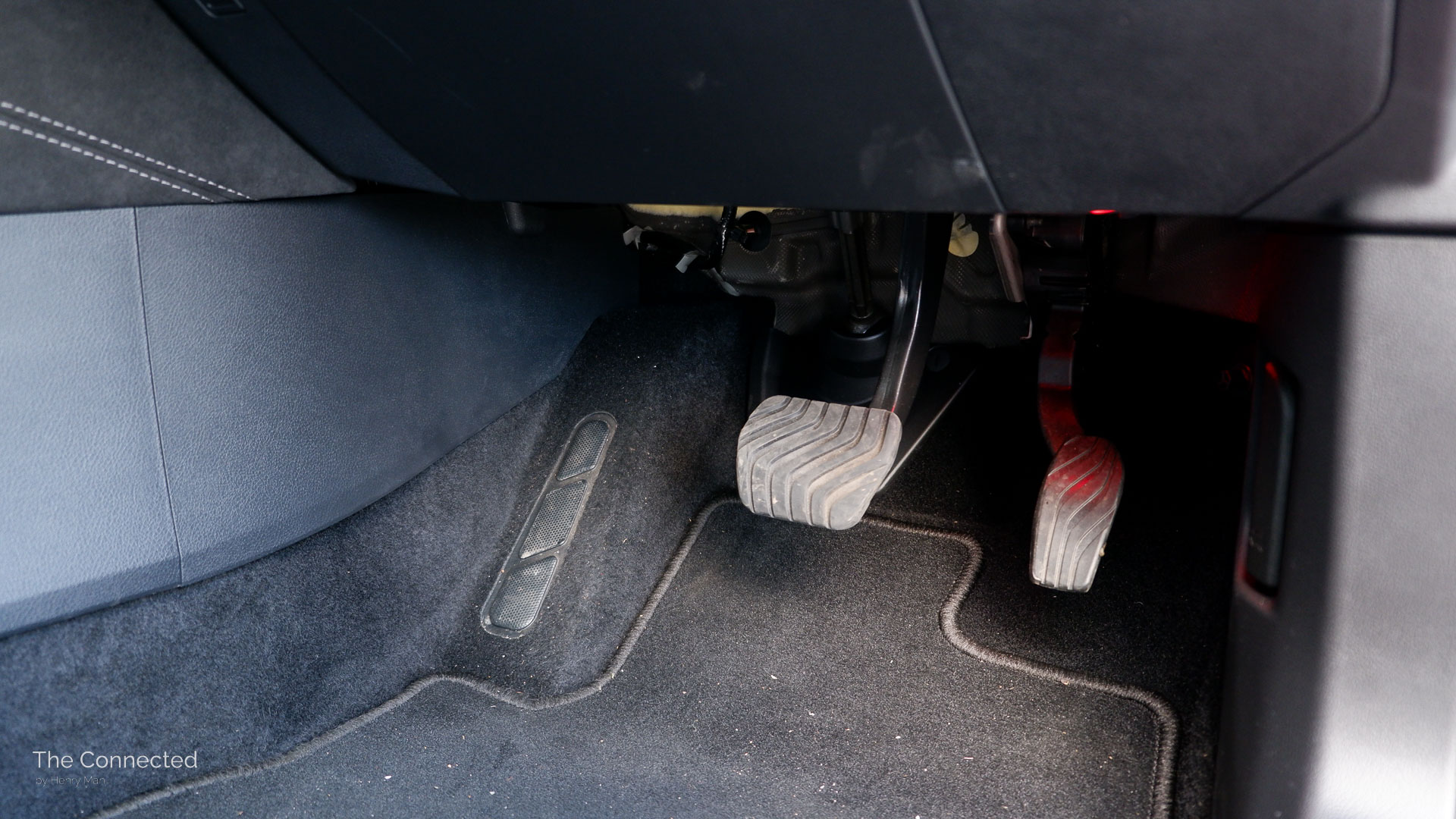
However, the driver’s footrest pedal was narrower than ideal for my large-sized shoes.
Warranty and servicing.
2026 Nissan Qashqai N-Design e-Power capped-price servicing costs:
| 1 year/15,000km | 2 years/30,000km | 3 years/45,000km | 4 years/60,000km | 5 years/75,000km |
| $399 | $399 | $399 | $399 | $399 |
The 2026 Nissan Qashqai is backed by a 10-year/300,000km conditional vehicle warranty and an eight-year/160,000km battery warranty.
The former requires servicing with a Nissan dealer every time, otherwise the vehicle warranty is limited to five years, unlimited kilometres.
Servicing is required every one year/15,000km (whichever occurs first) with prices capped for the first five visits. After the first five years/75,000km, it’ll cost $1995 to service in total.
The electrified Qashqai e-Power hybrid costs the same to maintain as regular petrol-only models.
Up to 10 years/300,000km of roadside assistance is provided, on the condition owners service it with Nissan.
Nissan Connected Car Services are included with all Qashqais, but Nissan Australia hasn’t disclosed whether there is a time limit to the free service.
A temporary space-saver spare tyre is included on most Qashqai variants underneath the boot floor, except the Ti-L e-Power which only has a patch-up goo kit.

Price and rivals.
2026 Nissan Qashqai model range pricing (accurate as at the time of publication):
| ST | ST-L | Ti | Ti e-Power | Ti-L | Ti-L e-Power | N-Design e-Power |
| From $34,665 before on-road costs | From $38,665 before on-road costs | From $42,965 before on-road costs | From $47,165 before on-road costs | From $48,165 before on-road costs | From $52,365 before on-road costs | From $54,365 before on-road costs |
The 2026 Nissan Qashqai e-Power is priced from $47,165 before on-road costs in Australia.
Five variants are available and only three models can be had with the second-gen e-Power hybrid powertrain.
Nissan’s e-Power system requires a premium of $4200 over the equivalent regular petrol-powered model.
Only the Ti and above are available with the hybrid technology for now, with an update next year to potentially expand it across the line-up. The new top-spec N-Design is hybrid only.
All colours except Magnetic Blue costs $995 more, as well as two-tone colours which are available on select variants.
The 2026 Nissan Qashqai e-Power directly rivals the following hybrid small SUVs:
- Hyundai Kona Hybrid (full review)
- Toyota Corolla Cross Hybrid
- Honda ZR-V e:HEV
- MG ZS Hybrid+ (full review)
- GWM Haval Jolion Hybrid
Other alternatives to the Qashqai e-Power include:
- Volkswagen T-Roc (full review)
- Mazda CX-30 (full review)
- Leapmotor C10 (full review)
- Geely EX5
- BYD Atto 3
- Hyundai Tucson Hybrid (full review)
- Kia Sportage Hybrid (full review)
Would I pick the 2026 Nissan Qashqai N-Design e-Power?
The refreshed Nissan Qashqai e-Power improves upon an already super impressive, practical and fuel-efficient SUV that’s been underrated in Australia.
A sharper and more modern design, new tech and brighter interior LED lights improve upon an already excellent small SUV with a spacious interior, smooth series hybrid powertrain, and good fuel efficiency.
But despite minor tech improvements, some weaknesses persist with the new Android Automotive software nowhere to be seen in Australia, and a sub-par adaptive cruise control and lane-centring tune.
The new top-spec N-Design has also pushed the Qashqai’s up into the medium SUV territory at around $60K – while omitting key flagship features with a compromised boot compared to the cheaper Ti-L.


I’d pick the mid-spec Qashqai Ti e-Power, which includes most key features and the hybrid powertrain for less than $50K.
However, it may be worth waiting for the third-gen e-Power – due next year where the entire Qashqai range may go hybrid-only – to benefit from a power boost, better fuel efficiency and improved noise insulation.
This British-made, Japanese SUV is simply a great underrated all-rounder family car.
Photographs by Henry Man
READ MORE: Nissan e-Power hybrid review
READ MORE: 2025 Hyundai Tucson Hybrid review
READ MORE: 2026 MG ZS Hybrid+ review
Pros:
- Smooth EV-like driving
- Good fuel efficiency, same fuel tank size
- Spacious and family-friendly
- Upgraded LED interior lights
- Long 10-year conditional warranty
Cons:
- Dated tech, no Android Automotive in Australia
- N-Design features and boot compromises
- Expensive price for the top-spec
- Adaptive cruise isn’t as refined
- Third-gen e-Power is coming soon
About the Author.
Henry Man is an independent content producer passionate about the intersection of technology and transportation.
The former automotive journalist is focused on producing critically-detailed vehicle reviews, and unique short-form content. Learn more.


 The Connected by Henry Man