
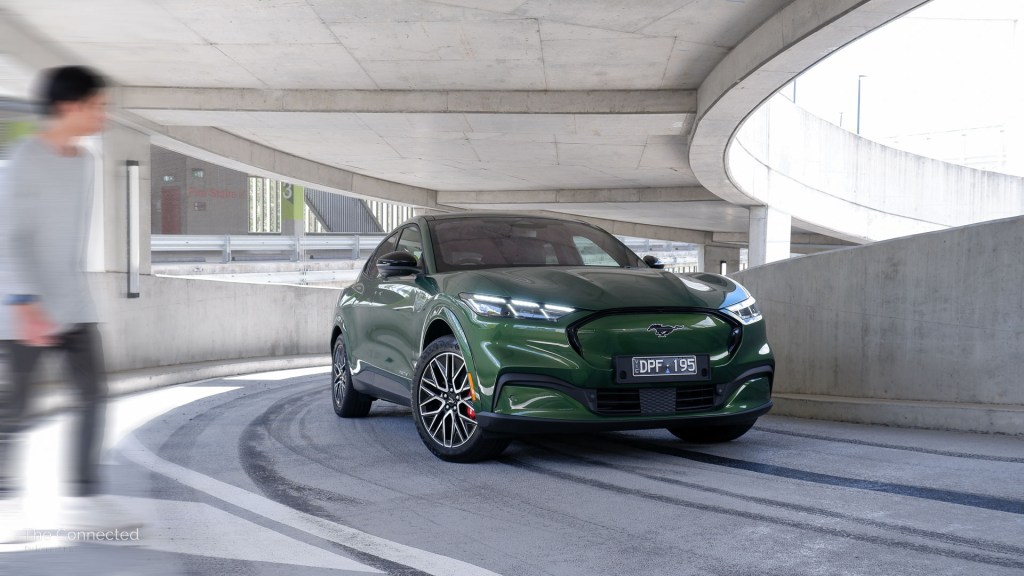
This is not a real Mustang, but the Mach-E is an exercise in bold and clever marketing.
The Ford Mustang Mach-E is a sporty, all-electric medium SUV completely unrelated to the three-door internal combustion engine muscle car that has been synonymous with the pony badge since the ‘60s.
The Mach-E recently received a minor update with the Cupra Tavascan, Kia EV6, and Tesla Model Y rival bringing more claimed driving range, a power bump, and design changes.
Despite a starting price that’s about $10K more than key midsize electric SUV rivals and the controversial badge, the Mustang Mach-E is still well worth considering if you want an EV that feels special.
NOTE: The press vehicle was provided by Ford Australia for a 14-day independent evaluation in total. Toll costs were covered, but we have no commercial arrangements with the company and it had no editorial control.

Pros.
+ Head-turning design and badge
+ Battery integration in CarPlay and AA
+ Excellent one-pedal driving on by default
+ Superb safety assists
+ Cheap servicing
Cons.
– Laggy software
– Firm ride
– Slow tested DC charging speed
– 360-degree cameras cut out too early
– Pricier than rivals
Vehicles tested:
| Model | 2026 Ford Mustang Mach-E | |
| Variant | Premium | GT |
| Starting price | $80,490 before on-road costs | $98,490 before on-road costs |
| Exterior colour | Eruption Green (+$700) | Molten Magenta (+$700) |
| Interior colour | Black onyx sensico artificial leather with red stitching (standard) | Performance grey Sensico artificial leather and Miko suede with metal grey stitching (standard) |
| Country made | Mexico | |
Design and quality.
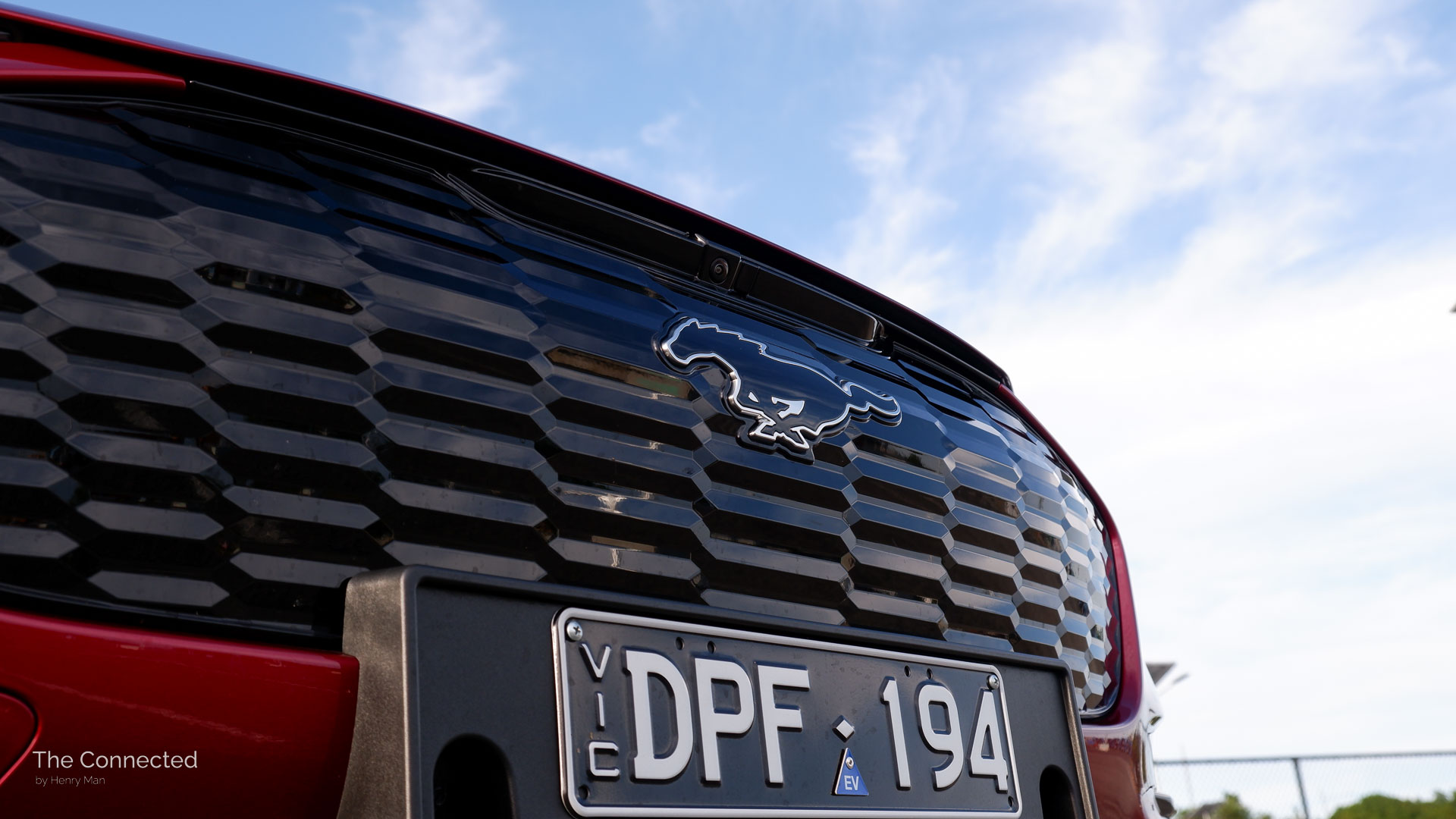
The Ford Mustang Mach-E may be controversial, but the badge just works.
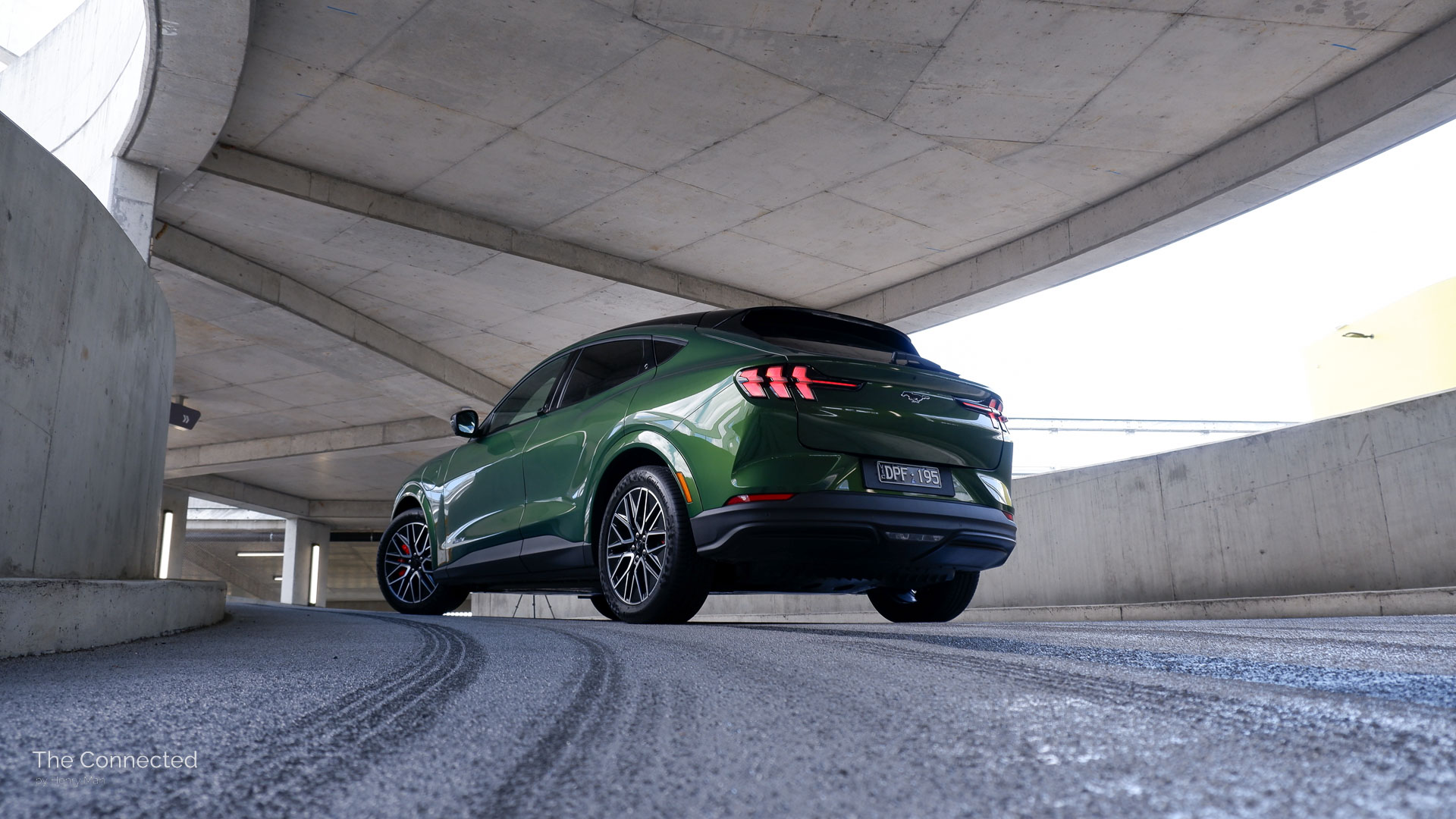
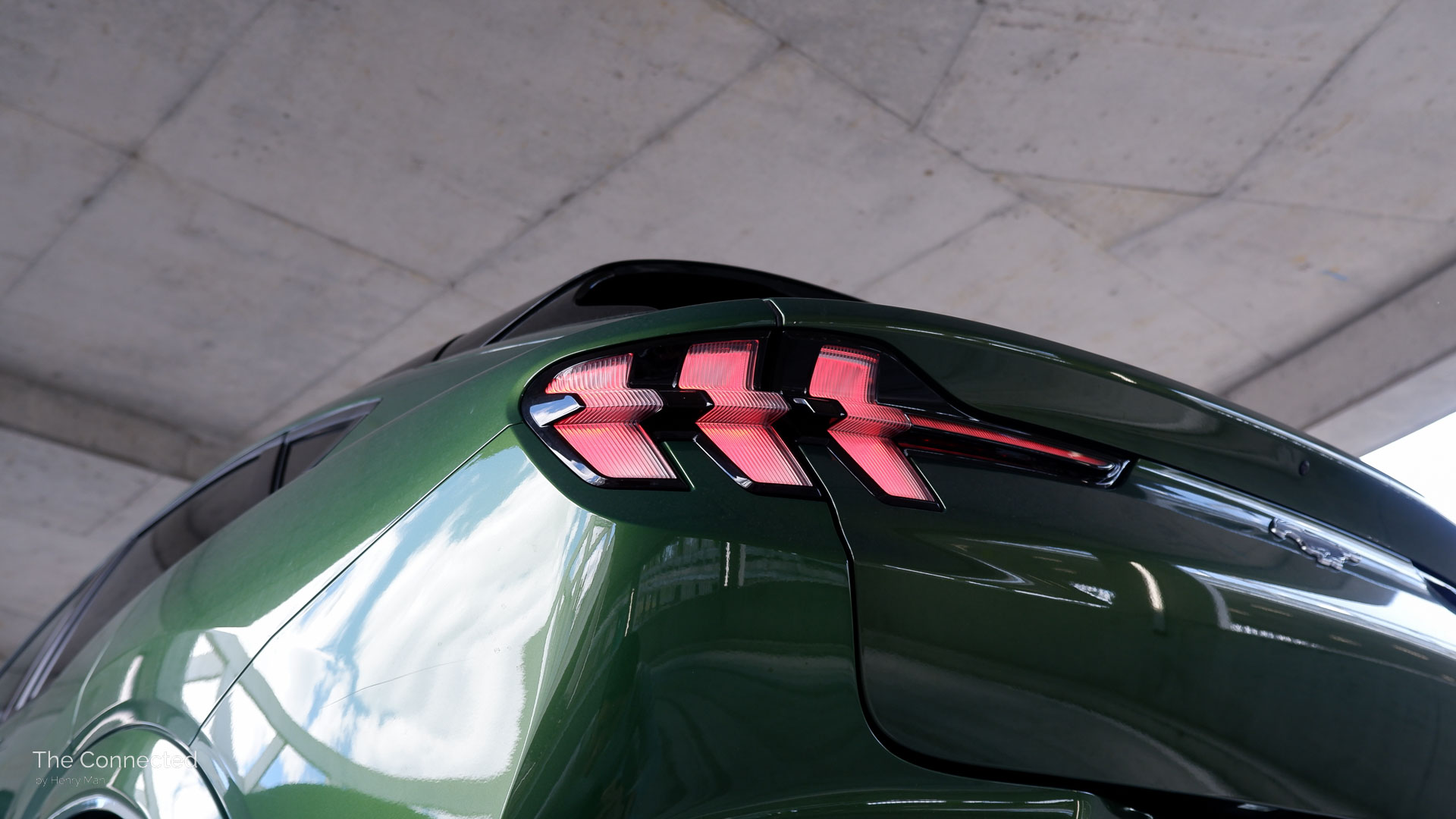
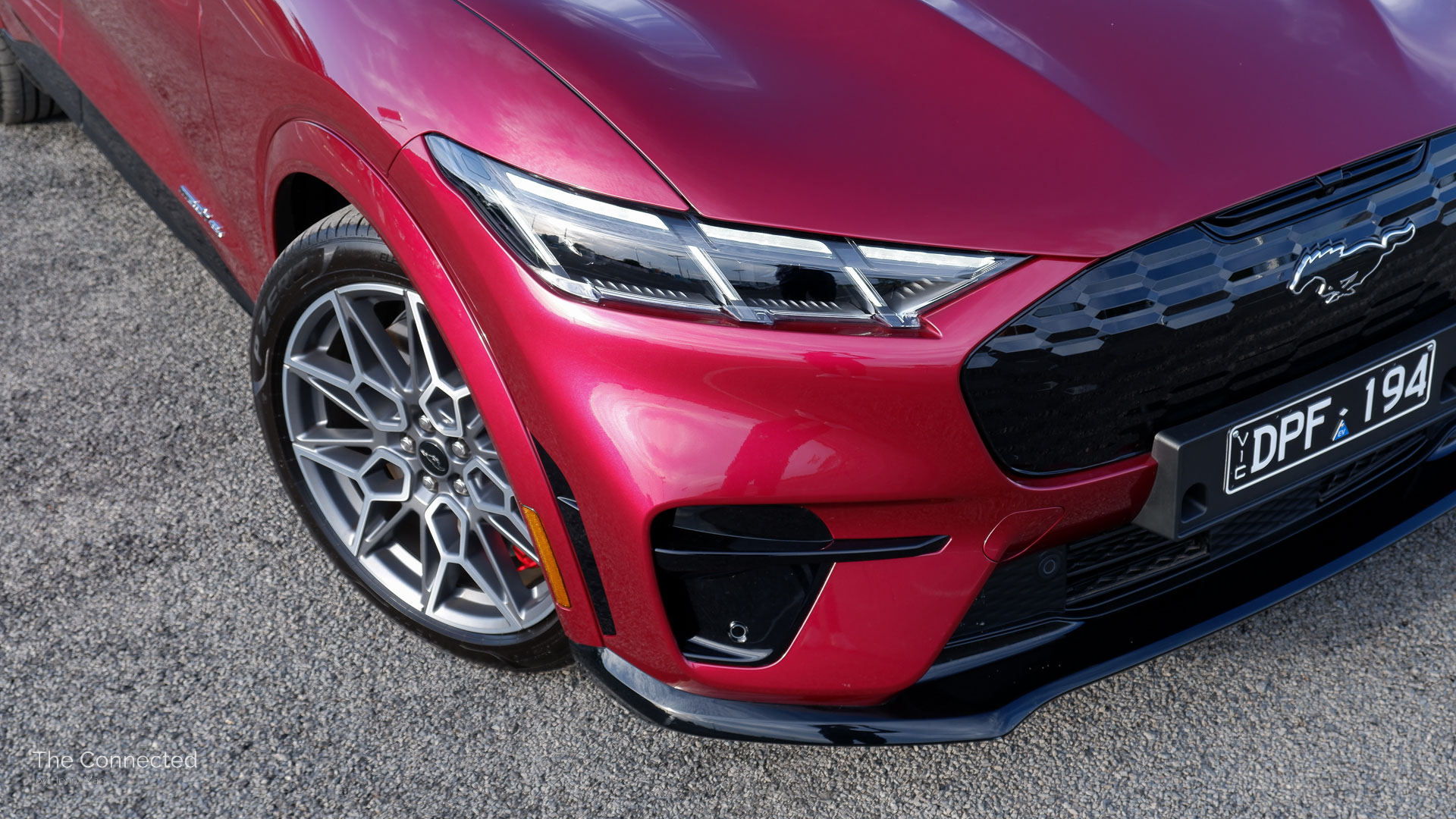
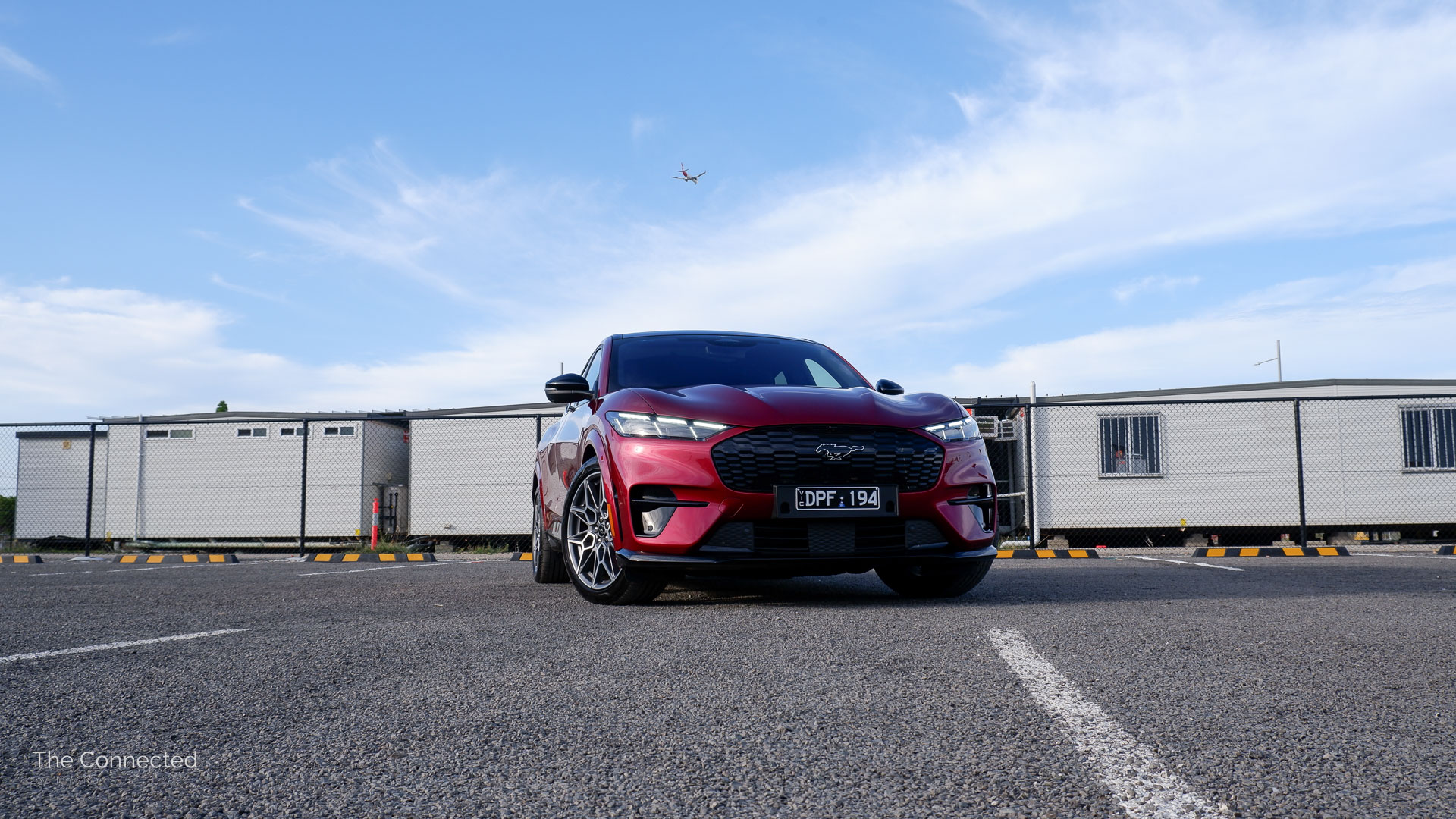
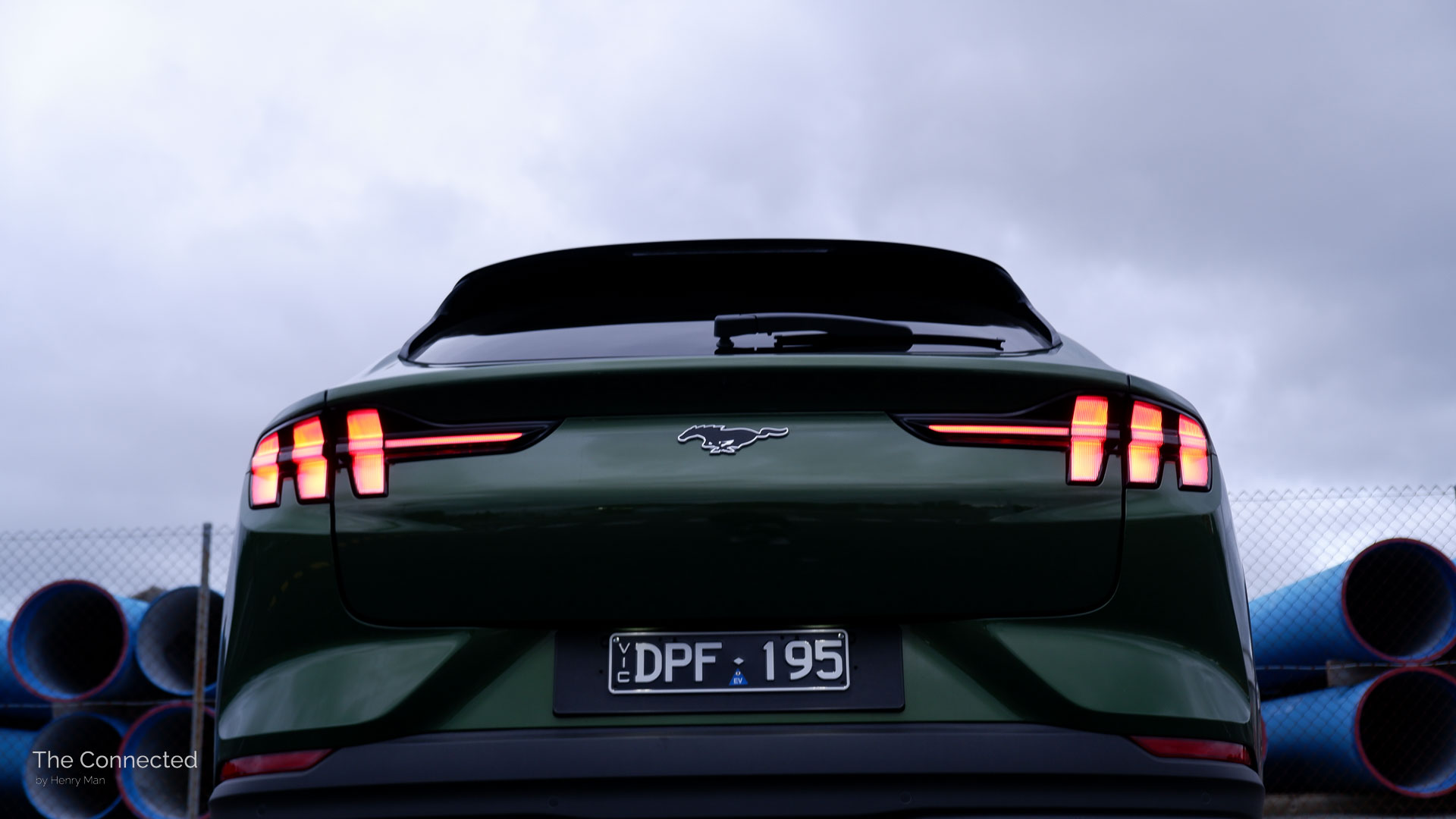
Whether for good or bad, there’s something that gets heads turning especially in Eruption Green (+$700) with the lack of Ford badging anywhere except on the top-centre of the windscreen, Mustang-esque rear lights with cool sequential indicators front and back, and a low-ish coupe SUV-style shape.
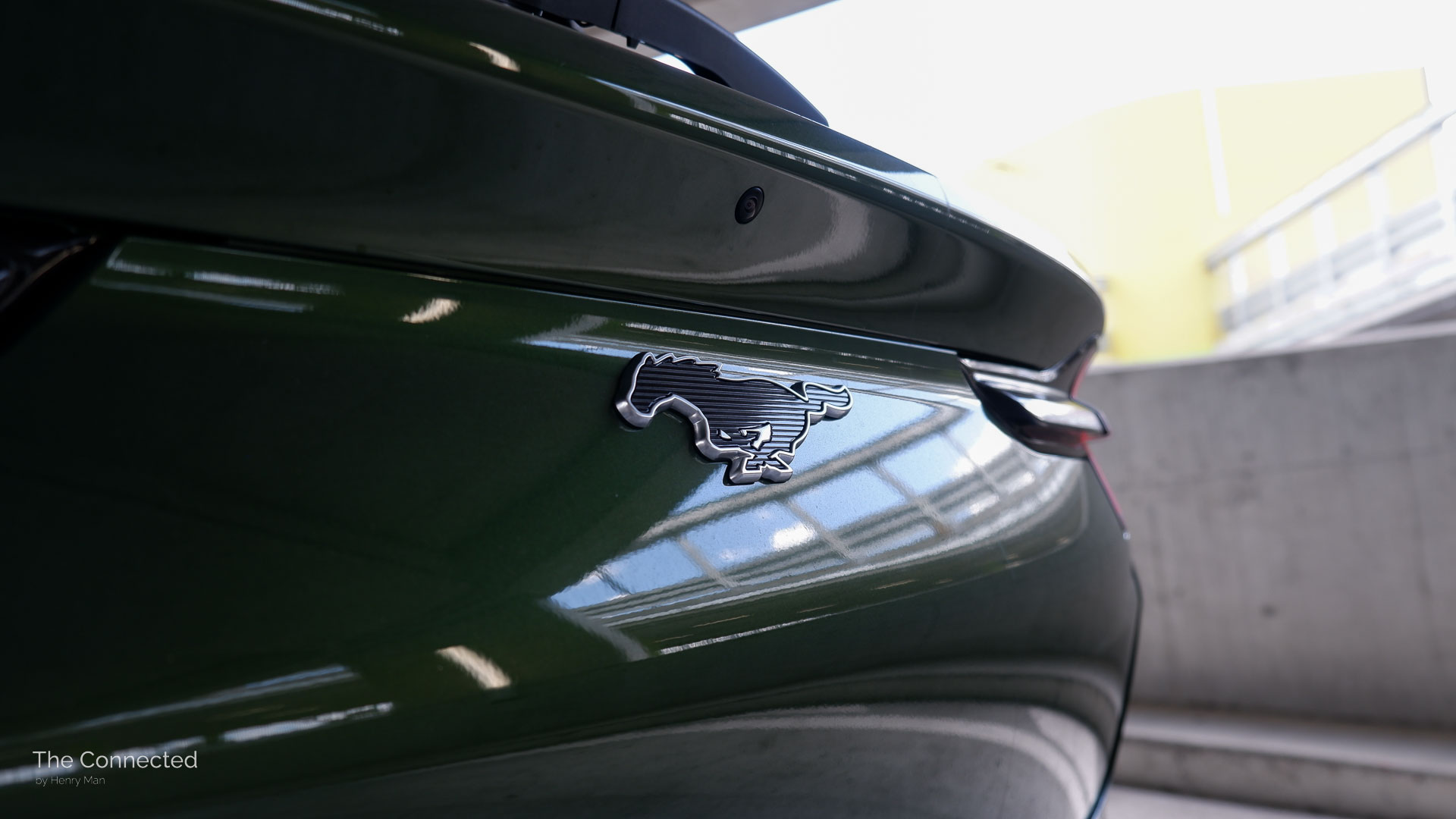
The Blue Oval likes to remind you a lot that this is a Mustang with lettering strewn on the door side sills, Pony logo across the exterior, illuminated puddle lights, in a touchscreen boot-up animation, and even under the bonnet.
Even a Harley-Davidson motorbike rider gave me the thumbs up on the road. Whether you like it or not, the pony badge does work.
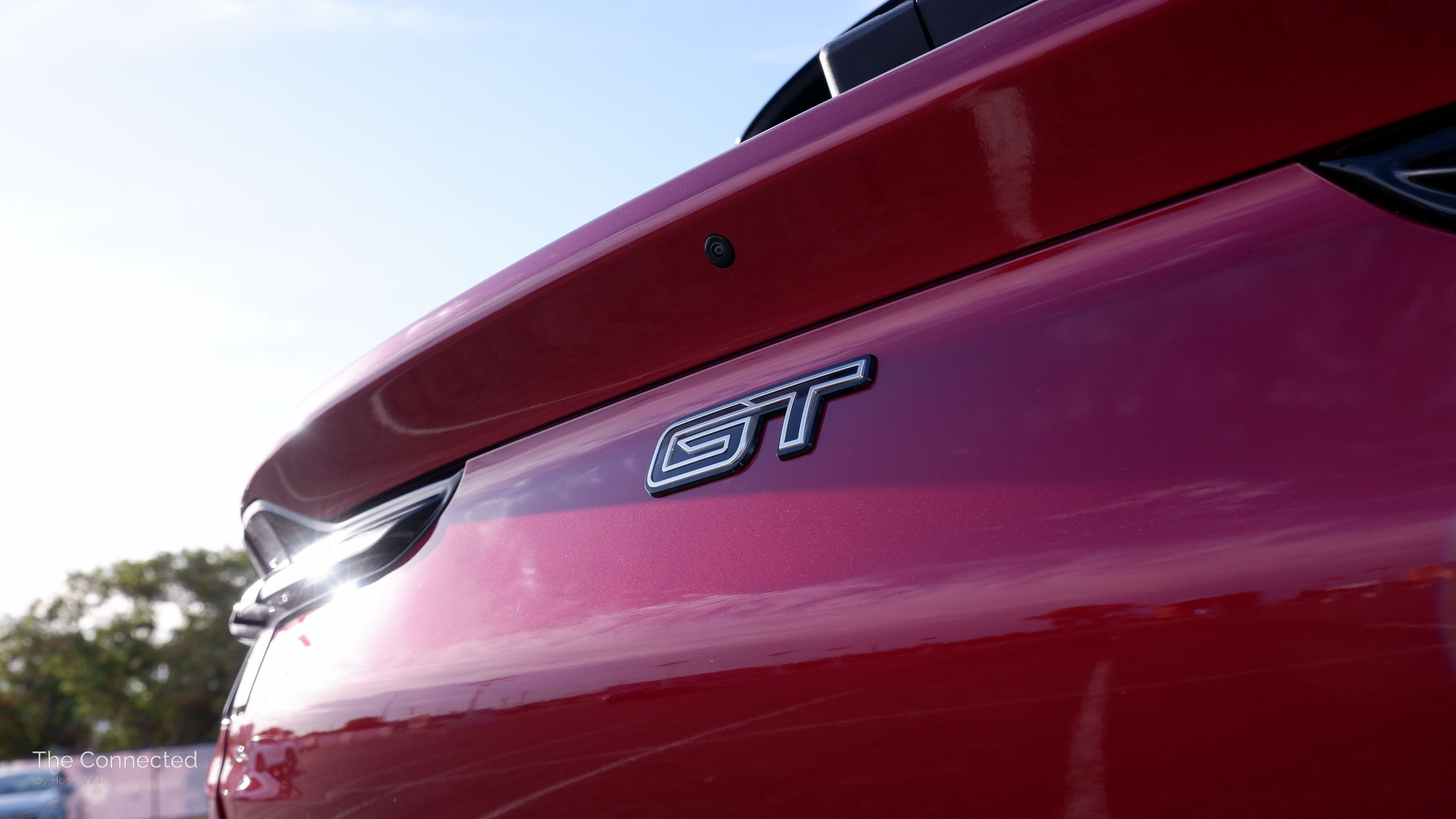
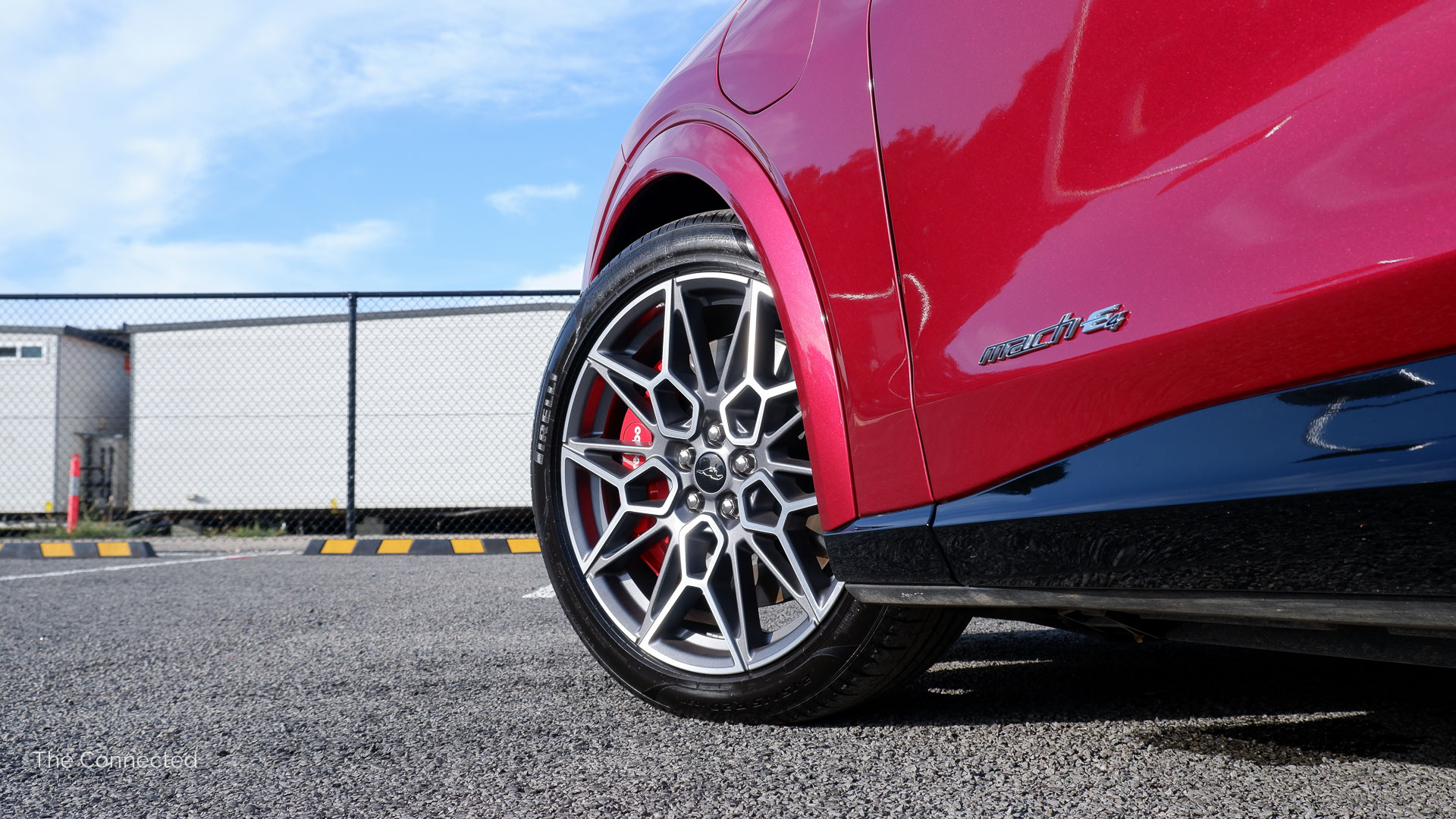
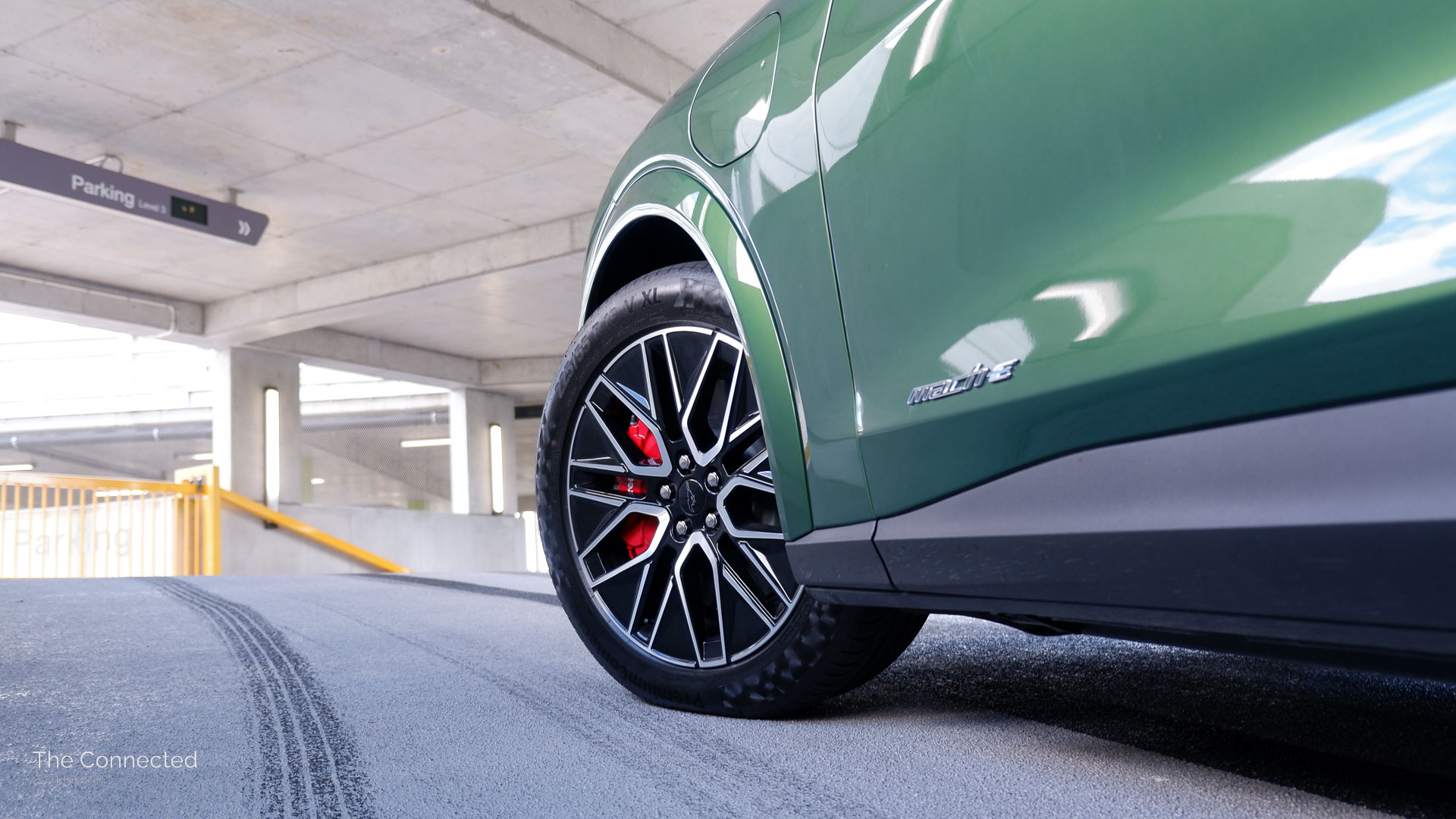
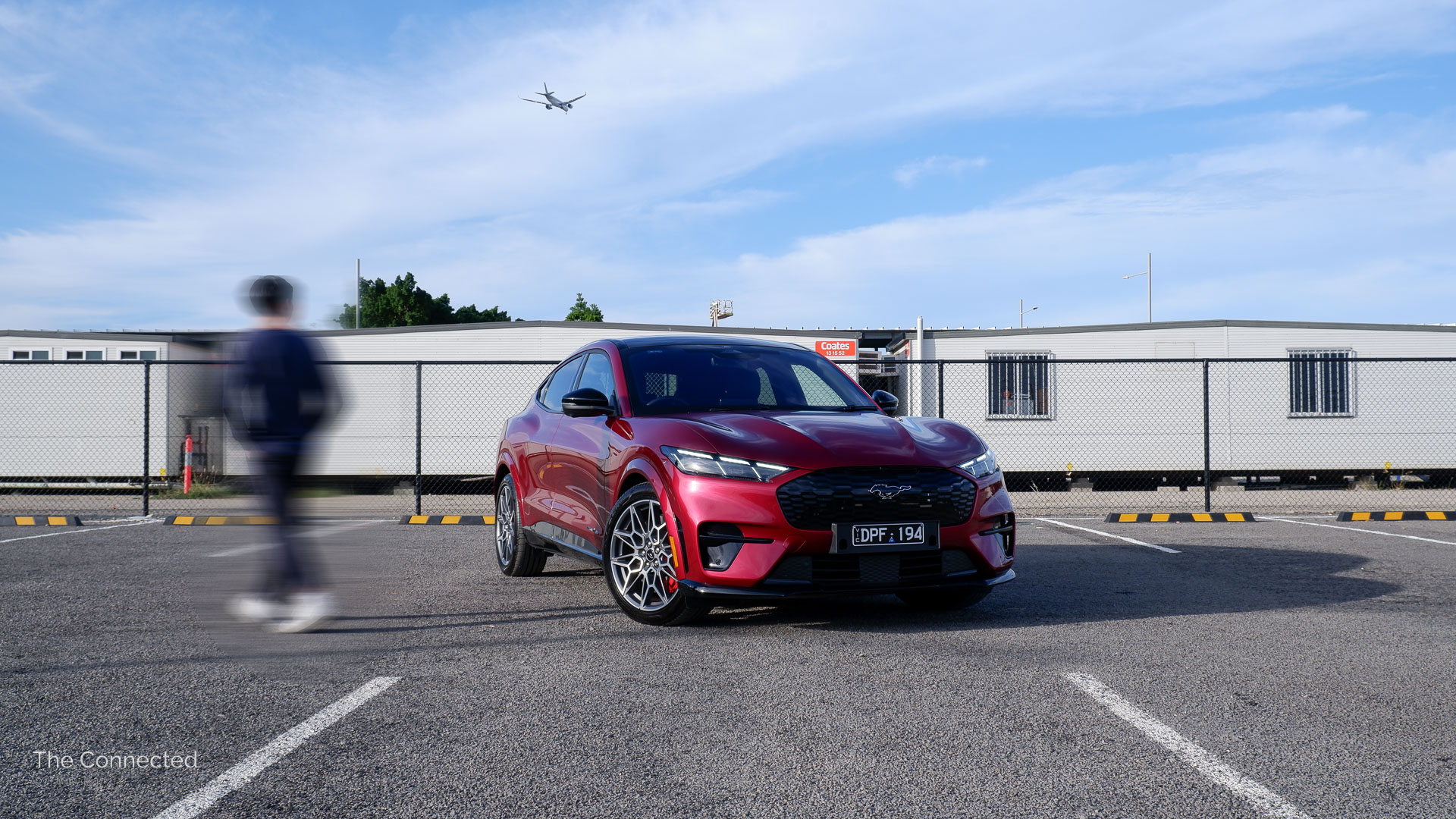
The performance-focused GT adds some boy racer bits including a gloss black extended front lip (which you’d want to be careful with), gloss black side skirts, 20-inch alloys with wider Pirelli P Zero sports tyres, unique front bumper with an air ducts (similar to the Telsa Model Y Performance), and Mach-E4 and GT badging.
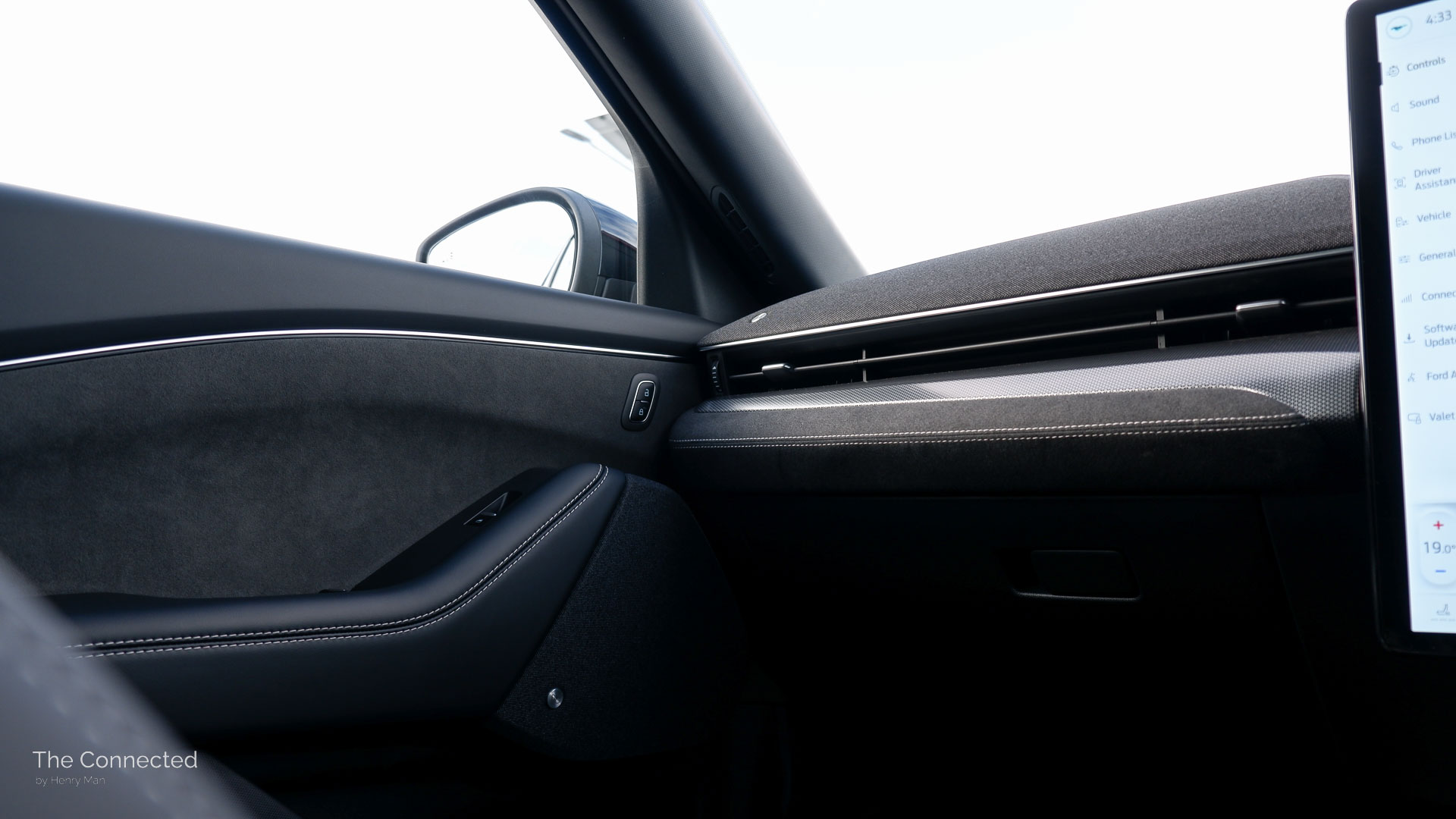
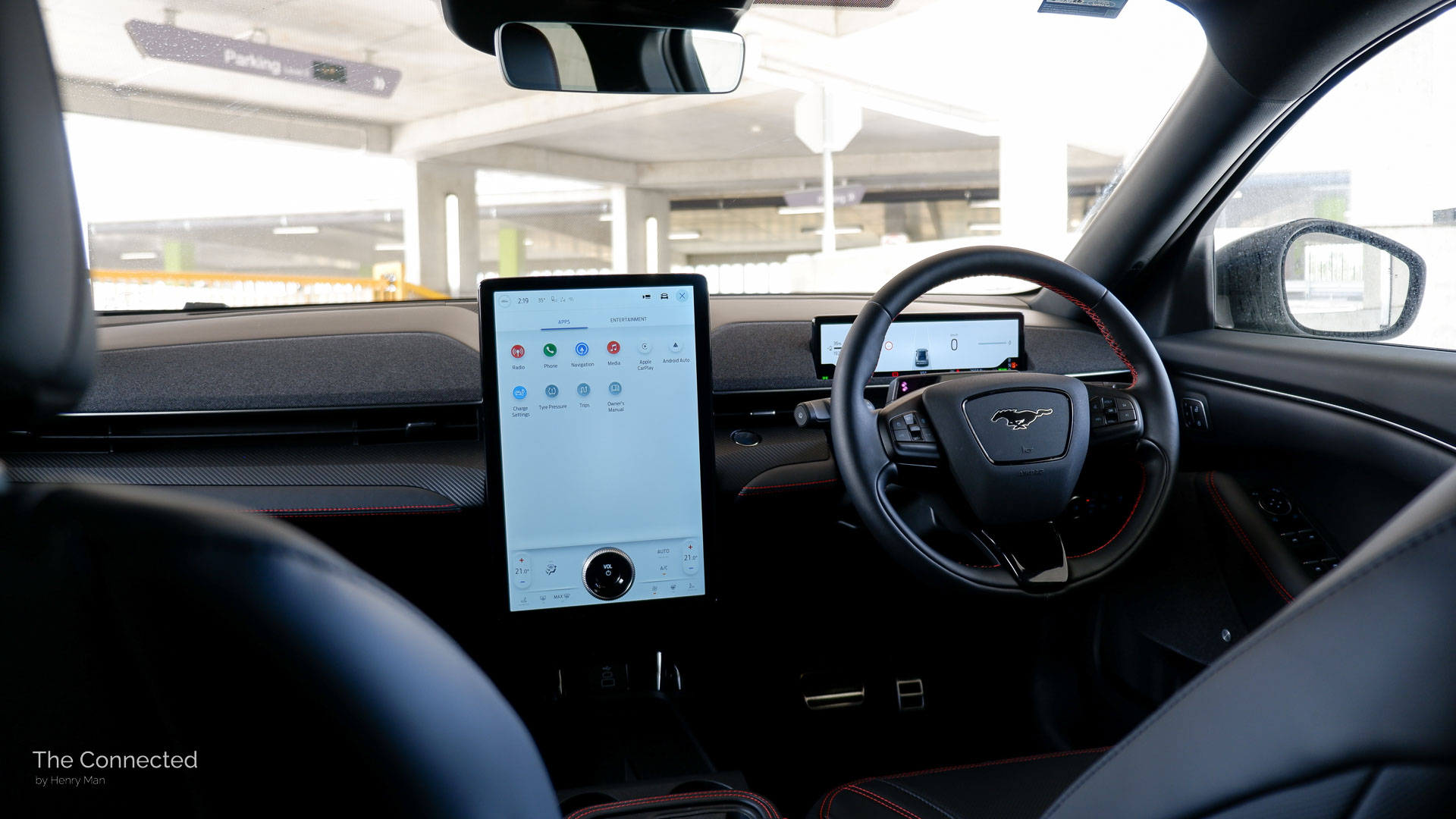
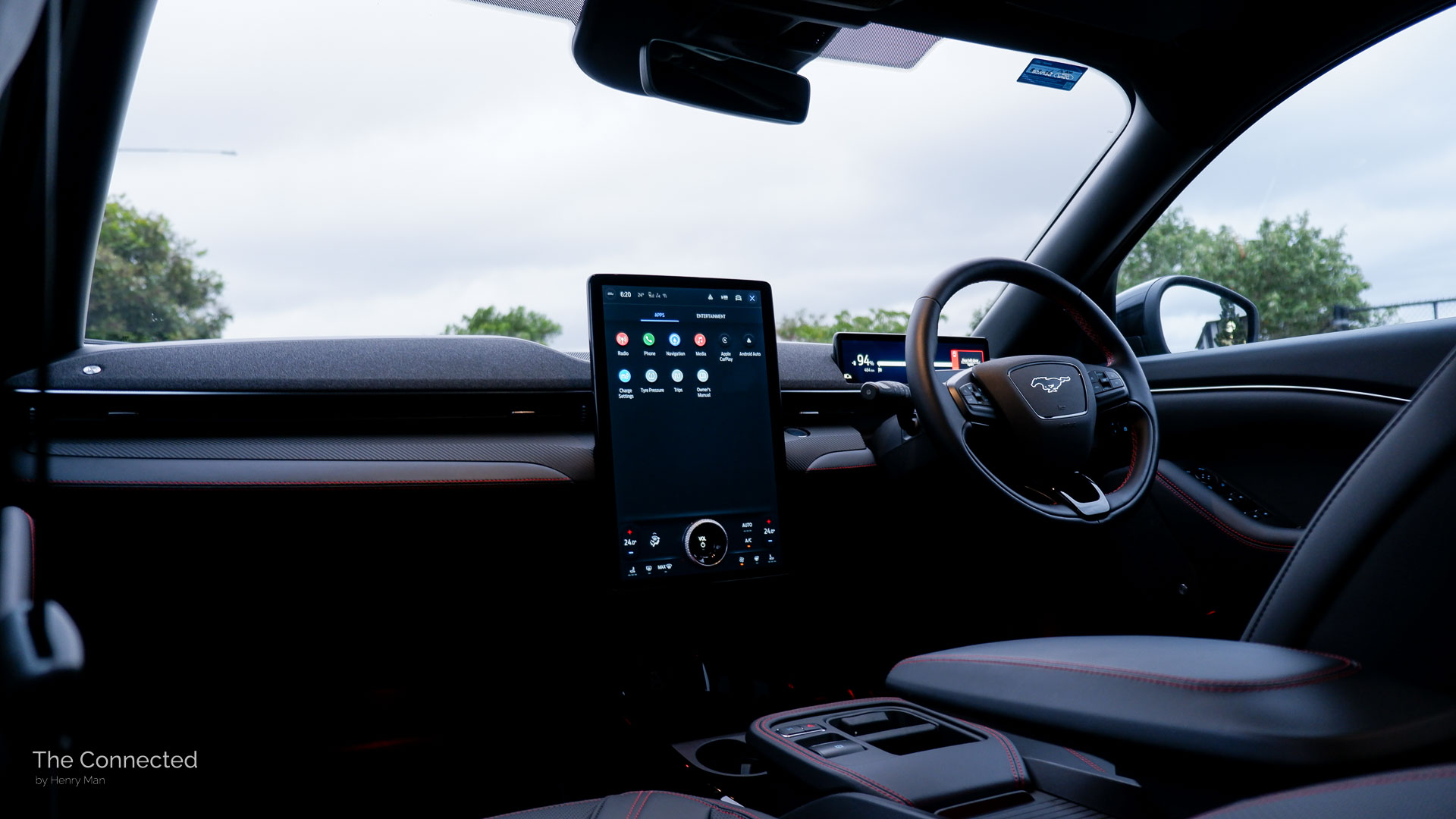
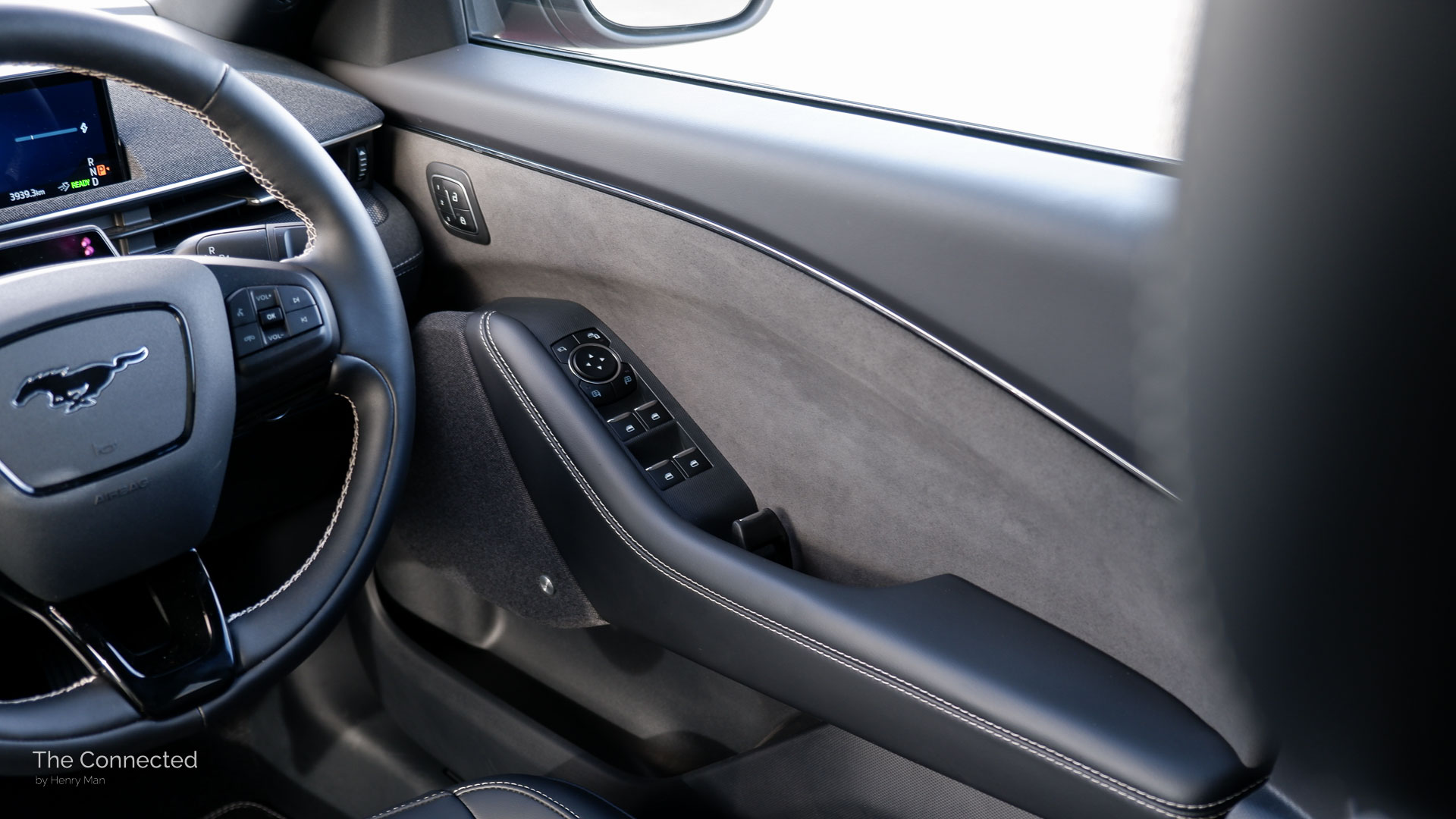
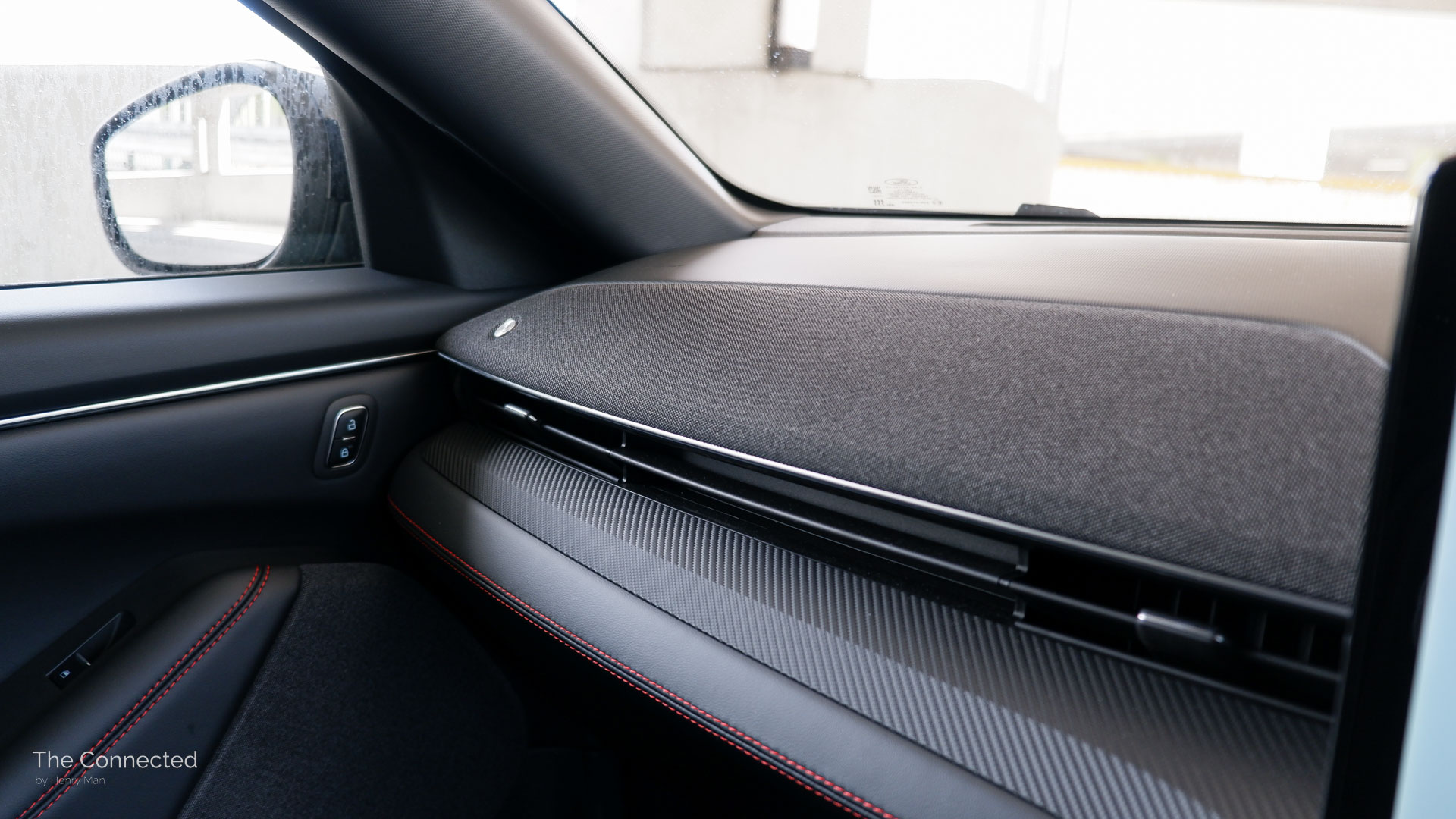
The stylish exterior is mated with a contemporary yet traditional-feeling interior in places dominated by a large vertical screen, gloss black surfaces, and a mix of Swedish-esque fabrics, leatherette, and convincingly a metal-look curved line on the doors.
However, Ford’s interior doesn’t particularly stand out compared to the uniquely modern Nissan Ariya and cyber-like Cupra Tavascan with an awkwardly redesigned centre console.
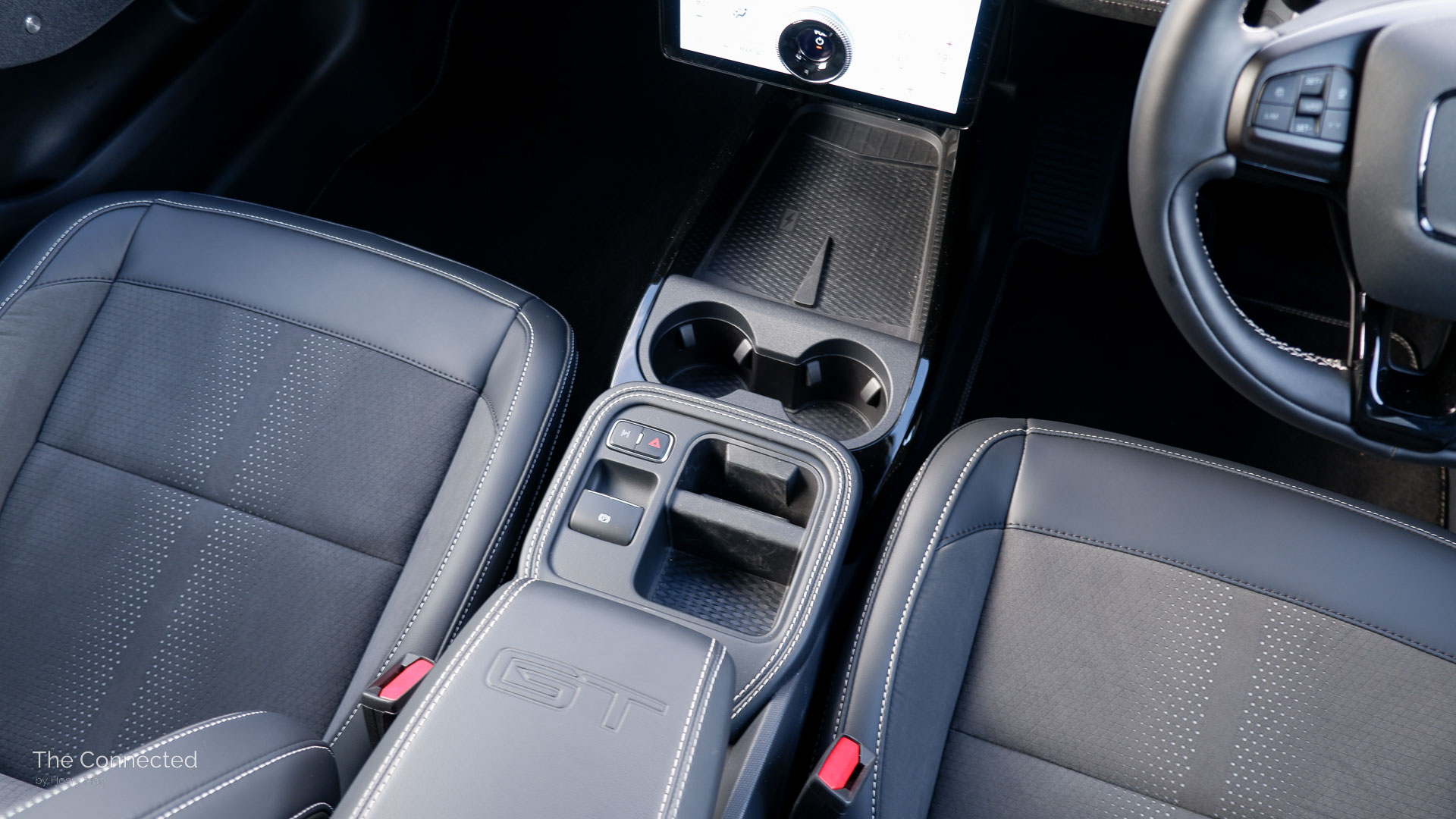
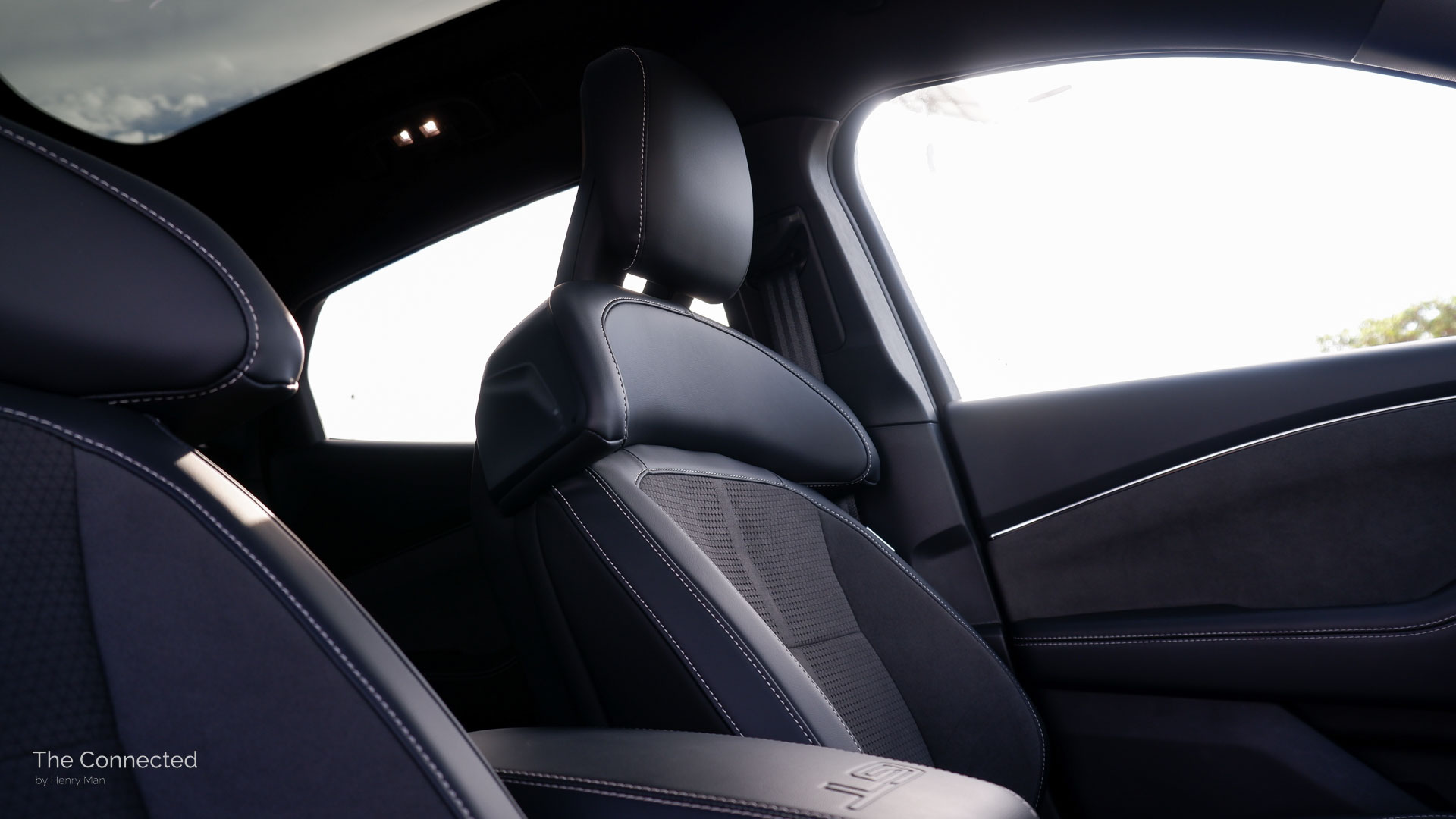
The flagship GT is comparatively more tame versus the Premium which forgoes its red stitching in favour of silver, but gains premium-feeling suede door cards, a suede dash panel, and ‘GT’ stamped onto the centre armrest – but the lack of alloy pedal covers are an oversight.
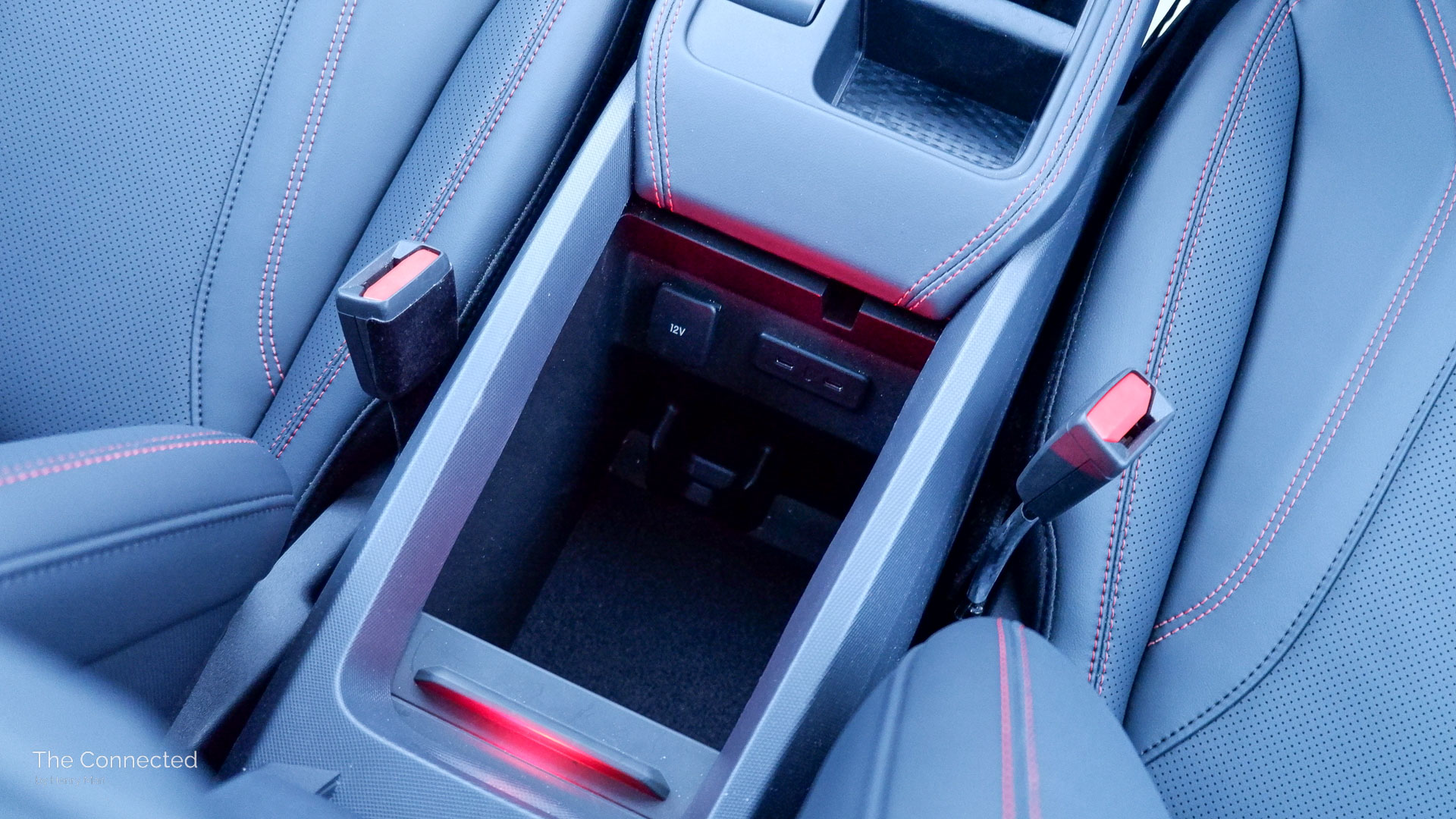
While material quality is generally good with only some harder plastics lower down, the rubber on the centre console storage tray is rather susceptible to scuffs.
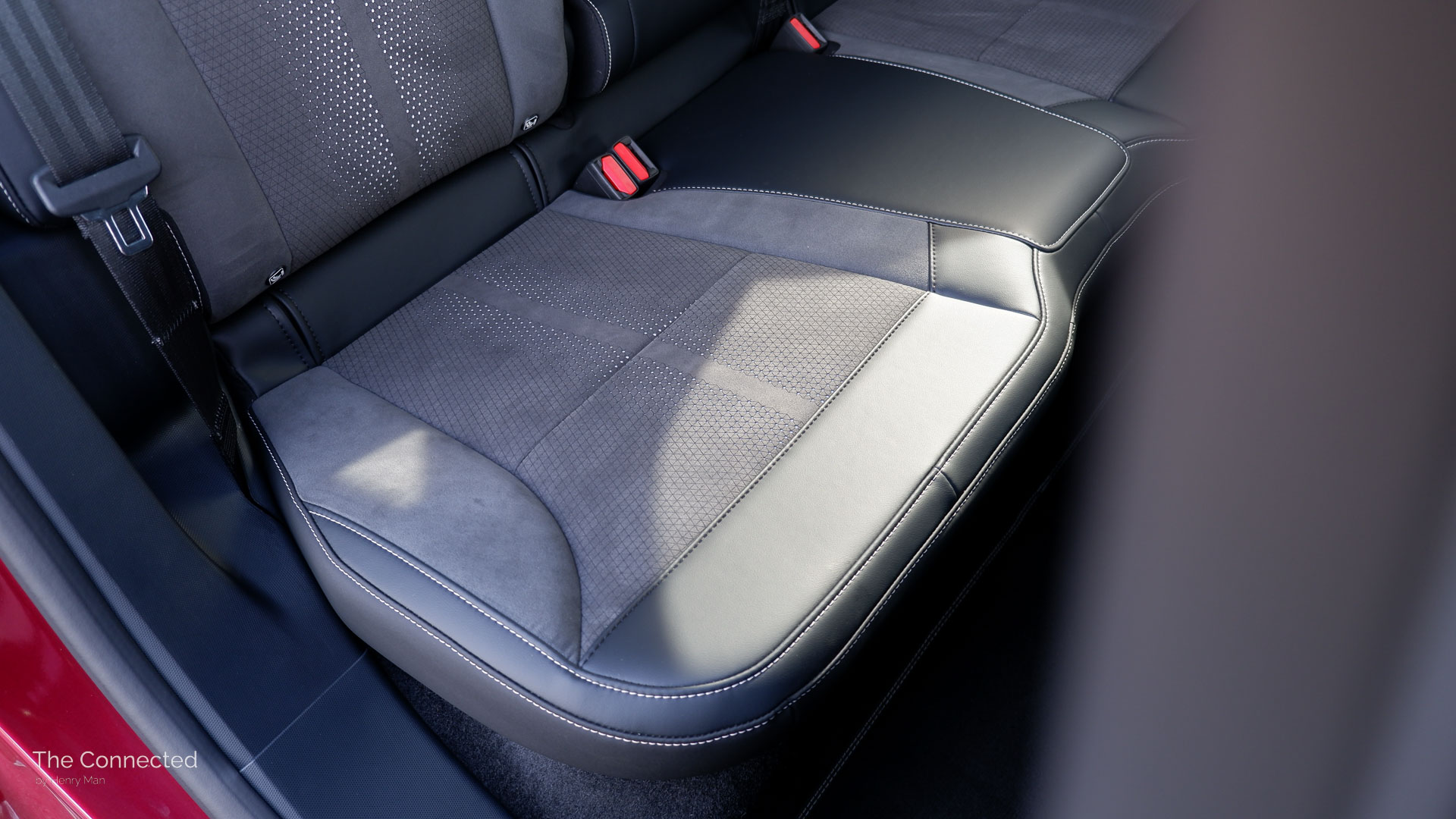
I also noticed the fabric lining inside the middle armrest bin and rubber pad for the wireless charging tray are fairly loose and easy to lift off. Similarly, the thin rear bench base can be pulled up too easily.
Practicality.
2026 Ford Mustang Mach-E dimensions:
| Select | Premium | GT | |
| Length x width x height | 4728 x 1881 x 1627mm | 4743 x 1881 x 1609mm | |
| Wheelbase | 2984mm | 2985mm | |
| Ground clearance | 174mm | 159mm | |
| Boot space (min / rear seats folded) | 519 / 1420L | ||
| Frunk space | 49L | ||
| Rear seat split fold | 60:40 | ||
| Child seat anchors | 2x ISOFIX and 3x top tethers | ||
| Air-conditioning system | Two-zone climate control with rear air vents | ||
The Mustang Mach-E medium electric SUV provides a spacious boot and frunk, but the rear seats aren’t as comfortable.
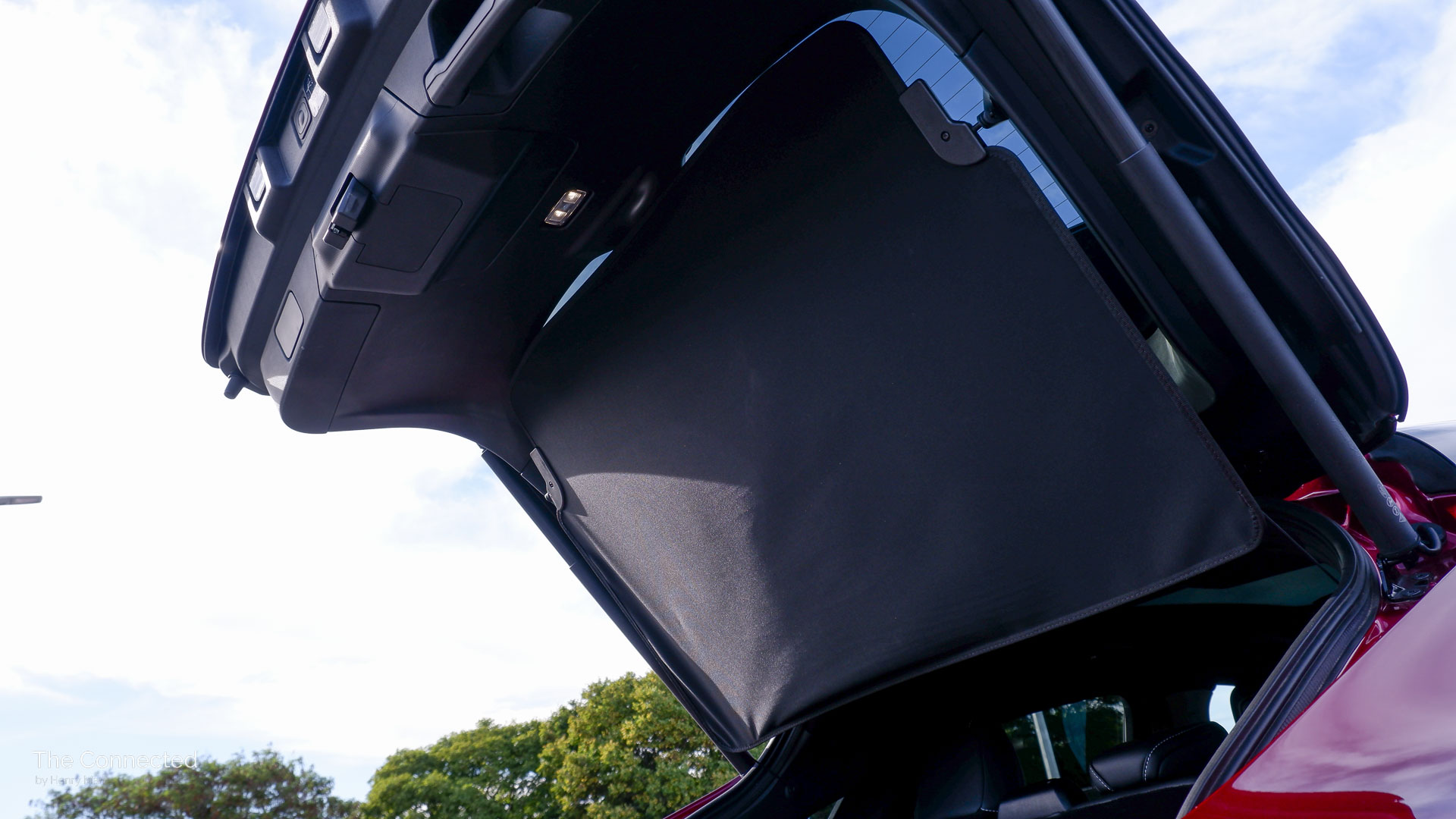
The 519-litre boot is large and deep – although it’s lacking in depth – with a well-designed cargo cover that cleverly goes up with the tailgate as it opens (just like the Mazda CX-60), a small loading lip, and LED lighting from the right and above inside the tailgate illuminating the ground.
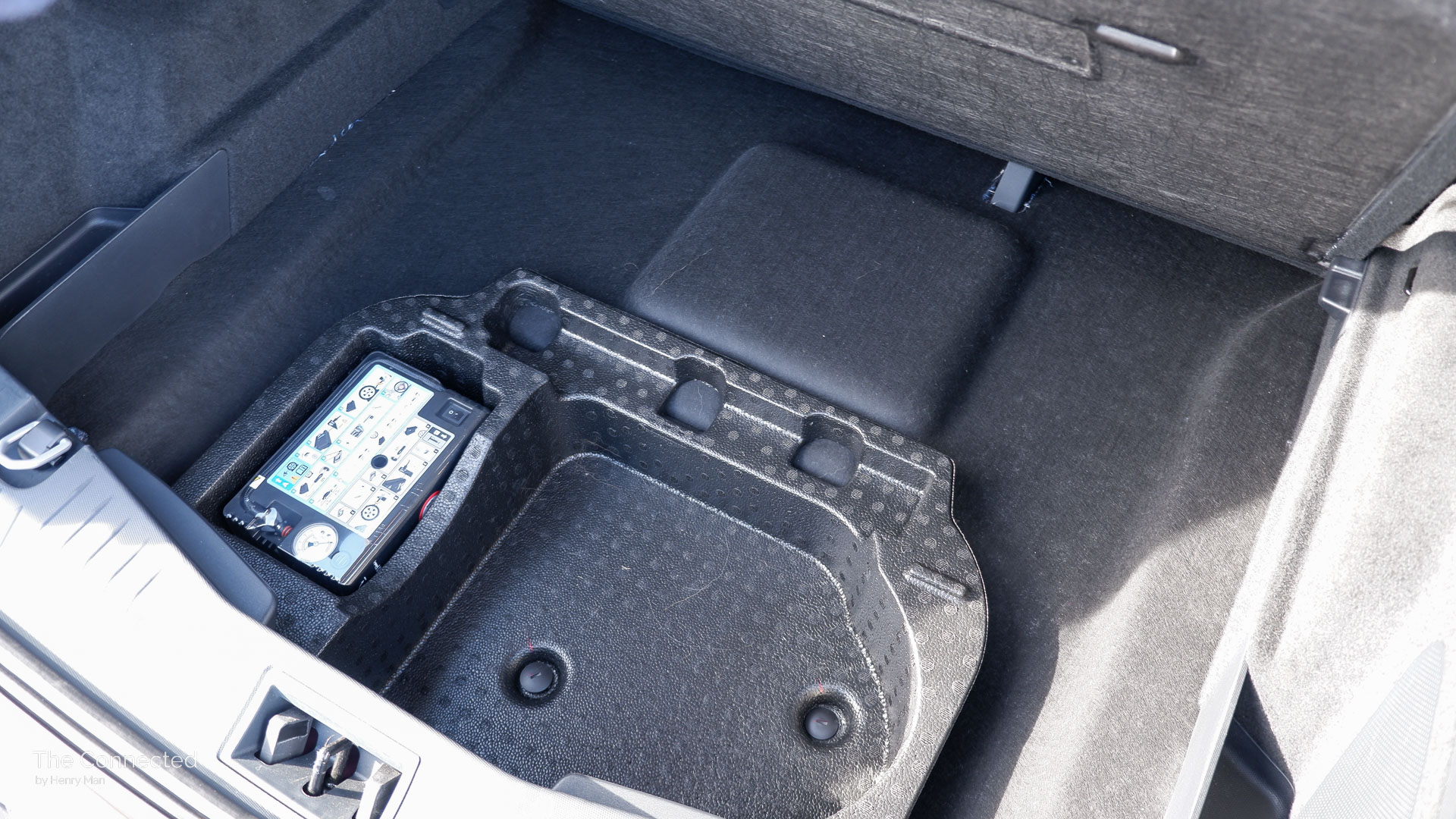
However, the bag hooks placed on each side are positioned too close to the outer edge of the boot with the high floor making it hard to properly hook a backpack or shopping bag. Underfloor storage is limited to the tyre repair kit and a charging cable.
Moreover, the standard electric tailgate has a convenient hands-free function by kicking underneath the bumper for both opening and closing. But I found that the kick sensor isn’t as reliable to work compared to Mazda, Volkswagen and Polestar cars.
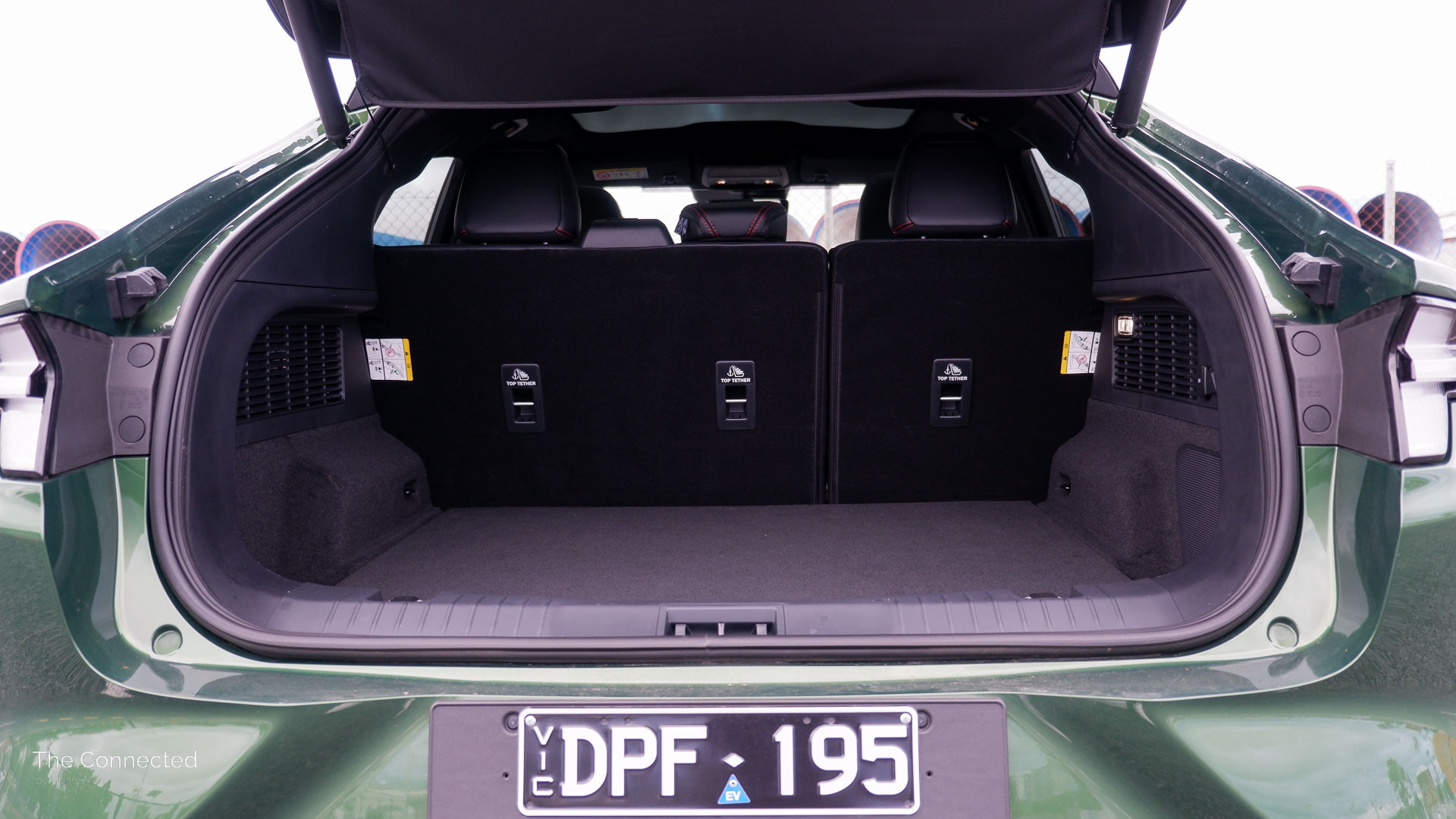
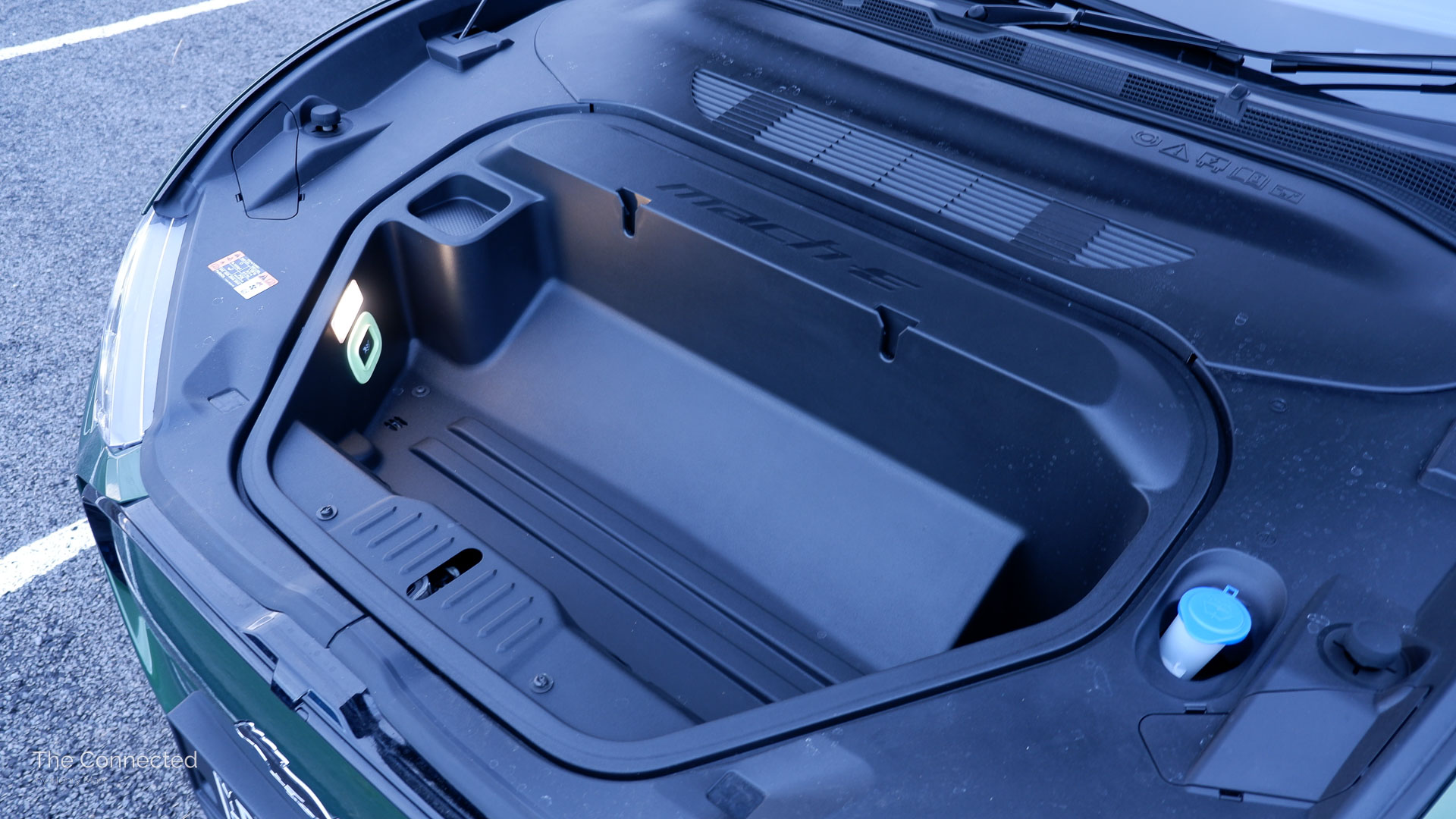
The Ford Mustang Mach-E also boasts a decent 49-litre frunk which can be easily popped-out via the key fob or touchscreen, even though it’s a bit shallow and isn’t rubberised.
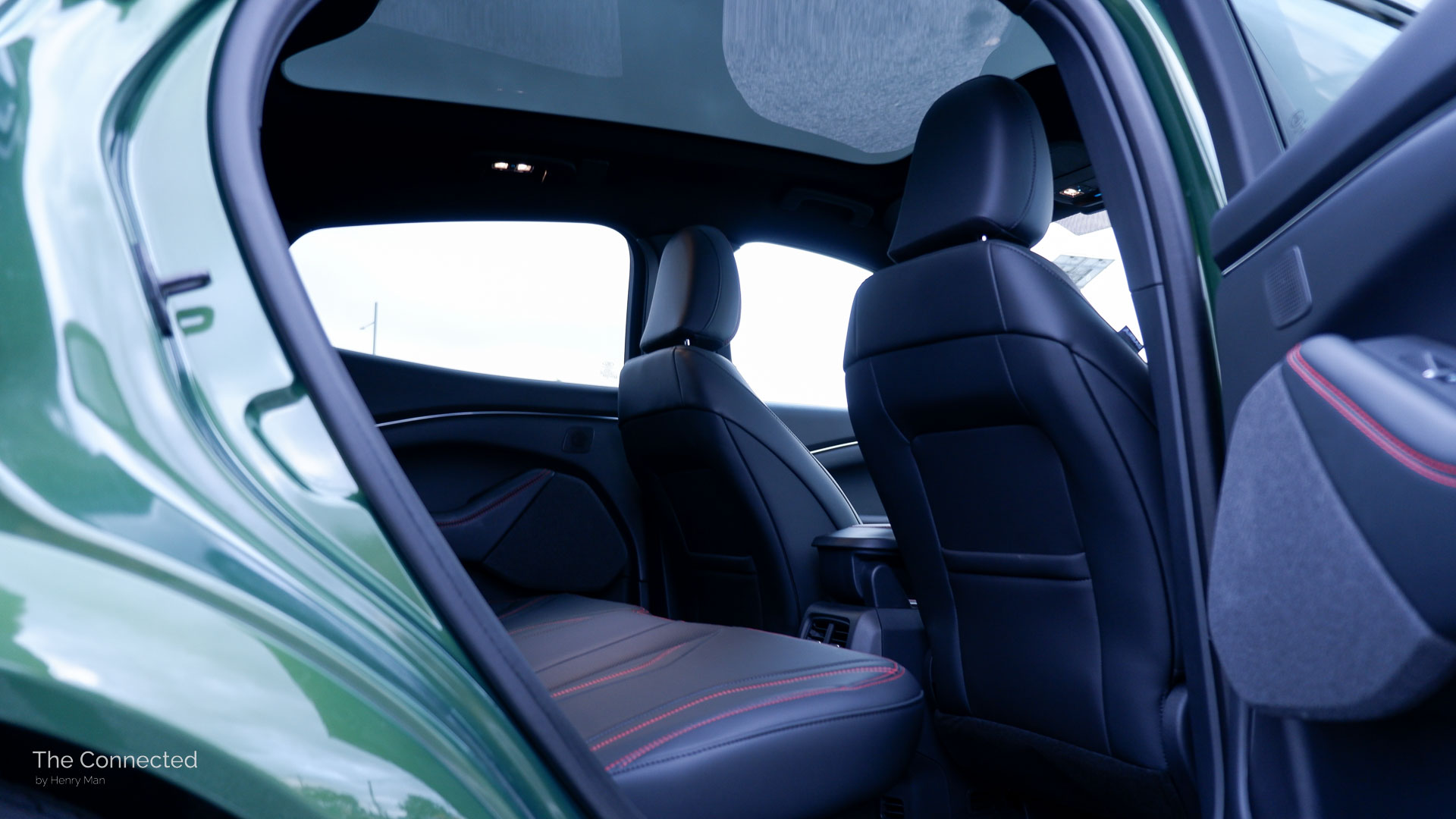
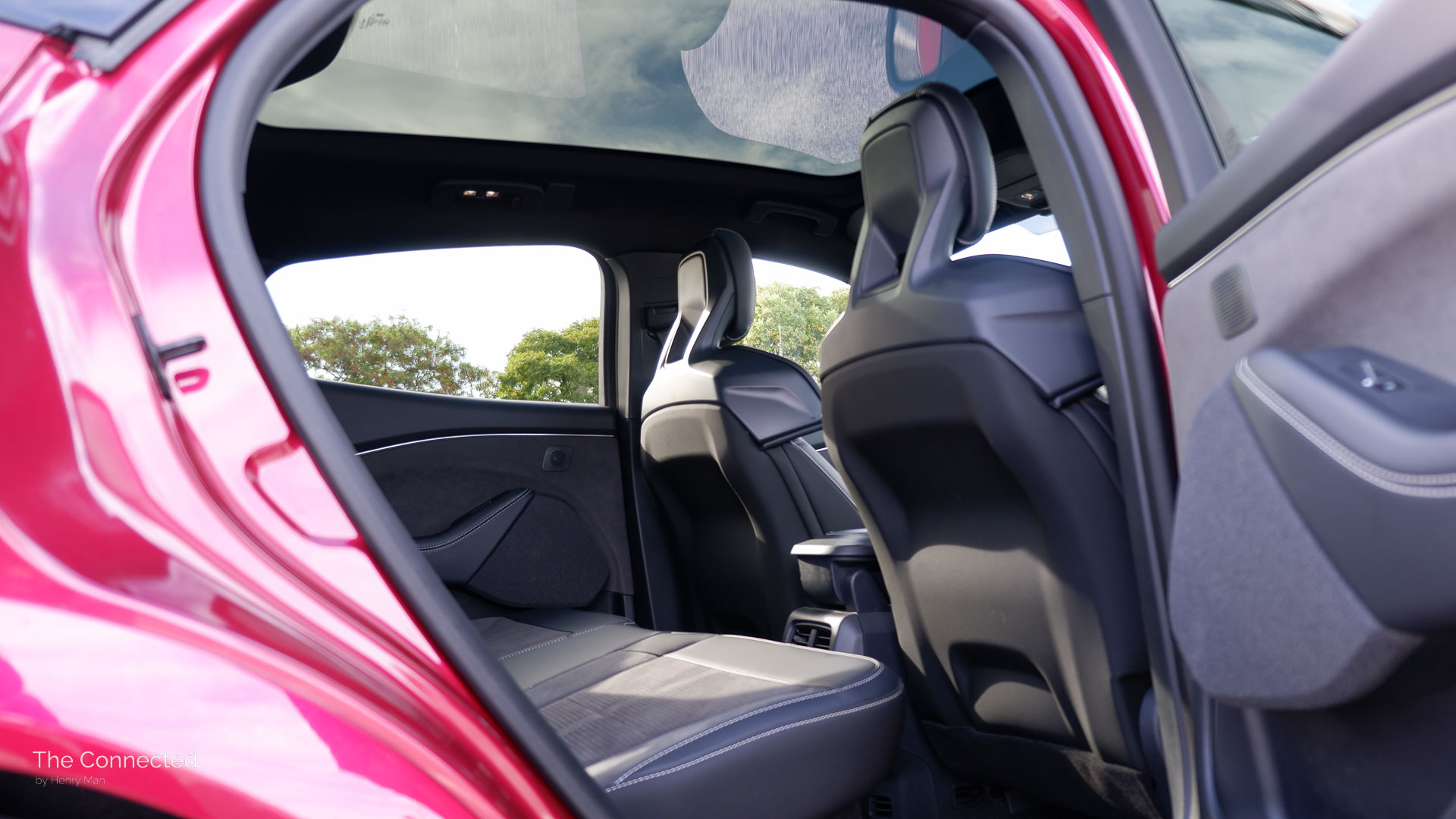
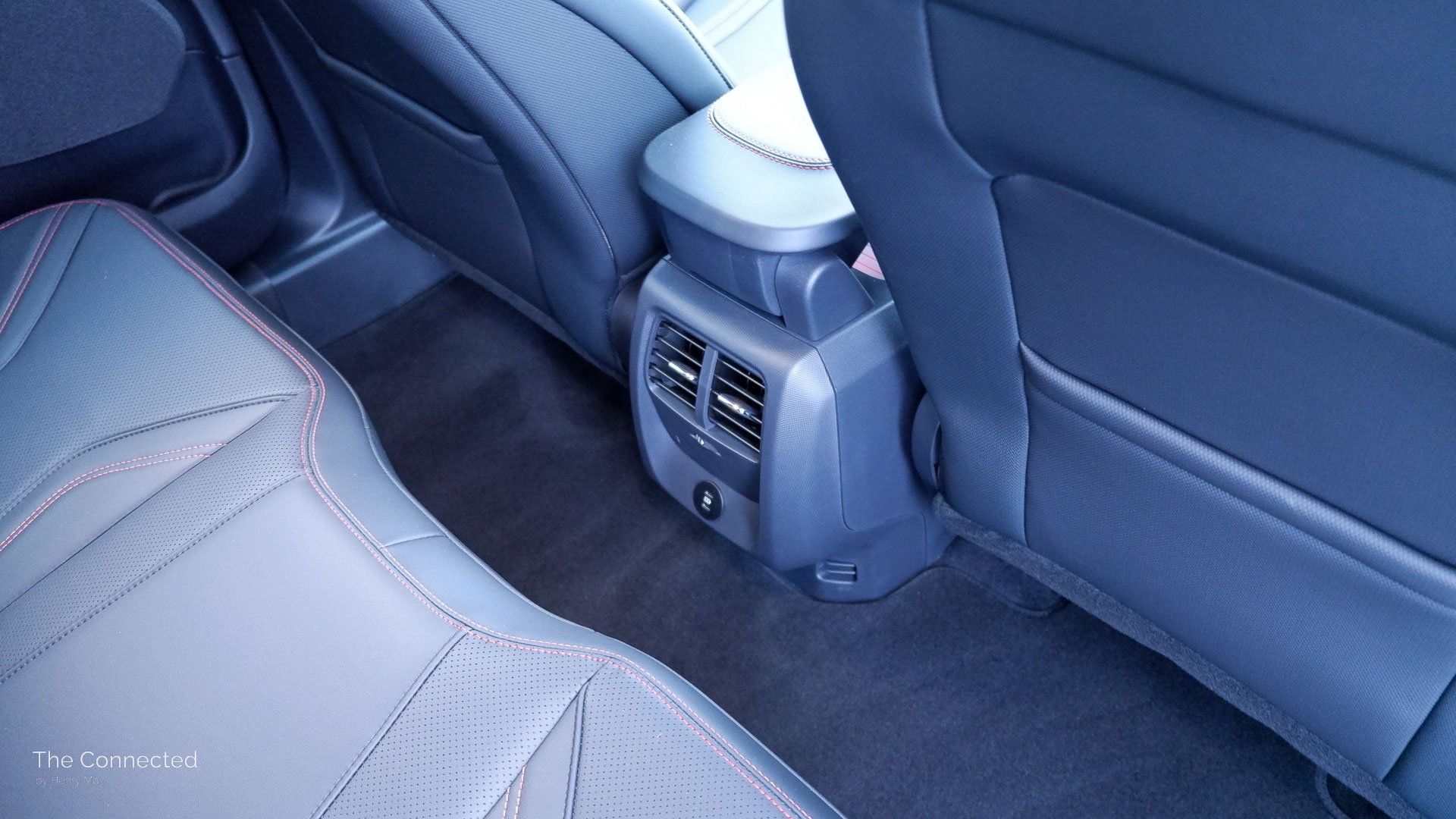
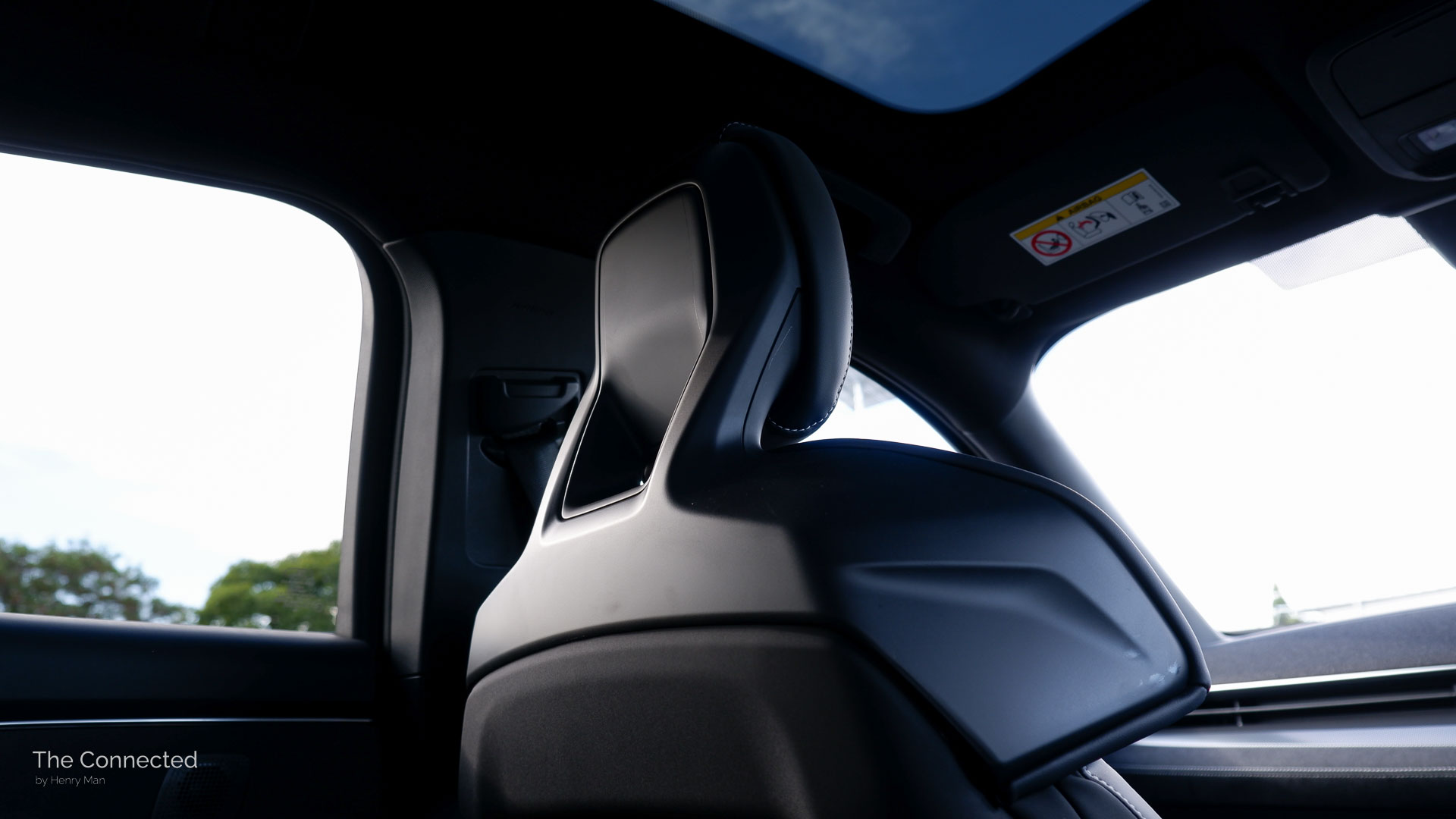
Inside the Mach-E, the rear seats offer good legroom and headroom but footroom is limited when slid underneath the front seats since the floor is high like most EVs.
This results in a less comfortable seating position with perched knees, not helped by a slanted bench angle similar to the Toyota bZ4X.
The Mexico-made electric SUV provides a fold-down centre armrest with two cup holders, rear air vents, two USB-C charging ports, decent door pockets, and LED interior lighting. However, the sporty GT misses out on seatback pockets.
All models feature a fixed panoramic glass roof as standard which provides a great view from above with decent tinting, but I could feel warmth under the sun since it lacks a built-in sunshade just like the Tesla Model Y.
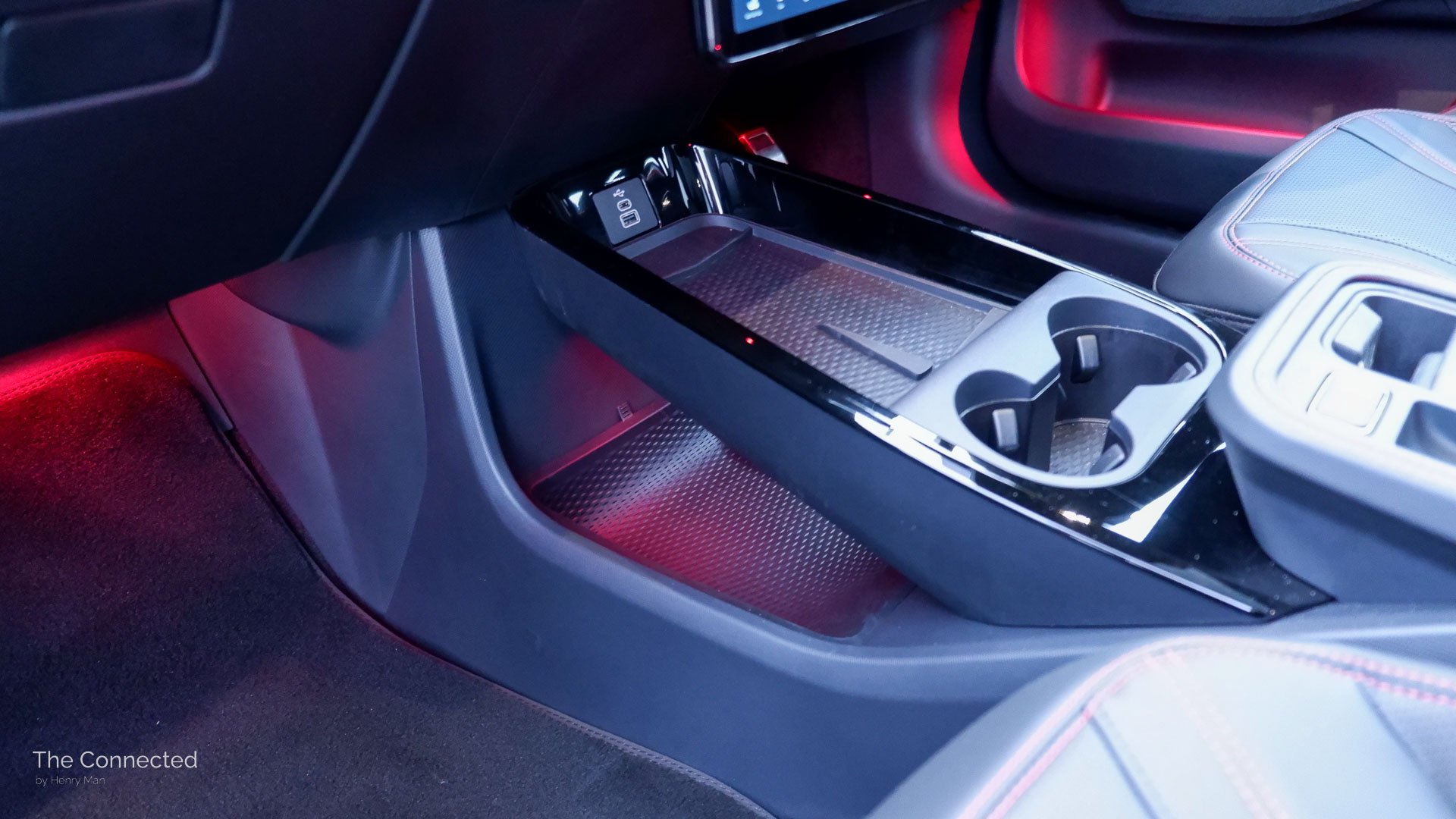
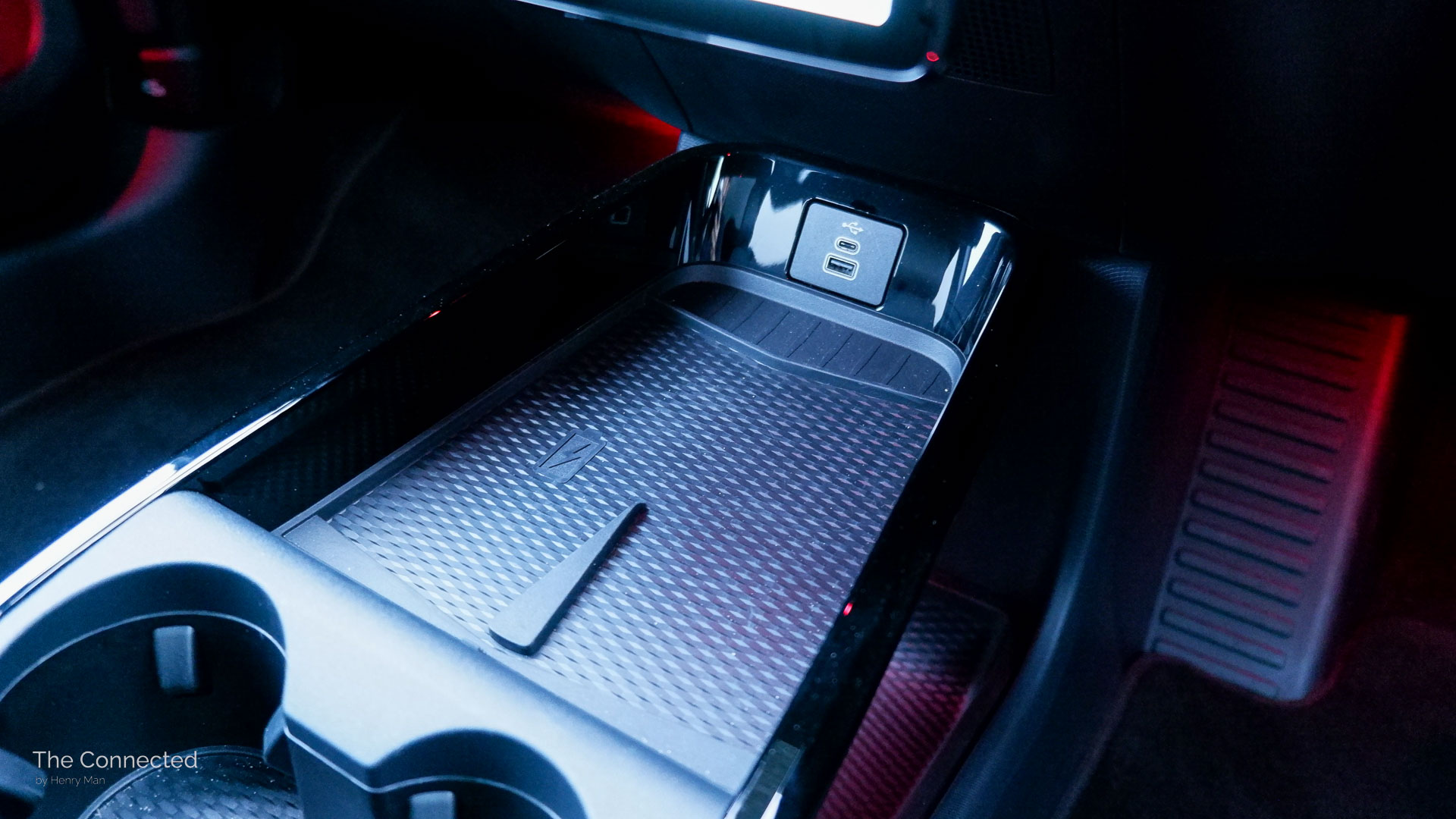
At the front row, the Qi wireless charging pad has an additional space beside, with an open rubberised tray underneath that’s illuminated by ambient lighting, and a centre armrest bin with flimsy fabric lining and a quirky slot seemingly for a pen.
The glovebox lacks lighting, though. USB-C and USB-A charging ports are available at the front row.
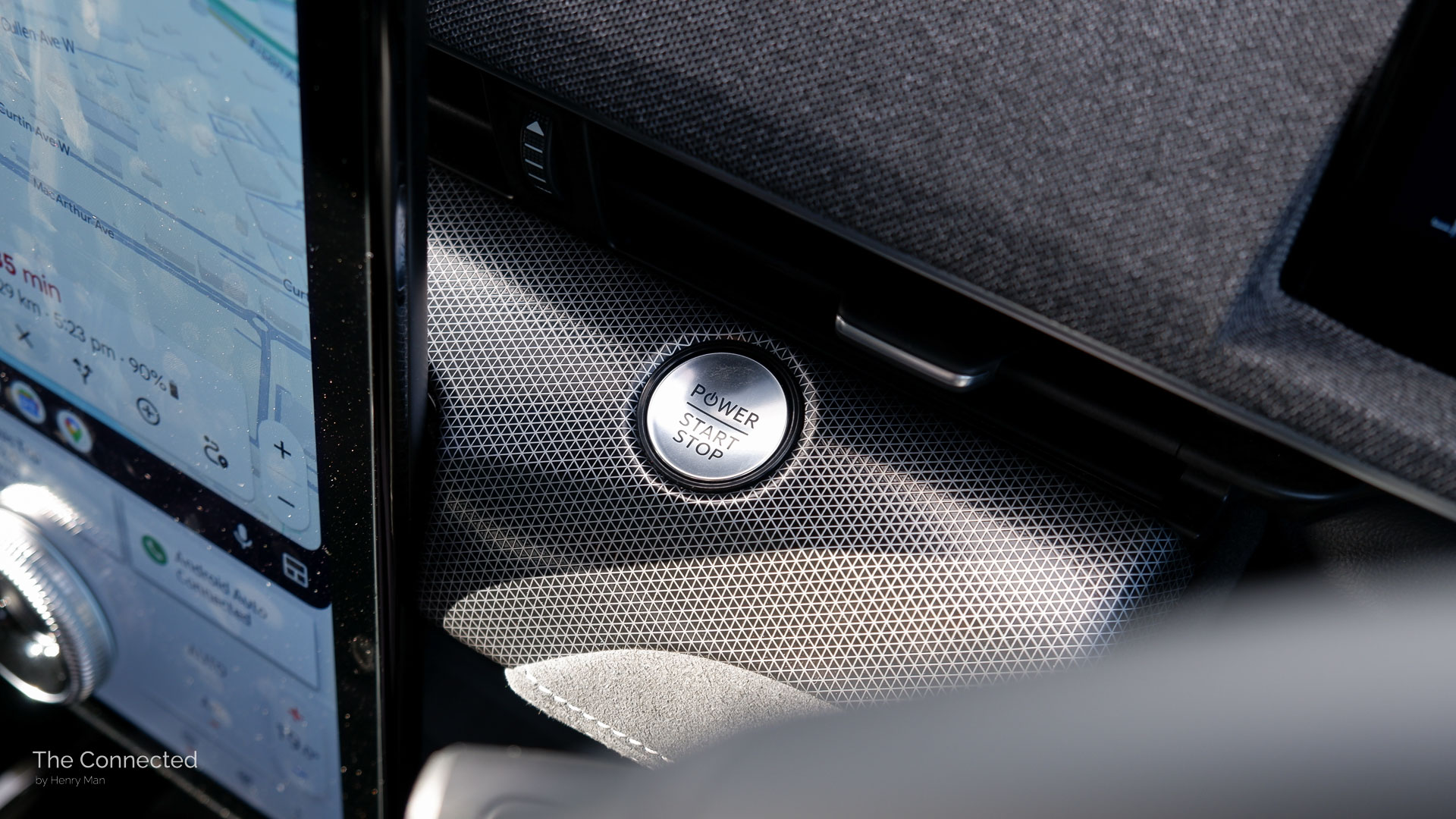
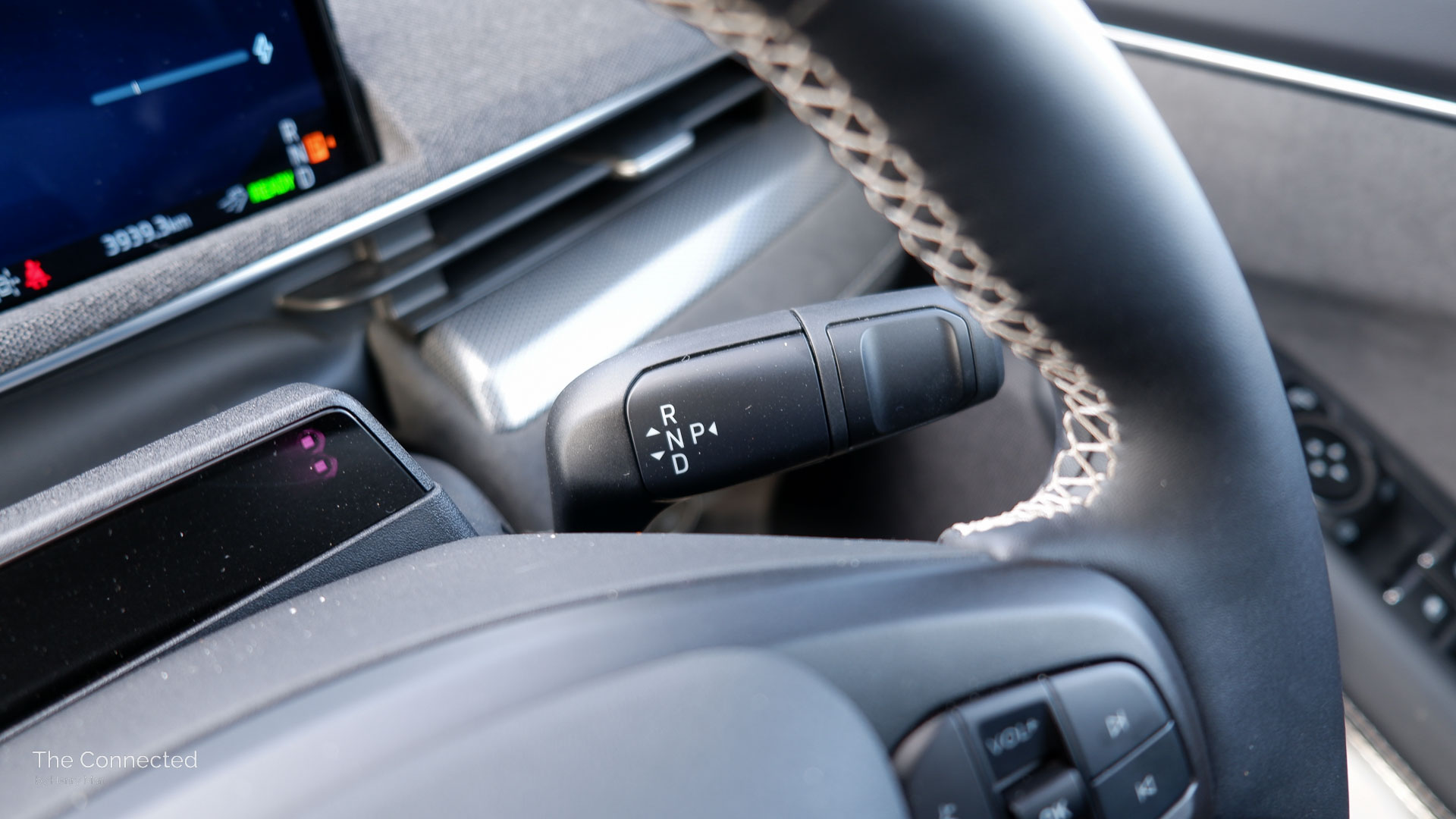
In place of the drive selector dial – which has now been moved to a steering wheel stalk – Ford has put in place a strangely-designed small rubber box (great for the car key) and a thin slot in front.
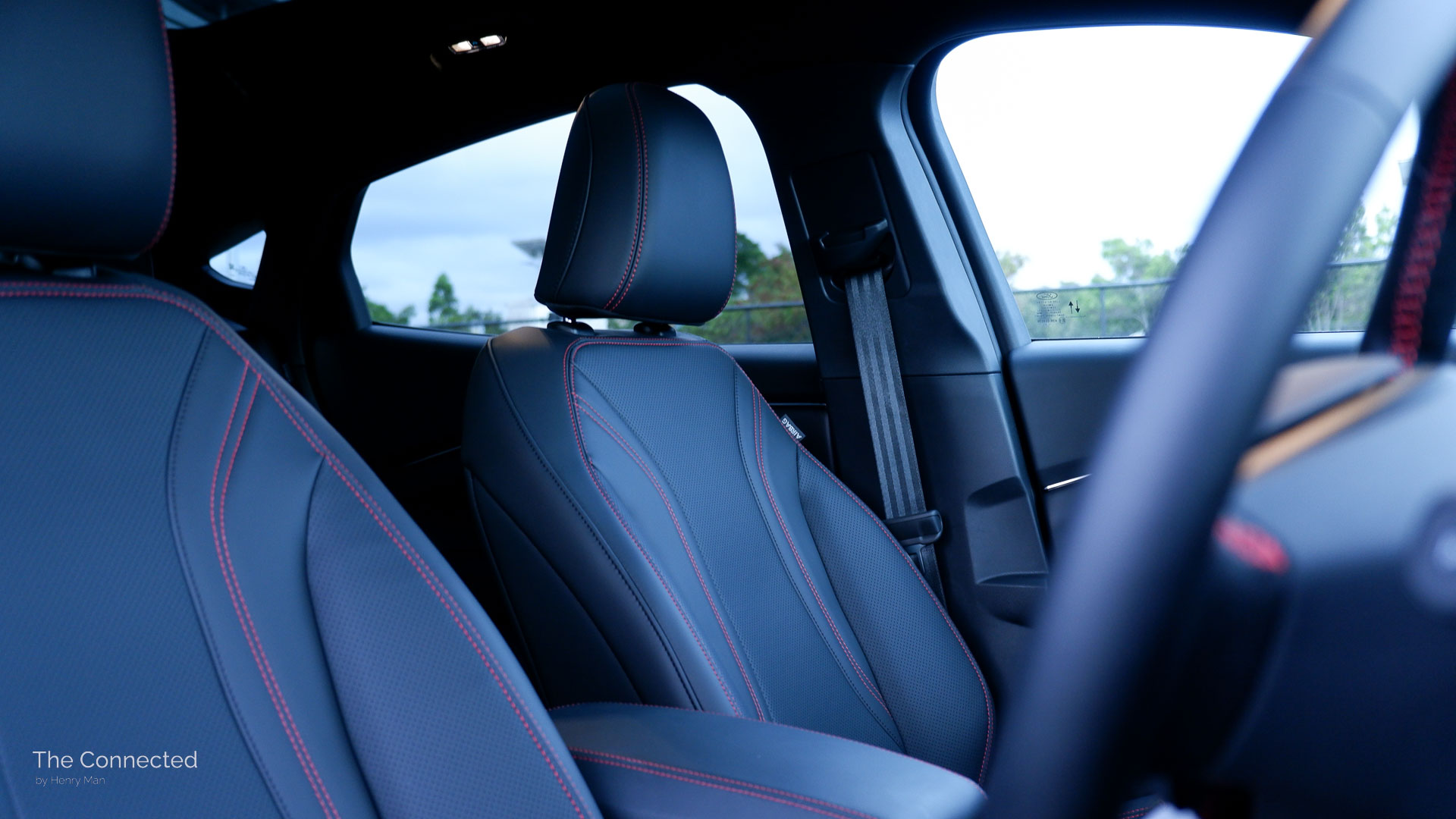
Moreover, I found the Mach-E Premium’s leatherette seats aren’t as supportive on longer drives with thin cushioning, while the GT’s Ford Performance bucket seats are firm with aggressive shoulder bolsters that may be less comfortable for wider bodies
Despite its premium price tag, the Ford electric car only has three-level seat heating and a lukewarm heated steering wheel.
It really needs active seat ventilation, especially with the heat-absorbing suede material on the GT’s sports bucket seats and no glass roof sunshade.
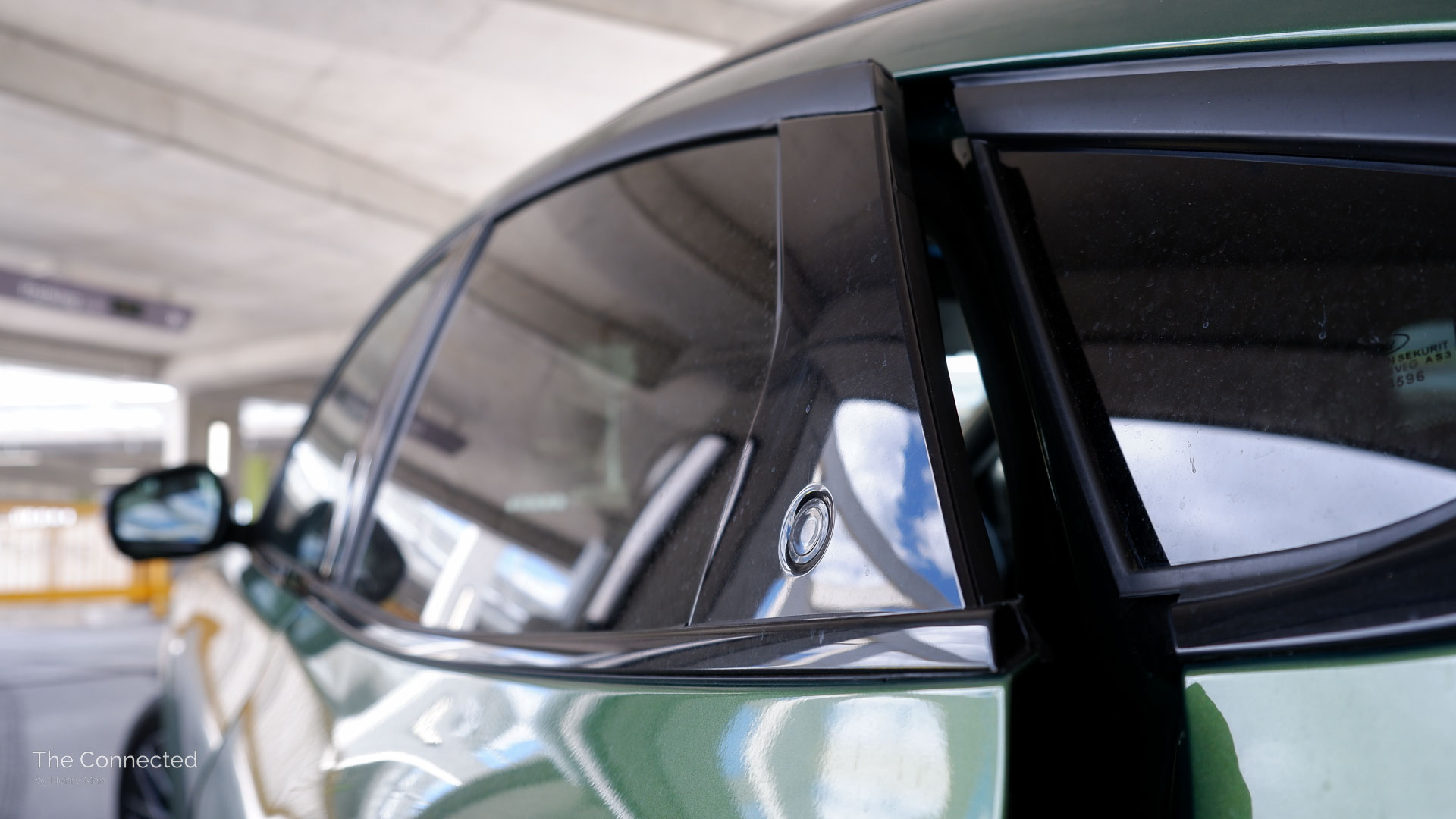
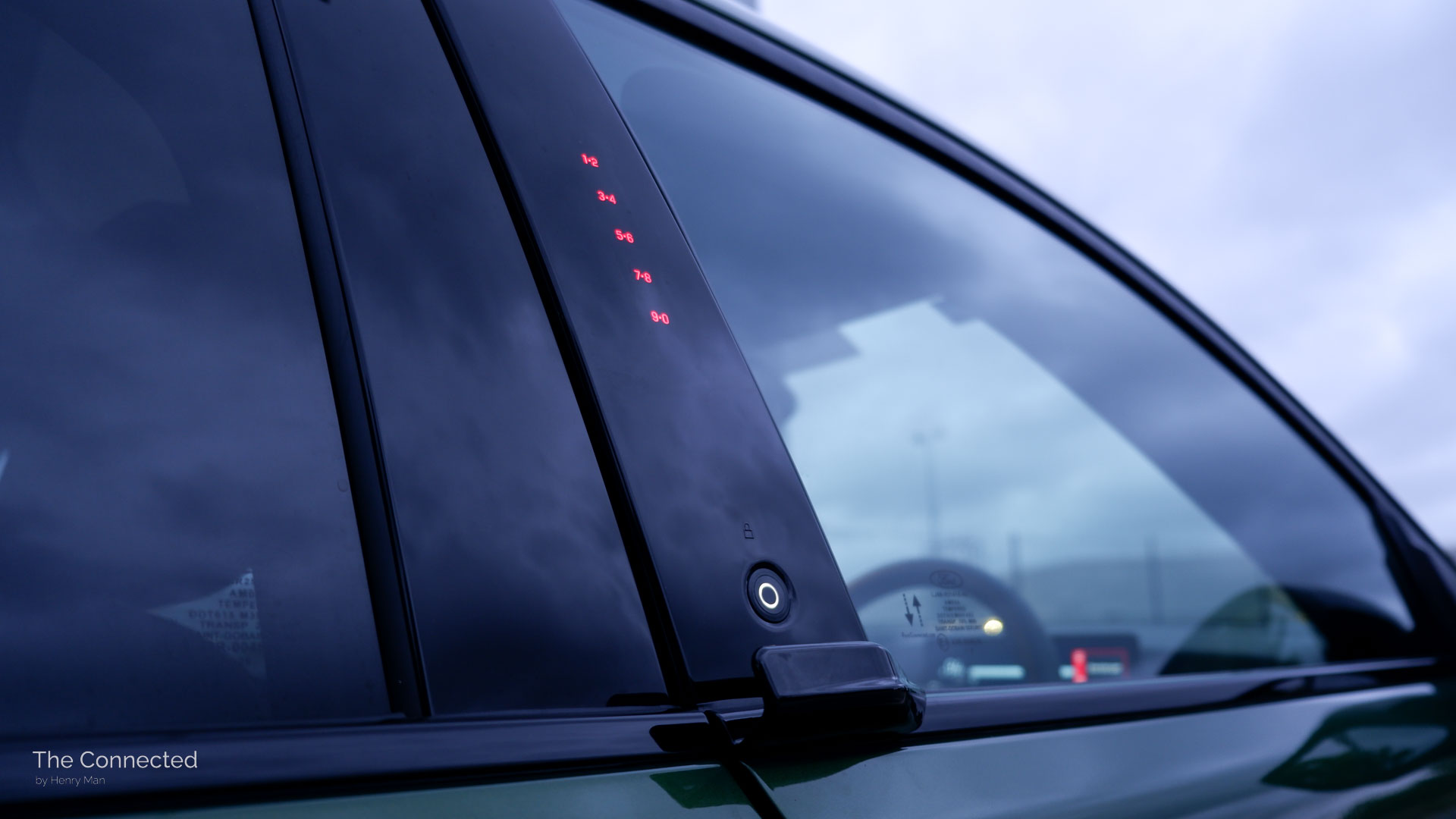
Crucially, the Ford Mustang Mach-E’s electronic door handles have a rather strange and unintuitive design.
There are illuminated circular buttons which pop out each door for occupants to then pull manually. It’s unnecessarily complex.
Despite the update, the Mach-E still only provides a small handle fin for the front doors only.
The rear doors lack a physical handle to pull them open, even though it pops out a little more than the front. The edge of the rear doors are sharp, not to mention the high position of the door open buttons being less reachable for kids.
Technology.
2026 Ford Mustang Mach-E tech features:
| 15.5-inch touchscreen running Sync 4A | 10.2-inch driver instrument display |
| Wireless/wired Apple CarPlay and Android Auto | Qi wireless charging pad |
| Built-in maps | 5x USB-C, 1x USB-A, and 1x 12-volt charging ports |
| Arcade games | Proximity key with auto-folding mirrors, illuminated door release buttons, and Pony badge puddle lights |
| FordPass Connect with mobile and smartwatch app | Keyless keypad |
The new Ford Mustang Mach-E has a great technology setup on paper, but is disappointingly let down by laggy software that’s unacceptable in 2026.
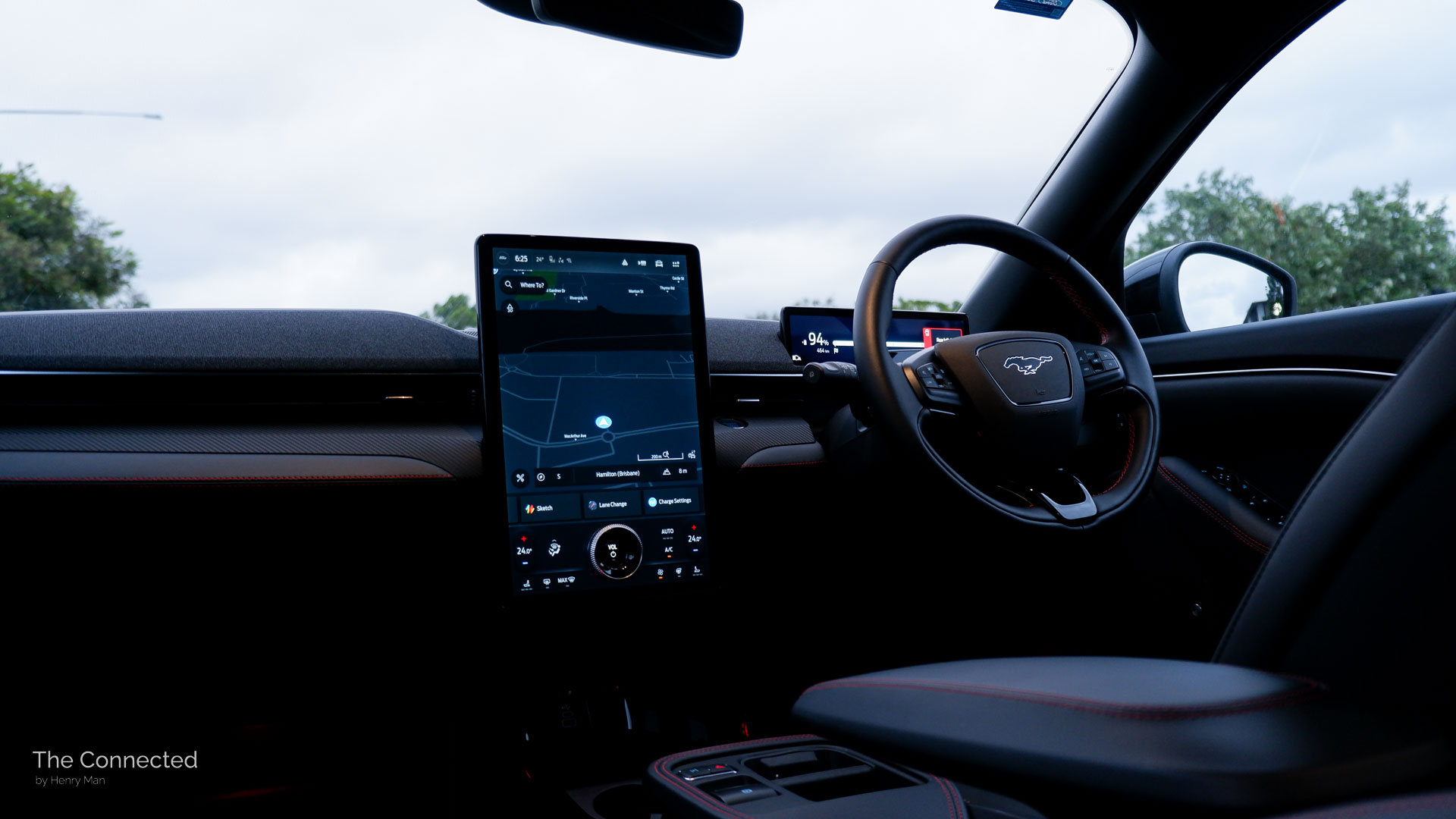
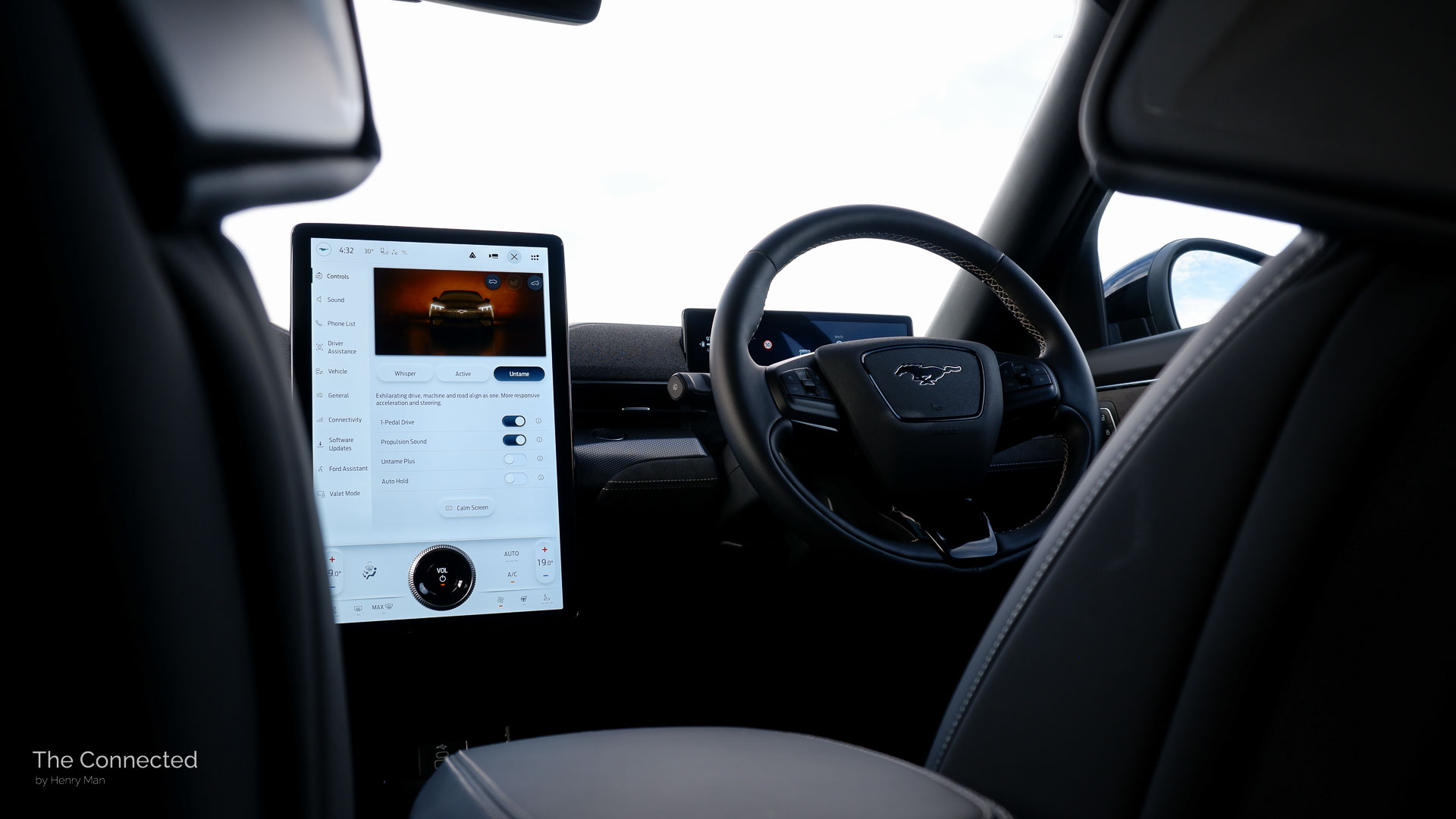
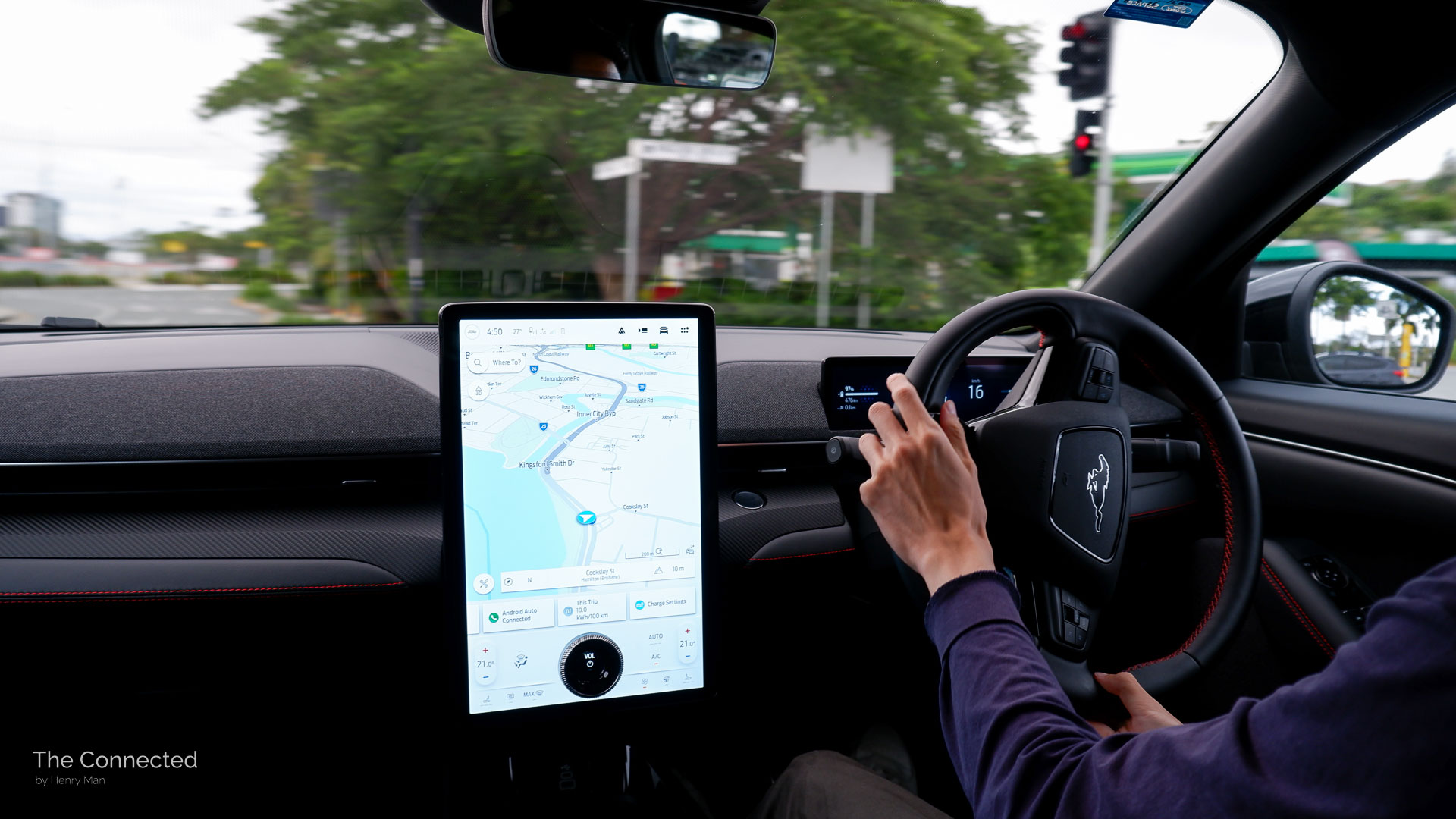
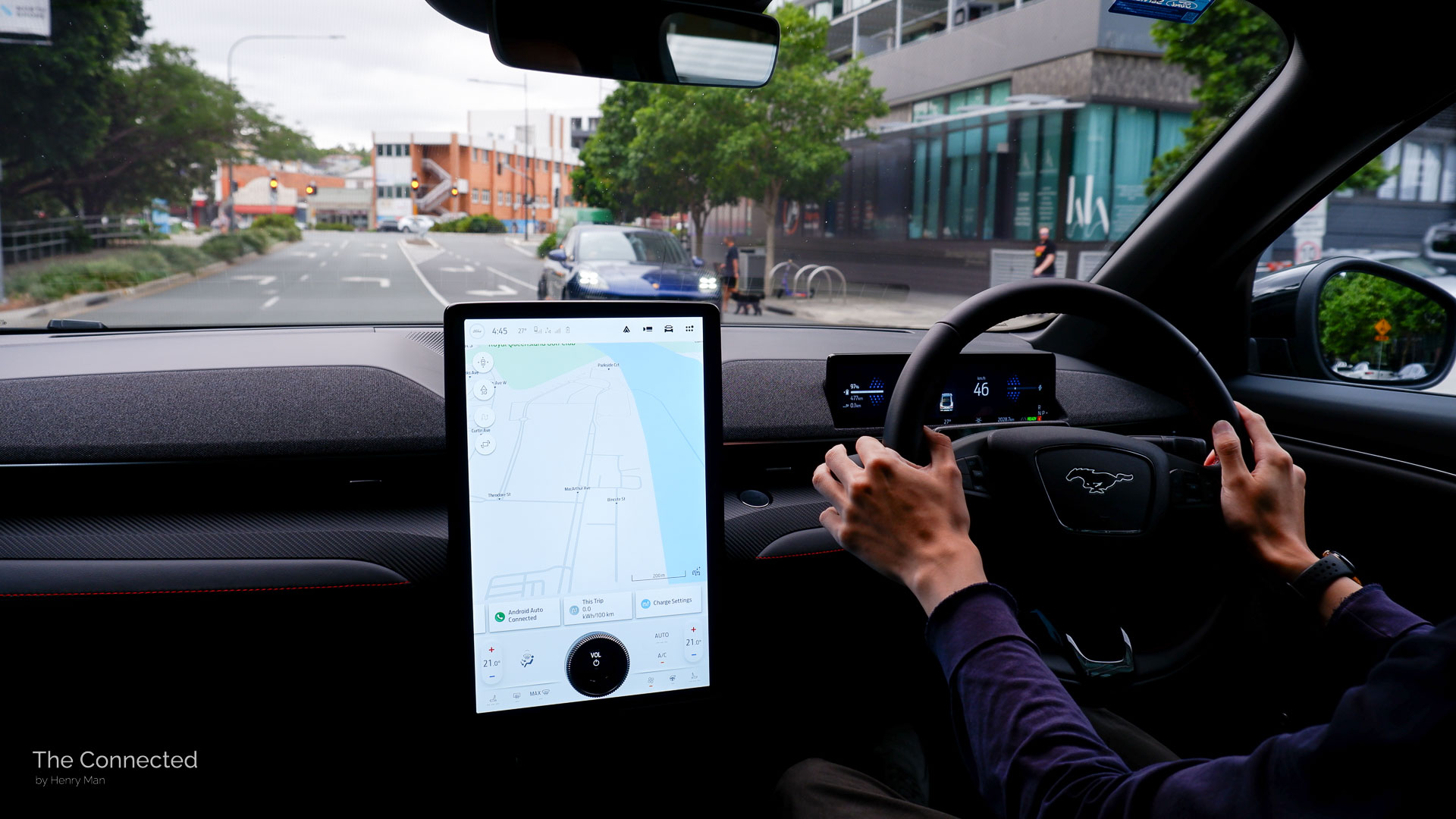
Sitting proud in the centre is a large 15.5-inch portrait-orientated touchscreen running Ford’s own Sync 4A operating system.
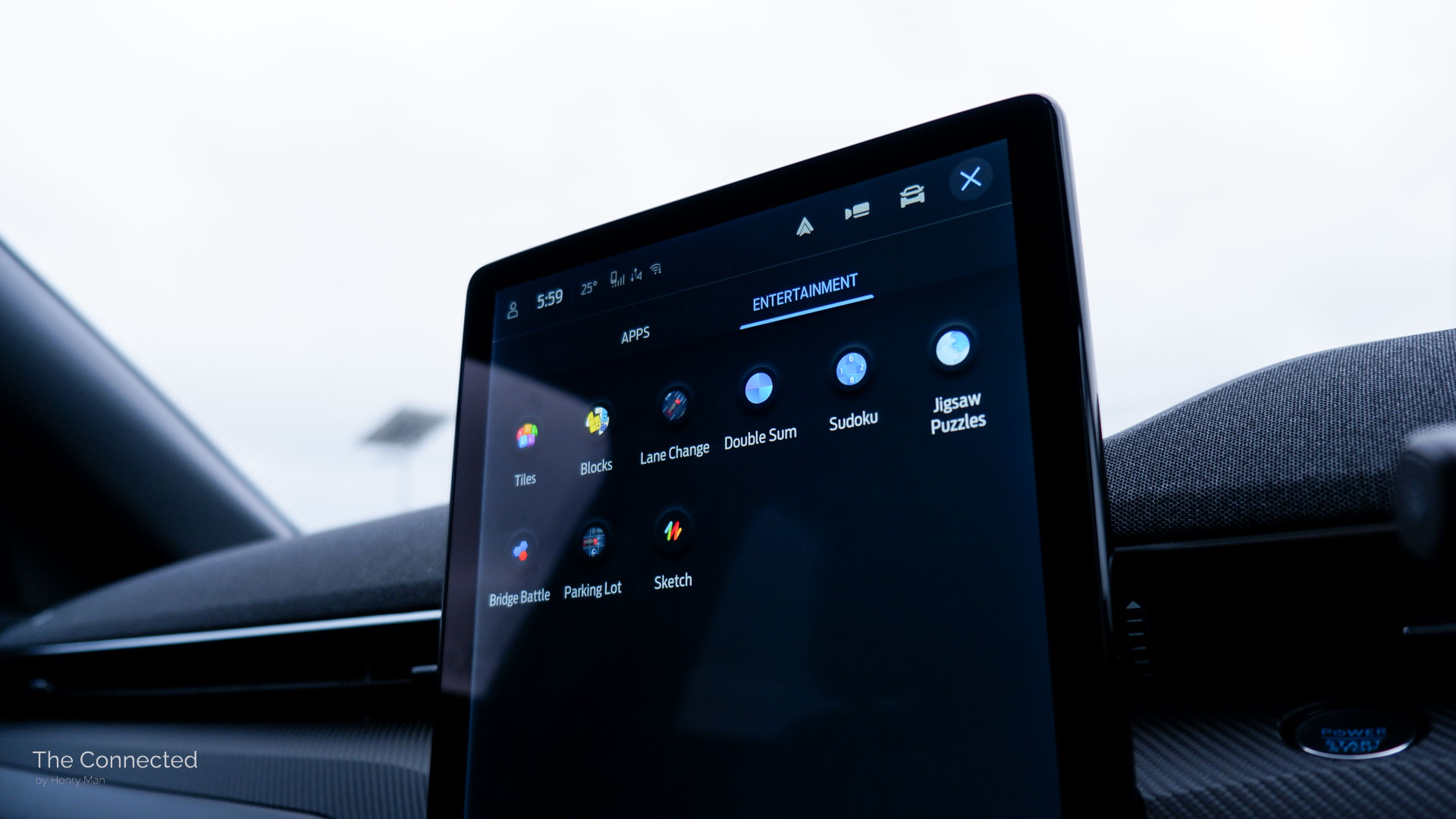
It features a modern-designed interface with great automatic brightness and light/dark modes, a selection of arcade games, a persistent row of shortcuts at the top, and a dedicated section for climate controls and recently used apps at the bottom.
The latter makes adjusting the dual-zone climate control easy with temperature, fan speed, seat heating and steering wheel heating always accessible on the screen – although you’ll need to look further down than ideal.
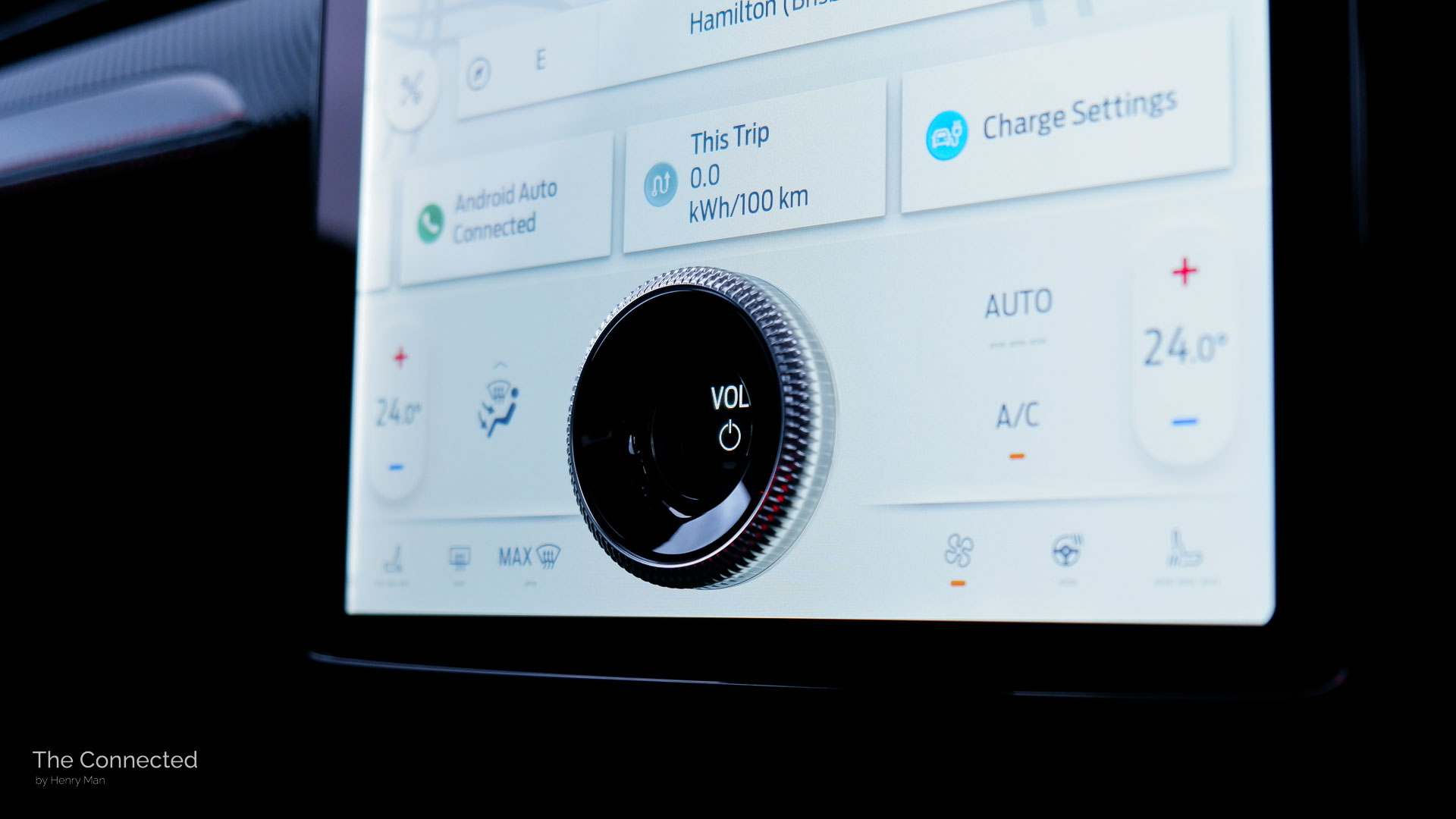
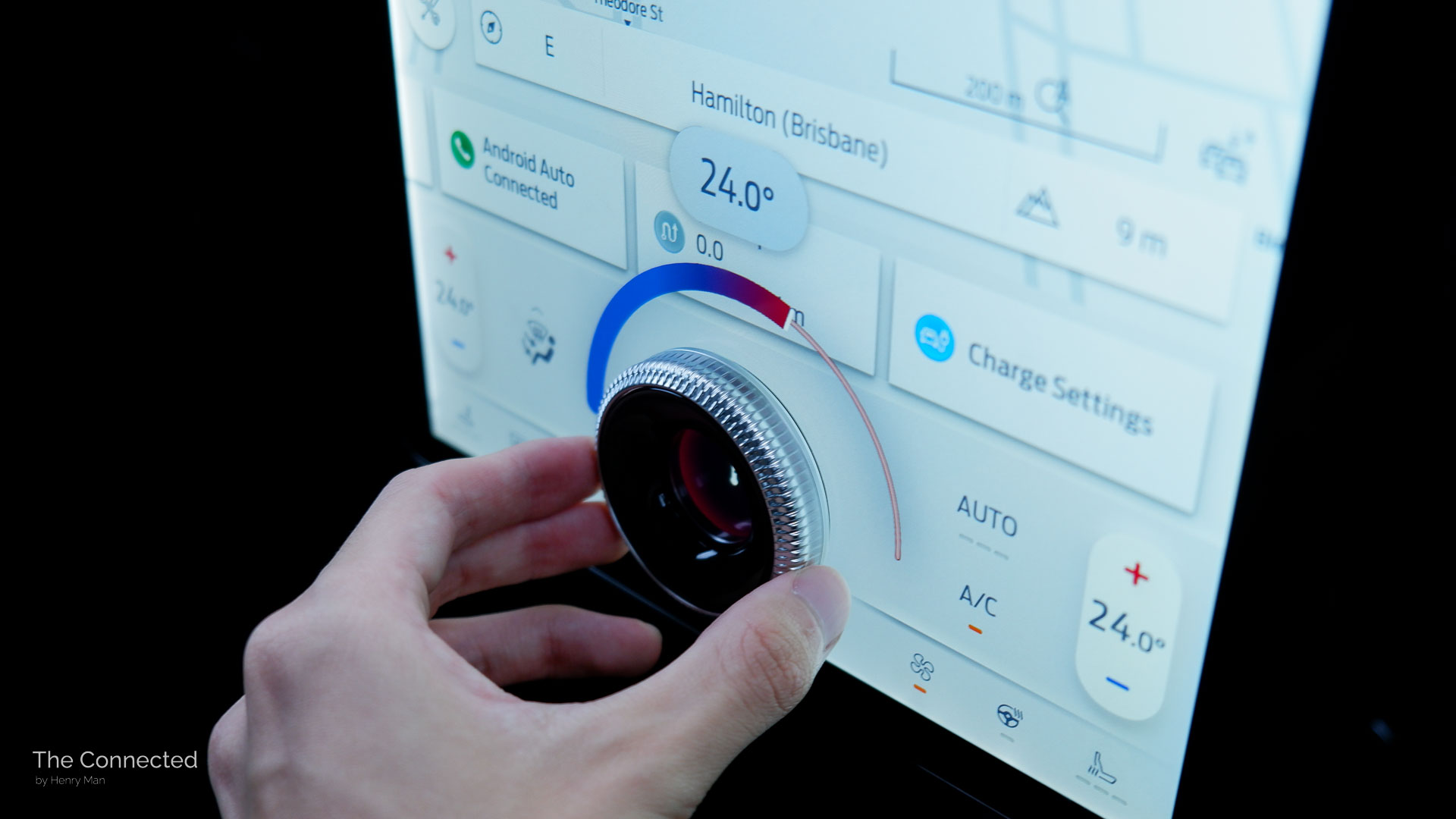
A dial is attached on top of the screen to easily change the volume by default, but you’ll need to tap on the screen first to change the temperature, fan speed, or heated seats in order to adjust via the dial. It also doesn’t feel as clicky and solid as the dials on the Geely EX5, Polestar 4 or Mazda CX-60.
However, the software feels sluggish to use with noticeable lag when opening different apps and pages – to the point where any playing audio from Android Auto stutters when interacting with the Ford interface.
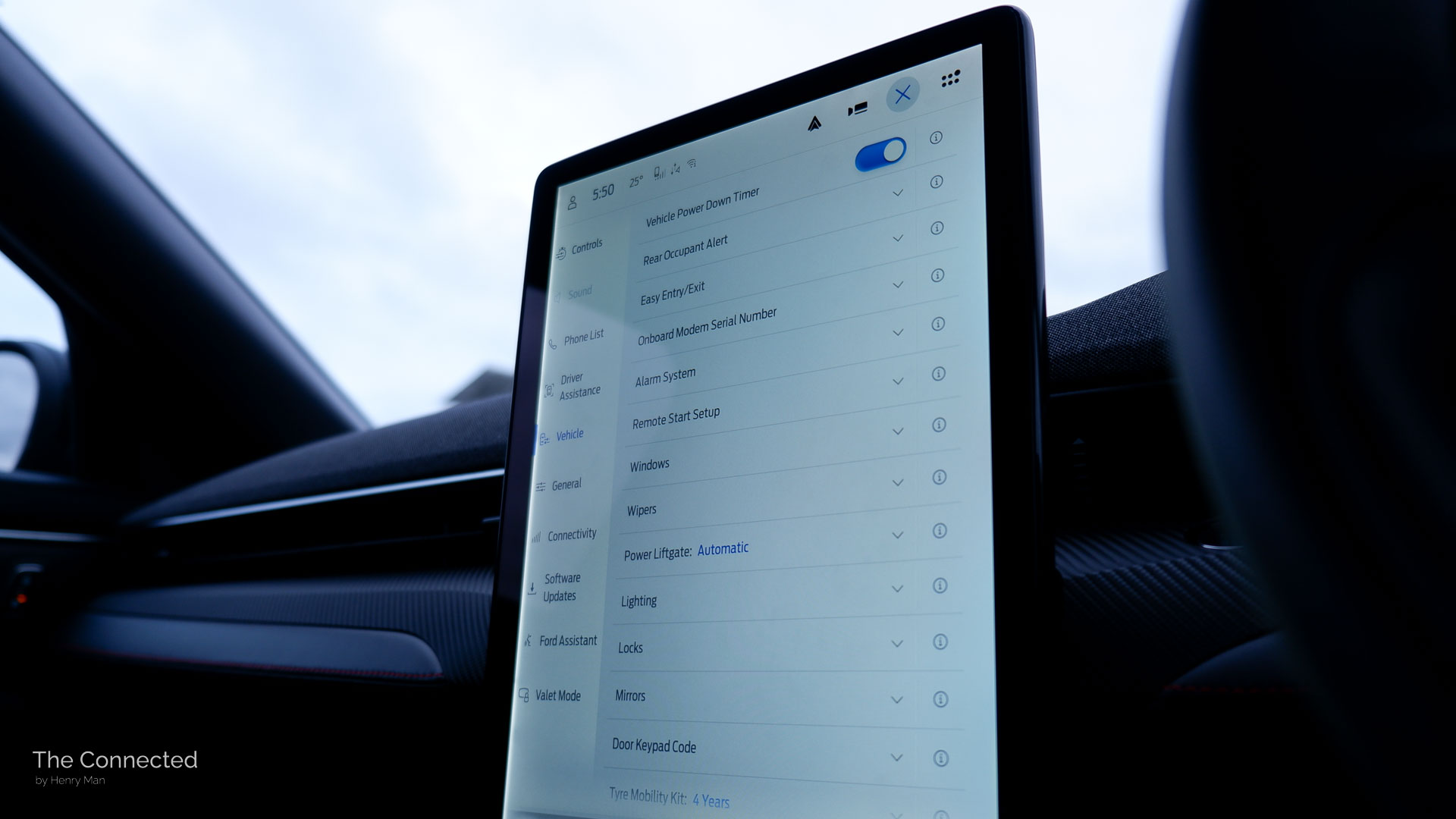
Most of the vehicle settings compacted into two tabs – ‘vehicle’ and ‘general’ – resulting in a long and convoluted list full of accordions.
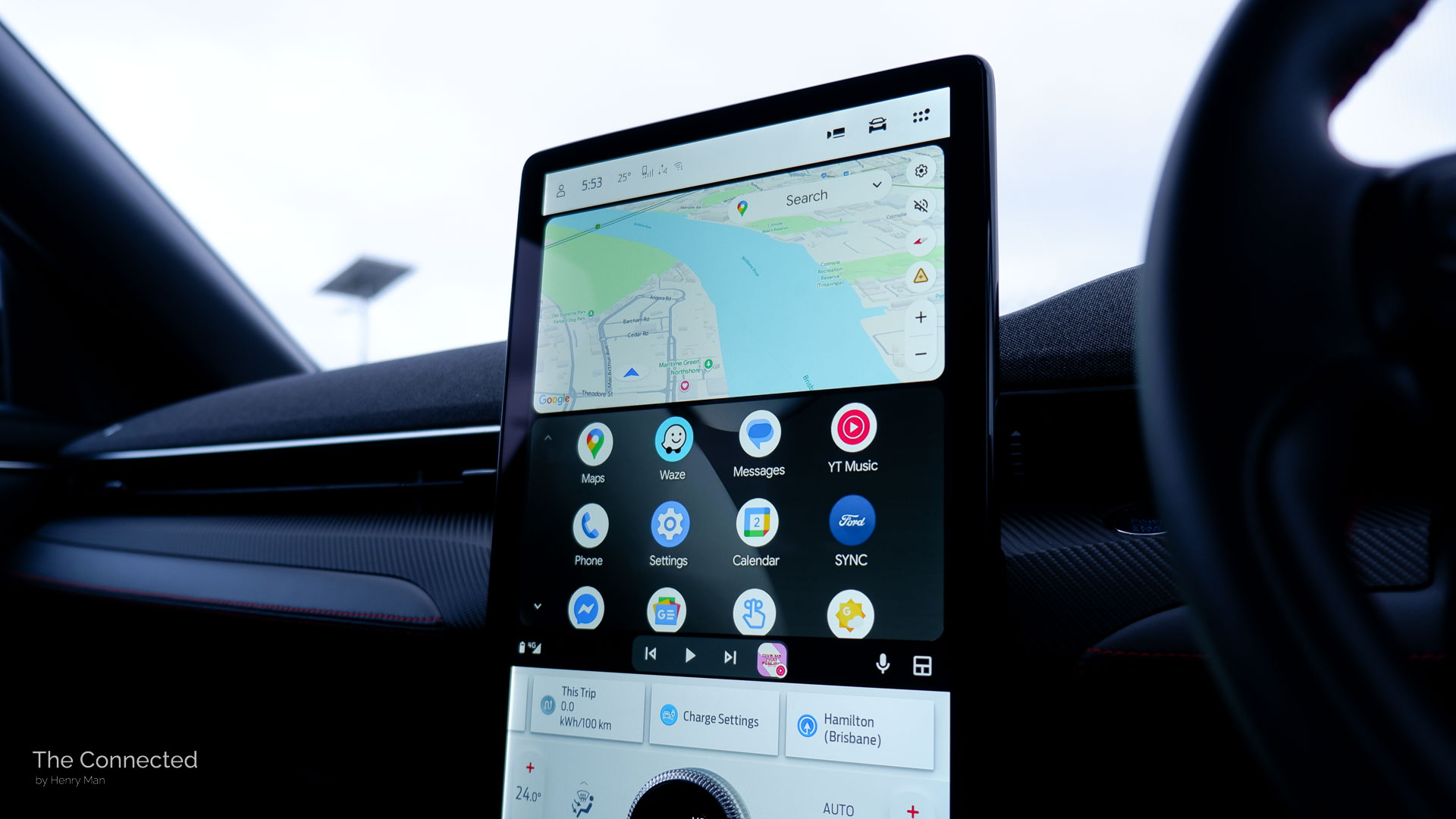
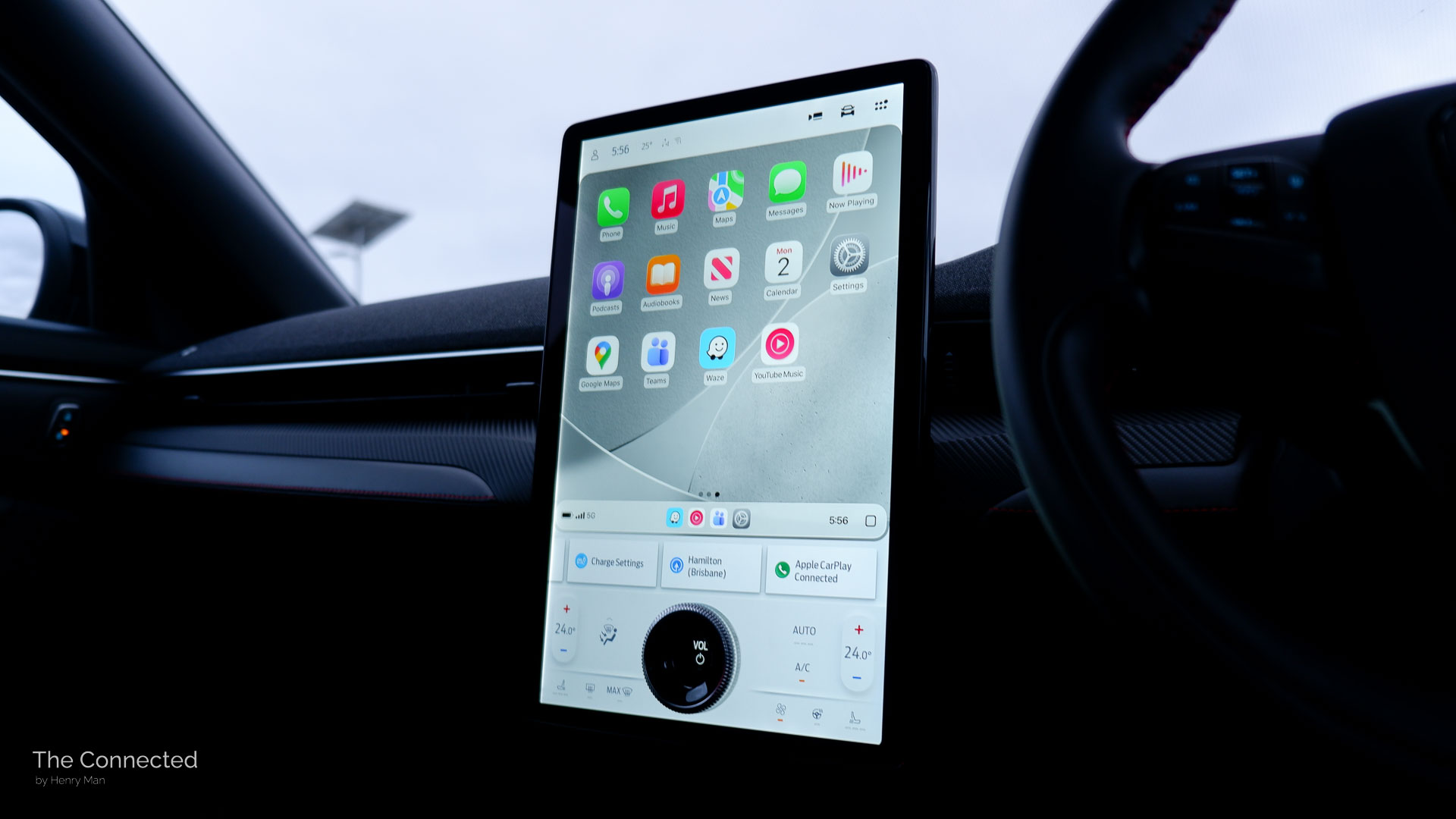
Other brands offer higher resolution displays, with a noticeably more pixelated rendering in Android Auto versus Apple CarPlay. Both are wireless and connect quickly, though.
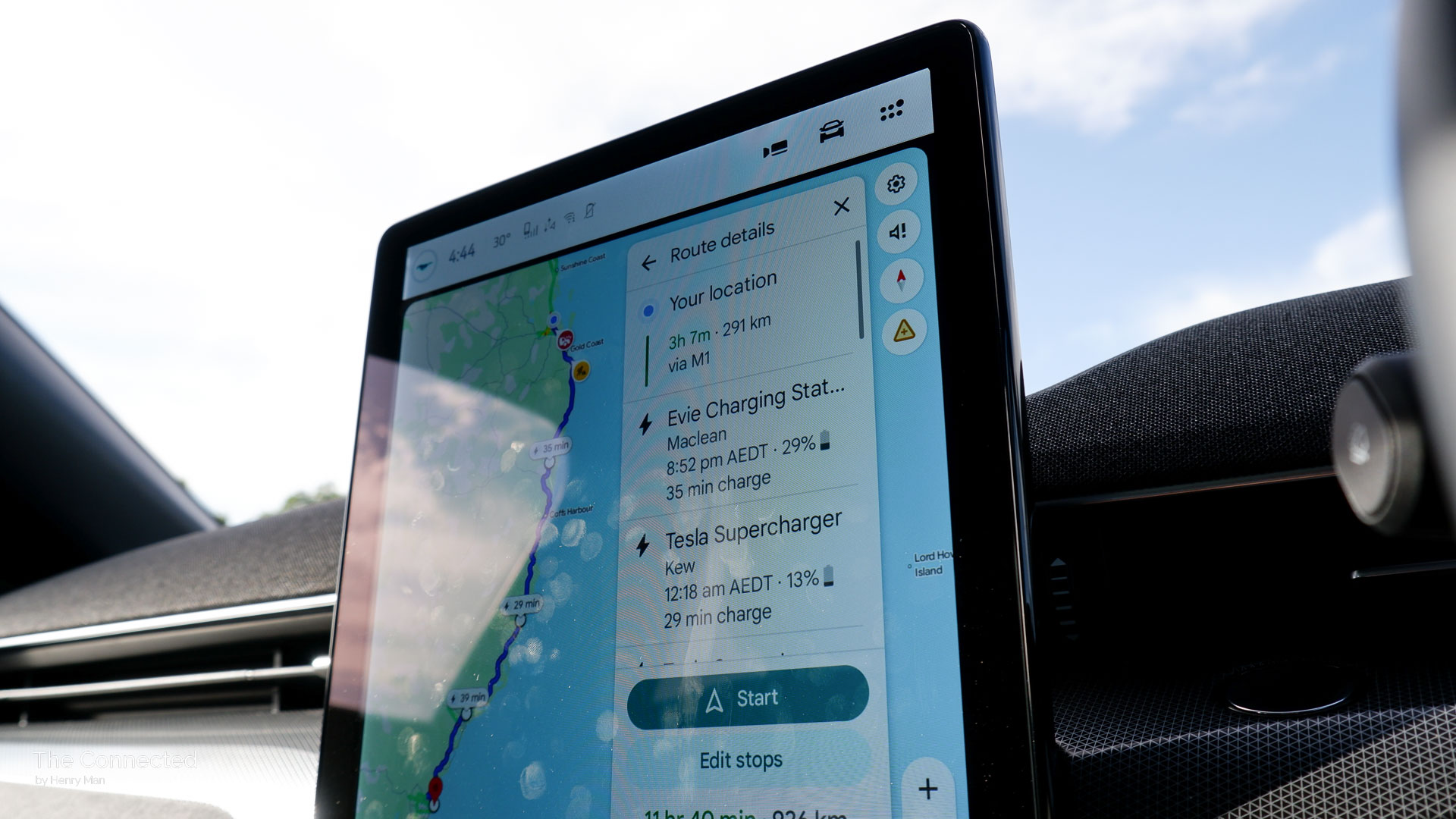
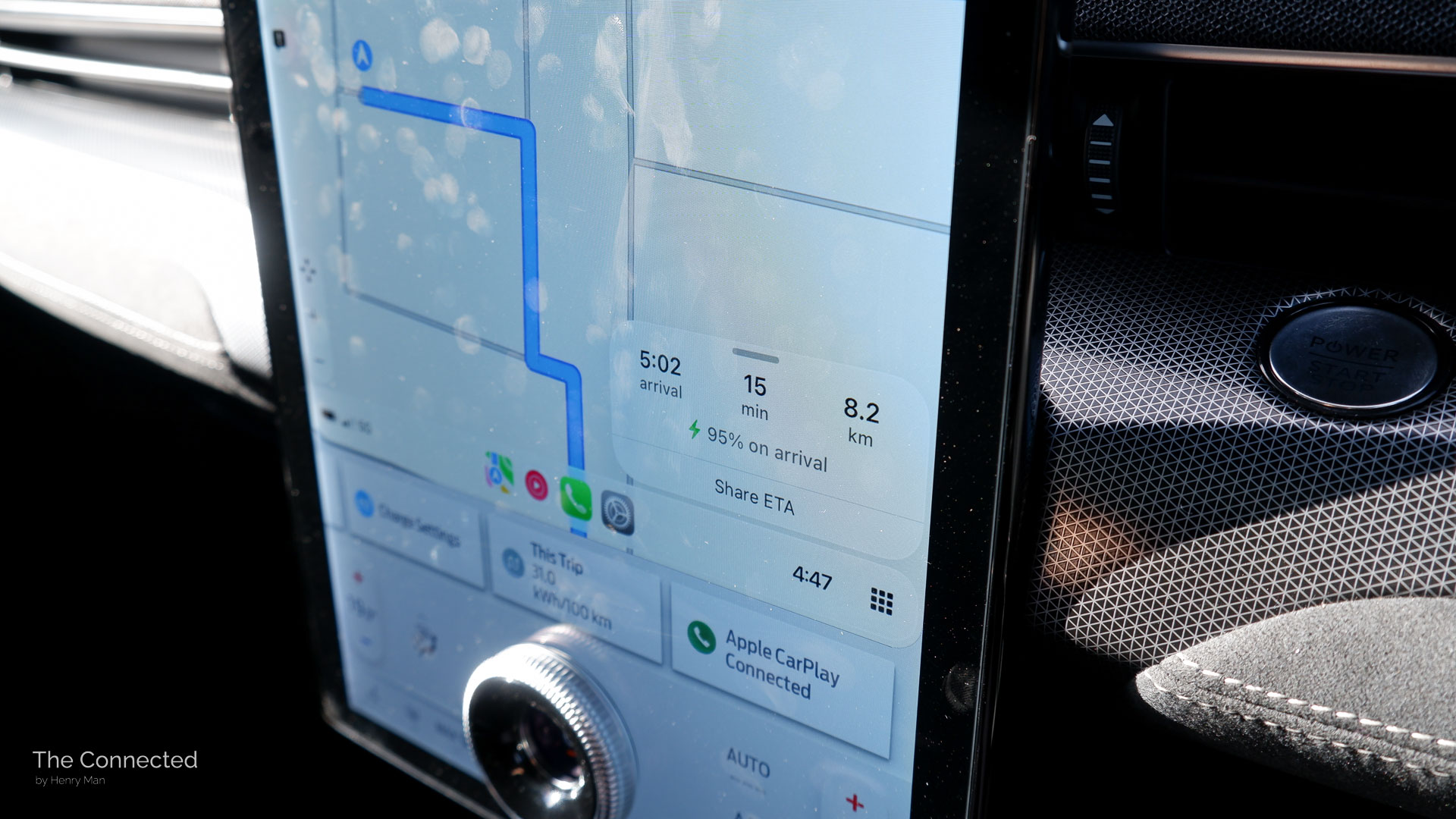
The most impressive feature is Ford sharing the Mach-E’s battery status with both Apple CarPlay and Android Auto, so it gives an estimation of how much battery you’ll have on arrival at a destination and automatically plans public EV charging stops if there isn’t enough range via Apple Maps or Google Maps respectively.
This is a crucial and game-changing feature to provide EV range confidence for new drivers – while allowing owners to use their preferred smartphone projection, instead of the built-in mapping system.
That’s a good thing as the EV route planning in Ford’s map plots some odd and obscure charging stations in my testing.
Meanwhile, the single Qi wireless charging pad is slow and non-ventilated, so it’s rarely useful.
On the other hand, Ford offers plenty of USB charging ports, with three USB-Cs and one traditional USB-A at the front row, plus two USB-Cs for rear row passengers.
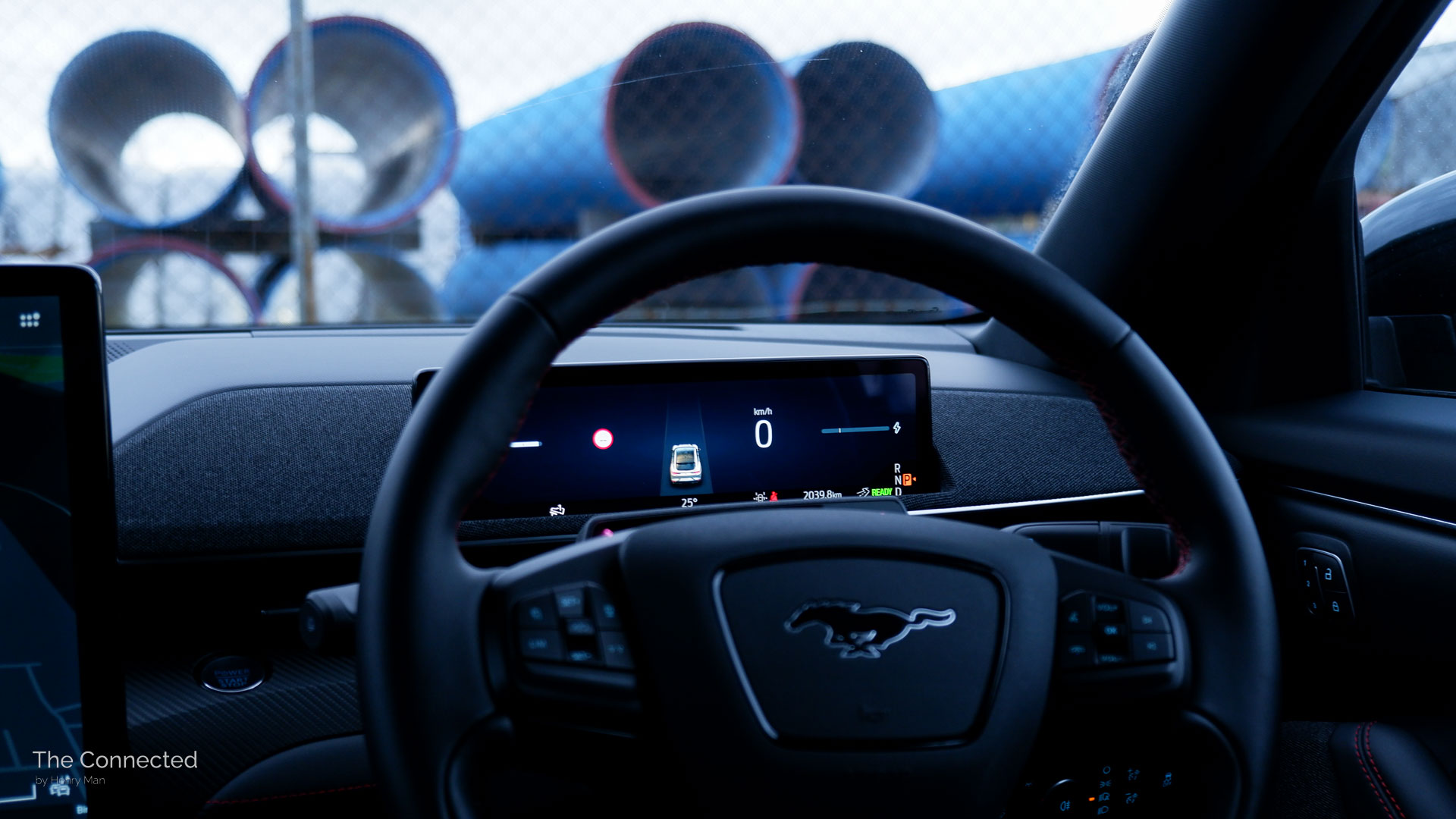
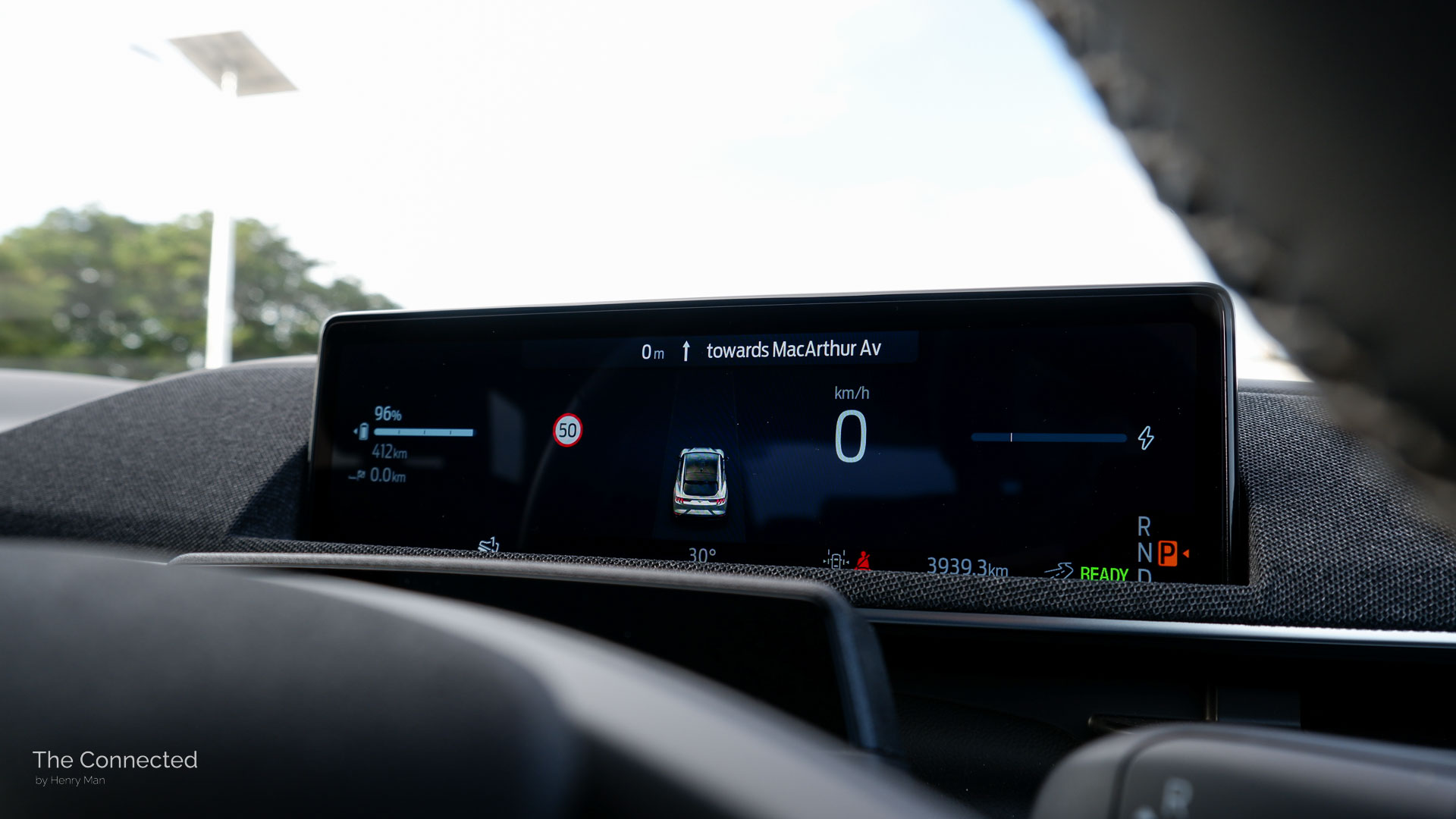
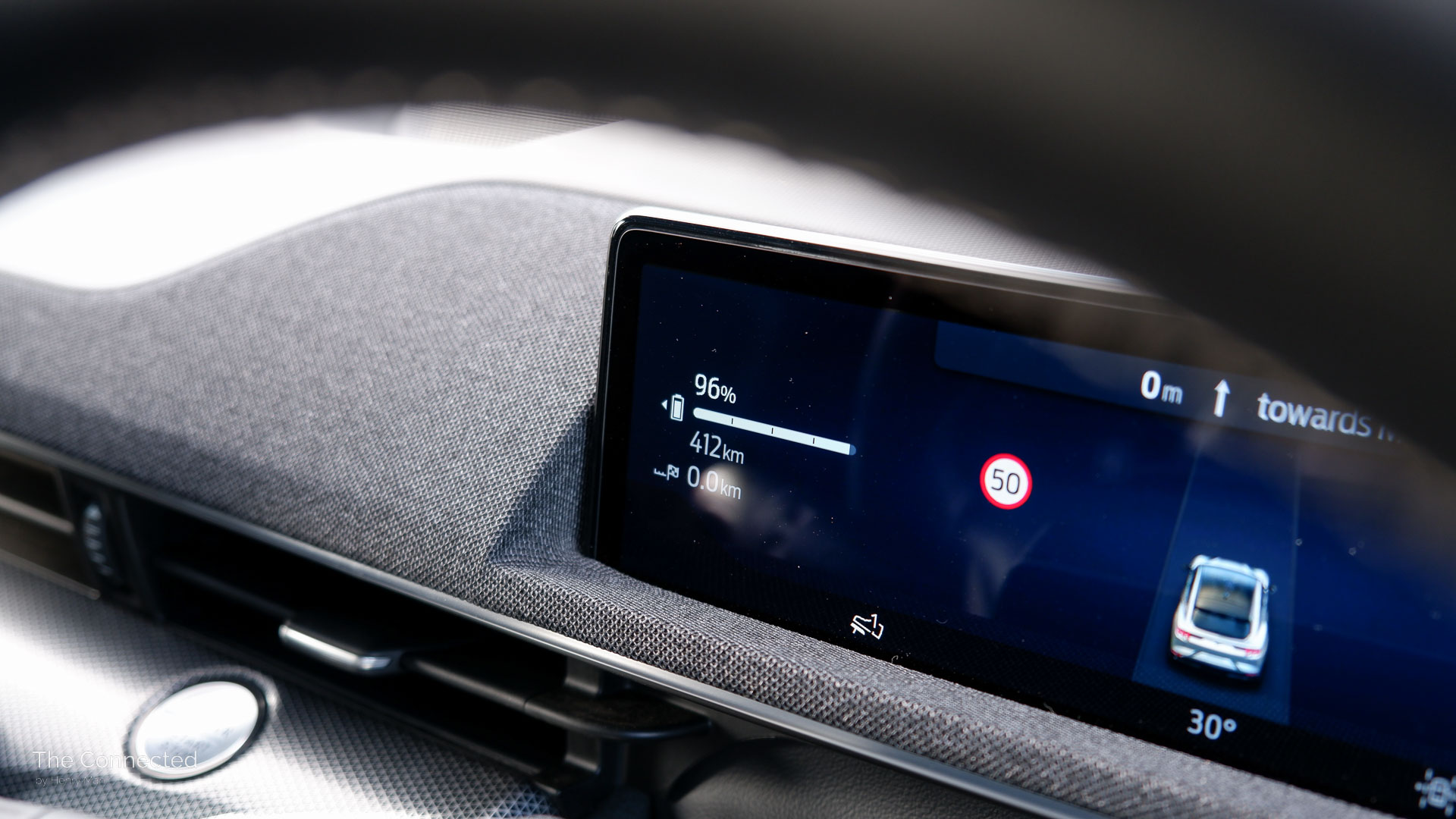
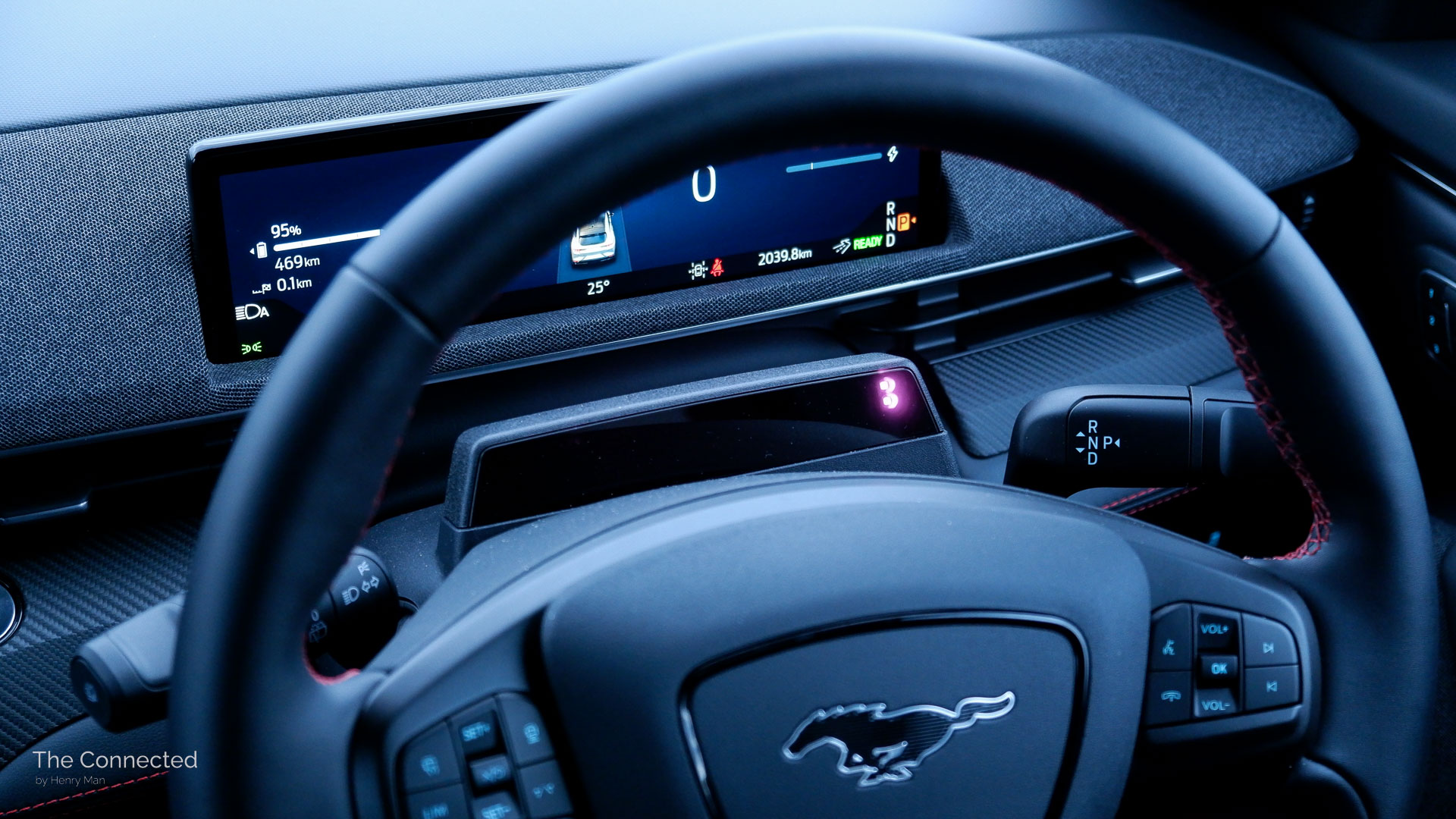
The Ford Mustang Mach-E also offers a 10.2-inch instrument display with a unique thin and wide visor-shaped aspect ratio. It’s a great simple design, but with my driving position, the steering wheel rim still blocked certain elements on the screen similar to Hyundai and Kia cars.
The driver display itself doesn’t offer any customisability other than light/dark modes – but is legible with smooth animations, clear icons and text, graphics for safety assists, map instructions atop from Apple CarPlay or Android Auto, and a power/regen bar with a coloured pattern that illuminates as you accelerate.
I only noticed a bug where it would always display the map destination as ‘0.1km’ remaining regardless of whether I was using Ford’s map or a navigation app in Android Auto or Apple CarPlay.
No Mach-E variant has a head-up display which is expected at its price point, though.
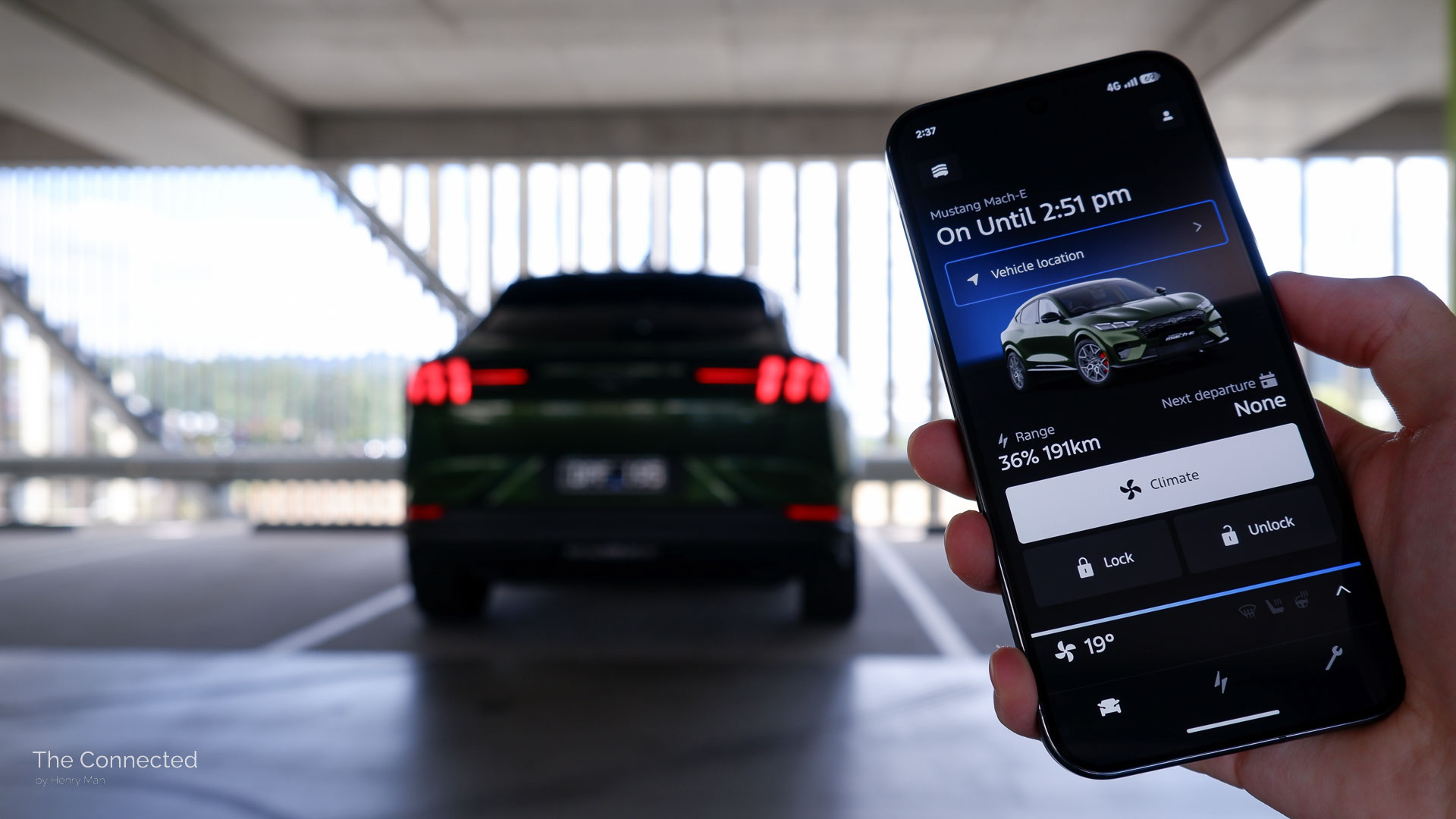
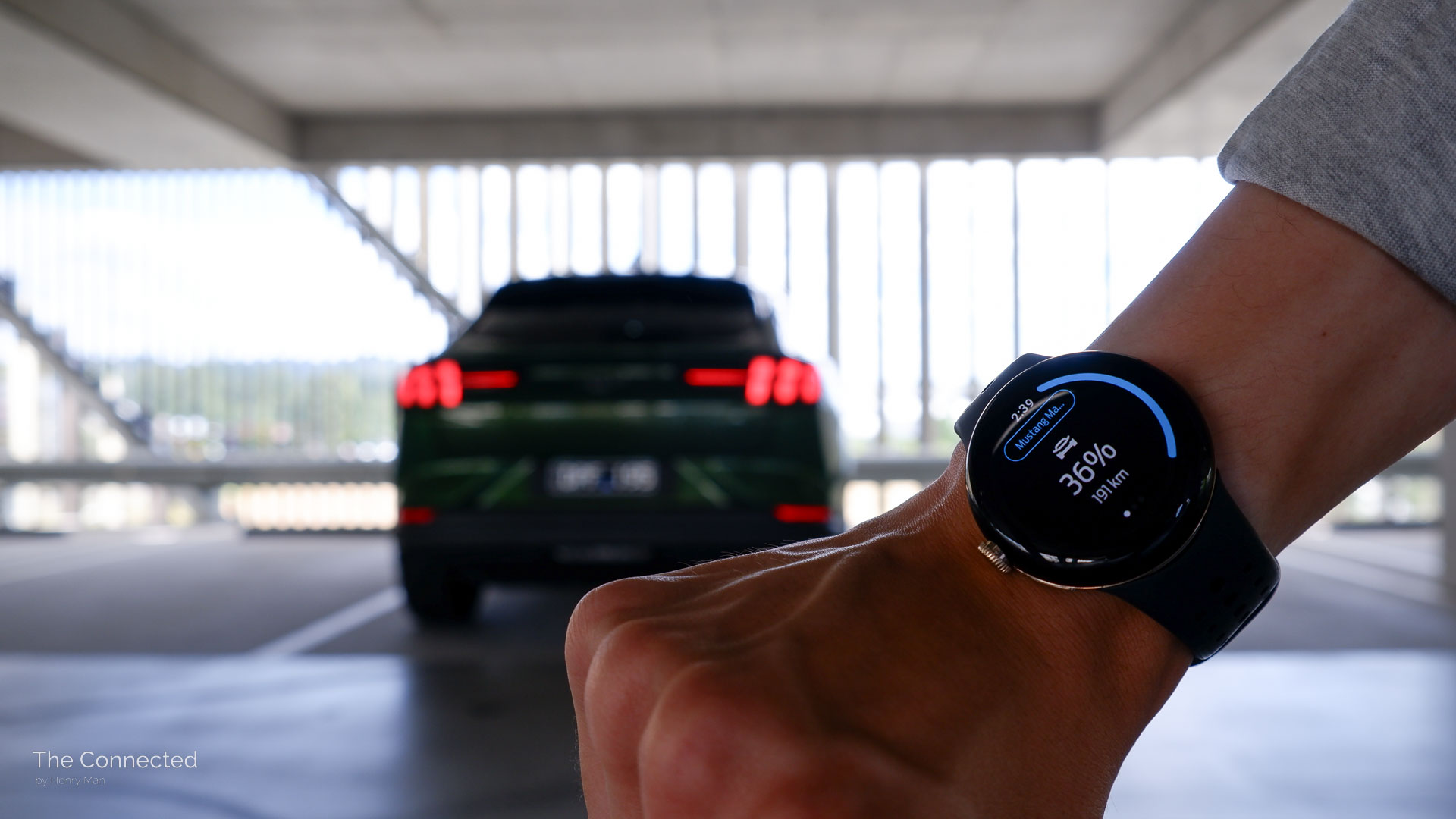
What is included is FordPass Connected Services with a simple mobile app, which includes pre-starting the climate control, heated seats and heated steering wheel, monitoring the charge status, and vehicle location.
It’s lacking some more advanced functionality that you get from Tesla or Leapmotor apps, while starting the climate control annoyingly turns on both front and rear daytime running lights just like MG (which confused my neighbour at night).
The American brand offers the same functionality with both Apple Watch and Google Wear OS smartwatch apps, which is a rarity from other automakers including Tesla which only has the former.
Safety.
2026 Ford Mustang Mach-E safety features:
| Front AEB with vehicle/cyclist/pedestrian/junction turning detection | 360-degree cameras |
| Rear AEB | Front and rear parking sensors |
| Blind-spot assist | Speed sign detection |
| Rear cross-traffic assist | Driver attention monitoring camera |
| Lane-keep assist | Full LED headlights with adaptive high beam matrix |
| Adaptive cruise control with lane-centring assist | Full LED tail-lights |
| Emergency services calling via connected phone |
The Mach-E offers non-infuriating safety assistance systems that some other brands should learn from – albeit with one key weakness.
The lane-keep assist is well-calibrated with subtle steering intervention when touching the marked lines, it doesn’t sound off when you overspeed by default, and the adaptive cruise control and lane-centring systems are smooth and easy to set via the physical steering wheel buttons.
Despite the seemingly intimidating driver attention monitoring camera popping up from the steering wheel column, it didn’t trigger at all in my two weeks with two Mach E’s even with it optionally enabled.
Ford’s safety suite is refreshingly reliable and non-intrusive.
However, the 360-degree camera system is too limited with it cutting out and unable to show up when travelling faster than 10km/h – which is way too slow even in car parks.
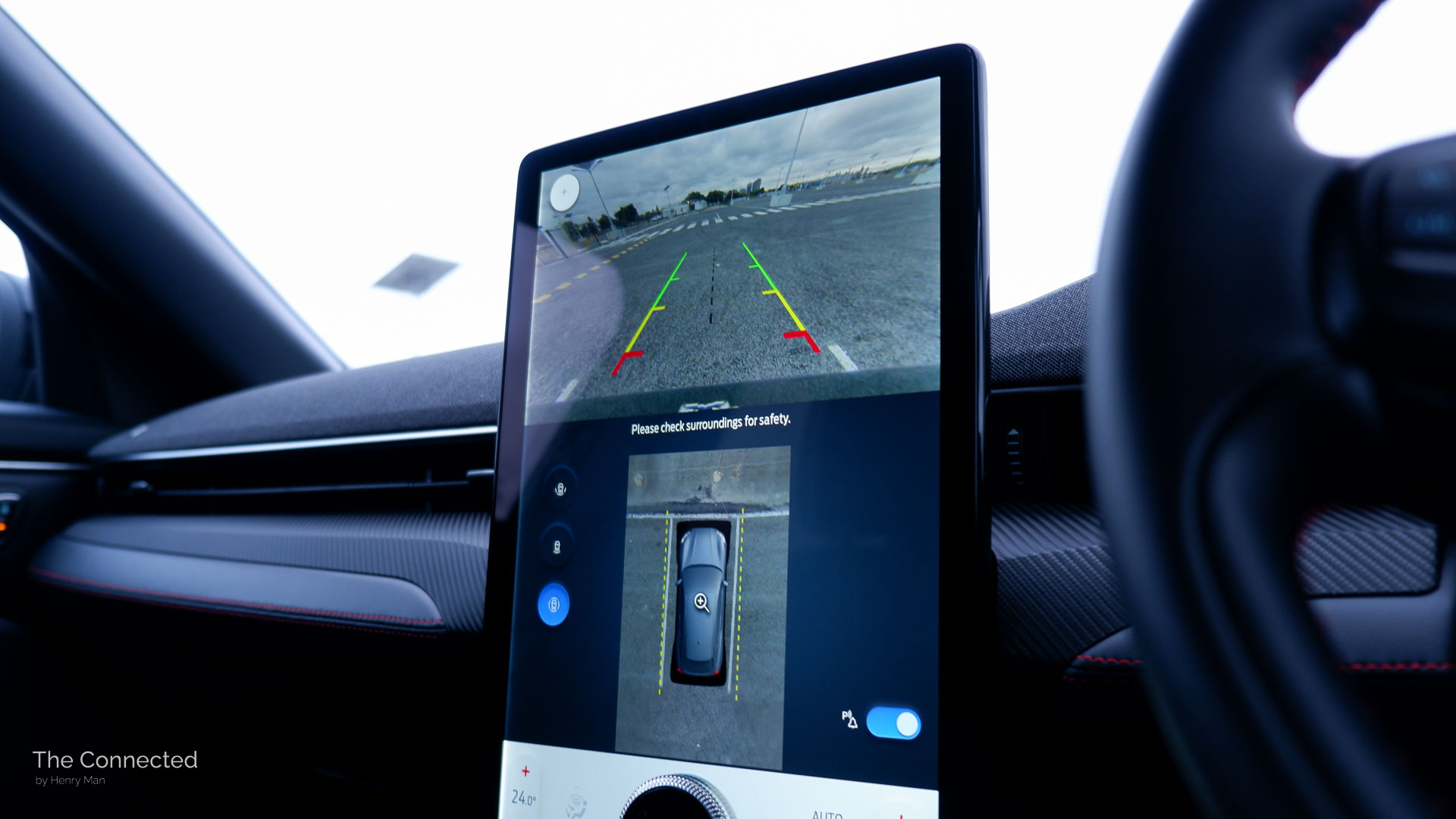
The camera quality is also sub-par with limited views (it only can zoom in a certain corner instead of showing a wheel view) and the top-down view appears smaller than ideal on the portrait screen.
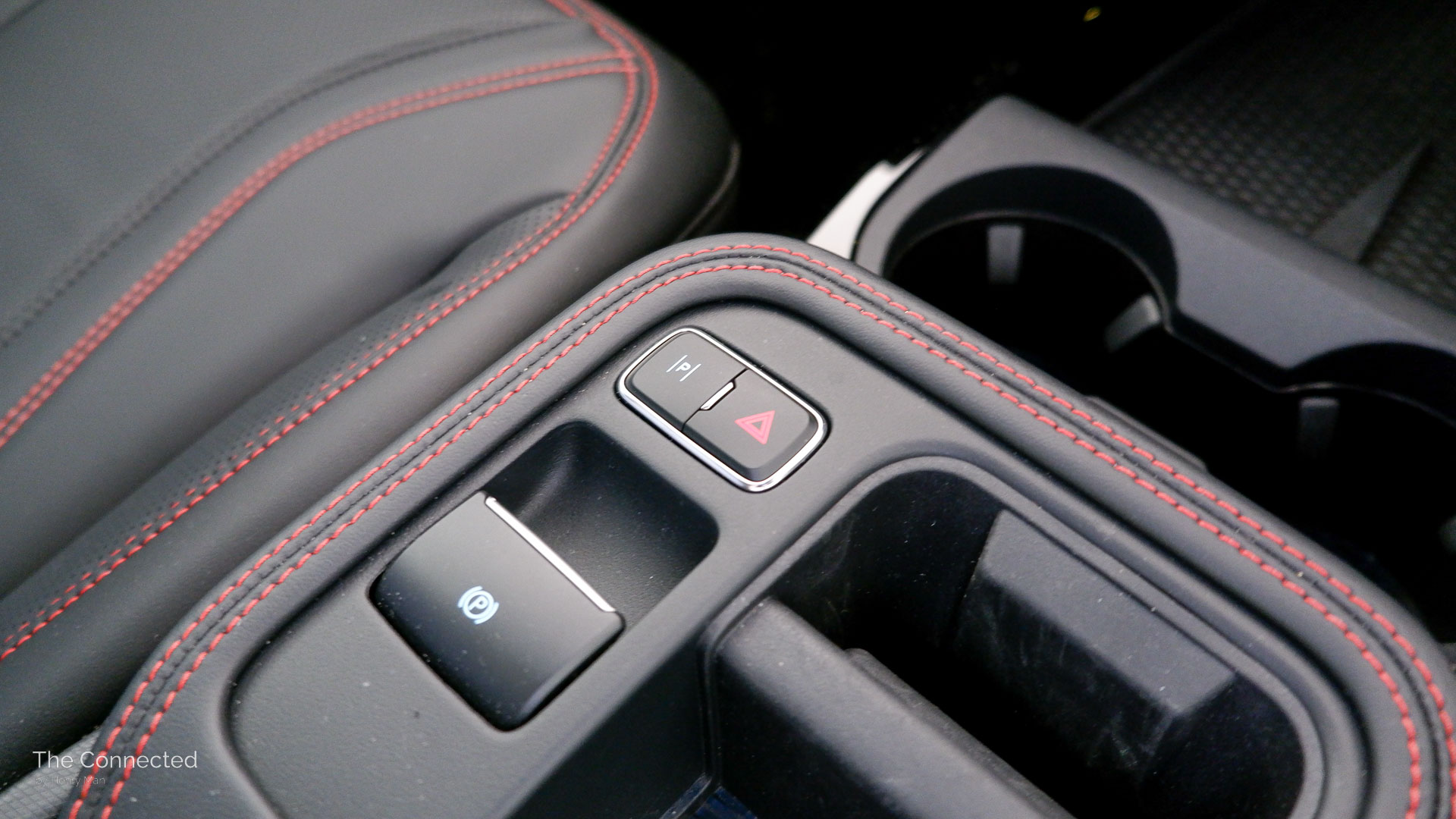
There is also a useless parking button on the centre console which merely opens a screen that directs you to search for nearby parking locations in Ford’s map, rather than showing the cameras.
Another Ford quirk is the turn indicator cancelling earlier than ideal when turning the steering wheel.
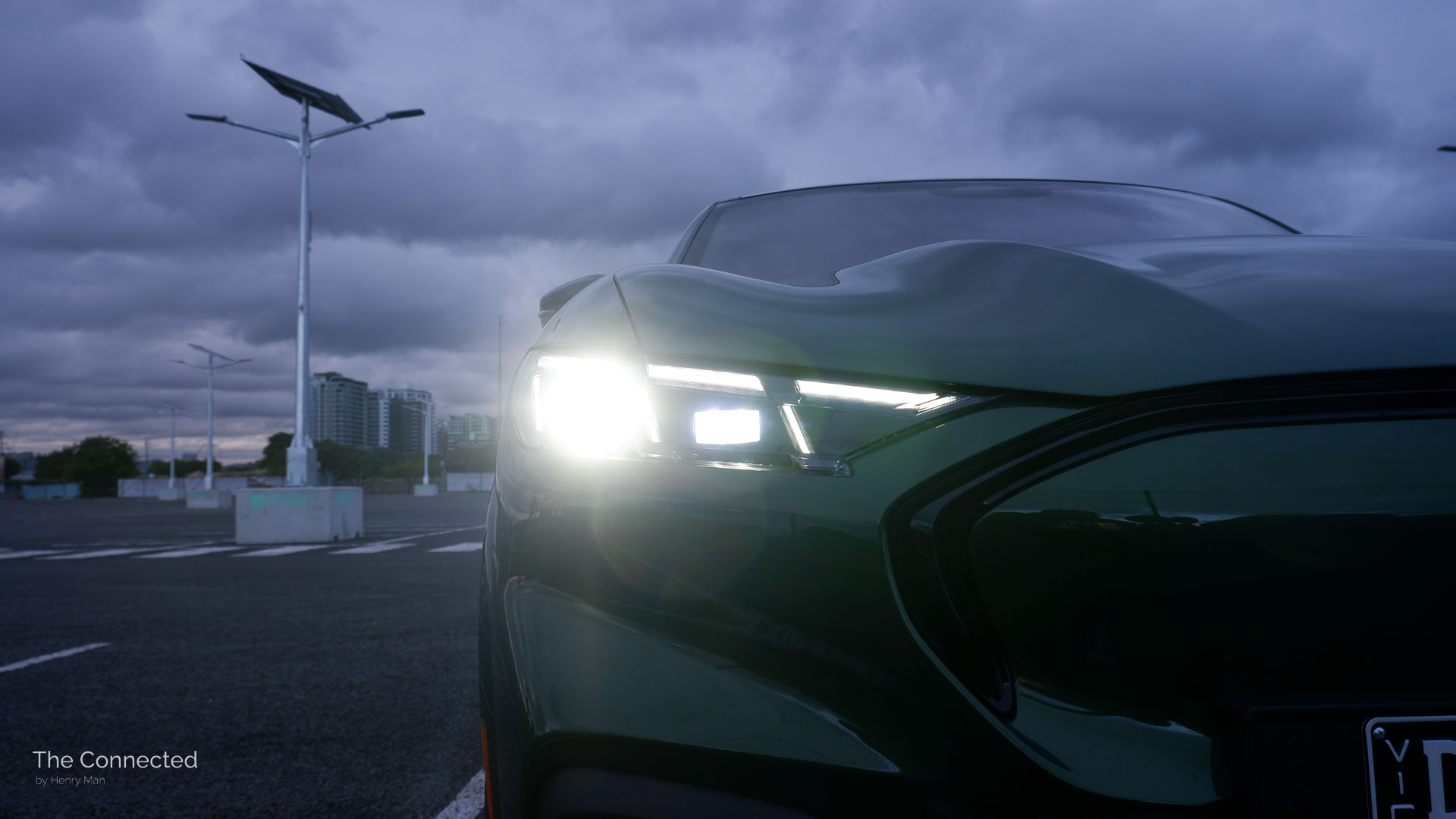
Furthermore, the Mustang Mach-E comes with full LED headlights and tail-lights as standard with cool sequential indicators and an effective adaptive high beam matrix function.
The Ford electric SUV has the full five-star safety rating by the Australasian New Car Assessment Program (ANCAP) rating, albeit under older 2021 testing criteria and does not apply to the flagship GT model.
Range and charging.
2026 Ford Mustang Mach-E battery and charging specs:
| Select | Premium | GT | |
| Claimed driving range (WLTP combined cycle) | 470km | 600km | 515km |
| Claimed energy efficiency (WLTP combined cycle) | ~15.5kWh/100km | ~17.3kWh/100km | ~21.2kWh/100km |
| Battery size and type | 73kWh lithium-ion | 88kWh lithium-ion | 91kWh lithium-ion |
| Battery voltage | 400-volt class | ||
| Max AC / DC charging speed | 11 / 150kW | ||
| Bidirectional charging | N/A | ||
| Connector type | Type 2 / CCS2 | ||
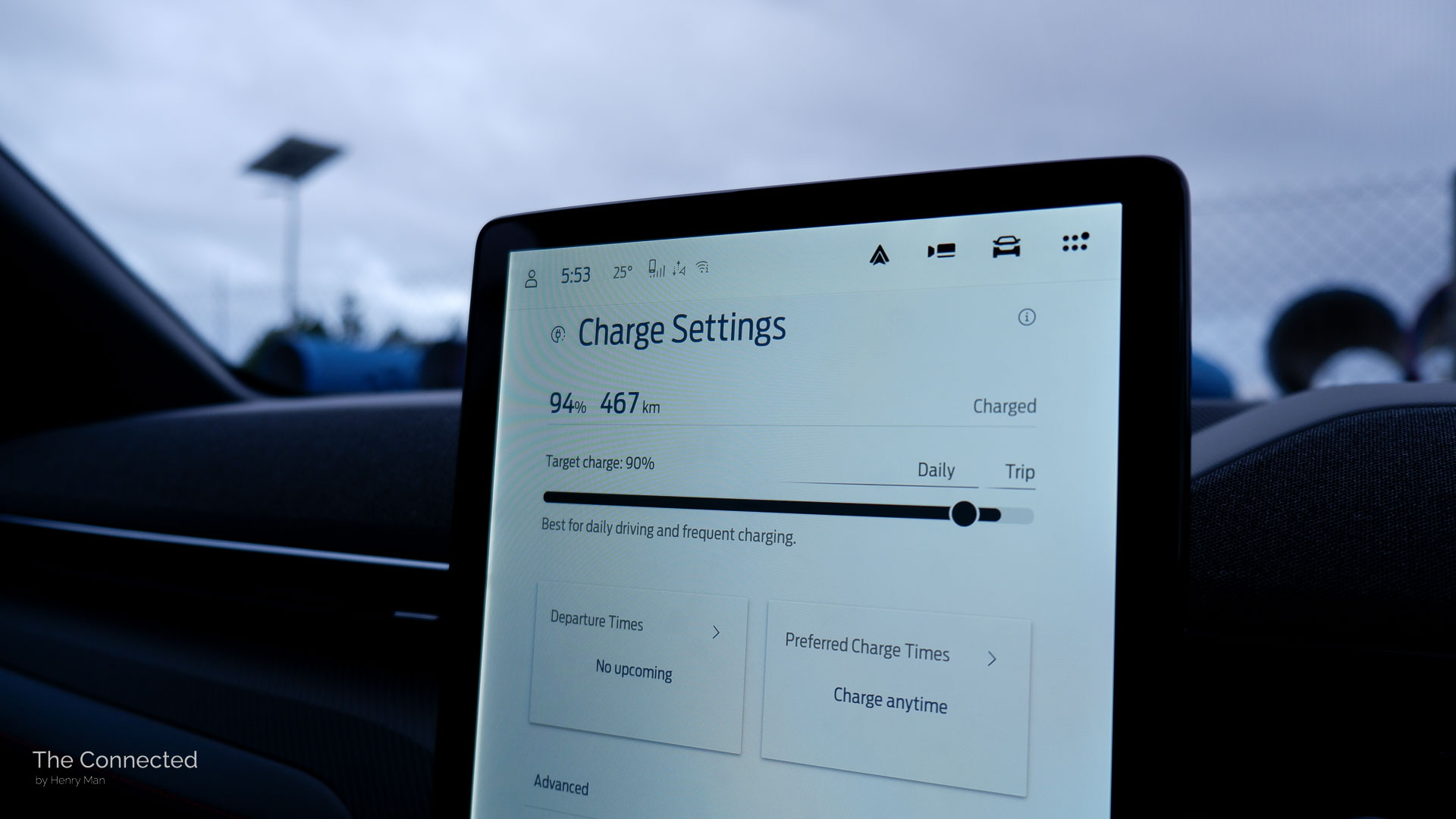
| Everyday charging limit recommendation | 90% | ||
The new Ford Mustang Mach-E offers good driving range – but real-world DC charging speeds are unimpressively slow for the price.
After a week of driving a mix of urban and highway conditions, the mid-spec Premium indicated a respectable energy efficiency of 16.0kWh/100km good for a real-world range of around 550km on its new 88kWh battery.
Meanwhile, the flagship dual-motor GT suggested an average energy efficiency of 24.0kWh/100km, resulting in a real-world range of about 379km from a 91kWh battery.
It’s worth noting that Ford’s trip computer seemed to round the energy consumption to the nearest whole number, so these figures are a guide only.
The Blue Oval brand also recommends a daily charging limit of 90% on its nickel-manganese-cobalt (NMC) lithium-ion batteries, so expect an everyday real-world range of around 495km on the Premium and 341km on the GT.
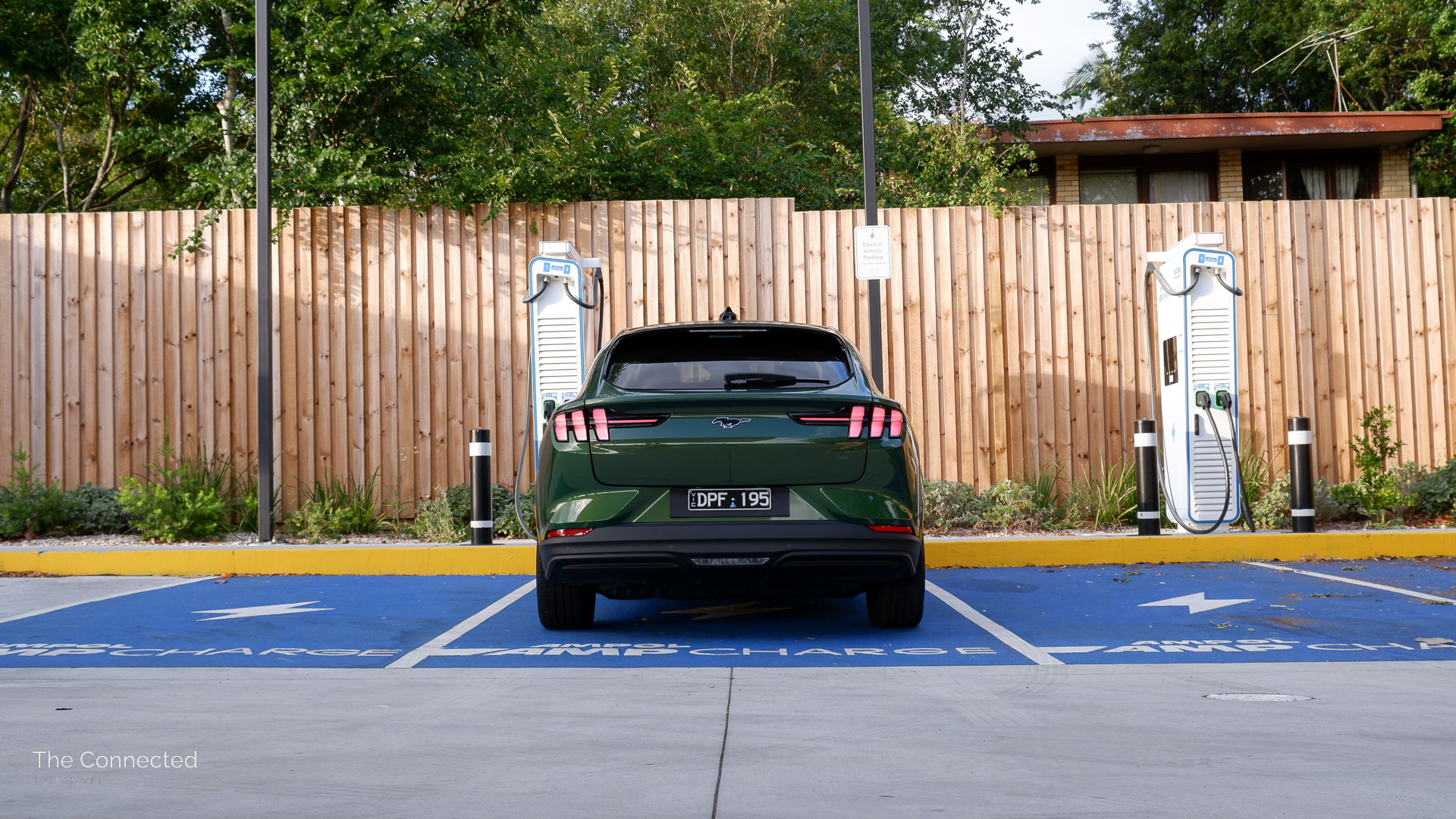
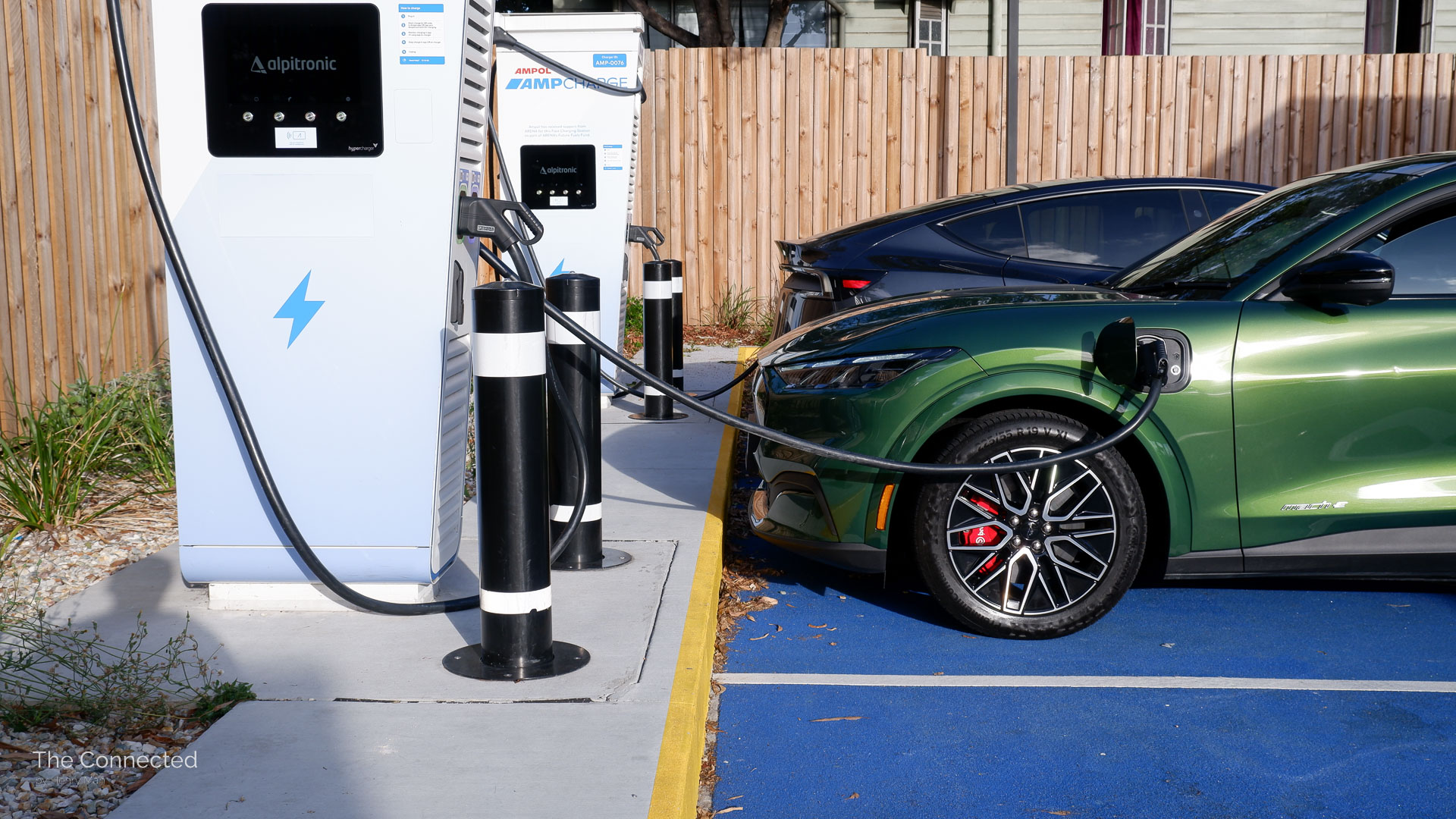
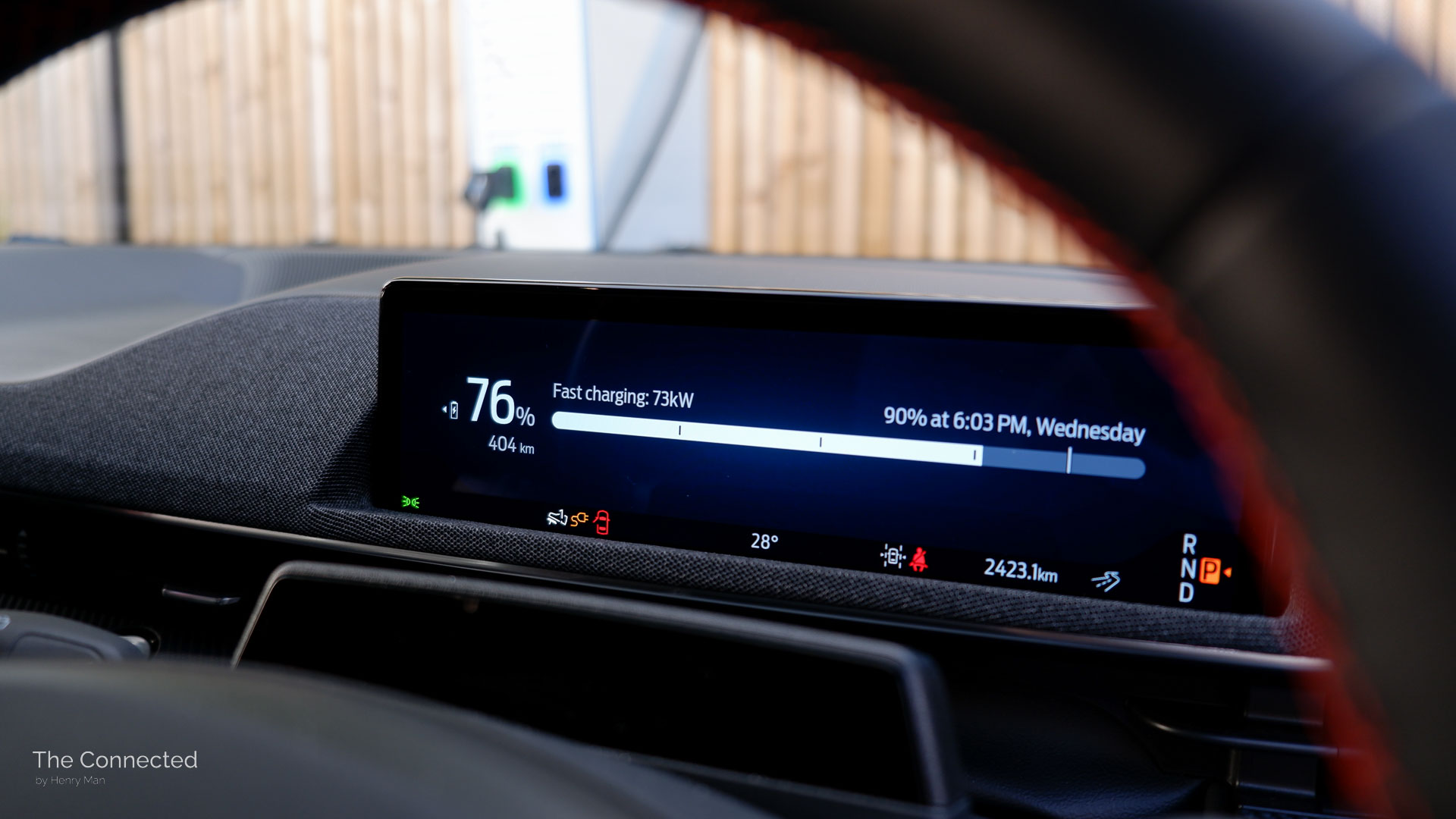
Disappointingly, the Ford Mustang Mach-E’s real-world DC charging speed is slow compared to other rivals at this price point.
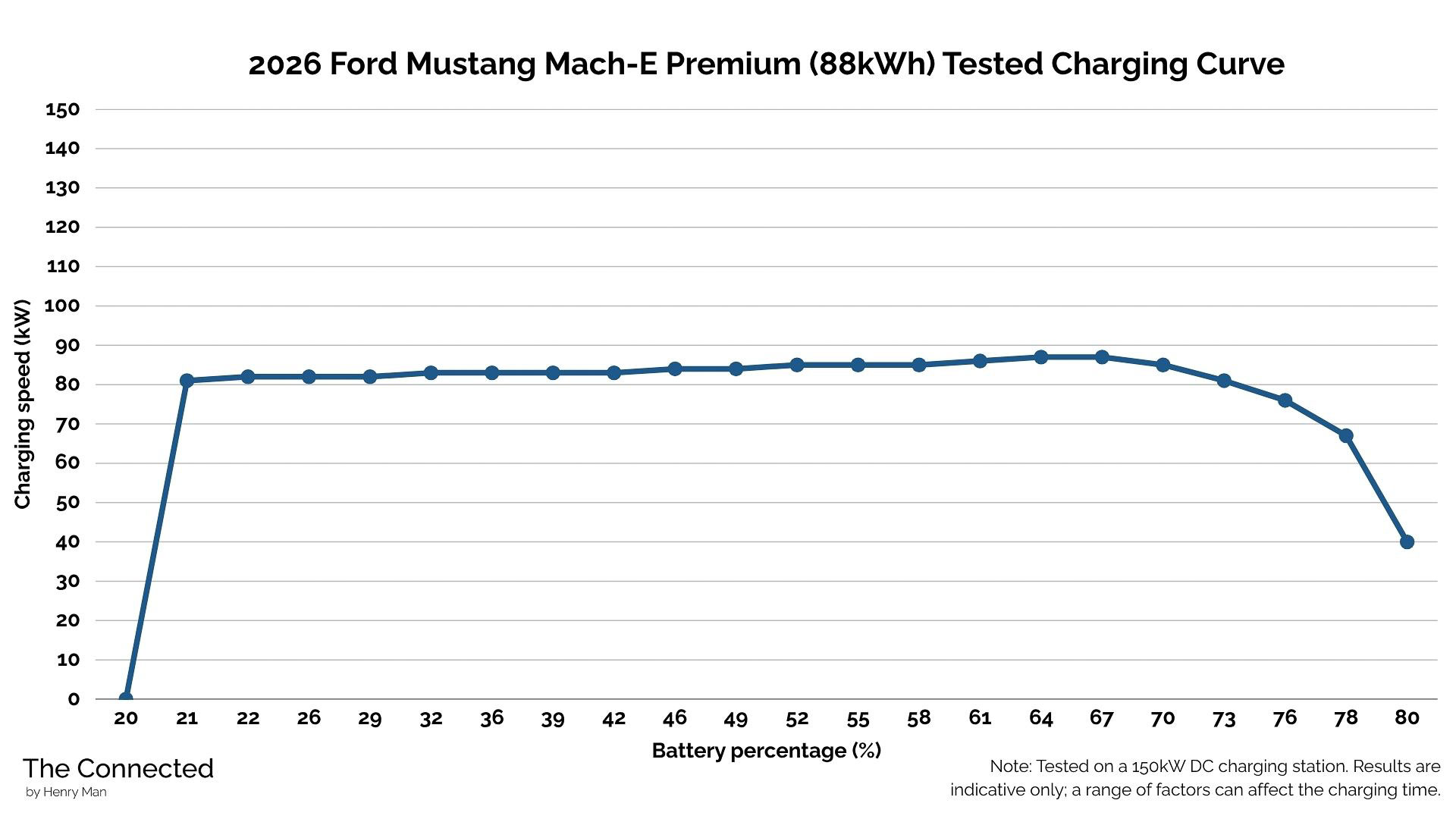
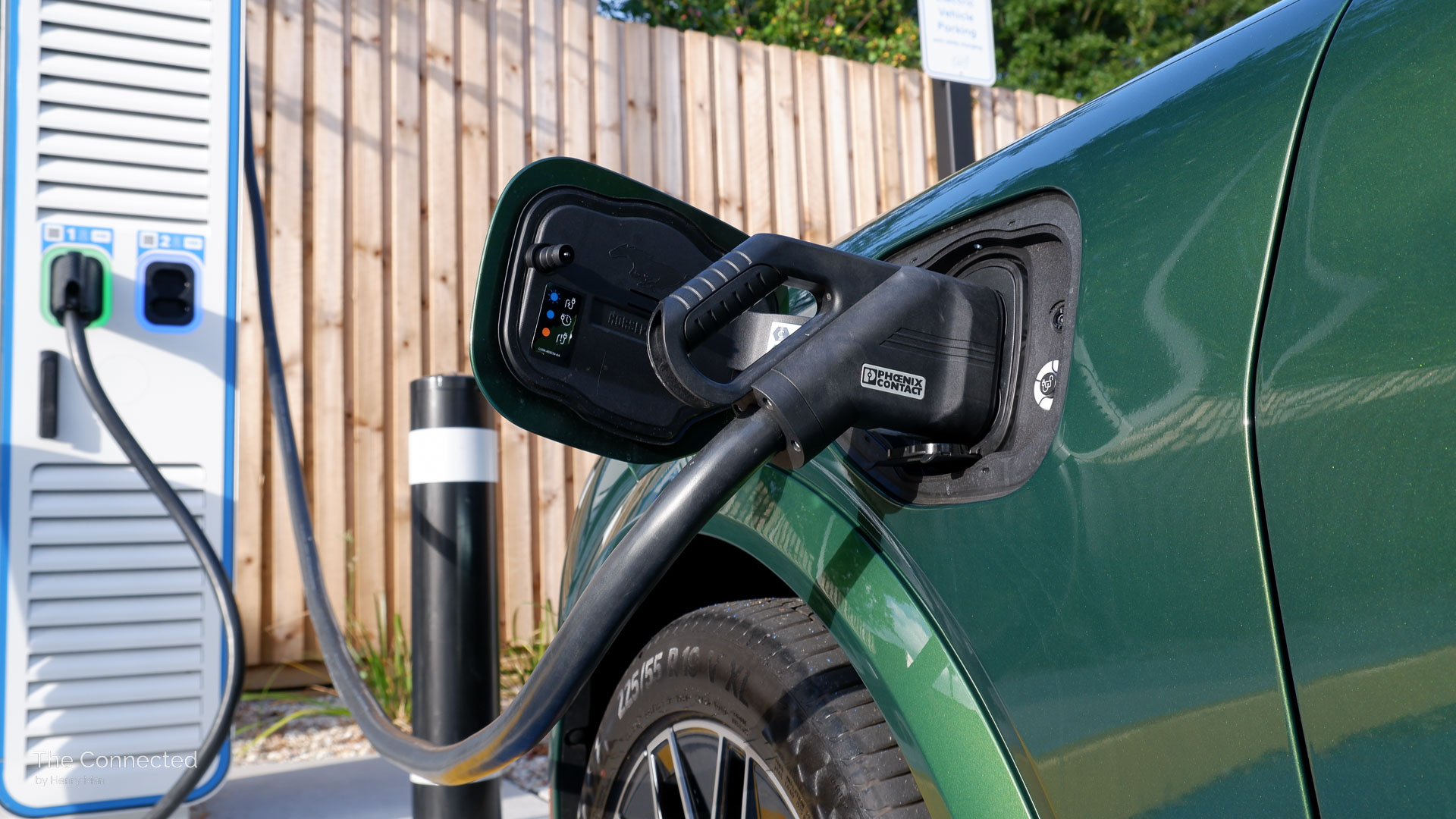
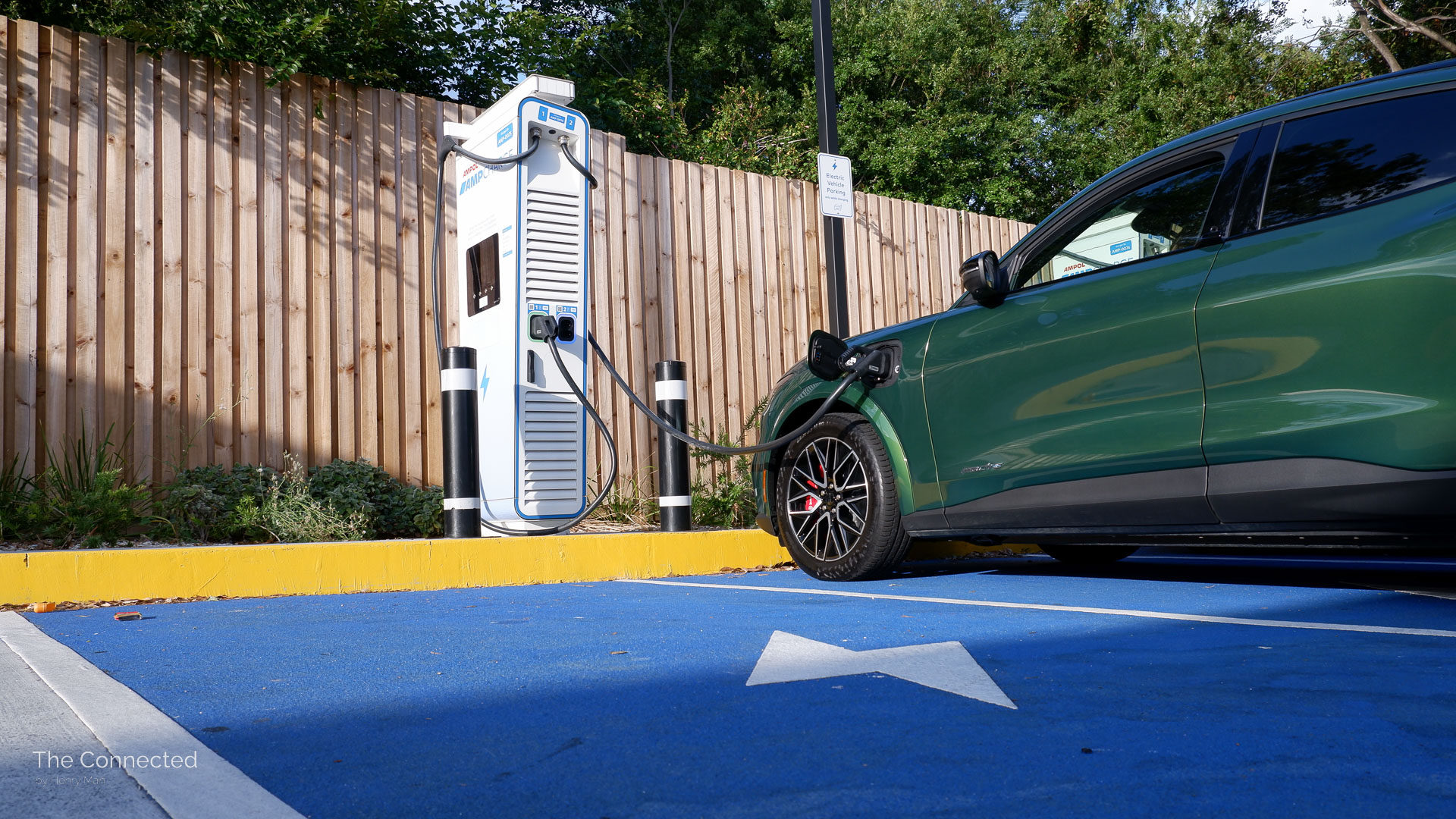
Tested on a public 150kW fast charging station, the Mach-E Premium recharged from 20 to 80% in about 39 minutes.
Despite Ford claiming it can charge up to 150kW speeds, I only saw it hit a 87kW peak. The charging curve was fairly flat and hovered around 80kW for most of the time until it reached 80%.
Overall, the Mach-E only achieved an 81kW average speed across the session.
For reference, the similarly-priced Kia EV6, Tesla Model Y and Zeekr 7X all charge significantly faster than the Ford EV, with it also falling behind the middling charge speeds on the Nissan Ariya and Toyota bZ4X in my real-world charging tests.
It’s worth noting that the results was from one test only; a range of uncontrollable factors could’ve impacted the charging speed, including the charging equipment condition, electricity grid connection at the time, battery temperature, and more.
No EV plugged in at the same 150kW DC Alpitronic machine I was using, though, and once the Tesla next to me unplugged from the other machine, there was no jump in the Mach-E’s charge speed – indicating there was no site-wide power sharing across stalls.
Most owners should charge at home with up to 11kW AC charging capability. It would be great to see 22kW AC charging especially on the pricier Premium and GT.
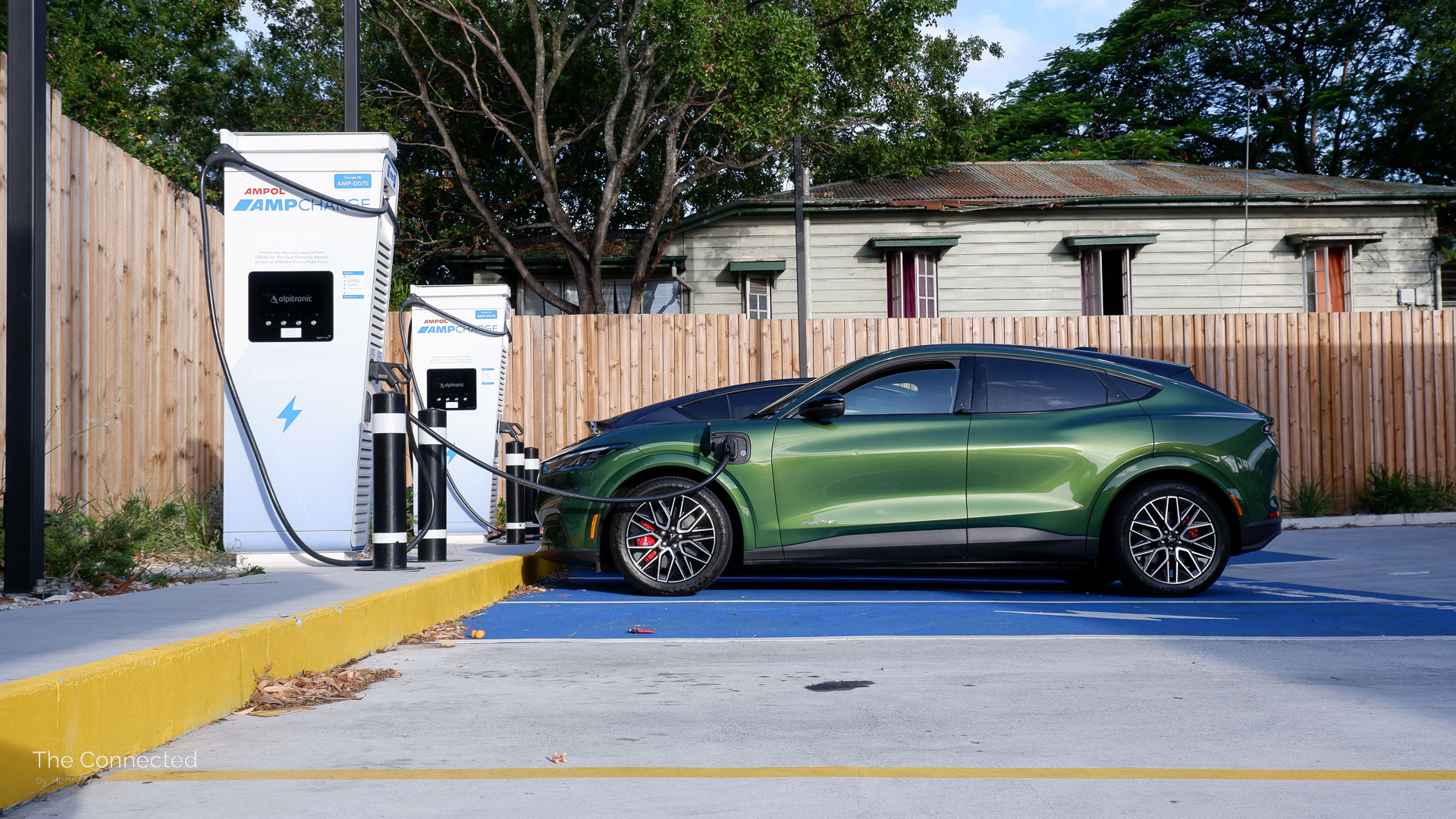
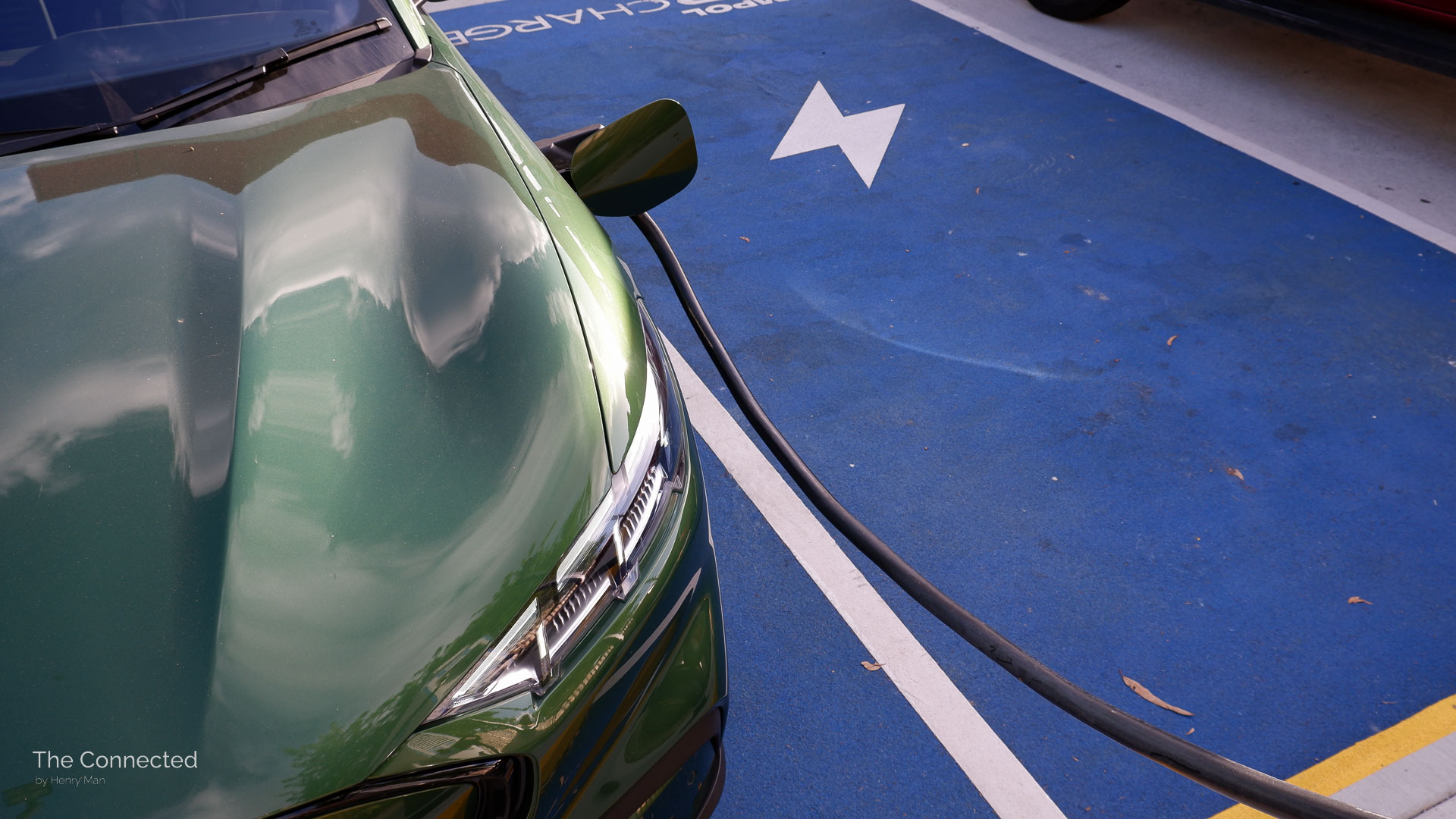
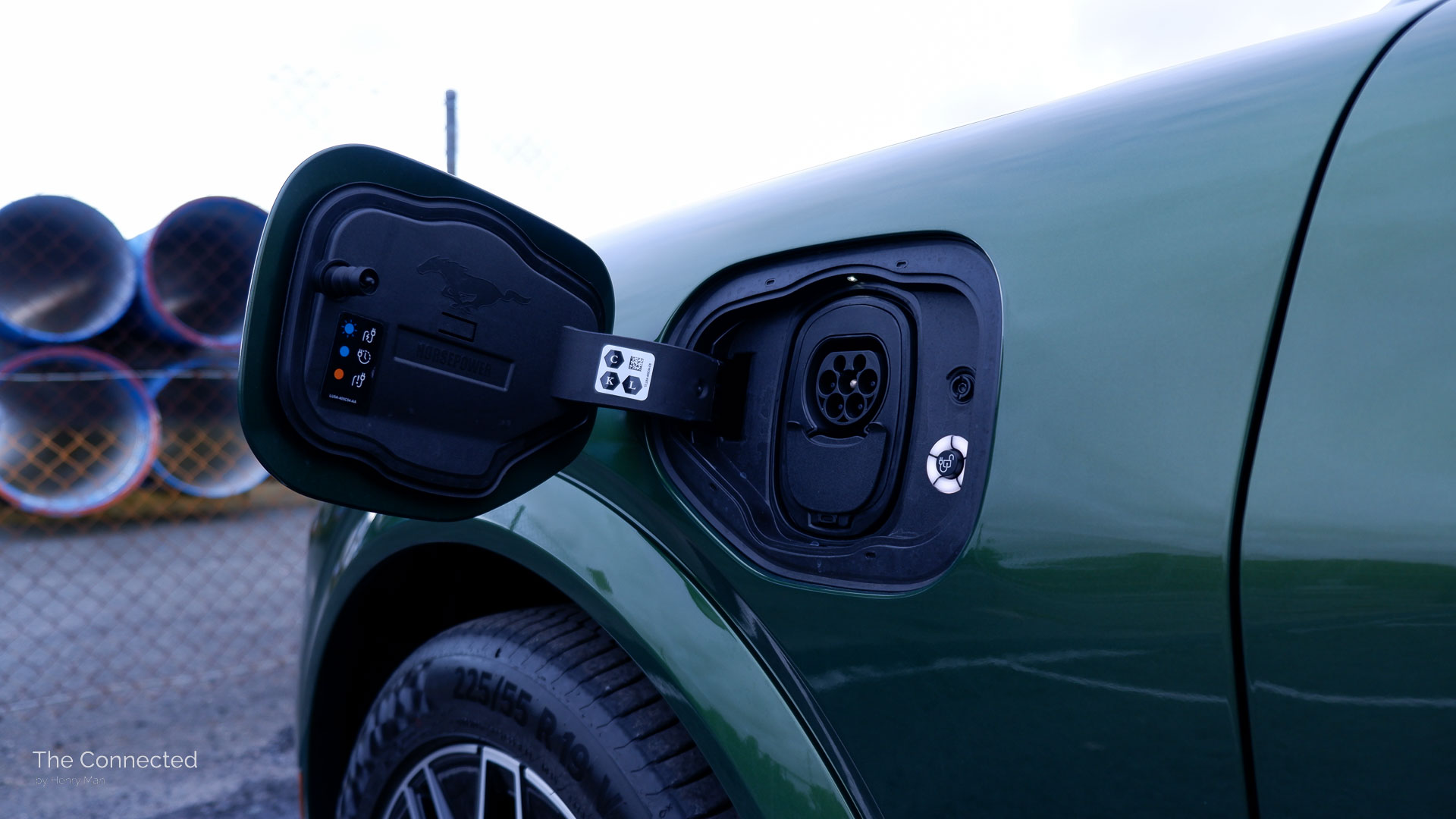
The Type 2 CCS charge port is located at the front-left quarter side, which is ideal for streetside charging but less accessible since you need to wrangle cables over the bonnet to the front-left wheel.
At least the charge port pops open manually with a DC cap attached to the port, a charge status LED ring, and a button to quickly stop charging.
Driving.
2026 Ford Mustang Mach-E powertrain specs:
| Select | Premium | GT | |
| Electric drive unit | Single permanent magnet synchronous motor | Dual permanent magnet synchronous motors | |
| Power / torque | 212kW / 525Nm | 434kW / 955Nm | |
| Drive type | RWD | AWD | |
| Kerb weight | 2100kg | 2086kg | 2276kg |
| Payload | 495kg | 509kg | 443kg |
| Towing (unbraked / braked) | N/A | ||
| Turning circle | 11.6m | 12.2m | |
The Mach-E is a great driver’s electric SUV, but the GT is unnecessarily rapid.
The Select and Premium have a single motor delivering up to 212kW of power and 525Nm of torque, and is rear-wheel drive.
Meanwhile, the GT boasts dual motors outputting up to 434kW and 954Nm, and is all-wheel drive.
In reality, the single motor provides plenty of punch with a push from the rear, whereas the dual-motor GT is so fast that it feels dangerously too easy to accelerate – sucking out the fun.
The GT is unnecessary to drive legally on public roads, but that’s the case of many other high-performance EV rivals such as the Hyundai Ioniq 5 N, Zeekr 7X Performance, and Tesla Model Y Performance.
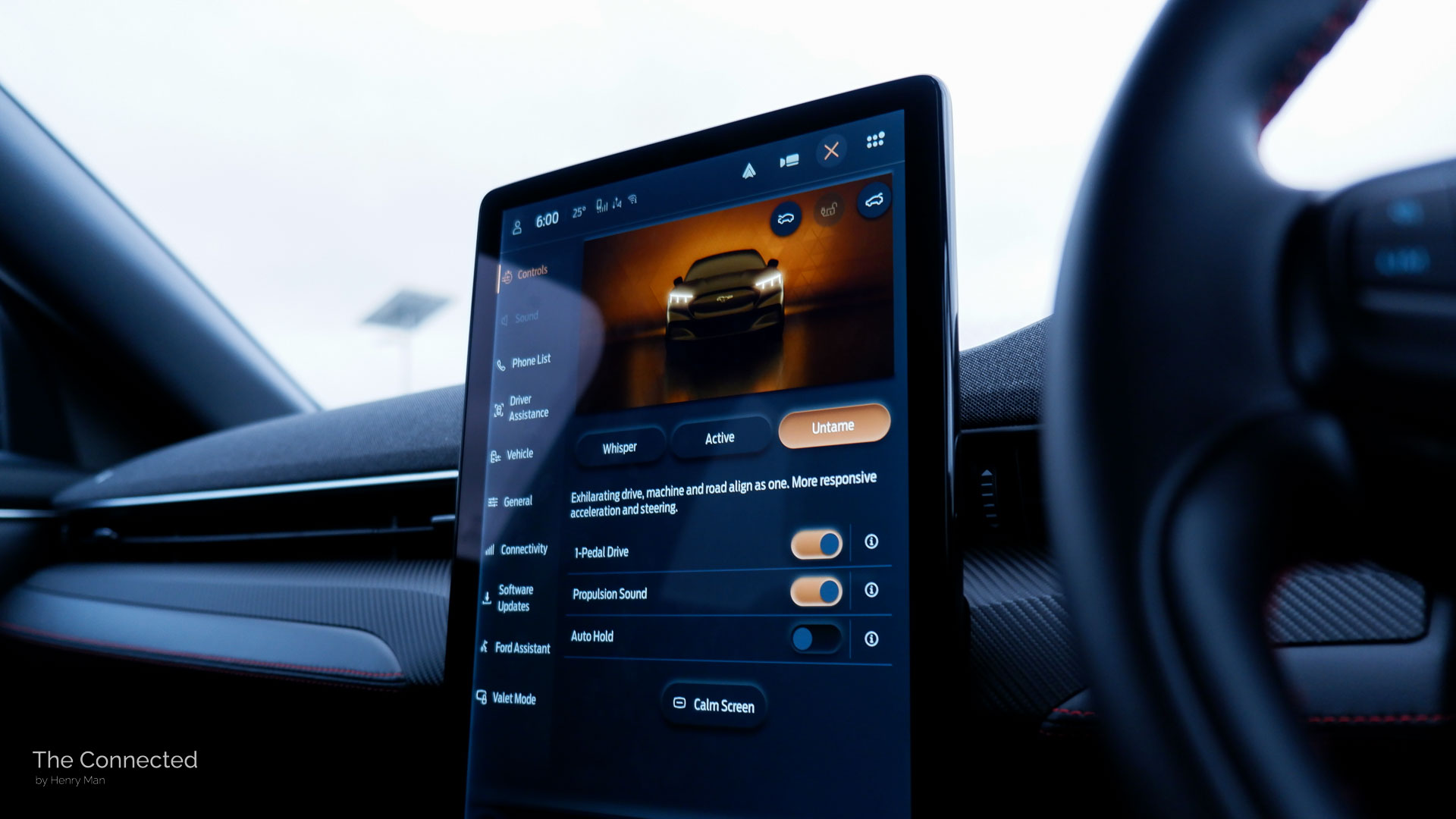
In the Untame sports drive mode, Ford pumps in an electric-engine humming sound to add to the driving engagement, but it’s quite subtle similar to the Nissan Ariya.
Ford’s one-pedal driving is also strong, progressive and stays on by default every time you turn on the Mach-E. It works when reversing, too.
This helps negate the firm and unnatural blended brake pedal feel, but the Brembo front brakes standard on the Premium and GT are rarely necessary.
Uniquely, the Blue Oval has a ‘Brake Coach’ feature which briefly shows a percentage score of how efficient your regen was every time you come to a stop.
A word of caution is when flicking the drive selector stalk to drive or reverse if you’re still moving; it will roll like it’s in neutral for a short second, so it’s best to stop completely before changing drive directions.
The steering is also well-weighted with a balance of firmness and good feel around corners, without being too heavy and tedious when parking.
But the GT has a noticeably larger turning circle at 12.2 metres instead of the rear-wheel drive Select and Premium’s 11.2 metres.
The sporty tune compromises ride comfort with a noticeable firmness and sharp rebound when going over bumps and undulations.
The GT is even stiffer with limited suspension travel. Despite gaining adaptive suspension, it doesn’t help its cause either as it only increases the stiffness when in the Untame and Untame Plus drive modes.
Annoyingly, the drive modes are toggled via the touchscreen, which has noticeable lag when pressing the vehicle settings shortcut.
The Mustang Mach-E offers good noise insulation and the GT isn’t noticeably worse with its larger low-profile wheels and sporty rubber.
It’s a shame that all models don’t offer auto-dip down wing mirrors when reversing (to avoid curbing wheels), despite having mirror and driver seat memory.
Warranty and servicing.
2026 Ford Mustang Mach-E capped-price servicing costs:
| 1 year/15,000km | 2 years/30,000km | 3 years/45,000km | 4 years/60,000km | 5 years/75,000km |
| $140 | $140 | $140 | $140 | $140 |
The 2026 Ford Mustang Mach-E is backed by a five-year, unlimited kilometre vehicle warranty and an eight-year/160,000km battery warranty.
Servicing is required every one year/15,000km (whichever occurs first) with prices capped for the first 12 visits.
After the first five years/75,000km, it’ll only cost $700 in total to maintain the Mach-E. Ford’s EV servicing prices are impressively low – and commendable.
Roadside assistance is included for up to seven years as long as you service it with a Ford dealer every time.
A spare tyre is not included, with the Mexico-made EV coming with a temporary patch-up goo kit.
Price and rivals.
2026 Ford Mustang Mach-E model range pricing (accurate as at the time of publication):
| Select | Premium | GT |
| From $65,990 before on-road costs | From $80,490 before on-road costs | From $98,490 before on-road costs |
The 2026 Ford Mustang Mach-E is priced from $65,990 before on-road costs in Australia.
Three variants are offered, each with different-sized battery packs. The Select and Premium share the same single rear motor, while the GT is dual motor and all-wheel-drive.
All exterior paint colours except Shadow Black costs $700 extra.
The Ford Mustang Mach-E directly rivals the following medium electric SUVs:
- Cupra Tavascan (full review)
- Nissan Ariya (full review)
- Kia EV6 (full review)
- Hyundai Ioniq 5 (full review)
- Tesla Model Y (full review)
- Toyota bZ4X (full review)
- Zeekr 7X
- Volkswagen ID.5
- Skoda Enyaq
- BYD Sealion 7
- Smart #3
- Polestar 4 (full review)
- Mazda CX-6e
Other alternatives to the Mach-E include:
- Volkswagen Tiguan (full review)
- Cupra Terramar
- Mazda CX-60 (full review)
- Genesis GV70 (full review)
Would I pick the 2026 Ford Mustang Mach-E?
The Ford Mustang Mach-E is controversial by name, yet it’s a sporty crossover EV well worth considering despite the price premium.
The Mexico-made medium electric SUV is great to drive especially in single motor specs, the safety assists are superbly refined, one-pedal driving is great, servicing costs are remarkably low, and it’s one of the few models that does EV navigation within Apple CarPlay and Android Auto.
The intentionally divisive decision to use the Pony badge actually works at turning heads and sparking conversations (for better or worse).
Yet, the Mach-E is around $10K more expensive than most rivals, the laggy software is disappointing for a new car in 2026, other models offer faster DC charging, and the 360-degree surround-view cameras cut out too early when driving faster than 10km/h.
Despite the small update, the door handles are still unnecessarily finicky with no fins at the rear doors to accessibly grab.
I’d pick the entry-level Mach-E Select which has most essential features as standard, the fun of rear-wheel drive, and still costs less than $70K.
If you’re willing to pay the premium, the Ford Mustang Mach-E is a unique and underrated EV with some great positives that other car brands could learn from.
Photographs by Henry Man
READ MORE: 2026 Nissan Ariya review
READ MORE: 2026 Hyundai Ioniq 9 review
READ MORE: Can EVs go on road trips? Brisbane to Sydney to Melbourne challenge
Pros:
- Head-turning design and badge
- Battery integration in CarPlay and AA
- Excellent one-pedal driving on by default
- Superb safety assists
- Cheap servicing
Cons:
- Laggy software
- Firm ride
- Slow tested DC charging speed
- 360-degree cameras cut out too early
- Pricier than rivals
About the Author.
Henry Man is an independent content producer passionate about the intersection of technology and transportation.
The former automotive journalist is focused on producing critically-detailed vehicle reviews, and unique short-form content. Learn more.


