
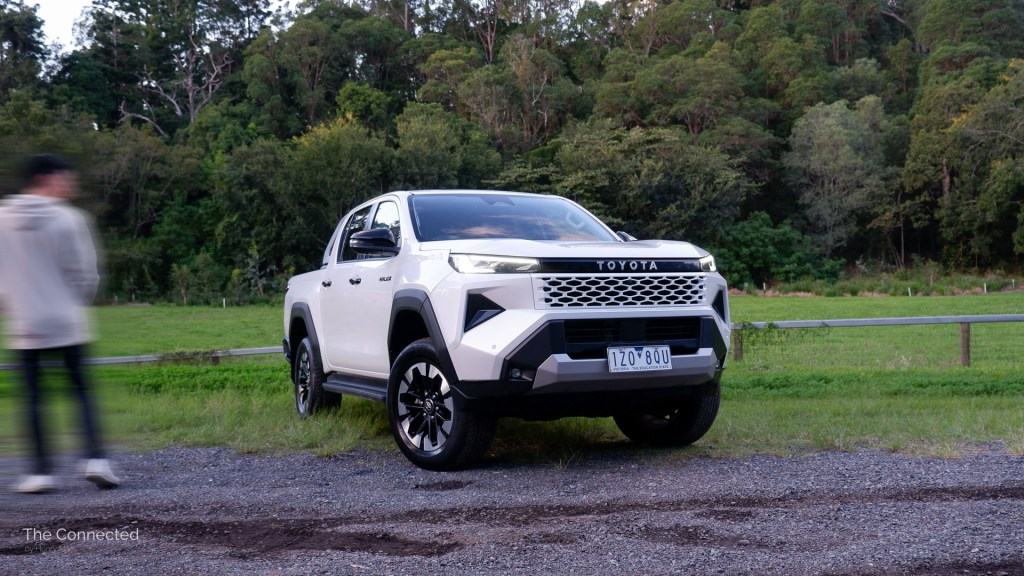
The iconic Toyota HiLux has entered its ninth generation.
Here’s the caveat: it’s not completely all-new much like the latest Toyota Camry and RAV4.
But the new ‘High Luxury’ represents a significant modernisation with a new power steering setup, a redesigned interior with upgraded technology, and a fresh exterior while retaining the venerable 1GD-FTV diesel engine.
Amid the Ford Ranger and new Chinese ute entrants such as the BYD Shark 6, Chery Stockman and MG U9, is the substantially refreshed ladder frame Toyota HiLux enough to keep it above the rest?
We’re testing out the everyday on-road and family worthiness here, but you can read how it performs off-road with this exact same test vehicle according to Drive and Carsales.
NOTE: The press vehicle was provided by Toyota Australia for a seven-day independent evaluation. Toll costs were covered, but we have no commercial arrangements with the company and it had no editorial control.

Pros.
+ Capability, dependability and residuals
+ Modernised tech, superb safety assists
+ Ergonomic interior
+ Urban-friendly size
+ The only new manual ute remaining
Cons.
– Frequent servicing requirements
– Barebones tray
– Limited family-friendly appeal
– Noisy and rattly diesel
– Unsettled soft unladen ride, large turning circle
Vehicle tested:
| Model | 2026 Toyota HiLux |
| Variant | SR5 4×4 Double Cab |
| Starting price | $63,990 before on-road costs |
| Exterior colour | Glacier White (standard) |
| Interior colour | Black Fabric |
| Country made | Thailand |
Design and quality.
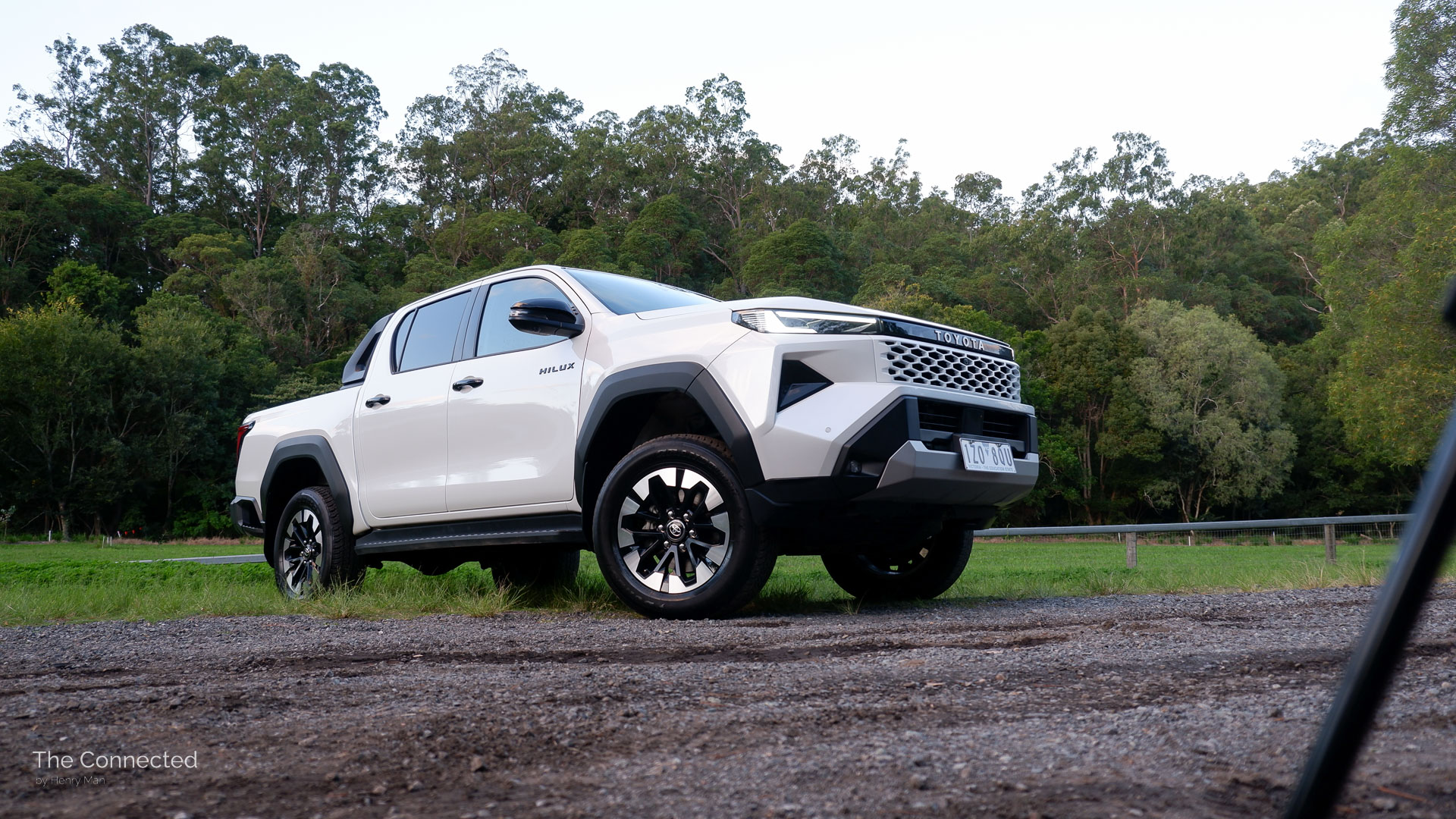
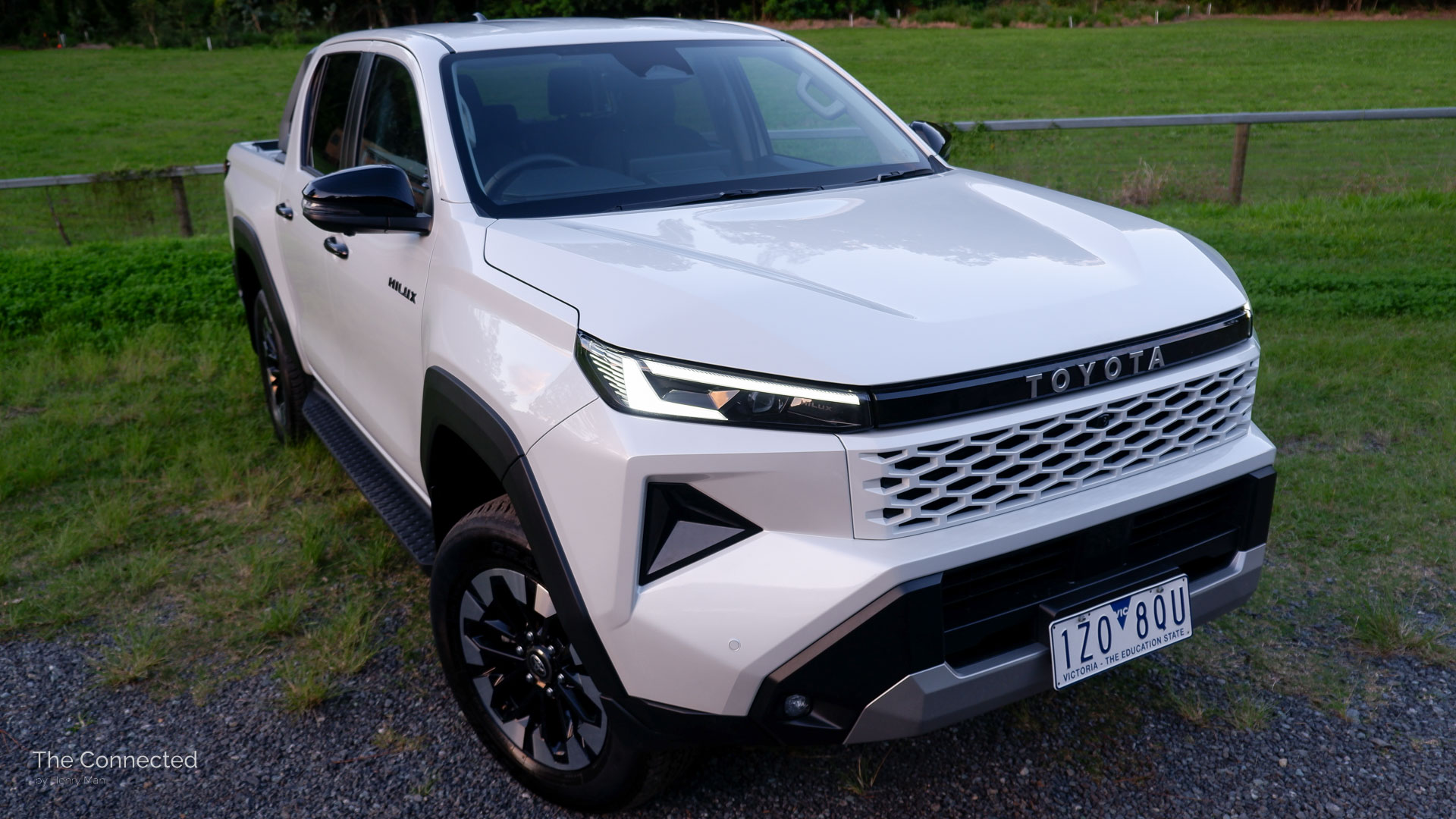
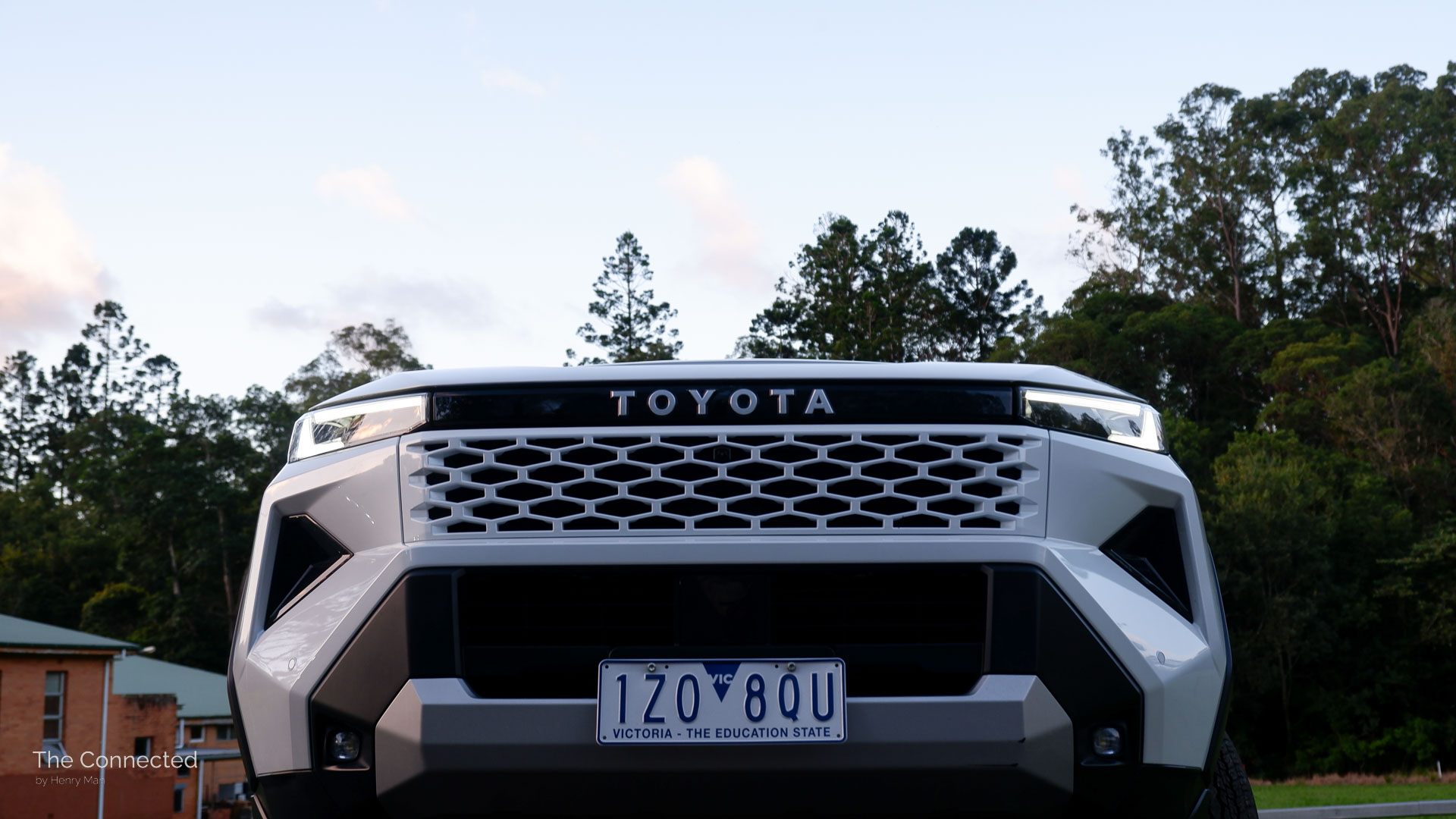
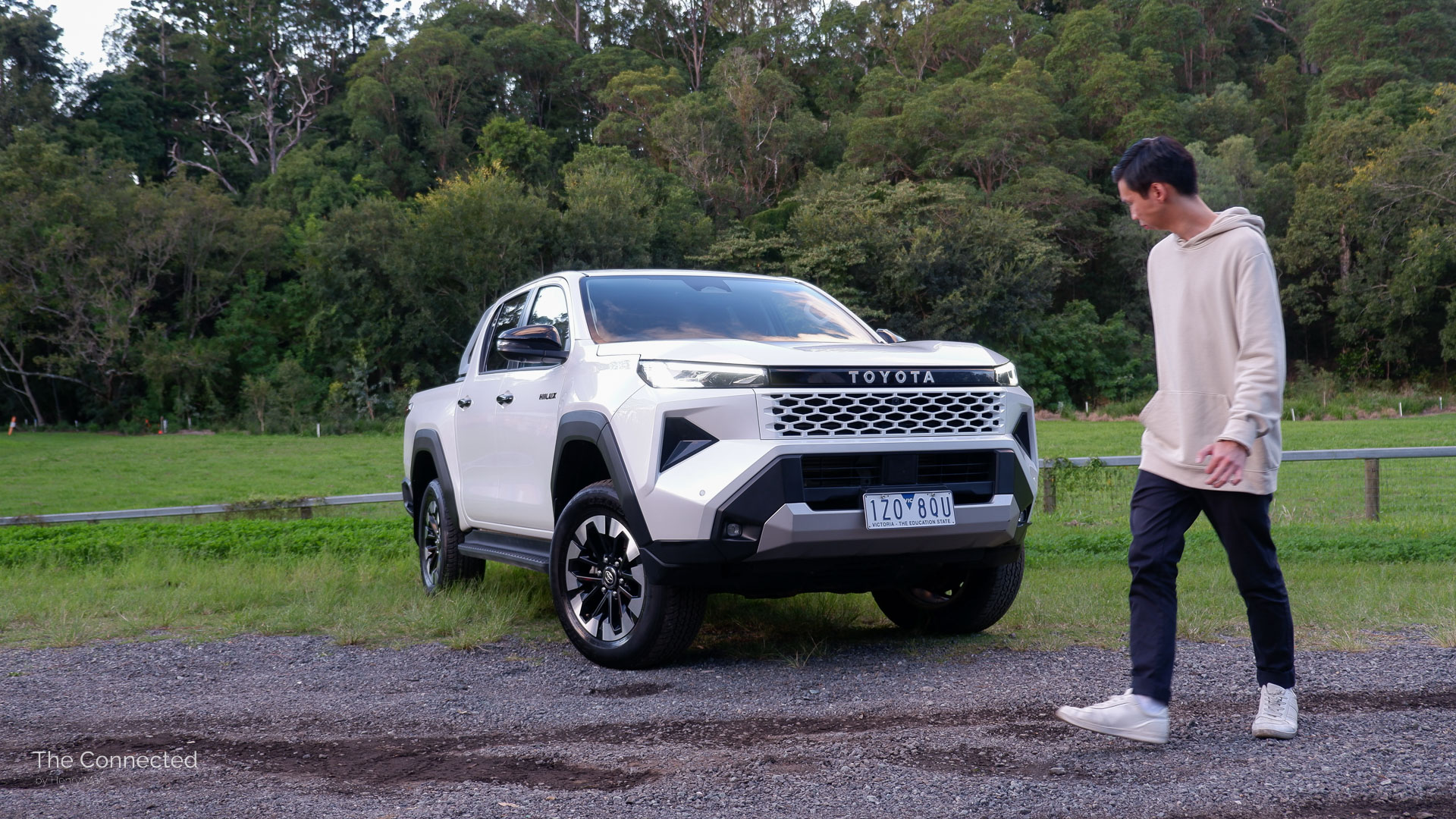
The new Toyota HiLux brings a refreshed exterior that forgoes the tank-like brutalist trend, and an interior that just works.
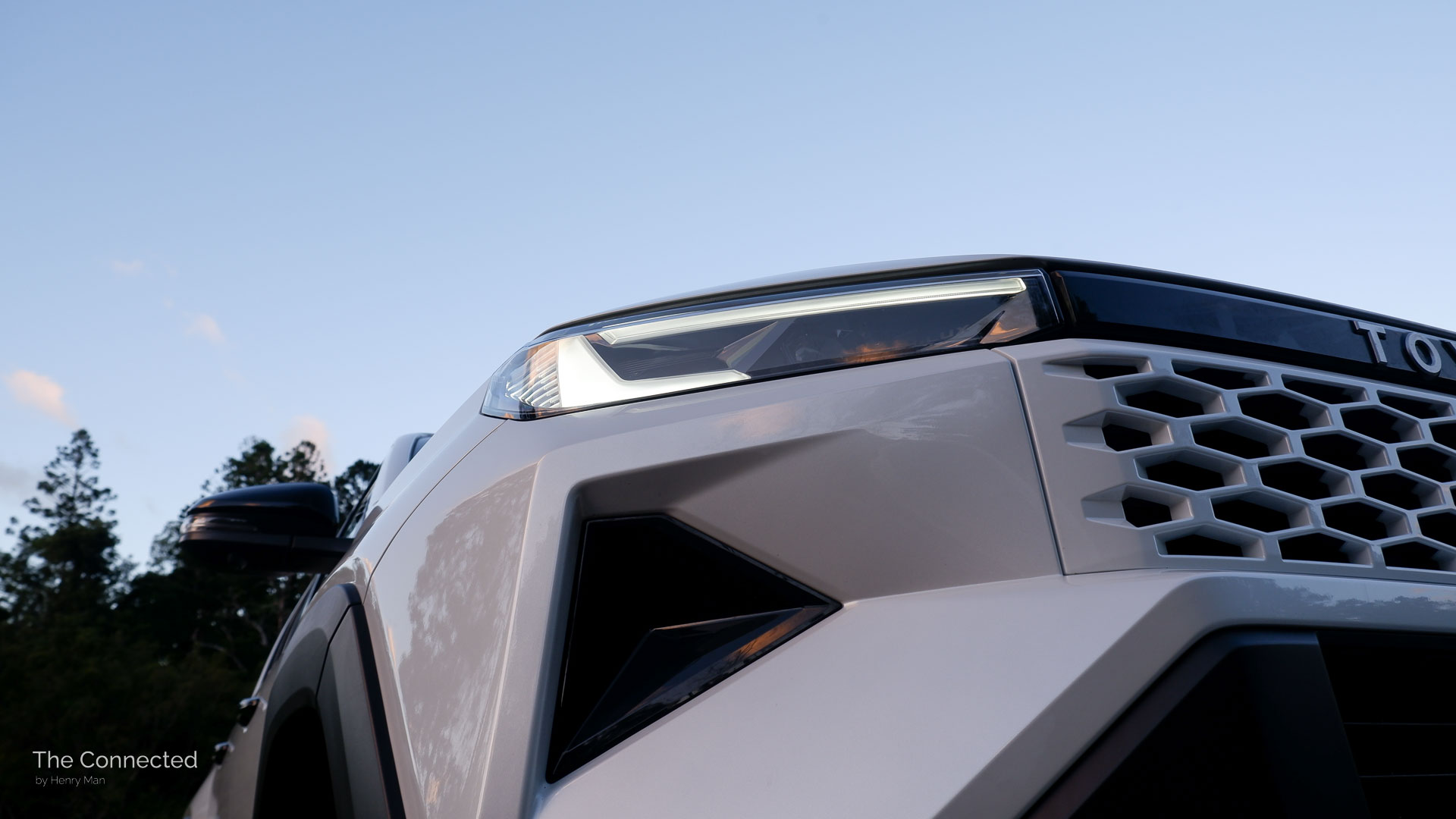
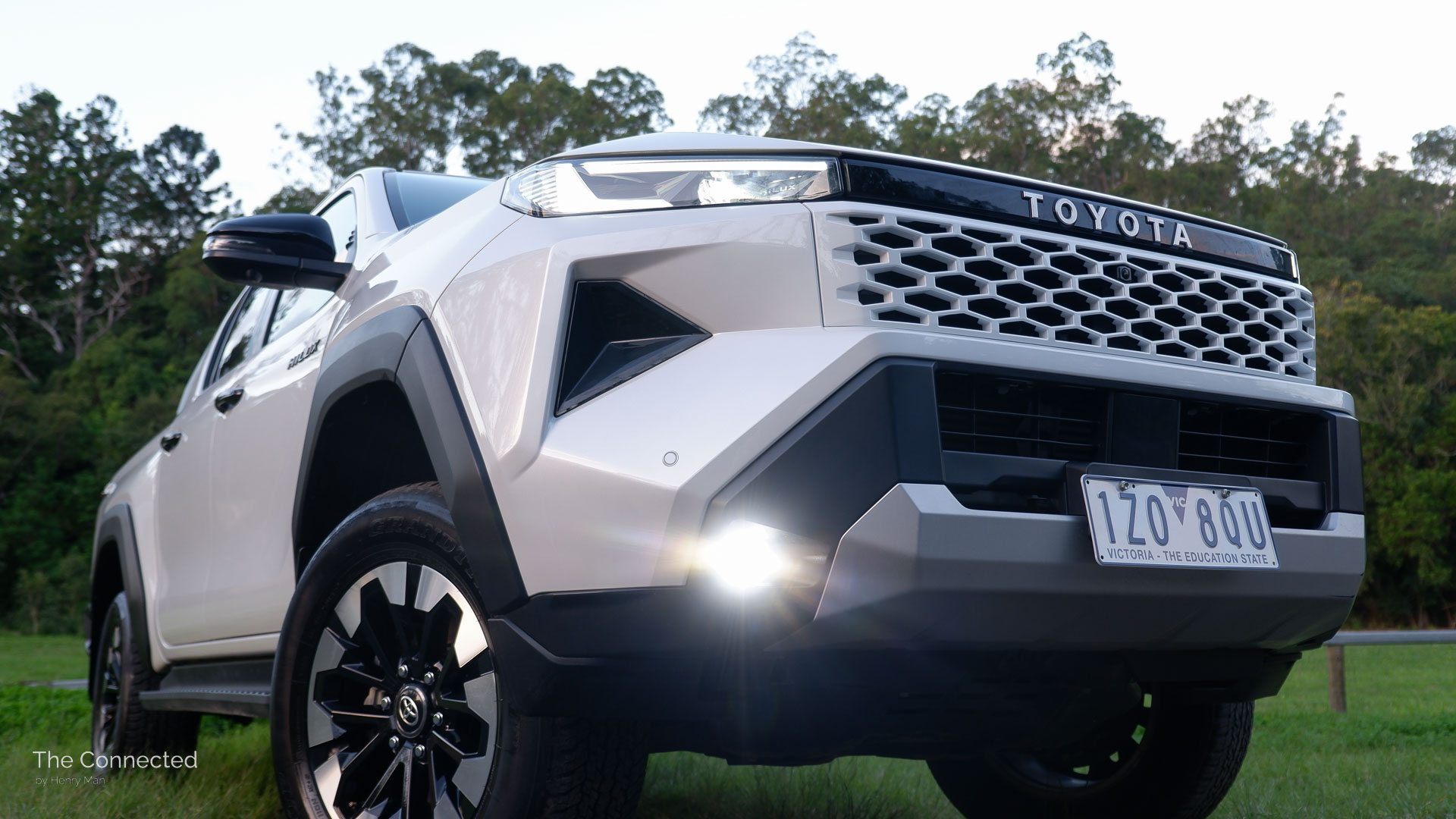
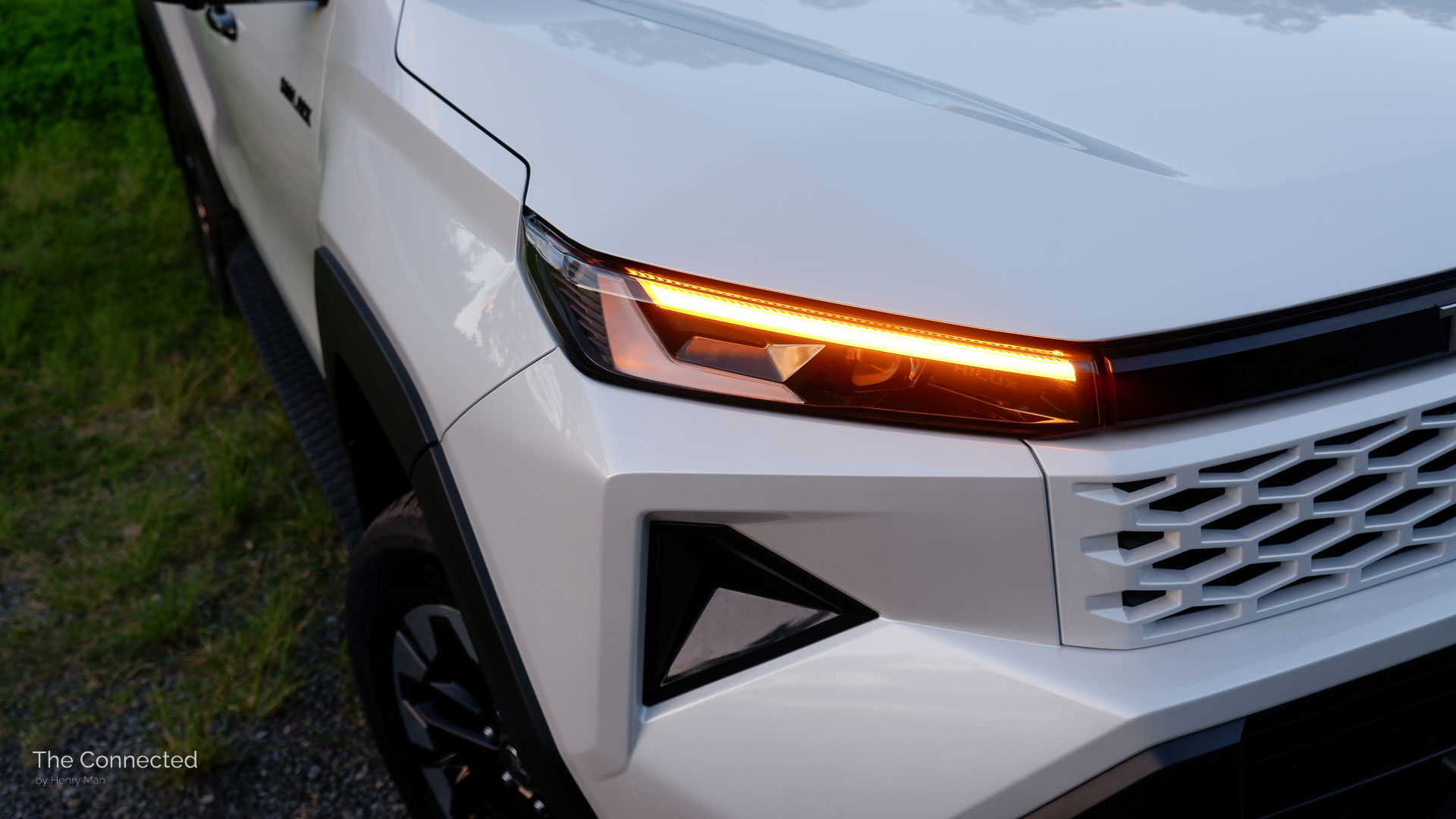
Rather than becoming aggressively butch and ginormous, the HiLux has a refreshingly friendly Pokemon-esque face with a sharp daytime running light signature, body-coloured hexagon-pattered grille, and Toyota lettering strewn at the middle.
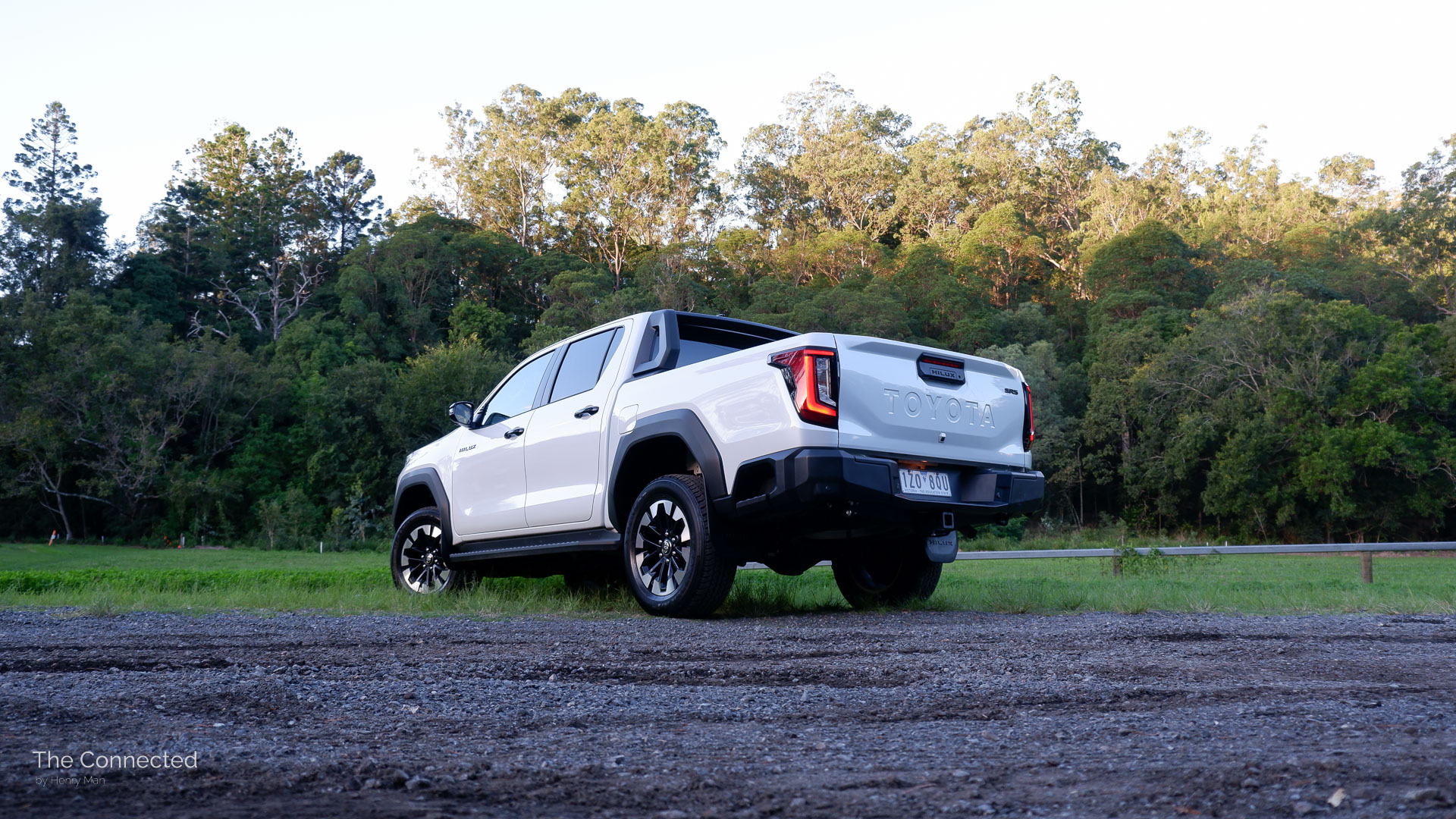
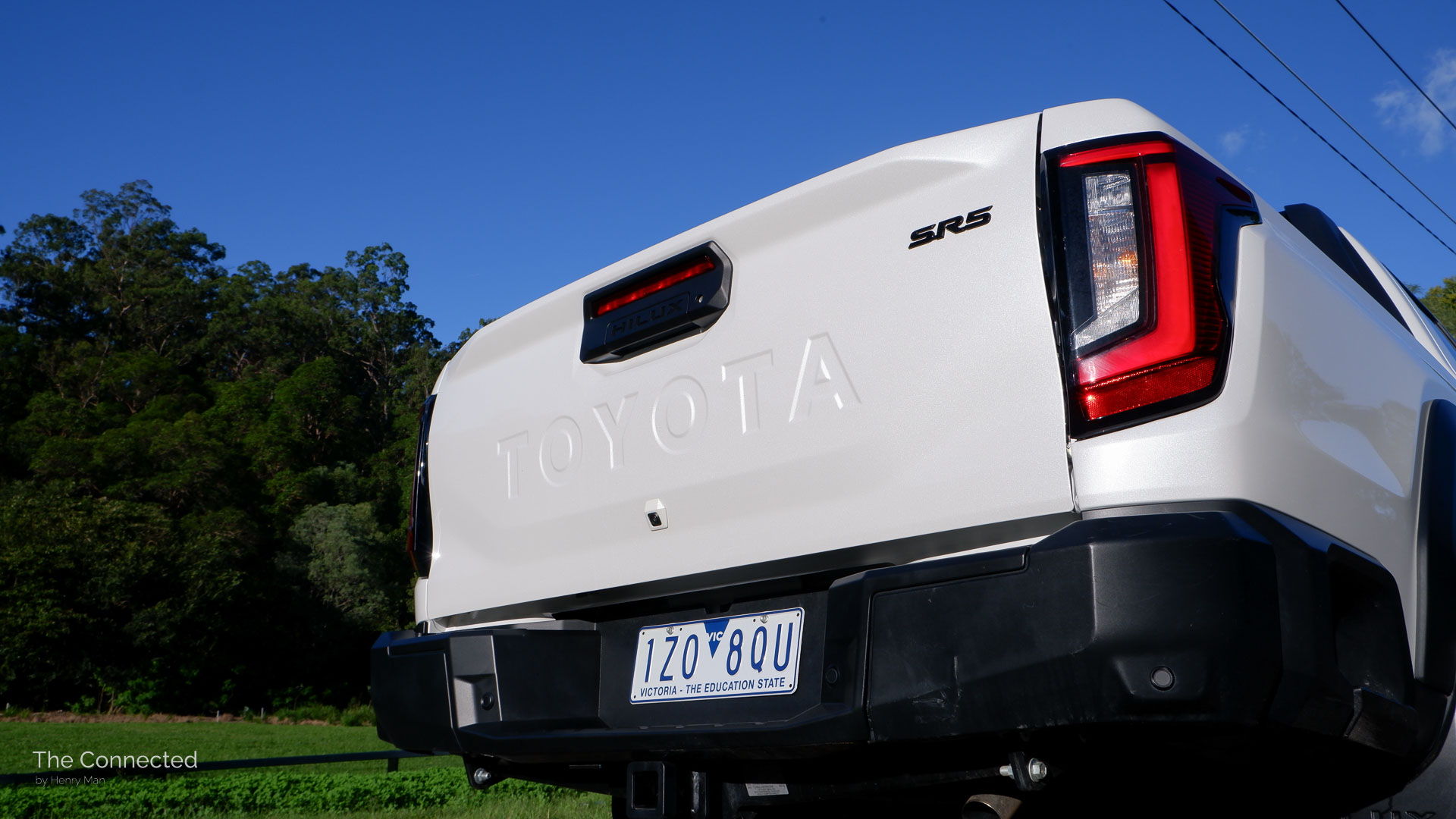
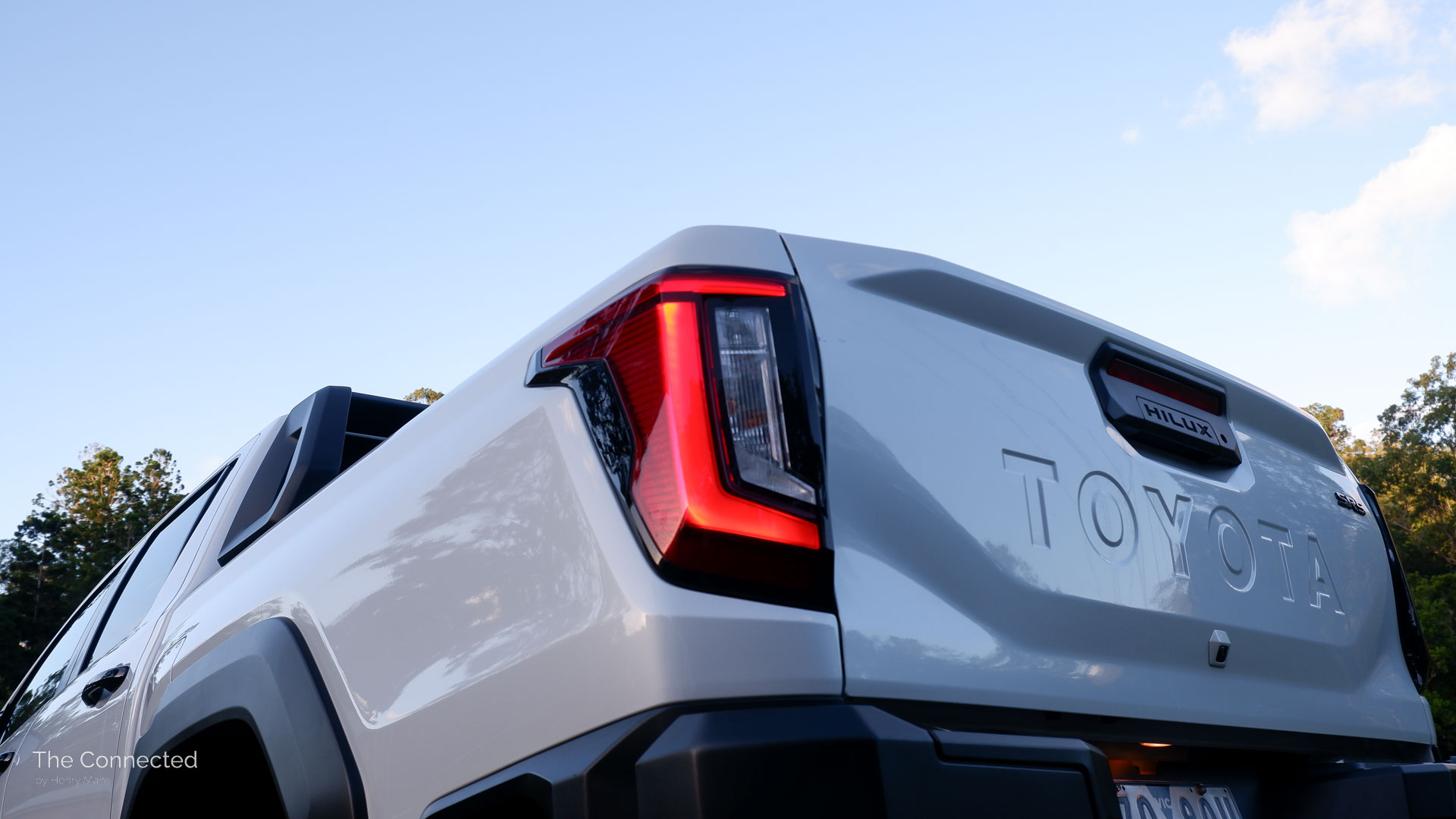
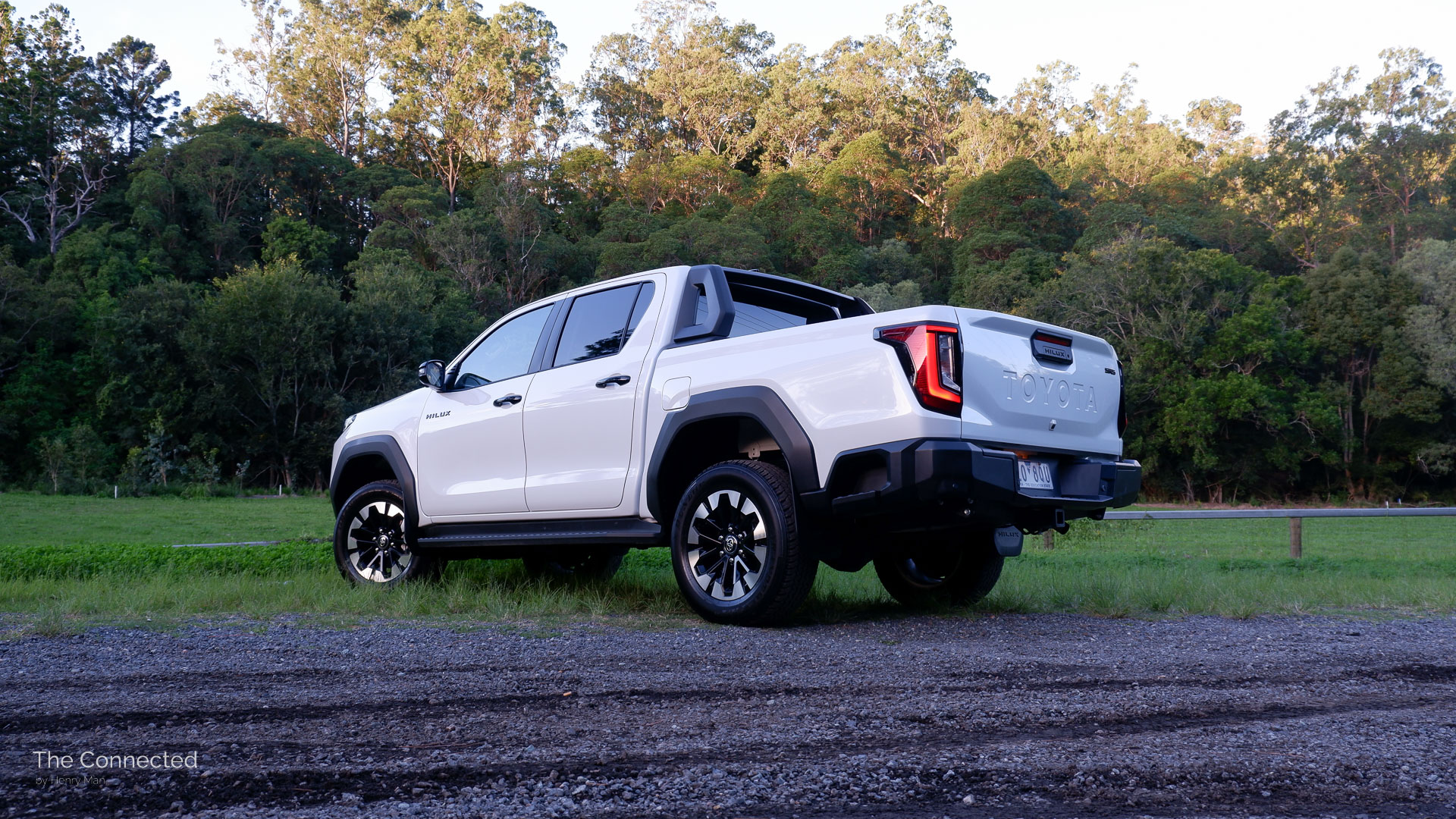
The rear is more familiar compared to the previous model, but the partial LED tail-lights have a new design and the Toyota lettering is now stamped into the tailgate.
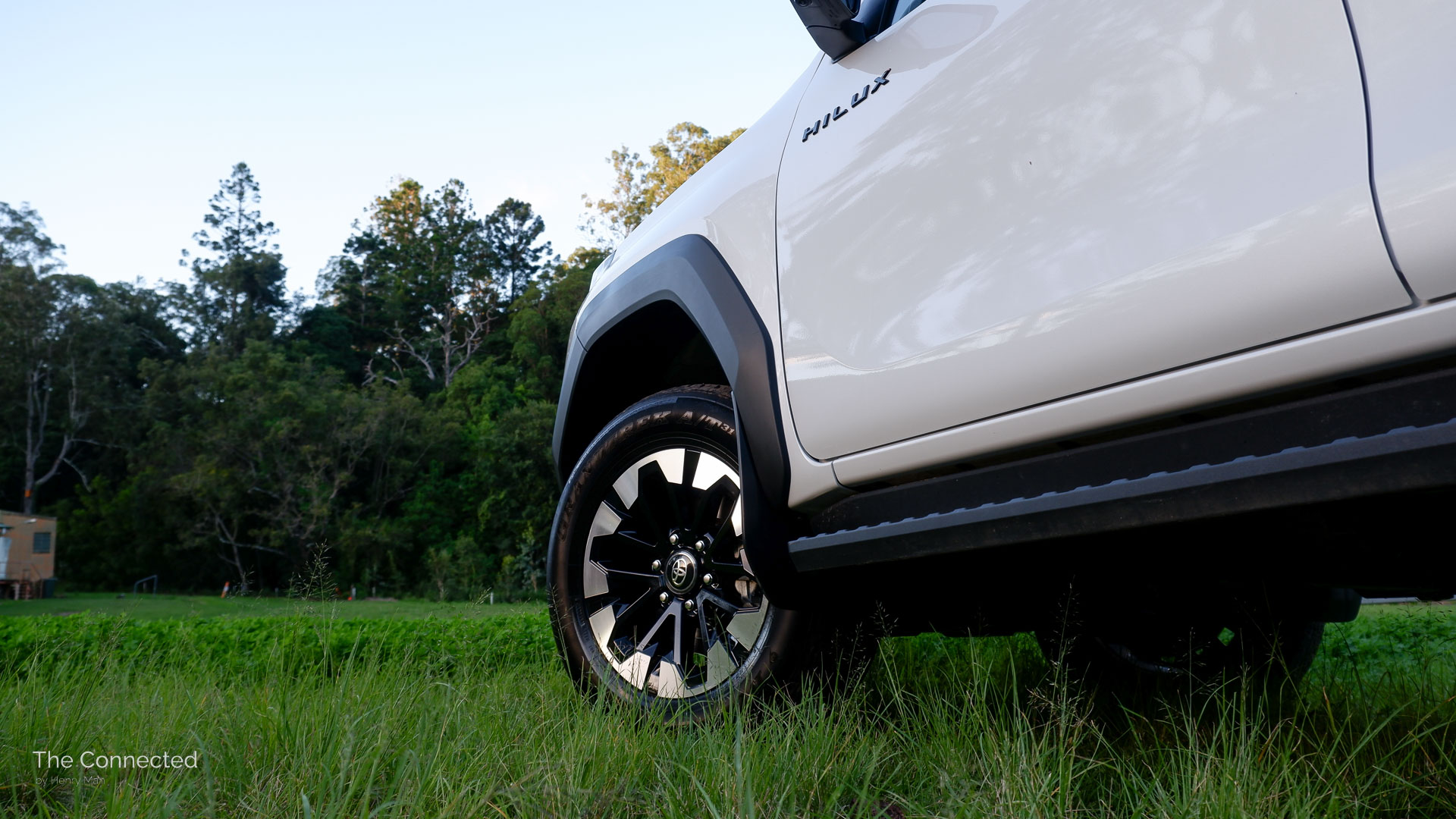
SR5 models and up gain black badging, mirror caps and door handles.
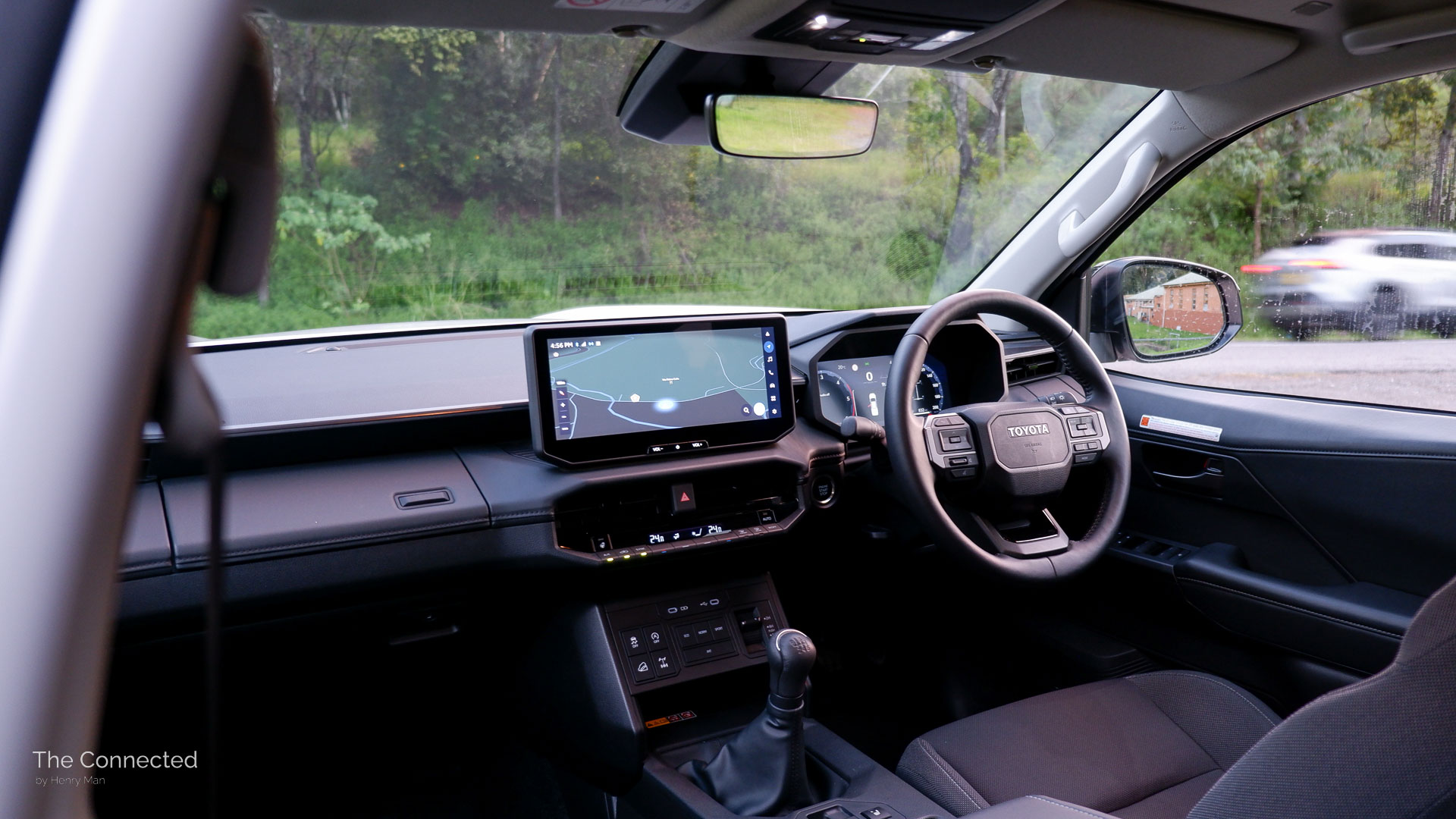
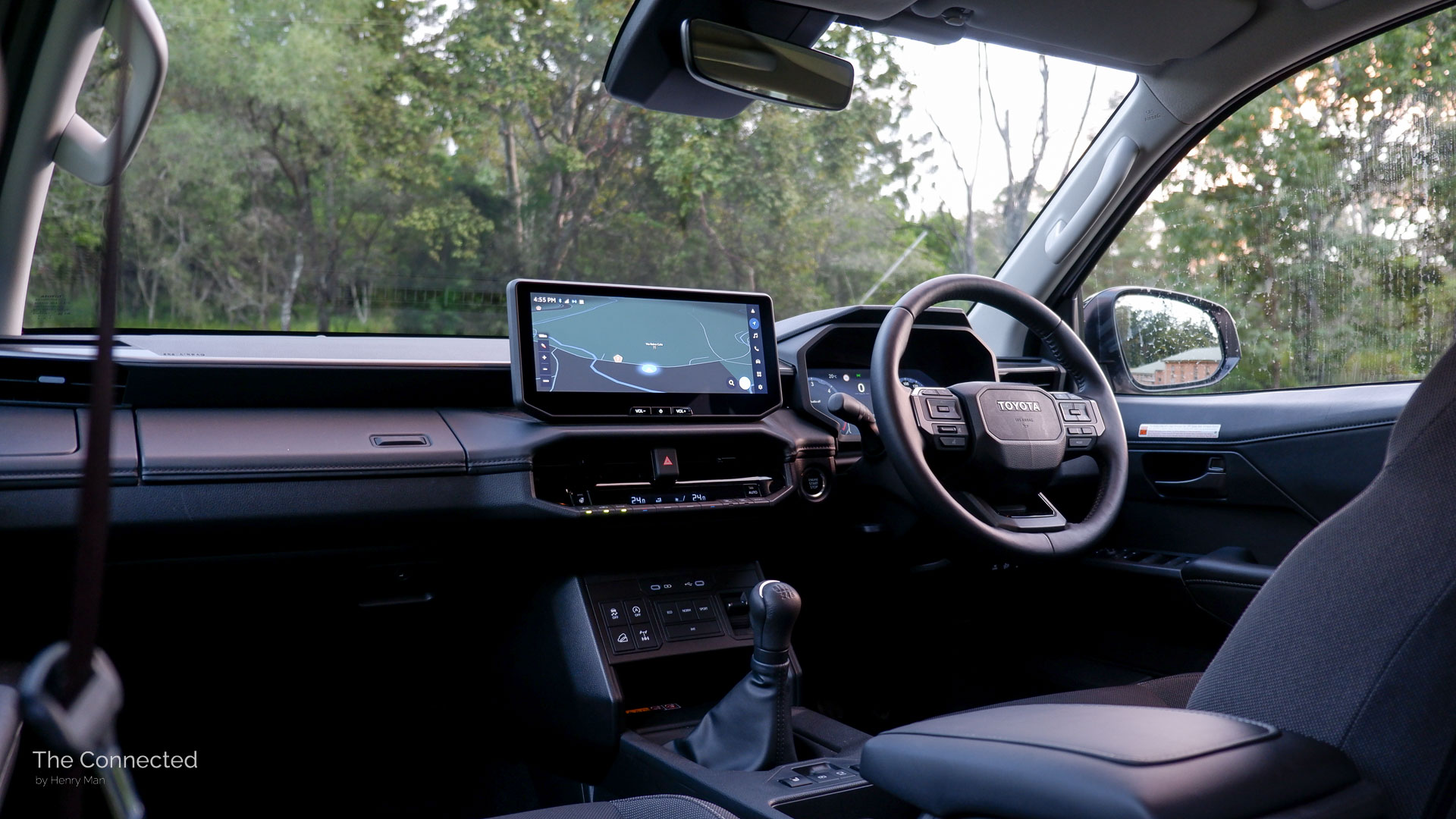
Meanwhile, the interior still isn’t ‘luxury’ as its name suggests but it is practical, ergonomic and utilitarian.
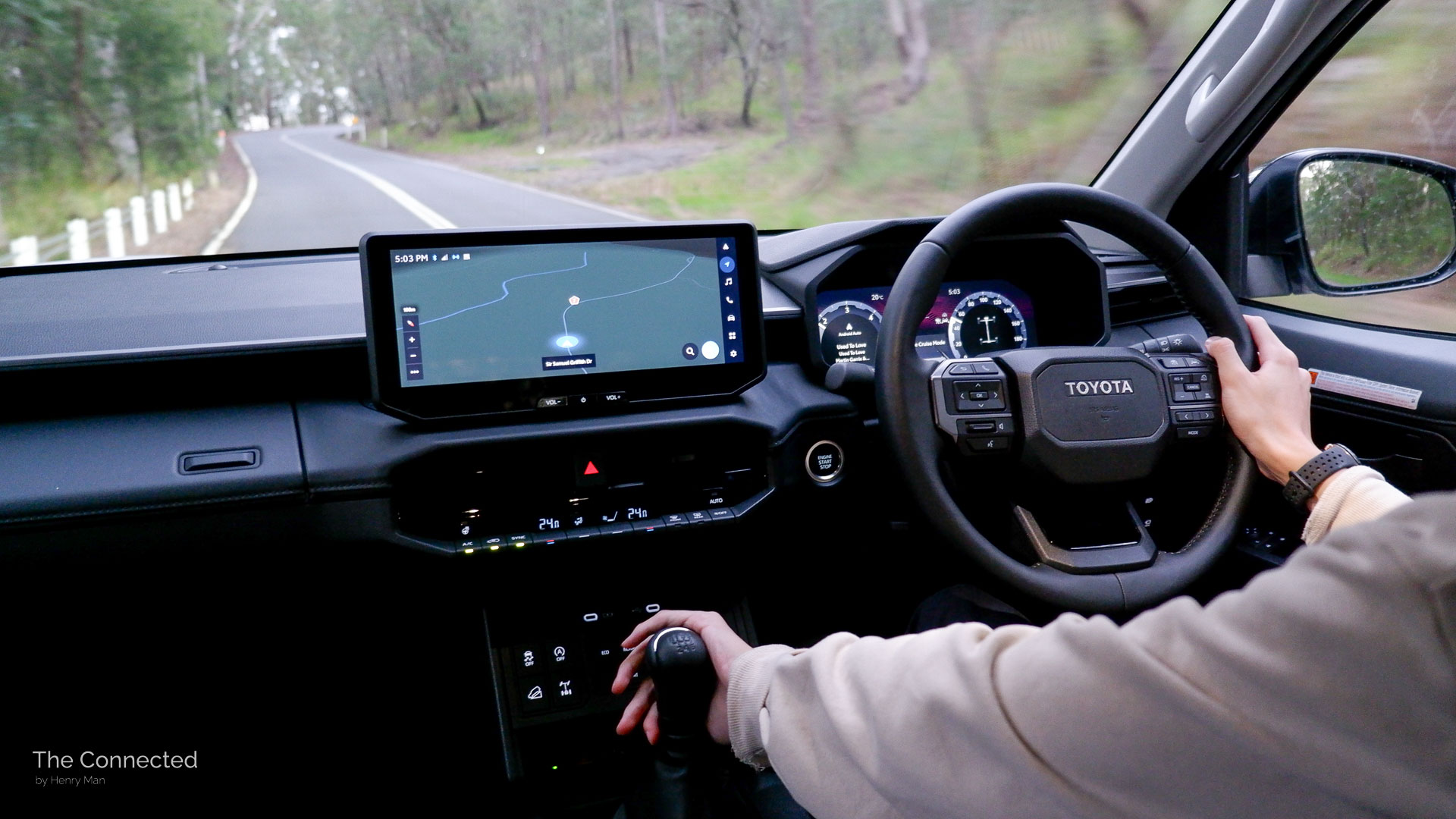
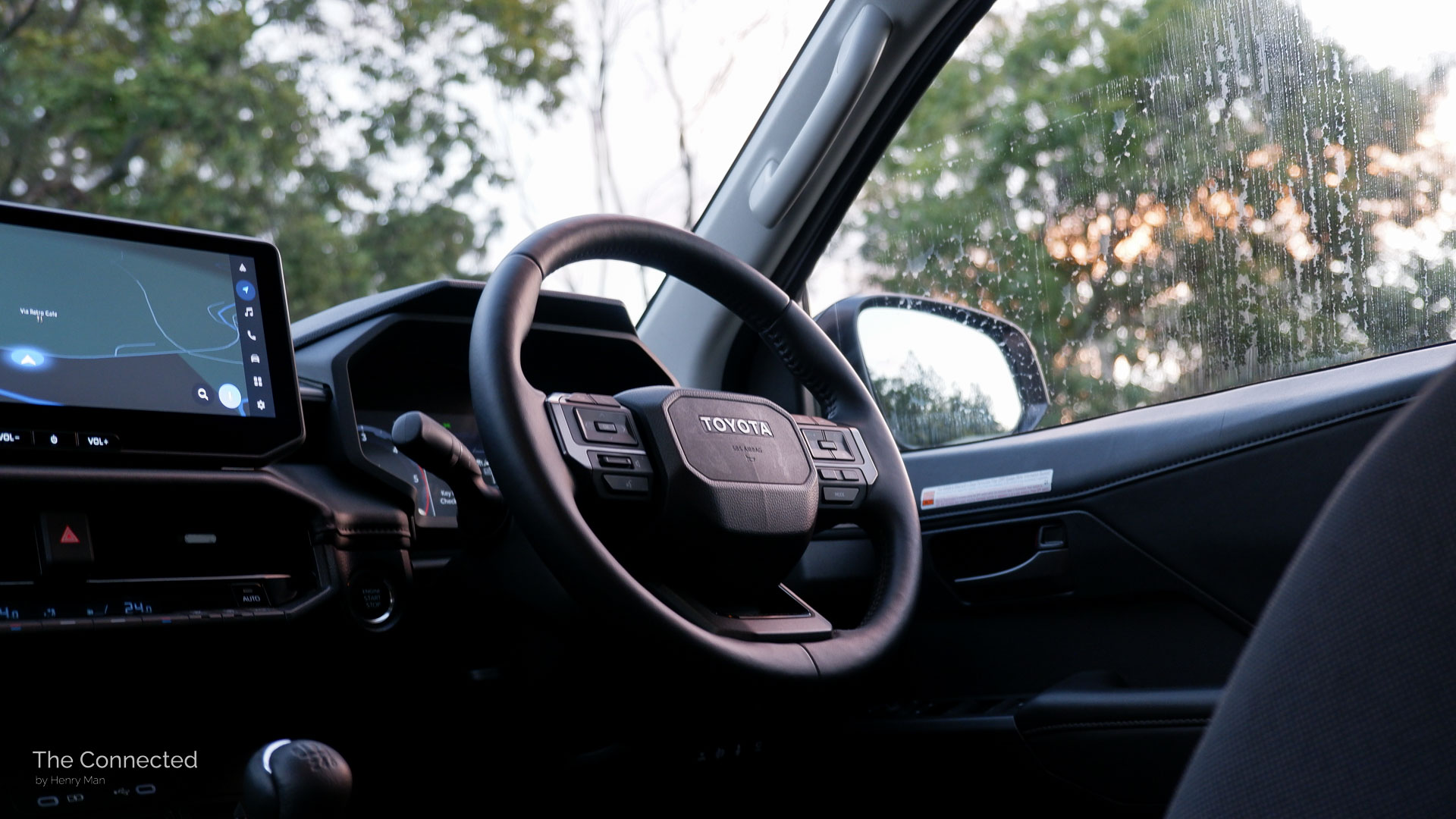
The well-sized touchscreen raises up from the dashboard with a rather inoffensive, slightly rugged interior design and a new steering wheel carried across from the LandCruiser Prado.
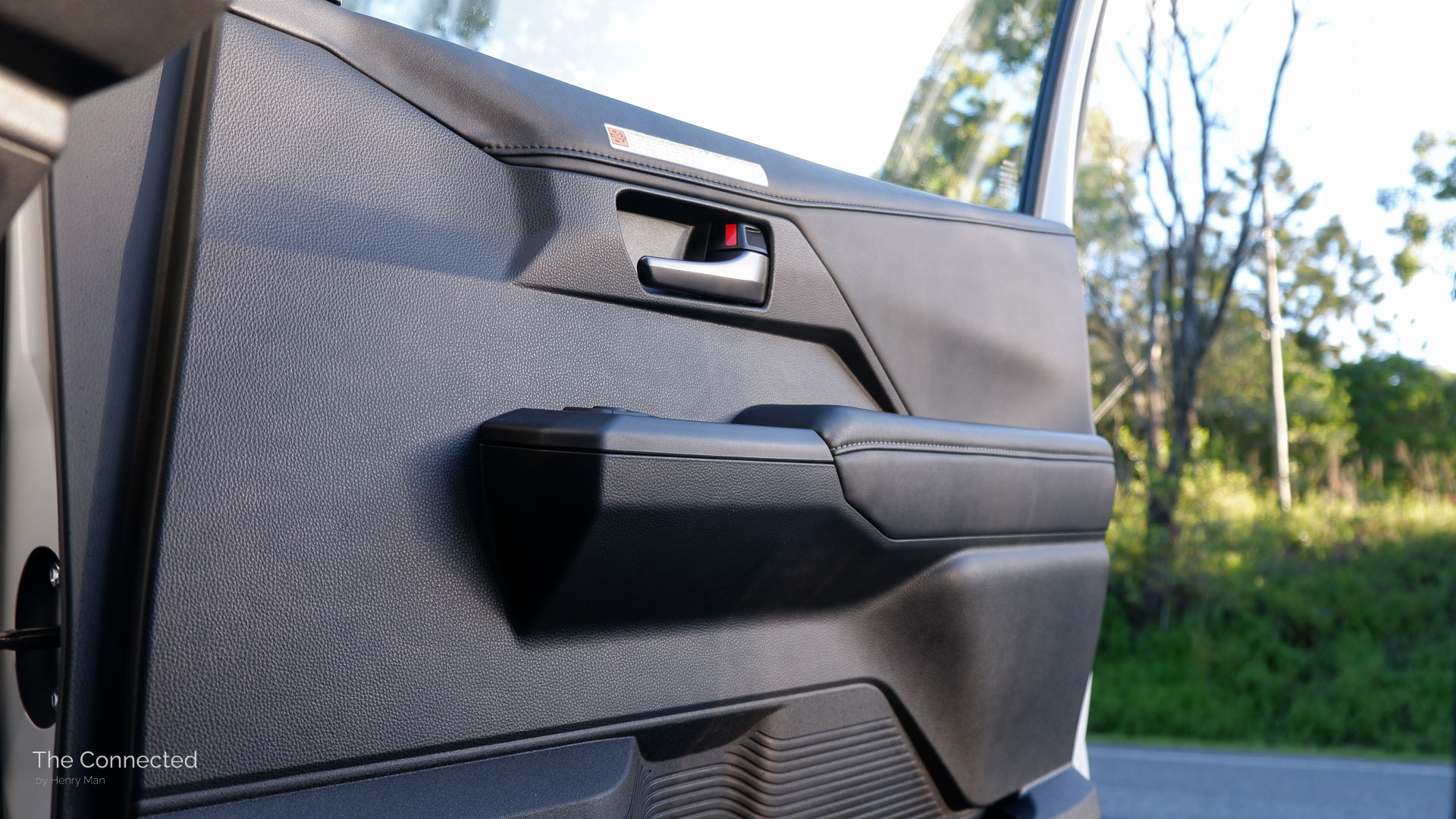
It’s a way off from being premium like the MG U9 and Kia Tasman, but it doesn’t look cheap with some soft-touch vinyl surfaces, padded dashboard, faux stitching, and hard-wearing plastics that are appropriate for a work ute.
Only the centre armrest flops down closed upon release.
Practicality.
2026 Toyota HiLux SR5 4×4 Double Cab dimensions:
| Length x width x height | 5320 x 1885 x 1865mm |
| Wheelbase | 3085mm |
| Ground clearance | 224mm |
| Rear seat split fold | 60:40 |
| Child seat anchors | 2x ISOFIX and 2x top tether |
| Air-conditioning system | Dual-zone climate control with rear air vents |
The HiLux isn’t as fit for families with a tight rear row and a barebones stock tray.
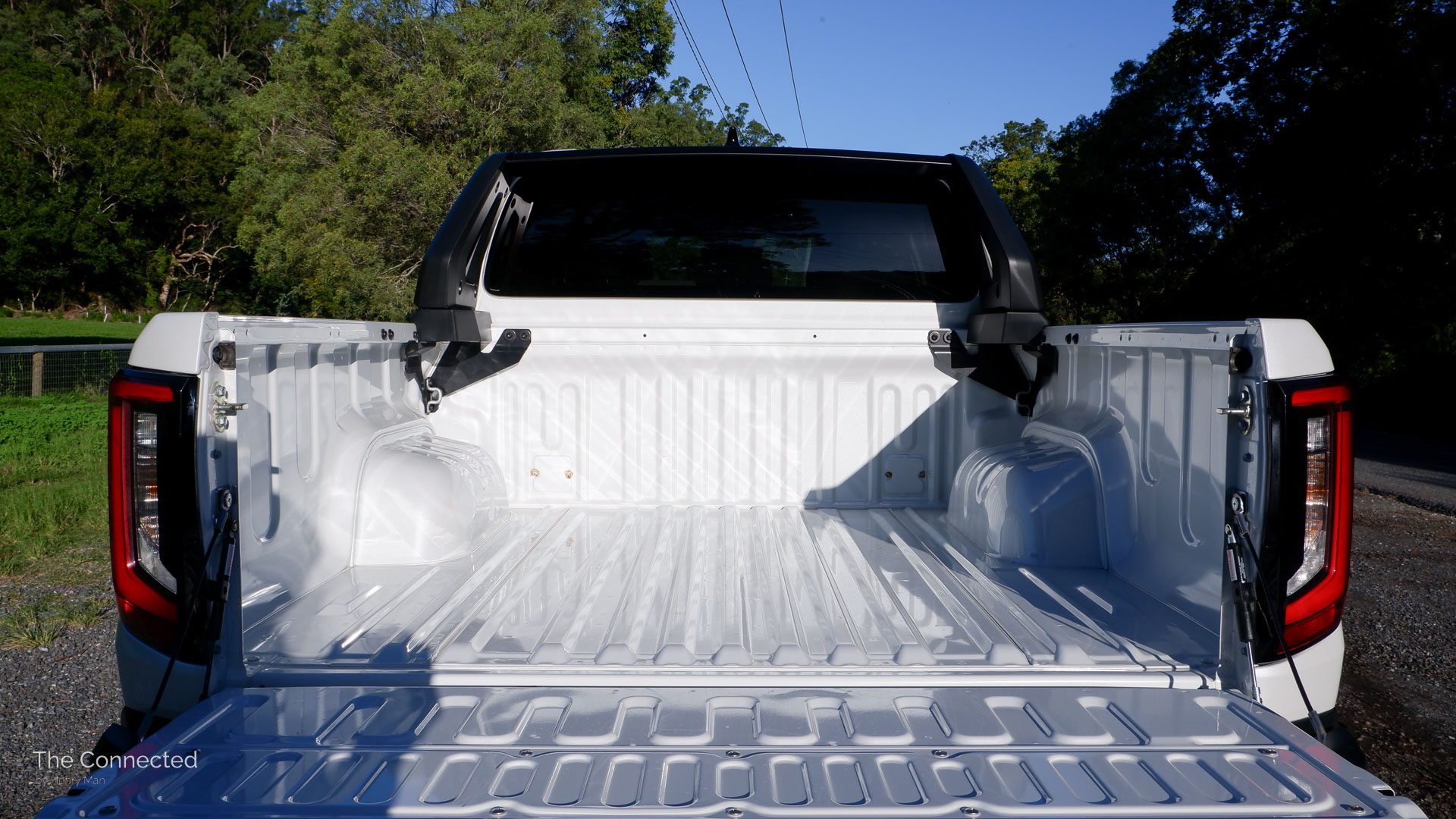
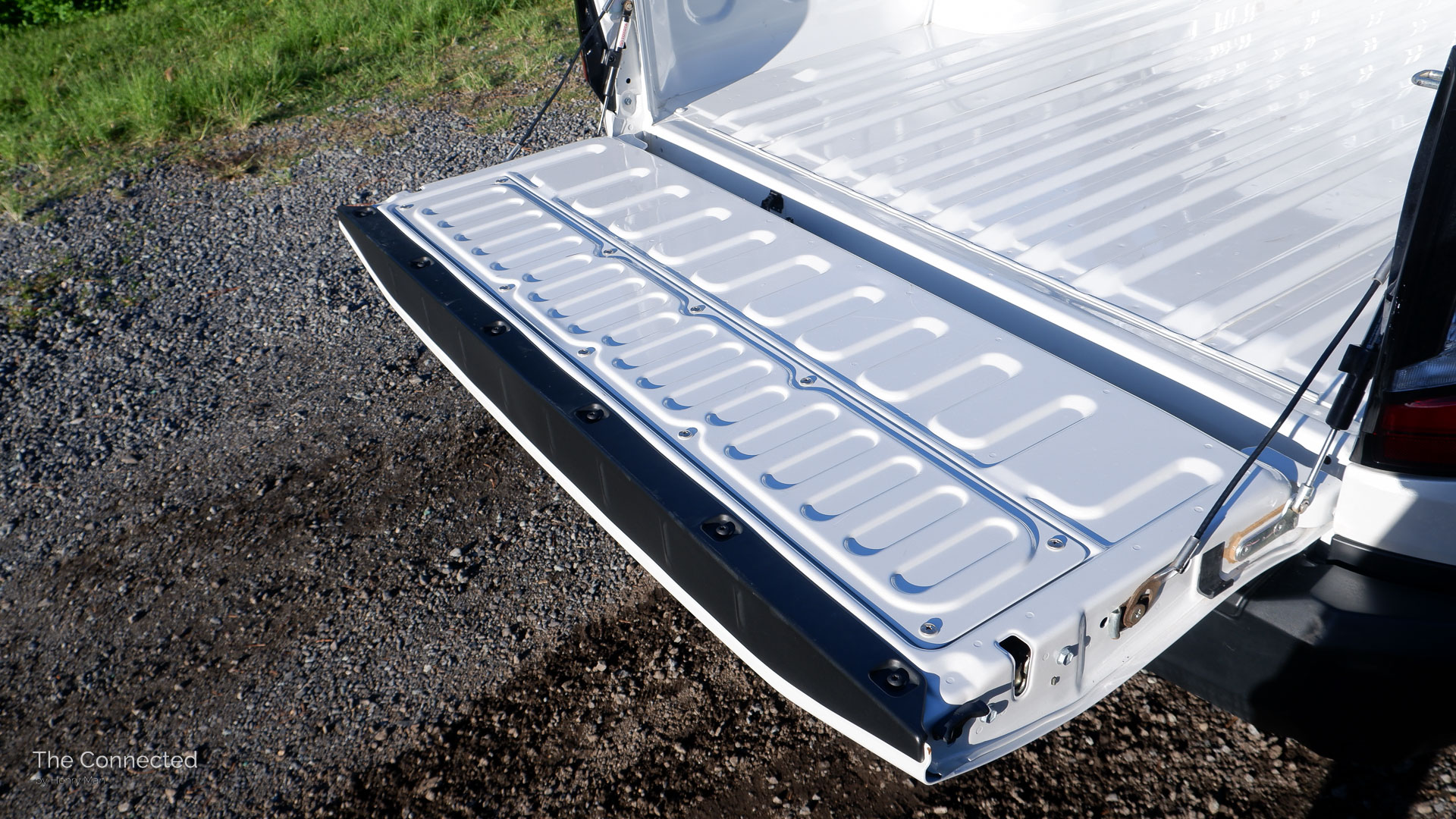
Starting with the tub, the Toyota HiLux in popular mid-spec SR5 guise is rather plain with no spray-in liner to cover the body-painted metalwork, a few tie-down hooks, no lighting, no power sockets.
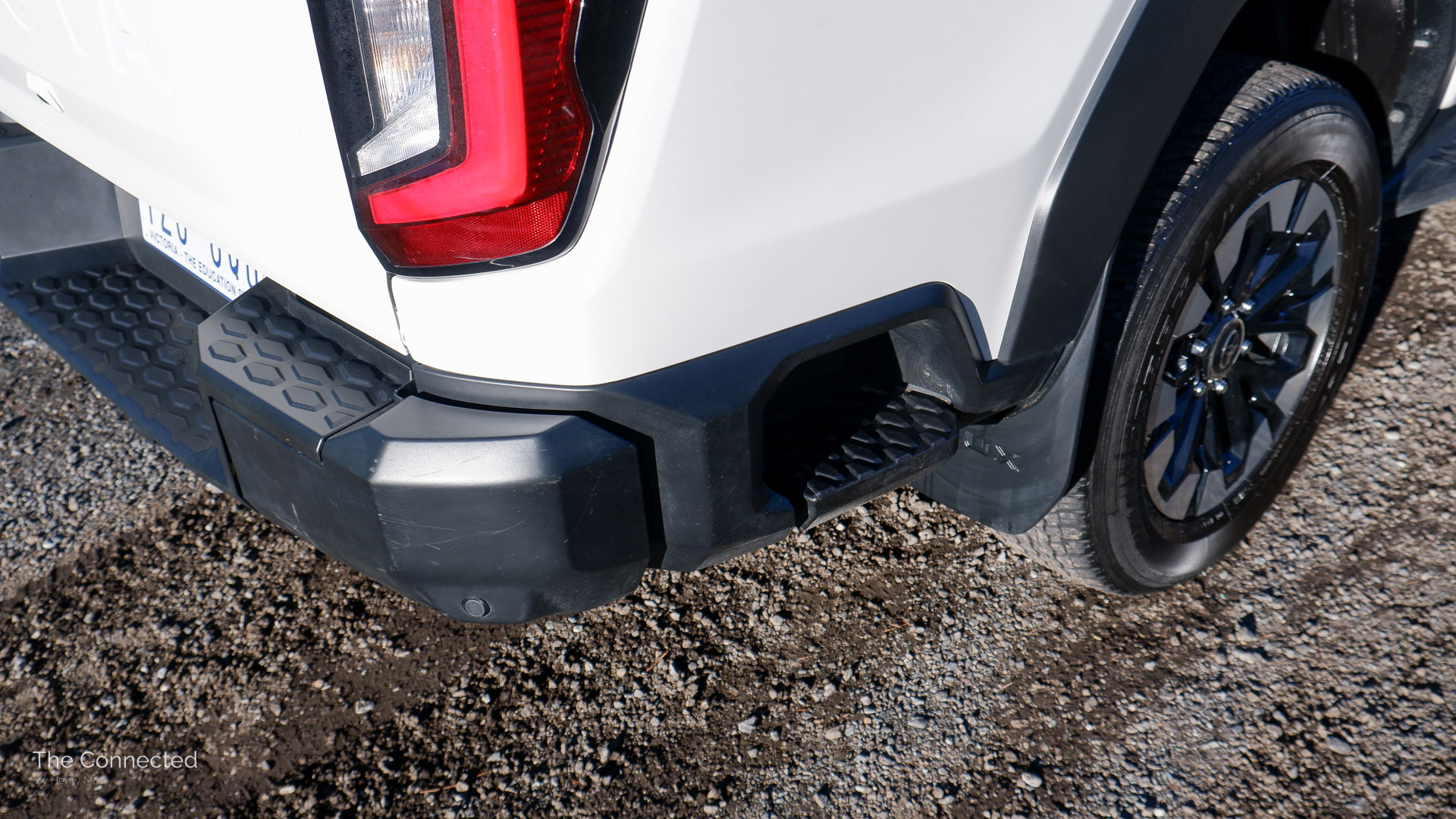
There are now rear-quarter steps similar to the Kia Tasman to help with loading items.
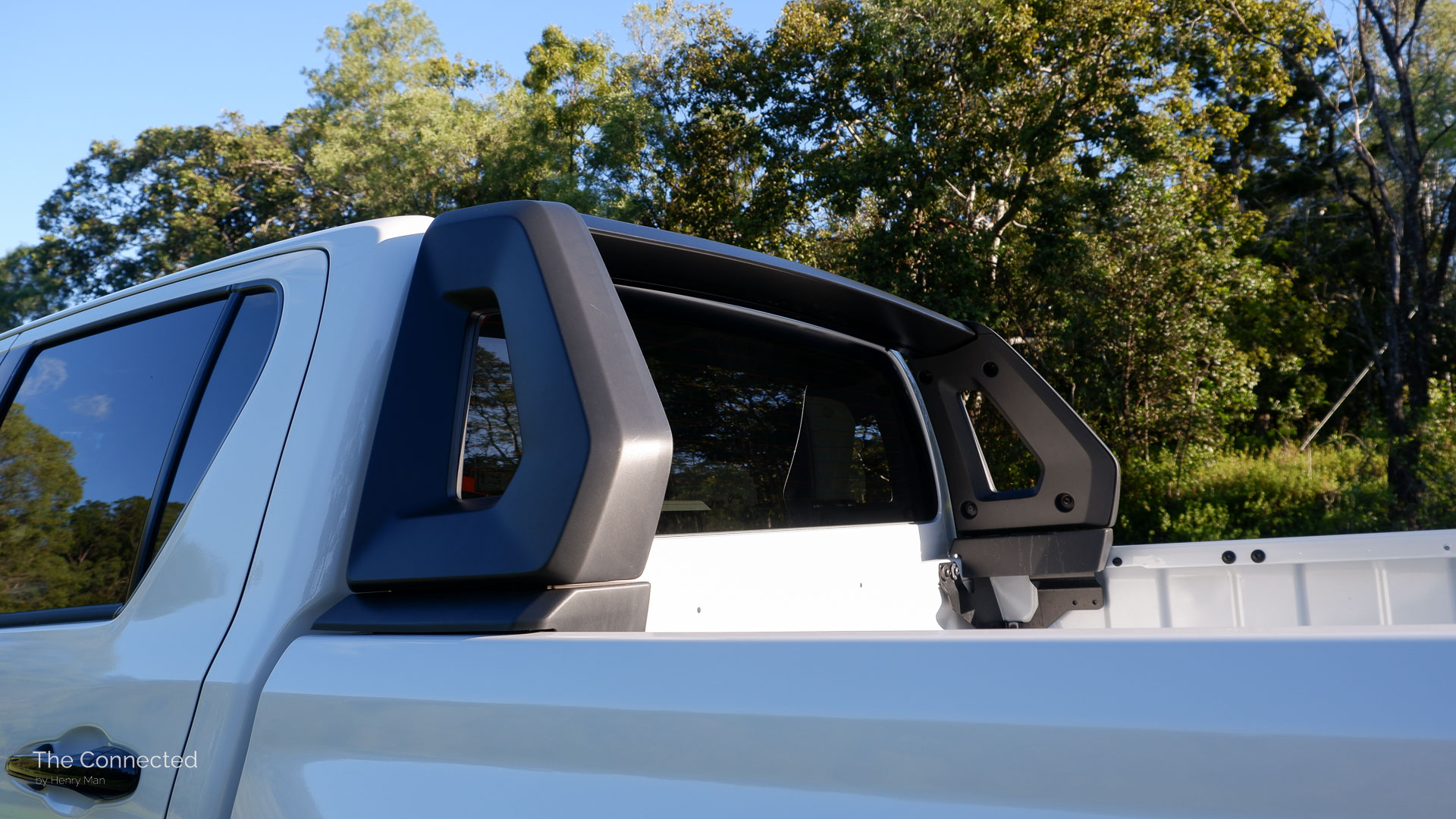
The key advantage of the HiLux is the availability of a variety of options to customise the tray with first- and third-party accessories. A sports bar comes with the SR5 grade and up.
At least the tailgate is assisted with gas struts, although it still feels heavy and you’ll need two hands to properly shut it.
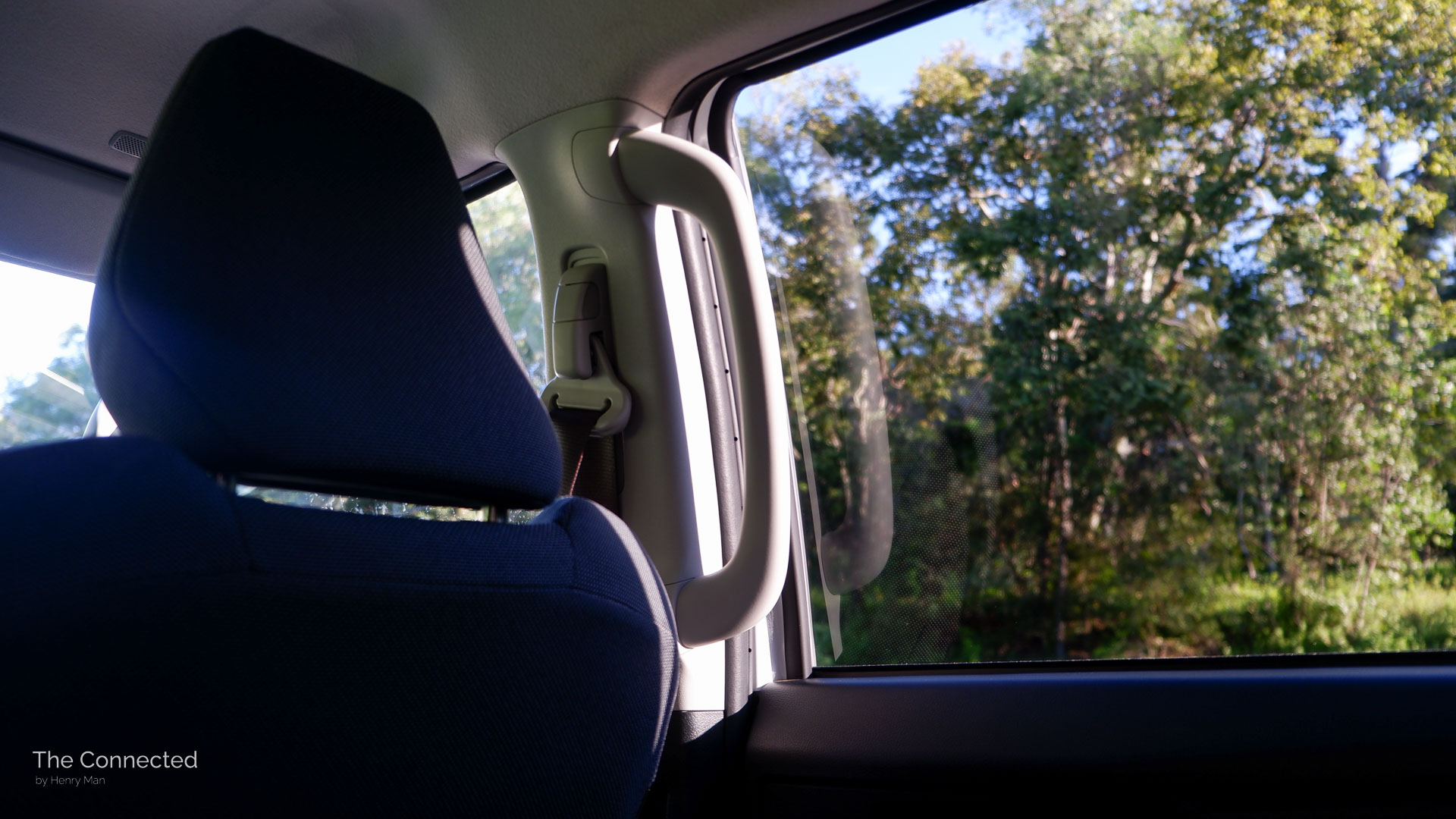
Stepping into the rear row is made easier with standard-fit side steps on the SR5, along with a solid grab handle attached to the B-pillar.
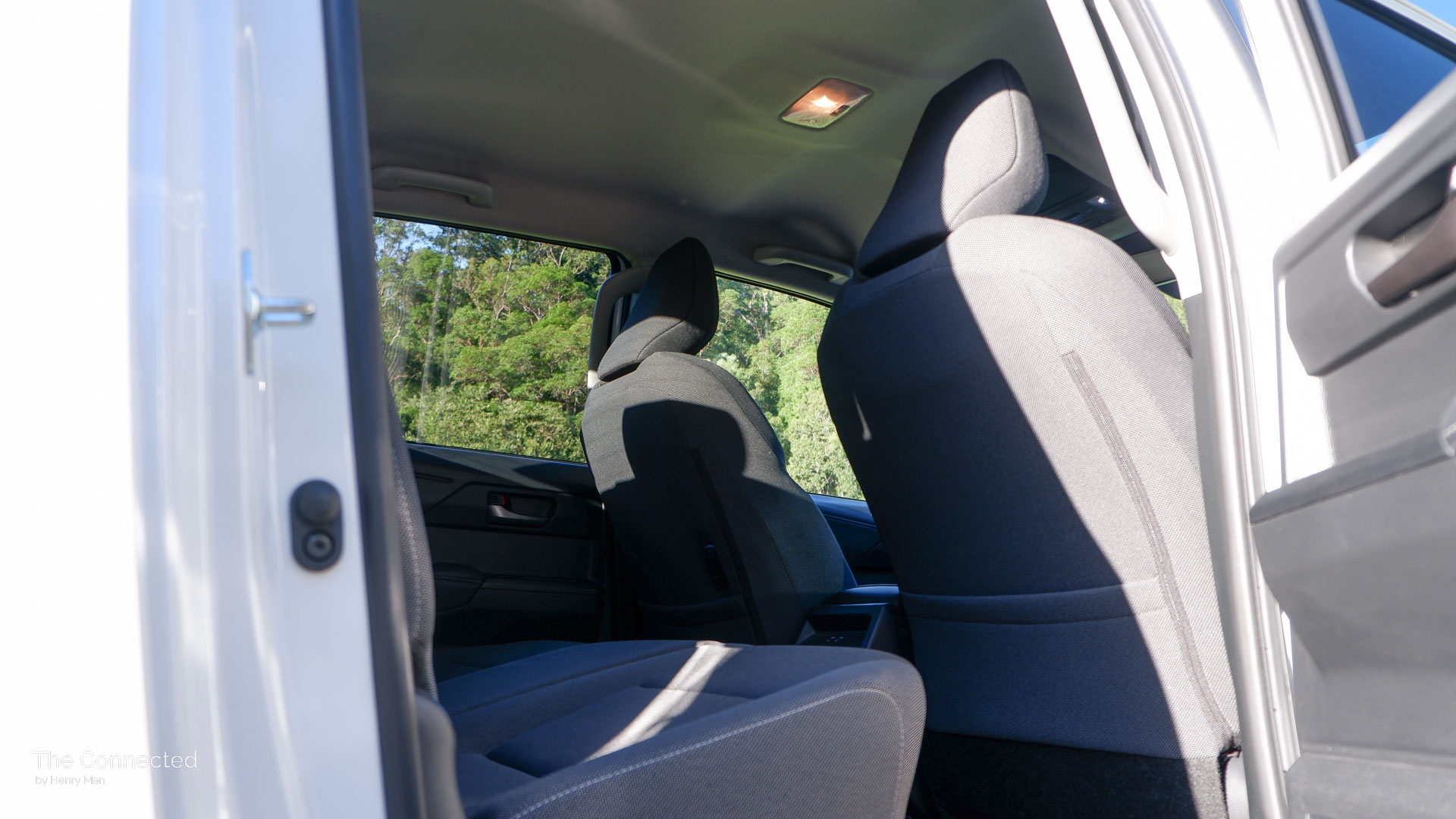
However, the rear doors are small, legroom is fairly tight with adequate headroom and foot room, with a centre floor transmission hump.
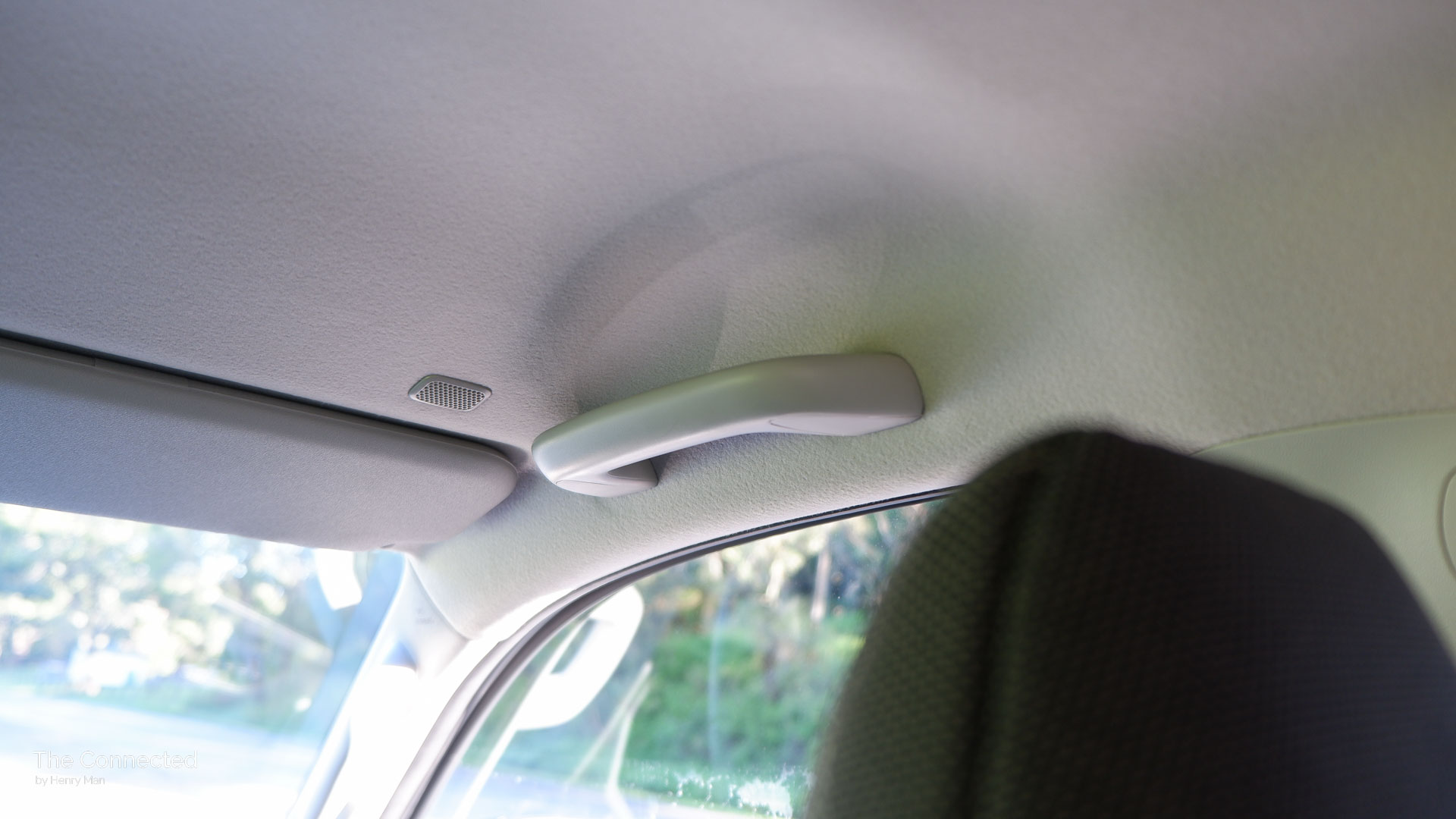
The rear bench backrest is upright as well and the interior roof grab handles are rock hard and jut out; taller passengers may hit their head.
If you’re fitting a child seat, the HiLux only offers two top tether anchor points for the outer seats only, threading through the fabric loops to connect to the metal anchor behind the middle seat headrest. There is no top tether point in the centre.
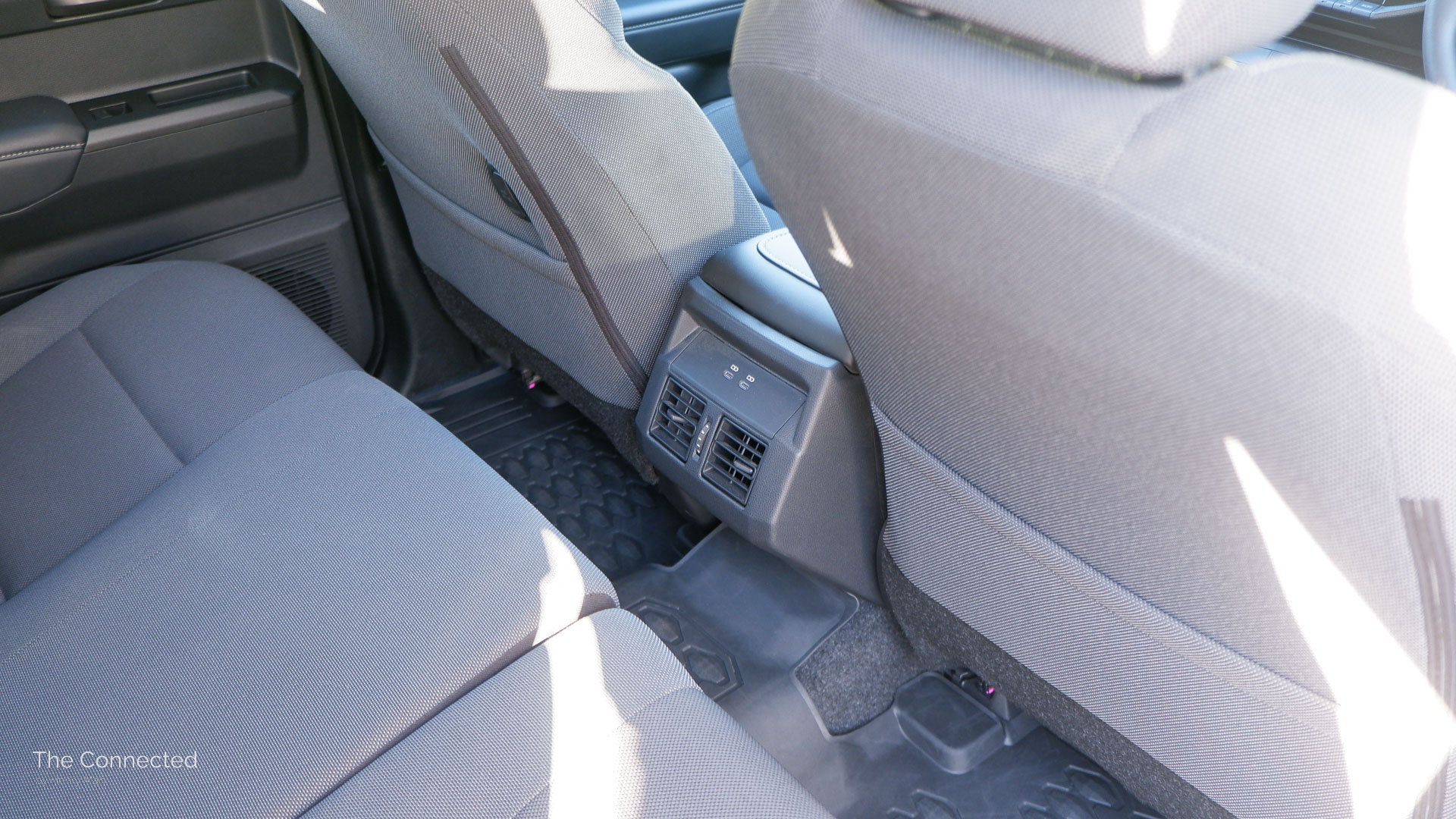
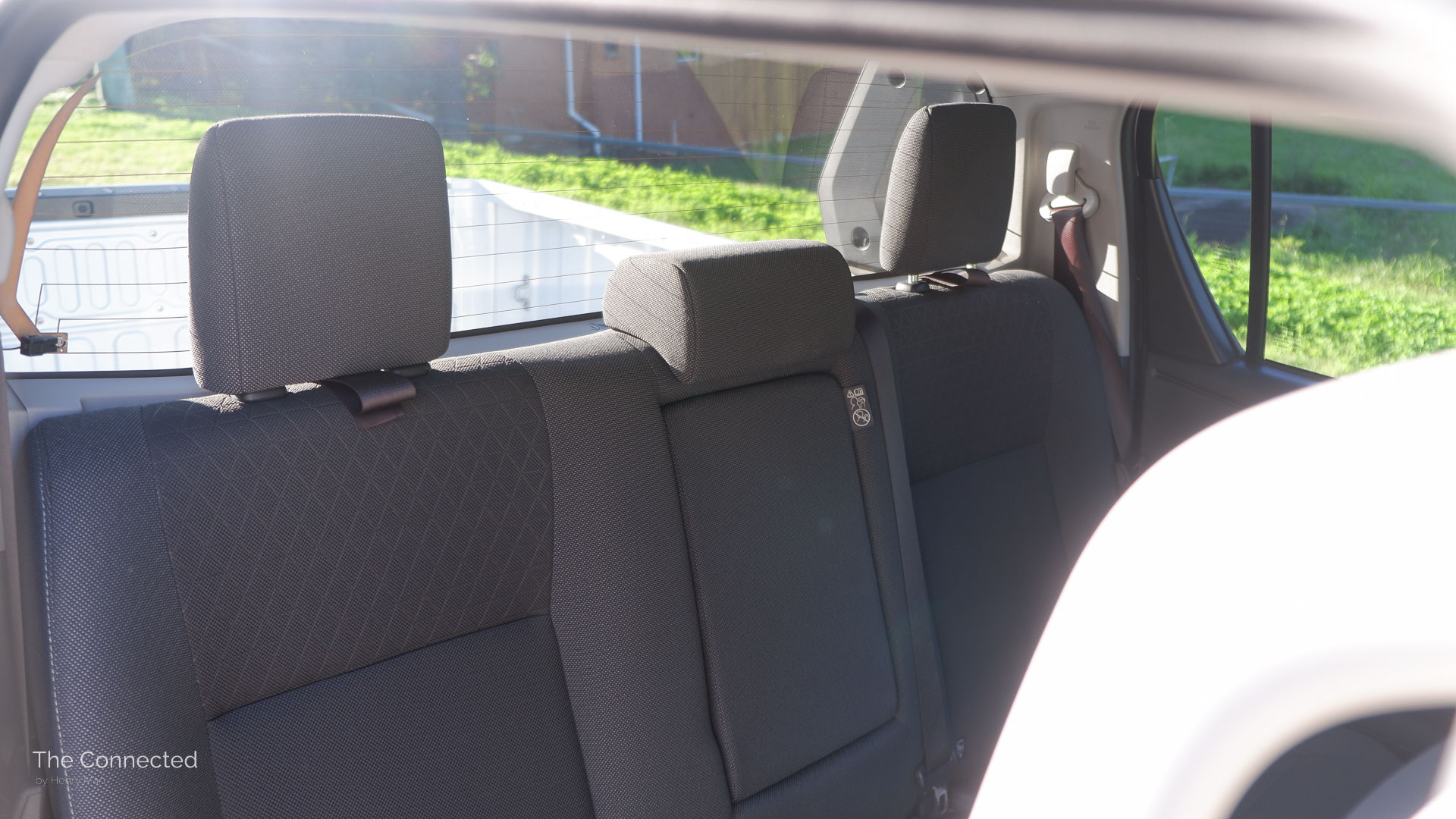
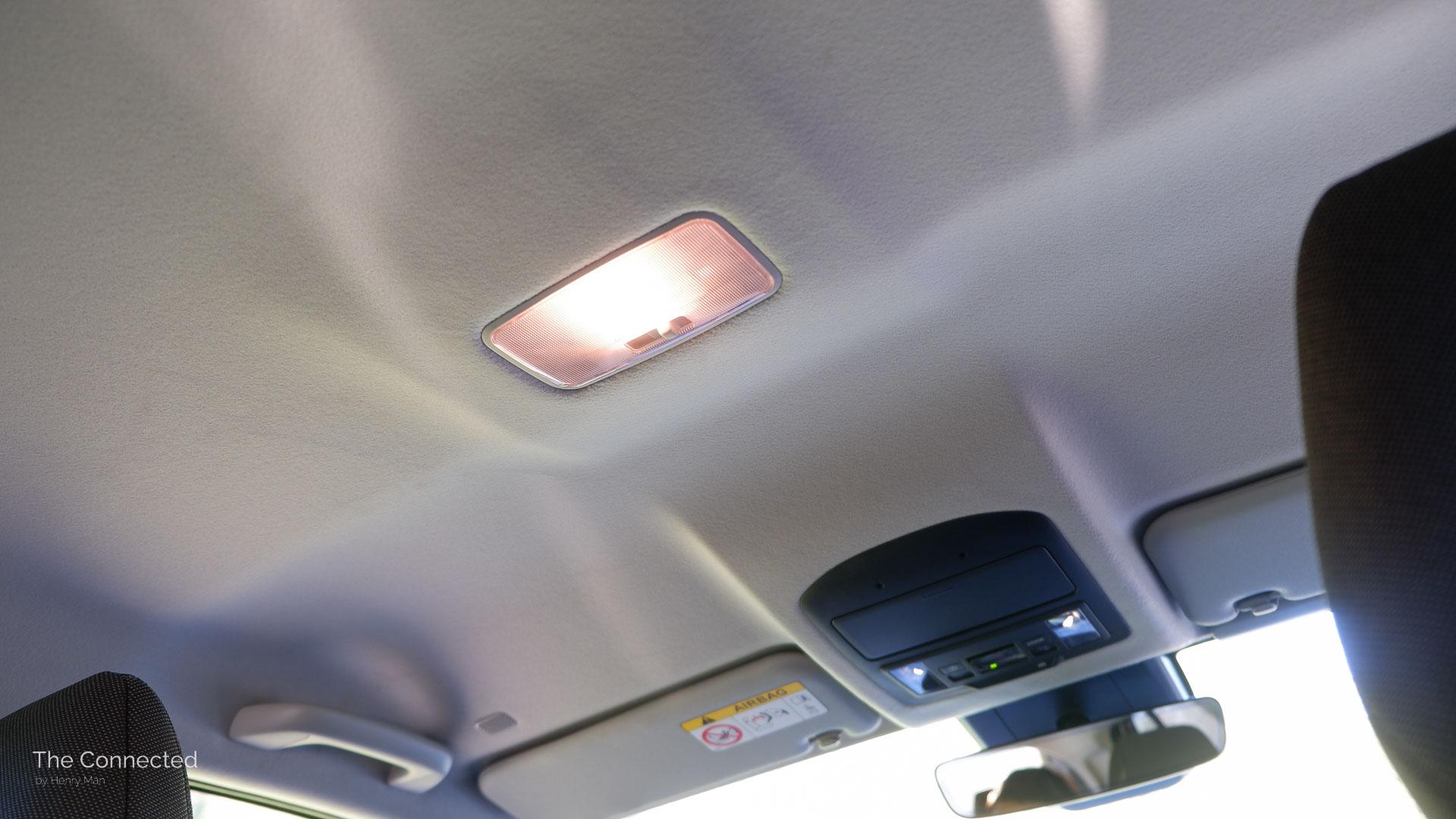
Amenities include two directional rear air vents, two USB-C charging ports, a domestic power socket, fold-down centre armrest with two cup holders, seatback pockets with a pop-out bag hook behind the front passenger seat, and reasonably-sized door pockets.
But while the front row’s LED lights are tiny and dim, it’s compensated by the halogen lamp for the rear row since it’s placed closer to the front. The latter don’t turn on itself when the doors are open, though.
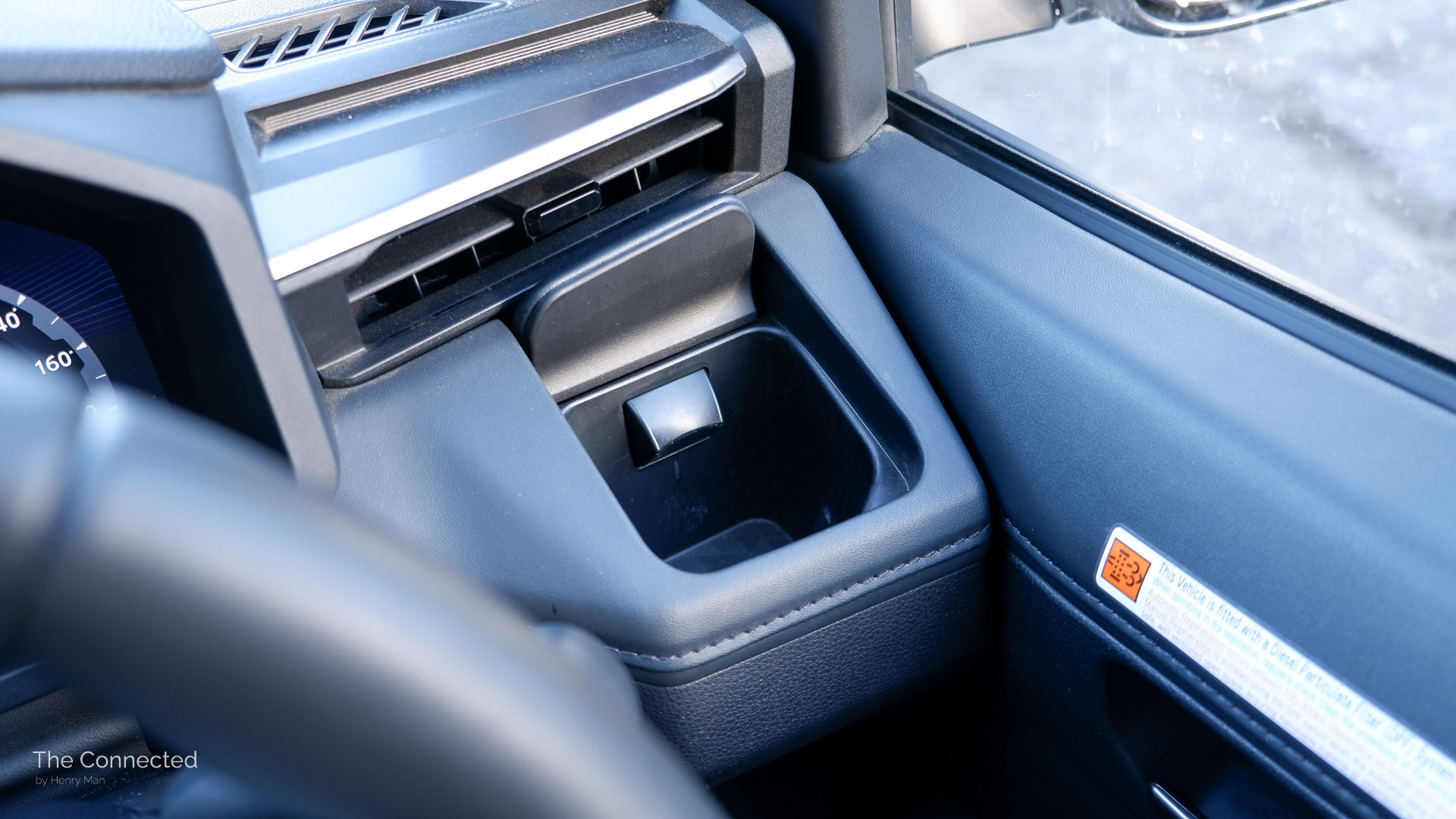
The new HiLux now features dashboard-mounted cup holders, one on each side, with a single grip. Both can be covered with a press and are directly in front of the air vents – so it acts as a quasi cooling and heating function for drinks.
On the other hand, this has left an awkwardly shaped hole for storage at the centre console, which sits next to a small centre armrest cubby.
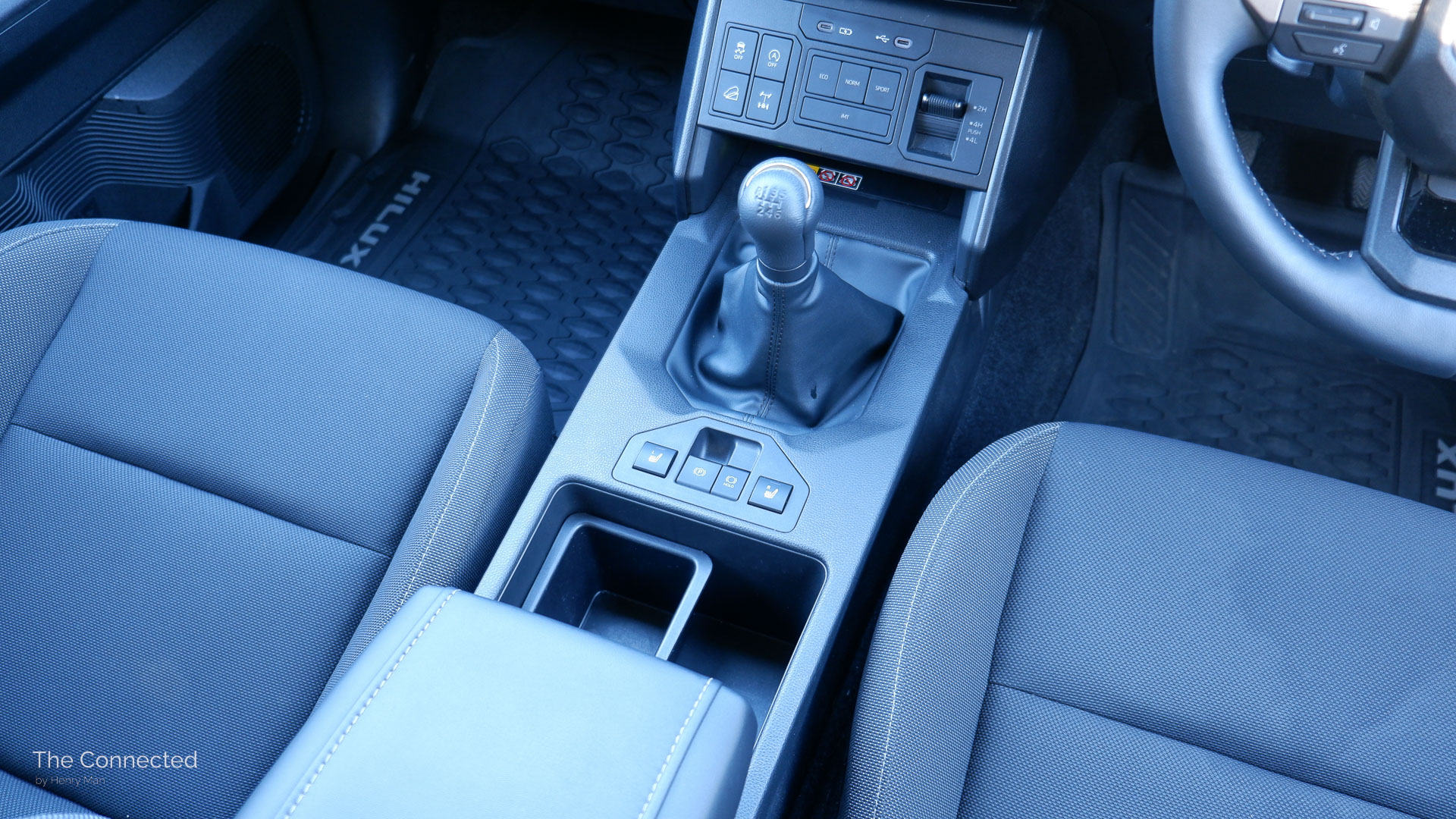
Ahead of the gear shifter is a deeper tray with a Qi wireless charging pad, though the long manual stick tends to obscure access.
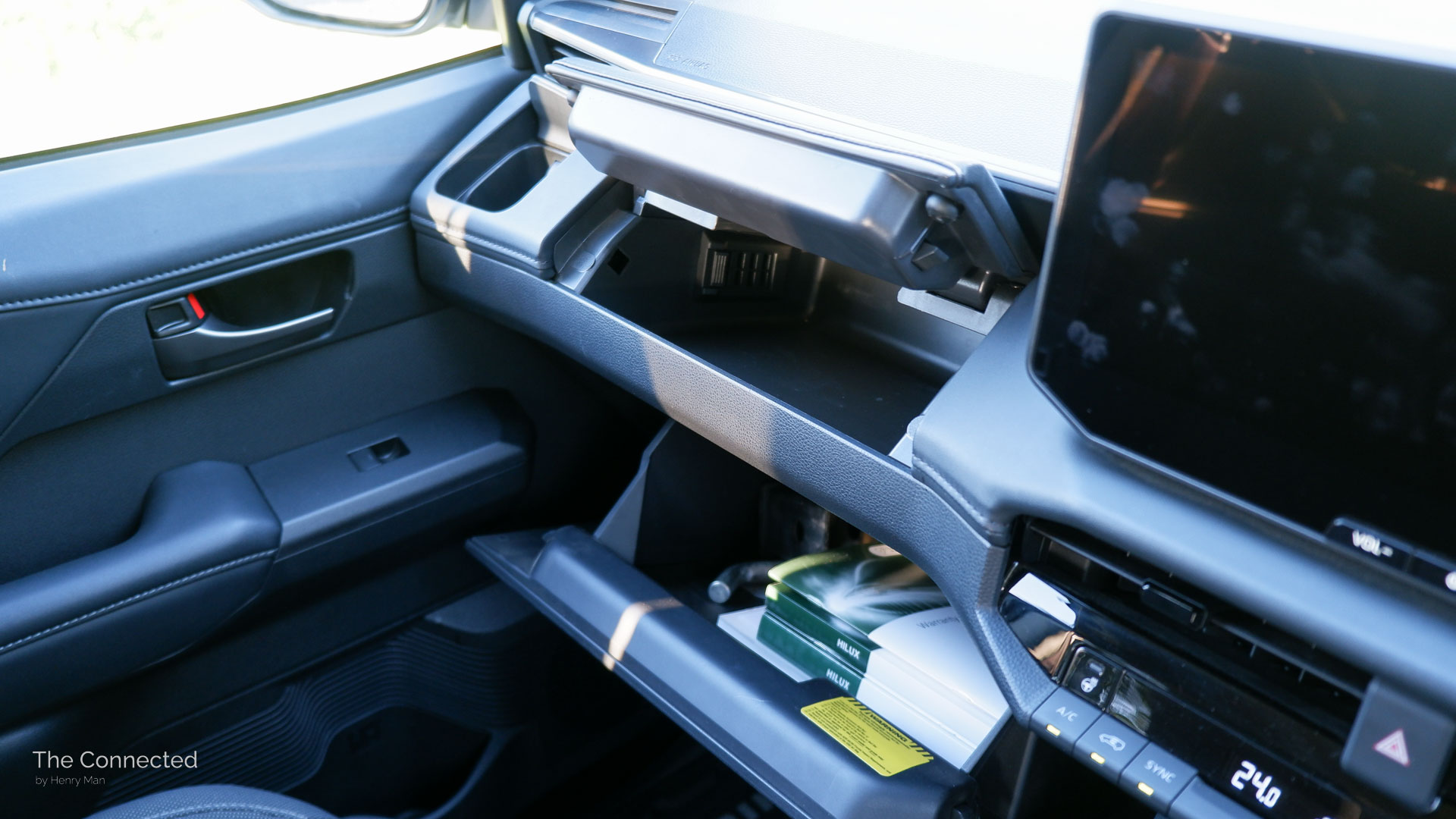
Another new addition to the ninth-gen HiLux is a dashboard shelf storage box to complement the traditional reasonably sized glovebox. It includes an air vent linked to the climate control so it can be a cool box, even though the space is shallow.
Two USB-C ports also feature, but they face out from the centre console so you can’t neatly hide the cables.
Single-level front heated seats are standard toggled via buttons at the centre console. They remain depressed so the heating doesn’t turn off every time you start the ute. Handy.
Technology.
2026 Toyota HiLux SR5 4×4 Double Cab tech features:
| 12.3-inch touchscreen running Toyota software | 12.3-inch driver instrument display |
| Wireless/wired Apple CarPlay and Android Auto | Qi wireless charging pad |
| Built-in maps | 4x USB-C, 1x domestic socket, and 1x 12-volt charging ports |
| OTA software update capability | Proximity key with auto-folding mirrors |
| Toyota Connected Services with mobile app (one year full subscription included) |
The ninth-gen HiLux brings updated technology that just works, rather than sticking a big monitor in the middle.
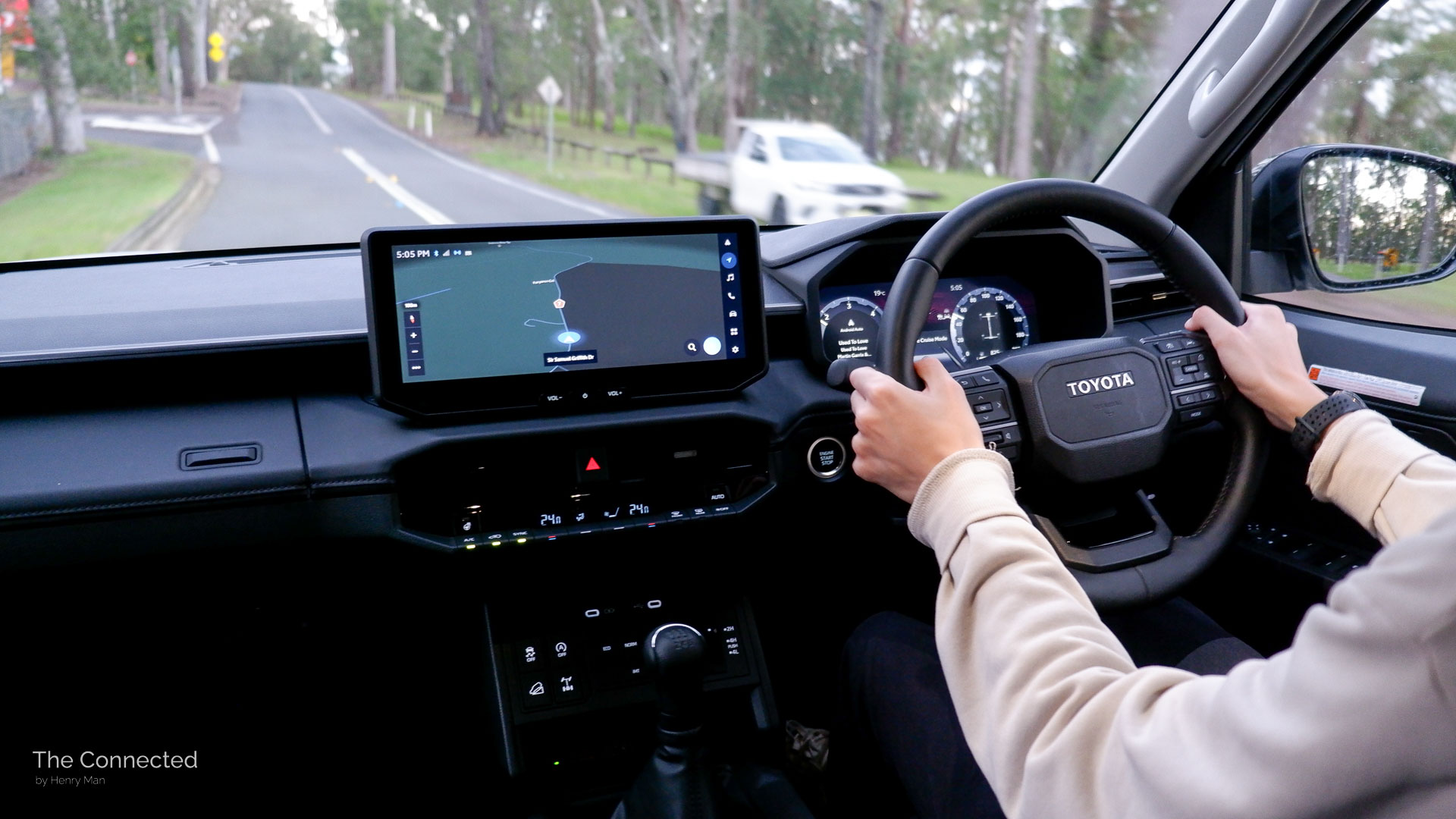
The new 12.3-inch touchscreen now sits proudly out from the dashboard to be clearly visible in the driver’s line-of-sight. It is a great ergonomic position that isn’t too far to reach, but isn’t too close to the driver.
The widescreen aspect ratio is perfect for Apple CarPlay and Android Auto, high resolution and bright, and flanked by three tiny illuminated buttons below for play/pause media and volume up/down.
Running Toyota’s own operating system, it isn’t the latest sophisticated Arene software that debuted on the new RAV4, but it offers basic and easy to navigate menus, a built-in web browser, and a voice assistant.
The same system is used on the latest Camry sedan, C-HR small SUV, and pre-facelifted bZ4X electric SUV.
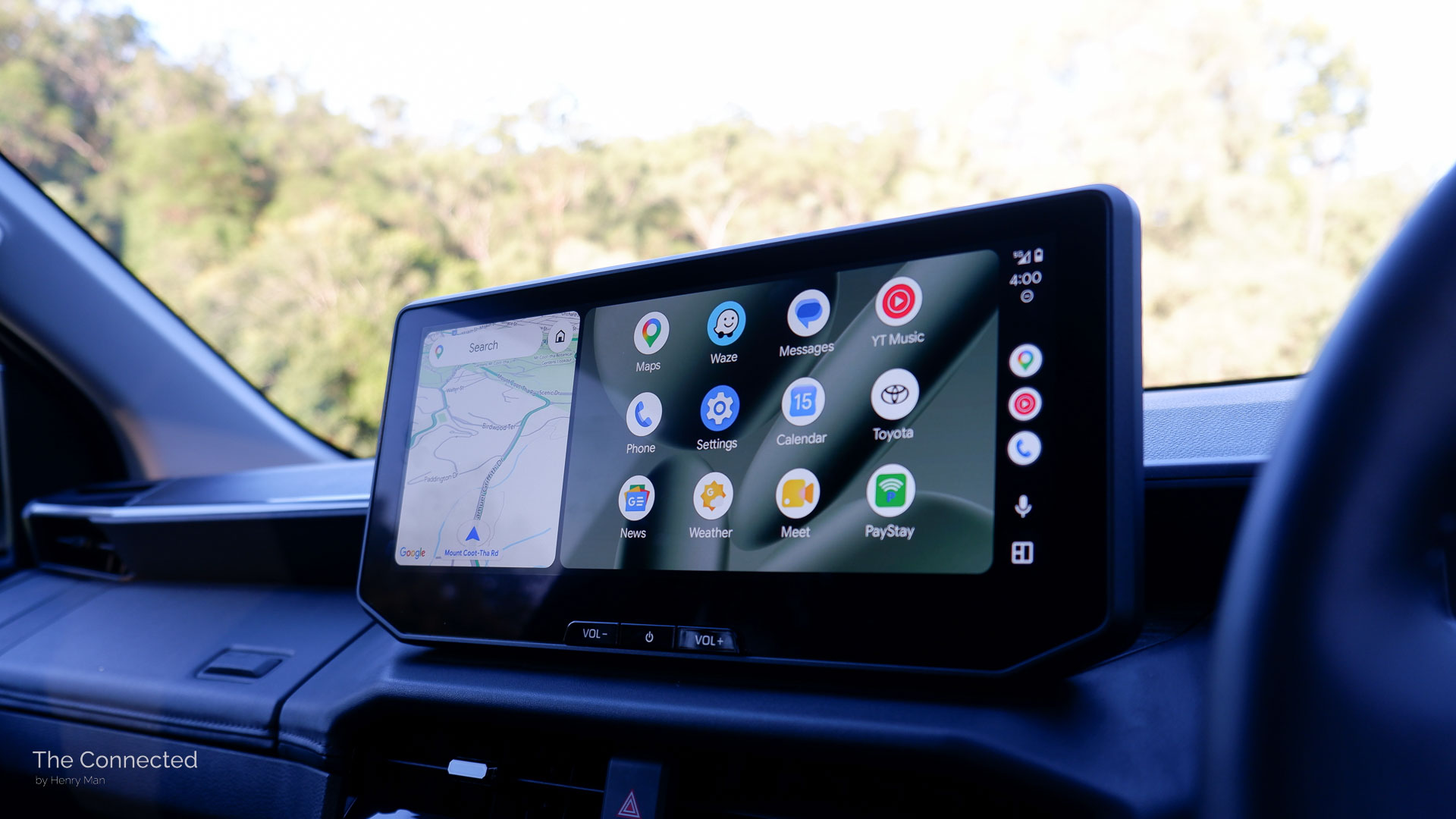
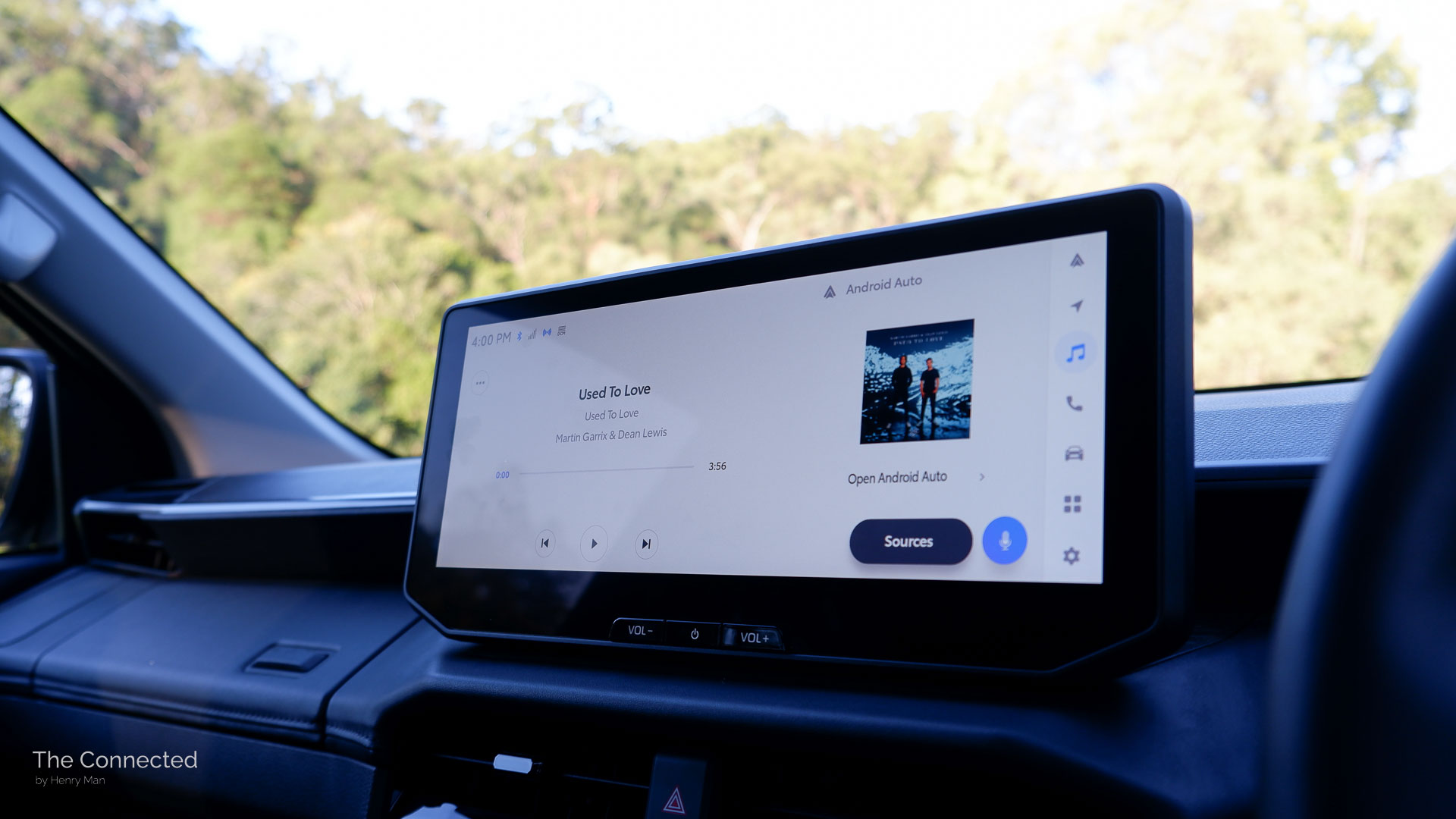
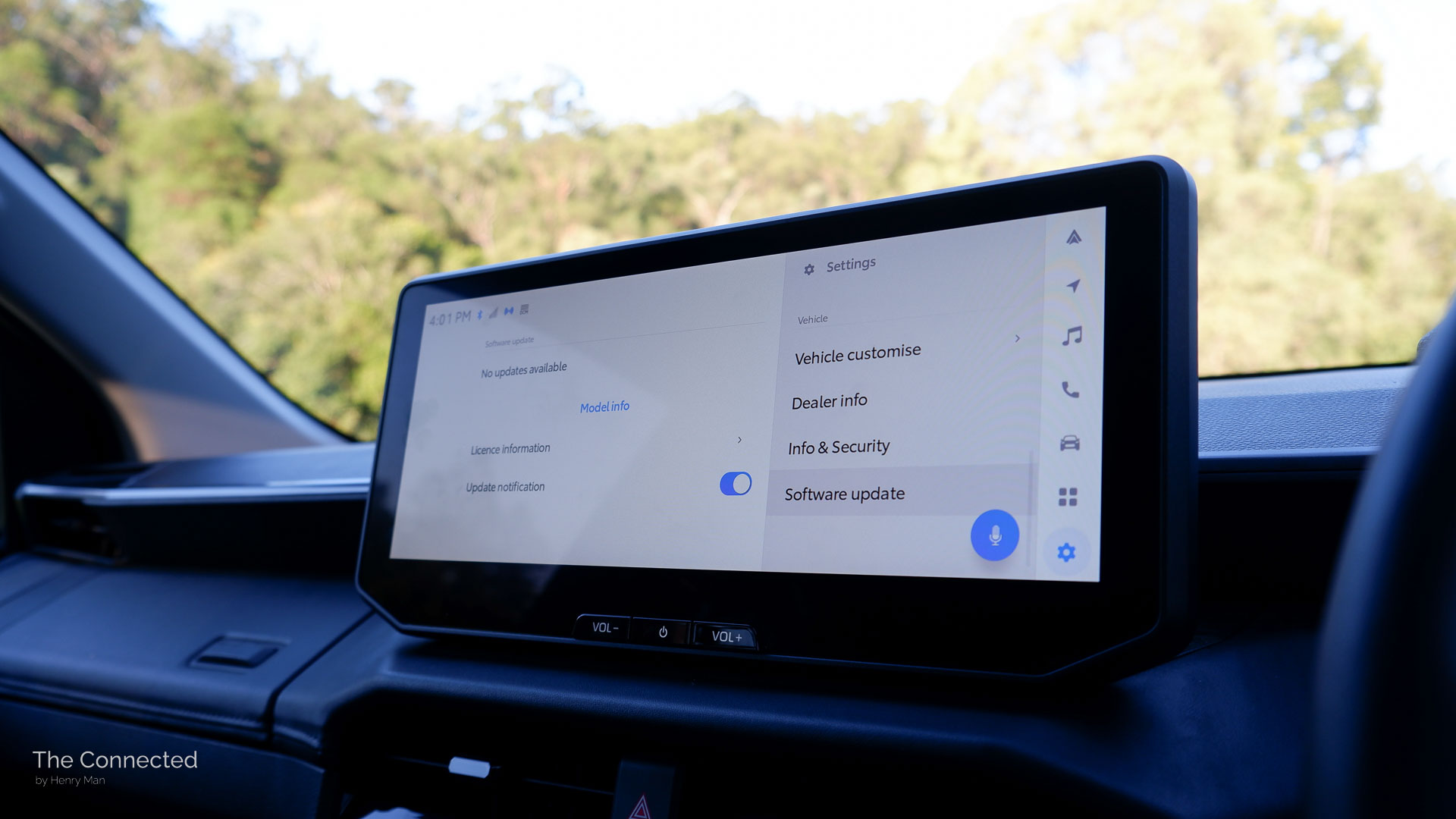
Most will primarily use Apple CarPlay and Android Auto which are wireless and connect quickly and reliably in my testing.
The Japanese carmaker now offers connected services and a mobile app for the HiLux, with the ability to start the engine and climate control remotely (on automatic transmission models only), check the remaining fuel level, vehicle location and more.
Annoyingly, to access full connected services, owners need to pay at least $9.95 per month after the short one-year trial ends.
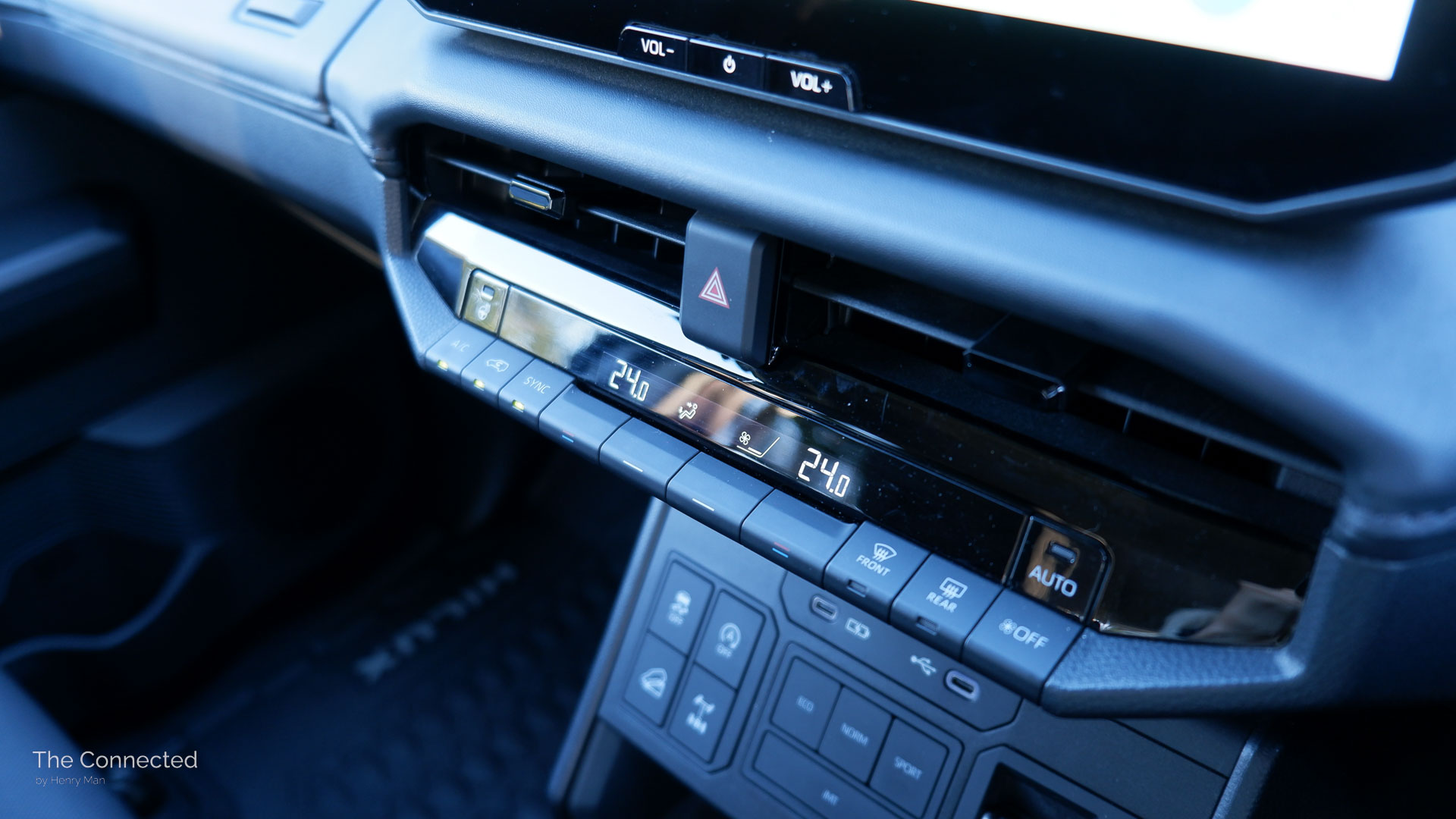
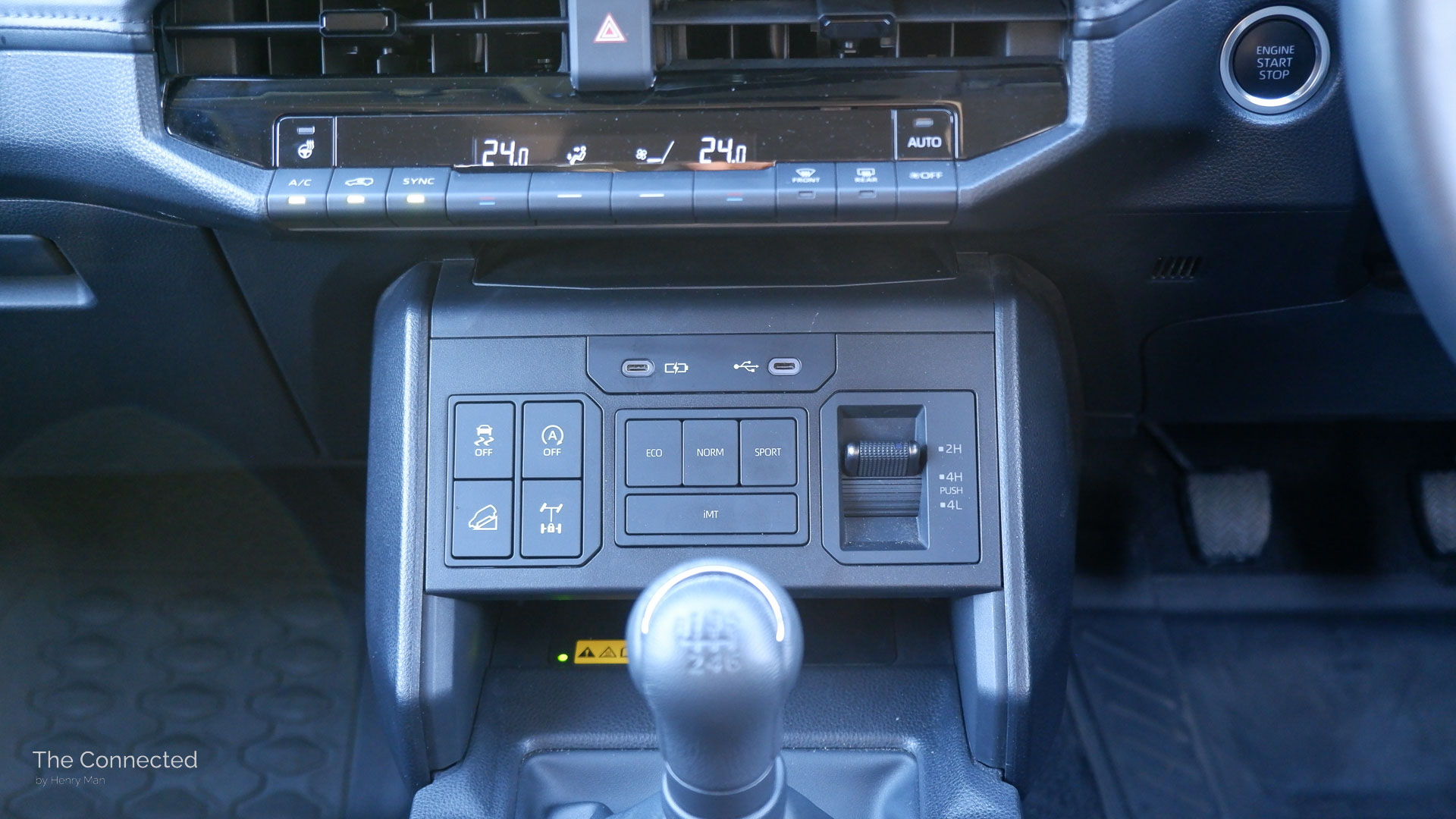
Rather than burying the dual-zone climate controls in a screen, the HiLux incorporates a row of physical rocker switches and a dedicated LED display that sits neatly below the touchscreen. The switches aren’t as clicky as a Mazda, but it’s refreshingly straightforward and direct to use.
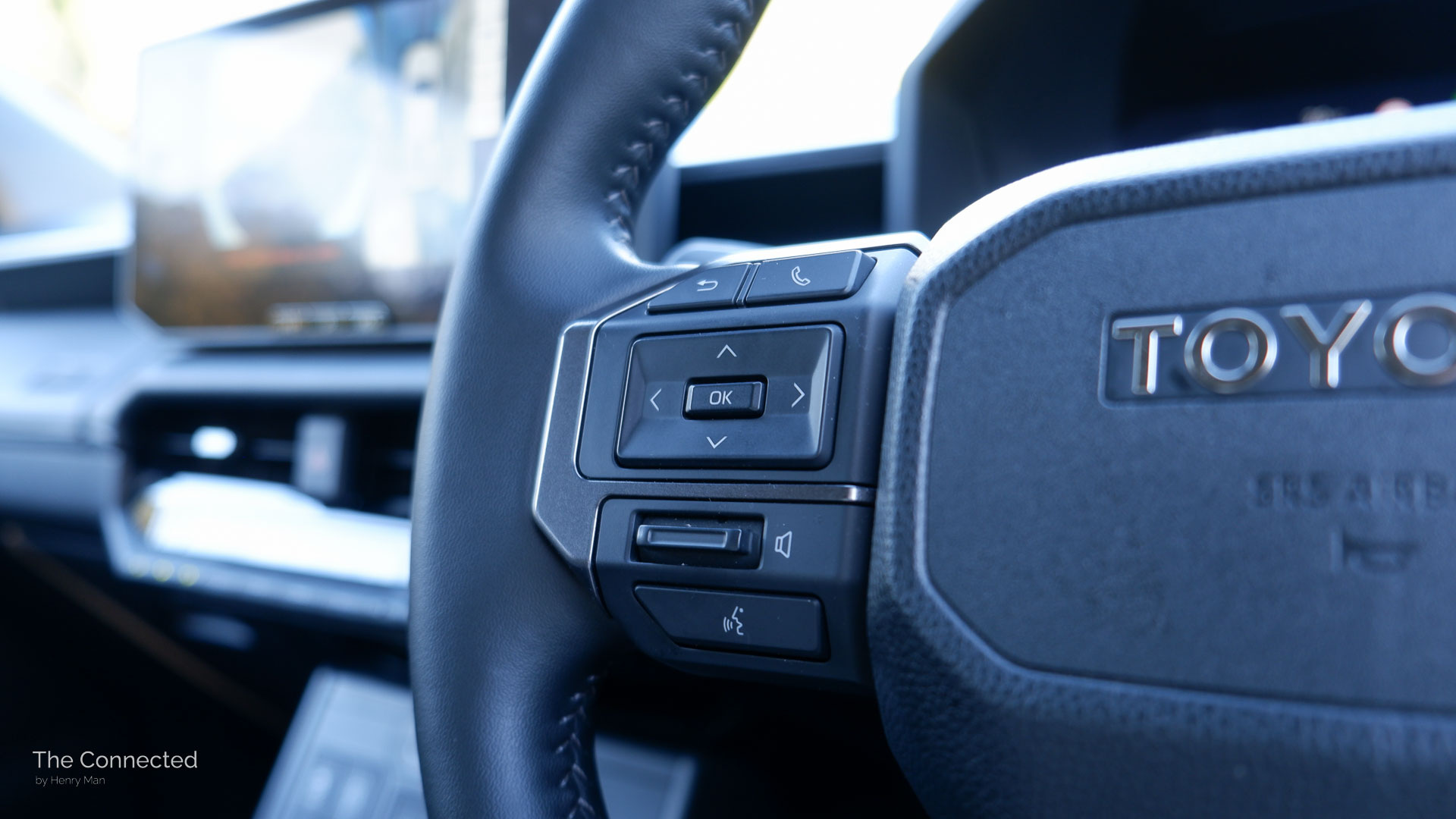
The new LandCruiser Prado-derived steering wheel also provides physical buttons and switches, even though they’re on the smaller side typical of Toyota fashion.
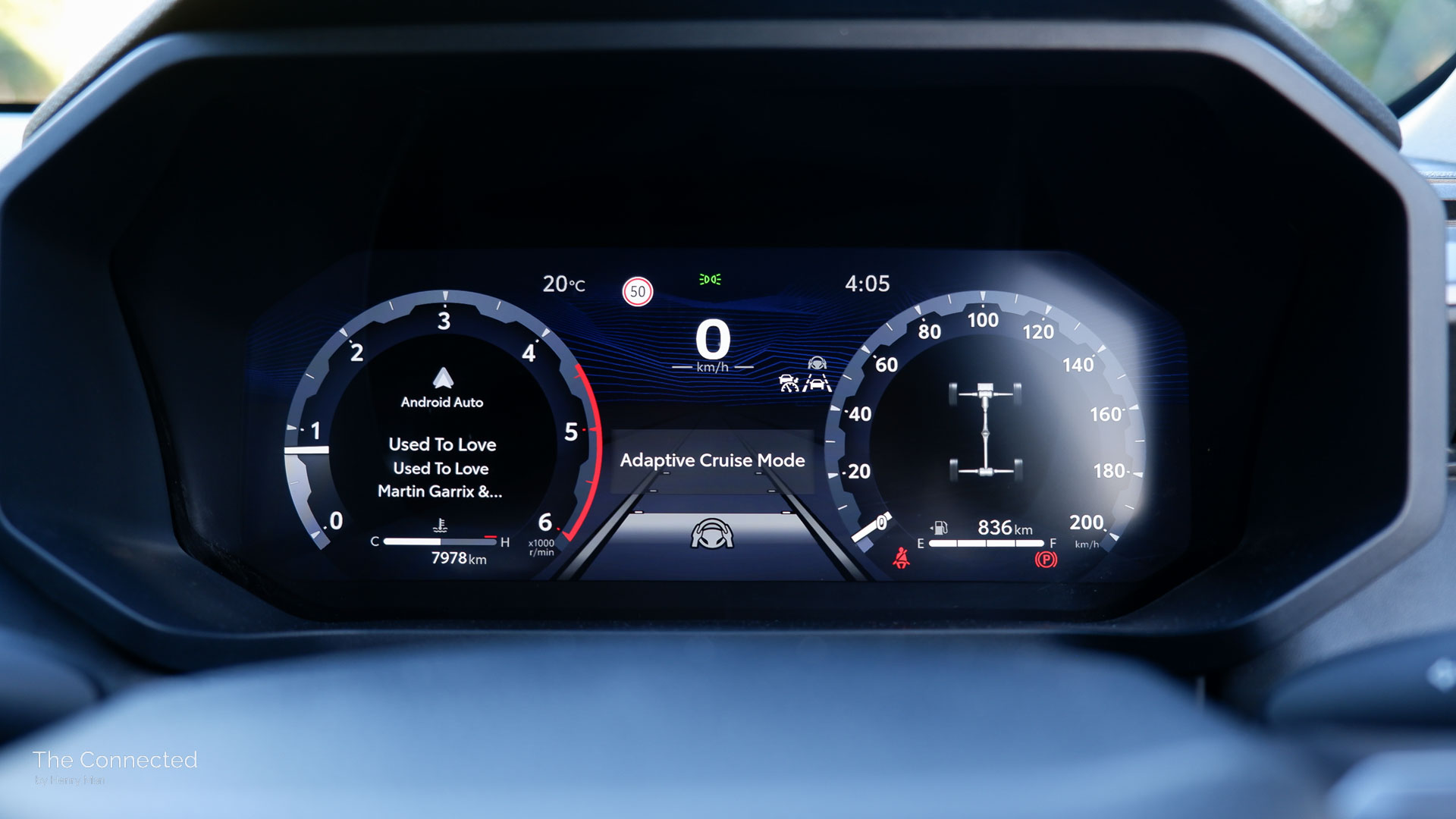
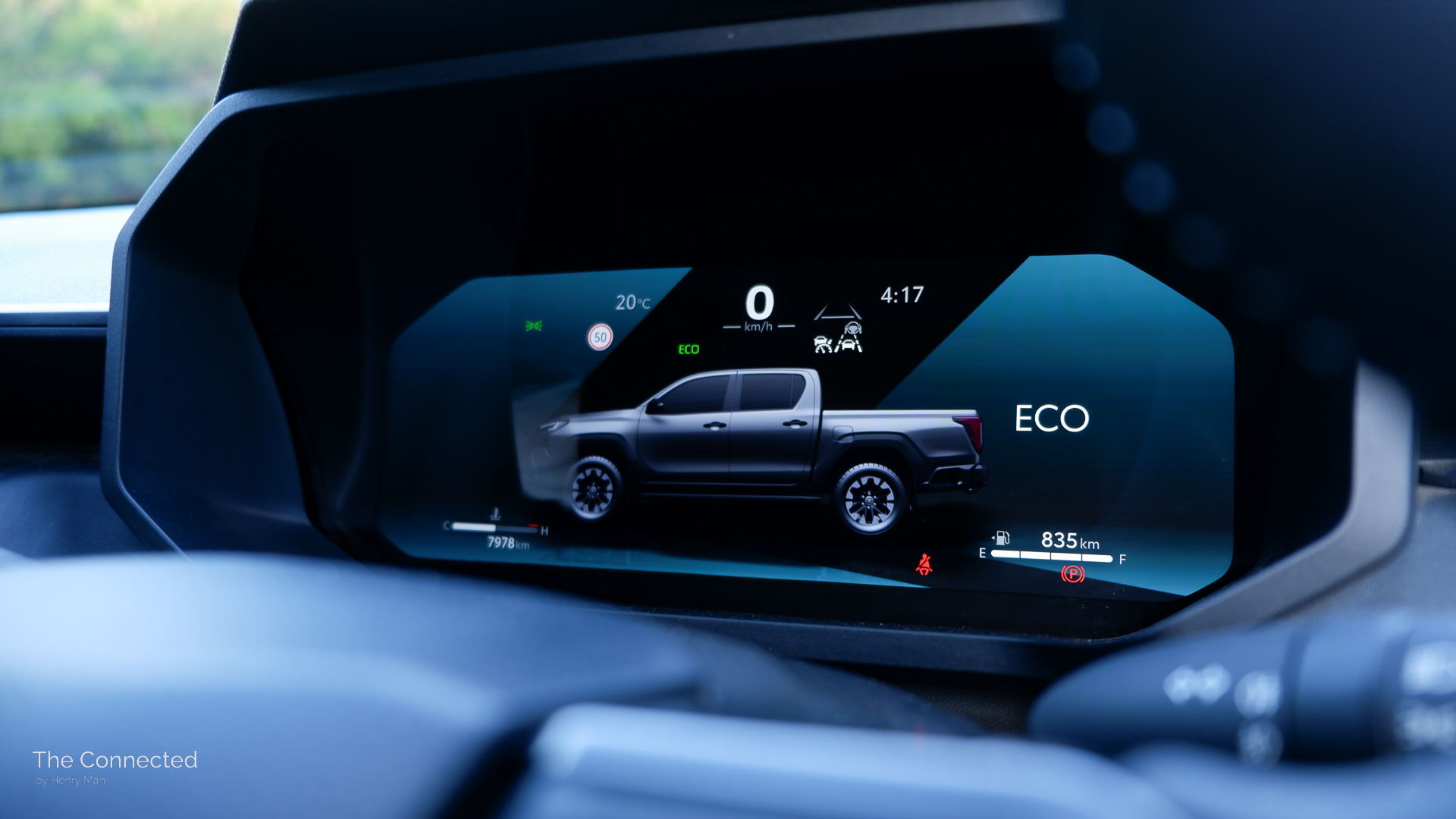
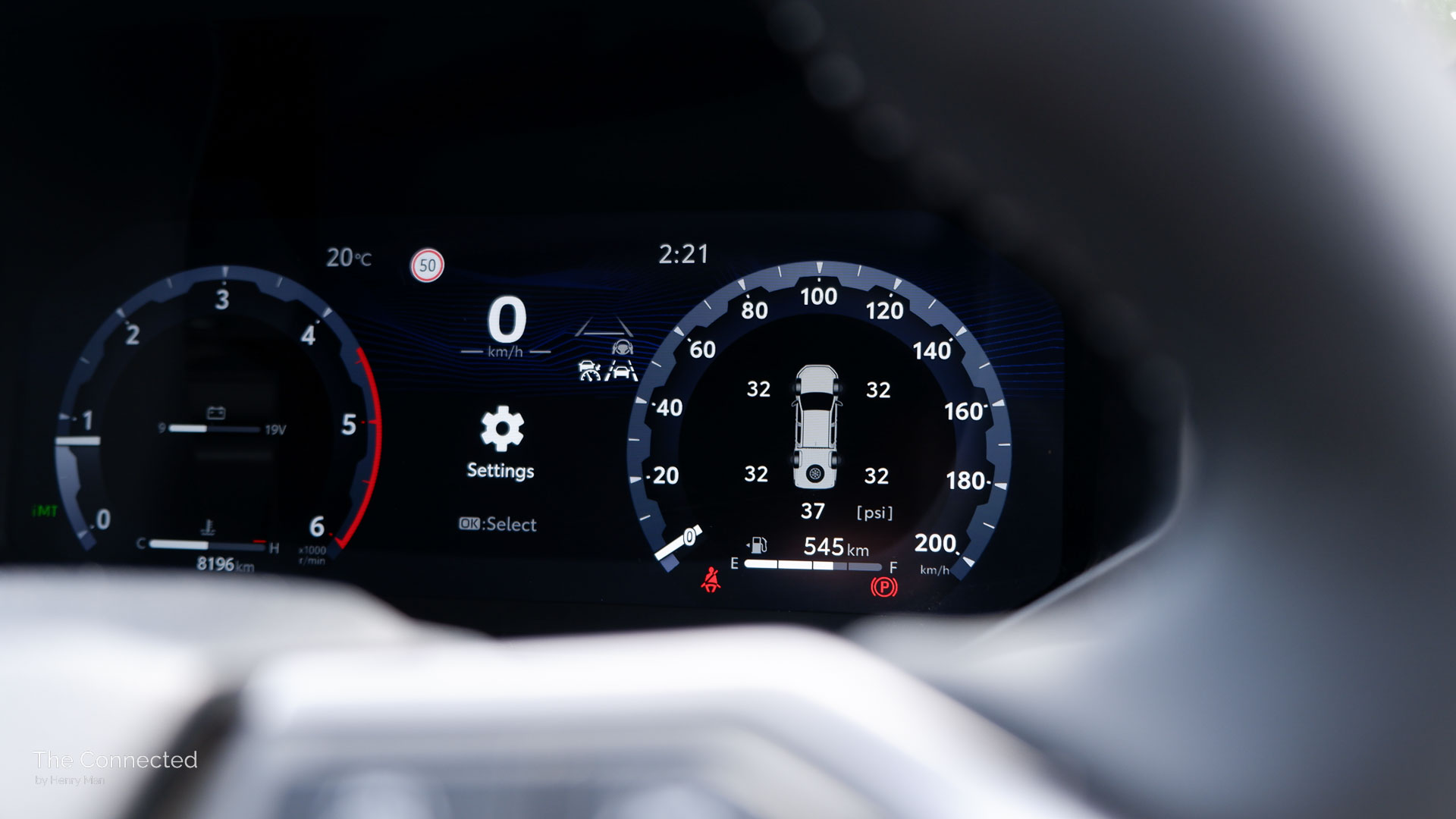
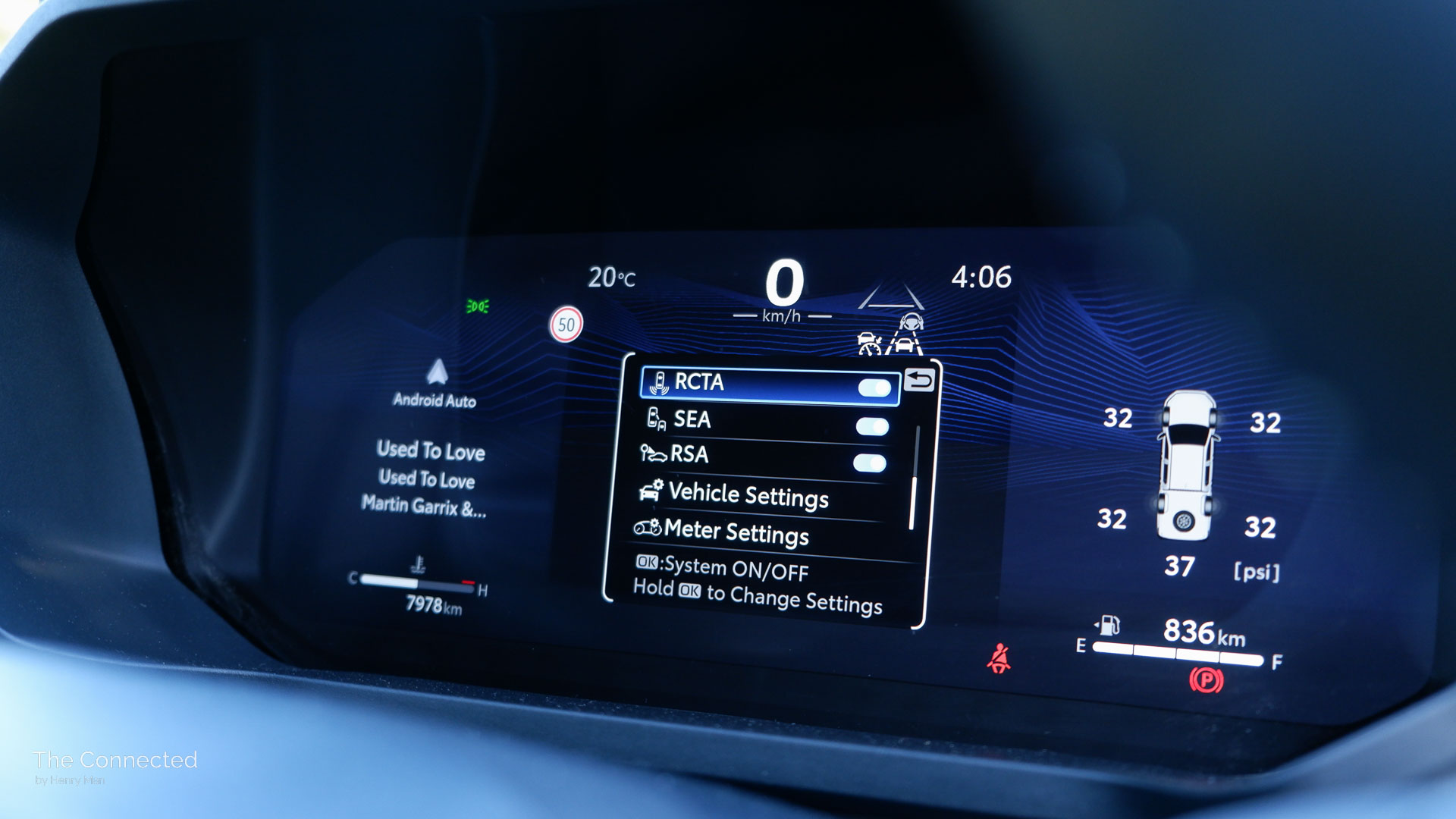
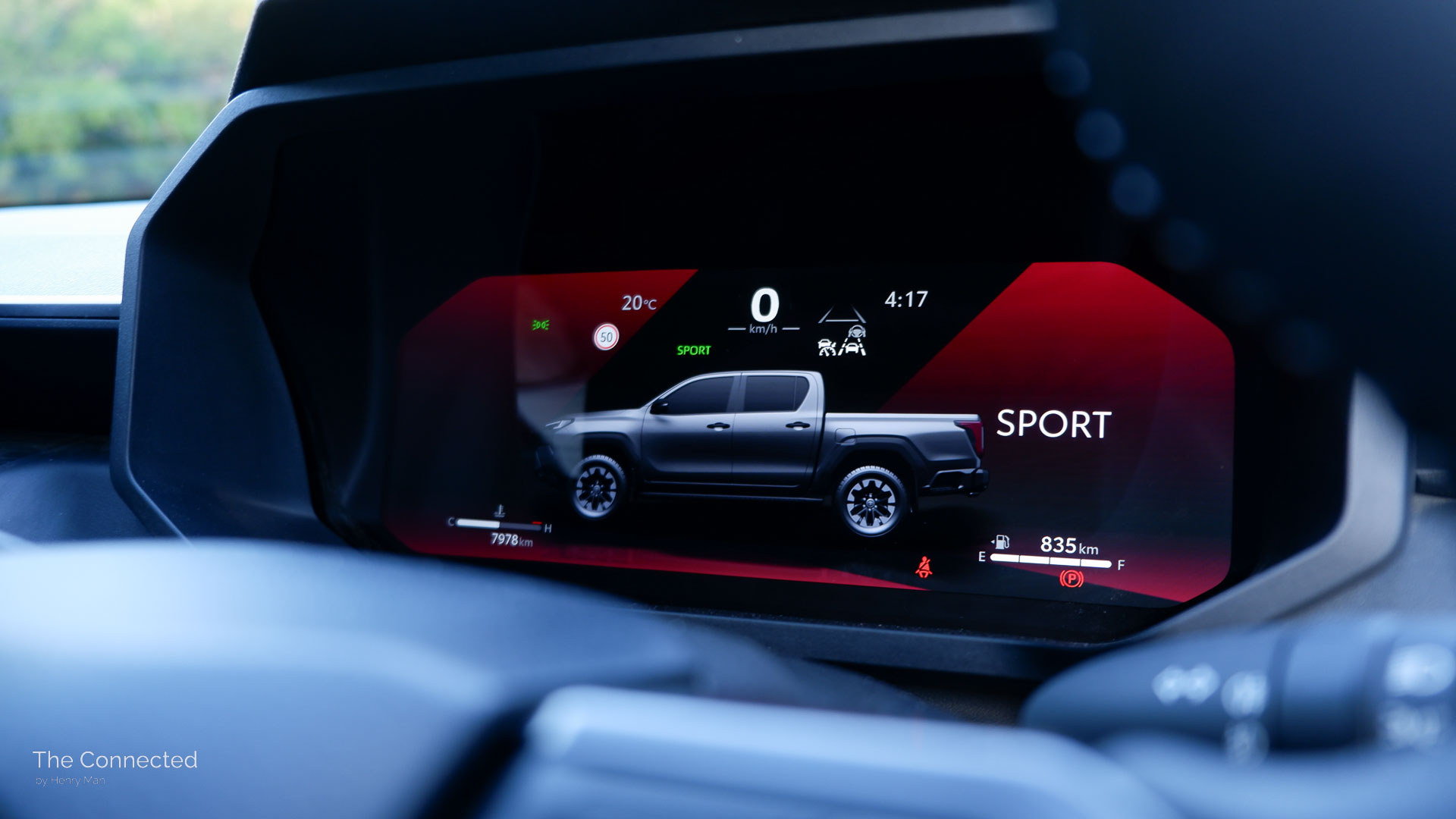
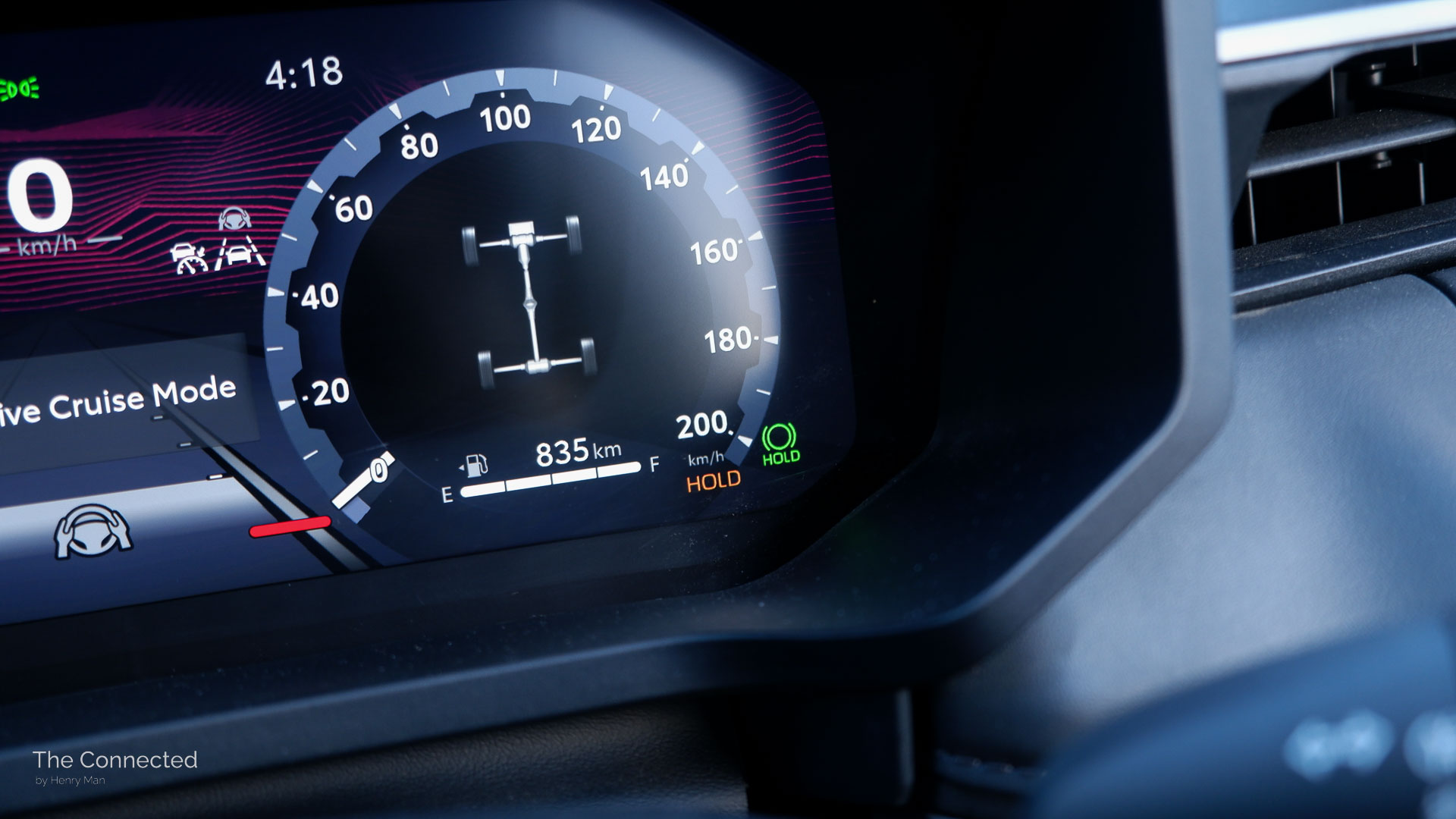
Ahead of the driver is a new high-resolution 12.3-inch driver instrument display with a more rugged digital dial theme and high customisability with the ability to choose a variety of widgets across three gauges, such as the media player and navigation instructions.
Uniquely for the HiLux, the tyre pressure monitoring includes the full-size spare tyre for the first time and there is also a 12-volt auxillary battery monitor.
The instrument cluster also displays a cool drive mode switching animation, albeit with a bit of lag.
All the safety settings and some of the vehicle settings must be accessed via the settings widget on the instrument cluster and using the steering wheel switches, which are fiddly to access.
Safety.
2026 Toyota HiLux SR5 4×4 Double Cab Pick-Up (manual) safety features:
| Front pre-collision assist with vehicle/pedestrian/cyclist/junction turning detection | 360-degree camera system |
| Blind-spot assist | Front and rear parking sensors |
| Rear cross-traffic assist | Auto-dimming rear-view mirror |
| Lane-keep assist | Toyota Essentials Emergency services (included until 4G discontinuation) and stolen vehicle tracking (one year included) |
| Adaptive cruise control with lane-centring assist | Full LED headlights with front fog lights |
| Speed sign detection | Part LED tail-lights with rear fog light |
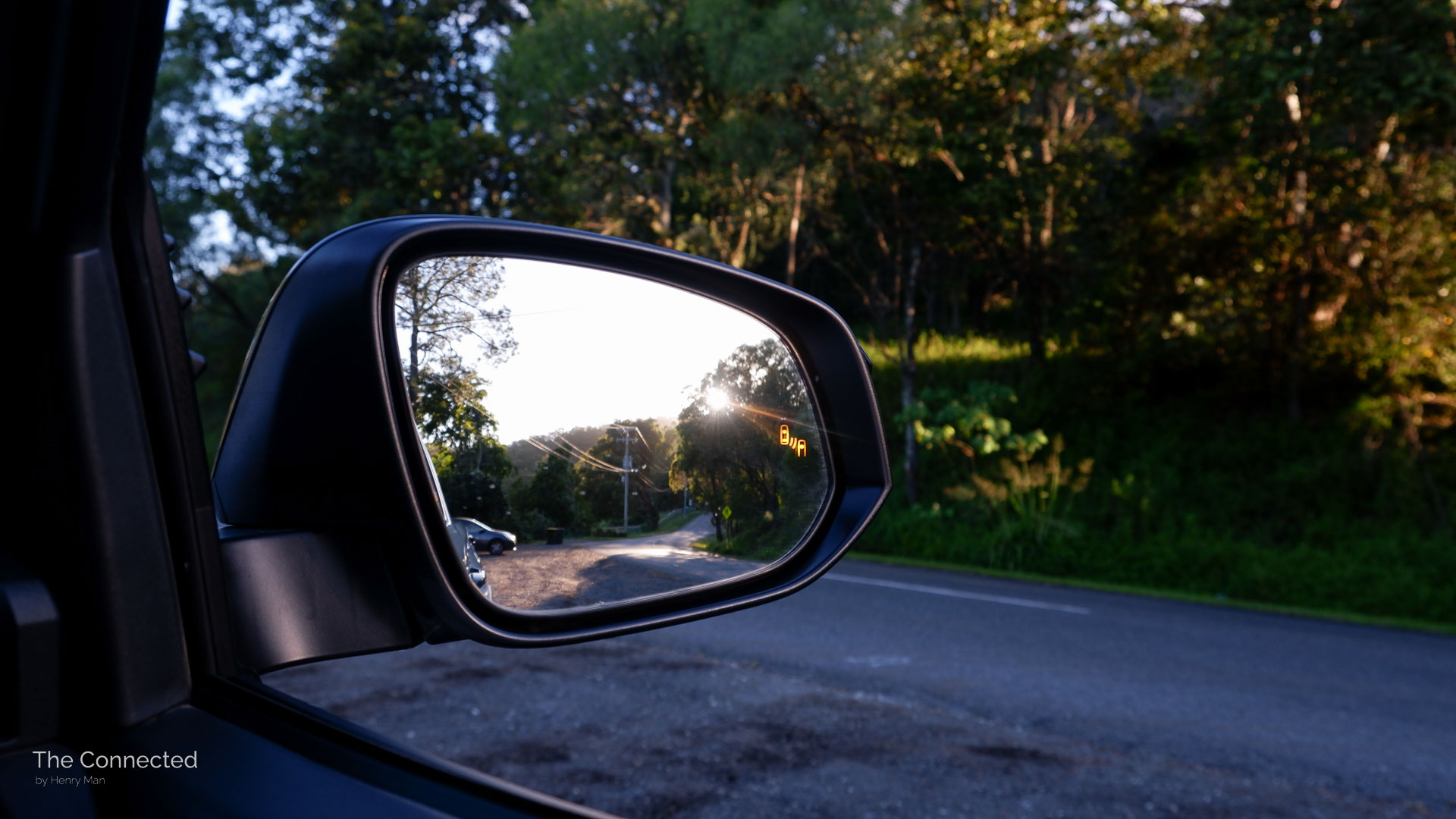
The new Toyota HiLux brings a substantial safety technology upgrade but without being intrusive and sensitive like many modern-day cars.
The lane-keep assist is subtle, the new speed sign detection is generally accurate, understands school zone times and doesn’t warn when you overspeed by default, and there’s no driver attention monitor as per the over-sensitive new RAV4.
Toyota’s safety assistance systems refreshingly work in the background and is one of the best I’ve tested.
Even the manual transmission has adaptive cruise control and active lane-centring assist, just like the GR Yaris hot hatch. Drivers of course still need to shift gears and it cuts out below 30km/h, but it’s still handy to have.
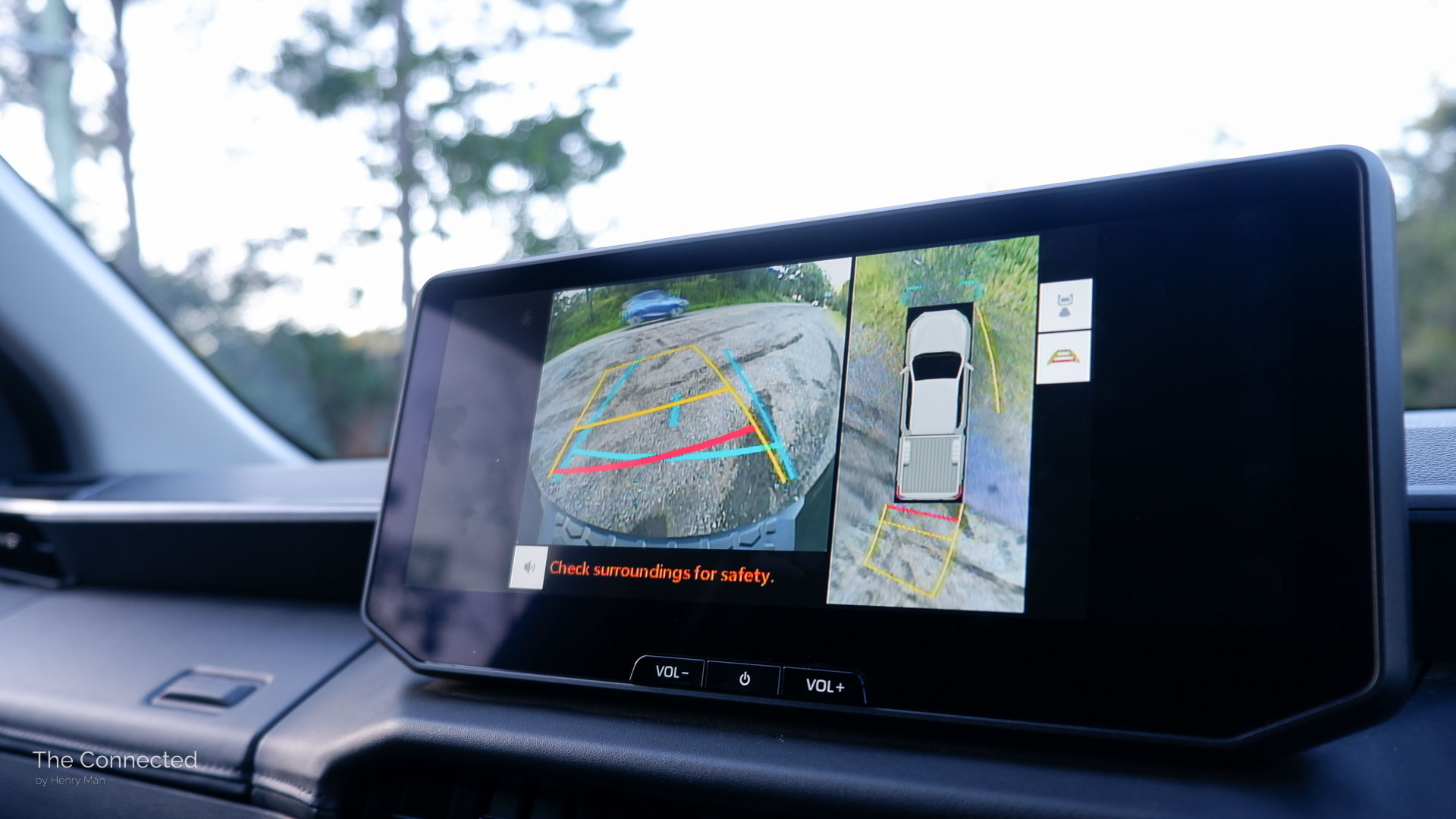
However, the only letdown is the 360-degree surround-view camera which is clearly carryover from the previous model with a grainy, low resolution and is displayed as a small box within the widescreen.
The button to open it is also hidden beside the driver’s wheel; thankfully, the camera system can automatically pop up on the screen at low speeds.
Only one year of stolen vehicle tracking is included as part of the Toyota Connect+ package, which is stingy especially when Toyotas have been subject to a spike of vehicle thefts in recent years. It costs at least $9.95 per month after the trial to keep it.
Full LED headlights provide good visibility at night with front and rear fog lights, though the rear indicators are halogen type and there’s only one left-side reversing bulb.
The 2026 Toyota HiLux received the full five-star safety rating by the Australasian New Car Assessment Program (ANCAP) under 2025 testing criteria, which is impressive given its age.
Range and fuel consumption.
2026 Toyota HiLux SR5 4×4 Double Cab (manual) fuel and efficiency specs:
| Claimed driving range (combined cycle) | 1126km |
| Claimed fuel efficiency (combined cycle) | 7.1L/100km |
| Fuel tank size | 80L |
| Minimum fuel quality requirement | Diesel |
The carryover HiLux powertrain provides middling fuel consumption with no ground-breaking full hybrid option like its rivals.
After a week of mixed urban traffic and highway driving, the pure diesel and manual transmission HiLux returned an average fuel consumption of 9.3L/100km.
With a large 80-litre fuel tank, this results in about 860km of real-world driving range. AdBlue is not required.
The HiLux is not efficient and doesn’t offer more than the coveted 1000km range benchmark, at least from the factory.
This is a key area that other Chinese rivals such as the BYD Shark 6, GWM Cannon Alpha PHEV, Chery Stockman, and Nissan Navara Pro PHEV have the advantage of – even though a short-range HiLux BEV is now available.
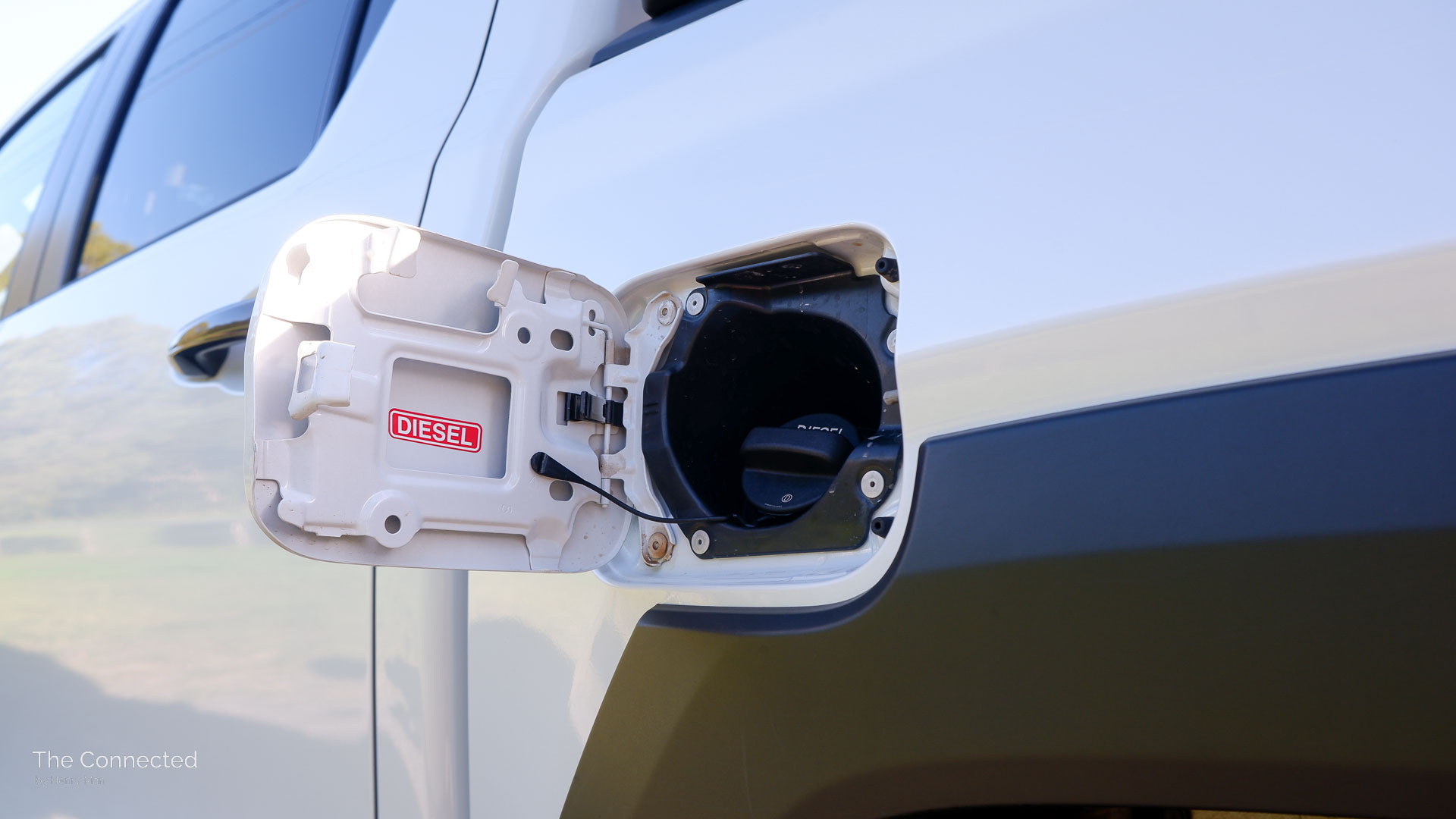
The fuel flap is located at the rear-left quarter side of the Thailand-built ute. As per typical Toyota style, you’ll still need to press a button beside the steering wheel to unlock the flap.
Driving.
2026 Toyota HiLux SR5 4×4 Double Cab (manual) powertrain specs:
| Engine | 2.8-litre turbo four-cylinder diesel |
| Power / torque | 150kW @3400rpm / 420Nm @1400-3400rpm |
| Transmission | Six-speed manual with IMT rev matching |
| Drive type | 4×4 on demand |
| Kerb weight | 2110kg |
| Payload | 970kg |
| Towing (unbraked / braked) | 750 / 3500kg |
| Turning circle | 13.5m |
| Approach / ramp breakover / departure angle | 29 / 23 / 25 degrees |
| Wading depth | 700mm |
The Toyota HiLux feels old-school to drive with a fidgety soft ride and a city-unfriendly turning circle, but at least you can still buy a manual ute.
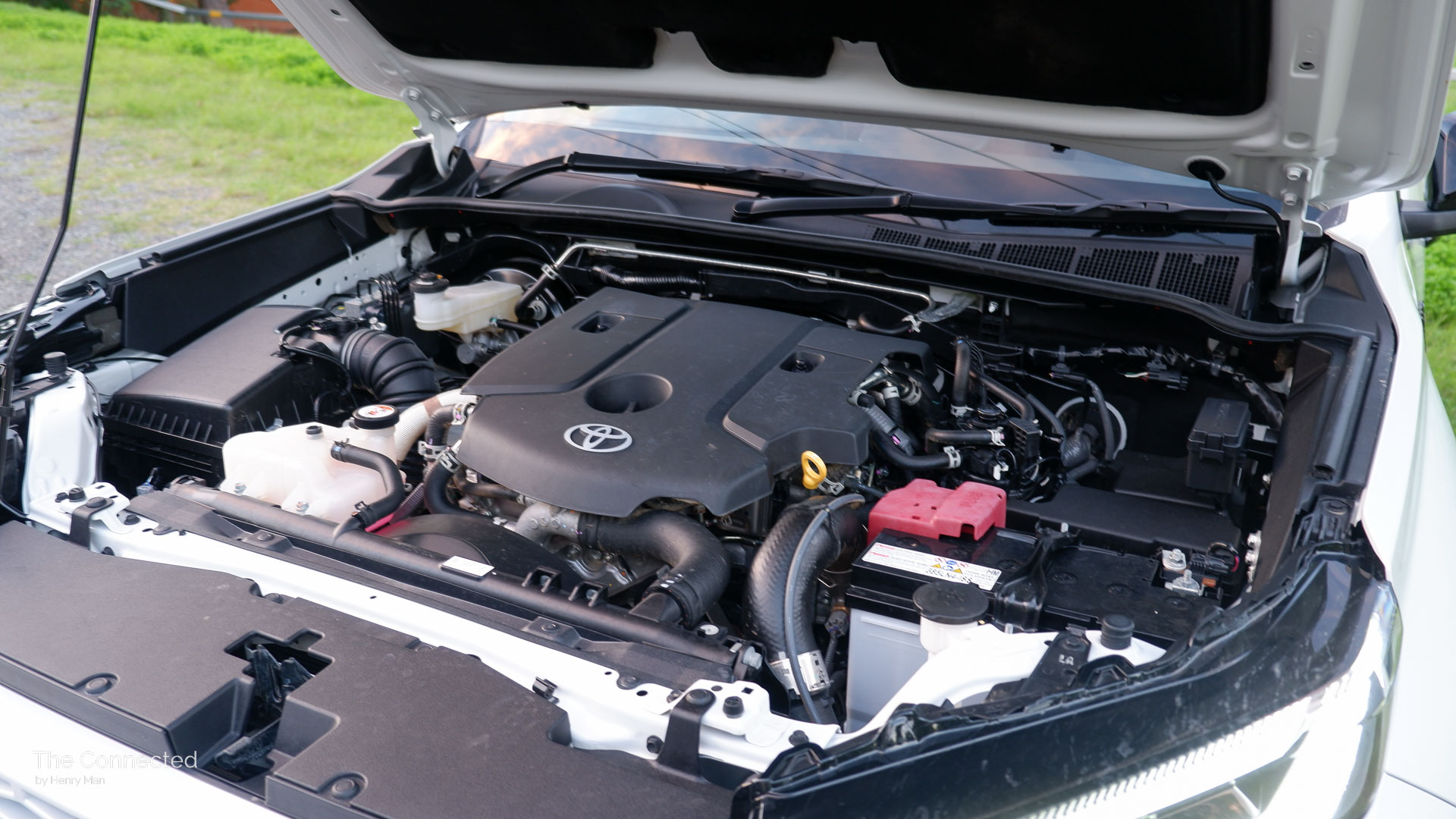
The venerable 1GD-FTV 2.2-litre diesel engine remains unchanged in the ninth-gen HiLux with the six-speed manual transmission making up to 150kW of power and 420Nm of torque.
In practice, it provides enough grunt even though you’ll need to work with the engine and gears to get the most out of it as typical of diesels; acceleration isn’t instant.
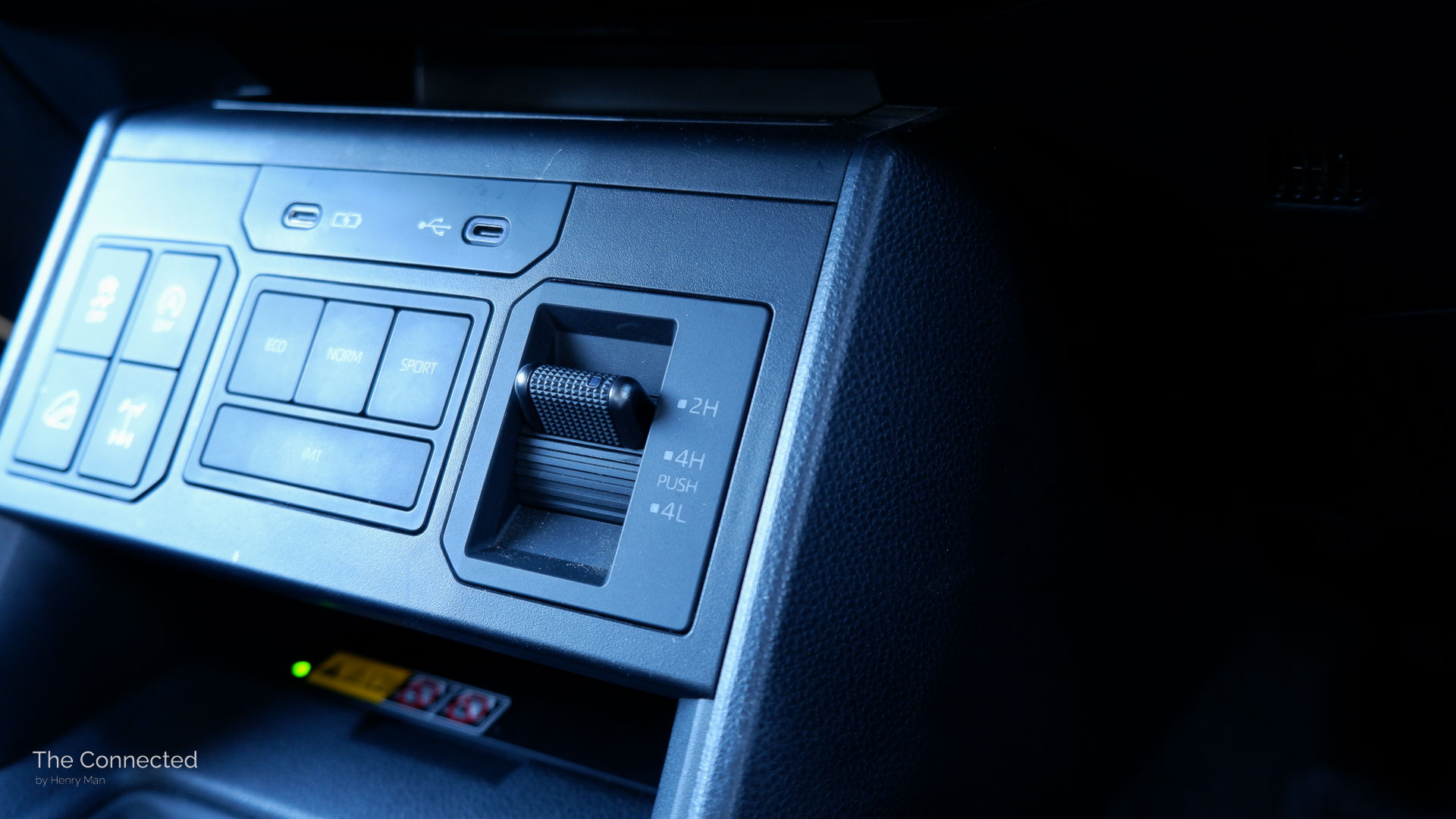
There are three distinct buttons at the centre console for changing between drive modes. Sport mode dials the accelerator pedal sensitivity too much as it’s very easy to over-rev, at least on the manual.
It’s one of the only new utes still on sale with a six-speed manual transmission with good clutch pedal feel.
However, the first gear is shorter than ideal for driving in stop/start traffic and there’s limited space to rest your left foot beside the clutch pedal; Toyota instead recommends resting closer to the floor below the clutch pedal.
The vinyl gear shifter has a long throw and putting it to reverse is slightly difficult if you have a weak left arm since drivers need to push the stick in while simultaneously going all the way to the left and up in the gate. I often inadvertently shifted into first gear and it feels tiresome.
In a win for inexperienced manual drivers, the Toyota HiLux offers technologies that make driving one easier.
In addition to standard hill hold assist, there is auto hold like any automatic car that keeps the brakes on for longer at any road gradient without needing to press the brake pedal. The electronic park brake activates when the drive unbuckles the seatbelt, too.
Like the GR Yaris and GR Corolla, there is automatic rev matching when shifting down gears as long as you press the IMT button every time you start the ute.
Automatic models gain a mild-hybrid system with 80Nm more torque.
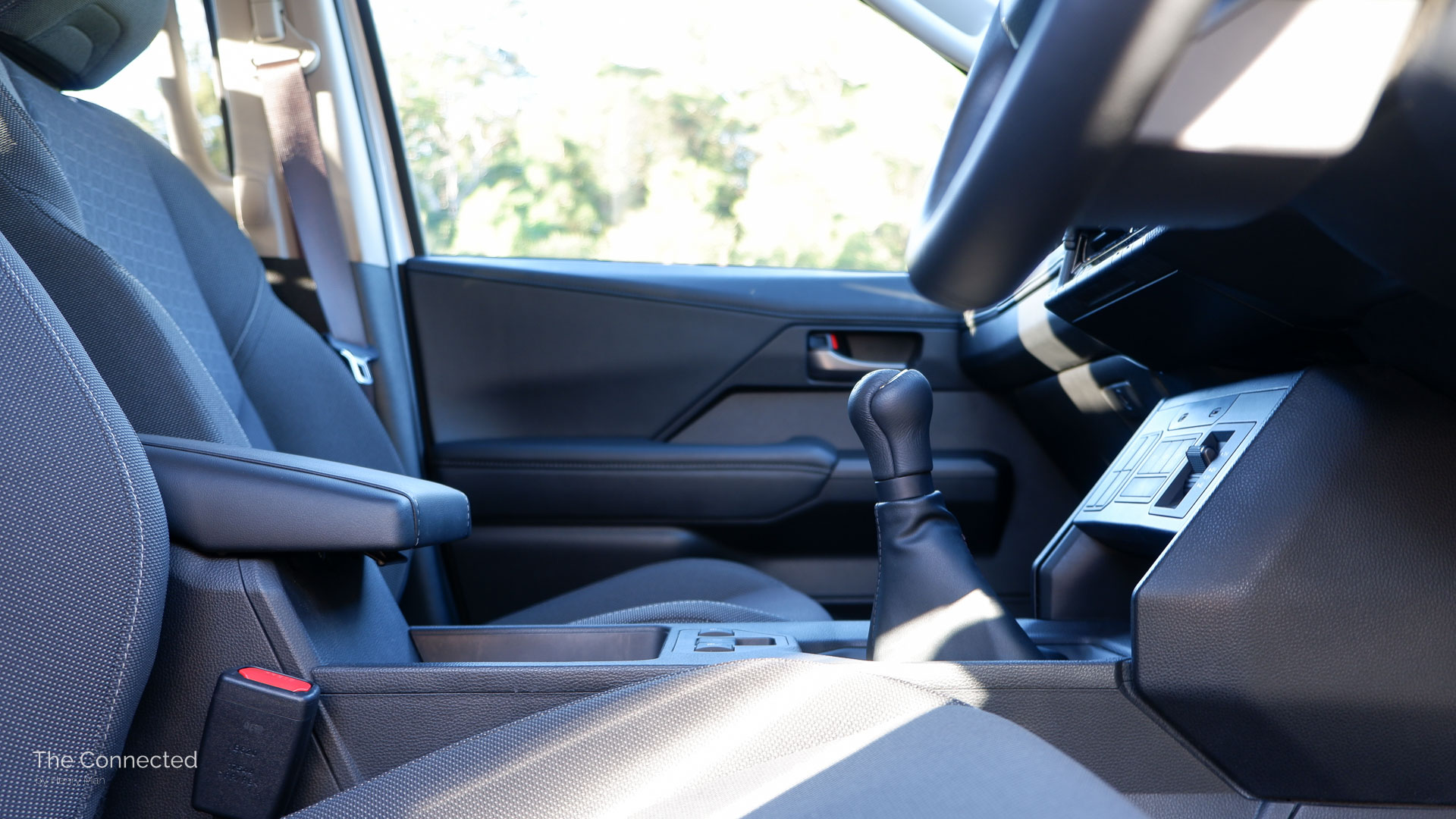
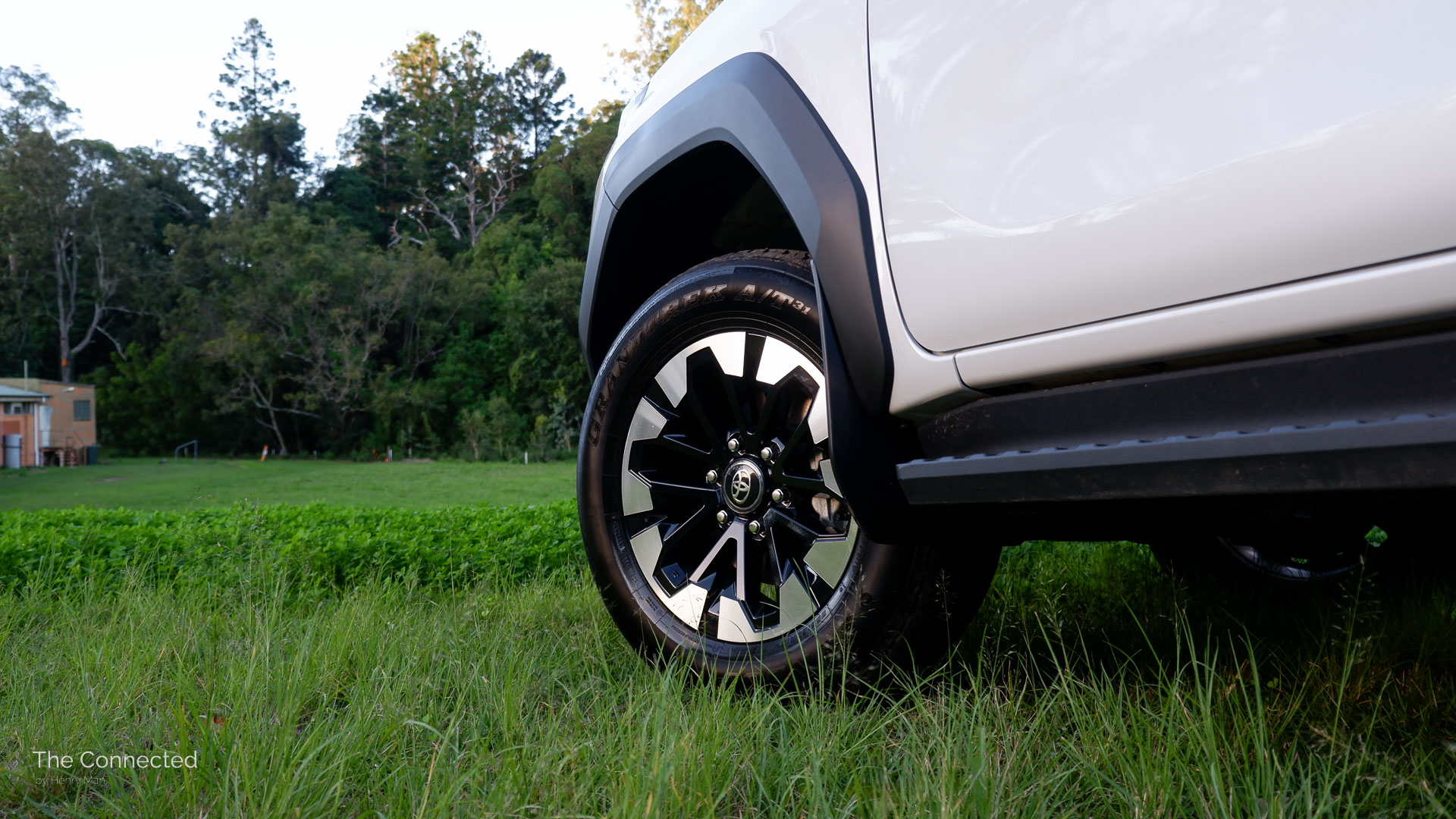
Unfortunately, in a sign of the engine’s age, the diesel is loud, rattly and vibrates the interior when idle which is particularly noticeable at the manual gear stick.
An engine stop/start system defaults on every time you start the HiLux and it doesn’t keep it off for longer than 30 seconds in my experience. When the engine reignites, a neat message on the instrument display tells drivers why it needed to turn on again (eg: for the battery, climate control, etc.).
While engine stop/start alleviates the uncomfortable vibrating cabin when idle, it’s best to disable it by pressing the button at the centre console.
The HiLux’s power steering is heavy and direct for a ute with some numbness and body lean when unladen.
It still has a particularly large 13.5-metre turning circle – which feels cumbersome when parking and making turns. It’s not city friendly.
The driver sits suitably high with good all-round visibility despite the tall rear row headrests, but you’ll still benefit from a higher seating position with a van.
There’s no automatic four-wheel drive mode with a switch at the centre console available to flick between the default 2H, 4H and 4L. This review focuses on on-road driving, but the HiLux has demonstrated to be a great off-roader according to Drive and Driving Enthusiast.
Warranty and servicing.
2026 Toyota HiLux SR5 4×4 Double Cab capped-price servicing costs:
| 6 months/10,000km | 1 year/20,000km | 1.5 years/30,000km | 2 years/40,000km | 2.5 years/50,000km |
| $395 | $395 | $395 | $395 | $395 |
The 2026 Toyota HiLux is backed by a five-year, unlimited kilometre vehicle warranty.
Servicing is recommended fairly often – every six months/10,000km (whichever occurs first) since Toyota Australia claims its off-road vehicles are used more stringently particularly in rural and regional Australia.
Pricing when servicing with a Toyota dealer is fixed for the first five years/100,000km with each visit costing $395, totalling to $3950.
Toyota Australia doesn’t include roadside assistance coverage, but is willing to cover towing and car hire expenses “if needed” for seven years, unlimited kilometres on the condition it’s serviced with a Toyota dealer (otherwise it’s five years, unlimited kilometres).
Only one year of Toyota Connected Multimedia services are included, with it costing $12.50 per month afterwards to retain full functionality. A lower-tier Connect+ is also available for $9.95 per month.
Toyota Essentials, which has basic connected services features, is standard for the lifetime of the car until 4G cellular infrastructure is discontinued by Telstra in Australia.
A full-size spare tyre is included underneath the chassis complete with a tyre pressure monitor.
Price and rivals.
2026 Toyota HiLux 4×4 Double Cab Pick-Up model range pricing (accurate as at the time of publication):
| Workmate | SR | SR5 | Rogue | Rugged X |
| From $53,990 before on-road costs | From $59,490 before on-road costs | From $63,990 before on-road costs | From $71,990 before on-road costs | From $71,990 before on-road costs |
The 2026 Toyota HiLux in 4×4 Double Cab Pick-Up guises are priced from $53,990 before on-road costs in Australia.
Two-wheel drive and cab chassis models are available, too.
The HiLux is also the only new ute on sale with the availability of a manual transmission as standard on the base Workmate Cab Chassis 4×2, SR and SR5 Double Cab 4×4 models.
A fleet-orientated full battery-electric HiLux is also available.
On SR5 models and above, a $2500 optional Premium Interior pack brings black leather seats, an eight-way power adjustable driver’s seat with lumbar support, and nine JBL branded speakers.
All colours except Glacier White costs $675 extra.
The Toyota HiLux directly rivals the following utes:
- Ford Ranger
- Kia Tasman (full review)
- MG U9 (full review)
- LDV Terron 9
- LDV T60
- Volkswagen Amarok
- GWM Cannon
- Nissan Navara
- Mitsubishi Triton
- Mazda BT-50
- Isuzu D-Max
- KGM Musso
- JAC T9
- Jeep Gladiator
Other alternatives to the HiLux include:
- Toyota LandCruiser 70 Series
- BYD Shark 6
- Chery Stockman
- Ford Transit Custom (full review)
- Kia PV5
Would I pick the 2026 Toyota HiLux SR5 4×4 Double Cab?
The ninth-gen Toyota HiLux just does the job well. It’s what a modern-day commercial ute should be, even though it isn’t an ideal family car.
The latest HiLux builds on a good track record for off-road capability, dependability and strong residual value with a much more modern interior, tech and safety assists – without being overbearing and following the user-unfriendly big screen trend.
Yet the Japanese carmaker has retained almost identical dimensions when other rivals have become increasingly bigger and unwieldy to drive in the city, while still offering a manual transmission – the only new ute on the market to do so.
However, recommended servicing every six months/10,000km means more downtime particularly for business fleets and the SR5’s tray is basic.
It isn’t great for everyday duties with a tight rear row, noisy and vibrating diesel, an unsettled soft ride when unladen, and a large turning circle.
I’d pick the SR5 which provides a good balance of equipment and price.
The new HiLux isn’t the flashiest ute on the market (no it’s still not really ‘High Luxury’), but it’s simply straightforward and just works with no frustrations. That’s refreshingly good in 2026/27.
Photographs by Henry Man
READ MORE: 2026 Kia Tasman review
READ MORE: 2026 MG U9 review
READ MORE: 2026 Toyota GR Yaris review
Pros:
- Capability, dependability and residuals
- Modernised tech, superb safety assists
- Ergonomic interior
- Urban-friendly size
- The only new manual ute remaining
Cons:
- Frequent servicing requirements
- Barebones tray
- Limited family-friendly appeal
- Noisy and rattly diesel
- Unsettled soft unladen ride, large turning circle
About the Author.
Henry Man is an independent content producer passionate about the intersection of technology and transportation.
The former automotive journalist is focused on producing critically-detailed vehicle reviews, and unique short-form content. Learn more.


