
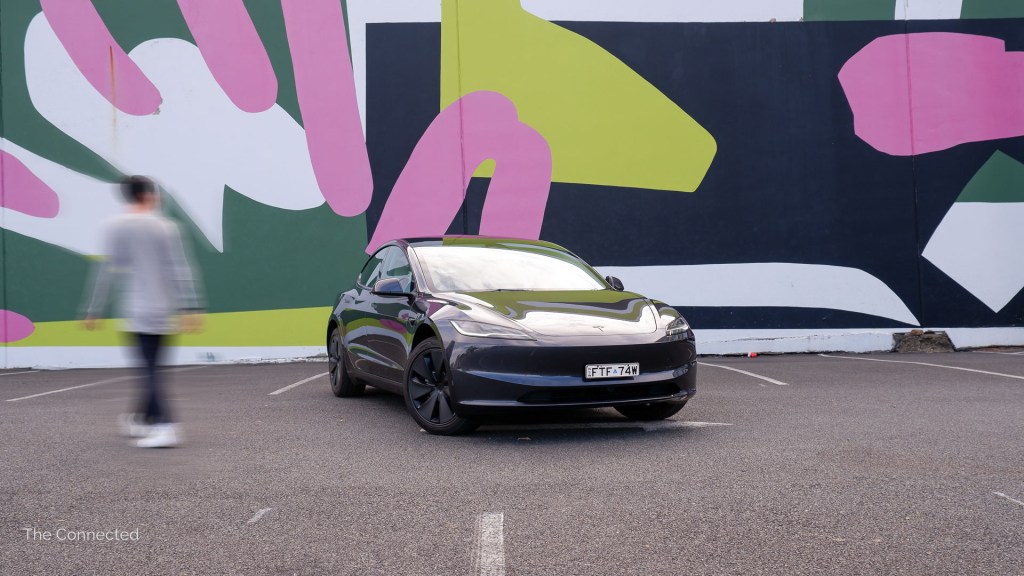
The model that popularised electric vehicles into the mainstream globally continues to be one of the best a decade on, with some flaws…
The Tesla Model 3 was unveiled 10 years ago – an all-electric midsize sedan designed with a more accessible price tag in mind.
Released in 2017, it only hit Australia in 2019. An update in 2021 accelerated its sales, helped by price cuts along the way, before receiving a major refresh in late 2024.
Now, the latest Model 3 has regained an indicator stalk, added a front bumper camera, introduced matte black badging, and the Long Range has dropped a motor to become the longest range (claimed) mainstream EV in Australia to date.
I tested the new Model 3 Long Range Rear-Wheel Drive (RWD) for almost two weeks – including a Brisbane to Yamba range test – and it’s clear that it remains one of the best EVs 10 years later.
NOTE: The press vehicle was provided by Tesla Australia for an 11-day independent evaluation. Charging and toll costs were covered, but we have no commercial arrangements with the company and it had no editorial control.

Pros.
+ Outstanding energy efficiency
+ Incredible tech
+ Premium interior, attention to details
+ Nimble and compliant drive
+ Great value
Cons.
– Optimistic range and charging claims
– Uncomfortable high floor, low seats
– Weak air vents, no roof sunshade
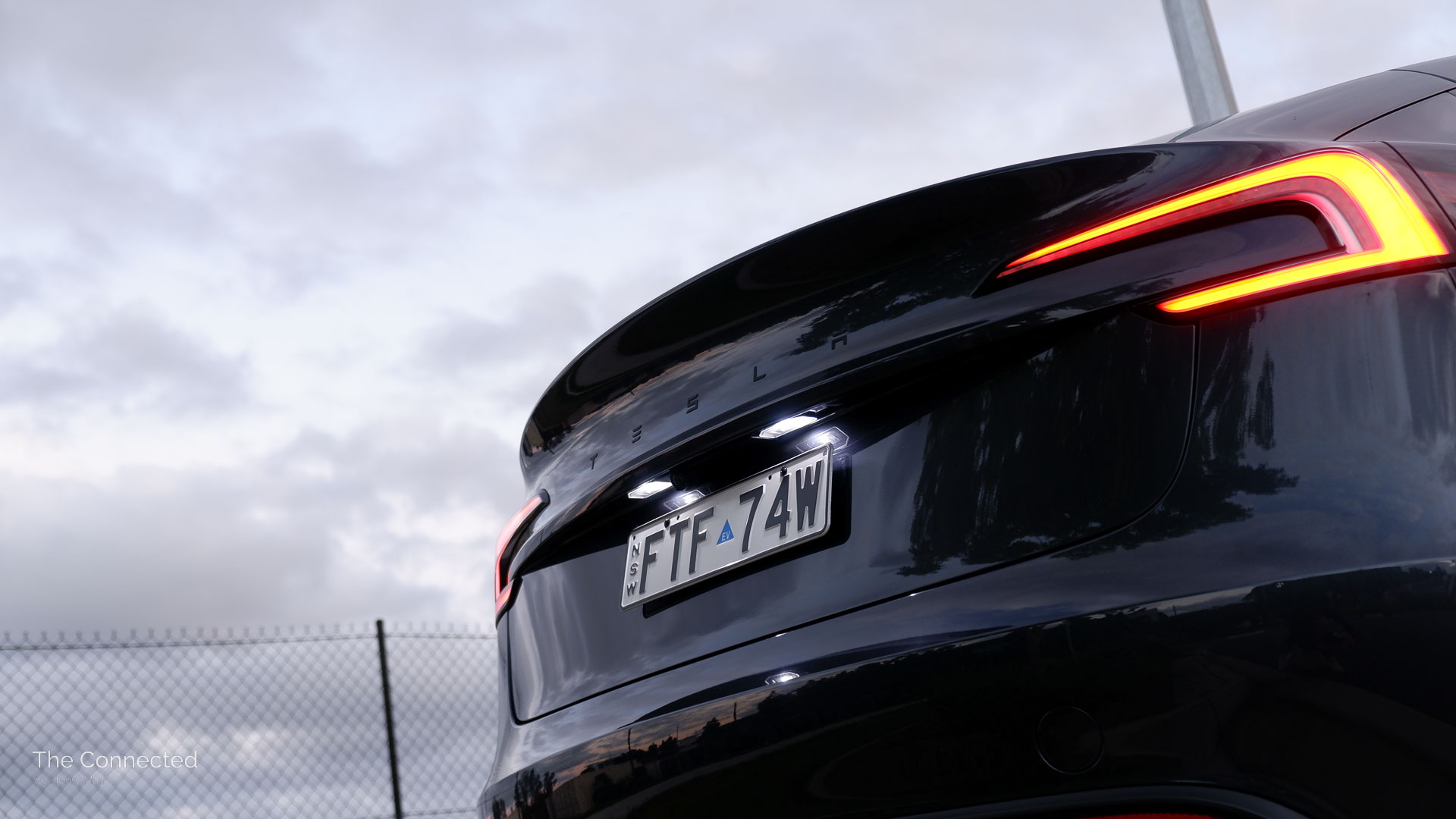
– Awkward sedan tailgate design
– Odd super transparent windows
Vehicle tested:
| Model | 2026 Tesla Model 3 |
| Variant | Premium Long Range Rear-Wheel Drive |
| Starting price | $61,900 before on-road costs |
| Exterior colour | Stealth Grey (+$1800) |
| Interior colour | Black and white (+$1500) |
| Options | Full Self-Driving (Supervised) (+$149/month) Premium Connectivity (+$13.99/month) Tesla Front and Rear Glass Roof Sunshades (+$300 combined) |
| Country made | China |
Design and quality.
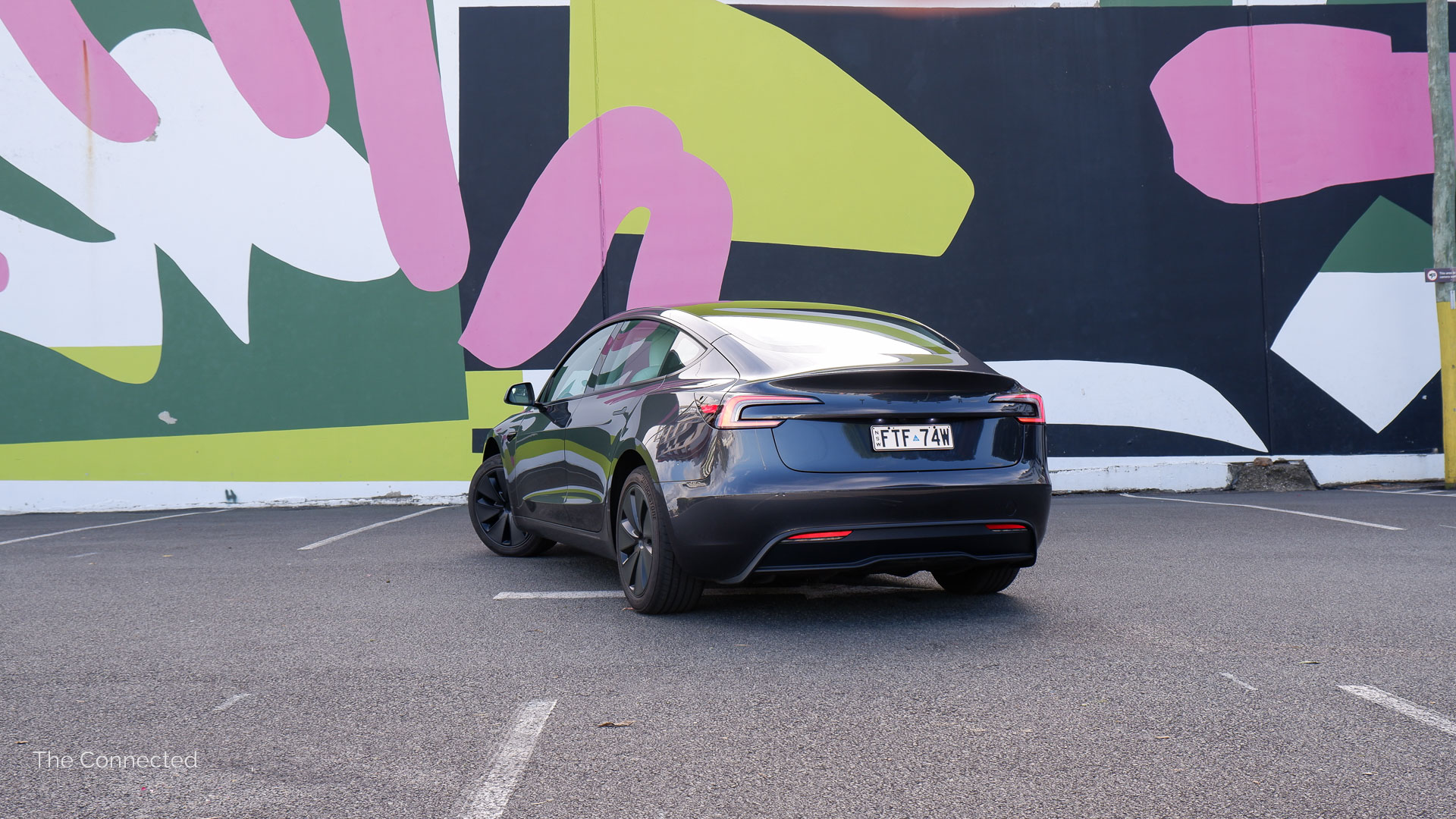
The Tesla Model 3 is a genuinely premium sedan, even though it looks clinically minimalist.
Thanks to the facelift in late 2024 (allegedly codenamed ‘Highland’), the Model 3 has taken a significant step up in style and perceived quality.
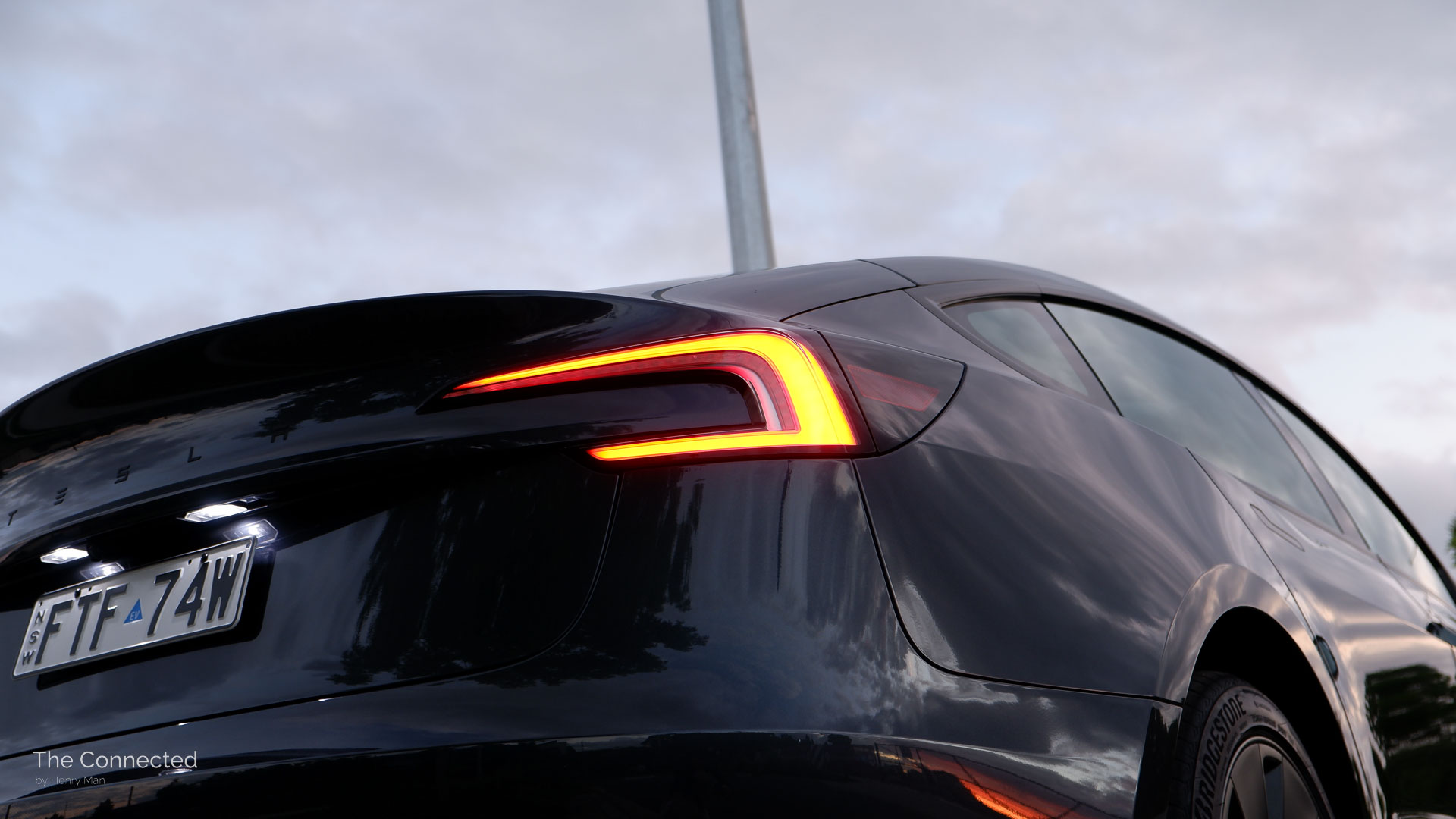
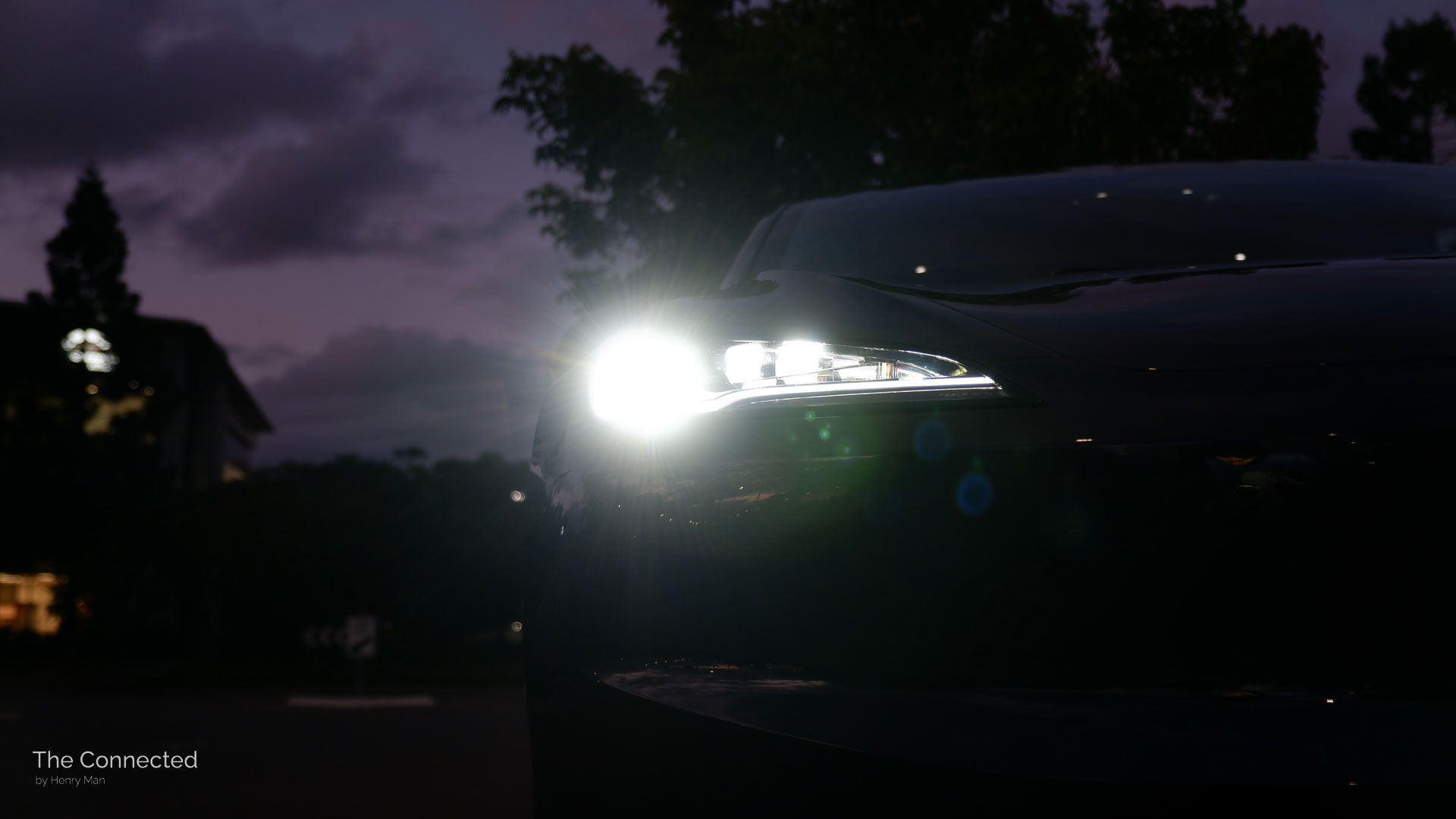
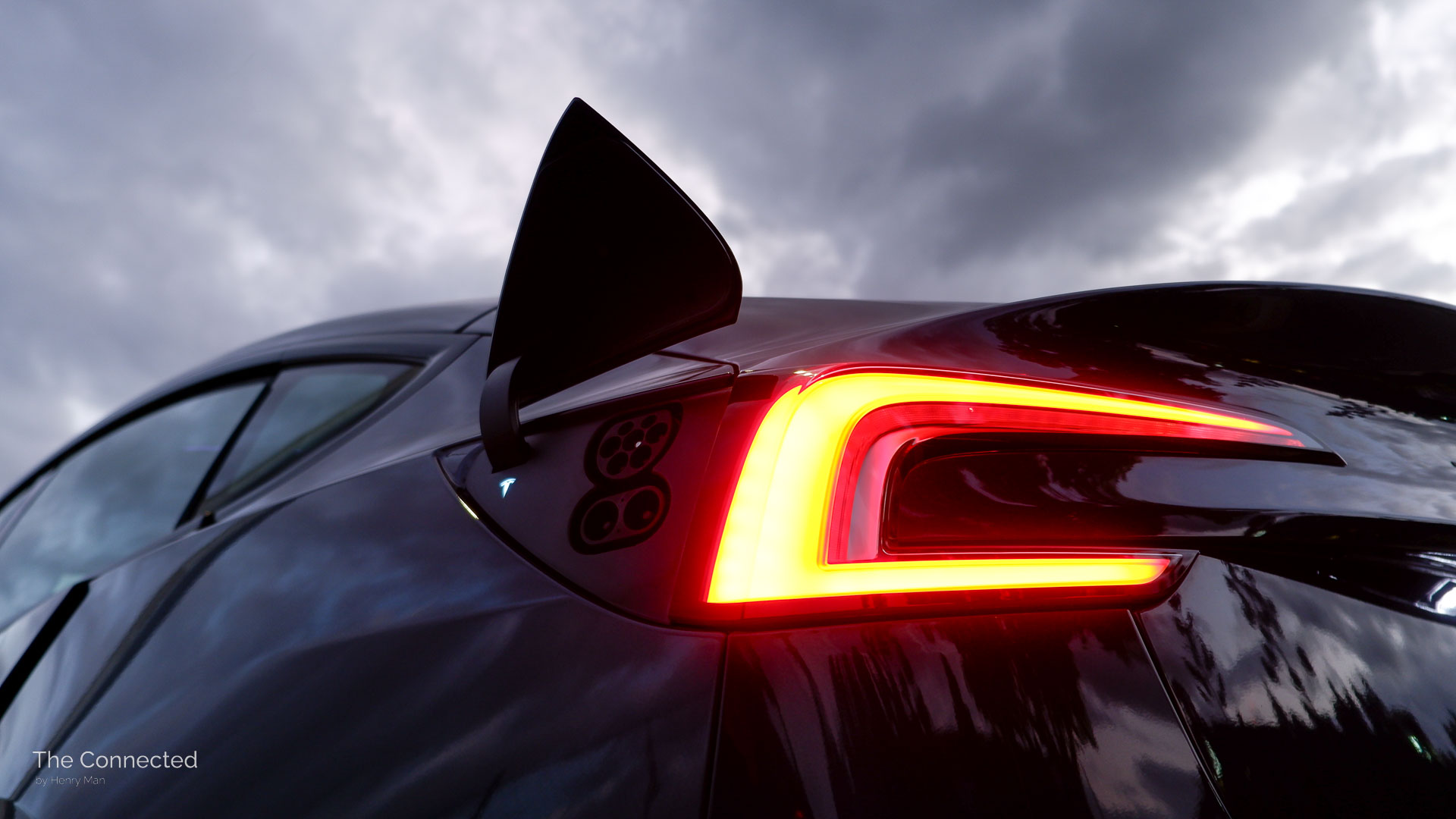
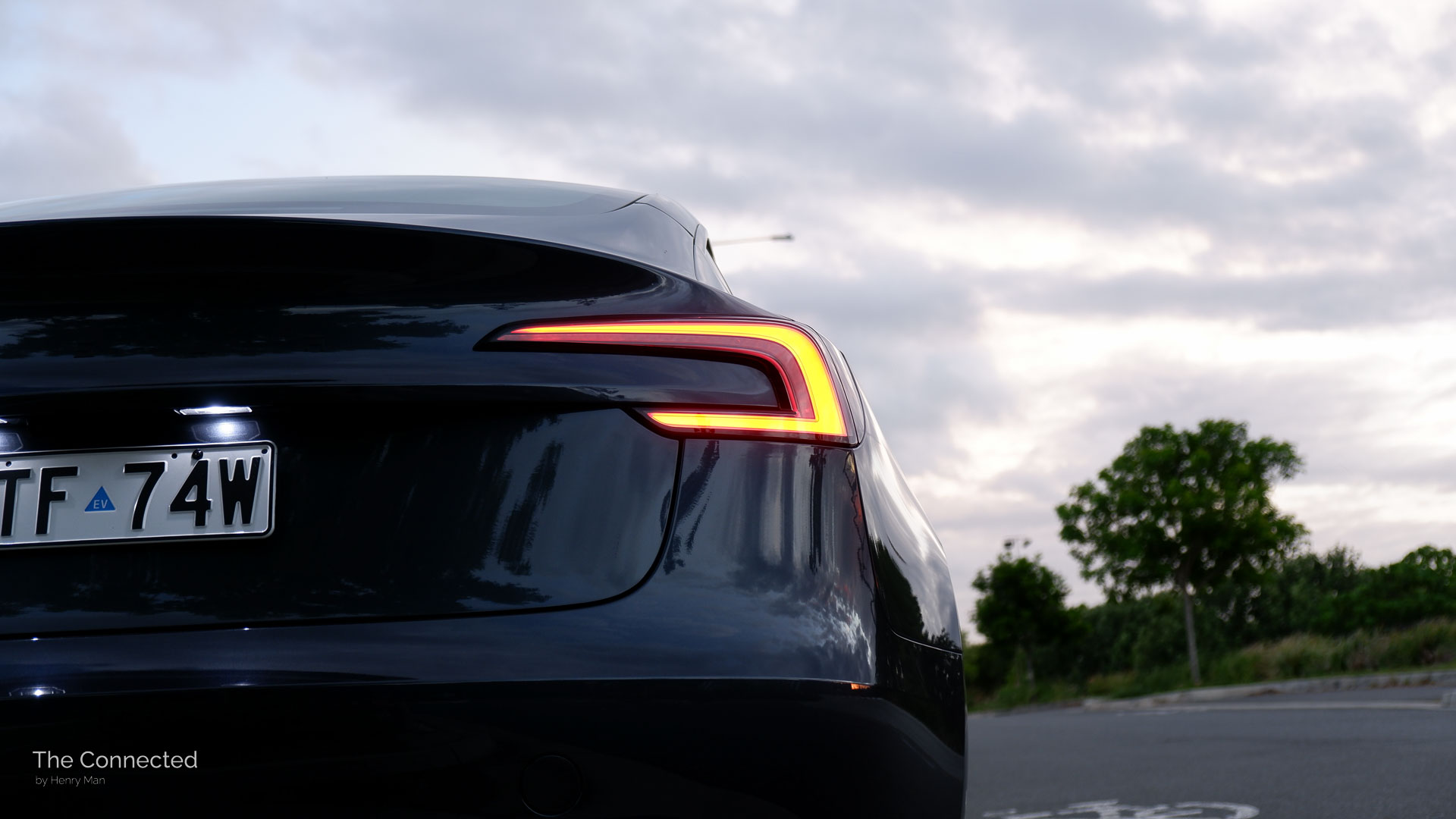
The headlights look more distinct with an eyebrow-esque daytime running light signature, sharper tail-lights, and it now has discreet matte black badging for 2026.
Since the updated Long Range only offers a single motor only, there’s no way of differentiating it from the entry-level RWD with no ‘dual motor’ badging like it had previously.
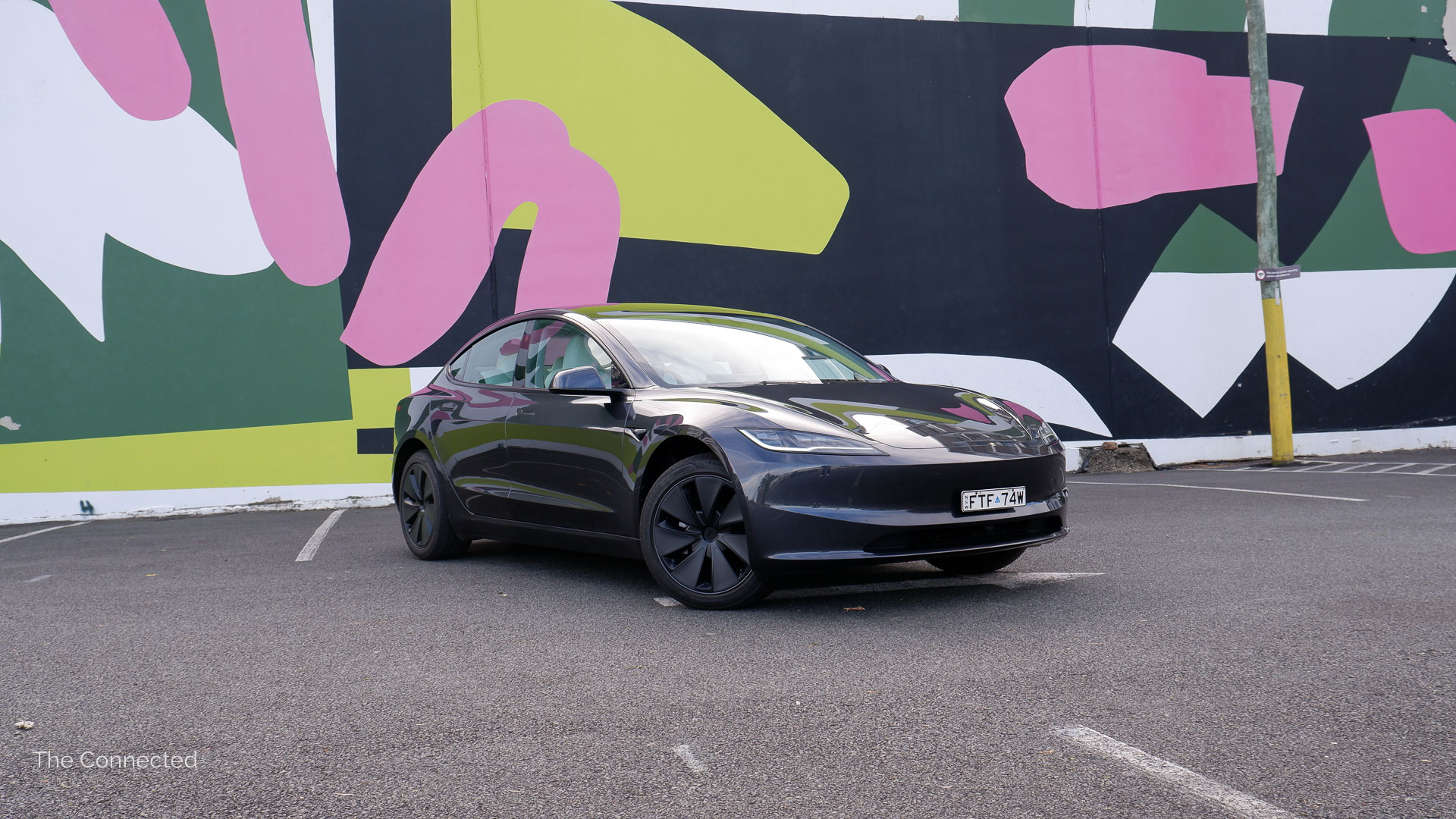
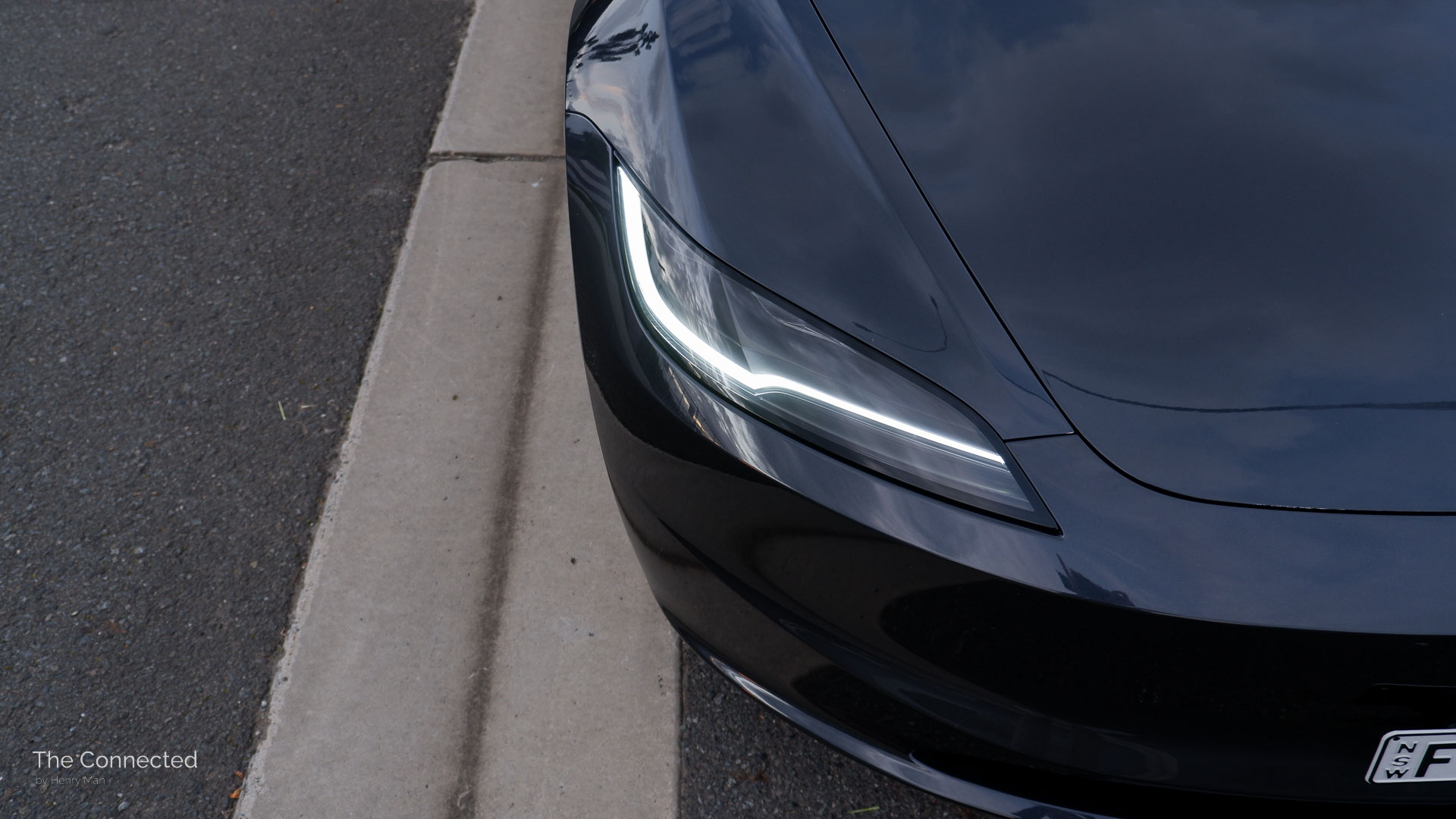
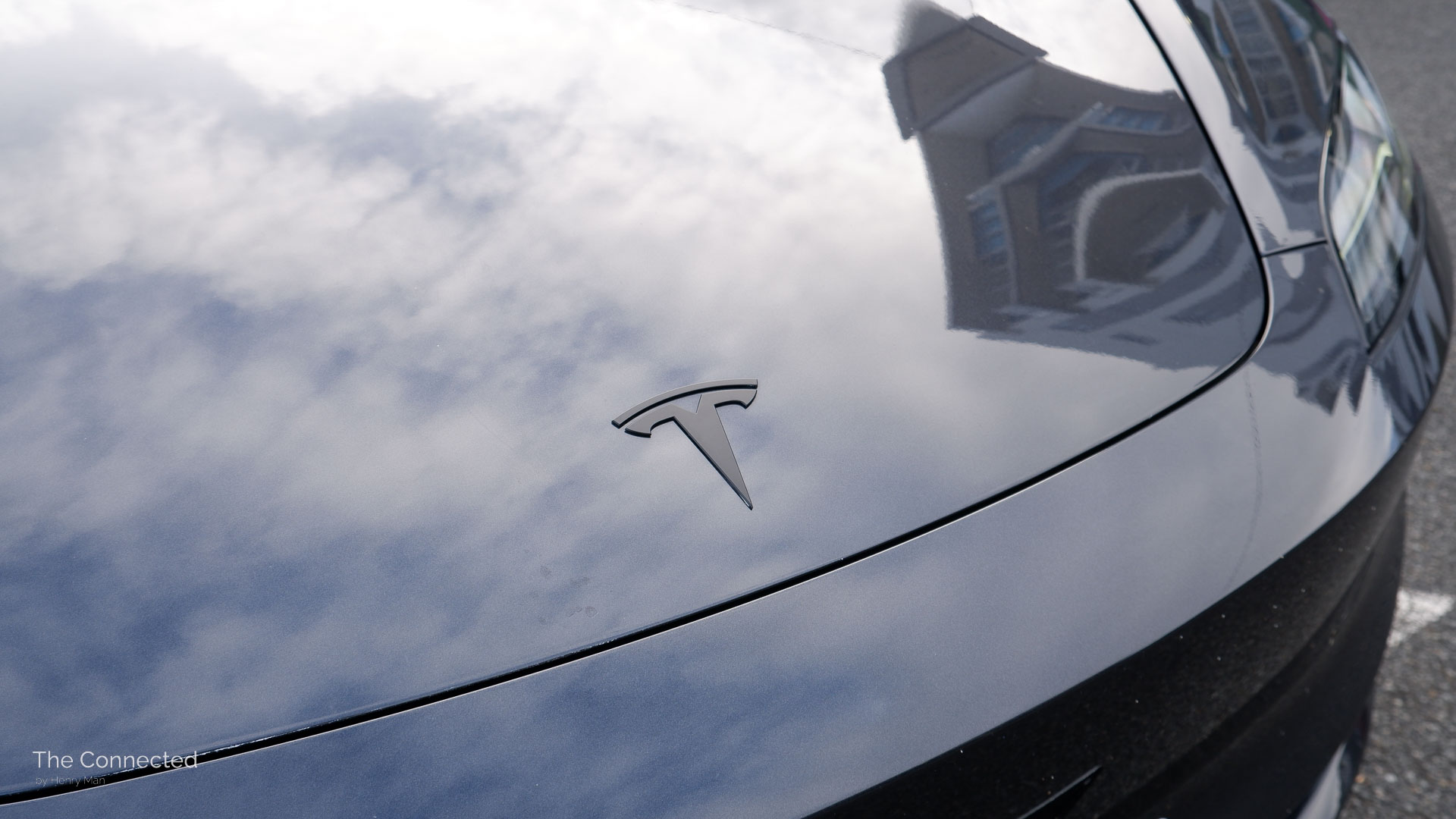
While Tesla has taken a significant step up in build quality since 2019, I noticed the edge of the bonnet was unpainted in some spots on two Stealth Grey Model 3s that I’ve tested in the past year.
Exterior paint colours aren’t cheap either, with it costing between $1500 to $2600 extra if you’re not content with plain white.
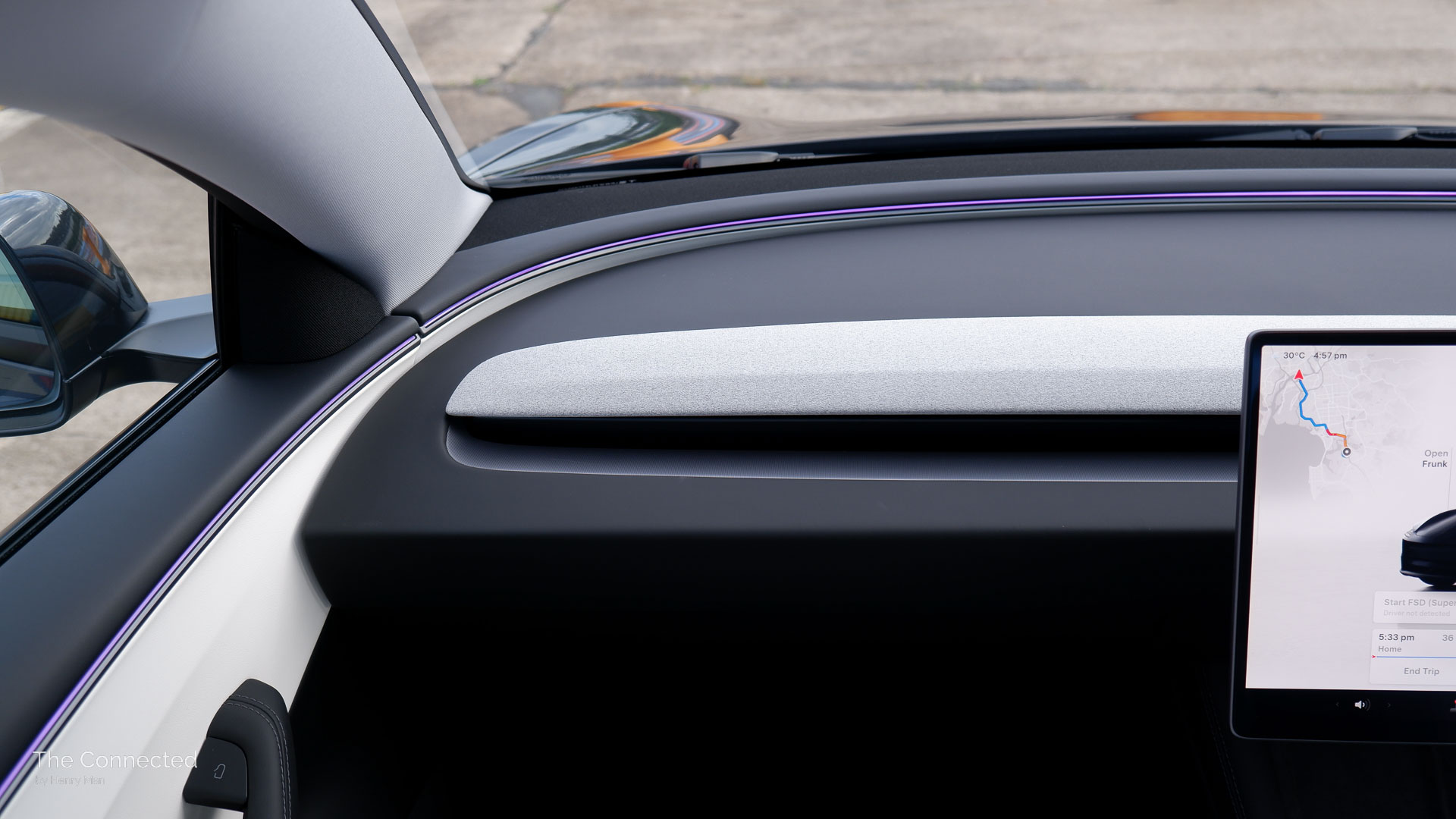
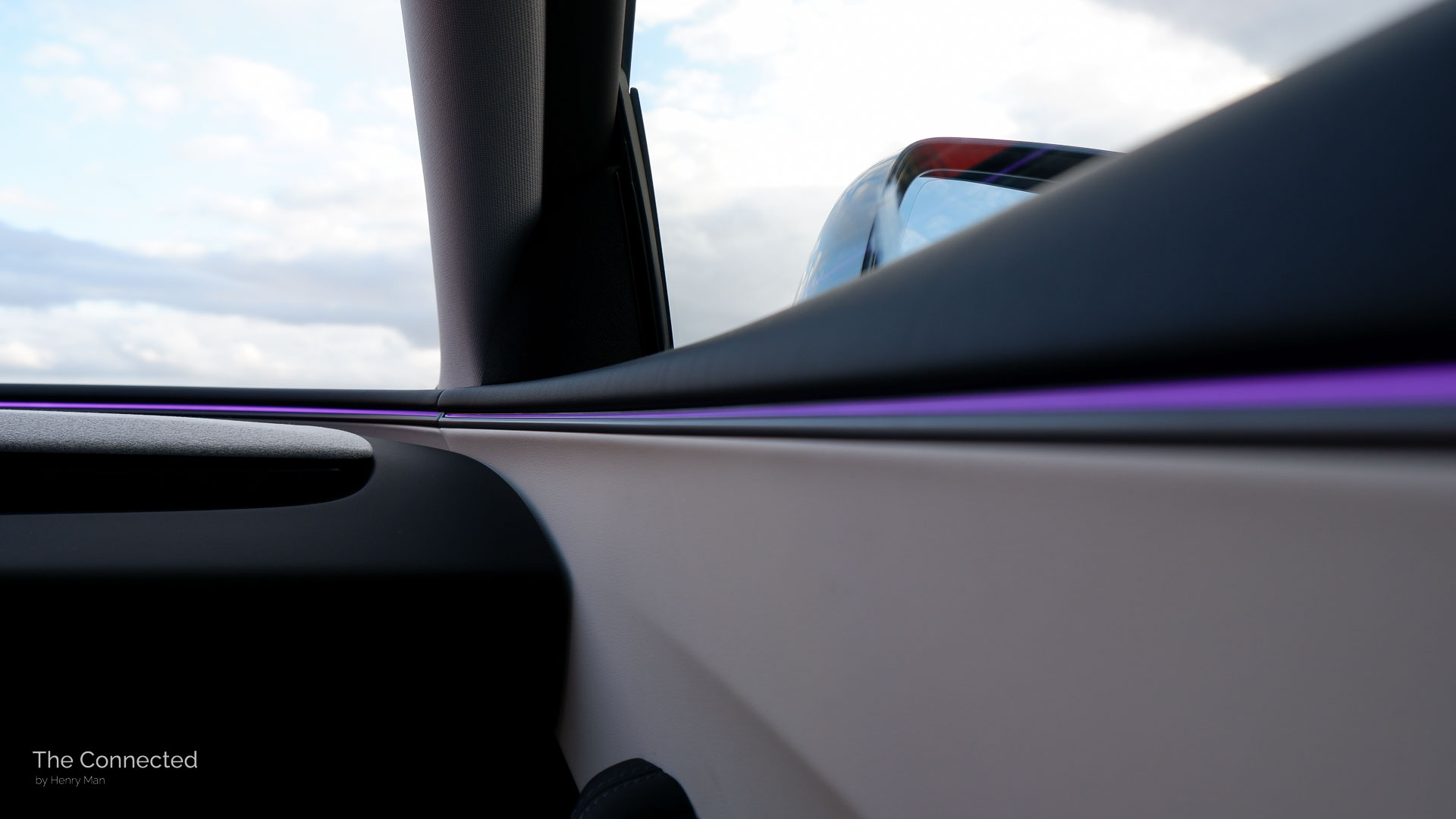
Inside, the Model 3 is super minimalist and feels futuristic with a long and bright ambient lighting strip that stretches across the dashboard and into the doors, a soft fabric dash piece, and metallic and faux leather trims with white stitching.
While the interior is lacking in design thrills compared to a Mazda 6e, Kia EV4 or BYD Seal, it is the attention to details where the Tesla really stands out.
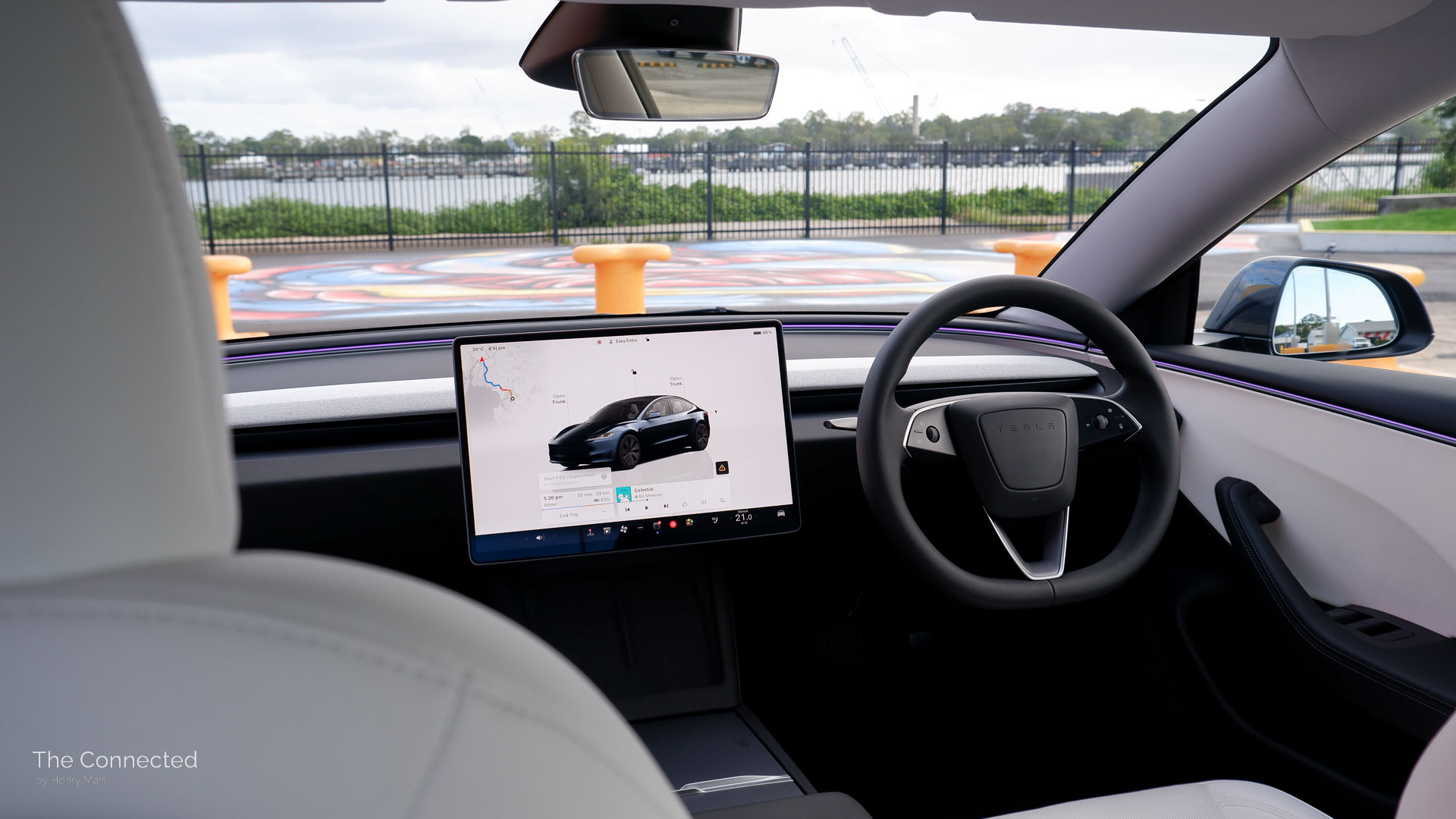
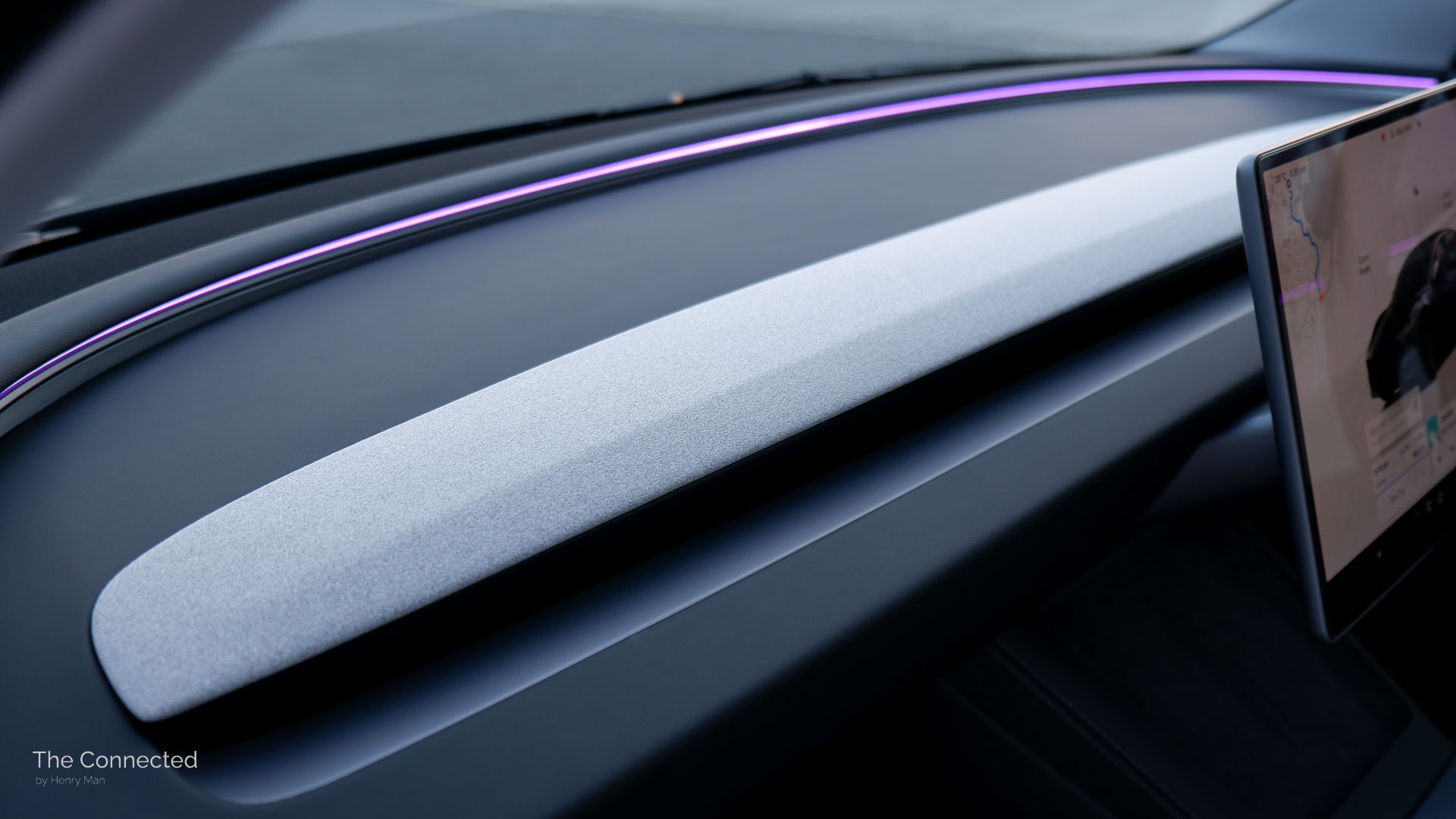
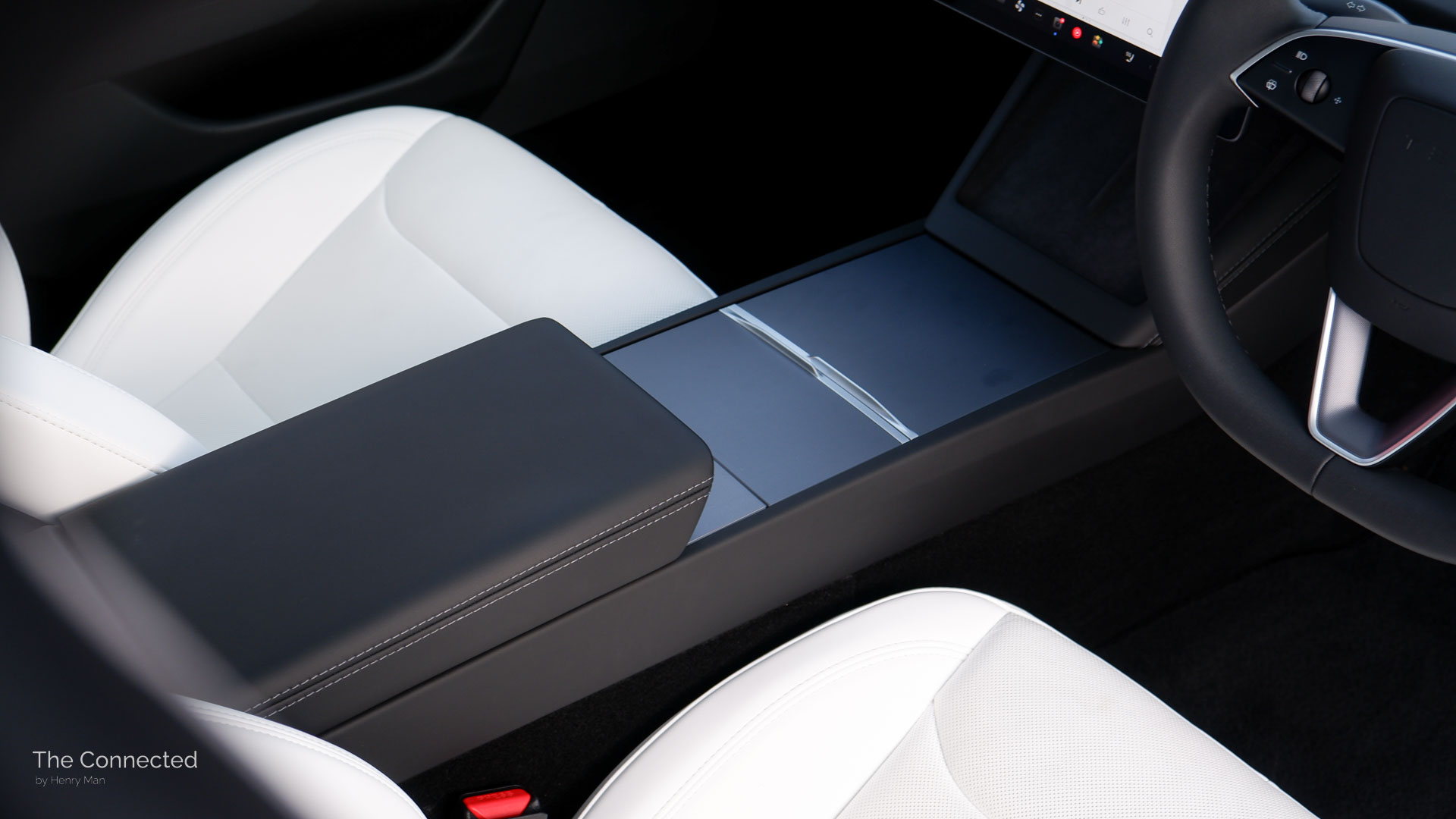
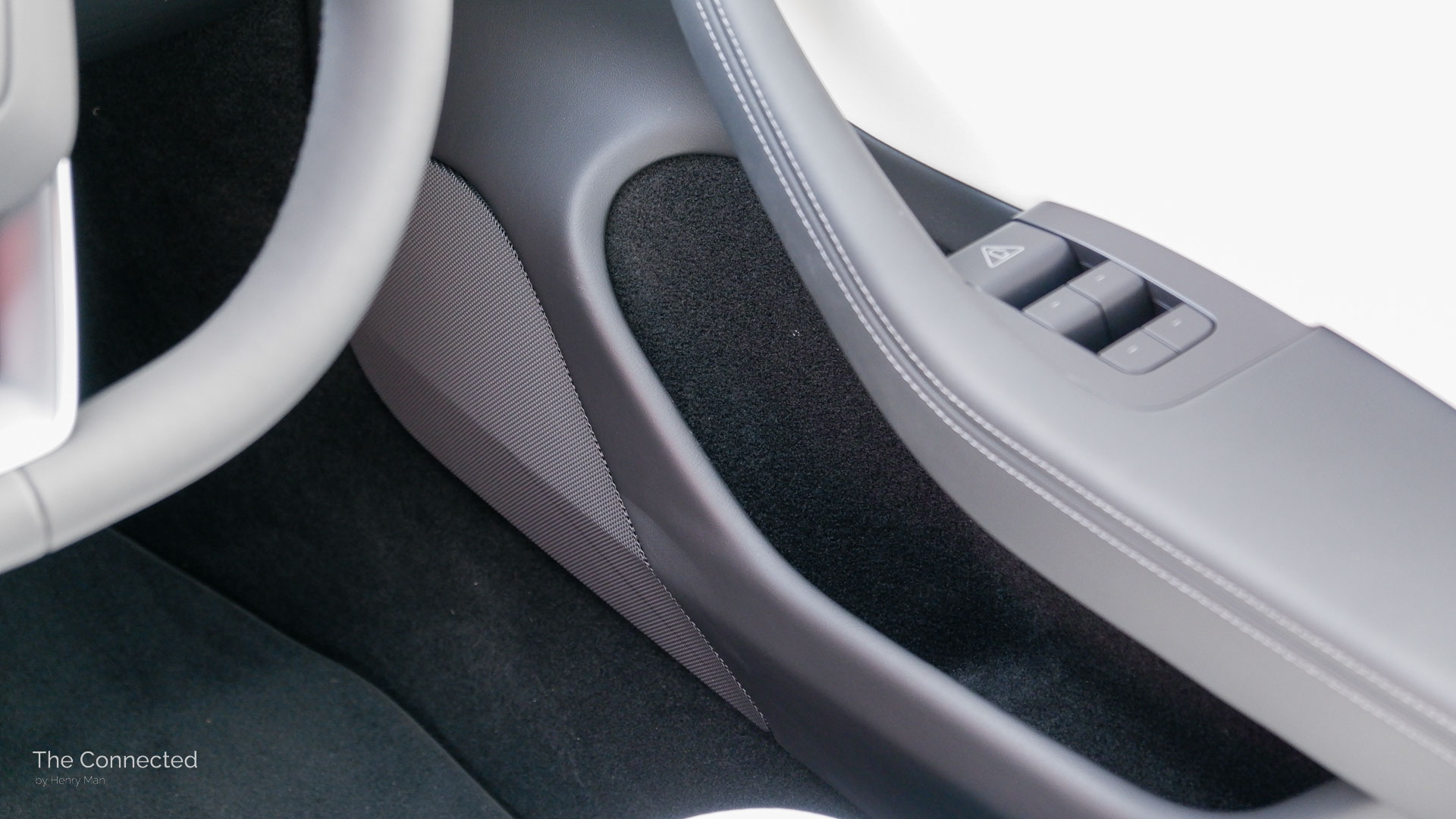
Small design touches including fully carpeted door pockets, completely padded leatherette door cards including the door grab inside and out, solid frameless windows, padded B-pillars, felt-lined centre console storage and glovebox, solid lids with magnets, and damped hinges all add up to a borderline luxury car feel.
There are no scratchy hard plastics to be found, besides touching the inside of the centre armrest crevice where you open it.
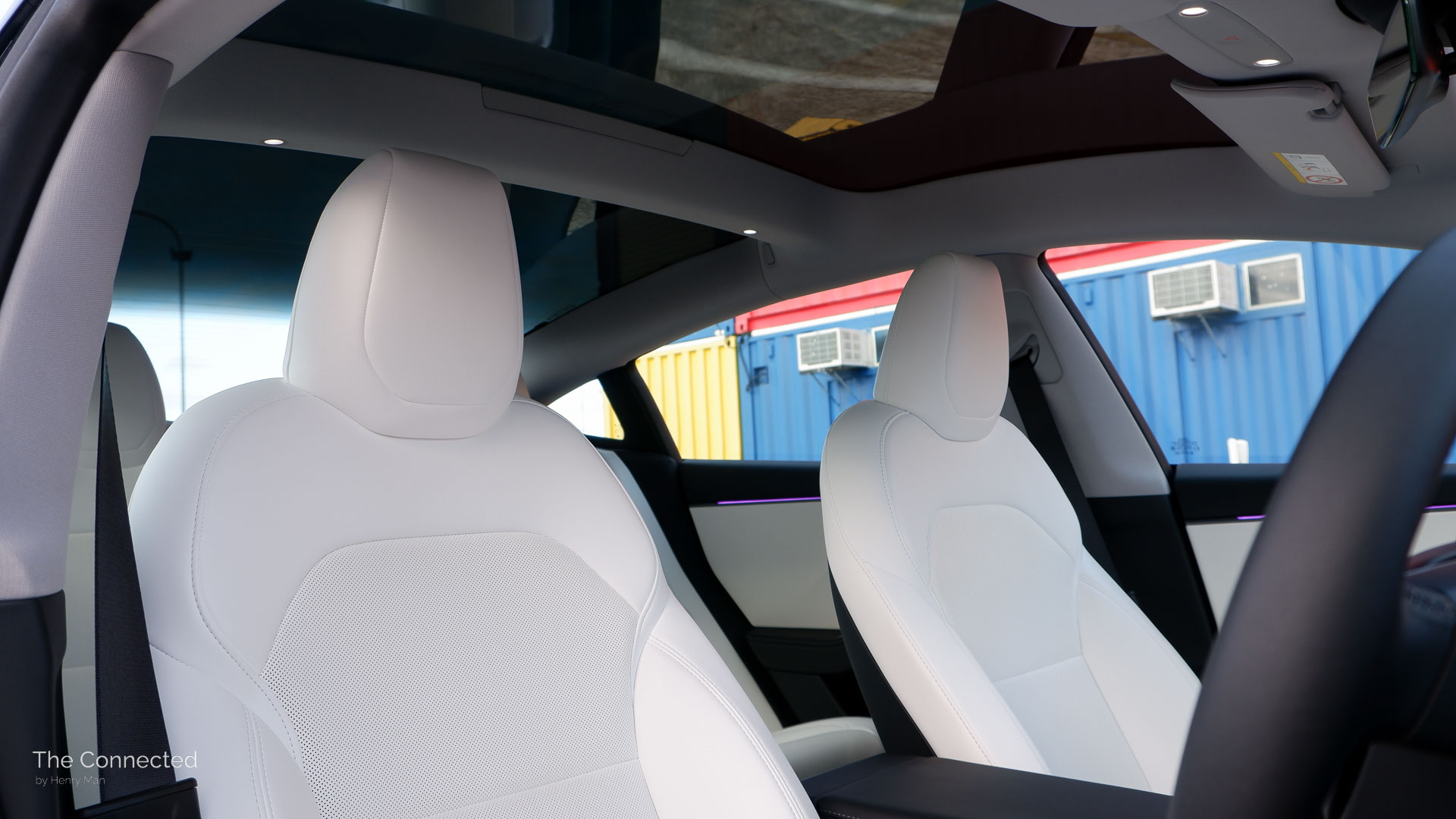
I’d also strongly consider the $1500 white interior option that significantly lifts the perceived quality.
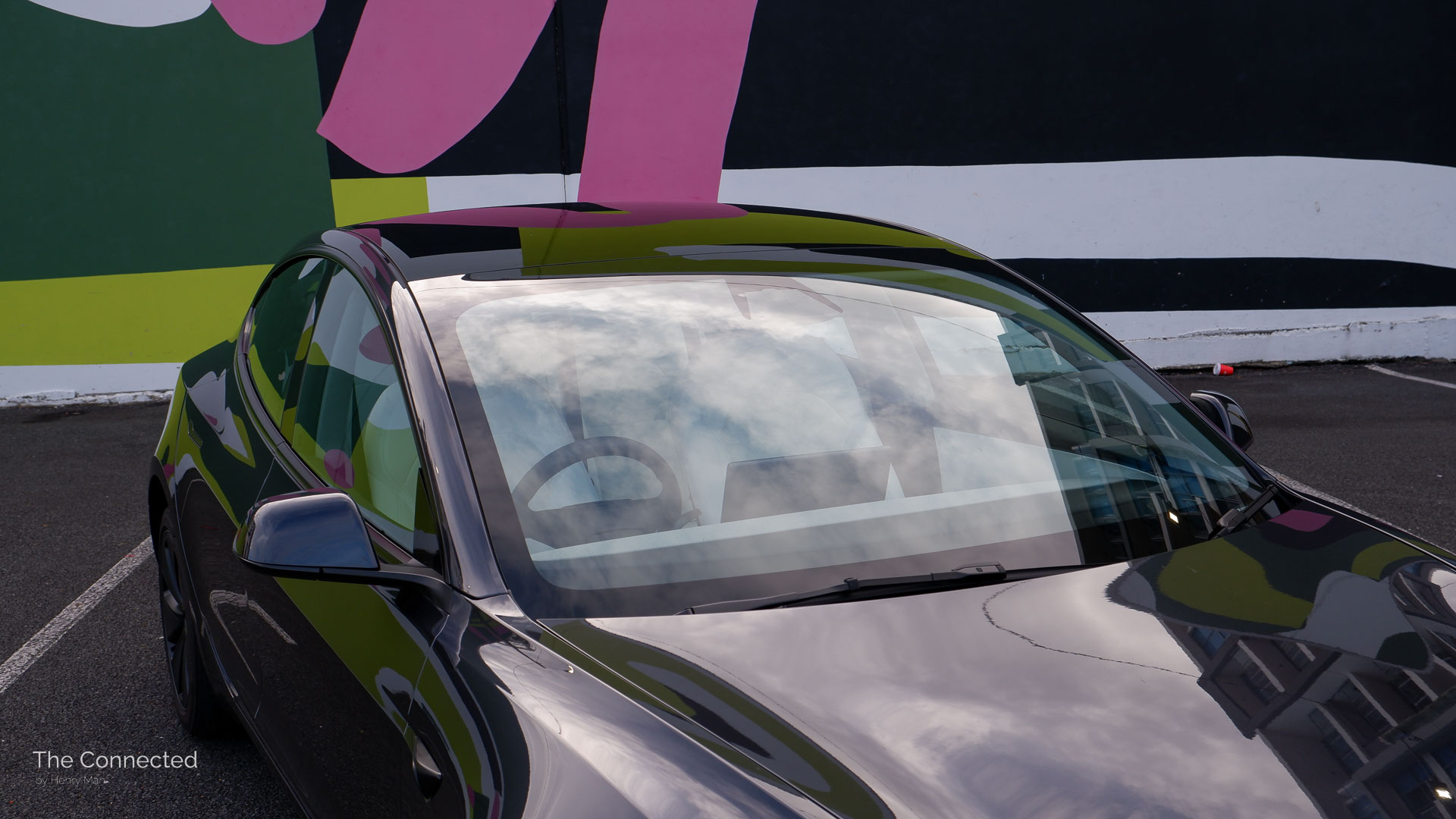
However, Tesla oddly uses very see-through windows. Yes, glass is transparent but it’s awkwardly easy to see into the entire cabin from the outside, especially with bright white seats, so it’s worth tinting the windows to have some privacy. The Model 3 doesn’t have rear privacy glass as standard.

Practicality.
2026 Tesla Model 3 Long Range RWD dimensions:
| Length x width x height | 4720 x 2089 x 1441mm |
| Wheelbase | 2875mm |
| Ground clearance | 138mm |
| Boot space (min) | 594L |
| Frunk space | 88L |
| Rear seat split fold | 60:40 |
| Child seat anchors | 2x ISOFIX and 3x top tethers |
| Air-conditioning system | Two-zone climate control with rear air vents |
Practicality is the key weakness of the Tesla Model 3 sedan, which is where the Model Y SUV would make more sense.
While the 594-litre boot is large with a big underfloor space, deep wells on each side, LED illumination, and is completely carpeted except for the inside top.
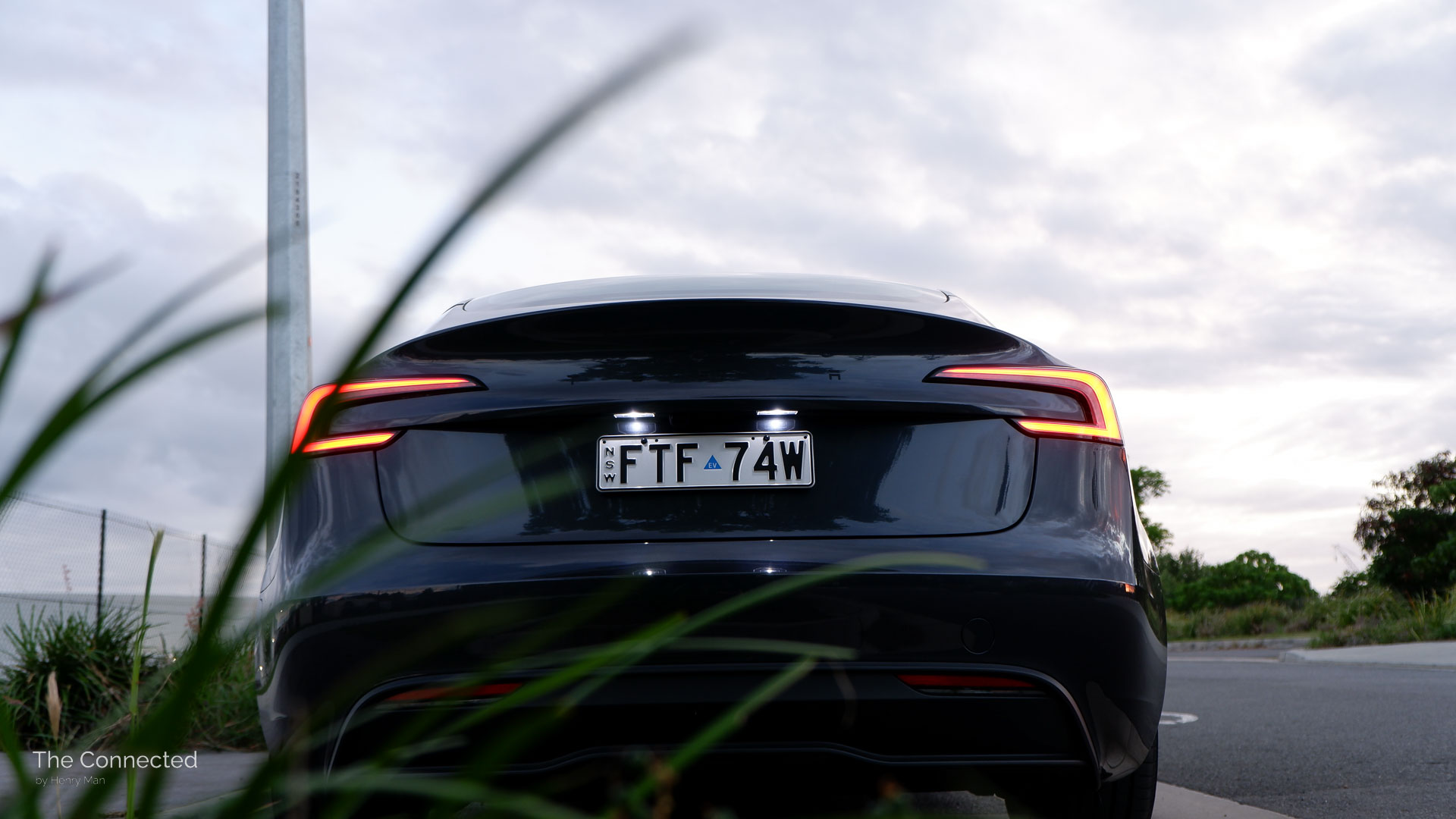
Unfortunately, access to the boot is restrictive with an awkward unconventional tailgate opening design that’s half sedan and half hatchback.
It opens high, but doesn’t go back far enough unlike the Kia K4 Sedan, so I often hit my head on it without carefully ducking and bending my back.

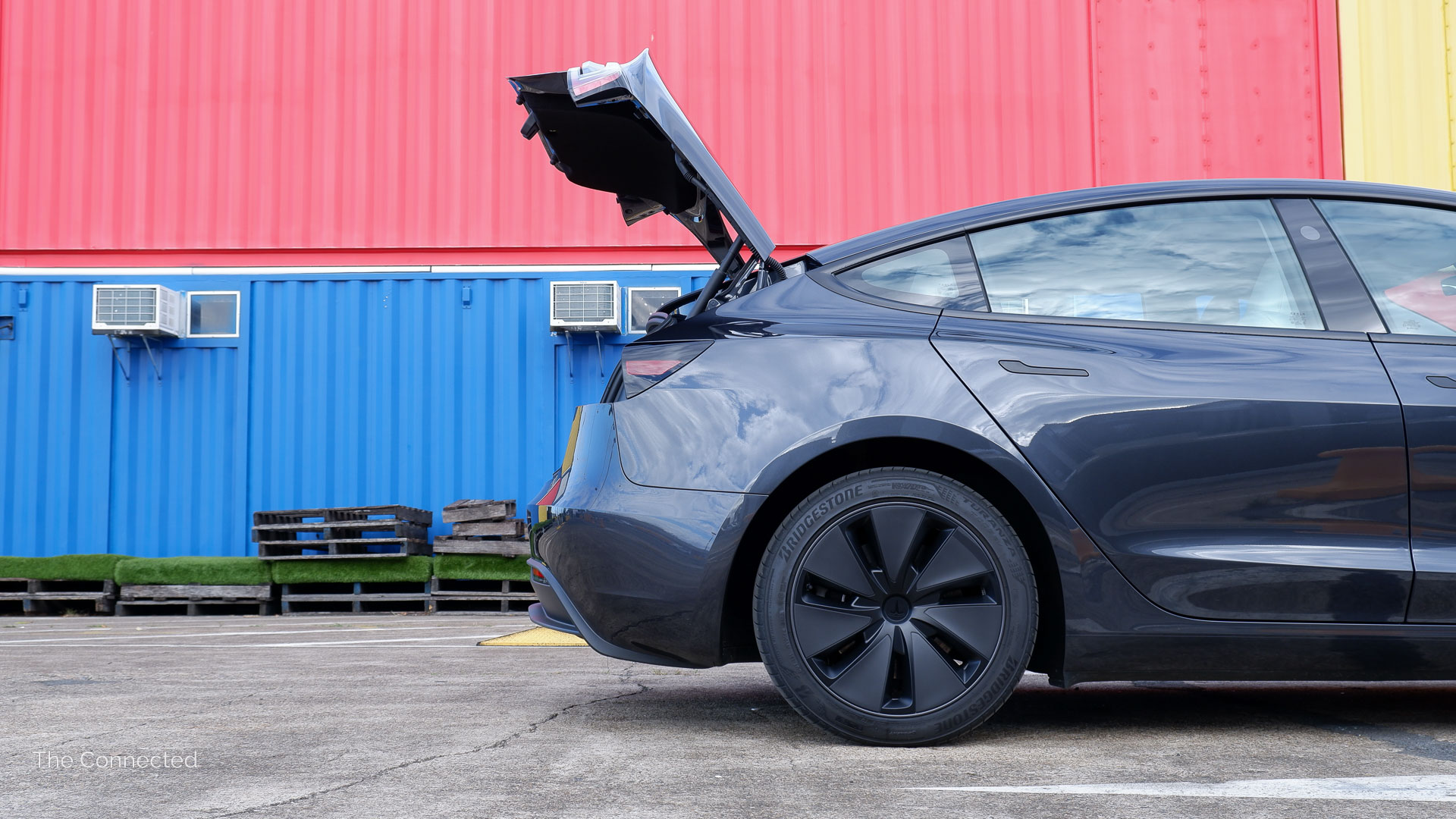
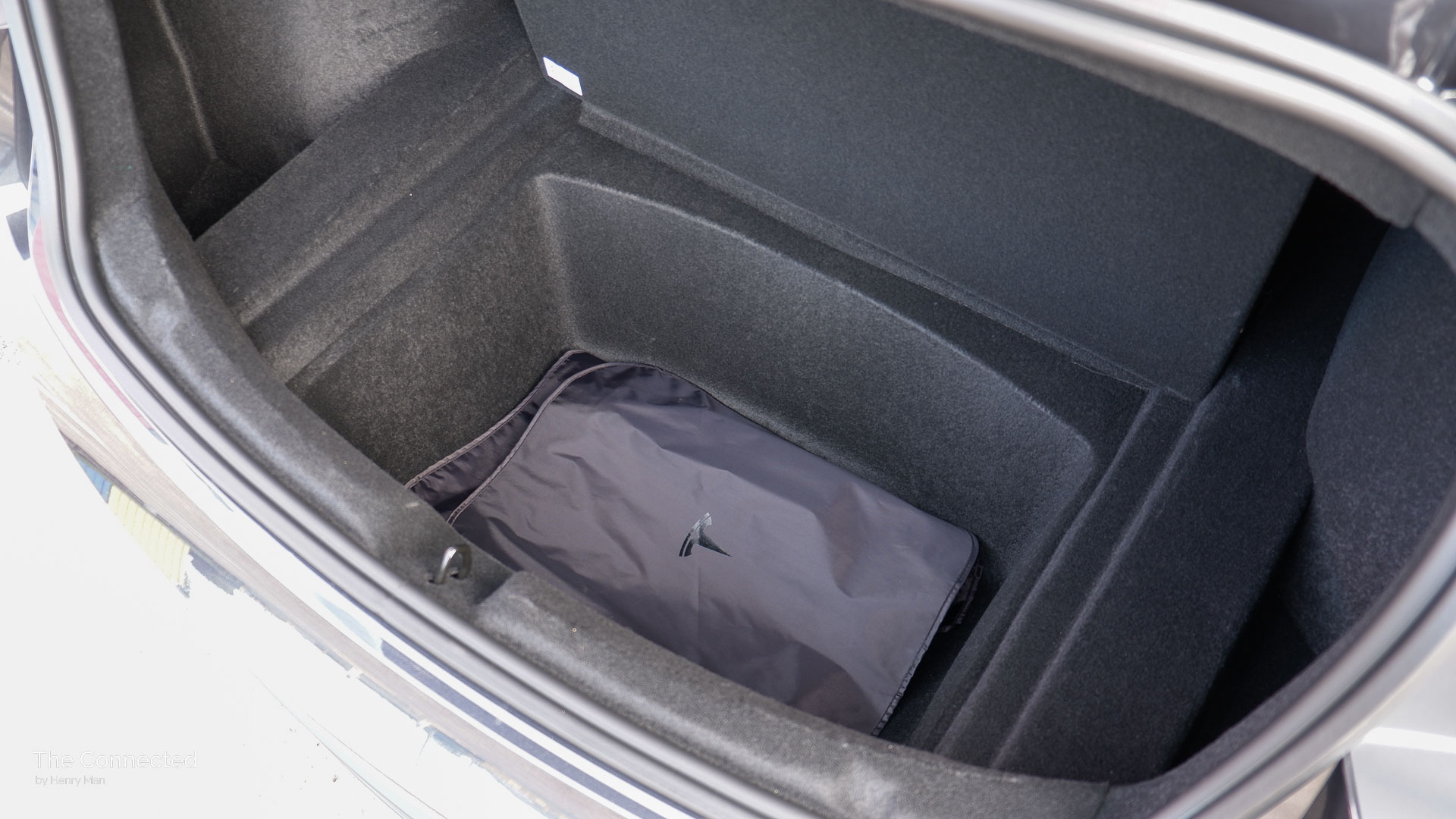
The tailgate is electrically-powered as standard with hands-free opening as long as you have a compatible flagship phone model with ultra wideband (UWB).
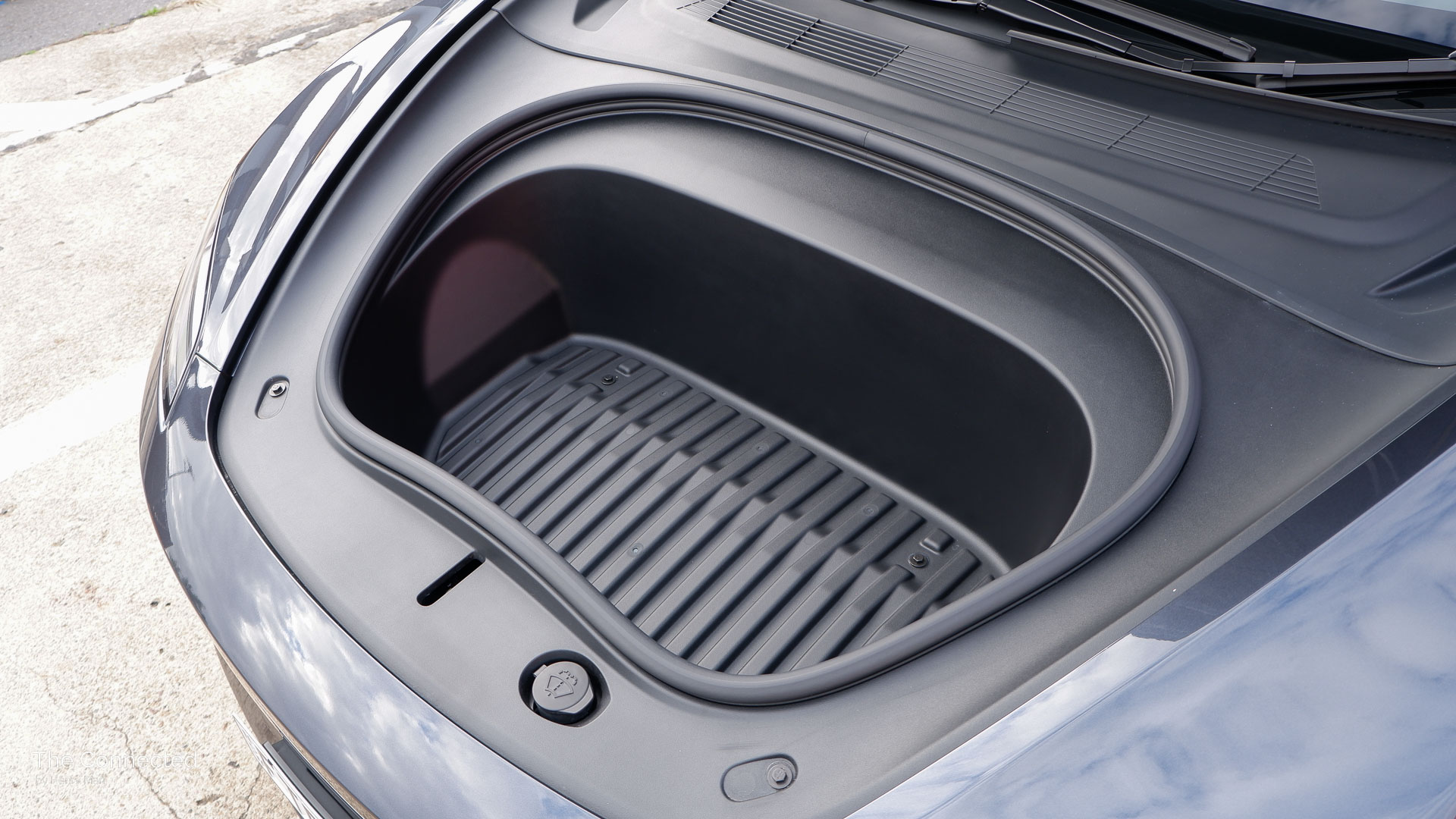
Additionally, the Model 3 offers an 88-litre frunk which remains one of the most spacious in the segment, despite becoming smaller over the years.
The frunk has a plastic surface and doesn’t have a drain hole like the new Model Y, but it’s a good nice-to-have once you pop the bonnet open via the mobile app or touchscreen.
Meanwhile, the Tesla Model 3’s rear row is best for casual short-trip use. It provides good legroom, but taller passengers may struggle with headroom due to the low egg-shaped glass roof.
Crucially, the floor is high and the seats are low, resulting in uncomfortable perched-up knees and an almost 90-degree leg bend since there’s limited room to slide your feet under the front seats.
At least the fold-down centre armrest is thin and long (unlike the related Model Y) with two gripped cup holders, there’s no compromise to material quality at the rear with large and carpeted door pockets, and secure seatback pockets.
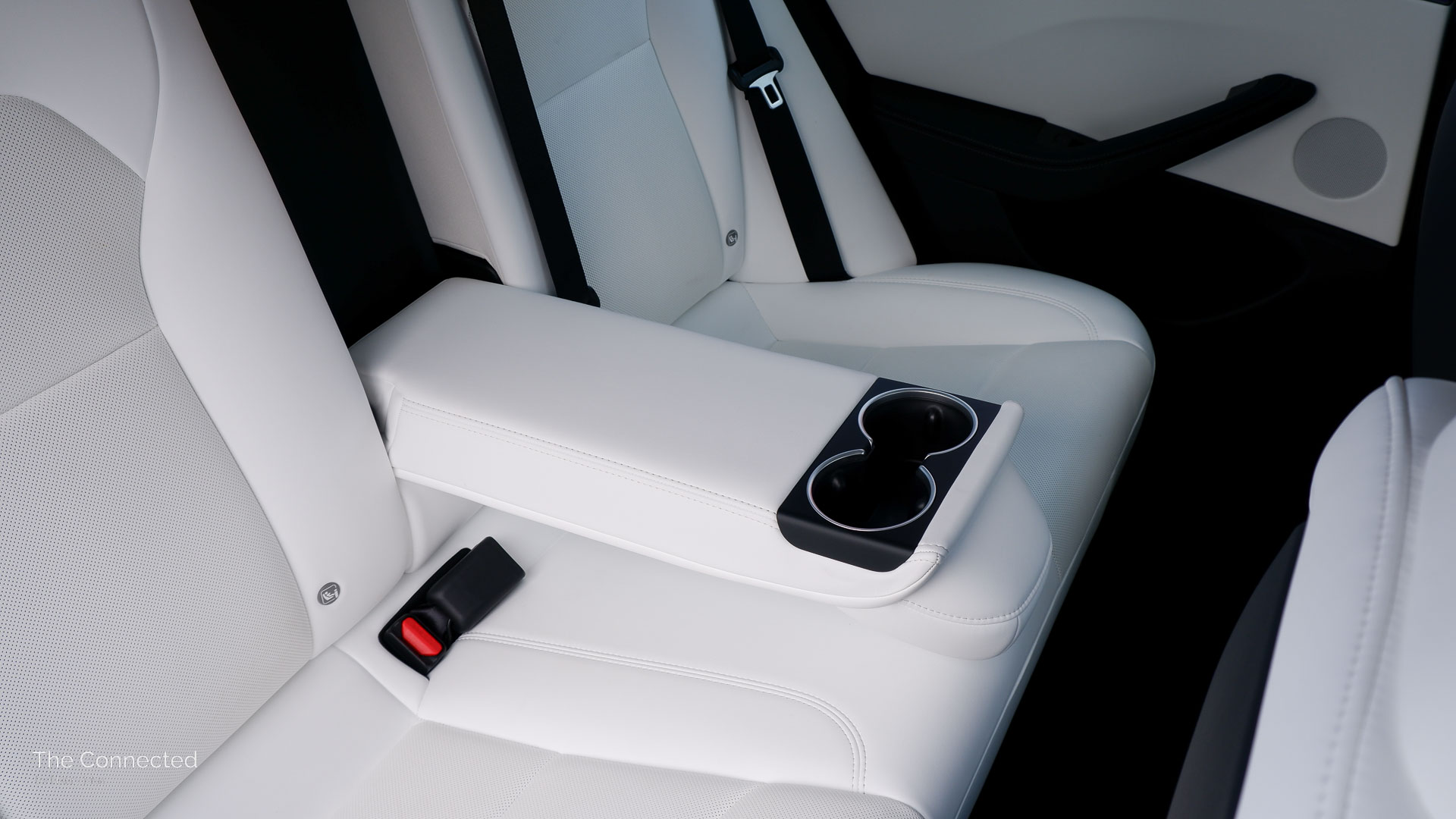

The outer seats have three-level heating as standard and it’s nice that the part between the C-pillar and seat is padded in leatherette to lean against.
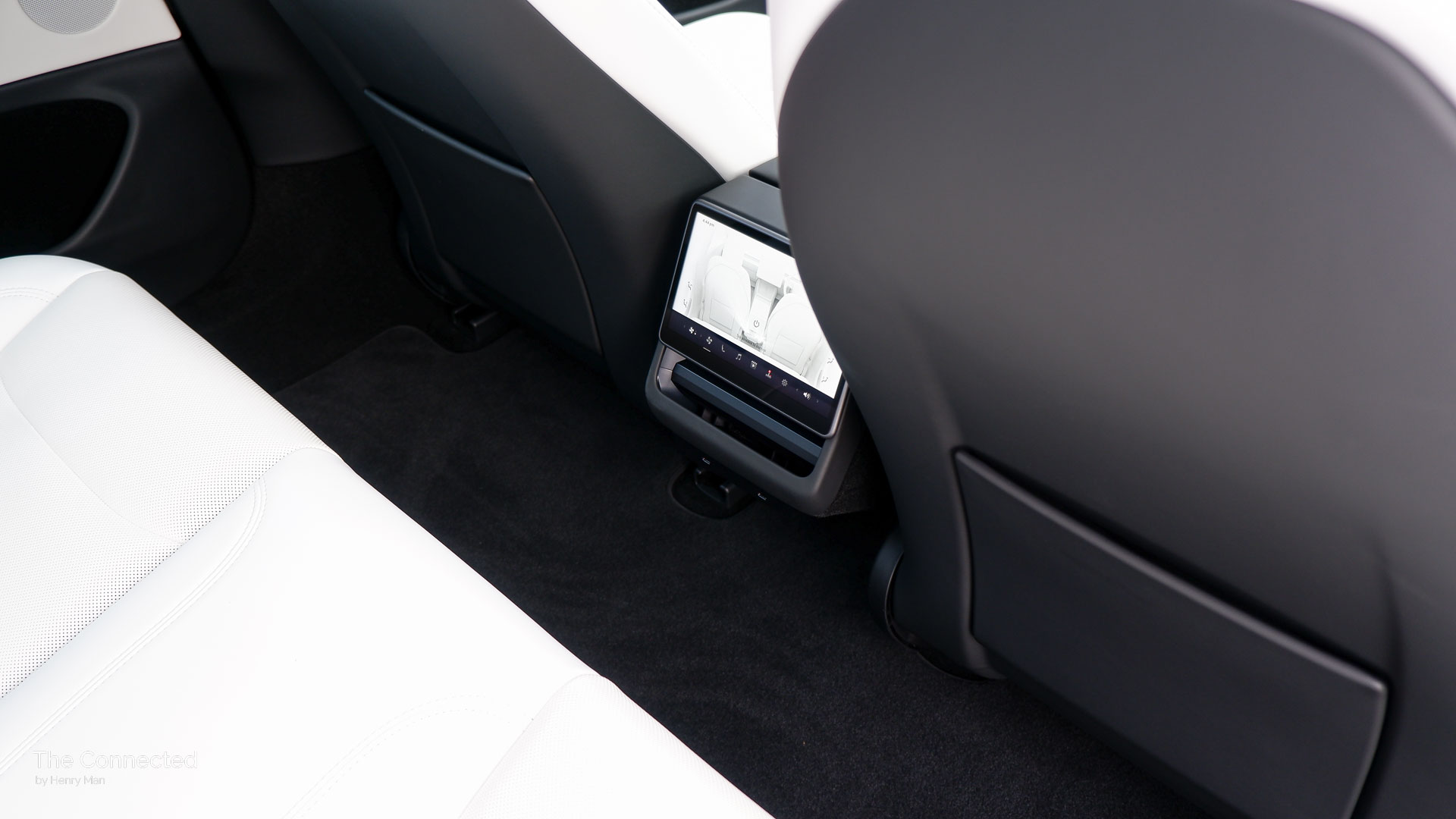
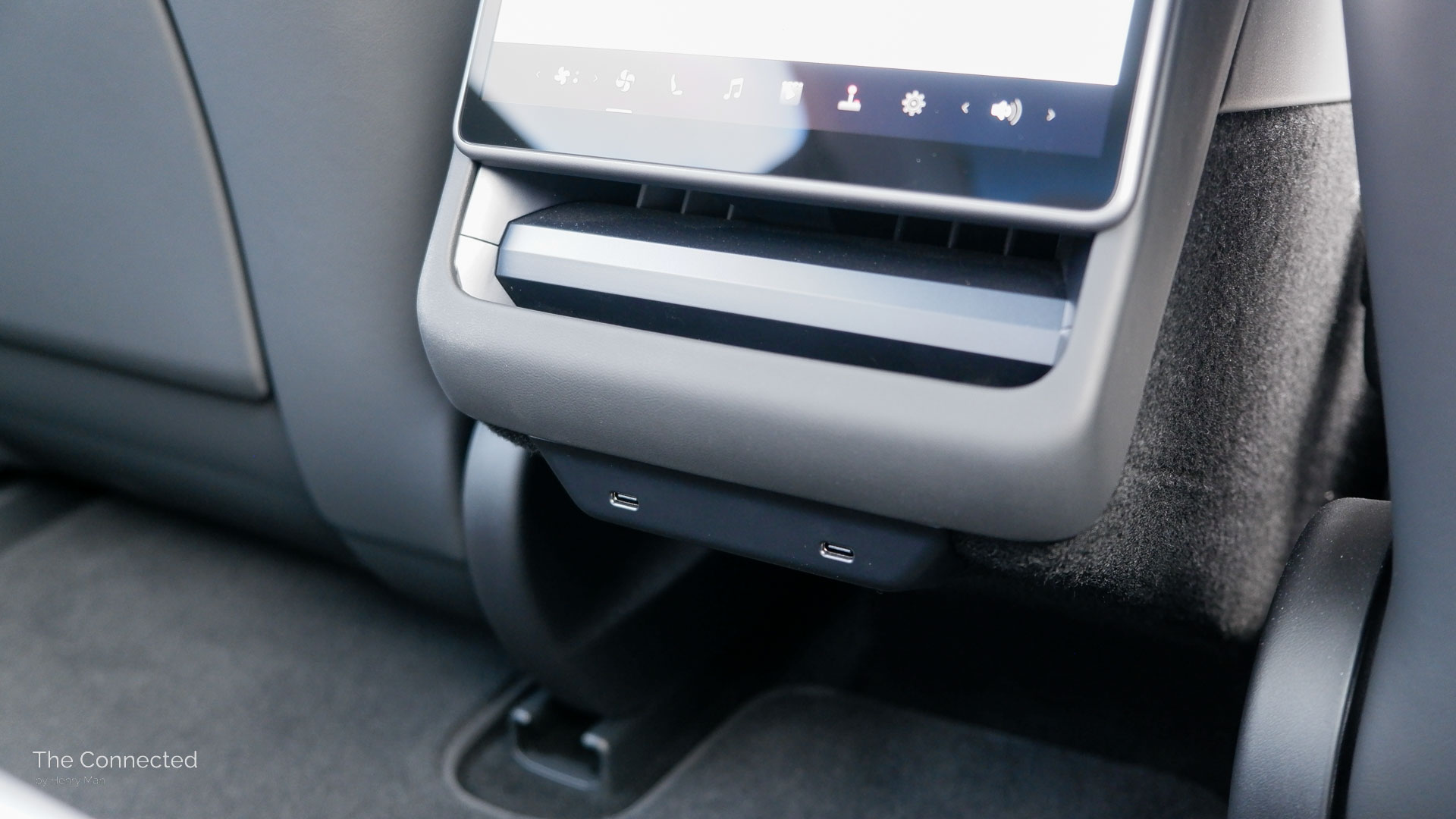
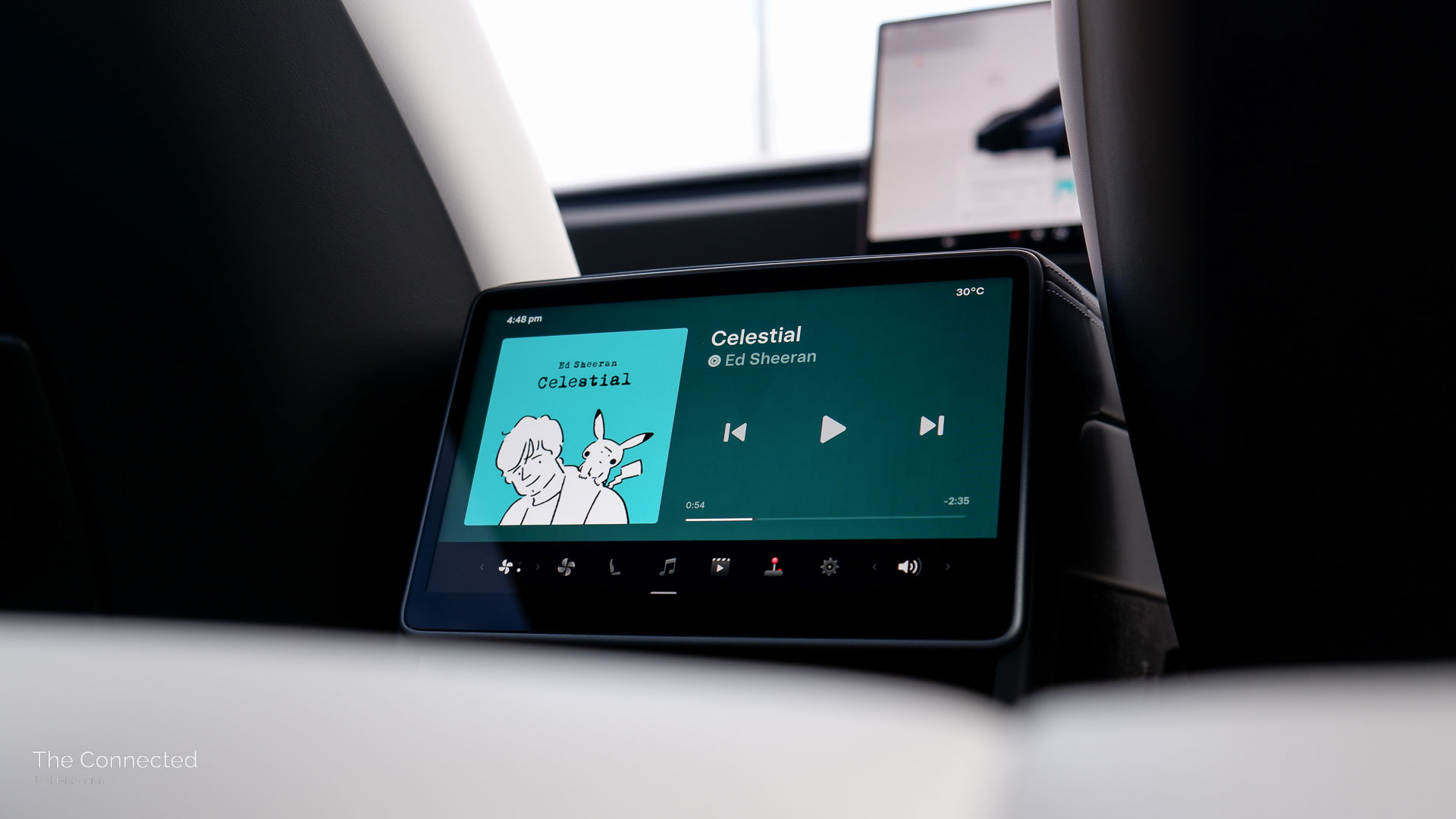
An 8.0-inch rear passenger screen enables access to adjusting the electronic air vents, audio and video streaming apps, plus arcade games.
Two USB-C fast-charging ports are discreetly underneath the screen, albeit with no light surrounds to better find in the dark.
Looking up, there’s a fixed glass roof, though unlike the Model Y, it isn’t fully panoramic and is split in two panels. The middle roof brace is home to two LED lights that activate with a touch, but the coat hooks on each side are weak and there are no ceiling grab handles for any occupant.
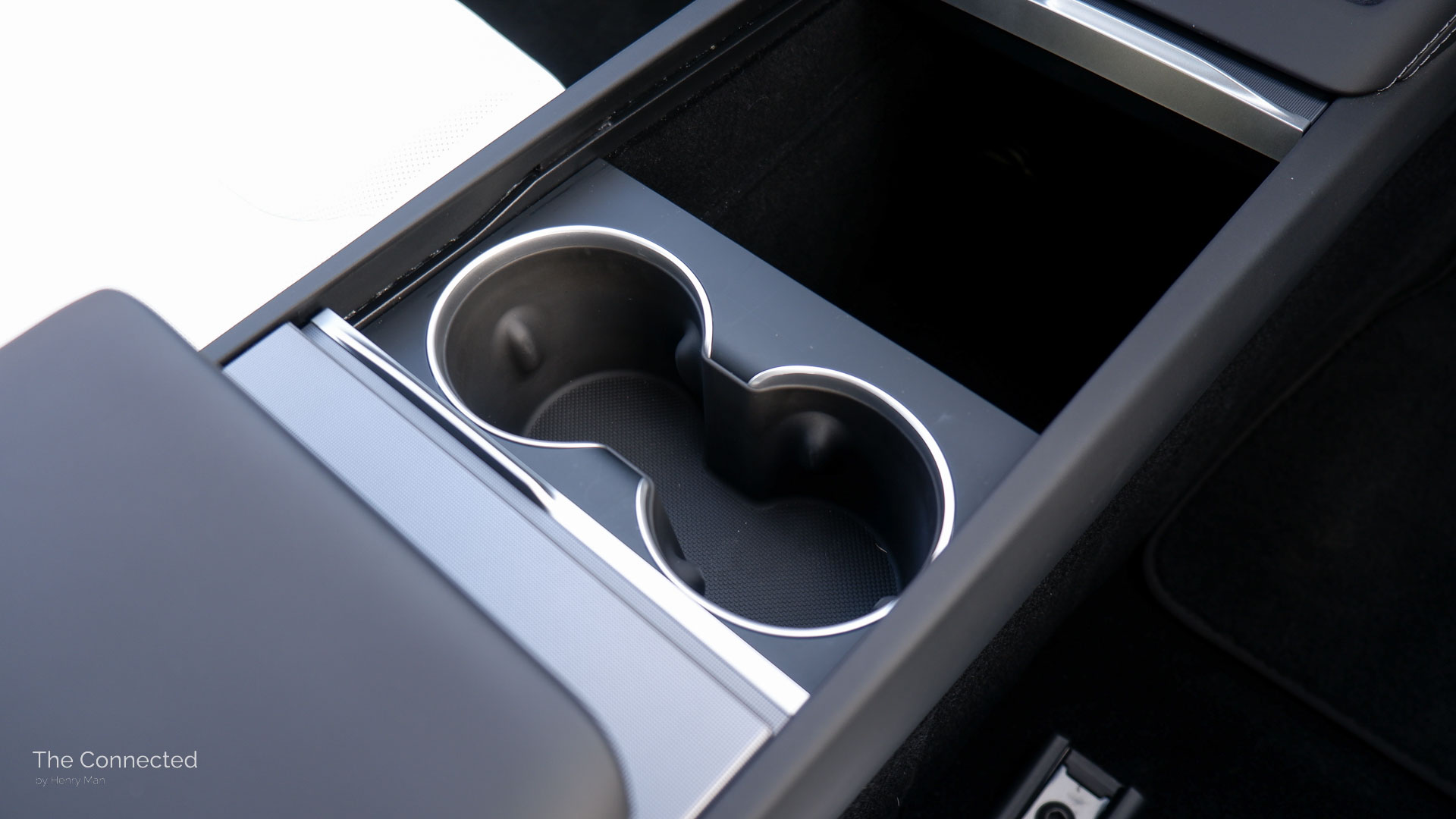
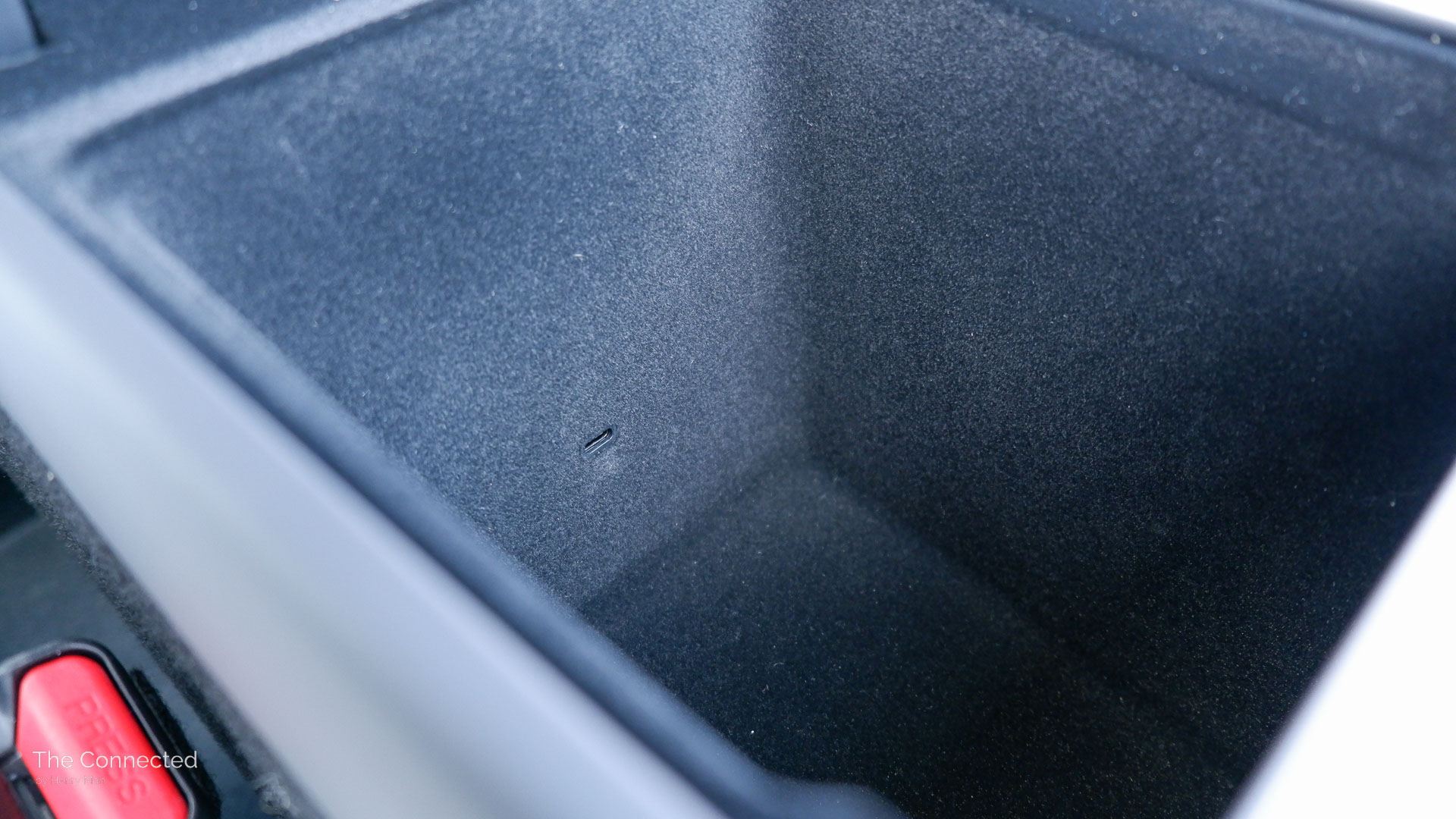
Up front, the Model 3 offers deep centre console storage with an almost hidden elevated shelf inside up front, soft felt lining, and LED illumination.
Within, it only offers one fast USB-C charging port which is slightly hidden inside, plus a 12-volt socket in the centre console storage.
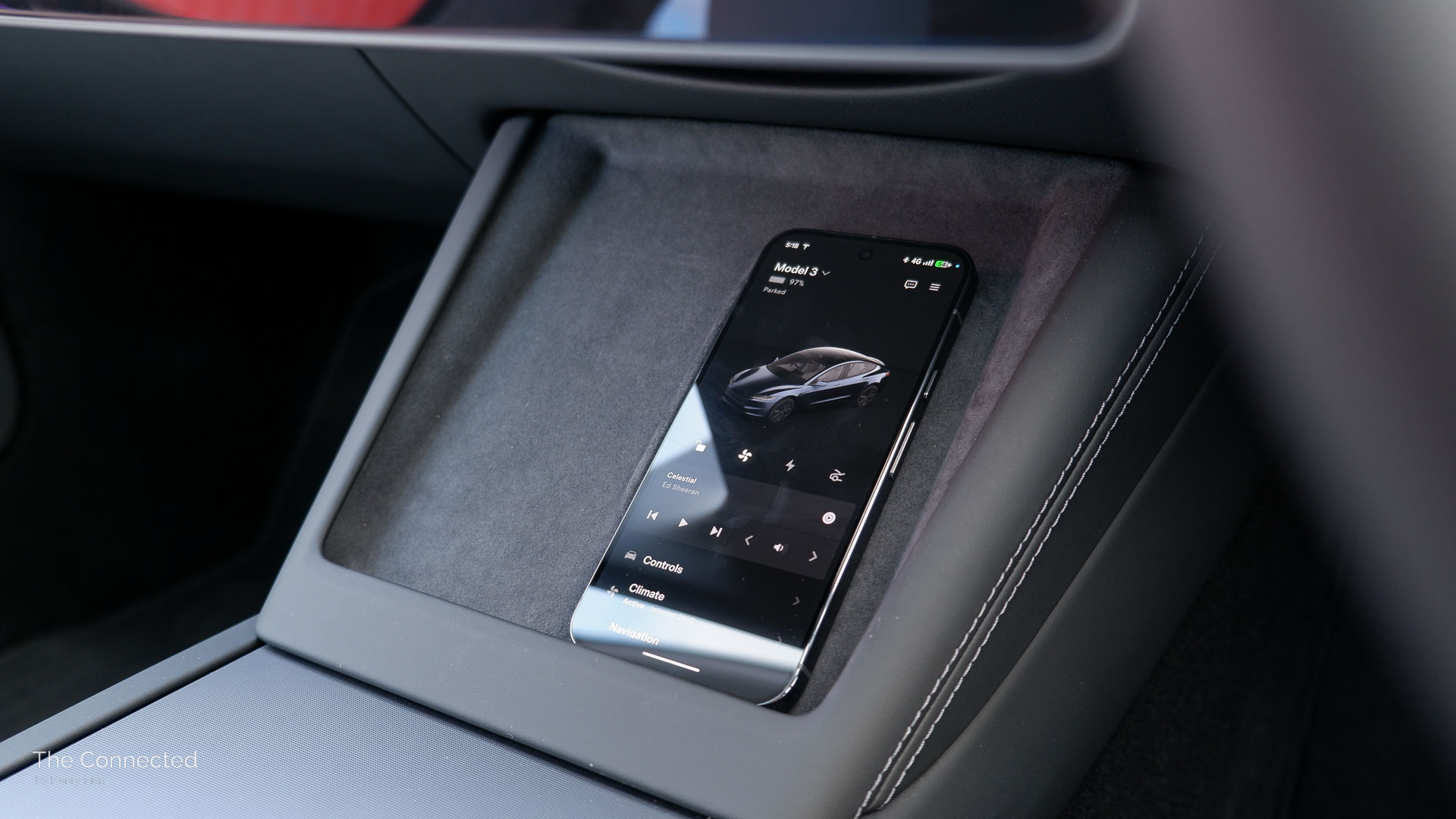
While its front-row USBs are lacking, the two Qi wireless charging pads work surprisingly well at consistently juicing up my Google Pixel 10 Pro, despite having no active ventilation fans and positioned at an angle so the sun beams onto phones.
Additional felt-lined storage is available under the magnetised centre armrest complete with felt lining and a LED light, too.
The two cup holders have rubber nubs which strongly grips flasks in place. Both it and the centre console can be closed with a lid for a clean look.
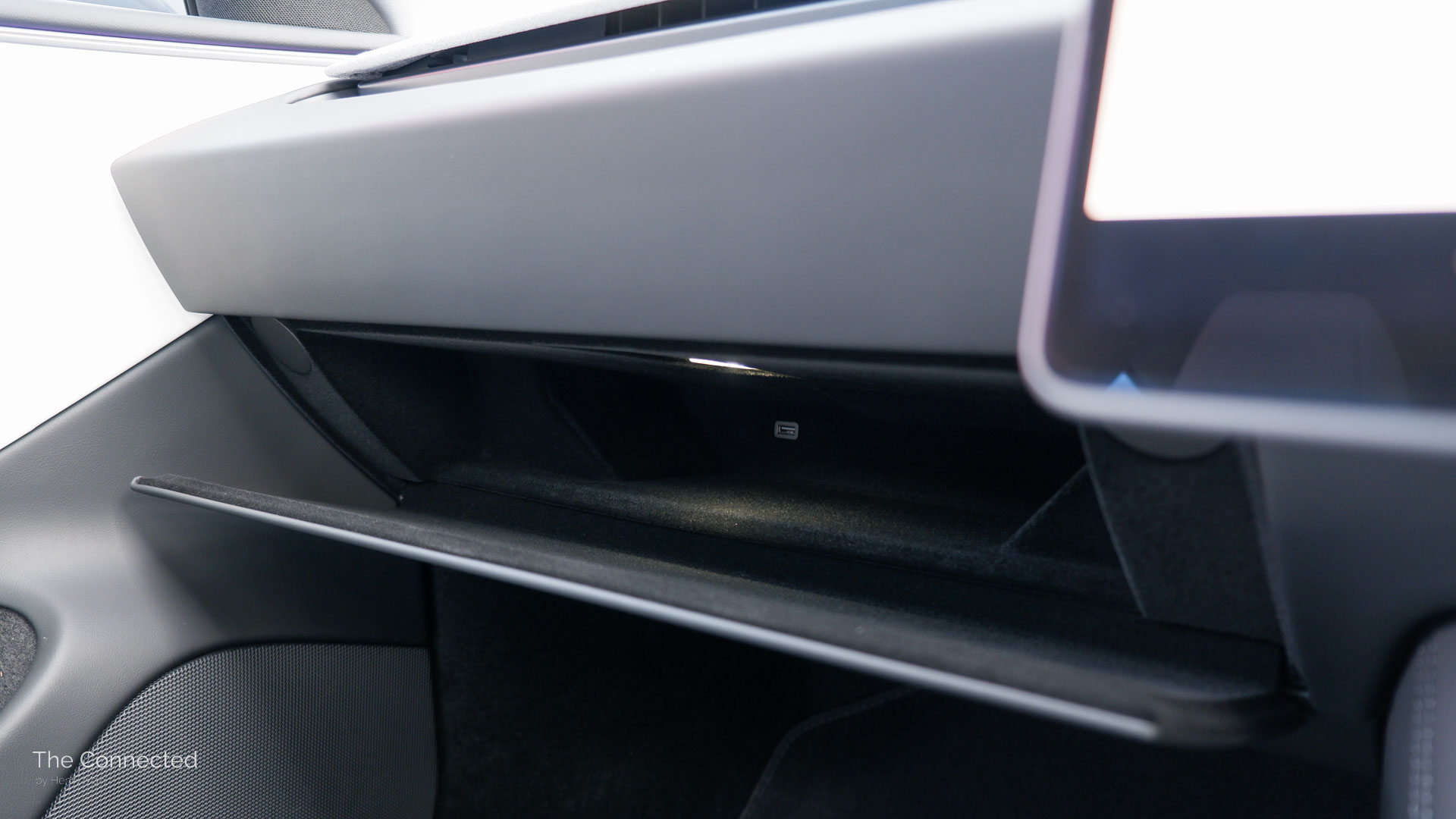
But while the glovebox is magnetised, has felt lining and LED illumination, it is very narrow and must be opened via the screen or voice control.
The front door pockets are even larger than the rear with carpeting so the multiple bottles you can fit won’t rattle around while driving.
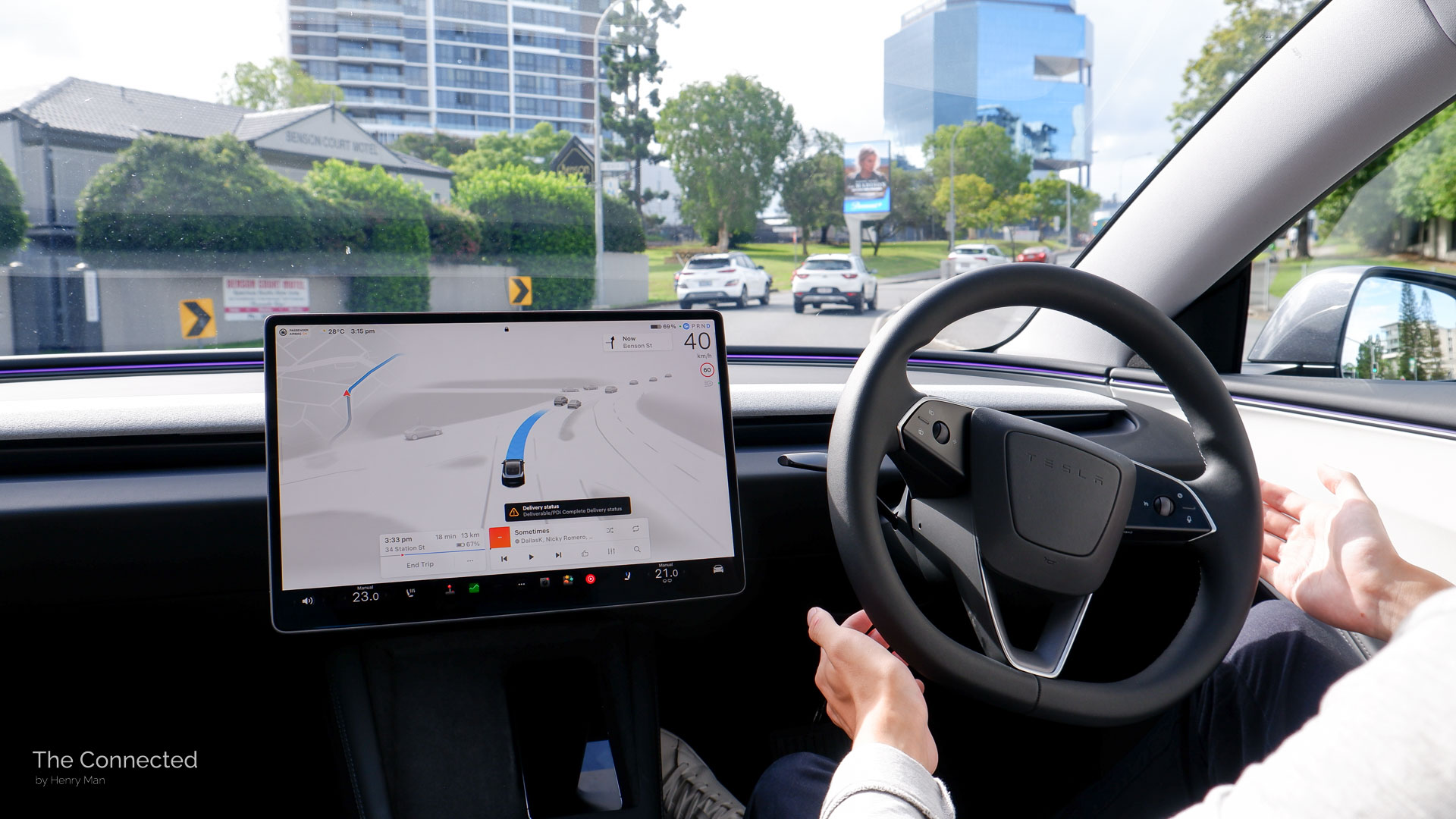
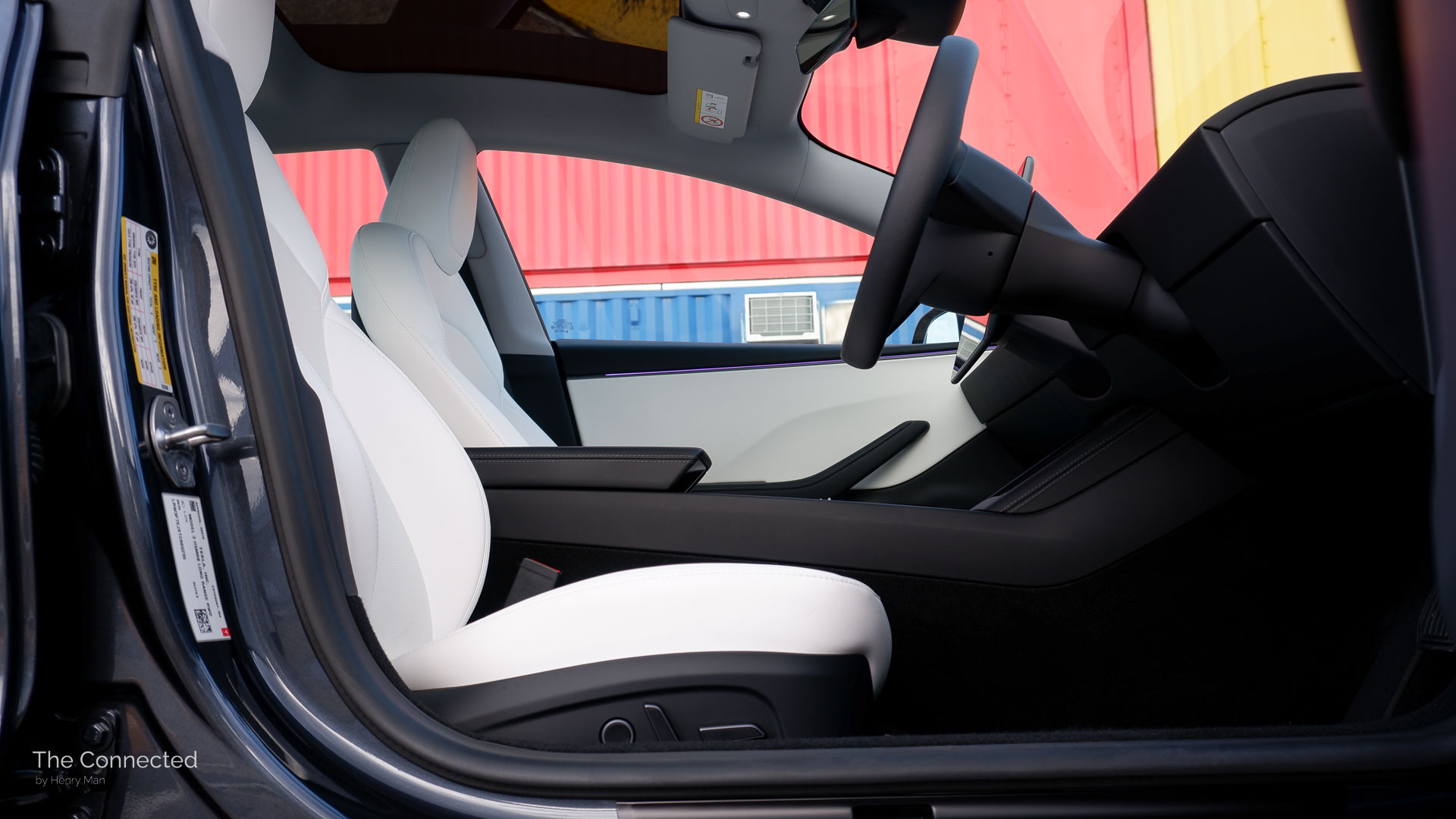
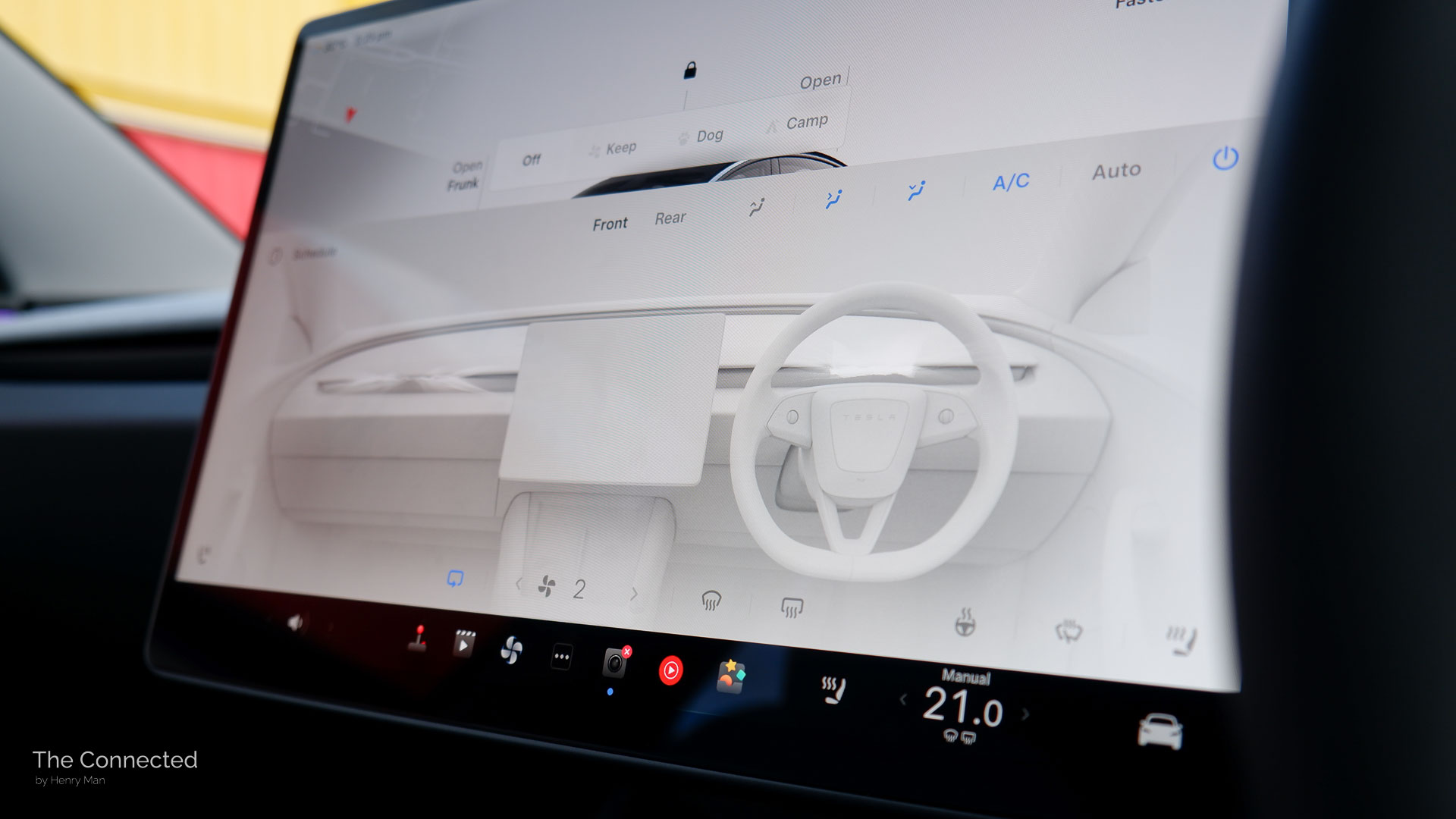
The electric sedan’s front row has the same uncomfortable high floor seating position, which is particularly felt on long drives and when using Full Self-Driving (Supervised).
At least both seats come with three-level heating and ventilation as standard, alongside a two-level heated steering wheel.
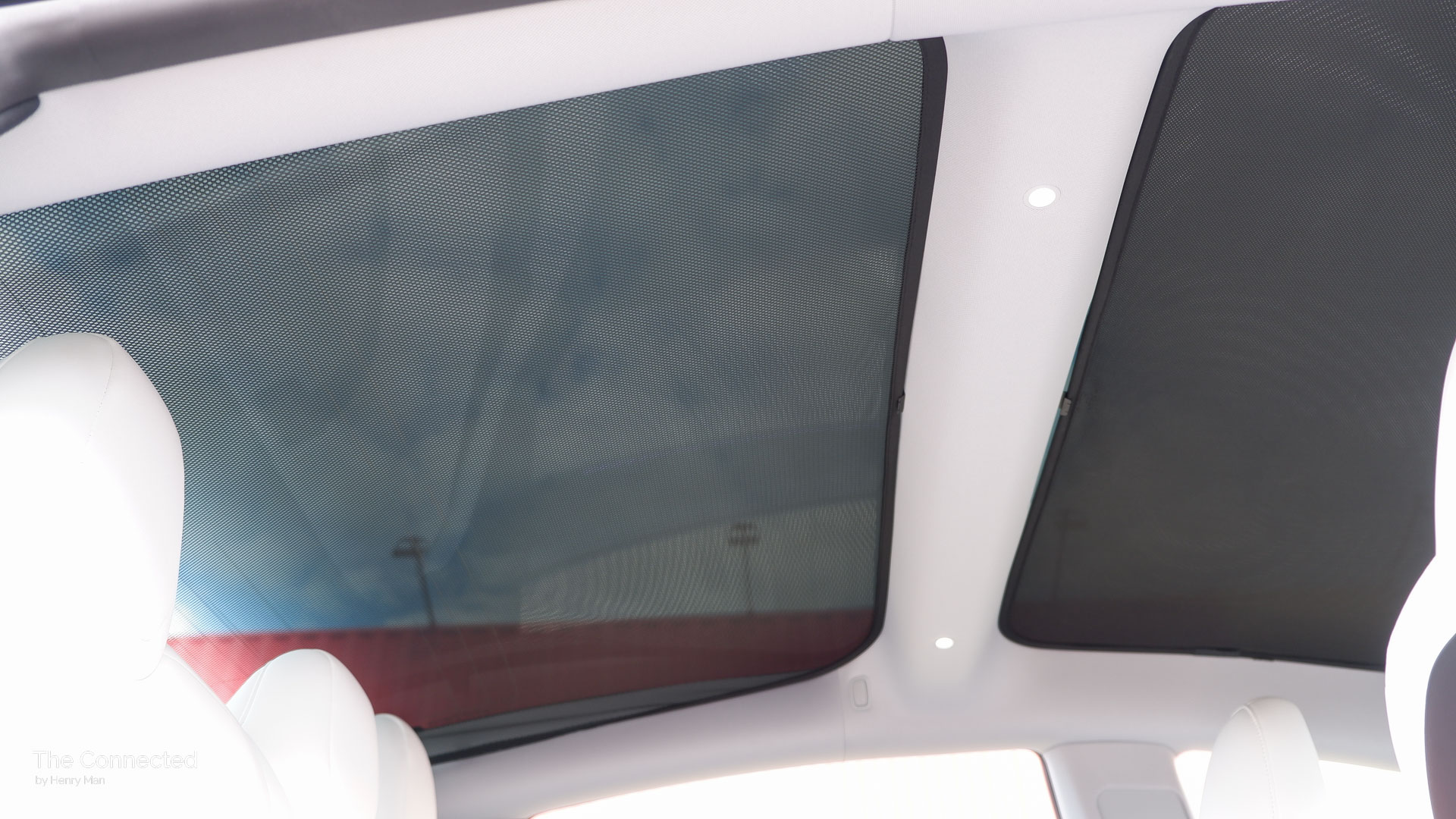
However, I found the air vent strength weak and hard to cool down in the Australian summer, especially with no standard sunshade for the fixed glass roof. I often had to blast it on a very high level eight or higher fan speed in order to actually feel it.
Tesla sells a front and rear glass roof sunshade accessory for $300 in total. It helps with heat deflection, but it’s fiddly to regularly attach and detach due to the flimsy clips that wedge in between the pillar and glass.
The company also offers Dog Mode, Keep Climate On, Camp Mode and more to keep the air-conditioning running while the car is locked.

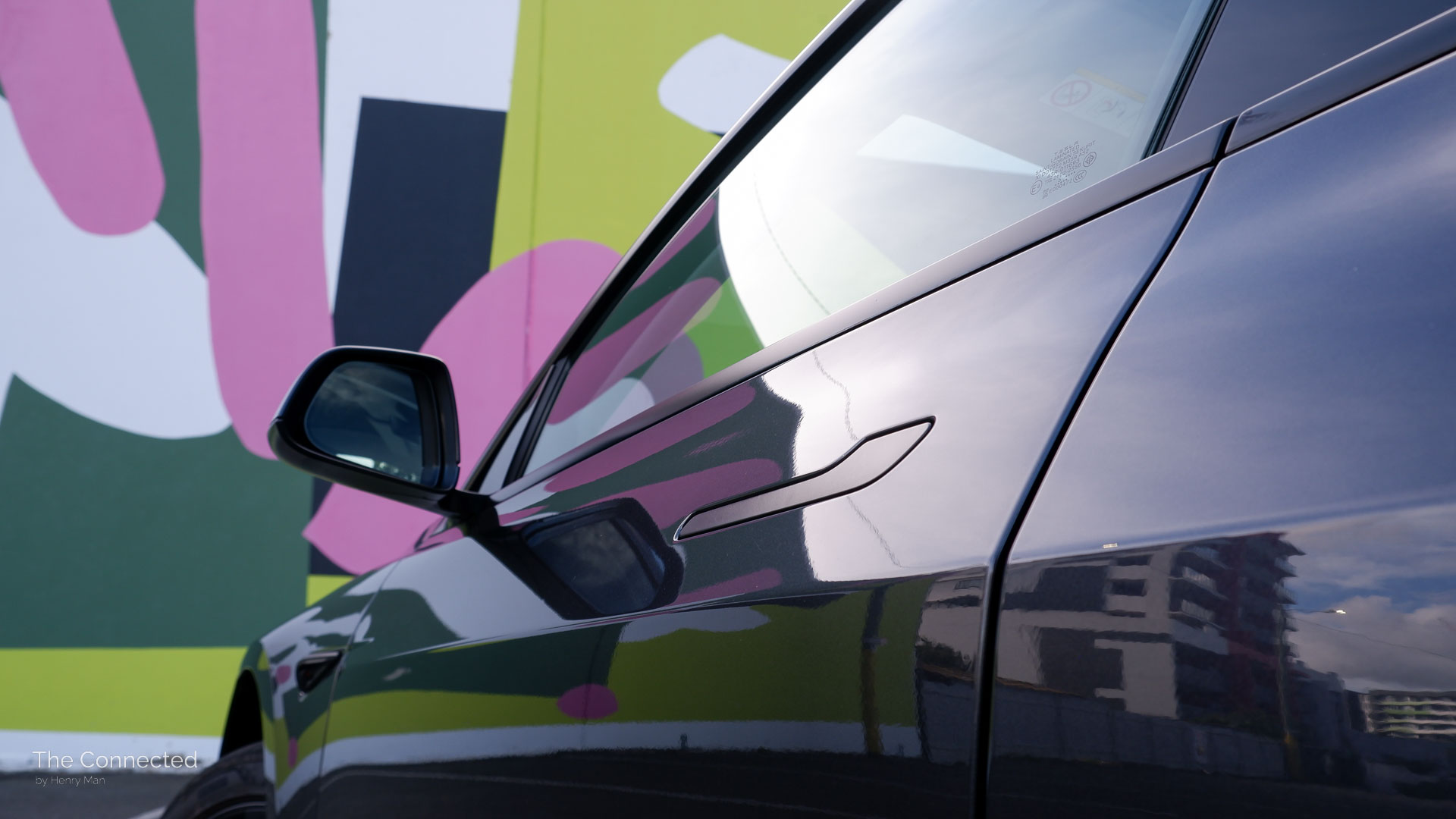
Critically, the flush exterior door handles have a learning curve as it doesn’t pop out like a BYD Seal, Geely EX5 or Kia EV6. Instead, occupants need to press their thumb in the hook-shaped end, then use another finger to pull it open.
It’s not intuitive especially when the right door handles are most suited to the right hand, while the left handles are most ergonomic for the left hand due to its design.
The inside electronic door release button is positioned more ergonomically, but while the emergency manual release is a visible switch for the front doors, it is hidden inside the pockets and requires pulling a yellow wire at the rear doors.

Technology.
2026 Tesla Model 3 Long Range RWD tech features:
| 15.4-inch touchscreen running Tesla software | 8.0-inch rear passenger touchscreen |
| Built-in maps with EV Supercharging navigation | 2x Qi wireless charging pads |
| Tesla Arcade, Theatre and Toybox entertainment apps | 3x USB-C and 1x 12-volt charging ports |
| Audio streaming apps (including Spotify, Apple Music, Apple Podcasts, YouTube Music, etc.) | Dashcam and Sentry Mode recording (128GB USB-A stick included) |
| Nine speakers | Tesla mobile app |
| OTA software update capability | Tesla key card and Phone Key with UWB and Bluetooth sensing, auto unlocking/locking, auto-folding mirrors, and front and rear door puddle lights |
| Standard Connectivity (eight years included, Premium Connectivity subscription optional) |
Tesla’s technology remains an industry benchmark and a key selling point against any new car.
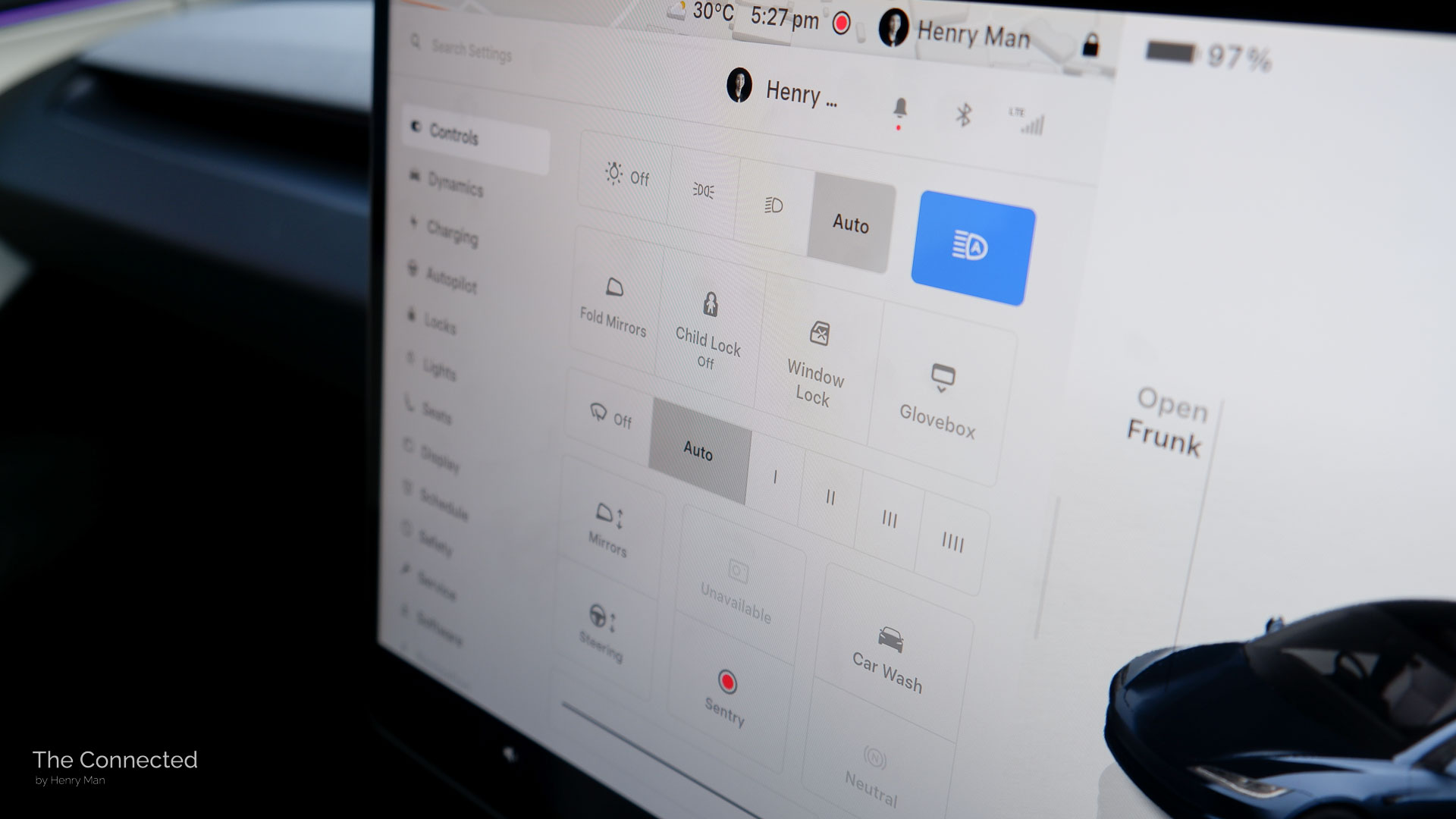
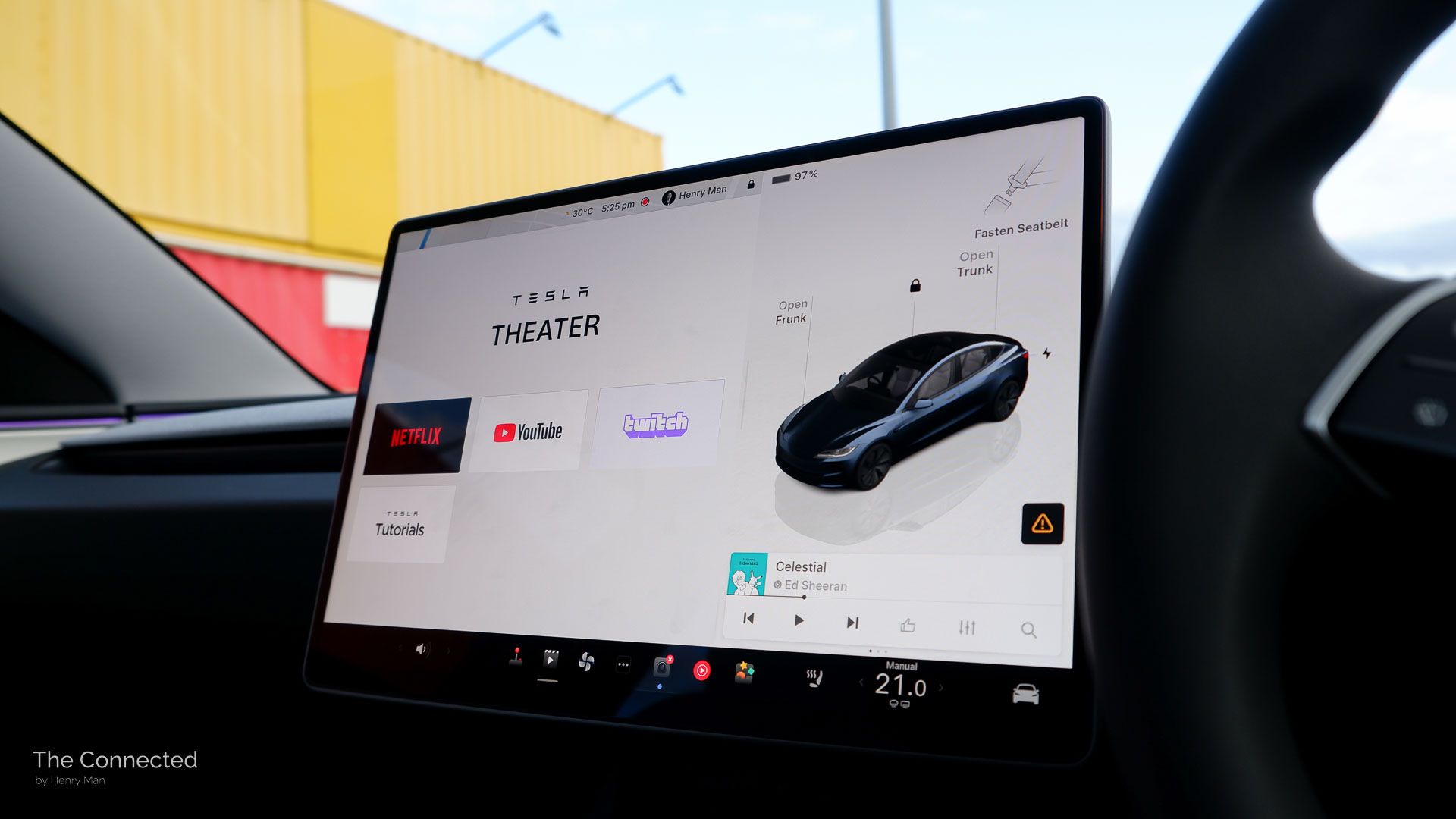
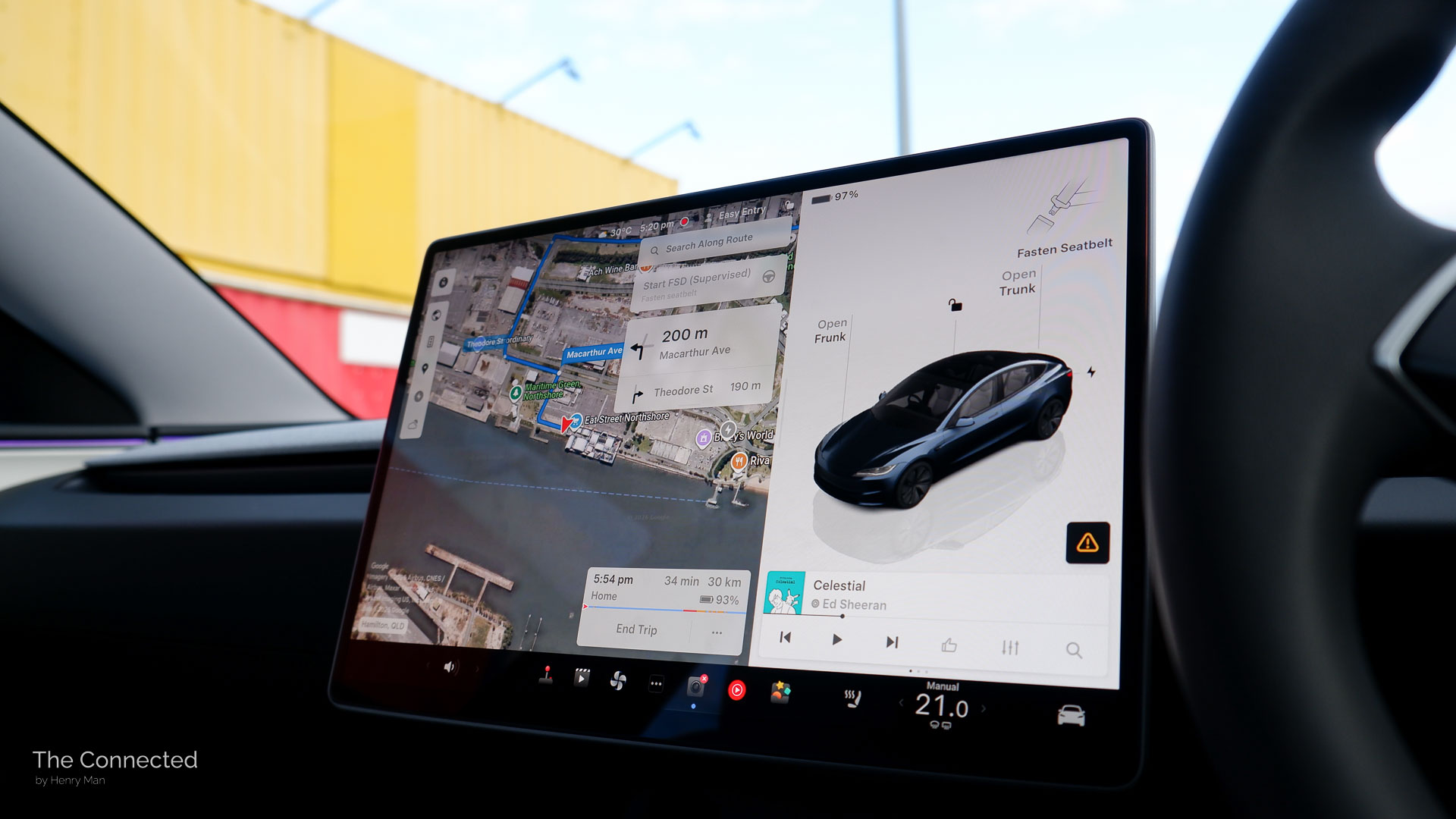
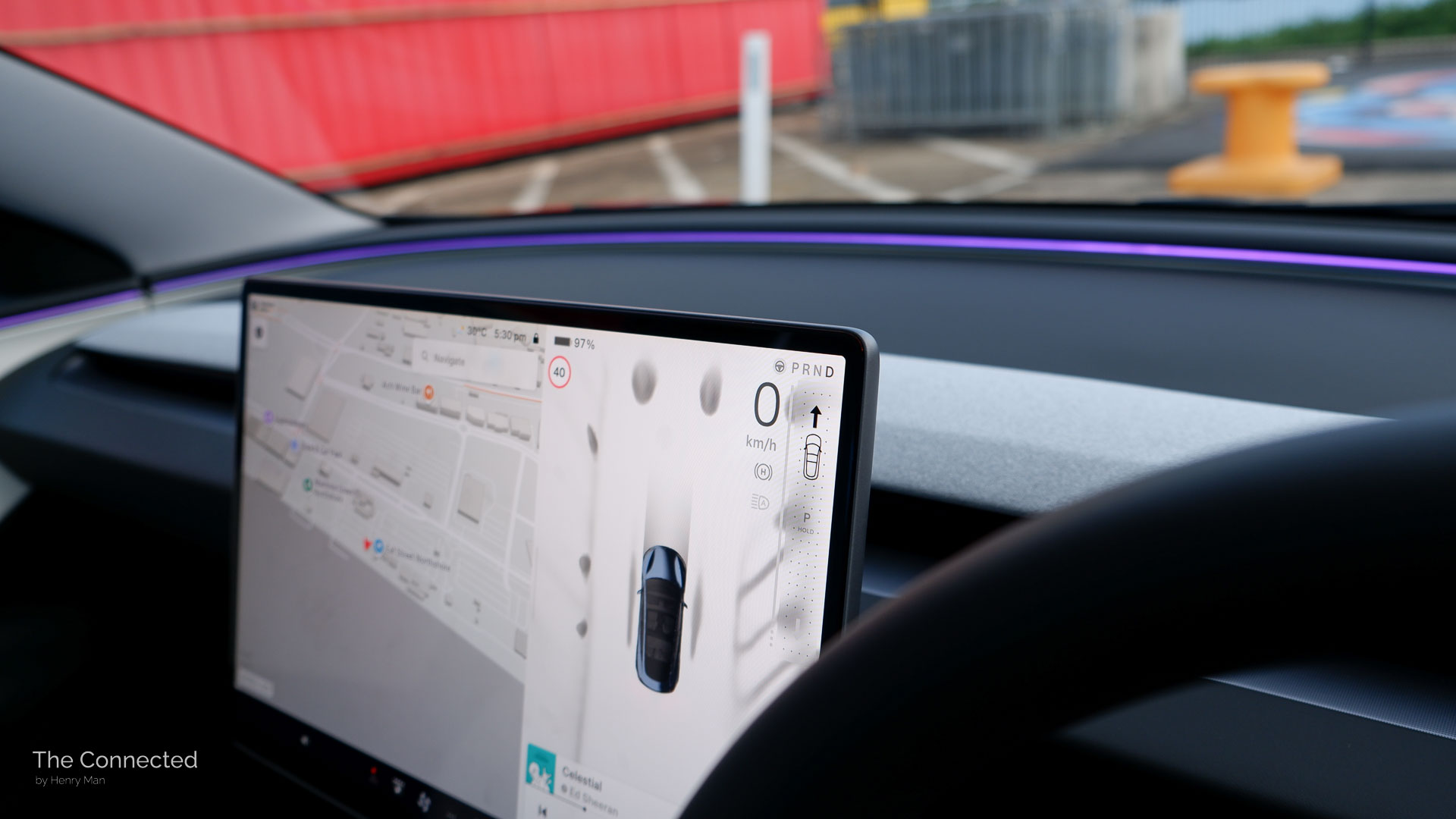
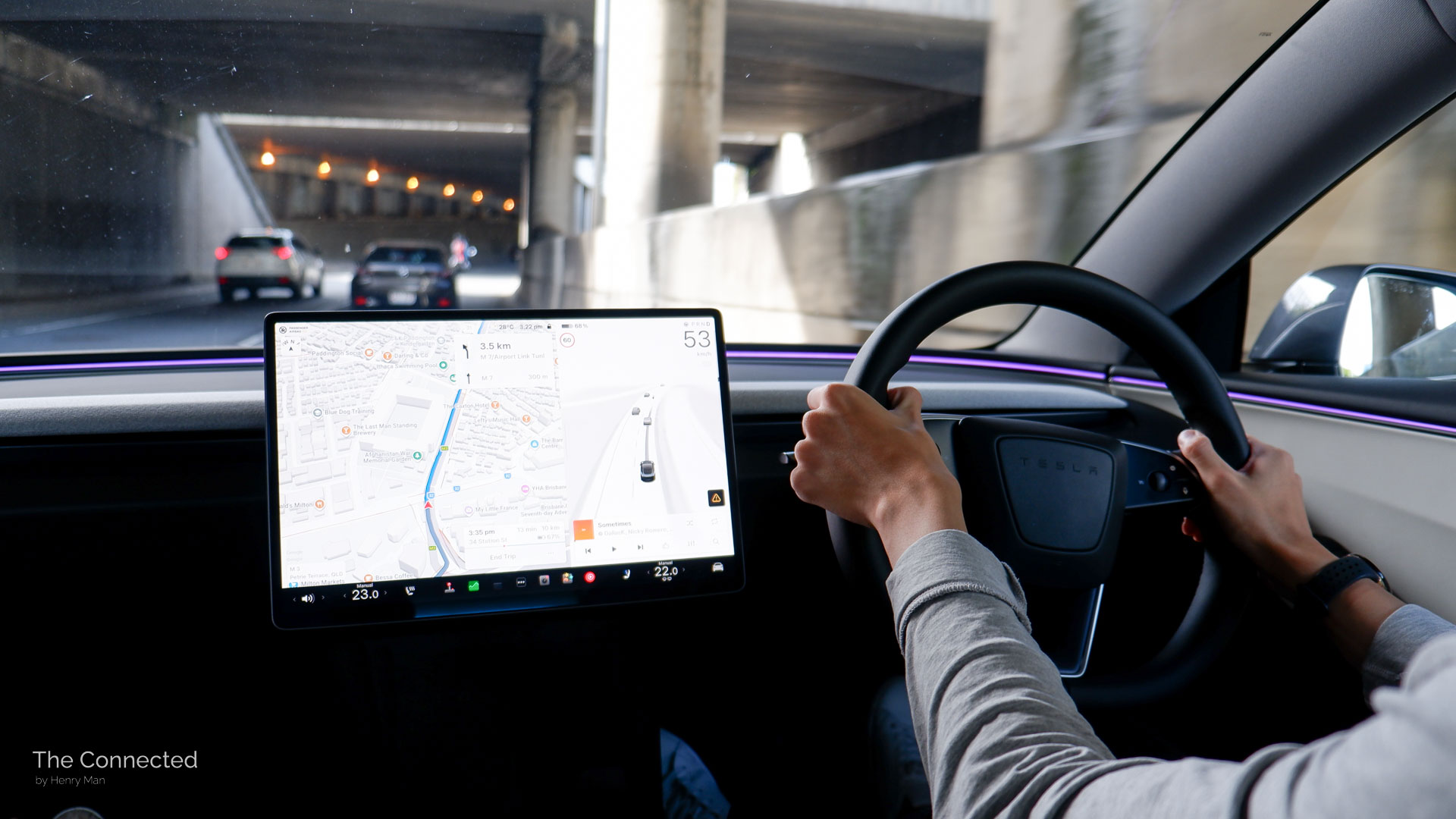
The 2026 Model 3 features a 15.4-inch central touchscreen which controls most functions from the climate control to drive modes.
While it is yet to receive the latest 2K+ 16-inch unit as per the related Model Y SUV, the display is still very clear with great automatic brightness calibration and automatic light/dark mode switching.
Even though it lacks Apple CarPlay and Android Auto, it’s barely missed since Tesla’s own software is so good and feature packed.
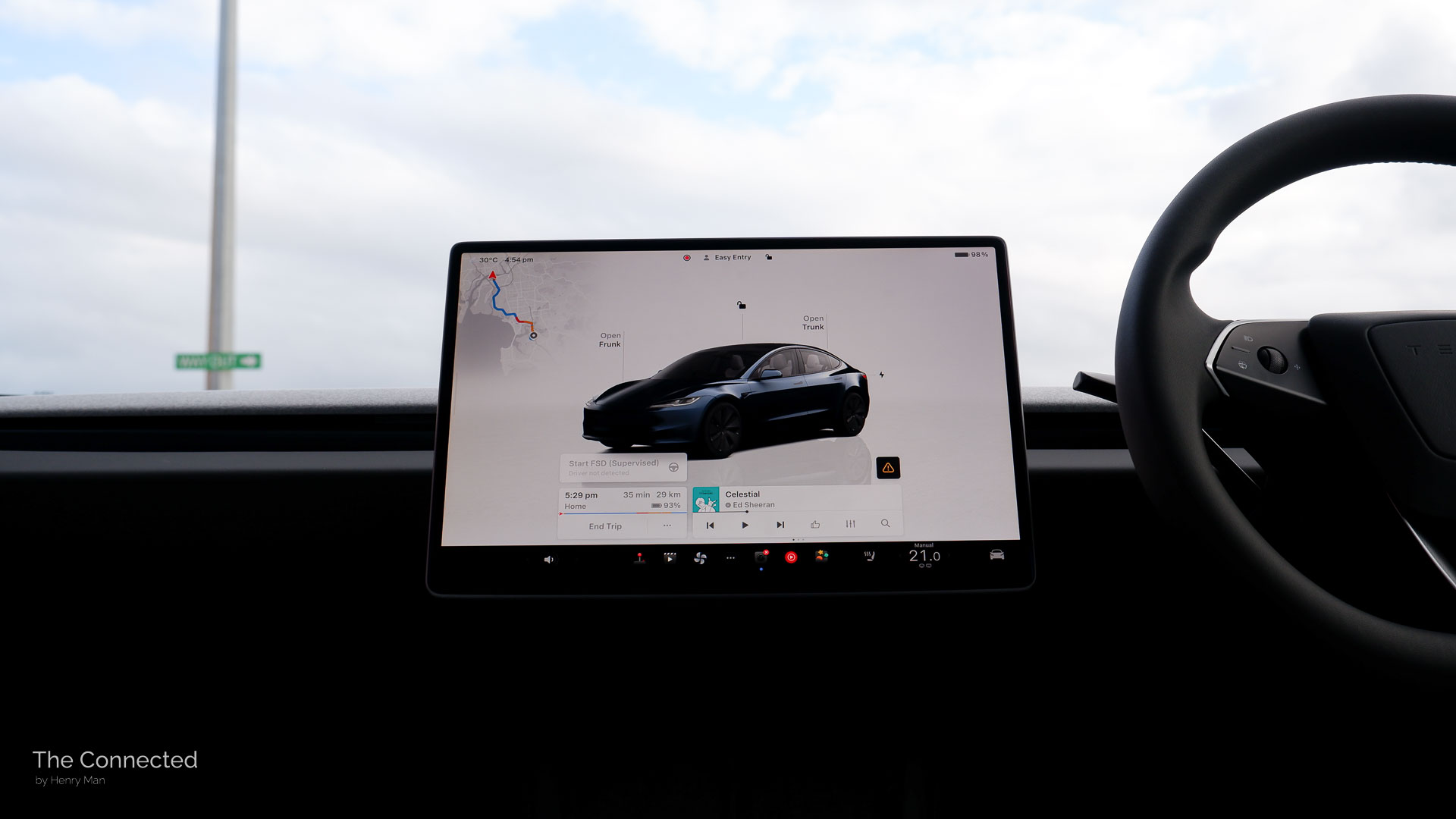
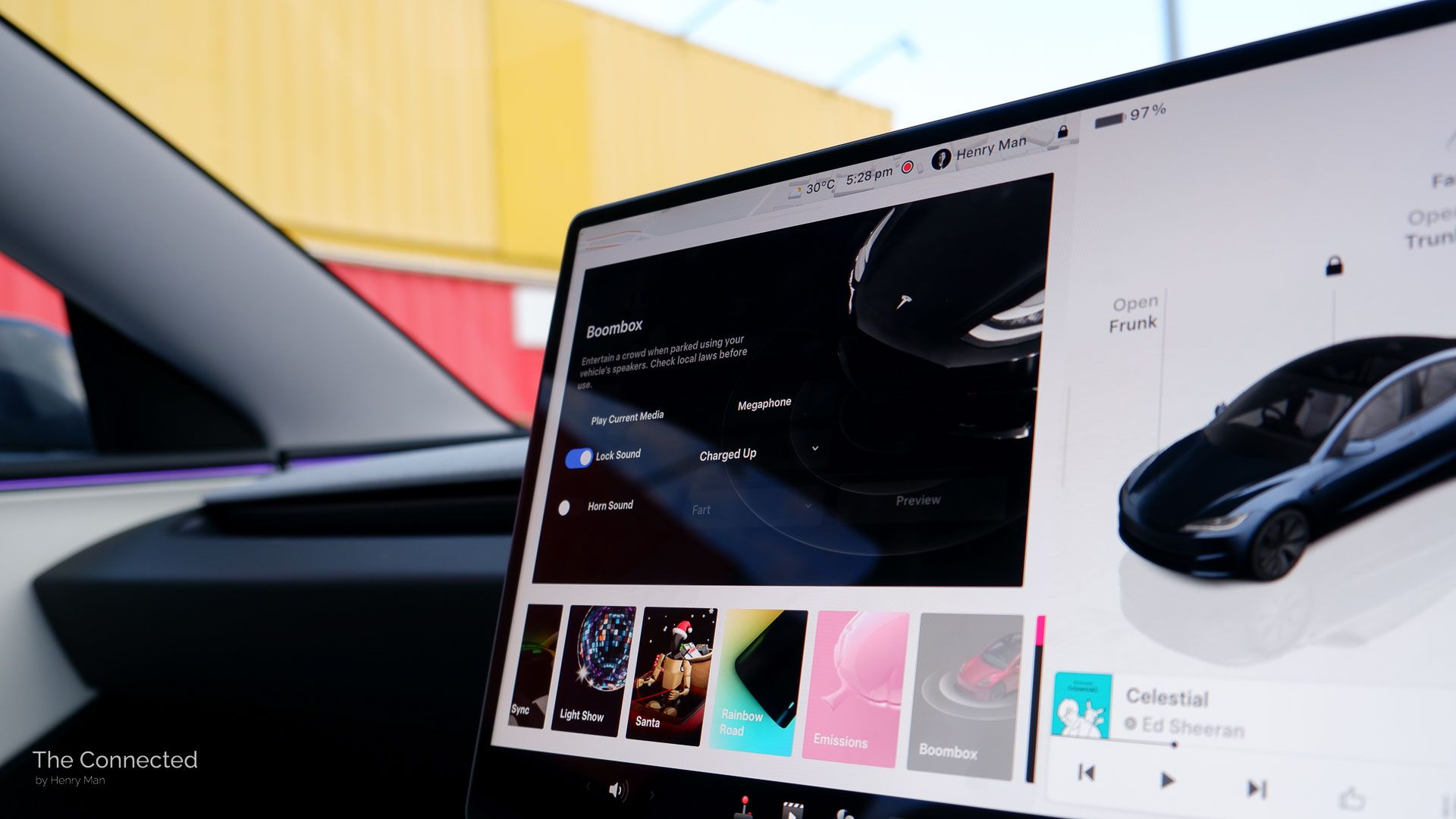
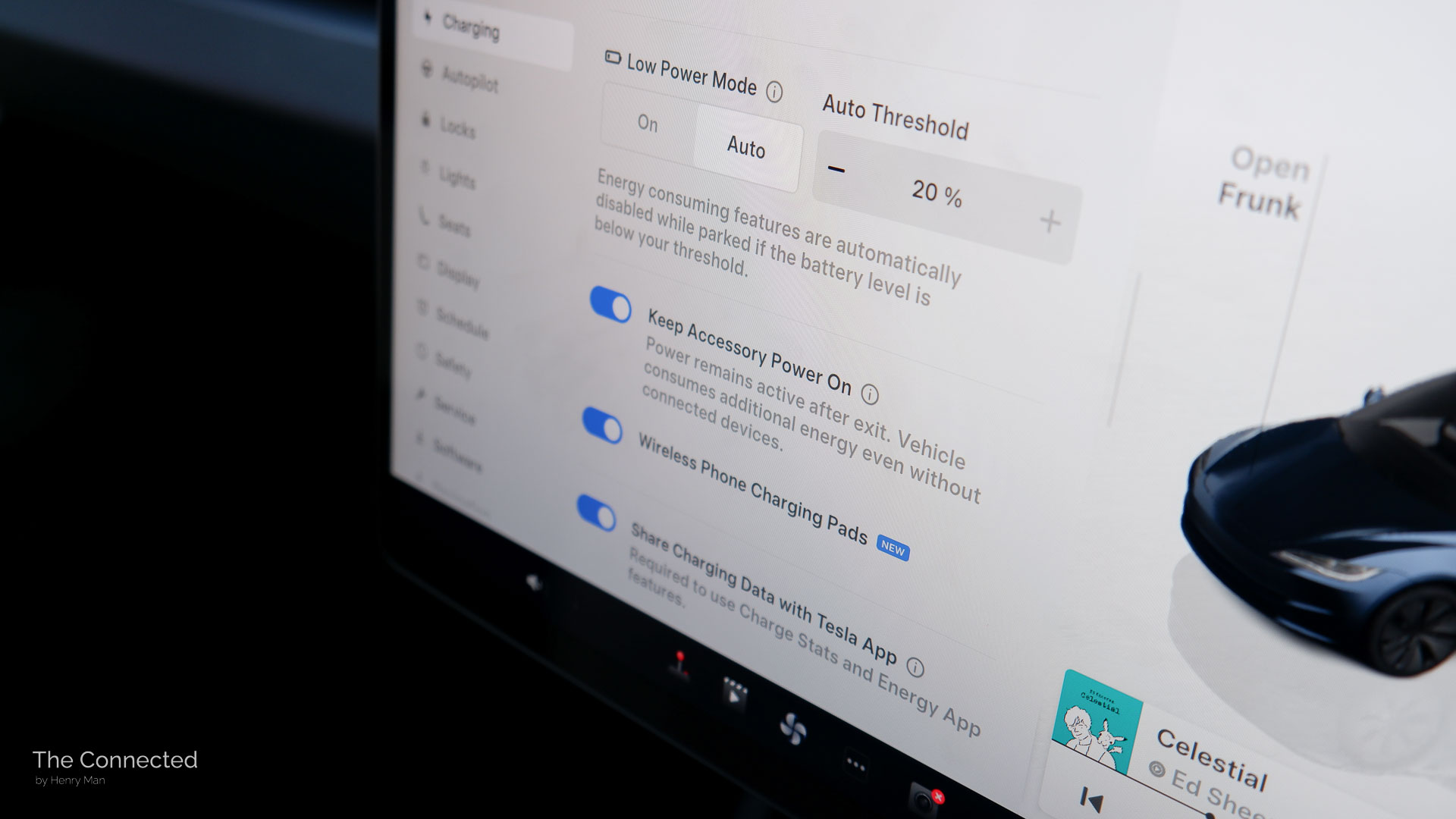
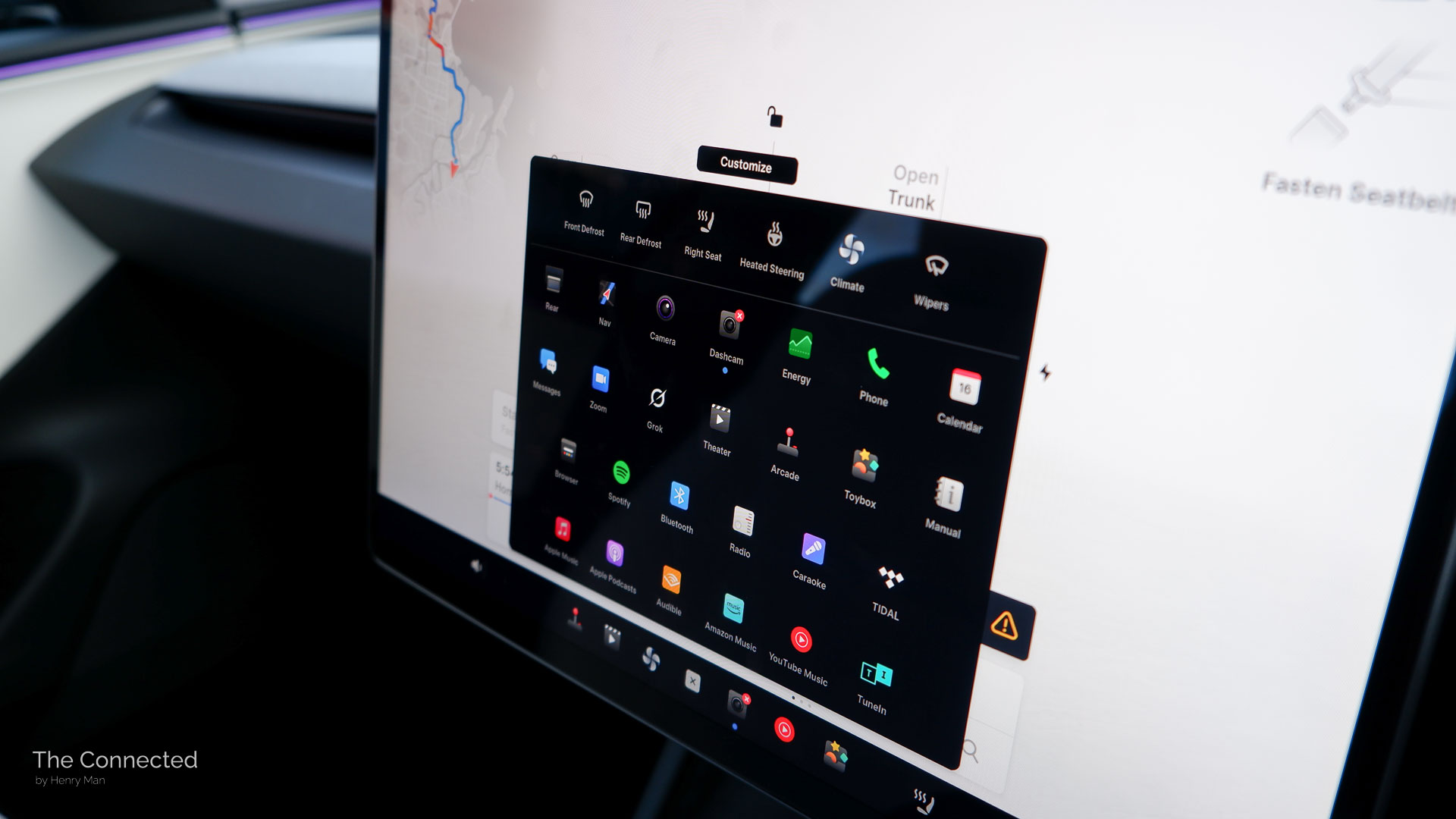
With a modern and Apple-esque interface design, it is intuitive to use with a persistent bar with customisable app shortcuts, logically laid out vehicle settings, and an easy swipe to close apps.
There are no English wording ‘quirks’ common with many Chinese EVs.
My previous complaints of small icons continue in the app launcher – even though it’s been addressed on the dock with an over-the-air (OTA) software update – and the text is still smaller than ideal (even with the large font setting) than other rival systems such as the Cupra Tavascan, Hyundai Ioniq 5, and Zeekr 7X.
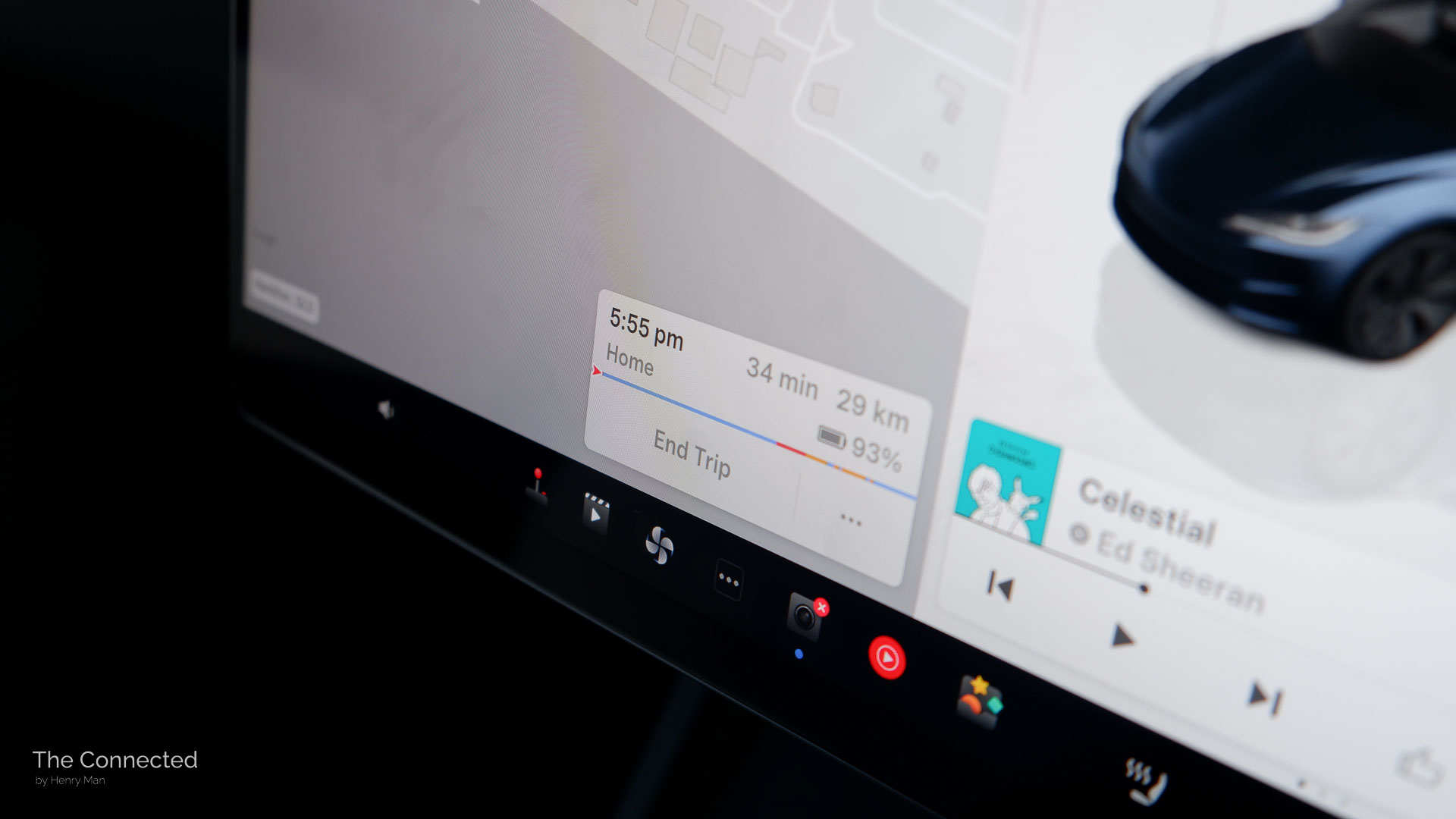
Built-in apps include most major audio streaming services including Spotify, Apple Music and YouTube Music, in addition to Tesla Theatre video streaming, Tesla Arcade games, and a smart EV navigation system using Google Maps data.
These features can be mirrored or separated on the rear 8.0-inch passenger touchscreen, too.
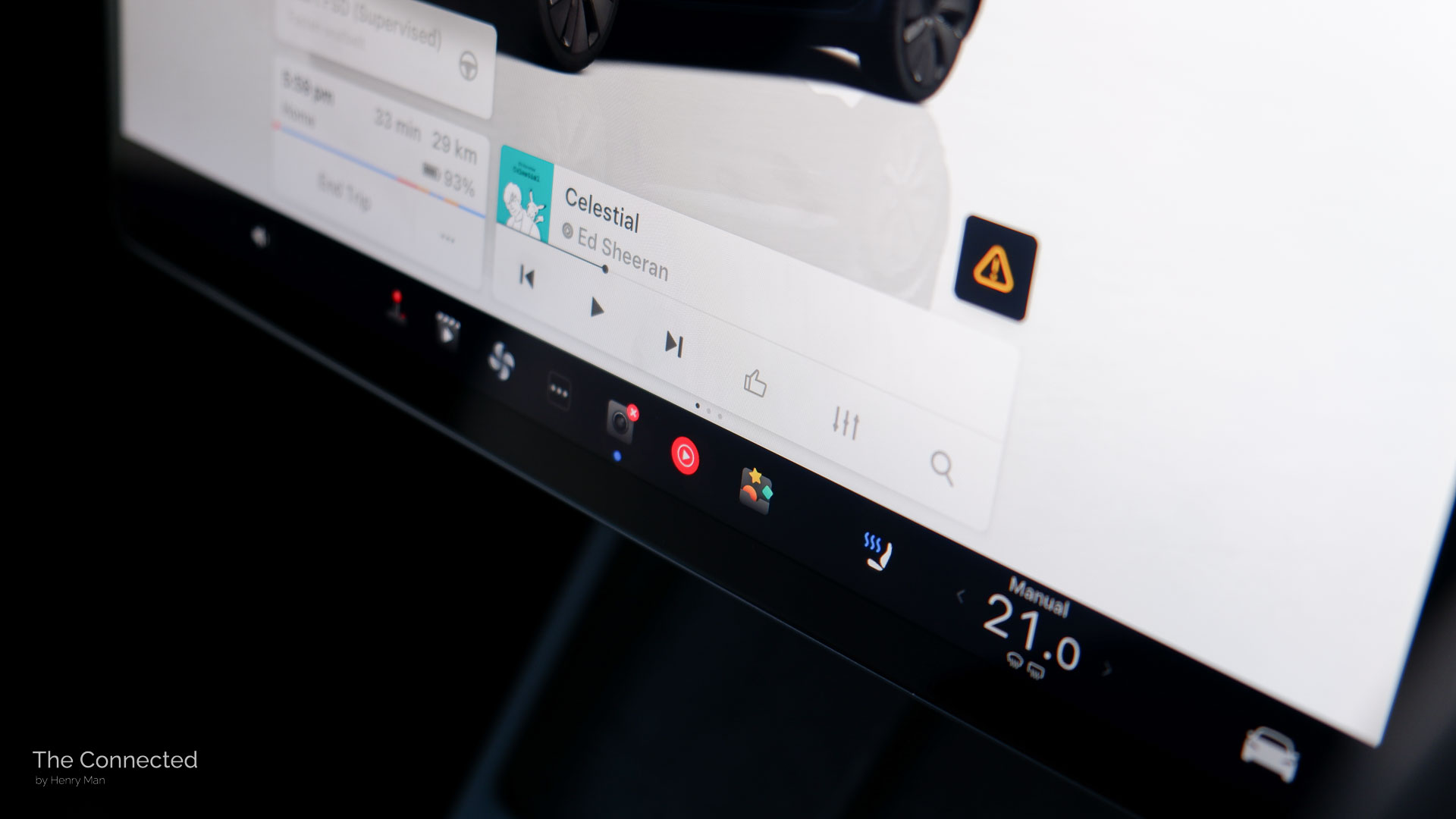
It also regularly receives meaningful OTA software updates for free, with a host of small and big additions since I tested the Model 3 last year, including Rainbow Rave Light Sync for the ambient lighting, the ability to disable Qi wireless charging pads, and dashcam driving metadata.
The only downside is not having Waze since the built-in map’s speed camera alerts are lacking, plus I found the microphones don’t pick up my voice well when using voice control.
That’s a shame since the controversial Grok artificial intelligence system is very handy, particularly for changing the navigation. But it’s half-baked at the moment since you still need to use the legacy Tesla voice control for some functions such as adjusting the climate control, opening the frunk, and sending messages.
Keep in mind that owners need to pay $13.99 per month (previously $9.99 per month) for Premium Connectivity in order to unlock functions such as satellite view maps, built-in video and audio streaming, and mobile app camera live streaming.
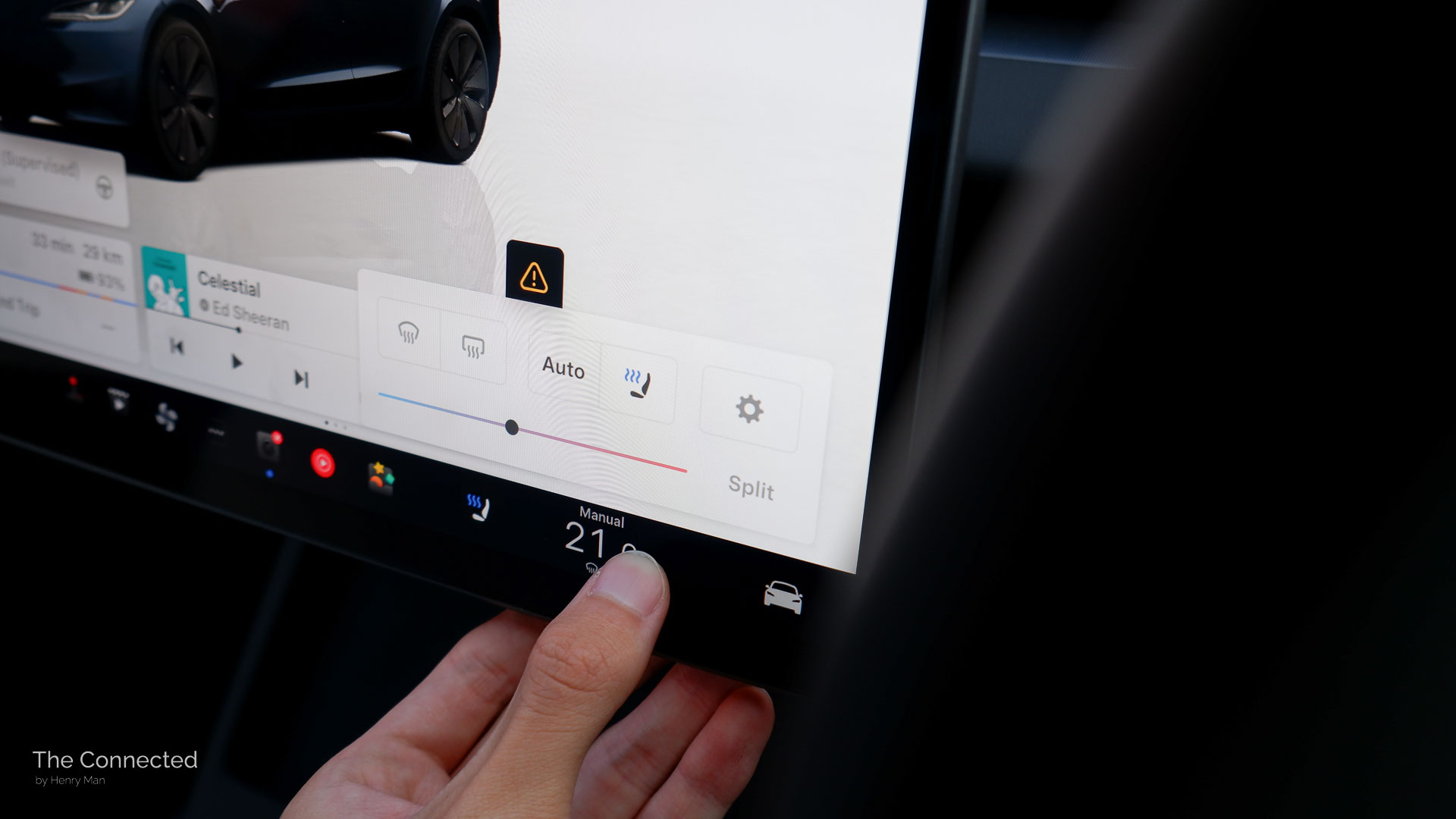
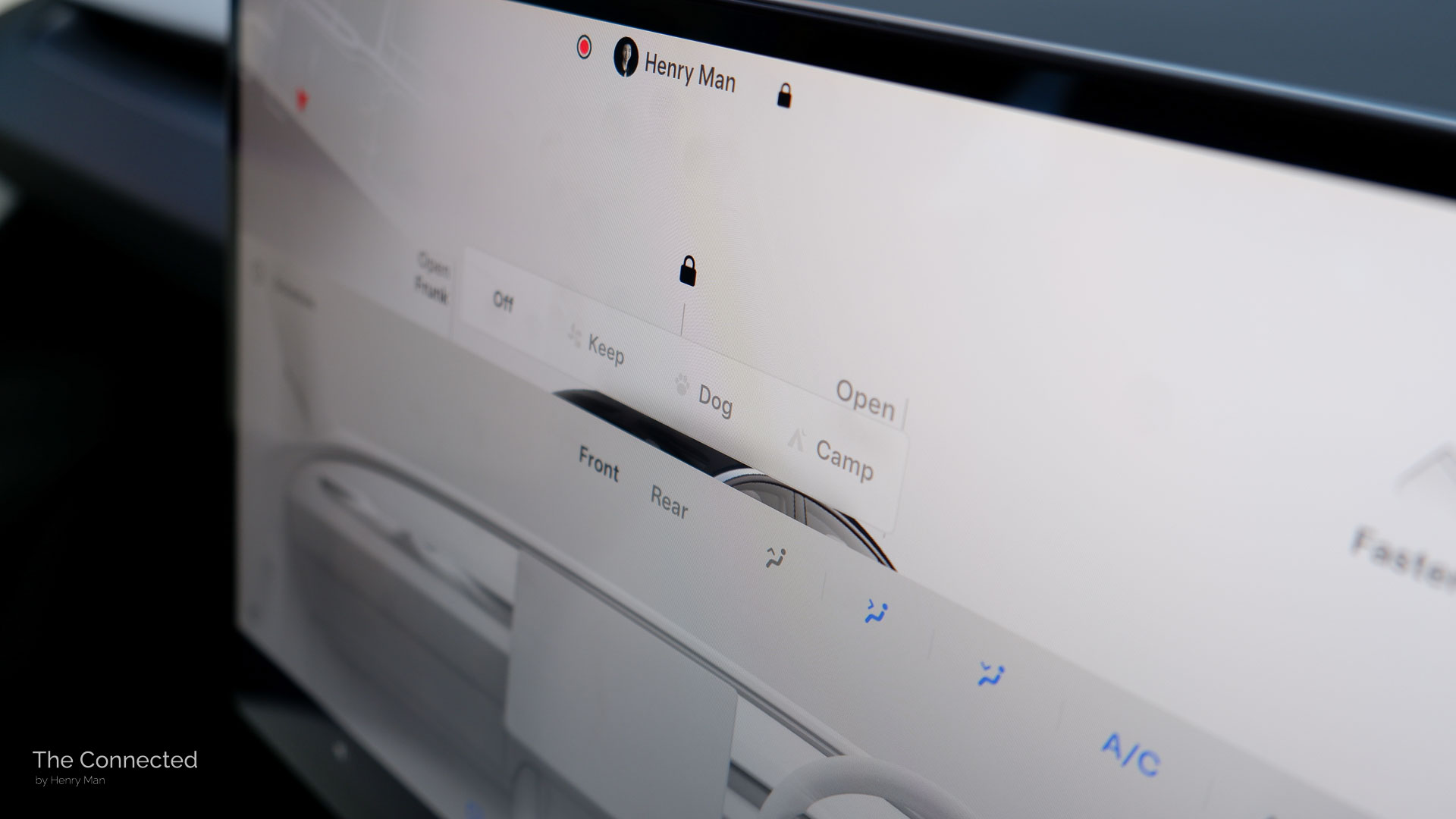
Moreover, the dual-zone climate control is generally easy to operate thanks to the temperature and heated/ventilated seat controls always being at the bottom of the screen.
But adjusting the fan speed and direction requires opening the climate control panel and the hidden-type electronic air vents are difficult to properly adjust and target my face.
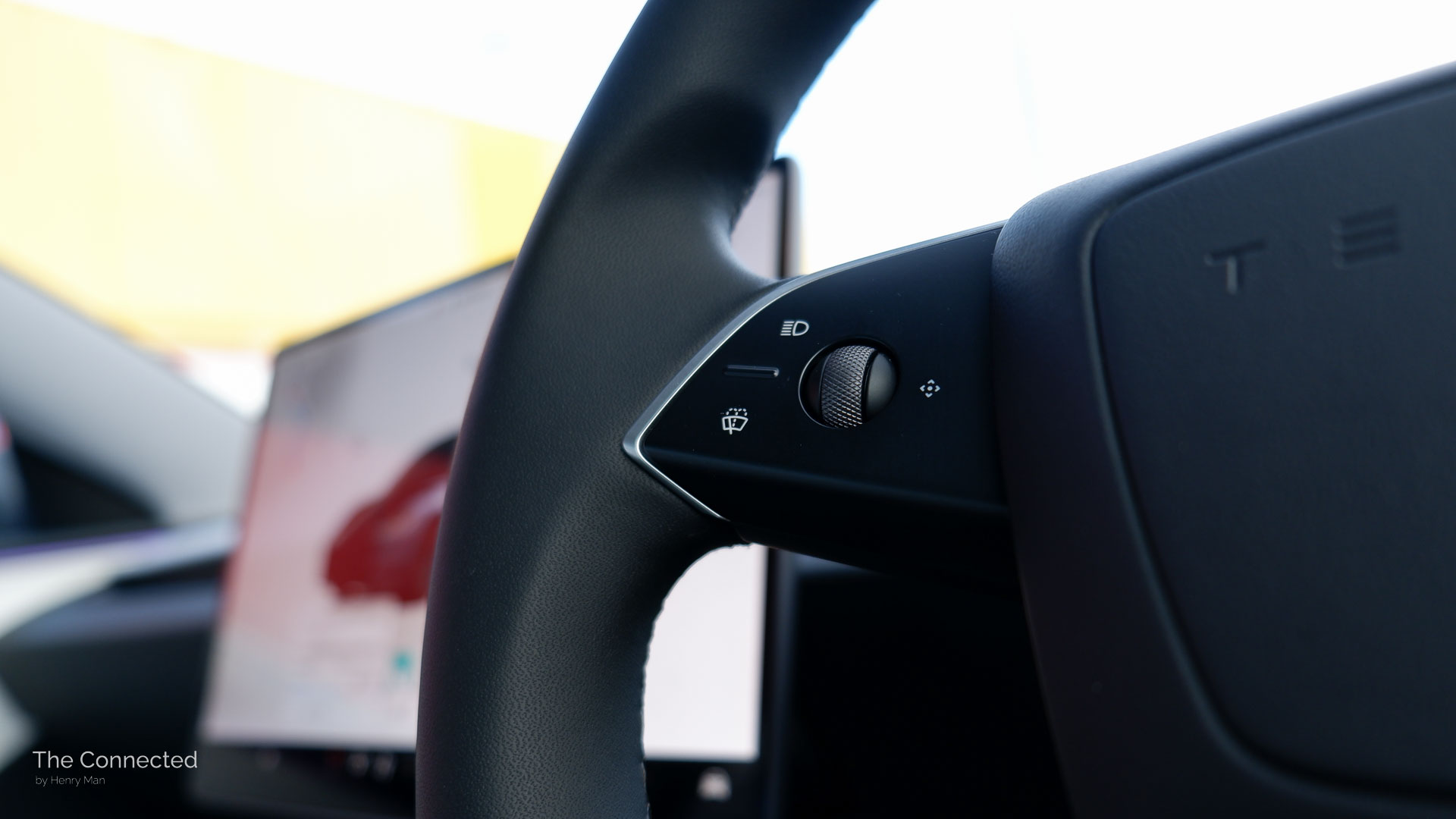
Tesla offers the ability to use the left steering wheel scroll wheel to change the fan speed, temperature, and toggle other functions – but it isn’t quick to do since you need to press and hold the button first, while the voice control is hit-and-miss.
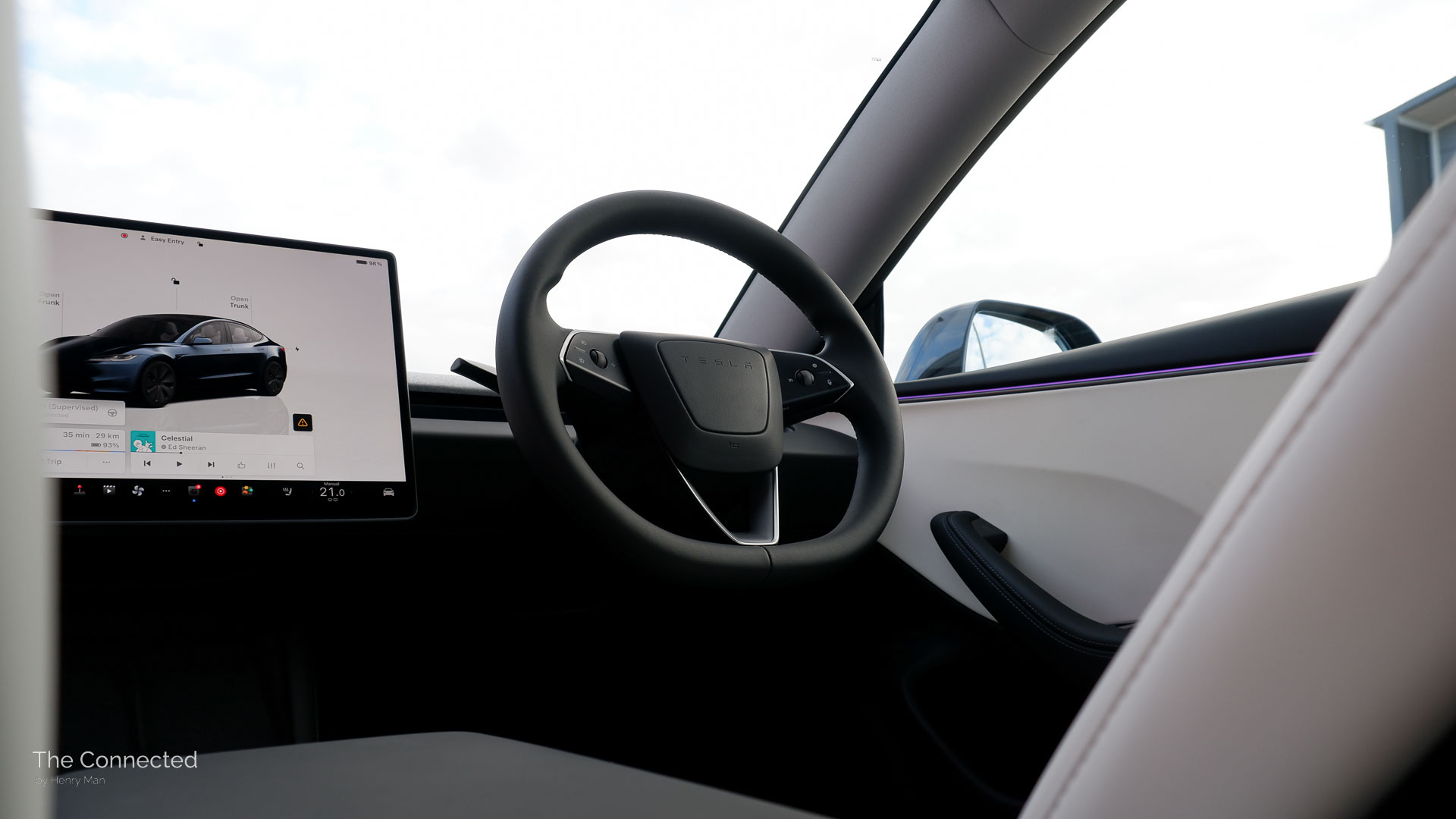
The Model 3 pioneered the unfortunate trend of foregoing a dedicated driver instrument display 10 years ago, but at least it’s implemented well.
The software has a dedicated section on the driver’s side with essential vehicle functions, including the button to open the boot and frunk always visible unlike some other brands.
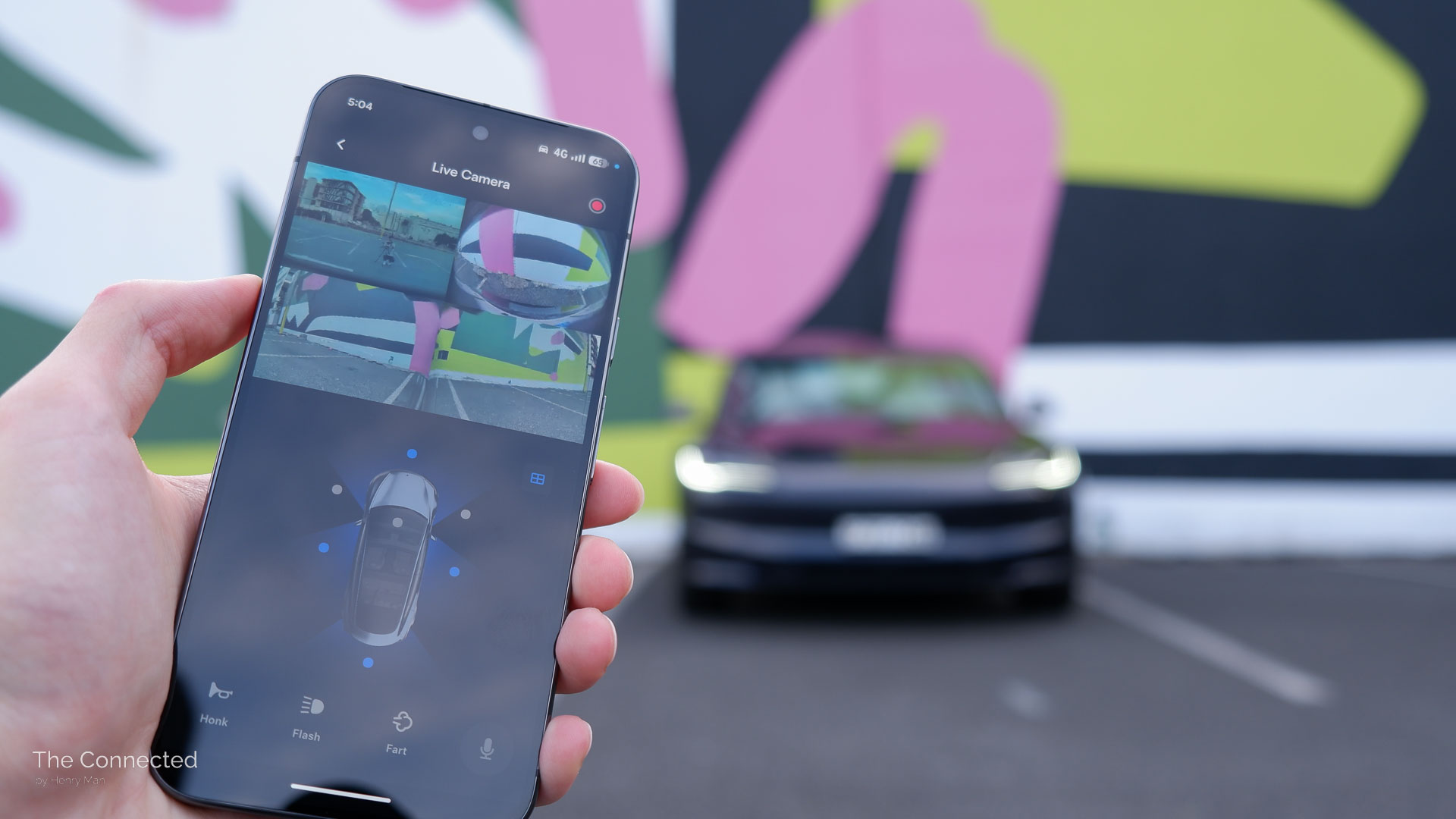
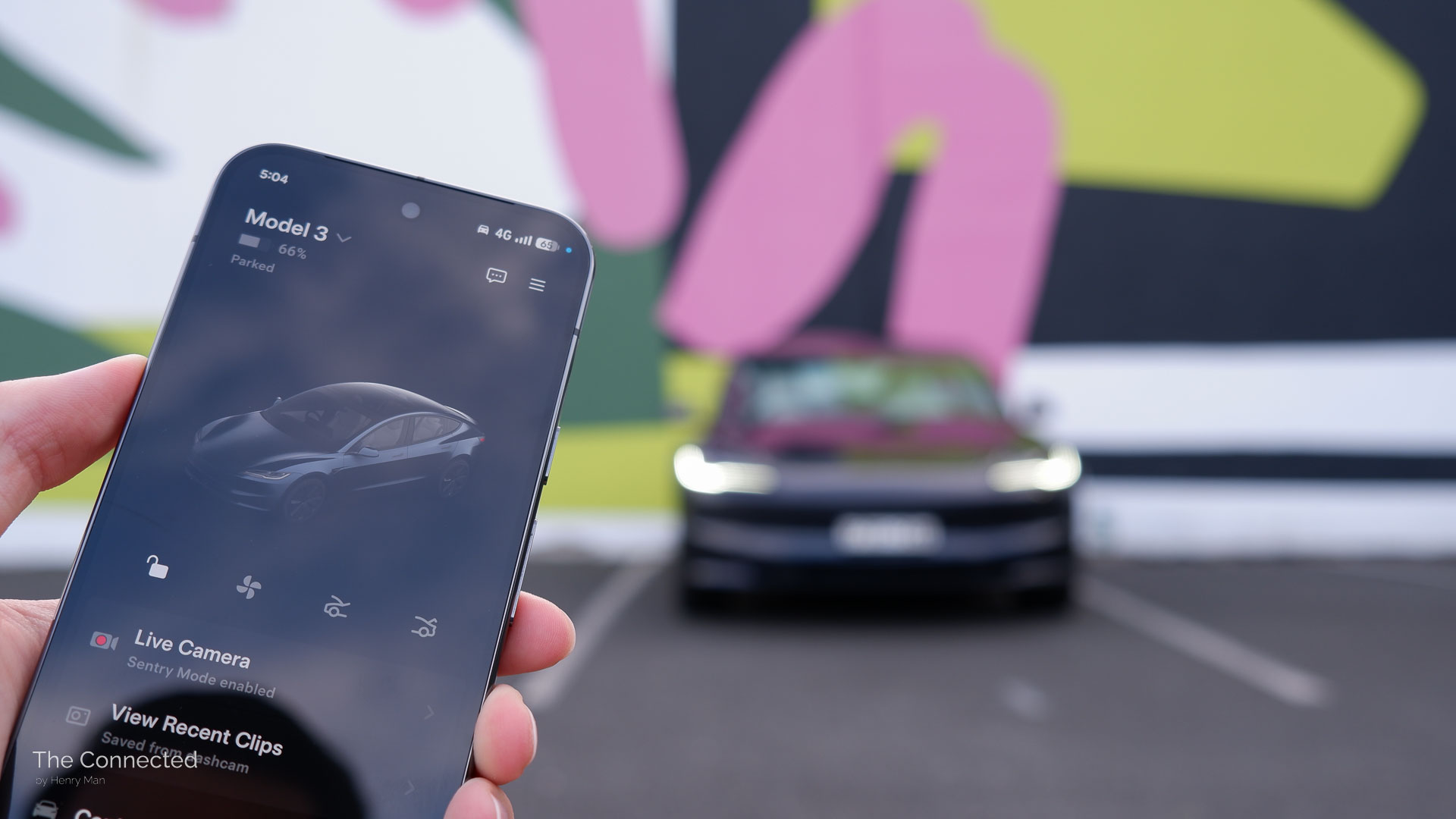
Additionally, a key highlight of Tesla technology is its mobile app. It can start the climate control, monitor the charge status and vehicle location just like any other connected vehicle app – but it also features the ability to see the all-round cameras live, be a megaphone for the exterior speaker or sound fart noises, and act as the primary proximity key.
Unlike other brands, it’s almost instant to send commands, instead of waiting for a loading screen for at least half a minute.
The Tesla app isn’t flawless, though; it sometimes bugs out and doesn’t load properly, but quitting it on the phone often fixes it.
Safety.
2026 Tesla Model 3 Long Range RWD safety features:
| Front AEB with vehicle/pedestrian/cyclist/junction turning detection | Reversing camera with 360-degree Tesla Vision visualisations |
| Rear AEB | Front, side and rear camera-based parking sensing |
| Blind-spot assist and blind-spot view cameras | Driver attention monitoring with in-cabin camera |
| Rear cross-traffic assist | Door open warning and prevention |
| Lane-keep assist | Road sign detection |
| Adaptive cruise control with lane-centring assist (Basic Autopilot beta) | Full LED headlights with auto adaptive high beams |
| Full Self-Driving (Supervised) with auto park assist and green traffic light chimes ($149/month option) | Full LED tail-lights with rear fog light |
The Model 3 offers generally good safety assistance systems with the advantage of optional Full Self-Driving (Supervised), even though it’s imperfect.
Using a camera-only system, Tesla’s safety assists are refined with subtle warnings (except for the lane-keep assist and proximity sensing), a discreet blind-spot light near the A-pillar, and clear cameras.
Disappointingly, while it visualises its surroundings from the eight all-round cameras, it isn’t reliable as the animations are often jerky. Tesla doesn’t offer a proper 360-degree stitched camera view due to the lack of underside wing mirror cameras.
Similarly, it lacks proper sonar parking sensors. The cameras are hit-and-miss in accurately detecting close by objects, as it sometimes thinks you’re about to crash into a mere speed hump, yet sometimes doesn’t warn for clearly visible objects.

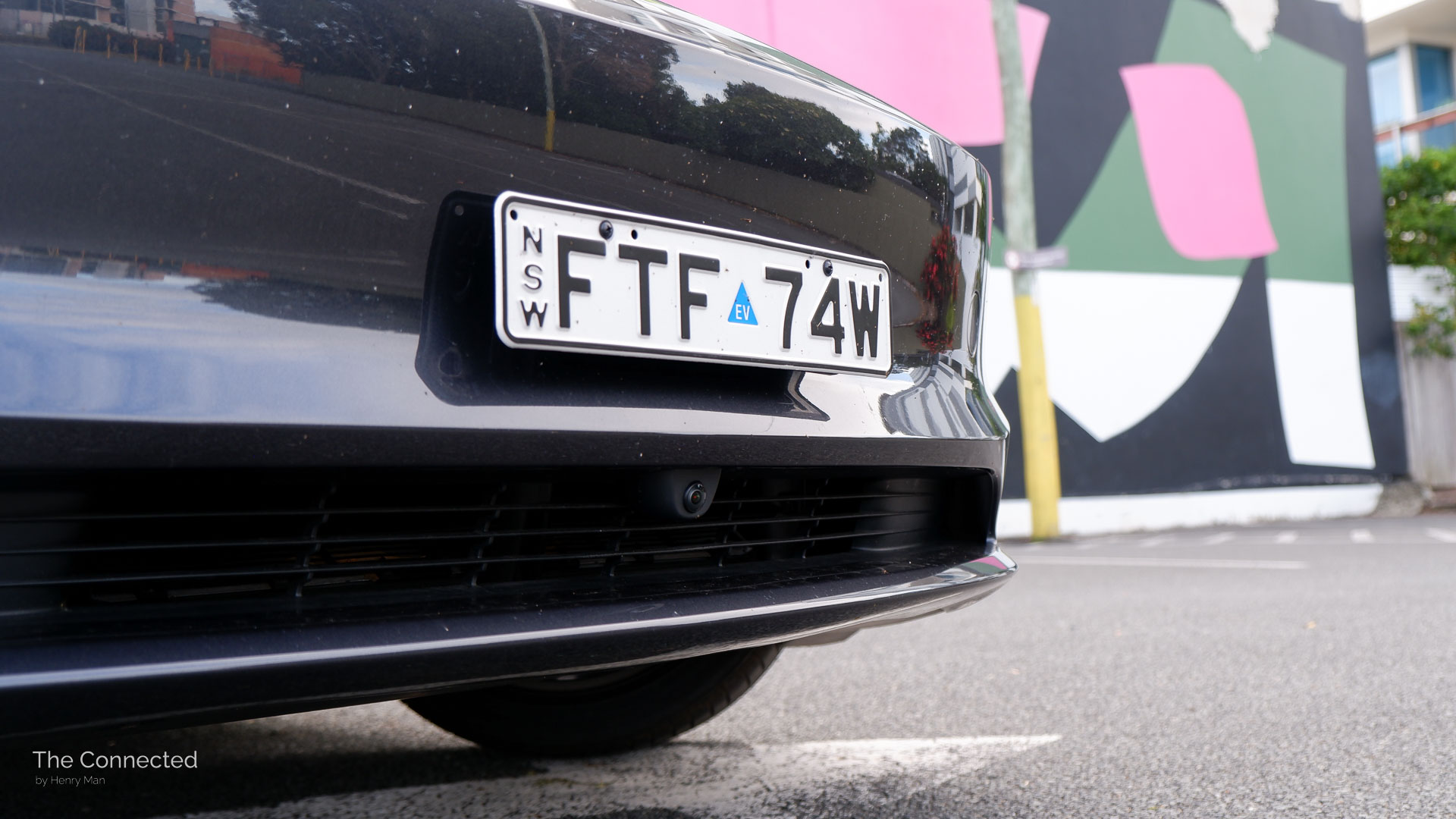
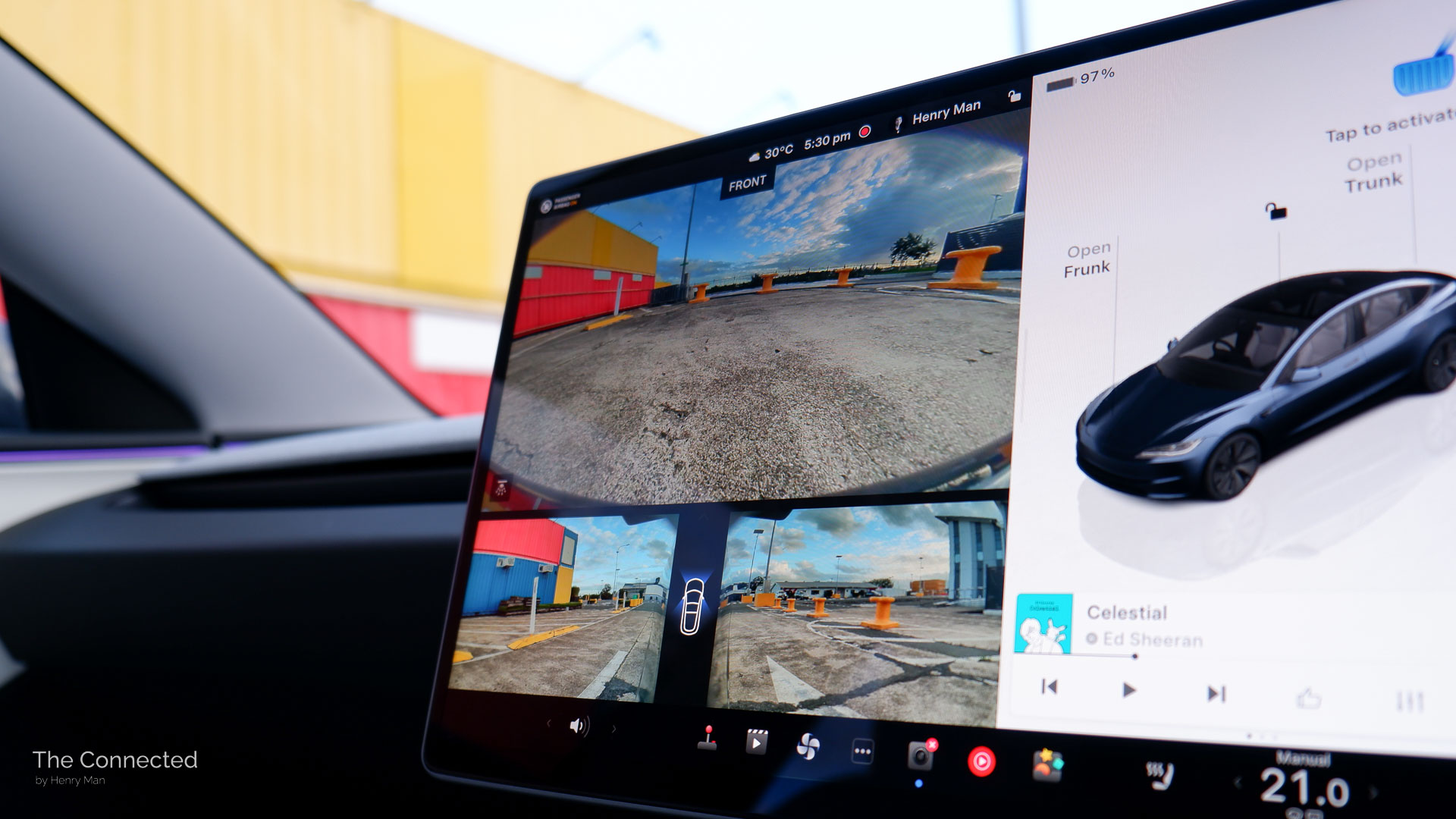
At least the 2026 update has introduced a front bumper camera with a built-in washer, joining the rear-view and blind-spot cameras, which is a welcome addition.
It’s easy to toggle the cameras via a dedicated steering wheel button – and they don’t cut out at all when driving at high speeds, unlike most other brands.
Basic Autopilot remains a standard inclusion in Australia, which is a branded name for adaptive cruise control and lane-centring assist. However, in my testing with the Model Y, its reliability isn’t up to scratch compared to other rival systems with ‘phantom braking’ happening too frequently.
If you’re willing to pay for a $149 per month subscription, Full Self-Driving (Supervised) is worth trying out as it’s based on a completely different AI model.
FSD (Supervised) is impressively clever and stubborn at the same time. Importantly, it is not fully autonomous and complete driver attention is required.

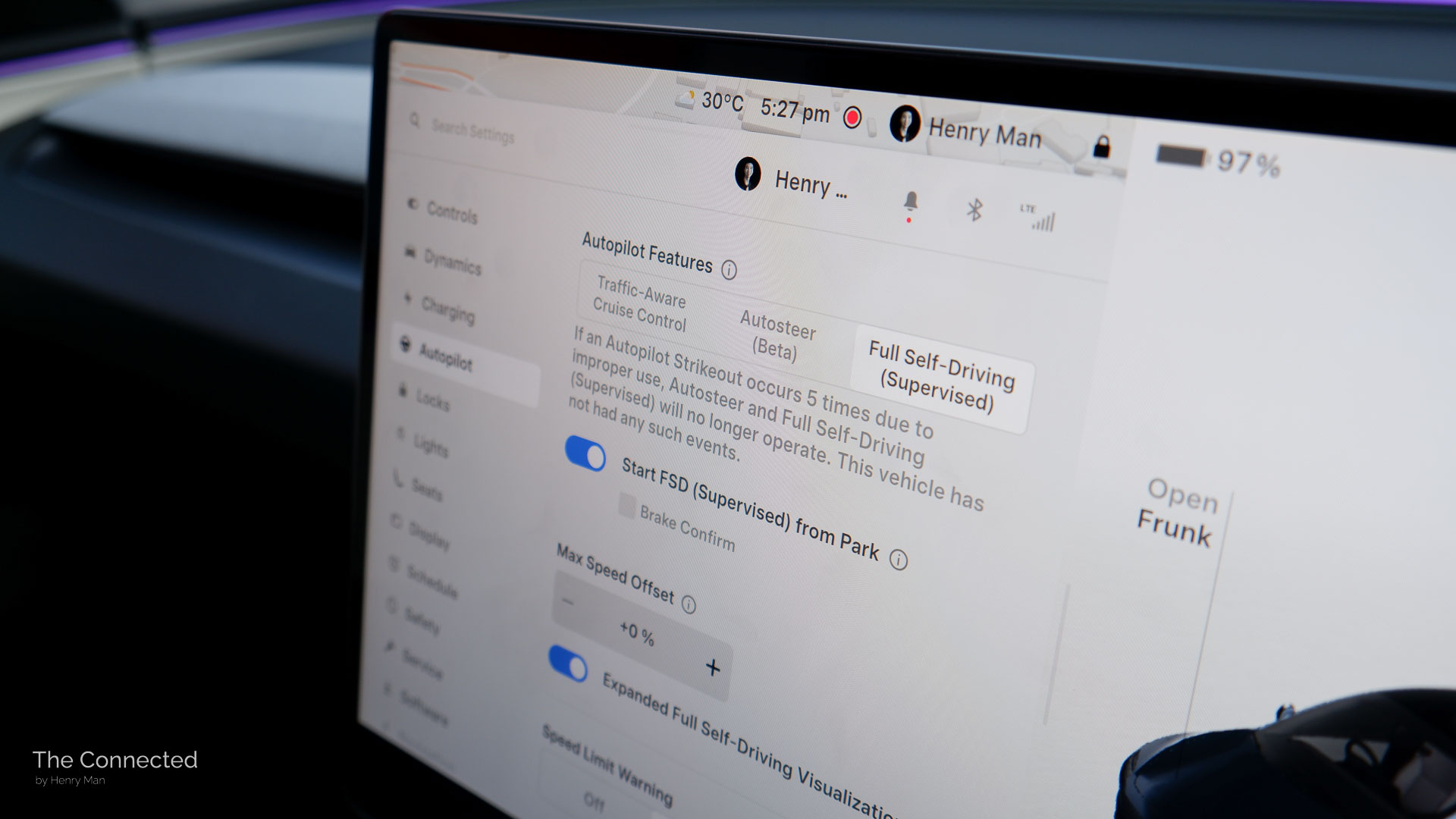

Read my full review here, but even half a year later as at the time of testing, it was still on version 13.2.9 in Australia with the same flaws – including a lack of appropriate lane knowledge, often being under the speed limit when no vehicle is in front, slowing down aggressively when cornering, and ‘phantom braking’ from falsely detecting speed sign changes.
Tesla has since rolled out an upgraded V14.3.3 Down Under, which I’m yet to test.
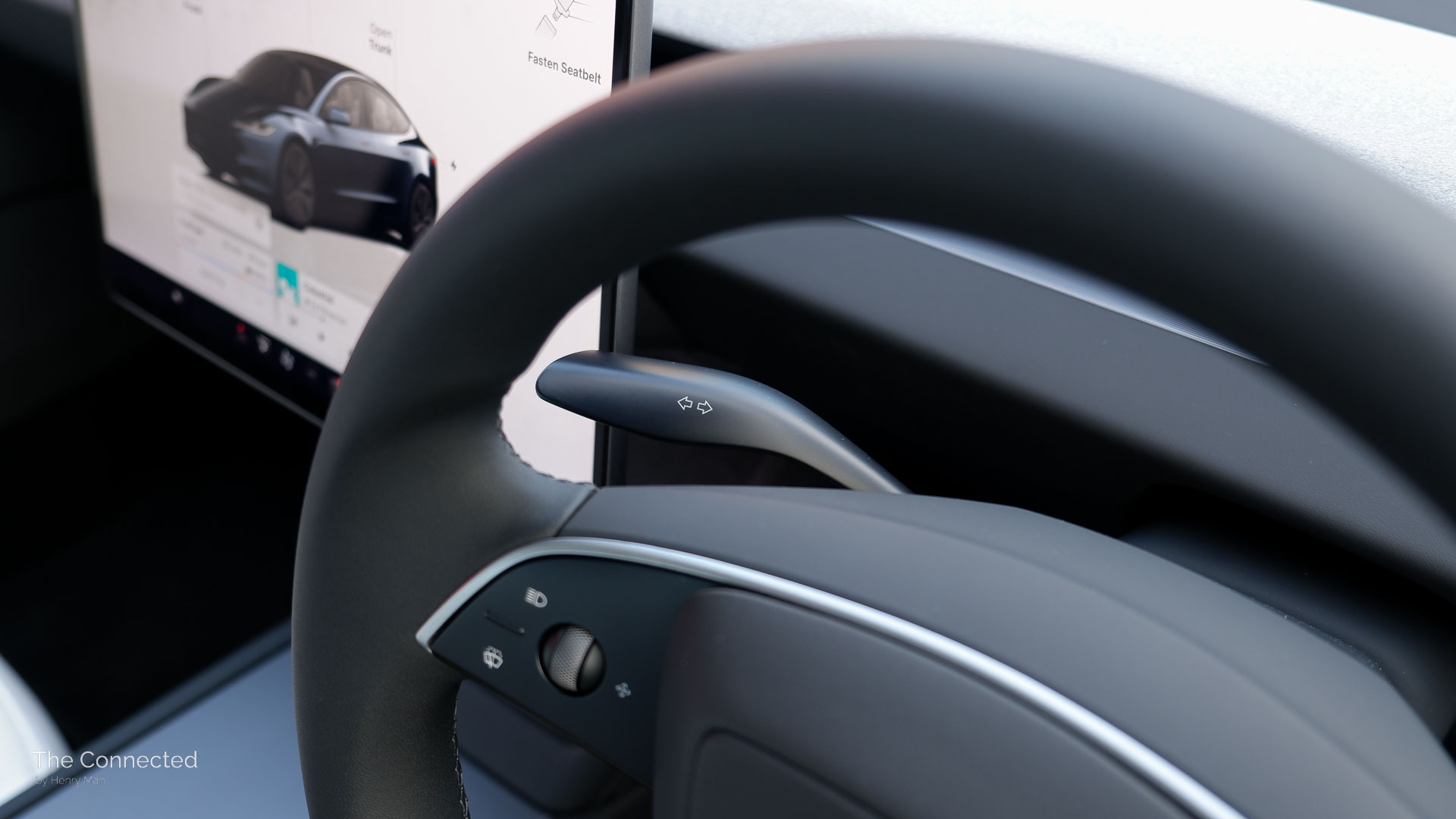
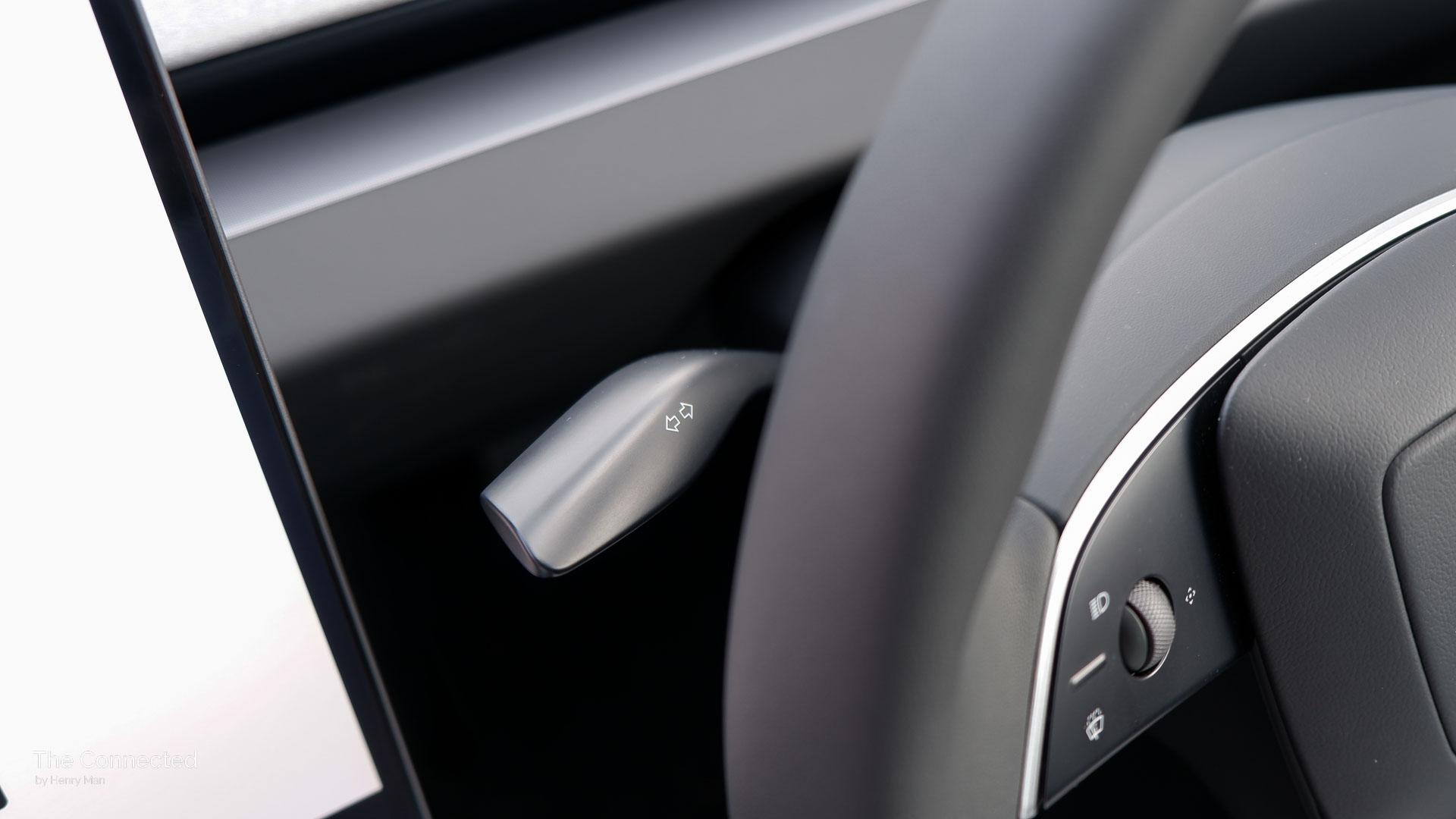
Having the re-inclusion of a physical steering wheel stalk on the 2026 Model 3 also helps with correcting FSD (Supervised) at times, such as when it fails to indicate to exit a roundabout or to force a lane change.
The good news is, it’s completely optional and you can opt in and opt out at any given month – if you have the money.
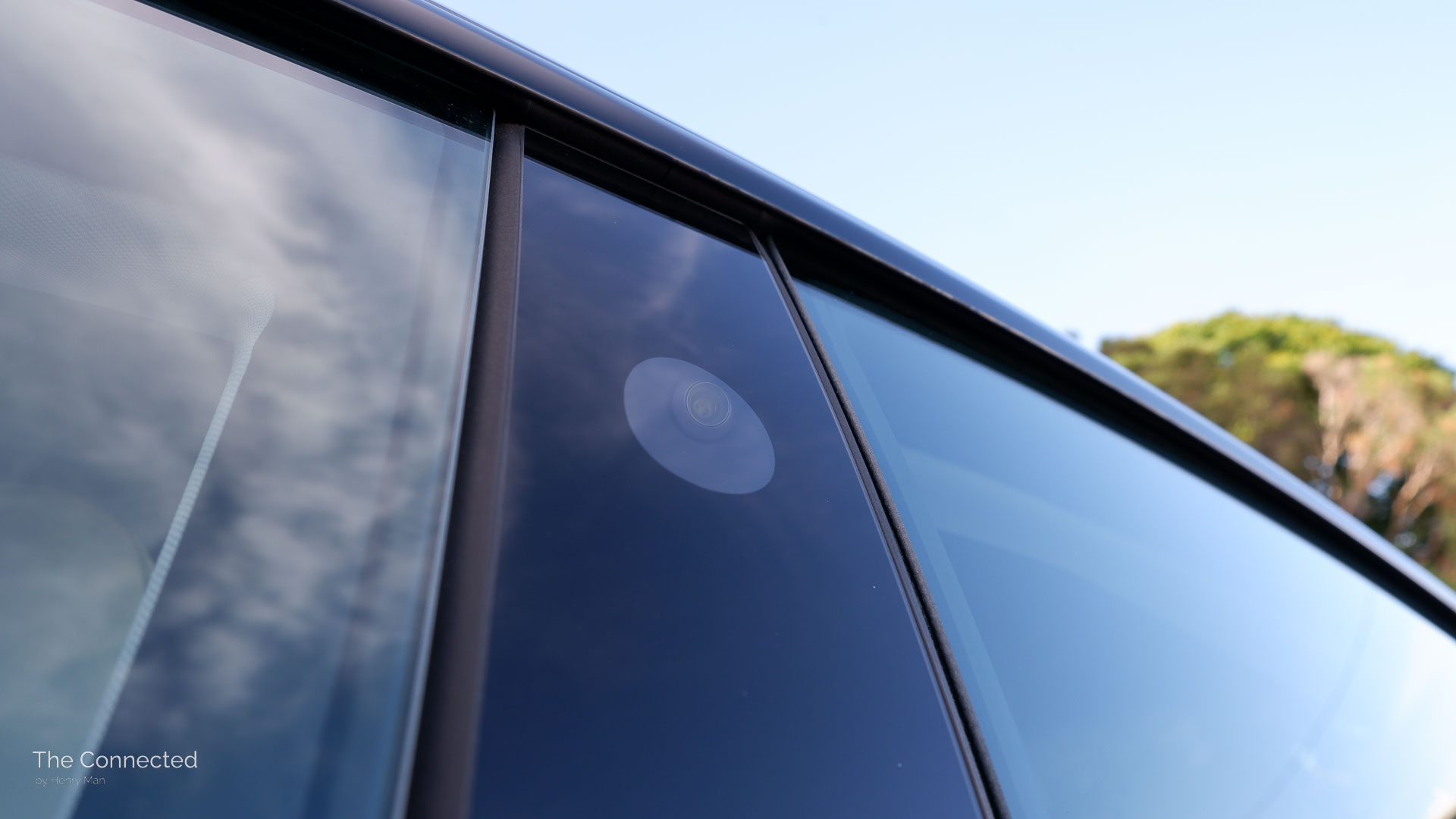
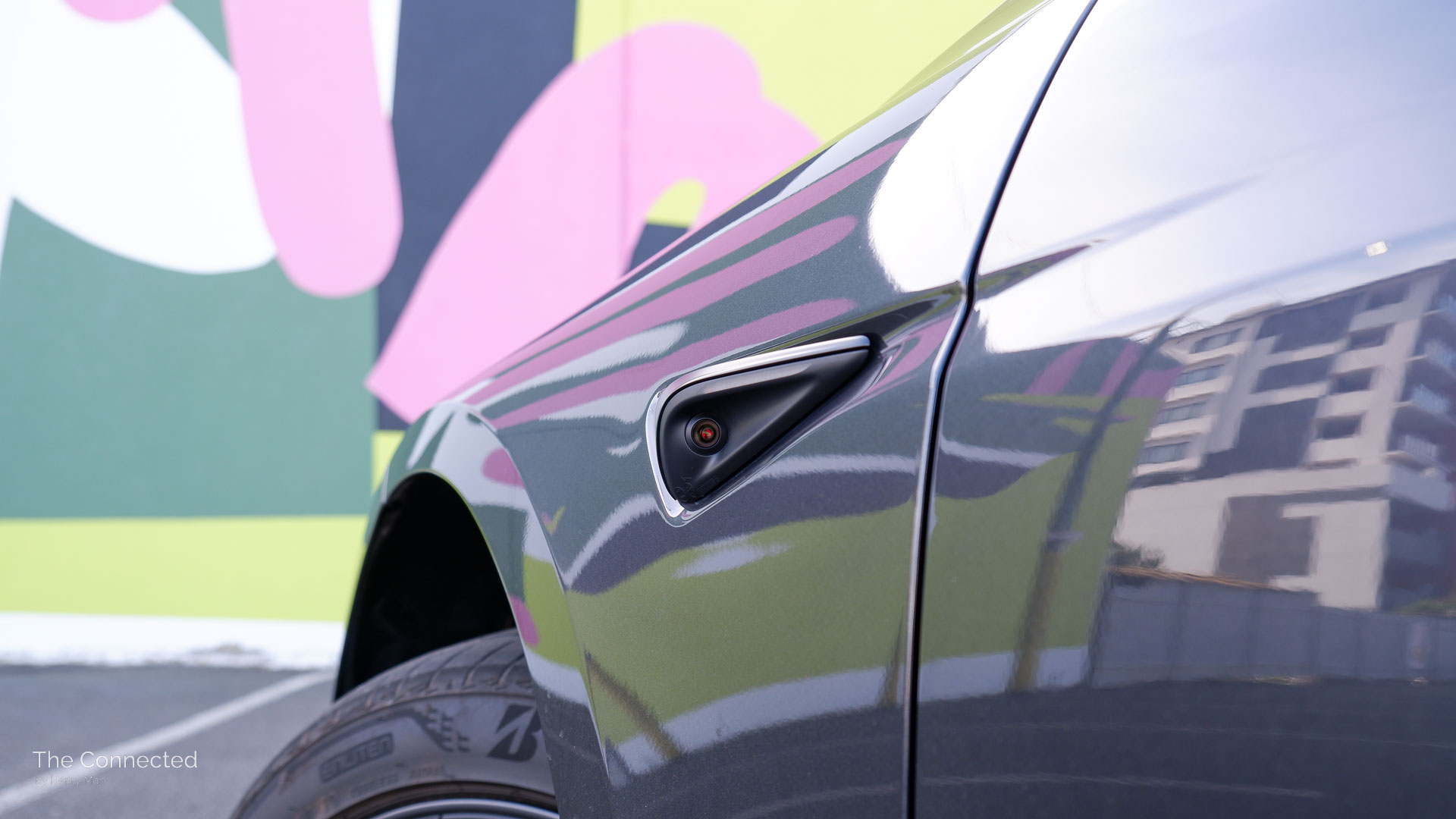
Another key selling point is Tesla’s Dashcam and Sentry Mode functions which utilises six all-round cameras for 24/7 recording.
While it isn’t perfect as it drains the battery pack by up to 10% in an eight-hour period overnight and can trigger events too sensitively (using more energy), yet too conservatively at times, it is still a great failsafe.
Moreover, the electric sedan boasts full LED headlights as standard with a camera-based adaptive high beam matrix function, which effectively blocks out individual pixels to avoid glaring other drivers.
It’s a shame that drivers need to dig into the touchscreen to manually adjust the headlights and the rear fog light button isn’t on the first ‘Controls’ settings screen; it’s under a separate ‘Lights’ tab. Yes, you can bring up a pop-up via pressing the steering wheel icon, but it flashes the lights first (not ideal when driving).
The 2026 Tesla Model 3 received the full five-star safety rating by the Australasian New Car Assessment Program (ANCAP) under 2025 testing criteria.
Notably high scores were achieved in the adult, child, and vulnerable road user detection criterions.
Range and charging.
2026 Tesla Model 3 Long Range RWD battery and charging specs:
| Claimed driving range (WLTP combined cycle) | 750km |
| Claimed energy efficiency (WLTP combined cycle) | 12.5kWh/100km |
| Battery size and type | ~78kWh (~82kWh gross) NMC (estimated) |
| Battery voltage | 400-volt class |
| Max AC / DC charging speed | 11 / 250kW |
| Bidirectional charging | N/A |
| Connector type | Type 2 CCS |
| Everyday charging limit recommendation | 80% |
The new 2026 Model 3 Long Range RWD is an astonishingly efficient EV, but its range and charging claims are optimistic in the real world.
After 11 days driving a mix of urban and highway conditions, including a return day trip from Brisbane to Yamba, the Model 3 Long Range RWD achieved an impressively low 11.8kWh/100km energy consumption.
The efficiency is incredible. For context, the Hyundai Inster – a 71kW micro car – returned 13.6kWh/100km in my experience, while the Cupra Tavascan midsize SUV was 17.6kWh/100km in real world testing.
Tesla doesn’t officially disclose the battery pack size, but the Model 3 Long Range indicated that it could provide 640km of real-world driving range. If based on the reported estimated 78kWh battery pack figure, then it could theoretically last for 660km.
That’s disappointingly well below Tesla’s lofty 750km WLTP range claim, but it’s still the longest range EV on sale right now for less than $70K.
Unlike the base RWD, the Long Range features a nickel-manganese cobalt (NMC) type lithium-ion battery with Tesla recommending an 80% daily charge limit to maintain good health.
Therefore, expect around 512km of real-world everyday range.
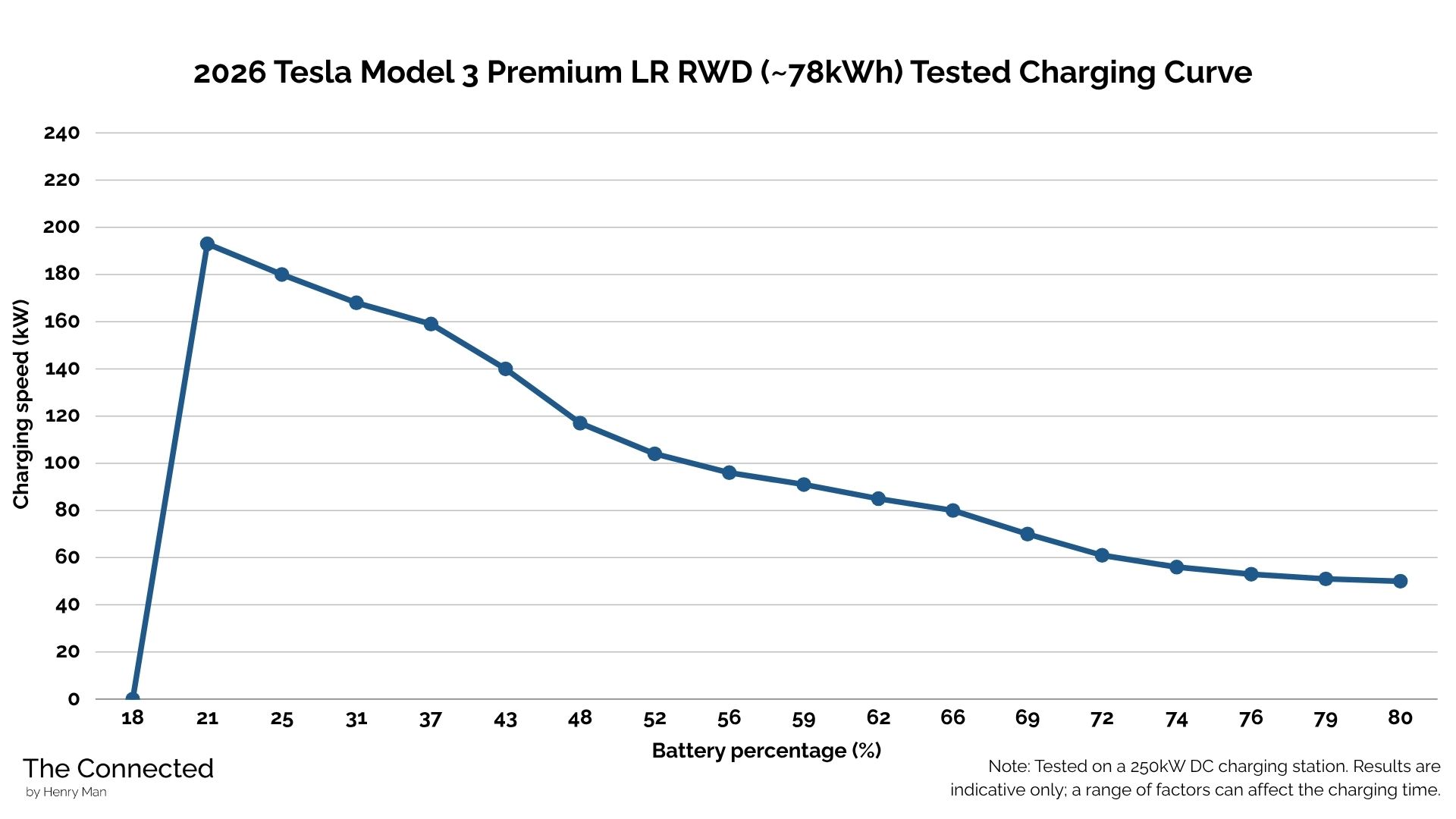

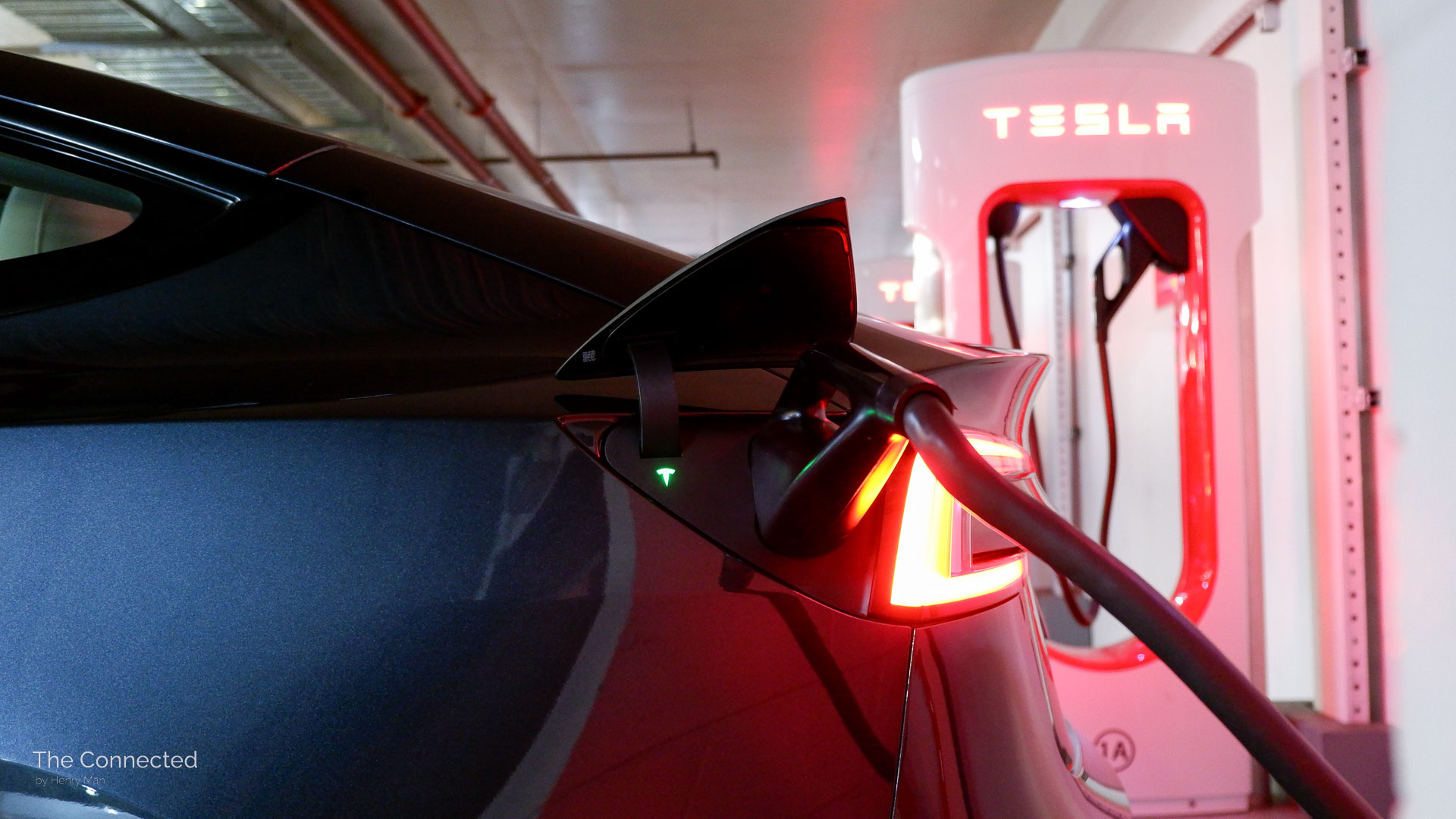
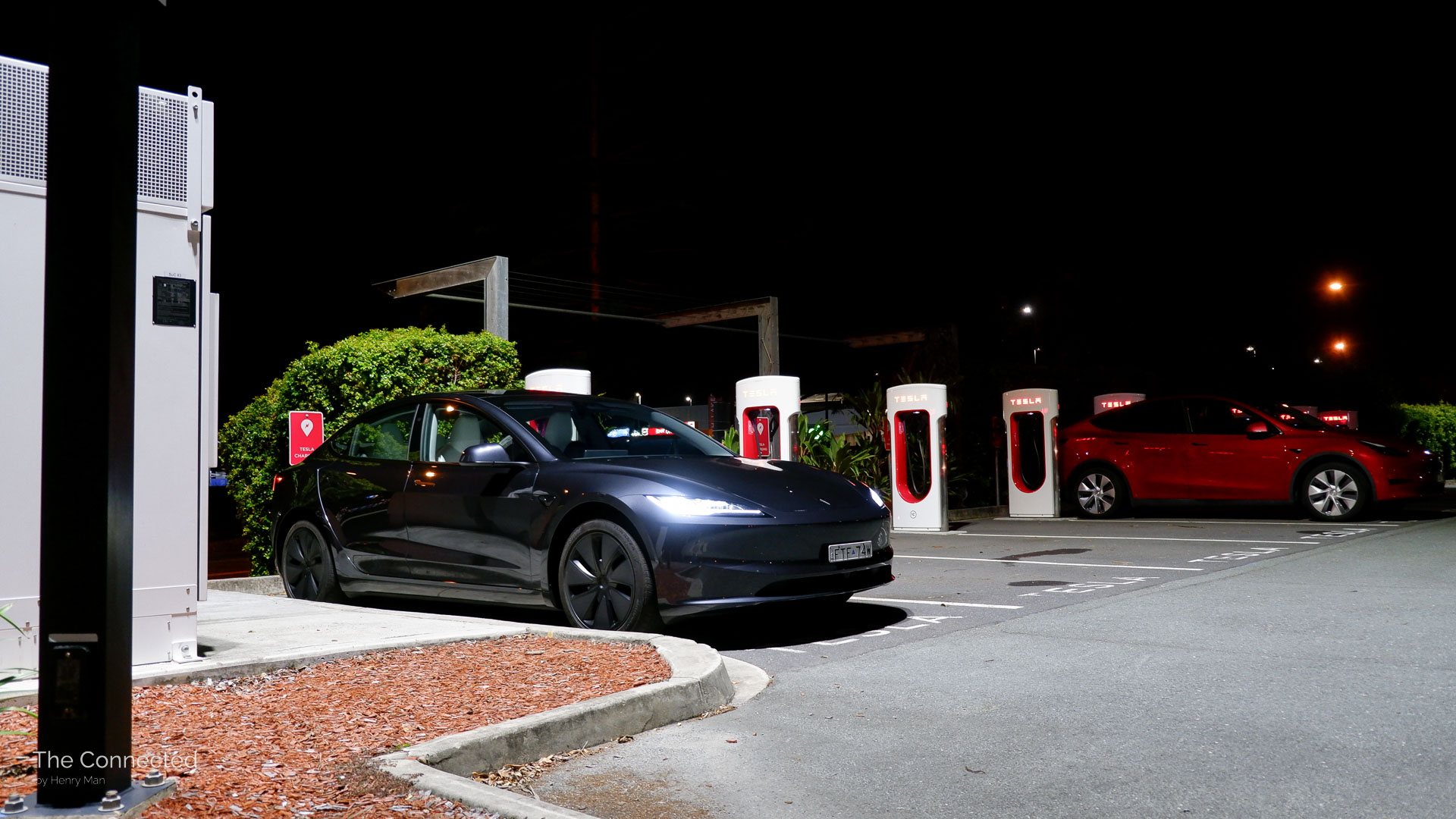
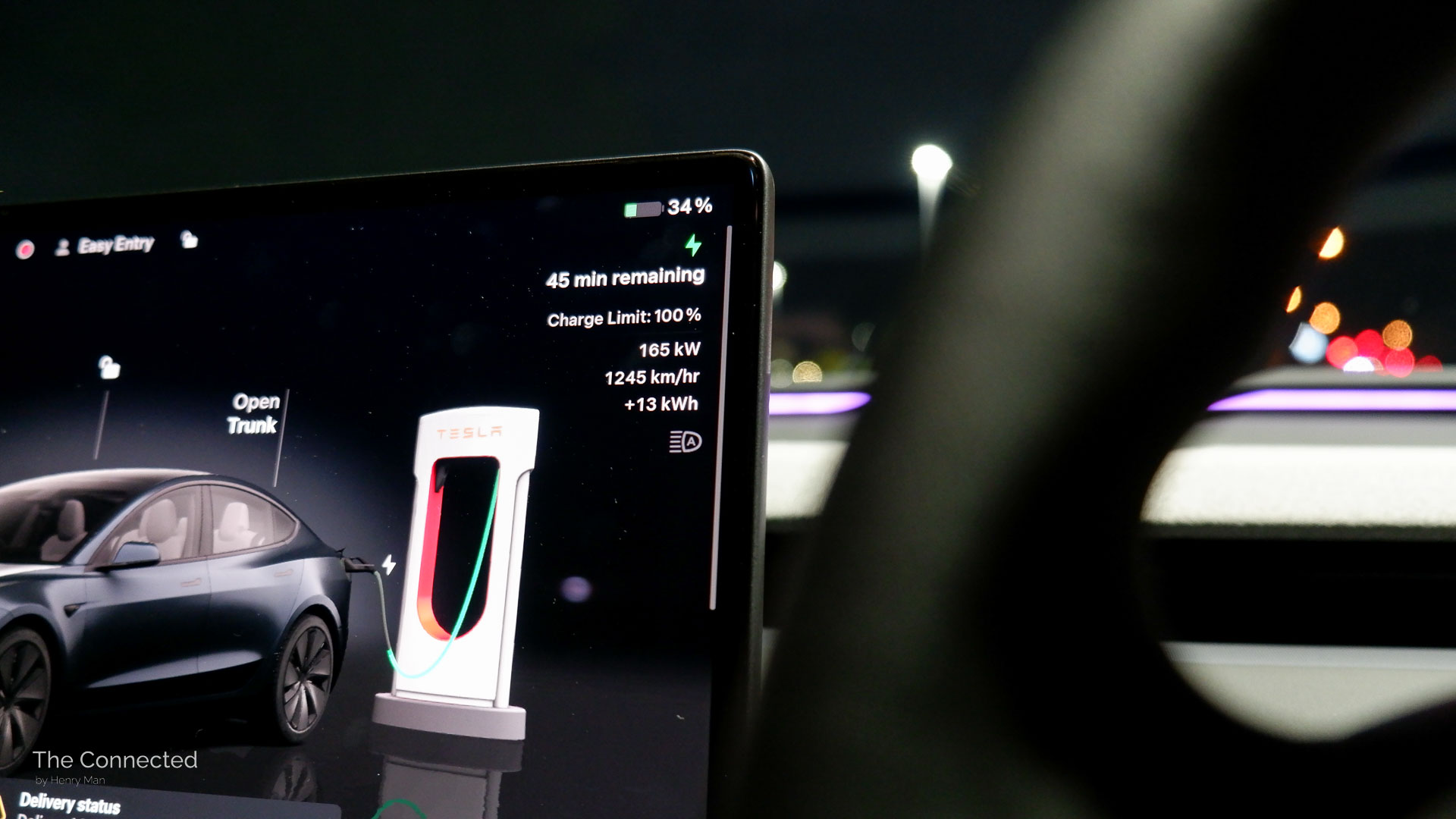
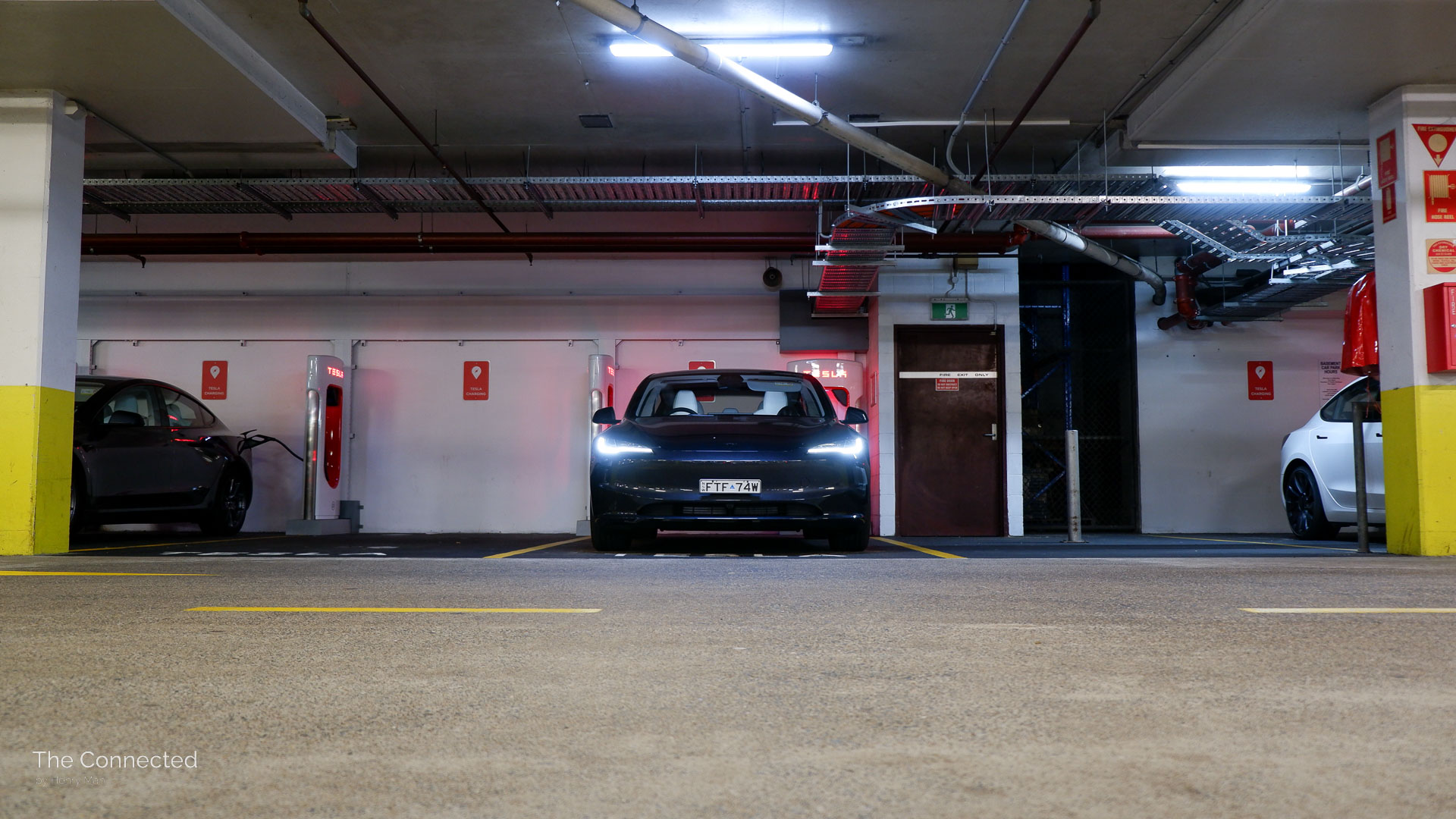
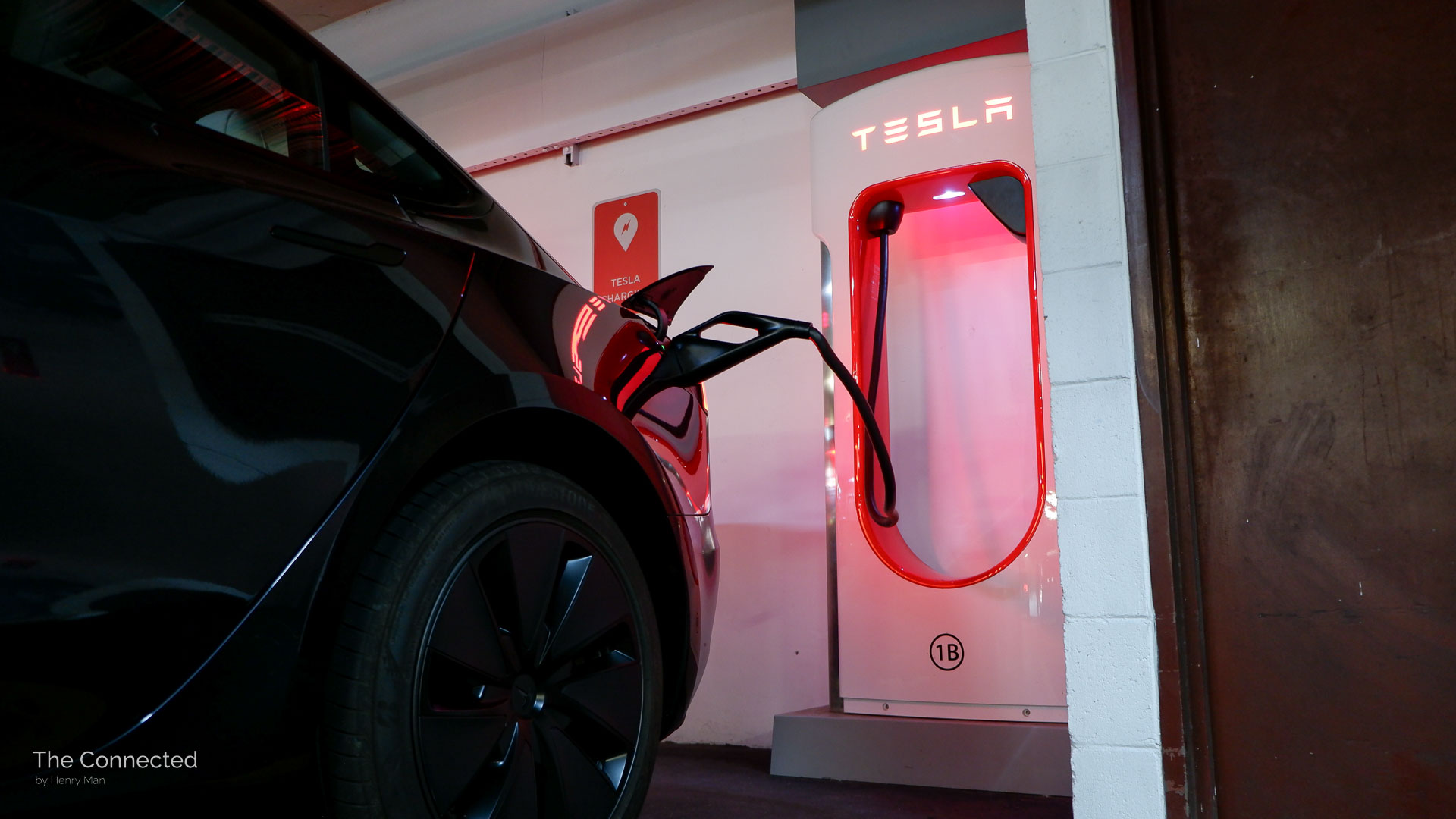
Using a 250kW public fast charging station, the Tesla Model 3 Long Range RWD recharged from 18 to 80% in around 31 minutes.
Despite Tesla claiming it can reach up to 250kW DC speeds, I only saw a 193kW peak across multiple charge sessions with battery pre-conditioning enabled.
The average session speed was 103kW with it gradually throttling over time in a fairly flat curve.
While the Model 3 isn’t outstandingly quick to charge against newer EVs such as the 800-volt based IM 5, Zeekr 7X and Hyundai Ioniq 5, it still has the advantage with full access, member pricing and software integration with its own Tesla Supercharging network.
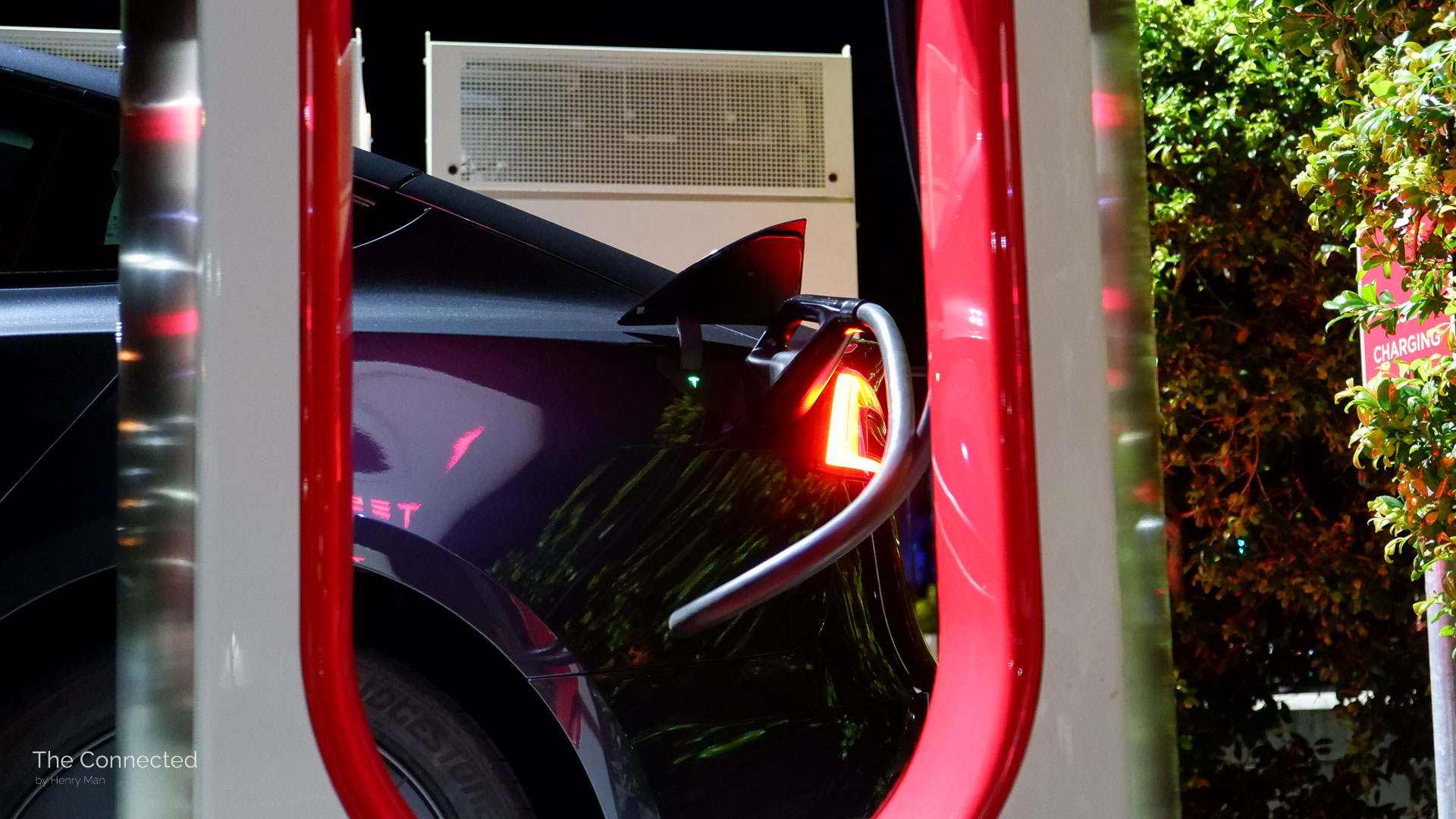
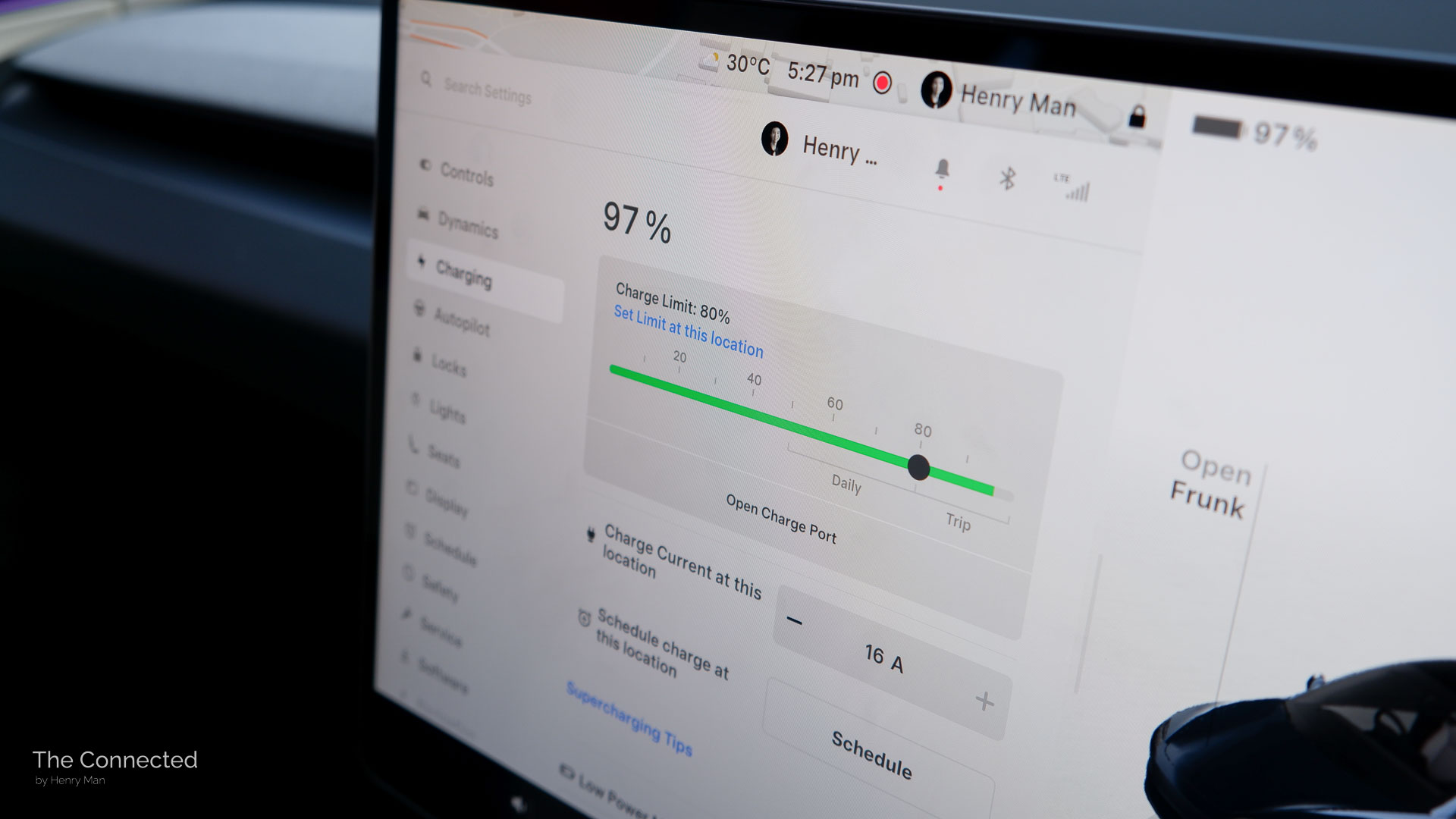
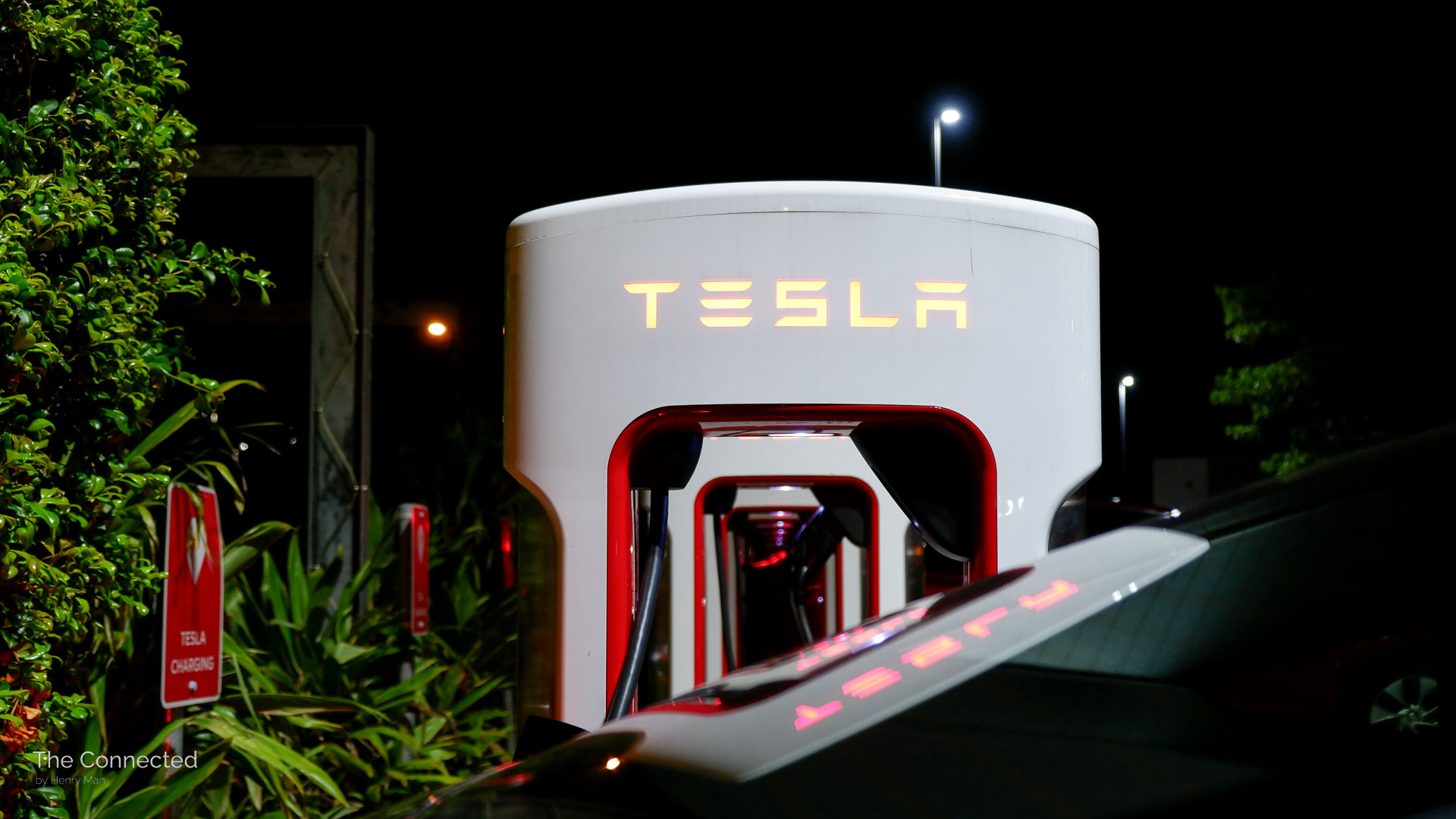
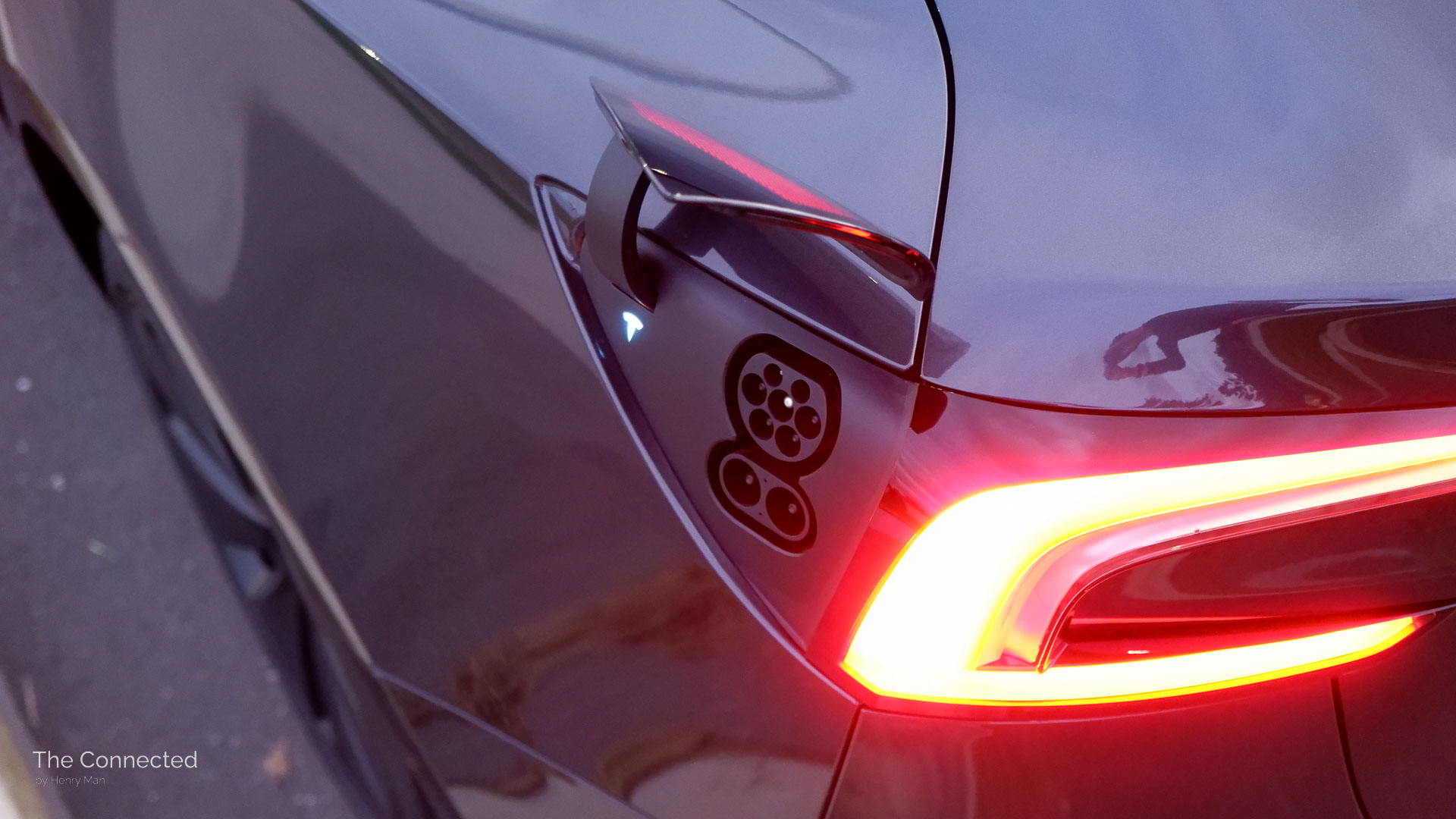
Tesla’s navigation seamlessly plans Supercharging stops when there isn’t enough charge, shows pricing and availability, and owners simply press the wand button to open the charge port, plug in and it starts charging automatically.
It’s magical. No need to fumble with a mobile app or even touch your own charge port.
The Model 3 Long Range has up to 11kW AC charging capability which is standard for EVs.
The Type 2 CCS port is positioned at the rear-left quarter side – and at the outer edge for better accessibility to a range of different charging station placements.
Unlike most other electric cars, Tesla doesn’t implement any annoying rubber or plastic caps to cover the AC and DC pins.
Driving.
2026 Tesla Model 3 Long Range RWD powertrain specs:
| Electric drive unit | Single permanent magnet electric motor |
| Power / torque (estimated) | ~235kW / ~450Nm (estimated) |
| Transmission | Single-speed |
| Drive type | RWD |
| Kerb weight | 1747kg |
| Payload | 439kg |
| Towing (unbraked / braked) | 750 / 1000kg |
| Turning circle | 11.7m |
The Tesla Model 3 is fun and nimble to drive, though its directness can feel tedious at times.
The company disappointingly does not disclose its power figures, but according to online reports, the Model 3 Long Range’s single rear motor produces up to 235kW of power and 450Nm of torque (estimated).
Acceleration is very brisk and responsive with a noticeable kick from the rear. It’s fun to get up to speed and isn’t unnecessarily rapid like the Model 3 Performance, Ford Mustang Mach-E GT or Hyundai Ioniq 6 N.
Combined with a super direct power steering tune and a small steering wheel, the medium electric sedan feels more nimble and go-kart like than its exterior dimensions suggest.

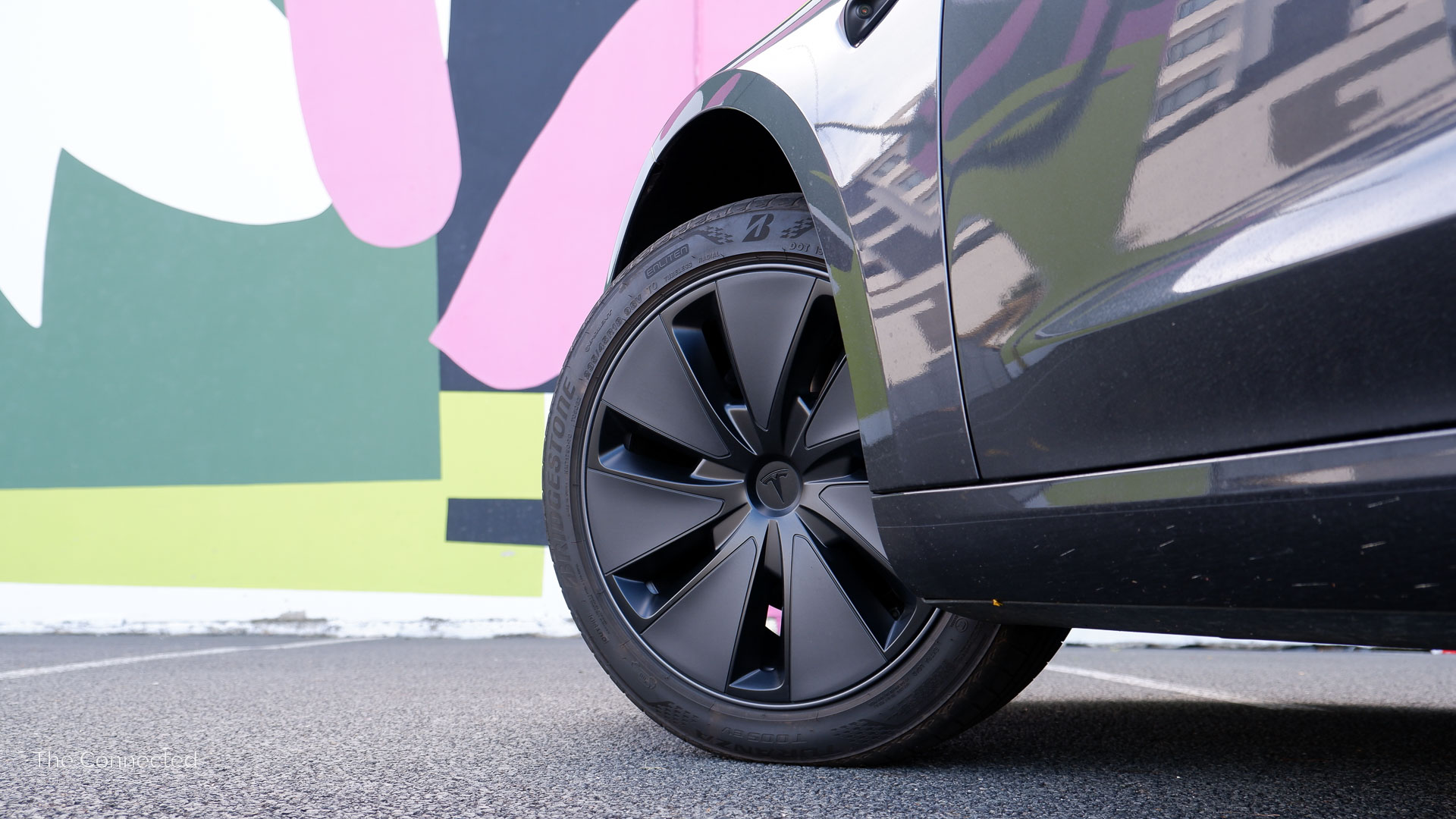

The Model 3 is sporty to drive, but feels a little computerised.
It can feel tedious on the highway as the direct steering doesn’t soften up at high speeds with small inputs resulting in a quick response when going in a straight line.
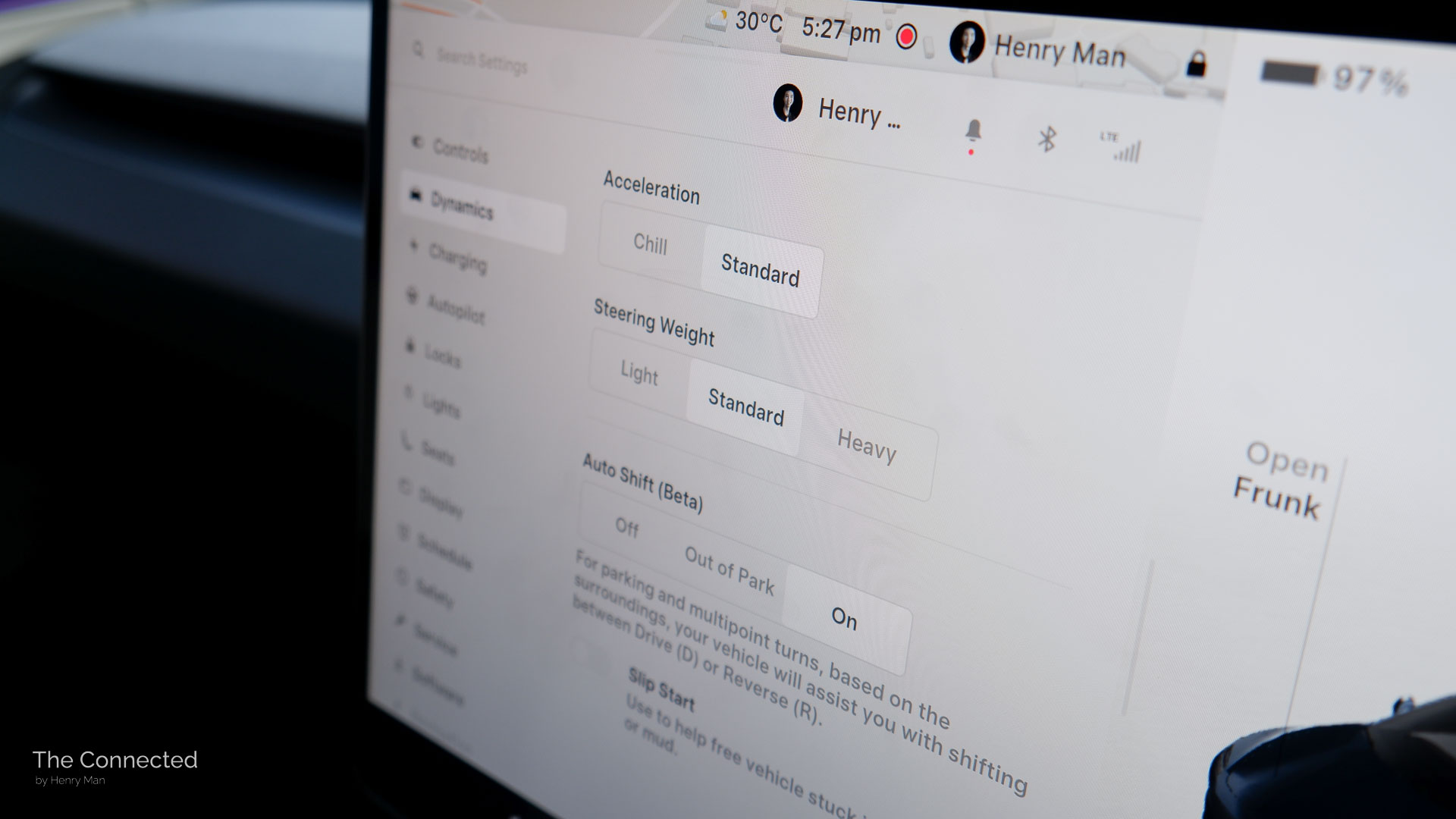
One-pedal driving is mandatory with ‘Standard’ and ‘Chill’ intensity settings available, but it’s easy to get used to since it’s smooth and progressive to modulate the accelerator pedal and come to a stop – great for city driving.
Moreover, the electric sedan offers superb ride comfort and compliance over bumps and coarse-chip roads, helped by the standard 18-inch wheels and frequency selective dampers. It only has a slightly firm edge.
Noise insulation is equally excellent and on par with much more expensive luxury cars.
With the lack of a dedicated driver instrument display, the speedometer is placed at the outer corner of the main screen and is a good size.
While it is still safer to see the speed in front, it isn’t difficult to get used to looking sideways after a few days because drivers often look at the touchscreen for the maps and music anyway.
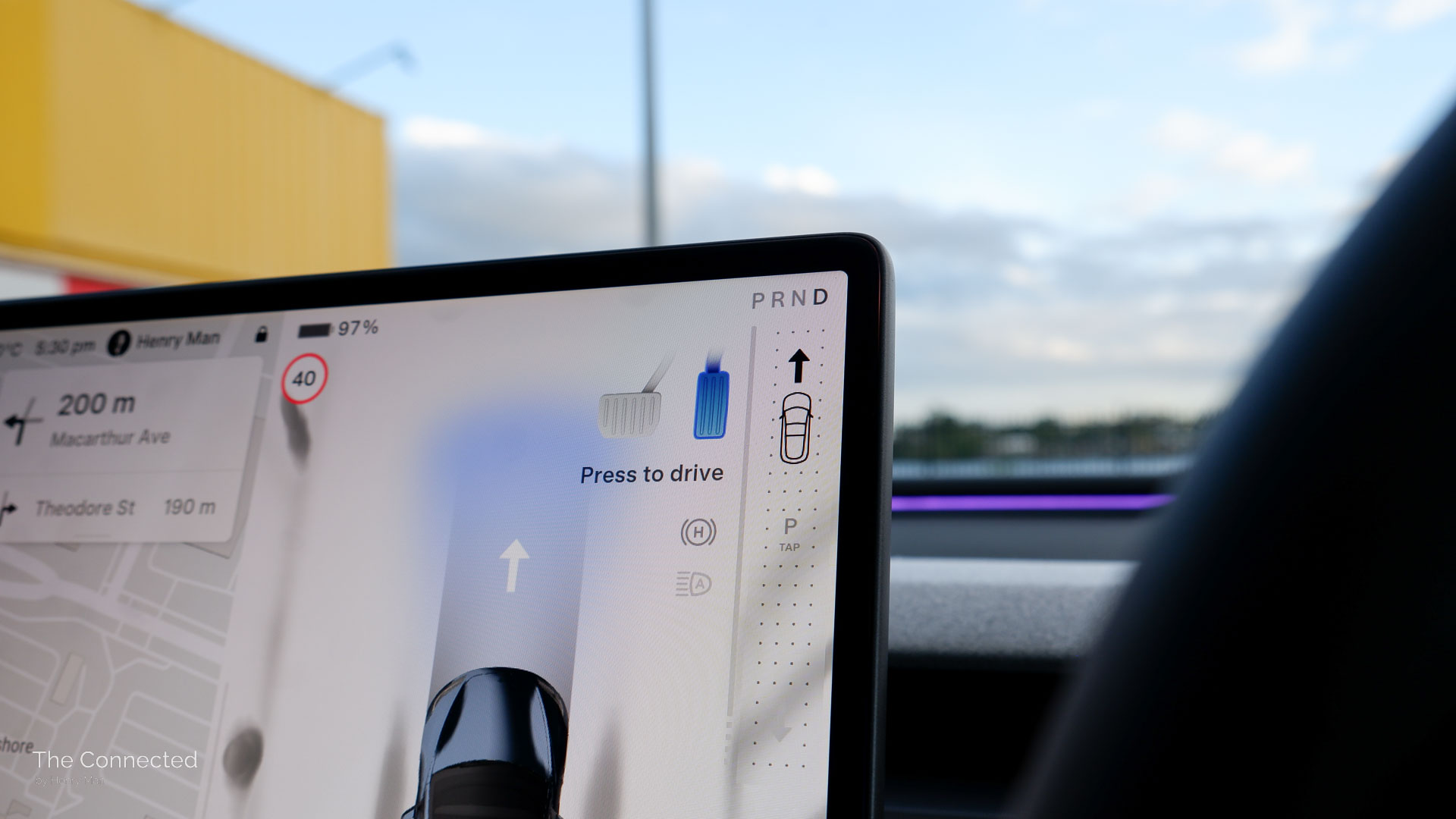
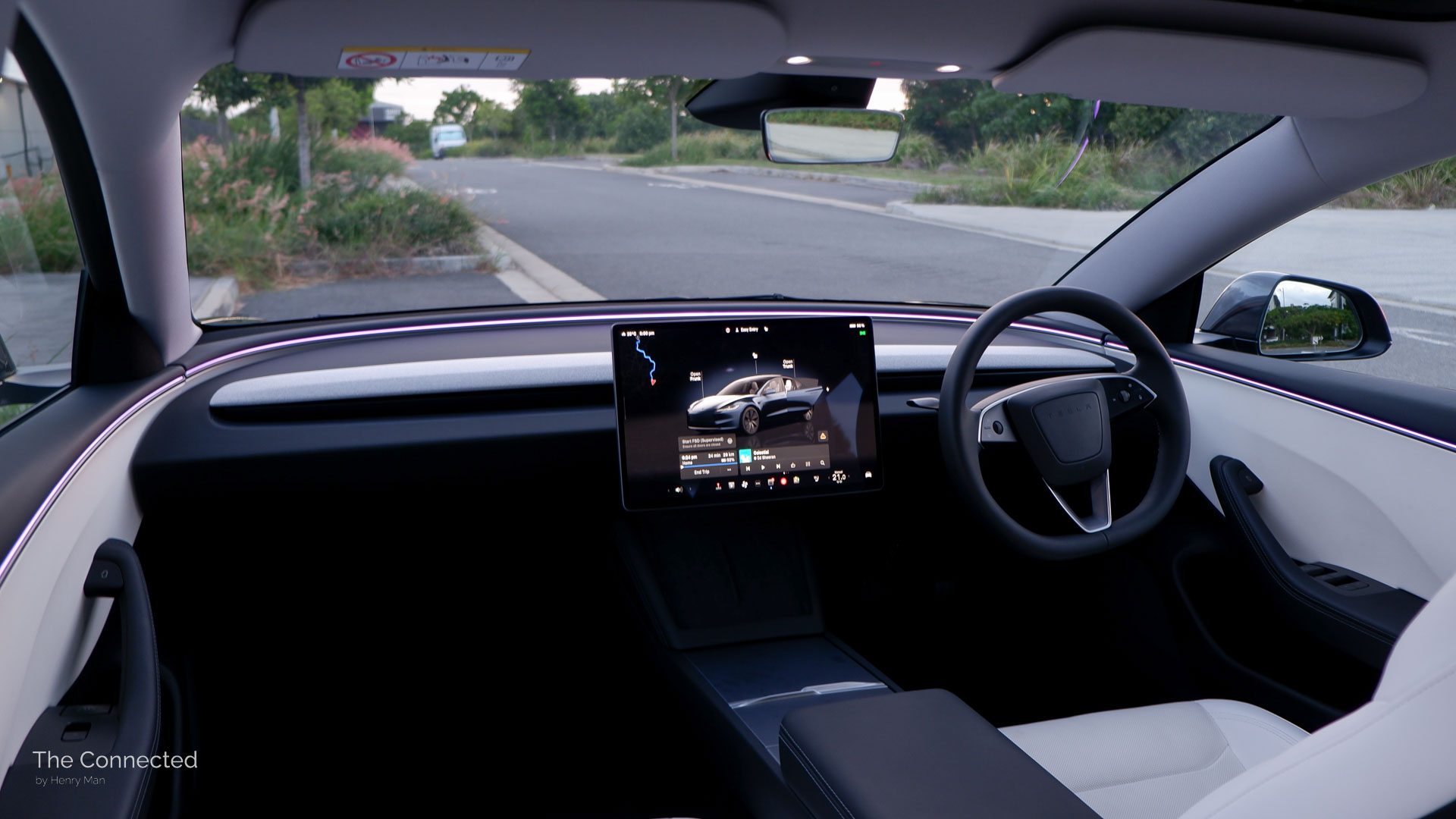
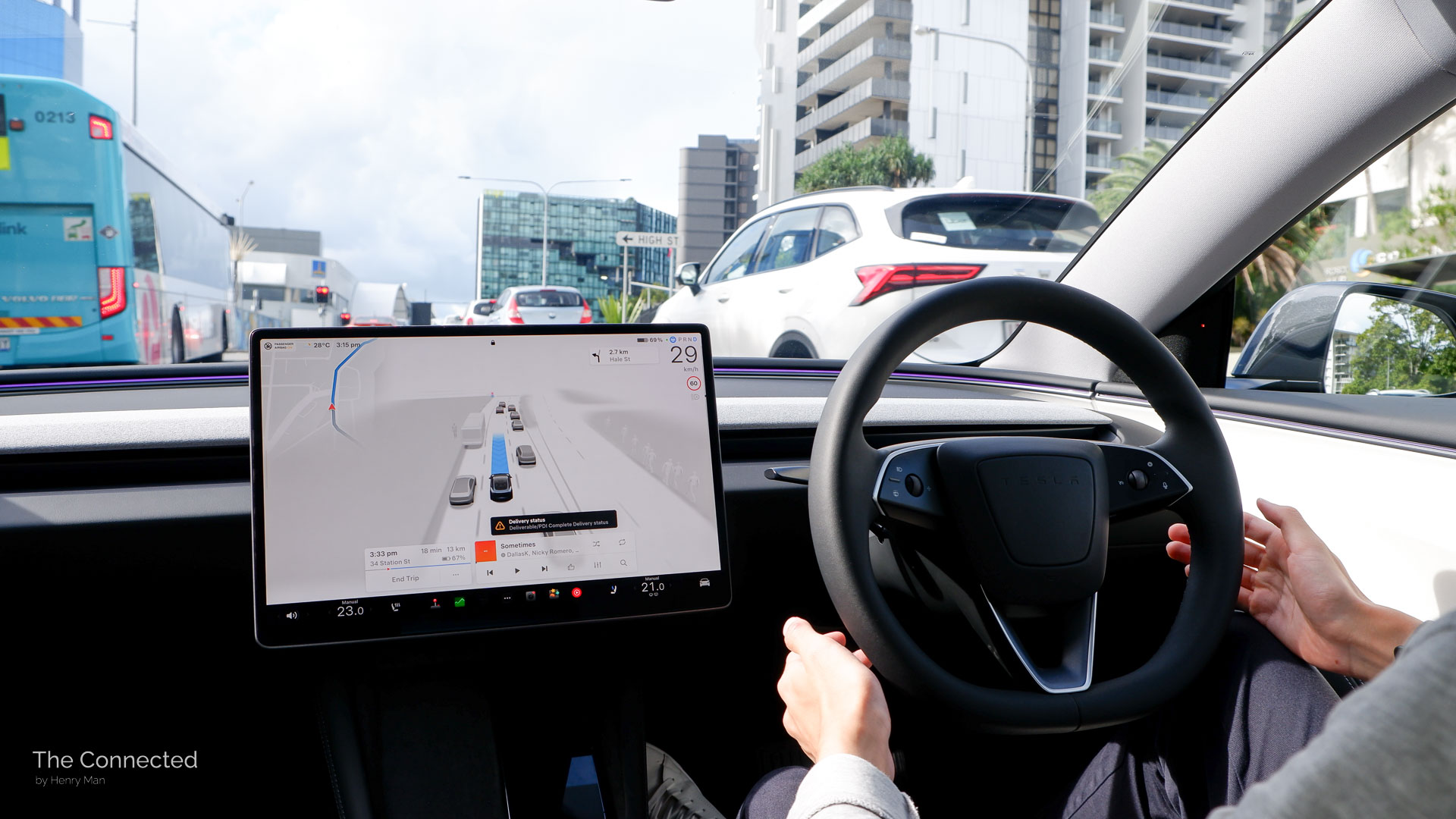
What’s more annoying is the Model 3’s on-screen drive selector. Instead of a physical stalk, drivers need to swipe on the edge of the touchscreen – which can be tedious at times when making a three-point turn or more.
The Tesla automatically shifts into park when the driver’s seatbelt is unbuckled and there’s Auto Shift (Beta) which suggests changing into drive or reverse based on the camera system.
However, it is imperfect and the requirement to press the brake and turn the wheel isn’t always registered, either by not pressing the brake or turning the wheel enough. In one instance, I was still (dangerously) reversing by completely trusting it switched for me.
Fortunately, a physical indicator stalk has been reintroduced and has eliminated a key learning barrier of the refreshed Model 3. It’s very simple as it always stays in the centre, there’s no half press for three flashes, nor any other functionality.
Unlike some sedan EVs, the Model 3 provides a suitably low seating position to feel more hunkered down with the car. Yet, the high floor makes long drives uncomfortable especially when adaptive cruise or FSD (Supervised) is activated.
All-round visibility is good with better rear vision than the Model Y SUV due to the pillar-less rear glass, though the wing mirrors are slimmer than its more practical sibling.
It’s also one of the few models at this price point to boast auto-dimming for the rear-view mirror and both wing mirrors, with the ability to turn off the latter if you prefer.
Warranty and servicing.
The 2026 Tesla Model 3 is backed by a five-year, unlimited kilometre vehicle warranty and an eight-year battery warranty.
The entry Premium RWD has an eight-year/160,000km (whichever occurs first) battery warranty, while the Long Range RWD and Performance AWD benefit from longer eight-year/192,000km coverage.
The five-year Tesla vehicle warranty applies to new deliveries from 2026 and is a welcome extension from the previous four-year coverage.
Tesla adopts a condition-based servicing approach with the vehicle notifying owners when certain maintenance tasks are required, such as tyre rotation, wiper replacement and more.
The company also offers a mobile service in selected metro areas, too.
This is much more flexible and convenient than most other traditional carmakers that usually require servicing every year or two, and will likely be cheaper overall.
Roadside assistance is included for five years.
A spare tyre is not included in the Model 3, nor is any temporary patch up goo kit.
Price and rivals.
2026 Tesla Model 3 model range pricing (accurate as at the time of publication):
| Premium RWD | Premium Long Range RWD | Performance AWD |
| From $54,900 before on-road costs | From $61,900 before on-road costs | From $80,900 before on-road costs |
The 2026 Tesla Model 3 is priced from $54,900 before on-road costs in Australia.
Three variants are available and all fall under the Luxury Car Tax (LCT) threshold in Australia.
All paint colours except Pearl White Multi-Coat costs between $1500 to $2600 more.
A Black and White interior option is available for $1500 extra.
Standard Connectivity is included for up to eight years, while Premium Connectivity to unlock certain functions is a $13.99 per month subscription.
FSD (Supervised) costs $149 per month and can be cancelled and reactivated at any time. A 30-day free trial is included with all new Teslas.
What isn’t included are any charge cables. Tesla sells a trickle three-pin domestic charging cable for $550.
The 2026 Tesla Model 3 directly rivals the following electric sedans and liftbacks:
- BYD Seal
- Kia EV4
- Mazda 6e
- IM 5
- Mercedes-Benz CLA EQ
- BMW i3
- Polestar 2
- Hyundai Ioniq 6
Other alternatives to the Model 3 include:
- Tesla Model Y (full review)
- Polestar 4 coupe (full review)
- Cupra Tavascan (full review)
- Ford Mustang Mach-E (full review)
- Nissan Ariya (full review)
- Zeekr 7GT
- Toyota Camry (full review)
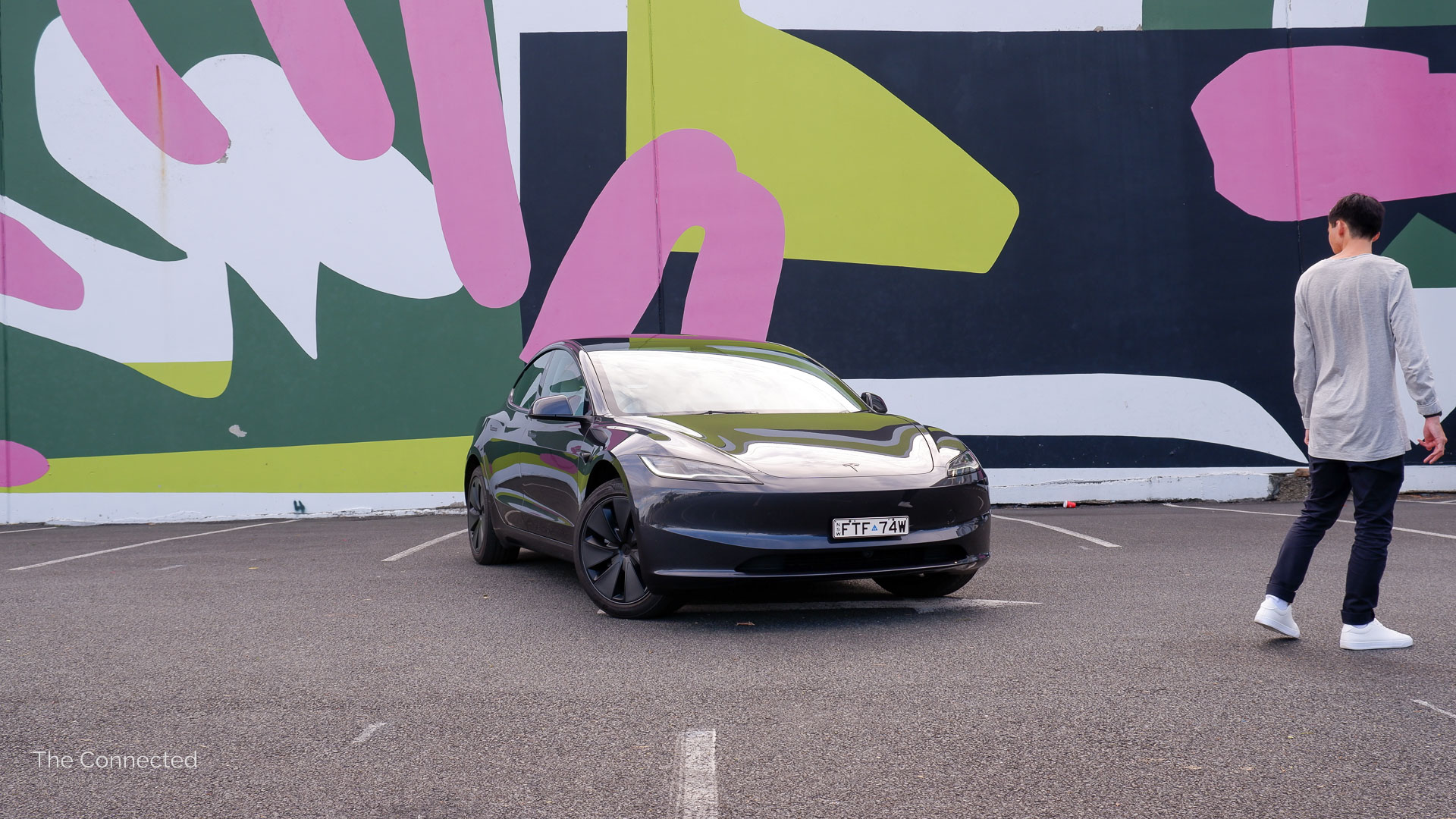
Would I pick the 2026 Tesla Model 3 Long Range RWD?
A decade later, the Tesla Model 3 remains one of the best default EV options available.
Superb energy efficiency, a genuinely premium interior, unrivalled tech, and a sporty drive – all with a starting price below $60K.
Despite perceptions of a high luxury car price tag, the Model 3 represents excellent value and should be the default option for those looking into making the electric switch, just like the hybrid Toyota Camry.
However, it’s imperfect in areas with an uncomfortably high floor, weak air vent strength, an awkward tailgate design, and strange super see-through windows.
While the new Long Range RWD sets a new range benchmark for only sub-$70K, Tesla’s range and charging speed claims are optimistic in my real-world testing.

I’d pick the Model 3 Premium RWD, which is $7000 cheaper, offers mostly the same features, and provides enough range for most drivers as not everyone needs to use the extended range every day.
Now 10 years-old, the Tesla Model 3 continues to improve and is at its best yet. It may be controversial in some areas, but there’s no question that it’s a great EV overall.
Photographs by Henry Man
READ MORE: How far can the Tesla Model 3 Long Range RWD go?
READ MORE: Brisbane to Sydney EV Easter challenge: No queues at chargers highlight gaps in media reporting
READ MORE: 2025 Polestar 4 review
Pros:
- Outstanding energy efficiency
- Incredible tech
- Premium interior, attention to details
- Nimble and compliant drive
- Great value
Cons:
- Optimistic range and charging claims
- Uncomfortable high floor, low seats
- Weak air vents, no roof sunshade
- Awkward sedan tailgate design
- Odd super transparent windows
About the Author.
Henry Man is an independent content producer passionate about the intersection of technology and transportation.
The former automotive journalist is focused on producing critically-detailed vehicle reviews, and unique short-form content. Learn more.


 The Connected by Henry Man