
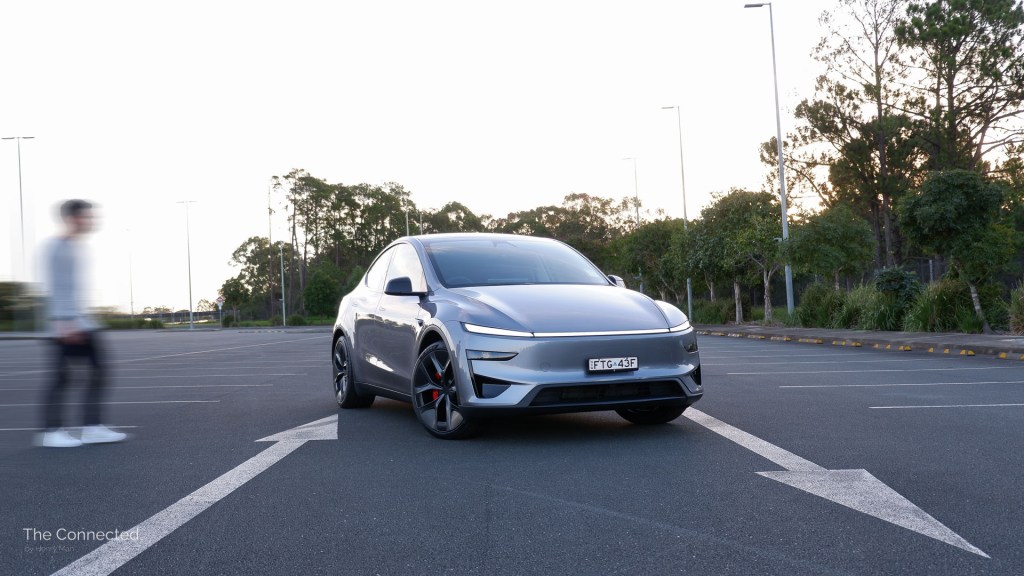
This European Tesla is the ultimate electric SUV, but there’s a catch…
The Tesla Model Y is one of the most popular electric vehicles globally. In fact, it was the first full EV to top Australia’s monthly sales charts in May and June.
Now, the flagship Model Y Performance variant has been re-introduced to the medium SUV that was refreshed in early 2025.
The Tesla Model Y Performance is an attempt at being the ultimate car – fit for drivers, families, and running cost conscious buyers.
After almost two weeks with the refreshed Performance, including a Brisbane to Sydney road trip during the peak Easter holiday period, it clearly has the cool factor advantage – even though it isn’t the most pragmatic choice.
NOTE: The press vehicle was provided by Tesla Australia for a 15-day independent evaluation. Charging and toll costs were covered, but we have no commercial arrangements with the company and it had no editorial control.

Pros.
+ Great value for the price
+ Incredible tech, efficiency, Supercharging
+ Natural and progressive steering
+ Unique and cool Performance details
+ Uncompromised practicality (mostly)
Cons.
– Cheaper models make more sense
– Deserves a HUD
– Noticeably stiff rear axle
– Compromised rear visibility, flimsy cargo cover
– No seatback pockets
Vehicle tested:
| Model | 2025 Tesla Model Y |
| Variant | Performance AWD |
| Starting price | $89,400 before on-road costs |
| Exterior colour | Quicksilver (standard) |
| Interior colour | Black Performance interior (standard) |
| Options | Full Self-Driving (Supervised) (+$149/month) Premium Connectivity (+$13.99/month) |
| Country made | Germany |
Design and quality.
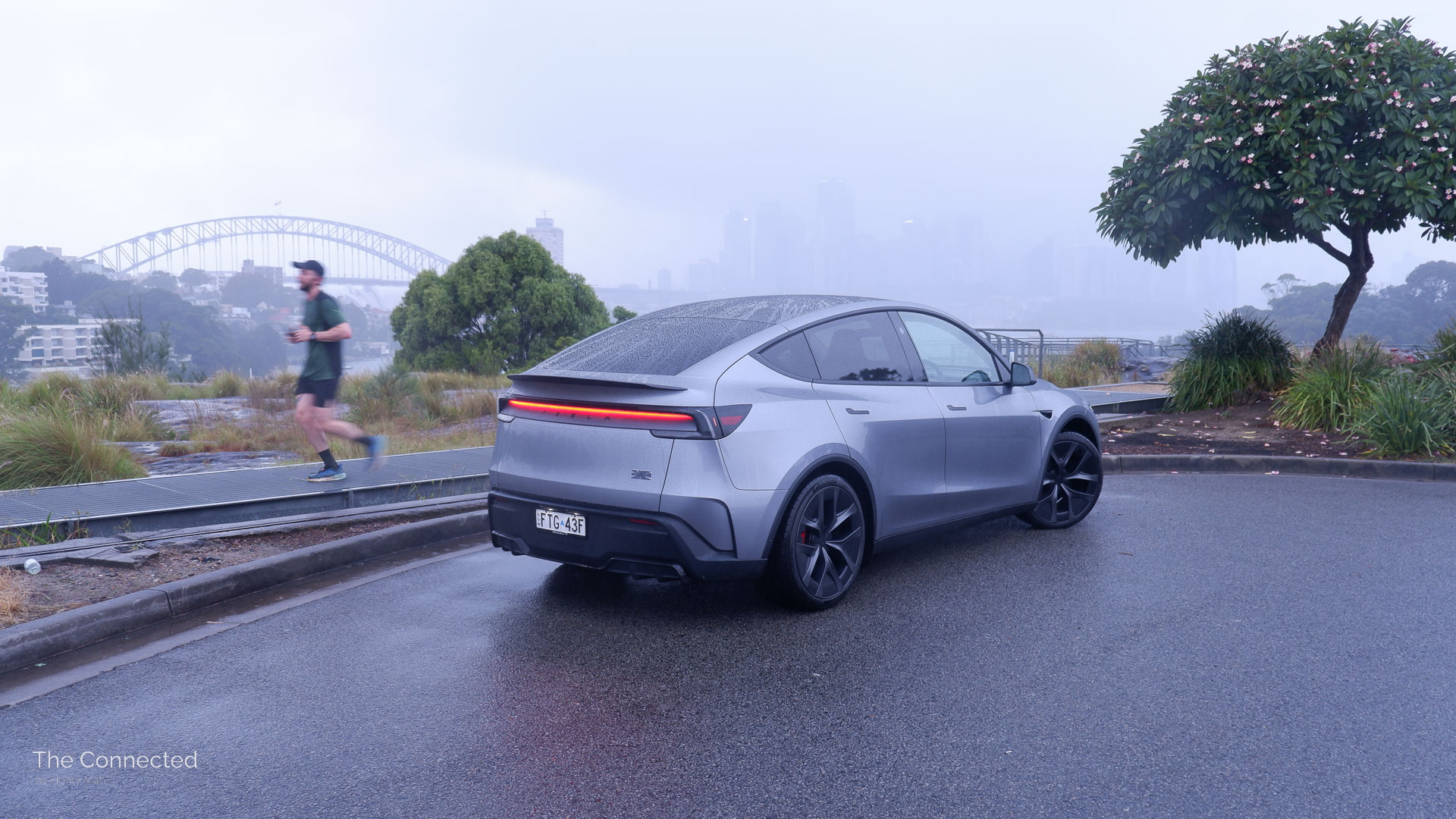
The Model Y Performance discreetly dials up the cool factor among a sea of other ordinary Teslas.
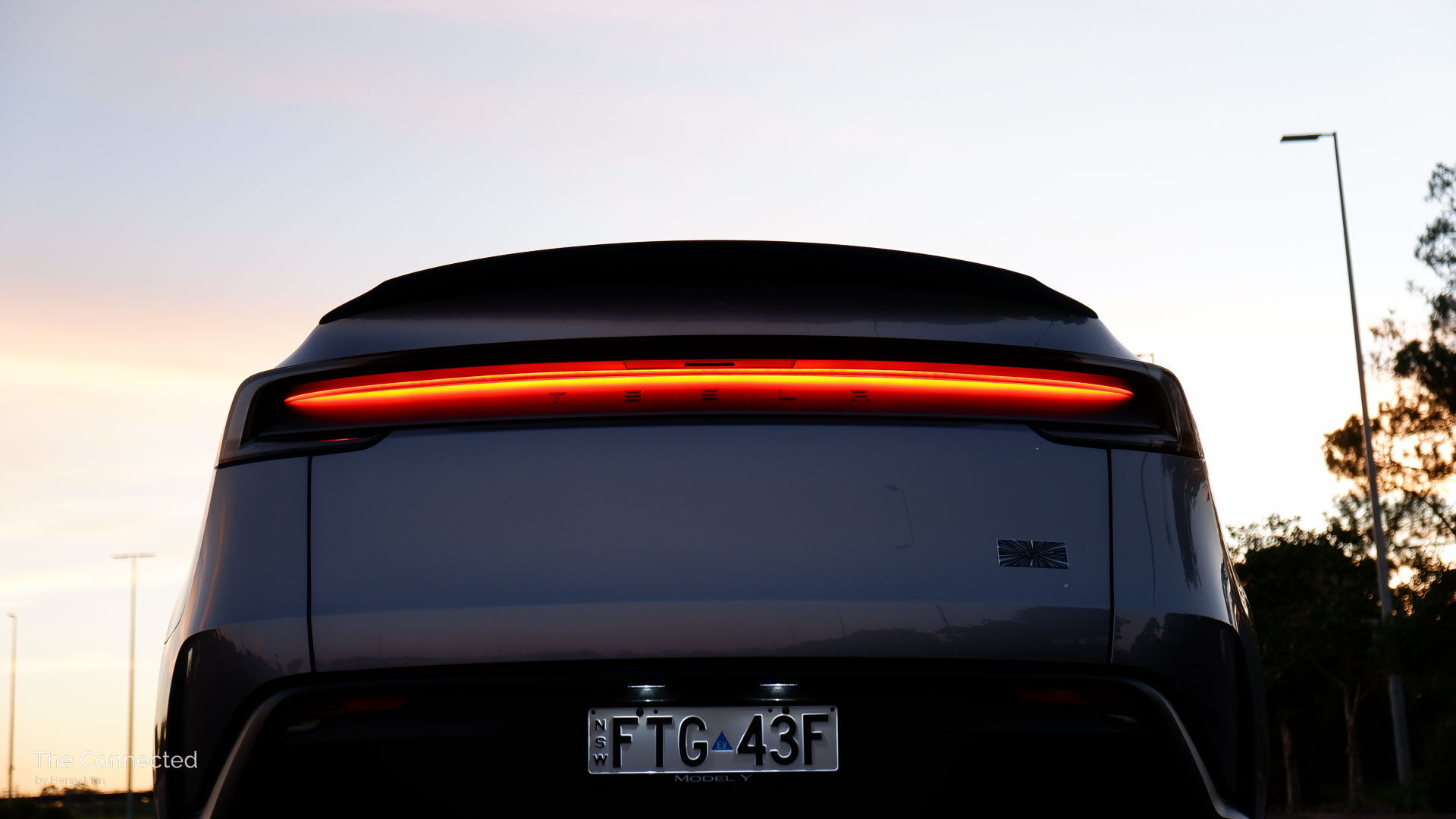
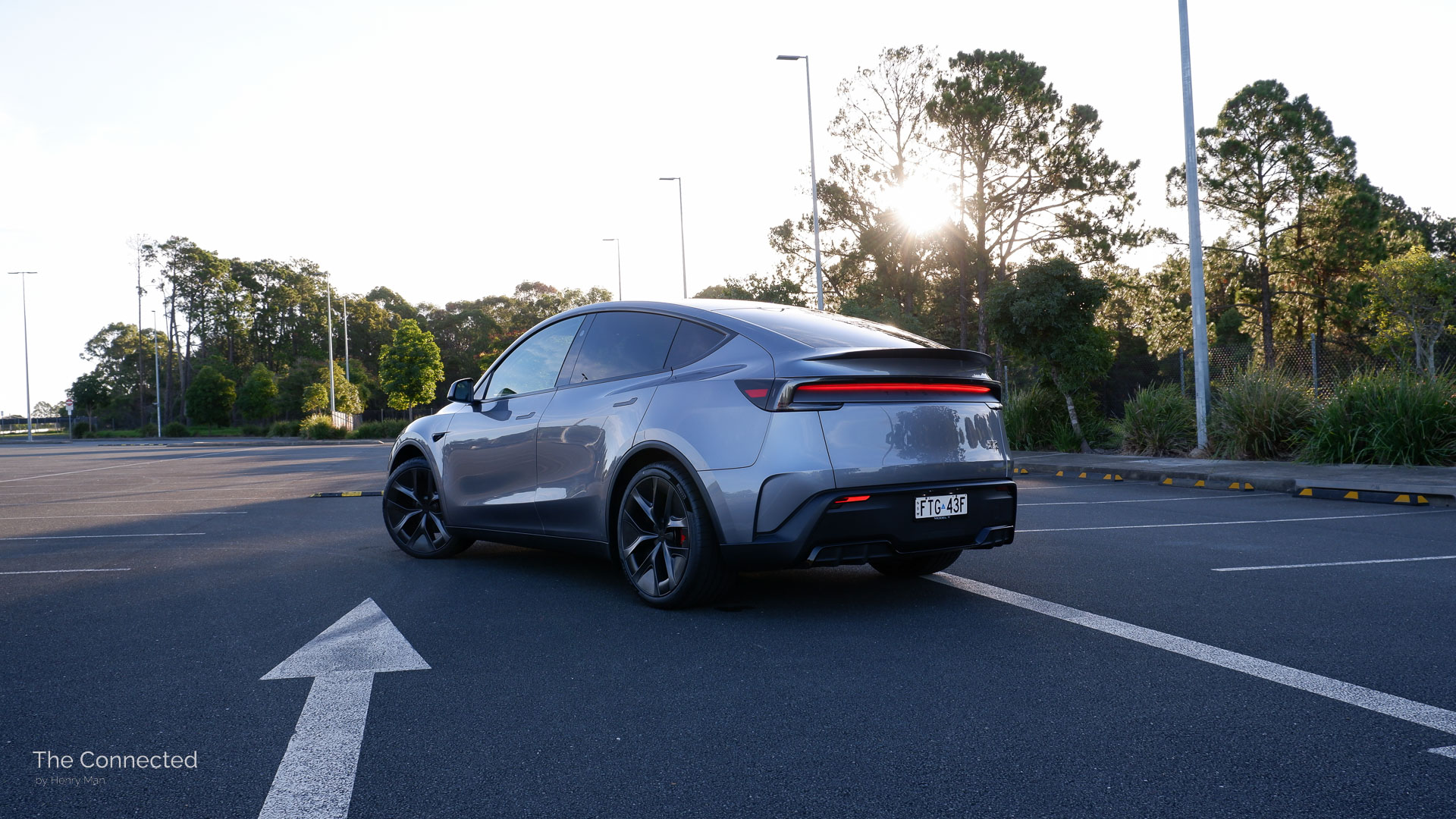
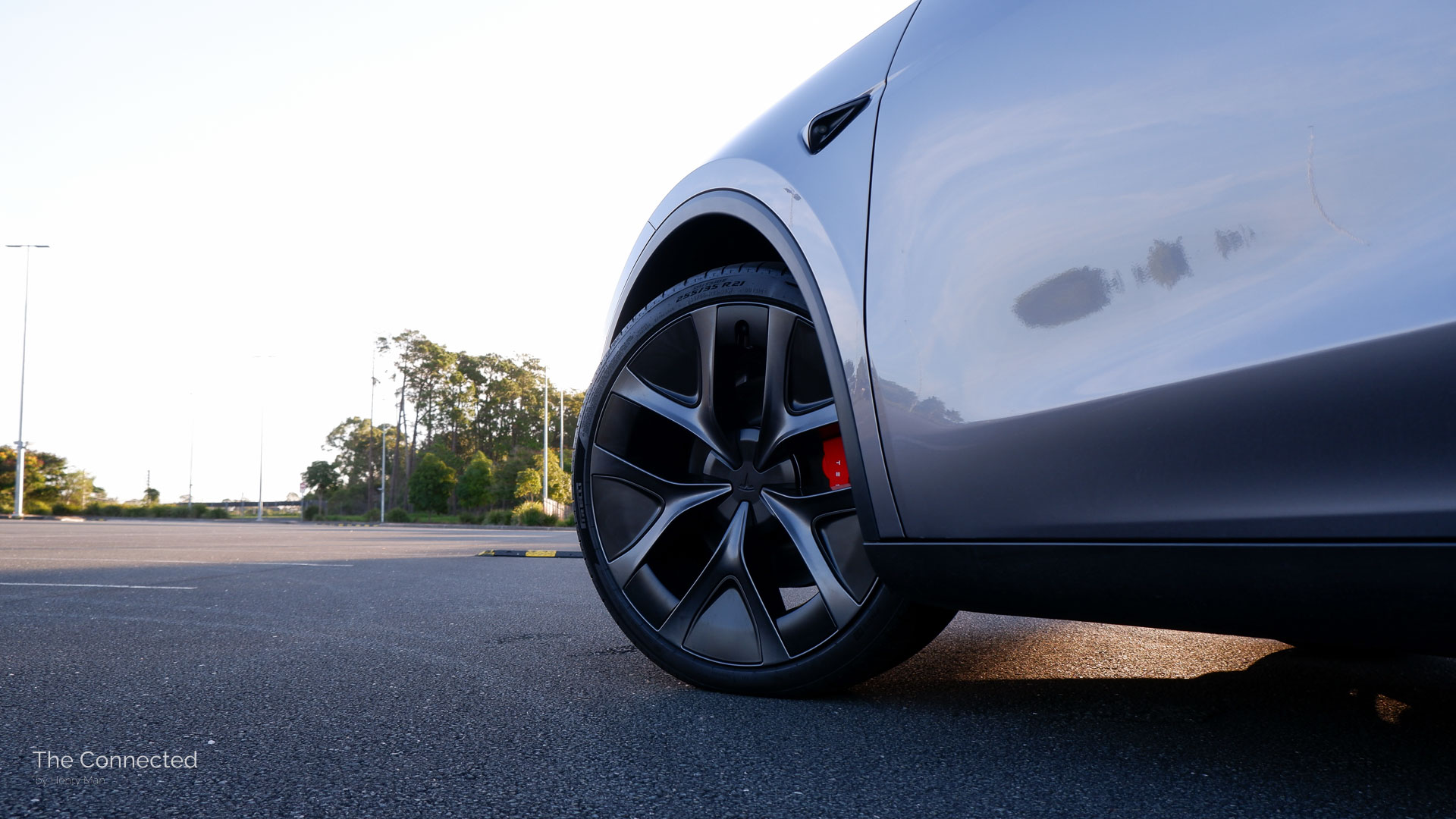
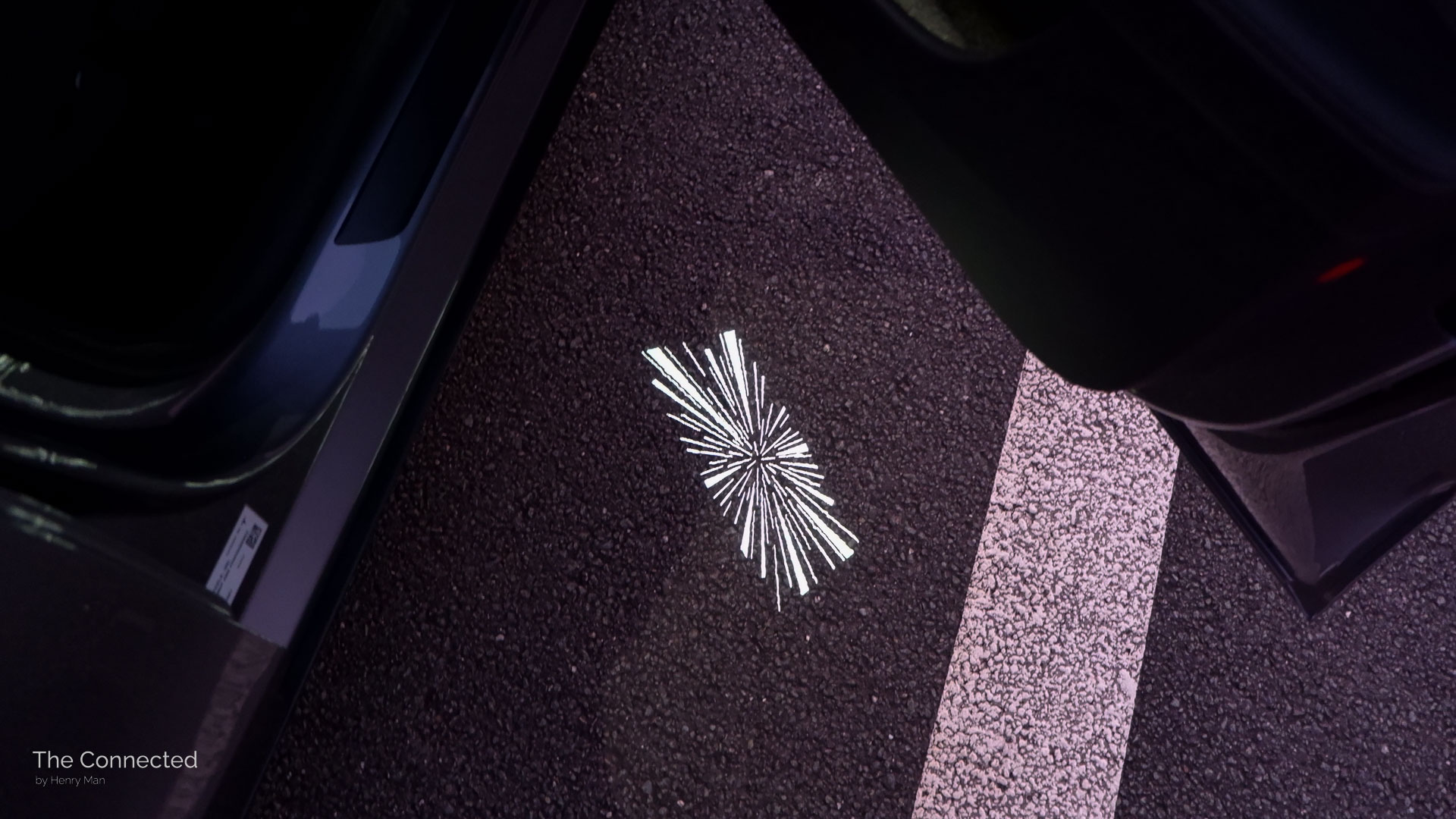
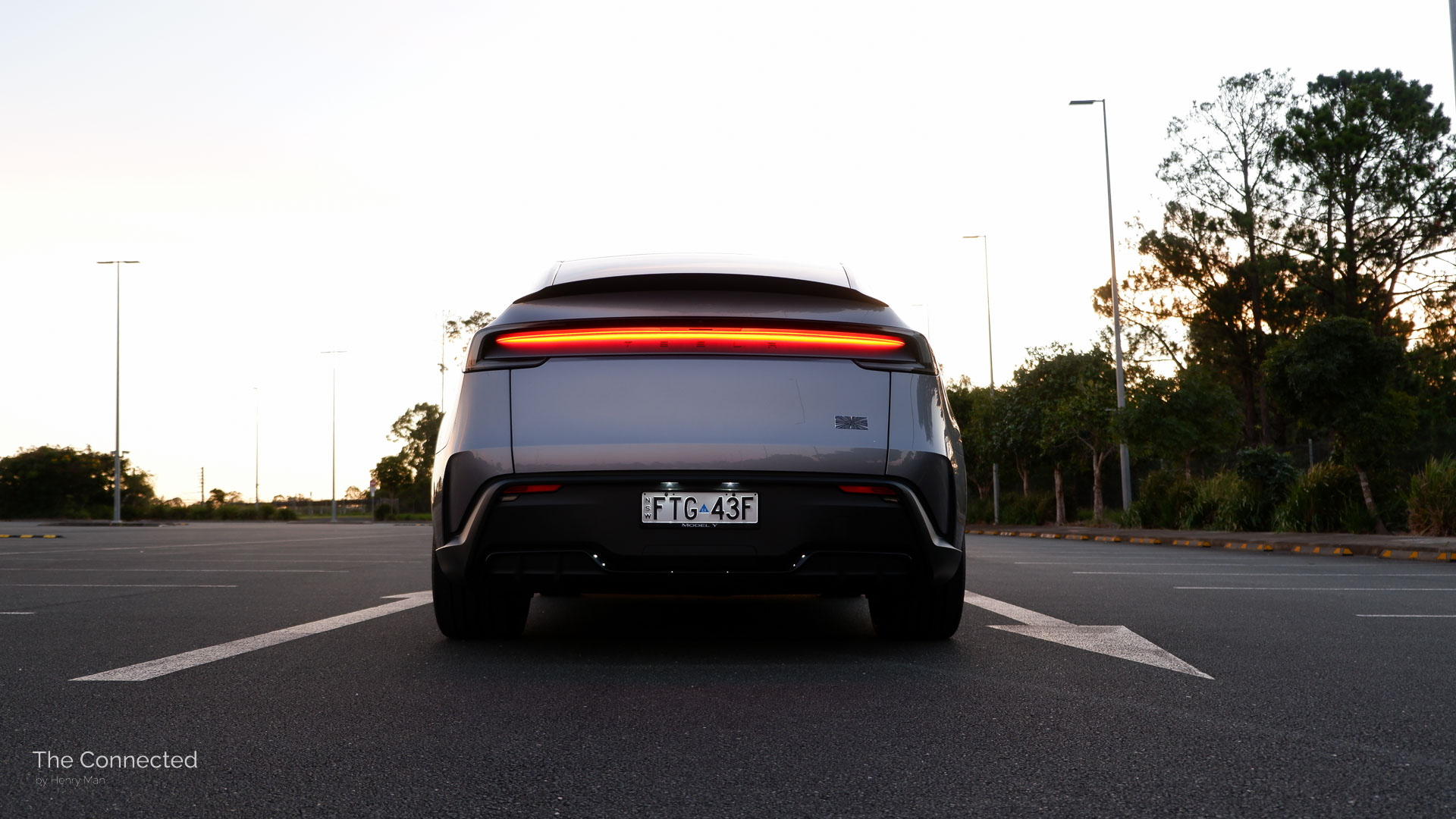
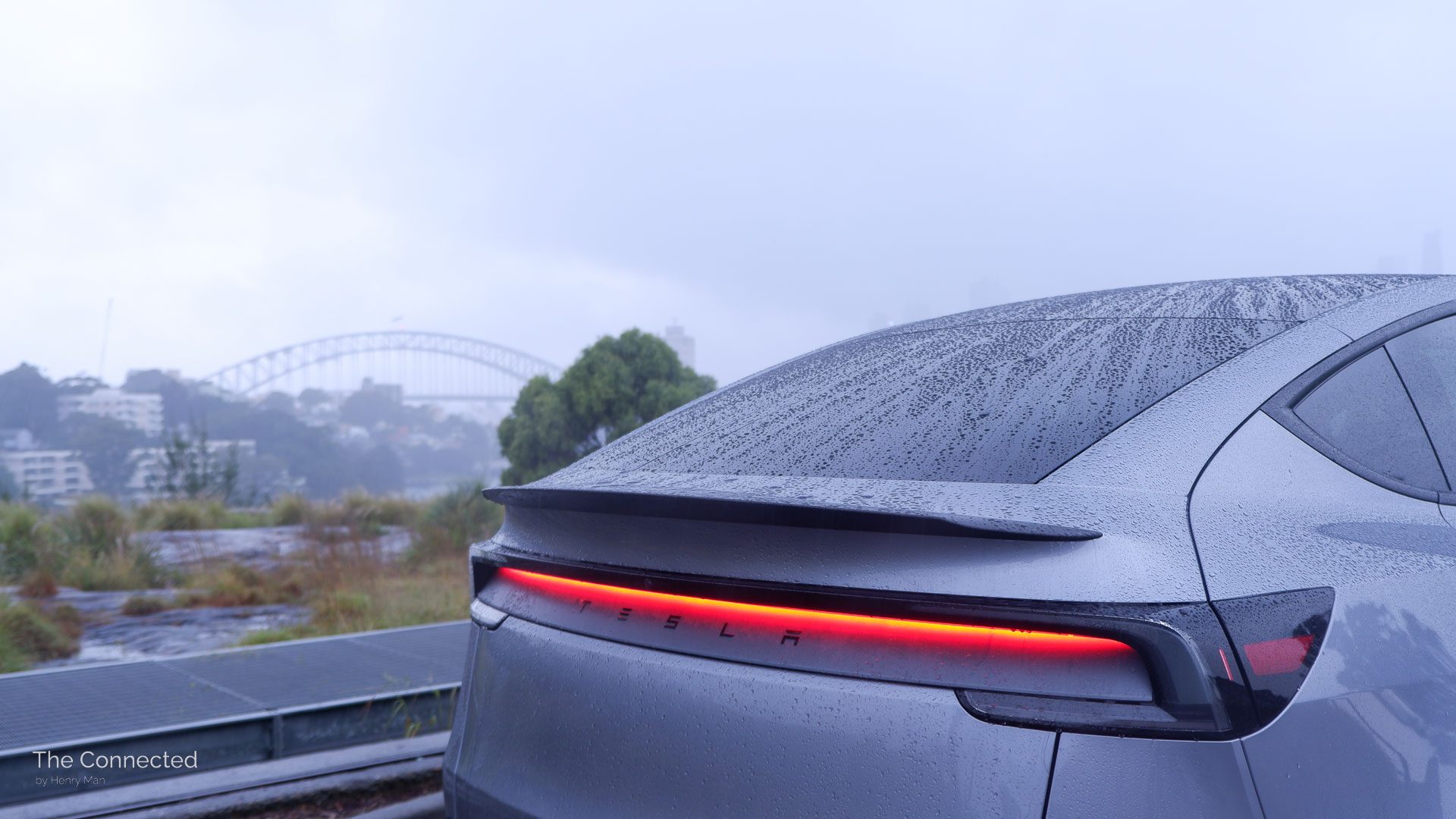
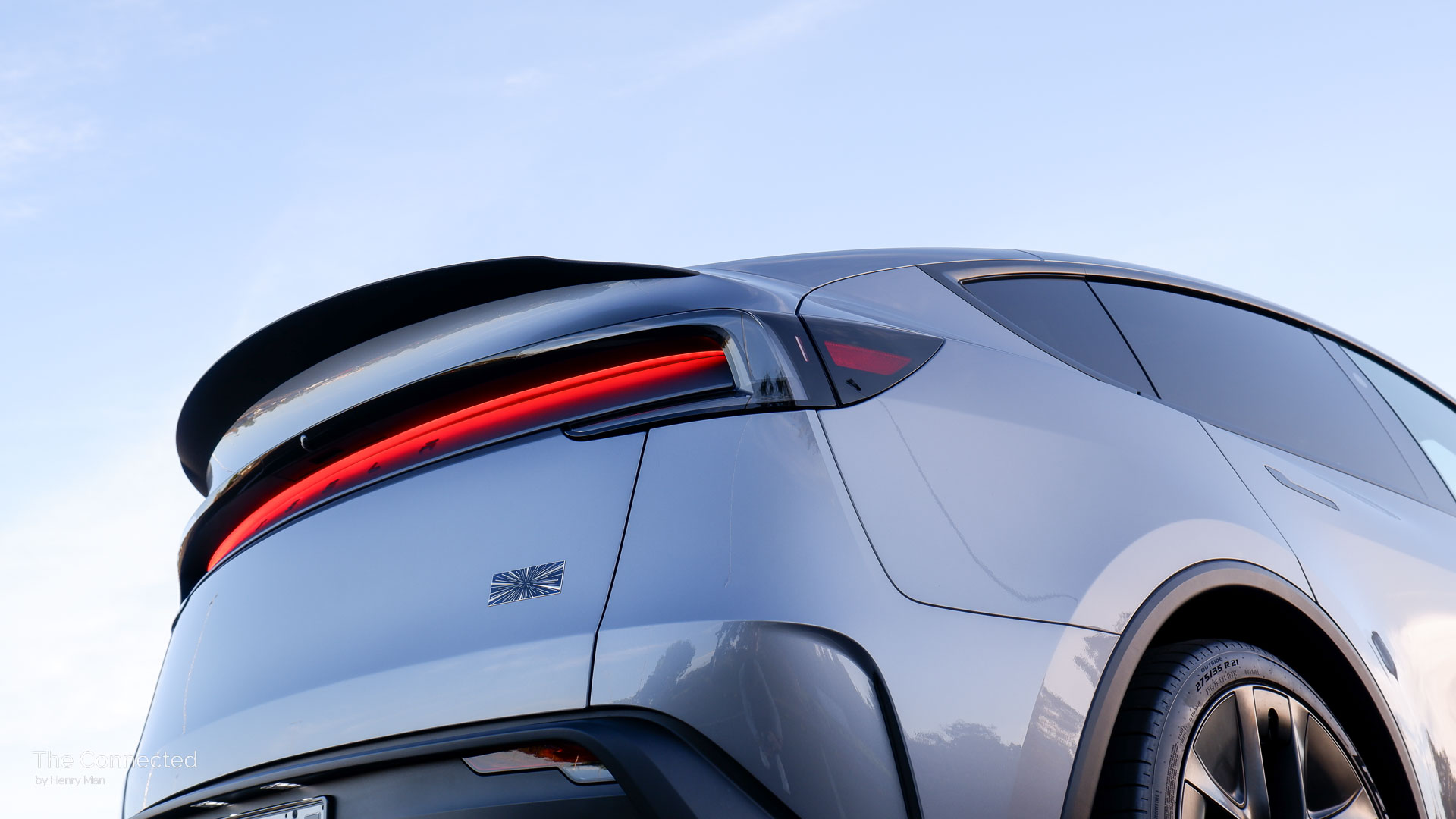
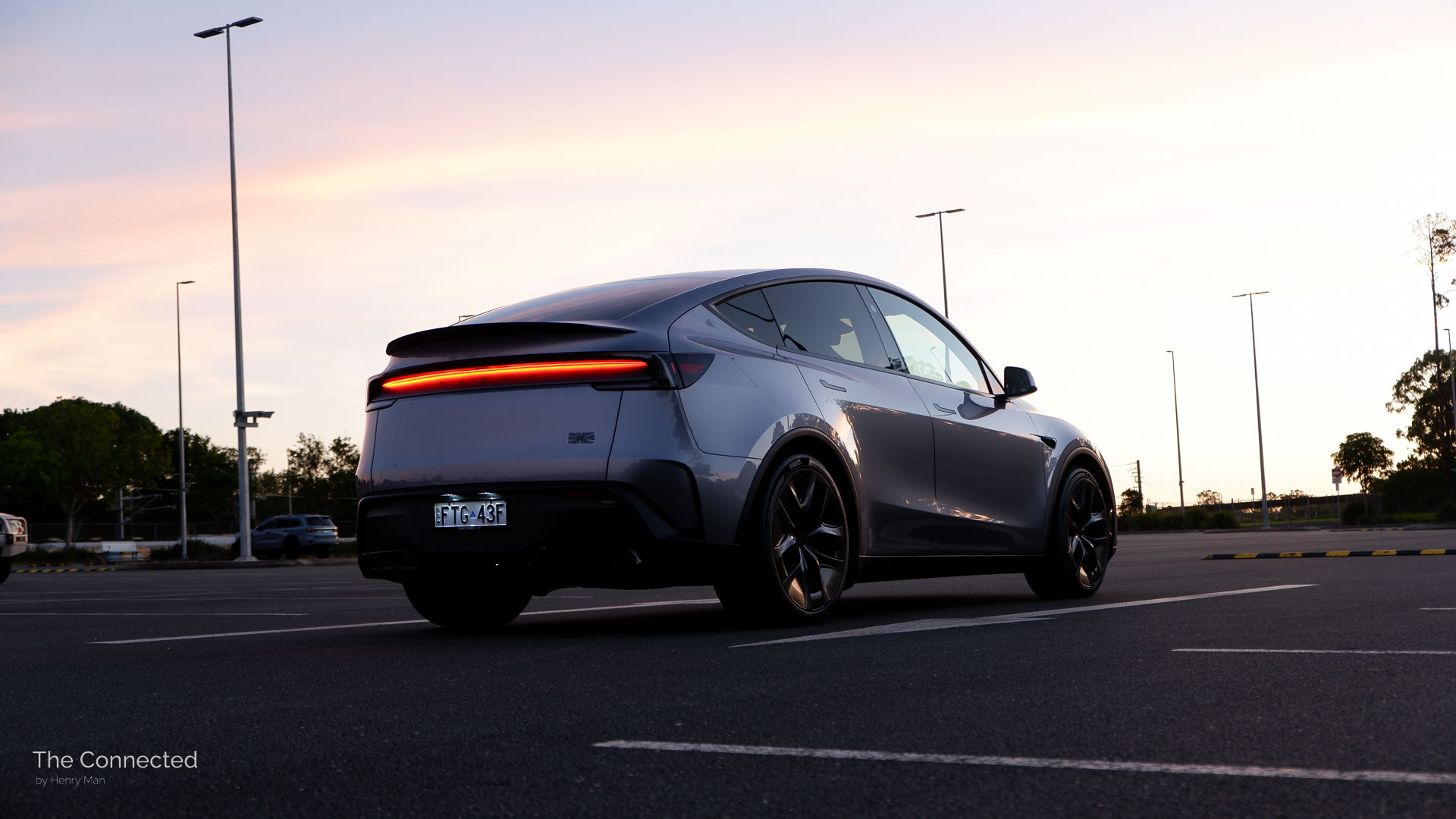
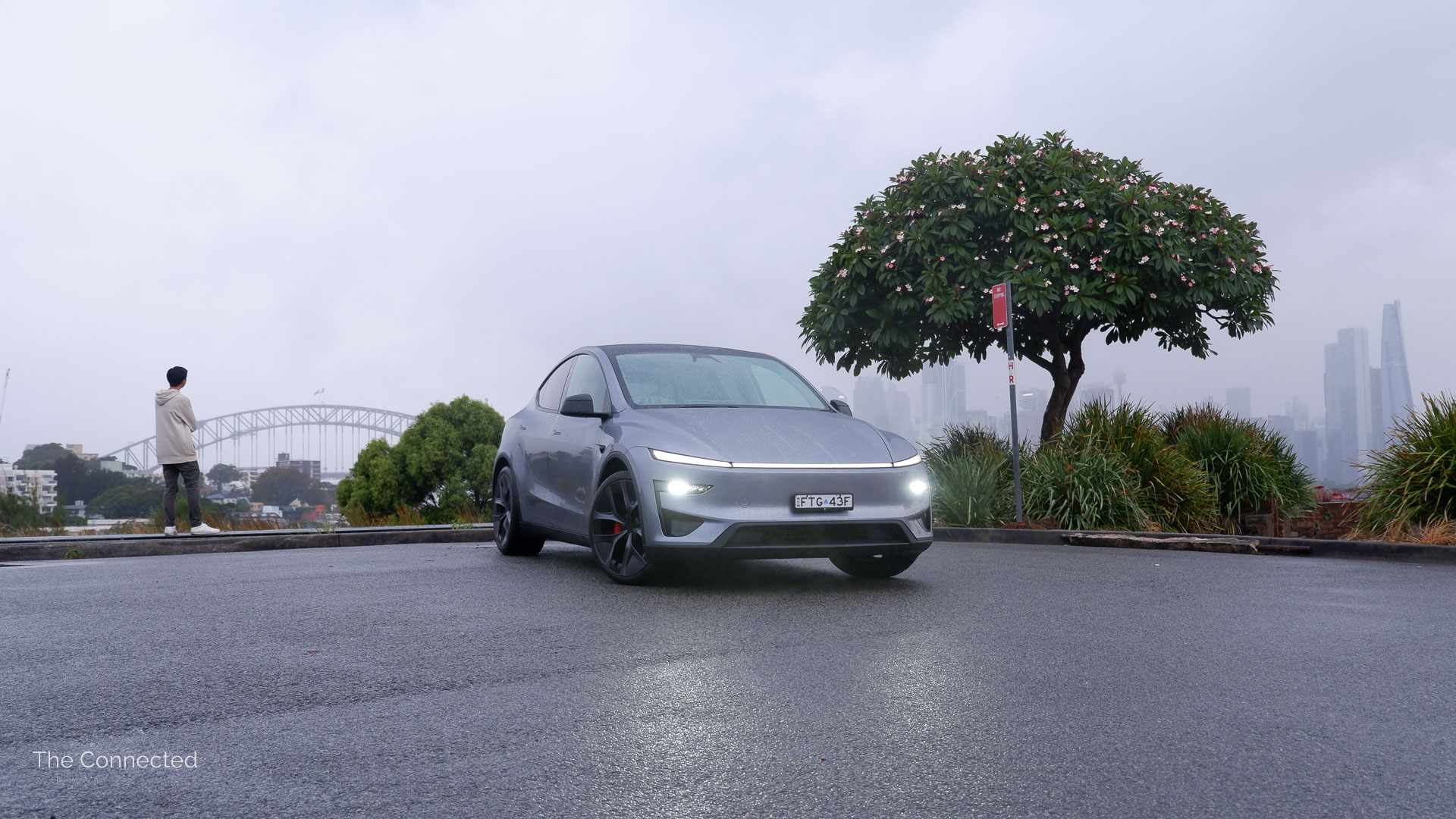
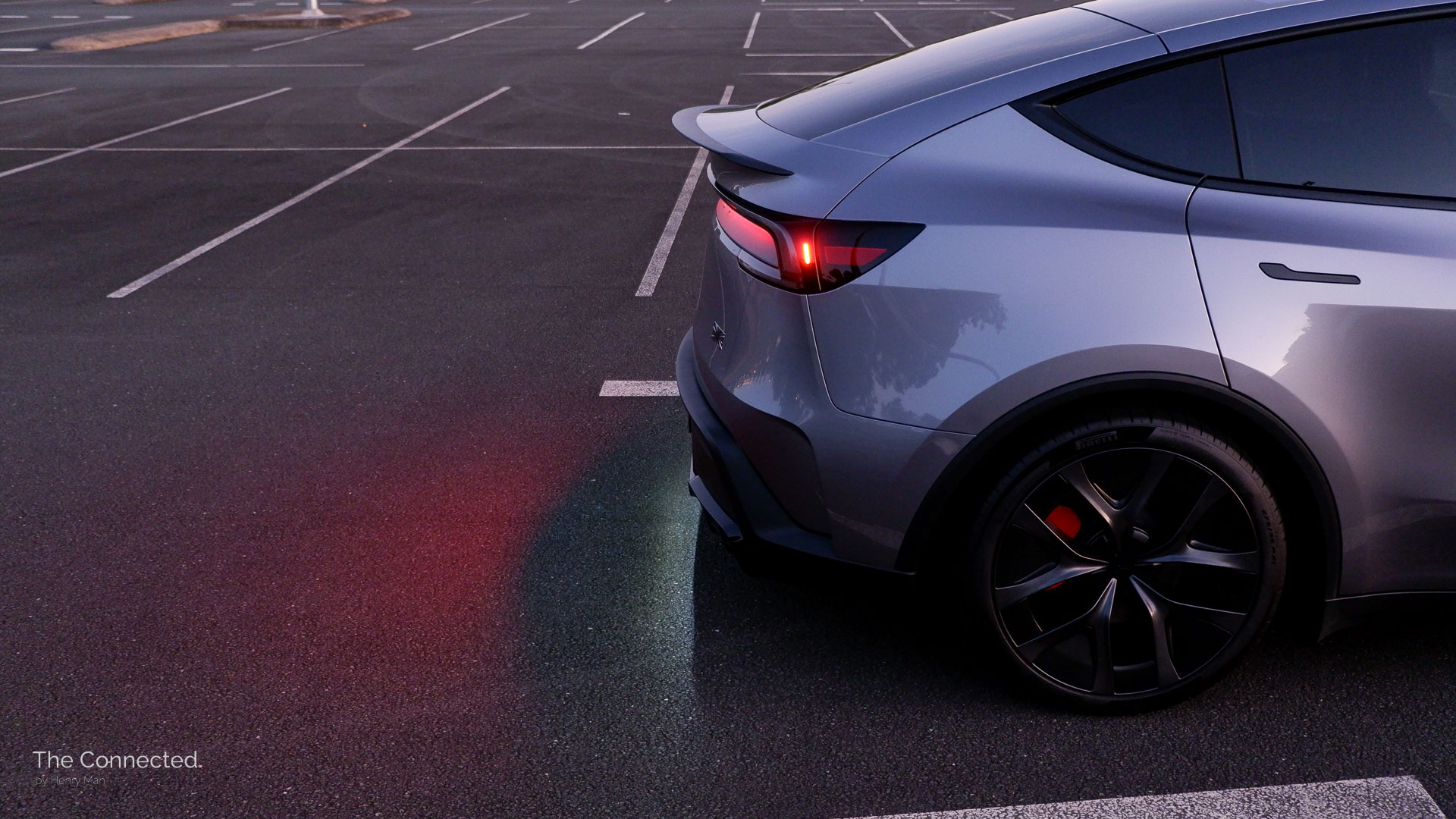
The exterior gains design touches including a black painted trim piece extending from the headlights and around the front air ducts, sporty 21-inch Arachnid 2.0 wheels with red-painted brake calipers, a more aggressive rear bumper, more prominent carbon fibre spoiler (now bolted onto the tailgate rather than stick-on), and a Performance badge referencing light speed from the 1987 Spaceballs film.
These elements add to the substantially improved refreshed Model Y (allegedly codenamed ‘Juniper’), which introduced a more stylish front light bar, redesigned sloping bonnet, and unique reflective rear light bar.
While it’s still quite a sleeper sports SUV, it feels more distinct and special than its predecessor.
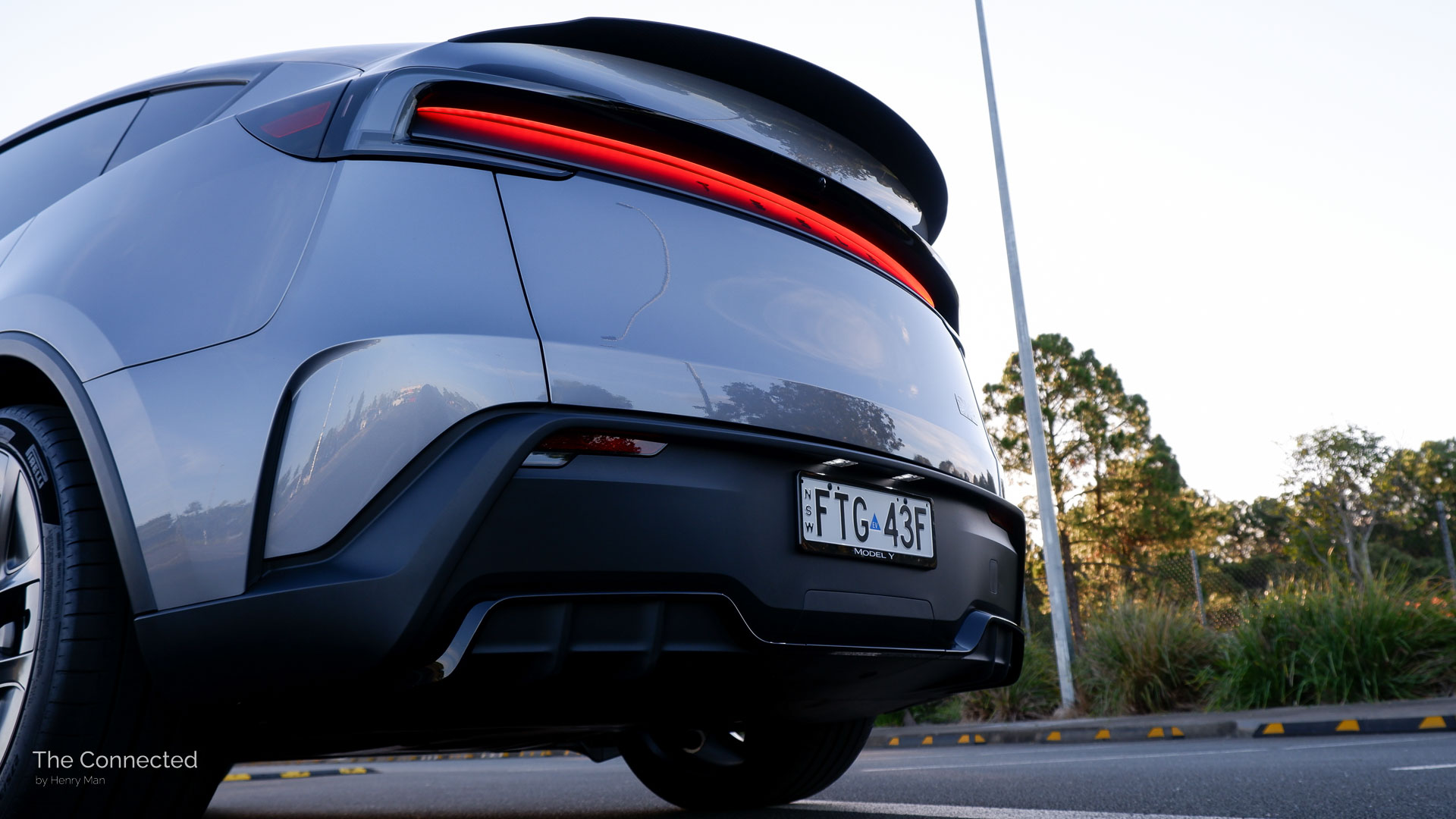
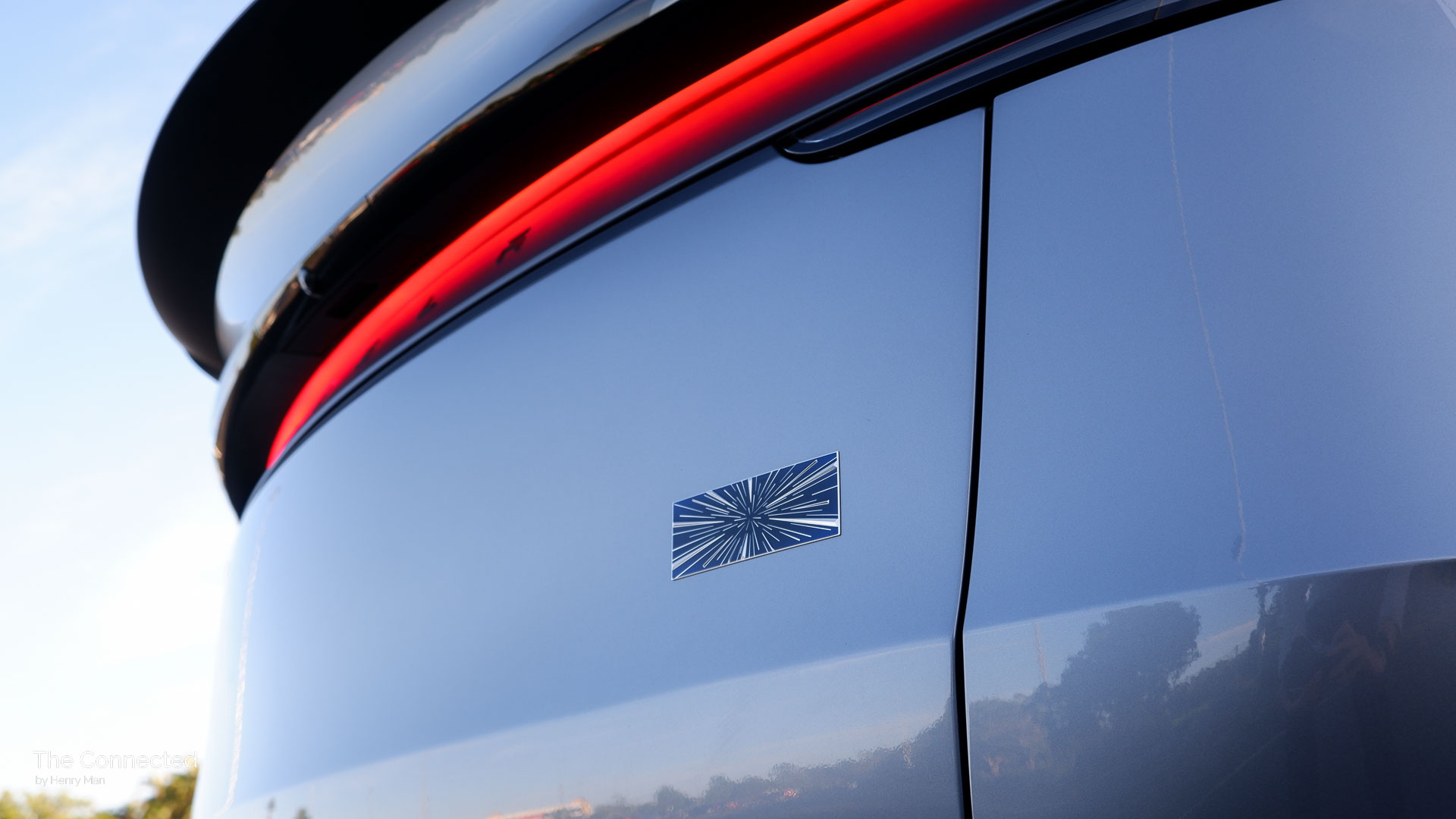
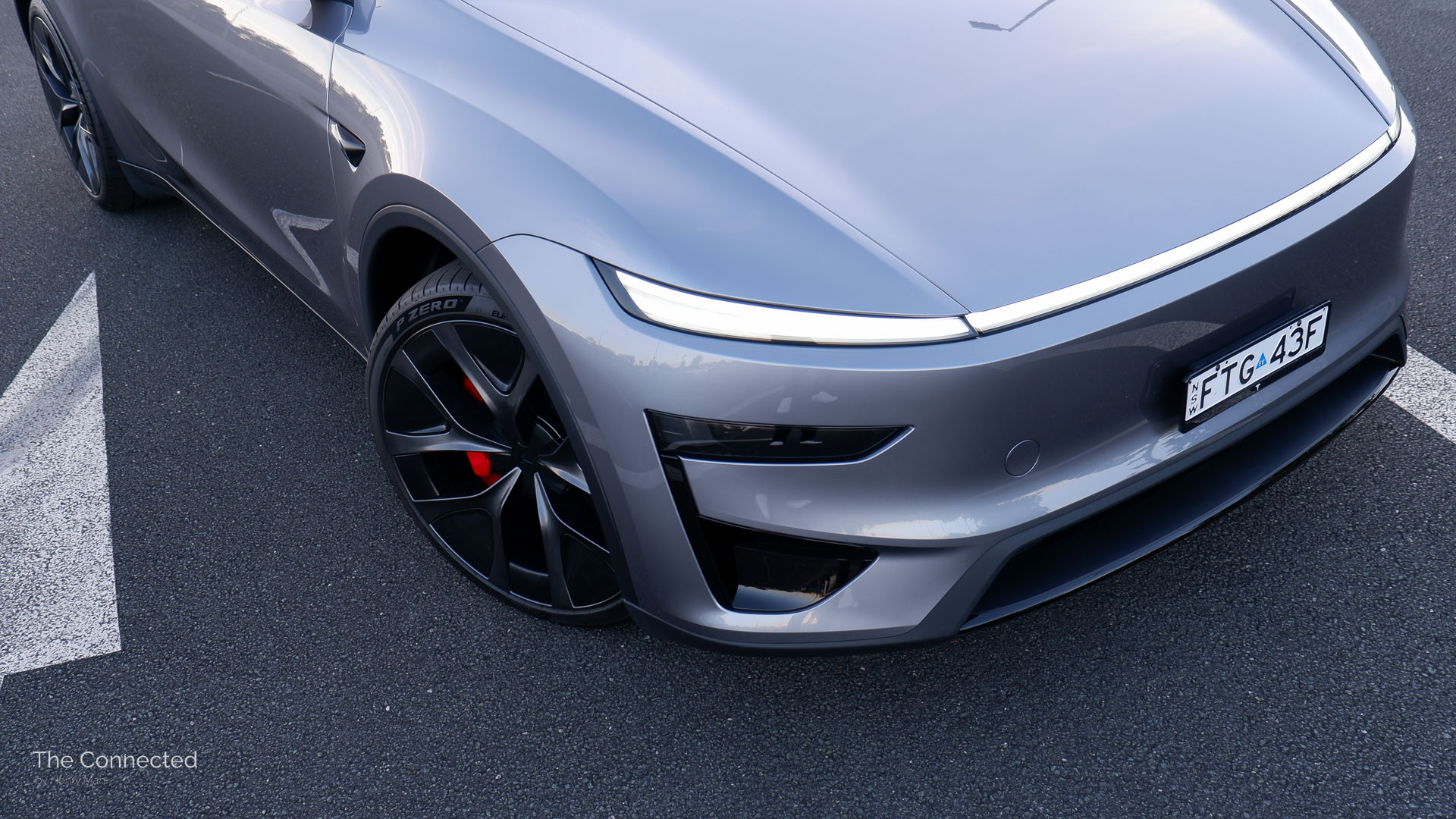
Unlike the rest of the Model Y range, all exterior paint colours are free with the Performance – which is a great perk when it costs up to $2600 as is the case of Quicksilver pictured here.
An unseen uniqueness is the fact that the refreshed Tesla Model Y Performance is the brand’s first European-made model sold in Australia, with it coming from the Berlin Gigafactory since China now manufactures the extended wheelbase six-seat Model Y L.
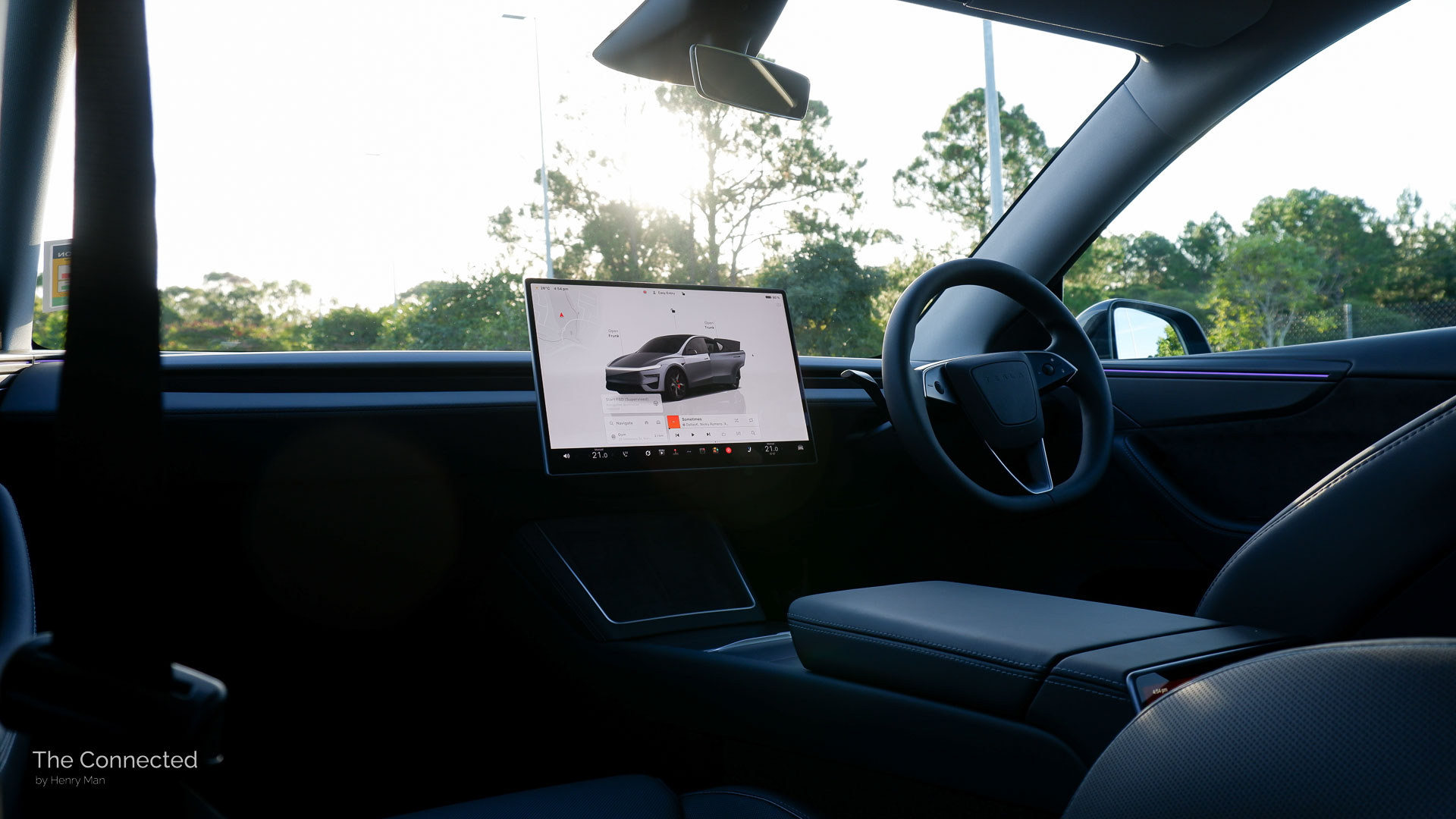
Build quality isn’t noticeably different from Chinese-sourced models, though, with great materials and attention to details incorporated throughout the interior.
Soft-touch materials are found from top to bottom across all four door cards, with completely carpeted side pockets, felt lined centre console and glovebox, and metallic pieces.
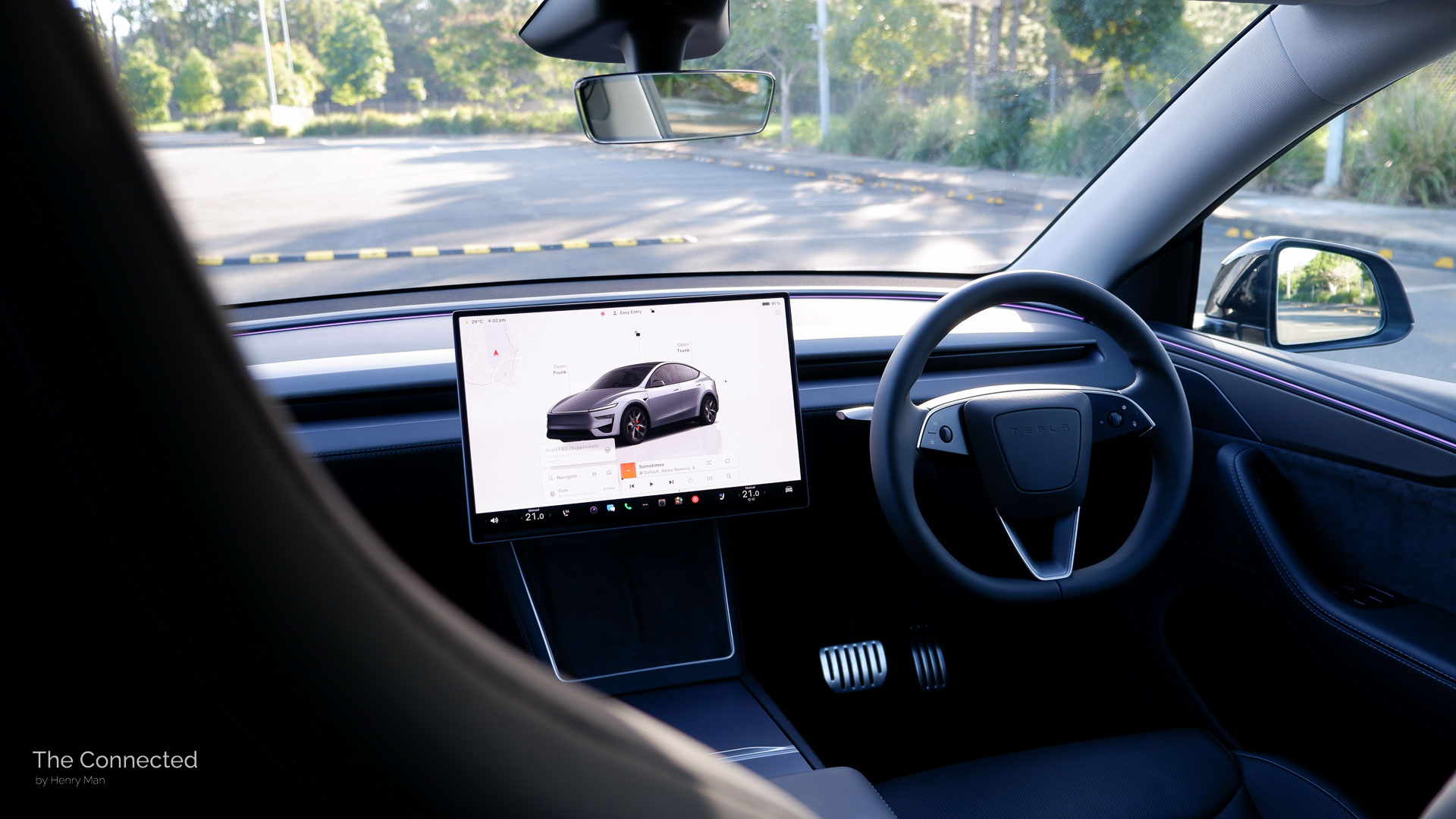
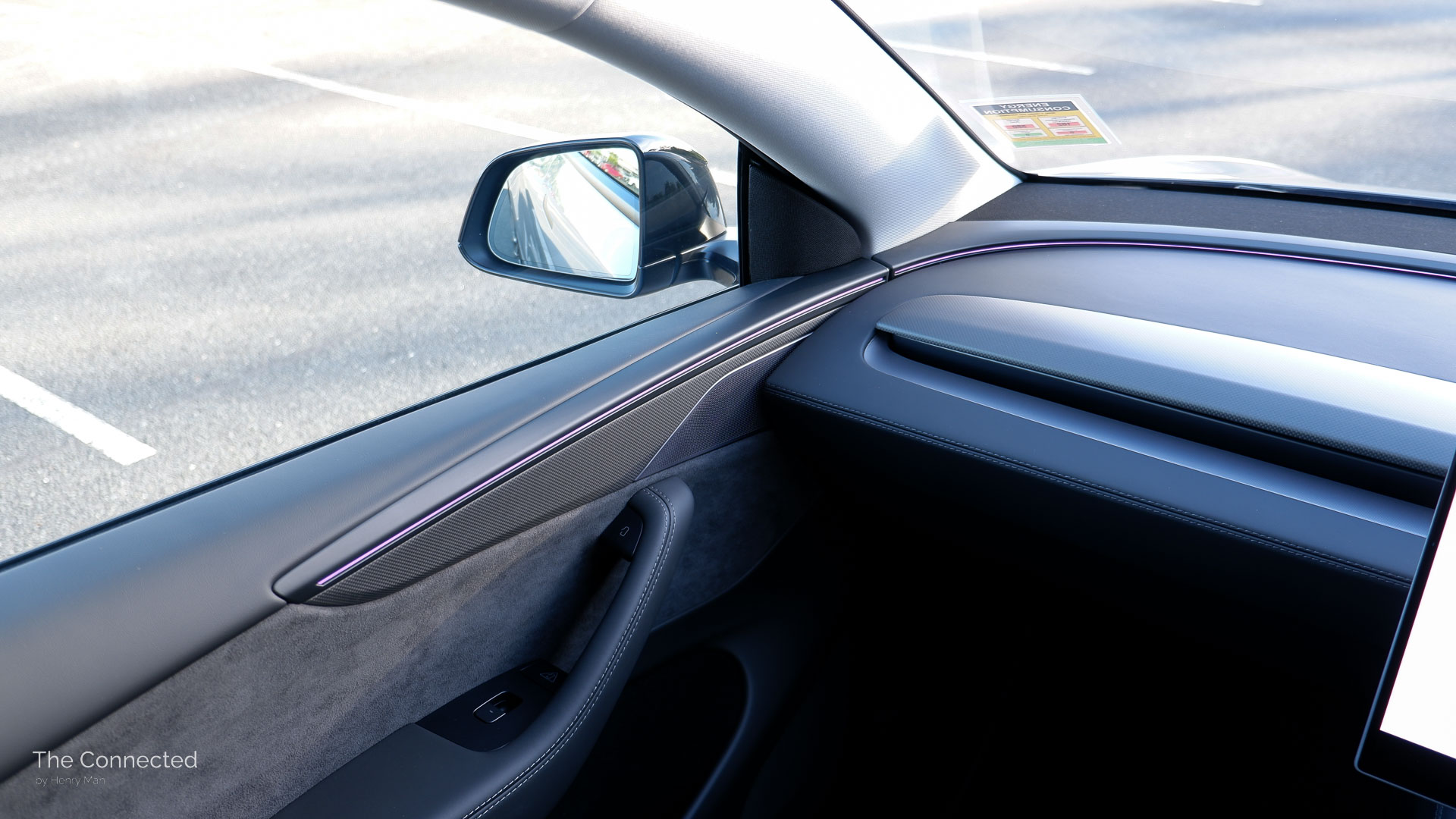
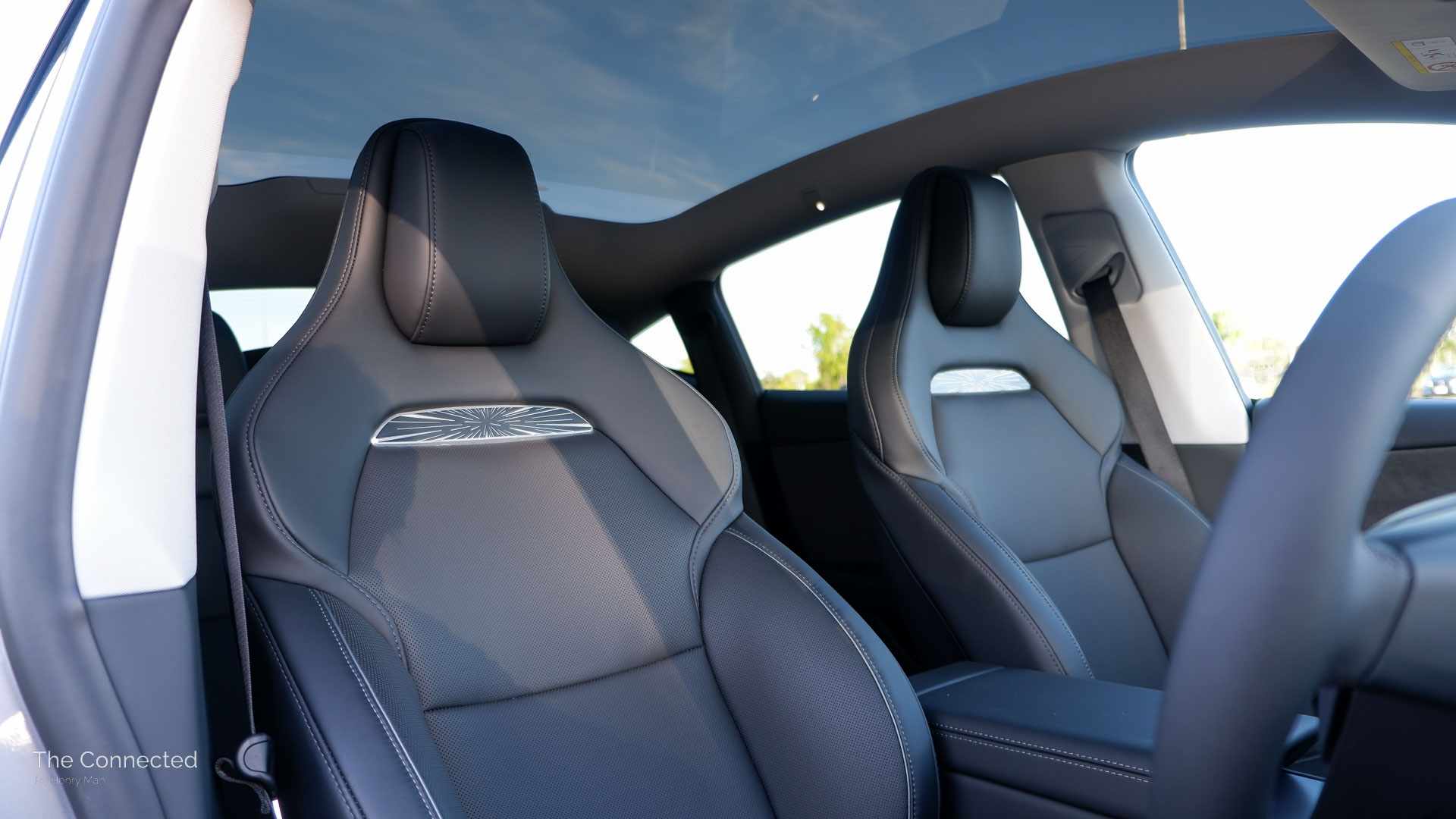
It’s a genuinely premium-feeling interior, even though you get the same quality for around $30K less on the Premium Rear-Wheel Drive (RWD).
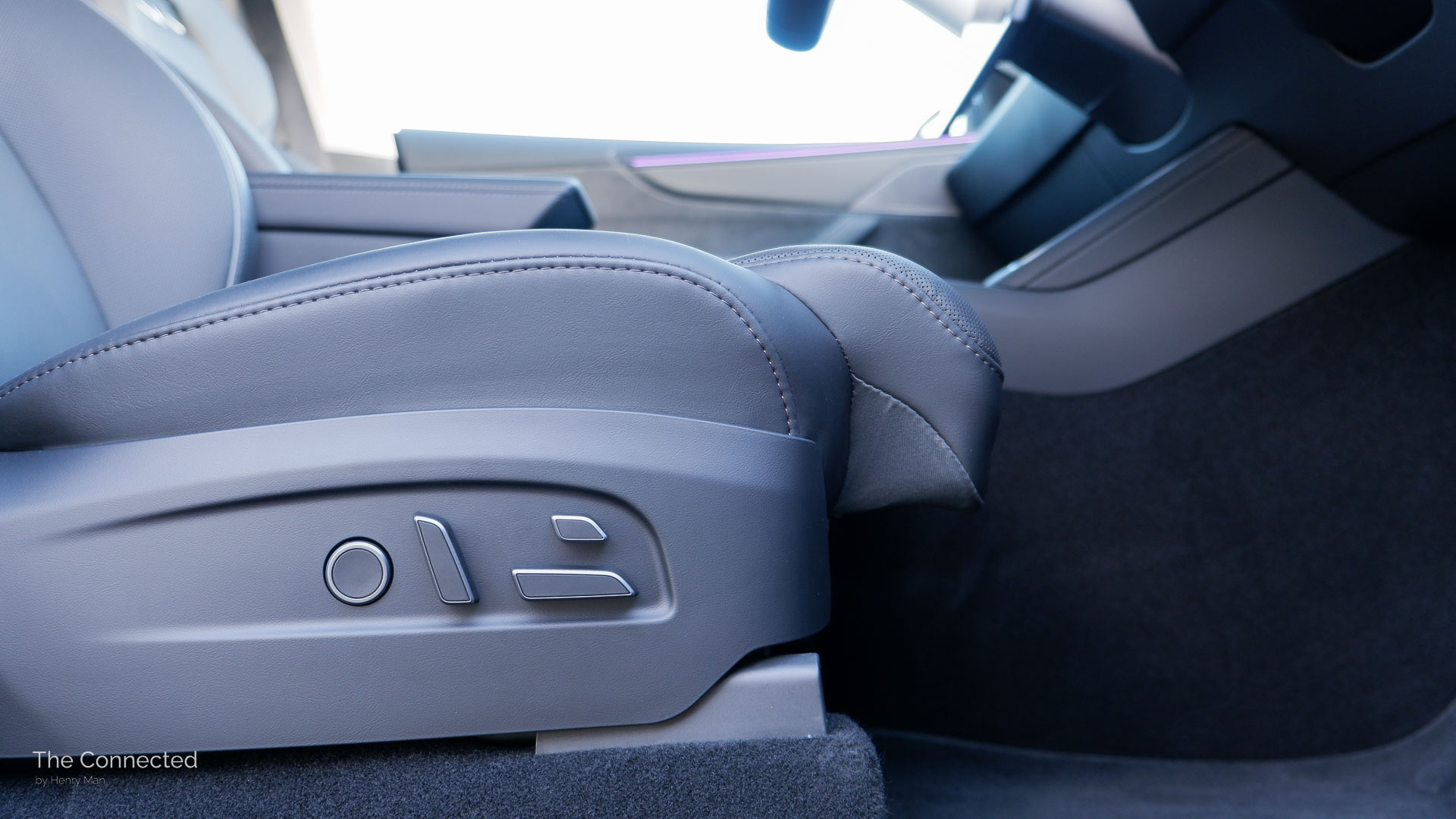
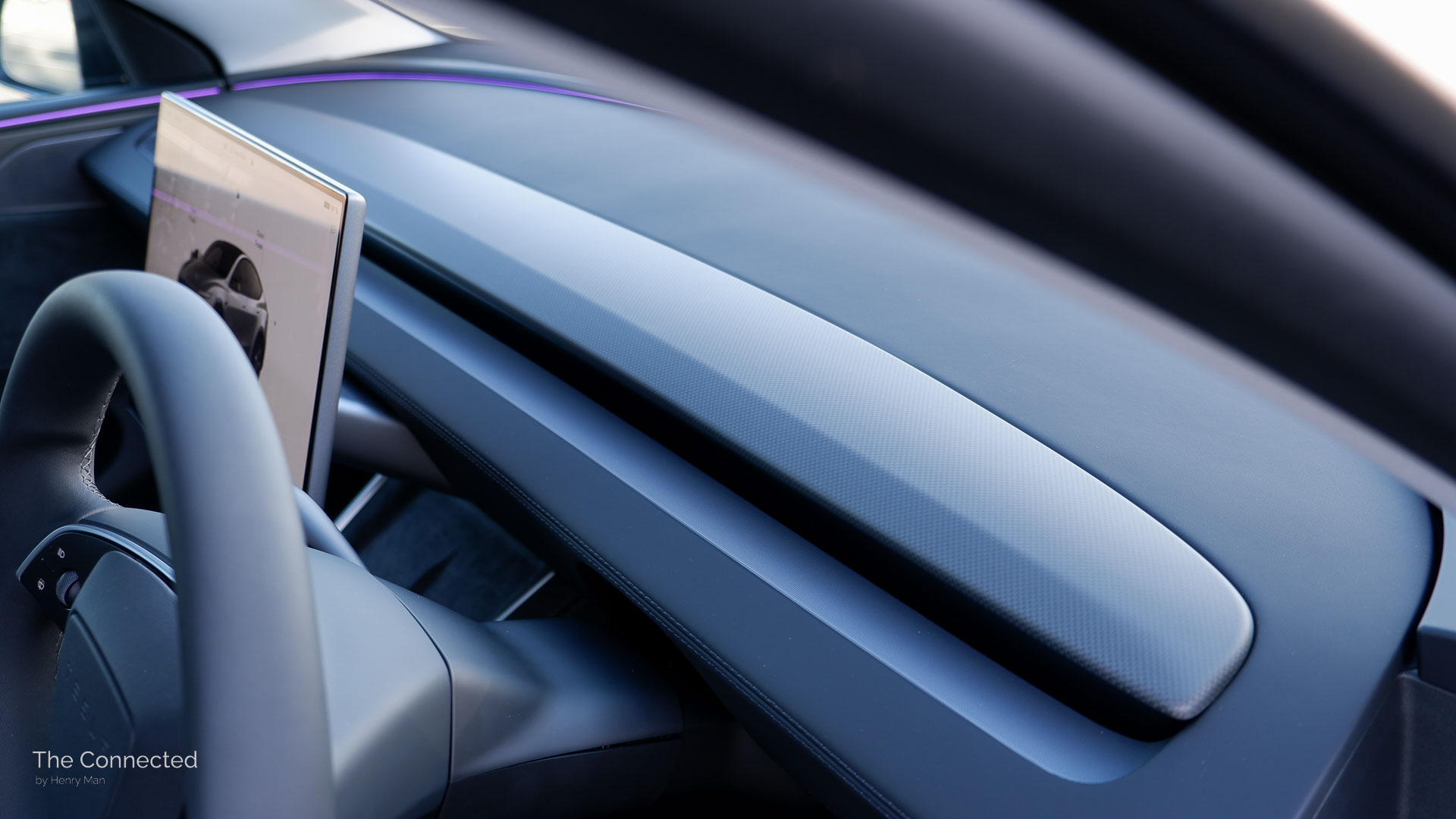
The Model Y Performance exclusively boasts a carbon fibre dashboard and door trim pieces, plush suede door cards (also on the Long Range), sportier front bucket seats with a thigh extension, and light speed Performance badge puddle lights which illuminate the ground when the front doors are open.
All newly built Model Ys now feature a dark headliner, unlike this 2025 tester as pictured.
However, while the Performance interior feels slightly special, it’s still a clinically minimalist design that, while futuristic, won’t suit everyone.
Practicality.
2026 Tesla Model Y Performance AWD dimensions:
| Length x width x height | 4796 x 1611 x 2129mm |
| Wheelbase | 2890mm |
| Ground clearance | 151mm |
| Boot space (min / rear seats folded) | 822 / 2022 litres (measured up to the roof) |
| Frunk space | 117L |
| Rear seat split fold | 40:20:40 |
| Child seat anchors | 2x ISOFIX and 3x top tethers |
| Air-conditioning system | Two-zone climate control with rear air vents |
The Model Y Performance does not compromise on cargo and interior space, but it’s lacking one key feature.
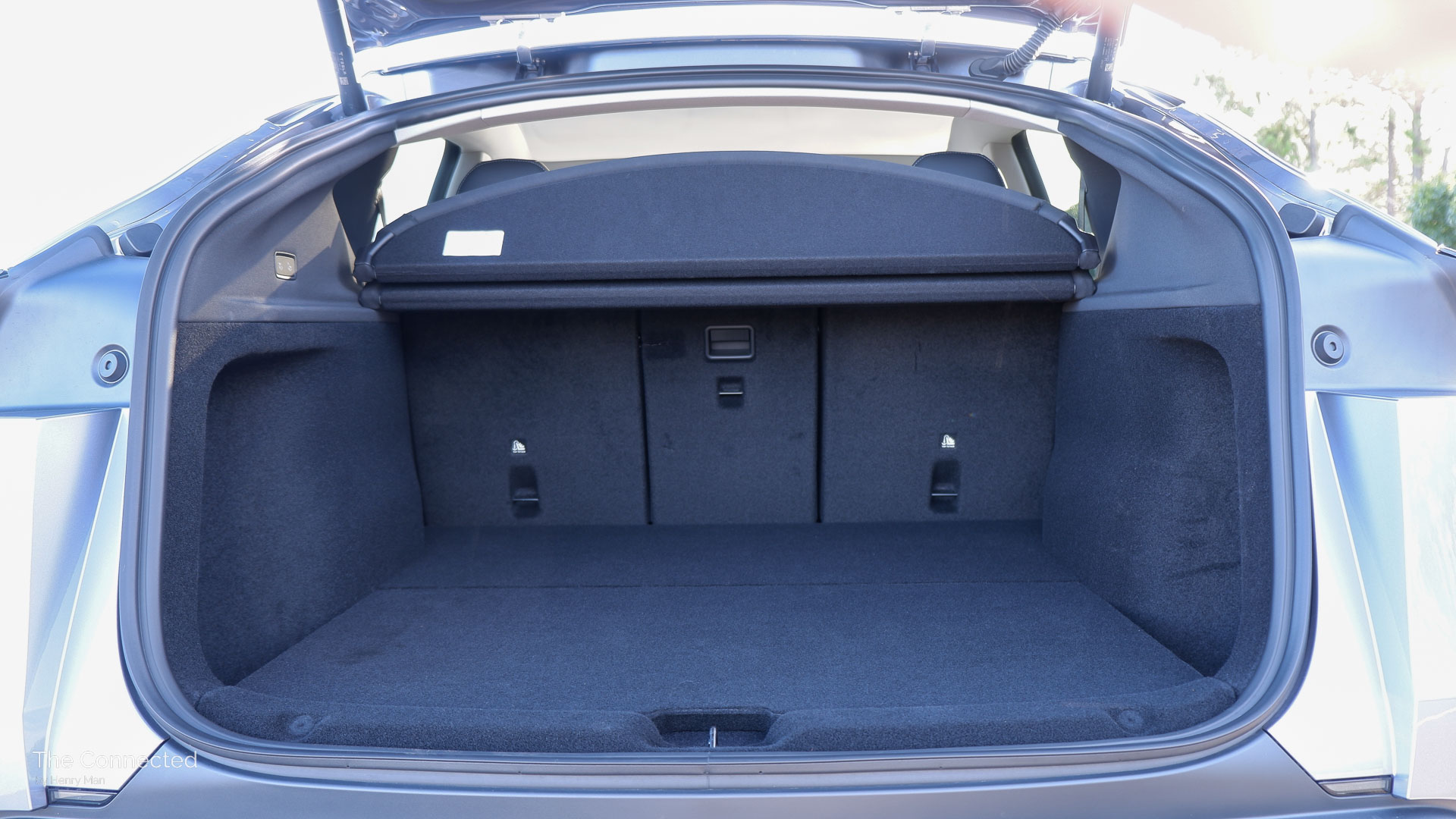
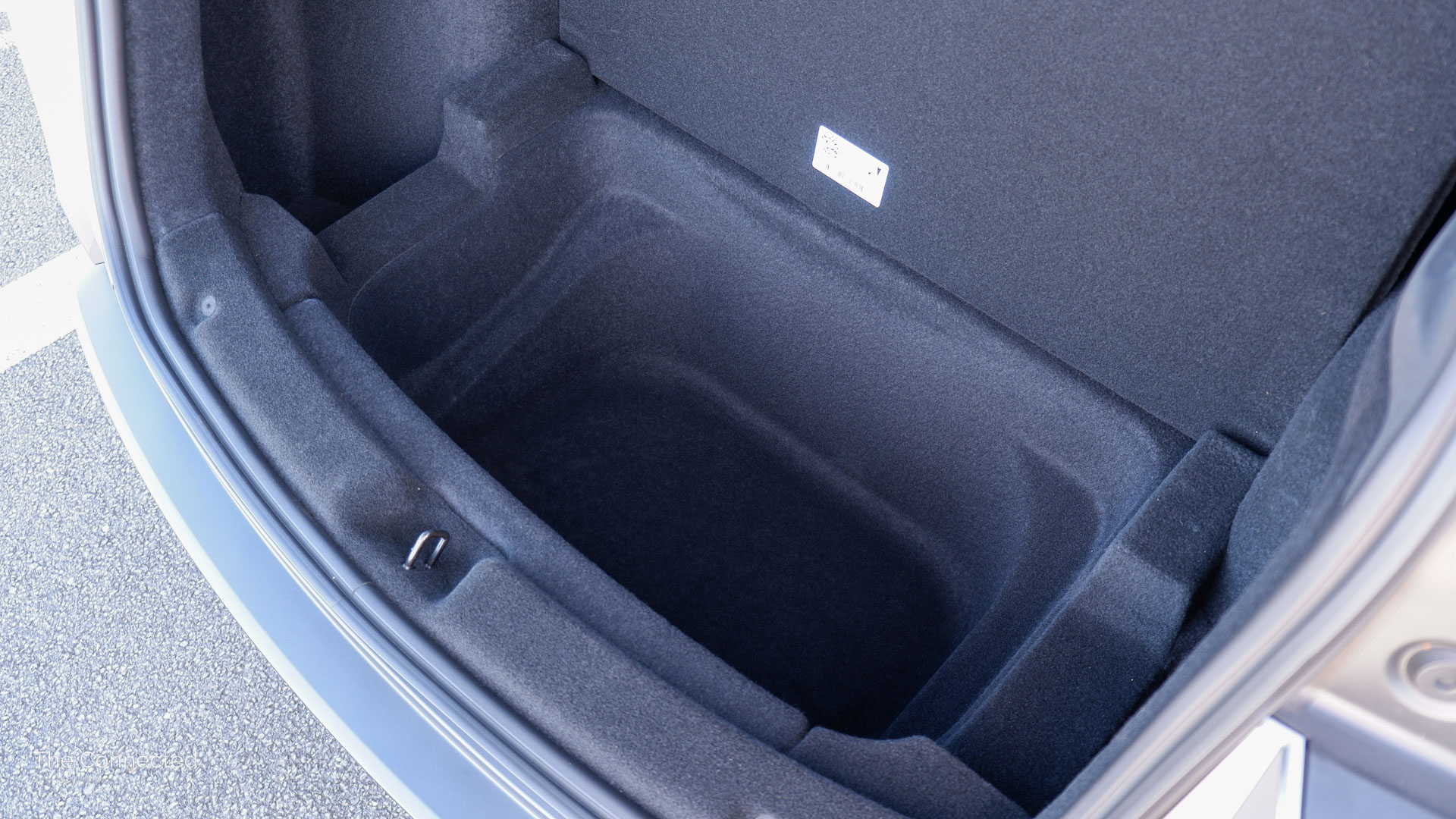
The 822-litre boot (albeit measured up to the roof) is identical to other models. It’s super spacious and deep both longitudinally and laterally with wells on each side, and two underfloor storage spaces (one deep and one shallow behind).
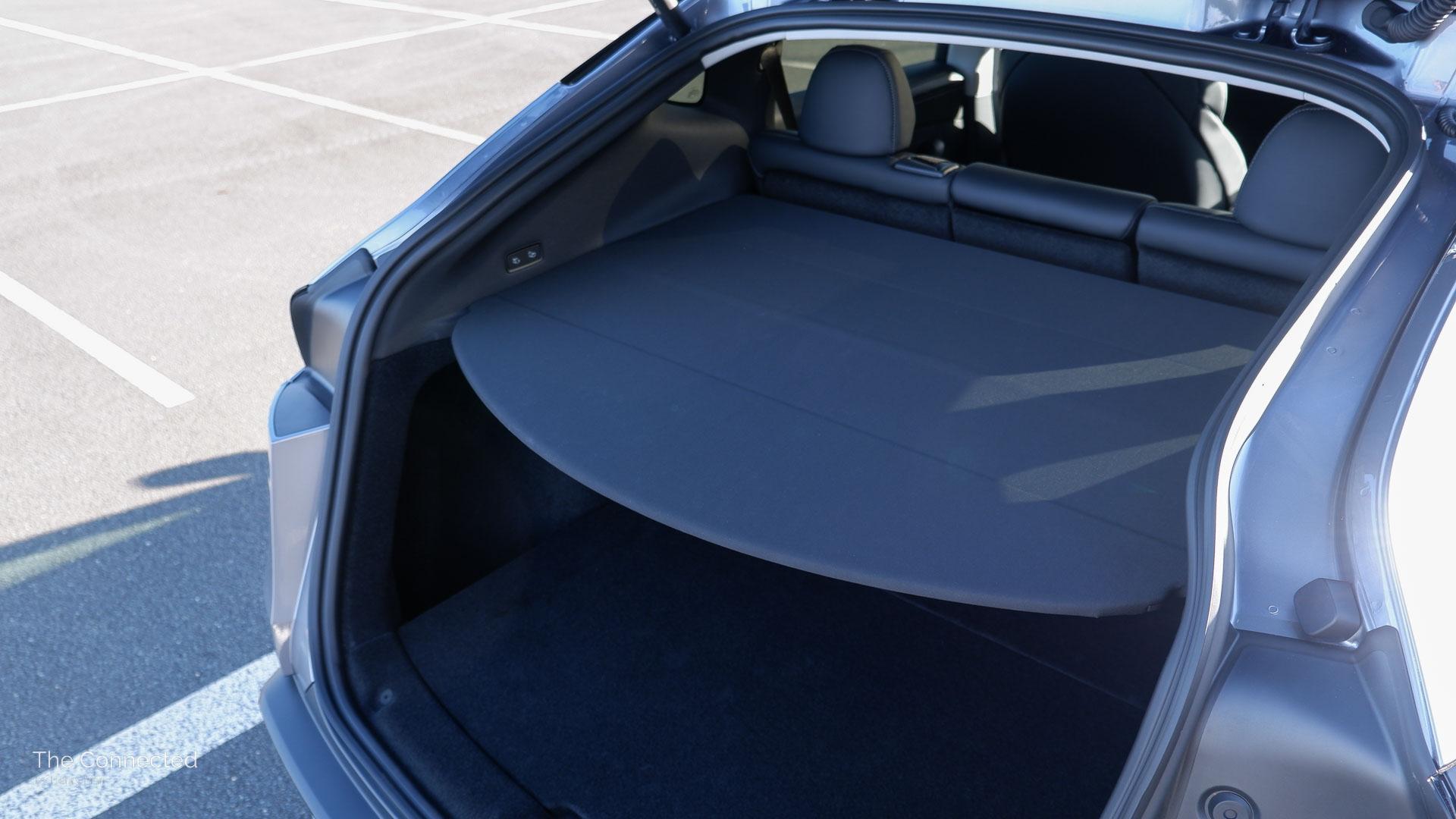
However, the magnetised cargo cover is very flimsy as it doesn’t stay flat when folded back – restricting the already limited rear window visibility – and tends to unravel itself while driving.
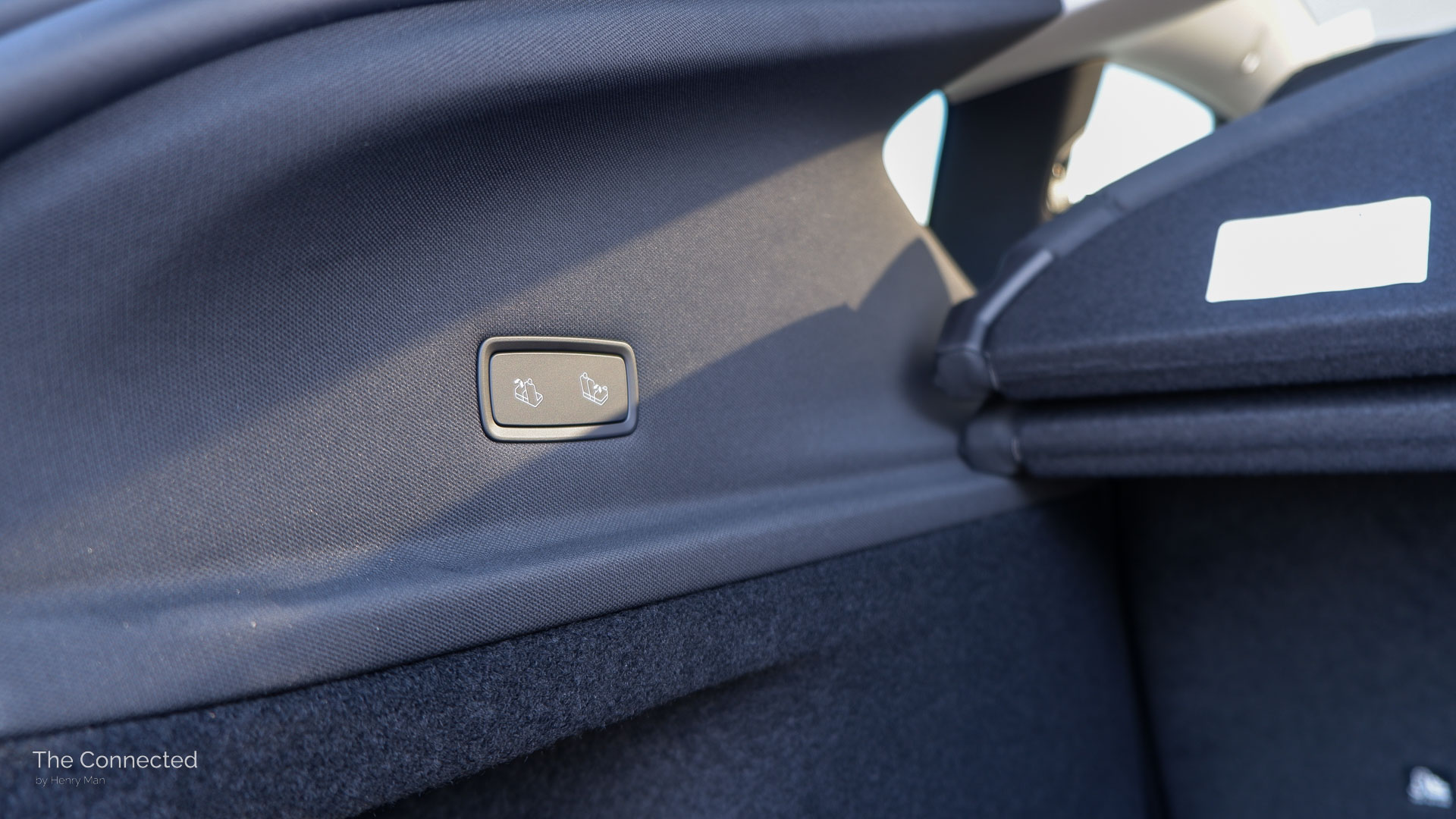
Thankfully, the boot is lined in plush carpeting, with buttons to electrically fold and unfold the rear seats in a 60:40 split, and an LED light inside the tailgate effectively illuminating the cargo space.
It would be nice to see bag hooks in the future as per the Cupra Tavascan, Nissan Ariya, and Polestar 4.
The Tesla Model Y has an electric tailgate as standard. If you have a compatible smartphone with ultra wideband (UWB) support and is connected as the mobile key via the Tesla app, it offers a hands-free opening function by standing behind the boot for a few seconds, just like a Kia and Hyundai, but no hands-free closing.
Unfortunately, the reversing camera guidelines don’t offer an indicator for safely opening the tailgate with clearance to the wall or object behind, so driver’s need to make a judgement call themselves.
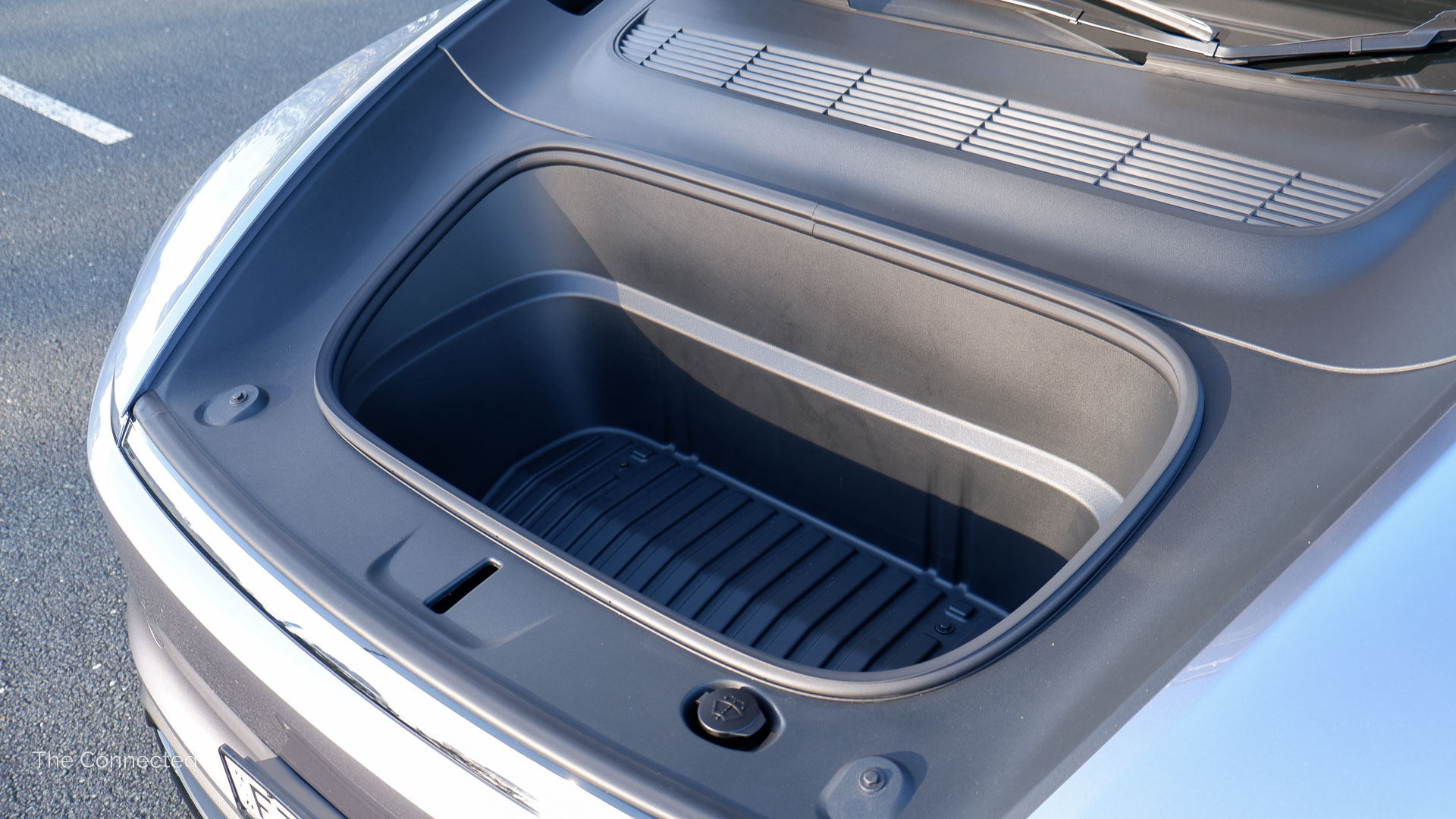
Under the bonnet, the sporty medium electric SUV offers a handily large 117-litre frunk with a drainage plug and a halogen light – just like regular models. It can be popped open via the mobile app or inside the touchscreen.
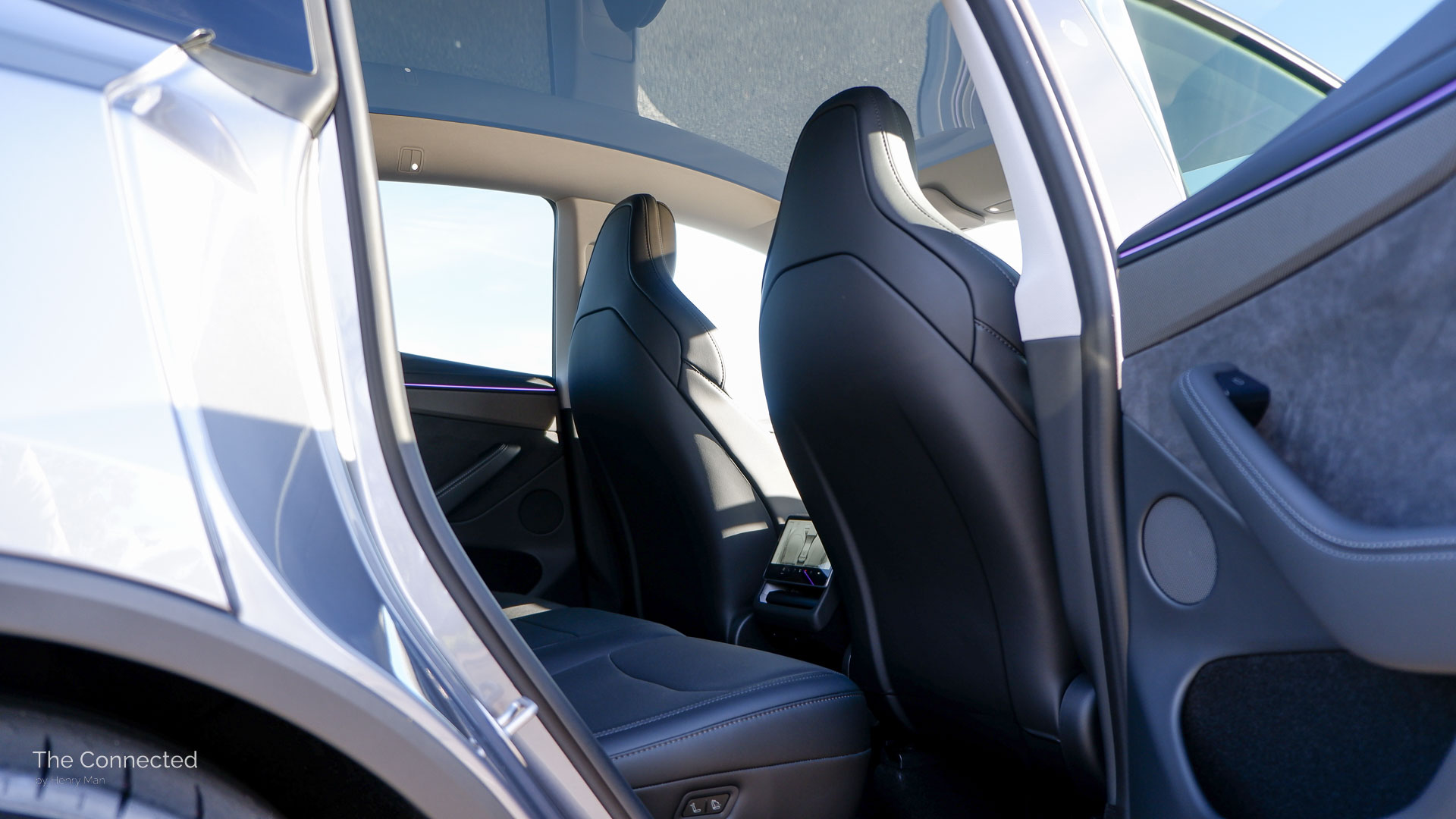
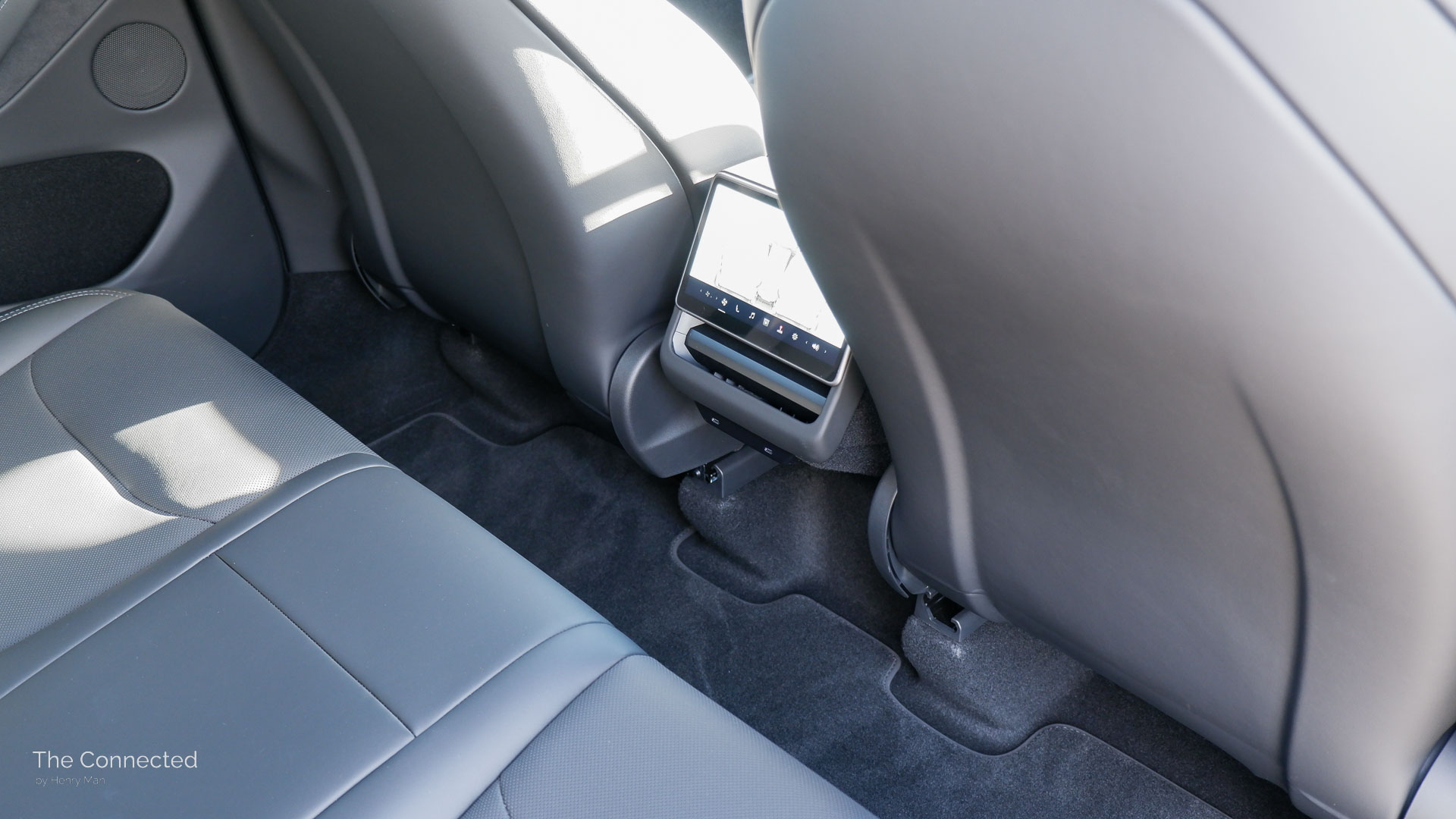
It offers a spacious and family-friendly rear row thanks to plenty of head and leg space, a flat floor, and the raised front seats allow passengers to easily stretch their feet underneath.
The higher bench also results in a comfortable seating position – unlike the Model 3 where knees are more perched up due to the underfloor EV battery.
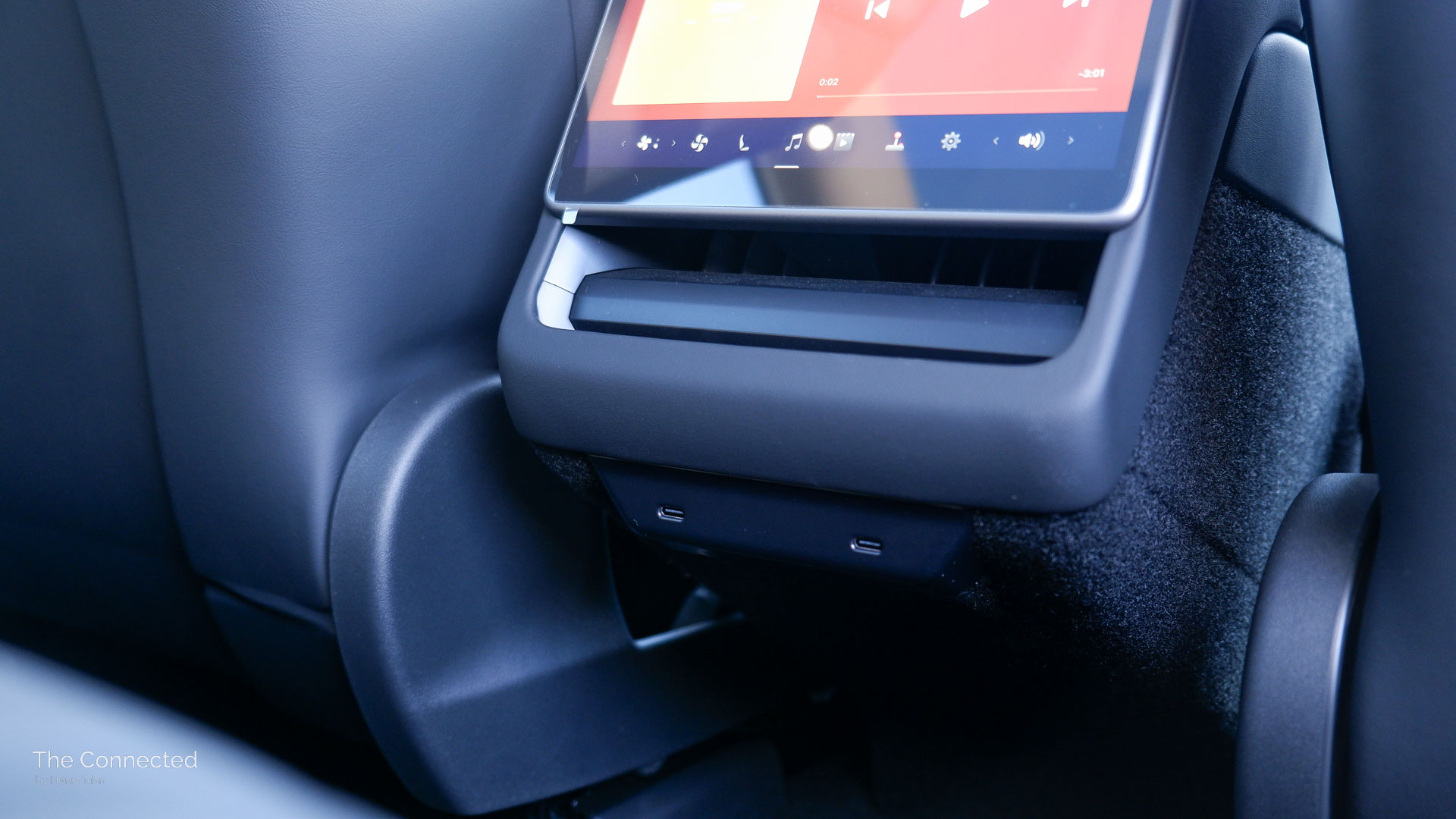
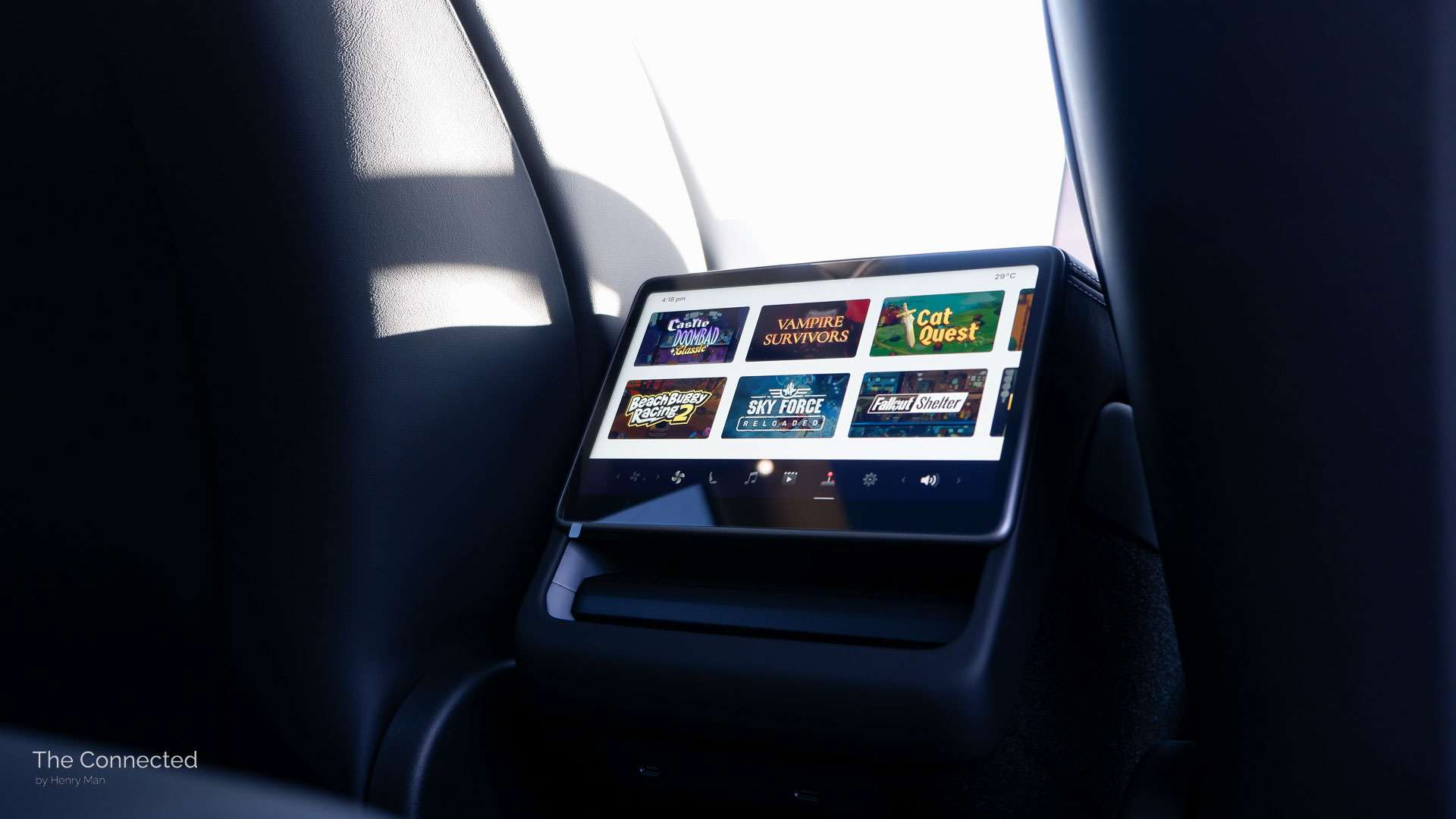
The rear touchscreen is home to climate controls to adjust the hidden air vent direction and strength, in addition to access to audio and video streaming (which can be separated from the front by connecting a Bluetooth headset).
There are three-level heated outer seats, LED lighting, large carpeted door pockets, and the same door material quality and ambient lighting for the rear row, too.
Disappointingly, the Model Y Performance omits seatback pockets behind the sporty front seats – an annoying and nonsensical compromise that’s also on the Kia EV6 GT, Hyundai Ioniq 5 N and Ford Mustang Mach-E GT.
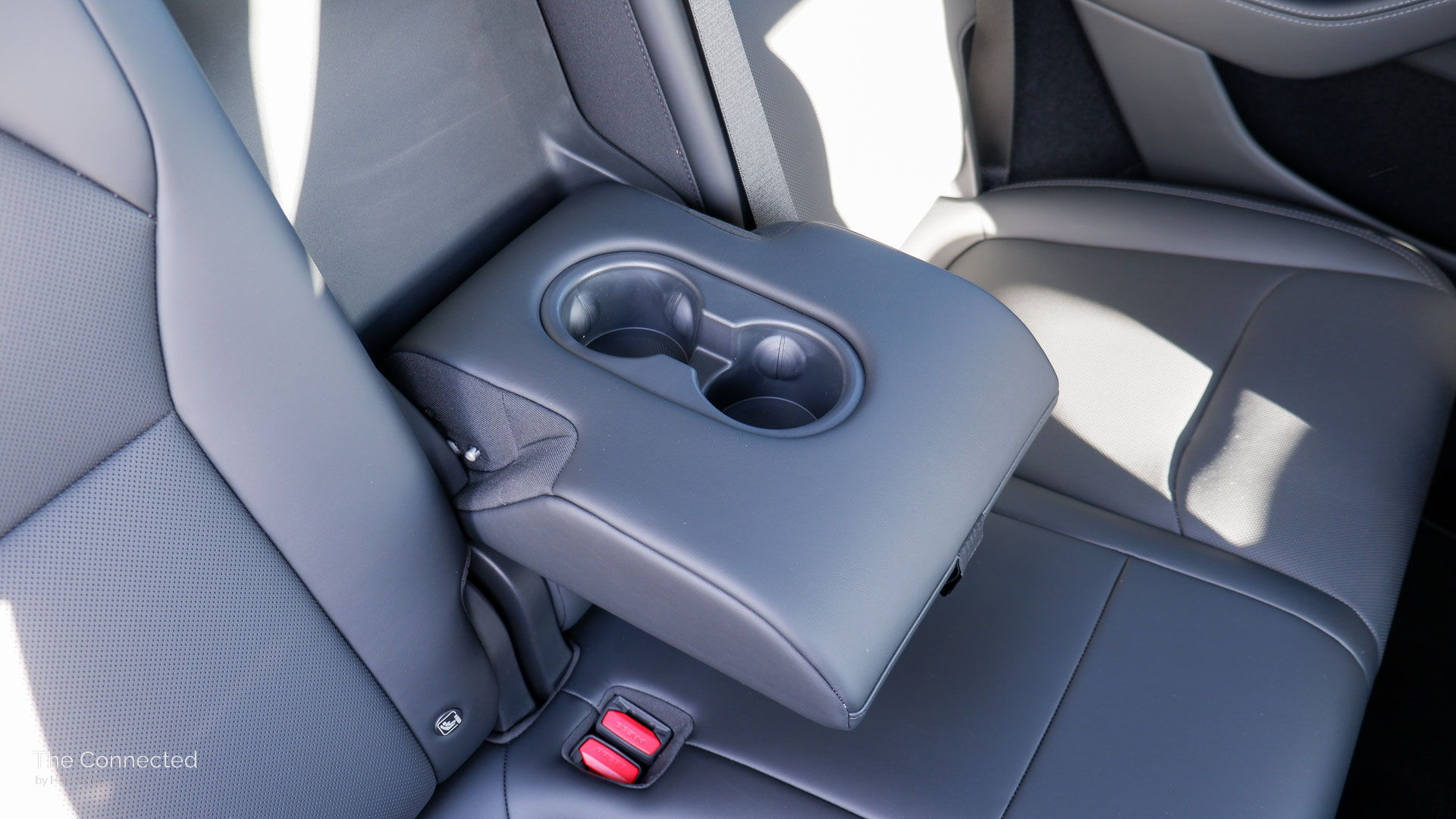
Other downsides also include a rather short fold-down centre armrest (as opposed to the Model 3), no physical panoramic glass roof sunshade, weak coat hooks, and no ceiling grab handles.
The two USB-C charging ports under the rear screen don’t have illuminated surrounds either, so it’s more difficult to find in the dark.
Passengers benefit from the large fixed panoramic glass roof. But it lacks a physical sunshade and, while the glass provides good heat protection, it is coated so much that the view above is dark and reflective.
While the Model Y’s dual-zone climate control features an automatic ‘Swing Mode’, manually adjusting the vent direction via the screen can be tedious and I needed to blast the system on higher vent strength (often level seven or more) to really feel the air, especially in the heat.
The American company also offers Dog Mode, Camp Mode, and Keep Climate On to keep the climate control running while the car is locked.
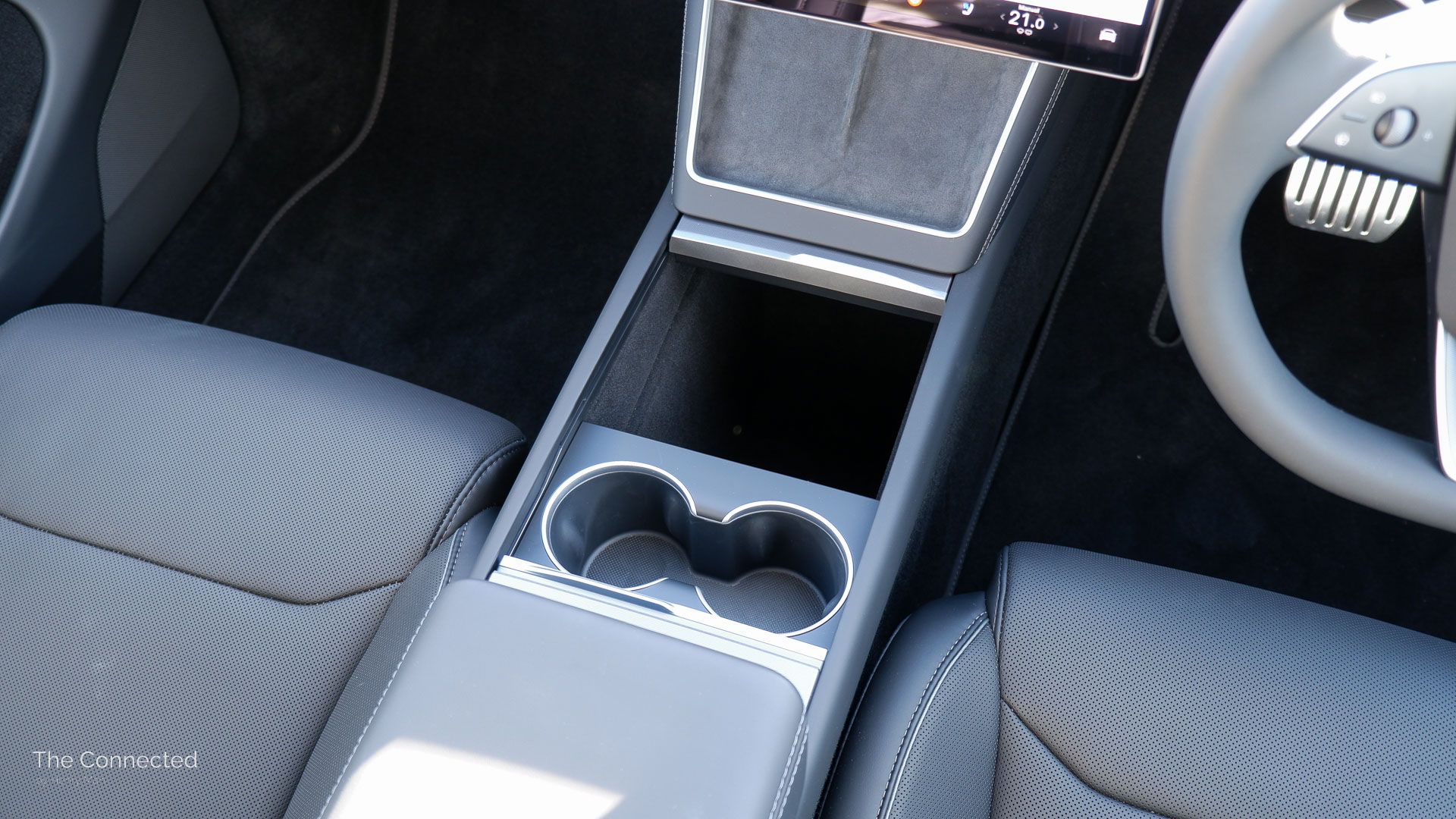
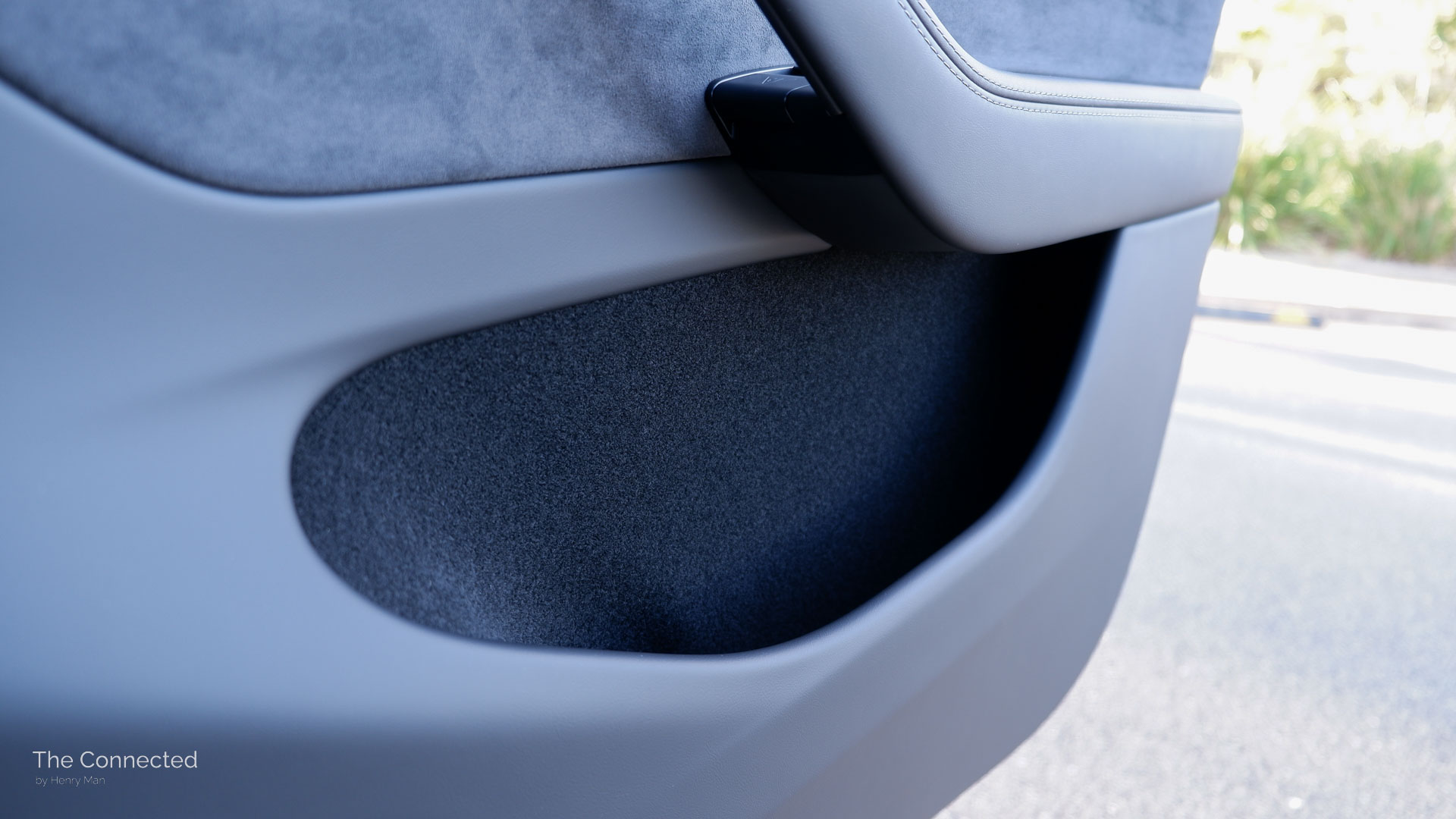
Furthermore, the Model Y front row is similarly practical with a deep centre console and two rubber-gripped cup holders – both of which can be hidden with a sliding lid – and commodious carpeted door bottle pockets.
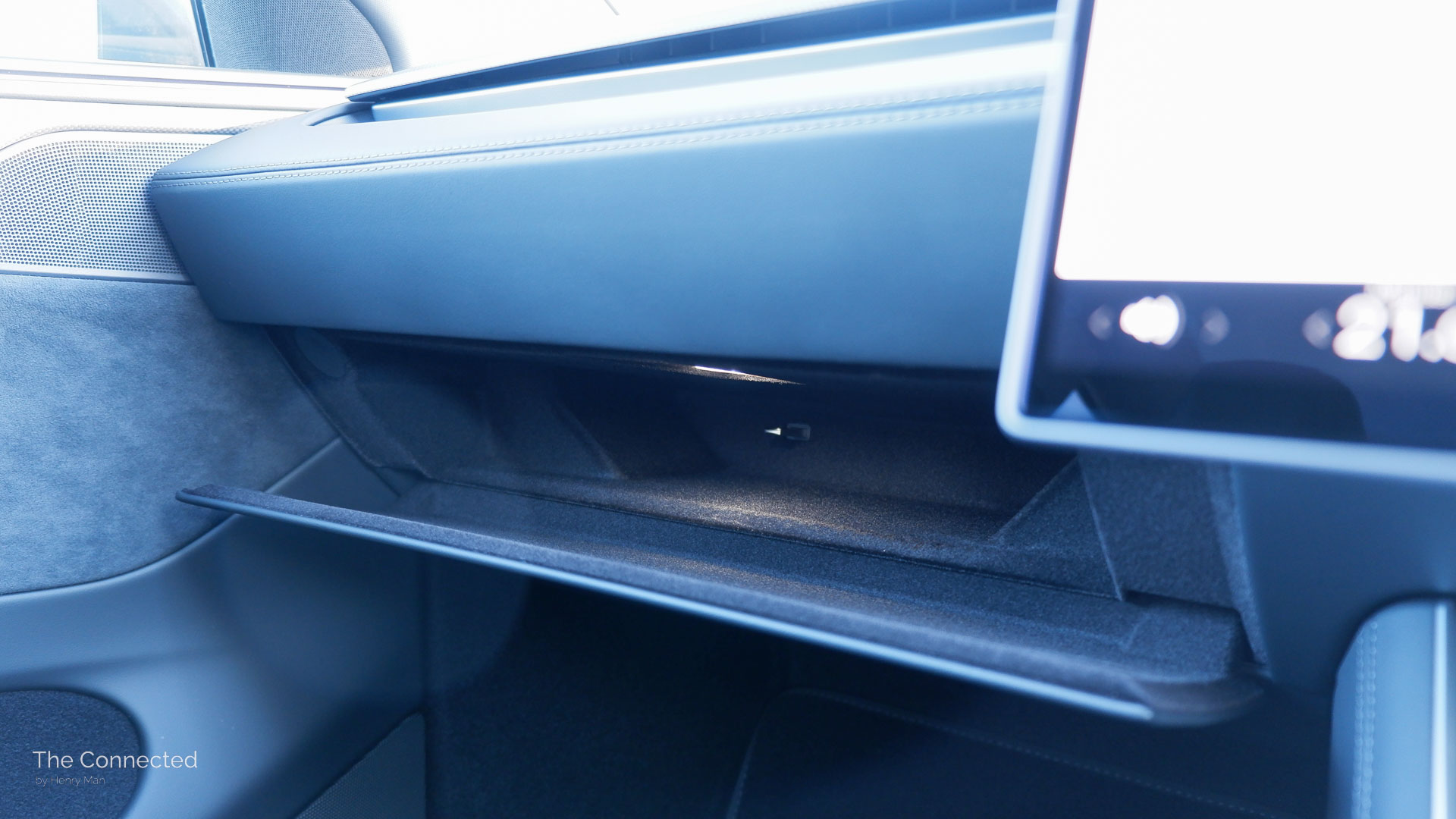
Storage under the centre armrest is also large – although there’s only one USB-C charging port that’s slightly hidden from view – while the glovebox is too narrow.
These front row storage spaces are completely felt lined and have LED illumination that softly glows in when opened – a great attention to detail.
But the centre console is identical to the Model 3 when I feel like it could’ve been wider – it’s tight to place a phone sideways. It also doesn’t have the raised shelf at the front like the related electric sedan.
The Tesla Model Y adopts a J-shaped flush door handle design which needs some learning and hand gymnastics since it doesn’t automatically pop out, requiring a press of the hook end and pull of the handle.
It’s easy to open the doors from the inside with a button press. As for the manual emergency release, it’s an easy flick in front of the door window switches, yet rear passengers need to uncover a flap at the bottom of the door pockets and pull a yellow tag.
Technology.
2026 Tesla Model Y Performance AWD tech features:
| 16.0-inch touchscreen running Tesla software | 8.0-inch rear passenger touchscreen |
| Built-in maps with EV Supercharging navigation | 2x Qi wireless charging pads |
| Tesla Arcade, Theatre and Toybox entertainment apps | 3x USB-C and 1x 12-volt charging ports |
| Audio streaming apps (including Spotify, Apple Music, Apple Podcasts, YouTube Music, etc.) | Dashcam and Sentry Mode recording (128GB USB-A stick included) |
| 16 speakers | Tesla mobile app |
| OTA software update capability | Tesla key card and Phone Key with UWB and Bluetooth sensing, auto unlocking/locking, auto-folding mirrors, front Performance badge puddle lights, and rear glow puddle lights |
| Standard Connectivity (eight years included, Premium Connectivity subscription optional) |
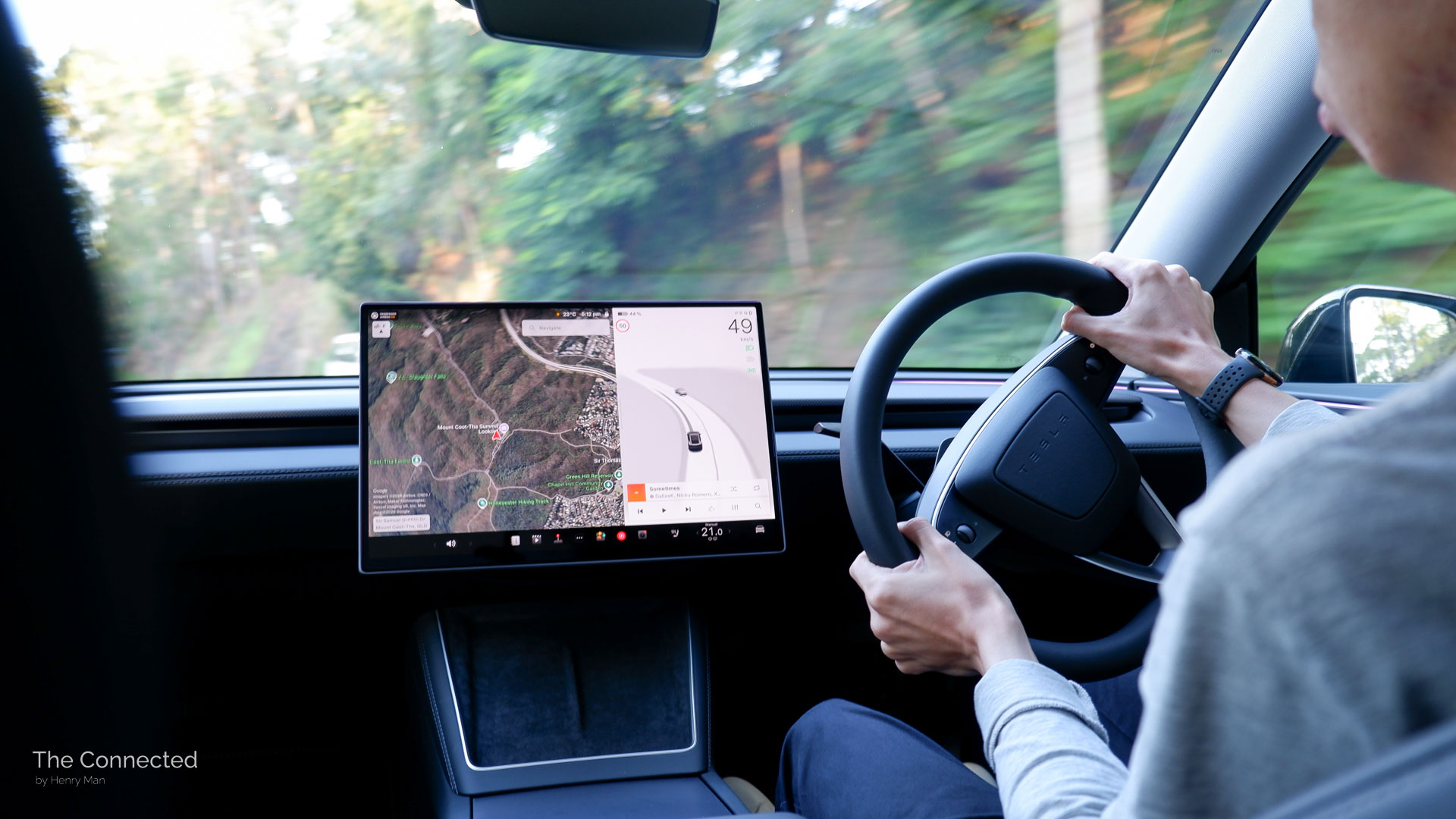
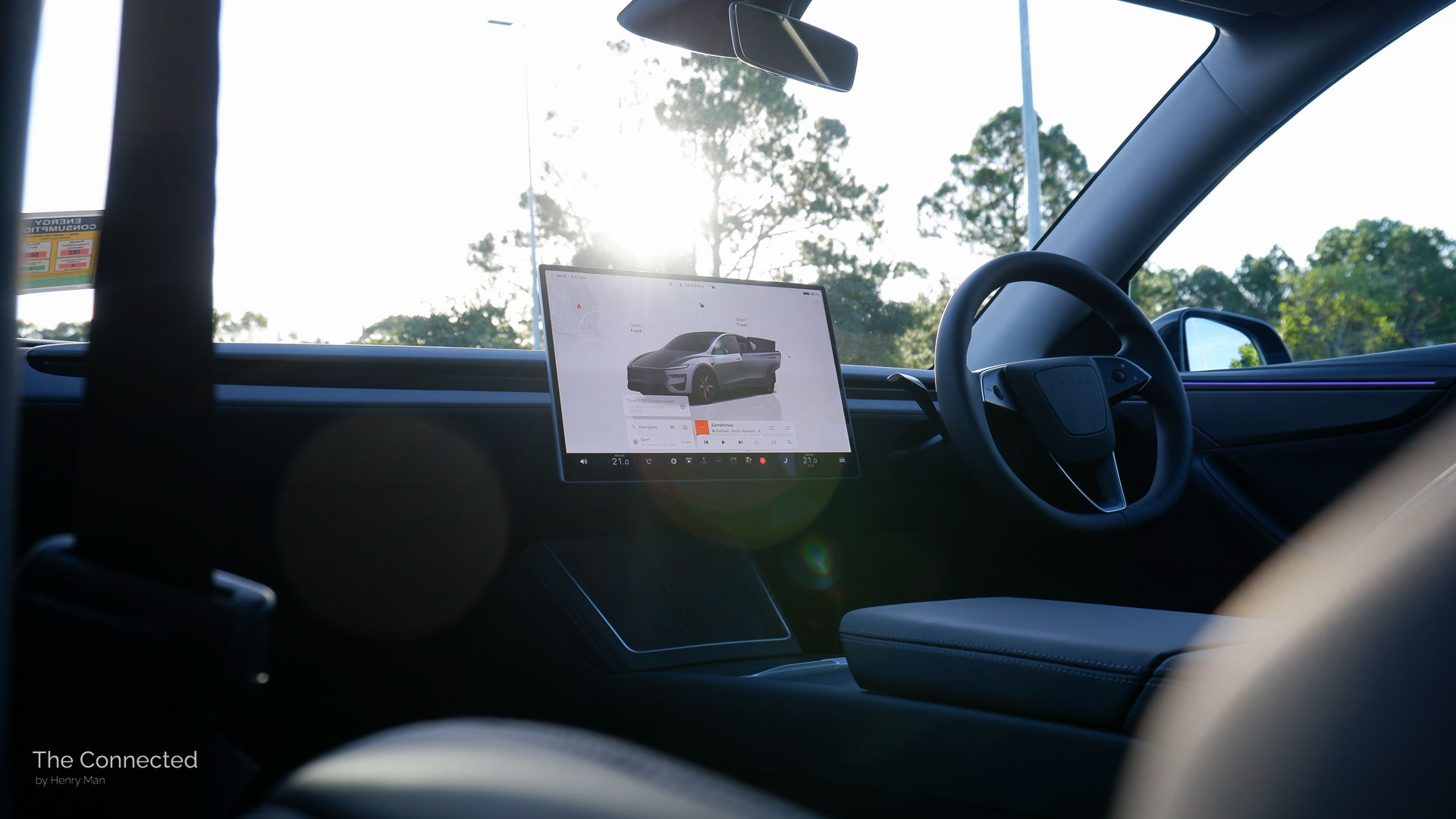
The Model Y Performance debuts an upgraded display with the same industry-leading software, but it should have a head-up display.
The new 16.0-inch central touchscreen (now standard across the line-up) features slimmer bezels, sharper corners, and an upgraded 2K-plus resolution.
While text and graphics look sharper – especially in dark mode – you really need to see it side-by-side with the older 15.4-inch unit still used on the 2026 Model 3 to really notice the difference since it was so good anyway.
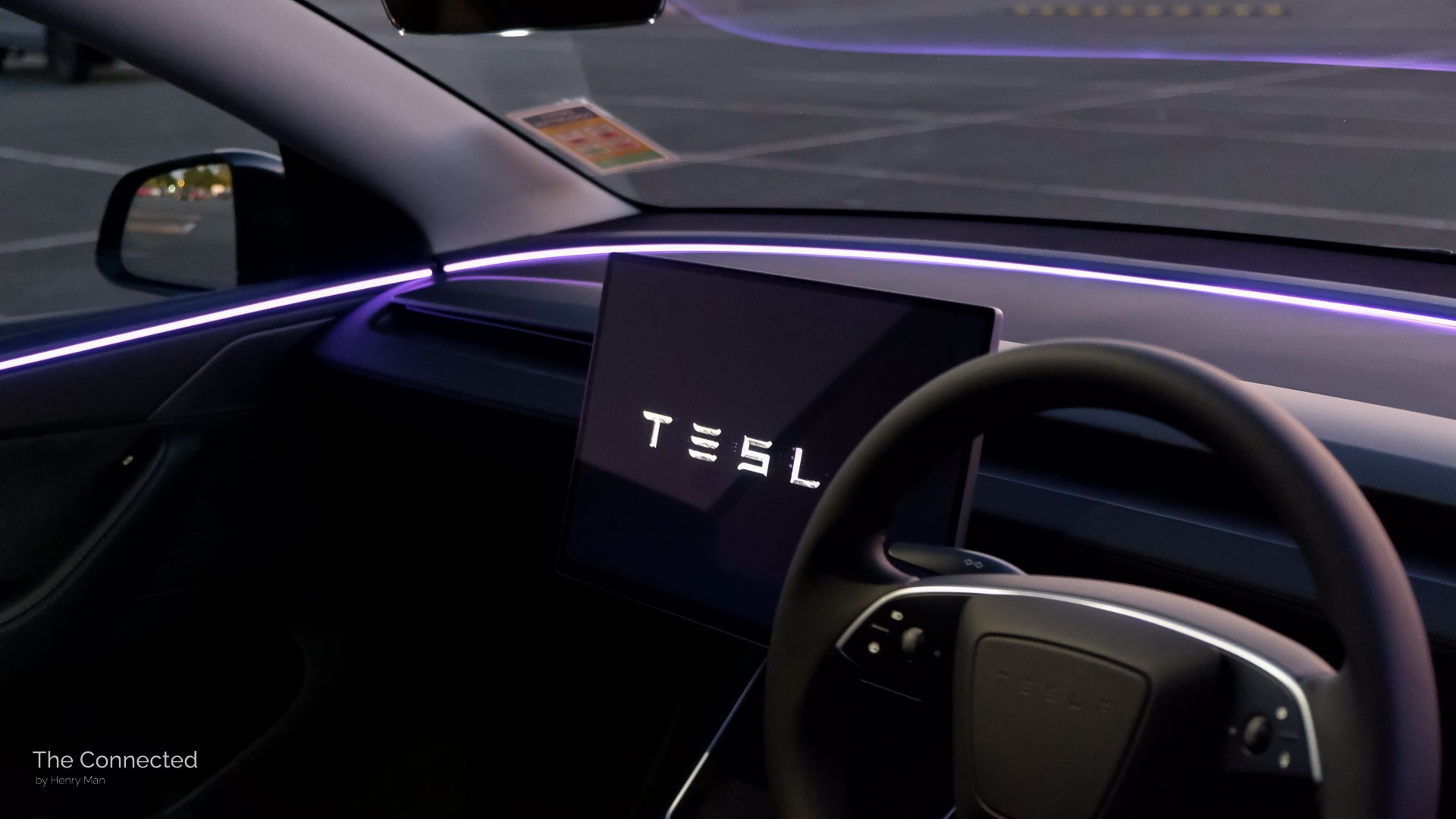
The Model Y Performance exclusively boasts a ‘Tesla’ logo startup animation on both front and rear screens, matched with the set colour on the ambient lighting, and slowly eases in the interior lighting strips upon opening the door.
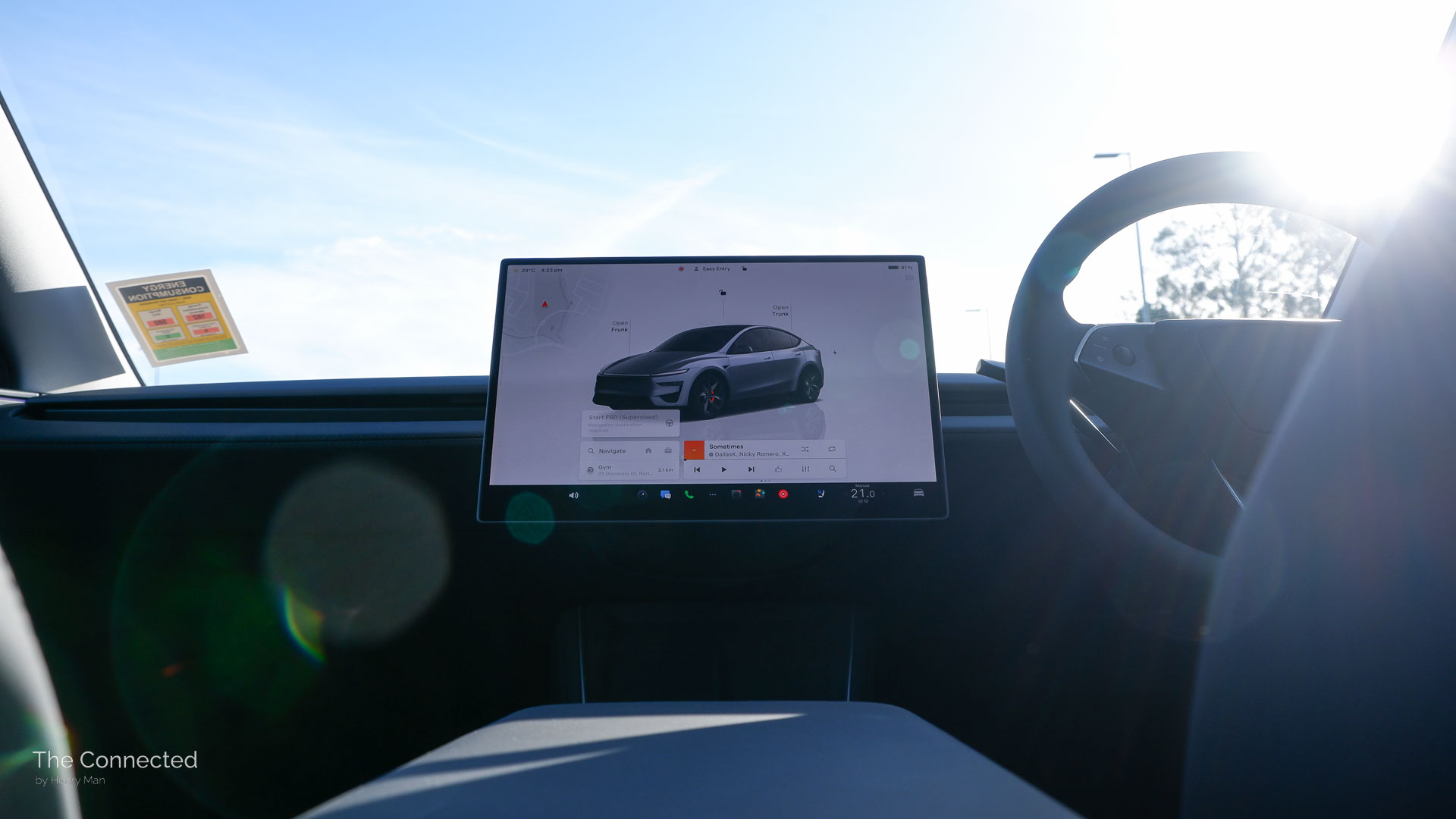
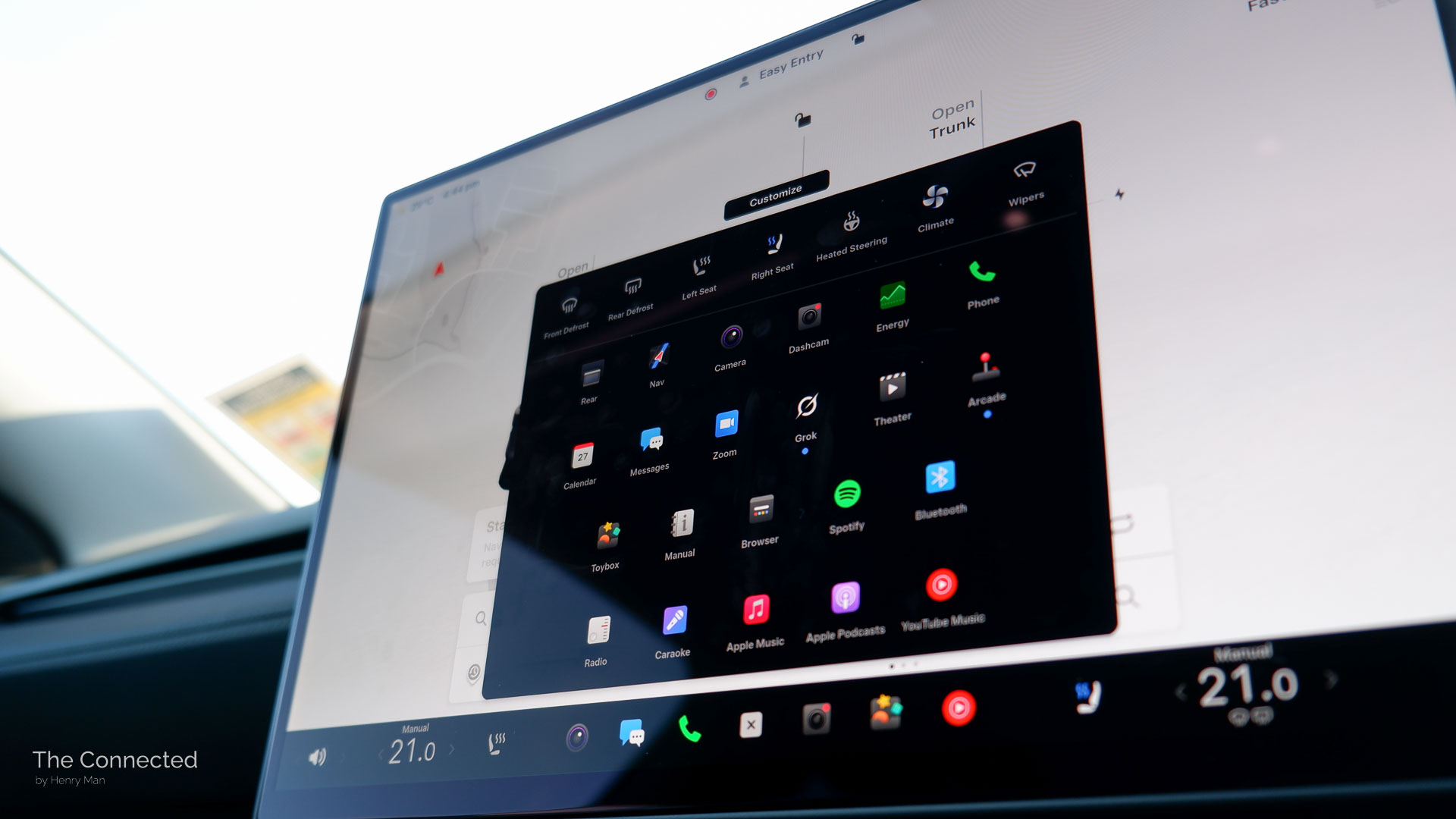
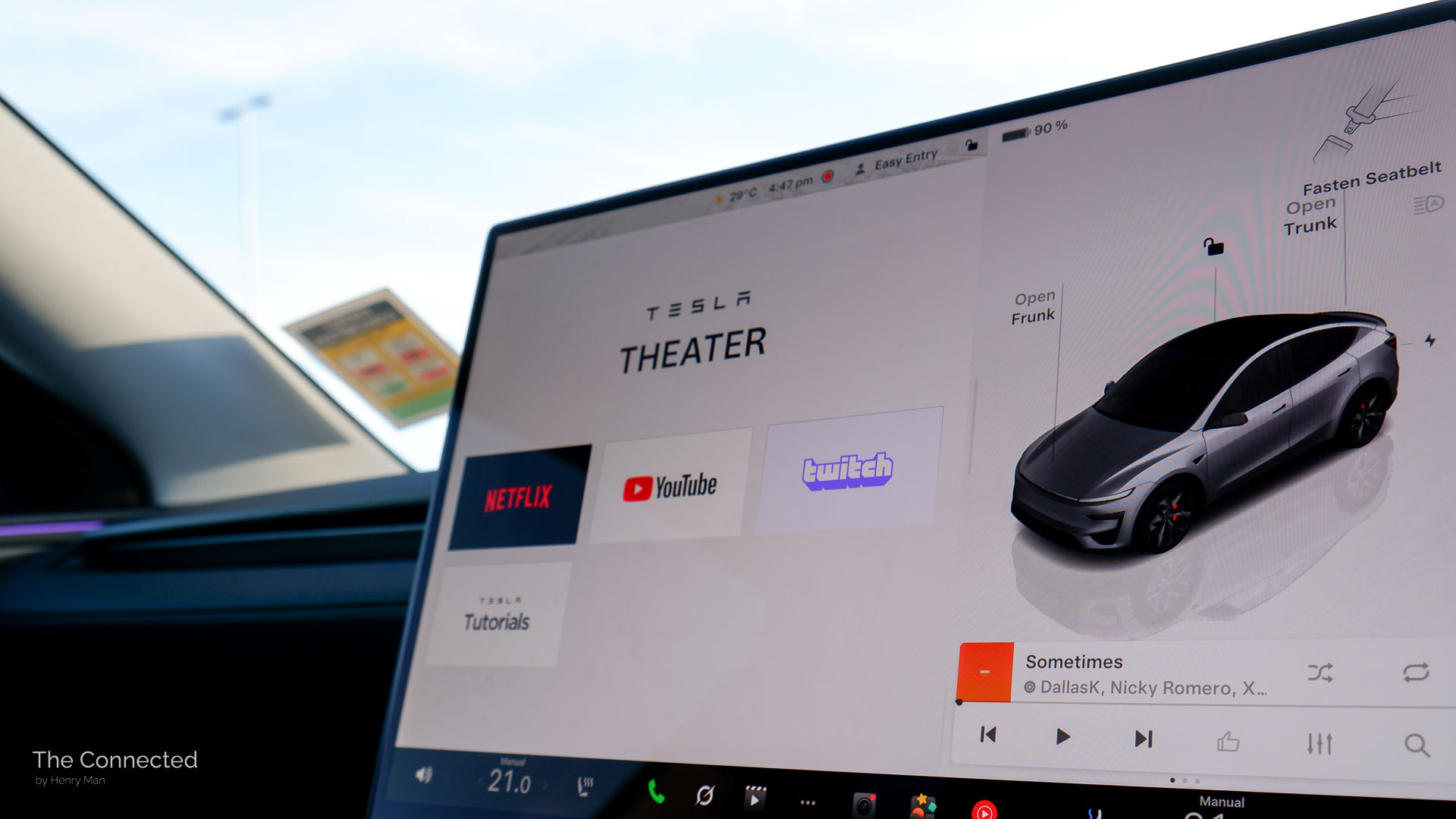
Tesla’s own software is otherwise the same and continues to be an industry leader. While it lacks Apple CarPlay and Android Auto as at the time of testing, it is feature packed with built-in major audio streaming apps, video streaming, arcade games, and a variety of quirky ‘Toybox’ functions.
The built-in maps are based on Google Maps data with clever automatic Tesla Supercharging stop planning that essentially removes range- and charging anxiety on long road trips, as demonstrated by my Brisbane to Sydney return Easter drive.
It also regularly receives meaningful over-the-air (OTA) software updates unlike other brands – although I’d still like to see the text and app launcher icons to be bigger and clearer in line with the Cupra Tavascan.
Keep in mind that certain features require Premium Connectivity, which costs $13.99 per month.
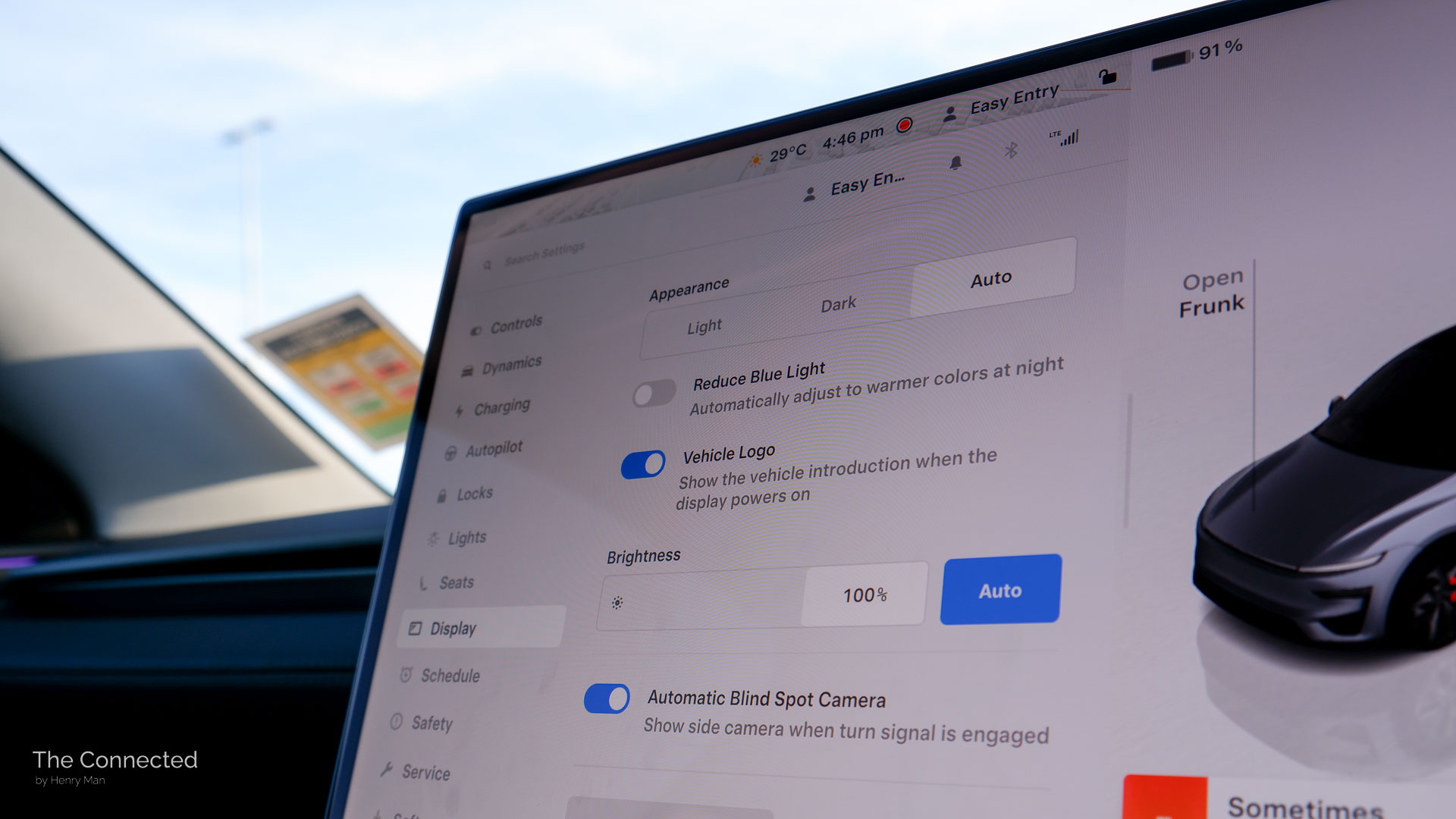
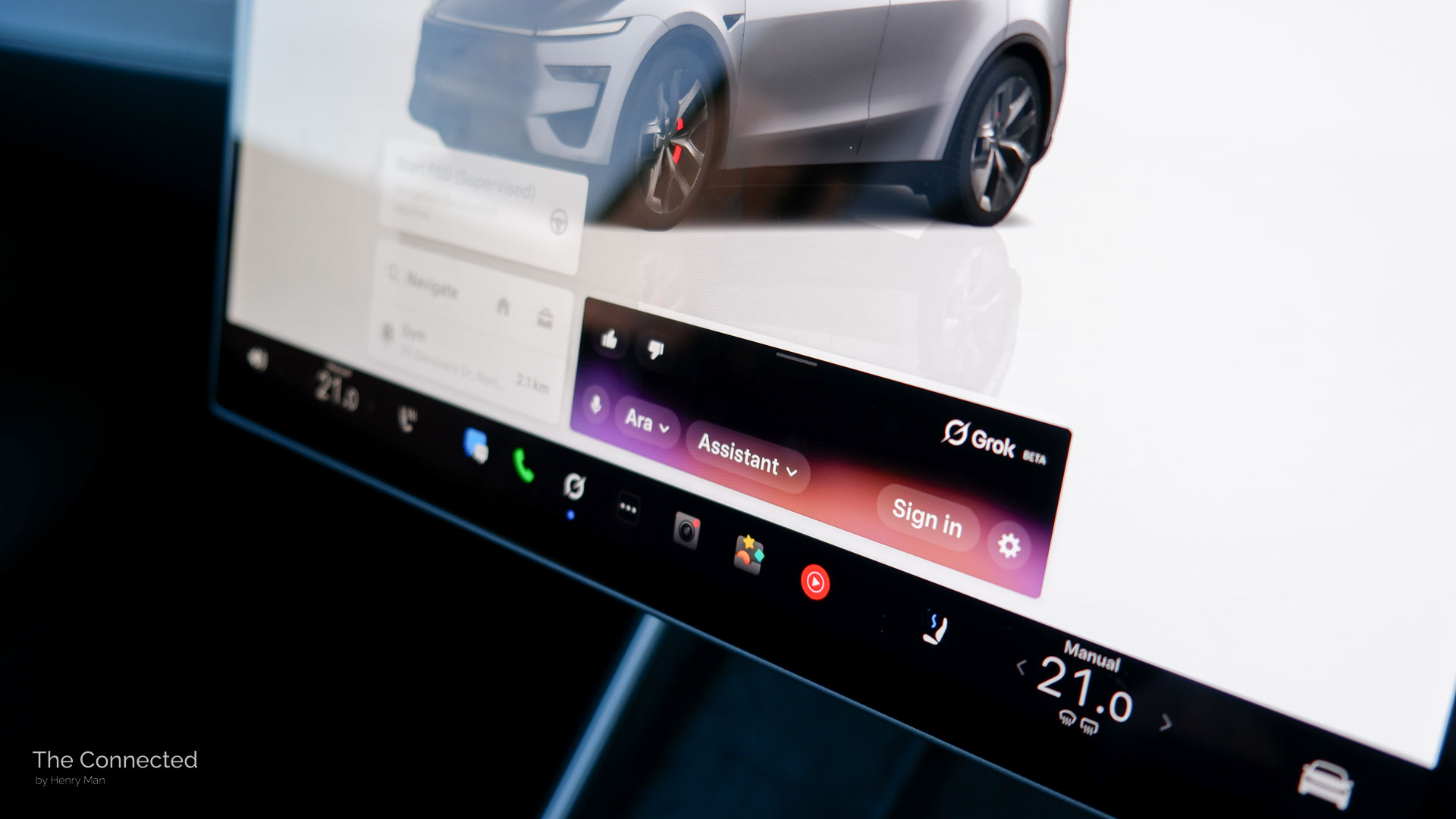
Also, the voice control didn’t recognise my voice well with both the legacy Tesla voice control and Grok artificial intelligence assistant.
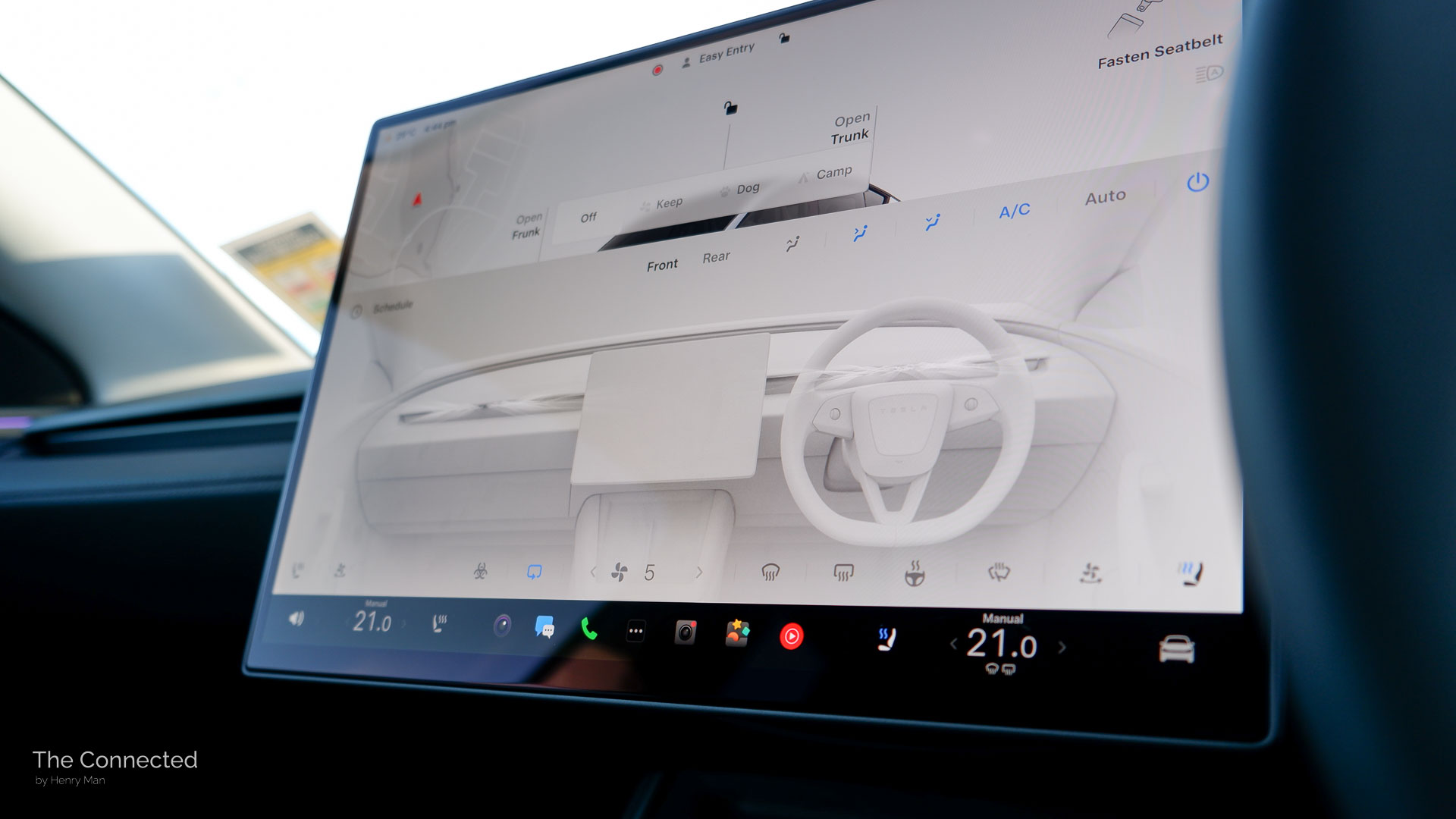
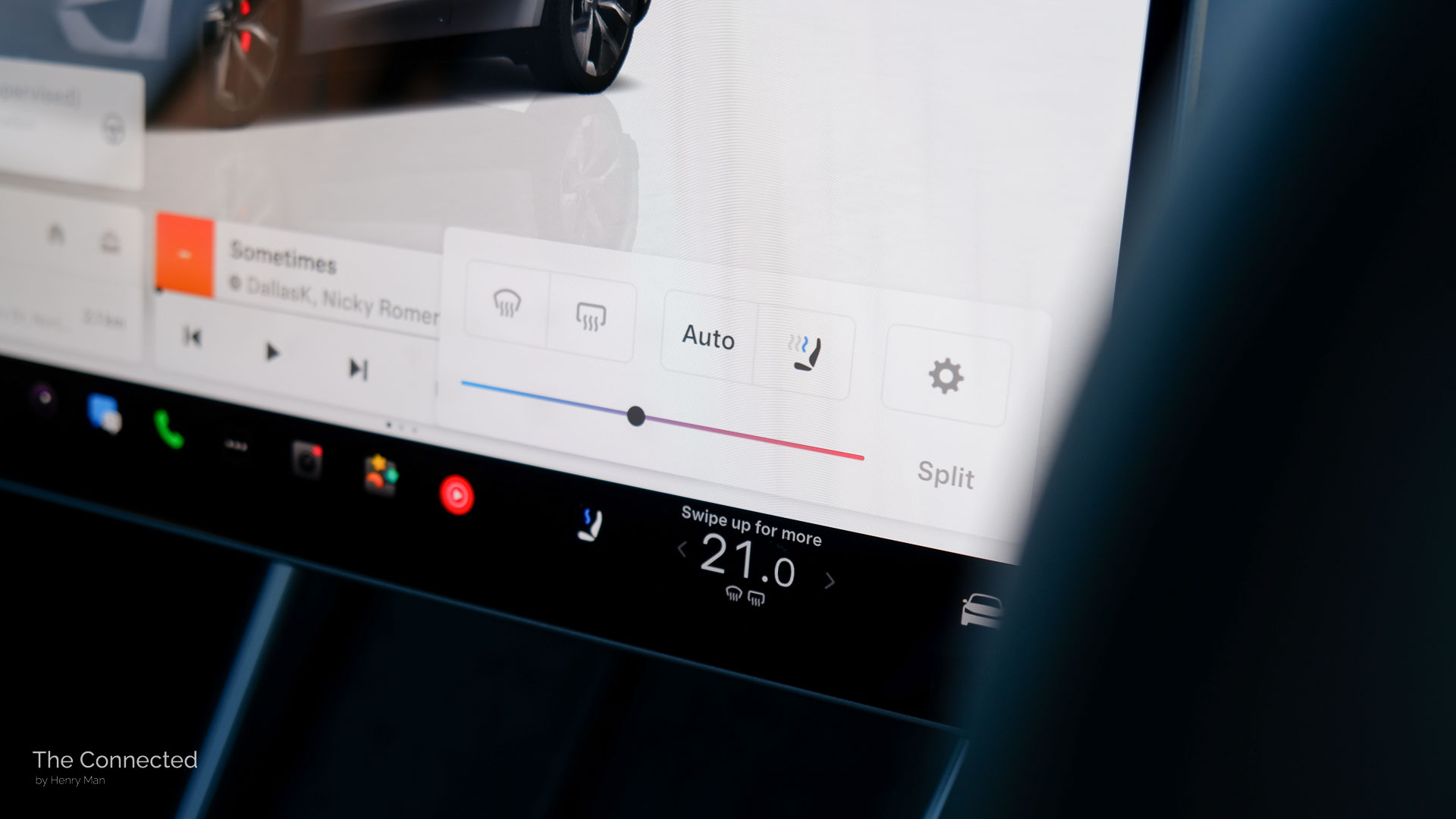
The dual-zone climate controls are mainly adjusted via the touchscreen, including the direction of the hidden-type electronic air vents.
A customisable bottom dock provides easy access to changing the temperature and heated/ventilated seats always at the bottom, even though the touch targets are smaller than ideal to hit while driving.
Swiping up anywhere on the bar reveals the full climate screen. The left steering wheel scroll wheel can also change the climate control, but it can be fiddly since switching between functions such as the fan speed and temperature requires multiple clicks.
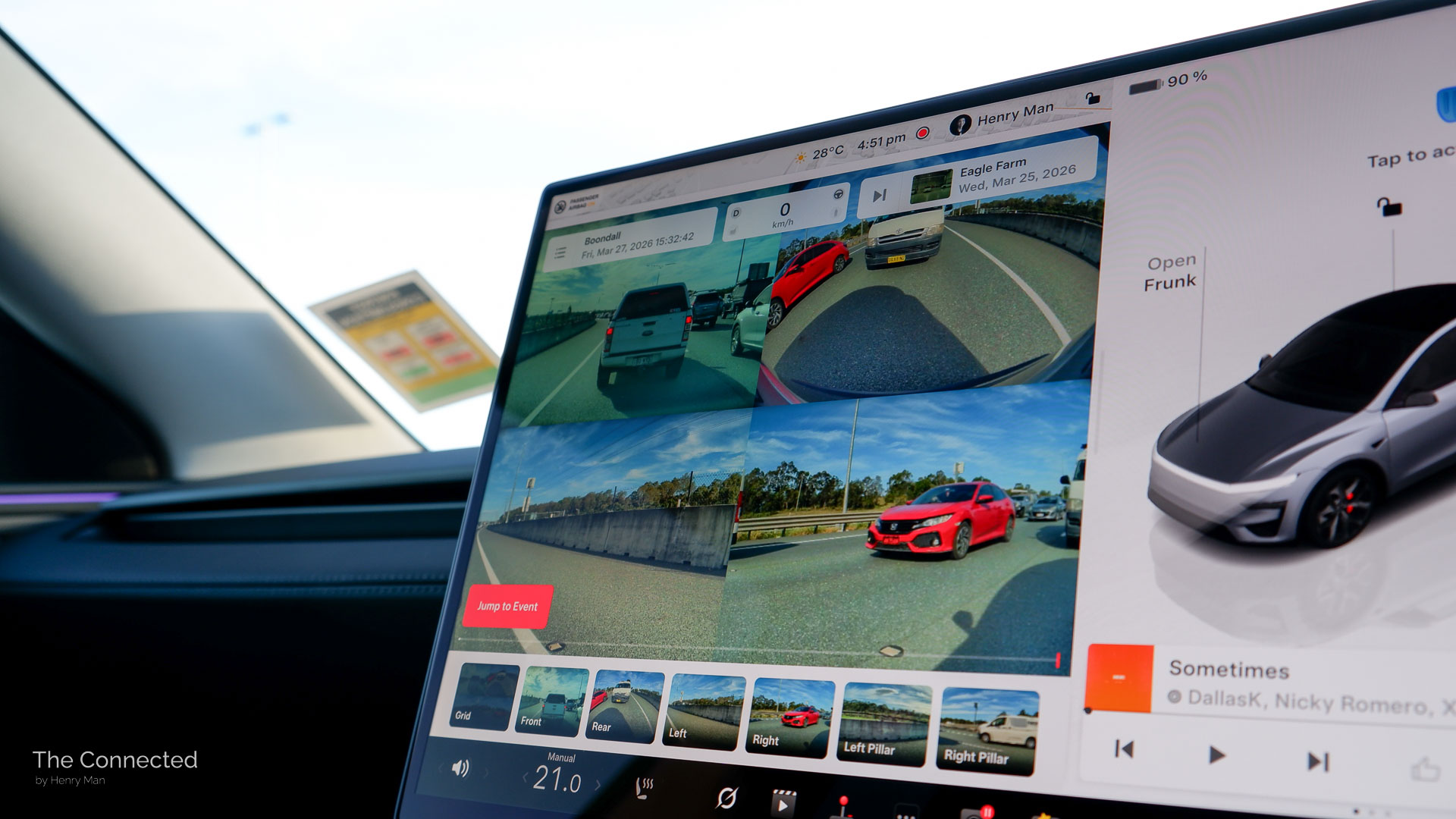
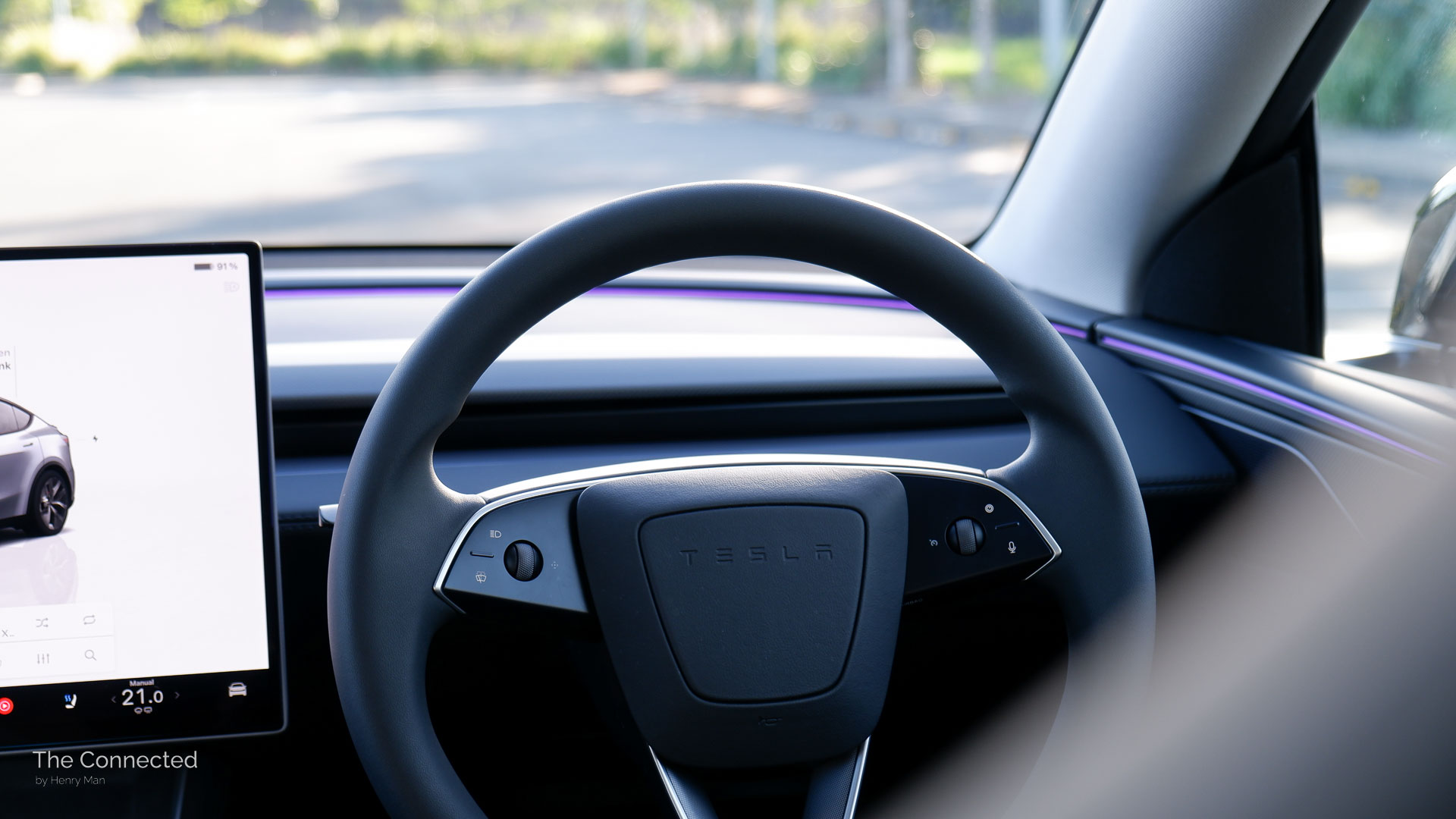
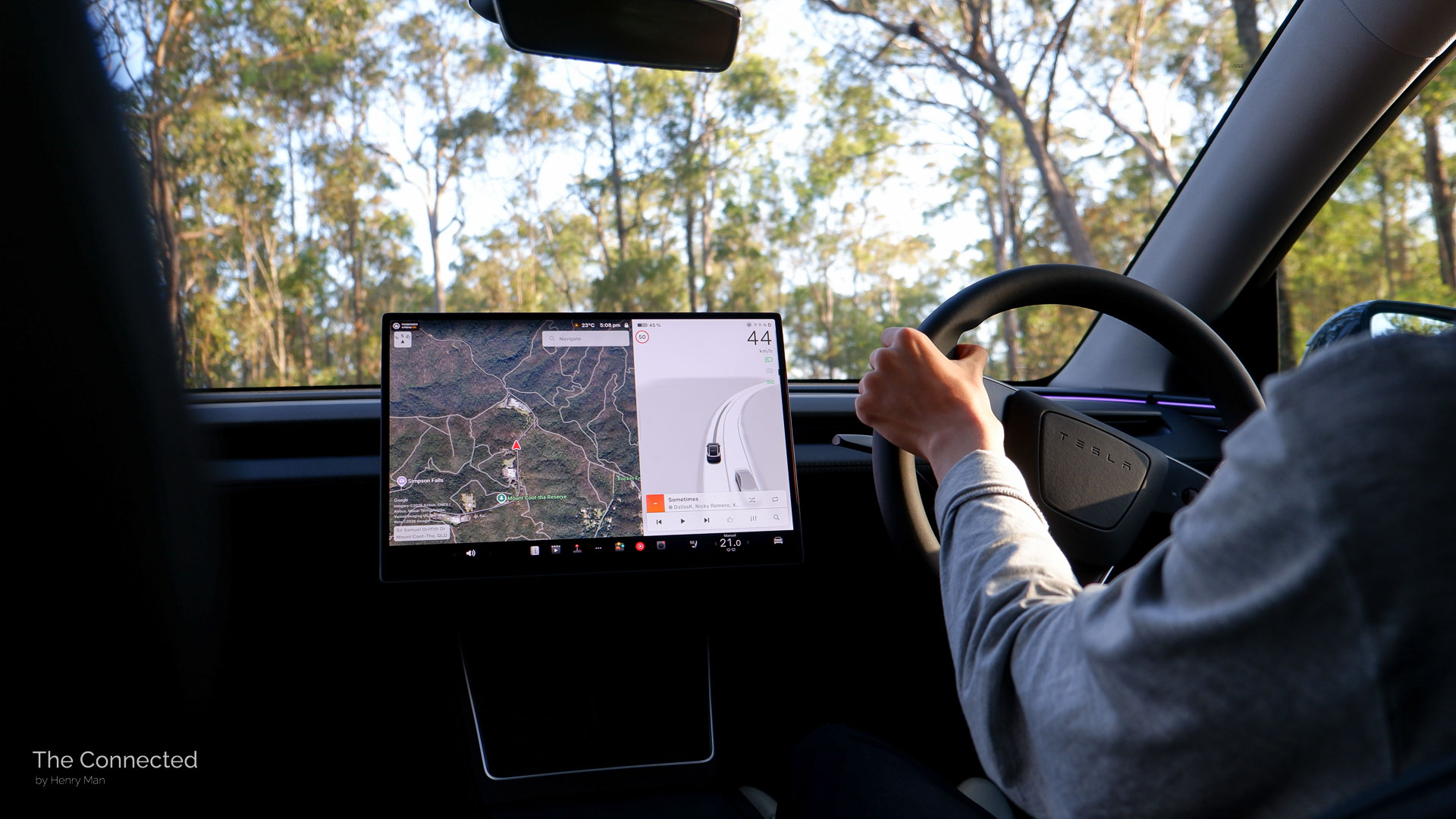
Disappointingly, the Model Y Performance still lacks dedicated driver instruments, just like the rest of the range.
Instead, the right portion of the central touchscreen is dedicated to the instruments with access to opening the boot and frunk readily available.
While you can get used to seeing the speedometer on the corner of the screen after a couple of days, I think the Performance deserves a head-up display for such a speedy driver’s car in line with the Polestar 4.
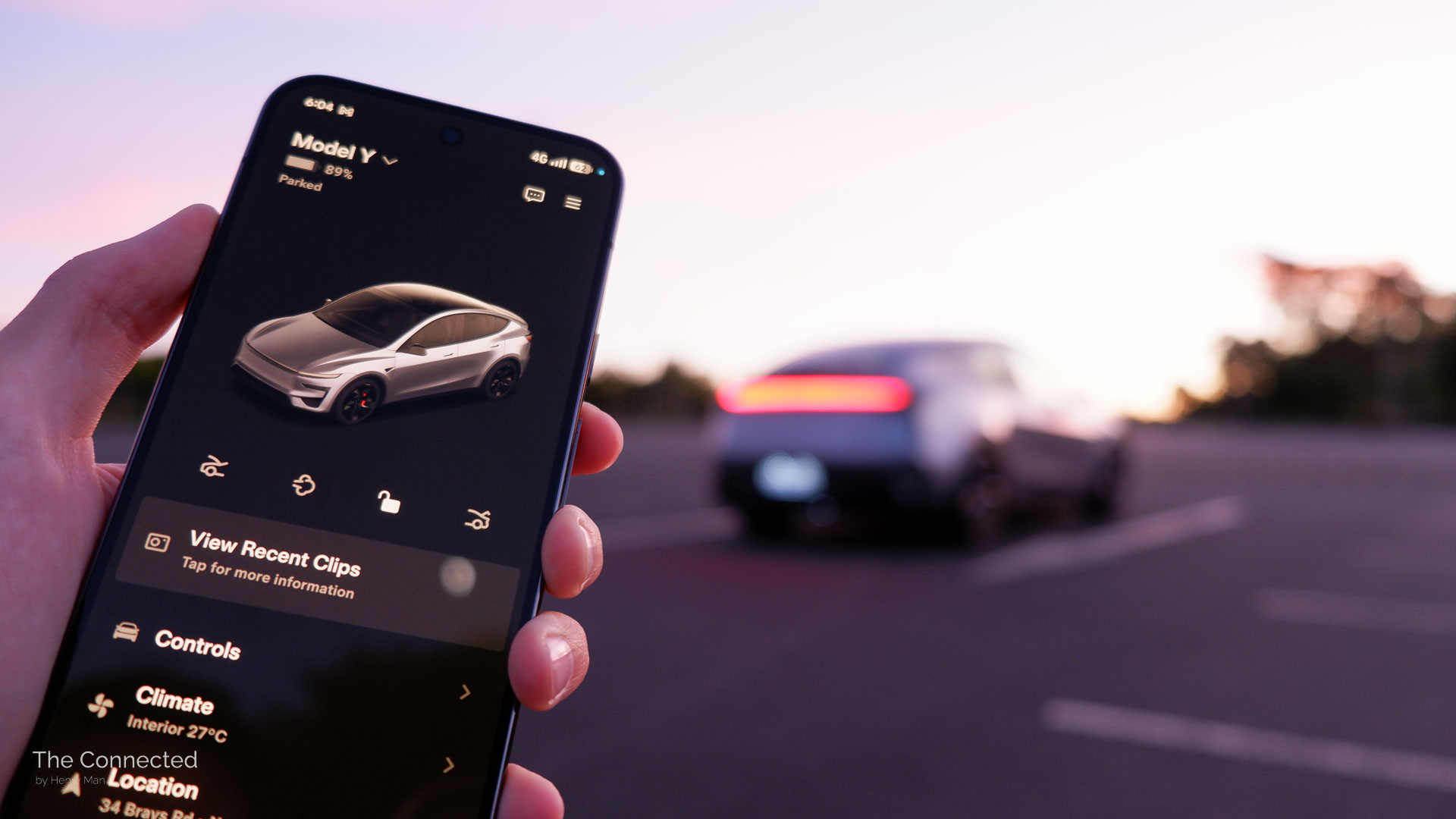
Additionally, another highlight of Tesla’s technology is its mobile app, which sends commands almost instantly and provides a lot of functionality, including pre-starting the climate control and heated/ventilated seats, viewing the all-round cameras live, and monitoring the charge status.
The Tesla app also serves as the key using Bluetooth and UWB with no issues with automatic locking and unlocking in my testing.
Dashcam and Sentry Mode recording rounds out the list, using six all-round cameras to record onto the included 128GB USB-A stick – a crucial feature in the event of an accident or insurance claim.
Safety.
2026 Tesla Model Y Performance AWD safety features:
| Front AEB with vehicle/pedestrian/cyclist/junction turning detection | Reversing camera with 360-degree Tesla Vision visualisations |
| Rear AEB | Front, side and rear camera-based parking sensing |
| Blind-spot assist and blind-spot view cameras | Driver attention monitoring with in-cabin camera |
| Rear cross-traffic assist | Door open warning and prevention |
| Lane-keep assist | Road sign detection |
| Adaptive cruise control with lane-centring assist (Basic Autopilot beta) | Full LED headlights with auto adaptive high beams |
| Full Self-Driving (Supervised) with auto park assist and green traffic light chimes ($149/month option) | Full LED tail-lights with rear fog light |
The Tesla Model Y uses a camera-only safety assistance system with non-invasive warnings and optional Full Self-Driving (Supervised).
The American company’s safety assists are calibrated well with overspeed warnings off by default in Australia, non-sensitive driver attention monitor and a subtle blind-spot alert light near the A-pillar – although the lane-keep assist warning is slightly too alarmist.
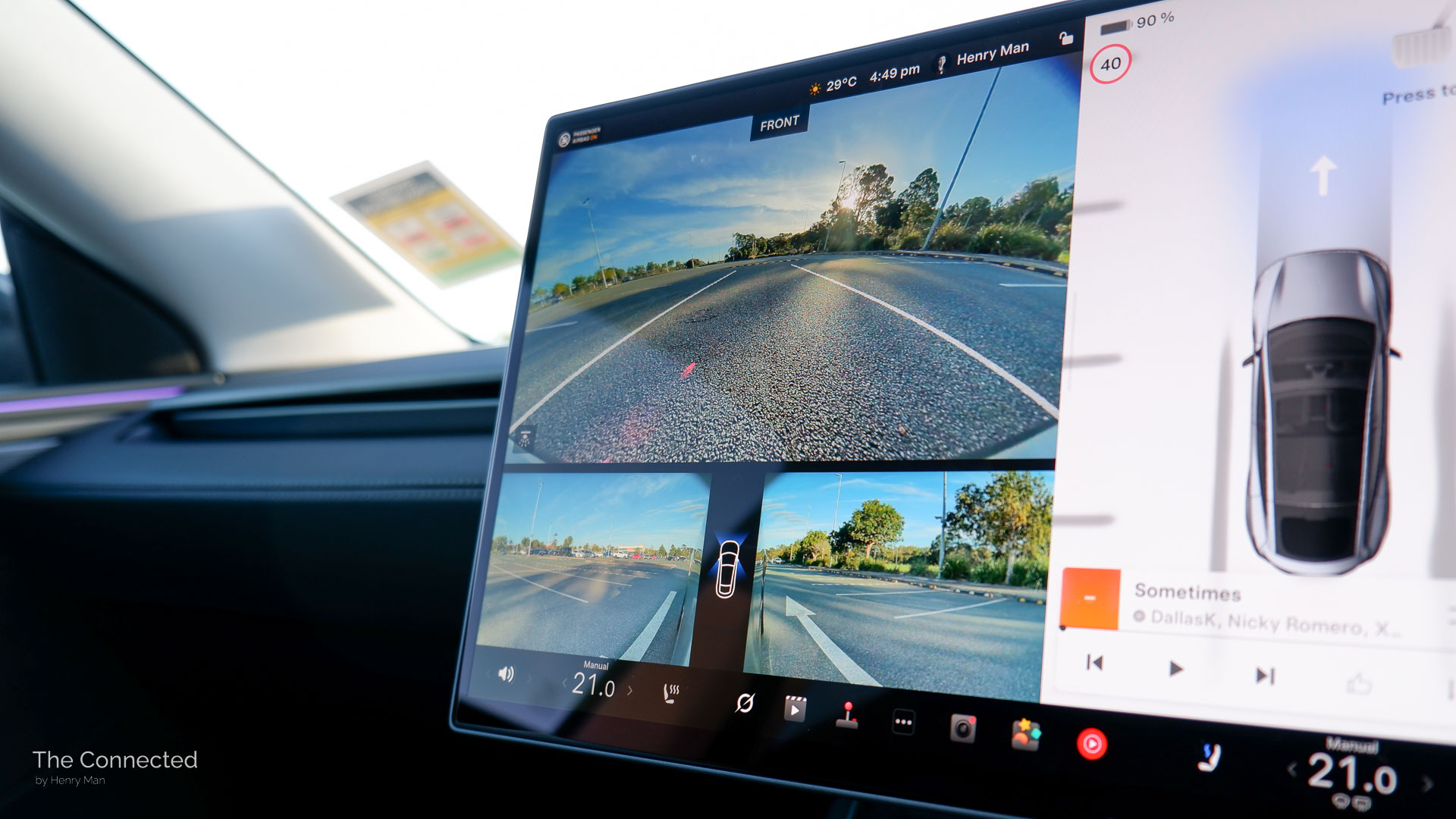
However, the lack of proper sonar-based parking sensors is disappointing since the camera doesn’t reliably detect what’s around it – it sometimes chimes ‘stop’ when an object isn’t that close in reality or is a mere speed hump, while it sometimes doesn’t chime at all even though you’re close to a garage door or netted fence.
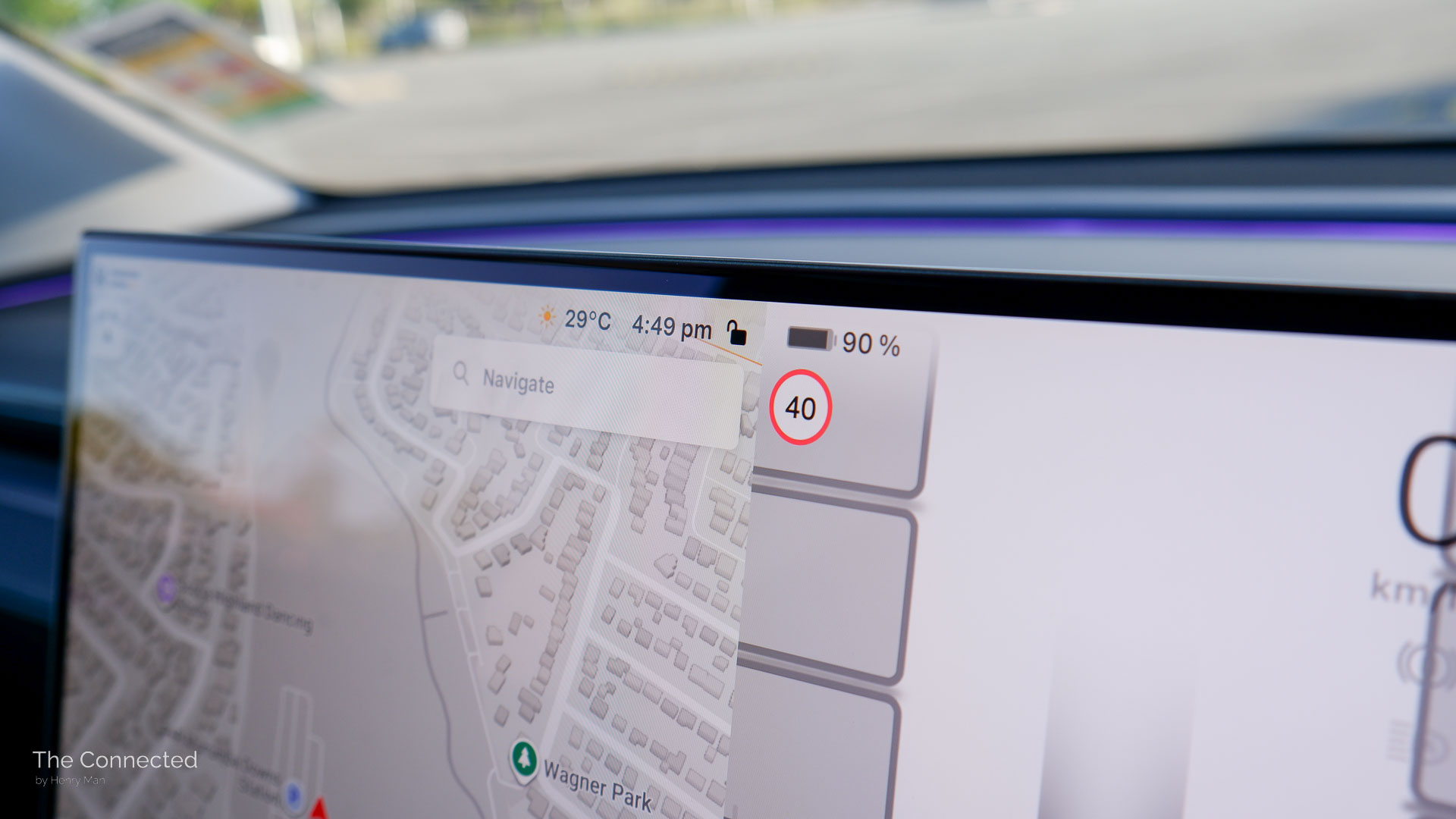
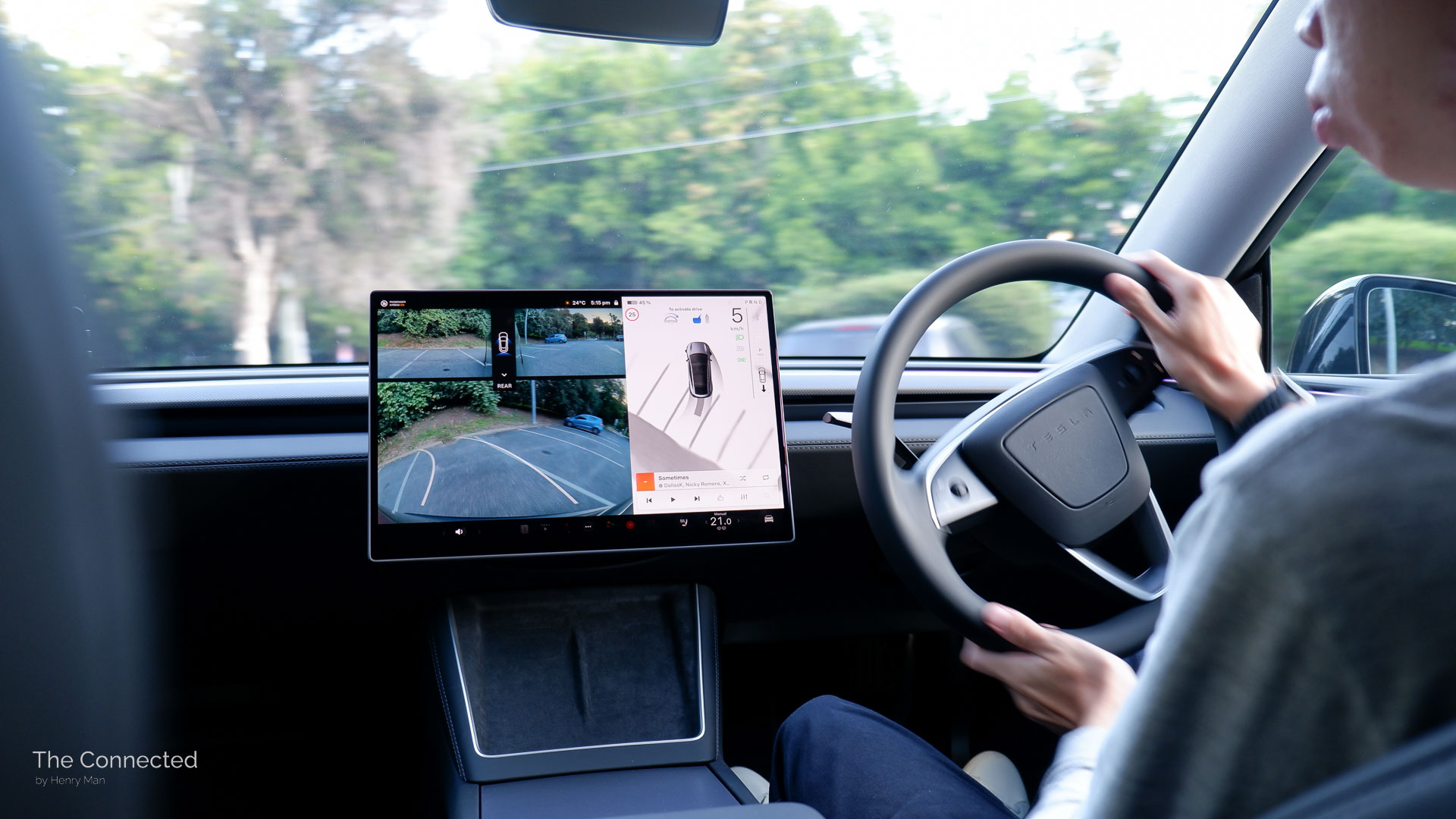
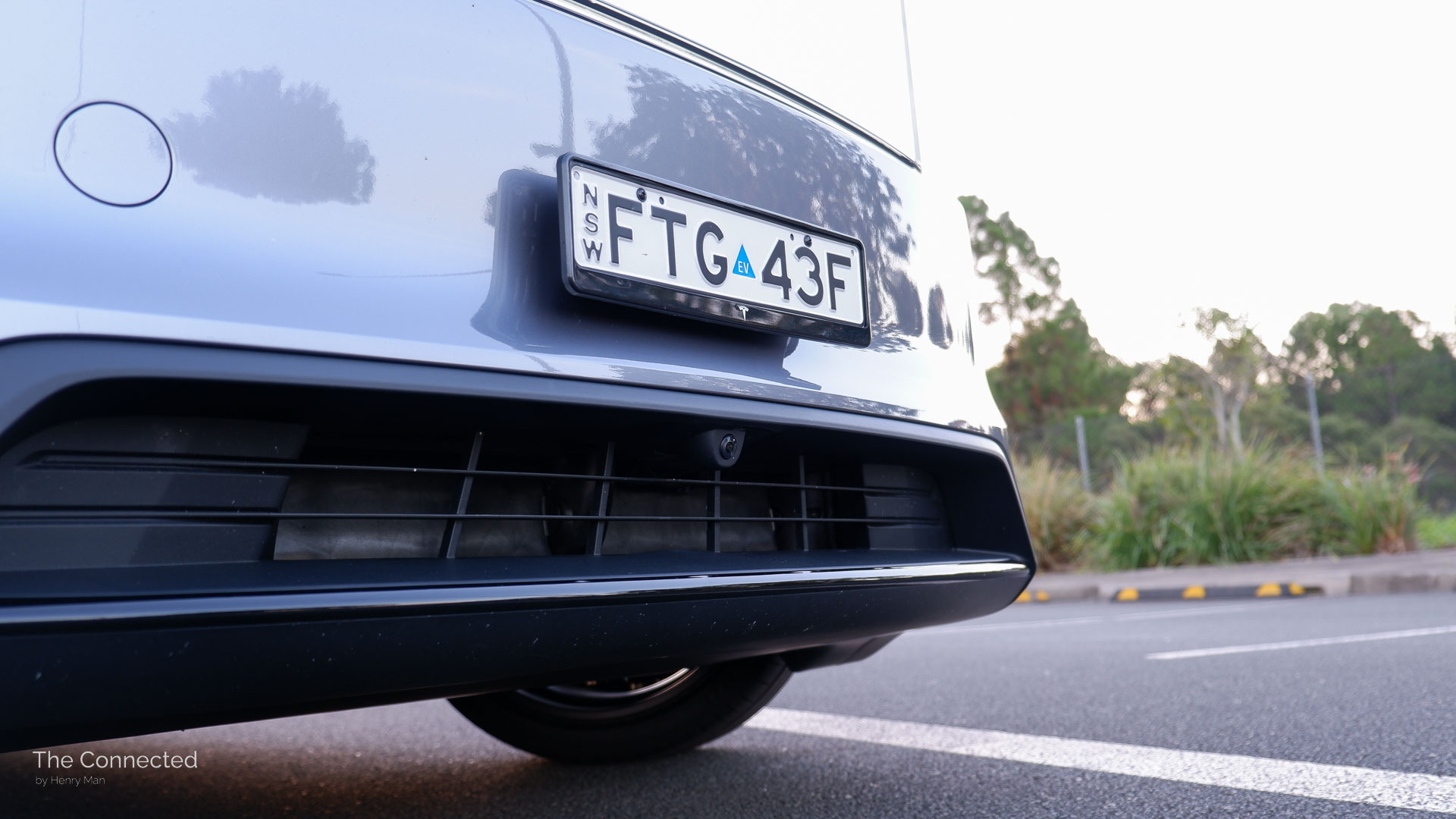
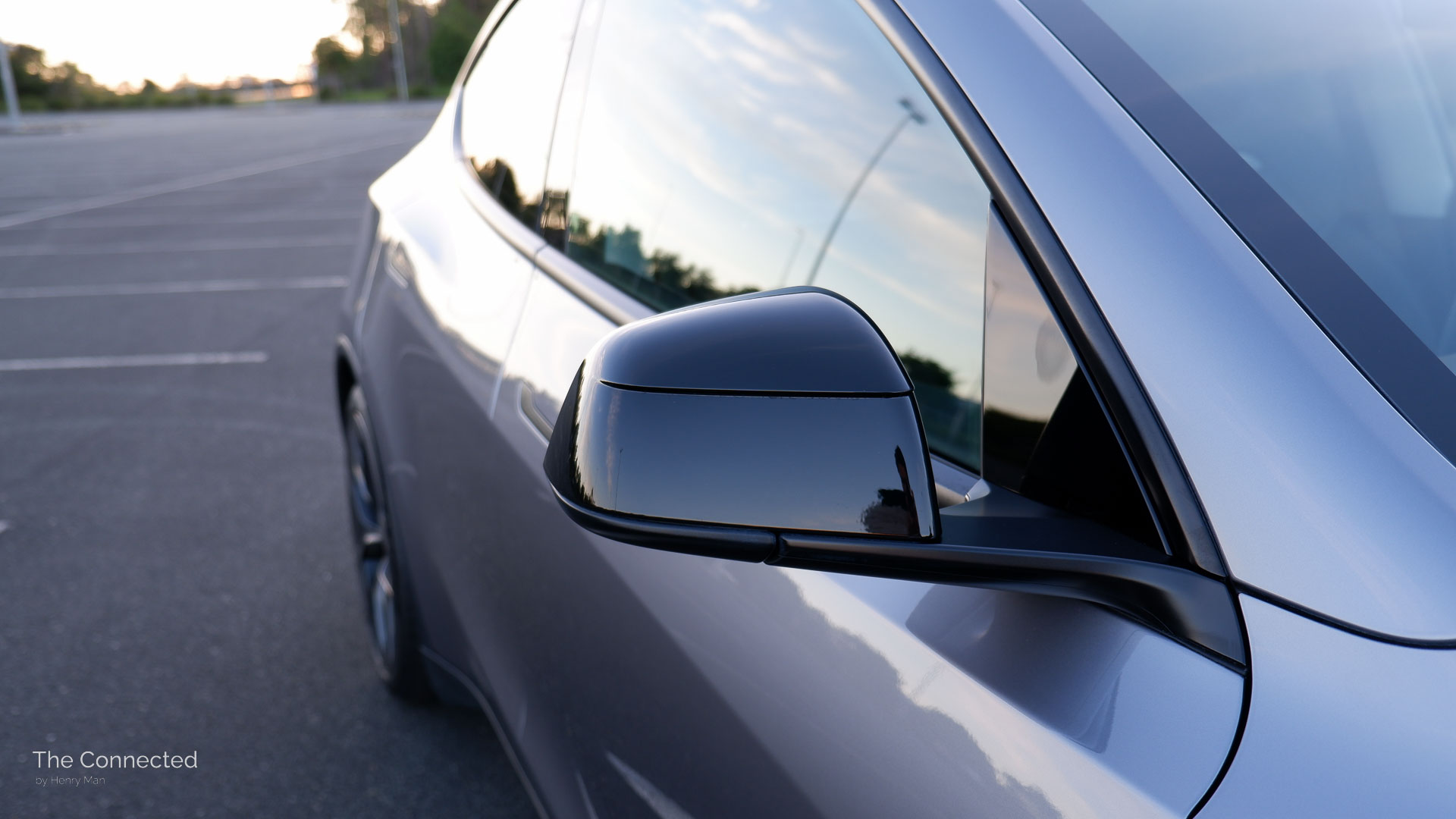
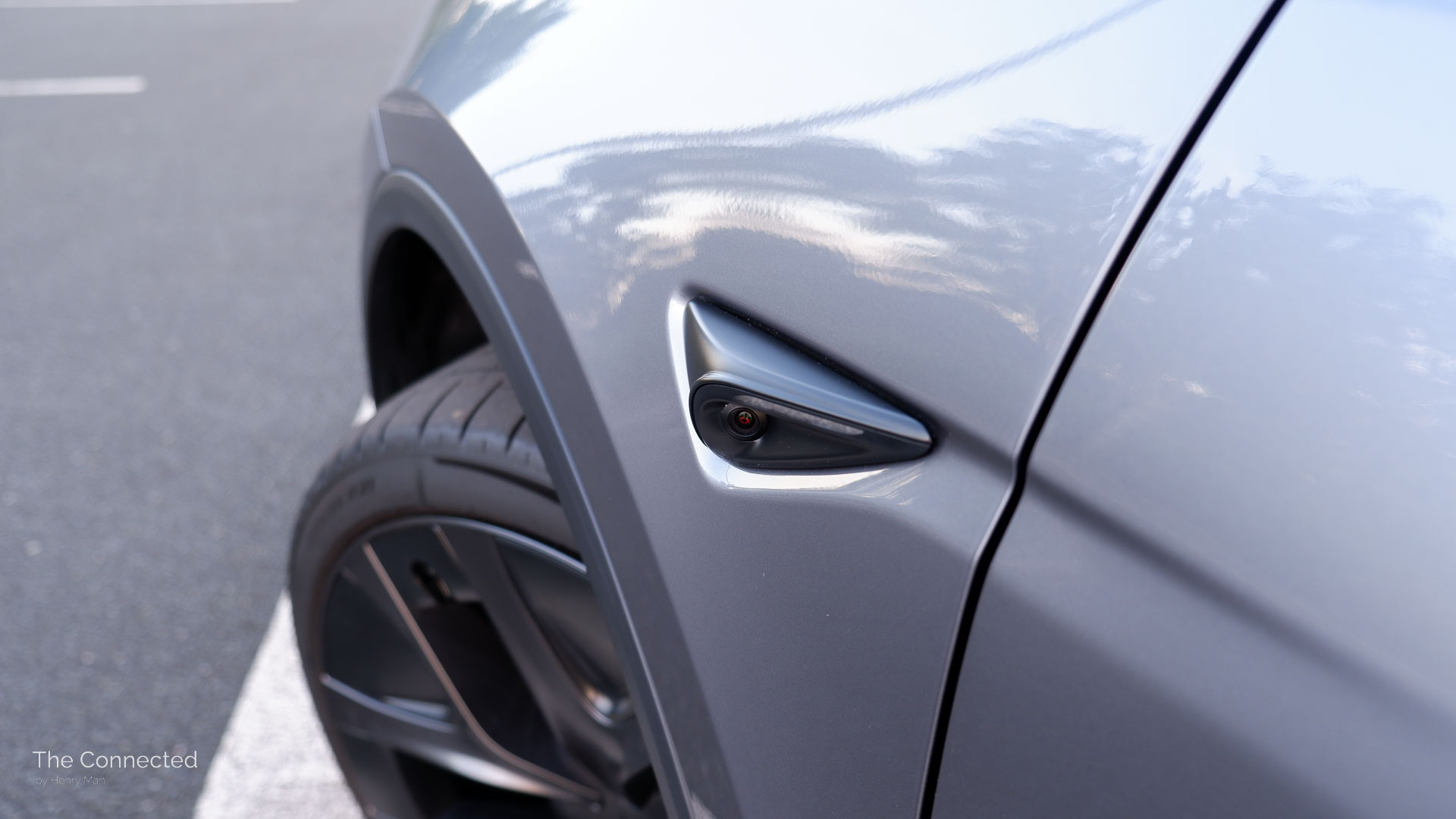
While the front, rear and side blind-spot view cameras are very clear, can easily be opened via a steering wheel button and thankfully doesn’t cut out at higher speeds (unlike other brands), it doesn’t offer a proper 360-degree surround view.
Instead, Tesla uses all-round cameras to visualise its surroundings on the screen – including parking lines, curbs and walls, other road users, and traffic lights – though it’s hit-and-miss as those visualisations often jerk around.
Basic Autopilot is still included in Australia, which is just a marketing term for adaptive cruise control and lane-centring assist. In my experience, it isn’t as dependable with ‘phantom braking’ occurring often.
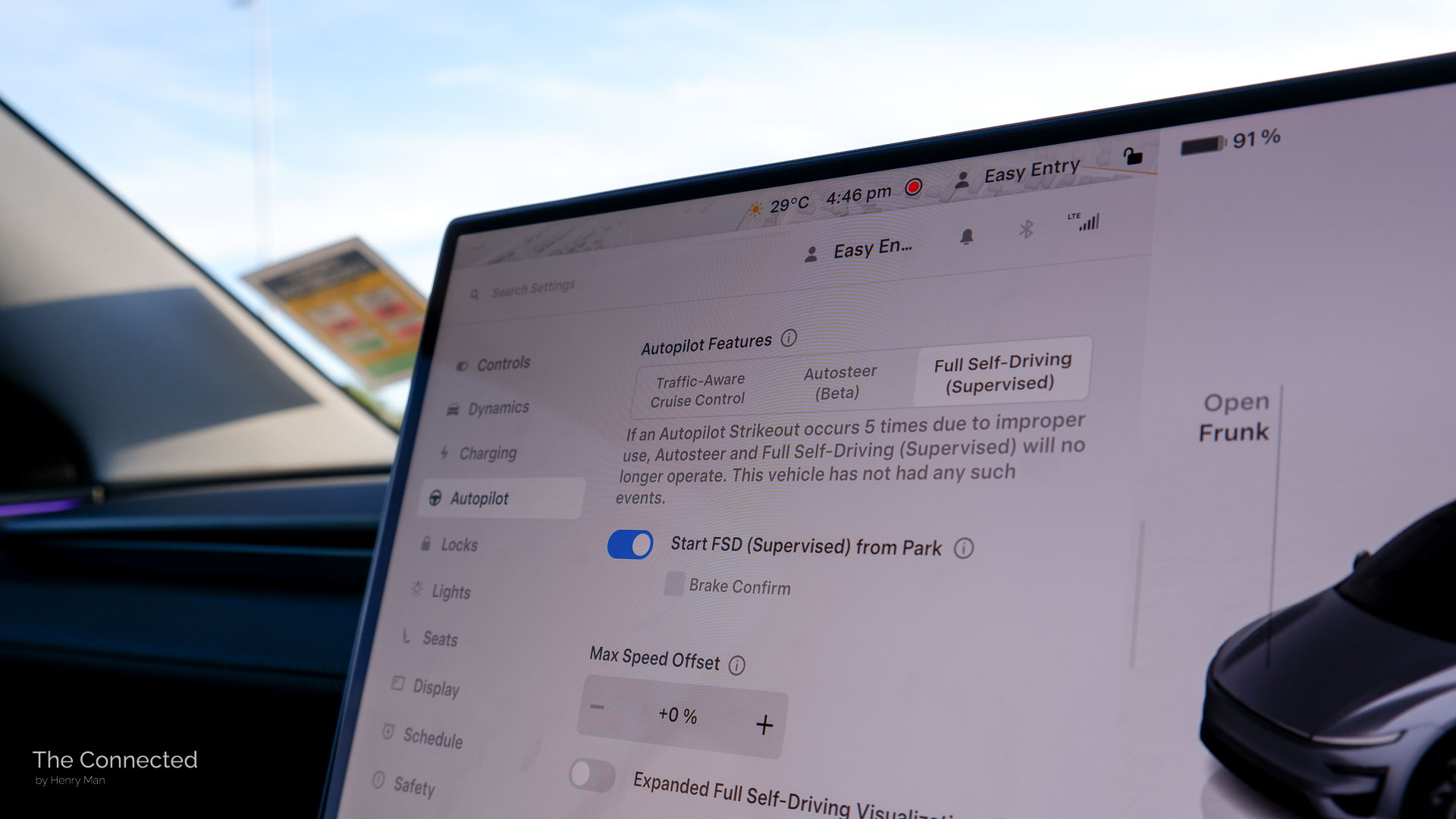
What’s much more impressive is Tesla Full Self-Driving (Supervised) which basically does around 90% of the job for drivers – but full attention is required and drivers need to be ready to take over at any time as it can make mistakes.
Read my full review of V13.2.9 here, but it’s worth noting that Tesla has since released the V14.3.2 Down Under upgrade which I’m yet to test.
Yes, you might question: why let the car drive itself when the Model Y Performance is designed for drivers? Well, FSD (Supervised) is completely optional so if you want to drive, you can drive; there’s no need to pay $149 every month.
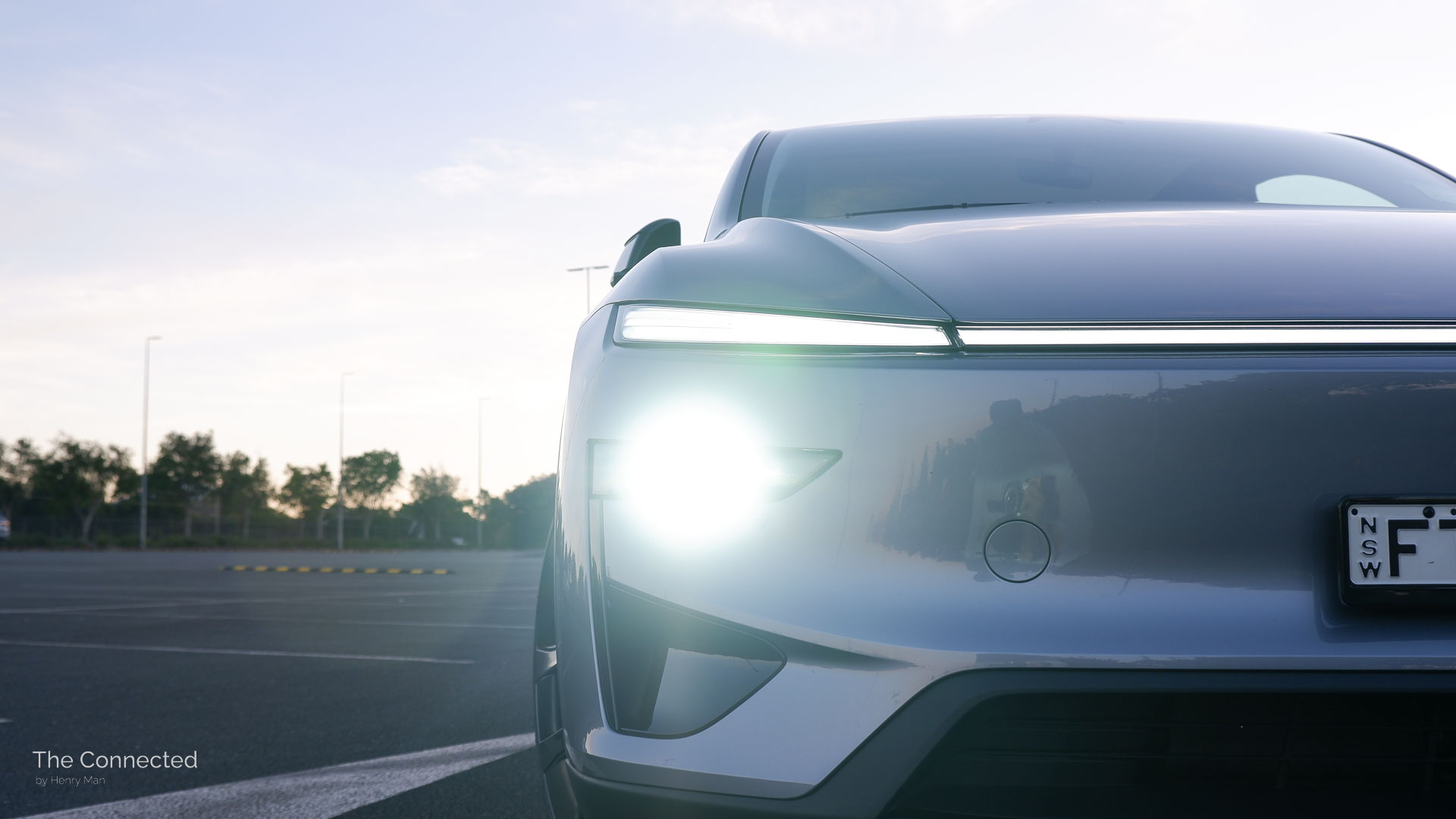
Just like the regular Model Y, the Performance features full LED headlights with an adaptive high beam pixel function.
Software updates have made it perform much better than previously, but it still doesn’t respond as quickly in shutting off bulbs to avoid glaring at other road users compared to the Model 3.
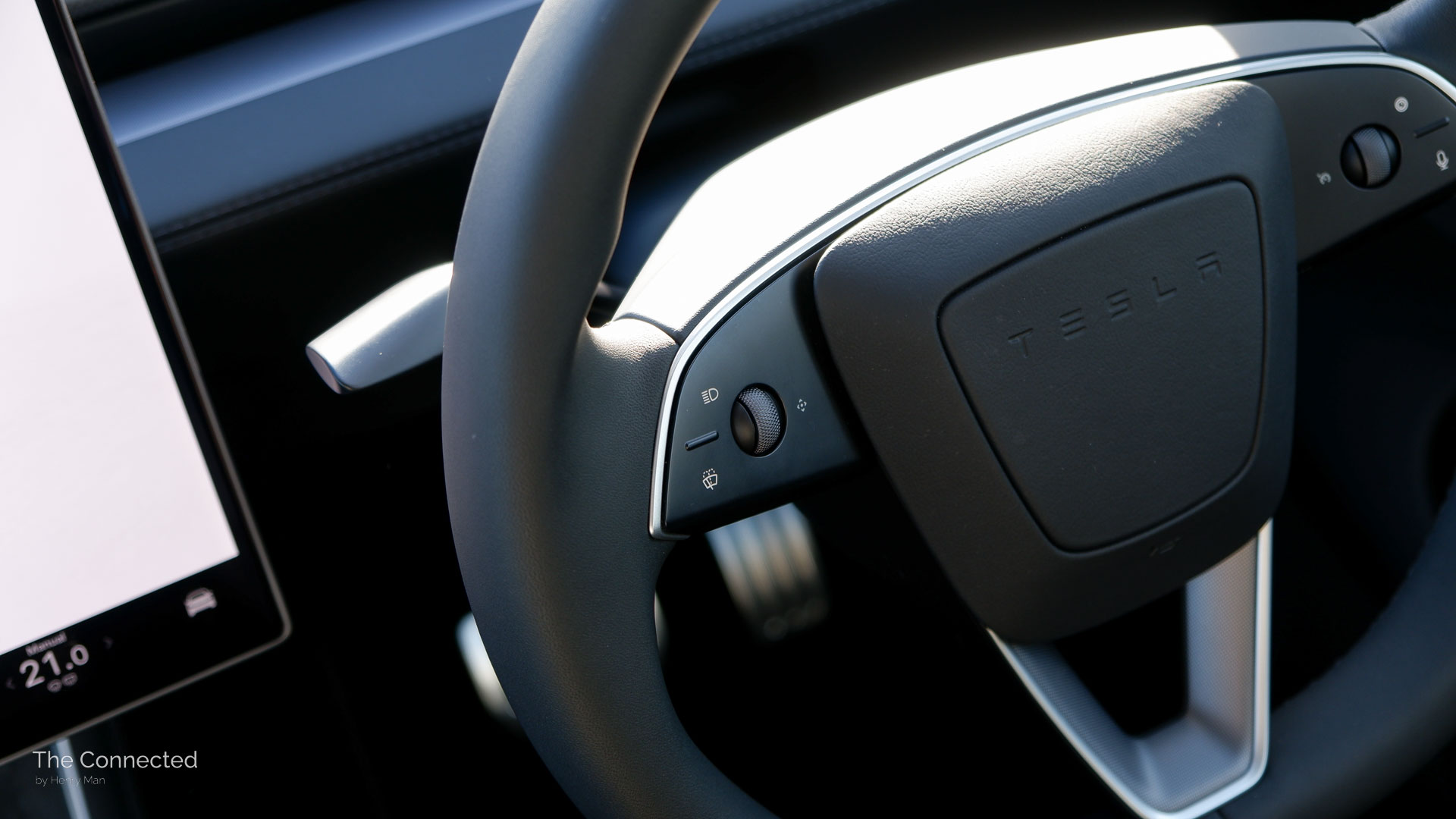
The unique rear reflective tail-light bar is always on as part of the daytime running light, but turning on the rear fog light is buried in the ‘Lights’ tab within the touchscreen settings instead of being in the first ‘Controls’ page.
There is a shortcut via a steering wheel button to show a pop-up for the light controls, but it also flashes the lights with a quick press – so it’s not ideal while driving.
The 2026 Tesla Model Y Performance received the full five-star safety rating by the Australasian New Car Assessment Program (ANCAP) under 2025 testing criteria.
It notably achieved impressively high scores above 90% for adult and child occupant protection, and safety assist criterions.
Range and charging.
2026 Tesla Model Y Performance AWD battery and charging specs:
| Claimed driving range (WLTP combined cycle) | 580km |
| Claimed energy efficiency (WLTP combined cycle) | 16.2kWh/100km |
| Battery size and type | ~79kWh estimated (82kWh gross) NMC |
| Battery voltage | 400-volt class |
| Max AC / DC charging speed | 11 / 250kW |
| Bidirectional charging | N/A |
| Connector type | Type 2 / CCS2 |
| Everyday charging limit recommendation | 80% |
The Performance is the least efficient Model Y, but it’s still super impressive for its segment. Tesla’s peak charging speed claim is optimistic, though.
After two weeks worth of mixed urban and highway driving – including a return Brisbane to Sydney road trip – the Model Y Performance indicated 15.2kWh/100km real-world energy efficiency.
That equates to a 519km real-world driving range on a full charge, based on a reported 79kWh (estimated) nickel-manganese-cobalt (NMC) battery pack size – impressive for a performance EV.
Tesla recommends an 80% daily charge limit, so expect around 415km of everyday range.
While the entry-level RWD is even more efficient in my testing, the Performance still provides impressive industry-leading energy efficiency. For context, the Ford Mustang Mach-E showed 24.0kWh/100km, Hyundai Ioniq 5 N achieved 21.9kWh/100km, and the Polestar 4 coupe Dual Motor Performance was 21.8kWh/100km.
What’s more, the Model Y Performance provided similar efficiency with significantly lesser-powered EVs, including the Leapmotor B10, Kia EV3, and Toyota bZ4X.
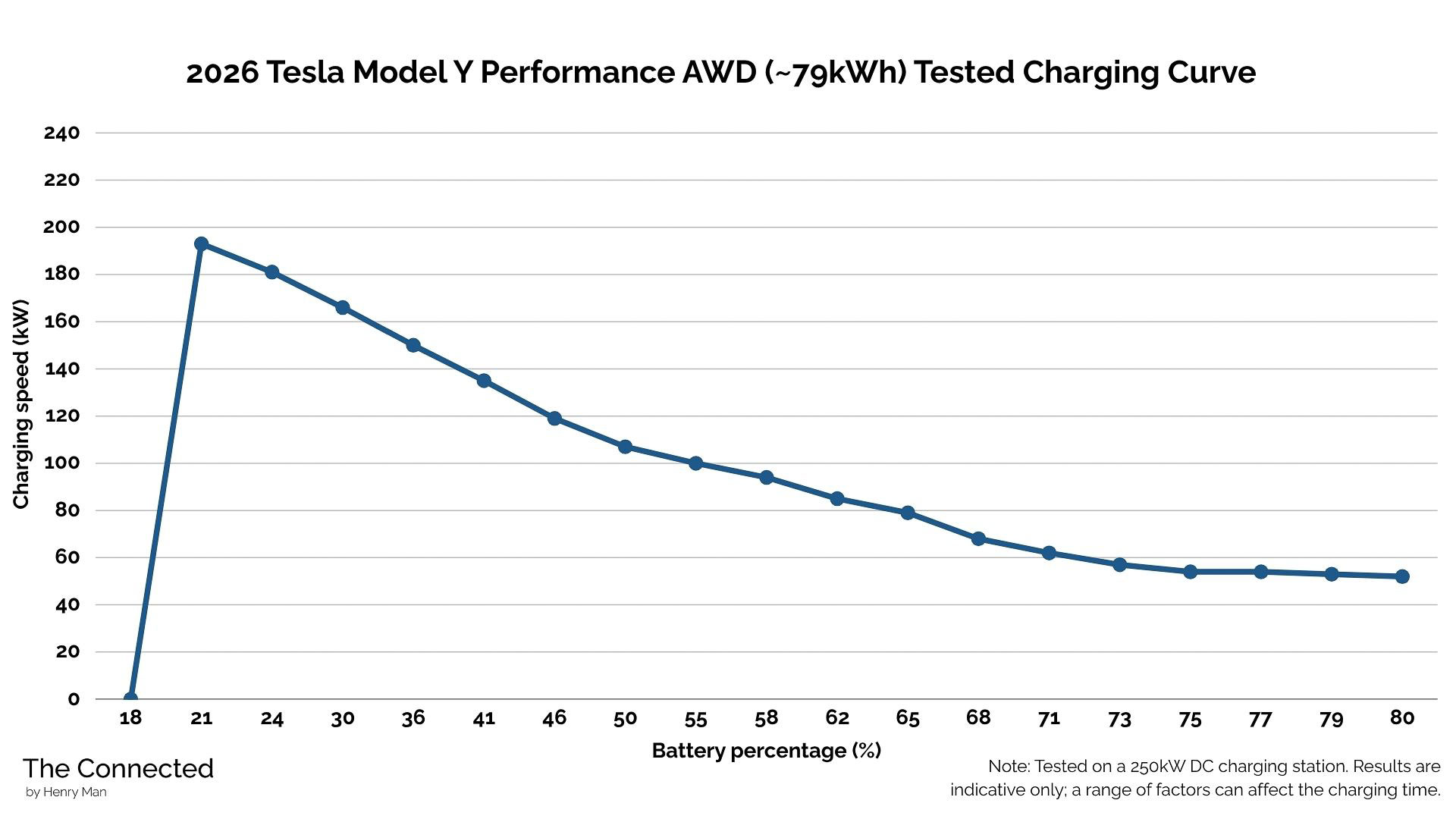
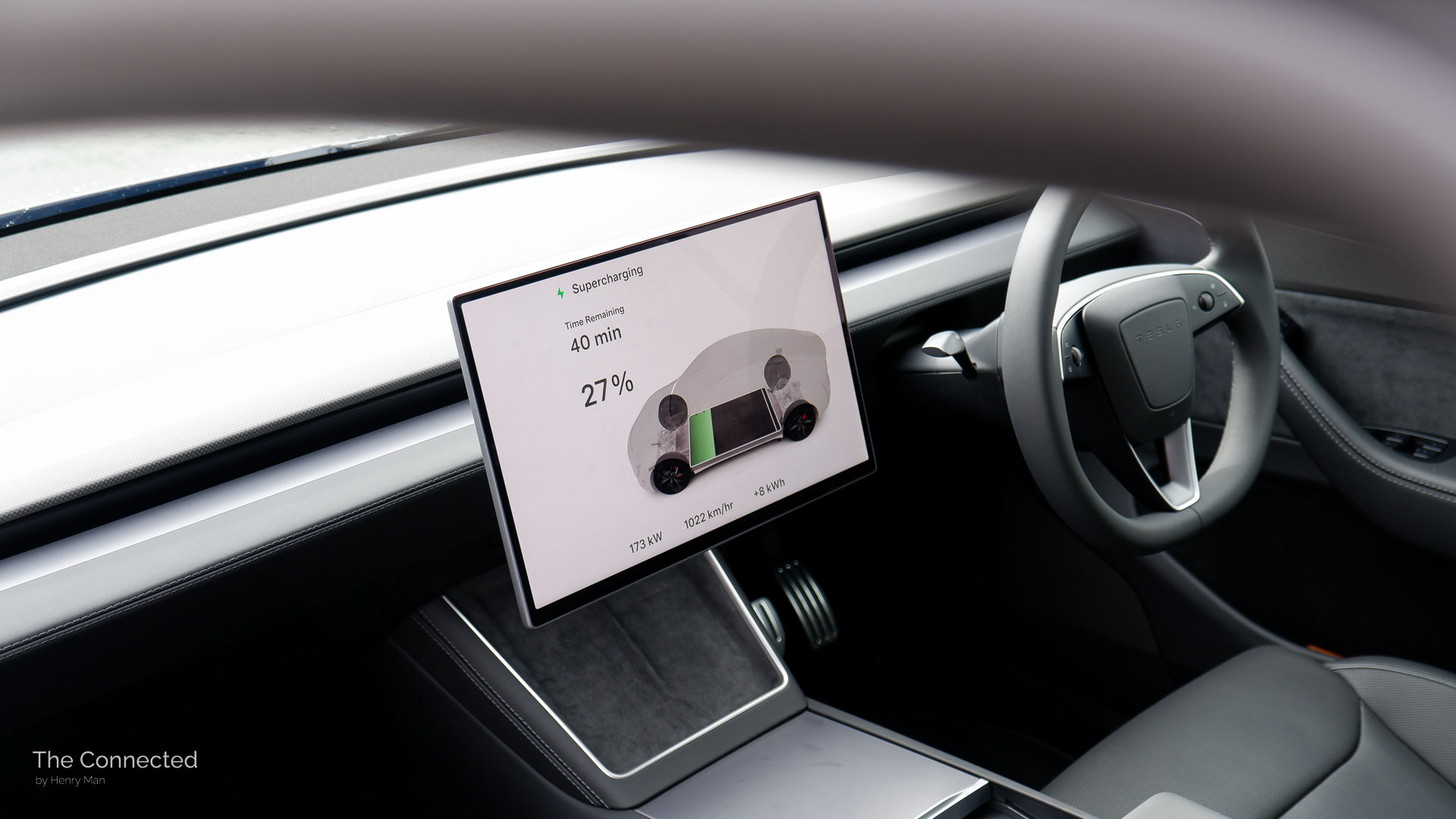
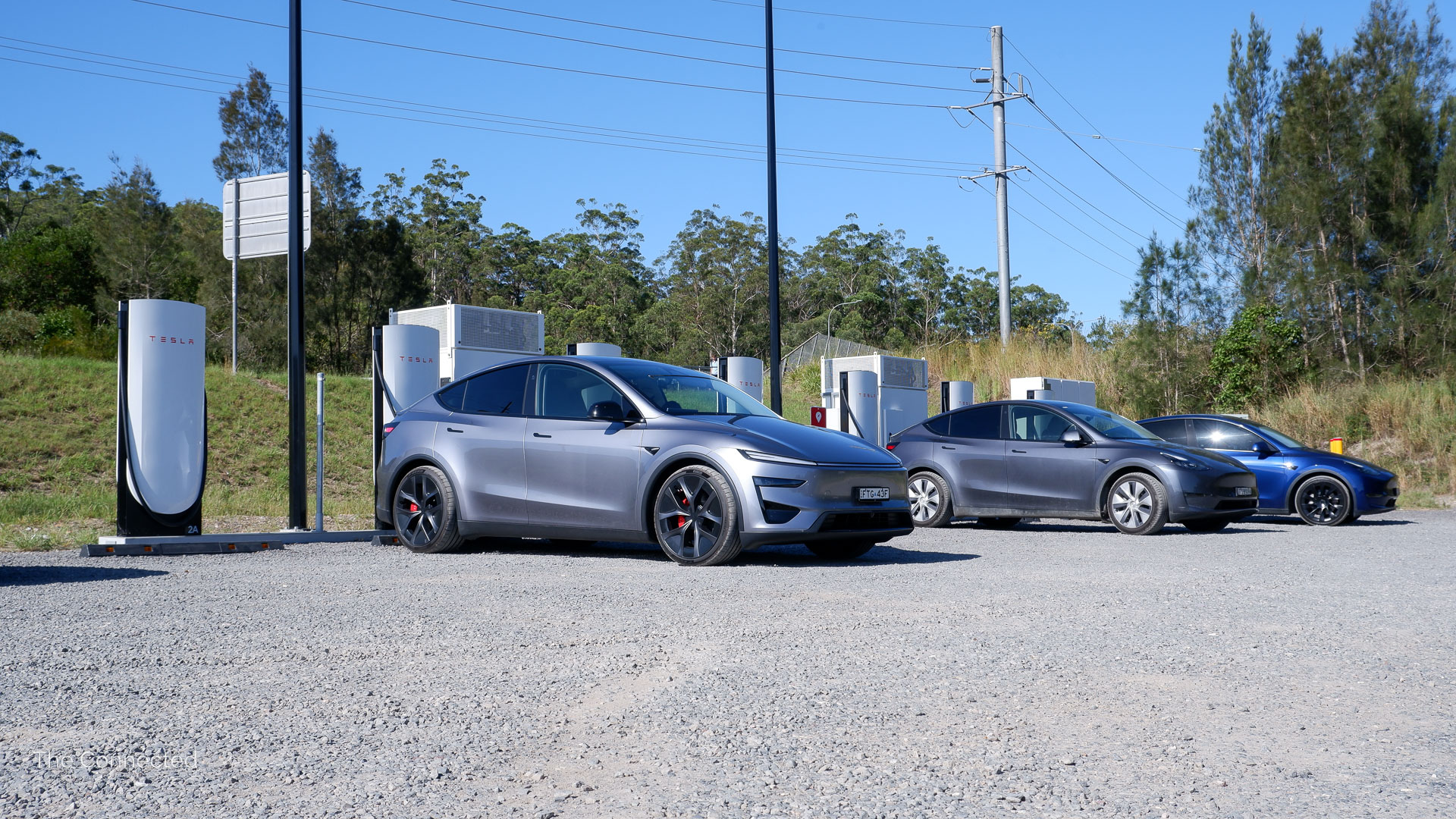
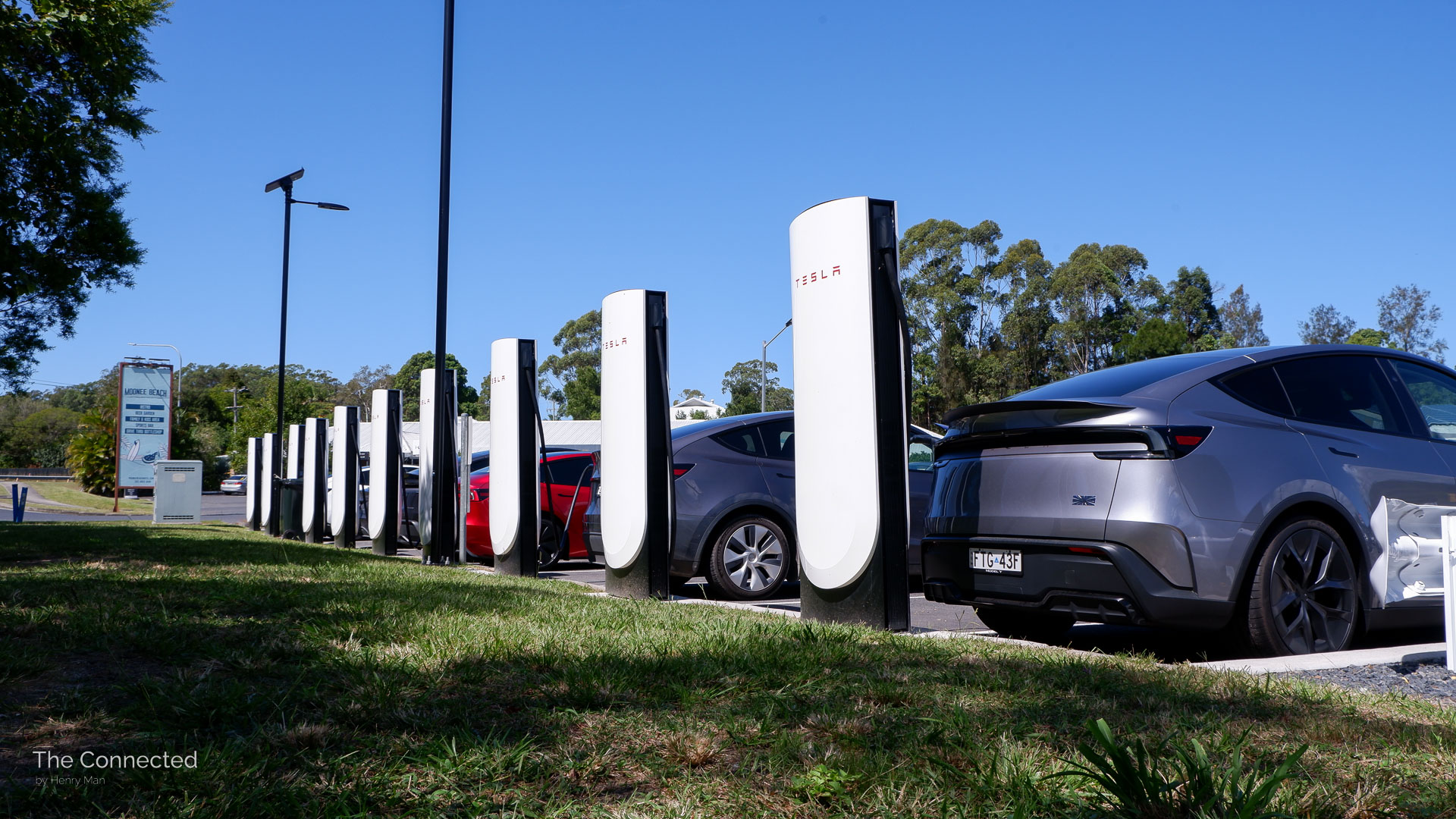
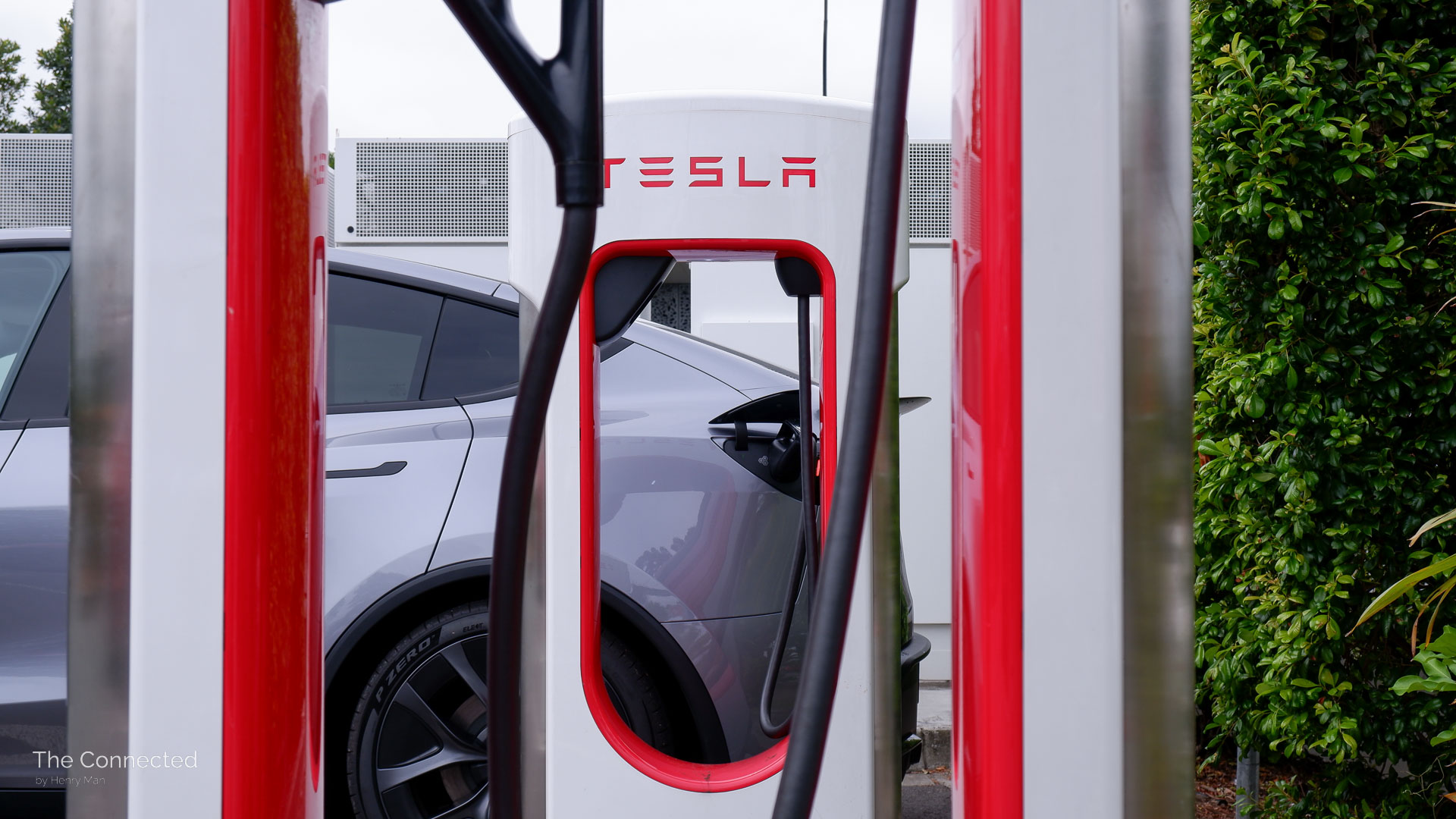
Using a 250kW Tesla Supercharger, the Model Y Performance recharged from 18 to 80% in around 33 minutes with it peaking initially and throttling down gradually, resulting in a 101kW average session speed.
Despite Tesla claiming a 250kW peak, I consistently observed a 193kW maximum only across more than 11 charging sessions – just like the related Model 3 Long Range.
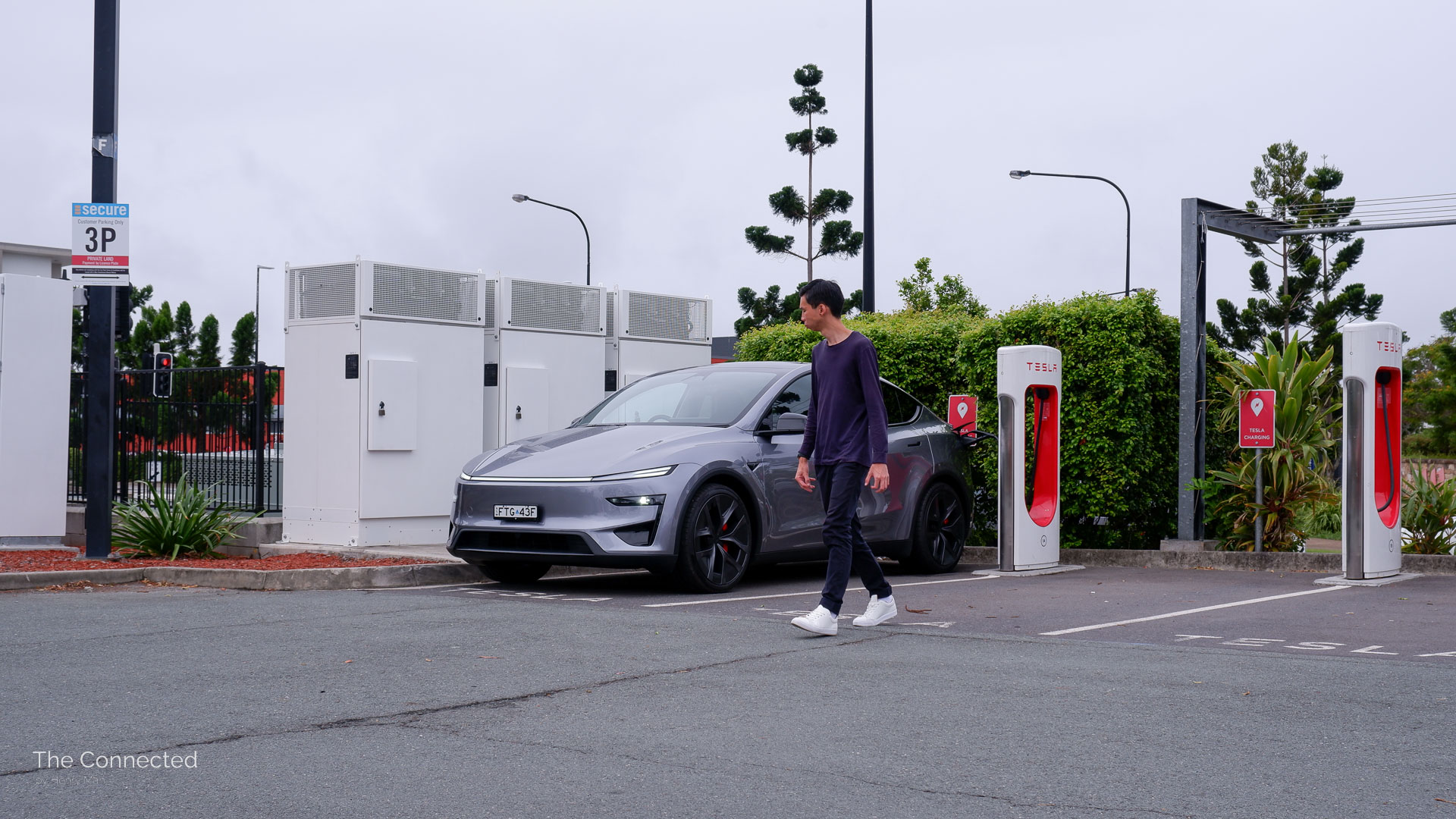
A key advantage of Teslas is full access, member pricing, and seamless plug-and-charge with its Supercharging network. Integration with the navigation system essentially removes range and charge anxiety, too.
It can’t match the lightning fast 800-volt class architecture speeds from some other automakers – such as the Zeekr 7X, Hyundai Ioniq 9, and Denza Z9 GT – but I’d rather have a dependable public charging network.
The Model Y Performance still has up to 11kW AC charging when rivals such as the Nissan Ariya and Zeekr 7X now provide 22kW capability.
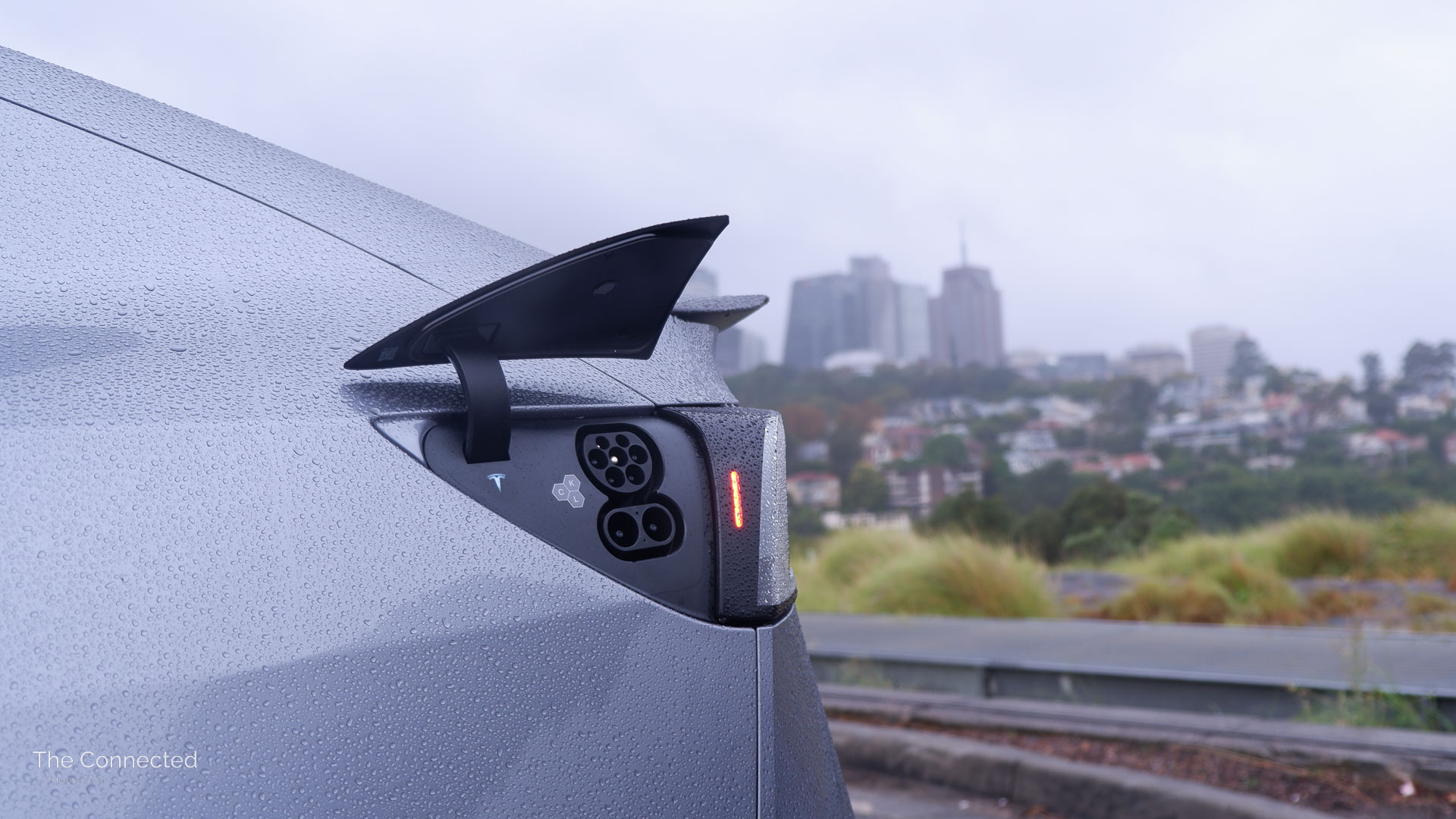
Uniquely, the Type 2 CCS charging port doesn’t have any flimsy plastic caps and is placed at the outer edge of the rear-left quarter side, making accessibility easier.
Driving.
2026 Tesla Model Y Performance AWD powertrain specs:
| Electric drive unit | Permanent magnet synchronous motor (rear) and induction motor (front) |
| Power / torque | 425kW (estimated) / 741Nm (estimated) |
| Transmission | Single-speed |
| Drive type | AWD |
| Kerb weight | 2033kg |
| Payload | 510kg |
| Towing (unbraked / braked) | 750 / 1588kg |
| Turning circle | 12.1m |
The Tesla Model Y Performance is a driver’s SUV, albeit with some sacrifices to everyday comfort.
While Tesla doesn’t officially disclose some specifications, the new Model Y Performance reportedly delivers up to 425kW of power and 741Nm of torque (estimated) from its dual electric motors, which also enables all-wheel drive.
It’s rapid and effortless with a neck-breaking feel, especially when set on ‘Insane’ acceleration mode – to the point that it doesn’t feel as fun as the single-motor RWD.
How many times did I need the supercar-level punch in my Brisbane to Sydney road trip and daily commutes with the Model Y Performance? None at all.
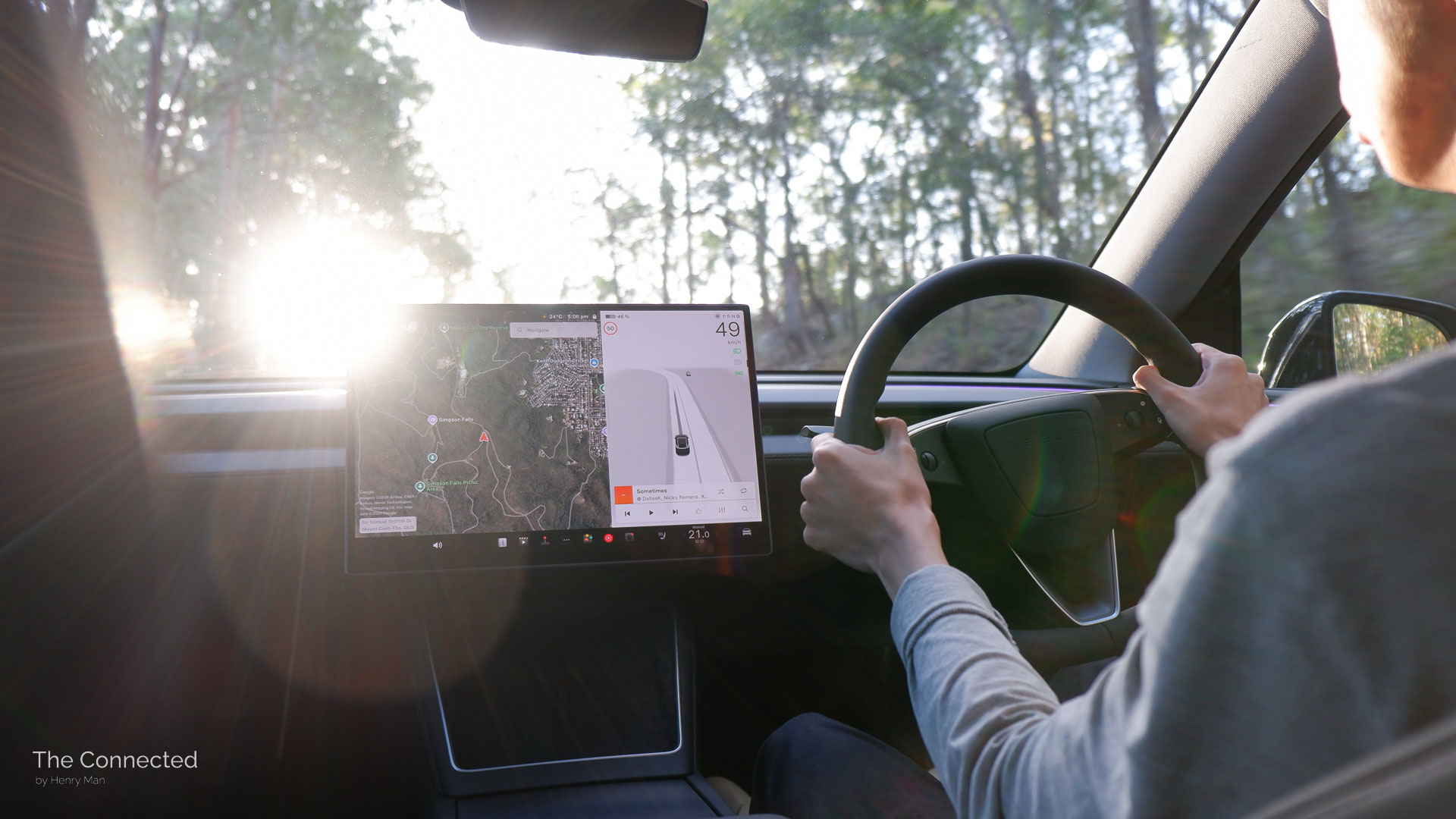
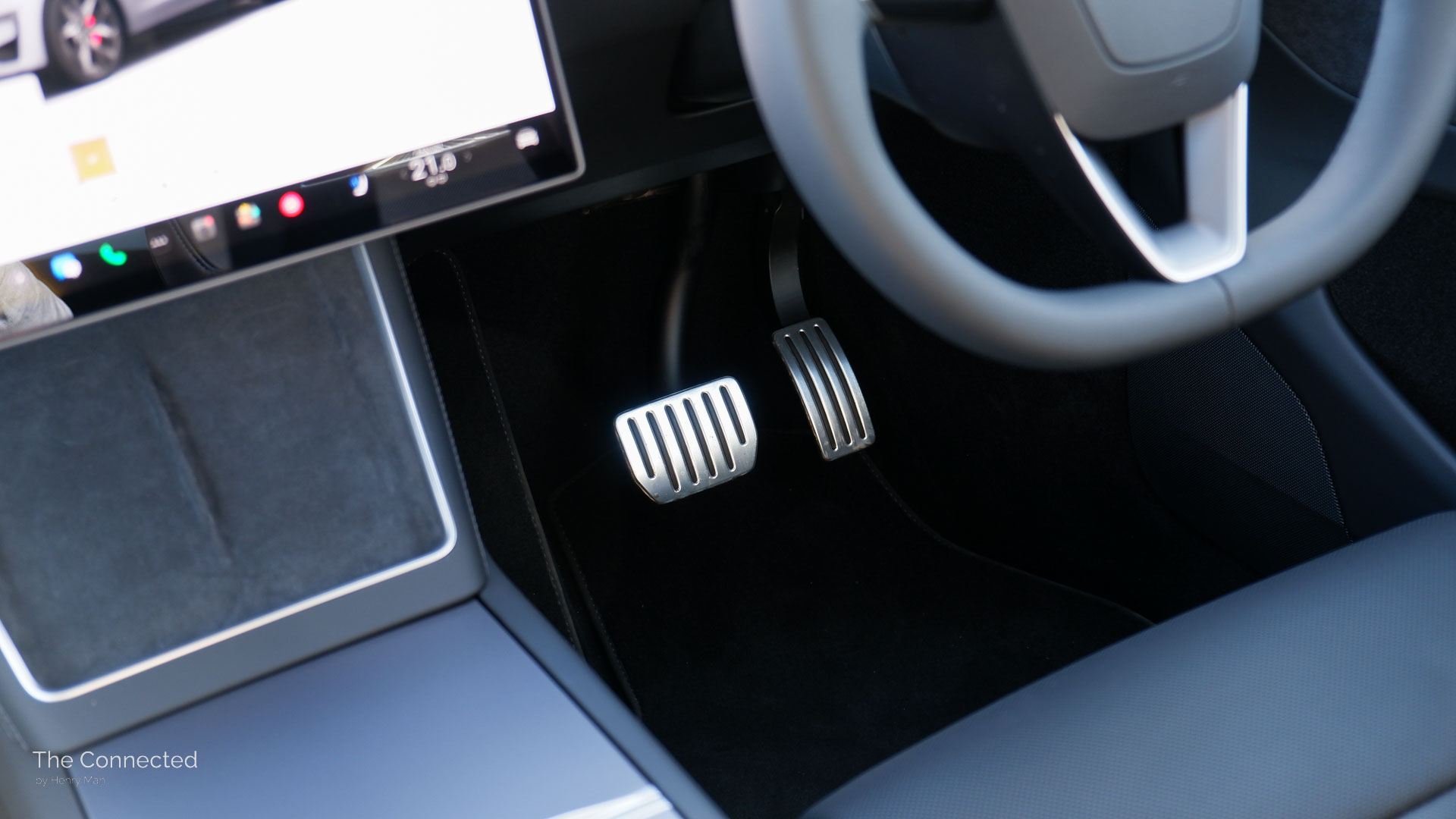
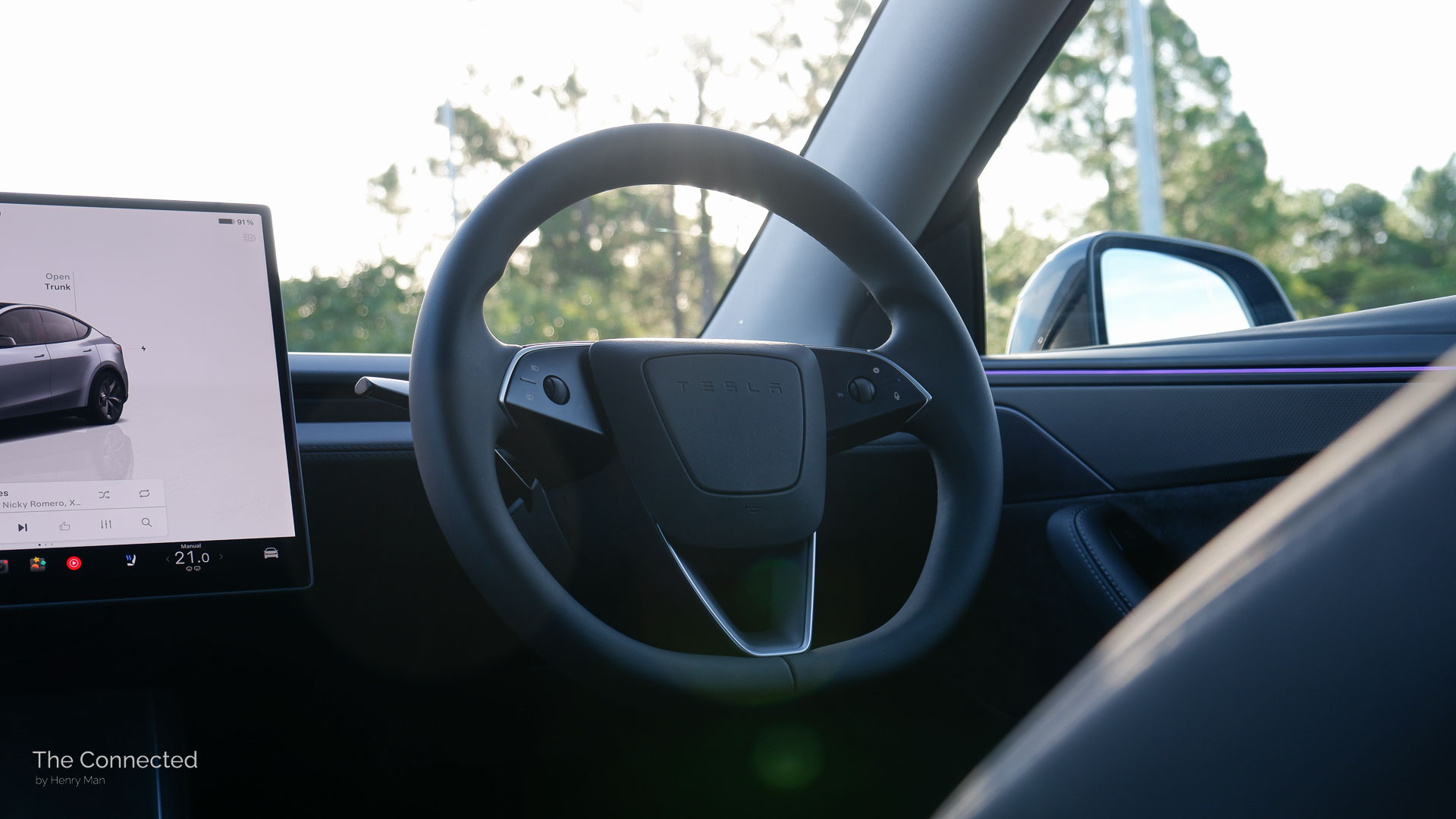
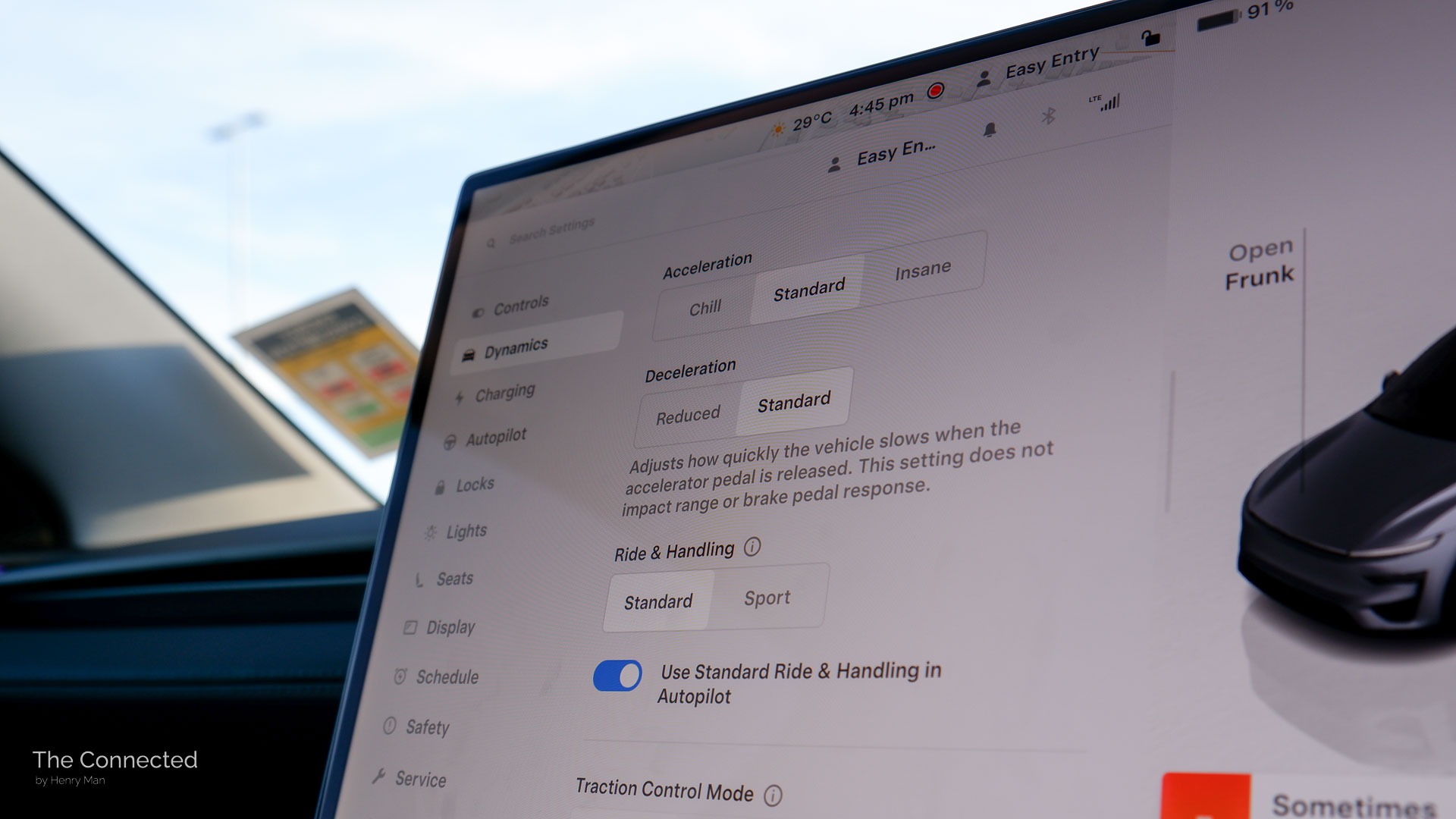
Unfortunately, changing any driving setting – including the acceleration, steering and ride – requires digging into the touchscreen or fiddling with the left steering wheel scroll wheel.
The accelerator pedal feels more progressive with greater input required to power the all four wheels than regular models.
Similarly, other than unnecessarily rapid acceleration, the Model Y Performance offers a more natural power steering tune that feels more progressive than the typical super sharp and direct approach on regular models.
I actually prefer that go kart like nimbleness, but it certainly steers less artificially.
The Performance is noticeably more tedious to park and maneuver due to the heavier steering at low speeds, even though the turning circle is rated the same at 12.1 metres.
The electric sports SUV also provides impressive noise insulation and ride compliance despite the low-profile 21-inch wheels and grippy Pirelli P Zero sports tyres.
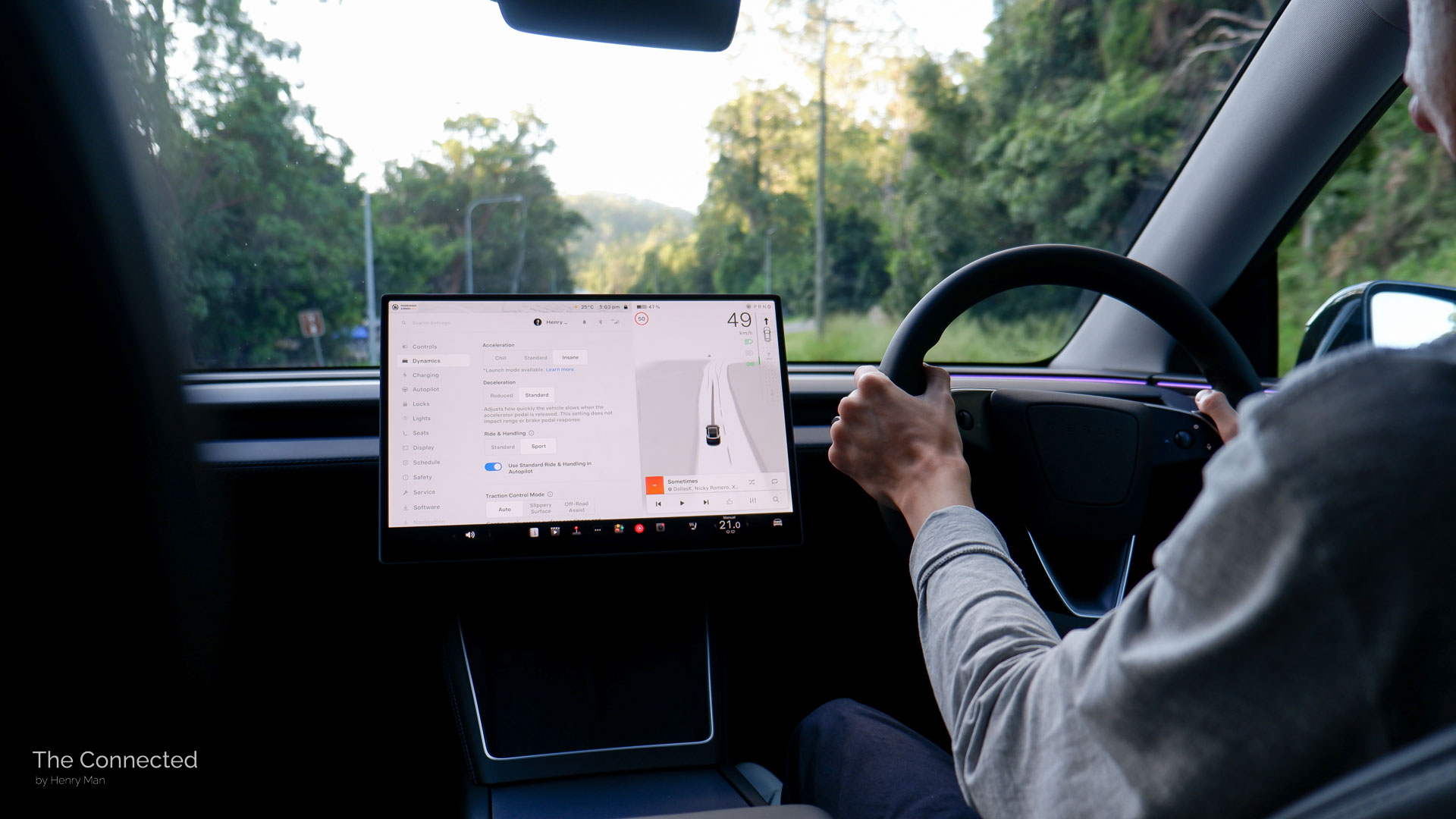
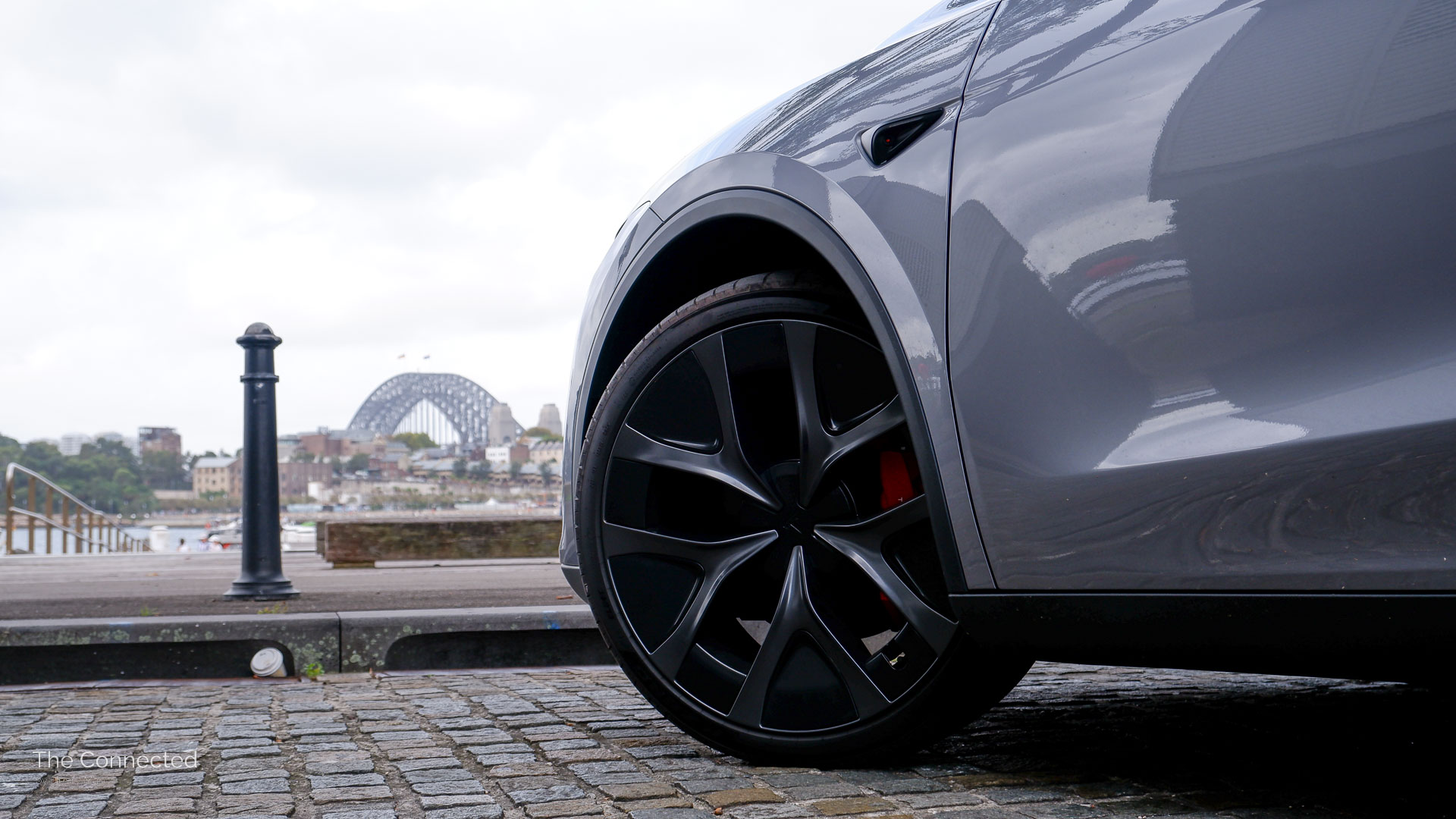
But despite the inclusion of adaptive suspension, the stiff rear axle noticeably bounces and thuds down when going over speed humps and continuous highway undulations, such as the Pacific Highway between Brisbane and Sydney.
Poorly paved roads result in more road noise than regular variants.
Tesla offers ‘Standard’ and ‘Sport’ ride settings, but there isn’t noticeably a difference.
Meanwhile, one-pedal driving is mandatory with ‘Standard’ and ‘Chill’ deceleration settings. It’s strong, progressive and consistent to come down to a stop by modulating the accelerator.
In the rare times you need to press the brake pedal, it feels slightly firmer than ideal. There are no upgrades to the braking hardware on the Performance, not that it’s necessary due to the strong regenerative braking.
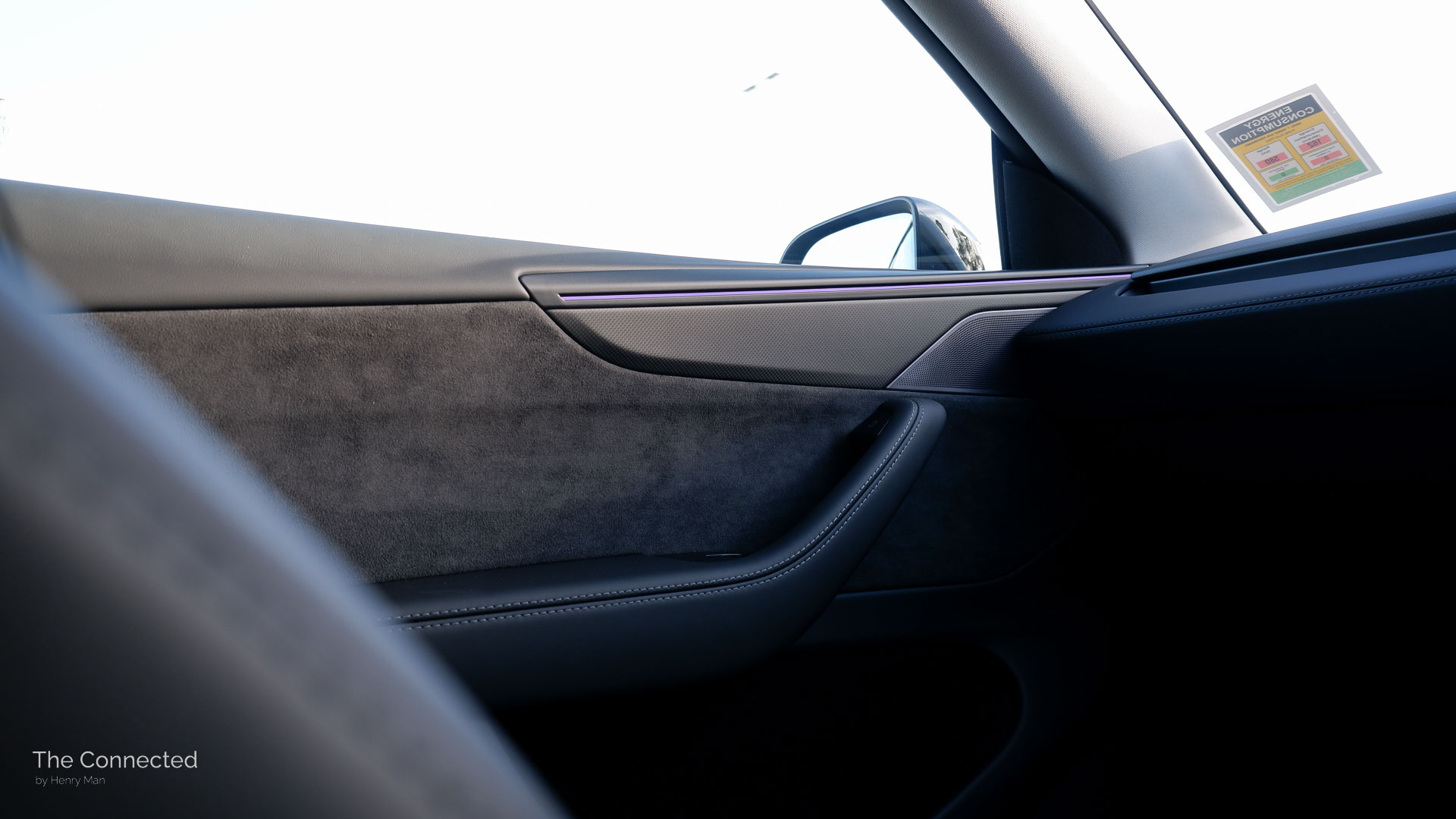
As a consequence of being a SUV, the seats are raised on rails and it feels like you’re sitting on top of the car rather than in it – which is where the Model 3 Performance sedan provides the advantage of a more sporty and low, albeit less comfortable, driving position.
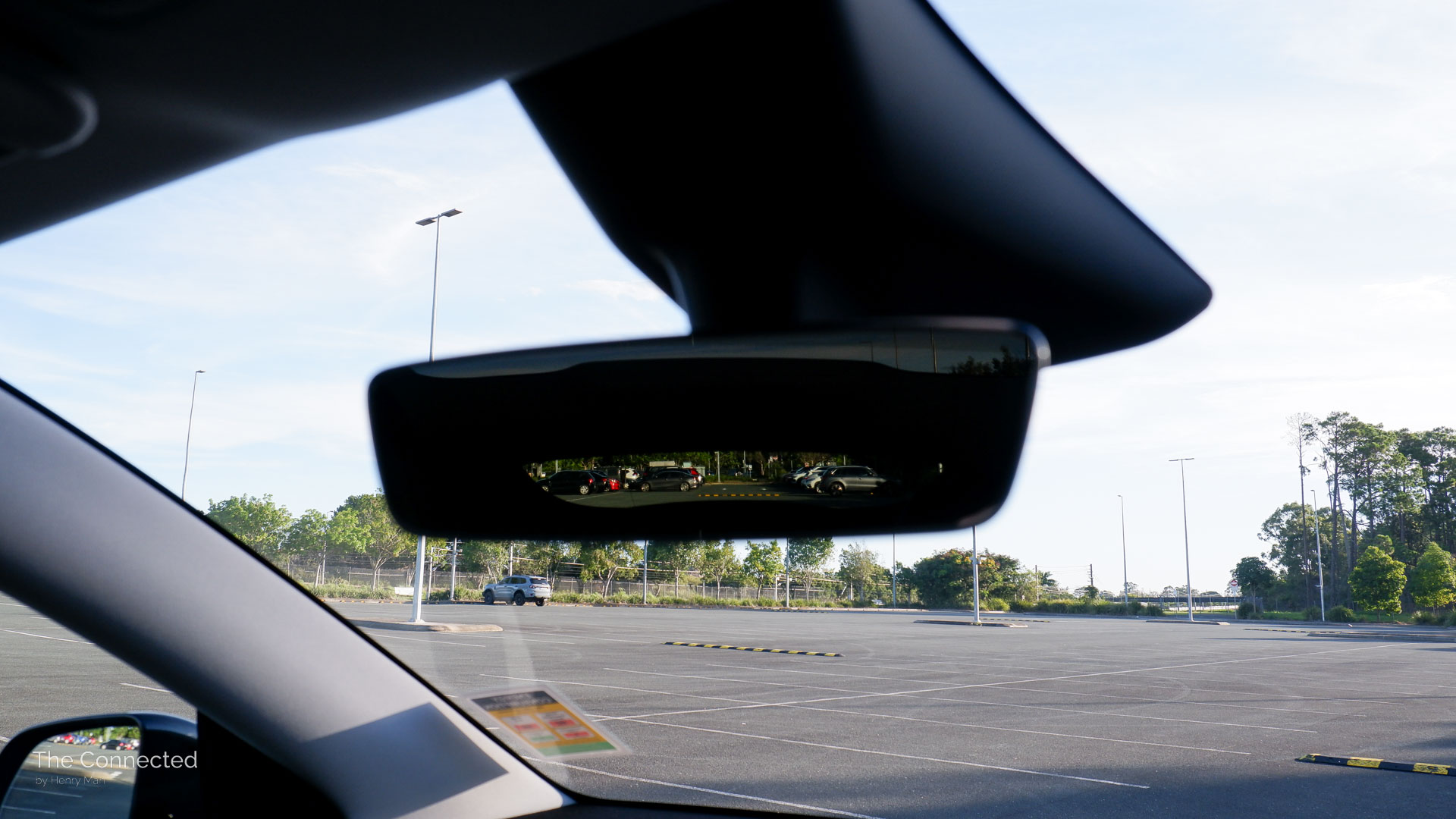
Another weakness is the Model Y’s rear visibility, which is severely restricted and narrow through the rear-view mirror due to the sloping roofline.
It’s even worse than the Model 3 since it doesn’t incorporate a one-piece glass that stretches from the roof to the rear window like that sedan. A digital rear-view mirror camera view would be handy, just like the Polestar 4 and Hyundai Ioniq 9.
Warranty and servicing.
The 2026 Tesla Model Y is backed by a five-year, unlimited kilometre vehicle warranty and an eight-year battery warranty.
The entry Premium RWD has an eight-year/160,000km (whichever occurs first) battery warranty, while the Long Range AWD, L AWD, and Performance AWD benefit from longer eight-year/192,000km coverage.
The five-year Tesla vehicle warranty applies to new deliveries from 2026 and is a welcome extension from the previous four-year coverage.
Tesla adopts a condition-based servicing approach with the vehicle notifying owners when certain maintenance tasks are required, such as tyre rotation, wiper replacement and more.
The company also offers a mobile service in selected metro areas, too.
This is much more flexible and convenient than most other traditional carmakers that usually require servicing every year or two, and will likely be cheaper overall.
Roadside assistance is included for five years.
A spare tyre is not included in the Model Y, nor is any temporary patch up goo kit.
Price and rivals.
2026 Tesla Model Y model range pricing (accurate as at the time of publication):
| Premium RWD | Premium Long Range AWD | L Premium AWD | Performance AWD |
| From $58,900 before on-road costs | From $68,900 before on-road costs | From $74,900 before on-road costs | From $89,400 before on-road costs |
The 2026 Tesla Model Y is priced from $58,900 before on-road costs in Australia.
Four variants are available and all fall below the Luxury Car Tax (LCT) threshold in Australia.
All paint colours except Pearl White Multi-Coat costs between $1500 to $2600 more – except for the Performance AWD where all colours are free of charge.
A Zen Grey (Premium RWD, Long Range AWD, and L) or Black and White (Performance only) interior option is available for $1500 extra.
Standard Connectivity is included for up to eight years, while Premium Connectivity to unlock certain features is a $13.99 per month subscription.
FSD (Supervised) costs $149 per month and can be cancelled and reactivated at any time. A 30-day free trial is included with all new Teslas.
What isn’t included are any charge cables. Tesla sells a trickle three-pin domestic charging cable for $550.
The Tesla Model Y Performance directly rivals the following electric sports SUVs:
- Zeekr 7X Performance
- Polestar 4 SUV (full review)
- Hyundai Ioniq 5 N (full review)
- Kia EV6 GT (full review)
- BYD Sealion 7 Performance
- Ford Mustang Mach-E GT (full review)
- Nissan Ariya Evolve e-4orce (full review)
- Cupra Tavascan VZ (full review)
- Volkswagen ID.4 and ID.5 GTX
- Skoda Enyaq RS
- IM 6 Performance
Other alternatives to the Model Y Performance include:
- Tesla Model 3 (full review)
- Porsche Macan
- BMW iX3
- Mercedes-Benz GLC EQ
Would I pick the 2026 Tesla Model Y Performance AWD?
The new Tesla Model Y Performance is the ultimate all-rounder car, even though it isn’t the most sensible choice.
It’s a great driver’s car, it’s a family-friendly SUV, and it’s a cost-effective electric car to own.
The new Model Y Performance is an all-rounded pleaser with rapid acceleration, progressive steering and cool discreet Performance touches that feels more unique than before.
Yet its practicality is mostly uncompromised (other than the lack of seatback pockets), it still provides impressively good energy efficiency for the segment, and costs thousands less than many other rivals such as the Hyundai Ioniq 5 N, Polestar 4 coupe Performance, and Ford Mustang Mach-E GT.
A driver’s car deserves at least a head-up display, there are some compromises to ride comfort, and rear visibility is severely compromised.
I’d pick the entry Premium RWD which is the $30K cheaper sensible choice with most of the same features included. If all-wheel drive is a priority, there’s the Premium Long Range AWD and, for more versatility, the six-seat Model Y L AWD are also more pragmatic options in the line-up.
The new Tesla Model Y Performance looks awesome, but it’s worth questioning how fast you really need to go on public roads first and how much you value driving and cool bits before putting down the money.
Photographs by Henry Man
READ MORE: Brisbane to Sydney EV Easter challenge: No queues at chargers highlight gaps in media reporting
READ MORE: 2026 Geely EX5 review
READ MORE: 2026 Nissan Ariya review
Pros:
- Great value for the price
- Incredible tech, efficiency, Supercharging
- Natural and progressive steering
- Unique and cool Performance details
- Uncompromised practicality (mostly)
Cons:
- Cheaper models make more sense
- Deserves a HUD
- Noticeably stiff rear axle
- Compromised rear visibility, flimsy cargo cover
- No seatback pockets
About the Author.
Henry Man is an independent content producer passionate about the intersection of technology and transportation.
The former automotive journalist is focused on producing critically-detailed vehicle reviews, and unique short-form content. Learn more.


