
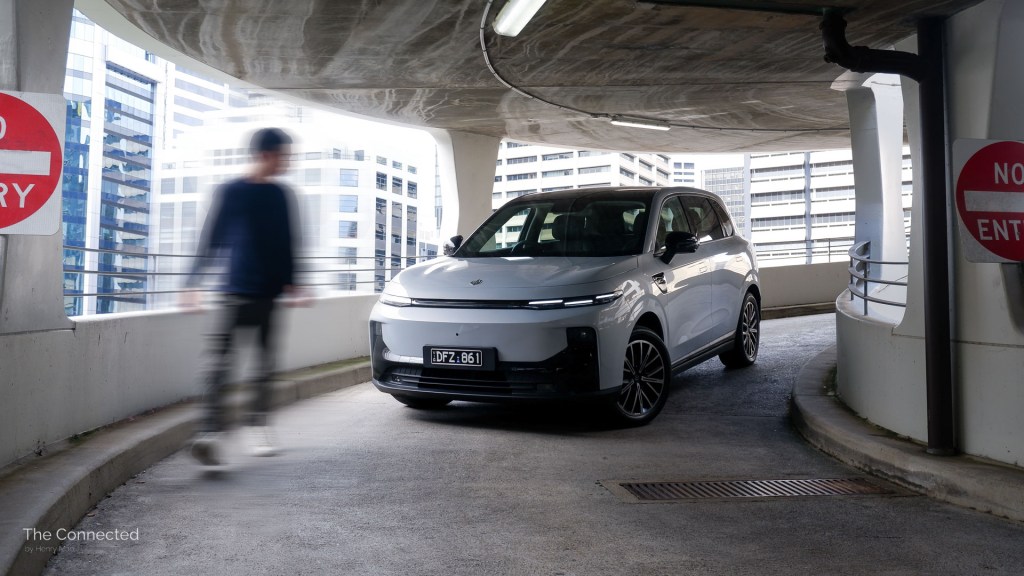
Up-and-coming Leapmotor has taken a significant step forward with the B10.
Following the hum-drum C10 medium SUV, Stellantis’ Chinese brand has introduced the B10 small SUV.
It finally brings Apple CarPlay and Android Auto, new software with a safety assistance system settings shortcut, and claims to feel like a more polished European car to drive.
But costing a few grand more than the popular Jaecoo J5 EV and BYD Atto 2, is the Leapmotor B10 worth shortlisting?
NOTE: The press vehicle was provided by Stellantis Australia for a seven-day independent evaluation. Toll costs were covered, but we have no commercial arrangements with the company and it had no editorial control.

Pros.
+ Roomy interior and boot
+ Refined tech and software
+ Improved and tolerable safety tech
+ Good fast charging
+ Built-in dashcam recording
Cons.
– Missing a rear wiper
– Awkward steering wheel position
– Sensitive lane-keep, not permanently off
– Abrupt one-pedal driving, brake light releases at times
– Limited servicing network
Vehicle tested:
| Model | 2026 Leapmotor B10 |
| Variant | Design Long Range |
| Starting price | $40,888 before on-road costs |
| Exterior colour | Galaxy Silver (+$990) |
| Interior colour | Shadow Grey TechnoLeather (standard) |
| Country made | China |
Design and quality.
The Leapmotor B10 offers a simplistic exterior and a quality interior even though it feels and smells rubbery.
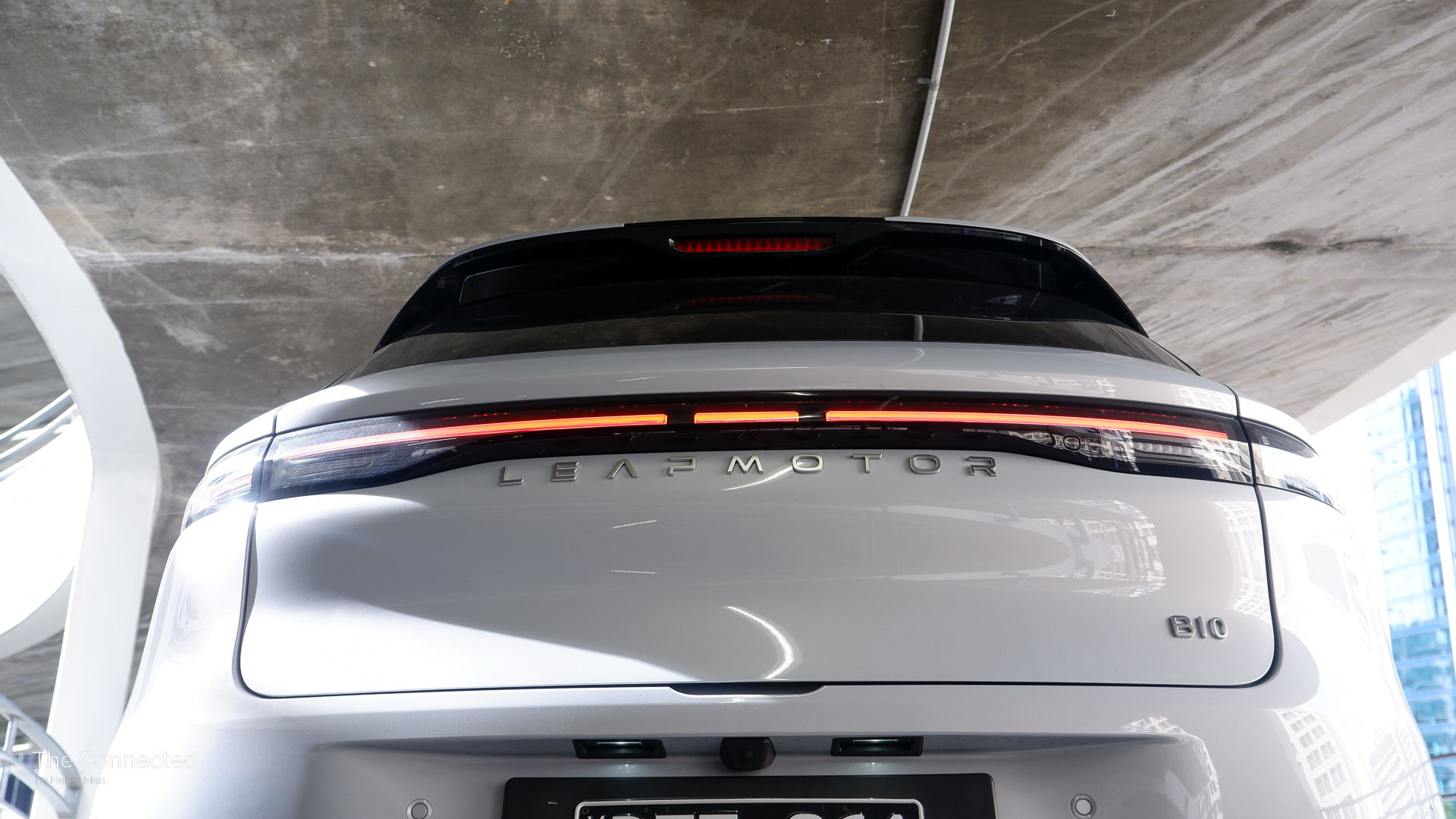
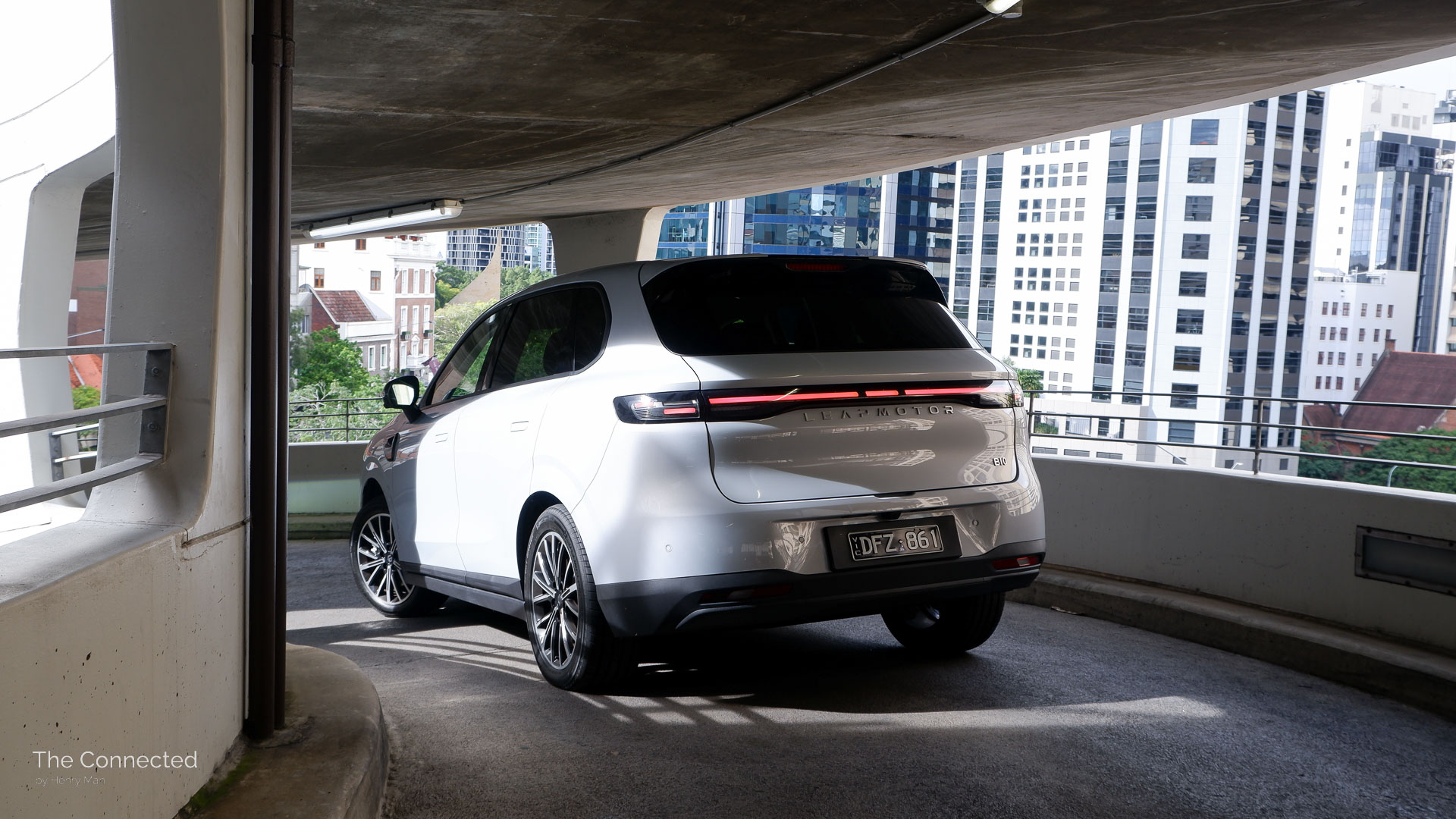
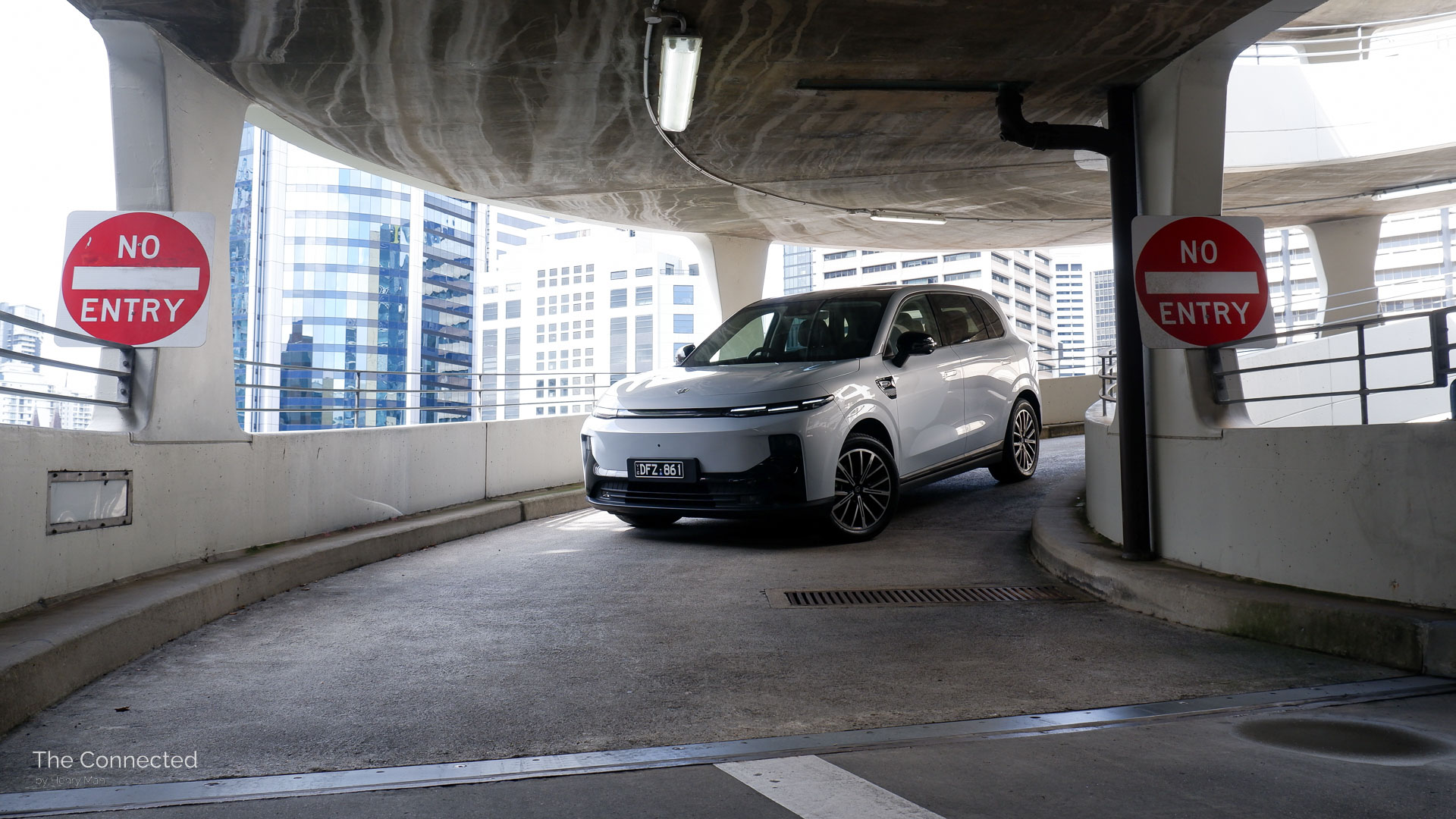
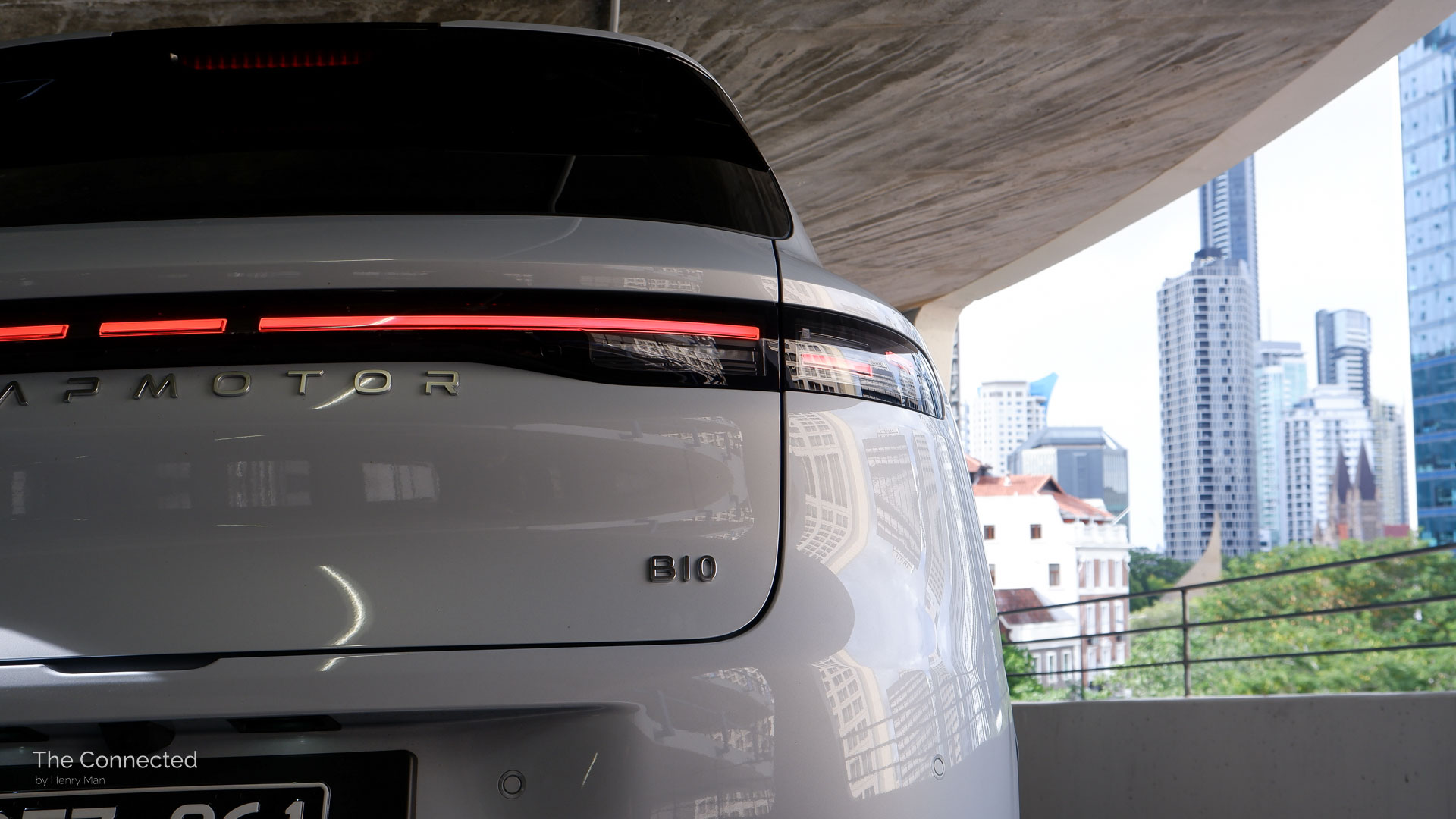
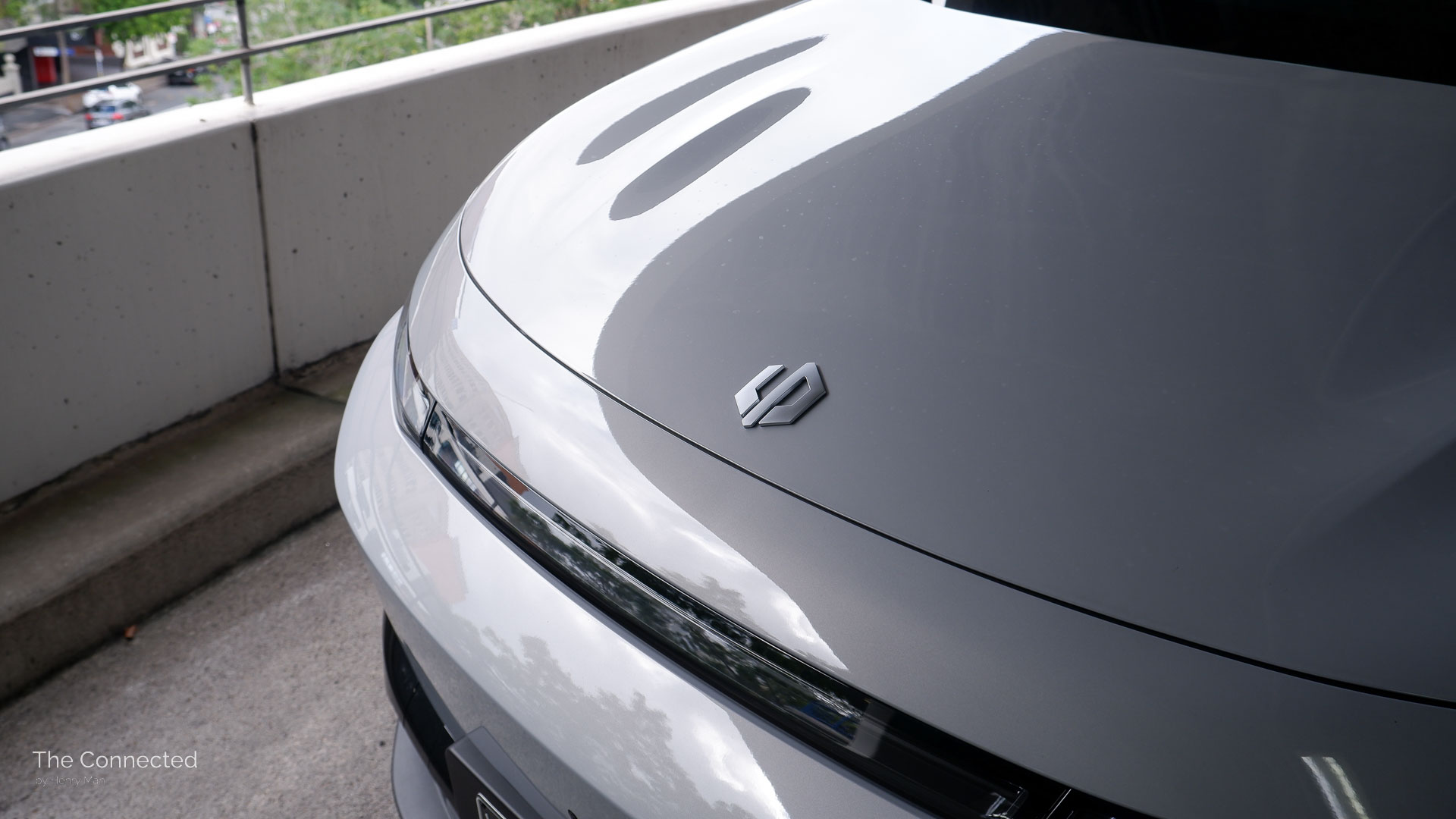
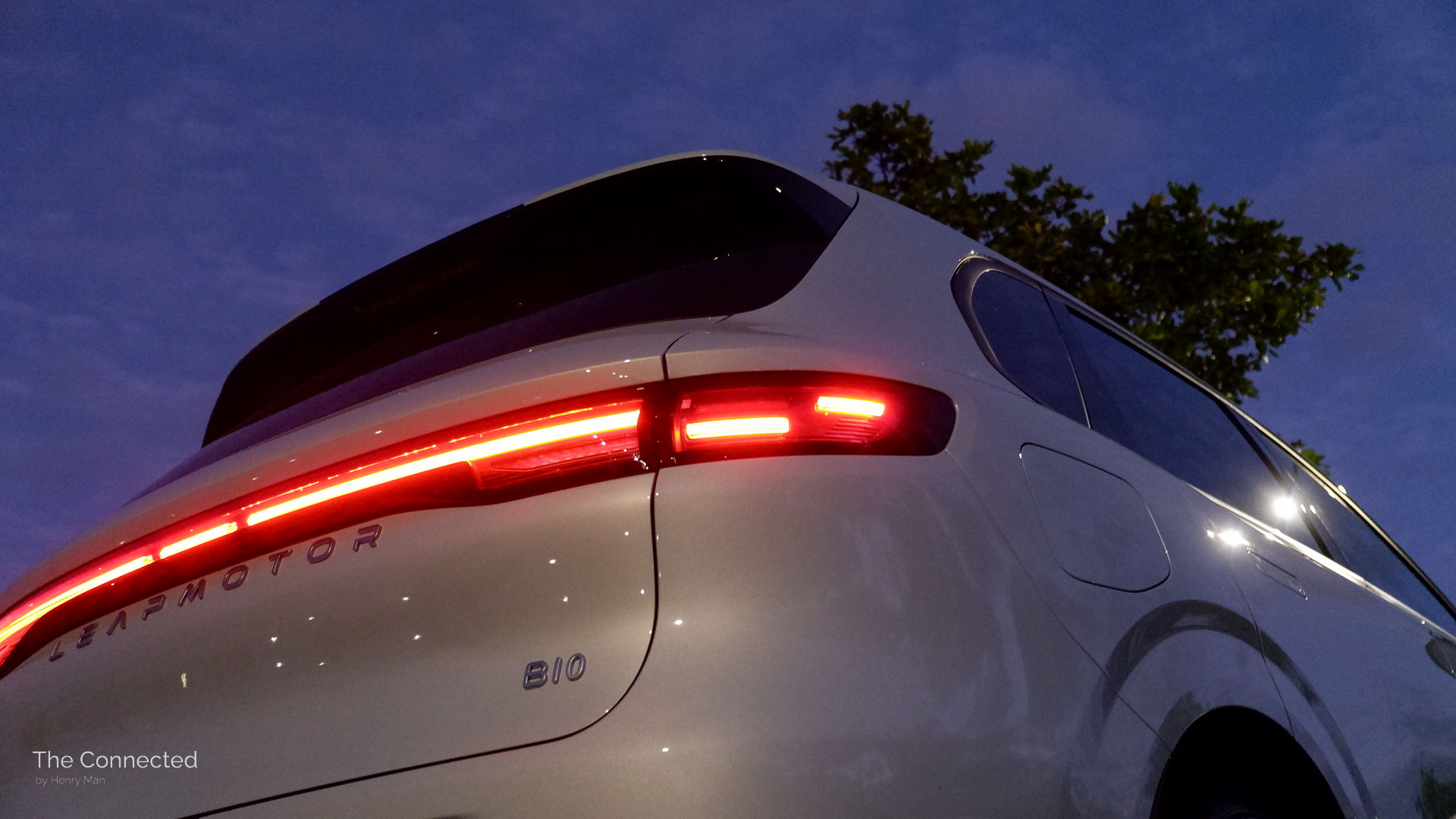
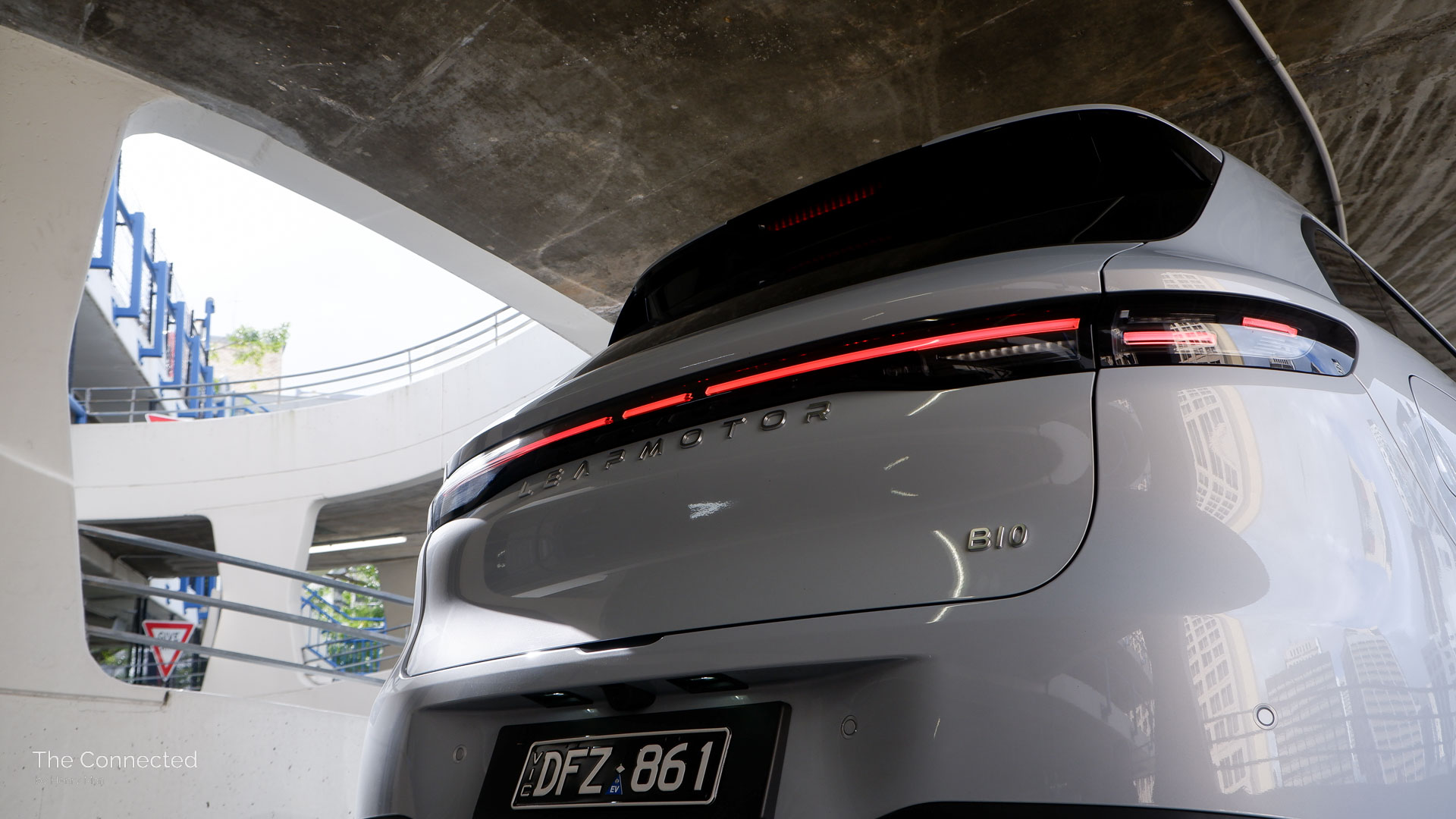
Following from the C10, the B10 is unmistakably a Leapmotor with a minimalistic design, Porsche-esque straight rear light bar, and a segmented front daytime running light signature.
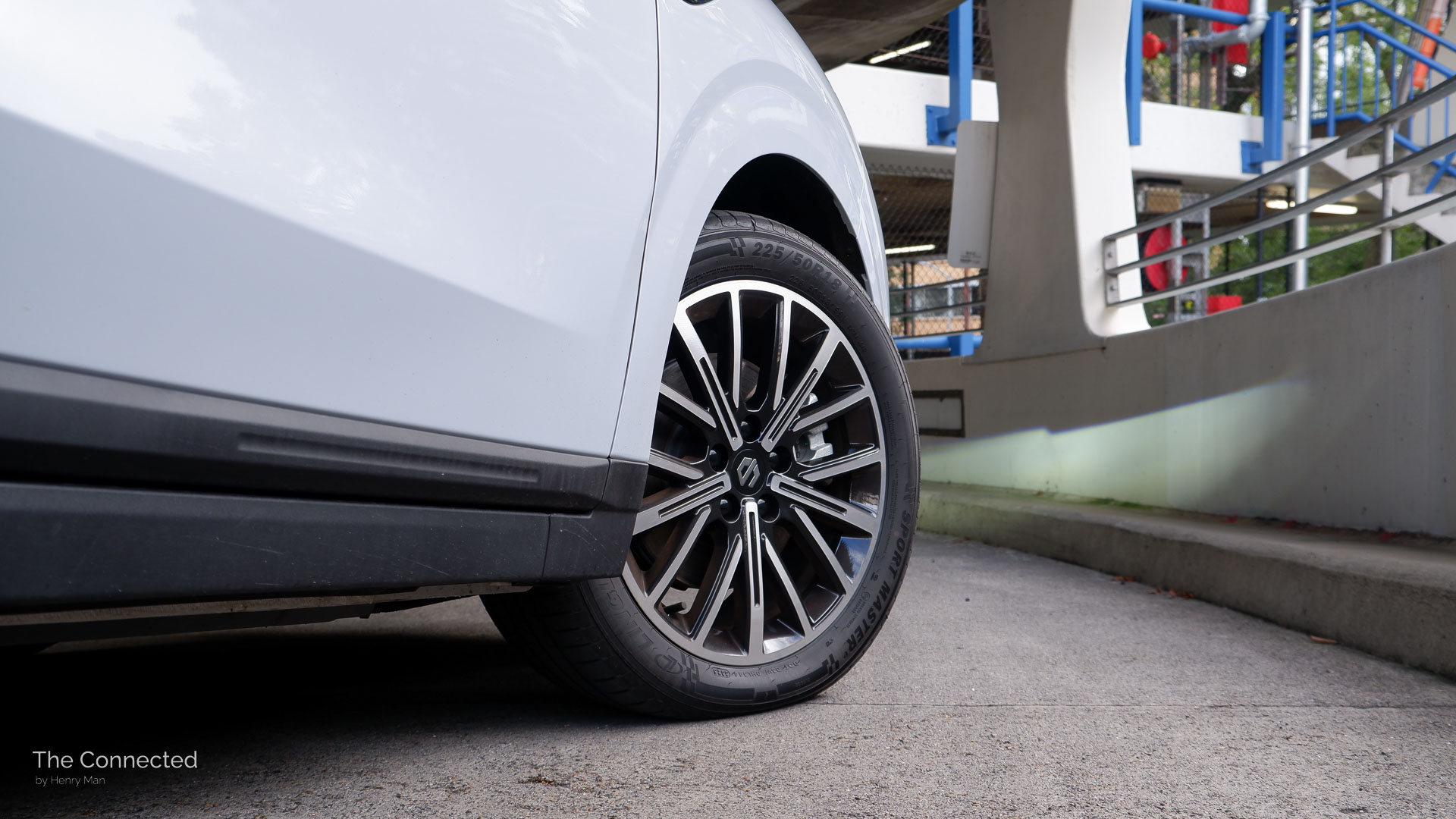
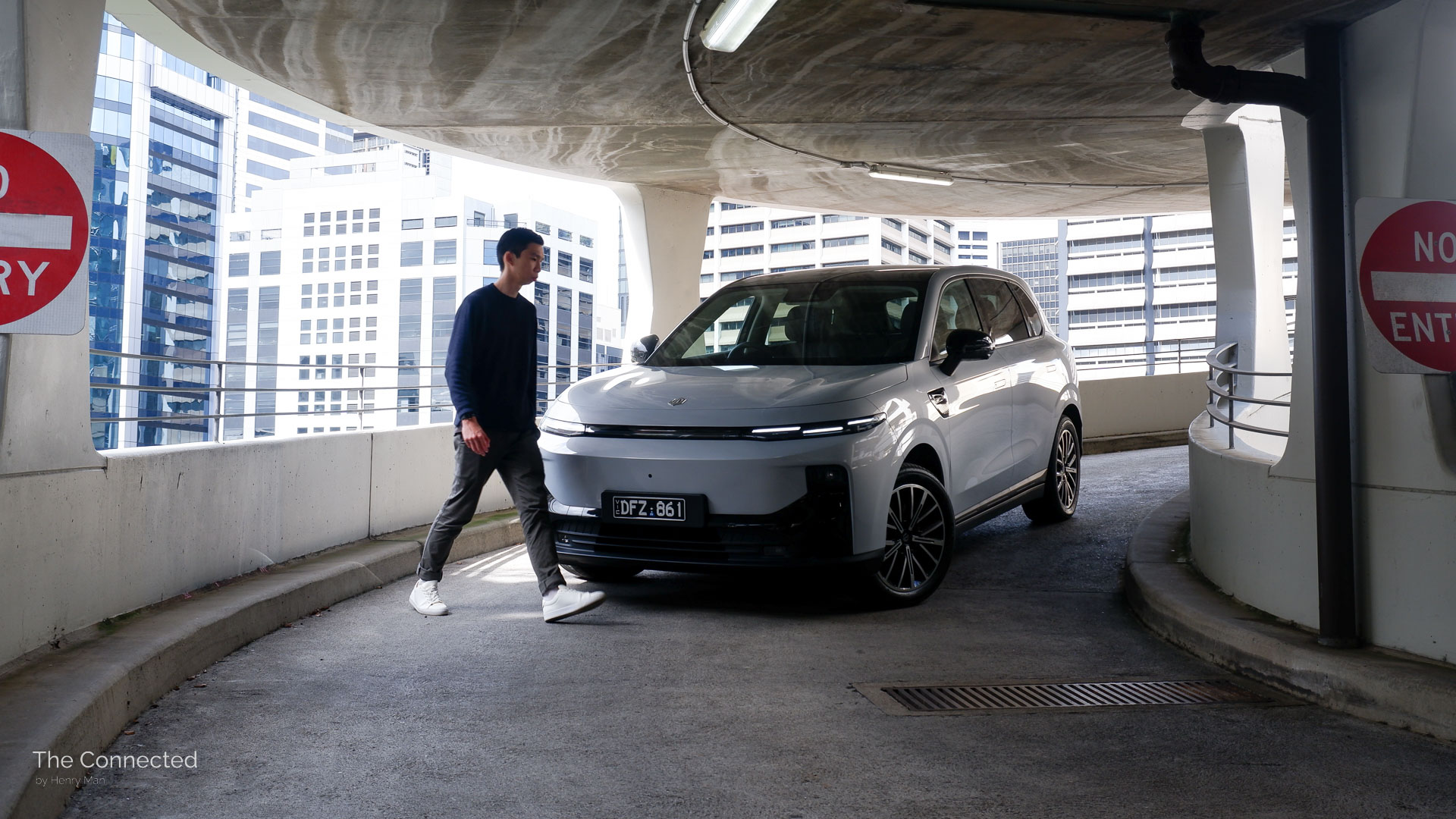
Like some Chinese cars, the wheels look disproportionately small compared to the boxy body, but it’s a rather clean and inoffensive aesthetic otherwise.
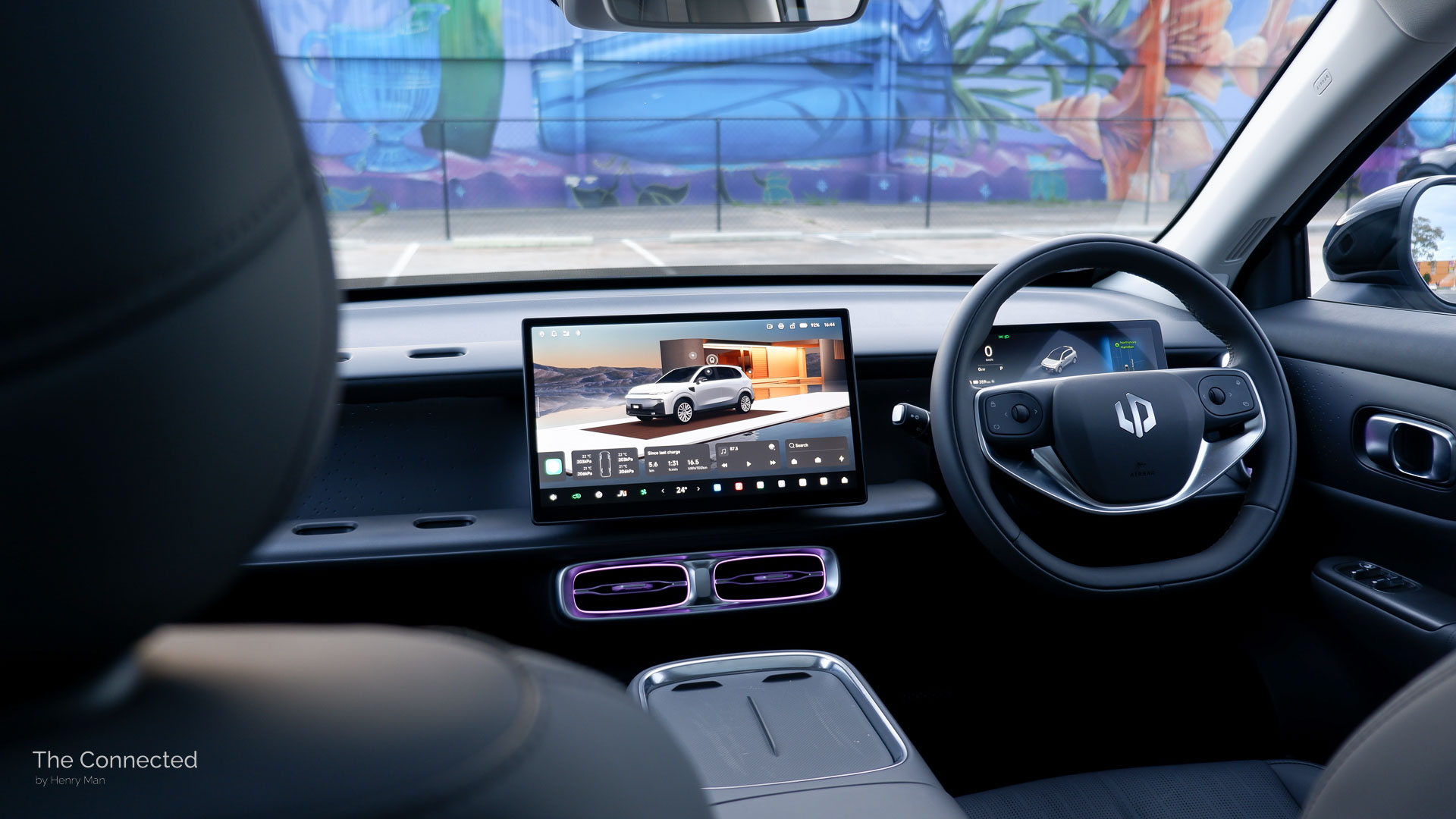
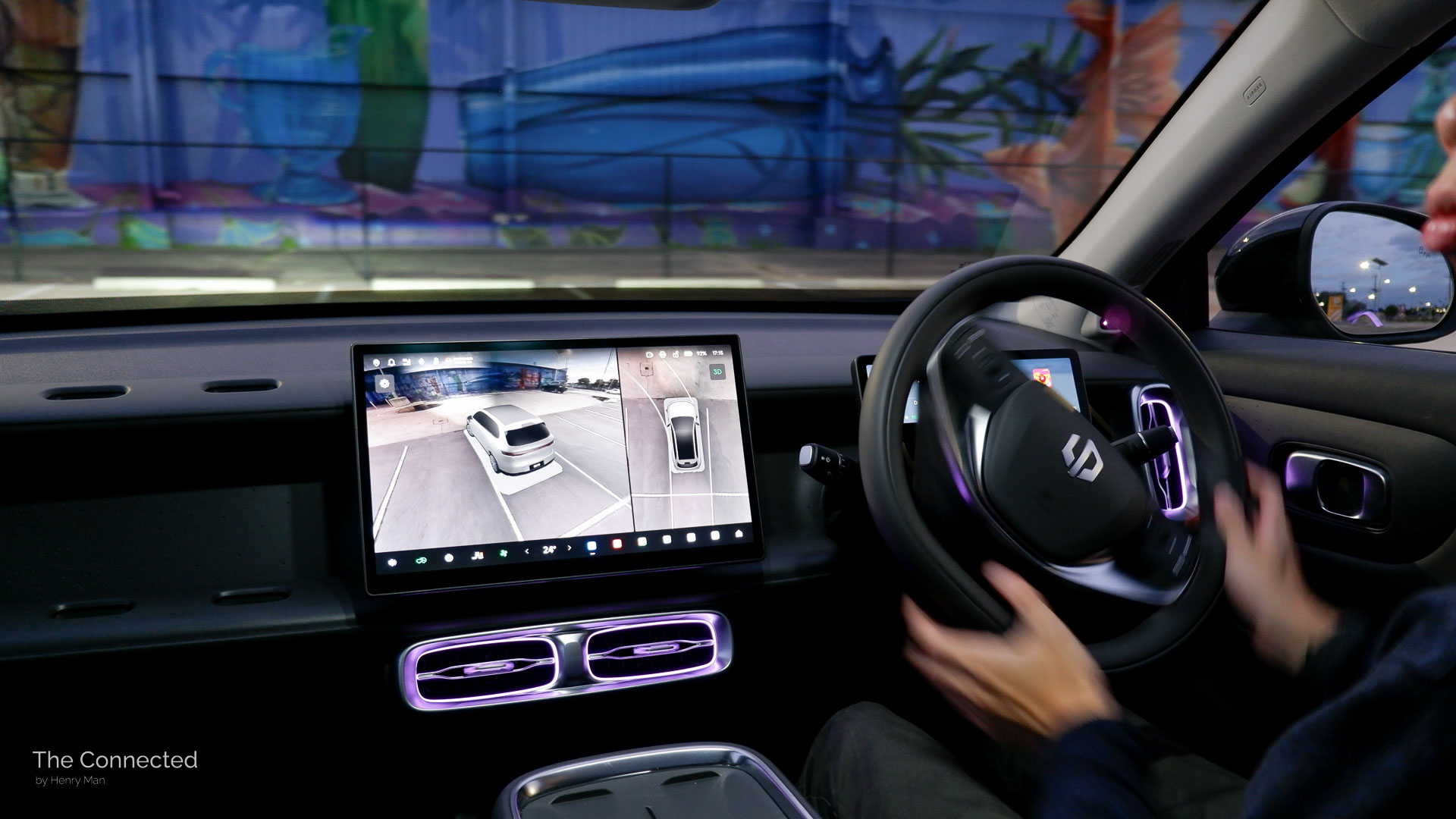
Inside, the B10 small SUV looks Tesla-esque with a large screen dominating the middle, two textured scroll wheels on the steering wheel, and no physical buttons beyond the wheel.
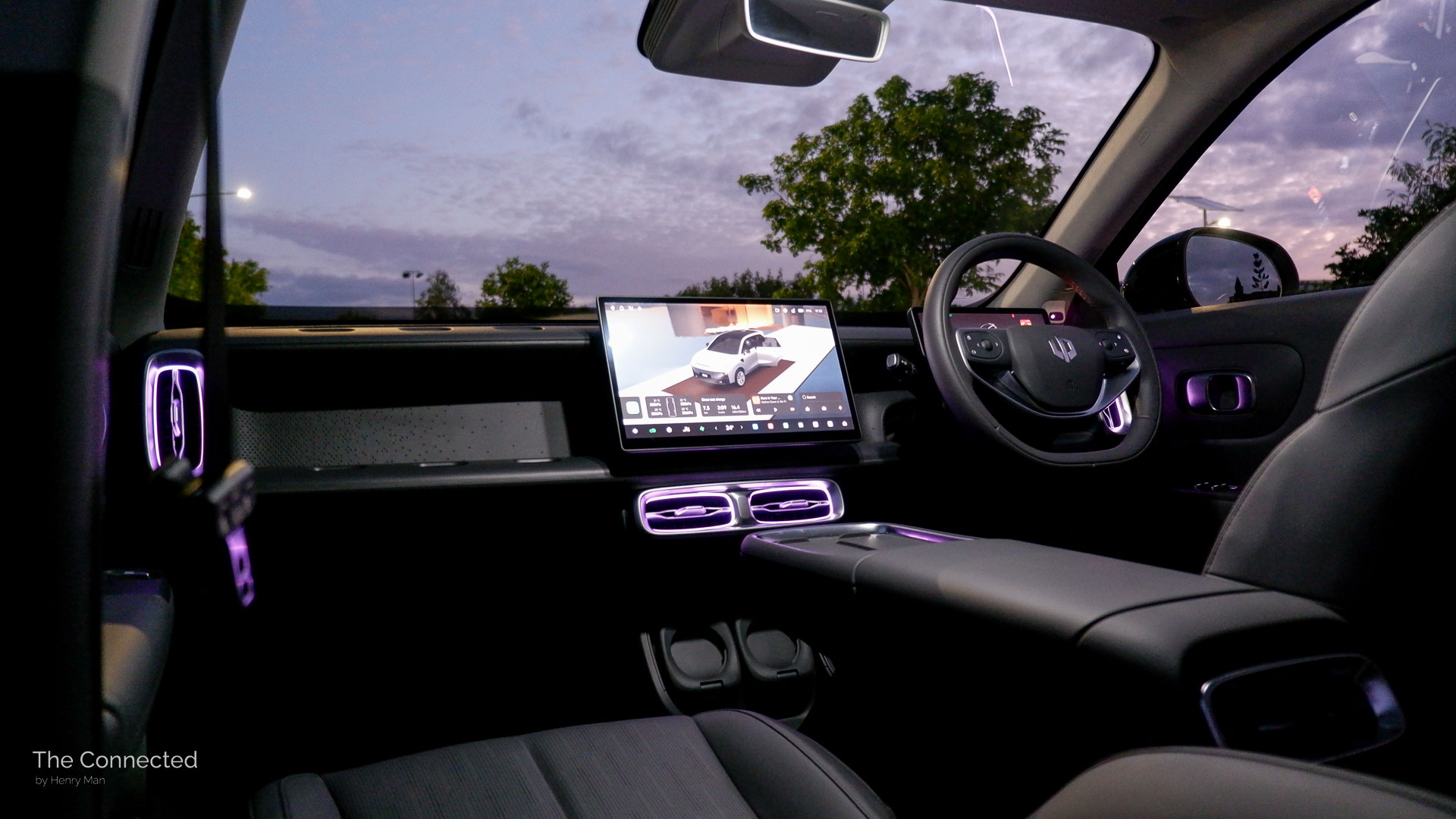
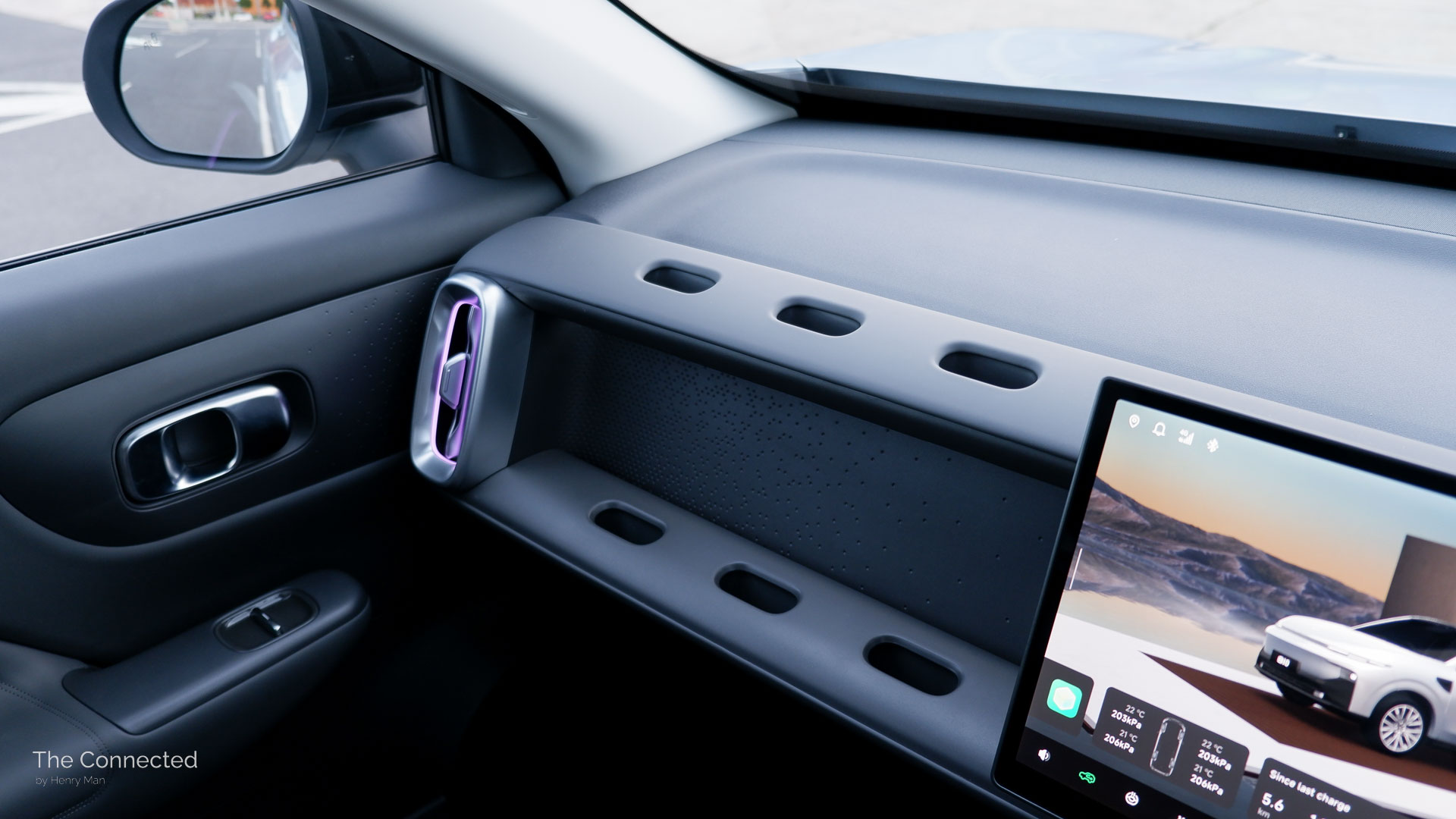
The dashboard features a textured pattern and there are six quirky pill-shaped holes in front of the passenger that’s designed for accessories sold in China.
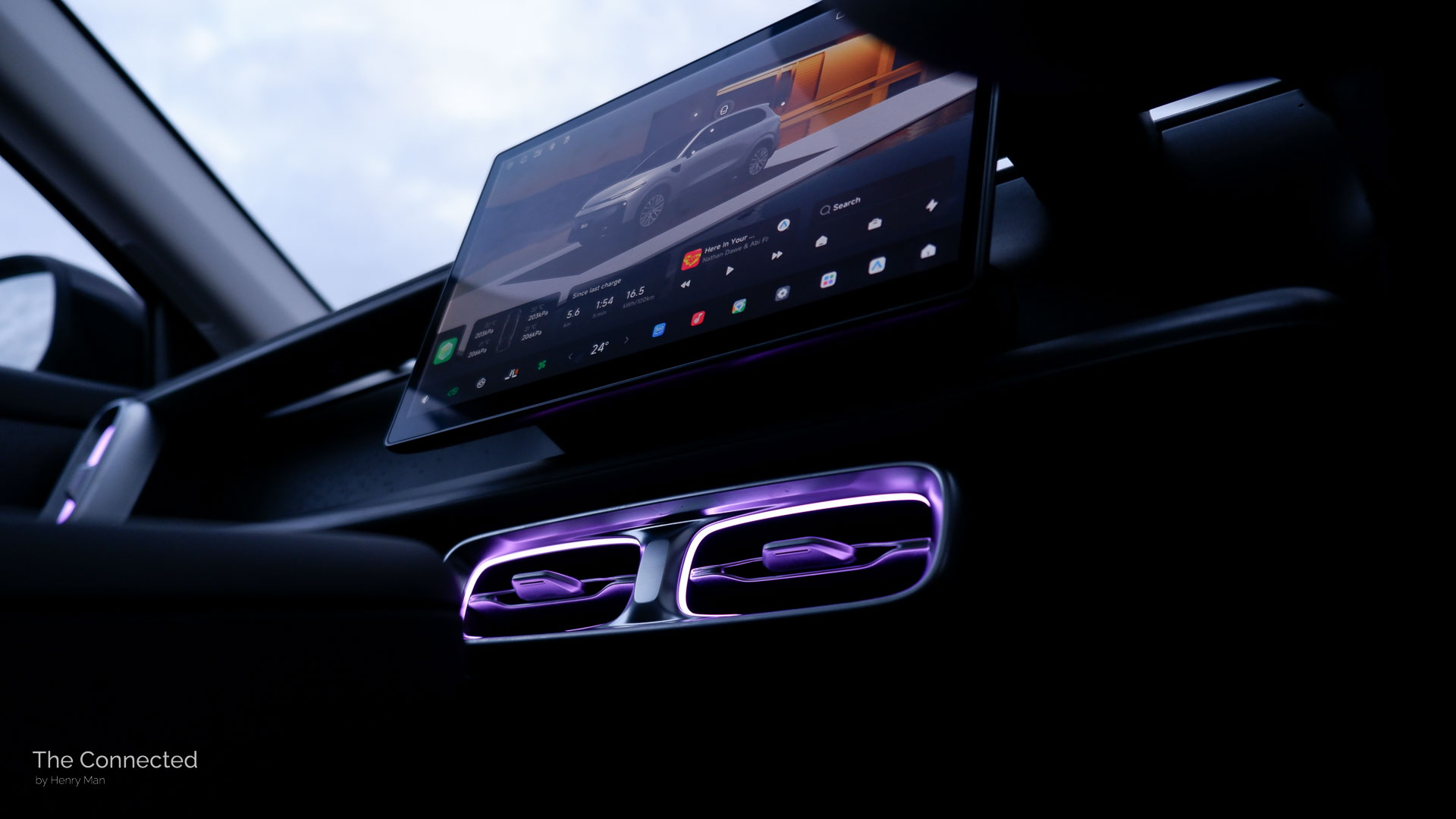
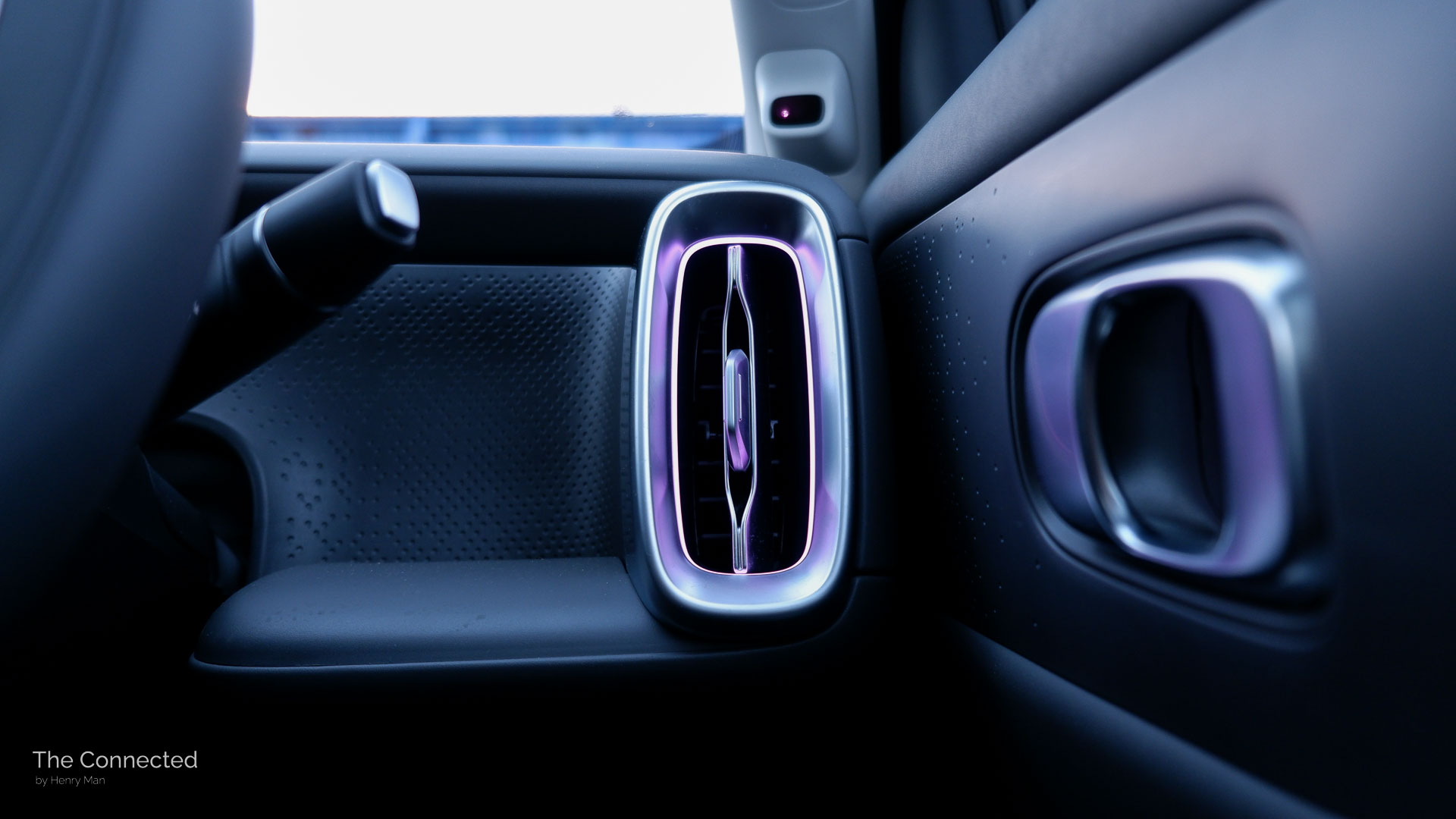
Quality is great with cool chrome air vents that convincingly looks like metal with the colour-selectable ambient lighting glowing on it, soft touch surfaces, and only harder plastics lower down the door cards.
I found that there was some creaking when leaning against the centre armrest, though.
Other than that, the Leapmotor interior is generally well-built even though the artificial leather feels and smells rubber-ish – positioning the Jaecoo J5 EV with the more premium advantage.
Practicality.
2026 Leapmotor B10 Design dimensions:
| Length x width x height | 4515 x 1885 x 1665mm |
| Wheelbase | 2735mm |
| Ground clearance | 170mm |
| Boot space (min / rear seats folded) | 490 / 1475L |
| Frunk space | N/A |
| Rear seat split fold | 60:40 |
| Child seat anchors | 2x ISOFIX and 3x top tethers |
| Air-conditioning system | Single-zone climate control with rear air vents |
The Leapmotor B10 provides a roomy interior and boot for a small SUV.
With a 490-litre boot, there’s plenty of space for a grocery haul with two solid bag hooks, an LED light, and some underfloor storage for charging cables.
The B10 benefits from a standard-fit cargo cover not always seen at this price point.
The flagship Design variant boasts an electrically-powered tailgate, but it doesn’t have any hands-free opening and closing function.
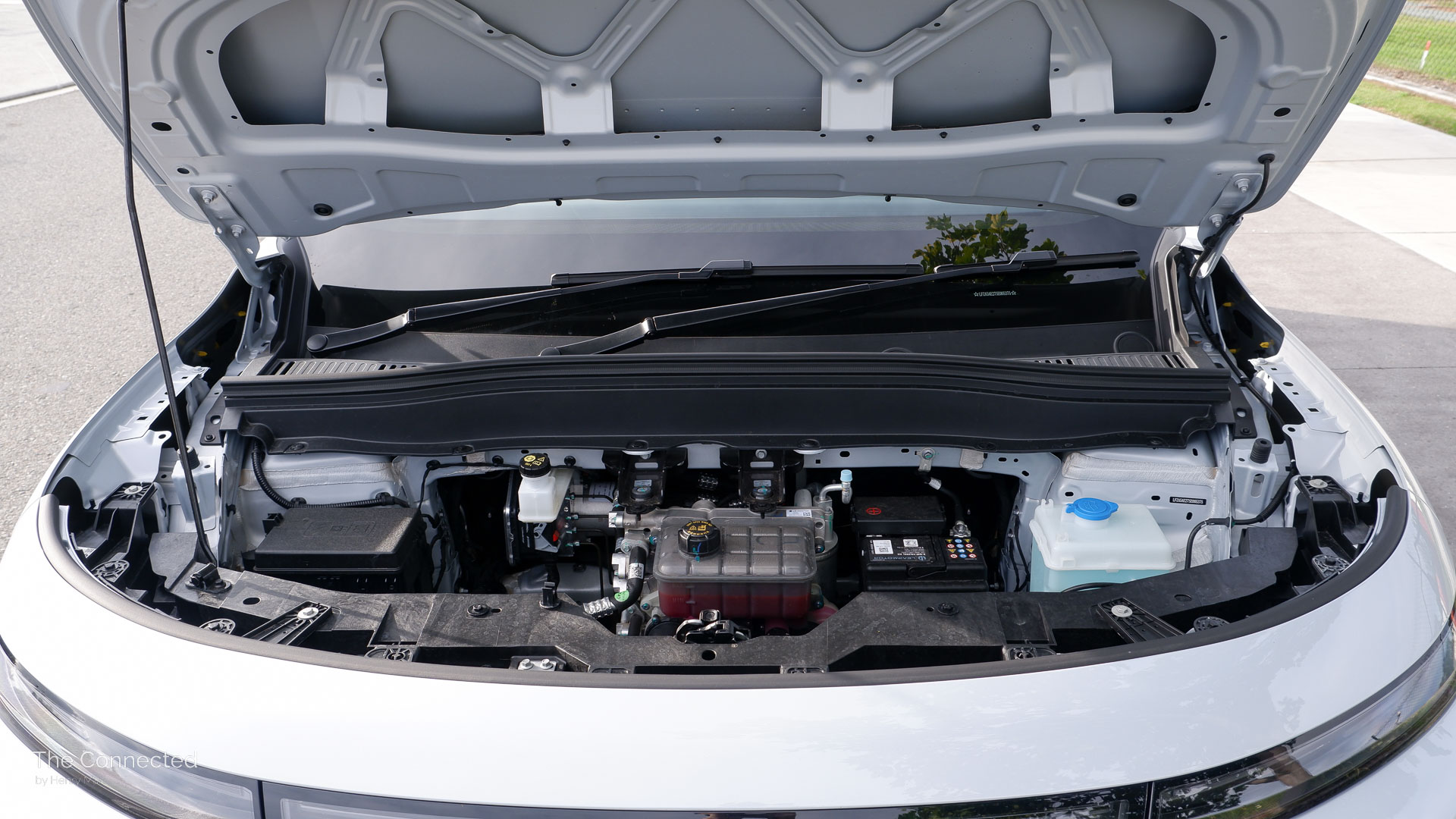
It does not have a frunk in Australia. An accessory is available overseas, but is not available from Leapmotor Australia as at the time of publication (despite offering one for the C10 medium SUV).
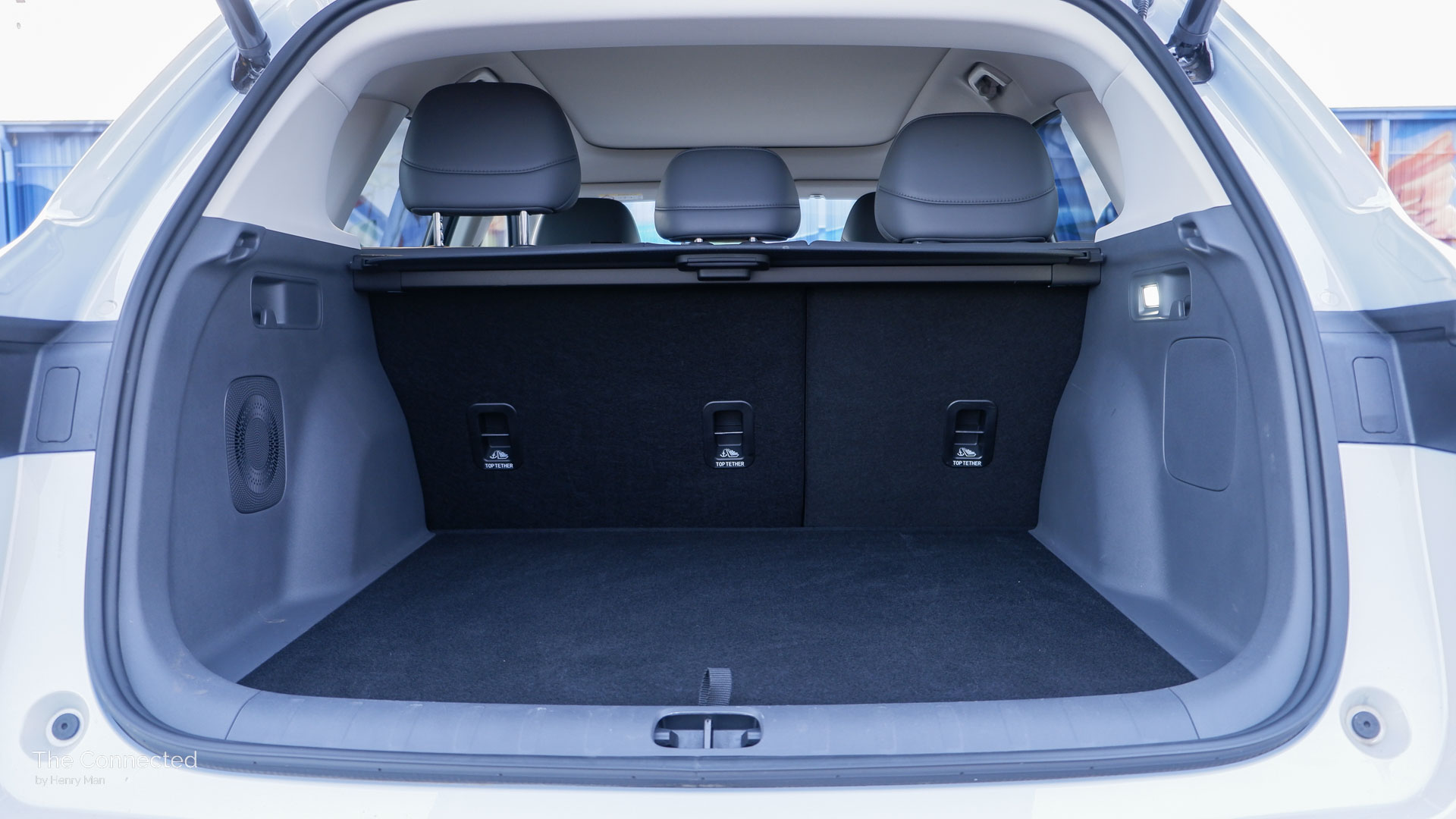
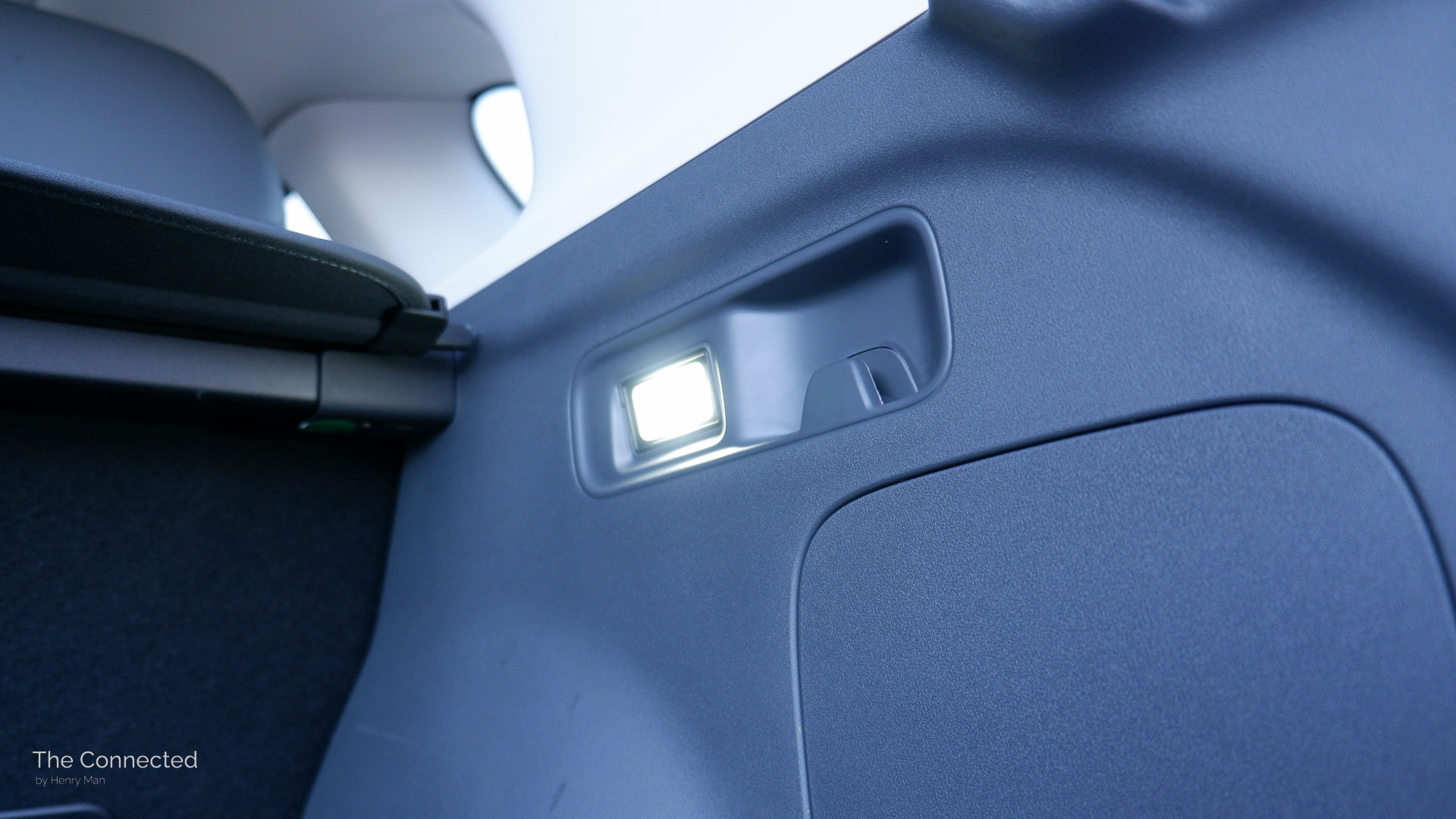
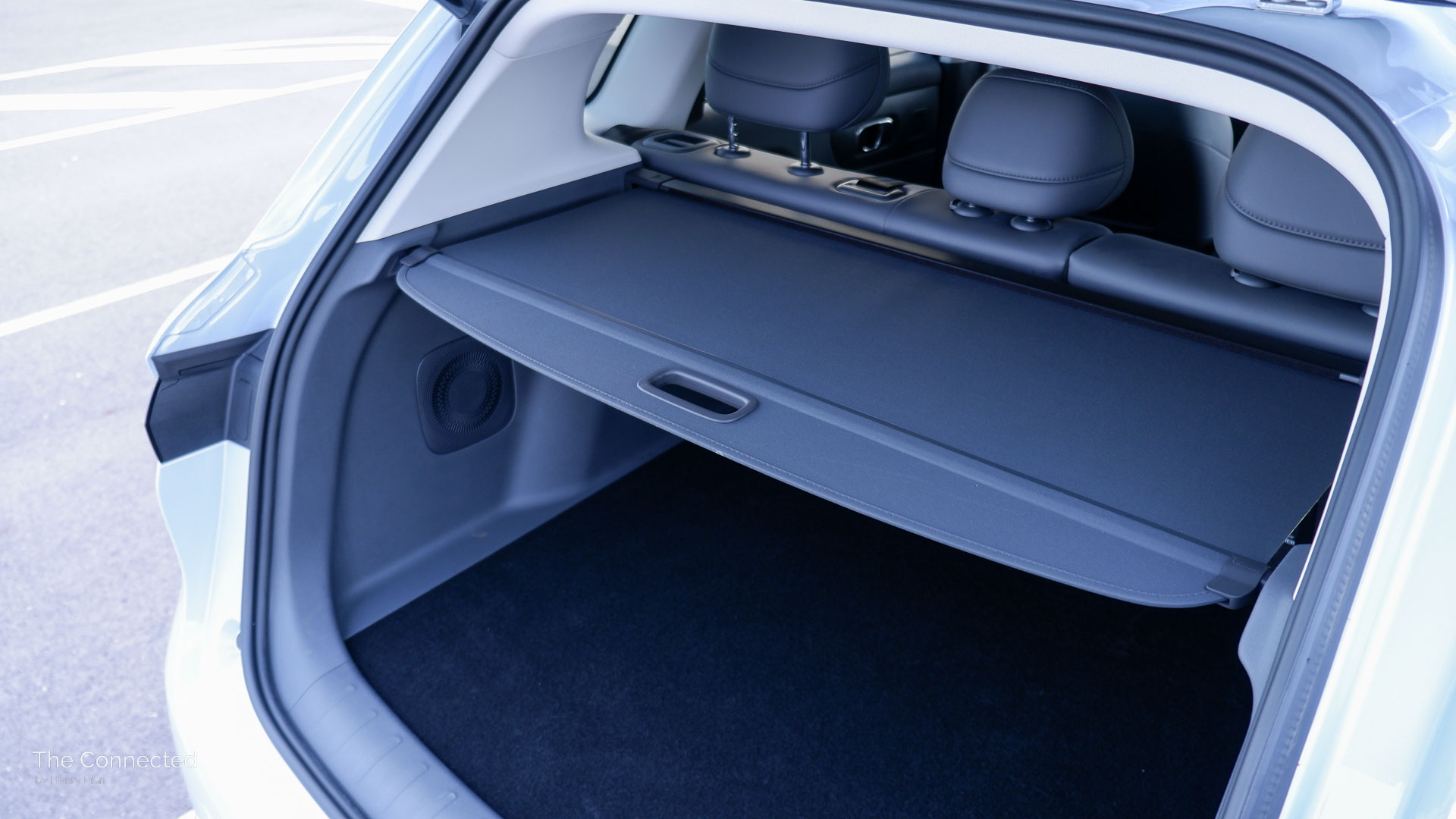
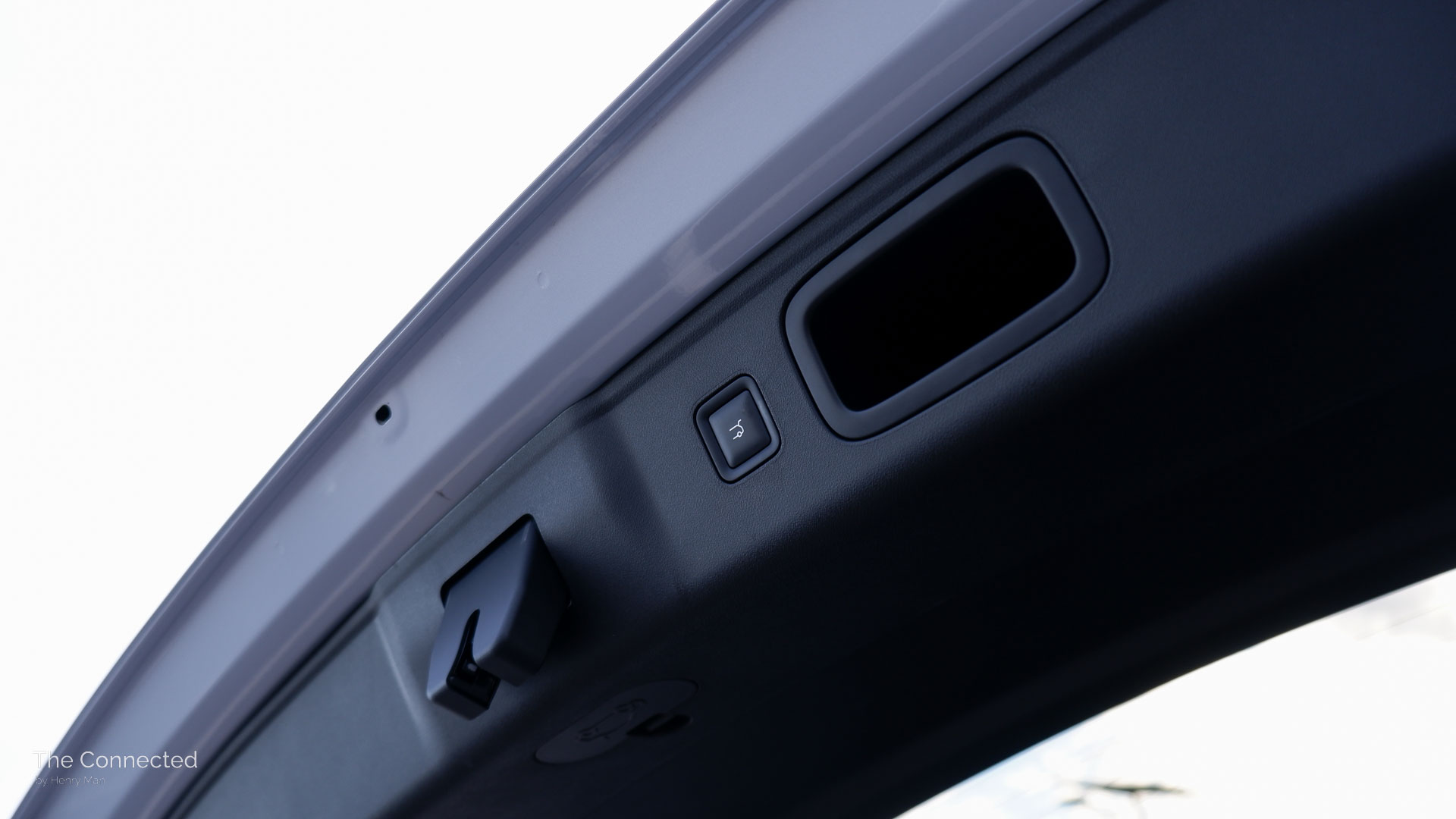
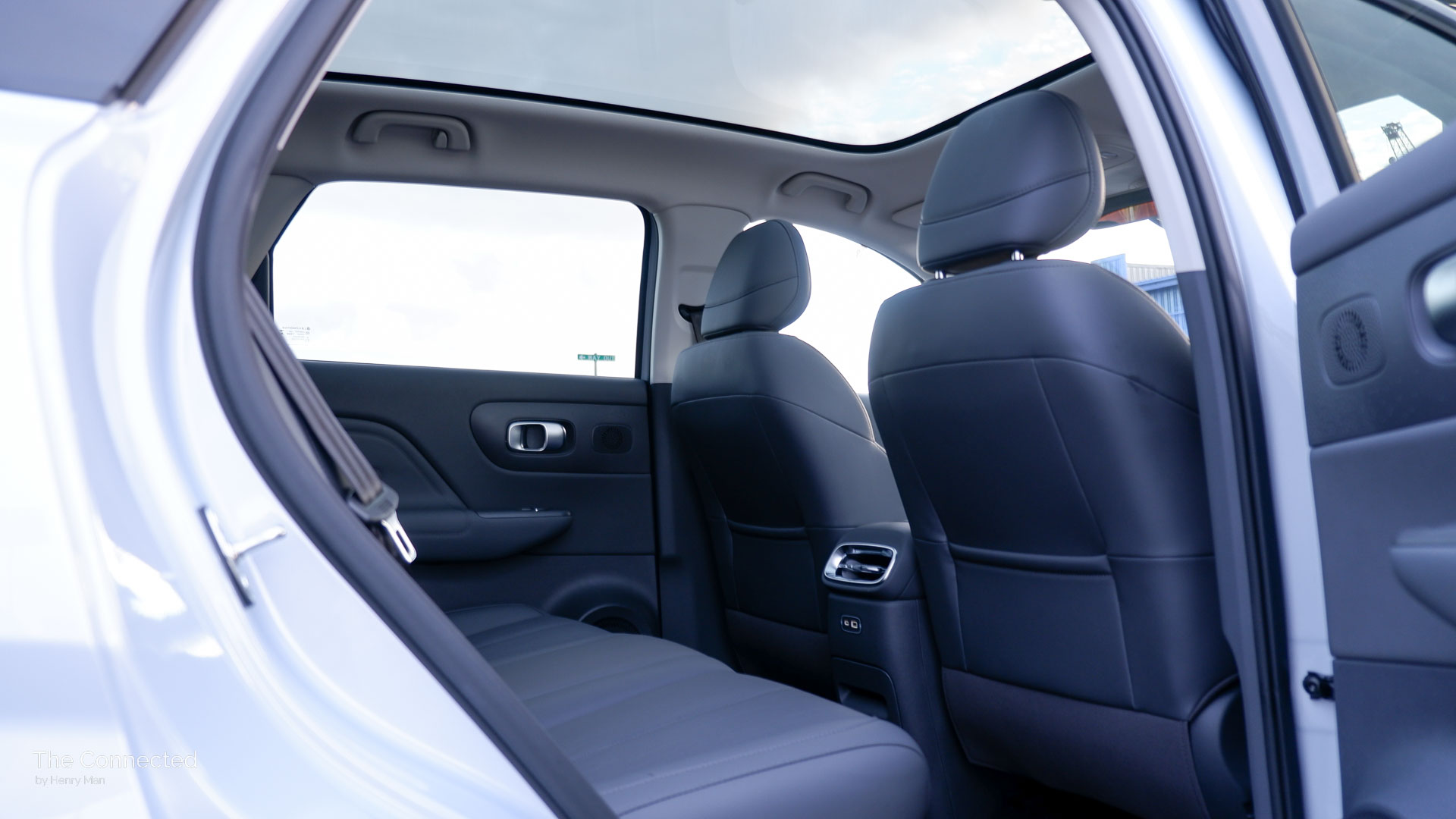
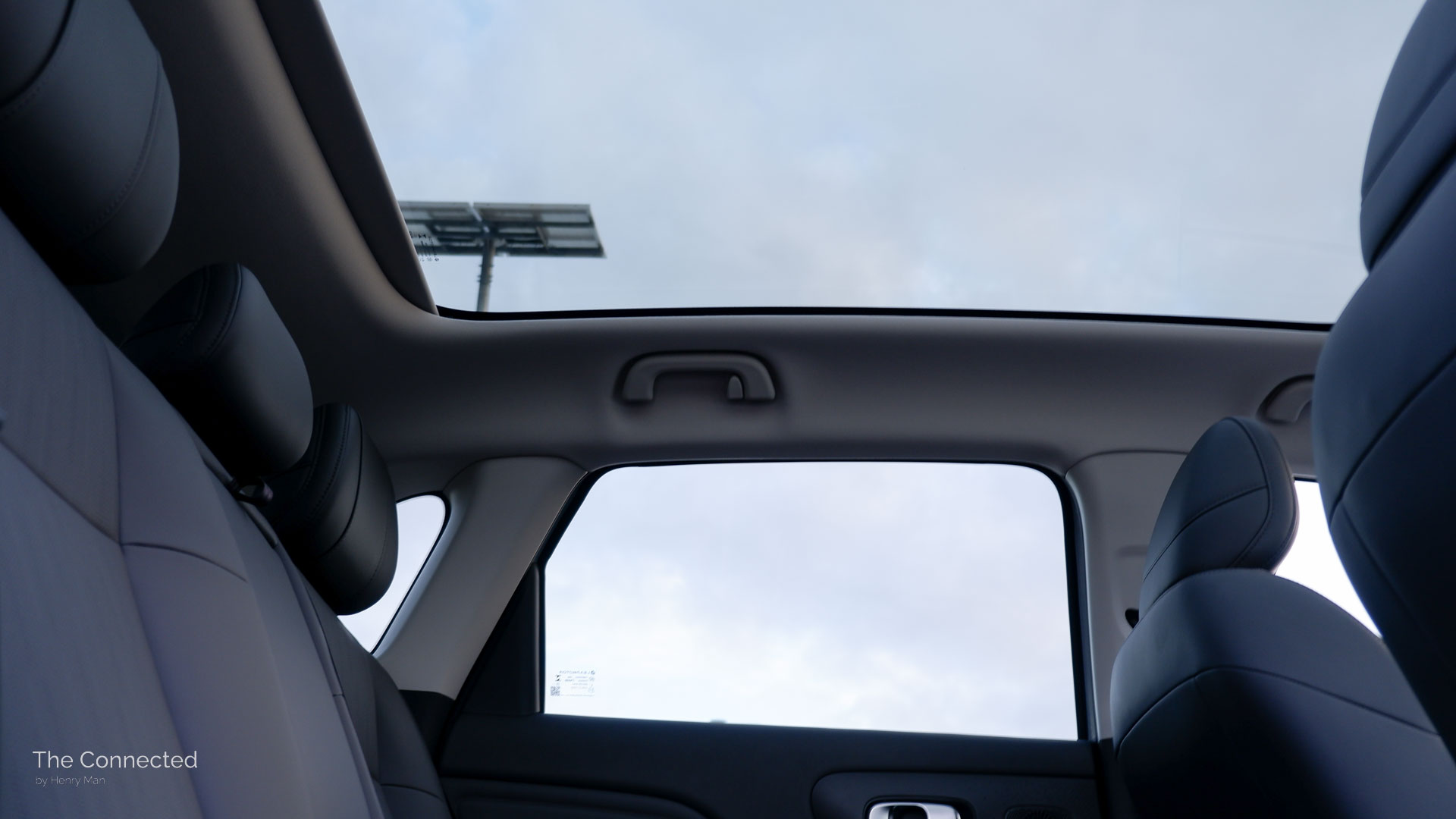
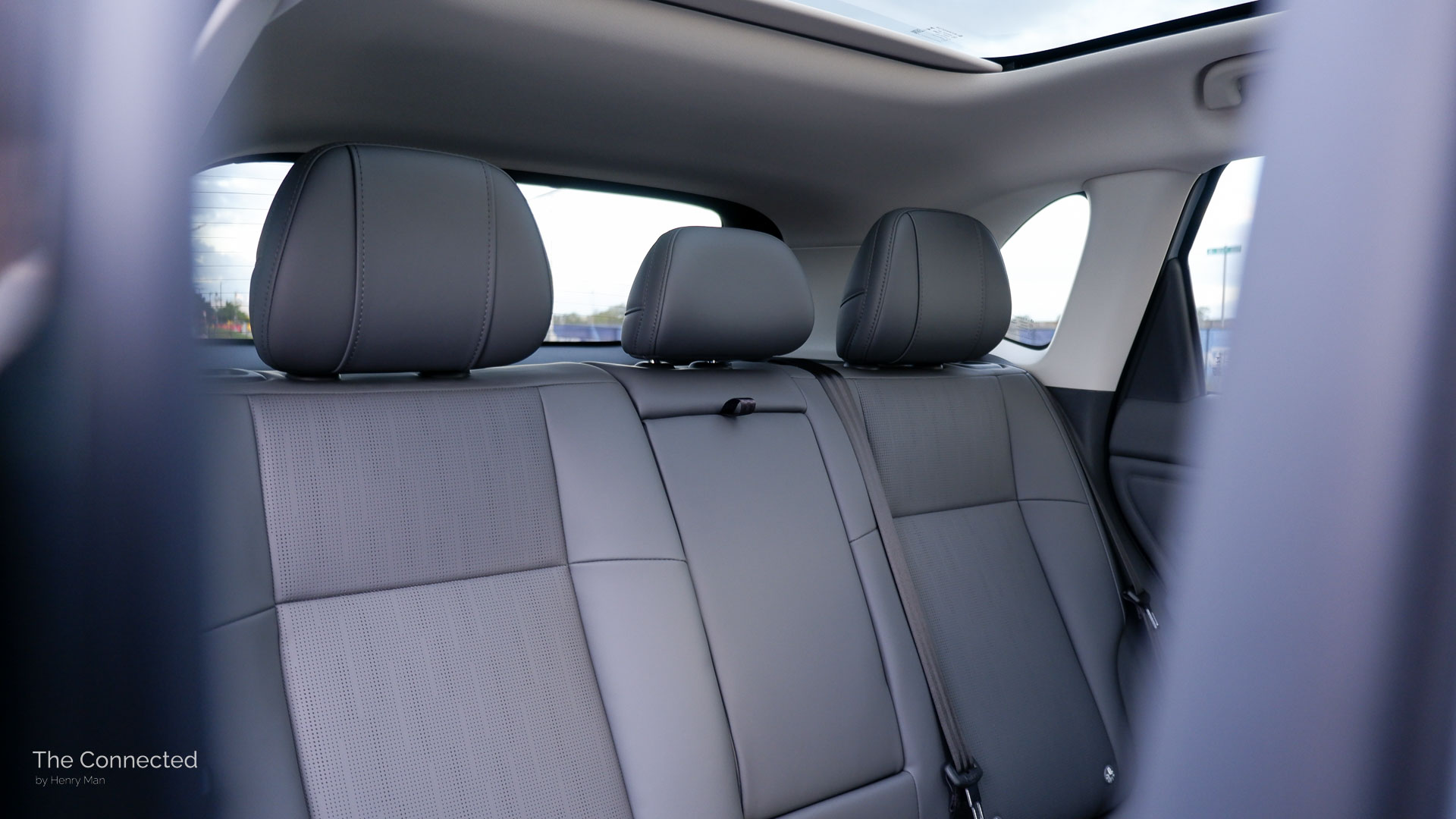
Inside, the rear row offers good legroom, footroom when slid under the front seats, and plenty of headroom due to the boxy design.
Rear passengers benefit from a completely flat floor, a fold-down armrest with two gripped cup holders (on the top-spec Design only), seatback pockets, a pop-out centre storage slot, and well-sized door pockets.
There’s an enormous view of the fixed panoramic glass roof on the Design which has good tinting and a built-in sunshade, although there’s no physical switch to open and close it.
Disappointingly, there are no rear row interior lights – a cost-cutting measure that isn’t seen on the cheaper Jaecoo J5 – leaving the back dark when there’s limited lighting outside.
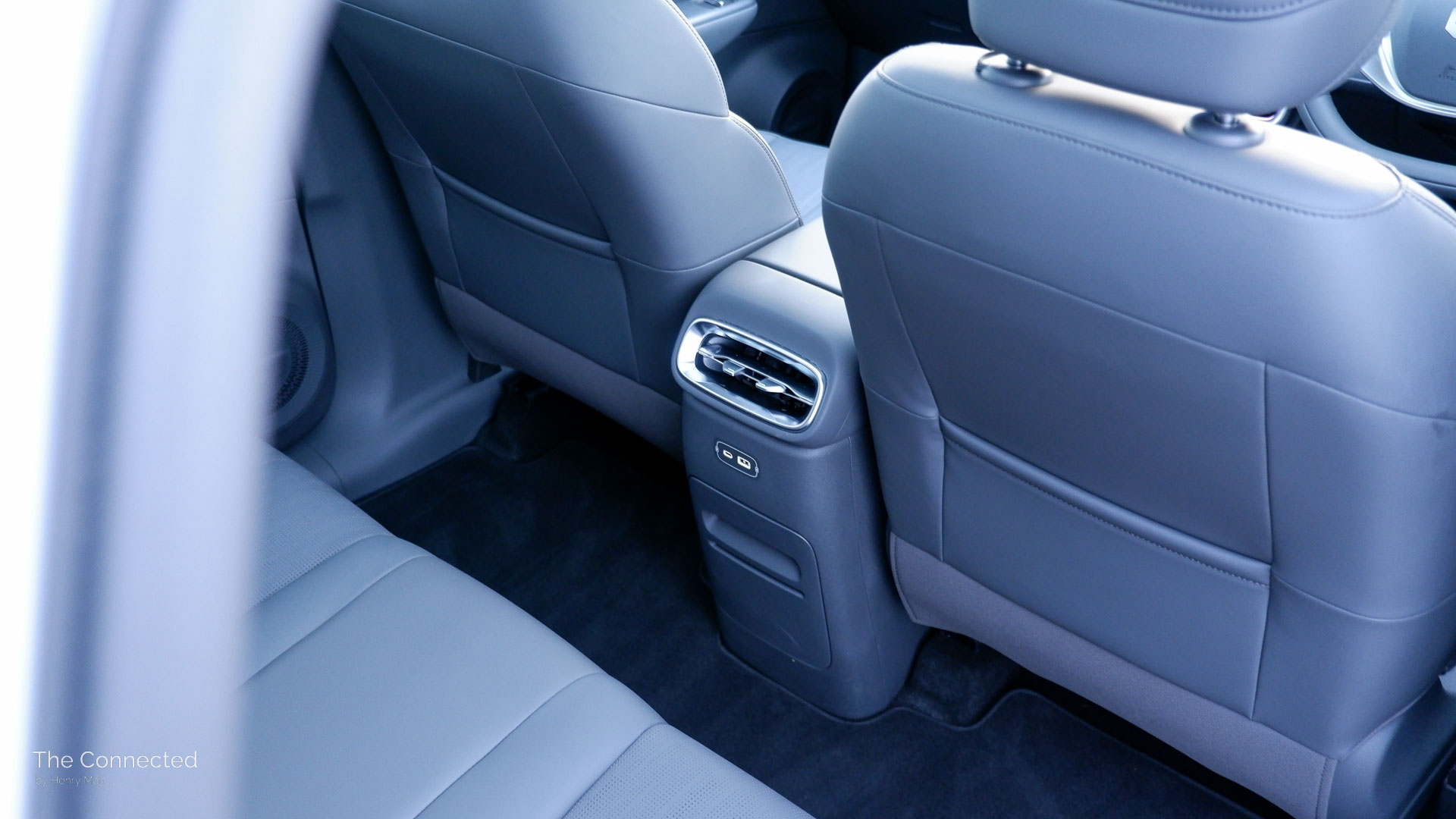
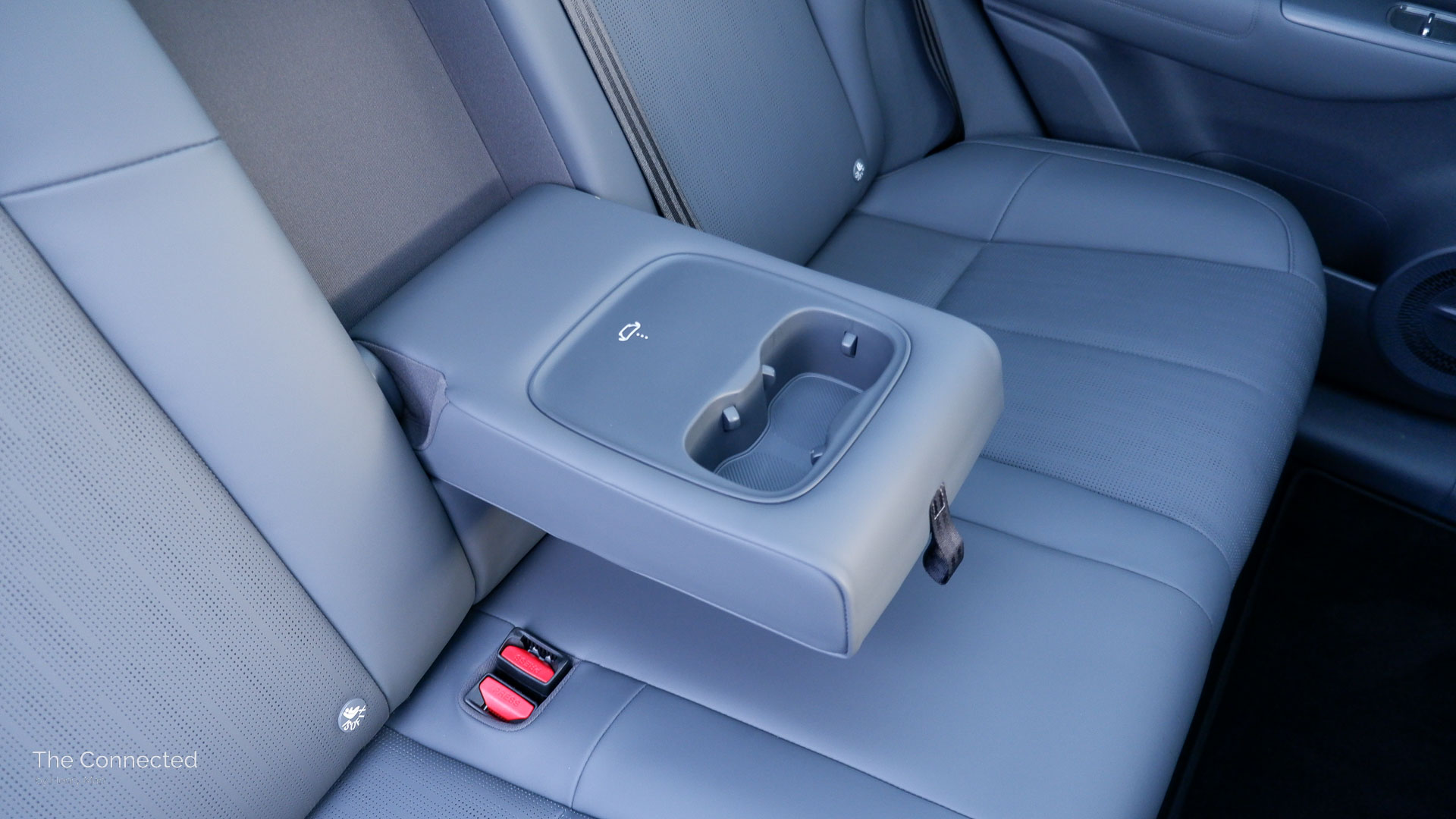
The two rear air vents are directional left and right – yet move together in the up and down direction – while the Leapmotor also includes only one USB-C and one old-school USB-A port for the rear row. At least they have illuminated surrounds for finding in the dark.
The Chinese carmaker also boasts that you can completely fold down the front seats and remove the headrests for car napping.
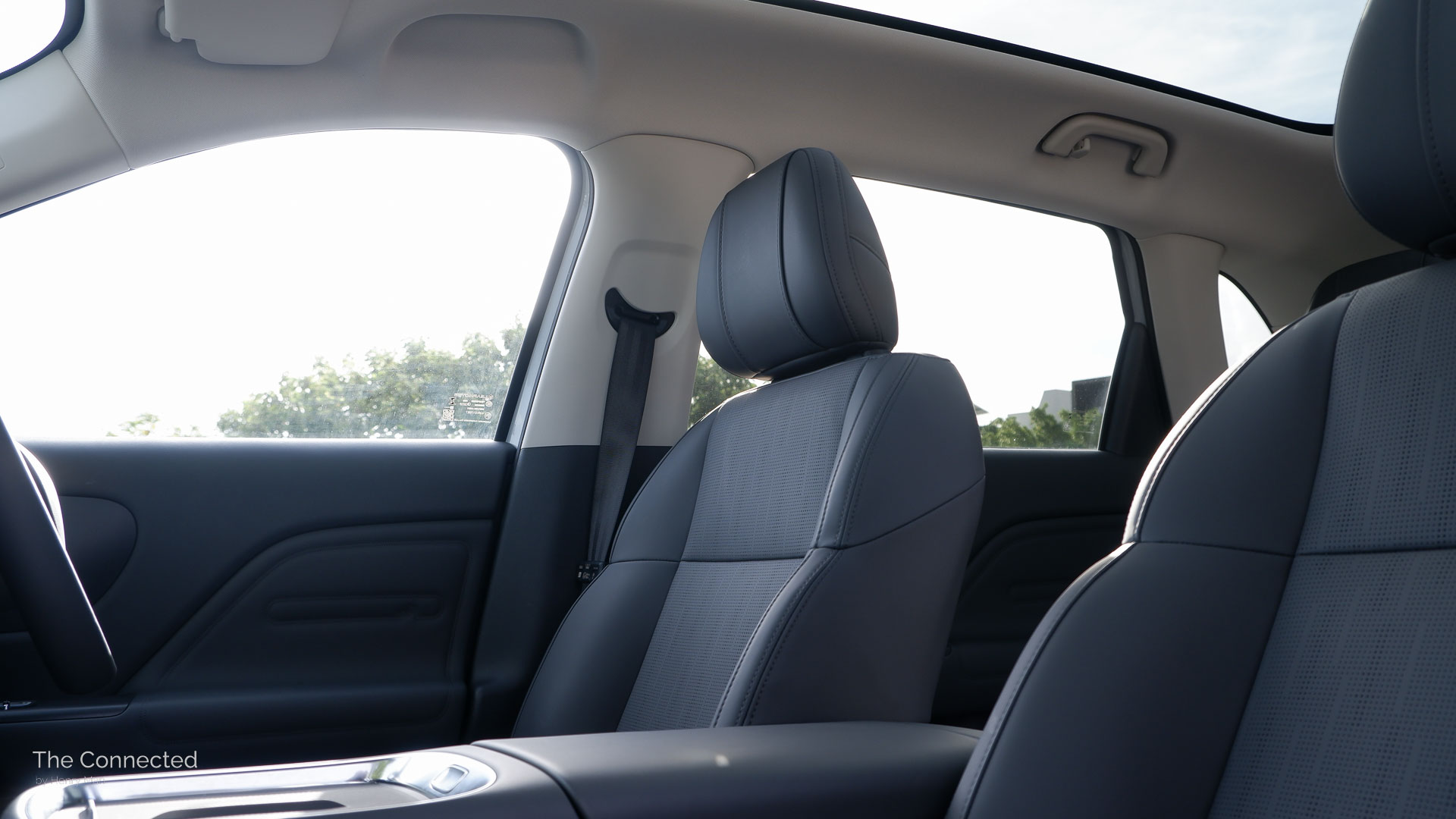
Like the midsize C10, Leapmotor’s silicone synthetic leather seats are very soft with a certification that proves it is made up of non-toxic chemicals and skin-friendly.
However, it also feels and smells particularly rubbery.
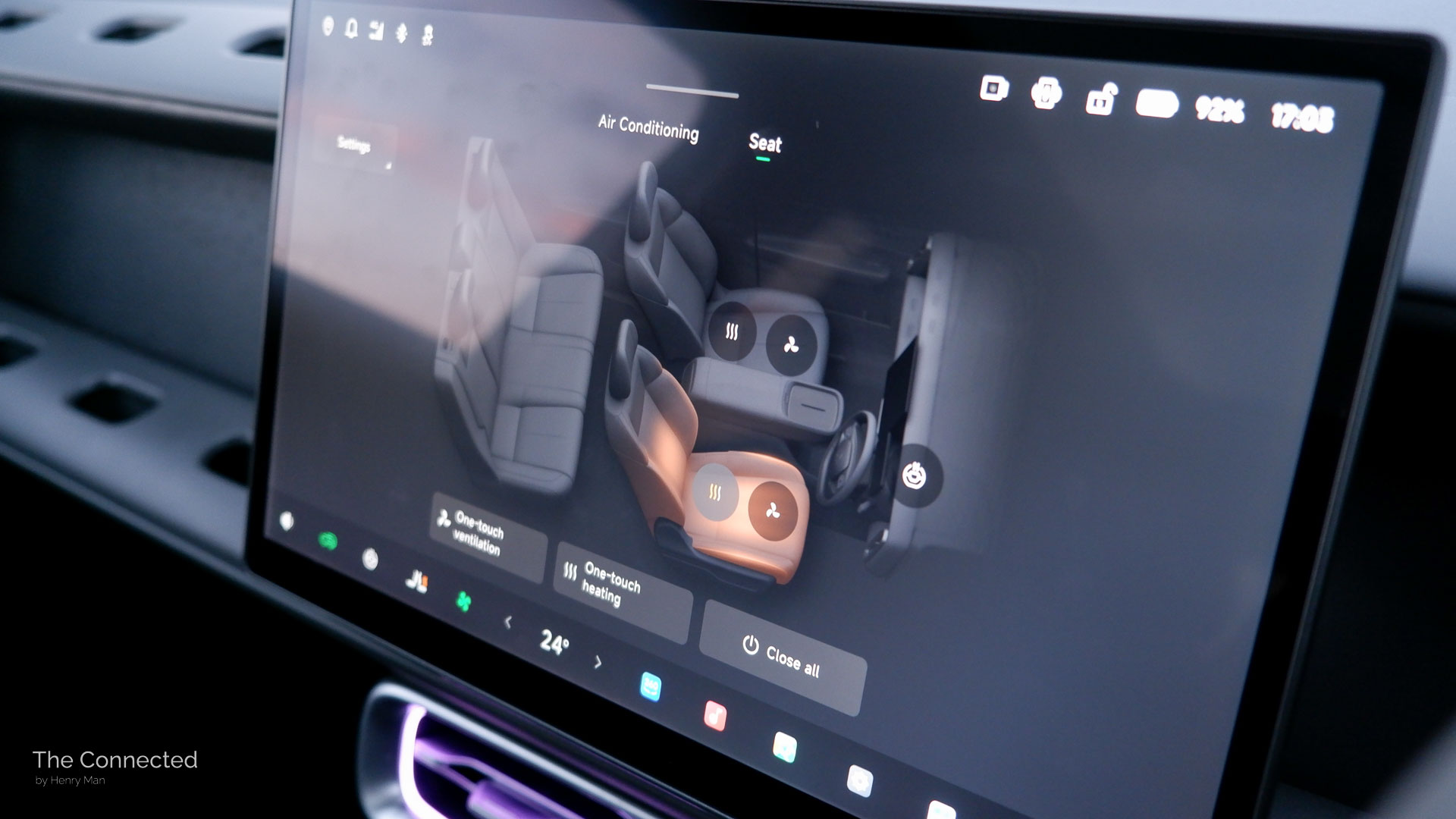
There is no seat memory, lumbar and base angle adjustment, but the Design boasts three-level heating or ventilation, and a heated steering wheel.
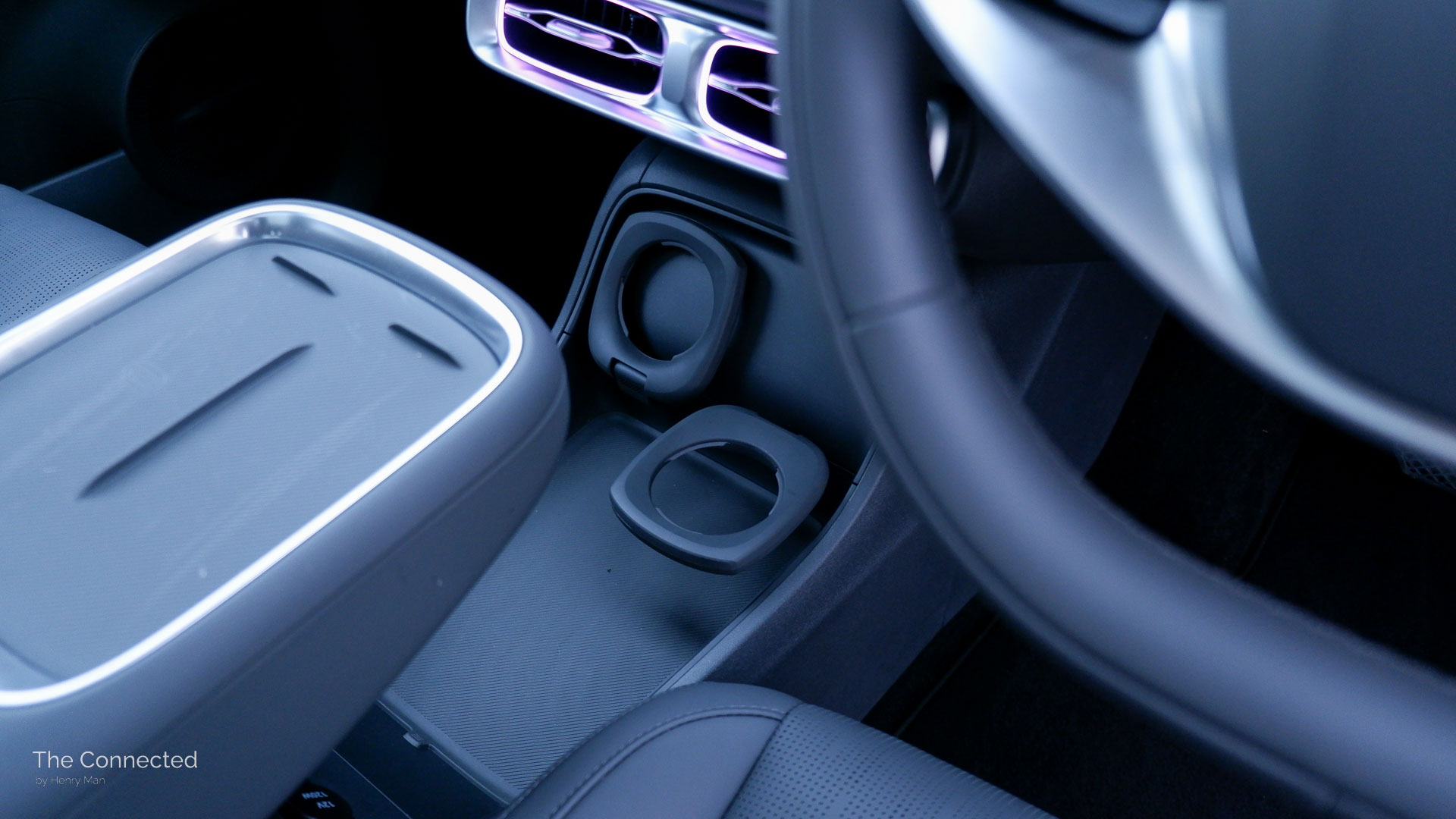
Furthermore, the Leapmotor B10 has an open centre console design with a rubber-lined tray, two cup holders that fold up when not needed, good centre armrest storage and a deep glovebox.
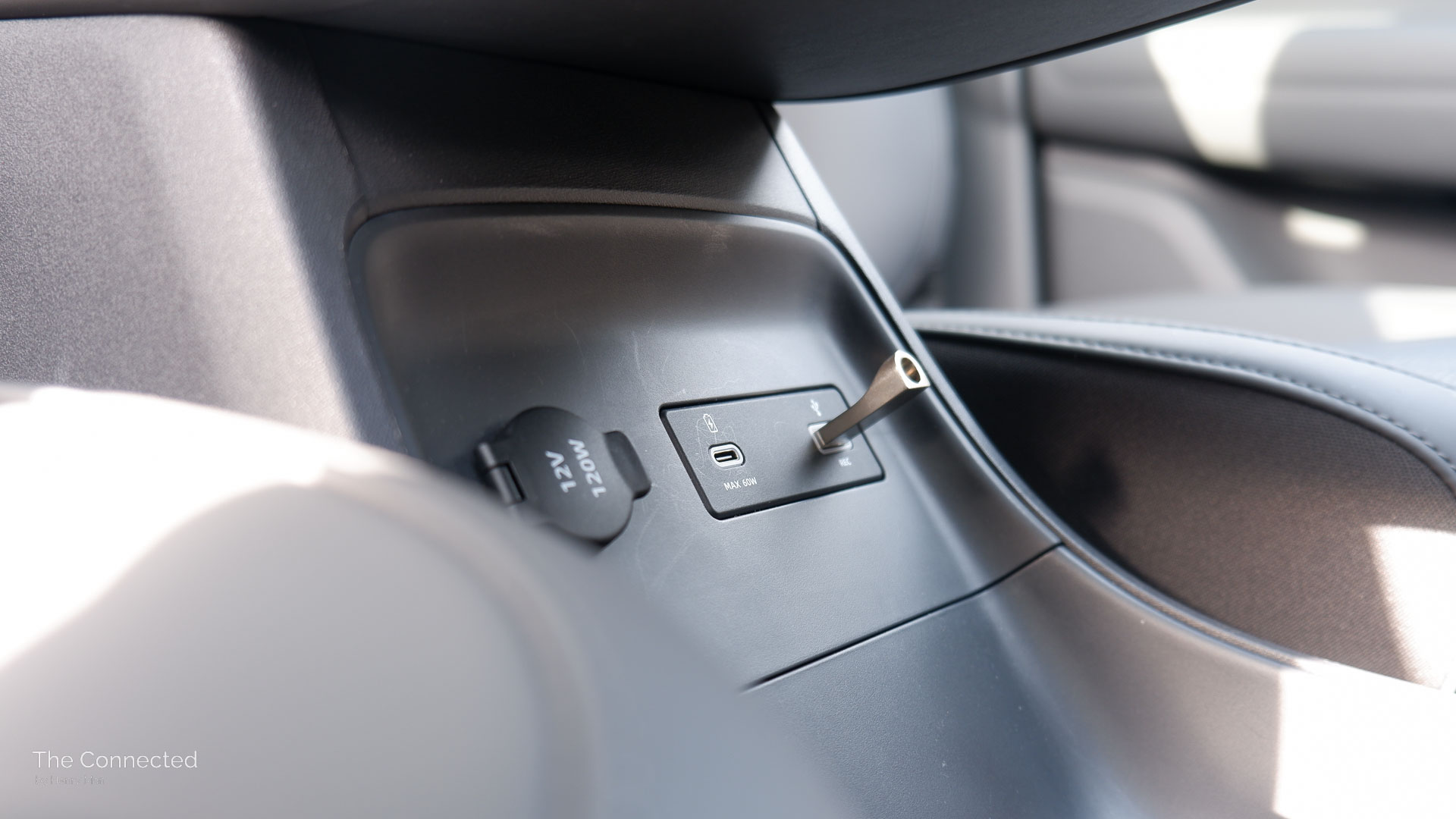
The single USB-A port (for dashcam recording) and USB-C port are hidden behind the open tray, under the armrest at the centre console.
Also, it’s hard to find an ideal temperature with the single-zone climate control – it felt either too cold or too humid in my testing.
The carmaker features camp mode and guard mode (which always defaults to 25 degrees) to keep the climate control on while the vehicle is locked, too.
Like many other Chinese cars, the window switches are strangely inverted – flick up for down and vice versa.
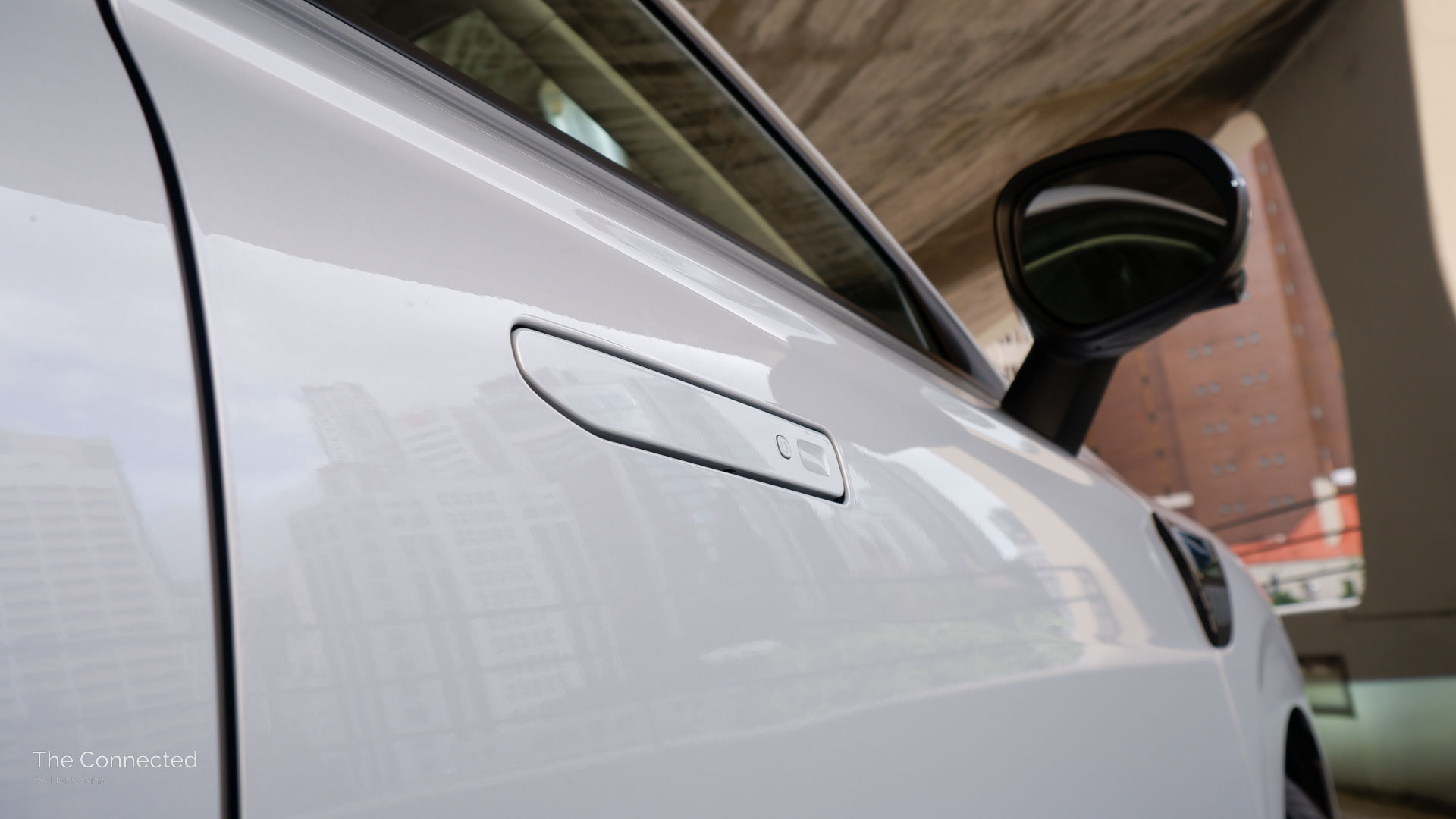
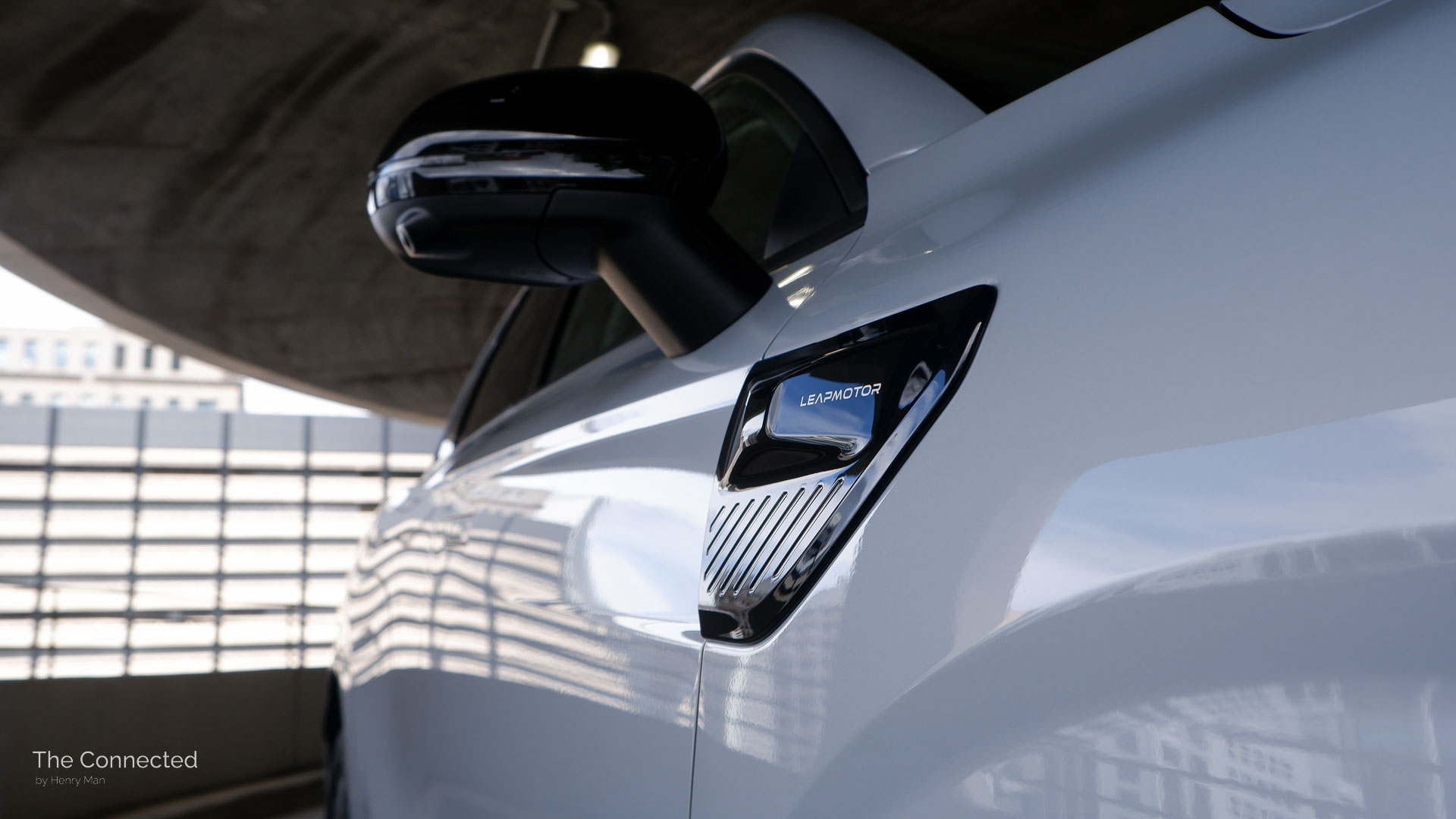
Outside, the Leapmotor B10 features flush door handles – but at least there is an indentation at the front portion to help with accessibility.
A physical button is on the driver’s door handle for unlocking/locking using the Leapmotor mobile app.
Technology.
2026 Leapmotor B10 Design tech features:
| 14.6-inch touchscreen running LeapOS | 8.8-inch driver instrument display |
| Wireless/wired Apple CarPlay and Android Auto | Qi wireless charging pad |
| Built-in maps, app store, web browser and streaming apps | 2x USB-C, 2x USB-A and 1x 12-volt charging ports |
| OTA software update capability | 12 speakers |
| Leapmotor Connected Services (three years included) | NFC key card |
| Leapmotor mobile app with Bluetooth key |
The Leapmotor B10’s technology is a big improvement with a level of software sophistication that gives it a step up compared to its rivals.
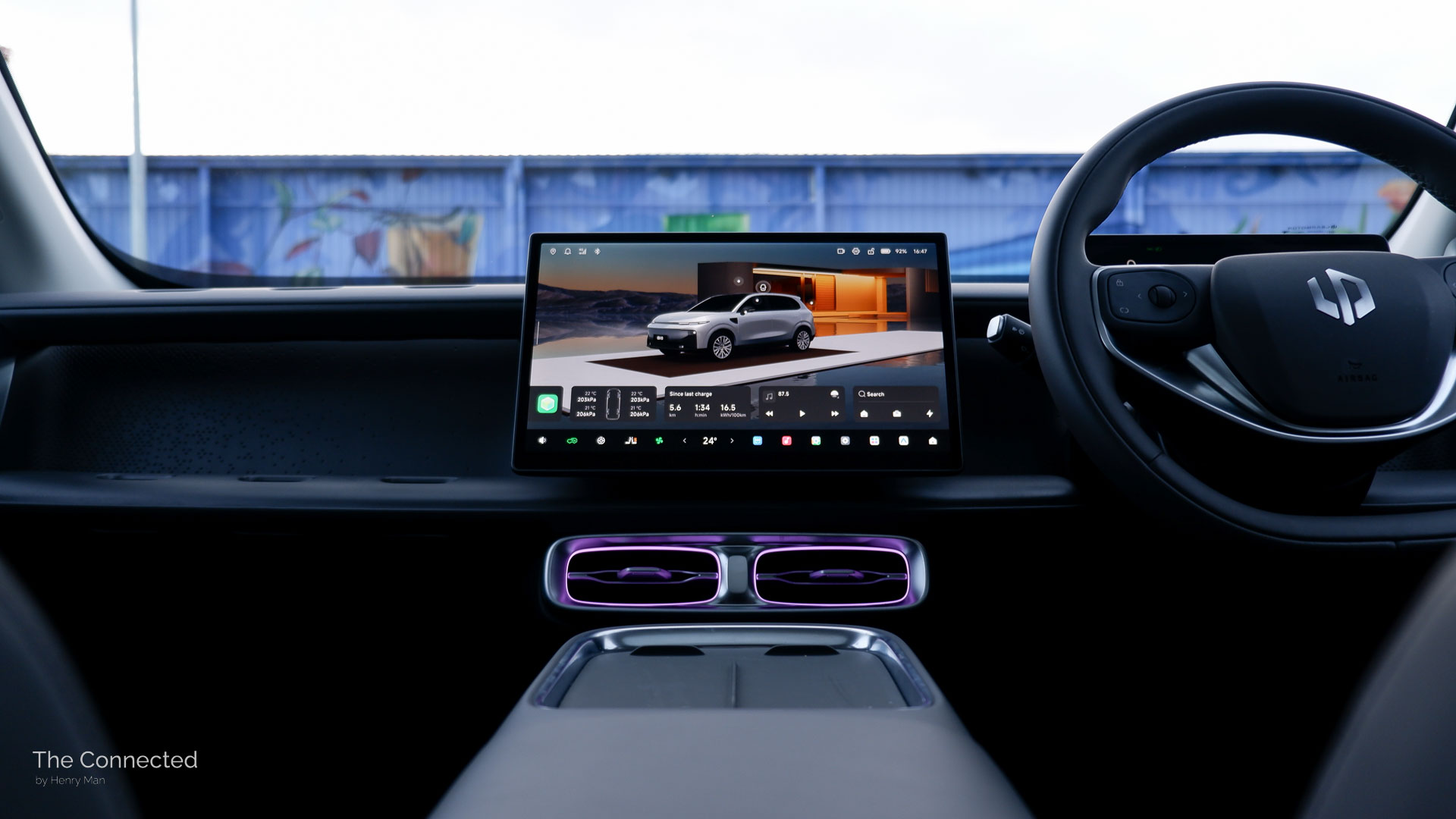
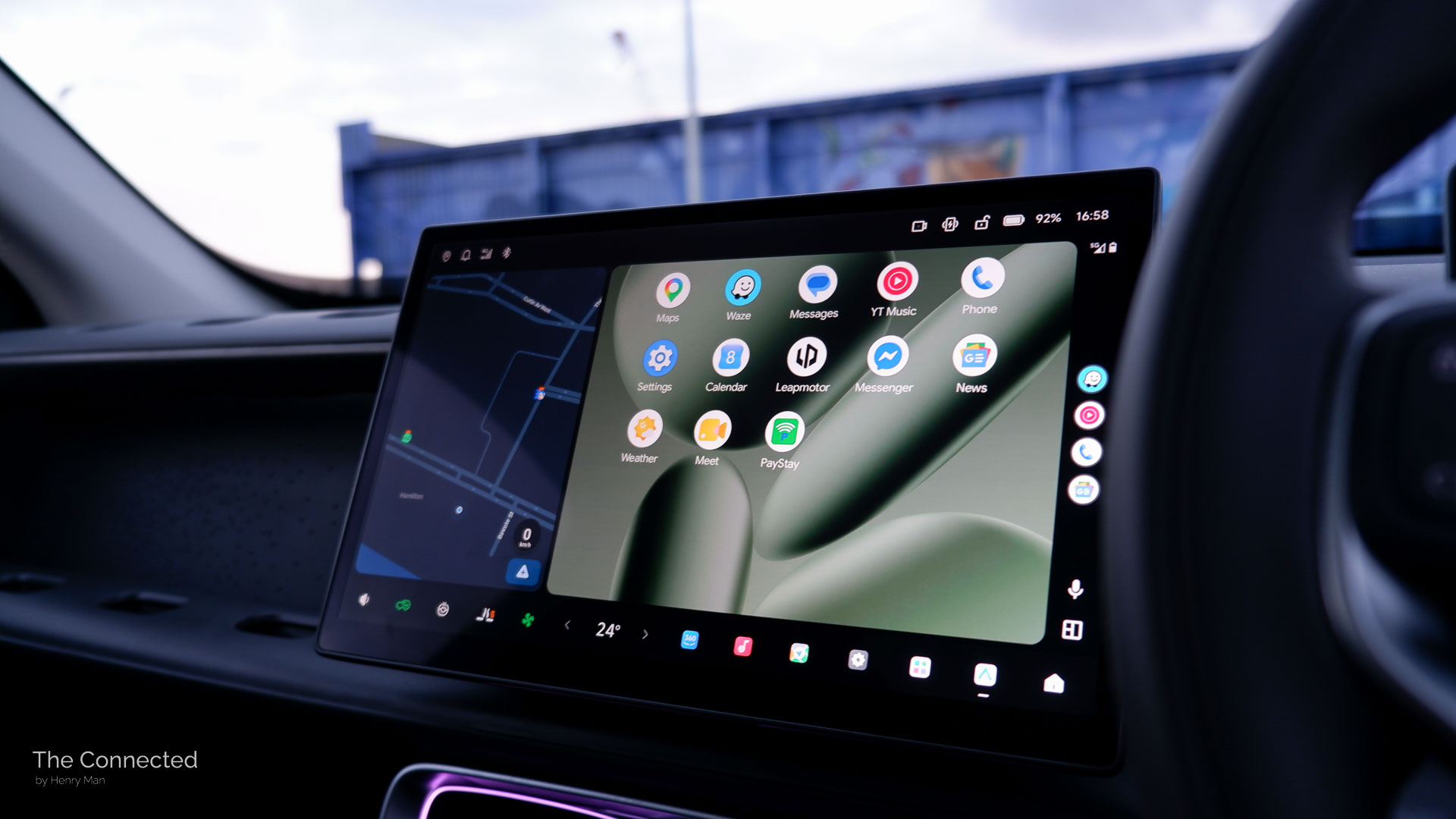
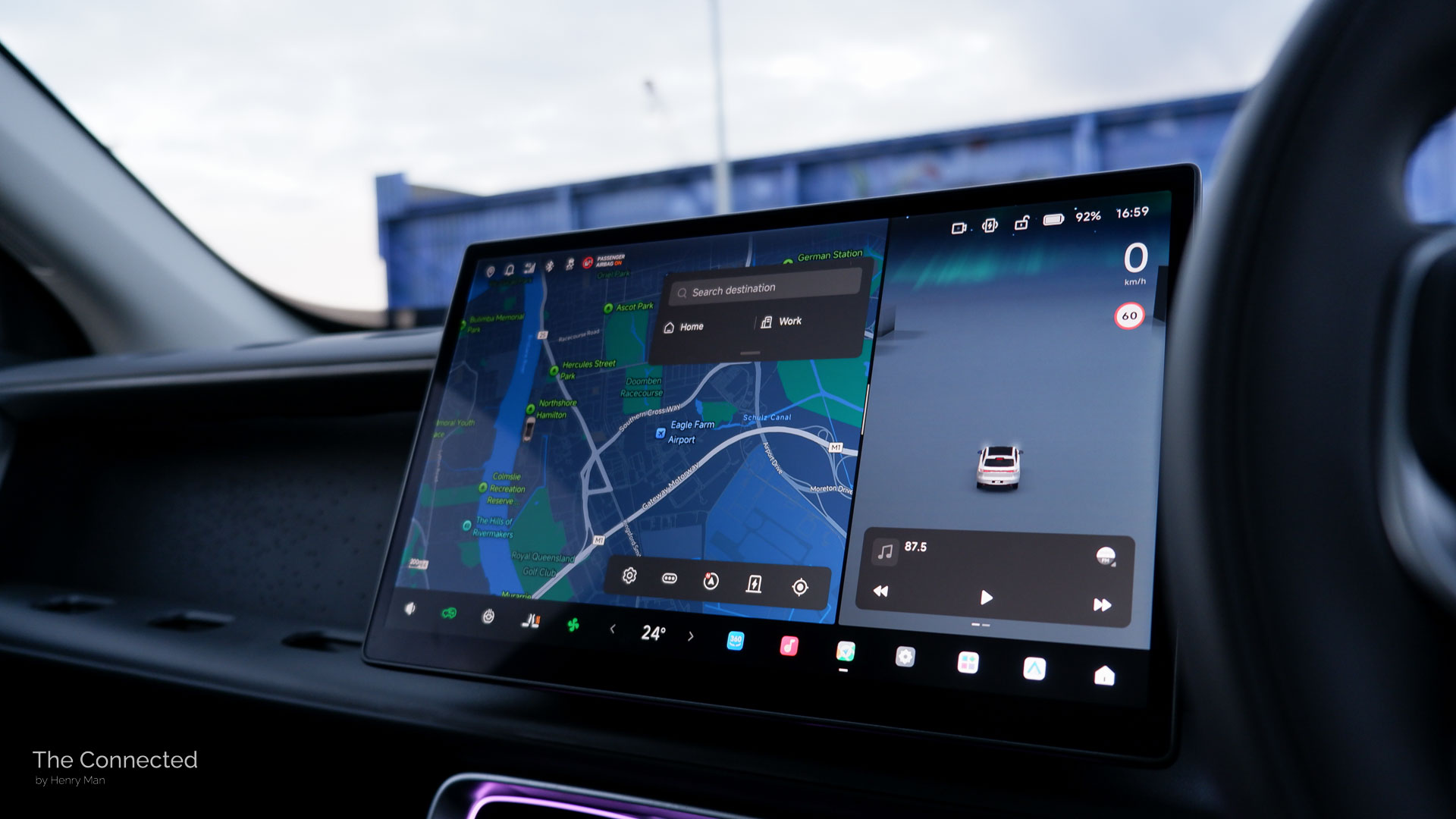
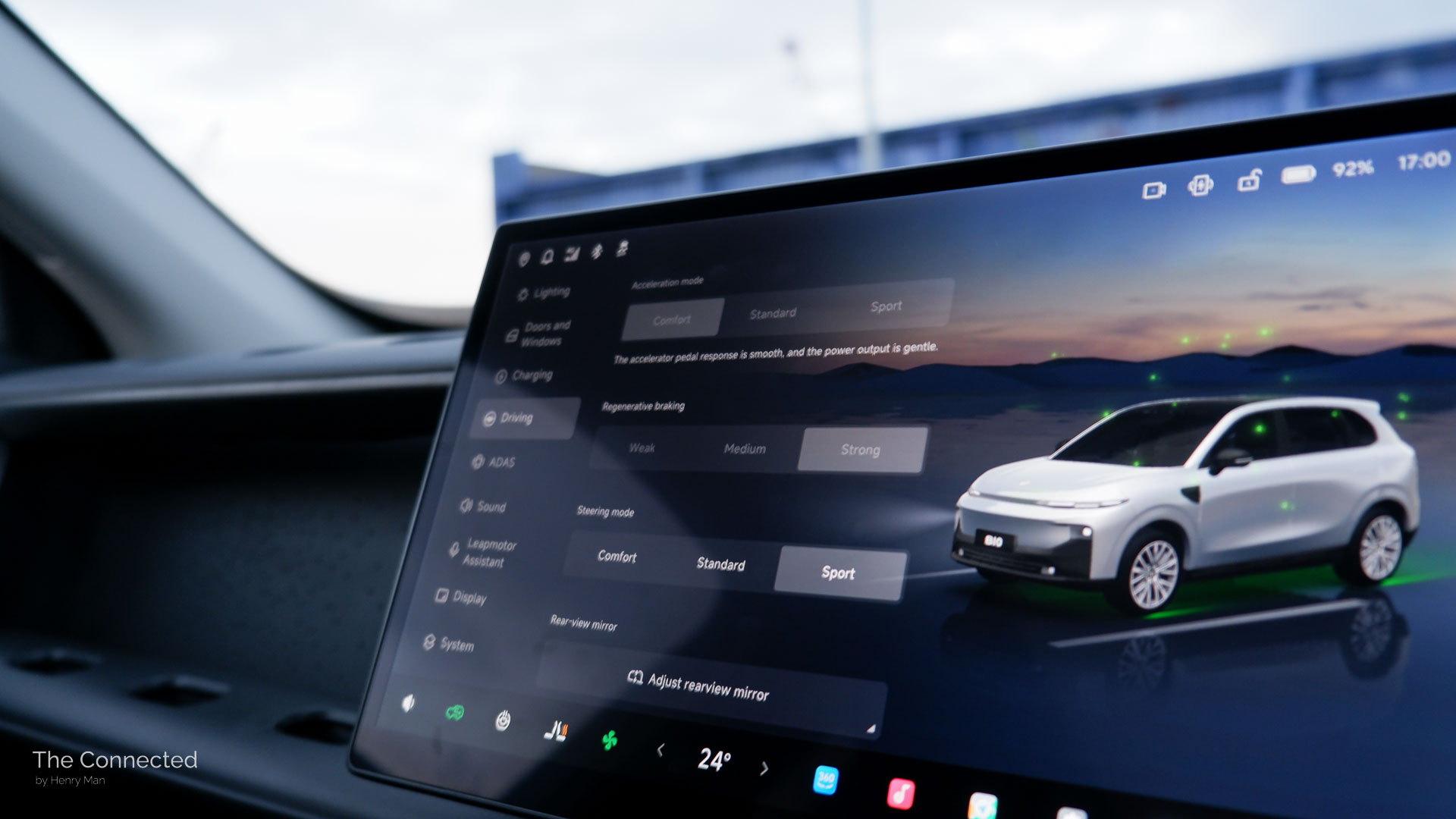
The clear 14.6-inch touchscreen runs on an upgraded version of LeapOS, which is really well-designed with colourful app icons, smooth and bouncy animations, and an intuitive modern interface.
There are some English translation issues with odd wording like “currently not” instead of ‘not now’, “rearview mirror” instead of ‘exterior mirrors’, and ‘Vehicle-off Power Supply Mode’ which actually keeps the car on when locked.
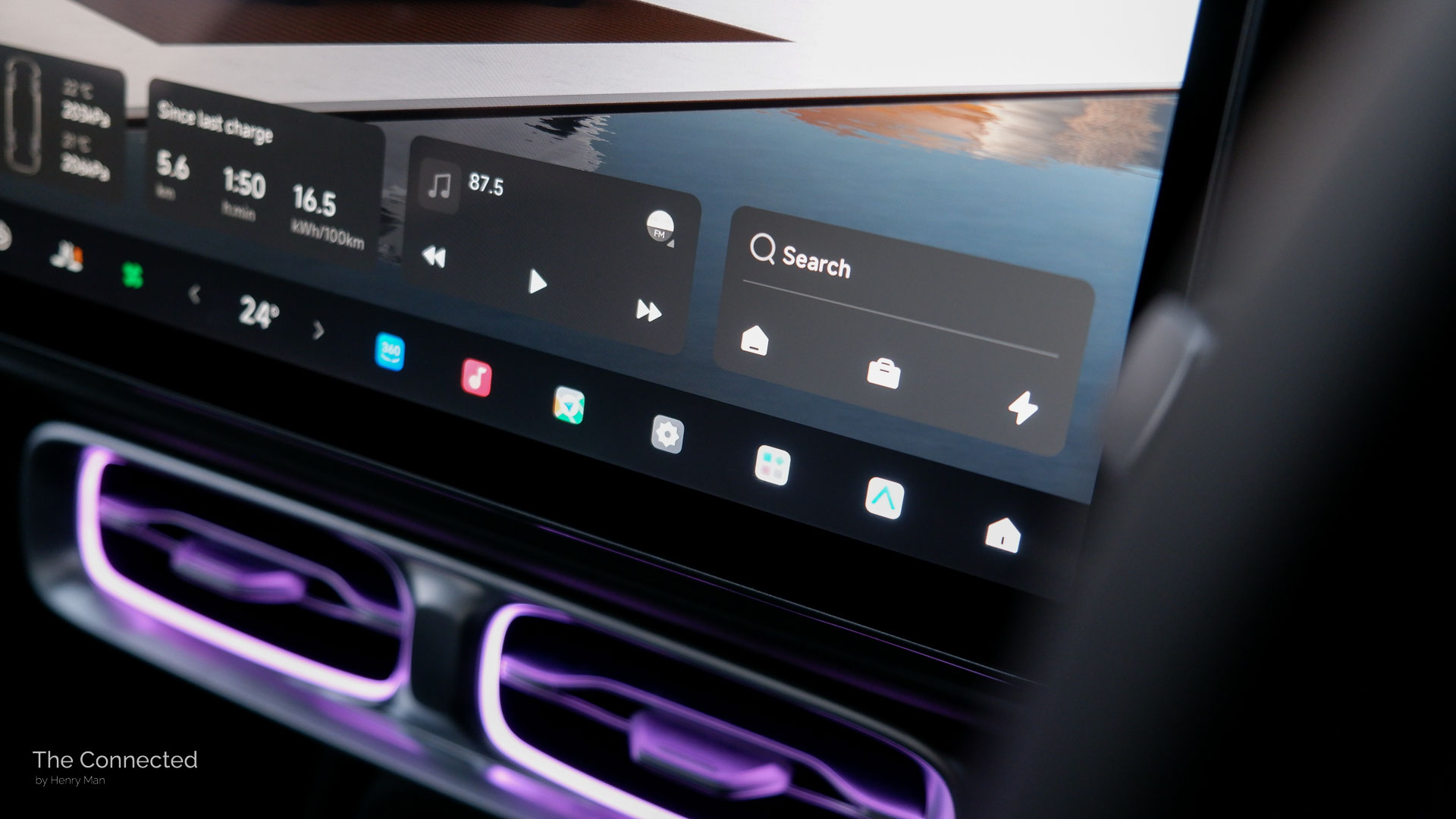
LeapOS is fast and easy to use with a vehicle visualisation and customisable three-dimensional backgrounds on the home screen, persistent bar at the bottom with pinnable apps and climate controls, and logical vehicle settings.
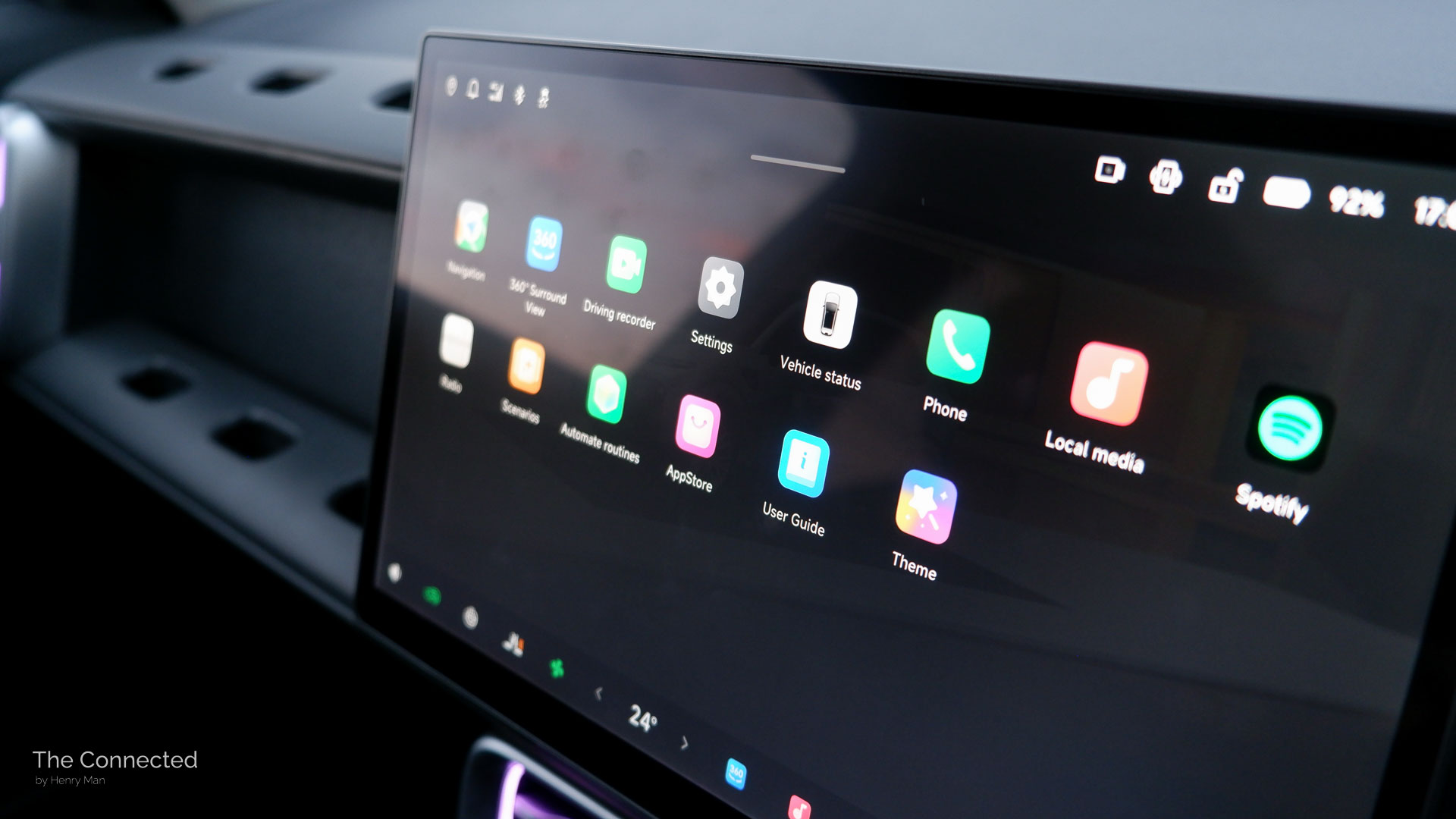
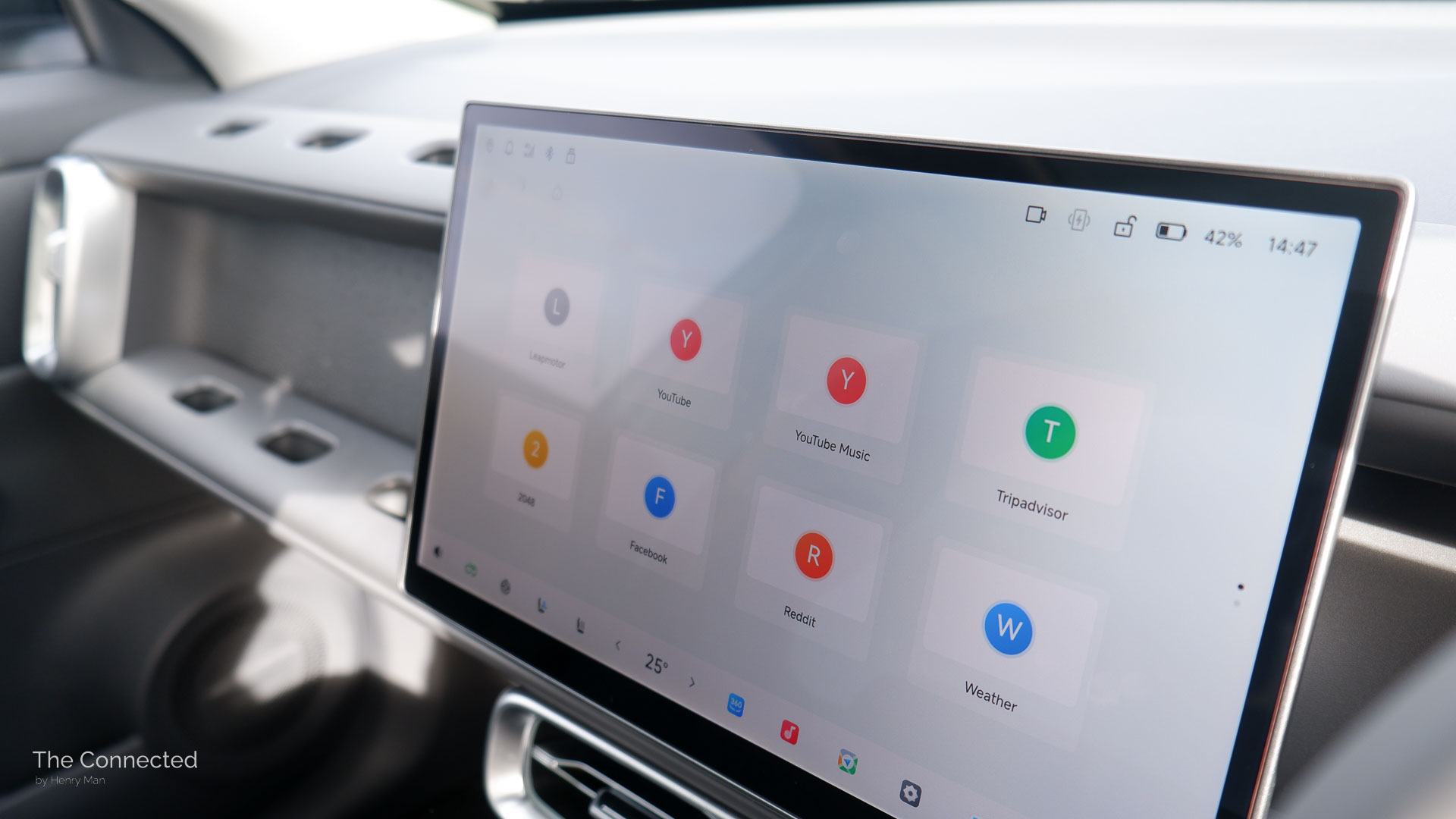
Unlike other systems from Geely, Mazda and Hyundai, Leapmotor actually takes advantage of the large screen with a built-in web browser providing shortcuts to websites such as YouTube video streaming.
While it’s choppy beyond 480p quality, it’s great to see a car brand actually utilising the big screen and built-in Internet connectivity.
There is automatic light/dark mode switching and auto brightness adjustment when it isn’t guaranteed from some budget Chinese cars, too.
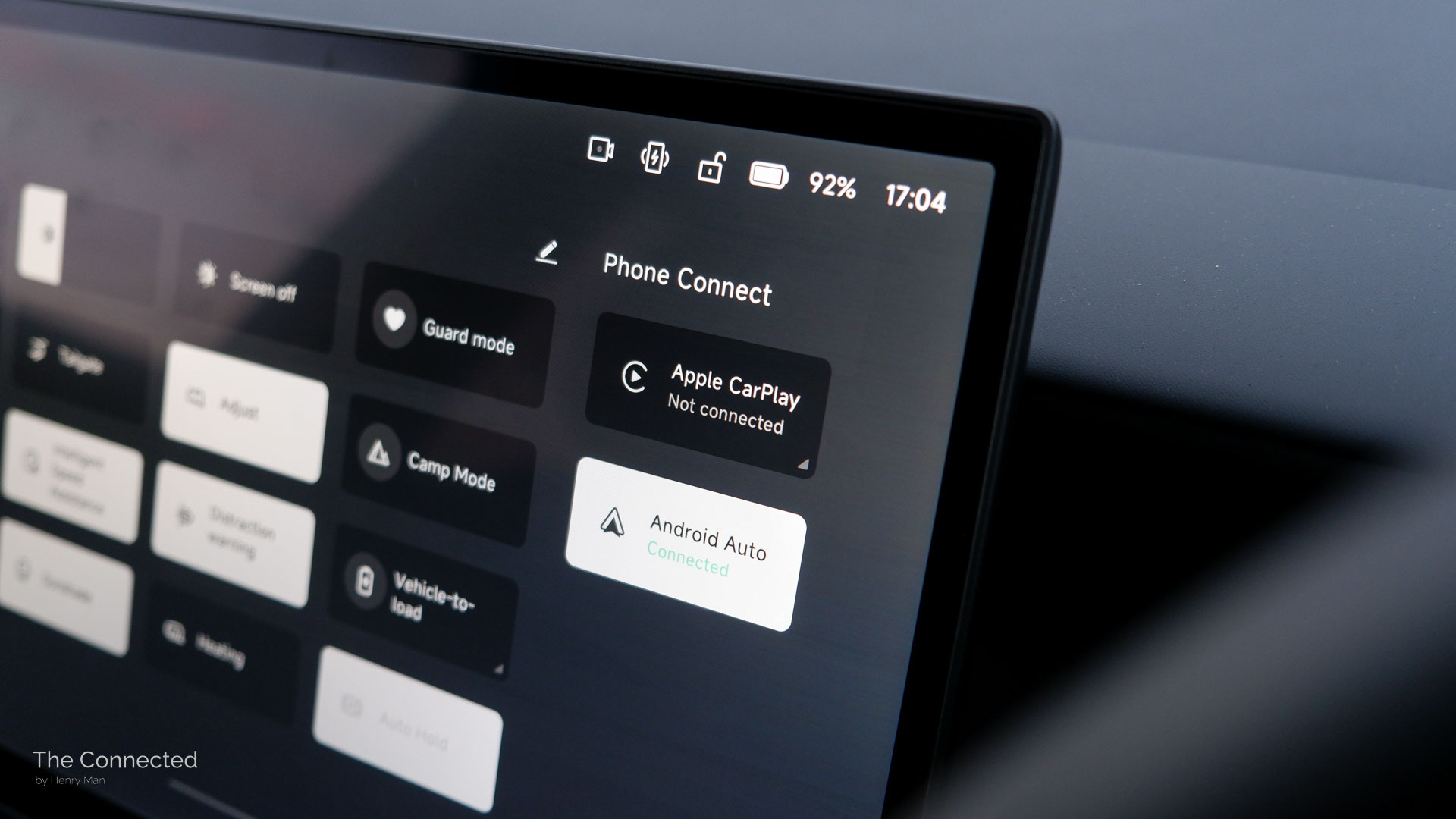
Wireless Apple CarPlay and Android Auto are offered for the first time on a Leapmotor and connect reliably, even though finding how to connect a phone is a little tricky at first (it’s in the notification shade drop-down rather than in the vehicle settings app).
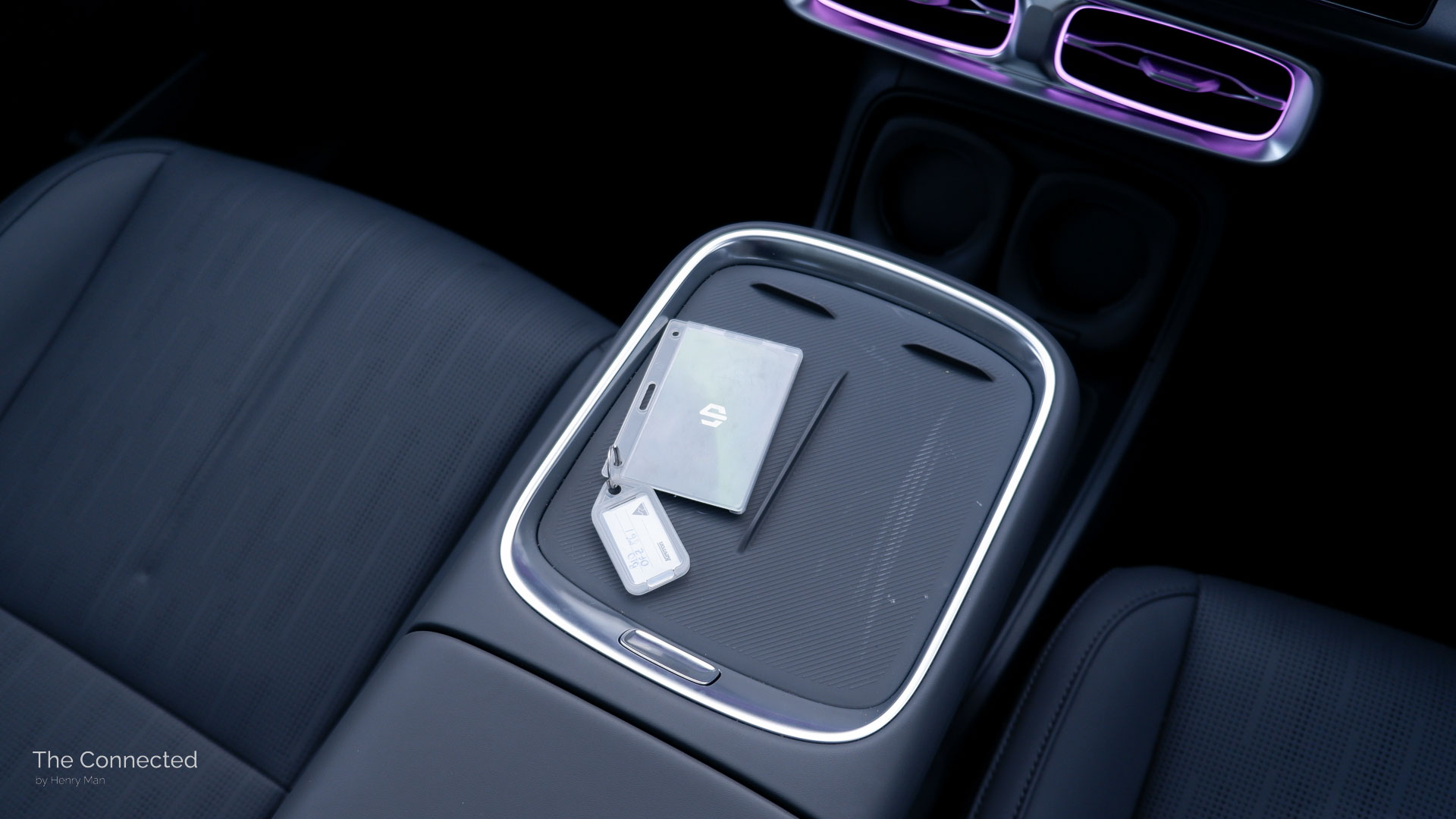
Unfortunately, the single Qi wireless charging pad isn’t fast and lacks an active ventilation fan. Since it doubles as the near field communication (NFC) sensor for the key card, it strangely triggers opening Apple Wallet on iPhones, even when placed on the inactive pad beside – not just once but intermittently.
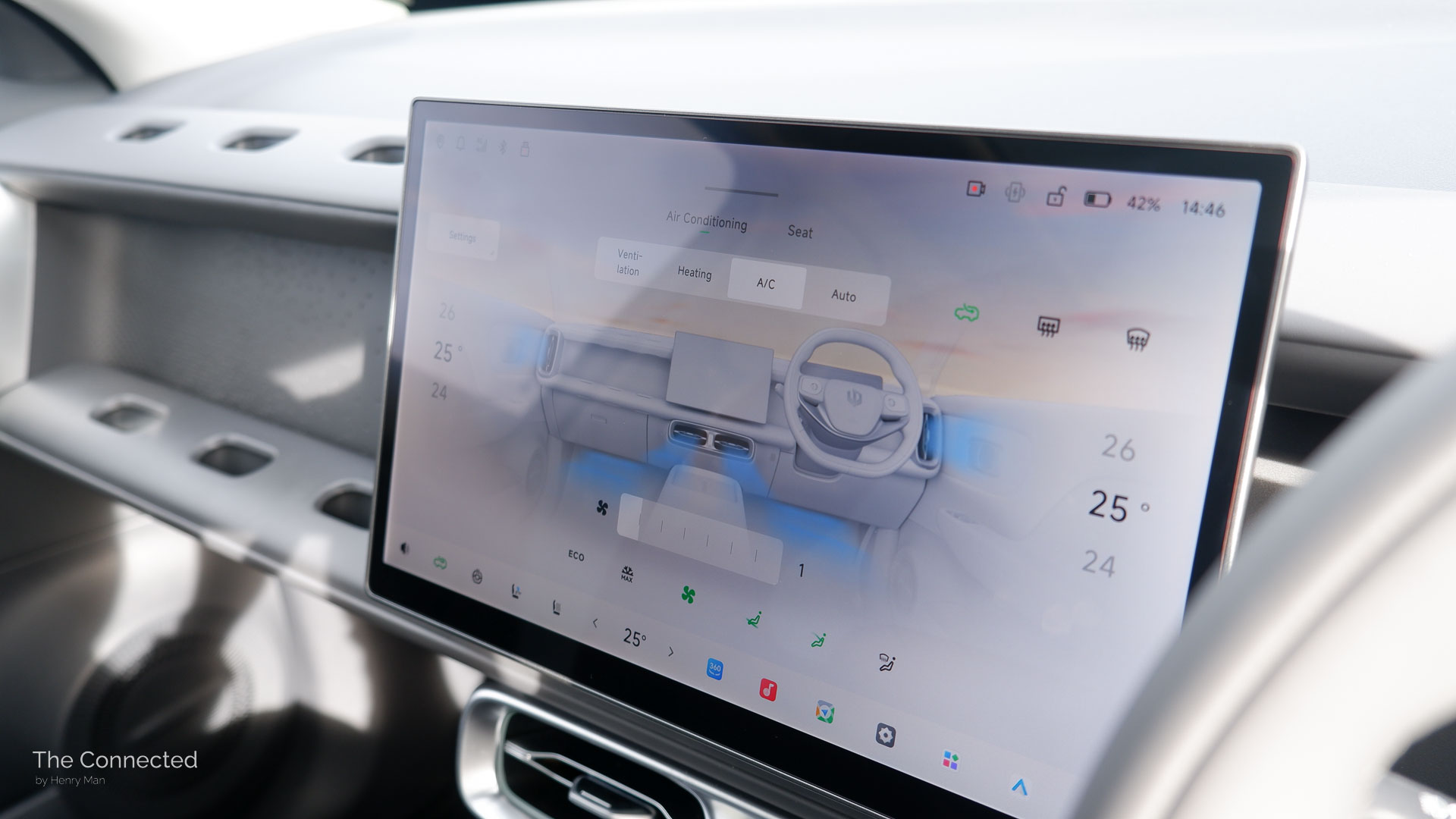
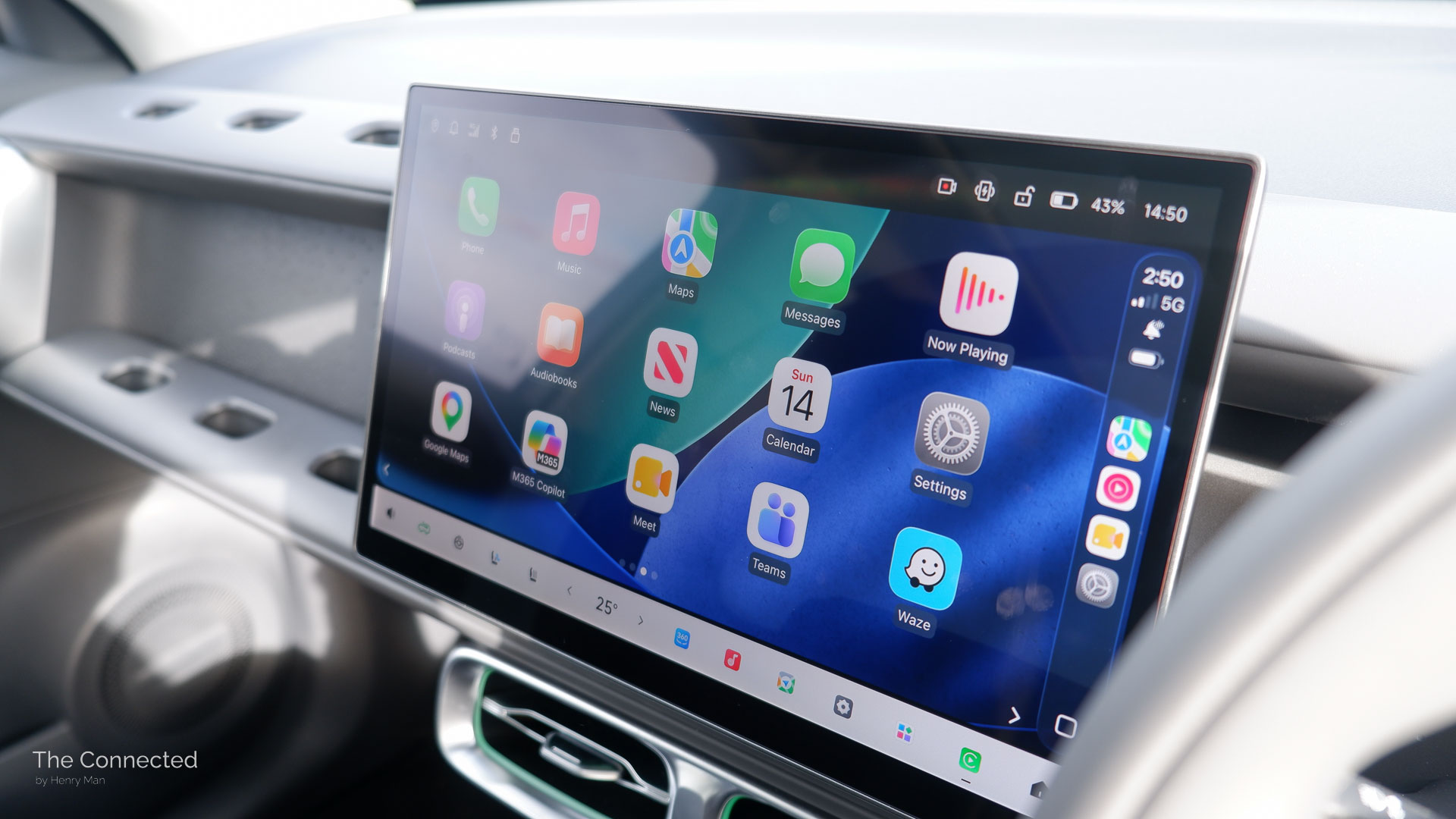
The single-zone climate control is primarily operated via the screen with manual directional air vents.
Thankfully, the temperature, fan speed, and air recirculation buttons and sliders are always visible at the bottom bar and well-sized – which makes it easy to use while driving, even though physical buttons are still less distracting.
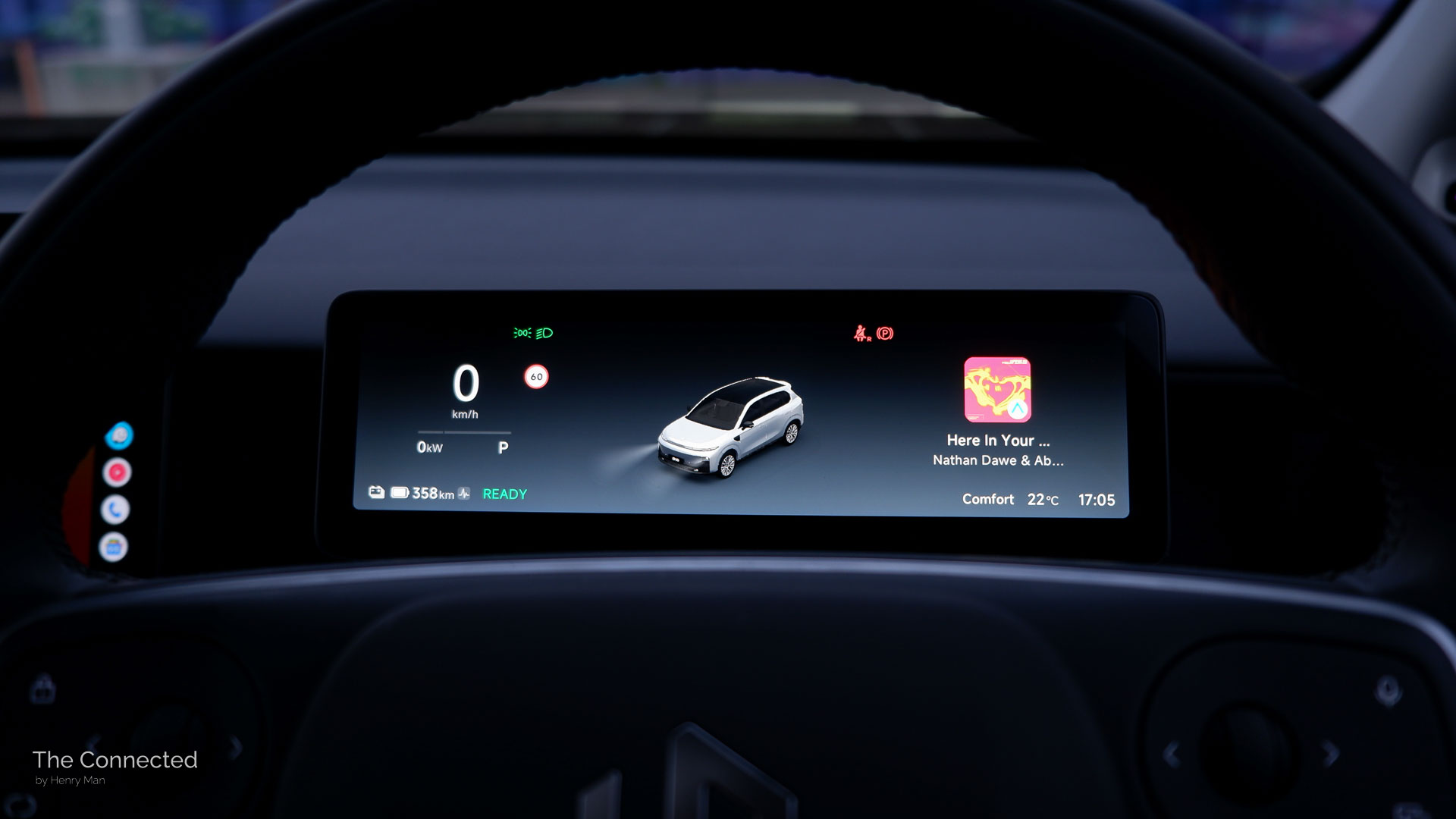
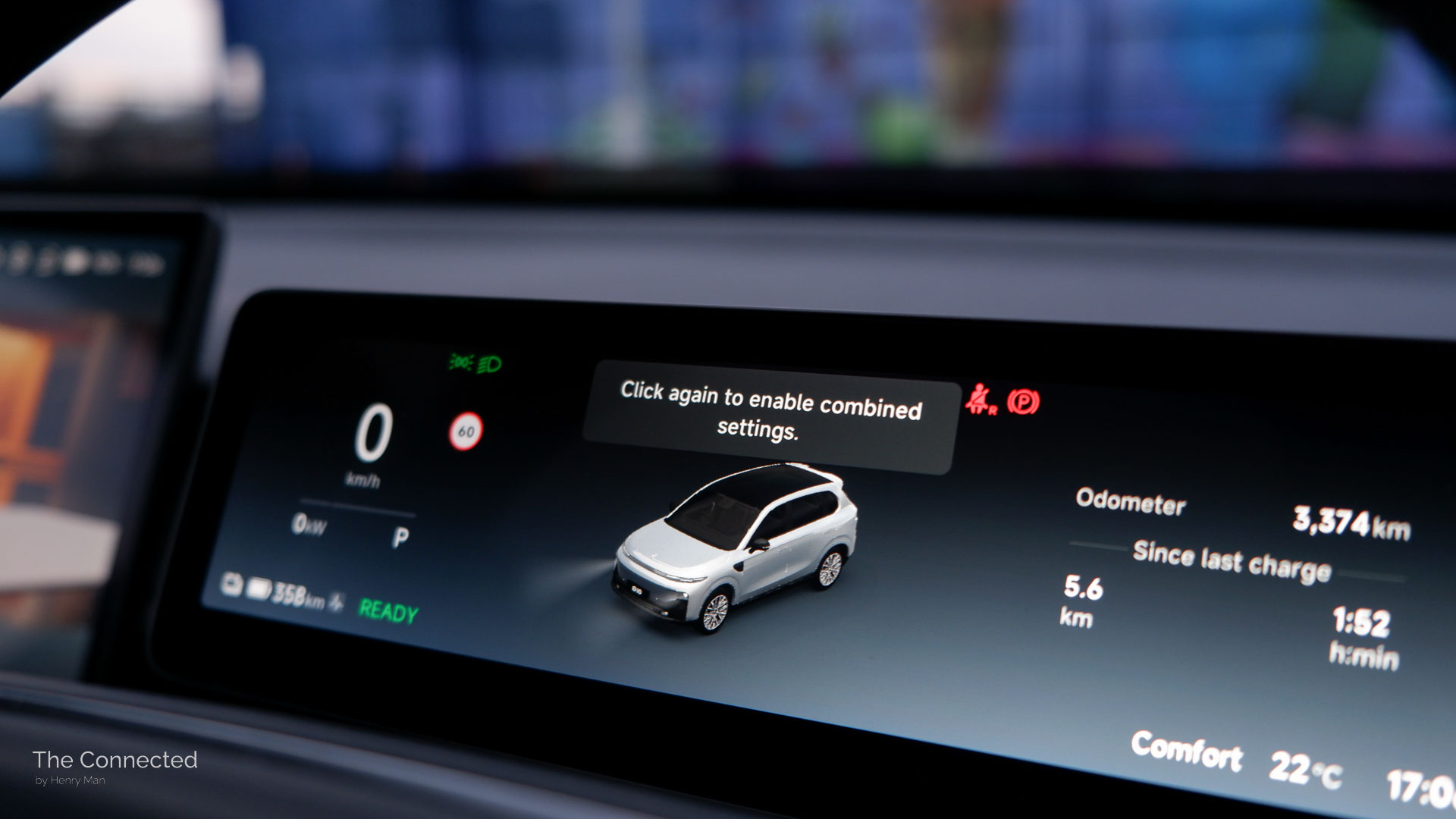
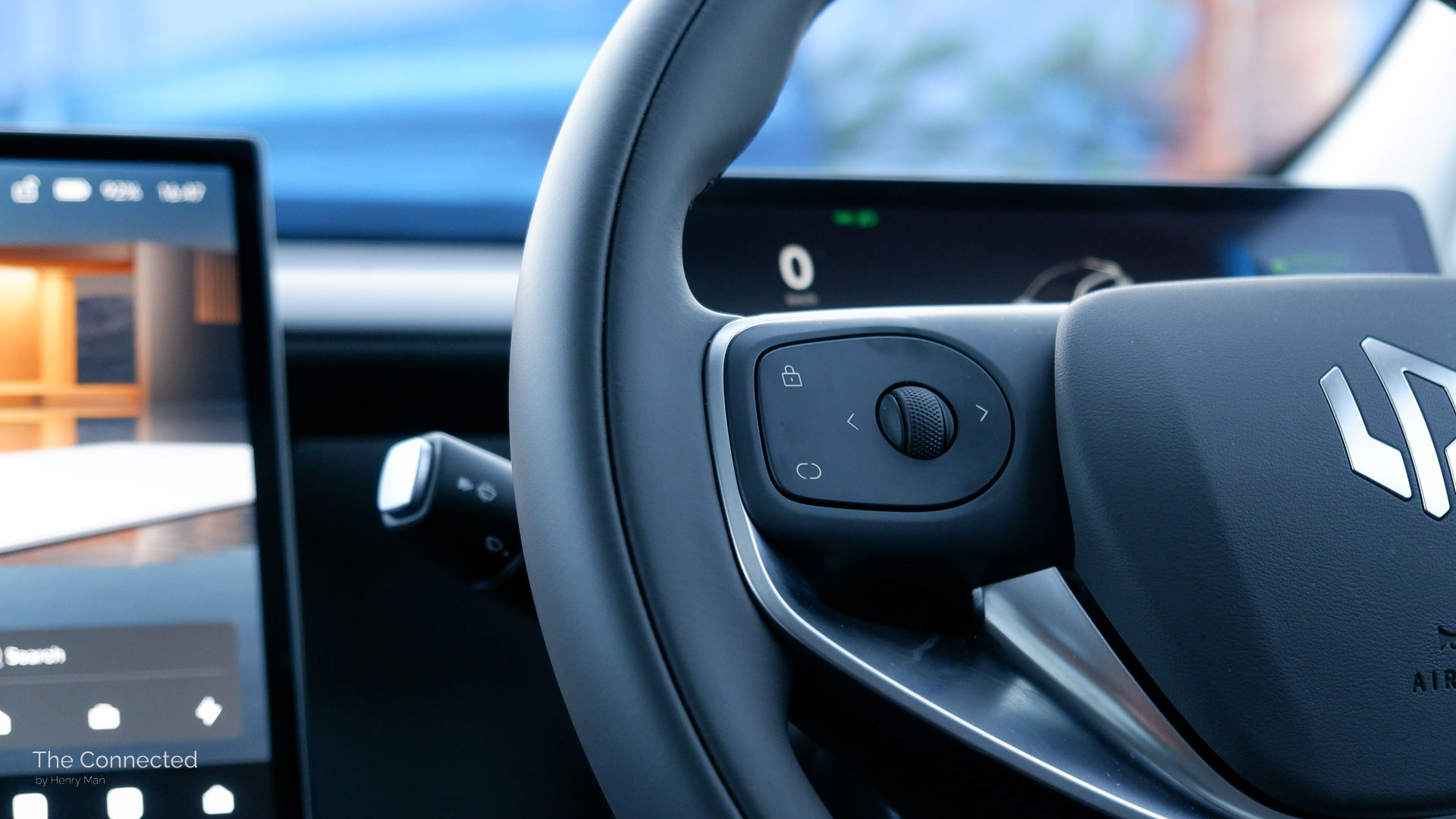
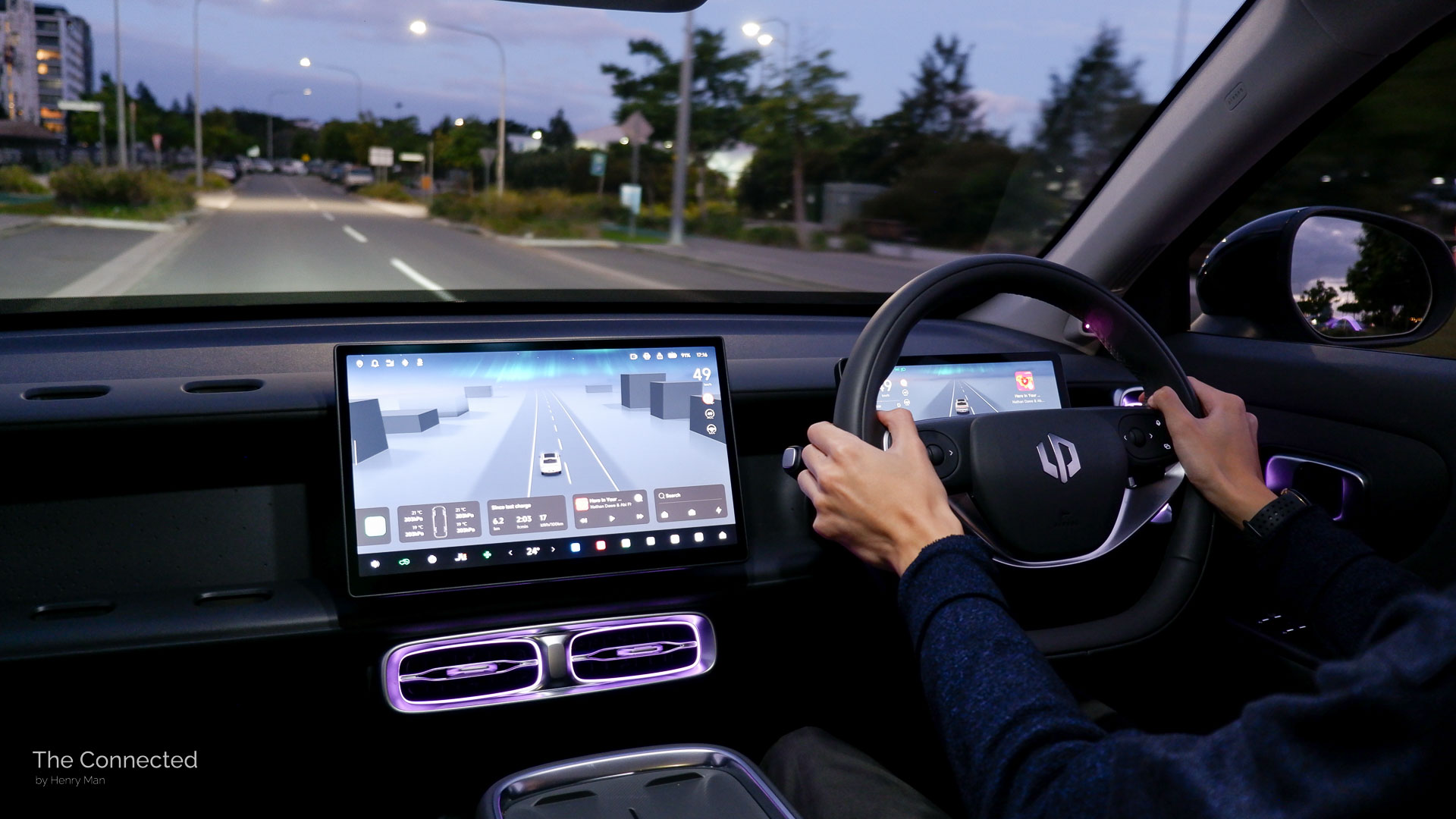
The Tesla-style steering wheel scroll wheels are easy to learn and interact with the clear 8.8-inch driver instrument display.
However, while the screen has a thin visor style and is attached to the steering wheel column so the rim never blocks the screen, it requires some getting used to as it’s placed very close to the driver.
The speedometer being at the left side also means the steering wheel spokes can block it while turning.
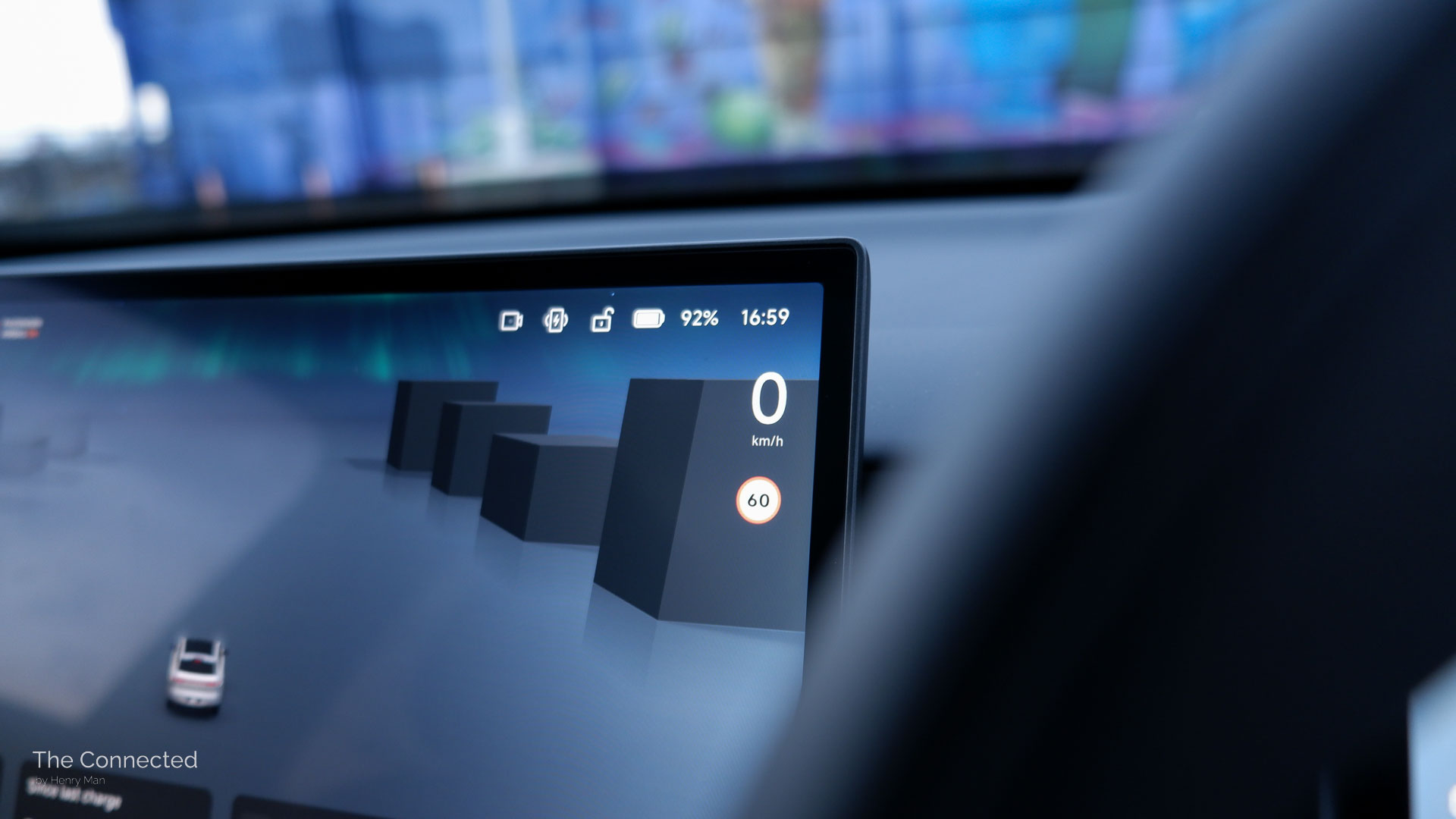
Leapmotor actually puts the speed readout and visualisations in a dedicated section on the main touchscreen as a backup since it’s further back and easier to see, much like a Tesla, but can be hidden.
On the other hand, the steering wheel blocks part of the touchscreen edges with my driving position.
The Leapmotor mobile app works well with sending commands relatively quickly to pre-start the climate control, monitor the charge status, and can uniquely open and close the glass roof sunshade remotely.
The phone can also act as the key via Bluetooth with a physical lock/unlock button at the driver’s door only. It’s necessary since the included NFC key card is fiddly to use.
But the mobile key can’t drive the car; you’ll still need to enter a set PIN code or tap the NFC key card, so it’s not seamless.
Leapmotor Australia has vowed to include an actual physical proximity key in the future.
Safety.
2026 Leapmotor B10 Design safety features:
| Front AEB with vehicle/pedestrian/cyclist/junction turning detection | 360-degree camera system |
| Rear AEB | Rear parking sensors |
| Blind-spot assist | Speed sign detection with overspeed warning |
| Rear cross-traffic assist | Driver attention monitoring camera |
| Lane-keep assist | Manual-dimming rear-view mirror |
| Adaptive cruise control with lane-centring assist | Full LED headlights with auto high beam and front fog lights |
| Lead vehicle departure alert | Full LED tail-lights with rear fog light |
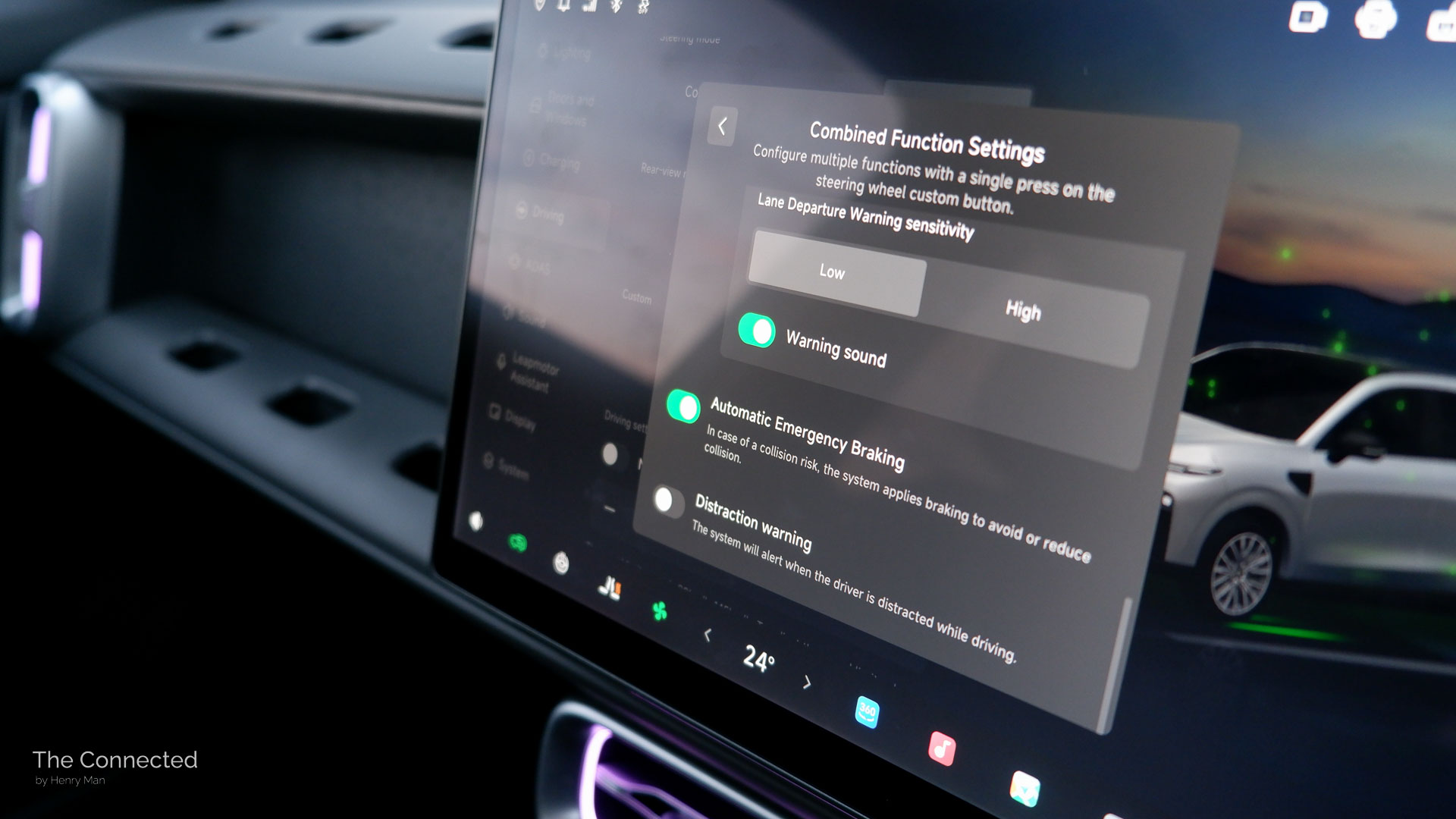
The Leapmotor B10’s safety assists are much improved with a wonderful shortcut to mute and disable certain sensitive systems.
The 360-degree cameras are clear and easy to access, while the warning chimes have been toned down and are more subtle than the C10 at launch.
Fortunately, the Chinese carmaker now offers a shortcut called ’Combined Function Settings’ as one or two taps on the steering wheel button, which can quickly set a number of preferred settings such as lane-keeping, driver attention monitoring, automatic emergency braking, overspeed alerts, acceleration mode, and regenerative braking every time you start the car.
That’s important since the lane-keep assist continues to be over-sensitive and trigger even when the wheels aren’t remotely close to touching the marked lines.
However, even with lane-keeping toggled off, it still triggers and re-activates when going over the marked lines.
The road sign detection is also hit-and-miss and doesn’t recognise school zone times, resulting in erroneous overspeed chiming if left on.
The annoying new detected sign chirp can be permanently disabled.
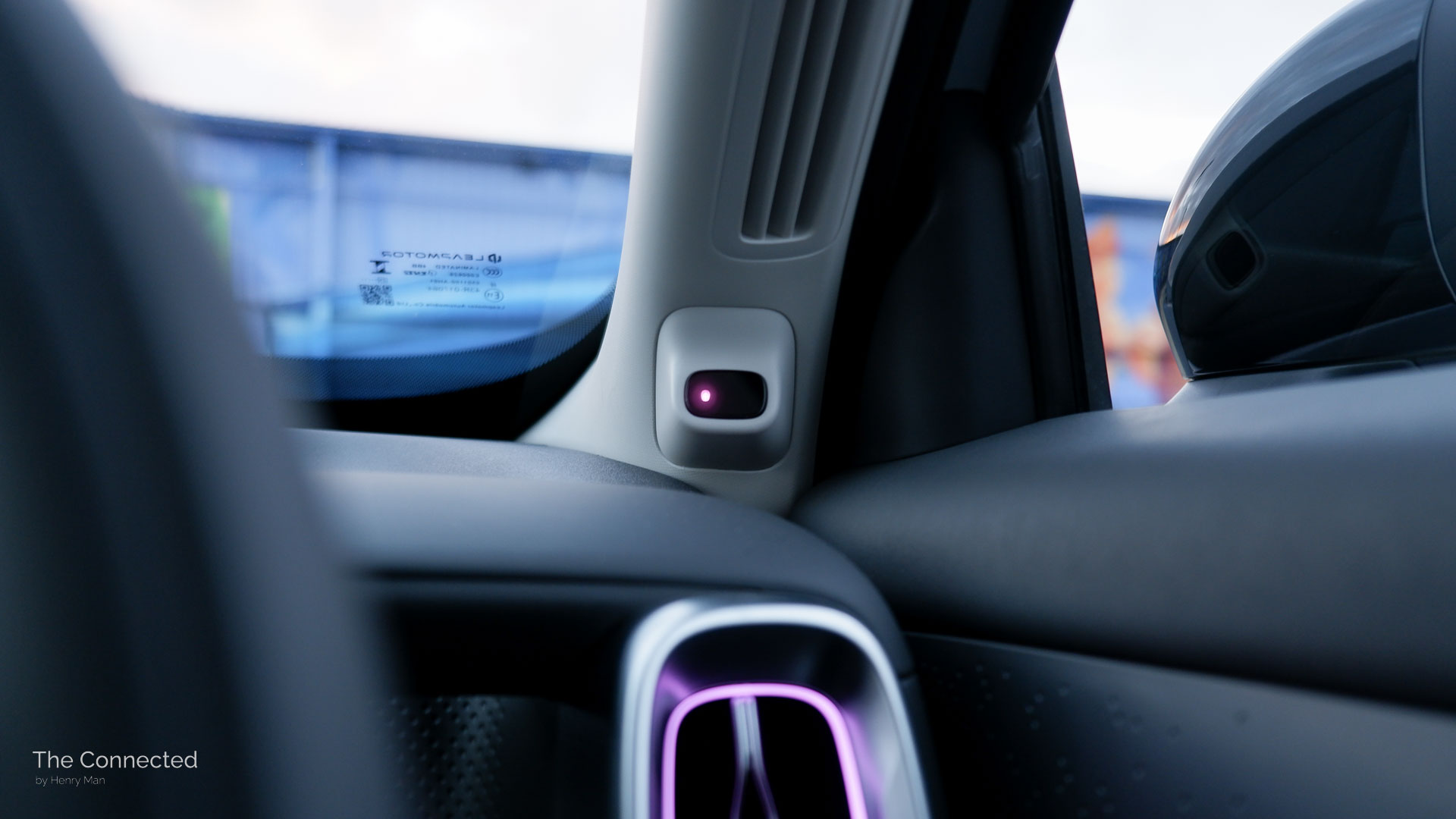
While the driver attention monitoring camera calibration which is much more accurate than the C10 – which constantly went off – it is still on the sensitive side and isn’t completely disabled when toggled off.
The forward collision warning is also slightly sensitive and flashes the hazards when activated.
The Leapmotor quirk of it flashing one side of the indicators every time you open a door remains.
Also, the adaptive cruise control leaves a large gap with the vehicle in front even when set on the closest distance setting and there’s no resume button, so drivers need to flick the scroll wheel to adjust the speed every time you re-enable it.
The lane-centring is decent but can fight the driver when there’s steering input by constantly having the active steering coming in and out.
The blind-spot monitoring light at the wing mirrors is brighter than ideal, while the reversing camera guidelines don’t offer a marker guide for the boot opening clearance – even though it flashes the ambient lights with the appropriate colour when the rear parking sensors are going off.
While Leapmotor’s safety systems are still imperfect and generally can’t match the bar of Toyota, Hyundai and Tesla, it is much improved and tamer than before.
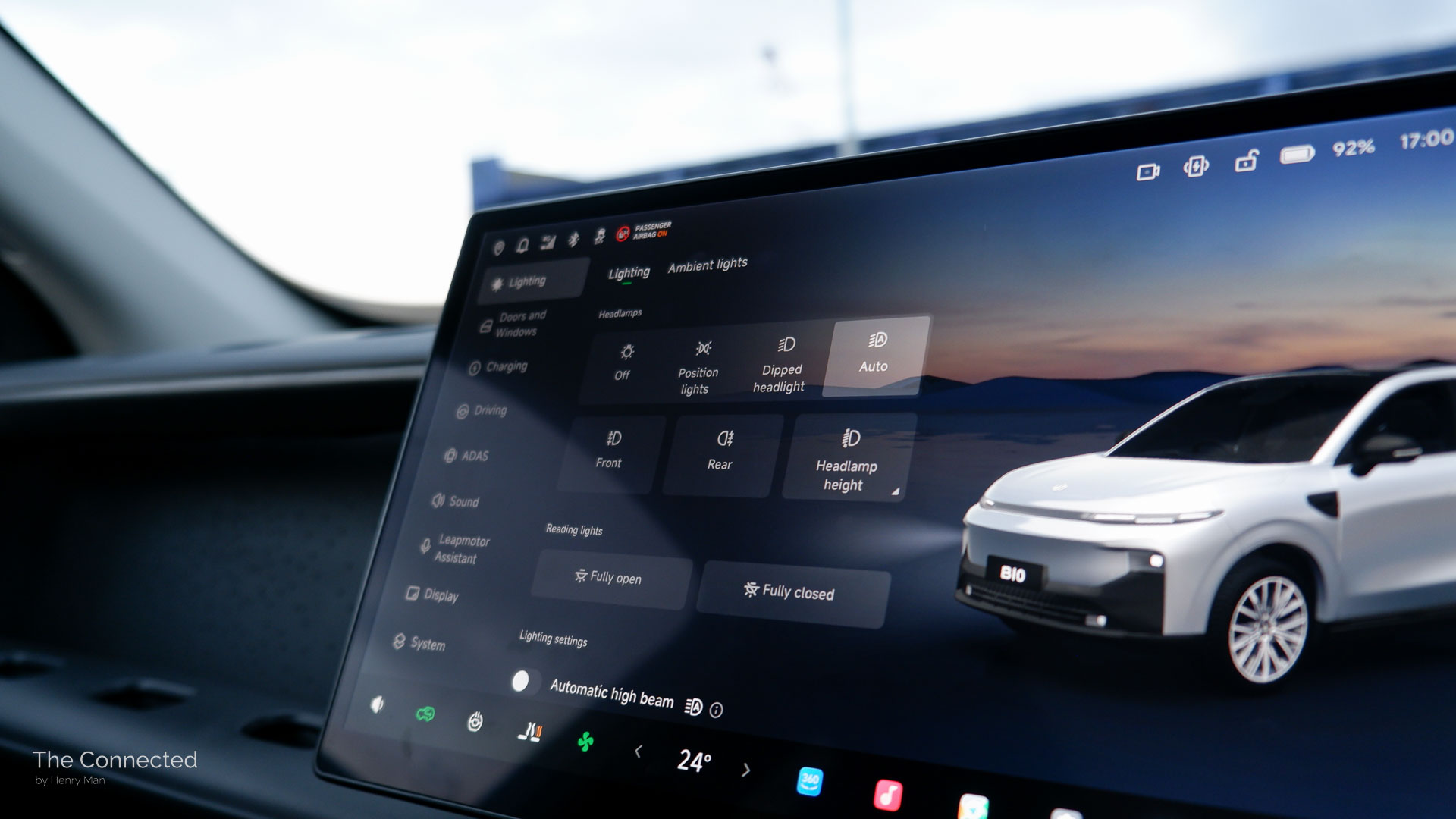
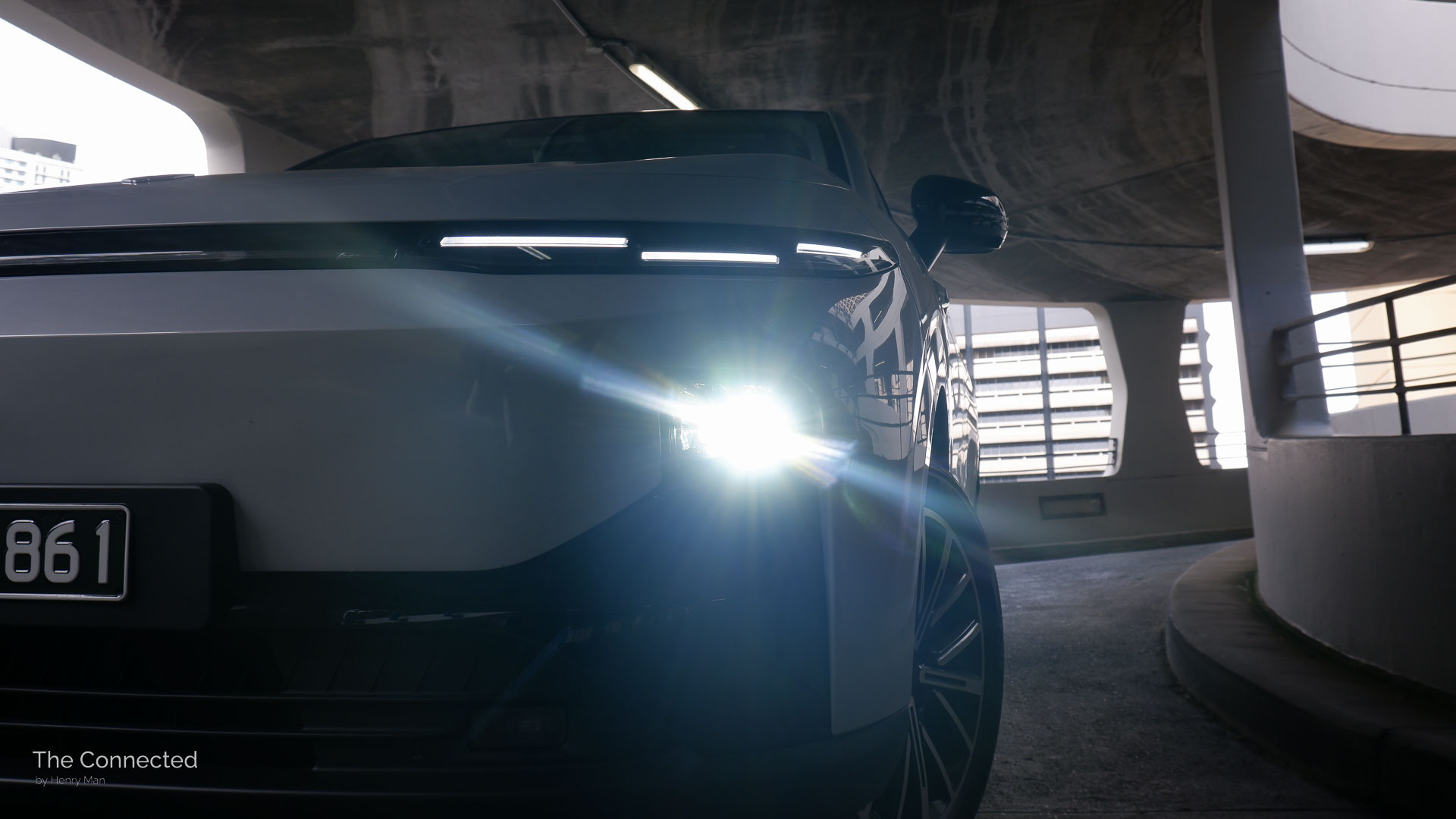
The B10 also provides good LED headlight performance at night – when other rivals at this price point usually cut corners in this space including the bigger C10.
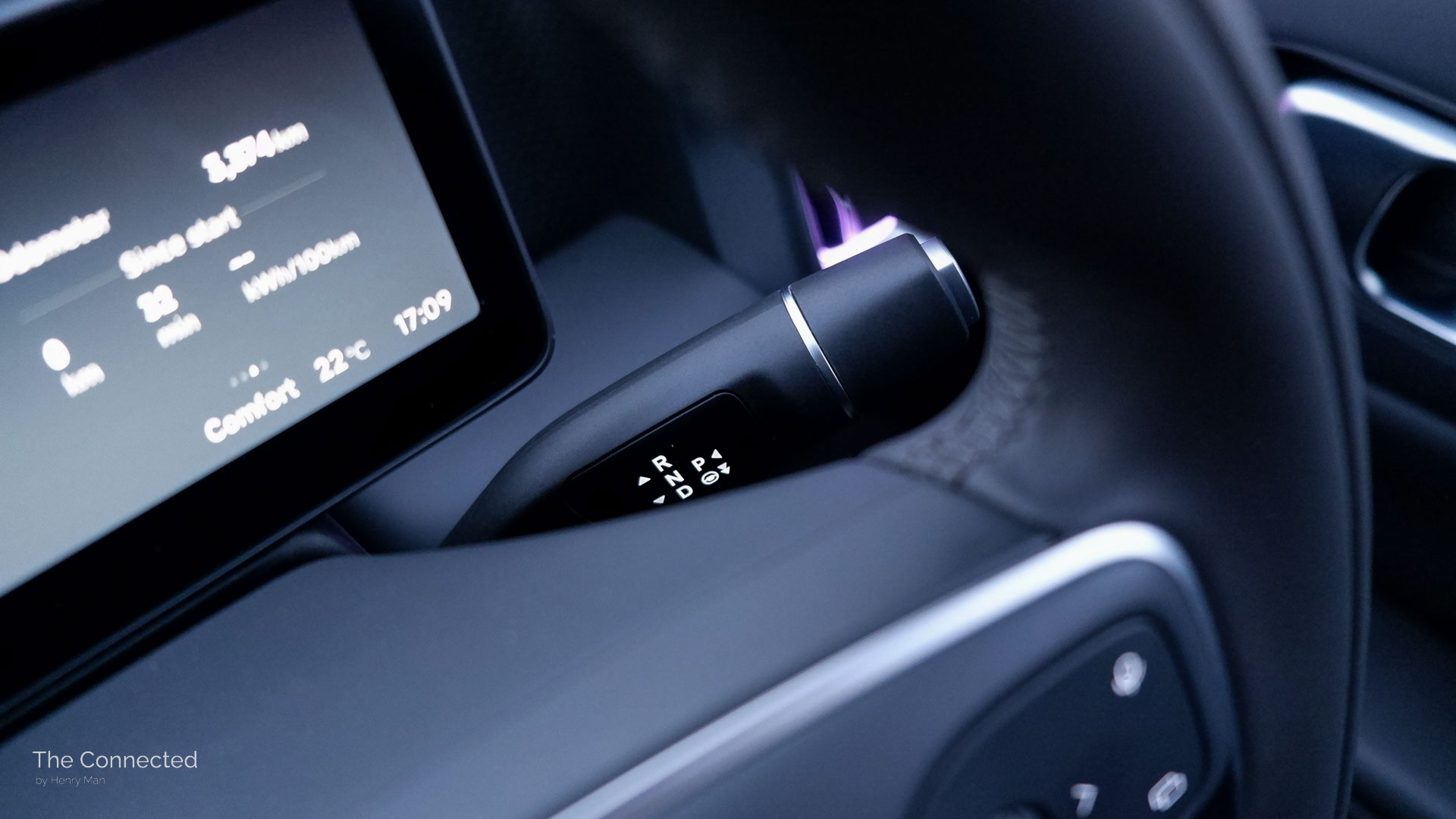
Annoyingly, manually toggling the exterior lights requires digging into the touchscreen as the stalks are reserved for the drive selector and indicators.
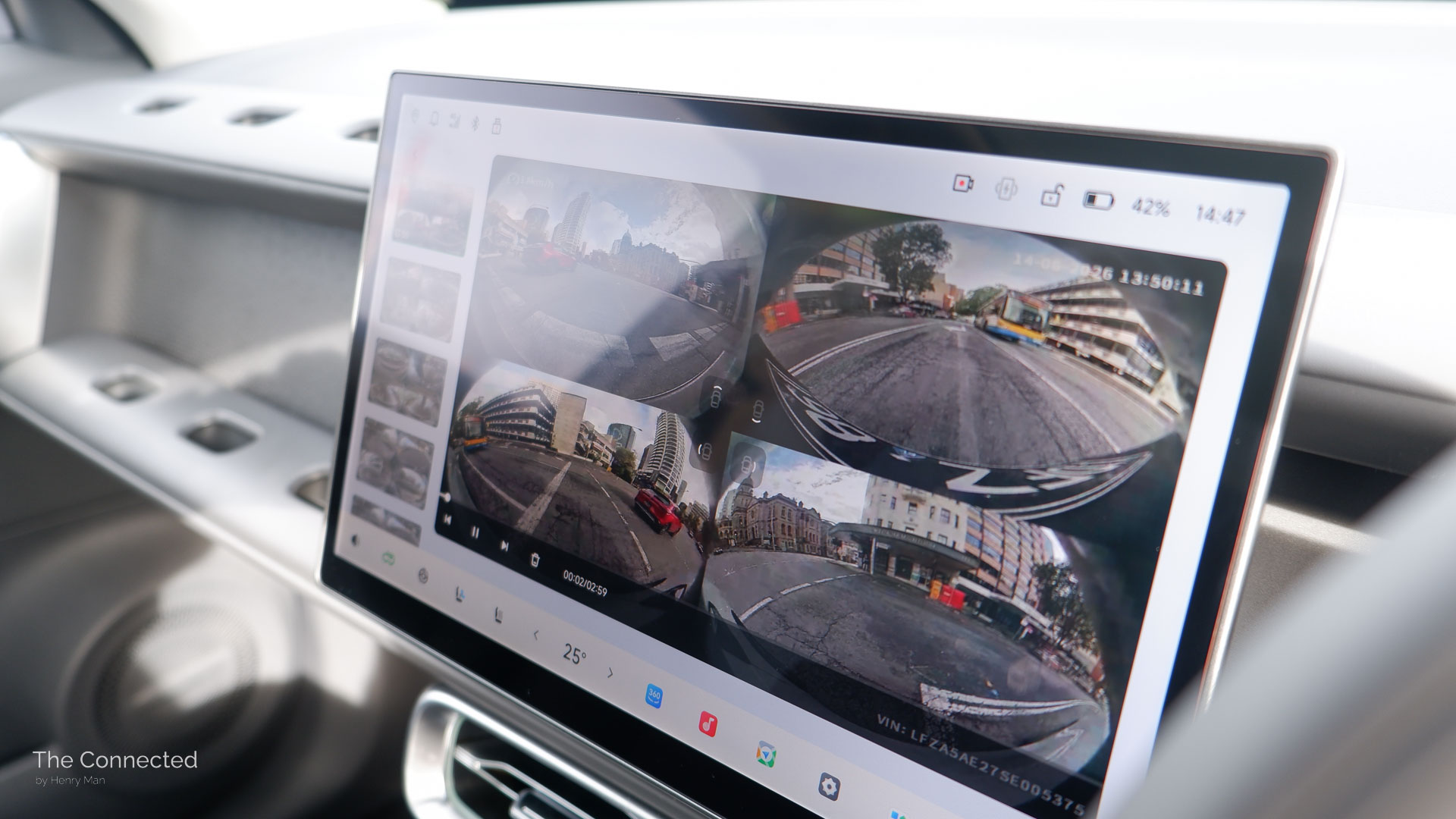
There’s even 360-degree built-in dashcam recording directly onto a USB-A stick (which you need to supply yourself) when the car is on, similar to Tesla. It shows four cameras at once on the video feed, plus metadata such as the time stamp and Vehicle Identification Number (VIN).
The 2026 Leapmotor B10 received the full five-star safety rating by the Australasian New Car Assessment Program (ANCAP) under 2025 testing criteria.
Range and charging.
2026 Leapmotor B10 Design battery and charging specs:
| Claimed driving range (WLTP combined cycle) | 434km |
| Claimed energy efficiency (WLTP combined cycle) | 17.3kWh/100km |
| Battery size and type | ~65kWh (67.1kWh gross) LFP |
| Battery voltage | 400-volt class |
| Max AC / DC charging speed | 11 / 168kW |
| Bidirectional charging | Exterior V2L (optional) |
| Connector type | Type 2 / CCS2 |
| Everyday charging limit recommendation | 90% |
The Leapmotor B10 Design Long Range delivers both good efficiency and charging speeds in my real-world testing.
After a week of mixed urban and highway driving, the B10 Design indicated a respectable energy consumption of 14.1kWh/100km.
This provides about 460km of real-world driving range from its ~65kWh usable (estimated) lithium-iron-phosphate (LFP) battery.
Leapmotor recommends a daily charge limit of 90% for battery health, even though LFP packs are usually good to be fully charged everyday.
The B10 Design small electric SUV is fast to charge as well.
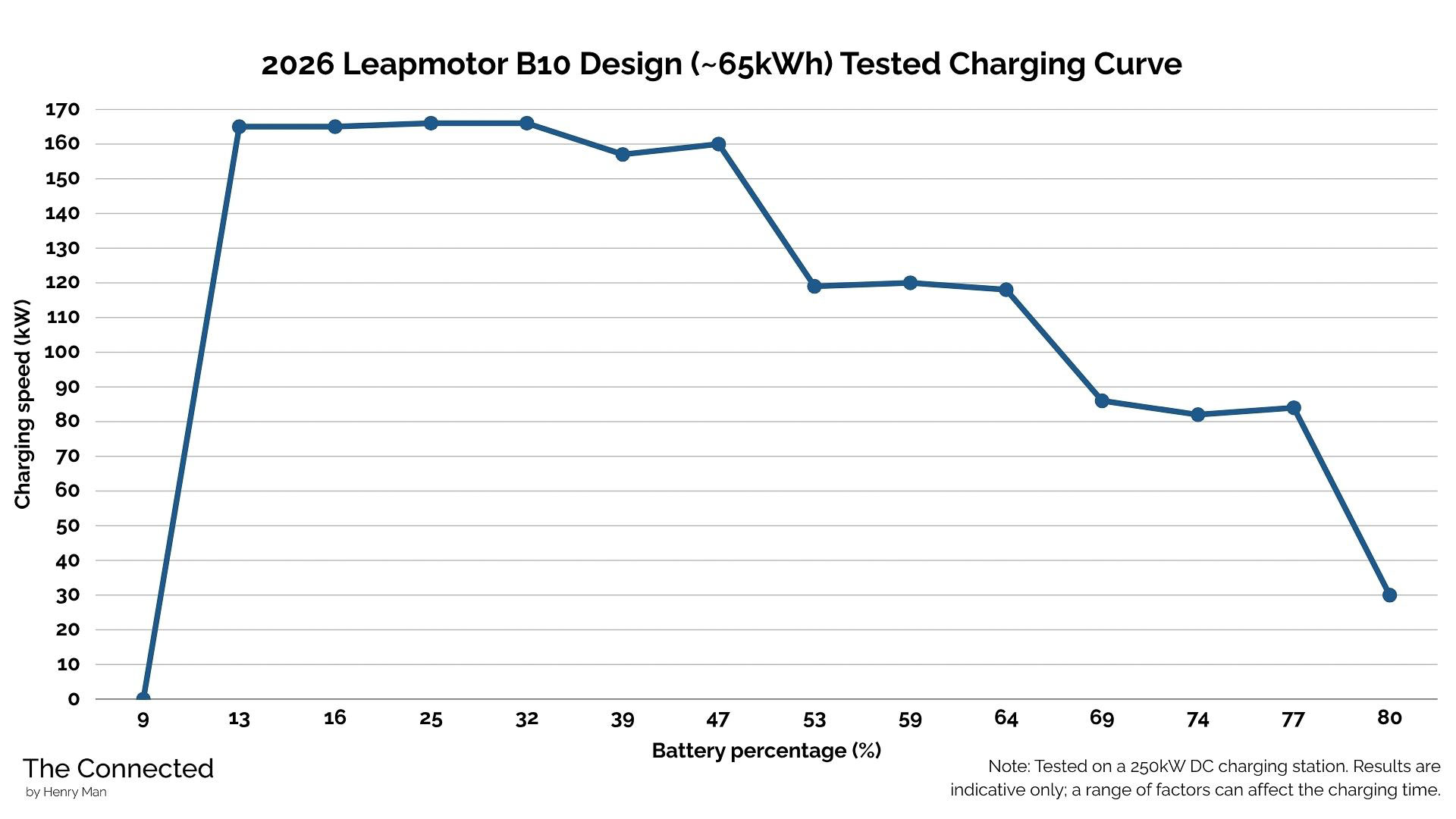
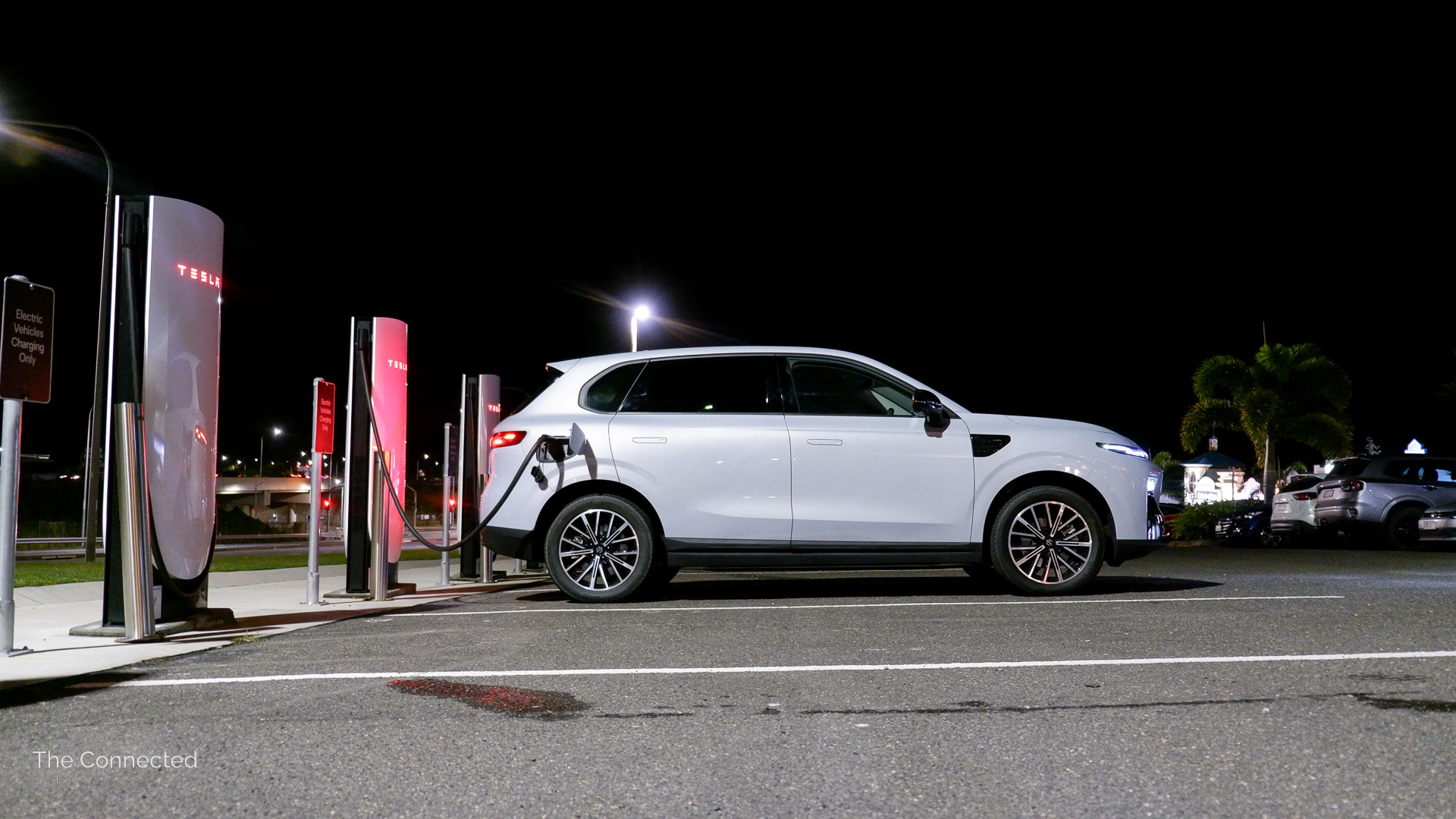
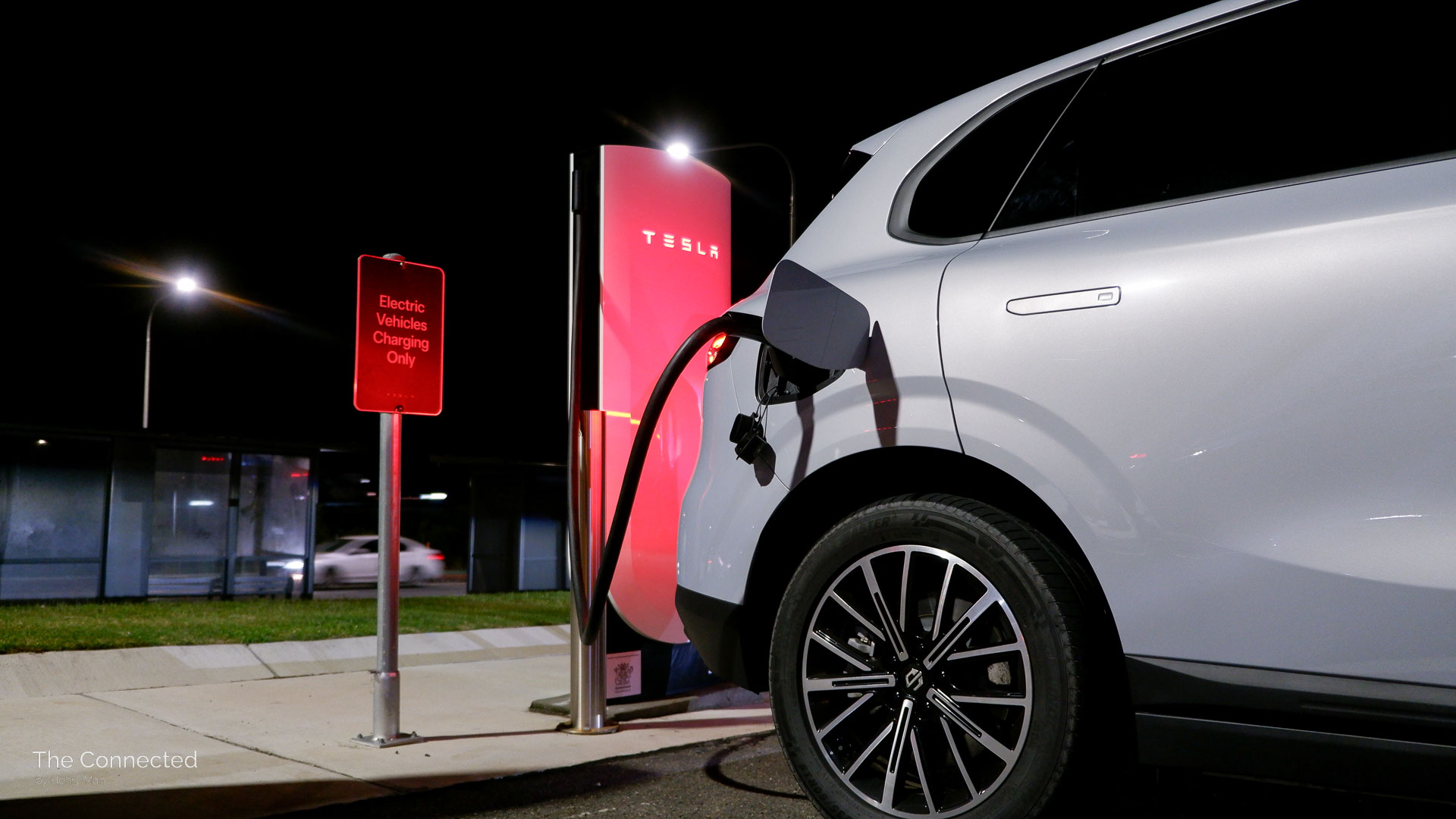
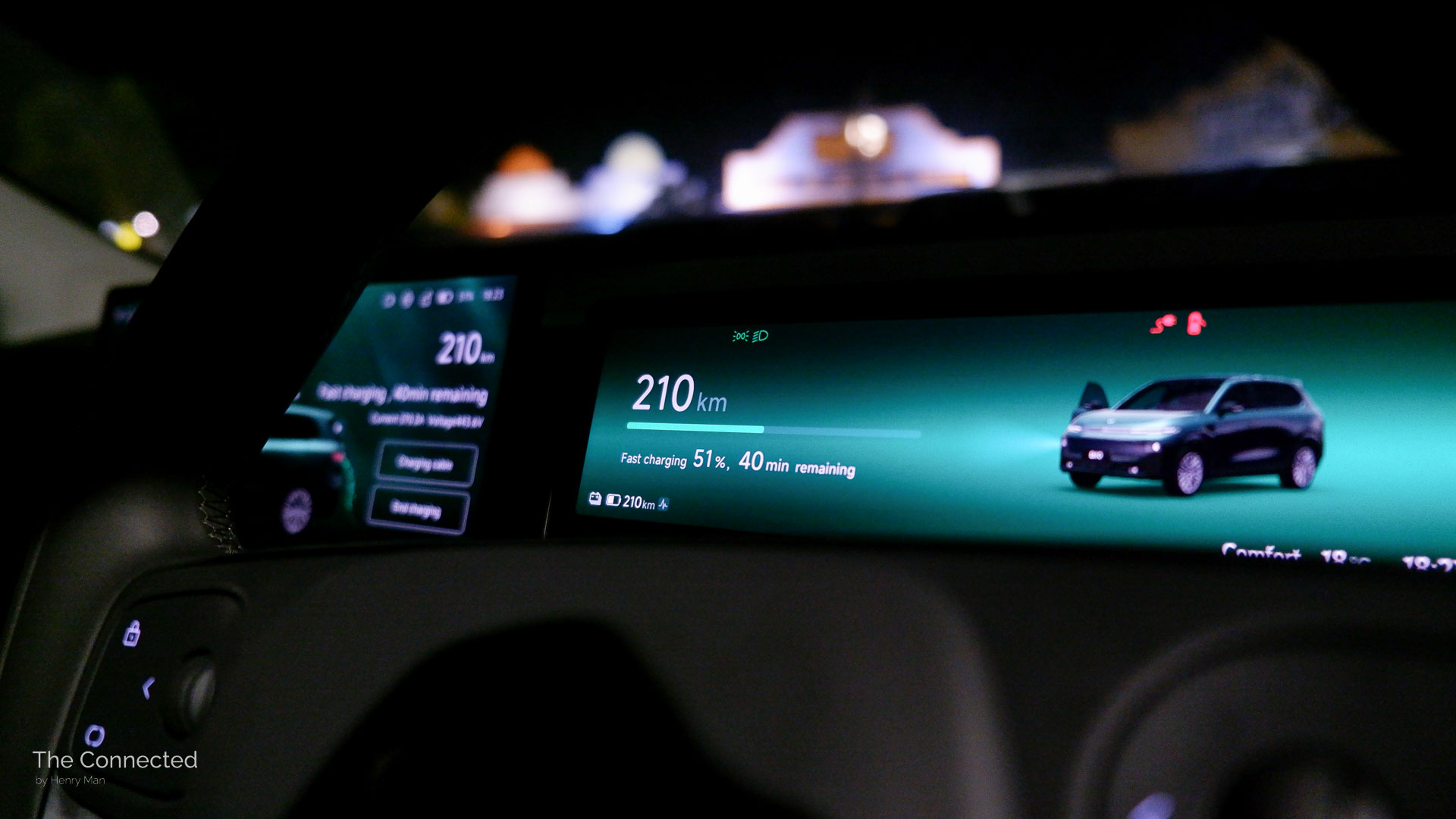
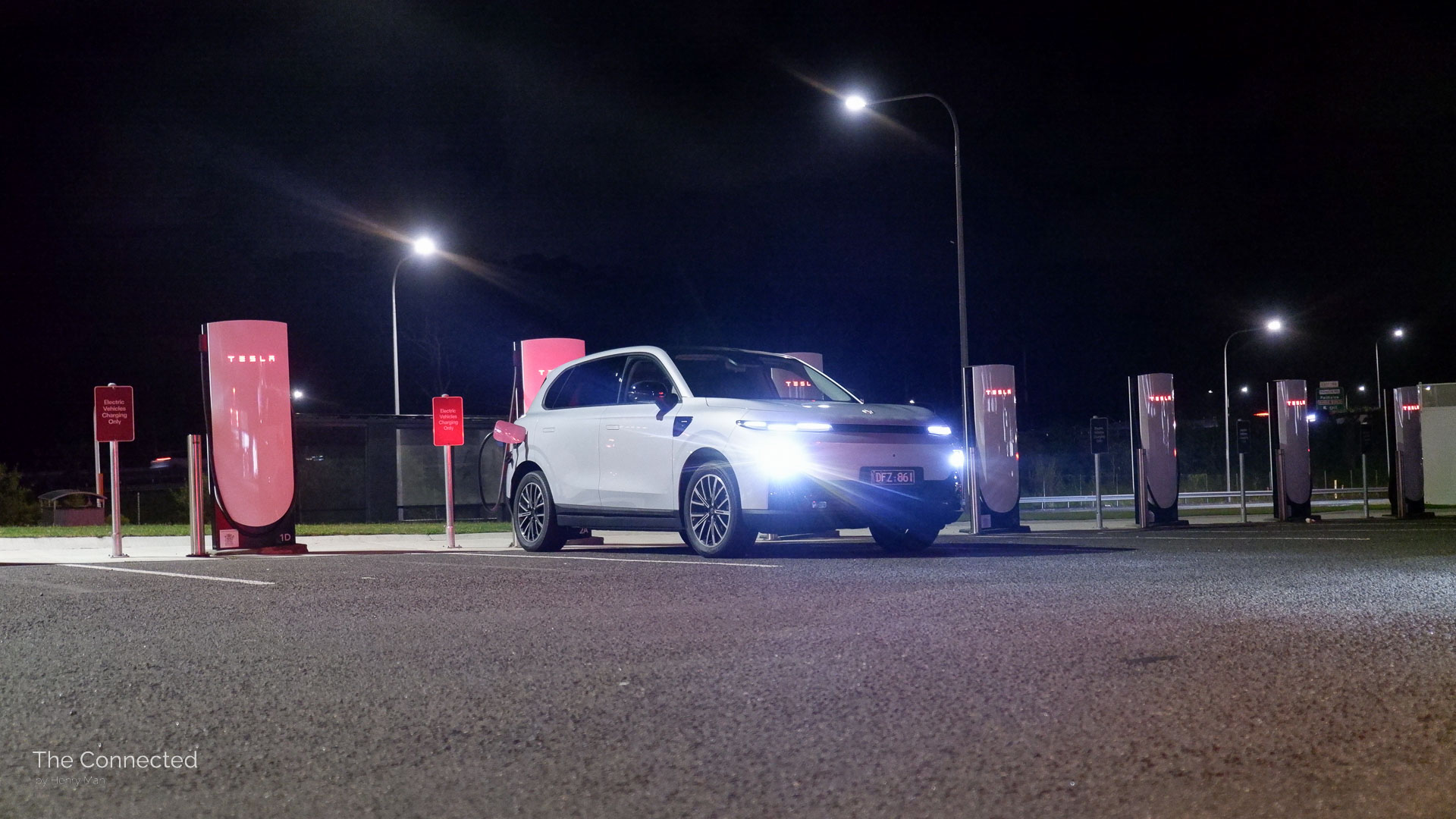
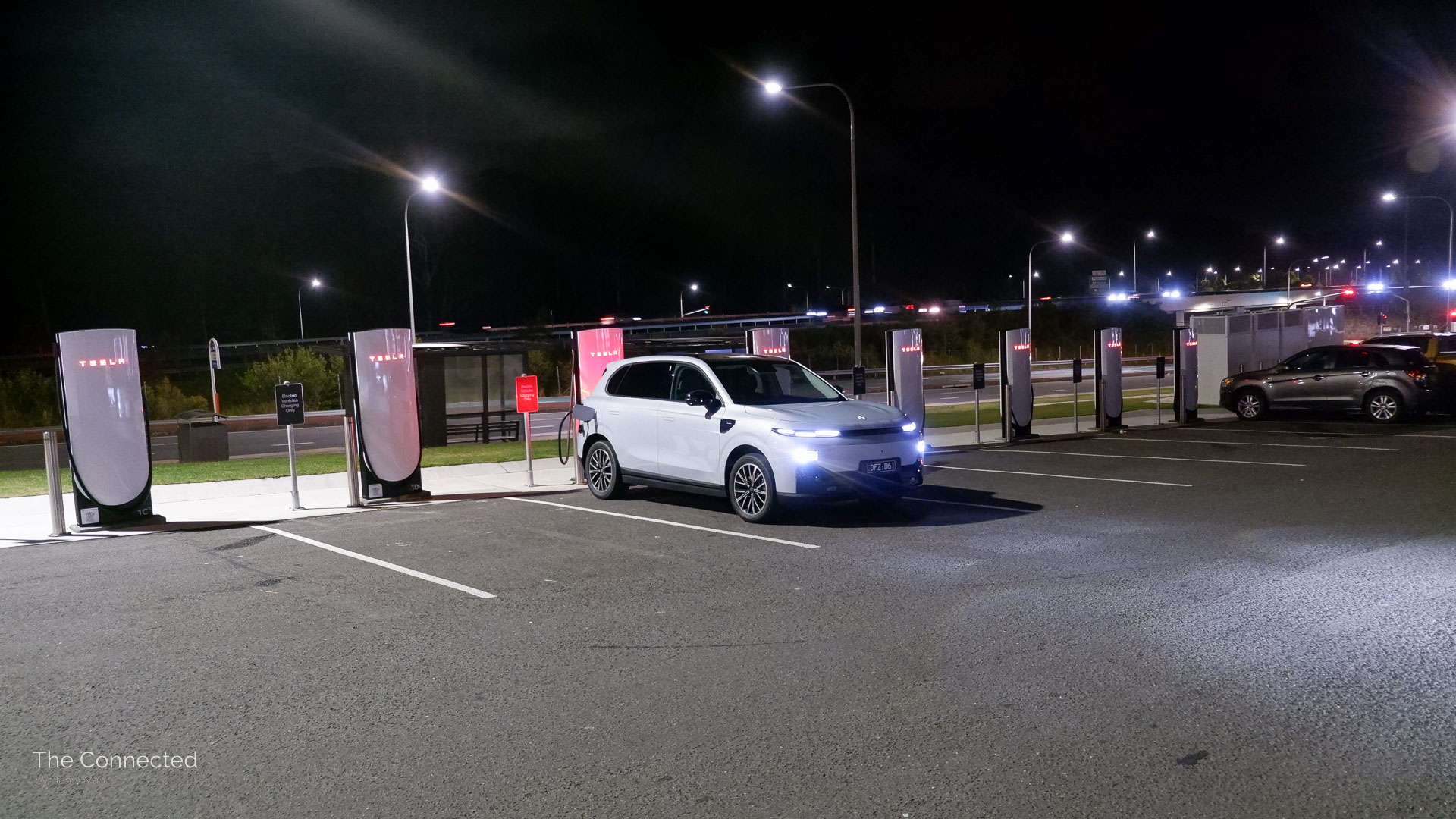
It recharged from 9 to 80% in around 24 minutes with a DC peak of 166kW and an average session speed of 124kW when I tested it on a 250kW capable public fast-charging station.
Unlike some budget-friendly EVs, the Leapmotor is capable of up to 11kW AC slow charging speeds, too.
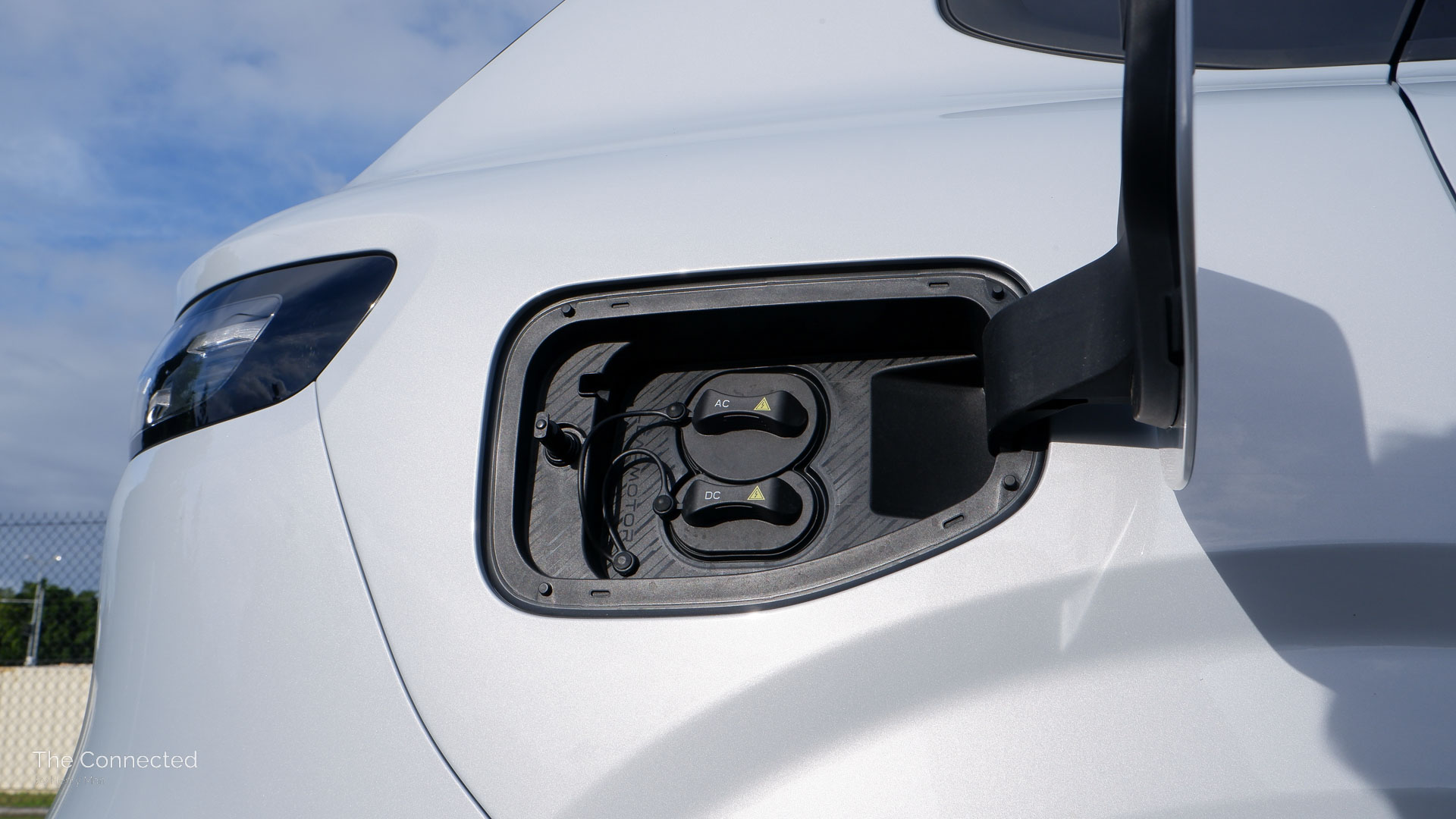
The charging port is accessible at the rear-right quarter side of the vehicle with flimsy rubber caps covering both AC and DC pins.
There aren’t any lights at the port to help seeing at night either.
Driving.
2026 Leapmotor B10 Design powertrain specs:
| Electric drive unit | Single permanent magnet synchronous motor |
| Power / torque | 160kW / 240Nm |
| Drive type | RWD |
| Tare weight | 1845kg |
| Payload | ~445kg |
| Towing (unbraked / braked) | 750 / 750kg |
The B10 is fine to drive with substantially improved steering than the C10.
Powered by a single electric motor making up to 160kW of power and 240Nm of torque, with a rear-wheel drive (RWD) layout, the B10 is brisk enough.
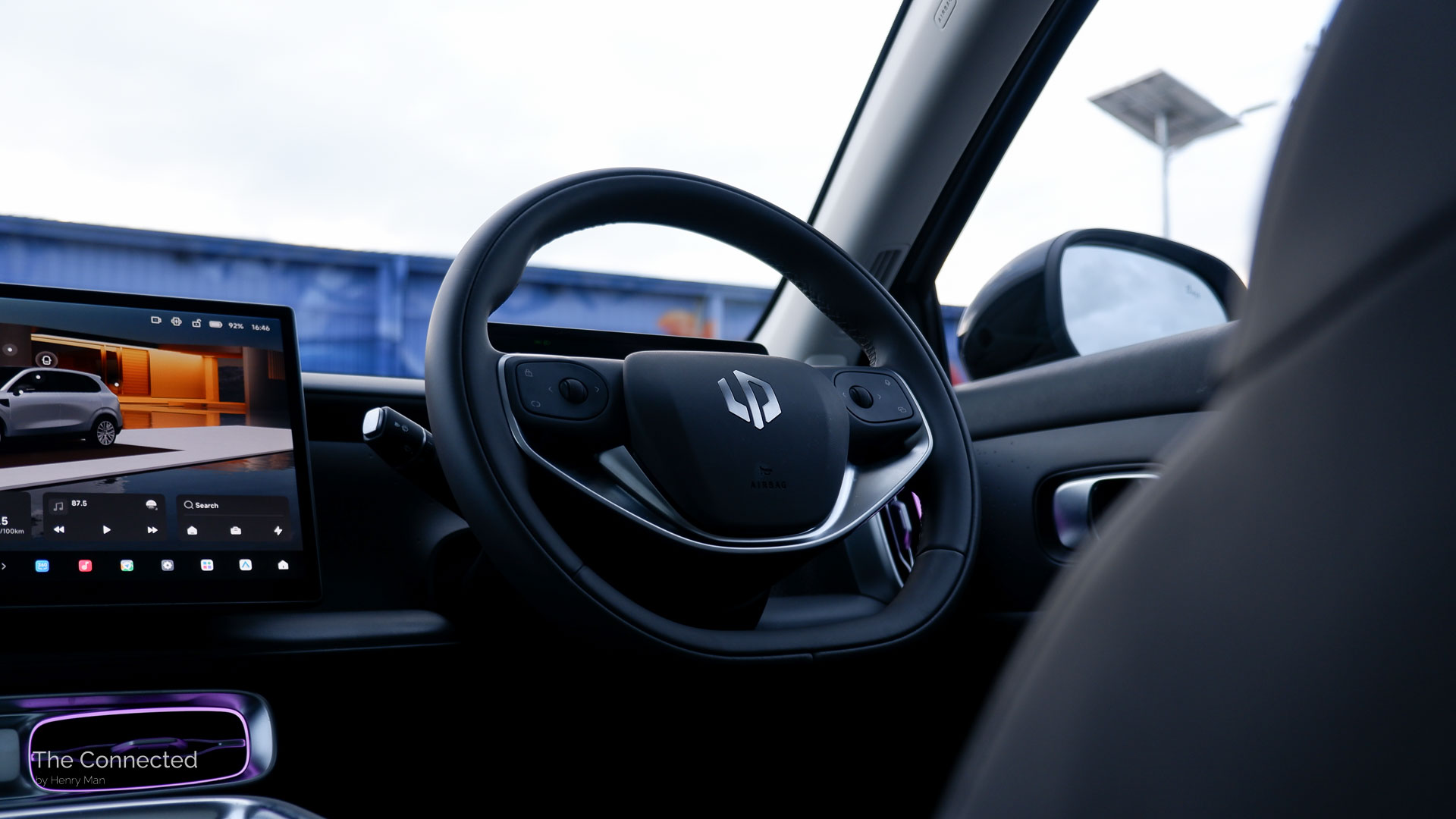
The steering is well-weighted (but only when set on the sport setting) – unlike the overly light and numb tune on the C10 – but the tilted wheel positioning is awkward to get used to.
Despite being RWD, it’s not sporty to drive. It’s just fine. The key benefit is no torque steer when accelerating.
Leapmotor is one of the only brands at this budget-friendly price point to offer one-pedal driving, in addition to three levels of standard regenerative braking.
The former thankfully stays on every time you enter the car and is much stronger than the C10 and the Kia EV3.
However, I found that it tends to put the auto hold on abruptly when coming to a stop, often rolling forwards or backwards before applying it.
It also sometimes doesn’t keep the brake lights illuminated for whatever reason, despite being at a standstill.
There is also a slight vibration internally when stopped, which seemingly feels like the car has hit something. It’s unclear whether it’s coming from climate control or some other component.
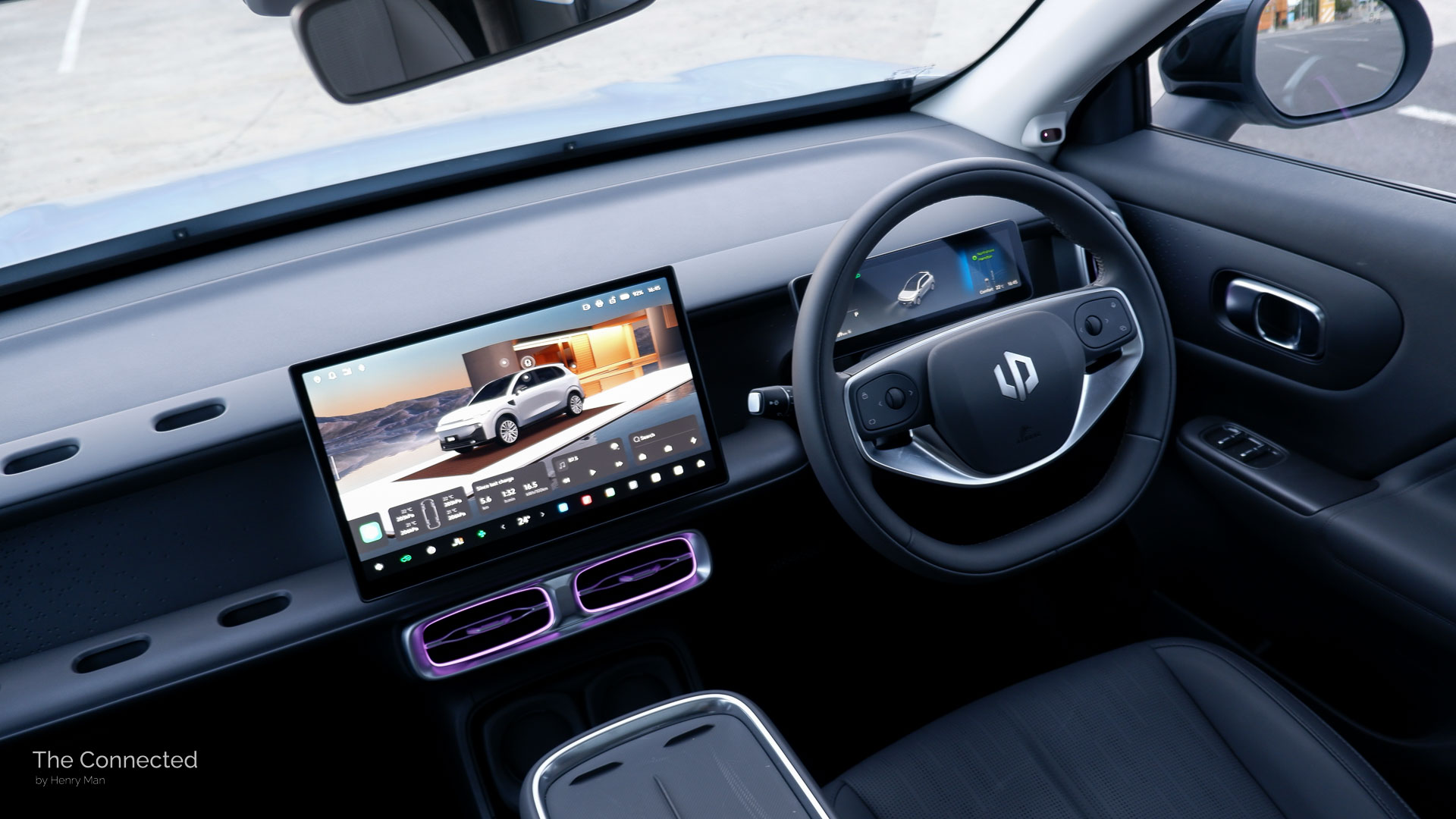
The drive selector stalk falls easily to hand – but due to the way the steering wheel is positioned, it blocks the view of both stalks from the driver’s seat.
Thanks to the small SUV’s body design, there is good visibility through all windows.
Disappointingly, it doesn’t include a rear wiper – which is a necessity when water tends to stick on the upright glass and obscures the rear view in the rain.
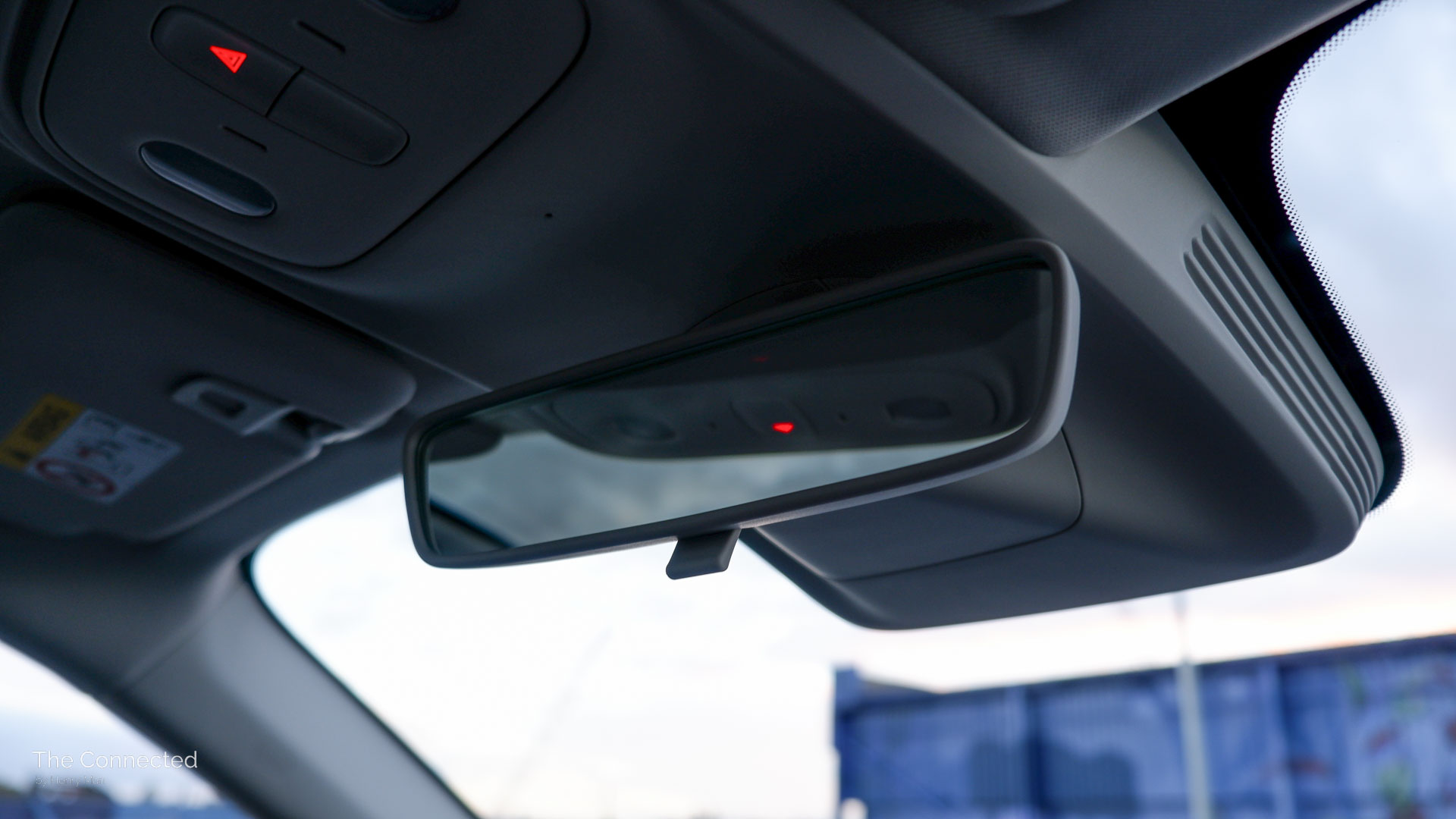
No Leapmotor B10 also offers an auto-dimming rear-view mirror with a manual flick awkwardly shifting the entire reflected view upwards like the C10.
Warranty and servicing.
2026 Leapmotor B10 Design capped-price servicing costs:
| 1 year/20,000km | 2 years/40,000km | 3 years/60,000km | 4 years/80,000km | 5 years/100,000km |
| $215 | $470 | $215 | $470 | $455 |
The 2026 Leapmotor B10 is backed by a six-year/150,000km vehicle warranty and an eight-year/160,000km battery warranty.
Servicing is required every 12 months/20,000km (whichever occurs first) with prices fixed for the first eight years/160,000km.
After the first five visits, expect to pay $1825 in total to maintain the B10.
Leapmotor’s dealer and servicing network is more limited than other brands with around 22 locations across Australia as at the time of publication. For context, the similarly new Geely has expanded to about 100 sites.
Eight years of roadside assistance is included.
Up to three years of Leapmotor connected services are bundled.
The Leapmotor B10 does not include a spare tyre, with a catch-up goo kit offered instead.
Price and rivals.
2026 Leapmotor B10 model range pricing (accurate as at the time of publication):
| Style | Design Long Range |
| From $37,888 before on-road costs | From $40,888 before on-road costs |
The 2026 Leapmotor B10 is priced from $37,888 before on-road costs in Australia.
Two models are available distinguished by different battery sizes and features list.
A hybrid range extender version called the B10 Hybrid EV is also offered with identical pricing to the full EV.
All exterior paint colours except Light White costs $990 extra which is on the pricier end compared to its rivals.
On the top-spec Design, a Light Grey interior can be optioned for no-cost extra.
The Leapmotor B10 directly rivals the following electric SUVs:
- Jaecoo J5 EV
- BYD Atto 2
- Geeky EX5 (full review)
- MG S5 EV
- GAC Aion V
- Kia EV3 (full review)
- Hyundai Kona Electric (full review)
- Skoda Elroq
- Jeep Avenger
Other alternatives to the B10 EV include:
- Leapmotor B05
- MG 4 Urban
- BYD Atto 3
- Kia EV4 (full review)
- Subaru Uncharted
- Deepal S07 (full review)
Would I pick the 2026 Leapmotor B10 Design?
The Leapmotor B10 feels a cut above for an affordable electric SUV.
The Chinese EV provides a roomy and practical interior for its small exterior dimensions. Leapmotor’s software design is noticeably more polished than other rivals, the safety tech is tolerable after the shortcut button is pressed, and the dashcam recording is a great peace-of-mind feature not seen at this price point.
However, it needs a rear wiper, the tilted steering wheel position, stalk and instrument display layout is awkward, the lane-keeping isn’t permanently off, and the safety assists are still imperfect.
While one-pedal driving is a great inclusion for the price, it can abruptly snap the auto hold and release the brake light once stopped at times.
Other brands such as Geely, GWM and Chery offer a bigger dealer and servicing presence in Australia, too.
I’d pick the flagship Design. For only $3000 more, it nets a bigger battery and a host of niceties.
The Leapmotor B10 isn’t the cheapest electric SUV, but it has a level of polish – particularly on the tech front – that puts it above its rivals.
Photographs by Henry Man
READ MORE: 2026 Kia EV3 review
READ MORE: 2026 Geely EX5 review
READ MORE: 2026 Tesla Model 3 review
Pros:
- Roomy interior and boot
- Refined tech and software
- Improved and tolerable safety tech
- Good fast charging
- Built-in dashcam recording
Cons:
- Missing a rear wiper
- Awkward steering wheel position
- Sensitive lane-keep, not permanently off
- Abrupt one-pedal driving, brake light releases at times
- Limited servicing network
About the Author.
Henry Man is an independent content producer passionate about the intersection of technology and transportation.
The former automotive journalist is focused on producing critically-detailed vehicle reviews, and unique short-form content. Learn more.


