
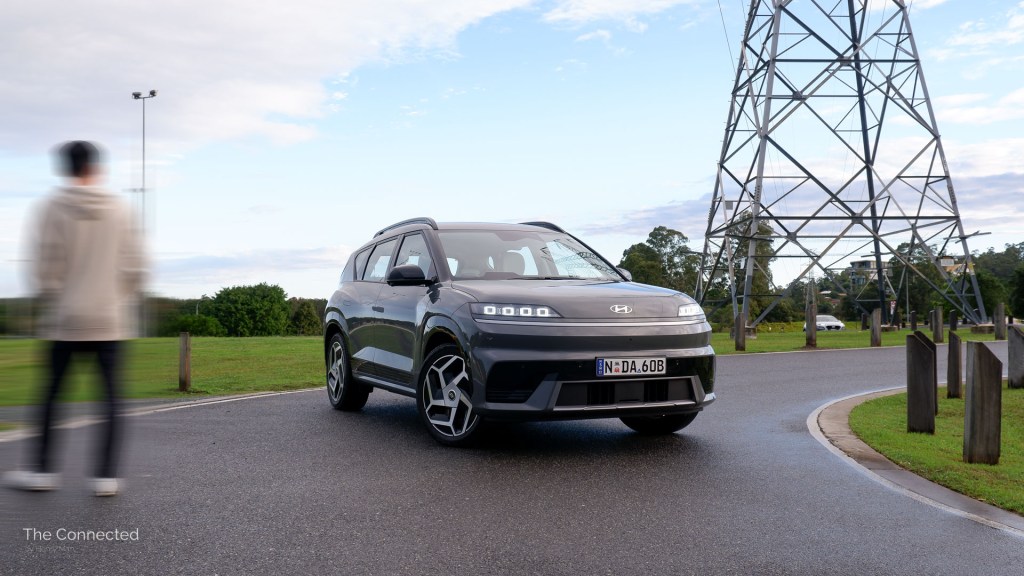
The Hyundai Elexio electric SUV’s key unique selling point is its biggest detractor.
The Elexio is the South Korean brand’s strongest attempt yet at bringing a mass-market electric vehicle to Australia.
Made in China from Hyundai’s joint venture with BAIC Motor, including a Build Your Dreams (BYD) sourced battery and a sub-$60K price, the Hyundai Elexio competes in the highly contested medium SUV segment.
But after spending a week with Hyundai’s electric Tucson equivalent, it’s difficult to recommend the Elexio EV against other rivals.
NOTE: The press vehicle was provided by Hyundai Australia for a seven-day independent evaluation. Toll costs were covered, but we have no commercial arrangements with the company and it had no editorial control.

Pros.
+ Interior ‘wow factor’
+ ’Clever cup holder design
+ Spacious rear row
+ Light steering, high seating position
+ A Hyundai EV that’s reasonably priced
Cons.
– Highly distracting screen
– Software design needs work
– Some over-sensitive safety assists
– Inefficient powertrain
– Agonisingly slow tested DC charging
Vehicle tested:
| Model | 2026 Hyundai Elexio |
| Variant | Elite 2WD |
| Starting price | $61,990 before on-road costs |
| Exterior colour | Medium Grey (+$750) |
| Interior colour | Dove Grey leather (+$295) |
| Country made | China |
Design and quality.
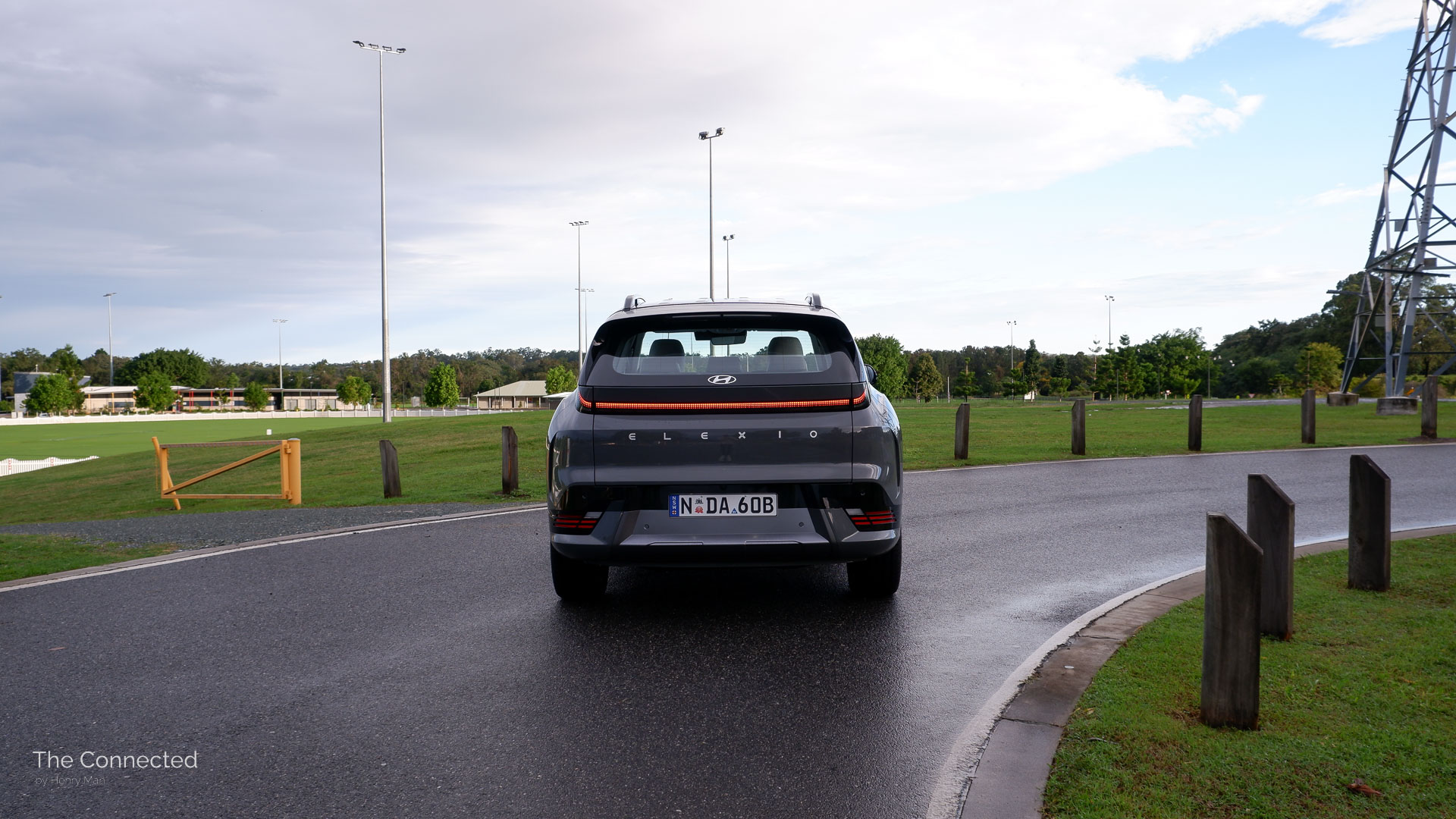
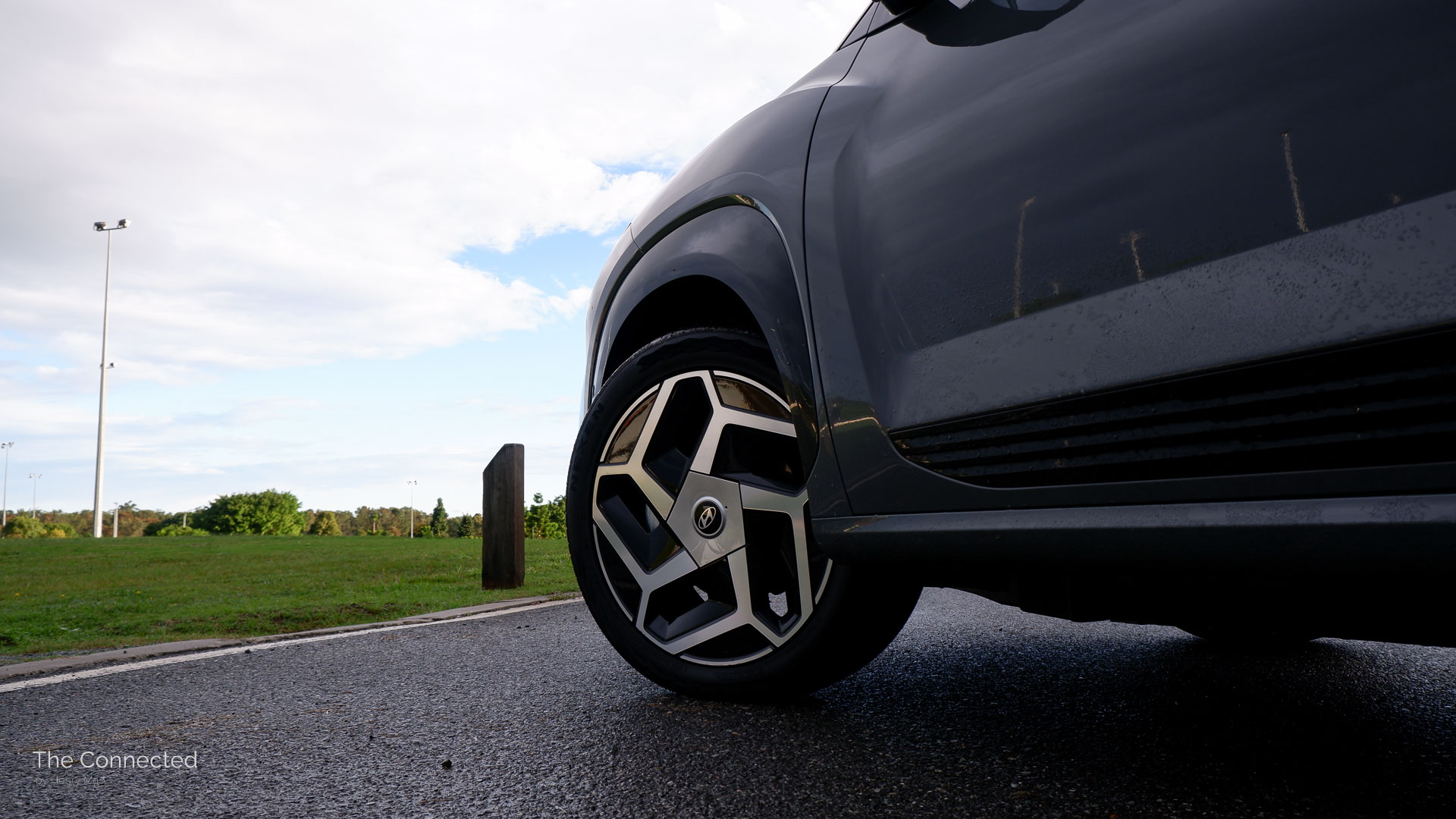
The Elexio looks like a distinctively different Hyundai with impressive quality interior and finishes.
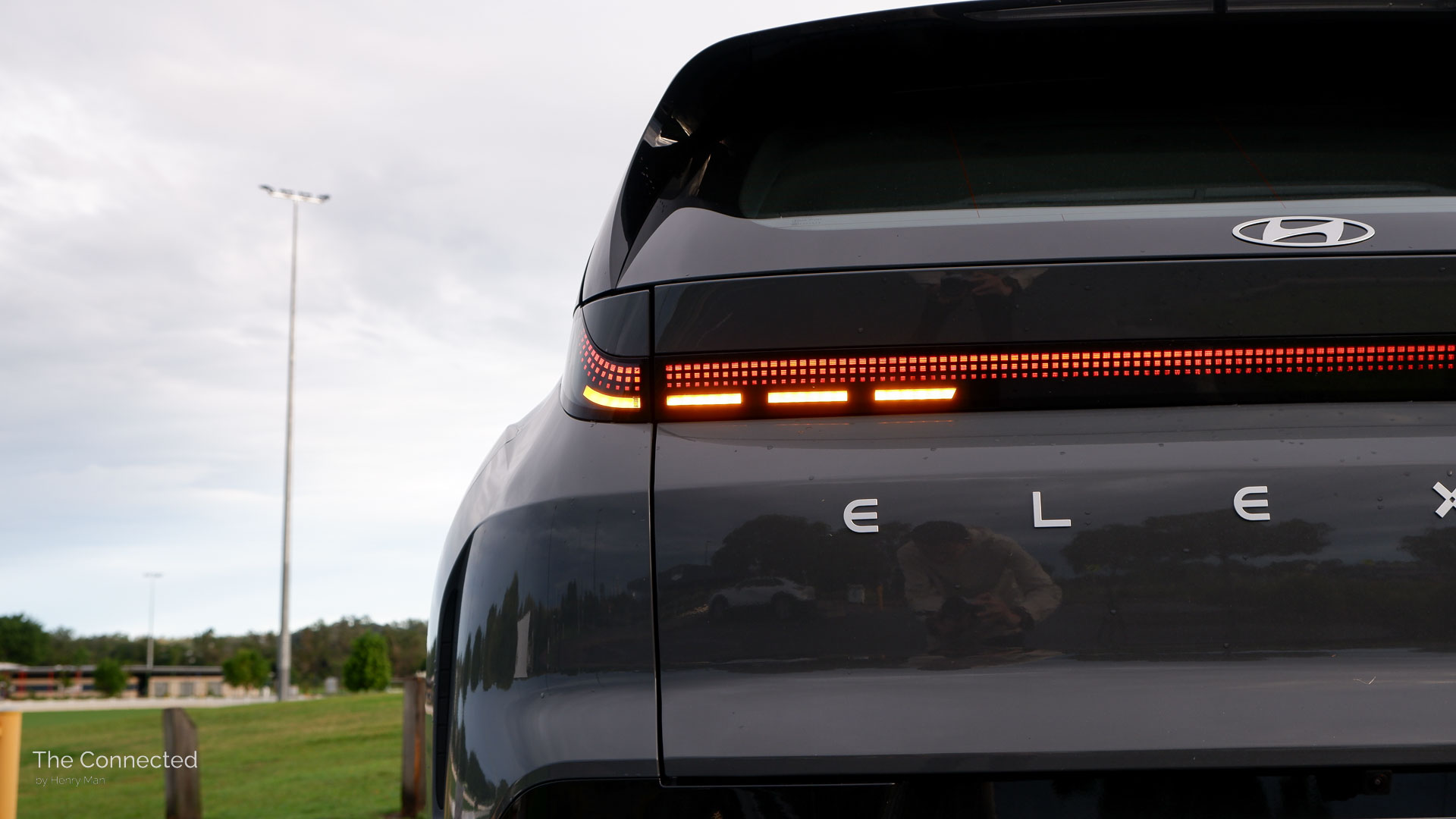
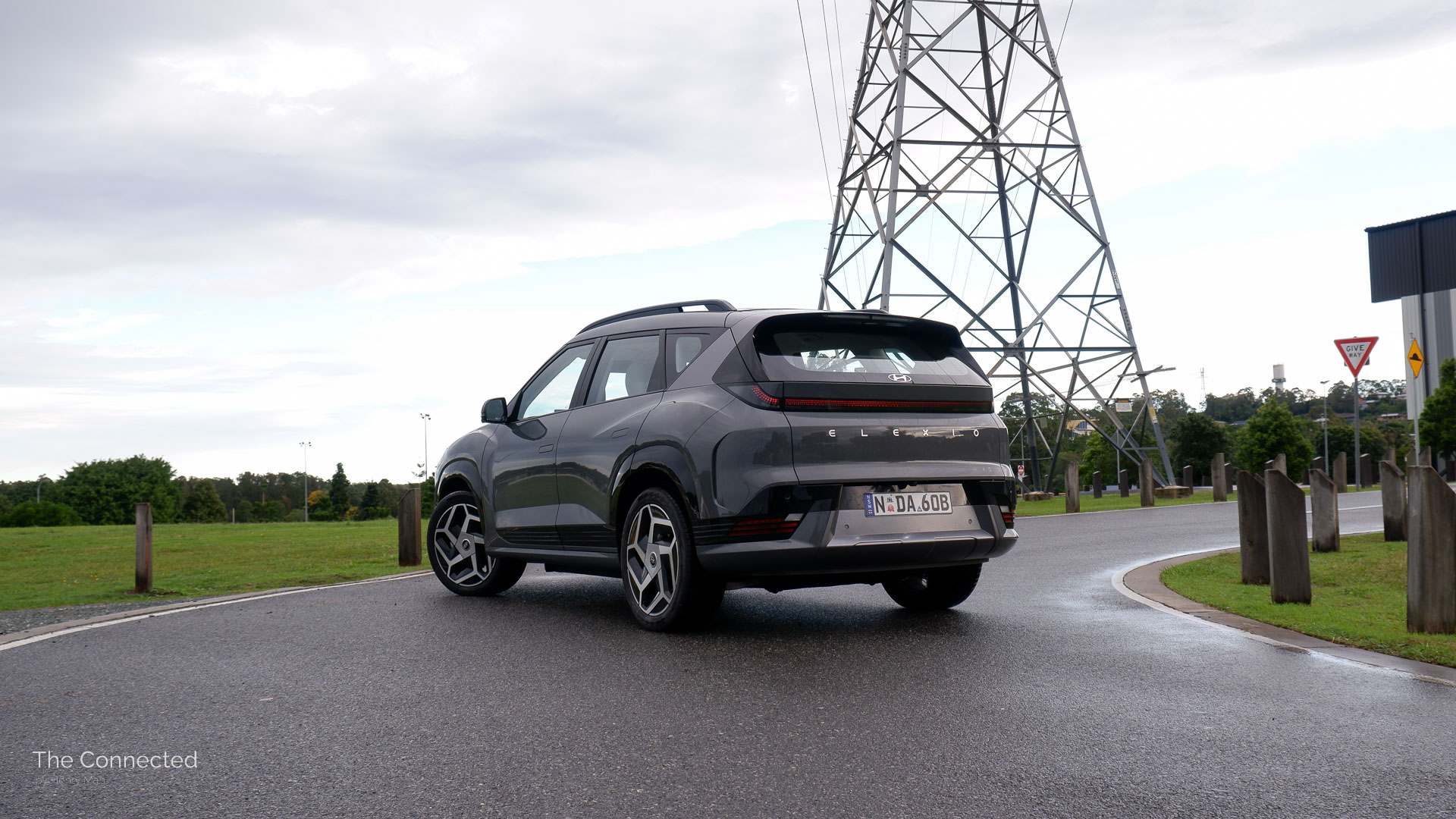
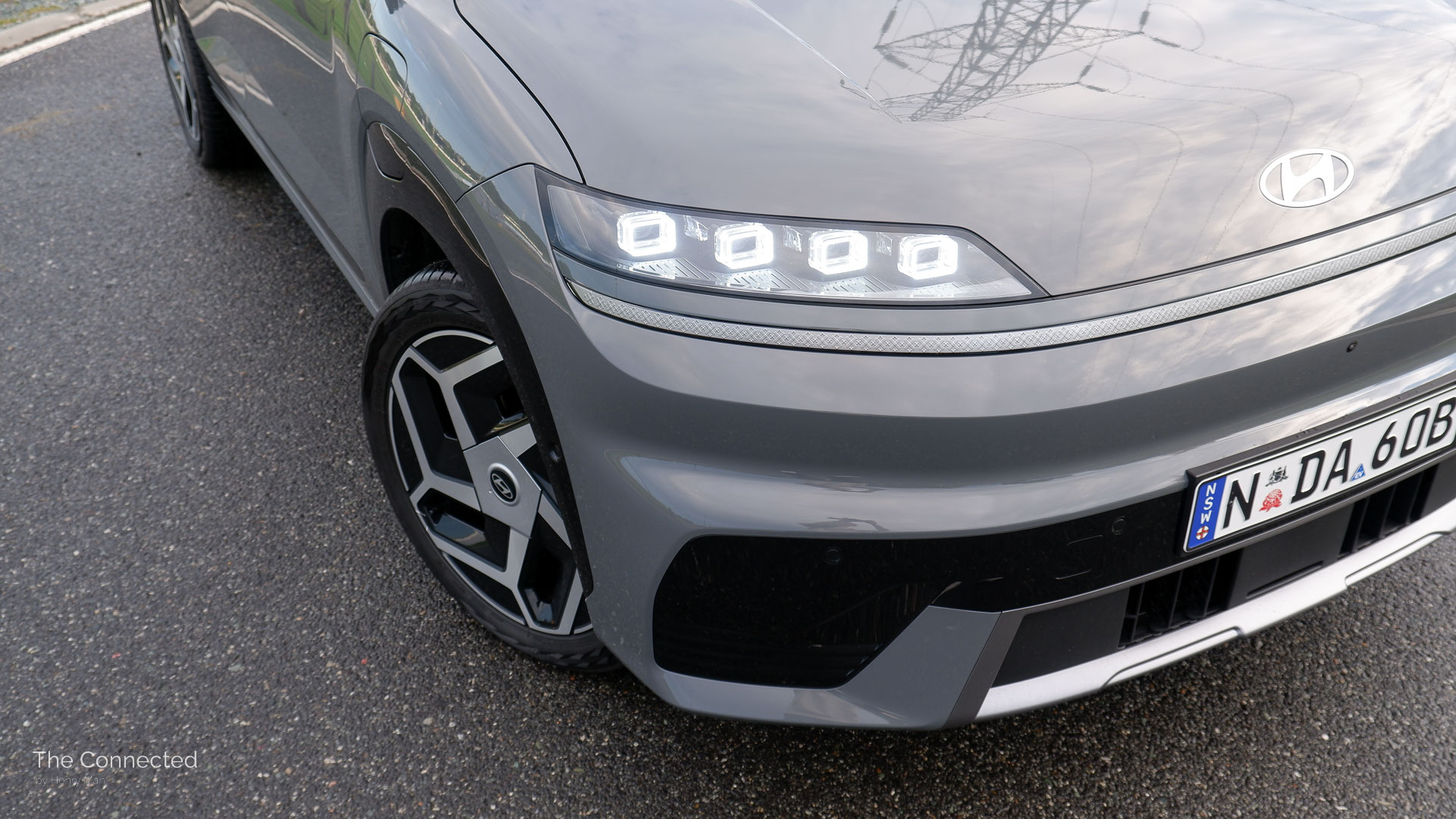
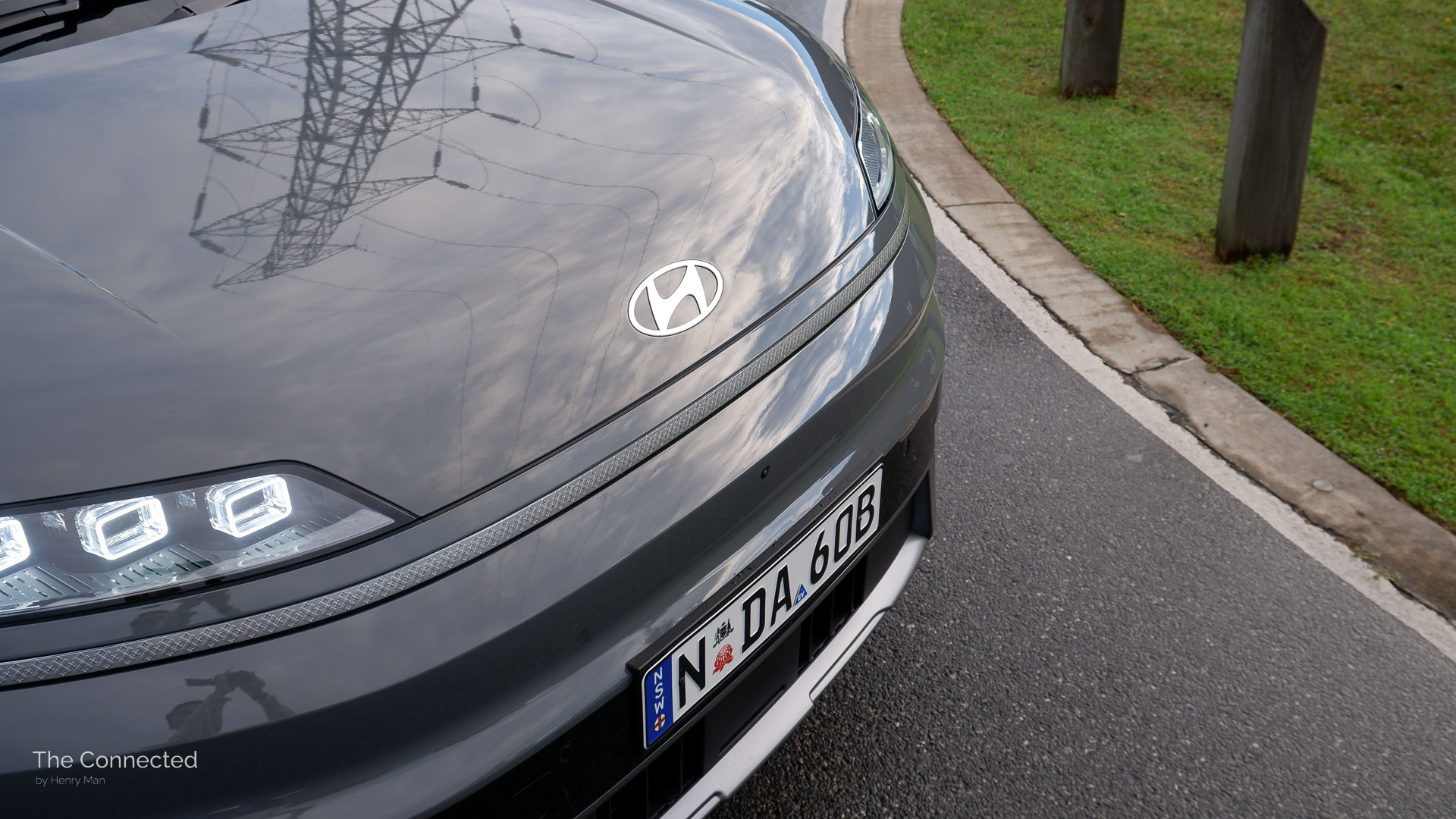
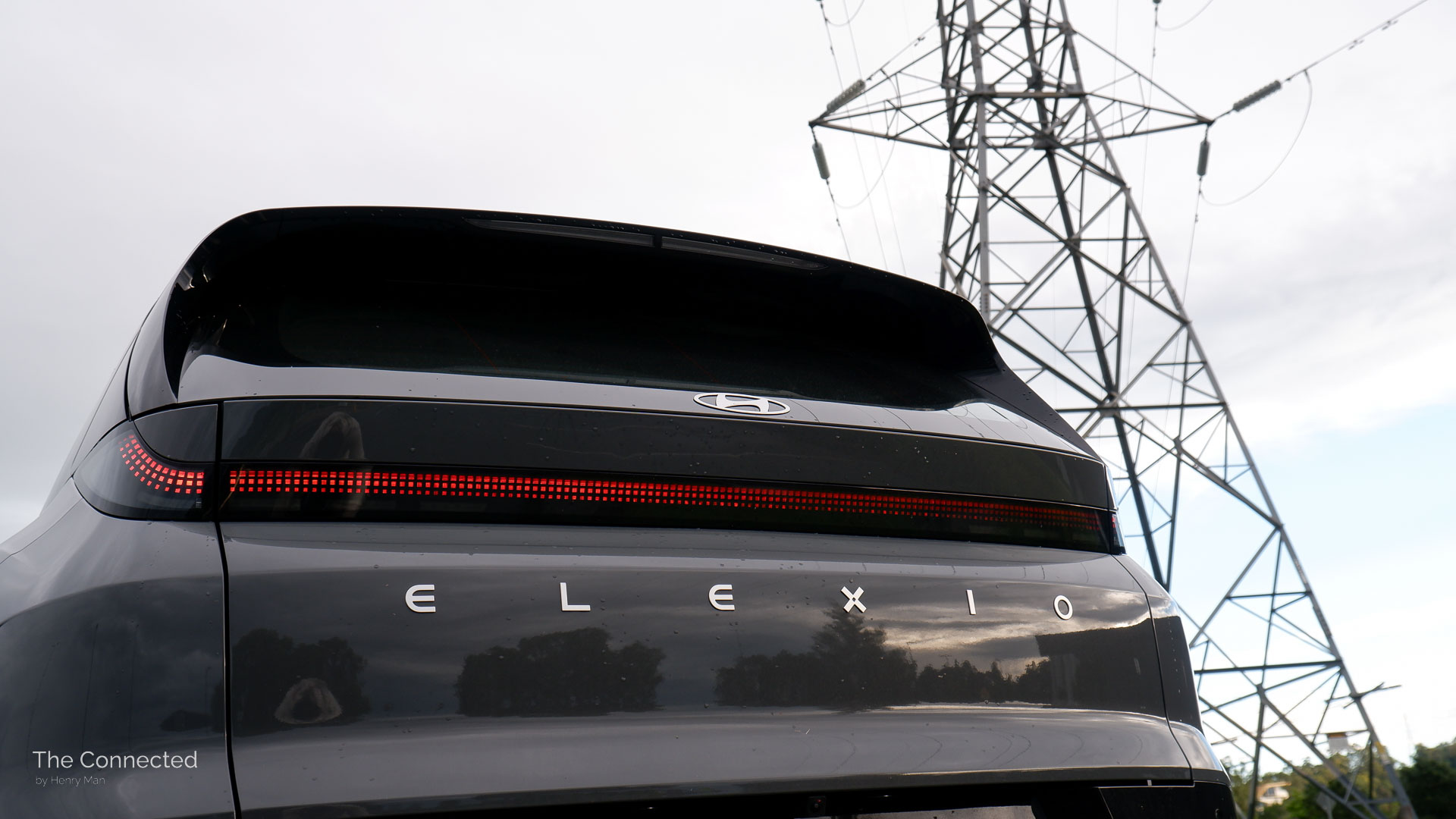
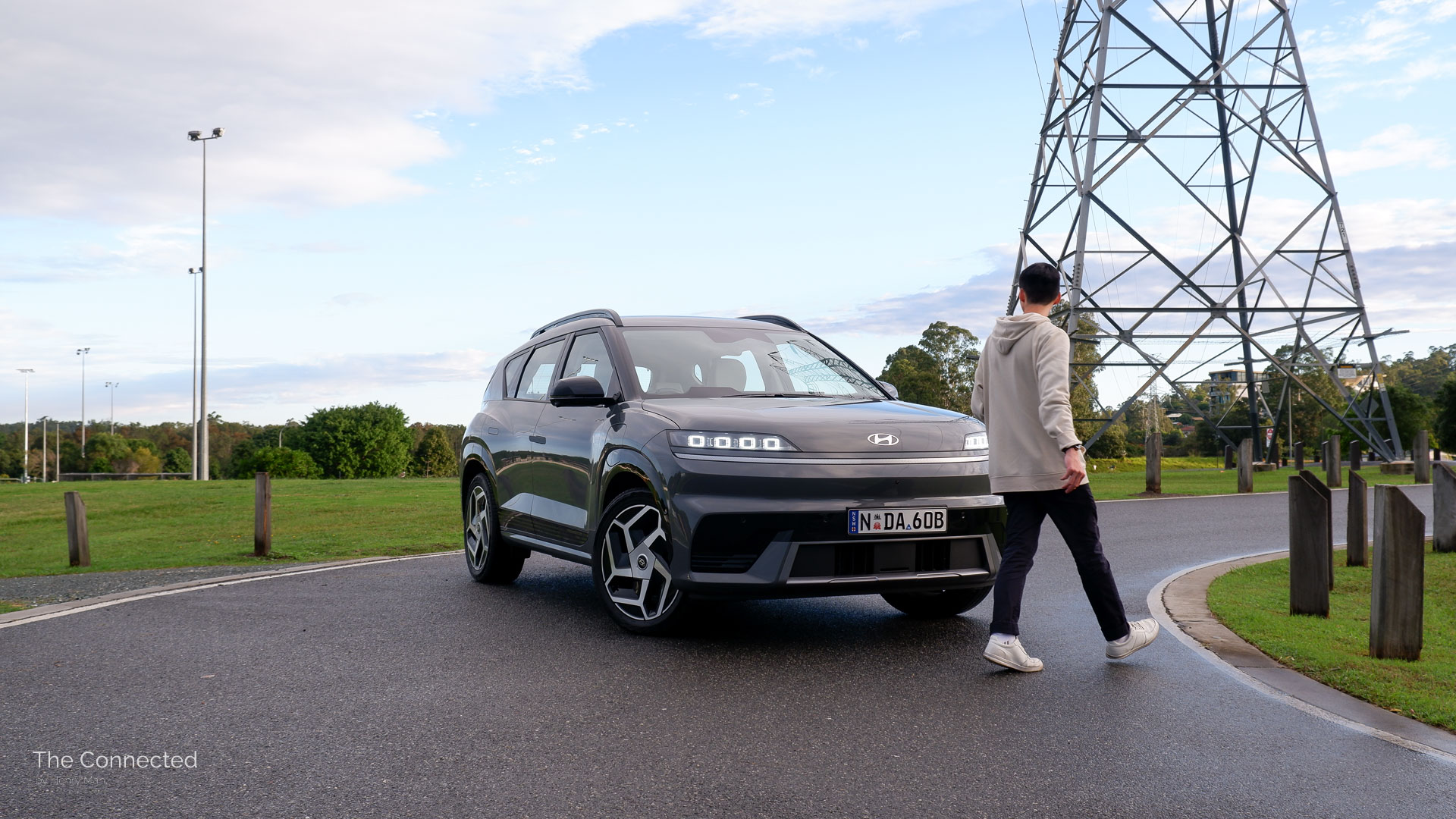
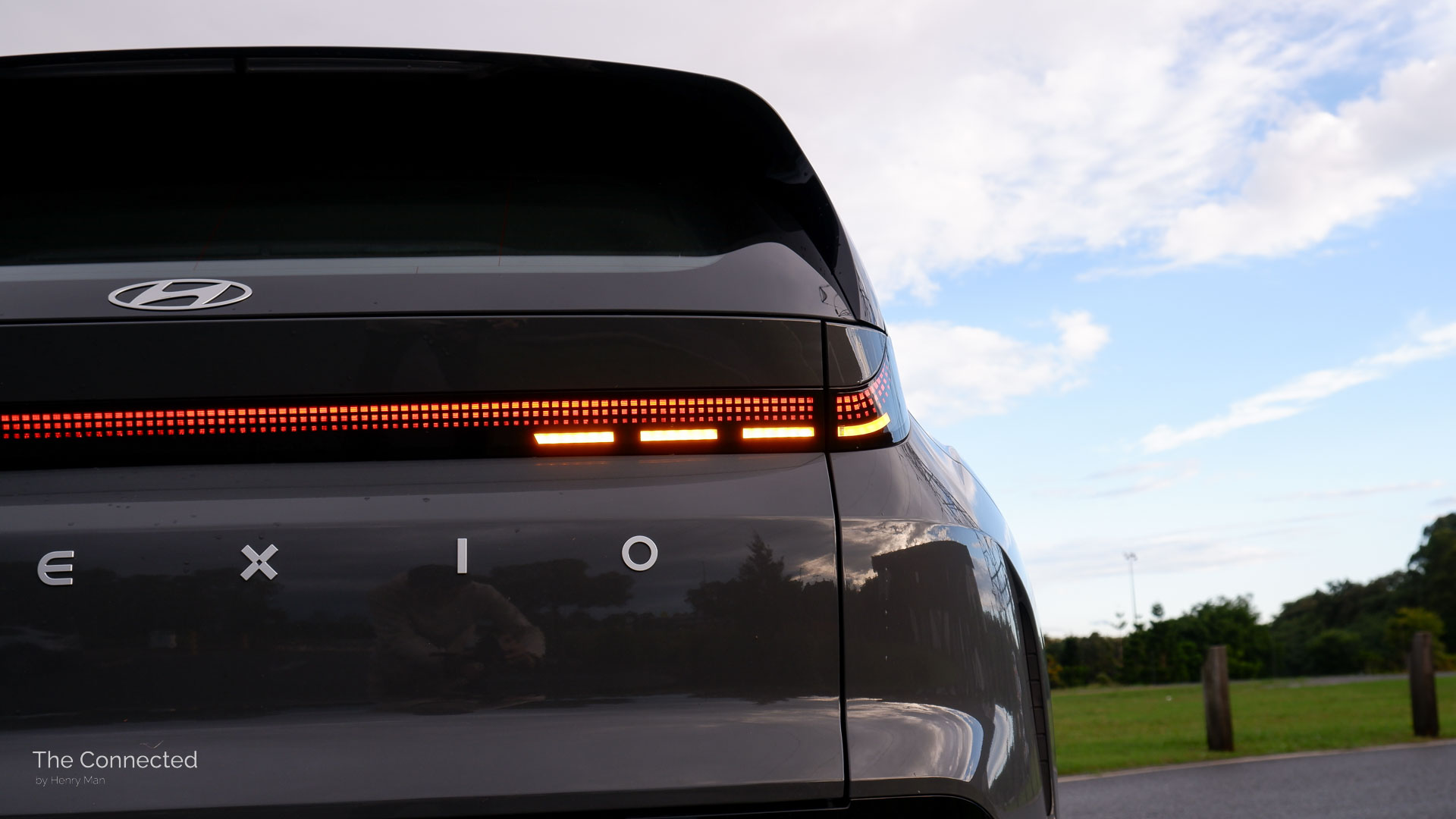
The medium SUV boasts a futuristic and retro exterior, while incorporating an interpretation of the Ioniq 5, 6 and 9 pixel motif lights.
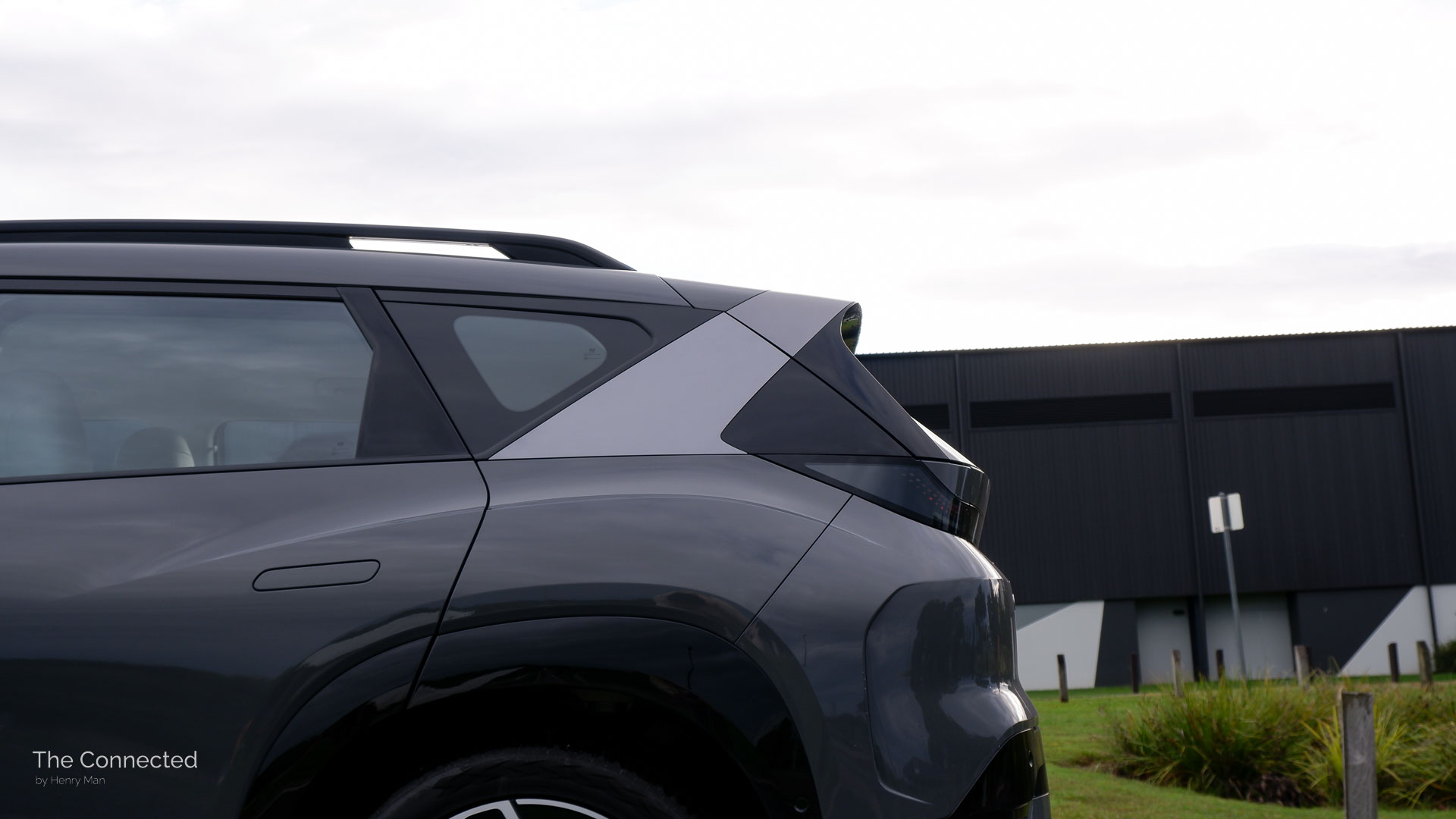
The ‘crystal-square’ front LED daytime running lights double as cool animated sequential indicators, alongside the rear segmented indicators, and the back and D-pillar has a cool edgy design.
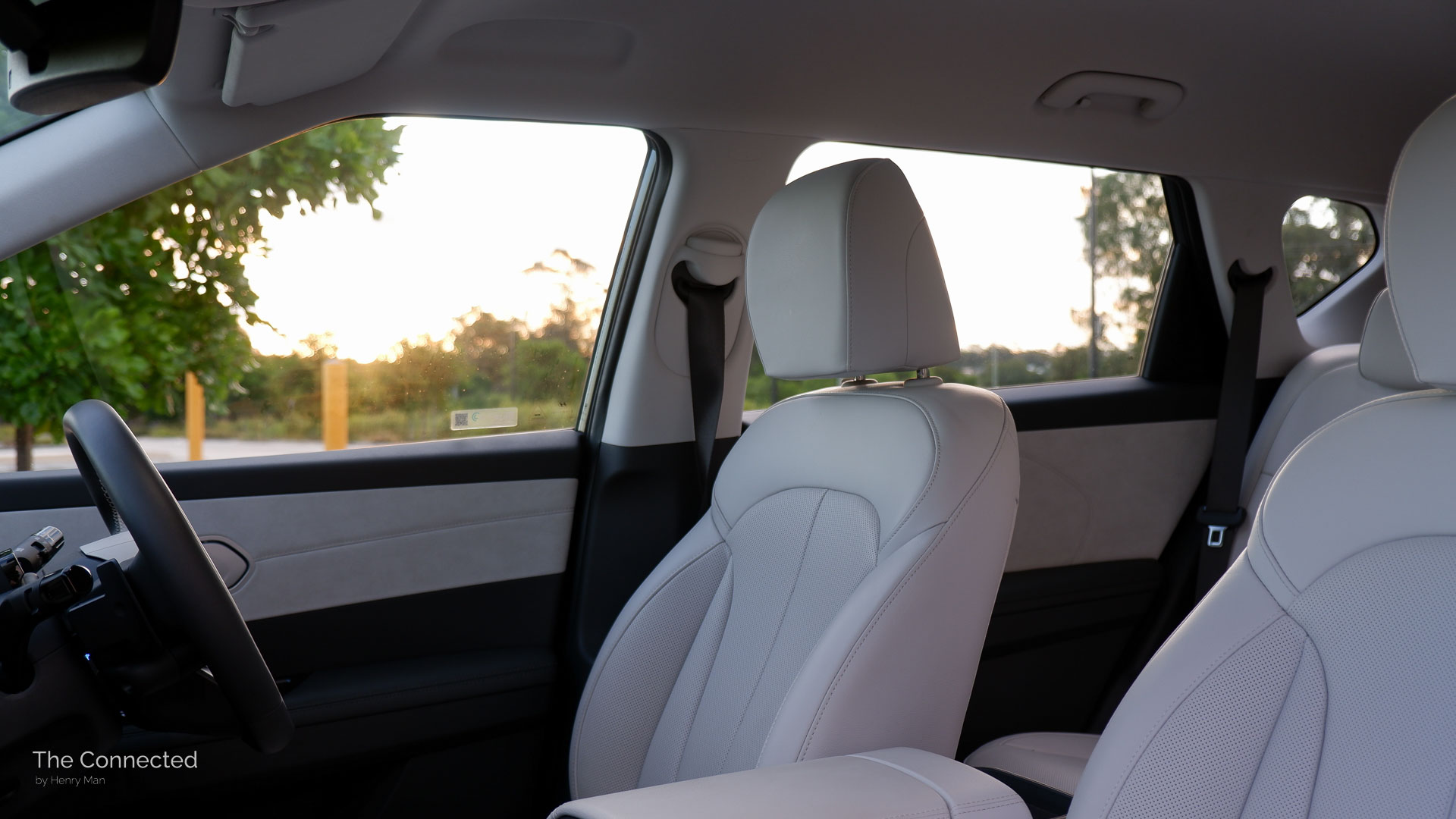
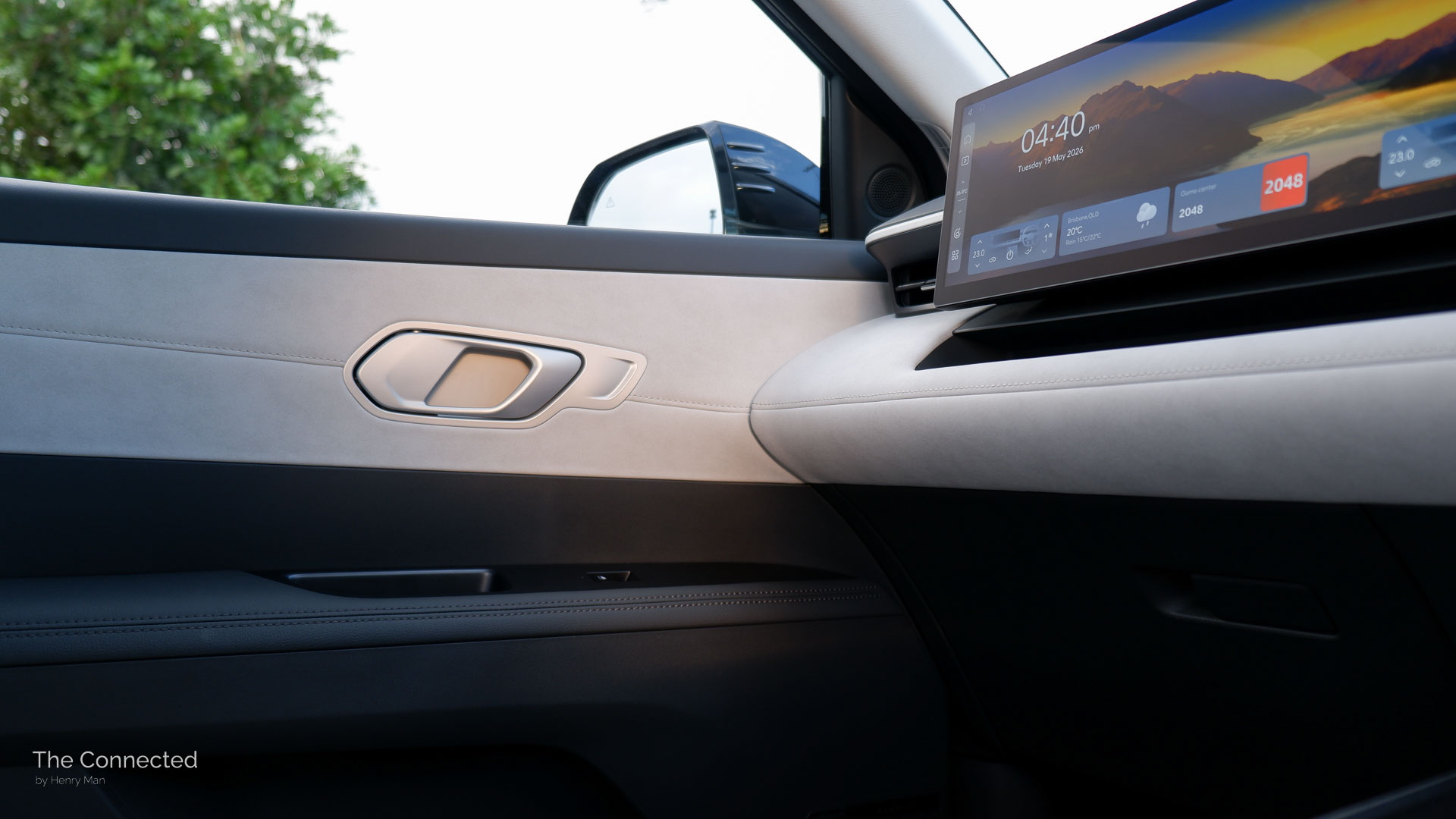
But it’s the Elexio’s interior where it looks and feels borderline premium, especially with the relatively cheap $295 Dove Grey light interior option.
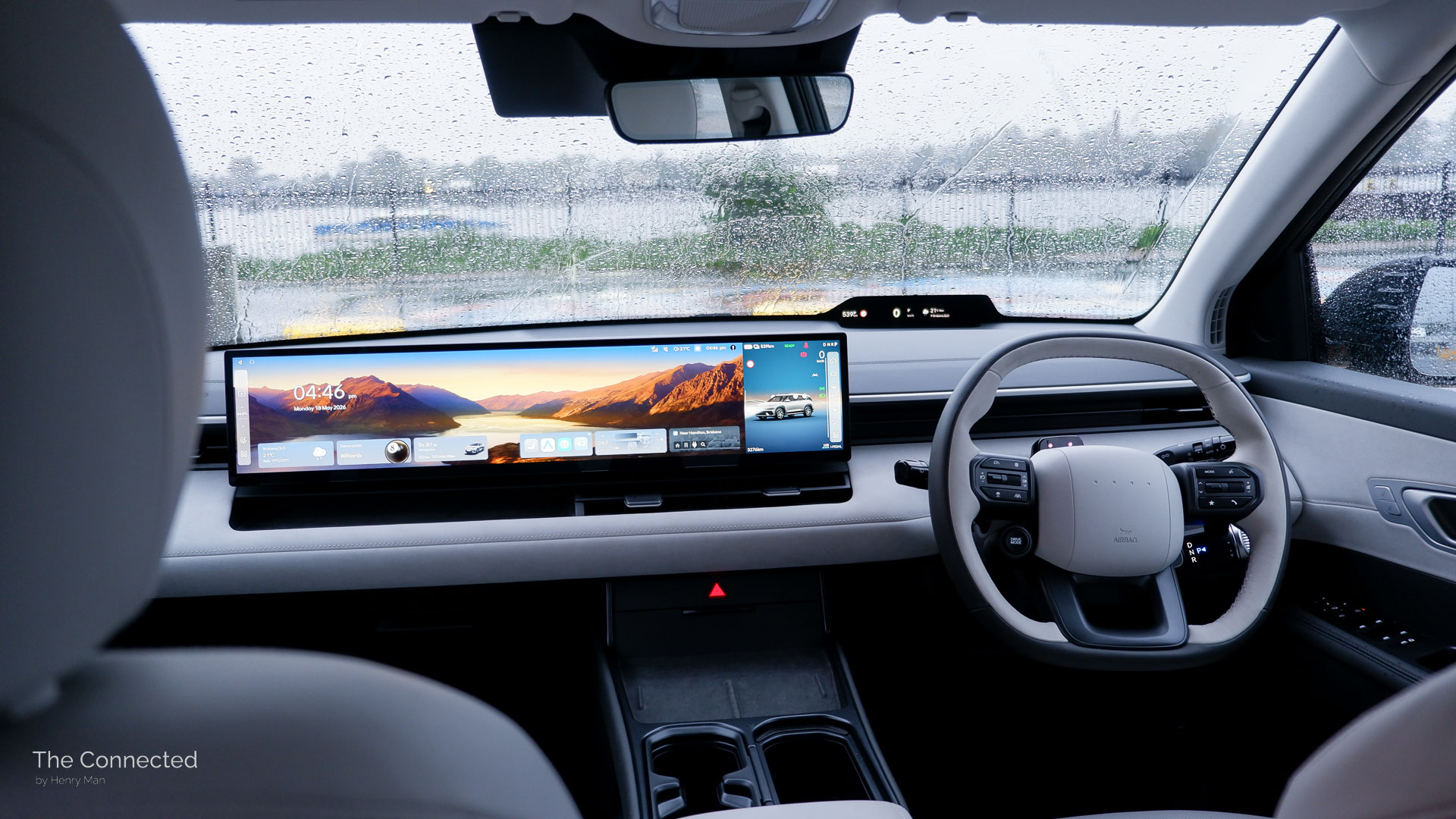
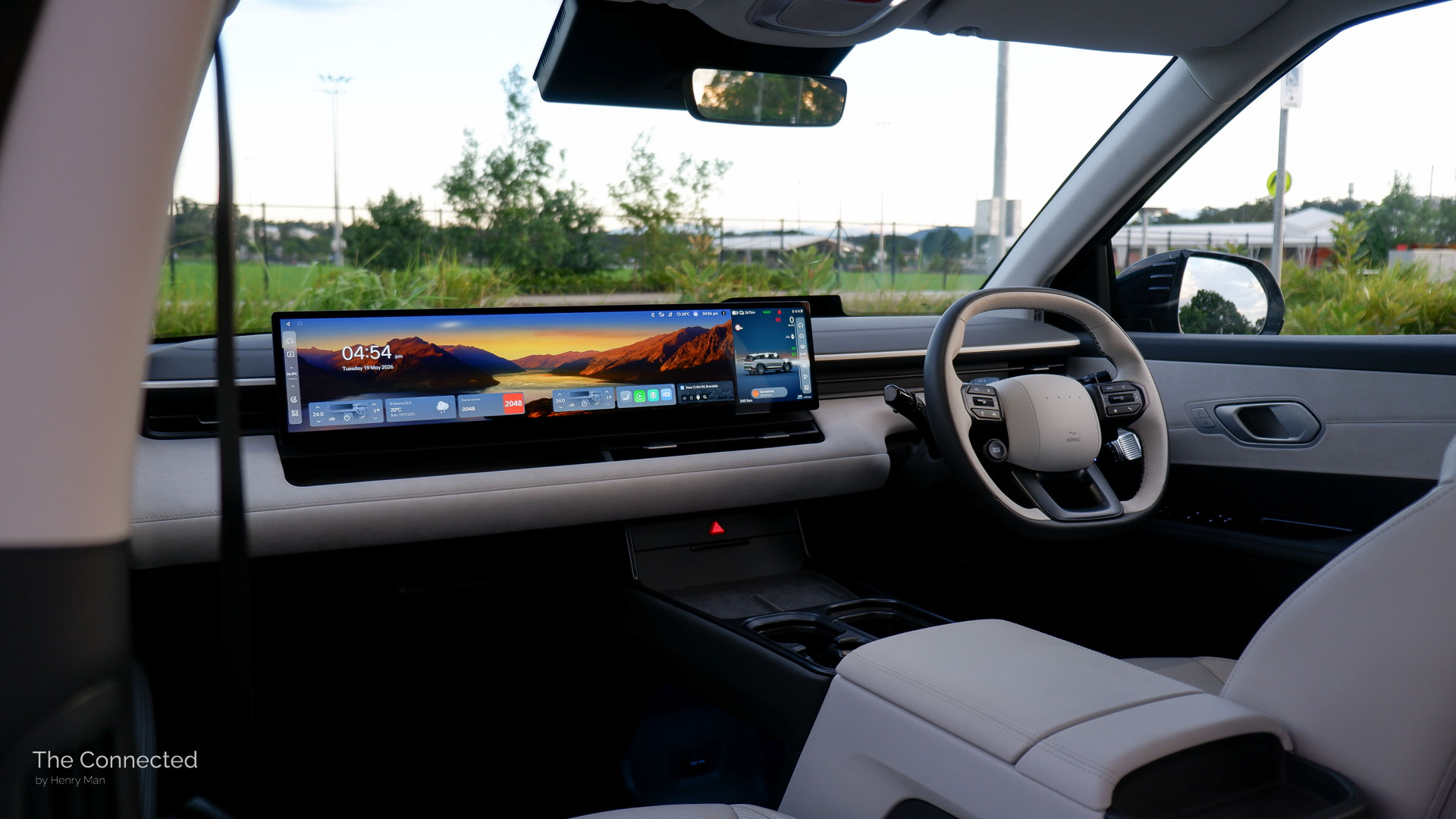
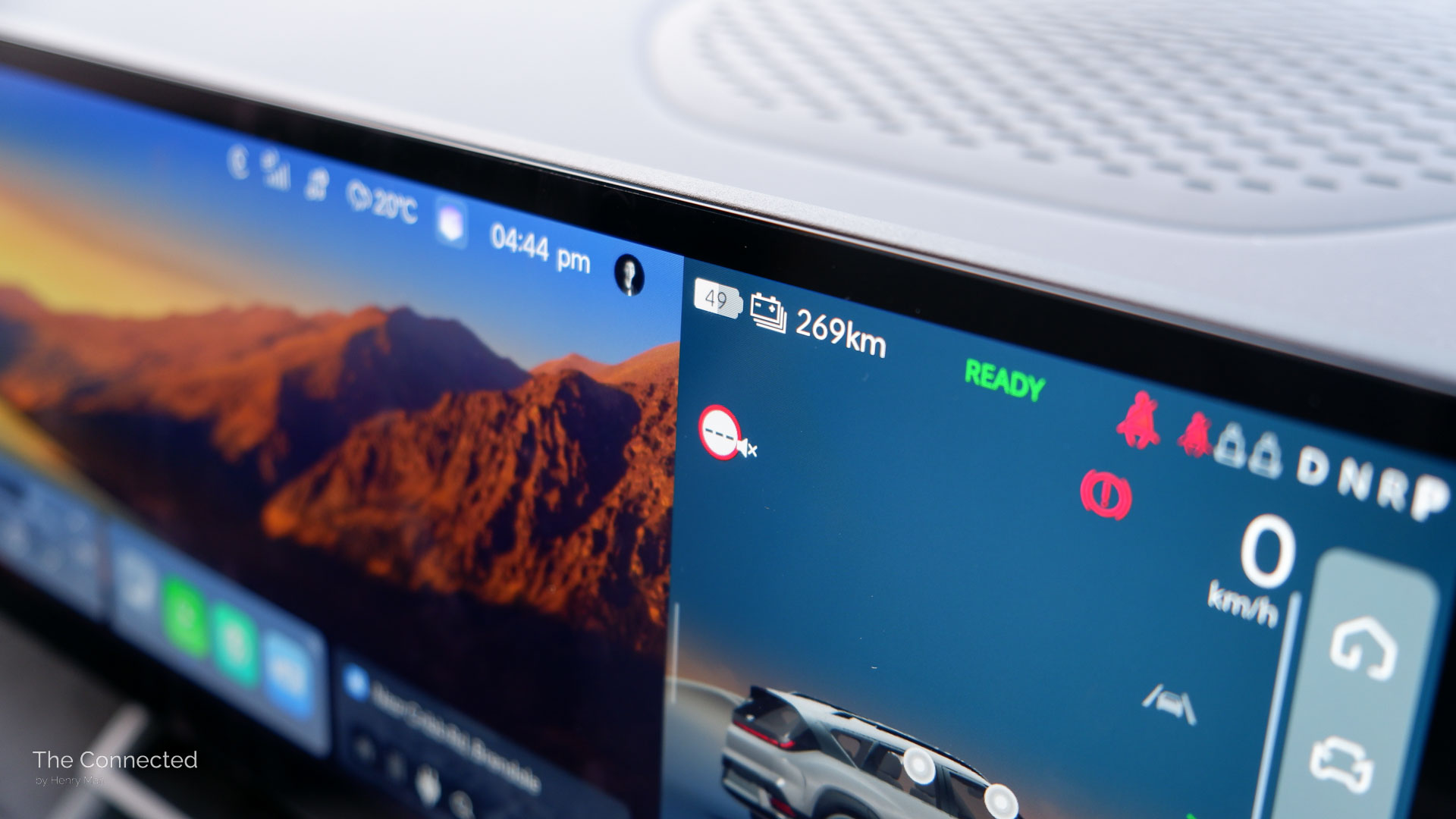
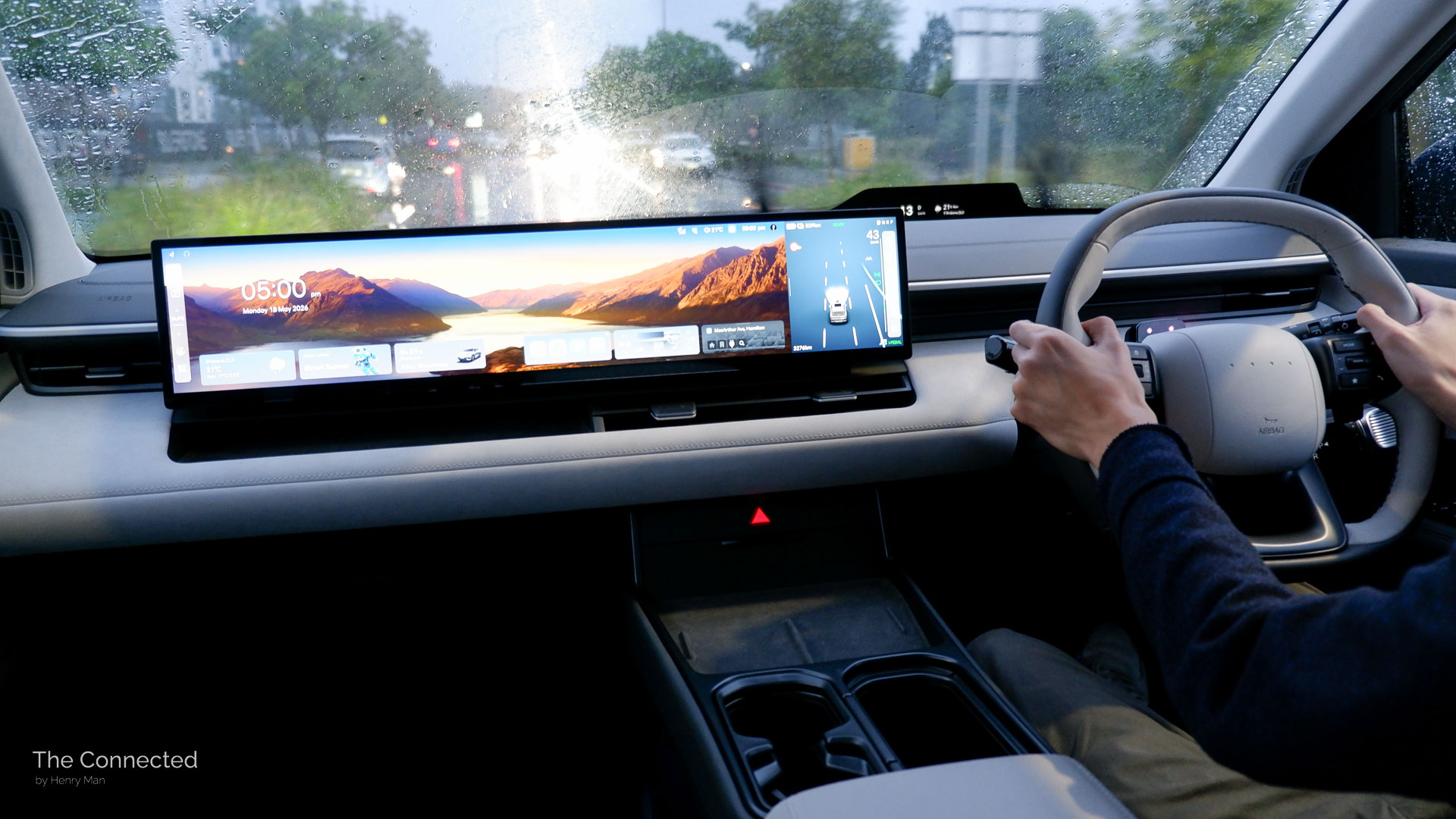
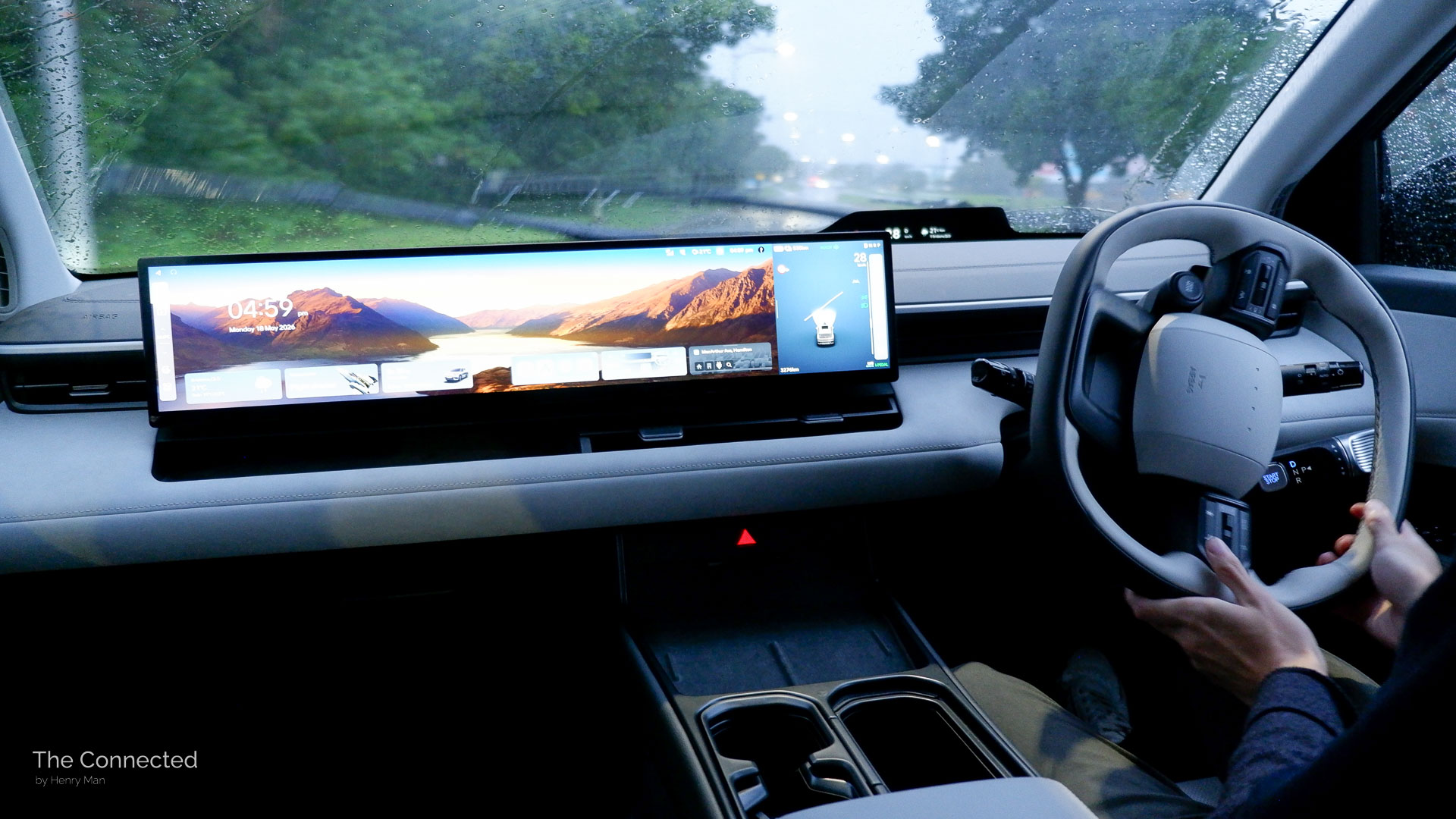
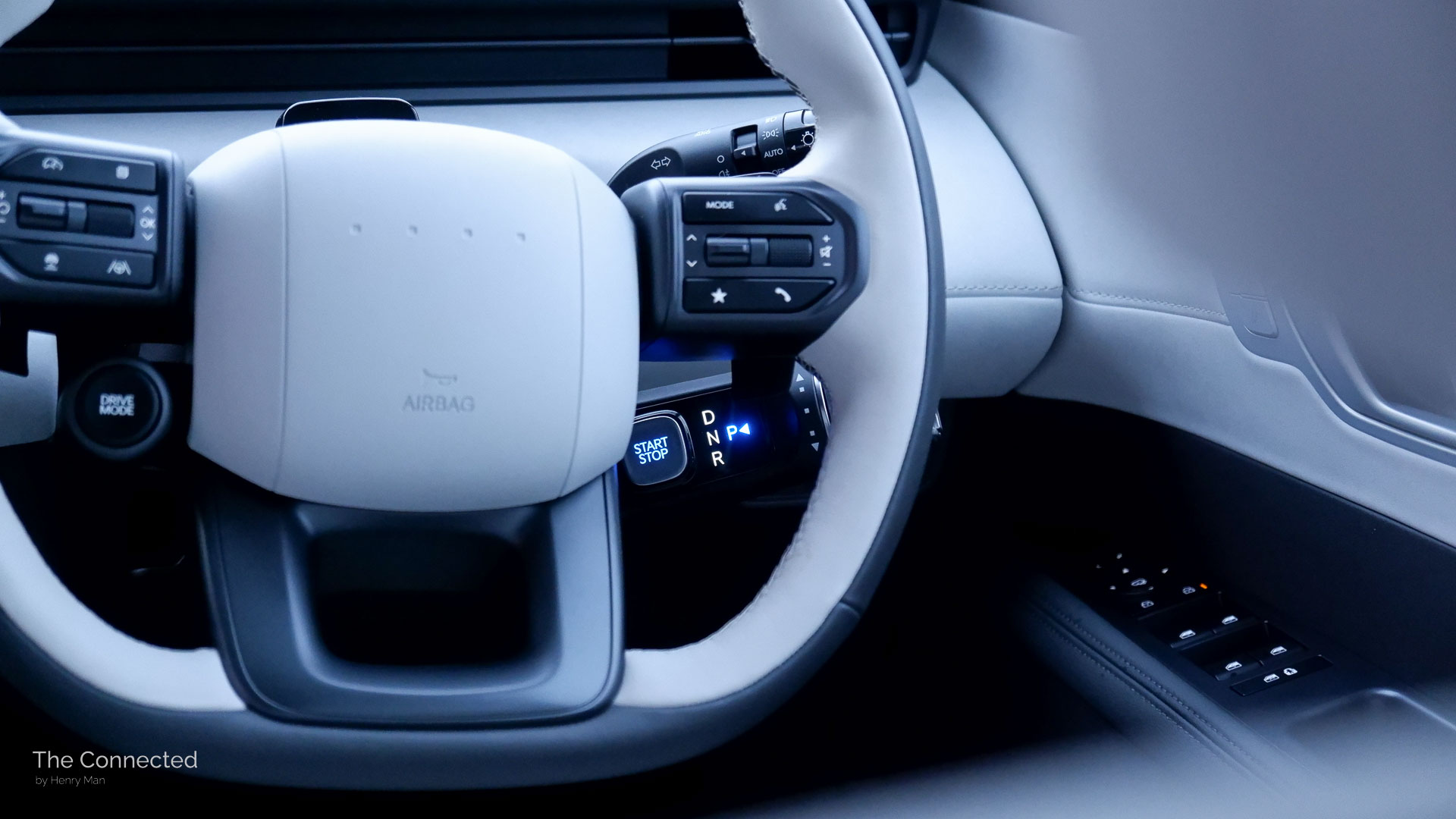
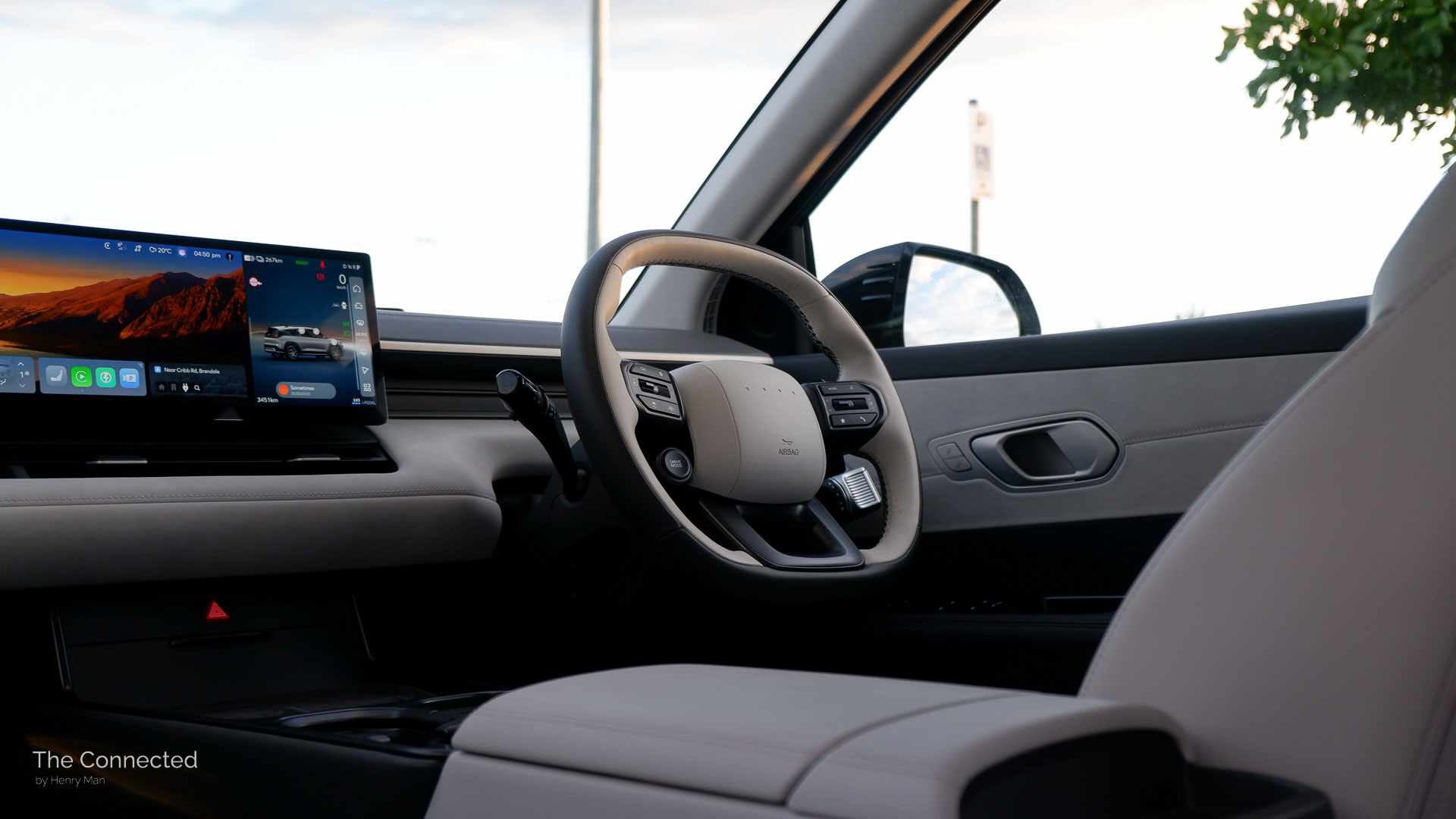
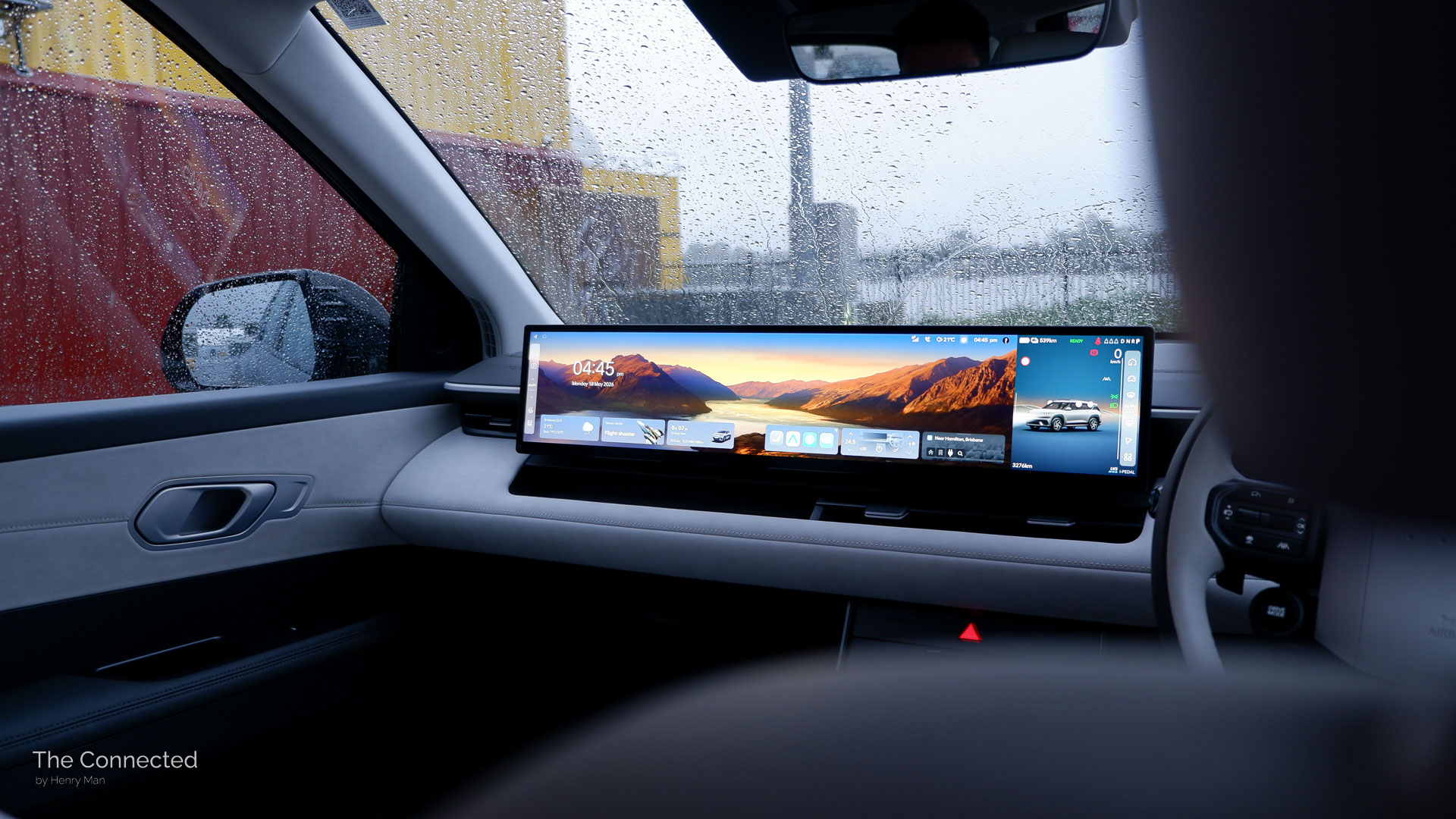
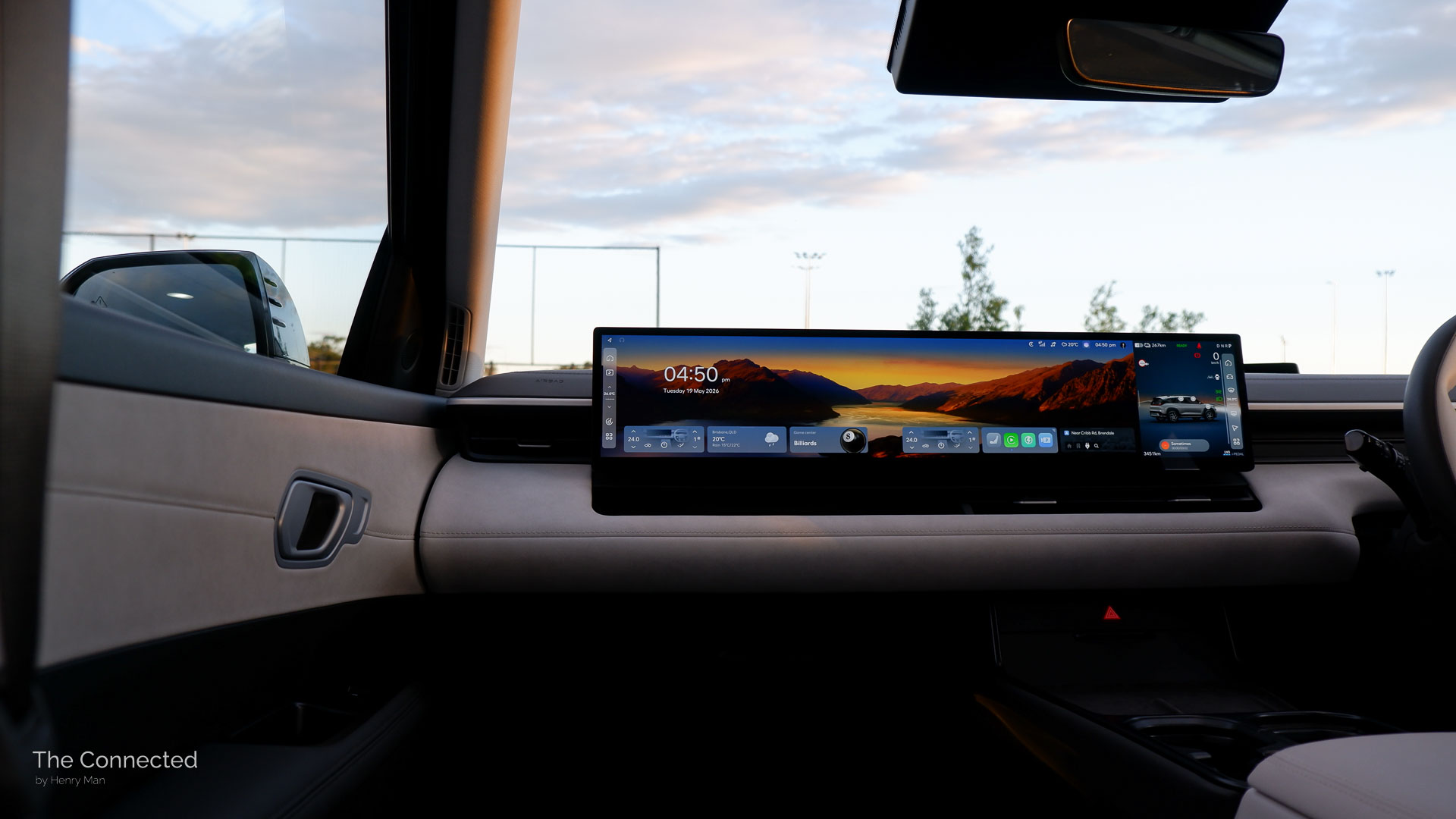
The standout is the 27-inch panoramic screen, a thin panel which spans from the front passenger to the centre, alongside a small D-shaped steering wheel and no dedicated instrument display.
Material quality is great with soft padding throughout high-touch areas, soft suede storage surfaces, metallic-like handles and switches, and matte plastic rather than gloss black.
While harder plastics are found lower down, the Elexio’s quality interior is a real highlight – and it doesn’t feel rubbery like some of its Chinese EV rivals.
Practicality.
2026 Hyundai Elexio Elite dimensions:
| Length x width x height | 4615 x 1875 x 1695mm |
| Wheelbase | 2750mm |
| Ground clearance | 160mm |
| Boot space (min / rear seats folded) | 506 / 1540L |
| Frunk space | N/A |
| Rear seat split fold | 60:40 |
| Child seat anchors | 2x ISOFIX and 3x top tethers |
| Air-conditioning system | Two-zone climate control with rear air vents |
The Hyundai Elexio is a family-friendly and practical midsize SUV, with only some omissions.
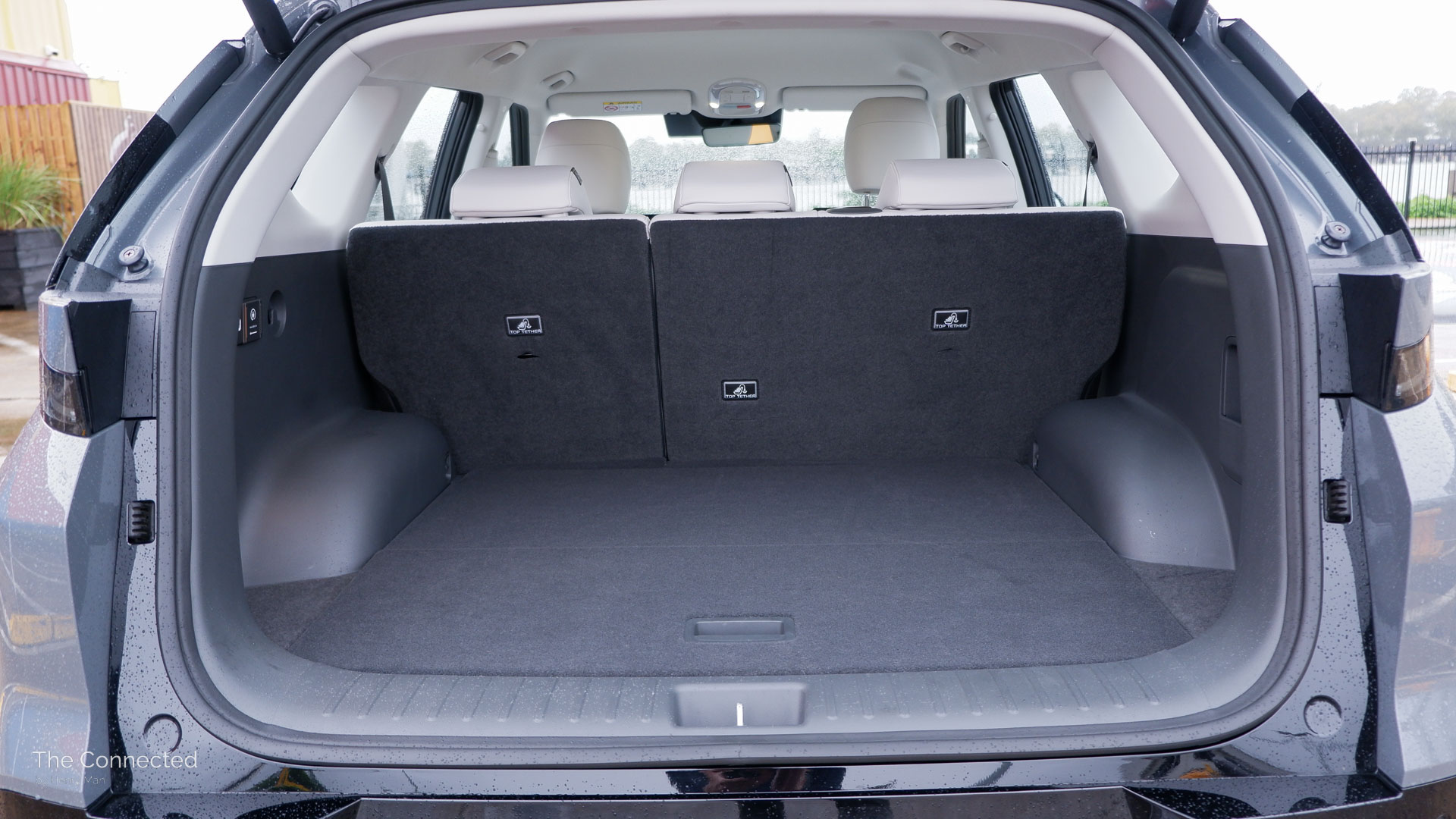
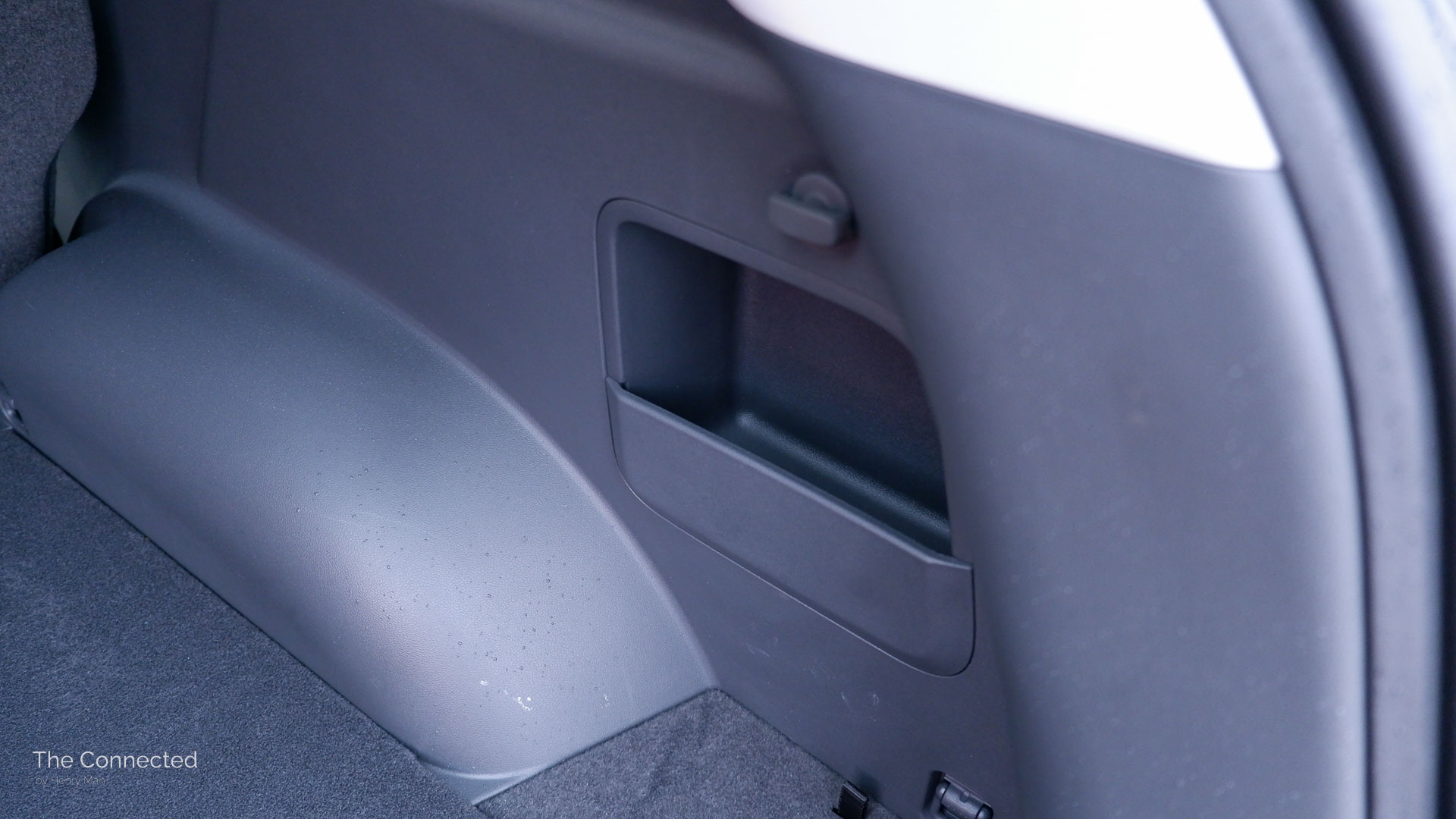
The 506-litre boot is large with a flat loading lip, covered pockets on each side, one bag hook, and a vehicle-to-load (V2L) power socket.
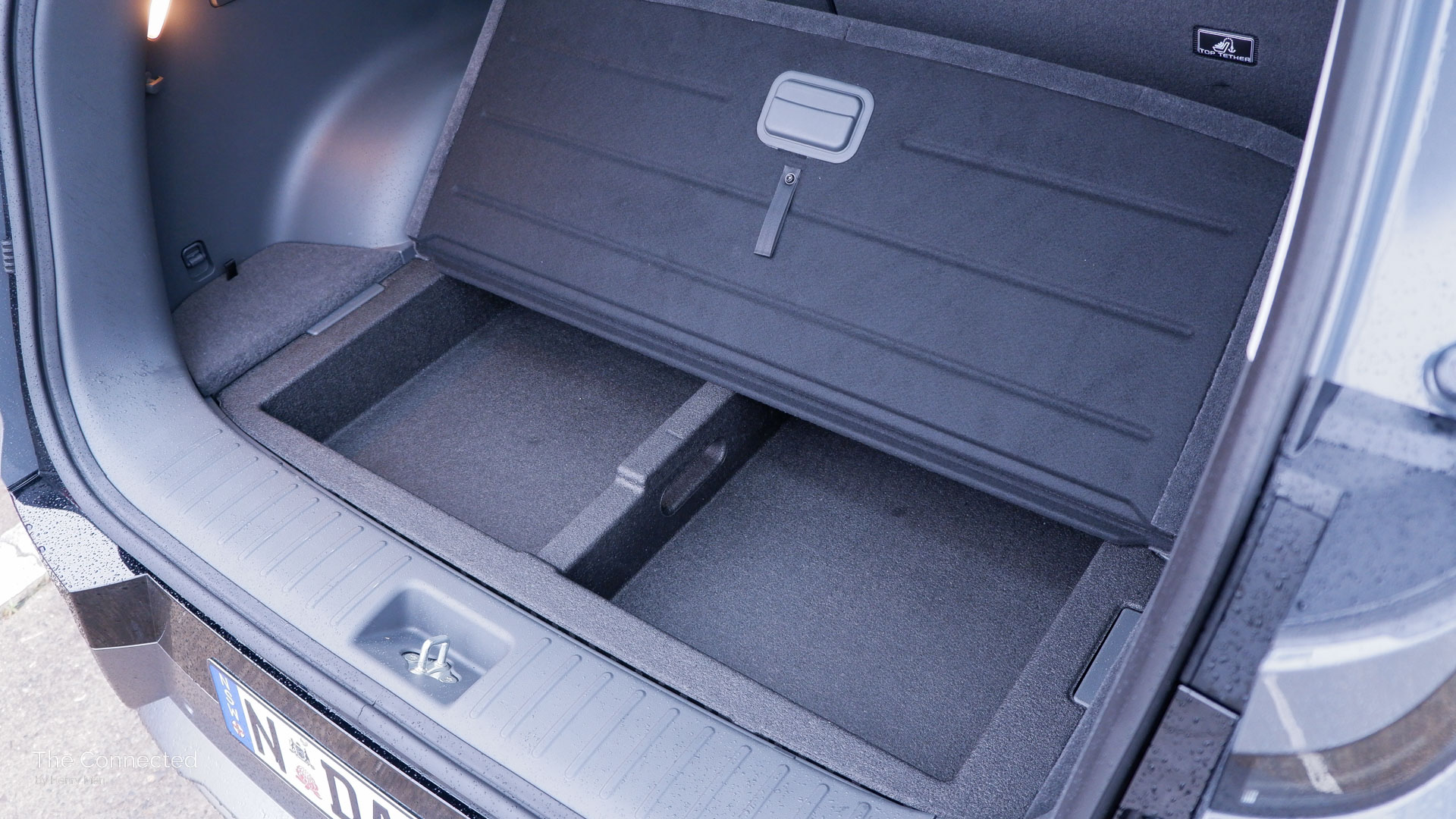
There’s some underfloor storage with a partition dividing the space in half. It perfectly fits the included tyre patch-up kit and trickle charging cable box.
Unfortunately, it doesn’t include a cargo blind just like the related Kia EV5 and has a halogen light only.
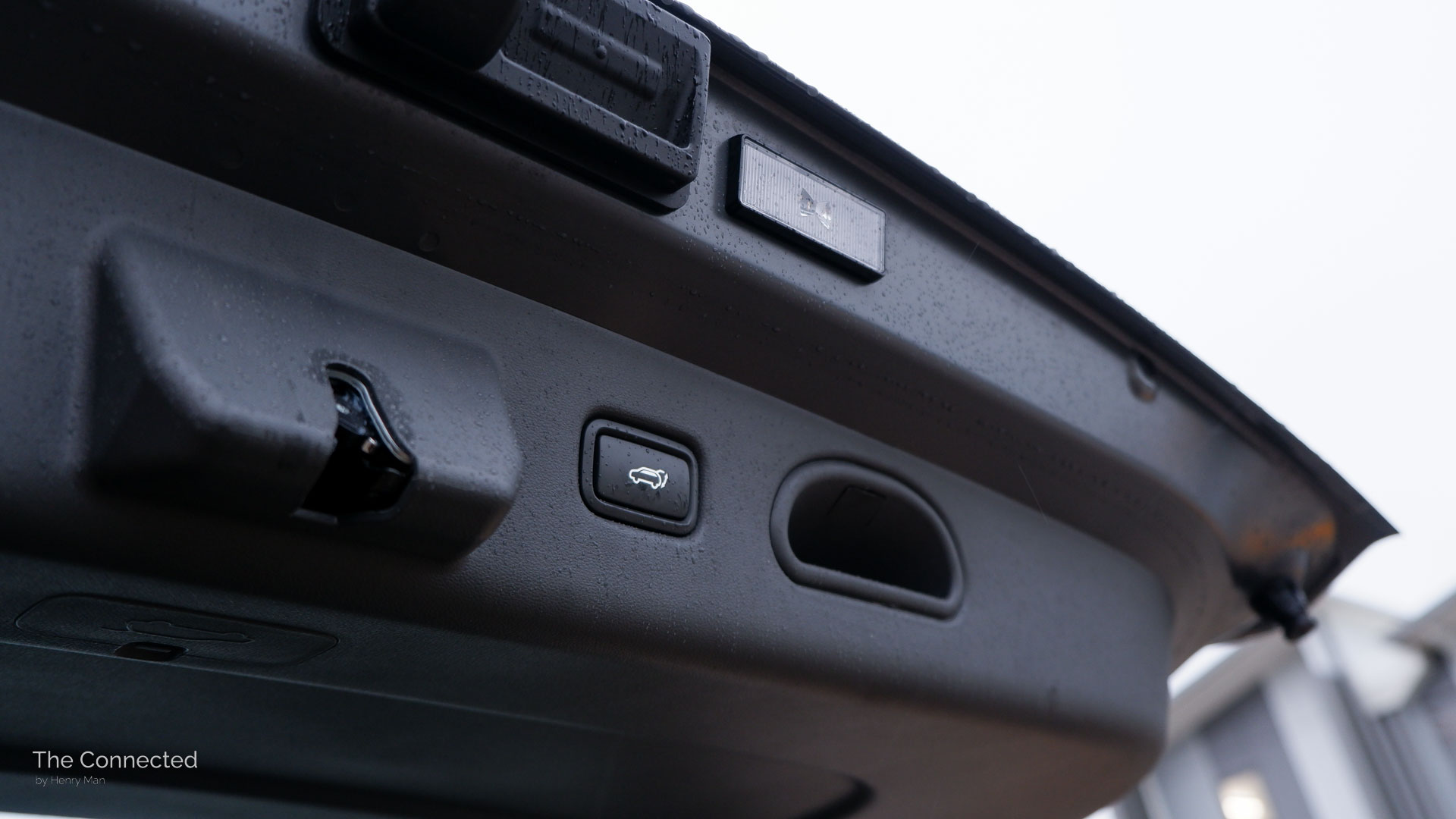
The electric tailgate can automatically open by standing behind with the proximity key for a few seconds, but it’s not possible if the car is on or if the doors are already unlocked. There’s no hands-free closing.
The Elexio doesn’t offer a frunk.
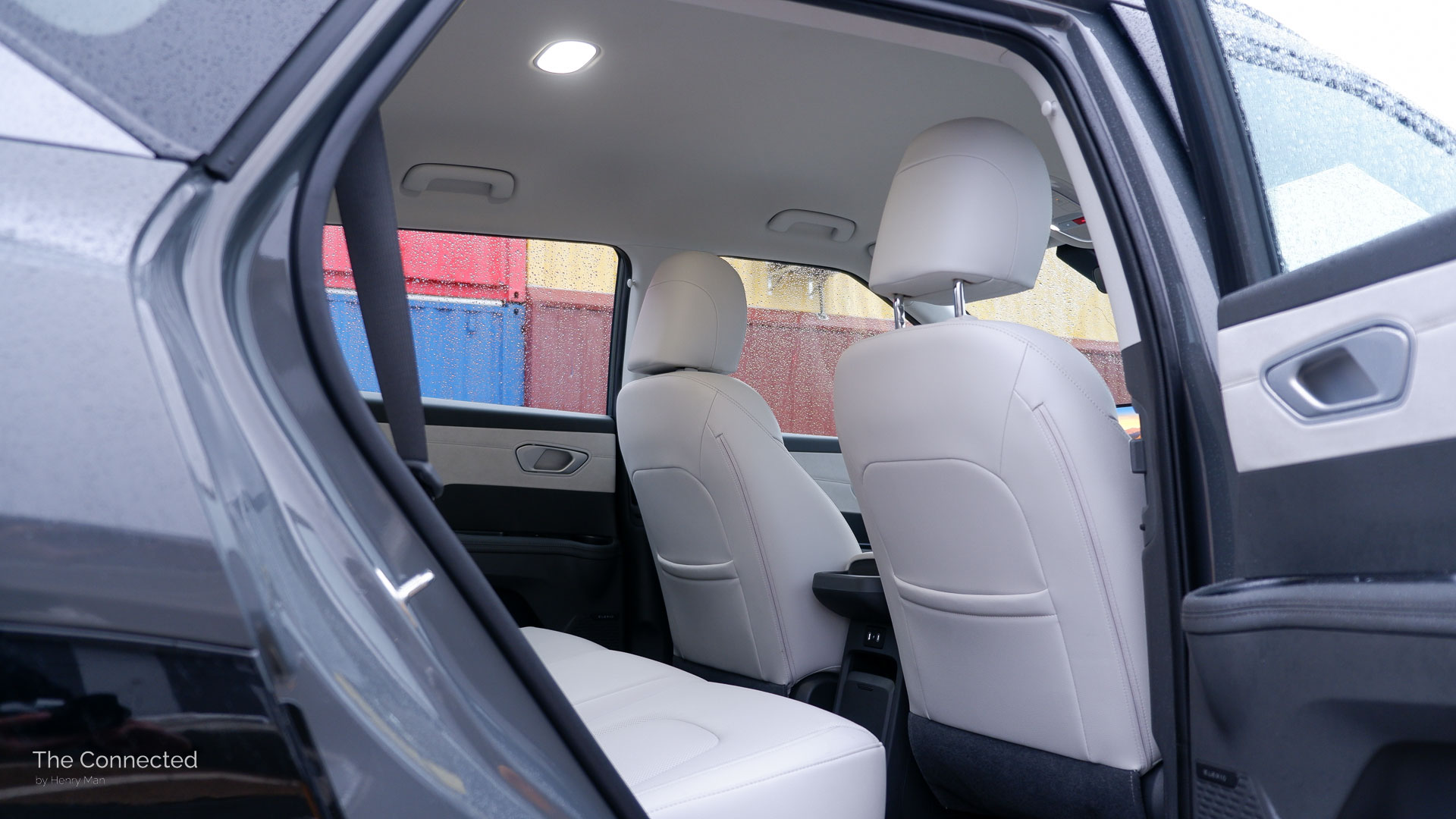
Stepping into the rear row, the Hyundai SUV offers plenty of legroom, a surprisingly commodious amount of headroom, and footroom underneath the raised front seats.
The floor is entirely flat with no perched up knee seating position typical of EVs, with B-pillar mounted air vents, a handy Palisade-style cup holder at each door, two USB-C charging ports, seatback pockets, and a fold-down armrest with another two cup holders.
The Hyundai Elexio also features a microfibre-lined open shelf behind the centre console, plus a slide-out private storage box.
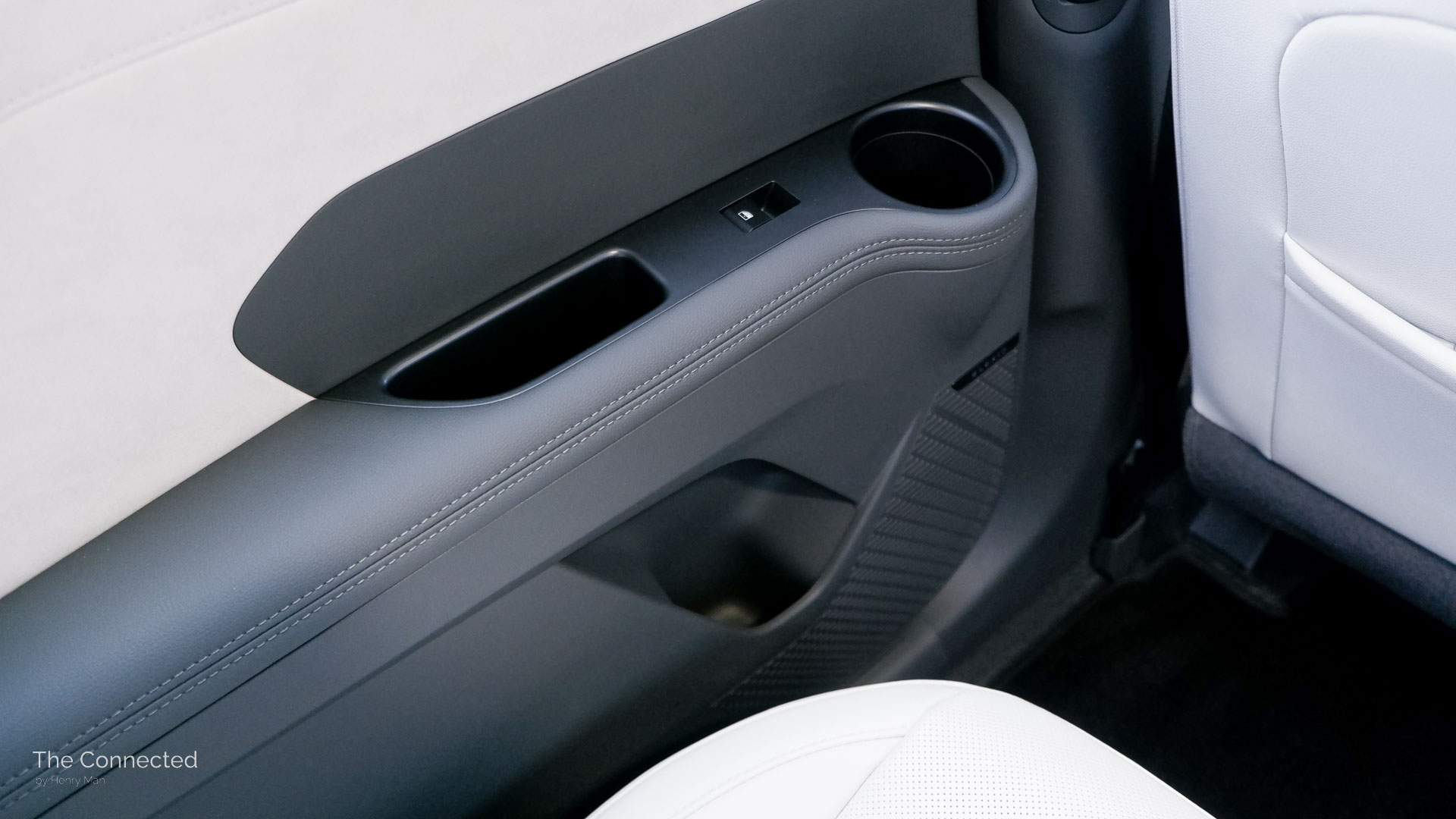
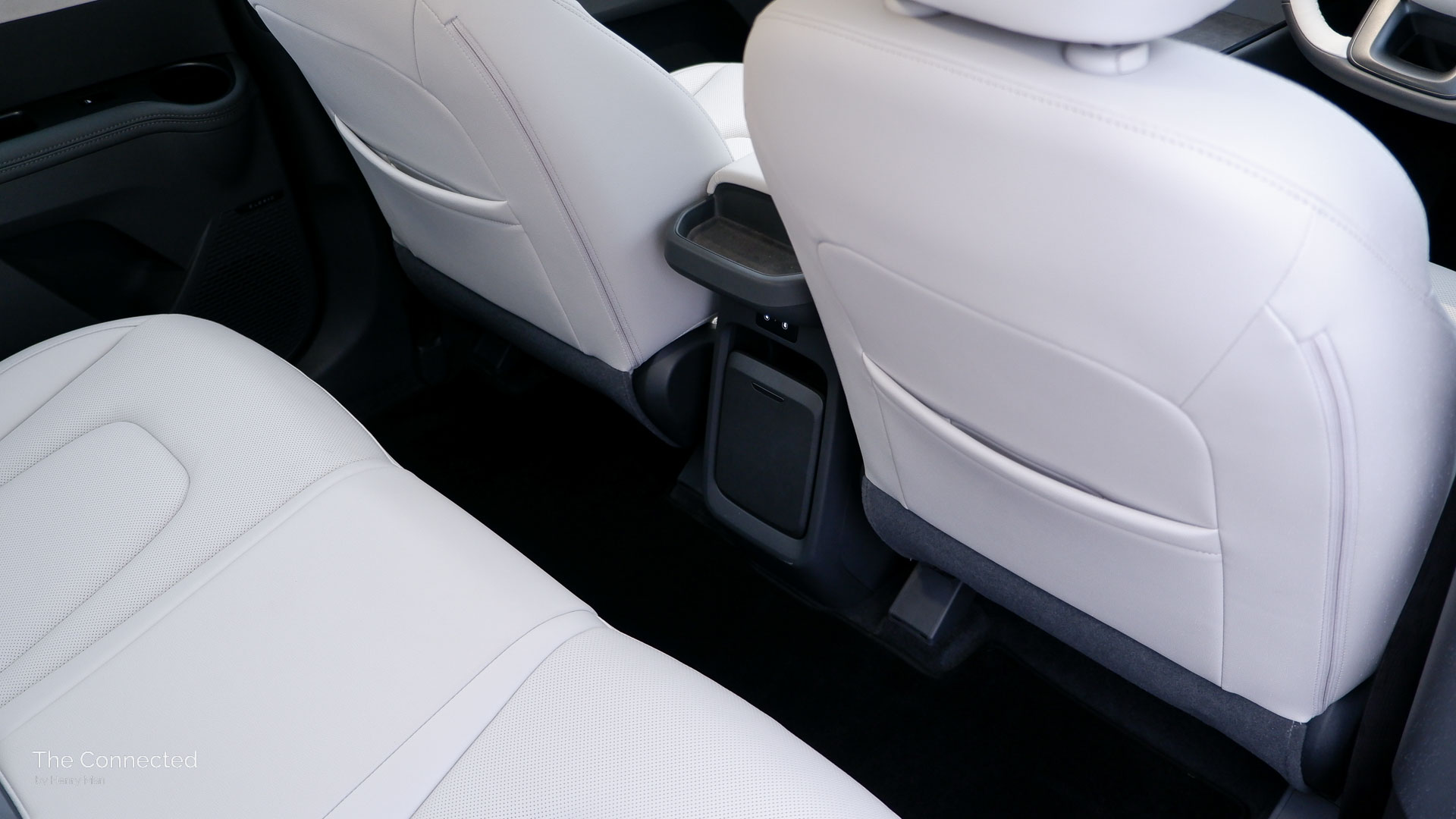
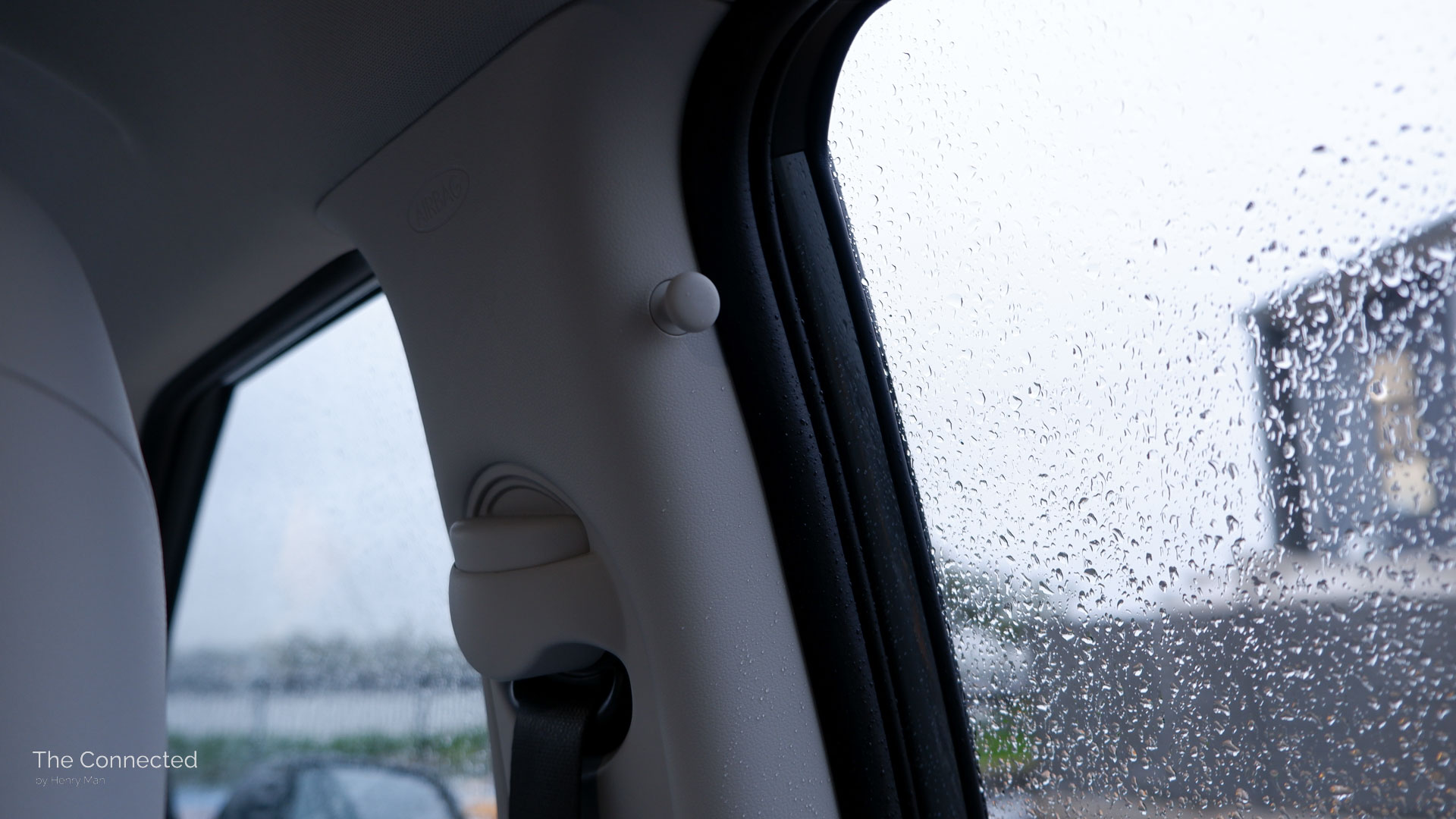
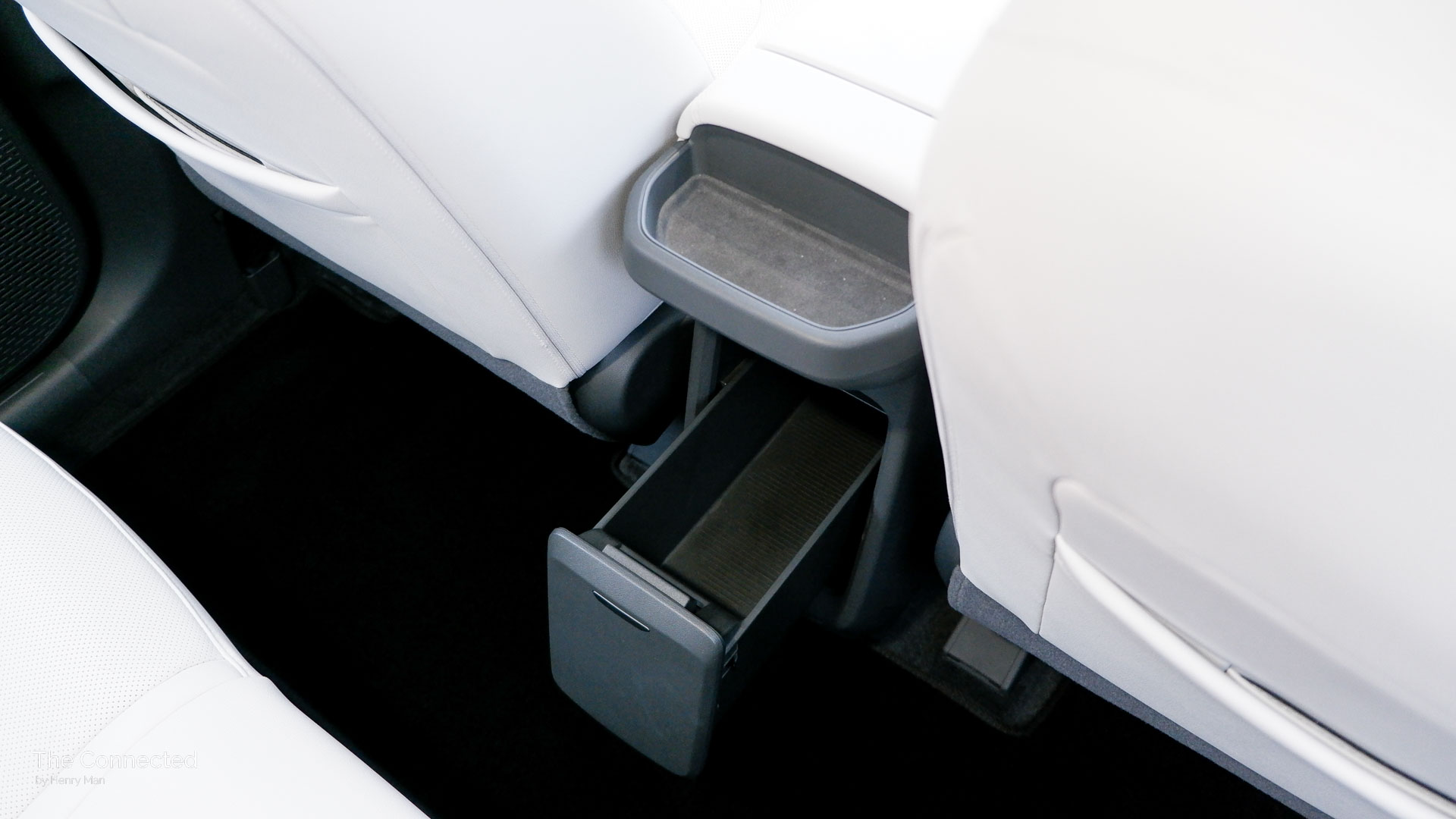
Disappointingly, as typical of Hyundais, all door pockets are very constricted particularly at the back doors.
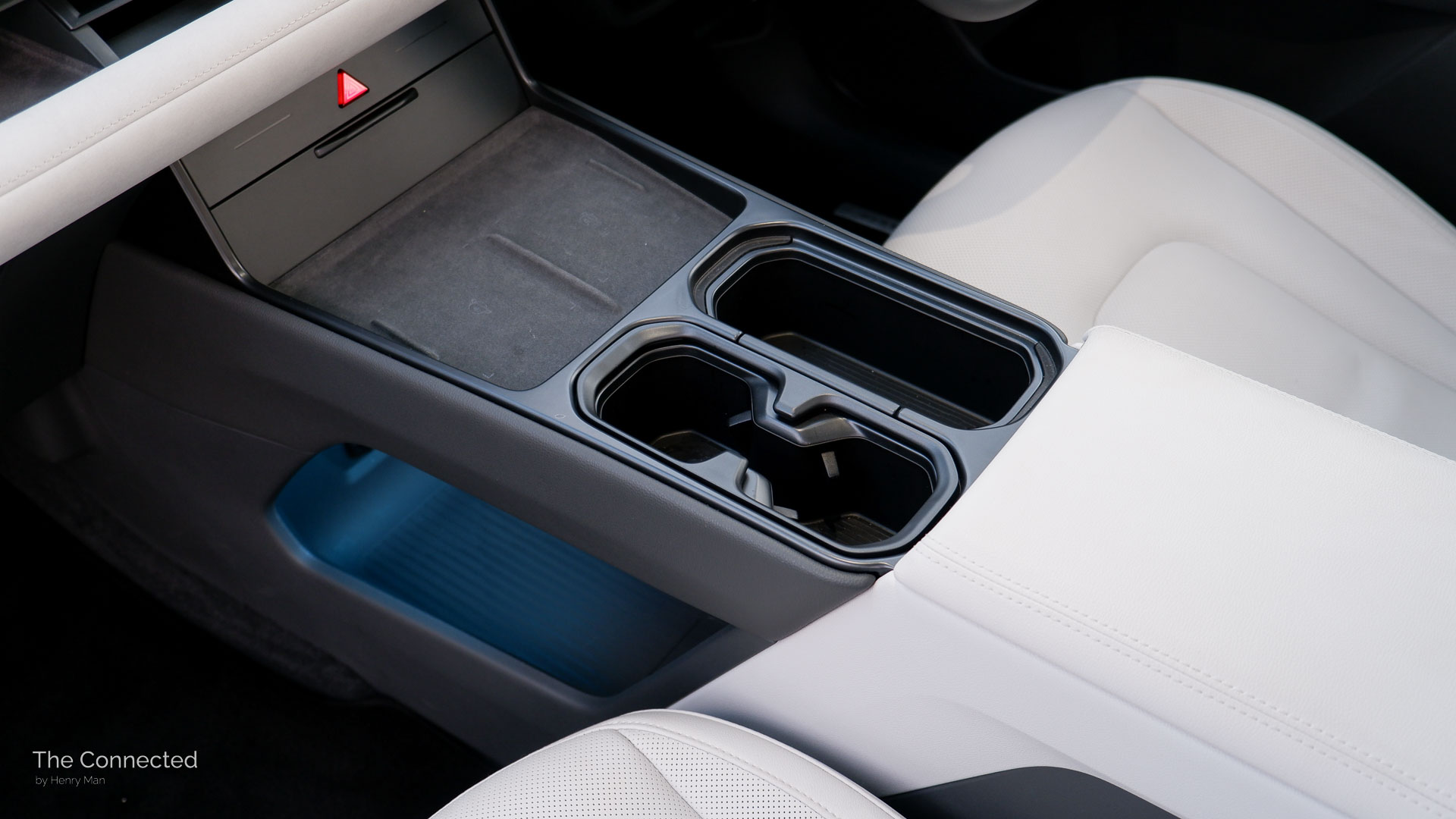
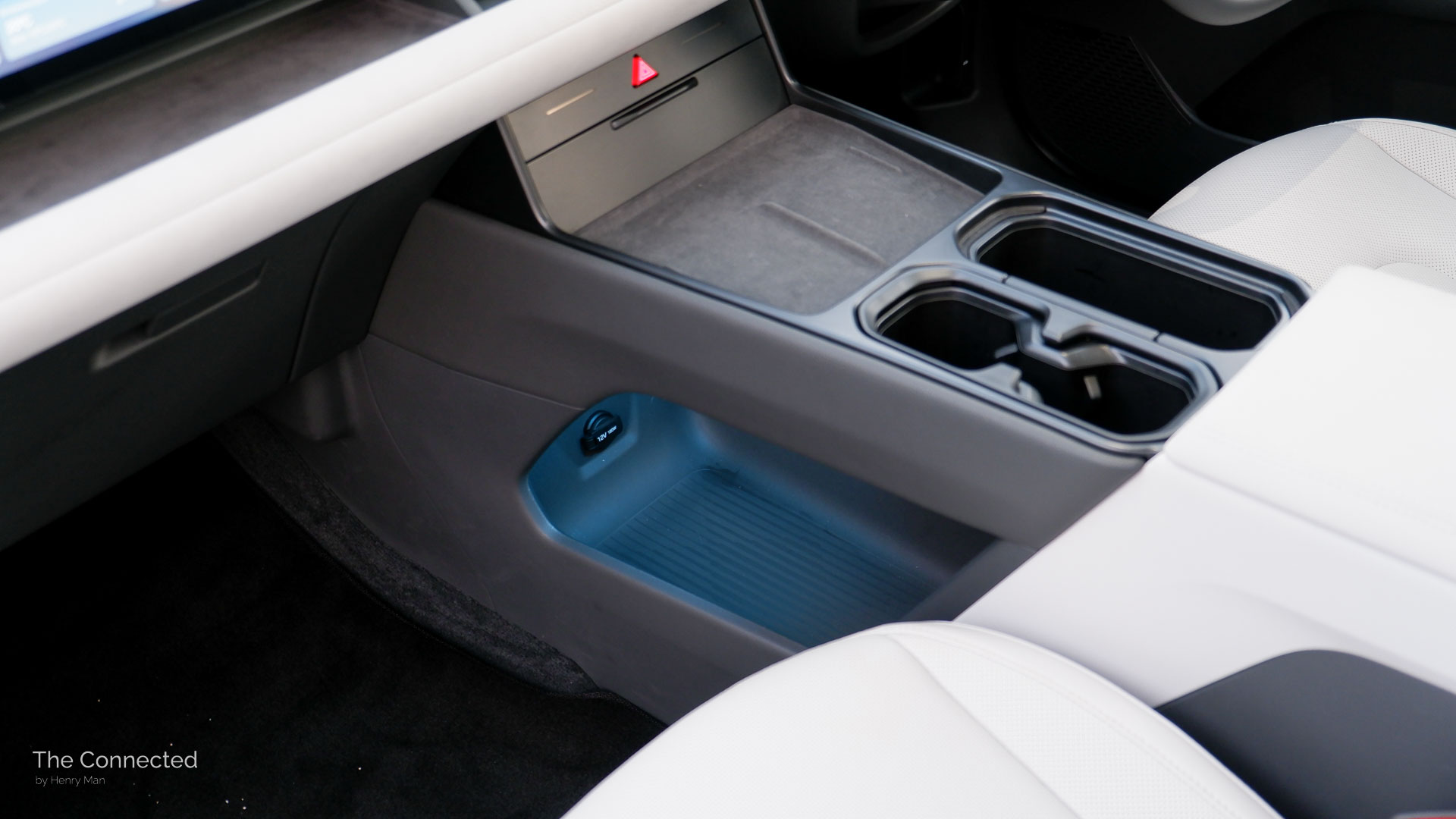
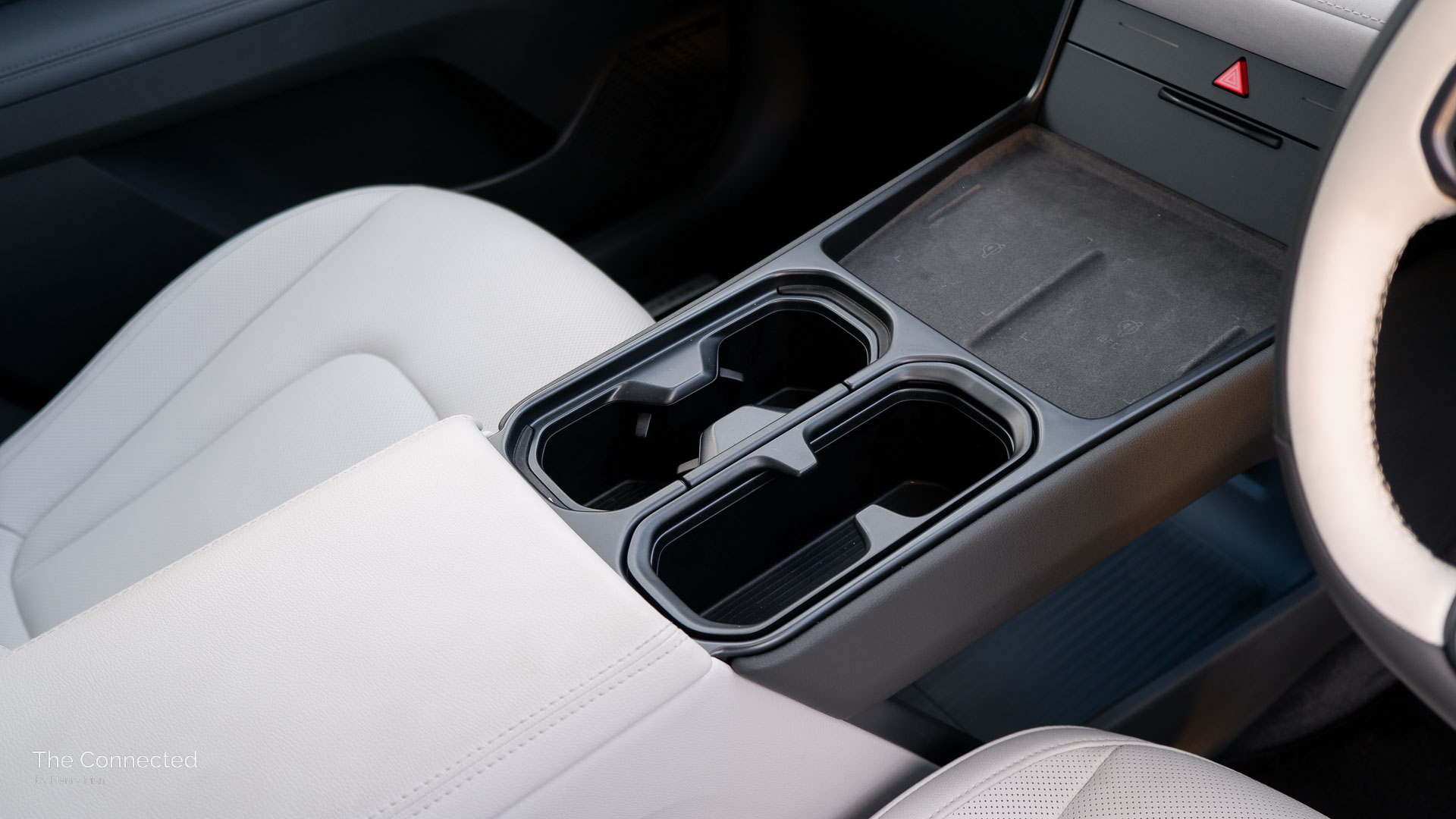
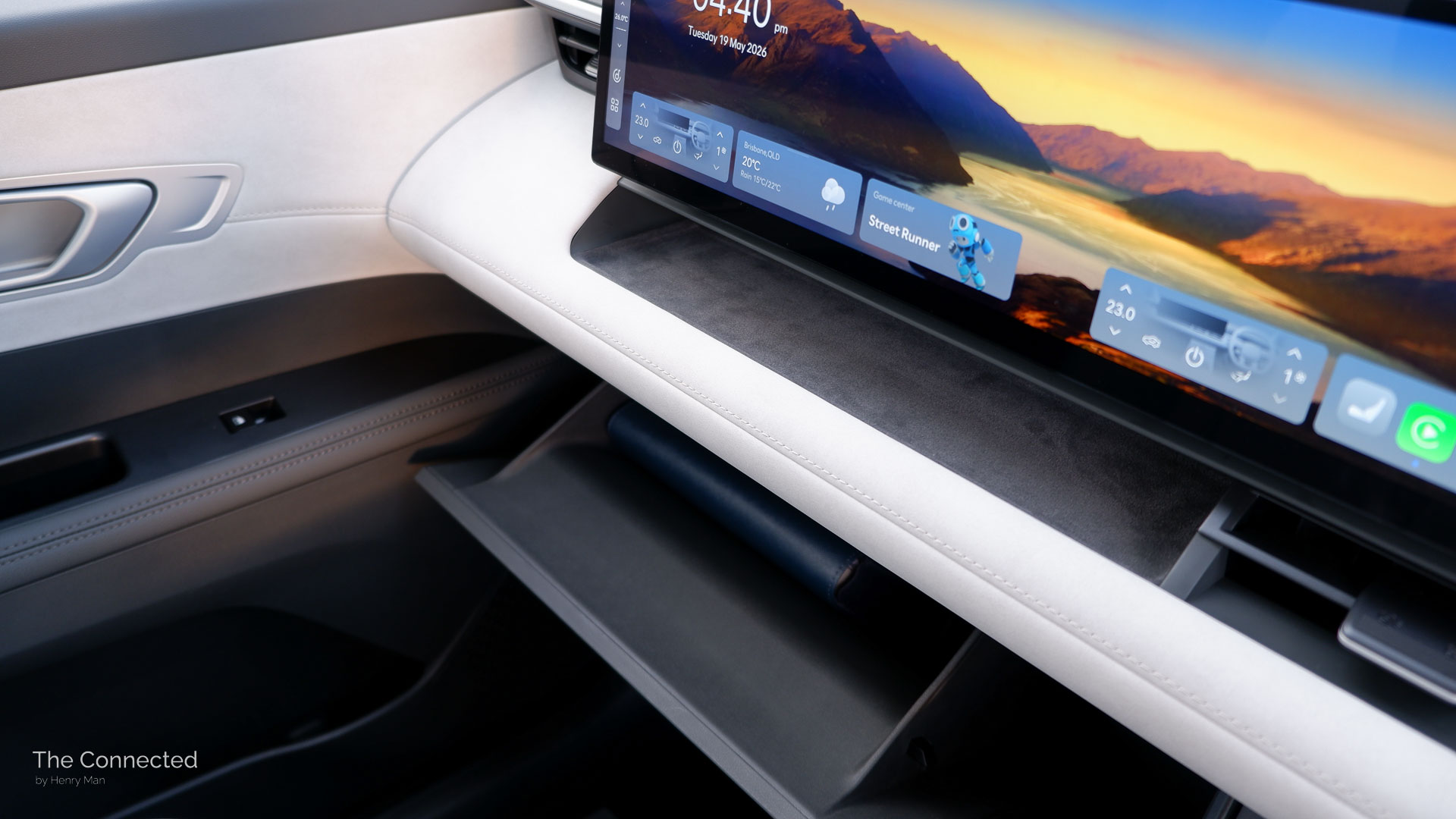
The front row is similarly practical with deep centre armrest storage with three USB-C ports, a well-sized glovebox, two gripped cup holders, an open slot beside, dual Qi wireless charging pads lined in soft microfibre, and extendable sun visors.
There’s an open tray under the centre console with blue LED illumination at night, but the surface is plastic and not lined with rubber so items slide around while driving.
Uniquely, the Elexio incorporates a clever cup holder design where the frame can be unfolded to result in four cup holders. More cars should have this.
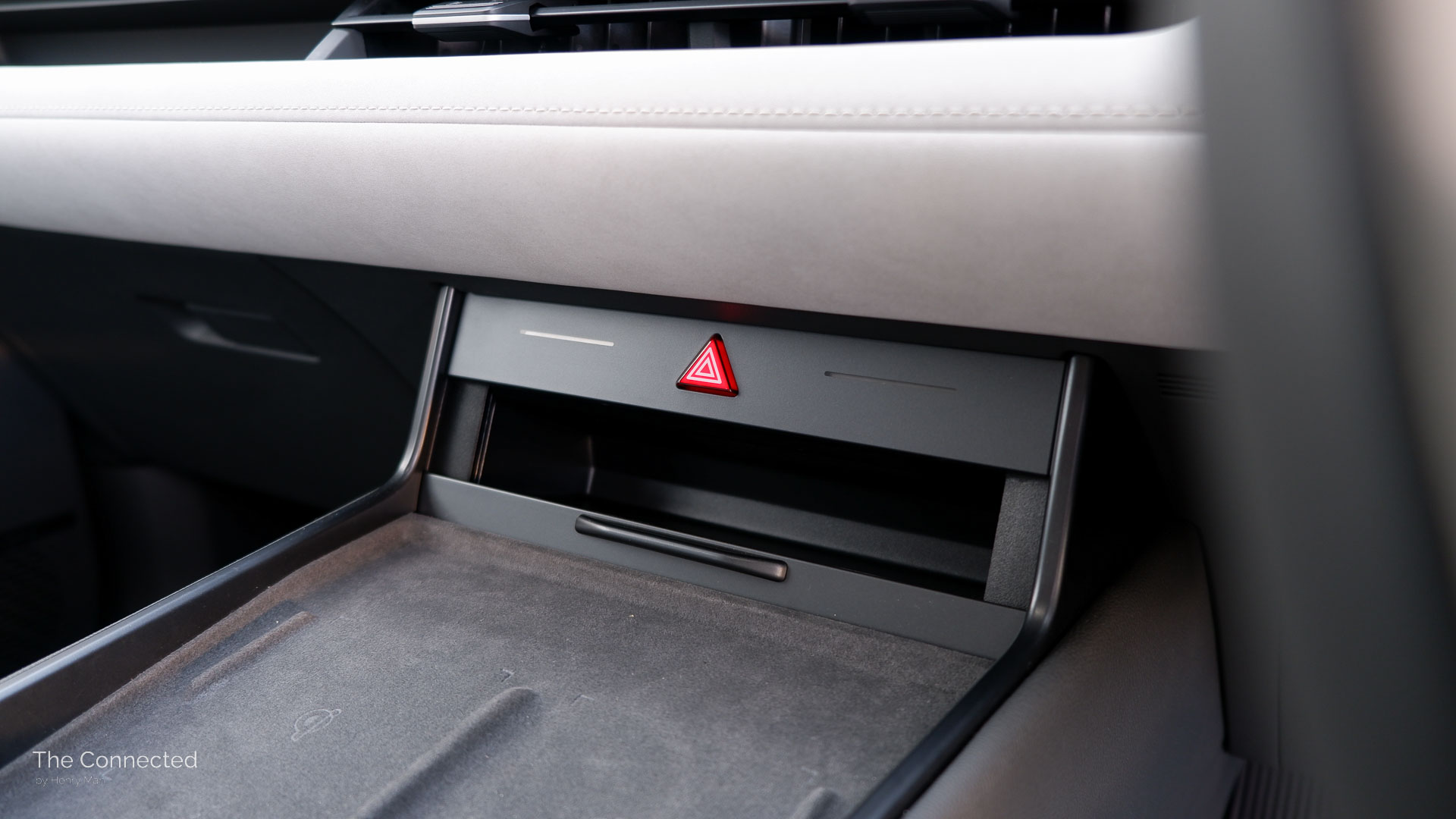
It also has a small hidden storage slot in front that’s perfect for placing the car key and an open shelf storage across the dashboard lined in a soft suede-like surface.
The current range-topping Elite doesn’t offer a sunroof.
Like many electric cars, the Elexio adopts flush-type exterior door handles which all automatically pop out when unlocked. While this facilitates better accessibility, it opens on one side, feels flimsy to use and slippery when wet.
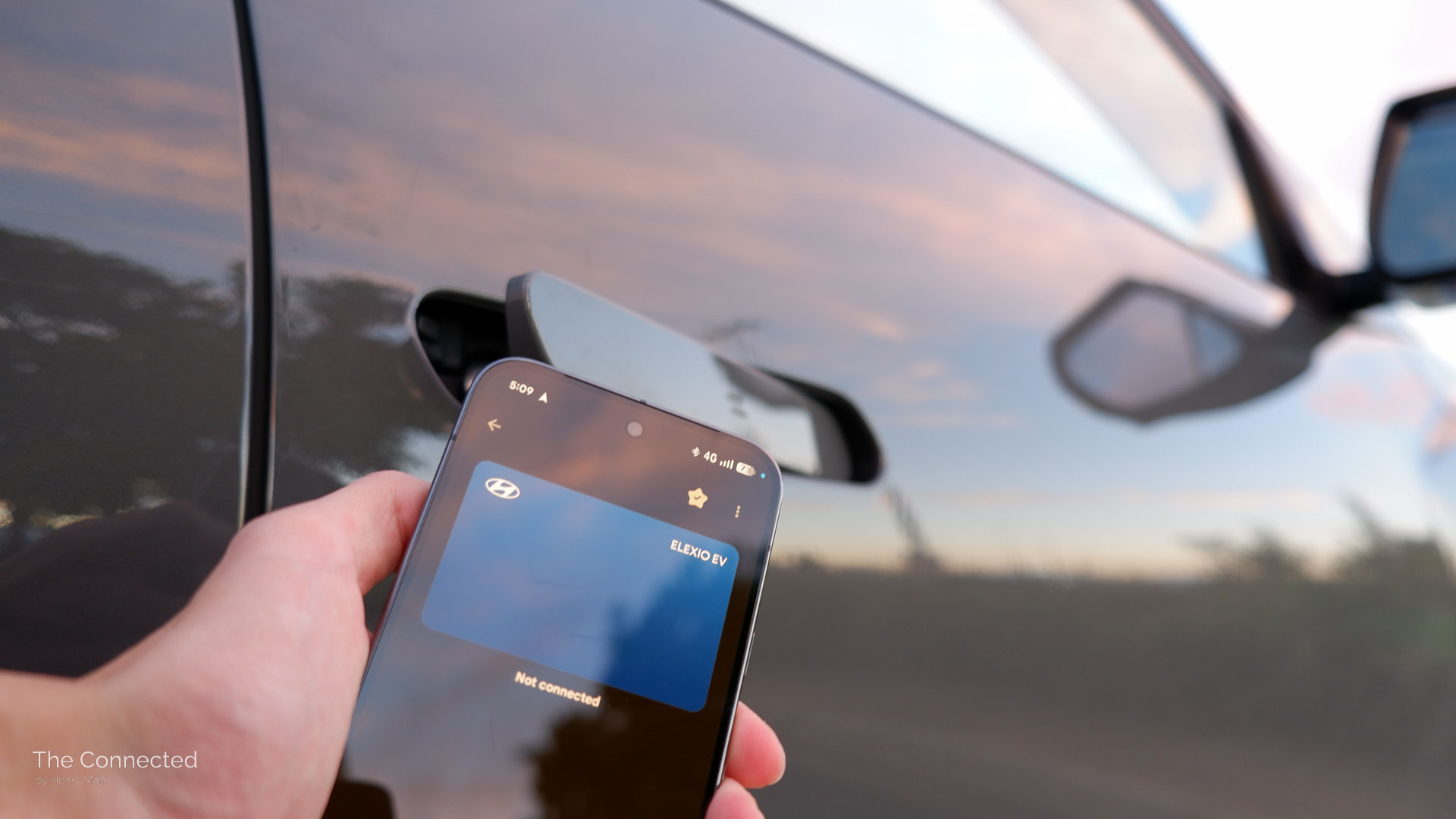
Apple CarKey and Google Car Key compatibility is here, but owners need to touch the paired phone on the near field communication (NFC) sensor at the door handle and left-side Qi wireless charging pad, so it isn’t as seamless as the Tucson, Palisade or Ioniq 9 where they have ultra wideband support.
Technology.
2026 Hyundai Elexio Elite tech features:
| 27-inch main and passenger touchscreen running Connect-C | Head-up display |
| Built-in arcade games and Smart Scenes | Six speakers |
| Wireless/wired Apple CarPlay and Android Auto | 2x Qi wireless charging pads |
| Built-in maps | 5x USB-C and 1x 12-volt charging ports |
| Bluelink connected services with mobile app (five years included) | Proximity key with auto unlocking, auto-folding mirrors, and pop-out door handles |
| OTA software update capability | Digital Key 2 Touch with NFC Apple CarKey and Google Car Key compatibility (five years included) |
While the Elexio stands out with a large single main and passenger windscreen, the software is highly distracting and sets a precedent for future Hyundais.
Debuting for the first time for the South Korean carmaker is a single 27-inch widescreen running new Connect-C software based on Android Automotive – similar to the new Mazda CX-6e.
It’s divided by the main portion and front passenger, with a home screen typical of layouts from other Chinese cars, the choice of 2D and animated 3D wallpapers, and a sidebar of shortcuts on each edge.
Although there are a number of cool arcade games (most of which imitate genuine titles), they must be played full screen while parked so the passenger can’t play it while driving.
The built-in Hyundai map can be expanded across the entire screen, too.
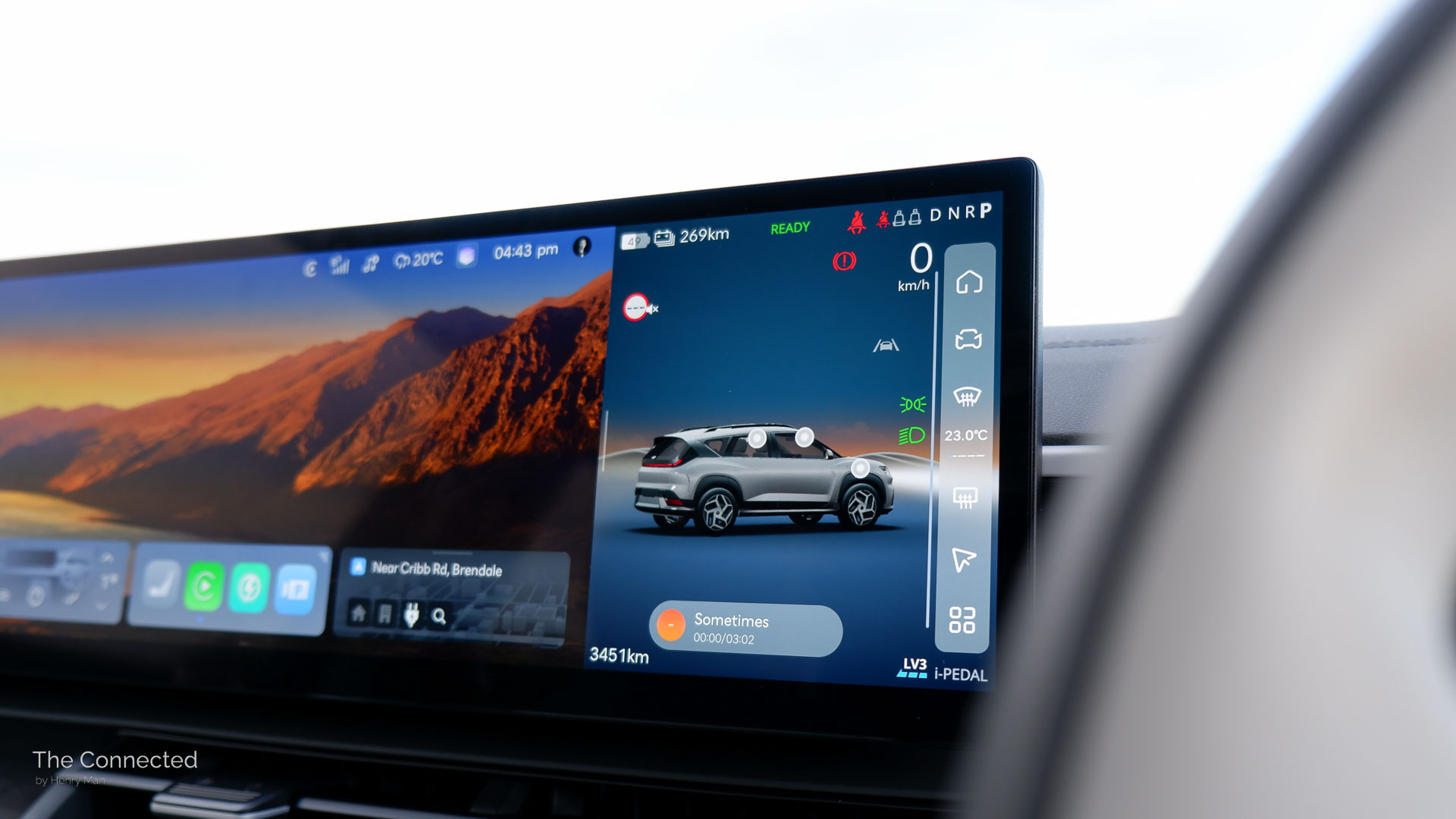
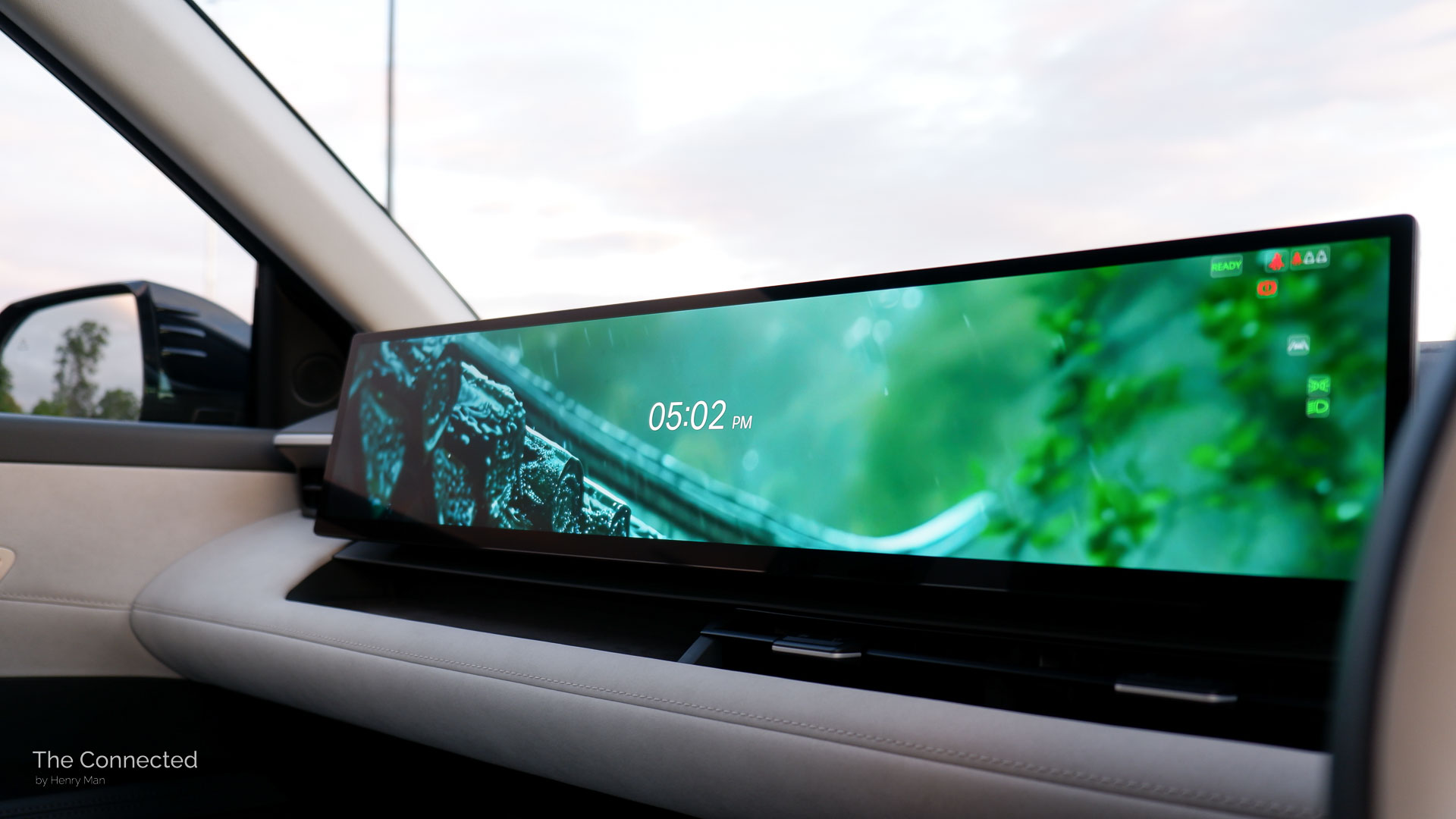
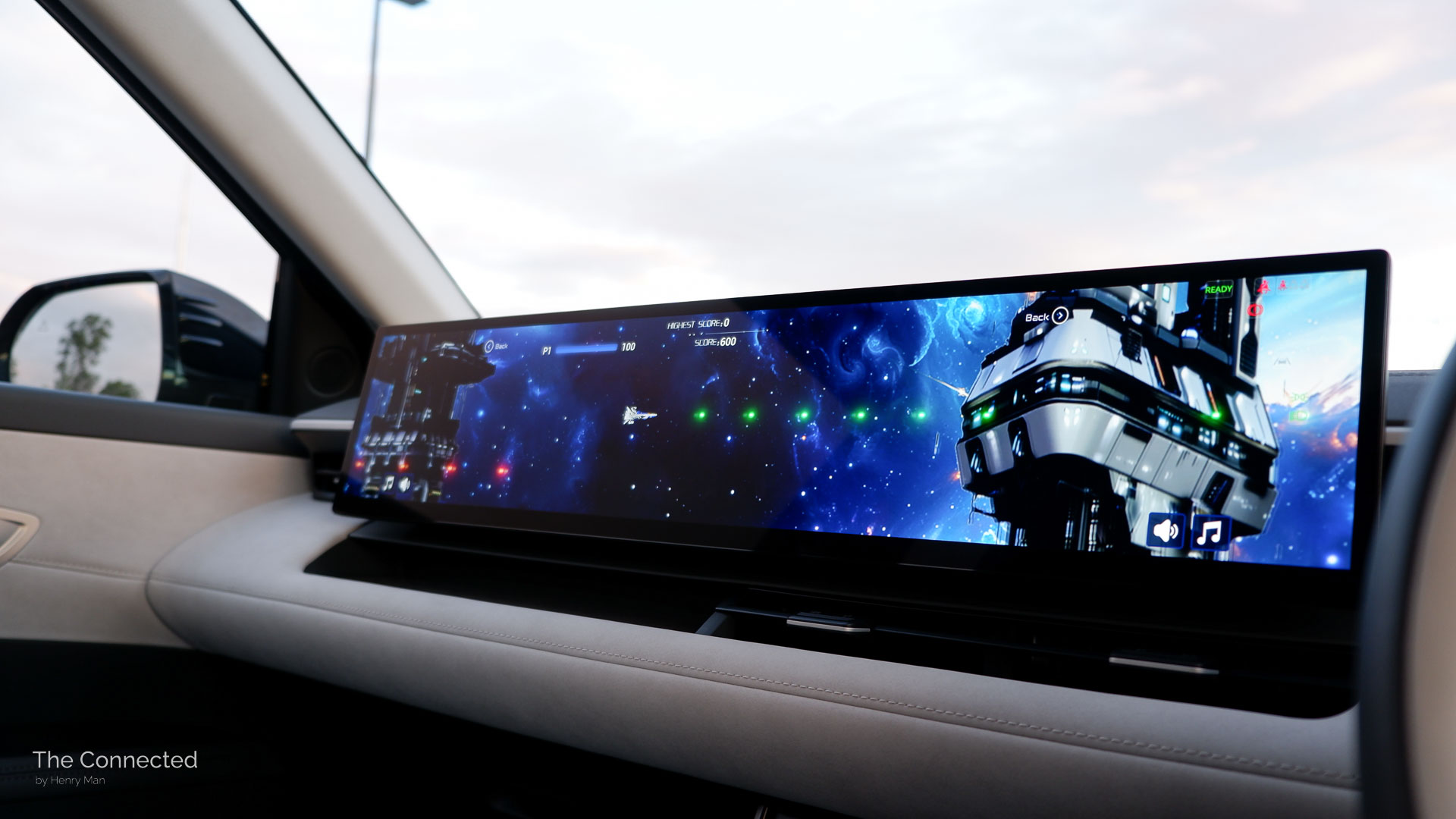
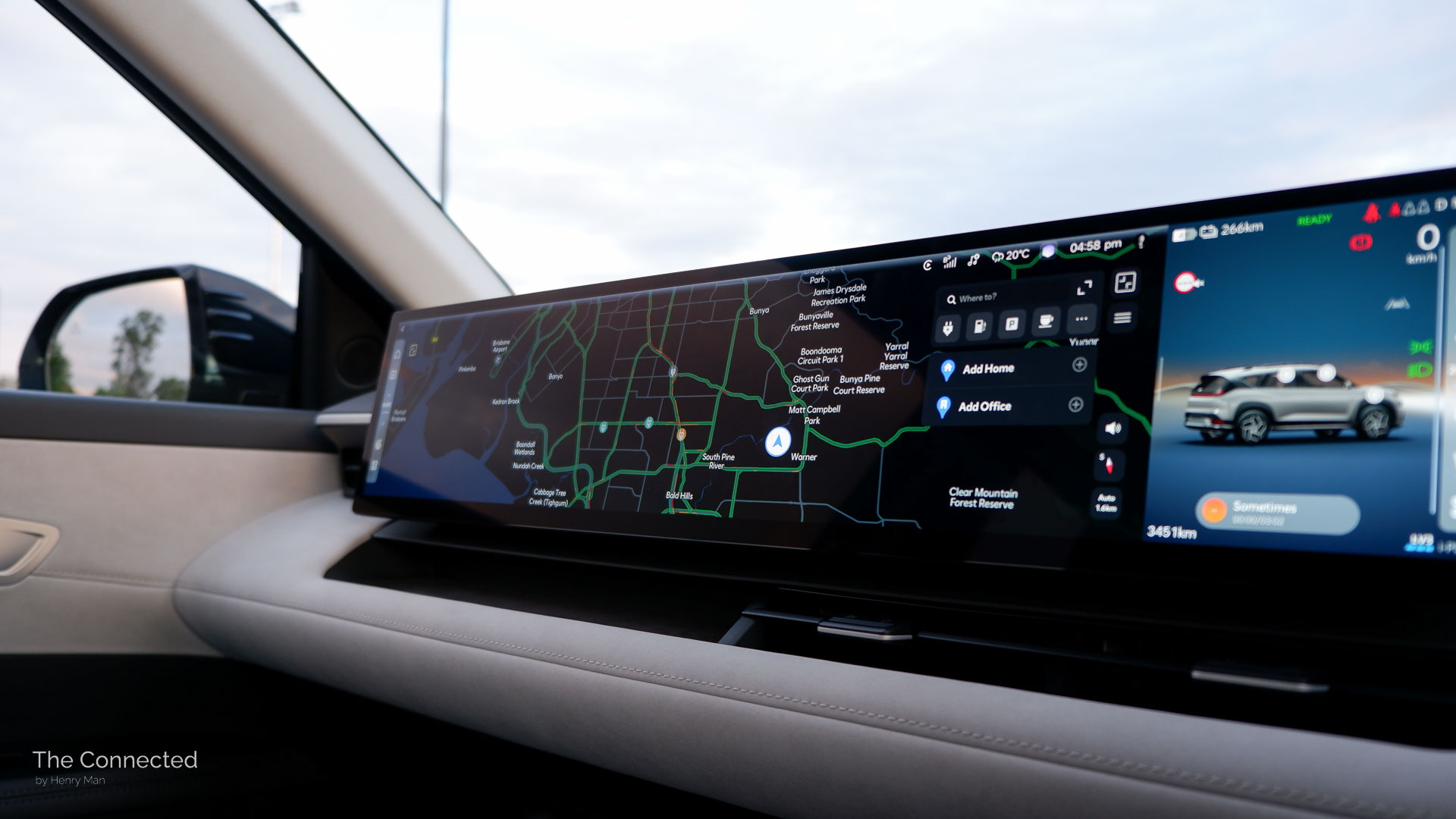
While the 4K resolution display is clear, bright and has a less-reflective matte coating, the software is poorly designed and highly distracting.
The sidebar icons are tiny and fiddly to touch while driving and the navigation widget card is bewilderingly fixed to be closest to the driver.
The screen real estate feels wasted with no video streaming apps (only USB video) and no built-in web browser as per the Tesla Model Y.
At the same time, the structure of certain elements such as the vehicle settings remains familiar to other Hyundais – just with different graphics and layout – and there are no English oddities that you often find in other Chinese cars.
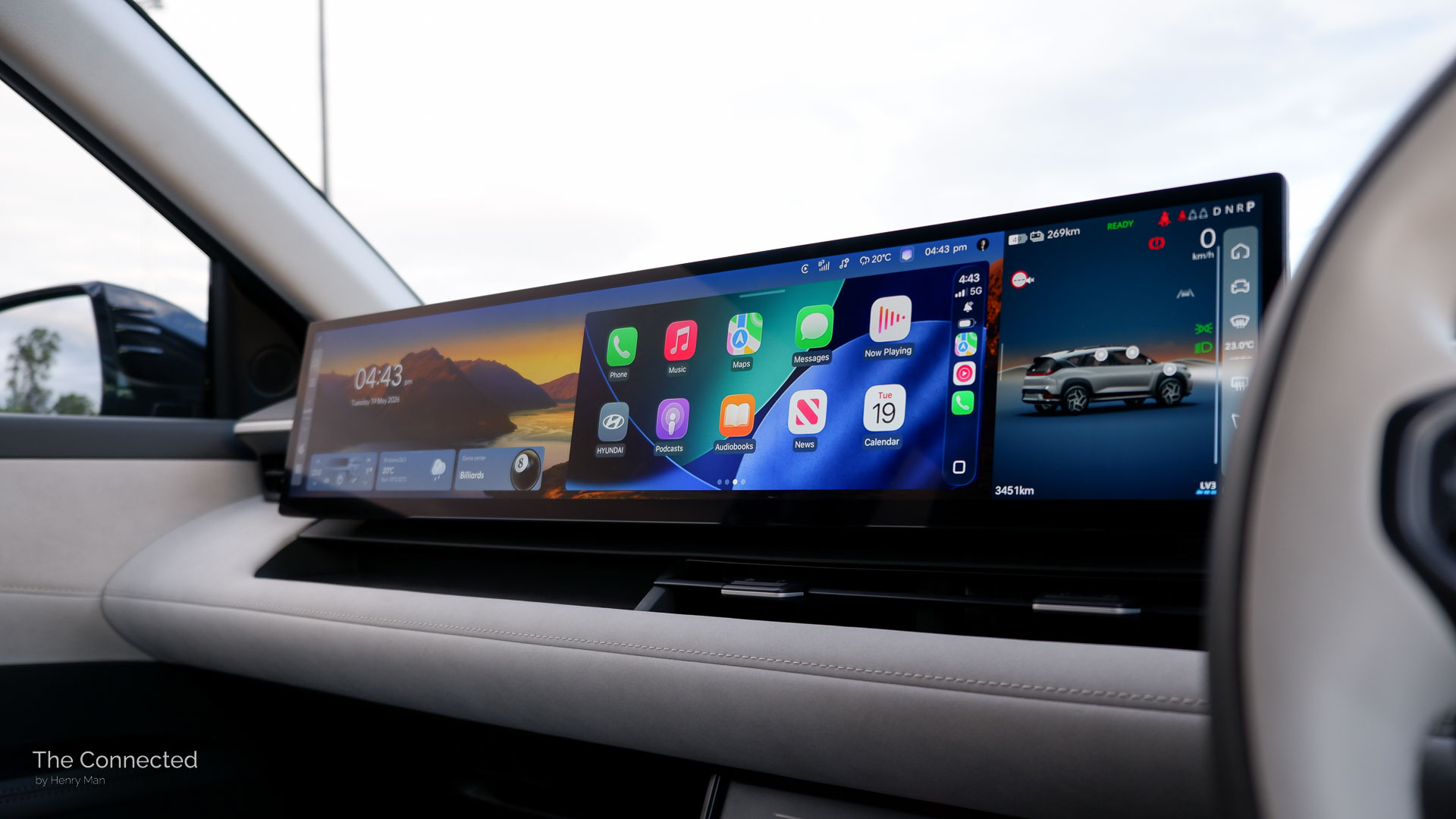
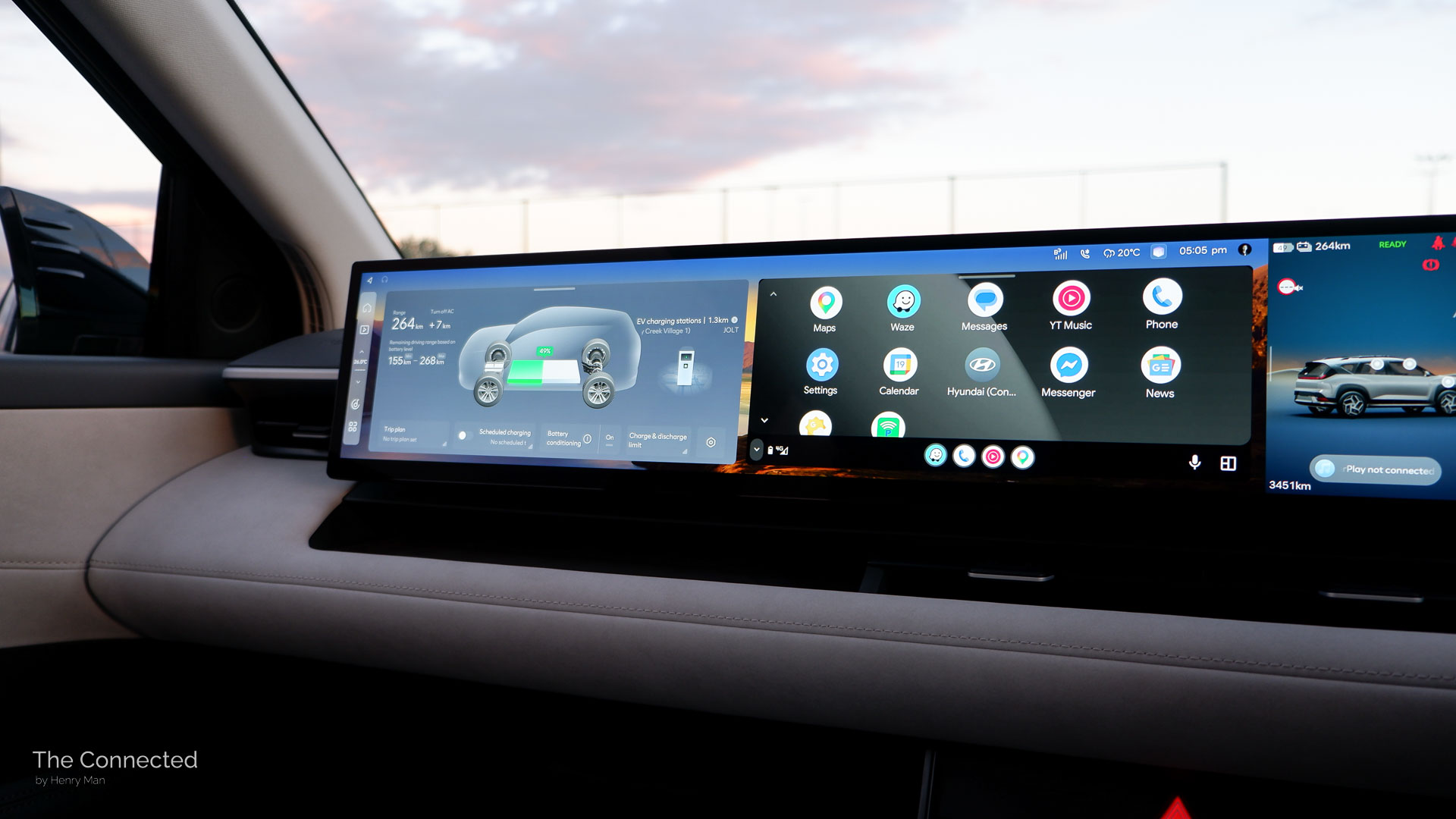
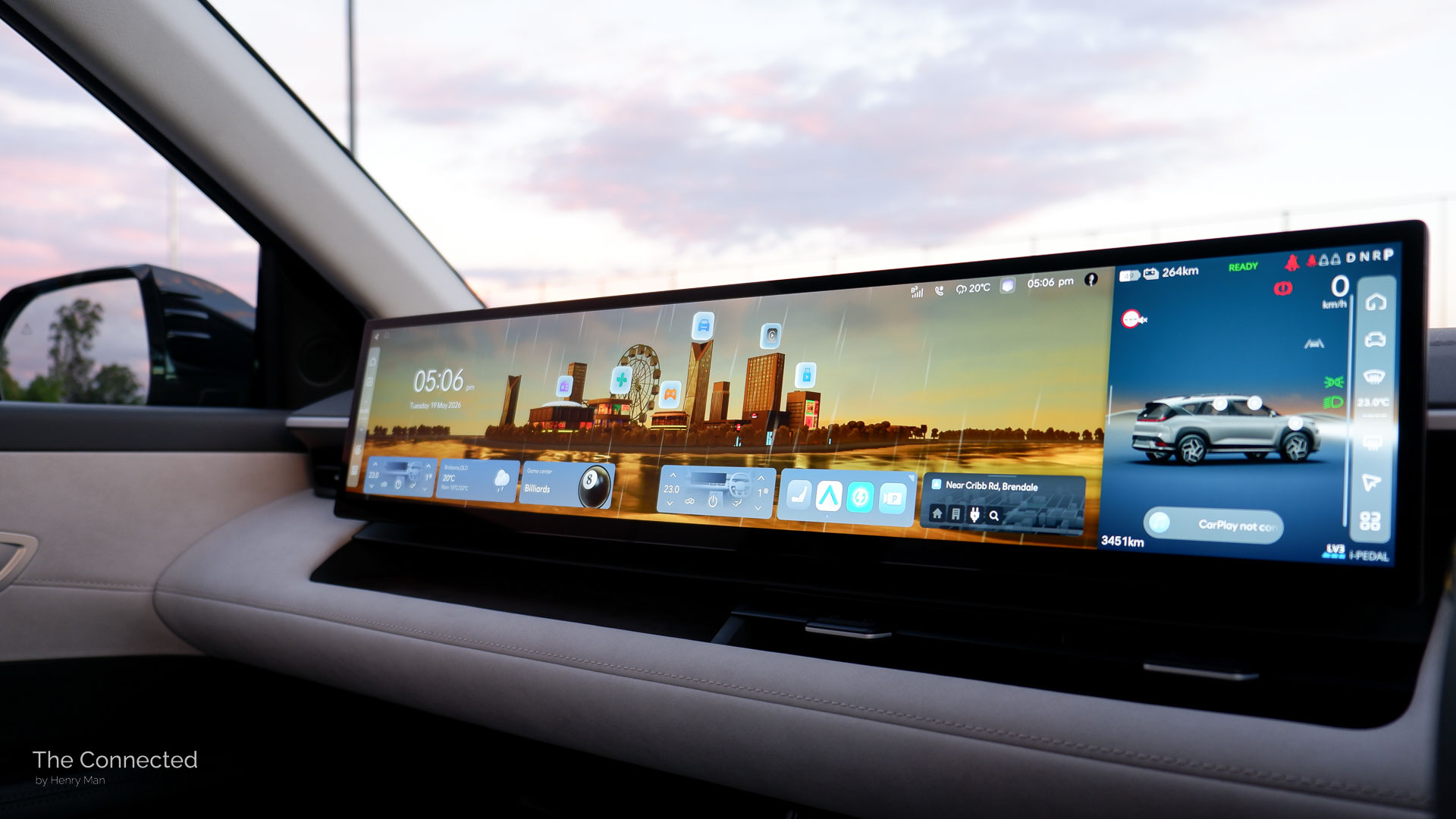
Functionality for the front passenger therefore is fairly limited to changing the climate control, using the built-in map, opening vehicle-related apps, and changing vehicle settings.
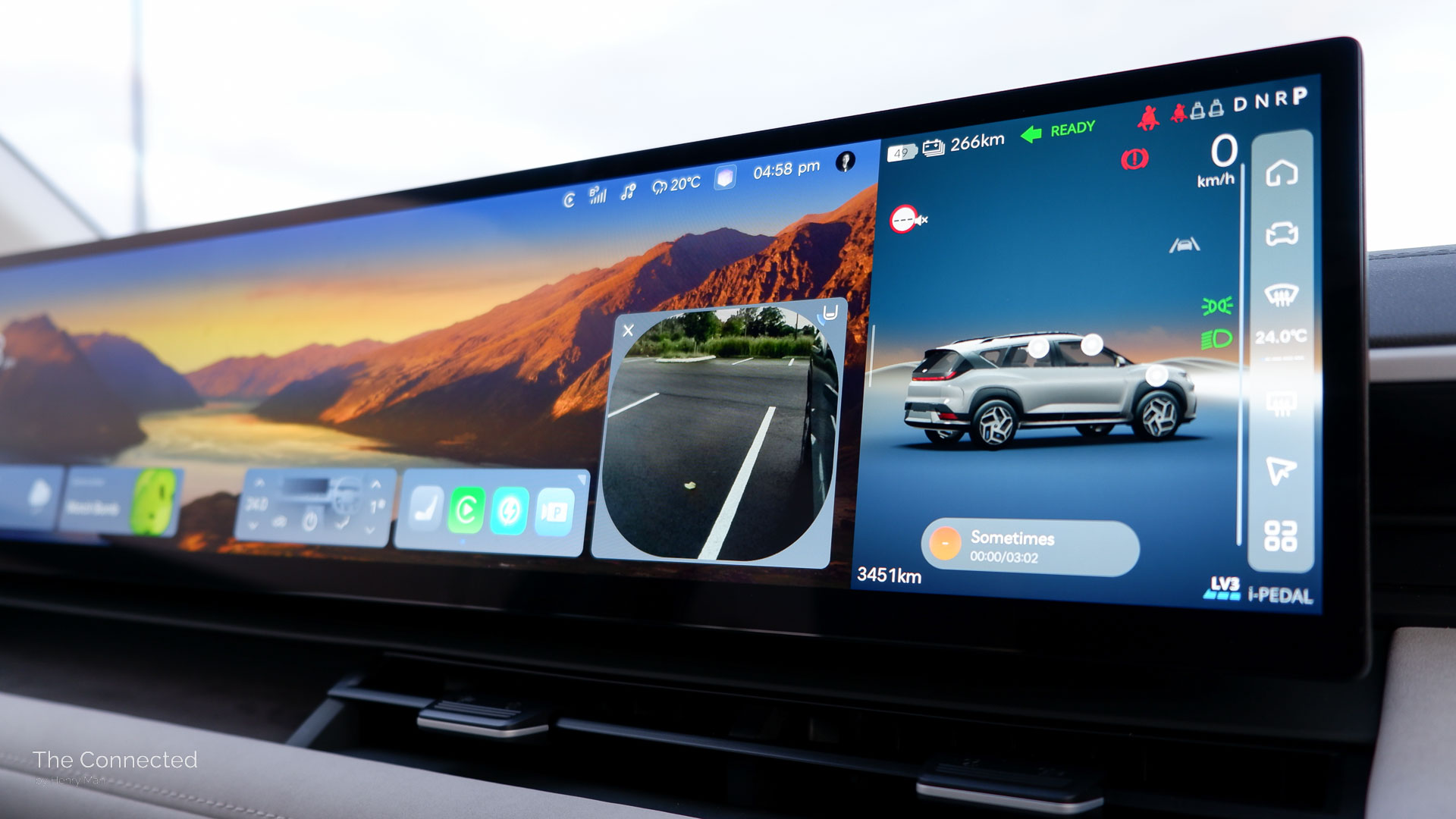
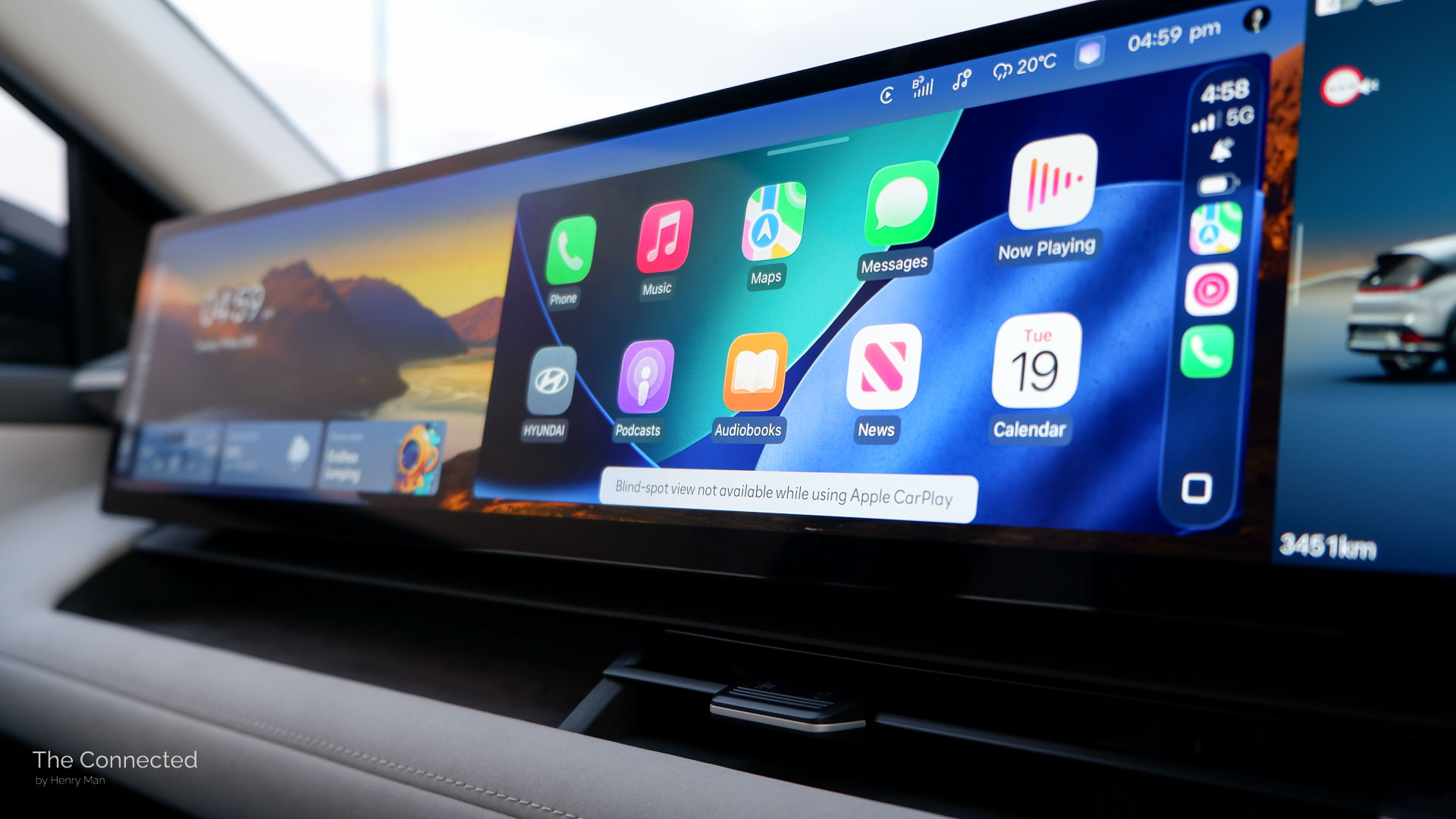
Wireless Apple CarPlay and Android Auto are standard, but both are displayed in a window at the driver’s side only – making it smaller than what you get with Hyundai’s standard 12.3-inch Connected Car Navigation Cockpit (ccNC) infotainment system.
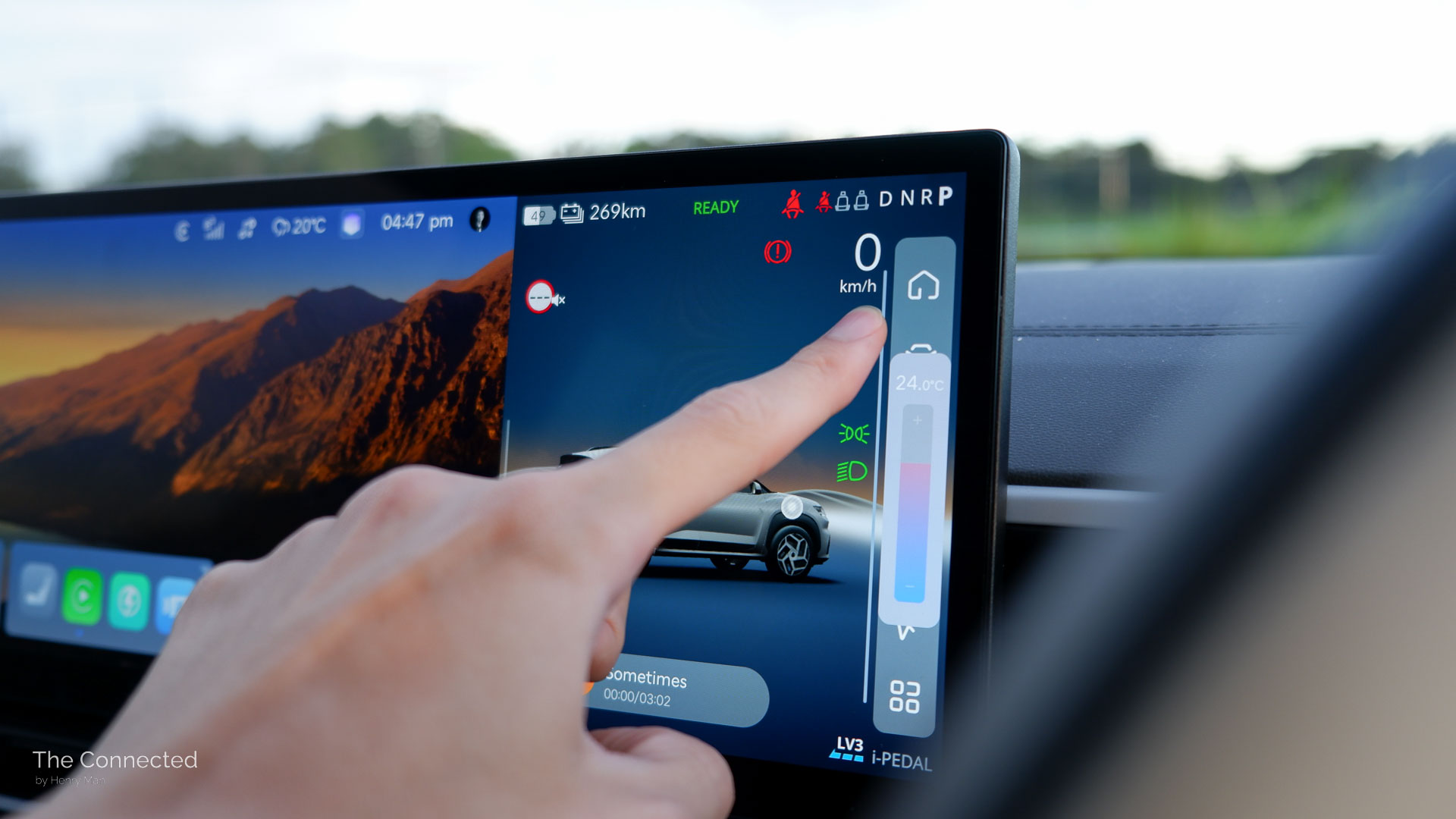
It’s also further of a reach from the driver’s side than ideal since there’s a dedicated Tesla-style instrument portion that pushes the main content out.
This is why the smaller Hyundai Kona Electric is simply more usable and intuitive on the tech front.
The driving section has a tiny speed readout, visualisations of its surroundings and lane markings, and a small 3D model of the vehicle – which doesn’t match the Elexio’s paint colour and shows that there’s a sunroof.
Due to a lack of buttons, the dual-zone climate control is only operated on either side of the touchscreen. Although it always shows the set temperature on the sidebars, the text is tiny and it’s very sensitive to slide up and down to adjust the temperature.
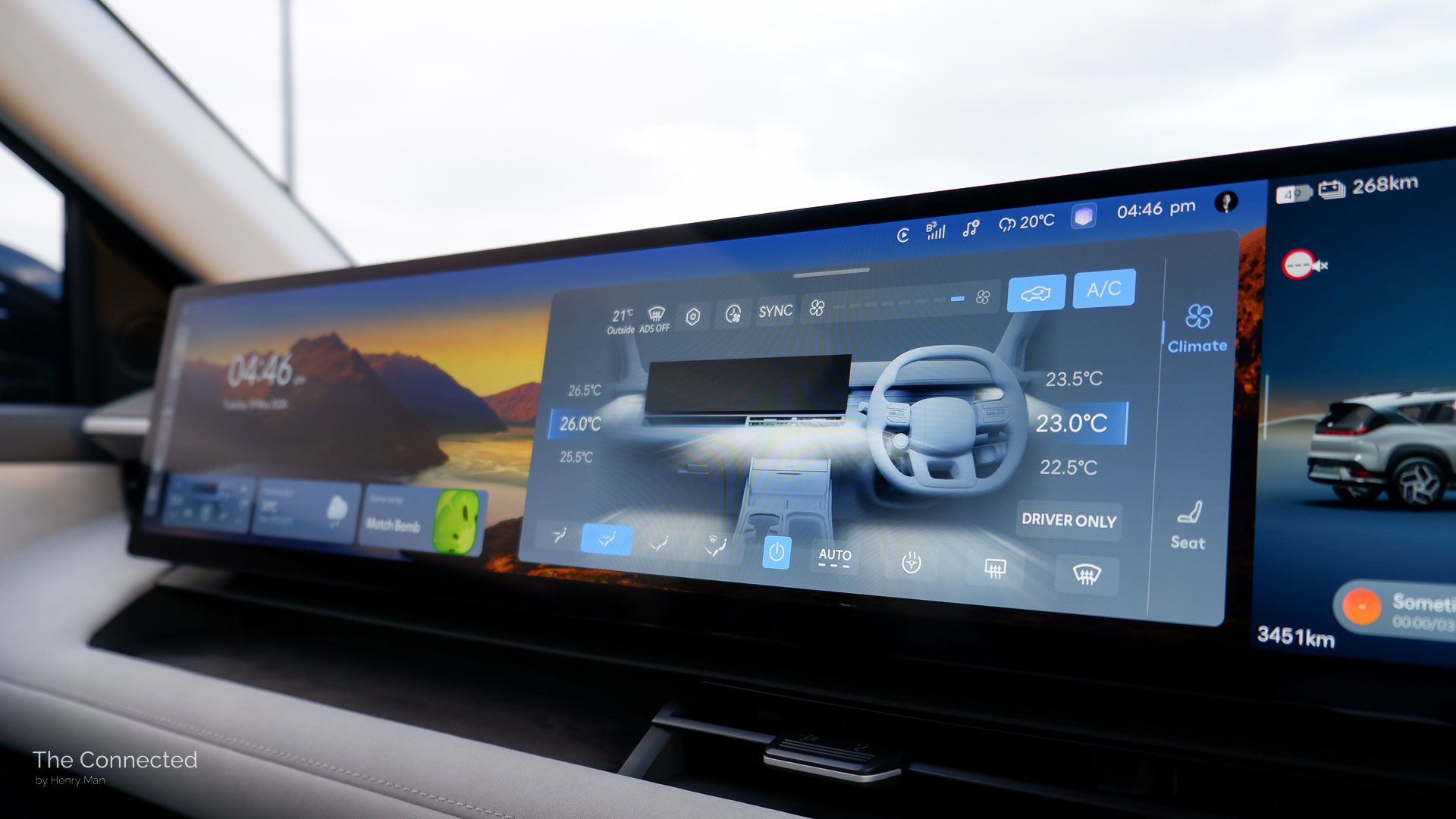
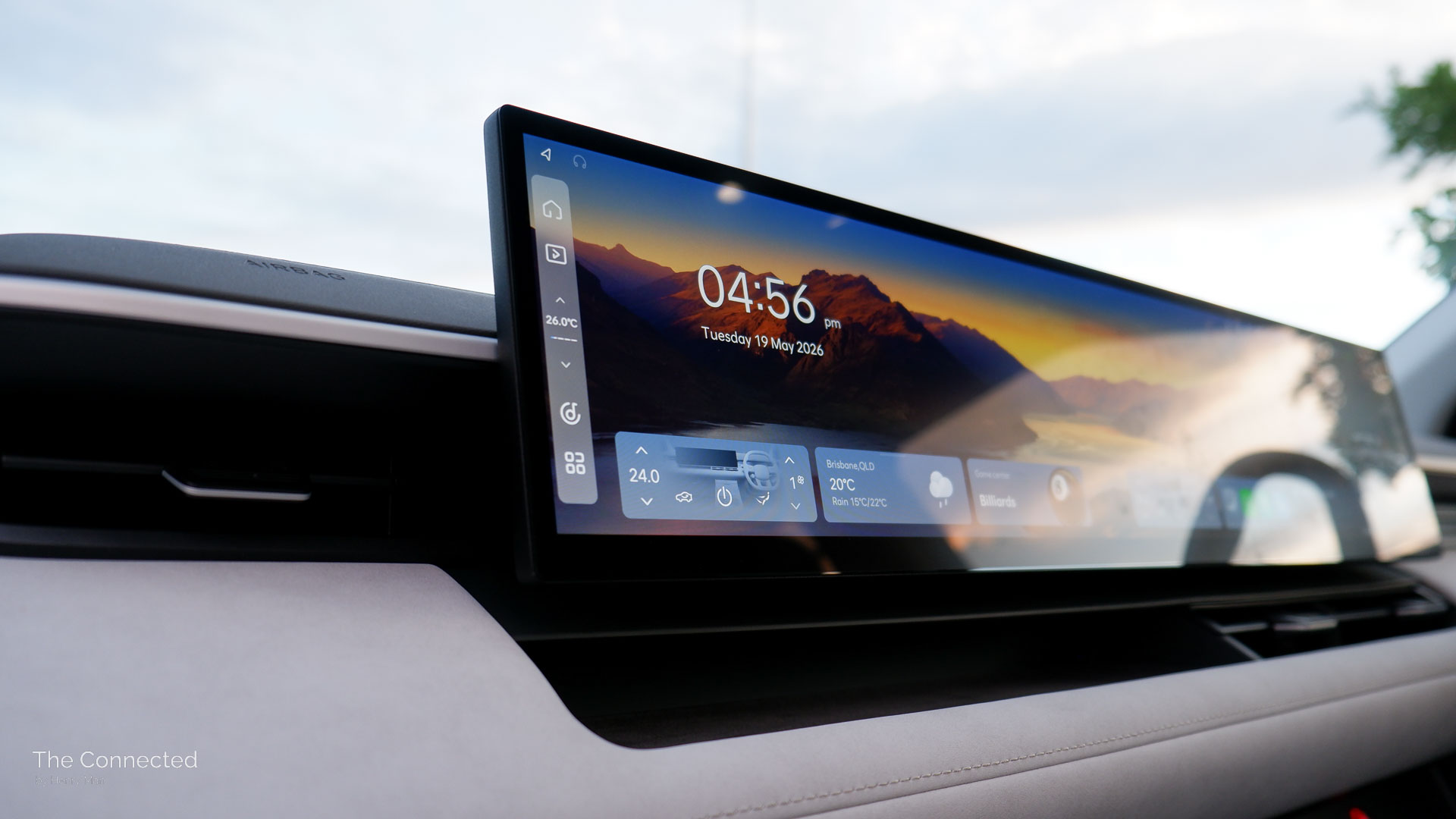
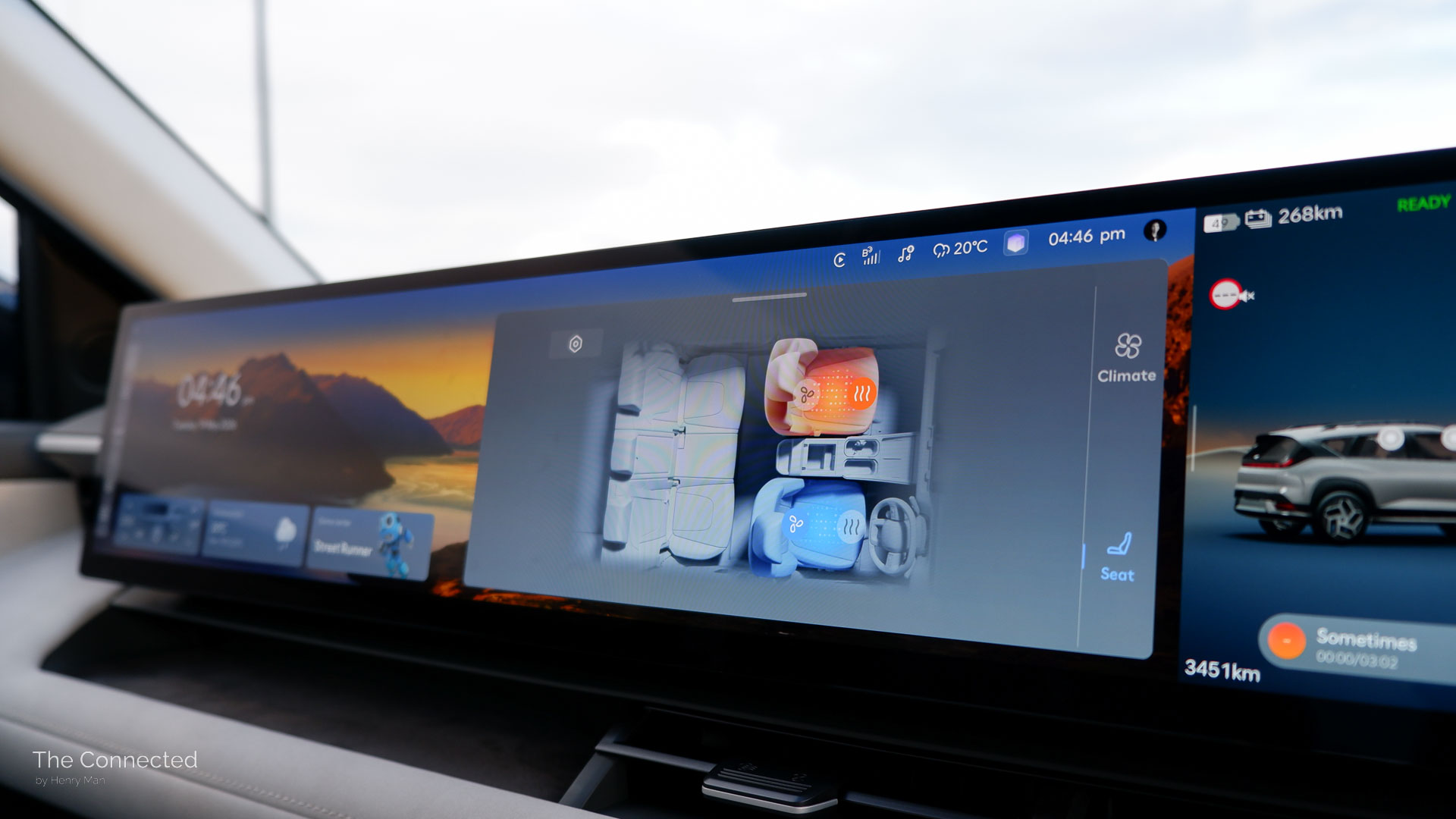
The front passenger home screen climate widget actually shows the set temperature on the driver’s side even though it’s dual zone – a clear software design oversight.
Most functions require opening the full climate app, which can be done via the sidebar or setting the steering wheel favourites shortcut.
However, scrolling through each degree to adjust the dual-zone climate control is too elastic and sensitive. The heated and ventilated seats are in a separate tab, too.
Using Hyundai’s own voice control is an alternative and at least the air vents are manually controlled.
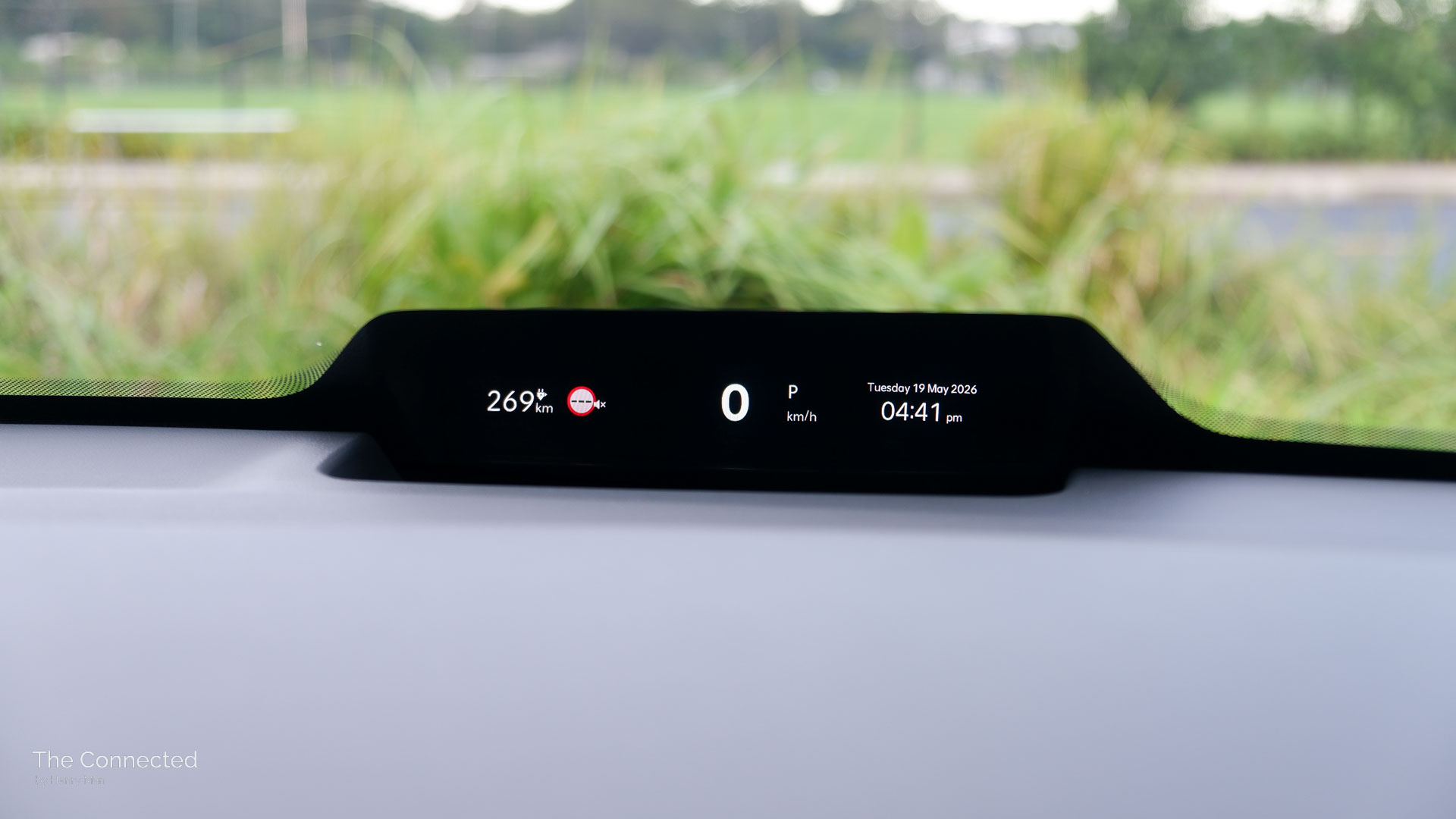
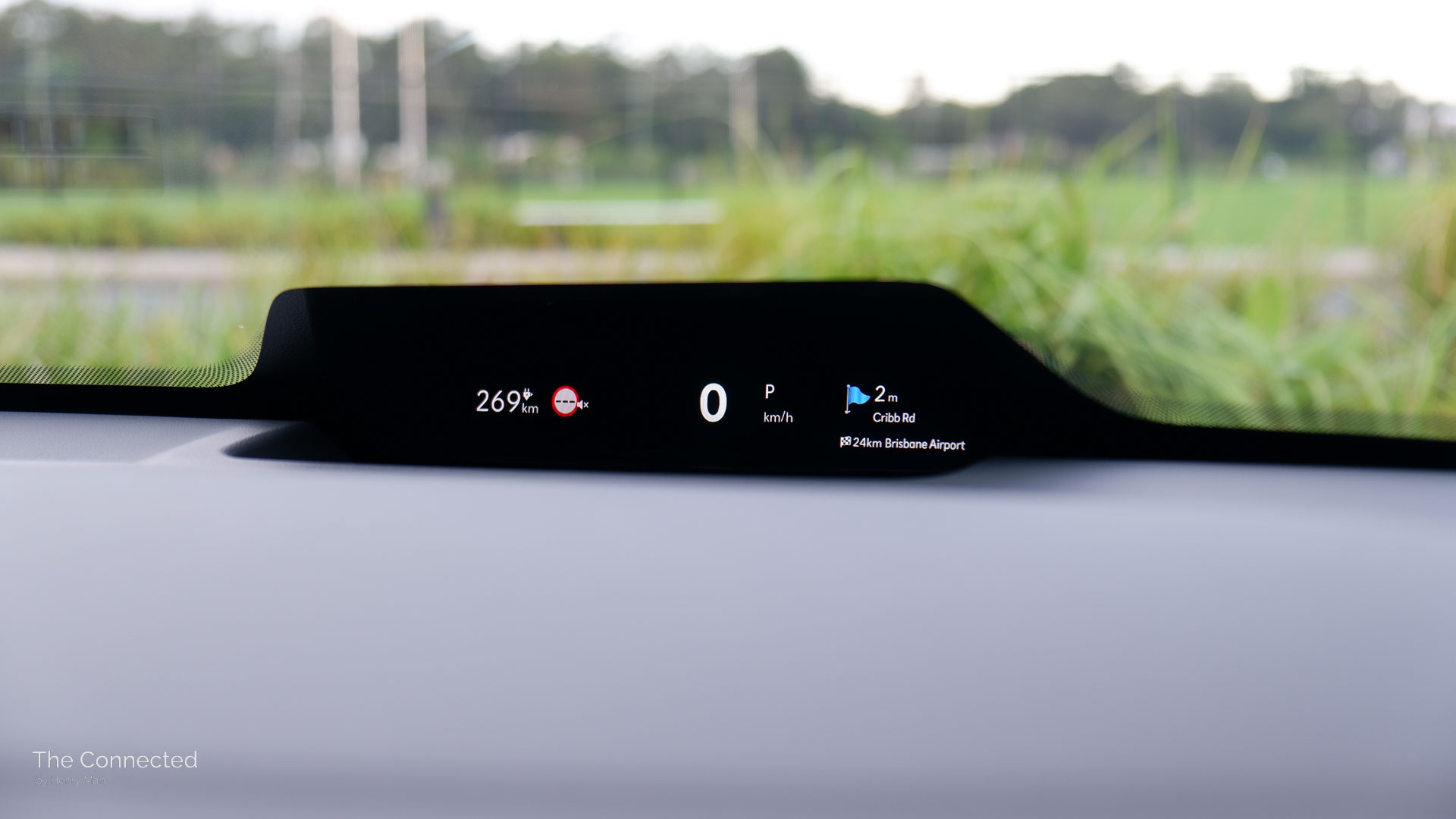
The Elexio debuts a unique head-up display (HUD) that projects onto a blackened out visor at the bottom of the windscreen.
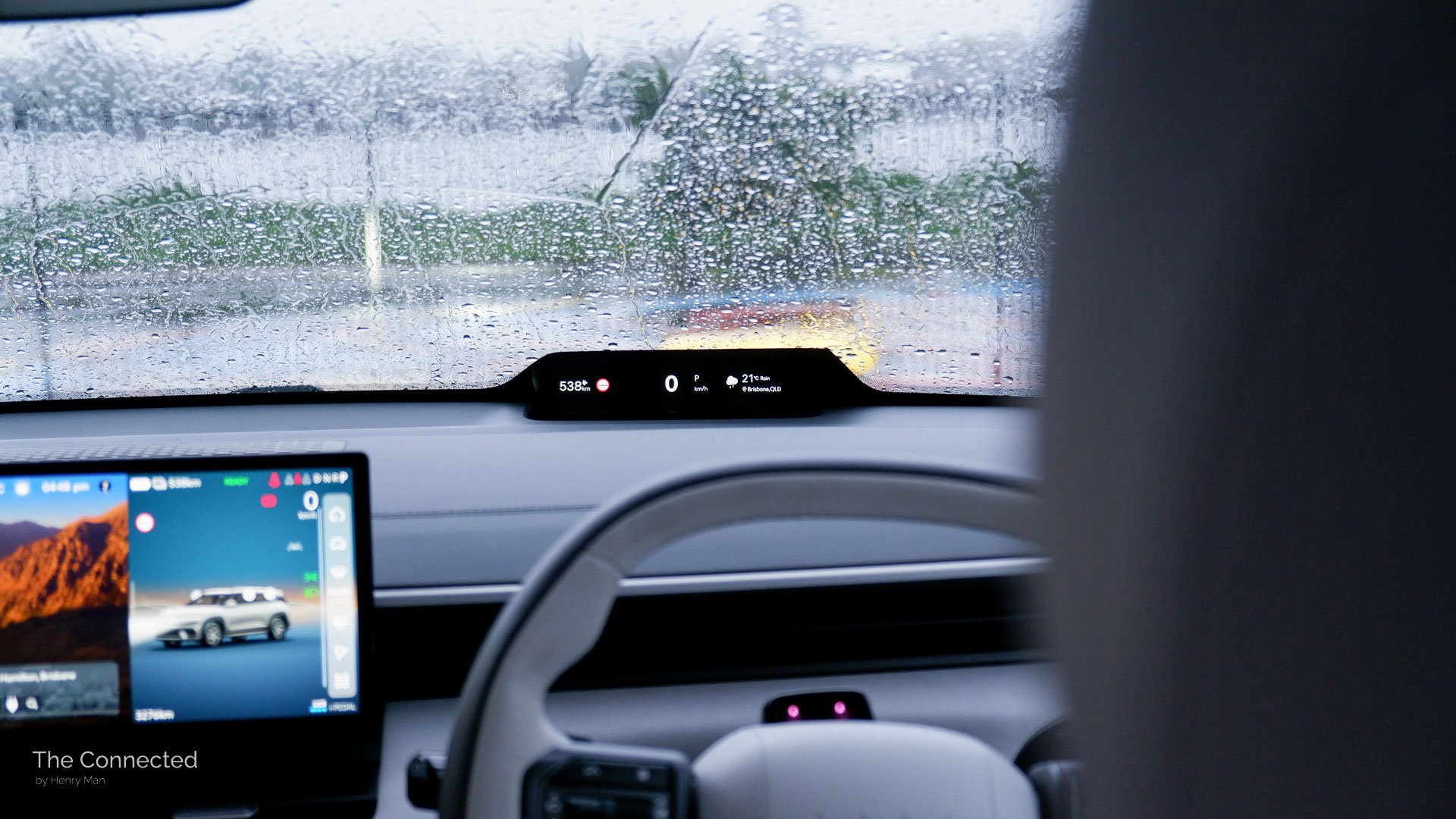
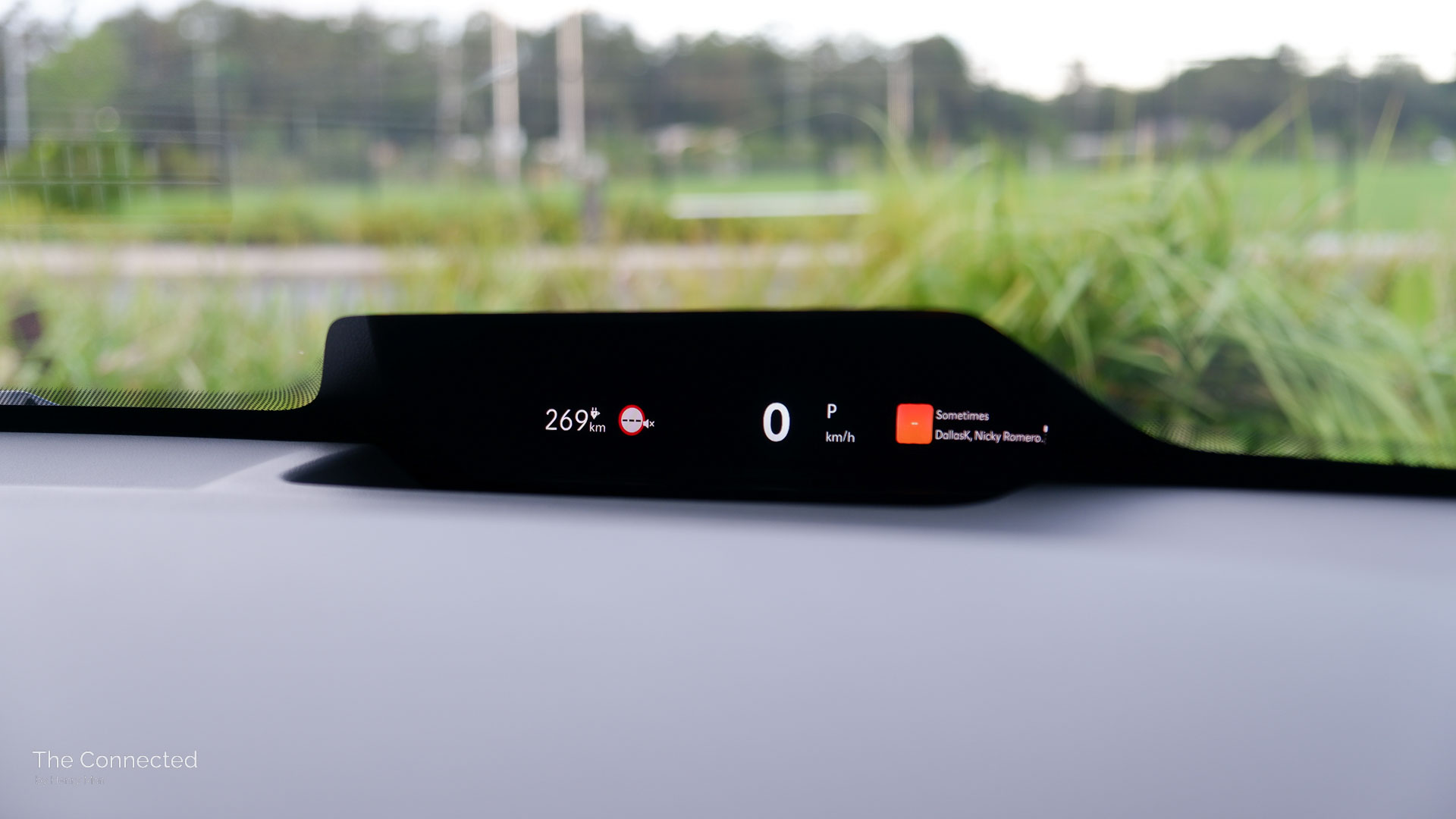
The interface is similar to upcoming Hyundai’s including the new Tucson with a clear speed readout – negating the tiny number on the main screen – and two other widget sections, showing the remaining range and speed sign on the left and a series of scrollable widgets on the right.
The latter includes displaying the media player with album artwork, navigation instructions, and even the weather – but the tiny text is hard to read.
Unfortunately, the HUD becomes very faded through polarised sunglasses.
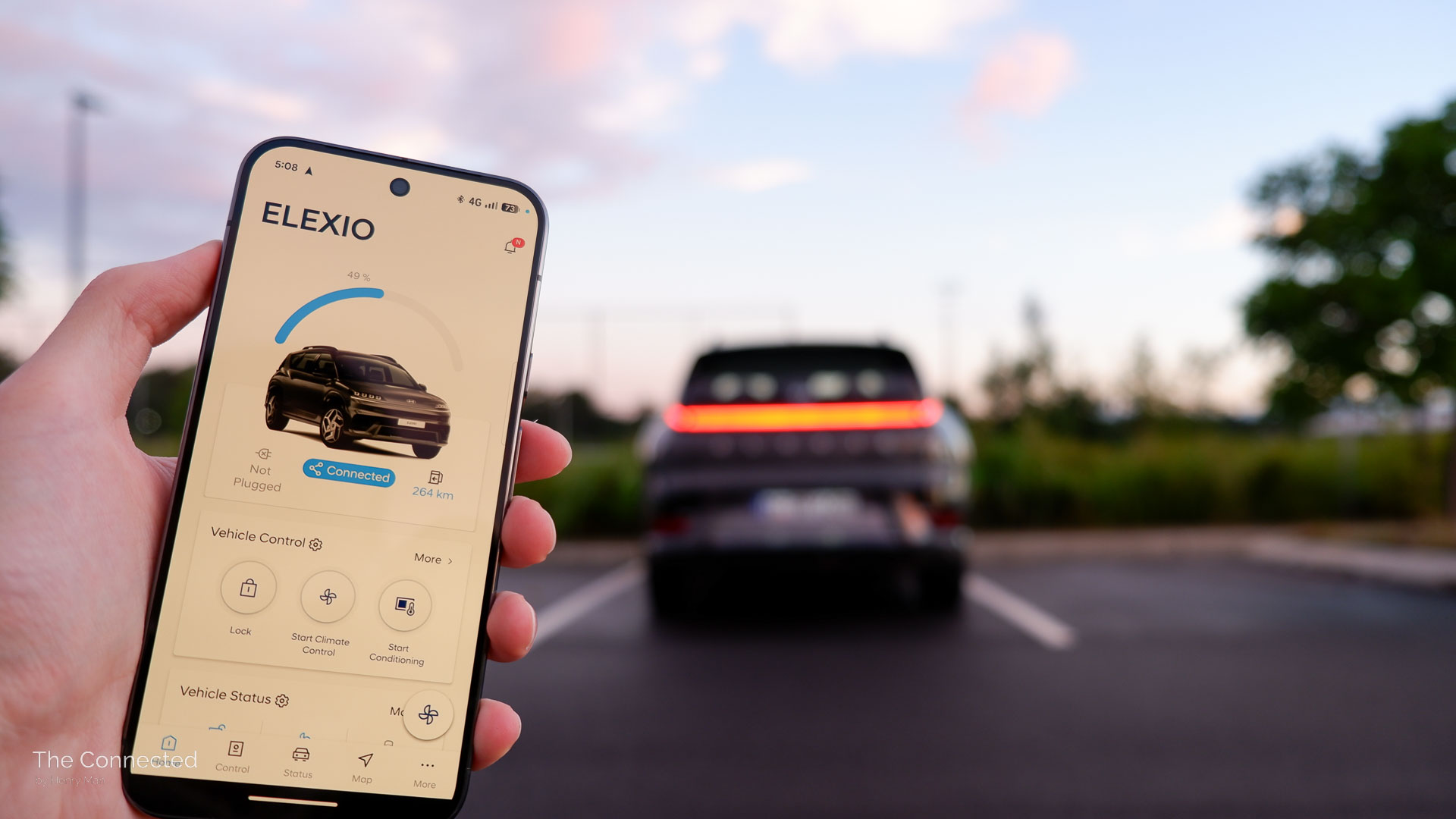
The Elexio comes with five years of free Hyundai Bluelink connected services from the date of activation, with a well-designed mobile app that can remotely turn on the climate control, heated or ventilated seats, and monitor the charge status – albeit it’s slow to send commands.
Safety.
2026 Hyundai Elexio Elite safety features:
| Front AEB with vehicle/pedestrian/cyclist/junction turning/oncoming side detection | 360-degree camera system |
| Rear AEB | Front and rear rear parking sensors |
| Blind-spot assist with blind-spot camera view | Road sign detection with overspeed warning |
| Rear cross-traffic assist | Driver attention monitoring camera with lead vehicle departure alert |
| Lane-keep assist | Bluelink emergency calling and location tracking |
| Adaptive cruise control with lane-centring and auto lane-change assist (HDA 2) | Full LED headlights with auto high beam |
| Door open warning with intervention | Full LED tail-lights |
| Remote Smart Parking Assist System 3 (forwards/backwards/parking) with auto parking assist and memory reversing assist |
While Hyundai’s safety assist systems are generally good, the Elexio has a particularly naggy driver attention monitor and less user-friendly camera system.
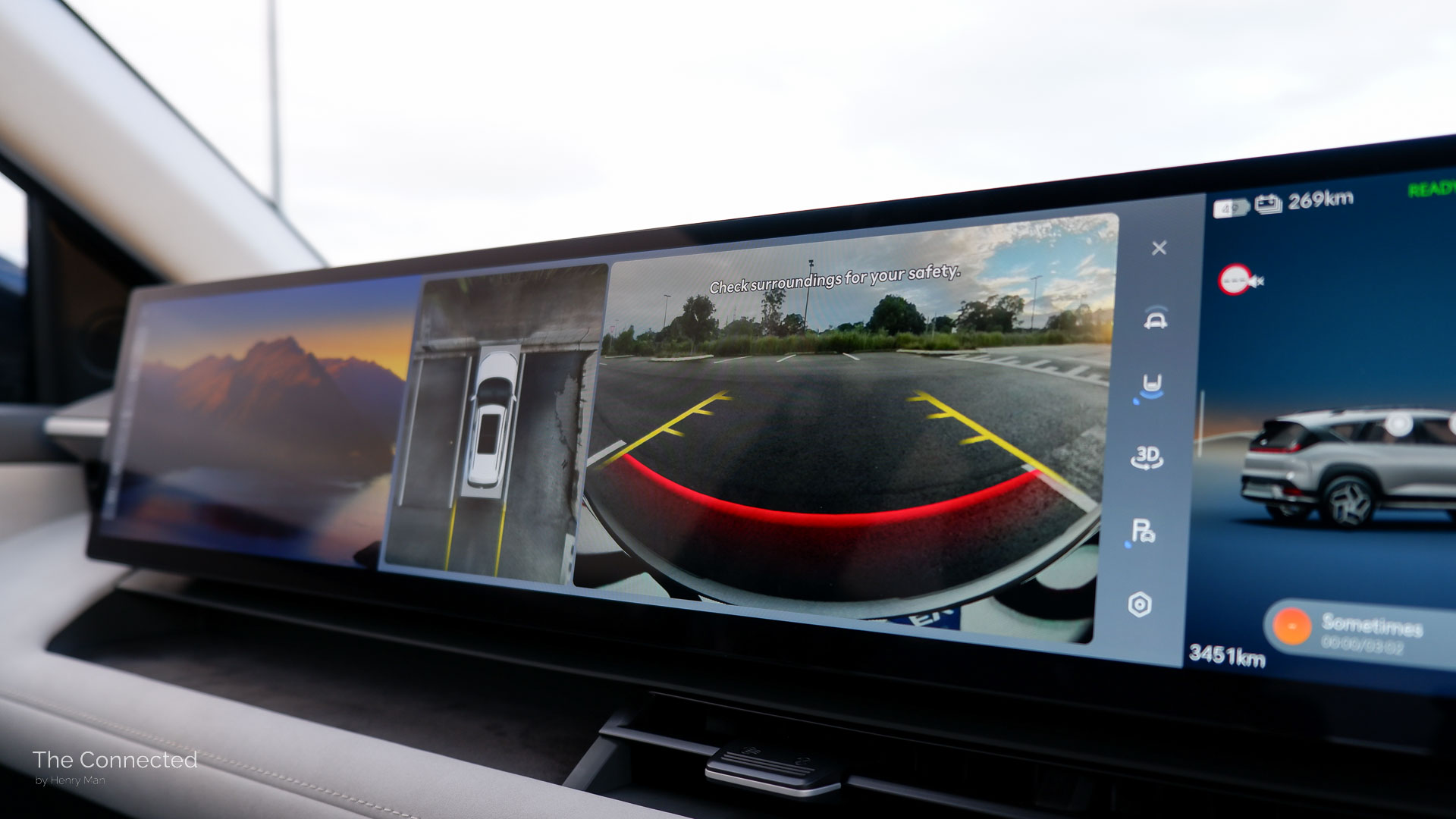
The 360-degree surround-view camera system is clear, the active lane-centring is mostly smooth, and the speed sign recognition is more reliable than some other brands including recognising school zone times.
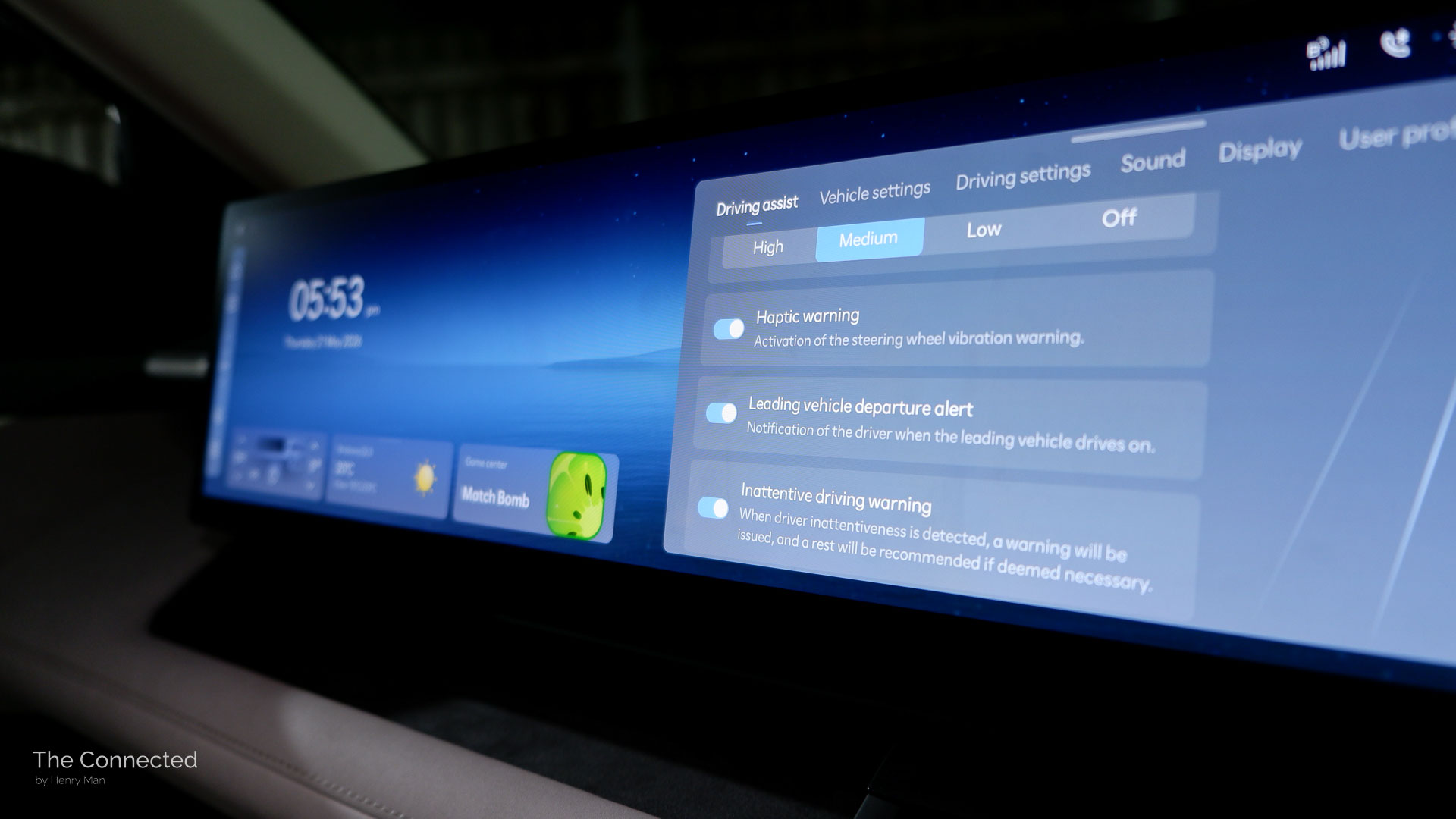
However, the driver attention monitoring camera system is infuriatingly sensitive with an intrusive warning sound, defaults to on, and has no shortcut to quickly turn it off unlike the overspeed alert.
It’s ironic when it triggers while I’m trying to change the climate control on the highly distracting software via the massive 27-inch touchscreen.
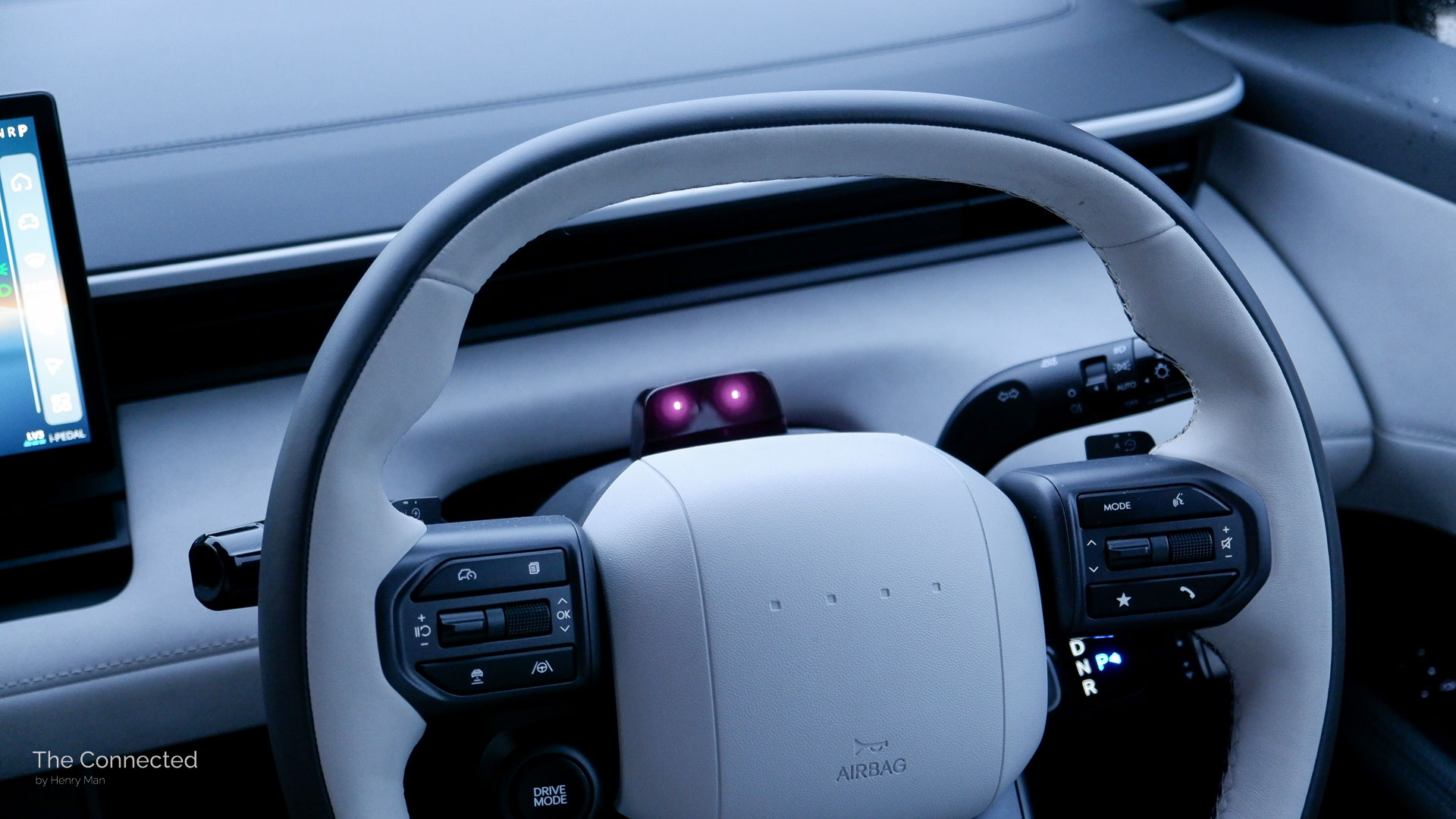
While drivers can temporarily disabled the overspeed warnings via holding the steering wheel mute button, it only shows that it’s muted once you lift off the button – whereas a confirmation message usually pops up while holding on other Hyundai and Kia cars.
Meanwhile, the lead vehicle departure alert triggers way too early. As soon as the vehicle in front moves, it instantly chirps and displays a message on the screen. Thankfully, it can be permanently disabled.
Lane-keep assist is sensitive, too.
The Elexio also can’t show the blind-spot view camera on top of Apple CarPlay and Android Auto – which reinforces how the software is just poorly thought out.
When it can appear, it can’t be placed on top of the instruments portion – the area closest to the driver – so it’s not in the line-of-sight unlike Tesla and other Hyundais. Therefore, it often obscured the climate controls or any app showing behind in the Connect-C system.
The blind-spot view camera also cuts out and replaces the 360-degree camera when indicating – which is infuriating.
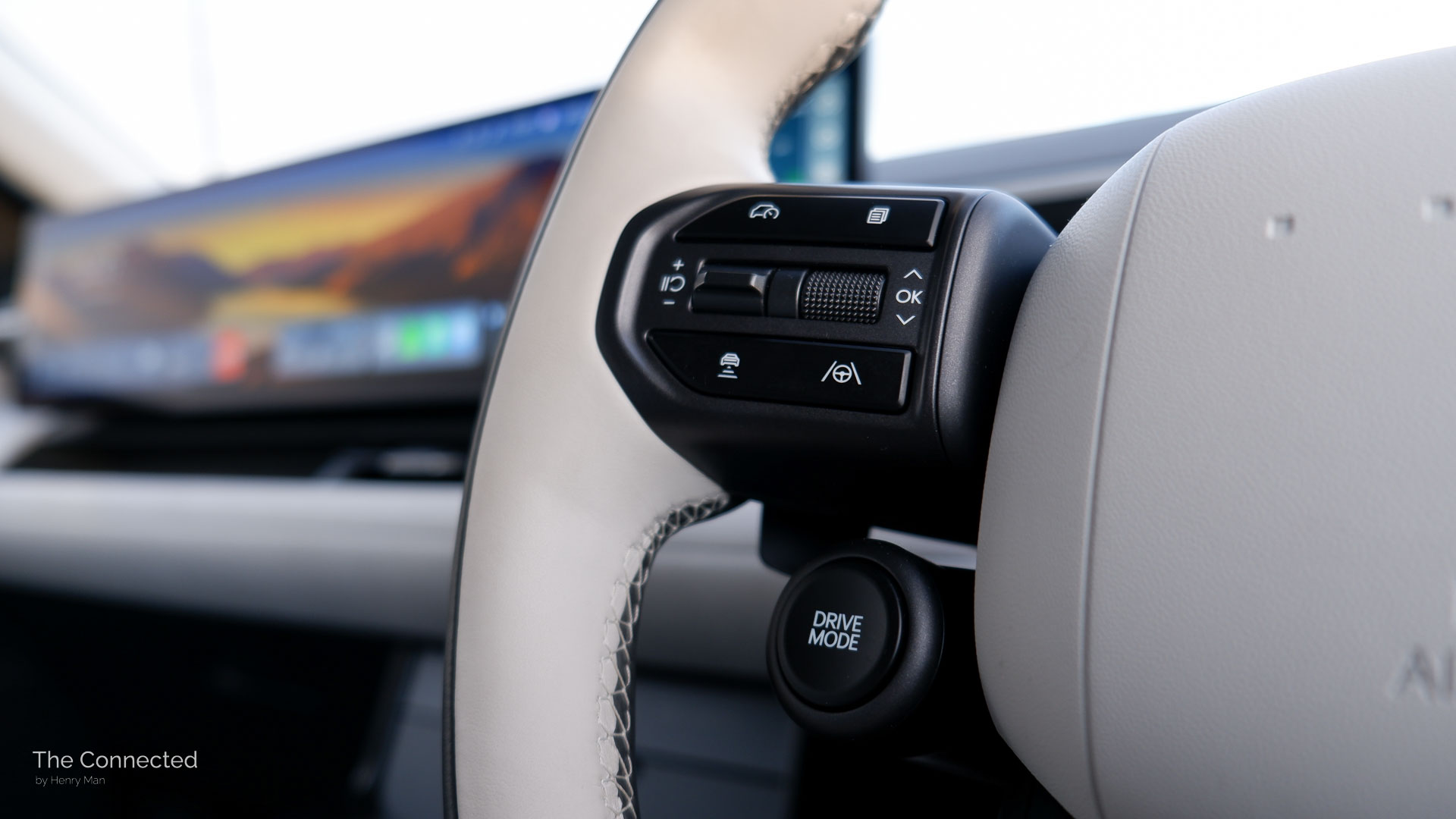
Additionally, there’s no customisability to pin the 360-degree camera as an accessible shortcut on the side bar or steering wheel button – with the icon showing on the recent apps widget on the home screen only.
The calibration of adaptive cruise control also isn’t as refined as Hyundai’s other models. On activation, it tends to coast or slow a bit for a second before accelerating, and brakes more suddenly when reacting to the vehicle in front.
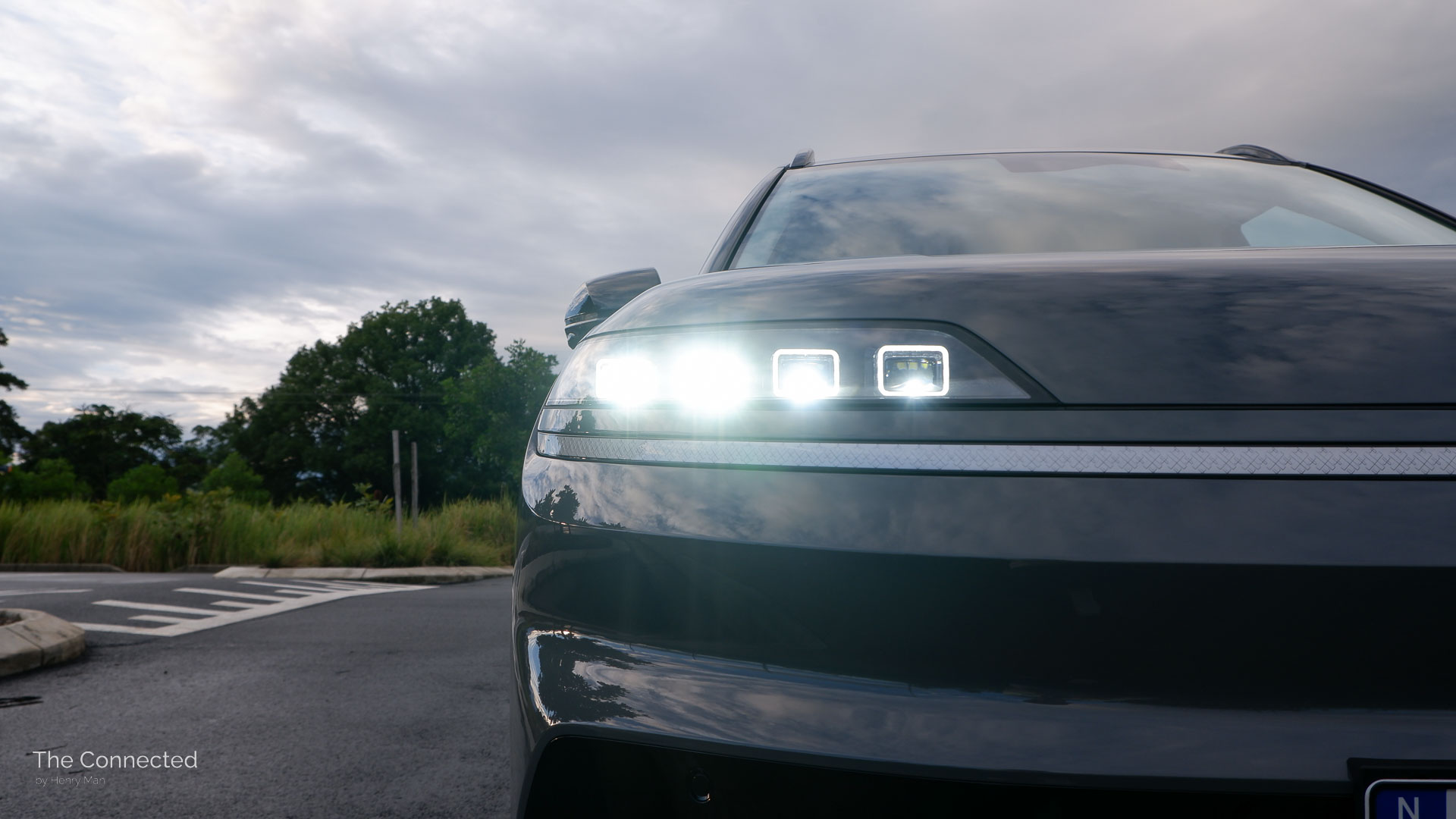
The Elexio SUV’s full LED lights provide good spread but limited reach at night, with sequential animated front and rear indicators.
The 2026 Hyundai Elexio received the full five-star safety rating by the Australasian New Car Assessment Program (ANCAP) under 2024 testing criteria.
Range and charging.
2026 Hyundai Elexio Elite battery and charging specs:
| Claimed driving range (WLTP combined cycle) | 546km |
| Claimed energy efficiency (WLTP combined cycle) | 18.2kWh/100km |
| Battery size and type | 88.1kWh LFP |
| Battery voltage | 399.42 volts (400-volt class) |
| Max AC / DC charging speed | 10 / 150kW |
| Bidirectional charging | Interior and exterior V2L |
| Connector type | Type 2 / CCS2 |
| Everyday charging limit recommendation | 100% (generally) |
Another sticking point of the Hyundai Elexio is high energy consumption and seemingly poor tested DC charging speeds in my testing.
After a week of urban and highway driving, the Elexio Elite indicated an average energy consumption of 19.1kWh/100km, resulting in a real-world range of about 461km.
The Chinese-made Hyundai EV uses a BYD-sourced 88.1kWh battery pack using a lithium-iron-phosphate (LFP) cathode, which means it can be daily charged to 100%.
Despite boasting a large battery for a medium SUV and having one motor only, the Elexio is fairly inefficient and doesn’t result in outstanding range – just like the related Kia EV5.
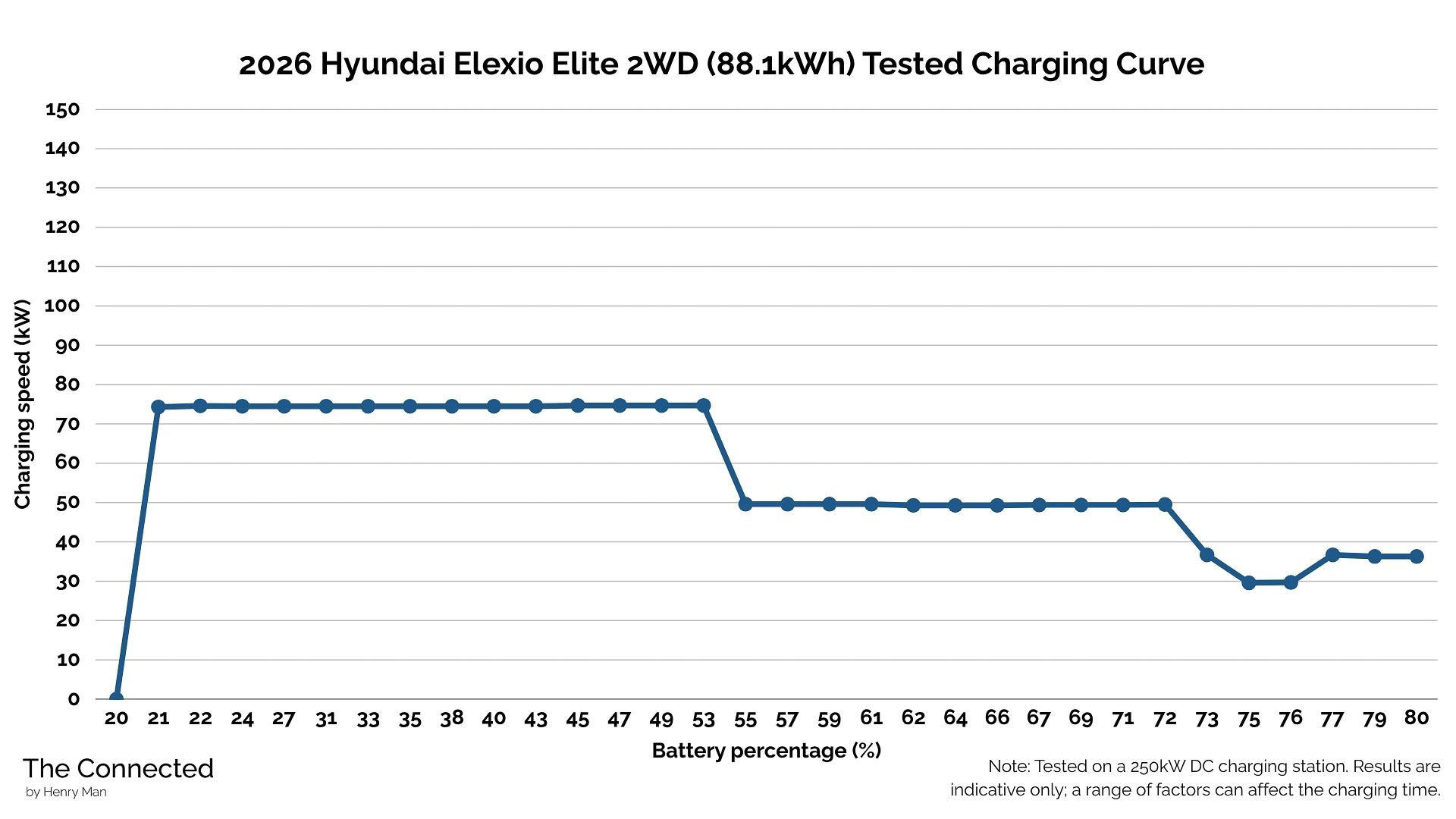
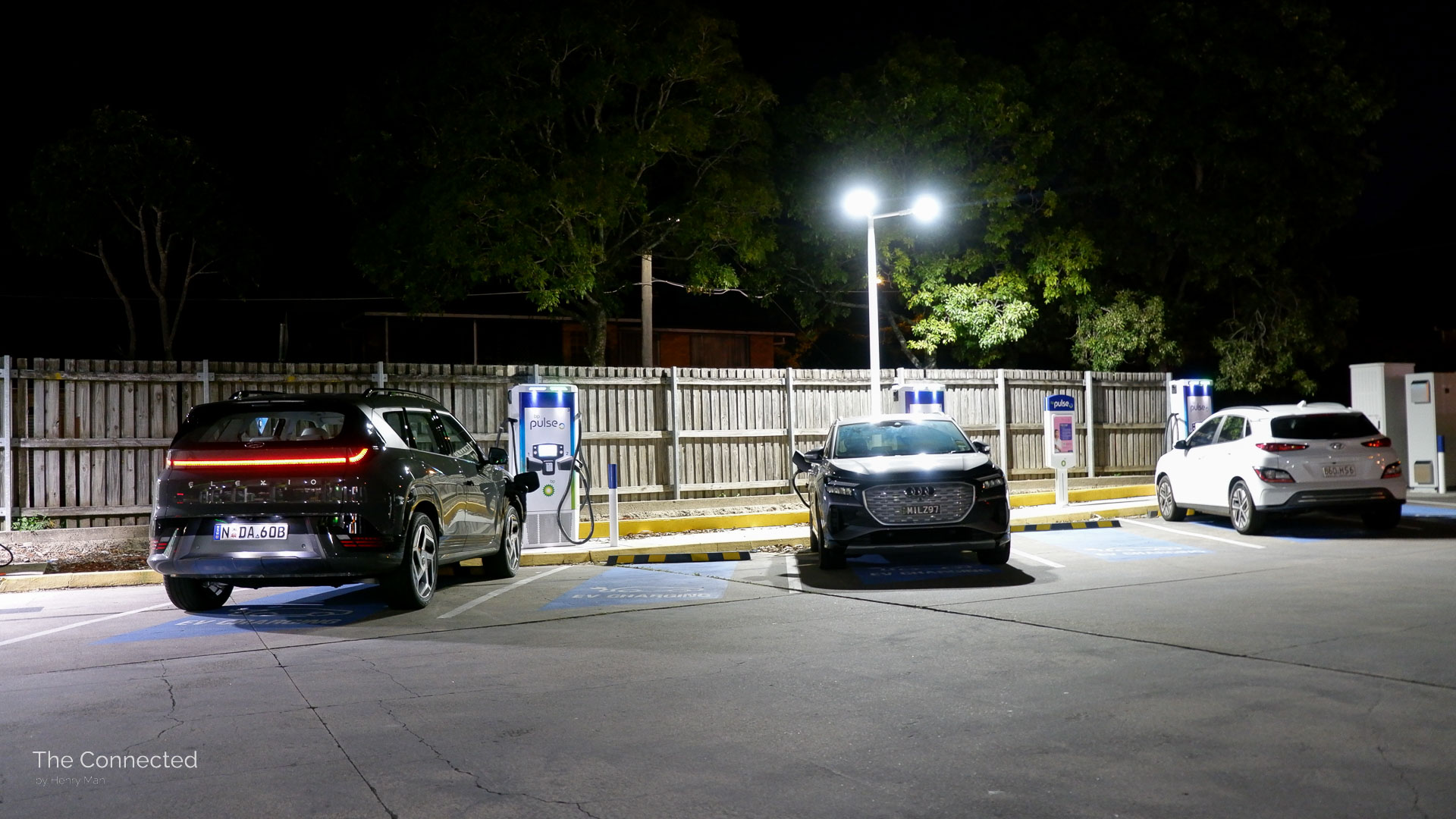
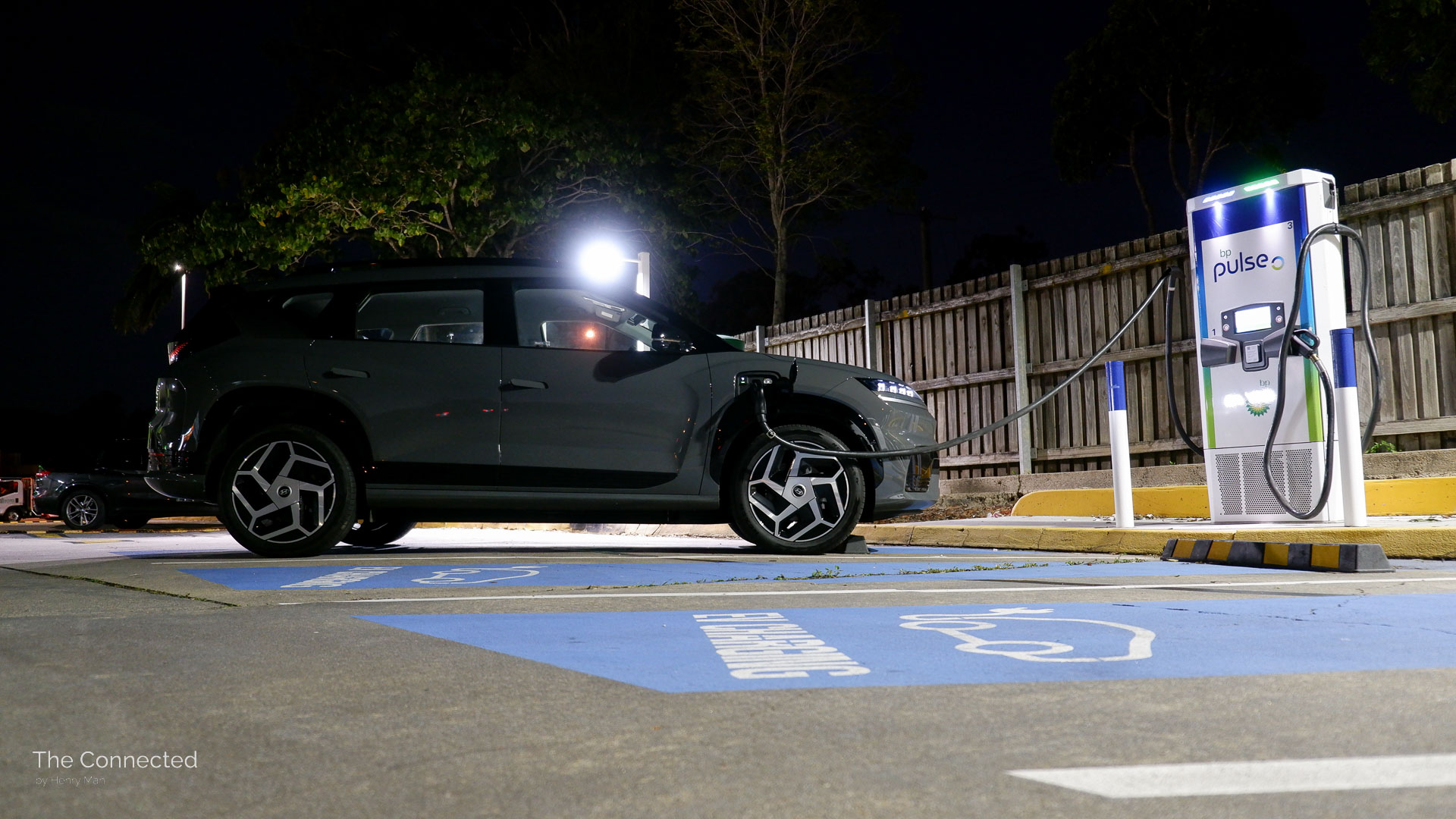
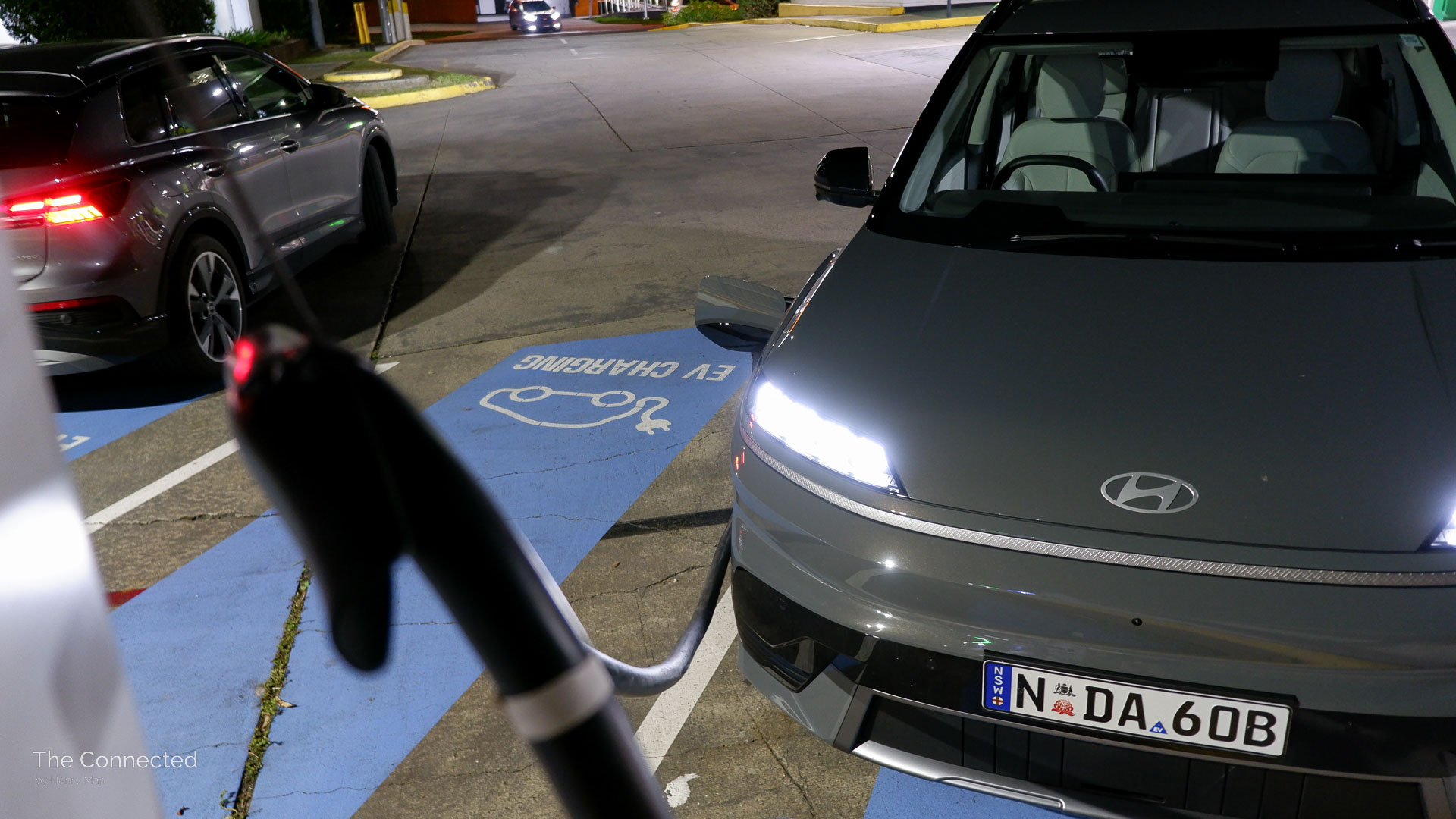
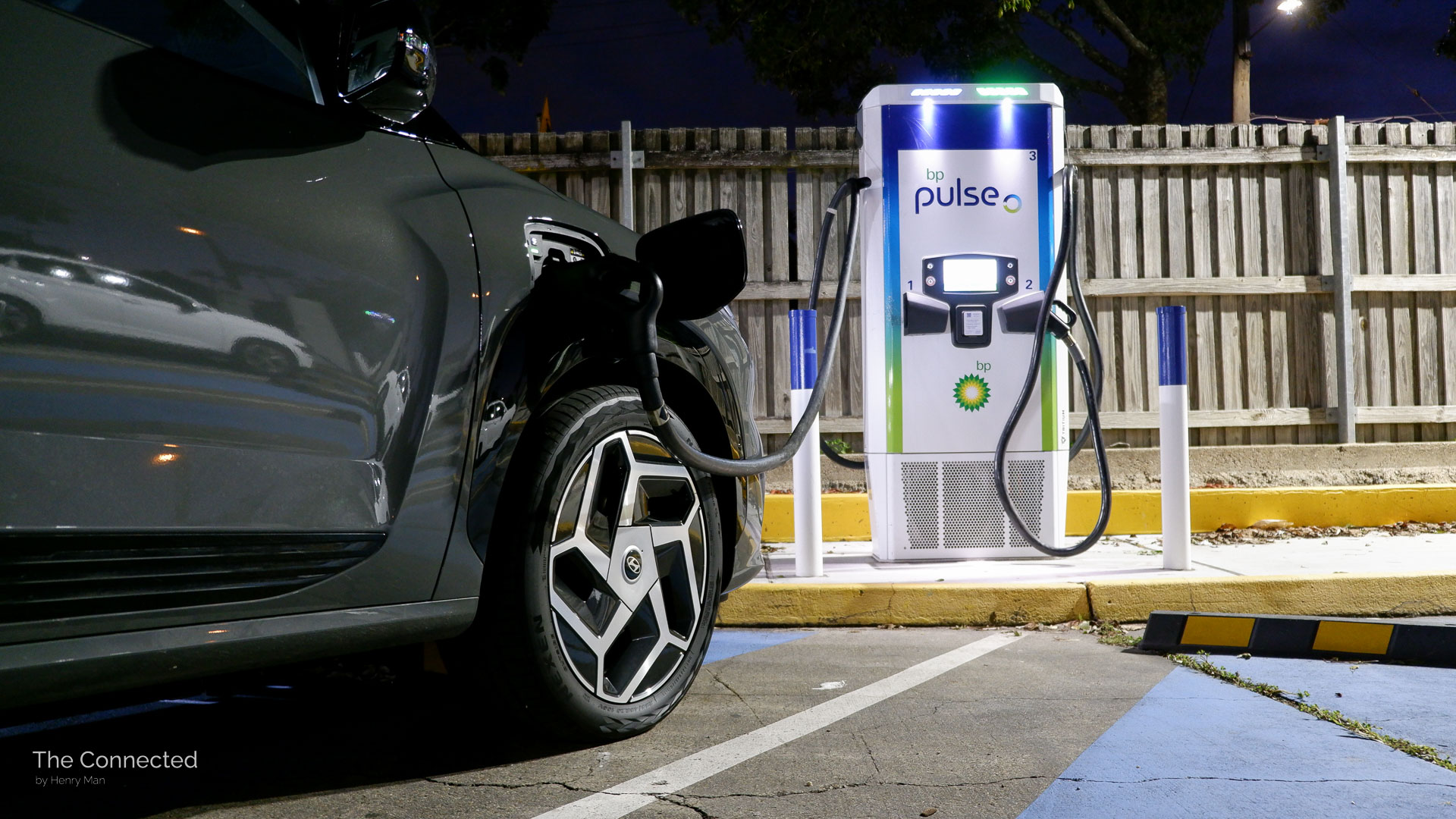
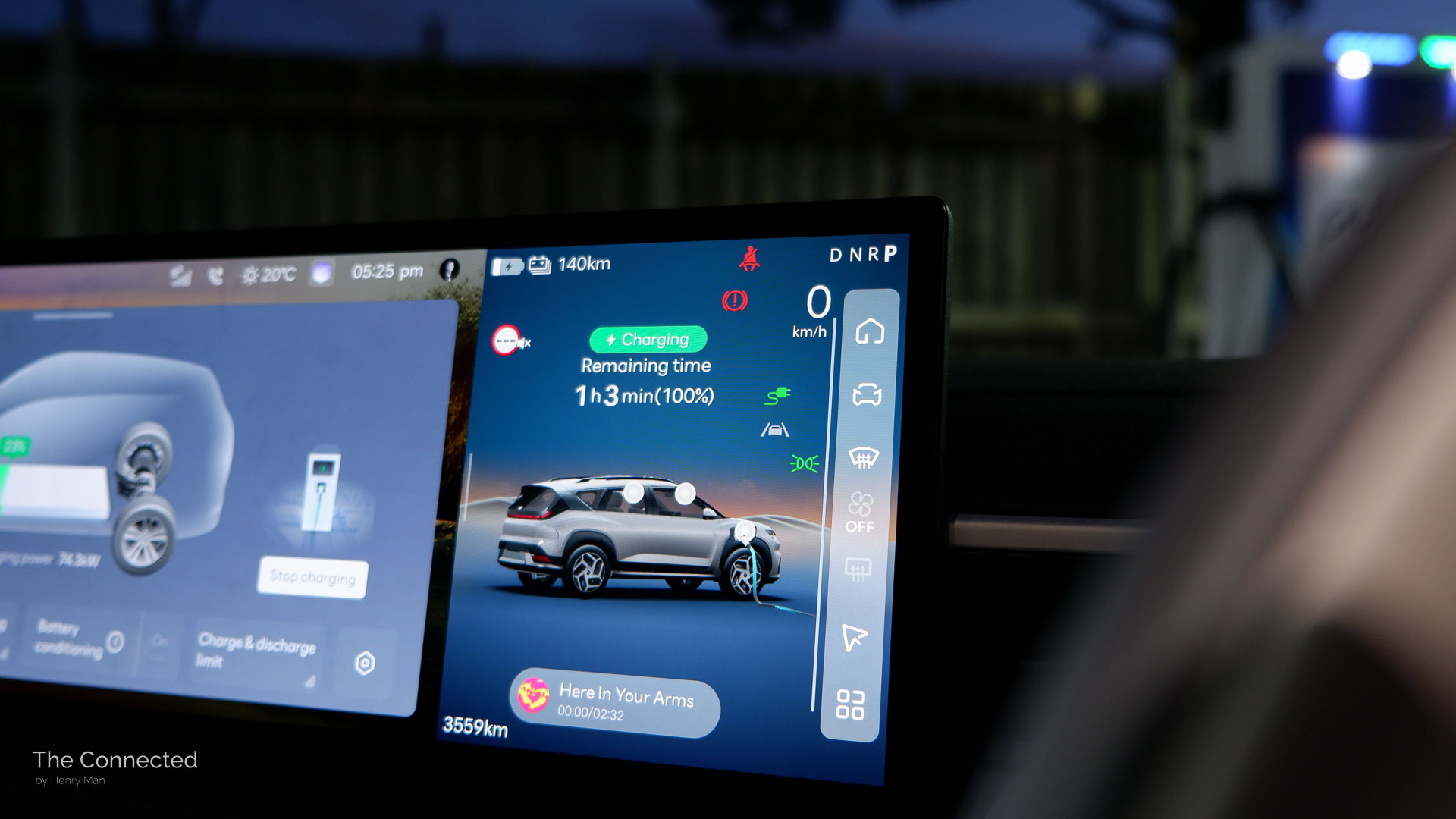
Testing on a 150kW DC fast charging station, the Hyundai Elexio recharged from 20 to 80% in an agonisingly slow 60 minutes.
The Elexio only peaked 74kW in my experience with it dropping to 46kW at the 55% mark and tapering to a slow 36kW and less after 73%. The average session speed was 58kW.
It’s worth noting that while a vehicle plugged in the same machine later in the charging test, resulting in power sharing, at no point did it indicate it was limiting the speed of what the EV could receive – it could deliver the full 150kW.
For context, Hyundai Australia claims 10 to 80% in around 38 minutes – which isn’t quick either.
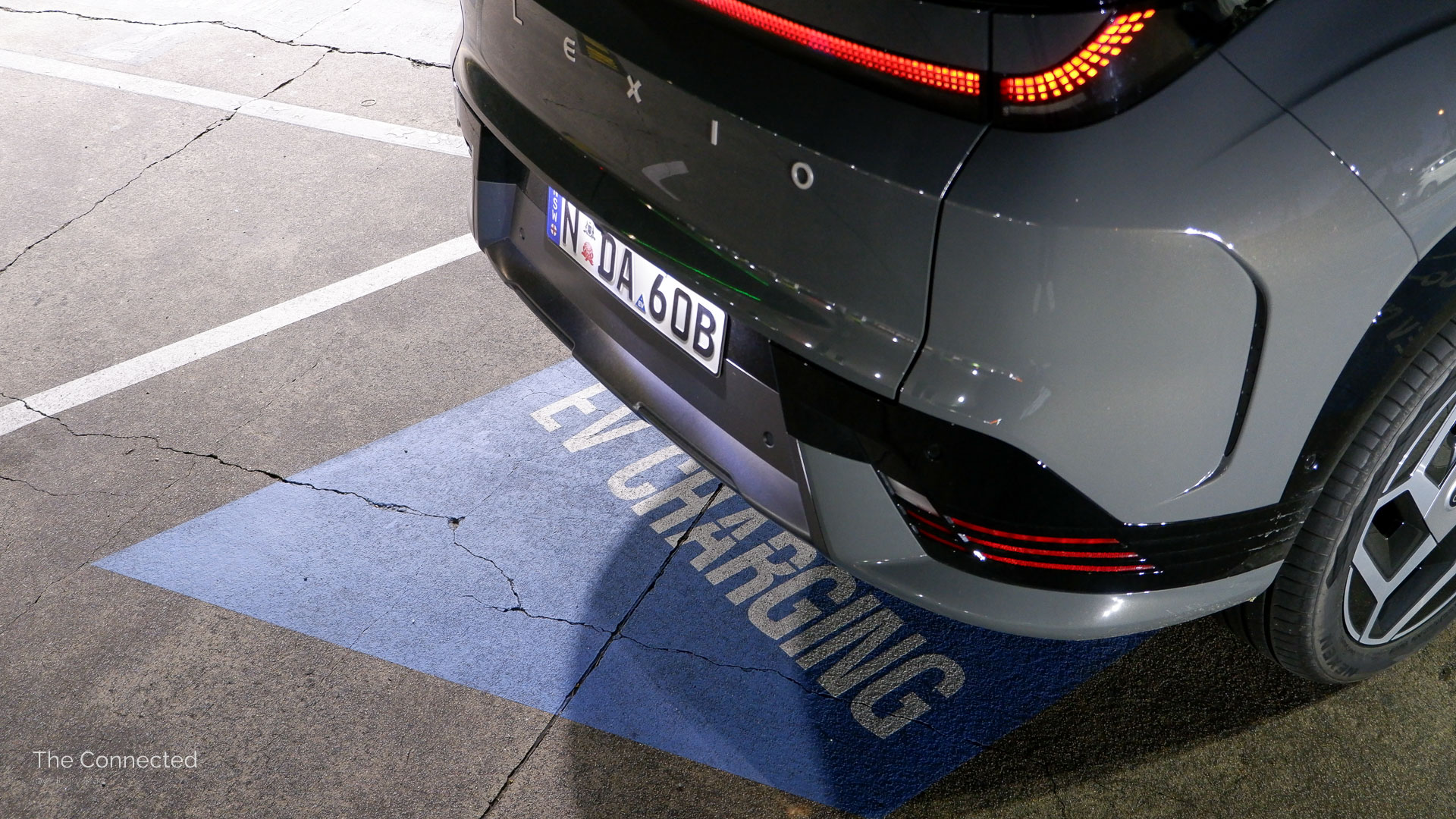
So the Hyundai Elexio isn’t great for long road trips, but most should charge at home everyday with up to 10kW AC capability.
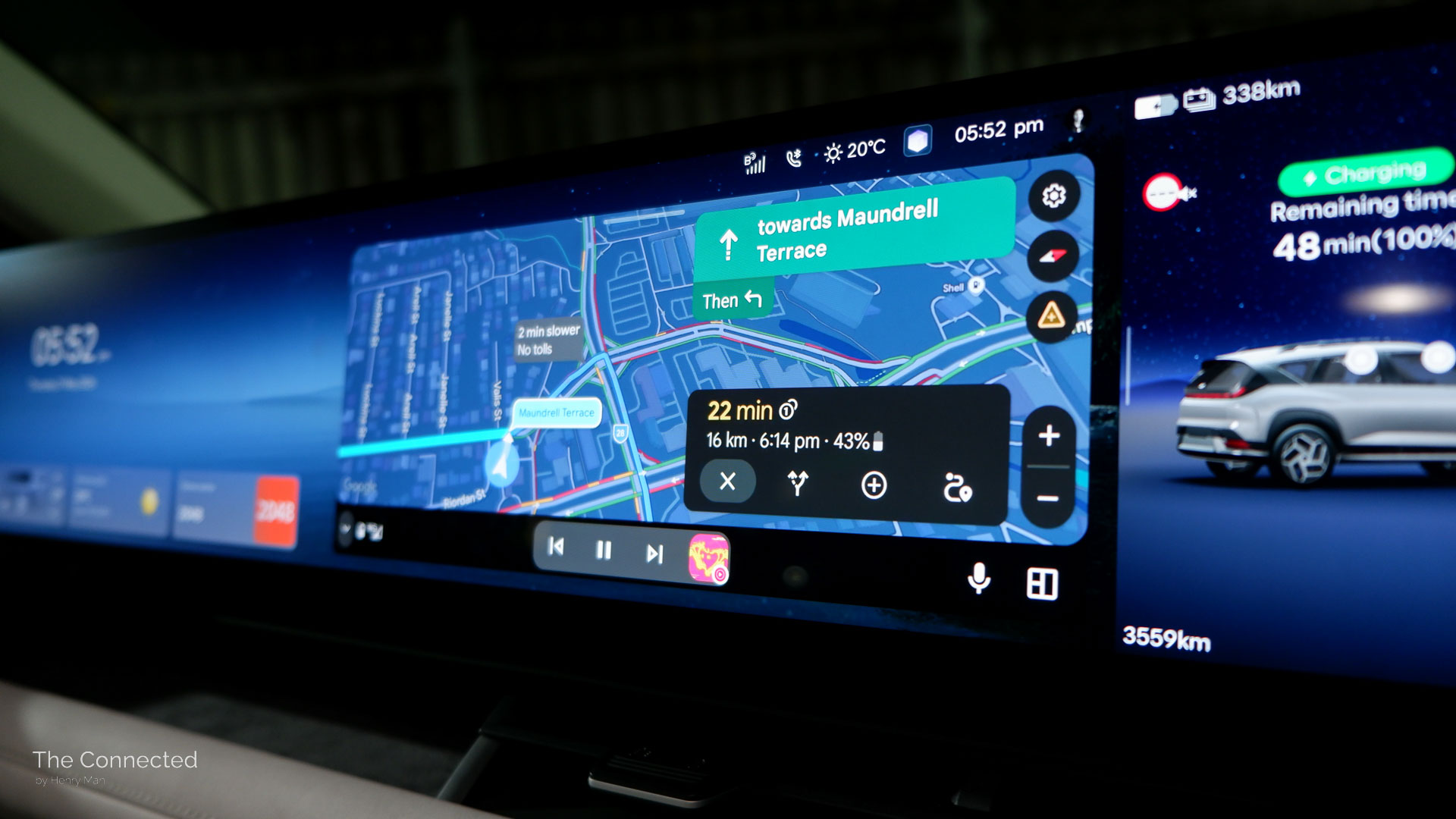
Like the Ford Mustang Mach-E, it integrates with Android Auto’s Google Maps to provide an estimated battery level on arrival at a destination – yet the Elexio’s prediction is wildly conservative and inaccurate.
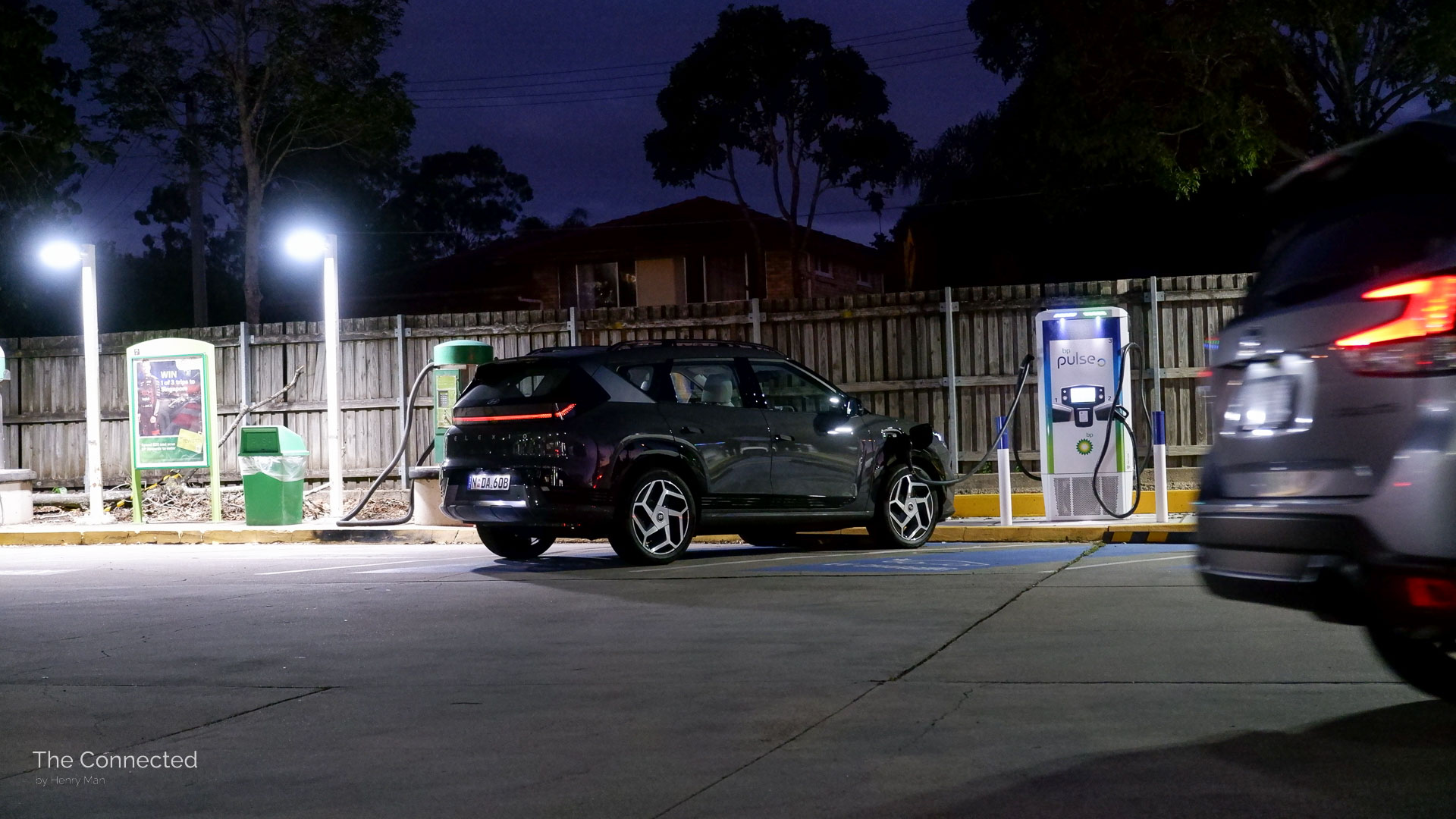
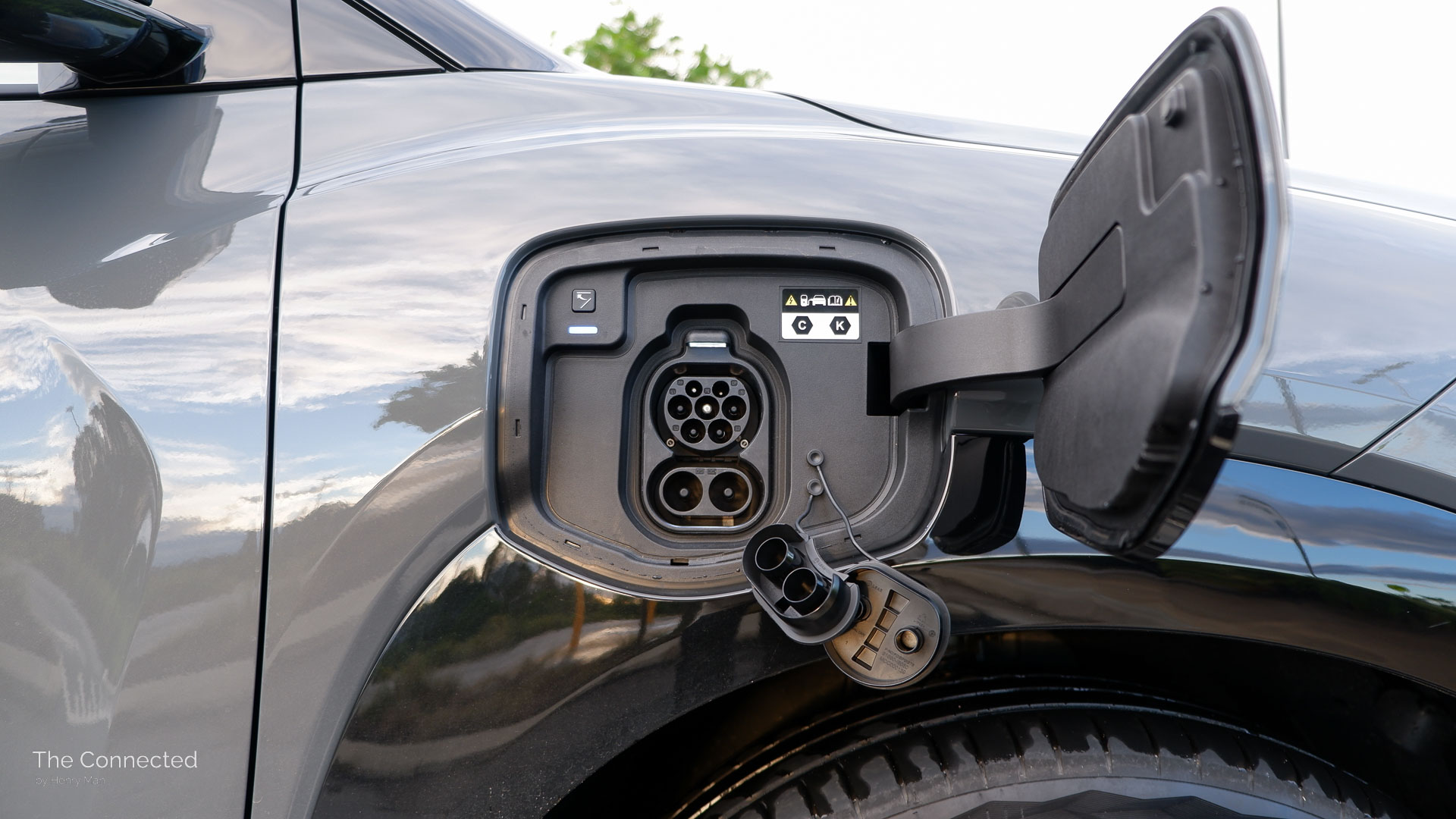
The Type 2 CCS charge port is located at the front right-quarter side which isn’t as accessible being on the road side and the need to stretch cables past the bonnet.
There are flimsy rubber caps for both the AC and DC pins, but Hyundai provides good LED illumination at night.
Driving.
2026 Hyundai Elexio Elite powertrain specs:
| Electric drive unit | Single permanent magnet synchronous motor |
| Power / torque | 160kW / 310Nm |
| Drive type | FWD |
| Kerb weight | 2080-2105kg |
| Payload | 470-445kg |
| Towing (unbraked / braked) | 750 / 1250kg (max 100kg tow ball download and max 100kg roof rail load) |
The Elexio is comfortable to drive, but the one-pedal driving needs work.
The single electric motor outputs up to 160kW of power and 310Nm of torque.
While these figures are pretty standard for an EV, it provides enough punch to get up to speed on public roads.
Even though it’s not rapid, it doesn’t need to be – despite its high energy consumption indicating otherwise.
The Hyundai Elexio is front-wheel drive only, unlike the related Kia EV5 which offers the option of all-wheel drive.
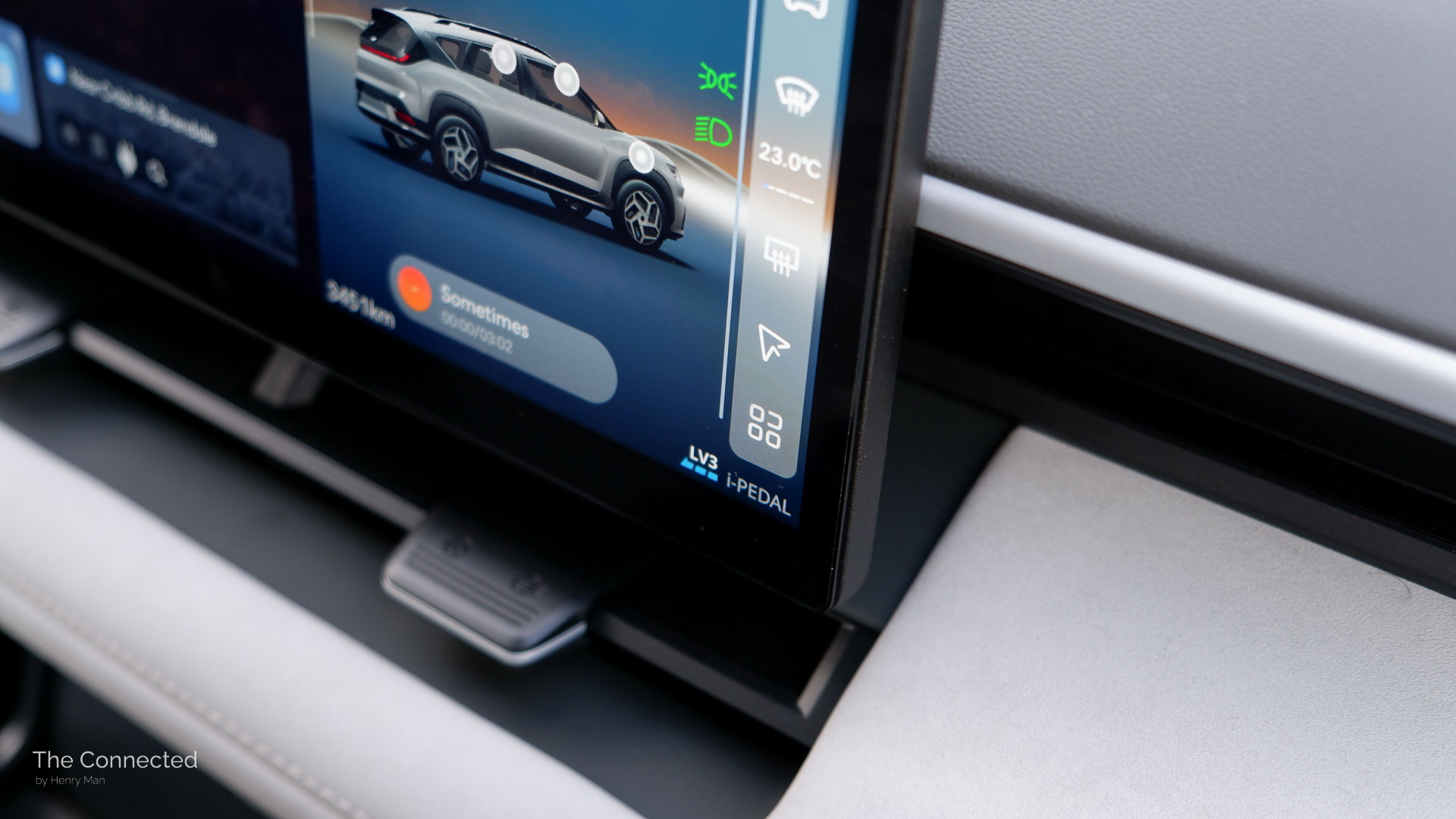
This reflects in the one-pedal driving system called i-Pedal 3.0. While it brings the SUV to a stop and works in reverse, it feels weak by coasting forward too much for my liking at low speeds after my foot is lifted completely off the accelerator.
The top of the pedal also completely releases the regen so there was often a jerky on and off sensation when modulating it to come to a stop.
It rolls even more in reverse resulting in me tapping the brake often to prevent a collision.
The Elexio’s steering is light but not lacking in feel like the Leapmotor C10, plus provides a high seating position.
However, the ride feels unsettled and firm over small undulations at high speeds despite Hyundai Australia’s localised tune, and there is better noise insulation from rivals at this price point.
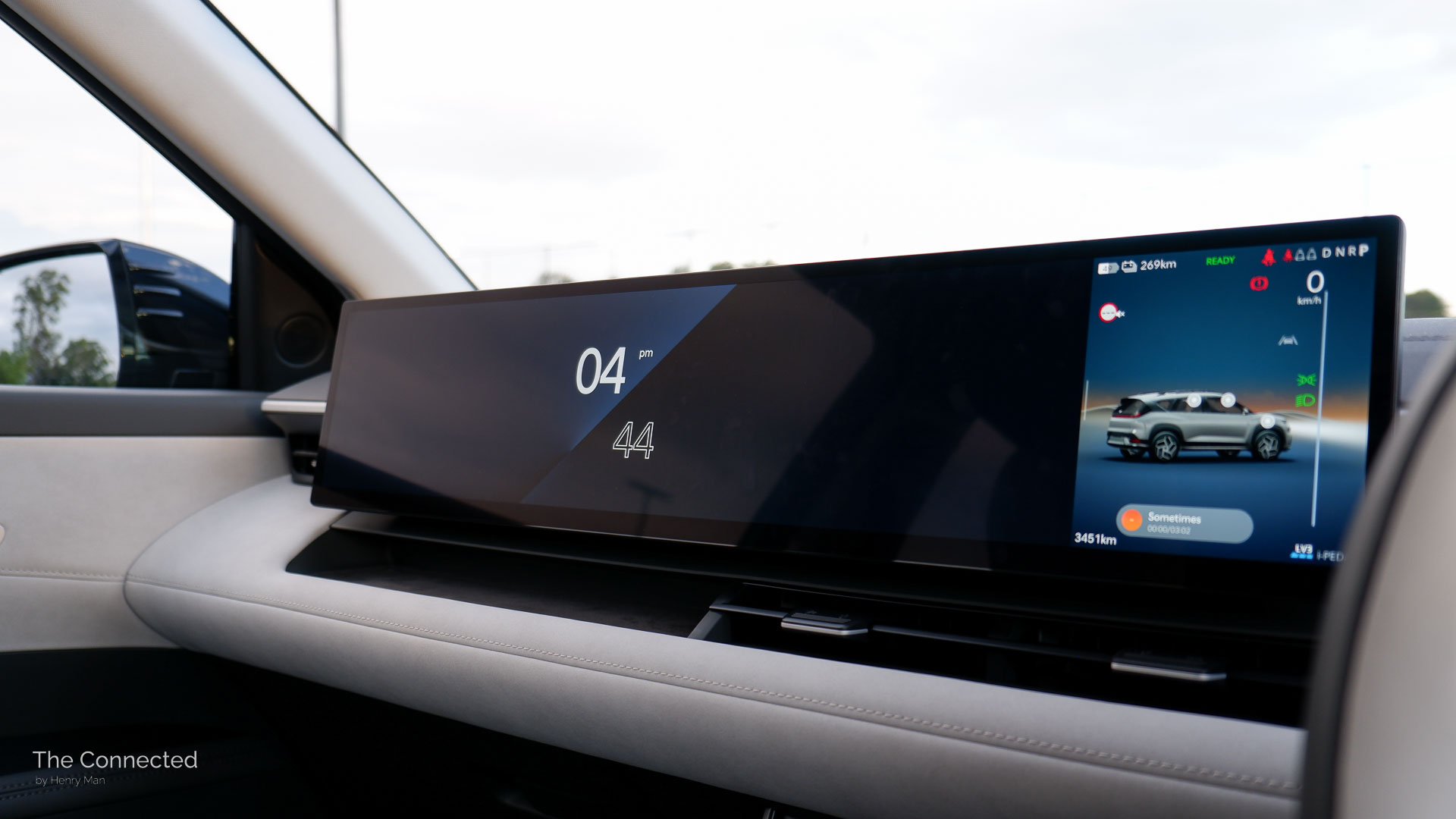
While the 27-inch display panel has automatic brightness and auto light/dark mode switching, the fact that it’s a big light-up screen makes it a slight distraction at night while driving.
Hyundai doesn’t offer a blank wallpaper option either and the display off function doesn’t completely shut it since the driver’s side instrument portion must stay on.
All-round visibility is good with large windows, but despite featuring two-level driver’s seat memory on the Elite, it doesn’t apply to the wing mirrors and they don’t automatically dip-down when reversing to help avoid curbing the wheels.
Warranty and servicing.
2026 Hyundai Elexio Elite capped-price servicing costs:
| 2 years/30,000km | 4 years/60,000km |
| $779 | $1118 |
The 2026 Hyundai Elexio is backed by a seven-year, unlimited kilometre conditional vehicle warranty and an eight-year/160,000km battery warranty.
The former is only provided if you service the Elexio with a Hyundai dealer every time, otherwise it reverts to a standard five-year, unlimited kilometre vehicle warranty.
Servicing is required every two years/30,000km (whichever occurs first) which is appropriately longer than usual since it’s an EV.
Yet it still costs $1897 to service with Hyundai after the first four years/60,000km, which isn’t exactly cheap with a painful $1118 second scheduled service.
Hyundai Australia uniquely offers lifetime capped-price servicing and roadside assistance, with the latter renewed for two years after every service.
Up to five years of Hyundai Bluelink connected services and Digital Key 2 functionality are included from the date of activation, with a subscription cost required afterwards.
As per most EVs, the Elexio doesn’t have a spare tyre with a patch-up goo kit included instead.
Price and rivals.
2026 Hyundai Elexio model range pricing (accurate as at the time of publication):
| Elexio | Elite |
| From $58,990 before on-road costs | From $61,990 before on-road costs |
The 2026 Hyundai Elexio is priced from $58,990 before on-road costs in Australia.
Since its launch, Hyundai Australia has offered the Elexio for $57,990 drive-away and Elite for $59,990 drive-away and remains as at the time of publication.
Two variants are sold with a single powertrain and battery size. However, the Elite naming suggests there could be a pricier top-spec Elexio to come.
All colours except Crystal White costs $750 extra. The Elite can be optioned with a light Dove Grey interior (as pictured) which is well worth the $295 cost.
The Hyundai Elexio directly rivals the following midsize electric SUVs:
- Kia EV5 (full review)
- Tesla Model Y (full review)
- Zeekr 7X
- BYD Sealion 7
- Nissan Ariya (full review)
- Toyota bZ4X (full review)
- Geely EX5 (full review)
- Leapmotor C10 (full review)
- Mazda CX-6e
- Deepal S07
Other alternatives to the Elexio include:
- Hyundai Kona Electric (full review)
- Hyundai Tucson Hybrid (full review)
- Hyundai Ioniq 5 (full review)
- Ford Mustang Mach-E (full review)
- Kia EV4 (full review)
Would I pick the 2026 Hyundai Elexio Elite?
The Hyundai Elexio misses the mark. It’s hard to recommend against rivals in the fiercely competitive medium electric SUV space.
The Elexio is headlined by premium interior materials and finishes, with a clever quad cup holder design that should be on other cars, and a spacious rear row.
After the pricey Inster and Ioniq 5 (and formerly the Kona Electric before it received sharp discounts), the Elexio is finally a reasonably priced electric car from Hyundai.
However, the button-less 27-inch widescreen is highly distracting exacerbated by poorly designed software, the driver attention monitor, lane-keep assist and adaptive cruise control aren’t calibrated well, and the Elexio has high energy consumption with slow DC charging speeds.
The related Kia EV5 offers more user-friendly software, the Geely EX5 is much cheaper, the Tesla Model Y boasts better tech and efficiency and the Zeekr 7X has ultra-rapid charging, just to name a few.
I’d pick the Elexio Elite as tested which gains a host of nicities for only $3000 more.
With so much fierce competition in the medium electric SUV space, the Hyundai Elexio doesn’t stand out.
Photographs by Henry Man
READ MORE: 2025 Hyundai Kona Electric review
READ MORE: 2026 Tesla Model Y Performance review
READ MORE: 2026 Kia EV4 review
Pros:
- Interior ‘wow factor’
- Clever cup holder design
- Spacious rear row
- Light steering, high seating position
- A Hyundai EV that’s reasonably priced
Cons:
- Highly distracting screen
- Software design needs work
- Some over-sensitive safety assists
- Inefficient powertrain
- Agonisingly slow tested DC charging
About the Author.
Henry Man is an independent content producer passionate about the intersection of technology and transportation.
The former automotive journalist is focused on producing critically-detailed vehicle reviews, and unique short-form content. Learn more.


